Recent Posts

The Lutheran Rosary: A Powerful Way to Deepen Your Faith


For centuries, Christians have embraced structured prayer practices to strengthen their spiritual lives. One timeless method combines repetitive prayer with biblical reflection, creating a rhythm that calms the mind and centers the heart. This approach has gained renewed interest among modern believers seeking meaningful ways to connect with God.

Unlike generic meditation, this tradition roots itself in Scripture and theology. The tactile use of beads helps practitioners focus during prayer, while repeated phrases create space for deeper contemplation. Many find it opens new windows of understanding in familiar Bible passages, fostering fresh spiritual insights.

Busy individuals appreciate how this practice adapts to daily routines. Whether during morning coffee breaks or evening wind-downs, its flexible structure supports consistent prayer habits. The physical beads serve as gentle reminders to pause and refocus throughout the day.

Key Takeaways

  • Combines biblical focus with meditative repetition for spiritual growth
  • Helps maintain prayer consistency in hectic schedules
  • Creates tangible connections to centuries of Christian tradition
  • Engages multiple senses to enhance worship experiences
  • Offers fresh perspectives on familiar scriptures and prayers

Understanding the Lutheran Rosary: Origins and Tradition

Prayer beads have guided believers through centuries of spiritual practice, long before denominational labels defined Christian traditions. This devotional tool roots itself in early Christian heritage, evolving across generations while maintaining its core purpose: deepening connection with divine truth.

From Medieval Practice to Protestant Adaptation

Historical records show bead-based prayer existed 500 years before the Reformation. European believers used tactile aids to count prayers and meditate on scripture. When Martin Luther published his Small Catechism in 1529, he transformed this tradition into a teaching instrument for families.

The catechism’s famous question—“What does this mean?”—became a framework for reflection. Instead of focusing solely on repetition, it encouraged engagement with core teachings like the Apostles’ Creed and Ten Commandments.

A Modern Revival for Timeless Truths

In 2005, Reverend John Longworth and his wife Sara reshaped this practice using Luther’s model. Their version replaced seasonal themes with year-round doctrinal focus. This adaptation shows how ancient methods can serve contemporary spiritual needs while honoring theological foundations.

Many Protestant groups now embrace this approach, finding it creates an opens new window to understanding scripture. The physical beads serve as anchors, helping minds wander less during meditation. As one practitioner notes: “It’s like having a conversation that keeps circling back to what matters most.”

Mastering the lutheran rosary: A Step-by-Step How-To Guide

Engaging multiple senses can transform routine prayers into profound spiritual encounters. This practice combines physical tools with sacred rhythms, creating an opens new window to deeper understanding. Let’s explore how to build and use this devotional instrument effectively.

A close-up view of a lutheran rosary, with the beads carefully arranged in a symmetrical circular pattern. The wooden cross pendant is prominently displayed in the center, casting a warm, soft glow from a low-angle lighting source. The beads themselves are a mix of dark, polished wood and intricate metalwork, creating a visually striking and tactile composition. The background is slightly out of focus, suggesting a contemplative, meditative atmosphere. The overall mood is one of reverence, tranquility, and devotion.

Constructing Your Rosary: Beads, Cross, and Configuration

Start with two bead sizes – small ones for scripture reflection and larger ones for doctrinal focus. The cross anchors your practice, reminding you of God’s promise: “For God so loved the world…” (John 3:16). Four small beads follow, then a large bead – this pattern repeats through six sections called “weeks”.

Bead Type Purpose Example Use
Small Scripture meditation Job 6:24 reflection
Large Catechism recitation Apostles’ Creed
Cross Opening/Closing focus Jesus Prayer

Prayer Sequence and Meditative Reflections

Begin at the cross with Luther’s Morning Prayer. Move through beads while alternating between Bible verses and catechism texts. The Ten Commandments section might use Exodus 20, while the Creed section pairs with Philippians 2:11.

Each “week” covers core teachings – from Confession to Daily Blessings. The rhythm helps maintain focus without monotony. As one user shares: “The beads keep my hands busy so my heart can stay open.”

Advanced practitioners keep Luther’s Catechism nearby. This allows deeper dives into explanations during large bead moments. The structure grows with you – simple enough for beginners, rich enough for lifelong exploration.

Integrating the Rosary into Daily Faith and Spiritual Growth

The rhythm of prayer beads can turn ordinary moments into sacred pauses. This practice grows with you, fitting into coffee breaks or bedtime routines. It’s like having a spiritual anchor that keeps your heart centered amid life’s chaos.

Personal Meditation and Connecting With Scripture

Start with five minutes daily. Hold a bead while breathing in biblical truths. Try pairing the Apostles’ Creed with John 3:16 – the words gain fresh meaning through repetition.

Visual aids help many focus. An illustrated leaflet showing Christ’s baptism or resurrection can deepen reflection. One user shared: “The images pull me back when my mind wanders – like having a friend whisper ‘Look here!’”

Mystery Type Focus Key Events Season
Joyful Christ’s birth Annunciation, Nativity Advent
Sorrowful Sacrifice Crucifixion, Passion Lent
Glorious Victory Resurrection, Pentecost Easter
Luminous Teachings Transfiguration, Last Supper Ordinary Time

Embracing Church Tradition and Modern Adaptations

Some groups use classic Catholic mysteries, while others prefer catechism-based approaches. Both methods create an opens new window to God’s promises. The beads become a timeline of faith – from Genesis to Revelation.

Modern versions might include digital prayer apps or themed reflections on social justice. Yet the core remains: tactile prayer that connects heaven and earth. As seasons change, so can your focus – Lenten sacrifices in spring, resurrection joy in summer.

Whether using ancient patterns or new variations, this practice roots believers in timeless truth. It’s not about perfect repetition, but letting the Holy Spirit reshape your heart through sacred rhythm.

Conclusion

Structured prayer practices continue to shape believers’ lives across generations. This meditative approach answers a timeless question: How do we stay connected to divine truth amid daily demands? Many find its rhythm creates space to hear the holy spirit whisper through scripture and creeds.

Pastors encourage using tools that ground us in faith. As one leader notes: “Simple patterns – like pairing the Apostles’ Creed with the Lord’s Prayer – become anchors for chaotic days.” The tactile use of beads helps focus wandering minds, turning commutes or chores into sacred pauses.

This practice bridges heaven and earth through repetition. Over time, familiar words reveal fresh layers of meaning. The final bead’s focus on Christ’s cross and resurrection leaves practitioners with renewed joy – a reminder that every ending births new spiritual beginnings.

Whether you’re new to contemplative prayers or seeking deeper connection, this method offers a friend for life’s journey. Its power lies not in perfection, but in showing up – bead by bead – to meet grace.

FAQ

How does this practice differ from the Catholic rosary?

While both traditions use beads for meditation, the focus here centers on Scripture, the Lord’s Prayer, and themes from Martin Luther’s Small Catechism. It emphasizes personal reflection over intercessory prayers to saints.

Can I create my own set of beads?

Absolutely! Many craft their beads using materials like wood, glass, or even knots in a cord. The key is arranging them in a pattern that supports your prayer rhythm, often including a cross or crucifix.

Is this practice common in all Lutheran churches?

Adoption varies by congregation. Some groups embrace it as a tool for spiritual growth, while others prioritize different forms of worship. Always check with local church leaders for guidance.

What role does the Holy Spirit play in meditative prayer?

The Holy Spirit is seen as a guide, helping believers connect deeply with Scripture and the Ten Commandments during reflection. This aligns with teachings about divine presence in daily faith journeys.

How long does a typical session take?

Sessions can range from 10 to 30 minutes, depending on your pace. The goal isn’t speed but meaningful engagement with each prayer and biblical passage.

Are there specific times of day recommended for this practice?

Many find mornings or evenings ideal, but it’s flexible. Consistency matters more than timing—integrating it into daily routines fosters spiritual discipline and joy.

Can children participate in this form of prayer?

Yes! Simplified versions with visual aids or shorter reflections help younger believers engage. It’s a gentle way to teach core tenets like the Apostles’ Creed and resurrection narratives.

How does this tradition honor Martin Luther’s teachings?

By weaving his Small Catechism into prayers, it reinforces his emphasis on Scripture, grace, and accessible faith practices. The structure echoes his desire for personal connection with divine truth.


Lutheran East Basketball: Catch the Latest Updates


Welcome to the thrilling journey of a Christ-centered athletic program making waves in Ohio sports. Nestled in Cleveland Heights, this institution has built a legacy that proves determination trumps size. With five state championships since 2005, including back-to-back wins in 2023 and 2024, their story inspires both sports enthusiasts and community members.

The Falcons’ success isn’t just about trophies. It’s about shaping young athletes through teamwork and discipline. Their recent dominance showcases a culture where hard work meets opportunity. Families and fans rally behind these players, creating an electric atmosphere at every game.

What can you expect here? Game breakdowns, standout performances, and exclusive insights into the strategies driving this powerhouse program. Whether you’re a longtime supporter or new to the excitement, we’ll keep you connected to every dunk, pass, and victory.

Key Takeaways

  • Five state championships since 2005, including recent wins in 2023 and 2024
  • Located in Cleveland Heights with a focus on faith-based education
  • Strong community support fuels team success
  • Comprehensive coverage of games and player development
  • Program emphasizes character growth alongside athletic achievement

Game Highlights and Recent Scores

History repeated itself in Dayton as a young squad defied expectations to claim Ohio’s ultimate prize. The Falcons’ 53-49 victory over Columbus Academy wasn’t just another win—it was a masterclass in grit from a roster with more heart than experience. With only eight players and zero seniors, they became the first Division V program to secure three consecutive state championships since 2005.

State Championship Victory Breakdown

Down by four points in the final quarter, freshman Dylan Zeigler ignited a 12-4 run that left opponents stunned. His clutch three-pointer with 1:42 remaining became the game’s defining moment. Junior TJ Crumble dominated the paint with 18 points and 9 rebounds, while sophomore Chris Hill’s lockdown defense forced three critical turnovers.

“We play for each other, not the scoreboard,” Zeigler shared post-game. This philosophy shone through as the team held Columbus Academy—previously unbeaten—to its lowest scoring output of the season.

Key Moments and Game Trends

Three patterns defined this championship run:

  • Fourth-quarter surges: The Falcons outscored opponents by 8+ points in final periods during playoffs
  • Balanced scoring: Seven players averaged 5+ points in postseason games
  • Defensive intensity: Forced 15+ turnovers in 80% of playoff matchups

This title-winning formula proves small rosters can achieve big results through unity and smart execution. As the confetti settled, one truth became clear: Ohio’s basketball landscape now orbits around this rising dynasty.

Behind the Scenes: lutheran east basketball Winning Culture

What fuels a championship program’s relentless success? At its core lies a transformative environment where personal growth and athletic skill merge seamlessly. This philosophy drives every drill, practice, and timeout huddle.

A close-up portrait of Coach Sam Liggins, the esteemed head coach of the Lutheran East basketball team, standing confidently on the sidelines of the court. His face exudes a calm, authoritative presence, with a slight smile that conveys his unwavering commitment to his players and the game. Soft, warm lighting illuminates his features, casting subtle shadows that accentuate his determined expression. The middle ground showcases the bustling energy of the basketball court, with players in motion, creating a dynamic, energetic atmosphere. In the background, the gymnasium's wooden bleachers and muted tones provide a subdued, supportive backdrop, emphasizing the focus on the coach's leadership and the team's winning culture.

Coach Sam Liggins’ Approach and Philosophy

Head coach Sam Liggins reshaped the program through seven seasons of intentional mentorship. His strategy? “We build strong young men first,” he explains. “Selflessness and humility become our playbook.”

Players learn life skills through every defensive stance and fast break. Liggins’ system thrives on three pillars:

  • Daily character development exercises
  • Servant leadership opportunities
  • Growth-focused feedback sessions

This approach helped even freshman athletes grasp complex concepts faster than typical teams. “Our boys understand basketball mirrors life,” the coach notes. “How you rebound defines how you rebound from setbacks.”

Youth Development and Team Building

The program’s secret weapon? A mentorship pipeline where veterans guide newcomers. Sophomores lead warm-ups while juniors organize film study groups. This creates ownership beyond the court.

Key team-building strategies include:

  • Monthly community service projects
  • Peer accountability partnerships
  • Role-specific skill workshops

Such initiatives forge bonds that withstand fourth-quarter pressure. As one player shared, “We’re not just teammates – we’re brothers pushing each other to excel.”

School Legacy and Community Impact

When Interstate 90 sliced through Cleveland in the 1960s, it sparked an educational evolution. The original Lutheran High School split into two institutions, planting new roots in Cleveland Heights. At 3565 Mayfield Road, Lutheran High School East emerged as a beacon for faith-based learning and athletic excellence.

Historical Overview of Lutheran High School East

Founded through necessity, this 340-student school transformed disruption into opportunity. Serving grades 9-12 since 1964, it developed a distinct identity focused on holistic growth. The campus became more than classrooms – it’s where character meets competition.

Five State Titles and Community Support

The boys’ basketball program’s trophy case tells an epic story. With championships in 2005, 2017, 2021, 2023, and 2024, they joined Ohio’s elite three-peat clubs. But these state titles represent something deeper:

  • Alumni networks funding facility upgrades
  • Local businesses sponsoring youth clinics
  • Generational fans filling bleachers for 20+ years

“Winning brought us together, but our values keep us united,” shares a 2015 graduate.

This Ohio high school proves athletic success and community bonds fuel each other. Every championship banner hangs as a testament to teamwork – on court and across Cleveland Heights.

Conclusion

A new standard in Ohio sports continues to rise from Cleveland Heights. The Falcons’ five state championships since 2005 reflect more than athletic skill—they showcase a blueprint for building champions through purpose and unity. With most players returning next season, this young squad’s hunger promises more thrilling moments ahead.

Coach Sam Liggins’ philosophy remains the program’s cornerstone. By blending character growth with court strategy, he’s created a culture where teamwork outshines individual stats. “We’re just getting started,” Liggins notes, pointing to his players’ rapid embrace of their winning traditions.

Beyond trophies, these athletes model resilience for their community. Their recent three-peat proves small rosters can achieve greatness through shared vision. As the team prepares for future seasons, fans anticipate new chapters in this inspiring story of faith, family, and Ohio high school excellence.

FAQ

How many state championships has the program won?

The team has secured five OHSAA Division state titles, with their most recent victory in 2024. This success highlights their consistent excellence on the court.

What makes Coach Sam Liggins’ coaching style effective?

Coach Liggins emphasizes discipline, teamwork, and adaptability. His focus on developing players’ fundamentals and mental toughness has been key to building a championship-caliber roster.

How does the school engage with the local community?

Beyond athletics, the program prioritizes mentorship and community outreach. Events like youth clinics and charity drives strengthen ties with supporters and inspire future athletes.

What role does youth development play in the team’s success?

Investing in younger athletes through camps and junior leagues ensures a strong pipeline of talent. This strategy has helped maintain the program’s dominance in Ohio high school sports.

Where can fans watch game highlights or updates?

Follow the team’s official social media pages or local sports networks for live scores, recaps, and behind-the-scenes content. Key games are often streamed online for broader access.

Discover Lutheran Public Radio Today


Faith-based broadcasting has found a vibrant home in Collinsville, Illinois. At 1600 Golfview Dr. Suite 230, a dedicated team creates inspiring content that blends timeless spiritual teachings with today’s technology. Whether you’re tuning in for sacred music or uplifting sermons, this station offers a unique space for reflection and connection.

The platform delivers continuous programming designed to strengthen communities. From traditional hymns to modern Christian music, every note and word aims to nurture faith. Listeners can access content through live streaming, making it easy to stay connected wherever they are.

Located in the heart of the Midwest, the organization serves audiences across multiple states. By combining classic values with digital tools, they create bridges between generations. Their phone line, +1 618-223-7377, welcomes questions and feedback from supporters.

Key Takeaways

  • Continuous spiritual programming blending tradition with modern tech
  • Live streaming access for nationwide listening convenience
  • Diverse content including hymns, sermons, and educational materials
  • Central Illinois location supporting Midwest communities
  • Dedicated to preserving authentic teachings through innovative methods

lutheran public radio: A Comprehensive Service Directory

This faith-focused network brings together educational resources and musical traditions from trusted sources. Partnerships with institutions like Concordia Publishing House ensure a steady flow of hymns, sermons, and study materials. Listeners enjoy carefully curated playlists featuring both timeless classics and fresh arrangements.

Unique Service Offerings and Programming

The station’s catalog shines with contributions from Concordia Theological Seminary musicians and composers like Henry Gerike. Weekly highlights include:

  • Iconic hymns such as “Praise the One Who Breaks the Darkness”
  • Choral performances by the Cathedral Singers and National Lutheran Choir
  • Modern interpretations of traditional works by Richard Proulx

Coverage and Outreach in the United States

From Midwestern homes to coastal chapels, this platform unites audiences through shared worship experiences. Strategic partnerships with theological seminaries help deliver content to 48 states. Special broadcasts like “Salvation Unto Us Has Come” create moments of connection during holidays and holy days.

Through digital streaming and local affiliates, the service maintains a strong presence in rural and urban areas alike. This nationwide reach supports spiritual growth while celebrating Lutheran heritage through music and message.

Latest Updates and Live Broadcasts

Fresh voices and timeless messages fill the airwaves daily. The platform’s live streaming feature brings real-time worship experiences straight to your device, whether you’re commuting or relaxing at home. Recent performances like William Neil’s “The Strife Is O’er” and Concordia Publishing House’s “In You, Lord, I Have Put My Trust” showcase the blend of classic and contemporary styles.

Live faith-based broadcasts schedule displayed on a modern, minimalist dashboard. A large screen in the foreground shows a grid of upcoming programs, with channel logos and titles. In the middle ground, a row of clickable buttons allow users to filter by category, time, or language. The background features a soft, warm lighting, creating a serene, contemplative atmosphere. The overall design is clean, intuitive, and visually appealing, reflecting the values of the Lutheran Public Radio organization.

Never Miss a Moment

Weekly schedules balance live events with curated recordings. Highlights include:

  • Morning devotionals featuring Cathedral Singers’ harmonies
  • Afternoon hymn sessions with works from Concordia Theological Seminary artists
  • Evening reflections on scriptural teachings

“Music bridges hearts across miles – our streams turn solitary listeners into a united congregation.”

Kirk Meyer, Programming Director

This Week’s Featured Content

Program Composer Source
My Soul, Now Praise Your Maker Henry Gerike Concordia Publishing House
Lord, Thee I Love Richard Proulx Cathedral Singers
Salvation Unto Us Has Come Paul Manz Theological Seminary Archives

Mobile apps make it simple to tune in during walks, workouts, or quiet moments. High-quality audio ensures every chord and word resonates clearly, keeping spiritual connections strong throughout your day.

Features and Tools for Listeners

Modern listeners deserve digital tools that match their spiritual journey. The station’s platforms combine simplicity with powerful features, letting you focus on worship rather than technical hurdles. Whether you’re searching for hymns by Henry Gerike or live performances from the Cathedral Singers, every click brings you closer to meaningful content.

Navigational Assistance and App Integration

Stream your favorite programs effortlessly through the Simple Radio app, available on iOS and Android. Key benefits include:

  • One-tap access to live broadcasts and archived sermons
  • Custom alerts for special events like “Salvation Unto Us Has Come”
  • Saved playlists featuring works from Concordia Publishing House artists

The website’s smart search helps find specific composers or hymns in seconds. Cookies help tailor your experience by remembering preferred genres and recent listens. Need help? Clear menus and tutorial pop-ups guide new users through features.

Accessibility matters here. High-contrast layouts and voice commands ensure everyone enjoys Richard Proulx’s arrangements or morning devotionals. Share feedback directly through the app – your suggestions shape future programming.

Community Engagement and Resources

Building connections goes beyond airwaves here. The station thrives on interactions that turn listeners into active participants. Through social media channels and direct calls to +1 618-223-7377, audiences share stories, prayer requests, and music recommendations that often inspire new programming.

A vibrant community gathering at a faith-based radio station, bathed in warm, golden light streaming through large windows. In the foreground, a group of diverse listeners engaged in animated discussions, faces aglow. In the middle ground, a modern, open-plan studio with state-of-the-art broadcasting equipment. In the background, shelves filled with books, records, and memorabilia, reflecting the station's rich history and connection to the local community. The atmosphere is one of intellectual curiosity, spiritual exploration, and a shared sense of purpose, conveying the station's role as a hub for meaningful dialogue and engagement.

Connecting with the Audience and Sharing Feedback

Your voice shapes what you hear. Weekly surveys and comment boxes on the website let you vote for favorite hymns or suggest topics for discussion. Recent listener requests led to expanded playlists featuring Richard Proulx’s compositions and Cathedral Singers performances.

Partnerships with Concordia Publishing House and theological seminaries create learning opportunities beyond broadcasts. Local churches in Fort Wayne and New York collaborate on seasonal events, blending live music with community service projects.

“Every email and call reminds us we’re not just sharing content – we’re growing faith together.”

Kirk Meyer, Programming Director

Volunteer programs invite supporters to help during fundraisers or special broadcasts. Donor appreciation dinners and backstage tours reward those who keep the mission alive. Whether you’re sharing testimonies or troubleshooting streaming issues, staff respond quickly to keep connections strong.

Conclusion

Lutheran Public Radio stands at the crossroads of tradition and innovation, connecting believers through timeless teachings and modern tools. Based in Collinsville, it partners with trusted names like Concordia Publishing House and theological seminaries to deliver authentic content. From classic hymns to live-streamed sermons, every program strengthens faith while bridging generations.

Easy-to-use technology makes spiritual growth accessible anywhere. Listeners enjoy curated playlists via mobile app or website, turning commutes into moments of reflection. Features like high-quality streaming ensure sacred music resonates clearly, whether in Midwestern homes or coastal chapels.

Community support keeps this mission alive. By sharing stories and joining events, audiences help shape future programming. Together, we preserve cherished traditions while welcoming new voices – ensuring meaningful connections endure for generations seeking guidance and unity.

FAQ

What makes the programming unique?

The network blends traditional hymns, modern worship music, and theological teachings. Programs like Kantorei from Concordia Theological Seminary and collaborations with artists like Richard Proulx offer spiritually enriching content rooted in Lutheran traditions.

Where can I listen to the broadcasts?

Tune in via local affiliates, online streaming, or mobile apps. Coverage spans multiple states, including Indiana, Missouri, and New York, with partnerships like Praise ensuring widespread accessibility.

How can I stream live content?

Visit the official website or download the mobile app for real-time streaming. Weekly schedules highlight events like Cathedral Singers performances or discussions from Concordia Publishing House.

Are there tools to enhance my listening experience?

Yes! The app includes features like customizable playlists, program reminders, and integration with smart speakers. Navigational guides help explore archived sermons or seasonal specials like Advent services.

How can I share feedback or connect with others?

Engage through social media channels, email, or community events. Initiatives like Sing Praise workshops and listener surveys foster dialogue and shape future content.

Retirement Living at Lutheran Hillside Village in [Location]


Discover a welcoming senior living community designed to support independence while providing peace of mind. Nestled near essential services and healthcare facilities in Peoria, this location offers both convenience and tranquility. Residents enjoy a blend of security and freedom, with scenic surroundings that foster connection and relaxation.

Multiple care options ensure personalized support for every stage of retirement. From independent living to specialized memory care, services adapt as needs evolve. The community’s 4.4-star rating reflects its dedication to quality and resident satisfaction.

Amenities and social activities create opportunities for engagement, while compassionate staff members prioritize well-being. The campus-style layout encourages easy navigation, blending accessibility with charming residential design. Families appreciate the ability for loved ones to age in place without compromising comfort.

Key Takeaways

  • Convenient Peoria location near healthcare and local attractions
  • Flexible care options including independent living and memory support
  • Highly rated services with 4.4/5 overall satisfaction score
  • Seamless transitions between care levels as needs change
  • Active community atmosphere with diverse social opportunities

Introduction to Retirement Living

Retirement living marks an exciting new chapter where convenience meets connection. Modern communities blend independence with personalized support, letting seniors focus on what matters most – enjoying life. “It’s about trading household chores for hobbies and friendships,” says a recent resident survey.

Today’s senior living options adapt as needs change. Many communities now offer:

Care Level Features Ideal For
Independent Living Private apartments, social events Active seniors
Assisted Living Meal help, medication management Daily support needs
Memory Care Secure spaces, cognitive activities Dementia support

These options let residents stay in one community even if health needs shift. Weekly yoga classes, gardening clubs, and chef-prepared meals replace home upkeep. Families appreciate knowing loved ones have 24/7 access to care.

“Moving here meant more time with grandkids – not fixing leaky faucets.”

Places like Lutheran Hillside Village showcase this flexible approach. Their continuum of care allows aging in place while maintaining privacy. With multiple services under one roof, retirement living becomes a gateway to stress-free golden years.

Lutheran Hillside Village: Community Overview

At 6901 North Galena Road, residents find a blend of convenience and serene living. This senior community sits minutes from shopping centers, medical offices, and cultural attractions. Its peaceful neighborhood setting creates a retreat-like atmosphere while keeping daily essentials within easy reach.

Location and Facility Highlights

The Peoria-based campus features spacious common areas and secure walking paths. Bright apartments include emergency call systems and adaptable layouts. 4.4/5 overall satisfaction ratings highlight well-maintained grounds and accessible design.

Local families appreciate the short drive to OSF Healthcare facilities. Community shuttles simplify trips to downtown events or doctor appointments. Nearby parks and libraries extend opportunities for engagement beyond campus walls.

Commitment to Compassionate Care

Skilled nurses and aides provide round-the-clock support with medication management and personal care. “We treat residents like family,” shares a team member with 12 years of service. Custom assistance plans adapt as needs evolve, ensuring consistent quality of life.

Specialized programs address physical, social, and emotional wellness. From art therapy to balance training, activities promote independence. The 4.3/5 sentiment rating reflects heartfelt connections between staff and those they serve.

Diverse Care Options for Seniors

Seniors and families often seek living arrangements that adapt as needs change. Modern communities answer this demand with flexible care tiers, blending independence with professional support. Whether managing daily tasks or complex health conditions, residents find tailored solutions without relocation stress.

a detailed and realistic scene of various senior care options within a peaceful and welcoming retirement community setting. in the foreground, a group of seniors engaged in different activities like gardening, reading, and socializing in a well-manicured outdoor courtyard, with lush greenery and flowers surrounding them. in the middle ground, a state-of-the-art assisted living facility with modern architecture and residents being assisted by attentive staff. in the background, a multi-story independent living apartment building with balconies and residents enjoying the views. the scene is illuminated by warm, natural lighting, creating a tranquil and comfortable atmosphere. the overall composition conveys a sense of community, care, and active aging.

Assisted Living and Support Services

The assisted living program balances autonomy with practical help. Trained staff assist with:

  • Medication management
  • Personal care routines
  • Meal preparation

Studio apartments start at $1,600/month, offering private spaces with emergency response systems. Higher-tier plans include weekly housekeeping and transportation to medical appointments.

Independent Living, Memory Care, and Nursing Homes

Active seniors thrive in independent living quarters featuring social clubs and fitness classes. For cognitive challenges, memory care units provide:

  • Structured daily routines
  • Secure environments
  • Therapy-based activities

Nursing homes address complex medical needs with 24-hour supervision. Semi-private rooms begin at $5,500/month, while private suites offer enhanced privacy for $7,000+. This spectrum ensures appropriate care at every stage.

Assisted Living Services & Amenities

Assisted living communities empower seniors to thrive through tailored support and engaging amenities. At this Peoria-based residence, daily life balances practical help with opportunities for connection. Round-the-clock care teams adapt services to individual needs while encouraging self-reliance.

Personalized Daily Assistance

Trained staff provide discreet help with medication schedules and personal care tasks. Residents receive support with bathing, dressing, and safe mobility – always respecting personal preferences. “Knowing Mom has help when she needs it lets us focus on quality time together,” shares a family member.

Emergency call systems in every suite ensure instant access to assistance. Care plans evolve through regular check-ins, aligning with changing health requirements. This approach lets seniors maintain routines while reducing fall risks or missed medications.

Health and Wellness Programs

Fitness classes improve strength and balance, while occupational therapy sessions address specific mobility goals. On-site wound care specialists collaborate with physicians to speed recovery. Weekly health screenings and nutrition guidance round out the wellness strategy.

Coordination with local healthcare providers ensures seamless care transitions. From lab work to specialist visits, staff handle logistics so residents avoid unnecessary stress. These services create a safety net that supports both physical health and emotional well-being.

Independent Living Solutions

Independent living redefines retirement by offering active seniors freedom without household burdens. Spacious floor plans – from cozy studios to two-bedroom units – cater to diverse preferences. Residents trade chores for vibrant social calendars and maintenance-free convenience.

Serene independent living community nestled in lush, verdant surroundings. Beautifully designed two-story buildings with warm, earthy tones and large windows overlooking well-manicured gardens. Residents strolling on meandering pathways, enjoying the sunshine and tranquil atmosphere. Ample amenities within the community, including a cozy clubhouse, fitness center, and social gathering spaces. Soft, diffused lighting creates a welcoming and relaxed ambiance. Captured through a wide-angle lens to showcase the harmonious integration of architecture and nature.

Community amenities create a resort-like atmosphere. Walk to fitness classes, browse the library, or stroll landscaped paths. High-speed Wi-Fi keeps residents connected, while housekeeping teams handle cleaning and yard work. “I finally have time for book club and painting,” shares a resident survey response.

Key features include:

  • Chef-prepared meals with dietary accommodations
  • Scheduled transportation for errands and appointments
  • Weekly social events fostering friendships

This Peoria community balances privacy with engagement opportunities. Neighbors gather for themed dinners or day trips to local attractions. Support services remain discreetly available, letting seniors focus on enjoyment rather than obligations.

Specialized Memory Care and Dementia Support

A warm, inviting retirement home setting with a dedicated memory care program. In the foreground, a group of elderly residents engaged in a calming activity like arts and crafts, their faces radiating joy and a sense of purpose. The middle ground features a cozy lounge area with plush seating, soothing lighting, and personalized décor elements that create a homelike atmosphere. In the background, a view of lush, manicured gardens and an outdoor patio, where other residents stroll or relax, fostering a connection with nature. The scene is captured with a soft, diffused lighting, conveying a sense of comfort, security, and compassionate care.

Caring for loved ones with cognitive challenges requires environments built for safety and dignity. This community’s memory care services focus on preserving independence through thoughtfully designed spaces and daily routines. Studio apartments create familiar settings while reducing overstimulation – a common concern for those with Alzheimer’s or dementia.

Tailored Cognitive Programs

Specialists develop activities that stimulate memory and encourage social connection. Music therapy sessions spark reminiscence, while art projects promote fine motor skills. Personalized care plans adapt as needs change, ensuring residents maintain their unique identities.

Daily routines include:

  • Guided walks through secure gardens
  • Interactive brain games
  • Family-style meals with adapted utensils

Enhanced Safety and Supervision

24-hour staff trained in dementia care monitor common areas and private suites. Emergency response systems provide instant assistance without intruding on privacy. “We balance watchfulness with respect,” notes a caregiver with dementia-specific certification.

Safety features include:

  • Color-coded pathways to reduce confusion
  • Keypad-secured exits
  • Anti-slip flooring throughout

Monthly costs range from $5,000 to $9,000, reflecting the specialized staffing and security measures required for this level of support. Families appreciate transparent pricing that covers all essential services.

Skilled Nursing and Continuing Care Details

A bright, airy, and inviting skilled nursing care facility, with a warm and welcoming atmosphere. In the foreground, elderly residents are being attended to by compassionate, attentive nurses and caregivers, their faces radiating kindness and care. The middle ground showcases a well-equipped rehabilitation area, with patients engaging in physical therapy exercises overseen by experienced therapists. In the background, a tranquil outdoor courtyard with lush greenery and soothing water features, providing a serene environment for residents to relax and enjoy. The lighting is soft and natural, creating a calming and comforting ambiance throughout the space.

When health needs require expert attention, specialized nursing care becomes essential. This community offers round-the-clock medical support through licensed professionals trained in complex care management. Skilled nursing services blend advanced treatments with compassionate oversight, creating a safety net for residents with chronic conditions or recovery needs.

24-hour Supervision and Medical Care

Qualified nurses monitor vital signs and manage medications with precision. Emergency response systems connect residents to staff within seconds – day or night. “Knowing Dad has instant access to medical expertise lets us sleep better,” shares a family member whose parent recovered from surgery here.

Room Type Monthly Cost Key Features
Semi-Private $5,500 – $8,000 Shared space with privacy curtains
Private Suite $7,000 – $10,000 Personal bathroom, family visit area

Care teams coordinate closely with physicians to manage wound care, therapy plans, and specialist referrals. Nursing coverage spans 12-16 hours daily, supplemented by certified aides overnight. This tiered staffing model ensures consistent attention without compromising personal boundaries.

Residents benefit from care plans updated through regular health assessments. Transitioning between service levels happens smoothly, maintaining familiar surroundings and caregiver relationships. The approach prioritizes both medical excellence and emotional well-being, proving that advanced nursing support can still feel like home.

Facility Features and Room Amenities

Thoughtful design transforms living spaces into comfortable retreats. This community blends practical facility features with homelike touches, creating environments where residents feel both supported and independent.

Private Bathrooms and Furnished Rooms

Private suites offer personal bathrooms with walk-in showers and grab bars for safety. Move-in ready layouts include cozy seating areas and adjustable lighting. Many furnished rooms feature balcony access, letting residents enjoy fresh air without leaving home.

Modern In-room Technology and Comfort

Smart thermostats and voice-activated controls simplify daily routines. High-speed internet supports video calls with family, while emergency alert systems provide peace of mind. Plush seating and soundproof walls balance comfort with privacy.

Communal amenities extend these comforts beyond personal rooms. Shared kitchens encourage social baking sessions, while lounges with fireplaces foster relaxed conversations. Every detail aims to create spaces where life feels effortless yet enriching.

FAQ

What types of senior care are available at this community?

The community offers assisted living, independent living, memory care, and skilled nursing services. Each option is designed to meet individual needs, from daily assistance to specialized medical support.

How does the community ensure safety for residents with dementia?

Enhanced safety measures include secure environments, 24/7 supervision, and staff trained in dementia care. Personalized cognitive programs also help residents maintain routines while reducing confusion.

Are there wellness programs for active seniors?

Yes! Health-focused activities like fitness classes, social events, and educational workshops are regularly scheduled. These programs promote physical, mental, and emotional well-being for all residents.

What amenities are included in private rooms?

Rooms feature private bathrooms, modern technology for connectivity, and comfortable furnishings. Some spaces also include kitchenettes for added convenience.

Can couples with different care needs live together here?

Absolutely. The community provides flexible living arrangements, allowing couples to stay close even if one requires memory care or assisted living while the other remains independent.

How does pricing compare to other senior living options in the area?

Costs vary based on care level and room type. However, the community emphasizes transparent pricing and works with families to explore financial plans or insurance coverage.

Is short-term or respite care available?

Yes, temporary stays are offered for recovery after hospitalization or to give caregivers a break. Guests receive the same quality care as full-time residents during their stay.

Lutheran Preschool: Nurturing Young Minds


Early childhood education shapes young learners in ways that last a lifetime. Programs rooted in faith-based principles offer more than academic basics—they build character through compassion, curiosity, and community. At their core, these environments blend structured learning with creative play, helping kids develop both skills and confidence.

One standout feature of this approach is its inclusive spirit. Families from diverse backgrounds come together in a welcoming space that honors Christian values while celebrating unique traditions. Teachers focus on treating every child with kindness, helping them feel secure as they explore new ideas and friendships.

The daily rhythm balances lessons with laughter. Classrooms buzz with activities designed to spark imagination while teaching letters, numbers, and problem-solving. Through stories, songs, and hands-on projects, children gain readiness for kindergarten—and beyond.

What truly sets these programs apart is their emphasis on whole-child growth. Social skills like sharing and teamwork get as much attention as early math concepts. Parents and educators work side by side, creating an extended family that supports each student’s journey.

Key Takeaways

  • Faith-based early education blends spiritual values with academic foundations
  • Welcoming environment embraces families of all cultural and religious backgrounds
  • Daily activities balance skill-building with creative exploration
  • Focus on social-emotional growth prepares kids for future challenges
  • Strong parent-teacher partnerships create a supportive community

Welcome to Our Lutheran Preschool Community

A child’s first steps into learning are about more than ABCs—it’s where trust grows and smiles become friendships. Our community wraps each family in warmth, blending faith with discovery through caring guidance. Every morning starts with high-fives and helpers ready to listen.

Growing Together Through Shared Values

Teachers weave kindness into daily moments, like snack time sharing or comforting a friend. Stories about helping others become springboards for discussions. Children learn that their actions matter, whether picking up toys or holding doors open.

Families from different traditions find common ground here. One parent shares: “We feel respected while our daughter learns core values that align with our home.” Weekly gratitude circles let kids express thanks for family, pets, or sunny playground days.

Friendship Foundations That Last

Classmates become teammates through puppet shows and building block challenges. Our programs mix play with purpose—counting crayons turns into math games, dress-up becomes storytelling practice. Teachers notice when pairs need encouragement and gently model inclusive play.

Parents join field trips and seasonal celebrations, creating bonds beyond classroom walls. Monthly family lunches let everyone connect over peanut butter sandwiches and proud artwork displays. These moments build the trust that helps children thrive socially and emotionally.

Discover Our Programs and Activities

Every child blossoms at their own pace, and our programs meet them exactly where they are. From curious 2-year-olds to kindergarten-ready 4-year-olds, we craft experiences that spark joy while building essential skills. Our approach combines trusted educational standards with the magic of childhood wonder.

A lively classroom filled with vibrant play-based learning activities. In the foreground, children enthusiastically engage in hands-on experiments, building blocks, and imaginative role-play. The middle ground features an interactive art station, where young learners explore color, texture, and creativity. In the background, a cozy reading nook invites children to curl up with picture books, fostering early literacy skills. Warm, natural lighting illuminates the scene, evoking a sense of wonder and discovery. The overall atmosphere is one of joy, curiosity, and the nurturing of young minds through playful exploration.

Play-Based Curriculum and Developmental Practices

Little hands dig into learning through sensory bins, art projects, and nature scavenger hunts. Teachers follow developmentally appropriate practices endorsed by the National Association for the Education of Young Children. “We turn counting blocks into math adventures and storytime into vocabulary quests,” shares one educator.

Daily activities blend music, movement, and problem-solving. A typical morning might include painting rainbows (color mixing science), building obstacle courses (gross motor skills), and sorting leaves (early math). These hands-on experiences help children grasp concepts naturally, without pressure.

Flexible Session Options: Year, Day, and Registration Details

We offer morning and afternoon sessions across 2-day, 3-day, or 5-day schedules. Younger children often start with shorter programs, while older learners thrive in extended sessions. Registration includes age-specific forms—Tiny Tots (2s), Explorers (3s), and Pre-K Pioneers (4s).

The school year calendar balances routine with excitement—think pumpkin patch visits in fall and water play days in summer. One parent notes: “The 3-day option gave our son confidence before transitioning to full-week sessions.” Our team helps families choose schedules that support each child’s growth rhythm.

lutheran preschool: Quality Education and Dedicated Care

Quality early learning experiences form the cornerstone of lifelong success. Our program combines expert guidance with warm encouragement, creating spaces where children feel safe to ask questions and proud to show progress.

Experienced Teachers and Nurturing Staff

Every educator here holds advanced credentials—from education degrees to specialized Child Development Certificates. One parent recently shared: “We knew we found the right place when our shy daughter started leading storytime!” The staff maintains current CPR certifications and completes monthly training workshops to stay updated on best practices.

Engaging Classrooms and Outdoor Play Areas

Sunlit classrooms buzz with discovery stations and cozy reading nooks. Our full-sized gym hosts obstacle courses that build coordination, while the playground’s climbing structures challenge growing muscles. Teachers often spot future engineers in the sandbox and storytellers at the puppet theater.

Comprehensive Curriculum Based on NAEYC Standards

Our curriculum transforms NAEYC guidelines into adventures. Sorting colorful leaves becomes a math lesson; building block towers teaches physics basics. Children absorb literacy skills through rhythm games and science concepts via bubble experiments.

Weekly plans balance structured activities with free exploration. “The magic happens when kids think they’re just playing,” explains a veteran teacher. This approach helps every child develop critical thinking skills while nurturing their natural curiosity about the world.

Facility Highlights and Tuition Information

Choosing the right learning environment involves both inspiring spaces and clear financial planning. Our center combines bright, thoughtfully designed areas with straightforward enrollment steps to support growing families.

A modern, well-equipped preschool facility nestled in a vibrant, natural setting. The building's clean, minimalist facade is bathed in warm, diffused sunlight filtering through large windows. In the foreground, a group of children play enthusiastically on a colorful, state-of-the-art jungle gym, their laughter and energy palpable. The middle ground features a cozy reading nook with plush seating and shelves brimming with age-appropriate books. In the background, a lush, well-manicured outdoor play area beckons, complete with a winding path, a small garden, and a covered pavilion for activities. The overall atmosphere exudes a sense of safety, learning, and joyful exploration, perfectly capturing the nurturing environment of a Lutheran preschool.

Modern Indoor Classrooms and Outdoor Playgrounds

Sunlight streams through large windows in our classrooms, creating cheerful spaces for art projects and story circles. Each room features learning zones for science experiments, building blocks, and quiet reading. The attached gym lets kids climb and tumble during rainy days.

Outside, a secure playground offers slides, sandboxes, and tricycle paths. “The space feels like an extension of our backyard,” shares one parent. Fresh air breaks help children recharge while developing coordination through play.

Understanding Tuition Rates and Enrollment Steps

Our 2025-2026 school year rates balance quality care with family budgets. Flexible schedules match different needs:

Program Days/Week Monthly Tuition
2-Year-Olds 2 $250
3-Year-Olds 2 $310
3-Year-Olds 3 $370
4-Year-Olds 5 $480

The registration process starts with a $100 fee and three key forms: health history, emergency contacts, and developmental questionnaires. Our team guides families through each step, whether you choose morning or afternoon sessions.

Convenient parking and digital document uploads make registration stress-free. As one grandparent notes: “We appreciated the clear checklist—everything was done in one afternoon!”

Conclusion

Success in kindergarten begins with the right early learning experience. At St. James, children gain more than academic readiness—they develop social confidence to share ideas, solve problems, and embrace new challenges. Many graduates enter elementary school with a love for books, teamwork skills, and the independence to manage daily tasks.

Our approach blends skill-building with joyful discovery. Through guided play and collaborative projects, young learners practice communication while exploring letters, numbers, and creative expression. “The growth we see in their resilience and curiosity is incredible,” shares a veteran teacher.

Families interested in our programs can schedule personalized tours to explore classrooms and meet staff. These visits let you witness how our research-backed curriculum prepares children for future success while nurturing their unique strengths.

Ready to see the difference? Contact our office to arrange a tour or ask questions. Together, we’ll help your child build foundations for lifelong learning—one discovery at a time.

FAQ

What makes your early childhood program unique?

Our program blends faith-based values with play-based learning, fostering social, emotional, and academic growth in a supportive environment. We prioritize kindness, curiosity, and creativity through activities aligned with NAEYC standards.

Are there flexible scheduling options for families?

Yes! We offer full-day, half-day, and extended care sessions to fit busy schedules. Families can choose programs that align with their needs during the academic year or summer months.

How do you ensure safety in classrooms and play areas?

Our modern facilities include secure indoor spaces and age-appropriate outdoor playgrounds. All staff undergo rigorous background checks and training in child safety protocols.

What qualifications do your teachers hold?

Educators hold degrees in early childhood education and receive ongoing training. They’re passionate about creating engaging lessons that spark joy and build foundational skills.

Can I tour the facility before enrolling?

Absolutely! We encourage families to visit, meet our team, and explore the classrooms. Contact us to schedule a personalized tour and discuss registration steps.

Are financial assistance options available?

We offer tuition payment plans and limited scholarships based on need. Details are provided during enrollment, and our team gladly answers questions about affordability.

How does your curriculum prepare children for kindergarten?

Activities focus on literacy, math readiness, and problem-solving through hands-on play. Social skills like sharing and teamwork are woven into daily routines to build confidence.

Lutheranism Sacraments: Understanding the Basics


Welcome to a journey through sacred practices that shape Christian identity and deepen spiritual connections. At their core, these traditions blend ancient wisdom with modern relevance, offering believers tangible ways to experience divine grace in daily life.

These sacred acts serve two powerful roles. They unite communities through shared symbols while personally delivering comfort and renewal. Imagine them as bridges—connecting individuals to Christ’s teachings and the support of their faith family.

Many wonder how centuries-old rituals remain meaningful in today’s fast-paced world. The answer lies in their focus on active participation. Through simple yet profound actions, participants receive forgiveness and strength, nurturing their spiritual growth.

By exploring these practices, you’ll discover how they balance communal belonging with intimate encounters with the divine. Whether facing challenges or celebrating joys, they offer timeless tools for living a grounded, purposeful life.

Key Takeaways

  • Sacred practices act as visible markers of Christian identity
  • They deliver spiritual renewal through tangible experiences
  • Balance community traditions with personal faith journeys
  • Remain relevant by addressing modern spiritual needs
  • Essential for ongoing spiritual development and comfort

Exploring lutheranism sacraments

Ever wonder why some religious practices feel more powerful than others? In Christian tradition, certain acts carry divine power through three key ingredients. They must be directly commanded by Jesus, combine physical elements with God’s promises, and deliver real forgiveness.

Unlike ordinary rituals, these sacred acts work like spiritual delivery trucks. Water in baptism isn’t just H2O—it becomes God’s tool for washing away sin. Bread and wine in communion transform into vehicles of grace through Christ’s words.

Practice Element Promise
Baptism Water New life in Christ
Communion Bread & Wine Forgiveness through Christ’s body

This two-fold approach solves a big problem: humans can’t earn forgiveness. Instead, God reaches down through simple acts. As one believer put it, “It’s not about what we do—it’s about what He does through these gifts.”

These practices remain vital today because they’re not memories but living encounters. They don’t just remind us of truth—they deliver it fresh every time we participate.

Historical and Theological Insights

What makes ancient faith practices endure through centuries? Their power lies in direct connections to foundational moments of Christian belief. These traditions didn’t evolve by accident—they emerged from pivotal events recorded in Scripture.

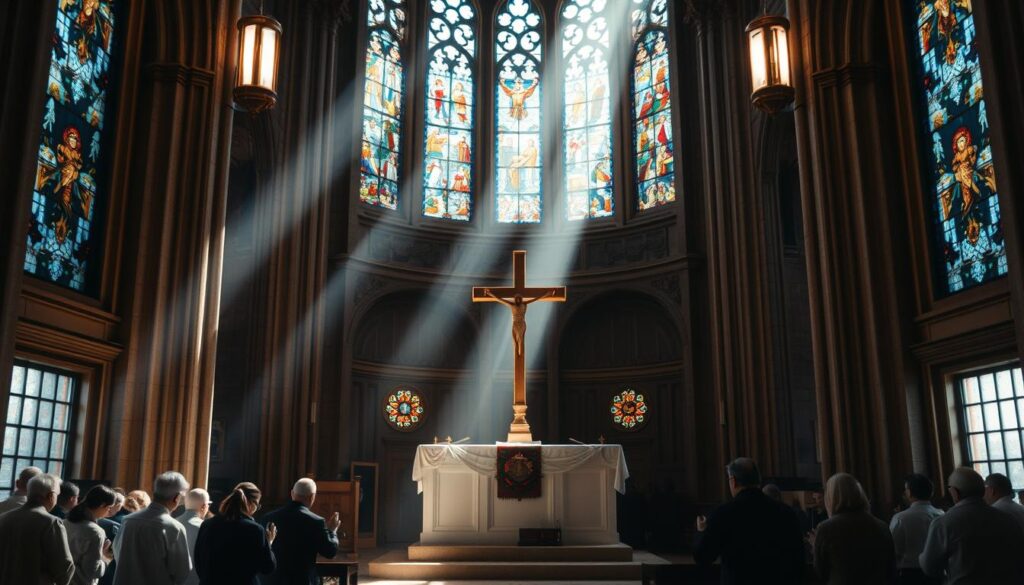
a cathedral interior with stained glass windows, natural light streaming through, casting a warm, reverent glow on a central altar. On the altar, a simple wooden cross stands, symbolic of Christ's sacrifice and the forgiveness of sins. Around the altar, several figures kneel in prayer, their faces reflecting a sense of repentance and spiritual redemption. The overall atmosphere is one of solemnity, grace, and the biblical foundation of forgiveness. The camera angle is slightly elevated, providing a majestic, awe-inspiring perspective of the sacred space.

The Origins and Biblical Foundations

On the day of Pentecost, Peter made a radical declaration: “Repent and be baptized… for the forgiveness of your sins” (Acts 2:38). This wasn’t symbolic advice—it linked water to spiritual rebirth through Christ’s resurrection. Later, Peter called baptism “an appeal to God for a good conscience” (1 Peter 3:21), showing its role in personal transformation.

The Lord’s Supper roots itself in Jesus’ final meal with disciples. He transformed bread and wine into eternal promises: “This is My body… My blood shed for you for the remission of sins” (Luke 22:19-20). These words became living anchors for believers across generations.

Christ’s Institution and the Promise of Forgiveness

Both practices share a common thread—they’re God-initiated acts, not human inventions. Jesus didn’t suggest options; He commanded participation. The cross stands central, delivering salvation through tangible means rather than abstract ideas.

Early Christians grasped this truth. They saw baptism as entry into Christ’s death and resurrection (Romans 6:4). Communion became a recurring encounter with grace—not just remembering history, but receiving fresh forgiveness here and now.

This theological bedrock explains why these practices remain vital. They bridge first-century events with modern spiritual hunger, offering concrete ways to experience divine promises daily.

Practical Impact on Worship and Daily Life

How do ancient rituals shape modern faith journeys? For believers, baptism and communion aren’t just traditions—they’re living encounters that transform worship and daily choices. These practices anchor spiritual identity while offering tangible ways to experience divine promises.

Baptism: Renewal, Grace, and Community Identity

Baptism acts as a spiritual reset button. Through water and God’s Word, believers receive “the washing of regeneration” (Titus 3:5). This isn’t symbolic—it’s God’s work of forgiveness that marks the start of a lifelong journey. Even infants participate, since grace comes through divine action, not human effort.

Practice Key Action Daily Impact
Baptism Spiritual rebirth Daily confidence in forgiveness
Communion Receiving Christ’s body Renewed strength for challenges

Holy Communion: Experiencing the Lord’s Supper in Faith

The Lord’s Supper brings Christ’s presence to the dinner table. As believers eat the bread and drink the wine, they receive “My body… My blood” (Matthew 26:26-28)—real nourishment for the soul. This meal isn’t memory lane; it’s a fresh encounter with grace that fuels perseverance.

Weekly communion creates rhythm in faith life. Each participation builds spiritual resilience, reminding believers they’re never alone. As one church member shared, “It’s like getting a booster shot for my soul.

Together, these practices form a spiritual ecosystem. Baptism plants believers in God’s family, while communion provides ongoing nourishment. They turn abstract faith into hands-on experiences of love and belonging.

Conclusion

What do bread, water, and ancient words have to do with modern spirituality? These sacred signs remain vital because they turn divine love into touchable gifts. Through baptism and communion, believers taste God’s promises rather than just hearing about them.

Both practices share a beautiful simplicity. Water washes away guilt. Bread and wine feed hungry souls. They’re not magic tricks—they’re God’s chosen tools for delivering forgiveness and strength. As the Bible says, “His divine power has given us everything we need for life” (2 Peter 1:3).

These traditions do more than bless individuals. They weave communities together through shared meals and collective hope. When believers gather around the Lord’s Table, they’re united by Christ’s body and blood—reminders that nobody walks their faith journey alone.

Want to explore further? Your local pastor holds keys to deeper understanding. As stewards of these holy mysteries, they’re ready to help you discover how ancient practices can refresh your daily walk with God.

May these glimpses into sacred traditions inspire you to seek grace in ordinary things. After all, the greatest spiritual truths often come wrapped in water, wheat, and wine.

FAQ

How many practices are considered sacred in the Lutheran tradition?

Lutherans recognize two sacred acts: baptism and the Lord’s Supper. These are seen as gifts from God that convey grace, strengthen faith, and connect believers to Jesus’ promises of forgiveness.

Why is faith important when participating in these practices?

Faith allows individuals to receive the benefits of these gifts. While God’s grace is always present, trusting in His promises helps believers fully embrace the renewal and forgiveness offered through these acts.

How does baptism shape a person’s identity in the church?

Baptism marks entry into the Christian community. It symbolizes spiritual rebirth, unites believers with Christ’s death and resurrection, and reminds them of God’s unconditional love throughout their lives.

What makes the Lord’s Supper unique in Lutheran worship?

The Lord’s Supper is more than a symbolic meal. Lutherans believe Christ’s body and blood are truly present “in, with, and under” the bread and wine, offering tangible assurance of forgiveness and unity with Him.

Are these practices rooted in the Bible?

Yes! Lutherans base baptism on Jesus’ command in Matthew 28:19 and the Lord’s Supper on His words at the Last Supper (Matthew 26:26–28). Both are seen as Christ-ordained ways to deliver His saving work to believers.

Can someone take communion without being baptized?

Most Lutheran churches encourage baptism first, as it establishes a foundation of faith and belonging. However, policies may vary slightly between congregations like the ELCA or LCMS.

How do these traditions influence daily life beyond Sunday worship?

They serve as constant reminders of God’s grace. Baptism reassures believers of their worth in Christ, while communion renews their strength to live with love, humility, and service to others.