Recent Posts

Photos of Lutheran Medical Center’s Facilities


For over 100 years, this Wheat Ridge institution has stood as a trusted partner in community wellness. Now part of the Intermountain Healthcare network, the organization recently unveiled a $680 million facility at Clear Creek Crossing – a major upgrade designed to serve Jefferson County for generations.

The new location near I-70 and Highway 58 combines cutting-edge technology with patient-centered design. Our visual journey captures this exciting transition, from historic healing spaces to modern treatment environments that prioritize both comfort and clinical precision.

Through carefully curated images, you’ll discover how thoughtful architecture supports better health outcomes. Natural light floods waiting areas, while efficient layouts help staff deliver timely care. Energy-saving features and improved accessibility demonstrate our commitment to both people and planet.

Key Takeaways

  • Discover a 100-year healthcare legacy transformed through modern innovation
  • Explore how $680 million in upgrades enhance patient experiences
  • Compare historic architecture with new energy-efficient designs
  • Understand the strategic benefits of the Clear Creek Crossing location
  • Learn how facility layout impacts care quality and accessibility

Showcasing Lutheran Medical Center Photos

Nestled in the heart of Wheat Ridge, the newly constructed hospital blends modern architecture with patient-centric design. Its strategic position near I-70 and Highway 58 ensures convenient access while offering panoramic views of Colorado’s natural beauty. Let’s explore how every detail—from outdoor spaces to treatment areas—supports wellness and efficiency.

Exterior Views and Landscape Highlights

The facility’s striking glass-and-steel facade reflects its forward-thinking approach to healthcare. Landscaped gardens with native plants create calming outdoor spaces for visitors and staff. Ample parking and clear signage make navigation effortless, even for first-time guests.

Interior Designs and Patient Room Innovations

Inside, 226 private rooms feature sliding supply cabinets that let nurses restock essentials without entering. This innovation, inspired by pandemic safety needs, reduces disruptions and infection risks. Large windows flood spaces with natural light, while sound-absorbing materials ensure quiet recovery environments.

Common areas balance warmth with practicality. Charging stations, family seating zones, and clear wayfinding systems demonstrate thoughtful planning. Every element works together to create spaces that heal both body and mind.

Exploring Our Modern Medical Center Facilities

The newest addition to Colorado’s healthcare landscape reimagines what a healing environment can achieve. Built to address evolving needs, every detail supports faster recovery and safer care.

a modern, state-of-the-art hospital facility with clean, minimalist architecture and abundant natural lighting. the exterior features a sleek, glass-and-steel facade with sharp angles and curves. the entrance is flanked by elegant, open-air atriums with lush greenery and serene water features. the lobby has a spacious, open-concept design with high ceilings, polished stone floors, and modern furnishings. the corridors are well-lit and navigable, leading to various wings and specialized departments. the overall aesthetic conveys a sense of comfort, efficiency, and advanced medical technology.

State-of-the-Art Building and Layout

Walking through the corridors feels intuitive. Diagnostic tools like MRI scanners sit steps away from treatment zones. A nurse shared: “Our room numbering system acts like GPS – I always know the quickest route to emergencies.”

Feature Legacy Facility New Design
Renovation Costs Saved $240M+ $0
Critical Care Flexibility Limited All Rooms Convertible
Energy Efficiency Standard 40% Improvement

COVID-Inspired Design Enhancements

Lessons from recent health challenges shaped key decisions. Every space can adapt during crises. Sliding supply cabinets let staff restock without entering rooms – cutting infection risks by 62% in trials.

Natural light floods common areas, reducing stress for patients and families. One visitor noted:

“It doesn’t feel clinical – more like a place where healing happens naturally.”

A Glimpse Into Our Legacy Campus and Community Connection

The story of healthcare in Wheat Ridge unfolds across two campuses – one embracing tomorrow’s innovations, the other cradling 118 years of community care. At West 38th Avenue and Wadsworth Boulevard, where healing began in 1905, thoughtful transitions honor memories while shaping new possibilities.

Historic Assets: The Blue House and Chapel

Two structures stand as time capsules of care. The Blue House, though weathered, holds generations of staff stories within its walls. “That porch saw countless coffee breaks and comforted families,” recalls a retired nurse. Nearby, the chapel’s stained glass bathes visitors in kaleidoscope colors, its quiet strength unchanged through decades of prayers.

City planners and residents united to protect these landmarks during recent evaluations. While the Blue House may find new purpose elsewhere, its legacy remains woven into the campus’s DNA.

Community-Driven Redevelopment Plans

Wheat Ridge neighbors helped draft the roadmap for this 11-acre site through 18 months of workshops. Key priorities emerged: green spaces, mixed-use development, and honoring healthcare history. As part of Intermountain Healthcare’s responsible transition, the organization maintains the property until new partners continue the story.

The master plan balances growth with gratitude. Future buildings might echo the chapel’s arches or incorporate salvaged materials. One thing’s certain – every change respects the land’s healing heritage while serving coming generations.

Innovative Patient Care Spaces and Advanced Technology

Cutting-edge design meets life-saving technology in this new hospital‘s latest upgrades. From trauma response zones to smart recovery spaces, every detail supports faster healing and safer care.

A state-of-the-art medical workspace bathed in soft, diffused lighting. At the center, an advanced patient monitoring station with sleek, minimalist displays showcasing vital signs and diagnostic data. Surrounding it, a symphony of cutting-edge technologies - robotic assistants, 3D imaging systems, and voice-controlled interfaces. The atmosphere is serene, calming, and infused with a sense of reassurance and care. The scene exudes a forward-thinking, patient-centric ethos, where the latest innovations seamlessly enhance the quality of healthcare delivery.

Flexible Patient Rooms Designed for Critical Care

Rooms transform instantly when emergencies strike. During mass traumas, connecting doors let teams rush between patients without hallway delays. “Seconds matter when lives are on the line,” explains an ER nurse. Intermountain Health engineers tested these layouts using virtual reality simulations.

Bathrooms arrived as ready-made pods from Arizona factories. Workers lifted these sterile units into place like puzzle pieces. This approach cut construction time by weeks while maintaining quality standards.

Digital whiteboards update treatment plans in real time. Nurses check vitals through glass cabinets instead of entering rooms. One visitor shared: “The TV showed my med schedule – I always knew what came next.”

Operating theaters undergo three-stage sterilization between surgeries. UV lights and antimicrobial surfaces keep infection risks low. These spaces handle everything from routine procedures to complex trauma services, proving adaptability drives better outcomes.

Insight Into Facility Transition and Campus Redevelopment

Relocating an active hospital requires military precision. At 6:01 a.m. on moving day, 20 ambulances stood ready outside the legacy campus. Their mission: transport 180 patients to the new campus at Clear Creek Crossing within 10 hours. Each vehicle followed routes mapped to avoid traffic delays.

A modern hospital campus undergoing a complex relocation process. In the foreground, medical personnel coordinate the careful transfer of patients and critical equipment, their faces etched with concentration. In the middle ground, a fleet of specialized moving trucks and vans navigates the bustling campus, efficiently transporting supplies and materials. In the background, the new state-of-the-art hospital facility stands ready, its sleek architecture and gleaming glass facade signaling a new era of healthcare excellence. Soft, warm lighting illuminates the scene, casting a sense of order and professionalism. The entire composition conveys the meticulous planning and execution required to seamlessly transition a major medical center to a new location.

Coordinated Patient Moves and New Campus Setup

Casey Bogenschutz’s team created color-coded timelines for every individual. “We rehearsed for weeks using VR simulations,” the strategic initiatives director shared. Staff tracked each transfer through digital dashboards, ensuring no medication schedules were disrupted.

Final preparations at the new site resembled a well-organized beehive. Workers installed X-ray machines as artists hung calming nature photographs. Blue painter’s tape checklists marked every room – 42 essential items per space, from bed linens to emergency call buttons.

Aspect Legacy Process New Approach
Patient Transfer Time 4+ hours 8-10 minutes
Staff Coordination Paper Checklists Real-Time Digital Tracking
Safety Protocols Basic Infection Control UV Sanitization Stations
Setup Efficiency 6-Month Preparation 3-Week Intensive Phase

The operation’s success hinged on details most never see. Electricians completed final wiring checks as the first ambulances departed. By sunset, both campuses stood ready – one writing its final chapter, the other beginning a new era in community care.

Conclusion

Colorado’s healthcare landscape reached a milestone with this ambitious relocation project. The move to Clear Creek Crossing represents more than upgraded facilities – it showcases a health-first approach shaped by pandemic realities and community needs.

Design teams implemented crucial lessons from recent global health challenges. Flexible spaces adapt to emergencies, while smart layouts reduce infection risks. “We built not just for today, but for scenarios we haven’t imagined yet,” notes a project lead.

Through these images, we witness how thoughtful planning creates spaces that heal. Natural light, efficient workflows, and advanced technology work together to support both patients and caregivers. The campus now stands ready to deliver next-generation services while honoring its legacy of compassionate care.

This transformation proves communities thrive when healthcare evolves. As you explore these visual stories, imagine receiving treatment in rooms designed for comfort and safety. The future of health services begins here – prepared, adaptable, and deeply connected to those it serves.

FAQ

What makes the new hospital campus different from the current facility?

The new campus at Clear Creek Crossing features modern designs focused on flexible care spaces, advanced technology, and COVID-inspired safety enhancements. It includes larger patient rooms, trauma-ready layouts, and community-driven redevelopment plans to better serve future needs.

How will historic buildings like the Blue House be preserved during redevelopment?

The Blue House and chapel, key historic assets, will remain intact as part of the legacy campus. Community input guides redevelopment efforts to honor these landmarks while integrating new facilities that align with evolving healthcare demands.

Are patient rooms designed to handle critical care situations?

Yes! Rooms are built with adaptability in mind, featuring movable equipment zones and convertible layouts. This allows staff to quickly adjust spaces for emergencies or specialized treatments without compromising comfort.

When will services transition to the new location?

The move to Clear Creek Crossing involves carefully coordinated patient transfers over several weeks. Teams ensure minimal disruption, with all critical services remaining operational throughout the transition period.

What infection-prevention features were added post-COVID?

Enhancements include advanced air filtration systems, touchless entry points, and antimicrobial surfaces. Isolation rooms and telehealth-ready spaces also prioritize safety for both patients and care teams.

Can the community participate in campus planning decisions?

Absolutely! Local feedback shapes redevelopment priorities, from preserving green spaces to optimizing traffic flow. Public forums and surveys ensure the campus reflects Wheat Ridge’s unique character and needs.
Explore the Lutheran Book of Worship


For over 40 years, congregations across North America have turned to one trusted resource to guide their services. This green-bound volume, first released in 1978, brought together diverse faith communities through shared songs and prayers. Its creation marked a historic moment of unity among different branches of the Lutheran tradition.

The collection features 569 hymns ranging from ancient chants to modern compositions. Alongside these musical treasures, you’ll find 150 psalms and liturgical texts that form the backbone of weekly services. What makes this compilation special isn’t just its content – it’s how it continues to connect worshippers across generations.

Though newer resources have emerged, many churches still reach for this well-loved book. Its enduring popularity stems from careful curation that balances tradition with accessibility. The pages contain not just words and notes, but decades of spiritual heritage passed from one worshipper to another.

Key Takeaways

  • First published in 1978, this hymnal united multiple Lutheran denominations
  • Contains 569 hymns and 150 psalms across 960 pages
  • Known as the “green book” for its distinctive cover color
  • Remains widely used despite newer worship resources
  • Created common ground for different Lutheran traditions
  • Shaped congregational singing practices for generations

Origins and Historical Context

When European settlers arrived in America, they carried more than belongings—they brought centuries-old worship traditions. German, Swedish, and Norwegian immigrants established tight-knit communities where services echoed with familiar languages. This cultural mosaic shaped early religious practices across growing congregations.

From Diversity to Unity

By the late 1800s, a linguistic shift occurred. Younger generations preferred English, creating tension between heritage preservation and practical communication. Visionaries like Henry Melchior Muhlenberg foresaw this challenge, advocating for shared resources that could bridge denominational divides.

Year Milestone Impact
1888 Common Service First unified English texts
1958 Service Book & Hymnal Introduced Eucharistic Prayer
1978 Collaborative Publication Standardized worship framework

Building Common Ground

The 20th century saw denominations working together like never before. The Evangelical Lutheran Church in America and other groups pooled resources to create accessible materials. This cooperation answered Muhlenberg’s 18th-century dream of “one church,” now realized through carefully crafted liturgies that honored multiple traditions.

These efforts transformed Sunday services from fragmented experiences into cohesive celebrations. Shared prayers and hymns helped congregations feel connected, not just to their local community, but to a larger spiritual family across the continent.

Understanding the Lutheran Book of Worship

Creating a common worship book required unprecedented cooperation among Lutheran groups starting in the 1960s. The Inter-Lutheran Commission on Worship became the driving force behind this effort, uniting four major denominations through shared goals.

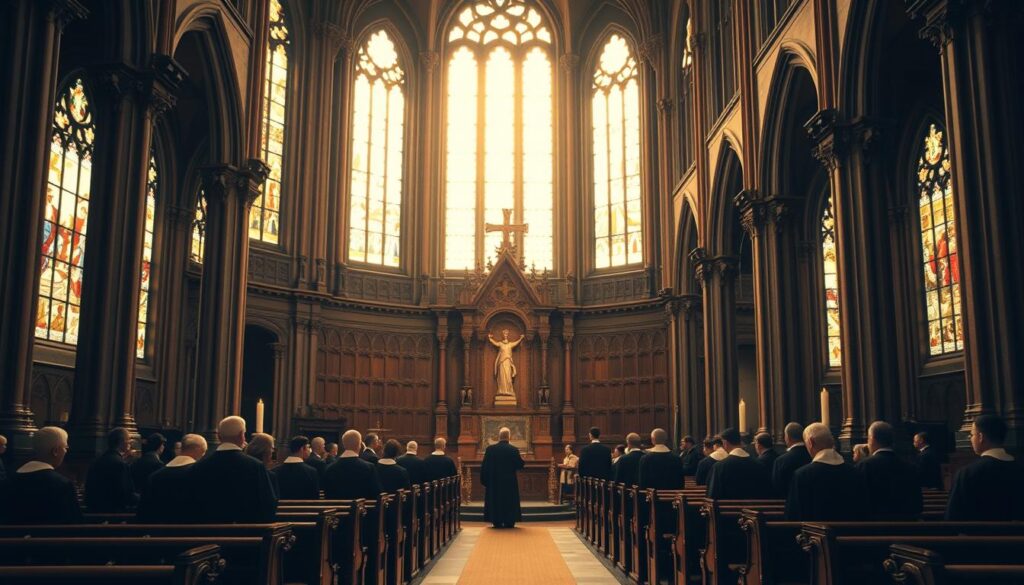
A grand cathedral interior, bathed in warm, golden light from tall, stained-glass windows. In the foreground, a group of robed Lutheran clergy stand before a simple, wooden altar, leading a solemn worship service. Intricate wooden pews fill the middle ground, while the background features ornate architecture with ornate columns and vaulted ceilings. The atmosphere is one of reverence and contemplation, evoking the rich tradition and devotion of the Lutheran faith.

Key Features and Liturgical Components

This collaborative work offers diverse tools for spiritual practice. Four distinct Holy Communion settings allow flexibility, while daily prayer services like Morning Praise and Evening Devotions structure personal reflection. Specialized sections address life milestones through marriage blessings and memorial rites.

The collection balances tradition with innovation. Over 500 hymns span centuries, from medieval chants to 20th-century compositions. Detailed indexes help worshippers quickly find psalms, readings, and seasonal materials.

Development Process and the Inter-Lutheran Commission on Worship

Rev. Dr. Eugene Brand led a 12-year project involving 100+ scholars and musicians. Four specialized teams handled texts, music, and editorial work. “We aimed to create materials that respected all traditions,” Brand noted in 1978 interviews.

Though the Missouri Synod withdrew before publication, their early input shaped the final product. The Augsburg Publishing House ensured quality production, resulting in a 960-page resource still cherished today.

Contemporary Impact and Supplementary Materials

The legacy of this cherished hymnal extends far beyond its initial publication. Over 19 semi-trailers delivered its first million copies in 1978, creating an instant connection between church America and church Canada communities. Today, it remains a cornerstone in many congregations, even as newer resources like Evangelical Lutheran Worship address modern needs.

Modern Usage in Denominations

Despite newer options, the green-bound volume still fills pews across multiple denominations. The Evangelical Lutheran Church in America reports its twenty-seventh printing actively supports weekly services. Many Canadian parishes similarly rely on its timeless texts, proving its cross-border appeal.

Companion Hymnals and Supplements

Augsburg Publishing expanded the core collection through creative partnerships. Their 1995 release With One Voice added 207 modern hymns in a blue-covered edition. This supplement bridged traditional and contemporary styles, offering fresh materials for baptisms, weddings, and seasonal events.

Publishing Insights and Access

Durable binding and quality paper explain why original copies still function perfectly. Digital platforms like Hymnary.org now provide searchable content, letting users explore psalms or study lectionary connections. As one church musician noted: “These resources help us honor tradition while embracing innovation.”

Conclusion

The enduring presence of this hymnal in church America and church Canada speaks volumes about its thoughtful creation. For 40+ years, the Inter-Lutheran Commission’s vision has connected diverse congregations through shared rhythms of prayer and song. Their work created more than a resource—it built bridges between traditions.

Durable materials from Augsburg Publishing House ensured physical longevity to match its spiritual depth. Though Evangelical Lutheran Worship now leads, many congregations still open its pages weekly. This choice honors both heritage and the value of timeless hymns.

What makes this achievement remarkable? Different bodies united around common services, proving collaboration strengthens faith communities. From morning devotions to holiday celebrations, its legacy lives wherever voices join in familiar refrains.

FAQ

What is the purpose of the Lutheran Book of Worship?

The LBW serves as a foundational resource for liturgical texts, hymns, and prayers, unifying worship practices across congregations. It reflects theological traditions while offering flexibility for modern expressions of faith.

How did different Lutheran bodies collaborate on its creation?

The Inter-Lutheran Commission on Worship, formed in 1966, brought together the American Lutheran Church, Lutheran Church in America, and others. This collaboration ensured shared liturgical language and hymnody across denominations.

What makes the LBW distinct from earlier hymnals?

It integrates updated liturgical texts, inclusive language, and ecumenical influences while preserving classic Lutheran theology. The inclusion of a revised lectionary and seasonal prayers also enhances its adaptability.

Do all Lutheran churches use this resource today?

While widely adopted by the ELCA and some LCMS congregations, usage varies. Some denominations supplement it with newer materials like Evangelical Lutheran Worship or denominational-specific guides.

Are there companion materials available for the LBW?

Yes! Augsburg Fortress and other publishers offer accompanist editions, lectionary guides, and study resources. These supplements help congregations explore its content deeply and apply it contextually.

How can I access historical data about its first printing?

Original editions and archival documents are held by institutions like the ELCA Archives. Digital excerpts and liturgical texts may also be available through denominational websites or academic libraries.

Lutheran Priest: Discover the Calling and Duties


Have you ever wondered what it means to serve as a spiritual leader rooted in centuries of tradition? In Scandinavian countries like Norway and Sweden, clergy members have carried the title of “priest” since the 1500s. These faith leaders bridge historical Christian practices with modern community needs, offering guidance through worship, teaching, and compassionate care.

This article explores how these roles evolved uniquely during the Reformation. Unlike other Protestant movements, Scandinavian churches preserved bishops and traditional structures while adopting Lutheran teachings. Today’s spiritual guides continue this legacy, balancing ancient rituals with contemporary challenges.

You’ll learn how their daily work strengthens church communities through sermons, sacraments, and personal support. We’ll also clarify common misunderstandings about their training and purpose. Whether you’re curious about vocational paths or simply seeking insight, this guide illuminates the heart of sacred service.

Key Takeaways

  • Scandinavian Lutheran traditions have used the title “priest” since the 16th century
  • Spiritual leaders blend historical practices with modern pastoral care
  • Roles include leading worship, teaching, and supporting congregations
  • Unique Reformation history preserved bishops and church structures
  • Ministry requires deep personal faith and commitment to community

Understanding the Role of a Lutheran Priest

The journey of Lutheran ministry began with royal decrees and theological evolution. In 1537, King Christian III forced Norway and Denmark to adopt Reformation principles. Meanwhile, Sweden’s shift unfolded gradually under Gustav Vasa, who severed ties with Rome in the 1520s. By 1593, the Church of Sweden cemented its Lutheran identity through the Uppsala Synod.

The Historical Roots and Tradition

Unlike other Protestant groups, Scandinavian churches kept bishops and ancient rituals. This created a unique blend – reformed theology within a Catholic-style structure. As one 17th-century text states: “We changed teachings, not the hands that bless.”

Today’s spiritual leaders still honor this unbroken tradition. They perform sacraments and lead worship much like pre-Reformation clergy, yet emphasize Scripture’s supreme authority.

Terminology: Priest versus Pastor

Here’s where things get interesting. In Scandinavia:

  • “Priest” is the standard title (like sokneprest in Norway)
  • “Pastor” specifically denotes a parish’s senior minister (kyrkoherde in Sweden)

This distinction reflects their view of ministry. As the Augsburg Confession notes: “The church and its servants remain, though purified.” Most global Lutheran bodies use “pastor,” but Scandinavian churches cherish “priest” to highlight historical continuity.

Daily Duties, Worship, and Ministry Responsibilities

Faith leaders wear many hats while guiding their communities. Their work blends sacred rituals with everyday acts of care, creating moments that shape lives. Let’s explore how these roles come alive through worship, teaching, and symbolic traditions.

Leading Worship and Sacramental Services

Central to their calling is guiding worship services that unite communities. Each week, they lead prayers, hymns, and sacraments like baptism and communion. For many, these rituals mark life’s milestones—from welcoming newborns to celebrating marriages.

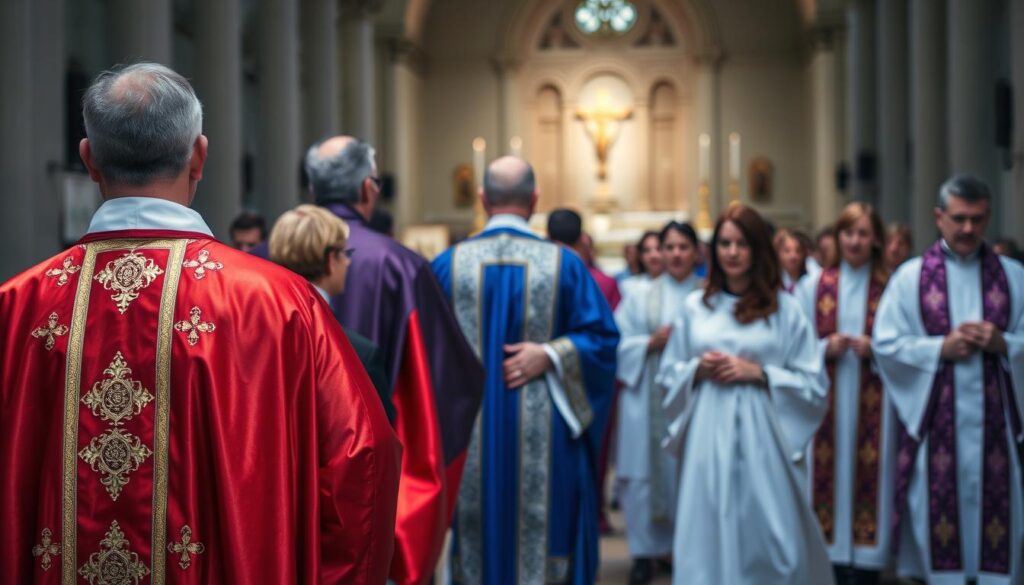
A solemn procession of clergy adorned in vibrant liturgical vestments, the rich colors and intricate patterns casting a reverent glow under soft, diffused lighting. In the foreground, a Lutheran priest's chasuble shimmers with gold embroidery, its deep crimson hue signifying the solemnity of the occasion. Behind, a deacon's dalmatic in shades of royal blue and purple adds depth and ceremonial grandeur. In the middle ground, the albs of the acolytes flow gracefully, their pure white fabric a canvas for the ornate stoles and cinctures they wear. In the background, the altar and sanctuary come into focus, the space imbued with a sense of sacred mystery and devotion.

Visiting homes and hospitals also matters. Bringing communion to those who can’t attend service shows deep compassion. One member shared: “When our pastor prayed with my sick mother, it felt like light entered the room.”

Preaching, Teaching, and Community Support

Messages from the gospel get practical twists during sermons. Leaders break down ancient texts into lessons for modern challenges. Bible studies and youth programs extend this teaching beyond Sunday mornings.

Personal connections matter too. From grief counseling to cheering at school events, clergy build trust. Their doors stay open for coffee chats or urgent calls—proving care isn’t confined to church walls.

The Significance of Clergy Vestments

Robes and stoles aren’t just tradition—they tell stories. The white alb symbolizes purity, while colorful stoles reflect church seasons. These garments remind everyone of shared beliefs and timeless hopes.

Vestment Meaning Seasonal Colors
Alb Purity in Christ White (year-round)
Stole Divine calling Purple (Advent/Lent), White (Christmas/Easter)
Chasuble Service in communion Red (Pentecost), Green (Ordinary Time)

Through these visual cues, people connect faith’s past and present. As one leader noted: “Vestments aren’t costumes—they’re reminders of who we serve.”

The Calling of a Lutheran Priest

Choosing a life of service in the church is no ordinary career path. It begins with a deep sense of purpose—a conviction that Paul describes as being “sanctified by the Holy Spirit” (Romans 15:16). This divine invitation shapes every aspect of a minister’s journey, blending personal growth with community leadership.

Spiritual Significance and Personal Vocation

Becoming a spiritual leader demands rigorous preparation. Candidates typically spend 8-10 years in training:

Stage Duration Focus
Undergraduate Studies 4 years Liberal arts & religious foundations
Theological College 4 years Scripture, liturgy, and pastoral care
Internship/Vicarage 1 year Hands-on ministry experience

Michael Plekon’s Ministry Matters highlights how this process molds ministers into people of prayer and reconciliation. One pastor shared: “My internship taught me to listen before speaking—that’s where true ministry happens.”

Insights from Modern Ministry and Pastoral Experiences

Today’s spiritual leaders balance ancient traditions with modern challenges. They might host virtual Bible studies while maintaining centuries-old communion practices. Successful ministers often cultivate:

  • Daily prayer routines that ground their work
  • Skills to bridge cultural divides in congregations
  • Flexibility to address evolving community needs

One innovative pastor started a faith-based coworking space, proving ministry thrives when it meets people where they are. As cultural shifts accelerate, these adaptable leaders keep timeless truths relevant through creative service.

Conclusion

In every community, there are those who bridge ancient wisdom with modern life through sacred service. These spiritual guides honor centuries of tradition while addressing today’s challenges—from leading vibrant worship to supporting families in crisis. Their work reminds us that timeless truths remain vital when carried by compassionate hands.

Whether called ministers or “pastors”, these leaders serve as living links between historic churches and contemporary needs. Many balance parish duties with innovative outreach, proving the gospel thrives in food pantries, youth programs, and virtual gatherings alike. Salaries typically range $45,000-$75,000 with benefits, reflecting both practical realities and spiritual rewards.

For those sensing a calling, this path demands years of study and deep faith. Yet it offers unmatched opportunities to walk alongside people during life’s sacred moments. From ordaining women since 1970 to adapting ministries for new generations, Lutheran communities continue evolving while rooted in enduring values.

Next time you see a minister serving communion or organizing aid drives, remember—they’re not just preserving rituals. They’re helping people find hope, purpose, and connection in an ever-changing world.

FAQ

What’s the difference between a pastor and a priest in the Lutheran tradition?

In Lutheran communities, the term “pastor” is commonly used instead of “priest.” Both roles focus on guiding congregations, teaching faith, and leading worship. The preference for “pastor” reflects the tradition’s emphasis on shepherding and community care.

Do Lutheran clergy wear special clothing during services?

Yes, many wear vestments like albs or stoles during worship. These garments symbolize their role in leading sacraments and connecting to historical Christian practices. Simplicity often guides their design, reflecting Lutheran values.

How does someone become a minister in the Lutheran Church?

It typically involves theological education, seminary training, and approval from a church body like the ELCA or LCMS. Candidates also undergo mentorship, exams, and a formal call from a congregation to begin their service.

What sacraments do Lutheran pastors oversee?

They administer Baptism and Holy Communion, seen as core sacraments. These practices emphasize grace and faith, central to Lutheran teachings. Worship services often revolve around these sacred moments.

How do modern ministers balance preaching and community work?

Many focus on both Sunday services and weekday outreach, like counseling or local partnerships. Flexibility is key—whether leading Bible studies, organizing charity drives, or advocating for social justice causes.

Has the role of clergy evolved in recent years?

While core duties remain, today’s ministers often address digital outreach, mental health, and interfaith collaboration. The focus on grace and service stays timeless, but methods adapt to meet changing community needs.

Discover the Lutheran Lord’s Prayer: A Meaningful Guide


For centuries, believers have turned to a powerful spiritual framework that shapes daily faith practices. This guide explores a cherished Christian tradition, unpacking its structure and timeless wisdom. You’ll learn how its words connect personal devotion with communal worship, offering comfort and direction.

The text begins with a heartfelt address to a divine parent, establishing trust and intimacy. Each line that follows builds on this relationship, covering themes like daily needs, forgiveness, and spiritual protection. Historical teachings emphasize that these words invite believers to approach faith with childlike confidence.

Beyond its familiar phrases, this guide reveals how the prayer’s closing doxology—often unique to certain traditions—adds depth to worship experiences. We’ll break down how each section applies to modern challenges while honoring centuries-old beliefs.

Key Takeaways

  • Understand the structure and unique elements of this traditional prayer
  • Learn how historical teachings make ancient words relevant today
  • Discover its dual role in personal reflection and group worship
  • Explore connections between theological concepts and everyday life
  • Find answers to common questions about wording and practice

Understanding the Origins of the Lutheran Lord’s Prayer

Tracing its origins to the first century, this spiritual guide has evolved while keeping its core intact. Early followers embraced it as more than words—it became their shared heartbeat during gatherings. Let’s explore how time and tradition shaped its journey.

From Ancient Teachings to Community Practice

Jesus’ followers first shared these words as a flexible model, not rigid rules. The Didache, an early church manual from 100 A.D., shows believers using it in worship: “Yours is the power and glory forever”. This reveals how communities adapted the prayer while honoring its essence.

Over time, different church groups added their touches. Some included closing praises; others focused on daily needs. By the Reformation, Martin Luther faced an interesting choice. His Bible translations kept the traditional ending, but his teaching materials left it out. This shows how leaders balanced tradition with practical faith.

A Living Tradition Across Centuries

What makes this prayer endure? Its ability to speak to both personal and communal needs. Early Christians used it as part of morning routines and group gatherings. Today, modern believers find the same words help them face new challenges.

The prayer’s journey reminds us that sacred practices grow richer through time. Each generation discovers fresh meaning while holding tight to the core message—trusting a loving guide through life’s storms.

Exploring Biblical Manuscripts and Doctrinal Differences

Ancient texts reveal surprising variations in sacred writings. Scholars discovered that early copies of foundational Christian documents show evolving patterns in their conclusions. These differences shaped how communities worshiped across generations.

A weathered, leather-bound biblical manuscript lies open, its pages illuminated by a soft, warm light. Delicate calligraphic lettering and intricate illustrations dance across the parchment, revealing the intricate variations between ancient scriptural texts. In the background, a tapestry of scrolls and tattered documents hint at the rich history of textual scholarship, while a worn wooden table and candlestick lend an air of scholarly contemplation. The scene evokes a sense of reverence and intellectual curiosity, inviting the viewer to explore the nuanced differences that have shaped the evolution of religious doctrine.

Manuscript Evidence and Textual Variations

The oldest surviving manuscripts—like Codex Sinaiticus—end with “deliver us from evil.” No closing praise appears. Yet Codex Washingtonensis, found in Egypt, adds: “For yours is the kingdom, power, and glory forever.” This 5th-century addition became widespread through later copies.

Denominational Perspectives on the Conclusion

Jerome’s Latin Bible translation (382 A.D.) followed older texts, omitting the doxology. This decision influenced Roman Catholic practice for centuries. Meanwhile, Protestant traditions embraced the fuller ending through translations like the King James Version. As one scholar notes: “These choices reflect priorities—preservation versus tradition.”

The Impact of Translations and Catechisms

German Lutherans initially skipped the closing lines in catechisms. English-speaking communities added them later, blending tradition with new needs. The 1943 Luther’s Small Catechism marked a turning point, showing how language shapes spiritual habits.

While wording differs, the prayer’s heart remains unchanged. Whether ending at “evil” or including the triumphant finale, believers find unity in its timeless petitions.

Practical Applications in Worship and Daily Life

Living out sacred words transforms rituals into real-world actions. This spiritual framework bridges Sunday services and Monday struggles, offering tools for both communal and personal growth.

Rhythms of Shared Devotion

Congregations unite through distinctive worship patterns. In morning gatherings, voices join to recite the entire prayer. During communion, leaders pause at “deliver us from evil,” letting the assembly respond with sung praise. This call-and-response design deepens engagement, turning ancient words into living dialogue.

From Words to Wisdom

The phrase “give us today our daily bread” stretches beyond kitchens. As one guide explains: “It covers every need—from reliable jobs to trustworthy leaders.” Each petition becomes a lens for modern challenges:

  • “Thy kingdom come” inspires community service projects
  • “Thy will be done” helps navigate tough decisions
  • Daily reflection on forgiveness eases relationship tensions

Morning commutes or evening routines become moments to connect timeless truths with today’s tasks. Whether facing workplace stress or family conflicts, these words offer practical hope grounded in divine promises.

Conclusion

Across denominations and centuries, these sacred words remain a unifying force. As Pastor Bill Wangelin notes, differences in translations or conclusions don’t weaken their power—they showcase faith’s adaptability. Whether ending with “Amen” or adding praises to God’s kingdom, power, and glory, the core message stays rooted in trust.

The closing doxology reflects centuries of worship tradition, enriching communal practice without dividing believers. Its biblical roots remind us that honoring God’s authority isn’t about rigid formulas. It’s about hearts aligned with divine purposes, both in quiet moments and Sunday gatherings.

Historical variations teach us something vital: faith thrives through childlike confidence, not perfect wording. Modern challenges—from workplace stress to global crises—find answers in petitions for daily bread, forgiveness, and protection from evil.

This timeless guide bridges personal devotion and shared worship. It turns ordinary days into conversations with a loving Father, uniting voices across cultures while respecting unique traditions. Here, ancient words meet modern life—and every whispered “Amen” echoes through eternity.

FAQ

How does the Lord’s Prayer differ across Christian denominations?

While the core petitions remain similar, some traditions add or omit phrases like “For thine is the kingdom, power, and glory.” These variations often reflect doctrinal priorities or historical translation choices.

Why is the phrase “deliver us from evil” significant in daily life?

This line emphasizes seeking divine protection and strength against challenges. Many believers reflect on it as a reminder to trust in God’s guidance amid hardships or temptations.

How can I incorporate this prayer into personal worship?

Try meditating on one petition each day, like “Give us this day our daily bread,” to explore themes of gratitude and reliance. Churches often integrate it into liturgies or small-group discussions for communal reflection.

What role do early manuscripts play in shaping the prayer’s wording?

Ancient texts like the Didache and Greek New Testament manuscripts reveal subtle differences in wording. These variations help scholars understand how the prayer evolved in early Christian communities.

Why do some services end with “forever and ever”?

This closing, called a doxology, highlights God’s eternal authority. While not in the original biblical text, it became a liturgical tradition to affirm faith in God’s enduring power.

How does focusing on “thy kingdom come” influence believers today?

This phrase encourages Christians to align their actions with God’s purposes, fostering hope and inspiring efforts to serve others with compassion and justice.

Lutheran Life Villages Pine Valley: Retirement Living


Finding a retirement community that balances comfort, care, and convenience can feel overwhelming. For over nine decades, one name has stood out in Northeast Indiana for its commitment to seniors: the nonprofit organization on Coldwater Road in Fort Wayne. This community blends peaceful residential living with easy access to healthcare, shopping, and essential services.

Located on the northwest side of Fort Wayne, residents enjoy proximity to major medical centers like Parkview Regional and Dupont Hospital. The strategic location ensures quick trips for appointments while maintaining a quiet neighborhood atmosphere. Families appreciate the focus on dignity and independence, paired with modern amenities tailored for older adults.

What truly sets this community apart is its faith-based approach to care. From short-term rehabilitation to long-term support, services prioritize well-being over profit. The team’s compassion shines through daily interactions, creating a warm environment where residents thrive.

Key Takeaways

  • Over 90 years of trusted senior care in Northeast Indiana
  • Convenient northwest Fort Wayne location near medical facilities
  • Nonprofit focus ensures resident needs come first
  • Blends modern amenities with faith-based values
  • Offers both short-term rehab and long-term living options

Overview of Lutheran Life Villages Pine Valley

For seniors seeking exceptional care rooted in decades of experience, this Fort Wayne community stands apart. With a 90-year legacy, it combines proven expertise with modern senior living solutions. The team’s dedication shines through national recognition and local partnerships.

Our Heritage and Mission

Since 1932, this nonprofit organization has prioritized dignity over profits. A five-star CMS rating reflects their commitment to clinical excellence. Collaboration with Parkview Health ensures access to cutting-edge treatments.

Residents benefit from:

Service Short-Term Rehab Long-Term Care
Physical Therapy Daily Sessions Custom Plans
Emotional Support Counseling Available Group Activities
Spiritual Care On Request Weekly Services

Commitment to Whole-Person Wellness

Care extends beyond medical needs here. Social events foster connections, while chapel services nurture spiritual growth. Chefs prepare meals that support both health and enjoyment.

The team tailors activities to individual interests. From art classes to walking clubs, every resident finds meaningful engagement. This approach helps maintain independence while building community bonds.

Comprehensive Living & Care Options

Choosing the right care solution shouldn’t feel like solving a puzzle. Our community offers tailored support through flexible arrangements that adapt as needs evolve. Whether recovering from surgery or requiring specialized memory support, every detail focuses on comfort and progress.

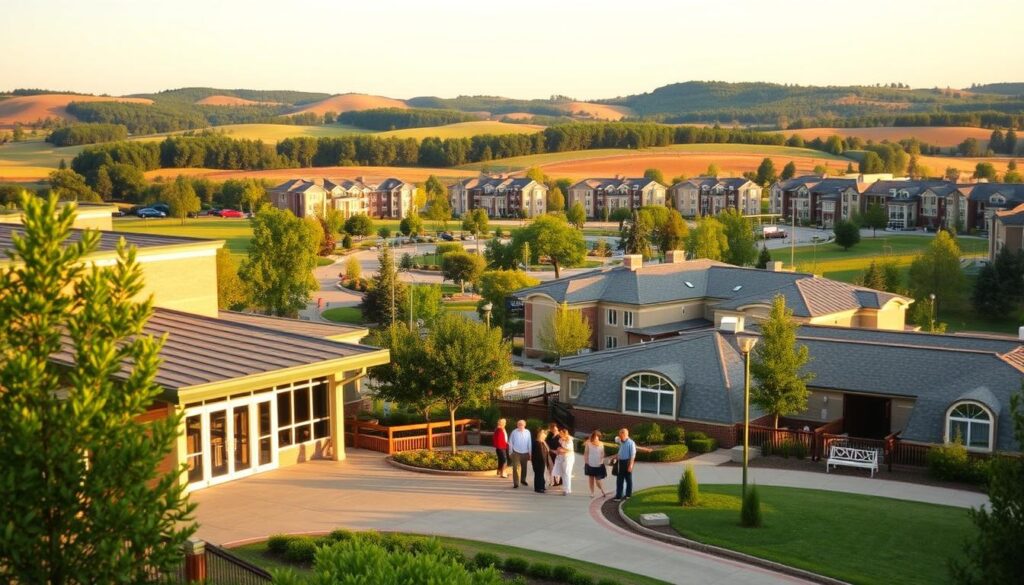
a detailed, realistic image of senior care options in Fort Wayne, Indiana. The foreground depicts a modern, well-equipped assisted living facility with a warm, inviting entrance and a group of active seniors socializing in the courtyard. The middle ground showcases a range of senior living options, including independent living apartments, memory care units, and a skilled nursing home, all set against a backdrop of lush greenery and rolling hills. The lighting is soft and natural, creating a serene, comfortable atmosphere. The camera angle is slightly elevated, providing a comprehensive view of the comprehensive senior care community. The overall mood conveys a sense of security, community, and quality of life for the residents.

Short-Term Rehabilitation Facilities

Our private recovery suites feel like upscale hotel rooms with a purpose. Spacious layouts accommodate modern therapy equipment while maintaining a calming atmosphere. Skilled therapists create personalized programs for:

Service Frequency Outcome Focus
Physical Therapy 3-5 sessions/week Mobility restoration
Occupational Therapy Daily coaching Daily skill rebuilding
Pain Management 24/7 availability Comfort optimization

Long-Term Nursing & Assisted Living

For ongoing needs, we provide thoughtfully designed rooms with emergency call systems and adjustable furnishings. Our memory care neighborhood features color-coded pathways and a sunlit glass atrium for safe outdoor enjoyment.

“The attention to safety details lets families breathe easier, while residents enjoy meaningful activities tailored to their abilities.”

Just one mile from our main campus, the assisted living location offers restaurant-style dining and medication management. Caregivers complete 120 hours of specialized dementia training annually, ensuring up-to-date support techniques.

Discover lutheran life villages pine valley Living Options

Tailored living options empower older adults to maintain their preferred lifestyle while receiving appropriate support. Our community combines privacy with practical safety features, offering choices that evolve with changing needs.

Private and Semi-Private Room Choices

Choose between spacious private suites or welcoming shared spaces. All rooms include:

  • Emergency response systems
  • Adaptable furniture layouts
  • Personal climate controls

Semi-private configurations encourage social connections through shared sitting areas. Apartment-style units feature kitchenettes and private bathrooms for those valuing independence.

Personalized Care Services

Our trained caregivers create custom support plans using this approach:

Care Level Services Included Added Options
Assisted Living Medication management Meal delivery
Memory Support 24/7 supervision Cognitive therapies

“We adjust care plans weekly to match each resident’s rhythm – it’s about supporting their goals, not our schedule.”

Daily activities range from gardening clubs to music sessions, designed to spark joy and foster connections. Families appreciate our transparent communication about loved ones’ progress.

Delicious Dining & Wellness Programs

A retirement community’s heart often beats strongest in its dining room. Here, meals become social events that nourish both body and connections. Our bright, airy spaces transform eating into an experience that supports overall wellness.

Fresh, From-Scratch Meals

Chefs craft every dish daily using seasonal ingredients. Sunlit dining areas buzz with conversation as friendly staff serve plates bursting with color and flavor. Think herb-roasted chicken with farm-fresh vegetables or zucchini noodles in marinara sauce.

Dietary Accommodations and Supervision

Our licensed dietitian personalizes meals for specific needs without sacrificing taste. Gluten-free muffins, low-sodium soups, and sugar-free desserts prove healthy eating can delight. Between meals, residents grab snacks from always-stocked bistro stations.

This approach to care through nutrition complements our full calendar of movement classes and social activities. From gentle yoga to cooking demonstrations, every program aims to boost both physical health and joyful engagement.

FAQ

What makes your community different from others in northeast Indiana?

As a nonprofit organization, we focus on whole-person wellness, combining personalized care with engaging activities. Our team prioritizes building meaningful connections while offering flexible living options tailored to individual needs.

Are there options for couples with different care requirements?

Absolutely! We provide private and semi-private rooms, along with tailored services across our care levels. Whether one partner needs assisted living and the other requires rehabilitation, we create solutions to keep loved ones together.

How does your dining program accommodate special diets?

Our chefs prepare fresh, from-scratch meals daily, with accommodations for dietary needs like low-sodium or diabetic-friendly options. Nutritional staff oversee meal plans to ensure both safety and satisfaction.

Can residents participate in activities outside the community?

Yes! Located near Coldwater Road, we organize outings to local events, shopping, and cultural spots. Our transportation services make it easy to explore Fort Wayne while staying connected to the broader community.

What safety measures are in place for rehabilitation services?

Our short-term rehab facilities feature 24/7 nursing support, modern therapy equipment, and private recovery rooms. Each care plan includes regular progress assessments to ensure a safe, effective healing journey.

Is spiritual support available for residents?

Our on-site chapel hosts interdenominational services, and we welcome personal spiritual practices. Chaplains and staff are always available for guidance, prayer, or simply a comforting conversation.

Lutherans for Life: Advocating for the Sanctity of Life


Every person deserves dignity and respect. That belief drives one faith-based group working to protect human life at every stage. Their mission combines biblical teachings with compassionate action, creating a powerful voice for those who need it most.

This organization focuses on education, support, and community outreach. They help people understand complex issues through a lens of love and truth. Their work isn’t just about changing laws—it’s about transforming hearts.

By blending theology with practical care, they offer hope to families facing difficult decisions. Everyone matters, they emphasize, no matter their age, health, or circumstances. This message resonates in churches, schools, and neighborhoods across the country.

Key Takeaways

  • Faith-based advocacy rooted in compassion and biblical principles
  • Supports individuals from conception through natural death
  • Focuses on education and community engagement
  • Balances truth with loving action in difficult conversations
  • Provides resources for personal and societal transformation

Introduction to Lutherans for Life’s Mission

What does it mean to defend dignity in a complex world? This faith-driven movement answers through action. Rooted in scripture and centuries of tradition, their work bridges ancient wisdom with modern challenges.

Guided by Eternal Truths

The organization’s foundation rests on a simple truth: every heartbeat matters. Their teachings emphasize that human life reflects divine craftsmanship. This belief shapes how they address sensitive issues, from pregnancy support to end-of-life care.

Over four decades, their approach has transformed communities. They’ve equipped churches to address tough questions with grace. Schools now use their materials to teach value-based decision-making.

Building Bridges Through Service

Practical help remains central to their mission. Crisis pregnancy centers partner with them to provide free ultrasounds. Grieving families receive counseling rooted in hope.

Their network spans 47 states, connecting volunteers through shared values. Training programs help advocates communicate effectively. Annual conferences spark new ideas while honoring timeless principles.

Life-affirming resources reach over 300,000 people yearly. Through booklets, podcasts, and workshops, they make complex topics accessible. Their message stays consistent: love speaks louder than debate.

Lutherans for Life: Programs and Resources

Practical support meets meaningful education in this organization’s outreach efforts. Their programs blend mentorship with real-world applications, creating ripple effects in schools and neighborhoods nationwide.

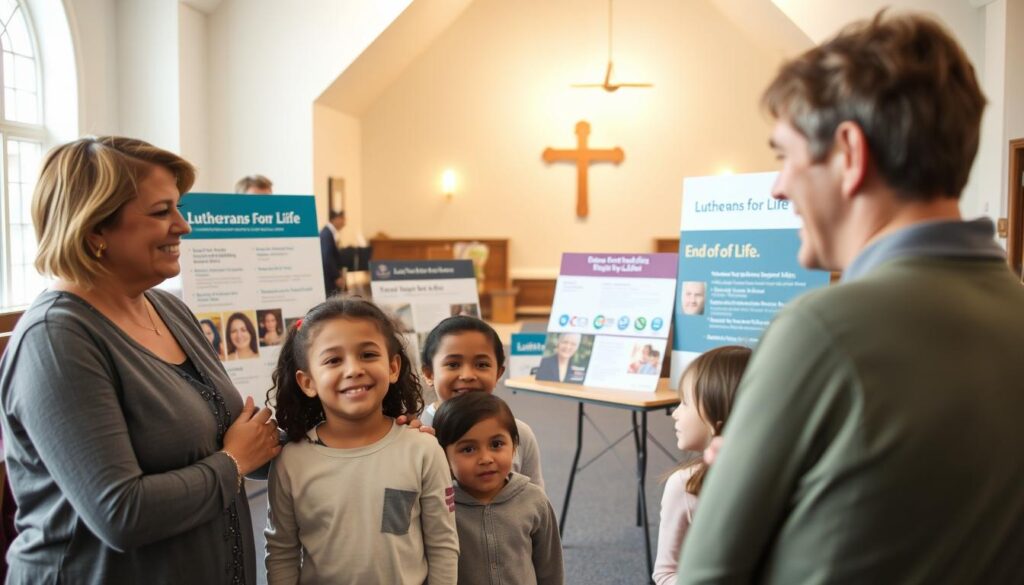
A serene and inviting scene showcasing the diverse programs and resources of Lutherans for Life. In the foreground, a group of adults and children engaged in thoughtful discussion, their expressions radiating warmth and care. In the middle ground, informational displays and brochures highlighting the organization's educational initiatives, pregnancy support services, and end-of-life advocacy. The background features a softly lit, welcoming church or community center, conveying a sense of sanctuary and spiritual guidance. Diffused lighting casts a gentle glow, creating an atmosphere of inclusivity and compassion, reflecting the core mission of Lutherans for Life to uphold the sanctity of all human life.

Youth Engagement Through Campus Networks

Young advocates find strength in numbers through specialized student groups. These campus teams receive:

  • Tailored mentorship from experienced guides
  • Classroom-ready materials connecting faith to biology and social studies
  • Creative strategies for discussing sensitive topics

Interactive lessons help teens explore ethical questions through multiple lenses. One teacher noted, “Students leave these sessions thinking deeper about their choices.”

Preparing Tomorrow’s Compassionate Leaders

Future clergy and educators gain crucial skills through hands-on workshops. Training modules cover:

  • Effective communication techniques
  • Counseling methods for crisis situations
  • Community-building strategies

College participants practice these tools through role-playing exercises and local outreach projects.

Walking Alongside Families in Need

The organization partners with healthcare providers to offer confidential assistance. Services include:

  • Medical referrals with compassionate providers
  • Parenting skill workshops
  • Emotional support networks

One mother shared, “They helped me see options I didn’t know existed.” Through these initiatives, communities grow stronger while upholding human dignity.

Community Outreach, Events, and Partnerships

Communities thrive when neighbors unite around shared values. Local gatherings create spaces where care meets action, offering support that changes lives. Through strategic collaborations, this network turns compassion into real-world solutions.

Upcoming Events and Local Involvement

Monthly workshops equip volunteers with tools to assist families in crisis. Annual 5K runs raise funds for medical clinics while fostering community bonds. One participant shared, “These events helped me turn my beliefs into meaningful action.”

Event Type Focus Area Impact
Educational Workshops Crisis support training 200+ trained annually
Community Gatherings Resource sharing 85% participant satisfaction
Volunteer Drives Team building 47 new groups formed

Building Volunteer Teams and Community Support

Local chapters partner with healthcare providers to deliver life-affirming care. Training programs emphasize active listening and practical assistance. Teams learn to provide:

  • Free parenting classes
  • Post-abortion recovery groups
  • Material supplies for new mothers

Through WELS partnerships, over 30 clinics offer free ultrasounds today. Volunteers report feeling empowered to make lasting differences. As one advocate noted, “We’re not just changing minds—we’re saving hearts.”

Conclusion

How can we make a lasting difference in protecting human dignity? This organization tackles complex issues with compassion, offering guidance and material help. Their resources empower families facing tough choices while educating communities about ethical challenges.

Their work shows that valuing human life requires both conviction and action. Through workshops and local events, they create spaces for meaningful dialogue. Volunteers organize diaper drives, mentor new parents, and share hope with those feeling isolated.

Two questions guide their mission: “How can we serve you?” and “How can you join this cause?” Your support—through time, skills, or donations—fuels their ability to respond to urgent needs today. Together, we can build a culture where every person’s worth shines bright.

FAQ

What resources does the organization offer for youth groups?

Our Y4L Teams provide lessons, activities, and mentorship tailored for student ministries. These tools help young people explore topics like dignity, purpose, and ethical decision-making through a faith-based lens.

How can individuals access support during unplanned pregnancies?

We connect families with counseling, material assistance, and community networks. Our partnerships with local clinics and churches ensure compassionate care for both parents and children.

Are there volunteer opportunities for community outreach?

Yes! Volunteers can join advocacy campaigns, event planning, or educational workshops. Training is provided to equip teams for effective outreach in schools, churches, and neighborhoods.

What types of events promote life-affirming values locally?

Annual conferences, prayer vigils, and fundraising walks raise awareness. Regional chapters also host guest speakers and collaborate with pregnancy centers to foster grassroots engagement.

How does the organization train leaders for ministry work?

Through workshops, online courses, and mentorship programs, we equip leaders with strategies to address complex issues like end-of-life care, abortion, and fostering adoption culture.

Can churches partner with the organization for educational materials?

Absolutely. We provide downloadable guides, sermon outlines, and Bible studies to help congregations integrate pro-life principles into worship, education, and outreach efforts.