Recent Posts

Explore the Rewarding Role of a Lutheran Pastor


Imagine a career where every day brings opportunities to inspire hope, nurture connections, and guide others toward purpose. For those called to ministry, this life-changing work goes beyond traditional job duties—it’s about creating spaces where people feel seen, supported, and spiritually renewed.

Rooted in a 500-year tradition that emphasizes grace and service, these leaders help community members experience love and belonging. Their work spans teaching, counseling, and organizing outreach—all while addressing modern challenges through timeless wisdom. With over 90 million followers globally, this tradition continues to shape how faith intersects with daily life.

What makes this path unique? It’s not just about leading services. It’s walking alongside others during milestones and struggles, sharing messages of forgiveness, and fostering unity. As one ministry professional puts it: “It’s witnessing God’s transformative power in real time.”

Key Takeaways

  • Guides spiritual growth through worship, teaching, and personalized support
  • Builds inclusive communities focused on mutual care and shared purpose
  • Connects centuries-old theological principles to contemporary issues
  • Offers emotional and practical guidance during life’s highs and lows
  • Collaborates globally with 90 million adherents to promote positive change

Role and Responsibilities of a Lutheran Pastor

Guiding a faith community blends timeless traditions with modern needs. Spiritual leaders shape experiences that connect people to purpose, whether through Sunday services or everyday interactions. Their work extends far beyond the pulpit, touching lives in hospitals, schools, and neighborhood gatherings.

Duties and Ministry Focus

Central to this role is creating spaces where groups grow spiritually. One leader shares:

“Facilitating small groups helps faith become a daily practice, not just a weekend routine.”

Pastor James Kirk

This approach includes:

  • Leading worship that inspires reflection and connection
  • Teaching classes for all ages, from children’s Bible stories to adult theology discussions
  • Providing care during crises while celebrating life’s joyful moments

Community and Family Engagement

Building relationships with families forms the heart of this work. Leaders often partner with local organizations to address needs like food insecurity or youth mentorship. As Pastor Danielle notes:

“Our community thrives when everyone—regardless of background—feels valued.”

Key efforts include:

  • Designing programs that help children explore faith through creative activities
  • Hosting intergenerational events that strengthen community bonds
  • Advocating for social justice initiatives that reflect shared values

Through these efforts, spiritual leaders help communities navigate challenges while fostering hope. Their presence makes a tangible difference in how people experience support and belonging.

Finding a Lutheran Pastor Near You

Connecting with spiritual leaders who align with your values has never been more accessible. With roots stretching from Europe to the United States, these faith communities offer robust tools to help people find guidance tailored to their unique situations.

Lutheran church directory, a well-organized handbook showcasing the vibrant community of a local Lutheran congregation. The front cover features an elegant, wooden church building with a tall steeple and stained glass windows, bathed in warm, golden sunlight. As the viewer steps inside, they are greeted by a neatly arranged directory, with each page detailing the contact information and brief biographies of the dedicated pastors, deacons, and active members. The layout is clean and minimalist, allowing the rich colors and textures of the church's interior to shine through. The overall atmosphere exudes a sense of tradition, community, and a welcoming spirit, perfectly capturing the essence of the Lutheran faith.

Service Directory and Local Listings

Most congregations maintain updated online directories showcasing leaders’ backgrounds and experience. One church member shared:

“I found our current pastor through a regional database—her focus on youth programs perfectly matched our family’s needs.

Key resources include:

  • Denominational websites with filters for location and language
  • Church profiles highlighting service times and outreach initiatives
  • Global networks like the Lutheran World Federation connecting specific groups with specialized leaders

Utilizing Resources and Technology

Modern tools simplify the search process. Mobile apps and social platforms allow communities to explore leaders’ teaching styles or community impact before visiting. Seminary alumni lists also help identify professionals with advanced study in areas like counseling or theology.

Consider these approaches:

  • Synod-sponsored matching services for niche requirements
  • Local interfaith partnerships listing available spiritual guides
  • Virtual “meet the pastor” sessions hosted by congregations

Insights into Lutheran Ministry, Education, and Faith

Behind every spiritual leader lies years of dedicated study and real-world practice. Their journey blends academic rigor with heartfelt service, shaping leaders who guide communities through life’s complexities.

Educational Background and Theological Training

Most ministry professionals spend 4-7 years in higher education. They typically earn undergraduate degrees before enrolling in Master of Divinity programs at accredited institutions like Concordia Seminary St. Louis. These programs cover scripture analysis, church history, and pastoral counseling. As one graduate shares:

“Seminary taught me how ancient wisdom meets modern struggles—it’s where faith becomes actionable.”

Pastor James Kirk

Experience, Pastoral Stories, and Community Impact

Leaders often bring diverse backgrounds to their roles. Before entering ministry, some taught science or led nonprofits. This experience enriches their ability to connect with families facing today’s challenges. Many oversee youth programs or partner with food banks, proving faith’s relevance beyond Sunday services.

Integrating Worship, Study, and Daily Life

Spiritual leaders model how faith intersects with everyday things. A seminary director might host cooking classes to discuss community values. Others bond with children through sports or storytelling. As Pastor Danielle notes:

“My favorite things—books, dance parties, bad jokes—help people see faith as joyful, not rigid.”

From tending gardens to cheering at games, these professionals show how sacred principles thrive in ordinary moments. Their lives reflect a simple truth: meaningful ministry happens wherever people gather.

Conclusion

In a world hungry for connection, spiritual leaders bridge ancient wisdom and modern needs. These professionals nurture love and belonging through everyday actions—whether comforting grieving families or cheering at youth sports events. Their work creates ripples of hope that transform lives and strengthen communities.

The call to serve in this way attracts those passionate about making a difference. They guide diverse groups, helping people navigate challenges while deepening their faith. With robust training and adaptive approaches, they address today’s issues without losing sight of timeless values.

Looking for guidance? Modern tools connect seekers with leaders who align with their needs. From global networks to local partnerships, resources exist to foster growth and unity.

At its core, this ministry thrives on shared purpose. It’s about building bridges—between generations, cultures, and struggles—while celebrating love’s power to heal. Around the world, these efforts remind us that meaningful change starts where people gather with open hearts.

FAQ

How do clergy members balance family life with ministry demands?

Many prioritize open communication, shared calendars, and setting boundaries. They often involve their families in community events, blending personal and professional lives while ensuring quality time together.

What tools help connect with a local faith leader?

Online directories like Lutheran Church Directories, congregational websites, and apps like Church Finder simplify the search. Social media groups and regional synod resources also provide updated contact information.

What training is required for ministry leadership roles?

Most complete a Master of Divinity degree from accredited seminaries, such as Luther Seminary or Trinity Lutheran College. Clinical pastoral education and internships further prepare them for real-world challenges.

How do worship practices shape community relationships?

Weekly services, Bible studies, and outreach programs create shared experiences. These gatherings foster trust, encourage collaboration on local projects, and provide support during life’s challenges.

Can you share examples of impactful faith-driven initiatives?

Food drives, youth mentorship programs, and interfaith partnerships are common. Many leaders also share stories of guiding families through crises or organizing disaster relief efforts, strengthening communal bonds.

What hobbies do ministry professionals enjoy outside work?

Popular choices include hiking, reading theology or fiction, gardening, and cooking. Some also engage in music, sports, or woodworking as ways to recharge and connect with others personally.


Reliable Lutheran Daycare Services in Your Area


Finding a safe, nurturing environment for young learners can feel overwhelming. Local faith-based centers blend academic growth with spiritual development, offering families a trusted choice for early education. Many programs welcome children as young as eight weeks while preparing preschoolers for kindergarten success.

Centers like St. James Lutheran Preschool create vibrant communities where teachers and families collaborate. Modern facilities feature sunlit classrooms and secure playgrounds designed for exploration. With options ranging from half-day care to extended schedules, these programs adapt to busy family routines.

Experienced educators focus on whole-child development through play-based learning and social skill-building. Parents appreciate regular updates about their child’s progress and opportunities to participate in classroom activities. Some locations even offer guided tours to help families feel confident in their choice.

Key Takeaways

  • Faith-based learning environments combine academic growth with spiritual values
  • Programs welcome families from all cultural and religious backgrounds
  • Certified teachers create personalized learning plans for each child
  • Modern campuses include indoor/outdoor spaces for creative play
  • Flexible scheduling accommodates working parents’ needs
  • Complimentary facility tours available year-round
  • Established programs with 40+ years of community service

Trusted lutheran daycare near me: A Parent’s Guide

Choosing the right early education program involves balancing safety, learning, and emotional support. Many local centers combine structured activities with faith-based values to help young minds flourish.

Nurturing Environment and Safety for Your Child

Centers like St. James Lutheran Preschool create spaces where children feel secure through predictable routines and caring staff. Classrooms feature soft lighting and organized play areas that encourage curiosity without overwhelming young learners.

Safety measures go beyond locked doors. All team members complete background checks and emergency training. Outdoor spaces use age-appropriate equipment with shock-absorbing surfaces, letting kids explore freely while caregivers supervise closely.

Commitment to Early Childhood Development

Teachers design activities that build both cognitive skills and character. At Faith Lutheran Church’s program, storytime weaves lessons about kindness with alphabet practice. This dual focus helps children grow academically while understanding community values.

Specialized support is available for those needing extra attention. Staff work with families to create personalized plans addressing speech development, motor skills, or social interactions. Weekly updates keep parents informed about their child’s progress and classroom discoveries.

Programs maintain small group sizes to ensure each student receives individual guidance. As one parent shared, “The teachers noticed my daughter’s love for numbers and created math games just for her.” This tailored approach helps children develop confidence alongside essential school readiness skills.

Nurturing Early Childhood Development in a Faith-Based Setting

Young minds blossom when education feels like an adventure. Faith-based programs blend discovery with purpose, creating spaces where curiosity meets character-building. These environments help little ones grow academically while understanding their role in a caring community.

A vibrant, sun-drenched classroom filled with joyful children engaged in imaginative play-based learning activities. In the foreground, a group of toddlers construct colorful block towers, their faces alight with concentration. In the middle ground, preschoolers navigate a pretend kitchen, stirring pots and setting a playful table. Across the room, elementary-aged students sit in a cozy reading nook, immersed in picture books. Soft, natural lighting filters in through large windows, casting a warm glow over the scene. The atmosphere is one of wonder, discovery, and the nurturing of early childhood development within a faith-based, inclusive setting.

Play-Based Learning and Creative Exploration

Teachers craft hands-on experiences that turn everyday play into learning opportunities. At St. James Lutheran Preschool, counting becomes a game with colorful blocks, while storytelling sessions spark language development. Classrooms buzz with sensory bins, art stations, and pretend-play areas designed by certified educators.

The curriculum meets National Association for Education of Young Children standards, ensuring activities match developmental milestones. One parent shared, “My son started recognizing letters after two weeks of alphabet scavenger hunts!” This approach helps children build math foundations and pre-reading skills without feeling pressured.

Instilling Faith and Community Values

Weekly chapel gatherings introduce age-appropriate Bible stories through songs and interactive lessons. Programs like St. Luke Preschool use monthly themes like “Friendship Gardens” to teach sharing and empathy. Children practice teamwork through group projects, such as planting classroom herbs or creating kindness artwork.

Daily routines naturally weave Christian principles into learning. Teachers model gratitude during snack time and encourage problem-solving through role-playing scenarios. These experiences help young learners develop self-discipline while nurturing a lifelong love of learning and service to others.

Comprehensive Care, Curriculum, and Enriching Programs

From first steps to kindergarten readiness, early education programs evolve alongside growing learners. Centers like Faith Lutheran Church design age-specific classrooms that mirror children’s natural development stages. Infant care spaces feature soft play mats for tummy time, while preschool rooms buzz with hands-on science experiments.

Learning Paths for Every Developmental Stage

The Ladybugs program (18+ months) introduces simple routines through music and movement. Older toddlers in Caterpillar classes explore shapes and colors using sensory tables. Pre-K Firefly groups practice early math with counting games, preparing them for elementary school success.

Educators Who Inspire Young Minds

All lead teachers hold degrees in early childhood education and regular training certifications. At St. Luke Preschool, staff blend STEM activities with sign language lessons, creating dynamic learning adventures. Parents receive weekly photos showing their child’s artwork or playground discoveries.

Simplified Enrollment Process

Many centers offer virtual tours and flexible visit times. The Preschool Office team guides families through paperwork and explains tuition options. Open houses let children meet future classmates while parents ask about meal plans or enrichment programs.

Through thoughtful curriculum design and consistent communication, these programs help young children thrive in caring environments. Seasonal parent workshops and community service projects strengthen family connections, making education a shared journey.

FAQ

What makes your early childhood programs stand out?

Our programs blend play-based learning with faith-based values, fostering social, emotional, and academic growth in a secure, nurturing environment. We prioritize hands-on exploration and age-appropriate activities to spark curiosity and creativity.

How do you ensure safety in your classrooms?

Safety is our top priority. We maintain strict protocols, including secure entry systems, trained staff, and small group sizes. Regular safety drills and open communication with parents ensure peace of mind.

Are faith-based teachings part of the daily routine?

Yes! Through stories, songs, and age-appropriate discussions, we gently introduce foundational values like kindness, respect, and community. These lessons are woven naturally into play and group activities.

What age groups do you serve?

We offer programs for infants through pre-kindergarten, with curriculum tailored to each developmental stage. Classrooms are divided into groups to ensure personalized attention and skill-building.

Can parents visit before enrolling?

Absolutely! We encourage families to schedule a personalized tour. You’ll meet our teachers, explore classrooms, and see how our programs align with your child’s needs.

How do teachers support school readiness?

Our experienced staff uses a mix of structured lessons and guided play to build literacy, motor skills, and problem-solving abilities. Social-emotional growth is emphasized to prepare children for kindergarten.

What communication can parents expect?

We use digital updates, parent-teacher conferences, and informal chats to share progress. Open-door policies and family events help strengthen our partnership in your child’s journey.

Lutheran Nursing Home: Compassionate Care for Seniors


Finding the right support for aging loved ones requires balancing medical expertise with genuine compassion. At this faith-based community in Arlington Heights, Illinois, families discover a welcoming environment where personalized care plans meet the unique needs of each resident. The facility offers assisted living, memory care, and short-term respite stays, all within a hospital-affiliated setting for added peace of mind.

What sets this community apart is its focus on dignity and independence. Skilled professionals provide rehabilitation services and daily support while encouraging residents to maintain their routines. With quality ratings exceeding local averages, the staff’s dedication shines through in every interaction.

While costs here run slightly above the area average, many families find the comprehensive services and spiritual support invaluable. From specialized memory care programs to thoughtful amenities, every detail aims to create a nurturing atmosphere that aligns with your family’s values.

Key Takeaways

  • Personalized care plans adapt to individual health needs and preferences
  • Hospital-affiliated location enhances medical support capabilities
  • Staff receives high marks for expertise and compassionate service
  • Faith-based approach integrates spiritual comfort with practical care
  • Multiple living options available, including short-term respite stays

Overview of Compassionate Senior Care

Every senior deserves to feel valued while receiving care that aligns with their life story. At this faith-based community, staff members build relationships that go beyond basic needs, creating an environment where warmth and expertise coexist.

Our Mission and Core Values

Central to this community’s approach is a belief in honoring each person’s unique journey. Daily operations reflect values like dignity, spiritual growth, and excellence in healthcare. Whether supporting a resident’s medical needs or celebrating their hobbies, every action stems from respect for their individuality.

Team members receive monthly training to stay updated on best practices while maintaining the family-like atmosphere families appreciate. One mom shared, “Knowing staff learn about my dad’s military service makes his care feel personal.”

Commitment to Personalized Services

Care plans here adapt as needs change. Licensed nurses provide 4.2 hours of daily medical support per resident, including specialized therapies. Non-licensed aides add 0.6 hours of assistance with daily tasks, ensuring comprehensive coverage.

Families help shape these plans through regular meetings. For example, a resident who loves gardening might have outdoor time scheduled between treatments. This collaborative model addresses physical health while nurturing emotional connections.

Continuous assessments ensure services evolve with each person’s requirements. It’s why many moms choose this community—they see how care extends beyond charts to touch hearts.

Inside a Lutheran Nursing Home: Key Services and Amenities

A welcoming environment combines medical support with lifestyle enrichment through thoughtfully designed programs. Residents enjoy tailored assistance while maintaining personal routines, supported by spaces that feel both safe and stimulating.

A cozy, welcoming assisted living facility nestled in a lush, tranquil setting. In the foreground, a well-appointed common area with plush armchairs, warm lighting, and potted plants, inviting residents to gather and socialize. In the middle ground, a modern, wheelchair-accessible kitchen where staff prepare nutritious, homemade meals. In the background, a serene outdoor garden with winding paths, benches, and a calming water feature, offering residents a peaceful respite. The entire scene is bathed in soft, natural light, conveying a sense of comfort, care, and community.

Comprehensive Assisted Living and Nursing Services

24/7 skilled nursing care ensures residents receive prompt attention for health needs. Licensed nurses manage medications and monitor chronic conditions, while aides assist with daily tasks like dressing. Occupational therapy sessions help maintain independence in activities like cooking or grooming.

Weekly care plan reviews adapt to changing needs. One family member noted, “Mom’s arthritis management improved within weeks thanks to their adaptive strategies.”

Service Staff Training Environment Key Features
Assisted Living Daily task specialists Private apartments Meal customization
Memory Care Dementia certification Secure courtyards Sensory stimulation
Rehabilitation Therapy licensure Fitness center Mobility equipment

Memory Care and Specialized Programs

Those with dementia benefit from structured routines that reduce confusion. Trained staff use music therapy and memory-enhancing games to spark engagement. Secure outdoor spaces allow safe exploration, with walking paths designed for easy navigation.

Pet-friendly policies and visiting therapy animals provide comfort. A resident’s daughter shared, “Dad lights up when golden retriever visits—it’s become his highlight.” Amenities like art studios and fireside lounges foster social connections without overwhelming stimuli.

Assisted Living, Memory Care, and Independent Living Options

Choosing the right living arrangement empowers seniors to thrive while receiving tailored support. This community offers three distinct pathways, each designed to foster dignity and connection. Whether residents seek light assistance or specialized care, flexibility remains central to their experience.

Assisted Living for Active Seniors

Assisted living options blend independence with practical help. Residents enjoy private apartments while staff handles tasks like meal prep or medication reminders. Daily social activities—from book clubs to fitness classes—keep minds and bodies engaged.

One family member shared, “Mom loves her morning walks knowing help is nearby if she needs it.” Customizable plans adapt as needs evolve, ensuring seamless transitions between service levels.

Memory Care Tailored for Residents

For those with dementia, structured routines create calm. Trained specialists use music therapy and sensory tools to spark joy and reduce anxiety. Secure outdoor gardens allow safe exploration, while family-style meals encourage social bonds.

Caregivers focus on preserving cognitive function through personalized strategies. A daughter noted, “Dad’s memory games now include his favorite jazz songs—it makes all the difference.” Regular assessments ensure approaches stay aligned with changing needs.

Expert Nursing and Rehabilitation Care

Quality care combines medical expertise with meaningful relationships. Here, skilled professionals deliver 3.8 hours of daily support per resident—ensuring both physical needs and personal connections thrive.

Nurse-to-Resident Connections and Quality Time

Registered nurses spend one hour daily addressing complex health management, from coordinating treatments to adjusting medications. Licensed practical nurses add 1.3 hours of wound care and vital sign checks. “The staff remembers how Dad likes his coffee,” shares a family member. “That attention matters.”

Non-licensed aides provide 0.6 hours of assistance with daily tasks, creating a seamless support network. Regular team huddles ensure care plans reflect each person’s evolving preferences and goals.

Rehabilitation and Occupational Therapy Services

Therapy programs focus on restoring independence through practical skills. Occupational specialists help residents master tasks like buttoning shirts or using utensils. Adaptive tools and cognitive exercises build confidence for daily challenges.

With a Medicare-rated 4.0 staff score, therapists combine years of experience with personalized approaches. One resident regained her painting ability after stroke recovery sessions—proof that progress happens through both science and heart.

Personalized Care within a Welcoming Community

Daily life here revolves around meaningful connections and activities that spark joy. The care team crafts individual plans by blending medical insights with personal stories—like a resident’s love for gardening or career as a teacher. This approach ensures every need aligns with what makes each person unique.

A warm and welcoming senior community, bathed in soft, natural lighting. In the foreground, a group of older adults gathered around a cozy fireplace, engaged in lively conversation and laughter. The middle ground showcases a well-appointed communal living area, with plush seating, bookshelves, and tasteful decor that exudes a sense of comfort and belonging. In the background, large windows offer a glimpse of a beautifully landscaped outdoor space, complete with walking paths, lush greenery, and a tranquil water feature, inviting residents to explore and connect with nature. The overall atmosphere radiates a feeling of contentment, security, and a strong sense of community.

Engaging Daily Activities and Social Events

Structured programs fill each day with purpose. Morning book clubs give way to afternoon painting sessions, while evening music hours spark lively conversations. One family member shared, “Mom’s calendar is busier here than when she lived alone!”

Common spaces encourage togetherness. Sunny seating areas with stained glass art create cozy spots for chats. The grand lobby’s fireplace becomes a hub for storytelling, and the dining room hosts themed meals that turn supper into social events.

Activity Type Purpose Sample Locations
Art Workshops Spark creativity Studio with natural light
Gardening Club Encourage mobility Courtyard planters
Memory Games Boost cognition Fireside lounge

Families stay involved through monthly planning meetings and weekly updates. A daughter noted,

“Staff learned Dad’s Navy stories—now they discuss history during walks.”

From hobby groups to spiritual care, every detail nurtures belonging.

Community Location, Accessibility, and Facility Features in Arlington Heights

A prime location enhances care quality while keeping families connected. Situated at 800 W Oakton St, this Arlington Heights community blends convenience with tranquility. Its central position offers quick access to shopping districts and cultural attractions, making visits stress-free for moms and adult children alike.

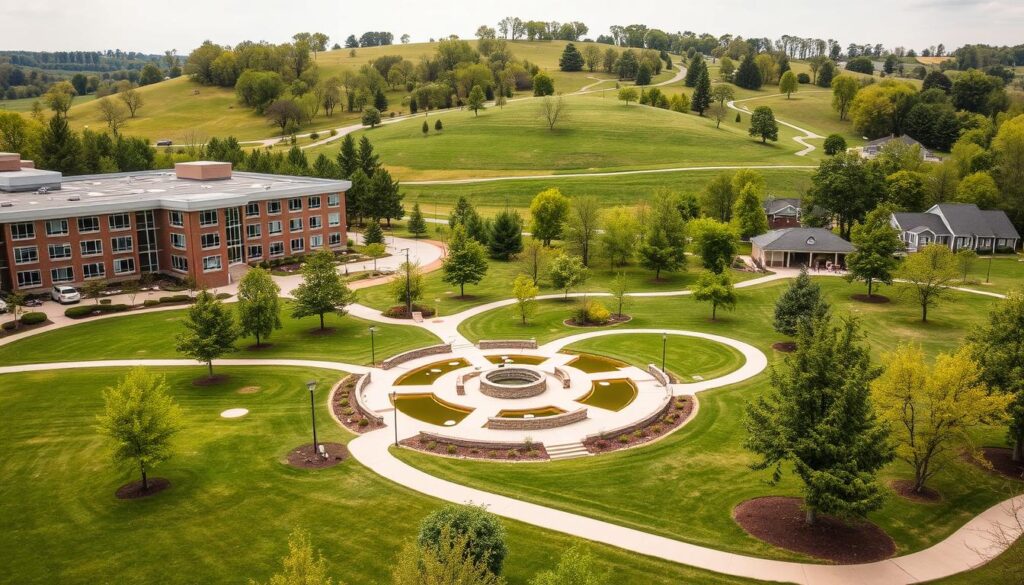
A sprawling senior community campus nestled in the heart of Arlington Heights. A serene, well-manicured landscape with lush greenery and winding paths, inviting residents to explore. In the foreground, a modern, multi-story building with a warm, welcoming facade, its large windows casting a soft, natural light. The middle ground features a tranquil courtyard, complete with benches and water features, where seniors can gather and socialize. In the background, a gently rolling hill dotted with mature trees, creating a picturesque, pastoral setting. The overall atmosphere exudes a sense of comfort, dignity, and community, perfectly suited for a Lutheran nursing home providing compassionate care for the golden years.

Proximity to Top Local Hospitals

Healthcare access shines here with 47 hospitals within 25 miles. Northwest Community Hospital sits just 2 miles away—ideal for urgent needs. For specialized treatments, Alexian Brothers Medical Center is 6.4 miles northeast. Families appreciate knowing expert care is minutes from their loved ones’ doorstep.

Beautiful Campus, Library, and Outdoor Spaces

The campus feels like a peaceful retreat with vibrant flower beds and shaded seating areas. Residents often gather in the library, where cozy chairs and a TV create a welcoming escape. A family member shared, “Mom spends afternoons here reading mysteries—it’s her happy place.”

Nearby Hospital Distance Specialty Services
Northwest Community 2.0 miles Emergency care, cardiology
Alexian Brothers 6.4 miles Orthopedics, rehabilitation
Advocate Lutheran 8.1 miles Cancer treatment, neurology

Practical amenities simplify daily life. The spacious salon offers professional styling, while ample parking ensures hassle-free visits. With its blend of natural beauty and urban convenience, this Arlington Heights location truly feels like home.

Conclusion

Choosing a senior care solution that honors both health needs and personal values can feel overwhelming. This faith-based community stands out by blending specialized medical services with heartfelt connections. Families find peace knowing their loved ones receive tailored support while maintaining cherished routines.

The hospital-affiliated location offers added security, with skilled professionals available around the clock. Multiple living options adapt as needs change, whether residents require short-term rehab or long-term memory care. Staff members build trust through consistent, compassionate interactions that go beyond basic tasks.

What truly defines this community is its commitment to nurturing whole-person wellness. From art-filled common areas to collaborative care plans, every detail reinforces dignity and belonging. For those seeking a place where expertise meets empathy, this Arlington Heights campus delivers lasting value for families.

Exploring senior care options? Consider how personalized attention and faith-centered principles can create meaningful moments in your loved one’s journey.

FAQ

What types of living options are available for seniors?

Residents can choose from assisted living, memory care, independent living, and short-term rehabilitation. Each option is designed to support individual needs while promoting engagement and comfort.

How does memory care differ from standard assisted living?

Memory care programs offer specialized support for those with dementia, including structured routines, sensory activities, and secure environments. Staff receive additional training to address cognitive challenges with compassion.

Are rehabilitation services offered on-site?

Yes! Occupational therapy, physical therapy, and speech-language pathology are available. These services help residents regain strength and independence in a supportive, well-equipped setting.

What social activities are provided for residents?

From fitness classes to art workshops and seasonal events, the community calendar prioritizes engagement. Outdoor gardens, a library, and club rooms encourage connection and lifelong learning.

How does the Arlington Heights location benefit families?

The campus is minutes from Northwest Community Hospital and downtown Arlington Heights. Families appreciate easy access to local amenities while knowing their loved ones are in a safe, vibrant environment.

Can families participate in care planning?

A> Absolutely. Open communication with staff ensures care plans reflect each resident’s preferences. Regular updates and family meetings help maintain trust and alignment with health goals.

Discover the Lutheran LCMC: A Comprehensive Overview


Since 2001, a distinct association of faith communities has reshaped the landscape of American Lutheranism. Born from theological debates within larger church bodies, this group prioritizes congregational autonomy while fostering shared mission work. Its growth—from 31 founding churches to over 1,000 worldwide—reflects a desire for balance between tradition and modern practice.

Unlike traditional denominations, this network operates as a collaborative affiliation. Member churches make independent decisions while supporting joint initiatives through resources and training. This structure appeals to congregations seeking flexibility without losing connection to Lutheran teachings.

Today, the association serves 300,000 members across 39 U.S. states and 16 countries. It positions itself as a centrist option, bridging gaps between progressive and conservative Lutheran traditions. This approach helps maintain unity while respecting diverse local practices.

Key Takeaways

  • Founded in 2001 as an alternative to existing Lutheran institutions
  • Grew from 31 to 1,000+ global congregations in 23 years
  • Operates as a collaborative network, not a centralized denomination
  • Balances traditional theology with modern congregational autonomy
  • Serves 300,000 members across 39 U.S. states and 16 nations
  • Fourth-largest Lutheran community in the United States

Introduction to the Lutheran LCMC and Its Unique Mission

A new model of church collaboration emerged in 2001, offering congregations freedom to govern themselves while staying rooted in shared beliefs. This association differs from traditional denominations by functioning as a network rather than a top-down hierarchy. Churches maintain control over local decisions but unite through joint training programs and outreach efforts.

Defining Key Terms and Purpose

This church body describes itself as “centrist” – positioned between progressive and conservative Lutheran groups. Its founding members sought to preserve core teachings while adapting to modern needs. “Our mission isn’t about control, but connection,” explains one leader. Members emphasize scripture’s authority and justification through faith alone.

The organization’s bylaws state its purpose clearly:

“To support our common mission to bear witness to the good news that sinners are put right with God by faith alone in Jesus Christ.”

This focus shapes everything from worship styles to community projects.

Setting the Stage for a Comparative Analysis

Unlike many denominations, this association doesn’t require churches to follow standardized policies. A congregation in Texas might approach social issues differently than one in Minnesota, yet both support the same evangelical teachings. This flexibility attracts churches wanting autonomy without isolation.

The structure originated from the WordAlone Network, which helped create alternatives for congregations seeking reform. Today, over 1,000 churches worldwide participate in this balance of independence and mutual support. Their approach offers fresh perspectives on age-old questions of faith and practice.

Historical Development and Growth of the LCMC

A wave of congregations seeking autonomy led to the birth of a new faith-based organization two decades ago. This group emerged as churches sought alternatives to centralized governance while maintaining core theological principles.

Foundations and Early Challenges

The WordAlone Network, formed by concerned church members, became the driving force behind this movement. Their efforts gained urgency when the ELCA’s partnership with the Episcopal Church through the “Called to Common Mission” agreement sparked debates over leadership structures.

Initial challenges included creating a sustainable framework without traditional denominational support. Charter members faced financial pressures and skepticism from established church bodies. One early leader noted:

“We weren’t rebels – we wanted to preserve traditions while embracing local decision-making.”

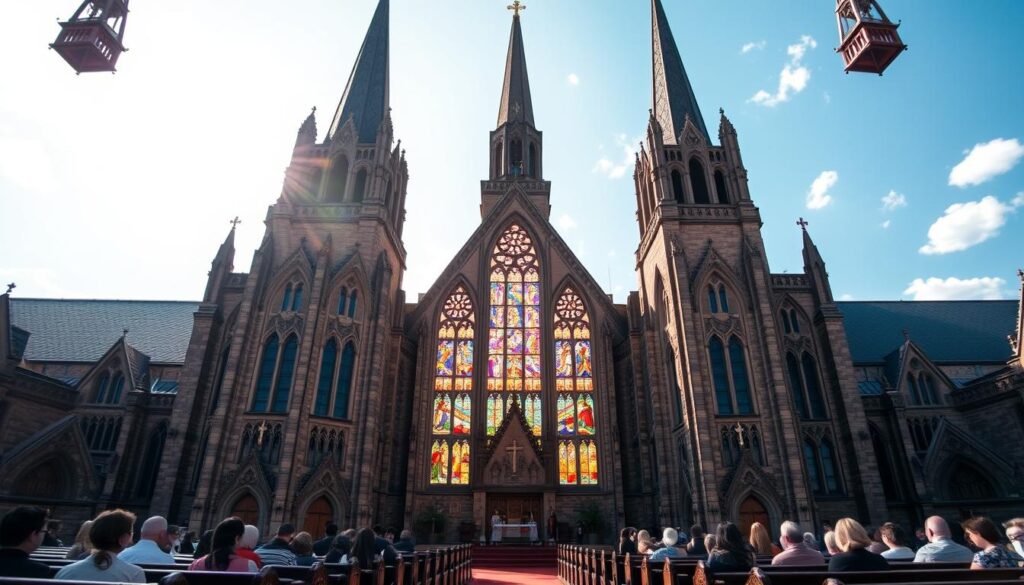
A grand church edifice, its steeple piercing the sky, stands as a testament to the faith and devotion of a Lutheran LCMC congregation. The intricate Gothic architecture, adorned with ornate stonework and stained glass windows, casts a warm glow upon the surrounding landscape. Inside, sunlight filters through the colorful panes, illuminating the simple yet reverent altar and pews where worshippers gather to celebrate their shared beliefs. A sense of timeless tradition and community pervades the scene, capturing the historical development and growth of the LCMC movement.

Expansion in the United States and Beyond

From 31 founding churches, the network now includes 812 U.S. congregations across 39 states and territories like Guam. International growth followed, with communities in 16 countries including Cambodia, Nicaragua, and Russia.

Key factors in this spread include:

  • Flexible governance models
  • Shared online resources through their website
  • Mission partnerships emphasizing community outreach

This growth mirrors ongoing conversations about authority and adaptation within modern religious organizations. By balancing independence with collaboration, the group continues to attract congregations worldwide.

Lutheran LCMC versus Other Lutheran Church Bodies

Faith communities seeking middle-ground theology often find themselves comparing this association to established denominations. Its approach bridges divides through adaptable doctrine and decentralized leadership.

Comparative Doctrinal Stances

This church body carves a unique path between progressive and conservative teachings. Unlike the ELCA’s openness to broader social policies, it maintains traditional views on scripture’s authority. Yet it diverges from strict conservative groups by allowing female clergy—a choice individual congregations can adopt or decline.

“We focus on essentials rather than enforcing uniformity,” notes a regional coordinator. This flexibility extends to biblical interpretation, where pastors balance historical context with modern application. Such positioning attracts churches wanting stability without rigid dogma.

Distinct Organizational Differences

Governance models reveal sharp contrasts with other denominations. While the ELCA uses bishops for oversight, this network lets congregations self-manage budgets, staff, and outreach. Local autonomy shapes ministry styles—urban churches might host community kitchens, while rural ones prioritize youth programs.

The rejection of hierarchical control impacts partnerships. Unlike denominations requiring full doctrinal alignment for collaboration, this group partners with diverse organizations on shared goals like disaster relief. Ranked fourth in size nationally, its growth reflects changing preferences in religious structure.

Distinctive Doctrinal Beliefs and Church Structure

This church body roots its beliefs in unchanging foundations while reimagining traditional governance. Its approach blends historic Christian teachings with innovative organizational methods, creating a unique space in modern religious practice.

Scripture as Ultimate Authority

a grand congregational church structure with a tall steeple and ornate facade, bathed in warm afternoon sunlight filtering through stained glass windows. The building's intricate architecture features elegant arches, ornate columns, and detailed stone carvings. The main entrance is flanked by large wooden doors, leading into a spacious interior with rows of pews and a central altar. The scene conveys a sense of reverence and spirituality, inviting the viewer to step inside and experience the solemn beauty of this religious institution.

The denomination holds scripture above all human interpretations. Leaders emphasize: “Our teachings stand on biblical truth, not cultural trends.” This principle shapes every aspect of ministry, from worship styles to community outreach.

Three core convictions guide their practice:

  • Freedom to interpret scripture within confessional boundaries
  • Shared accountability among member churches
  • Historical Lutheran documents as teaching tools

Governance Through Collaboration

Unlike hierarchical denominations, this network operates through collective decision-making. Local churches manage their affairs while supporting joint initiatives through resource sharing and voluntary partnerships.

Aspect Traditional Model This Approach
Scriptural Authority Interpreted by clergy Congregational discernment
Leadership Structure Bishops & hierarchy Elected councils
Decision-Making Centralized policies Local autonomy
Confessional Documents Mandatory adherence Guiding references

One pastor explains:

“We’re united by shared values, not rulebooks. Our structure lets churches address local needs while keeping doctrinal integrity.”

This balance helps congregations stay relevant without compromising core teachings.

Mission, Community Engagement, and Evangelism

Community impact and spiritual growth intertwine in this denomination’s approach to modern evangelism. Every activity flows from a central calling: sharing hope through practical action and gospel-centered teaching.

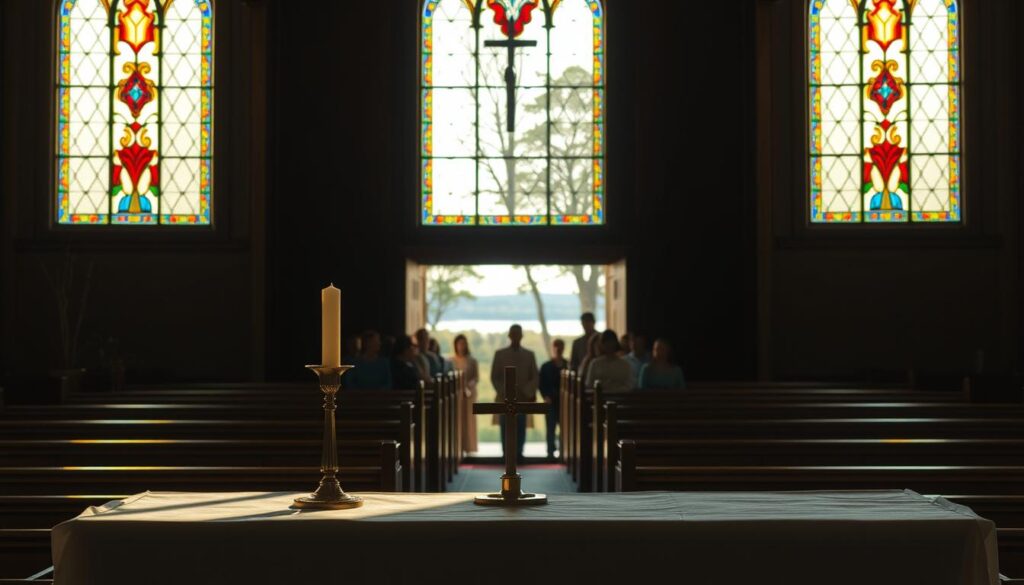
A tranquil sanctuary with stained glass windows casting a warm glow onto the wooden pews. In the foreground, a simple yet elegant altar with a cross, candlesticks, and a draped cloth. The middle ground features a group of worshippers gathered in reverent contemplation, their faces reflecting the peaceful ambiance. The background depicts a serene landscape outside, with trees and a clear sky visible through the windows, creating a sense of connection between the spiritual and natural realms. The lighting is soft and diffused, evoking a contemplative and inviting atmosphere.

Sharing the Life-Giving Gospel

The church group prioritizes discipleship through service. Over 80% of congregations run food pantries or mentorship programs. One pastor shares: “We meet physical needs to open doors for spiritual conversations.”

Three key strategies define their work:

  • Training lay leaders through online courses
  • Supporting 42 global missionaries
  • Funding new worship communities in underserved areas

“Our common mission isn’t about numbers—it’s about changed lives,”

Local churches choose outreach methods matching their community’s needs. Urban congregations often host job fairs, while rural ones focus on youth camps. This flexibility helps members address real issues while sharing their faith.

The denomination’s website offers free resources like evangelism toolkits and Bible study guides. These tools help small churches launch impactful programs without large budgets. Recent initiatives include disaster relief partnerships and addiction recovery networks.

Controversies and Critical Debates in the LCMC

Navigating complex theological debates remains a defining challenge for this growing association. While its flexible structure attracts diverse congregations, differences in practice spark ongoing discussions about unity and doctrine.

Balancing Tradition and Modern Practice

The ordination of women illustrates the association’s middle-ground approach. Unlike conservative denominations that forbid female clergy, it lets individual churches decide. Some congregations welcome women as pastors, while others restrict leadership roles based on traditional interpretations.

Critics argue this variance creates doctrinal inconsistency. One conservative leader notes: “Scripture’s teachings shouldn’t be optional.” The body also faces scrutiny for allowing pastors trained at non-Lutheran seminaries, raising questions about confessional alignment.

Partnerships and Accountability

Dual membership policies generate both freedom and friction. Churches can join other denominations while remaining part of the association—a practice uncommon in most religious bodies. This openness fosters collaboration but complicates accountability, as pastors might answer to multiple governing groups.

The association’s human sexuality stance adds clarity amid these debates. All clergy must affirm traditional marriage views, creating shared boundaries while respecting local autonomy. These careful balances show how modern faith communities navigate unity without uniformity.

FAQ

How does the LCMC differ from other Lutheran groups?

The Lutheran Congregations in Mission for Christ prioritizes congregational autonomy, allowing local churches to make decisions without centralized oversight. This contrasts with bodies like the ELCA or LCMS, which follow more hierarchical structures. Doctrinally, it emphasizes scripture and the Lutheran Confessions while encouraging flexibility in ministry approaches.

What core beliefs define the LCMC?

Affirming the authority of the Bible and the Lutheran Confessions, this church body focuses on sharing the Gospel, fostering community outreach, and supporting congregational-led missions. Its teachings align with historic Lutheran theology but avoid rigid denominational mandates.

Does the LCMC allow women to serve as pastors?

Yes. Unlike some Lutheran denominations, the LCMC permits individual congregations to decide whether to ordain women. This approach reflects its commitment to local autonomy while encouraging dialogue on theological and cultural matters.

How is the LCMC structured organizationally?

It operates under a congregational polity model, meaning each church governs itself independently. There’s no central hierarchy imposing rules, though member congregations collaborate through networks, training programs, and shared mission projects.

What role does evangelism play in the LCMC?

Spreading the Gospel is central to its identity. Churches within this association often engage in local and global missions, community service, and partnerships that reflect their commitment to “life-giving” faith practices and outreach.

Can LCMC churches partner with other denominations?

Absolutely. While maintaining Lutheran theological roots, congregations frequently collaborate with non-Lutheran groups on joint initiatives, disaster relief, or interdenominational worship events, fostering unity without compromising doctrinal distinctives.

How has the LCMC grown since its founding?

Starting with a small group of congregations in 2001, it has expanded to over 800 churches across the U.S. and internationally. Growth stems from its flexible structure, focus on mission, and appeal to communities seeking less bureaucratic oversight.

Lutheran World Federation: Empowering Lutherans Worldwide


For over 75 years, a remarkable faith-based network has united millions of believers across continents. This global communion connects 150 member churches in 99 countries, fostering shared values and collaborative action. Its roots trace back to 1947 in Lund, Sweden, where leaders sought unity after the fractures of World War II.

Headquartered in Geneva, Switzerland, the organization leverages its central location to coordinate international programs. From disaster relief to theological education, it supports churches through practical resources and advocacy. Members collaborate on pressing issues like climate justice and refugee support while nurturing interfaith dialogue.

What makes this alliance unique? It balances spiritual guidance with real-world impact. Through initiatives spanning six continents, it empowers local congregations to address community needs while maintaining a united global voice. This approach has helped shape modern Christian identity for generations.

Key Takeaways

  • Connects 150 member churches across 99 countries
  • Founded in 1947 to promote post-war unity
  • Geneva hub enables global coordination
  • Focuses on humanitarian aid and social justice
  • Strengthens both local and international Lutheran ties

The Rich History of the Lutheran World Federation

In 1947, as nations rebuilt from war, church leaders chose neutral Sweden to launch a new era of cooperation. The historic city of Lund became the birthplace of a structured alliance replacing earlier informal partnerships. This shift allowed faith communities to address postwar challenges with united strength.

Founding in 1947 at Lund, Sweden

American pastor Sylvester Michelfelder became instrumental in the federation’s early success. His leadership secured $45 million—equivalent to $500 million today—to rebuild German worship spaces. By 1951, membership grew to 52 churches across 25 countries, proving the model worked.

Evolution of Global Church Collaboration

What began as crisis response became lasting partnership. The network now connects 150 member churches through shared spiritual life and joint action. Modern programs address climate issues and refugee support while honoring the founders’ vision.

Annual events continue fostering dialogue between different traditions. This growth reflects changing needs while maintaining core values—a balance making the alliance uniquely effective across generations.

Clarifying the Mission and Core Aims

Bridging theological principles with real-world impact defines this international alliance’s purpose. At its core lies a dual focus: nurturing spiritual connections while addressing humanity’s most pressing needs. The organization operates as both a faith community and a force for practical change, guided by centuries-old beliefs adapted for modern challenges.

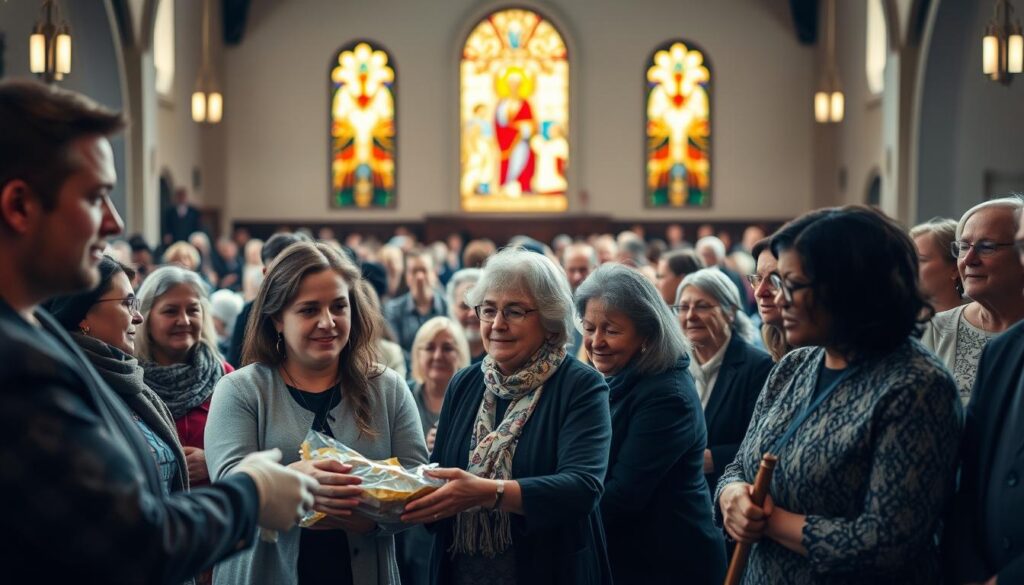
A serene sanctuary filled with a diverse congregation, their faces aglow with purpose. In the foreground, a group of Lutherans engage in acts of service - distributing food, tending to the sick, and embracing the marginalized. The middle ground showcases a sense of unity, as members of various ages and backgrounds work in harmony, their expressions radiating compassion. In the background, stained glass windows cast warm, diffused light, imbuing the scene with a sacred, transcendent atmosphere. The overall composition conveys the Lutheran World Federation's mission of empowering Lutherans worldwide through their core aim of Christian unity and service initiatives.

Commitment to Diakonia and Christian Unity

Diakonia – the practice of selfless service – shapes every initiative. This ancient concept drives modern programs supporting refugees, combating hunger, and protecting ecosystems. Members believe caring for creation demonstrates reverence for the divine, making environmental work as sacred as worship.

Unity emerges through shared resources and knowledge. Churches exchange disaster response strategies while collaborating on education projects. Theological dialogues help reconcile different interpretations of scripture, strengthening bonds across cultures. “When we combine our strengths, miracles happen in communities,” notes a program director in Kenya.

Economic justice efforts tackle root causes of poverty through microloans and job training. Peacebuilding workshops bring conflicting groups together, using faith as common ground. These actions show how spiritual values can transform social systems when paired with determined action.

By aligning local efforts with global priorities, the network amplifies its impact. A congregation’s food bank in Ohio connects to drought relief in Ethiopia through shared funding and expertise. This interconnected approach makes hope tangible for millions worldwide.

Understanding Global Membership and Lutheran Communion

Imagine a spiritual family stretching from Jakarta to Johannesburg. This diverse network unites believers through shared traditions while celebrating unique cultural expressions. At its heart lies a simple truth: faith thrives through connection.

Member Churches Across 99 Countries

The communion’s strength comes from its 150 member churches across six continents. Africa leads in growth, with Ethiopia’s 12-million-strong church showing how ancient traditions blend with modern vitality. Tanzania’s 8.5 million members prove community-focused ministries resonate deeply.

Region Largest Church Members
Africa Ethiopian Evangelical 12 million
Asia Batak Christian (Indonesia) 6.3 million
Europe Church of Sweden 5.4 million

European members like Denmark’s 4.2-million-strong church anchor historical roots. “Our diversity makes us stronger,” shares a Norwegian pastor. “When Indonesian hymns meet Swedish liturgy, we see God’s creativity.”

Since 1984, all members share full communion rights. Pastors exchange pulpits freely – a Tanzanian minister might lead Sunday service in Minnesota. This mutual trust turns theological unity into practical partnership.

Humanitarian Action: World Service in Action

When crisis strikes, hope arrives through practical action. The organization’s World Service operates in 27 countries, delivering life-changing support to over 2.5 million people annually. This initiative blends emergency response with lasting solutions, turning survival into stability.

Rights-Based Approaches to Relief and Development

Every intervention begins with dignity. Instead of temporary fixes, teams focus on empowering populations through three pillars:

  • Creating sustainable income opportunities
  • Improving access to healthcare and education
  • Strengthening community safety nets

In South Sudan, farmers receive drought-resistant seeds alongside legal help to claim land rights. Syrian refugees in Jordan gain vocational training while accessing trauma counseling. This dual approach addresses both immediate needs and systemic barriers.

Responsive Strategies for Local and Global Needs

Flexibility defines their success. When cyclones hit Mozambique, mobile clinics arrived within 72 hours. In prolonged crises like Myanmar’s refugee exodus, they’ve maintained education programs for 12+ years. Local leaders co-design projects, ensuring cultural relevance.

As the UNHCR’s ninth-largest partner, the World Service bridges grassroots insights with global policy. “Our strength comes from listening,” explains a field coordinator in Guatemala. “Communities know their priorities better than anyone.”

Empowering Women and Promoting Social Justice

Religious institutions are rewriting leadership rules, and this global network leads the charge. Over 80% of its member churches now ordain women as ministers – a stark contrast to many faith groups. This shift reflects deep theological reflection paired with bold action for equality.

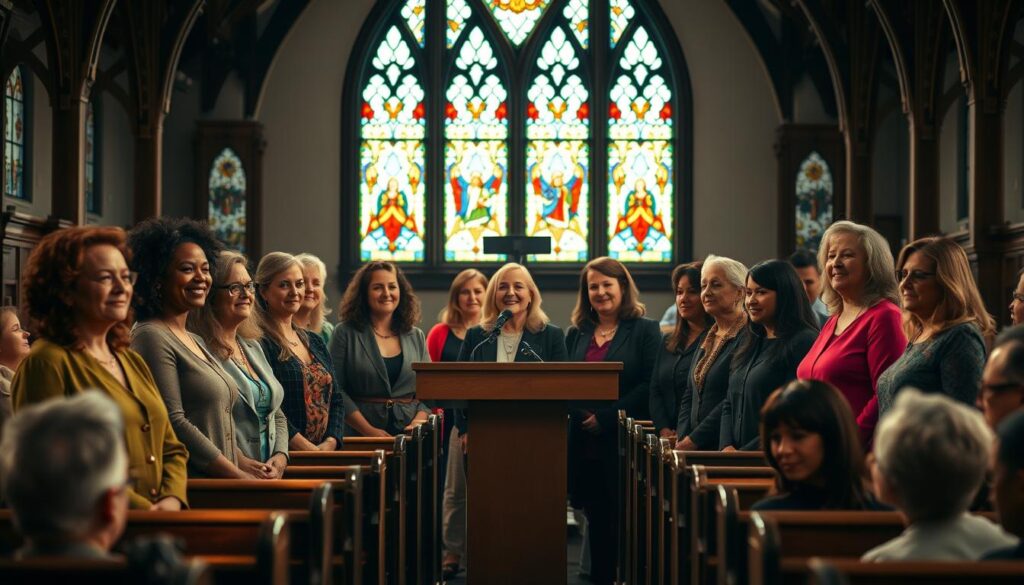
A serene, well-lit interior of a Lutheran church, with a group of diverse women standing at the podium, their expressions radiating confidence and leadership. The stained-glass windows cast a warm, ethereal glow, illuminating the space. In the middle ground, pews filled with attentive congregants, their faces reflecting a sense of community and empowerment. In the background, ornate wooden beams and intricate architectural details suggest a reverent and historic setting. The overall mood conveys a profound sense of unity, strength, and a commitment to social justice, as the women leaders guide and inspire their faithful followers.

Breaking Barriers in Spiritual Leadership

Anne Burghardt’s 2021 election as General Secretary made history. The Estonian theologian became the first woman to hold this top role, guiding the organization’s 150-member network. Her seven-year term signals lasting change in religious power structures.

Region Churches Ordaining Women Percentage
Africa 42 78%
Asia 28 82%
Europe 39 91%
Americas 10 67%

Progress extends beyond ordination. Leadership programs help female clergy navigate cultural challenges. Theological schools now teach inclusive scriptural interpretations. “When women lead, entire communities thrive,” notes a seminary director in Namibia.

The focus on rights and status reaches beyond church walls. Economic justice projects target gender pay gaps. Safety initiatives protect women in conflict zones. By modeling equality internally, the network inspires broader social transformation.

Leveraging Global Partnerships & Peace Initiatives

Global challenges demand collaborative responses. This faith-based network holds Associated status with the UN Department of Global Communications, opening doors to high-level cooperation. Through 15+ partnerships with international bodies, it multiplies its ability to address hunger, displacement, and inequality.

A serene landscape showcasing the power of global partnerships and peaceful initiatives. In the foreground, two diverse figures extend their hands in a symbolic gesture of unity, their expressions radiating warmth and understanding. The middle ground features a tapestry of cultural icons and symbols, representing the rich diversity of the world. In the background, a majestic mountain range rises, capped with snow and bathed in a soft, golden light, conveying a sense of timeless tranquility. The scene is illuminated by a diffused, natural lighting that casts gentle shadows, creating a harmonious and inspiring atmosphere.

Collaborations with United Nations Agencies

The organization teams up with specialized UN teams to boost its world service efforts. Working with the World Food Programme, it delivers meals to 800,000 people annually in crisis zones. Refugee support activities with UNHCR provide shelter kits and legal aid to displaced families.

Observer status at the International Organization for Migration helps protect migrant rights across borders. In Africa, partnerships with UN economic experts tackle poverty through farming innovations. Emergency responses with OCHA ensure rapid aid delivery during disasters.

These alliances create unique dialogue opportunities. Faith leaders share grassroots insights at UN policy forums, while secular experts advise on sustainable solutions. “Our joint work proves shared values transcend differences,” remarks a program coordinator in Geneva.

By bridging spiritual and secular networks, the initiative builds lasting peace. Training programs in conflict zones combine trauma counseling with job skills – addressing both emotional wounds and economic needs. This holistic approach transforms communities while modeling effective cross-sector cooperation.

Innovative Strategies of the Lutheran World Federation

True innovation shines when crisis meets smart planning. The organization’s approach weaves emergency aid with lasting solutions, creating a safety net that adapts as challenges evolve. Development isn’t an afterthought here—it’s built into every crisis response from day one.

Teams start by addressing urgent needs like food or shelter. This builds trust, opening doors for deeper work. A farmer in drought-stricken Kenya might first receive emergency seeds, then training in climate-smart agriculture. The same logic applies to education activities in refugee camps—basic schooling leads to vocational programs.

What makes these resources stand out? They operate on three levels at once:

  • Equipping individuals with practical skills
  • Strengthening community decision-making
  • Partnering with governments on policy changes

This multi-layered method prevents the common gap between short-term aid and long-term growth. When floods hit Bangladesh last year, mobile health clinics arrived within days. Six months later, those same teams were installing flood-warning systems.

The strategy thrives on flexibility. Program managers constantly adjust to new data—like shifting funds from malaria nets to COVID vaccines during the pandemic. “Our plans have checkpoints, not finish lines,” explains a field coordinator in Guatemala.

Annual events like the Global Partners Forum help share these adaptable models across regions. This cycle of action, learning, and scaling turns local successes into worldwide impact.

Strengthening Human Rights and Protection Efforts

In regions torn by conflict or disaster, human dignity remains non-negotiable. The organization’s approach centers on empowering communities through rights-based solutions that address both immediate dangers and systemic challenges. Teams work closely with displaced families and host populations to create lasting safety nets.

Championing Safety Through Active Advocacy

Every intervention begins by listening. Refugee camps in Uganda see legal experts helping people reclaim land titles while trauma counselors heal invisible wounds. In Central America, migrant shelters provide medical care alongside human rights education – blending practical aid with systemic change.

Programs prioritize protection through innovative partnerships. Local leaders co-design early warning systems for flood zones. Women in conflict areas receive self-defense training and economic tools to rebuild lives. This dual focus on physical safety and personal agency transforms survival into stability.

By treating human rights as foundational rather than aspirational, the network helps vulnerable populations reclaim control. As one Syrian refugee in Jordan shared: “They didn’t just bring food – they brought hope we could build futures here.”

FAQ

How does the organization support communities during crises?

Through rights-based approaches, it prioritizes local needs while addressing systemic issues. Programs focus on long-term development alongside emergency aid, ensuring vulnerable groups receive protection and resources.

What role do member churches play in global initiatives?

Churches in 99 countries collaborate through shared values like justice and unity. They shape policies, share resources, and amplify grassroots voices within the communion’s decision-making processes.

Why is gender equality a focus for the organization?

Empowering women strengthens leadership diversity and ensures fair representation in religious and social spaces. Initiatives address barriers to equality, fostering inclusive communities where all voices are heard.

How does the group partner with international agencies?

Collaborations with groups like the UNHCR enhance disaster response and refugee protection. These partnerships combine expertise to advocate for human rights and sustainable peacebuilding worldwide.

What makes their humanitarian strategies unique?

By blending faith-driven values with practical solutions, they address root causes of poverty and conflict. Their work emphasizes dignity, ensuring aid recipients actively participate in shaping their futures.

How are refugees and displaced people supported?

Advocacy efforts secure legal protections, while on-the-ground services provide shelter, education, and healthcare. The focus remains on restoring stability and empowering displaced populations to rebuild their lives.

Lutheranism 101: Discover the Foundations of the Lutheran Church


What defines a Lutheran identity? For many, it’s family recipes, familiar hymns, or holiday traditions passed through generations. But this faith goes deeper than cultural touchstones. At its core, the Lutheran Church centers on a revolutionary idea: that grace alone through faith transforms lives.

While northern Europe once held most members, the global landscape has shifted dramatically. Africa now hosts over 15 million Lutherans – more than Germany’s 13 million. Asia and the Middle East combined have nearly as many followers as North America. This growth reveals a faith adapting to new cultures while keeping its essence intact.

Lutheranism 101 isn’t about memorizing history dates or doctrine. It’s understanding how a 500-year-old reformation still speaks to modern people. From bustling cities to rural villages, believers unite under shared values: scripture as ultimate authority, worship that educates, and service that uplifts communities.

This guide explores how the gospel message shaped a movement now spanning 75 million members worldwide. You’ll discover why sacraments matter, how local customs blend with universal truths, and what makes this tradition distinct yet welcoming to all.

Key Takeaways

  • Global Lutheran community now spans 75 million across six continents
  • Core teachings focus on grace, faith, and scripture’s authority
  • Cultural traditions complement rather than define spiritual practice
  • Origins trace to 16th-century reforms emphasizing accessible worship
  • Diverse expressions maintain unity through shared confessions

Introduction to the Lutheran Church

In the heart of 16th-century Europe, a religious revolution began with ink and parchment. Martin Luther’s bold questions about church practices sparked reforms that reshaped Christianity. His goal? To clarify the Christian faith by emphasizing God’s grace as the path to salvation.

Understanding the Historical Context

Imagine a world where spiritual leaders sold forgiveness like tickets to heaven. Luther challenged this corruption, arguing faith alone—not payments or rituals—connects people to divine mercy. He translated scripture into everyday language, making worship accessible to all.

Defining Key Terms in Lutheranism

Four words shape Lutheran identity:

  • Evangelical: Rooted in the gospel’s good news
  • Catholic: Part of Christianity’s universal tradition
  • Ecumenical: Committed to Christian unity
  • Reforming: Always refining practices to match scripture

Ironically, “Lutheran” started as a slur from critics. Followers preferred “evangelical Christians”—a name reflecting their focus on scripture’s core message. This blend of traditions and fresh understanding keeps the faith vibrant across cultures today.

Lutheranism 101: Foundations of Faith

At the center of Lutheran belief lies a radical promise: God’s love isn’t a reward. It’s a gift available to everyone through Jesus Christ. This simple truth reshaped Christianity 500 years ago and still defines the faith today.

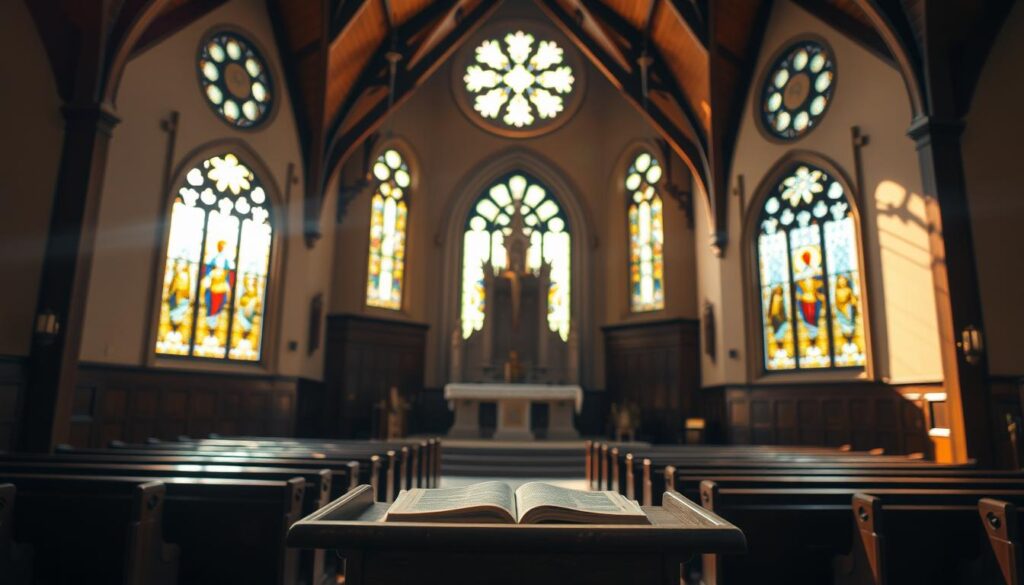
A serene, sunlit sanctuary with ornate, stained-glass windows casting a warm, reverent glow. In the foreground, a simple wooden pulpit stands, its surface adorned with a worn, leather-bound Bible, a testament to the timeless gospel message. Behind it, a vaulted, wooden ceiling soars, supporting a sense of grandeur and the divine. The middle ground features elegant, wooden pews, their polished surfaces reflecting the light, inviting the faithful to gather and worship. In the background, a magnificent, stone altar stands as the centerpiece, its ornate, intricate design symbolizing the profound spiritual truths at the heart of the Lutheran faith.

The Core Message of the Gospel

Early reformers preferred “evangelical Christian” over “Lutheran” for good reason. Their focus was the good news—that salvation comes through grace alone, not human effort. As one believer put it: “We’re beggars showing others where to find bread.”

This approach changed how people read scripture. Passages became less about rules and more about God’s promises. Worship shifted from Latin rituals to services where everyone understood the message.

What Sets Lutheranism Apart

Three key features define this tradition:

  • Scripture first: The Bible guides all teachings
  • Sacraments as gifts: Baptism and Communion connect believers to grace
  • Christ-centered identity: Followers unite under Jesus, not human leaders

Martin Luther famously opposed using his name for the movement. He insisted true faith points to Christ, not any person. This humility still shapes Lutheran communities worldwide.

Historical Roots and Martin Luther’s Reformation

When a German monk nailed his arguments to a church door in 1517, he ignited more than theological debate. Martin Luther’s bold stand against Roman Catholic practices grew from personal anguish over salvation. His studies led to a breakthrough: divine grace couldn’t be bought or earned—only received through faith.

Martin Luther’s Life and Challenge to Rome

Luther’s journey began in law school before a lightning storm shifted his path. As an Augustinian monk, he wrestled with feelings of unworthiness. Collaborating with scholars like Philipp Melanchthon, he developed ideas that challenged papal authority and reshaped Christian thought.

German princes saw strategic value in supporting this movement. Their backing provided political cover against Rome’s pushback. This partnership between theologians and leaders created space for radical reforms to take root.

The Birth of the Lutheran Church

The 1530 Augsburg Confession became the cornerstone document for reformers. Melanchthon’s clear articulation of beliefs helped standardize practices across regions. Fifty years later, Book of Concord united various confessional writings into one authoritative guide.

What started as protests against indulgences became a structured church tradition. Through collaboration and careful documentation, reformers built lasting foundations for Lutheran theology that still guide worship and doctrine today.

Core Doctrines: Justification, Law, and Gospel

Imagine standing before a locked door, holding a key you didn’t earn. This visual captures the Lutheran view of justification—a gift unlocked by God’s grace rather than human effort. At the Reformation’s heart beats this truth: we’re made right with God through trust, not transactions.

Justification by Grace Through Faith

Martin Luther called this teaching “the article by which the church stands or falls.” Unlike earning wages, grace arrives as surprise inheritance. As one reformer wrote: “Faith isn’t counting good deeds—it’s catching the lifeline God throws.”

This faith isn’t about passing theology exams or mustering emotional certainty. It’s relational trust—like leaning back into strong arms you can’t see. The Augsburg Confession states it plainly: Christ’s sacrifice covers our flaws completely.

Law Versus Gospel in Daily Life

Lutherans see God’s word through two lenses. The law acts like a mirror, showing our imperfections. The gospel functions as medicine, healing what the law reveals. Both work together like traffic signals—red lights stopping harmful choices, green lights moving us toward mercy.

In practice, this means sermons might challenge listeners with moral standards, then comfort them with promises of God’s grace. Believers navigate life holding both truths: striving to love neighbors while resting in forgiveness when they fall short.

The Means of Grace: Sacraments and Worship Practices

Picture a toolbox filled with tools that build faith. For Lutherans, sacraments work like those tools—practical ways God delivers love and forgiveness. The Augsburg Confession calls these “means of grace,” where ordinary elements become channels for divine connection.

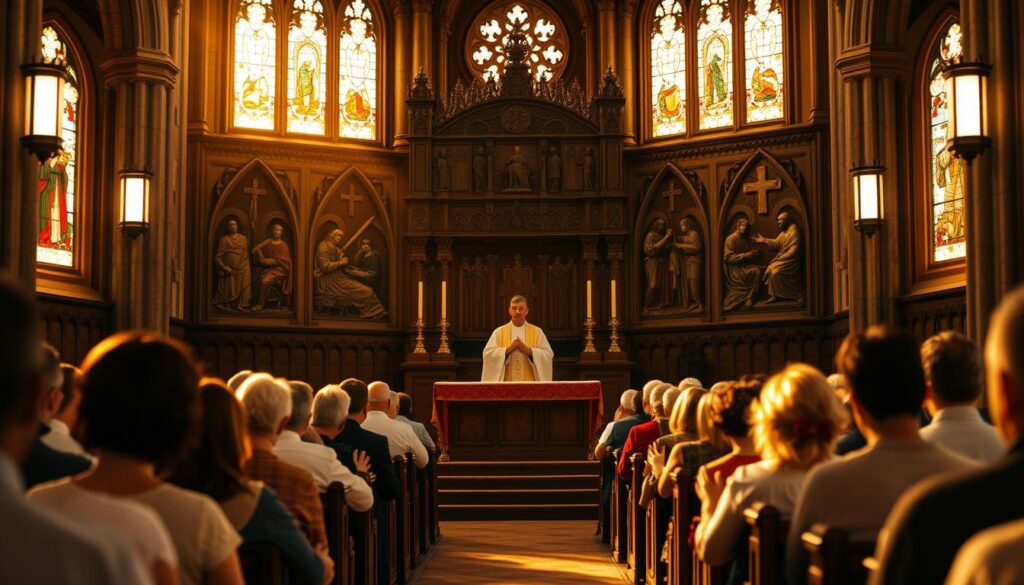
A serene cathedral interior, bathed in warm, golden light filtering through stained-glass windows. In the foreground, an ornate, carved wooden altar adorned with sacramental elements - a chalice, paten, and candlesticks. Congregants kneel in pews, hands clasped in reverent prayer, as a pastor in liturgical robes presides over the solemn Eucharistic celebration. Intricate wall-mounted carvings and tapestries depict biblical scenes, creating an atmosphere of contemplative, transcendent worship. The space exudes a sense of timeless tradition and the mysteries of the Lutheran faith.

Baptism, Communion, and Absolution

Three sacred acts shape Lutheran spiritual life:

  • Baptism: Starts the faith journey through water and God’s promise
  • Communion: Nourishes believers with Christ’s presence in bread and wine
  • Absolution: Declares forgiveness through spoken words of mercy

These means of grace aren’t magic tricks. They’re encounters where God’s word meets physical elements. Worship becomes a workshop—a place where grace repairs broken spirits and fuels daily living.

Sacrament Symbol Purpose
Baptism Water New spiritual birth
Communion Bread & Wine Renewed strength
Absolution Spoken words Restored relationship

Why does worship matter so much? Because Lutherans see Sunday services as God’s active workbench. The church isn’t a club for perfect people—it’s a garage where broken lives get fixed through scripture and sacrament.

Lutheran Identity: Saints, Sinners, and the Priesthood

Ever felt like a walking contradiction? Lutherans embrace this tension through a groundbreaking view of human nature. Martin Luther taught that believers live as both saints and sinners—fully forgiven yet still wrestling with imperfections. This dual identity offers hope to real people navigating messy lives.

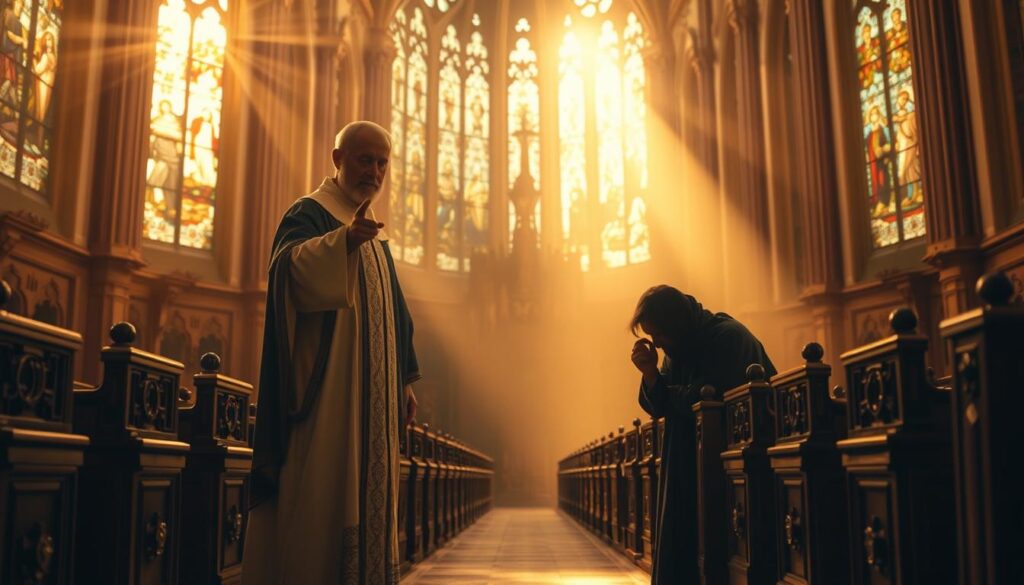
A majestic cathedral interior, bathed in warm, golden light streaming through stained glass windows. In the foreground, two figures stand in stark contrast - a saintly, robed figure radiating benevolence, and a cowering, shadowy figure representing the sinner. The saintly figure extends a hand in forgiveness, while the sinner's face is shrouded in guilt and remorse. Ornate wooden pews and intricate architectural details fill the middle ground, creating a sense of reverence and gravitas. The background fades into a hazy, ethereal atmosphere, emphasizing the spiritual and transcendent nature of the scene. Soft, dramatic lighting and a careful, cinematic composition evoke the weight and significance of the Lutheran identity as both saint and sinner.

The Dual Nature of Being a Saint and Sinner

Imagine wearing two name tags at once: “Beloved Child of God” and “Work in Progress.” Unlike some traditions that separate spiritual elites from ordinary folks, Lutherans believe all Christians hold both titles. As Luther wrote: “We’re 100% sinner, 100% saint—not half-and-half.”

This perspective changes how believers approach sin. Confession becomes less about earning forgiveness and more about receiving mercy already given. High moral standards remain, but failures don’t define one’s worth.

Traditional View Lutheran View
Saints = holy people Saints = forgiven people
Calling = religious jobs Calling = everyday work
Priests = clergy only Priests = all believers

The priesthood of all believers transforms ordinary life into sacred service. Changing diapers or fixing cars becomes holy work when done in love. Lutherans Roman Catholics initially clashed over this idea, but today many Christian groups embrace its empowering message.

Through this lens, good works flow naturally from gratitude rather than obligation. Believers serve neighbors not to earn points with God, but because they’ve already received unshakable grace.

Embracing Cultural and Liturgical Traditions in America

Crossing the Atlantic meant more than a change of address for early Lutheran immigrants. They carried traditions shaped by state-supported European churches into a land of religious free markets. This shift demanded creative adaptations while preserving core beliefs.

Building Faith in a New World

German and Scandinavian settlers initially clustered in language-based communities. But as generations passed, a pressing question emerged: How does the Lutheran Church thrive without government support? Leaders turned to the Small Catechism, using Luther’s simple teachings to unite diverse people.

Modern Worship, Timeless Truths

Sunday services became laboratories for cultural fusion. Hymns kept European melodies but gained English lyrics. Potluck dinners blended schnitzel with apple pie. Through these changes, sacraments remained anchors—water, bread, and wine speaking across language barriers.

Today’s churches honor heritage while embracing innovation. From multimedia sermons to community gardens, Lutherans prove worship adapts without losing its soul. The result? A faith that feels both ancient and urgently relevant.

FAQ

What is the central focus of Lutheran theology?

Lutheran theology centers on justification by grace through faith. This means salvation is a free gift from God, received by trusting in Jesus’ sacrifice—not by human effort or good works.

How did Martin Luther influence the Lutheran Church?

Martin Luther’s teachings challenged Roman Catholic practices in the 16th century. His emphasis on Scripture alone, faith alone, and grace alone sparked the Protestant Reformation, leading to the formation of Lutheran churches.

What sacraments do Lutherans recognize?

Lutherans affirm two sacraments: Baptism and Communion. These are seen as tangible ways God delivers His grace to believers, rooted in Jesus’ direct commands and promises.

How do Lutherans view the relationship between Law and Gospel?

The Law reveals human sinfulness, while the Gospel offers forgiveness through Christ. Lutherans see both as essential—the Law guides moral living, and the Gospel brings hope and renewal.

Why do Lutherans emphasize "saints and sinners"?

This phrase captures the Lutheran belief that believers are simultaneously righteous (through Christ) and sinful (due to human nature). It highlights reliance on God’s grace, not personal perfection.

How has Lutheranism adapted to American culture?

Lutheran churches in America blend European liturgical traditions with local customs. Many incorporate English-language services, contemporary worship music, and community-focused outreach while preserving core teachings.

What role does the Bible play in Lutheran worship?

Scripture is the ultimate authority. Lutheran services include readings from Old and New Testaments, sermons grounded in biblical teaching, and hymns that reflect God’s promises.

Do Lutherans believe in good works?

Yes—but not as a way to earn salvation. Good works flow naturally from faith, serving others and glorifying God. Lutherans see them as a response to grace, not a requirement for it.