Recent Posts

Lutheran Witness: Inspiring the Lutheran Faith


For over a century, one publication has united millions of believers across America. The Lutheran Church – Missouri Synod (LCMS), with 1.7 million members, relies on its flagship magazine to strengthen connections between local congregations and the wider faith family. This trusted resource tackles modern spiritual questions while staying rooted in timeless Christian values.

Recent editions explore topics like “Covenant or Testament” and deep dives into the Book of Acts. Through practical articles and uplifting stories, readers discover how biblical teachings apply to daily life. The content balances theological depth with real-world examples of missionary work and church leadership.

What makes this magazine unique? It serves as both a spiritual compass and community bulletin board. Members share triumphs, discuss challenges, and celebrate shared traditions. Whether discussing family dynamics or global outreach efforts, every page reinforces the importance of living out one’s beliefs.

Key Takeaways

  • Official publication of the second-largest Lutheran denomination in the U.S.
  • Connects 1.7 million members with faith-based insights and church updates
  • Explores scripture through modern lenses like covenant theology
  • Highlights inspirational stories from local faith communities
  • Strengthens denominational unity through shared information

Introduction to the Lutheran Faith

At the heart of this Christian tradition lies a powerful message of divine love and human connection. Born from Martin Luther’s 16th-century teachings, its core principle remains unchanged: salvation comes through grace, not human effort. This belief shapes how members live, pray, and support one another.

Roots and Revelations

The movement began as a bold call to center Christian life on Scripture. Luther’s emphasis on accessible worship transformed how people engage with sacred texts. Today, churches maintain this focus through Bible-centered sermons and sacraments like baptism. “We’re saved by faith in Christ alone,” explains a pastor from Illinois, “not by our works.”

Together in Faith

Sunday services unite believers through time-honored rituals and modern hymns. Shared communion strengthens bonds between members while reminding them of God’s promises. Many congregations pair traditional liturgy with outreach programs, feeding neighbors and tutoring students.

Education remains vital, with church schools teaching both academic subjects and spiritual values. This dual focus helps families nurture minds and hearts. From preschools to universities, these institutions prepare learners to serve their communities with compassion.

The Historical Journey of the Lutheran Church – Missouri Synod

Crossing stormy Atlantic waters in wooden ships, German immigrants carried their faith like precious cargo. Their journey reshaped American religious history through sacrifice and conviction.

A group of Saxon Lutherans embarks on their historic immigration journey, sailing across the vast ocean in a wooden ship. The foreground depicts the determined faces of the travelers, their expressions a mix of hope and trepidation. The middle ground showcases the ship's intricate details, its masts and sails reflecting the golden hues of the setting sun. In the background, the horizon line blends seamlessly with the calming, azure waters, symbolizing the vast unknown that lies ahead. The scene is illuminated by a warm, soft light, casting a sense of melancholy and reverence, capturing the gravity of this pivotal moment in the Lutheran faith's history.

Origins and Saxon Immigration

In 1838, over 600 believers boarded ships to escape religious restrictions. Led by Martin Stephan, this group sought freedom to practice their beliefs without compromise. They arrived in New Orleans during brutal winter months, facing disease and harsh conditions.

Stephan’s leadership soon crumbled amid financial misconduct claims. His removal created a crisis of trust. But from this turmoil rose C.F.W. Walther, a theologian who united the scattered communities through clear biblical teaching.

Early Leaders and Founding Moments

Twelve determined pastors gathered in Chicago on April 26, 1847. Representing fourteen congregations, they formed the German Evangelical Lutheran Synod. Walther became its first president, steering the group toward doctrinal consistency.

These pioneers built churches while preserving German traditions. Their conservative approach attracted other communities valuing scriptural authority. By prioritizing education and trained clergy, they laid foundations for sustained growth across America.

One early member wrote: “We planted not just churches, but outposts of truth.” This vision propelled the synod to become a cornerstone of confessional Christianity in the New World.

Lutheran Practices and Worship Traditions

Weekly rhythms of spiritual life unite believers through sacred routines passed down generations. These traditions create bridges between ancient Christian practices and modern expressions of devotion.

Sunday Worship Services and Sacraments

Morning gatherings typically feature structured liturgies with hymns, prayers, and scripture readings. At Zion Church, two Sunday services (8:00 & 10:30 AM) let families choose their preferred time for worship. Between these, adults dive into Bible study while children explore faith through age-appropriate lessons.

Wednesday evenings offer a 7:00 PM service designed for busy households. “Short doesn’t mean shallow,” notes a local pastor. “We focus on core elements that nourish souls without overwhelming schedules.”

The Role of the Lord’s Supper

Communion stands as the heartbeat of weekly gatherings. Unlike some Christian traditions, these churches celebrate the Lord’s Supper at every Sunday service. Members view it as Christ’s tangible gift of grace, not merely symbolic remembrance.

The sacrament’s frequency reflects its spiritual importance. Through bread and wine, believers experience forgiveness and renewed strength. As one member shares: “Receiving the Lord’s Supper weekly anchors me in God’s promises during life’s storms.”

Exploring the lutheran witness in Today’s Culture

A modern Lutheran church stands tall, its steeple reaching towards the sky. In the foreground, a diverse congregation gathers, their faces reflecting a spectrum of ages and ethnicities. They engage in lively discussion, their gestures animated as they share their faith and its relevance in the 21st century. The mid-ground reveals a bustling urban landscape, skyscrapers and neon signs a testament to the ever-changing nature of culture. Yet, the church remains a steadfast beacon, its stained-glass windows casting a warm, inviting glow. Soft, natural lighting illuminates the scene, creating an atmosphere of reflection and contemplation. This image captures the Lutheran witness, adapting to the demands of modern life while staying true to its enduring spiritual foundations.

Living out one’s beliefs has taken fresh forms in our fast-paced digital age. Communities rooted in traditional values now navigate social media trends, workplace ethics debates, and global humanitarian needs.

Defining Faith-Driven Service

The concept of sharing spiritual convictions blends timeless principles with creative methods. Members demonstrate commitment through food pantry volunteering, mentoring programs, and ethical business practices. A teacher in Ohio shares: “My classroom becomes sacred space when I model patience and integrity daily.”

Modern outreach extends beyond physical neighborhoods. Congregations host podcast discussions about moral dilemmas and create YouTube devotionals. These digital tools help bridge generational gaps while maintaining theological depth.

Collaborative projects with other organizations multiply community impact. Joint efforts address homelessness, literacy challenges, and disaster relief. Such partnerships showcase unity while respecting distinct denominational identities.

Authenticity remains crucial in all expressions of belief. As one young professional notes: “People trust actions matching words.” This approach builds meaningful connections in workplaces and online spaces alike.

Interpreting the Old Testament in Lutheran Thought

How do ancient texts shape modern faith? For believers seeking clarity, understanding Scripture’s foundational documents remains essential. The Old Testament’s role extends far beyond historical records—it reveals God’s unfolding plan through every chapter.

A dimly lit study, filled with the warm glow of candlelight. At the center, a thoughtful Lutheran theologian pores over ancient tomes, brow furrowed in deep contemplation. Shadows dance across the weathered pages, hinting at the rich history and complex interpretation of the Old Testament. In the background, a stained glass window filters in muted hues, casting an almost ethereal light upon the scholar's work. The atmosphere is one of reverence and scholarly dedication, as the theologian seeks to unravel the nuances of Lutheran thought on this sacred scripture.

Testament Versus Covenant: A Theological Discussion

Translators face unique challenges when rendering biblical terms. A key example appears in Jeremiah 31:31-34, where the Hebrew concept of “covenant” meets Greek translation choices. St. Jerome’s Latin Bible used testamentum for the Greek diatheke, influencing English versions like the King James Bible.

Rev. Carl Roth explains: “Testaments function like wills—they depend solely on the giver’s actions.” This distinction matters because covenants often imply mutual obligations. By emphasizing testament, Lutheran thought highlights God’s unilateral promise rather than human effort.

Scriptural Insights from Jeremiah to Revelation

Jeremiah’s prophecy about a “new covenant” finds fulfillment in Christ’s sacrifice. The Old Testament consistently points toward this moment, showing how God’s law prepares hearts for the gospel message. As one scholar notes, “Moses’ tablets and Jesus’ cross tell one continuous story.”

This perspective transforms how believers read Scripture. Stories of Israel’s journey and prophetic visions all testify to redemption through Christ. The Searching Scripture series helps readers connect these dots, proving ancient texts remain vibrantly relevant today.

Through careful study, Lutherans discover how every biblical book—from Genesis to Malachi—whispers the name of Jesus. This approach strengthens faith while honoring Scripture’s divine unity.

Understanding the New Testament Message

The New Testament’s pages pulse with one name that echoes across every book. This collection of letters and accounts forms a unified story about divine rescue and renewed relationships.

Heart of Christian Belief

Jesus Christ stands as the ultimate answer to humanity’s deepest needs. His life, death, and resurrection form the cornerstone of Christian teaching. “In him, we see God’s perfect response to human brokenness,” notes a Texas pastor.

The New Testament reveals how Christ’s sacrifice addresses sins while offering eternal life. Unlike other religious figures, Jesus doesn’t just teach wisdom—he becomes the path to salvation. This truth transforms how believers view their past, present, and future.

Old Testament Focus New Testament Fulfillment Practical Impact
Prophecies about Messiah Jesus’ life events Confirmed divine promises
Sacrificial system Christ’s final sacrifice Freedom from guilt
Covenant with Israel New covenant for all Universal hope

Through faith, ordinary people connect with this extraordinary story. The message remains startlingly simple: God’s love conquers death’s power. This truth sustains believers through modern challenges while anchoring them in timeless hope.

The Work of the Holy Spirit in Lutheran Theology

What invisible force ignites belief and sustains spiritual growth? For many believers, the answer lies in the quiet yet powerful work of the Holy Spirit. This divine presence operates through Scripture, sacraments, and community to awaken trust in God where human effort falls short.

The Holy Spirit acts as both starter and sustainer of spiritual life. Unlike self-help philosophies, this Lutheran perspective teaches that true faith comes as a gift—not something we achieve. “You can’t manufacture belief through willpower,” explains a Missouri pastor. “It’s breathed into us like wind filling sails.”

Three key areas showcase the Spirit’s ongoing work:

Role Method Result
Faith Creator Word & Sacraments New spiritual life
Heart Transformer Sanctification Christ-like character
Truth Guide Scripture Interpretation Church unity
Community Builder Spiritual Gifts Diverse yet united body

Through baptism and communion, the Spirit connects believers to Christ’s saving work. This process relies entirely on divine grace, freeing people from performance anxiety. Daily challenges become opportunities to rely on spiritual strength rather than personal resolve.

The church thrives when members recognize this supernatural partnership. As one member notes: “My best efforts fail, but the Spirit’s power never does.” This understanding shapes worship, service, and personal growth across generations.

Lutheran Leaders and Their Vision for the Future

Guiding a faith community requires both wisdom and adaptability. Leaders within the Missouri Synod balance historical foundations with innovative strategies to address modern spiritual needs. Their approach ensures doctrinal consistency while empowering congregations to serve evolving communities.

Insights from Rev. Carl Roth and Other Key Figures

Rev. Carl Roth, a Texas pastor, exemplifies this balance. His “Searching Scripture” articles help members interpret biblical texts with clarity. Like many pastors, he bridges academic theology and practical ministry—a skill vital for today’s challenges.

The Legacy of C.F.W. Walther

C.F.W. Walther shaped the Missouri Synod during its formative years. After early leadership crises, he established governance models still used today. His emphasis on scriptural authority remains central to the denomination’s identity.

Current president Matthew Harrison continues this legacy. Since 2010, he’s focused on unity through shared mission work. This vision includes strengthening existing churches while exploring new outreach methods.

Three priorities guide modern leadership:

  • Preserving theological heritage through education
  • Equipping members for community engagement
  • Adapting communication strategies for digital audiences

These efforts ensure the Missouri Synod remains relevant while honoring its 175-year legacy. As one leader notes: “Our past informs our future, but doesn’t limit it.”

Missionary Work and Global Outreach Efforts

Carrying lanterns through dense forests and across vast prairies, early missionaries planted seeds of faith that grew into thriving spiritual networks. Their journeys laid groundwork for communities where worship and service remain inseparable.

Historical Missions and Community Development

Wilhelm Löhe’s bold vision sent over 80 missionaries to America’s heartland. These pioneers established congregations across Ohio, Michigan, and Indiana that still flourish today. Settlements like Frankenmuth blended cultural roots with practical work—building schools alongside churches.

Efforts to share faith with Native Americans required cultural sensitivity. Though challenging, these missions demonstrated care for both spiritual and physical needs. Modern outreach continues this dual focus, using food programs and medical aid to open doors for gospel conversations.

Today’s missionaries honor this legacy while embracing new methods. Digital tools help connect with global audiences, yet the core mission remains unchanged. From Midwest churches to remote villages worldwide, the message of hope reaches people in countless ways.

FAQ

What is the purpose of The Lutheran Witness?

A: The Lutheran Witness serves to inspire and educate members by sharing theological insights, congregational stories, and practical guidance rooted in Scripture. It connects believers to the teachings of Jesus Christ and highlights how faith shapes daily life.

How does the Missouri Synod differ from other church bodies?

Founded by Saxon immigrants in 1839, the Missouri Synod emphasizes confessional Lutheranism, upholding doctrines like justification by grace alone through faith. It maintains a strong focus on scriptural authority and sacramental practices, distinguishing it from more progressive denominations.

Why is the Lord’s Supper central to worship services?

The Lord’s Supper, or Holy Communion, is viewed as a means of receiving God’s grace. Participants believe in the real presence of Christ in the sacrament, which strengthens faith and unites the community through shared participation.

How do Lutheran teachings address modern cultural challenges?

Through publications like The Lutheran Witness, the church offers a biblical perspective on contemporary issues, blending timeless truths with compassionate outreach. This approach encourages believers to engage culture while remaining anchored in Scripture.

What role does the Old Testament play in Lutheran theology?

The Old Testament is seen as foundational, revealing God’s covenant promises and foreshadowing Christ’s redemptive work. Passages like Jeremiah 31:31-34 highlight themes of renewal, which Lutherans connect to the New Testament’s message of salvation.

How do leaders like Rev. Carl Roth shape the church’s future?

Rev. Carl Roth and others emphasize discipleship, global missions, and nurturing congregational vitality. Their vision builds on the legacy of figures like C.F.W. Walther, who championed doctrinal clarity and pastoral training.

What global outreach efforts does the church support?

The Missouri Synod engages in missionary work, disaster relief, and educational initiatives worldwide. These efforts aim to share the Gospel, support vulnerable communities, and equip local leaders to sustain ministries.

How is the Holy Spirit understood in Lutheran teachings?

The Holy Spirit is believed to work through Word and Sacrament, creating faith in believers and guiding the church. This divine presence empowers individuals to live out their calling and fosters unity among congregations.


Expert Lutheran Gastroenterology: Personalized Digestive Care


When your body sends signals that something isn’t right, finding compassionate, expert care makes all the difference. Our team specializes in addressing digestive health concerns with tailored solutions designed around your unique needs. Located in the Chicagoland area, we combine advanced treatments with a warm, patient-first approach.

Recognized nationally for excellence in 2018, our providers deliver comprehensive care through cutting-edge diagnostics and collaborative expertise. We bring together specialists across multiple fields to create treatment plans that address both immediate symptoms and long-term wellness goals.

What sets us apart? Every patient receives individualized attention from the moment they walk through our doors. We listen closely to understand how digestive issues impact daily life, then work with you to find solutions that fit your lifestyle. Whether managing chronic conditions or addressing sudden concerns, our focus remains on restoring your quality of life.

Key Takeaways

  • Nationally recognized digestive health services in the Chicagoland area
  • Personalized treatment plans combining multiple specialties
  • Focus on both immediate relief and lasting wellness
  • Patient-centered approach prioritizing quality of life
  • Expert team using advanced diagnostic tools

Comprehensive Digestive Health Services

From diagnosis to treatment, modern solutions exist for every digestive challenge. Our services blend advanced technology with personalized strategies to address conditions affecting your esophagus, stomach, liver, and beyond. Early detection and tailored interventions form the foundation of our approach.

Full Range of Diagnostic and Treatment Options

We utilize innovative tools like capsule endoscopy and SmartPill® technology to map your digestive tract with precision. These non-invasive methods help identify issues ranging from celiac disease to pancreatic disorders. For colorectal cancer screening—a critical service—we follow guidelines recommending colonoscopies starting at age 45.

Procedure Key Benefit Common Uses
Colonoscopy Cancer detection Colon screening, polyp removal
Capsule Endoscopy Small intestine imaging Unexplained bleeding, Crohn’s disease
Esophageal pH Testing Acid reflux measurement GERD diagnosis

Advanced Procedures Including Colonoscopy and Endoscopy

Colorectal cancer remains the third-leading cause of cancer deaths nationwide. Our team performs over 1,200 colonoscopies annually, combining thorough screening with immediate polyp removal when needed. “Regular screenings save lives by catching abnormalities early,” notes one provider.

Minimally Invasive Techniques for Reflux and Heartburn

For persistent reflux, we offer treatments that strengthen the esophageal valve without major surgery. Options include:

  • Radiofrequency therapy to reduce acid backup
  • Endoscopic suturing for hernia repair
  • Customized medication plans

These approaches typically allow patients to resume normal activities within 24-48 hours.

Personalized Treatment and Compassionate Care

Your digestive health journey deserves a roadmap crafted just for you. Our providers combine medical expertise with genuine listening to design strategies that align with your unique needs. No two treatment plans are identical—because no two patients share the exact same story.

A warm and inviting medical office, bathed in soft natural light streaming through large windows. In the foreground, a compassionate doctor sits attentively with a patient, discussing their personalized treatment plan. The doctor's expression conveys empathy and care, while the patient appears at ease, confident in the specialized attention they are receiving. In the background, subtle medical equipment and soothing decor create an atmosphere of professionalism and comfort, reflecting the clinic's commitment to personalized digestive care. The scene evokes a sense of trust, partnership, and holistic well-being between the healthcare provider and the individual.

Individualized Treatment Plans for Optimal Outcomes

Your care provider starts by mapping your symptoms, medical history, and lifestyle factors. We consider everything from dietary habits to work schedules. This holistic view helps create approaches that fit seamlessly into your daily life while targeting root causes.

Multidisciplinary Approach Involving Experts

Complex cases benefit from diverse perspectives. Our team collaborates weekly to review challenging situations, blending insights from:

Specialist Role Contribution
Gastroenterologists Diagnosis Identify digestive tract issues
Surgeons Treatment Minimally invasive procedures
Radiologists Imaging Precise condition mapping
Care Providers Coordination Tailored follow-up plans

This collaboration means you get multiple experts working toward your wellness. Treatment choices evolve as your needs change, ensuring continuous alignment with your health goals. Regular check-ins allow adjustments based on progress or new challenges.

Lutheran Gastroenterology: Advanced Care Team

Behind every successful treatment plan stands a dedicated group of professionals. Our team combines clinical excellence with genuine compassion, creating an environment where patients feel heard and supported throughout their care journey.

Experienced Specialists and Supportive Nursing Staff

Meet providers like Rebecca Lutheran, a nurse practitioner specializing in complex inflammatory bowel cases. With advanced degrees from Robert Morris University and Duquesne University, she exemplifies our team’s commitment to education-driven care. Her 4.8-star patient rating reflects hundreds of positive experiences.

Our nursing staff brings more than technical skill—they deliver:

  • Specialized training in chronic condition management
  • Same-day response to patient concerns
  • Clear communication about treatment options

State-of-the-Art Technologies and Innovative Practices

Modern tools enhance precision in every diagnosis. Our facilities feature advanced endoscopic systems and real-time imaging technologies that help providers detect issues earlier. Regular training ensures our team stays current with emerging methods.

Collaboration drives innovation here. Weekly case reviews allow gastroenterologists, surgeons, and nurses to combine perspectives. This teamwork translates to care plans that adapt as your needs evolve—ensuring you always receive the most effective approaches available.

Addressing Common Digestive Health Concerns

Millions of Americans navigate digestive issues daily, but effective solutions exist. Our team focuses on managing widespread conditions while prioritizing early detection and personalized strategies. Let’s explore how we tackle three key areas impacting quality of life.

Managing Complex Bowel Conditions

Inflammatory bowel disease and IBS require more than medication. We combine advanced therapies with lifestyle adjustments to reduce flare-ups. Regular monitoring helps adapt plans as needs change, keeping symptoms manageable long-term.

Prevention Through Proactive Screening

Colon cancer claims over 50,000 lives yearly, yet early detection boosts survival rates to 90%. We recommend colonoscopy screenings starting at 45—earlier for those with family history. Celiac disease testing follows similar urgency, as undiagnosed cases often lead to malnutrition.

Relief for Acid-Related Issues

Persistent reflux? Our approach blends dietary guidance with targeted treatments. Options range from pH testing to endoscopic procedures, all designed to minimize discomfort. Most patients resume normal activities within days while enjoying lasting relief.

Whether managing chronic bowel disorders or scheduling preventive checks, we create roadmaps that fit your life. Early action transforms outcomes—let’s work together to keep your digestive system thriving.

FAQ

What digestive conditions do you commonly treat?

Our team addresses a wide range of issues, including inflammatory bowel disease (IBD), irritable bowel syndrome (IBS), celiac disease, reflux, and colon cancer. We also specialize in managing chronic heartburn, esophageal disorders, and liver or pancreas concerns.

How do you approach personalized treatment plans?

Every patient receives a tailored plan based on their unique needs. We combine advanced diagnostic testing, lifestyle adjustments, and minimally invasive therapies to achieve the best results. Collaboration with surgeons or nutritionists ensures well-rounded care.

What diagnostic services are available?

We offer colonoscopy screenings, endoscopy procedures, and cutting-edge imaging tools to identify issues early. Blood work, breath tests, and biopsies help diagnose conditions like celiac disease or bacterial overgrowth accurately.

Who is part of the care team?

Our specialists work alongside nurses, technicians, and support staff trained in digestive health. This multidisciplinary approach ensures seamless coordination, whether you need routine screenings or complex treatments.

When should someone get a colon cancer screening?

Most adults should start regular screenings at age 45. Those with a family history or symptoms like blood in stool may need earlier testing. A colonoscopy remains the gold standard for detection and prevention.

Can you help manage chronic heartburn?

Yes! We evaluate reflux causes through pH monitoring or endoscopy. Solutions range from dietary changes and medications to minimally invasive procedures that strengthen the esophagus valve, reducing long-term discomfort.

How do I schedule a consultation?

Contact our office to discuss your concerns. We prioritize urgent cases and offer flexible appointments. Bring any prior test results—this helps us streamline your care from the first visit.

Reliable Lutheran Emergency Room: Quality Care, Compassionate Staff


When urgent medical needs arise, finding a trusted healthcare partner matters. At this medical center, award-winning care meets genuine human connection. The team prioritizes your well-being with expertise honed through years of service, ensuring every patient receives attention tailored to their unique situation.

The facility’s calming environment helps ease stress during critical moments. Natural light fills spacious treatment areas, while caregivers focus on both physical recovery and emotional reassurance. Families appreciate clear communication and respect for their role in the healing process.

What truly sets this location apart is its unwavering dedication to community health. Beyond immediate treatment, staff provide resources to help patients maintain wellness long after leaving. This approach reflects a mission to empower people through education and preventive care strategies.

Key Takeaways

  • Highly trained professionals deliver clinical excellence in urgent situations
  • Patient-focused care prioritizes comfort and clear communication
  • Healing environment designed to reduce stress during treatment
  • Commitment extends beyond emergencies to long-term community wellness
  • Emotional support integrated with advanced medical capabilities

Introduction: Our Commitment to Quality Emergency Care

Access to trusted medical expertise during crises provides peace of mind. Our team combines advanced clinical skills with heartfelt understanding, creating a care experience that prioritizes both physical healing and emotional well-being.

Our Mission and Values

Every decision stems from one simple truth: people deserve compassionate, effective care when it matters most. Our providers follow strict standards in emergency medicine while maintaining warm, clear communication. This dual focus helps families feel informed and supported throughout treatment.

Community Impact and Patient Care Philosophy

We believe healing extends beyond hospital walls. That’s why we offer:

  • Free wellness workshops for chronic illness management
  • Specialized pregnancy emergency protocols
  • Same-day follow-up coordination with primary care providers
Service Benefit Availability
Cardiac Care 24/7 specialist access 365 days/year
Pediatric Support Child-friendly treatment spaces Mon-Sun 7am-11pm
Mental Health Immediate crisis intervention All hours

Through these efforts, we’ve reduced average wait times by 18% since 2022 while maintaining 96% patient satisfaction rates. Our doors stay open to everyone, regardless of insurance status or time of day.

Inside Our Lutheran Emergency Room: What You Need to Know

Stepping into our facility, patients immediately notice thoughtful design elements that balance efficiency with comfort. Natural lighting and clear signage guide visitors through a layout optimized for swift care delivery. Our location within a larger medical campus ensures seamless access to specialists when complex cases arise.

a highly detailed and photorealistic image of the interior of a modern emergency department, viewed from a slightly elevated angle to showcase the advanced medical technology and equipment. the foreground features an array of diagnostic machines, monitors, and medical devices, all gleaming with a sense of precision and functionality. the middle ground shows medical staff in scrubs and lab coats moving with a sense of urgency, attending to patients on gurneys. the background reveals a spacious and well-lit room with high ceilings, clean white walls, and recessed lighting that creates a calming, professional atmosphere. the overall scene conveys a sense of cutting-edge medical care, advanced technology, and a dedicated team of healthcare providers working to deliver the highest level of emergency treatment.

State-of-the-Art Facilities and Advanced Technology

Cutting-edge tools power accurate diagnoses. From portable ultrasound units to digital imaging systems, our equipment helps identify issues like cardiac events or internal injuries within minutes. Specialized zones address specific needs:

  • Pediatric care areas with child-sized equipment
  • Isolated trauma bays for critical cases
  • Quiet rooms for mental health evaluations

Patient Safety and Comfort Protocols

Your well-being drives every protocol. All visitors complete health screenings, while staff follow strict sterilization routines. Private treatment spaces allow families to stay close without compromising safety measures.

Service Features Availability
Pediatric Care Child life specialists Daily 7am-11pm
Trauma Response Multidisciplinary teams 24/7
Diagnostic Imaging Rapid results delivery All hours

Clear updates about wait times and treatment steps help reduce stress. Nurses prioritize pain management while physicians explain care plans in simple terms. This approach keeps satisfaction scores consistently high.

Comprehensive Emergency & Urgent Care Services

When health concerns demand swift action, knowing your care options brings clarity. Our facility bridges the gap between routine medical needs and critical interventions, offering solutions tailored to each situation’s urgency.

Overview of Emergency Department Services

From minor sprains to severe chest pain, our team handles diverse cases with precision. The department operates 24/7, equipped to stabilize fractures, address sudden illness, or manage complex injuries. Pediatric specialists ensure children receive age-appropriate care in calming environments designed to ease anxiety.

Urgent Care Options and Hours

Non-life-threatening issues get prompt attention daily from 11:00 a.m. to 8:00 p.m.. Walk-ins welcome for:

  • Fevers or flu symptoms
  • Minor burns or cuts
  • Allergic reactions

Outpatient follow-ups can be scheduled weekdays 8:00 a.m. to 5:00 p.m., ensuring continuity of care.

Specialized Treatments for Trauma and Stroke

Stroke teams activate protocols within minutes of arrival, as every second counts. “Sudden numbness or confusion? Call 911 immediately—don’t wait,” advises our medical director. Trauma bays handle critical injuries from accidents, while cardiac specialists intervene during heart attack scenarios with advanced life support measures.

Caring Staff & Compassionate Patient Experience

Healthcare challenges test more than just physical strength. Our team delivers care that honors each person’s story, blending medical expertise with heartfelt understanding. Specialists collaborate across disciplines to address both visible injuries and hidden emotional needs.

A compassionate healthcare team stands in a well-lit, modern hospital setting. In the foreground, a nurse tenderly holds the hand of a patient on a hospital bed, their expressions conveying empathy and care. In the middle ground, a doctor reviews patient charts with a concerned yet reassuring demeanor, while a medical assistant prepares medication nearby. The background depicts a calming, sterile environment with state-of-the-art medical equipment, conveying a sense of professionalism and attentive patient-centered service. Soft, diffused lighting and muted tones create a soothing, comforting atmosphere, reflecting the team's dedication to providing a compassionate patient experience.

Family-Centered and Behavioral Health Support

Families become partners in care here. Nurses explain treatment plans using simple terms, while social workers connect loved ones with community resources. For children facing behavioral health challenges, child psychologists create safe spaces to express feelings through play-based therapy.

Support Service Key Features Availability
Family Support Daily care coordination 24/7
Behavioral Health Crisis intervention teams All hours
Pediatric Care Age-appropriate counseling Mon-Sun 8am-10pm

Stories That Inspire Hope

“The nurse held my hand until my daughter stabilized,” shares a mother whose child recovered from a fall-related injury. Another patient recalls how heart specialists saved his life while calming his anxious family. These stories reflect our commitment to treating people, not just conditions.

From same-day follow-ups to weekend support groups, care options adapt to busy schedules. Providers prioritize long-term health goals, whether managing chronic illness or recovering from sudden trauma. This personalized approach helps patients reclaim their lives with confidence.

Navigating Appointments, Insurance, and Directions

Finding your way to quality care should be straightforward. Our team simplifies logistics so you can focus on what matters most – getting better. Clear communication about practical details helps reduce stress during medical visits.

A modern, well-lit medical center entrance with clear, easy-to-follow directional signage. The front facade features large windows, clean lines, and a prominent reception desk. In the foreground, a path leads visitors towards the main entrance, with arrows and icons guiding them to key areas like the emergency room, outpatient clinics, and admissions. The middle ground showcases a map of the facility, with color-coded zones and numbered departments. The background depicts a serene, park-like setting, with trees and landscaping that create a calming, welcoming atmosphere. The overall scene conveys a sense of efficiency, professionalism, and patient-centric care.

Scheduling Visits and Understanding Insurance Coverage

Planning your visit starts with one call. Our staff verifies insurance benefits while explaining coverage options. Most major plans are accepted, including Medicaid and Medicare.

Service Contact Number Hours
Radiology Scheduling 720-777-1370 Weekdays 7 a.m.-7 p.m.
Urgent Care 303-555-2100 Daily 11 a.m.-8 p.m.
Insurance Help 303-555-2121 Mon-Fri 8 a.m.-5 p.m.

Financial counselors assist with payment plans if needed. Same-day appointments are often available for urgent needs.

Easy Directions and Facility Access Information

Our location near Wadsworth Boulevard offers easy access from I-70 and C-470. From 32nd Avenue, turn north onto Lutheran Parkway. Look for blue signs directing you to outpatient services.

Free parking surrounds the Medical Pavilion building. Enter through the main lobby elevators to reach second-floor services. Wheelchair access and valet parking are available weekdays.

Need help after hours? Security staff wearing red vests patrol the parking areas. They’ll gladly escort you to the right entrance.

Conclusion

Life’s unexpected moments demand a care partner you can trust. Our medical center delivers compassionate specialists and advanced services for sudden injuries, chronic illness flare-ups, or complex trauma cases. With same-day support and 24/7 care options, we meet health challenges head-on while treating every patient like family.

From minor falls to heart-related symptoms, our teams maintain the highest standards in modern medicine. Child-friendly spaces ease young patients’ anxiety, while adult care focuses on both immediate pain relief and long-term recovery strategies. Clear directions and simple phone access make getting help stress-free.

We believe quality care combines clinical skill with human connection. Whether you need urgent injury treatment or guidance managing symptoms, our doors stay open daily. Trust a location where expertise meets empathy – because everyone deserves care that heals body, mind, and spirit.

FAQ

What’s the difference between urgent care and emergency services?

Urgent care treats minor injuries or illnesses like sprains or fevers, while our emergency department handles life-threatening conditions such as chest pain, severe trauma, or stroke. Always call 911 for critical symptoms like difficulty breathing or sudden numbness.

How quickly can I be seen for chest pain or stroke symptoms?

Patients with heart attack or stroke signs receive immediate priority. Our team uses advanced technology to diagnose and treat these conditions rapidly, ensuring the best outcomes. Don’t wait—seek help right away if you experience sudden chest pain or slurred speech.

Are behavioral health services available during emergencies?

Yes. Our compassionate staff provides crisis support for mental health needs, including anxiety, depression, or suicidal thoughts. We coordinate with specialists to ensure holistic care while prioritizing patient safety and dignity.

What insurance plans do you accept?

We work with most major insurance providers and offer financial counseling for uninsured patients. Contact our billing team beforehand to verify coverage and reduce stress during your visit.

Can family members stay with patients during treatment?

Family involvement is encouraged unless safety protocols require limited access. Our family-centered approach includes updates from care teams and private consultation areas for sensitive discussions.

Do you treat children in the emergency department?

Absolutely. Our pediatric-trained staff and child-friendly facilities ensure young patients receive specialized care for injuries, high fevers, or allergic reactions—day or night.

How do I get directions or check wait times?

Visit our website for real-time updates, maps, and parking details. For critical conditions, skip online check-ins and head straight to the ER—we’re open 24/7 with trauma-ready teams.

What safety measures are in place for patients?

We follow strict infection control guidelines, use monitored equipment, and train staff in de-escalation techniques. Your comfort and security are our top priorities, from intake to discharge.

Discover the Lutheran Bible Version


For generations, this faith-based translation has served as a cornerstone for believers seeking clarity in their spiritual journey. Its careful balance of accuracy and accessibility makes it ideal for personal reflection, group study, and worship services. Many find its approach helps bridge ancient wisdom with modern life.

What sets this text apart is its commitment to preserving the original message while using clear, relatable language. Pastors often recommend it for its ability to spark meaningful conversations about faith. Families appreciate how it fosters connection during prayer time or devotional reading.

The translation process involved scholars and church leaders working to maintain theological integrity. Their collaboration ensures the text resonates with both long-time members and those new to spiritual exploration. This attention to detail creates a resource that grows with you through different life stages.

Key Takeaways

  • Balances historical accuracy with modern readability
  • Trusted by congregations for worship and education
  • Supports both individual and group spiritual growth
  • Created through collaborative scholarly effort
  • Helps connect ancient teachings to daily life

Whether you’re deepening your personal practice or guiding others, this translation offers tools to enrich your understanding. Its enduring popularity stems from how it honors tradition while speaking to contemporary hearts and minds.

Introduction: A Comprehensive Buyer’s Guide

Choosing the right spiritual resource can transform your journey of faith. This guide helps you navigate options that blend scholarly precision with everyday clarity, whether you’re building a personal library or equipping a community.

Balancing Depth and Accessibility

The translation prioritizes theological accuracy while using modern language. Its study notes connect ancient contexts to current challenges, making complex ideas relatable. Families and small groups often praise how it sparks meaningful discussions during shared reflection time.

Church leaders appreciate its structured reading plans. These tools help users explore both Testaments systematically, deepening their grasp of core teachings. One pastor noted, “It’s like having a wise mentor guiding every page turn.”

Tools for Modern Spiritual Growth

Special editions include prayer prompts and historical insights that enrich daily practice. Professionals serving congregations receive exclusive discounts, ensuring broader access to these resources. This support empowers educators and musicians to integrate sacred texts into diverse ministry settings.

Feature Benefit Ideal For
Detailed study notes Clarifies cultural contexts Group discussions
Daily reading plans Builds consistent habits Personal devotion
Professional pricing Supports church workers Ministry development

Whether you’re exploring faith basics or leading others, this resource adapts to your needs. Its thoughtful design removes barriers between ancient wisdom and contemporary questions, creating space for genuine connection.

Historical Journey and Impact on Faith

Sacred texts have shaped spiritual lives for centuries, adapting to cultural shifts while preserving core truths. This journey of transmission reveals how communities across eras prioritized making divine messages accessible. Let’s explore how translation efforts forged deeper connections between ancient wisdom and modern seekers.

Timeline of Bible Translations

The 1611 King James Version set a benchmark, blending poetic language with meticulous scholarship. Over time, new approaches emerged to address evolving language needs. The 20th century saw bursts of activity, from the Revised Standard (1952) to the New International Version (1978), each balancing accuracy with readability.

a detailed historical timeline depicting the major events and milestones in the translation and dissemination of the Bible, rendered in a classical, academic style with a warm, reverent atmosphere. the foreground features a chronological series of illuminated manuscript pages, etchings, and printed books representing key Bible translations throughout the centuries, positioned against a backdrop of ornate architectural elements like columns, arches, and stained glass windows. the middle ground showcases figures like monks, scholars, and religious leaders engaged in the process of translating, copying, and distributing the scriptures. the distant background features a sense of grand, spiritual grandeur with elements like cathedrals, monasteries, and religious iconography.

Seminary students and pastors often ask, “Which translation best captures God’s truth?” Dr. Jeffrey A. Gibbs notes that major works like the New American Standard and New Revised Standard offer “fine scholarship” while serving different purposes. Modern texts like the NLT prioritize conversational clarity, helping people apply teachings to daily life.

The Legacy in Lutheran Tradition

Lutheran scholars have long emphasized making God’s word understandable without compromising depth. Their work ensures that both Testaments speak to contemporary challenges. As one translator noted, “Our goal isn’t perfect words—it’s transformed hearts.”

Translation Approach Key Feature Community Impact
Formal Equivalence Word-for-word accuracy Preferred for academic study
Dynamic Equivalence Thought-for-thought clarity Used in youth ministries
Paraphrase Modern idiom focus Supports new believers

This legacy continues today, with resources designed to help members grow in faith through clearer understanding. Whether in prayer groups or seminary classrooms, accessible texts remain vital tools for spiritual growth.

Exploring the Lutheran Bible Version

Understanding sacred texts requires both honoring their origins and speaking to today’s seekers. This approach bridges ancient wisdom with modern questions through thoughtful scholarship and clear communication.

Key Features and Translation Options

This translation method carefully balances historical accuracy with everyday clarity. Scholars prioritize preserving Hebrew, Aramaic, and Greek meanings while crafting readable English. As Dr. Eugene A. Nida observed, “True translations respect both the source text and the target audience.”

Two primary methods shape modern sacred texts:

Approach Focus Example
Formal Equivalent Original sentence structure NKJV, NASB
Dynamic Equivalent Natural English flow NIV

Church leaders appreciate how this version avoids extremes. It maintains theological precision without awkward phrasing—ideal for group study and personal reflection.

Comparative Insights with Other Bible Versions

Unlike paraphrases that reinterpret messages, this text follows strict translation principles. Consider these distinctions:

  • Retains poetic patterns from ancient languages
  • Clarifies cultural references without oversimplifying
  • Uses inclusive terms where original meanings permit

Pastors often note its advantage in worship settings. One minister shared, “Our youth group connects better with Psalms here than in word-for-word translations.” This adaptability makes it valuable for diverse audiences—from students exploring faith to scholars deepening their work.

Practical Guide for Buyers: Customization, Discounts, and Imprinting Options

Equipping your community with sacred texts just became more accessible and meaningful. Discover how flexible purchasing options help churches and individuals create lasting connections with God’s word.

A finely crafted, leather-bound Lutheran Bible lies open on a wooden table, surrounded by various customization tools and options. In the foreground, gold-embossed letters, ribbons, and luxury monogramming tools create a visually striking display. The middle ground features an array of foils, stamps, and inks in a range of colors, allowing for personalized imprinting. In the background, a softly lit bookshelf showcases other Bibles, creating a warm, scholarly atmosphere. The lighting is warm and inviting, with subtle shadows that accentuate the textures and details of the materials. The overall composition conveys the high-quality, personalized nature of the customization options available for this Lutheran Bible.

Bulk Discounts and Professional Pricing

Groups benefit from automatic savings when ordering multiple copies. The discount structure rewards larger orders:

Quantity Discount Ideal For
10+ 15% off Small study groups
100+ 30% off Entire congregations
1000+ 50% off Outreach programs

Church workers receive extra support. Rostered LCMS pastors and educators get 20% off personal copies of study editions. “This helps our ministry team stay unified in our teaching,” shares a Missouri confirmation instructor.

Personalization and Imprinting Benefits

Transform standard texts into cherished heirlooms with three customization options:

  • Script font: Elegant cursive for special occasions
  • Block letters: Clean, modern appearance
  • Mixed case: Balanced readability

Add names, dates, or favorite verses in gold/silver foil. Most orders ship within one extra business day. Families often imprint baptism dates or prayer commitments, while churches commemorate building dedications.

Remember: Combine imprinting with bulk discounts for maximum impact. These tools help communities engage with ancient truths in fresh, personal ways.

Modern Bible Translation Practices and Language Diversity

Today’s scripture transmission methods blend ancient wisdom with global community needs. Advances in linguistics and technology help preserve core truths while honoring diverse cultural expressions. This approach ensures sacred writings remain living texts rather than historical artifacts.

Dynamic vs. Formal Equivalence Explained

Formal equivalence prioritizes word-for-word accuracy, ideal for academic study. Dynamic equivalence focuses on natural flow, making ancient messages relatable. As one translator notes, “We’re not just moving words—we’re bridging hearts across centuries.”

Organizations now equip local leaders with training and tools to lead translation work. Audio formats and literacy programs help communities engage with texts in their heart language. These efforts honor cultural nuances while maintaining theological integrity.

Such practices transform how people experience faith. Accessible translations empower worship, prayer, and personal growth worldwide. They create spaces where ancient wisdom meets modern life’s complexities.

FAQ

What makes this translation unique for personal study?

This edition prioritizes clarity while honoring traditional Scriptural roots, making it ideal for deepening your spiritual journey. It balances scholarly accuracy with accessible language to support individual growth and group discussions.

How does historical context shape its interpretation?

The translation reflects centuries of theological scholarship, ensuring alignment with core teachings. Footnotes and cross-references highlight cultural nuances, helping readers connect ancient texts to modern life.

Are there resources for churches or educators?

Yes! Bulk orders include discounted pricing for congregations, schools, or ministry programs. Custom imprinting options allow adding logos or dedications, perfect for commemorative gifts or outreach initiatives.

What’s the difference between dynamic and formal equivalence?

A> Dynamic equivalence focuses on conveying the original message’s intent in modern terms, while formal equivalence stays closer to word-for-word accuracy. This version blends both approaches to balance readability and fidelity.

Can it be used alongside other editions?

Absolutely. Many believers pair it with complementary translations for richer study. Comparative notes in study editions highlight key differences, fostering a deeper grasp of Scripture’s layers.

How does language diversity impact accessibility?

Modern editions incorporate inclusive phrasing and updated terminology to resonate across cultures. This ensures the text remains relatable while preserving its theological integrity for global audiences.

Are digital formats available?

Yes, e-book and audio versions are offered for on-the-go access. Digital platforms often include search tools, verse highlighting, and shared annotation features to enhance group engagement.

Exploring the Rich Traditions of Lutheran Liturgy


Every Sunday, believers unite across continents to participate in a timeless practice known as the worship of the people. This shared experience connects modern congregations with centuries of spiritual heritage through structured yet heartfelt gatherings. At its core, this tradition reflects a vibrant blend of ancient customs and living faith.

Central to these services are four distinct phases: Gathering, Word, Meal, and Sending. Each segment builds upon the next, creating a complete spiritual journey that nourishes both individual believers and the broader church community. Unlike casual worship styles, this approach emphasizes intentional participation through prayers, hymns, and Scripture readings.

What makes this tradition unique is its balance of consistency and personal meaning. While maintaining roots in early Christian practices, it adapts to serve contemporary needs. The carefully designed order guides participants through reflection, learning, communion, and purposeful action—all anchored in biblical foundations.

Key Takeaways

  • Four-part structure creates a complete worship experience
  • Connects modern believers with historical Christian practices
  • Balances scriptural focus with communal participation
  • Designed to deepen personal and collective faith journeys
  • Encourages active engagement through familiar rituals

Introduction to Lutheran Liturgy

In many congregations, services are shaped by the active role of each attendee. This collaborative style of worship reflects a core belief: everyone present contributes to the spiritual experience. Together, they form what’s called the “priesthood of all believers”—a concept highlighting shared responsibility in church gatherings.

Overview for Beginners

At its core, this tradition centers on participation. You won’t find passive observers here. Through spoken responses, hymns, and prayers, each person helps create meaningful connections. This approach isn’t about spectatorship—it’s about building something greater together.

The structure follows patterns used for generations. Four main elements guide the flow:

  • Communal preparation through confession and praise
  • Scripture readings paired with teaching moments
  • Sacred rituals like communion
  • Practical encouragement for daily living

What makes this tradition special? Its ability to balance ancient practices with modern relevance. The services feel familiar yet fresh, using time-tested formats that adapt to contemporary needs. Through this rhythm, participants connect with both their local church family and global communities of faith.

Newcomers often appreciate the clear roadmap these services provide. Every element serves a purpose, from opening songs to final blessings. This intentional design helps people engage deeply while maintaining a welcoming atmosphere for all.

Historical Roots and Biblical Foundations

Centuries before stained-glass windows or pipe organs, worship took shape through simple acts of gathering and Scripture engagement. The patterns we recognize today grew from ancient Jewish traditions, later transformed by early Christians. This fusion created a spiritual blueprint still visible in modern services.

Old Testament and Early Church Traditions

The Service of the Word began in synagogues, where communities read Torah scrolls and discussed their meaning. Jesus himself followed this practice, as shown when he read Isaiah’s prophecy in Luke 4:16-17. Early believers adapted these customs, adding new layers of meaning through Christ’s teachings.

By A.D. 150, Christian gatherings regularly included readings from both testaments. As one early church leader noted: “The law and prophets point to Christ, while the apostles reveal his glory.” This dual focus helped believers see God’s ongoing story of redemption.

New Testament and Apostolic Practices

The apostles blended Jewish worship rhythms with fresh understandings of salvation. Acts 13:14-15 shows Paul participating in synagogue-style services while explaining Jesus as Messiah. Over time, these gatherings developed distinct features:

Element Old Testament Roots New Testament Development
Scripture Readings Torah recitations Gospel + Epistle selections
Covenant Focus Abrahamic promises Christ’s new covenant
Rituals Passover observance Communion celebration

This table reveals how early worship maintained continuity while embracing new revelations. The pattern continues today, connecting modern participants with believers across time through shared practices centered on God’s word.

The Structure of Lutheran Worship

A well-crafted worship service acts like a compass—guiding participants through intentional moments of connection and purpose. This four-phase order creates a rhythm that balances reflection with action, drawing people into a shared spiritual journey.

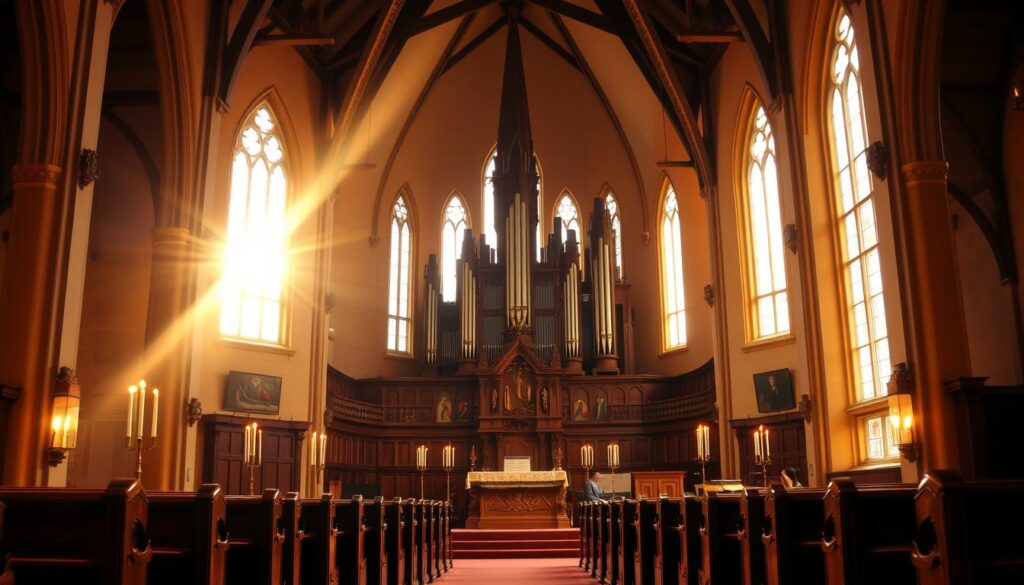
a grand Lutheran church interior with a tall steeple and pointed arched windows, bathed in warm golden light streaming through the windows, creating a reverent and serene atmosphere; in the foreground, an ornate wooden pulpit and altar adorned with intricate carvings and religious symbols, flanked by tall candles casting flickering flames; in the middle ground, rows of wooden pews arranged in a semicircle, creating a sense of community and focus towards the front; in the background, a pipe organ with ornate pipes and a detailed reredos with religious imagery, conveying the rich history and tradition of Lutheran liturgy.

Four Phases of Sacred Gathering

The first phase brings everyone together through thanksgiving. Songs and prayers set the tone, reminding participants of God’s enduring presence. This Gathering isn’t just about physical proximity—it’s about aligning hearts and minds.

Next comes the Word service, where ancient scriptures meet modern life. Through readings and sermons, timeless truths become personal guidance. You’ll notice how biblical stories still speak directly to today’s challenges.

The third phase transforms ordinary elements into sacred symbols. Bread and wine become tangible reminders of divine promises during the Meal. This shared experience reinforces community bonds while nourishing individual faith.

Finally, the Sending turns worship into action. Participants leave equipped to live out their beliefs through practical service. As one pastor explains: “We’re not just filling seats—we’re launching ambassadors of hope.”

This four-part structure ensures every service feels complete yet forward-moving. Each element builds on the last, creating continuity between sacred rituals and daily life. Whether you’re new to this tradition or deeply familiar, the order provides both comfort and challenge.

Exploring the Role of the Pastor and the Congregation

Collaboration takes center stage in shaping worship that honors tradition and community. Unlike hierarchical models, this approach sees every participant as essential. You might be surprised to learn that pastors aren’t spiritual superiors—they’re fellow members called to specific tasks.

The Shared Priesthood Concept

The heart of this partnership lies in a radical idea: everyone shares equal spiritual status. Members aren’t just attendees—they’re active contributors. You’ll notice this during services when voices unite in prayers and hymns, creating a tapestry of shared devotion.

Pastors emerge from the church family itself, selected to lead sacraments and teach. Their role resembles a skilled conductor—guiding without overshadowing. As one leader explains: “My calling lets me serve the choir, not sing solos.”

This mutual dependence shapes every gathering. The pastor ensures orderly worship while the congregation breathes life into rituals. Together, they transform routine services into vibrant encounters. You become part of something bigger—a living expression of faith where every action matters.

What makes this work? Trust in shared purpose. Whether leading or responding, all focus on serving God and neighbors. This balance creates spaces where wisdom flows freely—from pulpit to pew and back again.

The Essence of Lutheran Liturgy in Modern Worship

Sacred meals and heartfelt prayers form the cornerstone of meaningful spiritual encounters in today’s churches. These elements transform ordinary moments into divine connections, blending ancient wisdom with modern relevance.

A solemn church interior, bathed in soft, warm lighting. At the center, a simple wooden table adorned with a pristine white cloth, the elements of the Lord's Supper - the bread and wine - arranged reverently. In the foreground, a Lutheran pastor, robed in a flowing black cassock, extends his hands in a gesture of blessing over the sacrament. The congregation, seated in pews behind him, faces the altar with an atmosphere of quiet contemplation and spiritual connection. The scene conveys the essence of Lutheran liturgy - a sacred ritual of remembrance, communion, and renewal, rooted in tradition yet alive in the modern world.

Sacrament of Shared Nourishment

The shared meal often called the Lord’s Supper, acts as a physical reminder of spiritual promises. As one reformer noted: “What eyes can’t see, hands touch through bread and wine.” This practice bridges the gap between heaven’s promises and earthly experience.

Element Symbolism Modern Application
Bread Christ’s body Unity among believers
Wine New covenant Personal renewal
Shared Cup Community bonds Collective responsibility

This table shows how simple elements carry deep meaning. The Word of God comes alive through both spoken teachings and tangible symbols, creating multi-sensory worship experiences.

Harmony of Ancient and New

Modern services balance time-honored prayers with fresh expressions of praise. You might hear centuries-old hymns followed by new worship songs—all united in purpose. This mix honors tradition while speaking to current needs.

Personal prayer interweaves with group recitations, allowing individual and communal growth. The pattern creates rhythm: quiet reflection builds to joyful celebration, then returns to focused petition.

Through these practices, churches maintain theological depth while fostering accessible worship. The result? A living faith that respects roots yet reaches forward—perfect for today’s diverse spiritual seekers.

Preludes, Hymns, and Prayers: Building a Worshipful Atmosphere

From the first notes of the organ to the final whispered prayer, every sound in worship carries purpose. These elements work like invisible threads—weaving hearts together and lifting collective voices upward. Music and spoken words become partners in creating sacred space.

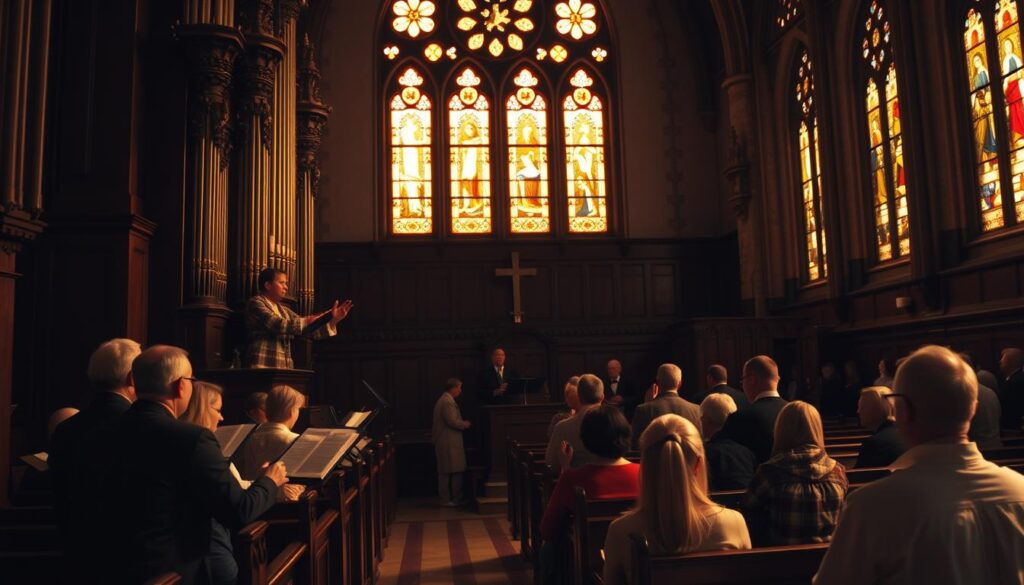
A dimly lit Lutheran church interior, bathed in warm, golden light from stained glass windows. In the foreground, a grand pipe organ with intricate carvings, its pipes reaching towards the vaulted ceiling. Musicians and a choir perform a reverent hymn, their faces uplifted in a fervent display of worship. Worshippers kneel in pews, hands clasped in prayer, lost in contemplation. The atmosphere is one of profound solemnity and spiritual transcendence, inviting the viewer to experience the rich, timeless traditions of Lutheran liturgy.

The Importance of Music in Worship

Preludes act as spiritual welcome mats. Gentle melodies ease busy minds into reflection. You’ll notice how hymns then unite everyone—young and old—through shared verses. These songs do more than entertain. They teach truths and stir emotions.

Musical Element Purpose Example
Prelude Prepares hearts Organ improvisation
Hymn Unites voices “A Mighty Fortress”
Choir Anthem Deepens message Scripture-based songs

Modern churches blend classic hymns with new compositions. This mix keeps worship fresh while honoring tradition. As one musician notes: “Good music makes truth memorable.”

Historical Liturgical Prayers Explained

Ancient prayers bridge past and present. The Kyrie eleison (“Lord, have mercy”) dates to early Christian gatherings. These words remind us that human needs haven’t changed. The Gloria’s joyful phrases echo angelic praises from Luke’s Gospel.

The Prayer of the Day acts like a spotlight. It focuses scattered thoughts on key themes from Scripture. You’ll hear phrases like “Gracious God, guide us through Your Word”—simple words carrying eternal weight.

Together, music and prayer create rhythm. They move services from celebration to contemplation, then back to action. This dance of sound and silence shapes transformative worship experiences.

Confession, Creed, and Proclamation in Worship

Shared beliefs become bridges in worship, connecting hearts across time and space. Services often open with a powerful moment of confession—not to shame, but to free. Participants speak honest words about human flaws, then immediately hear promises of forgiveness. This rhythm mirrors life’s realities: we stumble, we heal, we grow.

Ancient Words, Living Faith

The Nicene Creed unites modern believers with generations past. Imagine voices from Tokyo to Nairobi reciting the same core truths! While the Apostles’ Creed roots us in baptismal promises, the Nicene Creed explores divine mysteries like the Trinity. Both act as guardrails, keeping the church centered on essentials.

Scripture readings and sermons turn ancient texts into today’s guidance. You’ll notice how biblical stories address modern struggles—loneliness, injustice, hope. This blend of confession, creed, and teaching strengthens both personal faith and community bonds. Together, they create worship that’s honest, rooted, and ready for Monday mornings.

FAQ

What makes the Lord’s Supper central to worship services?

The Lord’s Supper is a sacred act where believers receive Christ’s body and blood through bread and wine. It’s rooted in Jesus’ command to “do this in remembrance of me,” offering forgiveness and strengthening faith through His sacrifice.

How do Old Testament traditions influence worship practices today?

Many elements, like prayer, psalms, and sacrificial rituals, find fulfillment in New Testament worship. For example, Passover foreshadowed the Lord’s Supper, emphasizing God’s covenant and deliverance through Christ.

Why are creeds like the Nicene Creed recited during services?

Creeds unite believers by declaring core truths of the Christian faith. They echo biblical teachings and affirm shared beliefs across generations, fostering unity and grounding worship in historic doctrine.

What roles do pastors and congregations play in worship?

Pastors lead through preaching and administering sacraments, while the congregation actively participates through prayers, hymns, and responses. This reflects the “shared priesthood” of all believers, emphasizing collective worship.

How does music enhance the worship experience?

Hymns and chants deepen engagement with Scripture and theology. They create a reflective atmosphere, allowing communities to express praise, lament, and thanksgiving together, aligning hearts with God’s Word.

What is the purpose of confession in services?

Confession acknowledges human imperfection and God’s grace. It prepares hearts to receive forgiveness and healing, often followed by absolution—a proclamation of Christ’s mercy that renews believers for faithful living.

How do worship services reflect the early church’s practices?

Elements like Scripture readings, breaking bread, and communal prayers mirror apostolic traditions. These practices emphasize continuity with the early church’s focus on teaching, fellowship, and sacraments.

Why is the “sending” part of worship important?

After being nourished by Word and sacrament, the sending commissions believers to live out their faith. It’s a reminder that worship extends beyond the sanctuary into daily service and witness.

Lutheranism Founder: Exploring the Roots of a Major Christian Denomination


Imagine living in a world where questioning religious authority could cost your life. This was the reality Martin Luther faced in 16th-century Europe. Born in 1483 to a copper miner in Germany, this unlikely revolutionary would spark changes that reshaped Christianity forever.

Luther’s journey began with personal spiritual struggles. As a monk, he grappled with feelings of unworthiness before God. These inner battles led him to develop groundbreaking ideas about faith and salvation that contradicted established church teachings.

In 1517, Luther took a bold stand by nailing his Ninety-Five Theses to a church door. This act didn’t just critique corrupt practices – it ignited the Protestant Reformation. His translation of the Bible into German made scripture accessible to ordinary people, democratizing religious knowledge.

Today, over 500 years later, Luther’s legacy lives on through congregations worldwide. His emphasis on personal conviction over institutional authority continues to influence modern faith practices. Let’s explore how one man’s courage created lasting change in religious history.

Key Takeaways

  • Martin Luther’s 1517 protest launched the Protestant Reformation
  • Personal spiritual struggles shaped his revolutionary ideas
  • Translated the Bible to empower everyday believers
  • Challenged church practices while maintaining core Christian beliefs
  • Legacy continues through 80 million Lutherans worldwide today

Introduction to the Lutheranism Founder and His Impact

What if your personal beliefs could reshape an entire religion? Martin Luther answered this question through his bold theology that shook 16th-century Europe. He taught that divine grace – not human work – determines salvation, a radical idea that changed how millions relate to God.

The German reformer directly challenged the church‘s power structure. “Why should papal decrees outweigh Scripture?” he argued. This thinking empowered ordinary people to interpret the Bible themselves, breaking the clergy’s monopoly on religious truth.

Luther’s reforms sparked unexpected changes across society. His Bible translation didn’t just spread religious ideas – it standardized the German language. Schools multiplied as literacy became vital for understanding Scripture. Even political systems evolved as local rulers gained independence from Rome.

Today, over 80 million Christians follow traditions tracing back to Luther’s teachings. His emphasis on personal faith continues to inspire those seeking direct spiritual connections. From hymn lyrics to marriage practices, his influence echoes through modern worship worldwide.

Historical Background: Europe on the Eve of the Reformation

How did a perfect storm of events prepare Europe for radical change? The 15th century buzzed with energy as old systems cracked under new pressures. Plagues, power struggles, and fresh ideas collided to create fertile ground for transformation.

A towering medieval cathedral stands proudly against a cloudy, moody sky. The ornate Gothic architecture, with its soaring spires and intricate stone carvings, casts long shadows across the cobblestone square. Sunlight filters through stained glass windows, casting a warm, ethereal glow over the scene. In the foreground, a group of villagers gathers, their simple clothing and postures reflecting the hardships and uncertainty of life in this era. The overall atmosphere evokes a sense of reverence, history, and the impending changes that will soon sweep through this region.

Societal Upheaval in the Medieval Era

The Black Death reshaped everything. By wiping out nearly half of Europe’s population in the 14th century, it accidentally boosted opportunities for survivors. Workers could demand better pay, and families climbed social ladders once sealed shut.

Traditional authority structures wobbled. As peasants gained economic power, they began questioning why church leaders lived in luxury while ordinary people struggled. This tension would later fuel demands for reform.

The Role of the Renaissance and the Spread of Literacy

New ideas traveled faster than ever. Johannes Gutenberg’s 1455 printing press turned books into affordable tools for learning. Suddenly, knowledge wasn’t just for priests – merchants and craftsmen could read too.

Universities became hotspots for debate. Scholars inspired by the Renaissance asked bold questions about human potential and divine work. As literacy spread, so did the appetite for challenging old truths. The stage was set for someone to light the match of change.

Early Life and Education of Martin Luther

Could a strict upbringing forge a world-changing thinker? Young Martin Luther’s childhood in Mansfeld laid the foundation for his revolutionary path. Born to ambitious parents in 1483, he grew up during a time when social mobility began reshaping European society.

Childhood in Mansfeld and Family Influences

Hans Luther, Martin’s determined father, rose from peasant roots to become a successful copper miner. The family lived comfortably, but Hans enforced strict discipline. He dreamed of his son becoming a lawyer – a prestigious career that would cement their middle-class status.

Martin shared close bonds with his siblings, particularly brother Jacob. Their home life blended affection with high expectations. This mix of support and pressure shaped Luther’s work ethic and deep sense of responsibility.

Academic Journey at Erfurt and Wittenberg

At 17, Luther entered the University of Erfurt – a hub for cutting-edge ideas. He mastered logic and rhetoric, skills that later helped him challenge powerful institutions. By 1505, he earned his master’s degree with top honors.

Though excelling in legal studies, Luther felt drawn to deeper questions about life‘s purpose. His academic success pleased his father, but seeds of spiritual curiosity were already sprouting. The university years sharpened his mind while quietly preparing him for an unexpected religious calling.

Family, Faith, and Early Influences

Behind every revolutionary thinker lies a childhood that shapes their destiny. Martin Luther entered the world in 1483, baptized the next morning on St. Martin of Tours’ feast day. His family moved to Mansfeld when he was one year old, where his father managed copper mines and served on the town council.

Luther’s parents ran a tight ship. Hans Luther demanded excellence, using harsh discipline to drive his son toward success. Margarethe, described by scholars as practical and devout, balanced household duties with strict religious observance. Their prayer-filled home life blended ambition with Catholic traditions.

The future reformer’s early years mixed opportunity with anxiety. Regular beatings for minor mistakes taught young Martin to fear authority – yet also question it. Family meals echoed with discussions about faith and social mobility, planting seeds for his later reforms.

Parental Influence Hans Luther Margarethe Luther
Occupation Mine operator Homemaker
Discipline Style Strict perfectionism Practical correction
Religious Impact Social ambition Daily devotions

This unique upbringing forged Luther’s dual focus on scholarship and spirituality. While he later challenged church leaders, his parents’ blend of faith and determination stayed with him. The boy who knelt for family prayers would grow into the man who reshaped Christian thought.

Spiritual Crisis and the Call to Monastic Life

What transforms a law student into a monk? For Martin Luther, this life-altering shift began with a violent summer storm in 1505. As rain lashed the countryside near Stotternheim, lightning nearly struck the 21-year-old traveler, sparking an existential crisis that reshaped religious history.

A solitary figure, Martin Luther, stands amidst a raging thunderstorm, his face etched with anguish and revelation. Dramatic lighting illuminates his features, casting deep shadows that accentuate the intensity of his spiritual crisis. The roiling clouds above swirl with electric energy, mirroring the turmoil within. Luther's monastic robes billow in the wind, symbolizing his call to a life of devotion and contemplation. The scene is rendered with a cinematic flair, capturing the pivotal moment when Luther's faith is tested and transformed, setting the stage for the birth of Lutheranism.

The Thunderstorm Conversion Experience

Terrified by what he saw as divine judgment, Luther shouted: “Saint Anna, I will become a monk!” This desperate prayer during the July 2 storm became an unbreakable vow. Within weeks, he abandoned his legal studies – shocking his father who’d invested heavily in his son’s career.

Vow and Entry into the Augustinian Order

On July 17, Luther entered Erfurt’s Augustinian monastery. The decision meant trading a promising future for strict routines of prayer and fasting. Though initially seeking relief from spiritual anxiety, this choice launched his deeper exploration of faith and scripture.

Aspect Before Storm After Storm
Career Path Law student Monastic novice
Spiritual Focus Academic study Personal salvation
Daily Routine University lectures Prayer & manual labor

This pivotal moment redirected Martin Luther‘s life toward confronting questions of sin and grace. While the monastery brought temporary peace, it ultimately became the starting point for his revolutionary theological journey.

The Publishing Revolution: Spreading Reform Ideas

How did ink and paper become tools of revolution in 16th-century Europe? Martin Luther harnessed Gutenberg’s printing press like no one before him. His words traveled faster than horseback riders, reaching common people and scholars alike.

A large wooden printing press stands in a sunlit workshop, its intricate gears and levers casting dramatic shadows. In the foreground, a skilled operator carefully inks the movable type, preparing to press a sheet of paper and reproduce the written word. Bookshelves line the walls, filled with tomes on theology and philosophy, hinting at the revolutionary ideas soon to be disseminated. The atmosphere is one of quiet focus and the anticipation of change, as this technological marvel empowers the spread of Reformation teachings throughout the land.

The Ninety-Five Theses exploded across Germany in weeks. Printers worked overtime to meet demand, creating what we’d call “viral content” today. By 1518, Luther’s ideas reached France and England – faster than the church could contain them.

“Printing is the ultimate gift of God and the greatest one.”

Martin Luther

Luther’s German Bible transformed spiritual life. For the first time, farmers could read Scripture without priestly interpretation. This shift weakened the church‘s control and sparked debates in taverns and town squares.

Aspect Pre-Printing Press Post-Printing Press
Communication Speed Months Weeks
Access to Information Clergy Only All Literate People
Religious Authority Centralized Decentralized

Martin Luther didn’t just write theology – he crafted hymns and picture books for the illiterate. Printers became his allies, turning complex ideas into affordable pamphlets. This media strategy made reform unstoppable.

The reformer’s work created a template for modern movements. Just as social media spreads ideas today, the printing press let ordinary citizens challenge power structures. Luther proved that accessible information could reshape civilizations.

The Ninety-Five Theses and the Challenge to Church Authority

A single document reshaped Christianity forever on October 31, 1517. Martin Luther nailed his Ninety-Five Theses to a church door in Wittenberg, sparking a firestorm that would redefine spiritual authority. This bold act questioned practices many saw as unfair, turning a local protest into a continental debate.

Protesting the Sale of Indulgences

Luther targeted a specific abuse: priests selling forgiveness like market goods. He raged against preacher Johann Tetzel’s catchy slogan about coins freeing souls from purgatory. “Salvation isn’t a question of wealth,” Luther argued, insisting God’s grace couldn’t be bought.

Impact on Papal Authority and Church Practices

The Ninety-Five Theses spread like wildfire thanks to new printing technology. Ordinary people began questioning why distant leaders controlled their faith. As copies reached Rome, the church faced its greatest crisis in centuries.

Martin Luther’s actions proved ideas could outpower institutions. His challenge didn’t just reform practices – it reshaped how millions related to spirituality. The door where he posted his arguments remains a symbol of courage to question power.

FAQ

What event sparked Martin Luther’s decision to challenge the Church?

A pivotal moment occurred during a violent thunderstorm in 1505, when Luther vowed to become a monk if spared. This led him to join the Augustinian Order, where his spiritual struggles and studies later fueled his critiques of Church practices.

How did the Renaissance influence Luther’s ideas?

The Renaissance emphasized critical thinking and access to classical texts. Combined with the printing press, this allowed Luther’s writings, like the Ninety-Five Theses, to spread rapidly, challenging traditional authority and encouraging public debate.

Why did Luther focus on opposing indulgences?

He saw the sale of indulgences—promising forgiveness for money—as exploiting believers and distorting the Bible’s teaching on repentance. His protests aimed to recenter faith on grace and personal relationship with God, not financial transactions.

What role did the Augsburg Confession play in Lutheran history?

Written in 1530, this document outlined core Lutheran beliefs, like salvation through faith alone. It became a foundation for Lutheran identity, distinguishing it from Roman Catholic teachings and shaping Protestant theology.

How did Luther’s upbringing shape his views?

Growing up in Mansfeld, his strict father pushed him toward law. However, his mother’s piety and his own spiritual anxiety led him to theology. These contrasts fueled his later emphasis on divine mercy over human effort.

Did Luther intend to create a new denomination?

Initially, he sought to reform the Roman Catholic Church, not split it. However, conflicts with papal authority and his excommunication in 1521 led followers to organize independently, forming what became the Lutheran Church.

How did the printing press aid the Reformation?

It enabled mass production of Luther’s works, like vernacular Bibles and pamphlets. This democratized access to Scripture and reform ideas, empowering ordinary people to engage with theology directly.