Recent Posts

Lutheranism Saints: Exploring the Lives of Revered Figures


For centuries, Christian communities have celebrated individuals whose lives reflect God’s grace in action. Within one major tradition, these role models aren’t seen as flawless heroes but as ordinary people transformed by their faith. Their stories offer hope, showing how divine love works through human imperfection.

This perspective traces back to biblical teachings like Hebrews 12:1, which encourages believers to learn from those who walked before them. Historical documents reveal a threefold purpose: giving thanks, building trust in God, and finding practical ways to live out values. Unlike some traditions, this approach avoids idealization—focusing instead on relatable struggles and triumphs.

You might be surprised by the sheer number of recognized figures, ranging from early church leaders to modern-day servants of faith. Their diversity proves holiness isn’t about perfection but perseverance. Whether facing personal doubts or societal challenges, their journeys mirror our own.

By studying these lives, we discover timeless wisdom for navigating today’s complex world. Their examples teach us to embrace grace in daily life, bridging ancient truths with contemporary questions. Let’s explore how their legacies continue shaping spiritual growth across generations.

Key Takeaways

  • Discover how historical figures inspire modern faith without requiring perfection
  • Learn the three core purposes behind honoring spiritual role models
  • Explore a tradition recognizing thousands of everyday believers as examples
  • Understand the balance between human flaws and divine grace in spiritual growth
  • Find connections between ancient Christian practices and current life challenges

Historical Foundations and Reformation Roots

When church reformers reshaped Christian practices, they kept a surprising treasure—a rich collection of faith examples spanning centuries. Martin Luther and his colleagues carefully preserved over 200 commemorations while clarifying their purpose. This balance honored tradition while emphasizing Christ-centered faith.

Three Pillars of Faithful Remembrance

The Apology of the Augsburg Confession became the playbook for this approach. It teaches that remembering spiritual ancestors should:

  • Spark gratitude to God for His work through people
  • Build trust in divine promises
  • Inspire practical Christ-like living

Early martyrs like Lawrence, who served the poor, stayed on calendars alongside biblical heroes. Even Mary’s Assumption found space, showing respect for longstanding traditions.

From Ancient Roots to Modern Practice

Reformation leaders created this framework for honoring role models:

Period Focus Key Figures
Early Church Martyrs’ witness Lawrence, Perpetua
Medieval Era Miracles & intercession Removed examples
Reformation Faith in action Martin of Tours
Modern Updates Diverse servants Bonhoeffer, King Jr.

Twentieth-century expansions added both restored and new names. This living calendar now includes peacemakers and theologians, proving God’s grace works across time. The Augsburg Confession principles keep these commemorations focused on Christ’s supremacy while celebrating human faithfulness.

Lutheranism Saints in Modern Christianity

Today’s Lutheran communities keep ancient traditions alive through creative practices that honor spiritual role models. These observances blend historical reverence with practical applications for 21st-century believers.
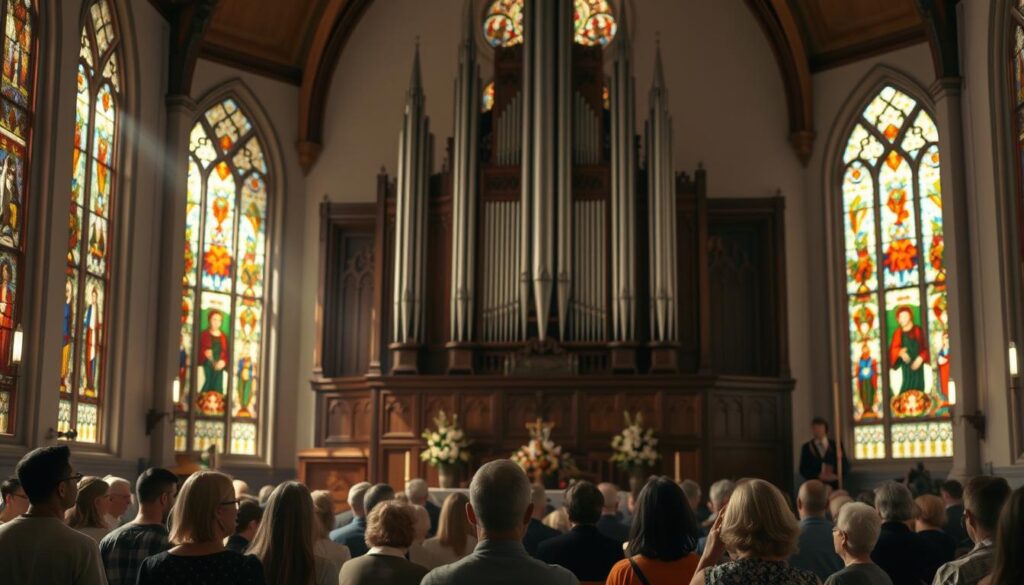
A tranquil Lutheran sanctuary, its stained-glass windows casting a warm glow. In the foreground, a group of worshippers gathers, their faces uplifted in reverence, as they celebrate the lives of revered saints. The altar is adorned with intricate carvings and flowers, a testament to the rich tradition of the faith. The middle ground features a choir, their voices blending in harmonious hymns. In the background, a towering pipe organ dominates the scene, its majestic pipes reaching towards the heavens. The lighting is soft and diffused, creating an atmosphere of contemplation and serenity. The overall scene evokes a sense of timeless devotion and the enduring presence of Lutheranism in the modern world.

Faith Builders Through Action

Pastors often highlight figures like Elizabeth of Hungary during sermons. Her work feeding the poor inspires food drives and community kitchens. One church member shared: “Learning about her sacrifices changed how I view my weekly volunteer shift.”

Thomas the Apostle’s story helps congregations embrace doubt as part of spiritual growth. Bible studies explore his journey from skepticism to bold declaration of faith. These discussions create safe spaces for honest questions.

Living Traditions Across Generations

Four key celebrations show how Lutheran churches connect past and present:

Event Date Modern Practice Purpose
Francis of Assisi Day Oct. 4 Pet blessings Celebrate creation care
Elizabeth of Hungary Nov. 17 Clothing drives Continue service legacy
All Saints Sunday Nov. 1 Candle lighting Unite generations
Luke the Evangelist Oct. 18 Health fairs Honor healing ministry

Animal blessings draw families with pets into church courtyards each October. Laughter mixes with prayer as dogs, cats, and even hamsters receive blessings. These joyful events often become newcomers’ first church experience.

All Saints services feature stories of local heroes alongside biblical figures. A pastor in Minnesota explains: “We remember Sunday school teachers and food bank volunteers – modern examples of grace in action.”

Personal Reflections on the Dual Nature of Saints and Sinners

What if holiness wasn’t about eliminating flaws but embracing growth? This question lies at the heart of a transformative spiritual truth that reshapes how we view ourselves and others.

The Theological Concept: Simultaneously Saint and Sinner

Martin Luther’s phrase “Simul Iustus et Peccator” captures a radical idea: believers live as both redeemed and broken. As Luther explained, “The saints are sinners, too, but forgiven and absolved.” This dual identity frees us from pretending we’ve got it all figured out.

Three key insights emerge from this teaching:

  • Our worth comes from Christ’s righteousness, not personal perfection
  • Struggles with selfishness reveal our need for daily grace
  • Growth happens through honest confession, not hiding failures

Finding Inspiration Through Imperfection and Grace

Historical figures show this truth in action. A 16th-century reformer might rage at opponents one day and write tender hymns the next. A modern volunteer serves the homeless while battling private doubts.

These stories teach us:

  • God uses imperfect people to do extraordinary things
  • Our worst moments don’t define our eternal identity
  • Gratitude grows when we stop comparing ourselves to others

As we acknowledge our mixed nature, we discover deeper trust in divine love. The pressure to perform fades, replaced by joyful thanks for unearned mercy. This balance fuels authentic faith that endures life’s complexities.

Conclusion

Everyday heroes of faith walk beside us through history’s pages. Their stories aren’t polished legends but raw accounts of people who loved fiercely despite flaws. When we give thanks for figures like Elizabeth of Hungary, we celebrate God’s power working through ordinary hands feeding the hungry and healing the broken.

Churches mark these journeys throughout the year—not to worship the people, but to spotlight grace in action. Pastors often use these commemorations to spark conversations about serving neighbors today. As one minister shared: “Our food pantry volunteers stand in Elizabeth’s shoes now.”

This tradition keeps hearts focused on Christ while drawing strength from those who ran the race before us. Their imperfect lives remind us holiness grows through daily acts of love, not grand gestures. When we stumble, their witness whispers: Keep going. Grace meets you here.

Across time, these spiritual ancestors become traveling companions. They show how divine light shines brightest through cracked jars of clay—encouraging us to live boldly, serve humbly, and trust completely.

FAQ

Do Lutherans pray to saints like other Christian traditions?

Lutherans honor saints as faithful witnesses to God’s grace but do not pray to them. The Augsburg Confession emphasizes Christ as the sole mediator. Saints inspire through their lives of service, not as intercessors.

How does the idea of "simultaneously saint and sinner" shape Lutheran beliefs?

Martin Luther taught that believers are justified by faith alone, yet remain imperfect. This duality encourages humility and reliance on God’s grace, recognizing that even revered figures like Elizabeth of Hungary were human.

Are there specific days to celebrate saints in Lutheran churches?

Yes! Many Lutheran congregations observe feast days, such as Reformation Day or remembrances for biblical figures. These celebrations highlight how saints’ stories strengthen community and deepen faith through shared history.

Why do Lutherans retain saints if they reject saintly intercession?

Saints serve as role models of faithfulness, not objects of worship. The Apology of the Augsburg Confession clarifies that their lives point to Christ’s work, inspiring believers to live with courage and service.

Can someone be a saint while still struggling with sin?

Absolutely. Lutheran theology teaches that all believers are “saints” through Christ’s forgiveness, even amid daily struggles. This reflects the balance of grace and human imperfection, as seen in figures like Martin Luther himself.

How do modern Lutherans connect with saints historically?

Through sermons, hymns, and education, Lutherans learn from saints’ resilience and devotion. For example, stories of pastors and laypeople during crises remind communities to trust God’s faithfulness in uncertain times.


Lutheran Foundation: Inspiring Generosity Through Faith


Faith-based giving continues to shape communities across America, creating ripples of hope that extend far beyond Sunday services. Organizations rooted in spiritual values help individuals turn their beliefs into action, supporting ministries and causes that reflect their deepest convictions. This approach to stewardship transforms financial resources into tools for lasting change.

Many find purpose in aligning their legacy with meaningful work that uplifts both local church initiatives and global outreach programs. Through personalized guidance, these groups help families navigate financial planning while honoring their spiritual commitments. As 1 Peter 4:10 reminds us: “Use your gifts to serve others, as faithful stewards of God’s grace.”

Strategic giving solutions now empower donors to support what matters most – from hunger relief to educational programs. This method ensures every contribution creates sustainable impact, helping vital work thrive in our modern world. Whether through immediate donations or long-term plans, these partnerships make generosity accessible to all.

Key Takeaways

  • Faith-based organizations connect spiritual values with practical giving strategies
  • Personalized guidance helps align financial resources with meaningful causes
  • Sustainable funding models ensure long-term support for vital ministries
  • Biblical stewardship principles guide modern philanthropic approaches
  • Comprehensive services simplify charitable planning for individuals and families
  • Strategic giving creates amplified impact across local and global communities

Understanding the Mission of the Lutheran Foundation

Generosity rooted in spiritual values creates pathways for enduring change across generations. Religious organizations focused on stewardship help believers align their resources with ministries that mirror their deepest convictions. This approach transforms simple donations into fuel for lasting transformation.

Faith-Based Legacy and Generosity

These groups specialize in connecting donors’ spiritual journeys with practical giving strategies. Experts provide tailored guidance through one-on-one consultations, helping families design plans that honor their faith while supporting vital work. By bridging generational wisdom, they ensure resources flow smoothly to future ministry efforts.

An Overview of Services and Programs

From educational workshops to customized gift arrangements, these organizations offer tools for every stage of charitable planning. Their programs help individuals:

  • Align financial decisions with biblical stewardship principles
  • Create family-centered legacy strategies
  • Support congregations, camps, and global outreach initiatives
Service Type Key Benefit Impact Focus
Legacy Planning Multi-generational support Local congregations
Gift Strategies Tax-efficient giving Global ministries
Family Education Shared values alignment Youth programs

The Lutheran Foundation of the Southwest and similar groups build sustainable funding models, empowering ministries to plan confidently. As one advisor notes: “We help turn faithful intentions into actionable blueprints for good.” Through these efforts, generosity becomes a living testament to shared beliefs.

How Lutheran Foundation Empowers Legacy Giving

Creating meaningful legacies requires more than good intentions – it demands smart strategies that honor both values and practical needs. Specialized organizations help donors craft estate plans that reflect their spiritual commitments while addressing modern financial realities. This approach turns heartfelt wishes into sustainable support systems for vital causes.

A stately, faith-inspired estate planning office overlooking a peaceful, sun-dappled garden. The room is filled with natural light, casting a warm, reverent glow. An ornate wooden desk takes center stage, flanked by floor-to-ceiling bookshelves brimming with leather-bound volumes. On the desk, a delicate quill pen and an open ledger await the thoughtful decisions of a faithful steward. Through the large windows, a manicured lawn and a stone fountain come into view, symbolizing the tranquility and permanence of a life well-lived and generously shared.

Custom Solutions for Lasting Influence

Experts design personalized gift strategies that align with your unique circumstances. Through charitable trusts and beneficiary designations, supporters can:

  • Maximize tax advantages while supporting favorite ministries
  • Protect family assets while funding global outreach
  • Create flexible plans that adapt to life changes

One donor recently shared: “Our plan supports seminary students today while securing our grandchildren’s future – it’s stewardship that spans lifetimes.”

Bridging Past and Future Believers

These programs foster dialogue between age groups through shared legacy workshops. Young adults learn wealth management principles from experienced donors, while seasoned supporters gain fresh perspectives on modern ministry needs. Together, they create generational blueprints that:

Strategy Benefit Example
Endowment Funds Perpetual support Camp scholarships
Retirement Gifts Tax-smart giving Disaster relief
Life Insurance Gifts Immediate impact Leadership programs

This collaborative approach ensures resources continue nurturing faith communities long after initial contributions. By connecting donors’ deepest values with practical tools, these groups help write stories that outlive us all.

Exploring Planned Giving Options

Thoughtful philanthropy creates ripples that extend beyond lifetimes. Modern solutions help donors maximize impact while honoring personal priorities. Whether supporting ministries or community programs, strategic approaches ensure resources create enduring change.

Personalized Gift Planning

Expert advisors help craft gift strategies matching your financial landscape. They consider:

  • Current assets and family obligations
  • Preferred timing for contributions
  • Long-term goals for charitable impact

One donor recently shared: “Our plan supports seminary students today while securing our grandchildren’s future – it’s stewardship that spans lifetimes.”

Gift Type Best For Key Benefit
Charitable Trusts Tax optimization Ongoing income
Beneficiary Designations Simple setup Immediate impact
Donor-Advised Funds Flexible giving Family involvement

Strategies for Major Gifts

Transformational contributions often involve non-traditional assets. Many supporters use:

  • Real estate holdings
  • Retirement account distributions
  • Business interests

These methods can unlock significant tax advantages while funding vital work. Comprehensive planning kits help organize financial details, ensuring loved ones remain protected while generosity thrives.

Professional planners collaborate with your legal and financial teams to create seamless strategies. As one advisor notes: “We turn complex decisions into clear pathways for meaningful action.”

Supporting Ministries and Faith-Based Organizations

Faith-driven collaboration sparks tangible change across communities. By connecting resources with purpose-driven work, supporters help vital programs flourish for decades. These partnerships build bridges between generous hearts and mission-critical needs.

Impact Stories from Congregations and Camps

Camp Nawakwa’s 95-year journey shows how strategic support transforms lives. Generations of campers have grown through outdoor worship and leadership programs. Legacy gifts now ensure this sacred space remains vibrant for future adventurers.

Small congregations also see big results. One rural church tripled its food pantry capacity through donor partnerships. Their story inspired three neighboring towns to launch similar initiatives. As one volunteer shared: “We’re proof that faith plus action equals miracles.”

Regional Gift Planning and Consultation Services

Local experts help organizations craft sustainable strategies. These services adapt to unique community needs while honoring spiritual values. Common approaches include:

Service Benefit Example
Asset Mapping Identifies hidden resources Underused church property
Donor Education Builds giving confidence Estate planning workshops
Legacy Coaching Multi-generational impact Youth mentorship endowments

Planners often visit communities personally, creating tailored roadmaps for growth. This hands-on approach helps even remote groups access professional guidance. Together, they turn challenges into opportunities for lasting change.

Integrating Estate and Financial Planning with Faith

Financial stewardship meets spiritual purpose when estate planning aligns with core beliefs. Faith-based services help families protect loved ones while supporting ministries through intentional asset management. This approach transforms routine financial decisions into acts of worship.

A serene, dimly lit study with ornate wooden shelves and a large, stained-glass window casting warm, muted light. On the desk, a leather-bound book, a family heirloom, lies open, surrounded by financial documents and a pair of reading glasses. Beside it, a simple cross and a delicate vase of fresh flowers, symbolizing the integration of faith and financial planning. The room exudes a sense of thoughtful contemplation and a reverence for the legacy one wishes to leave behind.

Utilizing Comprehensive Estate Planning Kits

Custom toolkits simplify organizing your financial life. These resources provide:

  • Checklists for documenting family wishes
  • Templates for charitable gift agreements
  • Guidance on tax-efficient strategies
Kit Component Benefit Example Use
Beneficiary Worksheet Clarifies legacy goals Supporting church endowments
Asset Inventory Identifies giving opportunities Retirement account designations
Charitable Trust Guide Maximizes tax benefits Funding youth programs

Managing Retirement, Investments, and Assets

Balancing personal needs with charitable goals requires smart strategies. Many families use:

  • IRA rollover gifts for immediate ministry support
  • Appreciated stock donations to avoid capital gains
  • Life insurance policies naming favorite causes

One financial advisor shares: “We help clients view their assets as temporary resources to manage, not permanent possessions to hoard.” This perspective shifts how people approach retirement planning and wealth distribution.

Strategy Family Benefit Ministry Impact
Donor-Advised Funds Simplifies giving Sustains food banks
Real Estate Gifts Reduces tax burden Funds camp renovations
Endowment Contributions Creates lasting legacy Supports seminary scholarships

Inspiring Generational Stewardship for a Lasting Legacy

Building bridges between generations transforms temporary resources into eternal blessings. When older believers share wisdom with younger ones, they create living legacies that outlast lifetimes. Faith communities thrive when good stewards design estate plans supporting ministries today while planting seeds for tomorrow’s harvest.

A serene multigenerational family gathering, with grandparents, parents, and children sharing a moment of reflection and connection. The scene is bathed in warm, golden light filtering through stained glass windows, casting a reverent atmosphere. In the foreground, the elders impart wisdom and guidance to the younger generations, their expressions filled with care and purpose. In the middle ground, parents and children engage in thoughtful discussion, passing down traditions and values. The background depicts a timeless church interior, its ornate architecture and sacred ambiance underscoring the enduring legacy of faith and stewardship. The composition conveys a sense of harmony, tradition, and the profound responsibility of generational stewardship.

One family recently shared: “Our plan funds youth programs now and ensures future support for global missions.” Their approach reflects a growing trend where donors use strategic tools to:

  • Teach financial responsibility through family legacy workshops
  • Protect loved ones while funding church planting efforts
  • Create endowments supporting multiple generations
Strategy Family Benefit Ministry Impact
Family Legacy Workshops Shared values alignment Consistent funding
Charitable Trusts Tax advantages New outreach programs
Youth Mentorship Funds Leadership development Future volunteer pipelines

Practical steps make generational planning accessible. Start family meetings discussing stewardship values. Explore how retirement assets can fund future work. Update beneficiary forms to include favorite causes.

As seasons change, thoughtful plans ensure ministries flourish. The Lutheran Foundation of the Southwest helps families craft blueprints where sunset years fund sunrise opportunities. Through these efforts, resources become bridges connecting past commitments to future miracles.

Case Studies and Success Stories from ELCA and LCMS Foundations

Real-world examples show how strategic giving shapes thriving ministries. For nearly a century, faith-based organizations have turned generous intentions into transformative results. Let’s explore how intentional planning creates ripples of hope across generations.

Camp Nawakwa: A 95-Year Legacy of Faith

Since 1928, this wilderness retreat has shaped young leaders through outdoor worship and team-building activities. Legacy gifts now ensure its mission continues for future campers. One donor’s planned gift funded:

  • New cabins for year-round programming
  • Scholarships for low-income families
  • Leadership training for college-aged mentors
Initiative Funding Source Impact
Accessibility Upgrades Charitable Trust 300% more participants
Environmental Stewardship Endowment Fund 50-acre forest preserved
Interfaith Programs Donor-Advised Fund 12 new partnerships

Real-Life Impact in Local Congregations

A small Midwest church transformed its food pantry using ELCA Foundation resources. Their story inspired three neighboring towns to launch similar programs. Key outcomes included:

  • 24/7 community fridge access
  • Job training partnerships with local businesses
  • Intergenerational volunteer teams

The LCMS Foundation’s 65+ years of expertise helps members create customized plans. As one pastor noted: “Our endowment now funds youth missions AND senior care – that’s true generational stewardship.”

Navigating the Range of Planned Giving Services

Creating a meaningful legacy starts with the right guidance. Faith communities offer personalized tools to simplify gift planning, turning complex decisions into purposeful action. These resources empower individuals to support what matters most while protecting their loved ones.

One-on-One Consultative Support

Expert advisors provide tailored strategies for every situation. They listen first, then craft plans aligning with your values and financial reality. Whether supporting ministries or family needs, their insights help make generosity feel effortless.

Accessing Your Regional Gift Planner

Members of the ELCA foundation network connect directly with local specialists. These professionals offer:

  • Free consultations to explore options
  • Clear explanations of tax benefits
  • Simple steps to update legal documents

Services remain available at no cost because supporting communities is central to their mission. As one member shared: “They transformed my retirement plan into a bridge for future ministry work.”

Ready to begin? Regional planners stand ready to help you access solutions fitting your unique story. Start building your legacy with confidence today.

FAQ

What types of giving options does the organization support?

You can choose from planned gifts, major donations, or legacy strategies like charitable trusts. These options let you align your generosity with your values while supporting faith-based work for years to come.

How does gift planning help future generations?

Thoughtful planning ensures your assets continue funding ministries, camps, or congregations you care about. Tools like estate plans or retirement fund designations create lasting impact beyond your lifetime.

Can I support specific programs or regions?

Yes! Regional planners work with you to direct gifts toward local congregations, camps like Nawakwa, or national initiatives. Your support stays focused on causes close to your heart.

What resources are available for estate planning?

Free guides, consultation services, and personalized strategies help you structure wills, trusts, or beneficiary designations. These tools simplify aligning financial decisions with your faith.

How do major gifts create real-world impact?

Larger contributions fund scholarships, facility upgrades, or community outreach programs. For example, donations helped sustain Camp Nawakwa’s 95-year legacy of nurturing faith in youth.

Is professional guidance offered for complex assets?

Absolutely. Experts assist with managing stocks, real estate, or retirement accounts to maximize tax benefits and ensure smooth transfers to ministries you choose.

How quickly can I connect with a gift planner?

Most regions offer same-week consultations—in person, by phone, or online. Advisors help tailor plans without pressure, respecting your timeline and priorities.

Lutheran General Hospital: Contact Info & Phone Number


Finding the right healthcare resources should be simple. This guide offers everything you need to connect with a trusted medical center in Park Ridge, Illinois. Let’s explore how to reach their teams quickly and efficiently.

Located at 1775 Dempster Street, this nonprofit institution operates as part of the Advocate Health network. With over 660 beds, it provides comprehensive care while prioritizing clear communication. Their team ensures every caller feels supported, whether they’re scheduling appointments or seeking specialist referrals.

Since joining forces with Atrium Health in late 2022, the facility has expanded its regional impact. Patients benefit from enhanced resources while maintaining access to personalized care. The campus remains easily accessible for those traveling from Chicago’s northern suburbs.

Key Takeaways

  • Conveniently located in Park Ridge with multiple contact options
  • Part of a major healthcare network offering advanced services
  • Dedicated staff available through various communication channels
  • Recent merger strengthens patient care capabilities
  • Nonprofit status ensures community-focused health solutions

Essential Lutheran General Hospital Phone Number and Contact Details

Quick access to care begins with having the right contact details. Whether you’re scheduling a check-up or following up on test results, these channels help you connect directly with the services you need.

Primary Contact Information and Address

Call (847) 723-2210 for general questions or to reach specific departments. This main line operates 24/7, ensuring support whenever you need it. The facility at 1775 Dempster Street, Park Ridge, IL 60068 offers free parking and sits near major highways for easy navigation.

Service Direct Line Availability
Medical Records 847-723-6150 Mon-Fri 8am-5pm
Imaging Requests 847-723-5016 Weekdays 7am-7pm
Patient Feedback 847-723-6011 (Option 2) 24/7 voicemail

Additional Contact Points and Fax Details

Legal teams can reach the Subpoena Desk at 847-723-5275 for urgent requests. Need documents fast? Fax medical records to 847-723-2193 or radiology materials to 847-723-9800. Email remains a great option for non-urgent matters:

  • Medical records: SRCO-LGH-ROI@aah.org
  • Patient relations: LGH-PatientRelations@aah.org

For digital resources and service updates, visit the official website. The site features secure patient portals and detailed department guides to enhance your experience.

Navigating Hospital Services and Clinical Offerings

The facility’s advanced services cater to a wide range of medical conditions. With specialized teams and modern technology, patients receive personalized care tailored to their unique health needs.

A modern, well-equipped hospital facade with the Advocate Lutheran General Hospital signage prominently displayed. In the foreground, a welcoming entrance with glass doors and a circular driveway for patient drop-off. The middle ground features a landscaped garden with benches and trees, creating a tranquil atmosphere. In the background, the hospital's clinical wings rise up, showcasing a mix of traditional and contemporary architectural styles. Warm, natural lighting illuminates the scene, conveying a sense of comfort and professionalism. The overall impression is one of a state-of-the-art medical facility dedicated to providing exceptional patient care.

Overview of Clinical Services and Special Care Units

Cardiovascular care stands out with robotic-assisted surgeries and vascular interventions. The coronary ICU provides continuous monitoring for critical heart patients. New parents appreciate the neonatal ICU’s round-the-clock care for premature infants.

Service Category Key Offerings Specialty Units
Cancer Care Radiation therapy
Chemotherapy suites
Oncology wing
Orthopedics Robotic joint replacement
Spine surgery
Recovery pavilion
Imaging 3D mammography
PET/CT scans
Diagnostic hub

Emergency and Specialty Departments

First responders rely on the Level I Trauma Center for critical injuries. Pediatric emergencies receive immediate attention in dedicated treatment bays. The stroke team uses advanced imaging to accelerate life-saving interventions.

Rehabilitation services help patients regain mobility through aquatic therapy and speech programs. As a teaching institution, medical residents work alongside seasoned specialists to deliver innovative treatments.

Inside Lutheran General Hospital: Visiting, Library, and Staff Support

Navigating large medical campuses becomes stress-free with clear guidance to essential areas. Staff and visitors appreciate well-marked routes to vital resources, including a hidden gem many professionals rely on daily.

Directions to Key Hospital Facilities

Reach the staff library efficiently using these steps:

  1. Enter through the main building’s central entrance
  2. Locate Elevator B near the information desk
  3. Ride to Level 10
  4. Turn left twice after exiting
  5. Find the entrance opposite Conference Room B

Badge access operates 24/7 for Advocate Health – Midwest Region team members. Affiliated partners should check access permissions before visiting.

Library Hours, Resources, and Staff Assistance

This knowledge hub supports medical professionals with:

Feature Availability Details
Research Computers 24/7 11 stations with medical databases
Private Booths First-come basis Soundproof spaces for meetings
Print Services Self-service Copy/scan functions + secure shredding

On-site assistance arrives every Monday (11 AM-1 PM). Virtual help runs weekdays 8 AM-4 PM. Need books after hours? Use the smartphone checkout form and return items to the indoor drop box.

Charging stations keep devices powered, while study nooks offer quiet workspaces. For urgent questions, dial 847-723-7435 during operating hours. The facility at 1775 Dempster continues to enhance support systems for Park Ridge healthcare teams.

Conclusion

Accessing quality care becomes effortless with organized resources and dedicated support teams. This Park Ridge medical center combines advanced treatments with straightforward communication channels, ensuring patients find solutions quickly.

Multiple contact options let you reach specialists directly through preferred methods. From same-day appointments to complex care coordination, staff streamline every interaction to save you time.

The facility’s growth within the Advocate Health network enhances services while preserving local decision-making. Patients benefit from expanded specialties like robotic surgery and neonatal care without sacrificing personal attention.

Community focus remains central to operations, with clear wayfinding systems and staffed information points. Whether managing chronic conditions or seeking emergency help, you’ll find responsive care teams ready to assist.

Modern healthcare thrives on connections – between providers, technology, and patients. This institution demonstrates how large systems can maintain compassionate service through smart organization and accessible support channels.

FAQ

How do I reach the main desk at Advocate Lutheran General?

Call 847-723-2210 for general inquiries. The facility is located at 1775 Dempster St., Park Ridge, IL, with parking available near the main entrance.

What specialty care units are available here?

The campus offers advanced cardiac care, trauma services, and a Level III neonatal ICU. Specialty departments include orthopedics, neurology, and cancer treatment centers.

Where can visitors access support services?

The staffed information desk in the lobby provides maps and wayfinding help. The health sciences library on Floor 3 offers research tools and quiet study spaces weekdays from 9 AM–5 PM.

How do I request medical records?

Submit requests via the patient portal or call 847-723-7575. You’ll need a valid ID and completed authorization forms for in-person pickups.

Are telehealth options available for consultations?

Yes! Virtual visits are offered through MyAdvocateAurora for follow-ups, prescription reviews, and non-emergency care. Download the app or check your online account.

What’s the process for billing inquiries?

Contact the financial services team at 847-723-6868 Monday–Friday, 8 AM–4:30 PM. Payment plans and online bill pay are also available through their portal.

Does this facility handle pediatric emergencies?

Absolutely. The dedicated pediatric ER operates 24/7 with child life specialists and board-certified emergency physicians trained in pediatric care.

Lutheran Evening Prayer: A Peaceful Devotional


For over 500 years, families have found comfort in a timeless spiritual practice rooted in trust and reflection. Originating during the Protestant Reformation, this tradition was designed to bring clarity to daily life while nurturing a deeper connection with faith. Its creator, Martin Luther, crafted it as a tool for households to close each day with gratitude and surrender.

The practice blends ancient wisdom with practical structure, offering a reliable way to pause amid modern chaos. Unlike free-form expressions, it guides individuals through themes of forgiveness, protection, and hope. This approach helps people articulate emotions they might struggle to voice alone.

Many discover that this ritual creates a natural bridge between daily stresses and inner peace. Its words echo through generations, reminding users they’re part of something larger than themselves. The carefully chosen phrases address universal needs—security in uncertainty, grace after mistakes, and light in darkness.

Key Takeaways

  • Connects modern believers to centuries of spiritual heritage
  • Provides structure for meaningful end-of-day reflection
  • Encourages theological depth through scripted guidance
  • Fosters unity across generations of faith communities
  • Addresses core emotional needs in turbulent times

Embracing the Practice of Lutheran Evening Prayer

Each night, believers worldwide engage in a structured spiritual practice rooted in gratitude and reflection. This tradition opens with the sign of the cross, inviting participants into sacred space. It weaves together ancient words and personal surrender, creating rhythm in life’s chaos.

What Is This Devotional Practice?

At its core, the ritual combines thanksgiving and requests. Participants thank their heavenly Father for daily protection while seeking forgiveness for missteps. Martin Luther’s words capture this balance:

“I commend myself, my body and soul, and all things into Your hands.”

The practice often includes reciting foundational texts like the Apostles’ Creed. These elements ground believers in shared beliefs across generations. Structured phrases help articulate needs when personal words feel inadequate.

Understanding Its Devotional and Biblical Roots

This approach mirrors Jesus’ teaching in the Lord’s Prayer. Both emphasize dependence on divine care and spiritual protection. By invoking the Trinity—Father, Son, and Holy Spirit—it echoes Scripture’s portrayal of God’s nature.

The ritual acknowledges human vulnerability through confession. Yet it also affirms hope, trusting in Christ’s role as mediator. This blend of humility and assurance makes the practice both timeless and deeply personal.

Historical Context and Martin Luther’s Influence

Amidst the chaos of religious reform, Martin Luther reimagined how ordinary people could nurture their faith. The Reformation wasn’t just about challenging institutions—it sought to put spiritual tools directly into the hands of families. This shift transformed daily habits across Europe.

a detailed portrait of martin luther, standing in a dimly lit, ornate interior, illuminated by warm, golden light streaming through stained glass windows. he is dressed in traditional 16th century scholar's robes, holding an open book in his hands, his brow furrowed in contemplation. in the background, faint silhouettes of medieval architecture and the flickering flames of candles create a somber, reverent atmosphere, reflecting the historical significance and spiritual weight of luther's life and work. the composition emphasizes luther's thoughtful, authoritative presence, conveying the profound intellectual and theological impact he had on western christianity.

The Reformation and Daily Prayers

When traditional structures crumbled, Luther created practical guides for homes. His evening devotionals replaced complex rituals with simple, repeatable patterns. “The head of the household should teach these words to their children,” he wrote, making faith accessible to all.

This approach empowered parents to lead spiritual discussions. Structured prayers became anchors during uncertain times, blending scripture with everyday concerns. Congregations found unity through shared phrases while maintaining personal connections to the divine.

Lessons from Martin Luther’s Writings

Luther’s catechisms reveal his belief that prayer should flow naturally through life’s rhythms. He advised:

“Let your final thoughts before sleep be shaped by the Lord’s Prayer.”

His writings emphasized God as a caring father, not a distant judge. This perspective helped people approach prayer with confidence rather than fear. By framing spiritual warfare as a family matter, Luther made theology relatable to farmers and merchants alike.

Today, the Lutheran church preserves this legacy through congregational practices rooted in Luther’s vision. His words continue bridging centuries-old wisdom with modern spiritual hunger.

How to Incorporate Evening Prayer into Your Daily Routine

Building a meaningful spiritual rhythm starts with simple, repeatable actions. This guide helps you create space for reflection as daylight fades, using methods tested across generations.

Step-by-Step Guide for Beginners

Follow these steps to establish your practice:

  1. Set a specific time during your wind-down period. Avoid screens for 15 minutes beforehand to quiet your mind.
  2. Begin with the sign of the cross. Whisper: “In the name of the Father, Son, and Holy Spirit.” This physical gesture marks the shift from daily tasks to sacred focus.
  3. Recite foundational texts like the Apostles’ Creed. These ancient words connect you to believers throughout history.
Morning Focus Evening Emphasis
Setting intentions Releasing burdens
Physical energy Mental calm
Scripture study Gratitude reflection

Keep a small notebook nearby. Jot down one meaningful moment from your day before starting. This simple act trains your mind to recognize blessings.

Consistency matters more than duration. Start with 5 minutes nightly. As Luther advised:

“Let your final conscious act be entrusting your whole self to divine care.”

End by resting confidently. Trust that tomorrow’s challenges will meet you renewed. Over time, this practice becomes a natural bridge between activity and rest.

Understanding the Theology Behind Evening Prayers

At the heart of this devotional practice lies a rich tapestry of theological truths. These ideas transform simple words into spiritual armor, connecting daily life with eternal truths.

A serene, luminous scene depicting the core elements of trinitarian theology. In the foreground, a radiant, three-part geometric symbol representing the three persons of the Trinity - the Father, the Son, and the Holy Spirit - floating amidst a haze of warm, golden light. In the middle ground, glowing celestial orbs and shimmering halos symbolize the divine nature and eternal existence of the Triune God. The background features a tranquil, cloud-filled sky bathed in a soft, heavenly glow, evoking a sense of wonder, contemplation, and the transcendent mystery of the Holy Trinity. Crisp, high-resolution details with a cinematic, ethereal atmosphere.

Trinitarian Elements and the Lord’s Prayer

The practice begins by naming the Father, Son, and Holy Spirit. This threefold pattern mirrors Jesus’ teaching in the Lord’s Prayer. As Martin Luther noted:

“True prayer flows through Christ our Mediator, who makes us dear children of the Father.”

This structure reminds users they approach God through Jesus’ sacrifice. The Holy Spirit then works in their hearts, shaping desires and strengthening faith.

Forgiveness, Protection, and Spiritual Warfare

Each phrase addresses real spiritual battles. The prayer acknowledges human weakness (“forgive where I’ve done wrong”) while declaring divine strength. A comparison shows its balanced approach:

Human Need Divine Response
Confession of sins Cleansing through Christ
Fear of evil Angel protection promise
Physical vulnerability Soul entrusted to God

The phrase “let your holy angel be with me” echoes biblical accounts of heavenly protection. It reassures believers that unseen forces guard them, even during life’s darkest hours.

Benefits of lutheran evening prayer in a Calming Evening Devotional

Nightly spiritual habits offer more than quiet moments—they weave ancient wisdom into modern routines. These practices help bridge today’s challenges with timeless truths, creating pockets of peace in hectic schedules.

A serene Lutheran devotional scene unfolds in a cozy, candlelit room. In the foreground, a wooden lectern with an open Bible rests on a lace-trimmed table, casting a warm glow. In the middle ground, a person kneels reverently, hands clasped in prayer, their face tranquil and contemplative. The background reveals a simple, minimalist interior with soft, diffused lighting, creating a calming, introspective atmosphere. Shadows dance gently, conveying a sense of peace and spiritual focus. The overall composition evokes a tranquil, sacred space for devotion and reflection.

Calming Effects and Spiritual Renewal

Structured devotion acts like a mental switch. It shifts focus from daily pressures to eternal promises. Many find their breathing slows as they recite familiar words, releasing tension from shoulders to fingertips.

Written prayers teach through repetition. As one believer shared: “The phrases become mental anchors during stormy days.” Memorized lines surface when needed most, offering ready-made comfort during unexpected trials.

Daily Stressors Prayer Responses
Work deadlines Trust in divine timing
Family conflicts Grace for reconciliation
Health worries Body-soul connection
Global uncertainty Eternal perspective

This practice connects individuals to a global congregation across centuries. Reciting the same words as generations before creates unity with saints past and present. It’s like joining a never-ending conversation about hope.

Nightly reflection also trains gratitude muscles. Listing three daily blessings before sleep rewires brains to spot goodness. Over time, this meditation builds resilience against life’s disappointments.

Families report deeper bonds when sharing this ritual. Children learn to articulate fears while feeling safe in God’s protection. The closing words—“into Your hands I commend myself”—become lullabies for the soul.

Conclusion

Closing each day with intentional reflection reshapes how we experience life’s rhythms. This tradition invites you to release today’s worries into caring hands, trusting tomorrow’s dawn brings fresh mercies. Its words connect you to a global congregation spanning centuries – ordinary people finding extraordinary peace.

The structure offers more than comfort. It provides anchors for turbulent days, grounding believers in shared truths. Through simple phrases like “give thanks” and “holy angel,” daily challenges meet timeless hope.

Whether whispered alone or shared with family, this practice builds bridges across generations. It honors the saints who preserved these words while making space for modern struggles. The blend of ancient creeds and personal surrender creates a sacred rhythm anyone can embrace.

Why not let tonight be your starting point? Set aside five minutes before sleep. Let familiar words guide your heart toward rest. You might discover what millions have found – peace that outlasts the setting sun.

FAQ

How does this devotional practice connect to Martin Luther’s teachings?

Martin Luther emphasized daily prayer as a way to seek God’s guidance and protection. His writings, like the Small Catechism, encouraged believers to reflect on Scripture and invite the Holy Spirit into their lives through structured prayers at day’s end.

Can someone new to faith traditions start this practice?

Absolutely! A step-by-step approach—like reading Psalms, reciting the Lord’s Prayer, and reflecting on the day—helps beginners build a meaningful routine. Focus on sincerity over perfection, and let the words bring peace.

Why is forgiveness emphasized in these prayers?

Seeking forgiveness aligns with the belief in Christ’s sacrifice and the renewal of the soul. It’s a reminder to release burdens, trust in grace, and prepare the heart for rest, knowing God’s mercy covers past wrongs.

What role does the Trinity play in evening devotions?

Prayers often honor the Father’s creation, thank Jesus for salvation, and invite the Holy Spirit’s comfort. This Trinitarian structure reflects a holistic trust in divine power for guidance and protection through the night.

How can this ritual improve mental well-being?

By focusing on gratitude, releasing worries, and meditating on hopeful truths, these devotions calm the mind. Many find that ending the day with intentional reflection fosters clarity and emotional resilience.

Are there specific Bible verses tied to this tradition?

Yes! Passages like Psalm 4:8 (“In peace I will lie down and sleep”) or Philippians 4:6-7 (“Do not be anxious”) are commonly woven into prayers. They reinforce trust in God’s care during vulnerable moments.

Find Food Assistance at Your Local Lutheran Pantry


Everyone deserves access to nutritious meals, and community support makes this possible. Across neighborhoods, faith-based organizations step up to help families stretch their budgets while maintaining dignity. One standout option combines practical assistance with compassionate service.

These neighborhood hubs provide groceries you can prepare at home, from fresh vegetables to shelf-stable staples. Many operate with flexible schedules – some weekly, others monthly – to fit different needs. Volunteers often greet visitors with smiles rather than paperwork, though a few locations might ask for basic registration.

What makes these programs unique is their emphasis on mutual respect. Whether you need short-term help or ongoing support, the focus stays on meeting needs without judgment. Some centers even connect people with other local resources like job training or childcare services.

Key Takeaways

  • Neighborhood assistance programs offer free groceries with minimal requirements
  • Fresh produce and cooking essentials available weekly or monthly
  • Flexible schedules accommodate working families and seniors
  • Volunteers prioritize kindness and confidentiality
  • Additional community resources often available onsite

lutheran food pantry: How It Works

Neighbors helping neighbors forms the backbone of these assistance programs. Volunteers transform donated items into ready-to-go packages, creating a streamlined system that respects everyone’s time and needs.

Grocery Bag Assembly Process

Teams start early, often at 9 AM, to sort through fresh produce and shelf-stable goods. At Basement Fellowship Hall, coordinators like Frankie – a decade-long leader – guide helpers through systematic packing. Tables become temporary staging areas where canned vegetables, pasta, and apples get arranged for easy access.

An assembly line method ensures fairness. Each reusable tote receives identical items, from whole-grain cereal to seasonal fruits. This approach lets groups prepare 150+ bundles monthly while maintaining quality control. Youth volunteers often handle lighter items, creating intergenerational connections during the process.

No-Appointments and Walk-In Access

Many centers keep requirements simple: just show up during distribution windows. The first Saturday monthly sees lines forming by 10:30 AM, with everyone served equally until supplies last. This model accommodates shift workers and those without reliable transportation.

“We meet people where they are,” explains a longtime coordinator. Flexible hours reflect the belief that nourishment shouldn’t wait on bureaucracy. Some locations even adjust schedules quarterly to align with community needs and volunteer availability.

Locations and Schedules for Food Assistance

Finding reliable support starts with knowing where and when help is available. Three neighborhood centers provide structured meal assistance with varied schedules to match different needs. Let’s explore their offerings.

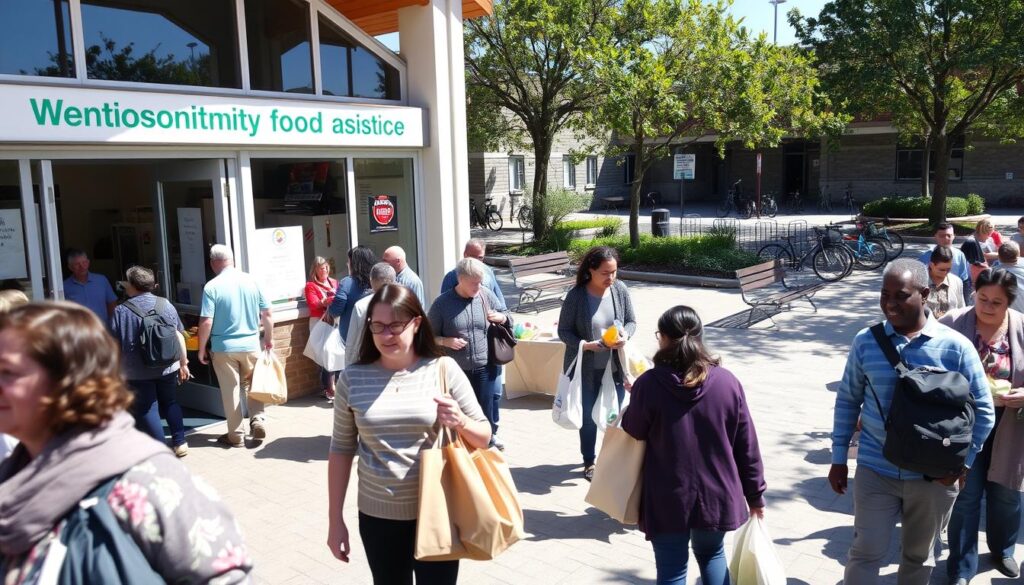
A busy community food assistance location on a sunny day, with a welcoming entrance and signage. In the foreground, people of diverse backgrounds entering the building, carrying grocery bags. In the middle ground, volunteers and staff assisting visitors, handing out food and supplies. The background features a well-maintained outdoor area with benches, trees, and bicycle racks, creating a sense of community and accessibility. The lighting is natural and bright, casting a warm, inviting atmosphere. Captured with a wide-angle lens to showcase the scale and activity of the scene.

Basement Fellowship Hall – First Saturday Distribution

Mark your calendar for the first Saturday each month. Volunteers begin packing at 9 AM, with distribution running 10:30–11:30 AM. This weekend slot helps those who work weekdays. Fresh produce fills half the reusable bags, while shelf-stable items complete each bundle.

Trinity Evangelical Lutheran Church – Requirements and Offerings

At 716 Route 25A, this center serves groceries every Tuesday (10 AM–12 PM) and hot meals Thursdays (4–5 PM). “We want to ensure everyone gets fair access,” explains a coordinator. First-time visitors need to show ID and proof of local residence during initial registration.

LSS/All Saints Lutheran Church – Monthly Service Details

Second Wednesdays bring stress-free support to 164-02 Goethals Ave. From noon to 2 PM, anyone can collect pre-packed boxes without paperwork. This location prioritizes quick access, often distributing seasonal vegetables within 90 minutes.

Location Days/Hours Requirements
Basement Fellowship Hall 1st Saturday (10:30–11:30 AM) None
Trinity Evangelical Tue (10 AM–12 PM)
Thu (4–5 PM)
ID + Proof of Address
LSS/All Saints 2nd Wed (12–2 PM) None

Review details online or call ahead to confirm holiday schedule changes. Multiple options ensure everyone finds convenient help.

Community Impact and Volunteer Opportunities

Morning light reveals more than sunrise – it shows neighbors preparing hope in reusable bags. Across generations and backgrounds, people unite to strengthen their communities through practical action. These efforts create lasting bonds while addressing urgent needs.

Volunteer Roles and Arrival Times

Teams gather at 9 AM sharp, transforming empty tables into assembly lines of care. Youth sort apples while adults pack rice – everyone contributes based on their abilities. Saturday mornings buzz with energy as bilingual volunteers label items and check expiration dates.

Role Time Commitment Key Responsibilities
Grocery Packer 9–11 AM Assemble balanced meal kits
Greeter 10 AM–12 PM Welcome guests and manage flow
Donation Organizer Flexible hours Sort incoming produce and dry goods

Sharing Abundance Through Service

“We’re not just moving boxes – we’re building bridges,” shares Frankie, a coordinator. Many who receive groceries return later to volunteer, blurring lines between helpers and those helped. This cycle reinforces that everyone has something valuable to give.

Weekend efforts often yield 200+ meal kits containing fresh vegetables and cooking essentials. Volunteers frequently take home extras themselves, proving that needing assistance doesn’t define someone’s worth. These spaces become classrooms where children learn compassion alongside math skills while counting cans.

Conclusion

Access to nutritious groceries shouldn’t be a maze of complicated processes. Neighborhood assistance programs simplify this through flexible schedules and multiple entry points. Some locations operate walk-in hours while others set specific days – all designed to match different routines.

What makes these services stand out? You’ll find no judgment, just practical support. Whether it’s your first visit or fifth, volunteers focus on providing fresh produce and essentials with dignity. Many centers update their offerings weekly, ensuring variety in every bag.

Need help today? Several locations welcome visitors without appointments. Others rotate availability throughout the month to serve more households. This mix of options means you can choose what works best for your situation.

These community-driven efforts prove that asking for assistance strengthens neighborhoods. Volunteers and recipients often become partners in building food security. Together, they create spaces where everyone contributes something valuable.

Next time you need support, remember: quality groceries and friendly faces await. Check local schedules online or call to confirm hours. Help exists – and it’s designed to work with your life, not against it.

FAQ

What types of groceries are typically available?

Most locations provide pre-packed bags with staples like canned goods, grains, and fresh produce. Some may also offer hygiene items or baby supplies based on donations.

Do I need to schedule an appointment?

Many pantries operate on a walk-in basis, especially during weekend distributions. Check specific locations like Basement Fellowship Hall or Trinity Evangelical Lutheran Church for their policies.

Are there income requirements to receive assistance?

Requirements vary by location. For example, Trinity Evangelical Lutheran Church may ask for basic documentation, while others serve anyone in need without questions.

How often can I visit a pantry?

Most spots allow visits once per month, but schedules differ. LSS/All Saints Lutheran Church hosts monthly distributions, while some pantries offer weekly options.

Can I volunteer if I’m not part of the church?

Absolutely! Volunteer roles like sorting donations or packing bags are open to all. Arrive early at distribution events to help set up—no prior experience needed.

What if I have dietary restrictions?

Let volunteers know when you arrive. Many pantries try to accommodate preferences by offering alternative items when available.

Do locations provide perishable items?

Yes! Fresh produce, bread, and dairy products are often included when donations allow. Selection depends on the day and partnerships with local suppliers.

How do I find updated schedules or closures?

Check the pantry’s website or call ahead. Hours for spots like Basement Fellowship Hall are usually posted online, along with holiday adjustments.

Exploring the Lutheran Reformation: Key Events and Impact


Let’s step back to 1517, when a single document shook Europe’s spiritual foundations. A monk named Martin Luther nailed his 95 arguments to a church door, questioning practices he believed strayed from true faith. This bold act sparked a movement that would redefine Christianity forever.

At the heart of this shift was a radical idea: salvation comes through faith, not transactions. Luther argued that divine grace couldn’t be bought or earned—it was freely given. This principle challenged centuries of tradition, creating waves across religious and political landscapes.

The effects reached far beyond theology. Entire communities reimagined their relationship with spiritual authority. New forms of worship emerged, emphasizing personal connection over ritual. By the mid-16th century, these changes had planted the seeds for Protestant Christianity.

What began as one man’s quest for truth became a cultural earthquake. From hymn translations to education reforms, the movement’s fingerprints remain visible in modern faith practices. Let’s explore how these ideas took root and why they still matter today.

Key Takeaways

  • A 1517 protest against church practices ignited widespread religious change
  • Martin Luther’s teachings emphasized faith-based salvation over financial transactions
  • The movement challenged traditional authority structures within Christianity
  • Lasting theological shifts led to the creation of Protestant denominations
  • Civic and cultural reforms accompanied the spiritual transformation

Historical Roots and the Crisis in the Church

Long before the 16th-century upheaval, the church had grown into a towering institution blending sacred duties with earthly power. Its influence stretched beyond altars and prayers—kings sought its approval, and wealth flowed through its vaults. But this mix of faith and politics bred distrust among the faithful.

Background of Corruption and Abuses

By the late 1400s, the church’s spiritual mission often took a backseat to money and influence. Clergy members sold indulgences—paper promises claiming to erase sins for cash. One preacher, John Tetzel, famously declared, “When the coin in the coffer rings, the soul from purgatory springs.”

This pay-to-pray system angered many. Peasants wondered why the rich could buy forgiveness while they struggled. Even some priests questioned if wealth had corrupted their calling.

The Influence of Medieval Church Practices

Over the years, the church’s role in politics deepened. Bishops acted like princes, and popes negotiated treaties. A German monk later wrote, “The higher clergy cared more about land titles than scripture.”

Three key issues fueled the crisis:

  • Financial greed overshadowing spiritual guidance
  • Unequal treatment of poor versus wealthy believers
  • Leaders ignoring their own rules about humility

These tensions created a rift between leaders and their community. As trust eroded, people yearned for a faith rooted in meaning—not money. This hunger for change would soon find its voice.

Key Figures and Events in the Lutheran Reformation

October 31, 1517, changed religious history forever. On that crisp autumn day, Martin Luther walked to Wittenberg’s Castle Church and pinned 95 arguments to its wooden door. This act wasn’t just about church notices—it was a direct challenge to power.

A grand wooden door in the Gothic style, its heavy oak panels adorned with intricate carvings. The surface is weathered, with a rich patina that speaks of centuries past. In the center, a large, ornate knocker takes prominence, casting dramatic shadows across the door's surface. The lighting is dramatic, with shafts of warm, golden light filtering through high windows, creating a sense of reverence and historic significance. In the foreground, the 95 Theses are visible, their handwritten text etched into the aged wood, a testament to the pivotal moment that sparked the Lutheran Reformation.

Martin Luther’s 95 Theses and the Challenge to Indulgences

Luther’s theses questioned why forgiveness required payment. He wrote, “True repentance flows from the heart—not from coins in a box.” Church leaders saw this as rebellion. But ordinary people felt someone finally spoke their doubts aloud.

The document spread like wildfire. Printed copies reached towns across Europe in weeks. For the first time, many realized faith wasn’t a transaction—it was a personal journey.

The Wartburg Castle and Translation of the New Testament

After being declared an outlaw, Luther hid at Wartburg Castle for nearly two years. There, he transformed ancient Greek texts into lively German. His new testament translation let farmers read scripture while milking cows and parents teach children bedtime Bible stories.

This wasn’t just religious work—it united German dialects. Phrases from Luther’s Bible still shape the language today. One historian noted, “He gave people God’s word in words they used to argue about the weather.”

The Role of Princes in Spreading Reformation Ideals

Local rulers saw an opportunity. By supporting Luther, they gained independence from distant bishops and popes. Prince Frederick III, for example, protected Luther and funded new churches.

These alliances proved vital. Without political backing, the ideas might have faded. Instead, towns built schools, revised laws, and sang hymns in their own tongue—all while reshaping Europe’s spiritual map.

Evolving Doctrinal Shifts and Changing Worship Practices

Imagine walking into a church where everyone suddenly understood every word. That’s what happened when services switched from Latin to German. People could now sing along, grasp sermons, and even debate scripture at dinner tables.

Transformation of Mass, Hymnals, and Liturgical Music

Communion became a shared meal rather than a distant ritual. Both bread and wine reached every believer’s hands—a powerful symbol of spiritual equality. “Why should priests drink alone?” became a common question in villages.

Music turned into a teaching tool. Luther wrote catchy hymns like A Mighty Fortress so farmers could memorize Bible truths while working. The first songbook arrived in 1524, letting families sing faith into daily life.

Adoption of Sola Scriptura and Justification by Faith

Two ideas reshaped theology: sola scriptura (Bible first) and sola fide (faith alone). No more earning favor through rituals—grace became a free gift. As one preacher put it, “God’s mercy isn’t a marketplace.”

Philipp Melanchthon’s Augsburg Confession gave these teachings structure. Churches dropped saint statues and focused on Christ’s story. For the first time, many felt their faith was personal—not something controlled by distant leaders.

Conclusion

Five centuries later, the echoes of a monk’s hammer still resonate across continents. What began in Wittenberg spread like wildfire through German states and Scandinavian kingdoms. Local rulers embraced these ideas, building churches that prioritized scripture over tradition.

The evangelical Church name reflected its mission—reconnecting believers with the heart of the gospel. Martin Luther’s teachings transformed how people viewed grace, making spiritual connection accessible to all. Farmers and princes alike found unity in translated Bibles and hymns they could understand.

Today, over 80 million worshipers honor this legacy worldwide. Modern congregations preserve core principles while addressing contemporary needs. From food banks to interfaith dialogues, these communities prove ancient truths can meet modern challenges.

Martin Luther’s stand reminds us that courage can reshape history. His focus on personal faith created ripples extending beyond theology—influencing education, governance, and social justice. As sunlight filters through stained glass in 16th-century chapels, it illuminates a timeless truth: meaningful change often starts with one voice daring to speak.

FAQ

Why did Martin Luther post his 95 Theses on the church door?

He wanted to spark debate about the sale of indulgences, which he saw as corrupt. His actions aimed to reform church practices, not split Christianity. The door of All Saints’ Church in Wittenberg was a common spot for academic discussions.

What role did the Bible play in doctrinal changes during this period?

Translating the New Testament into German made scripture accessible to everyday people. This supported the idea of sola scriptura—that the Bible, not church leaders, should guide Christian faith and practices.

How did worship services change after these reforms?

Mass shifted from Latin to local languages, hymns were sung by congregations, and both bread and wine were offered during communion. These changes emphasized community participation in worship.

Why was Wartburg Castle important to this movement?

While hiding there under protection, Luther translated the New Testament into German. This work helped spread his teachings widely, shaping religious thought across Europe.

Did political leaders influence the spread of these ideas?

Yes! Many German princes supported the reforms to gain independence from the Pope’s authority. Their backing allowed new churches to form and teachings to reach broader audiences.

What does “justification by faith” mean?

This teaching stressed that salvation comes through trust in God’s grace, not through rituals or good deeds. It became a cornerstone of reformed theology, challenging medieval traditions.