Recent Posts

Lutheran General: Visitor Information and Hours


Welcome to a leading healthcare facility dedicated to compassionate care and family-centered healing. Whether you’re supporting a loved one or planning your first visit, our team strives to create a stress-free experience through clear communication and thoughtful amenities.

This resource simplifies your experience by detailing policies, wayfinding tips, and available services. You’ll learn how to access real-time updates about patient conditions and locate quiet spaces for reflection. We prioritize safety while fostering an environment where families contribute meaningfully to recovery.

Our campus features intuitive signage and volunteer guides to help you navigate efficiently. From parking instructions to cafeteria hours, every detail is designed to reduce uncertainty during challenging times. Emotional support resources are also available through our on-site counseling teams.

Key Takeaways

  • Access clear guidelines for patient visits and facility navigation
  • Discover family-friendly amenities that enhance comfort
  • Learn about safety protocols that protect everyone’s well-being
  • Find emotional support services for visitors and patients
  • Get updates through streamlined communication channels

By combining medical expertise with genuine hospitality, we help families focus on what matters most – supporting their loved ones’ journey toward better health.

Overview of Lutheran General Visitor Services

Stepping into the facility, guests immediately encounter a warm environment designed to ease stress. Friendly faces greet visitors at two central information desks – one in the main lobby and another at the Parkside Center. These stations serve as your first stop for directions, room numbers, or answers about hospital services.

What to Expect Upon Arrival

Volunteers and staff work together to simplify your experience from the moment you enter. After receiving a temporary guest badge at check-in – part of the facility’s security initiative – you’ll get personalized guidance to your destination. This streamlined process helps visitors reach patient rooms quickly while maintaining safety standards.

The check-in system balances efficiency with compassion, recognizing that many arrive during emotionally challenging times. If you need extra support, team members can connect you with counseling resources or quiet waiting areas. Clear signage and digital maps further assist navigation through the campus.

Through these measures, the hospital demonstrates its commitment to creating a welcoming atmosphere for all. The volunteer program, staffed by community members, reflects this priority in every interaction.

Lutheran General Visiting Hours

Hospital visiting hours are designed to balance care and family needs while supporting recovery. Most units welcome guests daily from 8 AM to 8 PM, though specialty areas like cardiac care observe adjusted time frames. Check unit-specific schedules for precision.

Emergency and Routine Hours

The emergency department operates with flexible guidelines to accommodate urgent situations. Immediate family can typically visit during treatment windows, though staff may limit visits during critical procedures. “Our priority is ensuring both patients receive focused care and families stay informed,” explains a charge nurse.

Weekday hours remain consistent across general wards, while weekends extend access by 30 minutes in pediatric and maternity units. During holidays, most departments reduce afternoon visiting time to allow extra rest periods.

Intensive care units (ICUs) maintain stricter schedules – two 45-minute windows daily. This protects vulnerable patients while letting loved ones offer encouragement. The emergency department follows similar brief check-ins rather than extended stays.

Always verify current policies before arriving, as weather emergencies or health alerts might temporarily adjust access. Respecting these boundaries helps create healing environments where everyone thrives.

Amenities and On-Site Services for Visitors

Supporting loved ones during medical care becomes easier with thoughtful amenities designed for convenience and comfort. From quick snacks to quiet reflection spaces, the campus provides essential services that prioritize both physical and emotional well-being.

A well-lit, modern hospital lobby with a prominent visitor information kiosk. In the foreground, a digital display showcases the various amenities and services available, including a cafe, gift shop, and patient lounges. The middle ground features stylish waiting areas with comfortable seating and potted plants, creating a warm and welcoming atmosphere. The background depicts tasteful wayfinding signage and a reception desk, all captured with a clean, professional lens and soft, diffused lighting.

Food, Gift Shop, and ATM Options

Stay energized with diverse food choices available throughout the day. Cafés and vending areas offer fresh meals, snacks, and beverages to keep visitors fueled during long stays. For cash needs, an ATM sits between the Public Safety Department and Gift Shop on the first floor – LaSalle Bank customers enjoy fee-free transactions.

The Service League Gift Shop stocks thoughtful items like greeting cards, toiletries, and phone cards. Open weekdays 9 AM–8 PM and weekends until 4 PM, it’s a quick stop for last-minute essentials or comfort gifts. “These small touches help families feel grounded during stressful times,” notes a longtime volunteer.

Spiritual and Emotional Support Services

Chaplains provide 24/7 support for those facing tough decisions or grief. Call 847-723-6395 anytime to connect with compassionate guidance, regardless of religious background. This care extends to quiet meditation rooms where visitors can reflect or pray.

By addressing both practical needs and inner strength, these services create a holistic environment focused on health and healing. Families appreciate having resources that ease daily challenges while nurturing emotional resilience.

Directions and Transportation Options

Finding your way to and around the healthcare facility is simplified with multiple transit choices and helpful tools. Whether arriving by car or public transport, clear guidance ensures you reach your destination without hassle.

Rideshares and Transit Connections

Park Ridge Taxi provides discounted transportation for people coming to the medical center. Call 847-823-3111 to book rides with special rates for patients and their families. For bus or train schedules, contact the Regional Transportation Authority at 847-836-7000.

Need help finding nearby hotels or restaurants? Dial the facility’s operator at 847-723-2210. They’ll share details about local services in the area, including limousine providers for special occasions.

Wayfinding Made Simple

Detailed maps cover every floor – from the basement to the 10th-floor units – and the Parkside Center. Grab these information sheets at main desks or the south entrance. One visitor noted, “The color-coded zones helped me locate the cafeteria in under two minutes.”

First-time guests appreciate the straightforward layout designed for quick navigation. Volunteers can also guide people through complex corridors if needed. With these resources, the hospital ensures everyone reaches their intended place efficiently.

Visitor Check-In Process and Requirements

Ensuring a secure environment starts with a streamlined check-in system that prioritizes safety without sacrificing warmth. All visitors participate in a straightforward identification process designed to protect patients and staff while maintaining accessibility.

A modern visitor badge system in a well-lit hospital lobby. In the foreground, a kiosk with a touchscreen interface and a secure badge printer. On the counter, a stack of blank visitor badges and a sign-in logbook. The middle ground features hospital staff greeting visitors and guiding them through the check-in process. The background shows a sleek, minimalist design with clean lines, neutral colors, and natural lighting filtering through large windows, creating a warm and welcoming atmosphere.

Guest Badge and Identification Procedures

Upon arrival, visitors receive color-coded badges at main entrances or adjacent facilities. These temporary IDs display the date and approved access areas, helping security teams monitor campus movement effectively.

The badge system uses visual cues to guide guests. Neon green labels indicate general wards, while blue tags mark specialty department access. This method prevents accidental entry into restricted zones and simplifies navigation.

Badges must remain visible throughout your stay. Before leaving, return them to designated drop boxes near exits. “This program helps us balance openness with accountability,” explains a safety coordinator. “Families appreciate knowing we’re proactive about protecting their loved ones.”

Compliance ensures uninterrupted access while supporting overall security protocols. The process takes under a minute but makes a significant difference in maintaining a healing-focused environment for all.

Family Support and Patient-Centered Care

When a loved one receives medical care, having family nearby boosts both emotional well-being and recovery outcomes. Our facility offers specialized resources to keep relatives connected while maintaining their own comfort.

a cozy, well-lit hospital lobby with natural light streaming in through large windows. in the foreground, a welcoming family sitting area with plush armchairs and a low coffee table, creating an inviting and comfortable space. in the middle ground, a reception desk staffed by a friendly-looking nurse, ready to assist visitors. the background features soothing artwork on the walls and potted plants, contributing to the warm, calming atmosphere. the overall scene conveys a sense of support, care, and accommodation for families visiting patients.

Restful Spaces Steps Away

Just across from the hospital, fully furnished patient support rooms give family members a place to recharge. These private apartments feature kitchenettes, showers, and cozy seating areas – perfect for overnight stays or daytime breaks. With limited availability, early reservations at 847-723-5475 ensure you secure these affordable spaces.

Stay Informed Wherever You Roam

In critical care areas, wireless pagers let family members explore campus grounds without missing updates. Nurses in surgical waiting areas, emergency departments, and neonatal units use this system to share news promptly. One parent shared, “Grabbing coffee felt less stressful knowing I’d get buzzed if my daughter needed me.”

These services reflect our belief that care extends beyond medical treatment. By supporting families through practical solutions, we help create an environment where everyone contributes to healing.

Special Considerations for Emergency Department and Critical Care Areas

Critical care environments require tailored approaches to ensure both patient recovery and family connection. These spaces follow distinct protocols to maintain safety while allowing meaningful interactions.

Visiting Policies for Emergency and ICU Areas

The emergency department permits brief check-ins rather than extended stays. Immediate family can typically visit during treatment windows, though staff may pause access during delicate procedures. “We aim to keep families informed without disrupting urgent care,” shares an ICU charge nurse.

In intensive care units, two daily 45-minute windows help protect vulnerable patients. These shorter visits reduce stimulation while letting loved ones offer encouragement. Always verify current schedules, as health alerts might adjust access.

Guidelines for Sensitive Environments

Before bringing gifts to care unit rooms, check with nurses. Some items could interfere with medical equipment or recovery needs. Flowers, for example, aren’t allowed in many intensive care spaces.

Families in surgical waiting areas and neonatal care units receive pagers for real-time updates. This system lets them grab meals or fresh air without missing crucial news. The emergency department also uses this tool during longer treatments.

These policies balance emotional support with clinical needs. By respecting unit-specific rules, visitors help create calm environments where patients can focus on healing.

Tips for a Comfortable Visit at Lutheran General

How can families make hospital visits smoother for everyone involved? Small preparations and clear communication turn challenging situations into manageable ones. Let’s explore practical ways to support children, respect care guidelines, and maintain a healing-focused atmosphere.

Strategies for Family-Centered Visits

Parents visiting with young ones should explain hospital sights beforehand. Use simple terms like “Doctors here help people feel better” to reduce anxiety. Bring coloring books or quiet toys to help children stay calm during longer stays.

Policy Details Effective Since
Gift Guidelines Check with nurses before bringing food/drinks Ongoing
Smoke-Free Campus No smoking anywhere on grounds January 1, 2005
Behavioral Support Ask staff for stress management tools Available 24/7

For family members managing stress, chaplains and social workers offer coping techniques.

“Even five minutes in our meditation garden can reset your perspective,”

shares a behavioral health specialist. Write downquestionsbefore appointments to avoid forgetting key concerns.

The smoke-free policy covers all outdoor areas – including parking lots. Nicotine replacement patches are available at main desks for visitors needing support. By planning ahead and using available resources, parents create positive experiences that benefit both children and recovering loved ones.

Conclusion

Effective healthcare extends beyond treatment, embracing the needs of those who accompany patients on their journey. Our facility’s comprehensive approach ensures visitors find clear guidance, compassionate support, and practical resources at every turn. By respecting care policies and schedules, families contribute to a healing-focused environment that benefits all.

From information desks to quiet reflection spaces, every service addresses the physical and emotional demands of hospital visits. Small comforts – like grab-and-go meals or counseling services – help family members recharge during challenging moments in their lives.

As a cornerstone of community health, we remain dedicated to serving people across our region with dignity. Remember, staff and volunteers stand ready to assist with questions or concerns. Together, we create spaces where care extends beyond medicine to nurture hope and resilience.

FAQ

How can I find the emergency department or children’s hospital?

Clear signage and staff members are available to guide you. Maps at entrances and online also highlight key areas like the emergency department and Advocate Children’s Hospital for quick navigation.

Are there age restrictions for visitors in patient rooms?

For safety, some areas like the intensive care unit may limit visitors under 12. Check with staff about age guidelines based on the patient’s condition and location.

What food options are available during late-night visits?

Cafeterias and vending machines offer snacks and meals 24/7. The gift shop also has light bites, and nearby restaurants provide delivery services for added convenience.

Can family members stay overnight with a patient?

Overnight stays are permitted in certain rooms, especially for parents in pediatric or behavioral health units. Inquire about sleeper chairs or nearby lodging options for extended stays.

How does the hospital support non-English-speaking families?

Interpretation services, translated materials, and multilingual staff help bridge language gaps. Let the care team know your needs during check-in or before your appointment.

Are emotional support services available for visitors?

Chaplains, social workers, and counselors offer spiritual and emotional care. Quiet reflection spaces are also accessible for moments of calm during stressful times.

What’s the visitor policy for behavioral health or ICU areas?

These sensitive environments may have limited hours or require staff approval for visits. Contact the unit directly to discuss guidelines tailored to patient needs.

Is parking free for emergency department visitors?

Short-term parking is available near the emergency entrance. Valet services and discounted rates apply for extended stays—ask at the information desk for details.

Can I bring personal items for a patient in critical care?

Check with nurses first, as items like flowers or electronics may not be allowed. Photos, cards, or comfort objects are often welcome to uplift patients.

How do I coordinate care updates for a family member?

Designate one point of contact to receive updates from the care team. Virtual tools like MyChart also provide real-time information while respecting privacy laws.

Lutheran ER: Trusted Healthcare for Your Community


When health needs arise, having a reliable partner makes all the difference. Our hospital combines advanced medical expertise with genuine compassion, ensuring every patient feels valued from the moment they arrive. With a focus on rapid response and patient-centered solutions, we’re here to support you through life’s unexpected moments.

Our team prioritizes your wellbeing through personalized treatment plans and state-of-the-art technology. Whether it’s a sudden injury or complex condition, our emergency department operates with precision and empathy. Families appreciate our transparent communication and calming environment designed to ease stress during critical situations.

Beyond immediate care, we empower communities through health education and preventive resources. This commitment reflects our belief that everyone deserves access to quality services tailored to their needs. Your trust drives us to innovate while maintaining the highest standards of safety and medical excellence.

Key Takeaways

  • 24/7 emergency care with rapid response times
  • Compassionate team focused on individual needs
  • Advanced technology for accurate diagnosis
  • Community-centered health education programs
  • Patient safety as a top priority

Providing Comprehensive Emergency and Urgent Care

When every second counts, accessible care options become vital for positive outcomes. Our facility offers tailored solutions for medical needs, from sudden injuries to complex emergencies. With multiple care levels under one roof, you’ll always know where to turn.

Rapid Response for Critical Situations

Our emergency team operates 24/7 with cutting-edge tools to stabilize severe conditions quickly. Average wait times rank among the shortest in the region, ensuring life-threatening cases get immediate attention. Coordinated protocols allow seamless transitions between diagnostics and treatment.

Seamless Integration of Urgent and Primary Care

Not all situations require emergency department resources. For minor injuries or illnesses, our urgent care services provide same-day solutions with experienced staff. Same-day appointments and walk-ins welcome – no need to delay care until your primary physician’s next opening.

This integrated approach means your medical history follows you between departments. Whether treating a sprained ankle or managing chronic conditions, we maintain continuity across services. Patients appreciate avoiding redundant tests while receiving personalized attention at every step.

Lutheran ER: Trusted Source for Emergency Department Services

In critical moments, specialized expertise transforms outcomes. Our emergency department stands ready with advanced protocols to address life-threatening conditions while maintaining compassionate support for families.

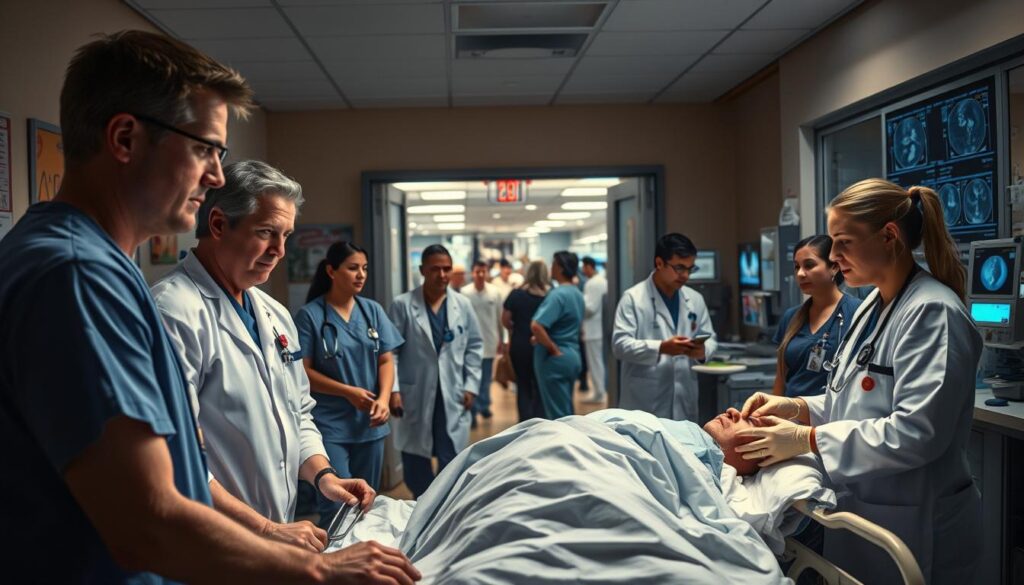
A busy emergency department team in action, captured with a wide-angle lens and dramatic lighting. In the foreground, skilled clinicians in scrubs and white coats attend to a patient on a gurney, their faces etched with concentration. In the middle ground, nurses and orderlies hustle between stations, monitoring equipment and exchanging vital information. In the background, the bustling chaos of the ER is visible through a doorway, with the glow of diagnostic screens and the urgency of voices creating a palpable sense of emergency. The scene conveys the dedication, expertise, and teamwork that defines the Lutheran ER's approach to providing trusted, life-saving care to the community.

Coordinated Trauma and Cardiac Care

Heart health emergencies demand swift action. Our cardiac care program uses cutting-edge technology to treat heart attacks and arrhythmias, with treatment times beating national averages. For trauma cases, specialists collaborate from arrival through recovery, ensuring no detail gets overlooked.

Stroke patients benefit from rapid-response protocols. “Every second matters when dealing with heart emergencies,” notes our lead cardiologist. This urgency drives our 24/7 availability of diagnostic tools like portable CT scanners and cardiac monitors.

Expert Medical Team on Duty

Our physicians hold certifications in emergency medicine and trauma care. Nurses receive quarterly training on:

  • Advanced life support techniques
  • Stroke recognition protocols
  • Pediatric emergency response

The team’s coordinated approach reduces treatment delays. During the critical golden hour after trauma or heart incidents, multiple specialists work simultaneously to stabilize patients. This method has improved recovery rates for complex cases by 40% since 2022.

Patient-Focused Care and Community Engagement

True healing begins when medical expertise meets genuine understanding. Our approach puts individual needs first, creating care plans that adapt to each person’s life circumstances and goals. Personalized treatment plans aren’t just paperwork—they’re roadmaps developed through conversations with patients and their loved ones.

We know health challenges affect more than just the body. That’s why behavioral health specialists work alongside our medical teams daily. “Mental health isn’t separate from physical wellness—it’s part of the whole picture,” explains one team member. This integrated approach helps address conditions like anxiety or chronic pain more effectively.

Building Healthier Neighborhoods Together

Community wellness starts with accessible resources. We host free workshops on topics like diabetes management and stress reduction. New parents join parenting groups, while seniors attend fall-prevention classes. These programs empower people to take charge of their health beyond hospital visits.

Every day brings new opportunities to strengthen connections. Our care coordinators help patients find local resources for ongoing support—from nutrition services to counseling. Because lasting health happens when entire communities thrive together.

Innovative Technology and Quality Medical Services

Modern healthcare thrives when innovation meets human expertise. Our facility combines advanced tools with compassionate care to deliver precise solutions for every patient. From diagnosis to recovery, we ensure technology enhances—never replaces—the human touch in medicine.

A sleek, futuristic medical facility filled with cutting-edge technology. In the foreground, a state-of-the-art diagnostic machine hovers above a patient, its sophisticated sensors and probes scanning for the slightest irregularity. The middle ground showcases an array of holographic displays, each conveying real-time data and high-resolution medical imagery. In the background, a vast, minimalist space with clean lines, subtle lighting, and a calming, hygienic atmosphere. The entire scene exudes a sense of precision, innovation, and unwavering commitment to providing the highest quality of care.

State-of-the-Art Diagnostic Tools

Quick answers save lives. Our imaging systems provide detailed results in minutes, not hours. Portable ultrasound devices and AI-powered scanners help detect issues earlier than traditional methods. This speed allows treatment plans to start the same day symptoms appear.

Cutting-Edge Treatment Innovations

We use targeted therapies that adapt to your unique needs. For example, genetic testing guides cancer treatments, while minimally invasive procedures reduce recovery times. “Precision medicine changes outcomes,” notes a senior physician. These approaches minimize side effects while maximizing results.

Enhanced Patient Experience with Modern Facilities

Healing begins with comfort. Private rooms feature adjustable lighting and temperature controls. Families appreciate real-time updates through secure patient portals. Our design reduces wait times while maintaining a calming atmosphere.

Technology Benefit Impact
3D Imaging Systems Faster diagnoses 30% shorter wait times
Robot-Assisted Surgery Smaller incisions 50% faster recovery
Smart Monitoring 24/7 health tracking 20% fewer complications

Every upgrade serves one purpose: better care for you. Our team trains monthly on new equipment to ensure seamless integration into daily services. Whether it’s a routine check or complex procedure, we combine technology with expertise to keep communities healthy today and tomorrow.

Accessible Health and Behavioral Support

Health challenges don’t follow schedules, which is why immediate support matters. Our facility bridges physical and mental wellness through services designed for real-life needs. Same-day care options and extended hours ensure help arrives when you need it most.

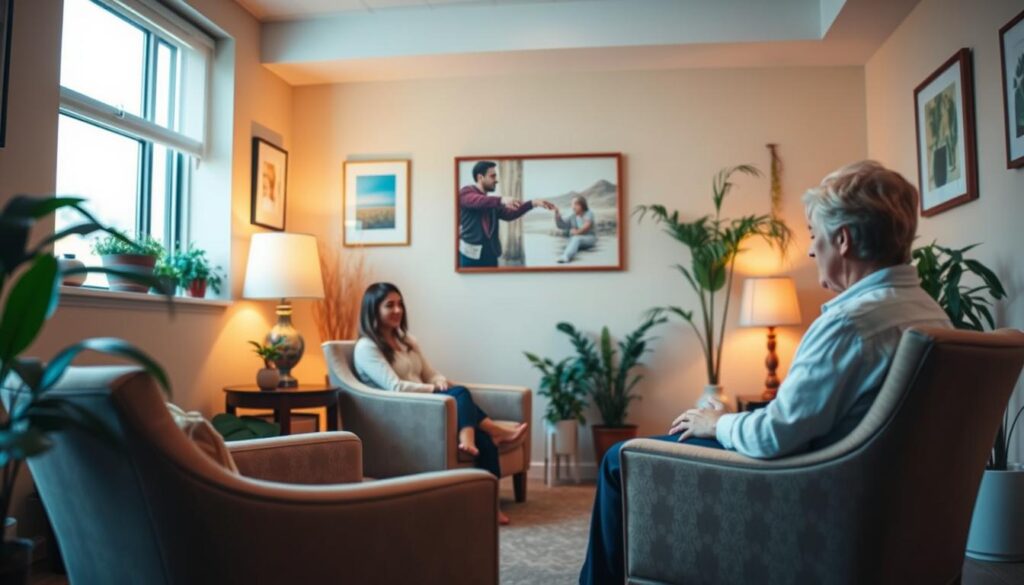
a cozy, well-lit interior of a counseling office or therapy space, with comfortable chairs and warm lighting. a person sitting in one of the chairs, engaged in a thoughtful discussion with a counselor or therapist. the walls are adorned with soothing artwork and calming colors, creating an atmosphere of safety and trust. the room is filled with natural elements like plants and soft textures, conveying a sense of nurturing and support. the scene captures the essence of accessible and compassionate behavioral health services, catering to the needs of the local community.

Round-the-Clock Emergency Readiness

Our doors stay open 24/7 to address critical health problems. Whether it’s 3 AM chest pain or a weekend fall injury, specialists stand ready with life-saving tools. Average response times for stroke cases beat regional benchmarks, giving patients their best chance at recovery.

Behavioral health experts work alongside emergency teams daily. This approach helps 40 million Americans managing anxiety while treating physical symptoms. One nurse explains: “Panic attacks often mimic heart issues – we address both without judgment.”

Key services include:

  • Pain management plans for sudden injuries or chronic conditions
  • Fall risk assessments with prevention strategies
  • Urgent care for non-emergency issues like sprains or infections

Stroke patients benefit from dedicated protocols that start at arrival. Our department coordinates with neurologists to minimize treatment delays. For less severe cases, same-day appointments prevent minor problems from escalating.

Conclusion

Quality healthcare shapes stronger communities every day. Our facility stands as a trusted partner in critical moments, delivering expert emergency services that prioritize both speed and compassion. Whether addressing sudden heart concerns or unexpected injuries, we combine advanced resources with genuine understanding.

Community health remains central to our mission. Specialized cardiac programs and rapid-response stroke protocols reflect our commitment to evolving with medical advancements. Families appreciate our around-the-clock availability – knowing help arrives without delay when seconds matter most.

Behind every treatment plan lies a simple truth: people deserve care that respects their unique stories. By integrating prevention education with immediate support, we build healthier neighborhoods together. This approach makes us more than a medical center – we’re an essential part of your community’s safety and wellbeing.

FAQ

What’s the difference between urgent care and emergency care?

Urgent care handles non-life-threatening issues like minor injuries, fevers, or infections. Emergency care is for severe conditions like chest pain, trouble breathing, or major injuries. Always head to the emergency department for symptoms that feel sudden or extreme.

Are heart attack and stroke services available 24/7?

Yes! Our emergency teams are ready around the clock for cardiac events, strokes, and trauma. Fast response times and advanced tools help ensure timely treatment when every second counts.

Can I get same-day care for sudden pain or injuries?

Absolutely. Walk-in urgent care clinics treat sprains, cuts, burns, and illnesses without appointments. For severe falls, head injuries, or broken bones, visit the emergency department immediately.

Do you offer support for mental health crises?

Yes. Our behavioral health specialists work with emergency teams to provide compassionate care during mental health emergencies. No one should face these challenges alone—help is always available.

How quickly can I see a doctor during an emergency?

Critical cases are prioritized, but wait times vary. Our staff works efficiently to assess everyone. For less urgent needs, online check-in tools can help reduce waiting room time.

What technology is used to diagnose patients?

We use advanced imaging like CT scans, ultrasounds, and X-rays alongside rapid lab testing. These tools help pinpoint issues faster, so treatment starts sooner.

Are pediatric emergencies handled differently?

Yes. Children receive care tailored to their needs, from kid-friendly spaces to specialists trained in pediatric medicine. Severe allergies, high fevers, or injuries always get immediate attention.

Does insurance cover emergency visits?

Most insurance plans are accepted, but coverage varies. Our team can help clarify costs and payment options. Never delay care—safety comes first, regardless of insurance status.

Lutheranism: Tracing the Roots of This Christian Tradition


What began as a 16th-century monk’s quest for spiritual clarity reshaped Christian faith across continents. This movement started in Germany but quickly spread like wildfire through Europe, fueled by debates about religious practices and personal conviction.

Today, over 72 million people identify with churches born from this revolutionary shift. While many associate it with Nordic countries like Sweden and Norway – where it remains the state religion – vibrant communities now thrive from Namibia to Indonesia.

The story of this tradition isn’t just about ancient history. Modern Lutheran churches balance deep-rooted theology with contemporary challenges. In Africa and Asia, membership grows steadily, while European congregations explore new ways to stay relevant.

At its core, this branch of Christianity emphasizes grace through faith – principles that still guide worship and community life. Its global journey shows how ideas can transcend borders, adapting to different cultures while keeping foundational beliefs intact.

Key Takeaways

  • Emerging from 16th-century reforms, this faith tradition now spans 72+ million members worldwide
  • Nordic nations maintain it as their official state religion, while growth surges in Global South regions
  • Core principles focus on scripture-based worship and personal connection to divine grace
  • Modern communities balance historical practices with evolving social needs
  • Cultural adaptation explains its enduring presence across six continents

Historical Backdrop of the Reformation Era

Europe’s 15th-century transformations set the stage for radical religious change. A mix of social shifts, intellectual curiosity, and church controversies created perfect conditions for reform. Let’s explore how these elements intertwined to reshape Christianity.

European Societal Upheavals and the Renaissance Influence

The Black Death’s aftermath reshaped society dramatically. With fewer workers, peasants gained bargaining power, and families like the Luthers climbed from poverty to prosperity. Hans Luther’s rise from miner to business owner showed this new social mobility.

Renaissance thinkers challenged old ideas about authority. Humanist scholars studied ancient texts, questioning the Roman Catholic Church’s interpretations. This intellectual freedom paved the way for new forms of religious debate.

Early Movements and Precursors to Lutheranism

Long before Martin Luther, groups like the Hussites demanded church reforms. These movements shared key ideas:

Movement Key Figure Core Idea Influence
Hussites Jan Hus Scripture over tradition Inspired vernacular worship
Waldensians Peter Waldo Poverty of clergy Critiqued church wealth
Savonarola’s Followers Girolamo Savonarola Moral reform Challenged corrupt leadership

Meanwhile, the Roman Catholic Church faced internal crises. The Western Schism’s resolution and controversial popes weakened public trust. Ottoman Empire expansions added external pressures, making many Europeans seek spiritual renewal.

Exploring the lutheranism origin and Its Early Sparks

Three powerful forces converged to ignite religious transformation: innovative technology, shifting economies, and savvy political alliances. These elements created fertile ground for new ideas about faith to take root and spread.

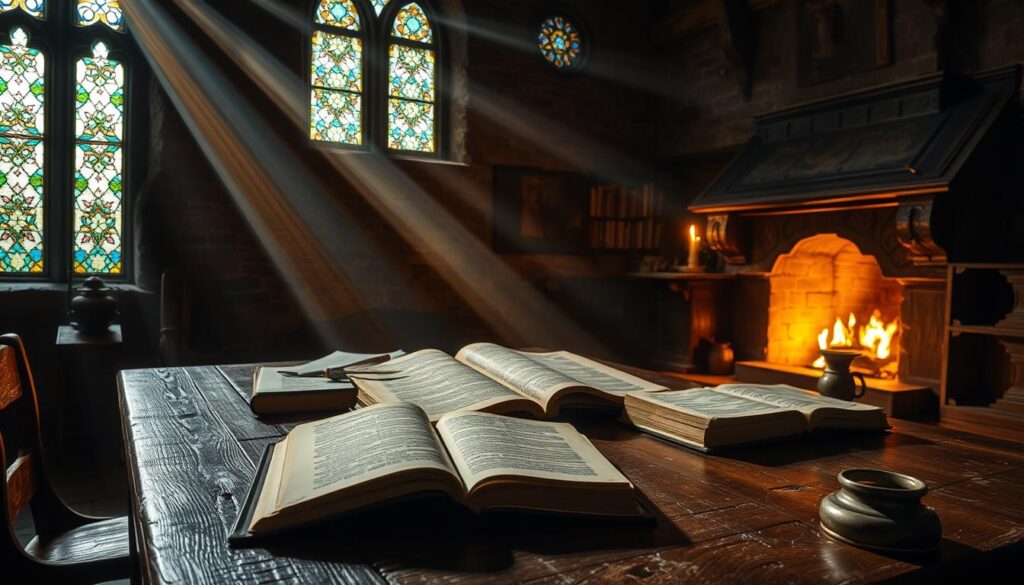
A dimly lit medieval study, illuminated by the warm glow of candles and a crackling fireplace. On the large oak desk, tomes and scrolls lie open, revealing the early writings and ideas that would ignite the Lutheran Reformation. Beams of sunlight filter through stained glass windows, casting kaleidoscopic patterns on the worn stone walls. In the foreground, a quill pen rests beside an inkwell, poised to capture the next revolutionary thought. The atmosphere is one of contemplation, tension, and the stirrings of a profound religious and social upheaval.

The Role of Economic and Political Change

New mining techniques and trade networks reshaped 16th-century Europe. As silver production boomed, towns like Wittenberg grew wealthy. This prosperity funded universities where thinkers like Martin Luther could challenge traditional church teachings.

The printing press changed everything. Before 1455, only monasteries had Bibles. After Gutenberg’s invention, scripture became accessible:

Year Bible Availability Impact
1450 ~30,000 handwritten copies Limited to clergy
1500 ~20 million printed works Public debates possible
1522 Luther’s German New Testament Mass religious education

Political leaders saw opportunity. Princes in the Holy Roman Empire used reform ideas to gain independence from Rome. Their support helped turn academic theology into organized churches.

Urban craftsmen and merchants became key supporters. They appreciated teachings about personal understanding of faith that matched their growing economic freedom. This partnership between thinkers and doers reshaped European spirituality forever.

Martin Luther: Catalyst of Change

A single document changed the course of religious history forever. When Martin Luther nailed his Ninety-five Theses to a church door in 1517, he sparked debates that would redefine Christianity. This act began as an academic challenge but became a rallying cry for reform.

The Ninety-Five Theses and Challenge to the Catholic Church

Luther’s theses targeted the sale of indulgences – payments believed to reduce punishment for sins. He criticized Johann Tetzel’s famous sales pitch:

“As soon as the coin in the coffer rings, the soul from purgatory springs.”

The Catholic Church saw these payments as spiritual favors. Luther argued forgiveness came through faith, not cash. His ideas spread faster than wildfire thanks to Gutenberg’s printing press.

Timeframe Reach Impact
2 weeks All Germany Public debates ignited
2 months Across Europe Church authority questioned
1 year Global awareness New religious movements formed

Luther’s Personal Transformation and Bold Actions

Once a devoted monk, Luther’s studies led him to reject church teachings on salvation. He wrote to Archbishop Albrecht: “Those who preach indulgences are in error.” His courage inspired ordinary people to demand transparency.

This humble scholar’s stand created unexpected consequences. By challenging papal authority, he empowered believers to interpret scripture personally. Luther’s journey shows how one person’s convictions can alter the world’s spiritual landscape.

Formation of Lutheran Churches and Confessional Identity

Building a lasting religious movement required more than bold ideas—it needed clear rules everyone could follow. By the late 1500s, leaders worked to create shared beliefs that would unite growing communities across regions.

A leather-bound book with embossed gold lettering sits on a wooden table, bathed in warm, soft lighting. The book's cover features the title "Book of Concord" in ornate calligraphy, conveying the weight and authority of Lutheran doctrine. The table is adorned with a subtle, patterned cloth, creating a sense of scholarly deliberation. In the background, a dimly lit bookshelf lined with volumes suggests a reverence for theological tradition. The overall scene evokes a contemplative, intellectual atmosphere, inviting the viewer to engage with the formative foundations of the Lutheran faith.

The Emergence of the Book of Concord

Jakob Andreae and Martin Chemnitz became peacemakers among arguing Lutheran theologians. Their 1577 Formula of Concord settled heated debates about doctrine, like whether good deeds affected salvation. This document became the glue holding scattered groups together.

In 1580, leaders combined seven key texts into the Book of Concord. This definitive compilation included:

Document Year Purpose
Augsburg Confession 1530 Core belief statement
Luther’s Catechisms 1529 Teaching basics of faith
Formula of Concord 1577 Settled internal disputes

Key Confessions: Augsburg and Beyond

The Augsburg Confession remained central—its 28 articles still define Lutheran identity. Prince-elector Augustus of Saxony reportedly said:

“This confession shows we’re not rebels, but reformers.”

Political leaders helped enforce these standards. By blending ancient creeds with new forms of governance, churches gained stability. This balance allowed expansion into Scandinavia and later America, carrying the Book of Concord as their guide.

Today, over 85% of global Lutheran communities still use these 16th-century documents. They prove how shared beliefs can create enduring institutions across cultures and centuries.

Theological Developments and Doctrinal Shifts

Martin Luther’s decade-long study of biblical texts sparked a seismic shift in Christian thought. Between 1510 and 1520, his lectures on Psalms, Romans, and Galatians revealed startling insights about sin and salvation. These discoveries would redefine how millions understood their relationship with the divine.

Justification by Faith Alone and Sola Scriptura

Luther’s revolutionary doctrine emerged from Paul’s letters. He argued that “the righteous shall live by faith meant complete reliance on God’s grace. This contradicted church teachings that mixed human effort with divine mercy.

The reformer’s understanding of righteousness turned tradition upside down. He taught that Christ’s perfection covers believers like a cloak – imputed, not earned. This concept offered comfort to those weary of trying to merit salvation through rituals.

Catholic Teaching Lutheran View Biblical Basis
Faith + Good Works Faith Alone Romans 3:28
Church Tradition Scripture Alone 2 Timothy 3:16
Gradual Infusion Instant Imputation Galatians 2:16

Sola scriptura became Luther’s battle cry against church authority. He translated the Bible into German, letting ordinary people engage directly with sacred texts. This empowerment reshaped Christian theology and worship practices across Europe.

These doctrinal changes didn’t just alter church policies – they transformed personal spirituality. Believers found freedom in trusting Christ’s completed work rather than their own religious performance.

Political and Social Impacts on Church Life

Religious reforms reshaped power structures far beyond Sunday services. Local rulers saw opportunities in challenging Rome’s authority. German princes adopted new teachings to gain political independence, using faith communities as allies in regional power struggles.

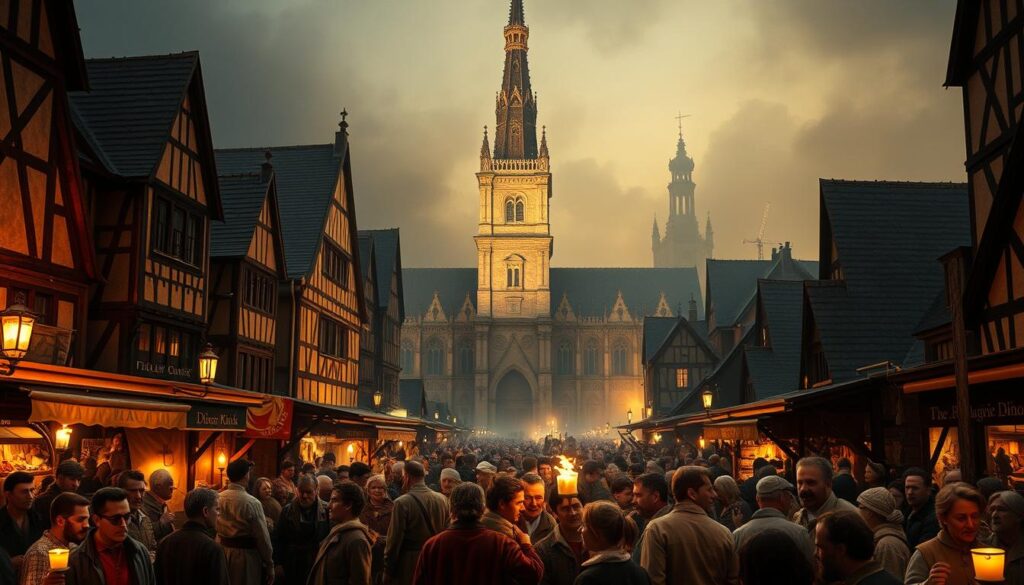
A bustling market square in a Reformation-era town, illuminated by warm candlelight and the glow of torches. In the foreground, a diverse crowd gathers - merchants, tradesmen, and citizens engaged in lively debates and exchanges. Their expressions reflect the social tensions and upheaval of the time. In the middle ground, the steeple of a grand cathedral looms, its ornate architecture a testament to the historical power of the Church. The background is hazy, with shadowy figures moving between the buildings, hinting at the political and religious unrest sweeping through the region. An atmosphere of change and uncertainty pervades the scene, capturing the profound social shifts of the Reformation era.

Gutenberg’s press didn’t just spread ideas—it created informed citizens. Translated Bibles sparked literacy booms, letting ordinary people debate theology. Town councils began overseeing church funds, mixing spiritual and civic leadership.

Communities found fresh purpose through social programs. Early Lutheran churches ran schools, hospitals, and poor relief systems. This practical approach helped teachings take root in daily life while addressing real needs.

Modern echoes of this blend remain. Many American congregations still balance worship with food banks and advocacy work. The Reformation’s legacy shows how faith traditions adapt to serve societies while staying true to their core values.

FAQ

How did Martin Luther’s Ninety-Five Theses challenge the Catholic Church?

In 1517, Martin Luther publicly criticized practices like selling indulgences, arguing salvation came through faith—not payments. His bold stance questioned church authority and sparked debates that led to the Protestant Reformation.

What role did the Augsburg Confession play in shaping Lutheran identity?

Presented in 1530, the Augsburg Confession outlined core Lutheran beliefs, like justification by faith. It became a unifying document, distinguishing Lutheran teachings from Roman Catholic doctrine and strengthening their presence in the Holy Roman Empire.

Why is the Book of Concord important to Lutheran churches?

Published in 1580, the Book of Concord compiled key Lutheran texts, including the Augsburg Confession. It standardized doctrine across regions, ensuring theological consistency and defending against competing ideas during the Reformation’s turbulent years.

How did political changes in the Holy Roman Empire affect Lutheranism?

Rulers often supported Lutheran reforms to gain independence from the Pope. The Peace of Augsburg (1555) later allowed regions to choose their faith, legally protecting Lutheran communities and enabling their growth.

What distinguishes Lutheran views on communion from other Christian traditions?

Lutherans believe Christ is truly present “in, with, and under” the bread and wine. This differs from Catholic transubstantiation and Reformed symbolic interpretations, emphasizing God’s promise in the sacrament.

How did sola scriptura reshape Christian theology during the Reformation?

Luther’s emphasis on scripture alone challenged traditions not rooted in the Bible. This shifted authority to the text, encouraging vernacular translations and personal engagement with the Bible over church hierarchy.

What societal factors contributed to the spread of Lutheran ideas?

Renaissance humanism’s focus on education, rising nationalism, and frustration with corruption created fertile ground. Printing presses then rapidly disseminated Luther’s writings, accelerating reform across Europe.

Lutheran Nuns: Devotion, Faith, and Community


Step into a world where ancient traditions meet modern purpose. Across America, women of faith live out their spiritual calling through service, prayer, and communal bonds. While many associate religious sisterhoods solely with Catholicism, Protestant monastic communities quietly thrive—offering a unique expression of devotion rooted in Reformation principles.

These dedicated women balance traditional practices like daily prayer with active outreach. Their work spans hospitals, schools, and neighborhood programs, proving spirituality and practicality can coexist. Far from relics of the past, these communities adapt to contemporary needs while preserving core values of humility and service.

What makes their way of life distinctive? It’s the fusion of Luther’s teachings about personal vocation with monastic discipline. Members commit to shared spiritual growth without abandoning engagement with society. This approach creates meaningful connections between sacred rituals and everyday acts of care.

Key Takeaways

  • Protestant monastic communities actively serve modern society through healthcare, education, and outreach
  • Lutheran theology and monastic traditions blend to create unique expressions of faith
  • Religious sisterhoods adapt historical practices to address current community needs
  • Daily life balances prayer, communal living, and vocational service
  • Members view their work as an extension of personal spiritual calling
  • These groups maintain lower visibility than Catholic orders but share similar dedication

Exploring the World of Lutheran Nuns

In quiet corners of America, groups of women unite under a shared mission—transforming spiritual commitment into tangible care. These communities, rooted in the Evangelical Lutheran Church, prove sacred living thrives beyond monastery walls. Their days blend ancient rhythms with fresh solutions for today’s struggles.

Understanding Devotion, Faith, and Community Spirit

Morning prayers echo through simple chapels as members prepare for outreach. Shared meals and decision-making strengthen bonds. “We grow together through both worship and work,” explains one sister. This spirit fuels initiatives like:

  • After-school tutoring for at-risk youth
  • Mobile food pantries serving rural areas
  • Counseling services for military families

Bridging Tradition and Modern Life

Historical practices meet innovation through adaptive approaches. Many wear simple tunics during worship but switch to practical clothes for neighborhood work. The table below shows how timeless values shape current efforts:

Aspect Traditional Practice Modern Adaptation
Prayer Schedule Seven daily offices Streamlined sessions + meditation apps
Community Outreach Local parish support Social media crisis response teams
Education Roles Church school teaching Online spiritual mentorship programs
Vows Lifelong commitment Short-term service options available

This flexible model allows members to address urgent needs while nurturing personal spiritual growth. Their work touches people across generations, proving ancient wisdom remains vital in contemporary society.

Historical Roots and Reformation Perspectives

The story of Protestant religious communities begins with a fiery debate about spiritual freedom. During the 1500s, Martin Luther challenged systems that trapped people in rigid structures rather than nurturing authentic faith. His critiques reshaped how believers viewed sacred commitments.

Monastic Life in the Early Church and Reformation Critiques

Sixteenth-century monasteries often prioritized rules over relationships. Luther witnessed young boys pressured into lifelong vows and adults believing monastic life guaranteed salvation. “The monastery became a carefully planned prison,” he argued, rejecting the idea that isolation earned divine favor.

Reformers highlighted dangerous practices:
– Children taking binding oaths before understanding their choice
– Leaders equating monastic vows with baptismal promises
– Communities claiming moral superiority over ordinary believers

Lessons from the Book of Concord

This foundational text clarifies Lutheran views on monasticism. While rejecting forced vows and works-based salvation, it leaves room for voluntary communities focused on service. The distinction matters: faith groups thrive when they uplift others rather than seek personal perfection.

Modern Lutheran Church communities apply these lessons by:
– Prioritizing grace over ritual obligations
– Encouraging members to serve beyond monastery walls
– Rejecting hierarchy that isolates people from daily life

“No one needs monastic vows to be saved—Christ alone is sufficient.”

Modern Monasticism in the United States

Tucked away in Michigan’s forests, Saint Augustine’s House stands as North America’s only Lutheran monastery. This quiet retreat welcomes believers from all denominational backgrounds, offering a space to live by St. Benedict’s ancient rules. Unlike medieval institutions, participation here is voluntary and age-appropriate—a direct response to Reformation-era concerns about forced commitments.

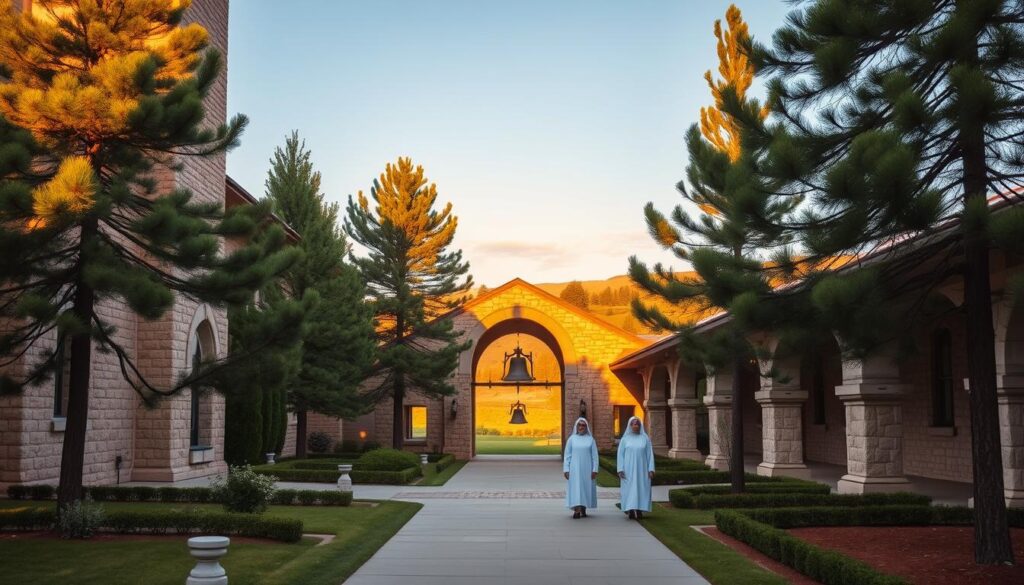
A serene Lutheran monastery nestled in the rolling hills of the American heartland. The stately stone facade is bathed in warm, golden light, casting long shadows across the manicured gardens. Towering pine trees sway gently in the breeze, their verdant canopies framing the scene. Through an arched entryway, a peaceful cloister comes into view, its weathered stone columns supporting a graceful arcade. Sisters in simple, flowing habits move quietly along the covered walkway, their faces serene and contemplative. In the distance, the muted tolling of a bell echoes, calling the faithful to prayer. A sense of timeless devotion and unwavering faith permeates this tranquil oasis, a testament to the enduring spirit of modern American monasticism.

Evolution from Medieval Abuses to Contemporary Clarity

Modern communities learned from history’s mistakes. Gone are childhood vows and claims of spiritual superiority. Today’s monastic life focuses on:

  • Service rooted in free choice rather than obligation
  • Collaboration with local churches instead of isolation
  • Practical outreach programs addressing modern needs

Insights from Saint Augustine’s House and Urban Monasteries

While Augustine House maintains rural solitude, Chicago’s Monastery of the Holy Cross thrives in an urban setting. Both share core values but adapt differently:

Location Focus Community Impact
Rural Michigan Silent retreats Personal spiritual renewal
Chicago Street ministry Neighborhood support networks

Global examples like Sweden’s Östanbäcks Kloster (founded 1960) show this movement’s reach. These communities prove monastic traditions can evolve while keeping faith alive through action.

Monastic Life: Community, Vows, and Contemplative Practices

Sacred promises shape every aspect of monastic existence, creating rhythms that sustain both personal faith and collective purpose. These commitments form invisible threads weaving individuals into intentional communities focused on spiritual growth.

The Role of Vows in Defining Community Living

Three timeless promises anchor monastic life across traditions:

  • Poverty: Sharing resources to eliminate materialism
  • Obedience: Aligning personal will with communal discernment
  • Chastity: Channeling energy into spiritual relationships
Tradition Core Vows Modern Adaptation
Traditional Monasticism Poverty, Obedience, Chastity Simplified interpretations
Benedictine Communities Obedience, Stability, Conversion of Life Flexible service periods

Reformers clarified that “vows become holy only when chosen freely”. Today’s communities require a 3-10 year discernment process before final commitments. This extended timeline prevents rushed decisions and deepens understanding.

Unlike marriage vows creating family bonds, monastic promises forge spiritual kinship. Members find freedom in shared simplicity—their choices protected from societal pressures. Modern monasticism thrives through this balance of structure and voluntary dedication.

“We don’t take vows to earn grace—we live them to express gratitude for grace already given.”

Diverse Lutheran Monastic Traditions and Orders

Imagine a spiritual framework so adaptable it thrives across centuries and denominations. The Order of St. Benedict offers precisely this—a 1,500-year-old tradition that empowers modern faith communities through flexible structure. Unlike rigid systems, its decentralized approach lets each monastery craft solutions for its unique context.

A serene Benedictine monastery nestled in a lush, rolling landscape. In the foreground, a group of robed monks engages in contemplative prayer, their faces illuminated by soft, diffused lighting. The middle ground features a grand, gothic cathedral with intricate stone carvings and stained glass windows, casting a warm, reverent glow. In the background, a tranquil lake reflects the surrounding hills and trees, creating a sense of peaceful isolation. The overall atmosphere evokes a timeless, spiritual ambiance, capturing the devotion and community of the Benedictine monastic tradition.

Exploring the Influence of the Order of St. Benedict

Benedictine monasteries operate like spiritual franchises—each location follows core principles while tailoring practices. This independence explains why you’ll find these communities in Lutheran churches, Anglican cathedrals, and even Methodist chapels. Their secret? St. Benedict’s Rule prioritizes spiritual essentials over denominational differences.

Consider how this works in practice:

  • A Minnesota monastery blends Lutheran theology with ancient prayer rhythms
  • An ecumenical convent in Texas hosts retreats for multiple Christian traditions
  • Urban centers use Benedictine principles to address homelessness and addiction
Feature Centralized Orders Benedictine Approach
Leadership Single headquarters Local self-governance
Adaptability Standardized practices Context-specific solutions
Denominational Reach Mostly Roman Catholic Multi-traditional

This flexibility fuels surprising partnerships. A Lutheran monastery in Wisconsin recently collaborated with Roman Catholic sisters to launch a food distribution network. “Our shared Benedictine roots make teamwork natural,” notes their abbess. Such cooperation shows how ancient wisdom builds bridges in divided times.

While most Benedictine houses remain Roman Catholic, over 40 Lutheran-affiliated monasteries now operate globally. Their growth proves structured spirituality can flourish without rigid hierarchies—a lesson for modern faith seekers.

Lutheran Deaconesses: Pioneering Service in History and Today

A serene, historical scene of Lutheran deaconesses engaged in their pioneering service. In the foreground, three women in modest dark attire attend to the sick and elderly, their faces reflecting compassion and devotion. The middle ground reveals a modest hospital or nursing home, its architecture hinting at the late 19th century. In the background, a grand cathedral towers, its steeple reaching skyward, symbolizing the spiritual foundation of the deaconesses' work. Soft, natural lighting filters through the windows, casting a warm, reverent glow over the scene. The overall mood is one of quiet dedication, service, and the timeless virtues of the Lutheran faith.

Hospitals became classrooms for compassion when deaconesses revolutionized faith-based care. These trailblazers created a new model of religious service—one that merged spiritual calling with practical skills to heal bodies and souls.

Origins and Historical Impact in Healthcare and Education

In 1836 Germany, Theodor Fliedner and Friederike Münster founded a groundbreaking motherhouse. Their vision? Train women to serve marginalized communities through nursing and education. “We carry hope in both prayer books and medicine kits,” wrote an early member.

William Passavant brought this movement to the United States in 1849. The first four deaconesses transformed a Pittsburgh infirmary into Passavant Hospital—now part of a major healthcare network. By 1884, seven more German-trained women arrived in Philadelphia, blending medical expertise with spiritual care.

Continuing the Legacy through Modern Service

When the Evangelical Lutheran Church in America formed, scattered communities united under one mission. Today’s deaconesses work as:

  • School counselors addressing youth mental health
  • Hospice nurses providing end-of-life comfort
  • Nonprofit directors tackling urban poverty

Their tools have changed—electronic health records replace handwritten charts—but the core commitment remains. Lutheran Church America leaders note: “Modern deaconesses prove ancient callings adapt beautifully to new challenges.”

From Pittsburgh hospital wards to online spiritual direction sessions, these women keep rewriting what sacred service looks like. Their story shows how faith communities can honor history while embracing innovation.

Order of Lutheran Franciscans: A Modern Take

A fresh chapter in spiritual service began in 2011 with the Order of Lutheran Franciscans. As the first official religious order within the Evangelical Lutheran Church in America, it reimagines ancient traditions for contemporary seekers. This community welcomes all members—married or single, clergy or laypeople—proving sacred commitments adapt to modern lives.

Foundations of Sacred Service

Members embrace three timeless vows: simplicity, purity of heart, and communal discernment. These promises shape daily rhythms without isolating people from society. “Our habit isn’t about separation,” explains one member. “It’s a reminder to serve openly.”

Symbols That Speak

The order’s visual identity centers on two cross designs. The San Damiano version features intricate icons, while the Tau shape echoes St. Francis’ personal seal. Many wear these symbols over regular clothes, though traditional brown tunics remain optional.

Pathways to Commitment

Joining requires patience—a seven-year formation process ensures readiness. This extended journey allows members to test their calling through neighborhood projects and global partnerships. From urban gardens to prison ministries, their work bridges contemplation and action.

FAQ

How do Lutheran views on monasticism differ from Roman Catholic traditions?

While valuing prayer and service, Lutherans emphasize faith over works-based practices. Monastic communities focus on communal living without requiring vows for salvation, aligning with Reformation critiques of medieval abuses.

Are there active Lutheran monastic communities in the U.S. today?

Yes! Groups like the Order of Lutheran Franciscans and Saint Augustine’s House blend prayer, simplicity, and outreach. These communities adapt ancient traditions to modern contexts, often engaging in urban ministry.

What roles did Lutheran deaconesses play historically?

Deaconesses pioneered healthcare and education in the 19th century, serving as nurses, teachers, and social workers. Their legacy continues through organizations like the Lutheran Deaconess Community, which prioritizes spiritual growth and service.

Do Lutheran nuns wear habits or take lifelong vows?

Practices vary. Some orders, like the Franciscans, adopt simple habits as symbols of devotion. While vows may be taken, they’re seen as commitments to community life rather than mandatory pathways to grace.

How does the Book of Concord shape Lutheran perspectives on monastic life?

It clarifies that monastic vows aren’t superior to other Christian callings. Instead, it encourages faithful living in all vocations—whether through marriage, work, or communal service—as acts of worship.

Can laypeople join Lutheran monastic communities temporarily?

Many communities welcome short-term volunteers or retreat participants. For example, Saint Augustine’s House offers retreats for individuals seeking contemplative experiences without long-term commitments.

What makes the Order of Lutheran Franciscans unique?

Inspired by St. Francis, they emphasize poverty, humility, and peacemaking. Members serve marginalized groups while living in small, intentional households—a fresh approach to ancient Franciscan ideals.

Lutheran General Breast Center: Expert Breast Health Services


Early detection saves lives. At our Park Ridge facility, we combine advanced technology with compassionate care to support your wellness journey. Our team understands the importance of timely screenings and personalized attention, ensuring every patient feels empowered and informed.

We prioritize fast, accurate results to guide your next steps. Whether it’s a routine mammogram or a diagnostic follow-up, our specialists use state-of-the-art tools to deliver clarity. You’ll find a welcoming environment designed to ease stress and foster trust.

As a leading healthcare partner in Chicagoland, we’re committed to excellence. From prevention to treatment, our comprehensive approach addresses every stage of breast health. Your peace of mind is our priority—we’re here to provide reliable care when it matters most.

Key Takeaways

  • Expert care focused on early detection and prevention
  • Advanced imaging technology for accurate results
  • Compassionate team dedicated to patient comfort
  • Trusted resource for women in the Chicago area
  • Supportive environment prioritizing emotional well-being

Our Commitment to Comprehensive Breast Care

We believe every woman deserves access to compassionate, thorough care at every stage of her health journey. Our specialists—including radiologists, surgeons, and nurses—work as one cohesive unit during diagnostic exams. This teamwork ensures no detail is overlooked, from initial screenings to follow-up care.

We streamline testing by collaborating directly with your primary doctor. This coordination speeds up results while maintaining accuracy. You’ll never feel like just another chart—our team tailors each step to your unique needs and concerns.

Our commitment shines through in how we remove obstacles. Flexible scheduling, clear cost explanations, and emotional support teams make appointments stress-free. Whether it’s a routine mammogram or a complex diagnostic procedure, we prioritize both medical excellence and personal comfort.

At Lutheran General, care extends beyond clinics. Free educational workshops and family support groups empower patients to make informed decisions. We’re here to guide you—not just treat you—with expertise that puts your well-being first.

lutheran general breast center Accreditation and Quality Standards

A serene, modern office interior with a prominent desk showcasing a certificate or plaque representing a national accreditation program. The desk is positioned in the middle ground, bathed in warm, directional lighting that casts subtle shadows, creating a sense of depth and professionalism. In the background, clean, minimalist shelving units or wall displays feature additional accreditation signifiers, reinforcing the center's commitment to quality standards. The overall atmosphere conveys a sense of expertise, credibility, and patient-centered care.

Quality care begins with proven expertise. Our facility recently earned its second consecutive three-year National Accreditation Program recognition—a rare achievement reflecting consistent dedication to top-tier service. This distinction comes from meeting strict benchmarks set by leading medical organizations.

Meeting the Gold Standard in Patient Care

The National Accreditation Program for Breast Centers (NAPBC), overseen by the American College of Surgeons, represents healthcare’s highest quality measure. Centers must pass detailed evaluations across six areas:

  • Team leadership and coordination
  • Treatment planning precision
  • Community education initiatives
  • Ongoing staff training
  • Research participation
  • Continuous service improvements

Why Accreditation Matters for You

Choosing an NAPBC-accredited facility means your care meets nationally recognized standards. The American College of Surgeons ensures accredited centers use current best practices through regular reviews. We voluntarily undergo these assessments because your safety and outcomes come first.

This recognition isn’t just a certificate—it’s our promise to deliver care that exceeds expectations. When you walk through our doors, you’re choosing a team committed to excellence at every level.

Advanced Diagnostic and Imaging Services

Precision meets compassion in our approach to breast health. At our imaging center, cutting-edge technology works hand-in-hand with expert analysis to deliver clarity when it matters most. We offer a complete suite of services designed for both routine checks and complex diagnostic needs.

State-of-the-Art Equipment and Technology

Our American College of Radiology accreditation reflects our commitment to excellence. Every machine—from 3D mammography systems to MRI scanners—uses FDA-certified imaging technology that reduces radiation exposure by up to 30%. These tools provide crystal-clear images while prioritizing your comfort during the process.

Safe Screening Practices and Minimal Radiation Exposure

We follow strict college radiology guidelines to ensure safer screenings. Advanced software optimizes each scan’s duration and intensity, delivering accurate results with minimal radiation. Our team constantly updates protocols based on the latest ACR safety recommendations.

Whether you’re here for a routine mammogram or a diagnostic ultrasound, the process stays streamlined and stress-free. Same-day preliminary results and warm blankets during scans show how we blend technology with thoughtful care. Your peace of mind isn’t just a goal—it’s our standard.

Coordinated Team Approach to Patient Care

Collaboration sits at the heart of effective breast health management. At the Caldwell Breast Center, specialists unite to create tailored plans that address every aspect of wellness. This method ensures no detail gets overlooked—from initial screenings to complex treatment strategies.

Strength in Shared Expertise

Our radiologists partner daily with surgeons, oncologists, and genetic counselors through the Breast Cancer Tumor Board. This weekly review brings fresh perspectives to each case. Recent data shows this approach improves diagnostic accuracy by 18% compared to solo evaluations.

Specialist Role in Care Key Contribution
Surgeon Treatment planning Procedure recommendations
Oncologist Medication management Targeted therapy options
Pathologist Diagnostic analysis Tissue evaluation precision
Genetic Counselor Risk assessment Family history mapping

Care That Feels Personal

Every patient’s journey receives individual attention. “We treat people, not charts,” says Dr. Emily Torres, lead radiologist. Support teams help navigate appointments, insurance questions, and emotional needs—because healing involves more than medical procedures.

The Advocate Lutheran General network enhances this model. Shared electronic records let your primary doctor stay informed, while survivorship programs extend support beyond treatment. When experts work together seamlessly, patients gain confidence in their path forward.

Convenient Access and Patient Services

Putting your needs first starts with hassle-free access to essential screenings. Our team simplifies breast health management through flexible scheduling and transparent processes. Same-day appointments are often available, letting you address concerns without delays.

A bright, modern medical center lobby with sleek glass walls and stylish furniture. In the foreground, a welcoming reception desk with smiling staff, ready to assist patients. The middle ground features comfortable seating areas and informative displays showcasing the center's services. The background reveals state-of-the-art medical equipment and an abundance of natural light, creating a calming, efficient atmosphere. Soft, diffused lighting illuminates the space, conveying a sense of professionalism and care. The overall scene exudes a seamless blend of convenience, expertise, and patient-centric design.

Easy Appointment Scheduling and Same-Day Results

Book routine screenings online or by phone in under three minutes—no referral needed. Diagnostic tests require a doctor’s order, which we help coordinate electronically. Most patients receive preliminary results before leaving our facility.

Service Type Scheduling Needs Results Timeline
Screening Mammogram Self-scheduled Same-day preliminary report
Diagnostic Tests Physician order required Immediate radiologist review

Final reports typically reach your LiveWell app within 24 hours. This secure portal lets you share information directly with loved ones or providers. Weekend slots and extended hours accommodate busy schedules without compromising care quality.

We’ve removed unnecessary steps to make prevention effortless. From parking validation to insurance pre-approvals, every detail supports stress-free visits. Your time matters—we’ve built our services to prove it.

Community Outreach, Research, and Innovation

Transforming breast health requires more than advanced technology—it demands active community partnership. Our Park Ridge facility leads initiatives that extend care beyond clinic walls, combining education with accessible resources. Through neighborhood workshops and mobile screening units, we meet patients where they live.

A warm, welcoming community gathering of diverse individuals participating in a breast health awareness event. In the foreground, a group of women of various ages and ethnicities engage in an interactive health screening station, their expressions conveying empowerment and trust. The middle ground features an information booth with educational materials and healthcare providers guiding attendees. In the background, a sense of togetherness and inclusivity radiates, with people mingling, sharing stories, and supporting one another's well-being. Soft, natural lighting bathes the scene, creating an atmosphere of openness, care, and a shared commitment to improving community breast health.

Collaborative Initiatives and Ongoing Clinical Research

We partner with six regional hospitals to test new therapies through clinical trials. Recent studies explore targeted treatments for aggressive forms of breast disease, offering hope where traditional methods fall short. Over 120 patients joined trials last year, gaining early access to groundbreaking options.

Our team trains 30+ medical professionals annually through hands-on fellowship programs. “Education fuels progress,” notes Dr. Lisa Nguyen, lead researcher. Monthly webinars update local providers on prevention strategies and diagnostic advancements, creating ripple effects across communities.

Quality improvement drives every initiative. Real-time patient feedback shapes outreach programs, ensuring services address actual needs. Free genetic testing events in underserved neighborhoods and survivor-led support groups demonstrate our commitment to equitable care.

By bridging research with real-world action, we’re rewriting what’s possible in breast health. Every clinical discovery and community connection strengthens our shared fight against breast disease—today and for future generations.

Conclusion

Your health journey deserves a partner who prioritizes both precision and compassion. Our nationally accredited facility combines advanced imaging technology with coordinated care teams, ensuring every patient receives personalized treatment plans. With same-day results and streamlined scheduling, we make proactive health management accessible and stress-free.

Our commitment extends beyond diagnostics. Ongoing research initiatives and community outreach programs reflect our dedication to improving outcomes for all. Recognized leaders in women’s wellness, we maintain rigorous quality standards while fostering an environment where questions are welcomed and concerns addressed.

Choosing expert care means investing in peace of mind. From genetic counseling to survivorship support, our specialists walk beside you at every step. Early detection remains the strongest defense—schedule your screening today with a team that values your time, comfort, and unique needs.

Trust matters in healthcare decisions. Here, you’ll find a trusted partner blending medical excellence with genuine empathy. Together, we can face breast health challenges with confidence and clarity.

FAQ

What accreditations does your facility hold?

We’re proud to be recognized by the National Accreditation Program for Breast Centers (NAPBC) and adhere to strict standards set by the American College of Surgeons. These distinctions reflect our dedication to exceptional care and safety.

How does advanced imaging technology improve screenings?

Our state-of-the-art equipment, like 3D mammography, offers clearer images with minimal radiation exposure. This helps detect abnormalities earlier while prioritizing patient safety and comfort.

What makes your approach to treatment unique?

Our multidisciplinary team collaborates closely, reviewing cases in tumor boards to create tailored plans. This ensures every patient receives personalized, compassionate care aligned with their needs.

Can I schedule appointments quickly?

Yes! We prioritize convenience with easy scheduling options and strive to provide same-day results for screenings. Our goal is to reduce wait times and keep you informed every step of the way.

Are there opportunities to participate in research?

Absolutely. We partner with leading organizations on clinical trials and community initiatives, ensuring access to cutting-edge therapies and advancing innovation in breast health.

Exploring the Lutheran Faith in Sweden


Walking through Sweden’s picturesque towns, you’ll likely spot steeples rising above red wooden houses. These landmarks belong to the Church of Sweden, a vibrant institution blending centuries-old traditions with modern values. With over half the population still connected to this evangelical Lutheran community, its influence remains woven into the nation’s cultural fabric.

Originally established as the state religion in the 16th century, the church transitioned to independent status in 2000. This shift reflects Sweden’s journey toward religious diversity while preserving its spiritual heritage. The organization maintains unique practices like ordained clergy and formal worship styles—features that distinguish it from other Protestant groups.

Today, the Church of Sweden balances ancient rituals with progressive stances on social issues. Nearly 5.4 million members participate in everything from traditional baptisms to climate action initiatives. This adaptability helps it stay relevant in a society where personal choice shapes faith experiences more than ever before.

Key Takeaways

  • The Church of Sweden remains the country’s largest Christian denomination, serving over half the population
  • Its high-church traditions include liturgical practices rarely seen in other Lutheran communities
  • Membership became voluntary in 2000, reflecting Sweden’s commitment to religious freedom
  • Modern initiatives blend theological foundations with contemporary social engagement
  • Historic architecture and cultural events keep the church central to Swedish identity

Historical Roots of the Lutheran Tradition in Sweden

Centuries before becoming a Protestant stronghold, Scandinavia’s largest nation underwent dramatic spiritual transformations. The shift from Norse mythology to Christianity began around AD 1000 when King Olof embraced baptism, marking the start of organized religion in the region.

Medieval Christianization and Early Church Formation

By the 11th century, the catholic church began shaping Sweden’s spiritual identity. Uppsala’s elevation to an archdiocese in 1164 created an ecclesiastical province that unified religious authority. This medieval framework would later form the backbone of the church sweden we know today.

During the middle ages, monasteries like Vadstena Abbey became cultural powerhouses. Saint Bridget’s visionary teachings demonstrated how local traditions blended with roman catholic practices. “Our faith grows strongest when rooted in familiar soil,” observed one chronicler of the era.

The Impact of the Reformation and King Gustav’s Role

Everything changed in 1536 when king gustav Vasa severed ties with Rome. His political gamble created a national church that answered to Stockholm rather than the Vatican. The 1571 Church Ordinance formalized this break while preserving ancient rituals.

Unlike other Reformations, Sweden’s version kept ornate altars and priestly vestments. Theologians like Olaus Petri adapted Lutheran ideas without erasing centuries of tradition. This balanced approach helped the church sweden maintain cultural relevance through turbulent times.

Core Beliefs and Liturgical Practices

Swedish Lutherans blend ancient rituals with fresh perspectives. At the heart of their beliefs lies a unique mix of Protestant theology and medieval traditions. This fusion creates worship experiences that feel both timeless and deeply personal.

Lutheran Doctrines and the Three Creeds

The Church of Sweden anchors its teachings in three foundational statements. The Apostolic, Athanasian, and Nicene Creeds connect modern worshippers to early Christians. These texts answer life’s big questions while honoring centuries of faith traditions.

In 1593, the Uppsala Synod adopted the Augsburg Confession. This document shaped their evangelical Lutheran identity. “Scripture remains our compass,” explains a parish priest, “but we walk paths cleared by generations before us.”

Practice Catholic Roots Lutheran Adaptation
Apostolic Succession Papal authority Bishops maintain lineage
Communion Transubstantiation Real presence theology
Vestments Ornate priestly garb Simplified ceremonial robes

High Church Practices and Traditional Vestments

Sunday services might surprise visitors expecting plain Protestant worship. Priests wear chasubles resembling Catholic vestments. Incense swirls around stone altars during communion, creating multisensory experiences.

The church maintains 5,000 ordained clergy across three roles. Bishops oversee dioceses, while deacons focus on community service. This structure preserves continuity with early Christian practice while addressing modern needs.

Seasonal celebrations follow patterns established centuries ago. From Advent wreaths to Easter vigils, these rituals help members connect with their spiritual heritage through familiar rhythms.

The Impact of lutheranism in sweden on Society

Sweden’s spiritual landscape has transformed dramatically in recent decades. Where nearly everyone once belonged to the Church of Sweden, membership now reflects personal choice rather than obligation. This shift reveals how modern values reshape traditional institutions.

A serene, well-lit interior of a traditional Swedish Lutheran church, its wooden pews and ornate altar bathed in soft, natural light streaming through stained glass windows. In the foreground, a chart or graph depicting the historical trends of church membership over time, conveying the gradual yet significant impact of Lutheranism on Swedish society. The middle ground showcases intricate religious iconography and architectural details, highlighting the church's role as a central institution. The background blends the warm, muted tones of the church's interior with the tranquil, pastoral landscapes visible through the windows, creating a sense of timeless reverence and cultural heritage.

Membership Trends and Demographic Shifts

Only half the population remains registered with the church today—a stark drop from 95% in 1972. Automatic enrollment ended in 1996, letting families decide about religious affiliation. Young adults now often join later when planning weddings or baptisms.

Surprisingly, 40% of 14-year-olds still undergo confirmation. “These rites connect people to heritage,” notes a Stockholm pastor. Though weekly attendance sits at 2%, cultural ties remain strong through seasonal events and historic traditions.

Modern Practices and Social Engagement

The Church of Sweden reinvented itself after losing state church status in 2000. It now runs food banks, shelters, and climate projects nationwide. Over 5,000 staff members support communities through practical aid and spiritual care.

  • First Lutheran body to perform same-sex marriages (2009)
  • Trains deacons for prison outreach and refugee support
  • Hosts interfaith dialogues in 130 historic cathedrals

This blend of ancient roots and modern missions keeps the institution relevant. As one volunteer puts it: “We’re not just preserving the past—we’re building hope for the future.”

Architectural and Cultural Legacy of the Church

Sweden’s skyline tells stories of faith through stone spires and crimson-painted wood. The Church of Sweden preserves over 900 historic buildings, each blending medieval craftsmanship with practical design. These structures serve as living museums, connecting modern visitors to centuries of spiritual heritage.

Iconography, Cathedrals, and Historic Landmarks

Uppsala Cathedral dominates the landscape as the church’s spiritual headquarters. Completed in 1435, its Gothic arches house royal tombs and a golden reliquary honoring Saint Eric. The building’s coat of arms—a red cross with a golden crown—symbolizes both divine authority and national pride.

Rural regions showcase simpler beauty through 600 red wooden churches. These 18th-century buildings used iron-rich paint to protect timber from harsh winters. Their unadorned interiors reflect Lutheran values of humility, while exterior bell towers guide travelers through dense forests.

  • Medieval wall paintings depicting biblical scenes in Gotland’s country chapels
  • The ancient Uppsala temple site, where pagan and Christian histories collide
  • Contemporary worship spaces using light-filled designs to foster community

From Romanesque fortresses to modernist glass sanctuaries, these churches adapt to their times while honoring tradition. As one architect notes: “We build not just for today’s congregation, but for generations yet to sing here.”

Role of the Church in Education and Community Life

The Church of Sweden extends its mission beyond Sunday services through hands-on community support. Its network of social programs touches lives across cities and countryside alike, proving faith and action go hand-in-hand.

A grand, ornate facade of the Svenska kyrkan (Swedish Church) stands tall, its steeples and spires reaching skyward. Sunlight streams through stained glass windows, casting a warm, ethereal glow over the scene. In the foreground, people of all ages gather, engaging in lively discussions or quiet contemplation, representing the church's role as a hub of community life and social services. The middle ground reveals a bustling courtyard, where children play and adults tend to various activities, showcasing the church's involvement in education and outreach. The background is filled with a picturesque Swedish town, its charming buildings and lush greenery setting the stage for this spiritual and social center.

Social Services and Diakonia Programs

Over 15,000 deacons form the backbone of Svenska kyrkan‘s outreach efforts. These trained professionals run food banks, addiction recovery centers, and elder care initiatives. Their work shows how ancient Christian values address modern struggles.

Educational programs bridge generations through literacy classes and vocational training. The church partners with local communities to offer courses on parenting, digital skills, and environmental stewardship. “We meet people where they are,” says a Malmö-based deacon.

Rural areas benefit most from these services. In regions with limited government resources, church volunteers deliver meals and host youth activities. Immigrant integration projects help newcomers learn Swedish customs while preserving cultural roots.

Svenska kyrkan also advocates for systemic change. Recent campaigns pushed for affordable housing reforms and climate action policies. By blending charity with activism, the institution remains a trusted voice in public debates.

Norse Roots and the Transition to Christianity

Long before steeples dotted the landscape, ancient Swedes gathered under open skies to honor forces of nature. Their spiritual system intertwined daily life with sacred rites, creating a tapestry of beliefs that shaped Scandinavia for centuries. At sites like Gamla Uppsala, evidence reveals how these traditions evolved into one of Europe’s last pagan strongholds.

a twilight winter scene in the mountains of sweden, with a remote village nestled in the valley below. in the foreground, a group of nordic people dressed in fur cloaks and antler headdresses gather around a large stone altar, performing an ancient pagan ritual under the glow of torchlight. the sky is filled with swirling aurora borealis, casting an ethereal light over the snowy landscape. in the middle ground, traditional timber longhouses are visible, smoke rising from their chimneys. in the background, dark pine forests and rugged, snow-capped peaks loom. the overall atmosphere is one of mysticism, tradition, and the gradual transition from old norse beliefs to the emerging christian faith.

Pre-Christian Rites and Norse Beliefs

Ancient Scandinavians saw their gods in thunderstorms and harvests—Thor’s hammer echoing across skies, Freyr blessing fertile fields. Communities celebrated seasonal cycles through feasts and sacrifices, blending practical needs with spiritual meaning. Archaeologists found animal bones and ceremonial artifacts at ritual sites, proof of a religion deeply rooted in nature’s rhythms.

Every eight years, crowds flocked to Uppsala’s temple for grand festivals. “These gatherings weren’t just worship,” notes a historian, “but vital social events binding tribes together.” Offerings to Odin and Freyja ensured protection and prosperity, showing how beliefs addressed both cosmic mysteries and earthly struggles.

Conversion Processes and Early Ecclesiastical Structures

Christianity’s spread took generations, with missionaries often blending local customs into new rites. By the 12th century, Uppsala’s pagan temple became a church—a physical symbol of shifting spiritual loyalties. Early priests adapted Norse winter festivals into Christmas traditions, making the foreign faith feel familiar.

Kings played key roles in this transformation. When rulers adopted Christianity, their subjects often followed, reshaping community structures around church teachings. Former pagan leaders sometimes became deacons, bridging old and new systems of authority. This gradual shift created a unique form of Christianity that still echoes in church sweden practices today.

Key Figures and Milest

Gustav Vasa‘s bold reforms reshaped spiritual identity during the nation’s pivotal Reformation era. This monarch severed papal ties in 1527, establishing a national church that blended medieval traditions with Protestant theology. His collaborator Olaus Petri translated scriptures into Swedish, making faith accessible through language modernization.

The 2000 separation from state control marked a modern milestone. This shift empowered the Church of Sweden to address contemporary issues while preserving heritage. Notable leaders like Archbishop Antje Jackelén later championed climate justice and interfaith dialogue.

Key developments include:

• First female priests ordained in 1960
• Landmark 2009 decision to perform same-sex marriages
• Digital worship expansion during the 2020 pandemic

These moments reveal an institution adapting to cultural shifts while honoring its evangelical Lutheran roots. Through visionary leadership and transformative events, the church maintains relevance across generations.

FAQ

How did the Evangelical Lutheran Church become Sweden’s state church?

After the Reformation in the 16th century, King Gustav Vasa broke ties with the Roman Catholic Church. By 1593, the Church of Sweden adopted Lutheran doctrines, merging faith with governance. It remained the official state religion until 2000, when legal separation from the government occurred.

What role do traditional vestments play in worship today?

High Church practices, like chasubles and stoles, remain common in many congregations. These vestments reflect historical ties to medieval rites while emphasizing sacramental traditions, such as communion, central to Lutheran theology.

How has membership in the Church of Sweden changed over time?

In the mid-20th century, nearly 95% of Swedes were members. Today, around 55% belong, reflecting secularization and diverse beliefs. However, it remains the largest religious community, offering rites like baptisms and funerals even to non-active members.

Are historic cathedrals still culturally significant?

Absolutely. Landmarks like Uppsala Cathedral blend Gothic architecture with Lutheran heritage. These spaces host worship, concerts, and public events, preserving medieval iconography while serving modern communities.

Does the church engage in social services?

Yes. Diakonia programs support refugees, homeless populations, and youth initiatives. Parishes also partner with schools to teach ethics and history, maintaining a role in education despite Sweden’s secular education system.

How did Norse beliefs influence early Christian practices?

A> Pre-Christian rituals, like seasonal festivals, were adapted into Christian holidays. Early ecclesiastical structures often built churches on Norse sacred sites, easing the transition during the 11th-century conversion.

Can women serve as priests in the Church of Sweden?

Yes. Since 1958, women have been ordained, and today, many hold leadership roles. This shift reflects broader societal changes toward gender equality within the church’s framework.

What connects the Church of Sweden to other Lutheran communities?

It belongs to the Lutheran World Federation and the Porvoo Communion, fostering ties with Anglican and Baltic Lutheran churches. Shared doctrines, like justification by faith, unite these global communities.