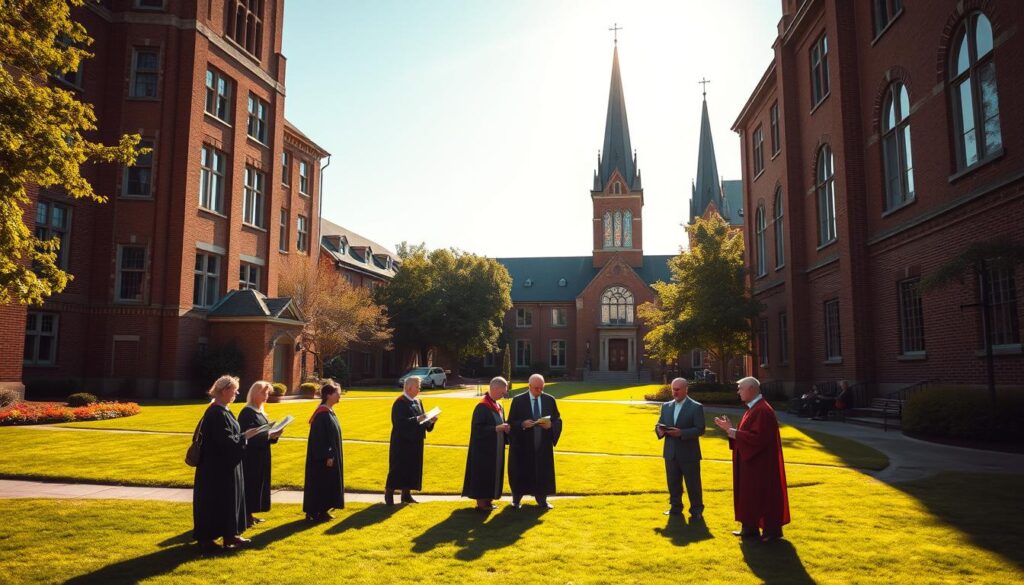
Preparing leaders for today’s challenges requires institutions that blend spiritual depth with academic rigor. For over six decades, one such place has shaped visionaries ready to serve diverse communities. Founded in 1962 through the merger of four historic schools, this Chicago-based center offers a dynamic environment for students pursuing careers in ministry and service.
Located in the heart of Chicago, the campus provides direct access to urban ministry opportunities. Students engage with real-world issues while studying theology, leadership, and community development. The recent move to a shared space with another institution reflects its commitment to collaboration and innovation.
What sets this learning environment apart? It balances tradition with fresh approaches. Coursework connects ancient wisdom to modern social challenges, ensuring graduates can lead congregations through complex times. Practical training—like internships and outreach programs—complements classroom learning.
With a $48.5 million endowment and a focus on inclusivity, the school fosters relationships that last beyond graduation. Faculty and peers form a tight-knit network, supporting each other’s growth long after diplomas are earned. This emphasis on community prepares leaders to build bridges in an ever-changing world.
Key Takeaways
Historic mergers created a robust institution focused on preparing skilled leaders for modern ministry
Urban campus locations offer hands-on experience addressing contemporary community needs
Programs blend academic excellence with practical training for holistic development
Collaborative environments strengthen connections between students, faculty, and faith communities
Education emphasizes adaptability to equip graduates for evolving church leadership roles
Discover the Legacy and Mission of the lutheran theological seminary
Educational excellence in religious leadership often emerges from merging diverse legacies. This institution’s story began in 1962 when four faith-based schools united, creating a collaborative hub for training future changemakers. Their shared goal? To equip individuals with both spiritual wisdom and practical tools for modern service.
Founding History and Church Heritage
The school’s foundation combines Scandinavian traditions with urban ministry expertise. Augustana brought Swedish perspectives, Grand View contributed Danish influences, while Chicago Lutheran focused on city outreach. Suomi added Finnish insights, forming a tapestry of cultural and theological approaches.
Expansions in 1967 and 1987 strengthened this network, integrating Central Seminary’s Midwest roots and Christ Seminary-Seminex’s innovative spirit. These mergers mirrored broader church unification efforts, particularly within the Evangelical Lutheran Church in America.
Visionary Leadership and Ministry Impact
“True leadership grows where ancient wisdom meets today’s struggles,” notes a faculty member. Students learn to address issues like housing insecurity and racial justice through coursework and neighborhood partnerships. This dual focus—deep faith grounding and real-world application—prepares graduates to lead congregations and community organizations.
Alumni serve as pastors, nonprofit directors, and advocates nationwide. Their work demonstrates how faith-based education can spark systemic change while honoring tradition.
Explore Academic Programs and Campus Features
Future faith leaders need training that connects classroom learning with real-world impact. This institution delivers through degree paths blending scholarly exploration with hands-on skill-building. Whether preparing for ordination or specialized service, students find programs tailored to their calling.
Diverse Degree Programs and Innovative Curriculum
The Master of Divinity forms the cornerstone for pastoral preparation, mixing scripture analysis with leadership workshops. Those seeking deeper study can pursue doctoral tracks or the Theological Education for Emerging Ministries program, designed for nontraditional ministry settings.
Standout courses tackle topics like urban poverty and interfaith collaboration. “Our Public Church framework trains students to address societal fractures through faith,” explains a professor. This approach equips graduates to lead congregations in tackling justice issues while honoring tradition.
Campus Locations, Facilities, and Interfaith Centers
Chicago’s vibrant neighborhoods serve as living labs for ministry practice. The campus itself features Zoom-enabled classrooms, quiet meditation spaces, and a sunlit café where students debate theology over coffee. A shared chapel hosts worship services from multiple traditions.
Partnerships with 11 seminaries let learners attend cross-denominational courses. Through the Association of Chicago Theological Schools, participants gain access to citywide interfaith events and joint community projects. These connections turn the Windy City into an extended classroom.
Navigating Admissions, Scholarships, and Student Life
Starting your journey toward faith-based leadership should feel welcoming. The admissions team guides applicants through each step, from initial inquiries to enrollment. Virtual info sessions and personalized campus tours help you explore facilities and meet future classmates.
Application Process and Campus Visits
Prospective students complete an online form with academic records and recommendation letters. Interviews focus on aligning personal goals with the school’s mission. Schedule visits to experience Chicago’s energy firsthand—attend a class or join a community service project.
Student Stories and Collaborative Culture
“The diverse perspectives here deepened my understanding of ministry,” shares a second-year candidate. Peer-led study groups and interfaith dialogues foster teamwork. Over 80% of learners participate in neighborhood initiatives, blending coursework with local impact.
Funding Your Education
Every admitted M.A. student receives full tuition coverage, removing financial barriers to study. Additional aid includes housing grants and part-time work opportunities. Alumni-sponsored scholarships reward innovative projects addressing social justice or congregational growth.
FAQ
What makes this institution’s church heritage unique?
Founded in 1869, the school has deep roots in the Evangelical Lutheran Church in America. Its mission combines academic rigor with a commitment to fostering inclusive, justice-centered leaders for modern ministry.
What degree programs are available for aspiring leaders?
Programs include Master of Divinity, Master of Arts, and Doctor of Ministry degrees. Courses blend theology, social ethics, and practical training to prepare graduates for diverse roles in faith communities and beyond.
How does financial aid support students?
Over 90% of enrolled learners receive scholarships, grants, or fellowships. Opportunities include merit-based awards, need-based aid, and denominational partnerships to reduce tuition costs.
Can I visit the campus before applying?
Yes! Prospective students can schedule tours, attend virtual info sessions, or join retreats to explore facilities, meet faculty, and experience the community firsthand.
How does the curriculum address contemporary issues?
Courses integrate topics like racial equity, interfaith dialogue, and climate justice. Students engage in hands-on projects, internships, and global partnerships to apply their learning in real-world settings.
What community resources are available on campus?
The school offers interfaith chapels, a global theology library, and cultural centers. These spaces encourage collaboration, spiritual growth, and dialogue among students from varied backgrounds.
Nestled in the heart of Macomb County, this faith-centered institution has served families for over five decades. Founded in 1972, it combines academic rigor with spiritual growth on a campus located just 25 miles from Detroit’s vibrant culture.
The school’s affiliation with the Lutheran Church Missouri Synod ensures a values-driven education. Students benefit from small class sizes and programs that nurture both character and intellect. Accredited by leading educational organizations, it meets high standards for curriculum and student support.
More than just classrooms, this community hub fosters connections across generations. Families appreciate its collaborative spirit as part of the Lutheran High School Association. From sports to service projects, every activity reinforces its mission of developing well-rounded individuals.
Key Takeaways
Faith-based education provider serving Macomb since 1972
Convenient location near Detroit with strong regional connections
Collaborative network through Lutheran educational partnerships
Holistic approach blending academics with personal growth
Our Community-Driven Mission and Services
At the core of our identity lies a simple truth: education and faith grow best when nurtured together. Every program we offer strengthens this connection, creating spaces where young minds develop purpose alongside knowledge.
Worship Services and Faith Education
Weekly chapel services bring the community together through prayer, music, and reflection. Teachers weave Christian principles into lessons naturally – whether discussing literature themes or scientific discoveries. Daily classroom devotions help learners connect their studies to real-world values.
Community Outreach Programs
Beyond our classrooms, service projects let participants put faith into action. Recent initiatives include neighborhood cleanups and care packages for local seniors. Through these efforts, young people discover the joy of contributing to something larger than themselves.
Small group discussions and mentorship opportunities deepen personal spiritual growth. Our partnership with the Lutheran Church Missouri Synod ensures teachings remain rooted in timeless truths while addressing modern challenges. This approach helps create compassionate leaders ready to make meaningful impacts.
Discover the Benefits of lutheran north macomb
A commitment to growth shines through in both programs and facilities. Visitors experience this firsthand through interactive campus visits designed to showcase what makes this community special.
Campus Tours That Bring Learning to Life
The “Mustang for a Day” program gives prospective families an authentic look at daily life. Participants attend classes, eat lunch with peers, and join extracurricular activities. This hands-on opportunity helps students envision themselves thriving in the environment.
Safe Spaces for Growth and Connection
Recent upgrades prioritize safety and comfort across the 25-acre campus. Outdoor athletic areas now feature improved lighting and secure fencing. Inside, renovated classrooms support collaborative learning while maintaining a welcoming atmosphere.
Feature
Current Improvements
Future Plans
Athletic Spaces
Enhanced safety measures
Multi-sport turf field
Classrooms
Updated technology
Expanded science labs
Common Areas
New cafeteria seating
Student lounge additions
These strategic updates create more opportunities for both academic and social development. The community continues investing in spaces where young people can build confidence alongside knowledge.
Academics, Athletics, and Student Life Engagement
Education here extends beyond textbooks, blending classroom learning with real-world experiences. With 560 students enrolled, the community thrives on balanced growth where faith, teamwork, and curiosity drive daily activities.
Where Knowledge Meets Purpose
Small class sizes ensure personalized attention, helping learners connect subjects like science and literature to Christian values. Advanced placement courses challenge students academically, while service projects teach practical compassion. One alumna reflects: “My teachers showed me how to pair critical thinking with kindness.”
Champions On and Off the Field
Twenty-one varsity teams compete in the Catholic High School League, with rosters split nearly evenly between boys and girls. Fall brings Friday night football under the lights, while winter basketball games pack the gym. Spring athletes train on upgraded fields, with wrestlers and track stars often advancing to state competitions.
More Than Just Classes
After-school clubs turn interests into passions. The ski club hits Michigan slopes, while HOSA members practice healthcare skills. Student Council leaders organize food drives, proving leadership isn’t just a title. As TV personality Kat Timpf (Class of ’06) notes: “The confidence I gained here shaped my career.”
From the stage to the science lab, every activity reinforces a simple truth: growth happens when minds, bodies, and spirits work together.
Conclusion
For over 50 years, this faith-based institution has shaped futures where academic achievement walks hand-in-hand with spiritual grounding. Modern facilities and diverse programs create spaces where students forge lifelong friendships while discovering their potential.
The school’s heartbeat lies in its tight-knit community. Families find more than classrooms here – they join a network where support extends beyond graduation day. Notable alumni achievements across various fields prove how values-driven education prepares young adults for real-world success.
Prospective families can experience this environment firsthand through interactive “Mustang for a Day” visits. These opportunities reveal how character development thrives alongside science experiments and touchdown passes. Recent campus upgrades ensure every space encourages growth, from collaborative labs to cheering bleachers.
As seasons change and students graduate, one truth remains constant: learning here means growing as a whole person. The commitment to excellence continues evolving, ensuring future generations inherit even stronger foundations for life’s journey.
FAQ
What types of worship services are offered?
Weekly gatherings include traditional and contemporary services, Bible studies, and youth-focused faith education programs. Seasonal events like Advent and Lenten services are also hosted.
How can I schedule a campus tour?
Contact the admissions office to arrange a personalized visit. Tours highlight classrooms, athletic facilities, and student-led activities to showcase daily life here.
Are there opportunities for student-athletes?
Yes! The Mustangs compete in 14+ varsity sports, including basketball, soccer, and track. Teams emphasize skill development, leadership, and camaraderie for boys and girls.
What academic support is available?
Faith-based learning is paired with college-prep courses, tutoring, and STEM labs. Small class sizes ensure personalized attention for every learner.
How does the school engage with the local community?
Outreach programs include food drives, mentorship initiatives, and volunteer partnerships. Students regularly participate in service projects to support Macomb-area neighbors.
What clubs or activities can students join?
Over 20 options are available, from robotics and drama to choir and debate. These groups foster creativity, teamwork, and spiritual growth throughout the school year.
In Cleveland’s St. Clair-Superior neighborhood, a non-profit organization has become a lifeline for thousands. Since opening its modern headquarters in 2013, this group has helped over 10,000 individuals annually tackle challenges like homelessness, disabilities, and long-term care needs. Their approach goes beyond short-term fixes, focusing on creating lasting stability through tailored programs.
The Richard Sering Center at 4515 Superior Avenue serves as the heart of their operations. Here, personalized support meets innovative solutions designed to address both urgent needs and future goals. From housing assistance to job training, every service aims to build independence while respecting each person’s unique journey.
What makes this effort stand out? It’s the holistic strategy that connects healthcare, income-building opportunities, and community resources. Partnerships with local businesses and government agencies ensure services reach those who need them most. This collaborative model helps families and individuals find not just help, but hope.
By prioritizing dignity and long-term success, the organization empowers people to rewrite their stories. Their work proves that with the right tools and support, anyone can move toward a brighter tomorrow.
Key Takeaways
Serves 10,000+ individuals annually through comprehensive support programs
Focuses on sustainable solutions for homelessness, disabilities, and care needs
Operates from the Richard Sering Center, established in 2013
Combines housing, healthcare, and income-building services
Partners with local groups to maximize community impact
Prioritizes dignity and long-term stability for all participants
About Lutheran Metropolitan Ministry
A beacon of hope emerged in 2013 for Cleveland’s struggling neighborhoods. The organization moved into its current headquarters, tripling service capacity to support over 10,000 people yearly. This expansion allowed new programs addressing income barriers and long-term stability.
Our Mission and Vision
The group focuses on creating a comprehensive safety net for vulnerable residents. Their mission prioritizes housing, healthcare access, and job training while preserving individual dignity. Visionary strategies aim to break poverty cycles through sustainable support systems.
Evolution and Community Growth Since 2013
Strategic partnerships with local government and financial institutions fueled remarkable growth. The Richard Sering Center now serves an area where 41.5% face poverty and 23.6% lack jobs. Collaborative efforts have developed innovative solutions tailored to shifting community needs.
Indicator
Statistic
Year
Poverty Rate
41.5%
2013
Median Income
$45,700
2013
Unemployment Rate
23.6%
2013
Programs and Services that Empower Lives
Empowerment begins with access to essential resources and skills. The organization’s network of support combines immediate aid with life-changing opportunities, creating pathways out of poverty through strategic partnerships and community-driven solutions.
Social Service Programs and Housing Development
Stable housing forms the foundation for personal growth and security. Emergency shelters transition into permanent homes through tailored support systems, helping people rebuild their lives with dignity. Affordable housing developments in high-need areas prioritize accessibility while fostering neighborhood connections.
Job training programs work hand-in-hand with housing services to address income barriers. “You can’t fix homelessness without fixing employment,” notes a program director. This dual approach helps participants develop marketable skills while securing safe living spaces.
Innovative Culinary School and Job Re-entry Initiatives
The commercial kitchen serves multiple purposes – classroom, community hub, and social enterprise. Students learn restaurant skills while preparing 3,000+ meals weekly for shelters, gaining hands-on experience that leads to living-wage jobs. Over 80% of culinary graduates secure full-time positions within six months.
Re-entry programs remove obstacles for formerly incarcerated individuals through:
Expungement clinics clearing criminal records
Transportation assistance to job interviews
Mentorship from industry professionals
Youth initiatives in the 46,774-square-foot facility blend education with practical life skills. Teens learn financial literacy alongside cooking classes, breaking cycles of poverty through early intervention. These interconnected services create lasting change by addressing root causes rather than symptoms.
Financial Transparency and Community Investment
Trust forms the foundation of effective community support. The nonprofit maintains open financial records to show how every dollar creates change. Detailed reports reveal strategic investments in programs that break poverty cycles while keeping operations efficient.
Fiscal Highlights and Funding Overview
The $8 million Richard Sering Center project showcases smart money management. Funding came from:
$2.3 million in CDP II grants
$8 million New Markets Tax Credits
$2.5 million Ohio NMTC funds
Leadership compensation reflects market standards for similar-sized organizations. In 2023, the CEO earned $175,000 – below national averages for comparable roles. This balance ensures skilled management while directing resources to services.
Partnerships and Sponsor Contributions
Collaborations multiply the community impact. PNC Bank and Cuyahoga County provide both funds and expertise. These alliances helped increase program capacity by 40% over five years.
Multi-year tracking shows consistent growth in service delivery. Funding diversity protects against economic shifts, ensuring stability even in challenging years. As one donor notes: “We trust them to turn investments into life-changing results.”
Community Services by lutheran metropolitan ministry
Building stronger neighborhoods starts with opportunity and access. This organization strengthens local residents through practical solutions that connect employment, transportation, and environmental care.
Job Creation and Workforce Development
The group is adding 20 new positions this year while keeping all 60 current roles. These jobs range from social workers to culinary instructors, creating career paths that uplift both employees and those they serve.
Training programs focus on skills that lead to living-wage income opportunities. One staff member shares: “We help people rebuild confidence as they learn trades that employers need.” Specialized tracks support individuals overcoming employment barriers like criminal records or disabilities.
Accessible Transit and Environmentally Sustainable Outcomes
Located near major bus lines, the center removes transportation hurdles for 85% of participants. Easy access helps people attend job interviews, training sessions, and medical appointments consistently.
The building’s LEED Silver certification reflects eco-friendly practices that cut energy costs by 30%. Solar panels and water-saving systems create healthier spaces while teaching sustainable habits. This dual focus on jobs and green design shows how communities can thrive economically and environmentally.
Conclusion
Year after year, this Cleveland-based organization proves that lasting change grows from addressing root causes. Their model combines urgent aid with life-changing solutions, helping thousands rebuild stability through housing, job training, and healthcare access.
The Richard Sering Center stands as proof that smart partnerships create ripple effects. By focusing on income-building programs, they help participants develop skills that boost earning potential. Over 80% of culinary graduates secure jobs each year, breaking cycles of poverty.
What makes their approach work? A holistic strategy that removes barriers to success. From expungement clinics to solar-powered facilities, every service aims to empower while respecting individual dignity. Their transparent financial practices ensure resources directly support community needs.
As needs evolve, the group continues adapting its services. Recent expansions add 20 new positions yearly while maintaining year-round support for vulnerable populations. This commitment to innovation sets a national standard for tackling income inequality and housing challenges.
Through collaboration and creativity, they show how communities can thrive. Their story inspires others to invest in sustainable solutions that create brighter futures—one person, one family, one neighborhood at a time.
FAQ
What core values guide this organization’s work?
The group prioritizes dignity, equity, and empowerment. Their mission focuses on creating pathways out of poverty through housing, employment, and supportive services, while their vision champions a community where everyone thrives.
How has the organization expanded its impact since 2013?
Over the past decade, they’ve grown from offering basic shelter to developing holistic programs. Initiatives now include affordable housing projects, job training academies, and re-entry support, directly addressing systemic barriers faced by underserved populations.
What makes their culinary training program unique?
The culinary school combines hands-on kitchen experience with life-skills coaching. Graduates earn certifications while preparing meals for local shelters, blending education with immediate community service—a model that boosts employability and addresses food insecurity.
How are donations allocated to ensure fiscal responsibility?
Nearly 85% of funds go directly to programs. Annual reports detail expenses, such as housing development costs and workforce training budgets. Independent audits and partnerships with local businesses further ensure resources are used effectively.
Can businesses collaborate with their job-placement efforts?
Yes! Corporate sponsors hire graduates, donate equipment, or fund scholarships. Partnerships have placed over 1,200 individuals in jobs last year alone, with many employers benefiting from tax incentives and a skilled, diverse workforce.
Do they address environmental issues through their services?
Absolutely. Affordable housing projects include energy-efficient designs, reducing utility costs for residents. Job training also covers green industries, aligning economic growth with sustainable practices for long-term community health.
Nestled in the vibrant city of Thousand Oaks, California Lutheran University (CLU) has shaped minds and spirits since 1959. What began as a small college founded by Norwegian pioneers and faith leaders now stands as a thriving institution blending academic rigor with timeless values. Its 290-acre campus offers more than scenery—it’s a place where purpose meets possibility.
Originally named California Lutheran College, the school became a university in 1986, reflecting its growth into a comprehensive learning community. Today, it serves nearly 3,000 undergraduates and 1,400 graduate students, fostering connections that last beyond graduation. Located just 40 miles from Los Angeles, CLU balances quiet reflection with access to dynamic opportunities.
At its heart, CLU remains committed to integrating faith into daily life. Classrooms buzz with discussions linking ethics to economics, while athletic teams champion sportsmanship alongside competition. This Thousand Oaks institution proves that education isn’t just about careers—it’s about cultivating character.
Key Takeaways
Founded in 1959, CLU evolved from a local college to a nationally recognized university
Faith-based learning shapes academics, athletics, and community service programs
The 290-acre campus hosts diverse students near Los Angeles’ professional networks
Norwegian heritage and Lutheran traditions anchor the school’s inclusive values
Graduates gain career skills alongside leadership and service-oriented mindsets
Overview of Lutheran University
At the heart of Southern California, a faith-based campus thrives with diverse academic offerings. California Lutheran University serves over 4,000 learners through bachelor’s, master’s, and doctoral programs. Students choose from 36 majors and 34 minors, blending career-focused education with ethical foundations.
The institution extends beyond its main campus through five regional centers. These locations make faith-integrated learning accessible across the state:
Campus
Program Focus
Student Support
Thousand Oaks
Liberal Arts & Sciences
Residential Life
Woodland Hills
Business & Tech
Evening Classes
Oxnard
Healthcare
Community Partnerships
Small class sizes create tight-knit learning groups. Professors know students by name, guiding both academic growth and personal development. Nearly 60% of courses have fewer than 20 learners.
While rooted in Lutheran traditions, the community welcomes all beliefs. NCAA Division III teams compete with the same spirit of integrity seen in classrooms. This approach prepares graduates to lead with skill and compassion.
A Rich History and Legacy of Christian Education
The story of California Lutheran’s origins reads like a tapestry woven with faith and foresight. Norwegian immigrants first envisioned a college blending rigorous academics with spiritual growth during their early 20th-century settlement years. Their dream gained momentum in 1951 when church delegates voted to form a Higher Education Committee at a historic convention.
Early Beginnings and Founding Principles
Pioneering families wanted more than textbooks—they sought to build minds and souls. The blueprint for the college emphasized three core ideals: academic excellence, ethical leadership, and service to others. These principles still guide students today, decades after the first classes began.
The Role of the Evangelical Lutheran Church
Key Lutheran groups united to turn this vision into reality. The Evangelical Lutheran Church led the charge, partnering with other denominations to fund and design the institution. Their collaborative efforts created a learning environment where faith fuels discovery.
Church Group
Contribution
Impact
American Lutheran Church
Strategic Planning
Launched feasibility studies
United Lutheran Church
Resource Allocation
Secured initial funding
Augustana Synod
Curriculum Design
Shaped faith-based learning
By 1959, these partnerships bore fruit. The California Lutheran campus welcomed its first class, marking a new chapter in West Coast education. Church leaders celebrated not just buildings rising from the earth, but a community rooted in timeless values.
Founding and Early Years
Visionary immigrants turned dusty ranchlands into hallowed classrooms when California Lutheran took shape in 1961. Richard Pederson—son of Norwegian homesteaders—gifted 130 acres that became the school’s heartbeat. His family’s 1890 Sears catalog home still stands as a testament to their pioneering spirit.
Pioneering Contributions by Norwegian Immigrants
The Pedersons embodied their homeland’s values: hard work paired with generosity. Their donated property wasn’t just land—it held walnut groves, chicken coops, and citrus trees. “We’re building for those not yet born,” Richard declared during the deed transfer ceremony.
The Pederson Legacy and Campus Establishment
Construction crews converted barns into lecture halls while preserving the ranch’s character. The 1961 opening welcomed 330 learners to California’s first private four-year college in Ventura County. Remarkably, full accreditation followed within 12 months.
Year
Milestone
Significance
1890
Pederson family arrival
Established Conejo Valley roots
1961
Campus inauguration
330 inaugural students enrolled
1962
Accreditation achieved
Confirmed academic excellence
Early professors—all Lutheran—taught calculus and theology with equal passion. Their commitment forged a tight-knit community where faith and learning intertwined like the ranch’s grapevines.
Campus Origins and Community Roots
A dusty ranch blossomed into an academic hub through visionary partnerships. The $2.1 million campus project in 1961 transformed 130 acres of working farmland into modern facilities. Builders preserved walnut groves while adding dorms, classrooms, and a sparkling swimming pool—an unusual priority that showed foresight about student well-being.
Land Donations and Early Infrastructure
The Pederson family’s gift became the foundation for growth. Their 1890 farmhouse and chicken coops got new life as offices, blending history with progress. Local developer Janss Corporation mapped water systems and donated funds, proving Thousand Oaks businesses believed in the college’s potential.
Early planners made smart compromises. They built necessary structures quickly but kept citrus trees shading walkways. This balance between development and preservation gave the campus its distinctive charm.
Building a Faith-Based Community
Every construction choice reflected core values. The first dormitory housed students above chapels, weaving spirituality into daily life. Farmers-turned-professors taught biology lessons among orange groves, connecting classroom theories to real-world applications.
Neighbors embraced the growing institution. Volunteers helped harvest campus walnuts, selling them to fund scholarships. This collaboration between California Lutheran and Thousand Oaks residents created bonds that still strengthen the community today.
Campus Life: Faith, Academics, and Social Engagement
Vibrant traditions and meaningful activism define the heartbeat of campus culture. At California Lutheran, every day offers opportunities to grow intellectually while making a difference. From sunrise meditation circles to late-night study groups, the rhythm of student life pulses with purpose.
Student Activities and Campus Traditions
The Community Leaders Club set the tone for engagement in 1963. Members organized charity auctions and supported sports teams, knitting the campus closer to Thousand Oaks neighbors. “We’re not just learners—we’re partners in progress,” declared one 1965 club president.
By 1967, students demonstrated their commitment to change. Nearly 200 staged a sit-in challenging attendance rules, their peaceful protest sparking policy reforms. The following year, 300 marched to honor Dr. King, carrying signs reading “Justice Lives Here.”
Modern traditions continue this legacy. Service projects pair biology majors with local food banks, while theater groups perform at senior centers. Weekly interfaith dinners create spaces for dialogue across beliefs. These experiences shape graduates who lead with both skill and empathy.
Through it all, campus life remains rooted in connection. Whether cheering at soccer games or planting trees during Earth Week, students build a community where values translate into action. As one senior shared, “Here, you don’t just earn a degree—you discover how to live meaningfully.”
lutheran university Academics and Programs
Classrooms here blend intellectual rigor with ethical foundations. Learners explore 36 majors ranging from neuroscience to film production, supported by faculty who champion holistic growth. Programs stretch beyond textbooks—business students consult real startups, while nursing candidates train at community clinics.
Degree Paths for Every Calling
Undergrads craft personalized paths using 34 minors and certificates. A biology major might pair environmental studies with theology courses. Graduate-level options include MBA tracks and doctorates in education, all designed for working professionals. Evening classes at five regional centers make advanced degrees accessible across California.
Learning Through Faithful Lenses
Every syllabus asks “How does this serve others?” Psychology courses examine compassion’s role in mental health. Engineering projects prioritize sustainable solutions. “Our goal isn’t just skilled graduates,” shares a philosophy professor, “but leaders who ask ‘What’s right?’ before ‘What’s profitable?'”
This approach shapes distinctive outcomes. Alumni lead tech firms with ethical frameworks and teach in underserved schools. Whether pursuing bachelor’s or doctoral studies, students gain tools to excel in their fields while uplifting communities.
Undergraduate and Graduate Experiences
A tapestry of perspectives weaves through every classroom at CLU. Nearly 4,300 learners—from freshmen to doctoral candidates—find tailored paths that blend discovery with purpose. The mix of undergrad energy and graduate-level expertise creates a dynamic environment where ideas cross-pollinate.
Cultural Mosaic Through the Decades
Since 1964, the student body has transformed dramatically. What began as a predominantly Lutheran cohort now represents over 20 faith traditions. International voices from six continents enrich discussions about global citizenship.
Year
Undergrad Diversity
Graduate Growth
1965
3 African American students
No graduate programs
2023
48% non-Lutheran enrollment
1,394 postgrad scholars
Small class settings foster deep connections. Biology major Alicia Torres shares: “My professor noticed I struggled with lab reports. She spent Saturdays teaching me scientific writing—that care shapes how I’ll mentor others.”
Launchpads for Tomorrow’s Leaders
Every student accesses hands-on growth opportunities:
First-year undergrads lead community gardens
MBA candidates consult with Ventura County startups
Psychology researchers present at national conferences
Graduate programs emphasize ethical leadership. Dr. Evan Park, Dean of Professional Studies, notes: “We measure success not just by graduation rates, but by how alumni uplift their industries.”
“Here, your beliefs aren’t checked at the door—they’re tools for deeper learning.”
Athletic Excellence and the “Cradle of Coaches” Legacy
On sun-drenched fields, a coaching dynasty took root. California Lutheran earned its “Cradle of Coaches” reputation through gridiron greatness and character-driven leadership. The football program became a launchpad for mentors shaping athletes nationwide.
Football Triumphs and Coaching Pioneers
Coach Bob Shoup revolutionized the game during his 23-year tenure. His players didn’t just win games—they became teachers of the sport. One in four athletes from his teams entered coaching, creating a ripple effect across American football.
Year
Achievement
Impact
1971
NAIA National Champions
First West Coast team to win title
1985
144 Coaching Alumni
NFL, college, and high school leaders
2014
24 MLB Draft Picks
Baseball program recognition
The 1971 championship team’s Hollywood Palladium celebration symbolized their cultural impact. Players carried lessons beyond the field—former lineman Mark Malone later coached Super Bowl champions while prioritizing community service.
Beyond the Gridiron
Diamond successes mirrored football’s legacy. Scouts regularly attended baseball games, drafting 24 players by 2014. NCAA Division III basketball and soccer teams also thrived, balancing competition with academic focus.
Current athletes embody this dual commitment. “We train like pros but study like scholars,” shares softball captain Emily Ruiz. “Our coaches care about our careers after the final inning.”
“Winning matters, but building leaders matters more.”
Health, Wellness, and Student Support
True education thrives when mind, body, and spirit align. At California Lutheran University, this philosophy shapes every wellness initiative. The iconic campus pool—built in 1961—symbolizes their early commitment to holistic student life, blending recreation with community building.
For 26 summers, Dallas Cowboys training camps turned the campus into a pro sports hub. Students gained front-row seats to athletic excellence while the university showcased top-tier facilities. This legacy continues through modern services supporting physical health and career readiness.
Counseling programs blend psychological expertise with faith-based principles. Workshops teach stress management through meditation and service projects. Peer mentors help newcomers navigate academic pressures while staying true to personal values.
CLU’s approach recognizes success isn’t measured by grades alone. From nutrition seminars to interfaith yoga sessions, every resource aims to cultivate resilient, purpose-driven graduates. As one senior shared, “Here, you learn to care for yourself as deeply as you care for the world.”
FAQ
How does the university integrate Christian values into campus life?
Faith-based learning is woven into academics, community service, and social activities. Chapel services, volunteer programs, and ethics-focused courses encourage students to explore their beliefs while fostering compassion and leadership.
What academic programs are most popular among undergraduates?
Business administration, psychology, and biological sciences rank highly. Graduate students often pursue degrees in education, clinical psychology, or public policy. Programs emphasize critical thinking alongside ethical decision-making.
Can you explain the “Cradle of Coaches” legacy?
The nickname honors Coach Bob Shoup and the football program’s historic 1963 NAIA championship. Many alumni became influential coaches, blending athletic excellence with mentorship rooted in integrity and teamwork.
Are there scholarships for international students?
Yes! Norwegian students may apply for heritage-based awards. The school also offers merit scholarships and need-based aid to support its diverse student body, including 5% international enrollment.
What wellness resources are available on campus?
Students access counseling, fitness centers, and health clinics. Peer-led groups and mindfulness workshops promote mental well-being, aligning with the holistic approach to education.
How does the NCAA Division III affiliation impact athletics?
Teams like Kingsmen football compete in the Southern California Intercollegiate Athletic Conference. The focus balances competitive spirit with academic priorities, ensuring athletes thrive both on and off the field.
What makes the campus community unique?
Built on land donated by the Pederson family, the Thousand Oaks location blends natural beauty with tight-knit traditions. Annual events like Homecoming and cultural festivals celebrate diversity within a faith-centered environment.
Faith-based organizations across America offer unique ways to grow professionally while making a difference. One network spans 1,400 communities, providing essential health and social services to millions. Whether you’re drawn to local congregations or national programs, there’s room to align your skills with meaningful work.
Many roles exist beyond traditional ministry positions. From administrative support in Chicago offices to remote global project coordination, these organizations need diverse talents. The focus remains on creating positive change through education, healthcare, and community development initiatives.
What sets these careers apart? They blend purpose with professional development. Employees often describe their work as more than just a job—it’s a chance to join a community committed to service. Positions range from entry-level to leadership, with training programs that help team members advance.
Opportunities extend across multiple sectors, including nonprofit management and outreach coordination. Flexible arrangements allow professionals to contribute from various locations while staying connected to core values. This approach helps maintain a national impact while respecting individual lifestyles.
Key Takeaways
Faith-based networks serve 1 in 50 Americans through health and community programs
Career paths include remote work, specialized ministries, and administrative roles
Positions emphasize both skill development and community impact
Organizations operate in education, healthcare, and social services nationwide
Application processes prioritize mission alignment alongside professional qualifications
Introduction to Lutheran Jobs and Opportunities
Professionals seeking careers that blend values with service find distinctive paths in faith-oriented organizations. These roles stand out by weaving ethical principles into daily work, creating environments where purpose meets practical skills.
What Sets These Roles Apart
Unlike typical workplaces, these positions emphasize both professional growth and community impact. Comprehensive wellness programs and mentorship opportunities show how employers invest in staff development. One team member shares: “Our training doesn’t just build resumes—it strengthens our ability to serve.”
The Ripple Effect of Purpose-Driven Work
Employees from varied backgrounds unite through shared mission goals. This diversity fuels innovative solutions for challenges like healthcare access and education gaps. Flexible schedules and remote options let professionals contribute meaningfully while maintaining personal commitments.
Career advancement here often includes leadership tracks in community development or nonprofit management. Regular skill-building workshops ensure teams stay effective in evolving social landscapes. This approach creates lasting change—for both those serving and being served.
Navigating the Lutheran Service Directory
Strategic use of specialized platforms helps candidates discover roles matching their values and skills. Many organizations streamline opportunities through centralized portals, separating U.S. and global positions for easier navigation. One staff member notes: “Creating an account transformed my search—it let me track applications and get alerts for new openings.”
Effective Search Strategies for Job Seekers
Start by exploring the ELCA’s dual-track system. Domestic roles often focus on local community needs, while international listings highlight cross-cultural partnerships. Use keywords like “education coordinator” or “outreach specialist” to filter results. Save preferred positions and set email notifications to stay updated.
Utilizing Advanced Filters and Resources
Most portals let you sort by location, department, or experience level. The human resources team in each organization provides support for technical issues or application questions. Bookmark the direct link to your profile page for quick access to saved jobs and submission history.
Follow up politely with hiring teams after applying—it shows enthusiasm without overwhelming staff. Many departments appreciate brief emails confirming receipt or requesting timeline updates. This proactive approach keeps your application top-of-mind while respecting workflow processes.
Explore lutheran jobs in Leading Organizations
Top-tier institutions connect professionals with roles that turn values into action. The Evangelical Lutheran Church in America features dynamic positions addressing critical needs—from disaster recovery coordination to global hunger solutions. These opportunities let you apply specialized skills while advancing community-focused missions.
Roles Within Faith-Based Networks
Program managers drive initiatives with nationwide reach. One team member overseeing disaster response shares: “Every project lets us rebuild lives—not just structures.” Key positions include:
Role
Focus Area
Salary Range
Director of World Hunger
Global nutrition programs
$85,000+
Disaster Response Coordinator
U.S. emergency management
$75,000-$90,000
International Partnerships Lead
Cross-border collaborations
Competitive packages
Growth in Organizational Development
Human resources professionals shape workplace culture in these mission-driven organizations. Executive roles like Chief People Officer combine strategic leadership with employee support systems. Development teams seek experts to build funding partnerships—a Corporate Relations Manager recently secured $2M in grants for education initiatives.
These careers require skills like grant writing and stakeholder management. Many offer flexible arrangements, letting you contribute from office settings or remote locations. Training programs help teams stay updated on best practices in nonprofit development and community engagement.
Career Paths in Ministry and Community Service
Building a career rooted in faith often starts with understanding organizational structures and pathways. The Evangelical Lutheran Church in America (ELCA) offers clear routes for those called to lead through both local and national roles. Whether guiding congregations or shaping churchwide initiatives, these positions blend spiritual commitment with professional growth.
Faith-Focused Career Development Routes
Rostered ministers and lay leaders must complete specific documentation to qualify for ELCA roles. The Rostered Minister Profile helps match skills with needs—from advising regional communities to managing national programs. One administrator notes: “This process ensures we connect the right people with ministries where they’ll thrive.”
Leadership tracks often begin with local congregation work before expanding to broader responsibilities. The churchwide structure includes four elected officers and councils that guide strategic decisions. This framework supports roles like resource coordinators and partnership developers who amplify the church’s impact.
Professional development remains central to these careers. Mentorship programs and continuing education opportunities help leaders adapt to evolving service needs. Many advance from coordinating food banks to directing international relief efforts, demonstrating how faith-driven work scales across contexts.
Key requirements for advancement include:
Completed Rostered Minister Profile documentation
Experience in collaborative ministry settings
Understanding of ELCA governance structures
The Evangelical Lutheran Church in America empowers professionals to grow while maintaining core values. Through structured pathways and ongoing support, individuals can build meaningful careers that resonate far beyond Sunday services.
Innovative Opportunities in Health and Social Services
Healthcare and social service professionals are finding new ways to merge expertise with compassion through community-focused initiatives. Organizations driving this change tackle pressing needs like food insecurity and chronic disease prevention while building partnerships across sectors.
Empowering Community Leaders and Employees
Forward-thinking programs connect health experts with local advocates to address systemic challenges. One partnership between medical teams and urban farmers recently improved nutrition access for 12,000 families. “We train employees to see beyond clinic walls,” shares a regional director. Leadership development tracks prepare staff to:
Design culturally responsive care models
Secure grants for mental support programs
Coordinate cross-sector disaster response plans
Role
Focus Area
Community Impact
Health Equity Coordinator
Reducing care disparities
35% faster service delivery in rural areas
Senior Social Worker
Family stabilization
200+ households assisted monthly
Community Health Educator
Preventive care outreach
60% reduction in ER visits for chronic conditions
Creating Inclusive and Supportive Work Environments
Teams thrive in spaces valuing diversity and personal growth. Flexible scheduling allows employees to balance patient care with family needs. Mentorship programs pair new hires with seasoned professionals—one nurse practitioner credits this support for her rapid career advancement.
“Our environment celebrates different perspectives. That’s how we create solutions that actually work for people.”
Ongoing training helps staff address social factors affecting health outcomes. From trauma-informed care workshops to language accessibility certifications, these resources ensure teams can serve communities effectively while growing professionally.
Connecting with Diverse Evangelical Lutheran Organizations
Strength in unity defines how faith-based groups achieve nationwide impact. The Evangelical Lutheran Church network thrives through partnerships uniting 300+ social ministry organizations. Together, they deliver $23 billion in annual services—from disaster relief to senior care—through coordinated efforts.
Lutheran Services in America acts as the central hub, linking organizations across 1,400 communities. One program director shares: “Our associate membership lets smaller groups access national advocacy tools and training resources overnight.” This system amplifies local voices while tackling systemic challenges like housing shortages.
Key collaboration benefits include:
Shared grant opportunities through unified fundraising partners
Leadership exchanges between urban and rural member groups
Cross-state mentoring programs for emerging social service leaders
New participants often start by joining regional team initiatives before scaling successful models nationally. These connections create ripple effects—a food bank strategy tested in Ohio recently expanded to 12 states through network collaboration. By pooling expertise, groups achieve more than any single organization could alone.
Building Partnerships for Growth and Impact
Expanding community influence requires creative alliances across sectors. Organizations like Lutheran Services in America lead collaborative efforts that unite healthcare innovators, academic researchers, and corporate partners. Together, they design solutions for challenges like urban food deserts and rural healthcare gaps.
Powering Change Through Shared Expertise
The ELCA’s Global Service program opens doors to international opportunity, connecting professionals with ministries addressing poverty and disaster recovery worldwide. One project manager working in East Africa explains: “Our team combines local knowledge with global resources—that’s how we build schools that last.”
Key partnership models driving development include:
University research collaborations improving clean water access
Corporate sponsorships funding vocational training centers
Cross-border mentor programs for emerging leaders
Initiative
Partners Involved
Global Impact
Disaster Preparedness
7 international NGOs
35+ countries served
Education Equity
Tech firms & rural schools
12,000 students reached
Healthcare Innovation
Medical universities
8 new community clinics
These alliances create professional growth opportunities while addressing complex world challenges. Short-term mission trips let teachers share classroom strategies, while long-term roles in development work strengthen sustainable systems. Through shared goals, partners achieve lasting change that benefits communities across the world.
Tips for a Successful Job Application in the Faith Sector
What transforms a standard application into a mission-aligned opportunity? In competitive faith-based environments, standing out requires showcasing both your professional skills and commitment to service. Organizations prioritize candidates who demonstrate how their work aligns with community-focused values.
Crafting Your Value-Driven Resume
Tailor your resume to highlight service-oriented experience. Include volunteer roles and projects that reflect shared values. One HR specialist advises: “We look for candidates who connect their career journey to our mission—show that thread clearly.”
Use action verbs like “coordinated” or “advocated” to emphasize community impact. Quantify achievements where possible:
Managed 15+ volunteers for annual food drive
Secured $10K in grants for youth programs
Mastering Faith-Centric Interviews
Research the organization’s recent initiatives before meeting hiring teams. Prepare stories that blend professional expertise with personal values. Position yourself as someone who solves problems through both skill and compassion.
Application Component
Key Focus
Example
Resume
Service alignment
Church volunteer section
Interview
Behavioral questions
“Describe resolving conflict with empathy”
Follow-Up
Mission connection
Reference specific programs discussed
Many organizations like California Lutheran University offer opportunity statements and accommodations. A hiring manager shares: “We provide adjustable timelines and format options—just ask our HR team early.” This ensures fair evaluation while respecting individual needs.
Close interviews by asking about growth paths within the role. Send thank-you notes that reinforce your enthusiasm for their specific mission. These steps build relationships that extend beyond a single job opening.
Conclusion
Choosing a career with purpose creates ripples that extend far beyond the workplace. Organizations focused on service empower people to address critical needs—from improving health equity to mentoring future leaders. Their networks touch lives in 1,400 communities, proving that mission-driven work builds stronger societies.
By joining these teams, you become part of a program reaching one in 50 Americans annually. Staff members grow through hands-on training while shaping initiatives that uplift neighborhoods. One member shares: “Every project reminds me how faith in action transforms both givers and receivers.”
These roles offer more than employment—they’re invitations to collaborate on a mission larger than any single department. Whether coordinating local outreach or managing national partnerships, your contributions help create a fairer world. Start exploring how your skills can ignite change where it matters most.
FAQ
How do faith-based roles differ from secular career opportunities?
Positions within organizations like the Evangelical Lutheran Church in America often integrate spiritual values with professional goals. Employees typically align their work with community-building, service, and faith-driven missions while benefiting from supportive team environments.
What types of roles are available in Lutheran-affiliated organizations?
Opportunities range from ministry and education to healthcare, social services, and administrative functions like human resources or program development. Many groups, such as Lutheran Services in America, also hire for roles in advocacy, disaster response, and nonprofit management.
How can I search effectively within Lutheran job directories?
Use filters for location, job type (full-time, part-time), and focus areas like youth programs or global outreach. Platforms like the ELCA’s job board allow searches by keyword, organization size, or specific initiatives like racial justice or climate care.
Are there opportunities for non-clergy professionals in these organizations?
Absolutely. Development professionals, grant writers, IT specialists, and healthcare workers are often needed. Roles in communications, event planning, and financial management also help advance community-focused missions without requiring theological training.
What should I highlight when applying for faith-oriented positions?
Emphasize experiences in service, teamwork, and values-driven work. Tailor your resume to show alignment with the organization’s mission, such as volunteer roles or projects that demonstrate commitment to inclusivity, social justice, or community empowerment.
Do Lutheran employers offer remote or hybrid work options?
Many organizations, especially those in national networks like Lutheran World Relief, provide flexible arrangements. Roles in program coordination, donor relations, or digital ministry often support remote work, depending on the position’s requirements.
How do these organizations support employee growth?
Mentorship programs, continuing education stipends, and leadership training are common. Groups like Augsburg Fortress Publishers also encourage staff to engage in workshops, conferences, and collaborative projects with global partners.
For over nine decades, older adults have found warmth and purpose in welcoming neighborhoods designed to support their independence. With locations like The Village at Anthony Boulevard and The Village at Pine Valley, these faith-based environments blend compassionate care with opportunities to build friendships and explore new passions.
Residents enjoy maintenance-free lifestyles tailored to their needs, whether they seek active independent living or specialized memory support. Each neighborhood fosters dignity through personalized attention, allowing seniors to focus on what matters most: connection, joy, and fulfillment.
The nonprofit approach prioritizes individual potential, combining decades of expertise with innovative solutions. From engaging activities to beautifully maintained spaces, every detail reflects a commitment to excellence. Families appreciate guidance through decision-making processes, ensuring loved ones receive the right level of support.
Key Takeaways
Over 90 years of experience in creating supportive environments for older adults
Multiple Indiana locations offering maintenance-free living options
Range of services from independent living to specialized memory care
Faith-based nonprofit model focused on individual dignity and growth
Compassionate team dedicated to personalized resident experiences
Family-focused guidance for care decisions
lutheran life communities: Innovative Senior Living & Care
Redefining senior living starts with putting choice back in residents’ hands. Our nonprofit model creates neighborhoods where older adults craft daily routines around what inspires them—whether painting classes, gardening clubs, or afternoon chess matches.
At locations like Crown Point’s Wittenberg Village, we blend modern amenities with personalized support. Residents access chef-prepared meals, fitness centers, and transportation services while maintaining control over their schedules. This balance fosters independence without sacrificing safety nets.
Partnerships with Luther Oaks and other regional leaders let us share cutting-edge approaches to wellness. From art therapy sessions to adaptive exercise programs, every activity encourages growth. “It’s not about filling time—it’s about reigniting purpose,” explains one team member.
Families appreciate our transparent process for matching support levels to individual needs. Whether managing medications or coordinating specialist visits, staff handle details discreetly. Wittenberg Village’s memory care suites even feature color-coded pathways to reduce confusion.
By focusing on capabilities rather than limitations, we help residents write new chapters full of discovery. After all, aging shouldn’t mean slowing down—it’s an invitation to explore fresh possibilities.
Overview of Our Compassionate Care Services
At the heart of our approach lies personalized support that evolves with residents’ needs. Whether someone thrives in assisted living environments or requires specialized attention, our programs blend expertise with genuine compassion.
Assisted Living Programs
Our assisted living options let residents savor independence while receiving discreet help with daily tasks. At The Village at Pine Valley, private apartments include safety features alongside flexible meal plans and social calendars. Care teams adjust support levels weekly, ensuring assistance never overshadows autonomy.
Memory Care Solutions
For those navigating Alzheimer’s or dementia, our memory care neighborhoods offer calming spaces designed to reduce stress. The Village at Inverness uses color-coded layouts and sensory-rich activities to spark recognition and joy. Staff certified in dementia care techniques focus on preserving abilities through music therapy and guided reminiscence.
Pleasant View’s MyTapestry program takes memory support further with brain-stimulating games and family education workshops. “We meet residents where they are,” shares a team lead. “Even small moments of connection become victories.”
Tailored Retirement and Continuing Care Options
Retirement should feel like a new beginning, not a limitation. Our neighborhoods offer flexible solutions that adapt to evolving preferences, whether you’re planning an active lifestyle or seeking long-term security.
Independent Living for Active Seniors
Piper Trail’s Pocket Neighborhood reimagines senior living with cottage-style homes clustered around shared green spaces. Residents tend personal gardens or join walking clubs while enjoying weekly housekeeping and chef-prepared meals. At The Village at Anthony Boulevard, spacious apartments feature modern kitchens and balcony views – perfect for hosting family gatherings.
Continuing Care Retirement Communities
Wittenberg Village’s CCRC model provides seamless transitions between care levels. Couples can live together even if their needs differ, with on-site assisted living suites just steps from independent residences. This approach eliminates stressful moves later in life.
Feature
Independent Living
Continuing Care
Maintenance
Full exterior care
Comprehensive services
Social Activities
60+ monthly events
Customized engagement
Health Support
Optional wellness checks
24/7 care access
Both options include emergency response systems and scheduled transportation. “We remove daily hassles so residents can focus on what brings them joy,” shares a Piper Trail team member. From art studios to woodworking shops, every space encourages discovery.
Exceptional Short Term Rehabilitation and Home Care
Regaining independence after surgery or illness requires expert support. Our short term rehabilitation programs combine advanced therapies with compassionate guidance, helping individuals recover strength and confidence.
Personalized Recovery Plans
At The Village at Anthony Boulevard and Kendallville, licensed therapists create tailored programs for each resident. Physical, occupational, and speech therapy sessions focus on specific goals – whether walking comfortably or rebuilding communication skills. “We celebrate every milestone,” shares a Pine Valley therapist. “Progress fuels motivation.”
Partnerships with local hospitals ensure smooth transitions from acute care. Nurses provide round-the-clock monitoring while families receive regular updates. Many patients return home within weeks, equipped with customized exercise routines.
Comfort-First Home Support
When recovery continues at home, our care services adapt seamlessly. Skilled nurses help manage medications at Arlington Heights’ Lutheran Home, while companions assist with daily tasks. Services range from meal preparation to wound care, always prioritizing safety and dignity.
Flexible scheduling lets families choose support levels that match evolving needs. Even short-term assistance can make lasting differences – like fall-prevention home modifications or transportation to follow-up appointments.
Exploring Our Community Environments
At the core of our neighborhoods lies a simple truth: connection fuels vitality. Residents discover spaces crafted to spark joy through shared experiences and spontaneous conversations. Wittenberg Village in Crown Point exemplifies this philosophy, where every corridor invites connection.
Vibrant Lifestyle and Social Activities
Our calendars burst with options that cater to diverse interests. Morning yoga flows into book clubs, while afternoon painting sessions give way to live music evenings. Over 80% of residents participate in at least three weekly events.
Activity Type
Sample Offerings
Health Benefits
Physical Wellness
Tai chi, water aerobics
Improves mobility & balance
Creative Pursuits
Pottery workshops, choir
Boosts cognitive function
Social Connections
Theme dinners, game nights
Reduces isolation risks
Neighborhood Feel and Community Spirit
Walking through our courtyards feels like visiting friends. Residents often gather at the community garden or coffee bistro, swapping stories between activities. “This place reminds me of my old block – but with better amenities!” shares a Crown Point resident.
Seasonal festivals turn entire campuses into celebration hubs. Summer barbecues and holiday craft fairs create traditions that bond generations. These moments transform neighbors into family.
Visiting and Touring Our Facilities
Discovering the right environment begins with seeing it firsthand. Our team welcomes families to explore neighborhoods through guided visits that highlight daily rhythms and hidden details.
Scheduling Your Experience
Planning your visit takes just minutes through our online portal or phone service. We offer morning and afternoon slots weekdays, with weekend options available. A friendly coordinator will confirm details and ask about accessibility needs before your arrival.
Your Visit Unveiled
Expect warm greetings from staff who know every resident by name. You’ll explore sunlit common areas, sample chef-crafted meals, and witness activities in progress. “Tours often turn into laughter-filled conversations,” shares a Crown Point guide. “That’s when visitors truly feel our spirit.”
Tour Feature
Details
Benefits
Guided Exploration
60-90 minute walkthrough
See amenities & safety features
Resident Interactions
Meet 2-3 current members
Hear authentic experiences
Personalized Consultation
30-minute Q&A session
Address specific needs
Bring your questions about services, costs, or transition support. Our experts explain everything from medication management to pet policies. Many families look forward to discussing custom care plans during this visit.
Before leaving, you’ll receive a folder with next-step guides and emergency contact numbers. Follow-up calls ensure all concerns get addressed. Lutheran Life Villages makes finding the right fit feel effortless – your journey starts with one conversation.
Client Experiences and Success Stories
True fulfillment in senior living shines brightest through personal journeys. Our neighborhoods thrive when people pursue passions that spark joy and connection. Let’s explore how residents craft meaningful chapters in their golden years.
Voices That Inspire
Dean “Cutter” Cutshall soars beyond expectations – literally. The 88-year-old Navy veteran still pilots planes weekly, proving aviation adventures don’t retire. Across campus, Mary’s quilting creations warm local hospitals, her 104-year-old hands stitching hope into every pattern.
Pickleball enthusiast Rich coaches teams between matches, sharing strategies honed over 15 years. “Staying active keeps my reflexes sharp,” he grins. These stories reveal how activities fuel purpose at every age.
Connections That Matter
Ruth’s tap shoes click rhythmically alongside 13 dance partners, while Lorene mends costumes for theater groups. Their talents enrich the wider community through craft fairs and volunteer projects.
A family from Arlington Heights sums it up best: “At Lutheran Home, Mom rediscovered her love for painting instead of housework.” Their testimonial highlights how freeing daily burdens unlocks new possibilities.
From flight decks to dance floors, our residents prove living fully never retires. Every day offers fresh chances to learn, create, and connect.
FAQ
What makes your assisted living programs unique?
Our assisted living focuses on personalized care plans, engaging activities, and maintaining independence. We prioritize safety while encouraging residents to thrive through social connections and tailored support.
How do continuing care retirement communities (CCRCs) work?
CCRCs offer a seamless transition between living options as needs change. Residents start with independent living and gain access to higher levels of care, like memory support or rehabilitation, all within the same campus.
Do you offer short-term rehabilitation services?
Yes! Our short-term rehab programs include physical therapy, occupational therapy, and post-surgery recovery. Many patients return home stronger after restorative care at locations like The Lutheran Home in Arlington Heights.
Can I tour a facility before deciding?
A> Absolutely! We encourage tours to experience our vibrant communities firsthand. You’ll meet staff, explore amenities, and see how neighborhoods like Wittenberg Village foster connection.
What home care services are available?
From meal preparation to medication management, our home care team supports daily needs. Services extend to adult day programs, giving caregivers peace of mind while their loved ones socialize safely.
How do you support memory care residents?
Memory care neighborhoods use evidence-based approaches, including sensory activities and secure environments. Trained staff at communities like Luther Oaks in Bloomington focus on dignity and comfort.
Are there social activities for independent seniors?
Yes! Fitness classes, art workshops, and group outings keep active seniors engaged. Communities like Pleasant View prioritize fun—think game nights, guest speakers, and gardening clubs.
What if my care needs change over time?
Our flexible model adapts to you. Whether transitioning from independent living to assisted care or adding rehabilitation services, we adjust plans without requiring a move to a new location.
Do you accept insurance for rehabilitation stays?
Most insurance plans, including Medicare, cover eligible short-term rehab services. Our team helps verify benefits and navigate paperwork for stress-free planning.
How do you ensure safety in memory care units?
Secure environments, 24/7 staffing, and monitored exits provide physical safety. Cognitive wellness programs and family involvement further create a supportive atmosphere for residents.