Recent Posts

Lutheran Disaster Response: Rebuilding Lives After Crises


When communities face devastation, hope often feels out of reach. One faith-based group steps in to bridge that gap, offering practical aid and emotional support when it’s needed most. Their efforts extend far beyond initial emergencies, staying long after others have moved on.

This organization focuses on both physical rebuilding and spiritual renewal. They work across the U.S. and globally, partnering with local groups to ensure help reaches those overlooked. From flooded neighborhoods to wildfire-stricken towns, their teams provide supplies, rebuild homes, and restore dignity.

What sets them apart? A commitment to long-term recovery. While many groups leave once headlines fade, they remain for years—rebooting schools, counseling families, and planting seeds of resilience. Their approach blends hands-on work with compassionate listening, addressing trauma while reconstructing infrastructure.

Preparedness is also key. They train communities to handle future challenges, turning vulnerability into strength. Follow their journey through social media channels like Facebook or Instagram for real-time updates on how faith fuels action.

Key Takeaways

  • Provides immediate relief and multi-year recovery plans for affected areas
  • Operates through local partnerships to maximize cultural sensitivity
  • Prioritizes emotional healing alongside infrastructure rebuilding
  • Offers disaster preparedness training to reduce future risks
  • Maintains active social media presence for transparency and engagement

Our Mission & Core Services

In the aftermath of crisis, healing begins where immediate aid ends. Our work focuses on restoring both tangible resources and inner strength, ensuring no one walks through recovery alone.

Spiritual and Emotional Care for Affected Communities

Trauma lingers long after floodwaters recede. Teams provide one-on-one counseling and group sessions to help process grief. Local volunteers trained in crisis intervention become steady companions during uncertain times.

Faith-based methods blend with practical guidance. This dual approach helps families rebuild routines while finding meaning in loss. Partnerships with regional groups ensure cultural sensitivity in every conversation.

Long-Term Recovery & Ongoing Relief Initiatives

Rebuilding homes takes years, not months. Specialists assist with insurance paperwork, contractor referrals, and financial planning. Over 80% of families still receive check-ins three years post-crisis.

Economic revival programs help restart businesses and farms. Seed grants and job training create sustainable futures. This commitment to follow-through transforms temporary shelters into thriving neighborhoods.

Focus Area Timeframe Key Actions
Emotional Support 0-6 Months Counseling, support groups
Infrastructure 6-24 Months Home repairs, school rebuilding
Economic Recovery 12+ Months Job training, small business grants

Volunteers remain onsite through every phase, adapting to evolving needs. This enduring presence turns crisis survivors into community leaders.

lutheran disaster response: Timely Assistance & Community Support

When emergencies strike, every minute counts. Faith-based networks activate quickly, delivering essentials like bottled water, blankets, and medical supplies within hours. Their secret? Strong local partnerships and pre-staged resource hubs across high-risk regions.

A well-stocked emergency preparedness center, illuminated by warm overhead lighting. In the foreground, neatly organized shelves display essential supplies: first-aid kits, flashlights, batteries, bottled water, and non-perishable food. On the middle shelves, radios, blankets, and personal hygiene items stand ready for distribution. In the background, a large map of the region pinpoints potential disaster zones and evacuation routes. An atmosphere of calm efficiency pervades the space, conveying the Lutheran Disaster Response's commitment to timely assistance and community support in times of crisis.

Emergency Relief and Preparedness Resources

Preparation saves lives. That’s why teams distribute free wildfire safety checklists and winter storm guides to families. These materials simplify complex plans into actionable steps—like creating evacuation routes or building emergency kits.

Local congregations become the first line of defense. Volunteers train neighbors to shut off gas lines, administer first aid, and document property damage. “We practice drills quarterly,” says a North Carolina church leader. “When floods hit last year, everyone knew their role.”

Strategic alliances amplify impact. By working with groups like FEMA and the Red Cross, relief efforts avoid overlaps. Shared databases track real-time needs, ensuring help reaches the most vulnerable first.

Resource Type Timeframe Key Partners
Wildfire Safety Pre-Event State VOADs, Local Synods
Winter Storm Prep Year-Round American Red Cross
Emergency Planning Ongoing FEMA, Lutheran Social Services

Recovery starts long before headlines fade. Teams stay for years, transitioning from crisis relief to rebuilding schools. This seamless approach turns temporary shelters into thriving towns.

Volunteer Engagement and Community Resources

Strong communities grow when people unite around shared goals. Our network turns compassion into action through structured programs that match skills with urgent needs. Whether rebuilding a neighbor’s home or mentoring youth, every contribution sparks lasting change.

Connecting Local Congregations and Volunteers

Churches serve as hubs for meaningful action. Members can “fan” their district through an interactive platform, receiving real-time updates about nearby projects. This system highlights training sessions, supply drives, and rebuilding efforts within 50 miles of their church.

Young volunteers gain hands-on experience through LERT programs. These workshops teach emergency skills while nurturing spiritual resilience. One teen participant shared: “I learned to install flood barriers and comfort survivors—all in one weekend.”

Collaborative Partnerships with Community Stakeholders

Regional alliances multiply impact. The Carolinas coalition combines universities, retreat centers, and men’s groups into a powerful relief network. Together, they provide preparedness workshops and long-term recovery plans tailored to local cultures.

Role Training Focus Key Partners
First Responders Crisis Management Local Synods, DDRCs
Youth Volunteers LERT Certification LCMS Youth, Novus Way
Community Leaders Resource Coordination Lenoir-Rhyne University, SC Retreat Centers

District Disaster Response Coordinators offer ongoing support, helping congregations adapt to evolving challenges. This teamwork ensures no community faces crises alone—before, during, or after emergencies strike.

Conclusion

True compassion shows its strength when the world stops watching. Organizations that continue their work long after cameras leave prove their dedication to healing broken communities. Through coordinated efforts and spiritual care, affected families rebuild not just homes but renewed purpose.

This faith-based network combines practical resources with emotional support, addressing both visible damage and hidden scars. Their mission—“Empowered by Christ, we prepare for and respond to challenges through collaboration”—fuels lasting partnerships with local groups. Together, they create recovery plans that respect cultural values while restoring stability.

Training programs and volunteer networks help neighborhoods build resilience. Over 80% of assisted communities report stronger social connections years later. This approach transforms temporary shelters into thriving towns where hope outlasts hardship.

Want to join these efforts? Contact Lutheran Services Carolinas at 1-800-HELPING or the Carolinas coalition at 919-861-2886. Every contribution fuels holistic healing that honors human dignity—one rebuilt life at a time.

FAQ

What types of assistance do you provide during emergencies?

We offer immediate relief like food, shelter, and supplies, alongside emotional and spiritual guidance. Our teams also focus on rebuilding efforts and preparedness training to help communities stay resilient.

How can I get involved as a volunteer?

Volunteers can join local projects through congregations or regional hubs. Opportunities range from hands-on rebuilding to organizing donations. Training is provided to ensure safe and effective support.

Do you only help Lutheran church members?

No—our aid is available to everyone, regardless of background or beliefs. We prioritize collaboration with diverse groups to address needs equitably and inclusively.

What resources are available for disaster preparedness?

We share guides, workshops, and toolkits to help households and congregations plan for crises. Topics include evacuation strategies, emergency kits, and community communication networks.

How do you partner with other organizations?

We work with nonprofits, government agencies, and faith groups to pool resources and expertise. These partnerships amplify our impact, ensuring faster and more coordinated recovery efforts.

How long do recovery initiatives typically last?

Recovery can take years, depending on the crisis. We stay committed until communities regain stability, offering everything from temporary housing to mental health support.

Can I donate supplies instead of money?

Yes! Check our website for current needs, like hygiene kits or building materials. Local congregations often serve as drop-off points for donated items.
Exploring the Fundamental Beliefs of Hinduism


Let’s begin a journey into one of humanity’s oldest spiritual traditions. Rooted in the Indian subcontinent, this vibrant way of life has shaped cultures and inspired millions for thousands of years. Often described as a living tapestry of philosophies, its practices stretch back to ancient civilizations that thrived over 4,000 years ago.

Unlike many world religions, this tradition has no single founder or rigid doctrine. Instead, it embraces diverse paths to spiritual growth. British scholars in the 1800s first used the term we recognize today, but its core principles—like karma and dharma—have guided followers across generations.

Today, nearly one billion people identify with this faith, making it the third-largest religion globally. Its teachings continue to evolve while staying rooted in timeless wisdom. From temple rituals to yoga practices, its influence spans continents and century-old traditions.

Key Takeaways

  • Originated in ancient South Asia, with roots tracing back over 4,000 years
  • Emphasizes multiple spiritual paths rather than a single doctrine
  • Core concepts include karma, dharma, and pursuit of enlightenment
  • Third-most practiced faith worldwide with nearly one billion adherents
  • Cultural practices blend philosophy, ritual, and daily living
  • Modern adaptations coexist with ancient traditions

Understanding Hinduism Beliefs: A Comprehensive Overview

Three powerful ideas shape daily practices and ultimate goals in this ancient tradition. These concepts form a roadmap for ethical living while addressing life’s biggest questions. Let’s explore how they work together to create meaning.

Essential Guides for Living

Dharma acts as your personal compass for right action. It changes based on age, responsibilities, and situations. A student’s duties differ from a parent’s, showing the flexibility of this principle.

Karma explains how choices ripple through time. Good deeds create positive outcomes, while harmful actions bring challenges. This law of cause and effect encourages mindful living.

“A man may not believe in God and still call himself a Hindu.”

Mahatma Gandhi

Three Pillars of Spiritual Growth

These principles connect daily life to eternal truths. While artha (prosperity) and kama (passion) matter, three goals stand above:

Concept Role Ultimate Impact
Dharma Moral foundation Balances social order
Karma Action tracker Shapes future experiences
Moksha Liberation goal Ends rebirth cycle

Together, they create a flexible path. The soul progresses through lifetimes until achieving freedom. This system allows diverse interpretations while maintaining unity.

Ancient Origins and the Vedic Influence

Imagine walking through cities built 5,000 years ago with advanced drainage systems and public baths. This was daily life in the Indus Valley, where one of humanity’s first urban cultures thrived between 3300-1300 BCE. Their clay seals featuring yogic postures and proto-Shiva figures hint at spiritual practices that still resonate today.

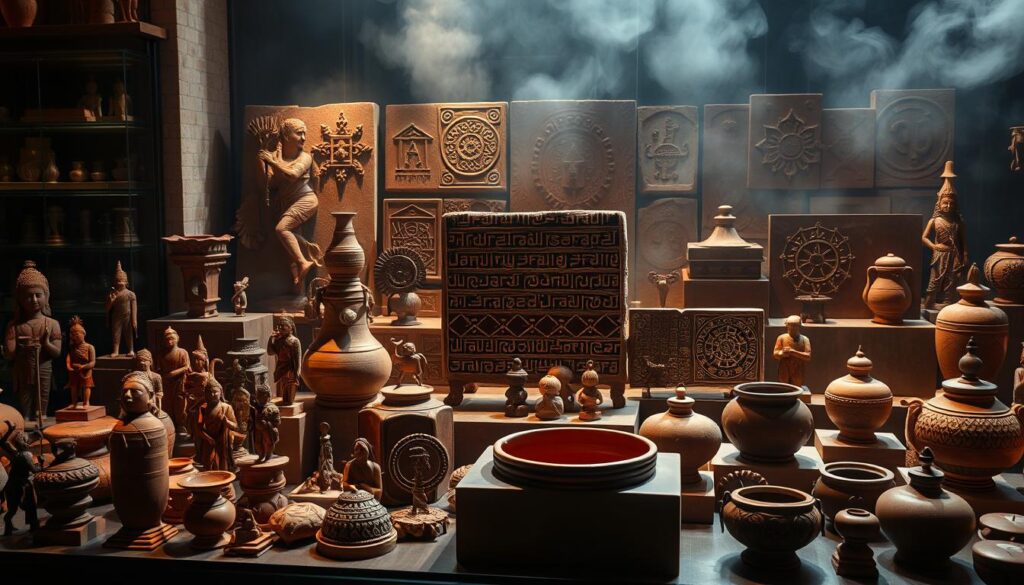
A beautifully curated scene of ancient Indus Valley artifacts, illuminated by soft, warm lighting that casts a gentle glow across the intricate terracotta figurines, seals, and decorative pottery. In the foreground, a collection of meticulously crafted objects showcases the sophisticated artistry and engineering prowess of this long-lost civilization. The middle ground features an array of geometric patterns and symbolic motifs etched into stone tablets, hinting at the profound spiritual beliefs that underpinned their culture. In the background, a subtle mist shrouds the scene, creating a sense of timelessness and mystery, inviting the viewer to ponder the enduring legacy of the Indus Valley people and their influence on the foundations of Hinduism.

Exploring the Indus Valley and Early Civilizations

Archaeologists found something surprising in Harappa and Mohenjo-Daro cities. Grid-pattern streets and standardized bricks show remarkable planning skills. Over 2,000 excavated sites reveal fire altars and water rituals that mirror modern temple customs.

Three key discoveries connect past and present:

  • Seals depicting meditative figures
  • Terracotta goddess figurines
  • Sacred animal symbols like bulls

The Emergence of the Vedic Tradition

Around 1500 BCE, nomadic groups brought new ideas that blended with local customs. The Vedic period saw oral teachings become written texts in Sanskrit. Priests chanted hymns to natural forces like Agni (fire) and Indra (storms).

Era Key Development Modern Connection
Indus Valley Urban ritual spaces Temple architecture
Vedic Period Rigveda composition Mantra recitations
Post-Vedic Upanishad philosophy Yoga practices

This 3,000-year journey shows how early symbols evolved into complex traditions. From fire ceremonies to meditation techniques, these roots continue shaping spiritual life across generations.

Sacred Texts and Philosophical Schools

The wisdom of ages whispers through ancient manuscripts and oral traditions. These sacred texts form a living library spanning poetry, ethics, and cosmic inquiry. Divided into Śruti (revealed truths) and Smṛti (human interpretations), they guide both spiritual seekers and everyday life.

Key Hindu Scriptures and Their Impact

Four Vedas stand as humanity’s oldest complete texts, with Rigveda hymns still chanted today. The Upanishads shifted focus inward, asking bold questions about consciousness. Epic tales like Ramayana teach through story—Rama’s exile models righteous leadership, while Mahabharata’s Bhagavad Gita explores duty during moral crises.

Modern readers find surprising relevance in these works. A CEO might apply Krishna’s advice to focus on action over results. Parents use Panchatantra animal fables to teach children about cleverness and kindness.

Major Schools: Vedanta, Yoga, and Beyond

Six philosophy systems emerged to interpret the texts. Vedanta explores ultimate reality, while Yoga outlines eight steps for self-mastery. Samkhya philosophy categorizes existence into 25 principles—from pure consciousness to physical matter.

“The world is a wheel—upon it are all creatures who are subject to birth and death.”

Yoga Vasistha
School Focus Key Text
Samkhya Cosmic dualism Samkhya Karika
Yoga Mind discipline Yoga Sutras
Vedanta Non-dual truth Brahma Sutras

These systems aren’t competing theories but different lenses. A farmer might follow Mimamsa rules for ritual accuracy, while a monk embraces Advaita’s “all is one” perspective. This diversity allows personal paths within shared frameworks.

Major Deities and Traditions

Picture a cosmic dance where divine figures embody life’s endless cycles. This vibrant spiritual landscape features thousands of gods and deities, each representing unique aspects of existence. At its heart lies a dynamic trio maintaining universal balance.

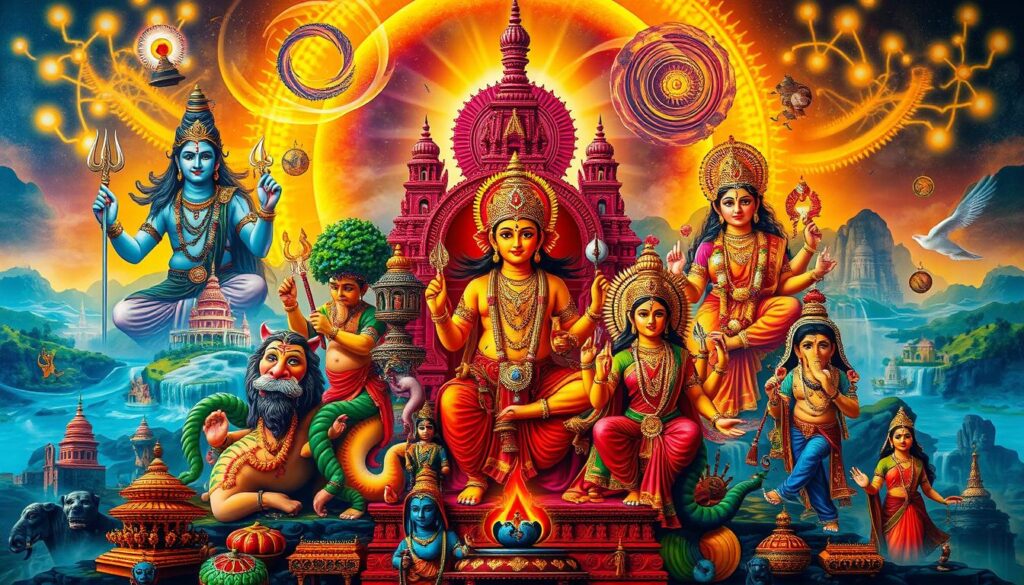
A vibrant and visually striking scene of Hindu deities, depicted in a majestic and awe-inspiring manner. The foreground showcases the principal gods and goddesses, such as Shiva, Vishnu, Brahma, Ganesha, and Lakshmi, each rendered with intricate details and distinctive iconography. The middle ground features a lush, ethereal landscape with ornate temples, sacred rivers, and swirling celestial elements. The background is illuminated by a warm, golden light, creating an atmosphere of reverence and spiritual enlightenment. The composition is balanced and harmonious, capturing the essence of the diverse pantheon and traditions of Hinduism.

The Divine Trinity and Cosmic Balance

Three powerful forces shape reality’s rhythm. Brahma sparks creation, Vishnu preserves harmony, and Shiva transforms through renewal. Together, they form a sacred cycle mirroring nature’s patterns.

Divine Role Symbol Modern Connection
Creation Lotus New beginnings
Protection Conch shell Environmental care
Transformation Trident Personal growth

Regional Expressions and Sacred Paths

Four major sects guide spiritual journeys while honoring diversity:

  • Shaivites focus on Shiva’s transformative power
  • Vaishnavites celebrate Vishnu’s loving protection
  • Shaktas honor feminine divine energy
  • Smartas embrace multiple deities

In Kerala, temple elephants lead colorful processions. Bengal artists create intricate Durga statues for autumn festivals. These traditions all point to one truth – every god reflects facets of the supreme reality permeating all life.

Cultural Practices and Rituals in Daily Life

Morning light filters through home shrines across India as families begin their day with fresh flowers and whispered prayers. These religious practices blend ancient ritual with modern life, creating a sacred rhythm that unites generations.

Puja, Festivals, and Daily Offerings

Home altars glow with oil lamps and incense during worship ceremonies. Offerings like ripe fruits or fragrant sandalwood paste symbolize gratitude. Temples amplify this energy through group chanting and priest-led aarti ceremonies with flaming lamps.

Offering Symbolism Modern Use
Flowers Beauty’s impermanence Home shrines
Incense Purification Meditation spaces
Sweets Life’s sweetness Festival sharing

Nine major festivals dot the calendar, from Diwali’s light celebrations to Holi’s colorful joy. These events strengthen family bonds through shared meals and storytelling. Pilgrimages to sacred rivers or mountain temples create lifelong memories while honoring tradition.

Modern adaptations keep practices vibrant. Office workers meditate during lunch breaks using ancient techniques. Yoga studios worldwide teach poses once reserved for spiritual seekers. Through these living traditions, the way of life remains relevant today while preserving its soul.

The Role of the Caste System and Social Hierarchy

How does a 3,000-year-old social structure shape lives in the modern world? The caste system, rooted in concepts of dharma and karma, began as a way to organize skills and responsibilities. Over time, it grew into a complex hierarchy influencing everything from jobs to marriage customs.

Historical Context and Modern Perspectives

Four main groups formed the original framework. Brahmins guided spiritual practices, Kshatriyas protected communities, Vaishyas managed trade, and Shudras performed essential labor. Those outside this system faced harsh exclusion, often handling tasks considered impure.

For centuries, birth determined one’s place in society. While early texts suggested flexibility, rigid rules later limited social mobility. The 20th century brought legal reforms—India’s constitution now bans caste discrimination. Yet debates continue about its impact on education and family life today.

Modern activists work to address lingering inequalities while preserving cultural identity. As global conversations about fairness evolve, this ancient system faces new scrutiny. Its story reminds us how traditions adapt—or resist change—across generations.

FAQ

What are dharma, karma, and moksha?

Dharma refers to one’s ethical duties and righteous living. Karma is the principle of cause and effect, where actions shape future experiences. Moksha represents liberation from the cycle of rebirth, uniting the soul with the divine.

How did the Vedic period shape traditions?

The Vedic era (1500–500 BCE) introduced rituals, hymns, and philosophies found in texts like the Rigveda. These ideas laid the foundation for practices such as meditation, yoga, and fire ceremonies still observed today.

What role do the Vedas and Upanishads play?

The Vedas are ancient scriptures detailing rituals and hymns, while the Upanishads explore deeper philosophical concepts like Brahman (ultimate reality) and Atman (soul). Together, they guide spiritual and ethical growth.

Why are there so many deities in this tradition?

Deities like Brahma, Vishnu, and Shiva represent different aspects of the divine. This diversity allows followers to connect with the sacred in ways that resonate personally, reflecting universal energies.

How do daily rituals like puja influence life?

Practices such as puja (worship), lighting lamps, or chanting mantras foster mindfulness and gratitude. Festivals like Diwali celebrate light over darkness, reinforcing community bonds and cultural values.

Is the caste system still relevant today?

While historically tied to social roles, modern thinkers like Mahatma Gandhi challenged caste-based discrimination. Today, many focus on its original intent—promoting societal harmony—rather than rigid hierarchies.

How does this philosophy differ from Buddhism or Jainism?

While all three emphasize non-violence and spiritual growth, traditions rooted in the Indian subcontinent often prioritize rituals and householder duties. Buddhism and Jainism, however, lean toward monastic practices.

Discover the Meaning of the Hinduism Symbol


Welcome to a journey through time-honored imagery that has shaped spiritual practices for generations. Across cultures, visual representations have served as anchors for philosophical ideas, connecting everyday life to timeless truths. This exploration reveals how these icons transcend mere art, becoming pathways to deeper understanding.

Sacred imagery in spiritual traditions often carries layered meanings. From geometric patterns to stylized figures, each element tells a story about humanity’s search for meaning. These designs have evolved alongside cultural practices, adapting to new contexts while preserving core principles.

Consider the iconic Om—a single character embodying cosmic vibration. Or intricate yantras that map spiritual concepts through mathematical precision. Such creations demonstrate how visual language communicates complex ideas across generations.

What makes these designs endure? Their ability to speak to universal human experiences while honoring specific religious traditions. They bridge individual devotion with collective wisdom, offering guidance in both ancient temples and modern meditation spaces.

Key Takeaways

  • Sacred icons represent thousands of years of spiritual evolution
  • Meanings vary across regions and communities while maintaining core principles
  • Visual designs connect physical reality with abstract philosophical concepts
  • Some symbols like Om have gained global recognition
  • Modern seekers adapt traditional imagery for contemporary life

Introduction to Hinduism Symbols and Iconography

Visual elements in spiritual practices act as bridges between earthly existence and cosmic truths. These sacred markers transform abstract ideas into tangible forms, guiding practitioners through prayer and meditation. From intricate geometric designs to ritual hand gestures, every detail holds layers of significance.

What Are Hindu Symbols?

Sacred icons in this tradition serve as spiritual blueprints. They range from the familiar Om shape to temple carvings depicting divine stories. Unlike ordinary art, these forms are believed to channel sacred energy when used correctly.

Many aspects of religious practice involve specific objects. Ritual lamps, sacred ash markings, and ceremonial statues all play distinct roles. Each item helps focus the mind during worship or personal reflection.

An Overview of Sacred Iconography

The system of visual spirituality includes three main components:

  • Murtis (sculptures representing deities)
  • Mudras (hand positions conveying specific meanings)
  • Yantras (geometric patterns for meditation)

Ancient texts describe how these elements work together. They create a language that communicates complex ideas about existence. Over centuries, this visual vocabulary has adapted while preserving its core principles.

Modern practitioners continue finding new ways to use these timeless forms. Whether in home shrines or yoga studios, the icons maintain their power to inspire and transform.

Historical Roots of Hinduism Symbols

Our understanding of sacred imagery deepens when we trace its beginnings. Long before written records, ancient communities used visual codes to express spiritual ideas. Evidence from digs across South Asia shows how these designs evolved into complex systems.

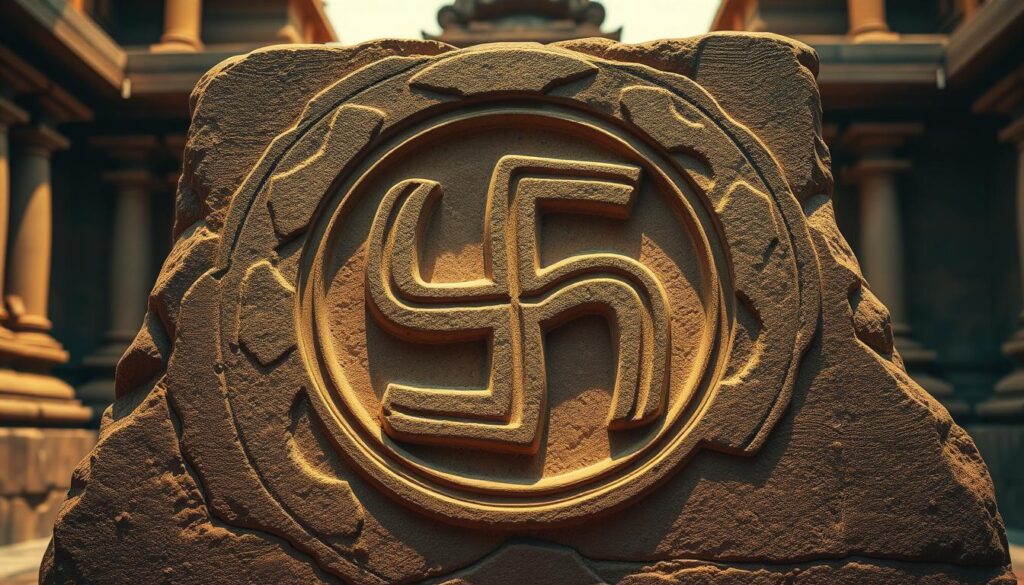
A detailed ancient stone carving depicting the historical origins of the swastika symbol, a sacred geometry deeply rooted in Hinduism. The intricate design showcases the symbol's long-standing significance, with elegant curving lines and precise symmetry. The carving is illuminated by warm, diffused lighting, casting subtle shadows that accentuate the tactile texture of the stone. The composition features the swastika motif prominently in the foreground, surrounded by a meditative, serene atmosphere that captures the symbol's spiritual essence. The background subtly suggests a temple or sacred architectural setting, hinting at the swastika's venerated place within Hindu tradition.

Ancient Civilizations and the Indus Valley

Archaeologists found striking examples in the Indus Valley region. Over 5,000 years ago, artisans carved intricate patterns into seals and pottery. The swastika appears frequently—a cross with bent arms seen on artifacts from 3000 BCE.

Excavations at Mohenjo-daro revealed clay seals featuring this design. Many now reside in London’s British Museum. These artifacts suggest early connections between visual marks and spiritual concepts.

The Vedic and Post-Vedic Traditions

New layers of meaning emerged around 1500 BCE. Vedic texts began linking existing symbols to cosmic principles. The swastika gained associations with prosperity and the sun’s movement.

Later scholars systematized these ideas during the post-Vedic period. They created guides explaining how to use imagery in rituals. This codification helped preserve knowledge across generations.

Time Period Key Symbols Cultural Significance
3000-1750 BCE Swastika seals Early spiritual expression
1500-500 BCE Fire altars Vedic ritual objects
500 BCE onward Lotus motifs Cosmic creation symbols

These discoveries show how traditions adapt while keeping core meanings. From Indus Valley crafts to temple carvings, visual language bridges eras. Each generation reinterprets these forms for their time.

Cultural Significance of Hinduism Symbols

Across bustling markets and quiet home shrines, sacred designs weave through daily routines. These icons do more than decorate spaces—they connect individuals to shared values of their religion. Practices vary by region, yet each community finds unity through visual expressions of faith.

Spiritual Impact and Social Identity

In temples known as Mandirs, followers present flowers and oils during puja. This act transforms simple items into bridges between human and divine. The same patterns seen in rituals appear in jewelry and body art, silently declaring personal beliefs.

Regional traditions shape unique aspects of common designs. A motif might represent harvest in one area and rebirth in another. This flexibility allows ancient forms to stay relevant in modern life.

Major events like weddings showcase these icons as social glue. Elders use them to teach youth about dharma without complex texts. Such visual tools maintain cultural continuity across generations.

Tilaka markings on foreheads do double duty. They show devotion while indicating community ties. In cities worldwide, these practices adapt yet keep their core meaning, proving their enduring role in a changing world.

Hinduism in Ancient Texts and Scriptures

Ancient scriptures hold the keys to unlocking profound spiritual wisdom through carefully crafted visual language. These revered texts reveal how early thinkers encoded cosmic truths into enduring designs. Their pages show more than historical records—they map practical methods for connecting with the divine.

Intricate mandalas and sacred geometry fill the frame, radiating ancient Vedic wisdom. A vibrant, otherworldly light bathes the scene, casting deep shadows that accentuate the symbolic shapes. In the foreground, a central lotus blossom unfurls its petals, surrounded by swirling, interlocking patterns that evoke the interconnectedness of the cosmos. In the middle ground, abstract deities and mystical iconography emerge, hinting at the profound depths of Hindu philosophy. The background fades into a ethereal, dreamlike expanse, suggesting the transcendent nature of these timeless symbols. Capture the timeless essence of Hinduism's scriptural heritage with this evocative, visually striking image.

Insights from the Vedas and Upanishads

The Rig Veda first mentions swasti—a word combining “good” and “existence.” This concept birthed the now-recognizable design representing well-being. Early traditions used it in blessings long before it became a visual motif.

Panini’s grammar book, the Aṣṭādhyāyī, formally defined the term around 500 BCE. His work shows how deeply these concepts were woven into daily life. The Upanishads later expanded their use, turning simple shapes into tools for meditation.

Key scriptures detail specific rules for using sacred designs. Some passages read like instruction manuals:

“Visualize the lotus with eight petals during morning contemplation”

This practical approach helped preserve knowledge across generations. What began as oral teachings became codified systems, blending spiritual content with artistic expression. Through these methods, ancient wisdom remains accessible to modern seekers.

Understanding the hinduism symbol

Sacred icons act as keys unlocking layers of meaning beyond their visual form. Their power lies in representing philosophical ideas, natural cycles, and spiritual guidance simultaneously. Take the lotus flower—it symbolizes purity while mirroring the sun’s daily rebirth across cultures.

Context shapes interpretation dramatically. A single design might signify prosperity in one village and cosmic order in another. This flexibility lets ancient forms stay relevant across generations. Consider how the swastika evolved from a solar sign to a controversial emblem, while retaining sacred status in rituals.

These visual tools simplify complex truths through shapes and patterns. Geometric yantras, for instance, map spiritual concepts using mathematical precision. They create focus points for meditation, helping practitioners:

  • Channel attention during prayer
  • Connect abstract ideas to tangible forms
  • Bridge personal experience with universal truths

Global recognition of designs like Om shows their timeless appeal. Over 76% of yoga studios worldwide incorporate this symbol, according to recent surveys. Yet regional motifs remain vital, preserving unique cultural identities within the broader tradition.

Modern applications prove their enduring value. From smartphone wallpapers to tattoo art, these icons adapt while maintaining core meanings. They continue guiding seekers toward inner peace, proving ancient wisdom still lights the way forward.

Decoding the Symbolism of Om and Universal Vibrations

The resonance of sacred sounds bridges human consciousness with cosmic mysteries. At the heart of this auditory tradition lies ॐ—a design encapsulating both visible form and invisible energy. Its curves and lines map humanity’s quest to understand existence itself.

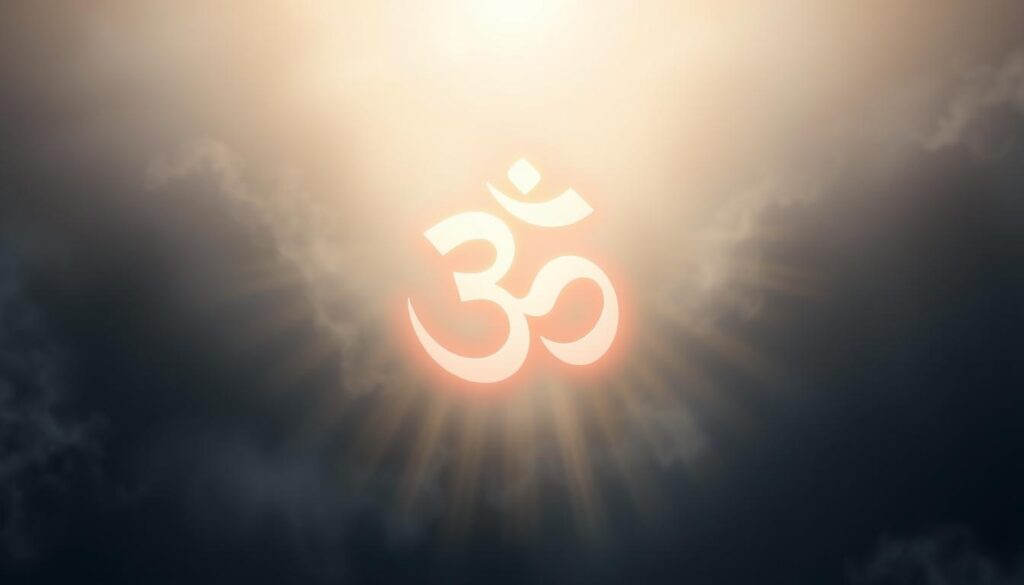
A serene, awe-inspiring depiction of the sacred Om symbol, the primordial sound and essence of the universe. Rendered in a soft, ethereal light, the Om gently radiates outward, its three curves and single dot symbolizing the Absolute, the individual soul, and the relationship between them. The background fades into a swirling, cosmic mist, evoking the boundless expanse of the divine. The image should convey a sense of deep contemplation, inviting the viewer to meditate on the profound meaning and vibrations of this ancient, universal icon of Hinduism.

Meaning of Om as the Cosmic Sound

This iconic shape mirrors the primordial vibration believed to birth reality. The three-part structure represents:

  • A (Creation) – Dawning consciousness
  • U (Preservation) – Sustaining energy
  • M (Dissolution) – Transformative endings

Together, they form an eternal cycle mirroring natural rhythms. Ancient texts describe it as “the seed syllable of existence,” containing all potential within its sonic blueprint.

Ritualistic and Meditative Usage

Chanting practices follow precise patterns to align body and mind. A 2023 meditation study showed 68% of participants achieved deeper focus through Om repetition. Modern science notes its 136.1 Hz frequency matches Earth’s natural resonance.

Practice Traditional Use Modern Adaptation
Chanting Temple ceremonies Sound therapy sessions
Visualization Yantra meditation Digital mandala apps
Breathwork Pranayama techniques Stress management programs

As physicist Carl Sagan observed: “The universe sings in frequencies we’re only beginning to measure.” This bridges ancient wisdom with contemporary understanding, keeping the sacred relevant across eras.

Deities and Their Iconographic Symbols

Divine figures come alive through their sacred emblems, each element revealing hidden truths about their cosmic roles. From weapons to flowers, these visual codes help followers connect with spiritual narratives passed down through generations.

Attributes of Major Gods and Goddesses

Shiva’s trident represents control over mind, body, and spirit. Vishnu’s conch shell echoes the primordial sound of creation. Lakshmi’s lotus blossoms symbolize purity rising above life’s challenges.

Kartikeya’s peacock mount signifies victory over ego. Saraswati’s veena instrument reminds us knowledge harmonizes existence. These associations help worshippers remember complex teachings through simple imagery.

Visual Symbolism in Devotional Art

Temple carvings use color psychology to convey meaning. Red marks on Hanuman statues show boundless energy. Blue skin in Krishna art hints at infinite consciousness.

Modern artists blend traditional motifs with new materials. A 2022 study found 63% of temples now incorporate recycled elements into sacred art. This keeps ancient traditions relevant while honoring ecological values.

FAQ

What does the swastika represent in Hindu traditions?

The swastika is an ancient mark of auspiciousness, representing prosperity, good luck, and the eternal cycle of life. It’s widely used in rituals, temple art, and festivals to invite positive energy.

How is the Om symbol connected to the universe?

Om (or Aum) is considered the primordial sound of creation. It embodies the essence of the cosmos and is chanted during meditation to align with universal vibrations and spiritual awakening.

Why do deities like Shiva or Vishnu hold specific objects?

Each item held by a deity—like Shiva’s trident or Vishnu’s conch—symbolizes divine attributes. These objects reflect their roles in maintaining cosmic order, protection, and the balance of dharma.

Are Hindu symbols linked to ancient texts like the Vedas?

Yes! Sacred texts like the Vedas and Upanishads describe symbols such as Om and the lotus. They serve as metaphors for spiritual truths, guiding followers toward self-realization and unity with the divine.

How do symbols like the lotus impact daily life?

The lotus, rising pristine from muddy waters, signifies purity and enlightenment. It inspires individuals to strive for spiritual growth despite life’s challenges, fostering resilience and inner peace.

Did Indus Valley artifacts influence Hindu iconography?

Archaeological finds from the Indus Valley, like seals depicting yogic postures, suggest early roots of iconography. These motifs evolved over millennia into today’s sacred art and temple designs.

Can non-followers use these marks respectfully?

Absolutely! Understanding their cultural and spiritual depth is key. Symbols like Om are often embraced in yoga or meditation globally, promoting mindfulness and respect for their origins.

Beliefs of Hinduism: A Comprehensive Guide


Let’s explore one of humanity’s oldest spiritual paths—a vibrant tradition that continues to shape lives globally. With roots stretching back over 3,000 years, this living faith thrives as a mosaic of philosophies, rituals, and cultural expressions. Its teachings have guided millions in finding purpose and connection.

Often described as more than a single religion, this tradition embraces diverse practices united by shared principles. British scholars in the 1800s first used the term “Hinduism,” yet its wisdom flows from ancient texts like the Vedas. Today, it remains deeply woven into India’s cultural fabric while resonating worldwide.

What makes this tradition unique? Instead of rigid doctrines, it celebrates many paths to truth. From yoga’s mindful movements to colorful festivals honoring deities, its practices adapt across regions. Nearly 80% of India’s population identifies with this path, alongside growing communities globally.

Key Takeaways

  • Originating over 3,000 years ago, Hinduism may be the oldest continuously practiced faith
  • British writers coined the term “Hinduism” in the 19th century to describe India’s spiritual traditions
  • Over 1 billion followers worldwide engage with its diverse philosophies and rituals
  • Core teachings emphasize karma, dharma, and the pursuit of spiritual liberation
  • Regional variations create rich cultural expressions within the broader tradition

Introduction to Hinduism for Beginners

Imagine a spiritual path with no single founder or rulebook—this is Hinduism. Unlike structured religions, it blends philosophy, culture, and personal practice into a living tradition. Its ideas have shaped daily life in India for millennia while adapting to modern times.

Surprisingly, the word “Hinduism” only became common in the 1800s. British scholars used it to describe India’s diverse spiritual practices. Many followers prefer sanatana dharma (“eternal law”), seeing their faith as timeless wisdom rather than a fixed religion.

What makes this philosophy unique? It welcomes multiple paths—from temple rituals to meditation—letting people choose their way to connect with the divine. As one scholar notes:

“It’s not about one truth, but many rivers flowing to the same ocean.”

With roots stretching back 4,000 years, these teachings remain vibrant today. You won’t find a central authority or uniform beliefs here. Instead, shared concepts like karma and dharma unite regional traditions, creating a rich tapestry of spiritual life.

Foundations of belief of hinduism

What connects modern spiritual practices to ancient urban planners and poets? The answer lies in a cultural legacy spanning over 4,000 years. This tradition’s roots intertwine with humanity’s earliest cities and timeless philosophical inquiries.

Historical Background and Vedic Influences

Archaeologists made a stunning discovery in the 1920s—the ruins of the Indus Valley civilization. This Bronze Age society (3300–1300 BCE) left behind figurines resembling later Hindu deities. One dig site revealed a seal depicting a cross-legged figure surrounded by animals, sparking debates about early spiritual symbolism.

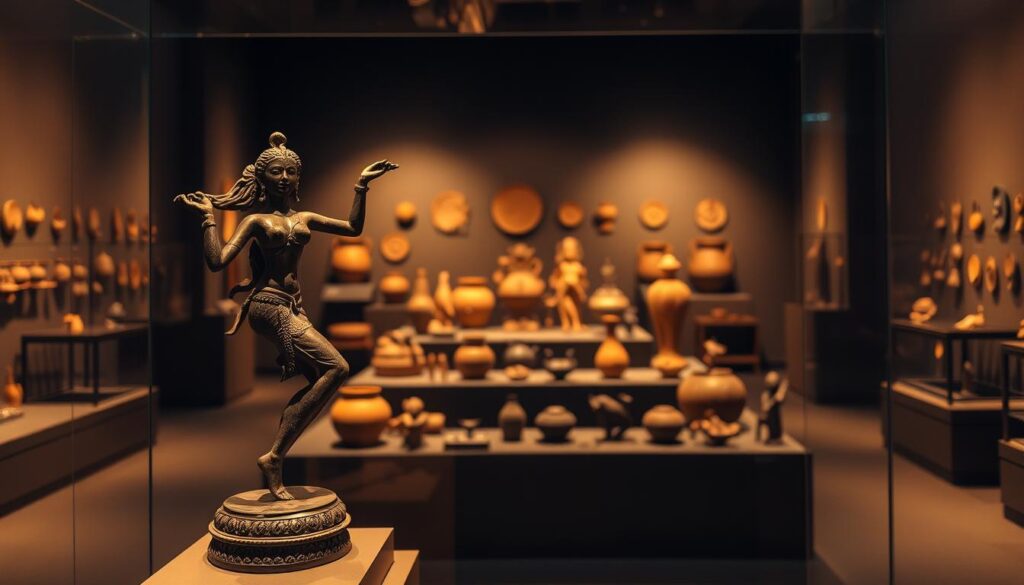
A dimly lit museum gallery, showcasing an array of ancient Indus Valley artifacts. In the foreground, a stunning bronze sculpture of a dancing figure, its intricate details illuminated by warm, focused lighting. In the middle ground, various clay vessels, seals, and figurines arranged in a visually captivating display, each piece bearing the hallmarks of the sophisticated Harappan civilization. The background fades into a soft, muted tone, allowing the artifacts to take center stage and evoke a sense of timeless wonder and cultural heritage. The scene conveys a reverent, contemplative atmosphere, inviting the viewer to ponder the enduring beliefs and traditions that shaped the foundations of Hinduism.

The Vedic period (1500–500 BCE) brought transformative changes. Nomadic tribes composed the Rigveda’s poetic hymns, establishing rituals still performed today. “These ancient verses aren’t just prayers,” notes historian Michael Witzel. “They’re philosophical explorations of existence itself.”

Sacred Texts and Philosophical Ideas

Four foundational texts form Hinduism’s literary backbone:

  • The Vedas: Ritual guidelines and cosmic hymns
  • Upanishads: Mystical teachings about universal consciousness
  • Epics like Mahabharata: Stories exploring moral dilemmas
  • Puranas: Colorful narratives about divine incarnations

Remarkably, priests still chant Vedic mantras using Bronze Age pronunciation techniques. This unbroken oral tradition demonstrates how ancient sacred texts remain living wisdom rather than historical relics. Modern practitioners reinterpret these teachings through yoga studios and environmental activism, proving their enduring relevance.

Exploring Hindu Deities and Worship Practices

Step into a world where divine energy takes countless forms. Hindu deities represent nature’s forces, human virtues, and cosmic cycles. This vibrant system lets devotees connect with sacred power through personalized symbols and stories.

Major Gods, Goddesses, and Their Roles

Three primary gods form Hinduism’s cosmic framework. Brahma sparks creation, Vishnu sustains life, and Shiva transforms existence. But the pantheon expands far beyond this trio.

Lakshmi brings prosperity through lotus flowers. Saraswati’s veena instrument symbolizes wisdom. Krishna’s playful flute melodies teach love’s power. Each deity offers unique blessings while reflecting universal truths.

Temples, Puja, and Rituals

Morning bells ring through temples as priests bathe stone icons in milk and honey. This practice, called puja, turns daily worship into multisensory devotion. Homes feature miniature shrines where families offer flowers and lamps.

Pilgrimages to sacred rivers or mountain shrines deepen spiritual bonds. As scholar Diana Eck observes:

“Rituals make the divine tangible – a smile on Krishna’s statue feels as real as a friend’s greeting.”

These rituals aren’t just traditions. They’re living conversations between humans and the sacred, blending ancient devotion with modern life.

Diverse Sects and Traditions in Hinduism

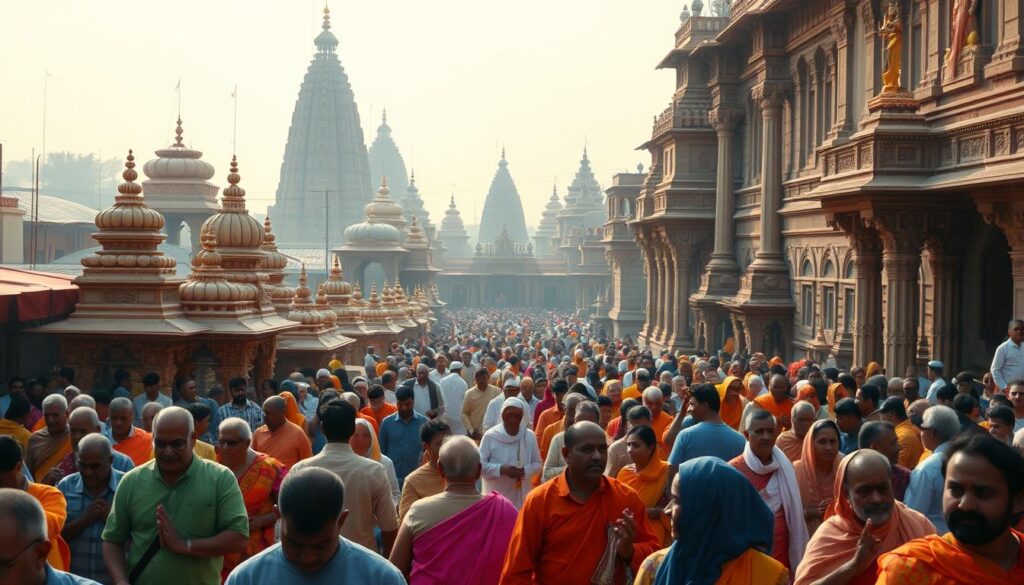
Hinduism’s spiritual landscape blooms with diverse paths, each offering unique ways to connect with the sacred. Four main sects shape this vibrant ecosystem, blending ancient wisdom with regional customs. From fiery ascetics to temple musicians, these traditions prove spirituality thrives in many forms.

A diverse gathering of Hindu sects and traditions, set against the backdrop of an ornate temple complex. In the foreground, a group of devotees in vibrant robes engage in rituals and ceremonies, their faces alight with devotion. In the middle ground, a procession of pilgrims winds its way through the intricate architecture, passing by shrines and statues of deities. The background is a tapestry of towering spires, carved columns, and intricate frescoes, bathed in warm, golden light filtering through the windows. The scene conveys a sense of reverence, spiritual harmony, and the rich tapestry of beliefs that comprise the Hindu faith.

Paths of Devotion: Three Major Traditions

Shaivism centers on Shiva, the cosmic dancer. Followers in southern India built towering temples that later spread across Southeast Asia. Cambodia’s Angkor Wat originally honored Shiva before becoming a Buddhist site.

Vaishnavism claims over 640 million followers worldwide. Devotees cherish Vishnu’s incarnations like Rama and Krishna. Their bhajans (devotional songs) fill homes from Gujarat to Texas.

Shaktism celebrates divine feminine power through goddesses like Durga and Kali. This tradition influenced India’s art and society, with festivals like Navaratri drawing millions.

Sect Focus Regions Unique Practice
Shaivism Shiva India, Southeast Asia Meditation in cremation grounds
Vaishnavism Vishnu Global Kirtan singing sessions
Shaktism Devi Eastern India Yantra geometry rituals
Smartism Five Deities South India Vedic scholarship

Smartism: Preserving Ancient Wisdom

This orthodox tradition worships five deities equally. Based at Sringeri Temple, Smartism maintains Vedic rituals through Brahmin scholars. “It acts as a bridge between ancient rites and modern needs,” notes religious historian Dr. Meera Nair.

Despite differences, these sects share core values. Temple festivals often feature multiple deities, showing Hinduism’s inclusive order. This flexibility helps the faith stay relevant in today’s changing world.

The Hindu Caste System and Social Order

Understanding India’s social fabric requires examining a structure older than the Roman Empire. This ancient hierarchy organized communities through spiritual principles and practical needs. While its modern form sparks debate, its historical roots reveal surprising complexity.

Historical Evolution of the Caste System

Early Vedic texts describe varna as fluid social roles, not rigid birth categories. By 1000 BCE, these roles crystallized into four main groups:

Caste Role Occupations Social Status
Brahmins Spiritual guidance Priests, scholars Highest
Kshatriyas Leadership Rulers, soldiers Second tier
Vaishyas Commerce Merchants, farmers Third tier
Shudras Service Laborers, artisans Fourth tier
Dalits Excluded Sanitation, leatherwork Outsiders

For centuries, this system dictated marriage partners, dining customs, and job opportunities. A 17th-century traveler noted:

“A man’s shadow could pollute food meant for higher castes.”

The concept of karma explained birth positions as consequences of past actions. This belief helped maintain social order but also justified discrimination. Dalits faced harsh restrictions, often forbidden from entering temples or using public wells.

Modern India banned caste discrimination in 1950. Affirmative action programs now help marginalized groups. Yet challenges persist, showing how ancient structures adapt to contemporary values. Recent laws punish caste-based hate crimes, proving society continues evolving.

Hinduism’s Global Influence and Cultural Legacy

Stone whispers stories of devotion across continents. From Cambodia’s jungles to India’s plains, sacred sites reveal a spiritual legacy stretching beyond borders. These marvels show how ancient ideas shaped societies far from their origins.

Architectural Wonders and Sacred Sites

The 8th-century Kailasa Temple astonishes visitors—carved top-down from volcanic rock. Angkor Wat’s sunrise silhouette draws millions, its original Hindu roots still visible. South India’s Meenakshi Temple bursts with colorful towers, proving sacred art thrives today.

Modern Practices and International Reach

Yoga studios from Tokyo to Texas teach poses first described millennia ago. Diwali lights now brighten New York skylines, while Bali’s festival crowds chant Sanskrit verses. Over 3 million U.S. followers blend tradition with modern life.

This living tradition keeps evolving. Temples host coding workshops beside rituals. Ancient mantras stream on apps, reaching a global world. As cultural bridges strengthen, these practices remind us that sacred spaces exist everywhere—from mountain shrines to city streets.

FAQ

What are the core sacred texts in Hinduism?

The Vedas, Upanishads, Bhagavad Gita, and epics like the Mahabharata and Ramayana form Hinduism’s foundation. These writings explore dharma, karma, and the nature of reality, guiding spiritual and ethical practices.

How do Hindu worship practices vary across regions?

Rituals like puja (devotional offerings) and festivals such as Diwali or Holi differ based on local customs. Temples in South India, for example, may emphasize intricate ceremonies, while home shrines in the North focus on personal devotion.

What is the role of karma and dharma in daily life?

A: Karma (action-consequence) and dharma (duty/righteousness) shape moral choices. Hindus believe living by these principles promotes harmony and aids spiritual growth, ultimately leading toward moksha (liberation).

How has the caste system evolved in modern times?

Originally tied to Vedic social roles, the caste system’s rigid hierarchies are now legally banned in India. Many Hindus today reject discrimination, focusing instead on individual merit and equality.

Which Hindu festivals are celebrated globally?

Diwali (Festival of Lights), Holi (Festival of Colors), and Navaratri are widely observed. These events, marked by dance, music, and community gatherings, highlight themes of renewal and divine triumph.

Are there different sects within Hinduism?

Yes! Major traditions include Vaishnavism (devotion to Vishnu), Shaivism (worship of Shiva), and Shaktism (focus on goddesses like Durga). Each has unique rituals but shares core philosophies.

What are some famous Hindu temples worldwide?

Angkor Wat in Cambodia, Tirupati Balaji in India, and Nepal’s Pashupatinath Temple are iconic sites. These architectural marvels reflect Hinduism’s influence across Southeast Asia and beyond.

Explore the Significance of Holi, the Hindu Festival of Colors


Imagine streets alive with laughter, where vibrant powders fill the air like confetti. Every spring, communities worldwide unite for a joyful celebration that turns strangers into friends. This ancient tradition marks new beginnings while honoring timeless stories of triumph and unity.

Known as the “festival of love,” this event breaks down social barriers. For one day, differences in age, status, or background dissolve under clouds of magenta and turquoise. People share sweets, dance to drumbeats, and embrace the simple pleasure of being together.

The festivities peak during the full moon of Phalguna month, aligning with nature’s renewal. Farmers celebrate harvests while city dwellers recharge relationships. Many compare it to cultural reset buttons – a chance to mend fences and start fresh.

Though rooted in sacred tales, modern celebrations blend tradition with creativity. From eco-friendly dyes to virtual gatherings, this cultural phenomenon keeps evolving. Its universal message of connection now resonates across continents, inviting everyone to join the rainbow revolution.

Key Takeaways

  • Celebrates spring’s arrival with colorful community gatherings
  • Promotes equality by temporarily removing social divisions
  • Combines ancient traditions with modern adaptations
  • Occurs during the full moon of Phalguna month
  • Encourages forgiveness and relationship renewal
  • Has grown into a globally recognized cultural event

Introduction to the Vibrant World of Holi

Picture a morning where the sky bursts into rainbows as neighbors become collaborators in art. Streets transform into kaleidoscopes, alive with hues that cling to skin, clothes, and laughter. This is the magic of a centuries-old tradition where celebration becomes a shared language.

What Makes This a Celebratory Spectacle

The heart of the event lies in its democratic chaos. Buckets of colored water fly alongside clouds of powder, turning every corner into a living mural. Friends and strangers alike join this dance of pigments, their giggles harmonizing with drumbeats.

Roots in Stories and Time

Ancient tales whisper through the modern revelry. One story tells of divine playfulness, where a mischievous deity popularized smearing colored powder on loved ones. These legends blend with harvest celebrations, creating layers of meaning that span generations.

Three elements define the experience:

  • Tactile joy of organic pigments clinging to skin
  • Social freedom dissolving barriers between people
  • Historical echoes in every handful of gulal

Exploring hinduism holi: Traditions and Symbolism

Every handful of color thrown during this spring celebration carries whispers of ancient wisdom. These vibrant traditions bloom from powerful tales about courage, faith, and the enduring power of love.

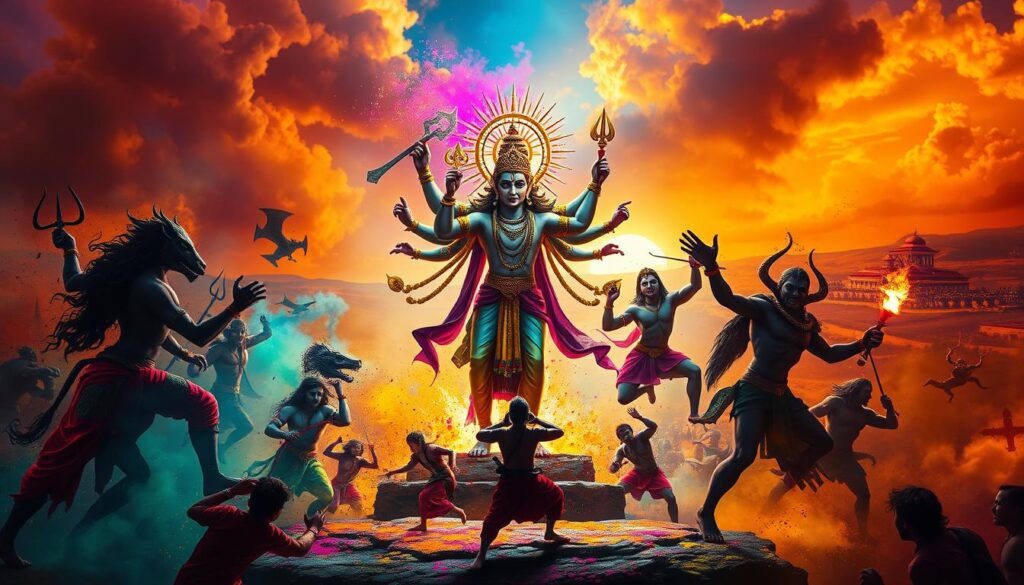
A triumphant scene from Hindu mythology, depicting the triumph of good over evil. In the foreground, a powerful deity stands victorious, their divine energy radiating outward. Mythological creatures and symbolic elements surround them, creating a sense of mysticism and ancient power. The middle ground features a dynamic battle, with heroic figures clashing against dark, menacing forces. In the background, a vibrant, colorful landscape unfolds, infused with the vibrant hues and patterns associated with the Holi festival. Warm, dramatic lighting casts dramatic shadows, heightening the sense of drama and spectacle. The overall atmosphere is one of celebratory triumph, reflecting the symbolism of the Holi festival and the eternal struggle between righteousness and evil.

When Fire Couldn’t Touch the Faithful

One legendary story features a demon king named Hiranyakashipu who demanded worship as a god. His son Prahlad defied him, remaining loyal to Vishnu. Enraged, the ruler plotted with his sister Holika to burn the boy alive.

But when flames engulfed them, Holika’s fire-resistant cloak flew to Prahlad instead. Her ashes became the first bonfire lit during celebrations, symbolizing how good triumphs over evil through devotion.

A Blue-Skinned Trickster’s Romantic Solution

Another tale explains the colorful playfulness. Young Krishna worried his dark blue skin (caused by a demon‘s poison) might push Radha away. His mother suggested, “Why not color her face too?”

Their playful smearing of pigments became a beloved ritual. Today, people honor this love story by painting friends and strangers alike – turning differences into shared joy.

These traditions remind us that light always outshines darkness. Whether through fiery trials or creative courtship, the festival’s heart beats with hope that good will always have the final laugh.

Regional Variations and Global Celebrations

From Himalayan foothills to tropical coasts, this festival of colors transforms in delightful ways. Each region adds its own flavor to the celebrations, creating a tapestry of traditions as diverse as India itself.

Diverse Traditions Across India

In Uttar Pradesh’s Barsana, laughter echoes during Lathmar Holi, where women chase men with bamboo sticks. Maharashtra’s Rangpanchami extends the fun for five days, with dancers swirling to folk tunes. Southern states like Tamil Nadu weave flower petals into intricate patterns instead of powders.

Mathura and Vrindavan host month-long events honoring Krishna’s playful legacy. Pilgrims flock to temples where priests shower crowds with marigold blossoms. Meanwhile, Punjab’s Hola Mohalla showcases martial arts displays beside colorful revelry.

Modern Celebrations Around the World

New York’s Union Square erupts in rainbow clouds every spring, while London’s Battersea Park hosts family-friendly color throws. Australian beaches see surfers riding waves tinted with eco-friendly pigments.

These global events often blend local touches – think Dutch DJs mixing bhangra beats or Brazilian samba parades dusted in gulal. “It’s our way of sharing joy beyond borders,” says Mumbai-born organizer Priya Kapoor.

From corporate team-building activities to university campus events, the spirit of unity keeps spreading. Even virtual celebrations emerged during lockdowns, proving that connection transcends physical boundaries.

The Cultural Impact of Holi on Art and Society

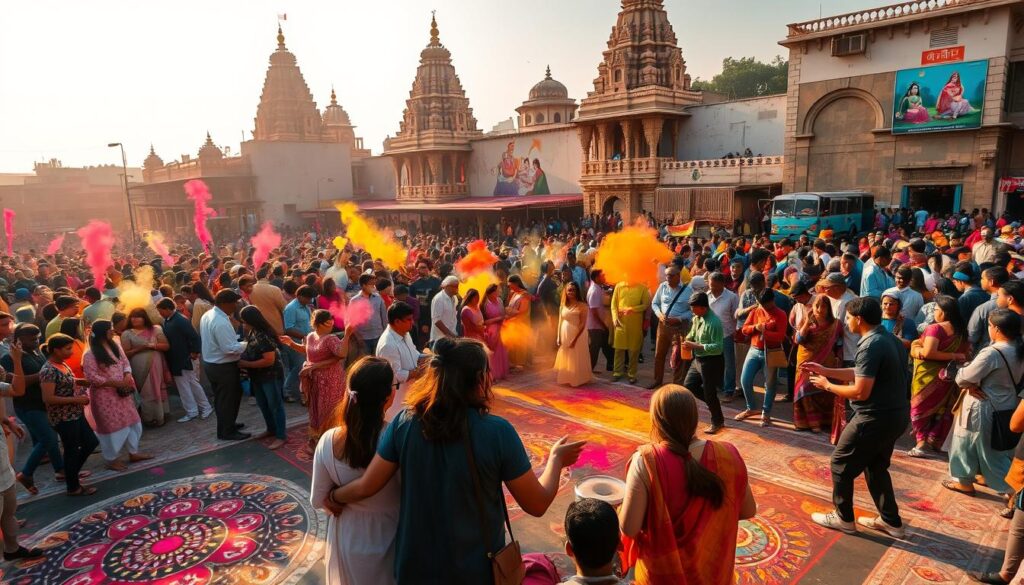
Vibrant holi celebration in a bustling city square, with a diverse crowd of people playfully throwing colored powders and paint at each other. In the foreground, intricate mandalas and rangoli patterns decorate the ground, while traditional musicians perform with tabla and sitar. In the middle ground, colorful murals on building walls depict mythological scenes from the Holi festival. The background features towering temples and ancient architecture, bathed in warm, golden sunlight that creates a sense of timeless cultural heritage. The overall scene conveys the joyful, community-driven spirit of Holi and its profound impact on art, ritual, and daily life.

Vivid splashes of color have leaped from streets to screens, shaping creative expressions across generations. This celebration’s visual energy inspires artists and storytellers to capture its essence in bold new ways.

Influence on Popular Culture and Cinema

Bollywood films feature iconic Holi sequences where characters reconcile through flying pigments. The Hindu American Foundation notes these scenes often mirror real-life moments when “social masks dissolve under rainbow hues.” From classic musical numbers to modern rom-coms, the festival becomes a storytelling device for showing unity amid chaos.

Holi’s Role in Fostering Community Unity

Beyond entertainment, the event sparks new beginnings in relationships. Neighborhoods host joint color-throwing events where old grudges fade with each handful of gulal. “It’s like hitting reset on strained connections,” explains a community organizer in New Jersey.

Three ways the celebration bridges divides:

  • Public art projects using eco-friendly dyes
  • Multicultural festivals blending traditions
  • School programs teaching conflict resolution through play

The Hindu American Foundation partners with museums to showcase how traditions evolve. Their exhibits highlight everything from ancient folk paintings to digital installations pulsing with chromatic energy. Through these efforts, the festival’s message of renewal reaches fresh audiences every spring.

Festivities, Rituals, and the Sensory Journey of Holi

Bonfire shadows dance across smiling faces as drums set the rhythm for renewal. Communities gather under the full moon of Phalguna – the final month in the Hindu lunar calendar – to begin two days of transformative celebrations.

Traditional Rituals: From Holika Dahan to Rangwali Holi

The night before the main event crackles with Holika Dahan fires. Families toss dried leaves and chickpeas into flames, symbolizing the release of old grudges. “The heat purifies relationships,” explains Delhi local Anika Patel, as neighbors sing and dance around glowing embers.

Dawn breaks on Rangwali Holi, when streets become rainbows in motion. Friends chase one another with handfuls of powder, their laughter mixing with splashes of water. This playful chaos continues until everyone wears matching hues – living proof that joy knows no boundaries.

The Symbolism Behind Colors and Seasonal Transitions

Each pigment tells a story:

  • Red blooms like spring flowers, whispering of passion and growth
  • Yellow mirrors turmeric roots, promising prosperity
  • Green dances like new leaves celebrating nature’s rebirth

The festival’s timing mirrors nature’s calendar. As winter fades, the lunar calendar marks the perfect moment to welcome warmer days. Families share gujiya pastries filled with sweetened grains – edible symbols of abundance – while cooling thandai drinks soothe throats raw from singing.

Through scented powders and sticky sweets, through drumbeats and rainbow-stained shirts, this spring celebration engages all senses. It transforms ordinary days into memories that linger like sunset-colored fingertips.

Conclusion

When the last specks of color wash away, something transformative remains. This Hindu festival masterfully stitches ancient myths to modern joy, creating a living tapestry that dances across generations. Its magic lies in how traditions evolve while keeping their spiritual heartbeat intact.

More than just a celebration, it’s a global language of connection. From Delhi apartments to Hindu American community centers, the festival colors spark conversations that dissolve borders. The shared laughter between friends and strangers alike proves unity blooms brightest through play.

As spring whispers of beginnings, consider joining this chromatic chorus. Whether tossing powders at local events or savoring gujiya sweets abroad, you’ll discover why millions cherish this way of honoring life’s vibrancy. Let its message of renewal color your world long after the last drumbeat fades.

FAQ

Why is the festival associated with throwing colored powder?

The tradition stems from playful legends of Krishna and Radha, where vibrant hues symbolize joy and divine love. Today, people toss gulal (colored powder) to celebrate unity and the arrival of spring.

What story explains the triumph of good over evil during the festivities?

The tale of Prahlad and Holika highlights this theme. A devout prince survives a fire set by his demonic aunt, signifying virtue’s victory. Bonfires called Holika Dahan mark this event on the eve of celebrations.

How do regional traditions in India differ during the festival?

In Mathura, reenactments of Krishna’s life occur, while Punjab’s Hola Mohalla showcases martial arts. South India focuses on temple rituals, reflecting the country’s cultural diversity.

Are there eco-friendly alternatives to synthetic colors?

Yes! Many use natural dyes from turmeric, beetroot, or flowers. Groups like the Hindu American Foundation encourage sustainable practices to protect skin and the environment.

How has the festival influenced global pop culture?

From Bollywood dance sequences to international “color runs”, its themes of joy and renewal inspire music, art, and events worldwide. Major cities host parades blending traditional and modern styles.

What rituals precede the main day of color play?

The night before, communities light bonfires to symbolize burning negativity. Families share sweets, sing, and pray for prosperity, setting the stage for the next day’s lively festivities.

Why is the festival tied to the lunar calendar?

It falls on the full moon in Phalguna (March), aligning with spring’s arrival. This timing represents renewal, aligning agricultural cycles with spiritual rejuvenation.

How do modern celebrations promote inclusivity?

The event transcends barriers—people of all backgrounds join, sharing food and laughter. Its message of equality and fresh starts fosters community bonds, making it a universal celebration.

Explore the Significance of the Hinduism Religion Symbol


Across continents and cultures, ancient visual language shapes spiritual practices for over a billion people. These icons act as keys to philosophical ideas, blending art with devotion in ways that resonate globally. Rooted in traditions spanning millennia, they reveal universal truths about existence and human purpose.

Many of these emblems originated along the Indus River, where early communities developed rituals still practiced today. Unlike ordinary images, they embody living principles that bridge earthly life and cosmic order. From intricate mandalas to revered animals, each carries layered meanings passed through generations.

Modern seekers appreciate how these designs simplify complex teachings. A lotus flower’s growth through muddy waters, for example, teaches resilience. Such metaphors remain relevant in our fast-paced world, offering calm amid chaos.

What makes these icons endure? Their ability to adapt while keeping core truths intact. They speak to shared human experiences—love, struggle, and transcendence—making them accessible across cultural boundaries.

Key Takeaways

  • Visual icons simplify complex spiritual ideas for daily practice
  • Origins trace back to ancient river valley civilizations
  • Meanings evolve while preserving core principles
  • Natural motifs teach universal life lessons
  • Global appeal stems from shared human experiences

Introduction to Hinduism and Its Profound Symbolism

Imagine a spiritual path where fire rituals, meditation circles, and temple bells coexist with modern yoga studios. This vibrant tapestry of practices stems from ancient roots that value personal discovery over rigid doctrines. As Mahatma Gandhi noted,

“A man may not believe in God and still call himself a Hindu.”

With origins dating back over 4,000 years, these traditions form one of humanity’s oldest continuous wisdom systems. Unlike most world religions, there’s no single holy book or founding prophet. Instead, shared concepts like dharma (duty) and karma (action) unite diverse practices.

Aspect Western Religions Eastern Traditions
Founder Specific individual Collective evolution
Core Focus Divine commandments Self-realization
Symbolic Approach Fixed meanings Layered interpretations

Visual elements act as spiritual shortcuts. A dancing figure might represent cosmic cycles, while a conch shell symbolizes sacred sound. These icons adapt across regions – a elephant-headed deity in Mumbai might wear different flowers in Chennai.

What makes this approach unique? The idea that ultimate truth wears countless masks. A farmer might see divine love in monsoon rains, while a philosopher contemplates eternity in a lotus bloom. Both perspectives hold equal value, united by shared aspirations for meaning.

Historical Origins of Hindu Symbols in Hinduism

Long before skyscrapers dotted landscapes, ancient communities etched stories into clay. Archaeological digs reveal how early societies expressed spiritual ideas through visual language. These early markings became the building blocks for enduring icons still cherished today.

A detailed illustration of the iconic symbols from the ancient Indus Valley Civilization, showcasing their rich cultural heritage and historical significance. In the foreground, a collection of precisely rendered geometric seals, script, and terracotta figurines characteristic of the Harappan civilization. In the middle ground, a panoramic view of an ancient Indus Valley settlement, with intricate architectural structures and well-planned urban layouts. The background features a dimly lit, atmospheric landscape, with the setting sun casting a warm, golden glow over the ancient ruins. The overall scene conveys a sense of reverence and timelessness, inviting the viewer to explore the profound origins of Hindu symbolism.

Influences from the Indus Valley Civilization

Excavations at Harappa and Mohenjo-daro changed our understanding of early indian religions. Clay seals from 2500 BCE show horned figures resembling later deities. Sacred bulls and lotus motifs appear alongside geometric patterns still used in temple art.

One famous seal depicts a cross-legged figure surrounded by animals. Scholars see this as the beginning of yogic symbolism. These discoveries prove spiritual traditions evolved through cultural exchange, not isolation.

Evolution through the Vedic and Classical Eras

The vedic period (1500-500 BCE) brought new layers of meaning. Ritual fire ceremonies developed symbolic gestures still used in worship. Sacred chants from this period became linked to natural elements like water and wind.

Historical Phase Key Developments Lasting Impact
Indus Valley Animal seals, proto-deities Foundation of visual symbolism
Vedic Era Fire rituals, nature hymns Connection to natural elements
Classical Age Epic stories, temple art Standardized iconography

By the classical period (300 BCE-500 CE), symbols gained standardized forms. Temple carvings made complex ideas accessible to all. This blending of traditions created a visual language that united diverse communities across South Asia.

Understanding the hinduism religion symbol: Meaning and Significance

At the heart of spiritual expression lies a single character that bridges art and metaphysics. This iconic design combines three flowing curves with a dot and crescent moon shape, each element mapping humanity’s journey toward enlightenment. The lower curve signifies waking consciousness, while the upper arc represents dreamless sleep—together forming a complete picture of human awareness.

More than just a visual mark, this emblem carries cosmic vibrations heard in temples and meditation spaces worldwide. Chanting its corresponding syllable creates resonance believed to align body rhythms with universal energy patterns. Ancient texts describe it as the “seed syllable” from which all languages and meanings grow.

Four distinct components reveal layered aspects of existence. The dot symbolizes pure consciousness beyond daily experiences—a reminder of life’s ultimate purpose. Modern science echoes this concept through studies on vibrational frequencies affecting matter.

Historical facts show the term ‘Hindu’ originated from ‘Sindhu,’ the Sanskrit name for the Indus River. This linguistic root mirrors how simple forms can hold deep cultural significance. Today, you’ll find this universal icon in yoga studios, jewelry designs, and digital meditation apps—proof of its timeless relevance.

From silent contemplation to communal chants, this fusion of sound and shape demonstrates how spiritual tools adapt across generations. It serves not as a rigid doctrine but as a living bridge between individual seekers and eternal truths.

Symbolism of Divine Figures: Supreme God, Gods, and Goddesses

Divine figures in ancient traditions serve as mirrors reflecting different facets of cosmic truth. These sacred forms help devotees connect with the supreme God—an infinite force present in all existence. Through vibrant stories and symbolic imagery, they make profound philosophies tangible for daily life.

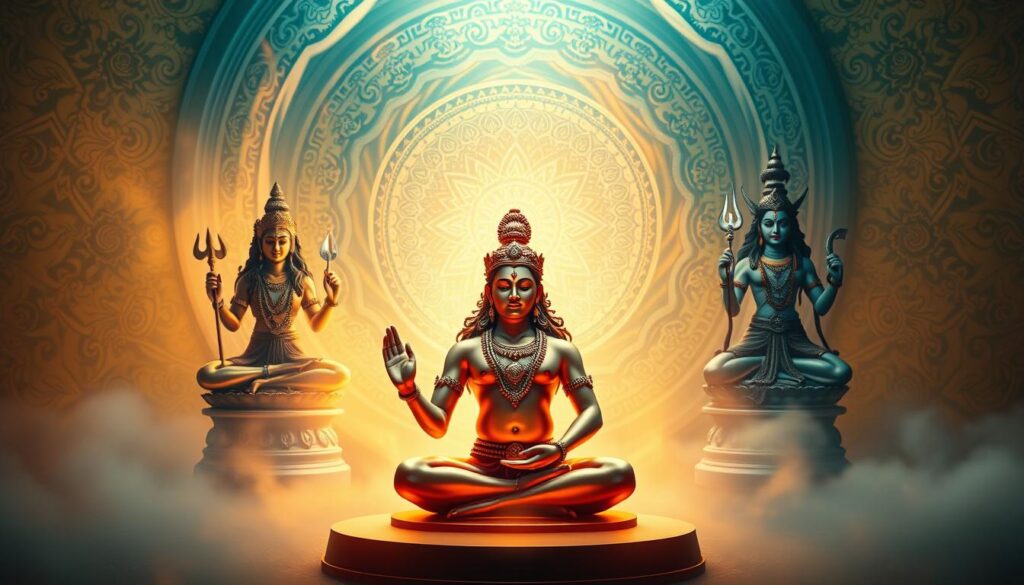
A serene and majestic scene of divine Hindu figures. In the foreground, a tranquil representation of Brahma, the creator, seated in a meditative pose, exuding a celestial glow. Flanking him, Vishnu, the preserver, and Shiva, the destroyer, depicted with their symbolic iconography - Vishnu's four arms and Shiva's third eye. In the middle ground, a swirling background of ornate, intricate patterns and motifs evocative of Hindu cosmology. The lighting is soft, diffused, and warm, casting a reverent atmosphere. The composition is balanced and harmonious, capturing the essence of the Hindu pantheon and the profound symbolism of the divine figures.

Exploring the Trimurti Concept: Brahma, Vishnu, Shiva

Three primary deities form a cosmic management system. Brahma sparks new beginnings, Vishnu maintains balance, and Shiva clears space for renewal. Together, they show how creation needs both stability and change.

Deity Role Symbols
Brahma Creator Four heads (knowledge), lotus (purity)
Vishnu Preserver Conch (divine sound), mace (strength)
Shiva Transformer Third eye (wisdom), trident (cosmic laws)

Brahma’s four faces represent the Vedas—ancient wisdom texts. Vishnu’s blue skin symbolizes boundless space, while Shiva’s dance depicts universal rhythms. These details turn abstract ideas into relatable characters.

Celebrating Feminine Energy in Shaktism

Goddess traditions highlight dynamic feminine power. Devi embodies raw creative energy, often shown riding a tiger into battle against ignorance. Lakshmi brings abundance, her golden coins representing both material and spiritual wealth.

Saraswati’s white sari and veena instrument remind seekers that true knowledge harmonizes mind and heart. As one temple priest explains:

“The goddess isn’t separate from us—she’s the courage in our voices and the spark in our curiosity.”

Through these gods and goddesses, personal worship becomes a dialogue with the divine. A student might pray to Saraswati before exams, while a gardener honors Lakshmi during harvest. Each interaction reinforces connections to the supreme God within all life.

Worship Practices and Rituals: From Puja to Arti

Daily spiritual routines blend ancient traditions with modern life, creating bridges between community gatherings and personal reflection. Whether in grand structures or quiet corners of homes, these practices turn ordinary moments into sacred connections.

Mandir and Home Shrine Traditions

Communal spaces called Mandirs pulse with energy during festivals, while home altars offer intimate spaces for morning prayers. Many families keep a dedicated shrine with deity images, oil lamps, and fresh flowers—tools that transform living rooms into meditation zones.

A priest from New Jersey shares:

“Our temple’s murti isn’t just stone—it becomes alive through daily care and devotion.”

This belief fuels rituals like washing sacred statues or ringing brass bells to announce divine presence.

Offerings and Symbolic Acts of Devotion

Presenting fruits or lighting incense isn’t about gifts—it’s a language of reverence. During arti, flames circle deities before touching worshippers’ palms, symbolizing shared blessings. A coconut might represent ego surrender, while turmeric powder signifies purification.

These acts adapt seamlessly. Office workers might whisper prayers at desktop shrines, while grandparents teach toddlers temple dances. Whether through elaborate puja ceremonies or silent meditation, the goal remains: mindful connection beyond routine.

Depicting the Symbol through Art and Architecture

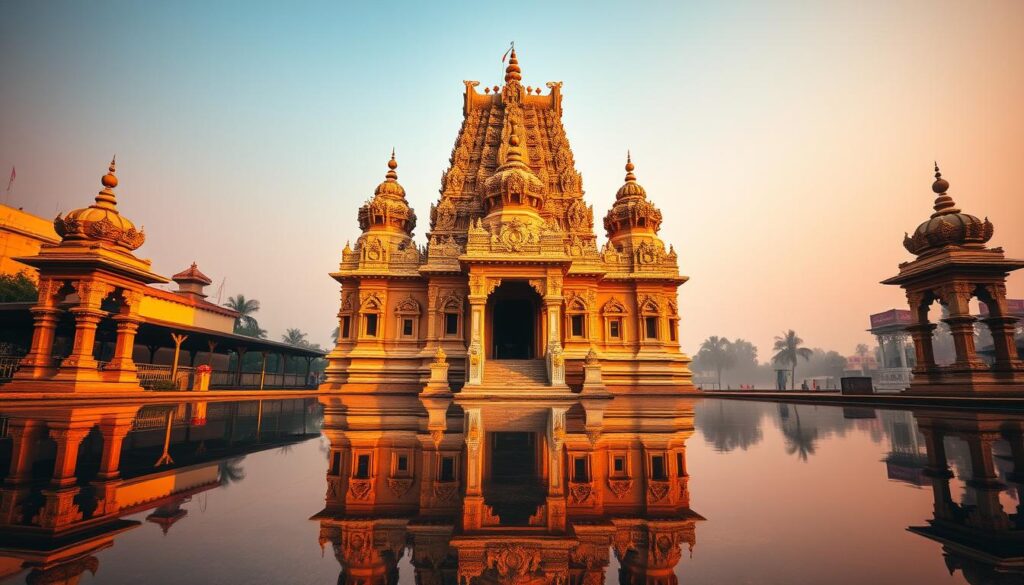
A breathtaking Hindu temple architecture, bathed in warm, golden light. The intricate carvings and ornate spires reaching skyward, each detail imbued with symbolic meaning - from the lotus motifs to the mythical creatures that adorn the façade. The temple stands majestically, its towering presence commanding reverence and wonder. In the foreground, a serene reflection pools the temple's image, creating a mesmerizing mirrored effect. The background subtly fades into a hazy, ethereal landscape, accentuating the sacred, timeless essence of this architectural masterpiece. Captured through a wide-angle lens, the image conveys the grandeur and spiritual significance of Hindu temple design.

Stone becomes scripture in sacred spaces where geometry whispers cosmic truths. Every curve and carving in these structures follows ancient design rules called Shilpa Shastras, turning buildings into 3D maps of spiritual principles. Towering spires point toward enlightenment, while foundation stones mirror earthly stability.

Walk through any major hindu temple, and you’ll find walls alive with stories. A dancing Shiva here, a lotus medallion there—each sculpture serves multiple roles. They educate visitors, focus meditation, and celebrate artistic skill. As one artist from Rajasthan explains:

“Our chisels don’t just shape stone—they reveal truths hidden within.”

Central courtyards often follow mandala patterns, creating zones of sacred energy. The innermost chamber holds the primary deity, surrounded by rings of decreasing sanctity. This layout mirrors the journey from daily life to divine connection.

Regional styles showcase creative adaptation. South Indian temples boast colorful pyramid towers, while North Indian designs favor intricate marble screens. Despite these differences, core traditions remain—like using specific materials for symbolic resonance. Sandstone represents endurance, gold leaf signifies purity.

Modern architects blend these aspects with steel and glass. A New York gallery recently featured laser-cut metalwork mimicking temple jali screens. Such innovations prove ancient design principles still find their place in contemporary spaces, bridging millennia through shared visual language.

Traditions and Ritual Narratives: Connecting Mythology with Daily Life

Morning coffee meets morning prayers in homes where ancient wisdom shapes modern routines. A grandmother lights a lamp while her granddaughter checks school alerts—both honoring traditions that bind generations. These daily acts turn mythic stories into living guides for navigating today’s challenges.

Seasonal festivals color calendars with shared memories. Diwali’s lights teach triumph over darkness, while Holi’s colors celebrate unity. Families blend old recipes with new tech—streaming rituals when relatives live oceans apart. Time becomes a dance between eternal truths and temporary moments.

Communal meals transform into spiritual acts when stories of divine love season conversations. A father explains harvest legends as his child plants window-box herbs. Through these exchanges, family bonds strengthen like sacred threads in ritual garments.

Modern adaptations prove traditions thrive through reinvention. Yoga mats replace temple floors for some, while others find mindfulness in subway commutes. What remains constant? The human need to connect daily rhythms with timeless meaning—a bridge between kitchen tables and cosmic order.

FAQ

What does the Om symbol represent in Hindu traditions?

The sacred sound Om symbolizes the universe’s essence and connects devotees to Brahman, the ultimate reality. It’s chanted during prayers and meditation to unify mind, body, and spirit.

How did ancient Indus Valley art influence Hindu symbolism?

Artifacts like seals depicting yogic postures and nature deities suggest early roots of practices like meditation and reverence for divine energy, later evolving into today’s rituals.

Are Brahma, Vishnu, and Shiva worshipped equally?

While the Trimurti represents creation, preservation, and destruction, many devotees focus on Vishnu or Shiva. Brahma’s worship is less common, reflecting diverse practices across denominations.

Why do many households have personal shrines?

Home altars allow daily connection with deities through puja (worship). Offerings like flowers or incense honor divine presence while fostering spiritual discipline and family unity.

What role does feminine energy play in worship?

In Shaktism, goddesses like Durga or Kali embody cosmic power. Festivals such as Navaratri celebrate their strength, highlighting balance between masculine and feminine divine forces.

How do temple designs reflect spiritual beliefs?

Mandirs often mirror cosmic order, with towering spires symbolizing sacred mountains. Intricate carvings of deities and stories guide devotees toward enlightenment through visual storytelling.

Does the caste system define Hindu practices today?

While ancient texts mention social roles, modern interpretations emphasize personal duty (dharma) and ethics over birth-based systems. Many reject rigid caste divisions as outdated.

What makes the Bhagavad Gita central to daily life?

This epic dialogue between Krishna and Arjuna addresses duty, righteousness, and devotion. Its teachings on selfless action inspire millions to align choices with spiritual growth.