Recent Posts

Exploring the Fundamentals of Hinduism


Step into a living tradition that spans millennia. With over 1.25 billion followers worldwide, this faith ranks as Earth’s third-largest spiritual path. Its global presence stretches from bustling Indian cities to quiet meditation centers in California.

What makes this belief system unique? Diversity thrives at its core. Unlike many religions, it embraces countless philosophies without rigid dogma. You’ll find fire ceremonies in Nepal, yoga studios in New York, and digital temples connecting devotees across continents.

Modern practitioners balance ancient rituals with contemporary life. Morning mantras coexist with smartphone apps for scripture study. Sacred texts written centuries ago now inspire environmental activism and tech ethics discussions.

This tradition’s adaptability explains its enduring relevance. Temple architecture evolves while preserving symbolic meanings. Classical dance forms gain new audiences through social media. Yet the essence remains unchanged – seeking truth through personal experience.

Key Takeaways

  • Third-largest global faith with 1.25 billion followers
  • Blends ancient practices with modern innovations
  • No single founder or centralized doctrine
  • Celebrates diverse paths to spiritual growth
  • Cultural expressions span art, music, and philosophy
  • Continues evolving while preserving core principles

Introduction to Hinduism: An Ultimate Guide

Imagine a spiritual path where personal exploration and ancient customs coexist. This tradition stands apart from other major religions through its emphasis on diverse truths. Rather than a single doctrine, it offers countless philosophical approaches tailored to individual seekers.

Four key aspects shape daily life:

  • Karma (action shaping destiny)
  • Dharma (moral responsibility)
  • Moksha (spiritual liberation)
  • Bhakti (devotional practices)

Families maintain sacred bonds through shared rituals. Morning prayers, festive celebrations, and ethical teachings pass wisdom between generations. These traditions create unity while honoring regional variations.

What makes this faith unique? It functions as a family of religions, embracing multiple paths to enlightenment. Some followers meditate in mountain caves while others serve communities through social work. Temples host vibrant ceremonies, yet personal shrines in homes remain equally important.

Modern adaptations keep practices relevant. Yoga studios blend physical wellness with spiritual growth. Digital platforms share sacred texts globally. This flexibility explains why the tradition thrives across continents and eras.

Indus Valley Civilisation and Early Influences
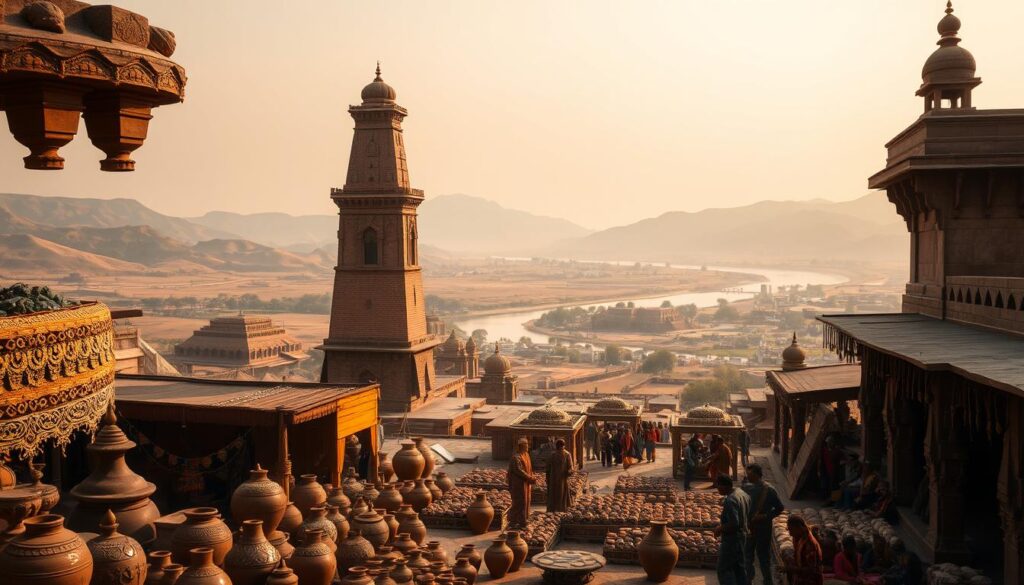
A serene, majestic landscape of the ancient Indus Valley Civilization. In the foreground, a bustling marketplace with intricate clay pottery, ornate jewelry, and vibrant textiles. In the middle ground, towering brick structures with distinctive architectural flourishes, hinting at the advanced urban planning of this lost civilization. In the background, rolling hills and a meandering river, framed by a warm, golden-hued sky. The scene is bathed in soft, diffused lighting, conveying a sense of timeless wonder and reverence for this cradle of early Hinduism.

Long before skyscrapers dominated skylines, the Indus Valley culture built cities that would impress modern engineers. Between 2500-1500 BCE, nearly 40,000 people thrived in planned urban centers like Mohenjo-Daro and Harappa. These ancient metropolises featured grid layouts and advanced drainage systems – some homes even had indoor toilets connected to street sewers.

“The Great Bath of Mohenjo-Daro shows how water rituals shaped community life centuries before modern pools existed.”

Archaeologists discovered artifacts suggesting spiritual practices familiar today. Seals depict cross-legged figures resembling yogic postures, while terracotta statues hint at mother goddess worship. One mysterious seal shows a horned deity surrounded by animals – scholars call it Proto-Shiva, linking it to later traditions.

Feature Indus Valley Modern Cities
Water Management Covered drains & wells Underground piping
Urban Planning Grid street layouts Zoning regulations
Standardization Uniform brick sizes Building codes

This culture vanished mysteriously after nearly 1,000 years, but its legacy endured. Ritual bathing tanks evolved into temple ponds, and early meditation practices shaped spiritual disciplines. The Indus Valley people proved urban living could coexist with nature – their cities stood feet above flood levels yet relied on river fertility.

The Aryan Migration and Vedic Origins

Nomadic horsemen thundered across ancient landscapes between 1500-1000 BCE, reshaping India’s cultural fabric. These Aryan tribes brought fire rituals and warrior traditions that blended with existing Indus Valley practices. Their arrival marked a turning point in spiritual history.

Vedism emerged through this cultural fusion. Elaborate yajna ceremonies honored deities like Agni (fire) and Indra (war). Early social structures began forming, laying groundwork for future societal systems. Sacred chants in Vedic Sanskrit united communities through shared sound vibrations.

Linguistic connections reveal surprising links. This ancient language shares roots with Greek and Latin, tracing back to Proto-Indo-European. Scholars compare words like “deva” (divine) with Latin “deus,” showing how cultures grew from common origins.

Cultural Element Aryan Influence Indus Valley Legacy
Religious Practices Fire rituals Water ceremonies
Social Structure Early hierarchies Urban organization
Language Sanskrit hymns Undeciphered scripts

Debates continue about this transformative period. Some experts emphasize cultural blending, while others note distinct traditions. What’s clear? These interactions created spiritual foundations that still resonate today.

Modern technology helps unravel migration patterns. DNA studies and linguistic analysis offer fresh insights into how ancient peoples shaped civilization’s course. Each discovery adds pieces to humanity’s shared puzzle.

Composition of the Vedas and Sacred Rituals
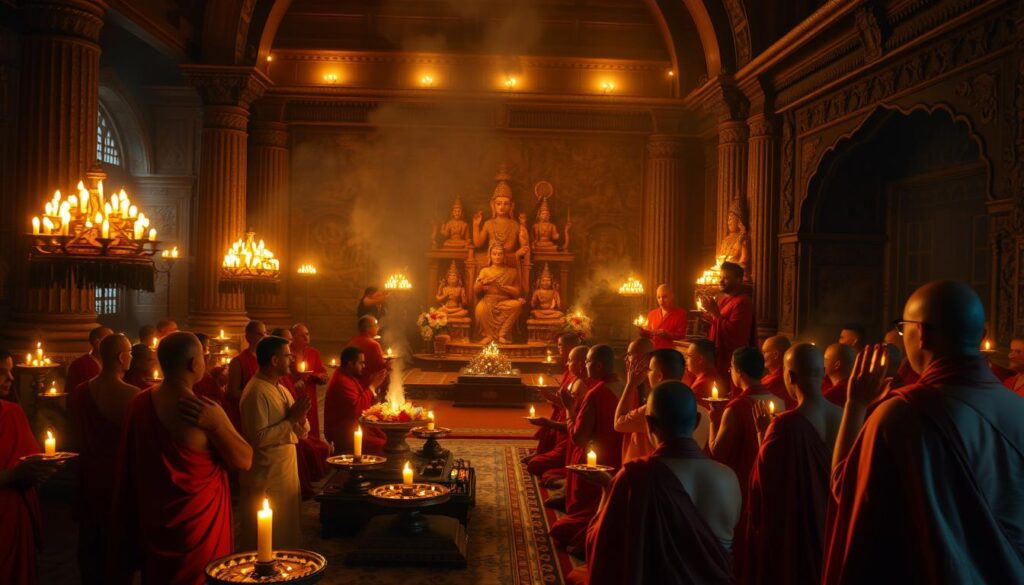
A grand temple hall, dimly lit by flickering oil lamps, their warm glow casting a sacred ambiance. In the foreground, a group of robed priests perform ancient Vedic rituals, their hands moving with precise, reverent gestures as they chant sacred mantras. The middle ground reveals ornate altars adorned with flowers, incense, and ceremonial objects, while the background showcases intricate carved walls depicting scenes from the Vedas. A sense of timelessness and profound spiritual connection permeates the scene, transporting the viewer to the heart of Hindu tradition.

Ancient voices still whisper through four sacred texts that shaped spiritual practices. The Vedas emerged from oral traditions, memorized with precision by generations of priests. These works form humanity’s oldest living scriptural collection.

Rig Veda and Sacred Hymns

The Rig Veda’s 1,028 hymns reveal cosmic mysteries through poetic verses. Composed over 3,000 years ago, these songs honor deities like Agni (fire) and Indra (storms). Remarkably, priests preserved every syllable through chant techniques before writing existed.

Each hymn serves dual purposes – praising gods while explaining natural phenomena. Morning prayers celebrated dawn’s beauty as divine revelation. Night chants transformed star patterns into celestial maps.

Sacrificial Rites and Ritual Offerings

Vedic ceremonies centered on yajna – sacred fire rituals fostering cosmic balance. Offerings ranged from fragrant ghee to harvested grains. Communal participation turned meals into spiritual acts, with smoke carrying prayers skyward.

Veda Focus Modern Influence
Rig Hymns Religious chants
Sama Melodies Classical music
Yajur Rituals Ceremony structure
Atharva Charms Folk traditions

The Atharva Veda’s spells show practical spirituality – from healing herbs to house blessings. These texts prove ancient people sought divine help in daily struggles, just as we do today.

Modern yoga practitioners unknowingly echo Vedic concepts when chanting “Om.” Fire ceremonies continue at weddings and festivals, connecting present rituals to primordial traditions.

Evolution of Philosophical Thought in the Upanishads

Deep in India’s forests, ancient thinkers began asking radical questions. Between 600-200 BCE, sages composed revolutionary texts called Upanishads that transformed spiritual traditions. These works shifted focus from fire rituals to cosmic mysteries – a seismic shift in religious development.

Three types of scriptures emerged:

  • Brahmanas: Detailed ritual manuals
  • Aranyakas: Wilderness meditation guides
  • Upanishads: Philosophical explorations

One groundbreaking idea united them all: Brahman (universal spirit) and Atman (individual soul) are identical. As the Chandogya Upanishad states:

“Tat tvam asi – You are that.”

New spiritual paths emerged from these ideas:

Approach Method Impact
Renunciation Abandoning possessions Monastic traditions
Yoga Mind-body discipline Modern wellness
Bhakti Personal devotion Temple worship

These texts sparked debates about reality’s nature. Some sages saw the universe as divine play, others as cosmic consciousness. Urban scholars and forest hermits alike contributed diverse perspectives.

Modern physicists find parallels in Upanishadic ideas about energy and interconnectedness. From Silicon Valley boardrooms to yoga studios, these ancient concepts continue shaping humanity’s search for meaning.

Epics and Ancient Narratives: Mahabharata and Ramayana
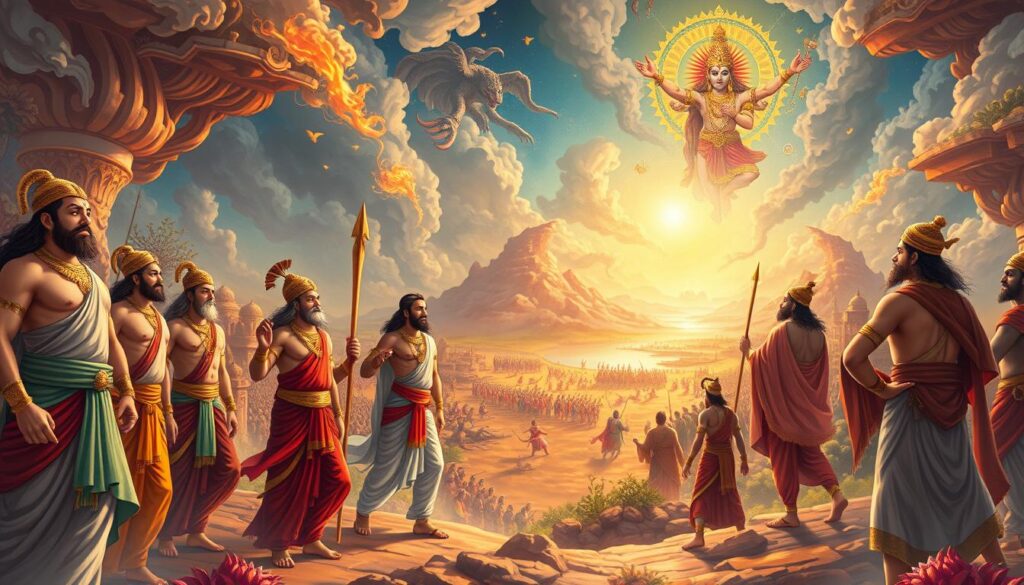
A vibrant and intricate illustration depicting the epic narratives of Mahabharata and Ramayana, the two foundational texts of Hinduism. In the foreground, prominent figures from the two epics stand in heroic poses, their expressions and attire reflecting the grandeur and complexity of these ancient tales. The middle ground showcases pivotal scenes, such as the battlefield of Kurukshetra and the forest landscapes of the Ramayana, with intricate details that capture the dramatic events and moral dilemmas that unfold. In the background, a mystical and otherworldly atmosphere prevails, with celestial beings and divine elements evoking the sacred and mythological nature of these revered epics. The lighting is warm and ethereal, creating a sense of timelessness and reverence, while the composition and perspective draw the viewer into the rich tapestry of these timeless narratives.

Picture ancient storytellers weaving tales so powerful they shaped entire civilizations. Two legendary works – the Mahabharata and Ramayana – continue guiding millions through life’s complexities. These narratives blend cosmic drama with practical wisdom, offering something for warriors and philosophers alike.

Insights from the Mahabharata

This colossal epic spans 100,000 verses – eight times longer than Homer’s Iliad and Odyssey combined. At its heart lies the Bhagavad Gita, where divine charioteer Krishna counsels conflicted archer Arjuna. Their battlefield dialogue merges three spiritual paths:

Tradition Focus Modern Parallel
Upanishadic Inner wisdom Mindfulness practices
Kshatriya Ethical action Leadership training
Bhakti Loving devotion Community service

Families still debate its characters’ choices like reality TV drama. A gambling match destroys a kingdom. A queen’s courage challenges injustice. These stories teach dharma through relatable human struggles.

The Ramayana: Lore and Legacy

Prince Rama’s quest to rescue his wife Sita spawned countless adaptations across Asian culture. From shadow puppets in Indonesia to comic books in New Delhi, this 24,000-verse journey explores loyalty and moral leadership.

Key differences emerge when comparing India’s twin epics:

Aspect Mahabharata Ramayana
Central Conflict Family feud Good vs evil
Hero’s Journey Complex choices Ideal conduct
Length 100,000 verses 24,000 verses

Both texts remain living traditions. Children learn values through comic versions, while scholars mine them for psychological insights. Street plays and Netflix shows prove these stories still speak our language.

Major Deities and Worship Practices

Millions of lamps flicker daily before sacred images, revealing a spiritual ecosystem where countless divine forms coexist. This faith celebrates many gods as facets of one ultimate reality, allowing personal connections through preferred deities.

Popular Gods and Goddesses

Three cosmic forces form the divine trinity. Brahma sparks creation, Vishnu sustains life, and Shiva transforms through destruction. Alongside them, powerful goddess figures command devotion – Lakshmi brings prosperity, Saraswati fuels wisdom, while Durga embodies protective strength.

Temple and Home Rituals

Morning bells ring in temples as devotees offer flowers and chant prayers. Home altars glow with oil lamps, creating intimate spaces for daily worship. Whether in grand stone temples or corner shrines, rituals blend sensory beauty with symbolic meaning.

Pilgrims journey to sacred sites, carrying offerings for beloved deities. These practices show how ancient traditions thrive through adaptable worship styles. From whispered mantras to festive processions, every act celebrates life’s divine connections.

FAQ

How did the Indus Valley Civilisation influence early religious practices?

Artifacts like seals depicting yogic postures and ritual baths suggest early connections to later spiritual traditions. These findings highlight a cultural continuity in symbols and practices tied to nature worship.

What role did the Aryan migration play in shaping Vedic traditions?

The integration of Aryan rituals with indigenous customs led to the development of Vedic hymns and fire sacrifices. This fusion laid the groundwork for concepts like dharma and cosmic order found in texts like the Rig Veda.

Why are the Upanishads significant to philosophical thought?

These texts shifted focus from external rituals to inner exploration, introducing ideas like karma, moksha, and the unity of the individual soul (atman) with universal consciousness (Brahman).

How do the Mahabharata and Ramayana impact daily life?

Stories like the Bhagavad Gita (part of the Mahabharata) offer moral guidance, while the Ramayana’s emphasis on duty and righteousness shapes cultural values. Both epics are recited in festivals and household rituals.

Which deities are most widely worshipped today?

Vishnu (preserver), Shiva (destroyer), and Devi (goddess) remain central. Regional traditions also celebrate forms like Krishna, Lakshmi, and Durga through temple festivals, devotional songs, and home altars.

What distinguishes temple rituals from home worship?

Temples involve elaborate ceremonies led by priests, including offerings of flowers and food. Home practices focus on personal devotion, like lighting lamps, chanting mantras, or maintaining a sacred space for daily prayers.

How has the caste system evolved over time?

Originally tied to occupational roles in Vedic society, caste became rigid over centuries. Modern reforms and movements emphasize social equality, though its influence varies across communities.

Are yoga and meditation rooted in ancient texts?

Yes! The Upanishads and later works like Patanjali’s Yoga Sutras systematized meditation and breath control as paths to spiritual liberation. These practices remain vital to global wellness trends today.
Find the Best Hindu Temples Near You


New York’s energy isn’t just about skyscrapers and Broadway shows. Tucked within its bustling streets lie serene sanctuaries where ancient traditions thrive. The city’s diverse population has nurtured spiritual hubs that blend timeless rituals with modern life, offering quiet retreats for reflection and connection.

These sacred spaces showcase stunning craftsmanship, from colorful carvings to towering gopurams. Many visitors are surprised by how these architectural marvels create pockets of calm amid urban chaos. Whether you’re seeking guidance, cultural immersion, or a moment of peace, there’s a welcoming atmosphere here for everyone.

Each location tells a unique story through its design and practices. Some focus on meditation, while others host lively festivals celebrating timeless traditions. They also serve as community anchors, bridging gaps between generations and cultures through shared meals, workshops, and interfaith dialogues.

Key Takeaways

  • New York hosts diverse spiritual centers blending ancient traditions with contemporary city life
  • Sacred spaces feature unique architectural styles and cultural programming
  • Many locations welcome first-time visitors with orientation guides or volunteer ambassadors
  • Weekly events range from yoga sessions to cultural festivals open to all
  • Basic etiquette like removing shoes enhances the experience for everyone

Explore Iconic Temples and Spiritual Havens

New York’s cultural mosaic shines through its sacred spaces, where centuries-old traditions meet modern urban life. These vibrant centers offer more than worship – they’re gateways to cultural discovery and personal renewal.

Ganesh Temple & Bhuvaneshwar Mandir

The historic Ganesh Temple in Queens features 26 sacred yantras installed by Sri La Sri Pandrimalai Swamigal. Built using Agama Sastras principles, its weekday hours (10:15 AM–8:30 PM) accommodate busy schedules. Families love Bhuvaneshwar Mandir’s youth programs alongside Shiva-focused rituals. Founder Shri Prakash Gossaiji created this Ozone Park landmark to preserve traditions through interactive events.

Satyanarayan Dham & Mahayana Temple

At Jersey City’s Shree Satyanarayan Dham, morning chants blend with bell tones during Lord Satyanarayan darshan. The Mahayana Temple near Canal Street combines meditation zones with traditional altars. Open daily until 5:30 PM, its minimalist design provides quiet reflection spaces amid downtown bustle.

Location Operating Hours Special Features Travel Time from Manhattan
45-57 Bowne St Weekdays 10:15 AM–8:30 PM Ancient yantras 35 minutes by subway
86-06 101st Ave Daily 7 AM–9 PM Youth workshops 50 minutes by car
3035 JFK Blvd Mornings & evenings Bell ceremonies 25 minutes via PATH
133 Canal St 8:30 AM–5:30 PM Meditation pods 15-minute walk

Each location offers unique blessings through distinct rituals and community activities. Check specific visiting times before planning your trip to these architectural treasures.

Expert Tips for Visiting “hinduism temple near me”

Maximizing your experience at nearby cultural centers starts with smart preparation. These sacred spaces blend ancient customs with modern accessibility, but knowing a few key details ensures respectful engagement and smooth logistics.

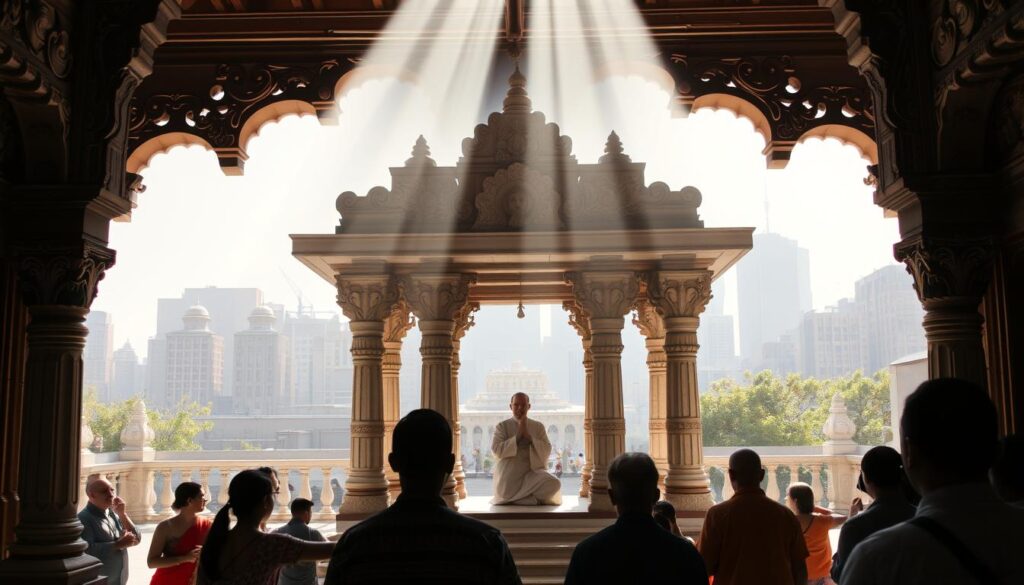
A serene temple courtyard in New York City, sunlight filtering through ornate carved arches, illuminating a group of devotees engaged in reverent worship. In the foreground, a group of visitors stands in awe, admiring the intricate details of the temple's architecture, their expressions one of wonder and contemplation. In the middle ground, a priest offers blessings, the gentle chanting of mantras creating a meditative atmosphere. In the background, the bustling city skyline serves as a contrast, reminding visitors of the tranquility found within the temple's sacred walls.

Timing Your Experience Right

Popular locations like Robbinsville’s marble marvel operate 9 AM–7:30 PM daily (closed Tuesdays). Darshan moments – when deities become visible – occur at 9 AM, 11:15 AM, 4 PM, and 7 PM. Arrive 15 minutes early during festivals, as golden door openings draw larger crowds.

Essential etiquette creates harmony:

  • Store shoes in provided racks before entering prayer halls
  • Choose clothing covering shoulders and knees
  • Silence phones during arati ceremonies

Navigating from the City

From New York City’s Penn Station, NJ Transit trains reach Princeton Junction in 65 minutes. Ride-shares complete the final 15-minute stretch to Robbinsville. Drivers take Exit 7A off the Turnpike – ample parking awaits early arrivals.

“Our volunteers help first-time visitors feel at home while preserving sacred traditions”

Weekday mornings offer quieter moments for reflection. Book weekend slots 72 hours ahead through temple websites. Combine your trip with nearby botanical gardens for a fulfilling day excursion from the city.

Cultural Highlights and Architectural Marvels

Architectural wonders often tell stories deeper than their stone carvings suggest. The BAPS Shri Swaminarayan Mandir stands as a testament to human dedication and spiritual vision, blending sacred geometry with modern craftsmanship.

Sacred Artistry and Intricate Mandir Details

This second-largest Hindu temple in the world features 68,000 cubic feet of marble from three continents. Artisans in Rajasthan hand-carved floral patterns and divine figures over two years, creating 10,000 unique pieces shipped to New Jersey for assembly.

Historic Significance and Community Impact

More than 12,500 volunteers helped construct this global landmark. Doctors, teachers, and engineers worked alongside professional builders, donating 6.5 million hours. “We didn’t just build walls – we wove connections,” shares a volunteer coordinator.

Volunteer-led Construction and Global Influences

The complex unites materials and traditions from six countries. A 49-foot bronze statue of Nilkanth Varni watches over water collected from 300 global sources. This symbolizes unity – a core value of the BAPS Swaminarayan Sanstha organization.

Material Source Volunteer Count Construction Years Unique Feature
Italy, Greece, Turkey 12,500+ 2010-2023 49-ft bronze statue
Rajasthan, India 4,200 artisans 2-year carving 10,000 marble pieces
50 U.S. states Local donors Ongoing 300 water sources

Every corner reveals thoughtful design – astrological symbols on domes, musical motifs on pillars. It’s not just the largest Hindu temple outside India, but a living lesson in cultural collaboration.

Plan Your Spiritual Journey and Road Trip Adventures

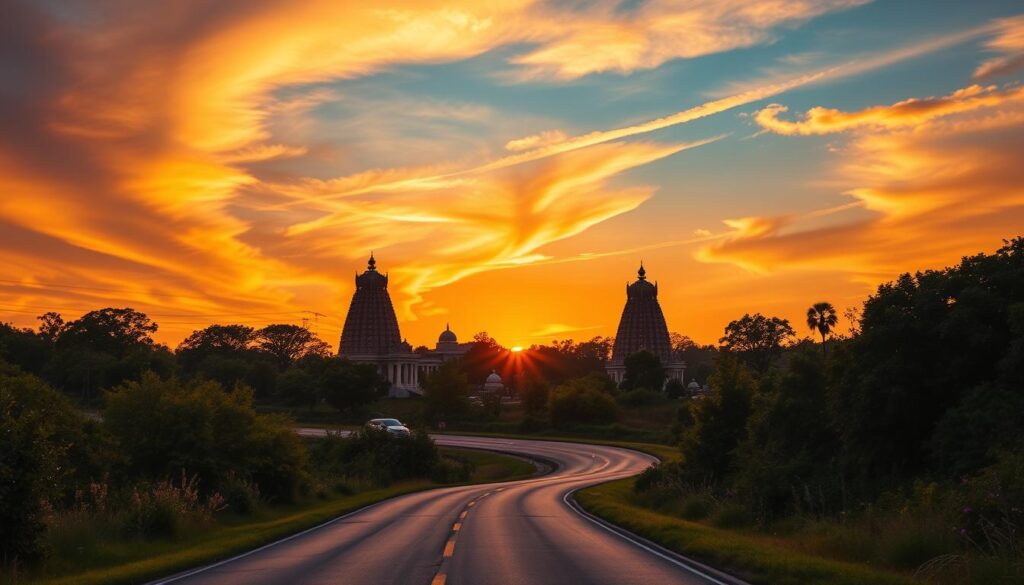
a serene road trip through the picturesque landscapes of New Jersey, featuring the majestic silhouettes of Hindu temples against a golden sunset sky. In the foreground, a winding country road leads the viewer through lush, rolling hills dotted with vibrant foliage. In the middle ground, a series of ornate, intricately carved Hindu temples stand tall, their spires reaching towards the heavens. The temples are bathed in a warm, golden light, casting long shadows across the peaceful scene. In the background, a stunning sunset paints the sky in a breathtaking array of oranges, pinks, and purples, creating a serene and spiritual atmosphere. The image conveys a sense of tranquility, contemplation, and the harmony between nature and devotion.

New Jersey’s roads lead to more than beaches and boardwalks – they’re gateways to cultural treasures. With 278,000 Hindu residents, the state hosts vibrant communities maintaining sacred spaces across its landscape. Twelve spiritual centers near Philadelphia alone showcase diverse traditions perfect for multi-stop adventures.

Day Trips and Local Festival Insights

Build your ultimate road trip list around regional celebrations. Time visits during Navratri (October) or Diwali (November) when colorful processions and lamp-lighting ceremonies transform these spaces. The 185-acre BAPS campus offers more than quiet reflection – enjoy authentic meals at their cafeteria or shop for handcrafted souvenirs.

Top itinerary stops include:

  • Morning meditation at Robbinsville’s marble marvel
  • Afternoon workshops on traditional arts
  • Evening kirtan sessions with local musicians

Insider Recommendations for the Best Visits

Local guides suggest arriving early for weekday tours when crowds thin. “Private groups of 15 get exclusive access to intricate carvings,” shares a temple coordinator. Pair spiritual stops with nearby attractions like Princeton’s gardens or Philly’s historic districts for balanced day trips.

Trip Type Duration Highlights
Cultural Immersion Full Day Festivals + Craft Workshops
Architecture Tour Half Day Guided Temple Walkthroughs
Family Adventure Weekend Multi-City Temple Trail

Travelers love combining spiritual exploration with regional flavors. Many locations sit minutes from acclaimed Indian restaurants – perfect for refueling between destinations. Check temple websites for seasonal event lists before mapping your route through New Jersey’s sacred landscape.

Conclusion

Amidst New York’s urban sprawl lies a spiritual network connecting ancient traditions to modern seekers. From Queens’ historic Ganesh Temple to New Jersey’s awe-inspiring Swaminarayan Akshardham, the region’s 150 Hindu temples offer serene escapes. These cultural gems blend intricate artistry with welcoming atmospheres, creating bridges between timeless practices and contemporary life.

The BAPS mandir stands as a testament to community dedication – its 10,000 hand-carved marble pieces make it the world’s second-largest Hindu mandir. Each visit reveals new details, whether through vibrant festivals or quiet moments of reflection.

Whether you seek artistic inspiration or personal peace, these spaces invite exploration. They remind us that spiritual growth thrives in shared experiences, from traditional rituals to cross-cultural dialogues.

Ready to discover these architectural wonders? Use our practical guides to plan meaningful visits that resonate long after you leave. Your journey through New York’s sacred landscapes might just reveal unexpected connections – both around you and within.

FAQ

What are the must-visit Hindu temples near New York City?

The BAPS Shri Swaminarayan Mandir in Robbinsville, NJ, is a top choice for its stunning marble architecture. In Queens, the Ganesh Temple offers vibrant rituals, while Bhuvaneshwar Mandir in Connecticut showcases traditional stone carvings. Each site provides unique cultural experiences.

How should I prepare for a temple visit in the NYC area?

Dress modestly, remove shoes before entering, and check darshan timings online. Temples like Shree Satyanarayan Dham in Holtsville have specific guidelines. Public transit or rideshares are ideal for reaching urban temples, while rural ones may require a car.

Are there festivals that enhance temple visits?

Yes! Diwali (October/November) and Navratri (September/October) transform spaces like the Mahayana Buddhist Temple with lights and dance. Local temples often share event calendars for celebrations like Janmashtami or Shivratri.

What architectural details should I look for during my visit?

Observe hand-carved pillars at BAPS Mandir, bronze deities at Ganesh Temple, and symbolic motifs like lotus flowers. Many structures, including the Radha Krishna Temple in Manhattan, blend regional Indian styles with modern materials.

Can I participate in volunteer activities at these temples?

Absolutely. Institutions like BAPS Swaminarayan Sanstha welcome volunteers for food drives or cultural events. Check their websites for opportunities, especially during major festivals or community service projects.

Which temples are suitable for a weekend road trip?

The Sri Venkateswara Temple in Pittsburgh (6-hour drive) or the Shiva Vishnu Temple in Maryland (4 hours) make excellent destinations. Closer options include the Hindu Temple Society of North America in Flushing, just 30 minutes from Manhattan.

Do these temples offer guided tours?

Many do! BAPS Shri Swaminarayan Mandir provides free audio guides explaining its 10,000+ carved pieces. Smaller temples like Bhuvaneshwar Mandir often have volunteers available for informal walkthroughs during non-peak hours.

Hinduism: A Comprehensive Guide to the Ancient Faith


Welcome to one of humanity’s oldest living traditions—a vibrant tapestry of beliefs practiced by over a billion people worldwide. Unlike many organized religions, this ancient faith has no single founder or central text. Instead, it thrives as a dynamic network of philosophies, rituals, and cultural expressions shaped over millennia.

The term now used to describe these practices originated outside the Indian subcontinent. Neighboring civilizations in Persia and ancient China first referred to people near the Indus River as “Hindu.” Today, this label represents a family of spiritual paths united by shared concepts like karma, dharma, and the pursuit of enlightenment.

What makes this tradition unique is its incredible diversity. From colorful festivals to meditative yoga practices, it embraces countless ways to connect with the divine. Some followers focus on devotional worship, while others explore profound philosophical schools. This flexibility allows it to remain deeply relevant in our modern world.

Key Takeaways

  • Represents diverse traditions rather than a single organized religion
  • Name originated from ancient neighbors near the Indus River
  • Features flexible philosophies adapted over 4,000 years
  • Emphasizes personal spiritual growth and cosmic balance
  • Third-largest global belief system by followers
  • Integrates ritual practices with deep philosophical inquiry

Overview of Hinduism and Its Global Significance

Across the globe, diverse communities uphold practices dating back thousands of years. With over 1.25 billion followers, this spiritual tradition ranks as the world’s third-largest belief system. Its influence stretches from the crowded streets of Mumbai to the temples of London, adapting to new cultures while preserving ancient wisdom.

India remains the faith’s heartland, where 80% of the population identifies with its teachings. Neighboring Nepal shows an even stronger connection—nearly 9 in 10 people follow these time-honored customs. But the tradition’s reach extends far beyond South Asia:

Country Hindu Population % of Total
India 1.1 billion 80%
Nepal 28 million 90%
United Kingdom 840,000 1.5%
United States 3.3 million 1%

Many practitioners abroad carry rich migration histories. “Our festivals feel like home, even when home spans three continents,” shares a London-based community leader. Families often moved first from India to East Africa or the Caribbean before settling in Western nations, blending traditions with local influences.

This global network thrives through temples and cultural centers. From Bali’s ornate shrines to Canada’s educational institutes, these spaces help people connect with their heritage while sharing insights with broader society. The result? A living tradition that grows richer through cross-cultural exchange.

Historical Roots: From the Indus Valley to Vedic Traditions

Long before empires rose and fell, a remarkable story began along the banks of the Indus River. Two ancient forces—urban innovators and nomadic thinkers—would shape spiritual practices still alive today.

Secrets of the First City-Builders

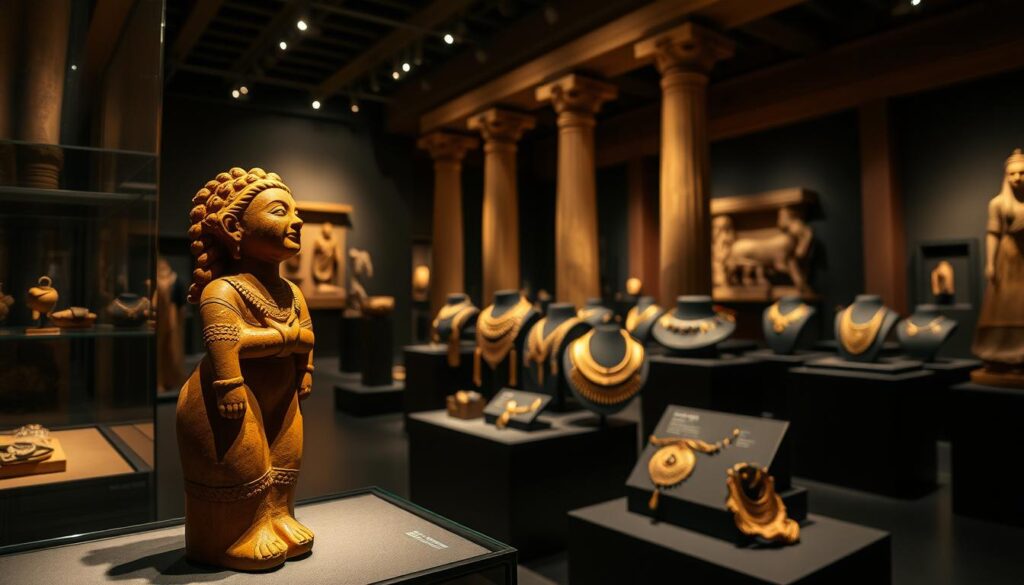
A dimly lit museum hall, showcasing a breathtaking collection of Indus Valley artifacts. In the foreground, a meticulously crafted terracotta figurine, its intricate details illuminated by soft, warm lighting. In the middle ground, a display of ornate jewelry, including intricate necklaces and bracelets, hinting at the sophisticated artistry of the ancient civilization. In the background, towering stone pillars and carved reliefs, evoking the grandeur and architectural prowess of the Indus Valley people. The overall atmosphere is one of reverence and wonder, inviting the viewer to step back in time and explore the rich cultural heritage of this legendary civilization.

Around 2500 BCE, the Indus Valley civilization built advanced cities like Mohenjo-Daro. Their grid-like streets and drainage systems rival modern urban planning. Archaeologists found bathing pools that might have inspired later ritual cleansings.

Clay seals show figures sitting in yoga poses. One famous artifact depicts a three-faced being surrounded by animals—a possible early version of Shiva. These discoveries suggest spiritual ideas lasting thousands of years.

Newcomers With Fire and Song

Around 1500 BCE, Aryan tribes brought fresh perspectives. Their horse-drawn chariots and Sanskrit hymns mixed with local culture. Fire rituals honoring nature gods became common, blending with existing traditions.

Aspect Indus Valley Aryan Influence
Urban Planning Advanced cities Mobile settlements
Spiritual Practices Yoga imagery Fire ceremonies
Language Undeciphered script Sanskrit texts
Artistic Legacy Seal carvings Oral poetry

This fusion created something new. As one historian notes: “The meeting of river-farmers and star-readers birthed a tradition embracing both earth and cosmos.” Sanskrit became sacred, carrying wisdom through the ages.

The Composition and Significance of the Vedas

Imagine memorizing entire books without writing a single word. For over 3,000 years, priests preserved India’s sacred wisdom through precise oral transmission. These ancient texts form the bedrock of spiritual tradition, offering guidance for both grand ceremonies and daily life.

Four Pillars of Divine Wisdom

The Rig Veda shines as the oldest collection, with 1,028 hymns praising cosmic forces like Agni (fire) and Indra (storms). Think of it as humanity’s first recorded conversation with the divine. The Sama Veda turns these poems into song—early liturgical music that still inspires chanting today.

Need instructions for sacred rituals? The Yajur Veda delivers step-by-step guides for fire ceremonies. Meanwhile, the Atharva Veda keeps things practical with spells for health, love, and protection. Together, they cover everything from cosmic philosophy to fixing a toothache!

Beyond the Verses

Later works built upon this foundation. Brahmanas explain ritual details like spiritual cookbooks. Aranyakas emerged as forest-dwelling sages sought deeper meanings. Their discussions blossomed into the Upanishads—profound dialogues exploring reality’s nature.

Scholars often compare this structure to a growing tree. “The Vedas are roots,” explains Dr. Anita Sharma, “while later works branch into philosophy while staying grounded in ancient practices.” This living library continues to shape spiritual journeys across generations.

Epic Narratives: Mahabharata and Ramayana

Two timeless stories shape moral foundations across generations. The Mahabharata and Ramayana aren’t just ancient texts—they’re living guides exploring dharma, duty, and human struggles. Families gather to hear these tales, finding new meaning with each retelling.

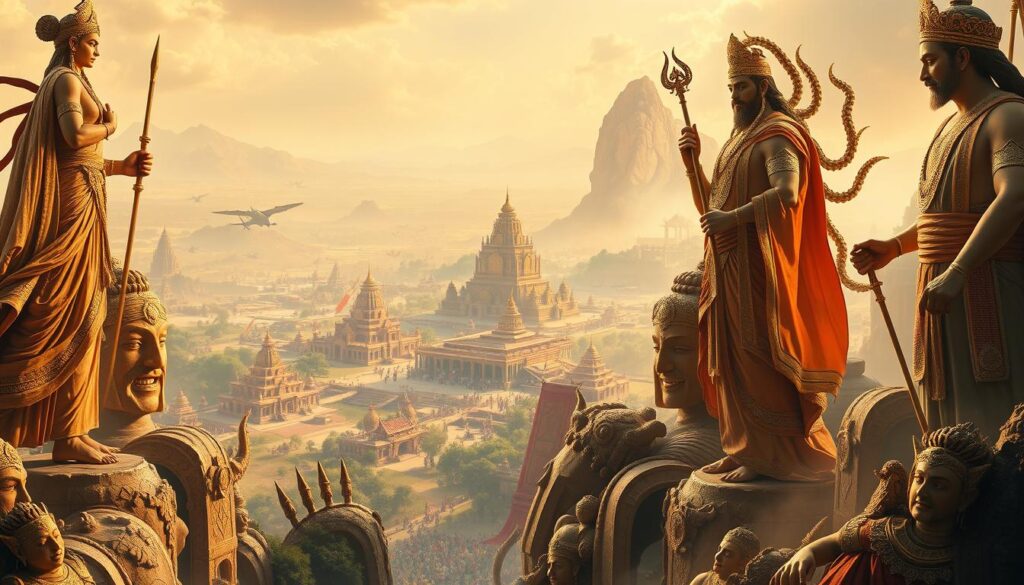
An epic landscape unfolds, a tapestry of ancient narratives. In the foreground, towering figures of gods and mythical heroes emerge, their forms radiating power and divine grace. Intricate details adorn their ornate garments, each fold and pattern a testament to the rich cultural heritage. The middle ground reveals a vast, breathtaking panorama, with majestic temples and palaces rising against a backdrop of lush, verdant landscapes. Scattered amidst the scene are glimpses of legendary battles, the clash of armies and the triumph of righteousness. The background fades into a dreamlike haze, hinting at the boundless realms of imagination and timeless wisdom that these epic tales have come to embody. Warm, golden light bathes the entire composition, imbuing the scene with a sense of reverence and timelessness.

The Bhagavad Gita and Its Philosophical Impact

At the heart of the Mahabharata lies a battlefield conversation that changed spiritual tradition. When warrior Arjuna hesitates to fight his kin, Lord Krishna shares wisdom transcending time: “Set your heart on action, never on its fruits.” This moment birthed the Bhagavad Gita—a 700-verse roadmap for balanced living.

Aspect Mahabharata Ramayana
Verses 100,000+ 24,000
Core Conflict Family rivalry Rescue mission
Key Lesson Ethical dilemmas Ideal conduct
Iconic Figure Krishna Rama

The Gita blends three paths: knowledge (jnana), devotion (bhakti), and selfless action (karma). A New York yoga teacher explains: “Krishna’s advice helps my students face modern stress—it’s about doing right without attachment.”

These epics remain cultural cornerstones. From Bollywood films to Silicon Valley leadership workshops, their lessons adapt to new contexts while preserving ancient truths about life’s complexities.

Temples and Pilgrimages: Centers of Devotion

Sacred spaces and journeys form the heartbeat of spiritual practice for millions. Hindu temples, called mandirs, pulse with daily rhythms that blend artistry with devotion. These vibrant centers host rituals connecting worshippers to the divine through sight, sound, and service.

Mandir Worship and Ritual Practices

Step into any mandir at dawn, and you’ll witness priests performing abhishekam—bathing carved deity figures (murtis) with milk and flowers. These sacred images become divine vessels through precise consecration rites. “We treat murtis like living royalty,” explains a priest from Varanasi. “They’re dressed in silk, fed ceremonial meals, and honored with incense.”

The highlight for devotees is darshan—a soulful exchange where worshippers gaze upon the deity and receive blessings. This practice creates intimate moments of connection, whether in neighborhood shrines or grand South Indian complexes adorned with thousand-pillared halls.

Pilgrimage Routes and Sacred Sites

Journeys to holy places transform faith into footsteps. Four sacred cities form the Char Dham circuit:

Sacred Site State Deity
Badrinath Uttarakhand Vishnu
Dwarka Gujarat Krishna
Jagannath Puri Odisha Jagannath
Rameshwaram Tamil Nadu Shiva

The Kumbh Mela pilgrimage redefines scale—imagine 50 million people bathing in sacred rivers during peak days. That’s like combining 62 Super Bowl crowds! These gatherings show how ancient traditions thrive in modern times, blending spirituality with jaw-dropping human connection.

The Rise of Devotional Movements and the Bhakti Tradition

Ordinary people reshaped spirituality through song between the 6th and 16th centuries. This devotion revolution declared heartfelt connection more vital than rituals—a message that still inspires millions.

Southern Fire, Northern Flame

Tamil poet-saints ignited change first. The Nayanmars wrote fiery Shiva hymns, while the Alvars composed Vishnu praises comparing divine love to monsoons. Their poetry became sacred texts, showing how verses could unite communities.

Later, North Indian voices added new sparks. Kabir mocked empty rituals with clever rhymes. Mirabai danced while singing Krishna’s praises, defying caste rules. Their songs traveled through markets and fields, making spirituality accessible to all.

This tradition proved love outshines status. As a New York musician notes: “Their words teach us that real devotion needs no permission.” From temple chants to protest songs, this legacy thrives wherever hearts seek connection.

FAQ

What are the Vedas, and why are they important?

The Vedas are ancient sacred texts that form the foundation of spiritual knowledge and rituals. They include hymns, philosophies, and guidelines for rituals, shaping concepts like dharma (duty) and karma (action). These texts remain central to teachings and practices even today.

How do temples serve as centers of devotion?

Temples, or mandirs, are spaces where individuals connect with deities through rituals like puja (worship) and offerings. They symbolize the universe’s divine order and provide a place for community gatherings, festivals, and personal reflection.

What role do the Mahabharata and Ramayana play in daily life?

These epics teach moral values through stories of heroism, duty, and righteousness. The Bhagavad Gita, part of the Mahabharata, offers guidance on balancing action, devotion, and wisdom—principles many apply to modern challenges.

Why are pilgrimages significant in this faith?

Sacred sites like Varanasi or the Ganges River are believed to hold spiritual power. Pilgrimages allow devotees to deepen their faith, seek blessings, and participate in rituals tied to purification and renewal.

How did the Bhakti movement influence traditions?

The Bhakti movement emphasized personal devotion to deities like Vishnu or Shiva, breaking away from rigid rituals. Poet-saints like Mirabai and Kabir composed heartfelt verses that made spirituality accessible to all, regardless of social status.

What connects the Indus Valley civilization to modern practices?

Archaeological finds, like ritual baths and figurines, suggest early forms of worship that evolved into today’s traditions. Concepts of sacred water and fire rituals may trace back to this ancient culture.

How do festivals reflect core beliefs?

Celebrations like Diwali (festival of lights) or Holi (festival of colors) symbolize themes such as good overcoming evil, unity, and renewal. They blend storytelling, rituals, and community bonding to honor divine stories and cycles of nature.

What is the purpose of rituals like aarti or offerings?

Rituals like waving lighted lamps (aarti) or offering flowers create a tangible connection between devotees and the divine. They express gratitude, seek blessings, and align individuals with cosmic harmony.

Exploring the Divine in Hinduism: The Nature of God


Welcome to a journey through one of humanity’s oldest spiritual traditions. Hinduism’s approach to the divine is as vast as the universe itself, blending philosophy, ritual, and storytelling into a vibrant tapestry. Unlike many religions, it embraces diverse interpretations of the sacred, offering both unity and multiplicity in its worldview.

At its core, this tradition recognizes a single ultimate reality while celebrating countless deities. Each represents unique aspects of existence—creation, preservation, destruction—and connects to daily life through festivals, art, and ethics. These figures aren’t just symbols; they shape cultural values and inspire personal growth.

Over history, these beliefs have evolved alongside societal changes, yet their essence remains timeless. From ancient texts to modern practices, the interplay between devotion and inquiry continues to define Hindu spirituality. This balance makes it a living, adaptable path for millions worldwide.

Key Takeaways

  • Hinduism views divinity through both universal oneness and diverse forms
  • Deities represent different aspects of existence and human experience
  • Spiritual practices blend philosophy with cultural traditions
  • The religion has evolved while maintaining core principles over millennia
  • Personal connection to the divine varies across communities and individuals

Introduction to Hindu Spirituality

At the heart of South Asian culture lies a spiritual framework embracing both unity and diversity. This tradition sees the sacred in everyday life, from sunrise rituals to family celebrations. Its flexibility lets people connect with the divine through personalized paths while sharing core principles.

Overview of Hindu Beliefs

Central to this religion is Brahman—the ultimate reality flowing through all existence. Devotees honor various deities representing cosmic functions: Brahma shapes the world, Vishnu sustains it, and Shiva renews it through transformation. These figures help believers understand life’s cycles while offering relatable symbols for meditation and prayer.

Historical Evolution and Cultural Context

Over 35 centuries, spiritual practices evolved from Vedic fire rituals to vibrant temple ceremonies. Unlike many religions, this path grew through countless teachers adapting to cultural shifts. Ancient texts like the Vedas blend with local traditions, creating a living faith that respects regional customs while maintaining philosophical depth.

This approach lets communities worldwide embrace shared values through unique expressions—from Bollywood-inspired festivals to eco-conscious rituals honoring nature’s balance.

Understanding god in hinduism: Historical and Cultural Perspectives

The roots of Hindu spirituality stretch deep into humanity’s quest for cosmic understanding. Early Vedic traditions reveal a world where natural forces shaped divine identities. Deities like Indra (storm), Agni (fire), and Soma (ritual drink) embodied elemental powers that governed life’s rhythms.

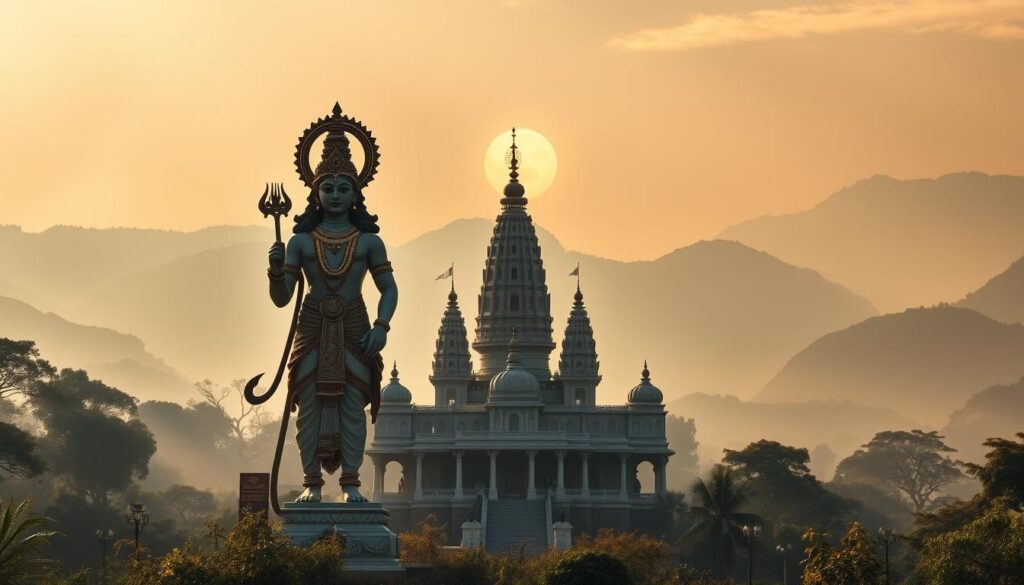
A grand and majestic scene of the Vedic deities, set against a serene and timeless landscape. In the foreground, the divine figures stand tall and resplendent, their intricate features and ornate attire capturing the essence of Hindu mythology. The middle ground showcases a tranquil temple, its spires and domes rising majestically, surrounded by lush vegetation and a glowing sky. In the background, the misty mountains lend an air of mystery and reverence, as if the very landscape itself pays homage to the sacred presence. Soft, warm lighting bathes the scene, creating a sense of timelessness and spirituality. The overall composition evokes a deep sense of wonder and respect for the rich cultural and historical tapestry of Hinduism.

During the Vedic period, these figures maintained cosmic order through reciprocal relationships. Worshipers offered prayers and sacrifices, believing their devotion influenced divine actions. Indra, celebrated for conquering chaos and bringing rain, became central to agricultural communities.

Three key traits defined early spiritual thought:

  • Deities represented natural phenomena and social values
  • Rituals bridged human and divine realms
  • Stories explained creation and moral codes
Deity Role Cultural Symbolism
Indra Storm & Warfare Strength, leadership
Agni Sacred Fire Transformation, purity
Soma Ritual Offering Spiritual connection
Varuna Cosmic Law Moral balance
Vishnu Universal Sustainer Protection, continuity

Over time, philosophical ideas expanded beyond nature-based gods. Later texts explored abstract concepts like Brahman – the ultimate reality permeating all existence. This shift allowed personal devotion and meditative practices to coexist.

Regional traditions and cross-cultural exchanges further enriched these beliefs. From village festivals to temple arts, diverse expressions of faith continue to honor both ancient roots and evolving interpretations of the sacred.

Major Deities and Their Divine Roles

Hinduism’s divine landscape dazzles with celestial figures who maintain cosmic balance. Each deity embodies essential energies that shape existence—from nurturing life to sparking transformation. Let’s explore two pillars of this spiritual ecosystem.

Vishnu: The Preserver and Protector

Known as Narayana, Vishnu sustains the universe like sunlight nourishes Earth. His ten avatars—including Rama and Krishna—appear during crises to restore harmony. Devotees celebrate him through festivals like Diwali, where lamps symbolize light overcoming darkness.

Three key aspects define Vishnu’s role:

  • Maintains order through compassionate intervention
  • Connects ancient solar symbolism with modern devotion
  • Embodies hope through future incarnations like Kalki

Shiva: The Destroyer, Creator, and Source of Duality

This multifaceted deity dances between creation and renewal. While often called “the destroyer,” Shiva clears space for new beginnings—like fire revitalizes a forest. His third eye represents wisdom that burns through illusion.

Shiva’s divine partners reveal nature’s contrasts:

  • Kali: Fierce transformer of negative energy
  • Parvati: Nurturing force of relationships
  • Durga: Warrior goddess protecting moral order

Together, these gods and goddesses form a dynamic spiritual network. They remind us that growth requires both stability and change—a truth as timeless as the stars.

Creation, Preservation, and Destruction in Hindu Thought

Hindu cosmology presents a rhythmic dance of cosmic forces that shape existence. Unlike linear origin stories, this tradition sees creation as an ongoing cycle where energy transforms rather than disappears. Ancient sages envisioned this process through three pillars: emergence, sustenance, and renewal.

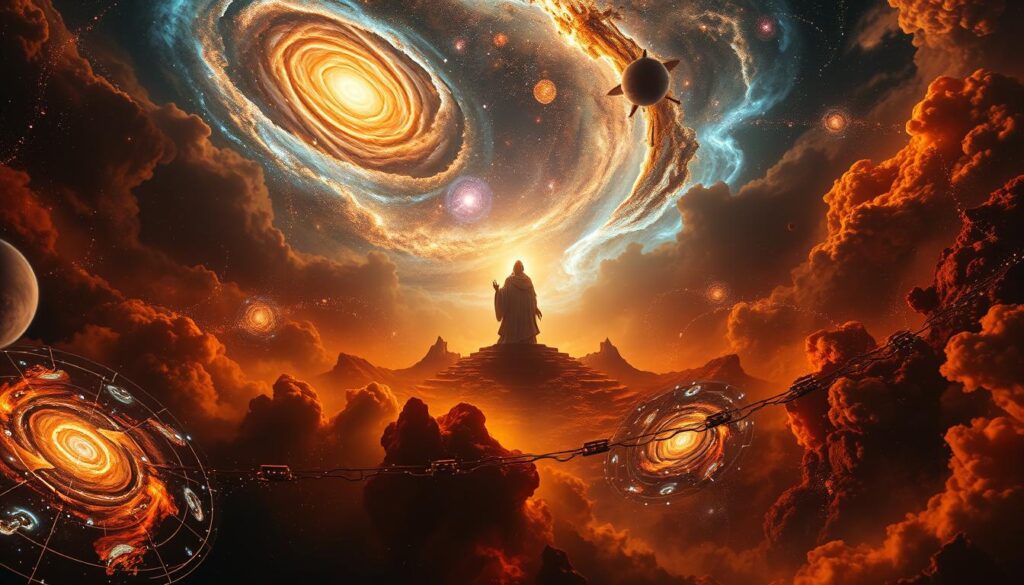
A cosmic dance of creation, preservation, and destruction. In the foreground, swirling galaxies and nebulae, their brilliant colors and intricate patterns pulsing with the rhythm of the universe. In the middle ground, a towering figure, the embodiment of the divine, casting a serene yet powerful gaze upon the celestial panorama. The background shrouded in the mysterious shadows of the void, hinting at the boundless depths of the cosmos. Warm, saturated lighting illuminates the scene, creating a sense of timeless wonder and reverence. Captured with a wide-angle lens to convey the grand, sweeping scale of this cosmic cycle of life and death.

At the heart of this system stands Prajapati, the primordial architect. Through self-sacrifice, he divided his essence to form the entire universe. “The creator becomes the creation,” ancient texts reveal, showing how divine energy fuels all life. This act left Prajapati exhausted—a reminder that even cosmic forces need rejuvenation.

Three principles maintain balance:

  • Vishnu sustains dharmic order like roots nourish a tree
  • Shiva wields transformative fire to clear space for growth
  • Natural movements—seasons, tides, breath—mirror cosmic rhythms

This framework explains why decay fuels rebirth. A forest fire destroys old growth but enriches soil—similar to how spiritual practices burn away limitations. Modern science echoes this view, observing how stars die to spread elements for new planets.

These ideas remain visible today in rituals celebrating life’s cycles. From harvest festivals to meditation techniques, they remind us that change isn’t loss—it’s the universe rewriting itself.

Vedic Literature and Sacred Texts: Foundations of Belief

Ancient wisdom echoes through the verses of Vedic hymns, revealing a world where fire bridges earth and sky. These sacred texts form Hinduism’s oldest philosophical bedrock, blending poetic devotion with cosmic insights. At their core lies a profound truth: rituals sustain relationships between people and celestial forces.

The Rigveda, Agni, and Mythic Rituals

The Rigveda’s 1,028 hymns sparkle like embers in the fire of spiritual discovery. Agni, the flame-deity, dominates these verses as the divine messenger. His ram-shaped form symbolizes strength, carrying offerings to other realms through crackling flames.

Three key elements defined Vedic worship:

  • Invitations to gods as honored guests at ritual banquets
  • Chants transforming simple meals into cosmic exchanges
  • Fire ceremonies maintaining universal balance

Sacred Narratives and the Role of Prajapati

Beyond rituals, the texts introduce Prajapati—the ultimate architect. This creator figure embodies existence itself, shaping worlds through self-sacrifice. “From his breath came the winds,” one hymn declares, illustrating how divine energy fuels life’s tapestry.

These narratives reveal sophisticated theology:

  • Sacrifice as cosmic glue binding all existence
  • Ethical codes woven into nature’s rhythms
  • Eternal principles adapting across periods

Today, Vedic content still guides modern practices—from wedding vows to meditation techniques. Their timeless wisdom proves ancient flames still light our path.

Rituals, Offerings, and Worship Practices

Daily spiritual practices weave sacred moments into ordinary life. From quiet home altars to bustling temple courtyards, these traditions connect individuals to shared values. They turn routine actions into opportunities for reflection and community bonding.

Domestic Puja and Home Worship Traditions

Morning light often reveals home shrines glowing with fresh flowers and incense. Families gather to offer water, sweets, or fruit to deities, creating personal bridges to the divine. These intimate religious practices reinforce dharma through small, consistent acts of devotion.

Temple Rituals, Pilgrimage, and Festival Celebrations

Temples hum with energy during major festival seasons. Pilgrims travel miles to witness rituals like aarti—the circling of lamps before sacred icons. Seasonal events, such as harvest celebrations, honor nature’s fertility while uniting generations through music and dance.

Whether at home or in grand temple spaces, these practices remind us that spirituality thrives through participation. They transform ancient tradition into living wisdom, one offering at a time.

FAQ

How do sacred texts like the Vedas shape Hindu practices?

The Vedas form the foundation of rituals, philosophy, and spiritual guidance. They include hymns, myths, and teachings that inspire daily worship, festivals like Holi, and concepts like dharma. Later texts, such as the Upanishads, explore deeper truths about the universe and self-realization.

Why are deities like Vishnu and Shiva central to worship?

Vishnu symbolizes preservation and compassion, often appearing in forms like Krishna to restore balance. Shiva represents transformation—destroying old cycles to enable renewal. Together, they reflect Hinduism’s focus on life’s interconnected rhythms of creation, sustenance, and change.

What role do rituals play in connecting with the divine?

Practices like puja (offerings), meditation, and pilgrimage foster personal devotion. Lighting lamps for Diwali or bathing in the Ganges during Kumbh Mela are acts of reverence that honor traditions while inviting blessings and spiritual growth.

How does caste relate to Hindu spirituality today?

While ancient texts mention varna (social roles), modern interpretations emphasize dharma—ethical duty—over rigid hierarchies. Many reformers, like Gandhi, advocated equality, and contemporary practices focus more on personal faith than caste distinctions.

Are Hindu beliefs compatible with scientific ideas?

Concepts like cosmic cycles (yugas) and the universe’s interconnectedness often align with scientific theories. The Rigveda’s Nasadiya Sukta even ponders creation’s mysteries in ways that resonate with philosophical and cosmological debates today.

What’s the significance of festivals in daily life?

Celebrations like Navaratri or Diwali blend storytelling, community bonding, and gratitude. They mark seasonal changes, honor deities, and reinforce values like triumph of good (Durga defeating Mahishasura) or the joy of inner light over darkness.

Explore the Richness of Hinduism, the Timeless Faith


Imagine a vibrant tapestry woven over thousands of years, blending rituals, stories, and philosophies. This is the essence of one of the world’s oldest living traditions, rooted in the Indian subcontinent. With nearly a billion followers today, it remains a guiding force for millions seeking spiritual connection.

The name we use today emerged in the 19th century, but its foundations stretch back to ancient texts and practices. Unlike many religions, it celebrates diverse paths to truth rather than a single doctrine. From colorful festivals to meditation techniques, every element reflects a deep respect for life’s interconnectedness.

What makes this tradition unique? It thrives as both a way of living and a philosophical framework. Its teachings adapt seamlessly to modern challenges while preserving timeless wisdom. Whether through yoga’s global reach or age-old family customs, its influence spans continents and generations.

Key Takeaways

  • Originating over 3,000 years ago, this tradition remains deeply influential in India and worldwide
  • Embraces diverse beliefs and practices rather than rigid doctrines
  • Integrates spiritual principles with daily life through rituals and ethics
  • Recognizes multiple valid paths to personal enlightenment
  • Ancient texts like the Vedas form the foundation of its evolving philosophy

Introduction to the Richness of Hinduism

Picture a flowing river that carries ancient wisdom through changing landscapes while keeping its essential character. This vibrant spiritual path thrives not through rigid rules but through adaptability—blending timeless truths with modern life. Its depth lies in welcoming countless interpretations while maintaining a shared core.

Understanding the Living Tradition

Scholars often describe this tradition as sanatana dharma—the eternal way. Unlike structured religions, it grows organically, absorbing new ideas without losing its roots. Early texts like the Vedas reveal debates about existence, while temple carvings from 400 BCE show nature-based worship.

An Overview of Beliefs and Practices

From philosophical discussions to joyful festivals, practices vary widely. Some people meditate daily, while others focus on community rituals. The tradition encourages personal exploration, asking seekers to find their unique path through:

  • Devotional singing and prayer
  • Study of sacred texts
  • Service to others

This flexibility explains its lasting appeal. Whether through yoga’s physical discipline or artistic expressions, it remains a living guide for millions worldwide.

The Historical Timeline of Hinduism

Uncovering layers of history reveals how spiritual practices evolved through cultural exchanges. Ancient civilizations left clues in art, architecture, and rituals that shaped today’s traditions.

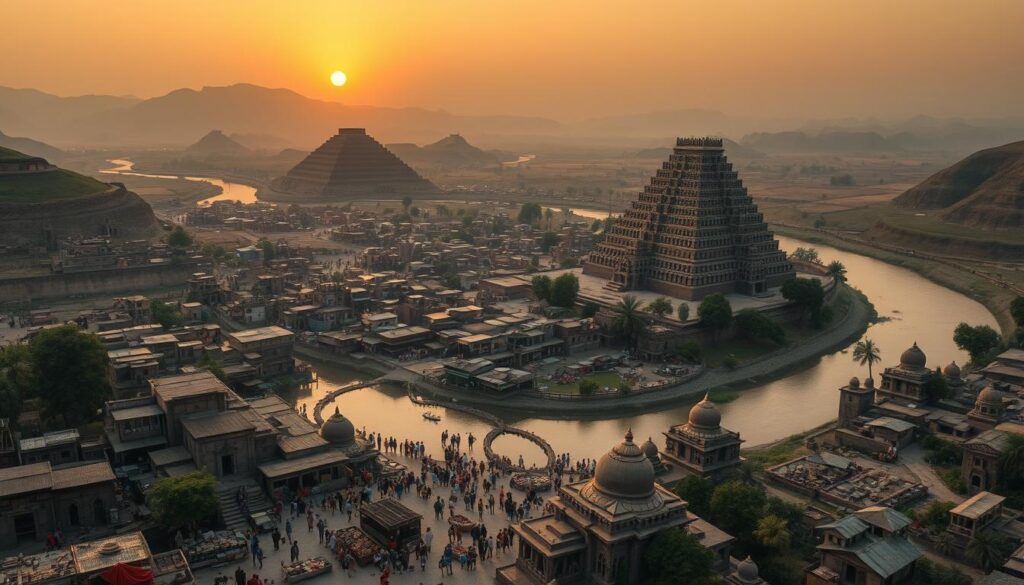
An ancient city nestled along the banks of a winding river, surrounded by rolling hills and lush vegetation. The bustling marketplace is filled with merchants bartering their wares, while artisans craft intricate pottery and jewelry. In the distance, towering ziggurat-like structures rise, their stepped facades casting long shadows as the sun dips below the horizon. The scene is bathed in a warm, golden light, evoking the timeless grandeur of the Indus Valley Civilization, a testament to the rich cultural heritage that shaped the foundations of Hinduism.

From the Indus Valley Civilization to Aryan Migration

Around 2500 BCE, the Indus Valley Civilization thrived with advanced cities like Mohenjo-Daro. Archaeologists found bathing tanks and seals depicting yoga-like poses. These discoveries suggest early roots of purification rituals and meditation practices.

By 1500 BCE, nomadic groups migrated into the region, bringing new spiritual customs. Their fire ceremonies and nature-based worship blended with local traditions. This fusion created early forms of deity veneration seen in later centuries.

The Evolution from Vedic Texts to Upanishads

Oral traditions preserved sacred hymns now known as the Vedas. The Rig Veda, composed around 1400 BCE, remains the oldest collection. These texts guided rituals while exploring cosmic mysteries.

Later writings like the Upanishads (800-200 BCE) shifted focus inward. They asked profound questions about consciousness and reality. This transition marked a move from external rituals to personal spiritual exploration.

Key developments included:

  • Expansion of philosophical concepts in the Aranyakas
  • Integration of meditation techniques
  • Emphasis on universal truths over regional practices

The Significance of hinduism faith in Daily Life

From kitchen counters to office desks, sacred rituals blend with modern routines. Millions find meaning in small acts—lighting a lamp before dawn or pausing to chant during a commute. These moments transform ordinary tasks into connections with something greater.

Home shrines serve as personal sanctuaries. Families arrange fresh flowers and incense near deity statues, creating spaces for morning prayers. Offerings like fruits or sweets symbolize gratitude, turning meals into shared blessings.

The concept of dharma guides ethical choices. It shapes how people approach work, relationships, and community roles. A shopkeeper might prioritize fair pricing, while a student focuses on diligent study—both honoring their life duties.

Aspect Traditional Practice Modern Adaptation
Morning Rituals Chanting at home shrine Meditation apps with mantras
Offerings Flowers & oil lamps Digital temple donations
Pilgrimage Visiting sacred rivers Virtual temple tours

Many followers today balance ancient customs with contemporary life. Grandparents teach grandchildren to fold hands in prayer, while teens share devotional songs online. Annual pilgrimages to holy sites remain popular, blending travel with spiritual renewal.

This living tradition thrives through flexibility. Whether cooking becomes an act of love or exercise turns into moving meditation, daily life itself becomes the path.

Sacred Texts and Philosophical Traditions

Ancient voices echo through time in carefully preserved manuscripts and oral traditions. These sacred texts form a library of wisdom spanning poetry, rituals, and profound ideas about existence. Unlike rigid doctrines, they invite exploration through both intellectual study and heartfelt devotion.

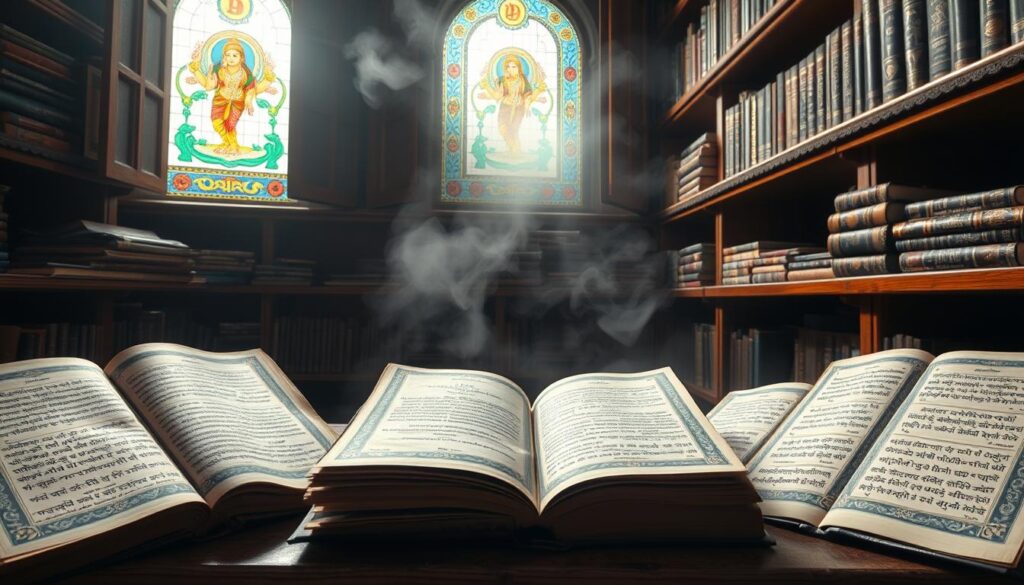
An ancient Hindu manuscript library, illuminated by soft natural light filtering through stained glass windows. The manuscripts are bound in ornate leather covers, their pages filled with intricate calligraphic script and vibrant illustrations depicting deities, sacred symbols, and philosophical concepts. The shelves are made of polished teak, their aged grain adding a sense of timeless reverence. In the background, a hazy mist adds an ethereal quality, as if the knowledge within these texts has a palpable, mystical presence. The overall scene evokes a profound sense of history, spirituality, and the enduring legacy of Hindu philosophical and religious traditions.

Exploring the Vedas, Upanishads, and the Bhagavad Gita

The four Vedas, composed between 1400-900 BCE, remain humanity’s oldest continuous spiritual record. The Rig Veda’s hymns celebrate natural forces, while later texts like the Upanishads explore consciousness itself. One timeless passage asks: “What is that, knowing which all else becomes known?”

The Bhagavad Gita emerged around 200 BCE as part of the Mahabharata epic. This dialogue between warrior Arjuna and divine guide Krishna tackles pressing questions:

  • Balancing duty with compassion
  • Finding purpose in chaotic times
  • Connecting action with spiritual growth

The Role of Epic Narratives: Mahabharata and Ramayana

Spanning 100,000 verses, the Mahabharata isn’t just a story—it’s a mirror reflecting human strengths and flaws. Its sibling epic, the Ramayana, took shape between 500 BCE-200 CE through oral retellings. Both books use dramatic plots to teach ethical living.

Key features of these narratives:

  • Complex characters facing moral dilemmas
  • Symbolic battles between wisdom and desire
  • Family dynamics as spiritual training grounds

This tradition values layered understanding—simple tales for children, deeper meanings for seekers. Even today, new adaptations keep these texts alive in films, comics, and digital formats.

Diverse Deities and Forms of Worship

Step into a world where divine energies take countless forms, each offering unique pathways to spiritual connection. This tradition celebrates sacred expressions through vibrant rituals and symbolic gestures, inviting personal reflection and communal celebration.

Major Gods and Goddesses in the Hindu Pantheon

Three cosmic forces form the spiritual backbone: Brahma (creation), Vishnu (preservation), and Shiva (transformation). Surrounding them shines a constellation of beloved figures. Lakshmi brings abundance, Saraswati nurtures wisdom, and Krishna embodies compassionate love.

These divine figures appear in stories, art, and daily prayers. Many families keep small shrines at home, creating personal spaces for connection. “The divine speaks through many voices,” explains a temple priest from Varanasi.

The Importance of Temples, Puja, and Offerings

Temples serve as community hubs where rituals come alive. The earliest structures appeared over 2,000 years ago, evolving into architectural marvels with carved pillars and sacred chambers. Visitors often bring flowers, fruits, or lamps as offerings—symbols of gratitude and humility.

Deity Role Common Offering
Lakshmi Wealth & Prosperity Gold coins, sweets
Saraswati Knowledge & Arts Books, white flowers
Shiva Transformation Milk, holy ash

Modern adaptations blend tradition with innovation. Apps now deliver daily prayers, while virtual temple tours connect global devotees. Yet the core remains unchanged: finding meaning through devotion, whether in crowded shrines or quiet home corners.

Regional Manifestations and Cultural Impact

Across lush jungles and ancient trade routes, spiritual ideas merged with local traditions to create vibrant new expressions. This blending of practices shows how deeply interconnected our world has always been, with ideas flowing as freely as monsoon winds.

Cultural Bridges Across Oceans

By the 4th century, merchant ships carried more than spices between the Indian subcontinent and Southeast Asia. They transported temple architects, storytellers, and scholars who shaped kingdoms from Bali to Cambodia. The majestic Angkor Wat stands as proof—its towers mirroring sacred mountain peaks described in ancient texts.

Local communities adapted these spiritual concepts while preserving their unique identities. In Java, shadow puppetry retold epic tales using regional dialects. Thai dancers incorporated graceful hand gestures from Indian classical traditions. This fusion created living culture that still thrives today.

Powerful empires like Vijayanagara (1336-1646 CE) strengthened these connections. Their influence reached modern Malaysia and the Philippines through diplomacy and shared artistic traditions. Even now, Bali’s daily offerings and Singapore’s colorful festivals reveal this enduring legacy across Southeast Asia.

From temple carvings to family recipes, these cross-cultural exchanges remind us that wisdom grows through sharing. They show how a tradition rooted in one region can blossom into countless forms, enriching our global world.

FAQ

What are the core beliefs that define this ancient tradition?

Central ideas include dharma (moral duty), karma (action-consequence cycle), and moksha (liberation from rebirth). These principles guide daily practices, rituals, and ethical living across diverse communities.

How did early societies like the Indus Valley shape spiritual practices?

Archaeological finds from 3300–1300 BCE reveal ritual baths, fire altars, and symbols later linked to deities like Shiva. These elements merged with Vedic traditions during cultural exchanges, forming foundational concepts.

Why are texts like the Bhagavad Gita still relevant today?

The Gita’s dialogue on duty, righteousness, and devotion transcends time. Its teachings on balancing action with spiritual growth resonate in modern ethical dilemmas and personal development.

What role do epic stories like the Ramayana play in cultural life?

These narratives teach values through relatable characters. For example, Diwali celebrates Rama’s return from exile, while dance-dramas in Indonesia retell these tales, blending art with moral lessons.

How do regional temples reflect local interpretations of deities?

Vishnu might be worshipped as Jagannath in Odisha or Venkateswara in Andhra Pradesh, each with unique rituals. Offerings range from Kerala’s floral carpets to Bengal’s clay idols, showcasing regional diversity.

What connects modern practices to ancient Vedic rituals?

Chants from the Rigveda still echo in weddings, while fire ceremonies (yajna) remain central. However, medieval bhakti movements shifted focus to personal devotion, adapting traditions over centuries.

How did this tradition spread across Southeast Asia?

Through trade routes, kingdoms like Cambodia’s Angkor adopted Sanskrit scripts and temple architecture. Bali preserves wayang kulit shadow plays, blending indigenous customs with imported epics.

Discover the Essence of Belief in Hinduism


Step into a spiritual tradition that has shaped lives for over 4,000 years. Hinduism, known as Sanatana Dharma (eternal law), began in the Indus Valley region of ancient India. Archaeological discoveries from this civilization reveal early practices still meaningful to millions today.

Unlike most major religions, this philosophy evolved without a single founder or central doctrine. Its teachings grew through sacred texts, cultural traditions, and regional customs. This organic growth created a vibrant tapestry of ideas about life’s purpose and humanity’s connection to the divine.

Nearly one billion people worldwide now follow aspects of Hindu teachings. The term “Hindu” itself comes from Sindhu, the Sanskrit name for the Indus River. What began as a geographic identifier transformed into a label for diverse spiritual practices shared across generations.

From yoga’s global popularity to Diwali festivals lighting up cities worldwide, Hindu traditions remain deeply relevant. This guide explores core principles, historical roots, and modern expressions of a faith that continues to inspire seekers and scholars alike.

Key Takeaways

  • Originated over 4,000 years ago in the Indus Valley region
  • Evolved organically without a single founder or central authority
  • Third-largest religion globally with nearly one billion followers
  • Name derives from the Sanskrit term for the Indus River
  • Combines spiritual practices with philosophical exploration
  • Remains a living tradition adapting to modern contexts

Introduction to Hinduism: Ancient Roots and Modern Relevance

Picture a spiritual framework older than the pyramids yet thriving in modern cities. This way of living connects morning rituals with cosmic principles, blending tradition with personal growth. Unlike rigid systems, it adapts while keeping core values intact.

Defining Hinduism as a Way of Life

More than a religion, this tradition shapes diets, art, and social structures. The Vedas, ancient texts from 1500 BCE, outline practices still used today. Farmers chant Vedic verses while planting crops. Office workers meditate during lunch breaks.

The Eternal Spirit of Sanatana Dharma

Meaning “eternal law,” Sanatana Dharma emphasizes universal truths over dogma. A 2023 Pew Research study found 63% of Hindus view their faith as a collection of life philosophies rather than strict rules.

Aspect Western Religion Hindu Dharma
Scope Weekly worship 24/7 lifestyle
Authority Centralized doctrine Personal interpretation
Practice Fixed rituals Adaptable methods
Flexibility Limited variations 8.4 million paths*

*Based on traditional teachings about spiritual approaches. This diversity lets a New York banker and Indian farmer share core values while practicing differently. Through dharma, both maintain balance in their unique worlds.

Historical Evolution: From the Indus Valley to Contemporary Life

From the banks of the Indus River to global cities, explore Hinduism’s enduring legacy. Archaeologists have uncovered 5,000-year-old seals in the Indus Valley depicting yogic postures and ritual fires. These artifacts connect modern practices to one of humanity’s earliest urban cultures.

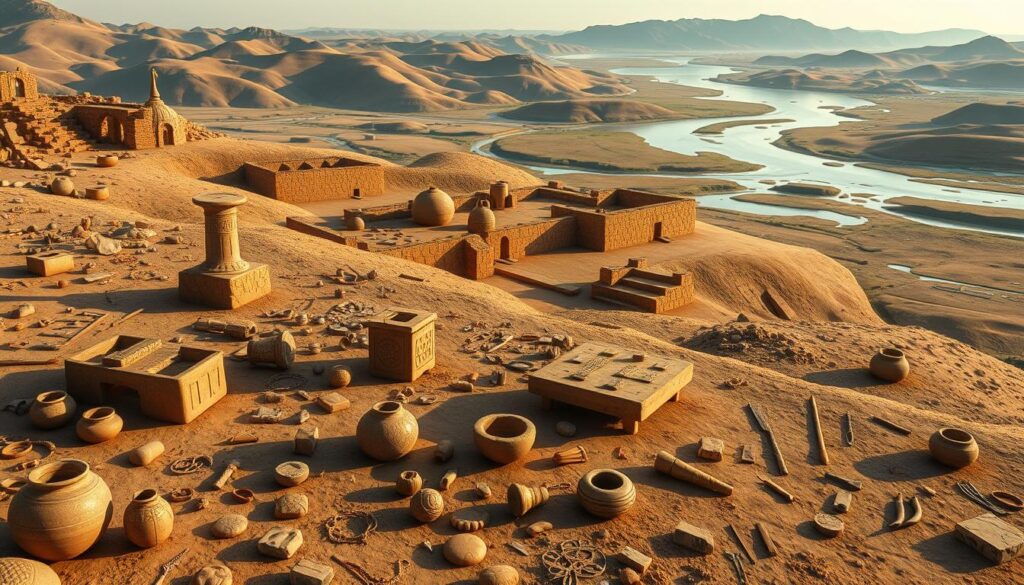
A high-resolution, detailed archaeological illustration of the Indus Valley Civilization, showcasing a collection of artifacts, monuments, and architectural remains from this ancient civilization. The foreground depicts various excavated artifacts such as pottery, jewelry, seals, and tools, arranged with care and precision. The middle ground features the imposing ruins of an Indus Valley city, with its distinctive mud-brick structures and geometric layout. In the background, rolling hills and a tranquil river create a serene, picturesque setting, conveying a sense of the civilization's connection to the natural landscape. The image is illuminated by soft, natural lighting, casting long shadows and highlighting the intricate details of the findings. The overall mood is one of scholarly discovery and historical significance, inviting the viewer to immerse themselves in the rich cultural heritage of the Indus Valley.

The Vedic period (1500-500 BCE) transformed oral teachings into structured philosophies. Rigveda hymns became cornerstones for spiritual exploration, blending nature worship with cosmic principles. By 300 CE, epic tales like the Mahabharata emerged, making wisdom accessible through storytelling.

Period Development Cultural Impact
3300–1300 BCE Indus Valley settlements Early ritual practices
1500–500 BCE Vedic texts systematized Foundation for philosophy
500 BCE–300 CE Epics & Puranas created Moral guidance for all
300–1500 CE Temple architecture flourishes Community worship centers

Medieval temples became hubs for art and religion, blending local traditions with Sanskrit teachings. Today, over 1.2 billion people engage with these evolving practices – from Mumbai tech workers to California yoga studios. The tradition’s 4,000-year journey shows how spiritual systems adapt while keeping core truths alive.

Modern Hinduism thrives through digital platforms and eco-conscious rituals. Ancient river festivals now include climate change awareness, proving this living tradition continually reinvents itself for new generations.

Understanding Belief in Hinduism

At the core of Hindu teachings lies a revolutionary idea: divinity dwells within every living being. This spiritual essence – called atman – connects individuals to universal consciousness. It’s like finding a sunbeam that’s both part of sunlight and the sun itself.

This philosophy isn’t about blind faith. Ancient texts compare spiritual practice to training muscles – consistent effort reveals inner strength. A 2023 Yoga Journal survey found 68% of American practitioners experience this connection during meditation.

The Bhagavad Gita explains: “The soul never dies, just as light persists when a lamp breaks.” This eternal spark exists in ants, trees, and strangers alike. It’s why many Hindus greet others with folded hands – honoring the divine in every form.

Spiritual awakening isn’t reserved for monks. Office workers might find it through mindful work, parents through selfless care. As the Vedas state: “Dharma appears differently, but truth remains one.”

Modern science echoes this wisdom. Quantum physics reveals interconnected energy patterns, while neuroscience studies meditation’s brain benefits. These discoveries make ancient teachings feel freshly relevant for today’s seekers.

The Sacred Texts of Hinduism: Vedas, Upanishads, and More

Imagine holding a library where every book contains wisdom from different millennia. Hindu sacred texts span poetry, philosophy, and practical guidance, forming a 3,000-year conversation about existence. These works weren’t just written – they were lived, chanted, and debated across generations.

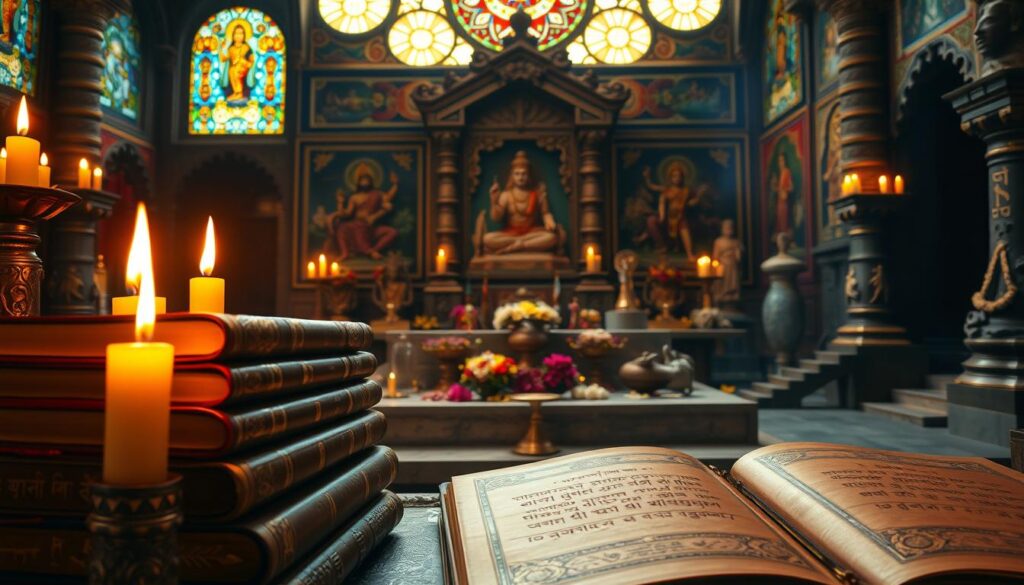
An ornate collection of ancient Hindu sacred texts, illuminated by warm candlelight and sunlight filtering through stained glass windows. In the foreground, a stack of leather-bound volumes embossed with intricate gold patterns. In the middle ground, a stone altar adorned with carved figurines and offerings of flowers and incense. The background features a richly decorated temple interior, with tapestries, murals, and statues depicting scenes from the Vedas, Upanishads, and other revered Hindu scriptures. The overall atmosphere is one of reverence, spirituality, and timeless wisdom.

The Vedas and Their Oral Tradition

The Rigveda, oldest of the four Vedas, preserves hymns older than the pyramids. Priests memorized entire texts using rhythmic patterns – a living hard drive of spiritual knowledge. Modern linguists marvel at how this oral tradition maintained accuracy for 40+ generations before being written down.

Vedic collections include:

  • Poetic invocations to natural forces
  • Ritual instructions for fire ceremonies
  • Early explorations of cosmic order

Scholars compare their structure to Russian nesting dolls – layers of meaning within meaning.

Exploring the Upanishads and Vedanta

Where the Vedas outline rituals, the Upanishads ask bold questions: “What happens after death?” “What is the soul’s true nature?” These dialogues between teachers and students form Vedanta (“end of the Vedas”), focusing on inner realization over external rites.

The Bhagavad Gita later made these ideas accessible through Arjuna’s battlefield crisis. Krishna’s advice – “You have the right to work, but never to its fruits” – remains quoted in boardrooms and yoga studios alike.

Texts like the Puranas keep teachings alive through vivid stories. As one scholar notes: “Hindu religion doesn’t just have scriptures – it’s a conversation across time.” From palm-leaf manuscripts to e-books, this language of wisdom keeps evolving.

Exploring the Four Paths: Karma, Bhakti, Jnana, and Raja Yoga

Discover four dynamic pathways that make spiritual growth accessible to everyone. These approaches – action, devotion, knowledge, and discipline – adapt to modern lifestyles while honoring ancient wisdom. Whether you’re a busy parent or CEO, there’s a practice that fits your nature.

The Practical Aspects of Karma Yoga

Karma Yoga turns daily tasks into spiritual exercises. A nurse caring for patients or a teacher grading papers can practice selfless service. The key? Focus on intention over outcomes. This approach transforms ordinary work into soul-nourishing rituals.

Delving into Bhakti and Devotional Practices

Bhakti Yoga celebrates connection through love and gratitude. Morning meditation, singing sacred songs, or lighting lamps during festivals all count. A 2023 Pew study found 58% of US followers blend these practices with their local religion or culture.

These paths aren’t mutually exclusive. Many combine mindful action with heartfelt devotion. What matters is finding methods that resonate personally. As global interest grows, these timeless strategies help people worldwide build meaning beyond material success.

FAQ

What is the central philosophy of Sanatana Dharma?

Sanatana Dharma, often called Hinduism, emphasizes living in harmony with dharma (moral order) and pursuing moksha (liberation). It focuses on universal truths, self-realization, and respecting diverse paths to spiritual growth.

How do the Vedas shape Hindu practices today?

The Vedas, passed down orally for millennia, form Hinduism’s foundation. They include hymns, rituals, and teachings that inspire modern worship, festivals, and ethical values like truthfulness and compassion.

What connects the Indus Valley civilization to modern Hinduism?

Archaeological finds from the Indus Valley (3300–1300 BCE) reveal early practices like ritual baths and deity worship. These traditions evolved into core customs seen in temples and home rituals today.

Can someone follow multiple yogic paths at once?

Absolutely! Many blend karma yoga (selfless action), bhakti (devotion), jnana (wisdom), and raja yoga (meditation). For example, serving others while chanting prayers combines karma and bhakti paths seamlessly.

Why is the Bhagavad Gita significant?

This 700-verse text, part of the Mahabharata, offers practical guidance on duty, ethics, and spirituality. It’s cherished for its dialogue on balancing action and detachment in daily life.

How does reincarnation influence Hindu lifestyles?

The cycle of rebirth encourages living ethically to improve one’s karma. This belief fosters respect for all life, environmental stewardship, and striving for personal growth across lifetimes.

Are Hindu rituals the same worldwide?

While core principles like puja (worship) remain, rituals vary by region. For instance, Diwali celebrations differ between North India (lights for Rama’s return) and South India (marking Krishna’s victory).

What’s the role of gurus in spiritual growth?

Gurus guide seekers through teachings, meditation, and personalized advice. They help decode ancient texts like the Upanishads and empower students to deepen their practice.