Recent Posts

Hinduism: A Comprehensive Guide to the Ancient Faith


Exploring the Rich History and Core Beliefs of one of the world’s oldest religions.

Hinduism, with a history spanning over 4,000 years, is a diverse and complex faith that has evolved significantly over time. At its core, it encompasses a broad range of philosophies and practices.

The ancient faith is characterized by its tolerance for diverse beliefs and practices, making it a unique and fascinating subject of study.

Key Takeaways

  • Understanding the basic definition of Hinduism
  • Exploring the core beliefs and philosophies
  • Discovering the significance of Hinduism in the modern world
  • Learning about the history and evolution of the faith
  • Appreciating the diversity and complexity of Hinduism

The Origins and Historical Development of Hinduism

With roots tracing back to ancient civilizations, Hinduism’s history is as diverse as it is profound. The development of Hinduism is a complex process that has been influenced by various cultural, social, and religious factors over thousands of years.

The Indus Valley Civilization

The earliest known roots of Hinduism date back to the Indus Valley Civilization, around 3300 BCE. This civilization is known for its sophisticated urban planning, architecture, and water management systems. The presence of ritualistic practices and symbolic artifacts suggests a complex spiritual life.

  • Evidence of ritual bathing and sacred symbols
  • Advanced urban planning and architecture
  • Early forms of spiritual practices

Vedic Period and Early Foundations

The Vedic Period (1500 BCE – 500 BCE) is crucial in understanding the early foundations of Hinduism. During this era, the Vedas were composed, which are the oldest and most sacred texts of Hinduism. These texts contain hymns, prayers, and philosophical discussions that laid the groundwork for Hindu philosophy and rituals.

  1. The composition of the Vedas
  2. Development of early Hindu rituals and practices
  3. Philosophical discussions on the nature of reality

Evolution Through the Ages

Hinduism continued to evolve through various ages, influenced by different philosophical schools, regional traditions, and cultural practices. The Upanishads and the Bhagavad Gita played significant roles in shaping Hindu thought and practice. This evolution has resulted in the diverse and rich religious landscape seen in Hinduism today.

The ability of Hinduism to adapt and incorporate various traditions has been a key factor in its enduring presence.

Understanding Hinduism: Core Beliefs and Concepts

At the heart of Hinduism lies a rich tapestry of core beliefs and concepts that have evolved over millennia. These foundational principles not only shape the spiritual practices of Hindus but also influence their daily lives and worldview.

Brahman: The Ultimate Reality

Brahman is considered the ultimate, unchanging reality in Hinduism. It is often described as the supreme cosmic power that pervades everything in the universe. Brahman is beyond human comprehension, yet it is the essence of all existence.

Atman: The Individual Soul

The concept of Atman refers to the individual soul or self. According to Hindu beliefs, every living being has an Atman, which is a spark of the divine Brahman. Understanding the relationship between Atman and Brahman is crucial for spiritual growth.

Karma and Dharma

Karma refers to the actions and deeds of an individual, which have consequences in this life and the next. Dharma, on the other hand, is about living a righteous life, fulfilling one’s duties, and adhering to moral order. Together, Karma and Dharma guide Hindus on their path to spiritual liberation.

  • Karma influences an individual’s future experiences.
  • Dharma provides a moral framework for living.
  • Balancing Karma and Dharma is key to spiritual progress.

Moksha: Liberation from the Cycle of Rebirth

Moksha is the ultimate goal of Hinduism, representing liberation from the cycle of birth, death, and rebirth (samsara). Achieving Moksha means realizing one’s true nature as Brahman and attaining eternal peace and freedom.

In summary, the core beliefs of Hinduism, including Brahman, Atman, Karma, Dharma, and Moksha, form a complex and interconnected web of spiritual concepts. Understanding these principles is essential for grasping the essence of Hinduism and its significance in the lives of its followers.

The Sacred Texts of Hinduism

The ancient scriptures of Hinduism offer insights into the nature of reality and the self. These texts have been revered for centuries, providing a foundation for the beliefs, practices, and spiritual growth of millions of adherents.

The Vedas: Ancient Wisdom

The Vedas are among the most sacred texts in Hinduism, comprising a vast collection of hymns, prayers, and philosophical discussions. They are divided into four main sections: Rigveda, Samaveda, Yajurveda, and Atharvaveda.

Rigveda, Samaveda, Yajurveda, and Atharvaveda

Each Veda has its unique characteristics and content. For instance, the Rigveda contains hymns and prayers to various deities, while the Yajurveda focuses on rituals and sacrificial practices.

Importance in Daily Practice

The Vedas continue to influence daily life and rituals in Hinduism. Many Hindus recite Vedic hymns during worship and ceremonies, believing that these ancient texts hold the power to bring spiritual growth and harmony.

hindu scriptures

Upanishads and Philosophical Teachings

The Upanishads represent a significant shift in Hindu thought, focusing on the philosophical and mystical aspects of the Vedas. They explore the nature of the ultimate reality, known as Brahman, and the individual soul, or Atman.

Bhagavad Gita and Epic Literature

The Bhagavad Gita is a pivotal text within Hindu scripture, forming part of the larger epic, the Mahabharata. It presents a dialogue between Prince Arjuna and Lord Krishna, addressing the complexities of duty, morality, and spiritual liberation.

Mahabharata and Ramayana

The Mahabharata and Ramayana are two of Hinduism’s most revered epics, containing stories of heroes, gods, and the struggle between good and evil. These texts have profoundly influenced Hindu culture and continue to be retold in various forms of art and literature.

Puranas and Other Texts

The Puranas are a collection of stories, legends, and historical accounts that further enrich Hindu mythology and cosmology. Alongside other texts like the Tantras and Agamas, they contribute to the diverse tapestry of Hindu scriptures.

Major Deities in the Hindu Pantheon

At the heart of Hinduism lies a vast pantheon of deities, including gods and goddesses who embody various aspects of the divine. This diverse array of deities is worshipped across different regions and communities, reflecting the rich tapestry of Hinduism.

The Trimurti: Brahma, Vishnu, and Shiva

The Trimurti, or the three-form, is a concept that encompasses the three primary aspects of the Supreme Being in Hinduism: Brahma, the creator; Vishnu, the preserver; and Shiva, the destroyer. Each deity has distinct roles and is revered for their unique attributes.

  • Brahma: Often depicted with four heads, Brahma is credited with creating the universe and all living beings.
  • Vishnu: Known for his role in preserving the universe, Vishnu is often worshipped in his various avatars or incarnations.
  • Shiva: The destroyer, Shiva is associated with the cycle of destruction and rebirth, embodying the transformative power of the divine.

Goddesses: Shakti, Lakshmi, Saraswati, and Durga

Hinduism also reveres a multitude of goddesses who embody feminine power and grace. Key goddesses include:

  • Shakti: Representing the divine feminine energy, Shakti is often associated with power and strength.
  • Lakshmi: The goddess of prosperity and good fortune, Lakshmi is worshipped for her blessings.
  • Saraswati: As the goddess of knowledge and arts, Saraswati is revered by students and artists alike.
  • Durga: Known for her bravery and protective powers, Durga is celebrated during the festival of Navratri.

Other Important Deities and Divine Beings

Beyond the Trimurti and the prominent goddesses, Hinduism recognizes numerous other deities and divine beings.

Ganesh and Hanuman

Ganesh, the remover of obstacles, is widely worshipped before any significant undertaking. Hanuman, the monkey god and devotee of Rama, is celebrated for his loyalty and strength.

Regional and Family Deities

Hindu families and communities often worship kuladevatā or family deities, as well as regional deities specific to their geographical location. These deities play a significant role in daily life and rituals.

Hindu Worship Practices and Rituals

Hindu worship is a vibrant and integral part of the religion, incorporating various elements like puja, temples, and sacred symbols. It is a means of connecting with the divine and seeking spiritual growth.

Puja: Daily Devotional Worship

Puja is a fundamental aspect of Hindu worship, involving the offering of prayers, flowers, and other items to deities. It is a daily devotional practice that fosters a personal connection with the divine. As noted by a prominent Hindu scholar, “Puja is not just a ritual; it’s a way of life, a means of expressing devotion and gratitude.”

Temples and Sacred Spaces

Hindu temples serve as sacred spaces for worship, community gatherings, and spiritual growth. These temples often house deities and sacred symbols, providing a focal point for hindu worship. The architecture and design of temples are steeped in symbolism, reflecting the religion’s rich cultural heritage.

Mantras, Yantras, and Sacred Symbols

Mantras and yantras are integral to Hindu worship, used in meditation and rituals to invoke spiritual energies. The Om mantra is particularly significant, symbolizing the universe and the ultimate reality.

Om and Its Significance

The Om mantra is considered sacred in Hinduism, representing the cosmic vibration and the essence of the universe. Chanting Om is believed to bring spiritual benefits and inner peace.

Other Important Symbols

Besides Om, other symbols like the Swastika and Lotus are revered in Hinduism. These symbols carry deep meanings, representing concepts such as prosperity, spiritual growth, and enlightenment.

hindu worship practices

Major Traditions and Denominations Within Hinduism

The Hindu faith is marked by a multitude of traditions and denominations, each with its unique practices and philosophical underpinnings. These diverse traditions have coexisted and evolved over centuries, contributing to the rich tapestry of Hinduism.

Vaishnavism: Devotion to Vishnu

Vaishnavism is a significant tradition within Hinduism that focuses on the worship of Vishnu and his avatars, such as Rama and Krishna. Vaishnavites believe in the preservation and protection of the universe by Vishnu. This tradition emphasizes devotion, love, and service to God.

Shaivism: Followers of Shiva

Shaivism revolves around the worship of Shiva, the destroyer of the universe. Shaivites often practice intense personal devotion and asceticism, believing in the power of Shiva to liberate the soul. Shaivism encompasses various sub-traditions, including Kashmir Shaivism.

Shaktism: Worship of the Divine Mother

Shaktism is centered on the worship of Shakti, the divine feminine energy. This tradition recognizes the feminine principle as the ultimate reality and source of power. Shaktas often worship goddesses like Durga and Kali, embodying the dynamic and nurturing aspects of the divine.

Smartism and Other Traditions

Smartism is a tradition that venerates the five primary forms of God: Shiva, Vishnu, Shakti, Ganesha, and Surya. It promotes a non-sectarian approach, advocating for the unity of all existence. Other traditions within Hinduism include Ganapatya and Saura, focusing on Ganesha and Surya, respectively.

Tradition Primary Deity Key Practices
Vaishnavism Vishnu Devotion, service, worship of avatars
Shaivism Shiva Asceticism, personal devotion, yoga
Shaktism Shakti Worship of goddesses, recognition of feminine energy
Smartism Pancha-devata (five forms) Non-sectarian worship, unity of existence

Hindu Festivals and Celebrations

From Diwali to Holi, Hindu festivals are an integral part of the religion’s heritage, fostering a sense of community and spiritual growth. These celebrations are deeply rooted in Hindu mythology and are observed with great fervor across the globe.

Diwali: The Festival of Lights

Diwali, or Deepavali, is a five-day festival that symbolizes the victory of light over darkness and good over evil. It is celebrated by lighting diyas (earthen lamps), decorating homes, and exchanging gifts. “The lighting of lamps is a symbol of the inner light that protects us from the darkness of ignorance,” as per Hindu philosophy.

Holi: The Festival of Colors

Holi is a vibrant festival celebrated over two days, marking the arrival of spring and the triumph of good over evil. Participants throw colored powders and waters at each other, signifying the joy and colors of life. “Holi is a celebration of love, laughter, and the colors of life.”

Navratri and Durga Puja

Navratri is a nine-day festival dedicated to the worship of Goddess Durga in her various forms. It is celebrated with traditional dances like Garba and Dandiya Raas. Durga Puja, particularly in Eastern India, is a grand celebration honoring the goddess’s victory over the buffalo-demon Mahishasura.

Other Significant Festivals

Other notable festivals include Janmashtami (celebrating Krishna’s birth), Ganesh Chaturthi (honoring Ganesha), and Makar Sankranti (marking the sun’s journey into the northern hemisphere). These festivals have regional variations and are celebrated with unique traditions.

Regional Celebrations

Regional festivals like Pongal in South India and Bihu in Northeast India showcase the diversity of Hindu celebrations, often tied to agricultural cycles and local deities.

Seasonal Observances

Many Hindu festivals are tied to the lunar calendar and seasonal changes, reflecting the religion’s deep connection with nature and the cosmos.
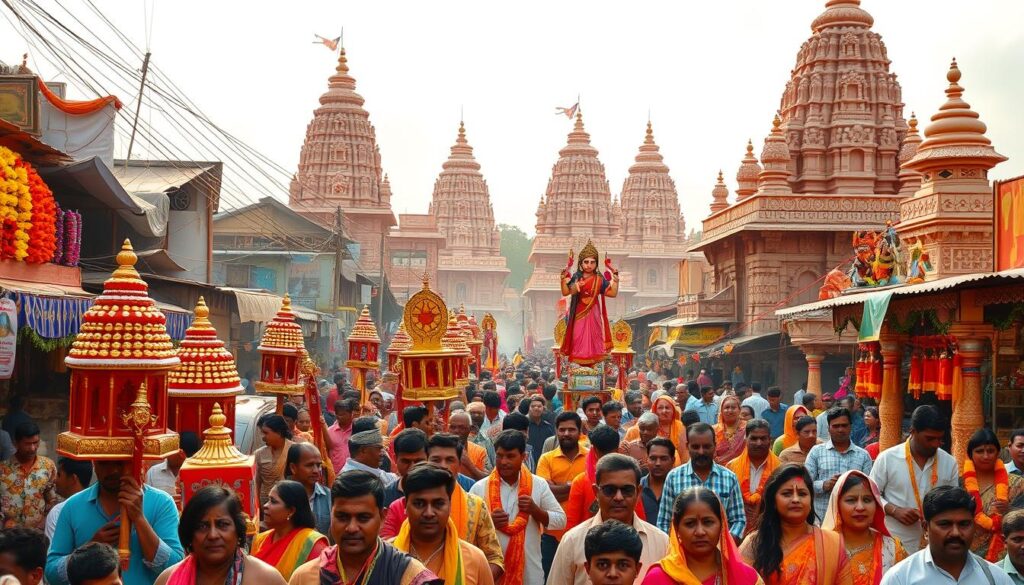
hindu festivals

The Concept of Time and Cosmology in Hinduism

In Hinduism, the understanding of time and the cosmos is deeply intertwined with its philosophical and religious beliefs. Hindu cosmology offers a rich and complex framework for understanding the universe and its cycles.

Yugas: The Four Ages of the World

Hindu scriptures describe time as being cyclical, divided into four ages or yugas: Satya Yuga, Treta Yuga, Dvapara Yuga, and Kali Yuga. Each yuga represents a decline in moral and social order, with the Kali Yuga being the current age, characterized by strife and disorder. This cyclical view of time emphasizes the impermanence of the world and the need for spiritual growth.

Creation, Preservation, and Dissolution Cycles

The cosmos itself is understood to undergo cycles of creation, preservation, and dissolution. The TrimurtiBrahma, Vishnu, and Shiva – are the primary deities associated with these cycles. Brahma is the creator, Vishnu the preserver, and Shiva the destroyer. This triad underscores the dynamic nature of the universe, where creation is followed by preservation and ultimately dissolution, only to begin anew. As the Bhagavata Purana states, “The universe is created, maintained, and destroyed in cyclical order, reflecting the eternal nature of the ultimate reality.”

Hindu Philosophy and Schools of Thought

Hindu philosophy encompasses a diverse range of schools of thought, each offering unique perspectives on the nature of reality and the path to liberation. This diversity is a hallmark of Hinduism, reflecting its rich intellectual and spiritual heritage.

Advaita Vedanta: Non-Dualism

Advaita Vedanta, one of the most influential schools of Hindu philosophy, advocates for non-dualism. It posits that the ultimate reality, Brahman, is the only truth, and the individual self, Atman, is not different from Brahman. As Adi Shankaracharya, a key proponent of Advaita Vedanta, succinctly puts it, “The ultimate reality is the only truth; the world is an illusion.” This school of thought emphasizes the attainment of Self-realization through the understanding of the true nature of the self and reality.

Dvaita: Dualism

In contrast, Dvaita Vedanta, founded by Madhvacharya, advocates for dualism. It asserts that Brahman (God) and the individual souls (jiva) are distinct and separate entities. According to Dvaita, the ultimate goal is to attain devotion to God, recognizing the eternal distinction between God and the soul. This philosophy emphasizes the importance of devotion and the personal relationship between the devotee and God.

Other Philosophical Systems

Beyond Advaita Vedanta and Dvaita, Hinduism encompasses several other significant philosophical systems.

Samkhya and Yoga

Samkhya philosophy provides a dualistic framework, categorizing reality into Purusha (consciousness) and Prakriti (matter). It offers a detailed analysis of the constituents of the universe and the process of creation. Yoga, closely related to Samkhya, is a practical discipline aimed at achieving spiritual growth and self-realization through various techniques, including physical postures, breath control, and meditation. As

“The Yoga Sutras of Patanjali”

outline, Yoga is about uniting the individual self with the universal consciousness.

Nyaya and Vaisheshika

Nyaya is a school of logic and epistemology that focuses on the means of knowledge and the methods of reasoning. It provides a systematic approach to understanding the world through the lens of logic and debate. Vaisheshika, on the other hand, is a metaphysical system that categorizes the universe into various fundamental substances and attributes. Together, Nyaya and Vaisheshika offer a comprehensive framework for understanding the nature of reality and knowledge.

The diversity of Hindu philosophical schools reflects the complexity and richness of Hindu thought. Each school contributes to a deeper understanding of the ultimate reality, the nature of the self, and the path to liberation, offering a multifaceted approach to spirituality and intellectual inquiry.

Yoga and Meditation in Hindu Practice

The practice of yoga and meditation in Hinduism is a journey towards understanding the true nature of the self and the universe. These spiritual disciplines are designed to help practitioners achieve a state of inner peace, unity, and liberation.

The Eight Limbs of Yoga

The Eight Limbs of Yoga, as outlined by Patanjali in the Yoga Sutras, provide a comprehensive framework for spiritual growth and self-realization. These limbs include yamas (ethical standards), niyamas (self-discipline), asanas (postures), pranayama (breath control), pratyahara (sense withdrawal), dharana (concentration), dhyana (meditation), and samadhi (absorption in the divine).

Different Forms of Yoga

Hindu tradition encompasses various forms of yoga, each with its unique focus and practices. Hatha Yoga emphasizes physical postures and breath control, preparing the body for meditation. Raja Yoga, also known as the “Royal Path,” focuses on the eight limbs of yoga, aiming for mental and spiritual discipline.

Hatha, Raja, Bhakti, and Karma Yoga

Bhakti Yoga is the path of devotion, cultivating love and devotion towards a personal deity or the ultimate reality. Karma Yoga involves selfless service, performing actions without attachment to their outcomes, fostering a sense of detachment and inner purity.

Modern Adaptations

In contemporary times, yoga has evolved, incorporating various styles and approaches. Modern adaptations often blend traditional practices with new techniques, catering to diverse needs and preferences.

Meditation Techniques and Spiritual Development

Meditation is a powerful tool in Hindu spiritual practice, enabling practitioners to quiet the mind, focus their attention, and attain higher states of consciousness. Techniques include focusing on the breath, visualization, and the use of mantras.

Hinduism’s Influence on Art, Music, and Culture

Hinduism has significantly shaped the artistic, musical, and cultural landscape of numerous societies. Its influence can be seen in various forms of art, from temple architecture to classical dance and music, and literature.

Temple Architecture and Sculpture

Hindu temple architecture is renowned for its intricate designs and sculptures that depict various deities and mythological scenes. The temples of Khajuraho and Konark are exemplary models of Hindu temple architecture, showcasing the artistic prowess of ancient Indian craftsmen. These structures not only serve as places of worship but also as repositories of Hindu mythology and culture.

Classical Dance and Music

Hinduism has also had a profound impact on classical dance and music. Forms like Bharatanatyam and Odissi are deeply rooted in Hindu mythology and are often performed during religious festivals. Similarly, Hindu music, with its complex ragas and talas, is an integral part of Hindu worship and cultural practices.

  • Bharatanatyam: A classical dance form from South India
  • Odissi: A classical dance form from Odisha, known for its fluid movements

Literature and Storytelling Traditions

Hindu literature is rich and diverse, encompassing texts like the Ramayana and Mahabharata. These epics have been retold and reinterpreted in various forms of literature and art across Southeast Asia and beyond. The stories of Hindu deities and heroes continue to inspire artists, writers, and performers.

“The Ramayana and Mahabharata are not just religious texts but also cultural touchstones that have shaped the identity of Hindu communities worldwide.”

In conclusion, Hinduism’s influence on art, music, and culture is multifaceted and far-reaching. From the majestic temple architectures to the expressive classical dances and the timeless epics, Hinduism continues to enrich the cultural heritage of humanity.

Common Misconceptions About Hinduism

Hinduism, one of the world’s oldest religions, is often subject to misconceptions that distort its true teachings. These misconceptions can arise from a variety of sources, including cultural misunderstandings and oversimplifications of complex philosophical concepts.

Polytheism vs. Monotheism in Hindu Context

One common misconception about Hinduism is that it is polytheistic. While it is true that Hindus worship multiple deities, this practice is often misunderstood. In reality, many Hindus believe in a single, ultimate reality (Brahman) that manifests in various forms. As the Bhagavad Gita states, “There is nothing else beside Me, My dear Arjuna. Everything is like a string of pearls suspended on Me.” This nuanced understanding blurs the lines between polytheism and monotheism, suggesting a more complex theological framework.

The Caste System: Historical Context and Modern Reality

Another significant misconception surrounds the caste system, a social hierarchy that has been associated with Hinduism. Historically, the caste system was influenced by Hindu scriptures, but it has also been shaped by social and economic factors over centuries. While the caste system has been a source of inequality and social injustice, many Hindus today reject it as contrary to the true teachings of their faith. As

“The very notion of the divine in man as the measure of his worth was hardly known in the social order of the day”

, highlighting the contrast between traditional practices and the evolving values within Hinduism.

In conclusion, understanding Hinduism requires looking beyond common misconceptions to appreciate its rich diversity and depth.

Hinduism in the Modern World

As the world becomes increasingly interconnected, Hinduism continues to evolve and adapt to modern challenges. This evolution is evident in various aspects of Hindu practice and culture.

Adaptation and Reform Movements

Hindu reform movements have emerged to address contemporary issues and reinterpret traditional practices. These movements aim to revitalize Hinduism and make it more relevant to modern society.

Challenges and Opportunities

Hinduism faces challenges such as cultural assimilation and religious extremism, but it also has opportunities for growth through global outreach and interfaith dialogue. Hindu communities are leveraging technology to preserve and promote their heritage.

Global Spread and Diaspora Communities

The Hindu diaspora has played a significant role in spreading Hinduism globally. Hindu communities in countries like the United States, Canada, and the UK are establishing temples and cultural centers.

Hinduism in America

In the United States, Hinduism has become one of the fastest-growing religions. American Hindus are actively involved in building temples, cultural events, and educational programs.

International Hindu Organizations

Organizations like the International Society for Krishna Consciousness (ISKCON) and the Hindu American Foundation are working to promote Hinduism worldwide. These organizations focus on education, advocacy, and community building.

Organization Focus Area Global Presence
ISKCON Krishna Consciousness Yes
Hindu American Foundation Advocacy and Education Yes

The global spread of Hinduism is a testament to its enduring relevance and appeal. As Hindu communities continue to adapt and grow, they are shaping the future of this ancient faith.

Hinduism’s Relationship with Other Religions

Understanding Hinduism’s relationship with other religions provides insight into its adaptability and diversity. Hinduism has coexisted with various faiths, influencing and being influenced by them throughout history.

Shared Concepts with Buddhism and Jainism

Hinduism shares many philosophical concepts with Buddhism and Jainism, such as the belief in karma and reincarnation. These shared beliefs reflect the common cultural and historical context in which these religions developed. For instance, the concept of ahimsa, or non-violence, is central to both Hinduism and Jainism.

Interactions with Abrahamic Faiths

Hinduism’s interactions with Abrahamic faiths, such as Christianity and Islam, have been shaped by historical events, including colonialism and trade. These interactions have led to the exchange of ideas and cultural practices, enriching Hinduism’s diverse traditions. For example, the Bhakti movement in Hinduism shares similarities with Sufi traditions in Islam.

Interfaith Dialogue and Harmony

In modern times, Hinduism has been actively engaged in interfaith dialogue, promoting mutual understanding and respect among different religious communities. This dialogue is crucial for fostering global peace and harmony. Hindu leaders have participated in various interfaith initiatives, emphasizing the importance of tolerance and coexistence.

By engaging in interfaith dialogue, Hinduism continues to evolve, adapting to the changing global landscape while remaining true to its core principles.

Conclusion

Hinduism is a rich and diverse faith that continues to evolve and adapt in the modern world. This comprehensive guide has explored the origins, core beliefs, practices, and cultural significance of Hinduism, providing a nuanced understanding of this complex faith.

A key aspect of Hinduism is its ability to encompass a wide range of beliefs and practices, from the philosophical to the devotional. The faith’s core concepts, such as Brahman, Atman, Karma, and Moksha, form the foundation of Hindu thought and spirituality.

In conclusion, Hinduism remains a vibrant and dynamic faith, influencing art, literature, and culture in profound ways. This hinduism summary highlights the faith’s enduring significance, demonstrating its continued relevance in today’s world, making it a valuable hinduism conclusion.

FAQ

What is Hinduism?

Hinduism is an ancient faith that originated in the Indian subcontinent, characterized by a diverse set of beliefs, practices, and philosophies.

What are the core beliefs of Hinduism?

The core beliefs of Hinduism include the concepts of Brahman, atman, karma, dharma, and moksha, which form the foundation of Hindu philosophy and practice.

What is the significance of the Vedas in Hinduism?

The Vedas are ancient scriptures that are considered sacred in Hinduism, providing wisdom, guidance, and spiritual insight.

Who are the major deities in Hinduism?

The major deities in Hinduism include the Trimurti (Brahma, Vishnu, and Shiva), goddesses like Shakti and Lakshmi, and other divine beings, each with their own significance and characteristics.

What is the role of yoga and meditation in Hindu practice?

Yoga and meditation are essential practices in Hinduism, aimed at cultivating spiritual growth, self-awareness, and physical well-being.

What are the different traditions within Hinduism?

The major traditions within Hinduism include Vaishnavism, Shaivism, Shaktism, and Smartism, each with their own distinct beliefs, practices, and philosophies.

How does Hinduism view the concept of time and cosmology?

Hinduism views time and cosmology through the lens of cycles of creation, preservation, and dissolution, with the concept of yugas (four ages of the world) being a key aspect.

What is the significance of Hindu festivals and celebrations?

Hindu festivals and celebrations, such as Diwali, Holi, and Navratri, are significant cultural events that bring communities together, promote spiritual growth, and celebrate the divine.

How has Hinduism influenced art, music, and culture?

Hinduism has had a profound influence on art, music, and culture, with temple architecture, classical dance, and literature being just a few examples of its rich cultural heritage.

What are some common misconceptions about Hinduism?

Common misconceptions about Hinduism include misunderstandings about polytheism vs. monotheism and the caste system, which are complex issues that require nuanced understanding.

How is Hinduism adapting to the modern world?

Hinduism is adapting to the modern world through reform movements, global spread, and diaspora communities, while facing challenges and opportunities in the process.

What is Hinduism’s relationship with other religions?

Hinduism has a rich history of interaction with other religions, including shared concepts with Buddhism and Jainism, and a commitment to interfaith dialogue and harmony.

What is Advaita Vedanta?

Advaita Vedanta is a philosophical school within Hinduism that emphasizes non-dualism, the idea that the ultimate reality is a unified, all-encompassing consciousness.

What is the significance of mantras and yantras in Hindu worship?

Mantras and yantras are sacred symbols and sounds used in Hindu worship to connect with the divine, cultivate spiritual growth, and promote inner peace.

The Lutheran Flag: Symbolism and Significance


Visual symbols have always played a vital role in expressing religious identity. Many Christian traditions use banners to unite congregations, celebrate heritage, and share core beliefs. One widely recognized emblem—the Christian Flag—holds special meaning for numerous denominations, including those within the Lutheran tradition.

First adopted in 1942, this white banner features a bold red cross against a blue square. Its colors carry deep spiritual significance: red for sacrifice, blue for baptismal waters, and white for purity. While not exclusive to Lutherans, it’s become a unifying symbol in many worship spaces across America.

Beyond this shared emblem, regional variations reveal fascinating cultural adaptations. In Germany, for example, some congregations use a white flag with a violet cross that stops short of the edges. These design choices reflect both theological perspectives and historical contexts.

Key Takeaways

  • The Christian Flag serves as a common symbol across multiple denominations, including Lutheran communities
  • Colors in religious banners often represent core beliefs like sacrifice, purity, and spiritual renewal
  • Regional designs showcase how faith expressions adapt to local cultures and histories
  • Flags help congregations maintain identity while connecting to broader Christian traditions
  • Modern debates focus on balancing heritage with evolving community needs

This exploration will uncover how these sacred symbols bridge past and present. We’ll examine their role in worship practices, community identity, and ongoing conversations about faith in a changing world.

Introduction to the Lutheran Flag and Its Historical Roots

Worship spaces often become mirrors of their communities’ struggles. For German-speaking groups in early 20th-century America, blending faith with patriotism became a survival strategy. Tensions during both World Wars forced these communities to rethink how they presented themselves publicly.

Patriotism Meets Practicality

During World War II, many German-American religious groups faced suspicion. To counter this, the Lutheran Church-Missouri Synod made a bold choice. They began displaying the American flag alongside traditional Christian symbols. This wasn’t about theology—it was a protective measure to show loyalty to their new homeland.

Crossing Oceans, Blending Traditions

European practices took different paths. German churches developed unique banners like the EKD’s white flag with a violet cross. Unlike American congregations, they preferred outdoor displays over indoor ones. This table shows key differences:

Aspect American Practice German Tradition
Flag Location Inside worship spaces Outside buildings
Design Focus Dual flags (national + Christian) Single church banner
Color Symbolism Red/white/blue combos Violet crosses on white

These adaptations created rich regional variations. Some congregations kept European design elements while embracing American patriotic customs. Others developed entirely new symbols that reflected their dual identities.

The Symbolism Behind the Colors and Crosses

Colors whisper sacred stories through fabric. Every hue in religious banners carries centuries of meaning, transforming cloth into confessional statements. The Christian Flag masterfully weaves this chromatic theology into its design.

A close-up, detailed illustration of the Christian flag, capturing its symbolic colors and design. Prominent in the center, the white field represents the purity of Christ, with a bold blue canton in the top left corner, signifying the heavenly origin of the Christian faith. Within the canton, a red Latin cross stands tall, its vertical line representing Christ's divinity and the horizontal line symbolizing his humanity. The flag is illuminated by warm, natural lighting, creating a sense of reverence and spirituality. The overall composition emphasizes the rich meaning behind the Christian flag's iconic design.

Meanings of White, Blue, and Red in Christian Identity

White forms the foundation, symbolizing Christ’s purity and the peace He offers believers. This blank canvas represents spiritual renewal – a fresh start available to all. Blue shifts the focus to baptismal waters, reminding worshippers of their faith journey’s beginning.

Red strikes the boldest note. This vibrant color echoes Calvary’s sacrifice, where divine love flowed crimson. Together, these shades create a visual creed that needs no translation.

Significance of the Latin Cross and Scandinavian Designs

The Latin cross anchors most designs as Christianity’s universal symbol. Its simple vertical lines transcend language barriers, uniting global believers. Some groups add cultural twists – like the Wisconsin Synod’s seal on a solid field.

Scandinavian patterns tell their own story. Offset crosses recall Nordic roots, connecting American congregations to Swedish or Norwegian heritage. Germany’s violet variation offers distinctive flair while keeping core meanings intact.

These artistic choices prove symbols adapt without losing power. Whether simple or elaborate, each design points believers toward shared truths that outlast trends.

The Lutheran Flag’s Role in Church America

Positioning sacred emblems within worship spaces reveals much about a community’s priorities. In American congregations, the arrangement of banners near altars follows careful protocols that blend reverence with cultural identity.

Display Practices in Worship Spaces

Most sanctuaries follow the Federal Council of Churches’ guidance: the Christian emblem claims the place of honor to the altar’s right. The national symbol typically stands on the left. This arrangement reflects a delicate balance between spiritual focus and civic pride.

Regional variations exist, as shown below:

Synod Christian Flag Position Pledge Practice
Missouri Right of pulpit Weekly recitation
Wisconsin Behind baptismal font Special services only
ELCA Varies by congregation Optional

Shaping Community Identity

The front of sacred spaces often becomes a symbolic crossroads. For immigrant communities in the 1940s, displaying both banners demonstrated allegiance during turbulent times. Today, 78% of congregations maintain this tradition according to recent surveys.

Some members question mixing national symbols with worship. “Our primary allegiance belongs to Christ,” argues Pastor Miriam Kessler. Yet many value the practice as part of their spiritual heritage.

These displays influence architectural choices too. Newer buildings often incorporate permanent flag mounts into their designs, ensuring the church remains visually connected to both divine and earthly commitments.

Comparative Perspectives: Lutheran Flag vs. Christian Flag

Religious emblems often tell dual stories of unity and individuality. While the Christian Flag bridges denominational divides, specific groups craft symbols that honor their unique heritage. This balance between shared faith and distinct identity appears vividly in Protestant worship spaces.

Visual and Symbolic Differences Across Denominations

Most Protestant churches use the standard white banner with red cross and blue square. But some Lutheran branches add distinctive touches. The Wisconsin Evangelical Lutheran Synod displays a seal featuring a dove, shield, and open Bible—elements reflecting their doctrinal focus on Scripture and peace.

Compare this to the Lutheran Church-Canada’s design. Their vertical blue stripes mirror the Missouri Synod’s pattern but use deeper hues. These variations create visual fingerprints while keeping core symbols intact.

Usage and Variations in Protestant Churches

Adoption rates reveal interesting patterns. Over 60% of Methodist and Baptist congregations use only the ecumenical banner. Lutheran groups often pair it with their denominational emblem. This table shows key contrasts:

Denomination Primary Flag Unique Features
Wisconsin Synod Denominational seal Lutheran Rose, descending dove
Lutheran Church-Canada Cross with stripes Navy blue accents
Presbyterian Christian Flag Occasional Celtic cross additions

These designs show how groups express shared beliefs through localized artistry. The Christian Flag remains the common ground, while denominational versions add layers of meaning for specific communities.

Contemporary Debates and Cultural Impact

Sacred spaces have become unexpected battlegrounds for modern identity struggles. Across America, congregations wrestle with whether earthly symbols belong alongside spiritual ones. This tension peaks where national emblems meet sacred architecture.

A heated debate unfolds, as a church flag stands at the center of a contentious cultural clash. In the foreground, the distinctive cross and emblem of the Lutheran denomination flap against a backdrop of passionate protesters, their signs and banners conveying a range of perspectives. The middle ground captures the intensity of the moment, with gesturing figures and clashing ideologies. In the distance, the church itself looms, a silent witness to the unfolding controversy. Dramatic lighting casts dramatic shadows, heightening the sense of tension and drama. Shot with a wide-angle lens, the scene conveys the scale and significance of this symbolic clash, a microcosm of the broader cultural debates surrounding faith, identity, and societal change.

The Intersection of Faith and National Symbols

Recent surveys show 63% of congregations display both religious and national banners. But critics argue this blurs spiritual priorities. “Our allegiance should point upward, not sideways,” notes Pastor Elena Torres, who faced protests after removing flags from her sanctuary.

Supporters counter that dual displays honor heritage. Many older members recall when flags helped immigrant communities prove loyalty during wartime. These emotional connections make changes feel like personal attacks.

Modern Controversies and Views

Younger generations often question mixing politics with worship. Social media amplifies these debates, turning local decisions into denominational talking points. Some churches now rotate banners seasonally to balance tradition with inclusivity.

The table below captures shifting perspectives:

Group Preferred Practice Primary Concern
Under 40 Sanctuary neutrality Welcoming diverse visitors
Over 65 Maintain traditions Preserving historical identity

These discussions reveal deeper questions about how communities adapt sacred spaces for changing times. As one theologian observes: “What hangs on our walls speaks volumes about who we think we are.”

Preserving Tradition Amidst Change in Lutheran Communities

Many faith groups face tough choices when old customs meet new perspectives. For congregations with deep roots, this dance between past and present shapes how they express shared beliefs. The challenge lies in respecting history while staying relevant to modern worshippers.

A majestic Lutheran church, its steeple reaching skyward, stands as a beacon of tradition and faith. Inside, the sanctuary is bathed in warm, filtered light filtering through stained glass windows, casting a reverent glow. Congregants, their faces etched with devotion, gather in the pews, honoring cherished rituals and hymns that have echoed through these hallowed halls for generations. The altar, adorned with intricate carvings and rich tapestries, is a testament to the unwavering commitment to preserving the timeless essence of this religious community. The scene conveys a sense of timelessness, where the past and present intertwine, ensuring the enduring legacy of Lutheran tradition.

Finding Common Ground Across Generations

Church leaders walk a tightrope between honoring legacy and embracing progress. Older members often cherish symbols that helped their communities survive tough times. Younger families may see these same emblems as outdated or exclusionary.

Creative solutions are emerging nationwide. Some groups rotate displays seasonally, using traditional banners only during heritage months. Others host discussion nights where people share personal stories about what these symbols mean to them.

Approach Benefit Challenge
Dual displays Honors multiple viewpoints Space limitations
Educational programs Builds understanding Time investment
Seasonal rotation Balances priorities Storage needs

Schools play a special role in this process. Many maintain classic practices while teaching their historical context. “Our students learn why certain traditions mattered years ago,” explains a Missouri educator, “and how we live those values today.”

At its heart, this work focuses on what lasts. As one pastor notes: “Love isn’t about fabric on a pole, but how we treat our neighbors.” By keeping dialogue open, communities preserve their soul while letting forms adapt.

Conclusion

Religious communities continually reinterpret symbols that bridge past and present. The banners displayed in sanctuaries today carry layers of meaning—honoring historical struggles while pointing toward shared hopes. More than fabric, these emblems spark conversations about identity in a changing world.

At their core, such symbols invite reflection. The cross remains central, reminding worshippers of sacrifice and renewal. Surrounding colors and patterns tell local stories, blending universal truths with cultural expressions.

Modern congregations face delicate balances. Preserving heritage while welcoming new voices requires both sincerity and flexibility. Some churches now rotate displays seasonally, honoring tradition without stagnation.

Ultimately, these sacred markers teach that love transcends any single design. They challenge communities to live their values boldly, ensuring that visual expressions align with actions. In this way, even centuries-old symbols stay vibrantly relevant.

FAQ

What is the origin of the banner used in Lutheran churches?

The design traces its roots to early 20th-century America, blending European traditions with German church heritage. Groups like the Wisconsin Evangelical Lutheran Synod helped formalize its use as a symbol of unity and faith.

How do the colors and symbols reflect Christian beliefs?

White represents purity, blue signifies hope, and red embodies Christ’s sacrifice. The Latin cross highlights redemption, while Scandinavian-inspired patterns honor the denomination’s historical ties.

Where is this emblem typically displayed?

Many congregations place it near altars or pulpits during services. Some also showcase it alongside the American banner in public spaces, reflecting dual loyalty to faith and nation.

How does it differ from the Christian emblem seen in other churches?

Unlike the broader Protestant version with a plain white field and red cross, Lutheran designs often incorporate regional motifs or denominational initials, emphasizing their unique identity.

Why has its presence sparked debates in recent years?

Discussions often center on balancing reverence for tradition with evolving cultural values. Some congregations prioritize heritage, while others question how symbols align with modern inclusivity efforts.

Do all Lutheran groups use the same design?

Variations exist! For example, the Evangelical Lutheran Synod might include specific text, while others adopt simpler layouts. Local customs and historical influences shape these choices.

How do younger members view its significance today?

Many appreciate its historical role but seek meaningful connections beyond aesthetics. Churches often blend traditional displays with teachings on its symbolism to engage new generations.

Top Lutheran Hymns to Lift Your Spirit


For over 500 years, sacred songs have shaped worship practices that unite communities in faith and celebration. These timeless melodies carry stories of hope, resilience, and devotion, offering more than just music—they create bridges between generations and deepen spiritual connections.

From Sunday services to personal reflection, these compositions anchor moments of praise and prayer. Many believers find their hearts stirred by lyrics that express joy, sorrow, and gratitude—emotions that bind people across cultures and eras.

This guide explores beloved classics and modern adaptations that continue to inspire. You’ll discover how historical roots meet today’s creative expressions, along with practical ways to weave these treasures into daily life. Whether you’ve grown up with these songs or are exploring them for the first time, their power to comfort and uplift remains unmatched.

Key Takeaways

  • Centuries-old traditions continue to shape modern worship experiences
  • Sacred music serves as both communal celebration and personal reflection
  • Lyrics often blend theological depth with emotional resonance
  • Historical context enriches understanding of familiar melodies
  • Practical applications help integrate spiritual songs into daily routines
  • Both lifelong adherents and newcomers find value in these compositions

Introduction: Embracing the Joy of Lutheran Hymns

There’s something powerful about voices joining together in harmony. For many, these songs aren’t just melodies—they’re vessels carrying hope through life’s storms. One believer shared, “When my words ran dry during chemotherapy, the verses I’d sung for years became my prayer.”

More Than Sunday Morning Music

Communal singing creates bonds that transcend age and background. A grandmother and teenager might find common ground through a baptismal hymn they both love. These moments turn sanctuaries into spaces where people truly see one another.

Timeless Truths for Modern Hearts

Why do centuries-old compositions still resonate? Their lyrics distill complex theology into relatable joy and struggle. As one worship leader noted, “They give voice to what we feel but struggle to express.” From weddings to funerals, these songs mark life’s sacred milestones.

Newcomers often discover surprising relevance. A college student recently confessed, “I thought these were just my grandma’s tunes—until I needed their praise-filled promises during finals week.” Whether whispered alone or belted in pews, this music meets us where we are.

Historical Roots of Lutheran Hymns

The foundation of worship music we cherish today was built by visionaries who blended artistry with devotion. Their work transformed simple words into profound expressions of faith, creating templates still used centuries later.

A grand Lutheran church stands tall, its steeple reaching skyward, bathed in soft, warm light. Within, a choir of robed figures raises their voices in a soulful hymn, the rich harmonies filling the ornate interior. Wooden pews and intricate stained-glass windows create a reverent atmosphere, while the organ's majestic pipes echo the congregation's devotion. Rays of sunlight stream through the windows, illuminating the scene with a sense of timeless tradition and spiritual heritage. The image conveys the enduring legacy of Lutheran musical expression, a tapestry of faith and artistry woven through the ages.

Bach’s Revolutionary Harmonizations

Johann Sebastian Bach’s name remains synonymous with sacred composition. His intricate arrangements gave new depth to congregational singing, weaving theological truths into every chord. Scholar Daniel Zager observes:

“Bach’s music reflects the meaning inherent in the text like no other composer.”

This approach let worshippers experience doctrine through melody. The Lutheran church became a laboratory where complex ideas met accessible tunes.

Martin Luther’s Lasting Impact

Centuries before Bach, Martin Luther planted seeds for this musical revolution. He crafted hymn lyrics in common language so everyone could participate. One revolutionary practice? Replacing Latin words with local dialects during services.

Luther’s compositions balanced poetic beauty with clear biblical text. This dual focus shaped worship patterns still guiding the Lutheran church today. Modern versions of his works keep his name alive in sanctuaries worldwide.

Inspiring Christmas and Transfiguration Hymns

Seasonal songs carry unique power to connect worshippers with sacred stories. Two compositions stand out for their ability to transport singers from Bethlehem’s fields to a holy mountain peak.

Celebrating the Season with “Break Forth, O Beauteous Heavenly Light”

Three creative minds shaped this Christmas treasure. Johann Rist’s text from Luke 2:8-18 captures the angel’s joyful announcement to shepherds. Johann Schop’s melody dances like starlight, while Bach’s harmonies deepen the wonder. Together, they create musical magic that still hails Christ’s birth each December.

Experiencing Transformation in ‘Tis Good, Lord, to Be Here

Joseph A. Robinson wrote this rare 1888 Transfiguration hymn when such songs were scarce. His text mirrors Peter’s awe on Mount Tabor (Luke 9:28-36). Bach’s tune lifts Robinson’s words beyond ordinary time, making divine encounters feel immediate. One choir director notes:

“The rising melody mirrors our longing to stay in sacred moments.”

Feature “Break Forth…” “‘Tis Good…”
Biblical Source Luke 2:8-18 (shepherds) Luke 9:28-36 (Transfiguration)
Composer Team Rist, Schop, Bach Robinson, Bach
Theological Focus Incarnation Divine Revelation

Both works prove how hymn writers across centuries have transformed scripture into song. Their creations continue shaping worship during Christianity’s most cherished seasons.

The Power of Isorhythmic Hymns

Musical patterns shape how we experience sacred texts. Isorhythmic arrangements create flowing soundscapes that help hearts absorb profound truths. Let’s explore two classics that demonstrate this power.

A majestic cathedral interior bathed in warm, golden light. In the foreground, a choir of angelic figures clad in flowing robes, their voices harmonizing in a mesmerizing isorhythmic hymn. The middle ground reveals ornate stained-glass windows, casting kaleidoscopic patterns on the marble floors. In the background, the vaulted ceilings rise high, adorned with intricate Gothic architecture. A sense of transcendent spirituality and reverence permeates the scene, drawing the viewer into the sublime power of this sacred musical form.

Exploring “O Sacred Head, Now Wounded”

This hymn appears twice in modern worship books. The isorhythmic version (LSB 449) flows like a gentle stream compared to the rhythmic setting (LSB 450). Bach’s smooth phrasing highlights words about Christ’s sacrifice. A music director explains:

“The equal note lengths let congregations sit with each truth before moving forward.”

This approach turns singing into meditation. Notes cradle the text rather than push it ahead.

Understanding the Comforting Cadence of “A Mighty Fortress Is Our God”

Martin Luther’s famous work surprises many. Though called a battle anthem today, its 1529 publication labeled it a “hymn of comfort.” Bach later wrapped Luther’s melody in warm harmonies. Together, they create musical armor against life’s storms.

Feature “O Sacred Head” “Mighty Fortress”
Musical Style Isorhythmic flow Bold, steady meter
Composer Focus Textual reflection Thematic comfort
Historical Context Passion devotion Reformation trials

Both pieces show how musical choices amplify meaning. Whether through flowing lines or sturdy rhythms, they offer fortress god-level strength to weary singers. Their power lies not in complexity, but in meeting human needs through artful simplicity.

Heartfelt Testimonies and Personal Connections

Sacred music often becomes the soundtrack to our most cherished memories. Two stories reveal how melodies intertwine with life’s joys and sorrows, creating bonds that outlast time itself.

A warm, intimate church interior bathed in soft, golden light. In the foreground, a group of people stand with eyes closed, hands clasped, expressions of profound emotion on their faces as they sing a heartfelt hymn. In the middle ground, the congregation is seated, united in solemn, reverent song. The background features stained glass windows, casting a kaleidoscope of colors that imbue the scene with a sense of divine inspiration. The overall atmosphere is one of profound connection, where the devotional lyrics and soulful melodies transcend the physical space, forging a spiritual bond between the worshippers and the divine.

Memorable Moments from “God Be With You Till We Meet Again”

Erica Bryer’s voice softens as she recalls Sunday dinners with her grandparents. “This hymn meant family time—warm hugs and shared pies,” says the Minneapolis church member. When her grandfather passed, the song transformed. “The words I’d sung carefree now felt like prayers catching in my throat.”

“Memories rush back with waves of emotion, yet the words remain a comfort.”

— Erica Bryer, Grace Lutheran Church

The Intimate Story Behind “O Jesus, I Have Promised”

Larry Herrold stood shivering in Westminster Abbey, far from his Pennsylvania home. As strangers sang “Oh, let me see Thy footmarks,” the hymn dissolved his loneliness. “Those words became a roadmap during my darkest time,” he shares. “My faith found footing in foreign soil.”

“It wasn’t just music—it was life speaking to life.”

— Larry D. Herrold Jr., Zion Lutheran Church
Theme “God Be With You…” “O Jesus…”
Emotional Anchor Family bonds Personal calling
Key Strength Comfort in loss Guidance in uncertainty
Global Reach Midwest family home English cathedral

These accounts show how sacred songs become companions through life’s twists. Whether mourning at a kitchen table or finding courage overseas, they carry heart-truths that span the world.

Contemporary Voices and Modern Interpretations

New perspectives keep ancient songs vibrant in today’s worship spaces. Modern people find creative ways to connect with traditional melodies, blending respect for heritage with personal flair.

How Modern Testimonies Enrich Hymn Tradition

Mike Russo from Family of God Church embodies this fresh approach. His favorite hymn, “I Am the Bread of Life,” challenges singers with unexpected pauses and a wide vocal range. “It’s like musical karaoke night,” he laughs. “Most people drop out by verse three, leaving me to carry the melody.”

“After 20 years, I know exactly where to stand so my voice bounces off the balcony. It turns Sunday morning into my personal music ministry.”

— Mike Russo, Family of God Church

This playful honesty reveals how church communities today value authenticity over perfection. Challenging songs create opportunities for passionate members to lead. Their enthusiasm often sparks others to join in, turning tricky phrases into shared triumphs.

Modern worshipers approach these moments with humor and heart. They’re less concerned about hitting every note than about experiencing joy together. This shift helps ancient texts feel alive and accessible to people navigating 21st-century life.

Worship Service Arrangements That Elevate the Spirit

Thoughtful song selection shapes meaningful gatherings. The right melodies act as spiritual bookends, framing moments of reflection and sending hearts outward with purpose.

First Notes That Prepare the Heart

Opening selections like “God Himself Is Present” create sacred space. These melodies quiet distractions, helping worshippers transition from daily life to divine connection. “Open Now Thy Gates of Beauty” invites anticipation, its lyrics echoing ancient psalms of approach.

Final Chords That Launch Mission

Closing hymns equip communities for service. “Guide Me, O Thou Great Jehovah” transforms pews into launching pads. One music director notes: “These songs aren’t endings—they’re commissioning anthems.”

The Lutheran church’s hymnal organizes these moments with care. Seasonal categories like Advent or Easter ensure praise aligns with liturgical rhythms. Whether seeking true God-centered focus or communal praise, every note serves a purpose.

FAQ

How did Bach shape the sound of traditional hymns?

Johann Sebastian Bach transformed hymnody by blending intricate harmonies with deep theological themes. His arrangements, like those in “O Sacred Head, Now Wounded,” added emotional depth, making ancient texts feel alive for worshippers.

What makes “A Mighty Fortress Is Our God” timeless?

Written by Martin Luther, this hymn combines bold lyrics with a strong, steady rhythm. Its message of divine strength during life’s battles resonates across generations, offering hope in uncertain times.

Which hymns are popular during Christmas services?

A: “Break Forth, O Beauteous Heavenly Light” is a cherished choice. Its joyful melody and vivid imagery of Christ’s birth create a festive yet reverent atmosphere for seasonal celebrations.

Can older hymns still connect with modern audiences?

Absolutely! Updated arrangements and fresh testimonies breathe new life into classics. For example, “God Be With You Till We Meet Again” remains a favorite due to its universal themes of hope and community.

How do hymns enhance worship services today?

Thoughtfully curated selections, like opening with uplifting melodies or closing with reflective tunes, guide congregational focus. Many churches use playlists from trusted sources to balance tradition and relevance.

Why are stories behind hymns like “O Jesus, I Have Promised” meaningful?

Personal narratives, such as a parent dedicating this hymn at a child’s baptism, highlight its role in marking spiritual milestones. Such connections deepen the song’s emotional impact in daily faith journeys.

What role does rhythm play in hymns like “Tis Good, Lord, to Be Here”?

Isorhythmic patterns create a meditative flow, helping worshippers reflect on transformative moments, such as the Transfiguration. The steady cadence fosters both contemplation and communal unity.

Lutheran Hospital Denver: Compassionate Care


Nestled in Wheat Ridge, Colorado, this medical center combines advanced treatment with genuine empathy. At its core, the facility prioritizes personalized attention, ensuring families feel supported during every step of their healthcare journey. The serene grounds create a calming backdrop for recovery, blending nature with modern medical infrastructure.

Affiliated with Intermountain Health, the campus offers specialized services designed around patient needs. Teams here focus on clinical excellence, using cutting-edge technology paired with thoughtful communication. From diagnosis to follow-up care, every plan is tailored to promote long-term wellness.

What sets this institution apart? A commitment to treating individuals, not just conditions. Staff members build trust through transparent conversations and collaborative decision-making. This approach has earned recognition for both outcomes and patient satisfaction.

Key Takeaways

  • Located in Wheat Ridge, Colorado, with a focus on holistic healing
  • Affiliated with a leading healthcare network for advanced resources
  • Beautiful campus designed to enhance comfort and recovery
  • Emphasis on customized treatment plans and open communication
  • Award-winning services that prioritize emotional and physical wellbeing

Our Mission of Compassionate Care

At the heart of Wheat Ridge, Colorado, lies a healthcare partner focused on empowering individuals to thrive. Our approach blends medical expertise with heartfelt support, ensuring every treatment plan aligns with personal goals. Genuine concern guides every conversation, from explaining test results to discussing recovery options.

We’ve designed our campus to foster healing beyond physical symptoms. Natural light floods waiting areas, and calming colors create a peaceful space. This intentional design helps reduce stress, allowing patients to focus on their health journey.

Focus Area Our Approach Your Benefit
Personalized Care Tailored treatment strategies Goals that fit your lifestyle
Healing Environment Thoughtful facility design Reduced anxiety during visits
Community Health Preventive education programs Long-term wellness support

Through our partnership with Intermountain Health, we bring advanced resources to local families. Nurses take time to share information clearly, while social workers help navigate insurance questions. It’s not just about treating illness – it’s about helping you live your best life.

One team member puts it simply:

“We measure success by how cared-for people feel when they leave our doors.”

This philosophy drives daily decisions, from scheduling flexibility to follow-up check-ins.

Comprehensive Healthcare Services

Residents of Wheat Ridge and neighboring areas have access to a full spectrum of medical solutions designed for modern life. Our services adapt to your needs, whether you’re managing daily wellness or facing unexpected challenges.

Comprehensive healthcare services in a modern, welcoming Wheat Ridge setting. In the foreground, a group of diverse patients interacting with attentive medical professionals, conveying a sense of compassionate care. The middle ground features state-of-the-art medical equipment and facilities, reflecting the latest advancements in healthcare technology. The background showcases the verdant surroundings and architectural details of the Wheat Ridge community, creating a calming, community-oriented atmosphere. Soft, natural lighting illuminates the scene, highlighting the warm, inviting ambiance. The overall composition emphasizes the holistic, patient-centric approach to healthcare services.

Everyday Care Made Simple

Our primary care providers become partners in your long-term wellness. They offer:

  • Preventive screenings and vaccinations
  • Chronic condition management
  • Same-day appointments for sudden concerns

With extended hours and online portals, staying healthy fits seamlessly into busy schedules.

Specialized Support When Needed

When complex needs arise, our specialists deliver advanced :

  • Cardiology and orthopedic evaluations
  • Minimally invasive surgical techniques
  • Rehabilitation programs tailored to recovery goals

Teams collaborate across disciplines to create cohesive treatment . This of expertise means fewer referrals and faster solutions.

The features dedicated spaces for each service line, ensuring comfort during visits. From routine check-ups to specialized procedures, every prioritizes both healing efficiency and personal dignity.

Expert Medical Staff and Award-Winning Care

At our Wheat Ridge campus, healthcare excellence begins with the people behind the stethoscopes. Our staff combines deep expertise with a passion for making every patient feel heard. This commitment has earned recognition for delivering top-tier services while maintaining a human touch.

Dedicated Physicians and Nurses

Board-certified physicians and specialty-trained nurses form the heart of our care team. They collaborate to create personalized treatment plans, whether you’re visiting a primary care provider or needing complex interventions. Key strengths include:

  • Same-day appointments for urgent needs
  • Clear explanations of test results and options
  • Coordination between specialists for seamless care

Continuous Professional Training

Our partnership with Intermountain Health fuels ongoing education programs. Every care provider completes 75+ hours of training each year, focusing on:

  • New treatment technologies
  • Patient safety advancements
  • Effective communication strategies

This ensures you receive up-to-date information and treatments in a calming space designed for healing.

Innovative Patient Treatment & Technology

Wheat Ridge’s healthcare landscape thrives through advanced tools that blend precision with compassion. Our medical center integrates smart systems to personalize care plans, from diagnosis to recovery. Real-time data analysis helps providers make informed decisions faster, improving outcomes for heart conditions and chronic illnesses alike.

A state-of-the-art medical facility filled with cutting-edge technology. In the foreground, a sleek and futuristic patient treatment device hovers above a reclined chair, its intricate mechanisms and touchscreen controls showcasing its advanced capabilities. In the middle ground, a team of attentive healthcare professionals monitor patient vitals and adjust settings on a array of high-tech medical equipment. The background is bathed in a soft, calming glow, creating an atmosphere of comfort and care. Crisp, clean lighting illuminates the scene, highlighting the precision and innovation of the medical technologies on display.

Telemedicine services connect patients with specialists across Colorado without leaving home. Secure video consultations reduce travel stress while maintaining care quality. Digital health portals give 24/7 access to test results and medication information, putting control in your hands.

Minimally invasive techniques dominate our surgical space, using robotics for accuracy. These methods shorten hospital stays and minimize scarring. One surgeon notes:

“We’re not just treating diseases – we’re preserving quality of life.”

Annual investments upgrade our campus with equipment like 3D imaging scanners. Staff complete 100+ training hours each year to master new technologies. This ensures every treatment aligns with the latest medicine advancements.

Looking ahead, AI-driven tools will predict health risks before symptoms appear. Our teams explore ways to integrate wearable device data into preventive plans. For Wheat Ridge families, this means a healthier future built on trust and innovation.

Patient-Centered Experience and Wellness Programs

In the heart of Colorado’s thriving communities, our medical campus crafts care around what matters most: you. Every program and interaction focuses on empowering individuals to take charge of their health journey. This philosophy shapes everything from class formats to support group discussions.

A warm and inviting wellness center nestled in the heart of Wheat Ridge, Colorado. In the foreground, a group of patients engaged in a gentle yoga session, their faces serene and focused. The middle ground features a spacious, light-filled atrium with natural wood accents and comfortable seating areas, where visitors can relax and unwind. In the background, floor-to-ceiling windows offer panoramic views of the surrounding lush, verdant landscape, creating a sense of tranquility and connection with nature. Soft, diffused lighting bathes the scene, evoking a soothing, therapeutic atmosphere. The overall impression is one of a holistic, patient-centered approach to wellness, promoting physical, mental, and emotional well-being.

Wellness Classes and Support Groups

Discover a variety of workshops designed for life’s key moments. Expect practical sessions like prenatal nutrition guides and stress management techniques. Each class blends information from trusted providers with actionable steps for real-world success.

Support groups create safe spaces for sharing triumphs and challenges. Whether managing chronic conditions or navigating grief, participants find community connections. One attendee shared:

“This group helped me rebuild my life after loss – I’m not alone anymore.”

Through our Intermountain Health partnership, programs adapt to evolving needs. Evening yoga sessions promote heart health, while cooking demos teach budget-friendly meals. Families appreciate childcare options during diabetes education courses.

Every plan respects cultural traditions and personal goals. Teams adjust class materials for language preferences or mobility limits. This tailored experience ensures everyone accesses tools for lasting wellness.

Seamless Registration and Financial Assistance

Understanding that administrative tasks shouldn’t hinder care, our Wheat Ridge medical center simplifies access to essential services. Clear guidance helps families navigate paperwork while focusing on health needs. Staff members address questions promptly, whether in person or through secure messaging.

Easy Online Billing and Payment Plans

Manage expenses effortlessly with our digital options. The secure portal lets you view statements, make one-time payments, or set up customized plans. No login? No problem – guests can settle bills quickly using just a reference number.

Financial counselors work closely with patients to explore assistance programs and discounts. Eligibility assessments consider individual circumstances, ensuring fair access to care. Flexible ways to budget medical costs reduce stress during recovery.

Our campus design includes private spaces for discussing sensitive financial topics. Whether reviewing insurance details or adjusting payment schedules, every conversation prioritizes dignity and clarity.

FAQ

What types of healthcare services are offered?

From primary care and urgent visits to advanced specialty treatments like heart care and orthopedics, the medical center provides a full range of options. Same-day appointments are often available for pressing needs.

How do I access urgent care services?

Walk-ins are welcome at the urgent care facility on West 40th Avenue. Extended hours and weekend availability make it easy to get prompt attention without an appointment.

Are there wellness programs for chronic conditions?

Yes! Free classes and support groups focus on diabetes management, heart health, mental wellness, and more. Check the online calendar or ask your care provider for schedules.

What technology is used for complex treatments?

The facility uses advanced imaging tools, minimally invasive surgical systems, and telehealth options to ensure precise, efficient care. Staff training aligns with the latest medical advancements.

Can I get help with billing or payment plans?

Absolutely. The online portal lets you view bills, set up flexible payment options, or apply for financial aid. A dedicated team can also guide you through insurance questions.

How experienced is the medical team?

Physicians and nurses specialize in areas like emergency medicine, oncology, and family care. Many have decades of experience and participate in ongoing training to stay current.

Is there support for mental health needs?

Counseling services, stress management workshops, and referrals to specialists are available. The care team works closely with patients to address emotional and physical health together.

Lutheran North Academy: Exceptional Education, Exceptional Opportunities


For over 40 years, a private Christian high school in Houston’s Garden Oaks neighborhood shaped young minds through faith-based learning. Located at 1130 West 34th Street, this institution blended rigorous academics with spiritual growth until its closure in April 2024. Affiliated with the Lutheran Church-Missouri Synod, it stood as a pillar of values-driven education within the Texas Association of Private and Parochial Schools.

Families valued its commitment to small class sizes and personalized attention. Dedicated teachers fostered critical thinking while nurturing students’ moral compass. The curriculum balanced traditional subjects with hands-on learning, preparing graduates for college and careers alike.

Beyond textbooks, the school emphasized community service and leadership development. Annual events like mission trips and local outreach projects taught compassion in action. State-of-the-art facilities supported athletics, arts, and STEM programs, creating well-rounded learners ready to tackle real-world challenges.

Key Takeaways

  • Operated from 1982 to 2024 under Lutheran Education Association of Houston (LEAH)
  • Combined college-prep academics with faith-based character development
  • Featured small class sizes and individualized student support
  • Member of Texas Association of Private and Parochial Schools
  • Closed in 2024 after four decades of community service

Exceptional Programs and Values

At the heart of its mission, the institution blended rigorous coursework with real-world applications. This approach created a dynamic environment where students mastered core subjects while developing critical thinking skills.

Academic Excellence and Innovative Learning

Small class sizes allowed teachers to tailor instruction to individual needs. Advanced courses in STEM and humanities challenged learners, while interactive projects bridged textbook concepts with practical scenarios. A dedicated faculty brought expertise to every lesson, ensuring academics remained both engaging and impactful.

Program Focus Key Features Student Outcomes
STEM & Technology Robotics labs, coding workshops State competition winners
Creative Arts Theater productions, music ensembles College scholarship recipients
Leadership Development Student Council, peer mentoring 90% club participation rate

Holistic Student Life and Extracurricular Opportunities

Beyond classrooms, activities like HOSA and theater fostered teamwork and creativity. Annual service projects taught compassion through action. The Ski Club and CommuniTEA gatherings built friendships while reinforcing community values.

Learners balanced academics with personal growth opportunities. Leadership roles in organizations like National Honor Society prepared them for college challenges. This well-rounded approach made education both meaningful and memorable.

Exploring Lutheran North Academy: Campus and Community

The physical space where learning happens shapes experiences as much as curriculum. At 1130 West 34th Street, students found both cutting-edge resources and a nurturing atmosphere. Thoughtful design merged security with flexibility, creating spaces that adapted to evolving educational needs.

Modern Facilities and Safety Improvements

Upgraded classrooms featured interactive technology while maintaining a warm, collaborative feel. Expanded cafeteria spaces doubled as gathering spots for study groups and club meetings. Outdoor athletic areas received enhanced lighting and updated equipment storage to prioritize student safety.

A sprawling campus of modern academic buildings nestled amid lush greenery, framed by a clear blue sky. In the foreground, students stroll along tree-lined paths, engaged in animated discussions. The mid-ground reveals a bustling quad, with clusters of young scholars studying or socializing. Towering brick structures housing state-of-the-art facilities stand tall, their architectural details casting intricate shadows. Warm sunlight filters through the canopy, creating a welcoming, vibrant atmosphere. The scene conveys a sense of community, growth, and the pursuit of knowledge within this exceptional educational institution.

Families appreciated visible security upgrades like controlled access points and emergency alert systems. These changes let learners focus on growth rather than concerns about their surroundings. The campus became a blueprint for balancing innovation with peace of mind.

A Vibrant Environment for Sports and Student Activities

Mustangs teams thrived in redesigned facilities that supported multiple sports seasons. Fields and courts buzzed with energy as athletes practiced teamwork and strategic thinking. Non-competitive learners found their niche through intramural programs and spirit committees.

Prospective families could visit during game days or attend theater premieres to see the community in action. The “Mustang for a Day” program let guests experience classes alongside current students. This hands-on approach helped families view education as a lived experience rather than just a schedule.

From science labs to art studios, every corner encouraged exploration. Shared spaces naturally fostered friendships that often lasted beyond graduation years. The environment proved that great education extends far beyond textbook pages.

History, Legacy, and Future Growth

Educational institutions often become cornerstones of their communities, and this high school‘s journey reflects decades of dedication. From humble beginnings to bold innovations, its story remains woven into Houston’s educational tapestry.

A Proud Tradition and Evolving Campus Story

The roots trace back to 1949 when a local Lutheran congregation envisioned faith-based learning. December 1972 saw shovels break ground for what would become a beloved institution. When doors opened in 1980, freshmen and sophomores began shaping traditions that still echo today.

By spring 1983, the first graduates crossed the stage, marking a new chapter. Annual homecoming games became rallying points for community pride. Through changing times, families relied on the school’s steady commitment to character-building education.

Innovative Changes and Community Impact

Leaders constantly adapted to prepare students for the future. In 2022, they expanded to serve younger grades, renaming the institution to reflect broader goals. Updated labs and collaborative spaces kept pace with modern learning needs.

Though doors closed in 2024, the legacy lives through alumni making waves nationwide. Former teachers still share stories of leadership workshops that sparked careers. Community partnerships formed over decades continue nurturing Houston’s youth, proving some impacts outlast brick and mortar.

Conclusion

For families seeking a nurturing educational environment, this institution set a standard that continues to inspire. Through personalized attention and a family-like atmosphere, staff members helped every child discover their potential. Students thrived in spaces where learning blended seamlessly with character development.

Teachers became mentors who shaped more than academic skills. They cultivated curiosity and compassion that extended beyond the school day. Many graduates credit their success to lessons learned in classrooms and during community projects.

Though doors closed in 2024, the impact lives on through alumni making meaningful contributions nationwide. Families still share stories of summer programs that sparked lifelong passions and friendships. The academy’s profile remains a testament to balancing intellectual growth with heartfelt values.

Those seeking information about its legacy can explore reviews from former students and parents. The school’s approach proves education works best when children feel supported as whole individuals. Even today, its philosophy influences how communities view student-centered learning.

FAQ

What academic programs help prepare students for college?

The school offers advanced courses, hands-on projects, and personalized learning plans. These programs focus on critical thinking and real-world skills, ensuring graduates are ready for top universities and future careers.

Are there opportunities for involvement outside the classroom?

Yes! From championship-level athletics to arts clubs and service groups, students explore passions through 20+ activities. Leadership workshops and team-building events also foster growth beyond academics.

How does the campus ensure student safety?

Recent upgrades include secure entry systems, monitored common areas, and emergency response training. The community-focused environment encourages open communication between staff, families, and learners.

Can parents participate in school events?

Absolutely. Family nights, volunteer programs, and mentorship opportunities connect families with the community. Partnerships with local organizations also create shared experiences that benefit everyone.

What support exists for students adjusting to high school?

Freshman mentorship programs, peer tutoring, and advisory sessions help newcomers thrive. Teachers prioritize individual needs, ensuring each child feels valued and supported from day one.

How do sports programs build character?

Teams emphasize teamwork, discipline, and resilience alongside physical skills. Coaches integrate life lessons into training, helping athletes excel both on the field and in future endeavors.

Lutheran Life Villages: Retirement Community in the USA


For over nine decades, seniors have found a welcoming home at Lutheran Life Villages. This nonprofit organization creates spaces where older adults thrive through connection, purpose, and care. With multiple campuses across Northeast Indiana, it offers more than housing – it builds vibrant communities where friendships blossom and new adventures begin.

What makes this retirement network unique? Residents enjoy maintenance-free living that removes daily chores. This freedom lets them focus on hobbies, social events, and personalized wellness programs. From fitness classes to art workshops, every activity helps seniors stay engaged and energized.

The team here understands that retirement looks different for everyone. That’s why they provide tailored services ranging from independent living to specialized memory care. Each location combines modern comforts with a warm, neighborly atmosphere. Families appreciate the peace of mind that comes from 90+ years of trusted experience.

Key Takeaways

  • Nonprofit senior organization serving Northeast Indiana since 1932
  • Maintenance-free living options across multiple campuses
  • Focus on building social connections and personalized enrichment
  • Range of care levels from independent to assisted living
  • Proven track record spanning three generations of families

About Lutheran Life Villages: Our Legacy and Mission

Since 1932, this organization has redefined retirement living through compassion and innovation. What began as a small faith-based initiative now stands as a cornerstone of senior support in Indiana. Their approach blends timeless values with modern care practices, creating spaces where older adults flourish.

Our 90-Year History in Senior Living

Nine decades of service have shaped a unique understanding of aging needs. The organization pioneered Indiana’s first intergenerational programs in the 1980s and introduced memory care innovations by 2005. Through economic shifts and societal changes, their focus remains constant: empowering seniors through meaningful connections.

A Faith-Based, Nonprofit Approach to Care

Unlike corporate-run facilities, every decision here stems from core values rather than profit goals. Resources flow directly into wellness programs and staff training. This model allows for:

  • Customized care plans without financial pressure
  • Long-term staff relationships with residents
  • Community partnerships enhancing daily life

“We measure success by smiles, not spreadsheets,” explains a team member. This philosophy fosters trust with families and creates environments where residents truly thrive.

Comprehensive Senior Living Options

Choosing the right home for golden years requires matching needs with the perfect environment. This organization provides tailored solutions across five Indiana campuses, each designed to support different stages of aging. Whether seeking social vibrancy or specialized support, residents find their ideal balance here.

Assisted Living, Memory Care, and Independent Living

Assisted living blends autonomy with discreet support for daily tasks like medication management. Residents enjoy private apartments while staff handles meals and housekeeping. For those needing memory support, specially trained teams create structured routines that reduce anxiety and spark joy through sensory activities.

Independent living suits active adults craving freedom from home maintenance. Spacious cottages and apartment homes sit steps away from fitness centers and social clubs. One resident shares: “I finally have time for book club and water aerobics!”

Continuing Care Retirement Community Benefits

Their unique approach lets residents transition between care levels without relocating. Key advantages include:

  • No disruptive moves when health needs change
  • Predictable costs through tiered service plans
  • Consistent staff familiar with personal preferences

Five distinct campuses offer varied atmospheres – from urban convenience at Anthony Boulevard to Pine Valley’s park-like setting. This network ensures every individual finds both comfort and growth opportunities.

The Care You Deserve: Nursing and Rehabilitation Services

Quality care transforms recovery into renewal. Our team delivers medical support that adapts to changing needs while preserving independence. Every service focuses on helping individuals regain strength through compassionate expertise.

A warm and inviting nursing home interior, with natural light streaming through large windows. In the foreground, a cozy living room area with comfortable armchairs and a plush sofa, where residents engage in conversation and various activities. In the middle ground, a physical therapy gym equipped with state-of-the-art rehabilitation equipment, where patients work diligently under the guidance of attentive healthcare professionals. In the background, a hallway leads to private patient rooms, each designed with a soothing, home-like ambiance to promote healing and well-being. The overall scene conveys a sense of care, compassion, and a commitment to enhancing the quality of life for the residents.

Personalized Care Plans and Medication Management

Health journeys require tailored roadmaps. Nurses collaborate with families to create dynamic care strategies addressing:

  • Specific mobility goals
  • Chronic condition management
  • Dietary requirements

Medication routines receive meticulous oversight. Digital tracking systems ensure correct dosages while reducing errors. Weekly reviews by registered nurses prevent complications before they arise.

Skilled Nursing and Short-Term Rehabilitation Details

Licensed professionals provide 3.5 hours of daily direct care per person – nearly double the national average for senior facilities. This commitment shows in faster recovery times and stronger patient outcomes.

Staff Type Daily Hours Key Responsibilities
Registered Nurses 1.0 Medical assessments & care coordination
Licensed Nurses 0.4 Treatment administration
Care Aides 1.0 Mobility support & daily assistance

Short-term rehabilitation includes intensive physical therapy with same-day post-surgery admissions. Private recovery suites feature emergency call systems monitored round-the-clock. One recent guest remarked: “The therapists helped me walk confidently again in just 12 days!”

Amenities and Daily Life at Lutheran Life Villages

Every day brings new opportunities to connect and thrive through thoughtfully designed spaces. Residents enjoy wellness-focused amenities that turn ordinary moments into joyful experiences. From sunrise walks on paved trails to afternoon painting sessions, each facility supports active living.

Community-Sponsored Activities and Resident Events

The calendar bursts with 60+ monthly events blending learning, creativity, and laughter. A typical week might include:

  • Watercolor classes in the arts studio
  • Book discussions in the cozy library
  • Movie nights with theater-style popcorn

Residents lead many activities themselves, like chess tournaments or gardening clubs. “I never thought I’d learn line dancing at 78!” shares one enthusiastic participant. These gatherings foster friendships while keeping minds sharp.

Dining Services and Special Dietary Options

Chefs craft meals that delight both taste buds and nutritional needs. The dining program features:

  • Always-available menus from 7 AM to 7 PM
  • Sugar-conscious desserts for diabetic diets
  • Gluten-free and low-sodium entrees

Meals become social events in the restaurant-style dining room. One regular diner notes: “The salmon tacos taste like vacation – without the travel!” Staff coordinate closely with nutritionists to accommodate evolving needs.

Explore lutheran life villages for Tailored Assisted Living Memory Options

Navigating memory challenges requires compassionate expertise paired with innovative solutions. Specialized programs blend safety with meaningful engagement, helping residents maintain their unique identities while receiving essential support.

A cozy, well-lit memory care activity room with warm lighting and a soft, inviting atmosphere. In the foreground, a group of elderly residents engaged in a variety of therapeutic activities, such as arts and crafts, board games, and gentle exercises. The middle ground features comfortable seating arrangements and a soothing color palette, while the background showcases expansive windows overlooking a serene, nature-inspired landscape. The overall scene conveys a sense of tranquility, community, and personalized care tailored to the needs of the residents.

Enhanced Memory Care and Assisted Living Services

Structured daily routines create comforting predictability for those with Alzheimer’s or dementia. Trained staff use multisensory activities like music therapy and reminiscence sessions to spark connections. “Mom recognizes her favorite songs again during our visits,” shares a family member at The Village at Pine Valley.

Two campuses lead in cognitive support services:

  • Pine Valley: Combines assisted living apartments with secure memory care neighborhoods
  • Inverness: Focuses exclusively on advanced dementia support with circular floorplans reducing confusion

Teams assist with personal care while encouraging independence through adaptive strategies. Early-stage support helps those with mild impairment maintain daily skills through cognitive exercises and social interaction. Continuous staff training ensures up-to-date techniques for managing changing needs.

Safety features include color-coded rooms and 24/7 monitoring discreetly integrated into living spaces. This balance allows residents to move freely while protected from wandering risks. Families appreciate regular updates about their loved one’s progress and daily experiences.

Quality of Life and Social Engagement

Golden years sparkle brightest when filled with shared laughter and new discoveries. Our communities thrive through resident-driven connections that turn neighbors into lifelong friends. Each day offers fresh ways to explore passions while building meaningful relationships.

high-quality image of an active senior community in the USA, with a warm and lively atmosphere. A vibrant foreground depicts elderly residents engaged in various physical and social activities, such as playing pickleball, walking with friends, and participating in group exercises. The middle ground showcases a well-maintained campus with colorful gardens, benches, and shaded pathways, inviting exploration. In the background, a modern, yet welcoming apartment building stands, surrounded by verdant trees and under a soft, golden-hour lighting. The scene conveys a sense of community, wellness, and independent living, reflecting the high quality of life and social engagement for the residents.

Resident-Run Activities and Club Events

Residents shape their social calendars by leading clubs that reflect their interests. Dean, a retired pilot, organizes monthly aviation history talks. Mary, 104, teaches quilting workshops using patterns she’s collected since 1942. These peer-led events create natural bonding opportunities.

Popular gatherings include:

  • Weekly pickleball tournaments coached by Rich
  • Tap dance performances by Ruth’s Rhythm Tappers group
  • Sewing circles where Lorene repairs cherished garments

Building Friendships Through Shared Passions

Common interests become friendship foundations here. The community’s design encourages spontaneous interactions – from garden strolls to coffee shop chats. “I’ve made more friends here than in my 40 years at the factory,” shares Rich while demonstrating pickleball serves.

Resident Activity Social Impact
Mary Quilting Workshops 15 regular participants
Dean Aviation Club 35+ attendees monthly
Ruth Dance Group 8 performance partners

This culture of mutual support helps people maintain vibrant lifestyles while aging. Neighbors cheer each other’s victories during art shows and fitness challenges. Shared experiences become cherished memories that make every day feel purposeful.

Exceptional Safety and Personal Care Services

Safety forms the foundation of fulfilling retirement years. Our communities prioritize round-the-clock support systems that blend security with personal freedom. Trained professionals stand ready to assist while respecting individual independence.

24-Hour Supervision and Emergency Call Systems

Emergency response pendants work in every room and outdoor space. Staff answer calls within 90 seconds – day or night. “Knowing help arrives quickly lets me relax,” shares Martha, whose mother uses the system weekly.

Personalized care adapts to changing needs through:

Service Details Frequency
Bathing Assistance Dignity-focused support Custom schedules
Medication Management Dose-by-dose tracking Daily + PRN
Mobility Support Gait belts & lifts As needed

Non-ambulatory residents receive specialized attention from nurses certified in safe transfer techniques. The care team conducts monthly wellness reviews to adjust support plans. Families appreciate transparent communication about their loved one’s daily routines.

Staff training exceeds state requirements with quarterly crisis simulation drills. This preparation ensures quick, competent responses during emergencies. 92% of families report increased peace of mind after their first month.

Convenient Location and Accessibility in the USA

Strategic positioning makes daily life easier for residents and visiting families. The campus at 6701 South Anthony Boulevard places seniors minutes from critical services while maintaining a peaceful neighborhood feel. This Fort Wayne location blends urban convenience with Midwestern charm.

Essential Services at Your Doorstep

Nine hospitals sit within a 25-mile radius, including two specialty centers less than 2 miles away. Dupont Hospital’s emergency department is just 1.1 miles north, while Orthopaedic Hospital at Parkview North provides joint care 1.8 miles south. Families appreciate having multiple healthcare options nearby.

Service Distance Benefit
Walgreens Pharmacy 0.5 miles Quick prescription access
Baba’s Famous Steak 0.6 miles Family dining favorite
Lutheran Health Network 3.1 miles Comprehensive care
Lions Park 5.7 miles Picnic & walking trails

Local favorites like Baba’s offer comfort food for Sunday family visits. “Grandkids beg to stop for lemonade after our visits,” shares resident Martha. Kreager Park’s accessible trails provide scenic spots for strolls or wheelchair outings.

This community proves retirement living doesn’t mean isolation. Daily essentials and leisure activities remain easily reachable, letting adults focus on enjoying their golden years.

Reviews and Community Ratings Insights

Trusted reputations in senior care don’t happen by accident. Families consistently praise the communities for attentive staff and engaging environments. Third-party ratings confirm this through measurable standards and resident testimonials.

Overview of CMS Ratings and Seniorly Community

The CMS Five-Star Quality Rating System evaluates care quality across health inspections and staffing levels. Local campuses maintain above-average scores, particularly in safety protocols and activity variety. These government-assessed ratings help families compare options objectively.

Seniorly’s community reviews highlight what daily life feels like through resident perspectives. Recent comments celebrate chef-prepared meals and spontaneous social gatherings. One family wrote: “Mom’s art classes became her happy place – we see her thriving again.”

Together, these resources create a full picture of retirement living excellence. Verified feedback and official ratings prove that compassionate care and vibrant lifestyles coexist here. It’s why generations keep choosing these communities as their forever homes.

FAQ

What senior living options are available?

Residents can choose from independent living, assisted living, or specialized memory care. Each option includes personalized support, social activities, and access to healthcare services tailored to individual needs.

How does the faith-based approach impact care?

As a nonprofit organization, care focuses on compassion, dignity, and community. Spiritual wellness is integrated into daily life through optional services and events that reflect shared values.

What makes the continuing care model unique?

This model lets residents transition between care levels as needs change—from independent living to skilled nursing—without leaving the community. It offers long-term stability and peace of mind.

Are short-term rehabilitation services offered?

Yes! On-site rehabilitation includes physical, occupational, and speech therapy. These services help seniors recover from surgery, illness, or injury while staying in a supportive environment.

What dining options are provided?

Menus feature chef-prepared meals with fresh ingredients. Special dietary needs, like low-sodium or diabetic-friendly choices, are accommodated to ensure nutritious and enjoyable dining experiences.

How is safety prioritized for residents?

24/7 staff, emergency call systems, and secure environments are standard. Personalized care plans also address mobility, medication management, and health monitoring for added safety.

What social activities are available?

From fitness classes to art workshops, residents enjoy daily events. Clubs, outings, and volunteer opportunities foster friendships and keep lifestyles active and engaging.

How does memory care support residents?

Specialized programs use sensory activities, structured routines, and trained staff to enhance cognitive wellness. Secure spaces and family involvement ensure personalized, compassionate care.

Where is the community located?

Situated near essential services like hospitals and pharmacies, the campus offers easy access to Fort Wayne’s amenities while maintaining a peaceful, neighborhood-like setting.

How are care quality ratings determined?

Independent reviews from CMS and Seniorly highlight safety, staff responsiveness, and resident satisfaction. These ratings help families make informed decisions about care standards.