Recent Posts

Protestant Church Features: A Closer Look


Step into sacred spaces where faith and function unite. Across centuries and continents, these gathering places have evolved to reflect both theological values and cultural contexts. Let’s explore what makes them distinct – and why their designs continue to inspire.

From New England meeting houses to Southern chapels, these structures showcase remarkable diversity. Some boast soaring steeples, while others favor minimalist designs. This variety stems from differing interpretations of scripture and communal priorities.

Beyond Sunday services, these buildings often serve as hubs for education and social support. Many host food drives, concerts, and youth programs. Their layouts typically emphasize accessibility, reflecting the belief that everyone can connect directly with the divine.

Regional materials and historical events shaped their evolution. Early settlers used local timber, while urban congregations later embraced Gothic Revival styles. Each choice tells a story about the people who built it.

Key Takeaways

  • Designs range from ornate to simple based on denomination and location
  • Spaces prioritize congregational participation over hierarchy
  • Multi-purpose use supports both worship and community needs
  • Architectural choices reflect core theological principles
  • Historical context influences building materials and styles
  • Layouts emphasize scripture-centered gatherings

Understanding the Essence of Protestant Church Features

The roots of Protestant worship spaces grow deep in history, shaped by revolutionary ideas that challenged established norms. During the 16th century, reformers sought to simplify spiritual practices while emphasizing personal connection with scriptural foundations.

Historical Origins and Doctrinal Shifts

Martin Luther’s 1517 critique of indulgences sparked a movement that reshaped Christianity. This break from the Catholic Church led to new architectural priorities. Buildings became tools for teaching rather than ceremonial showcases.

Aspect Catholic Tradition Protestant Approach
Artwork Elaborate icons Minimal decoration
Authority Church hierarchy Bible-centered focus
Worship Style Priest-led rituals Congregational participation

Core Beliefs and Worship Practices

Central to this christian faith is the concept of “sola scriptura” – scripture alone guides believers. This belief transformed interiors. Pulpits took center stage, while stained glass scenes gave way to clear windows symbolizing spiritual clarity.

Communal singing became a hallmark of services, reflecting the priesthood of all believers. Unlike older traditions, these spaces encouraged active engagement rather than passive observation.

Key Elements of Protestant Worship and Community

Gathering spaces become alive through shared rhythms of devotion and connection. Weekly meetings blend ancient traditions with modern expressions, creating environments where both regulars and newcomers find belonging.

Shared Experiences That Build Bonds

Sunday services act as anchor points for many congregations. These gatherings typically feature scripture readings, heartfelt singing, and sermons that make ancient texts feel relevant. Midweek groups often dive deeper – think Bible studies or prayer circles that nurture personal growth.

Music bridges generations here. One service might blend pipe organs with electric guitars, while another sticks to century-old hymns. This flexibility reflects the living nature of spiritual practices across denominations.

Navigating Customs With Care

Visitors will find open doors but should mind local customs. While most places welcome guests to join singing or prayers, communion often carries membership requirements. Dress codes lean toward modesty – covered shoulders and knees show respect without needing formal attire.

Many congregations use their spaces for more than worship. Food banks, addiction support groups, and free concerts frequently share the calendar. This dual purpose makes these buildings true community hubs, serving practical and spiritual needs alike.

Exploring Architectural Variations in Protestant Churches

Architectural choices tell silent stories of belief and belonging. Over centuries, these spaces transformed to match evolving spiritual priorities while respecting local traditions. Let’s examine how form followed faith through three key eras.
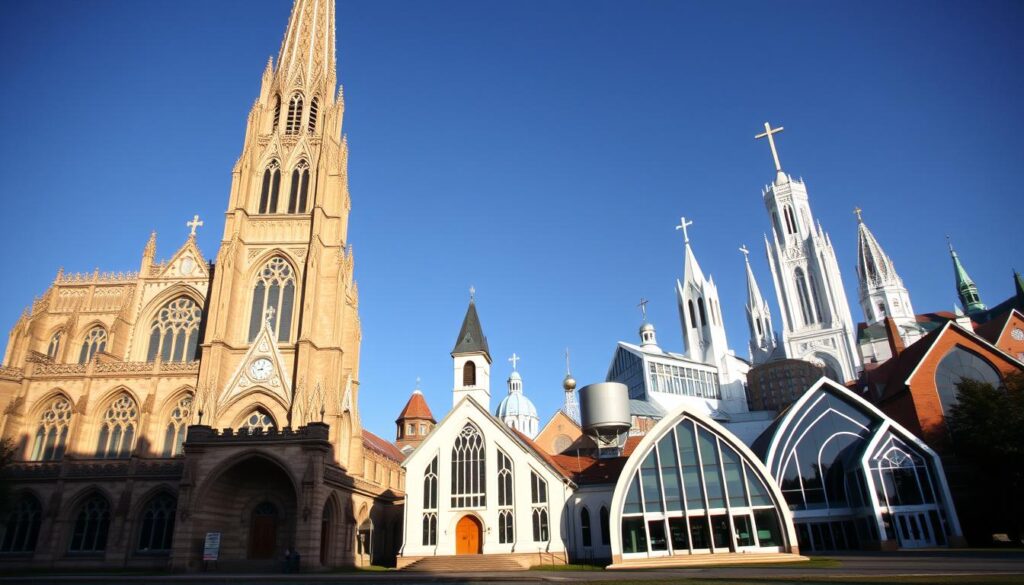
A grand cathedral with a towering steeple, its Gothic arches and intricate stonework casting dramatic shadows. In the foreground, a smaller chapel with a more modest, rectangular shape and a simple bell tower, reflecting the architectural evolution of Protestant churches. The middle ground showcases a modern, minimalist structure with clean lines and large windows, allowing natural light to flood the interior. The background features a diverse array of church designs, from ornate Baroque to sleek, contemporary styles, all united by a sense of spiritual contemplation and architectural progression. Captured through a wide-angle lens, the scene conveys the diverse and dynamic nature of Protestant architectural expression.

Design, Simplicity, and Symbolism

Early reformers favored functional layouts over decorative excess. “A plain room focuses minds on God’s word,” wrote one 17th-century minister. Pulpits became central fixtures, flanked by simple benches facing forward. Clear glass replaced stained windows, symbolizing spiritual transparency.

Period Style Key Features Example
16th Century Adaptive Reuse Whitewashed walls, removed statues Converted abbeys
19th Century Gallo-Roman Circular plans, columned entryways Parisian temples
20th Century Modernist Concrete curves, open floorplans Marseille-Provence (1954)

Adaptations From Old to New

French communities pioneered creative conversions after the Reformation. They transformed medieval religious buildings by stripping altars and adding elevated pulpits. By the 1800s, new constructions echoed classical styles, using local stone for grandeur. The 1900s brought radical experiments – think sweeping concrete curves that still directed attention toward scripture readings.

Regional materials often dictated designs. Mountain towns used timber beams, while coastal areas opted for weather-resistant brick. This blend of practicality and symbolism created distinct yet purposeful worship spaces across generations.

Impact on Community, Education, and Daily Life

Neighborhoods thrive when shared spaces become engines of connection. Across America, these institutions blend spiritual guidance with practical support, creating ripples of positive change. Their doors stay open for both Sunday sermons and Tuesday tutoring sessions.
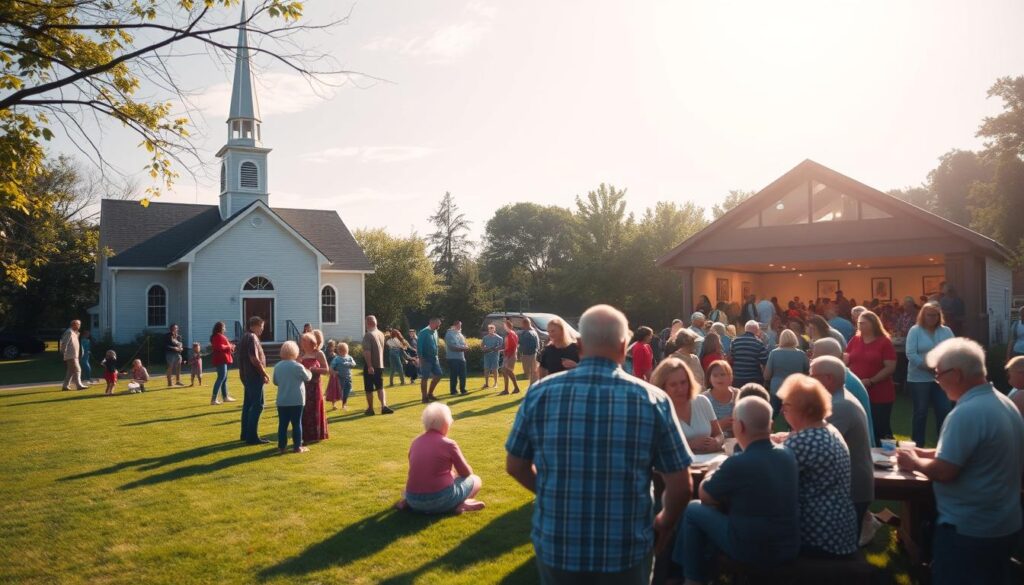
A serene community church on a sunny day, its steeple reaching towards the sky. In the foreground, a group of people of all ages gathered on the lawn, engaged in lively discussions and activities. The middle ground reveals a bustling Sunday school, with children learning and playing together. In the background, a cozy church hall hosts a potluck dinner, the aroma of homemade dishes wafting through the air. Soft, diffused lighting creates a warm, welcoming atmosphere, capturing the sense of togetherness and shared purpose that defines this vibrant community.

Churches as Community Centers and Educational Hubs

Many congregations run after-school programs where kids tackle homework alongside Bible stories. Adults find opportunities too – from job training workshops to English language classes. One pastor notes: “Our building hums with activity seven days a week – that’s when faith becomes action.”

During crises, sanctuaries transform. Hurricane survivors find hot meals in fellowship halls. Winter nights turn Sunday school rooms into temporary shelters. This adaptability makes these spaces vital safety nets.

Evolution of Religious Buildings in Social Contexts

Some groups start small – gathering in living rooms or leasing storefronts. This approach keeps resources focused on people rather than property. As needs grow, so do the spaces. A converted warehouse might house both worship services and a food pantry.

Modern designs reflect new priorities. Ramped entrances welcome wheelchair users. Solar panels crown rooftops where steeples once stood. These changes show how timeless values meet contemporary challenges.

Protestant Church Features: History and Modern Evolution

Five centuries of spiritual transformation have reshaped how communities gather and grow. What began as a theological revolution now stands as a living legacy, blending ancient truths with modern expressions of faith.

A majestic Protestant church stands tall, its steeple reaching towards the heavens. The facade is adorned with intricate Gothic architecture, a testament to the evolution of Protestant design over centuries. The interior is bathed in warm, natural light filtering through stained glass windows, each pane a unique story of the faith's history. In the foreground, a congregation gathers, their faces filled with reverence and contemplation. The middle ground showcases the architectural progression, from the ornate Baroque to the minimalist Modern styles. The background fades into a soft, ethereal landscape, symbolic of the spiritual journey that has shaped the Protestant church's evolution.

From the Reformation to the Present Day

Martin Luther’s 1517 stand sparked more than doctrinal debate—it birthed new ways of worship. When French rulers revoked religious freedoms in 1685, believers met secretly in forests and caves. These “Desert” gatherings prioritized portable communion sets and hymnbooks over grand buildings.

Persecution forged resilience. Communities developed rotating meeting locations, often using natural landmarks as navigation points. This ingenuity preserved their traditions during 102 years of underground worship.

Architectural and Cultural Transformations Over Time

Modern sanctuaries carry echoes of this adaptive spirit. The empty cross—a stark reminder of Christ’s resurrection—replaced ornate crucifixes. Church designs increasingly used local materials, from New England timber to Texan limestone.

Consider these shifts:

Era Focus Symbol
1500s Scripture access Open Bibles
1700s Survival Portable pulpits
2000s Community Multi-use spaces

Influence on Protestant Religious Practices Today

The five sola principles still shape weekly services. Sermons dissect biblical texts line by line, while worship songs echo Reformation-era hymns. Many congregations blend historic liturgy with projection screens and livestreams.

Regional flavors abound. Southern churches might host potluck dinners after services, while urban centers offer ESL classes. Yet all share a core commitment—making ancient truths resonate in changing times.

Conclusion

Sacred spaces evolve, yet their purpose remains timeless. Through five centuries of change, these gathering places have balanced tradition with innovation. Their designs tell stories of communities prioritizing connection over ceremony.

Simple layouts and clear symbolism reflect core beliefs about spiritual access. From wooden benches to modern halls, every choice serves a dual purpose. Spaces welcome both worship and neighborhood food drives, proving faith thrives through action.

Today’s buildings continue adapting while honoring their roots. Solar panels now sit beside century-old steeples, blending sustainability with heritage. Multi-use areas host everything from youth programs to Bible study groups, showing how ancient wisdom meets modern needs.

The future will bring new designs, but the mission stays clear. These spaces remain anchors of hope, offering belonging and life-changing support. As they evolve, their heartbeat continues – creating places where all can grow, serve, and find meaning.

FAQ

How do Protestant beliefs differ from Catholic teachings?

Key differences include a focus on scripture as the ultimate authority, salvation through faith alone, and the priesthood of all believers. These ideas emerged during the Reformation, challenging traditions like papal authority and sacramental rituals.

Why is simplicity emphasized in many worship spaces?

This reflects Reformation-era values of prioritizing scripture and community over ornate decorations. Minimalist designs aim to avoid distractions, directing attention to teachings and collective participation.

What role do communities play in services?

Gatherings often emphasize shared participation, such as congregational singing, group prayer, and lay leadership. This fosters connection and reinforces the idea that everyone contributes to spiritual life.

How have architectural styles evolved over time?

Early groups repurposed existing structures or built modest halls. Over centuries, designs blended local culture with doctrinal values—like lecture halls for preaching or circular layouts to highlight unity.

Are there specific dress codes for attending services?

Most encourage modesty but prioritize personal comfort. While some congregations maintain traditional attire, many adopt casual wear to reflect inclusivity and focus on spiritual engagement over appearance.

How do these religious buildings support education?

Many host Bible studies, youth programs, and charity initiatives. Historically, they’ve also founded schools and universities, linking faith with literacy and ethical development.

What modern trends are shaping practices today?

Contemporary music, multimedia tools, and informal settings are common. Some blend ancient rituals with new traditions, while others prioritize social justice or interfaith dialogue.

How does the resurrection of Jesus influence teachings?

It’s central to messages of hope and redemption, symbolizing victory over sin and death. Sermons often connect this event to personal renewal and communal purpose.

Hamilton, OH Protestant Church: Worship and Community


Step into a welcoming space where heartfelt connections and spiritual growth thrive. Our faith community in Hamilton blends tradition with modern relevance, creating dynamic gatherings that inspire and uplift. Whether you’re new to the area or exploring your beliefs, you’ll find a place to belong here.

Every service is designed to foster genuine relationships and meaningful reflection. Through music, shared stories, and collaborative learning, we celebrate both timeless values and fresh perspectives. Families and individuals alike discover opportunities to connect deeply with others while nurturing their personal journeys.

Beyond weekly gatherings, our commitment to Hamilton shines through local outreach and volunteer initiatives. From food drives to youth programs, we aim to be a positive force for neighbors in need. This dedication reflects our decades-long heritage of service and inclusivity.

Key Takeaways

  • Experience a blend of traditional and contemporary spiritual practices.
  • Join a supportive network that values every individual’s story.
  • Participate in community-driven projects that make a local impact.
  • Explore diverse opportunities for personal and collective growth.
  • Connect with a legacy of inclusivity spanning generations.

Welcome to a Warm Community

Discover a space where every greeting feels like coming home. Our doors open wide to those seeking belonging, blending time-honored practices with fresh approaches to fellowship. Here, laughter echoes in hallways, and handshakes quickly turn into heartfelt conversations.

Embracing Hospitality and Tradition

Walk into gatherings where familiar rituals meet modern expressions of care. Coffee hours feature classic hymns played on acoustic guitars, while age-old scriptures spark discussions about today’s challenges. Longtime members and first-time visitors share stories at potlucks, proving traditions grow richer when new voices join the chorus.

Teams of volunteers create an inclusive environment from the parking lot to the sanctuary. Greeters remember names, childcare staff learn favorite nursery rhymes, and small groups celebrate milestones big and small. This intentional care helps people from diverse backgrounds grow roots quickly.

Weekly services honor sacred rhythms while addressing current community needs. Seasonal festivals blend nostalgic elements with creative twists, ensuring everyone finds moments that resonate. Through it all, the focus remains on nurturing genuine relationships that extend far beyond Sunday mornings.

Discover Our “protestant church hamilton” Heritage

Our story began generations ago, built on a foundation of unwavering faith and service. Over decades, this congregation has become a cornerstone of spiritual life in the area, adapting to cultural shifts while staying true to its mission. The legacy of those who came before us lives on through every outreach effort and Sunday gathering.

Rooted in History, Focused on Today

From humble beginnings in the mid-20th century, our community has grown alongside the city itself. Early members established core values of compassion and biblical integrity that still guide us. These principles shine through modern initiatives addressing current needs like housing support and youth mentorship.

Key moments in our journey reveal a pattern of purposeful growth:

Year Milestone Community Impact
1964 First permanent sanctuary built Created space for neighborhood meetings
1992 Launch of food pantry program Served 300+ families annually
2020 Hybrid worship model introduced Extended reach to homebound members

These achievements stem from a shared commitment to financial stewardship principles and collaborative spirit. Today, we honor our past by investing in tomorrow’s leaders through scholarships and internship programs. The same dedication that built our first chapel now fuels innovative partnerships with local schools and businesses.

Walk through our halls, and you’ll see photos of smiling volunteers from every era – proof that lasting change starts with small, faithful steps. This living history inspires us to keep writing new chapters of hope.

Uplifting Worship Services

Find your rhythm of connection through worship experiences designed to inspire. Our gatherings honor diverse expressions of faith, offering two distinct paths to engage with timeless truths. Whether you lean toward classic reverence or modern creativity, there’s space here for your journey.

Traditional Service Overview

Step into a sanctuary filled with the rich sounds of pipe organs and choir harmonies. This time-honored service follows liturgical patterns that have guided believers for generations. Hymnals pass from hand to hand as voices unite in songs that shaped spiritual legacies.

Liturgical readings and sacramental moments create a reflective atmosphere. Many find comfort in the predictable rhythm – call-and-response prayers, candlelight ceremonies, and sermons rooted in historical Christian thought. It’s a sacred anchor in our fast-paced world.

Contemporary Service Insights

Electric guitars and projection screens set the stage for vibrant praise sessions. Here, casual attire meets passionate participation – think clapping, spontaneous prayer circles, and multimedia storytelling. Messages tackle modern dilemmas while staying true to scriptural foundations.

Interactive elements like live polls and Q&A segments invite real-time engagement. Youth often gravitate toward these energy-filled gatherings, though silver-haired regulars frequently join too. The blend of current music styles and ancient wisdom creates unexpected connections.

Both formats share core elements: Scripture-centered teaching, communion celebrations, and prayer teams ready to listen. After services, you’ll spot attendees from both groups swapping stories over fresh coffee – proof that different styles can build one united community.

Plan Your Visit and Service Details

Ready to join us? Here’s everything you need to know for a smooth first visit. Our team has designed every detail to help you feel comfortable and connected from the moment you arrive. Whether you’re tuning in from home or walking through our doors, expect clear guidance and warm smiles.

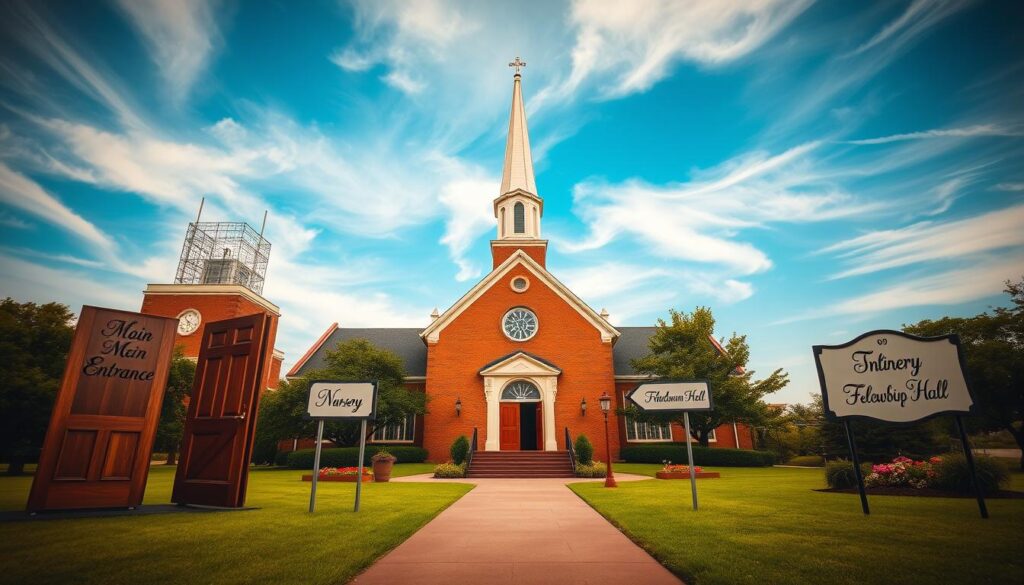
A sprawling church facade in warm hues, its steeple rising against a blue sky dotted with wispy clouds. In the foreground, a grand entrance with wooden doors ajar, inviting visitors inside. The middle ground reveals a neatly manicured lawn and a path leading to the church, lined with well-tended flower beds. Directional signs in elegant script point the way, guiding attendees to the main entrance, nursery, and fellowship hall. The lighting is soft and diffuse, creating a welcoming, serene atmosphere. An air of reverence and community pervades the scene, capturing the essence of a Sunday service at this historic Protestant church.

Service Times and Livestream Options

Gather with us every Sunday at 10:00am for a blend of meaningful worship and practical teaching. Can’t make it in person? Our livestream brings the full experience to your living room – complete with real-time prayer requests and digital connection cards. Many regulars alternate between in-person and online attendance based on their weekly needs.

Directions, Parking, and Accessibility

Find us at 500 James St N, with ample parking spots reserved for guests near the main entrance. Look for friendly volunteers in blue shirts who’ll guide you from your car to our accessible lobby. Ramps, wide aisles, and hearing assistance devices ensure everyone participates comfortably.

First-time visitors often appreciate our “no pressure” approach – come as you are, stay for coffee if you like, and ask anything. Parents can check kids into our supervised play area before the service begins, while others explore quiet prayer spaces. We celebrate communion monthly, with gluten-free options always available.

Engage in Community Events

Gather under open skies for a day of connection and celebration at our annual summer picnic. This lively outdoor event brings people together through shared meals, joyful activities, and meaningful moments. It’s the perfect opportunity to strengthen bonds while enjoying nature’s beauty.

Summer Picnic & BBQ Essentials

Mark your calendar for Sunday, July 20, when we’ll unite at Hidden Valley Park in Burlington. Our regular gatherings will pause to make space for this special celebration starting at 11 AM. The day features heartfelt parent/child dedications followed by live music that’ll have everyone tapping their feet.

Come hungry for our potluck-style BBQ! Grilled favorites will pair with crowd-sourced summer salads and desserts. Don’t forget to bring:

  • A lawn chair for relaxed seating
  • Your favorite seasonal dish to share
  • Sunscreen and playful energy
Event Highlight Time Details
Parent/Child Dedications 11:15 AM Outdoor blessings in natural setting
Live Music Performance 11:30 AM Local bands and choir collaborations
Community BBQ Lunch 12:00 PM Grilled favorites plus shared side dishes
Family Games & Activities 1:00 PM Sack races, trivia, and arts station

This park gathering at 1137 Hidden Valley Road creates space for both laughter and reflection. Newcomers often leave feeling like part of the family after participating in cooperative games and spontaneous conversations. Let’s make memories that last beyond the summer season!

Join Bible Studies & Spiritual Growth

Dive into transformative conversations that spark personal discovery and collective wisdom. Our gatherings create safe spaces where curiosity meets ancient truths, helping participants bridge faith and daily life. You’ll find fresh perspectives here, whether you’re unpacking scripture for the first time or seeking deeper understanding.

A cozy, well-lit church basement with a group of adults gathered around a table, engaged in lively discussion. Sunlight streams through large windows, casting a warm glow over the scene. In the foreground, a mix of faces – some pensive, others animated, as they intently study worn, leather-bound Bibles. Shelves of books line the walls, hinting at the wealth of knowledge available. The atmosphere is one of thoughtful contemplation and spiritual growth, as the group delves deeper into the scriptures, seeking wisdom and connection.

Connect in Meaningful Study Groups

Small groups meet weekly in homes and community centers across the area. These sessions blend scholarly insights with real-world applications, making biblical principles accessible to all. One member shares: “Studying scripture together transformed my perspective – it’s like finding new colors in a familiar painting.”

Our approach adapts to diverse needs through multiple formats:

Study Type Focus Schedule
Topical Deep Dives Practical life challenges Tuesday evenings
Book Explorations Chapter-by-chapter analysis Thursday mornings
Seasonal Series Holiday-themed reflections Sunday afternoons

Newcomers appreciate the no-pressure environment where questions are welcomed. Many participants develop lasting friendships through prayer partnerships and shared learning goals. Childcare support and hybrid options ensure everyone can engage fully.

“Studying God’s Word with people who genuinely care changed how I approach relationships and decisions.”

– Recent Group Participant

Seasonal workshops add variety, from creative journaling retreats to interactive family studies. These dynamic formats keep spiritual growth engaging while maintaining scriptural depth.

Serve and Volunteer Opportunities

Unlock your potential to create meaningful change through hands-on service. Our community thrives when members share their talents – from organizing events to mentoring youth. Every role, whether visible or behind-the-scenes, strengthens our collective impact.

Serving at James North: Get Involved

Discover how your unique abilities can uplift others. Our team connects passion with purpose through personalized matching. Whether you enjoy planning events, teaching kids, or offering tech support, there’s a place for your gifts.

Current openings include:

Role Impact Area Time Commitment
Worship Support Creative Arts 2 hours/week
Kids Ministry Youth Development Monthly rotations
Outreach Teams Neighborhood Support Flexible scheduling
Admin Help Organizational Efficiency 1-3 hours/month

Volunteers often describe service as “the missing piece” in their spiritual journey. One team member shares: “I found my purpose while packing meal kits – it’s where my skills meet others’ needs.”

Training sessions and mentorship ensure confidence in every task. Seasonal projects let you test different roles before making longer commitments. Together, we maintain the welcoming atmosphere that defines our community.

Ready to explore possibilities? Contact our office for a friendly conversation about matching your interests with meaningful opportunities. Let’s turn your willingness into action!

Digital Engagement and Livestream Options

Stay connected to your spiritual journey through innovative digital tools designed for modern life. Our team has crafted resources to keep you informed and engaged, whether you’re at home or traveling. Technology bridges distances while maintaining the warmth of personal connection.

A digital worship calendar displays the upcoming service schedule and events, with vivid digital illustrations. In the foreground, a livestream player interface allows seamless access to the church's livestream, with clear video and audio controls. The middle ground features a clean, modern UI design with a responsive layout, easily navigable on mobile devices. In the background, a warm, inviting church interior with natural lighting and wooden accents sets the atmosphere of a welcoming community. The overall composition conveys a sense of digital engagement and connection, facilitating remote participation in the church's vibrant worship experience.

Stay Updated with Our Full Calendar

Never miss meaningful moments with our interactive online calendar. This tool simplifies planning by highlighting:

  • Weekly service times and special holiday events
  • Registration deadlines for retreats and workshops
  • Volunteer shifts and community outreach dates

Sync the calendar with your personal devices for instant updates. Many members appreciate receiving automatic reminders for their favorite activities. “It’s like having a spiritual assistant in my pocket,” shares a frequent traveler.

Our livestream platform brings worship experiences directly to your screen with crystal-clear audio and chat features. Participate in real-time prayer requests or share encouragement during songs. Recent upgrades allow viewers to:

Feature Benefit
On-demand replays Watch messages at convenient times
Digital connection cards Share prayer needs instantly
Interactive Q&A Engage with speakers live

These tools complement in-person gatherings beautifully. Families balancing busy schedules often mix attendance styles throughout the month. Our goal remains clear – make spiritual growth accessible wherever life takes you.

Special Announcements and Upcoming Summer Events

As the days grow longer, our community calendar fills with opportunities to connect under the sun. From backyard gatherings to meaningful rituals, these seasonal activities blend faith with lighthearted fun. You’ll find fresh ways to build relationships while enjoying Ohio’s warmest months.

Shared Meals and Literary Connections

Twilight takes on new meaning at our Summer Fellowship Dinners, hosted at 4:30PM in welcoming backyards. David and Sarah Gillman’s patio and Chris and Serena Merkus’ garden will alternate as locations for these casual feasts. Expect farm-fresh salads, grilled specialties, and conversations that flow as freely as the lemonade.

Ladies seeking deeper connections can join the Women’s Summer Book Study launching this month. Meetings at 7:30PM will explore faith-themed literature through lively discussions. Locations vary weekly, creating adventure alongside spiritual growth.

Celebrating Families Through Play

Watch hearts melt during our outdoor parent/child dedications – tender moments where families commit to nurturing faith together. These ceremonies often spark spontaneous applause and happy tears from onlookers.

Afterward, everyone’s invited to unleash their competitive spirit during community games. Three-legged races, trivia challenges, and water balloon tosses promise laughter across generations. A regular participant notes: “These events remind me faith isn’t just serious – it’s joyful connection.”

Event Date Highlight
Gillman Backyard Dinner July 12 Potluck & acoustic worship
Merkus Garden Dinner August 9 Grill master competition
Book Study Kickoff July 18 Author Q&A via Zoom

Whether you’re savoring homemade pie at twilight or cheering during sack races, these summer experiences create lasting memories. Come make this season one of growth and togetherness!

Conclusion

Your path to belonging starts here. Our Hamilton faith community invites you to experience worship that fuels both heart and mind. Through authentic connections and shared purpose, we grow together while uplifting neighbors near and far.

First-time visitors often remark on the warmth radiating through every interaction. From collaborative learning groups to volunteer initiatives, there’s space to contribute your unique gifts. Many discover their spiritual home through summer picnics or reflective study sessions.

We’d love to walk alongside you. Join Sunday services at 10 AM – in person or online – to see how tradition and innovation create meaningful fellowship. Our team awaits your questions at (555) 123-4567 or hello@faithhamilton.org.

Every journey matters here. Let’s write your next chapter together.

FAQ

What time are Sunday services held?

Join us at 9:30 AM for traditional worship and 11:00 AM for contemporary gatherings. Both services include prayer, music, and practical teaching. Check our website for holiday updates.

Are there summer events for families?

Yes! Our annual picnic and BBQ at Hidden Valley Park happens every July. Enjoy games, live music, and free meals. All ages are welcome—bring friends!

How do I find your location?

We’re near James North Elementary, with clear signage and ample parking. Accessible entrances and reserved spots are available. Detailed directions are on our Plan Your Visit page.

Can I watch services online?

Absolutely! Livestream our 11:00 AM contemporary service weekly. Archived sermons and event updates are also posted for those unable to attend in person.

Are Bible study groups open to newcomers?

Yes—all are welcome! Small groups meet mornings and evenings throughout Hamilton. Topics range from spiritual growth to family-focused discussions. No prior experience needed.

What volunteer roles are available?

Serve in hospitality, music teams, children’s programs, or community outreach. Flexible schedules and training provided. Visit our Get Involved page to explore options.

Do you host parent/child dedication ceremonies?

Yes! These special events occur quarterly. Contact our office to schedule or learn more about this meaningful tradition.

How does your faith community support local needs?

We partner with food banks, host free clinics, and organize seasonal drives. Our summer backpack giveaway helps students prepare for school each August.

Explore the Protestant Church in Exeter, CA


Finding a place to grow your faith and connect with others can transform your life. In Exeter, California, local congregations create spaces where people from all walks of life share meaningful experiences. These groups blend timeless traditions with modern approaches to spiritual development.

Newcomers and longtime residents alike appreciate the variety of programs available. From Sunday services to weekday volunteer projects, there’s always something happening. Many find these activities help build friendships while making a difference locally.

Different denominations offer unique worship styles, but all focus on core values like compassion and service. You’ll discover opportunities for personal growth through classes, youth groups, and outreach efforts. It’s easy to feel at home whether you’re exploring faith basics or deepening existing beliefs.

Key Takeaways

  • Multiple denominations provide diverse worship experiences united by shared values
  • Weekly gatherings extend beyond Sunday services with practical community support
  • Newcomers receive guidance on participating in spiritual and social activities
  • Programs cater to all ages, from children’s groups to adult education
  • Local initiatives address neighborhood needs through collaborative efforts

Welcoming Community and Worship Experience

Joining a faith-based community offers opportunities for connection, service, and personal development. Local gatherings prioritize inclusivity, blending structured worship with casual interactions that foster lasting relationships.

Sunday Services and Fellowship

Weekly gatherings start at 10 AM with music, teachings, and group discussions. Visitors often remark how easily conversations flow during post-service lunches. One regular attendee shared, “The meals feel like family dinners – everyone belongs here.”

Children’s programs run simultaneously, allowing parents to focus while kids engage in age-appropriate activities. Teen groups tackle modern challenges through scriptural principles.

Weekday Activities and Community Outreach

Beyond Sundays, members collaborate on projects like neighborhood cleanups and food drives. A recent initiative provided school supplies for 300 local students. Small groups meet Wednesday evenings for book studies and skill-building workshops.

Activity Type Time Focus Area
Morning Prayer Circle 7:30 AM (Tue/Thu) Spiritual Reflection
Community Garden 4 PM (Weekdays) Local Sustainability
Youth Mentorship 3:30 PM (Mon/Wed) Leadership Development

These efforts demonstrate how shared values translate into practical support. Whether you’re baking cookies for newcomers or organizing charity runs, every contribution strengthens communal ties.

protestant church exeter: Our Services and Values

Building meaningful connections through shared values starts with open hearts and open doors. Local congregations unite under timeless principles while addressing contemporary needs. As members of the Evangelical Alliance, these groups maintain strong ties to global Christian traditions while fostering neighborhood relationships.

Core Beliefs and Ministry Approach

Central teachings focus on practical faith lived beyond Sunday mornings. Members often describe their approach as “faith with work gloves,” blending scriptural wisdom with hands-on service. “We don’t just talk about love – we show it through meals, mentorship, and mutual support,” shares a longtime volunteer.

A warm, welcoming community gathering in the courtyard of a traditional Protestant church, with a steepled bell tower in the background. In the foreground, a diverse group of parishioners engaged in lively conversation, their faces lit by soft, natural lighting. The middle ground features a central gathering area with wooden benches and decorative planters, where people of all ages are seated, sharing refreshments and engaging in fellowship. The background showcases the church's charming architecture, with ornate windows and a well-manicured lawn. The overall atmosphere conveys a sense of inclusivity, spiritual nourishment, and a strong commitment to the values of the Protestant faith.

What to Expect at a Service

Gatherings typically begin with vibrant music followed by interactive teachings. Services balance structure with spontaneity – you might hear ancient hymns one week and modern worship songs the next. Discussion groups often form spontaneously after formal programs conclude.

Service Element Format Participation Style
Scripture Reading Group Responsive Interactive
Message Life Application Focus Reflective
Prayer Time Small Group Circles Conversational

First-time visitors receive warm welcomes without pressure to perform or conform. Childcare and youth programs run concurrently, allowing families to engage at their comfort level. Many discover these gatherings become spiritual home bases where questions are encouraged.

Leadership, History, and Past Ministers

Guiding a congregation through decades of change requires vision and dedication. At the heart of this community stands Pastor Paul Sutton, who brings theological expertise from Oak Hill College and practical experience from his prior role at St Leonard’s. His leadership style reflects both academic rigor and family-centered values, shaped by raising four children with his wife Genny.

a detailed, realistic historical timeline of church leadership, depicting the progression of ministers and pastors over the years at the Protestant Church in Exeter, CA. In the foreground, a series of formal portrait-style headshots of the church's past leaders, arranged chronologically. In the middle ground, a series of scenes showcasing key moments in the church's history, such as ceremonies, events, and congregation gatherings. In the background, a softly blurred architectural rendering of the church building, with touches of light streaming through stained glass windows. The overall atmosphere is reverent, dignified, and reflects the long-standing tradition of the church and its leadership.

Historical Overview of Church Leadership

Since 1952, spiritual guides have shaped this congregation’s identity. George J. Hoytema laid early foundations during post-war America, while 1960s leaders like Arthur J. Stienstra strengthened community ties. The 1980s saw Bernard H. De Jonge navigate cultural shifts while maintaining core values.

Leader Service Years Notable Contribution
Arie G. Van Eek 1958-1962 Expanded youth programs
Jack Roeda 1971-1975 Introduced community food bank
Peter Tuininga 1995-2002 Modernized outreach strategies

Insights from Past Ministers

Former leaders often emphasize practical faith application. Kevin teBrake (2014-2022) frequently noted, “True ministry happens when we listen as much as we teach.” This philosophy continues through current sermon series available online, blending traditional wisdom with modern life applications.

Legacy and Community Contributions

Seven decades of service have produced lasting impacts. From neighborhood tutoring programs initiated in the 1970s to recent disaster relief partnerships, leadership teams have consistently turned beliefs into action. The current plan to appoint multiple elders ensures decisions reflect diverse perspectives while honoring shared spiritual goals.

Conclusion

Your search for a supportive spiritual environment might lead to unexpected friendships and fresh perspectives. Local faith communities blend timeless wisdom with practical action, offering spaces where curiosity meets compassion. Whether you prefer quiet reflection or hands-on service, there’s room for every seeker.

Exploring different gatherings helps discover what resonates with your values. Many find their perfect fit through trial visits – morning services might inspire one person, while evening volunteer teams energize another. Local groups maintain open-door policies year-round, welcoming newcomers without pressure.

These connections often become lifelong anchors during life’s ups and downs. Regular participants report stronger community ties and renewed purpose through shared activities. Why not start your exploration this weekend? The first conversation could spark meaningful changes in your life and neighborhood.

FAQ

What time are Sunday gatherings held?

Our weekly services take place at 9:00 AM and 11:00 AM, with coffee and fellowship available between sessions. Families often stay for Sunday School programs after the second service.

Are there activities beyond Sunday worship?

Yes! We host midweek Bible studies, youth group meetings, and volunteer opportunities. Seasonal events like holiday dinners and outreach initiatives occur throughout the year.

How does this congregation support local residents?

Through food drives, counseling services, and partnerships with schools. We also organize annual charity projects addressing homelessness and youth mentorship in Tulare County.

Can visitors participate in communion?

All baptized believers who acknowledge Christ’s sacrifice are welcome to join communion, typically offered on the first Sunday of each month.

Is childcare available during events?

Secure nursery care and age-appropriate programs run concurrently with all main services. Background-checked volunteers supervise children from infants through elementary grades.

How can I learn about leadership history?

Our lobby displays archived photos and documents tracing 130+ years of local ministry. Quarterly heritage nights also feature stories from retired pastors and longtime members.

What attire is common for services?

Dress ranges from business casual to jeans-and-button-downs. We prioritize heartfelt worship over appearances – come as you feel comfortable!

Explore the Protestant Church in Hanoi


Welcome to a spiritual oasis in the heart of Southeast Asia. This evangelical congregation offers dynamic worship services and multicultural connections, blending traditional values with modern outreach. Whether you’re a longtime resident or passing through, you’ll find warmth and fellowship here.

Established decades ago, this faith group has become a cornerstone for locals and expats alike. Its ministries focus on practical teachings from Scripture while fostering cross-cultural understanding. Weekly gatherings include interactive Bible studies, youth programs, and community service projects.

What makes this community unique? It provides rare English-language services in a region where most Christian groups use local dialects. Seasonal events like holiday celebrations and volunteer initiatives create meaningful ways to engage with both members and neighbors.

Visitors often praise the inclusive atmosphere that honors Vietnamese traditions while embracing global perspectives. Through music, shared meals, and collaborative outreach, participants build lasting relationships that extend beyond Sunday meetings.

Key Takeaways

  • Multilingual services connect diverse cultural backgrounds
  • Active community outreach programs address local needs
  • English-language resources available for international visitors
  • Family-friendly activities nurture spiritual growth across generations
  • Central location easily accessible in Vietnam’s bustling capital

A Warm Welcome to the Community

Step into a space where smiles transcend language barriers and handshakes feel like home. Visitors often describe the atmosphere as “a living example of Christian fellowship”, where newcomers quickly become part of the family. One member shares: “You don’t just attend here—you belong.”

The congregation thrives on diversity, blending Vietnamese cultural warmth with international perspectives. Weekly potlucks feature local pho alongside global dishes, while bilingual prayers echo through the sanctuary.

“It’s amazing how worship unites us,”

remarks a regular attendee from Texas.

Support extends far beyond Sunday mornings. Members rally around life events—celebrating new jobs, comforting during losses, and even sharing wedding blessings for newlyweds. Neighborhood walks and free language classes demonstrate their commitment to serving others.

Music plays a special role in creating connection. Uplifting hymns drift through open windows, offering comfort to homebound residents. Friday praise nights draw curious neighbors, many staying to chat over sweetened lotus tea afterward.

What truly sets this group apart? Their open-door policy means everyone finds a seat—whether seeking spiritual guidance, friendship, or simply a moment of peace. As one visitor noted: “I came for the singing, but stayed for the people.”

Directory Overview of protestant church hanoi

Finding your way to this vibrant spiritual community is simpler than you think. Located near Hoan Kiem Lake, the building sits at a crossroads of cultural exchange. Public buses stop three blocks away, while ride-hailing apps like Grab provide door-to-door navigation. Ample parking ensures hassle-free visits for drivers.

Hanoi community center directions - a minimalist architectural rendering showcasing the clean, modern lines of the building's facade, illuminated by warm, natural lighting. The structure stands prominently in the foreground, nestled amidst a lush, verdant landscape in the middle ground. In the background, a serene cityscape with traditional Vietnamese rooftops and distant mountains creates a tranquil, peaceful atmosphere. The image conveys a sense of order, accessibility and community, reflecting the purpose of the Protestant church directory it is intended to illustrate.

The organization operates through specialized teams focused on different needs:

  • Family ministries host parent-child workshops and teen mentorship
  • Global outreach partners with charities across Southeast Asia
  • Language-friendly groups meet weekly for international attendees

One volunteer coordinator shares: “Our children’s play area gets redecorated monthly—the little ones help design it!” This hands-on approach reflects their commitment to inclusive participation.

Founded in 1992, the congregation maintains ties to global faith networks while prioritizing Vietnamese cultural sensitivity. Their mission statement emphasizes “building bridges through compassionate action”. Core values include transparency in leadership and adaptability to changing community needs.

Visitors appreciate the modern amenities blended with traditional design elements. The main hall seats 300, with overflow spaces streaming services live. Dedicated zones for creative arts and youth activities buzz with energy throughout the week.

Key Leadership and Community Members

At the heart of this vibrant spiritual family stands a team blending global experience with local understanding. Their collective efforts create spaces where faith meets practical service, nurturing growth across generations.

A group of mature individuals, dressed in formal attire, gathered in a well-lit, airy church interior. Warm sunlight filters through tall windows, casting a soft glow on their faces as they engage in discussion. In the foreground, three elders sit around a polished wooden table, their expressions thoughtful and attentive. Behind them, several other community members stand or sit, listening intently. The atmosphere is one of reverence, collaboration, and a shared sense of purpose, reflecting the leadership and guidance they provide to the congregation.

Pastoral Leadership: Jacob Bloemberg

Leading with quiet determination, Pastor Jacob has shaped community life since 2005. His journey began in 1997 when he moved from the Netherlands with wife Linda and their young family. “We came to serve, not just preach,” he shares, reflecting on his early work with orphanages through Christian NGOs.

This hands-on approach continues today. Jacob’s sermons often draw from his three decades of observing Hanoi’s cultural shifts, offering wisdom that resonates with locals and expats alike.

Supporting Team: Emily Ngoan & Staff

Emily Ngoan’s story embodies the community’s transformative spirit. Baptized here in 2014, she now directs outreach programs using her corporate HR expertise. “We build bridges through shared meals and honest conversations,” she explains during a recent neighborhood walk.

Behind the scenes, Marian Tabjan’s administrative skills keep operations seamless, while Tomi Ogunbawo fuses tech savvy with theological training. Youth Director Peter De Fretes energizes teen programs, proving leadership here spans ages and backgrounds.

Together, they form a mosaic of talents united by one purpose: creating belonging through compassionate action.

Engaging Worship & Uplifting Church Services

Sunday mornings buzz with energy as voices unite in heartfelt praise. The 8:30 AM gathering becomes a weekly reset button—a chance to refocus through music and meaningful connection. “You can feel the joy spilling onto the streets,” notes a local shop owner who hears the harmonies during breakfast prep.

A vibrant Sunday worship service in a grand Protestant church in Hanoi. In the foreground, a congregation of devout worshippers, their faces uplifted in reverence, hands raised in praise. Warm, golden light filters through the stained glass windows, casting a soft glow over the scene. The middle ground reveals the ornate, intricate architecture of the church, with its soaring arches and intricate carvings. In the background, the altar stands tall, adorned with ornate religious symbols, a backdrop for the uplifting service. The atmosphere is one of profound spiritual connection, harmony, and community.

Sunday Worship Highlights

Attendees describe the experience as “part celebration, part soul recharge.” Contemporary bands blend Vietnamese instruments with global worship trends, creating soundscapes that resonate across generations. A visiting musician recently marveled:

“I’ve never heard Amazing Grace played on a đàn tranh zither before—it gave me chills!”

Inspiring Sermons and Music

Messages center on applying Jesus Christ’s teachings to modern challenges—work stress, parenting, or ethical dilemmas. Last month’s series on forgiveness included role-playing exercises that had tissues circulating the pews.

Special services deepen connections throughout the year. Baptism Sundays turn into poolside picnics, while Christmas Eve features glowstick processions through the neighborhood. Regulars joke that “the parking lot potlucks could solve world hunger.”

What keeps people returning? As one teen explains: “It’s not about perfect singing—it’s about real people finding hope together.” Whether you’re seeking answers or simply a moment of peace, you’ll find space to breathe here.

Upcoming Events and Bible Verses

Mark your calendar for transformative gatherings that blend timeless wisdom with modern relevance. Seasonal celebrations like Easter sunrise services and Christmas candlelight vigils draw crowds seeking deeper connections. Guest speakers from global ministries frequently join these events, offering fresh perspectives on living out faith.

Weekly services creatively weave scripture into everyday life. Recent messages explored themes like hope through Romans 15:13 and forgiveness using Matthew 18:21-22. “We want verses to leap off the page into people’s routines,” explains a ministry leader.

Special milestones receive heartfelt attention. Baptism Sundays feature joyful poolside picnics, while communion services include handmade bread from local bakeries. Families often share how these rituals strengthen their spiritual journeys.

Beyond Sunday gatherings, small groups meet weekly to unpack passages like Psalm 23 or Jesus Christ’s parables. Summer brings outdoor study sessions at nearby parks, blending nature with biblical reflection.

Missionaries visiting throughout the months share stories of faith in action across Asia. Their talks often spark new outreach ideas, like last year’s neighborhood clean-up initiative inspired by Galatians 6:9.

Current event discussions apply scripture to modern challenges—work ethics through Colossians 3:23 or community care via James 2:14-17. This practical approach helps members live their beliefs beyond the sanctuary walls.

Connecting with Families and Community Groups

Building meaningful connections starts here, where shared values create bonds stronger than language or cultural differences. The congregation thrives on intergenerational relationships, offering programs that unite families through faith and service.

Parents and children grow together through monthly parent-child workshops and storytelling nights. One mother shares: “These activities help us discuss big ideas in ways our kids understand.” Specialized groups cater to different seasons of life:

  • Young professionals meet over coffee to discuss work-life balance
  • Newlyweds join marriage enrichment dinners twice monthly
  • Seniors host wisdom-sharing sessions with homemade snacks

Youth Director Peter De Fretes leads the popular Alpha program, where teens explore faith through art and open dialogue. “Questions are welcome here—we’re all learning together,” he explains during a recent robotics workshop combining STEM and scripture.

Small group meetings extend connections beyond Sunday services. Families often gather in homes for prayer circles or neighborhood clean-ups. These hands-on projects let members live their beliefs while strengthening community ties.

Expatriate and local families frequently team up for cultural exchange dinners. “We’ve adopted Vietnamese holiday traditions into our family life,” laughs a Canadian father. Through these shared experiences, the congregation becomes an extended family for those far from home.

Innovative Media and Digital Outreach

In an era where screens connect us more than ever, this community bridges faith and technology with purpose. Worship & Media Director Tomi Ogunbawo leads this charge, blending his computing expertise with theological training from Harvard. “Technology isn’t just tools—it’s a ministry multiplier,” he explains while adjusting camera angles for Sunday services.

Weekly gatherings now reach global audiences through HD livestreams. Members tuning in from Tokyo or Texas can sing along, submit prayer requests, and even chat with others during broadcasts. Interactive features like real-time polls keep remote participants engaged.

Platforms That Build Connections

The team uses tailored strategies for different digital spaces:

Platform Purpose Frequency
Facebook Live Sunday services & special events Weekly
YouTube Bible study archives & music playlists Daily updates
Zoom Small group meetings 3x weekly
Instagram Daily inspiration & event reminders 2 posts/day

Social channels buzz with bite-sized devotionals and behind-the-scenes ministry stories. Last month’s #HopeInHanoi campaign sparked 1,200+ shares, connecting seekers worldwide with local volunteers.

Virtual groups thrive through scheduled video calls and messaging apps. Parents coordinate childcare swaps via WhatsApp, while teens debate faith topics in moderated Discord channels. “Our online spaces feel as welcoming as the physical building,” notes a member who joined during lockdowns.

This digital-first approach extends their reach while deepening local ties. When a typhoon canceled in-person gatherings last fall, live-streamed services became lifelines—proving technology’s power to sustain community through storms.

Integrating Faith with Daily Life and Service

Faith finds its deepest expression when put into practice through daily deeds and compassion. Members here embrace practical Christianity, inspired by Jesus Christ’s teachings to feed the hungry and clothe the needy. This commitment transforms ordinary moments into opportunities for meaningful impact.

Weekly initiatives include meal prep for homeless shelters and seasonal clothing drives. Volunteers often share how these acts deepen their spiritual journey. “Serving others helps me see God’s love in action,” notes a regular participant.

The community partners with local NGOs to multiply their reach. Recent collaborations provided school supplies for rural children and medical care for elderly residents. These efforts reflect biblical guidance from verses like Matthew 25:40: “Whatever you did for the least of these, you did for me.”

Members carry this ethos into workplaces and relationships. A teacher explains: “My classroom becomes my ministry—patience and kindness matter as much as lesson plans.” International projects extend this mindset globally, with teams assisting disaster relief in Southeast Asia and literacy programs in Africa.

  • Monthly neighborhood clean-ups with prayer walks
  • Cross-cultural mentorship programs for young professionals
  • Interfaith dialogue dinners promoting social harmony

Through media channels, members share service stories to inspire broader participation. Livestreamed volunteer sessions and devotionals keep the spirit of giving alive beyond physical gatherings. This holistic approach makes faith a lived experience, not just a Sunday routine.

Conclusion

In a world craving genuine bonds, this spiritual family redefines what it means to belong. Blending ancient wisdom with modern tools, they create spaces where faith becomes action—whether through neighborhood clean-ups or livestreamed gatherings that cross oceans.

Weekly services anchor members in timeless truths, while creative applications of scripture verses spark real-world change. Over months of shared meals and collaborative projects, strangers become lifelong friends.

Diverse leaders model unity across cultures, proving spiritual growth thrives when perspectives intersect. Their innovative media strategies extend warmth beyond physical walls, inviting global participation in local missions.

Ready to experience faith that moves mountains—and sweeps streets? Explore how this community turns beliefs into bridges. Your seat at the table awaits.

FAQ

What can visitors expect during their first visit?

Guests receive a warm welcome from our community. Services blend uplifting music, meaningful sermons, and opportunities to connect with others. You’ll find a relaxed atmosphere where everyone is invited to participate.

How can I stay updated on events or gatherings?

Follow our social media channels for real-time updates on weekly services, Bible study groups, and special events like holiday celebrations. You can also subscribe to our newsletter for monthly highlights.

Are there activities for children or youth?

Yes! We offer dedicated programs for kids and teens, including Sunday school, creative workshops, and youth-led projects. Families are encouraged to join our inclusive community groups.

Who leads the congregation’s daily operations?

Pastor Jacob Bloemberg guides spiritual growth, supported by Emily Ngoan and a passionate team. Together, they organize worship sessions, outreach initiatives, and pastoral care programs.

Can I participate in volunteer opportunities?

Absolutely! We host regular service projects, from local outreach to international missions. Connect with our team to find roles that align with your skills and interests.

How does the community support personal faith journeys?

Small groups meet weekly to discuss scripture, share experiences, and pray together. These gatherings help members apply teachings to daily life while building meaningful relationships.

Are online services available?

Yes! We stream live Sunday worship and archive sermons on our website. Digital platforms allow global participation in prayer meetings and virtual Bible studies.

What makes your worship style unique?

Services blend traditional hymns with contemporary music, creating a vibrant experience. Sermons focus on practical applications of scripture, encouraging reflection and action.

Explore the Historic Protestant Church in Ghent


Step into a world where stone walls whisper tales of faith and resilience. In this Belgian city, towering spires aren’t just landmarks—they’re time capsules preserving centuries of spiritual evolution. Every archway and stained-glass window holds secrets of religious transformation that shaped Europe.

What makes these sacred spaces so unique? They’ve survived political upheavals, cultural shifts, and the test of time. From Emperor Charles V’s birth in 1500 to the Reformation’s ripple effects, the city became a crossroads for ideas that redefined faith communities.

Today, visitors find more than quiet prayer halls. These structures stand as living monuments to human perseverance. Their blend of Gothic grandeur and symbolic details reveals how belief systems adapted while retaining their core identity.

Key Takeaways

  • Ghent’s religious sites blend architectural mastery with 800+ years of history
  • The city played a crucial role in Europe’s Reformation movements
  • Historic churches here symbolize enduring religious freedom
  • Charles V’s birthplace ties to broader Protestant narratives
  • Modern visitors experience layered stories of faith and survival

Introduction and Historical Overview

Picture a time when trade routes buzzed with ideas as vibrant as the goods they carried. The sixteenth-century Low Countries—a patchwork of territories spanning modern Belgium, Luxembourg, and beyond—became Europe’s cultural melting pot. Here, merchants and thinkers shaped a region primed for transformation.

Setting the Scene in Ghent

In 1500, a royal birth changed everything. Charles V entered the world here, destined to rule empires from Spain to Germany. His 1515 inheritance of the Low Countries placed this strategic city at the heart of Europe’s power struggles.

Ghent thrived as a hub where cloth merchants and scholars crossed paths. Its canals carried more than cargo—they floated revolutionary concepts that would later fuel religious debates. The city’s wealth built towering structures, but its true legacy lay in fostering exchange.

The City’s Rich Heritage and Past

By mid-century, the region simmered with new beliefs. Protestant teachings spread like wildfire through the Low Countries, challenging old traditions. Ghent’s location made it both a battleground and a bridge between conflicting ideologies.

What emerged wasn’t just tolerance, but a blueprint for coexistence. Centuries of cultural layering created spaces where different faiths eventually found common ground. Today, visitors trace this journey through archives and architecture alike—proof that even divided histories can weave threads of peace.

Architectural Marvels and Visual Splendor

Imagine standing beneath vaulted ceilings that echo with ancient prayers. These sacred buildings rise like stone symphonies, their spires conducting light through colored glass. Every carving whispers secrets of craftsmanship passed down through generations.

Iconic Towers and Monumental Features

Look closely at the towers—each tells a different story. The tallest ones served dual purposes: calling worshippers to prayer and asserting dominance over the skyline. Flying buttresses aren’t just supports; they’re stone lacework defying gravity.

Notice how window tracery evolved across centuries. Early designs favored geometric precision, while later styles embraced flowing natural motifs. This shift mirrors changing attitudes toward faith and art.

Preservation and Modern Significance

Restoration teams face a delicate balance. How do you reinforce aging walls without erasing their stories? Modern techniques like 3D scanning meet traditional lime mortar recipes to protect these treasures.

Century Architectural Feature Symbolic Meaning
16th Simplified altars Rejection of excess
17th Hidden chapels Discreet worship
18th Repurposed bells Community resilience

Today, these spaces host both memorial services featuring comforting scriptures and jazz concerts. Their adaptability proves true preservation means keeping stories alive—not frozen in time.

The city’s identity thrives in this harmony. Visitors touch walls that weathered iconoclasm and revolutions, finding inspiration in enduring beauty.

The Reformation and Its Impact on the Low Countries

When did faith become a crime? In the 16th century, radical ideas about religion swept through the Low Countries like a storm. This region became ground zero for clashes between old traditions and new beliefs that reshaped Europe’s spiritual landscape.

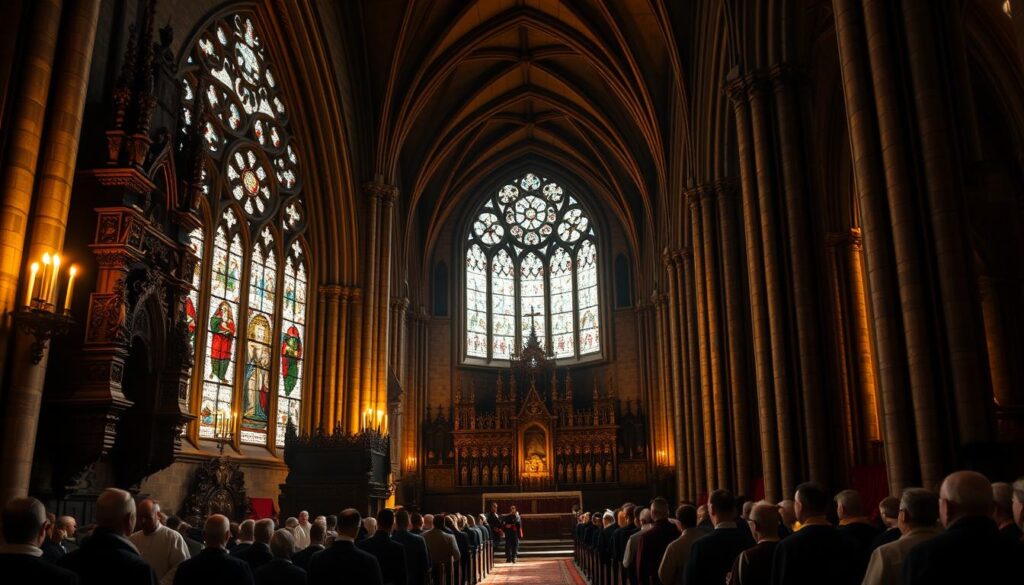
A dimly lit 16th century church interior in the Low Countries. The ornate altar and stained glass windows in the foreground command attention. Figures of clergymen and worshippers populate the middle ground, their expressions reflecting the gravity and solemnity of the religious ceremony. In the background, towering arched ceilings and intricate stone columns suggest the grandeur and majesty of the sacred space. Warm, golden lighting imbues the scene with a sense of reverence and spiritual contemplation, as the reformist movement slowly takes hold in this historic European region.

Struggles, Repression, and Rise of Change

Brussels’ Grand Place witnessed horror in 1523. Two monks who embraced Luther’s teachings faced fiery execution—a warning to others. By 1529, Emperor Charles V’s laws made dissent deadly. Thousands vanished into prisons or met brutal ends.

Yet fear couldn’t extinguish the spark. Secret meetings flourished in attics and cellars. Banned texts circulated through ports. By 1566, one in five residents secretly followed reformist ideas—a silent revolution growing beneath official radar.

Historical Conflicts and the Spread of Protestantism

1574 brought a fragile truce. The Pacification agreement offered temporary peace, proving even bitter enemies could negotiate. This brief respite allowed communities to rebuild—and plan.

The movement’s survival changed everything. It forced leaders to reconsider rigid control. Markets adapted to new moral codes. Art began reflecting personal faith over institutional grandeur. These shifts laid foundations for modern pluralistic societies.

Exploring the protestant church ghent: Community and Legacy

Sunday mornings in this historic district begin with bells echoing through cobblestone streets. For over four centuries, generations have gathered here to nurture traditions while building bridges with modern seekers. This spiritual hub remains a living archive of shared values and collective memory.

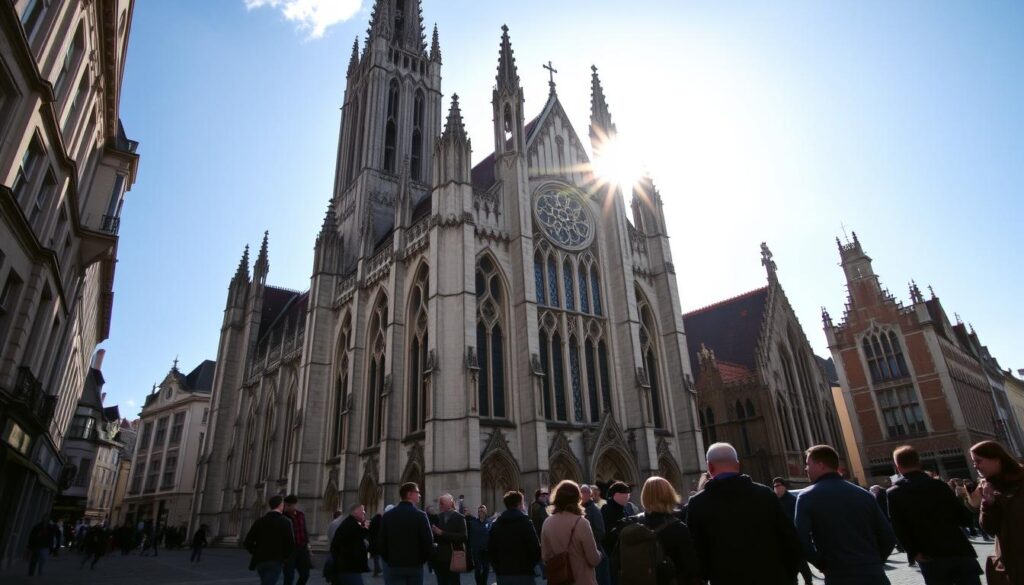
A towering Protestant church stands tall against the backdrop of Ghent's historic cityscape. The ornate Gothic architecture, with its intricate spires and buttresses, exudes an air of reverence and community. Sunlight filters through the stained glass windows, casting a warm glow upon the cobblestone streets and surrounding buildings. In the foreground, a group of locals gathers, engaged in lively conversation, showcasing the vibrant spirit of the congregation. The scene evokes a sense of timelessness, where the church's enduring presence is a testament to the resilience and faith of the Ghent community.

Weekly Services and Community Connections

Join the congregation each Sunday at 10 AM as sunlight filters through heritage windows. The service blends timeless hymns with contemporary reflections, creating a tapestry of past and present. All are welcome—whether seeking quiet contemplation or meaningful dialogue.

After the final prayer, visitors find more than quiet reflection. The aroma of freshly brewed coffee invites everyone to linger and connect. These casual gatherings often spark friendships that last decades, proving community thrives through simple acts of sharing.

Activity Significance Frequency
Sunday Service Connects modern and historical faith Weekly
Coffee Hour Fosters community bonds Every gathering
Holiday Events Celebrates traditions Seasonal

Special occasions reveal the space’s true versatility. From Easter concerts to autumn food drives, these events transform ancient walls into vibrant stages for service. Volunteers recently organized a winter coat exchange, demonstrating how historic institutions address modern needs.

Through changing times, one truth remains: belonging grows when stories are shared across generations. The legacy continues not in stone carvings, but in hands clasped during prayers and laughter echoing down centuries-old aisles.

Planning Your Trip: A Friendly Guide to Ghent’s Historical Gems

Ever wondered how to walk through centuries in a single afternoon? This medieval marvel offers time-travel experiences around every corner. Let’s craft your perfect itinerary blending architectural wonders with living traditions.

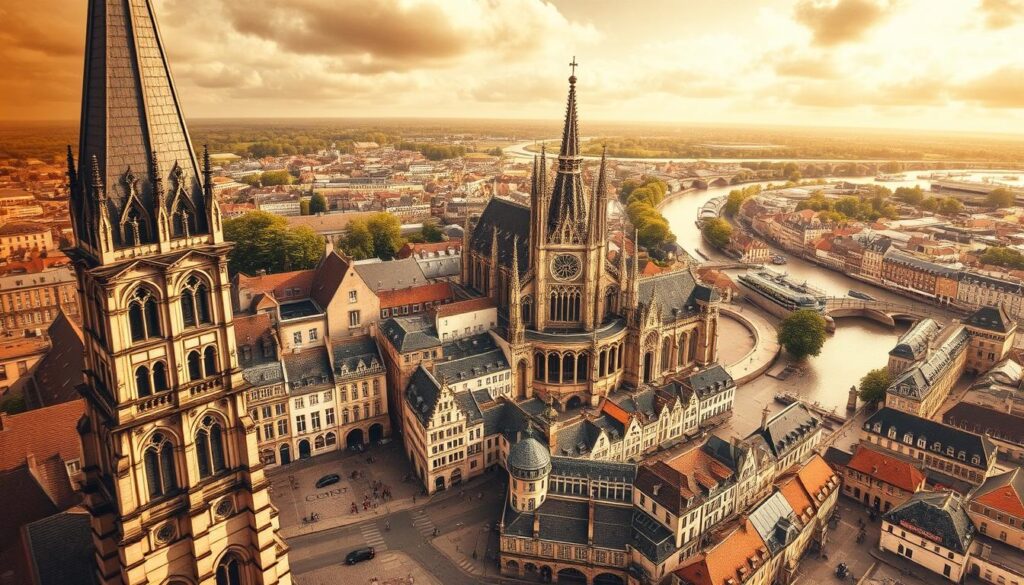
A detailed planning map of historic Ghent, Belgium, showcasing the city's architectural landmarks and points of interest. The map is rendered in a warm, sepia-toned color palette, evoking the timeless charm of the city's storied past. Prominent in the foreground is the iconic Ghent Belfry, its soaring spire casting a long shadow across the cobblestone streets. In the middle ground, the intricate Gothic façade of the Saint Bavo's Cathedral dominates the scene, surrounded by quaint, gabled buildings. The background reveals the winding Leie River and the picturesque Graslei harbor, framed by verdant trees and a cloudy, golden-hour sky. The overall composition conveys a sense of exploration, history, and the allure of Ghent's well-preserved architectural treasures.

Local Events, Visitor Tips, and Cultural Insights

Spring and fall bring mild weather perfect for exploring. Summer festivals light up the streets, while Advent concerts fill sacred spaces with seasonal magic. Check local calendars for heritage walks led by passionate historians.

Event Month Highlight
Light Festival January Illuminated architecture
Floralien Show April Flower displays in historic settings
Medieval Feast August Costumed reenactments

Comfortable shoes beat fancy footwear here. Cobblestone lanes demand practical choices. Morning visits often mean smaller crowds at popular sites.

A Journey Through Time and Faith in Ghent

Start at St. Bavo’s Cathedral before 11 AM to beat tour groups. Then wander toward the Design Museum – its 16th-century facade hides modern treasures. Don’t miss hidden chapels converted into cozy art spaces.

Local guides share juicy tidbits most miss. “The real drama’s in the details,” says historian Marie De Vos. “Look for masons’ marks on stonework – medieval quality control stamps.”

End your day with a canal cruise at dusk. Golden hour transforms ancient facades into glowing storybooks. These floating tours reveal why this UNESCO-recognized city keeps stealing hearts across generations.

Conclusion

As your journey through Belgium’s spiritual landscape concludes, you carry stories of resilience etched in stone and spirit. This nation of 10.5 million showcases remarkable coexistence, with 8.75 million Catholics and 145,000 Protestants sharing neighborhoods and values. What began as turbulent Reformation-era conflicts now blossoms into quiet understanding—proof that time can transform division into dialogue.

Your exploration reveals more than stunning architecture. Each weathered pillar and preserved artifact whispers how communities adapt while honoring their roots. These spaces didn’t just survive history—they reinvented themselves as bridges between eras and beliefs.

The true marvel lies not in vaulted ceilings, but in living traditions that welcome all seekers. Through centuries of change, this historic church became a beacon of mutual respect. It reminds us that diversity strengthens societies when we choose connection over conflict.

Carry home this lesson from your Belgian trip: shared spaces become sacred through open hearts. Whether lighting candles or sipping coffee with locals, you’ve witnessed how faith communities write new chapters while preserving their soul. That’s the enduring gift of historic places—they teach us to honor the past while building inclusive futures.

FAQ

What role did this historic site play during the Reformation?

The location served as a symbol of religious transformation in the Low Countries. It became a focal point for those advocating reform, despite facing repression during the 16th century. Its legacy reflects resilience amid shifting cultural tides.

Are guided tours available to explore the architecture?

Yes! Visitors can admire iconic towers and preserved interiors through scheduled tours. Many tours highlight how restoration efforts blend medieval craftsmanship with modern preservation techniques.

How does the community engage with visitors today?

Weekly services welcome all, and local events like cultural lectures or seasonal markets foster connections. It’s a living space where history meets contemporary fellowship.

What nearby landmarks should I include in my trip?

Pair your visit with stops at St. Bavo’s Cathedral or Gravensteen Castle. The city’s cobblestone streets and canals create a timeless backdrop for exploring centuries of heritage.

Were there conflicts tied to this place’s history?

Absolutely. The 16th-century religious wars impacted the region deeply. Struggles for faith-based freedom shaped its story, leaving layers of historical significance still felt today.

Can I attend special events or ceremonies here?

Seasonal concerts, interfaith dialogues, and commemorative gatherings often take place. Check local listings for dates—these occasions offer unique insights into the area’s enduring spirit.

Discover the Rich History of Protestant Churches in Greece


Walking through the sunlit streets of Athens or Thessaloniki, visitors might stumble upon a unique spiritual tapestry. While Orthodox Christianity dominates the landscape, a lesser-known story of faith has quietly shaped communities since the 1800s. This journey began with small groups of believers committed to scriptural teachings and evolved into a united movement recognized nationally in 2014.

These faith communities blend traditions from Presbyterian, Congregational, Methodist, and Independent Brethren backgrounds. Their shared focus on Biblical authority creates a distinct worship style that bridges Eastern and Western Christian practices. Today, 32 active congregations serve over 5,000 members while maintaining their denominational identities.

What makes this story remarkable isn’t just survival—it’s growth. Through social programs and refugee support, these groups demonstrate faith in action. Their membership in global organizations like the World Council of Churches highlights their international connections while staying rooted in local culture.

Key Takeaways

  • United faith communities gained legal recognition in 2014 after 150+ years of development
  • Blend of four Christian traditions under shared theological principles
  • Active in humanitarian work across the Mediterranean region
  • Membership in five major international religious organizations
  • Balances cultural adaptation with distinct worship practices
  • 32 congregations serving diverse spiritual needs nationwide

Historical Foundations and Early Influences

The story of evangelical communities in this Mediterranean nation begins with a daring blend of ancient heritage and new ideas. Like olive trees grafting foreign branches, early reformers planted seeds that would grow into unique spiritual traditions.

Roots in Reformation and Early Evangelical Movements

Sixteenth-century reformers like Luther and Calvin inspired a theological revolution. But it took three centuries for these ideas to take root locally. Dr. Michael Kalopothakis, a medical pioneer turned spiritual leader, became the bridge between eras.

His 1858 magazine Astir tis Anatolis sparked conversations about Scripture’s central role. “Truth shines brighter when shared freely,” he wrote, facing fierce opposition. This publication became the heartbeat of a growing movement.

Formation of the First Greek Evangelical Church in 1858

Persecution fueled determination. By 1871, believers gathered beneath the Acropolis’s marble slopes, forming their first official community. American missionary Dr. Jonas King had laid groundwork decades earlier, proving cross-cultural partnerships could thrive.

Parallel developments emerged across the Aegean. In Asia Minor, congregations adopted congregational models while keeping local flavors. This dual growth—homegrown and international—created lasting networks that still shape worship practices today.

Protestant Church Greece: Historical Legacy and Impact

History often unfolds at crossroads of crisis and opportunity. For Greek Evangelical communities, the early 20th century brought both through waves of displaced believers seeking sanctuary.

A grand Greek Evangelical church stands tall, its Byzantine-inspired architecture a testament to the rich tapestry of Protestant history in Greece. Sunlight streams through ornate stained-glass windows, illuminating the ornate interior adorned with intricate iconography and wooden pews. In the foreground, worshippers gather in quiet contemplation, their faces reflecting the solemnity and reverence of the sacred space. The middle ground captures the church's ornate facade, its domed roof and arched entryways evoking the grandeur of the nation's religious heritage. Surrounding the church, a tranquil urban landscape unfolds, with cypress trees and terracotta-roofed buildings hinting at the broader cultural context. The overall scene conveys a sense of timeless reverence and the enduring impact of the Protestant faith on the Greek landscape.

Migration and the Influence of Asia Minor Refugees

The 1922 population exchange reshaped spiritual landscapes. Over 1.5 million people crossed the Aegean, including thousands of evangelicals carrying Bibles alongside suitcases. These displaced families didn’t just seek shelter—they planted seeds of faith.

Newcomers revitalized existing congregations while founding others in untouched regions. Their arrival doubled active worship spaces within a decade. “We brought hymns in our hearts and governance models in our memories,” recalled one refugee’s descendant.

Development Through the United Church Model

By 1938, Presbyterian and Congregational streams merged like tributaries forming a river. The union followed Reformed theology but blended organizational styles—a recipe that required wisdom from global partners.

Canadian church leaders shared blueprints for balancing local autonomy with national cohesion. This cross-continental mentorship helped create governance structures still guiding communities today. Their innovative approach proved unity doesn’t require uniformity.

This era birthed lasting commitments to social action. Having experienced displacement firsthand, members became advocates for marginalized groups—a legacy visible in modern outreach programs.

Modern Presence and Cultural Significance

Like a bridge spanning ancient and modern worlds, these spiritual communities connect timeless values with urgent needs. Their story isn’t written in stone monuments but in transformed lives and empowered neighborhoods.

A vibrant evangelical church community gathered for an outreach event, their joyful faces aglow in the warm natural light filtering through the large stained-glass windows. In the foreground, a diverse group of congregants embrace and connect, their expressions radiating a sense of fellowship and purpose. In the middle ground, the church's interior unfolds, its elegant wooden pews and pulpit creating a serene and welcoming atmosphere. In the background, a mural depicting scenes of faith and service adorns the walls, framing the scene with a touch of timeless spiritual significance. The overall composition conveys a harmonious blend of community, devotion, and a steadfast commitment to serving others, reflecting the modern presence and cultural significance of Protestant churches in Greece.

Multigenerational Faith in Action

From Athens to Crete, Anglican congregations serve as spiritual oases. St. Paul’s hosts services in five languages, while Holy Trinity Corfu blends historic liturgy with local traditions. These spaces welcome both travelers and lifelong residents, creating dialogue through shared agape love in action.

Since 2016, over 3,000 refugees gained job skills through vocational programs. One Syrian tailor now employs six others, stitching hope into every garment. “We teach marketable skills,” explains a ministry leader, “but more importantly—dignity.”

Innovation Meets Compassion

Two detox centers near Thessaloniki break addiction cycles through counseling and community. Their 72% success rate draws attention from European health organizations. Meanwhile, solar-powered classrooms in Tanzania show how faith fuels sustainable solutions.

Digital tools amplify these efforts. Live-streamed services reach diaspora communities worldwide, while apps connect volunteers with local needs. Yet the heartbeat remains personal—a handwritten note tucked into a food parcel, or a mentor’s patient guidance.

Theological Foundations and Community Outreach

At the heart of these spiritual communities beats a rhythm older than the Parthenon yet fresh as morning dew. Their work flows from ancient confessions made vibrant through modern service, blending creedal conviction with hands-on compassion.

A stunning, high-resolution image depicting the Nicene Creed displayed prominently in the foreground, with a vibrant, well-lit church interior in the background. The creed is presented in ornate, calligraphic text on an illuminated manuscript, evoking a sense of historical significance and reverence. In the middle ground, parishioners engage in various acts of community outreach, such as serving meals, distributing supplies, or counseling individuals, all within the warm, welcoming atmosphere of the church. The lighting is soft and natural, casting a gentle glow over the scene and emphasizing the sense of spiritual purpose and devotion. The overall composition conveys the deep theological foundations that underpin the church's commitment to serving its local community.

Ancient Words, Living Faith

The Nicene Creed serves as both anchor and compass. Members recite these 4th-century words not as dusty relics, but as living truths shaping daily decisions. “We believe in one holy catholic church,” they declare weekly, their actions proving this unity through interdenominational partnerships.

Biblical teaching fuels practical ministry. Youth programs mix Scripture study with beach cleanups, while adult classes explore how Jesus’ parables inform fair trade practices. This fusion of doctrine and deed creates disciples ready to serve.

When Mercy Gets Muddy Boots

Perichoresis—the NGO launched in 2016—embodies this theology in action. Volunteers distribute 15,000 meals monthly while offering legal aid to displaced families. One Syrian teen, now studying through their scholarship program, shares: “They saw my potential before I did.”

The ministry’s holistic approach includes:

  • Mobile medical clinics serving rural areas
  • Recycling initiatives reducing landfill waste by 40%
  • Job training centers teaching marketable skills

“Come to me, all you who are weary and burdened, and I will give you rest.”

Matthew 11:28

This invitation echoes through every outreach. From addiction recovery homes to after-school tutoring, the message remains clear: faith without works isn’t just dead—it’s disconnected from its divine source.

Conclusion

Time-tested faith communities reveal how spiritual roots deepen through cultural adaptation. From Dr. Michael Kalopothakis’ 1858 magazine to today’s 32 active congregations, these groups show resilient growth while upholding Biblical truth. Their journey proves traditions can evolve without losing core values.

Historic challenges became catalysts for connection. The 1920s refugee influx didn’t weaken communities—it sparked creative unity through the United Church model. Shared governance structures allowed diverse worship styles to coexist, strengthening collective impact.

Modern initiatives continue this legacy of innovation. Youth programs blend environmental care with scripture study, while vocational training empowers displaced families. These efforts demonstrate how spiritual integrity meets societal needs, creating bridges across generations and cultures.

Through 160 years of change, one constant remains: faith that transforms through action. As communities address contemporary issues like sustainable development and refugee support, they write new chapters in an enduring story of hope.

FAQ

How did evangelical communities in Greece begin?

Their roots trace back to the Reformation and early evangelical movements. Missionaries and Bible societies in the 19th century helped spread teachings focused on personal faith and Scripture, leading to the first organized congregations.

What role did refugees play in shaping these communities?

After the 1923 population exchange, many Asia Minor refugees brought diverse Christian traditions. Their arrival strengthened existing groups and inspired new ministries, blending cultural heritage with shared beliefs.

How do these congregations address modern social issues?

Through diaconal work, they prioritize refugee assistance, education, and poverty relief. Many partner with global organizations to advocate for justice while staying grounded in biblical principles like the Nicene Creed.

What theological beliefs unite these groups?

They emphasize the authority of Scripture, salvation through faith, and the Trinity—core ideas from the Nicene Creed. This shared foundation fosters unity across diverse worship styles and outreach methods.

How have these communities adapted over time?

By merging smaller congregations into united churches, they’ve pooled resources for training and outreach. Today, they balance tradition with innovation, using digital tools and multilingual services to engage younger generations.

Are there international connections?

Yes! Partnerships with global faith networks help fund community projects and refugee care. These ties also encourage cultural exchange, enriching local practices with insights from other countries.