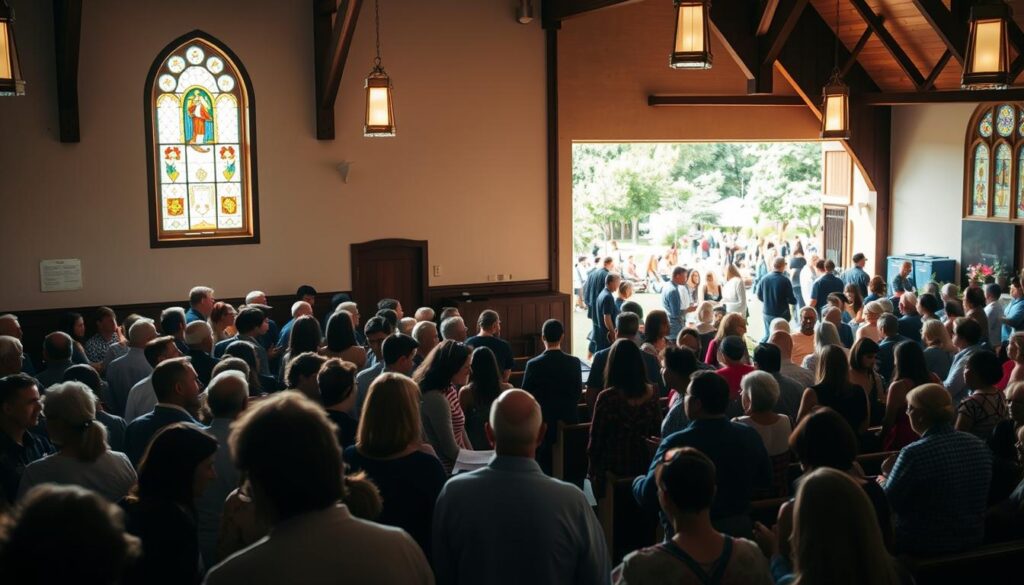
Creating a meaningful worship space starts with thoughtful design. Whether renovating an existing building or starting fresh, your layout must balance tradition with modern needs. Every detail matters—from seating arrangements to natural lighting—to foster connection and engagement.
Teams often collaborate early to align the architecture with their community’s values. For example, clear sightlines to the pulpit enhance participation during sermons. Flexible seating allows spaces to adapt for events, classes, or community gatherings. These choices ensure the building grows alongside its congregation.
Accessibility remains a priority in today’s designs. Wide aisles, ramps, and acoustics tailored for spoken word create an inclusive environment. Energy-efficient lighting and materials also reduce long-term costs while supporting sustainability goals.
Key Takeaways
- Prioritize congregational engagement through sightlines and adaptable seating.
- Incorporate accessibility features like wide aisles and optimized acoustics.
- Use durable, sustainable materials to lower maintenance costs.
- Involve stakeholders early to align design with community values.
- Plan multi-functional areas for worship, education, and social events.
Overview of Church Design Principles
Designing sacred environments requires balancing spiritual symbolism with everyday utility. Every choice—from material selection to spatial flow—impacts how communities gather, reflect, and serve. Let’s explore core principles that shape spaces for both reverence and practicality.
Defining Spiritual and Functional Spaces
Spiritual zones thrive on intentional details. Natural light streaming through windows can elevate moments of prayer, while acoustics ensure spoken words resonate clearly. Strategic sightlines guide focus toward focal points like altars, fostering collective engagement.
Functional zones demand equal attention. Multi-use areas might host Sunday schools, potluck dinners, or youth workshops. Storage solutions and tech-ready rooms keep operations smooth. Versatile layouts allow seamless transitions between quiet reflection and lively fellowship.
Integrating Historical and Modern Elements
Many congregations cherish traditional aesthetics—stained glass or wooden pews—that echo centuries of faith practices. Yet modern updates ensure relevance: wheelchair ramps replace steps, LED lighting cuts energy costs, and sound systems amplify inclusivity.
Blending eras isn’t about compromise. It’s about honoring roots while embracing today’s needs. A vaulted ceiling might coexist with solar panels, or a centuries-old hymn board might hang beside digital signage. These fusions create spaces that feel timeless yet adaptable.
Historical Influences on Church Architecture
Architectural traditions shape more than structures—they tell stories of faith and community. Over centuries, worship spaces evolved to reflect cultural values and theological priorities. Let’s explore how early Christian gatherings and Renaissance innovation laid foundations still visible today.
Renaissance Centralized and Rectangular Plans
Renaissance architects blended geometry with philosophy to redefine sacred spaces. Brunelleschi’s 15th-century S. Spirito showcased a Greek Cross layout, merging central symmetry with extended naves. This design emphasized balance—a physical expression of humanist ideals where congregants stood at the heart of the space.
Earlier experiments, like Florence Cathedral’s 13th-century quatrefoil floor layout, hinted at this shift. Centralized plans weren’t just aesthetic choices. They symbolized unity, inviting worshippers to engage equally with rituals and teachings.
Evolution from Early Christian House Churches
Before grand cathedrals, believers gathered in homes. First-century house churches repurposed rooms: atriums became naves, dining areas transformed into chancels. Even the humble chopping block found new purpose as an altar.
As congregations grew, these intimate buildings inspired formal designs. Architects preserved core elements while adapting to larger crowds. Modern interior layouts still echo this blend of practicality and symbolism—proof that timeless principles can thrive in contemporary settings.
Understanding the Protestant Church Floor Plan
A well-designed worship environment hinges on thoughtful spatial organization and symbolic elements. Every feature—from seating arrangements to focal points—shapes how communities gather and connect. Let’s explore the components that create harmony between tradition and practicality.
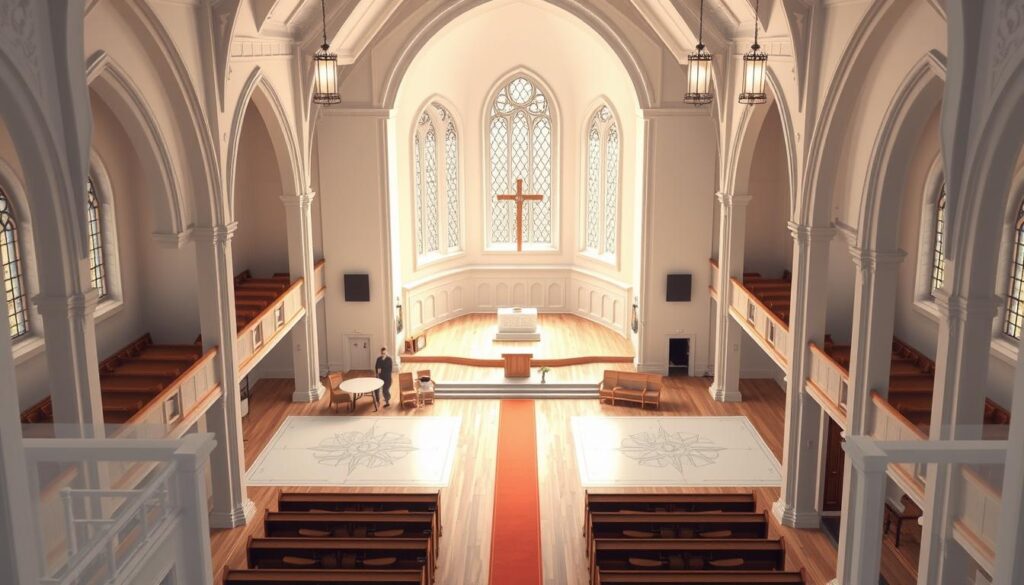
Key Elements Influencing Floor Layout
The nave forms the primary gathering area, designed to seat the congregation comfortably. A three-step elevation change often separates this space from the sanctuary, marking a visual transition into sacred zones. This subtle shift guides focus toward the communion table—a central symbol for shared rituals.
Clergy members typically use a raised pulpit for sermons, ensuring clear sightlines and acoustics. Nearby, a lectern holds scriptures for lay readers. Flexible seating arrangements in modern designs allow spaces to adapt for multimedia presentations or interactive services.
| Element | Traditional Design | Modern Adaptation |
|---|---|---|
| Seating | Fixed pews facing forward | Movable chairs in curved formations |
| Focal Point | Central altar with railing | Multi-level stage with screens |
| Accessibility | Single center aisle | Wide aisles with ramp access |
| Technology | Acoustic panels only | Integrated sound and lighting systems |
Communion railings remain common, though their designs now prioritize ease of movement. Many layouts also incorporate open areas near entrances for informal gatherings. These updates honor historical roots while meeting today’s need for versatility.
Modern Worship Space Requirements
Crafting a welcoming worship environment demands attention to both comfort and compliance. Today’s gatherings thrive when layouts prioritize inclusivity and adaptability. Let’s explore how thoughtful planning creates spaces where everyone feels valued.
Guidelines for Seating, Aisles, and Accessibility
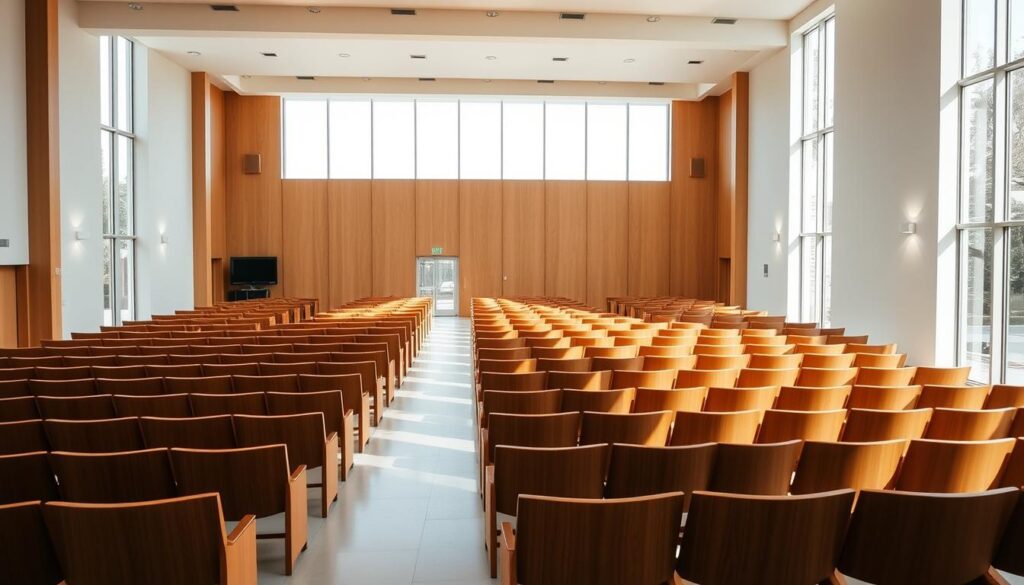
Seating arrangements directly impact participation. Lifeway Architecture recommends 34–36 inches between rows for easy movement. Allocate 24 inches per person for comfort—narrower than a standard dining chair—and limit rows to 14 seats for quick access.
Aisles need clear pathways. Main walkways should span 5 feet to accommodate wheelchairs and strollers. Side aisles require at least 30 inches to meet safety codes. These measurements ensure smooth traffic flow during services and emergencies.
Incorporating Lifeway Standards
Lifeway’s guidelines align with ADA requirements for accessibility. For example:
- 1 wheelchair space per 25 seats in smaller buildings
- 4 designated areas in venues seating 300
These standards help create flexible space that welcomes diverse needs. Pairing them with durable materials reduces long-term maintenance costs while supporting community growth.
Planning Functional Interior Layouts
Strategic spatial organization transforms how communities experience shared rituals. Thoughtful arrangements guide focus, enhance accessibility, and support meaningful interactions. Let’s examine how key elements work together to create harmony and purpose.
Placement of the Communion Table and Pulpit
Visibility and acoustics drive platform placement. For smaller buildings, a 7-foot-deep pulpit area allows leaders to move freely. Larger constructions often need 10 feet or more to accommodate sound equipment and multiple speakers.
Platform height depends on seating rows. Spaces with fewer than eleven rows limit elevation to 2 feet. Those with up to eighteen rows can rise to 3 feet. This maintains clear sightlines while preserving a sense of connection.
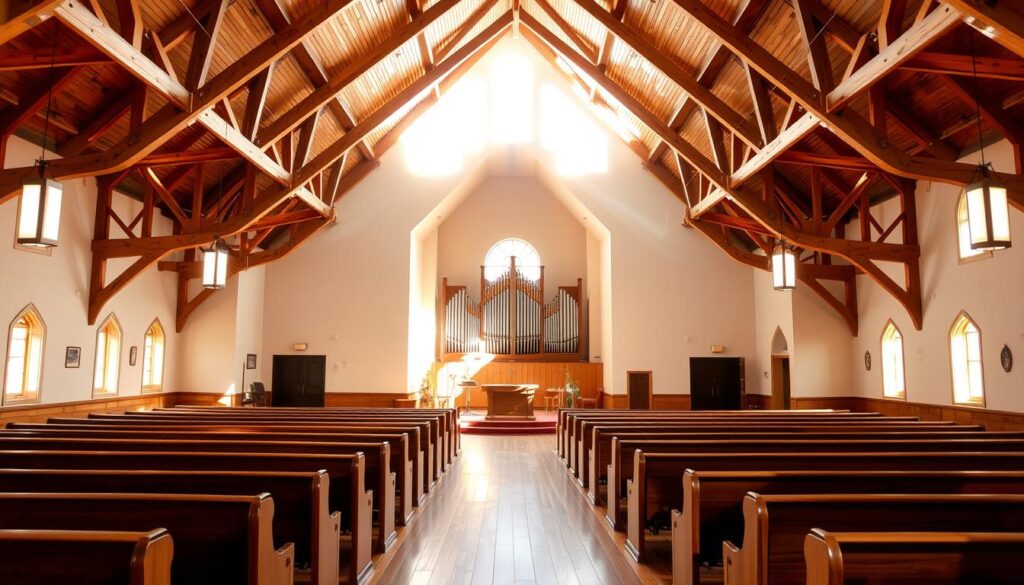
Distance matters too. Keep 7 feet between the platform and front seating—8 feet in bigger rooms. This buffer prevents crowding during services and allows smooth transitions between activities.
Designing the Nave, Sanctuary, and Choir Area
The nave’s layout prioritizes easy movement. Wide aisles and emergency exits ensure safety without disrupting the room’s flow. Seating clusters should face the sanctuary’s focal point—the communion table—to unify the space visually.
Choir areas thrive on smart proportions. Allocate seating for 10-12% of your congregation. Each row needs 3 feet of depth, with risers angled at 6-12 inches. This setup balances sound projection with space efficiency.
| Element | Small Building | Large Construction |
|---|---|---|
| Pulpit Depth | 7 feet | 10+ feet |
| Platform Height | 2 feet max | 3 feet max |
| Choir Risers | 6 inches | 12 inches |
Incorporating Architectural Innovations
Blending form and function through geometry unlocks new possibilities for sacred spaces. Architects today reimagine historical concepts to craft environments that inspire both reverence and participation.
Use of Central Domes, Ovals, and Unique Geometric Forms
Renaissance visionaries saw oval shapes as reflections of divine creativity. Borromini’s 17th-century S. Carlo alle Quattro Fontane stretched this form lengthwise, creating dramatic sightlines. Bernini later rotated the oval sideways at S. Andrea al Quirinale, proving geometry could shape spiritual experiences.
These designs weren’t just artistic choices. Curved walls and domed ceilings naturally amplify sound, reducing echo in large buildings. Modern adaptations might pair arched windows with acoustic panels—honoring tradition while solving practical challenges.
Balancing Tradition with Contemporary Needs
Today’s worship spaces thrive when historical elements meet modern flexibility. A dome might shelter retractable screens for multimedia sermons. Movable seating clusters adapt oval plans for interactive gatherings or traditional services.
Architecture becomes a bridge between eras when stone columns frame solar-powered lighting. Such blends honor timeless symbolism while supporting community growth. The result? Spaces that feel anchored in history yet ready for tomorrow’s needs.
Site Planning and Parking Considerations
Smart land use forms the foundation of welcoming worship communities. Balancing building placement with accessible parking requires understanding local codes and attendance patterns. Let’s explore how to maximize your ground while meeting practical requirements.
Estimating Acreage and Outdoor Space
Calculate 1 acre for every 100-125 attendees to accommodate worship spaces, classrooms, and offices. Add 2-4 acres for sports fields or playgrounds if your community values outdoor activities. Remember—property shape and stormwater codes might reduce usable space.
Efficient Parking Layouts and ADA Guidelines
Plan one parking spot per 2.5 attendees. A 200-person service needs 80 spaces—about 0.8 acres. Include accessible spots near entrances:
| Parking Element | Standard | ADA Compliant |
|---|---|---|
| Space Dimensions | 9′ x 18′ | 8′ x 18′ |
| Access Aisles | N/A | 5′ width |
| Spaces per Acre | 100-110 | Varies by total |
| Handicapped Requirements | 1% of total | Minimum 2 spaces |
Larger lots need more accessible spots—6 spaces for 150 cars. Check local building requirements for ramp slopes and signage rules. Proper layouts prevent congestion during events while welcoming all visitors.
Thoughtful site planning creates spaces where communities flourish. Whether hosting Sunday services or celebrating new beginnings, your ground should reflect care for both people and purpose.
Designing Multi-functional Educational and Fellowship Areas
Communities thrive when their gathering spots adapt to diverse needs. Smart layouts turn single-purpose rooms into dynamic hubs for learning, connection, and growth. Start by calculating 35-55 square feet per person based on your building’s size—smaller groups need tighter footprints, while larger programs demand flexible areas.
Creating Versatile Spaces for Classes and Meetings
Movable partitions transform classrooms into workshop zones or cozy discussion corners. Preschool rooms require at least 320 square feet for play and learning. Built-in storage keeps supplies handy but hidden, maintaining clutter-free areas for focused activities.
Integrating Gymnasiums, Libraries, and Offices
A gymnasium doubles as event space with retractable bleachers and stackable chairs. Nearby kitchen access supports community dinners or fundraiser bake sales. Compact libraries offer quiet reading nooks, while office clusters foster teamwork without sacrificing privacy.
Every design choice should invite collaboration. Wide hallways become gallery space for art displays, and outdoor areas extend learning beyond walls. When rooms evolve with your community’s rhythm, you build more than a building—you create a home.
FAQ
How do I balance spiritual and practical needs in our building design?
Start by defining zones for worship, fellowship, and education. Prioritize sightlines to the pulpit or communion table while ensuring accessible pathways, restrooms, and storage. Flexibility for events like baptisms or concerts also matters.
What historical styles influence modern worship spaces?
Renaissance-era centralized layouts and early Christian house churches shaped today’s designs. Many architects blend rectangular naves with modern touches like retractable seating or multimedia systems to honor tradition while meeting current needs.
How much space should we allocate for seating?
Aim for 12–18 square feet per person to allow comfortable movement. Include wider aisles for wheelchairs and strollers, following ADA guidelines. Lifeway Standards suggest at least 36-inch-wide aisles for safety and accessibility.
What are key considerations for parking areas?
Plan one parking spot per 2–3 attendees, plus ADA-compliant spaces near entrances. Include drop-off zones for seniors or families. Landscaping and lighting improve safety, while permeable pavers can manage stormwater sustainably.
How can we make classrooms and fellowship halls versatile?
Use movable partitions, stackable chairs, and tech-ready outlets. For example, a gymnasium with acoustic panels can host sports, banquets, or worship services. Built-in storage keeps supplies organized without cluttering sightlines.
Should we prioritize traditional or contemporary architectural features?
It depends on your congregation’s identity. Some combine vaulted ceilings with energy-efficient lighting, while others opt for open floor plans with modular stages. Discuss with your architect how materials like wood or steel reflect your community’s values.
What’s the ideal ratio of outdoor space to building size?
Allocate 1–2 acres for every 500 attendees, including gardens, playgrounds, and walkways. Green spaces enhance curb appeal and provide quiet areas for reflection. Ensure pathways are wheelchair-friendly and connect key entrances.
How do we handle acoustics in multi-purpose areas?
Use sound-absorbing panels, carpeting, or ceiling baffles to reduce echo. Work with an acoustical engineer to balance speech clarity for sermons and music quality for choirs or bands. Retractable walls with acoustic seals help isolate noise between rooms.