Recent Posts

Ennis, AL Protestant Church – Join Our Friendly Congregation


Step into a place where kindness meets purpose. Our local faith family thrives on creating meaningful connections through shared values and heartfelt support. Whether you’re new to the area or seeking deeper spiritual roots, you’ll find a community eager to walk alongside you.

Diversity strengthens our bonds. Young families, seasoned members, and everyone in between gather to celebrate life’s milestones and navigate challenges together. This isn’t just about Sunday mornings – it’s about building relationships that uplift daily life.

Personal growth flourishes here through engaging programs and service opportunities. From study groups to outreach initiatives, there’s space to explore your beliefs while making a real difference. Laughter echoes through our gatherings as friendships grow naturally over shared meals and collaborative projects.

Key Takeaways

  • Experience genuine connections in a diverse, caring community
  • Find support through life’s challenges and celebrations
  • Engage in personal growth through faith-based activities
  • Participate in meaningful local outreach initiatives
  • Build lasting friendships beyond weekly gatherings

Experience Our Legacy and Faith

Uncover a legacy built on heartfelt service and spiritual growth. What began as a bold vision in 2010 has blossomed into a thriving community where lives change daily. Founders Stacy and Glenn Hejny planted seeds for a fresh approach to worship – one that prioritizes personal encounters with truth.

Our Church History and Inspirational Journey

Stacy and Glenn’s divine calling sparked a revolution in spiritual learning. They dreamed of a space where people could study scripture independently, not just listen to sermons. This focus on self-guided discovery helped members build unshakable confidence in their beliefs.

Through challenges and triumphs, the community kept growing. Even after Glenn’s passing in 2024, his mission lives on. Members honor his memory by maintaining that original spark – creating life-changing moments through biblical truth.

Core Values and the Message of Jesus Christ

Everything we do flows from Christ’s teachings. Real transformation happens when people apply scripture to daily struggles. Our four pillars shape this journey:

  • Personal Bible study as foundation
  • Grace-filled environment for growth
  • Practical faith in action
  • Community support through challenges

These values create a safe space to ask tough questions. Newcomers often marvel at how quickly they connect with Jesus Christ’s message here. As one member shared: “I finally understood grace when I saw it lived out in our meals ministry.”

Protestant Church Ennis: Worship, Teaching, and Community

Discover fresh ways to deepen your spiritual walk through thoughtfully designed programs. Our weekly rhythm balances structured learning with organic connection points, meeting people wherever they are in life’s journey.
A warm, inviting interior of a Protestant church in Ennis, AL. In the foreground, a group of people gathered in a cozy Bible study circle, engaged in thoughtful discussion. Soft, natural lighting filters through large windows, casting a serene glow. In the middle ground, the pulpit and altar stand, adorned with simple, elegant decor. Wooden pews line the space, welcoming the congregation. The background features ornate stained glass windows, their colors casting a reverent ambiance. An atmosphere of community, contemplation, and reverence pervades the scene.

Sunday Worship Services and Bible Studies

Sunday mornings buzz with energy as families gather for transformative experiences. Services blend uplifting music with practical teaching that addresses real-world struggles. One regular attender notes: “The messages always give me actionable steps – like having a roadmap for Monday mornings.”

Program Time Focus
Sunday School 10:00 AM Book of Jude Study
Morning Service 11:00 AM Ephesians Exploration
Afternoon Session 1:30 PM Daniel’s Prophecies

Mid-Week Prayer Groups and Fellowship Opportunities

Wednesday evenings offer intimate spaces for growth. The 6:00 PM prayer group tackles personal requests while studying “Knowing the Living God.” Members often share how these gatherings help them overcome life’s challenges through scriptural promises.

Beyond scheduled meetings, spontaneous coffee hours and service projects keep relationships thriving. True community forms when people laugh over shared meals or tackle neighborhood needs together. As one participant reflects: “It’s not about perfect attendance – it’s about showing up for each other.”

Service and Community Engagement

Experience purposeful connections that extend far beyond our gathering spaces. Our commitment to meaningful service shines through leaders who model Christ-like compassion and initiatives that transform neighborhoods.
A diverse, welcoming church leadership team gathered in the warm glow of an inspirational setting. In the foreground, a group of five individuals - two women and three men of varying ages and ethnicities - stand with hands clasped, their expressions radiating kindness and purpose. Soft natural light filters through stained glass windows in the middle ground, casting an ethereal ambiance. In the background, wooden pews and a central pulpit suggest a traditional yet inclusive sanctuary, ready to welcome the community. The overall mood is one of spiritual guidance, collaboration, and a shared commitment to service.

Guiding Hands, Healing Hearts

Stacy Hejny leads with relational wisdom, carrying forward a vision that blends deep scriptural teaching with practical care. “True ministry happens when we walk beside people through both joy and struggle,” she shares. Worship Pastor Mark Wisdom fuels our musical expressions, showing how worship brings glory to God in everyday moments.

Nurturing Every Generation

Barbra Nasozi’s children’s programs spark curiosity about Jesus Christ through interactive Bible adventures. Sunday school classes help kids grasp God’s grace using age-appropriate stories. Parents appreciate family nights that strengthen bonds while addressing modern challenges.

Celebrations That Change Lives

Monthly potlucks and annual conferences create spaces for spiritual growth. Our Victory Conference this fall features David Brady exploring “Living in God’s Glory.” Community work days let everyone contribute – whether painting fences or packing meals for neighbors in need.

Through life’s hardest moments – from death to divorce – our care team offers hope rooted in Jesus Christ’s promise of renewal. As one member testified: “They showed up with casseroles and courage when I needed both most.”

Conclusion

Find your spiritual home among neighbors who celebrate life together. Our congregation stands ready to welcome seekers and believers alike, creating connections that strengthen through shared purpose. Meaningful gatherings blend uplifting moments with practical support for everyday challenges.

Join a community where genuine relationships flourish beyond Sunday mornings. Weekly services and study groups offer fresh perspectives on ancient truths, while outreach projects let faith come alive through action. You’ll discover spaces to ask questions, serve others, and grow at your own pace.

Connect today to explore meeting times and seasonal events. Together, we’re building a legacy of hope that extends across generations – one meal shared, one prayer answered, one life transformed at a time.

FAQ

What times are your Sunday worship services?

We hold our services at 9:00 AM and 11:00 AM every Sunday. Each gathering includes heartfelt music, Bible-based teaching, and opportunities to connect with others. Come early for coffee and fellowship!

Do you offer programs for children and teens?

Yes! Our Sunday School classes and youth groups meet weekly, offering age-appropriate lessons and fun activities rooted in biblical truths. Families are encouraged to grow together through our family ministry events.

How can I get involved in community outreach?

From food drives to seasonal events, we organize initiatives that serve Ennis and beyond. Join our volunteer teams or suggest new ways to share hope and grace with neighbors in need.

What makes your congregation unique?

We blend timeless teachings of Jesus Christ with authentic relationships. Our focus on grace, discipleship, and joyful worship creates a welcoming space for all seeking truth and purpose.

Is there support for families facing challenges?

Absolutely. Our pastoral care team provides prayer, counseling, and practical resources. Small groups also offer encouragement, helping families navigate life’s difficulties with faith and resilience.
Discover the Protestant Church in Fort Worth, TX


In the heart of Texas lies a spiritual community focused on authentic connection over rigid traditions. Here, faith centers on building relationships rather than checking religious boxes. Members describe their gatherings as places of healing, where everyone’s story matters—no perfections required.

This approach creates a space where people can explore spirituality without judgment. Many local congregations emphasize grace-filled teaching that meets individuals exactly where they are. Weekly gatherings blend thoughtful scripture discussions with practical support for daily challenges.

What makes this community unique? A shared belief that every person holds inherent value, regardless of background or past struggles. Leaders prioritize creating environments where worship feels less like performance and more like coming home. From small groups to service projects, opportunities abound to grow spiritually while making a difference.

Key Takeaways

  • Local congregations prioritize relationships over religious routines
  • Grace-centered teaching helps individuals grow at their own pace
  • Inclusive communities welcome people from all backgrounds
  • Practical support blends with spiritual guidance for real-life challenges
  • Service opportunities foster both personal and community growth

Warm Welcome to Our Community of Faith

Walking through our doors feels like joining friends who’ve been waiting just for you. Smiles greet newcomers before they reach the welcome desk, and conversations flow as naturally as morning coffee. This intentional warmth stems from a simple truth: belonging transforms lives.

Embracing New Members with Open Arms

First visits can feel overwhelming anywhere—but not here. We match every new face with a friendly guide who explains our rhythms and answers questions. Monthly welcome lunches create space for deeper connections, while starter groups help people explore beliefs at their own pace.

“We all need community. Welcome to ours!” says a leader, capturing our approach. These words shape everything from Sunday handshakes to crisis support teams. Members who’ve weathered life’s storms now walk alongside others, showing how shared strength builds resilience.

Building Lasting Relationships Through Fellowship

Weekly dinners and book clubs turn strangers into confidants. Our small groups meet in homes and parks, discussing real-life faith applications. Recent attendees often marvel at how quickly they find trusted friends who celebrate victories and sit through losses.

Service projects bond people through action—whether packing meals or painting schools. These experiences forge connections that outlast weekend plans. As one member notes, “This isn’t just a Sunday group. It’s my extended family.”

Experience the Protestant Church Fort Worth Difference

Discover a place where faith comes alive through meaningful worship and deep study. Our gatherings blend time-tested practices with fresh approaches to spiritual growth, creating spaces where truth meets daily life.

a vast and majestic cathedral, its towering spires reaching towards the heavens, bathed in the warm glow of natural light streaming through ornate stained glass windows. In the central nave, a congregation of worshippers gathers, their faces filled with reverence and awe as they raise their voices in hymns of praise, the acoustics of the space creating a harmonious and ethereal atmosphere. Pews line the aisles, carved from rich, dark wood, and the altar stands before the faithful, adorned with intricate religious symbols and candles that flicker softly. The scene exudes a sense of timeless tradition and community, capturing the essence of the Protestant church experience in Fort Worth, Texas.

Faith-Centered Worship Services

Sunday mornings here pulse with energy and reverence. Traditional hymns merge with modern acoustic arrangements, creating musical moments that bridge generations. Verse-by-verse teaching forms the backbone of every service, unpacking Scripture’s wisdom in practical ways.

Traditional Elements Contemporary Touches Shared Focus
Classic hymns Acoustic worship sets Christ-centered messaging
Communion liturgy Multimedia storytelling Biblical depth
Scripture recitation Casual dress options Relational connection

Spiritual Growth and Guidance

Growth happens through structured study and authentic relationships. Small groups explore entire Bible books over months, revealing God’s story from Genesis to Revelation. “This approach helped me see how every chapter points to Christ,” shares a longtime member.

Pastors offer personalized mentoring using Reformed theology principles. Weekly prayer circles and service projects let faith take tangible form. Whether facing life’s storms or celebrating joys, members find support rooted in eternal truths.

Nurturing Ministries for All Ages

Every generation finds meaningful ways to connect here. Our ministries meet people where they are, offering age-specific paths for spiritual discovery. From playful Bible explorations to deep theological discussions, each program builds confidence in personal journeys.

A warm, welcoming church interior with diverse parishioners of all ages engaged in various ministries. The scene depicts a nurturing community, with children in a Sunday school classroom, youth group members in a lively discussion, and adults participating in a Bible study. Soft, natural lighting filters through stained glass windows, creating a serene atmosphere. In the background, a choir rehearses, their harmonious voices reflecting the spirit of the congregation. The overall composition conveys a sense of inclusivity, spiritual growth, and intergenerational connection.

Children’s Ministry: Learning and Growing in God’s Love

Young hearts thrive through dynamic programs blending Bible stories with hands-on creativity. Weekly sessions mix music, art projects, and team games that make Scripture relatable. “Kids leave excited to share what they’ve learned,” notes a volunteer, highlighting the program’s impact.

Youth Ministry: A Place to Be Yourself and Flourish

Middle and high school students find their groove in spaces designed just for them. Led by experienced mentors, weekly gatherings balance serious faith talks with pizza nights and service projects. One participant shares: “This group lets me ask hard questions without feeling judged.”

Adult Ministries: Deepening Faith Through Study and Service

Flexible classes adapt to busy schedules while exploring rich spiritual topics. Current studies examine everything from prayer practices to biblical marriage principles. Service teams put lessons into action through neighborhood partnerships and global outreach efforts.

Age Group Core Focus Key Offerings
Children Foundational faith Interactive Bible activities, creative arts
Youth Identity in Christ Small group discussions, mission trips
Adults Practical theology Semester courses, service projects

Engaging Community and Inspirational Events

Shared experiences build bridges between hearts and neighborhoods. Our gatherings create spaces where spiritual growth meets practical care, blending timeless truths with modern needs.

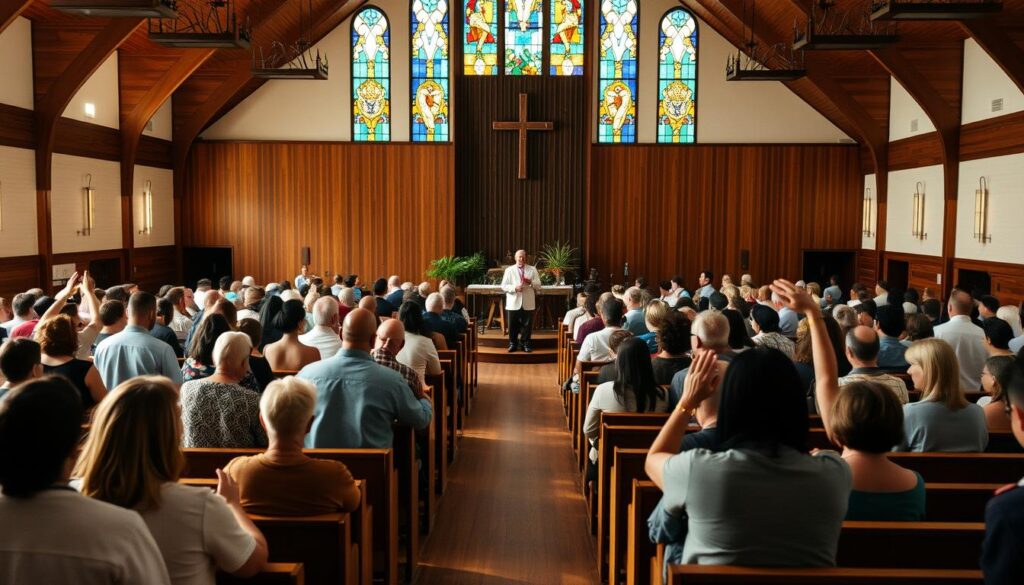
A spacious sanctuary filled with natural light, rows of wooden pews facing a central stage adorned with a simple cross. Congregants of diverse backgrounds gather, some bowing their heads in reverent prayer, others raising their hands in joyful worship. The atmosphere is serene yet uplifting, as the soulful melodies of a choir and the resonant voice of a minister echo through the hall. In the background, stained glass windows cast a kaleidoscope of colors, creating a sense of sacred tranquility. This is a community event, a worship service that celebrates the strength and unity of the Protestant Church, fostering a deep connection between the faithful.

Regular Worship Gatherings and Special Services

Weekly services anchor spiritual rhythms with vibrant music and thought-provoking messages. Contemporary bands reinterpret classic hymns, while communion moments invite personal reflection. Seasonal celebrations like Easter sunrise services or Christmas candlelight vigils become cherished traditions for families.

Special milestone events deepen connections. Baptism Sundays turn individual journeys into communal celebrations. Memorial services honor loved ones with personalized tributes, blending grief with hope.

Community Outreach and Local Events

Neighborhood partnerships drive meaningful action. Teams deliver groceries to homebound residents and host free workshops on biblical marriage principles. Annual backpack drives equip students, while disaster response crews help rebuild homes after storms.

Monthly community meals break down barriers through shared tables. Recent attendees describe these nights as “where faith gets hands and feet”. Free counseling services and prayer guides offer additional support for those navigating life’s challenges.

Conclusion

Imagine a place where imperfections are celebrated as part of the journey. Our community thrives on authentic connections that spark growth, not performance. As one leader puts it: “We’re better together—flaws and all.”

Curious visitors often say our gatherings feel like reunions with friends they haven’t met yet. Stay after services for coffee chats where conversations flow as freely as the refreshments. You’ll discover people eager to listen, not just preach.

Weekly events and volunteer projects turn strangers into teammates. From neighborhood cleanups to shared meals, these moments build bonds that last beyond Sundays. Newcomers quickly find their niche through groups tailored to diverse interests and life stages.

Ready to explore? Join us this weekend. Come as you are—questions, doubts, and all. You might just find the supportive circle you’ve been seeking.

FAQ

What should I expect during my first visit?

You’ll find a welcoming atmosphere focused on connection and spiritual growth. Our gatherings include uplifting music, meaningful teachings, and opportunities to meet others who share your journey.

Are there programs for kids and teens?

Absolutely! We offer age-specific ministries designed to nurture faith at every stage. From interactive lessons for children to dynamic youth groups, young people thrive here.

How can I get involved in local outreach efforts?

We organize regular service projects, food drives, and partnerships with organizations like Community Food Bank and Mission Arlington. Visit our outreach page or connect with our team to join.

Do you host events for spiritual development?

A> Yes! Join Bible studies, prayer workshops, or seasonal retreats. We also collaborate with ministries like RightNow Media to provide accessible resources for deepening your faith.

Is there a group for young adults or singles?

Our young adult ministry creates space for building friendships and exploring faith together. Check out weekly meetups, volunteer opportunities, and social events tailored for this life stage.

What COVID-19 safety measures are in place?

We follow CDC guidelines and offer hybrid services (in-person and online). Hand sanitizing stations and spaced seating options are available to ensure everyone’s comfort.

Protestant Church Fermoy: Discover Faith & Community


Nestled along Ireland’s Blackwater River lies a town steeped in spiritual history. Its roots trace back to a 7th-century monastery founded by Saint Finnchua, followed by the grand Cistercian Abbey of Sancta Maria de Castro Dei in 1170. The Irish name Mainistir Fhear Maí—”Monastery of the Welcome Plain”—hints at this enduring legacy of faith.

Modern Fermoy took shape in 1791 when Scottish entrepreneur John Anderson transformed the area into a thriving hub. His vision included creating spaces for worship, ensuring both Protestant and Catholic communities had places to gather. This forward-thinking approach helped shape the town’s unique blend of commerce and spirituality.

Today, visitors uncover layers of religious heritage through striking architecture and vibrant traditions. From medieval stonework to 18th-century planning, every corner tells a story of resilience and unity. The area’s spiritual sites remain central to daily life, fostering connections across generations.

Key Takeaways

  • Fermoy’s religious history spans over 1,300 years, beginning with early monastic settlements
  • John Anderson’s 18th-century development prioritized inclusive worship spaces
  • Architectural landmarks reveal evolving spiritual practices through the ages
  • Planned town layout integrated faith communities with economic growth
  • Multiple denominations coexist, reflecting centuries of cultural adaptation

Historical Legacy and Community Foundations

At the heart of Fermoy’s spiritual landscape stands a limestone marvel that reshaped local worship. Christ Church emerged as both a cultural anchor and architectural triumph, blending medieval roots with 19th-century innovation.

Early Beginnings and Religious Significance

Visionary leaders Sir John Anderson and John Hyde invested £3,282—a fortune in 1802—to create a worship space serving civilians and soldiers. Architect Abraham Hargrave designed soaring entrances for military parades, ensuring regimental colors never touched the ground during ceremonies.

The structure’s strategic location bridged eras. Built where Cistercian monks once prayed, its Gothic Revival tower became a new landmark. Local limestone walls echoed ancient traditions while embracing modern needs.

Evolution Through the Centuries

When Bishop William Bennett consecrated the building in 1809, 150 worshippers celebrated Christmas within its walls. The space adapted through decades, hosting regimental services and community events alike.

Year Milestone Impact
1802 Construction begins Hargrave’s final project starts shaping Fermoy’s skyline
1809 Consecration ceremony Formal opening establishes active worship community
1810s Military integration Tall doorways accommodate garrison flag ceremonies

Today, visitors admire how locally quarried limestone still showcases original craftsmanship. The tower’s enduring presence reminds us how visionary planning built more than structures—it forged lasting connections.

Understanding protestant church fermoy: Faith and Architecture

Fermoy’s skyline tells silent stories through soaring stonework. Two neighboring structures reveal how 19th-century builders translated faith into physical form. Their spires point skyward like stone prayers, each bearing unique fingerprints of spiritual expression.

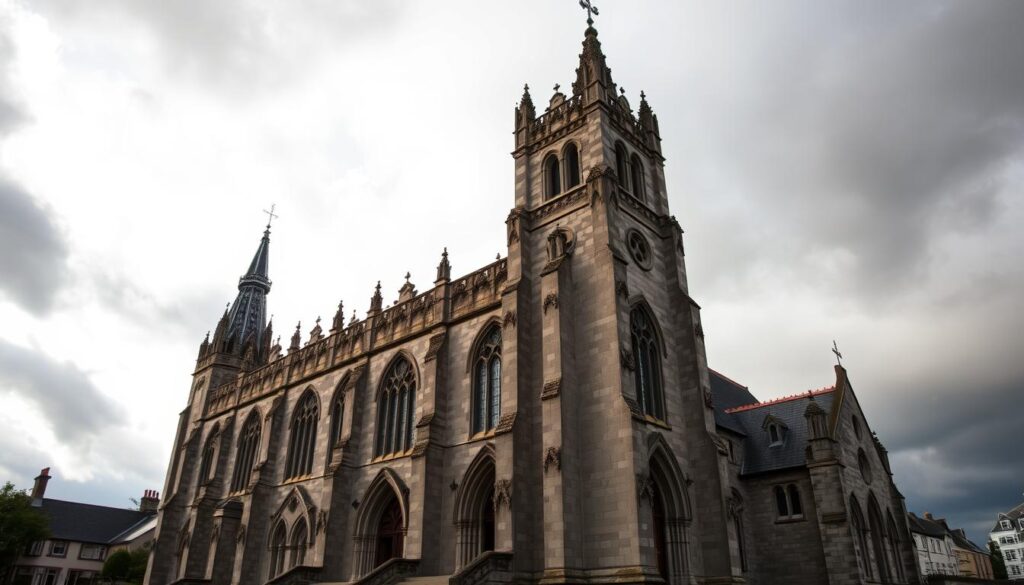
An imposing Gothic Revival church stands tall against a moody, overcast sky. Ornate spires and buttresses reach skyward, their intricate stone carvings casting dramatic shadows. The facade is adorned with pointed arched windows and ornate entryways, exuding an air of reverence and grandeur. The church is nestled amidst a quaint Irish town, its historic architecture a testament to the region's deep-rooted Protestant faith. Warm afternoon light filters through the clouds, illuminating the weathered stone and casting a warm glow over the surrounding landscape. This picturesque scene captures the timeless elegance and spiritual essence of the Protestant Church of Fermoy.

Comparative Insights from Local Landmarks

Christ Church’s west-facing tower welcomes visitors with intricate tracery windows. Its 1809 design prioritizes verticality – a visual sermon on heavenly aspirations. The three-bay nave draws eyes toward the bowed chancel, where morning light floods through colored glass.

Just south, the 1839 Presbyterian building takes a grounded approach. Square-plan towers anchor the structure, while pointed arch doorways frame communal gatherings. Carved limestone pinnacles crown the roofline, their floral patterns whispering of creation’s beauty.

Both designs share Gothic DNA but express distinct personalities:

  • Vertical vs horizontal emphasis: Spires reaching upward vs. wide nave spaces
  • Material mastery: Matching local limestone used differently – smooth ashlar vs. rugged quarry-face
  • Light play: Stained glass narratives vs. clear panes highlighting simple arches

These choices reflect theological nuances. The chancel’s curve in Christ Church guides collective focus, while the Presbyterian altar’s western placement invites personal reflection. Yet both spaces unite communities through shared awe of craftsmanship that’s lasted centuries.

Architectural Details and Technical Preservation

The stonework of Fermoy’s historic buildings reveals masterful artistry in every groove and joint. Skilled hands transformed local limestone into intricate patterns that withstand centuries of Irish weather. From delicate pinnacles to rugged rubble walls, these structures showcase carved limestone details that blur the line between construction and sculpture.

Carved limestone details preservation: A close-up view of intricate architectural elements, showcasing the exquisite craftsmanship and weathered textures of a historic Protestant church. The foreground features delicate floral carvings, their delicate patterns accentuated by soft, raking light that casts subtle shadows. In the middle ground, the stone surfaces display a patina of age, with subtle cracks and subtle discoloration adding depth and character. The background subtly blurs, drawing the viewer's attention to the meticulous preservation of these timeless architectural details, a testament to the enduring legacy of faith and community.

Craftsmanship in Carved and Dressed Limestone

Stonemasons treated each block like a canvas. The Presbyterian building’s crenellated parapet features corner pinnacles carved with floral motifs – a testament to patient craftsmanship. Across town, dressed limestone walls display precise ashlar work, their smooth surfaces contrasting with textured rubble sections.

Builders strategically chose materials based on location. North-facing walls used durable rubble limestone for weather resistance, while decorative south sides featured finely tooled blocks. This smart material selection explains why moldings around windows and arches remain crisp after 200 years.

Technical Storage Access and Preservation Methods

Modern conservation blends tradition with technology. Specialists use 3D scanning to create digital twins of moulded limestone string courses and cornices. “We’re not just preserving stone – we’re safeguarding centuries of architectural knowledge,” notes a preservation architect working on recent projects.

Data management plays a crucial role. Detailed records of technical storage access protocols ensure only authorized personnel handle sensitive structural information. These systems balance public interest with the necessary legitimate purpose of protecting historical data.

Preservation Technique Application Outcome
Laser Cleaning Removes pollution from carved surfaces Reveals original tool marks
Moisture Sensors Embedded in rubble walls Prevents frost damage
UV-Filtering Glass Protects stained windows Reduces light degradation

Through these methods, Fermoy’s architectural legacy remains both physically intact and digitally accessible. The fusion of traditional stonework with modern storage access technologies ensures future generations can study and appreciate these marvels.

Conclusion

Standing as a bridge between eras, Christ Church continues to watch over Fermoy with quiet dignity. Its hilltop position near the river crossing remains a visual anchor, just as architect Abraham Hargrave envisioned. This landmark proves sacred spaces can evolve while honoring their roots.

From humble beginnings to architectural marvel, the structure embodies community vision. Early planners understood that spiritual gathering places fuel civic strength. Today, visitors marvel at carved limestone details that showcase 19th-century craftsmanship, preserved through modern conservation efforts.

These buildings serve dual roles as worship centers and historical classrooms. Their arched windows and stonework teach silent lessons about faith expressed through form. Whether drawn to architectural beauty or spiritual heritage, all find inspiration here.

Ready to explore living history? Discover more about these landmarks where past and present unite. Walk through doorways that welcomed generations, and experience how stone and spirit shape enduring legacies.

FAQ

What makes this site historically significant?

The building’s roots trace back to early community-building efforts, blending spiritual traditions with local heritage. Its evolution reflects shifts in worship practices and social roles over centuries.

Are there unique architectural highlights?

Yes! The structure features carved and dressed limestone details, including a striking south side tower and an east window with moulded limestone surrounds. These elements showcase skilled craftsmanship.

How is technical storage access managed here?

Preservation methods prioritize security and functionality. Storage systems are designed for legitimate purposes like maintenance, ensuring historical materials remain protected while supporting daily operations.

How does it compare to nearby landmarks?

Like Christ Church and other local sites, it blends Gothic Revival influences with regional materials. However, its chancel arch and nave layout offer distinct design choices worth exploring.

Can visitors explore interior features?

Absolutely! The timber roof beams, rubble stone walls, and north entrance doorway are accessible during guided tours. Check local schedules for availability.

What role does the tower play in preservation?

The west-facing tower houses original structural elements, including a spiral staircase. Its dressed limestone walls help maintain climate control, aiding long-term conservation efforts.

Protestant Churches in France: A Closer Look


In a nation historically shaped by Catholicism, a vibrant minority faith community quietly thrives. Representing about 3% of the population, this group traces its roots to revolutionary thinkers like John Calvin – who was actually French – and his contemporaries. Their legacy continues to influence spiritual life across the country today.

The journey of these religious communities reveals remarkable adaptability. From early persecution to modern acceptance, their story intertwines with France’s cultural evolution. Did you know nearly 2 million people identify with this tradition nationally, while globally, similar beliefs unite over 800 million followers?

Modern expressions of this faith showcase surprising diversity. Traditional congregations share space with energetic new movements, creating a dynamic spiritual mosaic. Geographic patterns tell their own tale – stronger presence in certain areas reflects centuries of migration and cultural exchange.

Beyond Sunday services, these groups serve as neighborhood anchors. They organize food drives, host language classes, and preserve historical landmarks. This practical approach to faith helps bridge ancient traditions with contemporary needs.

Key Takeaways

  • Historical roots trace back to French reformers like Calvin and his peers
  • Modern communities blend traditional and contemporary worship styles
  • Geographic distribution reveals patterns of cultural preservation
  • Active social engagement defines their community role
  • Global connections balance with local French identity

Historical Roots and Evolution of French Protestantism

What began as theological debates soon sparked a movement that would reshape France’s spiritual landscape. By the mid-1500s, reformers like John Calvin laid groundwork emphasizing personal faith and scriptural authority – ideas that spread like wildfire through underground networks.

Calvinism, Huguenots, and Early Reformation Influences

Calvin’s followers, known as Huguenots, became France’s largest Reformation group. At their peak, they comprised 15% of the population before the 1572 St. Bartholomew’s Day massacre. “This wasn’t just religious conflict,” notes historian Hans J. Hillerbrand, “but a struggle for cultural identity.”

The 1598 Edict of Nantes brought temporary peace, granting worship rights and fortified cities. Southern regions flourished with vibrant communities, though tensions simmered beneath the surface. This fragile tolerance lasted nearly 90 years – until royal ambitions changed everything.

The Impact of the Edict of Nantes and Its Revocation

Louis XIV’s 1685 Edict of Fontainebleau revoked religious protections, launching Europe’s largest forced conversion campaign. Soldiers billeted in Huguenot homes (called dragonnades) terrorized families into Catholicism. Nearly 200,000 fled abroad, taking skilled trades with them.

Persecution continued for generations until the 1789 Declaration of Rights restored liberties. In 1985, President Mitterrand’s formal apology acknowledged centuries of suffering, stating: “The Republic remembers its errors and honors the resilience of persecuted communities.”

Diversity and Regional Presence of Protestant Communities

France’s spiritual landscape reveals unexpected diversity through its faith groups. Two areas stand out for their enduring religious heritage. Let’s explore how geography shaped belief systems across generations.

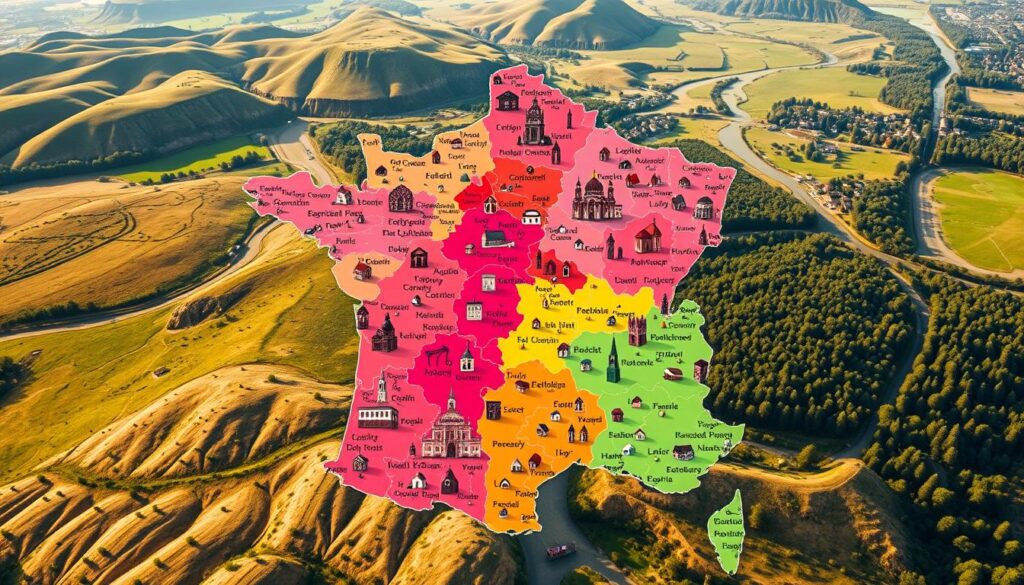
A vibrant topographical map of France, showcasing the regional distribution of Protestant churches and communities. The foreground features intricate church icons and symbols, denoting the diverse denominations and traditions across the country. The middle ground displays a detailed, color-coded overlay highlighting the concentration and density of Protestant populations in each region, with higher concentrations represented by deeper hues. The background depicts the natural landscape of France, with rolling hills, winding rivers, and lush forests, creating a sense of depth and context. The lighting is soft and warm, casting a serene, contemplative atmosphere, reflecting the spiritual nature of the subject matter. The camera angle is slightly angled, providing a comprehensive, bird's-eye view of the nation's religious diversity and regional presence.

Alsace: Crossroads of Tradition

Alsace’s unique position created a safe space for reformers. While other areas banned non-Catholic worship, this border region maintained Lutheran practices. Today, 17% of Bas-Rhin residents identify with these traditions – France’s highest concentration.

Southern Strongholds

The sunbaked hills of Languedoc tell a different story. Here, the reformed church took root through centuries of conflict. “Our steeples outlasted kings’ decrees,” says Pastor Émilie Rousseau from Gard. Her parish traces its lineage to 1560s Huguenot meetings.

Region Department Protestant Presence
Alsace Bas-Rhin 17.4%
Alsace Haut-Rhin 7.3%
Languedoc Gard 7.2%
Rhône-Alpes Drôme 6.8%

Modern communities balance heritage with new influences. Urban centers like Paris blend historic parishes with multicultural congregations. This mix keeps worship spaces vibrant while honoring regional roots.

Modern Developments in Protestant Churches France and Their Contemporary Relevance

France’s spiritual tapestry keeps evolving with fresh threads of belief. At the heart of this change stands the French Protestant Federation, founded in 1905 to unite diverse faith groups under one banner. This umbrella organization now connects over 1,400 parishes and 1,600 spiritual leaders nationwide.

The Rise of Evangelical and Pentecostal Movements

Dynamic new expressions of faith are reshaping communities. An Evangelical congregation opens its doors every 10 days, with 700,000 now participating in these vibrant gatherings. This growth contrasts with shrinking numbers in traditional denominations, though mergers like the 2013 United Protestant Church show historic groups adapting.

The French Protestant Federation: Unity Amid Diversity

As the main voice for 900,000 members, the Federation bridges ancient traditions and modern practices. Its 25-member council represents everyone from Reformed traditionalists to charismatic Pentecostals. “Our strength lies in shared values,” explains a Federation spokesperson, “not uniform beliefs.”

This cooperative body also tackles social issues, proving ancient institutions can address contemporary needs. With membership applications still rising, the Federation demonstrates how varied movements can thrive together while keeping individual identities intact.

FAQ

How did Protestantism begin in France?

The movement grew from 16th-century Reformation ideas, particularly Calvinism. Followers, called Huguenots, faced persecution but shaped early communities through underground networks and theological debates.

Why was the Edict of Nantes important?

Issued in 1598, it granted limited religious freedom to Huguenots, ending decades of conflict. Its 1685 revocation by Louis XIV forced many to flee or practice secretly, weakening the community for generations.

Where are Protestant groups concentrated today?

Regions like Alsace and Occitanie retain strong ties due to historical tolerance or resistance. Cities such as Montpellier and Strasbourg still host active parishes and cultural landmarks.

How did regional conflicts shape these communities?

Wars of Religion in the 1500s caused mass displacement. Later, migration to Switzerland or Germany preserved traditions, while some returned post-1789 to rebuild congregations.

What newer movements are growing now?

Evangelical and Pentecostal groups attract younger members with contemporary worship styles. Their focus on outreach and social projects contrasts with traditional Reformed or Lutheran practices.

What role does the French Protestant Federation play?

Founded in 1905, it unites 30+ denominations, promoting dialogue and shared values. It advocates for religious freedom and represents members in national discussions on ethics and education.

Protestant Church Dress Code: What to Wear


Walking into a new spiritual community can feel intimidating, especially when you’re unsure what to wear. While most congregations prioritize warmth and inclusion over strict rules, choosing respectful clothing shows care for the setting and those around you. Modest choices that cover shoulders, chest, and knees are widely appreciated across denominations.

Attire preferences often reflect a congregation’s style. Traditional services might lean toward business casual, while modern gatherings could welcome jeans and relaxed tops. When in doubt, slightly dressier options ensure you blend in comfortably. Remember: your presence matters more than perfection.

Many first-time visitors worry about standing out, but communities value sincerity over outfits. Focus on clean, well-fitting pieces that let you engage fully in worship. This guide will help you navigate unspoken norms, from classic denominational services to contemporary gatherings.

Key Takeaways

  • Modest clothing choices demonstrate respect for sacred spaces and community values
  • Attire expectations vary between traditional and contemporary worship styles
  • When uncertain, lean toward slightly formal options to feel confident
  • Comfortable outfits help maintain focus on spiritual connection
  • Clean, well-fitting garments work for most congregations

Exploring the Foundations of Protestant Church Attire

Understanding what to wear begins with knowing why certain traditions exist. For centuries, religious spaces have balanced reverence with cultural shifts. The earliest ministers wore special garments, but later movements embraced simplicity to focus on teachings rather than appearance.

Roots in Reformation Values

Sixteenth-century reforms rejected ornate clerical robes, favoring practical clothing. This shift reflected a belief that spiritual connection matters more than outward displays. Many congregations today maintain this philosophy, though interpretations vary widely.

Modern Denominational Approaches

Different groups express their values through clothing in unique ways:

Denomination Attire Style Worship Features
Anglican/Lutheran Business formal Hymns, liturgical structure
Baptist/Methodist Business casual Mixed music styles
Pentecostal Modest casual Contemporary gospel
Non-denominational Everyday wear Band-led worship

Leaders often set the tone – pastors in suits may signal formal expectations, while clergy in jeans suggest relaxed norms. Regional culture also plays a role. Southern congregations might prefer Sunday best, whereas urban groups lean casual.

Music styles further influence clothing choices. Churches using scripture-based songs often maintain traditional dress, while those with modern bands typically welcome casual outfits. Always remember: modesty remains key across all worship forms.

Choosing the Right Attire for Church Services

Selecting appropriate clothing for spiritual gatherings combines personal comfort with community respect. While expectations vary between congregations, polished yet practical outfits strike the perfect balance. Let’s explore how to navigate different dress codes while maintaining authenticity.

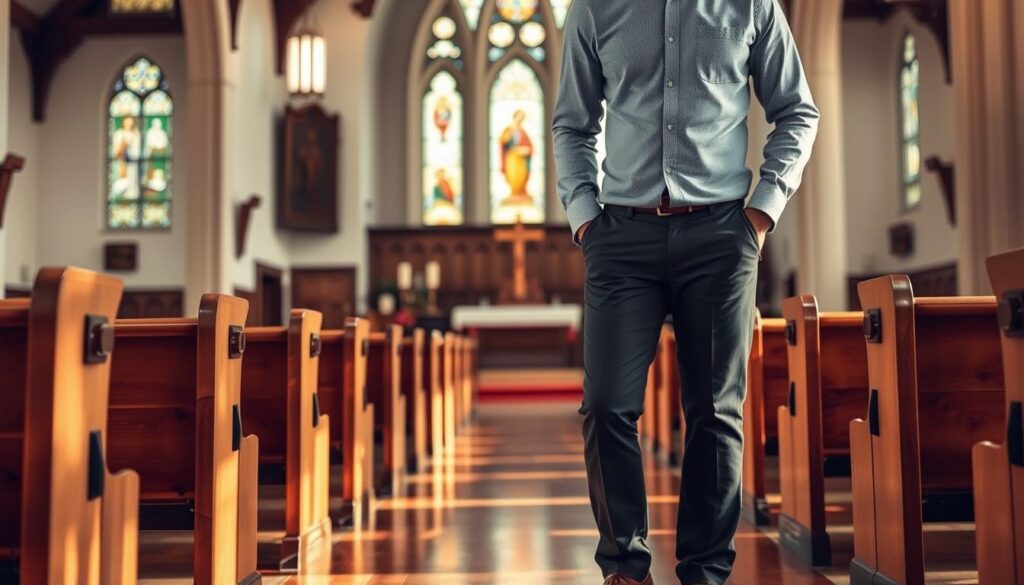
A well-dressed person standing in a church interior, dressed in smart casual attire that is appropriate for a religious service. The outfit consists of a button-down shirt, slacks, and leather dress shoes. The lighting is warm and natural, creating a serene and reverent atmosphere. The scene is captured from a mid-range angle, emphasizing the subject's poise and composure. The background features wooden pews, stained glass windows, and subtle religious iconography, conveying a sense of tradition and spirituality. The overall impression is one of respect, dignity, and a thoughtful approach to church fashion.

Balancing Formal and Casual Options

Many spiritual communities embrace both dressy and relaxed styles. This table shows common choices across different service types:

Service Style Women’s Options Men’s Options
Traditional Knee-length dresses Dress shirts + slacks
Contemporary Tailored jeans + blouses Dark jeans + polos
Mixed Skirts + cardigans Khakis + button-downs

When uncertain, observe regular members’ clothing during your first visit. Dark-wash jeans often work better than distressed styles in casual settings. Layered outfits let you adapt to temperature changes while maintaining coverage.

Tips for Modesty and Appropriateness

Focus on these key elements for respectful dressing:

  • Shoulder coverage: Choose capped sleeves over strapless tops
  • Hemlines: Aim for knee-length or below when sitting
  • Necklines: Keep cleavage concealed with higher cuts

Comfort matters as much as appearance – you’ll want to focus on worship, not adjusting your outfit. Structured fabrics resist wrinkling during extended services. For footwear, consider supportive shoes since many gatherings involve standing during hymns.

Tips for Adopting the Protestant Church Dress Code in Modern Worship

Finding your style in a worship setting balances personal expression with community respect. Today’s congregations value authenticity, but thoughtful clothing choices show care for shared values. Let’s explore how to honor traditions while staying true to yourself.

A stylish congregation stands in a modern Protestant church, bathed in warm natural light from large windows. The worshippers wear a variety of contemporary attire - crisp button-down shirts, tailored dresses, and sleek slacks in muted tones. Subtle patterns and textures add visual interest, while simple, clean-lined silhouettes convey an air of reverence and devotion. Accessories like leather belts, delicate jewelry, and well-polished shoes complete the refined, yet comfortable aesthetic. The overall impression is one of thoughtful, tasteful worship, where the focus is on the spiritual experience rather than outward appearance.

Navigating Cultural and Local Expectations

Regional differences shape what people wear. In Southwest Florida, flip-flops fit right in, while Midwestern congregations often prefer collared shirts. Observe regular members’ choices during your first visit – their outfits reveal unspoken norms.

Incorporating Personal Style with Traditional Elements

Add personality through accessories or color while keeping cuts modest. A patterned scarf or leather bracelet can showcase individuality without distracting others. As one fashion-conscious pastor notes: “My crisp white sneakers let me connect with younger members while maintaining professionalism.”

Practical Outfit Inspirations for Various Occasions

Build a versatile wardrobe with these mix-and-match options:

Occasion Women’s Options Men’s Options
Regular Service Midi skirt + knit top Chinos + linen shirt
Holiday Event Wrap dress + blazer Sport coat + dress jeans
Outdoor Gathering Cropped trousers + flats Polo + technical pants

Age-appropriate choices matter. Teens might rock clean sneakers, while seniors could opt for tailored separates. Remember: your clothing should help you focus on worship, not attract attention. When in doubt, ask yourself – does this outfit honor the place and people around me?

Conclusion

Confidence in spiritual gatherings starts with understanding your community’s culture rather than memorizing rules. Many pastors intentionally choose clothing that balances approachability with reverence – a helpful cue for newcomers. While some congregations reserve communion for members, all typically welcome visitors warmly regardless of their outfits.

Your attire should honor the sacred space without causing stress. Homeless individuals often find acceptance in these communities precisely because focus stays on spiritual connection over appearances. Observe regular attendees’ styles, then adapt your wardrobe using comfortable pieces that reflect your personality.

Modern worship spaces value authenticity above strict traditions. A teenager’s clean sneakers or a senior’s tailored blazer both work when paired with respectful coverage. What matters most is showing up ready to engage meaningfully with others.

Ultimately, your presence demonstrates care for the congregation and its values. As denominations evolve, the core principle remains: clothing should facilitate connection, not distract from it. Wear what lets you participate fully while respecting the collective experience.

FAQ

How do denominations influence what’s considered appropriate?

Denominations often reflect unique cultural or theological values, which shape expectations. For example, liturgical traditions might lean toward formal attire, while contemporary congregations embrace relaxed styles. Always observe local customs or ask leaders for clarity.

Are jeans acceptable for casual services?

Many modern congregations welcome jeans, especially in relaxed settings. Pairing them with a collared shirt or blouse balances comfort and respect. Check the congregation’s vibe beforehand—some prioritize neatness over strict formality.

How do I navigate cultural expectations if I’m new?

Start by attending a service to observe common styles. When in doubt, opt for business casual—think slacks, skirts, or dresses in muted tones. Over time, you’ll learn how to blend personal flair with community norms.

What guidelines ensure modesty in attire?

Aim for clothing that covers shoulders, knees, and midriffs. Avoid overly tight fits or flashy patterns. Neutral colors and simple accessories often align with values of humility and focus on worship.

Can I incorporate trendy styles without disrespecting traditions?

Yes! Modern fits like tailored jumpsuits or linen shirts work well. Balance bold choices with classic elements—for example, pair a statement necklace with a modest dress. Prioritize cleanliness and intentionality in your look.

What should I wear for weddings or special events?

Formal occasions typically call for suits, dresses, or skirts below the knee. Darker hues like navy or charcoal are safe, but check invitation notes for themes. Accessories like ties or hats can add personality without overshadowing the event.

Do age or generational differences affect dress norms?

Often, yes. Older members might prefer suits or Sunday-best dresses, while younger attendees lean into smart-casual looks. Focus on unity—whether polished or relaxed, attire should reflect reverence for the gathering.

What is a Protestant Church Called?


In 1529, a bold political act changed religious history forever. Six German princes and 14 cities stood against powerful authorities at the Diet of Speyer, refusing to abandon their beliefs. This protest didn’t just challenge rules—it sparked a movement that reshaped Christianity.

The term we now associate with this movement began as a nickname from critics. Opponents first used “Protestant” to mock reformers, unaware it would become a global identity. Over time, believers embraced the label as a symbol of their commitment to change.

Regional differences quickly emerged in how people described their faith. German followers preferred “evangelicals,” while French reformers became known as Huguenots. These names show how local cultures shaped the same core ideas.

Understanding this history helps us appreciate modern religious diversity. Today, millions across denominations share roots in that 16th-century stand for biblical principles. Their story reminds us how courage can redefine entire communities.

Key Takeaways

  • The term originated from a 1529 political protest against religious restrictions
  • Early reformers used regional names like “evangelicals” before “Protestant” spread
  • Opponents created the label, which reformers later adopted proudly
  • Different areas developed unique identities while sharing core beliefs
  • Modern denominations maintain connections to these historical roots

Introduction to Protestant Churches

A religious transformation began reshaping societies from Germany to global frontiers. This shift created a distinct branch of Christianity that now connects over 900 million followers worldwide. Unlike older institutions, it championed personal engagement with sacred texts as a birthright for all believers.

Core Principles of the Movement

Three pillars define this approach to faith:

  • Direct access to scripture without mandatory clergy interpretation
  • Salvation through faith rather than ritual-based systems
  • Priesthood of all believers empowering ordinary worshippers

These ideas sparked educational revolutions as people sought to read the Bible themselves. Colonial America saw this philosophy fuel demands for self-governance and individual rights.

Why Understanding This Matters Today

From hospital systems to literacy campaigns, this tradition’s fingerprints appear in modern life. Its emphasis on personal conviction continues shaping debates about ethics and social justice. Over 40% of Americans identify with denominations born from these historical roots.

Contemporary communities maintain this legacy through diverse worship styles while preserving core beliefs. Their global networks address humanitarian crises and drive interfaith dialogues, proving ancient ideas can meet modern challenges.

Historical Roots of Protestantism

Long before the 16th-century upheaval, discontent simmered across Europe. By the 1400s, educated thinkers began questioning practices that seemed far removed from biblical teachings. Shocking behavior among religious leaders fueled public anger—like Pope Alexander VI, who openly raised children born from affairs while leading the church.

15th century religious reforms

Early Critiques and Reform Movements

Visionaries laid groundwork for change decades before famous reformers emerged. Oxford scholar John Wycliffe produced the first English Bible translation, declaring “Every Christian must drink Christ’s teachings straight from scripture.” His ideas spread through handwritten copies, challenging the clergy’s exclusive authority.

Jan Hus in Bohemia and William of Ockham in Germany echoed these calls. Their demands for transparency created networks of believers hungry for spiritual renewal. When authorities silenced these voices through force, their followers kept the movement alive underground.

The Emergence of Reformation Ideals

Two powerful forces accelerated change: rising nationalism and accessible knowledge. As kingdoms resisted foreign control, local rulers supported religious reforms to assert independence. The printing press then turned Wycliffe’s handwritten Bibles into mass-produced tools for personal study.

Christian humanists like Erasmus added intellectual firepower. They exposed forged documents churches used to justify power grabs, asking “When did truth require deception?” This blend of grassroots passion and scholarly critique created fertile soil for lasting transformation.

Key Milestones in the Protestant Reformation

October 31, 1517, marked a turning point when Martin Luther nailed his 95 Theses to a German chapel door. This act challenged the sale of indulgences and ignited debates across Europe. Within months, handwritten copies of Luther’s arguments reached distant cities—a preview of the communication revolution to come.

The movement gained momentum through thinkers like Huldrych Zwingli in Zurich. He rejected fasting traditions, arguing “True worship comes from scripture, not human rules.” John Calvin later refined these ideas in Geneva, creating systematic teachings that spread to France and Scotland.

Three factors supercharged the Reformation:

Catalyst Impact Result
Printing Press Distributed 200,000 Luther works by 1520 First mass media revolution
Political Support German princes protected reformers Regional religious independence
Theological Shifts Salvation through faith alone Empowered individual believers

By the 17th century, Reformed traditions dominated parts of Holland and Britain. These groups emphasized God’s sovereignty, shaping modern democratic ideals. Meanwhile, Catholic leaders launched their own reforms at the Council of Trent, addressing corruption while reaffirming traditional doctrines.

This era’s legacy lives in global religious practices and educational systems. From translated Bibles to community-led worship, the Reformation reshaped how millions connect with spirituality.

What Does “protestant church called” Mean?

This question unlocks a fascinating journey through religious identity. Originally, the word described just two theological camps: Lutherans following Martin Luther’s teachings and Reformed groups influenced by John Calvin. These early believers rarely used the label themselves, preferring “evangelical” to emphasize their focus on scripture.

protestant terminology evolution

By the 1600s, meanings shifted with political winds. English authorities used the term to separate approved faith communities from newer movements like Baptists. Meanwhile, critics applied it broadly to anyone rejecting traditional authority structures. As one 17th-century observer noted: “They protest against Rome, yet protest among themselves.”

Three key phases shaped modern understanding:

Period Usage Scope
1520s-1600 Specific schools of thought Lutheran/Reformed only
1601-1700 Orthodoxy marker Anglicans vs. dissenters
1701-present Umbrella category 500+ denominations

Today, the name connects vastly different worship styles. A traditional Lutheran church shares core principles with contemporary Pentecostal congregations, though their practices differ. This diversity explains why no single answer exists—each community reflects unique cultural blends while upholding Reformation roots.

Understanding this evolution helps navigate modern religious landscapes. From storefront chapels to cathedral-sized congregations, these denominations prove ideas born in protest can grow into global movements embracing both tradition and change.

Major Protestant Denominations Explored

From grand cathedrals to modern auditoriums, faith communities have developed unique identities while sharing foundational principles. Nine main denominational families shape this landscape, each offering distinct approaches to spiritual life.

protestant denominations comparison

Diverse Doctrines and Worship Practices

Anglican traditions blend ancient rituals with reform ideals, serving 70 million members globally. Their worship form preserves choral music and structured prayers, creating what Queen Elizabeth I called “a bridge between old and new.”

Baptist congregations prioritize personal faith decisions, requiring adult baptism by immersion. This practice reflects their emphasis on individual commitment—over 40 million members gather in settings ranging from rural chapels to urban megachurches.

Examining Anglican, Baptist, Lutheran, and More

Lutheran churches, with 80 million adherents, maintain traditional liturgy while emphasizing grace-centered theology. Many use Martin Luther’s original catechisms during confirmation classes.

Modern trends show rising non-denominational groups that simplify organizational structures. One pastor explains: “We focus on core beliefs without historical baggage.” These communities often feature contemporary music and casual atmospheres.

Tradition Worship Style Key Emphasis
Anglican Liturgical Sacramental unity
Baptist Congregational Personal conversion
Lutheran Traditional Grace doctrine
Non-Denominational Contemporary Community focus

Pentecostal and Methodist denominations add vibrant expressions through spiritual gifts and social activism. This diversity proves shared roots can nurture varied spiritual practices while maintaining common ground.

Influential Reformers and Their Contributions

Personal convictions of a few sparked global religious transformations. At the heart of this change stood thinkers who reimagined faith’s role in daily life. Their ideas still guide millions today.

Martin Luther and the 95 Theses

A German monk’s spiritual crisis changed history. Martin Luther wrestled with feelings of unworthiness until he found peace in scripture. His 1517 document attacking indulgences became Christianity’s first viral message.

Luther’s three pillars revolutionized belief: faith over works, scripture over tradition, grace over human effort. He translated the Bible into German so farmers could read it. Hymns he wrote let congregations voice their faith directly.

John Calvin and Reformed Theology

While Luther sparked change, John Calvin built systems. The French thinker’s logical approach explained God’s complete control. His concept of predestination shaped communities from Geneva to Boston.

Calvin designed church leadership models still used today. Elders and pastors shared power, preventing single rulers. This structure influenced modern democracies’ checks and balances.

Other voices added depth to the movement. Huldrych Zwingli debated Luther about communion meanings. Philip Melanchthon turned fiery ideas into school curricula. Together, these reformers created a theological mosaic that remains vibrant five centuries later.

FAQ

How are communities born from the Reformation commonly identified?

Groups stemming from the 16th-century Reformation are often labeled by their core beliefs or founders, like Lutherans (Martin Luther) or Calvinists (John Calvin). They’re also broadly termed “evangelical” or “Reformed” based on shared doctrines.

Why is studying Reformation-era faith groups important today?

These traditions shaped modern democracy, education, and social ethics. Understanding their history clarifies debates on topics like religious freedom and the role of scripture in daily life.

What sparked the early critiques leading to the Reformation?

Concerns over practices like indulgences and clerical corruption in the Roman Catholic Church drove reformers like Luther to emphasize salvation through faith alone, not institutional rituals.

What major events defined the Reformation period?

Key moments include Luther’s 95 Theses (1517), the Augsburg Confession (1530), and the Peace of Westphalia (1648), which cemented religious diversity in Europe.

How did the term "Protestant" originate?

It comes from German princes “protesting” Catholic policies in 1529. Over time, it described all groups rejecting papal authority in favor of biblical teachings.

What distinguishes Anglican, Baptist, and Lutheran practices?

Anglicans blend traditional liturgy with Reformed theology, Baptists prioritize adult baptism and congregational governance, while Lutherans focus on grace through faith, as outlined in Luther’s writings.

How did John Calvin’s ideas differ from Martin Luther’s?

Luther emphasized justification by faith, while Calvin expanded on predestination and a structured church model, influencing Presbyterian and Reformed traditions.