Recent Posts

Hilarious Things Protestant Churches Do: Insights


Ever wondered why some church moments feel straight out of a sitcom? Let’s explore the charmingly quirky side of faith communities that’s taken social media by storm. From coffee-hour chaos to hymn-singing debates, these gatherings have inspired endless memes and inside jokes.

Many congregations blend centuries-old traditions with modern-day surprises. Picture potluck dinners where gelatin salads battle casseroles for dominance or youth groups mastering TikTok dances between Bible studies. These lighthearted quirks create a distinctive identity that unites members while puzzling newcomers.

What makes these customs so memorable? They’re rooted in shared experiences that transform routine gatherings into something extraordinary. Whether it’s the annual bake-off rivalry or that one hymn everyone sings off-key, these traditions strengthen community bonds through laughter and camaraderie.

Key Takeaways

  • Social media trends highlight relatable church culture moments
  • Unique worship styles create memorable community experiences
  • Traditions often blend historical roots with modern adaptations
  • Humor strengthens connections within faith groups
  • Distinct practices reflect regional and denominational diversity

The Relevance of “protestant churches be like” in Modern Faith

Memes aren’t just for cats and politics—they’re reshaping how we talk about spirituality. Viral trends about Sunday service mishaps or hymnbook confusion get millions of laughs, proving humor builds bridges in today’s faith communities.

With 1.2 billion adherents worldwide, Protestantism forms a cultural force that’s both massive and diverse. This table shows its 2025 demographic spread:

Group Members Global Share
Traditional 628 million 52%
Independent 409 million 34%
Unaffiliated 151 million 14%

These lighthearted online jokes do more than entertain. They help people navigate modern faith by celebrating shared quirks—like that one deacon who always forgets microphone settings. Social media turns these moments into universal inside jokes that connect teens and grandparents alike.

What makes the trend stick? It reveals how churches balance tradition with real life. From livestreamed baptisms to emoji-filled prayer requests, humor becomes a tool for keeping faith relevant without losing its heart. The laughter invites outsiders to see religious life as approachable rather than intimidating.

Historical Roots and Reformation Humor

Long before viral memes, religious reformers were serving up comedy gold through accidental antics. Centuries-old debates about communion bread or proper hymn tempos might sound dry today—until you imagine medieval believers arguing over these details while hiding from authorities.

history protestant humor

Proto-Protestant Movements and Early Dissent

Groups like the Hussites and Waldensians pioneered faith-based improv comedy without meaning to. Picture 14th-century believers passing secret messages in cheese wheels or hastily rewriting liturgy behind barn doors. Their survival tactics created unintentional humor that still resonates in modern church culture.

These early rebels faced a tricky balance: creating meaningful traditions while avoiding execution. The result? Quirky practices like outdoor sermons interrupted by sheep or makeshift communion cups carved from turnips. Their creative problem-solving laid groundwork for today’s lighthearted worship styles.

Bohemian Reformation and Cultural Shifts

The 15th-century Bohemian Reformation turned religious innovation into an art form. Communities began singing folk hymns in taverns and debating theology over ale—a medieval version of coffee hour chaos. This era normalized the idea that faith gatherings could be both sacred and slightly messy.

Historical records show preachers using puppet shows to explain complex doctrines. These playful approaches created a tradition of accessibility that modern groups echo through TikTok Bible skits or meme-filled youth retreats. What began as survival strategies became enduring markers of identity.

The Bold Impact of Martin Luther’s Ninety-Five Theses

When a monk’s hammer struck a church door in 1517, it sparked a revolution that reshaped spiritual life. Martin Luther’s Ninety-Five Theses challenged centuries of religious norms, mixing bold theology with accidental showmanship. His critique of indulgences – payments to reduce punishment for sins – questioned the Catholic Church’s authority in matters of salvation.

Luther’s Iconic Challenge to the Catholic Church

The Wittenberg professor didn’t aim to start a movement. He simply wanted academic debate about corrupt practices. Luther argued salvation came through faith alone, not financial transactions. “When coins clink in the money chest,” he wrote, “greed and avarice increase.” This direct language made complex doctrine relatable to ordinary people.

His ideas spread like wildfire thanks to new printing technology. Within months, pamphlets circulated across Europe carrying these radical thoughts:

  • Religious leaders couldn’t sell divine forgiveness
  • Scripture interpretation belonged to all believers
  • Faith mattered more than ritual perfection

Reactions, Reforms, and Lasting Influence

The Catholic Church initially dismissed Luther as a rebellious monk. But his ideas gained traction, creating permanent fractures in Western Christianity. This table shows how his reforms took root:

Region Adoption Year Key Change
Germany 1525 First Lutheran services
Sweden 1527 State church established
England 1534 Break from Rome

Luther’s emphasis on personal faith created space for informal worship styles. Modern gatherings featuring rock bands or coffee-shop sermons owe much to his push for accessible spirituality. While he never intended humor, Luther’s dramatic protest set a precedent for faith communities to embrace authenticity – even when it looks unconventional.

Cultural Quirks in Protestant Church Traditions

What do casserole competitions and hymn speed debates have in common? They’re part of a rich tapestry of worship culture that blends solemnity with everyday humor. These distinctive practices form an unspoken language understood by regular attendees but often leave first-time visitors delightfully confused.

Unexpected Rituals and Church Behaviors

Every congregation develops its own secret code of conduct. Some groups have strict rules about who brings deviled eggs to potlucks, while others debate whether clapping after baptisms counts as proper liturgical etiquette. The parking lot becomes a strategic battlefield on Sundays, with veteran members claiming prime spots through years of unspoken agreements.

Children’s programs often showcase the most creative adaptations. One Midwest church stages an annual Christmas play where shepherds wear bathrobes and angels sport tinsel halos. These productions maintain spiritual meaning while embracing budget-friendly practicality.

Modern Adaptations of Age-Old Customs

Technology now spices up time-honored traditions. Livestreamed prayer circles might feature emoji reactions, while youth groups remix centuries-old hymns with beatbox rhythms. Dress codes walk a tightrope between “come as you are” and “maybe leave the pajama pants at home.”

Shared meals remain central to community building, though the rules evolve. A Southern congregation’s practice of blessing every dish—including questionable Jell-O molds—shows how food becomes sacred ground. Meanwhile, coffee hour transforms into a networking event where theology mixes with gossip about the choir director’s new haircut.

These customs create a unique rhythm that honors the past while dancing with the present. Whether through smartphone-powered scripture readings or interpretive dance renditions of Psalms, traditions stay alive through playful reinvention.

Funny Insights into Protestant Denominational Diversity

Did you know Methodists and Baptists once argued about whether coffee counts as communion wine? This joke captures the playful spirit among different faith groups. With over 30,000 distinct branches worldwide, denominational diversity creates endless comedic gold.
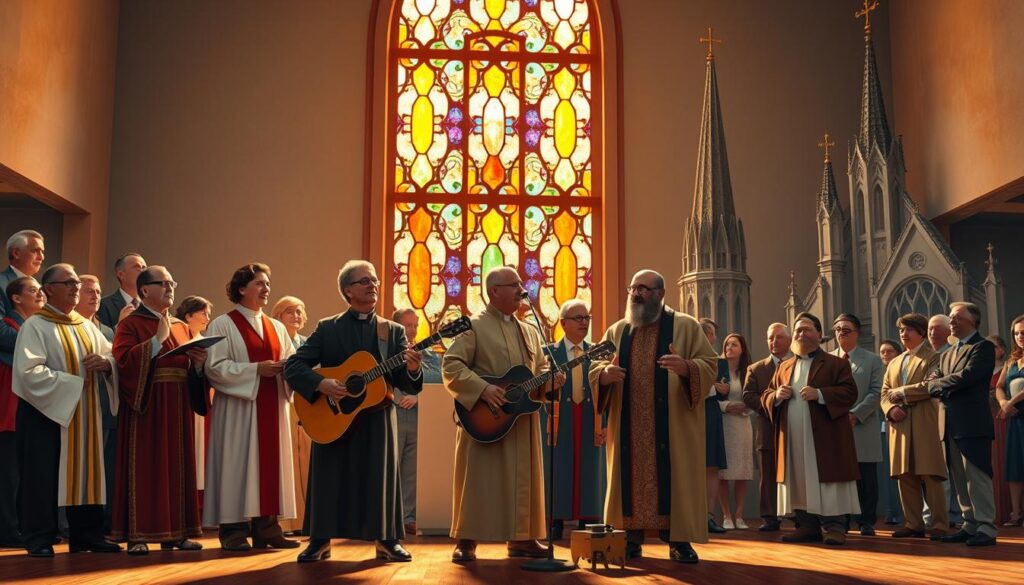
protestant denominations humor

From silent Quaker meetings to Pentecostal dance breaks, each group crafts unique traditions. A Lutheran might chuckle at Presbyterian debates about proper hymn tempo, while Episcopalians swap stories about “that one time the altar candles set off the smoke detectors.”

“I visited a Pentecostal service after years in a Methodist church – I thought we’d joined a conga line by accident!”

– Churchgoer from Ohio

This table shows how major denominational families approach worship differently:

Group Members (US) Signature Quirk
Baptists 14.5 million Debate dunking vs. sprinkling
Methodists 6.5 million Potluck diplomacy experts
Pentecostals 4 million Spontaneous hymn remixes

Friendly rivalries often surface in unexpected ways. Anabaptists might tease Lutherans about their love for liturgical calendars, while Presbyterians joke about who has the best post-sermon snack spread. These interactions highlight how shared faith thrives through good-natured humor.

Insider references become badges of belonging. When someone mentions “the Great Casserole Controversy of ’09,” entire congregations nod knowingly. Such moments transform theological diversity into communal glue – one laugh at a time.

Examining Protestant Church Architecture: Beauty vs. Simplicity

Stepping into a worship space immediately tells you about its priorities – vaulted ceilings or folding chairs? Architectural choices in faith communities spark both awe and chuckles. While some structures resemble medieval castles, others repurpose former supermarkets with creative flair.
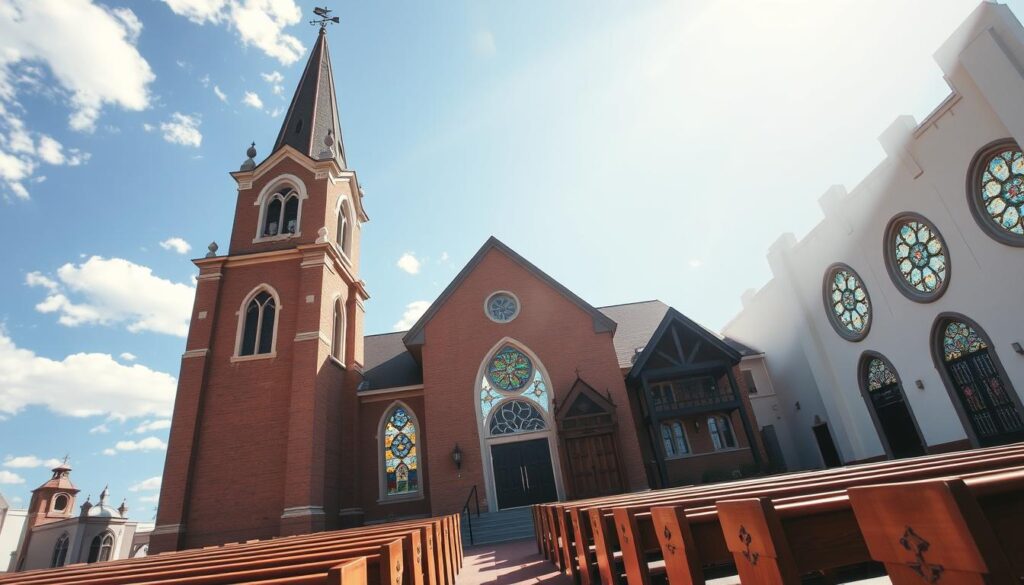
church architecture design humor

Comparing Ornate Versus Minimalist Designs

Grand cathedrals like New York’s Episcopal Cathedral of St. John the Divine showcase intricate stonework rivaling European landmarks. Iceland’s Hallgrímskirkja Lutheran church blends modern minimalism with volcanic inspiration. Yet many groups prefer functional spaces – think multipurpose rooms doubling as Sunday schools.

Church Location Style Key Features
Episcopal Cathedral New York Gothic Revival 43,000 sq ft nave
Hallgrímskirkja Reykjavik Expressionist 240-foot tower
St. Matthew’s Charleston Colonial Hand-carved pews
Community Church Austin Adaptive Reuse Former music venue

The Role of Architecture in Faith and Humor

Buildings often become characters in congregational lore. Members joke about basketball hoops hovering above altars or sound systems that crackle during silent prayers. One pastor quipped, “Our gymnasium-turned-sanctuary proves God loves rebounds – spiritual and literal.”

These spaces reflect practical theology. A Midwest group meets in a converted car dealership, their neon sign reading “Open for Worship.” While Catholic counterparts often feature ornate decor, many faith communities prioritize accessibility over aesthetics – creating unexpected beauty in everyday settings.

Understanding the Spectrum of Protestant Denominations

Navigating the world of faith groups feels like attending a global potluck – everyone brings distinct flavors to the table. Three major groups showcase this diversity: Lutherans steeped in sacramental traditions, Baptists championing local autonomy, and Methodists blending piety with social justice.

From Lutherans to Baptists: A Quick Overview

Lutheran communities follow Martin Luther’s teachings, prioritizing rituals like infant baptism. Their services often feature liturgical precision – think robed choirs and recited creeds. One member joked, “Our bulletin has more instructions than IKEA furniture!”

Baptist groups take a different route. They emphasize adult baptisms by full immersion and let each congregation set its own rules. This leads to quirky variations – one might ban drums while another hires a full rock band.

How Denominational Structures Influence Worship

Organizational models shape experiences:

  • Lutherans: Follow annual liturgical calendars with set readings
  • Baptists: Allow spontaneous sermon topics and hymn choices
  • Methodists: Balance structured services with community outreach projects

These frameworks create amusing culture shocks. A Methodist might stumble through a Lutheran’s responsive readings, while a Baptist visitor could panic when asked to dance during worship. Yet all share core beliefs about grace and scripture – even if their potluck casseroles taste wildly different.

Listicle of Hilarious Church Moments and Traditions

Sacred spaces sometimes double as stages for unexpected comedy. These laugh-out-loud instances reveal how spiritual gatherings balance reverence with real life. Let’s explore three categories where holy intentions meet human hilarity.

The Coffee Hour Olympics

Navigating post-service mingling requires ninja-level social skills. Regulars know to avoid Mrs. Johnson before her second cup, while newcomers learn the hard way about the unwritten casserole critique rules. The buffet table becomes a diplomatic minefield when someone brings store-bought cookies.

Tech Fails & Tongue Twisters

Even seasoned pastors face microphone mishaps. One minister accidentally projected a cat video during communion. Others wrestle with biblical names like “Maher-shalal-hash-baz,” turning sermons into improv comedy nights.

Kids Say the Holiest Things

Children’s unfiltered honesty keeps services lively. A toddler once shouted “Amen, let’s eat!” during silent prayer. Youth pageants feature shepherds tripping over bathrobes and angels forgetting lines – creating heartwarming chaos that everyone secretly loves.

These moments remind us that spiritual growth often comes with giggles. Whether it’s a sound system blasting polka music or a potluck tuna surprise, humor weaves communities tighter through shared joy.

FAQ

Why do people joke about "protestant churches be like" trends?

Humor often highlights relatable quirks, like denominational differences or minimalist designs. These memes poke fun at traditions while celebrating the diversity of Christian communities.

How did Martin Luther’s actions shape modern church humor?

Luther’s bold critiques of Catholic practices inspired satire about rigid traditions. His legacy fuels jokes about debates over rituals, like communion or hymn styles, still seen today.

What’s the funniest architectural difference in Protestant spaces?

Stark white walls vs. stained-glass debates! Some congregations embrace simplicity, while others accidentally create echo chambers perfect for awkwardly amplified sneezes mid-prayer.

Do denominations like Baptists and Lutherans really disagree that much?

Think “friendly rivalry.” Baptists might side-eye liturgical robes, while Lutherans joke about potluck supremacy. Yet both agree on core beliefs—and the importance of coffee hour.

Are unexpected church moments, like sermon blunders, common?

Absolutely. From mic feedback during silent prayers to toddlers hijacking pulpits, these unscripted laughs remind congregations that grace—and humor—are always part of worship.

Why do some churches have quirky rituals like pancake suppers?

Blame tradition meets creativity! Shrove Tuesday pancakes or “blessing of the animals” services blend ancient customs with modern charm, keeping faith lively and relatable.

How do Protestant groups adapt old customs for today’s culture?

By mixing ancient hymns with rock bands, or replacing fire-and-brimstone sermons with TED Talk-style messages. It’s all about connecting without losing core identity.

What’s the deal with the Bohemian Reformation’s cultural impact?

Early reformers like Jan Hus challenged authority with wit, inspiring later satire. Their defiance against corruption became a template for questioning norms—with a smile.

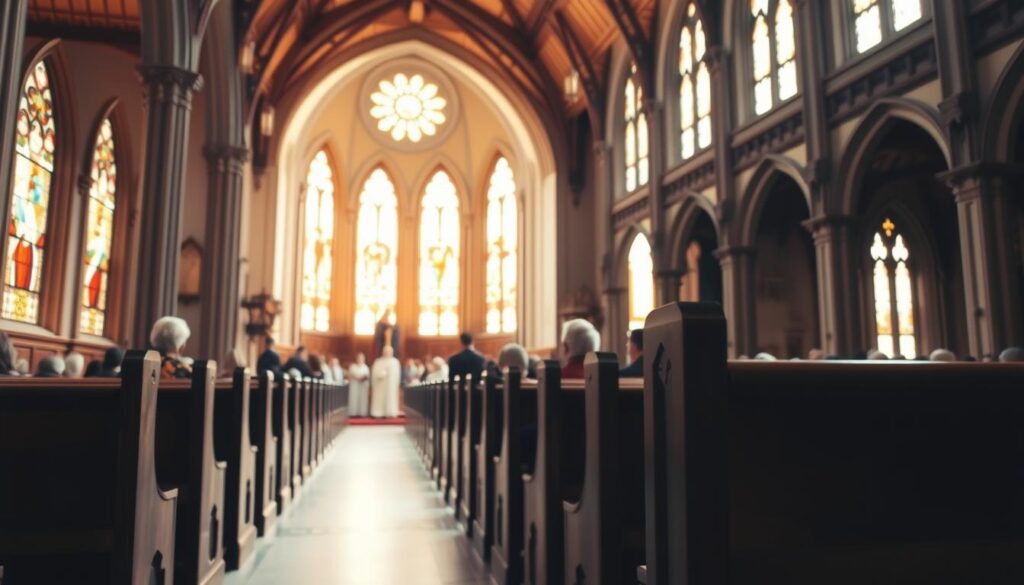
Protestant Churches Within 1 Mile of You


Discovering a faith community that aligns with your beliefs shouldn’t feel like a challenge. Today’s technology makes it simple to explore local congregations through digital directories and interactive maps. Whether you’re new to an area or seeking a fresh start, proximity plays a vital role in fostering consistent participation and building relationships.

Christianity includes several major traditions, with one being known for its emphasis on scripture and diverse worship practices. This tradition encompasses groups like Baptists, Methodists, and Lutherans—each offering unique approaches to services, outreach, and theological teachings. Exploring these differences helps you identify which environment resonates with your personal values.

Choosing a congregation nearby allows you to engage more deeply in volunteer work, social events, and weekly gatherings. Many communities host activities like Bible studies, youth programs, or neighborhood service projects. Being part of these efforts strengthens both your spiritual journey and local connections.

Key Takeaways

  • Modern tools simplify locating nearby congregations that match your preferences.
  • Multiple faith groups exist under one broader Christian tradition, each with distinct practices.
  • Physical closeness to your chosen community enhances involvement and relationship-building.
  • Understanding theological differences helps you select the right fit for your beliefs.
  • This guide provides actionable steps to evaluate and connect with local spiritual homes.

Understanding the Landscape of Protestant Churches

Faith-based organizations near you carry unique histories that shape their current practices and outreach. From traditional hymns to modern worship bands, these groups adapt while staying rooted in their core values. Let’s explore how demographics and trends create this vibrant spiritual mosaic.

Church Demographics and Local Presence

Regional influences play a huge role in which denominations thrive. For example, areas with strong Scandinavian heritage often have more Lutheran congregations. Southern states frequently show higher Baptist membership due to historical roots.

Urban centers tend to host diverse groups, including non-denominational communities focused on social justice. Rural areas might lean toward established denominations with multi-generational members. These patterns help explain why certain spiritual homes feel like a natural fit.

Popular Denominational Trends

Recent shifts highlight three key movements:

  • Flexible worship styles: Many congregations blend traditional sermons with casual services featuring live music.
  • Community-first missions: Food banks, mentorship programs, and neighborhood cleanups now anchor many outreach efforts.
  • Tech integration: Hybrid services and mobile apps help maintain connections beyond Sunday gatherings.

These adaptations ensure spiritual communities remain relevant while honoring their foundational beliefs. Whether you prefer time-honored rituals or innovative approaches, there’s likely a group nearby that aligns with your vision of faith.

The Role of Proximity in Selecting a Church

Living close to your spiritual home offers more than convenience—it shapes your daily journey. Short distances remove hurdles to participation, letting you weave faith seamlessly into routines. This accessibility becomes especially valuable when unexpected needs arise or spontaneous gatherings occur.

How Nearby Worship Enhances Community Connection

Walking or driving just minutes to services means you’re more likely to:

  • Join midweek activities like prayer groups or volunteer projects
  • Build friendships with neighbors who share your values
  • Respond quickly when others need meals or childcare support

Shared geography creates common ground. You’ll discuss local schools, park improvements, or safety initiatives—topics that deepen bonds beyond Sunday gatherings. These interactions often spark collaborations, like organizing food drives or mentoring programs.

Closeness also simplifies leadership roles. Attending committee meetings or planning events feels manageable when travel time shrinks. Over 60% of regular attendees at neighborhood congregations report higher satisfaction with their spiritual experience, citing reduced stress and stronger social ties.

Digital Tools for Finding Nearby Churches

Digital solutions now simplify connecting with local faith groups in unprecedented ways. With a few taps or clicks, you can explore options tailored to your preferences and needs. Let’s unpack how modern platforms streamline this search.

digital church search tools

Utilizing Online Maps and Directories

Services like Google Maps and specialized directories offer real-time data on congregations near you. Filter results by worship style, language, or accessibility features. Many listings include service schedules, contact information, and photos of facilities.

Advanced search tools help narrow choices based on youth programs, senior services, or community outreach efforts. Over 75% of spiritual communities now maintain websites with belief statements, event calendars, and staff bios. Social media profiles often showcase live streams or highlight recent activities.

Virtual tours let you explore sanctuaries and gathering spaces before visiting. Mobile apps add convenience with GPS navigation and service reminders. “These tools empower people to make informed decisions about where they’ll thrive spiritually,” notes a recent study on religious engagement.

User reviews provide insights into community dynamics and leadership quality. Ratings systems help identify groups aligned with your values. This digital approach removes guesswork while respecting your time and priorities.

Protestant church within 1 mi

Your neighborhood holds hidden gems that can transform your weekly routine—including vibrant spiritual hubs just steps away. Being part of a close-knit congregation strengthens both personal growth and local ties through shared values and practical support.

Benefits of Nearby Worship

Short distances remove barriers to regular participation. Imagine skipping long drives and arriving refreshed for Sunday services or midweek study groups. Consistency becomes effortless, helping you build meaningful habits without commute fatigue.

Last-minute needs also get easier to address. Need prayer support during a crisis? A nearby community can respond quickly. Over 68% of congregants report feeling more supported when their spiritual home is within walking distance.

Quick Access to Local Gatherings

Seasonal festivals, volunteer projects, and workshops happen frequently. Living close means you’ll rarely miss:

  • Weeknight concerts or guest speaker events
  • Back-to-school donation drives
  • Neighborhood improvement initiatives

The total time saved on travel lets you dive deeper into activities that matter. You might join a mentoring program or simply enjoy coffee with friends after services. These moments foster connections that ripple through every area of life.

Factors to Consider When Choosing a Church

How do you find a spiritual home that truly fits? Beyond location, core beliefs and practical logistics shape your experience. Let’s explore key elements that help you make confident decisions about where to grow your faith.

church selection factors

Denominational Beliefs and Values

Different groups prioritize distinct teachings. Some emphasize baptism practices, while others focus on social justice or scripture interpretation. Ask about their stance on communion, marriage, and community outreach during your search.

Meeting with pastors helps clarify these nuances. “Understanding a congregation’s foundation ensures alignment with your spiritual goals,” says a recent survey of faith communities. Don’t hesitate to attend trial services or review doctrinal materials online.

Accessibility and Service Times

Check facilities for ramps, parking, and hearing aids if needed. Families appreciate nurseries and kid-friendly spaces. Flexible schedules matter too—look for morning, evening, or weekday gatherings that sync with work or school routines.

Many churches now offer hybrid options. A parent might choose Saturday services to free up Sundays for family time. Convenient access lets you engage fully without logistical stress, creating space for deeper connections.

Highlighting Top U.S. Protestant Denominations

America’s spiritual landscape features diverse groups shaping communities nationwide. Recent data reveals which organizations hold the largest memberships and where they thrive. Understanding these patterns helps identify common values and regional influences.

largest protestant denominations

Major Groups and Their Memberships

The Southern Baptist Convention leads with 16.2 million members, deeply rooted in Southern culture. Known for evangelism and local autonomy, it remains a cornerstone of rural spirituality. The United Methodist Church follows with 7.8 million members, blending traditional teachings with modern social initiatives.

Baptist groups dominate rankings, including the National Baptist Convention (5 million) and National Baptist Convention of America (3.5 million). These reflect historical ties to African American communities and scripture-centered worship. The Episcopal Church, part of the Anglican tradition, attracts 2 million members through formal liturgies and progressive outreach.

Denomination Membership (Millions) Key Focus
Southern Baptist Convention 16.2 Evangelism & Local Leadership
United Methodist Church 7.8 Social Justice & Tradition
National Baptist Convention 5.0 Community Empowerment
Episcopal Church 2.0 Liturgical Worship
Assemblies of God 2.9 Charismatic Practices

Insights from the Yearbook of American and Canadian Churches

Membership trends show challenges for many groups. Only the Assemblies of God reported growth (0.5% increase) recently. Others face declining numbers despite strong regional networks.

“These figures highlight shifting priorities in modern spirituality,” notes the Yearbook’s editorial team. Urbanization and generational changes likely drive these patterns, encouraging some groups to adapt while others preserve tradition.

Church Membership Trends and Growth Insights

Recent shifts in spiritual participation are reshaping how communities measure success. While traditional membership counts once defined a congregation’s influence, many now prioritize active engagement over formal rolls. This evolution reflects changing cultural values and new ways of connecting with faith.

Exploring Membership Numbers and Shifts

Most major groups face declining membership, with only one exception. The Assemblies of God reported a 0.5% growth last year, suggesting charismatic practices resonate in today’s climate. Other denominations struggle despite deep regional roots.

Ministry leaders observe that “counting heads means less than inspiring hearts.” Younger generations often favor authentic experiences over institutional loyalty. This movement toward flexible participation challenges traditional metrics.

Patterns of Growth Across Denominations

Regional preferences still shape spiritual landscapes. Urban areas see rising interest in contemporary worship styles, while rural communities cling to familiar rituals. Non-denominational groups gain traction by focusing on community impact rather than doctrine.

Success now hinges on factors like volunteer initiatives and pastoral accessibility. A congregation’s vitality shines through shared meals, mentorship programs, and neighborhood partnerships—not just Sunday attendance numbers.

Mapping Your Local Church Options

Exploring local spiritual communities starts with understanding their geographic footprint. Neighborhoods across the United States host diverse congregations shaped by history, culture, and community needs. Let’s break down how to navigate these patterns effectively.

Identifying Church Locations by Proximity

Start your search with digital tools like interactive maps or apps that filter results by distance. Many platforms let you create a personalized list based on worship style or programs. Don’t overlook community boards at libraries or coffee shops—they often highlight nearby gatherings.

Local recommendations add valuable insights. Ask neighbors about vibrant groups they’ve joined. Urban areas typically offer multiple options within walking distance, while rural regions might require creative searching through regional directories.

Understanding Geographic Distribution

Certain denominations cluster in specific areas due to historical roots. Scandinavian-founded towns often feature Lutheran congregations, while Southern cities might showcase Baptist hubs. These patterns reflect migration stories and cultural values passed through generations.

Modern shifts are reshaping traditional layouts. Suburbs now welcome new congregations focused on contemporary needs, blending heritage with fresh approaches. Whether you seek tradition or innovation, geography helps narrow your ideal match.

FAQ

How diverse are Protestant churches near me?

Local congregations often reflect a mix of denominations like the United Methodist Church, Southern Baptist Convention, and non-denominational groups. Demographics vary by region, with some areas having stronger ties to historic groups like the African Methodist Episcopal Zion Church.

Why does proximity matter when choosing a congregation?

Attending services close to home fosters deeper community bonds. Nearby locations make it easier to join events, volunteer, or build relationships with neighbors who share your values.

What digital tools help find local churches?

Google Maps, denominational directories (like those from the Assemblies of God), and apps like Church Finder provide real-time info on locations, service times, and membership sizes. Many sites also highlight outreach programs.

How do denominational beliefs impact church selection?

Core teachings vary—for example, the Evangelical Lutheran Church emphasizes specific sacraments, while the National Baptist Convention focuses on revival traditions. Review doctrinal statements online or visit to ask questions.

Which U.S. Protestant groups have the largest memberships?

The Southern Baptist Convention leads with over 13 million members, followed by the United Methodist Church (5.4 million) and non-denominational movements. Data from the Yearbook of American and Canadian Churches tracks these trends annually.

Are memberships growing or declining in major denominations?

Groups like the Lutheran Church-Missouri Synod report steady numbers, while others, including the Episcopal Church, face declines. Non-denominational congregations and groups like the Church of God (Cleveland) show faster growth rates since 2020.

What factors influence shifts in church attendance?

Cultural changes, generational preferences, and community needs play roles. Younger families often prioritize modern worship styles or programs, while others value traditional liturgy from groups like the Presbyterian Church (USA).

How can I compare service schedules of nearby congregations?

Check church websites or call offices directly. Many post bulletins online—look for midweek gatherings, youth activities, or seasonal events that fit your schedule.

Discover Protestant Churches Across America


For centuries, religious communities have played a central role in shaping the nation’s identity. From colonial meeting houses to sprawling modern campuses, these faith groups reflect both tradition and innovation. Once representing nearly three-quarters of the population, their influence remains woven into the fabric of daily life despite shifting membership trends.

Recent surveys reveal a fascinating evolution. While some groups have seen gradual declines, others maintain strong participation rates. Regional differences add depth to this story—think fiery revivals in Southern towns or quiet hymn-singing in Midwestern farm communities. Each tradition carries its own customs, yet all share a common thread of spiritual connection.

This guide explores how these communities adapted to societal changes while preserving core values. You’ll learn about growth patterns in different denominations and the rise of contemporary worship styles. We’ll also uncover why certain areas became hubs for specific traditions and how modern congregations address today’s challenges.

Key Takeaways

  • Mainline groups have declined since 2012, while others remain steady
  • Cultural impact spans from colonial times to modern social initiatives
  • Regional worship styles mirror local traditions and values
  • 21st-century innovations attract younger generations
  • Membership diversity reflects broader societal shifts

Understanding the Historical Roots of American Protestantism

European settlers planted the seeds of diverse spiritual traditions in the 16th and 17th centuries. These pioneers established colonies where faith shaped laws, education, and community life. Their practices laid the groundwork for a religious landscape unlike any in Europe.

Early Colonial Influences and Settler Faith

Northern European groups brought Anglican, Reformed, and other traditions to colonies like Massachusetts Bay and Virginia. Puritans built tight-knit communities emphasizing moral discipline, while Quakers promoted equality and pacifism. This era birthed America’s first experiment in religious diversity, though tensions often arose between different belief systems.

The Impact of Revival Movements

The 1730s sparked a spiritual wildfire known as the Great Awakening. Preachers like George Whitefield drew massive crowds with passionate sermons about personal salvation. This movement reshaped worship styles, prioritizing emotional connection over formal rituals.

Revival Period Key Figures Focus Lasting Influence
First Great Awakening (1730s-40s) Jonathan Edwards Personal conversion Evangelical traditions
Second Great Awakening (1800-1830s) Charles Finney Social reform New denominations

Later revivals addressed frontier settlers and urban workers, creating camp meetings and new religious groups. These movements proved faith could thrive in America’s changing social state while maintaining core values.

Evolution of Church Membership and Denominational Trends

Membership patterns in religious groups tell a story of transformation. While traditional metrics show decline, new measures of engagement paint a nuanced picture. A 2023 study reveals only one major denomination saw growth—a modest 0.5% increase.

denominational growth trends

Key Membership Data and Growth Patterns

Mainline groups face steepest declines, with some losing 20% membership since 2010. Yet others buck the trend. Historically Black congregations maintain steady participation, blending spiritual traditions with community action. Younger members often prefer flexible involvement over formal enrollment.

Shifts in Mainline and Evangelical Congregations

Three factors explain diverging paths:

  • Cultural relevance in worship styles
  • Local outreach programs
  • Digital ministry adaptations

Evangelical groups show resilience through decentralized structures. Their focus on personal faith experiences resonates in southern and midwestern states. Meanwhile, mainline denominations grapple with aging memberships and shifting societal values.

As one researcher notes: “Numbers don’t capture spiritual vitality. A small, active congregation often impacts its community more deeply than a large, disconnected one.” This evolving landscape suggests success now means fostering meaningful connections rather than counting members.

Highlighting Major Protestant Denominations

From sprawling congregations to neighborhood chapels, the United States hosts a mosaic of Christian traditions. These groups shape spiritual practices, community values, and even regional identities. Let’s explore the key players shaping this vibrant landscape.

Southern Baptist Convention and Its Influence

The Southern Baptist Convention leads with 16.2 million members, making it the nation’s largest Protestant denomination. Rooted in Southern culture, its decentralized structure allows local congregations to tailor outreach programs. Mission trips and youth ministries keep younger generations engaged. “Our strength lies in unity, not uniformity,” notes a Texas-based pastor.

Other Leading Denominations in America

Beyond the Baptist tradition, diverse groups thrive:

  • United Methodist Church (7.8 million): Combines historic liturgy with social justice initiatives
  • Church of God in Christ (5.5 million): A cornerstone of African American religious life
  • Evangelical Lutheran Church (4.5 million): Blends European heritage with modern U.S. culture

Smaller denominations like the Assemblies of God (2.9 million) emphasize charismatic worship, while the Episcopal Church (2 million) balances tradition and progressive theology. Together, they create a rich tapestry of belief systems across the country.

Local Megachurches: America’s Dynamic Church Landscape

Modern spiritual communities are rewriting the rulebook for large-scale worship. Over 1,750 congregations now draw 2,000+ attendees weekly, blending cutting-edge technology with timeless traditions. These hubs of faith demonstrate how spiritual connection thrives in contemporary settings.

megachurch movement

Case Studies of Notable Megachurches

Life Church in Oklahoma leads the pack, welcoming 85,000 people across multiple locations each weekend. Their secret? Innovative small-group models within massive gatherings. Alabama’s Church of the Highlands uses similar strategies, serving 60,000 attendees through localized outreach programs.

Houston’s Lakewood Church transformed a sports arena into a worship space for 45,000 weekly visitors. “Our goal isn’t just size,” explains a staff member. “It’s creating meaningful touchpoints in a crowd.” These examples show how leadership adapts traditional formats for modern crowds.

The Role of Nondenominational Movements

Flexibility drives success for 44,000 independent congregations nationwide. Forty percent of megachurches avoid formal denominational ties, allowing quick responses to community needs. Crossroads Church in Ohio exemplifies this approach, running 35 locations that share resources while tailoring local services.

  • Multi-site models expand reach without losing intimacy
  • Contemporary music and visual storytelling engage younger crowds
  • Local leaders make decisions without bureaucratic delays

This movement proves that spiritual communities can grow exponentially while maintaining core values. As attendance patterns shift, these adaptable structures point toward faith’s evolving future.

Diverse Protestant Traditions and Their Social Impact

Spiritual communities nationwide are discovering strength in teamwork. Different denominations now combine resources to tackle big challenges, proving unity amplifies their impact. This shift reflects a growing focus on practical service over doctrinal debates.

interdenominational collaboration movement

When Faith Groups Join Forces

A Hartford Institute study shows 66% of large congregations helped start new sister groups recently. This partnership approach spreads effective outreach models while maintaining local flavor. Baptist food banks team with Methodist job programs, while Presbyterian health clinics share space with Lutheran tutoring centers.

Three key trends drive this movement:

  • Multiracial congregations grew to 58% among large faith groups
  • 63% avoid political discussions to focus on common goals
  • Only 18% engage in voter campaigns

“Our differences matter less than our shared mission,” explains a pastor from Texas. This mindset helps groups address poverty and education gaps more effectively. Disaster response teams now blend volunteers from various traditions, creating faster relief networks.

These collaborations foster peace through practical action. Neighborhoods see tangible benefits when diverse believers unite behind soup kitchens or mentorship programs. As one volunteer notes: “We’re writing a new story—one where helping hands matter more than theological labels.”

Data-Driven Insights Into Protestant Congregations

Modern congregations reveal surprising trends when viewed through a statistical lens. Recent analyses show how spiritual communities adapt while maintaining core traditions, offering fresh perspectives on participation patterns.

Statistical Overviews from Recent Studies

The Hartford Institute’s latest survey highlights dramatic growth among large gatherings. Megachurches now report 4,092 weekly attendees on average—a 33% jump since 2018. Regular participants total nearly 6,000 per location, proving scale doesn’t hinder engagement.

Historical comparisons deepen understanding. Colonial records show 75% attendance rates in the 1730s, plummeting to 20% after independence. Today’s landscape balances this legacy with new expressions: 44,319 independent groups now serve 21 million people nationwide.

Three key shifts emerge:

  • Nondenominational movements outpace traditional structures
  • Urban centers host 60% of fastest-growing congregations
  • Digital tools help track spiritual participation metrics

“Numbers tell half the story,” notes a researcher. True impact lies in how communities use this data to strengthen local connections while honoring shared values. From colonial meeting houses to streaming services, the quest for meaningful belonging continues evolving.

FAQ

How did the Great Awakenings shape faith communities in the U.S.?

The Great Awakenings sparked widespread revivalism, emphasizing personal faith and grassroots preaching. These movements led to new denominations, increased missionary work, and a lasting focus on individual spiritual experiences.

Why have some denominations grown while others declined?

Cultural shifts, outreach strategies, and theological adaptability play roles. Groups like the Southern Baptist Convention grew through evangelism, while others faced challenges aligning with modern social values.

What makes the Southern Baptist Convention influential today?

With over 13 million members, it’s the largest U.S. Protestant group. Its emphasis on missionary work, conservative theology, and nationwide networks solidify its cultural and religious impact.

How do megachurches redefine worship experiences?

Megachurches like Lakewood Church blend large-scale services, multimedia, and community programs. Their focus on inclusivity and practical teachings attracts diverse, younger crowds seeking connection.

Are nondenominational movements changing American Christianity?

Yes! Nondenominational groups prioritize flexibility over tradition, often drawing younger members. Their growth reflects a shift toward personalized faith and decentralized leadership structures.

How do Protestant traditions address social issues locally?

Many collaborate on food drives, disaster relief, and advocacy. For example, the Evangelical Lutheran Church partners with charities to address poverty and racial justice.

What recent trends define U.S. congregational life?

Studies show rising digital engagement, multiethnic congregations, and younger leaders prioritizing mental health and environmental stewardship alongside traditional ministries.

Protestant Church Confirmation: A Spiritual Milestone


Welcome to an exploration of one of Christianity’s most meaningful rites of passage. This sacred practice, observed in many denominations, marks a pivotal step in a believer’s journey toward deeper spiritual commitment.

While traditions vary across faith communities, the core purpose remains the same: affirming personal devotion to the teachings of Jesus Christ. For young believers, this milestone often serves as a bridge between childhood baptism and mature engagement with their faith.

Central to this experience is the role of the Holy Spirit. Many view the ceremony as a moment of spiritual empowerment, where participants gain strength for life’s challenges through divine guidance. This connection to the divine helps individuals embrace their role as active members of their religious community.

Though similar to Catholic confirmation in some ways, Protestant traditions often emphasize personal choice over infant baptism vows. Today, this practice continues to thrive, fostering both individual growth and stronger connections within congregations nationwide.

Key Takeaways

  • Acts as a spiritual stepping stone between youth and adult faith responsibilities
  • Emphasizes personal commitment to Christian teachings and values
  • Celebrates the Holy Spirit’s role in guiding believers through life
  • Varies in format across different Christian denominations
  • Strengthens community bonds through shared religious experiences
  • Maintains relevance in modern faith practices despite cultural changes

Introduction to the Meaning and Importance of Confirmation

A time-honored tradition marks the transition from inherited belief to personal conviction. This spiritual milestone helps believers actively claim their place within their religious community. While practices differ, the core idea remains: deepening one’s connection with divine purpose.

Overview of the Sacrament

Many Christian groups see this rite as a way to strengthen faith after baptism. In liturgical traditions like the Roman Catholic Church, it’s considered one of seven sacraments. Participants receive blessings believed to enhance their spiritual growth through the Holy Spirit’s guidance.

Other denominations view it as a symbolic step rather than a sacred ritual. Here, the focus shifts to personal accountability. Young adults publicly declare their commitment to teachings they first received as children.

Context in Protestant and Catholic Traditions

The Catholic Church ties this practice closely to baptismal promises. It’s seen as completing the grace received during infancy. Protestant groups often treat it as voluntary—a conscious choice to follow Christian principles independently.

Aspect Catholic Approach Protestant Perspective
Sacramental Status Divine grace channel Symbolic declaration
Connection to Baptism Completion of initiation Personal affirmation
Age of Participation Early adolescence Varies by congregation

Both traditions agree on one thing: this moment matters. It’s where family teachings become individual convictions, creating lasting bonds within faith communities.

Historical Roots and Scriptural Foundations of Confirmation

The journey of this faith practice stretches back to the earliest days of Christian communities. Its foundations rest on Jesus Christ’s promise to equip followers with divine guidance. Before his ascension, he assured disciples: “The Advocate, the Holy Spirit, will teach you all things” (John 14:26). This pledge shaped how believers understood spiritual growth.

laying hands confirmation ceremony

Scriptural References and Early Church Practices

The Acts of the Apostles shows believers receiving the Holy Spirit through prayer and laying hands. In one account, Peter and John place hands on Samaritans, enabling them to embrace spiritual gifts (Acts 8:14-17). These moments became blueprints for later traditions.

Early Christians viewed this ritual as deepening baptismal vows. By the third century, bishops anointed candidates with oil, symbolizing the Spirit’s presence. Though methods evolved, the core idea remained: empowering individuals through sacred connection.

Reformation Insights and Evolving Perspectives

Reformers like Luther recognized biblical roots in these practices but questioned their sacramental role. They argued that while the Word of God supported spiritual affirmation, Christ hadn’t explicitly commanded it as a sacrament. This led to revised approaches in many denominations.

Lutherans and Anglicans preserved the rite as a public commitment tool. Methodists later adopted it to nurture personal faith journeys. Today, these traditions honor scripture’s guidance while focusing on individual readiness rather than ritual obligation.

Exploring Protestant Church Confirmation and Its Spiritual Significance

Across Christian traditions, a meaningful ceremony often marks when young believers take ownership of their spiritual path. This milestone blends education with celebration, creating space for personal growth within a supportive community. While methods differ, the core purpose remains: transitioning from inherited beliefs to intentional devotion.

Public Profession of Faith in Protestant Contexts

For many baptized as infants, this rite lets them reaffirm vows made on their behalf. Teens typically complete months of study before standing before their congregation. As one Lutheran leader shared: “It’s not just about answering questions—it’s about showing your heart’s commitment.”

Liturgical groups treat this as a sacramental event tied to baptismal grace. Their ceremonies often include:

  • Renewing promises through personal testimony
  • Receiving blessings from spiritual leaders
  • Joining adult worship practices

Meanwhile, Baptist communities approach things differently. They see believer’s baptism as combining initiation and public declaration. This table shows key contrasts:

Feature Liturgical Practice Baptist Tradition
Primary Focus Affirming baptism Adult conversion
Typical Age 12-14 years Any age after conversion
Biblical Basis Church heritage New Testament models

These approaches reflect diverse views on scripture’s role. Yet both aim to foster lasting spiritual connections that guide daily life.

Understanding the Role of the Holy Spirit in the Confirmation Process

At the heart of spiritual growth lies a divine partnership that transforms believers from within. This sacred connection finds its roots in the day of Pentecost, when early followers experienced an outpouring of spiritual power. Many see this moment as the blueprint for how faith communities embrace divine guidance today.

Pentecostal traditions emphasize tangible encounters with the holy spirit. The Assemblies of God teach that “the baptism of the holy spirit is a vital experience beyond salvation”, often marked by speaking in tongues. They point to Acts 19, where believers received spiritual gifts through prayer and laying on of hands.

Connection with Pentecost and the Gifts of the Spirit

Mainline groups approach this differently. While they honor the gifts of the holy spirit, most focus on strengthening faith rather than dramatic manifestations. Common elements include:

  • Teaching about wisdom, understanding, and courage as spiritual tools
  • Emphasizing daily reliance on divine guidance
  • Celebrating community support through mentorship programs

Lutheran and Methodist practices often link confirmation to receiving the holy spirit through education. Teens learn how biblical teachings apply to modern challenges. One pastor explained: “It’s about equipping youth with eternal truths, not just rituals.”

Across denominations, the laying on of hands remains significant. This ancient practice symbolizes transferring spiritual authority and blessings. Whether through quiet prayers or vibrant worship, the goal stays consistent: awakening hearts to God’s ongoing work in believers’ lives.

Comparative Denominational Practices in Confirmation

Christian traditions showcase rich diversity in how they mark spiritual milestones. From oil anointments to adult baptisms, each approach reflects unique theological priorities while honoring shared biblical roots.

denominational confirmation practices comparison

Catholic, Eastern Orthodox, and Anglican Traditions

In the Roman Catholic Church, bishops anoint candidates with sacred oil during confirmation. This practice symbolizes receiving the Holy Spirit’s gifts. Anglican ceremonies also feature bishops laying hands but skip the oil, focusing instead on personal faith renewal.

Eastern Orthodox communities combine baptism and confirmation into one ritual called Chrismation. A priest typically applies blessed oil immediately after immersion, even for infants. “This unified approach emphasizes God’s grace from life’s earliest stages,” explains a Greek Orthodox leader.

Methodist and Baptist Approaches

Methodists view confirmation as a voluntary step for any age. Ministers lead services where participants publicly affirm their beliefs through hand-laying blessings. Preparation often involves months of classes exploring Christian teachings.

Baptist congregations take a different path. They prioritize adult baptism through full immersion as the primary faith declaration. “We follow New Testament models where belief precedes baptism,” notes a Southern Baptist pastor. This approach removes traditional confirmation ceremonies entirely.

Tradition Key Practice Leadership
Roman Catholic Oil anointment Bishop required
Eastern Orthodox Chrismation with baptism Priest typically
Methodist Public affirmation Minister leads

Preparing for Confirmation: Rites, Catechesis, and Community Involvement

Stepping into spiritual adulthood requires both personal dedication and communal support. Modern preparation blends classroom learning with sacred gestures, creating a bridge between ancient traditions and contemporary faith journeys.

Catechetical Classes and Spiritual Education

Today’s candidates explore their beliefs through interactive sessions rather than rote memorization. “We’ve moved beyond dusty catechism booklets,” shares a youth minister from Texas. Personalized spiritual education now addresses real-world challenges like social media ethics and peer relationships.

confirmation preparation classes

  • Small-group discussions about faith in daily life
  • Service projects demonstrating Christian values
  • Mentorship pairings with congregational leaders

The Laying on of Hands and Ritual Significance

This ancient practice remains central across denominations. Spiritual leaders explain it as transferring blessings rather than magical empowerment. One Lutheran pastor notes: “Our touch represents the community’s support, not just clerical authority.”

Past Practice Modern Adaptation
Memorized answers Personal faith statements
Rigid age requirements Readiness-based timing
Isolated preparation Intergenerational mentoring

Many congregations now host joint ceremonies, allowing candidates from multiple locations to celebrate together. This approach strengthens regional faith networks while honoring individual spiritual paths.

Conclusion

Marking a pivotal moment in spiritual growth, this sacred practice unites believers across generations. Through personal commitment and communal support, it strengthens both individual faith and collective worship. While methods differ among denominations, each approach honors the journey from childhood teachings to adult spiritual responsibility.

From liturgical ceremonies to believer’s baptism, these traditions showcase Christianity’s rich diversity. Some emphasize sacramental grace, while others focus on voluntary declarations. Yet all share a common goal: helping individuals embrace their role as active participants in religious life.

The transition from infant baptism to mature discipleship remains central to this process. By reaffirming vows made on their behalf, believers claim ownership of their spiritual path. This milestone isn’t just about rituals—it’s about building lasting connections with divine guidance and community.

Modern preparation blends education with hands-on service, creating meaningful opportunities for growth. Whether through mentorship programs or interactive classes, congregations equip youth with tools for lifelong faith. These efforts ensure the practice stays relevant in our rapidly changing world.

Explore how your local community celebrates this spiritual stepping stone. Discover the beautiful balance between ancient traditions and contemporary expressions of belief—a bridge connecting heartfelt devotion with everyday Christian living.

FAQ

How does confirmation differ between Protestant and Catholic traditions?

In the Catholic Church, confirmation is a sacrament emphasizing the Holy Spirit’s gifts, often administered by a bishop. Protestant traditions view it as a public profession of faith, focusing on personal commitment rather than sacramental grace.

What role does the Holy Spirit play in confirmation?

The Holy Spirit is central to the rite, seen as empowering individuals with spiritual gifts. This ties to Pentecost, where believers received the Spirit’s strength to live out their faith boldly.

At what age do most denominations practice confirmation?

Ages vary. Catholics often confirm around 12–14, while Lutherans or Methodists may align it with adolescence. Some Baptist groups emphasize believer’s baptism instead, typically after a personal decision.

Why is confirmation considered a public act?

It symbolizes a voluntary embrace of faith, often after catechism. Public affirmation strengthens communal bonds and accountability, reflecting a mature step in one’s spiritual journey.

How did the Reformation reshape confirmation practices?

Reformers like Luther shifted focus from sacramental rituals to teaching and personal faith. This led to catechism-based preparation, prioritizing understanding over ceremony in many Protestant circles.

Do all Christian denominations require confirmation?

No. Anglicans and Eastern Orthodox practice chrismation (similar to confirmation) alongside baptism. Groups like Baptists emphasize believer’s baptism alone, viewing public testimony as sufficient.

What’s the significance of laying on hands during confirmation?

This ancient act symbolizes blessing and the Holy Spirit’s presence. It connects participants to apostolic traditions, representing spiritual empowerment and communal support.

How do converts experience confirmation?

Converts often undergo catechism to learn doctrine before affirmation. In Catholic or Anglican settings, they might receive the sacrament alongside baptism if not confirmed earlier.

Can infants be confirmed?

Typically no, except in Eastern Orthodoxy, where chrismation follows infant baptism. Most traditions reserve confirmation for those old enough to profess faith personally.

Is confirmation linked to First Holy Communion?

In Catholicism, confirmation usually precedes Communion. Protestants often merge the two, emphasizing a holistic commitment to faith without strict sacramental stages.

Exploring the Foundations of Protestant Church Doctrine


For over five centuries, a seismic shift in religious thought has shaped how millions connect with their faith. This movement began as scholars reexamined ancient texts, sparking reforms that redefined Christianity’s relationship with authority and personal spirituality.

At its heart, this theological framework prioritizes direct engagement with sacred writings over institutional intermediaries. Early reformers championed three revolutionary ideas: that divine truth lives in scripture alone, salvation comes through faith rather than deeds, and every believer holds equal access to spiritual connection.

These principles didn’t just challenge existing power structures – they created new ways of understanding humanity’s role in the divine story. From European universities to global mission fields, these ideas sparked educational movements and inspired social reforms that still echo today.

Modern expressions of this tradition balance ancient wisdom with contemporary questions. While holding fast to core convictions about grace and truth, communities continually adapt their practices to address new cultural realities and scientific discoveries.

Key Takeaways

  • Originated in 16th-century reforms emphasizing personal faith over institutional authority
  • Built on three pillars: scripture as ultimate truth, salvation through faith, and universal spiritual access
  • Influenced education systems and democratic movements worldwide
  • Maintains relevance through balancing tradition with modern engagement
  • Represents nearly one-third of global Christian adherents
  • Encourages individual interpretation within biblical guidelines

Historical Foundations and the Reformation Legacy

In 1517, a single document sparked a religious revolution that echoes through modern Christianity. A German monk’s questions about spiritual truth challenged centuries of established tradition, setting in motion what we now call the protestant reformation.

Martin Luther’s Impact and the Ninety-Five Theses

Martin Luther, once an Augustinian monk, became history’s unexpected disruptor. His 95 arguments against the roman catholic church‘s indulgence sales weren’t just theological musings – they were a match thrown on dry timber.

At the Diet of Worms in 1521, Luther stood firm when pressured to recant:

“Unless I am convinced by Scripture… I cannot and will not retract anything.”

This defiance cemented his role as theprotestant reformation‘s chief architect.

Proto-Protestant Influences and Early Reform Movements

Long before Luther, groups like the Waldensians demanded simpler worship rooted in Scripture. Jan Hus’s 15th-century Bohemian movement directly inspired Luther, proving reform wasn’t one man’s idea but a growing tide.

Reformer Era Key Contribution
Waldensians 12th Century Scripture-focused preaching
Jan Hus 1400s Challenged papal authority
Martin Luther 1517+ Systematic theological reform

German princes soon realized supporting Luther meant both spiritual renewal and political independence from Rome. This fusion of faith and governance ensured the protestant reformation became more than a religious debate – it reshaped societies.

Deep Dive into Protestant Church Doctrine Fundamentals

Understanding these theological pillars unlocks the essence of modern Christian practice. Five Latin phrases form a compass guiding millions in their spiritual journey. These principles answer life’s biggest questions about purpose, forgiveness, and divine connection.

five solas theology

The Five Solas and Core Tenets

The Solas outline how people connect with the divine. Grace alone means mercy comes freely, not earned. Faith alone shows trust in Jesus Christ bridges humanity and holiness. Through Christ alone, his sacrifice becomes the only path to spiritual renewal.

Sola Latin Name Key Focus
Grace Sola Gratia Unearned divine favor
Faith Sola Fide Trust over deeds
Christ Solus Christus Exclusive redemption
Scripture Sola Scriptura Bible as ultimate guide
Glory Soli Deo Gloria Divine purpose fulfilled

Together, they create a safety net of spiritual assurance. Believers find freedom knowing salvation isn’t a performance review. This framework reshaped how communities worship and serve.

Scripture as the Sole Source of Authority

Sola Scriptura puts the Bible in every person’s hands. Unlike systems requiring special interpreters, this approach trusts the Holy Spirit to guide readers. Modern apps now deliver ancient texts instantly to seekers worldwide.

Personal Bible study fuels diverse worship styles while keeping core truths intact. From coffeehouse gatherings to stadium services, shared scripture unites different expressions. This living document continues shaping lives centuries after its completion.

Contemporary Impact and Ecumenical Outreach

Across six continents, vibrant faith communities are rewriting what spiritual connection looks like. Nearly one-third of Christians now identify with traditions born from the Reformation, creating dynamic exchanges between ancient truths and modern realities.

Modern Movements Crossing Borders

Africa’s Christian population has exploded from 10 million to over 600 million since 1900. Pentecostal networks like the Redeemed Christian Church of God now operate in 198 nations. Asia’s house church movements adapt worship styles while maintaining core teachings about grace and community.

Region Growth Rate (2000-2025) Leading Movements
Latin America 56% Evangelical alliances
Sub-Saharan Africa 81% African Initiated Churches
East Asia 34% Underground fellowships

Shaping Today’s Spiritual Practices

Your smartphone likely holds more biblical resources than Reformation-era libraries. Apps like YouVersion make Scripture as sole authority tangible for 500 million users. Contemporary worship music now dominates Christian radio charts, blending ancient psalms with modern beats.

Sunday services increasingly feature lay leaders sharing personal insights. This priesthood of believers model empowers teachers and nurses to lead Bible studies alongside ordained ministers.

Building Bridges Through Dialogue

Recent Pew Forum studies show 72% of religious groups now partner across traditions. Shared communion services between Lutheran and Catholic communities mark historic steps toward unity. Joint environmental initiatives unite Baptists and Anglicans in coastal cleanup projects.

“Our shared commitment to Christ’s mercy compels us to work together.”

Ecumenical Task Force Statement, 2023

From food banks to disaster relief, collaborative efforts demonstrate faith in action. Digital platforms now host interdenominational prayer chains connecting believers worldwide in real time.

Conclusion

Five centuries after reshaping Christianity’s landscape, this faith movement continues guiding millions. At its heart lies a simple truth: divine authority flows through sacred texts, not human institutions. This conviction fuels spiritual journeys across 190 nations, uniting diverse communities under shared principles.

Modern believers inherit a rich legacy of balancing tradition with innovation. While honoring core teachings about grace and salvation, today’s practices embrace digital tools and multicultural expressions. Over 900 million adherents prove ancient truths can thrive in contemporary contexts.

The movement’s global influence stretches beyond worship spaces. It shaped education models, inspired civil rights leaders, and championed personal spiritual access. Current challenges demand fresh applications of timeless wisdom – addressing climate concerns and social justice through biblical lenses.

As new generations reinterpret these foundations, the focus remains clear: truth rooted in faith, not human hierarchy. This living tradition keeps evolving, offering hope and purpose in our rapidly changing world.

FAQ

What are the core beliefs that define Protestant theology?

Central teachings include salvation through faith alone, the authority of Scripture over tradition, and the priesthood of all believers. The Five Solas—grace, faith, Christ, Scripture, and God’s glory—summarize its foundations.

How did Martin Luther shape Protestant beliefs?

Luther’s Ninety-Five Theses challenged Roman Catholic practices like indulgences, emphasizing grace and Scripture. His ideas sparked the Reformation, promoting Christ alone as the path to salvation and reshaping Christian thought.

Why is Scripture emphasized over tradition in Protestantism?

Reformers argued that the Bible, as God’s inspired Word, holds ultimate authority (sola scriptura). This contrasts with reliance on church traditions or clerical interpretations, fostering direct engagement with biblical texts.

How do modern Protestant movements influence global Christianity?

Groups like evangelicals and Pentecostals prioritize personal conversion and spiritual renewal. Their focus on missions and social justice has expanded Christianity’s reach, especially in Africa, Asia, and Latin America.

What efforts exist to bridge gaps between Protestant and Catholic traditions?

Dialogues address shared beliefs in Christ’s divinity and Scripture while acknowledging differences. Joint initiatives on ethical issues and community service reflect growing collaboration despite doctrinal divides.

Protestant Church Drogheda: Explore Its Rich History


Nestled on Peter’s Hill in Ireland’s historic County Louth, St. Peter’s stands as a living chronicle of faith and community. For over 800 years, this sacred site has welcomed worshippers, surviving wars, sieges, and cultural shifts. Its Georgian-era design, completed in 1753, showcases elegant symmetry and timeless craftsmanship.

The current structure replaced an earlier medieval building damaged during Cromwell’s 17th-century campaign. Architect Hugh Darley’s vision blended classical proportions with practical worship spaces, while Francis Johnston’s 1793 spire added striking verticality. Today, the building remains a spiritual hub under Revd. Dr. Iain Jamieson’s leadership.

Beyond its role as a place of prayer, St. Peter’s has anchored the local town’s social fabric. Its north-bank location near the River Boyne made it a natural gathering spot. Visitors today encounter not just architectural beauty but also centuries of stories etched into its walls.

Key Takeaways

  • St. Peter’s has operated as a worship center since medieval times, spanning eight centuries
  • The Georgian-style structure features Hugh Darley’s design and a later spire addition
  • Serves as both a religious site and community focal point in County Louth
  • Survived historical conflicts including Cromwell’s 1649 siege
  • Offers insights into Ireland’s architectural evolution and Christian traditions

The Historical Roots of Protestant Church Drogheda

St. Peter’s origins trace back to the Anglo-Norman period, marking a pivotal shift in Ireland’s religious architecture. Norman knight Hugh de Lacy secured this riverside site before 1186, planting seeds for eight straight centuries of spiritual practice.

Anglo-Norman Beginnings and Medieval Foundations

The dedication to St. Peter reveals its Norman roots – Celtic traditions favored local saints. Builders crafted the original peter church using techniques seen at Mellifont Abbey. Shared tile patterns and stonework suggest master artisans shaped both landmarks.

By the 13th century, the complex boasted six chapels serving different purposes. From baptisms to bishop meetings, this wasn’t just a place of prayer. It functioned as Armagh Diocese’s temporary cathedral, hosting major religious events.

Period Development Significance
12th Century Hugh de Lacy establishes site Anglo-Norman religious foothold
13th-16th Century Six-chapel complex expands Diocesan administration center
17th Century Cromwellian damage occurs Sets stage for Georgian rebuild

Transition from Early Worship to the Georgian Era

War damage in 1649 created an opportunity for reinvention. Hugh Darley reimagined the medieval building in 1753, blending old foundations with Georgian elegance. His design honored the church ireland‘s legacy while modernizing worship spaces.

Though the spire came later, Darley’s work ensured continuity. The town‘s growth mirrored the church‘s evolution – both rooted in history yet adapting through time.

Architectural Marvels and Design Legacy

St. Peter’s stands as a masterclass in architectural harmony, blending bold geometry with delicate details. Dublin architect Hugh Darley set the stage in 1753 with a building that redefined sacred spaces. His vision fused Palladian precision with Baroque flair, creating a landmark that still captivates visitors.

St. Peter's Church architectural details

Georgian and Baroque Influences

Darley’s design showcases three limestone bays with horizontal channelling – a signature Georgian technique. The interior church originally featured box pews arranged by social status. Italian artisans added dramatic plasterwork in the chancel, their swirling patterns contrasting with the structure’s clean lines.

Iconic Spire and Stone Craftsmanship

Francis Johnston’s 1793 spire addition created an unforgettable silhouette. This Gothic-inspired crown sits atop Darley’s classical base like stone lace. Local craftsmen sourced limestone from nearby quarries, their tool marks still visible in the new church’s weathered surfaces.

Restorations and Interior Reordering

Late 19th-century renovations removed private pews for communal bench seating. The 1907 sanctuary update introduced the current pulpit and prayer desk. These changes preserved Darley’s vision while adapting to evolving worship needs.

Feature Designer Year Style
Main Structure Hugh Darley 1753 Palladian
Spire Addition Francis Johnston 1793 Gothic Revival
Sanctuary Update Local Craftsmen 1907 Edwardian

Architectural historians Christine Casey and Alastair Rowan praise the building’s “strong, masculine presence” – a testament to Darley’s skill in balancing grandeur with purpose. Every stone tells a story of adaptation, from Norman foundations to Georgian reinvention.

The Legacy of protestant church drogheda

Centuries of faith and tradition converge at St. Peter’s, where spiritual leadership and community bonds intertwine. As a former Pro-Cathedral for the Diocese of Armagh, this sacred space shaped Ireland’s religious landscape through pivotal decisions and ceremonies.

Role in Ireland’s Ecclesiastical History

From 1186 to 1559, clergy gathered here for synods that determined doctrine across the church ireland. Over 200 years, eight Primates found their final rest within these walls – their tombs forming a stone chronicle of Anglican leadership.

Primate Years Active Contribution Historical Period
John Colton 1397-1404 Strengthened diocesan governance Late Medieval
Henry Ussher 1595-1613 Championed Irish-language scripture Reformation Era
Christopher Hampton 1613-1625 Navigated political tensions Early Modern

Impact on Local Heritage and Community Identity

Today’s worshippers walk where bishops once ordained priests. The brief history of this community hub shows remarkable adaptability – hosting Christmas markets during peace and sheltering people during conflict.

Revd. Dr. Iain Jamieson and Revd. Canon Joyce Moore continue this legacy. Their leadership helps preserve ancient traditions while addressing modern spiritual needs, proving sacred spaces can evolve without losing their soul.

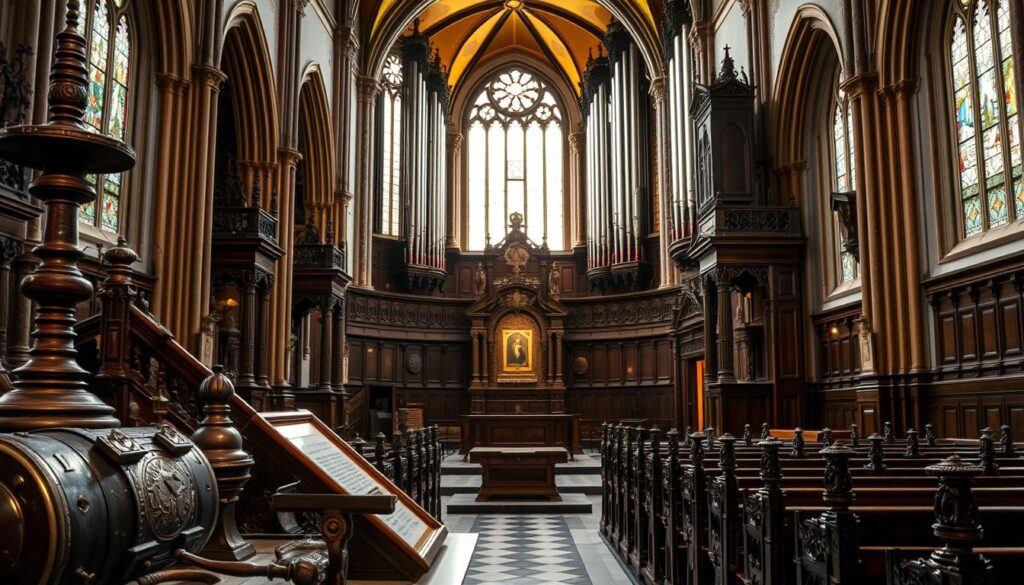
Artifacts, Bells, and Organ: Preserving History

Three remarkable treasures reveal St. Peter’s dedication to safeguarding its past. From musical marvels to baptismal relics, these artifacts connect modern visitors with centuries of spiritual practice.

St. Peter's Church historic artifacts

The Story of the Snetzler Organ

London organ builder John Snetzler crafted a masterpiece in 1771 that nearly became sea treasure. The instrument survived a shipwreck near Skerries before arriving in Drogheda. Thanks to the Corporation of Drogheda, which gave £300 for repairs, its rich tones still accompany services today.

Historic Bells and Their Cultural Significance

Cromwell’s troops left the original five bells severely damaged in 1649. Over a century later, John Rudhall cast eight new bells that transformed the tower. Their weekly peals create a living link to 18th-century worship traditions.

Artifact Year Key Detail
Snetzler Organ 1771 Rescued from shipwreck
Rudhall Bells 1791 Eight-bell peal installed
Medieval Font 13th Century Restored in 1921
Cadaver Stone 1525 Memorializes Goldyng family

The Medieval Font and Other Relics

Helen M. Roe’s research in the Journal of the Royal Society highlights the octagonal font’s detailed carvings. Once used as a farm trough, this sacred object returned to its purpose in 1921. Nearby, a weathered tomb stone shows skeletal figures – a stark medieval reminder of life’s brevity.

The churchyard holds more secrets beneath its grass. Each artifact whispers stories of resilience, from rescued organs to bells that outlasted war. Together, they form a tangible chain linking past and present.

Community, Worship, and Cultural Heritage

At the heart of County Louth’s landscape stands a testament to enduring community spirit. This historic site continues to bridge past and present through vibrant gatherings and shared traditions. Weekly services blend ancient rituals with contemporary relevance, while special events celebrate local artistry and storytelling.

Modern Worship Services

Sunday mornings resonate with Snetzler organ melodies unchanged since 1771. Revd. Dr. Iain Jamieson leads inclusive services that welcome all generations. Summer concert series transform the nave into a cultural hub, featuring Irish folk musicians and poetry readings.

Outreach and Education

School groups explore the building’s hidden stories through interactive tours. Volunteers host genealogy workshops helping visitors trace ancestral connections. The annual heritage fair showcases traditional crafts, from stone carving to bell maintenance techniques.

Through these efforts, the community ensures its legacy remains alive and accessible. Each event reinforces the site’s role as both spiritual anchor and cultural touchstone for future generations.

FAQ

What makes St. Peter’s architectural design unique?

The structure blends Georgian elegance with Baroque flourishes, highlighted by Francis Johnston’s iconic spire. Its limestone craftsmanship and reordered interior reflect centuries of evolving artistry.

How did St. Peter’s contribute to Ireland’s religious history?

As part of the Diocese of Armagh, it served as a spiritual hub during key moments, including the 1649 siege. Its role in shaping local faith traditions remains central to the town’s identity.

Are there notable artifacts inside the building?

Yes! The rare 18th-century Snetzler organ and medieval baptismal font stand out. The bells, recast in 1886, also hold cultural significance tied to the region’s heritage.

Has the site undergone major renovations?

Extensive restorations in the 19th century repaired Cromwellian-era damage. Hugh Darley redesigned the interior, preserving its historic character while adapting spaces for modern worship needs.

Can visitors attend services today?

Absolutely. Regular gatherings continue, blending traditional liturgy with community outreach. It remains a living center for faith, art, and shared memory in Co. Louth.

What’s the connection to Helen Roe’s research?

The Royal Society of Antiquaries’ journal documents her studies on the site’s medieval roots, including its Anglo-Norman origins and transitions through the Georgian era.