Recent Posts

Protestant Church in Dallas – Worship, Community, Faith


Discover a place where faith thrives and connections grow deep. In the heart of Texas, diverse congregations create spaces for meaningful worship and authentic relationships. Whether you’re new to the area or seeking spiritual renewal, these communities offer warmth and belonging to everyone.

From traditional hymns to modern praise sessions, local gatherings cater to every preference. Many emphasize inclusive values, ensuring no one feels like a stranger. Shared meals, volunteer projects, and study groups strengthen bonds beyond Sunday services.

Families and individuals alike find support here. Through mentorship programs or neighborhood outreach, these groups prioritize practical care. They’re not just places to pray—they’re hubs where lifelong friendships begin.

Key Takeaways

  • Dallas hosts vibrant spiritual communities focused on connection and growth.
  • Worship styles range from classic to contemporary, appealing to diverse preferences.
  • Inclusivity remains a core value, welcoming people from all backgrounds.
  • Local congregations provide resources for personal and family well-being.
  • Opportunities to serve and learn foster deeper engagement with others.

Welcome to Our Protestant Church Dallas Community

At the heart of our gatherings lies a shared purpose: helping individuals grow in faith while serving others. We focus on building disciples who live out their beliefs daily, guided by timeless principles.

Our Mission of Making Disciples

Central to our work is the call to “go and make disciples of all nations,” as stated in Matthew 28:19-20. This isn’t just a slogan—it shapes how we connect with neighbors and support one another. Through small groups and local outreach, we create spaces where people learn, ask questions, and put faith into action.

“Abiding in Jesus, we are making disciples together.”

Embracing Spiritual Growth and Support

Life’s journey thrives best with encouragement. That’s why mentorship programs and Bible studies form the backbone of our community. Whether navigating challenges or celebrating milestones, members find practical guidance here.

Weekly gatherings extend beyond traditional worship. Shared meals, volunteer projects, and prayer partnerships help deepen relationships. Everyone contributes their strengths, fostering a culture where no one walks alone.

From young adults to families, we prioritize life-long learning. Our goal? Equip individuals to reflect hope and compassion wherever they go.

Worship Services and Inspirational Teaching

Weekly gatherings blend dynamic worship with practical teachings that inspire action. Across local congregations, you’ll find thoughtfully designed services aimed at deepening spiritual understanding while fostering connection. From uplifting music to relevant message delivery, these experiences meet people where they are.
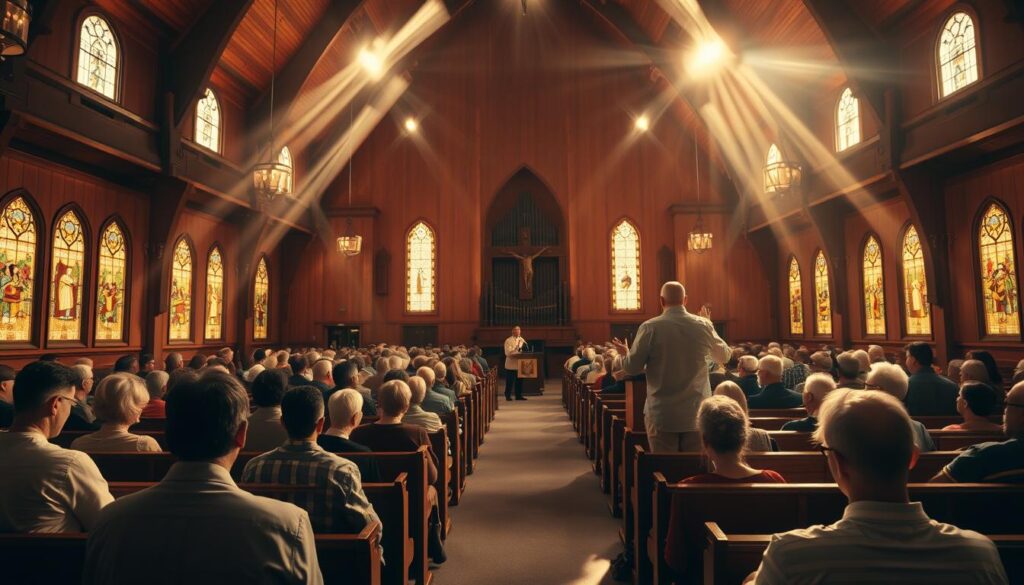
worship and teaching sessions

Sunday Sermon Series and Bible Teaching

Dr. Robert Jeffress leads engaging series like “The Divine Defense,” exploring spiritual tools from Ephesians 6. These multi-week teachings break down complex scripture into relatable lessons. Many attendees appreciate how topics address modern struggles while offering timeless hope.

First Baptist Dallas hosts services at 9:15 and 11 a.m., blending traditional hymns with contemporary elements. Their approach makes biblical principles accessible for all ages. Small group discussions often extend Sunday teaching, helping members apply insights throughout the week.

Prayer Gatherings and Worship Sessions

Midweek prayer meetings provide space for reflection and communal support. At Park Cities Baptist, Spanish-language worship starts at 12:30 p.m., embracing cultural diversity. These sessions often feature live music that ranges from acoustic medleys to full-band praise.

Communities prioritize creating multiple entry points for spiritual growth. Whether through quiet contemplation or energetic singing, every gathering strengthens personal faith. Regular participants report feeling refreshed and better equipped to handle life’s challenges.

Service Time Features
First Baptist Sunday Worship 9:15 & 11:00 a.m. Verse-by-verse teaching, choir performances
Park Cities En Español 12:30 p.m. Bilingual resources, family-focused activities
Midweek Prayer Hour Wednesdays 7 p.m. Guided intercession, scripture-based reflection

Engaging Community Events and Family Activities

Connecting families through shared experiences lies at the core of local congregations. Vibrant events blend learning with laughter, creating spaces where relationships flourish across generations. From seasonal celebrations to hands-on service projects, these gatherings turn ordinary weekends into meaningful memories.

Family Fellowship and Special Events

Watermark Community Church’s “Every Generation July” unites kids (ages 3+) and students through grade 12 with their families during Sunday services. This summer tradition encourages intergenerational worship through interactive lessons and collaborative activities. Shared meals and creative workshops help families grow spiritually while strengthening bonds.

Children’s and Youth Ministries

First Baptist Dallas transforms summer with its “Magnified!” Vacation Bible School (July 14-18). Children aged three through sixth grade explore Psalm 34:3 through scavenger hunts, music, and themed crafts. Age-specific programs ensure toddlers to preteens engage with biblical truths in developmentally appropriate ways.

Year-round ministries for students include mentorship pairings and leadership retreats. These initiatives equip youth to navigate life’s challenges while building lifelong friendships. Through dynamic small groups and service projects, young people discover how faith shapes everyday decisions.

Exploring Our Mission and Ministry Initiatives

Transforming lives requires more than Sunday services. Our mission drives collaborative efforts to uplift neighbors through practical action. Four pillars guide this work: worship, equipping believers, serving others, and inspiring societal change.
mission and ministry initiatives

Local Outreach and Social Impact

Every initiative begins with listening. Teams identify pressing needs like food insecurity or youth mentorship gaps. Volunteers then create tailored solutions—from weekend meal packs to tutoring programs. One participant shared, “Seeing smiles replace hunger pains makes every hour worthwhile.”

Park Cities Baptist exemplifies this approach. Their cultural engagement projects bridge divides through art exhibits and neighborhood dialogues. Annual service weeks mobilize hundreds to repair homes and host health fairs.

Strategy Focus Area Example
Equip Skill Development Financial literacy workshops
Serve Community Care Senior citizen tech training
Influence Policy Advocacy Local education partnerships
Worship Creative Expression Interfaith music collaborations

Getting involved is simple. Join a monthly outreach team or donate supplies for school backpacks. These hands-on ministry opportunities let people live their faith while making neighborhoods stronger.

Opportunities for Discipleship and Spiritual Study

Deepening your spiritual walk requires intentional steps. Through structured programs and small-group connections, members gain tools to explore faith with confidence. These initiatives blend learning with practical support, creating pathways for lifelong growth.

Year of the Word Bible Journey

Starting in 2025, the Year of the Word invites participants to read Scripture cover-to-cover. This church-wide effort includes weekly reading plans and discussion guides. Monthly workshops help adults connect ancient texts to modern life challenges.

For those questioning faith fundamentals, the “Great Questions” program offers safe spaces to explore doubts. One attendee shared, “Finally, a place where curiosity fuels growth instead of fear.”

Small Groups, Study, and Mentorship

Intimate gatherings foster authentic relationships. Groups of 8-12 members meet weekly for Bible study and prayer. Topics range from marriage enrichment (“re|engage”) to financial stewardship.

Seasoned believers partner with newcomers through mentorship programs. These pairings provide personalized guidance for navigating spiritual milestones. Many describe these connections as transformative in building consistent faith habits.

Program Focus Details
Year of the Word Scripture Immersion Daily reading plans + quarterly seminars
Great Questions Faith Exploration 8-week course for seekers & skeptics
re|engage Marriage Growth 16-week small group curriculum
Mentorship Pairs One-on-One Guidance 6-month commitment, flexible scheduling

Plan Your Visit to Experience Our Faith Community

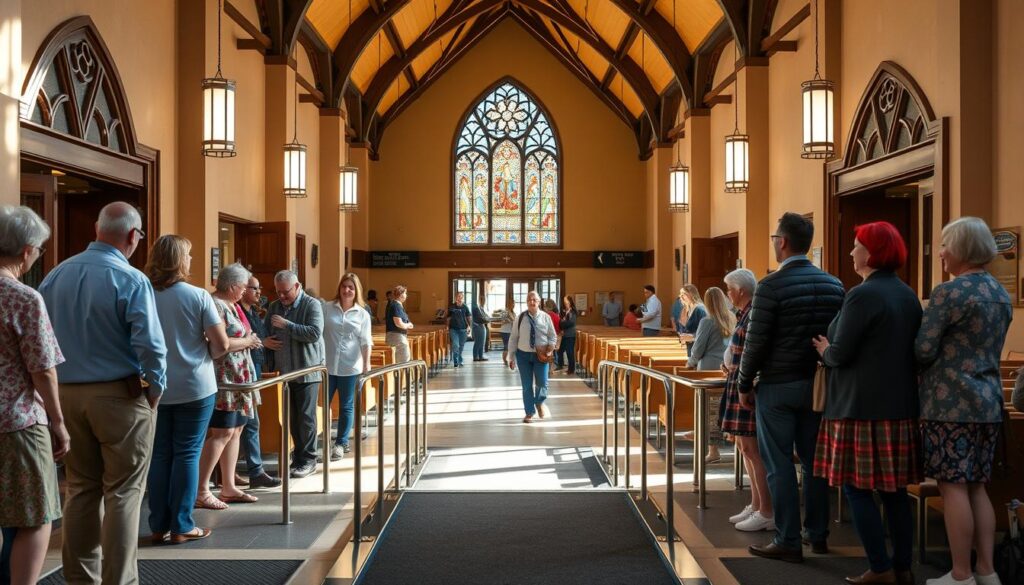
Stepping into a new spiritual home should feel effortless and inviting. Our teams have carefully designed every detail to help you focus on connection rather than logistics. Let’s remove the unknowns so you can fully engage from the moment you arrive.
visit faith community accessibility

Visitor Information and Accessibility

Watermark Community Church offers reserved parking spots near all entrances for first-time guests. Save time by pre-registering your Kids’ Ministry preferences online—their secure check-in system ensures safety while letting children join age-appropriate activities.

Accessibility features include:

  • Wheelchair ramps at every building entrance
  • Closed-captioning screens during services
  • Sensory-friendly spaces for neurodiverse visitors

What to Expect on Your First Visit

Greeters wearing blue lanyards will answer questions and guide families to key areas. The atmosphere stays relaxed—jeans and coffee cups are as welcome as Sunday best. Most people spend their first visit observing, though many jump into conversations at the Connection Café afterward.

You’ll receive a simple guidebook outlining service flow and facility maps. Our welcome teams specialize in helping newcomers find their place, whether that’s joining a small group or simply enjoying the music. As one recent visitor shared, “I felt known but never pressured—exactly what I needed.”

Digital Connection and Online Worship Experience

Technology bridges distances while keeping spiritual connections strong. Modern congregations meet people where they are—whether at home, work, or traveling—through innovative digital platforms. These tools create spaces where anyone can engage with meaningful content and caring communities.

Streaming Services and Virtual Events

Park Cities Baptist leads the way with HD-quality streams that capture every detail of live gatherings. Their platform features real-time chat support and downloadable study guides. Many appreciate how interactive elements like prayer request forms foster participation from afar.

Weekly virtual gatherings include:

  • Interactive Bible studies with breakout rooms
  • Midweek prayer circles using Zoom
  • Friday fellowship meetups for working professionals

“The online platform lets me engage deeply even when I can’t be there physically,” shares a regular viewer. Archived messages allow families to view services at a convenient time while maintaining spiritual routines.

These digital touchpoints complement—never replace—the energy of in-person gatherings. Through screens large and small, members maintain a sense of presence during life’s busy seasons. Shared worship moments continue strengthening bonds throughout the week.

Conclusion

In a city as vibrant as Dallas, spiritual growth finds a home in communities both large and small. The 16,000-member First Baptist congregation, led by Dr. Robert Jeffress, exemplifies how faith communities scale while maintaining personal connections. Their nationally recognized broadcast ministry extends this impact far beyond local borders.

Summer becomes a season of discovery through programs like Vacation Bible School, where kids explore scripture alongside peers. These experiences blend play with learning, creating memories that often shape life perspectives for years. From preschoolers to high school students, age-specific activities ensure every child engages at their level.

Every stage of life finds support here. Young adults join mentorship circles while families bond over shared service projects. Weekly prayer groups and seasonal gatherings offer multiple pathways to build relationships rooted in shared values.

Choosing a spiritual home here means embracing a presence that walks with you beyond Sunday mornings. Whether through quiet reflection or lively community events, these spaces help people cultivate purpose—one intentional step at a time.

FAQ

What is the focus of your mission?

Our mission centers on making disciples through intentional relationships, biblical teaching, and outreach. We aim to guide individuals toward spiritual growth while serving our local community with compassion.

Are there programs for children and students?

Yes! We offer dynamic ministries for kids and teens, including Sunday classes, youth groups, and seasonal events like Vacation Bible School. Activities are designed to nurture faith in age-appropriate, engaging ways.

How can I participate in small groups or Bible studies?

Join our “Year of the Word” initiative or explore weekly small groups focused on scripture, prayer, and mentorship. Newcomers are always welcome—check our website for meeting times and locations.

What should I expect during a worship service?

Services blend uplifting music, practical teaching from the Bible, and prayer. Sermons often follow themed series, and you’ll find a warm, inclusive atmosphere where everyone can connect authentically.

Do you host community-focused events?

A> Absolutely. From family picnics to service projects, we organize gatherings that strengthen relationships and address local needs. Seasonal highlights include holiday celebrations and outreach partnerships.

Is online participation available?

Yes! Stream Sunday messages live or watch later on-demand. We also host virtual prayer meetings and study sessions to keep our community connected beyond physical gatherings.

How do I plan my first visit?

We recommend arriving 15 minutes early to park and check in kids. Greeters will guide you, and our café offers free coffee. Casual attire is welcome—come as you are!

Are there volunteer opportunities?

From mentoring students to assisting with outreach programs, volunteers drive our ministries. Let us know your interests, and we’ll help you find a meaningful role.

What summer activities do you offer?

Summer brings Vacation Bible School, youth camps, and family-friendly events like movie nights. These programs create space for fun, learning, and deepening relationships.

Explore Protestant Church Communion: A Meaningful Tradition


Across many Christian congregations, a shared ritual unites worshippers in reflection and connection. This sacred practice, rooted in biblical teachings, invites participants to remember a foundational event through simple yet profound symbols. Bread and wine—or alternatives like grape juice—serve as reminders of sacrifice and renewal, creating moments of collective reverence.

While the core purpose remains consistent, interpretations of this tradition vary widely. Some groups emphasize its role in personal spiritual growth, while others focus on communal unity. These differences reflect the beautiful diversity within modern Christian worship, yet all share a common thread: honoring a legacy of faith.

Visitors often wonder about participation guidelines. Many congregations extend an open invitation, viewing the practice as a bridge rather than a barrier. The frequency of observance ranges from weekly to quarterly, shaped by each community’s theological perspectives and historical traditions.

Key Takeaways

  • Central Christian practice with deep historical roots
  • Uses symbolic elements to commemorate spiritual heritage
  • Participation policies vary by denomination
  • Observed at different intervals based on tradition
  • Strengthens bonds within faith groups
  • Balances universal themes with local customs

Understanding Open and Closed Communion Practices

When communities gather to share sacred meals, questions often arise about who can participate. This leads us to explore two distinct approaches shaping modern worship experiences.

Defining Open Participation

Many congregations follow an open table philosophy. Leaders might say, “All who seek Christ are welcome here.” This practice views the sacred meal as divine hospitality rather than human gatekeeping.

Some groups only ask participants to be baptized believers. Others extend the invitation more broadly. The Methodist tradition famously calls this “Christ’s open invitation”, emphasizing grace over formal membership.

When Participation Requires Alignment

Contrasting communities maintain stricter guidelines. These groups see shared rituals as celebrations of existing unity. Participation typically requires formal membership or doctrinal agreement.

This approach stems from specific interpretations of ancient texts. It preserves traditional understandings of community boundaries while honoring historical continuity.

  • Open practice: Focuses on spiritual seeking
  • Closed practice: Values doctrinal alignment
  • Common thread: Deep reverence for tradition

The Concept of protestant church communion

This sacred meal reveals how faith communities interpret ancient traditions in modern contexts. Its rich symbolism stems directly from Jesus’ final instructions to his followers, creating a practice that’s both deeply personal and collectively meaningful.

communion table

Historical and Biblical Foundations

The ritual originates in the Last Supper accounts found in three Gospels and Paul’s letters. Jesus’ words, “This is my body… my blood,” sparked centuries of theological exploration about divine presence in shared meals.

Reformers reshaped medieval views while preserving core biblical truths. Luther’s consubstantiation taught that Christ’s body blood coexists with bread and wine. Calvin emphasized spiritual nourishment through faith, while Zwingli saw the meal as a symbolic memorial.

These perspectives still guide worship today:

  • Lutheran services highlight Christ’s real presence
  • Presbyterian traditions focus on spiritual connection
  • Baptist gatherings prioritize remembrance

Despite differences, all agree the table strengthens community bonds. As one scholar notes, “It’s where heaven’s grace meets earthly fellowship.” Modern practices honor this balance between ancient roots and evolving understanding.

Navigating Interfaith Perspectives and Canon Law

Faith traditions often intersect at life’s most meaningful moments, creating both beautiful connections and complex questions. Shared spiritual practices like receiving communion can spark deep reflections on unity and boundaries.

Canonical Guidelines for Participation

The Code of Canon Law outlines clear rules for cross-tradition participation. Canon 844 states Catholics should only receive communion from Catholic ministers, except in extreme circumstances like mortal danger. Protestant communities have varied approaches:

Aspect Catholic Guidelines Protestant Guidelines
Participation Rules Closed except for emergencies Varies from open to members-only
Exceptions Danger of death or grave need Often pastoral discretion
Minister Authority Only ordained priests Licensed clergy or lay leaders

Theology of Shared Moments

Different beliefs about presence shape these policies. The Catholic view of transubstantiation contrasts with many Protestant understandings of symbolic remembrance. As one theologian notes, “What we believe happens at the table determines who we invite to it.”

When Beliefs Cross Paths

Mixed-faith families frequently face tough choices during weddings or funerals. Some Lutheran groups like the ELCA welcome all baptized Christians, while others restrict participation. Pastors often balance doctrine with compassion in these sensitive situations.

The danger of confusion remains a key concern. Receiving communion in another tradition might unintentionally suggest agreement with its teachings. Open dialogue and advance research help individuals honor both their faith and relationships.

Conclusion

This sacred meal remains a powerful bridge between faith traditions. While practices differ, all share a focus on Christ’s sacrifice through the body and blood symbolism. The Lord’s Supper invites reflection on divine grace, whether viewed as remembrance or spiritual nourishment.

Ministers often face delicate decisions when guiding participation. A pastor might weigh denominational teaching against a visitor’s heartfelt desire to receive Eucharist. These moments reveal the tension between doctrine and compassion.

Families blending traditions find creative solutions, like attending separate services while sharing home rituals. Such flexibility honors both theology and relationships. The table ultimately points beyond rules to unity in faith.

As worship evolves, this practice adapts while preserving core truths. It reminds us that spiritual connection thrives when we prioritize love over debate. Every shared meal whispers hope for deeper understanding across all who seek truth.

FAQ

What distinguishes open communion from closed practices?

Open communion invites all baptized believers to participate, regardless of denomination. Closed practices limit participation to members of a specific faith community, emphasizing doctrinal alignment.

How do historical roots shape communion traditions today?

Early Christian rituals and Reformation-era reforms influenced modern practices. Many groups emphasize the Lord’s Supper as a symbolic remembrance rooted in New Testament teachings.

Can Catholics receive the Eucharist in Protestant services?

Catholic canon law generally restricts members from receiving outside their tradition. Protestants often welcome guests but encourage respecting individual faith convictions.

Why do views on the Real Presence vary among Christians?

Theological interpretations differ—some see it as symbolic, while others affirm spiritual or sacramental presence. These views stem from scriptural analysis and historical debates.

How should families navigate mixed-faith communion settings?

Open dialogue and mutual respect are key. Many suggest focusing on shared values while honoring each tradition’s guidelines to foster unity without compromising beliefs.

Explore the Protestant Church in Addis Ababa


Ethiopia’s capital city hosts a thriving spiritual scene where diverse Christian traditions flourish. From traditional hymns to modern worship styles, faith communities here blend global influences with local customs. This guide helps you navigate these vibrant spaces that serve as both cultural landmarks and active community hubs.

Visitors discover congregations like Mekane Yesus and Beza, which offer services in multiple languages. Many groups organize literacy programs, youth initiatives, and neighborhood projects. These efforts strengthen social bonds while addressing practical needs across the city.

The roots of this movement trace back to 19th-century missionary work, evolving into today’s P’ent’ay network. This term describes Ethiopia’s mix of Protestant traditions, including Lutheran, Baptist, and Pentecostal practices. Historical sites stand alongside contemporary worship centers, creating a dynamic spiritual landscape.

Key Takeaways

  • Discover diverse worship styles from traditional to modern
  • Find English-language services at international congregations
  • Engage with community programs supporting local residents
  • Learn about 150+ years of Protestant history in Ethiopia
  • Experience the blend of global and local Christian traditions

Understanding the Protestant Church Landscape in Addis Ababa

Spiritual diversity thrives in Ethiopia’s capital through networks of faith communities. Their story begins with 17th-century Lutheran missionary Peter Heyling, who planted early seeds for what locals now call P’ent’ay – a term once used dismissively but now worn with pride.

From Missionary Roots to Modern Ministries

American and European missionaries expanded these efforts in the 1800s. By 1959, their work crystallized into the Ethiopian Evangelical Church Mekane Yesus. Its name honors both its first meeting place and Christ’s central role.

Today’s congregations balance tradition with innovation. Many run literacy workshops and healthcare ministries alongside worship services. Over 11 million members participate through 22 united denominations.

A Tapestry of Traditions

Five major groups shape the city’s spiritual fabric:

Denomination Founded Members
Kale Heywet 1927 8 million
Mekane Yesus 1959 6 million
Full Gospel Believers 1967 3 million
Meserete Kristos 1970s 500,000

These communities collaborate on disaster relief and youth programs while maintaining distinct worship styles. Their shared focus on practical community support unites diverse theological perspectives.

Navigating the “protestant church addis ababa” Service Directory

Finding your ideal spiritual home in Ethiopia’s capital becomes simpler with organized directories showcasing local congregations. These hubs blend worship with practical support, offering tools for personal growth and neighborhood improvement.

Weekend Gatherings and Beyond

Sunday services form the core of most communities, but many go further. Midweek Bible studies, vocational training, and leadership workshops cater to diverse needs. The Ethiopian Evangelical Church Mekane Yesus runs literacy classes alongside music programs for all ages.

church service directory resources

Transforming Neighborhoods

Local congregations partner on projects that reshape city life. Recent initiatives include:

Initiative Beneficiaries Impact
Clean Water Access 12 urban districts 45,000+ served
Health Clinics Low-income families Free monthly checkups
Youth Tech Labs Students aged 12-18 3,200 trained since 2020

Digital Connection Points

Modern faith communities maintain robust online presences. Websites feature searchable event calendars and volunteer portals. Many stream services live and archive sermons for later viewing.

Look for congregations offering virtual newcomer meetups or downloadable study guides. These tools help visitors explore beliefs before attending in person.

Exploring Evangelical Perspectives and Ethiopian Evangelical Church Mekane Yesus

Faith communities across Ethiopia’s capital demonstrate how spiritual convictions shape daily life. At their core lies a commitment to biblical teachings paired with practical action – a combination that fuels both personal growth and neighborhood transformation.

Mission, Theology, and Worship Styles

The Ethiopian Evangelical Church Mekane Yesus operates on three pillars: scripture, service, and salvation. Its “Serving the Whole Person” philosophy drives initiatives like mobile health clinics and vocational training. Members emphasize:

Belief Practice Impact
Scripture Authority Daily Bible studies 80% literacy rate among members
Spiritual Rebirth Baptism programs 12,000+ annual participants
Cultural Adaptation Traditional mezmur music 200+ local artists supported

Cultural Integration and Community Life

Sunday services pulse with rhythmic mezmur hymns blending ancient scales with modern instruments. This musical fusion reflects broader efforts to honor Ethiopian heritage while embracing global connections.

Weekday activities strengthen social bonds through:

  • Youth tech labs teaching coding skills
  • Women’s cooperatives producing handcrafts
  • Neighborhood clean-up initiatives

One elder notes: “We sing Ethiopian melodies to share timeless truths – it’s faith wearing local dress.” This approach helps congregations address urban challenges while maintaining theological distinctiveness.

Conclusion

Ethiopia’s capital reveals spiritual vitality through communities where ancient rhythms meet modern life. These groups balance time-honored traditions with fresh approaches to faith, creating spaces for both reflection and action.

You’ll discover ministries addressing education gaps, health needs, and economic challenges alongside worship services. This whole-person approach transforms sacred gatherings into engines for neighborhood renewal. Many offer multilingual programs that bridge cultural divides while celebrating local heritage.

Whether seeking mentorship or meaningful connections, these hubs welcome all stages of spiritual exploration. Their blend of global perspectives and grassroots solutions reflects Ethiopia’s unique position at the crossroads of faith and innovation.

As you engage with these communities, you become part of a living story – one where sacred melodies harmonize with the hum of daily progress. The door remains open for deeper discovery and shared growth.

FAQ

What ministries are available at evangelical congregations in the city?

Many local evangelical congregations offer diverse ministries, including youth programs, community outreach, Bible studies, and social justice initiatives. Some also host events focused on education, healthcare, or humanitarian aid to support vulnerable groups.

How does the Ethiopian Evangelical Church Mekane Yesus integrate cultural traditions?

The Ethiopian Evangelical Church Mekane Yesus blends traditional worship practices with contemporary evangelical teachings. Music, local languages, and cultural celebrations are often incorporated into services, fostering a sense of unity and cultural pride within the community.

Are there online resources for exploring evangelical congregations in Addis Ababa?

Yes! Many churches maintain websites with service schedules, event calendars, and sermon archives. Some even stream services live or provide downloadable materials for personal study and spiritual growth.

What role do evangelical groups play in community development?

Evangelical organizations frequently partner with local NGOs to address poverty, education gaps, and healthcare needs. Their outreach programs often include vocational training, disaster relief, and advocacy for marginalized communities.

How can visitors participate in Sunday services or events?

Most congregations welcome visitors warmly. Check individual church websites for service times and visitor guidelines. Many offer multilingual services or translation support to accommodate diverse attendees.

What theological distinctions define Mekane Yesus compared to other groups?

The Ethiopian Evangelical Church Mekane Yesus emphasizes Lutheran traditions while prioritizing contextual theology. It focuses on social justice, ecumenical collaboration, and grassroots empowerment, setting it apart in its approach to faith and community engagement.

Explore the Leading Protestant Churches in Montreal


In the heart of Canada’s cultural mosaic, historic faith communities stand as cornerstones of spiritual and social connection. These spaces blend centuries-old traditions with modern-day inclusivity, welcoming people from all walks of life. Their steeples and stained glass tell stories of resilience, reflecting a heritage that has shaped the city’s identity.

Beyond their spiritual role, these institutions serve as lively hubs for cultural exchange. Concerts, art exhibits, and community dinners breathe new life into sacred spaces, creating bonds that stretch across generations. Many downtown locations host events that draw both locals and travelers, offering a taste of local flavor.

Architectural diversity adds another layer of charm. From grand structures with vaulted ceilings to cozy neighborhood gathering spots, each building carries its own narrative. They’ve adapted over time, balancing preservation with contemporary needs—proof that tradition and progress can coexist.

Today, these centers continue to evolve while honoring their roots. They remain vital to urban life, providing comfort and connection in a fast-paced world. Whether you’re seeking quiet reflection or vibrant engagement, there’s always a place to belong.

Key Takeaways

  • Historic faith centers blend cultural preservation with modern community engagement
  • Architectural diversity ranges from iconic downtown landmarks to intimate local spaces
  • Multipurpose venues host concerts, workshops, and events beyond traditional services
  • Adaptive reuse maintains historical integrity while meeting current societal needs
  • Inclusive environments welcome both residents and global visitors
  • Spiritual traditions interweave with Montreal’s multicultural urban fabric

Historical Overview of Protestant Churches in Montreal

Faith communities have shaped Montreal’s story since colonial days. Their journey mirrors the city’s growth, blending diverse traditions into a shared heritage. Let’s explore how these groups laid foundations that still support modern spiritual life.

Early Influences and Heritage

Immigrant groups built the first worship spaces to preserve their beliefs abroad. In 1925, a landmark union merged three traditions—Congregational, Methodist, and Presbyterian—into The United Church of Canada. Their crest, designed later, combined symbols: an open Bible, dove, and burning bush. These represented truth, renewal, and enduring faith.

Early settlers prioritized practicality. Simple wooden structures hosted both services and town meetings. Over time, these spaces became anchors for cultural exchange, helping newcomers balance old traditions with new lives.

The Evolution of Church Architecture

Buildings grew grander as congregations flourished. Gothic Revival styles emerged, featuring pointed arches and stained glass. Architects turned humble halls into symbols of permanence, using stone carvings and soaring steeples.

Design choices reflected changing needs. Spacious interiors allowed for music performances and community meals. Craftsmen blended beauty with function, creating venues that served spiritual and social roles. Today, these structures stand as testaments to skilled work across generations.

Spotlight on protestant churches montreal

Montreal’s skyline tells stories through stone and stained glass. Three historic structures stand out for their design brilliance and community impact. Let’s explore these treasures where heritage meets modern life.

St. James United Church: A Victorian Neo-Gothic Gem

Alexander Francis Dunlop’s 1889 masterpiece hides a surprising past. For 79 years, shoppers passed its hidden neo-Gothic façade without knowing the architectural wonder behind storefronts. The 2006 restoration revealed intricate stonework that now anchors the Quartier des Spectacles.

st. james united church interior

Inside, amphitheater seating wraps 1,200 guests around a Casavant Frères organ with 3,984 pipes. This cultural hub hosts everything from jazz concerts to Le Balcon’s French cuisine. “Our space breathes new life into ancient traditions,” shares a staff member during SoulFest preparations.

Christ Church Cathedral: A Neo-Gothic Masterpiece

Frank Wills’ 1859 design floats above Sainte-Catherine Street’s bustle. The cathedral’s limestone arches shelter regimental banners of the Canadian Grenadier Guards. Music lovers flock here for Bach Festival performances beneath the 1894 Warren organ’s golden pipes.

St. George’s Anglican Church: Historic and Inviting

William Tutin Thomas’ 1870 creation charms with its uneven bell tower. Sunlight filters through memorial windows onto carved oak pews. Volunteers often greet guests with stories about the 1875 pipe organ that still accompanies Sunday services.

These landmarks prove sacred spaces can evolve. From hidden treasure to cultural stage, they remain living chapters in Montreal’s ongoing story.

Architectural and Community Significance

Stone walls and stained glass whisper stories of craftsmanship and connection. These spaces merge artistry with purpose, creating environments where design and devotion intersect. Let’s explore how form and function unite to shape shared experiences.

Distinctive Architectural Styles and Features

Builders encoded meaning into every arch and ornament. Gothic Revival vaults draw eyes upward, symbolizing spiritual aspiration. Stained glass transforms sunlight into storytelling, depicting scenes from sacred texts. Wooden pews curve like embracing arms, encouraging fellowship during services.

Symbol Meaning Design Influence
Open Bible Spiritual freedom Central pulpits
Dove Peace & renewal Baptismal fonts
Burning Bush Eternal presence Bronze altar pieces
Alpha/Omega Divine timelessness Circular window motifs

The Role in Building Community Heritage

Beyond Sunday services, these spaces host soup kitchens and language classes. “Our building breathes with the neighborhood’s heartbeat,” shares a volunteer coordinator. Memorial plaques honor generations who shaped local history, while community boards advertise modern workshops.

Preservation teams balance original brickwork with wheelchair ramps. Recent updates include Indigenous art installations beside Victorian mosaics. This blend of old and new keeps heritage alive while welcoming fresh voices.

Events and Experiences at Montreal Churches

Melodies echo through vaulted halls where history meets harmony. These spaces pulse with energy, hosting events that blend artistry with tradition. From soul-stirring concerts to reflective walks, every experience invites connection.

Special Concerts, Festivals, and Organ Recitals

St. James United Church transforms during its annual SoulFest, where R&B vibrations shake its neo-Gothic walls. The venue’s Casavant Frères organ—boasting nearly 4,000 pipes—anchors performances that draw global crowds. “Music bridges generations here,” says a regular attendee.

organ performances historic venues

Downtown, Christ Church Cathedral becomes a classical haven during the Bach Festival. Its golden-piped Warren organ fills the space with Baroque brilliance. For casual listeners, St. George’s Anglican offers free Sunday concerts—a 150-year tradition sustaining the city’s love affair with sacred music.

Heritage Walks and Community Pilgrimages

Guided tours reveal hidden stories etched in stained glass and stone. Visitors trace routes connecting chapels to civic landmarks, discovering how faith shaped the urban landscape. Seasonal pilgrimages invite quiet reflection, turning familiar streets into pathways of discovery.

These events create living bridges between past and present. Whether marveling at a 19th-century organ or tracing artisans’ handiwork, every encounter celebrates shared human creativity.

Conclusion

Legacy and landscape intertwine at Montreal’s spiritual landmarks. While exploring historic faith communities, don’t miss Saint Joseph’s Oratory on Mount Royal. This iconic site, founded by Brother André in 1924, became a beacon for pilgrims worldwide. Its Art Deco votive chapel stands as a testament to human devotion and craftsmanship.

The Oratory’s story mirrors the city’s spirit—humble beginnings growing into enduring symbols. Over two million visitors annually climb its stone steps, drawn by both faith and architectural wonder. As a National Historic Site, it preserves heritage while welcoming modern seekers.

These spaces remind us that sacred sites shape more than skylines. They anchor community memories and collective identity. From quiet prayer to grand festivals, they offer connection points in our fast-paced world.

Whether you’re marveling at a basilica’s dome or tracing a saint’s footsteps, Montreal’s spiritual landmarks invite reflection. They prove that places of meaning can adapt across centuries, keeping history alive through every generation’s touch.

FAQ

What makes St. James United Church a must-visit landmark?

Known for its striking Victorian Neo-Gothic design, this historic site features intricate stained glass, a grand organ, and a vibrant role in Montreal’s cultural heritage. It’s also one of the city’s oldest surviving worship spaces.

How does Christ Church Cathedral blend tradition with modern life?

As a Neo-Gothic masterpiece, the cathedral hosts concerts, festivals, and community events. Its soaring arches and stunning interior serve as both a spiritual haven and a hub for artistic expression.

Are there guided tours available at these historic sites?

Yes! Many locations offer heritage walks, organ recitals, and seasonal festivals. Check their schedules for guided tours that highlight architectural details and local stories.

What role do these spaces play beyond religious services?

They act as community anchors, hosting food drives, cultural festivals, and music events. Their doors often open to support social causes, making them vital to Montreal’s social fabric.

Can visitors attend musical performances at these churches?

Absolutely. Venues like Christ Church Cathedral are famed for their acoustics and organ recitals. Seasonal concerts and choir performances draw locals and tourists alike.

How does St. George’s Anglican Church reflect Montreal’s history?

Built in 1869, its inviting interior and Gothic Revival style symbolize resilience. The church has preserved its original woodwork and remains a welcoming space for reflection and connection.

Is there a connection between these churches and the city’s heritage trails?

Many are part of self-guided or organized heritage walks. These trails highlight their architectural significance and contributions to Montreal’s cultural identity over centuries.

How the Protestant Church Emerged Under Henry VIII


In the 16th century, England experienced a religious shift that changed its history forever. While many assume this transformation stemmed from theological debates, the truth is far more personal. At its core, the split from Rome was driven by one man’s quest for control—and a heir.

The king’s famous break with the Catholic Church began not with sermons or scripture, but with a marriage dispute. Desperate to annul his union with Catherine of Aragon, he clashed with papal authority. When Rome refused to grant the divorce, political ambition outweighed loyalty to tradition.

By 1534, the Act of Supremacy declared the monarch the sole leader of England’s religious affairs. This bold move created a unique institution—one that kept Catholic rituals but rejected foreign influence. Though often called the start of the Reformation in England, the change prioritized royal power over genuine doctrinal reform.

Key Takeaways

  • The split from Rome was fueled by personal needs, not religious beliefs
  • Royal authority replaced papal control through the 1534 Act of Supremacy
  • Traditional Catholic practices remained despite the political break
  • Marriage disputes and succession concerns drove the king’s actions
  • This shift laid groundwork for future Protestant changes in England

Historical Context of Henry VIII’s Reign

Ascending to the throne at just 18, Henry VIII inherited a kingdom still healing from decades of conflict. The Tudor dynasty had secured power only 24 years earlier through the brutal War of the Roses. This bloody civil war left England craving stability—a burden that fell squarely on the young monarch’s shoulders.

The Tudor Dynasty and Its Legacy

Henry’s father, Henry VII, spent his reign cementing Tudor authority. Victory over Richard III in 1485 ended generations of feudal warfare but required careful alliances. Religious approval became crucial—the crown relied on Rome’s blessing to justify its rule. As one court observer noted: “No king reigns long without God’s favor—or the Pope’s.”

This dependency shaped Henry VIII’s early decisions. His swift marriage to Catherine of Aragon—despite biblical objections—showed how deeply royal strategy intertwined with Church diplomacy. Even as he later defied papal authority, the king initially embraced Catholic traditions, earning the title “Defender of the Faith” for opposing Protestant reforms.

England in the 16th Century

By 1509, England stood at a crossroads. Decades of civil war had weakened noble families, giving monarchs unprecedented control. Yet producing a male heir remained urgent—without one, rival claims could reignite chaos. The geopolitical chessboard also pressured Henry: France and the Holy Roman Empire loomed as both allies and threats.

Three factors defined this era:

  • A fragile monarchy seeking legitimacy
  • Growing royal power over fractured nobles
  • International tensions requiring shrewd alliances

These forces explain why Henry’s later break from Rome stunned Europe. It wasn’t just a marital dispute—it risked undoing decades of careful state-building.

Catalysts for Religious Change in England

England’s religious landscape transformed through a perfect storm of personal crises and international politics. At the heart of this shift lay a royal marriage crumbling under the weight of succession demands and papal power plays.

Catalysts for Religious Change in England

Political Pressures and Papal Interference

Charles V, Holy Roman Emperor and nephew of Catherine Aragon, held immense sway over Pope Clement VII. When king henry sought to end his marriage, the pope faced impossible choices. Imperial troops surrounded Rome, making approval of the divorce politically dangerous.

This stalemate revealed a harsh truth: religious authority bowed to earthly power. As one diplomat noted, “The keys of heaven rust when emperors draw swords.”

Marital Disputes and the Quest for a Male Heir

Catherine’s six pregnancies yielded only one surviving daughter—Mary. Meanwhile, Henry’s mistress proved he could father sons, intensifying pressure to secure a legitimate male heir. Anne Boleyn’s refusal to be anything less than queen added fuel to the fire.

The king’s legal team made a controversial case:

  • Their marriage violated Levitical law (she was his brother‘s widow)
  • God’s displeasure showed through failed pregnancies
  • National stability required a son
Factor Key Players Impact
Political Blackmail Charles V Blocked annulment
Dynastic Crisis Catherine Aragon Succession doubts
Legal Argument Henry VIII Religious justification

These intertwined issues created an irreversible momentum. By 1533, Henry took radical action—marrying Anne Boleyn without papal approval. The stage was set for England’s dramatic break with Rome.

Key Figures Who Shaped the Religious Reformation

Behind England’s seismic religious changes stood individuals whose ambitions and beliefs reshaped a kingdom. Their alliances and rivalries turned personal dramas into national policy, forging a new path for English spirituality.

Advisors and Theologians: Architects of Change

Thomas Cranmer, appointed Archbishop of Canterbury in 1533, became the king’s theological bulldozer. He declared Henry’s first marriage invalid, arguing that royal authority trumped papal decrees. His reforms laid groundwork for later Protestant practices while maintaining traditional rituals.

Thomas Cromwell operated as the political mastermind. He engineered legal frameworks to transfer power from Rome to the crown. One court observer noted: “Cromwell’s pen wrote laws faster than priests could recite prayers.”

Royal Partners: From Thrones to Scaffolds

Catherine of Aragon‘s refusal to accept annulment made her a stubborn obstacle. As Henry’s first wife, her defiance forced radical solutions. Meanwhile, Anne Boleyn‘s rise as queen brought reformist ideas to the court—until her failure to bear a son led to her execution.

Jane Seymour’s brief reign produced the desired male heir but left no lasting religious legacy. Even Cardinal Thomas Wolsey, once the king’s closest advisor, learned the price of failure when he couldn’t secure the papal annulment.

Figure Role Impact
Thomas Cranmer Archbishop of Canterbury Legalized royal divorce
Anne Boleyn Queen Consort Advanced reformist ideas
Thomas Cromwell Chief Minister Destroyed papal authority
Cardinal Wolsey Former Advisor Showed consequences of failure

These players’ intersecting stories reveal how personal motives and statecraft merged. Their actions didn’t just change marriages—they redirected an entire nation’s spiritual journey.

The Emergence of the protestant church henry 8th

In 1534, a single law reshaped England’s spiritual landscape forever. Parliament’s Act of Supremacy didn’t just tweak religious rules—it launched a constitutional revolution. Overnight, centuries of papal control vanished as the monarch became the undisputed head of the Church of England.

Act of Supremacy document

The Act of Supremacy and Its Impact

This groundbreaking law made the king the ultimate religious authority. Clergy now answered to the crown, not Rome. But the real teeth came with the Treasons Act—disagreeing with royal supremacy became punishable by death. Sir Thomas More learned this brutally when he refused to endorse the new order.

“Loyalty to conscience now meant treason to the state,” wrote one terrified monk in his diary. The laws created a climate where silence became safer than speech.

Legal and Political Maneuvers That Redefined Authority

Thomas Cranmer and Anne Boleyn pushed reforms while walking a tightrope. They introduced English Bibles but kept traditional rituals. Monasteries stayed open, yet the crown seized their wealth. This balancing act created a unique hybrid faith—politically independent but doctrinally cautious.

Three key changes emerged:

  • Nationalized religious governance
  • Royal control over doctrine
  • Selective adoption of Reformation ideas

Though surface practices looked familiar, the Church of England now served state interests first. This fusion of spiritual and political authority would shape English identity for centuries.

Reformation Dynamics: Shifts, Dissolution, and Redistribution

Between 1536 and 1540, England witnessed the greatest property transfer in its history. Monasteries crumbled as the crown seized their assets—land equal to one-third of the kingdom. This bold move reshaped power structures and created loyalties that lasted generations.

dissolution of monasteries property

Dissolution of Monasteries and Property Redistribution

The crown dismantled over 800 religious houses, funneling their wealth into royal coffers. Henry VIII cleverly rewarded both Protestant allies and Catholic nobles with former monastic lands. A court insider wrote: “Gold buys loyalty better than prayers ever could.”

Surprisingly, public outrage stayed muted. Many commoners resented the Catholic Church‘s vast holdings. When news spread that clergy owned more property than all nobles combined, even devout followers questioned the imbalance.

Long-term Changes in Ecclesiastical Practices

English Bibles appeared in parishes by royal decree—a revolutionary shift. For the first time, ordinary people could read scripture without Latin translators. This change planted seeds for future reforms, though Henry VIII still executed those challenging traditional doctrine.

The land redistribution created powerful allies. New owners—whether Protestant or Catholic—fiercely opposed returning estates to Rome. Their self-interest became England’s safeguard against reversing the break with the Catholic Church.

Conclusion

England’s religious identity took a dramatic turn through royal ambition and personal crises. The king’s desperate need for a male heir reshaped national faith, creating the Church of England as a political tool. Though rooted in marital disputes, this split from the Catholic Church planted seeds for future spiritual reforms.

Anne Boleyn’s influence accelerated changes, but her failure to produce a son sealed her tragic fate. The crown’s new religious authority blended old rituals with royal control—a compromise that angered traditionalists and reformers alike.

Legacy emerged from chaos. While the king secured his dynasty through Jane Seymour’s son, his daughter Elizabeth later solidified England’s unique path. Personal desires, not theology, forged a system where power and faith became inseparable partners.

FAQ

Why did Henry VIII split from the Catholic Church?

The king sought to annul his marriage to Catherine of Aragon after she failed to produce a male heir. When the Pope refused, Henry used Parliament to pass laws declaring himself Supreme Head of the Church of England, bypassing Rome’s authority.

What was the significance of the Act of Supremacy?

Passed in 1534, this law formally recognized Henry as the highest authority in England’s religious affairs. It severed ties with the Pope and granted the monarchy control over church doctrine, property, and appointments.

How did Henry’s marriages influence religious reforms?

His desire to marry Anne Boleyn—and later others—drove his break with Rome. Advisors like Thomas Cranmer and Thomas Cromwell leveraged these personal crises to push legal and theological changes, reshaping England’s religious identity.

What happened to monasteries during this period?

Between 1536 and 1541, Henry ordered the dissolution of monasteries. Their lands and wealth were seized by the Crown, redistributed to nobles, or sold. This weakened Catholic influence and enriched the monarchy and its allies.

Did Henry VIII fully embrace Protestant beliefs?

Despite rejecting papal authority, Henry retained many Catholic practices. The Ten Articles of 1536 blended traditional doctrines with reformist ideas, reflecting his desire to balance change with political stability.

How did Anne Boleyn impact the Reformation?

Anne supported reformist thinkers and pushed Henry toward defiance of the Pope. Her marriage to the king accelerated legislative actions like the Act of Supremacy, though her execution later shifted the court’s religious dynamics.

What long-term effects did Henry’s reforms have?

His actions laid the groundwork for England’s Protestant future. By centralizing power under the monarchy and redistributing church wealth, he reshaped political, social, and religious structures for generations.

Discover the 5 Best Protestant Churches


Christianity in the United States thrives through diverse traditions that shape communities and inspire millions. This guide highlights impactful faith groups rooted in Protestant principles, offering insight into their histories, values, and roles in modern society.

From coast to coast, these denominations have cultivated unique worship styles and community-focused missions. The Southern Baptist Convention, for example, stands out for its emphasis on local congregation autonomy and evangelism. Meanwhile, Methodist traditions prioritize social justice and global outreach.

Understanding these groups helps explain their enduring influence. Each brings distinct approaches to scripture, fellowship, and service—reflecting the adaptability of Protestant beliefs across generations. Their shared commitment to faith unites them, even as practices vary.

Key Takeaways

  • Protestant traditions form the backbone of America’s religious landscape
  • Denominations differ in worship styles, governance, and community priorities
  • Historical roots shape modern practices and outreach efforts
  • Local congregations often drive charitable initiatives and social programs
  • Core beliefs center on biblical authority and personal spiritual growth

Whether you’re deepening your spiritual journey or studying religious trends, this overview illuminates how these churches continue to evolve while staying true to their foundations.

Introduction to Protestant Churches in the United States

In the United States, Protestant Christianity’s branches reflect a mosaic of beliefs and practices impacting millions. Researchers classify these groups into three primary traditions: evangelical, mainline, and historically Black Protestant. This framework helps explain how diverse worship styles and community priorities coexist under one broad faith umbrella.

Scope and Purpose of the Llisticle

This study focuses on major Protestant denominations that shaped America’s spiritual identity. Over a third of believers (36%) don’t identify with specific labels, leading experts to categorize them by cultural factors. By exploring key examples, we highlight how these faith communities adapt while preserving core values.

Understanding the American Religious Landscape

Immigration and cultural shifts created a unique environment for churches to evolve. From fiery revivals to quiet hymn-singing, practices vary widely across regions. Yet all share a commitment to biblical teachings and community service—a thread connecting colonial meetinghouses to modern megachurches.

These denominations thrive by addressing local needs while maintaining global outreach. Their stories reveal how faith adapts without losing its essence, offering lessons in resilience and cultural relevance.

Historical Development and Key Milestones of Protestantism

America’s spiritual identity grew from radical 16th-century reforms that reshaped Christianity forever. What began as theological debates in Europe became the foundation for diverse faith communities across new frontiers.

Roots in the Reformation Era

In 1517, Martin Luther’s bold actions sparked a religious revolution. His emphasis on personal scripture study challenged centralized authority, creating space for new interpretations. This “priesthood of all believers” concept became central to emerging groups.

Protestant Reformation milestones

Evolution in North America

Early settlers brought Reformed theology across the Atlantic, adapting it to frontier life. By the 1700s, revivals like the Great Awakening helped form unique regional identities. These movements prioritized emotional worship and grassroots organization.

Four key developments shaped North American religious life:

Event Timeframe Impact
95 Theses Publication 1517 Broke Catholic monopoly
English Reformation 1530s Created Anglican tradition
Great Awakenings 1730s-1840s Spread revivalist practices
Modern Ecumenism 20th Century Fostered interdenominational cooperation

Today’s landscape reflects centuries of adaptation. Articles of faith written in Geneva now guide congregations from Texas to Toronto. This ongoing evolution proves how historical roots continue bearing new fruit.

Understanding Core Beliefs and Worship Practices

At the heart of these faith communities lies a shared commitment to principles forged during the Reformation. The Five Solae—scripture alone, faith alone, grace alone, Christ alone, and God’s glory alone—serve as theological anchors. These ideas shape how believers approach prayer, scripture study, and daily life.

Baptist traditions make baptism a conscious choice, reserving full immersion for those old enough to declare personal faith. “We see it as an outward sign of inward transformation,” explains a pastor from Texas. Their services often feature spirited hymn singing and spontaneous prayer requests from congregation members.

Methodist worship blends structure with social action. Weekly gatherings might include liturgical readings alongside volunteer sign-ups for food drives. This dual focus reflects John Wesley’s vision: personal spiritual growth paired with community service.

Lutheran practices showcase historical continuity through:

  • Infant baptism emphasizing God’s grace
  • Communion rituals affirming Christ’s presence
  • Hymn-based services connecting modern believers to Reformation-era teachings

Presbyterian governance models demonstrate another approach. Elected elders guide congregations, reflecting a belief that shared leadership strengthens community life. This system encourages deep theological discussion while addressing practical needs.

Though worship styles vary, all these groups prioritize direct connection with God Christ through scripture and sacraments. Their evolving practices prove ancient truths can find fresh expression in changing times.

Exploring Denominational Diversity in American Protestantism

America’s religious tapestry features distinct threads of belief woven through nine denominational families. Each group preserves unique Protestant traditions while adapting to modern spiritual needs. This variety shows how shared roots can branch into diverse expressions of faith.

Major Denominational Families

The Baptist family champions local church control, with congregations deciding their own policies. Some groups focus on traditional values, while others embrace progressive views on social issues. Their shared commitment to adult baptism unites them across these differences.

Anglican churches blend formal liturgy with flexible theology. This form of worship connects English heritage to American cultural contexts. Many parishes now incorporate contemporary music while keeping centuries-old prayer structures.

Family Key Practices Cultural Impact
Anabaptist Adult baptism, pacifism Simple living communities
Methodist Social justice programs Community outreach networks
Lutheran Liturgical worship Education-focused ministries
Reformed Predestination theology Urban church planting

Within the Methodist family, United Methodist and African Methodist Episcopal churches showcase different approaches to scriptural interpretation. Both maintain Wesley’s emphasis on personal spiritual growth through disciplined prayer and service.

These denominational families prove that unity doesn’t require uniformity. Their ability to maintain core beliefs while addressing changing needs helps Protestant traditions stay relevant across generations.

List 5 Protestant Churches: An In-Depth Look

America’s faith communities demonstrate their influence through membership numbers and cultural impact. These organizations blend theological heritage with modern approaches to spiritual growth and social engagement.

largest Protestant denominations membership

Spotlight on Southern Baptist and Methodist Traditions

The Southern Baptist Convention leads with 16.2 million members, reflecting its focus on local decision-making and evangelism. Its structure allows congregations to address community needs while maintaining shared beliefs. “Our strength lies in unified purpose, not uniformity,” notes a Texas pastor.

Meanwhile, the United Methodist Church serves 7.8 million through its balance of tradition and activism. From disaster relief to racial justice initiatives, their work shows how faith inspires practical change. Membership trends reveal urban growth despite national declines.

Insights from Membership Data and Trends

Three other groups shape America’s spiritual landscape:

  • Church of God in Christ (5.5 million) blends Pentecostal worship with African American cultural traditions
  • National Baptist Convention (5 million) highlights diverse ethnic ministries within Baptist frameworks
  • Evangelical Lutheran Church U.S.A. (4.5 million) adapts Reformation teachings to modern social concerns

Only the Assemblies of God reported growth (+0.5%), suggesting shifting preferences in worship styles. These numbers reveal how historical roots meet contemporary challenges in America’s evolving religious ecosystem.

Comparative Analysis of Membership and Growth Trends

Recent studies reveal a seismic shift in how Americans engage with faith communities. While traditional metrics once defined success, experts like Dr. Thom Rainer argue that “membership numbers now tell only part of the story.” This change reflects evolving attitudes toward organized religion and new forms of spiritual connection.

Protestant membership trends

Interpreting Recent Statistical Data

Current figures show most major denominations face declining participation. The Assemblies of God stands alone with 0.5% growth among top groups. Others like the Presbyterian Church USA (2.8 million) and Episcopal Church (2 million) maintain cultural influence despite shrinking numbers.

Key factors driving these trends include:

  • Younger generations prioritizing flexible spiritual practices
  • Rise of non-denominational congregations
  • Shift toward community impact over institutional loyalty
Denomination Name Membership Trend
National Baptist Convention 3.5M Declining
Assemblies of God 2.9M +0.5%
African Methodist Episcopal 2.5M Stable
Lutheran Church-Missouri Synod 2.3M Declining

Historically Black congregations demonstrate enduring relevance through cultural specificity. Their ability to blend faith with social justice keeps communities engaged, even as overall numbers fluctuate.

These patterns suggest a redefinition of religious success. Many congregations now focus on service projects and personal connections rather than membership rosters. As cultural priorities evolve, so do measures of spiritual vitality.

The Role of Culture and Community in Shaping Church Practices

Local flavors shape spiritual life in surprising ways. Across America, congregations mirror their neighborhoods through worship styles that mix tradition with innovation. Like chefs tweaking family recipes, faith communities blend cultural ingredients with timeless truths.

Impact of Local Traditions on Worship

Methodist groups weave social justice into Sunday services, living out John Wesley’s vision of personal and social holiness. Their food drives and advocacy work show faith in action. Meanwhile, Baptist congregations adapt freely—a Texas church might swap hymns for country gospel, while a Brooklyn parish hosts pop-up job fairs.

Pentecostal gatherings crackle with energy. Hands rise during prayer, and worship bands pulse with rhythms familiar to local youth. In contrast, Lutheran services honor ancient liturgy while adding modern touches like podcast sermons. Both approaches honor heritage while speaking to today’s seekers.

African American congregations showcase resilience through gospel music and call-and-response preaching. These traditions build cultural pride alongside spiritual growth. Such adaptations prove faith thrives when rooted in real life—where shared views meet unique community needs.

FAQ

What distinguishes the Southern Baptist Convention from the National Baptist Convention?

The Southern Baptist Convention (SBC) and National Baptist Convention (NBC) both belong to the Baptist tradition but differ in history and cultural focus. The SBC, founded in 1845, emphasizes local church autonomy and evangelism, while the NBC—a historically African American denomination—prioritizes social justice and community empowerment alongside theological teachings.

How do Methodist denominations like the United Methodist Church structure their leadership?

The United Methodist Church uses a connectional system with bishops overseeing regional conferences. Congregations are grouped into districts, and major decisions are made at General Conference meetings. This contrasts with Baptist churches, which typically operate with more congregational independence.

What core beliefs define Lutheran churches like the Evangelical Lutheran Church in America?

Lutheran traditions emphasize salvation through faith alone, scripture as the ultimate authority, and sacraments like baptism and communion. The Evangelical Lutheran Church in America (ELCA) also prioritizes social outreach and ecumenical partnerships, reflecting its progressive stance on issues like ordination and interfaith dialogue.

Why have some Protestant denominations seen membership declines in recent years?

Factors include generational shifts in spiritual practices, reduced participation among younger adults, and evolving views on social issues. For example, the Presbyterian Church (USA) and United Methodist Church have faced challenges balancing traditional doctrines with modern cultural expectations, impacting retention and growth.

How do African Methodist Episcopal Zion churches incorporate cultural traditions into worship?

The AME Zion Church blends Protestant theology with African American heritage through gospel music, vibrant preaching styles, and community activism. Services often emphasize liberation theology, reflecting historical ties to abolitionism and the Civil Rights Movement, while maintaining Methodist practices like sacraments and class meetings.

What role do Reformed churches play in American Protestantism today?

Reformed churches, including the Presbyterian Church (USA) and Christian Reformed Church, emphasize God’s sovereignty and covenantal theology. Many engage in education and social justice initiatives, while newer movements like the Acts 29 Network adapt Reformed principles to contemporary church-planting strategies.