Recent Posts

Guide to Protestant Churches in Germany


Exploring Europe’s spiritual heritage reveals faith communities that shaped nations. The Evangelical Church in Germany (EKD) unites over 18 million members across 20 regional branches, representing nearly a quarter of the country’s population. This federation blends Lutheran, Reformed, and United traditions, creating a vibrant tapestry of beliefs rooted in 500 years of history.

These institutions trace their origins to the 16th-century Reformation, when religious thought underwent radical transformation. Martin Luther’s revolutionary ideas sparked changes that still influence modern society. Through wars, political shifts, and cultural revolutions, these communities adapted while preserving core values.

Today, they face new challenges as membership declines but maintain cultural significance. From stunning architecture to social programs, their impact extends beyond Sunday services. Visitors discover living history in cathedrals that witnessed pivotal moments in Europe’s development.

Key Takeaways

  • The EKD coordinates 20 regional faith groups with 18.6 million members
  • Historical roots date back to Martin Luther’s 1517 Reformation
  • Blends multiple Christian traditions under one organizational structure
  • Influences German culture through education and social initiatives
  • Membership represents 22.7% of the population as of 2023

Introduction to the Ultimate Guide

Your journey through centuries-old spiritual tradition starts here. This guide maps out the evolving landscape of faith communities born from the Reformation movement, blending historical depth with modern relevance. Whether you’re a curious traveler or academic researcher, we break down complex concepts into bite-sized insights.

You’ll discover how regional branches of the Protestant church maintain unique identities while sharing core beliefs. Unlike other Christian denominations, these institutions balance ancient rituals with contemporary social programs. Their steeples tell stories of survival through political upheavals and cultural shifts.

Did you know Lutheran church practices differ significantly between urban and rural areas? Our friendly explainer reveals these nuances without theological jargon. You’ll learn why Sunday services might include both traditional hymns and community discussions about climate change.

The importance of these faith groups extends beyond worship spaces. They operate schools, food banks, and cultural festivals that shape daily life. By exploring their organizational blueprints, you’ll grasp how 16th-century ideas still influence modern ethics and laws.

Ready to decode how the Protestant church adapts while preserving Lutheran church heritage? Let’s explore architectural marvels, holiday customs, and the art of balancing tradition with progress.

Historical Background of Protestant Churches in Germany

The roots of religious transformation in Central Europe stretch back to pivotal 16th-century events. Reformers challenged established spiritual authorities, reshaping faith communities across German-speaking lands. This movement gained legal recognition through the 1555 Peace of Augsburg, which allowed regional rulers to choose their territory’s official religion.

Within the Holy Roman Empire’s patchwork of states, princes often became guardians of local belief systems. One historian notes:

“The church-state partnership created a unique fusion of spiritual guidance and political governance that lasted four centuries.”

Key developments shaped this era:

Period Event Impact
16th Century Reformation Begins Regional faith autonomy emerges
1555 Peace of Augsburg Legal coexistence of denominations
1918 WWI Ends State church system dissolved

Local leaders served as both political rulers and church heads until 1918. This arrangement influenced everything from education to public festivals. Though formal ties ended after World War I, the organizational patterns persist in modern practice.

German protestantism’s ability to adapt while honoring tradition explains its enduring cultural footprint. Communities maintained theological principles through wars and regime changes, proving flexible yet resilient.

Origins and the Reformation

A spiritual earthquake shook Europe in 1517 when an Augustinian monk nailed revolutionary ideas to a church door. This act ignited changes that would reshape Christianity’s landscape for centuries. At its core, the movement prioritized personal faith over institutional rituals.

A panoramic scene of the key milestones of the Protestant Reformation, rendered in a classical oil painting style. In the foreground, Martin Luther nails his 95 Theses to the Wittenberg church door, his face lit by dramatic chiaroscuro lighting. In the middle ground, a crowd of scholars and clergy debate theological points, with the Castle Church in the background. Further back, the silhouettes of Martin Luther, John Calvin, and other reformers stand against a moody, atmospheric sky, illuminated by a single beam of light. The overall composition conveys the momentous historical shift and profound intellectual upheaval of the Reformation era.

The Spark That Lit the Fire

Martin Luther’s Ninety-five Theses challenged practices like indulgences, arguing salvation came through faith alone. His concept of “sola scriptura” shifted authority from church leaders to scriptural texts. This idea resonated with regional rulers seeking independence from central powers.

Key reformers expanded Luther’s vision. John Calvin emphasized predestination, while Martin Bucer bridged theological divides. Together, they created frameworks that still guide worship practices today.

Turning Points That Changed History

Three critical events solidified the movement:

  • 1529 Marburg Colloquy: Leaders unified core beliefs despite disagreements
  • 1530 Augsburg Confession: Princes presented their faith statement
  • 1531 Schmalkaldic League: Military alliance protected reform communities

Local rulers played dual roles as political and spiritual guardians. Their support allowed new congregations to flourish. As one scholar observed:

“Without princely protection, the reformation might have remained a monk’s protest.”

These foundations created structures that survived wars and cultural shifts. The Lutheran church preserved this legacy through evolving interpretations of its 500-year-old principles.

Understanding protestant churches germany

Navigating Germany’s religious landscape requires understanding specific terminology that often gets lost in translation. Let’s decode the essential phrases that shape these faith communities.

Language Matters: Words With Hidden Depths

The term “evangelisch” frequently confuses English speakers. Derived from the Greek word for “good news,” it simply means “Gospel-centered.” Unlike American evangelical movements, it describes all Reformation-rooted groups. As one linguist notes:

“This linguistic difference reflects distinct historical paths – Germany’s church identity formed through regional alliances, not modern revivalism.”
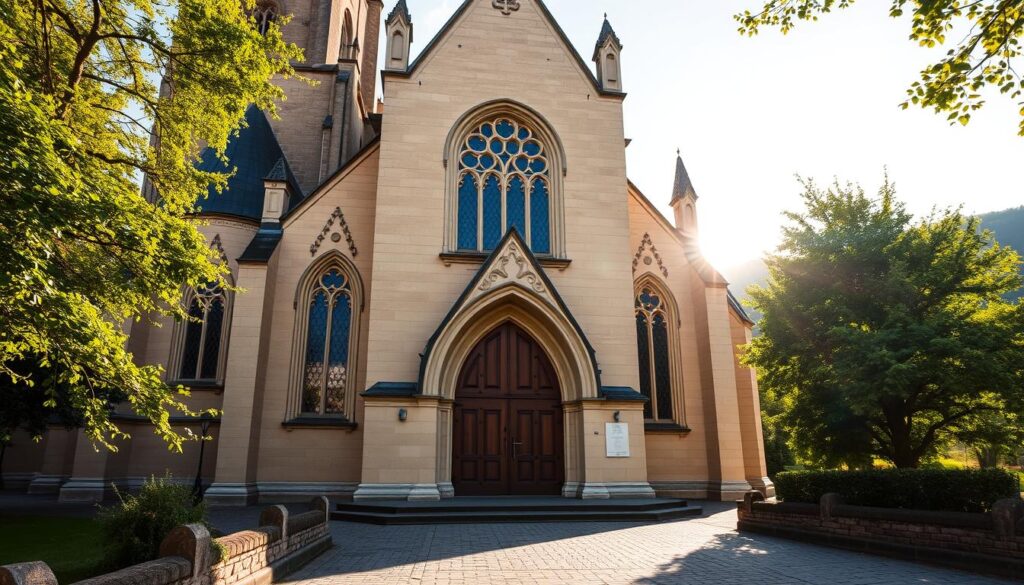
A serene, sun-dappled exterior of an evangelical church in Germany. The imposing sandstone façade is adorned with intricate Gothic architecture, with delicate arched windows and ornate spires reaching skyward. The church is set against a backdrop of rolling hills and lush, verdant foliage, creating a picturesque scene. The warm, golden light filters through the stained-glass windows, casting a soft, reverent glow over the scene. In the foreground, a cobblestone path leads to the grand wooden doors, inviting visitors to enter and experience the rich history and spiritual significance of this quintessential German Protestant church.

Term Meaning Significance
Landeskirchen Regional religious bodies Manage local operations while cooperating nationally
Confession Official belief statement Defines theological identity (e.g., Augsburg Confession)
Kirchensteuer Church tax Funds community programs through member contributions

Membership works differently here than elsewhere. Adults formally enroll through government offices, linking civic and spiritual life. This system supports social services while maintaining transparency.

Decision-making involves elected synods where laypeople and clergy collaborate. These groups address modern issues like digital outreach while preserving historical practices. The structure balances local needs with national unity.

Denominations and Divergence: Lutheran, Reformed, and United Churches

Three distinct streams flow through Germany’s religious landscape, each shaping modern faith practices. The Evangelical Church Union (EKD) connects these traditions through a shared structure while honoring their unique identities. Here’s how they coexist:

A serene landscape with three distinct church buildings standing prominently, representing the Lutheran, Reformed, and United Protestant denominations. The architecture of each structure reflects the unique styles and influences of its respective tradition. Warm, golden sunlight filters through wispy clouds, casting a soft, reverent glow over the scene. In the foreground, a well-tended garden with vibrant flowers and neatly trimmed hedges sets the stage, while in the distance, a rolling countryside with distant hills provides a peaceful, contemplative backdrop. The overall atmosphere conveys a sense of unity, history, and the diversity of Protestant expression in Germany.

Tradition Membership Share Theological Focus
United 57% Blends Lutheran & Reformed practices
Lutheran 40% Sacraments & justification by faith
Reformed 3% Predestination & governance

Lutheran Traditions and Their Evolution

The Lutheran church anchors its teachings in Martin Luther’s core ideas. Over centuries, these communities adapted to social changes while preserving sacraments like communion. A theologian explains:

“Modern Lutheranism keeps its 16th-century heart but speaks to 21st-century concerns through community programs and interfaith dialogues.”

This tradition remains vital through local festivals and youth initiatives. Its emphasis on personal faith resonates in urban and rural areas alike.

Reformed and United Approaches in Protestantism

Though smaller in numbers, the Evangelical Reformed Church punches above its weight in theological influence. Its congregations operate nationwide, often within Lutheran-dominated regions. Key differences emerge in:

  • Leadership structures favoring elected councils
  • Interpretations of predestination
  • Approaches to scripture

United churches dominate membership rolls by blending both traditions. This synthesis began in the 1800s when communities sought common ground. Today, they showcase how denominations evolve while maintaining unity.

The Role of the Protestant Church in German Society

Faith communities in Germany have long served as pillars of societal support, blending spiritual guidance with practical action. Their unique church-state partnership allows them to operate hospitals, schools, and crisis centers while maintaining religious independence.

Social and Political Engagement

A special tax system fuels this social engine. Members contribute through income-based levies managed by the state, ensuring stable funding for community programs. This model supports the Diakonische Werk, a network providing elder care and refugee assistance since 1957.

These institutions don’t shy from political debates. They advocate for fair policies on climate action and income equality. As one program director notes:

“Our work bridges Sunday sermons and Monday’s realities – feeding souls and bodies alike.”

Education remains a key focus. Over 40,000 church-run kindergartens and 100+ schools demonstrate this commitment. Community centers also host cultural festivals and job training, creating spaces where neighbors connect across beliefs.

This balance of cooperation and critique sets a global example. While receiving state support, the protestant church retains its voice on ethical issues. From disaster relief to art exhibitions, their impact stretches far beyond traditional worship.

Impact of World Wars and Political Shifts on Protestant Churches

Global conflicts reshaped religious institutions in unexpected ways during the 20th century. Both world wars forced faith communities to confront ethical dilemmas while navigating shifting political landscapes. These events tested their ability to maintain spiritual independence amid extreme pressures.

The Nazi Era, Resistance, and the Confessing Church

In 1933, a pro-Nazi movement formed the German Evangelical Church, blending state ideology with religious authority. The Confessing Church emerged as a bold counterforce, rejecting government control of worship practices. Leaders like Dietrich Bonhoeffer organized underground seminaries, declaring:

“The church must be the church – never the state’s propaganda tool.”

This resistance came at great personal risk. Over 700 pastors faced imprisonment for opposing Nazi policies. Their stand preserved theological integrity during history’s darkest chapter.

Post-War Reforms and Changing Demographics

After 1945, religious leaders issued the Stuttgart Declaration of Guilt, acknowledging failures to protect vulnerable groups. This reckoning led to the EKD’s creation in 1948 – a unified structure promoting accountability.

Urbanization and secularization transformed ministry approaches. Congregations expanded social programs while maintaining traditional practices. The church tax system evolved to fund community services fairly across regions.

Today, these reforms remind us how faith institutions can learn from past mistakes. Their journey from division to renewal offers lessons in balancing tradition with modern realities.

The EKD and Organizational Structures

Germany’s largest religious body operates like a well-oiled machine. The evangelische kirche deutschland coordinates regional groups through shared values and flexible governance. Its federal system lets local communities maintain traditions while tackling national challenges together.

Governance, Synods, and Council Roles

The Synod acts as the main decision-making body, with 126 members shaping policies. Most representatives come from regional groups, ensuring grassroots voices get heard. A smaller group joins through council appointments, blending fresh perspectives with institutional knowledge.

This structure prevents power imbalances. Regional branches elect 106 Synod members, while the Council selects 20. Together, they address modern issues like digital outreach and interfaith cooperation. The system has adapted smoothly since 1948, proving durable yet responsive.

Key Developments Since 1948

Post-war reforms transformed the german evangelical church into today’s collaborative network. Major milestones include merging eastern and western branches after reunification. The Council now has 15 members who oversee everything from youth programs to eco-friendly initiatives.

Recent changes end outdated practices while expanding community services. Through this evolution, the evangelische kirche deutschland remains a vital force – balancing centuries-old principles with 21st-century needs.

FAQ

How did Martin Luther influence religious practices in Germany?

Martin Luther’s teachings during the Reformation reshaped worship, emphasizing scripture over papal authority. His translation of the Bible into German made faith accessible, laying the groundwork for Lutheran traditions still observed today.

What distinguishes Lutheran churches from Reformed denominations?

Lutheran traditions focus on sacraments like communion, while Reformed groups prioritize predestination and simplicity in worship. United churches later blended these approaches, fostering unity among Protestant communities.

How did political shifts during the 20th century affect faith communities?

The Nazi regime pressured religious bodies to align with its ideology, leading groups like the Confessing Church to resist. Post-war divisions in East and West Germany further reshaped congregational roles in society.

What is the Evangelical Church in Germany (EKD)?

The EKD is a federation of Lutheran, Reformed, and United churches formed in 1948. It coordinates theological dialogue, social initiatives, and governance through synods, reflecting a collaborative approach to modern challenges.

Do members still pay a church tax?

Yes, registered adherents contribute through a tax collected by the state. This funds community programs, clergy salaries, and maintenance of historic buildings, though membership declines have sparked debates about its future.

How do these institutions engage with social issues today?

Many advocate for refugee rights, environmental policies, and interfaith dialogue. Their historical role as moral guides continues to shape public discourse on equality and justice in contemporary society.

What Does the Protestant Church Say About Gay Marriage?


Modern faith communities face challenging questions about love, commitment, and tradition. Among these, discussions about same-sex unions remain deeply divisive. Religious leaders continue to debate interpretations of scripture, cultural shifts, and scientific insights.

Denominational views vary widely, with some groups affirming marriage equality while others uphold historical definitions. This diversity stems from differing approaches to biblical texts, such as those explored in these Bible verses about love and commitment. Many organizations now balance theological convictions with evolving societal norms.

Legal changes and generational attitudes have pushed faith communities to revisit long-held positions. While some emphasize strict adherence to tradition, others prioritize inclusivity and pastoral care. These contrasting approaches reflect broader debates about how faith intersects with modern life.

Key Takeaways

  • Denominational positions range from full acceptance to traditional definitions of marriage
  • Biblical interpretation remains central to theological debates
  • Cultural shifts and legal rulings influence ongoing discussions
  • No single viewpoint represents all Protestant communities
  • Recent decades have seen increased dialogue about inclusion

Historical Roots and Evolution of Protestant Views on Marriage

Rooted in ancient texts, marital doctrines have evolved alongside cultural and theological shifts. Early teachings drew heavily from Jewish customs that framed unions as sacred bonds between a man and woman. These traditions viewed marriage as essential for family stability and societal order.

Early Church Teachings

First-century beliefs emphasized heterosexual partnerships as the only valid form of marital union. Leaders grounded this view in Genesis accounts, interpreting them as God’s blueprint for human relationships. Companionship and childbearing were seen as core purposes, shaping ethical standards for centuries.

Influence of the Reformation

Sixteenth-century reformers like Martin Luther challenged papal authority but upheld traditional marriage definitions. They argued unions should follow scriptural principles rather than institutional rituals. This focus on sola scriptura reinforced the idea that marriage between a man and woman reflected divine intent.

Over time, these teachings became central to many faith communities’ identities. Some still reference them when discussing wedding blessings, while others reinterpret ancient texts through modern lenses. This tension between preservation and progress continues to shape discussions today.

Early Biblical Interpretations and Cultural Context

Ancient texts often spark modern debates when viewed through contemporary lenses. Many scholars emphasize that scriptural passages about relationships must be analyzed within their original settings. Historical context matters—what applied to ancient Near Eastern societies might not directly translate to today’s norms.

biblical cultural context, renaissance-style painting depicting ancient middle eastern city with towering marble temples, stone buildings, and bustling market stalls in the foreground, people in traditional robes and headdresses going about their daily lives, warm afternoon sunlight casting long shadows, muted color palette of ochres, terracottas, and blues, detailed textures of stone and fabric, wide angle lens capturing the grand scale and architectural splendor of the scene

Progressive theologians note that Jesus Christ never explicitly discussed same-sex marriage. His teachings centered on radical love and dignity for marginalized groups. As one scholar observes:

“The Gospels prioritize compassion over legalistic interpretations of human bonds.”

The Apostle Paul’s letters, frequently cited in debates, addressed specific Greco-Roman practices like ritual exploitation. These differed sharply from modern, consent-based partnerships. For example:

Ancient Context Modern Context
Power-imbalanced relationships Equal partnerships
Pagan temple rituals Civil/religious ceremonies
Non-consensual acts Mutual commitment

Original Hebrew and Greek terms also reveal translation challenges. Words once describing abusive practices now get applied broadly to loving relationships. This linguistic gap fuels reevaluations of traditional stances.

While ancient Israel’s cultural norms influenced early teachings, many argue these shouldn’t rigidly define modern ethics. As communities reinterpret these texts, same-sex marriage discussions increasingly consider both historical roots and contemporary understandings of equality.

Doctrinal Foundations Impacting Gay Marriage Views

Understanding religious perspectives on committed relationships requires exploring core beliefs. These foundations shape how communities address modern ethical questions while honoring sacred texts.

A stained glass window adorns the center of the frame, its intricate patterns casting a warm, reverent glow. In the foreground, an open book lies atop a podium, its pages fluttering as if animated by the weight of centuries-old doctrine. The background is a serene, contemplative space, with wooden pews and a pulpit hinting at the solemn rituals performed within. The lighting is soft and diffused, evoking a sense of reverence and contemplation. The overall atmosphere is one of thoughtful, scholarly examination of the foundations that shape religious views on same-sex unions.

Scripture and Tradition

Faith groups approach sacred writings differently. Some prioritize literal interpretations of ancient passages, while others emphasize overarching themes like justice and compassion. This divide often determines whether communities bless same-sex unions.

A theologian explains:

“Covenant love reflects divine commitment regardless of gender configurations.”

Theological Approach Scriptural Focus Position
Literal Interpretation Creation narratives Traditional definitions
Contextual Analysis Love commandments Affirming stance
Progressive Synthesis Covenant theology Expanded blessings

The doctrine of creation sparks lively debates. Some view heterosexuality as central to God’s design. Others argue all loving bonds reveal spiritual truths when rooted in mutual respect.

Modern insights into human sexuality influence these discussions. Many now integrate scientific understanding with concepts like sacred commitment. This blending helps reconcile tradition with contemporary lived experiences.

Grassroots conversations thrive through the principle of collective spiritual discernment. Members wrestle with balancing ancient teachings and modern realities. These dialogues often lead to revised practices that honor both faith and inclusivity.

Protestant Church Gay Marriage: Denominational Perspectives

Faith communities across America are navigating complex questions about inclusivity and tradition. Their approaches to committed relationships reflect diverse interpretations of sacred texts and cultural contexts. This variety stems from decentralized decision-making structures that allow denominations to set independent policies.

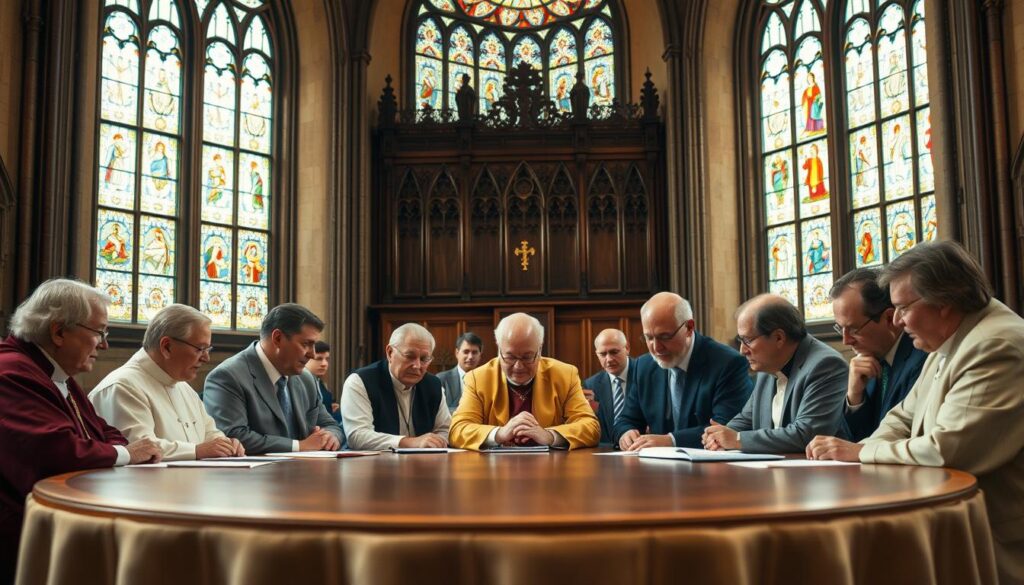
A cathedral's stained glass windows cast a warm, reverent light upon a gathering of diverse Protestant denominational leaders engaged in prayerful discussion. The foreground features a circular table, where representatives from various churches - some in traditional robes, others in contemporary attire - lean forward, their expressions serious yet thoughtful, as they deliberate the complex theological and social implications of same-sex marriage. In the middle ground, a backdrop of wooden pews and ornate architectural details suggests the solemn grandeur of the sacred space. The overall mood is one of earnest contemplation, as the leaders grapple with reconciling their faith's teachings with the evolving societal landscape.

Diverse Opinions Among Denominations

Religious groups demonstrate striking differences in their stances. Some fully affirm unions between same-sex couples, while others maintain traditional definitions. Many occupy middle ground, welcoming LGBTQ+ members without altering marital doctrines.

A theologian summarizes this tension:

“Our challenge lies in honoring ancient wisdom while responding to modern understandings of human dignity.”

Denomination Position Decision Process
Presbyterian Church in America Opposes all same-sex unions Fixed doctrinal standards
Reformed Church in America Ongoing deliberation General assembly votes
African Methodist churches Traditional marriage only Regional conferences
United Church of Christ Full affirmation Congregational autonomy

General assembly meetings often become battlegrounds for these discussions. Delegates debate scriptural interpretations and share personal testimonies before voting. These decisions ripple through local congregations, sometimes causing divisions.

Younger members frequently push for more inclusive policies, while older generations emphasize preservation. This dynamic keeps denominational positions evolving. As society changes, faith communities continue refining their approaches to love and commitment.

Evangelical Lutheran Church’s Stand on Same-Sex Relationships

The Evangelical Lutheran Church in America (ELCA) has navigated complex questions about faith and inclusion through careful dialogue. Its approach balances traditional teachings with evolving cultural perspectives, creating space for diverse viewpoints within its community.

Internal Debates

Years of intense discussion preceded the ELCA’s 2009 policy changes. Over 1,000 delegates at their national assembly debated scripture interpretations and personal testimonies. One pastor reflected: “We wrestled with honoring sacred texts while acknowledging modern understandings of love.”

The assembly ultimately voted to let individual congregations bless committed partnerships. This decision followed four years of theological study and member surveys. Though controversial, it aimed to maintain unity while respecting conscience.

Modern Adaptations

Today, the ELCA allows clergy in same-sex marriages to serve openly—a significant shift from past restrictions. Their social statement on human sexuality affirms diverse family structures, stating: “Loving relationships deserve communal support regardless of gender.”

Policy Change Impact
2009 Blessings Local option for unions
2010 Ministry Rules Open LGBTQ+ clergy
2015 Marriage Update Recognition expansion

These adaptations haven’t erased differences. Some congregations maintain traditional views, while others host pride celebrations. The Lutheran Church in America model shows how denominations can evolve while preserving core values.

United Church Christ Approaches to Marriage

Progressive faith communities continue redefining traditional practices through bold decisions. The United Church of Christ made history in 2005 when its General Synod endorsed legal recognition for same-sex unions. This groundbreaking vote positioned the denomination as a pioneer in affirming diverse relationships while respecting local autonomy.

The UCC’s resolution declared equal marriage a matter of justice, stating: “Loving couples deserve equal protection under civil law and spiritual support within faith communities.” Individual congregations retain freedom to adopt these guidelines—a balance between unified vision and grassroots decision-making.

Key aspects of this approach include:

  • Identical blessing ceremonies for all couples
  • Active opposition to discriminatory legislation
  • Outreach programs welcoming LGBTQ+ families

This inclusive stance has reshaped religious conversations nationwide. Over 1,300 UCC communities now perform same-sex ceremonies, using traditional vows and rituals. Beyond worship spaces, the denomination advocates for policy changes, testifying in court cases and lobbying legislators.

While some congregations maintain traditional views, most celebrate partnerships based on commitment rather than gender. As one minister explains: “Our faith calls us to recognize sacred bonds wherever love thrives.” This philosophy continues attracting diverse members seeking affirmation within spiritual settings.

United Methodist Church: Tradition vs. Progressive Stance

Recent decades have reshaped many religious institutions’ approaches to relationship recognition. The United Methodist Church exemplifies this evolution through its dramatic policy shifts. What began as strict adherence to traditional teachings now reflects growing acceptance of diverse partnerships.

Official Resolutions and Debates

In 2008, the denomination reaffirmed marriage as solely between a man and woman. This position faced challenges when clergy performed same-sex civil unions despite a 2009 judicial ban. “We chose compassion over compliance,” shared one minister who officiated these ceremonies.

The 2012 General Conference maintained language deeming same-sex relationships “incompatible with Christian teaching.” This decision deepened divisions until the groundbreaking 2024 assembly. Delegates then passed resolutions lifting bans on LGBTQ+ ordination and union blessings by a 93% majority.

This pivot mirrors broader societal changes while honoring theological diversity. Local congregations now navigate these updates, balancing historic identity with modern inclusivity. The journey continues as communities reinterpret faith traditions in contemporary contexts.

FAQ

How do mainline denominations differ in their approach to LGBTQ+ unions?

Groups like the Evangelical Lutheran Church in America (ELCA) and the United Church of Christ (UCC) allow blessings for same-sex couples, while others, such as the Southern Baptist Convention, uphold traditional definitions. The United Methodist Church recently split over this issue, highlighting evolving tensions.

What role does scripture play in shaping attitudes toward equal marriage?

Many congregations cite biblical passages about marriage being between a man and woman. However, progressive branches emphasize themes of love and inclusion, reinterpreting texts through modern cultural contexts. The ELCA, for example, balances scripture with social justice values.

Has the Episcopal Church changed its policies on same-sex relationships?

Yes. The Episcopal Church approved rites for blessing same-sex unions in 2012 and formally allowed clergy to officiate weddings in 2015. This shift reflects broader trends among some Anglican-aligned groups to affirm LGBTQ+ members.

Why did the United Methodist Church experience a schism over this topic?

Disagreements over ordaining LGBTQ+ clergy and performing same-sex ceremonies led to a 2022 split. Conservative congregations formed the Global Methodist Church, while remaining UMC bodies now lean toward more inclusive practices.

Do any Baptist groups support equal marriage rights?

The Cooperative Baptist Fellowship and Alliance of Baptists openly affirm LGBTQ+ members, unlike the Southern Baptist Convention. These smaller networks often prioritize local autonomy in decision-making on partnerships.

How does the Presbyterian Church (USA) address same-sex unions?

Following a 2015 amendment, PC(USA) permits clergy to officiate weddings for gay and lesbian couples. Individual congregations retain the choice to participate, reflecting the denomination’s emphasis on decentralized governance.

Explore the Top Protestant Churches in Halifax


Halifax’s spiritual landscape thrives with diverse faith communities where people discover connection and purpose. From historic sanctuaries to modern gathering spaces, these congregations prioritize meaningful worship and community engagement. Each location offers distinct programs tailored to different ages, backgrounds, and schedules, ensuring everyone finds their ideal spiritual home.

Visitors appreciate the warm atmosphere that blends tradition with innovation. Many congregations host multiple service styles—from classic hymns to lively contemporary music—to meet varied preferences. Families especially value the emphasis on inclusive programming, including youth groups and volunteer initiatives that strengthen both faith and local bonds.

Beyond Sunday gatherings, these communities actively support Halifax through outreach projects. Food drives, mentorship programs, and partnerships with charities reflect their dedication to serving others. For those navigating loss, many provide comforting resources like memorial service guidance rooted in compassion.

Whether you’re new to the area or deepening your spiritual journey, Halifax’s welcoming congregations create space for growth. Their focus on authentic relationships ensures every individual can contribute meaningfully while building lasting connections.

Key Takeaways

  • Halifax offers diverse worship styles to match traditional and modern preferences
  • Congregations prioritize inclusive programs for all ages and backgrounds
  • Community service projects strengthen local connections
  • Multiple service times accommodate busy schedules
  • Historic and contemporary spaces foster spiritual growth

Discover the Heart of Halifax’s Protestant Community

Generations of families have shaped Halifax’s spiritual identity through enduring values and shared purpose. At the center stands a landmark established in 1750—a living testament to faith’s role in building lasting connections across centuries.

A Legacy of Faith and Service

St. Paul’s holds the distinction of being Canada’s oldest Anglican place of worship, founded by royal decree. For over 275 years, its doors have welcomed those seeking hope through scripture and fellowship. Weekly gatherings here unite people in prayer for the world’s needs, maintaining traditions that honor both heritage and progress.

Modern Community Celebrations

Today’s congregations blend timeless rituals with fresh approaches to community life. From food drives to mentorship initiatives, these groups address local challenges while hosting events that spark joy. Many offer scriptural guidance for life milestones, ensuring faith remains relevant in daily experiences.

Creative worship services cater to diverse preferences, mixing classic hymns with modern music. Seasonal festivals and volunteer projects invite everyone to contribute, strengthening bonds beyond Sunday gatherings. This vibrant approach keeps Halifax’s spiritual legacy alive while nurturing new traditions.

Experience “protestant church halifax” – A Hub of Worship and Connection

Modern faith communities in Nova Scotia’s coastal capital blend timeless truths with fresh approaches to collective growth. At their core, these groups foster environments where individuals explore purpose while contributing to something greater than themselves.

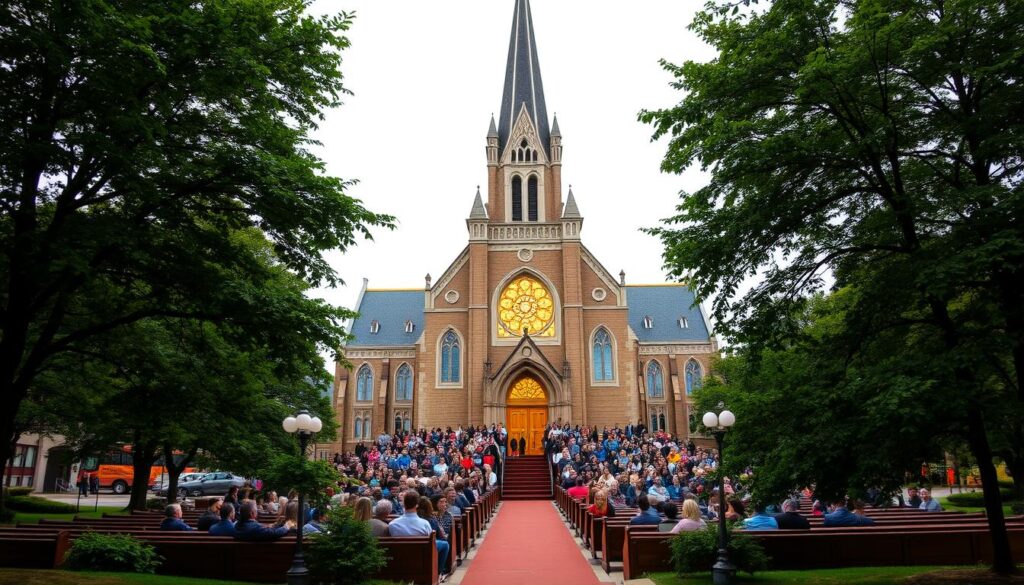
A sprawling Protestant church nestled in the heart of Halifax, its grand spire and ornate architecture capturing the essence of the city's rich spiritual heritage. The interior bathed in warm, inviting light, pews filled with a diverse congregation engaged in heartfelt worship, their voices echoing through the soaring vaulted ceilings. The scene exuding a sense of community, tradition, and deep-rooted faith that has sustained this sacred space for generations. Lush, verdant trees frame the exterior, lending a serene, park-like ambiance to the church grounds, inviting passers-by to pause and reflect on the spiritual tapestry that defines this vibrant Halifax neighborhood.

Authentic Encounters and Spiritual Growth

One vibrant congregation meets Sundays at 10 am on Chebucto Road, embodying this ethos. Their gatherings prioritize relational depth over ritual, inviting attendees to engage through interactive discussions and practical service projects. Many find these experiences help them discover untapped strengths they can apply in daily life.

Newer groups emphasize creative expressions of faith, like urban gardening initiatives paired with neighborhood meals. These efforts bridge generational gaps while addressing local needs. As one volunteer shared, “We’re learning to love our city by meeting people exactly where they are.”

Weekend services often feature modern music alongside reflective prayer moments, creating space for personal connection. Multiple communities now offer midweek workshops exploring topics like mindful living and ethical leadership—proof that spiritual development extends beyond traditional settings.

Insight into Service Times and Community Activities

Finding rhythms that align with modern lifestyles, local congregations prioritize accessibility through thoughtfully designed schedules. Whether you’re balancing work or family commitments, there’s space to connect meaningfully.

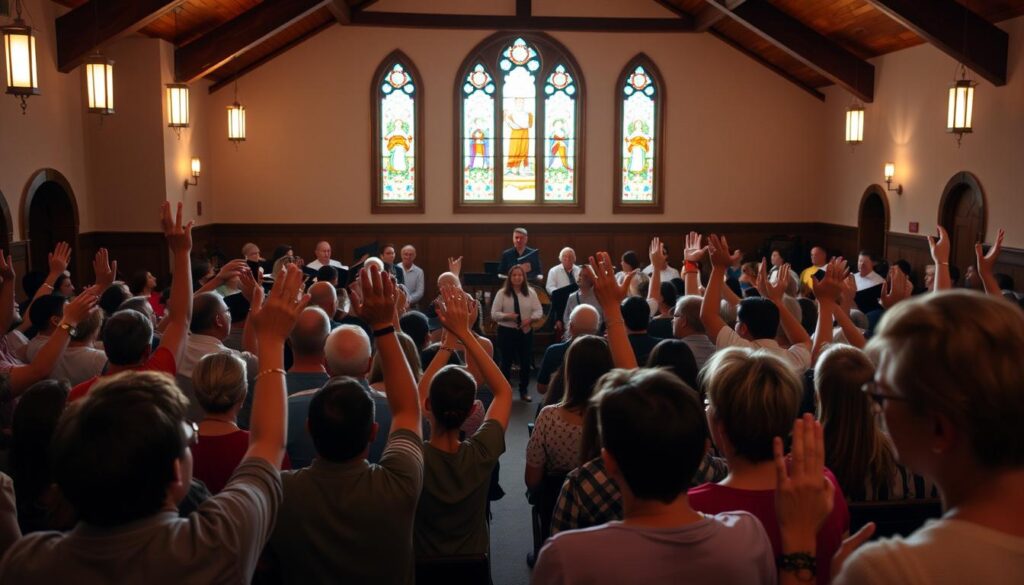
A cozy, well-lit sanctuary filled with a diverse congregation engaged in a lively worship service. In the foreground, people of all ages raise their hands in praise, their faces radiating joy and reverence. The middle ground features a choir harmonizing beautifully, accompanied by an organist and a small ensemble of musicians. In the background, stained glass windows cast warm, multicolored light, creating a serene and sacred atmosphere. The scene conveys a strong sense of community, fellowship, and devotion, capturing the essence of a vibrant Protestant church service.

Weekly Worship Schedules

Most gatherings center around Sunday morning services at 10 am, blending traditional and contemporary styles. For example, Chebucto Road’s 10 am Eucharist alternates between classic prayer formats while hosting interactive children’s sessions. Midweek options like Wednesday 11 am services or 9 am Morning Prayer cater to those with weekday availability.

Service Type Day/Time Highlights
Sunday Worship 10 am Children’s Programme, modern music
Midweek Prayer Wed 9 am Quiet reflection, scripture focus
Community Lunch Monthly Shared meals, guest speakers

Children, Youth, and Family Programs

From Sunday school crafts to teen mentorship, these initiatives nurture life skills alongside spiritual growth. One parent shared: “My kids now ask to attend—they’ve found friends who share their values.” Seasonal camps and parent workshops further strengthen family bonds.

Outreach and Community Engagement

Local groups transform faith into action through food banks, housing support, and free meals. The Rector’s Lunch program alone serves over 200 hot meals monthly. Partnerships with organizations like PWRDF extend impact globally while addressing neighborhood needs.

“Volunteering here taught me how small acts create big change.”

—St. Mark’s Food Bank Participant

Conclusion

Halifax’s welcoming congregations create spaces where timeless traditions meet modern life. These groups blend meaningful worship with practical support, offering something valuable for every seeker. From interactive family programs to volunteer-driven outreach, they prove faith thrives through action.

Their commitment to service shines in food banks, mentorship initiatives, and partnerships addressing local needs. This hands-on approach builds stronger neighborhoods while nurturing personal growth. Many find purpose here by contributing skills to causes larger than themselves.

Rooted in history yet adapting to today’s challenges, these communities serve as anchors in our changing world. Whether you prefer quiet reflection or lively discussions, there’s room to explore beliefs alongside others walking similar paths.

Looking for connection? You’ll discover open doors and warm hearts ready to welcome you. Together, they’re writing Halifax’s next chapter—one act of kindness at a time.

FAQ

What types of worship services are available?

Local congregations offer traditional Sunday morning gatherings, contemporary midweek sessions, and seasonal events like holiday celebrations. Many also host livestream options for remote participation.

Are there programs for families with young children?

Yes! Most faith groups provide Sunday school classes, youth mentorship initiatives, and family-friendly workshops. Activities often focus on creative learning, teamwork, and age-appropriate spiritual guidance.

How can I get involved in local outreach efforts?

Opportunities include volunteering at food banks, joining neighborhood cleanups, or supporting charity partnerships. Check bulletin boards or websites for current projects like backpack drives or seasonal donation campaigns.

Do these communities host social events beyond worship?

A> Absolutely. Look for coffee meetups, book clubs, outdoor hikes, or music nights designed to build connections. Seasonal festivals and cultural awareness workshops also foster unity across diverse backgrounds.

What should I expect during my first visit?

Welcoming teams greet newcomers, answer questions, and provide orientation materials. Casual attire is common, and many groups offer guest lounges or post-service refreshments to encourage conversation.

Are accessibility accommodations available?

Most locations feature wheelchair access, hearing assistance devices, and inclusive restrooms. Some also offer sensory-friendly spaces or translated materials—contact coordinators in advance to discuss specific needs.

Find the Best Protestant Church on the Gold Coast


Searching for a faith community that aligns with your values and lifestyle? The coastal region of southeast Queensland offers dynamic spiritual hubs where connection and growth thrive. Whether you’re drawn to modern worship or timeless teachings, local congregations blend meaningful traditions with relatable guidance for today’s challenges.

Groups like City on a Hill gather weekly at Worongary State School, focusing on building relationships through shared beliefs. Others, such as Southport Church of Christ, host morning and evening services featuring uplifting music and practical messages. For those near Maudsland, COH Church provides leadership from experienced pastors who emphasize both local and national outreach.

These gatherings go beyond Sunday routines. Many organize family programs, volunteer opportunities, and events that foster genuine bonds. As you explore options, consider what matters most: service times, group size, or ministries that support your spiritual growth. The right fit can enrich your daily life while helping you contribute to something greater.

Key Takeaways

  • Multiple worship styles and service times cater to diverse preferences
  • Established congregations offer proven track records of community impact
  • Family-friendly programs and outreach initiatives create holistic engagement
  • Strategic locations across the region provide convenient access
  • Experienced leadership teams guide both local and national faith efforts

Why a Protestant Church on the Gold Coast Stands Out

What makes spiritual homes in this sunny Queensland region unique? They masterfully balance modern relevance with timeless truths, creating spaces where curiosity and commitment coexist. Visitors often notice how these groups prioritize connection over formality, making faith exploration feel natural rather than forced.

Embracing a Welcoming Community

Walk into most gatherings here, and you’ll find conversations flowing as easily as the coffee. Diverse backgrounds unite under shared values, whether someone’s questioning spirituality or has followed Christian teachings for decades. One attendee shares, “It’s like joining friends you just haven’t met yet.”

Programs cater to all ages, with interactive kids’ activities running alongside adult discussions. This approach reflects the area’s laid-back vibe while addressing deeper needs for belonging. Many locations intentionally design their spaces to help newcomers contribute ideas and talents from day one.

Living Faith in a Scenic Locale

Sunday services here often feature open windows framing ocean vistas or gatherings at beachside parks. The region’s natural beauty isn’t just a backdrop—it inspires outdoor baptisms, sunrise meditations, and community picnics. Seasonal events leverage perfect weather, blending worship with coastal adventures like surf outreach programs.

This environment fosters a unique perspective where spiritual growth feels intertwined with enjoying creation. As waves crash nearby, teachings about stewardship and gratitude take on fresh meaning. It’s faith lived out loud, sand between your toes and hope in your heart.

Exploring the Local Christian Community

Living in a vibrant area means finding spaces where shared values spark meaningful bonds. Neighborhoods here thrive when people intentionally connect, creating networks that uplift families and individuals alike. Mid-week gatherings like City on a Hill’s Gospel Communities demonstrate how small groups foster growth through discussion and practical support.

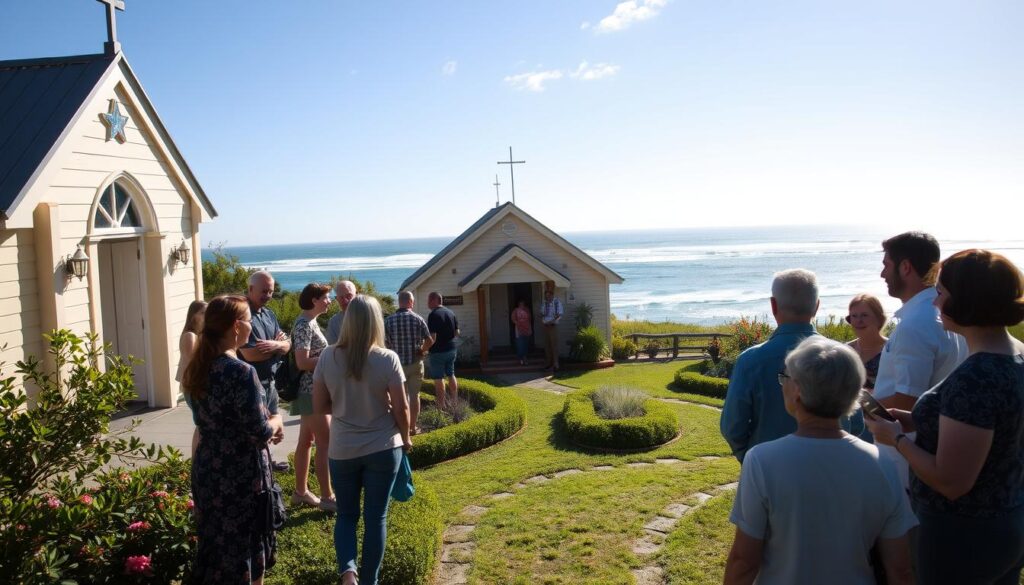
a warm, inviting scene of a local Christian community on the Gold Coast, Australia. In the foreground, a group of people of diverse ages and ethnicities are gathered outside a charming, traditional church building, engaging in friendly conversation and fellowship. The middle ground features a well-maintained, lush garden with a meandering path leading to the church entrance. In the background, a serene coastline with gently rolling waves and a clear, blue sky create a peaceful, picturesque atmosphere. The lighting is soft and natural, evoking a sense of calm and community. The overall scene conveys a welcoming, inclusive, and vibrant Christian community, reflecting the diverse population of the Gold Coast.

Connecting with Neighbors and Families

Parenting becomes richer when surrounded by others navigating similar journeys. Weekly meetups often include childcare activities, letting adults explore faith topics while kids play nearby. One member shares, “Our group became lifelines during tough seasons—they brought meals when our baby arrived and helped us understand financial stewardship in marriage.”

Building Authentic Friendships Through Worship

Shared experiences cement relationships faster than casual chats. Coastal congregations organize beach cleanups, backyard barbecues, and collaborative art projects that turn strangers into teammates. These efforts create natural opportunities to discuss life’s big questions while serving others.

Regular Bible studies and prayer circles offer safe spaces for vulnerability. As trust grows, so does the willingness to celebrate victories and shoulder burdens together. It’s not about perfect attendance—it’s showing up as you are, knowing others will too.

Service Details and Worship Experience

Curious about weekly gatherings? Let’s explore schedules and experiences that fit modern lifestyles. Multiple options ensure everyone finds their rhythm, whether you’re an early riser or prefer evening reflection.

Service Times and Locations

City on a Hill welcomes families Sundays at 10 AM in Worongary State School. Their program includes interactive Bible talks and age-specific activities for kids up to year 6. Southport Church of Christ doubles opportunities with 9 AM and 5 PM services, while COH Church hosts events at their Maudsland campus throughout the week.

What to Expect at a Worship Service

Walk into a 75-minute experience blending music, prayer, and practical teachings. Live bands often mix modern hits with classic hymns, creating sing-along moments that unite generations. One regular attendee notes, “The messages feel like life coaching grounded in timeless wisdom.”

Parents appreciate simultaneous programs where little ones learn through play-based Bible stories. Dress codes mirror coastal casualness—think sundresses and polo shirts. Volunteers greet newcomers with bulletins and help families settle in quickly.

Communion services occur monthly, inviting reflection on personal growth. Many locations stream sermons online for those who miss gatherings. Whether you join once or weekly, each visit offers fresh ways to connect faith with daily living.

Discovering the protestant church gold coast

Exploring communities driven by clear purpose reveals how values shape action. Local groups unite around shared goals that extend beyond weekly gatherings, focusing on personal growth and societal impact. Their strategies blend timeless principles with modern methods to address today’s needs.

a detailed and photorealistic image of a contemporary protestant church community on the Gold Coast, Australia. The foreground shows a modern church building with a sleek, minimalist architecture, featuring large glass windows and a clean, geometric design. In the middle ground, a group of people of diverse ages and ethnicities are gathered outside the church, engaged in conversation and fellowship. The background depicts the lush, subtropical landscape of the Gold Coast, with palm trees, rolling hills, and a glimpse of the ocean in the distance. The lighting is warm and natural, creating a welcoming and inviting atmosphere. The overall scene conveys a sense of community, spirituality, and connection with the local environment.

Understanding the Mission and Vision

Every thriving community starts with a “why.” City on a Hill prioritizes knowing Jesus and making Him known, aiming to become a beacon for spiritual seekers. Southport’s focus centers on developing committed followers who embody Christ’s teachings daily. Meanwhile, COH Church expands its reach through strategic partnerships, nurturing new congregations across regions.

Organization Core Mission Key Strategy Reach
City on a Hill Know Jesus & Make Jesus Known 50 new congregations 10 cities
Southport Group Disciple-making community Local outreach programs Northern coastal areas
COH Network Church planting leadership Mentorship models 25+ locations

How to Get Involved and Serve

Finding your role begins with showing up. Most groups suggest attending services to understand their heartbeat. From there, you might:

  • Join small groups discussing practical faith applications
  • Volunteer at family-friendly community events
  • Support global efforts through donation drives

Training programs help members grow while serving. One leader notes, “We match talents with needs—your skills can transform lives.” Whether teaching kids or organizing food drives, every contribution strengthens the message of hope. Start by taking one step—your journey matters.

Engaging in Events and Community Outreach

Building meaningful connections happens through shared experiences and purposeful action. Local faith groups create spaces where laughter mingles with learning, and service becomes second nature. Whether you’re passionate about mentoring youth or exploring scripture, there’s a place for your unique gifts.

An inviting outdoor community event on the Gold Coast, featuring a lively crowd of people engaging in various activities. In the foreground, a group of adults and children participate in a hands-on arts and crafts workshop, their faces alight with joy and creativity. In the middle ground, a food truck serves up local delicacies, surrounded by people enjoying the fare and socializing. In the background, a stage hosts a live musical performance, the crowd swaying and clapping in time to the upbeat rhythm. Soft, warm lighting casts a welcoming glow over the scene, capturing the sense of community and togetherness.

Upcoming Events and Mission Opportunities

Mark your calendar for transformative gatherings. COH Church launches its “Art of Marriage” course this April, helping couples strengthen relationships through practical workshops. Those seeking deeper biblical knowledge can enroll in ministry certification programs starting early next year.

City on a Hill organizes beach cleanups and tutoring initiatives, proving faith thrives through hands-on care. “Serving at the food pantry showed me how love takes action,” shares a volunteer. International partnerships also let members support global education projects.

Connecting Through Programs and Actions

Weekly meetups blend friendship-building with skill development. Parenting circles discuss raising resilient kids while sorting donated groceries for neighbors. Young professionals gather for career mentorship nights, pairing job advice with discussions about ethical leadership.

Annual backpack drives and holiday meal deliveries address real needs. These efforts don’t just fill stomachs—they spark conversations that change perspectives. One recipient later joined the team, saying, “Their kindness made me curious about their hope.”

Stories of Faith and Transformation

Real change unfolds when people invest in each other. A single mother found childcare support through a moms’ group, then discovered her talent for organizing community festivals. Another member credits financial peace to budgeting classes rooted in scriptural wisdom.

Members often describe feeling supported during health crises or career shifts. “These friends showed up with meals and prayers when I couldn’t ask for help,” recalls a cancer survivor. Every story reminds us that growth happens together, not alone.

Conclusion

Choosing where to nurture your spiritual life shapes relationships, purpose, and daily rhythms. The Gold Coast’s vibrant Christian community offers spaces where questions meet answers, and strangers become family. Whether you’re new to faith or have walked this path for years, local churches provide clear steps to engage meaningfully.

Start by visiting a Sunday gathering—many offer both morning and evening services to fit busy schedules. Small group connections through Gospel Communities help deepen understanding of biblical teachings while building authentic friendships. These groups often become support systems during life’s highs and lows.

Beyond weekly meetings, opportunities abound to live out your beliefs through service projects and mentorship programs. Parents find value in children’s ministries that make scriptural lessons relatable through creative activities. “This isn’t just about Sunday mornings,” shares a longtime member. “It’s about finding hope that transforms how we work, play, and care for others.”

The right spiritual home becomes part of your story, helping you grow while contributing to something lasting. With diverse worship styles and practical missions, Gold Coast churches invite everyone to explore faith’s transformative possibilities. Your journey toward connection starts here.

FAQ

How do I find a welcoming Christian community in the area?

Start by visiting local gatherings or weekend services. Many groups prioritize connection through shared meals, small groups, or volunteer projects. Look for places that emphasize authenticity and inclusivity in their mission.

What makes worship services here unique?

Services blend traditional teachings with modern expressions of faith. You’ll experience uplifting music, practical messages rooted in scripture, and opportunities to engage with others seeking hope and purpose.

Are there programs for children and families?

Absolutely! Many congregations offer youth activities, parenting workshops, and family-friendly events. These programs foster meaningful relationships while nurturing spiritual growth across generations.

How can I participate in local mission opportunities?

Check event calendars for outreach initiatives like food drives, neighborhood cleanups, or mentorship programs. Most organizations welcome volunteers—no prior experience needed—to serve alongside others passionate about making a difference.

What should I expect during my first visit?

Expect warmth! You’ll be greeted by friendly faces, guided through the service structure, and invited to join casual conversations afterward. Dress is typically relaxed, and questions are always encouraged.

How does the church support personal spiritual growth?

Through Bible studies, prayer groups, and one-on-one mentoring, many focus on helping individuals deepen their faith. Resources like podcasts or devotionals are often available for daily encouragement.

Are there midweek gatherings or small groups?

Yes! Midweek meetups range from book clubs to prayer circles, often held in homes or community centers. These smaller settings allow for deeper discussions and lasting friendships.

How does the church engage with the broader community?

Partnerships with schools, shelters, and nonprofits are common. From hosting free workshops to supporting mental health initiatives, the goal is to uplift lives through action-driven faith.

Protestant Churches in Geelong, CA: Your Guide


Discover a welcoming network of faith-based groups in Northern California’s lively city. Geelong’s spiritual landscape thrives with congregations dedicated to fostering connection, purpose, and meaningful relationships. These groups prioritize creating spaces where individuals and families can explore their beliefs while building lasting bonds with others.

From traditional services to modern gatherings, you’ll find diverse ways to engage with your faith. Many locations host events like family workshops, volunteer initiatives, and youth programs designed to enrich daily life. Whether you’re seeking mentorship, friendship, or a deeper understanding of scripture – including encouraging Bible verses – there’s a place for you here.

What makes these groups stand out? Their focus on practical support and inclusivity. You’ll encounter teams organizing food drives, mentorship programs, and neighborhood outreach efforts that strengthen the entire region. This commitment to service reflects the heart of a vibrant Christian community dedicated to making a difference.

Key Takeaways

  • Explore diverse worship styles tailored to different preferences
  • Join programs that support personal growth and local outreach
  • Connect with inclusive groups focused on building relationships
  • Discover resources for families, youth, and spiritual development
  • Participate in events that blend faith with community service

Introduction: A Warm Welcome to Geelong’s Protestant Churches

Step into spaces where belonging begins with open doors and shared purpose. Local congregations prioritize creating environments that feel like home, blending tradition with modern approaches to spiritual connection. As one member describes: “You’re not just a face in the crowd here – your presence matters.”

These groups thrive on celebrating diversity while maintaining unity through foundational values.

“We’re a faith community grounded in teachings that welcome, care for, and include everyone,”

shares a leader from a well-known local congregation. This philosophy translates into practical support systems, from mentorship pairings to intergenerational events designed to strengthen bonds.

What sets these gatherings apart? Their ability to nurture both personal growth and collective impact. You’ll discover:

  • Small groups exploring life’s big questions through compassionate dialogue
  • Volunteer teams addressing neighborhood needs with hands-on solutions
  • Creative worship formats that resonate across age groups and backgrounds

Whether you’re rebuilding your spiritual foundation or deepening an existing practice, there’s room for your journey. The focus remains on fostering hope through authentic relationships rather than rigid expectations. Come as you are – curiosity, doubts, and all – and find your place among people committed to walking alongside you.

Discovering the Community and Mission of Our Churches

At the heart of every meaningful connection lies a shared purpose. Local faith groups thrive by uniting people through transformative values and action-oriented compassion.

Our Vision and Values

One congregation captures their ethos simply: “We exist to help people know Jesus, grow in faith, and live out hope daily.” This mission drives practical initiatives – from mentoring networks to neighborhood cleanups. You’ll find teams:

  • Teaching truth through accessible scripture studies
  • Partnering with food banks and schools across the region
  • Hosting workshops that blend spiritual growth with life skills

Commitment to Inclusivity and Grace

Stories matter here. A young mom shares: “They welcomed my questions without pressure – it felt safe to explore faith at my pace.” This grace-filled approach creates spaces where:

  • Single parents find childcare support during services
  • Teens lead environmental projects alongside retirees
  • Newcomers join small groups before ever attending worship

These efforts reflect a vibrant Christian ethos focused on lifting others. As needs evolve in Geelong, so do outreach strategies – proving faith isn’t confined to buildings but lived in streets, homes, and hearts.

Experience Worship and Faith in the Protestant Church Geelong

Finding moments of connection and reflection starts with accessible worship opportunities. Local congregations design gatherings that honor tradition while embracing modern expressions of faith.

A warm, welcoming community gathered in a Protestant church in Geelong, CA. The interior is bathed in soft, natural light streaming through large windows, casting a serene and reverent atmosphere. In the foreground, congregants sit in padded pews, heads bowed in prayer or song. The middle ground features a modest altar adorned with fresh flowers, a simple wooden cross, and a choir singing harmoniously. In the background, stained glass windows depict scenes of faith, while an organ pipes swell with soulful melodies. The overall scene conveys a sense of unity, devotion, and the shared experience of worship.

Service Times and Welcoming Atmospheres

Multiple locations offer flexible schedules to fit busy lives. Wesley Uniting Church streams its Sunday 10:00 am gatherings online, while Kinsman Church hosts Sunday worship at 11 am with midweek home groups. These services blend structured liturgy with casual fellowship – think uplifting music paired with coffee-hour conversations.

You’ll notice intentional details fostering warmth:

  • Friendly greeters at every entrance
  • Clear signage for first-time visitors
  • Interactive elements during sermons

A Place for Everyone in the Community

One member shares: “They remembered my kids’ names after one visit – that’s when I knew this was home.” This personal touch extends through practical support like childcare during Bible studies and teen-led volunteer projects.

The vibrant Christian community thrives through:

  • Multigenerational mentorship programs
  • Cultural celebration events
  • Accessible scripture classes in casual settings

Whether you connect best through quiet prayer circles or lively discussion groups, there’s a place where your spiritual journey can flourish.

Biblical Foundations and Life-Changing Teachings

Ancient wisdom meets modern life through teachings that shape everyday decisions and relationships. At the core of every gathering lies a shared belief: timeless principles still speak powerfully to contemporary struggles.

A cozy, sunlit interior of a Protestant church. In the foreground, a group of parishioners sit around a large wooden table, engaged in a lively Bible study. Their faces are lit by soft, warm lighting, exuding a sense of community and spiritual contemplation. In the middle ground, bookshelves line the walls, filled with well-worn volumes of scripture and theological texts. The background features ornate stained-glass windows, casting colorful patterns of light across the scene. The overall atmosphere is one of reverence, intellectual discourse, and the transformative power of faith.

Scripture as the Heart of Our Faith

One member’s story captures this truth: “Jesus radically changed my life at 17. True forgiveness and purpose only make sense through Him.” This personal transformation fuels communities committed to exploring the gospel together.

Weekly studies dive deep into books like Romans, led by teachers like David Curwen-Walker. These sessions reveal how biblical narratives connect to:

Study Focus Practical Impact Community Benefit
New Testament Letters Conflict resolution skills Stronger family bonds
Old Testament Stories Ethical decision-making Intergenerational dialogue
Jesus’ Teachings Compassionate leadership Neighborhood outreach

Interactive workshops help apply scriptural truth to career choices or parenting challenges. As one participant notes: “Our group became life coaches – we don’t just study, we live it out.”

These gatherings prove that sacred texts aren’t relics. They’re living guides helping people navigate relationships, doubts, and dreams. When ancient words meet open hearts, lives transform in unexpected ways.

Embracing Fellowship Through Service and Events

Building meaningful connections happens best when hands work together and hearts align. Local faith groups create spaces where relationships deepen through shared experiences, blending spiritual growth with tangible acts of care. A vibrant gathering of the Protestant community in Geelong, CA, captured in warm afternoon light. In the foreground, a group of people of diverse ages and backgrounds engage in animated conversation, their faces aglow with fellowship and camaraderie. In the middle ground, a spacious hall adorned with simple but meaningful decorations sets the stage for a spirit of togetherness, while the background reveals glimpses of a well-tended garden, hinting at the rich tapestry of the community's shared lives and experiences. The scene exudes a sense of belonging, joy, and a deep commitment to the values of service and spiritual growth that define this close-knit congregation.

Weekly Gatherings and Worship Services

Midweek meetups turn strangers into friends. Kinsman Church hosts home groups where conversations flow as easily as coffee, while prayer meetings offer quiet moments of reflection. These regular touchpoints help members:

  • Join small groups discussing faith and daily challenges
  • Attend workshops blending practical skills with spiritual insights
  • Participate in neighborhood cleanups or meal prep teams

Special Occasions and Community Conferences

Life’s milestones become collective celebrations here. Wesley Uniting Church honors baptisms and weddings with services that unite entire neighborhoods. Upcoming highlights include Kinsman’s Leadership Conference (July 6-9, 2025), where attendees explore:

Event Type Purpose Community Impact
Seasonal Festivals Strengthen bonds through shared traditions Newcomers feel welcomed instantly
Skill-Building Seminars Equip volunteers for local outreach Schools receive tutoring support
Intergenerational Dinners Bridge age gaps through storytelling Elders mentor youth leaders

One organizer shares: “Our conferences aren’t about lectures – they’re launchpads for real change.” Whether you’re honoring a loved one or growing as a leader, every event strengthens both personal faith and collective purpose.

A Journey Through Scripture and Grace

Understanding divine grace begins where human effort ends. Local faith communities explore this truth through teachings that blend ancient wisdom with modern relevance. Here, you’ll find answers to life’s toughest questions wrapped in compassion rather than judgment.

Lessons from the Gospel and Personal Transformation

One member shares: “Learning about God’s unearned favor changed my way of seeing myself and others.” This realization often sparks profound change. Through scriptural study, participants discover:

Biblical Story Grace Revealed Life Impact
Prodigal Son Unconditional acceptance Healing family rifts
Lost Sheep Relentless pursuit Renewed self-worth
Woman at the Well Radical forgiveness Breaking shame cycles

These narratives show how gospel truths apply to daily struggles. A recovering addict testifies: “Knowing Jesus didn’t wait for me to ‘clean up’ first gave me courage to change.”

Workshops help people apply these lessons practically. You might explore how to:

  • Extend forgiveness in strained relationships
  • Find purpose during career transitions
  • Parent with patience rooted in spiritual security

As one teacher notes: “Grace isn’t about having all the answers – it’s about knowing Jesus walks with you through every question.” This approach transforms theology from abstract concepts to lived life experiences.

Connecting with a Vibrant Christian Family

True community forms when shared values translate into everyday support. Local congregations create spaces where relationships thrive through practical care and spiritual growth. As one member puts it: “We’re not perfect, but we show up for each other – that’s what families do.”

Faith in Action and Mutual Support

Kinsman Church lives by its motto: “You’re invited. You’re welcome. You’re loved.” This philosophy shapes how members interact. Weekend potlucks become chances to share recipes and life updates. Prayer chains mobilize when someone loses a job or faces illness.

See how this support network operates:

Support Type How It Works Real Impact
Meal Trains 10+ volunteers cook weekly New parents gain 40 free meals
Skill Shares Members teach budgeting or home repairs 25 families reduced debt last year
Celebration Teams Organize birthdays & milestones 87% report feeling deeply valued

These efforts create bonds stronger than casual friendships. A recent survey shows 92% of members feel they have family they can call at 2 AM. That’s the power of spiritual kinship.

Young professionals and retirees alike find purpose here. Through service projects and study groups, people discover how their unique talents strengthen collective faith. As needs arise, the community adapts – proving vibrant relationships fuel lasting change.

Your Guide to Services, Gatherings, and Special Occasions

Planning your spiritual journey becomes simpler with clear schedules and welcoming spaces. Local congregations prioritize accessibility, offering multiple entry points for worship, learning, and connection.

Timely Worship Services and Bible Studies

Wesley Uniting Church opens its doors every Sunday at 10:00 am at 100 Yarra Street. Their services blend traditional hymns with modern discussions about applying faith daily. Just 15 minutes away, Kinsman Church provides two Sunday options:

Location Program Focus Area
Kinsman Church 10:00 am Bible Hour Scripture analysis
Kinsman Church 11:00 am Worship Family-friendly messages

Both locations encourage questions through post-service Q&A sessions. As one regular attendee notes: “The 10 am study group helped me understand biblical stewardship better than any sermon.”

Upcoming Community Events and Celebrations

Mark your calendar for these seasonal highlights designed to build relationships:

Event Date Purpose
Harvest Festival October 18 Neighbor meet-and-greet
Advent Workshop December 6 Family craft activities

Newcomers can join free monthly dinners starting September 14 at Kinsman’s Clarence Street location. These gatherings help people know Jesus through shared meals rather than formal settings. Call (03) 5229 8866 for Wesley’s event updates or visit Kinsman’s website for registration details.

Conclusion

Your search for meaningful connections and spiritual growth finds its answer here. These congregations create safe spaces where honest exploration meets compassionate guidance. Whether you’re wrestling with big questions or seeking practical ways to live out your values, you’ll find support that meets you where you are.

Imagine walking into a community that celebrates your progress without judgment. Teams here specialize in helping people apply ancient truth to modern challenges through mentorship and hands-on service. As one member shared: “I discovered how Jesus reshapes life’s purpose – not through lectures, but through people who genuinely care.”

We invite you to experience this transformative hope firsthand. Our doors – and hearts – remain open to all who seek deeper relationships and spiritual renewal. Let’s connect, pray together, and explore how grace can rewrite your story.

Your next step? Visit a Sunday gathering or join a midweek group. You’ll quickly see why so many call this family their spiritual home. Ready to begin? We’re here to walk with you every step of the way.

FAQ

What makes your community unique?

Our faith family prioritizes grace, inclusivity, and biblical truth. We focus on building genuine relationships while serving others, reflecting the heart of Jesus through love and practical support.

How can I get involved in weekly gatherings?

Join us for worship services, Bible studies, or volunteer opportunities! Check our calendar for times and locations. Everyone—whether exploring faith or deepening their walk—is welcome.

Are your teachings rooted in Scripture?

Absolutely. The Bible guides everything we do. Our messages center on the gospel’s transformative power, helping individuals apply timeless truths to modern life.

Do you host events for families?

Yes! From seasonal celebrations to youth programs, we create spaces for all ages to connect, grow, and experience joy together. Stay updated through our newsletter or website.

What if I’m new to Christian teachings?

No worries! Our community is designed for seekers and believers alike. Ask questions, join small groups, or attend newcomer sessions—we’re here to walk alongside you.

How does your mission impact the local area?

Through outreach initiatives, partnerships, and acts of service, we aim to share hope and meet practical needs. Faith in action is central to who we are.

Is there support for personal struggles?

Life can be tough, but you’re not alone. Our caring network offers prayer, counseling, and small groups to help navigate challenges with grace and hope.

Discover Your Protestant Church Family Tree


Exploring your spiritual roots offers more than historical trivia—it reveals how generations of believers passed down their convictions. Many faith communities trace their origins to pivotal moments in religious history, particularly movements that reshaped how people practiced their beliefs.

From the 16th century onward, diverse groups emerged with distinct practices and teachings. These branches share core principles but developed unique identities through cultural shifts and theological discussions. Your ancestors’ choices—whether joining revival meetings or migrating with their congregation—shape your story today.

This guide helps you map connections between denominations like Baptists, Methodists, and Presbyterians. You’ll learn how major events, from the Reformation to modern ecumenical efforts, created today’s vibrant faith landscape. We focus on practical steps to uncover your personal ties to these enduring traditions.

Key Takeaways

  • Spiritual heritage connects you to 500 years of faith evolution
  • Denominational diversity stems from historical events and cultural influences
  • Core beliefs unite different branches despite varied practices
  • Genealogy tools can reveal family participation in religious movements
  • Understanding theology helps interpret denominational differences
  • Modern Christianity reflects centuries of adaptation and renewal

Introduction: Uncovering Your Heritage

Unearthing past devotion connects you to centuries of tradition. Many families in the U.S. can trace their spiritual roots to early settlers who crossed oceans for religious freedom. Their choices—like joining revival movements or forming new communities—still echo in modern practices.

Consider how historical events shaped beliefs. A great-grandparent might have participated in camp meetings that spread new ideas across frontiers. Others may have carried hymns and customs from Europe, adapting them to new landscapes.

“Our past is not just history; it’s the foundation of who we are.”

To organize discoveries, use this guide:

Clue Type What It Reveals Example
Family Records Denomination shifts Baptism certificates
Migration Patterns Community influences Ship manifests
Heirlooms Rituals & traditions Prayer books

These artifacts help map how convictions evolved. You’ll notice recurring themes—like valuing scripture or community service—that bridge generations. Each piece adds depth to your story.

By exploring these connections, you honor the resilience of those who shaped your values. Their journey through trials and triumphs becomes part of your identity today.

Historical Foundations of Protestant Christianity

Tracing the path of Christian history reveals a tapestry woven through centuries of debate, devotion, and discovery. While many associate Protestant traditions with 16th-century reformers, their theological roots stretch back to the earliest followers of Jesus. Early believers faced challenges that shaped how communities interpreted scripture and practiced their convictions.

a masterful oil painting of the historical foundations of protestant christianity, depicting a grand gothic cathedral in the foreground with intricate stone carvings and stained glass windows, sunlight streaming through the windows and casting a warm, reverent glow over the interior; in the middle ground, a gathering of people in 16th century attire engaged in lively theological discourse, representing the intellectual and spiritual awakening of the reformation; in the background, a lush, rolling countryside with distant hills and a serene, azure sky, suggesting the broader cultural and geographical context of the protestant movement's origins

The year 1054 marked a pivotal moment when Eastern and Western branches of Christianity split over doctrinal differences. This division highlighted ongoing tensions between centralized authority and localized interpretations of faith. Over time, movements emerged advocating for simpler worship styles and direct engagement with biblical texts.

“Reform isn’t rebellion—it’s a return to bedrock truths.”

Three key principles defined this evolving landscape:

  • Scripture as ultimate authority over human traditions
  • Universal spiritual access without hierarchical mediation
  • Grace-centered salvation through trust rather than deeds

These ideas gained momentum as medieval scholars translated ancient texts, making them accessible to everyday people. Migrations and cultural exchanges spread these concepts across Europe, creating fertile ground for future reforms. By recognizing these foundations, you can better grasp why certain practices became central to specific groups.

The Protestant Reformation and Its Transformative Impact

The 16th century sparked a spiritual revolution that reshaped how millions practiced their faith. What began as Martin Luther’s critique of Catholic Church practices in 1517 grew into a continent-wide movement. Ordinary believers gained unprecedented access to spiritual truth through translated scriptures—a change as radical as the internet’s information revolution.

  • Scripture as life’s ultimate guidebook
  • Personal faith replacing ritual obligations
  • Divine grace available to all

Reformers like John Calvin and Huldrych Zwingli didn’t just argue theology—they reshaped societies. Their leadership qualities turned religious debates into lasting institutions. Printing presses spread their ideas faster than viral tweets, making the Bible Europe’s first bestseller.

This upheaval created new forms of worship. Local congregations developed distinct traditions while keeping core Christian beliefs. The Reformation’s work extended beyond Sunday services—it influenced laws, schools, and even how families kept records of births and marriages.

“The true treasure of the Church is the Holy Gospel of the glory and grace of God.”

Martin Luther

These changes crossed oceans with settlers seeking religious freedom. Your ancestors might have joined groups that valued scripture study or participatory worship—choices that still echo in your spiritual DNA today.

Understanding the Protestant Church Family Tree

Navigating the landscape of Christian traditions reveals interconnected branches shaped by centuries of faith journeys. While seven main groups form global Christian structures, four foundational streams anchor most modern Protestant communities. These groups share core teachings but developed unique identities through cultural adaptation and theological refinement.

A towering family tree with intricately interwoven branches representing the denominational lineages of Protestant churches. In the foreground, detailed portraits of iconic historical figures such as Martin Luther, John Calvin, and John Wesley, illuminated by a warm, golden light that radiates outward. In the middle ground, a tapestry of different church symbols and emblems, each a unique expression of faith. The background depicts a majestic cathedral, its stained-glass windows casting a kaleidoscope of colors, symbolizing the diverse yet interconnected nature of the Protestant tradition. The overall composition conveys a sense of reverence, history, and the complex familial bonds that unite the various denominations.

Visualizing these relationships works like mapping ancestry. Vertical lines show how movements like Anglicanism birthed new expressions, while horizontal links highlight shared values between sibling groups. For example, the Anglican tradition sparked over 40 distinct denominations—more than any other branch—followed by Reformed groups emphasizing scriptural authority.

Differences often emerged from practical needs rather than doctrinal splits. A congregation might form new worship styles to serve frontier settlers or reinterpret sacraments during political upheavals. As one historian noted:

“Our divisions reflect humanity’s search for truth, not God’s distance from it.”

This framework helps explain why some denominations share:

  • Similar governance models
  • Approaches to baptism
  • Emphasis on personal conversion

By tracing these connections, you uncover how everyday believers shaped spiritual legacies. Their choices—recorded in meeting minutes or migration records—create a living map of your heritage.

Key Denominations and Their Beliefs

Understanding major Christian groups helps explain how shared values developed unique expressions. Five influential traditions shaped modern worship styles and community practices. Their distinct approaches to scripture and sacraments reveal both diversity and common ground.

A serene tableau depicting the comparative denominational beliefs, illuminated by warm, natural lighting. In the foreground, a group of religious symbols - a cross, a crescent moon, a Star of David - stand in harmonious juxtaposition, each casting a distinct yet complementary shadow. In the middle ground, a triptych of ornate stained-glass windows showcases the diverse interpretations of faith, their intricate patterns and colors subtly blending. The background features a grand cathedral, its soaring Gothic architecture symbolizing the rich historical tapestry of Christian denominations. The overall composition conveys a sense of contemplative reverence, inviting the viewer to explore the nuances of belief.

Anglican, Baptist, and Lutheran Traditions

The Anglican tradition balances historical roots with reform principles. With 70 million followers, it maintains liturgical worship while emphasizing personal scripture study. This approach originated during England’s religious reforms in the 1500s.

Baptist groups prioritize individual spiritual commitment. Founded in 1609 Amsterdam, they practice believer’s baptism by full immersion. This means only adults or older youth make public declarations of faith before receiving the sacrament.

Lutheran communities follow teachings from Martin Luther’s 1530 Augsburg Confession. Their 80 million members worldwide focus on grace through faith alone. Services blend traditional hymns with accessible sermons explaining biblical texts.

Reformed and Methodism Insights

Reformed denominations build on John Calvin’s teachings about God’s supreme authority. They emphasize predestination and careful biblical interpretation. Many American congregations trace their roots to early Dutch and Scottish settlers.

Methodism grew from John Wesley’s 18th-century revival movement. It stresses personal spiritual growth and helping others. Modern Methodists often lead community service projects while maintaining structured worship services.

Tradition Founding Era Core Practice Global Membership
Anglican 16th century Liturgical worship 70 million
Baptist 1609 Believer’s baptism 47 million
Lutheran 1530 Grace through faith 80 million
Reformed 16th century Scripture authority 80 million
Methodist 18th century Social holiness 80 million

These groups show how communities adapt core teachings to cultural contexts. Whether through baptism methods or service focus, each tradition carries forward essential spiritual truths. Your ancestors’ choices among these paths still influence your values today.

The Role of Jesus Christ and Core Doctrines in Protestantism

At the heart of Christian teaching lies a transformative truth: spiritual renewal comes through trusting in Jesus Christ alone. This conviction unites believers across traditions, shaping how communities interpret scripture and live out their convictions. Followers affirm Christ as both divine Savior and human redeemer—His crucifixion and resurrection forming the bedrock of their hope.

Scripture defines authentic believers as those who embrace Christ’s completed work on the cross. As Romans 10:13 states, “Everyone who calls on the name of the Lord will be saved.” This personal connection reshapes lives, turning skeptics into committed followers through spiritual rebirth.

“Christ’s sacrifice isn’t just a historical event—it’s the living promise that reconciles us to God.”

Four essential teachings form the framework of this belief system:

Aspect Core Belief Biblical Foundation
Salvation Grace through faith alone Ephesians 2:8-9
Authority Christ as ultimate mediator 1 Timothy 2:5
Community Global body of believers 1 Corinthians 12:27
Mission Sharing Christ’s redemption Matthew 28:19-20

These principles explain why many congregations prioritize scripture study over ritual. Spiritual growth stems from understanding Christ’s sacrifice as a gift, not a reward for human effort.

This focus on grace shapes how communities worship and serve. Whether through hymns or outreach programs, the message remains consistent: transformed lives demonstrate Christ’s ongoing work. Your ancestors’ spiritual journey likely reflected this same reliance on divine mercy rather than human achievement.

Denominational Splits and Schisms

Charting spiritual heritage requires understanding pivotal moments when communities chose new paths. While shared beliefs about divine grace unite believers, historical divisions reveal how interpretations of scripture and practice shaped modern groups.

Catalysts for Change

Major splits often began as debates among devoted scholars. The 16th-century reformation started as an internal critique before becoming a continental movement. Similar patterns emerged when groups disagreed on baptism methods or leadership structures.

Geo-political pressures also played roles. Migrating congregations sometimes adapted traditions to new environments, creating distinct identities. These changes weren’t rejections of faith but efforts to live out convictions authentically.

Roots of Division

Scholars like Phillip Schaff show most separations centered on three issues:

  • How to interpret sacraments
  • Who leads local churches
  • Balancing scripture with tradition

These discussions birthed denominations we recognize today. For example, 19th-century debates about free will versus predestination split some communities into new branches.

By studying these turning points, you’ll see how your ancestors’ spiritual choices reflect both conviction and context. Their journey through these historic shifts helps explain your place in today’s diverse faith landscape.

FAQ

How can I start exploring my Protestant heritage?

Begin by researching your family’s religious background, connecting with local congregations, and studying historical records. Many denominations, like the Anglican or Lutheran traditions, offer resources to trace spiritual roots.

What role did the Reformation play in shaping denominations?

The Reformation, led by figures like Martin Luther and John Calvin, challenged doctrines of the Roman Catholic Church. This sparked new groups, such as the Reformed tradition and Methodism, each with distinct beliefs on grace, scripture, and sacraments.

Why are there so many splits among Protestant groups?

Differences in interpreting scripture, practices like baptism, and debates over leadership often caused divisions. For example, Baptists emphasized believer’s baptism, while the Anglican tradition retained some Catholic rituals after separating from Rome.

How do core doctrines differ between major denominations?

Lutherans focus on salvation through faith alone, while Methodists stress personal holiness. The Reformed tradition highlights predestination, and groups like the Religious Society of Friends (Quakers) prioritize inner spiritual experience over rituals.

What unites Protestant believers despite denominational differences?

Shared beliefs in Jesus Christ’s teachings, the authority of the Bible, and salvation through grace bind these communities. Groups like the Latter-day Saints, however, have distinct theological frameworks outside mainstream traditions.

Are newer movements like Pentecostalism part of the Protestant family?

Yes! Pentecostalism, emphasizing the Holy Spirit’s gifts, grew from 20th-century revivals. It shares roots with Wesleyan holiness teachings but developed unique practices, such as speaking in tongues, adding diversity to the broader faith landscape.