Recent Posts

Protestant Church Weddings: Timeless Traditions, Modern Elegance


When two hearts unite in lifelong commitment, some ceremonies stand out for their deep spiritual roots and warm community spirit. Many faith-based celebrations blend centuries-old customs with fresh, personal touches—creating moments that feel both sacred and uniquely modern.

Denominations like Baptists, Lutherans, and Methodists shape these events with their distinct traditions. What makes these gatherings special? They’re not just about exchanging vows. Every element—from hymns to scripture readings—invites guests to celebrate faith alongside the couple. This active participation turns observers into joyful witnesses of a covenant blessed by loved ones.

Modern pairs often appreciate how these services balance reverence with creativity. While the core rituals honor biblical teachings about marriage, there’s room for personalized music, decor, or readings. It’s this harmony of old and new that transforms a ceremony into a heartfelt worship experience.

Key Takeaways

  • Faith-based ceremonies blend spiritual traditions with modern personalization
  • Guests actively participate through hymns, prayers, and vow affirmations
  • Different denominations offer unique interpretations of marriage rituals
  • The service emphasizes spiritual unity as the foundation for lifelong commitment
  • Customizable elements allow couples to reflect their personalities and values

Introduction to Protestant Church Weddings

Sacred unions rooted in faith have shaped meaningful milestones for generations. These ceremonies blend ancient traditions with heartfelt connections, creating moments where personal commitment meets divine purpose.

Historical Overview and Religious Diversity

Christian marriage traditions stretch back to biblical times, with Jesus’ first miracle at a Cana celebration highlighting its spiritual importance. Over centuries, denominations like Baptists and Methodists developed unique practices while keeping covenant marriage at their core. This sacred bond between a man and woman reflects Christ’s relationship with believers, as described in Ephesians 5.

Though rituals vary, all share key elements: scripture readings, vows before God, and congregational support. Some services feature traditional hymns, while others incorporate modern worship songs—proof that timeless truths adapt across eras.

Cultural Significance and Community Involvement

More than just a legal agreement, holy matrimony unites families and faith communities. Guests don’t merely watch—they participate through prayers, responsive readings, and affirming the couple’s promises. Many churches require pre-marital counseling, ensuring partners build their union on shared values.

This emphasis on community creates lasting support networks. As one pastor notes: “Marriage thrives when nurtured by loving accountability.” From flower arrangements to reception meals, members often contribute talents, making each ceremony a collective labor of love.

Planning Your Protestant Church Wedding: A Step-by-Step Guide

Creating a meaningful celebration that aligns with your spiritual foundation requires thoughtful preparation. Let’s explore the essential steps to transform your vision into reality while honoring sacred traditions.

wedding planning checklist

Contact Your Church and Officiant

Reach out to your spiritual leader before booking venues or vendors. Many denominations recommend connecting 6-12 months ahead, especially for popular dates. The bride and groom typically meet their officiant 3-4 times to discuss ceremony structure, scripture selections, and personal touches.

One pastor shares: “These conversations help us craft services that reflect each couple’s journey while maintaining theological integrity.”

Scheduling, Pre-Marital Counseling, and Legal Requirements

Mark your calendar considering both civil and religious timelines. The Episcopal Church requires at least 30 days’ notice, while others prefer longer lead times. Mandatory counseling sessions—often 4-6 weeks—equip couples with communication tools rooted in faith principles.

Legal essentials include:

  • State-issued marriage licenses
  • Two adult witnesses
  • Documentation of baptism (if required)

Those previously divorced may need special approvals. A Methodist minister notes: “We view marriage as lifelong covenant—exceptions require careful discernment.”

Ceremony Elements and Timeless Traditions

Time-honored rituals weave through these celebrations like golden threads, creating a tapestry of spiritual connection. Each carefully chosen element carries generations of meaning while allowing space for personal expression.

The Processional, Readings, and Hymns

Special music signals the start as mothers take their seats. Young attendants often lead the way—flower petals scattering like promises. The main party follows, culminating in the bride’s entrance, whether escorted by family or walking confidently alone.

Sacred texts anchor the service. Many couples select “Love is patient, love is kind” from 1 Corinthians or Ruth’s “Where you go I’ll go” pledge. These readings remind everyone that marriage thrives on selfless commitment.

Exchange of Vows, Rings, and Blessings

Hearts race as partners face each other. Voices steady, they declare: “To have and to hold from this day forward…in sickness and health.” These words from the Book of Common Prayer transform personal promises into sacred bonds.

Metal circles slide onto fingers as each says: “I give you this ring as a symbol of my vows.” Joined hands rest in the officiant’s grasp, receiving a blessing for unity. Congregational hymns then rise like incense, wrapping the couple in communal support.

Through every “I do” and clasped palm, ancient customs meet modern hearts. The result? A ceremony that feels both timeless and unmistakably yours.

Modern Elegance Meets Timeless Practices

Today’s couples are reimagining sacred celebrations by weaving personal stories into cherished rituals. This fusion creates ceremonies where ancestral wisdom dances with fresh creativity—each choice reflecting shared values while honoring spiritual foundations.
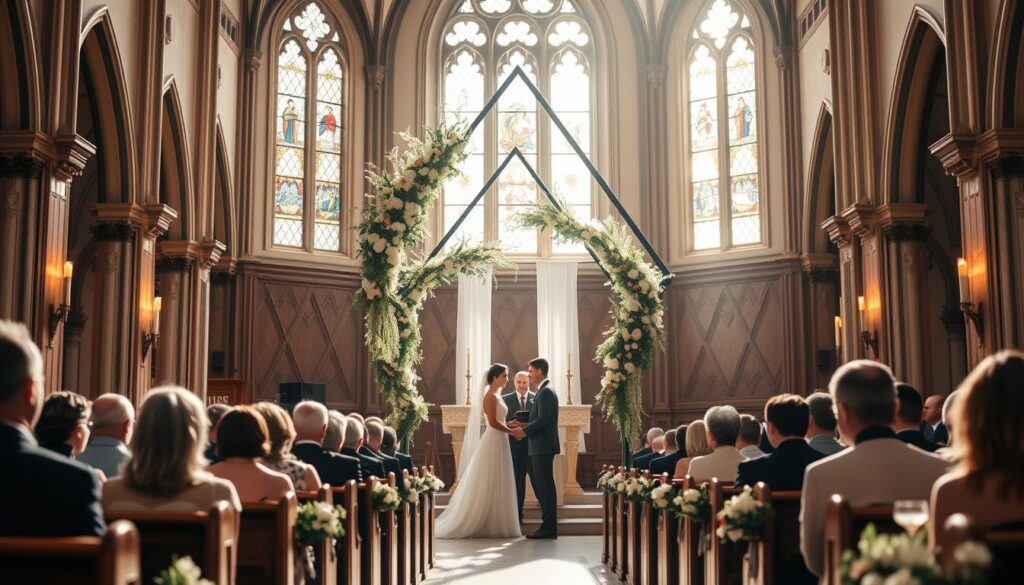
modern wedding ceremony elements

Incorporating Contemporary Touches into Tradition

Processional music sets the tone for this balancing act. A man might walk with both parents to an acoustic cover of a worship song, while bridesmaids carry floral hoops instead of bouquets. Customized vows often blend classic phrases like “to have and to hold” with modern promises about Netflix compromises and adventure goals.

Unity rituals gain new depth through symbolic acts. Sand blending becomes a beach-loving couple’s metaphor for partnership. Others plant saplings using soil from childhood homes—roots intertwining like their lives.

Personalizing the Ceremony with Unique Elements

Readings transform when couples share how specific Bible verses guided their journey. One pair used Song of Solomon passages from their first dating anniversary. Another included a deceased grandmother’s handwritten prayer in the program.

The reception extends this harmony. Geometric centerpieces might frame antique family Bibles. Playlists mix gospel choirs with indie folk tracks—proof that joy needs no genre. As one officiant notes: “When two become one, their celebration should sing in both voices.”

Conclusion

As the final prayer echoes through the sanctuary, two lives become one through sacred promises. The husband and wife stand united, their “for richer for poorer” vows echoing generations before them. Joined hands and exchanged rings become tangible reminders of a covenant marriage blessed by community and divinity.

Surrounded by loved ones, the bride and groom begin their journey fortified by collective prayer. These moments transcend mere tradition—they anchor the couple’s life together in something eternal. The Holy Spirit’s presence lingers long after the recessional, guiding them through future joys and challenges.

Whether facing sickness or health, this union remains rooted in more than human effort. It reflects a divine blueprint where man and woman mirror sacred love. Every solemn vow, every whispered blessing, becomes part of their story—a testament to holy matrimony’s enduring power to transform two into one.

FAQ

Do we need to attend pre-marital counseling?

Many congregations encourage couples to participate in pre-marital counseling. This helps strengthen communication and aligns expectations. Sessions often cover topics like conflict resolution, financial planning, and spiritual unity.

Can we personalize vows or include non-traditional readings?

Absolutely! While traditional vows from the Book of Common Prayer are popular, many officiants allow personalized promises. Discuss options like secular poems, song lyrics, or cultural traditions with your clergy to blend modern touches with timeless practices.

Are there guidelines for attire during the ceremony?

Modesty and respect for the sacred space are key. Avoid overly casual outfits or revealing styles. Brides often choose dresses with sleeves or shawls, while grooms opt for suits or tuxedos. Coordinate with your venue for specific recommendations.

How long does a typical service last?

Most ceremonies run 30–45 minutes. This includes the processional, hymns, scripture readings, exchange of rings, and final blessings. Time may vary if you include extras like unity candles or guest participation.

Can non-members host their ceremony in a Protestant sanctuary?

Policies differ by denomination and congregation. Some churches welcome non-members, especially if one partner has ties to the faith. Reach out early to discuss requirements, such as membership classes or facility fees.

Is a reception held at the same location?

While receptions often occur off-site, some congregations have fellowship halls or event spaces. Ask about decor rules, catering restrictions, and time limits. Outdoor gatherings on church grounds can also create a charming, intimate vibe.
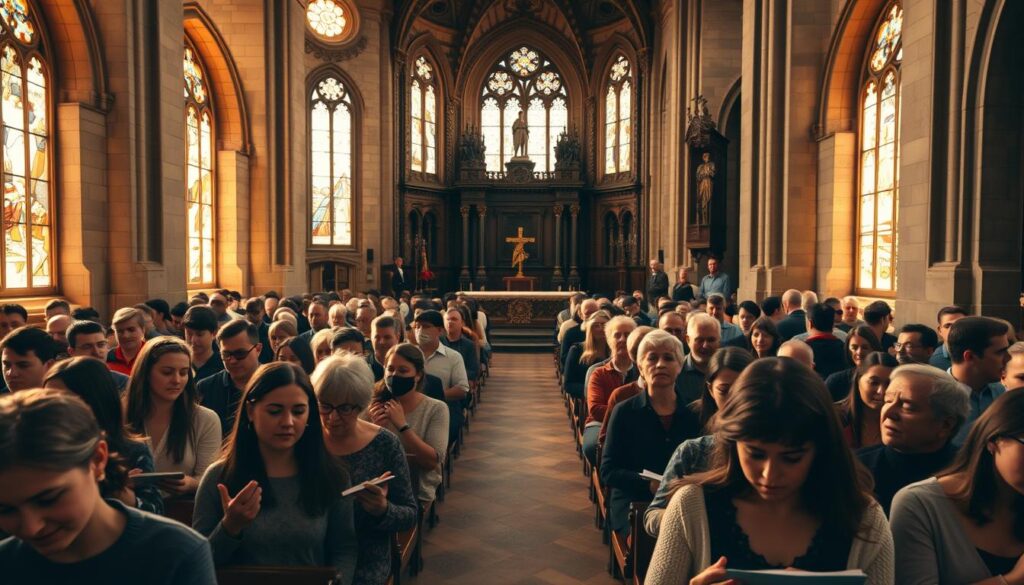

Top Protestant Churches to Visit in Paris


Paris shines as a hub of spiritual diversity, blending centuries-old traditions with modern expressions of faith. While famous for its cathedrals, the city also boasts remarkable Protestant congregations that welcome global visitors. These sacred spaces combine stunning architecture with meaningful community connections.

From Anglican chapels to Presbyterian assemblies, these institutions reflect a vibrant mix of worship styles. Many feature English-language services, making them ideal for travelers and expats. Their programs range from Sunday schools to adult discussion groups, fostering connections beyond weekly gatherings.

What makes these venues special? Imagine singing hymns in a 19th-century sanctuary or joining a coffee hour in a sunlit courtyard. Several locations host concerts and cultural events, inviting people to engage with their heritage. Whether you prefer liturgical services or contemporary praise music, there’s a place for every spiritual seeker.

Families appreciate childcare options and youth activities, while history buffs marvel at Gothic arches and Reformation-era artifacts. Most communities extend warm welcomes regardless of background – you’ll find open doors and multilingual resources.

Key Takeaways

  • Paris offers diverse Protestant denominations including Anglican, Presbyterian, and Reformed traditions
  • Many congregations provide services in English and other languages for international visitors
  • Architectural styles range from historic stone buildings to modern worship spaces
  • Community programs extend beyond Sunday services with family-friendly activities
  • Several locations combine spiritual practices with cultural events and historical exhibits

Discovering Paris’ Protestant Heritage

Stone walls across the city hold stories of faith surviving political storms. The French Revolution reshaped spiritual landscapes, turning sacred spaces into symbols of resilience. Many temples you see today began as Catholic chapels before adapting to new purposes.

When History Changed Worship Spaces

In 1793, revolutionaries ransacked the Oratoire du Louvre – a building started in 1621 as a Catholic church. Its marble altars became storage for theater props. Napoleon later gifted it to reformers in 1811, creating a worship hub that still hosts services today.

Architecture Tells Two Stories

Temple Sainte-Marie shows how structures evolve. Built as a convent chapel in the 1630s, it became national property during revolutionary years. The government transferred it to Protestant groups in 1803. Its Gothic arches now frame hymn books instead of rosaries.

Temple Original Use Revolution Impact Current Role
Oratoire du Louvre Catholic church (1621) Became storage (1793) Reformed worship space
Sainte-Marie Convent chapel (1632) Seized (1790) Protestant assembly
Charenton First legal temple (1606) Edict restrictions lifted Historic landmark

These transformations didn’t just change buildings – they shifted France’s approach to religious freedom. The 1787 Edict of Toleration finally ended centuries of persecution, letting communities worship openly.

Community and Worship at protestant churches in paris

Global connections thrive within Paris’ spiritual spaces, where language barriers dissolve through shared faith. English-speaking congregations serve as cultural bridges, blending heritage with modern fellowship. Visitors often find both comfort and discovery in these welcoming environments.

English-speaking congregations in Paris

English-speaking Congregations and Cultural Integration

Sunday mornings buzz with diverse accents at St. Michael’s, where traditional hymns meet electric guitars. At St. George’s, choir robes sway beside volunteers packing meals for homeless neighbors. These groups prove worship styles vary widely while maintaining core values.

Cultural integration shines through coffee hours featuring Moroccan pastries and Korean bibimbap. “Our potlucks look like UN summits,” laughs a regular at Trinity International. Such mixers help expats build local roots while honoring their backgrounds.

Modern Service Trends and Community Engagement

Many congregations now offer multiple service formats. The American Church streams contemporary worship online while hosting in-person lectern-based gatherings. Youth groups organize park cleanups, merging faith with civic responsibility.

Congregation Worship Approach Key Programs
St. Michael’s Blended traditional/contemporary Youth mentorship, food drives
St. George’s Anglican Liturgical with choir Homeless outreach, family nights
American Church Dual-format services Career workshops, art exhibits
Emmanuel International Modern worship band Bible studies, language exchanges

Weekday activities keep community bonds strong. Book clubs discuss theology in cafés, while running groups pray at mile markers. These creative connections make spiritual growth an everyday adventure.

Architectural Treasures and Sacred Spaces

Architectural wonders hold more than beauty—they embody centuries of faith transformations. Two exceptional structures reveal how communities reshaped spaces while honoring their past.

Builders of Enduring Legacies

Jacques Lemercier’s grand vision for the Oratoire du Louvre began in 1621. Workers laid the final nave stones 119 years later—a testament to persistent craftsmanship. This temple now stands as Paris’ largest reformed worship space, its interior adorned with rescued wood panels from Saint-Louis du Louvre.

François Mansart’s genius shines at Temple Sainte-Marie, originally a convent chapel. The vaulted crypt beneath its floors displays 17th-century masonry mastery. “These stones witnessed spiritual revolutions,” notes a preservationist, pointing to revolutionary symbols carved into doorframes.

Time Capsules in Plain Sight

Conservation teams face unique challenges. At Sainte-Marie, they maintain:

  • Original 1634 stained glass depicting biblical scenes
  • A hidden Phrygian hat carving from the 1790s
  • The Coulanges family crest in a side chapel

The Oratoire’s style blends Baroque grandeur with Reformed simplicity. Its 1745 veneer door welcomes visitors into an interior where sunlight filters through high windows, illuminating carved pews that survived three centuries.

Architectural Feature Oratoire du Louvre Temple Sainte-Marie
Original Purpose Catholic church Convent chapel
Key Designer Jacques Lemercier François Mansart
Notable Element Recycled wood panels Underground crypt
Revolutionary Mark Napoleonic gifting Phrygian hat carving

These buildings teach us how sacred spaces evolve. From Mansart’s arches to Lemercier’s soaring ceilings, each temple whispers stories of adaptation and endurance.

Family, Education, and Sunday School Ministries

Building strong foundations across generations, spiritual communities in the French capital prioritize meaningful connections. Vibrant programs blend learning with fellowship, creating spaces where families grow together in faith and service.

family programs at Sunday school

Growing Together Through Shared Experiences

St. Michael’s sets the standard with its youth mentorship initiatives. Teens lead community garden projects while younger children explore Bible stories through art. At St. George’s, confirmation classes evolve into service trips to homeless shelters.

The American Church’s Sunday school uses interactive tech to teach parables. “Our app lets kids collect virtual faith badges,” explains their education director. Meanwhile, Trinity International hosts monthly parent-child cooking workshops that double as theology discussions.

Community Core Programs Special Events
American Cathedral Bilingual Bible studies
Youth choir
Annual confirmation retreat
Emmanuel International Toddler playgroups
Teen leadership circles
Intergenerational mission trips
Holy Trinity Parent support networks
Scripture camps
Family talent showcases

Seasonal celebrations unite all ages. Easter egg hunts become scavenger hunts through church history. Christmas pageants feature grandparents as narrators and toddlers as sheep. These family-focused traditions build lasting memories.

Since 1814, when France’s first Sunday school opened, faith education has adapted while keeping community at its heart. Today’s programs continue this legacy through creative approaches that make spiritual growth a joyful journey for all.

Conclusion

Finding your spiritual home in a foreign city becomes easier through welcoming communities that blend tradition with modern life. From the American Church’s historic arches to Holy Trinity’s family programs, these spaces help faith thrive across cultures. Their doors stay open to travelers and locals alike.

What makes these groups special? Years of adaptation turned them into lively hubs where Sunday services launch week-long connections. Think cooking classes discussing scripture or jazz concerts in candlelit sanctuaries. Every event builds bridges between heritage and today’s needs.

True strength lies in how these places nurture growth. Food drives meet prayer circles, while youth groups plant urban gardens. Through centuries of change, their core mission remains: creating belonging through shared values.

Ready to explore? Grab a café au lait and join the next community meal. You’ll find addresses easy to reach by metro – and hearts even easier to connect with. Paris’ spiritual legacy lives brightest in these living, breathing communities.

FAQ

How did the French Revolution impact Paris’ religious communities?

The French Revolution led to the repurposing of many sacred buildings. Some historic spaces, like the Oratoire du Louvre, were transformed into hubs for new congregations. This era reshaped how faith groups operated, fostering resilience and adaptation.

Are there English-language services available for visitors?

Yes! Several congregations offer bilingual or English-speaking gatherings. These services cater to international visitors and expats, blending cultural diversity with traditional worship practices.

What architectural styles define these sacred spaces?

From Gothic Revival to neoclassical designs, many buildings showcase rich histories. The Temple Sainte-Marie, for example, mixes medieval elements with post-Revolution updates, creating visually striking interiors.

Do these communities host family-friendly activities?

Absolutely. Youth programs, Sunday school sessions, and intergenerational events are common. Families can participate in workshops, seasonal festivals, and volunteer projects tailored for all ages.

How are historic interiors preserved today?

Restoration efforts often involve partnerships with cultural organizations. Stained glass, wooden pews, and organ pipes are carefully maintained to honor their original craftsmanship while meeting modern needs.

Can visitors engage with local outreach initiatives?

Many congregations actively partner with charities, food banks, and social justice projects. Volunteering opportunities allow visitors to connect meaningfully with Parisian neighborhoods during their stay.

Are there educational programs for children?

Yes! Sunday schools and summer camps teach values through storytelling, music, and art. Some even integrate French language lessons to help kids connect with local culture.

Christian Churches Hiring Now – Jobs & Careers


Faith-based organizations nationwide are expanding their teams to meet growing community needs. From pastoral leadership to digital outreach roles, ministry positions now blend traditional service with modern skills. These opportunities let professionals grow their careers while supporting spiritual missions that matter.

Specialized platforms simplify connecting with open roles. Services like Vanderbloemen prioritize candidate privacy, sharing details only with permission. Tools from JustChurchJobs streamline applications, letting teams collaborate efficiently during searches.

The sector offers diverse paths for those wanting to make an impact. Positions range from counseling and youth programs to tech-driven worship roles. Many organizations seek team members who share their core values and vision for community support.

Key Takeaways

  • Modern ministry roles combine spiritual service with specialized skills like digital outreach
  • Confidential recruitment platforms protect candidate privacy during job searches
  • Centralized application systems help hiring teams manage candidates effectively
  • Positions now span traditional pastoral work to tech-focused community engagement
  • Shared mission alignment remains crucial in faith-based hiring processes
  • Professional growth opportunities exist alongside community impact initiatives

Exploring christian churches jobs Opportunities

New opportunities emerge weekly for professionals seeking roles in spiritual communities. Platforms now feature listings from coast to coast, with tools to refine your search by locations, congregation size, and focus areas.

Latest Listings Across U.S. Churches

Recent openings highlight geographic diversity and specialized service needs. Texas congregations seek Next Gen & Families Pastors, while Washington teams recruit Family Discipleship leaders. Wisconsin churches advertise teaching roles, and Indiana organizations prioritize mental health leadership.

Role Location Focus Area
Student Pastor North Carolina Youth Engagement
Teaching Pastor Wisconsin Scriptural Education
Mental Health VP Indiana Community Support
Family Discipleship Leader Washington Spiritual Development

Tailored Search Features

Modern platforms let candidates filter opportunities through multiple lenses:

  • Regional preferences from the Midwest to coastal states
  • Specialized categories like counseling or digital outreach
  • Denominational alignment and team size parameters

Popular job categories currently include youth mentorship programs and community outreach initiatives. Many listings detail organizational culture to help applicants assess fit. Regular website updates ensure access to the newest roles matching your calling.

Diverse Church Career Roles and Recruitment

Leadership roles in spiritual organizations continue to evolve, blending timeless values with fresh approaches to community engagement. Today’s opportunities range from visionary leadership positions to specialized teaching roles that shape congregational life.

church leadership roles

Lead Pastor, Senior Pastor & Teaching Pastor Opportunities

Lead pastor positions demand advanced theological training and emotional intelligence. At Christ The Rock Community Church, this role partners with teaching pastors to craft messages while directing creative teams. Candidates often need 7+ years’ experience managing multi-staff operations.

Senior pastor roles focus on strategic growth and team oversight. Westminster Chapel seeks leaders who embrace their “Jesus is everything” philosophy, prioritizing humility over perfection. These positions frequently involve:

  • Developing 5-year ministry roadmaps
  • Mentoring associate staff members
  • Coordinating community outreach programs

Teaching specialists work closely with lead pastors at institutions like First Baptist Church Bryan. Their dual focus includes scriptural education through GroupLife classes and multicultural worship services.

Insights from Baptist, Renovation, and Community Churches

Baptist church recruitment emphasizes doctrinal alignment and mission-driven candidates. Openings often require specific denominational experience, particularly for roles involving traditional worship formats and evangelism initiatives.

Renovation Church redefines modern ministry with high-energy services and practical teaching methods. Their staff seeks innovators who can balance biblical foundations with contemporary communication strategies.

“We want team members who know they don’t have life figured out – but know who does.”

Westminster Chapel Leadership Team

Community-focused congregations prioritize bridge-builders. Christ The Rock specifically looks for leaders skilled in multigenerational connection, mirroring their diverse weekend services and midweek study programs.

Streamlining Your Application Process

Modern recruitment systems simplify faith-based career searches while maintaining professionalism.

Centralized platforms allow candidates to manage multiple opportunities through single profiles, reducing repetitive paperwork. Automated tools guide applicants through each phase while keeping teams informed.

Building a Compelling Candidate Profile

Start by submitting your resume through the platform’s email link. This generates a pre-formatted message with the correct subject line for the recruitment team. PDF formatting ensures documents stay intact across devices. Your profile becomes active within 24 hours, syncing future applications to your core details automatically.

Interview and Resume Best Practices

The selection process typically follows three stages:

Phase Action Preparation Tip
1. Initial Review Phone screening Research the organization’s mission
2. Consultant Interview Skills assessment Prepare specific ministry examples
3. Final Presentation Team meeting Tailor your message to their values

Email Submission and Process Tips

Keep communication timely. Respond to interview invites within 48 hours. Use your recruitment dashboard to track application statuses. The system sends automatic updates when:

  • Your materials reach hiring teams
  • New positions match your profile
  • Decision timelines change

Confidentiality remains priority – only approved staff view candidate details. Apply freely to multiple roles without rewriting cover letters. Recruitment consultants handle initial screenings before sharing top candidates with organizations.

Conclusion

Today’s spiritual workforce landscape offers professionals exciting ways to grow careers while serving communities. Modern ministry roles combine time-honored values with innovative approaches, from youth mentorship to digital outreach programs. Recruitment platforms now protect privacy while connecting candidates with roles matching their skills and location preferences.

Streamlined application systems help people explore multiple openings without compromising current positions. Organizations prioritize mission alignment, seeking team members who share their vision for spiritual growth and community care. From Texas to Washington, opportunities reflect both traditional needs and emerging specialties.

These advancements show how seriously churches approach building effective teams. By using modern tools and clear preparation strategies, professionals can find fulfilling work that impacts lives. As community needs evolve, so will meaningful job opportunities – blending service with purpose for years to come.

FAQ

How can I find current openings near me?

Use our location filters to explore roles by city or state. Many listings include hybrid or remote options, and some organizations highlight urgent needs with “hiring now” tags.

What roles are most in demand for faith-based teams?

Lead Pastor, Worship Director, and Youth Ministry positions are frequently posted. Baptist and community-focused congregations often seek staff who align with their mission-driven culture.

Do I need formal seminary training to apply?

Requirements vary. Teaching Pastor roles typically require advanced degrees, while support positions may prioritize experience. Always review the job description for specifics.

How long does the hiring process take?

Timelines differ by organization. Smaller groups might finalize in 2-3 weeks, while larger institutions could take 8+ weeks. Promptly submitting your resume and references helps speed things up.

What makes a candidate profile stand out?

Highlight volunteer work, leadership in ministry settings, and tech skills like worship software proficiency. Tailor your resume to show how you’ve supported community growth or outreach initiatives.

Should I follow up after applying?

Yes! A brief email reiterating your passion for their mission shows initiative. Wait 7-10 business days before checking in, unless the posting specifies a different timeline.

The Protestant Church of England: A Comprehensive Guide


Step into a story that shaped nations and faith traditions. What began as ancient Christian communities in Roman Britain evolved into a spiritual powerhouse blending tradition and reform. This institution’s journey spans martyrdom, royal drama, and theological innovation—all while becoming England’s established religious authority.

At its core lies the Thirty-nine Articles and Books of Homilies, texts that defined a middle path between Rome and emerging Protestant ideas. The pivotal 1534 break from papal control under Henry VIII didn’t erase history—it rewrote it. Monarchs became “supreme heads,” liturgy transformed, and a new Christian identity took root.

Today, this tradition connects 85 million Anglicans worldwide through shared practices and governance. Yet its role remains uniquely English: coronations unfold in its cathedrals, bishops sit in Parliament, and cultural debates echo through its pulpits. How does an ancient institution stay relevant while honoring centuries of heritage?

Key Takeaways

  • Originated from 3rd-century Roman Britain Christianity and 6th-century missionary efforts
  • Became independent from Rome in 1534 during the English Reformation
  • Blends Catholic traditions with Protestant theology (“via media”)
  • Governed by the monarchy and structured through dioceses/parishes
  • Core doctrines outlined in the Thirty-nine Articles and Books of Homilies
  • Leads the global Anglican Communion with 85 million members

Introduction to the Church of England and Its Legacy

Few institutions have woven themselves into a nation’s fabric like this spiritual organization. For five centuries, it’s shaped laws, inspired artists, and guided moral debates while maintaining ancient rituals. Its dual role as both sacred authority and cultural architect makes it unlike any other religious body.

As the birthplace of the Anglican Communion, this tradition connects 165 countries through shared worship styles. From Nairobi to New York, congregations recite versions of the same prayers used in English villages since the 1500s. Yet its global reach never overshadows local customs—a balancing act few institutions master.

The British monarch’s constitutional role as Supreme Governor highlights its unique status. Twenty-six bishops still debate laws in Parliament’s upper chamber, blending spiritual insight with policymaking. This arrangement sparks lively discussions about religion’s place in modern governance.

Beyond politics, its legacy shines in unexpected areas:

  • Shaping English literature through the King James Bible
  • Pioneering free education for all social classes
  • Developing social welfare systems centuries before modern governments

Today, this institution faces new tests—from declining attendance to debates on social issues. Yet its ability to evolve while preserving core beliefs keeps it relevant. As one historian noted, “It’s not just a church—it’s the story of England itself.”

The Roots of Christianity in Early England

Uncover the layers of faith that shaped England’s spiritual identity. Long before grand cathedrals rose, small Christian communities thrived in Roman towns like London and York. Soldiers, traders, and settlers carried beliefs across the empire’s northern frontier during the 3rd century.

Roman Foundations and Saxon Shifts

When Rome’s legions withdrew in 410 CE, pagan Anglo-Saxons swept across Britain. Celtic believers retreated westward, preserving unique traditions. For 200 years, two Christian cultures grew apart—one clinging to Roman roots, the other blending local customs.

Augustine’s Lasting Legacy

Everything changed in 597 CE when Pope Gregory I sent monk Augustine to Kent. His mission converted King Æthelberht and established Canterbury as England’s spiritual heart. As first archbishop, he built structures that still guide the institution today.

The 664 Synod of Whitby became a turning point. King Oswiu chose Roman Easter dates over Celtic ones, declaring: “I’ll follow whoever holds heaven’s keys.” This decision unified practices across kingdoms and set the stage for centralized leadership.

  • Roman-era artifacts reveal Christian symbols in 3rd-century homes
  • Celtic monks created illuminated gospels while missionaries traveled barefoot
  • Canterbury’s archbishops still sit where Augustine negotiated with Saxon kings

The Birth of the Protestant Movement in England

protestant reformation england

A spiritual revolution reshaped England’s religious landscape during the 1500s. While Martin Luther sparked reforms in Germany, English thinkers blended new ideas with local concerns. This fusion created a distinctive Reformation path—one tied to politics as much as theology.

Central to the upheaval was the belief that salvation comes through faith alone, not rituals or good deeds. This doctrine upended centuries of tradition, questioning practices like pilgrimages and saint veneration. As one reformer argued, “Why seek relics when Scripture holds all truth?”

Three factors made England’s experience unique:

  • Royal power struggles influencing religious policy
  • Vernacular Bible translations empowering laypeople
  • Preservation of some Catholic traditions alongside reforms

William Tyndale’s English Bible became a game-changer. By translating Scripture into common language, he gave ordinary believers direct access to sacred texts. Church authorities initially banned these translations, but the genie was out of the bottle.

Henry VIII’s personal dramas accelerated changes. Though he maintained Catholic doctrines personally, his break with Rome created space for reformers. This odd mix of political calculation and spiritual yearning defined England’s religious transformation—a story where royal weddings mattered as much as theological debates.

Breaking with Rome: Henry VIII and the English Reformation

Royal ambition collided with religious tradition when Henry VIII sought to rewrite marital—and spiritual—rules. What began as a personal quest for a male heir sparked England’s seismic break from papal authority.

A King’s Ultimatum

After 18 years of marriage, Henry’s frustration peaked in 1527. Catherine of Aragon had borne only one surviving daughter. Desperate for a son, he petitioned Pope Clement VII to annul the union. When Rome refused, the king turned Parliament into his divine battering ram.

The 1533 Act in Restraint of Appeals declared England’s legal independence from foreign powers. This bold move let Archbishop Thomas Cranmer dissolve Henry’s marriage—a decision that would ripple through centuries. By 1534, the Act of Supremacy crowned Henry as the English church’s unquestioned leader.

Monastic Wealth Reshapes a Nation

Between 1536-1540, commissioners dismantled nearly 900 religious houses. Monasteries controlling vast lands saw their treasures seized:

  • Gold chalices melted into royal coins
  • Illuminated manuscripts repurposed as bookbinding material
  • 12,000 monks and nuns pensioned off or displaced

This wealth transfer turbocharged the Crown’s power. Former monastic lands became noble estates, creating new political alliances. Yet Henry kept Catholic rituals intact—a paradox that left England doctrinally confused but fiercely independent.

As one court observer noted, “The king took Rome’s gold but kept its incense.” This delicate balance between reform and tradition would define the English church for generations.

The Role of Thomas Cranmer and the Book of Common Prayer

Imagine worship transformed from exclusive ritual to communal experience. This vision drove Thomas Cranmer, the first Protestant Archbishop of Canterbury, to craft a liturgical masterpiece. His Book of Common Prayer didn’t just change services—it reshaped how millions connected with faith.

book common prayer

Published in 1549, Cranmer’s work replaced Latin with clear English prayers. For the first time, ordinary people understood every word of worship. A farmer could now recite the same psalms as nobles—a radical shift toward spiritual equality.

The 1552 revision took bold theological steps. It rejected Catholic Mass doctrines, emphasizing communion as symbolic remembrance. “Take and eat this in remembrance,” declared the updated liturgy, aligning with Reformed views of salvation through faith alone.

Beyond theology, Cranmer’s words shaped culture. Phrases like “till death us do part” and “read, mark, learn” entered daily speech. The book’s rhythmic language influenced writers from Shakespeare to modern novelists.

Three lasting impacts stand out:

  • Standardized worship across England, uniting diverse communities
  • Preserved traditional rituals while advancing Protestant ideas
  • Created a literary legacy still quoted in weddings and funerals

Today, over 85% of Anglican churches worldwide use prayer book derivatives. As one historian notes, “Cranmer gave faith a voice that still echoes in chapels and living rooms.” His balance of beauty and belief remains his enduring gift.

Defining Anglican Doctrine: Thirty-Nine Articles and Liturgical Tradition

Foundations of faith often emerge from fiery debates. In 1571, Parliament sealed England’s religious identity by approving the Thirty-nine Articles—39 doctrinal statements balancing Catholic rituals with reformed theology. These became the North Star for Anglican belief, answering questions that once divided Christians.

thirty-nine articles anglican doctrine

Thomas Cranmer’s fingerprints appear throughout these texts. Though finalized after his death, the Articles reflect his vision of a church honoring tradition while embracing change. Together with the Book of Common Prayer, they created worship that felt both familiar and revolutionary.

What makes these doctrines unique? Consider their middle path:

Topic Catholic View Anglican Position Protestant Stance
Scripture Church interprets Supreme authority Sole authority
Salvation Faith + works Grace through faith Faith alone
Sacraments 7 sacraments 2 primary rites Symbolic acts
Church Structure Papal hierarchy Bishops + Parliament Local governance

This table shows how the Articles carved a distinct identity. They affirmed Protestant ideas like justification by faith but kept bishops and ancient creeds. As one scholar notes, “They built bridges where others dug moats.”

Today, these 450-year-old statements still guide 85 million Anglicans. Modern churches debate their application, but the core remains—proof that thoughtful compromise can outlast rigid dogmas. The Thirty-nine Articles remind us that unity often lives in balance, not extremes.

Exploring the Protestant Church of England: Theology and Doctrinal Diversity

Anglican theology thrives on a unique balancing act. Its via media approach blends Catholic rituals with Protestant teachings, creating space for diverse interpretations. This middle way allows everything from incense-filled high church services to simple evangelical gatherings under one institutional roof.

Four main traditions coexist: Anglo-Catholic, high church, central, and low church. The evangelical wing within low church circles emphasizes Scripture, while Anglo-Catholics value sacramental practices. Despite differences, shared worship through the Book of Common Prayer unites them.

Doctrinal authority rests on scripture, reason, and tradition. Leaders weigh ancient texts against modern insights, seeking relevance without losing core identity. This three-legged stool model encourages dialogue between historical faith and contemporary questions.

This flexibility helps the institution adapt while maintaining continuity. By honoring multiple perspectives, it remains a spiritual home for millions across varying beliefs.

FAQ

How did Henry VIII’s marriage disputes lead to the English Reformation?

Henry VIII sought to annul his marriage to Catherine of Aragon, but the Pope refused. This led Henry to break ties with Rome, declare himself Supreme Head of the English Church, and initiate reforms that laid the groundwork for a distinct religious identity.

What role did Thomas Cranmer play in shaping Anglican practices?

As Archbishop of Canterbury, Cranmer authored the Book of Common Prayer, which standardized worship in English. His work blended Protestant theology with traditional liturgy, creating a foundation for Anglican spiritual life.

Why are the Thirty-Nine Articles important to Anglican doctrine?

Established in 1563, these articles outline core beliefs, such as justification by faith and the authority of Scripture. They balance Reformed ideas with Catholic traditions, reflecting the Anglican commitment to a “middle way” in theology.

How did the Dissolution of the Monasteries impact England?

Henry VIII disbanded monasteries between 1536–1541, redistributing their wealth and land. This weakened Catholic influence, strengthened royal power, and shifted social and economic structures across the country.

What defines the Anglican Communion’s global presence today?

The Communion unites 85 million members worldwide under shared traditions, like the Book of Common Prayer, while allowing regional flexibility. The Archbishop of Canterbury serves as a symbolic leader, though each province governs independently.

How does the Anglican tradition approach doctrinal diversity?

Anglicanism emphasizes unity through shared liturgy rather than strict dogma. This allows for varied interpretations on issues like sacraments or leadership roles, fostering inclusivity among “high church” and evangelical factions.

When did women gain the right to become bishops in the Anglican Church?

The first female bishops were ordained in 2014 after decades of debate. This milestone reflected evolving views on gender and leadership within the tradition, though some conservative groups still oppose the change.

Surprising Protestant Church Facts: Unveil the Truth


Welcome to a journey through five centuries of spiritual transformation. This article explores how a 16th-century religious movement reshaped Christianity forever. What began as bold reforms in Europe grew into a global force, challenging established norms and creating new paths of faith.

Many don’t realize how dramatically these changes affected daily life. The movement’s leaders emphasized personal faith over tradition, sparking cultural shifts that still influence modern society. From art to education, their ideas created ripples we feel today.

You’ll discover how early reformers laid foundations for today’s diverse denominations. Their theological concepts about scripture and worship evolved across continents, adapting to local cultures while keeping core principles. This flexibility explains why these communities thrive worldwide.

Key Takeaways

  • Originated from 16th-century European reforms challenging religious authority
  • Grew into one of Christianity’s three main branches alongside Catholicism
  • Emphasizes personal faith and direct engagement with sacred texts
  • Evolved into thousands of distinct global denominations
  • Significantly influenced education, politics, and social structures
  • Maintains core principles while adapting to cultural contexts

Ready to rethink what you know? We’ll explore pivotal moments that defined this faith tradition – from revolutionary beginnings to its modern expressions. These insights reveal why understanding this heritage matters for grasping today’s spiritual landscape.

Introduction: The Journey into Protestant Heritage

The 1500s brought a spiritual revolution that reshaped Europe’s religious landscape. Northern thinkers began questioning long-held traditions, sparking changes that would ripple across continents for generations.

Overview of the Reformation Era

This transformative religious movement started when scholars demanded a return to biblical teachings. Their ideas spread like wildfire during a time of political instability and growing public literacy. For the first time, ordinary people could read sacred texts themselves instead of relying on clergy.

Clashes between reformers and Roman Catholic leaders defined the 16th century. These tensions often erupted into armed conflicts that redrew national borders. The resulting peace agreements laid groundwork for modern concepts of religious choice.

Three key factors fueled the movement’s growth:

  • Printing technology spreading ideas rapidly
  • Local rulers challenging papal authority
  • Urban populations seeking spiritual renewal

By the 17th century, these reforms had created lasting changes in worship and community life. The Catholic Church responded with its own reforms, setting the stage for today’s diverse Christian traditions.

Key Protestant Church Facts You Need to Know

A formal objection in 1529 gave rise to a religious identity now followed by millions. German leaders stood firm when their right to practice faith faced revocation, creating a defining moment in spiritual history.

Protestant origins

Origins and Definitive Concepts

The term we use today emerged during a heated political assembly. Six princes and fourteen cities challenged imperial decrees at the Diet of Speyer, defending their right to religious choice. Their protest against revoked freedoms became the movement’s lasting name.

Three pillars define these communities:

  • Scripture as ultimate authority over human traditions
  • Salvation through personal faith rather than rituals
  • Every believer’s direct connection to divine guidance

This approach differed sharply from the Catholic Church‘s hierarchy. Local groups gained autonomy to interpret sacred texts and shape worship practices. Over 800 million adherents now participate in diverse denominations, from Lutherans to Pentecostals.

Early Christian traditions heavily influenced their services. Simplified sacraments and congregational singing echo practices from the early church. Yet each community adapts these elements to fit modern cultural contexts while maintaining core principles.

The Origins of Protestantism and the Reformation Movement

A single document nailed to a door in 1517 ignited a spiritual wildfire across Europe. Martin Luther’s 95 Theses questioned practices that had gone unchallenged for centuries. This act of defiance became the spark for what we now call the Protestant Reformation.

Impact of the 95 Theses

Luther’s critique targeted the Roman Catholic practice of selling indulgences – paid certificates claiming to reduce punishment for sins. He argued salvation came through faith alone, not payments or rituals. Printing presses spread his ideas faster than authorities could contain them.

Three revolutionary concepts emerged from this movement:

  • Sola Scriptura: Scripture as the ultimate authority
  • Sola Fide: Justification through faith, not deeds
  • Sola Gratia: Salvation as divine gift, not earned
Catholic Practice Reformation Change Lasting Impact
Indulgence sales Rejection of paid forgiveness Shifted focus to personal faith
Latin-only services Worship in local languages Increased Bible literacy
Papal authority Local interpretation of scripture Diverse denominations formed

Rise of Evangelical Thought

By the 17th century, reformers emphasized personal conversion over inherited tradition. This shift laid groundwork for modern evangelical practices like Bible study groups and public testimonies. Political allies in Germany helped protect these new ideas, creating space for spiritual independence.

The Protestant Reformation transformed how millions related to faith. Its legacy lives on in communities valuing direct engagement with sacred texts and individual spiritual responsibility.

Influential Figures Shaping Protestant Reform

Courageous voices reshaped spiritual landscapes during Europe’s religious upheaval. These thinkers dared to challenge centuries-old traditions, creating ripples that would redefine faith practices worldwide.

Protestant reformers

Martin Luther’s Bold Challenge

Martin Luther became history’s accidental revolutionary when he nailed his grievances to a church door. His writings exposed flaws in the Roman Catholic indulgence system, arguing salvation came through faith rather than payments. Luther’s translation of scripture into German empowered ordinary people to engage directly with sacred texts.

Three radical ideas emerged from his work:

  • Rejection of papal authority in favor of biblical truth
  • Simplified worship practices emphasizing congregational participation
  • Equality among believers, reducing clergy hierarchy

John Calvin and Huldrych Zwingli’s Contributions

While Luther sparked change in Germany, John Calvin built theological systems in Switzerland. His Institutes of the Christian Religion outlined concepts like predestination, shaping Reformed traditions. Meanwhile, Huldrych Zwingli reimagined communion as symbolic rather than literal – a direct challenge to Catholic Church teachings.

These reformers shared core principles:

  • Scripture as ultimate guide over tradition
  • Distrust of centralized religious power
  • Emphasis on personal spiritual responsibility

Jan Hus’ earlier stand at Prague University foreshadowed these changes. His criticism of corrupt practices led to death at the 1415 council, becoming a martyr for reform ideals. Together, these figures laid foundations for modern denominations valuing individual faith and scriptural authority.

Exploring Early Church Practices and Beliefs

Ancient rituals hold surprising connections to modern spiritual life. The first Christian communities developed worship patterns that still shape religious experiences today. Their approach to sacred acts reveals how core beliefs took root across generations.

Baptism, Eucharist, and Tradition

Early church leaders viewed baptism as a transformative act. Writings from figures like St. Augustine describe it as cleansing believers and marking new life in faith. The New Testament served as their guide, emphasizing spiritual rebirth through water and spirit.

Communion meals carried deep meaning for these ancient worshippers. Church fathers taught that shared bread and wine connected communities to Jesus Christ‘s sacrifice. While some traditions evolved, this practice remains central in many denominations.

Reformers later studied these practices to reshape worship. They simplified rituals but kept foundations like scripture-based salvation. This balance between tradition and adaptation defines modern spiritual journeys.

Understanding these roots helps us appreciate shared heritage across faith groups. From baptismal fonts to communion tables, ancient wisdom continues shaping heartfelt devotion today.

FAQ

What sparked the Reformation movement?

The posting of Martin Luther’s 95 Theses in 1517 challenged clerical authority and practices like selling indulgences. This act ignited debates about salvation, scripture, and tradition, leading to a split from Roman Catholic teachings.

How did early reformers like Jan Hus influence Protestantism?

Jan Hus, a 15th-century theologian, criticized corruption in the clergy and emphasized scripture over tradition. His ideas on faith-based salvation and church accountability laid groundwork for later reformers like Luther and Calvin.

Why do some groups prioritize baptism and communion differently?

Interpretations of sacraments vary based on scripture. For example, Lutherans view communion as Christ’s true presence, while Reformed traditions see it as symbolic. These differences reflect broader debates about tradition versus scripture.

What role did the Council of Trent play in Protestant history?

The Council of Trent (1545–1563) solidified Roman Catholic doctrines in response to Reformation critiques. It reaffirmed papal authority, traditional sacraments, and clerical celibacy, deepening the divide between Catholics and reformers.

How did John Calvin’s teachings shape modern beliefs?

Calvin emphasized God’s sovereignty and predestination, arguing that salvation is a divine gift. His Institutes of the Christian Religion systematized Reformed theology, influencing denominations like Presbyterians and Puritans.

What distinguishes evangelical thought from other traditions?

Evangelicalism focuses on personal conversion, biblical authority, and spreading the Gospel. Unlike liturgical traditions, it often prioritizes individual faith experiences over formal rituals or hierarchical structures.

Why did the Reformation lead to new translations of the Bible?

Reformers believed everyone should access scripture in their language. Luther’s German translation and Tyndale’s English Bible empowered laypeople to interpret texts independently, reducing reliance on clergy.

Top Protestant Churches to Visit in Chicago


Chicago’s neighborhoods shine with dynamic faith-based organizations that blend tradition and modern outreach. These spiritual hubs serve as anchors for both lifelong residents and newcomers, offering spaces for worship, connection, and service. Many have stood for generations while evolving to address today’s challenges.

From iconic structures along major avenues to innovative congregations in urban centers, these groups reflect the city’s cultural diversity. Their calendars extend beyond weekend services, featuring volunteer opportunities, educational programs, and arts initiatives. Easy access via public transit makes participation simple for all.

What truly sets these communities apart is their commitment to inclusivity. Whether you prefer traditional hymns or contemporary worship styles, there’s a place that feels like home. Their doors stay open to people from all walks of life, creating welcoming environments for spiritual exploration.

Key Takeaways

  • Diverse worship styles cater to different spiritual preferences
  • Convenient locations near transit options enhance accessibility
  • Robust community programs extend beyond Sunday services
  • Historic roots combine with modern social engagement
  • Inclusive environments welcome visitors and seekers

Discovering Chicago’s Welcoming Protestant Communities

In the heart of the city, spiritual communities thrive by opening their doors wide to all seekers. Their approach centers on radical hospitality—a philosophy rooted in unconditional acceptance. One landmark congregation along North Michigan Avenue embodies this ethos, inviting individuals to experience faith through worship, learning, and action.

Where Compassion Meets Action

These groups don’t just talk about love—they live it. Weekly meals for neighbors facing hunger, mentorship for youth, and advocacy for fair housing demonstrate their commitment. “Our doors swing wide because grace isn’t meant to be kept inside walls,” shares a leader from a historic congregation.

Focus Area Programs Impact
Community Support Food pantries, shelter partnerships 2,500+ meals served monthly
Spiritual Growth Bible studies, meditation workshops 15+ weekly small groups
Social Justice Advocacy training, policy forums 3 annual city-wide initiatives

Building Bridges Through Service

Ministries here address both personal and systemic challenges. Recovery programs walk alongside those overcoming addiction, while justice initiatives tackle inequities in education and healthcare. Many members describe their involvement as “faith in work boots.”

Flexibility remains key for modern participation. Hybrid events allow busy professionals to join book clubs via video call or volunteer at weekend neighborhood cleanups. This adaptability helps love extend beyond physical spaces into the wider world.

Spotlight on protestant churches chicago

Finding the right rhythm for spiritual practice becomes effortless with flexible schedules and thoughtful programming. Many faith groups structure their weekly calendars to meet diverse needs, blending traditional rhythms with modern convenience.

Service Times and Worship Experiences

Morning gatherings remain central to weekly routines. At one Loop location, worshippers choose between 9:00 a.m. simplicity and 11:00 a.m. traditional services. Between these, a 10:30 coffee hour fosters connections over freshly brewed drinks and warm conversation.

worship service times

Seasonal adjustments keep things fresh—like summer schedules where children join main services for special messages. Public transit access near key stations makes attendance stress-free, even for first-time visitors.

Building Relationships Beyond Sundays

These communities thrive through midweek opportunities:

  • Small groups discussing faith and life challenges
  • Volunteer teams serving meals at local shelters
  • Online libraries of past messages for busy weeks

Annual festivals and neighborhood projects create natural entry points for newcomers. As one member notes, “The real magic happens when we work side by side—that’s where friendships grow.” Hybrid options ensure everyone can participate, whether in person or virtually.

Navigating the Urban Church Landscape in Chicago

Urban spirituality takes on new dimensions through creative approaches tailored for metropolitan life. These faith communities meet people where they are—literally and figuratively—with programming designed for real-world impact.

What to Expect from Unique Church Experiences

Early risers appreciate 9:00 a.m. gatherings that kickstart Sundays with reflective music and practical teachings. Many locations feature multiple service formats under one roof—from quiet liturgical observances to vibrant modern worship with live bands.

Program Schedule Focus Area
Intentional Communities Weekly meetups Shared mission living
The Institute Quarterly courses Practical discipleship
Arts Collective Monthly showcases Creative faith expression

“Our spaces welcome both certainty and curiosity,” explains a program director. Interactive Q&A sessions and mentor-led groups help seekers explore spirituality without pressure.

Local Engagement and City-Wide Transformation

Neighborhood partnerships drive tangible change through initiatives like:

  • Tutoring programs in under-resourced schools
  • Mobile food pantries serving 15+ zip codes
  • Affordable housing advocacy coalitions

One network’s justice training program has equipped over 300 members to address systemic poverty. “We’re not just serving soup—we’re rebuilding systems,” shares a ministry leader. Global outreach teams extend this impact through international partnerships.

Year-round cultural events bridge divides, featuring local artists and interfaith dialogues. These efforts demonstrate how urban faith communities nurture both personal growth and collective renewal.

Conclusion

These faith communities stand as beacons of hope where historic roots meet modern outreach. Their ability to balance time-honored practices with fresh approaches creates spaces where anyone can connect with purpose. Accessible worship experiences—through multiple service formats and neighborhood locations—remove barriers for busy urban dwellers.

At their core, these groups thrive through radical hospitality. Open doors welcome diverse backgrounds, fostering environments where questions lead to discovery. From mentorship programs to advocacy training, their work extends far beyond Sunday mornings.

Whether you’re drawn to quiet reflection or hands-on service, opportunities abound. Meal partnerships feed thousands monthly, while justice initiatives address systemic challenges. Spiritual growth happens through both study groups and soup kitchens.

For those seeking meaningful connection, these communities offer more than a seat in a sanctuary. They provide pathways to join something larger—where love fuels action and belonging sparks transformation.

FAQ

What makes Chicago’s faith communities stand out?

Many local congregations emphasize radical hospitality, fostering inclusive spaces where everyone feels valued. Their focus on love-driven outreach and diverse ministries creates a welcoming environment for visitors and members alike.

When are popular worship services held?

Several vibrant gatherings occur at 11:00 a.m., though times vary. Check individual websites for details on Sunday morning sessions, evening programs, or midweek events tailored to different age groups and interests.

How do these groups support local neighborhoods?

From food drives to mentorship programs, many organizations prioritize city-wide transformation. Partnerships with schools, shelters, and nonprofits allow them to address urban challenges while building meaningful connections.

Can newcomers join community events easily?

Absolutely! Most ministries host open gatherings like volunteer days, art workshops, or seasonal festivals. Follow social media pages or sign up for newsletters to stay updated on opportunities to engage.

Are there options for families with children?

Yes—many locations offer youth-focused activities, Sunday school classes, and family-friendly service projects. Some even host parenting workshops or summer camps to strengthen household bonds through faith.