Recent Posts

A Guide to the Main Protestant Church Branches


Welcome to a journey through one of Christianity’s most dynamic traditions. For over 500 years, faith communities rooted in the Reformation have shaped spiritual life across the globe. Though united by core principles like scriptural authority and personal faith, these groups developed unique practices that reflect their diverse interpretations of the Bible.

The story begins in 16th-century Europe, when religious reformers sought to realign Christian practice with biblical teachings. This movement emphasized individual engagement with scripture rather than relying solely on institutional guidance. Over time, this principle sparked the creation of distinct spiritual families, each with its own theological focus.

Today, nine major traditions form the backbone of this tradition. From Lutheranism’s emphasis on grace to the Quakers’ silent worship, these groups share foundational beliefs while celebrating different expressions of faith. Their histories reveal how cultural contexts and scriptural insights shaped modern religious life.

In this guide, we’ll explore each tradition’s origins, key teachings, and role in American spirituality. You’ll discover how early debates about baptism and church governance evolved into thriving modern communities. Whether you’re new to this subject or deepening your knowledge, you’ll gain clarity about what makes each group unique—and what connects them all.

Key Takeaways

  • Originated during the 16th-century Reformation as a return to biblical teachings
  • Emphasizes personal interpretation of scripture over centralized authority
  • Nine major traditions developed distinct worship styles and beliefs
  • Shared core principles include salvation through faith and biblical focus
  • Continues to influence modern Christian practice in the United States

Introduction to Protestant Church Branches

Exploring the diverse landscape of faith communities reveals a tapestry woven with shared convictions and distinct expressions. Across centuries, these groups have anchored their doctrine in core principles like scripture’s supreme authority and the shared belief in salvation through faith alone. “By grace you have been saved,” writes Ephesians 2:8, a verse central to their collective identity.

From formal liturgical services to contemporary gatherings, worship styles vary widely. Yet all prioritize personal engagement with biblical teachings. This focus fueled the organic growth of different denominations as believers adapted practices to cultural contexts while preserving essential truths.

Modern America sees a surge in non-aligned congregations that avoid traditional labels. These churches often embrace Protestant fundamentals—like the Five Solae—without formal hierarchies. One pastor notes:

Our community thrives on scriptural clarity, not institutional structures.

Defining this movement challenges even experts. How do you categorize traditions ranging from formal rituals to spontaneous prayer meetings?

The answer lies in recognizing both historical roots and ongoing adaptations. Understanding this balance prepares us to explore specific traditions’ unique contributions to spiritual life.

Foundations of Protestant Theology

What holds together communities separated by 500 years and countless cultural differences? The answer lies in five revolutionary ideas called the Five Solas. These Latin phrases became battle cries during the Reformation, reshaping how people understood their relationship with divine truth.

  • Scripture Alone: The Bible as ultimate authority
  • Christ Alone: Jesus as sole mediator
  • Faith Alone: Salvation through trust, not deeds
  • Grace Alone: Unearned divine favor
  • God’s Glory Alone: Purpose of all creation
Five Solas theology

The first principle upended medieval doctrine. Reformers argued scripture outweighed tradition, declaring “the word of God stands forever” (Isaiah 40:8). This shifted power from institutions to individuals holding Bibles.

Modern theology still wrestles with these ideas. A seminary professor explains:

When we preach Christ’s sufficiency, we’re continuing Luther’s stand against merit-based spirituality.

These teachings transformed salvation from a transaction into a gift. By emphasizing faith over rituals, reformers echoed Paul’s teaching: “It is by grace you have been saved, through faith” (Ephesians 2:8).

Today’s worship songs and sermon styles reflect this legacy. From megachurch stages to rural chapels, the Five Solas remain living beliefs—not dusty history.

The Reformation: Historical Context

The 16th century ignited a spiritual revolution that reshaped Europe’s religious landscape. When Martin Luther nailed his Ninety-Five Theses in 1517, he challenged the Roman Catholic establishment’s sale of indulgences. This act became the spark for a continent-wide movement demanding biblical alignment in spiritual practices.

Architects of Change

Four visionaries drove this transformation. Luther’s emphasis on grace through faith contrasted with John Calvin’s structured Institutes of the Christian Religion. Meanwhile, Ulrich Zwingli championed scripture-based worship reforms in Zurich. Scholar Philip Melanchthon later systematized Lutheran teachings, creating educational frameworks still used today.

Reformer Contribution Lasting Influence
Martin Luther Justification by faith Liturgical traditions
John Calvin Predestination theology Presbyterian governance
Ulrich Zwingli Symbolic communion Reformed worship
Philip Melanchthon Educational reforms Protestant universities

Scripture for All

Gutenberg’s printing press became the Reformation’s megaphone. For the first time, vernacular Bibles reached farmers and merchants. A Zurich chronicler noted:

“Now every milkmaid sings psalms as she churns butter.”

This access birthed private interpretation—ordinary people debating scripture without clergy mediation. While this created theological diversity, it also empowered individuals to shape their spiritual journeys. The Roman Catholic hierarchy’s monopoly on biblical understanding had been irreversibly broken.

Political tensions accelerated these changes. German princes saw Luther’s ideas as a path to independence from Rome. City councils adopted Reformed teachings to assert local control. By century’s end, Europe’s religious map reflected both spiritual convictions and power struggles.

Exploring the Anabaptist Tradition

In the quiet corners of 16th-century Europe, a radical spiritual experiment took root. Dissenting reformers in Switzerland and the Netherlands rejected infant baptism, insisting faith required personal choice. Their churches became known as Anabaptists—meaning “rebaptizers”—for practicing adult immersion after confession of belief.

Mennonites and Amish Communities

Persecution scattered early Anabaptists until former priest Menno Simons unified them through pastoral letters. His followers, called Mennonites, migrated to America seeking religious freedom. Today, over 500,000 members uphold the Dordrecht Confession’s teachings on non-violence and simple living.

Jakob Amman’s 17th-century reforms created a stricter branch. Amish communities avoid modern technology, using horse-drawn buggies and hand-sewn clothing. A bishop explains their philosophy:

“We seek to be in the world, not of it.”

Core Beliefs and Practices

Adult baptism remains central—only those old enough to understand scripture’s call undergo immersion. Congregations make decisions collectively, often through consensus during Sunday meetings.

Modern Anabaptists blend tradition with contemporary life. Mennonite Central Committee provides global disaster relief, while Amish people supply organic produce to cities. Their shared commitment to peacebuilding inspires interfaith dialogues across the United States.

Insights into the Anglican Communion

The story of Anglican spirituality begins with a king’s quest for marital freedom. Henry VIII’s 1534 break from Roman Catholic authority reshaped England’s religious identity overnight. His Act of Supremacy created the Church of England, blending traditional rituals with reformed theology.
anglican communion

Establishment and Historical Evolution

Archbishop Thomas Cranmer crafted the Book of Common Prayer in 1549, giving Anglican worship its poetic rhythm. His Thirty-Nine Articles later defined core doctrines, positioning the Church of England as a middle way between Rome and Geneva. British colonialism spread these practices worldwide, creating 70 million members across 165 countries.

Anglo-Catholic Influences

The 19th-century Oxford Movement reignited Catholic traditions through elaborate liturgies and clerical vestments. This High Church wing emphasizes bishops‘ spiritual authority and apostolic succession. A modern priest describes the balance:

“We keep ancient sacraments while encouraging personal scripture study.”

Today’s Anglican Communion faces challenges balancing global diversity with unity. Issues like women’s ordination test its decentralized structure, where national churches self-govern while honoring the Archbishop of Canterbury’s symbolic role.

Understanding Baptist Churches

In 1609 Amsterdam, English exiles led by John Smyth founded a spiritual community that would redefine Christian initiation. Rejecting infant baptism, these early Baptists insisted only professing believers should undergo immersion—a practice symbolizing death to sin and rebirth in Christ. This radical commitment to personal faith became their defining feature.
baptist churches

Believer’s Baptism and Immersion

Baptist communities practice full-body immersion for those old enough to declare faith. “We bury the old self and rise to new life,” explains a Texas pastor. Infants receive blessings rather than baptism, honoring each person’s right to choose their spiritual path.

Organizational Autonomy

Each Baptist congregation governs itself, reflecting the priesthood of all believers. While groups like the Southern Baptist Convention offer resources, local churches control doctrine and leadership. This polity influenced America’s separation of church and state ideals.

With over 30 million members in the United States, Baptist traditions range from evangelistic outreach to social justice advocacy. Their emphasis on local government shaped democratic values across North America, proving faith communities can thrive without centralized authority.

Autonomy in Congregational Churches

In 1582, Robert Browne planted seeds of spiritual independence that would cross oceans. Dissatisfied with the Church of England‘s hierarchy, he established self-governing congregations where members made decisions collectively. This radical idea—that local groups could interpret scripture without bishops—became the cornerstone of Congregational polity.

Early adherents faced harsh opposition. By 1620, Pilgrims seeking religious freedom carried these principles to America aboard the Mayflower. Their town meetings mirrored church governance models, using majority votes to manage both civic and spiritual matters. A colonial leader remarked:

“We choose our path through prayer and consensus, not decrees from afar.”

This approach shaped American democratic ideals. Concepts like authority deriving from consent and grassroots decision-making appear in both town halls and congregational meetings. The table below contrasts governance models:

Governance Model Decision-Making Authority Source
Congregational Local majority vote Membership consensus
Episcopal Bishops/clergy Institutional hierarchy
Presbyterian Elder councils Regional synods

Modern Congregationalists balance independence with cooperation. While each church controls its budget and leadership, many join voluntary networks for missions or disaster relief. Some emphasize traditional biblical teachings, while others champion social justice causes.

In 1972, English and Welsh Congregationalists merged with Presbyterians, forming the United Reformed Church. Yet the core principle remains: communities flourish when members actively shape their spiritual journey.

Lutheran Churches: Doctrinal Depth

Imagine walking into a Sunday service where every hymn and sermon echoes teachings from 1530. This living connection to history defines modern Lutheran churches, which maintain doctrinal clarity through Martin Luther’s revolutionary ideas. Their spiritual identity remains anchored in two pillars: confessional documents and sacramental theology.

The Augsburg Confession and Sacraments

Presented to Emperor Charles V in 1530, the Augsburg Confession became Lutheranism’s cornerstone. Its 28 articles outline core beliefs like justification by faith and scripture’s authority. A striking feature? The document uses inclusive language, addressing both rulers and common believers.

Lutheran communities celebrate two sacraments: baptism and communion. Unlike some traditions, they view communion as Christ’s real presence “in, with, and under” the bread and wine. As the Confession states: “The true body and blood of Christ are present under the form of bread and wine.”

Today’s Lutheran churches balance historical roots with contemporary needs. Many use digital platforms to share Luther’s Small Catechism while preserving liturgical traditions. This blend of old and new keeps their 500-year-old faith vibrant for modern seekers.

FAQ

What distinguishes the Anglican Communion from Roman Catholicism?

The Anglican Communion maintains historical ties to the Church of England but rejects papal authority. It blends Protestant theology with elements of Catholic liturgy, especially in Anglo-Catholic traditions. Decisions on doctrine and practice often involve collective input through councils rather than centralized hierarchy.

How do Lutheran views on salvation differ from other traditions?

Lutherans emphasize justification by faith alone, rooted in Martin Luther’s teachings. They affirm sacraments like baptism and communion as means of grace, contrasting with traditions that view them primarily as symbolic acts. The Augsburg Confession remains a key doctrinal standard.

Why do Baptist churches practice believer’s baptism by immersion?

Baptists teach that baptism should follow a personal confession of faith, reflecting New Testament examples. Immersion symbolizes spiritual rebirth and resurrection. This contrasts with infant baptism practiced in many other denominations, highlighting their focus on individual choice.

What role does congregational autonomy play in Anabaptist groups?

Groups like Mennonites and Amish prioritize local congregation authority over centralized structures. Members commit to communal accountability, pacifism, and simplicity. Decisions are often made collectively, reflecting their emphasis on practical discipleship over hierarchical governance.

How did the Reformation impact the role of scripture in Christian life?

The Reformation promoted private interpretation of the Bible, shifting authority from clergy to individuals. This led to vernacular translations and encouraged believers to engage directly with scripture. It also fueled diverse theological developments across emerging denominations.

What defines the organizational structure of Congregational churches?

Congregational churches operate independently, with each congregation governing its affairs. They reject external oversight from bishops or synods, emphasizing local decision-making. This model supports flexibility in worship styles and community-focused missions.

How do Anglican views on sacraments compare to Lutheran theology?

Both traditions recognize baptism and communion as sacraments, but Anglicans often embrace a broader sacramental worldview influenced by Catholic heritage. Lutherans focus more on sacraments as vehicles of God’s grace, tied closely to justification by faith.
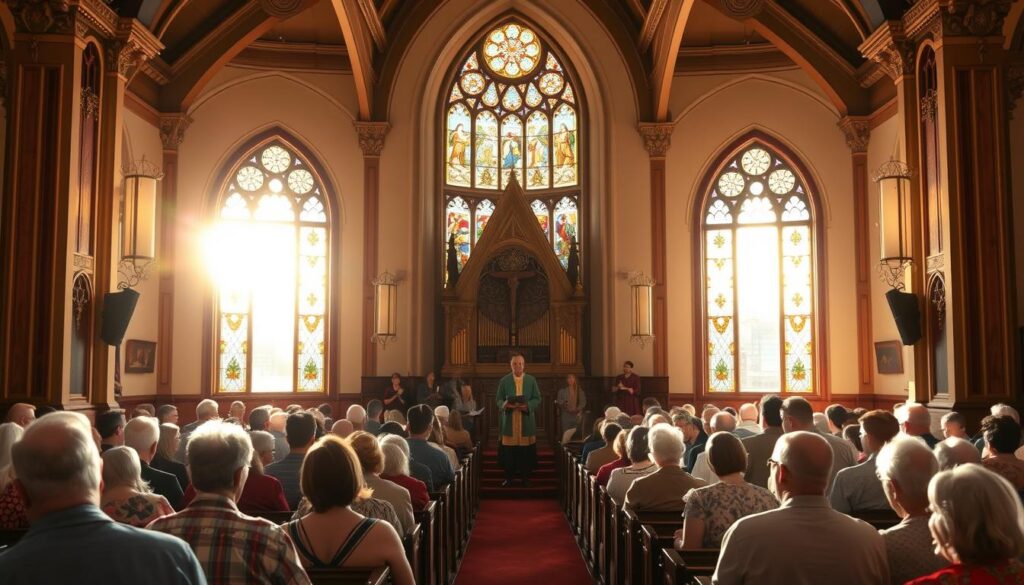

Christian Churches in Pittsburgh: Your Guide


Finding a spiritual home that fits your needs can feel overwhelming, especially in a city with so many options. Pittsburgh offers vibrant faith communities across its neighborhoods, each providing unique ways to connect and grow. Many congregations focus on building authentic relationships while serving their local areas through outreach programs.

One multi-campus organization with seven locations makes worship accessible to families throughout the region. These spaces blend modern approaches with traditional values, offering services ranging from contemporary music to classic liturgy. No matter your preferred style, you’ll find welcoming environments designed to foster personal growth.

Local faith groups prioritize more than Sunday gatherings. They create opportunities through volunteer initiatives, small group connections, and special events for all ages. Whether you’re exploring faith for the first time or seeking deeper community ties, Pittsburgh’s spiritual hubs meet people where they are.

Key Takeaways

  • Multi-campus organizations provide convenient access across Pittsburgh neighborhoods
  • Worship styles range from modern contemporary to traditional liturgical experiences
  • Community service initiatives help members make local and global impacts
  • Newcomer-friendly environments offer small groups and volunteer opportunities
  • Seven regional locations demonstrate commitment to accessibility and outreach

Introduction: Your Guide to Christian Churches in Pittsburgh

Navigating spiritual communities offers pathways to meaningful connections and personal growth. These spaces help people discover their unique roles while fostering relationships that last. Whether you’re seeking tradition or fresh perspectives, local organizations create environments where everyone belongs.

One regional leader puts it simply: “Our mission is to help people know, experience, and follow Jesus.” This philosophy drives communities to design programs that meet diverse needs. From interactive workshops to service projects, there’s always a clear path to get involved.

What makes these groups stand out? They blend time-honored values with innovative methods. Check out how different approaches work together:

Feature Traditional Approach Modern Approach Blended Style
Worship Music Classical hymns Live bands Mixed genres
Learning Formats Lectures Group discussions Interactive videos
Community Building Potluck dinners App-based groups Hybrid meetups

Newcomers often find their footing through volunteer teams or interest-based gatherings. These entry points make it easy to explore beliefs without pressure. Over time, many discover a deeper sense of personal purpose through consistent participation.

The Steel City’s spiritual networks prove that ancient truths can thrive in modern settings. Your journey toward understanding might start with a single conversation or a Saturday service project. Wherever you are in life, there’s space to grow and contribute.

Finding “christian churches pittsburgh” – A Local Overview

Exploring spiritual options in a new area brings both excitement and questions. The region hosts diverse denominations – Baptist, Methodist, and non-denominational groups – each offering distinct approaches to faith. Urban centers and suburban neighborhoods alike feature welcoming spaces designed to meet specific needs, whether you prioritize historic architecture or modern children’s programs.

Modern seekers often start their search online, and local faith groups meet this need. Many congregations provide detailed websites showcasing service times, belief statements, and virtual tours. “We want people to feel informed before they even walk through our doors,” shares one ministry leader. This transparency helps visitors find their ideal match faster.

Neighborhoods across the area boast unique characteristics. Downtown locations often focus on commuter-friendly schedules, while family-oriented places emphasize playgrounds and youth activities. Newcomer programs like coffee meetups or guided tours make initial visits stress-free.

Personal preferences matter when choosing a spiritual home. Some prioritize vibrant music programs, while others seek deep-rooted community service initiatives. No matter your priorities, you’ll discover environments that celebrate individuality while fostering shared growth.

Exploring Church Services and Weekly Gatherings

Weekly rhythms of faith create meaningful connections beyond Sunday mornings. Many congregations now offer flexible schedules, with multiple service times to match busy lives. Early risers enjoy 8 AM traditional services, while evening options cater to night owls and shift workers.

weekly church gatherings Pittsburgh

Midweek programs help members stay engaged through study sessions and casual meetups. A ministry leader shares: “Our Wednesday groups allow deeper conversations than Sunday services permit.” These smaller gatherings often focus on practical applications of faith, from parenting workshops to financial stewardship classes.

Modern faith communities enhance learning through diverse formats:

Element Traditional Contemporary Hybrid
Service Times Sunday only Multiple weekly On-demand streaming
Study Formats Lecture-based Interactive apps Podcast series
Connection Tools Bulletin boards Social media groups Video chat meetups

Digital resources like North Way’s Behind & Beyond podcast extend teachings throughout the week. Available on major platforms, these audio companions help listeners apply sermon concepts to daily challenges. Many members report this approach makes spiritual growth feel more accessible.

Newcomer-friendly environments provide clear entry points. From coffee hour discussions to service project teams, there’s always space to explore beliefs at your own pace. These varied touchpoints help people find their unique path while building authentic relationships.

Campus Locations and Interactive Maps

Choosing where to connect matters as much as why you gather. Seven neighborhood campuses across the region create accessible spaces for diverse communities. Each strategic place maintains consistent teachings while reflecting local character, from urban hubs to suburban family zones.

Discover Neighborhood Campuses

North Way’s locations span Wexford to South Hills, including City Campus downtown and Beaver Valley’s scenic setting. These spots blend shared values with neighborhood-specific outreach. A leader notes: “Our Sewickley Valley group partners with schools, while Robinson focuses on young professionals.”

Families appreciate amenities like secure kid zones and hassle-free parking. Multi-site setups let you attend events at any campus while building roots close to home. This approach keeps communities tight-knit but connected to broader resources.

How to Use Interactive Maps

Digital tools simplify location selection. Search by ZIP code or landmarks to find your nearest option. Maps display real-time details – parking spots, wheelchair access, and even café hours. One visitor shared: “The directions feature saved us 15 minutes on our first visit.”

Click any campus for service times, staff contact info, and upcoming events. Filter results based on childcare needs or music preferences. This tech-forward way to explore ensures you arrive informed and ready to engage.

Embracing Community Through Ministry

Building meaningful connections starts with shared experiences. Local faith organizations create spaces where people grow together through intentional gatherings and service. These efforts help members find belonging while making tangible impacts.

community groups Pittsburgh

Small Groups and Bible Studies

Weekly group meetings form the heart of spiritual growth. Members gather in homes or cafes for scripture discussions tailored to modern life. One participant shares: “Our study on forgiveness changed how I handle relationships at work.”

Options range from book-based explorations to video series with guided questions. Morning sessions cater to early risers, while evening groups welcome night-shift workers. Newcomers appreciate the clear step-by-step process to join – no long-term commitments required.

Volunteer and Outreach Opportunities

Serving others strengthens both neighborhoods and personal faith. Teams organize food drives, mentor students, and renovate community spaces. A volunteer coordinator notes: “We match skills with needs – everyone has something to give.”

Local partnerships allow members to address pressing issues like homelessness or literacy gaps. Seasonal projects like holiday meal packaging events draw entire families. Through these efforts, people discover how shared purpose builds authentic community.

Family and Children’s Ministries

Creating nurturing spaces for young minds shapes lifelong faith journeys. Many organizations prioritize age-specific programs that engage kids while supporting families. These ministries blend fun activities with foundational teachings to help children build spiritual roots early.

family ministries church programs

Programs for birth through 5th grade use interactive storytelling and music. A leader shares: “We want kids to experience God’s love through play and discovery.” Secure check-in systems and trained volunteers let parents participate worry-free in other activities.

Kids and Autism Ministries

Specialized support makes faith communities accessible to all. Sensory-friendly classrooms help children on the autism spectrum engage comfortably. Visual schedules and quiet zones allow participation in Sunday programs tailored for ages 3 through 5th grade.

Families receive practical tools to continue spiritual growth at home. Parent workshops cover topics like bedtime prayers and handling tough questions. Seasonal events like vacation Bible school turn learning into adventures while building friendships.

One mom notes: “The autism ministry helped my son feel truly included.” Through these efforts, every child gains role models and peers who celebrate their unique gifts.

Student and Youth Engagement

Teen years bring pivotal moments where guidance shapes lifelong values. Local organizations create intentional spaces for 6th through 12th grade youth to explore beliefs while navigating modern challenges. Weekly gatherings blend energetic activities with meaningful conversations about identity and purpose.

One leader explains: “We meet students where they are – socially, emotionally, and spiritually.” Programs tackle real-world issues through interactive workshops and peer discussions. Service projects like neighborhood cleanups help teens apply their values while developing leadership skills.

Special events balance fun with growth opportunities. Summer mission trips build teamwork through house repairs for families in need. Winter retreats combine outdoor adventures with reflective sessions about personal goals. These experiences create bonds that often outlast school years.

Mentorship plays a key role in student development. Adults trained in youth dynamics offer consistent support through monthly check-ins and crisis guidance. A recent participant shared: “My mentor helped me navigate college applications and faith questions simultaneously.”

Digital tools keep engagement consistent between meetings. Mobile apps share daily devotionals tailored to teenage concerns, while social media groups foster safe peer connections. This multi-layered approach helps young people build resilient faith foundations for adulthood.

Experiencing Faith: Knowing Jesus and Personalized Journeys

Embarking on a spiritual journey often begins with curiosity and a desire for deeper meaning. Structured programs like North Way’s Rooted experience guide participants through 10 weeks of discovery, blending biblical teachings with real-life applications. This approach helps people connect three vital elements: their relationship with God, community bonds, and personal purpose.

Rooted Experiences and Small Group Connections

Small groups form the backbone of transformative faith journeys. These intimate settings allow participants to ask tough questions and share breakthroughs. “Our groups become families – we laugh, cry, and grow together,” notes a program leader. The environment encourages taking that first step toward spiritual exploration without pressure.

Personalized paths recognize everyone’s unique timeline. Some dive into daily devotionals, while others prefer reflective journaling. The table below shows how program elements cater to different needs:

Program Element Weekly Focus Group Size Outcome
Rooted Sessions Scripture study 8-12 people Deeper biblical understanding
Discussion Topics Practical faith applications 4-6 people Personal growth insights
Prayer Practices Guided reflections Entire group Strengthened spiritual habits
Service Projects Community outreach Team-based Lived faith experiences

Many discover that faith flourishes through consistent jesus together moments – shared prayers, service projects, and honest conversations. These interactions often spark lasting changes in how people view themselves and their world.

Worship and Sermon Series Highlights

Dynamic worship services blend music, message, and meaningful application. Weekly gatherings feature carefully crafted sermon series that unpack biblical truths through modern lenses. These multi-week explorations tackle topics like relationships, purpose, and cultural challenges while offering practical tools for daily living.

North Way’s Behind & Beyond podcast extends learning beyond Sunday services. A ministry leader explains: “Our episodes help people take weekend insights into their Monday routines.” Available on streaming platforms and their app, these audio sessions reinforce key concepts through real-life examples and group discussion guides.

Modern worship experiences balance tradition with innovation:

  • Multi-media presentations enhance scriptural teachings
  • Interactive prayer stations encourage personal reflection
  • Live Q&A sessions address current ethical questions

Many find the week-by-week structure helps build lasting spiritual habits. Recent series like Faith in the Digital Age provided frameworks for navigating technology wisely. Others focus on character development through study of historical biblical figures.

Through these intentional designs, ancient wisdom becomes accessible for contemporary life. Attendees leave equipped to handle workplace conflicts, family dynamics, and community challenges with renewed perspective. As one regular participant shared: “The messages stick with me because they’re relevant to what I’m facing right now.”

Special Services: Baptisms and Celebrations

Life’s most meaningful moments deserve shared celebration. Many spiritual communities prioritize rituals that mark personal growth and communal joy. Baptism services stand out as powerful expressions of commitment, where individuals publicly declare their faith through symbolic acts.

These events often highlight life-changing grace experienced through spiritual awakening. Participants describe baptism as both a personal milestone and collective encouragement. One leader notes: “Watching someone take this step renews our own sense of purpose.”

Celebratory gatherings extend beyond individual moments. Entire communities rally around transformative stories through music, shared meals, and testimonies. These occasions strengthen bonds while inspiring others to explore their spiritual paths.

Seasonal events and dedication services create additional touchpoints for connection. Whether through candlelight ceremonies or outdoor immersions, each tradition fosters belonging. Such practices remind everyone that growth happens best in supportive, joy-filled environments.

FAQ

How do I find a local place of worship in Pittsburgh?

Many local communities offer online directories or interactive maps to help you explore nearby campuses. You can also visit websites for service times, locations, and outreach programs tailored to your neighborhood.

What are typical service times?

Most gatherings occur weekly on Sundays, with options for morning and evening sessions. Midweek events like small group studies or prayer meetings are also common. Check individual locations for specific schedules.

Are there programs for families with children?

Yes! Many locations provide family-friendly activities, including age-specific classes, autism-friendly ministries, and creative workshops designed to help kids grow in their faith through play and learning.

How can I get involved in volunteer work?

Outreach opportunities range from neighborhood projects to global missions. Connect with a small group or ministry team to discover roles that align with your passions, like mentoring students or supporting local shelters.

What’s available for students and young adults?

Youth-focused programs include Bible studies, social events, and leadership training for middle school through college-age groups. These gatherings foster friendships while exploring life’s big questions.

Can I schedule a baptism or special celebration?

Absolutely! Most communities welcome baptisms, weddings, and other milestones. Reach out to the office to coordinate dates and learn about preparation steps like orientation sessions.

Are there accommodations for disabilities?

Many locations prioritize accessibility, offering wheelchair-friendly spaces, sign language interpreters, or sensory-friendly environments. Contact staff ahead of time to discuss specific needs.

How do I feel welcome as a first-time visitor?

Guests are encouraged to arrive early, grab coffee, and join casual meetups. Look for “new here” tags on name badges or ask about introductory groups to connect with others on similar journeys.

Can I watch services online?

Yes! Live streams and archived sermons are often available for those who prefer digital access. Some groups even host virtual small studies or prayer circles for remote participation.

What if I’m exploring faith for the first time?

Personalized journeys are encouraged. Try a Rooted experience—a series of guided discussions—or join a casual small group to ask questions and learn at your own pace.

Exploring the Significance of the Protestant Church Symbol


Visual elements in religious spaces often carry stories deeper than their simple designs suggest. For many Christian traditions born from the Reformation, these emblems act as silent teachers of theology and history. They bridge the gap between abstract beliefs and everyday worship, offering clarity through imagery.

One of the most recognizable features in Reformation-era places of worship is the unadorned cross. Unlike some older Christian art, this empty design shifts focus from suffering to hope. It reminds believers of renewal rather than dwelling solely on sacrifice.

These visual choices didn’t emerge by accident. They reflect deliberate shifts during the 16th-century reforms, when communities sought to simplify worship. This approach contrasted sharply with more elaborate traditions, creating a distinct identity for congregations.

Today, these emblems continue to adapt while staying rooted in core values. Modern artists reimagine classic designs for new generations, proving that meaningful symbols never truly fade. They remain anchors of shared identity in an ever-changing world.

Key Takeaways

  • Reformation-era symbols developed as a visual language to communicate core theological ideas
  • The empty cross emphasizes resurrection hope over physical suffering
  • Deliberate simplicity contrasts with other Christian artistic traditions
  • Visual elements help define community identity across generations
  • Modern adaptations maintain historical connections while embracing contemporary styles

Introduction to the Protestant Church Symbol

In faith communities, visual elements often bridge abstract beliefs with daily life. These icons act as silent teachers, guiding individuals through complex ideas with clarity. Far from mere decoration, they shape how congregations experience sacred moments.

Overview of the Symbol’s Role in Faith

In many churches, sacred imagery serves dual purposes. It focuses attention during services, helping believers center their thoughts. Simple designs like an empty cross or open Bible make theological concepts tangible. One minister describes them as “visual sermons that speak without words.”

Context in Today’s Worship

Modern church gatherings balance tradition with innovation. While some use digital projections, classic symbols remain vital. They anchor communities in shared history while allowing fresh interpretations. A worship leader recently noted:

“Our stained glass isn’t just art—it’s a language everyone understands.”

Updated designs maintain core meanings through contemporary materials. This approach keeps worship spaces dynamic yet rooted, proving ancient symbols can thrive in modern culture.

Historical Origins of the Protestant Church Symbol

Long before the 16th century, spiritual seekers questioned established religious practices. Groups like the Hussites in Bohemia and Waldensians in France laid groundwork by emphasizing Scripture over ornate rituals. Their resistance to centralized authority planted seeds for later reforms.

reformation history

Proto-Protestant Movements and the Reformation

Early reformers faced fierce opposition for challenging medieval practices. Jan Hus, a Czech theologian, famously declared:

“The church’s true treasure is Christ’s gospel.”

His execution in 1415 didn’t stop his ideas from spreading. These movements valued simplicity, foreshadowing changes that would reshape Europe.

Martin Luther and the Birth of a New Tradition

When a German monk nailed ninety-five arguments to a church door in 1517, he ignited a cultural earthquake. Martin Luther’s bold stance against indulgences questioned centuries of tradition. His teachings on salvation through faith alone demanded new ways to express spiritual truths.

Artists and craftsmen responded by creating visual markers distinct from Catholic imagery. Empty crosses replaced crucifixion scenes, emphasizing resurrection over suffering. Open Bibles in sanctuaries highlighted Scripture’s central role—a direct challenge to hierarchical interpretations.

This shift wasn’t just about removing decorations. It forged a fresh identity for communities embracing reformed theology. Simple designs became powerful statements of belief, echoing through time to modern worship spaces.

Theological Foundations Behind the Symbol

At the heart of Christian renewal movements lay five revolutionary ideas. These principles shaped how communities expressed their convictions through visual language. Known as the Five Solae, they formed a theological compass guiding everything from sermons to sanctuary designs.

Sola Scriptura and Sola Fide Explained

Scripture alone became the rallying cry for reformers. This belief placed open Bibles front-and-center in worship spaces, visually declaring the text’s supreme authority. A 16th-century woodcut shows worshippers gathered around Scripture—no priests or rituals blocking access.

The companion principle of faith alone transformed spiritual imagery. Personal devotion replaced elaborate sacramental systems. As one reformer wrote:

“Trust in Christ’s promise, not human intermediaries.”

This shift birthed symbols emphasizing direct connection with the divine.

Grace, Faith Alone, and Justification

Unearned divine favor—grace alone—inspired stark contrasts in religious art. Simple communion cups replaced golden relics, showing God’s gifts require no human effort. Modern sanctuaries still use empty crosses to visualize free salvation through faith.

These ideas created a visual vocabulary of accessibility. Plain fonts on communion tables, unadorned walls—each choice whispers: “You’re welcomed as you are.” Through simplicity, theological beliefs about grace and redemption became tangible experiences for all.

Protestant Worship and the Use of Symbols

In spaces designed for spiritual reflection, every visual choice carries weight. Communities shaped by Reformation ideals developed distinct approaches to sacred art, prioritizing clarity over complexity. These decisions continue to shape modern worship experiences.

empty cross worship

The Empty Cross as a Central Image

Many congregations avoid depicting Christ on the cross. This stems from strict interpretations of biblical warnings against crafted idols. As reformer John Calvin argued:

“The human mind is a perpetual forge of idols.”

The plain cross redirects attention to resurrection hope. It serves as a daily reminder of triumph rather than suffering. This visual shift reflects core beliefs about divine grace being complete through Christ’s victory.

Feature Empty Cross Crucifix
Theological Emphasis Resurrection Suffering
Visual Elements Minimalist Figurative
Scriptural Connection Romans 6:9 Isaiah 53:5
Worship Focus Eternal hope Sacrificial act

Icons vs. the Emphasis on Scripture

Reformers removed statues and paintings to prevent distraction. They believed written words held greater power than carved figures. Open Bibles became focal points, inviting personal engagement with texts.

Modern sanctuaries maintain this focus through strategic simplicity. Unadorned walls and clear glass windows encourage looking beyond physical objects. As one architect notes: “Our designs help eyes rest on what matters most.”

Cultural Shifts in Protestant Symbolism

The Renaissance era’s lavish religious art sparked unexpected consequences. As painters perfected human forms and architects built grand cathedrals, some spiritual leaders grew uneasy. They worried artistic spectacle was replacing authentic devotion.

cultural shifts religious symbolism

From Visual Elaborations to Minimalism

Reformers saw ornate decorations as barriers to true worship. John Calvin argued:

“When we seek God through carvings, we fashion idols with our hands.”

This conviction led many congregations to strip away statues and gilded altars. Simple wooden crosses and open Bibles became new focal points.

Different groups embraced this shift in unique ways. Lutheran communities kept some stained glass windows, blending old and new. Quaker meetinghouses removed all decorations, valuing pure silence. These choices reflected deeper beliefs about connecting with the divine.

Local cultures shaped these changes too. Scandinavian churches adopted clean Nordic designs, while American frontier congregations used rough-hewn materials. Each adaptation maintained core principles while speaking to community needs.

Today’s worship spaces continue this balancing act. Some use projection screens alongside ancient hymns, others preserve century-old pulpits. The challenge remains: creating environments that inspire without distracting. Through changing styles, the heart of worship stays rooted in timeless truths.

The Significance of the Empty Pulpit

Physical spaces shape how communities engage with sacred truths. During the Reformation, worship environments transformed to reflect new priorities. At the heart of this change stood an unadorned platform—the pulpit—designed to elevate Scripture above all else.

Simplicity in Worship Spaces

Reformers redesigned sanctuaries to emphasize clarity. Elevated pulpits became visual anchors, showing the authority of biblical teaching. As Martin Luther noted:

“When the Word is proclaimed purely, God Himself speaks through human lips.”

This design choice removed barriers between teachers and congregations. Plain wood replaced carved statues, shifting focus from artistry to message. Modern worship spaces continue this tradition, using clean lines to highlight the spoken word.

Traditional Pulpit Features Reformed Pulpit Features
Ornate carvings Minimalist design
Saintly figures Open Bible display
Central altar Elevated platform
Decorative canopy Natural lighting

The empty pulpit’s power lies in what it removes. Without distractions, attention stays on Scripture’s transformative message. This approach reflects a core belief: divine truth needs no embellishment to change lives.

Scripture as a Visual Anchor in Protestant Churches

In many worship spaces, one object commands immediate attention—an open book resting at the heart of the room. This intentional placement transforms written words into living declarations. Centuries after reformers removed ornate decorations, the Bible remains the unchanging focal point of communal gatherings.

Role of the Open Bible on the Pulpit

Elevated platforms display sacred texts as if saying: “Listen closely—eternal truths await.” Modern congregations continue this tradition, placing Bibles where eyes naturally rest. A 17th-century minister captured this practice perfectly:

“Let the Word stand visible, that hearts might bow invisible.”

This visual strategy reinforces the belief that divine wisdom needs no intermediaries. Open pages invite personal engagement, symbolizing accessibility for all seekers.

Written Word: The Ultimate Guide

Reformers turned scripture into architecture. Where statues once stood, engraved verses now line walls. Worship leaders intentionally position lecterns to face audiences, creating dialogue rather than performance. These choices reflect a radical idea—truth belongs to everyone, not just religious elites.

Contemporary designs amplify this message. Backlit installations magnify key passages, while digital screens scroll translations side-by-side. Yet the core principle remains: when communities center on sacred texts, they anchor identity in enduring values rather than fleeting trends.

Understanding the protestant church symbol

Sacred imagery acts as a silent conversation partner across generations. In today’s diverse spiritual landscape, these visual anchors help communities navigate complex beliefs through simplicity. Their power lies in translating timeless truths into forms that resonate with modern seekers.

Defining Its Meaning in Contemporary Context

Modern believers encounter emblems that balance heritage with relevance. A worship leader in Chicago explains:

“Our stained glass isn’t frozen history—it’s a mirror reflecting today’s struggles and hopes.”

This adaptive approach maintains core messages while speaking to current realities like social justice or environmental care.

Three key roles define these visual elements today:

  • Memory triggers: Simple designs recall foundational teachings during personal reflection
  • Unity markers: Shared imagery connects diverse congregations across denominations
  • Cultural bridges: Updated versions engage younger generations without losing historical roots

Communities now reimagine traditional forms through new mediums. Digital projections of ancient symbols appear beside tactile installations using recycled materials. This blend honors the past while embracing innovation.

Traditional Expression Modern Adaptation
Carved wooden cross Laser-cut metal design
Stained glass biblical scenes Interactive light displays
Embroidered altar cloths Community-created textile art

By studying these evolving practices, we uncover how visual language sustains belief systems through cultural shifts. The challenge remains: preserving essence while allowing fresh expressions that speak to contemporary hearts.

Communion Symbols in Protestant Worship

Shared meals have always held deep meaning across cultures. In certain traditions, they transcend nourishment to become sacred acts. The elements used in these rituals carry layers of spiritual significance that unite communities through shared memory.

The Chalice and Bread as Memorials

Simple vessels hold profound meaning during sacred meals. The cup recalls Christ’s words: “This is my blood of the covenant” (Matthew 26:28). Reformers like John Calvin described these elements as “visible words” that make divine promises tangible.

Communion tables often display open Bibles beside plain trays. This arrangement emphasizes Scripture’s role in shaping the practice. Unlike ornate altars, these unadorned surfaces invite participants to focus on spiritual nourishment rather than physical objects.

Aspect Protestant View Catholic View
Elements’ Nature Symbolic reminder Literal transformation
Frequency Varies (weekly to quarterly) Daily Mass
Participation All believers Baptized members

Comparing Protestant and Catholic Traditions

While both traditions share roots in the Last Supper, their practices diverged during the Reformation. The central difference lies in understanding presence. As one theologian notes:

“We remember a past event, but also anticipate future hope through these signs.”

This memorial approach contrasts with beliefs about miraculous change in the elements. The focus shifts from ritual repetition to personal reflection on redemption. Modern services often use common bread and grape juice instead of wine, emphasizing accessibility over ceremony.

Through these symbols, communities experience unity across generations. The meal becomes a living story—one that continues to shape identities and deepen faith journeys today.

The Lutheran Legacy: The Luther Rose

A 16th-century reformer’s personal emblem became an enduring icon of spiritual identity. Known as the Luther Rose, this intricate design encapsulates core beliefs through carefully chosen imagery. Created in 1530, Martin Luther’s seal serves as both personal statement and theological compass.

Symbolism and Historical Relevance

Each layer of the design reveals intentional meaning. The black cross at its center declares faith in Christ’s sacrifice, while the red heart beneath signifies love’s transformative power. Luther explained:

“The heart rests in a white rose to show faith gives joy, comfort, and peace.”

The golden ring framing these elements points to eternal life’s unbroken promise. This visual system reflects Luther’s methodical approach—translating complex ideas into accessible forms.

Element Meaning
Black Cross Faith in Christ’s sacrifice
Red Heart Love as faith’s foundation
White Rose Joy and peace in belief
Golden Ring Eternal life’s promise

Enduring Impact in Modern Protestantism

Today, the Luther Rose appears in educational materials, jewelry, and worship spaces worldwide. A seminary professor notes: “It’s not just history—it’s a living conversation starter about grace.”

Modern adaptations include minimalist versions for digital media and community art projects. These iterations keep Reformation principles relevant while honoring their roots. The design’s longevity proves powerful symbols can bridge centuries, uniting believers across cultural divides.

The Dove as a Symbol of the Holy Spirit

Gentle wings spread in mid-flight carry more than air currents—they bear sacred meaning. This simple yet profound image connects believers to foundational spiritual truths. Its origins trace back to ancient texts describing divine encounters.

Embodying Peace, Purity, and Divine Presence

The dove’s white feathers mirror spiritual renewal, while its calm demeanor reflects inner transformation. A Minnesota pastor explains: “It’s not about the bird—it’s about what God’s power accomplishes through gentle means.” Biblical accounts link this creature to key moments, like Jesus’ baptism, where heavenly presence became visible.

Its Role in Visual and Liturgical Art

Modern worship spaces incorporate this emblem in creative ways. Stained glass designs show doves descending near baptismal fonts, linking ritual with sacred narrative. Some congregations use origami versions during Pentecost services, inviting participation.

Three key aspects define its liturgical use:

  • Movement: Often shown mid-flight, suggesting active spiritual work
  • Light: Gold-leaf accents symbolize divine grace
  • Accessibility: Simple shapes allow universal recognition

Through these expressions, communities experience the holy spirit‘s work as both comfort and catalyst. The dove remains a timeless bridge between heaven’s promise and earthly practice.

FAQ

Why do many Protestant churches use an empty cross instead of a crucifix?

The empty cross emphasizes Christ’s resurrection and victory over death, reflecting a focus on redemption rather than suffering. Unlike crucifixes, it aligns with the belief in salvation through faith in a risen Savior.

How does Protestant symbolism differ from Catholic traditions?

Protestant practices often prioritize simplicity and scripture over ornate icons or statues. For example, communion bread and wine are seen as memorials, not the literal body and blood of Christ, contrasting with Catholic transubstantiation teachings.

What is the Luther Rose, and why is it significant?

Designed by Martin Luther, the Luther Rose features a cross, heart, and rose to symbolize faith, grace, and joy in Christ. It remains a visual anchor for Lutheran theology and the Reformation’s legacy.

Why is the Bible placed centrally in many worship spaces?

An open Bible on the pulpit underscores sola scriptura—scripture as the ultimate authority. It visually reinforces the belief that God’s Word guides teaching, worship, and daily life.

What does the dove represent in Protestant art and liturgy?

The dove symbolizes the Holy Spirit’s presence, drawing from Jesus’ baptism in the Gospels. It embodies peace, purity, and God’s active role in guiding believers.

How did the Reformation shift approaches to visual symbols?

Reformers like John Calvin rejected elaborate imagery to avoid idolatry, favoring minimalism. This led to plainer spaces where scripture and preaching took center stage.

What role does communion play in Protestant theology?

Communion serves as a remembrance of Christ’s sacrifice, affirming unity among believers. While practices vary, most reject the idea of physical transformation, focusing instead on spiritual nourishment.

Why are many worship spaces designed with simplicity?

Plain interiors reflect a focus on God’s Word and communal worship. The empty pulpit, for example, highlights the authority of scripture over human embellishment.

Exploring the Protestant Church Reformation


Imagine a single document sparking a revolution that reshaped Europe and beyond. In 1517, a bold critique of religious practices ignited a movement that challenged centuries of tradition. This pivotal moment birthed new ways of thinking about spirituality, authority, and personal connection with the divine.

A German monk’s 95 arguments against common rituals became the catalyst for sweeping change. His ideas spread like wildfire through newly invented printing presses, reaching far beyond monastery walls. Ordinary people began questioning established norms, creating ripples that would alter political landscapes and cultural values.

The effects of this transformation still echo today. From education systems to concepts of self-governance, its legacy lives in unexpected places. Even modern ideas about personal belief systems trace their roots to this era of upheaval.

Key Takeaways

  • Began in 1517 with a public challenge to religious authority
  • Martin Luther’s writings sparked widespread debate
  • Created new branches of Christian practice
  • Influenced political structures across Europe
  • Paved the way for modern religious freedom concepts

This journey through the past reveals how bold ideas can reshape societies. As we explore these historical events, you’ll discover surprising connections to contemporary life in America and beyond.

Introduction to the Reformation Era

Centuries of turmoil set the stage for spiritual transformation. After the Black Death wiped out millions, survivors faced constant uncertainty about life and salvation. This climate of fear shaped how communities approached religion, with many seeking comfort in rituals promising divine protection.

Historical Context and Background

By 1500, Europe’s population hadn’t recovered from plagues and wars. People questioned traditional authorities as literacy rates rose and new ideas spread. The Renaissance encouraged critical thinking, creating fertile ground for challenging old beliefs.

Three key factors reshaped spiritual life:

  • Growing distrust of institutional corruption
  • Increased access to translated religious texts
  • Political leaders seeking independence from Rome

Understanding the Shift in Christian Thought

Medieval practices emphasized collective rituals led by clergy. But changing times brought new perspectives. As one scholar noted: “The printed word became a weapon against ignorance, letting ordinary believers interpret scripture themselves.”

Aspect Medieval Era Reformation Era
Salvation Church-mediated Personal faith
Authority Papal decrees Scripture study
Worship Latin Mass Local languages

This seismic shift didn’t happen overnight. Economic changes, technological advances like Gutenberg’s press, and evolving social needs all contributed to redefining humanity’s relationship with the divine.

Causes and Catalysts of the Reformation

What made 16th-century Europe ripe for radical change? A collision of cultural shifts, economic tensions, and groundbreaking technology created unprecedented conditions for spiritual revolution.

printing press reformation impact

Religious and Cultural Influences

Traditional practices faced growing scrutiny as literacy spread. Many grew uneasy with rituals that seemed disconnected from scriptural teachings. “When coin in the coffer rings, the soul from purgatory springs,” critics mocked the sale of forgiveness certificates.

Three seismic shifts reshaped public opinion:

  • Urban merchants demanding transparency in spiritual matters
  • Scholars translating ancient texts that challenged established views
  • Local leaders resisting distant religious authority

The Role of the Printing Press in Spreading Ideas

Gutenberg’s invention became history’s first viral content machine. Pamphlets explaining new interpretations of scripture reached towns faster than horse riders. One reformer’s writings outsold popular novels 5-to-1 during peak years.

Aspect Before Press After Press
Book Production 6 months per copy 500 pages daily
Language Latin only Local dialects
Audience Clergy General public

This communication revolution let ordinary people debate ideas once reserved for scholars. By 1525, over a million copies of reformist texts circulated—equivalent to 50 million TikTok videos today.

The protestant church reformation Movement

Three bold thinkers reshaped spiritual landscapes across Europe through groundbreaking ideas. Their collective efforts created new frameworks for understanding divinity and human purpose.

Martin Luther’s 95 Theses and Doctrinal Challenges

In 1517, a university professor nailed his arguments against religious corruption to a public bulletin board. Martin Luther’s 95 Theses questioned payment systems for spiritual favors, declaring: “True repentance seeks punishment, not payment.”

His radical views went viral through printed pamphlets. By 1521, he’d been branded a heretic but kept working. Luther’s German Bible translation let farmers read scripture themselves—a first in European history.

Influential Voices: Calvin, Zwingli and Others

While Luther sparked change in Germany, John Calvin built a theological system in Switzerland. His doctrine of predestination argued that divine choice, not human effort, determined salvation.

Huldrych Zwingli took parallel steps in Zurich. He banned religious images and simplified rituals, insisting worship focus solely on scriptural teachings.

Reformer Key Contribution Lasting Impact
Luther Salvation through faith Personal Bible study
Calvin Predestination doctrine Reformed theology
Zwingli Scripture-centered worship Symbolic communion

These pioneers agreed on core principles but debated details fiercely. Their disagreements shaped diverse traditions still seen in modern belief systems across America.

Reformation in England: A New Direction

When royal desires reshape a nation’s faith, history takes unexpected turns. England’s spiritual transformation began not with theologians, but a king’s personal crisis. This unique path blended political power plays with lasting religious changes.

english reformation historical shift

Henry VIII and the Birth of the Church of England

Henry VIII’s marriage disputes sparked England’s break from Rome. After the Pope refused his 1534 annulment request, the monarch declared himself head of a new national institution. The Church of England kept ornate rituals but rejected papal authority, creating what one historian called “a Catholic structure with Protestant seasoning.

Monarch Reign Dates Religious Shift
Henry VIII 1509-1547 Founded national church
Mary I 1553-1558 Restored Catholicism
Elizabeth I 1558-1603 Established Anglican compromise

The Rise of Puritans and Early American Beginnings

Queen Elizabeth’s 44-year reign brought stability through the Book of Common Prayer. But some wanted deeper reforms. Puritans argued the church kept too many “popish” traditions, splitting into two camps:

  • Separatists (Pilgrims) seeking complete independence
  • Nonseparatists aiming to reform from within

Both groups eventually crossed the Atlantic. The Mayflower’s 1620 voyage and Massachusetts Bay Colony (1630) planted Church of England alternatives in the United States. Their ideals helped shape America’s approach to religious diversity centuries later.

Global Influence and Lasting Legacy

New ideas crossed oceans to shape a nation’s identity. As settlers arrived in America, they brought revolutionary views about personal faith and community structure. These principles would become threads in the fabric of U.S. culture, weaving through laws, education, and daily life.

The Spread of Protestant Ideas to the United States

Early colonists carried the belief that individual interpretation mattered more than institutional authority. This mindset birthed diverse groups like Baptists and Methodists, each claiming unique approaches to spiritual matters. One colonial leader noted: “Our towns thrive not by uniformity, but through respectful disagreement.”

By 1791, this philosophy reached its peak. The First Amendment guaranteed rights to worship freely, stating: “Congress shall make no law respecting an establishment of religion.” This legal shield protected the very diversity the Reformation had championed.

Impact on Modern Religious and Cultural Practices

Reformation values still pulse through American life. The concept of personal calling transformed into a cultural work ethic, linking effort with moral purpose. Schools emerged to teach reading, ensuring everyone could explore sacred texts independently.

Modern society reflects these roots in three key ways:

  • Multi-denominational communities coexisting peacefully
  • Emphasis on self-guided spiritual journeys
  • Separation between governing bodies and belief systems

From town halls to tech startups, the idea that ordinary people shape their destiny continues to drive innovation. This legacy proves that challenges to old systems can plant seeds for lasting change.

Art, Culture, and Innovation During the Reformation

Cultural landscapes transformed as creative energies found new expressions. While theological debates dominated conversations, artists and thinkers reshaped how communities experienced spirituality. This period birthed fresh approaches to music, literature, and visual arts that still resonate in modern creative traditions.

reformation art cultural transformation

Transformation in Music, Art, and Literature

Congregational singing became a powerful tool for sharing doctrinal ideas. Simple hymns replaced complex Latin chants, letting everyone participate. “A well-sung psalm teaches the heart twice,” remarked one composer, capturing the era’s shift toward accessible worship music.

Visual arts took divergent paths across Europe. Northern regions embraced minimalist designs in places of worship, focusing attention on spoken teachings. Meanwhile, southern artists like Pieter Paul Rubens created dramatic altarpieces that blended traditional themes with new techniques.

The printing revolution fueled literary explosions. For the first time, farmhands could read scripture in their native tongues. This accessibility sparked a boom in religious poetry and household devotional guides. Schools flourished as communities prioritized literacy to deepen personal faith practices.

Even scientific progress found roots in this era. The emphasis on individual inquiry laid groundwork for later discoveries. As one historian noted: “Questioning ancient authorities in religion made people wonder what else they’d been told to accept without proof.”

The Counter-Reformation and Its Repercussions

Religious transformations often spark unexpected chain reactions. As critiques of traditional practices grew louder, the Roman Catholic Church launched its own renewal efforts. This response reshaped both spiritual life and political alliances across continents.

The Council of Trent and the Catholic Response

Between 1545 and 1563, religious leaders convened at the Council of Trent to address growing concerns. They reaffirmed core doctrines while curbing financial abuses. “Scripture and tradition hold equal weight,” declared delegates, strengthening the pope’s authority against rising challenges.

Political and Social Ramifications in Europe

These reforms sparked new alliances between rulers and religious institutions. Nations like Spain doubled down on Catholic Church traditions, while others sought middle ground. Education systems expanded as both sides vied to shape public opinion through schools and printed materials.

The Council of Trent’s decisions created lasting ripples. From art celebrating spiritual themes to stricter clergy training, these changes became part of Europe’s cultural DNA. Their influence still surfaces in modern debates about belief and governance.

FAQ

How did Martin Luther’s actions change religious practices?

By posting his 95 Theses in 1517, Luther openly challenged doctrines like indulgences. His emphasis on scripture over tradition reshaped worship, encouraging believers to engage directly with the Bible.

Why did Henry VIII break from the Roman Catholic Church?

Henry sought to annul his marriage to Catherine of Aragon, which the Pope denied. This led him to establish the Church of England, granting himself authority over religious matters and redistributing power from Rome.

What role did the printing press play in spreading new ideas?

The invention accelerated communication, allowing texts like Luther’s writings and vernacular Bibles to circulate widely. This democratized access to theological debates, fueling grassroots support for reform.

How did John Calvin influence later religious movements?

Calvin’s Institutes of the Christian Religion systematized Reformed theology, stressing predestination and moral discipline. His ideas shaped Puritanism and inspired early American colonists seeking religious freedom.

What was the Catholic Church’s response to these changes?

Through the Council of Trent, the Church clarified doctrines, addressed corruption, and launched the Counter-Reformation. This reaffirmed papal authority while reforming practices to regain public trust.

How did the Peace of Augsburg impact Europe?

The 1555 treaty let German states choose between Lutheranism and Catholicism, reducing conflict. It acknowledged religious division politically, setting a precedent for coexistence amid ongoing tensions.

Why did Puritans migrate to the Americas?

Seeking to “purify” the Church of England from lingering Catholic rituals, many faced persecution. Colonies like Massachusetts became havens for their vision of a society rooted in Reformed principles.

How did art reflect changing beliefs during this period?

Protestant regions shifted from ornate religious imagery to simpler designs, focusing on scripture. Hymns in local languages, like Luther’s compositions, made worship more accessible to ordinary people.

Find Christian Churches Near You


Discovering a welcoming spiritual community can transform your faith journey. This guide helps you explore local congregations that align with your values, whether you’re seeking traditional services, modern worship styles, or family-friendly programs.

Our directory simplifies your search by highlighting diverse faith-based groups across the U.S. You’ll find congregations focused on authentic connections, practical teachings, and opportunities to serve others. Many offer small groups, youth ministries, and outreach initiatives to help you grow personally and spiritually.

Every listing includes service schedules, contact details, and unique features. Some emphasize contemporary music, while others prioritize in-depth Bible study. No matter your preferences, there’s a place where you can belong and thrive.

Key Takeaways

  • Access a curated directory of congregations across multiple denominations
  • Compare worship styles and community programs easily
  • Find updated service times and location details
  • Explore groups with active outreach and volunteer opportunities
  • Identify welcoming spaces for family spiritual growth

Explore Local Christian Churches Near Me

Finding the right spiritual home starts with knowing where to look. Our directory simplifies the process by offering tailored search tools that highlight congregations matching your needs. Whether you prefer traditional hymns or modern worship bands, these resources help you connect with meaningful faith experiences.

How to Navigate Church Listings

Begin by using filters like denomination, service times, and ministry focus. Detailed profiles reveal each group’s core values, leadership details, and community impact. Many listings include photos, event calendars, and visitor guides to help you visualize your first visit.

Search Criteria Benefits Examples
Worship Style Matches personal preferences Traditional, contemporary, blended
Programs Supports family growth Youth groups, Bible studies
Location Saves travel time Urban, suburban settings

Tips for Finding the Right Church Community

Visit multiple congregations to compare atmospheres. Notice how each group interacts – do they welcome newcomers warmly? Look for communities actively serving their city through food drives or mentorship programs.

Prioritize groups that balance scripture-based teaching with real-life applications. Reach out to staff members to ask about visitor expectations. “The best fit often surprises people,” says a ministry leader from Ohio. Trust your instincts when assessing if a community aligns with your spiritual goals.

Discover Worship Services and Community Events

Modern faith communities provide diverse ways to connect through worship and shared experiences. Many blend traditional practices with innovative approaches, offering something meaningful for every spiritual seeker.

worship services and community events

Flexible Participation Options

Groups like City Life Houston host Sunday gatherings at 8:30 am and 10:15 am, with livestream access for those who join online. Services typically feature uplifting music and practical teachings lasting about 90 minutes. This dual approach lets you engage however you feel most comfortable.

Plan Your Visit Effectively

Check local listings for updated schedules and contact details. Our directory simplifies planning with clear service times and event calendars. Here’s a quick reference for common offerings:

Service Type Typical Time Contact Method
Morning Worship 8:30-10:00 AM Website Form
Contemporary Service 10:15 AM Stream Direct Phone Line
Evening Prayer 6:00 PM Weekly Mobile App

Meaningful Connections Beyond Sunday

Look for groups hosting creative gatherings like the Every Nation Youth Camp or Men’s Breakfast meetups. Many offer seasonal activities and service projects that blend fellowship with purpose. “Our smoothie bar events became unexpected community hubs,” shares a Houston ministry coordinator.

Weekly prayer meetings and Bible study groups help deepen relationships. These regular events create spaces where people grow together through shared experiences and mutual support.

Connect with Church Ministries and Family Programs

Building meaningful relationships through shared spiritual growth starts with robust ministry opportunities. Congregations across the U.S. design programs that nurture every family member’s journey while fostering intergenerational connections.

Family, Children, and Youth Ministries

Age-specific programs create spaces where kids and teens explore faith at their level. City Life Houston offers Kids Church during both morning services, while their Youth Services at 10:15 AM tackle relevant topics through interactive discussions. Many groups provide nursery care for infants alongside creative Bible lessons for elementary-aged children.

Teen-focused initiatives often include summer camps and leadership retreats. These experiences help youth develop practical skills while deepening their spiritual foundation. One Texas church’s mentorship program pairs teenagers with adult disciples for monthly growth check-ins.

Discipleship and Music Ministry Opportunities

Adults find growth through small group studies and volunteer roles. “Our worship team members range from professional musicians to first-time singers,” notes a music director in Ohio. Many congregations offer sound tech training for those interested behind-the-scenes roles.

Family-centric events like monthly game nights or service projects strengthen bonds across generations. Churches frequently host workshops teaching parents how to discuss faith with children effectively. These initiatives turn Sunday gatherings into weeklong opportunities for connection.

Experience a Welcoming Worship Atmosphere

Walking into a new spiritual environment can feel both exciting and unfamiliar. Many congregations prioritize creating spaces where visitors immediately sense belonging. The focus rests on authentic connections rather than rigid traditions, making it easier to engage with your church family from day one.

welcoming worship atmosphere

Casual Attire and Comfortable Service Expectations

Gone are the days of mandatory suits or formal dresses. At places like C3 Church, you’ll see people in shorts sitting beside others in business casual outfits. “We care more about hearts than hemlines,” explains a pastor from Grace Church. This relaxed approach reflects the belief that worship thrives when people feel free to be themselves.

What to Expect During a Church Service

Modern gatherings blend meaningful rituals with approachable practices. A typical service opens with upbeat music followed by practical teachings rooted in scripture. You might hear live bands playing contemporary songs or participate in group discussions about real-life challenges.

Most groups dedicate time for prayer and reflection without pressure to perform. Visitors often appreciate how messages connect biblical wisdom to everyday situations. Between songs and sermons, you’ll find chances to chat with others over coffee or join volunteer teams.

The goal? To help people view worship as a daily practice rather than a weekly event. As one attendee notes: “This church family walks with you through Monday’s stresses, not just Sunday’s songs.”

Conclusion

Your path to meaningful connections starts with the right community. Groups like City Life Houston show how church family bonds strengthen both personal growth and city impact. Their mission? To create “Christ-centered, Spirit-empowered disciples” through worship and outreach.

Modern services adapt to busy life rhythms. Attend in person for face-to-face fellowship or join online when schedules tighten. Many offer interactive prayer groups and family programs that engage children while nurturing adult faith journeys.

Visit multiple church communities to discover where you thrive. Look for spaces balancing timeless truths with fresh approaches to daily life. The best fit often combines authentic relationships with practical ways to serve others.

Your search matters. A supportive community can transform routines into purpose-filled life chapters. Take that first step – your spiritual growth and local impact start here.

FAQ

How do I search for local worship communities?

Start by exploring online directories or apps that list gatherings in your area. Filter by location, service times, or ministries like family programs to find options that align with your needs.

Are online worship services available?

Many groups offer live-streamed or recorded services. Check their websites or social media pages for links to join remotely and stay connected from home.

What should I wear to a service?

Most places encourage casual, comfortable attire. Focus on the experience—whether it’s music, teaching, or fellowship—rather than dressing up.

Are there activities for kids and teens?

Yes! Look for youth ministries with age-specific programs, from Sunday school for children to discipleship groups for teens. Many also host family-friendly events.

How can I get involved in volunteer work?

Connect with outreach teams or music ministries. Opportunities range from mentoring youth to joining choirs—there’s something for every passion and skill set.

What happens during a typical gathering?

Services often include singing, teaching, and prayer. Some incorporate communion or baptisms. Arrive early to meet others and grab coffee or snacks!

How do I find service times?

Visit the group’s website or call their office. Many post schedules online, including special events like holiday celebrations or community outreach days.

Explore the Vibrant Christian Community in Philadelphia


Across this historic city, communities rooted in timeless values create spaces where individuals connect deeply with purpose. Diverse gatherings blend rich traditions with modern approaches to faith, offering everyone a place to belong. From century-old architecture to innovative neighborhood programs, these groups prioritize both personal growth and collective impact.

Many local organizations focus on building bridges between different cultures and generations. Weekly gatherings often feature dynamic music, practical teachings, and opportunities to serve others. Leaders emphasize developing authentic relationships that inspire members to grow personally while making meaningful contributions.

Beyond weekend events, numerous initiatives address real needs through food drives, mentorship programs, and partnerships with local schools. These efforts demonstrate a shared commitment to creating positive change. Whether through small group discussions or citywide projects, participants find multiple ways to explore their beliefs while uplifting those around them.

Key Takeaways

  • Historic and modern groups coexist, offering varied worship styles
  • Communities prioritize personal development and social impact
  • Inclusive environments welcome people from all backgrounds
  • Ongoing service projects address local and global needs
  • Leadership programs help members grow their skills
  • Creative approaches make spiritual exploration accessible

Discovering the Historical Roots of Philadelphia’s Churches

This city’s spiritual legacy began with a bold experiment in tolerance. William Penn’s 1682 vision transformed the area into a sanctuary where diverse groups could worship without fear. Early settlers built gathering spaces that doubled as community hubs, blending faith with civic life.

Colonial Heritage and Religious Freedom

The Free Quaker Meetinghouse stands as proof of Penn’s radical ideals. Built in 1783, its plain design reflects Quaker values of simplicity. Nearby, Gloria Dei Church—founded by Swedish settlers in 1700—showcases how multiple traditions thrived side by side.

“True religion needs no walls, but it builds bridges.”

Colonial-era proverb

Architectural Masterpieces and Historic Landmarks

From rugged stone walls to soaring steeples, these buildings tell stories through brick and mortar. The Cathedral Basilica on Benjamin Franklin Parkway mixes French Gothic grandeur with local craftsmanship. Compare key sites:

Building Style Unique Feature
Old Swedes’ Church Colonial Original 1698 log structure
Trinity Church Oxford Georgian Hand-carved wooden pulpit
St. James Kingsessing Gothic Revival Stained glass from 1842

Many structures still host weekly services, their walls echoing centuries of prayers. Preservation efforts ensure these landmarks remain active parts of city life rather than museum pieces.

Top Christian Churches Philadelphia: A Detailed Look

Philadelphia’s spiritual landscape offers remarkable diversity through its sacred spaces. Historic sanctuaries stand alongside innovative community hubs, each telling unique stories of faith in action. These institutions blend architectural grandeur with meaningful service, creating welcoming environments for all.

basilica saints peter philadelphia

Catholic and Roman Catholic Landmarks

The Cathedral Basilica of Saints Peter and Paul anchors Catholic tradition with its towering Corinthian columns. As the archdiocese’s mother church, it hosts vibrant liturgical services attended by thousands. Weekly Masses and special events foster deep connections among worshippers.

Protestant Traditions: Baptist, Presbyterian, and More

Tenth Presbyterian Church showcases Victorian Gothic architecture while maintaining Reformed theology since 1856. Across town, Grace Baptist Church energizes communities through food pantries and youth mentorship. Both demonstrate how denominations adapt timeless values to modern needs.

Modern Non-Denominational and Community Churches

Metro Church reimagines a 1920s building with inclusive worship experiences. Interactive sermons and live music attract diverse crowds seeking spiritual growth. Their partnership with local schools highlights practical faith in action.

Landmark Denomination Key Feature
Cathedral Basilica Roman Catholic Largest Catholic worship space
Tenth Presbyterian Presbyterian Historic stained glass windows
Grace Baptist Baptist Community tutoring programs
Metro Church Non-Denominational Adaptive reuse architecture

These groups frequently collaborate on city-wide initiatives, proving shared goals transcend individual traditions. From shelter support to interfaith dialogues, they create united fronts for positive change.

Experiencing Community and Service in Local Churches

At the heart of these communities lies a commitment to transforming lives through shared purpose. Vibrant worship experiences blend ancient traditions with fresh approaches, creating spaces where every voice matters. Whether through candlelit hymns or upbeat modern melodies, gatherings focus on meaningful connection over routine rituals.

Worship Services and Spiritual Life

Sunday mornings buzz with energy across multiple service styles. Traditional liturgies feature pipe organs and recited creeds, while contemporary sessions use projection screens and live bands. Midweek groups dive deeper through book studies and prayer circles, helping people apply faith to daily challenges.

Community Outreach, Missions, and Small Group Engagement

Food pantries and tutoring programs demonstrate love in action. One neighborhood initiative pairs professionals with job seekers through resume workshops. Global missions range from building schools overseas to supporting refugee families locally.

Freedom Church exemplifies this blend, hosting services at 1200 Market Street with times accommodating various schedules. Their leaders prioritize mentorship programs that equip members to lead community projects. Small groups meet in homes citywide, fostering friendships that extend beyond Sunday gatherings.

Through these efforts, lives change both within and beyond the church walls. Partnerships with schools and businesses create ripples of positive impact, proving faith thrives when put into service.

Navigating Philadelphia’s Diverse Spiritual Traditions

Philadelphia’s spiritual mosaic thrives through traditions that shape neighborhoods and hearts alike. Quiet meetinghouses stand beside ornate cathedrals, each telling stories of faith in action. This blend creates spaces where seekers find belonging through varied expressions of belief.

Quaker, Episcopal, and Orthodox Influences

The Arch Street Friends Meeting House preserves Quaker simplicity with wooden benches and hushed reflection. Here, silent worship fuels social justice work that’s shaped the city for centuries. Just blocks away, Episcopal congregations blend ancient liturgy with modern activism through food drives and housing initiatives.

diverse spiritual traditions Philadelphia

Orthodox communities add vibrant threads to this tapestry. Saint George Greek Orthodox Cathedral dazzles with gold-leaf icons during Easter midnight services. These traditions connect worshippers to global practices while nurturing local neighborhood bonds.

Architectural Diversity and Neighborhood Connections

From stone-clad Baptist halls to rainbow-stained Presbyterian windows, buildings mirror their communities’ values. The Frankford Friends Meeting House’s plain brick exterior hides a cozy interior where decisions emerge through consensus. Contrast this with the Russian Orthodox Cathedral’s onion domes that crown Fairmount’s skyline.

Different areas showcase unique spiritual flavors. South Philly’s row houses shelter Albanian Orthodox gatherings, while West Philly’s Victorian homes host experimental worship spaces. Each church becomes a home for both tradition and innovation.

These sacred spaces anchor communities through more than Sunday services. Tutoring programs in Baptist basements and Orthodox food festivals prove shared values transcend architectural styles. Together, they create a living map of faith woven into the city’s streets.

Conclusion

Philadelphia’s sacred spaces form a living mosaic where heritage meets innovation. For over 300 years, these groups have shaped the city’s identity through service and shared values. Landmarks like the Basilica of Saints Peter stand as testaments to enduring faith, while modern hubs reimagine worship for new generations.

Every corner offers ways to grow spiritually while making a difference. Meal programs, mentorship initiatives, and global partnerships show how beliefs translate into action. Whether through candlelit hymns or community gardens, people find purpose beyond Sunday gatherings.

What makes these communities special? Their ability to honor tradition while answering today’s needs. You’ll discover historic stone walls housing tech-driven outreach projects and century-old choirs singing alongside jazz bands. This blend creates welcoming homes for all seekers.

From quiet Quaker meetings to vibrant gospel services, there’s space for every journey. These groups prove that ancient wisdom can fuel fresh solutions—for neighborhoods and the world. Together, they build bridges between past and future, one act of kindness at a time.

FAQ

What historic sites highlight the city’s role in religious freedom?

Old St. Joseph’s Church, founded in 1733, reflects Philadelphia’s commitment to tolerance. Benjamin Franklin’s writings also emphasize the city’s early support for diverse beliefs. The National Liberty Museum further explores this legacy.

Which landmarks showcase unique architecture?

The Basilica of Saints Peter and Paul blends Gothic Revival design with Roman Catholic tradition. Old Swedes’ Church (Gloria Dei) offers a glimpse of 17th-century Scandinavian craftsmanship. Tenth Presbyterian Church features striking stained glass and a historic organ.

How do local congregations engage with their neighborhoods?

Many host food drives, mentorship programs, and free clinics. For example, Arch Street United Methodist runs outreach initiatives for unhoused populations. Small groups often partner with schools or nonprofits to address community needs.

Are there options for non-denominational worship?

Yes! Communities like Liberti Church and Redemption Hill focus on inclusive, modern services. These spaces often prioritize contemporary music, casual atmospheres, and practical teachings applicable to daily life.

Where can I experience Quaker traditions?

The Arch Street Meeting House, built in 1804, hosts silent worship sessions. Friends Center nearby provides resources on Quaker values like peace activism and social justice—core parts of Philadelphia’s spiritual identity.

Do any churches offer tours or cultural events?

Christ Church hosts guided tours showcasing its ties to Founding Fathers. The Episcopal Cathedral often holds concerts, while St. Nicholas of Myra Byzantine Catholic Church shares Eastern European heritage through festivals.