Recent Posts

Protestant Funeral Services: What to Expect


Losing someone special is never easy, but celebrating their life and spiritual journey can bring comfort. Many Christian ceremonies focus on honoring a loved one‘s legacy while emphasizing hope through faith. These gatherings often blend heartfelt remembrance with joyful acknowledgment of their eternal peace.

Modern services balance time-honored traditions with personal touches. Families might include favorite hymns, meaningful scriptures, or shared stories that reflect their relative’s values. This flexibility allows each tribute to feel authentic while maintaining its spiritual foundation.

Newcomers often appreciate the warm embrace of these communities. The focus remains on collective support rather than strict customs, making it easier for all attendees to participate. Whether through prayers, music, or quiet reflection, every element aims to uplift those grieving.

Key Takeaways

  • Services emphasize celebrating life and spiritual beliefs over mourning
  • Personalized elements help create meaningful tributes
  • Traditional practices adapt to modern family needs
  • Communities provide supportive environments for healing
  • Understanding service structure reduces attendee anxiety

Understanding the Protestant Funeral Tradition

At the heart of these services lies a spiritual perspective shaped by centuries of religious thought. Core beliefs about grace and eternal life create a framework focused on hope rather than sorrow. This approach reflects the conviction that divine mercy, not human actions, determines one’s spiritual destiny.

Key Beliefs and Customs

Central to these gatherings is the idea that salvation comes through faith alone. Unlike other Christian traditions, there’s no emphasis on earning favor through good deeds or fearing purification after death. Instead, services highlight scripture readings and uplifting hymns that affirm the deceased’s reunion with God.

Historical Evolution from the Reformation

Martin Luther’s teachings in the 16th century revolutionized how communities approached loss. He rejected elaborate rituals, stating that only baptism and communion held sacramental value. This shift removed prayers for the departed, trusting wholly in God’s plan without human intervention.

John Calvin later reinforced the soul’s immortality, assuring believers of their eternal connection to the divine. These reforms simplified ceremonies, focusing on collective support and shared worship. Today’s practices still echo this legacy, blending reverence with quiet confidence in heavenly peace.

Planning a Protestant Funeral Service

Creating a heartfelt tribute begins with thoughtful preparation that honors unique life stories. Modern memorial events blend spiritual foundations with creative freedom, letting families craft experiences that truly reflect their loved one’s character.
personalized funeral service elements

Choosing the Right Venue

Traditional church settings remain popular, but many opt for meaningful locations like parks or lakeshores. One family recently held a riverside ceremony where their father taught grandchildren to fish. These special places create lasting connections between the service and cherished memories.

Personalizing the Service Details

From favorite flowers to custom playlists, personal touches transform standard programs into authentic celebrations. Consider these ideas:

  • Display hobby-related items like gardening tools or sports memorabilia
  • Share handwritten notes in program booklets
  • Use signature colors in floral arrangements

Involving Family and Friends in the Process

Encourage loved ones to contribute through music, readings, or memory-sharing activities. A minister might guide the structure while relatives handle personal tributes. This collaborative approach helps communities heal together while honoring individual relationships.

“Let the service tell their story – not just through words, but through the spaces they loved and the people they cherished.”

Components of a Typical Protestant Funeral

Memorial gatherings in Christian traditions follow a meaningful three-part structure. Each phase helps families honor their loved one while receiving community support. These moments blend formal customs with personal touches that reflect individual stories.

visitation and wake services

Visitation, Viewing, and Wake Services

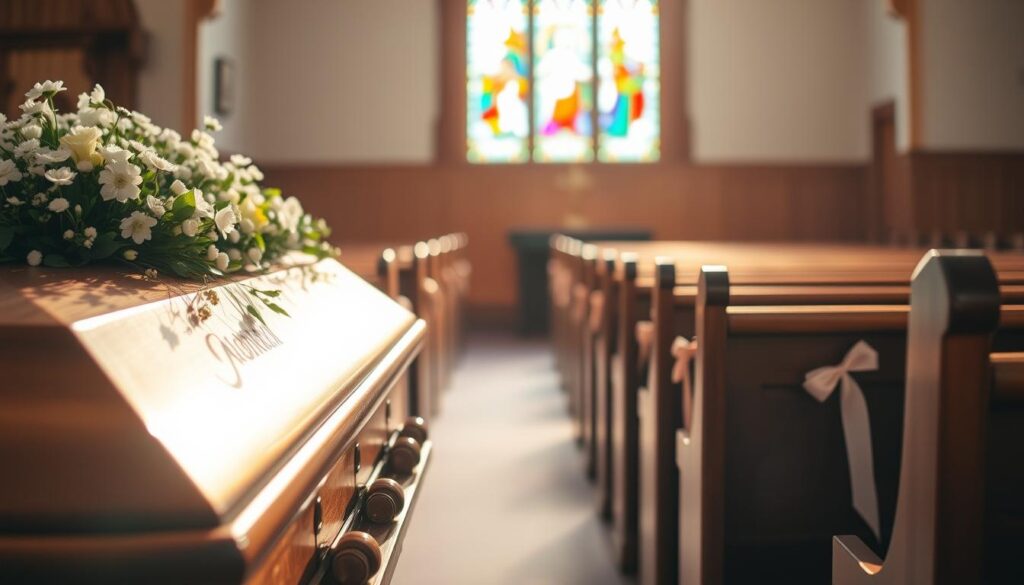
The visitation often occurs the day before the main event. Friends gather at a funeral home or meaningful location to share memories near the casket. This informal time lets attendees offer comfort through quiet conversations or gentle embraces.

The Ceremony and Eulogies

Central services usually happen within three days. An ordained leader guides prayers and scripture readings while family members deliver heartfelt tributes. Multiple eulogies highlight different aspects of the person’s life, from career achievements to backyard barbecue skills.

Post-Service Traditions

After the ceremony, attendees often travel to a cemetery for brief committal prayers. Many families now choose cremation, storing ashes in keepsake urns or scattering them in special places. Others prefer traditional ground burial with engraved headstones.

Burial Option Key Features Common Locations
Ground Burial Uses casket Family cemetery plots
Cremation Ash storage options Memorial gardens
Natural Burial Eco-friendly materials Conservation parks

Shared meals frequently follow these events, letting communities bond over cherished stories. These gatherings transform grief into collective celebration, honoring lives well-lived through laughter and quiet reflection.

Key Aspects of a Protestant Funeral

Understanding what happens during these ceremonies helps attendees participate meaningfully. Services balance spiritual traditions with personal touches that honor individual lives. Warm welcomes and shared participation create spaces where healing begins through collective remembrance.

Expectations During the Service
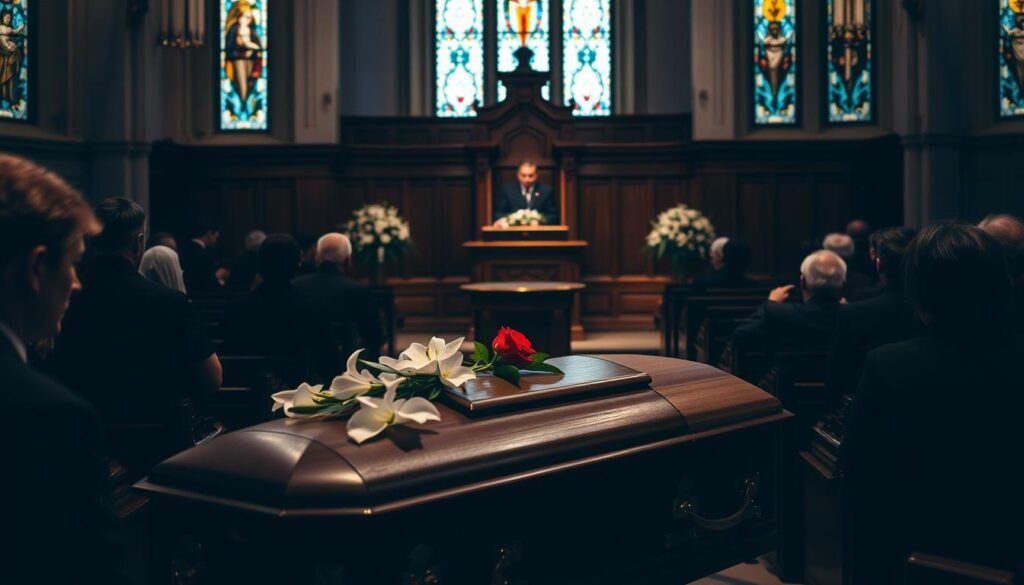
funeral service traditions

Attendees often find comfort in singing familiar hymns that celebrate hope. Many services include responsive readings where everyone voices affirmations of faith together. A minister typically shares messages connecting the loved one‘s life to timeless spiritual truths.

Family members might deliver heartfelt eulogies highlighting personal stories. Some gatherings feature quiet moments for private reflection or written tributes. These elements help guests feel actively involved in honoring the deceased while supporting grieving relatives.

Unique Customs and Prayers Observed

Modern adaptations include open microphone sessions where family friends share spontaneous memories. Customized prayers often reference the person’s favorite scriptures or life philosophy. One recent service included a “memory wall” where guests pinned handwritten notes beside vacation photos.

Tradition Modern Adaptation Purpose
Hymn Singing Personalized Playlists Community Bonding
Scripture Reading Life-Themed Verses Personal Connection
Formal Eulogy Group Story Sharing Collective Healing

Post-service meals frequently become joyful celebrations of life. These informal gatherings let communities share stories over favorite dishes of the loved one. Laughter and tears blend naturally as people affirm lasting legacies through simple togetherness.

Conclusion

Honoring a loved one’s journey becomes easier when ceremonies reflect their unique story. Christian memorial traditions provide a flexible framework where faith and personal touches coexist beautifully. Families often find healing through shared stories, favorite hymns, and gatherings that celebrate lasting legacies.

These services adapt seamlessly to modern needs while maintaining spiritual roots. Whether choosing traditional burial or cremation, families can design tributes that feel authentic. Meaningful locations – from quiet chapels to sunny meadows – add depth to farewells that truly resonate.

The focus remains on uplifting communities through collective support. Friends and relatives bond over cherished memories, transforming grief into moments of connection. This approach fosters environments where laughter and tears blend naturally, honoring lives well-lived.

By understanding these customs, attendees participate with confidence and warmth. Every element – from scripture readings to custom playlists – creates space for both reflection and celebration. Such gatherings remind us that hope shines brightest when shared.

FAQ

What should I expect during a typical service?

Services often include prayers, hymns, scripture readings, and a eulogy. Family and friends may share memories, and the minister or pastor will focus on celebrating the life and faith of the loved one. Attendees are encouraged to participate respectfully.

How can families personalize the ceremony?

Loved ones might display photos, play meaningful music, or read favorite Bible verses. Some choose to include a memory table or share stories during the service. Ministers often work closely with families to honor unique traditions or requests.

Are there differences between denominations?

While core beliefs about resurrection and hope remain consistent, practices like communion or specific prayers may vary. For example, Methodist and Baptist services might have slight differences in structure. Always ask the officiant about specific customs.

Can cremation be part of these traditions?

Yes, many modern services incorporate cremation. The ashes might be buried in a cemetery, placed in a columbarium, or scattered in a meaningful location. The focus remains on honoring the person’s life and legacy.

What role do friends play in the process?

Close companions often assist with organizing meals, sharing memories during the ceremony, or helping with logistics like seating. Some churches have dedicated groups to support families with planning and post-service gatherings.

How long do services usually last?

Most ceremonies run 45–90 minutes, including time for visitation or a reception afterward. Burial or committal services at the gravesite typically add another 20–30 minutes, depending on travel time.

Are children welcome to attend?

Families generally decide based on their comfort level. Many services include younger relatives, and some churches provide quiet activity kits to help kids participate respectfully during the gathering.

What’s appropriate attire for attendees?

Modest, respectful clothing in darker colors is common. Some families may request specific themes, like wearing bright hues to celebrate a vibrant life. When unsure, ask the family or check the church’s guidelines.
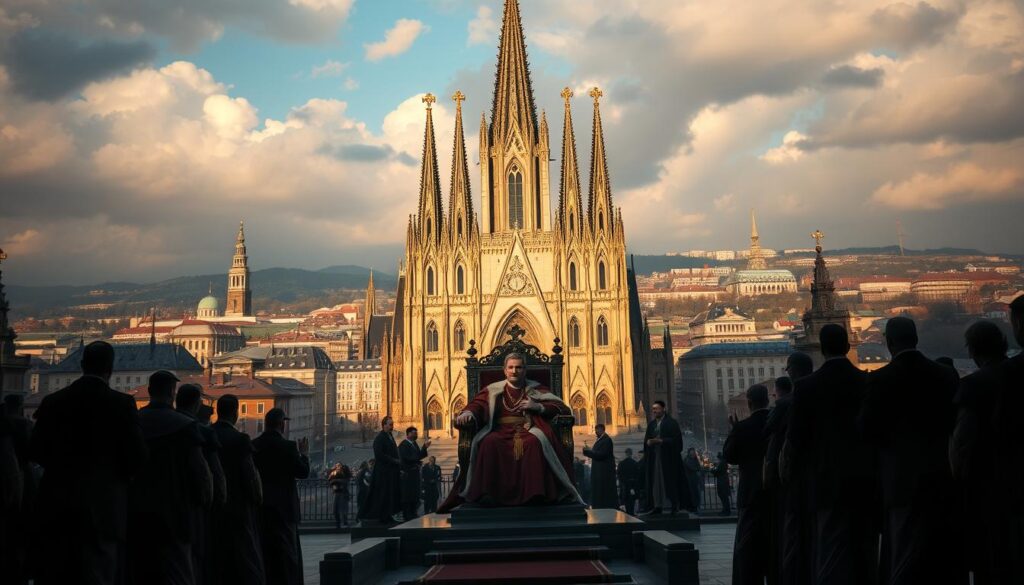
The Protestant King: A Historical Perspective


Throughout history, royal leaders have shaped nations through their beliefs and policies. This guide explores how religious identity transformed governance in Europe, focusing on rulers who championed new spiritual movements. Their decisions often sparked cultural shifts and redefined the relationship between church and state.

During pivotal moments in the past, monarchs faced unique challenges balancing personal faith with political demands. Many navigated tensions between different religious groups while maintaining authority. These leaders left lasting legacies, influencing everything from legal systems to international alliances.

We’ll analyze how their titles and ceremonies reflected evolving power structures. Coronation rituals, for example, often blended tradition with statements of religious allegiance. Such symbols reinforced their role as both political figures and spiritual representatives.

From diplomacy with foreign powers to managing diverse populations, these rulers adapted to complex realities. Their stories reveal how personal convictions shaped entire eras—and how modern constitutional monarchies still carry echoes of their influence.

Key Takeaways

  • Religious identity played a crucial role in reshaping European governance structures
  • Monarchs often balanced spiritual beliefs with practical political needs
  • Coronation rituals and titles reflected evolving church-state relationships
  • Diplomatic strategies addressed tensions between different faith communities
  • Historical decisions continue to influence modern constitutional systems

Historical Context and the Rise of a New Monarchy

In the shadow of crumbling cathedrals and burning villages, Europe’s power structures underwent seismic shifts during the 16th century. France became ground zero for this transformation, where religious identity collided with royal authority. For 36 years, civil wars tore through the country, fueled by clashes between Catholics and Huguenots.

Religious Turmoil and the Wars of Religion

The 1572 St. Bartholomew’s Day Massacre marked a turning point, eliminating much of France’s Protestant leadership. Tensions had simmered since 1562, when Catholic forces slaughtered Huguenots at Vassy. By the 1550s, nearly 10% of France’s population had embraced Protestant teachings—a minority large enough to challenge church dominance but too small to secure political control.

The Transition from Catholic Dominance to a Protestant Reign

Henry of Navarre’s 1589 ascension to the throne tested France’s unity. As the first Bourbon monarch and a Huguenot leader, he faced widespread distrust. His famous 1593 conversion to Catholicism—”Paris is worth a Mass”—demonstrated the delicate balance between personal religion and statecraft.

This strategic compromise paved the way for the 1598 Edict of Nantes, granting limited religious freedoms. The edict didn’t create full equality but established crucial precedents for separating spiritual beliefs from civic participation. Through such measures, the monarchy evolved from enforcing doctrinal purity to managing diverse populations.

Church and State: The Evolving Dynamics of Faith and Power

church and state dynamics

European rulers reshaped spiritual authority through bold institutional changes. The Church of England became a blueprint for blending religious structures with governance. This fusion created unique legal frameworks that still influence modern political order.

The Shifting Role of Royal Titles and Ecclesiastical Authority

Henry VIII’s 1534 Act of Supremacy made monarchs the ultimate head of England’s church. Today, Charles III holds the title “Defender of the Faith”—a role originally granted by the Catholic Church before the Reformation. These titles evolved into tools for asserting state control over spiritual matters.

The Church of England remains legally tied to the crown, unlike Scotland’s independent church structure. This distinction shows how different regions balanced doctrine with local governance needs.

Aspect Church of England Church of Scotland
Leadership Monarch as Supreme Governor No royal authority
Establishment 1534 Act of Supremacy 1560 Reformation
Governance Parliament involvement Local presbyteries

Erastianism and its Legacy in Government

Thomas Erastus’ ideas transformed how nations handle spiritual law. His doctrine argued civil leaders should oversee church operations—a view embedded in England’s 39 Articles. Article 37 clearly states royal power extends over “all estates” in the realm.

This approach influenced constitutional systems worldwide. Modern democracies still debate the proper role of religious institutions in public life, proving these historical decisions remain relevant.

The Enduring Legacy of the Protestant King

Leadership decisions made centuries ago still shape how nations handle religious diversity today. Henry IV’s 1593 conversion to Catholicism—despite his Huguenot roots—demonstrates how rulers prioritized national unity over personal belief. This strategic choice ended France’s brutal wars and set precedents for modern constitutional monarchy.

religious coexistence monarchy

Conversion, Political Strategy, and Reconciliation

Henry’s partnership with minister Sully rebuilt France after decades of conflict. Their 1598 Edict of Nantes granted Huguenots limited rights—a revolutionary step for its time. Though assassinated in 1610, Henry’s policies showed how kings could balance competing faiths through compromise.

Comparative Insights from Henry IV and Contemporary Monarchs

James II’s 1685 coronation reveals similar pragmatism. The pope approved his Protestant-led ceremony to maintain England’s stability. Modern royals like Britain’s Windsor family continue this tradition, serving as symbols of unity in multi-faith societies.

These historical examples prove lasting truths: effective governance often requires bridging divides. From Henry’s reign to today’s ceremonial thrones, leaders who adapt to their country‘s needs leave enduring marks on history.

Symbolism, Ceremonies, and Religious Identity in Royal History

Crowns glimmer and scepters shine, but royal rituals carry deeper meanings. These ceremonies blend centuries-old traditions with modern values, reflecting how religion shapes national identity. From coronation oaths to architectural symbolism, every detail tells a story of evolving faith and governance.

royal coronation ceremonies

Ceremonial Traditions and Established Churches

King Charles III’s 2023 coronation showcased this balance. He vowed to uphold the Church of England while welcoming leaders from other faiths. “I shall inviolably maintain the Settlement of true Religion,” he declared, echoing language from 16th-century reforms.

Henry VIII’s marriage disputes sparked lasting changes. His 1536 break with Rome created the Church of England, shifting spiritual authority to the throne. Later monarchs like Elizabeth I reinforced this doctrine through laws blending religious and civic order.

Impacts on National Identity and Legal Reforms

Legal milestones reveal shifting attitudes. The 1829 Catholic Relief Act softened restrictions against Roman Catholic participation in public matters. Centuries earlier, James II’s 1685 Protestant-led coronation—approved by the pope—proved even divided faiths could find common ground.

Three key reforms shaped modern systems:

  • The Act of Supremacy (1534) made monarchs head of state and church
  • Coronation oaths evolved to acknowledge regional churches
  • Interfaith collaborations became standard in royal ceremonies

These changes transformed how people view leadership. Today’s monarchs symbolize unity across diverse beliefs while honoring historical ties to established churches—a delicate dance between past and present.

Conclusion

The dance between throne and altar has written many chapters in Europe’s story. Monarchs navigated complex relationships with the Catholic Church, often reshaping faith traditions to suit political needs. Their choices created frameworks for balancing spiritual ideals with practical governance.

Henry IV’s compromises and England’s royal-led church reforms show how power adapts. These leaders understood that unifying divided populations required acknowledging diverse religion practices. Their legacy lives in modern systems separating civic duties from personal belief.

Today’s constitutional monarchies still reflect these historical negotiations. While the Catholic Church no longer holds medieval influence, its past conflicts with kings taught valuable lessons. True leadership often means finding common ground—even when sacred and secular worlds collide.

FAQ

How did religious conflicts shape the role of European monarchs?

Religious divisions, like the Wars of Religion, forced rulers to balance faith with political stability. Many adopted policies to unify their realms, such as establishing state-aligned churches or granting limited religious freedoms to avoid civil strife.

What was Erastianism, and how did it influence governance?

Erastianism emphasized state control over religious institutions. This doctrine allowed leaders like Elizabeth I to consolidate power by overseeing church operations, blending spiritual and political authority to strengthen national unity.

Why did Henry IV of France convert to Catholicism?

Henry IV famously said, “Paris is well worth a Mass”, prioritizing peace over personal faith. His conversion from Huguenot Protestantism to Roman Catholicism in 1593 helped end the French Wars of Religion and stabilize the nation.

How did royal ceremonies reinforce religious identity?

Coronations, oath-taking rituals, and church-led events symbolized the monarch’s role as both head of state and defender of the faith. These traditions reinforced national identity, as seen in England’s Anglican liturgy or Scandinavia’s Lutheran practices.

What legal changes occurred under Protestant-aligned rulers?

Monarchs like Henry VIII enacted laws separating their realms from papal authority. The Acts of Supremacy in England, for example, declared the crown as the Supreme Head of the Church of England, reshaping legal frameworks around marriage, land ownership, and governance.

How do modern monarchs handle religious diversity compared to past rulers?

Today’s constitutional monarchs often serve as symbolic heads of multi-faith societies, unlike historical figures who enforced state religions. For instance, the British crown still holds the title “Defender of the Faith” but promotes interfaith dialogue to reflect contemporary values.

The Protestant King of France: A Historical Perspective


Born in 1553 at Château de Pau, Henry IV grew up in a world torn by religious conflict. His mother, Jeanne III of Navarre, raised him in the Protestant faith despite his Catholic baptism. This unique upbringing shaped his ability to navigate France’s bitter Wars of Religion later in life.

Henry first ruled as King Navarre after his mother’s death in 1572. His early reign tested his skills as both a military leader and diplomat. Through marriage alliances and battlefield victories, he positioned himself as a unifying figure during chaotic times.

In 1589, Henry became king of a fractured nation. His reign (1589–1610) marked a turning point for France. Though initially opposed for his religious background, he famously declared “Paris is worth a Mass” when converting to Catholicism to secure his throne.

The first monarch from the House of Bourbon brought lasting changes. He issued the Edict of Nantes in 1598, granting limited religious freedom to Protestants. This groundbreaking policy helped heal divisions while maintaining Catholic dominance.

Key Takeaways

  • Henry IV uniquely balanced Protestant roots with Catholic political realities
  • His early rule in Navarre prepared him for national leadership challenges
  • The Bourbon dynasty began with his unexpected rise to power
  • Religious tolerance became a cornerstone of his legacy
  • Military success and political flexibility defined his 21-year reign

Historical Context: France Before the Reformation

Sixteenth-century France simmered with tension as Protestant ideas challenged centuries of Catholic rule. By 1555, nearly 1.25 million French citizens—called Huguenots—followed John Calvin’s teachings. This growing minority reshaped the nation’s social fabric while most citizens clung to traditional faith.

Fractured Throne, Divided Nobles

Three weak Valois kings—Francis II, Charles IX, and Henry III—struggled to control their realm. Their mother Catherine de Médicis became the real power, playing noble families against each other. Political alliances split along religious lines:

Family Religion Power Base
Guise Catholic Eastern France
Montmorency Moderate Catholic Paris Region
Bourbon Protestant Southern Territories

Faith Becomes a Weapon

The Duke of Guise led hardline Catholics against Huguenot communities. Meanwhile, Protestant nobles like the Bourbons demanded religious rights. Catherine’s attempts at peace often backfired spectacularly, like her failed marriage alliance between Catholic Marguerite and Protestant Henry of Navarre.

This explosive mix of faith and ambition made violence inevitable. When thousands died in the 1572 St. Bartholomew’s Day Massacre, it shocked Europe—but surprised few in France. The stage was set for decades of wars of religion that would ultimately reshape the monarchy.

Era of Religious Turmoil and the French Wars of Religion

In 1562, a single act of violence sparked thirty-six years of chaos. The Duke of Guise ordered his troops to attack Huguenots praying in Vassy, slaughtering dozens. This massacre lit the fuse for eight brutal wars of religion that would redefine France.

st. bartholomew day massacre

Key Conflicts and Atrocities

Violence escalated like wildfire. Each attack bred fiercer retaliation. By 1572, tensions peaked during a royal wedding in Paris. What began as a celebration turned into the St. Bartholomew’s Day Massacre – three days of targeted killings that left 10,000 dead nationwide.

Catholic mobs hunted Huguenot leaders using pre-marked houses. Bodies floated in the Seine as Henry III’s government struggled to control the carnage. Survivors called it “blood wedding,” a turning point where religious disputes became existential warfare.

Entire regions chose sides through fear or faith. Villages fortified churches while nobles stockpiled weapons. For ordinary people, daily life meant navigating checkpoints and coded symbols to avoid persecution.

These conflicts created lasting scars but also set the stage for change. The Duke of Guise‘s extremism ultimately weakened Catholic hardliners, creating space for compromise. As smoke cleared from burnt villages, France slowly inched toward reconciliation.

Rise of a Monarch Amidst Chaos

The sudden death of France’s heir in 1584 changed everything. When Francis, Duke of Anjou, passed unexpectedly, his brother Henry III lost his designated successor. This left the throne France might inherit to a Protestant cousin – Henry of Navarre.

three henrys conflict

What followed became known as the war three henrys. Three powerful men claimed authority: the reigning monarch Henry III, Protestant leader Henry of Navarre, and Catholic hardliner Henry de Guise. Each represented competing visions for the nation’s future.

Desperate moves backfired spectacularly. In 1588, Henry III ordered the duke guise‘s assassination, hoping to crush Catholic opposition. Instead, furious mobs drove the king from Paris. His power shrank to a few towns along the Loire River.

Navarre seized this chaos skillfully. While others focused on revenge, he built alliances and won key battles. By 1589, the french crown hung within reach. France stood at a crossroads – would it accept a ruler from the “wrong” faith?

Henry III’s final days saw strange bedfellows. The weakened king allied with his Protestant cousin against remaining Catholic forces. This partnership paved Navarre’s path to power, though neither man would live to see peace restored.

The Transformation of Henry of Navarre into King Henry IV

A single knife thrust changed France forever. On August 1, 1589, Jacques Clément assassinated Henry III outside Paris. With his dying breath, the monarch named Henry of Navarre as successor—a stunning twist for a man raised Protestant in defiance of royal norms.

henry iv path to throne

Path to the Throne

Henry’s survival during the St. Bartholomew’s Day Massacre proved crucial. Though forced to convert temporarily, he escaped the French court in 1576. These experiences taught him vital political flexibility. To rule France,” he later remarked, “one must listen to both church bells and battle drums.

His mother Jeanne d’Albret shaped his early resilience. As Huguenot leader after 1572, Henry mastered wartime strategy and peacemaking. When Henry III died childless, these skills helped him claim the throne France desperately needed.

The new monarch’s journey revealed ironies. Persecution strengthened his resolve, while captivity taught courtly diplomacy. By balancing these lessons, he transformed from regional ruler to national unifier—setting the stage for his historic reign.

Diplomacy and Military Campaigns in His Early Reign

Henry IV’s early reign was forged on battlefields and negotiation tables alike. While cannons roared across France, he balanced battlefield grit with shrewd political deals. This dual approach helped turn military wins into lasting authority.

Notable Battles: Ivry and Arques

The Battle of Ivry (1590) became Henry’s masterpiece. Outnumbered Catholic League forces crumbled under his bold cavalry charges. His iconic white-plumed helmet rallied troops as he shouted: “Follow my white plume!”

Earlier at Arques (1589), he’d proven survival skills. Using fog-covered terrain, his forces ambushed larger armies. These victories showed skeptics a Protestant leader could defend French soil.

Strategies Against the Catholic League

Henry faced more than local rebels. Spanish gold and troops backed the duke guise‘s faction, creating a European-scale conflict. He countered by offering pardons to defecting nobles and blocking enemy supply routes.

Though Paris resisted his 1590 siege, Henry kept chipping away at opposition. His mix of mercy for converts and firmness against hardliners gradually won over war-weary citizens. This paved his path from battlefield commander to accepted ruler.

FAQ

Why was Henry IV’s reign significant for France?

Henry IV ended decades of religious conflict by uniting a divided nation. His policies, like the Edict of Nantes, granted rights to Huguenots while stabilizing the monarchy, paving the way for France’s recovery.

What caused the French Wars of Religion?

Tensions between Catholics and Huguenots, combined with power struggles among noble families like the Guises and Bourbons, fueled violence. Political instability and competing claims to the throne worsened the conflict.

How did the St. Bartholomew’s Day Massacre impact France?

The 1572 massacre intensified distrust between religious groups. Thousands of Huguenots were killed, deepening divisions and prolonging the wars until Henry IV’s rise brought compromise.

What challenges did Henry face before becoming king?

As a Huguenot leader, Henry faced opposition from the Catholic League and rival claimants like Henry III. Surviving assassination attempts and winning key battles, like Ivry, secured his path to the throne.

Why did Henry IV convert to Catholicism?

His famous quote, “Paris is worth a mass,” reflected practical politics. Converting in 1593 helped him gain broader acceptance, though he still protected Huguenot rights through laws like the Edict of Nantes.

What was the War of the Three Henrys?

This 1580s conflict pitted Henry III, Henry of Guise, and Henry of Navarre (later Henry IV) against one another. It ended with Guise’s assassination and Navarre’s eventual succession after Henry III’s death.

How did the Edict of Nantes change France?

Issued in 1598, it granted Huguenots religious freedom and civil rights, reducing sectarian violence. This landmark decree promoted coexistence and strengthened royal authority after years of chaos.

What was Henry IV’s lasting legacy?

He rebuilt France’s economy, centralized power, and fostered peace. His pragmatic leadership and reforms, aided by advisor Sully, laid the foundation for the Bourbon dynasty’s dominance.

What Are the Main Beliefs of Protestantism?


Let’s explore a spiritual movement that reshaped Christian faith worldwide. Born from 16th-century reforms, this branch of Christianity began as a call to return to biblical foundations. Leaders like Martin Luther challenged established practices, sparking changes still felt today.

At its heart are four guiding ideas. First, scripture stands as the ultimate authority – translated into everyday language for all to understand. Second, every believer connects directly with God without needing intermediaries. Third, grace through faith alone defines salvation. Finally, communities gather around shared study rather than hierarchy.

With nearly one billion followers, this tradition impacts cultures globally. It represents about 30% of those who identify with Christianity, shaping worship styles and social values across continents. From hymn-singing congregations to modern megachurches, its influence keeps evolving.

Key Takeaways

  • Originated during 16th-century reforms challenging religious authority structures
  • Four foundational ideas prioritize scripture, faith, and personal connection with God
  • Represents 30% of global Christian population with diverse practices
  • Differs from other traditions through emphasis on biblical accessibility
  • Continues shaping modern spiritual practices and community engagement

The Historical Foundations of Protestantism

A German monk’s critique of church practices sparked a movement that changed Christianity forever. In 1517, Martin Luther nailed ninety-five arguments to a Wittenberg church door. His bold act challenged the Roman Catholic Church’s sale of indulgences and reshaped spiritual life across Europe.

Defiance That Shaped a Movement

Luther’s stand at the 1521 Diet of Worms became legendary. Facing Emperor Charles V, he refused to recant his writings. “Here I stand,” he declared, cementing his role in the Protestant Reformation. By 1529, German princes protesting restrictions on Luther’s followers gave the movement its name.

Ideas That Traveled Fast

The printing press turbocharged the spread of Reformation theology. For the first time, ordinary people read scripture in their language. This broke the Catholic Church’s control over biblical interpretation. New teachings about salvation and church leadership took root across 16th-century Europe.

From Luther’s initial protests grew diverse traditions still shaping worship today. His emphasis on personal faith and accessible scripture created ripples that reach modern congregations worldwide.

Scripture Alone: The Authority of the Bible

Imagine holding ultimate truth in your hands – that’s how many believers view the Bible’s role in their spiritual lives. This radical idea transformed how communities engage with divine wisdom.

Bible authority in Protestant faith

When Pages Shape Practice

The “Scripture Alone” principle means every teaching gets tested against biblical text. Unlike systems relying on human traditions, Protestant Christians treat the Bible as God’s direct communication. Early reformers printed scripture in street languages, letting farmers and merchants read God’s promises themselves.

Living by the Book

Churches using this approach often display open Bibles during services. Why? To show holy scripture guides decisions – from leadership choices to helping neighbors. Members might debate meanings, but all agree on the source of authority.

Three ways the Bible shapes daily faith:

  • Sermons dissect passages line-by-line
  • Study groups explore cultural contexts
  • Personal reading plans encourage reflection

This focus keeps teachings grounded. As one pastor notes: “When opinions clash, we ask – what does the word of God clearly say?” The answer settles debates and unites diverse believers under shared truths.

Grace Alone: Embracing Unconditional Love

Picture a love that asks nothing in return – that’s the heart of Sola Gratia. This revolutionary idea flipped religious expectations upside down. Instead of earning divine approval, believers receive it as a completely unearned embrace.

God's unconditional grace

The Concept of Unmerited Favor

Your job title? Irrelevant. Your bank account? Doesn’t matter. Protestant teachings insist God’s grace ignores résumés. A CEO and cashier stand equal here. As one reformer wrote: “We’re all beggars at heaven’s door.”

This free gift reshapes self-worth. You’re valuable because God says so – not because of achievements. It’s like getting front-row concert tickets you didn’t buy. The surprise creates joy, not guilt.

The Impact on Salvation Theology

No more spiritual scorecards. Trying to earn salvation through rituals? Protestant thinkers called that exhausting. Grace alone means breathing easy – salvation’s already handled.

But wait – doesn’t this encourage laziness? Not quite. As Martin Luther explained: “Good works don’t make a Christian, but a Christian does good works.” The difference? Actions flow from gratitude, not desperation.

Three ways this changes daily life:

  • Helping neighbors becomes joyful, not obligatory
  • Mistakes don’t define your worth
  • Community bonds strengthen through shared acceptance

Through faith in Jesus Christ, believers find freedom. They’re no longer climbing an impossible ladder – just walking hand-in-hand with grace.

Faith is All-Important: A Transformative Encounter with God

What if your deepest questions led to unshakable trust? That’s the power of faith alone – a cornerstone of spiritual life that reshapes hearts. Unlike memorized creeds, this living confidence grows through wrestling with doubt, much like a seed breaking through rocky soil.

transformative Christian faith

From Doubt to Devotion

Many believers discover faith during life’s storms. A nurse questioning suffering, a student doubting purpose – their stories often share a pattern. Moments of crisis become doorways to encountering Jesus Christ personally. As one recovering addict put it: “When my plans crumbled, God’s grace caught me.”

Martin Luther captured this bold trust perfectly:

“Faith is a living, daring confidence in God’s grace, so sure and certain that a man could stake his life on it a thousand times.”

Notice the energy – faith isn’t passive agreement but active reliance.

Three truths about this journey:

  • God’s invitation comes freely, but we choose acceptance
  • Doubt isn’t faith’s enemy – it’s often its training ground
  • Transformative encounters ripple into daily choices

This freedom defines faith alone. No forced conversions, just open hands receiving love. Whether in quiet times of prayer or serving neighbors, that daring confidence changes everything. It turns Sunday beliefs into Monday courage.

Protestantism Main Beliefs and Their Contemporary Relevance

In bustling cities and quiet towns, ancient truths meet modern challenges. Over 800 million people now identify with this tradition, shaping how churches address today’s complex questions. From smartphone Bible apps to global aid networks, Reformation roots still bear fruit in surprising ways.

Application in Modern Christian Life

Morning commutes often include podcast sermons. Small groups video-chat across time zones. These routines show how Protestant theology adapts while keeping core principles intact. A youth pastor in Texas explains: “We still ask – what does Scripture clearly say? But now we share answers through TikTok devotionals.”

Three ways beliefs shape daily life:

  • Online giving platforms support food banks worldwide
  • Debates about social issues start with grace-centered dialogue
  • Personal Bible reading plans sync across devices

Influence on Today’s Churches

Worship spaces now blend stained glass with LED screens. Yet the message remains unchanged. Over 60% of U.S. congregations stream services, reaching members from Seoul to São Paulo. This global network fuels initiatives like:

Focus Area Traditional Approach Modern Adaptation
Scripture Access Printed Bibles AI-powered study tools
Community Care Local soup kitchens Disaster relief apps
Global Outreach Missionary letters Virtual reality church plants

These innovations face criticism too. Some worry technology distracts from life-changing encounters. But as a Nairobi pastor notes: “Paul used Roman roads – we use Wi-Fi. The goal stays the same: share hope with the world.” The balance between old and new keeps Protestant theology relevant across generations.

The Universal Priesthood: Equality in the Church

Equality wasn’t just a concept—it became a spiritual revolution. The Reformation introduced a radical idea: every baptized believer holds equal worth before God. This principle shattered medieval hierarchies, letting factory workers and farmers share spiritual authority with seminary graduates.

Shared Ministry and Leadership

Imagine a church committee where teachers, nurses, and students collaborate with pastors. That’s the living reality of shared governance. While ministers handle sacraments and sermons, church members lead outreach programs and budget decisions. As one Lutheran deacon notes: “Our youth director’s a mechanic – and the best Bible teacher we’ve got.”

Three ways this freedom transforms communities:

  • Retirees organize food drives using logistics skills
  • Teens lead worship bands with original music
  • Engineers design accessible church buildings

The Holy Spirit works through all believers, not just clergy. Pastors become coaches rather than CEOs – equipping members to serve. This collaborative form keeps churches nimble. When a tornado hit Ohio last year, congregants instantly mobilized relief efforts without waiting for “expert” approval.

Modern churches thrive when everyone’s gifts matter. From tech teams to prayer warriors, each person’s role strengthens the whole body. As the early reformers envisioned: true unity grows when all voices contribute.

Exploring the Diversity within Protestant Theology

The tapestry of Protestant thought weaves together countless threads of interpretation. While united by the five solae principles, followers of Martin Luther and John Calvin developed distinct expressions of faith. This led to denominations like Baptists, Methodists, and Pentecostals – each adding unique patterns to the broader fabric.

Varied Denominational Insights

Lutheran denominations emphasize sacraments like the Lord’s Supper, while Assemblies of God churches prioritize the Holy Spirit’s transformative power. Baptists champion adult baptism by immersion, contrasting with Methodist infant christening practices.

Yet all share core convictions: salvation through faith alone, scripture’s supreme authority, and living for the glory of God. A Texas megachurch pastor notes: “Our worship styles differ, but the good news remains unchanged.”

This diversity strengthens the global Christian church. From inner-city ministries to rural chapels, varied approaches meet unique community needs while upholding foundational truths. As debates continue, the shared mission to spread hope unites believers across the world.

FAQ

How did Protestant Christianity begin?

It started in the 16th century when reformers like Martin Luther challenged certain practices of the Roman Catholic Church. This movement, called the Reformation, emphasized returning to biblical teachings and salvation through faith alone.

Why is the Bible so important to Protestant Christians?

Holy Scripture is viewed as the ultimate authority for faith and life. Many believers rely on its teachings for clear guidance, trusting it reveals God’s truth without needing additional traditions.

What does "grace alone" mean in Protestant theology?

It highlights that salvation is a free gift from God, not earned by good works. This unmerited favor reflects His unconditional love, offering redemption to all who trust in Jesus Christ.

How does personal faith shape a believer’s life?

Faith is seen as a transformative relationship with God. It moves individuals from doubt to devotion, inspiring actions rooted in love, holiness, and gratitude for Christ’s sacrifice.

Do Protestant churches value leadership equality?

Yes! The universal priesthood teaching affirms that all members—not just clergy—can serve and interpret Scripture. This idea fosters shared ministry and active participation in church life.

Are there differences among Protestant denominations today?

Absolutely. Groups like Lutherans, Baptists, and Assemblies of God vary in practices and emphases. Yet they share core principles like Scripture’s authority and salvation through grace by faith.

How do Protestant beliefs influence modern churches?

They inspire outreach, worship styles, and community engagement. Many congregations focus on spreading the good news of Jesus while adapting to cultural changes without compromising biblical truths.

What is the Protestant Faith? Meaning Explained


Welcome to a journey through one of Christianity’s most influential movements. Born from 16th-century reforms, Protestantism reshaped how millions connect with spirituality. At its heart lies a focus on direct access to God and the belief that Scripture guides life’s deepest questions.

This branch of the Christian church began as a call to simplify traditions and center teachings on Jesus Christ. Unlike other denominations, it emphasizes salvation through grace rather than rituals. Imagine a faith where personal study of the Bible matters more than hierarchies – that’s Protestantism’s legacy.

Today, nearly one billion people identify with this tradition. From Lutherans to Baptists, its diversity mirrors its global reach. You’ll find vibrant communities shaping culture, education, and social justice worldwide.

In this guide, we’ll explore how Protestant ideas sparked revolutions in thought and practice. You’ll discover its core principles, historical turning points, and why it still resonates. Let’s dive into a story of faith, courage, and enduring impact.

Key Takeaways

  • Originated in 16th-century reforms emphasizing Scripture over tradition
  • Teaches salvation through divine grace, not human effort
  • Bible serves as ultimate authority for spiritual guidance
  • Represents 30% of Christians globally with diverse denominations
  • Encourages personal connection with God without intermediaries
  • Influenced social movements and education systems worldwide

Understanding the Protestant Faith Meaning

At the heart of this Christian movement lies a revolutionary idea: connection with the divine needs no middleman. Central to its teachings are the Five Solae – Latin principles that shape spiritual identity. Sola fide (“faith alone”) declares salvation comes through trust in God’s grace, not rituals or deeds.

This approach flips traditional power structures. Instead of relying on a church hierarchy, believers build relationships directly with the sacred. “The Bible is God’s living voice,” one reformer argued, “not a relic locked in institutional vaults.”

Scripture’s supremacy forms the bedrock of these beliefs. While other traditions blend biblical wisdom with human authority, this movement treats ancient texts as complete guidance. Modern worshippers still carry pocket Bibles – a habit born from 16th-century cries for accessibility.

Personal interpretation fuels spiritual growth here. Congregations encourage members to wrestle with texts themselves, though this freedom sometimes sparks debate. As one pastor notes: “Our unity comes from shared devotion, not identical conclusions.”

These doctrines shape daily life in tangible ways. From hymn choices to community service projects, every practice ties back to biblical roots. Families often center homes around scripture studies, passing down interpretive skills through generations.

Historical Origins and the Protestant Reformation

Long before Luther’s famous stand, Europe simmered with religious tension. Corrupt clergy and complex rituals left many craving authentic spirituality. This hunger for change would ignite a firestorm across the continent.

protestant reformation history

Seeds of Change in Medieval Soil

Jan Hus lit the first sparks of reform in 15th-century Bohemia. His fiery writings condemned church corruption, declaring: “Truth alone makes free.” Though burned at the stake in 1415, his ideas spread like wildfire through underground networks.

Three key factors fueled early dissent:

  • Growing literacy rates among common people
  • Political leaders seeking independence from Rome
  • Widespread frustration with church financial abuses

When Ideas Collided With Empire

The 16th century brought Luther’s explosive Ninety-Five Theses. His call for debate about indulgences became a rallying cry. At the 1521 Diet of Worms, authorities demanded he recant. Luther’s refusal marked the movement’s irreversible break from Catholic tradition.

This showdown changed everything:

  1. Printing presses spread reform ideas rapidly
  2. Local rulers adopted Protestant teachings
  3. New church structures emerged across Europe

These events didn’t just reshape religion. They redefined how societies confront power – a legacy still shaping modern democracies.

Key Protestant Reformers and Their Legacies

Visionary leaders transformed religious thought through bold actions and groundbreaking ideas. Their work created ripples still felt in churches worldwide today.

protestant reformers legacy

The Monk Who Shook Europe

Martin Luther’s 95 Theses sparked more than debate – they ignited a cultural earthquake. This former monk’s German Bible translation let ordinary people read scripture firsthand. His writings challenged church authority, declaring: “Every believer is their own priest.”

Luther’s legacy includes:

  • Founding the Lutheran Church with 80 million members today
  • Creating catechisms still used in religious education
  • Pioneering hymns like A Mighty Fortress

Geneva’s Systematic Thinker

John Calvin turned a Swiss city into a Reformation laboratory. His Institutes of the Christian Religion became Protestantism’s first textbook. Geneva’s strict moral codes under his leadership drew both admiration and criticism.

Calvin’s influence spread through:

  1. Presbyterian governance models
  2. Emphasis on predestination theology
  3. Educational reforms in multiple continents
Reformer Key Contributions Regions Influenced
Martin Luther Bible translation, justification by faith Germany, Scandinavia
John Calvin Systematic theology, church governance Switzerland, North America

Other figures like Zwingli and Knox added unique flavors to the movement. Zwingli’s Zurich reforms prioritized scripture over rituals, while Knox shaped Scotland’s kirk tradition. Together, these leaders proved diverse approaches could share core principles.

Modern denominations from Baptists to Methodists trace their roots to these 16th-century innovators. Their courage to rethink tradition continues inspiring new generations of believers.

Theological Foundations and the Five Solas

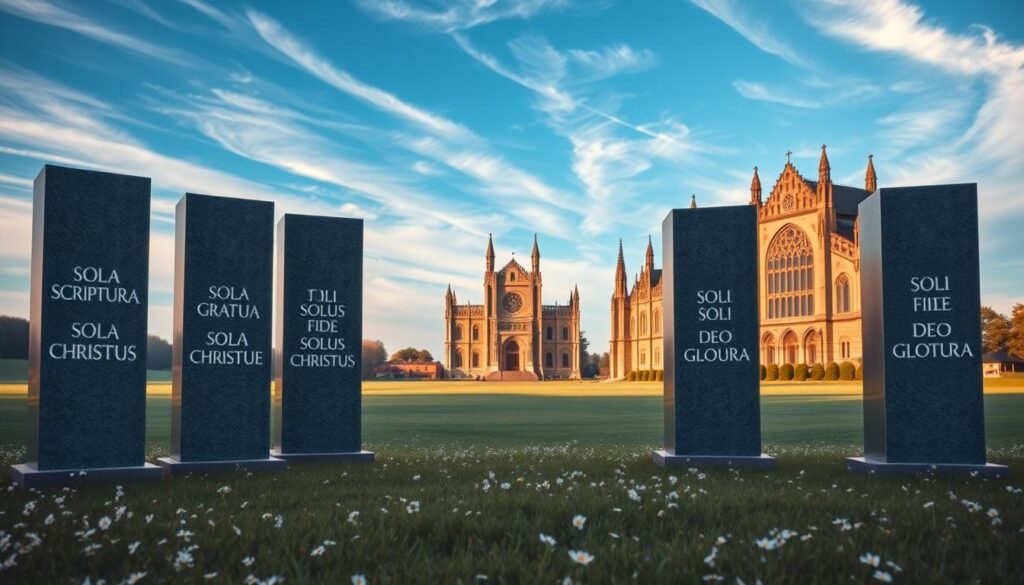
Imagine building a house where every brick matters. The reformers laid five bedrock principles that still support modern spiritual practice. These five solae – Latin for “alone” – became revolutionary declarations against medieval church practices.

five solae theology

Sola Scriptura and Sola Fide Explained

Sola scriptura places the Bible above all human traditions. A 16th-century pamphlet declared: “God’s word outlives marble monuments.” This principle fuels Bible study groups and personal devotionals today.

Faith alone reshaped how people view salvation. Unlike systems requiring rituals, this idea says trust in Christ’s sacrifice is enough. Luther compared it to “empty hands receiving a royal gift.”

Sola Gratia, Solus Christus, and Soli Deo Gloria

Three more pillars complete the foundation:

  • Grace alone: Divine favor isn’t earned – it’s freely given
  • Christ alone: No saints or priests needed for divine connection
  • Glory to God: Worship focuses upward, not on human leaders

These ideas shape modern communities. Churches prioritize scripture readings over ceremonial displays. Hymns like Amazing Grace echo the god grace concept. Even church governance models reflect soli Deo gloria, avoiding hierarchical titles.

Together, the five solae form a spiritual compass. They guide decisions from charity work to parenting styles. As one theologian notes: “Our roots go deep, but our branches reach wide.”

Scripture as the Sole Authority in Protestantism

When English worshippers first heard the King James Bible read aloud in 1611, it marked a seismic shift. This translation became the ultimate source of divine truth for millions, embodying the reformers’ radical claim: God’s word outranks human institutions.

Interpreting the Bible in Protestant Traditions

Early reformers wielded scripture like a sword against medieval church teachings. Luther declared, “A simple milkmaid with her Bible knows more than the pope!” This belief birthed Bible study groups where farmers and nobles debated texts as equals.

Modern approaches blend personal insight with scholarly guidance. Some traditions use historical analysis, while others focus on spiritual application. Pentecostals might emphasize personal revelation, whereas Presbyterians lean on systematic theology.

Three factors revolutionized religious practice:

  • Vernacular translations replacing Latin texts
  • Printing presses spreading affordable Bibles
  • Laypeople leading home scripture circles

This freedom to interpret fuels both unity and diversity. While Baptists and Methodists read the same verses, their applications differ. Yet all agree on scripture’s supreme authority – a principle that drives missionary work from Alabama to Zambia.

Today’s digital Bibles continue this legacy. Apps with audio readings and study tools let construction workers hear scripture on lunch breaks, just as 17th-century farmers once gathered around family Bibles at dusk.

Diverse Denominations and the Global Protestant Landscape

Picture a sprawling oak tree with branches reaching across continents. This mirrors the growth of spiritual communities rooted in shared Reformation ideals. From structured liturgies to spontaneous worship, these groups adapt core principles to local cultures while keeping biblical authority central.

Lutherans, Anglicans, and Reformed Traditions

Three major branches showcase how denominations interpret shared heritage differently:

  • Lutherans preserve Martin Luther’s emphasis on grace, using catechisms for teaching
  • Anglicans blend Protestant theology with ancient rituals in the Church of England tradition
  • Reformed churches follow Calvin’s systematic approach to scripture and governance

The Church of England uniquely balances Protestant doctrine with bishops’ leadership. Its 25 million members worldwide sing from the same hymnal used during the English Reformation, blending tradition with modern relevance.

Emerging Independent and Nonconformist Churches

Newer movements like the Assemblies of God reflect ongoing innovation. These groups often:

  • Prioritize spiritual experiences over formal structures
  • Use contemporary music and casual services
  • Plant churches in storefronts and homes rather than traditional buildings

From Brazilian favelas to Korean megacities, these communities prove Protestant principles adapt to any context. A pastor in Nairobi explains: “We keep the Bible open but let the Spirit write new chapters through our people.”

This global tapestry shows how denominations maintain unity through scripture while celebrating cultural diversity. Whether in a Swedish cathedral or Appalachian revival tent, the same core message resonates: grace transforms lives.

Ecclesiology, Liturgy, and Worship Practices

Communion cups clink softly as believers gather worldwide. This simple act connects modern worshippers to 500 years of spiritual heritage. Across diverse communities, shared practices reveal core beliefs about sacred gatherings and divine connection.

Understanding Sacraments and Worship Styles

Two sacred rituals anchor spiritual life in most churches. Baptism and the Lord’s Supper serve as visible expressions of inward grace. Lutherans describe communion as Christ’s presence “in, with, and under” the elements, while Reformed traditions emphasize spiritual nourishment through faith.

Worship styles range from high-church liturgies to casual services with rock bands. Three patterns emerge:

  • Presbyterian services follow structured prayer books
  • Baptist gatherings prioritize spontaneous prayer
  • Pentecostal meetings embrace emotional worship songs

Pulpits remain central in many sanctuaries. “Scripture shapes our teachings,” explains a Methodist pastor. “Sunday sermons equip people for Monday challenges.” This focus turns pews into training grounds for daily life.

Baptism debates showcase interpretive diversity. Some churches sprinkle infants, recalling covenant promises. Others immerse adults as a public declaration. Both groups cite biblical examples to support their views on this initiation rite.

The Lord’s Supper continues sparking theological conversations. Whether served weekly or monthly, this meal unites communities across denominational lines. As one elder notes: “We taste grace together – that’s what matters most.”

Protestantism in Relation to Roman Catholicism

Differing views on spiritual authority define the Protestant-Catholic divide. While both traditions share Christian roots, their paths diverged over doctrines and practices. This split continues to shape worship styles and theological debates today.

Comparative Doctrinal Differences

At the heart of the divide lies religious authority. Protestants prioritize Scripture as the sole guide, while the Roman Catholic Church blends biblical teachings with papal decrees and tradition. A 16th-century reformer famously declared, “The Bible needs no interpreter but the Holy Spirit.”

Salvation beliefs further separate the traditions. The Catholic Church teaches grace through sacraments administered by clergy. In contrast, Protestant theology emphasizes direct access to divine mercy through Christ alone.

These differences extend to church structure. Roman Catholicism maintains a hierarchical system with the Pope as supreme leader. Protestant communities typically favor local governance, reflecting their commitment to individual spiritual responsibility.

FAQ

How does Protestant theology differ from Roman Catholic teachings?

Protestant beliefs emphasize Scripture alone as the ultimate authority, rejecting papal infallibility. Unlike Roman Catholicism, most traditions teach salvation through faith in Christ rather than sacraments or works. Disputes over practices like indulgences sparked the Reformation.

What role did Martin Luther play in the Reformation?

Luther, a German monk, challenged church corruption by posting his Ninety-Five Theses in 1517. His writings promoted justification by faith and translated the Bible into vernacular languages, empowering laypeople. This defiance at the Diet of Worms reshaped Christianity.

Why are the Five Solas central to Protestant doctrine?

The Solas—Scripture, faith, grace, Christ, and God’s glory—summarize core teachings. They reject human merit in salvation, affirming Christ’s sufficiency and the Bible’s authority. These principles unified reformers like Calvin and Zwingli despite denominational splits.

How do Protestant denominations vary in worship practices?

Lutherans and Anglicans retain liturgical elements like the Lord’s Supper, while Baptists or Pentecostals prioritize sermons and spontaneous prayer. Groups like the Amish or Quakers emphasize simplicity, reflecting diverse interpretations of New Testament models.

What sparked the global spread of Protestantism after the 16th century?

A> Missionary efforts, colonial expansion, and movements like Methodism fueled growth. Today, Assemblies of God and African Independent Churches reflect adaptability to local cultures, making Protestantism the world’s second-largest Christian branch after Catholicism.

Do Protestants recognize saints or Marian devotion?

Most reject veneration of saints, focusing instead on Christ’s mediation. While figures like Augustine are respected, prayer is directed to God alone. Exceptions exist in high-church Anglicanism, which sometimes honors traditional saints.

How did John Calvin influence Reformed churches?

Calvin’s Institutes of the Christian Religion systematized doctrines like predestination and covenant theology. His Geneva model blended church-state governance, inspiring Presbyterians, Puritans, and later, Reformed Baptists through his emphasis on God’s sovereignty.

Why is sola scriptura controversial within Christianity?

Critics argue it leads to fragmented interpretations without a unifying authority like the Magisterium. Protestants counter that the Holy Spirit guides believers, prioritizing personal engagement with Scripture over institutional decrees.

Explore the Protestant Quaker Faith


Imagine a spiritual community where silence speaks louder than sermons, and every person carries divine wisdom within. This philosophy defines the Religious Society of Friends, a movement rooted in Christianity that values personal connection over rigid doctrines. Emerging in 17th-century England, these believers reshaped religious life by rejecting formal clergy and elaborate rituals.

Today, this tradition spans the globe, with members in over 100 countries. Nearly half live in Africa, while North America hosts about a quarter of practitioners. Despite regional differences, all share a commitment to finding “that of God in everyone” through quiet reflection and communal discernment.

What makes this group stand out? Their worship often unfolds in expectant stillness rather than scripted services. Decisions emerge through collective listening rather than top-down authority. This approach has fueled groundbreaking work in civil rights, education reform, and conflict resolution across centuries.

Key Takeaways

  • Originated as a 1600s Christian movement valuing personal spiritual experience
  • Operates without formal clergy or sacraments in most branches
  • Global membership exceeds 375,000 across six continents
  • Pioneered consensus-based decision-making practices
  • Historically influential in anti-slavery and gender equality movements
  • Modern communities range from Bible-centered to universalist perspectives

Historical Roots of the Quaker Movement

Religious upheaval in 1600s England created fertile ground for movements that challenged traditional church authority. For centuries, conflicts between state religion and reformist groups simmered. The Lollards—a 14th-century proto-Protestant sect—had already questioned clerical power long before the English Reformation.

The English Civil War (1642-1651) exploded these tensions. As royal and parliamentary forces clashed, over 200,000 soldiers died. This chaos birthed radical spiritual seekers. Dissenters rejected rigid rituals, craving direct connections with the divine.

Three key factions shaped this transformative time:

Group Period Contribution
Lollards 1300s-1500s Early Bible translation advocates
Seekers 1640s-1650s Rejected formal worship structures
Levellers 1647-1649 Pioneered democratic ideals

These movements shared a hunger for authentic faith experiences. After the war, England’s weakened state church couldn’t suppress new ideas. Spiritual explorers began meeting in homes and fields—a practice that would define the emerging Society of Friends.

This history of rebellion and renewal explains why so many others joined the cause. By 1652, the first organized meetings appeared, blending radical Christianity with social revolution.

Founding Figures and Early Influences

In 17th-century England, two trailblazers redefined spiritual connection through radical ideas. Their partnership laid the groundwork for a movement where ordinary people could access divine wisdom without intermediaries.

George Fox and the Vision of Direct Revelation

A leatherworker’s son from Leicestershire changed religious history. George Fox, born in 1624, claimed a life-altering revelation at age 23: “There is one, even Christ Jesus, who can speak to thy condition.” This experience convinced him that everyone could connect directly with God—no priests needed.

George Fox and Margaret Fell

Fox’s message spread like wildfire. By 1691, over 50,000 followers embraced his belief in personal revelation. He traveled barefoot across Britain, arguing that scripture came alive through lived experience rather than ritual.

Margaret Fell and Early Female Leadership

While Fox preached in fields, Margaret Fell organized from her manor house. Married to a high-ranking judge, she transformed her home into the movement’s headquarters. Her concept of “holy conversation” shaped community life—urging members to reflect divine light through daily actions.

Fell broke barriers by:

  • Publishing theological works when women rarely wrote
  • Protecting persecuted members through her social connections
  • Establishing shared decision-making practices

Together, Fox and Fell created a spiritual blueprint where guidance came from within, empowering farmers and nobles alike. Their legacy proves revolutionary ideas often start with ordinary people daring to listen deeply.

Core Beliefs and Practices

At the heart of this spiritual tradition lies a radical idea: every person holds sacred potential. Members gather not around creeds, but shared experiences of seeking truth through stillness and action.

inner light

The Inner Light and Personal Revelation

The inner light concept transforms how communities approach spirituality. It suggests divine wisdom isn’t locked in holy books or special people—it shines within all. One early member described it as “a compass pointing toward love and justice.”

This belief shapes how decisions get made. Instead of voting, groups wait silently until consensus emerges. Daily choices—from careers to conflicts—flow from listening to this inner guide.

Equality and Social Justice in Daily Life

If everyone carries the presence of God, discrimination becomes unthinkable. Historic actions prove this principle:

  • 18th-century members freed enslaved people decades before abolition
  • 19th-century activists created schools for marginalized groups
  • Modern advocates push prison reform and climate justice

These efforts grow from simple religious beliefs: small acts of integrity matter more than grand gestures. Making fair trade coffee choices or mediating neighborhood disputes both count as sacred work.

The Emergence of the Protestant Quaker Faith

Mid-17th-century England buzzed with spiritual experimentation. Dissenting groups challenged traditional power structures, seeking faith experiences beyond stone walls and stained glass. This transformative time birthed a new religious society that redefined Christianity’s boundaries.

17th century religious separation

Separation from the Established Church

George Fox’s followers faced a critical choice: reform existing institutions or build anew. They chose revolution. “True worship needs no steeple-house,” Fox declared, rejecting the Church of England’s hierarchy. His vision attracted Legatine-Arians and other reformers tired of empty rituals.

Key differences sparked the split:

Aspect Established Church Religious Society Friends
Leadership Appointed clergy Shared spiritual insight
Worship Style Scripted liturgy Silent waiting
Authority Source Church tradition Inner light guidance

This break allowed radical innovations. Members met in homes and fields, addressing each other as equals. They developed consensus-based decision-making that still shapes religious society practices today.

“We are come to the eternal church which is the pillar and ground of truth.”

George Fox, 1656

By 1660, over 50,000 had joined this spiritual revolution. Their courage to separate created lasting changes in how church communities organize and worship.

Migration and Growth in North America

Braving stormy Atlantic crossings, determined believers carried revolutionary ideas to foreign shores. Their arrival in 1656 sparked immediate conflict with colonial powers clinging to strict religious control. These pioneers faced unimaginable challenges while planting seeds of spiritual freedom.

Pioneers of Conscience in Hostile Lands

Mary Fisher and Ann Austin became the first to test colonial tolerance. Authorities jailed them for five weeks in Boston, burning their books before expulsion. Their treatment revealed a pattern: early Quakers faced whippings, property seizures, and even death for sharing beliefs.

Mary Dyer’s 1660 hanging near Boston Common shocked England. Her final words – “I came to do the will of God” – became a rallying cry. Royal intervention forced Massachusetts to end executions in 1661, though persecution continued through fines and imprisonment.

William Penn transformed this struggle. His 1681 Pennsylvania charter created North America’s first government guaranteeing religious liberty. The colony’s success proved diverse communities could thrive through mutual respect.

Key developments shaped their expansion:

  • Underground networks helped families resettle beyond Puritan control
  • Meeting houses emerged as centers for education and social reform
  • Peaceful relations with Indigenous nations enabled sustainable growth

By 1700, these communities dotted the United States from Rhode Island to the Carolinas. Their journey from outlawed sect to influential movement shows how courage can reshape nations.

Quaker Testimonies: Simplicity, Peace, Integrity, and Community

Daily choices became revolutionary acts for Society of Friends members. Their SPICESS principles—Simplicity, Peace, Integrity, Community, Equality, Service, and Stewardship—shaped everything from clothing to commerce. These weren’t abstract ideals but lived commitments visible in homes and marketplaces.

Plain speech and dress made equality tangible. Using “thee” instead of “you” rejected social hierarchies—a farmer and judge deserved equal respect. Undyed wool clothes signaled refusal to chase trends, freeing resources to help others.

Four key practices defined their countercultural stance:

  • Peace: Rejecting military service and lawsuits
  • Integrity: Avoiding oaths since “yes” or “no” sufficed
  • Community: Burying members in unmarked graves to prevent vanity
  • Business ethics: Fixed pricing when haggling was standard

These values sparked real-world change. Chocolate companies like Cadbury pioneered fair wages and housing for workers. During wartime, members ran ambulance units instead of bearing arms. Their consistency across times made the Society of Friends trusted mediators in conflicts.

By aligning actions with beliefs, they proved small choices could reshape societies. Their legacy lives in modern fair-trade movements and consensus-based decision-making used by others worldwide.

Distinctive Worship Styles of the Society of Friends

Imagine entering a room where chairs face each other in a circle, not toward a pulpit. This simple arrangement reflects the Society of Friends’ commitment to spiritual equality. Their worship practices split into two main styles—one steeped in centuries-old tradition, the other adapting to modern needs.

Silent Waiting and Unprogrammed Worship

Eleven percent of Religious Society of Friends members practice unprogrammed worship. Meetings begin with collective stillness—no hymns, sermons, or scheduled prayers. Participants believe silence opens space for the presence of God to guide them.

Anyone may speak if moved by inner prompting. A farmer might share a childhood memory. A teacher could recite a poem. These spontaneous messages aim to uplift, not preach. As one attender noted: “We listen for truth, not to debate it.”

Programmed Worship in Contemporary Meetings

Most global members (89%) follow programmed services resembling typical church gatherings. Pastors lead hymns, Bible readings, and prepared sermons. This style emerged in 19th-century America to attract broader audiences while keeping core values.

Key differences from traditional services:

  • No formal ceremonies like baptism or communion
  • Decisions still made through group discernment
  • Emphasis on practical faith over ritual

Both styles share one goal: creating environments where divine wisdom transforms lives. Whether through silence or song, members seek authentic connections beyond surface-level traditions.

The Role of Women in Shaping Quaker Identity

Long before suffrage movements, a quiet revolution brewed in meeting houses across England. Women within the Society of Friends shattered social norms by leading petitions and guiding spiritual practices. Their actions redefined what community leadership could look like in the 1600s.

Advocacy for Gender Equality

Mary Forster’s 1659 petition to Parliament marked a historic moment. Signed by over 7,000 women, it challenged unfair taxes while asserting their right to political speech. This bold move showed how men and women worked side-by-side for justice.

Female ministers traveled widely, spreading ideas of spiritual equality. They organized local groups that managed marriages and resolved conflicts. Their meetings became training grounds for civic engagement, blending faith with practical problem-solving.

Early members believed everyone’s voice mattered—a radical idea at the time. By valuing insights from all people, they built communities where women could lead without apology. This legacy still inspires modern efforts to uplift marginalized voices.

FAQ

What are the core principles of the Society of Friends?

The group emphasizes the Inner Light—the belief that everyone can directly connect with the divine without intermediaries. They prioritize simplicity, peace, integrity, and community, often advocating for social justice and equality in daily actions.

How did George Fox influence the movement’s beginnings?

George Fox founded the movement in 17th-century England after rejecting rigid church structures. He taught that spiritual truth comes through personal revelation, inspiring others to seek a direct relationship with the divine rather than relying on clergy.

Why were early members persecuted in England?

They challenged state-sanctioned religious practices and refused to swear oaths or pay tithes to the Church of England. Their rejection of social hierarchies and vocal opposition to injustice also angered authorities, leading to imprisonment and fines.

What role did Margaret Fell play in shaping the community?

Margaret Fell organized early gatherings, defended women’s right to preach, and provided financial support. Her writings and leadership helped establish the group’s structure, ensuring gender equality remained central to its identity.

How do worship practices differ among modern meetings?

Some gatherings focus on silent reflection, where participants speak only when moved by the Inner Light. Others, especially in North America, include sermons, music, or planned readings while maintaining a focus on communal discernment.

Why did many migrate to North America in the 1600s?

Seeking religious freedom, figures like William Penn established colonies like Pennsylvania as safe havens. These spaces allowed them to practice their beliefs openly and experiment with governance rooted in equality and fairness.

How did the community contribute to social reform?

Members were early advocates for abolition, prison reform, and education access. Leaders like John Woolman campaigned against slavery, while others promoted fair treatment of Indigenous peoples and humane mental health care.

Do they observe sacraments like baptism or communion?

They believe all life is sacred, so formal rituals are uncommon. Instead, everyday actions—like honest business dealings or peaceful conflict resolution—are seen as expressions of spiritual commitment.