Recent Posts

Explore the Diverse World of Protestant Church Types


Step into a world where faith takes countless forms, shaped by personal connection and shared values. Unlike traditions with centralized authority, Protestant Christianity thrives on individual engagement with spiritual teachings. This approach has given rise to a mosaic of communities, each reflecting unique interpretations of core beliefs.

The Reformation’s emphasis on personal Scripture study sparked a wave of spiritual exploration. Over time, this led to distinct groups like Lutherans, Methodists, and Baptists. While they share foundational Christian principles, their worship styles and organizational structures vary widely.

Today, these traditions continue to evolve, blending ancient wisdom with modern contexts. From vibrant Pentecostal services to quiet Quaker meetings, each expression offers different paths to spiritual growth. This variety strengthens collective faith by meeting diverse needs across cultures and generations.

Key Takeaways

  • The Reformation prioritized personal Scripture interpretation, fueling denominational diversity
  • Nine major faith families form the backbone of Protestant traditions worldwide
  • Distinct worship practices coexist with shared Christian foundations
  • Cultural adaptation helps these communities stay relevant in modern society
  • Understanding differences fosters appreciation for varied spiritual expressions

Introduction to Protestant Church Types

Across America’s spiritual landscape, communities gather under shared beliefs while celebrating distinct approaches to worship. These groups trace their origins to Reformation-era principles like Scripture alone and faith through grace. Though united by core Christian teachings, their practices reveal fascinating diversity.

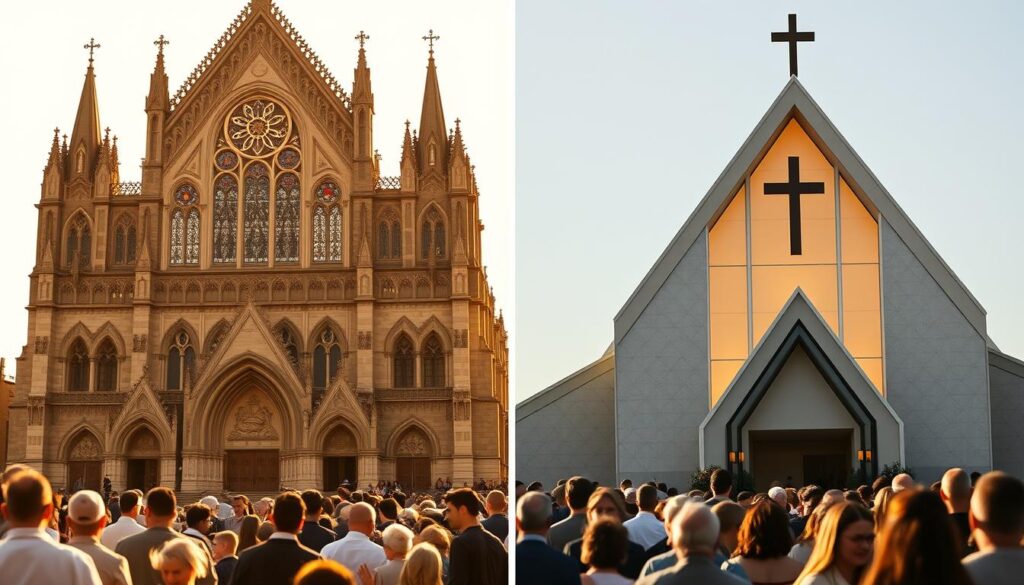
Traditional denominations often maintain historical structures, while newer groups prioritize flexibility. The Vineyard movement exemplifies this shift – though not tied to a specific tradition, it upholds Reformation foundations. Modern believers increasingly value this balance between biblical roots and adaptable community life.

Aspect Traditional Denominations Non-Denominational Groups
Governance Centralized hierarchy Local leadership teams
Worship Style Liturgical formats Contemporary music focus
Membership Formal affiliation Open participation
Core Focus Historical confessions Practical Bible application

Three key factors shape these communities:

  • Scriptural interpretation methods
  • Cultural context of their formation
  • Approach to sacraments and rituals

Whether through lively worship services or quiet meditation, these groups create spaces for meaningful spiritual connections. Their shared commitment to essential doctrines allows unity amid diverse expressions.

Historical Origins of Protestantism

In the 1500s, a seismic shift in religious thought reshaped Christianity forever. Reformers like Martin Luther and John Calvin questioned practices they saw as disconnected from biblical teachings. Their efforts birthed a movement that prioritized personal faith over institutional authority.

protestant reformation historical roots

The Reformation and the Five Solas

Luther’s 95 Theses in 1517 ignited what became the Protestant Reformation. This movement centered on five core principles known as the Five Solas:

  • Sola Scriptura (Scripture alone as authority)
  • Sola Fide (Faith alone for salvation)
  • Sola Gratia (Grace alone through God)
  • Solus Christus (Christ alone as mediator)
  • Soli Deo Gloria (Glory to God alone)

These ideas directly challenged the Roman Catholic Church’s teachings on sacraments and papal authority. Reformers argued scripture – not tradition – should guide spiritual life.

Breaking Away from Roman Catholic Tradition

The split wasn’t just about theology. It reshaped how communities worshipped and governed themselves. Unlike the Catholic Church’s centralized structure, new groups emphasized:

  • Local decision-making
  • Vernacular worship services
  • Individual Bible study

Figures like Ulrich Zwingli and Philip Melanchthon expanded these ideas, creating distinct traditions. Their work laid groundwork for today’s diverse Christian expressions rooted in shared Reformation values.

Diverse Denominational Families within Protestantism

Different beliefs about spiritual practice have sparked remarkable traditions over centuries. Some groups prioritize community living, while others focus on personal divine connection. These approaches show how faith adapts to meet human needs across eras.

Anabaptists and Their Unique Practices

In 16th-century Switzerland, bold reformers challenged common rituals. They insisted baptism should follow personal faith decisions, earning them the name Anabaptists (“rebaptizers”). Their radical ideas included:

  • Adult immersion ceremonies instead of infant sprinkling
  • Commitment to nonviolence even during conflicts
  • Simple lifestyles rejecting material excess

Modern descendants like Mennonites and Amish still honor these principles. Their tight-knit communities prove ancient values can thrive today.

Quakers and the Emphasis on the Inner Light

George Fox founded a movement in 1650s England that reshaped worship. Quakers believe God’s voice speaks directly to every person. Their meetings feature silent reflection until someone feels moved to share insights.

This “Inner Light” philosophy values personal revelation over formal sermons. It’s why many Quakers became pioneers in social justice causes. Their quiet services demonstrate how stillness can fuel action.

“True religion doesn’t need bells and smells – it lives in hearts attuned to truth.”

Both traditions remind us that spiritual depth comes in many forms. They remain vital parts of Christianity’s rich tapestry, inviting people to experience faith through fresh lenses.

Understanding Protestant Church Types

Spiritual journeys take fascinating turns when exploring Christian communities shaped by shared convictions. These groups maintain core beliefs about grace and scripture while developing distinct flavors of practice. Three pillars define their identities: leadership models, doctrinal priorities, and communal expression.

denominational worship styles

Leadership approaches create immediate contrasts. Some groups value top-down oversight through bishops, while others let local members vote on decisions. This structural choice impacts everything from budget planning to event coordination.

Governance Model Decision-Makers Flexibility
Episcopal Appointed bishops Standardized policies
Presbyterian Elder councils Regional agreements
Congregational Member votes Local customization

Doctrinal differences often trace back to Reformation-era debates. Calvinist groups emphasize God’s sovereignty, while Arminian communities focus on human response. These theological currents shape teaching styles and community priorities.

Worship experiences range from candlelit liturgy to electric guitar-driven services. One denomination might use ancient creeds, while another prefers spontaneous prayers. As one pastor noted: “Our varied practices sing the same hymn of grace in different keys.”

“Unity thrives when we celebrate how distinct threads weave God’s tapestry.”

Modern congregations adapt these historical frameworks to meet evolving needs. Urban churches might add community kitchens, while rural ones preserve traditional music. This dynamic balance between roots and relevance keeps spiritual traditions alive across generations.

Exploring Baptist Traditions

In 1609 Amsterdam, a bold experiment reshaped Christian practice forever. John Smyth founded the first baptist church, rejecting infant rituals for a radical concept: believer baptism. This idea sparked a movement now spanning 40 million members worldwide, with 30 million in the U.S. alone.

baptist traditions believer baptism

Baptism on Confession and Full Immersion

Baptist churches stand apart through their signature practice. Adults publicly declare faith before undergoing complete water immersion – a physical symbol of spiritual rebirth. This contrasts with infant dedications, where families commit to raising children in faith without sacramental rites.

Baptist Distinctive Description
Believer’s Commitment Voluntary faith declaration required
Immersion Method Full-body water submersion
Local Governance Self-governing congregations

The Southern Baptist Convention’s Influence

While baptist churches value independence, many collaborate through networks. The Southern Baptist Convention (SBC) leads as America’s largest coalition, supporting 47,000 congregations. Its seminaries train leaders, while mission programs span six continents.

Notable figures like Martin Luther King Jr. emerged from these traditions, blending spiritual conviction with social action. As SBC president Ronnie Floyd noted: “Our cooperative spirit amplifies local ministries’ impact globally.”

From fiery revivals to quiet Bible studies, these communities keep Smyth’s vision alive. Their balance of personal faith and collective mission continues shaping spiritual landscapes today.

The Lutheran Legacy and Its Global Impact

In 1530, a bold declaration reshaped Christian communities forever. The Augsburg Confession defined Lutheran churches as gatherings where “the Gospel is preached and sacraments administered rightly.” Today, over 80 million members across 79 countries keep this vision alive.

Martin Luther‘s teachings revolutionized spiritual life. His law/gospel framework helps believers navigate scripture: God’s commands reveal human flaws, while Christ’s sacrifice offers unconditional forgiveness. This balance between truth and grace remains central to Lutheran theology.

Aspect Lutheran Practice Global Influence
Core Belief Justification by faith alone Basis for 450+ U.S. colleges
Sacraments Infant baptism & Christ’s presence in communion 23,000 congregations in America
Social Impact Lutheran World Relief serves 35 countries Founded 85% of Scandinavian hospitals

From German cathedrals to Minnesota farm towns, these communities blend ancient rituals with modern service. They operate 1 in 4 U.S. food banks while maintaining traditional liturgy. As theologian Dietrich Bonhoeffer wrote: “Grace demands we engage the world, not escape it.”

Luther’s emphasis on accessible scripture led to vibrant Bible study cultures. Nearly 60% of American members attend weekly small groups. This focus on personal faith growth keeps the 500-year-old movement thriving in the digital age.

Understanding Methodist Churches

A quiet revolution in spiritual practice began in 18th-century England with two brothers. John and Charles Wesley sparked a movement that would reshape Christian communities worldwide through disciplined devotion and tireless outreach.

Foundations of a Spiritual Awakening

John Wesley‘s life changed forever during a 1738 London meeting. His famous “heart-warmed” experience fueled an evangelical fire, leading to 40,000 sermons delivered across 250,000 miles. This relentless travel embodied his belief: “The world is my parish.”

Methodist communities grew from Oxford study groups mocked as the “Holy Club.” Their methodical routines of prayer and service became their hallmark. Unlike rigid hierarchies, these groups developed a flexible network connecting local autonomy with shared missions.

Three pillars define Methodist theology:

  • Free will over predestination
  • Personal holiness through daily practice
  • Social action as faith in motion

Today, 12 million U.S. Methodists continue this legacy. From urban food banks to rural revival tents, they balance ancient traditions with modern needs. As one pastor notes: “Our structure lets communities sing grace in their own key.”

FAQ

What are the core beliefs that define Protestant denominations?

Most groups emphasize the Five Solas: Scripture alone, faith alone, grace alone, Christ alone, and glory to God alone. These principles, rooted in the Reformation, reject doctrines like papal authority and highlight personal faith over rituals.

How do Protestant practices differ from Roman Catholic traditions?

Unlike the Catholic Church, many denominations prioritize congregational singing, vernacular services, and believer’s baptism. The Book of Common Prayer in Anglican traditions contrasts with Catholic liturgical structures, focusing on accessible worship.

Why do Anabaptist groups practice adult baptism?

Anabaptists, like Mennonites, view baptism as a conscious choice after personal faith. This contrasts with infant baptism in Catholic or Lutheran churches, reflecting their commitment to voluntary discipleship.

What makes Quaker worship unique?

Quakers emphasize silent reflection and the Inner Light—the belief that God speaks directly to individuals. Their unprogrammed services lack clergy, hymns, or sacraments, focusing on communal spiritual listening.

How does the Southern Baptist Convention shape American Christianity?

As the largest U.S. Protestant group, the SBC influences culture through evangelism, missionary work, and conservative theology. Their emphasis on baptism by full immersion and biblical literalism impacts education and politics.

What global legacy did Martin Luther leave through Lutheran churches?

Luther’s teachings on justification by faith spread worldwide, shaping Scandinavian and German cultures. Today, groups like the Evangelical Lutheran Church in America blend traditional liturgy with modern social engagement.

How did John Wesley’s teachings shape Methodist churches?

Wesley’s focus on personal holiness, social justice, and prevenient grace led to circuit riders and revival meetings. Modern Methodist groups, like the UMC, continue his balance of evangelism and community service.

Why do some denominations emphasize speaking in tongues?

Pentecostal and charismatic groups link speaking in tongues to the Holy Spirit’s baptism, as described in Acts. This practice, seen in Assemblies of God churches, symbolizes spiritual renewal and direct divine connection.
Uncover the Fascinating History of the Protestant Reformation


Let’s step back to a time when a single document sparked a spiritual revolution. Imagine a crisp autumn day in 1517, when a monk named Martin Luther nailed his concerns to a church door in Germany. What began as a call for debate grew into a movement that reshaped Christianity—and the world—forever.

This 16th-century shift wasn’t just about religious practices. It challenged powerful institutions, redefined personal faith, and ignited cultural changes still felt today. From humble beginnings, ideas spread like wildfire across Europe, fueled by newfound access to printed materials and growing public discontent.

You’ll discover how ordinary people gained unprecedented access to spiritual texts, sparking debates about authority and tradition. The movement’s ripple effects reached far beyond church walls, influencing art, education, and even how nations governed themselves.

Key Takeaways

  • A German monk’s bold act in 1517 launched a spiritual revolution
  • Printing technology accelerated the spread of reform ideas
  • Changes affected politics, education, and daily life across Europe
  • New branches of Christianity emerged from these debates
  • Legacy includes modern concepts of religious choice and individual faith

As we explore this pivotal era, you’ll meet fiery reformers, witness political showdowns, and see how courage reshaped beliefs. These stories aren’t just dusty history—they’re the roots of religious freedom and diverse worship practices we value today.

Understanding the Origins of the Reformation Movement

What happens when spiritual guidance becomes tangled with power and profit? By the 1500s, the Catholic Church stood as Europe’s ultimate authority—both in matters of faith and earthly politics. Its leaders enjoyed lavish lifestyles while ordinary people struggled to afford basic religious comforts.

When Money Met Salvation

The church’s indulgences practice turned forgiveness into a transaction. Traveling salesmen called “pardoners” sold certificates claiming to shorten souls’ time in purgatory. One seller reportedly told crowds: “As soon as the coin in the coffer rings, the soul from purgatory springs!”

These funds often financed grand cathedrals or lined officials’ pockets. Many clergy members grew uneasy—how did buying grace align with biblical teachings? Meanwhile, political ties between Rome and European rulers made internal reforms nearly impossible.

Seeds of Change in Wittenberg

Public frustration reached a boiling point in small German towns. Local priests noticed parishioners skipping confession after purchasing indulgences. “Why seek forgiveness,” people asked, “when you can simply pay?” This disconnect between doctrine and practice created fertile ground for questioning the church’s authority.

Three critical issues fueled dissent:

  • Visible corruption among high-ranking clergy
  • Exploitative fundraising tactics
  • Growing literacy rates allowing people to read religious texts themselves

Martin Luther and the 95 Theses

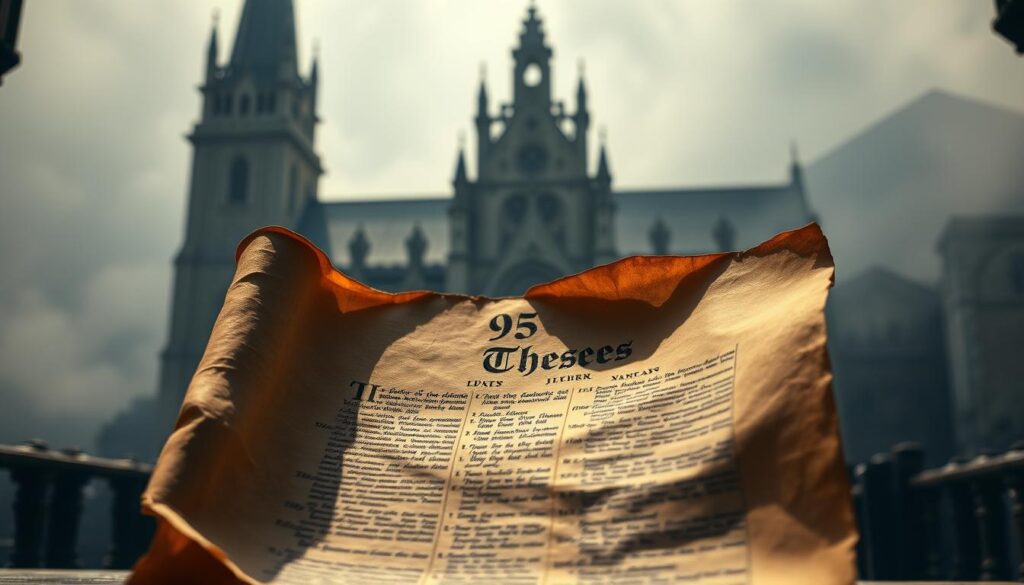
In a quiet German town, a single act of defiance ignited a spiritual wildfire. Martin Luther, an Augustinian monk and teacher, never intended to start a revolution when he posted his academic arguments in 1517. His 95 Theses questioned church practices like indulgences—paid certificates claiming to reduce punishment for sins.

printing press reformation

Luther’s Challenge to Church Authority

Luther’s writings struck at the heart of religious power structures. “Why should a peasant’s coins decide their salvation?” he argued. His bold claim—that faith alone granted divine grace—directly contradicted established teachings. Church leaders demanded he retract his statements, but the scholar stood firm.

The monk’s productivity shocked Europe. Between 1518-1525, he wrote more works than the next 17 leading reformers combined. Ordinary Germans devoured his translated pamphlets, realizing they could access spiritual truths without mediators.

The Role of the Printing Press in Spreading Reform Ideas

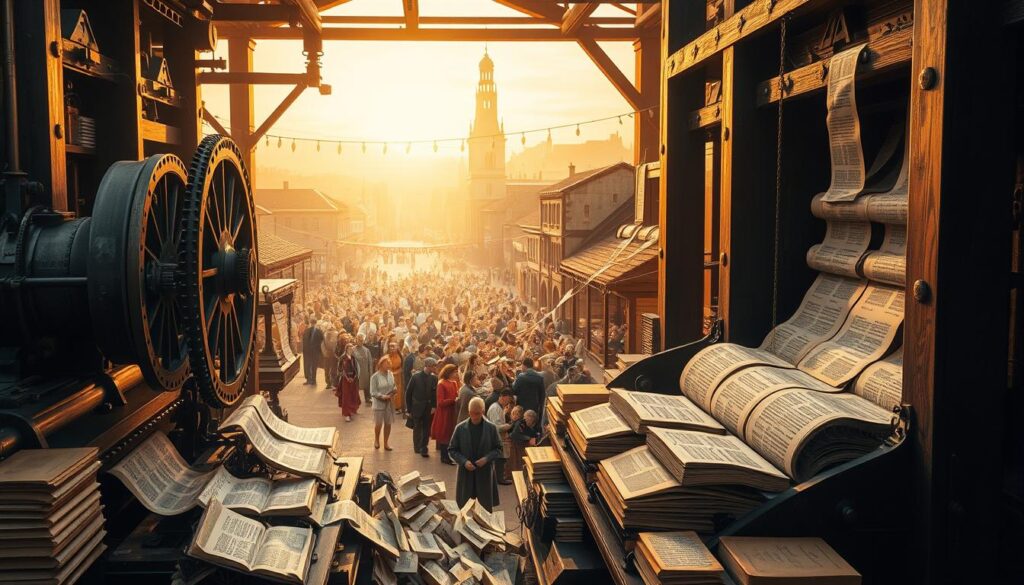
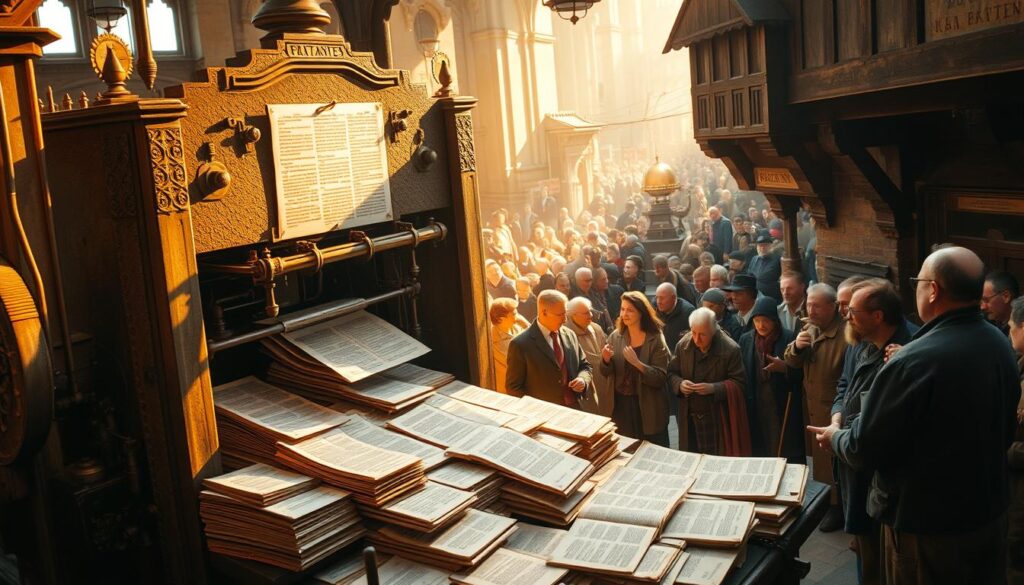
New technology turbocharged Luther’s message. The printing press let his ideas travel faster than ever before. Earlier critics had been silenced, but Luther became Europe’s first best-selling author. His works spread 500x faster than handwritten manuscripts.

Luther’s Works Other Reformers Spread Speed
67 pamphlets 3-5 each Weeks vs. years
German language Latin texts Reached 80% more people
Visual cartoons Text-only 50% higher recall

This wasn’t just about religion—it was a communication revolution. For the first time, farmers debated theology using materials they could read themselves. The genie of public discourse couldn’t be put back in the bottle.

The Spread of Reformation Across Europe

What began in German monasteries soon echoed through Swiss city halls and English palaces. Local leaders saw opportunities in reformist ideas—some seeking spiritual renewal, others aiming to weaken old alliances. This cross-continent shift blended faith with regional identities, creating distinct expressions of religious change.

Reformation Developments in Germany and Switzerland

German princes quickly recognized Luther’s teachings as a tool for independence. By adopting Lutheranism, they challenged the Holy Roman Emperor’s power while gaining control over local churches. One ruler famously declared: “We’ll answer to God before foreign bishops!”

Swiss cities forged their own path. Ulrich Zwingli launched Zurich’s reforms in 1519, arguing for simpler worship than even Luther proposed. But it was John Calvin who left the deepest mark. His Geneva became a hub for strict moral codes and theological training, attracting reformers worldwide.

Leader Location Key Contribution
Martin Luther Germany State-aligned Lutheranism
Ulrich Zwingli Zurich Symbol-free worship
John Calvin Geneva Theocratic governance

Transformation of the Church of England Under Henry VIII

England’s break from Rome began with a king’s personal crisis. When Pope Clement VII refused Henry VIII‘s divorce request, the monarch made himself head of the Church of England in 1534. This political masterstroke transferred wealth from monasteries to the crown while answering reformers’ calls for change.

Though initially resisting Protestant doctrines, Henry’s actions opened doors for later reforms. The Church of England became a middle path—keeping Catholic rituals while rejecting papal authority. Henry VIII‘s successors would push further, but his bold move proved faith and statecraft could reshape nations overnight.

Deep Dive into protestant reformation history

Imagine flipping through a calendar filled with world-changing events. The years following 1517 brought seismic shifts that reshaped religious and political landscapes. From fiery debates to bloody conflicts, each date tells a story of courage and consequence.

reformation timeline key dates

Key Dates and Milestones from 1517 Onwards

October 31, 1517, remains etched in memory. When Martin Luther shared his concerns in Wittenberg, he unknowingly set a continent ablaze. Within four years, leaders declared him an outlaw at the Diet of Worms—but ideas can’t be shackled.

By 1524, Luther’s teachings inspired more than theological debates. The German Peasants’ War saw 100,000 rebels demanding fairness, proving reform could spark social flames. One leader cried: “Why should scripture free our souls but chain our bodies?”

Year Event Impact
1534 English Church Split Royal power over religion
1545-1563 Council of Trent Catholic Church reforms
1618-1648 Thirty Years’ War 40% population loss in Germany

The Catholic Church launched its counter-move in 1545. The Council of Trent spent nearly 20 years clarifying doctrines while curbing corruption—a delicate dance between old traditions and new realities.

Europe’s deadliest religious conflict erupted in 1618. The Thirty Years’ War turned villages to ash but ultimately allowed diverse faiths to coexist. What began as one monk’s protest became a 130-year transformation, proving ideas outlast empires.

Key Figures and Doctrinal Shifts in the Movement

Thinkers across Europe sparked debates that reshaped spiritual life forever. Their bold ideas about salvation and scripture created new paths for worshippers. Let’s meet the trailblazers who turned theological arguments into lasting traditions.

From Luther’s Bold Actions to Calvin’s Theological Contributions

Martin Luther’s “faith alone” principle became a rallying cry. He argued divine grace came through trust in God—not rituals or payments. This doctrine empowered ordinary people to seek truth directly from Bibles.

John Calvin took these ideas further. His teachings about predestination claimed God already chose who’d gain eternal life. Though controversial, this theology gave believers confidence in their spiritual destiny.

The Emergence of Diverse Protestant Beliefs

Not all reformers agreed. Huldrych Zwingli saw communion as symbolic, not mystical. Anabaptists insisted only adults could choose baptism. These differences birthed distinct groups with unique practices.

Reformer Core Doctrine Impact
Martin Luther Salvation through faith Personal Bible study
John Calvin Predestination Strict moral codes
Huldrych Zwingli Symbolic sacraments Simplified worship
Anabaptists Adult baptism Separation from state

One thing united them: scripture ruled supreme. This “Bible alone” belief let communities interpret teachings differently. Today’s denominational diversity grew from these early debates about grace and practice.

Social and Political Impact of the Protestant Reformation

Political chessboards across Europe shifted as spiritual debates turned into power plays. Local rulers saw religious change as a tool to challenge distant authorities and reshape their domains. This collision of faith and governance rewrote alliances—and redrew maps.

princes political power shifts

Rulers as Reformers

German princes cleverly used theological arguments to boost their independence. When Frederick III of Saxony hid Martin Luther after his trial, it wasn’t just protection—it was a political statement. His staged kidnapping showed how regional leaders could defy the Holy Roman Emperor’s authority.

The phrase “cuius regio, eius religio” became law in 1555. Entire populations switched beliefs overnight if their ruler did. One farmer reportedly joked: “We changed prayers like changing shoes—when the duke snapped his fingers.”

Region Ruler’s Choice Population Impact
Saxony Lutheran 95% conversion by 1530
Bavaria Catholic Monasteries retained power
Brandenburg Calvinist Mixed resistance

This system gave people limited choice—follow your prince’s faith or leave. Though harsh, it stabilized regions torn by competing doctrines. The church’s role shifted from universal guide to a tool of statecraft.

War and Transformation

Decades of tension exploded in 1618. The Thirty Years’ War turned theological disputes into battlefield carnage. Mercenaries from Sweden to Spain ravaged German lands, leaving villages empty and fields charred.

A survivor’s diary entry reads:

“Our children starve while soldiers argue over baptism methods.”

When peace finally came in 1648, Europe’s power structure had changed forever. Nations began separating religious loyalty from civic duty—a radical idea that would later inspire democratic revolutions.

The Lasting Legacy of the Reformation in Modern Christianity

How did a 16th-century spiritual upheaval plant the seeds for modern religious liberty? Across the Atlantic, Reformation principles took root in unexpected ways. Dissenters fleeing Europe’s conflicts carried bold ideas about personal faith and self-governance to new shores.

Shaping American Religious Freedom and Diversity

English reformers split into two groups under Queen Elizabeth’s rule. Separatists formed their own churches, while Puritans sought change within the Church of England. Both sailed to America—one group aboard the Mayflower in 1620, the other founding Boston a decade later.

These settlers brought competing visions of worship. The Plymouth colonists held simple services under a pastor’s guidance. Massachusetts Bay leaders blended biblical law with civic rules. By 1700, over 10 distinct denominations thrived in the colonies.

Group Belief Impact
Separatists Independent churches Pilgrim traditions
Puritans Biblical governance Public education
Quakers Inner light doctrine Religious tolerance

America’s founders later enshrined Reformation ideals in law. The First Amendment’s religious clauses echo reformers’ demands for choice. “No government,” argued James Madison, “should dictate matters of conscience.”

Today, over 40% of global Christians identify with Reformation-rooted religion. From megachurches to home Bible studies, the movement’s emphasis on personal connection still shapes spiritual lives. Modern churches continue adapting 500-year-old principles to 21st-century needs.

Conclusion

A monk’s ink-stained arguments in 1517 still shape how millions experience spirituality. The ripples from Martin Luther’s stand reached beyond church walls, inspiring art that stirs souls and ideas that fuel innovation. J.S. Bach’s hymns and Rubens’ vibrant altarpieces prove creative fire often follows spiritual awakening.

Modern believers carry this legacy forward. Some stream sermons globally, while others debate teachings in virtual groups. The printing press that spread reformist ideas now has digital cousins—live-tweeted services and Bible apps reaching smartphones worldwide.

This movement’s true triumph lies in choice. Where once salvation felt locked behind Latin texts, people today explore faith through countless denominations. From Dutch merchants’ trade ethics to grassroots Bible studies, reformed beliefs keep adapting to new eras.

As candles still glow in Wittenberg’s chapels, they remind us: bold ideas about grace and community can outlast empires. That’s a revolution worth remembering—and living.

FAQ

Why did the Reformation begin in Wittenberg, Germany?

Wittenberg became the starting point due to Martin Luther’s role as a theology professor there. His public criticism of indulgences and church practices, especially after posting the 95 Theses in 1517, ignited widespread debate. The city’s academic environment and access to the printing press helped ideas spread quickly.

How did the printing press change religious discussions?

The printing press allowed reformers like Luther and John Calvin to share writings rapidly. Pamphlets, translations of the Bible, and critiques of the Catholic Church reached masses, empowering ordinary people to engage with religious ideas independently.

What role did Henry VIII play in the Reformation?

A: Henry VIII broke from Rome to annul his marriage, creating the Church of England. While his actions were politically motivated, they opened doors for Protestant teachings to influence English religious life, blending tradition with reformed ideas.

How did John Calvin’s theology differ from Luther’s?

Calvin emphasized predestination and a strict moral code, shaping Reformed Christianity. Luther focused on faith over works and the authority of scripture. Both rejected papal authority but developed distinct doctrines that influenced different branches of Protestantism.

Why did some European rulers support the Reformation?

Many princes saw religious reform as a way to gain independence from the Pope and the Holy Roman Empire. By backing reformers, they could seize church lands, reduce external influence, and consolidate political power within their territories.

How did the Reformation affect everyday people?

It encouraged literacy through Bible translations and challenged traditional hierarchies. Ordinary believers began questioning authority, while new teachings on salvation and worship practices reshaped spiritual lives. Social structures, like marriage, also became topics of reform.

What is the Reformation’s legacy in America today?

The movement’s emphasis on individual faith and opposition to centralized authority influenced concepts of religious freedom. Many early settlers were Protestants seeking tolerance, laying groundwork for America’s diverse religious landscape and separation of church and state.

Understanding the Protestant Reformation


Imagine a single event reshaping entire nations, sparking debates about truth, and redefining how people connect with their beliefs. That’s exactly what happened in 16th-century Europe when a bold religious movement challenged centuries of tradition. This pivotal moment didn’t just alter the course of Christianity—it laid groundwork for modern ideas about freedom and self-governance.

In 1517, a German monk named Martin Luther took a stand against practices he viewed as contradictory to scripture. His famous 95 Theses questioned the authority of religious leaders and emphasized direct engagement with sacred texts. These ideas spread rapidly, fueled by growing dissatisfaction with institutional power structures.

At its core, this movement prioritized personal conviction over rigid hierarchies. Followers believed salvation came through faith alone, not rituals or intermediaries. They also championed accessibility to religious teachings, translating the Bible into common languages so everyone could interpret it firsthand.

The ripple effects were profound. New branches of Christianity emerged, while political systems grappled with shifting alliances. Even today, principles like individual liberty and democratic governance trace their roots to these reforms. Whether you’re exploring spiritual history or cultural evolution, understanding this era reveals how ideas can transform societies.

Key Takeaways

  • A 16th-century religious shift challenged traditional authority and reshaped Christianity
  • Martin Luther’s critiques sparked widespread debate about scripture and practices
  • Core beliefs included salvation through faith and equal access to religious knowledge
  • Political and cultural changes followed, influencing modern democratic values
  • Lasting impacts include diversified Christian traditions and emphasis on personal spirituality

Historical Context of the Protestant Reformation

Power dynamics between spiritual leaders and rulers shaped Europe long before reform gained momentum. By the 1500s, the Catholic Church wasn’t just a religious force—it was a political titan intertwined with kings and emperors. This alliance gave the church unmatched authority, but also planted seeds of discontent.

Origins and Catalysts in 16th Century Europe

Money and faith collided in controversial practices like indulgences. These certificates, sold as shortcuts to heaven, became cash cows for church projects. Street vendors known as pardoners often exaggerated their benefits, claiming they could erase years of suffering in purgatory. Many saw this as exploiting people’s fears.

The church’s lavish spending didn’t help. Funds from indulgence sales built grand cathedrals while ordinary folks struggled. Critics argued these actions strayed from core doctrine, creating a gap between leaders and believers.

Religious and Political Backdrop

Regional rulers grew restless under the Holy Roman Emperor’s control. When reformers challenged church power, some princes saw a chance to gain independence. Meanwhile, the printing press let new ideas spread faster than ever—like wildfire in dry grass.

This mix of spiritual frustration and political ambition created fertile ground for change. What began as debates over theology soon reshaped nations, setting the stage for a cultural earthquake.

Key Figures and Movements

Visionaries and revolutionaries drove the religious upheaval of the 1500s, each adding unique flavors to a growing movement. Their actions—from fiery debates to bold political moves—shaped how millions practiced faith.

Martin Luther and the 95 Theses

Picture an Augustinian monk hammering arguments to a church door in 1517. Martin Luther never intended to split Christianity—he wanted honest conversations about indulgences and salvation. His 95 Theses asked: “Should gold determine who enters heaven?”

martin luther 95 theses

Luther’s academic critiques spread like wildfire thanks to the printing press. What began as theological debate became a rallying cry for change. By emphasizing scripture over tradition, he accidentally birthed a new branch of Christianity.

John Calvin, Henry VIII, and Beyond

While Luther stirred Germany, John Calvin built a strict moral code in Geneva. His teachings on predestination claimed God already chose who’d be saved—a idea that shaped Reformed churches for centuries.

Across the Channel, Henry VIII took a different path. When the Pope refused his divorce, the English king created his own church. This political power play proved reform wasn’t just about theology—it could also serve royal agendas.

Switzerland’s Huldrych Zwingli and radical groups like the Anabaptists pushed further. They rejected infant baptism and demanded complete separation from state control. Together, these reformers created a tapestry of beliefs that still defines many denominations today.

Exploring the protestant reformation meaning in Practice

Transformative ideas reshaped spiritual life as reformers reimagined how communities worshipped. These shifts moved beyond debates about doctrine to redefine daily religious practice. Ordinary people suddenly found themselves at the center of spiritual experiences once reserved for clergy.

Doctrinal Shifts and New Teachings

The revolutionary concept of sola fide (faith alone) turned traditional teachings upside down. Followers embraced the idea that divine grace—not rituals—secured salvation. This belief stripped away layers of institutional control, putting personal conviction front and center.

Aspect Traditional Approach Reformed Perspective
Source of Truth Church authority + Scripture Scripture alone
Path to Salvation Rituals + Good works Faith + Divine grace
Clergy Role Mediators Guides

Another groundbreaking idea—the priesthood of all believers—flattened hierarchies within church structures. Farmers could now discuss biblical passages with the same validity as bishops. This empowerment made spirituality feel accessible rather than distant.

Changing Practices Within the Church

Worship services transformed dramatically. Latin chants gave way to sermons in everyday language, letting congregations engage directly with beliefs. Hymns became communal sing-alongs rather than priestly performances.

Clergy members started families, reflecting a new view of marriage as sacred rather than secondary. Sacraments simplified to baptism and communion, focusing on essentials rather than elaborate ceremonies. These changes made religious practice feel immediate and personal.

Through these shifts, individuals built direct connections with the divine—no intermediaries required. The emphasis on personal faith and scriptural study created ripples still felt in modern spiritual life.

Church Politics: From the Catholic Church to National Churches

What happens when faith becomes a chessboard for power? The 16th century saw religious institutions and rulers redraw Europe’s spiritual map through bold political moves. Centralized authority gave way to national identities, reshaping both worship and governance.

The Role of the Catholic Church and Its Reforms

Faced with growing dissent, the Catholic Church launched its Counter-Reformation. The Council of Trent (1545-1563) became its blueprint, rejecting compromises with reformers. “If anyone says that sacraments aren’t necessary for salvation,” declared its decrees, “let them be condemned.”

New religious orders like the Jesuits emerged as intellectual warriors. Combining education with missionary zeal, they rebuilt Catholic influence globally. Their schools became hubs for training clergy and countering Protestant ideas.

Initiative Catholic Response Anglican Approach
Leadership Centralized Papacy Monarch as Head
Scripture Access Latin Vulgate Only English Bible Mandated
Monastic Wealth Preserved Seized by Crown

The Formation of the Church of England

Henry VIII’s marriage disputes sparked England’s religious revolution. His 1534 Act of Supremacy declared the king—not the pope—the authority over the English church. Monasteries dissolved, their lands filling royal coffers.

Mary I’s violent Catholic restoration backfired, earning her the nickname “Bloody Mary.” Her successor Elizabeth I crafted a middle way, blending Protestant theology with traditional rituals. This compromise stabilized the Church of England while allowing local princes greater control.

Through these changes, faith became intertwined with national identity—a legacy still visible in modern religious landscapes.

The Role of Technology and the Printing Press

Imagine information traveling faster than horseback riders for the first time in history. The printing press became the ultimate game-changer, turning theological debates into continent-wide conversations. This innovation didn’t just share ideas—it created a cultural wildfire.

printing press revolution

Luther’s Ink-Stained Revolution

Martin Luther mastered this new media like no other. Between 1518-1525, he produced more works than 17 leading reformers combined. His secret? Writing in German instead of Latin. Farmers and shopkeepers could now debate scripture alongside scholars.

Aspect Pre-Printing Press Post-Printing Press
Book Production 5 pages/day 3,600 pages/day
Language Latin (10% literacy) Vernacular (30%+ literacy)
Cost Equivalent to a house Week’s wages

When Ideas Went Viral

Print shops multiplied to meet demand, creating Europe’s first information network. Anti-clerical cartoons spread messages to illiterate people. Authorities couldn’t burn pamphlets fast enough—copies outpaced destruction.

This symbiotic relationship between Luther and printers changed everything. For the first time, grassroots movements could challenge institutional power through mass communication. The press didn’t just spread reforms—it made them unstoppable.

Social and Cultural Impacts of the Reformation

While religious debates raged, ordinary people found themselves caught between collapsing old systems and emerging new freedoms. The clash of ideas reshaped daily life, creating both chaos and opportunity across generations.

cultural shifts reformation

Cultural Shifts and Individual Empowerment

Decades of conflict left deep scars—the Thirty Years‘ War wiped out nearly half of Germany’s population. Yet from this turmoil came unexpected growth. Universities expanded, artists like Rubens reimagined sacred art, and Bach’s Lutheran hymns became timeless masterpieces.

New values took root in surprising ways. Dutch Calvinists saw business success as divine approval, planting seeds for modern capitalism. “A merchant’s ledger,” wrote one trader, “can honor God as much as a priest’s prayer book.”

  • Literacy rates soared as Bible reading became central to faith
  • Women gained educational access previously reserved for male members of elite groups
  • Questioning authority became a civic duty rather than heresy

These changes rippled beyond churches. The emphasis on personal conscience laid groundwork for democratic ideals we cherish today. For the first time, many believed their individual choices shaped both earthly life and eternal destiny.

From blood-soaked battlefields to vibrant art studios, the Reformation proved ideas could rebuild the world even as they tore it apart. Its legacy reminds us that progress often walks hand-in-hand with struggle.

The Reformation’s Enduring Legacy in Modern Religion

Centuries after Luther’s bold stand, his ideas continue breathing life into spiritual communities across continents. Nearly one in three Christians now identifies with traditions born from this seismic shift, proving ancient debates still shape modern faith.

Evolution of Protestant Denominations

From German cathedrals to Appalachian revival tents, churches have adapted Reformation principles to new contexts. The original Lutheran denominations now share space with Pentecostal megachurches and Quaker meeting houses. This branching pattern follows what scholars call the “Luther cycle”—established groups spark fresh reform movements every few generations.

American history reveals this pattern clearly. Puritan settlers blended Calvinist theology with democratic ideals, creating a blueprint for religious freedom. Today, over 200 distinct Protestant branches exist worldwide, each interpreting scripture through their cultural lens.

Contemporary Reflections in Religious Practice

Modern churches balance tradition with innovation. Mainline denominations increasingly champion social justice, while evangelical groups emphasize personal salvation experiences. “Our faith isn’t museum glass,” notes a Methodist pastor. “It’s living water that flows through today’s challenges.”

Technology accelerates these changes. Online worship services and AI-powered Bible apps make spiritual matters accessible like never before. Yet core beliefs remain rooted in Reformation doctrine—scripture as ultimate authority, grace through faith alone.

As new reformers emerge, they carry forward the same revolutionary spirit that reshaped Europe centuries ago. The quest for authentic religion continues, proving some sparks never stop burning.

Conclusion

The 16th-century religious movement left ripples still felt in coffee shops and voting booths alike. Its core principle—that personal conviction matters more than institutional decrees—reshaped how societies approach truth and power.

Through translated Bibles and fiery debates, ordinary people gained tools to challenge spiritual authority. This empowerment birthed new ideas about education, governance, and individual rights. Even modern concepts like jury trials and free press carry echoes of these reforms.

Today’s diverse religious landscape owes much to those who dared reinterpret tradition. The emphasis on scriptural access and personal responsibility continues inspiring movements for justice and equality worldwide. While divisions emerged, the lasting gift remains: a reminder that questioning norms can spark progress.

From church pews to constitutional conventions, the legacy lives on. It whispers through every debate where individual conscience meets collective good—proof that bold ideas outlive their creators.

FAQ

What sparked the 16th-century religious movement in Europe?

Growing frustration with practices like selling indulgences, combined with political tensions and calls for doctrinal reform, ignited the movement. Martin Luther’s 95 Theses in 1517 became a defining catalyst, challenging the Catholic Church’s authority.

How did Martin Luther influence new religious teachings?

Luther emphasized salvation through faith alone, rejecting the idea that good deeds or payments could secure divine favor. His translation of the Bible into German empowered individuals to interpret scripture personally, shifting power away from clergy.

Why did Henry VIII create the Church of England?

Henry VIII sought to annul his marriage to Catherine of Aragon, which the Catholic Church refused. This led him to break from Rome, establishing a national church under royal control—a move driven by both personal and political motives.

What role did the printing press play in spreading ideas?

The printing press allowed reformers like Luther and Calvin to distribute pamphlets, translations, and critiques rapidly. This technology democratized access to religious debates, fueling grassroots support across Europe.

How did practices like marriage change for clergy members?

Many reformers rejected mandatory celibacy for priests, arguing that marriage aligned with biblical teachings. This shift redefined clergy roles and family dynamics within newly formed denominations.

What lasting impacts do we see in modern Christianity?

Denominations like Lutheranism, Anglicanism, and Presbyterianism trace their roots to this era. Concepts like individual interpretation of scripture and challenges to centralized authority continue to shape religious practices today.

Did the Catholic Church respond to these challenges?

Yes, the Council of Trent (1545–1563) initiated the Counter-Reformation, addressing corruption and reaffirming doctrines like papal authority. This period also saw renewed efforts in education and missionary work.

How did everyday people experience these changes?

Local rulers often determined their regions’ faith, leading to varied practices. Individuals gained access to vernacular Bibles, fostering literacy and personal engagement with spirituality—a major cultural shift.

Discover the Start Date of the Protestant Reformation


Let’s explore a moment that reshaped religious history forever. Imagine a single act sparking changes that would ripple across continents and centuries. This story begins with a bold challenge to established norms—one that still influences faith practices today.

On October 31, 1517, a German monk named Martin Luther nailed his 95 Theses to a church door. This wasn’t just a protest—it was a call for transparency and reform. His ideas spread like wildfire, thanks to the newly invented printing press.

Why did this moment ignite such dramatic change? Europe was ready. People questioned authority, and rulers sought independence from centralized power. Religious practices had become disconnected from everyday lives, creating fertile ground for new ideas.

The movement’s timeline stretches across generations. While 1517 marks its explosive start, historians debate its conclusion. Some point to the 1555 Peace of Augsburg, others to the 1648 Treaty of Westphalia. Each milestone reflects shifting alliances and evolving beliefs.

Key Takeaways

  • October 31, 1517, is widely recognized as the spark that launched a religious revolution
  • Martin Luther’s actions challenged long-standing traditions and inspired widespread reform
  • Social, political, and technological factors created the perfect conditions for change
  • The movement led to the permanent split between Catholic and Protestant traditions
  • Its effects continue to shape modern religious diversity and cultural values

Historical Context and Medieval Precursors

Long before Luther’s famous act, Europe simmered with ideas challenging religious authority. Visionary thinkers laid groundwork for change through bold actions and writings. Their efforts created fertile soil for new beliefs to take root.

Early Reform Movements and Precursors

Jan Hus, a fiery Czech priest, demanded church reforms decades before Luther. He translated scripture into everyday language and rejected paid forgiveness certificates. “Truth conquers all things,” he declared before being burned for heresy in 1415.

Pre-Reformer Contribution Legacy
John Wycliffe First English Bible translation Inspired vernacular scripture movements
Waldensians Rejected papal authority Promoted direct Bible interpretation
Jan Hus Condemned indulgences Inspired Luther’s later protests

Impact of the Black Death and Social Change

The 14th-century plague killed millions, shaking trust in institutions. Survivors questioned why faith leaders couldn’t stop the suffering. This crisis made people rethink their relationship with spiritual matters.

Art from this period shows skeletons dancing—a reminder that death came unexpectedly. People sought personal connections with divine forces rather than relying solely on rituals. These shifts prepared society for radical religious ideas about individual salvation.

By Luther’s time, many craved belief systems reflecting their daily struggles. The stage was set for doctrines emphasizing personal faith over traditional structures.

The Role of the Printing Press in Spreading Reformation Ideas

New technology often changes history—but few inventions shook the world like Gutenberg’s movable type. When words could travel faster than ever, entire belief systems transformed. This machine didn’t just print pages—it rewrote spiritual futures.

printing press spreading ideas

Before 1450, religious texts took months to copy by hand. The printing press changed everything. Suddenly, pamphlets could reach thousands in weeks. Luther’s writings became bestsellers—his works outsold all other reformers combined during critical years.

Common people held translated Bibles for the first time. No longer dependent on Latin-speaking clergy, families debated scripture at home. “Why should priests decide what God means?” became a rallying cry printed on cheap paper.

Printed debates spread like 16th-century tweets. Woodcut cartoons mocked church leaders while catchy hymns taught new doctrines. Authorities couldn’t burn books fast enough—each suppression sparked more presses churning forbidden texts.

This wasn’t just about religion. It reshaped how ideas moved. Farmers debated theology. Women read psalms aloud. The church’s gatekeeping power crumbled as ink-stained pages built new communities of faith.

Key Reformers and Their Contributions

Behind every revolution stand visionary leaders—meet the minds that rewrote religious history. While earlier critics challenged church practices, two figures emerged as architects of lasting change. Their writings became blueprints for new forms of worship that prioritized personal faith.

Martin Luther and his 95 Theses

An Augustinian monk turned fiery lecturer, Luther transformed academic debate into public rebellion. His 1517 document attacking indulgences—certificates sold as spiritual shortcuts—asked tough questions: “Why does the pope’s wealth exceed that of common believers?” University connections helped spread his theses beyond Wittenberg’s church doors.

Calvin and the Reformed Tradition

Twenty years later, John Calvin organized Protestant ideas into a comprehensive system. His Institutes of the Christian Religion became Protestantism’s textbook, explaining doctrines like predestination clearly. Working from Basel and Geneva, he shaped Reformed church practices emphasizing scripture over tradition.

Other voices added crucial notes to this chorus. Huldrych Zwingli reformed Swiss worship by removing icons, while Philipp Melanchthon systematized Lutheran teachings. Together, they proved that spiritual renewal could take many forms—all rooted in personal connection with divine truth.

Influential Events of the Reformation Era

History turned on pivotal moments that transformed religious thought across Europe. One defining clash occurred in 1521 when Martin Luther stood before political and religious leaders at the Diet of Worms. Faced with demands to abandon his ideas, he famously declared: “Here I stand. I cannot do otherwise.”

reformation era key events

This bold stance led to his excommunication, cementing the split from Rome. Meanwhile, Swiss churches heard new voices. Ulrich Zwingli began preaching radical changes in Zurich as early as 1519—starting a parallel movement emphasizing scripture over tradition.

Geneva became a living laboratory in 1541 when John Calvin reshaped its social structure. His Reformed theology influenced everything from education to laws, proving religious ideas could organize entire communities.

The mid-1520s brought turmoil during the Peasants’ War. Rebels demanding fair treatment looked to Luther for support, but his harsh criticism of their methods revealed tensions between spiritual reform and social revolution.

Each event sparked others like falling dominos. Local disputes grew into international conflicts, reshaping borders and beliefs. By the late 1500s, Europe’s religious landscape bore little resemblance to its medieval past.

The Protestant Reformation Date: Uncovering the Start

Picture a crisp autumn morning in a small German town. A determined monk approaches a church door, hammer in hand. His actions that day would alter Christianity forever.

95 theses church door

Martin Luther’s 95 Theses in 1517

On October 31, Luther presented arguments against indulgences – certificates sold as spiritual shortcuts. His document questioned church fundraising practices, asking: “Why should wealthy leaders profit from people’s fears?”

The castle church door served as a public bulletin board. Luther intended academic debate, but printers had other plans. Within weeks, translated copies appeared in markets from Paris to Prague.

Three key ideas fueled the fire:

  • Salvation through faith rather than payments
  • Scripture’s authority over church traditions
  • The right of believers to question leaders

This moment created lasting divisions in Christian practice. What began as local criticism became a blueprint for new forms of worship. The movement’s effects still shape how millions connect with their faith today.

Examining the Theological Shifts in Reformation Thought

Imagine rewriting the rules of faith with pen and parchment. Religious thinkers of the 16th century did just that, introducing radical doctrine that changed how people connected with spirituality. At the heart of this transformation lay a simple yet explosive idea: salvation through grace alone.

Justification by Faith and the Five Solas

Martin Luther’s concept of “justification by faith” flipped traditional teachings. Instead of earning divine favor through rituals, believers needed only trust in Christ’s sacrifice. This priesthood of all believers concept let ordinary people approach spirituality without intermediaries.

John Calvin expanded these ideas in his Institutes of the Christian Religion. He outlined five core principles—the Solas—that became Protestantism’s foundation:
Scripture alone, faith alone, grace alone, Christ alone, and glory to God alone.

These shifts reshaped Christian religion practices worldwide. Good works became expressions of gratitude rather than spiritual transactions. Churches focused less on hierarchy and more on personal relationships with the divine—a legacy still shaping modern faith communities.

FAQ

When did the Protestant Reformation officially begin?

The movement is widely linked to Martin Luther posting his 95 Theses on October 31, 1517. This act challenged the Catholic Church’s practices, sparking widespread debate.

Were there earlier efforts to reform the Church before Luther?

Yes! Figures like John Wycliffe and Jan Hus criticized Church corruption in the 14th and 15th centuries. Their ideas laid groundwork but lacked tools like the printing press to spread widely.

How did technology influence the spread of Reformation ideas?

The printing press, invented by Johannes Gutenberg, let reformers share writings quickly. Pamphlets, Bibles in local languages, and Luther’s works reached masses, fueling change across Europe.

What role did John Calvin play in the Reformation?

Calvin expanded Reformed theology through his book Institutes of the Christian Religion. He emphasized God’s sovereignty and shaped communities in Geneva, influencing later denominations like Presbyterians.

How did the Catholic Church respond to these challenges?

The Council of Trent (1545–1563) addressed criticisms by reaffirming doctrines, banning indulgences, and improving clergy education. This Counter-Reformation aimed to renew the Church’s spiritual authority.

What were the “Five Solas” and why did they matter?

These core beliefs—Scripture alone, faith alone, grace alone, Christ alone, glory to God alone—rejected medieval practices. They framed salvation as a gift from God, not earned through rituals or works.

Did the Reformation lead to political conflicts?

Absolutely. Tensions between rulers supporting reform and those loyal to Rome erupted in wars like the Thirty Years’ War (1618–1648). These conflicts reshaped Europe’s religious and political landscape.

How did the Reformation affect everyday worship practices?

Services shifted to local languages instead of Latin. The Book of Common Prayer in England and hymns written by Luther made faith more accessible. Congregational singing became central to Protestant worship.

The Protestant Reformation: Religions and Beliefs Uncovered


Imagine a world where questioning authority could cost your life. In 1517, a German monk named Martin Luther nailed 95 arguments to a church door, igniting a spiritual earthquake. This bold act challenged centuries of tradition and sparked debates that reshaped Europe’s religious landscape.

What began as a call for reform within the church grew into a movement empowering everyday people. Leaders across the continent began rethinking how believers connected with God, emphasizing personal faith over institutional rituals. The ripple effects reached kings, scholars, and farmers alike—all seeking deeper meaning in their spiritual lives.

This era didn’t just create new branches of Christianity. It transformed politics, education, and cultural values. From translating sacred texts into common languages to challenging monarchs’ divine rights, the changes still echo in modern ideas about freedom and self-governance.

Key Takeaways

  • A single document—the 95 Theses—triggered Europe’s religious revolution in 1517
  • New Christian traditions emerged, prioritizing personal spirituality over hierarchy
  • Religious debates sparked political upheavals and social transformations
  • Translation of religious texts empowered ordinary people to interpret faith independently
  • Reform principles influenced modern concepts of individual rights and liberties

Introduction to the Protestant Reformation

Picture a time when spiritual leaders prioritized power over piety. By the 1500s, the roman catholic hierarchy had become a symbol of excess. Lavish Vatican weddings for popes’ children and bribes for promotions eroded public trust in religious authority.

Historical Context and the Late Medieval Church

Two popes embodied this era’s scandals. Innocent VIII hosted ceremonies for his illegitimate offspring at St. Peter’s Basilica. Alexander VI secured his position through payments while fathering eight children—a stark contrast to the church’s teachings on celibacy.

Ordinary believers grew furious as their donations funded marble palaces instead of pastoral care. Kings saw an opportunity—rising nationalism let them challenge Rome’s control. Monarchs began asserting local governance over foreign authority.

Importance of Reform in Today’s Religious Landscape

Early thinkers planted seeds of change centuries before Luther. William of Ockham questioned papal infallibility in the 1300s. John Wycliffe’s English Bible translation empowered people to interpret scripture themselves—a radical idea at the time.

Erasmus of Rotterdam sharpened these critiques using humor and scholarship. His exposes of forged documents earned him the nickname “Luther’s incubator.” Modern faith communities still wrestle with the balance he highlighted—tradition versus transparency in spiritual leadership.

The Origins: From Martin Luther’s 95 Theses to a Global Movement

What if a single document could shake the foundations of an empire? On October 31, 1517, a university professor in Wittenberg took that daring leap. Martin Luther’s 95 arguments against religious fundraising practices didn’t just question church teachings—they lit a fuse that would detonate Europe’s spiritual order.

martin luther 95 theses

Martin Luther and the Spark of Reform

Luther, an Augustinian monk, witnessed wealthy believers buying indulgences—certificates claiming to reduce punishment for sins. “When coins ring in the chest,” one preacher promised, “souls fly from purgatory.” This pay-to-pray system contradicted Luther’s study of scripture, where he found salvation came through faith, not financial deals.

His fiery critique spread like wildfire. Printed pamphlets of his ideas reached towns faster than horseback riders. Farmers debated theology at markets. Tailors read translated Bibles aloud—a direct challenge to the Catholic Church’s Latin-only policy.

Challenges to the Catholic Church’s Authority

The indulgence controversy exposed deeper cracks. For centuries, the Catholic Church had acted as heaven’s gatekeeper. Luther’s writings asked: Why trust institutions when God speaks through scripture? His translation of the New Testament into German let ordinary people interpret divine messages themselves.

Princes saw opportunity. Some protected Luther to weaken Rome’s grip. Others banned his books, fearing chaos. This wasn’t just a religious dispute—it became a series of power struggles reshaping kingdoms and daily lives.

Exploring Protestant Reformation Religions

Think of a spiritual revolution where every believer becomes their own interpreter of divine truth. As Luther’s ideas spread, they sprouted into distinct beliefs across regions. From Swiss city halls to German farmhouses, new teachings reshaped how communities worshipped and governed themselves.

Diverse Beliefs and Denominations

Local cultures shaped these spiritual movements. Northern Germany embraced Luther’s focus on grace, while Geneva’s churches adopted Calvin’s strict moral codes. The Anabaptists took radical steps—rebaptizing adults and rejecting state ties.

Three core ideas united these groups:

  • Scripture as ultimate authority (sola scriptura)
  • Salvation through faith alone
  • Every believer’s right to interpret texts

The Transition from Catholic Traditions

Stone altars made way for wooden pulpits. Latin chants faded as congregations sang in their languages. Priests became pastors who married and raised families—a stark shift from Catholic celibacy rules.

This relationship between believer and scripture sparked wider changes. Farmers quoted Bible verses to argue land rights. City councils debated theology like trade policies. The Reformation wasn’t just about churches—it rewrote society’s rulebook.

Key Figures and Their Impact

What if your hometown became ground zero for a spiritual revolution? While Martin Luther lit the match of change, other visionaries fanned the flames across Europe. Two thinkers in particular—one meticulous, one radical—carved distinct paths that still shape modern faith practices.

calvin and zwingli reformation leaders

John Calvin’s Reformed Theology

A French exile transformed Geneva into a laboratory for religious reform. John Calvin argued that God’s plan was fixed before time began—a concept called predestination. His logical approach turned faith into a system anyone could study, like math or science.

Geneva’s streets became classrooms. Citizens attended daily sermons while councils enforced moral codes. This “holy commonwealth” model traveled to Scotland and New England, proving ideas could cross oceans as easily as borders.

Huldrych Zwingli and Revolutionary Ideas

Meanwhile in Zurich, Huldrych Zwingli took renovation literally. Workers stripped churches bare, removing statues and paintings. Worship shifted to plain rooms where crowds dissected Bible passages line by line.

Zwingli’s boldest move redefined communion. Unlike Catholic or Lutheran terms, he saw bread and wine as symbols—not holy mysteries. This split among reformers showed how one movement could birth multiple thought traditions.

From Calvin’s structured communities to Zwingli’s minimalist services, these leaders proved spiritual renewal wears many faces. Their debates over scripture and practice still echo in modern churches—a testament to the power of ideas to outlive their creators.

The Reformation in England and Its Transatlantic Impact

Royal bedrooms rarely shape nations’ spiritual destinies—except when they do. King Henry VIII‘s desperate quest for a male heir transformed England’s religious identity. His marriage to Catherine of Aragon became Europe’s most explosive divorce case after the Pope refused an annulment.

Henry VIII and the Formation of the Church of England

In 1534, the monarch declared himself head of the newly formed Church of England. This bold move severed ties with Rome but kept many Catholic traditions. Henry’s six wives and three surviving children created decades of political drama, setting the stage for future conflicts.

The Pilgrims, Puritans, and the New World Journey

Not everyone embraced the hybrid faith. Two groups emerged:

Group Goal Challenge
Separatists Complete break from England Persecution & poverty
Nonseparatists Reform from within Political resistance

After failed efforts to build communities in Holland, 102 Separatists boarded the Mayflower in 1620. Their risky voyage to New England planted seeds for America’s religious freedom ideals. Later Puritan settlers aimed to create a “city upon a hill”—a model society visible to the world.

Socio-Political Influences and Cultural Legacies

Power struggles and technological breakthroughs collided to reshape 16th-century Europe. As monarchs gained strength, they clashed with religious leaders over control of lands and laws. This tension created openings for radical ideas to take root and spread like summer wildfire.

printing press spread reform ideas

The Role of Nationalism and Political Turbulence

Local rulers saw spiritual independence as a path to greater power. At the 1529 Diet of Speyer, German princes made history by formally protesting imperial orders to suppress new teachings—an event that birthed the term “Protestant.”

Money often motivated these decisions as much as faith. Many leaders seized church lands and stopped sending taxes to Rome. The table below shows key reasons rulers backed religious changes:

Motivation Political Gain Economic Benefit
Reduce papal influence Increased local control Kept church taxes
Appeal to citizens Strengthened loyalty Sold monastery lands

The Printing Press: Spreading Reform Ideas throughout Europe

Johannes Gutenberg’s 1440 invention became the movement’s secret weapon. Pamphlets could now reach thousands within weeks—something handwritten texts required years to achieve.

This information explosion changed daily life. Farmers discussed theology using printed pamphlets as guides. City leaders debated new ideas that challenged old authority structures. The press didn’t just share words—it empowered people to rethink their world.

The Enduring Legacy in the United States

How did colonial Bible studies shape a superpower’s DNA? Early settlers carried revolutionary ideas across the Atlantic, planting seeds that grew into America’s unique spiritual identity. Pilgrims, Puritans, and Quakers—each group brought distinct visions of sacred life that collided and blended on new shores.

Religious Freedom and the Influence of the Bill of Rights

The First Amendment’s famous words—”Congress shall make no law respecting an establishment of religion“—echo Reformation-era debates. Founders rejected state-controlled worship, protecting individual faith choices instead. This bold experiment in spiritual freedom became America’s social glue, binding diverse believers through shared liberty.

Colonial new church models influenced more than Sunday services. Town meetings mirrored reform church self-governance, teaching citizens to debate and decide collectively. These practices shaped everything from jury systems to local elections.

Even America’s economic drive carries traces of this legacy. The emphasis on personal responsibility and hard work—values championed by early reformers—helped forge a nation where opportunity outweighs birthright. Four centuries later, these principles still define the United States‘ cultural heartbeat.

FAQ

Why did the Reformation begin in the 16th century?

The movement started due to widespread frustration with practices like selling indulgences, corruption in the Church, and disagreements over teachings like salvation through faith alone. Figures like Martin Luther and John Calvin challenged traditional authority, sparking debates across Europe.

How did Henry VIII influence religious change in England?

King Henry VIII broke from Rome after the pope denied his request to annul his marriage. This led to the creation of the Church of England, which blended Catholic traditions with emerging reformed ideas, reshaping England’s spiritual identity.

What role did the printing press play in spreading reform ideas?

The printing press allowed pamphlets, Bibles, and writings by leaders like Luther and Huldrych Zwingli to circulate quickly. This democratized access to religious texts and fueled debates, helping ideas reach far beyond local communities.

How did reformers like Calvin differ from Luther?

While both emphasized scripture over Church hierarchy, Calvin’s teachings focused on predestination and strict moral codes. His ideas shaped denominations like Presbyterians, whereas Luther’s work inspired Lutheran traditions.

Why did groups like the Pilgrims migrate to the New World?

Many sought freedom to practice their beliefs without persecution. The Puritans, for example, aimed to create a society based on their interpretation of scripture, influencing early American values like religious liberty and self-governance.

What was the Diet of Worms, and why does it matter?

This 1521 assembly declared Luther a heretic after he refused to recant his writings. It marked a turning point, solidifying his break from Rome and inspiring others to openly challenge the Church’s authority.

How did the Reformation impact everyday life in Europe?

It reshaped education, family roles, and social norms. For instance, clergy marriage became accepted, and vernacular Bible readings encouraged literacy. These changes laid groundwork for modern concepts of individualism and civic responsibility.

What lasting effects did the Reformation have in America?

Its emphasis on personal faith and resistance to centralized power influenced the First Amendment. Many colonies, like Massachusetts, were founded by groups seeking to practice their beliefs freely, shaping the nation’s cultural foundation.

Exploring the Protestant Non-Denominational Faith


In a world where spiritual choices abound, one movement has reshaped America’s religious landscape. Independent congregations, free from traditional denominational ties, now represent one of the fastest-growing expressions of Christianity. What began as a grassroots shift in the 1990s has blossomed into a major force, with over 21 million people embracing this approach today.

These communities prioritize flexibility and personal connection. Unlike structured denominations, they often form around shared values rather than formal doctrines. Many find this appealing because it allows worship styles and teachings to adapt to modern needs. Leaders in these churches frequently emphasize practical faith experiences over rigid traditions.

The growth is staggering. From fewer than 200,000 followers three decades ago, this movement now includes over 44,000 congregations nationwide. Its rise reflects changing attitudes toward organized religion, with seekers valuing authenticity and local leadership. This guide unpacks how these churches operate, what they believe, and why they resonate with millions.

You’ll learn how these groups maintain unity without central oversight and explore their impact on broader Christian culture. Whether you’re curious about their practices or considering joining one, this exploration offers clarity on a faith journey that’s rewriting the rules of spiritual community.

Key Takeaways

  • Independent congregations have grown from 200,000 to 21 million adherents since 1990
  • Flexible worship styles adapt to modern needs and local preferences
  • Focus on community values over formal denominational structures
  • 44,000+ congregations operate across the United States today
  • Appeal stems from authenticity and personalized spiritual experiences

Introduction to the Protestant Non-Denominational Movement

A fresh wave of religious expression is redefining how Americans connect with their faith. This approach blends ancient truths with modern flexibility, creating spaces where personal experience shapes spiritual practice.

Defining Standalone Congregations

Independent faith communities operate outside traditional organizational structures. Unlike groups tied to specific denominations, they craft their own identity through local leadership and adaptable practices. Many share these key features:

  • Self-governance without external oversight
  • Customizable worship styles matching community needs
  • Focus on biblical teachings over inherited customs

Roots of the Modern Movement

The late 20th century saw growing dissatisfaction with rigid religious frameworks. By 2000, over 12,000 independent congregations had formed nationwide – a 600% increase from 1970. This growth mirrors America’s cultural emphasis on individualism and grassroots innovation.

Early pioneers often started small home gatherings. Their success proved people craved authentic connections more than institutional approval. Today’s thriving communities continue this legacy by prioritizing relational faith over bureaucratic structures.

Core Beliefs and Practices of Non-Denominational Churches

At the heart of these congregations lies a simple yet powerful principle: scripture first. Communities build their identity around direct engagement with biblical teachings rather than inherited customs. This approach creates spaces where ancient texts meet modern life.

biblical authority in modern churches

Guiding Principles and Community Expression

Leadership structures reflect this commitment to localized decision-making. Most groups operate under elder-led governance, allowing swift adaptation to neighborhood needs. One pastor notes: “Our playbook comes from Matthew to Revelation, not organizational handbooks.”

Worship experiences showcase remarkable diversity. Below illustrates how services differ while maintaining core values:

Traditional Approach Contemporary Style Hybrid Model
Hymns & organ music Band-led praise songs Blend of old and new
Formal liturgy Casual atmosphere Interactive elements
Verse-by-verse teaching Topical sermons Life application focus

Adult baptism remains common, viewed as personal commitment rather than ritual. Teaching emphasizes practical wisdom – how scriptural truths address daily challenges. Food banks, mentorship programs, and neighborhood cleanups often become extensions of Sunday gatherings.

This flexibility attracts diverse crowds. College students and retirees might share pews, united by shared values rather than similar backgrounds. As one attender explains: “We’re not perfect people, just trying to live what we read.”

Modern Growth and Trends of Protestant Non Denominational Churches

America’s spiritual map is being redrawn by an unexpected force. Over 44,000 self-governing religious groups now operate nationwide – more than some major retail chains. This explosion happened mostly in the last ten years, reshaping how people experience community faith.

Statistical Increase and Regional Spread

The numbers tell a stunning story. From 2010 to 2020, these groups added 9,000 new locations – that’s 2.5 new communities every day. By comparison:

Faith Group Total Congregations National Coverage
Independent Communities 44,319 86% of counties
Presbyterian (USA) 8,800 73% of counties
Episcopal 6,400 68% of counties

Urban centers and rural towns alike host these gatherings. You’ll find them in tech hubs like Seattle and farming communities across Iowa. This spread shows their knack for adapting to local cultures.

Impact of Generational Shifts

Young adults drive much of this change. 67% of attendees under 35 say they chose these groups for their flexible approach. Traditional structures feel restrictive to many who value hands-on service and relatable teachings.

The model keeps evolving. Some communities meet in coffee shops, others stream services globally. What unites them? A shared focus on practical faith that works in real life – from job stress to family challenges.

Comparing Denominational and Non-Denominational Identities

Religious communities thrive on shared values, but their structures tell different stories. Traditional denominations and independent congregations approach organization and outreach in distinct ways that shape spiritual experiences.

denominational vs non-denominational comparison

Differences in Organization and Doctrine

Governance models reveal core contrasts. Denominations typically use multi-layered leadership, while independent groups make decisions locally. Consider these key distinctions:

Aspect Denominational Model Independent Approach
Leadership Regional/national oversight Local pastoral teams
Teaching Sources Historical confessions Direct scripture interpretation
Resource Access Shared denominational assets Self-funded initiatives

This autonomy allows swift adaptation: A Phoenix congregation recently redesigned its youth program in three weeks – a process that might take years in hierarchical systems. “We answer to our neighborhood’s needs first,” explains Pastor Miguel Reyes.

Adaptive Worship and Community Focus

Modern gatherings often mirror their communities’ pulse. Many blend casual atmospheres with tech-friendly elements like LED screens and app-based giving. In Denver, one group transformed a former warehouse into a space hosting both Sunday services and weekday job training.

Localized outreach drives impact. Food pantries and tutoring programs often address specific neighborhood challenges. While denominations offer nationwide campaigns, independent churches craft hyper-targeted solutions. Both models serve vital roles, but their methods reflect different priorities in today’s spiritual landscape.

The Impact of “protestant non denominational” Churches on American Religion

America’s religious hierarchy is undergoing a seismic shift. Independent congregations now rank as the nation’s second-largest Christian group, trailing only the Catholic Church. This transformation impacts how communities worship and organize their spiritual lives.

Redrawing Denominational Borders

Traditional powerhouses face unprecedented challenges. The Southern Baptist Convention reports 3.4 million fewer attendees than independent churches despite operating 7,000 more locations. Consider these comparisons:

Religious Group Adherents Churches
Catholic Church 62 million 17,000
Independent Congregations 21 million 44,000
Southern Baptist Convention 17.6 million 51,000
United Methodist Church 8 million 30,000

“People crave faith that feels immediate,” notes Dr. Emily Carter, a religious studies professor. “Many find older structures too disconnected from daily struggles.”

Shaping Tomorrow’s Spiritual Landscape

Local communities feel this change acutely. In regions once dominated by the Methodist Church or Baptist Convention, self-governing churches now lead outreach efforts. Their adaptable models influence how all religious groups approach:

  • Community service programs
  • Multigenerational worship styles
  • Technology integration

This evolution reflects broader cultural values. As Americans prioritize personal connection and local impact, independent congregations often become laboratories for innovative spiritual practices that eventually spread nationwide.

Spotlight on Notable Congregations and Organizations

From urban centers to rural towns, innovative faith communities are making waves through localized action. These groups prove that independence doesn’t mean isolation – many create national networks while keeping decision-making local.

notable non-denominational congregations

Case Studies and Real-Life Examples

Churches of Christ stand out for their acapella worship and elder-led governance. With roots in the Restoration Movement, they prioritize baptism for adults as personal commitment. Their music-free services create a distinctive worship atmosphere.

Independent Christian Churches share similar origins but embrace modern expressions. Instruments accompany hymns, and multimedia enhances teachings. Both models show how groups adapt ancient practices to contemporary settings.

Feature Churches of Christ Independent Christian Churches
Worship Music Vocal-only Instrumental
Leadership Local elders Pastoral teams
Community Work Neighborhood tutoring Disaster relief

Community Engagement and Social Impact

Hope Haven transforms lives through job training for people with disabilities. Since 1964, this Iowa-based group has helped thousands gain workplace skills. Their thrift stores fund programs while providing employment opportunities.

In Central America, the Association for a More Just Society tackles corruption through legal advocacy. Their faith-driven mission improves public safety in high-crime regions. Both organizations prove that local focus creates global impact.

Challenges and Future Opportunities in the Movement

Modern faith communities stand at a crossroads, balancing rapid growth with evolving expectations. Their independence fuels both innovation and complexity, requiring thoughtful navigation of new frontiers.

Strengths and Growing Pains

Self-directed congregations thrive through adaptability. Local leaders can reshape worship styles overnight or launch neighborhood programs without bureaucratic delays. This agility helps address contemporary issues like mental health and social justice with fresh approaches.

Yet autonomy brings hurdles. Smaller groups often lack training resources available to established denominations. Theological differences sometimes cause confusion – a Dallas pastor notes: “Two churches on the same street might teach opposing views on communion.” Critics argue this model risks oversimplifying complex doctrinal histories.

Paths Forward for Dynamic Communities

Forward-thinking groups are building networks to share resources while preserving local control. Many now partner with neighboring churches for staff training and youth programs. Tech solutions help bridge gaps, with apps connecting isolated rural congregations to urban mentors.

Younger attendees push for deeper theological engagement alongside practical outreach. As one millennial leader observes: “We want faith that feeds both the soul and the hungry.” By embracing collaboration while honoring their grassroots roots, these communities could redefine spiritual connection for coming decades.

FAQ

What makes a church “non-denominational”?

These congregations prioritize scripture over formal traditions, avoiding alignment with established groups like the Southern Baptist Convention or United Methodist Church. They often focus on flexible worship styles and local leadership.

Why have these churches grown so quickly in recent years?

Younger generations often seek less structured spiritual experiences. Groups like Crossroads Church or Hillsong attract attendees through modern music, relatable messaging, and community-driven outreach programs.

How do they differ from traditional Baptist or Methodist congregations?

Unlike groups tied to historic doctrines, independent churches adapt teachings to cultural shifts. For example, many avoid rigid hierarchies, letting pastors tailor sermons to local needs rather than denominational guidelines.

Are non-denominational churches affecting membership in older groups?

Yes. The Catholic Church and mainline bodies like the Evangelical Lutheran Church have seen declines, partly as attendees gravitate toward adaptable, community-focused worship spaces.

What challenges do these congregations face?

Without centralized support, some struggle with leadership training or financial stability. However, networks like the Association of Related Churches now provide resources to address these gaps.

Do they participate in social causes?

Many do. For instance, Lakewood Church in Houston runs food drives and disaster relief efforts, blending spiritual guidance with hands-on aid to strengthen local ties.

How do they handle theological disagreements?

Emphasis on biblical unity often overrides doctrinal debates. Leaders might collaborate across networks while maintaining autonomy on issues like baptism or end-times beliefs.

Are all non-denominational churches similar in style?

No. Some mimic megachurches with production-heavy services, while others, like House of Mercy in Minnesota, adopt intimate, liturgy-inspired formats. The common thread is flexibility.