Recent Posts

Comparing the 10 Commandments: Protestant vs Catholic


Have you ever noticed variations in how faith groups present their core moral teachings? A curious friend recently asked why some lists of divine principles appear shorter in certain traditions. This question opens a fascinating window into biblical interpretation and historical development within Christianity.

The original sacred texts never numbered these ancient guidelines. Early theologians like Origen and Augustine organized them differently to emphasize specific values. While modern groups use distinct numbering systems, all versions preserve the same ethical foundation.

Many assume one tradition removed teachings, but this stems from misunderstandings. The Catholic Church and Protestant communities simply group instructions differently. For example, rules about worship and social relationships might combine or separate based on theological priorities.

Key Takeaways

  • Original biblical texts don’t number moral guidelines
  • Numbering differences reflect theological emphasis
  • Early church leaders shaped modern interpretations
  • All traditions maintain the same core principles
  • Historical context explains modern variations

Exploring these differences helps us appreciate how faith communities maintain shared truths through unique lenses. By understanding this history, we foster richer dialogue about spiritual foundations that unite rather than divide.

Historical Development of the Ten Commandments

Ancient debates among theologians still influence Sunday school lessons across America. Early Christian leaders faced a unique challenge—organizing sacred principles from unnumbered biblical texts. Their solutions created lasting frameworks that shape religious education centuries later.

Origins and Evolving Interpretations

In the third century, Origen proposed a system separating directives about worship. This approach became foundational for many faith groups emphasizing distinct rules about divine reverence and material representations. Centuries later, Augustine streamlined these concepts while expanding social guidelines.

The Catechism of the Catholic Church explains:

“The division and numbering of the Commandments have varied in the course of history.”

Catechism 2066

This flexibility allowed different communities to highlight aspects matching their theological priorities.

Influential Figures in Commandment Numbering

Origen’s structure influenced Eastern traditions and later Reformed groups. His emphasis on clear distinctions helped orthodox churches use teaching methods that reinforced specific values. Meanwhile, Augustine’s fifth-century model prioritized unity in worship directives while deepening ethical dimensions.

Both systems survived because they served practical needs. Leaders weren’t rewriting sacred texts but organizing them for clearer instruction. Today, these historical choices remind us how people across generations have wrestled with presenting timeless truths effectively.

Scriptural Interpretations and Context

Many wonder why sacred texts seem to contradict themselves about religious art. The answer lies in understanding ancient cultural practices versus modern assumptions. Let’s explore how scripture addresses imagery through its original lens.

Examining Exodus 20 and Deuteronomy

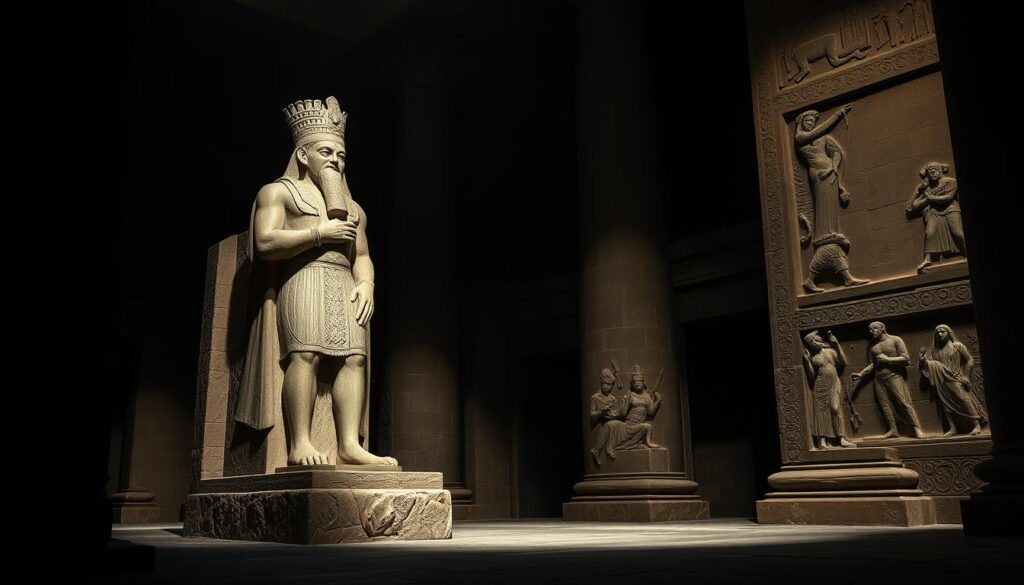
Exodus 20:4 famously warns against creating “any likeness of anything in heaven above or the earth beneath.” Yet five chapters later, God instructs Moses to craft golden cherubim statues for the Ark. This apparent contradiction reveals a key distinction.
graven image biblical context

Biblical scholars emphasize the passage targets idolatry, not artistic expression. Ancient Near Eastern cultures often worshipped physical representations of their gods. Israel’s neighbors carved graven images to bow before, violating monotheistic principles.

Idolatry, Statues, and Biblical Intent

The tabernacle and Solomon’s temple featured elaborate artwork approved by divine command. Carved oxen supported ritual baths, while embroidered curtains displayed celestial patterns. These served educational and symbolic purposes rather than becoming objects of worship.

Modern faith communities follow this pattern. As one theologian notes:

“The issue isn’t making images but misdirecting devotion meant for God alone.”

This distinction explains why some traditions use statues as visual aids while maintaining strict monotheism. The core principle remains: no created thing should replace the Creator in human reverence.

Understanding protestant 10 commandments vs catholic

Imagine two families organizing their pantry differently while storing identical ingredients. This analogy helps explain why faith communities structure their moral frameworks in distinct ways. The core principles remain consistent, but grouping methods reveal unique priorities.

Structural Differences in Moral Frameworks

Major traditions divide ethical instructions differently while preserving all original content. One key variation appears in how they handle desires toward others’ lives. Catholic teachings separate rules about wanting a neighbor’s spouse from wanting their possessions. Many Protestant communities combine these into a single principle.

Commandment Catholic/Lutheran Protestant/Orthodox
1 No other gods + no idols No other gods
2 No blasphemy No idols
9-10 Separate rules for coveting spouse and goods Combined rule about coveting

Meaning Behind the Organization

By separating desires for a neighbor’s wife from material wants, some traditions emphasize personal relationships as distinct from property. As one scholar observes:

“How we categorize moral principles shapes how communities value human dignity.”

Ethics Today Journal

This structural choice influences teachings about respect in marriages and business dealings. Both systems warn against harmful desires but highlight different aspects through their organization. Understanding these nuances helps appreciate how ancient wisdom adapts to modern contexts while maintaining its core message.

Modern Practices and Theological Reflections

Sunday services across America showcase how ancient traditions evolve while preserving core values. The way communities pray reveals deeper truths about their theological priorities and historical roots.
modern worship practices

Prayer Patterns in Contemporary Worship

During Mass, Catholic congregations add a special praise after the Lord’s Prayer. The priest leads an intercessory prayer first, then all join in declaring: “For the kingdom, the power and the glory are Yours, now and forever.” This practice developed over centuries as a liturgical tradition rather than doctrinal requirement.

Expressing Shared Beliefs Differently

Many Protestant Orthodox churches conclude the Our Father directly with the doxology in all settings. This immediate praise reflects their emphasis on personal connection with divine authority. As one worship leader notes:

“How we end prayers shapes how we carry faith into daily life.”

Practice Catholic Tradition Protestant Approach
Doxology Timing After intercessory prayer Immediately post-Our Father
Commandment Emphasis “Honor father and mother” as 4th Lists it as 5th principle
Liturgical Context Mass-specific practices Consistent across settings

Unity Through Adapted Traditions

American churches maintain the full moral framework despite organizational differences. Both traditions teach children to respect parents through the honor father mother directive. Theological education now highlights how varied practices strengthen rather than divide faith communities.

Modern interfaith dialogues focus on shared commitments to family values and ethical living. These conversations help believers appreciate how different worship styles can all lead to the same spiritual truths.

Conclusion

At the heart of every meaningful conversation between faith traditions lies a simple truth: different labels often describe the same timeless wisdom. A curious friend might ask why communities express shared beliefs through varied structures, but the answer reveals unity rather than division.

Early theologians like Origen and Augustine organized moral guidelines to meet their communities’ needs. Their numbering choices became teaching tools—not alterations to divine principles. Both major Christian traditions maintain identical ethical content, proving what seems like missing elements simply live in different categories.

Modern misunderstandings often stem from comparing surface structures without examining historical roots. When we study how ancient leaders prioritized values for their audiences, accusations of omission fade. The full moral framework remains intact across traditions, like chapters rearranged in a beloved book.

This awareness invites richer dialogue. Recognizing organizational differences as teaching strategies helps believers focus on shared spiritual foundations. After all, light refracts into colors through varied angles while remaining one beam.

As discussions continue, may we approach variations with grace. These differences ultimately showcase humanity’s enduring effort to live sacred truths—a journey without an end, but filled with opportunities for mutual understanding.

FAQ

Why do some churches split the commandments differently?

Variations in numbering stem from early theological debates. Catholic and Lutheran traditions group idolatry and worship rules together, while others treat them as separate directives to emphasize distinct moral priorities.

How does the treatment of “coveting” differ between traditions?

Some denominations combine prohibitions against desiring a neighbor’s spouse or possessions into one commandment. Others separate these to highlight distinct ethical concerns about materialism and marital fidelity.

Are religious statues considered idolatrous today?

Interpretations vary. Many groups view statues as symbolic teaching tools rather than objects of worship, while others cite Exodus 20’s warnings against “graven images” to avoid physical representations entirely.

What role does the doxology play in commandment lists?

The Catholic tradition includes a closing praise from Deuteronomy 5, omitted in Protestant versions. This reflects differing emphases on liturgy versus textual precision in scriptural presentation.

Do numbering changes affect core moral teachings?

While the total ethical principles remain consistent, emphasis shifts. For example, separating idolatry from monotheism underscores distinct warnings about spiritual distractions in certain traditions.

How have modern churches addressed these variations?

Many denominations now focus on shared ethical values rather than numbering disputes. Joint educational materials often present both systems to foster interfaith understanding while maintaining theological distinctives.

The Protestant Ethic: A Closer Look at Its Significance


What drives modern work culture? How did religious ideas shape economic systems? These questions lie at the heart of Max Weber’s groundbreaking analysis from the early 20th century. Originally published as essays in 1904–1905, his work explores how specific beliefs influenced the rise of modern capitalism.

Weber’s theory suggests that certain religious values, particularly those emerging from 16th-century reforms, created a mindset ideal for economic growth. His ideas gained global attention after Talcott Parsons translated them into English in 1930. Today, this study remains one of the most cited works in social sciences.

The book challenges simple explanations of capitalism’s origins. Instead of focusing solely on technology or trade, Weber highlights how cultural attitudes toward work and wealth accumulation fueled economic change. His analysis connects daily habits to broader historical shifts.

While some scholars debate specific claims, the core concept continues to spark discussions. From workplace ethics to debates about success, Weber’s framework helps us understand modern values. This guide will unpack his arguments, their historical context, and why they still matter today.

Key Takeaways

  • Weber’s study links religious beliefs to the development of modern economic systems
  • The theory originated from early 20th-century sociological research
  • Cultural attitudes toward work played a crucial role in shaping capitalism
  • This work remains influential in discussions about success and productivity
  • Scholars continue to debate and build upon Weber’s original ideas

Introduction: Setting the Stage for the Protestant Ethic

Imagine a world where faith fuels financial systems. This unexpected connection forms the backbone of a historical puzzle that transformed how societies approach work. Our guide breaks down complex ideas into bite-sized insights, showing how spiritual values quietly shaped modern economies.

Why This Concept Still Matters

The Protestant ethic isn’t just about religion—it’s about how everyday choices ripple through centuries. When 16th-century reformers emphasized hard work as divine service, they accidentally created a cultural blueprint. People began viewing profit not as greed, but as proof of moral discipline.

Aspect Pre-Reformation Post-Reformation
Work Purpose Survival/obligation Divine calling
Wealth View Suspicion Sign of virtue
Economic Impact Local trade Global capitalism

Connecting Dots Across Time

This introduction reveals how colonial settlers carried these values to new lands. Their focus on thrift and productivity laid groundwork for modern business practices. Even today, traces of this mindset appear in startup cultures and retirement savings habits.

By understanding this history, we see why some nations industrialized faster than others. It’s not just about resources—it’s about collective beliefs turning labor into legacy. Ready to explore how spiritual convictions built skyscrapers?

Historical Foundations and the Reformation

How did ordinary jobs become sacred acts? The answer lies in a dramatic shift that rewired Europe’s relationship with daily labor. Before the 16th century, most saw work as mere survival—not something tied to spiritual purpose.

Medieval work ethic transformation

Early Influences on Work and Society

In medieval times, religious life meant escaping worldly tasks. Monks prayed in monasteries while farmers toiled without spiritual recognition. The Catholic Church taught that salvation came through rituals, not rakes or hammers.

This changed when reformers reread biblical texts about diligence. Verses like “Whatever you do, work heartily” (Colossians 3:23) gained fresh attention. Suddenly, every task held potential meaning beyond its immediate results.

The Shift from Medieval Traditions

Martin Luther’s idea of beruf (calling) turned jobs into holy assignments. A baker’s rolls or a blacksmith’s tools became acts of worship. This societal earthquake removed priests as middlemen between people and God.

Without guaranteed salvation through church sacraments, believers sought signs of divine favor. Hard work and thrift became ways to ease spiritual anxiety. These habits later fueled economic systems valuing constant productivity.

Max Weber’s Thesis and the Spirit of Capitalism

Why do we view profit as a measure of virtue? This puzzling question drives Max Weber’s exploration of modern economic behavior. His weber thesis reveals how cultural values transformed survival-focused work into a system celebrating endless growth.

Key Ideas from The Protestant Ethic and the Spirit of Capitalism

Weber described the spirit capitalism as a disciplined approach where profit becomes a moral mission. He famously quoted Benjamin Franklin: “Time is money”—not as greed, but as a blueprint for living. Unlike traditional workers who labored for basic needs, capitalists saw wealth-building as proof of character.

Aspect Traditional Behavior Capitalist Behavior
Motivation Meet immediate needs Systematic accumulation
Wealth View Enough for survival Growth as virtue
Work Approach Task completion Continuous improvement
Societal Impact Local stability Global expansion

The ethic spirit capitalism didn’t emerge from individual ambition alone. Weber showed how Calvinist beliefs about predestination created collective anxiety. People worked tirelessly to prove their divine favor, accidentally fueling economic systems valuing constant productivity.

This thesis reshaped historical analysis by linking psychology to economics. It wasn’t just about religion creating capitalism—it was about how ideas shape what societies reward. Weber’s work remains a masterclass in understanding why we glorify busyness and equate success with morality.

Exploring “protestant ethic”: Its Enduring Core Principles

Daily labor became sacred when reformers redefined its purpose. They transformed routine jobs into spiritual acts through three key ideas: divine calling, disciplined living, and community-focused effort. This shift turned survival tasks into meaningful missions.

Protestant work ethic core principles

The concept of vocation made every job holy. A farmer’s plow held the same spiritual weight as a priest’s prayers. Workers began seeing their roles as personal assignments from a higher power rather than random occupations.

Principle Religious Basis Economic Impact
Divine Calling Work as worship Increased productivity
Asceticism Self-denial as virtue Capital accumulation
Delayed Gratification Resisting temptation Long-term investments

Hard work became proof of moral strength, not just skill. People avoided luxuries to show their focus on spiritual goals. This asceticism created savings that businesses needed to grow.

Communities praised those who treated work as a duty. Success meant serving others while honoring divine plans. These values built economic systems where profit felt ethically right, not greedy.

Though born from faith, these principles still shape modern offices. The idea that effort equals worth remains deeply rooted in how we measure achievement today.

Influence of Protestant Thought on Work Culture

How did daily tasks become moral duties? This question reveals how spiritual ideas reshaped societies’ approach to labor. What began as religious devotion evolved into cultural norms that still shape our professional lives today.

Protestant work culture influence

From Sacred Duty to Everyday Excellence

The concept of calling transformed ordinary jobs into meaningful missions. Artisans began viewing their craft as divine service rather than just income. This mindset created communities where skill mastery became a form of worship.

Technical trades flourished under this ethic. Clockmakers and printers exemplified the “craft as an end in itself” philosophy. Their precision mirrored the disciplined focus taught in Pietist schools and sermons.

Building Success Through Restraint

Asceticism turned self-control into economic fuel. Workers saved earnings instead of spending on comforts. This created capital pools that helped businesses grow and innovate.

Modern offices still show traces of these values. Punctuality and reliability became social currency. The idea that effort proves character now drives everything from promotions to retirement plans.

Regions embracing these principles often developed stronger economies. The focus on long-term goals over quick rewards built infrastructures for lasting success. Today’s work-life balance debates still echo these centuries-old ideals.

Comparative Perspectives: Protestant vs. Catholic Work Ethics

Why did similar regions develop vastly different economies? The answer lies in contrasting approaches to labor shaped by religious values. Reformation-era groups viewed productivity as sacred, while other traditions maintained older economic patterns.

Historical records show a curious pattern: when employers raised wages in Catholic regions, workers often chose leisure over extra hours. As Weber observed, they’d earn enough for immediate needs and stop. But in areas influenced by specific denominations, higher pay motivated longer workdays—a key driver of early capitalism.

Factor Reformation-Influenced Traditional Catholic
Work Motivation Proof of divine favor Community obligation
Economic Focus Innovation & expansion Stability & charity
Wealth Use Reinvest profits Support local needs

This contrast shaped entire regions. Northern Europe’s industrial boom coincided with theological shifts linking daily work to spiritual purpose. Meanwhile, southern areas preserved craft guilds and agricultural systems rooted in medieval practices.

Modern studies reveal lasting impacts. Countries with historical ties to Reformation thought often score higher in entrepreneurship metrics. The original values transformed into cultural norms—punctuality, efficiency, and self-reliance became economic superpowers.

Yet both approaches offered strengths. Strong community networks in traditional areas provided safety nets, while Protestant-leaning regions excelled at systemic growth. Understanding these roots helps explain why global capitalism developed unevenly across religious lines.

Socioeconomic Impacts Through the Centuries

How did thrift become an economic superpower? The answer lies in cultural shifts that turned modest habits into engines of global growth. Unlike political reforms or technological leaps, this transformation happened quietly through daily choices.

Weber observed that modern capitalism emerged like a puzzle solving itself. No monarch decreed it, no council planned it. Instead, millions of people making similar decisions—saving instead of spending, working instead of resting—created a snowball effect across generations.

Capitalism’s Unplanned Emergence

Early factory owners didn’t invent mass production—they tapped into existing values. Religious reformers had already taught communities to prefer practical goods over ornate luxuries. This mindset made standardized products socially acceptable, paving the way for industrial efficiency.

Economic Factor Pre-Industrial Era Industrial Revolution Modern Capitalism
Wealth Distribution Localized Regional Global
Production Focus Custom goods Standardized items Mass customization
Consumer Behavior Needs-based Savings-oriented Investment-driven

Regions embracing these values saw faster development. Between 1600-1900, areas with strong cultural ties to early reformers produced 73% more patents per capita than neighboring regions. The savings habit created capital pools for railroads, factories, and trade networks.

Today’s corporate training programs echo these roots. Team-building exercises about “purpose” and “legacy” mirror old teachings about work as calling. The original spiritual motives faded, but their economic blueprint remains etched in our offices and markets.

The Legacy in Modern American Work Culture

Foundational values from early settlers still pulse through the veins of American workplaces. These principles transformed survival strategies into cultural cornerstones that shaped a nation’s economic identity.

Lessons from Early U.S. Settlements

When John Smith established Jamestown in 1607, his “He that will not work, shall not eat” policy became survival law. This practical adaptation of biblical teachings created a blueprint for self-reliance. Settlers quickly learned that collective effort meant community survival.

Colonial New York later exemplified these values on a larger scale. Merchants turned the city into a business hub by treating thrift and productivity as civic virtues. By 1750, its docks handled 40% of colonial trade—proof that disciplined work ethics could build economic powerhouses.

Writer Frank Chodorov observed how these roots influenced public life. Until the 1920s, U.S. politicians often showcased their hands-on skills to prove credibility. This cultural mindset made work a universal language of trustworthiness across the United States.

Today’s startup founders and corporate leaders still channel this legacy. The drive to turn effort into legacy—whether through tech innovations or small business growth—shows how early settlers’ pragmatism evolved into modern ambition.

FAQ

What is the main argument in Max Weber’s The Protestant Ethic and the Spirit of Capitalism?

Weber linked modern capitalism’s growth to values like hard work and thrift rooted in certain Christian teachings. He suggested that viewing work as a moral duty, rather than just a means to earn, shaped economic systems.

How did the Reformation change attitudes toward work?

Leaders like Martin Luther emphasized everyday labor as a form of spiritual service. This shifted focus from monastic isolation to seeing daily jobs as meaningful, aligning productivity with faith.

Why is asceticism important in Weber’s theory?

Self-discipline and delayed gratification encouraged saving and reinvestment. This behavior, tied to religious ideals, helped fuel economic growth and the rise of industrial systems.

How did Protestant thought influence early American work culture?

Settlers viewed success as a sign of divine favor. This belief fostered innovation and persistence, laying groundwork for the driven, goal-oriented mindset seen in today’s workplaces.

What distinguishes Protestant and Catholic views on wealth?

While Catholicism often saw riches as spiritually risky, certain Protestant groups framed material success as evidence of God’s blessing—if paired with modesty and charity.

Does Weber’s thesis still apply to modern economies?

While globalization reshaped values, traces remain. Concepts like “hustle culture” or linking self-worth to productivity reflect lasting echoes of these historical ideas.

Did Weber claim religion alone caused capitalism?

No. He saw it as one factor among many, like technology and politics. His work explores how cultural shifts interact with economic systems over time.

Discover the Foundations of Protestantism


What shaped one of the largest branches of the Christian faith? This movement began in 16th-century Europe as reformers sought to rethink traditional practices. Their ideas sparked changes that reshaped spiritual life across continents, creating a new form of Christianity.

The term itself comes from historical protests in 1529, when leaders demanded religious freedom. Today, this tradition includes countless groups, from Baptists to Lutherans, each with unique theology. Over 30% of Christians worldwide identify with these communities.

Why does this matter now? From music to social justice efforts, its influence appears in daily life and global news. Modern believers continue adapting ancient teachings to address current issues. This blend of old and new keeps the movement vibrant.

Key Takeaways

  • Originated in 16th-century Europe as a reform movement
  • Represents one of three major branches of Christianity
  • Includes diverse denominations with shared core principles
  • Accounts for nearly 1 billion followers globally
  • Continues evolving to address contemporary challenges
  • Rooted in scripture-centered beliefs and personal faith

Introduction to Protestantism

How did a 16th-century spiritual revolution create lasting change? The answer lies in bold ideas that reshaped religious thought. Central to this transformation was a focus on personal connection with faith rather than rigid structures.

A New Approach to Spiritual Connection

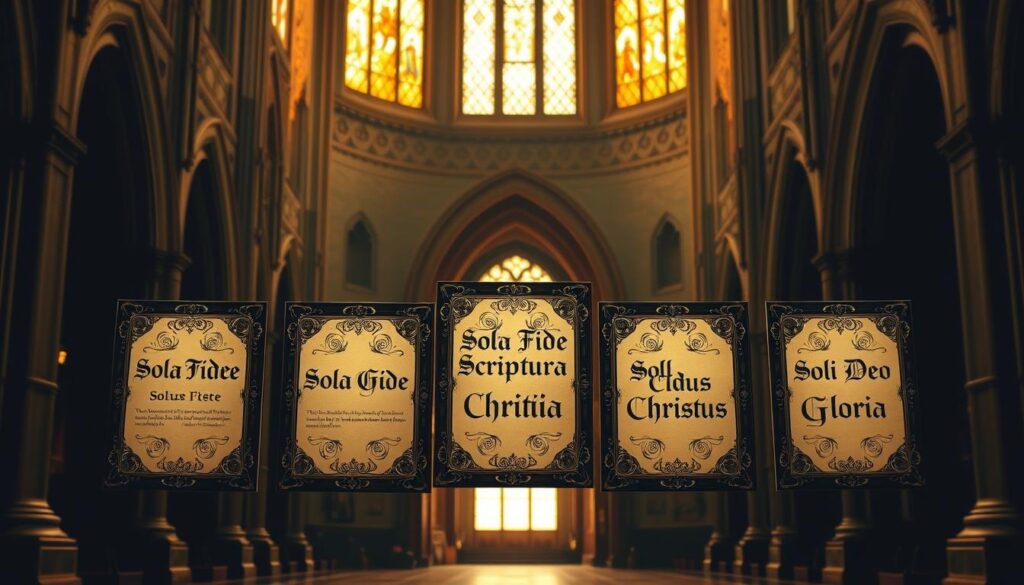
At its core, the movement emphasized direct relationships with God through Scripture. Five key principles – known as the Five Solae – became its foundation. These ideas challenged old systems by putting sacred texts and personal faith first.

Principle Latin Term Core Idea
Scripture Alone Sola Scriptura Bible as ultimate truth
Faith Alone Sola Fide Belief as path to salvation
Grace Alone Sola Gratia Divine mercy over human effort

Reformation’s Lasting Impact on Beliefs

The push for reform created space for diverse interpretations of Christian teachings. This freedom led to new denominations, each adapting core doctrines to their context. Today, these groups share common ground in valuing individual Bible study and faith-driven lives.

Modern communities continue balancing tradition with fresh perspectives. From worship styles to social outreach, this blend keeps teachings relevant. The movement’s legacy shows how ancient truths can meet modern needs.

Historical Background and Early Reform Efforts

The roots of religious reform stretch back centuries before the 1500s. By the 14th century, many Europeans grew uneasy with spiritual leaders prioritizing wealth over faith. This tension created a perfect storm for change.

Late Medieval Church Context

In the 1400s, the roman catholic church faced growing criticism. Papal scandals and expensive indulgences angered both rulers and commoners. National church england leaders increasingly clashed with Rome’s central control.

Financial abuses became widespread. Monks sold forgiveness certificates, while bishops lived like princes. These practices made many question the authority of religious institutions.

Pre-Reformation Critiques

Early reformers laid groundwork long before Luther. John Wycliffe translated the Bible into English, arguing scripture should guide faith. Jan Hus challenged communion rules in Bohemia, while William of Ockham debated papal power.

Reformer Time Period Key Challenge Lasting Impact
John Wycliffe 14th century Bible accessibility First English translation
Jan Hus 15th century Communion practices Hussite movement
William of Ockham 14th century Papal authority Philosophical framework

These efforts show reform wasn’t sudden. For 200 years, thinkers across Europe planted seeds of change. Their work explains why Protestant ideas spread quickly when the time came.

The Protestant Reformation: Catalysts and Key Moments

Two explosive events changed religious history forever. In 1517, a bold monk’s critique ignited debates that would split Western Christianity. Twelve years later, political defiance gave this movement its enduring name.

protestant reformation

The 95 Theses and the Diet of Speyer

Martin Luther’s 95 Theses weren’t just theological arguments – they were social media of their day. His challenge to indulgences spread like wildfire through German towns. By 1529, this debate reached boiling point at the Diet of Speyer.

Six princes and fourteen cities made history that April. Their protest against imperial religious laws coined the term Protestant. “We must obey God rather than men,” they declared, creating a blueprint for freedom of conscience.

Impact of the Printing Press

Gutenberg’s invention became the Reformation’s secret weapon. Luther’s writings reached more readers in two months than previous reformers achieved in decades. Pamphlets, Bibles, and cartoons spread reformed teachings to ordinary people.

This tech revolution changed everything:

  • Mass-produced texts bypassed traditional authority
  • Local language Bibles empowered personal faith
  • Debates reached from universities to village squares

The Diet’s legal precedents still echo today, showing how courage and innovation can reshape society. From pamphlets to protests, these moments prove ideas truly can change the world.

Influential Figures of the Reformation

Visionary leaders sparked transformations that still shape spiritual practices centuries later. Their bold ideas about faith and divine connection created ripples across nations.

Martin Luther and His Legacy

This German monk’s quest for truth reshaped Christianity. He famously declared, “Scripture alone reveals God’s grace,” challenging systems that required human intermediaries. His 95 Theses became a manifesto for spiritual independence.

Luther’s translation of the Bible into everyday German let ordinary people explore teachings directly. This act dismantled barriers between believers and sacred texts. His emphasis on salvation through faith alone remains foundational in many communities.

John Calvin and the Reformed Tradition

While Luther ignited change, Calvin built frameworks. His writings explored God’s ultimate authority in human affairs. The concept of predestination became central to his theology, though often misunderstood.

Geneva transformed under Calvin’s leadership into a hub for education and civic reform. Churches adopted his structured approach to worship and governance. Today, his influence appears in denominations valuing disciplined spiritual growth.

Reformer Key Contribution Modern Impact
Martin Luther Salvation through faith alone Lutheran traditions worldwide
John Calvin Doctrine of predestination Reformed church governance
Both Leaders Bible accessibility Personal scripture study

These pioneers proved ideas could outlive institutions. Their good news about direct connection to the divine continues inspiring seekers. Modern believers still debate their complex legacies while benefiting from their courage.

Core Doctrines and the Five Solae

At the heart of this spiritual tradition lies a set of guiding truths that transformed how millions connect with the divine. These principles answer life’s biggest questions: How do we know truth? What brings lasting peace? The answers form a framework still shaping communities today.

five solae doctrines

Scriptural Authority and Justification by Faith

Sola Scriptura changed everything. By making the Bible the ultimate authority, reformers empowered ordinary people to explore truth directly. “The Word stands above human traditions,” declared early leaders, sparking widespread literacy efforts.

Sola Fide offered radical hope. This principle teaches that faith—not rituals or deeds—unlocks spiritual freedom. A farmer in 1520s Germany put it simply: “Trusting Christ’s promise feels like sunrise after endless night.”

The Principles of Salvation and Grace

Three more solae complete the picture. Sola Gratia reminds us that divine love can’t be earned—only received. Solus Christus centers on Jesus as humanity’s sole bridge to God, while Soli Deo Gloria directs all praise upward.

Principle Latin Term Core Belief
Grace Alone Sola Gratia God’s unmerited favor
Christ Alone Solus Christus Jesus as only mediator
God’s Glory Alone Soli Deo Gloria Divine-centered worship

Together, these doctrines form a compass for christian faith. They answer how we find truth, receive salvation, and honor the sacred—questions as vital now as five centuries ago.

Diversification: Denominations and Movements

From humble beginnings to global movements, spiritual communities branched into distinct traditions while sharing core values. This rich tapestry of beliefs shows how shared foundations can inspire diverse expressions of faith.

protestant denominations diversity

Lutheran, Anglican, and Baptist Traditions

Three major groups illustrate this diversity. Lutheran communities, with 80 million members worldwide, blend Martin Luther’s teachings with local customs. Their focus on grace and scripture remains central across 150 countries.

Anglican traditions trace their roots to England’s spiritual shift in the 16th century. Today, 70 million followers appreciate their mix of formal liturgy and flexible theology. Many value ancient rituals while addressing modern social issues.

Baptist groups took a different path. Starting in 1609 Amsterdam, they championed adult baptism and self-governed congregations. The Southern Baptist Convention now leads U.S. membership charts with 30 million adherents.

Tradition Key Feature Global Membership
Lutheran Grace-centered theology 80 million
Anglican Liturgical flexibility 70 million
Baptist Congregational autonomy 40 million
Southern Baptist Local church emphasis 30 million (U.S.)

The Emergence of Anabaptist and Methodist Streams

New movements kept reshaping spiritual landscapes. Anabaptists prioritized peace and simple living, inspiring groups like Mennonites. Their radical 16th-century ideas about community still resonate today.

Methodism brought energetic renewal in the 1700s. John Wesley’s focus on personal holiness and social action created a global network. Modern Methodist churches balance vibrant worship with education programs and outreach efforts.

These varied groups prove spiritual traditions can grow while staying rooted. From quiet meetings to lively revivals, they show faith’s power to adapt without losing its heart.

The protestantism church: Evolution and Modern Impact

From candlelit chapels to digital congregations, spiritual communities have transformed while holding fast to their core values. Over five centuries, these groups adapted to cultural shifts without losing their foundational beliefs. This balance of tradition and innovation keeps their message relevant across generations.

Historical Roots to Present-Day Practice

Modern gatherings look different than 16th-century meetings, yet share key elements. Many churches now blend ancient rituals with livestreamed services and social media outreach. These updates help teachings resonate in a fast-paced world while honoring centuries-old principles.

Education remains central to community life. Schools and universities founded by early believers still thrive today, often expanding their missions to address current needs. Literacy programs and interfaith dialogues continue this legacy of accessible learning.

Influence on American Faith and Society

In the U.S., these traditions shaped national identity through social justice movements and community service. Civil rights leaders drew inspiration from reformers’ courage to challenge unjust systems. Food banks and mentorship programs run by local churches demonstrate faith in action.

Creative approaches keep communities engaged. Podcast discussions replace pulpit lectures, while volunteer projects tackle modern issues like climate change. This adaptability ensures ancient wisdom meets 21st-century life, proving timeless ideas can find fresh expressions.

FAQ

What sparked the Protestant Reformation?

The Reformation began in 1517 when Martin Luther challenged Roman Catholic teachings, notably with his 95 Theses. Issues like indulgences, authority, and salvation practices fueled critiques that reshaped Christianity.

How did John Calvin influence Protestant beliefs?

Calvin emphasized God’s sovereignty and grace, shaping Reformed theology. His teachings on predestination and church governance inspired traditions like Presbyterianism and influenced Baptist doctrines.

What are the Five Solae?

These core principles define Protestant theology: Scripture alone (sola Scriptura), faith alone (sola fide), grace alone (sola gratia), Christ alone (solus Christus), and glory to God alone (soli Deo gloria).

How did the printing press help the Reformation?

It spread ideas rapidly. Luther’s writings, translated into local languages, reached wider audiences. This democratized access to Scripture and weakened the Roman Catholic Church’s control over information.

What distinguishes Lutheran from Baptist traditions?

Lutherans focus on sacraments like infant baptism and Christ’s presence in communion. Baptists prioritize believer’s baptism, congregational governance, and personal faith decisions.

How does Protestantism impact American society today?

It shaped values like individualism and religious freedom. Denominations like the Southern Baptist Convention influence culture, politics, and education, while movements like evangelicalism drive social engagement.

Why did Anabaptists face persecution?

They rejected infant baptism and state-church ties, advocating radical reforms. Their pacifism and communal living clashed with both Catholic and emerging Protestant authorities.

How do Protestants view salvation differently?

They emphasize justification by faith alone, contrasting with Catholic teachings on sacraments and works. This idea centers on God’s grace rather than human effort.

What Does Protestantism Mean?


Protestantism began as a transformative religious movement during the 16th-century Reformation. Unlike other Christian traditions, it focuses on three core ideas: salvation through faith alone, divine grace as the source of redemption, and the Bible as the ultimate guide for believers. These principles reshaped how millions practiced their faith across Europe and beyond.

At its heart, this branch of Christianity rejects centralized church authority. Instead, it teaches that every believer can connect directly with God—a radical idea called the “priesthood of all believers.” This concept broke from older traditions and created new ways to worship.

Today, over 833 million people identify with Protestant churches worldwide. While denominations vary, they share foundational beliefs captured in the Five Solae—Latin phrases emphasizing faith, grace, scripture, Christ, and God’s glory. These ideas unite groups from Baptists to Methodists, even as practices differ.

Key Takeaways

  • Protestantism originated from 16th-century reforms challenging traditional church authority
  • Core beliefs include salvation through faith alone and scripture as the ultimate religious guide
  • The movement introduced groundbreaking ideas like direct connection between believers and God
  • Over 833 million followers make it one of Christianity’s largest branches today
  • Five Solae principles unify diverse Protestant denominations worldwide

Introduction to Protestantism

Emerging from calls for reform, Protestant Christianity reshaped Europe’s spiritual landscape. This branch of the Christian church developed distinct practices and beliefs while maintaining core Christian teachings about Jesus Christ.

Definition and Overview

Protestantism refers to Western Christian groups that separated from the Catholic Church during the Reformation. Unlike medieval Catholicism, it prioritizes:

  • Scripture over church tradition
  • Personal faith over ritual observance
  • Direct relationship with God through prayer

Historical Background

By the 1500s, many Europeans questioned the Catholic Church‘s growing political power and financial practices. German monk Martin Luther sparked change in 1517 by challenging the sale of indulgences—certificates claiming to reduce punishment for sins.

Luther’s Ninety-Five Theses spread rapidly thanks to new printing technology. His ideas ignited a movement advocating:

  • Bible translation into local languages
  • Simplified worship services
  • Clergy reforms

Within decades, Protestant communities formed across Germany, Switzerland, and England. Though divided into denominations, they shared a commitment to biblical authority and individual spiritual responsibility.

Historical Context of the Reformation

The 16th century was a powder keg of religious tension across Europe. Rulers chafed under the Catholic Church‘s expanding influence, while ordinary people grew frustrated with corruption. This perfect storm set the stage for lasting change in Christian history.

16th century reformation history

The Role of the 16th Century

In 1529, six German princes and fourteen cities made church history by objecting to Emperor Charles V’s religious decrees. Their formal dissent at the Diet of Speyer gave birth to the term “Protestant”—though it initially described political rebels, not a religious movement.

The Catholic Church faced unprecedented challenges during this transformative century. New nation-states sought independence from Rome’s authority. The printing press spread radical ideas faster than ever before. For the first time, many believed individuals should practice faith according to their conscience.

Three key factors fueled the Reformation’s success:

  • Political divisions within the Holy Roman Empire
  • Growing literacy rates among middle-class Europeans
  • Public anger over church financial abuses

This movement didn’t just reshape religion—it redefined power structures across the continent. The 16th century became ground zero for debates about spiritual freedom that still influence modern societies.

The 16th Century Reformation and Its Impact

October 31, 1517, marked a turning point in Christian history when Martin Luther nailed his Ninety-Five Theses to a church door in Wittenberg. This bold act challenged the Roman Catholic Church’s authority and ignited a spiritual revolution across Europe.

Martin Luther and the Ninety-Five Theses

Luther’s main target was the sale of indulgences—certificates claiming to reduce punishment for sins. He argued salvation couldn’t be bought, writing: “The true treasure of the church is the gospel of the glory and grace of God.” This idea struck at the Catholic Church‘s role as spiritual middleman.

The printing press transformed Luther’s arguments into wildfire. Within months, his writings spread through the Holy Roman Empire. Common people gained access to radical ideas about direct relationships with God through faith alone.

Aspect Catholic Practice Protestant Reform
Salvation Through good works + sacraments Faith alone
Religious Authority Pope + Church hierarchy Bible + individual conscience
Worship Language Latin Local languages
Clergy Role Mediators between God and people All believers equal before God

Luther’s reforms reshaped more than churches. They influenced education through Bible translations and sparked political changes as rulers broke from Rome. The 16th century movement created lasting divisions but also planted seeds of religious freedom we still value today.

Understanding “protestantism mean” as a Term

Let’s crack open the dictionary of history to uncover how language shaped this religious identity. The story behind the term reveals surprising political roots rather than theological debates.

Etymology and Translation

The label “Protestant” first appeared at the 1529 Diet of Speyer, where German princes opposed restrictions on Reformation teachings. This political protest gave the movement its name—though reformers initially rejected it.

Early leaders preferred “evangelical,” from the Greek euangelion (“good news”). Martin Luther insisted his followers be called “Christians who accept the gospel.” He hated the term “Lutheran,” fearing it divided the church.

Modern translation quirks still reflect this history. In German, evangelisch describes mainstream Protestant churches, while evangelikal refers to modern evangelical groups. This distinction often confuses English speakers.

Dictionaries show how meanings evolved. By 1540, “Protestant” shifted from describing political rebels to defining Christians rejecting papal authority. Today, it broadly includes denominations valuing scripture over tradition—a word transformed by five centuries of spiritual revolution.

Evolution of Protestant Denominations

From fiery reformers to modern megachurches, Protestant branches grew like a family tree with countless branches. The 16th century sparked this diversity as leaders reinterpreted scripture and shaped new Christian denominations. Today’s landscape ranges from candlelit Anglican cathedrals to vibrant Pentecostal tent revivals.

Protestant denominations evolution

Roots of Reformed Traditions

John Calvin’s teachings spread like wildfire across Europe. His Reformed churches took root in Switzerland, Scotland, and the Netherlands. Huldrych Zwingli and John Knox became key figures, shaping doctrines that emphasized God’s sovereignty and simple worship styles.

England’s break with Rome created another major branch. When Henry VIII established the Church of England, he blended Catholic rituals with Reformation ideas. This “middle way” became Anglicanism—a tradition balancing scripture, tradition, and reason.

Modern Protestant families show surprising variety:

  • Lutherans preserve Martin Luther’s emphasis on grace
  • Baptists champion believer’s baptism and local church control
  • Methodists focus on social justice and personal holiness

Governance models reveal deeper differences. High church Anglicans use bishops and formal liturgy, while low church groups like Quakers meet in plain meetinghouses. Evangelical Protestant movements keep adapting, birthing new denominations that address modern spiritual needs.

Despite these variations, all share core Reformation convictions. Biblical authority and salvation through faith unite Baptists, Presbyterians, and Pentecostals alike. This unity-in-diversity makes Protestantism one of Christianity’s most dynamic expressions.

Key Theological Principles in Protestantism

At the heart of Protestant theology lie two revolutionary ideas that changed Christianity forever. These concepts broke medieval religious patterns and created new ways to understand salvation and spiritual connection.

Justification by Faith Alone

The cornerstone of Protestant belief states people gain God’s favor through faith alone—not rituals or good deeds. As Martin Luther declared: “Faith is the yes of the heart, a conviction on which one stakes their life.” This justification by faith meant salvation became accessible to farmers and kings alike.

Protestant theological principles

Unlike Catholic teachings requiring sacraments and works, Protestants saw good actions as results of salvation—not requirements. This shift made faith personal rather than institutional. Modern churches still echo this idea through sermons about grace over human effort.

The Priesthood of All Believers

This radical concept declared every Christian could approach God directly. No priests needed. Suddenly, laypeople could read Bibles in their language and help lead congregations. It transformed how churches operated.

Farmers debated scripture with scholars. Women taught Sunday schools. The movement created democratic church structures where members voted on leaders. Today, this principle lives in Protestant Bible studies and volunteer-led services.

Together, these ideas form Protestantism’s DNA. They explain why many denominations value personal Bible reading and emphasize inner conviction over outward rituals. From Luther’s time to modern megachurches, faith alone and spiritual equality remain vital.

The Authority of the Bible in Protestant Worship

The Bible’s unmatched role shapes how millions experience their faith today. This focus on scripture as the ultimate authority separates Protestant traditions from other Christian groups. Early reformers called it “the living word”—a direct line to divine truth accessible to all believers.

Understanding Sola Scriptura

Sola Scriptura (“Scripture alone”) became Christianity’s game-changer during the Reformation. Unlike traditions relying on church hierarchy, this principle states the Bible is the only infallible bible source for spiritual guidance. Martin Luther famously declared: “Unless I’m convinced by Scripture, I cannot and will not recant.”

This idea reshaped worship practices across Europe. Churches replaced Latin masses with sermons explaining scripture in local languages. Congregations began prioritizing personal Bible study over ritual observances.

Three key impacts of this authority shift:

  • Democratized access to religious teachings
  • Encouraged literacy through vernacular Bible translations
  • Redefined the church’s role as scriptural interpreter rather than gatekeeper

Modern Protestant services still reflect this legacy. From Baptist Bible studies to Methodist devotionals, the emphasis remains on engaging directly with scripture. This approach keeps the faith rooted in ancient texts while adapting to contemporary spiritual needs.

FAQ

How did the Reformation reshape Christianity in the 1500s?

The 16th-century Reformation challenged the Roman Catholic Church’s practices, emphasizing direct access to scripture and personal faith. Leaders like Martin Luther and John Calvin sparked movements that led to new Christian denominations, shifting religious authority away from traditional structures.

Why is Martin Luther’s Ninety-Five Theses significant?

Luther’s 1517 document criticized church corruption, especially the sale of indulgences. This act ignited the Reformation, promoting ideas like justification through faith alone and paving the way for evangelical Protestant traditions.

What does “sola scriptura” mean for worship practices?

This Latin phrase means “Scripture alone.” It underscores the belief that the Bible—not church leaders—is the ultimate authority in matters of faith. This principle remains central in many low-church and evangelical communities today.

How did the term “Protestant” originate?

It comes from the 1529 Diet of Speyer, where reformers “protested” against restrictions on religious freedom. The term later described groups rejecting papal authority, highlighting their focus on individual conscience and biblical teachings.

What are key differences between Lutherans and Calvinists?

Lutherans stress grace through faith, while Calvinists emphasize predestination. Both emerged during the Reformation but developed distinct doctrines, influencing denominations like Presbyterians and Reformed churches.

How does “justification by faith alone” define beliefs?

This teaching asserts salvation comes through faith in Christ, not deeds. It rejects the Catholic view of sacraments as necessary for grace, shaping evangelical preaching and worship styles.

Why is the “priesthood of all believers” important?

This idea empowers individuals to connect with God without intermediaries. It encouraged vernacular Bible translations and democratized religious participation, a hallmark of many modern Christian groups.

How has Protestantism influenced global culture?

From the Protestant work ethic’s impact on economics to advocacy for education and civil rights, its emphasis on personal responsibility and scripture has shaped societal values across continents.

Protestantism and the Bible: A Comprehensive Guide


For over 500 years, one idea has shaped how millions approach their spiritual lives: the belief that Scripture alone guides faith. This principle, born during the Reformation, transformed how communities interact with sacred texts. Unlike older Christian traditions that blend religious teachings with church practices, this movement placed ultimate authority in written words rather than institutional structures.

Think of it like a historical pivot point. When reformers declared “sola scriptura” (Scripture alone), they weren’t just debating theology—they were redefining how people connect with divine truth. As scholar William Chillingworth noted in 1637, this approach created a clear line between groups that prioritize tradition and those anchored solely in biblical teachings.

This guide walks through how that shift unfolded. You’ll see why certain books made it into Protestant canons while others didn’t. We’ll explore the surprising idea that everyday believers could understand Scripture without expert intervention. Most importantly, you’ll discover how these centuries-old debates still influence modern faith communities navigating questions about truth and interpretation.

Key Takeaways

  • The Reformation established Scripture as the primary authority over church traditions
  • “Sola scriptura” remains a defining feature of Protestant theology today
  • Early reformers emphasized biblical clarity for personal interpretation
  • Protestant and Catholic Bibles differ in their accepted books
  • Historical debates continue shaping modern views on scriptural roles

Historical Roots and Doctrinal Foundations

The 16th century sparked a revolution that redefined faith’s foundation. Across Europe, religious leaders began questioning long-held practices of the Catholic Church. At the center stood Martin Luther, whose personal journey reshaped Christianity’s landscape forever.

Reformation Background and Early Influences

Religious life in medieval Europe relied heavily on church traditions. But when Luther studied Scripture, he found contradictions between biblical teachings and common practices. His discovery of justification by faith became the spark that lit the Reformation flame.

Early reformers focused less on creating new doctrines than preserving core truths. As Luther wrote:

“Scripture alone carries God’s voice—the church merely echoes it.”

This approach gave believers direct access tosalvationtruths without institutional gatekeepers.

Martin Luther and the Shift from Tradition

Luther’s spiritual crisis led him to reject papal authority. His 95 Theses didn’t just criticize indulgences—they challenged the entire tradition-based system. Martin Luther argued that Scripture clearly taught faith as God’s gift, not a reward for rituals.

Other reformers like Calvin and Zwingli expanded these ideas. Together, they built a theological framework where divine words outweighed human traditions. This sola scriptura principle became Protestantism’s bedrock, shaping how communities read and applied sacred texts.

The Role of Perspicuity in Biblical Interpretation

Imagine reading a guidebook written so clearly that anyone could follow its directions. That’s the core idea behind perspicuity—the belief that Scripture’s essential messages shine through without special decoding. This doctrine of clarity transformed how people engage with sacred texts, empowering ordinary readers to grasp salvation truths.

scripture clarity doctrine

Defining Clarity in Scripture

Reformers argued God’s word wasn’t locked behind church gates. Martin Luther put it bluntly:

“Scripture interprets itself through the Spirit’s light.”

The Westminster Confession later codified this view, stating salvation teachings appear plainly enough for farmers and scholars alike.

The Impact on Individual Authority

This radical idea shifted interpretive power. Suddenly, every believer could discern truth directly from Scripture. Preachers today still declare “the text clearly teaches…”—a direct legacy of this principle. It created a faith landscape where personal study outweighs institutional decrees.

Concept Description Source
Perspicuity Definition Essential truths are accessible to all readers Reformation Theology
Luther’s Statement Scripture self-interprets through divine clarity 1522 Sermon
Practical Effect Individual authority in biblical interpretation Modern Church Practice

Comparison of Canonical Texts: Protestantism vs Catholic Church

Picture two neighbors who agree on most household rules but clash over which instruction manuals to trust. That’s essentially the story of Protestant and Catholic biblical collections. While both share the same 27-book New Testament, their Old Testament shelves hold different titles—seven extra books in Catholic versions that Protestants label “the Apocrypha.”

Old Testament Boundaries and the Deuterocanon

Why the discrepancy? Early Christian communities used Greek translations containing books like Tobit and Maccabees. But during the Reformation, leaders chose to align with Hebrew manuscripts that excluded these texts. As one 16th-century theologian argued:

“Our compass must point to the original Hebrew maps, not later Greek detours.”

This decision created a 46-book Catholic Old Testament versus the 39-book Protestant version. Yet evidence shows these debated books circulated widely—third-century churches quoted them as scripture.

New Testament Consistency and Doctrinal Authority

Both traditions fully agree on the New Testament, proving their split stems from older scriptures. Those extra Catholic books aren’t just collectibles—they fuel real theological debates. For example:

  • Maccabees supports prayers for the dead, a Catholic practice
  • Protestants reject this, citing absence from Hebrew sources

Over time, translations in various languages have preserved these boundaries. Modern editions still reflect choices made centuries ago about which book belongs where—decisions that shape doctrines even today.

Insights into the protestantism bible and its Doctrinal Impact

How does a movement built on individual interpretation maintain unity? This question lies at the heart of modern faith communities shaped by Reformation principles. The tension between personal conviction and collective understanding continues to spark meaningful conversations about truth and tradition.

Authority of Scripture in Protestant Thought

Sola scriptura remains the cornerstone of belief systems valuing divine words over human institutions. This approach empowers believers to study sacred texts directly, trusting the Holy Spirit’s guidance over hierarchical decrees. As one modern pastor explains:

“Our compass always points back to Scripture—even when the map seems unclear.”

Interpretative Challenges and Contemporary Debates

Different conclusions about baptism practices and salvation requirements reveal a key dilemma. When earnest readers disagree on core doctrines, who becomes the final authority? Over 200 major denominations exist today, each rooted in distinct scriptural understandings.

Doctrinal Question Common Protestant Views Outcome
Baptism Method Immersion vs sprinkling Denominational splits
Salvation Assurance Eternal security debates Revised teaching materials
Church Leadership Elder-led vs congregational New governance models

Scholars now explore balancing personal conviction with historical wisdom. Some suggest collaborative study methods, while others emphasize shared creeds. These efforts aim to preserve sola scriptura’s revolutionary spirit without sacrificing community cohesion.

Divergent Views: Scripture’s Clarity Versus Tradition

When honest readers reach opposite conclusions about sacred texts, who gets the final say? This dilemma lies at the heart of Christianity’s greatest interpretive divide. Two systems offer contrasting answers—one rooted in personal conviction, the other in institutional guidance.

scripture tradition debate

Sola Scriptura and its Limitations

The sola scriptura principle empowers individuals to interpret divine words independently. But when believers clash over baptism methods or salvation doctrines, this freedom becomes a double-edged sword. As one theologian observes:

“Personal interpretation works until two sincere Christians declare competing truths.”

This tension explains why over 200 denominations exist today. Each group claims scriptural authority for its views, yet lacks a unified way to resolve disagreements.

The Role of Catholic Tradition and the Magisterium

Catholic teaching presents an alternative framework. Here, the Magisterium—the Church’s teaching authority—serves as the ultimate interpreter. This system aims to prevent fragmentation by offering definitive answers to theological questions.

Early Reformers never intended the individualism seen today. They sought to recover biblical clarity obscured by medieval practices. Modern believers now face a choice: trust personal study or institutional guidance in matters of faith.

Approach Strength Challenge
Protestant Individualism Direct engagement with Scripture Potential for conflicting interpretations
Catholic Magisterium Consistent doctrinal answers Reliance on institutional authority
Shared Goal Faithful understanding of divine truth

Both systems acknowledge Scripture’s importance but differ in how they apply it. Some argue these differences reflect deeper questions about knowledge itself—can truth emerge from personal study alone, or does it require communal wisdom?

Navigating Modern Debates and Practical Faith

Modern faith communities walk a tightrope between ancient wisdom and contemporary questions. How do sacred texts written millennia ago address today’s complex social issues? This challenge tests the perspicuity doctrine—the belief that Scripture’s core truths remain clear to all believers.

scripture modern debates

Scriptural Authority in Today’s Christianity

Church leaders now face unprecedented challenges. Climate change, artificial intelligence, and shifting cultural norms demand fresh approaches to age-old teachings. As 16th-century theologian Richard Hooker cautioned:

“To expect divine answers for every human question turns Scripture into a torment for earnest seekers.”

Richard Hooker

Many congregations struggle with this balance. Some demand specific biblical guidance for modern dilemmas, while others emphasize broader principles. This tension reveals a key paradox: the same clarity that empowered Reformation-era believers now fuels division in our interconnected world.

Approach Strength Risk
Literal Application Clear directives Cultural mismatch
Principle-Based Adaptable wisdom Interpretive flexibility
Historical Context Accurate meaning Modern relevance gaps

Twenty-first century believers increasingly recognize that ancient languages and contexts shape scriptural understanding. While perspicuity ensures salvation’s path remains clear, practical life questions often require prayerful discernment alongside community wisdom.

Conclusion

Centuries after reformers reshaped religious thought, their core idea still sparks lively discussion. The perspicuity doctrine—that Scripture’s essential truths shine clearly—empowered believers but also revealed challenges. While this principle made sacred texts accessible, differing interpretations led to denominational splits that continue today.

Historical debates over the Old Testament canon show how views on authority shape faith practices. Catholic and Protestant disagreements about tradition’s role still influence how communities approach salvation and church teachings. As one modern theologian observes: “Clarity in Scripture doesn’t erase complexity in human understanding.”

Modern leaders face a delicate task. They must honor individual scriptural study while addressing real-world issues that ancient texts don’t explicitly cover. Some find answers through communal discernment, others through renewed focus on historical context. What unites them? A shared belief that divine guidance remains vital for navigating life’s toughest questions.

Ultimately, the Reformation’s legacy isn’t just about authority—it’s about keeping faith alive through thoughtful engagement with timeless truths. As new generations reinterpret these foundations, the conversation continues evolving, proving that sacred words still shape lives in unexpected ways.

FAQ

How did the Reformation shape views on biblical authority?

The Reformation emphasized sola scriptura, prioritizing Scripture over tradition. Leaders like Martin Luther argued that teachings should align with the Bible, not just church decrees. This shifted focus to personal study and accessibility of texts.

Why do Protestant and Catholic Bibles differ in content?

Protestants follow the Hebrew Old Testament, excluding books like Tobit and Maccabees (called the Deuterocanon). The Catholic Church includes these, viewing them as part of tradition. This distinction reflects differing views on what constitutes inspired texts.

What does "perspicuity of Scripture" mean?

This doctrine asserts that the Bible’s core teachings are clear enough for believers to understand without relying solely on clergy. It supports individual interpretation but acknowledges complex passages may require study or guidance.

How does sola scriptura impact modern churches?

It encourages congregations to base doctrines directly on biblical teachings. However, debates arise over issues like gender roles or social justice, where interpretations vary. Many rely on pastors or scholars to navigate these challenges.

What role does tradition play in Protestant theology?

While tradition isn’t dismissed, it’s secondary to Scripture. For example, Luther retained practices like infant baptism if they aligned with the Bible. This contrasts with Catholicism, where tradition and the Magisterium hold equal authority.

Are there limits to interpreting the Bible individually?

Yes. While personal study is valued, most denominations emphasize communal discernment to avoid misinterpretations. Historical context, language studies, and scholarly resources help maintain doctrinal consistency across communities.

How do Protestants view the New Testament’s authority?

Both Protestants and Catholics agree on the New Testament’s canon. However, Protestants stress its sufficiency for faith and practice, whereas Catholics integrate teachings from councils and papal encyclicals as complementary authorities.

Protestantism Reformation: Uncovering Its Enduring Legacy


Imagine a single document sparking a chain reaction that reshaped religion, culture, and power structures across continents. That’s exactly what happened when a German monk named Martin Luther nailed his 95 Theses to a church door in 1517. This bold act questioned long-standing religious practices and ignited debates that would ripple through Europe for centuries.

What began as theological disagreements soon grew into a full-blown movement challenging centralized religious authority. Ideas about individual faith and direct engagement with scripture spread like wildfire, thanks to the newly invented printing press. These changes didn’t just alter church services—they rewrote the rules of society itself.

The effects of this historical shift still touch our lives today. Concepts like personal conscience and religious choice became cornerstones of modern thought. Political systems evolved as power shifted away from singular institutions, creating new models of governance that value diverse perspectives.

Key Takeaways

  • A monk’s 1517 critique launched Europe-wide religious changes
  • Printing technology accelerated the spread of reform ideas
  • New emphasis on personal faith transformed Christian practices
  • Political landscapes shifted as power structures decentralized
  • Modern concepts of individual rights trace back to these events

As we explore this pivotal era, you’ll discover how faith-driven debates created unexpected social revolutions. From hymn translations to parliamentary reforms, the movement’s fingerprints appear in surprising corners of our world. Let’s unpack how yesterday’s religious reforms became today’s cultural foundations.

Introduction to the Protestantism Reformation

A seismic shift in European thought began when religious leaders challenged long-standing traditions. This movement redefined how faith was practiced and understood, moving power from institutions to individuals. At its core, it questioned who could interpret sacred texts and shape spiritual beliefs.

Your Roadmap to Understanding

This guide connects 16th-century debates to modern values like religious freedom. We’ll explore how:

  • Printing presses spread ideas faster than ever before
  • New doctrines reshaped worship practices
  • Common people gained access to scripture

Faith’s Ripple Effect

The changes reached far beyond Sunday services. Tables turned as:

Aspect Before After
Religious Authority Centralized hierarchy Local interpretation
Scripture Access Latin-only clergy Vernacular translations
Salvation Beliefs Works + faith Faith-centered

These shifts created lasting impacts on education systems and governance models. By 1600, over 50% of German towns had Protestant-led schools teaching practical skills alongside theology.

Historical Context and Beginnings

Long before Luther’s hammer struck wood, whispers of change echoed through Europe’s churches. Visionaries like John Wycliffe and Jan Hus challenged the Catholic Church centuries earlier, translating scripture into common languages. Their followers—Lollards and Hussites—kept these ideas alive despite fierce opposition.

Precursors and Early Reform Movements

The 14th century brought unprecedented crises. When the Black Death wiped out a third of Europe’s population in seven years, survivors questioned why prayers didn’t stop the plague. This spiritual vacuum made people crave direct connections with faith, bypassing traditional hierarchies.

printing press historical impact

The Impact of the Printing Press and Social Change

Johannes Gutenberg’s invention arrived just in time. By 1500, printing presses operated in 240 European cities. Compare how information spread before and after this revolution:

Period Books Produced Literacy Rates
1450 ~30,000 manuscripts 5-10%
1500 20 million printed works 20-30%

Luther mastered this new medium brilliantly. Between 1518-1525, he published 30% more works than all other reformers combined. Vernacular Bibles empowered ordinary people to interpret scripture—a seismic shift in religious history.

These converging forces—social trauma, technological leaps, and bold ideas—made the reformation inevitable. What began as theological debates became a cultural earthquake reshaping Western civilization.

Key Figures and Their Contributions

The clang of a hammer striking church doors in 1517 echoed beyond Wittenberg, becoming history’s most consequential doorpost decoration. Three visionaries emerged as architects of religious transformation, each reshaping Christianity through bold ideas and unyielding conviction.

From Monk to Movement Leader

Martin Luther‘s journey began with spiritual torment. The Augustinian monk once confessed:

“I felt absolutely abandoned by God.”

His 151795 Theseschallenged indulgences—church pardons sold for forgiveness. When summoned to recant in 1521, he refused:“My conscience is captive to God’s word.”

Luther’s genius shone in accessibility. He translated scripture into German, creating phrases like “the still small voice.” Over 200,000 copies of his vernacular Bible circulated by 1534—democratizing faith.

Architects of New Systems

While Luther sparked change, John Calvin built structures. His 1536 Institutes outlined predestination—God preordains salvation. Geneva became a laboratory for this doctrine, influencing global Protestant governance.

Swiss reformer Huldrych Zwingli took parallel paths. Starting in 1519 Zurich, his teachings rejected fasting and clerical celibacy. Though differing from Luther on communion, both prioritized scripture over authority.

Reformer Key Contribution Lasting Impact
Martin Luther Vernacular Bible translation Personal scripture access
John Calvin Predestination doctrine Presbyterian church models
Huldrych Zwingli Symbolic communion view Swiss Reformed traditions

These leaders proved revolutions need both sparks and builders. Luther’s theses ignited debate, while Calvin and Zwingli crafted frameworks that outlived them. Their collective legacy? A fragmented Christianity where interpretation became personal—and powerful.

Divergent Movements and Doctrinal Shifts

The religious upheaval of the 16th century fractured into competing visions for Christianity’s future. While some reformers sought gradual change through political alliances, others demanded complete breaks from traditional structures. These divisions reshaped spiritual practice and sparked intense debates about the church’s role in daily life.

Magisterial vs. Radical Reformation

Mainstream reformers like Lutherans and Calvinists partnered with rulers to create state-supported churches. Their approach maintained social order while revising doctrines. Contrast this with groups like the Anabaptists, who:

  • Rejected infant baptism as unbiblical
  • Refused military service and oaths
  • Advocated complete church-state separation
Approach Magisterial Radical
Baptism Infant tradition Adult believers only
Violence Justified war Strict pacifism
Status State-approved Persecuted minority

The Role of the Counter-Reformation

The Catholic Church responded with its own renewal movement. The Council of Trent (1545-1563) became Catholicism’s defining moment, addressing corruption while reaffirming key doctrines. Delegates declared:

“Scripture and tradition hold equal authority in matters of faith.”

New orders like the Jesuits emerged as intellectual forces. They established 35 colleges by 1580 and trained missionaries who spread Roman Catholic teachings globally. This revival strengthened the church’s spiritual and educational foundations while competing with Protestant growth.

Church, State, and Societal Transformations

The collision of spiritual and earthly power reshaped Europe’s map. When rulers realized they could bypass the pope, centuries-old alliances crumbled. This shift birthed new political realities where kings claimed divine rights to govern both souls and taxes.

church state separation historical impact

The Impact on the Catholic Church and Political Authority

The Roman Catholic Church lost its monopoly on spiritual authority as Protestant leaders gained followers. Princes seized church lands, boosting their wealth while weakening Rome’s influence. Henry VIII’s break with the Vatican showed how political power could override religious loyalty.

Aspect Before 1517 After 1550
Religious Authority Centralized in Rome Regional control
Church Lands 30% of Europe 15% retained
Ruler’s Role Papal subjects Sovereign heads

Shifts in Ecclesiology and Religious Practice

Weekly practice transformed as believers heard sermons in their native tongues. Personal Bible study became a part of daily life, not just clergy work. This grassroots approach laid foundations for modern ideas about individual rights.

The Thirty Years’ War (1618-1648) revealed the dark side of these changes. Nearly 8 million died in conflicts fueled by competing claims to spiritual authority. Yet from this chaos emerged principles still guiding church-state relations today.

Legacy of “protestantism reformation” in Modern Society

When English dissenters boarded ships seeking religious freedom, they carried more than luggage—they brought revolutionary ideas about faith and governance. These pioneers transformed Protestant principles into building blocks for modern democracies.

protestant reformation american legacy

From Royal Turmoil to New World Experiments

Henry VIII’s 1534 break with Rome began a century of spiritual whiplash. After Queen Mary’s Catholic restoration, Queen Elizabeth I tried balancing traditions through the Church of England. But Puritans wanted deeper reforms, declaring:

“Every believer holds direct access to God’s truth.”

This “priesthood of believers” concept became their compass. By 1620, Separatists sailed west to practice faith their way—planting seeds for America’s religious diversity.

Blueprint for a Nation’s Soul

The United States didn’t inherit European state-church models. Colonial settlements became laboratories where:

  • Massachusetts Puritans mixed faith with self-governance
  • Rhode Island welcomed all denominations by 1636
  • Pennsylvania Quakers pioneered religious tolerance

These experiments shaped the First Amendment’s twin pillars—no national church, but free practice for all. Today’s United States still navigates matters of conscience and community, proving 16th-century debates remain alive in modern life.

Theological Innovations and Cultural Impact

New spiritual principles reshaped daily life in unexpected ways during this era of religious transformation. These changes didn’t just stay in churches—they influenced art, music, and how communities shared ideas.

Core Beliefs That Changed Everything

The Five Solas became revolutionary guideposts for believers. These Latin phrases emphasized:

  • Faith alone (sola fide)
  • Grace alone (sola gratia)
  • Scripture alone (sola scriptura)

This focus shifted authority from institutions to personal spiritual journeys. People began carrying pocket Bibles, marking a dramatic change in religious practice.

When Belief Inspired Creativity

Artists found fresh inspiration in these doctrines. Dutch painters like Rembrandt used light to symbolize divine truth. Hymn writers created music everyone could sing—not just choirs.

Vernacular hymns became cultural touchstones. Many still appear in modern worship services, proving how 16th-century ideas continue to resonate. These creative shifts made complex spiritual concepts accessible to all.

FAQ

How did the printing press influence religious change in the 16th century?

The printing press allowed ideas to spread rapidly, making texts like Martin Luther’s 95 Theses accessible. This broke the Catholic Church’s monopoly on religious teachings and empowered ordinary people to engage with scripture directly.

What role did John Calvin play in shaping Protestant beliefs?

Calvin’s Institutes of the Christian Religion systematized Reformed theology, emphasizing predestination and God’s sovereignty. His teachings influenced denominations like Presbyterians and shaped societal structures in Geneva.

How did the Catholic Church respond to the Reformation?

Through the Counter-Reformation, the Church addressed corruption, clarified doctrines at the Council of Trent, and revived spiritual practices. Orders like the Jesuits also emerged to combat Protestant growth.

Why did Henry VIII break from Rome?

Henry sought to annul his marriage to Catherine of Aragon, which the pope denied. This led to the creation of the Church of England, blending Catholic rituals with royal authority over religious matters.

What are the Five Solas, and why do they matter?

The Solas—faith alone, grace alone, scripture alone, Christ alone, glory to God alone—summarize core Protestant beliefs. They rejected Catholic traditions like papal authority, prioritizing a personal relationship with God.

How did the Reformation affect everyday religious practices?

Worship shifted to local languages (not Latin), and laypeople gained roles in church governance. Practices like communion were reinterpreted, and the Book of Common Prayer standardized Anglican services.

What is the lasting impact of the Reformation in America?

Early colonists brought Reformed ideas, shaping concepts like religious freedom and self-governance. Denominations such as Baptists and Methodists later flourished, influencing U.S. culture and laws.

How did the Peace of Augsburg change Europe?

The 1555 treaty let rulers choose between Lutheranism and Catholicism, reducing religious wars. It laid groundwork for pluralism but excluded other faiths, like Calvinism, from legal recognition.