Recent Posts

Key Baptist Beliefs: A Comprehensive Guide


Understanding the foundations of the Christian faith can deepen your spiritual journey. This guide explores the distinct teachings that have shaped the Baptist movement, offering clarity on its doctrines and practices. Whether you’re new to these ideas or seeking a refresher, we’ll walk through timeless principles rooted in Scripture.

The Holy Scriptures stand at the heart of these teachings. Passages like 2 Timothy 3:15-17 and Psalm 119:160 highlight the belief in the Bible’s divine inspiration and authority. Every doctrine—from salvation to church governance—flows from this unwavering commitment to God’s Word.

We’ll also explore historical milestones, like the rise of congregational governance and religious liberty. Modern expressions of the faith, including missions and community outreach, reflect how these beliefs remain vibrant today. Each section ties back to key verses and trusted sources, ensuring a balanced perspective.

Key Takeaways

  • Scripture serves as the ultimate authority in doctrine and practice.
  • Distinctive teachings include believer’s baptism and local church autonomy.
  • Historical roots emphasize religious freedom and individual conscience.
  • Modern Baptists balance tradition with evolving cultural engagement.
  • Key Bible passages support each belief, fostering a scripturally grounded faith.

Biblical Authority and Inspiration

For many believers, the Bible isn’t just a book—it’s a living guide shaping every decision. This conviction anchors their spiritual journey, blending ancient wisdom with modern life. Central to this perspective is the belief that Scripture holds unmatched clarity and reliability.

Every Word Matters

The idea of verbal and plenary inspiration means God influenced both the content and wording of Scripture. As 2 Timothy 3:16 states, “All Scripture is breathed out by God.” This ensures even details—like numbers or names—carry divine purpose. Early churches relied on this precision to build teachings and practices.

Aspect Verbal Inspiration Plenary Inspiration
Focus Specific words chosen by God Entire text as a unified message
Impact Prevents misinterpretation Guarantees consistency across books

No Higher Standard

Scripture’s authority extends beyond theology to daily choices. Revelation 22:18-19 warns against altering its words, reinforcing its final say in matters of faith and conduct. Modern congregations mirror the New Testament church by letting biblical principles govern leadership, worship styles, and community outreach.

This reliance fosters obedience, seen when believers prioritize prayer or ethical decisions. For instance, many cite Jesus’ teachings on forgiveness as non-negotiable, even in tough relationships. Such practices keep ancient truths relevant today.

The Triune God: Understanding the Godhead

At the heart of Christian doctrine lies the profound truth of one God existing eternally as Father, Son, and Holy Spirit. This mystery—three distinct persons sharing one divine essence—anchors worship and shapes spiritual life. Passages like 1 John 5:7 affirm their unity: “Three bear witness in heaven: the Father, the Word, and the Holy Spirit.”

Co-equality in Power and Glory

Each person of the Trinity holds equal authority and majesty. The Father initiates creation, the Son redeems through His sacrifice, and the Holy Spirit empowers believers. Genesis 1:26 hints at this collaboration: “Let Us make man in Our image.” Every act in salvation—from the cross to regeneration—reveals their shared purpose.

The New Testament highlights this unity, showing how the Spirit’s work matters in sealing believers’ faith. Jesus declared, “I and the Father are one” (John 10:30), while the Spirit’s presence confirms truth. This co-equality matters when addressing prayers or understanding divine nature.

Distinct Personal Attributes Within Unity

Though fully God, each person fulfills unique roles. The Father plans redemption, the Son accomplishes it through His act on the cross, and the Holy Spirit applies it to hearts. In the New Testament, the Spirit guides churches and gifts believers for service.

These distinctions don’t divide but enrich our view of God. Recognizing them deepens worship—whether praising the Father’s sovereignty, the Son’s grace, or the Spirit’s comfort. Such clarity fuels both reverence and joyful obedience.

The Person and Work of Jesus Christ

In the tapestry of Christian belief, Jesus Christ emerges as both divine Savior and human redeemer. His story weaves together heaven’s grandeur with earth’s grit, offering a path to reconciliation through unmatched sacrifice.

Incarnation, Life, and Sacrifice

The miracle of God becoming flesh unfolds in Matthew 1:18-25, where a virgin birth confirms Christ’s divine origin. Fully God yet fully human, He experienced hunger, grief, and temptation—yet never sinned. This sinless life qualified Him to bear humanity’s guilt on the cross.

His death at Calvary wasn’t tragic—it was intentional. Like a lamb led to slaughter, Jesus absorbed God’s wrath against sin. John 16:7-8 hints at this redemptive plan, where His departure paved the way for the Spirit’s convicting work.

The Resurrection and Future Return

Three days later, an empty tomb changed everything. The resurrection validated Christ’s victory over death, proving His power to redeem. As Paul wrote, “If Christ has not been raised, your faith is futile” (1 Corinthians 15:17).

This triumph fuels hope for His promised return. Scripture assures believers He’ll reappear—not as a suffering servant, but as a conquering King. Until then, His life, death, and resurrection remain the heartbeat of faith, inviting all to embrace eternal life through Him.

The Role and Work of the Holy Spirit

The Holy Spirit breathes life into every aspect of Christian experience, shaping both personal faith and collective action. From awakening hearts to truth to empowering acts of service, His influence weaves through individual lives and church communities alike. This divine Helper, promised by Jesus in John 14:16-18, remains actively involved in guiding believers toward spiritual maturity and missional impact.

Holy Spirit guidance and empowerment

Baptism by the Spirit at Regeneration

At the moment of faith, the Holy Spirit performs a transformative work, immersing believers into new life. Romans 8:9 clarifies: “You are not in the flesh but in the Spirit, if indeed the Spirit dwells in you.” This baptism marks the start of a redeemed identity—sealing God’s promises and igniting a hunger for righteousness.

It’s not a ritual but a rebirth. Like a seed breaking through soil, the Spirit’s power reshapes desires, priorities, and allegiances. This initial act fuels ongoing growth, as seen when new believers embrace prayer or Scripture with fresh zeal.

Indwelling, Teaching, and Guidance

The Spirit’s presence isn’t temporary—He takes up residence within believers. This indwelling reality offers daily access to wisdom and conviction. As Jesus assured, “He will teach you all things” (John 14:26), whether through quiet nudges during decisions or clarity in studying Scripture.

Churches thrive when members yield to this guidance. The Spirit equips communities for missions by distributing gifts like teaching, mercy, or leadership. 1 Corinthians 2:13 notes how He interprets spiritual truths, enabling congregations to serve with unity and purpose.

Mutual encouragement becomes natural under His influence. Believers uplift one another through Spirit-led words and actions, fostering resilience in trials. This synergy reflects God’s design—individuals and churches operating as one body, empowered for eternal impact.

Human Nature, Sin, and Redemption

Humanity’s story begins with divine craftsmanship. Genesis 2:7 describes God breathing life into dust, creating man as His image-bearer. This sacred design meant perfect fellowship—until pride shattered innocence.

Creation in God’s Image and the Fall

Original humans reflected divine qualities like creativity and moral awareness. They stewarded creation without shame or separation. But Eden’s test exposed vulnerability. A single act of disobedience fractured their bond with God.

Before the Fall After the Fall
Direct communion with God Spiritual blindness
Harmony with creation Conflict and decay
Innocent desires Self-centered motives

The Inheritance of a Corrupt Nature

Romans 5:12 reveals sin’s viral spread: “Death passed to all men.” Every person now enters a world bent by rebellion. This interference twists noble traits into tools for selfish gain.

Scripture shows how jealousy led Cain to murder and pride toppled kingdoms. Yet hope remains. Christ’s sacrifice bridges the separation, restoring what broken men cannot fix alone. Through Him, image-bearers rediscover their original purpose.

Salvation and Sanctification Process

The journey from spiritual death to abundant life unfolds through two transformative realities. First comes the moment of rescue—undeserved mercy changing eternal destiny. Then begins a lifelong reshaping of character, where divine power molds hearts toward holiness.

Grace Through Faith Alone

Ephesians 2:8-9 leaves no room for confusion: “By grace you have been saved through faith—not your own doing.” This gift bypasses human effort. Like a drowning person grasping a lifeline, believers simply receive what Christ achieved on the cross.

Water baptism celebrates this new identity. Immersion mirrors Jesus’ burial and resurrection, as Romans 6:4 illustrates: “We were buried with Him through baptism into death.” Rising from the water declares, “My old self is gone; Christ now lives in me.”

Progressive Work of the Holy Spirit

Sanctification starts at salvation but continues until glory. The Spirit chips away at selfish habits, replacing them with love, joy, and patience. Philippians 1:6 reassures: “He who began a good work will carry it to completion.”

Daily choices matter. When believers forgive insults or share resources, they cooperate with the Spirit’s refining fire. Over time, these acts weave Christlike patterns into their lives.

Aspect Salvation Sanctification
Basis Christ’s finished work Spirit’s ongoing work
Initiation Single moment of faith Lifetime of surrender
Process Instant justification Gradual transformation
Evidence Public baptism Fruit of the Spirit

Just as a sapling grows into a sturdy oak, believers mature through Scripture, prayer, and community. Every step forward—whether resisting temptation or serving others—marks progress in this sacred partnership.

Exploring what are baptist core beliefs

Distinct practices shape spiritual identity, marking communities through shared convictions. Among these, two stand out: baptism as a personal confession and the local congregation’s role in nurturing faith. These principles anchor both individual journeys and collective worship.

Believer’s Baptism and Immersion

Immersion in water isn’t merely ritual—it’s a vivid retelling of Christ’s story. Romans 6:4 frames it as burial and resurrection: “We were buried with Him through baptism into death.” This act follows a conscious decision to follow Jesus, reflecting inner transformation.

  • Requires personal faith, rejecting infant baptism traditions
  • Symbolizes cleansing from sin and new life in Christ
  • Mirrors Jesus’ own baptism in the Jordan River

Ordinances of the Local Church

Congregations gather around two sacred practices: baptism and the Lord’s Supper. Both serve as public testimonies, uniting members under shared truths. Unlike sacraments, these ordinances don’t confer grace but celebrate it.

Early churches modeled this simplicity. Historical records show believers meeting in homes, sharing meals, and baptizing converts in rivers. Today’s local churches continue this legacy, prioritizing Scripture-guided worship and mutual encouragement.

Ordinance Purpose Biblical Basis
Baptism Declares faith in Christ’s resurrection Acts 2:41
Lord’s Supper Remembers Christ’s sacrifice 1 Corinthians 11:23-26

The Role and Organization of the Local Church

Healthy communities thrive when structure meets shared purpose. Local congregations operate as self-governing bodies under Christ’s authority, guided by Scripture and led by appointed servants. This balance of autonomy and cooperation fuels both spiritual growth and collective impact.

Self-Government and Delegated Leadership

Each local congregation makes decisions through prayer and consensus, reflecting the early church model in Acts 2:41-47. Pastors serve as spiritual shepherds, teaching truth and modeling integrity. Deacons support practical needs, ensuring ministries run smoothly. Both roles align with qualifications in Titus 1:5-8, emphasizing character over titles.

The priesthood of believers means every member shares responsibility. From leading prayers to organizing outreach, all contribute their gifts. This principle prevents hierarchy while fostering accountability within the local congregation.

Interdependence Among Local Congregations

Though independent, churches unite for missions and disaster relief. They share resources and wisdom without compromising self-governance. Partnerships reflect Paul’s collaboration with multiple churches in spreading the Gospel.

This interdependence mirrors the priesthood of believers on a broader scale. Pastors from different congregations may train leaders or address cultural challenges together. Such teamwork amplifies their witness while preserving each church’s unique calling.

Through this blend of freedom and fellowship, the priesthood of believers thrives—proving unity doesn’t require uniformity.

Church Practices: Baptism and the Lord’s Supper

Sacred rituals bridge personal faith and community identity, creating visible expressions of spiritual truths. Baptism and the Lord’s Supper stand as cornerstones, inviting believers to embody their convictions through symbolic acts rooted in Scripture.

Immersion as a Symbol of Union with Christ

When believers step into baptismal waters, they reenact Christ’s burial and resurrection. Romans 6:3-5 explains: “We were buried with Him through baptism into death, that just as Christ was raised, we too might walk in newness of life.” Immersion visually declares a transformed heart.

Southern Baptists emphasize this practice as essential. Unlike infant christening, baptism follows a conscious decision to follow Jesus. This mirrors His example in the Jordan River—a public step of obedience.

Communal Worship and Remembrance

The Lord’s Supper unites congregations in gratitude. Bread and cup recall Jesus’ broken body and shed blood. 1 Corinthians 11:25-26 urges, “Do this in remembrance of Me.” Each gathering becomes a fresh encounter with grace.

Southern Baptists uphold this ordinance quarterly or monthly. They reject adding rituals like confessionals, staying true to Scripture’s simplicity. Shared meals strengthen bonds while pointing to Christ’s ultimate sacrifice.

Practice Symbolism Frequency
Baptism Death to sin, new life in Christ Once per believer
Lord’s Supper Christ’s sacrifice and return Regularly observed

These practices anchor personal devotion and corporate worship. Through them, believers affirm their faith while inspiring others toward deeper commitment.

The Comprehensive View on the Afterlife

Eternity’s reality shapes how believers live today. Scripture paints vivid pictures of life beyond this world—joy unbroken for some, irreversible loss for others. These truths anchor hope while urging readiness for what lies ahead.

afterlife heaven hell eternal state

Heaven, Hell, and the Eternal State

Heaven isn’t a vague spiritual state but a kingdom where God’s presence floods every moment. Revelation 21:4 promises, “He will wipe away every tear.” Hell, by contrast, seals eternal separation from His goodness. Both destinies hinge on responses to Christ’s offer of grace.

The final judgment settles all accounts. Revelation 20:12-13 describes books opened, revealing deeds and motives. Resurrection bodies—glorified or condemned—will inhabit a renewed world or face unending darkness. This certainty fuels urgency in sharing the Gospel.

The Promise of the Second Coming

Christ’s return isn’t folklore—it’s the climax of history. 2 Thessalonians 4:16-17 declares believers will rise first, meeting Him in the air. This hope unites churches across the United States, inspiring missions and ethical living.

His reign will transform the kingdom on earth. Wars cease, justice prevails, and creation heals under His rule. Until then, the United States and global church labor to reflect His love, knowing eternity’s dawn draws near.

Historical Context and Modern Movements in Baptist Faith

History leaves fingerprints on faith traditions, revealing how ideas adapt across centuries. Baptist teachings evolved through theological debates and cultural shifts, balancing doctrinal roots with fresh expressions of faith.

From Calvinism to Evangelical Revival

Early Baptists leaned into Calvinist doctrines like predestination. By the 18th century, figures like George Whitefield sparked an evangelical revival. This shift emphasized personal conversion and missions, reshaping worship styles across England and America.

Rhode Island became a haven for religious freedom under Roger Williams. His 1636 settlement rejected state-controlled religion, planting seeds for the First Amendment. This legacy still informs Baptist advocacy against government interference in the Christian religion.

Modernism, Fundamentalism, and Theological Inquiry

20th-century Baptists split over biblical interpretation. Modernists questioned traditional views, while fundamentalists defended scriptural inerrancy. These tensions birthed new seminaries and publishing networks to preserve doctrinal clarity.

Legal battles over the First Amendment often involved Baptist groups. Their insistence on separation of church and state ensures diverse faiths coexist peacefully. Today, churches in Rhode Island and beyond continue this fight, blending historic convictions with community needs.

Era Key Focus Impact
17th Century Calvinist theology Emphasis on divine sovereignty
18th Century Revivalism Growth in evangelism and missions
20th Century Fundamentalist-modernist debates Strengthened biblical literacy efforts
21st Century Religious freedom advocacy Legal protections for all faiths

Conclusion

Living out faith requires both conviction and action. This exploration reveals how doctrines rooted in Scripture—from God’s triune nature to salvation through grace—shape spiritual journeys. Historical commitments to religious freedom and local church autonomy continue influencing modern practices, proving truth remains timeless yet adaptable.

These teachings invite personal and communal transformation. Embracing an act of obedience, like baptism or serving others, turns belief into lived testimony. Such choices ripple through families and congregations, creating communities anchored in love and accountability.

Unity thrives even amid diversity. Whether through collaborative missions or varied worship styles, shared principles foster strength. Let this inspire you to weave these truths into daily decisions—praying, forgiving, and advocating justice as tangible acts of obedience.

Faithfulness isn’t about perfection but persistence. As you reflect on Scripture’s authority and Christ’s redeeming work, step forward with courage. The world needs lives that mirror divine grace—one intentional act of obedience at a time.

FAQ

Why is immersion emphasized in Baptist baptism?

Immersion symbolizes a believer’s union with Christ’s death, burial, and resurrection. This practice reflects obedience to New Testament teachings and serves as a public declaration of personal faith.

How do Baptists view the relationship between church and state?

Baptists strongly advocate for separation of church and state, rooted in the First Amendment. They oppose government interference in religious matters, promoting religious freedom for all individuals and congregations.

What role do local congregations play in Baptist practice?

Local churches operate autonomously, self-governed under Christ’s authority. They collaborate with other congregations in missions and ministry while maintaining independence in leadership and decision-making.

Do Baptists recognize other forms of baptism?

Most uphold believer’s baptism by immersion as the only valid form, rejecting infant baptism. This reflects their emphasis on personal faith and conscious commitment to following Jesus Christ.

How does the priesthood of believers shape Baptist worship?

This doctrine affirms that every Christian has direct access to God through Jesus Christ. It encourages active participation in worship, service, and decision-making within the local church community.

What distinguishes Baptist views on communion?

The Lord’s Supper is seen as a symbolic act of remembrance, not a sacramental ritual. It’s practiced in communal worship to reflect on Christ’s sacrifice and anticipate His future return.

Why do Baptists prioritize missions and evangelism?

Grounded in the Great Commission, Baptists emphasize spreading the Gospel globally. This commitment stems from their belief in Christ’s mandate to make disciples across all nations.

How do Baptists approach biblical interpretation?

Scripture is viewed as the final authority, interpreted through careful study and the Holy Spirit’s guidance. Many affirm inerrancy and prioritize literal-historical context for doctrinal clarity.

What’s the Baptist stance on religious liberty?

Historically, Baptists championed religious freedom, influencing laws like the Rhode Island Charter. They reject state-sponsored religion, advocating for individual conscience in spiritual matters.

How does congregational governance work in Baptist churches?

Members vote on key decisions, such as selecting pastors or approving budgets. Leaders like elders or deacons serve the congregation but hold no hierarchical authority beyond the local church.

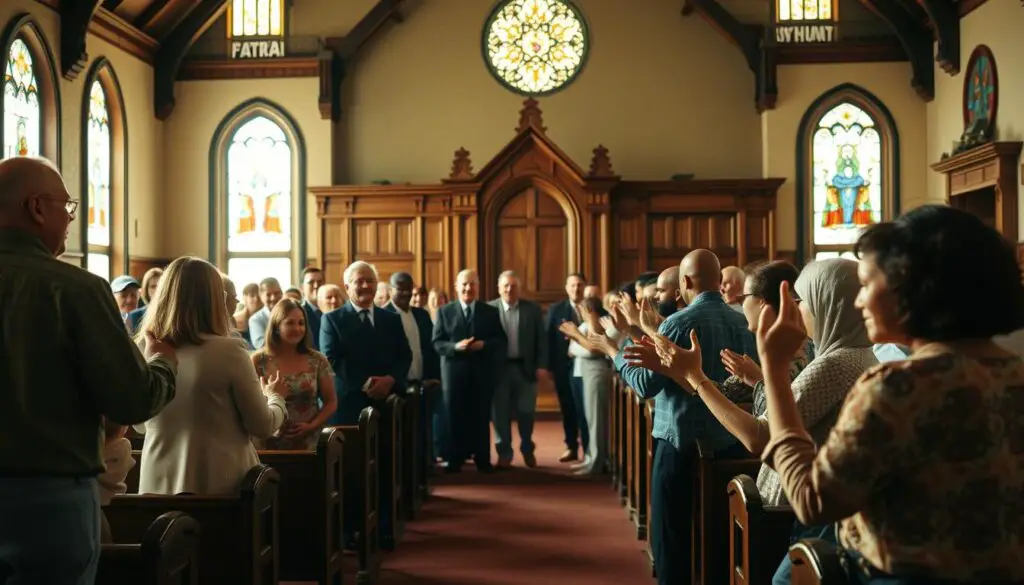
Are Baptists a Denomination? Explore the Baptist Faith


Many people wonder how Baptist traditions fit into broader Christianity. This article dives into their beliefs, practices, and how they organize themselves. Let’s uncover what makes this faith unique.

Baptist churches prioritize personal faith and local congregation independence. Their focus on baptism by immersion symbolizes a believer’s commitment to Jesus Christ. This practice reflects their view of scripture as the ultimate authority in spiritual matters.

Historically, these communities emphasize individual freedom in interpreting the Bible. Membership often requires a public declaration of faith, aligning with their dedication to intentional church participation. Shared rituals like communion serve as reminders of Christ’s sacrifice, uniting believers in worship.

Key Takeaways

  • Baptist groups operate independently, raising questions about denominational labels.
  • Core beliefs include baptism by immersion and scripture as the primary authority.
  • Jesus Christ’s teachings shape worship practices and daily life decisions.
  • Church membership often involves personal faith commitments.
  • Historical roots highlight a focus on religious freedom and local governance.
  • Communion is symbolic, reflecting shared beliefs rather than sacramental theology.

We’ll explore these topics using historical records and doctrinal insights. Whether you’re new to the subject or seeking clarity, this guide offers a friendly look at Baptist traditions in the United States. Let’s dive deeper together!

Exploring the Question: Are Baptist a Denomination

To grasp how these faith communities operate, we first need clear definitions. A denomination typically refers to a large religious group sharing doctrines under one organizational structure. But not all groups fit neatly into this framework.

Defining Denomination and Its Relevance

Most denominations have centralized leadership or creeds. However, many Baptist churches reject this model. They emphasize local congregation control instead. Each church governs itself while collaborating with others voluntarily.

Understanding the Terminology

Terms like “baptist denomination” can be misleading. While some groups use this label, others avoid it. What unites them? Shared beliefs like scripture authority and baptism by immersion.

Feature Typical Denomination Baptist Churches
Leadership Central hierarchy Local autonomy
Doctrinal Unity Required creeds Core principles only
Membership Rules Standardized Congregation-specific

This self-governance traces back to early religious freedom movements. Today, it allows flexibility in worship styles and community outreach. Whether called a denomination or network, their focus remains on personal faith and scriptural truth.

Historical Foundations of the Baptist Movement

Roots of this faith tradition stretch back to Europe’s religious upheavals. During the sixteenth century, reformers sought to break from practices they saw as unbiblical. This quest for purity led to new communities focused on personal conviction over institutional control.

Origins in the Post-Reformation Era

Early pioneers clashed with the Church of England over baptism and governance. Many rejected infant christening, arguing only consenting adults should undergo the ritual. Their views often sparked persecution, pushing groups to seek refuge abroad.

Smyth, Helwys, and Early Milestones

John Smyth’s 1609 congregation in Amsterdam marked a turning point. He baptized himself and others by immersion—a radical act at the time. Thomas Helwys, his colleague, later returned to England despite risks, founding the first permanent assembly there.

“Let them be heretics, Turks, Jews, or whatsoever, it appertains not to the earthly power to punish them.”

— Thomas Helwys, 1612
Year Event Impact
1609 Smyth’s self-baptism First adult immersion ceremony
1611 Helwys’ London church Established religious freedom advocacy
1612 Helwys’ persecution Highlighted tensions with state churches

These efforts shaped modern principles like congregational independence. By prioritizing scripture over tradition, early leaders created a blueprint still followed today. Their courage under pressure remains central to the movement’s identity.

Distinctive Beliefs and Core Tenets

Understanding core principles helps clarify what shapes their spiritual identity. Two pillars stand out: unwavering trust in scripture and reliance on divine guidance in daily life.

The Bible as the Ultimate Authority

For these communities, scripture isn’t just important—it’s non-negotiable. They view the Bible as God’s direct word, settling debates about worship or ethics. This contrasts with traditions blending church teachings with biblical interpretation.

Members often describe scripture as a “roadmap” for living. Every sermon, decision, or personal choice circles back to its pages. This focus creates unity across congregations despite diverse cultural expressions.

The Role of the Holy Spirit in Faith

Believers emphasize the holy spirit as an active force, not a distant concept. It’s seen as both a comforter and energizer, guiding individuals toward truth. This belief fuels passionate prayer and personal accountability.

Unlike groups prioritizing rituals, their worship centers on heart-led connection. The spirit’s work ensures everyone—not just leaders—can interpret scripture responsibly. This empowers members to live out their faith boldly in everyday situations.

Key differences emerge when comparing practices:

  • Membership requires personal conversion, not inherited tradition
  • Scripture trumps denominational creeds in resolving disputes
  • Spiritual growth stems from individual study, not clerical instruction

Baptism Practices: Immersion vs. Infant Baptism

What sets baptism practices apart in these faith communities? The answer lies in their commitment to conscious choice and biblical patterns. Unlike traditions that baptize infants, they reserve the ritual for those old enough to declare personal faith.

baptism immersion

Believer’s Baptism Explained

This approach requires individuals to understand salvation before undergoing baptism. Full-body immersion mirrors New Testament accounts, like Jesus’ baptism in the Jordan River. It’s seen as an outward sign of inner transformation—not a requirement for salvation, but a joyful obedience.

Symbolism and Biblical Foundations

Romans 6:4 illustrates the meaning: immersion represents dying to old ways and rising to new life. Sprinkling or infant rituals lack this vivid imagery. Early church writings show converts were baptized after professing faith, never as babies.

Practice Believer’s Baptism Infant Baptism
Age Adults/teens Newborns
Purpose Public faith declaration Family tradition
Method Full immersion Sprinkling/pouring

One pastor notes, “Water doesn’t save—it celebrates what Christ already did.” This mindset keeps the focus on personal commitment rather than ritual. Communities view baptism as a starting line, not a finish line, for spiritual growth.

Church Governance and Congregational Autonomy

How do faith communities make decisions without a central authority? The answer lies in a unique system prioritizing local voices over top-down control. This approach shapes everything from budget choices to spiritual direction.

The Principle of Congregational Decision Making

Each church operates like a self-governing family. Members vote directly on key matters—from selecting leaders to approving outreach programs. This model traces back to early 17th-century communities that rejected bishops or synods.

Three pillars support this system:

  • Local autonomy: No external body overrules a congregation’s choices
  • Member participation: Every baptized adult has equal voting rights
  • Shared accountability: Decisions made collectively require follow-through

Historical records show Rhode Island’s First Baptist Church (1638) let members debate doctrines openly. Today, many congregations use monthly business meetings to discuss issues like building repairs or mission trips.

Governance Model Centralized Systems Congregational Systems
Leadership Selection Appointed by hierarchy Elected by members
Budget Approval Head office control Local vote required
Doctrine Changes Top-down decrees Congregation-wide study

The separation of church and state principle strengthens this independence. Unlike state churches, these communities avoid government interference in spiritual matters. A 19th-century minister famously declared: “Our only king is Christ—no earthly power dictates our worship.”

Modern examples include disaster relief efforts. When hurricanes strike, congregations quickly vote to send volunteers without waiting for external approvals. This agility reflects their commitment to hands-on faith in action.

Examining Worship and Communal Practices

Gathering together shapes spiritual life in meaningful ways. Central to these gatherings is a shared meal rooted in ancient tradition—a practice that unites hearts and minds across generations.

Understanding the Lord’s Supper and Communion

Communion services focus on reflection and gratitude. Unlike rituals seen as sacraments, this practice symbolizes Christ’s sacrifice rather than imparting divine grace. Members often describe it as a living memorial, connecting them to biblical events through bread and juice.

Key aspects of these services include:

  • Voluntary participation open to all believers
  • Simple elements representing Christ’s body and blood
  • Moments of silent prayer and hymn singing

One pastor explains: We’re not re-enacting the Last Supper—we’re celebrating what it means today. This approach creates space for personal reflection while fostering community bonds.

Practice Open Communion Closed Communion
Participation All believers welcome Members only
Frequency Monthly or quarterly Weekly
Purpose Remembrance Sacramental grace

Churches often pair communion with teaching about Christ’s teachings. This combination helps people connect ancient truths to modern life. The emphasis remains on shared experience rather than ritual obligation.

Visitors frequently note the warm atmosphere during these services. By keeping the focus on collective remembrance, communities create welcoming spaces for spiritual exploration.

Diverse Baptist Denominations and Associations

The Baptist tradition in America branches into several distinct groups, each with unique priorities. While sharing core beliefs like scripture authority, these communities differ in governance and cultural engagement. Let’s explore three major networks shaping this faith landscape.

Southern Baptist Convention and Its Impact

Founded in 1845, the Southern Baptist Convention (SBC) ranks as America’s largest Protestant group. With over 13 million members, it strongly emphasizes evangelism and conservative theology. Key features include:

  • Centralized funding for missions through cooperative programs
  • Annual meetings where messengers vote on doctrinal stances
  • Historical ties to the American South, though now nationally active

The SBC operates seminaries and disaster relief teams worldwide. Recent debates focus on social issues like racial reconciliation and leadership roles for women.

American Baptist and National Baptist Distinctions

American Baptist Churches USA takes a more progressive approach, ordaining women and advocating for social justice. Their 1.2 million members prioritize interfaith dialogue and local ministry flexibility.

Meanwhile, the National Baptist Convention, USA, Inc. serves as the largest African-American Baptist body. Founded in 1895, it combines gospel preaching with community empowerment programs. Their annual gatherings draw over 30,000 attendees for worship and civil rights discussions.

Group Founded Membership Key Focus
Southern Baptist 1845 13.2 million Global missions
American Baptist 1907 1.2 million Social justice
National Baptist 1895 5 million Civil rights advocacy

These associations demonstrate how shared beliefs adapt to diverse contexts. Through groups like the Baptist World Alliance, they collaborate on global humanitarian projects while maintaining local autonomy.

Membership, Discipleship, and Community Engagement

Stepping into a faith community involves both personal commitment and shared values. For those exploring participation, understanding expectations helps clarify what spiritual growth looks like in practice.

Baptist church membership process

The Process of Joining a Baptist Church

Becoming a recognized member typically starts with baptism by immersion. This public declaration signals alignment with core beliefs. Many congregations require completing membership classes covering scripture interpretation and community responsibilities.

Some churches ask candidates to share their faith journey with elders. This ensures alignment with shared values before voting occurs. New believers often receive mentorship to navigate early spiritual challenges.

Discipleship, Accountability, and Growth

Ongoing growth involves structured learning and peer support. Weekly small groups create spaces for people to discuss life applications of biblical teachings. Many communities use:

  • Quarterly spiritual check-ins with leaders
  • Rotating accountability partners
  • Service hour requirements for active membership

One member notes: Our discipleship program isn’t about rules—it’s about walking together through life’s ups and downs. This approach fosters deep connections while maintaining personal responsibility.

Discipleship Tool Frequency Purpose
Bible study groups Weekly Scripture application
Mentorship pairs Monthly Personal guidance
Service projects Quarterly Community impact

Regular worship gatherings strengthen bonds between believers. Many churches organize neighborhood cleanups or food drives, blending faith with practical care. These efforts help people live out their convictions beyond Sunday services.

Modern-Day Baptist Practices in the United States

Today’s faith communities blend time-honored traditions with fresh approaches to ministry. Vibrant gatherings now feature modern music, interactive sermons, and tech-driven outreach—all while maintaining core scriptural foundations.

Blending Heritage With Innovation

Many congregations use multimedia presentations during services. LED screens display lyrics alongside hymns, while live bands mix guitars with classic organ melodies. This fusion creates spaces where multiple generations feel connected.

Community involvement remains central. Over 14 million members participate in food pantries, tutoring programs, and disaster relief efforts. One pastor notes: Our mission isn’t confined to Sunday mornings—it’s about showing love through action every day.

Traditional Elements Modern Adaptations Community Impact
Hymn singing Worship bands Local food drives
Sunday school Online Bible studies Homeless shelters
Revival meetings Social media campaigns Youth mentorship

Small groups often meet in coffee shops or homes, fostering deeper connections. These gatherings balance structured Bible study with open discussions about current issues. Digital tools like prayer request apps keep members engaged between meetings.

Outreach initiatives frequently partner with schools and businesses. A Texas-based church recently launched a job training program, helping 200 residents gain employment skills. Such efforts demonstrate how timeless values meet contemporary needs.

Conclusion

Exploring Baptist traditions reveals a vibrant tapestry of faith anchored in scripture and local freedom. Communities maintain self-governance through congregations, prioritizing believer’s baptism and biblical authority. These principles unite diverse groups while allowing cultural adaptation.

Major bodies like the Southern Baptist Convention and American Baptist Churches USA demonstrate this balance. Though differing in outreach methods, both emphasize evangelism and service. Historical roots shaped their commitment to religious liberty—a legacy visible in modern ministries addressing social needs.

From colonial-era dissenters to today’s tech-savvy churches, core tenets remain timeless. Shared practices like immersion baptism and communion create continuity across generations. Yet each assembly adapts worship styles to engage their community effectively.

Curious about these traditions? Visit local churches to experience their welcoming spirit firsthand. Whether through volunteer projects or Sunday services, you’ll discover how ancient beliefs thrive in contemporary settings.

FAQ

What makes Baptist churches distinct from other Christian groups?

Congregations emphasize believer’s baptism by immersion, local church autonomy, and Scripture as the ultimate authority. Unlike some traditions, they reject infant baptism, focusing on personal faith decisions.

How do Baptists view the relationship between church and government?

Historically, they advocate for separation of church and state, rooted in Thomas Helwys’ writings. This principle protects religious freedom and prevents state interference in spiritual matters.

Why is immersion central to Baptist baptism practices?

Immersion symbolizes Jesus’ death, burial, and resurrection, reflecting New Testament examples. It represents a public declaration of faith rather than a sacrament for salvation.

Are there different types of Baptist denominations?

Yes! Groups like the Southern Baptist Convention, American Baptist Churches, and National Baptists vary in traditions and governance. Some prioritize missions, while others focus on social justice or local ministry.

How does congregational autonomy shape decision-making?

Each church independently governs itself under Christ’s leadership. Members vote on matters like budgets, leadership roles, and doctrines without external hierarchies directing choices.

What role does the Holy Spirit play in Baptist teachings?

The Spirit guides individuals in understanding Scripture, convicts hearts, and empowers believers for service. However, practices like speaking in tongues aren’t universally emphasized across congregations.

Can anyone participate in the Lord’s Supper at a Baptist church?

Typically, communion is reserved for baptized believers as a symbolic act of remembrance. Practices vary, but it’s seen as a unifying expression of faith, not a means of grace.

How do modern Baptist churches engage with their communities?

Many blend traditional hymns with contemporary worship styles. Outreach programs, disaster relief, and partnerships with groups like the Baptist World Alliance reflect their commitment to global and local service.

What steps are involved in joining a Baptist congregation?

After professing faith in Christ, individuals often undergo believer’s baptism and participate in membership classes. Churches may vote to accept new members, emphasizing shared beliefs and accountability.

Baptist Religion: What You Need to Know


Imagine a spiritual movement born from a desire for personal connection with the divine. This belief system, rooted in early American history, emphasizes individual choice in matters of faith. Its origins trace back to 17th-century reformers who challenged rigid religious structures, prioritizing direct relationships with God over formal rituals.

Central to this tradition is the practice of baptism for those old enough to consciously affirm their beliefs. Unlike infant ceremonies, this act symbolizes a voluntary commitment to spiritual growth. Communities formed around shared values, creating spaces where members could worship freely and support one another.

These groups flourished in colonial America, particularly as settlers sought religious independence. By the 18th century, their influence spread rapidly across the colonies. Today, congregations remain vital centers for fellowship, service, and collective worship nationwide.

Understanding this tradition helps explain its enduring role in shaping cultural values. From civil rights movements to local charity work, its impact extends beyond Sunday services. We’ll explore how historical principles adapt to modern life while maintaining core ideals.

Key Takeaways

  • Originated from 17th-century reformers seeking personal spiritual connections
  • Practices believer’s baptism as a conscious declaration of faith
  • Local congregations serve as hubs for worship and community support
  • Emphasizes individual relationships with the divine through Jesus Christ
  • Played significant role in American religious and social development
  • Balances traditional values with adaptability to contemporary needs

Overview of Baptist Religion

Central to this Christian group is the idea that faith begins with individual commitment. Members join through personal choice rather than inherited tradition, reflecting a conscious decision to follow spiritual principles. This approach shapes every aspect of their practice, from worship styles to community engagement.

Definition and Scope

The tradition centers on believer’s baptism, a public declaration made by those old enough to understand its significance. Unlike infant ceremonies, this immersion ritual symbolizes a voluntary pledge to live by specific teachings. Communities gather regularly for shared worship, Bible study, and mutual support, creating tight-knit networks.

Core Values and Beliefs

Autonomy of local congregations allows each group to address members’ needs while maintaining core Baptist beliefs. Every participant takes personal responsibility for their spiritual journey, guided by scripture rather than hierarchical structures. These congregations often collaborate on outreach projects while preserving self-governance.

Historical records show early advocates prioritized symbolic communion practices, viewing them as memorials rather than sacraments. These distinct perspectives continue to shape how modern groups approach faith and service. Upcoming sections will explore how these foundations translate into daily practices and community impact.

Understanding baptist which religion

Christian groups often share core beliefs, but practices vary widely. One tradition stands out for its emphasis on personal choice and scriptural authority. Let’s explore how these communities differ from others while staying rooted in ancient teachings.

Baptist vs Catholic baptism practices

Distinctions from Other Christian Denominations

Unlike some groups that baptize infants, these churches reserve the ritual for older individuals. This practice reflects their view of faith as a conscious decision, not inherited through family tradition. Many trace this approach to the New Testament’s accounts of adult baptisms.

Another key difference lies in church leadership. While the Catholic Church has a centralized hierarchy, local congregations govern themselves. This structure mirrors the early church’s model, where each community managed its affairs independently.

Practice Baptist Churches Catholic Church Other Denominations
Baptism Age Adults/Teens Infants Varies (often infants)
Communion Meaning Symbolic Memorial Sacramental Mixed interpretations
Authority Source Local Congregation Papal Hierarchy Regional Councils

Worship styles also show contrasts. Services often prioritize scripture readings and sermons over formal liturgies. This focus aligns with their belief in direct engagement with biblical texts rather than ritual repetition.

Members typically describe their faith as relational rather than transactional. As one pastor notes, “We emphasize walking with God daily, not just during ceremonies.” This mindset shapes how they approach community service and spiritual growth.

Historical Roots and Evolution

How did a small group of reformers spark a global movement? The answer lies in 17th-century England, where religious dissenters challenged state-controlled worship. Their courage laid the foundation for communities valuing personal faith and self-governance—principles that still resonate today.

Origins in the English Separatist Movement

Seeking freedom from royal oversight, early leaders like John Smyth fled to Amsterdam in 1608. There, they formed the first congregation practicing believer’s baptism by immersion. This radical idea—that churches should operate independently from governments—became a cornerstone of their identity.

By 1612, Thomas Helwys brought these ideas back to England, risking persecution. His writings demanded separation of church and state, declaring, “The king is mortal like us—he has no power over souls.” This bold stance shaped their survival through centuries of conflict.

The Influence of Early Puritan Dissenters

Puritan reformers added fuel to the fire, advocating for simpler worship and local decision-making. While they initially sought to “purify” the Church of England, many eventually broke away entirely. This mix of ideals created a tradition emphasizing:

  • Voluntary membership based on personal conviction
  • Congregational autonomy over centralized control
  • Scripture as the ultimate authority
Era Development Modern Impact
1600s First self-governing congregations form Local churches still set own policies
1700s Advocacy for religious liberty in America Continued support for church-state separation
1905 Baptist World Alliance founded 45 million members worldwide collaborate on missions

Groups like the Southern Baptist Convention (founded 1845) grew from these roots, becoming major forces in American spiritual life. Yet they maintain that historical spirit of independence—proving old traditions can thrive in new centuries.

Key Beliefs, Traditions, and Practices

What makes spiritual practices meaningful? For many, it’s the way symbolic acts connect beliefs to daily life. Two traditions stand out as cornerstones of faith expression—one involving water, the other bread and cup.

immersion baptism symbolism

Believer’s Baptism by Immersion

Full-body immersion in water marks a person’s public commitment to their spiritual path. This practice mirrors ancient rituals described in scripture, symbolizing washing away old habits and rising to new life. Unlike infant ceremonies, it requires participants to be old enough to understand their choice.

Leaders often explain, “The water isn’t magic—it’s a picture of inner transformation.” Local congregational governance allows each community to decide baptism details while keeping core symbolism intact.

The Lord’s Supper and Communion Practices

Shared meals of bread and juice commemorate a pivotal moment in spiritual history. These elements represent Christ alone as the source of hope, recalling his death and resurrection’s promise. Most groups view this as a memorial rather than a mystical event.

  • Conducted monthly or quarterly
  • Open to all committed participants
  • Focuses on reflection and gratitude

Modern adaptations include gluten-free options or outdoor services, but the heart remains unchanged. Through these practices, communities reinforce shared values while honoring personal journeys.

Baptist Church Structure and Membership

Building a spiritual home starts with shared responsibility. Members shape their community through active participation rather than passive attendance. This approach creates vibrant spaces where everyone contributes to collective growth.

How Congregational Governance Works

Each local group operates independently under congregational governance. Every adult member votes on major decisions—from budget approvals to leadership selection. This structure reflects the priesthood of all believers principle, where spiritual authority belongs to the entire community.

Leadership Model Decision Makers Example
Congregational All Members First Baptist Church votes on pastoral hires
Hierarchical Bishops/Councils Diocesan church appointments
Elder-Led Selected Leaders Presbyterian session decisions

Joining and Growing Together

Membership begins with a public faith declaration followed by immersion baptism. Newcomers often join discipleship classes to explore core teachings. “We’re all students and teachers here,” shares a member from an American Baptist congregation in Ohio.

The work extends beyond Sunday services. Food pantries, tutoring programs, and overseas missions let members live their faith practically. Modern American Baptist groups balance tradition with fresh approaches—like streaming services for homebound participants.

Through this collaborative model, the priesthood of believers becomes more than a concept—it’s daily practice. Whether serving at a historic First Baptist Church or a new plant, everyone plays a role in their community’s mission.

The Meaning of Baptism and Its Symbolism

Why does a simple act of immersion hold such deep meaning for millions? This sacred practice represents more than water—it’s a visible journey from conviction to commitment. Rooted in ancient texts, its power lies in connecting personal faith with communal celebration.

Scriptural Foundations in the New Testament

The New Testament describes baptism as a person’s voluntary response to spiritual awakening. Acts 2:38 urges believers to “repent and be baptized,” linking the act to freedom from past burdens. Romans 6:4 compares immersion to resurrection—emerging from water symbolizes new life through salvation.

Each local congregation upholds this tradition as both witness and participant. As one Texas pastor explains, “We’re not just watching—we’re promising to walk with them.” Modern ceremonies might occur in rivers or indoor pools, but all honor the authority scripture places on conscious choice.

  • Historical: Early Christians baptized in natural water sources
  • Contemporary: Outdoor services often include family testimonies

This practice embodies spiritual freedom—no one forces the decision. Whether in a packed church or quiet lake, the moment belongs entirely to the person making their pledge. Through baptism, abstract beliefs become tangible, uniting individual journeys with shared hope.

The Impact of Baptist Faith in the United States

The story of American religious freedom is deeply intertwined with grassroots movements. Communities valuing individual conscience laid groundwork for policies protecting diverse beliefs. Their efforts echo through centuries, shaping laws and social initiatives.

Role in Separating Church and State

Early advocates like Roger Williams fought against government-controlled worship. His 1636 Rhode Island colony became a safe space for dissenters. This principle later inspired foundational documents, including the First Amendment.

John Leland, an 18th-century preacher, famously argued: “Truth favors no majority—it stands alone.” His work with James Madison ensured religious freedom became law. Today, many churches continue defending this separation through legal advocacy and education programs.

Missionary Work and Social Influence

From Appalachian towns to African villages, outreach programs reflect core values. The Southern Baptist Convention’s disaster relief teams serve globally, providing food and medical care. Domestic efforts include literacy programs and prison ministries.

Consider these impacts:

  • Founded 15+ historically Black colleges during Reconstruction
  • Spearheaded 20th-century civil rights initiatives
  • Operate 4,500+ food banks nationwide

As one volunteer shared, “We don’t just preach love—we haul supplies and build homes.” This hands-on approach keeps communities engaged with the world’s needs while honoring their heritage.

Conclusion

At the heart of every spiritual journey lies the power of personal choice. From 17th-century reformers to modern congregations, communities thrive by balancing tradition with adaptability. Core principles like faith alone in Christ remain anchors, while outreach evolves to meet each day’s challenges.

Consider a local food pantry run by volunteers—one example of values in action. Here, a man rebuilding his life might find hope, embodying the faith Jesus modeled through service. These efforts reflect scripture’s call to love neighbors, guided by faith alone in divine grace.

Each day offers fresh ways to live out convictions. Whether mentoring youth or supporting missions, individuals honor shared heritage while forging new paths. This journey, rooted in faith alone, transforms both hearts and communities.

Curious about another example? Explore how these principles shape lives today. Whether you’re a seasoned man of conviction or new to the path, faith Jesus inspires invites all to grow. Discover how timeless truths meet modern life—one step, one choice, one faith alone moment at a time.

FAQ

How do congregational governance models shape decision-making?

Local congregations operate independently, prioritizing Scripture and member input. Each church chooses leaders, manages budgets, and sets missions without external hierarchy, reflecting a commitment to autonomy.

Why is immersion central to baptism practices?

Full-body submersion symbolizes spiritual rebirth and mirrors New Testament examples like Jesus’s baptism. It represents cleansing from sin and public commitment to faith in Christ.

What role did early dissenters play in shaping traditions?

English Separatists and Puritans rejected state-controlled worship, advocating for religious freedom and voluntary faith. Their resistance laid groundwork for principles like soul liberty and separation of church authority.

How does missionary work influence global communities?

Organizations like the Southern Baptist Convention support evangelism, education, and disaster relief worldwide. These efforts emphasize sharing the Gospel while addressing social needs like poverty and healthcare.

What distinguishes communion practices from other denominations?

The Lord’s Supper is viewed as a symbolic memorial of Christ’s sacrifice, not a sacramental ritual. Participation is open to all believers as an act of remembrance and spiritual reflection.

How did Baptists contribute to separating church and state?

Advocates like Roger Williams fought against government interference in worship, influencing the First Amendment. This legacy promotes individual conscience and prevents state-imposed religious practices.

Are membership requirements uniform across congregations?

While most require a personal profession of faith in Jesus, specifics vary. Some churches emphasize baptism by immersion, while others focus on discipleship programs or doctrinal alignment.

Can Baptists Be Reformed? Exploring the Debate


What defines a Reformed Baptist? This question sparks lively discussions among theologians and churchgoers alike. While both Baptists and Reformed traditions trace their roots to the Protestant Reformation, their doctrinal paths diverge in key areas. These differences fuel debates about identity and theological alignment.

Many churches claim the Reformation’s legacy, but interpretations vary widely. For example, Reformed theology emphasizes covenant theology and predestination. Baptists, however, prioritize believer’s baptism and local church autonomy. These distinctions create tension when labeling groups as “Reformed.”

Terms like Reformed Baptists further complicate the conversation. Some argue this label bridges the gap, blending Baptist practices with Calvinist doctrines. Others see it as a contradiction, citing core disagreements over sacraments and church governance. This clash of ideas keeps the debate alive.

Historical context adds layers to the discussion. Early Reformers like Calvin and Luther shaped doctrines that Baptists later adapted—or rejected. Today, congregations navigate these nuances while seeking unity in a divided landscape. The next sections will unpack these themes in detail.

Key Takeaways

  • The debate centers on whether Baptist beliefs align with Reformed theology.
  • Both traditions share Reformation roots but differ on baptism and covenant theology.
  • Terms like “Reformed Baptists” reflect attempts to merge distinct doctrines.
  • Doctrinal disagreements include predestination and church authority.
  • Historical influences shape modern interpretations of these labels.

Introduction to the Reformation Debate

The 16th century’s religious upheaval reshaped how Christians viewed authority. Central to this shift was the word of God, which reformers like Luther and Calvin elevated above tradition. Yet disagreements over its interpretation split Protestants into competing camps. These divisions still fuel modern theological discussions.

Overview of the Historical Context

Reformed thinkers and early Baptist groups both claimed the word of God as their foundation. However, their approaches diverged sharply. The new covenant became a flashpoint—Reformed theology saw it as extending Old Testament promises, while dissenters viewed it as a radical break requiring believer’s baptism.

Documents like the 1689 Baptist confession codified these beliefs, emphasizing local church autonomy. This text became a rallying point for communities rejecting state-mandated religious practices. It also deepened the divide over sacraments like infant baptism, which many reformers defended using early church writings.

Key Questions and User Intent

Why does infant baptism remain contentious? Early Christians practiced household baptisms, but critics argue this lacks explicit scriptural support. Others ask how the new covenant redefines relationships between believers and God. These debates reveal deeper tensions about tradition versus word of God-centric faith.

For seekers exploring these topics, clarity often starts with historic texts. The Baptist confession, for instance, offers a window into how identity formed amid Reformation-era conflicts. Its emphasis on voluntary faith contrasts with Reformed views of covenantal continuity.

Historical Context: Baptists vs. Reformed Traditions

The Reformation era wasn’t just about theology—it reshaped how communities worshipped and organized. At its core, disagreements over the church’s structure and sacraments created lasting divisions. Leaders like Zwingli and Martin Bucer clashed with emerging groups who rejected state-aligned religious practices.

Origins and Divergence during the Reformation

Early reformers prioritized uniformity, but dissenters demanded radical changes. The Basel Confession (1534) defended infant baptism, calling it a sign of covenantal membership. Meanwhile, grassroots movements practiced believer’s immersion, viewing it as a public declaration of faith.

These contrasting approaches split congregations. Reformed churches maintained liturgical traditions tied to civic life. Free church advocates, however, saw worship as a voluntary gathering of committed believers. This tension influenced how doctrines were preserved—or rewritten.

Covenant theology deepened the divide. Reformers taught that God’s promises flowed from Abraham to modern churches. Critics argued the New Testament established a distinct covenant, requiring personal faith before baptism. Historical records show mutual accusations of heresy over these positions.

By the 17th century, documents like the Baptist Confession formalized these differences. They rejected state interference, cementing local autonomy as a hallmark of their identity. This shift created parallel traditions that still shape debates today.

Can Baptists Be Reformed? Exploring “can baptists be reformed”

Theological identity often hinges on how communities interpret divine principles. At the heart of this debate lies competing views of grace—is it irresistibly given to the elect, or does human response play a role? Historical confessions reveal stark contrasts in how each tradition answers this question.

Reformed thinkers emphasize God’s sovereignty in salvation, a doctrine rooted in Augustine’s teachings. Their theology views grace as transformative and unconditional. Conversely, some groups stress human accountability, framing grace as a collaborative process requiring faith-driven obedience.

The word serves as both foundation and battleground. For many, Scripture’s authority remains unquestioned—yet interpretations vary widely. One camp sees baptism as a covenantal sign for infants, while others reserve it for professing believers. These differences shape worship practices and doctrinal priorities.

How do people self-identify amid these tensions? Surveys show 42% of congregants prioritize historical labels, while 58% favor descriptive terms like “gospel-centered.” This split reflects ongoing negotiations between tradition and personal conviction.

Doctrinal Focus Reformed View Alternative Perspective
Predestination Unconditional election Human response required
Baptism Covenant sign for infants Believers’ public declaration
Scriptural Authority Governs all church practices Guides personal faith decisions

These distinctions matter because they shape how communities engage with Scripture and each other. While some seek unity through shared Reformation roots, others argue core differences make full alignment impossible. The conversation continues evolving as new generations reinterpret historical texts.

Theological Foundations of Reformed Baptists

At the heart of Reformed Baptist identity lie distinct theological convictions shaped by Scripture and Reformation thought. These doctrines grace communities with a framework for worship, membership, and biblical interpretation. Central to this system is the Second London Confession (1689), which codifies beliefs about salvation, faith, and church practice.

reformed baptist doctrines

Core Doctrines and Confessional Statements

The confession outlines five pillars: Scripture’s supremacy, God’s sovereignty in salvation, believers’ baptism, local church autonomy, and Christ’s imminent return. Unlike broader Reformed traditions, it reserves baptism for professing believers, viewing it as a response to faith rather than a covenantal birthright.

Theologian B.B. Warfield argued these positions reflect a “purified Calvinism,” blending Reformation tenets with Baptist distinctives. For instance, the doctrines grace—total depravity and unconditional election—are affirmed, but sacraments are redefined as symbolic acts for committed believers.

Influence of the Reformation Figures

John Calvin’s emphasis on God’s sovereignty deeply shaped these communities, yet early leaders like William Kiffin rejected state-mandated infant baptism. This tension birthed a hybrid tradition: Calvinist soteriology paired with Baptist ecclesiology.

Modern groups uphold these faith principles through doctrinal statements on preaching, prayer, and church discipline. Such things ensure alignment with historic confessions while addressing contemporary challenges. By grounding faith in both Scripture and Reformation heritage, these communities navigate theological debates with clarity.

Covenant Theology and the Baptists’ Perspective

Understanding covenant theology unlocks how many churches structure their communities. This framework shapes everything from worship rhythms to who belongs in the congregation. At its core, it answers how God relates to people across biblical history.

The Role of the New Covenant

Central to this view is the belief that Christ’s work established a new covenant. Unlike older traditions, many groups see this as a radical shift requiring voluntary membership. The 1689 Baptist Confession states: “The members of these churches are saints by calling, visibly manifesting obedience to Christ.”

Church practice reflects this through believer’s baptism and regenerate membership. Leaders historically required testimonies of faith before allowing participation. This safeguarded church purity while emphasizing personal commitment over inherited status.

Worship day observance also ties to covenantal thinking. Most congregations gather on Sundays, viewing it as the New Testament’s “Lord’s day.” This practice honors Christ’s resurrection while distancing from older Sabbath laws.

Key membership criteria include:

  • Public profession of faith
  • Baptism by immersion
  • Commitment to church discipline

These standards show how day-to-day church life flows from theological convictions. As one pastor noted, “Our practice isn’t tradition—it’s our covenant with God and each other.”

Infant Baptism: A Point of Disagreement

Baptism practices reveal a deep divide in how groups understand spiritual life. Many argue the ritual should only follow a personal faith confession, symbolizing rebirth into Christ’s life. Critics of infant baptism note Scripture never explicitly uses the term for newborns—a gap fueling centuries of debate.

Advocates for believer’s baptism emphasize its role as a public declaration. They cite passages like Acts 2:38, where repentance precedes the term “baptism.” For them, water rituals mirror inner transformation, not inherited covenant status. This view ties the sacrament to conscious decisions rather than family lineage.

Others interpret covenantal continuity differently. Historical records show early church leaders like Augustine baptizing infants to cleanse original sin. This term “covenant child” persists in some traditions, viewing baptism as a grace-filled pledge to nurture faith over time.

Perspective Key Argument Scriptural Emphasis
Believer’s Baptism Marks new life in Christ Acts 8:36-38 (personal confession)
Infant Baptism Sign of covenantal promise Genesis 17:7 (household inclusion)
Neutral Scholars Cultural context shapes term usage 1 Corinthians 7:14 (household holiness)

These differences shaped church history. The 16th-century Anabaptists faced persecution for rejecting infant rites, while others like Luther defended them as communal blessings. Today, 33% of U.S. Protestants practice infant baptism—down from 52% in 2000, reflecting shifting views on personal life commitments.

Modern debates often hinge on whether baptism initiates or confirms life changes. While others seek middle ground, most traditions maintain distinct positions rooted in their reading of biblical terms.

Insights from Reformed Confessions

Reformation-era confessions offer a roadmap for understanding theological priorities. Documents like the Basel Confession (1534) and Tetrapolitan Confession (1530) blended biblical law with early church tradition. These texts became blueprints for communities navigating post-Reformation challenges.

Exegetical Support from Historic Texts

The Basel Confession grounds infant baptism in Old Testament circumcision practices. It argues baptism fulfills Abrahamic covenant promises under the law. Similarly, the Tetrapolitan Confession cites Acts 2:39 to link baptism to household inclusion—a view rooted in apostolic tradition.

Scholars note these confessions prioritize continuity with Israel’s covenants. One 16th-century theologian wrote, “The waters of baptism carry Noah’s ark into the church.” This symbolic approach shaped how many interpreted New Testament sacraments.

Zwingli and Bucer on Baptism

Ulrich Zwingli saw baptism as a public pledge to communal tradition. He compared it to Swiss citizenship oaths—outward signs of belonging. Martin Bucer expanded this idea, calling baptism “a seal of God’s eternal covenant under the law of grace.”

Their writings influenced later confessional statements. For example, the Second Helvetic Confession (1566) merged Zwingli’s symbolism with Bucer’s covenantal focus. These blended views still inform debates about sacraments and tradition today.

Anabaptist Influence and Its Relation to Reformed Thought

The paths of Anabaptists and Reformed thinkers diverged sharply over visions of Christian community. While both groups emerged from Reformation-era reforms, their understanding of the way believers should live out faith split dramatically. Anabaptists prioritized radical discipleship, often rejecting state ties and infant baptism. Reformed traditions, however, sought to reform existing church structures through doctrinal precision.

anabaptist redemption way

Comparison with Anabaptist Redemptive History

Anabaptist writings framed salvation as a transformative journey requiring separation from worldly systems. Their 1527 Schleitheim Confession called believers to “live apart from the wickedness of the world”—a stark contrast to Reformed engagement with civic life. This way of radical obedience often led to persecution, shaping their identity as a suffering remnant.

Key moments in history highlight these tensions. After the Münster Rebellion (1534-35), Anabaptists distanced themselves from political power, focusing instead on communal ethics. Reformed leaders like Calvin criticized this approach, arguing it neglected God’s sovereignty over all spheres.

Perspective Redemption Salvation Historical Focus
Anabaptist Nonviolent discipleship Ethical transformation Martyrs’ legacy
Reformed Doctrinal alignment Divine sovereignty Institutional reform

Early Anabaptist hymns and martyr accounts reveal a way of salvation rooted in imitation of Christ’s suffering. These narratives still inspire modern peace churches, while Reformed communities emphasize teaching God’s grace through predestination. Such differences remind us how history shapes today’s theological debates.

Distinctives in Worship and Church Membership

Worship practices and church structure often reveal a community’s deepest convictions. For many congregations, these elements aren’t mere traditions—they’re expressions of theological identity shaped by Scripture and history.

Regulative Principle in Worship

The regulative principle guides how services are designed. Rooted in the Westminster Confession, it teaches that worship must include only what Scripture commands. This focus on biblical fidelity shapes everything from prayer formats to hymn selections.

Central to this approach is the glory of God. Services prioritize Scripture reading, preaching, and sacraments over entertainment-driven elements. One pastor explained, “When we magnify God’s glory, we don’t need artificial hype.”

Regenerate Membership and Church Order

Membership standards reflect this theological rigor. Unlike open-door models, many churches require credible professions of faith before admitting members. This practice, called regenerate membership, aims to preserve doctrinal purity.

Historical examples like London’s New Park Street Chapel showcase this movement. Under Charles Spurgeon, the church grew rapidly while maintaining strict membership covenants. Leaders regularly reviewed members’ spiritual growth and adherence to core beliefs.

Modern congregations continue this legacy. By blending historic confessions with clear membership expectations, they create spaces where God’s glory remains central. As one elder noted, “Our movement isn’t about rules—it’s about guarding the gospel’s integrity.”

Preaching and the Centrality of the Word

Preaching styles often reveal what communities value most. For generations, expository methods—unpacking Scripture verse by verse—have anchored worship services. This approach prioritizes biblical context over personal stories, letting the text speak clearly.

Importance of Expository Preaching

Through the years, expository preaching has shaped spiritual growth in countless congregations. Leaders like Charles Spurgeon championed this style, calling it “the truest way to honor God’s message.” His sermons, rich in scriptural depth, still inspire modern teachers.

Historic confessions reinforce this focus. The Westminster and 1689 documents both emphasize Scripture’s supreme authority. By aligning sermons with these texts, pastors connect modern listeners to centuries-old truths.

Debates arise when addressing topics like infant dedication. Some argue sermons should focus on adult conversion narratives. Others include covenantal promises to families, reflecting diverse views on early faith formation.

  • Timeless relevance: Expository preaching bridges ancient texts and contemporary issues
  • Confessional fidelity: Historic documents guide sermon structure and content
  • Audience focus: Balancing doctrinal depth with practical application

Today’s preachers like David Platt and Nancy Guthrie continue this legacy. They model how deep scriptural exploration can ignite passion for God’s word—proving expository methods remain vital across generations.

Modern Debates and Reformation Movements

Today’s faith communities wrestle with balancing tradition and cultural shifts. Recent surveys show 68% of congregations face questions about their identity in an increasingly secular world. This tension sparks fresh discussions about worship styles, membership standards, and theological priorities.

Redefining Community Boundaries

One major debate centers on baptism practices. While some groups maintain strict believer-only immersion, others explore welcoming families with infants through dedication ceremonies. A 2023 study found 29% of churches now offer hybrid approaches, blending historic convictions with pastoral flexibility.

The concept of church as God’s house also evolves. Modern congregations experiment with multi-use spaces—coffee shops during weekdays, worship centers on Sundays. This shift reflects a desire to make sacred spaces feel accessible without compromising reverence.

  • Historic emphasis on doctrinal purity vs. modern calls for inclusivity
  • Growing interest in intergenerational worship models
  • Digital platforms reshaping how communities gather as God’s house

These trends mirror 17th-century debates about church identity. Just as early leaders drafted confessions to clarify beliefs, today’s pastors create “vision statements” to navigate cultural pressures. The challenge remains: how to stay rooted while engaging new generations.

Reformed Baptists in the United States: Trends and Influences

Recent shifts in American religious life highlight renewed interest in historic doctrinal standards. Churches increasingly adopt confessions like the 1689 Baptist Confession to clarify beliefs about salvation, baptism, and community life. This movement bridges past and present, reshaping how congregations engage with theology.

Influence of Confessional Revival

Modern leaders like John Piper champion confessional clarity through initiatives such as Together for the Gospel. Their work emphasizes covenant theology’s role in church identity—viewing baptism as a new covenant sign distinct from Old Testament circumcision. This stance creates clear differences from broader Baptist traditions that prioritize individual experience over covenantal frameworks.

Southern Baptist Theological Seminary’s 2021 statement reflects this trend. It affirms the 1689 Confession while addressing modern questions about children in church life. Unlike early reformers who baptized infants, these communities dedicate children during worship, affirming family discipleship without sacramental rites.

Doctrinal Focus American Reformed Baptists Other Baptist Groups
Covenant Theology Emphasizes continuity with biblical covenants Focuses on personal conversion narratives
Baptism Believer’s immersion as covenant sign Varies: open to diverse methods
Children’s Role Dedication ceremonies, catechism classes Often limited to Sunday school programs

These differences extend to education. Many churches now publish catechisms for children, blending Reformed theology with age-accessible language. This approach mirrors 16th-century reformers’ efforts to teach covenant promises while rejecting infant baptism’s link to circumcision.

Global Perspectives on Reformed and Baptist Traditions

Faith communities worldwide are reshaping Reformation-era ideas to fit local contexts. From Brazilian megachurches to Swiss house gatherings, distinct groups adapt historic doctrines while preserving core biblical standards. This global exchange reveals both unity and diversity in applying theological principles.

Comparative Views from Europe and Beyond

European networks like the Evangelical Fellowship of Reformed Churches blend Calvinist teachings with modern social engagement. Their 2022 statement highlights a desire to “recover Reformation zeal through community service.” This contrasts with Canada’s focus on multicultural church planting, where 43% of congregations now use multiple languages.

Brazil’s Reformed Baptist Convention exemplifies rapid growth, expanding from 120 to 980 churches since 2000. Leaders attribute this to strict confessional alignment paired with vibrant worship styles. “Our group thrives because we honor tradition without ignoring cultural realities,” notes São Paulo pastor Marcos Silva.

Region Focus Key Practice
Europe Social justice + doctrine Neighborhood discipleship programs
Canada Multicultural integration Bilingual catechism materials
Brazil Confessional growth Nightly Bible studies in homes

These global trends share a common thread: the reformation spirit fuels innovation. Like 16th-century reformers, modern communities balance scriptural authority with contextual sensitivity. Their desire to uphold truth while embracing diversity mirrors early church debates over Gentile inclusion.

Recent surveys show 61% of international leaders view the reformation as ongoing—not just a historical event. This perspective helps churches address contemporary issues while staying rooted in timeless truths. From Seoul to Cape Town, faith communities prove doctrine can cross borders without losing its essence.

Conclusion

Theological dialogues thrive when traditions engage their differences with clarity and respect. This debate’s central view hinges on how groups interpret Scripture’s authority versus historical confessions. While some emphasize doctrinal alignment, others prioritize practical expressions of faith rooted in biblical text.

Historic documents like the 1689 Confession reveal core distinctives—believer’s baptism, covenant theology, and church autonomy. These markers shape identity while inviting questions about theological boundaries. Understanding both perspectives enriches discussions about worship practices and community formation.

Modern believers gain depth by studying these tensions. Exploring Reformation-era debates sharpens our approach to current challenges in church life. Let’s continue engaging these conversations with humility, recognizing the shared heritage that fuels them.

For those drawn to this topic, deeper exploration awaits. Dive into primary sources, compare confessional statements, and discuss how ancient truths inform modern faith. The journey itself becomes a bridge between traditions.

FAQ

What defines a Reformed Baptist?

Reformed Baptists hold to Reformed theology, emphasizing doctrines like God’s sovereignty in salvation, while maintaining believer’s baptism as a key distinctive. They often align with confessions like the 1689 Baptist Confession, blending Calvinist teachings with Baptist practices.

How does covenant theology shape Baptist views?

Unlike some Reformed traditions, Baptists see the New Covenant as distinct, applying only to believers. This leads to rejecting infant baptism, as they view the covenant community as those who profess personal faith in Christ.

Why do Baptists oppose infant baptism?

Baptists argue Scripture ties baptism to conscious faith, not birthright. They see it as a symbol of grace received, not a replacement for Old Testament circumcision. This contrasts with Reformed paedobaptist traditions rooted in covenantal continuity.

What role do confessions play in Reformed Baptist identity?

Historic documents like the Second London Confession clarify their stance on Scripture, church governance, and worship. These confessions unify churches around shared doctrines while allowing flexibility in secondary issues.

How do Reformed Baptists approach worship?

They follow the regulative principle, worshiping only as Scripture commands. This includes expository preaching, congregational singing, and sacraments—avoiding practices deemed unbiblical, like liturgical rituals or icons.

Are Reformed Baptists part of the broader Reformation movement?

Yes! While diverging on baptism and covenant theology, they share core Reformation tenets like sola Scriptura and salvation by grace. Figures like John Bunyan bridged Baptist and Reformed thought during the Puritan era.

What’s the difference between Anabaptists and Reformed Baptists?

Anabaptists emphasized radical separation from state churches and pacifism, while Reformed Baptists focus on doctrinal alignment with Calvinism. Both reject infant baptism but differ sharply on church-state relations and social engagement.

How are modern Reformed Baptist churches growing?

Many emphasize regenerate membership, requiring credible faith for inclusion. Coupled with verse-by-verse preaching and a revival of historic confessions, this approach resonates with believers seeking depth and authenticity.

Do Reformed Baptists prioritize church membership?

Absolutely. They stress a committed, accountable community of believers. Membership is tied to public profession of faith, baptism, and adherence to church covenants—reflecting their view of the church as a “visible saints” assembly.

How do global Reformed Baptist traditions vary?

In Europe, they often blend with older Reformed paedobaptist traditions, while U.S. churches lean into New Covenant theology and revivalism. Global movements in Africa and Asia adapt these principles to local cultural contexts.

What Are Reformed Baptist Beliefs?


Churches rooted in Reformed Baptist theology blend historical Protestant principles with a deep commitment to Scripture. Emerging from movements tied to the 16th-century Reformation, these congregations prioritize doctrines like grace, covenant relationships, and the authority of God’s Word. Their practices reflect a desire to align modern faith with timeless biblical truths.

Central to their identity is a focus on Jesus Christ as the cornerstone of worship and daily life. Many trace their origins to early English dissenters who sought to simplify church structures while upholding doctrinal clarity. This balance shapes how members approach topics like sacraments, evangelism, and community roles today.

Modern congregations often emphasize membership as a covenant commitment rather than a casual affiliation. Worship styles vary but typically center on expository preaching and congregational participation. By revisiting historic confessions like the 1689 London Baptist Confession, these churches aim to preserve theological depth in an ever-changing world.

Key Takeaways

  • Rooted in Reformation-era principles emphasizing Scripture and grace
  • Prioritize covenant theology and doctrinal consistency
  • Historical ties to early Protestant movements shape modern practices
  • Membership often viewed as intentional spiritual commitment
  • Worship blends traditional theology with contemporary engagement

Historical Roots and Early Developments

The story of these congregations begins in the fiery debates of 16th-century Europe. As reformers like Luther and Calvin challenged traditional doctrines, new emphasis on Scripture’s authority took root. This shift laid groundwork for groups seeking deeper alignment with biblical patterns.

Emergence from the Protestant Reformation

Early dissenters rejected infant baptism, sparking intense theological discussions. By the 1640s, Particular Baptists emerged, advocating believer’s baptism and local church autonomy. Their Second London Baptist Confession (1689) became a cornerstone, blending Reformed theology with baptist distinctives.

Transition from Particular to Regular Baptists

Crossing the Atlantic, these ideas evolved into Regular Baptist traditions in colonial America. Unlike broader evangelical movements, they maintained strict adherence to:

Practice Early Baptists Modern Churches
Worship Style Psalms-only singing Hymns & contemporary music
Membership Covenant-based Intentional discipleship
Leadership Elders & deacons Multi-staff models

One historian notes:

“The regulative principle kept worship simple – if Scripture didn’t command it, they wouldn’t practice it.”

This approach still shapes how many congregations structure services today, prioritizing biblical mandates over cultural trends.

Reformed Baptist Theology and the Reformation Legacy

At the core of this theological tradition stands an unshakable commitment to Scripture’s supreme authority. Every belief and practice flows from careful study of the Bible, viewed as God’s complete revelation. This approach mirrors the Reformation’s rallying cry – sola scriptura – which reshaped how communities interpret divine truth.

Sola Scriptura authority

Emphasis on Scripture and God’s Sovereignty

The New Testament guides church structure and worship, serving as the final word on doctrine. Leaders avoid adding traditions not explicitly supported by biblical texts. As one pastor explains:

“Our worship must reflect what God commands, not what culture prefers.”

Central to this theology is God’s absolute control over salvation and human history. The doctrines of grace emphasize His initiative in redeeming people through Jesus Christ. This perspective shapes how members view prayer, evangelism, and daily decisions.

Reformation Principle 16th-Century Application Modern Practice
Scripture’s Role Primary over church tradition Expository preaching focus
Worship Approach Regulative principle adherence No liturgical innovations
Authority Source Five Solas framework Covenant membership vows

Worship services follow the regulative principle, allowing only elements Scripture prescribes. Hymns, prayers, and sermons all aim to magnify God’s character rather than entertain. This intentional simplicity keeps the word of God central, fostering deep engagement with biblical truths.

Through this lens, every aspect of faith becomes an act of submission to divine authority. Members learn to see their lives as part of God’s unfolding story – a perspective rooted in Reformation insights yet vibrantly alive today.

Core Doctrines: The Five Solas and Doctrines of Grace

Guiding every belief and practice are core principles inherited from 16th-century reformers. These foundations shape how communities understand divine salvation, human responsibility, and the church’s role in God’s plan.

Understanding the Five Solas

The Five Solas form a theological compass for congregations. Scripture alone (Sola Scriptura) establishes divine authority, while Christ alone (Solus Christus) anchors redemption. Grace and faith complete the framework – emphasizing God’s initiative in salvation rather than human effort.

Sola Meaning Scriptural Basis
Sola Gratia Grace as unmerited favor Ephesians 2:8
Sola Fide Faith as salvation’s instrument Romans 3:28
Soli Deo Gloria God’s ultimate purpose 1 Corinthians 10:31

The Development of the Doctrines of Grace

Often summarized through the TULIP acronym, these teachings highlight God’s sovereignty in redemption. Early confessions like the 1689 London Baptist Confession refined these ideas, linking divine election to practical Christian living.

Modern churches practice baptism as a public covenant sign – a believer’s declaration of faith in Christ’s work. This sacrament reinforces community bonds through shared confession faith and mutual accountability.

Regular teaching on these doctrines helps members grasp their spiritual heritage. As one elder notes:

“Our confessions aren’t replacements for Scripture – they’re guardrails keeping us biblical.”

What Are Reformed Baptist Beliefs and Practices?

Daily life in these congregations mirrors their doctrinal foundations. Members actively connect Sunday teachings to weekday decisions, creating a rhythm of intentional discipleship. This integration shapes both personal habits and collective church culture.

Distinctive Doctrinal Practices

Worship services prioritize biblical patterns over modern trends. Sermons focus on verse-by-verse exposition, while hymns emphasize theological depth. A pastor from Texas explains:

“Our liturgy isn’t flashy – it’s designed to spotlight God’s truth, not human creativity.”

Reformed Baptist community practices

Practice Other Denominations Reformed Baptist Churches
Baptism Infant/common Believers-only immersion
Communion Open table Covenant members only
Leadership Single pastor model Elder-led governance

Community, Membership, and Church Order

Joining a congregation involves formal covenants, not casual attendance. Members commit to mutual accountability and financial support. This structure fosters tight-knit communities where people share burdens and celebrate growth together.

Elder teams guide congregations using historic confessions as doctrinal guardrails. Weekly gatherings often include:

  • In-depth Bible studies
  • Prayer partnerships
  • Discipleship mentoring

Such practices help believers apply reformed theology to workplace ethics, family relationships, and civic engagement. The goal remains constant – living out God’s truth in every sphere of life.

The Regulative Principle of Worship Explained

Worship services in these churches follow a blueprint found in Scripture itself. The regulative principle teaches that only practices directly commanded in the Bible belong in corporate gatherings. This approach, rooted in texts like John 4:23, ensures God—not human preference—guides how He’s honored.

Biblical Boundaries for Authentic Worship

The Second London Baptist Confession (1689) clarifies this principle, stating:

“The acceptable way of worshipping God is instituted by Himself… limited by His own revealed will.”

This eliminates man-made traditions, focusing instead on elements like preaching, prayer, and sacraments. Modern congregations maintain this standard by rejecting entertainment-driven trends.

Worship Element Early Practice Modern Application
Music Exclusive Psalmody Theologically rich hymns
Preaching Expository sermons Verse-by-verse teaching
Ordinances Believer’s baptism Members-only communion

Such structure protects doctrinal purity while fostering deep reverence. Leaders avoid adding lighting effects or drama, seeing them as distractions from God’s Word. Every service element aims to reflect His glory, not human creativity.

This principle unites congregations across generations. As one Texas pastor notes: “When Scripture sets the agenda, we worship in spirit and truth.” By anchoring practices in biblical mandates, churches preserve both their heritage and their mission.

Covenant Theology and Confessional Standards

Understanding God’s promises across generations shapes how many congregations view their identity. Covenant theology frames Scripture as one unified story – a series of agreements where God reveals His plan for humanity’s redemption. This perspective connects Adam’s fall to Christ’s victory, showing divine faithfulness through every biblical era.

The Second London Baptist Confession (1689) became a landmark document for applying these truths. Its authors emphasized:

“God’s covenants display His unchanging character while inviting people into purposeful relationship.”

Modern churches still use this confession to maintain doctrinal clarity. By anchoring teachings in historic standards, leaders prevent doctrinal drift and foster unity. Consider how practices differ:

Aspect 1689 Confession Modern Application
Church Membership Covenant-based vows Formal discipleship agreements
Sacraments Symbols of grace Baptism as faith declaration
Scripture Use Regulative principle Expository preaching focus

Central to this framework is God’s glory displayed through His saving work. Believers see their lives as threads in a grand tapestry – each story reflecting divine craftsmanship. This fuels both personal holiness and communal accountability.

Confessions aren’t dusty relics but living guides. They help congregations navigate cultural shifts while staying rooted in timeless theology. As one pastor notes: “Our shared standards keep us singing from the same hymnbook – even when the world changes the tune.”

Calvinism and Its Impact on Baptist Theology

Calvinist teachings have deeply influenced Baptist theology, shaping core doctrines around divine sovereignty and human response. At the heart of this relationship lies a shared emphasis on God’s ultimate authority in salvation. Reformed Baptists affirm that Jesus Christ alone redeems people through grace, not human effort—a principle echoing Calvin’s Institutes of the Christian Religion.

Key figures like Charles Spurgeon bridged Calvinist ideas with Baptist practice. His sermons stressed election and effectual calling, asserting:

“Salvation is God’s work from first to last—He chooses, calls, and keeps His people secure.”

This theology shapes how Baptist churches approach evangelism and discipleship. Members focus on proclaiming God’s promises rather than manipulating decisions.

Calvinist Doctrine Historical Impact Modern Practice
Total Depravity Rejection of human merit Emphasis on prayerful outreach
Unconditional Election Confessional clarity Teaching on God’s initiative
Perseverance of Saints Assurance for believers Membership covenants

Southern Baptist churches increasingly engage these teachings, blending them with revivalist traditions. Global congregations now model this fusion—upholding God’s sovereignty while actively serving communities.

Such teaching creates churches anchored in grace. Whether in rural America or urban centers worldwide, Reformed Baptists continue reimagining Calvin’s legacy for new generations.

Global Influence and Modern Reformed Baptist Movements

From bustling cities to remote villages, communities shaped by historic confessions now thrive across six continents. Over 500 new congregations formed in Brazil since 2010, blending doctrinal rigor with vibrant local expressions. Africa’s growth stands out—Nigeria alone hosts 300+ churches teaching covenant theology while addressing poverty and social justice.

Modern networks like the Acts 29 Partnership and 9Marks Ministries fuel this expansion. Their resources equip leaders in Seoul, Nairobi, and São Paulo to build churches anchored in Scripture. A pastor in Ukraine shares:

“Our people hunger for depth—not entertainment. The doctrines of grace meet that need powerfully.”

Membership surges reflect this global shift. U.S. congregations report 22% growth since 2015, with many young families joining. Communities emphasize:

  • Cross-cultural discipleship programs
  • Multilingual confessional studies
  • Localized outreach initiatives

These efforts strengthen both numerical growth and spiritual maturity. Believers in Mumbai gather weekly for neighborhood prayer walks, while Dutch churches host theological cafes for skeptics. Such creativity demonstrates how timeless truths adapt to diverse settings.

At its core, this movement remains driven by love for God’s Word and passion for His glory. As one Kenyan elder notes: “When Christ is exalted, cultural barriers fade. We’re united by something greater than geography.”

Conclusion

Reformed Baptist traditions bridge centuries of theological heritage with modern spiritual hunger. Rooted in Reformation-era confession and covenantal thinking, these communities uphold biblical patterns for worship and discipleship. Their journey from 17th-century dissenters to global movements reveals enduring commitment to Scripture’s authority.

Core teachings like the Five Solas and doctrines of grace anchor members in God’s sovereign salvation. Believers practice baptism as a public declaration of faith, while the Lord’s Supper strengthens covenant bonds. Historic standards like the Second London Baptist Confession guard against doctrinal drift, ensuring alignment with apostolic truth.

Today’s reformed churches balance ancient wisdom with cultural engagement. From Texas to Tokyo, congregations model how scriptural mandates shape community life and evangelistic work. Their global growth testifies to the power of Christ-centered doctrine meeting contemporary needs.

Through creeds and practice, these traditions remind us: timeless truth thrives when anchored in God’s unchanging Word. As new generations embrace this legacy, reformed baptist principles continue reshaping modern faith landscapes.

FAQ

How do Reformed Baptist beliefs connect to the Protestant Reformation?

Reformed Baptists trace their theological roots to reformers like Calvin and Luther, emphasizing Scripture alone (sola scriptura) and God’s sovereignty in salvation. Their doctrines align with Reformation teachings on grace, faith, and the authority of the Bible.

What distinguishes Reformed Baptist churches from other Baptist groups?

Key differences include a strong commitment to the Five Solas, covenantal theology, and the regulative principle of worship. They also affirm the Second London Baptist Confession as a summary of biblical truth.

How do Reformed Baptists approach worship services?

Worship follows the regulative principle, meaning practices must have clear biblical support. This includes preaching, prayer, singing Psalms or hymns, and observing baptism and the Lord’s Supper as ordained in the New Testament.

What role does covenant theology play in their teachings?

Reformed Baptists view Scripture through a covenantal framework, emphasizing God’s promises across redemptive history. They distinguish between the covenant of works and the covenant of grace, shaping their understanding of baptism and church membership.

Are Reformed Baptists considered Calvinists?

Yes, they hold to the doctrines of grace (often summarized as TULIP), which highlight God’s sovereignty in salvation. This includes unconditional election, particular redemption, and the perseverance of believers.

How do they practice church membership and discipline?

Membership is reserved for professing believers who affirm the church’s confession. Churches emphasize accountability, regenerate membership, and adherence to a church covenant, with discipline applied to maintain doctrinal and moral purity.

What is the significance of the Second London Baptist Confession?

Adopted in 1689, this confession outlines Reformed Baptist beliefs on Scripture, salvation, and church practices. It serves as a unifying doctrinal standard while affirming the sufficiency of the Bible for faith and life.

Do Reformed Baptists support evangelism and missions?

Absolutely. While emphasizing God’s sovereignty in salvation, they actively engage in evangelism, believing God uses the preaching of the Gospel to call His people to faith. Missions are central to their global outreach efforts.

How do they view baptism and the Lord’s Supper?

Baptism is for professing believers by immersion, symbolizing union with Christ. The Lord’s Supper is a memorial of His sacrifice, reserved for baptized members in good standing within the church.

What defines a Reformed Baptist church’s community life?

Churches prioritize biblical teaching, mutual edification, and shared accountability. Members often gather in small groups for discipleship, prayer, and applying Scripture to daily life, fostering deep relational bonds.

What Do Baptists Believe? A Friendly Guide


Welcome to this exploration of Baptist theology! Whether you’re new to the topic or seeking clarity, this guide breaks down core principles in simple terms. Baptists share a rich heritage rooted in the 17th-century Reformation, emphasizing personal faith and scriptural authority. Over time, their teachings have evolved, but key ideas remain central to their identity.

At the heart of Baptist theology is the conviction that salvation comes through Jesus Christ alone. This belief shapes their practices, from baptism to community worship. Unlike some traditions, Baptists prioritize individual choice in matters of faith. Every member’s relationship with God is deeply personal.

This article will unpack their historical roots, doctrinal foundations, and how these ideas shape daily life. You’ll discover why scripture holds ultimate authority and how congregations maintain autonomy while sharing core values. Let’s dive into a tradition built on freedom, faith, and fellowship.

Key Takeaways

  • Baptists emphasize personal faith and a direct relationship with Jesus Christ.
  • Scripture serves as the ultimate authority in theological matters.
  • Salvation is viewed as a gift received through faith, not works.
  • Congregations operate independently while sharing core beliefs.
  • Beliefs have evolved historically but maintain Reformation-era roots.

Historical Foundations of Baptist Beliefs

To understand Baptist traditions today, we need to explore their journey through time. Emerging during Europe’s religious upheavals, early groups blended Reformation principles with a radical commitment to individual conscience. These pioneers valued scripture over institutional authority, planting seeds for future growth.

Early Influences and Calvinist Roots

Many 17th-century Baptists drew from Calvinist teachings about God’s sovereignty. Yet over time, emphasis shifted toward free will and personal conversion. This evolution created space for diverse interpretations within the movement.

By the 18th century, the Great Awakening reshaped priorities. Revival meetings sparked emotional worship styles and grassroots evangelism. Preachers like George Whitefield inspired crowds to seek direct spiritual experiences.

The Impact of the Great Awakening and Modernism

New intellectual currents in the 19th century challenged traditional views. Figures like Shailer Mathews blended faith with modern science, while others defended conservative doctrines. These debates strengthened the movement’s adaptability.

Religious liberty became a cornerstone early on. Colonial-era Baptists often faced persecution but fought fiercely for self-governance. Their stance influenced America’s constitutional separation of church and state.

Through centuries of change, core ideals persisted. Today’s practices still reflect this legacy of scriptural focus and community-driven faith.

Core Doctrines and Convictions

At the heart of Baptist practice lie distinct principles that define their spiritual identity. These convictions shape worship, community life, and individual choices while allowing flexibility across local churches.

The Supreme Authority of the Bible

Baptists reject formal creeds, relying instead on scripture for guidance. This non-creedal approach means every teaching aligns with biblical texts rather than human-made doctrines. Members study passages directly to discern truth, fostering unity through shared interpretation.

This focus creates diverse expressions of faith. While churches might emphasize different verses, all agree scripture holds final authority. Such flexibility lets congregations adapt practices to modern contexts without compromising core truths.

Believer’s Baptism and Immersion

Water baptism symbolizes a spiritual rebirth. Unlike infant rites, this act follows a personal decision to follow Christ. Immersion mirrors Jesus’ own baptism, visually portraying death to old ways and resurrection to new life.

Three key ideas shape this practice:

  • Only believers capable of conscious faith participate
  • The local congregation witnesses and affirms each commitment
  • Water becomes a public declaration of inward transformation

These doctrines unite Baptists globally. Whether in rural chapels or urban megachurches, shared convictions about scripture and baptism create bonds across cultures. Historical debates refined these ideas, ensuring relevance through changing eras.

How Do Baptist Believe: Key Practices and Theology

Central to Baptist spirituality is the dynamic interplay between personal conviction and communal life. This tradition balances individual spiritual freedom with collective accountability, creating a unique approach to Christian living.

Holy Spirit guidance in Baptist theology

The Role of Faith and the Holy Spirit

The Holy Spirit serves as both comforter and counselor in daily faith practices. Members trust this divine presence to illuminate scripture and shape ethical decisions. Unlike hierarchical structures, spiritual authority flows from biblical teachings rather than institutional mandates.

Three principles define this relationship:

  • Every person accesses God directly through prayer and study (priesthood of believers)
  • Congregants hold one another accountable through transparent relationships
  • Worship services prioritize expository preaching to deepen scriptural understanding

Communal gatherings reinforce these ideals. Hymns, prayers, and shared testimonies create unity while respecting diverse perspectives. Local churches often organize small groups where members discuss applying biblical truths to modern challenges.

This framework encourages active participation rather than passive observance. Individuals take responsibility for spiritual growth while supporting peers through mentorship and service. Such practices foster resilience in both personal faith journeys and collective ministry efforts.

Worship, Communion, and Sacramental Practices

The act of communion stands as a cornerstone in Baptist worship services. Rooted in New Testament teachings, these rituals blend ancient symbolism with modern spiritual reflection. Every element carries layers of meaning, inviting participants to connect with foundational Christian narratives.

Understanding the Lord’s Supper

Central to Baptist practice is the Lord’s Supper, observed as a memorial rather than a mystical event. The bread and cup symbolize Christ’s sacrifice, echoing his final meal with disciples. “This is my body given for you,” Jesus instructed, framing the ritual as a call to remembrance.

Congregations typically share this sacrament monthly or quarterly. All baptized people are welcome, reinforcing unity across social divides. Unlike traditions teaching literal transformation, Baptists view the elements as powerful metaphors pointing to spiritual truths.

Emphasis on Expository Worship and Prayer

Sunday services prioritize scripture-driven worship. Pastors unpack biblical texts line by line, helping people apply ancient wisdom to daily life. Prayer interludes encourage personal reflection and communal intercession.

Three features define this approach:

  • Sermons grounded in New Testament context
  • Hymns that retell gospel stories
  • Silent moments for individual meditation

This structure honors the separation church and state by focusing solely on spiritual edification. Through shared rituals and teachings, members renew their commitment to living out Christ’s message of love and sacrifice.

Church Organization and Membership

Baptist communities thrive on a distinctive blend of independence and shared purpose. Each congregation operates as a self-governing body, making decisions through collective prayer and democratic processes. This structure reflects centuries of commitment to spiritual freedom and practical collaboration.

local church governance structure

Local Church Autonomy and Congregational Governance

Every Baptist church manages its own matters, from finances to ministry programs. Historical fights for religious liberty shaped this principle of self-rule. Congregations vote on key issues like leadership roles or community outreach, ensuring all members contribute to shaping their spiritual home.

Three features define this approach:

  • Pastors lead but don’t dictate—final authority rests with the congregation
  • Budgets reflect local priorities rather than denominational mandates
  • Disagreements get resolved through open discussion and majority votes

Membership, Discipleship, and Mutual Accountability

Joining a Baptist church requires a personal declaration of faith. New members share their testimony publicly, symbolizing commitment to Christ and the community. This step isn’t just formality—it unlocks opportunities to serve and vote in church matters.

Accountability threads through daily life. Small groups help members grow spiritually while supporting peers. Many congregations use mentorship programs, pairing seasoned believers with newcomers. These relationships reinforce the principle that everyone plays a role in nurturing collective faith.

From selecting Sunday school teachers to launching food drives, Baptist congregations prove that shared responsibility strengthens community life. Their model honors individual voices while building unity through scripture-guided cooperation.

The Impact of Religious Liberty and Social Justice

Baptist communities have long stood at the crossroads of faith and civic engagement. Their commitment to individual conscience often spills into public life, shaping laws and cultural norms. This legacy stems from early leaders who saw spiritual freedom as inseparable from societal fairness.

Separation of Church and State in Practice

Roger Williams, a 17th-century Baptist pioneer, famously argued that government should never control religious practice. His advocacy led to Rhode Island becoming America’s first colony with legal separation church state. This principle later influenced the First Amendment, ensuring all faiths could thrive without interference.

Modern Baptist churches continue this tradition. Many oppose state-sponsored prayers in schools or tax-funded religious displays. As one pastor noted: “A free church in a free state—that’s the ideal.”

Era Focus Area Impact
1600s Religious Persecution Established first religious free colonies
1800s Abolition Movement Supported Underground Railroad networks
1960s Civil Rights Led voter registration drives

Advocacy for Equality and Interdenominational Cooperation

From the Civil Rights era to modern refugee aid, local congregations partner across faith lines. The Baptist Joint Committee for Religious Liberty works with Catholic, Jewish, and Muslim groups to protect worship rights globally.

Key achievements include:

  • Opposing literacy tests that blocked minority voters
  • Launching food banks serving diverse neighborhoods
  • Advocating for prison reform through interfaith coalitions

Today’s efforts focus on digital privacy rights and climate justice. By maintaining separation church state, these communities keep their moral voice independent yet influential in the world.

Conclusion

Baptist teachings continue to shape lives through timeless principles and adaptable practices. Rooted in Reformation-era ideals, this tradition balances scriptural authority with evolving cultural contexts. From early fights for religious liberty to modern social justice efforts, Baptists have championed both personal faith and communal responsibility.

Central doctrines like believer’s baptism and local congregation governance remain vital. These ideas foster active membership participation while respecting individual conscience. Historical milestones—the Great Awakening, civil rights advocacy—show how core beliefs adapt without losing their essence.

Today’s Baptist communities honor their heritage through worship practices and civic engagement. The separation church state principle, forged through centuries of struggle, still guides public witness. As cultural landscapes shift, these time-tested values offer stability amid change.

Reflect on how such enduring convictions influence modern spirituality. For those curious about religious freedom or community-driven faith, Baptist traditions provide rich soil for exploration. Their story reminds us that deep roots allow branches to grow in surprising directions.

FAQ

Why is local church autonomy central to Baptist identity?

Local congregations govern themselves without external hierarchy, reflecting a commitment to congregational governance. This allows each church to interpret Scripture and make decisions tailored to its community’s needs.

How does believer’s baptism differ from infant baptism?

Baptists practice immersion only after a person consciously professes faith in Christ. This contrasts with infant baptism, which they view as lacking personal commitment to the gospel.

What role does religious liberty play in Baptist theology?

Baptists historically advocate for the separation of church and state, opposing government interference in matters of faith. This principle protects individual conscience and fosters diverse spiritual expression.

Why is expository preaching emphasized in worship services?

Expository teaching prioritizes verse-by-verse biblical analysis, ensuring sermons align with Scripture’s authority. This method deepens understanding and connects teachings to daily life.

How do congregations practice mutual accountability?

Members commit to discipleship, ethical living, and supporting one another through challenges. Church discipline, when necessary, aims to restore individuals rather than punish.

What defines the Baptist view of the Lord’s Supper?

Communion is a symbolic act commemorating Christ’s death, open to all believers. Unlike some traditions, it’s not seen as sacramental but as an obedient remembrance of grace.

How did the Great Awakening shape Baptist growth?

Revivalism during the 18th century stressed personal conversion and evangelism, fueling Baptist expansion. Emotional preaching and lay participation became hallmarks of the movement.

Why do Baptists avoid formal creeds or confessions?

While respecting historic Christian doctrines, congregations prioritize Scripture over man-made statements. This avoids rigid dogma and allows flexibility in non-essential beliefs.

How do social justice efforts align with Baptist principles?

Many churches advocate for equality, poverty relief, and religious freedom, seeing these as extensions of Christ’s love. Collaboration across denominations often amplifies their impact.