Recent Posts

What Do Anglicans Believe?


Welcome — this short guide invites readers to explore how the Anglican church lives out its core beliefs today.

Anglican practice stresses common prayer and worship as the place belief meets daily living. Basic anchors include Scripture, the Apostles’ and Nicene Creeds, and a Trinitarian confession that shapes public and private faith.

Many describe this tradition as a via media, a balanced way that holds Scripture, Tradition, and Reason together. That blend links the Bible’s story with faithful action in the wider world.

The church welcomes honest questions and learning from the historic books that shaped its teaching. Belief is shown in prayer, service, sacraments, and a steady rhythm of life that connects doctrine to daily care.

Key Takeaways

  • Anglican faith centers on prayerful worship, not just ideas.
  • Scripture and the early Creeds form the tradition’s core.
  • The via media balances Scripture, Tradition, and Reason.
  • Belief is lived through sacraments, service, and routine worship.
  • The church invites seekers to join in worship to learn in practice.
  • Anglicanism holds historic conviction while engaging modern questions.

Overview: The Anglican Way in Today’s World

The Anglican way aims for a steady center that holds tradition and change in balance.

Via media and semper reformanda capture that outlook. Leaders describe a path between Roman Catholic forms and some Protestant extremes. This balance keeps the church rooted in historic creeds while open to needed renewal.

Anglican churches remain Trinitarian and place Scripture at the center. Worship gathers around Word and Sacrament. Common prayer and a shared liturgical practice shape daily life and influence mission.

How tradition and action meet

The heritage of the Book of Common Prayer and creeds supports decisions made through conversation and patience.

That structure lets communities adapt faithful practice without losing key convictions. Mission shows up in evangelism, church planting, and concrete work caring for the poor and the wider world.

  • Balanced path: shared beliefs with diverse expression.
  • Stable yet reforming: traditions that allow change.
  • Common life: liturgy, sacraments, and practical service.

What do Anglicans believe? Core Christian doctrines

Anglican teaching rests on a few clear claims that shape worship and life.

one god

One God in three persons

Anglican doctrine confesses one God revealed in three persons: Father, Son, and Holy Spirit. This Trinitarian claim shapes prayer and the church’s language about God.

Jesus Christ: fully God and fully human

Anglicans hold that Jesus Christ is both divine and human, a single person who entered the earth to redeem and reconcile. That conviction grounds hope and practical care in the world.

Salvation by grace through faith

Salvation is understood as God’s free gift. People receive it by grace through faith, not by human effort alone. This emphasis guides preaching, pastoral care, and mission.

Creeds and Scripture

The Apostles’ and Nicene creeds stand as sufficient, concise statements of faith linked to the early church. They unite local worship with historic confession.

Scripture serves as the rule and standard, trusted to contain all things necessary for salvation. Doctrine then shapes how believers live, pray, and love their neighbors on earth.

  • Trinity: frames prayer and identity.
  • Christ’s person: secures redemption and care.
  • Scripture and creeds: anchor worship and teaching.

Scripture, Tradition, and Reason: How Anglicans discern faith and practice

Discernment in this tradition uses three complementary touchstones to keep teaching applied and balanced.

The “three-legged stool” and keeping balance

The three-legged stool—Scripture, Tradition, and Reason—helps congregations weigh questions with care.

Scripture is read as the rule that contains all things necessary for salvation, guiding teaching and pastoral care.

Tradition offers historic forms and books that shape worship and moral judgment.

The 16th-century heritage: Book of Common Prayer and the 39 Articles of Religion

The 16th century gave the church a shared liturgy and concise doctrinal guides.

The Book Common Prayer and the 39 articles set patterns for worship and clear statements for clergy and laity.

The Chicago–Lambeth Quadrilateral: essentials for unity

The Quadrilateral names four anchors: Holy Scripture, the ancient creeds, Baptism and Holy Communion, and the historic episcopate.

“Scripture as the rule and ultimate standard of faith remains central.”

Source Role Practical use
Scripture Rule of faith Teaching, catechesis, claims about necessary salvation
Tradition (books, liturgy) Historic practice Worship shape, pastoral guardrails, Book Common Prayer use
Reason Interpretation Apply texts to new contexts, technology, and culture
Quadrilateral Ecumenical summary Focus on Scripture, creeds, sacraments, episcopate

These tools keep decisions rooted yet flexible. Parish leaders use them for liturgy, teaching, and pastoral choices.

Word and Sacrament: Worship, sacraments, and daily life

Regular liturgy and shared prayers form the patterns that train congregations to live the gospel in ordinary days.
common prayer

Common prayer and liturgical worship as a way of life

Worship centers on the public reading and preaching of Scripture, joined with set forms that shape habit and character.

Common prayer creates a shared rhythm of seasons, fasts, and feasts. That rhythm teaches patience, repentance, and praise across generations.

Baptism and Holy Communion: signs of grace and the Real Presence

The sacraments are external signs of interior grace, given by Jesus Christ to build up the church.

Baptism initiates a person into new life in the Holy Spirit. Holy Communion feeds the community and draws believers into ongoing union with Christ.

Many members speak of Christ’s Real Presence in the Eucharist while avoiding precise metaphysical claims. They also reject the idea that Christ is re-sacrificed at each celebration.

Liturgical habits link Sunday worship to weekday life and faithful work, equipping congregations for service and mission.

  • Scripture read and preached with the sacraments forms the heart of communal worship.
  • Common prayer resources extend worship into homes and small groups.
  • Word and Sacrament nourish mission and practical care for neighbors.

The Church in community and mission

Ordained leaders guide communities so everyday service and global care stay connected.

Apostolic succession and shared oversight

Apostolic succession names a living chain of oversight. Bishops are consecrated in continuity back to the Apostles to guard the gospel and keep unity among churches.

Threefold ministry at work

The threefold ministry—bishops, priests, and deacons—organizes care and teaching across parish life.

Bishops teach doctrine and empower clergy. Priests lead worship and pastoral care. Deacons serve mercy and link worship to neighborhood action.

  • Mission is both word and deed: evangelism, church planting, and mercy ministries.
  • Parishes collaborate as part of a larger body, sharing resources and accountability.
  • Service to the poor and care for creation flow from obeying Christ’s commands in the world.
Role Focus Example work
Bishops Teaching & unity Clergy oversight, doctrinal care
Priests Worship & pastoral care Leading Eucharist, preaching, parish life
Deacons Service & outreach Mercy ministries, community programs

Part of being a faithful church is mobilizing gifts for neighbors and the wider world. Healthy ministry structures help communities discern and sustain that work.

Distinctives and diversity within the Anglican Church

Many communities balance reasoned argument with steady worship. They welcome honest questions and expect study to deepen prayer and service.

Reasoned faith: interpreting Scripture in context and engaging the world

Faith here is practical and reflective. Leaders read the believe bible texts with attention to history, genre, and the witness of the early church.

The Book of Common Prayer shapes how people learn the books and the shared story of salvation. That liturgy keeps study grounded in worship so learning leads to love and action.

There is overlap with roman catholic and Orthodox traditions on sacraments and the Real Presence, yet room remains for conscientious differences.

  • Reasoned reading honors authorship and literary forms instead of strict literalism.
  • Tradition up to 787 AD informs judgment alongside Scripture and reason.
  • Diversity in thought coexists with unity in worship and common practice.

In short, people are invited to test claims in prayer, study, and service. This approach helps communities face complex things with charity and honesty.

Conclusion

This tradition gathers faith, prayer, and service into a single, living practice. Anglicans believe in one God in three persons and confess Jesus Christ as Lord, trusting grace that leads to salvation by faith.

Scripture is held as containing the things necessary for salvation, guiding worship, teaching, and parish ministry on earth. The 16th century Book Common Prayer and the Articles of Religion still shape prayer and doctrine.

The sacraments of Baptism and Holy Communion gather the churches. Bishops serve in apostolic succession to guard teaching and foster mission through ordered ministry.

In short, anglicans believe one coherent faith summarized by the Creeds and Quadrilateral, lived in common prayer, service, and clear witness to the world. Join local worship to see this grace in action.

FAQ

What is the central claim of the Anglican tradition?

The tradition holds that there is one God in three persons—Father, Son, and Holy Spirit—and that Jesus Christ is fully God and fully human, whose life, death, and resurrection open the way to salvation by grace through faith.

How does the Anglican way approach doctrine and practice?

It follows a Via Media, or middle way, balancing Scripture, tradition, and reason. This “three-legged stool” encourages steady reform (semper reformanda) while keeping faithful to historic creeds and pastoral life.

Which texts guide worship and belief?

The Book of Common Prayer shapes public worship, devotion, and pastoral practice. The 39 Articles of Religion from the 16th century and the Bible provide doctrinal anchors, with Scripture regarded as sufficient for things necessary to salvation.

What role do the creeds play?

The Apostles’ and Nicene Creeds serve as concise summaries of essential faith. They function as shared, ecumenical statements that unite local churches with the historic Christian confession.

How are sacraments understood and practiced?

Baptism and Holy Communion are primary sacraments, seen as signs of God’s grace. Communion often affirms a real, Christ-centered presence while leaving room for diverse theological expressions across provinces.

What is the Chicago-Lambeth Quadrilateral?

It outlines four essentials for ecumenical unity: the authority of Scripture, the creeds, the two sacraments ordained by Christ, and the historic episcopate—an emphasis on continuity in ministry and order.

How is ministry organized?

Ministry works through bishops, priests, and deacons in apostolic succession. Bishops provide pastoral oversight, clergy lead worship and pastoral care, and deacons serve in ministries of service and justice.

How does reason factor into interpretation?

Reason helps interpret Scripture and tradition in light of modern knowledge and social realities. This reasoned faith encourages engagement with science, ethics, and public life while maintaining spiritual conviction.

Is there unity in belief across Anglican churches worldwide?

There is shared heritage and core conviction, but significant diversity exists in worship style, social teaching, and theological emphasis among provinces, dioceses, and parishes.

How does the tradition engage mission and the wider world?

Commitment to mission combines proclamation, education, social service, and advocacy. Historic Anglican institutions—schools, hospitals, and charities—reflect a long practice of faith in public life.
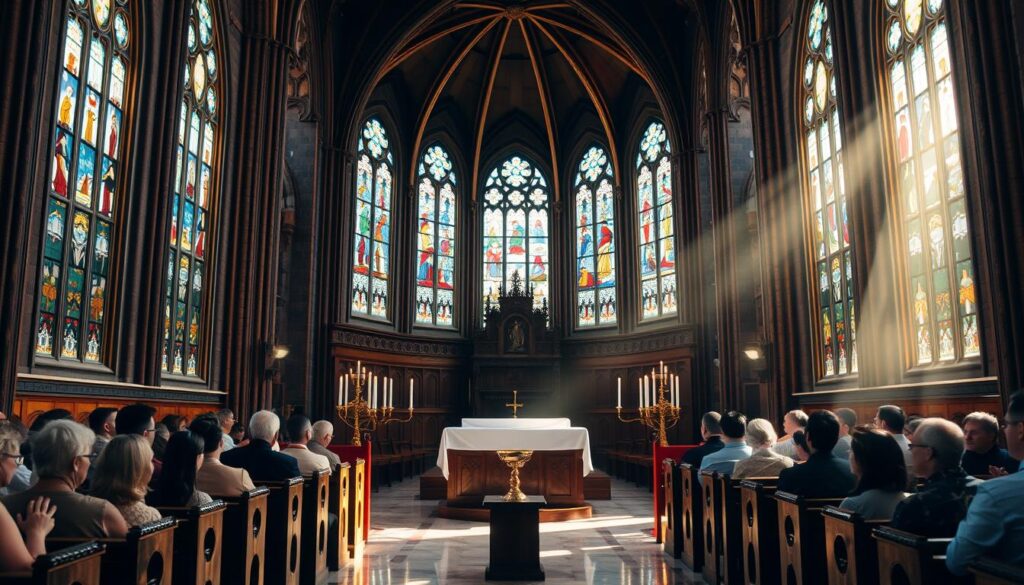
Understanding Episcopalian Communion Beliefs


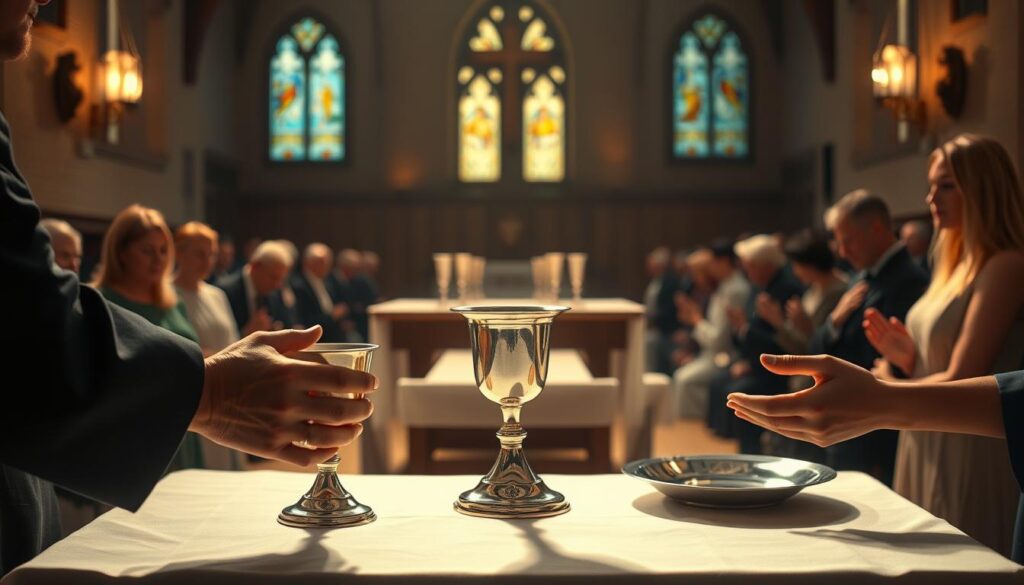
This short guide gives a clear, friendly roadmap to the Episcopal Church’s teaching on the Holy Eucharist. It explains how the sacrament serves as an outward sign of inward grace and how Christ’s real presence is understood in a way that honors mystery without strict philosophical labels.

The focus is thanksgiving, remembrance, and pastoral welcome. Worshipers meet at the table to share bread and wine, to be shaped for daily life, and to grow in unity with God and one another.

This guide answers common questions newcomers bring to the liturgy. It clarifies terms—Eucharist, the Lord’s Supper—and notes how Episcopal theology balances deep thought with warm practice.

Expect plain explanations of the Real Presence, how this view differs from other traditions, and practical notes on receiving the sacrament. The goal is to leave you confident and grounded in both faith and practice.

Key Takeaways

  • The Holy Eucharist is the church’s central sacrament of thanksgiving.
  • Episcopal teaching affirms Christ’s real presence while naming the encounter as a sacred mystery.
  • Worship emphasizes remembrance of Jesus’ life, death, and resurrection.
  • Receiving bread and wine connects worship to daily life and spiritual growth.
  • Pastoral openness and unity at the table shape the Episcopal approach.

Holy Eucharist in the Episcopal Church: Meaning, Sign, and Sacred Meal

The Eucharist orders Sunday worship around a shared meal of prayer, bread, and wine.

“Outward and visible sign” and “inward and spiritual grace”

The church names a sacrament as an outward sign that points to inward grace. Here the visible gifts are bread and wine, and the inward gift is true sharing in Christ’s life.

Thanksgiving and remembrance of Jesus’ life, death, and resurrection

The service follows the Lord’s Supper pattern: the gifts are taken, thanks are given, the bread is broken, and the gifts are distributed.

  • The Great Thanksgiving remembers salvation and asks the Holy Spirit to make holy the people and the bread wine.
  • Christ’s presence is received by faith, so the congregation shares in the Body and the Blood of Christ.
  • This sacred meal recalls life, death, and resurrection as the center of hope and service.
Action Gesture Meaning
Took Offertory of bread and wine Invitation and offering
Gave thanks Consecration prayer Recall of salvation
Broke Fraction of the bread Sharing the Body
Gave Distribution to the people Union in the Blood of Christ

What do Episcopalians believe about communion?

Episcopal teaching holds the Eucharist as a meeting place where Christ is truly present, while the Church avoids forcing that presence into a single philosophical formula.

real presence

Real Presence explained

The real presence is affirmed plainly: Christ is truly with the gathered people at the altar. The claim does not insist on a detectable physical change in the bread or the wine.

Bread and wine, body and blood

The outward gifts of bread and wine remain signs through which the faithful receive the Body and Blood of Christ by the Spirit and faith.

Transubstantiation, consubstantiation, or neither?

The usual Episcopal reply is a humble “neither, both, and.” This avoids strict Roman Catholic formulas like transubstantiation and avoids reducing presence to a single technical theory such as consubstantiation.

Prayer, faith, and the altar

Faith and prayer shape reception: those who come worthily and with trust partake in the sacred meal. The Church’s theology keeps room for different devotional styles while centering on unity with Christ and one another.

Claim Episcopal stance Practical effect
Reality of presence Affirmed as a sacred mystery Reverent reception and prayer
Physical change Not defined as chemistry Focus on faith, not senses
Comparison with other churches Neither strictly Roman Catholic nor purely Lutheran Welcomes varied devotional expressions

How Communion is Celebrated Today: From altar to cup in the Episcopal Church

Worship often follows a fourfold pattern that shapes how the priest and people meet at the table. On Sundays and major feasts the service centers at the altar, and the priest leads the Great Thanksgiving so the sacrament forms daily life.

The fourfold action—took, gave thanks, broke, gave—guides the rite. After the invitation, “The gifts of God for the people of God,” people come forward, kneel or stand, and receive the bread in hand.

Took, blessed, broke, and gave: the fourfold action of the Lord’s Supper

The priest takes the gifts and prays. Thanks are offered, the bread is broken, and the holy things are given to the people. This sequence links ritual action to shared prayer and community.

Receiving the bread and wine: sip, intinction, gluten-free wafers, and accessibility

Communicants may eat the bread and sip from the chalice of wine, or dip the wafer (intinction). Gluten‑free wafers are available on request.

Those with limited mobility may receive at their seat. You are not required to drink; a light touch or crossing arms signals a blessing instead.

Who may receive: baptized Christians, seekers, children, and pastoral welcome

All baptized Christians are welcome to receive. Unbaptized visitors may come forward for a blessing and an invitation to explore baptism.

Action Who Meaning
Took / Gave thanks Priest Great Thanksgiving and presence
Broke Priest Sharing the body blood christ
Gave People Union with one another and nourishment for life
  • Practical questions are normal; ushers and ministers help with flow and special needs.
  • This pattern shows the sacrament as God’s gift and our shared participation at the altar.

Belief and practice in context: Episcopal theology alongside Roman Catholic and Lutheran views

Across traditions, Christians affirm that Christ gives himself in the sacrament, though they explain the reality in distinct ways.

Real Presence, transubstantiation, and consubstantiation

The Roman Catholic Church teaches transubstantiation: the bread and wine become the actual Body and Blood while keeping the same appearances. Lutherans have described consubstantiation as Christ present alongside the bread and wine.

The episcopal church upholds the real presence without forcing a single philosophical formula. Many sum this as “neither, both, and.” This leaves room for faithful reflection and conscience.

real presence

Living the mystery: unity, forgiveness, and new life

Practically, the Lord’s Supper unites worshipers to Christ and to one another. The rite proclaims Jesus’ death and resurrection and offers forgiveness, strength for daily life, and a foretaste of the heavenly banquet.

  • Different words point to the same saving reality.
  • The priest leads the prayers; the liturgy shapes the church’s theology.
  • Receiving bread and wine meets body and spirit, forming faith in service and mercy.

Conclusion

The Holy Eucharist gathers a community to receive forgiveness, strength, and hope at the altar. In the Episcopal Church this sacrament holds a steady place: it names Christ’s presence and feeds faith through bread wine and shared prayer.

In this sacred meal we meet the Body and the Blood of Christ. The rite does not demand a single theory like the catholic church, but it affirms real encounter with the bread and wine—holy communion—received with gratitude and reverence.

The practical gifts are plain: forgiveness, unity, and sending into service. If you have questions, the priest and parish will help with an answer and a gentle way to receive. Keep returning to the table; over time the sacrament shapes both body and blood of our life together.

FAQ

What is the Holy Eucharist in the Episcopal Church?

The Holy Eucharist is the church’s central sacrament, a sacred meal remembering Jesus’ life, death, and resurrection. It functions as an outward and visible sign pointing to inward and spiritual grace. Worshipers give thanks, hear Scripture, and share bread and wine as a communal act of praise and renewal.

How do Episcopalians describe the “real presence” of Christ?

Episcopalians affirm that Christ is truly present in the Eucharist without insisting on a specific physical change in the elements. The presence is held as a mystery: spiritual and real, experienced by faith, prayer, and the community gathered at the altar.

Are the bread and wine believed to become Christ’s body and blood?

The church calls the bread and wine both sign and sacrament. They signify Christ’s body and blood and serve as means of grace. The tradition leaves room for mystery rather than dogmatic formulas, so explanations vary among clergy and congregations.

Is transubstantiation or consubstantiation the Episcopal view?

The Episcopal Church does not rigidly endorse Roman Catholic transubstantiation or Lutheran consubstantiation. Many prefer a “both/and” approach that honors sacramental reality while avoiding technical metaphysical claims.

How do prayer and faith shape the communion experience?

Prayer, repentance, and faith prepare people to receive the sacrament. The liturgy invites participants to approach with gratitude and trust, experiencing union with Christ and reconciliation with one another through the Eucharist.

What are the four actions of the Lord’s Supper?

The Eucharist traditionally moves through taking, blessing, breaking, and giving. These actions recall Jesus’ ministry and shape the congregation’s participation in the saving life offered in the sacrament.

How do people receive bread and wine in Episcopal services?

Reception practices include sipping from a common cup, intinction (dipping the bread into the wine), or receiving a separate cup. Many parishes provide gluten-free wafers and other accommodations to ensure accessibility for all communicants.

Who is invited to receive communion?

The Episcopal Church typically invites baptized Christians to the Lord’s Supper. Most congregations also welcome seekers and children to participate with pastoral sensitivity, encouraging full participation in the life of the church.

How does Episcopal Eucharistic theology compare with Roman Catholic and Lutheran views?

Roman Catholics affirm transubstantiation, holding that the elements become Christ’s substance. Lutherans often speak of consubstantiation or sacramental union. The Episcopal approach emphasizes real presence and mystery, resisting strict metaphysical definitions while affirming grace and unity.

What spiritual effects are associated with receiving the sacrament?

Communion strengthens unity with Christ and one another, offers forgiveness, and nurtures new life in the Spirit. It’s seen as a means of ongoing formation, sustaining faith between baptisms and other rites of passage.

Are the priest and altar central to the sacrament?

Clergy lead the liturgy and consecrate the elements, but the Eucharist is fundamentally communal. The altar serves as the focal place of offering, while the gathered people, joined in prayer, make the sacrament a living reality.

Can the sacrament be celebrated outside a church building?

Yes. The Eucharist may be celebrated wherever people gather for worship—hospital rooms, outdoor spaces, or chapels—so long as it follows authorized liturgy and is led by an ordained minister or authorized presider.

What Do Episcopalians Believe About Homosexuality?


The Episcopal Church teaches that God’s nature is love, and baptism joins believers to Christ’s victory over sin and death.

This introduction sets a clear, friendly frame for how that conviction shapes the church’s pastoral approach to sexuality and inclusion. It also situates the denomination within the global Anglican Communion and notes its roughly two million members in the United States.

The article will cover governance, key milestones, marriage and ordination practices, non-discrimination measures, and resources for further reading. Readers can expect a practical, service-oriented overview that cites official acts and canons for accurate context.

Respect for the dignity of every person informs the church’s pastoral response. The aim is to offer reliable information so people can find answers with confidence and clarity.

Key Takeaways

  • The Episcopal Church centers its teaching on God as love and baptismal identity.
  • Its stance on inclusion is shaped by respect for human dignity.
  • The denomination is part of the worldwide Anglican Communion.
  • This guide reviews governance, marriage, ordination, and non-discrimination.
  • Content focuses on official acts and canons for clear, factual context.

Overview: The Episcopal Church’s welcoming stance on sexual orientation and gender identity

The Episcopal Church frames its ministry around a clear promise: every person is welcomed and valued.

In 1976 the General Convention declared that homosexual persons are children of God with a full and equal claim to the church’s love, acceptance, and pastoral concern.

That language shaped a steady move toward formal inclusion. Today the church affirms, “You belong. No exceptions.” This applies to members, seekers, and those exploring identity.

The welcome shows up in parish life through open discernment for lay and ordained ministries. It also shapes pastoral programs that support individuals and families.

Official decisions, diocesan resources, and congregational practices back the message with concrete steps. The result is a community that aims to pair heartfelt acceptance with practical care church-wide.

  • Recognition of human dignity and pastoral support.
  • Policy and practice that reflect the 1976 commitment.
  • Invitation: belonging affirmed across worship and ministry.
Commitment How it appears Practical effect
Full and equal claim Official General Convention language Access to pastoral care and ministries
Public affirmation “You belong. No exceptions.” Welcoming messaging in congregations
Open discernment No discrimination for ordination Broader leadership and representation

How Episcopal beliefs are set: General Convention, bishops, deputies, and canons

The Episcopal Church relies on a clear, representative process to make doctrine and policy. The General Convention meets every three years and brings elected delegates together to vote on measures that shape church life.

General Convention and the two legislative houses

The assembly has two main legislative bodies: the House of Bishops and the House of Deputies. The House of Bishops includes all bishops; the House of Deputies includes lay and clergy representatives from each diocese.

Changes to the Constitution and Canons need majority approval in both houses. That dual vote ensures broad participation across lay, ordained, and episcopal leadership.

Constitution, canons, and Executive Council oversight between conventions

An Executive Council, elected at the general convention, manages church business between sessions. The Presiding Bishop, chosen for a nine-year term, provides national leadership under those canons.

The episcopal church is organized into nine provinces and multiple dioceses. Some dioceses cover an entire state; others extend to Europe, the Caribbean, and Central and South America.

general convention

Body Role Practical effect
General Convention Legislates doctrine and policy Sets national canons and liturgy
Executive Council Manages business between conventions Implements decisions and budgets
Dioceses and Provinces Regional oversight Local leadership and ministry

Funding comes from congregational giving, with about 20% forwarded to support churchwide mission and administration. This governance structure ties decision-making to the real resources that sustain ministry and protect equal representation across gender and regional bodies—a practical way the church governs itself.

What do Episcopalians believe about homosexuality

The 1976 resolution set a lasting standard: homosexual persons are “children of God” with a full and equal claim on the church’s love, acceptance, and pastoral support.

That phrase anchors parish life. It means worship, formation, fellowship, and leadership are open to people across sexual orientation and gender. Local clergy and lay teams aim to offer practical pastoral care and respectful accompaniment.

In practice, this commitment shapes policies, liturgy, and everyday welcome. Congregations work to align official language with lived practice so members can participate fully.

“You belong. No exceptions.”

This contemporary affirmation captures the denomination’s aim: respectful inclusion in ministries, rites, and community life. Official statements and daily practice together create space for whole-person belonging in the life of the episcopal church.

Marriage equality in the Episcopal Church

A sequence of resolutions passed at the General Convention turned pastoral practice into codified policy on marriage.

2015 brought two key measures. Resolution A054 approved gender-neutral rites and authorized same-sex wedding liturgies. Resolution A036 amended the marriage canon to permit clergy to use the Book of Common Prayer rite or an authorized trial liturgy for marriage.

2018 access and pastoral arrangements

Resolution B012 guaranteed access to marriage rites in every diocese. That ensured couples may marry in their home congregations without being turned away by diocesan policy.

Pastoral accommodation and conscience

The canon protects clergy conscience. A priest who objects on theological grounds may request alternative episcopal oversight from another bishop, so pastoral care remains available to couples.

  • How it works: A054 and A036 codified gender-neutral rites and changed the canon.
  • Access: B012 affirms married couples can use local congregations.
  • Balance: No clergy will be forced to preside; access and conscience protections coexist.

“These changes reflect formal authorization by General Convention and offer clear guidance for people planning marriage.”

Ordination and leadership: open to all without discrimination

Ordained leadership in the Episcopal Church has opened steadily over recent decades. Changes to canons and several high-profile moments created clearer paths for people called to ministry.

Key milestones that shaped access

In 1994 the General Convention added sexual orientation to non-discrimination canons for ordination. That change removed a formal barrier and signaled institutional intent.

In 2003 the church consecrated its first openly gay bishop, a landmark moment that drew national attention and marked practical movement toward equality.

By 2009 a resolution affirmed that

“God’s call is open to all.”

This removed remaining barriers to electing bishops from diverse backgrounds and orientations.

Expanding vocation and continuing progress

In 2012 the church approved transgender ordination, extending canonical inclusion across gender identity. Women have served in ordained orders since 1974, including election to the episcopate, showing a longstanding commitment to equality.

The discernment process values gifts, formation, and mentorship over exclusion. Vocational paths are a spiritual journey undertaken with prayer and guidance, and seminaries and dioceses increasingly reflect this openness.

ordination and leadership

Year Action Effect
1994 Added sexual orientation to canons Non-discrimination in ordination
2003 First openly gay bishop consecrated Visible leadership inclusion
2012 Approved transgender ordination Broadened vocational access

Result: Policies and practice now create real opportunities for service and leadership across the Episcopal Church, advancing inclusion and equality in ministry.

Non-discrimination, pastoral care, and protections for identity expression

Canon law names specific protections that safeguard participation in governance and ministry. The canons explicitly bar discrimination for sexual orientation, gender identity, and gender expression. These rules help ensure fair access to voting, committees, and leadership.

Administrative forms now include fields for preferred and legal names, plus options for gender identity and pronouns. Using these details in registration and directories helps congregations offer respectful, accurate welcome.

Advocacy and remaining gaps

The church publicly opposed laws that restrict restroom, locker room, and shower access for transgender and gender non-conforming people in 2018. That stance links policy to safety and dignity in public life.

Resolution A091 in 2018 — which sought to extend nondiscrimination language to clergy hiring and appointments — did not pass. This outcome means hiring protections remain uneven across some dioceses.

  • Canon protections: named safeguards for identity and fair participation.
  • Practical steps: inclusive forms and pronoun use in congregations.
  • Advocacy: opposition to restrictive restroom laws to protect safety.

“Policies and practice together help clergy and lay leaders offer informed, compassionate care.”

Resources and community connections for LGBTQ+ Episcopalians

This section gathers national and parish resources that help people and leaders plan inclusive worship and outreach.

Integrity USA and allied support

Integrity USA works for full inclusion and offers advocacy and peer support for the LGBTQ+ community. National and local partners provide training and referral networks for ministry and pastoral care.

Media kits and parish toolkits

The Episcopal Church supplies a Pride shield, customizable 30- and 60-second videos in English, Spanish, and French, social media posts, and printable cards that congregations can use in announcements, websites, and outreach.

Worship, formation, and the Gender Justice Jam

Liturgical resources include sermons, rites, and planning guides for inclusive services and marriage rites. The 12-week Gender Justice Jam (late 2024) equips leaders to address gender and gender identity with clarity and care.

  • Action steps: download media kits, schedule formation sessions, and review liturgies for Pride or seasonal use.
  • Contact: The Episcopal Church, 815 Second Avenue, New York, NY; episcopalchurch.org.

“Practical resources help congregations signal welcome and support meaningful inclusion.”

Conclusion

Across decades, General Convention actions and local bodies have turned principle into practice in the episcopal church. Changes in canons, rites, and oversight now support marriage, ordination, and pastoral care, while leaving room for conscience and local decision. This steady work reflects a posture rooted in love.

In short: the church seeks greater understanding and fuller inclusion. Members, people, and families are named as children god and invited into communal life. Use church resources, connect with a local congregation, and keep learning. The episcopal church views equality and acceptance as an ongoing journey—a practical way to live out love in worship, leadership, and everyday community.

FAQ

What is the Episcopal Church’s stance on sexual orientation and gender identity?

The Episcopal Church affirms full inclusion of LGBTQ+ people. Since the 1970s the church has moved toward welcoming all persons, offering pastoral care and insisting on dignity, respect, and equal access to ministry and community life.

How are decisions about these beliefs made in the Episcopal Church?

Major policy is set by General Convention, which includes the House of Bishops and the House of Deputies. The Constitution and canons guide practice, and the Executive Council provides oversight between conventions.

What does "full and equal claim" mean in practice?

That phrase commits congregations and leaders to love, accept, and provide pastoral care to gay and lesbian persons. It supports their participation in baptism, communion, ministry, and community without exclusion.

How does the church show respect for every person’s dignity?

The Episcopal Church encourages inclusive language, honors chosen names and pronouns on forms, and supports ministry roles for people of diverse identities. Inclusion extends to worship, leadership, and community programs.

Does the church offer an explicit affirmation for LGBTQ+ members?

Yes. Many dioceses and congregations embrace a clear welcome—often summarized as “You belong. No exceptions.”—and the church provides resources for congregational welcome and pastoral support.

What changed in 2015 regarding marriage rites?

In 2015 General Convention approved gender-neutral marriage rites and adjusted canons to allow same-sex marriage. This change enabled clergy and congregations to offer marriage to same-sex couples where diocesan oversight permits.

Were there further actions about marriage access after 2015?

In 2018 the church acted to expand access so couples could use authorized rites across dioceses. Pastoral accommodations remain for clergy who conscientiously decline to officiate, and provisions exist for alternative episcopal oversight.

Can LGBTQ+ people be ordained or serve as bishops?

Ordination is open without discrimination. Key milestones include the 1994 canon change on sexual orientation, the election of openly gay bishops, and affirmation that God’s call is open to all. Transgender ordination has been affirmed in recent years.

What legal or canonical protections exist for identity expression?

Canons and resolutions name sexual orientation, gender identity, and gender expression as protected categories. The church advocates against discriminatory laws, including restrictive restroom policies, and promotes inclusive hiring practices.

How does the church support congregations seeking to be inclusive?

The Episcopal Church supplies liturgical resources, video kits, and social media materials. Programs like the Gender Justice Jam and partnerships with organizations provide training and formation for congregations.

What advocacy has the church undertaken for LGBTQ+ rights?

The church has opposed discriminatory state laws, supported marriage equality, and passed resolutions to protect identity and expression. Dioceses often engage in local advocacy on non-discrimination and civil rights.

Where can LGBTQ+ Episcopalians and allies find community and resources?

National and local groups such as Integrity USA and diocesan ministries offer support. The Episcopal Church headquarters in New York and the website episcopalchurch.org list programs, liturgies, and contact information for further assistance.

How are children and families of LGBTQ+ members welcomed?

Congregations aim to welcome children and families fully, offering baptism, education, and pastoral care. The church emphasizes that all children are beloved by God and deserving of inclusion in parish life.

Are there provisions for clergy or congregations with conscientious objections?

Yes. The church recognizes conscience rights, allowing clergy to decline officiating while ensuring couples can access authorized rites and pastoral oversight when needed.

How has leadership diversity evolved in the Episcopal Church?

The church has steadily expanded representation, with women and LGBTQ+ persons serving in ordained leadership and episcopal roles. Ongoing efforts seek to broaden inclusion across all ministries.

How can someone contact the Episcopal Church for more information?

The Episcopal Church is reachable at 815 Second Avenue, New York, NY, and via episcopalchurch.org, where visitors can find resources, diocesan contacts, and guidance on inclusion and ministry.

What Do Episcopalians Believe About Salvation?


This introduction names the big question many people ask today and points to an answer rooted in Scripture, the Book of Common Prayer, and Anglican teaching. The Episcopal Church frames salvation as healing and deliverance that shapes how we live now, not only a future promise.

Jesus’ call to love neighbor (Micah 6:8) shows that faith links personal trust with public mercy. Anglicans describe forgiveness, union with Christ, adoption, and new life in the Spirit as parts of that work.

Baptism and the Eucharist matter as visible signs the Church uses to strengthen faith. In the “in between” times, we live with present assurance and a hope that shapes daily choices and communal care.

Key Takeaways

  • Episcopal teaching presents salvation as present well-being and future hope.
  • Baptism and Eucharist are central, effectual signs of grace.
  • Faith and sacraments work together in community and worship.
  • Neighbor-love links personal faith with social justice and mercy.
  • The tradition balances assurance now with growth over time.

Defining Salvation Today: Scripture, Jesus Christ, and the Anglican-Episcopal Lens

Scripture often frames salvation as rescue and renewed well-being, a concrete way God acts for people in the world. The biblical term covers deliverance from danger and the start of communal health and justice.

From well-being to deliverance: how the Bible speaks

Examples like the Exodus show God saving Israel from bondage. Prophetic texts extend that rescue to social and political issues that shape daily life.

Jesus Christ as the climax of salvation history

Jesus Christ is presented as the turning point in this story. His life, death, and resurrection restore right relationship and offer new life now and in the day to come.

“Salvation is both rescue and healing—present-tense well-being with public implications.”

  • Word and sacrament: proclamation and the Church’s rites work together.
  • History to doctrine: the story from Exodus to the cross shapes Christian teaching.
  • Practical fruit: justice, mercy, and neighbor-love show salvation’s effect in community.

In short, this section frames salvation as a coherent vision that links biblical narrative, sacramental life in the church, and a way of life for people in the world.

What do Episcopalians believe about salvation

The Episcopal Church frames salvation as an undeserved gift that begins before our effort and calls for a faithful response.

episcopal church

Grace as God’s free gift and our response in faith

Grace is God’s initiative. It comes without merit and invites trust.

Our faith answers by receiving the gift and living a baptized life.

Reconciliation, adoption, and identity

The Catechism teaches that God forgives sins, joins us to Christ, and adopts us into God’s family.

This new identity gives citizenship in God’s kingdom and a life shaped by the Spirit.

Justification and sanctification

We are set right with God and then grow in holiness. Both happen by God’s help, not human earning.

“In Christ we are brought out of sin into righteousness and out of death into life.”

  • Baptism: the sacramental term of union with Christ (creedal identity).
  • Eucharist: an effectual sign that strengthens and confirms faith.
Key Idea What it Means Scriptural / BCP Source
Grace Undeserved gift initiating rescue John 3:16; Catechism
Reconciliation Forgiveness and union with Christ BCP, Article XXV
Sanctification Growing in holiness by the Spirit BCP p. 368

Sacraments as “means of grace”: Baptism and the Eucharist in the Episcopal Church

Anglican teaching names Baptism and the Eucharist as primary channels through which God offers saving grace. These rites are called effectual signs of grace in the Articles of Religion (XXV). They use visible elements to offer the invisible free gift that joins people to Christ.

Baptism: dying and rising with Christ, entrance into the Church

Baptism unites a person to Jesus’ death and resurrection (Rom 6:3-4). The Book of Common Prayer teaches it is generally necessary for salvation and marks entry into the visible church.

Eucharist: the bread of life and cup of salvation for God’s people

The Eucharist is participation in Christ’s body and blood (1 Cor 10:16; John 6). Over the course of one’s life, regular Communion strengthens faith and imparts sanctifying grace.

Word, bishops, and priests: how the Church safeguards sacramental life

Article XIX locates the visible church in the pure preaching of the word and right administration of sacraments. Anglican order entrusts bishops and priests to preserve this practice.

“These rites quicken, strengthen, and confirm the faith of the faithful.”

  • Means of grace: visible things that offer God’s saving work.
  • Pastoral issues: preparation, access, and teaching shape faithful practice.
  • Habit of worship: baptismal memory and Communion form lives of gratitude and service.
Rite Primary Effect Source
Baptism Union with Christ; entry into the Church Rom 6:3-4; BCP p. 306; Articles XXV
Eucharist Participation in Christ; sanctifying grace 1 Cor 10:16; John 6; BCP pp. 363, 375
Order Safeguards sacramental integrity Article XIX; Church ordinal (bishops & priests)

Personal faith and communal life: salvation as a way of life in the world

When trust in God grows, it moves outward as a shared mission. This faith shapes how people respond to neighbors in need and to public issues that harm the vulnerable.

salvation as a way of life

Doing justice, loving kindness, walking humbly: Micah 6:8 lived

Micah’s call comes alive in simple acts: feeding the hungry, visiting the sick, and defending dignity. These practices show that salvation is not only a private thing but a public gift to be lived.

From individual decision to shared mission: neighbor-love, service, and dignity

Personal faith grows into steady service. Churches and small groups turn worship into works of mercy that meet real need.

  • Feeding ministries that welcome people without judgment.
  • Advocacy for peace, housing, and health on local issues.
  • Accompaniment that honors each person’s pace and story.

“Justice, mercy, and humility form a faithful way that bears witness to the Kingdom.”

Now and not yet: sanctification, hope, and the Kingdom in our time

Sanctification is the steady shaping of a life by God’s Spirit, unfolding over time in ordinary actions. The Episcopal tradition sees this growth as part gift and part response. We live with present assurance while we wait for the Kingdom’s fullness.

Sharing Christ’s life by the Spirit

Sanctification means sharing in Jesus Christ‘s life by the Spirit. Over time, grace changes habits, speech, and choices. The Eucharist deepens communion and sustains this work.

“In between times”: present assurance and future fulfillment

We experience new life now and hope for what is to come. Daily practices—prayer, Scripture, sacramental worship, and service—help. When discouragement and delays arise, pastoral care and companions remind each person that growth is God’s gift.

“Hope rests on God’s love, which nothing can separate us from.”

  • Signs of the Kingdom: reconciliation, healing, and justice in the world.
  • Habits that nurture growth: prayer, Eucharist, mercy, and steady worship.
  • Practical hope: trust God’s timing and seek faithful companions.
Practice Primary Effect Source / Example
Prayer & Scripture Nourishes daily growth Psalms, collects, daily office
Eucharist Imparts sanctifying grace 1 Cor 10:16-17; BCP rites
Works of mercy Shows Kingdom signs in the world Feeding ministries; reconciliation actions

Conclusion

, Anglican formularies lead to a clear end: participation in Christ through Word and Sacrament is the heart of salvation in this tradition. The Catechism shapes identity so people know they are reconciled and adopted into the church. Baptism and the Eucharist remain central signs of God’s free gift.

Questions about bishops, priests, and women in ministry often touch practical issues that affect how churches offer Word and Sacrament. The call is simple: grow in service, keep close to Scripture and the Table, and join the church’s mission in your neighborhood. Trust the hope that nothing can separate us from God’s love as you live into new life and sanctification.

FAQ

What is salvation in the Anglican-Episcopal tradition?

In the Anglican and Episcopal understanding, salvation is God’s restoring work through Jesus Christ. It includes being forgiven, brought into relationship with God, and invited into new life by the Holy Spirit. Scripture, the Book of Common Prayer, and the Catechism shape this view, which balances personal faith with communal belonging in the church.

How does the Bible describe deliverance and well-being?

The Bible pictures deliverance as rescue, healing, and restoration. Passages from the Old and New Testaments show God acting to save individuals and communities. Scripture highlights both present transformation and future hope, encouraging believers to trust God’s promises and live faithfully now.

Why is Jesus Christ central to salvation?

Jesus is seen as the climax of salvation history: his life, death, and resurrection reconcile humanity to God and open the way to new life. Through Christ, people receive forgiveness, adoption as God’s children, and the gift of the Spirit that sustains ongoing transformation.

What role does grace play, and how should people respond?

Grace is God’s free, unearned gift. The Episcopal tradition emphasizes that faith responds to grace: trust, repentance, and participation in the life of the church. Good works and moral growth flow from that response, not as a way to earn favor but as the fruit of being loved by God.

How do the Catechism and the Book of Common Prayer frame reconciliation and identity?

The Catechism and prayer book teach that reconciliation restores relationship with God and the church. They stress adoption into God’s family and a new identity shaped by baptism, worship, and the corporate life of the community. Liturgy and pastoral care guide believers in living out that identity.

What about justification and sanctification?

Justification is the declaration that we are forgiven and accepted in Christ. Sanctification is the ongoing process of growing in holiness by the Spirit. Both are held together: believers are assured of God’s mercy and called to lifelong transformation.

How do sacraments function as “means of grace”?

In Episcopal practice, sacraments are channels through which God’s grace is given. Baptism and the Eucharist are primary means that shape faith, form identity, and sustain Christian life. They are more than symbols: they enact and seal God’s promises.

What does baptism signify in this tradition?

Baptism marks dying to sin and rising with Christ; it welcomes a person into the church and into the covenant life of God. It signifies cleansing, new birth, and entry into the community called to follow Jesus.

What is the meaning of the Eucharist for salvation?

The Eucharist is the sacrament of Christ’s presence and a foretaste of the Kingdom. Sharing bread and wine nourishes spiritual life, unites the church, and proclaims Christ’s saving work until he comes again. It sustains faith and service in the world.

How do bishops and priests safeguard sacramental life?

Bishops and priests provide teaching, sacramental oversight, and pastoral care. They help maintain faithful worship, interpret Scripture and tradition, and guide congregations in sacramental practice so the church remains a living sign of God’s grace.

How is salvation lived out in daily life and social action?

Salvation in this tradition moves believers toward justice, mercy, and humility. Following Micah 6:8, Episcopalians express faith through service, advocacy, and care for human dignity. Faith is both inward trust and outward action in the community.

How does personal faith connect to shared mission?

Personal trust in Christ naturally joins a person to the church’s communal mission. Individual discipleship feeds corporate work: feeding the hungry, visiting the sick, and defending the vulnerable. The church’s mission bears witness to God’s reconciling love.

What is sanctification by the Spirit in daily practice?

Sanctification happens as the Spirit shapes believers through prayer, Scripture, worship, and acts of love. It is gradual: habits change, character grows, and Christians become more Christlike while relying on God’s grace.

How do Episcopalians hold the tension of “now and not yet”?

The tradition affirms present assurance in Christ and hope for future fulfillment. Believers experience God’s kingdom now in signs like healing and reconciliation, while awaiting the final consummation when God makes all things new.

How does the Episcopal Church address contemporary issues and identity?

The Episcopal Church engages modern questions through Scripture, reason, and tradition. Bishops, clergy, and lay leaders work to apply faith to issues like poverty, race, gender, and human dignity, aiming to offer faithful responses rooted in love and justice.

How are baptism, faith, and the Church linked to new life?

Baptism initiates new life; faith makes that life active; the church nurtures and protects it. Together they form a pattern: welcome, formation, and mission that sustains Christian identity and service in the world.

Episcopalians and the Afterlife: What They Believe


For many in the Episcopal tradition, death is not the final chapter but a doorway into God’s abiding life through Jesus Christ. This guide explains core teaching, rooted in Scripture and shaped by the Book of Common Prayer, which frames funeral rites as an Easter liturgy of both sorrow and joy.

We will outline how Scripture anchors hope, how church prayers support families, and how the promise of resurrection shapes mourning, remembrance, and pastoral care. The article names key texts, highlights Anglican emphasis on final renewal, and offers clear comparisons with other traditions.

This piece aims to help seekers and people walking through loss find steady ground in faith and worship. Expect compassionate, straightforward answers that honor grief while lifting up Christ’s victory and the gift of new life.

Key Takeaways

  • Episcopal teaching sees death as a passage into God’s life in Jesus Christ.
  • The Book of Common Prayer treats burial as an Easter liturgy of hope.
  • Scripture, including passages on resurrection, grounds pastoral care and comfort.
  • Practices balance honest grief with the church’s claim of Christ’s victory.
  • This guide compares Anglican views with other traditions to clarify differences.

Why this topic matters now: beliefs about death, resurrection, and eternal life

Many people search for calm, clear guidance when a loved one is ill or a loss feels fresh. Short answer: death is not the end—Christ’s victory and new life in God shape Christian hope.

Search intent at a glance: readers want straightforward, compassionate answers for loved ones and seekers. Clear language helps families make choices, find comfort, and plan funeral rites that point to resurrection.

Modern culture often avoids direct talk of final things, yet the church offers honest words rooted in Scripture and the Book of Common Prayer. Episcopal funerals are framed as an Easter liturgy, balancing joy in jesus christ’s triumph with real grief and pastoral care.

The parish community surrounds families with prayer, meals, and steady presence on the first day and the weeks that follow. These practices meet both the person who is dying and each loved one walking alongside.

  • Need named: steady, kind guidance in times of loss.
  • Pastoral response: prayer, presence, and practical help.
  • Preview: core beliefs, Anglican pattern of hope, funeral practice, and practical planning.

Core Episcopal belief: life does not end at death, it is transformed in Jesus Christ

Scripture gives a steady anchor: Christians proclaim that “death has been swallowed up in victory.”

“Death has been swallowed up in victory.” — 1 Corinthians 15:54-55

1 Corinthians 15:54-55 (ESV)

Scripture that anchors hope

The text grounds hope in God’s action, not in hopeful words alone. Romans 8 declares that nothing can separate us from God’s love in Christ.

death

Theocentric faith: God as Alpha and Omega

God is the center of creation and purpose. Episcopal theology holds that the Creator sustains both living and dying. This theocentric view gives meaning to human life and to final things.

Incarnational faith: restored to love God and neighbor

In jesus christ, God heals broken relationships through Word and sacrament. The sacraments draw us into Christ’s life and shape how we love god and neighbor in both care and grief.

Corporate faith: communion of saints and the one body in Christ

The church teaches we belong to one body across generations. Shared worship, meals, and presence sustain community when families face loss.

Dimension Focus Pastoral Practice Key Text
Theocentric God as source and goal Prayers that commend all to God Revelation themes
Incarnational Christ restores and raises Sacraments, Eucharist, bedside rites Romans 8; Gospel narratives
Corporate One body, communion of saints Community care, funeral liturgy Eucharistic Prayer B petition

Practical note: These convictions temper fear and invite trust. The church keeps to Scripture’s witness and offers hope that dignifies both the dying and the living.

what do episcopalians believe happens after death

The church looks forward to a decisive Day when God gathers the living and the dead in Christ.

The Anglican pattern: the Day of the Lord and final resurrection

Anglican theology centers on the Day when Christ returns, raises the dead, and renews all creation. Scripture passages such as 1 Corinthians 15 and 1 Thessalonians 4 shape this hope.

The intermediate state: asleep in Christ, in God’s care

The tradition admits an intermediate state but avoids detailed maps. Biblical images like “sleep” and references to Hades suggest care, not full explanation.

Trusting God’s timing matters more than claiming precise places or stages for souls and body.

How this differs from other traditions

Some Reformed thought teaches immediate rewards or punishments at the moment of passing. Roman Catholic theology developed purgatory as purification, which Anglican formularies historically rejected while still praying for the dead.

  • Practical posture: commend the departed, care for the living, and keep hope fixed on the resurrection.

How Episcopalians pray and gather: Book of Common Prayer, funeral rites, and hope

A funeral service here aims to hold pain gently while pointing beyond it to new life. The Book Common Prayer shapes every reading and prayer so the burial is read through an Easter lens.

Easter lens of the Burial liturgy

The rubrics call the Burial of the Dead an Easter liturgy. The formal note says the service is marked by joy in Christ’s triumph while also naming real grief.

“It is an Easter service, filled with joy in Christ’s triumph, yet it squarely affirms the reality of grief.”

Grief and love: pastoral care in tender times

Families hear Scripture, hymnody, commendation, and committal that name death but lift eyes to life in God.

Clergy and lay ministers offer prayer, practical care, and steady presence from first calls through the day of burial and the weeks after.

Element Role What families receive
Book Common Prayer Shapes liturgy Readings, prayers, Easter framing
Funeral service Proclamation Hymns, commendation, committal
Community care Support Meals, visits, remembrance

Living and dying well: faithful decisions at the end of life

Planning clear choices now eases burden on family and lets faith shape practical next steps. One way to begin is to pick a calm time to speak with those you trust.

end life

Practical care: planning a funeral, advance directives, and speaking with loved ones

Start by meeting a priest to outline the funeral service and select readings or hymns that reflect a life. Clergy can guide hospitals, hospice, and funeral homes so people act from faith rather than fear.

Prepare key documents: an advance directive, a healthcare proxy or power of attorney, and a will. Keep them in a secure, known place and tell one trusted person how to access them.

  • Choose a calm day to talk with loved ones and name preferences.
  • Note funeral wishes with the parish office so plans align with church rites.
  • Meet a lawyer if needed and save copies where family can find them.

Practical note: These acts of care free a loved one to grieve and make the remaining days about presence, prayer, and reconciliation. Clergy like Catherine Thompson regularly help families take these simple steps.

Conclusion

At the heart of the tradition is a simple claim: God transforms the end into a door to new life in jesus christ. The resurrection gives the church words and rites that hold grief and point toward hope.

Trust and care guide pastoral practice. Clergy commend the departed to God and support families with presence, prayer, and planning. The Book Common Prayer shapes a burial service that names sorrow and proclaims victory.

Honor the body, tend the living, and take small steps now—one conversation, one document, one prayerful plan. Thanks to members who show up with steady love, no one carries loss alone.

Remember: faith keeps us rooted in God’s power and love, and the promise of resurrection reclaims creation for joy and new life.

FAQ

What is the short answer about life beyond death in Episcopal teaching?

Episcopal faith holds that death is not the final word. Grounded in Jesus Christ’s victory over death, the tradition affirms new life in God, the hope of resurrection, and the ongoing care of the community for the dying and the bereaved.

How does Scripture shape Episcopal hope for the end of life?

Passages like “Death has been swallowed up in victory” (1 Corinthians 15) anchor the church’s confidence. Scripture frames the promise of restoration, showing God as both beginning and end—Alpha and Omega—who brings life from death.

What is meant by the “intermediate state” in Episcopal thought?

Many in the Episcopal Church speak of the intermediate state as being “in God’s care” or “asleep in Christ” until the final Day of the Lord. Emphasis rests on God’s timing rather than a fixed human timetable.

How does Episcopal teaching differ from immediate reward or purgatory views?

The Episcopal approach avoids rigid claims about immediate judgement or temporal purification. It holds a middle way: trusting God’s mercy, affirming resurrection, and leaving precise mechanics to God’s mystery.

How do worship and rites express hope about what comes next?

The Book of Common Prayer shapes funerals and burial liturgies through an Easter lens—grief balanced with joyful trust in resurrection. Services pray for the departed, comfort the living, and place both in God’s loving purposes.

What role does the community play when someone dies?

Congregations offer pastoral care, prayers, and practical help. The communion of saints concept reminds members that the church, across life and death, walks together in love and service.

How should families prepare for end-of-life decisions within this tradition?

Practical planning—advance directives, conversations about hospice, and funeral wishes—reflect faithful stewardship. Clergy and parishioners often assist in making these choices clear and loving.

Does Episcopal theology promise a single way the afterlife will look?

The tradition resists overly detailed blueprints. It affirms core truths—God’s victory over death, resurrection, restored relationships—and leaves many specifics to God’s wisdom and timing.

How does grief fit with the hope of resurrection?

Grief and hope coexist. Lament is legitimate and supported by liturgy and pastoral care, while Christian hope offers a sustaining vision that love endures beyond bodily death.

Where can someone find the prayers and texts used at funerals?

The Book of Common Prayer contains funeral rites, commendations, and prayers for the dying. Many dioceses and parishes also provide pastoral resources and sample liturgies tailored to local needs.

Understanding the Beliefs of Anglican Christians


At the heart of Anglican tradition lies a vibrant expression of the Christian faith, rooted in the life and teachings of Jesus Christ. This global community shares core principles with other Christian denominations while maintaining distinct practices shaped by centuries of spiritual evolution.

Central to this tradition is the concept of the Trinity—the belief in one God revealed as Father, Son, and Holy Spirit. Followers emphasize Christ’s sacrificial love as the pathway to redemption, viewing His resurrection as humanity’s ultimate hope for reconciliation with the divine.

The English Reformation of the 16th century established key theological foundations that still guide worship today. A unique threefold approach combines biblical authority, historical church traditions, and thoughtful reasoning, creating space for both ancient rituals and modern interpretations.

With over 110 million members worldwide, this tradition bridges cultural boundaries through shared sacraments and creeds. Its adaptability allows local communities to honor their heritage while maintaining unity through common liturgy and global partnerships.

Key Takeaways

  • Anglican theology centers on the Trinity and Christ’s role in salvation
  • Scripture, tradition, and reason form the basis of spiritual practice
  • Historical roots trace back to 16th-century England
  • Global presence spans 110 million members across diverse cultures
  • Balances ancient rituals with contemporary faith experiences

Introduction to Anglican Christianity

Rooted in the rich soil of 16th-century England, Anglican Christianity blends historical depth with modern adaptability. This tradition grew from the Church of England’s Reformation-era reforms, merging Protestant principles with Catholic liturgical practices. Today, it connects millions through shared sacraments and a commitment to thoughtful faith exploration.

Defining the Anglican Tradition

Anglicanism operates through a global network of self-governing provinces united under the Archbishop of Canterbury. Known as Episcopalianism in America, its structure emphasizes regional autonomy while maintaining doctrinal unity. The Book of Common Prayer serves as its spiritual anchor, guiding worship across 42 member churches worldwide.

Historical Roots Modern Practice
16th-century English Reformation Cultural adaptation in 165+ countries
Henry VIII’s break with Rome Contemporary social engagement
Elizabethan Settlement (1559) Interfaith dialogue initiatives

The Relevance of Anglicanism Today

This tradition remains vital through its threefold approach to faith—honoring scripture, tradition, and reason equally. Its liturgical framework allows ancient rituals to resonate with modern worshippers, creating space for both intellectual inquiry and emotional connection. Over 85 million active members demonstrate its enduring appeal across six continents.

Local communities shape practices while preserving core teachings, making Anglicanism accessible to people from various cultures. This balance between flexibility and continuity explains why many see it as Christianity’s enduring middle way.

Traditions and Theological Foundations

Anglican Christianity’s theological framework combines ancient wisdom with practical application. At its core lies a dynamic relationship between sacred texts, historical practices, and intellectual engagement. This approach helps communities navigate complex spiritual questions while staying grounded in timeless truths.

Scripture as the Ultimate Standard of Faith

The holy scriptures form Christianity’s bedrock, offering God’s complete revelation through 66 ancient texts. Anglicans view the Bible as containing “all things necessary for salvation”, from Genesis’ creation stories to Revelation’s visions. These writings serve as the standard faith guidebook, shaping worship practices and ethical decision-making.

Balancing Tradition, Reason, and Historical Practice

Three pillars support Anglican theology like legs on a sturdy stool:

  • Scripture: The unchanging foundation of divine truth
  • Tradition: Wisdom from the early church preserved through creeds and liturgy
  • Reason: God-given intellect applied to modern challenges

This balanced means of understanding prevents rigid dogmatism while maintaining continuity with 2,000 years of Christian faith. Historical documents like the Book of Common Prayer connect today’s worshippers to Reformation-era reformers, creating living bridges between past and present.

Exploring what do anglican churches believe

Anglican spiritual identity finds its clearest expression through shared statements that bridge centuries of practice. These unifying elements create common ground across diverse communities while allowing cultural adaptation.

Nicene Creeds Anglican beliefs

Core Doctrines and Creeds

The Nicene Creeds and Apostles’ Creed form essential anchors. These ancient declarations outline foundational convictions about one God existing as Trinity – Father, Son, and Holy Spirit. They affirm Christ’s divine nature and resurrection while connecting modern worshippers to the apostolic church.

Salvation through Jesus’ sacrifice remains central. The creeds emphasize how Christ’s death and resurrection restore humanity’s relationship with the divine. This message of reconciliation resonates through baptismal vows and weekly liturgies worldwide.

The Chicago-Lambeth Quadrilateral Explained

Developed in the 1880s, this four-part framework clarifies Anglican priorities:

  • Scripture as ultimate authority
  • Creeds as sufficient Christian faith summaries
  • Two primary sacraments (Baptism and Communion)
  • Leadership through historic bishops

This approach balances stability with flexibility. It allows local communities to address contemporary issues while maintaining global unity. The Quadrilateral’s enduring relevance shows how Anglicans believe in both ancient truths and thoughtful engagement with modern life.

Historical Development from the 16th Century to the Present

The transformation of English religious life in the 1500s reshaped Christianity’s landscape forever. Political shifts and spiritual renewal collided, creating a unique path between Rome’s authority and Protestant reforms.

Reformation Roots and the Book of Common Prayer

King Henry VIII’s 1534 Act of Supremacy marked a turning point. This bold move severed ties with papal control, establishing England’s church as a sovereign entity. Though political motives drove initial changes, spiritual reforms soon followed.

Archbishop Thomas Cranmer became the architect of renewal. His 1549 Book of Common Prayer standardized worship in English rather than Latin. This revolutionary text blended ancient rituals with Protestant theology, creating accessible liturgy for ordinary people.

The 39 Articles of Religion (1571) cemented doctrinal foundations. These statements balanced Catholic sacramental views with Reformed teachings on scripture’s authority. Together with Cranmer’s prayer book, they told the story of a faith tradition embracing both continuity and change.

Four key developments shaped this era:

  • Royal authority replacing papal jurisdiction
  • Vernacular worship replacing Latin masses
  • Retention of bishops and sacraments
  • Adaptation of Calvinist theological concepts

This 16th-century transformation established lasting patterns. Modern communities still use updated versions of Cranmer’s prayers, proving ancient forms can nurture contemporary faith.

Liturgical Practices and the Book of Common Prayer

Book of Common Prayer worship

The rhythmic cadence of ancient prayers continues to shape spiritual life for millions worldwide. At the center of this practice lies the Book of Common Prayer, a liturgical masterpiece unifying believers across generations. First published in 1549, it transformed worship by replacing regional variations with standardized English-language services.

This sacred text earned its “common prayer” title by creating shared rituals for all parishes. Its structured approach balances formal recitations with moments for personal meditation. Morning and Evening Prayer services anchor daily spiritual routines, while sacramental ceremonies mark life’s milestones.

Feature Historical Edition (1549) Modern Adaptations
Language Early Modern English Contemporary vernacular
Sacraments Baptism & Communion focus Expanded marriage/funeral rites
Cultural Sensitivity British-centric Local traditions integrated

Today’s editions preserve the original’s theological core while embracing cultural diversity. Nigerian congregations blend traditional hymns with drum rhythms, while Hawaiian parishes incorporate native blessings. This flexibility keeps the common prayer experience fresh yet familiar.

Liturgical worship thrives through poetic language and communal participation. The prayer book’s carefully crafted phrases invite reflection, transforming routine services into profound encounters. As one priest notes, “These words have carried faith through wars, revolutions, and social change – their power lies in their constancy.”

Over 50 global variations now exist, each maintaining the book’s essential structure. This living document proves that shared rituals can bridge continents while honoring local identities – a testament to organized worship’s enduring relevance.

Anglican Identity, Ministry, and Episcopal Governance

Leadership structures in global faith communities often mirror their theological priorities. For Anglicans, this means maintaining organizational continuity through a time-tested framework of spiritual guidance. The three-fold ministry of bishops, priests, and deacons creates a robust support system for congregations worldwide.

The Role of Bishops and Deacons

Bishops act as spiritual anchors within the Anglican Communion. They oversee dioceses, ordain clergy, and ensure alignment with core teachings. Their role connects local parishes to the historic episcopate, preserving apostolic succession through centuries of leadership transitions.

Deacons bring faith into action through community service. They bridge worship spaces and neighborhood needs, organizing food drives, visiting hospitals, and advocating for marginalized people. This ministry emphasizes Christ’s call to serve others before seeking honor.

Role Primary Focus Key Responsibility
Bishop Diocesan oversight Guardian of doctrine
Priest Parish leadership Sacramental ministry
Deacon Community outreach Social justice initiatives

This structure balances authority with accessibility. While bishops maintain doctrinal integrity, priests personalize spiritual care through weekly services and pastoral counseling. Together, they create a safety net for believers navigating modern challenges.

The historic episcopate remains central to Anglican identity. It links today’s worshippers to early Christian communities while allowing cultural adaptation. As one archbishop noted, “Our roots keep us grounded; our branches reach new horizons.”

The Role of Sacraments in Anglican Worship

Sacred rituals shape spiritual life through tangible connections to divine grace. The two sacraments of Baptism and Holy Communion anchor Christian practice, recognized as essential in the Chicago-Lambeth Quadrilateral. These ceremonies act as visible markers of spiritual transformation, uniting participants across generations.

Baptism and Holy Communion Explained

Baptism welcomes individuals into the faith community, symbolizing rebirth through water and spirit. Many congregations practice infant initiation while celebrating adult conversions. The ritual echoes Christ’s teaching about being “born anew,” marking a lifelong commitment to spiritual growth.

Holy Communion forms the centerpiece of weekly worship. Known as the Eucharist, this meal commemorates Jesus’ final supper through shared bread and wine. Participants receive these elements as spiritual nourishment, experiencing Christ’s presence in what many describe as “soul-deep renewal.”

Understanding the Spiritual Significance

These sacraments serve as channels for God’s grace rather than mere symbols. Baptism washes away sin’s stain, while Communion strengthens believers through ongoing forgiveness. Both rituals reflect core teachings about salvation – God’s gift of reconciliation offered freely to all.

Through these sacred acts, ordinary materials become extraordinary means of connection. Bread and water transform into reminders of divine love’s enduring power, sustaining faith journeys from cradle to grave.

FAQ

How does the Anglican Church view the Holy Trinity?

Anglicans affirm the Nicene and Apostles’ Creeds, which describe one God in three persons: Father, Son (Jesus Christ), and Holy Spirit. This Trinitarian belief shapes worship and theology.

What role does the Book of Common Prayer play in worship?

First published in the 16th century, this book guides liturgy, prayers, and sacraments like Baptism and Holy Communion. It unites global Anglicans through shared language and practice.

Are sacraments necessary for salvation in Anglican belief?

The Articles of Religion state that only faith in Christ is essential. However, sacraments like Baptism and Holy Communion are “means of grace” that strengthen spiritual growth.

How does the Anglican Communion approach church authority?

Authority comes from Scripture, tradition, and reason. Bishops uphold the historic episcopate, but local provinces maintain autonomy while sharing core doctrines.

Do Anglicans recognize the Roman Catholic sacraments?

Yes, Anglican theology acknowledges sacraments from other apostolic churches. However, interpretations of practices like confession or marriage may differ.

Why is the Chicago-Lambeth Quadrilateral important?

Adopted in the late 19th century, this framework outlines essentials for Christian unity: Scripture, creeds, sacraments, and a historic episcopate. It remains a foundation for ecumenical dialogue.

How does Anglican worship reflect early church traditions?

Liturgies in the Book of Common Prayer draw from ancient patterns, blending Scripture readings, creeds, and sacraments. The church year also follows cycles like Advent and Lent.

What distinguishes Anglican views on ministry?

Clergy—including bishops, priests, and deacons—serve as spiritual leaders. The historic episcopate ensures continuity with the early church, though lay participation is highly valued.