Recent Posts

What Do Anglicans Believe?


Exploring the foundations of Anglican Christianity reveals a tradition that balances ancient wisdom with modern relevance. Rooted in Scripture and shaped by centuries of thoughtful practice, this global faith community offers a unique perspective on Christian living.

At its core, Anglican beliefs draw from three key sources: biblical authority, historical creeds, and reason. This blend creates a spiritual path that honors tradition while engaging contemporary questions. Many appreciate how this approach fosters both intellectual curiosity and heartfelt worship.

The Anglican church often describes itself as a “middle way” – bridging Protestant and Catholic traditions. This via media philosophy emphasizes unity through shared sacraments and liturgy, rather than strict doctrinal uniformity. It’s why you’ll find diverse expressions of worship within Anglican communities worldwide.

Central to Anglican identity are the ancient Nicene and Apostles’ Creeds, which outline essential Christian teachings. These statements of faith coexist with a commitment to social justice and community service, reflecting the belief that spiritual growth happens through both prayer and action.

Key Takeaways

  • Anglicanism blends Scripture, tradition, and reason in its approach to Christian beliefs
  • Maintains core teachings through ancient creeds while adapting to modern contexts
  • Serves as a theological bridge between Protestant and Catholic traditions
  • Emphasizes sacramental worship and communal spiritual practices
  • Balances individual conscience with collective church guidance

Foundations of the Anglican Faith

The story of Anglican Christianity unfolds like a tapestry woven through centuries. Ancient threads from the early church intertwine with Reformation-era patterns, creating a vibrant spiritual heritage that remains relevant today.

Historical Creeds and Early Church Influence

At the heart of Anglican identity lie time-tested statements of faith. The Apostles’ Creed and Nicene Creed – both dating back to the early church – serve as compasses guiding theological understanding. These ancient creeds distill core teachings about God’s nature and humanity’s redemption.

These foundational documents connect modern worshippers to believers across 2,000 years of Christian history. They provide stability while allowing room for thoughtful interpretation, reflecting Anglicanism’s balance between tradition and contemporary engagement.

The Impact of the 16th Century Reformation

The 16th century brought seismic changes that reshaped Christian practice. Anglican reformers preserved essential elements from the early church while introducing new expressions of faith. Landmark documents like the Articles of Religion and Book of Common Prayer emerged during this transformative period.

These Reformation-era works created a unique worship framework still used today. The 39 Articles of Religion particularly showcase how Anglican thought honors ancient creeds while addressing 16th century theological questions. This dual focus continues to shape a living tradition that values both its roots and ongoing growth.

Core Beliefs: What do Anglicans Believe?

Anglican teachings offer a unique lens on Christian fundamentals through sacramental living. Central to this tradition is the concept of three persons united in one God—Father, Son, and Holy Spirit. This Trinitarian framework shapes how communities understand divine relationships and human purpose.

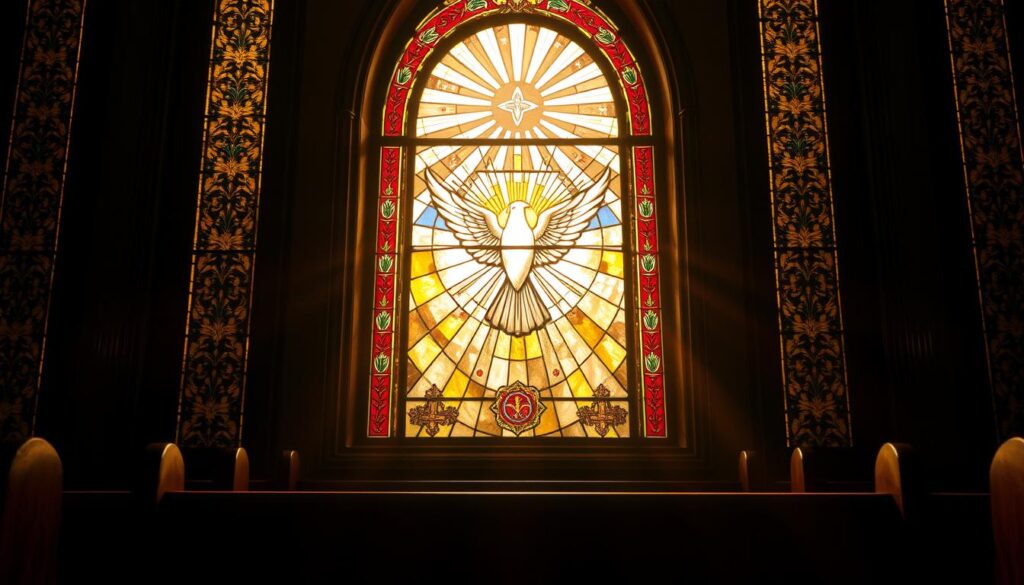
holy spirit anglican beliefs

The Trinity, Jesus Christ, and Salvation

Jesus Christ stands at the center of Anglican theology as both fully divine and fully human. This dual nature allows believers to relate to a God who understands human struggles firsthand. Salvation comes through Christ’s sacrifice alone, received as a gift of grace rather than earned through deeds.

Anglicans emphasize that faith activates this spiritual transformation. Their view of sin focuses on broken relationships rather than eternal punishment. This perspective encourages healing rather than fear-driven obedience.

Understanding the Role of the Holy Spirit

The Holy Spirit acts as a constant guide in Anglican practice. Believers see this third person of the Trinity as the source of comfort and empowerment. Through the Spirit, ordinary moments become opportunities for spiritual growth.

Sacraments like Communion highlight Anglican comfort with mystery. While affirming Christ’s real presence in the Eucharist, they avoid rigid explanations. This balance between conviction and humility marks their approach to many doctrines.

Belief Aspect Anglican View Other Traditions
Salvation Grace through faith Works-based (some)
Sin Relational damage Eternal punishment focus
Eucharist Real Presence (mystery) Literal transubstantiation

The Role of Scripture, Tradition, and Reason

Anglican spirituality thrives on a dynamic interplay between three guiding forces. Imagine a sturdy three-legged stool supporting thoughtful faith—each leg representing Scripture, Tradition, and Reason. This balanced approach prevents spiritual wobbling while allowing room for growth.

scripture tradition reason anglican beliefs

Scripture as the Ultimate Standard

The Bible holds supreme authority in this tradition. Anglicans affirm the Old and New Testaments contain “all things necessary for salvation” while respecting their human authorship. Ancient texts come alive through historical context—read as inspired narratives rather than rulebooks.

Sixteenth-century reformers solidified this view in the Articles of Religion, stating: “Holy Scripture contains all things necessary to salvation.” This principle shapes how communities engage with biblical books, blending reverence with critical thinking.

  • Tradition connects believers to 2,000 years of worship practices
  • Reason invites exploration through science and scholarship
  • Together, they work to interpret timeless truths

This threefold way of understanding faith welcomes both mystery and inquiry. It allows ancient psalms to converse with modern physics, creating space where faith and intellect coexist harmoniously.

Anglican Worship, Sacraments, and Community Practice

Anglican communities find their heartbeat in sacred rituals that bridge centuries. Shared worship patterns create unity across continents, while local expressions keep traditions vibrant. At the center stands the Book of Common Prayer, a spiritual compass guiding both collective ceremonies and personal reflection.

Liturgical Worship and the Book of Common Prayer

The Book of Common Prayer shapes daily spiritual life through structured prayers and seasonal liturgies. Morning and evening services follow patterns refined over 450 years, connecting modern believers to Reformation-era churches. This sacred text turns ordinary words into bridges between human longing and divine grace.

Liturgical rhythms mirror the church calendar – Advent’s anticipation, Easter’s joy, and Pentecost’s fire. These cycles help communities relive Christ’s story annually, making ancient narratives feel freshly relevant.

The Celebration of Sacraments

Two sacraments anchor Anglican practice: Baptism initiates believers into God’s family, while Communion nourishes them with spiritual food. Both acts use physical elements – water, bread, wine – to manifest invisible grace.

In Baptism, candidates renounce darkness and embrace Christ’s light. The Eucharist follows Jesus’ command to “do this in remembrance of me,” blending thanksgiving with mystery. Through these sacred moments, ordinary materials become channels of holy connection.

Mission, Episcopal Succession, and Church Governance

Anglican communities extend their roots globally through action-oriented faith. This tradition views spiritual commitment as inseparable from tangible service, blending ancient practices with modern mission strategies. Their approach to church leadership maintains continuity while empowering local innovation.

Anglican Mission and Community Outreach

Service forms the backbone of Anglican engagement with the world. New churches often emerge from food banks or literacy programs rather than pulpit-focused campaigns. Environmental cleanups and microfinance initiatives demonstrate faith through deeds, embodying Christ’s call to love neighbors holistically.

The Anglican Church structures its global mission through regional networks. Bishops collaborate across continents to address crises like refugee displacement or climate change. This cooperative model allows shared resources while respecting cultural differences in various parts of the world.

Aspect Episcopal Governance Other Models
Leadership Structure Bishops in apostolic succession Elected councils or solo pastors
Decision-Making Synodical process with clergy/laity Centralized authority
Cultural Adaptation Local customs within global framework Uniform practices worldwide
Historical Continuity Unbroken lineage since Apostles Founded post-Reformation

Through episcopal succession, leaders preserve core teachings while addressing contemporary needs. The Chicago-Lambeth Quadrilateral ensures this balance by upholding four essentials: Scripture, sacraments, creeds, and historic bishops. This system creates stability without stifling creativity in serving communities.

Conclusion

Anglican Christianity weaves ancient roots with modern relevance, creating a faith tradition that honors 95% of historic Roman Catholic and Orthodox teachings. This via media approach—the historic “middle way“—bridges sacramental depth with Protestant emphasis on grace. Shared creeds unite global communities while allowing space for local expressions.

The story of Anglicanism thrives on balance. Ancient liturgies meet contemporary life, offering stability through tradition alongside openness to divine revelation. This dual focus reflects the Latin motto semper reformanda (“always reforming”), inviting thoughtful engagement with a changing world.

At its best, Anglican beliefs foster communities where mystery and inquiry coexist. Individuals find room to grow without compromising intellectual honesty, guided by sacraments rather than rigid dogma. The tradition’s means of blending heart and mind continues to attract those seeking spiritual depth with flexibility.

For persons drawn to both historical connection and fresh perspectives, this way of Christian faith offers a welcoming home. Like its shared heritage with Roman Catholic and Orthodox traditions, Anglicanism remains a living story—rooted in the past yet branching toward new horizons.

FAQ

How do Anglican beliefs connect to early Christian traditions?

Anglicans root their faith in ancient creeds like the Apostles’ Creed and the Nicene Creed, which affirm core teachings about the Trinity, Jesus’ divinity, and salvation. These creeds reflect shared beliefs with the broader Christian tradition while honoring the early church’s theological heritage.

Did the Reformation change Anglican practices?

The 16th-century Reformation reshaped Anglican identity by emphasizing Scripture’s authority and simplifying worship. However, the Book of Common Prayer and episcopal governance maintained continuity with pre-Reformation traditions, blending Protestant and Catholic elements.

What role does the Holy Spirit play in Anglican theology?

The Holy Spirit is seen as the sustainer of faith, guiding individuals and the church community. Anglicans believe the Spirit works through sacraments, Scripture, and prayer to transform lives and empower believers for mission and service.

Why is the Book of Common Prayer important?

This historic text unites global Anglicans through shared prayers, liturgies, and sacramental rites. It reflects the church’s commitment to liturgical worship while adapting to modern contexts, ensuring doctrinal clarity and communal unity.

How do Anglicans view baptism and communion?

Baptism and the Eucharist are recognized as sacraments instituted by Christ. Baptism marks entry into the Christian community, while communion celebrates Jesus’ sacrifice and ongoing spiritual presence, fostering unity among believers.

What defines Anglican church governance?

Anglicans uphold episcopal succession, where bishops oversee dioceses as spiritual successors to the apostles. This structure balances local autonomy with global connections through bodies like the Anglican Communion.

How do Anglicans approach social justice?

Inspired by Jesus’ teachings, many Anglicans prioritize community outreach, advocating for the marginalized and addressing issues like poverty and inequality. This mission reflects their belief in living out faith through compassionate action.

Anglican Beliefs on the Eucharist: A Friendly Explanation


The Eucharist is a central aspect of Anglican worship, representing a profound expression of faith and community. Within the Anglican Communion, there exists a rich diversity of theological perspectives on the Eucharist, reflecting the tradition’s broad and inclusive nature.

At its core, the Eucharist is a celebration of the life, death, and resurrection of Jesus Christ, embodying the values of love, forgiveness, and unity. Anglicans approach the Eucharist with reverence and openness, embracing a range of understandings about Christ’s presence in the sacrament.

Key Takeaways

  • Understanding the Eucharist is crucial to grasping Anglican beliefs and practices.
  • The Eucharist is a symbol of unity among Anglicans worldwide.
  • Diverse theological perspectives on the Eucharist exist within the Anglican Communion.
  • The Eucharist embodies core Christian values such as love and forgiveness.
  • Anglicans celebrate the Eucharist with reverence and an openness to different interpretations.

Understanding the Eucharist in Anglicanism

Anglican beliefs on the Eucharist are rooted in a rich history and diverse theological perspectives. The Eucharist, a central element of Anglican worship, is understood through the lens of tradition, scripture, and reason.

What is the Eucharist?

The Eucharist, also known as Holy Communion, is a sacrament in which believers participate in the body and blood of Christ through bread and wine. This act is seen as a means of grace, fostering spiritual growth and unity among the faithful.

The significance of the Eucharist lies in its ability to bring the community together, reinforcing their bond with Christ and with each other. It is a celebration that transcends mere ritual, embodying the heart of Anglican spirituality.

Historical Context of the Eucharist

The historical context of the Eucharist in Anglicanism is deeply intertwined with the Book of Common Prayer and the Thirty-Nine Articles. These foundational documents have shaped Anglican eucharistic theology, influencing how the sacrament is understood and practiced.

Historical Document Influence on Eucharistic Theology
Book of Common Prayer Provides liturgical structure and language for the Eucharist, emphasizing reverence and order.
Thirty-Nine Articles Outlines theological principles, including the nature of sacraments and the Eucharist.

The Eucharist in Anglicanism is thus a blend of tradition, liturgy, and theology, making it a unique and vital aspect of Anglican worship.

The Significance of the Eucharist

The Eucharist holds a pivotal role in Anglican worship, serving as a cornerstone of communal celebration and spiritual nourishment. It is a sacrament that is deeply ingrained in the liturgical practices of Anglican churches, reflecting the community’s faith and commitment to Christ.

In the Anglican tradition, the Eucharist is not just a ritual but a living expression of the community’s unity and shared beliefs. It is a celebration that brings together the faithful to partake in a sacred meal, symbolizing their communion with Christ and with each other. For more insights into the beliefs and practices of other Christian denominations, you can explore Lutheranism and its main beliefs, which share some similarities with Anglican practices.

A Celebration of Community

The Eucharist is a powerful symbol of community in Anglican churches. It is during the Eucharistic celebration that the community comes together, united in their faith and worship. The act of sharing bread and wine is a poignant reminder of the bonds that tie the community together, fostering a sense of belonging and unity among its members.

The Eucharist as a Means of Grace

In Anglican theology, the Eucharist is considered a means of grace, a sacrament through which God’s grace is conveyed to the faithful. The Eucharist is seen as a channel of divine grace, nourishing the spiritual lives of believers and strengthening their relationship with God.

Aspect Description
Communal Significance The Eucharist unites the community in worship and faith.
Means of Grace The Eucharist is a sacrament through which God’s grace is conveyed.
Liturgical Practice The Eucharist is a central part of Anglican liturgical worship.

The significance of the Eucharist in Anglicanism is multifaceted, encompassing both its role as a celebration of community and its function as a means of grace. Through the Eucharist, Anglicans experience a deepening of their faith and a strengthening of their communal bonds.

Theological Perspectives on the Eucharist

Within Anglicanism, the Eucharist is understood through diverse theological lenses, from real presence to symbolic interpretations. This diversity reflects the complexity and richness of Anglican theology.

Real Presence vs. Symbolism

The debate between real presence and symbolic views of the Eucharist is a longstanding one within Anglican theology. Some Anglicans adhere to a belief in the real presence of Christ in the Eucharist, drawing on Catholic traditions. Others interpret the Eucharist symbolically, emphasizing its role in commemorating Christ’s life, death, and resurrection.

Real Presence: This view posits that Christ is actually present in the elements of bread and wine. It is often associated with a more sacramental understanding of the Eucharist.

Symbolic View: In contrast, the symbolic view sees the bread and wine as representations or symbols of Christ’s body and blood, rather than their actual presence.

“The Eucharist is a sacrament of the presence of Christ, not just a symbol or reminder of Him.” –

An Anglican Theologian
Theological Perspective View of the Eucharist Key Emphasis
Real Presence Christ is actually present in bread and wine Sacramental understanding
Symbolic View Bread and wine symbolize Christ’s body and blood Commemorative significance

The Role of Faith in the Eucharist

Faith plays a crucial role in the Eucharist, as it does in other sacraments. For Anglicans, faith is not just about belief but also about the active participation in the sacrament. The Eucharist is seen as a means of grace, where faith is nurtured and deepened through the act of communion.

Eucharistic doctrine in Anglican tradition

The Eucharist is a multifaceted sacrament that encompasses a range of theological perspectives within Anglicanism. Understanding these perspectives can deepen one’s appreciation for the complexity and richness of Anglican theology and practice.

The Eucharist in Anglican Worship

The celebration of the Eucharist in Anglican worship is a unifying factor despite liturgical variations. This unity is reflected in the shared belief in the significance of the Eucharist, even as the specifics of its celebration can differ widely among Anglican churches.

Liturgical Practices and Variations

Anglican liturgical practices regarding the Eucharist are diverse, reflecting the broad spectrum of Anglican tradition. Some churches follow a more formal, traditional liturgy, while others adopt a more contemporary approach. This diversity is a hallmark of Anglican worship, allowing for a rich tapestry of Eucharistic celebrations.

Traditional Practices: In some Anglican churches, the Eucharist is celebrated with a high degree of formality, incorporating traditional prayers and rituals. These services often follow established liturgical guidelines, ensuring a sense of continuity with the broader Anglican Communion.

Contemporary Approaches: Other Anglican churches have adopted more contemporary approaches to the Eucharist, incorporating modern language and musical elements. These services aim to make the Eucharist more accessible and engaging to a wider audience.

The Role of Clergy and Congregation

The roles of clergy and congregation in the Eucharist are complementary, each playing a vital part in the celebration. Clergy are responsible for leading the service, consecrating the elements, and distributing Communion. The congregation participates actively, engaging in prayers, hymns, and responses.

  • Clergy Roles: Clergy lead the Eucharistic service, ensuring that it is conducted in accordance with Anglican liturgical norms.
  • Congregational Participation: The congregation plays an active role, participating in the liturgy and receiving Communion.

This collaborative approach to the Eucharist underscores the communal nature of Anglican worship, emphasizing the shared faith and practice of the community.

The Frequency of Eucharistic Celebrations

Anglican churches observe the Eucharist with varying frequencies, reflecting diverse traditions within the denomination. This variation is a reflection of the broad spectrum of practices within Anglicanism, accommodating different theological emphases and congregational preferences.

The frequency of Eucharistic celebrations can significantly impact the spiritual life of Anglican congregations. While some churches celebrate the Eucharist weekly, others observe it monthly. This difference in practice is rooted in various factors, including theological perspectives and local customs.

Weekly vs. Monthly Observance

Weekly Eucharistic celebrations are common in many Anglican churches, particularly those with a more sacramental or high church tradition. These churches emphasize the importance of regular communion in the spiritual lives of their members.

In contrast, some Anglican churches, often with a low church or more evangelical orientation, may celebrate the Eucharist less frequently, such as on a monthly basis. This practice may be accompanied by other forms of worship and community activities.

Eucharist in Anglicanism

Special Occasions and Events

Beyond regular weekly or monthly celebrations, the Eucharist plays a significant role in special occasions and events within Anglican churches. These can include major Christian festivals such as Easter and Christmas, as well as significant life events like weddings and funerals.

The Eucharist is also central to other important religious observances, such as Maundy Thursday services, which commemorate the Last Supper. These special occasions underscore the rich liturgical life of Anglican communities and the diverse ways in which the Eucharist is integrated into their worship and practices.

In conclusion, the frequency of Eucharistic celebrations in Anglican churches varies, reflecting the diverse theological and liturgical practices within the Anglican Communion. Understanding these variations provides insight into the rich tapestry of Anglican worship and the central role of the Eucharist in the spiritual lives of its adherents.

The Eucharist and Personal Spirituality

Receiving the Eucharist is a profoundly personal experience for Anglicans, touching the heart of their faith. It is a moment that combines communal worship with individual spirituality, creating a rich tapestry of belief and practice.

Preparing for Communion

For many Anglicans, preparing to receive the Eucharist involves a period of personal reflection and preparation. This might include examining one’s conscience, engaging in prayer and meditation, or simply taking a moment to quiet the mind and focus on the significance of the sacrament.

The practice of preparing for communion can vary widely among individuals. Some may follow traditional pre-communion prayers, while others might use personal devotions or simply be present in the moment, letting go of distractions.

The Experience of Receiving

The act of receiving the Eucharist is often described as a deeply moving and spiritual experience. For many, it’s a moment of intimacy with God, a time when the boundaries between the individual and the divine are felt to be at their most permeable.

Anglicans may experience a range of emotions during communion, from joy and peace to contrition and sorrow. The Eucharist is a sacrament that acknowledges both the human condition and the divine grace, offering a space for personal reflection and spiritual growth.

The experience of receiving the Eucharist can also be influenced by the communal aspect of the service. Being part of a community that shares in this sacred act can enhance the personal experience, creating a sense of unity and shared faith.

Differences within Anglicanism

The Eucharist is a cornerstone of Anglican worship, yet its interpretation and celebration vary significantly across different provinces. This diversity reflects the global nature of the Anglican Communion, encompassing a wide range of cultural, theological, and liturgical traditions.

Variations Among Provinces

Anglican provinces around the world have developed their own unique eucharistic practices, influenced by local culture, history, and theology. For instance, the Episcopal Church in the United States has its own liturgical practices, which may differ from those in the Church of England or the Anglican Church of Australia.

These variations are not limited to liturgical texts but also extend to the frequency and style of Eucharistic celebrations. Some provinces may celebrate the Eucharist weekly, while others may do so monthly or on special occasions.

Province Eucharistic Practice Frequency
Episcopal Church (USA) Contemporary liturgy with traditional elements Weekly
Church of England Traditional Book of Common Prayer Monthly
Anglican Church of Australia A mix of traditional and contemporary liturgies Weekly and Special Occasions

High Church vs. Low Church Perspectives

Within Anglicanism, the terms “High Church” and “Low Church” refer to different theological and liturgical emphases. High Church Anglicans tend to emphasize the sacramental and sacerdotal aspects of the Eucharist, often incorporating more traditional and ritualistic elements into their worship.

In contrast, Low Church Anglicans typically adopt a more evangelical and less formal approach to the Eucharist, focusing on the scripture and the community aspect of the celebration.

The differences between High Church and Low Church perspectives on the Eucharist reflect the broader diversity within Anglicanism, highlighting the richness and complexity of Anglican eucharistic theology and practice.

Inclusivity and Open Communion

The practice of open communion is not uniform across all Anglican churches, reflecting a range of theological perspectives. This diversity is a hallmark of the Anglican Communion, allowing for a rich tapestry of beliefs and practices regarding the Eucharist.

Who Can Participate?

Anglican churches vary in their approach to who can participate in the Eucharist. Some practice open communion, welcoming all baptized Christians to receive the sacrament, while others are more restrictive, requiring participants to be confirmed or to be members of their particular congregation.

The decision on who can participate is often influenced by the local church’s interpretation of Anglican Eucharistic theology. This includes considerations of the significance of baptism, confirmation, and the individual’s faith journey.

Practice Description Theological Basis
Open Communion All baptized Christians are welcome Emphasis on baptism as the primary sacrament for initiation into Christ’s body
Closed Communion Only confirmed Anglicans or members of the local congregation can participate Importance of confirmation as a step towards full participation in church life

The Importance of Invitation

The invitation to participate in the Eucharist is a significant aspect of Anglican worship. It is often accompanied by a welcome to the table, emphasizing the inclusive nature of the sacrament. This invitation is not just a procedural step but a meaningful moment that underscores the community’s openness and hospitality.

By extending an invitation to communion, Anglican churches highlight their understanding of the Eucharist as a source of unity and grace. This practice is deeply rooted in Anglican Eucharistic theology, which views the sacrament as a means of grace and a celebration of community.

The variability in practices regarding who can participate in the Eucharist reflects the broader diversity within Anglicanism. Despite these differences, the Eucharist remains a central element of Anglican worship, embodying the community’s commitment to faith, unity, and the pursuit of spiritual growth.

Conclusion: The Importance of the Eucharist

The Eucharist is a cornerstone of Anglican worship and spirituality, embodying the community’s beliefs and practices. Understanding the Anglican communion views on the Eucharist provides insight into the significance of this sacrament in the lives of Anglican Christians.

Core Beliefs and Practices

Throughout this article, we have explored the various aspects of the Eucharist in Anglicanism, from its historical context to its role in personal spirituality. The Eucharist in Anglicanism is not just a ritual but a means of grace, a celebration of community, and a lifelong journey of faith.

A Lifelong Journey

For Anglican Christians, participating in the Eucharist is a profound experience that nurtures their relationship with God and with each other. As a central element of their faith, the Eucharist continues to be a source of comfort, guidance, and inspiration. It is through this sacrament that Anglicans deepen their understanding of God’s love and their place within the community of believers.

FAQ

What do Anglican Christians believe about the Eucharist?

Anglican Christians believe that the Eucharist, also known as Holy Communion, is a sacrament in which bread and wine are consecrated and received as a means of spiritual nourishment and growth. The specifics of their beliefs vary, with some holding to a real presence view and others to a more symbolic understanding.

What is the historical context of the Eucharist in Anglicanism?

The Eucharist has its roots in the Last Supper and the early Christian church. In Anglicanism, the Eucharist has evolved over time, influenced by the English Reformation and subsequent theological developments, resulting in a diverse range of practices and understandings.

How is the Eucharist celebrated in Anglican worship?

The Eucharist is a central part of Anglican worship, with variations in liturgical practices across different provinces and parishes. The celebration typically involves the consecration of bread and wine, followed by the distribution of communion to the congregation.

What is the significance of the Eucharist in Anglicanism?

The Eucharist is significant in Anglicanism as a means of receiving grace, fostering community, and expressing unity among believers. It is also seen as a way of participating in the life and death of Jesus Christ.

What are the different theological perspectives on the Eucharist within Anglicanism?

Anglicanism encompasses a range of theological perspectives on the Eucharist, including real presence, symbolic, and receptionist views. These perspectives influence how Anglicans understand the sacrament and its role in their spiritual lives.

How often is the Eucharist celebrated in Anglican churches?

The frequency of Eucharistic celebrations varies among Anglican churches, with some observing weekly communion and others monthly or on special occasions. The frequency often depends on the parish’s tradition and liturgical practices.

Who can participate in the Eucharist in Anglican churches?

The policy on who can participate in the Eucharist varies among Anglican churches, with some practicing open communion and others having more restrictive policies. Some churches invite all baptized Christians to participate, while others require confirmation or other prerequisites.

How do Anglicans prepare for receiving the Eucharist?

Preparation for receiving the Eucharist in Anglicanism often involves prayer, reflection, and examination of one’s conscience. Some individuals may also seek confession or spiritual guidance before participating in communion.

What is the difference between High Church and Low Church perspectives on the Eucharist?

High Church Anglicans tend to have a more sacramental understanding of the Eucharist, emphasizing the real presence of Christ, while Low Church Anglicans often have a more symbolic or receptionist view. These differences influence their liturgical practices and worship styles.

How does the Eucharist relate to personal spirituality in Anglicanism?

The Eucharist is deeply connected to personal spirituality in Anglicanism, as it is seen as a means of receiving spiritual nourishment, forgiveness, and guidance. Many Anglicans find that participating in the Eucharist deepens their faith and sense of connection to God and their community.

Do Anglicans Believe Jesus is the Son of God?


The Anglican faith is rooted in the belief that Jesus Christ is both fully God and fully human. This fundamental principle is central to their faith, as highlighted by theologians like Thomas McKenzie and James Atkinson, who emphasize the Trinitarian nature of God.

The belief in Jesus as the Son of God is a cornerstone of the Anglican faith, influencing their practices and worship. Understanding this belief is crucial to grasping the broader context of Anglicanism.

Key Takeaways

  • Anglicans affirm Jesus Christ as fully God and fully human.
  • The Trinitarian nature of God is a core belief.
  • Jesus’ role as the Son of God is central to Anglican faith.
  • Anglican beliefs are influenced by key theologians.
  • The faith emphasizes the importance of understanding Jesus’ divinity and humanity.

Understanding the Anglican Faith

Understanding Anglican beliefs requires exploring their historical roots, core doctrines, and contemporary practices. The Anglican Communion is a global fellowship of churches that originated from the Church of England.

Overview of Anglicanism

Anglicanism is characterized by its Trinitarian belief, the primacy of Scripture, and the importance of sacraments. According to Thomas McKenzie, these elements form the foundation of Anglican theology and practice.

“The Anglican Church is known for its via media, or ‘middle way,’ between Catholic and Protestant traditions.”

Historical Roots

The historical roots of Anglicanism are tied to the Church of England’s separation from the Roman Catholic Church during the Reformation. This historical context is crucial for understanding contemporary Anglican beliefs.

Core Beliefs

At the heart of Anglicanism is the belief in Jesus Christ as the Son of God. This core belief is reflected in their liturgical practices and theological doctrines.

Core Aspect Description
Trinitarian Belief Belief in the Father, Son, and Holy Spirit
Scripture Primacy of the Bible in doctrine and practice
Sacraments Importance of sacraments in worship and life

These core beliefs shape the Anglican understanding of Jesus Christ and his role in salvation, emphasizing the significance of faith, worship, and community.

The Trinity in Anglicanism

Anglicanism places significant emphasis on the Trinity, a fundamental aspect of Christian theology that describes God as three persons: Father, Son, and Holy Spirit. This doctrine is not just a concept but a living reality that encompasses the eternal communion between the divine persons.

Father, Son, and Holy Spirit

The Anglican understanding of the Trinity is rooted in the belief in one God who exists eternally in three distinct persons. The relationship between the Father, Son, and Holy Spirit is considered pivotal to understanding God’s nature and interaction with humanity.

The Father is seen as the creator and sustainer of the universe, the Son as the redeemer, and the Holy Spirit as the sanctifier. This triune God is worshipped and revered in Anglican liturgy and daily life.

“The grace of the Lord Jesus Christ, and the love of God, and the fellowship of the Holy Spirit, be with us all.” – 2 Corinthians 13:14

Scriptural Foundations

The Anglican belief in the Trinity is grounded in Scripture. For instance, Hebrews 1:1-3 describes Jesus as the reflection of God’s glory, emphasizing His divine nature. Other key passages include the baptismal formula in Matthew 28:19, which instructs believers to baptize in the name of the Father, Son, and Holy Spirit.

Scriptural Reference Description
Hebrews 1:1-3 Describes Jesus as the reflection of God’s glory
Matthew 28:19 Institutes the baptismal formula in the name of the Father, Son, and Holy Spirit

Anglicans believe that these scriptures provide a foundation for understanding the Trinity and its significance in Christian life and worship.

The doctrine of the Trinity is central to Anglican identity and informs their understanding of salvation, worship, and community life. It is a mystery that is both revered and explored through scripture, tradition, and reason.

Jesus Christ in Anglican Teachings

The Anglican Church places Jesus Christ at the forefront of its teachings, affirming His divinity as the Son of God. This fundamental belief is central to Anglican doctrine and is reflected in their understanding of salvation.

Recognition as the Son of God

Anglicans believe that Jesus Christ is the Son of God, a conviction that is deeply rooted in scripture and tradition. This belief is not just a theological abstraction but a living faith that guides the daily lives of Anglicans. The recognition of Jesus as the Son of God is seen as a cornerstone of Christian faith, emphasizing the unique relationship between Jesus and God the Father.

The divinity of Jesus Christ is affirmed in various Anglican liturgies and prayers, underscoring the importance of this doctrine in Anglican worship and practice.

The Role of Jesus in Salvation

In Anglican teachings, Jesus Christ is seen as the savior of humanity, whose life, death, and resurrection provide the means of salvation for all people. The belief is that through faith in Jesus Christ, individuals can experience forgiveness and reconciliation with God.

The Anglican understanding of salvation is deeply connected to the life, death, and resurrection of Jesus, which are celebrated in the Eucharist and other liturgical celebrations. This highlights the significance of Jesus’ role in the salvation narrative.

By affirming Jesus Christ as the Son of God and the savior of humanity, Anglicans underscore the importance of faith in Jesus for salvation. This belief is foundational to Anglican Christianity and is reflected in their worship, doctrine, and daily practice.

The Authority of Scripture

In Anglicanism, the Bible is considered the ultimate rule and standard of faith, guiding beliefs about Jesus Christ. The canonical scriptures of the Old and New Testaments are foundational to understanding Jesus’ teachings and significance.

The Bible’s Position in Anglicanism

The Anglican Church places a high value on Scripture, using it to inform beliefs about Jesus. According to the Constitution of the Anglican Church of Australia, the canonical scriptures are the ultimate rule and standard of faith. This emphasis on biblical authority is a key aspect of Anglican theology.

Biblical teachings are seen as essential to understanding Jesus’ role as the Son of God. Anglicans rely on the Bible to guide their beliefs and practices, ensuring that their faith is rooted in Scripture.

Key Biblical Passages

Several biblical passages are particularly significant in Anglican beliefs about Jesus. These include:

  • The Gospel accounts of Jesus’ life, death, and resurrection
  • The Epistles of Paul, which provide theological insights into Jesus’ significance
  • The Book of Revelation, with its apocalyptic visions of Jesus’ return

These passages are crucial for understanding Jesus’ role in salvation and his relationship to God the Father.

Passage Description Significance in Anglicanism
John 1:1-14 The prologue of John’s Gospel, affirming Jesus as the Word made flesh Highlights Jesus’ divinity and his role in creation
Philippians 2:5-11 Paul’s hymn to Christ, emphasizing his humility and exaltation Illustrates Jesus’ sacrifice and his subsequent glorification
Hebrews 1:1-3 The opening of Hebrews, describing Jesus as the Son of God Establishes Jesus’ superiority over angels and his role in God’s final revelation

As

“The Bible is the ultimate rule and standard of faith”

, Anglicans turn to Scripture to deepen their understanding of Jesus and his teachings. This commitment to biblical authority shapes Anglican beliefs and practices, ensuring a faith that is grounded in the witness of the Old and New Testaments.

The Nicene Creed’s Significance

At the heart of Anglican belief lies the Nicene Creed, a foundational statement that proclaims Jesus as the Son of God. This creed has been a cornerstone of Christian faith for centuries, shaping the theological understanding of Anglicans worldwide.

Affirmation of Jesus’ Divinity

The Nicene Creed is pivotal in affirming the divinity of Jesus Christ. It states,

“We believe in one Lord, Jesus Christ, the only Son of God, eternally begotten of the Father, God from God, Light from Light, true God from true God.”

This affirmation is central to Anglican doctrine, reinforcing the belief in Jesus as the Son of God.

The creed’s emphasis on Jesus’ divinity underscores the Anglican commitment to the Trinitarian understanding of God. By reciting the Nicene Creed, Anglicans reaffirm their faith in Jesus Christ as an integral part of the Holy Trinity.

Historical Context

The Nicene Creed was formulated in the 4th century, primarily in response to theological debates within the early Christian Church. Its historical context is rooted in the Council of Nicaea (325 AD) and the Council of Constantinople (381 AD).

Council Year Significance
Nicaea 325 AD Formulation of the original creed
Constantinople 381 AD Revision and expansion of the creed

The Nicene Creed’s enduring presence in Anglican liturgy and doctrine is a testament to its significance in affirming the faith. As Anglicans continue to recite this creed, they connect with a rich historical tradition that spans centuries.

Church Doctrine and Theology

The Anglican Church’s doctrine and theology are shaped by a blend of historical traditions and contemporary perspectives. This blend is crucial in understanding how Anglicans believe in Jesus Christ as the Son of God.

Contemporary Anglican Perspectives

Contemporary Anglican perspectives on doctrine and theology are influenced by modern societal changes and theological reflections. For instance, the church has had to adapt its teachings to address contemporary issues while remaining true to its core beliefs.

  • The role of women in the church has evolved, with many Anglican provinces now ordaining women as priests and bishops.
  • There is an ongoing dialogue about human sexuality and its implications for church doctrine.
  • Interfaith dialogue has become increasingly important, with Anglicans engaging in discussions with other Christian denominations and non-Christian faiths.

Anglican doctrine and contemporary perspectives

Synodical Decisions

Synodical decisions play a significant role in shaping Anglican doctrine and theology. These decisions are made through a synodical process involving clergy and laity from various provinces of the Anglican Communion.

Some key aspects influenced by synodical decisions include:

  1. The interpretation of scripture in contemporary contexts.
  2. The balance between tradition and modernity in worship and doctrine.
  3. The response to global issues such as climate change and social justice.

By examining these contemporary perspectives and synodical decisions, we gain a deeper understanding of how Anglicans believe Jesus is the Son of God and how these beliefs are lived out in the modern world.

Variations in Belief Within Anglicanism

Anglicanism is marked by a wide range of beliefs, from traditional to contemporary interpretations. This diversity is a hallmark of the Anglican faith, reflecting its global presence and historical roots.

Low Church vs High Church Views

The Anglican Communion is characterized by a spectrum of worship styles and theological emphases, notably between Low Church and High Church traditions. Low Church Anglicans tend to emphasize evangelical and Protestant aspects, focusing on personal conversion and biblical authority. In contrast, High Church Anglicans, also known as Anglo-Catholics, place a strong emphasis on sacramental worship, liturgical practices, and the Catholic heritage of Anglicanism.

This dichotomy influences how different Anglican communities understand and express their beliefs about Jesus Christ. For instance, the role of sacraments and the interpretation of biblical teachings can vary significantly between these two broad categories.

Aspect Low Church High Church
Worship Style Simple, Evangelical Liturgical, Sacramental
Theological Emphasis Personal Conversion, Biblical Authority Sacraments, Catholic Heritage
View of Jesus Emphasizes Jesus as Savior and Lord Also emphasizes Jesus’ presence in sacraments

Global Anglican Communion Differences

Beyond the Low Church and High Church divide, the global Anglican Communion exhibits a rich diversity of beliefs and practices, influenced by local cultures and contexts. Anglican churches in different parts of the world may have distinct emphases in their theology and worship, shaped by their historical, social, and cultural environments.

For example, Anglican churches in Africa may integrate traditional cultural practices into their worship, while those in more secular societies may focus on social justice and community outreach. This diversity enriches the global Anglican Communion, demonstrating the adaptability and resilience of the Anglican faith.

The variations in belief within Anglicanism underscore its dynamic and inclusive nature. As the global Anglican Communion continues to evolve, it remains committed to its core beliefs, including the affirmation of Jesus Christ as the Son of God.

Interfaith Dialogues

Through interfaith dialogues, Anglicans explore diverse perspectives on Jesus, enriching their theology and practices. This engagement not only deepens their understanding of Christianity but also fosters cooperation with other faith communities.

Engaging with Other Christian Denominations

Anglicans participate in ecumenical discussions with other Christian denominations, such as the Roman Catholic Church and various Protestant churches. These dialogues focus on shared beliefs and practices, including the recognition of Jesus as the Son of God.

Key areas of discussion include:

  • Sacraments and worship practices
  • Scriptural interpretations
  • Clergy and church governance

Perspectives from Non-Christian Faiths

Interfaith dialogues also extend to non-Christian faiths, including Judaism, Islam, and other major world religions. These conversations provide Anglicans with a broader understanding of Jesus within different religious contexts.

A comparative analysis of these dialogues reveals both commonalities and differences:

Faith View of Jesus Common Ground with Anglicanism
Judaism Jesus is seen as a prophet, not the Messiah Shared scripture (Old Testament), ethical teachings
Islam Jesus is a prophet, not the Son of God Respect for Mary, belief in miracles
Hinduism Jesus is considered a wise teacher or avatar Belief in the importance of compassion and love

The insights gained from these interfaith dialogues contribute to a more nuanced and inclusive Anglican theology, highlighting the significance of Jesus in various religious contexts.

Anglican Worship Practices

At the heart of Anglican worship are liturgical celebrations and the sacrament of Communion. These practices are central to the expression of Anglican faith and play a significant role in shaping their understanding of Jesus’ presence in their lives.

Liturgical Celebrations

Liturgical celebrations in the Anglican tradition are characterized by a rich and structured form of worship. These services often include readings from the Bible, prayers, and hymns that reflect the liturgical calendar. The liturgical year guides Anglicans through various seasons, such as Advent, Christmas, Lent, and Easter, each with its unique themes and emphases.

For instance, during Easter, Anglicans celebrate the resurrection of Jesus with special services and rituals. As

“Christ is risen from the dead, trampling down death by death, and upon those in the tombs bestowing life.”

This highlights the significance of Jesus’ resurrection in Anglican belief.

Liturgical Season Key Themes Special Practices
Advent Preparation for Jesus’ birth Use of Advent wreaths and calendars
Lent Reflection on Jesus’ sacrifice Fasting, giving to charity, and attending special Lenten services
Easter Celebration of Jesus’ resurrection Midnight services, Easter egg hunts, and special music

The Role of Communion

The sacrament of Communion, also known as the Eucharist, is a fundamental aspect of Anglican worship. It involves the consecration of bread and wine, which are believed to be the body and blood of Christ. Anglicans believe that during Communion, they are spiritually nourished by Jesus’ presence.

The practice of Communion varies within the Anglican Communion, with some churches observing a more traditional form and others a more contemporary form. However, the underlying belief in Jesus’ real presence in the sacrament remains a unifying factor.

In conclusion, Anglican worship practices, through liturgical celebrations and the sacrament of Communion, reflect and reinforce their beliefs about Jesus. These practices are integral to the Anglican faith, fostering a deep connection with Jesus and the community.

Community and Fellowship

Anglican congregations thrive on the principles of community and fellowship, embodying the spirit of Jesus’ teachings. This aspect of Anglicanism is crucial in fostering a deeper understanding of Jesus in Anglican theology.

The sense of community is palpable in Anglican congregational life, where members come together to support one another in their spiritual journeys. This communal aspect is not just a byproduct of congregational life but a core component that defines Anglican identity.

Anglican Congregational Life

Anglican congregational life is characterized by a variety of activities that promote fellowship and service. These activities range from social gatherings to community service projects, all aimed at living out Jesus’ teachings in practical ways.

  • Community service projects that address local needs
  • Social events that foster a sense of belonging among members
  • Educational programs that deepen understanding of Jesus’ teachings

These elements of congregational life not only strengthen the bonds within the community but also serve as a witness to the wider community of the Anglican values of compassion, service, and fellowship.

Jesus in Anglican theology

Education and Outreach Programs

Education and outreach are vital components of Anglican congregational life, aimed at nurturing faith and understanding of Jesus’ teachings. These programs are designed to engage both the congregation and the wider community.

  1. Bible study groups that explore the scriptural foundations of Jesus’ teachings
  2. Outreach initiatives that serve the local community and beyond
  3. Confirmation classes and other educational programs for members

Through these education and outreach programs, Anglican congregations demonstrate their commitment to living out their faith in meaningful and impactful ways, reflecting the core beliefs of Anglicanism.

The Influence of Tradition

Tradition plays a pivotal role in shaping the Anglican faith’s understanding of Jesus Christ. The Anglican Church’s rich historical heritage informs its beliefs and practices, creating a unique blend of traditional and contemporary perspectives.

Historical Influences on Belief

The Anglican Church’s history dates back to the early Christian Church, with significant influences from the Catholic and Protestant reformations. This historical context has shaped Anglican beliefs about Jesus, emphasizing both his divinity and his role in salvation.

Key historical events that have influenced Anglican beliefs include:

  • The Council of Nicaea, which affirmed Jesus’ divinity
  • The Protestant Reformation, which shaped Anglican theology and practices
  • The English Reformation, which led to the establishment of the Anglican Church

The Role of Tradition vs. Modernity

The Anglican Church navigates a delicate balance between tradition and modernity. While tradition provides a foundation for beliefs, modern perspectives and societal changes also influence how Anglicans understand Jesus and his teachings.

Aspect Traditional Perspective Modern Perspective
Understanding of Jesus Emphasis on divinity and salvation Inclusive interpretations, focusing on Jesus’ teachings and example
Worship Practices Traditional liturgy and sacraments Incorporating contemporary worship styles and elements

The dynamic interplay between tradition and modernity allows the Anglican Church to remain relevant while staying true to its historical roots. This balance is crucial in understanding how Anglicans view Jesus as the Son of God.

Future of Anglican Beliefs

The Anglican faith continues to evolve, with ongoing discussions about Jesus and His teachings playing a central role. As modern society progresses, Anglican beliefs are adapting to new perspectives and understandings.

Shifting Perspectives on Jesus

Evolving views on Jesus and His teachings are influencing Anglican theology. The question of “do Anglicans believe Jesus is the Son of God” remains a fundamental aspect of their faith, with a continued emphasis on the significance of Jesus Christ in Anglican teachings.

Modern Society’s Influence

The impact of modern society on Anglican faith is multifaceted. As Anglicans engage with contemporary issues, their core beliefs, including “anglican faith beliefs,” are being reexamined and reinterpreted for the modern world.

This ongoing dialogue ensures that Anglicanism remains a vibrant and dynamic faith, responsive to the needs of its adherents in an ever-changing world.

FAQ

Do Anglicans believe Jesus is the Son of God?

Yes, Anglicans believe Jesus is the Son of God, a fundamental aspect of their faith rooted in the Trinitarian nature of God. This belief is central to Anglican theology and is supported by scriptural foundations.

What is the significance of the Trinity in Anglicanism?

The Trinity, comprising the Father, Son, and Holy Spirit, is a cornerstone of Anglican beliefs. It underscores the complex relationship between God and Jesus, affirming Jesus’ divinity as the Son of God.

How do Anglicans view Jesus Christ?

Anglicans recognize Jesus Christ as the Son of God and the central figure in their salvation. They believe in His divinity and humanity, a belief that is reflected in their worship practices and theological understandings.

What role does Scripture play in Anglican beliefs about Jesus?

Scripture is authoritative in Anglicanism, with the Bible informing their beliefs about Jesus. Key biblical passages that highlight Jesus’ role as the Son of God are particularly significant.

How does the Nicene Creed influence Anglican beliefs?

The Nicene Creed is crucial in Anglicanism, affirming Jesus’ divinity and providing a historical context for understanding Jesus’ role. It continues to shape Anglican beliefs about Jesus.

Are there variations in belief within Anglicanism regarding Jesus?

Yes, there are variations, notably between Low Church and High Church views, as well as differences within the global Anglican Communion. These variations impact how Anglicans understand Jesus.

How do interfaith dialogues affect Anglican beliefs about Jesus?

Interfaith dialogues, both with other Christian denominations and non-Christian faiths, contribute to a broader understanding of Jesus within Anglicanism, enriching their theological perspectives.

What is the significance of worship practices in Anglican beliefs about Jesus?

Anglican worship practices, including liturgical celebrations and Communion, reflect and shape their beliefs about Jesus, reinforcing the importance of Jesus as the Son of God.

How does community and fellowship influence Anglican understanding of Jesus?

Community and fellowship are vital in Anglican congregational life, with education and outreach programs contributing to a deeper understanding of Jesus among Anglicans.

What is the impact of tradition on Anglican beliefs about Jesus?

Tradition plays a significant role in shaping Anglican beliefs, with historical influences interacting with modernity to inform their understanding of Jesus.

How might Anglican beliefs about Jesus evolve in the future?

Anglican beliefs about Jesus may evolve due to the impact of modern society on faith, potentially leading to new directions in understanding Jesus and His teachings within Anglicanism.

What Do Episcopalians Believe About Gays?


The Episcopal Church is known for its progressive stance on various social issues, including LGBTQ+ rights. At its core, the church’s belief is centered around the love of God and the acceptance of all individuals. As stated in their doctrine, “In Jesus, we find that the nature of God is love, and through baptism, we share in his victory over sin and death.” This foundational belief shapes their approach to various issues, including their stance on homosexuality.

The Episcopal Church’s stance on LGBTQ+ issues has evolved over the years, reflecting a growing understanding and acceptance of diversity within the community. This evolution is a testament to the church’s commitment to inclusivity and love.

Key Takeaways

  • The Episcopal Church emphasizes the love of God and acceptance.
  • Their stance on LGBTQ+ issues is progressive and inclusive.
  • The church’s beliefs are rooted in their interpretation of Christian teachings.
  • There has been an evolution in their stance on homosexuality over the years.
  • The Episcopal Church values diversity and promotes inclusivity.

Historical Context of Episcopalian Views on Homosexuality

Understanding the historical context of Episcopalian views on homosexuality requires examining the evolution of church teachings over time. The Episcopal Church has a complex history regarding LGBTQ+ issues, influenced by traditional church teachings and societal changes.

Early Church Teachings

The early Christian church’s stance on homosexuality was not uniform, with various interpretations of biblical scripture. The Episcopal Church, being part of the Anglican Communion, has roots in the Church of England and inherited some of its traditional views.

  • The church initially maintained conservative views on sexuality.
  • Scriptural interpretations played a crucial role in shaping these views.

Evolution of Beliefs Over Time

Over the years, the Episcopal Church has moved towards greater inclusivity. A significant milestone was reached in 1976 when the House of Deputies and House of Bishops voted for a fully inclusive Episcopal Church, marking a pivotal moment in the church’s stance on LGBTQ+ issues.

Key developments include:

  1. Increasing acceptance of LGBTQ+ individuals within the church.
  2. Changes in official church policies to promote inclusivity.
  3. Growing recognition of same-sex relationships.

The shift towards inclusivity reflects broader societal changes and a more nuanced understanding of biblical teachings. As the Episcopal Church continues to evolve, its historical context provides valuable insights into its current stance on LGBTQ+ issues.

The Current Stance of the Episcopal Church

The Episcopal Church’s current stance on LGBTQ+ issues reflects a broader commitment to social justice and equality. This stance is not only a reflection of the church’s evolving understanding of its role in society but also its commitment to creating an inclusive environment for all members.

Official Policies and Statements

In 2015, the Episcopal Church took a significant step by codifying theological support for same-sex marriage, marking a pivotal moment in its journey towards LGBTQ+ inclusion. This decision was a culmination of years of debate and discussion within the church, reflecting a broader shift towards greater acceptance and understanding.

The church has also made efforts to ensure that its policies are inclusive, allowing LGBTQ+ individuals to fully participate in church life. This includes the ability to serve in clergy positions and to have their marriages recognized by the church.

Year Policy/Action Significance
2015 Codification of support for same-sex marriage Theological backing for LGBTQ+ marriages
2018 Permitting LGBTQ+ clergy Increased representation and inclusivity

Inclusivity and Acceptance

The Episcopal Church’s commitment to LGBTQ+ inclusion is also reflected in its efforts to create welcoming congregations. Programs aimed at promoting understanding and acceptance have been implemented, ensuring that all members feel valued and included.

The church’s journey towards inclusivity is ongoing, with continued efforts to address the needs of LGBTQ+ members and to promote a culture of acceptance within the church.

The Episcopal Church’s stance on LGBTQ+ issues is a testament to its commitment to social justice and equality. By continuing to evolve and adapt, the church remains a beacon of hope and acceptance for many.

Key Biblical Interpretations

Understanding the Episcopal Church’s views on LGBTQ+ relationships requires a nuanced exploration of key biblical interpretations. The Church’s stance is informed by a variety of scriptural analyses and theological perspectives.

Scripture and LGBTQ+ Relationships

The argument against affirming LGBTQ+ persons often stems from an incomplete reading of scripture. Episcopalians who support LGBTQ+ inclusion argue that a more comprehensive and contextual understanding of biblical teachings is necessary.

Key scriptures often cited in discussions about LGBTQ+ issues include the story of Sodom and Gomorrah, the Holiness Code in Leviticus, and the writings of the Apostle Paul. Each of these passages is subject to various interpretations, highlighting the complexity of applying ancient texts to modern understandings of sexual orientation and gender identity.

Contextual Analysis of Biblical Passages

A contextual analysis of biblical passages related to LGBTQ+ issues involves understanding the historical, cultural, and linguistic contexts in which these passages were written.

For instance, the story of Sodom and Gomorrah (Genesis 19) is often cited in discussions about homosexuality. However, most biblical scholars agree that the primary issue in this story is not homosexuality but rather inhospitality and violence.

Passage Traditional Interpretation Contextual Interpretation
Genesis 19 (Sodom and Gomorrah) Condemnation of homosexual acts Condemnation of inhospitality and violence
Leviticus 18:22 and 20:13 (Holiness Code) Prohibition of male-male sexual acts Cultural and religious practices specific to ancient Israel
Romans 1:26-27 (Apostle Paul’s writings) Condemnation of homosexual acts as unnatural Critique of idolatrous practices and exploitation

The Episcopal Church’s affirmation of LGBTQ+ individuals is grounded in a contextual and inclusive reading of scripture, recognizing the diversity of human experiences and the complexity of biblical interpretation.

The Role of Tradition in Episcopalian Beliefs

Understanding the Episcopal Church’s views on gays requires examining the influence of tradition on its beliefs. The Episcopal Church, as part of the Anglican Communion, has a rich history that shapes its stance on various issues, including same-sex relationships.

Tradition in the Episcopal Church is not just about adhering to historical practices but also about interpreting these practices in the context of contemporary society. This balance is crucial in understanding how the church approaches modern issues.

Influence of Early Church Writings

Early church writings have significantly influenced Episcopalian beliefs. These writings provide a foundation for understanding the church’s historical stance on various issues. The Episcopal Church draws on these early teachings to inform its current beliefs and practices.

For instance, Christians understand that Jesus Christ has fulfilled God’s plan for salvation. This foundational belief influences how Episcopalians interpret other aspects of their faith, including their views on same-sex relationships.

Balancing Tradition with Modern Perspectives

While tradition is a cornerstone of Episcopalian beliefs, the church also recognizes the need to balance tradition with modern perspectives. This involves interpreting traditional teachings in the context of contemporary societal values and understandings.

The Episcopal Church strives to be inclusive and understanding, reflecting on its beliefs in light of modern knowledge and societal changes. This approach allows the church to evolve while remaining true to its core values.

By embracing both tradition and modern perspectives, the Episcopal Church aims to provide a welcoming and inclusive environment for all, including LGBTQ+ individuals.

Community Dynamics and LGBTQ+ Episcopalians

As the Episcopal Church continues to evolve, its approach to LGBTQ+ inclusion remains a pivotal aspect of its community dynamics. The church’s journey towards becoming a more affirming and welcoming space is reflected in the personal stories of its members.

Personal Stories of Acceptance

One powerful example of acceptance within the Episcopal Church is the story of Leigh Foster, who shared her testimony about being welcomed at The Crossing in Boston. Her experience highlights the positive impact of affirming congregations on LGBTQ+ individuals. Such stories underscore the importance of creating environments where everyone feels valued and supported.

The Episcopal Church’s commitment to LGBTQ+ inclusion is not just about policy changes; it’s about the real-life experiences of its members. By sharing personal stories, the church illustrates its dedication to fostering a culture of love and acceptance.

Building Inclusive Congregations

Building inclusive congregations requires intentional effort and commitment. The Episcopal Church has made significant strides in this area by promoting education and awareness about LGBTQ+ issues. This includes providing resources for clergy and congregants to better understand and support LGBTQ+ individuals.

Some key strategies for building inclusive congregations include:

  • Providing LGBTQ+ sensitivity training for clergy and staff
  • Incorporating affirming language into worship services and church documents
  • Creating safe spaces for LGBTQ+ individuals to share their stories and experiences

By implementing these strategies, Episcopal congregations can become beacons of hope and acceptance, not just for LGBTQ+ individuals but for the entire community.

The Impact of the 2003 Consecration of Gene Robinson

Gene Robinson’s consecration as the Episcopal Church’s first openly gay bishop in 2003 was a significant milestone in the church’s journey towards LGBTQ+ acceptance. This event not only marked a turning point in the Episcopal Church’s stance on homosexuality but also sparked a wide range of reactions both within and outside the church.

Gene Robinson consecration impact

Significance of Gene Robinson’s Consecration

The consecration of Gene Robinson was significant because it represented a bold step towards inclusivity and acceptance within the Episcopal Church. By ordaining an openly gay bishop, the church sent a powerful message about its commitment to embracing diversity and promoting equality. This move was seen as a crucial step in creating a more welcoming environment for LGBTQ+ individuals within the church.

The event also highlighted the church’s willingness to engage in ongoing discussions about LGBTQ+ issues and to challenge traditional interpretations that had previously excluded LGBTQ+ individuals from leadership roles.

Reactions from Within and Outside the Church

The reaction to Gene Robinson’s consecration was mixed, reflecting the diverse views within the Episcopal Church and among its global partners. Some viewed the consecration as a positive step towards greater inclusivity, while others expressed concern or outright opposition, citing theological or traditional grounds.

Outside the church, the event garnered significant media attention and sparked debates about the role of religious institutions in promoting LGBTQ+ rights. The consecration was seen by many as a landmark moment in the broader struggle for LGBTQ+ acceptance and equality.

In the years following Gene Robinson’s consecration, the Episcopal Church has continued to evolve in its stance on LGBTQ+ issues, with ongoing efforts to promote greater understanding and inclusion.

Educational Initiatives on LGBTQ+ Issues

The Episcopal Church has been at the forefront of promoting understanding and acceptance of LGBTQ+ issues through various educational initiatives. These programs are designed to educate clergy and congregants alike, fostering a more inclusive environment within the church.

Programs Promoting Understanding and Acceptance

One notable initiative is the “Gender Justice Jam” series, which provides a platform for discussion and learning about LGBTQ+ issues. Such programs are crucial in promoting queer theology and encouraging a deeper understanding of the LGBTQ+ community.

The Episcopal Church also offers various resources and workshops aimed at promoting inclusivity and acceptance. These initiatives are designed to be accessible to all members of the church, ensuring that everyone has the opportunity to learn and grow.

Resources for Clergy and Congregants

The church provides a range of resources for both clergy and congregants, including study guides and discussion materials. These resources are designed to be used in various settings, from individual study to group workshops.

By providing these resources, the Episcopal Church demonstrates its commitment to creating an affirming environment for all members, regardless of their sexual orientation or gender identity.

The availability of these educational initiatives and resources underscores the Episcopal Church’s dedication to promoting understanding and acceptance of LGBTQ+ issues. As the church continues to evolve, it is likely that these initiatives will play a key role in shaping its approach to LGBTQ+ inclusion.

The Voice of Episcopalian Leaders

Prominent Episcopalian leaders have been at the forefront of advocating for LGBTQ+ rights within the church. Their statements and actions have significantly influenced the Episcopal Church’s stance on LGBTQ+ issues.

Statements from Bishops and Clergy

Many bishops and clergy within the Episcopal Church have made public statements supporting LGBTQ+ inclusion. For instance, the Episcopal Church’s General Convention has passed resolutions affirming the full inclusion of LGBTQ+ individuals in the life of the church. These resolutions have been supported by numerous bishops and clergy who have spoken out against discrimination based on sexual orientation or gender identity.

In addition to official resolutions, individual bishops and clergy have shared their personal stories and theological perspectives on LGBTQ+ issues. Their voices have helped to create a more inclusive and welcoming environment within the church.

Key Figures Advocating for LGBTQ+ Rights

Several key figures have emerged as prominent advocates for LGBTQ+ rights within the Episcopal Church. One notable example is Gene Robinson, who was consecrated as a bishop in 2003 and became the first openly gay bishop in the Anglican Communion. Robinson’s consecration was a significant moment in the history of the Episcopal Church and marked a turning point in its journey towards greater LGBTQ+ inclusion.

Other key figures have continued to advocate for LGBTQ+ rights, pushing the church to become more inclusive and accepting. Their efforts have been instrumental in shaping the church’s policies and practices regarding LGBTQ+ issues.

Leader Role Contribution
Gene Robinson Bishop First openly gay bishop in the Anglican Communion
Mike Klutts Bishop Advocated for LGBTQ+ rights at the General Convention
Mary Glasspool Bishop First openly lesbian bishop, contributing to LGBTQ+ inclusion

The contributions of these leaders, along with many others, have been crucial in advancing LGBTQ+ inclusion within the Episcopal Church. Their work continues to inspire and guide the church towards a more inclusive future.

Interfaith Perspectives on LGBTQ+ Inclusion

Interfaith dialogue on LGBTQ+ issues reveals a diverse spectrum of beliefs among different religious denominations. As the Episcopal Church continues to navigate its stance on LGBTQ+ inclusion, understanding the perspectives of other faith groups can provide valuable context and insights.

Comparative Views Among Denominations

Different religious denominations have varying views on LGBTQ+ inclusion, ranging from full acceptance to more conservative stances. For instance, some denominations like the Presbyterian Church (USA) and the United Church of Christ have been at the forefront of LGBTQ+ rights, ordaining LGBTQ+ clergy and performing same-sex marriages. In contrast, some more conservative denominations within Christianity, as well as other faith traditions, may hold more traditional views on sexual orientation and gender identity.

Denomination LGBTQ+ Inclusive Policies Same-Sex Marriage
Episcopal Church Yes, actively promotes LGBTQ+ inclusion Yes, performs same-sex marriages
Presbyterian Church (USA) Yes, ordains LGBTQ+ clergy Yes, allows same-sex marriages
Roman Catholic Church No, conservative stance on LGBTQ+ issues No, does not perform same-sex marriages

The table above illustrates the diverse approaches to LGBTQ+ inclusion among different Christian denominations. While some denominations have embraced LGBTQ+ individuals, others maintain more traditional views.

Collaborations with Other Faith Groups

The Episcopal Church engages in interfaith collaborations, working with other faith groups to promote understanding and acceptance of LGBTQ+ individuals. For example, the Episcopal Church has participated in ecumenical dialogues with other Christian denominations, as well as interfaith discussions with Jewish, Muslim, and other religious communities.

“Interfaith dialogue is crucial in fostering a culture of understanding and respect. By engaging with other faith communities, we can work together to promote LGBTQ+ inclusion and combat discrimination.” –

A religious leader

These collaborations not only enhance mutual understanding but also amplify the impact of advocacy efforts. By working together, faith communities can create a more inclusive and supportive environment for LGBTQ+ individuals.

As the Episcopal Church continues to evolve its stance on LGBTQ+ issues, interfaith perspectives will remain an essential aspect of its journey towards greater inclusion and acceptance.

LGBTQ+ Advocacy within the Church

The Episcopal Church has been actively advocating for the LGBTQ+ community through various ministries and organizations. This commitment is reflected in the numerous programs and initiatives designed to support and include LGBTQ+ individuals within the church.

Ministries and Organizations Supporting LGBTQ+ Episcopalians

Several organizations play a vital role in supporting LGBTQ+ Episcopalians. Integrity USA is one such organization that has been at the forefront of advocating for LGBTQ+ inclusion within the Episcopal Church. Their efforts include providing resources, support, and advocacy for LGBTQ+ individuals and their families.

Other initiatives within the Episcopal Church focus on creating a welcoming environment for LGBTQ+ individuals. These include training programs for clergy and congregants, aimed at promoting understanding and acceptance.

LGBTQ+ inclusion in the Episcopal Church

Events and Outreach Programs

The Episcopal Church also engages in various events and outreach programs to promote LGBTQ+ inclusion. These events range from conferences and workshops to community outreach initiatives, all designed to foster a more inclusive and supportive environment.

For example, the Episcopal Church’s General Convention often features resolutions and discussions focused on LGBTQ+ issues. Additionally, many dioceses within the Episcopal Church host their own events, such as Pride Month celebrations and LGBTQ+ advocacy training.

These efforts demonstrate the Episcopal Church’s commitment to being an affirming and inclusive community for all individuals, regardless of their sexual orientation or gender identity.

By supporting LGBTQ+ individuals and promoting understanding and acceptance, the Episcopal Church continues to evolve as a welcoming and inclusive faith community.

Challenges and Ongoing Debates

As the Episcopal Church moves forward, it faces challenges in reconciling differing views on LGBTQ+ inclusion. Despite significant strides in promoting acceptance and understanding, disagreements among Episcopalians persist.

Disagreements Among Episcopalians

The Episcopal Church’s journey towards full LGBTQ+ inclusion has not been without its challenges. Some members feel that the church’s progressive stance on LGBTQ+ issues contradicts traditional biblical interpretations. Others argue that full inclusion is a matter of equality and justice.

Key Areas of Disagreement

  • The interpretation of biblical passages related to LGBTQ+ issues
  • The role of tradition in shaping the church’s stance on LGBTQ+ inclusion
  • The balance between respecting diverse views within the church and promoting a unified stance on LGBTQ+ issues

Addressing Resistance within the Church

To address resistance, the Episcopal Church has implemented various initiatives aimed at promoting understanding and acceptance. Educational programs, clergy training, and open dialogues have been key strategies in fostering a more inclusive environment.

Initiative Description Impact
Educational Programs Workshops and seminars on LGBTQ+ issues Increased understanding and empathy among congregants
Clergy Training Training for clergy on supporting LGBTQ+ individuals Better support for LGBTQ+ members within congregations
Open Dialogues Forums for discussing LGBTQ+ issues and concerns Enhanced sense of community and inclusivity

By engaging in these initiatives, the Episcopal Church aims to create a more welcoming and inclusive environment for all its members, regardless of their sexual orientation or gender identity.

The Future of LGBTQ+ Acceptance in the Episcopal Church

The Episcopal Church continues to evolve, embracing a more inclusive and accepting environment for LGBTQ+ individuals. As the church moves forward, it is evident that the trend is towards greater acceptance and understanding of what Episcopalians believe about gays and the broader LGBTQ+ community.

Progressive Trends

Trends indicating progressive change are visible in the church’s increasing efforts to promote LGBTQ+ inclusion. This shift is reflected in the growing number of LGBTQ+-affirming congregations and the active role of LGBTQ+ Episcopalians in church leadership.

Future Generations

Future generations are expected to drive further change, pushing for a more inclusive and diverse church. As younger Episcopalians become more involved in church leadership, their perspectives on LGBTQ+ inclusion will likely shape the church’s future, fostering a more welcoming environment for all.

The Episcopal Church’s commitment to LGBTQ+ inclusion is a significant step towards creating a more compassionate and understanding community, aligning with the church’s mission to serve and love all people.

FAQ

What is the Episcopal Church’s stance on LGBTQ+ issues?

The Episcopal Church has taken a progressive stance on LGBTQ+ issues, affirming the full inclusion of LGBTQ+ individuals in the life of the church, including the ordination of LGBTQ+ clergy and the blessing of same-sex marriages.

How has the Episcopal Church’s view on homosexuality evolved over time?

The Episcopal Church’s view on homosexuality has evolved significantly over the years, from a more conservative stance to a more inclusive and affirming position, with key milestones including the ordination of Gene Robinson as a bishop in 2003.

What is the Episcopal Church’s policy on same-sex marriage?

The Episcopal Church has authorized the blessing of same-sex marriages, allowing clergy to perform same-sex weddings and providing liturgies and resources for these ceremonies.

How do Episcopalians interpret biblical passages related to LGBTQ+ issues?

Episcopalians interpret biblical passages related to LGBTQ+ issues in a contextual and nuanced manner, considering the historical and cultural context in which the passages were written and seeking to understand the relevance of these passages to contemporary LGBTQ+ issues.

What role does tradition play in shaping Episcopalian beliefs about LGBTQ+ issues?

Tradition plays a significant role in shaping Episcopalian beliefs, with the church drawing on its rich heritage and the writings of early church fathers to inform its understanding of LGBTQ+ issues, while also seeking to balance tradition with modern perspectives and experiences.

How does the Episcopal Church support LGBTQ+ Episcopalians?

The Episcopal Church supports LGBTQ+ Episcopalians through various ministries and organizations, including the Episcopal Church’s Office of Government Relations and the Episcopal Network, which provide resources, advocacy, and support for LGBTQ+ individuals and their families.

What was the significance of Gene Robinson’s consecration as a bishop in 2003?

Gene Robinson’s consecration as a bishop in 2003 was a significant milestone for the Episcopal Church, marking a major step forward in the church’s recognition and affirmation of LGBTQ+ individuals and paving the way for greater inclusivity and diversity within the church.

How does the Episcopal Church engage in interfaith dialogue on LGBTQ+ issues?

The Episcopal Church engages in interfaith dialogue on LGBTQ+ issues through collaborations and partnerships with other faith groups and denominations, seeking to build understanding, promote mutual respect, and advocate for the rights and dignity of LGBTQ+ individuals across different faith traditions.

What are some of the challenges facing the Episcopal Church on LGBTQ+ issues?

The Episcopal Church continues to face challenges on LGBTQ+ issues, including disagreements among Episcopalians and resistance from some individuals and groups, requiring ongoing efforts to address these challenges and promote greater understanding and inclusivity.

What is the future of LGBTQ+ acceptance in the Episcopal Church?

The future of LGBTQ+ acceptance in the Episcopal Church is promising, with trends indicating progressive change and a growing commitment to inclusivity and diversity, as well as hopes and expectations from future generations for a more just and welcoming church.

What Do Episcopalians Believe? Explore the Faith on Reddit


The Episcopal faith is a rich and diverse spiritual tradition that has been a source of comfort, guidance, and inspiration for millions of people around the world. As a community, Episcopalians are known for their commitment to social justice, inclusivity, and compassion.

For those curious about Episcopal beliefs, Reddit provides a unique platform to explore the faith through discussions, personal stories, and theological debates. This article aims to delve into the world of Episcopalianism, shedding light on its core values and practices.

Key Takeaways

  • Understanding the core values of the Episcopal faith
  • Exploring the role of Reddit in discussing Episcopal beliefs
  • Gaining insights into the Episcopal community’s commitment to social justice
  • Discovering the diversity within the Episcopal tradition
  • Learning about the significance of inclusivity in Episcopal practices

Understanding Episcopalian Beliefs

To understand Episcopalian beliefs, it’s essential to explore their historical roots and core theological tenets. The Episcopal Church, part of the worldwide Anglican Communion, has a rich heritage that influences its contemporary practices and doctrines.

The Roots of Episcopalianism

The Episcopalian tradition originated from the Church of England, which was established during the Reformation in the 16th century. This historical context is crucial in understanding the Episcopal denomination beliefs. The Church of England broke away from the Roman Catholic Church, and over time, it evolved into various branches, including the Episcopal Church in the United States.

The roots of Episcopalianism are deeply intertwined with the English Reformation and the subsequent colonization of North America. As the Church of England expanded to the New World, it adapted to the changing social and political landscape, eventually forming the Protestant Episcopal Church after the American Revolution.

Key Theological Principles

Episcopalian theology is characterized by a balance between tradition, scripture, and reason. This three-legged stool approach allows for a nuanced understanding of faith, incorporating the wisdom of the past, the authority of scripture, and the application of reason in interpreting religious texts and practices.

“The Episcopal Church is a church of tradition, scripture, and reason, where the Bible is central, but interpretation is guided by reason and the accumulated wisdom of Christian tradition.”

The Episcopal church beliefs are also shaped by their sacramental practices and liturgical worship. The Episcopal Church recognizes two primary sacraments: Baptism and the Eucharist, with five additional rites considered sacramental. This sacramental theology is a cornerstone of Episcopalian faith, emphasizing the tangible and spiritual aspects of worship.

Discussions around Episcopal theology often take place in online forums like Reddit, where individuals share their perspectives and engage with others about Episcopalian beliefs and practices. These platforms provide a valuable space for exploring the diversity within Episcopalianism and for seeking understanding.

The Role of Scripture in Episcopalian Faith

In Episcopalianism, the Bible is not just a religious text; it’s a living word that guides faith and practice. The Episcopalian tradition places a high value on scripture, seeing it as a foundational element of Christian life.

The Bible’s Authority

The authority of the Bible in Episcopalian faith is rooted in its role as a primary source of spiritual guidance. Episcopalians believe that scripture contains all things necessary for salvation, as stated in the Book of Common Prayer. This belief underscores the importance of engaging with the Bible in worship, study, and daily life.

The Episcopal Church doctrines emphasize the significance of scripture in shaping beliefs and practices. Through the lens of scripture, Episcopalians understand God’s relationship with humanity and the call to live out their faith in service and love.

Interpretation and Tradition

Episcopalians approach scripture with a balanced perspective, combining the authority of the Bible with the insights of tradition and the guidance of reason. This balanced approach, often referred to as the “three-legged stool,” ensures that scripture is interpreted in a way that is informed by the historical and communal context of the Church.

“The Bible is the primary source of authority in the Episcopal Church, but it is not the only source. Tradition and reason also play crucial roles in understanding God’s will.”

Discussions on Episcopalian beliefs, including the role of scripture, are vibrant on platforms like Reddit. Participants in these online forums share their insights and experiences, highlighting the diverse ways in which Episcopalians engage with scripture. These discussions reflect the dynamic and inclusive nature of the Episcopalian approach to biblical interpretation.

  • Scripture is seen as a living word that guides faith and practice.
  • The Bible’s authority is foundational in Episcopalian belief.
  • A balanced approach to interpretation includes tradition and reason.

By embracing this balanced approach, Episcopalians can navigate the complexities of modern life while remaining grounded in their faith. The role of scripture in Episcopalian faith is thus not static but dynamic, informing and transforming individuals and communities.

The Importance of Sacraments

The Episcopal Church places significant emphasis on sacraments as a means of grace. Sacraments are considered vital components of worship and spiritual practice, serving as a tangible connection to the divine.

Overview of Sacraments

In the Episcopalian tradition, sacraments are understood as outward signs of inward grace. The Episcopal Church recognizes two primary sacraments: Baptism and the Eucharist. These sacraments are central to the faith and are practiced regularly within the community.

Baptism is seen as the sacrament of initiation, where individuals are welcomed into the community of believers. It symbolizes spiritual rebirth and is considered a foundational moment in one’s faith journey.

Baptism and Eucharist

The Eucharist, also known as Holy Communion, is a sacrament in which believers participate in the body and blood of Christ. It is a celebration of Christ’s life, death, and resurrection, and is considered a source of spiritual nourishment.

Both Baptism and the Eucharist are integral to Episcopalian worship and are seen as means through which God’s grace is conveyed to the faithful. They are not merely symbolic acts but are believed to be effective conduits of divine grace.

Episcopalians on Reddit often discuss the significance of these sacraments in their spiritual lives, sharing personal experiences and insights into how these practices shape their faith. The episcopal church beliefs regarding sacraments are rooted in tradition and scripture, providing a rich and meaningful context for worship and daily life.

Community and Worship Practices

At the core of Episcopalian faith is a strong emphasis on communal worship and mutual support. The Episcopalian community thrives on the principles of togetherness and shared spiritual growth, making worship services and fellowship integral parts of their religious life.

Structure of Worship Services

Episcopalian worship services are characterized by a liturgical structure that is both traditional and inclusive. The services typically follow the Book of Common Prayer, which outlines the liturgy and prayers. This structure provides a sense of continuity and familiarity for the congregation, while also allowing for variations and adaptations to suit different needs and occasions.

The worship services often include sacred rituals such as the Eucharist, also known as Holy Communion, which is considered a central act of worship. The Eucharist involves the consecration of bread and wine, symbolizing the body and blood of Christ, and is seen as a means of spiritual nourishment and communion with God and with each other.

The Significance of Fellowship

Fellowship is a vital aspect of Episcopalian community life. Members come together not just for worship but also to support one another in various ways. This sense of community is fostered through various activities, including social gatherings, volunteer work, and other forms of outreach.

The Episcopalian emphasis on fellowship reflects their commitment to living out their faith in practical ways. As discussed on various Reddit discussions about Episcopal beliefs, the sense of belonging and mutual support is a key factor in attracting and retaining members.

For those interested in exploring more about the beliefs and practices of other Christian denominations, the Lutheran beliefs offer an interesting comparison, highlighting the diverse ways in which Christian communities worship and serve.

The Episcopal Church’s Historical Context

Understanding the historical context of the Episcopal Church is crucial for grasping its doctrines and practices. The Episcopal Church has a rich history that is deeply intertwined with its faith and practices.

The Episcopal Church originated from the Church of England, which was established by King Henry VIII in the 16th century. This historical root is significant in understanding the Episcopal Church’s doctrines and its separation from the Roman Catholic Church.

Origins and Development

The Episcopal Church’s development is a story of evolution, influenced by various theological and cultural factors. The Church of England’s Reformation background played a crucial role in shaping the Episcopal Church’s identity.

Key events in the Episcopal Church’s history include the English Reformation and the subsequent migration of Anglicans to North America, where they established their own dioceses and eventually formed the Protestant Episcopal Church.

Relationship with Anglicanism

The Episcopal Church maintains a significant relationship with Anglicanism, sharing a common heritage and many theological principles. Despite its independence, the Episcopal Church remains part of the worldwide Anglican Communion.

Aspect Episcopal Church Anglican Communion
Governance Presided over by a Presiding Bishop Communion of churches with the Archbishop of Canterbury as a symbol of unity
Theological Roots Rooted in Anglican tradition and the Reformation Shares the same roots, with diverse expressions globally
Worship Practices Uses the Book of Common Prayer with variations Diverse worship practices across member churches

The Episcopal Church’s historical context is vital for understanding its current practices and its place within the global Christian community. Discussions on platforms like Reddit reflect the diverse perspectives within the Episcopal faith, showcasing its vibrant and inclusive community.

The Concept of God in Episcopalianism

At the heart of Episcopalianism lies a complex and multifaceted concept of God, shaped by centuries of theological reflection. This understanding is foundational to Episcopalian beliefs and practices, influencing how they approach their faith and interact with the world.

Understanding the Trinity

The doctrine of the Trinity is central to Episcopalian theology. Episcopalians believe in one God in three persons: the Father, the Son, and the Holy Spirit. This belief is not seen as a contradiction but rather as a mystery that underscores the complexity of God’s nature.

The Trinity is understood as a unity of three coequal and coeternal persons, each with distinct roles but together forming the Godhead. This understanding is crucial for Episcopalians, as it shapes their worship, sacraments, and overall approach to faith.

Episcopalian concept of God

God’s Nature and Attributes

Episcopalians view God as a being of love, justice, and mercy. They believe that God’s nature is revealed through scripture, tradition, and reason. This understanding of God’s attributes informs their beliefs about salvation, grace, and the role of the church in the world.

  • God is seen as the creator and sustainer of all life.
  • God’s love is considered unconditional and redemptive.
  • God’s justice is understood as a call to social justice and compassion.

By understanding God’s nature and attributes, Episcopalians can deepen their faith and engage more meaningfully with their community and the world at large.

The Observance of Holy Days and Seasons

The observance of holy days and seasons in the Episcopal Church is a vibrant expression of faith, encompassing a range of celebrations and reflections. This rich tradition is guided by the liturgical calendar, which structures the year around key events in the life of Christ and the church.

Liturgical Calendar

The liturgical calendar is the framework that organizes the worship life of Episcopalians. It begins with Advent, a season of preparation for Christmas, and continues through the year with various seasons, including Epiphany, Lent, Easter, and Ordinary Time. Each season has its own character and is marked by specific rituals, readings, and hymns.

Key Celebrations and Observances

Some of the most significant holy days and seasons in the Episcopalian tradition include Christmas, Easter, and Lent. Christmas celebrates the birth of Jesus Christ, while Easter commemorates his resurrection. Lent is a period of fasting, reflection, and preparation for Easter.

Holy Day/Season Significance Typical Observances
Christmas Celebrates the birth of Jesus Christ Special worship services, caroling, gift-giving
Easter Commemorates the resurrection of Jesus Christ Easter Vigil, sunrise services, Easter egg hunts
Lent A period of preparation for Easter Fasting, prayer, acts of charity, Lenten studies

These celebrations are not just significant religious events but also opportunities for community and fellowship among Episcopalians. They are observed with a mix of traditional practices and contemporary expressions, making the faith vibrant and relevant to modern life.

Social Justice and Outreach

At the heart of Episcopalian beliefs is a strong commitment to serving others and advocating for justice. This commitment is reflected in the Church’s various outreach programs and its engagement in community activism.

The Church’s Mission

The Episcopal Church’s mission is multifaceted, focusing on serving the poor, advocating for the marginalized, and promoting peace and justice. The Church’s commitment to social justice is rooted in its understanding of God’s love for all people, calling its members to act with compassion and integrity.

Some key areas of focus for the Episcopal Church include:

  • Advocating for human rights and dignity
  • Providing aid to the poor and vulnerable
  • Promoting environmental stewardship
  • Supporting community development programs

Community Engagement and Activism

Episcopalians are encouraged to be actively engaged in their communities, serving others and advocating for justice. This engagement is seen as a vital part of living out one’s faith.

“The Episcopal Church is called to be a community of love and service, working towards a world where all people can live in peace and dignity.”

The Church supports various initiatives that promote social justice, from local food banks to national advocacy campaigns. By participating in these efforts, Episcopalians can make a meaningful difference in their communities.

Views on Salvation and Grace

At the heart of Episcopalian theology lies a profound emphasis on the role of grace in achieving salvation. This perspective is deeply rooted in the understanding that God’s love and mercy are fundamental to the process of salvation.

Understanding Grace

Episcopalians believe that grace is a gift from God, freely given to humanity. This gift is not limited to salvation but is also evident in the everyday lives of believers, guiding them towards a life of faith, hope, and charity.

The concept of grace is closely tied to the sacraments, which are seen as means of receiving and experiencing God’s grace. The sacraments of Baptism and Eucharist are particularly significant, as they are believed to be channels of God’s grace.

Role of Faith and Works

In Episcopalian theology, faith and works are seen as integral to the process of salvation. While grace is understood as the foundation of salvation, faith and good works are considered essential responses to God’s grace.

Aspect Episcopalian Belief
Salvation Viewed as a process guided by God’s grace and human response
Faith Considered a crucial response to God’s grace, leading to salvation
Works Seen as an essential expression of faith, demonstrating commitment to God’s will

The interplay between faith and works is a dynamic one, with faith being the foundation and works being the manifestation of that faith in action. Episcopalians are encouraged to live out their faith through acts of service, charity, and justice, reflecting the love and grace of God.

Diversity within Episcopalian Beliefs

Episcopalians embrace a wide range of beliefs, fostering an inclusive community. This diversity is reflected in the church’s approach to various social and theological issues.

Gender and Sexuality Inclusivity

The Episcopal Church has been at the forefront of promoting inclusivity, particularly regarding gender and sexuality. The church has taken significant steps to welcome LGBTQ+ individuals, allowing them to fully participate in church life, including the ordination of LGBTQ+ clergy.

In 2003, the Episcopal Church made history by ordaining its first openly gay bishop, Gene Robinson. This move was seen as a landmark moment in the church’s journey towards greater inclusivity.

Episcopal Church inclusivity

Multicultural Perspectives

The Episcopal Church is also committed to embracing multicultural perspectives, recognizing the diverse backgrounds of its members. This commitment is reflected in its liturgical practices and community outreach programs, which strive to be inclusive of various cultures.

The church’s General Convention has passed resolutions supporting cultural diversity and addressing issues related to racism and discrimination. By doing so, the Episcopal Church demonstrates its dedication to creating a welcoming environment for all members, regardless of their cultural background.

Episcopal Leadership and Governance

The governance of the Episcopal Church is characterized by a unique blend of episcopal and democratic elements, making it a fascinating subject for exploration. At its core, the Church’s leadership is designed to serve the spiritual needs of its members while maintaining a connection to its historical roots.

Structure of Church Leadership

The Episcopal Church’s leadership is structured around a hierarchical system that includes bishops, clergy, and lay leaders. This structure is designed to ensure that decision-making is distributed among various stakeholders, promoting a balanced approach to governance.

The Church is divided into dioceses, each led by a bishop who oversees the spiritual well-being of the congregation. The bishop is assisted by clergy, who are responsible for the day-to-day operations of the church, including worship services, pastoral care, and community outreach.

Role of Bishops and Clergy

Bishops play a crucial role in the Episcopal Church, serving as spiritual leaders and guardians of the faith. They are responsible for ordaining clergy, consecrating churches, and providing guidance on matters of doctrine and practice.

Clergy, on the other hand, are the frontline leaders of the Church, responsible for implementing the bishop’s vision and serving the congregation’s needs. They are trained in theology and pastoral care, enabling them to provide spiritual guidance and support to members.

“The Episcopal Church’s leadership structure is designed to promote collaboration and mutual respect among its members, fostering a sense of community and shared purpose.”

— The Episcopal Church’s Official Website

For a deeper understanding of the Episcopal Church’s stance on various theological issues, it’s helpful to explore discussions on platforms like Reddit, where users engage in conversations about Episcopal theology and other related topics.

Leadership Role Responsibilities Key Characteristics
Bishops Spiritual leadership, ordaining clergy, consecrating churches Spiritual guidance, doctrinal authority
Clergy Pastoral care, worship services, community outreach Theological training, pastoral sensitivity
Lay Leaders Administrative support, community engagement Organizational skills, community connection

Engaging with Online Communities

Episcopalians and those interested in the faith are increasingly turning to online platforms to discuss and explore Episcopalian beliefs. One such platform is Reddit, where users can engage with others who share similar interests and questions.

Discussion Forums on Reddit

Reddit hosts various subreddits dedicated to Episcopalianism, providing a space for users to ask questions, share experiences, and seek guidance. By participating in these online communities, individuals can gain a deeper understanding of what Episcopalians believe and how they practice their faith.

Valuable Resources for Episcopalians

Some helpful subreddits for Episcopalians include those focused on discussing Episcopalian theology, sharing liturgical practices, and exploring the intersection of faith and daily life. These online forums can be a valuable resource for those seeking to learn more about episcopal beliefs and connect with others who share their interests.

By engaging with online communities like Reddit, Episcopalians can foster a sense of connection and understanding, even across geographical distances. This can be particularly helpful for those who are new to the faith or seeking to deepen their understanding of Episcopalian practices.

FAQ

What are the core beliefs of Episcopalians?

Episcopalians believe in the Holy Trinity, the authority of the Bible, and the importance of sacraments, such as Baptism and the Eucharist. They also value tradition, reason, and community in their faith.

How do Episcopalians interpret the Bible?

Episcopalians interpret the Bible through a combination of scripture, tradition, and reason. They believe that the Bible is the inspired word of God, but also recognize the importance of understanding its historical and cultural context.

What is the significance of sacraments in Episcopalian worship?

Sacraments, particularly Baptism and the Eucharist, are central to Episcopalian worship and practice. They are seen as a means of receiving God’s grace and participating in the life of Christ.

How do Episcopalians understand the concept of God?

Episcopalians believe in one God in three persons: Father, Son, and Holy Spirit. They understand God as a loving and merciful being who is actively involved in the world.

What is the role of community in Episcopalian faith?

Community is essential to Episcopalian faith, with worship services and fellowship being key aspects of congregational life. Episcopalians come together to support one another, serve the wider community, and worship God.

How do Episcopalians approach social justice and outreach?

The Episcopal Church is committed to social justice and outreach, with a focus on serving the marginalized and advocating for justice. Episcopalians are called to be a voice for the voiceless and to work towards creating a more just and equitable society.

What is the Episcopal Church’s stance on diversity and inclusivity?

The Episcopal Church values diversity and inclusivity, welcoming people of all backgrounds, ages, and identities. They strive to be a community that is open, affirming, and supportive of all individuals.

How can I learn more about Episcopalian beliefs on Reddit?

There are several subreddits dedicated to discussing Episcopalian beliefs and practices, including r/EpiscopalChurch. These online communities provide a platform for asking questions, sharing experiences, and connecting with others who are interested in the faith.

What Do Anglicans Believe? Insights from Sam Wells


Understanding the core beliefs of Anglicanism is essential in today’s diverse religious landscape. Sam Wells’ book “What Anglicans Believe: An Introduction” provides a comprehensive overview of the faith, rooted in Scripture, reason, and tradition.

Anglican beliefs are shaped by a rich history and a commitment to theological inquiry. At its core, Anglicanism is characterized by a balance between tradition and reason, fostering a faith that is both deeply rooted and dynamically engaged with contemporary issues.

Key Takeaways

  • Anglican beliefs are grounded in Scripture, reason, and tradition.
  • Sam Wells’ work provides a comprehensive introduction to Anglican faith.
  • The Anglican tradition values a balance between historical roots and contemporary relevance.
  • Understanding Anglicanism offers insights into its role in modern society.
  • Anglican beliefs are shaped by a commitment to theological exploration.

Introduction to Anglican Beliefs

Understanding Anglican beliefs requires a journey through its historical roots, theological nuances, and the significance of tradition. Anglicanism, a faith that emerged from the tumultuous landscape of religious reform, is characterized by its unique ability to balance Catholic and Protestant elements.

Overview of Anglicanism

Anglicanism is a global Christian tradition that is rooted in the earliest formularies of faith. It is known for its rich liturgical practices and its commitment to maintaining a balance between tradition and reason. The Anglican Communion, a worldwide family of churches, is a testament to the faith’s adaptability and diversity.

  • It encompasses a broad spectrum of beliefs and practices.
  • Anglican worship is characterized by the use of the Book of Common Prayer.
  • The faith places a significant emphasis on scripture, reason, and tradition.

Historical Background

The historical background of Anglicanism is deeply intertwined with the English Reformation. Emerging in the 16th century, Anglicanism was shaped by the theological debates of the time, ultimately forging a distinct identity that was neither fully Catholic nor Protestant. Key figures such as Thomas Cranmer played a pivotal role in shaping the theological and liturgical landscape of Anglicanism.

  1. The Church of England’s separation from Rome marked the beginning of Anglicanism.
  2. The influence of Protestant reformers contributed to its theological development.
  3. The Book of Common Prayer became a cornerstone of Anglican worship.

Importance of Tradition

Tradition plays a vital role in Anglicanism, serving as a link to the early Christian Church. The faith values the apostolic succession and the continuity of Christian tradition. Sam Wells, in his insights on Anglican theology, highlights the importance of understanding Anglican beliefs within the context of tradition and the ongoing dialogue between scripture, reason, and tradition.

By embracing tradition, Anglicanism maintains a connection to the broader Christian heritage while navigating the complexities of contemporary faith and practice.

The Role of Scripture in Anglicanism

Scripture plays a vital role in Anglicanism, forming one leg of the three-legged stool that also includes reason and tradition. This theological framework is fundamental to understanding Anglican beliefs and practices. According to Sam Wells, a prominent Anglican theologian, this balance is crucial for a comprehensive approach to faith.

The Bible as Authority

In Anglican doctrine, the Bible is considered authoritative. It is viewed as the primary source for understanding God’s will and the life of Jesus Christ. The authority of Scripture is not isolated but is balanced with reason and tradition, creating a holistic approach to theology.

Key aspects of the Bible’s authority in Anglicanism include:

  • The Bible as the inspired word of God
  • A primary source for doctrine and practice
  • A guide for personal faith and communal worship

Interpretation of Scripture

Anglicans approach the interpretation of Scripture with a balanced perspective, considering historical context, literary genre, and theological themes. This balanced approach allows for a nuanced understanding of biblical teachings.

Sam Wells emphasizes the importance of interpreting Scripture within the community of faith, highlighting the role of tradition and reason in understanding biblical texts. This communal approach to interpretation ensures that Scripture remains a living and active part of Anglican worship and doctrine.

Relation to Church Tradition

The relationship between Scripture and church tradition is integral to Anglican theology. While Scripture is authoritative, it is understood and interpreted within the context of the church’s tradition. This interplay between Scripture and tradition enriches Anglican doctrine and practice.

The three-legged stool metaphor, which includes reason, Scripture, and tradition, underscores the Anglican commitment to a balanced theological approach. This balance ensures that faith is informed by a rich tapestry of biblical teaching, historical practice, and rational inquiry.

The Sacraments in Anglican Worship

In Anglican worship, sacraments play a pivotal role, serving as a tangible connection to the divine. The sacraments are integral to the spiritual life of Anglicans, providing a means to experience God’s grace and love.

Definition and Importance

The sacraments are defined as outward signs of inward grace, instituted by Christ. They are considered essential for spiritual growth and development within the Anglican tradition. The sacraments serve as a bridge between the material and spiritual realms, facilitating a deeper connection with God.

Sam Wells, a prominent Anglican theologian, emphasizes the significance of sacraments in Anglican worship. According to Wells, the sacraments are not just rituals but are means of encountering the divine. This understanding underscores the importance of sacraments in the daily lives of Anglicans.

The Two Main Sacraments

The Anglican Church recognizes two main sacraments: Baptism and the Eucharist. Baptism is seen as the sacrament of initiation into the Christian community, while the Eucharist is considered the sacrament of ongoing nourishment and fellowship with Christ.

Baptism is viewed as a sacrament that marks an individual’s entry into the Christian faith. It symbolizes spiritual rebirth and is typically performed with water. The Eucharist, also known as Holy Communion, involves the consumption of bread and wine, which are believed to be the body and blood of Christ.

Understanding Other Sacramental Practices

In addition to Baptism and the Eucharist, the Anglican tradition acknowledges other sacramental practices that are significant in the lives of believers. These include Confirmation, Ordination, Marriage, Reconciliation of a Penitent, and Anointing of the Sick.

These practices are considered important for various reasons, such as affirming faith, providing spiritual healing, and marking significant life events. While they are not considered sacraments in the same vein as Baptism and the Eucharist, they are still vital components of Anglican worship and spirituality.

The Book of Common Prayer

At the heart of Anglican liturgy lies the Book of Common Prayer, a text that has guided worship services for centuries. This foundational document is not only a cornerstone of Anglican worship but also a unifying element across the diverse Anglican Communion.

Significance in Anglican Worship

The Book of Common Prayer holds a revered position in Anglican worship, providing a structured liturgy that guides religious services. Its significance lies in its ability to unite Anglicans worldwide through a shared liturgical practice, despite geographical and cultural differences.

Unity in Liturgy: By following the Book of Common Prayer, Anglicans participate in a global community bound together by a common liturgical tradition. This unity is a hallmark of Anglicanism, reflecting its commitment to a shared worship practice.

Structure of the Book

The Book of Common Prayer is structured to encompass various aspects of Anglican worship, including daily prayers, sacraments, and other liturgical rites. Its comprehensive nature ensures that it caters to the diverse needs of the Anglican community.

Section Content Significance
Daily Prayers Morning and Evening Prayer Establishes a rhythm of devotion
Sacraments Baptism and Holy Eucharist Central to Anglican worship and practice
Liturgical Rites Funerals, Weddings Marks significant life events

Variations Across Provinces

While the Book of Common Prayer is a unifying force, there are variations across different Anglican provinces, reflecting local cultures and theological emphases. These variations enrich the Anglican Communion, demonstrating its adaptability and diversity.

Cultural Adaptations: Provinces have adapted the Book of Common Prayer to suit local contexts, incorporating indigenous languages and customs into their worship practices. This adaptability ensures that Anglican worship remains relevant and vibrant across different cultures.

The Nature of God in Anglican Theology

At the heart of Anglican beliefs lies a complex and nuanced view of God, encompassing the Trinity, divine love, and justice. This understanding is foundational to Anglican theology and informs their practices and faith.

Understanding the Trinity

The concept of the Trinity is central to Anglican theology. It describes God as three persons – the Father, the Son, and the Holy Spirit – in one essence. This doctrine is crucial for understanding God’s nature and interactions with humanity.

The Trinity is not just a theological concept but a living reality that shapes Anglican worship and daily life. It emphasizes the relational aspect of God, inviting believers into a relationship with the triune God.

God’s Love and Justice

Anglicans believe that God’s love and justice are intricately linked. God’s love is not passive but actively seeks justice for all creation. This understanding motivates Anglicans to work towards justice and peace in the world.

The attributes of God, including love and justice, are reflected in the life and teachings of Jesus Christ. Anglicans see Jesus as the embodiment of God’s love and justice, guiding their understanding of God’s nature.

Attribute Description Implication for Anglican Faith
Love God’s unconditional love for humanity Encourages believers to love their neighbors
Justice God’s commitment to righteousness and fairness Inspires Anglicans to work for justice in society
Trinity The unity of Father, Son, and Holy Spirit Shapes Anglican understanding of God’s relational nature

The Role of Jesus Christ

Jesus Christ plays a pivotal role in Anglican theology, particularly in understanding salvation. Anglicans believe that through Jesus Christ, God offers salvation to humanity, demonstrating God’s love and justice.

The significance of Jesus Christ in Anglican faith cannot be overstated. He is seen as the fulfillment of God’s promise to humanity, embodying both God’s love and justice.

Anglican Views on Salvation

In Anglicanism, salvation is viewed through the lens of a dynamic relationship between faith, works, and the grace of God. This nuanced understanding is reflective of the broader Anglican theology, which seeks to balance various aspects of Christian doctrine.

Faith and Works

Anglicans believe that both faith and works are essential components of the salvation process. As Sam Wells notes in his discussions on Anglican views, “faith without works is dead” (James 2:26), emphasizing the importance of living out one’s faith through actions. This perspective is rooted in the Anglican understanding that true faith is demonstrated through love and service to others.

“Faith is not just about belief; it’s about living a life that reflects the teachings of Christ.”

This interplay between faith and works is not about earning salvation but rather about living a life that is responsive to God’s grace. Anglicans are encouraged to cultivate a deep faith that manifests in acts of charity, compassion, and justice.

The Importance of Grace

Grace is a foundational element in Anglican theology, particularly in the context of salvation. Anglicans believe that salvation is a gift from God, made possible through the grace of Jesus Christ. This grace is not limited to the initial moment of salvation but is an ongoing process that shapes the believer’s life.
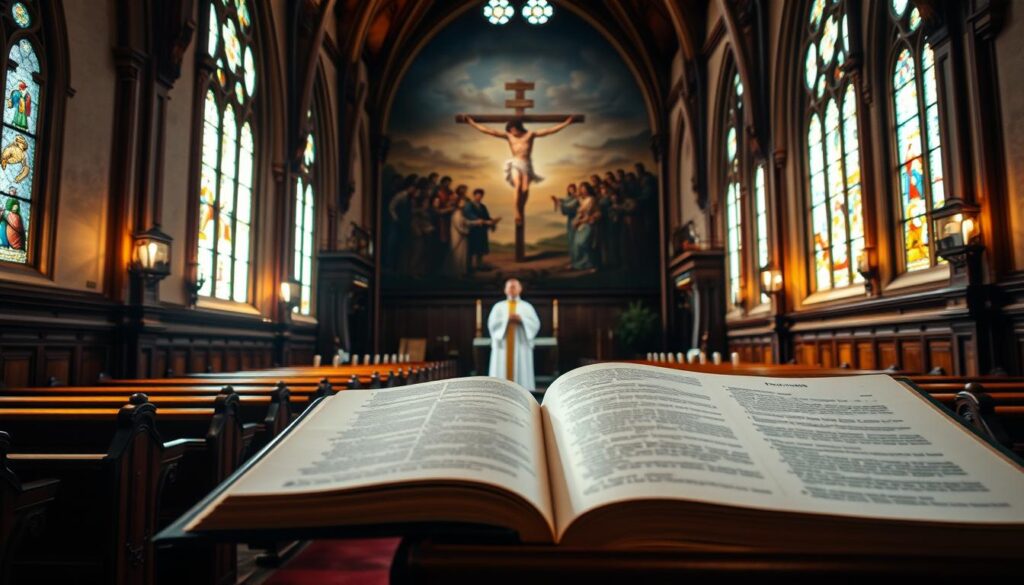
anglicanism theology

The importance of grace is highlighted in the Anglican liturgy and sacraments, where believers are reminded of their dependence on God’s grace for salvation. As Sam Wells points out, grace is not just a theological concept but a lived reality that informs daily life and spiritual practice.

Aspect of Salvation Anglican Perspective
Faith Essential for salvation, demonstrated through trust in God
Works Outward expression of faith, manifesting in love and service
Grace Gift from God, enabling salvation and ongoing spiritual growth

Assurance of Salvation

Anglicans also place a significant emphasis on the assurance of salvation. This assurance is not based on human merit but on the reliability of God’s promises. Through faith in Jesus Christ and the work of the Holy Spirit, believers can have confidence in their salvation.

The assurance of salvation is nurtured through participation in the sacraments, prayer, and community life within the Church. Anglicans are encouraged to live with the confidence that comes from knowing they are loved and saved by God.

In conclusion, the Anglican view on salvation is characterized by a rich interplay of faith, works, and grace, with a deep emphasis on the assurance that comes from God’s love and redemption.

The Church’s Role in Society

The Anglican Church’s commitment to serving the wider community is evident in its multifaceted approach to social issues. Through various initiatives, the Church addresses the needs of the local and global community, promoting a more just and compassionate society.

Mission and Outreach

The Anglican Church is actively involved in mission and outreach programs, aiming to spread the teachings of Christianity and provide aid to those in need. These efforts are guided by the Church’s doctrines, as highlighted by theologians like Sam Wells, who emphasize the importance of faith in action.

Some of the key areas of focus for the Church’s mission and outreach include:

  • Providing humanitarian aid to disaster-stricken areas
  • Supporting community development projects
  • Promoting education and healthcare initiatives

Engagement with Social Issues

The Anglican Church engages with various social issues, including poverty, inequality, and environmental degradation. By speaking out on these issues, the Church seeks to promote positive change and advocate for the marginalized.

The Church’s engagement is not limited to advocacy; it also involves practical actions, such as providing shelter for the homeless and supporting refugees.

Ecumenical Relations

The Anglican Church is committed to ecumenical dialogue and cooperation with other Christian denominations. This commitment is rooted in the belief that unity among Christians is essential for effectively witnessing to the Gospel.

Through ecumenical relations, the Anglican Church participates in joint initiatives and discussions, fostering a spirit of collaboration and mutual understanding among different Christian traditions.

Anglican Perspectives on Ethics

The Anglican faith, guided by the insights of Sam Wells, offers a thoughtful and principled approach to ethics. At its core, Anglican moral teachings emphasize the importance of balancing tradition with contemporary relevance.

Moral Teachings of the Church

Anglican moral teachings are rooted in the Church’s understanding of God’s will as revealed through scripture and tradition. These teachings guide adherents on ethical issues, encouraging a thoughtful and principled approach to decision-making.

The Church’s moral framework is characterized by a commitment to compassion, justice, and integrity. This framework is applied to a wide range of ethical issues, from personal morality to social justice.

Contemporary Ethical Issues

Anglicans are encouraged to engage with contemporary ethical issues in a way that is both informed by tradition and responsive to modern challenges. This includes issues such as environmental stewardship, human rights, and social inequality.

The Church’s approach to these issues is guided by a commitment to dialogue, compassion, and action. Anglicans are called to be informed, to engage in respectful dialogue, and to work towards practical solutions.

The Role of Conscience

A key aspect of Anglican ethics is the importance of conscience in decision-making. According to Sam Wells, conscience plays a crucial role in guiding individuals through complex ethical dilemmas.

The role of conscience is not to provide easy answers but to guide individuals towards a deeper understanding of God’s will. This involves a process of reflection, prayer, and discernment.

Ethical Issue Anglican Perspective Key Principles
Environmental Stewardship Care for creation as a divine mandate Sustainability, Conservation
Human Rights Upholding dignity and justice for all Equality, Justice
Social Inequality Promoting justice and compassion Empathy, Action

The Importance of Community

In Anglicanism, community is not just a gathering of people; it’s a vital aspect of their spiritual journey. The Anglican faith emphasizes the importance of coming together as a community to support one another and to worship collectively.

Fellowship and Relationship

Fellowship is a cornerstone of Anglican community life. It involves building strong relationships among members, fostering a sense of belonging and mutual support. Through various fellowship programs, Anglicans are encouraged to engage in acts of service, share their experiences, and grow together in their faith.

“Community is the heartbeat of Anglicanism, where individuals come together to support one another and grow in their spiritual journey.” This emphasis on fellowship reflects the Anglican value of living out one’s faith in the context of a supportive community.

The Role of Lay People

Laypeople play a crucial role in the Anglican community. They are not just passive recipients of religious services but are actively involved in the life and mission of the church. From leading prayers to organizing community events, laypeople contribute significantly to the vibrancy and effectiveness of Anglican communities.

Role Description Impact
Lay Leadership Laypeople take on leadership roles within the church, guiding various activities and services. Enhances community engagement and ensures the continuation of church activities.
Community Service Laypeople are involved in organizing and participating in community service projects. Fosters a sense of social responsibility and compassion among community members.
Spiritual Growth Laypeople contribute to the spiritual growth of the community through Bible studies and prayer groups. Deepens the understanding and practice of faith among community members.

Anglican Community Events

Community events are an integral part of Anglican life, providing opportunities for members to come together, celebrate, and serve. These events range from worship services and Bible studies to social gatherings and outreach programs.

Through these events, Anglicans are able to build stronger bonds with one another, support those in need, and witness to their faith in action. The diversity of events ensures that there is something for everyone, making the Anglican community a welcoming and inclusive environment.

In conclusion, the importance of community in Anglicanism cannot be overstated. It is through fellowship, the active role of laypeople, and community events that Anglicans live out their faith in a meaningful and supportive context.

Diversity within Anglicanism

Anglicanism encompasses a wide range of beliefs and traditions, shaped by its diverse cultural contexts. This diversity is a hallmark of the Anglican Communion, reflecting its global presence across various countries and cultures.

Global Variation in Beliefs

The beliefs within Anglicanism vary globally, influenced by local cultures and historical contexts. For instance, the interpretation of scripture and the emphasis on certain sacraments can differ significantly from one region to another.

Regional Differences: In some regions, Anglicanism is deeply intertwined with local customs and traditions, while in others, it maintains a more formal, liturgical practice. This diversity enriches the global Anglican community.

Cultural Influences

Cultural influences play a significant role in shaping Anglican beliefs and practices. The Communion’s global nature means that it incorporates a wide array of cultural expressions of faith.

Cultural Adaptability: Anglicanism’s ability to adapt to different cultural contexts has been a key factor in its growth and diversity. This adaptability is evident in the various forms of worship, liturgy, and community engagement.

The Anglican Communion

Despite the diversity within Anglicanism, the Anglican Communion serves as a unifying force. It provides a framework for shared beliefs, practices, and mutual support among its member churches.

Aspect Description Impact on Unity
Global Variation in Beliefs Differences in interpretation and practice Promotes diversity, requires mutual understanding
Cultural Influences Local customs and traditions Enriches the global community, fosters inclusivity
The Anglican Communion Shared beliefs and practices Unifies member churches, promotes cooperation

anglican faith beliefs

The diversity within Anglicanism, while presenting challenges, also offers opportunities for growth and deeper understanding. Through the Anglican Communion, member churches can share their experiences and learn from one another, strengthening their collective witness.

Influential Figures in Anglicanism

The Anglican Communion has been shaped by numerous influential figures throughout its history. These individuals have contributed significantly to the development of Anglican theology, practice, and community. Their insights continue to influence the Church today.

Sam Wells and His Insights

Sam Wells is a contemporary Anglican theologian known for his contributions to the understanding of Anglican beliefs and practices. His work emphasizes the importance of community and social engagement within the Church. Wells argues that being part of the Anglican Communion means being part of a global community that is deeply rooted in tradition yet open to contemporary challenges.

“The church is not a voluntary association of like-minded individuals, but a community formed by the narrative of God’s engagement with the world.”

Historical Leaders

Historical figures have played a crucial role in shaping Anglican thought. Leaders such as Richard Hooker and Thomas Cranmer were instrumental in defining the theological and liturgical practices of the Church of England, which later influenced the global Anglican Communion. Their writings and contributions continue to be studied and revered.

Historical Figure Contribution
Richard Hooker Developed the theological foundations of Anglicanism, emphasizing reason, scripture, and tradition.
Thomas Cranmer Shaped Anglican liturgy through the Book of Common Prayer, influencing worship practices.

Modern Theologians

In addition to historical figures, modern theologians continue to shape Anglican thought. Scholars like N.T. Wright have contributed to the ongoing theological discussions within the Anglican Communion, exploring topics such as salvation and the role of the Church in contemporary society.

The diversity of thought among these influential figures reflects the richness and complexity of Anglican theology. Their contributions not only shape the Church’s understanding of itself but also its engagement with the world.

Conclusion: Key Takeaways from Sam Wells

Sam Wells’ work provides a comprehensive introduction to Anglican beliefs, emphasizing the importance of understanding Anglicanism. By exploring the core aspects of Anglicanism, we gain insight into the rich traditions and practices that shape this global community.

Core Aspects of Anglican Beliefs

The examination of Sam Wells’ beliefs on Anglicanism reveals the significance of scripture, sacraments, and community in Anglican worship. Anglican traditions and beliefs are rooted in a deep understanding of God’s love and justice, as well as the role of Jesus Christ in salvation.

Understanding Anglicanism’s Relevance

Grasping the nuances of Anglicanism is crucial in today’s diverse religious landscape. As we explore Anglican theology and practices, we discover a faith that is both rooted in tradition and responsive to contemporary issues.

Further Exploration

For those interested in delving deeper into Anglicanism, Sam Wells’ insights offer a valuable starting point. By engaging with Anglican traditions and beliefs, readers can foster a greater understanding of this vibrant global community and its contributions to modern society.

FAQ

What are the core beliefs of Anglicanism?

Anglicans believe in the Trinity, the authority of Scripture, and the importance of tradition. They also emphasize the sacraments, particularly Baptism and the Eucharist, and the role of the Book of Common Prayer in worship.

How do Anglicans interpret the Bible?

Anglicans approach biblical interpretation through a combination of literal, historical, and contextual understanding, guided by the principles of Scripture, reason, and tradition.

What is the significance of the Book of Common Prayer in Anglican worship?

The Book of Common Prayer is a unifying element in Anglican worship, providing a shared liturgical practice that connects Anglicans worldwide. It contains the structure and language for various services, including the Eucharist and Morning Prayer.

What do Anglicans believe about salvation?

Anglicans believe that salvation comes through faith in Jesus Christ, and that it is a process that involves the interplay of faith, works, and God’s grace. They emphasize the importance of living a virtuous life and engaging in acts of charity and service.

How does the Anglican Church engage with social issues?

The Anglican Church is actively involved in addressing social issues, such as poverty, inequality, and environmental degradation. It promotes justice, compassion, and human dignity through its mission and outreach efforts.

What is the role of community in Anglicanism?

Community is essential in Anglicanism, with a focus on fellowship, mutual support, and shared worship. Anglicans are encouraged to participate in community events, engage in service, and build relationships with others.

How does Anglicanism maintain its unity amidst diversity?

Anglicanism maintains its unity through the shared heritage of its traditions, the authority of Scripture, and the communion of churches worldwide. The Anglican Communion provides a framework for cooperation and mutual support among its member churches.

Who is Sam Wells and what are his insights on Anglicanism?

Sam Wells is a theologian and priest who has written extensively on Anglican theology and practice. He offers insights into the core beliefs and values of Anglicanism, highlighting its unique characteristics and contributions to the broader Christian tradition.

What are the sacraments in Anglican worship?

The two main sacraments in Anglican worship are Baptism and the Eucharist. Anglicans also recognize other sacramental practices, such as Confirmation, Ordination, and Marriage, as important aspects of their faith and worship.

How do Anglicans understand the nature of God?

Anglicans believe in the Trinity, understanding God as a unity of Father, Son, and Holy Spirit. They emphasize God’s love, justice, and mercy, and the role of Jesus Christ as Savior and Lord.