Recent Posts

What Do Episcopalians Believe About the Bible?


The Episcopal Church is rooted in the teachings of Jesus Christ, whose life, death, and resurrection are seen as the salvation of the world. As Episcopalians, they follow a legacy of inclusion, embracing diversity and promoting a welcoming environment.

Their beliefs about the Bible are central to their faith, serving as a guide for their values and practices. Episcopalians view the Bible as a source of spiritual guidance, interpreting its teachings in the context of their tradition and the contemporary world.

Key Takeaways

  • Episcopalians believe in the teachings of Jesus Christ.
  • The Episcopal Church embraces a legacy of inclusion.
  • The Bible is central to their faith and practices.
  • Episcopalians interpret biblical teachings in context.
  • Their faith is guided by tradition and contemporary understanding.

Understanding the Episcopal Church’s Foundation

The Episcopal Church’s foundation is built upon its Anglican roots and the enduring influence of the Book of Common Prayer. This foundation significantly shapes the Church’s understanding and interpretation of the Bible.

Historical Context of the Anglican Tradition

The Anglican Tradition, from which the Episcopal Church originates, has a rich history that dates back to the Reformation in England. The Church of England was established by King Henry VIII, and over time, it developed its unique identity, balancing Catholic and Protestant elements. This historical context is crucial in understanding the Episcopal Church’s approach to scripture.

The Church’s liturgical practices and its core documents, such as the Book of Common Prayer, reflect this balance. The Episcopal Church, as a part of the Anglican Communion, continues this tradition, adapting it to the needs of its contemporary community.

Role of the Book of Common Prayer

The Book of Common Prayer is a treasure chest full of devotional and teaching resources for individuals and congregations, but it is also the primary symbol of our unity. It contains the Church’s liturgical rites, including the Eucharist, and provides a framework for worship that is deeply rooted in scripture.

The Book of Common Prayer influences the Episcopal Church’s understanding of the Bible in several ways:

Aspect Influence on Biblical Understanding
Liturgical Practices Shapes the way scripture is used in worship, emphasizing its importance in liturgy.
Scriptural Readings Provides a structured cycle of readings, ensuring a broad coverage of biblical texts.
Prayer and Devotion Offers prayers and devotional resources that reflect a deep engagement with biblical themes and narratives.

By integrating the Book of Common Prayer into its worship and practices, the Episcopal Church fosters a profound connection with the Bible, grounding its teachings and practices in scriptural foundations.

The Bible as Sacred Scripture

Episcopalians regard the Bible as sacred scripture, essential for understanding their faith and practices. The Bible is considered a foundational element, containing all things necessary for salvation. This perspective is rooted in the church’s tradition and reason, guiding its followers in their spiritual journey.

Canon of Scripture Used by Episcopalians

The Episcopal Church adheres to a specific canon of scripture that includes the books of the Old and New Testaments. This canon is based on the historical and theological traditions of the Anglican Communion. The Book of Common Prayer outlines the church’s liturgical use of scripture, which is central to its worship services.

The canon used by Episcopalians is consistent with that of other Christian denominations, comprising 66 books in total. This includes 39 books from the Old Testament and 27 from the New Testament. The selection of these books was guided by early Christian councils and the theological principles of the time.

Section Number of Books Examples
Old Testament 39 Genesis, Psalms, Isaiah
New Testament 27 Gospels (Matthew, Mark, Luke, John), Epistles (Romans, Corinthians)

Old and New Testament Significance

Both the Old and New Testaments are considered vital to understanding the Episcopal Church’s doctrine and practices. The Old Testament provides the historical and theological context for the coming of Jesus Christ, while the New Testament contains the accounts of Jesus’ life, death, and resurrection, along with the early Christian community’s teachings.

“The Bible contains all things necessary to salvation, so that whatsoever is not read therein, nor may be proved thereby, is not required of any man that it should be believed as an article of faith.” –

Book of Common Prayer

The significance of both testaments is reflected in the church’s liturgical calendar and worship practices. Readings from both the Old and New Testaments are integral to the Eucharistic services, providing a rich and diverse theological foundation for the community.

The Episcopal Church’s emphasis on the Bible as sacred scripture underscores its commitment to a faith that is rooted in tradition, reason, and the scriptures. This approach allows for a nuanced understanding of the faith, encouraging personal engagement with the Bible and its teachings.

Interpretation of Scripture in the Episcopal Faith

Episcopalians rely on a rich heritage of scripture interpretation that intertwines reason, tradition, and personal experience. This multifaceted approach allows for a deep and nuanced understanding of the Bible.

Importance of Reason, Tradition, and Experience

The Episcopal Church emphasizes the importance of a balanced approach to biblical interpretation, drawing on reason to critically analyze scripture, tradition to understand the historical and communal context, and experience to relate biblical teachings to everyday life.

This tripartite method is often referred to as the “Anglican Way” or “Episcopal method” of biblical interpretation. It encourages individuals to engage with scripture on multiple levels, fostering a richer understanding of its teachings.

“The way to read the Bible is to start reading it — to do it alone, yes, but especially in community with other Christians living and dead, and in accord with the apostolic witness.”

Influence of Scholarly Study on Understanding

Scholarly study plays a significant role in enhancing the understanding of scripture within the Episcopal Church. Through biblical scholarship, Episcopalians gain insights into the historical context, linguistic nuances, and cultural background of the scriptures.

Aspect of Study Contribution to Understanding
Historical Context Provides insight into the social, political, and religious environment of the time
Linguistic Analysis Helps in understanding the original meaning of words and phrases
Cultural Background Illuminates the customs, practices, and beliefs that influenced the biblical authors

By combining scholarly study with reason, tradition, and experience, Episcopalians can develop a comprehensive and informed understanding of the Bible, enriching their faith and practice.

Episcopalians and biblical interpretation

The Role of the Clergy in Biblical Teaching

The Episcopal faith places significant emphasis on the clergy’s role in biblical teaching. Clergy members are not only spiritual leaders but also educators who guide their congregations in understanding the complexities of the Bible.

Responsibilities of Bishops and Priests

Bishops and priests in the Episcopal Church have distinct responsibilities when it comes to biblical teaching. They are tasked with interpreting scripture, preparing sermons, and leading Bible studies. Their role is crucial in helping the congregation understand the relevance of the Bible in contemporary life.

Bishops are responsible for overseeing the teaching and interpretation of scripture within their dioceses. They ensure that the clergy under their guidance are equipped to teach the Bible effectively.

Priests, on the other hand, work directly with their congregations, providing pastoral care and guidance in biblical understanding. They often lead worship services and Bible study groups, fostering a deeper connection between the congregation and the scripture.

Lay Participation in Scriptural Discussions

Laypeople play a vital role in the Episcopal Church, participating actively in scriptural discussions and contributing to the community’s understanding of the Bible. Their involvement is encouraged through various church programs and activities.

  • Lay-led Bible study groups provide a platform for in-depth exploration of scripture.
  • Congregational forums allow for open discussions on biblical teachings and their application in daily life.
  • Laypeople also contribute to the preparation of liturgies and worship services, ensuring that the congregation remains engaged with the scripture.

The collaborative effort between clergy and laypeople enriches the Episcopal community’s understanding of the Bible, making it a living part of their faith.

Emphasis on Literal and Contextual Reading

The Episcopal Church values a nuanced approach to biblical interpretation, combining literal and contextual readings. This balanced method allows Episcopalians to deeply understand Scripture and its application in daily life.

Scripture is viewed as a unique and inspired sacramental vehicle through which Episcopalians encounter Christ. This understanding is rooted in the belief that the Bible is not just a historical document, but a living word that speaks to the faithful today.

episcopal understanding of scripture

Balancing Literal Interpretation with Context

Episcopalians are encouraged to read the Bible both literally and within its historical, cultural, and literary context. This approach helps to avoid misinterpretation and ensures that Scripture is understood as intended.

For instance, the creation stories in Genesis can be seen both as literal accounts of the world’s creation and as allegorical tales conveying deeper truths about God’s relationship with humanity.

Interpretation Method Description Example
Literal Understanding the text as it is written, without metaphorical interpretation. Reading the creation story in Genesis as a factual account.
Contextual Interpreting the text within its historical, cultural, and literary context. Understanding the creation story as an allegory for God’s relationship with humanity.

Using Metaphors and Allegories in Scripture

The Episcopal Church recognizes the importance of metaphors and allegories in biblical narratives. These literary devices enrich the understanding of Scripture and provide multiple layers of meaning.

For example, the parables of Jesus are often allegorical, conveying moral and spiritual lessons through storytelling. Episcopalians are encouraged to explore these narratives to deepen their faith and understanding of Christian teachings.

By embracing both literal and contextual readings, Episcopalians can gain a more comprehensive understanding of the Bible and its role in their lives.

The Bible in Worship and Liturgy

The Bible is not just a sacred text for Episcopalians; it’s a living word that guides their worship and liturgical practices. The Episcopal Church’s liturgy is rich in biblical references, with Scripture playing a pivotal role in shaping the community’s faith and practices.

Integration of Scripture into Services

The integration of Scripture into Episcopal worship services is profound. Approximately 70% of the Book of Common Prayer is derived directly from the Bible, underscoring the text’s significance in liturgical contexts. This extensive use of biblical language and themes helps to create a worship environment that is deeply rooted in Scripture.

episcopalian views on the bible

Importance of Readings During Eucharist

During the Eucharist, also known as Holy Communion, readings from the Bible are a central component. These readings are carefully selected to reflect the liturgical calendar and the theological themes of the season. The use of Scripture in this context serves to nourish the spiritual lives of the faithful, providing them with a deeper understanding of their faith and its application in daily life.

Liturical Element Biblical Influence Significance
Readings Directly from the Old and New Testaments Provides spiritual nourishment and insight into the faith
Prayers Language and themes from the Bible Creates a worship environment rooted in Scripture
Eucharistic Prayers Influenced by biblical narratives and themes Reinforces the significance of the Eucharist in Episcopal worship

The Episcopal Church’s emphasis on Scripture in worship highlights its commitment to maintaining a faith that is grounded in the teachings of the Bible. By incorporating biblical readings and themes into its liturgy, the Church ensures that its worship remains vibrant and connected to its foundational texts.

Theological Themes Present in the Bible

Episcopalians view the Bible as a sacred text that embodies the principles of God’s love, grace, and the call for social justice. This perspective is foundational to understanding the Episcopal Church’s approach to scripture.

The Episcopal Church embraces a legacy of inclusion, aspiring to tell and exemplify God’s love for every human being. This aspiration is rooted in the theological themes present in the Bible, which guide the Church’s teachings and practices.

God’s Love and Grace in Episcopal Understanding

In the Episcopal tradition, God’s love and grace are seen as fundamental aspects of the divine nature. This understanding is derived from various biblical passages that highlight God’s unconditional love and mercy.

“For God so loved the world that he gave his one and only Son, that whoever believes in him shall not perish but have eternal life.” (John 3:16)

This verse encapsulates the essence of God’s love and grace, which is a central theme in Episcopal theology. The Church emphasizes the importance of experiencing and sharing this love in all aspects of life.

The Call for Social Justice and Compassion

Another significant theological theme in the Bible is the call for social justice and compassion. Episcopalians are encouraged to engage in acts of justice and mercy, reflecting God’s love in their interactions with others.

Biblical Theme Episcopal Interpretation Practical Application
God’s Love and Grace Unconditional love and mercy Sharing love and kindness
Social Justice Advocating for the marginalized Engaging in justice initiatives
Compassion Showing empathy and care Supporting community programs

The Episcopal Church’s commitment to social justice is reflected in its various initiatives and programs aimed at promoting equality and compassion. By living out these biblical themes, Episcopalians strive to make a positive impact in their communities.

Encouragement of Personal Engagement with the Bible

The Episcopal Church encourages individuals to engage personally with the Bible, fostering a deeper understanding of scripture. This personal engagement is seen as a vital part of spiritual growth and development within the faith.

Just as learning to sing involves singing alone and in community, understanding the Bible involves both personal study and communal exploration. This dual approach allows individuals to gain a richer understanding of scripture.

Bible Study Groups and Community Involvement

Bible study groups are a common feature in many Episcopal churches, providing a space for communal exploration of scripture. These groups allow participants to share insights, ask questions, and grow together in their understanding of the Bible.

Community involvement is also fostered through various church activities, including:

  • Study groups focused on specific books or themes within the Bible
  • Workshops on biblical interpretation and application
  • Service projects inspired by scriptural teachings

By participating in these activities, Episcopalians can deepen their understanding of the Bible and its relevance to everyday life.

Resources for Deepening Scriptural Understanding

The Episcopal Church offers various resources to help individuals deepen their understanding of scripture. These include:

Resource Type Description Benefit
Commentaries and Study Bibles Provide detailed explanations and historical context for biblical passages Enhance understanding of scripture
Online Courses and Webinars Offer in-depth study of specific biblical themes or books Flexible learning opportunities
Devotional Materials Include daily readings and reflections to guide personal devotion Foster a consistent practice of scripture engagement

By utilizing these resources, Episcopalians can enrich their understanding of the Bible and its application in their lives.

Episcopal Views on Diversity in Biblical Interpretation

With a long history of embracing varied interpretations of the Bible, the Episcopal Church stands out for its theological inclusivity. This diversity is not seen as a weakness but as a strength, enriching the faith community with a wide range of perspectives.

The Episcopal Church’s approach to biblical interpretation is characterized by a commitment to understanding and respecting different viewpoints. This is reflected in its liturgy, teachings, and community practices.

Acceptance of Various Perspectives

The Episcopal faith encourages its adherents to engage with Scripture in a thoughtful and reflective manner, acknowledging that different readers may come to different conclusions about the meaning of biblical texts.

This acceptance of various perspectives is rooted in the Church’s understanding of the complexity of Scripture and the recognition that human interpretation is fallible.

  • Recognition of the historical context of biblical texts
  • Consideration of the cultural background of the authors and audience
  • Use of scholarly study to inform understanding

Respecting Different Theological Standpoints

Episcopalians are encouraged to respect different theological standpoints, recognizing that a diversity of beliefs is a natural outcome of engaging with the rich and complex narratives found in the Bible.

Theological Standpoint Key Characteristics
Traditional Emphasis on historical interpretations and established doctrines
Progressive Focus on contemporary applications and social justice
Charismatic Emphasis on personal experience and spiritual gifts

By embracing this diversity, the Episcopal Church fosters an environment where individuals can explore their faith in a meaningful and personal way.

Episcopalians need to reclaim the title “Bible believing” by embracing their faith’s rich tradition of scriptural interpretation. This involves acknowledging the value of diverse perspectives and respecting different theological standpoints within the community.

Conclusion: A Living Faith Centered on the Bible

The Episcopal Church’s relationship with the Bible is one of reverence and engagement. Episcopalians view the Bible as a living document that guides their faith and actions. Through its teachings, Episcopalians learn about God’s love and grace, and are called to serve others with compassion and justice.

Ongoing Relevance of Scripture

The Bible remains a vital part of Episcopal life, informing personal devotion, communal worship, and social action. As Episcopalians reflect on episcopalian views on the bible, they find guidance for navigating the complexities of modern life. The episcopal church teachings on the bible emphasize the importance of scripture in shaping their beliefs and practices.

Role in Personal and Community Life

For Episcopalians, scripture is not just a historical text but a living word that speaks to their daily lives. As one Episcopalian reflects, “Scripture is where we hear the love song of Christ, and learn how to sing along.” This personal connection with the Bible fosters a deeper faith and informs their commitment to serving others.

FAQ

What is the Episcopal Church’s stance on the Bible?

The Episcopal Church views the Bible as sacred scripture and a foundational element of their faith, using the canon of scripture that includes the Old and New Testaments.

How do Episcopalians interpret the Bible?

Episcopalians interpret scripture using reason, tradition, and experience, and also consider scholarly study to deepen their understanding of the Bible.

What is the role of the Book of Common Prayer in understanding the Bible?

The Book of Common Prayer is a significant element in the Episcopal Church, shaping their understanding of the Bible and guiding their worship and liturgy.

How do Episcopalians balance literal and contextual reading of the Bible?

Episcopalians balance literal interpretation with understanding the context, and also use metaphors and allegories to gain a deeper understanding of scripture.

What is the significance of the Old and New Testaments in the Episcopal Church?

Both the Old and New Testaments are considered essential to the Episcopal Church’s understanding of the Bible, providing a rich and nuanced understanding of God’s love and grace.

How is the Bible integrated into worship and liturgy?

The Bible is integrated into worship and liturgy through readings during the Eucharist and other services, emphasizing the importance of scripture in the Episcopal Church.

What theological themes are present in the Bible that are significant to Episcopalians?

Episcopalians emphasize God’s love and grace, as well as the call for social justice and compassion, as significant theological themes present in the Bible.

How can individuals deepen their understanding of scripture?

Individuals can deepen their understanding of scripture by participating in Bible study groups, community involvement, and using resources that promote scriptural understanding.

How does the Episcopal Church view diversity in biblical interpretation?

The Episcopal Church accepts various perspectives on biblical interpretation and emphasizes respecting different theological standpoints, promoting a culture of understanding and inclusivity.

What is the role of clergy in teaching the Bible?

Clergy play a significant role in teaching the Bible and guiding the congregation in understanding scripture, while also encouraging lay participation in scriptural discussions.

How do Episcopalians view the Bible as a source of guidance?

Episcopalians view the Bible as a source of guidance for personal and community life, emphasizing its ongoing relevance in their faith and daily living.

What Do Protestant Anglicans Believe?


Anglicanism, also known as Episcopalianism in some countries, is a Western Christian tradition that emerged from the practices and liturgy of the Church of England following the English Reformation. This Christian tradition has a rich history and has developed distinct beliefs and practices over time.

At its core, Anglicanism is rooted in the Protestant Reformation, yet it retains many of the liturgical and sacramental practices of the Catholic Church. This blend of traditions has shaped Anglican beliefs and practices, making it a unique Christian denomination.

Key Takeaways

  • Anglicanism is a Western Christian tradition.
  • It emerged from the Church of England after the English Reformation.
  • Anglican beliefs are shaped by Protestant and Catholic traditions.
  • Anglicanism is also known as Episcopalianism in some countries.
  • The tradition retains many liturgical and sacramental practices.

Historical Background of Anglicanism

Understanding the historical context of Anglicanism is crucial to grasping its beliefs and practices. The story of Anglicanism is deeply intertwined with the events of the Reformation in England.

Origins of the Anglican Church

The Church of England was formed in the 16th century, initially remaining in communion with Rome until the English Parliament passed the Act of Supremacy in 1534. This act declared King Henry VIII the “Supreme Head” of the Church of England, marking a significant break from Roman Catholic authority.

The Transition to Protestantism was a gradual process, influenced by various theological and political factors. The Church of England’s doctrine and practices began to take on a distinct Protestant character, while still retaining some Catholic traditions.

The Reformation and its Influence

The Reformation had a profound impact on the development of Anglicanism. Protestant reformers introduced new theological perspectives, challenging certain Catholic doctrines. This period of theological debate and reformation shaped the core beliefs of Anglicanism.

The influence of the Reformation can be seen in the emphasis on scripture and the vernacular language in worship, making the church more accessible to the laity.

Key Figures in Anglican History

Several key figures played a crucial role in shaping Anglican history and doctrine. Thomas Cranmer, an influential theologian and liturgist, was instrumental in developing the Book of Common Prayer, a foundational text for Anglican worship.

Figure Contribution Significance
Thomas Cranmer Developed the Book of Common Prayer Shaped Anglican worship and liturgy
King Henry VIII Declared Supreme Head of the Church of England Marked the break from Roman Catholic authority
Protestant Reformers Introduced Protestant theology Influenced Anglican doctrine and practices

These historical events and figures have significantly influenced Protestant Anglican doctrine and teachings, shaping the church into what it is today.

Core Beliefs of Anglicanism

The Protestant Anglican faith is founded on a rich heritage that combines the authority of the Bible with the traditions of the early Christian church. This blend of scripture and tradition forms the bedrock of Anglican beliefs, shaping their understanding of Christianity.

The Authority of Scripture

Anglicans place a high value on the authority of scripture. The Bible is seen as the primary source of guidance for Christian faith and practice. This emphasis on scripture is a key aspect of the Protestant Anglican faith, aligning with the broader Protestant tradition that emerged during the Reformation.

The scripture’s authority is not seen in isolation but is balanced with other elements of the Anglican tradition. This balance is crucial in understanding the nuances of Anglican beliefs.

Key aspects of scripture’s authority in Anglicanism include:

  • The Bible as the primary source of Christian doctrine
  • The importance of biblical teachings in worship and daily life
  • The role of scripture in guiding personal faith and communal practices

Tradition in Anglican Faith

Alongside scripture, tradition plays a vital role in Anglicanism. The traditions of the early Christian church, including the practices and teachings of the Church Fathers, are highly valued. This appreciation for tradition is reflected in the Anglican Communion’s commitment to apostolic succession, or the “historic episcopate.”

The integration of tradition into Anglican faith is not merely about preserving historical practices but about connecting with the broader Christian heritage. It enriches the Protestant Anglican faith by providing a sense of continuity with the past.

The significance of tradition can be seen in several areas:

  1. The preservation of early Christian practices and teachings
  2. The importance of the Church Fathers’ writings in understanding Christian doctrine
  3. The role of apostolic succession in maintaining a link with the early church

The Anglican Communion

The global Anglican Communion is a family of churches that are in full communion with the See of Canterbury. This communion represents a worldwide fellowship of Anglican churches that share a common heritage and faith.

Anglican Communion

Understanding the Global Community

The Anglican Communion is a diverse group of churches spread across the globe. It includes churches from various countries, each with its own unique cultural context. Despite these differences, they are united in their adherence to Anglican beliefs and practices.

A key aspect of this unity is the communion’s commitment to the principles of the Protestant Anglican church. This commitment is reflected in their liturgy, governance, and community life.

Governance and Structure

The governance of the Anglican Communion is characterized by a balance between autonomy and unity. Each province within the communion has its own governance structure, but they are all connected through their relationship with the See of Canterbury.

“The Anglican Communion is a global communion of churches in full communion with the See of Canterbury.”

This structure allows for a degree of independence while maintaining a unified global presence.

The provinces within the Anglican Communion are autonomous, with their own decision-making processes. However, they are united in their communion with the Archbishop of Canterbury, who serves as a symbol of unity.

The Role of the Book of Common Prayer

Anglicanism is distinctively characterized by its use of the Book of Common Prayer, a comprehensive guide to worship and liturgy. This foundational text has been a cornerstone of Anglican religious life for centuries, shaping both personal devotion and communal worship.

Importance in Worship

The Book of Common Prayer is more than just a liturgical text; it is a framework that guides the worship practices of Anglicans worldwide. It contains a collection of services, prayers, and rituals that are used in most Anglican churches, providing a sense of continuity and unity across different regions and cultures.

The significance of the Book of Common Prayer in Anglican worship can be seen in its ability to balance tradition with flexibility. While it provides a structured format for worship, it also allows for variations and adaptations to suit local needs.

“The Book of Common Prayer is a treasure trove of spiritual riches, providing a deep well of liturgical resources that nourish the faith of Anglicans around the world.” –

A prominent Anglican theologian

Variations in Usage

While the Book of Common Prayer is a unifying element across Anglican churches, there are variations in its usage reflecting the diverse cultural and theological contexts of different regions. For instance, some Anglican churches may use the original 1662 edition, while others may have adopted more modern revisions.

Region Version of the Book of Common Prayer Notable Features
England 1662 Edition Traditional language and liturgy
United States 1979 Edition Includes contemporary language and additional prayers
Canada 1962 Edition (with supplements) Blends traditional and modern elements

The variations in the usage of the Book of Common Prayer across different Protestant Anglican churches highlight the adaptability and diversity within the Anglican Communion, while maintaining a common heritage and tradition.

Sacraments in Anglicanism

Sacraments are an integral part of Anglican worship, reflecting the church’s rich heritage. In Protestant Anglicanism, these sacred rites are considered essential for spiritual growth and communal worship.

anglican sacraments

The Anglican tradition recognizes two primary sacraments: Baptism and the Eucharist. These sacraments are not only central to worship but also embody the core beliefs and values of the Anglican community.

Baptism in Anglican Practice

Baptism is considered a sacrament of initiation into the Christian faith. In Anglicanism, baptism is seen as a rite of passage where individuals are welcomed into the community of believers. It symbolizes spiritual rebirth and is typically performed with water, invoking the Trinity.

The significance of baptism in Anglican practice lies in its representation of cleansing from sin and the beginning of a person’s journey in faith. It is a ritual that is deeply rooted in scripture and tradition.

The Eucharist: Central to Anglican Worship

The Eucharist, also known as Holy Communion, is the other sacrament that is central to Anglican worship. Anglicans believe that during the Eucharist, Christ is spiritually present, nourishing the faithful through the bread and wine. This sacrament is a commemoration of the Last Supper and is seen as a means of grace.

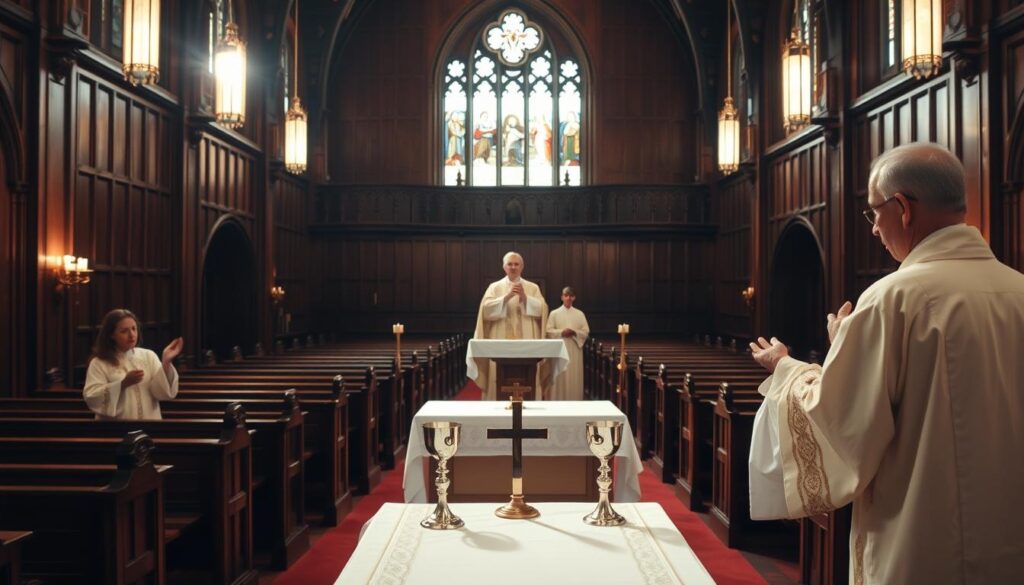
In Anglican churches, the Eucharist is celebrated with reverence, following a liturgical structure that includes prayers, readings from scripture, and the consecration of the elements. The participation in the Eucharist is considered vital for spiritual nourishment and for being in communion with God and the community.

Both Baptism and the Eucharist are fundamental to the spiritual life of Anglicans, reflecting the church’s commitment to tradition and its connection to the broader Christian faith.

Theology: A Middle Way

At its core, Anglican theology embodies a ‘middle way’ that harmonizes faith and reason. This approach is rooted in the historical context of Anglicanism, which emerged as a distinct Christian tradition representing a middle ground between Lutheran and Reformed varieties of Protestantism.

Protestant Anglican doctrine

Balancing Faith and Reason

The Anglican theological stance is characterized by its attempt to balance the authority of Scripture with the insights of reason and tradition. This balance is crucial in understanding what do Protestant Anglicans believe and how they approach complex theological issues.

By embracing both faith and reason, Anglicans seek to create a comprehensive and inclusive theological framework. This framework allows for the integration of various Christian perspectives, fostering a rich and diverse spiritual life.

Emphasis on Personal Conscience

A key aspect of Protestant Anglican doctrine is its emphasis on personal conscience. Anglicans believe that individuals should engage with Scripture and tradition in a personal and reflective manner, guided by their conscience.

This emphasis on personal conscience encourages Anglicans to take an active role in their spiritual journey, making informed decisions that align with their understanding of God’s will. It also promotes a culture of respect for individual interpretation and diversity within the community.

In conclusion, the ‘middle way’ of Anglican theology offers a unique approach to Christian faith, one that balances the demands of faith with the insights of reason and the guidance of personal conscience.

Worship Practices

The Anglican Communion’s worship practices reflect a blend of historical tradition and contemporary relevance, embodying the essence of Protestant Anglican faith.

Liturgical Worship Explained

Liturgical worship is a cornerstone of Anglican practice, characterized by a structured format that includes readings, prayers, and sacraments. This form of worship is deeply rooted in tradition, drawing on centuries of Christian practice.

The use of liturgy provides a sense of continuity and unity among Anglicans worldwide, connecting local congregations to the broader Anglican Communion.

Hymns and Music in Services

Music and hymns play a vital role in Anglican worship, enhancing the liturgical experience and facilitating communal participation. The selection of hymns often reflects the theological and cultural context of the congregation.

Many Anglican churches incorporate a variety of musical styles, from traditional hymns to contemporary worship songs, reflecting the diverse cultural heritage of the Anglican beliefs community.

  • The Eucharist is central to worship for most Anglicans as a communal offering of prayer and praise.
  • Liturgical worship provides a structured format that includes readings, prayers, and sacraments.
  • Music and hymns enhance the liturgical experience and facilitate communal participation.

By embracing both tradition and contemporary elements, Anglican worship practices create a rich and inclusive environment that nurtures Protestant Anglican faith and fosters a sense of community among believers.

Social and Moral Teachings

At the heart of Protestant Anglicanism lies a deep commitment to social and moral teachings. These teachings are not just abstract principles but are actively lived out in the lives of its adherents.

Views on Social Justice

The Protestant Anglican Church has a strong tradition of advocating for social justice. This is reflected in its support for various community programs and initiatives aimed at addressing inequality and promoting human rights. For instance, the Anglican Church of Australia’s constitution outlines its commitment to social justice, demonstrating how these values are integrated into the fabric of Anglican belief and practice.

Key aspects of their social justice teachings include:

  • Advocacy for the marginalized and vulnerable
  • Support for environmental stewardship
  • Promotion of peace and reconciliation

These initiatives underscore the Church’s commitment to creating a more just and equitable society.

Perspectives on Family and Relationships

Protestant Anglican churches also place a significant emphasis on family and relationships. Their teachings in this area focus on the importance of love, respect, and commitment within familial and relational contexts. The Church recognizes the diversity of family structures and relationships, advocating for understanding and support across different contexts.

The Church’s approach to family and relationships is characterized by:

  • A commitment to the well-being of all family members
  • Support for healthy, respectful relationships
  • Guidance on navigating the complexities of modern family life

By focusing on these areas, the Protestant Anglican Church aims to provide a moral framework that supports individuals and families in their daily lives.

The Protestant Anglican Church’s social and moral teachings are a vital part of its mission to serve and inspire its community. Through its commitment to social justice and its support for families and relationships, the Church continues to play a significant role in promoting values of compassion, respect, and integrity.

Community Life within Anglicanism

At the heart of Anglicanism lies a strong emphasis on community and mutual support. This focus on communal living is a defining characteristic of Protestant Anglican practices. Through various activities and programs, Anglican communities foster an environment of fellowship and service.

Importance of Fellowship

Fellowship is a cornerstone of Anglican community life. It involves coming together as a community to support one another spiritually, emotionally, and sometimes financially. Small group gatherings and community events are common practices that help build strong bonds among members.

  • Regular prayer meetings
  • Social gatherings
  • Community service projects

These activities not only strengthen the sense of community but also provide opportunities for members to grow in their faith together.

Outreach and Service Programs

Outreach and service are integral to Anglican traditions, reflecting the community’s commitment to serving others. Anglican churches often engage in various outreach programs aimed at helping those in need, both within their local communities and globally.

Examples of outreach programs include:

  1. Food banks and soup kitchens
  2. Support for the homeless
  3. International aid projects

These initiatives not only benefit those being served but also enrich the faith and understanding of the community members involved.

In summary, community life within Anglicanism is characterized by a strong sense of fellowship and a commitment to outreach and service. These aspects are fundamental to Protestant Anglican practices and Anglican traditions, fostering a vibrant and supportive community.

Modern Challenges and Adaptations

Protestant Anglicanism is navigating a rapidly changing global landscape, with the center of Anglicanism shifting to the Global South, particularly Sub-Sahara Africa. This demographic shift is influencing the church’s stance on various contemporary issues.

Addressing Contemporary Issues

The Protestant Anglican community is grappling with modern challenges such as social justice, human rights, and environmental concerns. As the global community evolves, Anglicans are re-examining their beliefs and practices to remain relevant and faithful to their core values.

Future of Anglican Beliefs

As Protestant Anglicanism continues to adapt, it is likely that the church will place greater emphasis on contextualizing its teachings to resonate with diverse cultures. Understanding what Protestant Anglicans believe will be crucial in navigating these changes, ensuring the church remains a vibrant and inclusive community.

FAQ

What is the historical background of Anglicanism?

Anglicanism emerged as a distinct Christian tradition during the Reformation in England, influenced by key figures such as Thomas Cranmer and Matthew Parker, and shaped by the Church of England’s separation from the Roman Catholic Church.

What do Protestant Anglicans believe about the authority of scripture?

Protestant Anglicans believe that the Bible is the primary source of authority in matters of faith, and that scripture should be interpreted in the context of tradition and reason.

How does the Anglican Communion function as a global community?

The Anglican Communion is a worldwide fellowship of Anglican churches, with a shared heritage and doctrine, governed by a complex structure that includes the Archbishop of Canterbury and the Anglican Consultative Council.

What is the significance of the Book of Common Prayer in Anglican worship?

The Book of Common Prayer is a foundational text in Anglican worship, providing a framework for liturgical services and reflecting the theological and liturgical traditions of Anglicanism.

How do Protestant Anglicans understand the sacraments, particularly baptism and the Eucharist?

Protestant Anglicans recognize two sacraments, baptism and the Eucharist, which are seen as essential to Christian worship and spiritual growth, and are understood in the context of scripture and tradition.

What is meant by the “middle way” in Anglican theology?

The “middle way” refers to the Anglican approach to theology, which seeks to balance faith and reason, and to avoid extremes, by drawing on a range of Christian traditions and emphasizing personal conscience.

How do Anglican worship practices reflect Protestant Anglican beliefs?

Anglican worship practices, including liturgical worship, hymns, and music, reflect the theological and liturgical traditions of Anglicanism, and are designed to foster a sense of community and spiritual growth.

What are the social and moral teachings of Protestant Anglican churches?

Protestant Anglican churches emphasize the importance of social justice, compassion, and service, and provide guidance on issues such as family and relationships, based on scripture and tradition.

How do Protestant Anglican communities engage in outreach and service programs?

Protestant Anglican communities are involved in a range of outreach and service programs, including social justice initiatives, community development projects, and charitable activities, reflecting their commitment to serving others.

How are Protestant Anglican communities adapting to modern challenges?

Protestant Anglican communities are responding to contemporary issues, such as changing social norms and global challenges, by re-examining their traditions and practices, and seeking to remain relevant and faithful in a rapidly changing world.

What Do Episcopalians Believe About Mary?


The Episcopal Church has a rich tradition of honoring Mary, the mother of Jesus, rooted in scripture and centuries of Christian practice. Since the apostolic age, Mary has been an object of veneration in the church, celebrated for her humility and obedience to God’s message.

The Episcopalian perspective on Mary emphasizes her pivotal role in the life of Jesus, reflecting a deep respect for her place in Christian tradition. This introduction sets the stage for exploring the nuances of Episcopalian beliefs about Mary.

Key Takeaways

  • The Episcopal Church honors Mary for her humility and obedience.
  • Mary’s role as the mother of Jesus is central to Episcopalian beliefs.
  • Episcopalian views on Mary are rooted in scripture and tradition.
  • The church celebrates Mary as a pivotal figure in Christian practice.
  • Episcopalian beliefs about Mary reflect a deep respect for her place in Christian tradition.

Introduction to Episcopal Beliefs

Understanding the Episcopal Church’s stance on Mary requires a look into its foundational beliefs and traditions. The Episcopal Church is part of the Anglican Communion, a global fellowship of churches with a shared heritage and theology.

Overview of the Episcopal Church

The Episcopal Church is a mainline Protestant denomination in the United States, with roots in the Church of England. It is known for its liberal theology and inclusive practices. Episcopalians affirm the ancient Tradition of the Church, along with Holy Scripture, as authoritative. This blend of tradition and scripture shapes their understanding of various theological concepts, including their beliefs about Mary.

Historical Background

The Episcopal Church’s history dates back to the colonial era when the Church of England was established in the American colonies. After the American Revolution, the Episcopal Church became an independent entity, though it retained many of the traditions and practices of the Church of England. This historical context is crucial in understanding the Episcopal Church’s beliefs and practices, including its views on Mary.

“The Episcopal Church stands in the historic Anglican tradition, seeking to preserve, practice, and proclaim the apostolic faith and order.”

Significance of Tradition

Tradition plays a significant role in the Episcopal Church’s theology. Episcopalians believe in the importance of the early church’s traditions and the decisions of the ecumenical councils. The church affirms the ancient creeds and the teachings of the early church fathers, which include references to Mary, the mother of Jesus. This traditional context is vital in understanding the Episcopal Church’s perspective on Mary.

The Episcopal Church shares about 95% of the Ancient Catholic Faith with other communions, indicating a strong continuity with historical Christian traditions. This continuity influences how Episcopalians view Mary and her role in the life of the church.

Mary in Scripture and Tradition

In examining the Episcopal views on Mary, it’s essential to consider both Scripture and the historical context of Tradition. The Episcopal Church’s understanding of Mary is deeply rooted in the biblical narrative, which provides the foundation for her significance in Christian faith.

Biblical References to Mary

The Bible mentions several pivotal events involving Mary, including the Annunciation, where she is visited by the angel Gabriel and announces that she will bear a son, Jesus (Luke 1:26-38). The Visitation is another significant event, where Mary visits her cousin Elizabeth, and the unborn John the Baptist leaps in her womb (Luke 1:39-56). Mary’s presence at the Crucifixion (John 19:25-27) underscores her enduring commitment to her son, even in the face of immense sorrow.

These biblical accounts are fundamental to understanding Mary’s role in the Christian narrative. As

“Mary’s fiat, or ‘yes,’ to God’s will is seen as a model of faith and obedience”

, illustrating the depth of her commitment to God’s plan.

The Role of Tradition in Understanding Mary

Beyond the biblical references, the Episcopal Church draws on Tradition to further understand Mary’s significance. Tradition encompasses the practices, teachings, and interpretations that have been passed down through the ages. In the context of Mary, Tradition has contributed to the development of various doctrines and devotions that enrich the understanding of her role in salvation history.

The Episcopal Church’s approach to Tradition is balanced, recognizing the value of historical teachings while also being mindful of contemporary understandings and interpretations. This balance allows for a nuanced appreciation of Mary’s place within the Christian faith, reflecting both the historical context and the ongoing relevance of her story.

By embracing both Scripture and Tradition, the Episcopal Church offers a comprehensive view of Mary that is grounded in biblical narrative and enriched by the insights of Tradition.

Theological Perspective on Mary

The Episcopal Church’s doctrine on Mary is characterized by a nuanced understanding of her role as Theotokos and her significance in the narrative of Jesus Christ. This theological perspective is rooted in both scripture and tradition, providing a comprehensive view of Mary’s importance in the Christian faith.

Mary as Theotokos (God-Bearer)

The designation of Mary as Theotokos, or God-Bearer, was affirmed by the Council of Ephesus in 431. This title is based on the understanding of the hypostatic union of divinity and humanity in Jesus Christ, affirming that Mary gave birth to God incarnate. In the Episcopal Church, this doctrine is seen as a cornerstone of the Christian understanding of the Incarnation.

The significance of Mary being Theotokos extends beyond the historical council, influencing the devotional and theological practices within the Episcopal Church. It underscores the belief in the divinity of Jesus Christ and the role Mary played in the Incarnation.

episcopal doctrines mary

Mary’s Role in Salvation History

Mary’s participation in the events of Jesus’ life, from the Annunciation to the Crucifixion, positions her as a pivotal figure in salvation history. Episcopalians understand Mary’s role not as a mediator between God and humanity, but as a faithful servant whose actions contributed to the fulfillment of God’s plan.

The Episcopal Church emphasizes the importance of understanding Mary’s role within the context of salvation history, highlighting her faith and obedience as exemplary for Christians.

Aspect Significance Episcopal Perspective
Mary as Theotokos Affirms Jesus’ divinity Cornerstone of Incarnation belief
Mary’s Role in Salvation History Highlights her faith and obedience Exemplary for Christian discipleship

Comparison with Other Christian Denominations

A nuanced understanding of the Episcopal Church’s stance on Mary is achieved by examining its similarities and differences with Catholic and Protestant denominations. The Episcopal Church’s beliefs about Mary are rooted in a balance between scripture, tradition, and reason.

Catholic Views on Mary

The Roman Catholic Church has several doctrines related to Mary that are not adopted by the Episcopal Church, such as the Immaculate Conception and the Assumption. Catholic doctrine holds that Mary was born without sin and was taken up to heaven, body and soul, at the end of her earthly life. These beliefs are significant in Catholic devotion and are celebrated in various feast days throughout the year.

Protestant Perspectives

Protestant denominations vary in their views on Mary, ranging from a high veneration in some Lutheran and Anglican traditions to a more minimalist approach in many Evangelical churches. Some Protestant churches honor Mary as the mother of Jesus and a model of faith, while others give her little attention.

Distinctive Episcopal Beliefs

The Episcopal Church’s perspective on Mary is characterized by a balance between tradition and scripture. While Episcopalians do not adopt the Catholic doctrines of the Immaculate Conception and Assumption as dogma, they do honor Mary as the mother of Jesus and a significant figure in the history of salvation. The Episcopal Church celebrates certain feast days related to Mary, reflecting its liturgical and sacramental heritage.

In conclusion, the Episcopal Church’s beliefs about Mary are distinct from, yet related to, those of other Christian denominations. Understanding these similarities and differences enriches our appreciation of the diverse ways Mary is revered and understood across Christian traditions.

The Celebration of Feast Days

Celebrating Mary through various feast days is a cherished tradition in the Episcopal Church, fostering a deeper connection with the divine. These celebrations are integral to the Episcopal liturgical calendar, providing opportunities for reflection, prayer, and communal worship.

Episcopal Church Feast Days

Major Feast Days Related to Mary

The Episcopal Church observes several significant feast days related to Mary, each highlighting a different aspect of her life and role in Christian faith. These include:

  • The Presentation: Celebrated on February 2, this feast day commemorates the presentation of Jesus at the temple and Mary’s obedience to the law.
  • The Annunciation: Observed on March 25, this feast day marks the angel Gabriel’s announcement to Mary that she would bear Jesus.
  • The Visitation: Celebrated on May 31, this feast day remembers Mary’s visit to her cousin Elizabeth, where Mary proclaims the Magnificat, a canticle of praise and worship.

Significance of These Celebrations

These feast days are not merely commemorations; they are significant liturgical events that enrich the spiritual lives of Episcopalians. They serve as reminders of Mary’s importance in the narrative of salvation and her role as a model of faith and discipleship. Through these celebrations, the Episcopal Church honors Mary’s place in Christian tradition and reaffirms the values she represents, such as humility, faithfulness, and obedience to God’s will.

By observing these feast days, Episcopalians are invited to deepen their understanding of Mary’s role in the life of Jesus and the early Christian community. This, in turn, can inspire a more profound devotion to the principles Mary embodied, fostering a richer spiritual life.

Mary in Liturgical Practices

The significance of Mary in Episcopal liturgy is multifaceted, encompassing prayers, services, and artistic representations. This comprehensive approach reflects the Episcopal Church’s deep reverence for Mary and her role in the Christian faith.

Inclusion in Prayers and Services

Mary is mentioned in various prayers and services within the Episcopal Church’s liturgy, underscoring her importance in the Church’s tradition. The Book of Common Prayer, a central liturgical text, includes references to Mary in several contexts, highlighting her role as the Mother of God and her significance in salvation history.

The Episcopal Church’s liturgical practices often invoke Mary in prayers, asking for her intercession and celebrating her role in the life of Jesus Christ. For instance, the Church observes several feast days dedicated to Mary, such as the Feast of the Annunciation and the Feast of the Visitation, which are integral to the Church’s calendar.

  • The Feast of the Annunciation on March 25 commemorates the angel Gabriel’s announcement to Mary that she would bear Jesus.
  • The Feast of the Visitation on May 31 celebrates Mary’s visit to her cousin Elizabeth, highlighting the significance of Mary’s role in the early Christian community.

Artistic Representations in Episcopal Churches

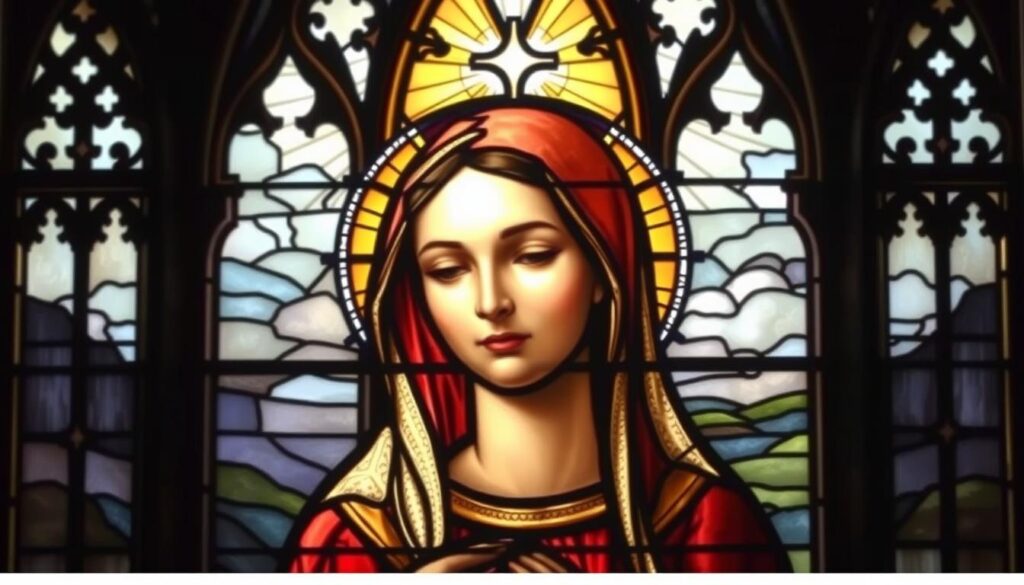
Artistic representations of Mary are also a notable feature of Episcopal churches, reflecting her importance in the faith. These representations can take many forms, including statues, icons, and stained glass windows, often depicting Mary in various aspects of her life and significance.

For example, many Episcopal churches feature statues or images of Mary holding the infant Jesus, symbolizing her role as the Mother of God. Other representations may depict scenes from the Bible or Christian tradition that highlight Mary’s faith and obedience.

episcopal church mary beliefs

The inclusion of Mary in both liturgical practices and artistic representations within Episcopal churches demonstrates the Church’s commitment to honoring her role in the Christian faith. Through these practices, Episcopalians are reminded of the significance of Mary and her relevance to their spiritual lives.

The Virgin Birth in Episcopal Theology

The Virgin Birth is a fundamental aspect of Christian doctrine that the Episcopal Church affirms with conviction. This doctrine is not only a cornerstone of Christian theology but also plays a significant role in shaping the faith and worship practices of Episcopalians.

Understanding the Doctrine

The doctrine of the Virgin Birth refers to the belief that Jesus Christ was born of the Virgin Mary, conceived through the Holy Spirit, without human intervention. This miraculous event is seen as a fulfillment of Old Testament prophecies and is central to the Christian understanding of Jesus’ divinity and humanity.

Theological Significance: The Virgin Birth underscores the divine origin of Jesus Christ, emphasizing his unique role as both fully human and fully divine. This doctrine is crucial for understanding the Christian concept of salvation, as it highlights Jesus’ ability to redeem humanity.

How It Influences Faith and Worship

The affirmation of the Virgin Birth influences Episcopal faith and worship in several ways. It is reflected in the liturgical practices and prayers of the Episcopal Church, often invoking the significance of Mary’s role in the Incarnation.

Liturgical Practices: The Episcopal Church celebrates various feast days related to the Incarnation and the Virgin Mary, reinforcing the importance of the Virgin Birth in the liturgical calendar. These celebrations serve to deepen the faithful’s understanding and appreciation of this doctrine.

The doctrine also influences the way Episcopalians understand their faith and approach worship. It emphasizes the miraculous and mysterious nature of God’s intervention in human history, encouraging a deeper reverence and awe in worship practices.

In conclusion, the Virgin Birth is a pivotal doctrine in Episcopal theology, influencing both the faith and worship practices of Episcopalians. Its significance is underscored by its inclusion in various liturgical celebrations and its role in understanding Jesus Christ’s divinity and humanity.

Contemporary Views and Practices

As the Episcopal Church navigates modernity, the figure of Mary remains a pivotal element in understanding faith and discipleship. The contemporary Episcopal perspective on Mary is characterized by a diverse range of interpretations, reflecting the denomination’s broad theological spectrum.

Modern Interpretations of Mary’s Role

Modern Episcopalians continue to find significance in Mary’s role as a model of faith and discipleship. Her presence in scripture and tradition is seen as a powerful reminder of the importance of devotion and service. The Episcopal Church’s liturgical practices and theological discussions often highlight Mary’s unique position in the narrative of salvation.

In contemporary practice, Mary’s role is interpreted in various ways. Some Episcopalians view her as a symbol of the ideal disciple, while others see her as an intercessor or a model for spiritual growth. This diversity of perspectives enriches the Episcopal Church’s understanding of faith and its expression in daily life.

Mary as a Model of Faith and Discipleship

Mary’s significance in the Episcopal Church is also understood through her embodiment of faith and discipleship. Her response to the angel Gabriel, as recorded in Luke’s Gospel, is seen as a paradigm of faithful obedience. Episcopalians often look to Mary as a model for navigating the complexities of modern life while remaining committed to their spiritual beliefs.

The Episcopal Church’s contemporary views on Mary underscore the importance of balancing tradition with modern understanding, ensuring that the figure of Mary remains relevant and meaningful in the lives of Episcopalians today.

Conclusion: Mary in the Life of Episcopalians

The Episcopal Church’s beliefs about Mary are rooted in a rich tradition that combines scripture, tradition, and theology. Understanding what Episcopalians believe about Mary provides insight into the broader Episcopal faith and practice.

Core Beliefs

Episcopalians view Mary as a significant figure in the story of salvation. The Episcopal beliefs about Mary are centered on her role as the mother of Jesus Christ, emphasizing her importance in the biblical narrative. This understanding is reflected in various liturgical practices and celebrations throughout the year.

Relevance in Modern Faith

Mary remains a vital part of Episcopal worship and theology, serving as a model of faith and discipleship. The ongoing relevance of Mary in the life of Episcopalians is evident in the continued celebration of feast days and her inclusion in prayers and services. By examining episcopal beliefs about Mary, we gain a deeper understanding of the Episcopal tradition and its approach to faith and worship.

FAQ

What is the Episcopal Church’s view on Mary?

The Episcopal Church views Mary as the mother of Jesus, emphasizing her role in scripture and tradition. Episcopalians believe in honoring Mary as a significant figure in the life of Jesus and the early Christian community.

How do Episcopalians understand Mary’s role in salvation history?

Episcopalians understand Mary as playing a crucial role in salvation history as the mother of Jesus, the Son of God. They see her as a faithful servant of God who cooperated with God’s plan for salvation.

What is the significance of Mary being referred to as Theotokos?

The term Theotokos, meaning “God-bearer,” signifies that Mary gave birth to Jesus, who is fully human and fully divine. This title is important in Episcopal theology as it affirms the divinity of Jesus and Mary’s role in bearing him.

How do Episcopal beliefs about Mary compare to those of the Catholic Church?

While both the Episcopal and Catholic Churches honor Mary, there are differences in their beliefs and practices. Episcopalians tend to focus more on Mary’s role in scripture and less on some of the traditions and dogmas surrounding her that are prominent in Catholicism.

Are there specific feast days related to Mary observed by the Episcopal Church?

Yes, the Episcopal Church observes several feast days related to Mary, including the Annunciation and the Visitation. These celebrations highlight significant events in Mary’s life and their importance in the Christian calendar.

How is Mary incorporated into Episcopal liturgical practices?

Mary is incorporated into Episcopal liturgical practices through prayers, services, and artistic representations. Episcopalians may invoke her in certain prayers and honor her in worship services, reflecting their reverence for her role in the life of Jesus.

What is the Episcopal Church’s understanding of the Virgin Birth?

The Episcopal Church affirms the doctrine of the Virgin Birth, believing that Jesus was born of the Virgin Mary through the power of the Holy Spirit. This doctrine is seen as a fundamental aspect of Christian theology, emphasizing the miraculous nature of Jesus’ conception.

How do contemporary Episcopalians view Mary?

Contemporary Episcopalians view Mary as a model of faith and discipleship. They see her as an example of obedience to God’s will and as a figure who continues to inspire devotion and faith in the lives of believers.

What is the significance of Mary’s role in the Episcopal Church today?

Mary’s role remains significant in the Episcopal Church as a symbol of faith, obedience, and the importance of women’s roles in the life of the Church. She continues to be a figure of reverence and inspiration for Episcopalians.

What Do Episcopalians Believe About Jesus?


The Episcopal Church is rooted in the teachings of Jesus Christ, whose life, death, and resurrection are seen as the cornerstone of their faith. Episcopalians aspire to follow Jesus’ example, embracing a legacy of inclusion and striving to exemplify God’s love for every human being.

At its core, the Episcopal Church’s belief in Jesus is centered on His message of love, forgiveness, and redemption. By following His teachings, Episcopalians aim to create a more compassionate and just society.

Key Takeaways

  • Episcopalians believe in the significance of Jesus Christ’s life, death, and resurrection.
  • The Episcopal Church is committed to inclusion and exemplifying God’s love.
  • Jesus’ teachings on love, forgiveness, and redemption guide Episcopal beliefs.
  • The Episcopal Church strives to create a more compassionate and just society.
  • Faith in Jesus is central to Episcopal identity and practice.

Historical Context of Episcopalian Beliefs

Delving into the historical context of Episcopalian beliefs reveals a fascinating narrative of faith, tradition, and the quest for spiritual understanding. The Episcopalian faith is rooted in the Christian tradition, with its beliefs and practices shaped by centuries of history.

Origins of the Episcopal Church

The Episcopal Church has its origins in the Church of England, which was established during the Reformation in the 16th century. The church’s history and development have been influenced by various theological and cultural factors, shaping its understanding of Jesus Christ and its place within the broader Christian community.

The Episcopal Church in the United States emerged after the American Revolution, when the Anglican churches in the newly independent nation separated from the Church of England. This separation led to the formation of the Protestant Episcopal Church, which has since evolved into the Episcopal Church we know today.

“The Episcopal Church is a part of the worldwide Anglican Communion, a family of churches that trace their roots back to the Church of England.”

The Episcopal Church website

Influence of Anglican Tradition

The Anglican tradition has had a profound influence on Episcopalian beliefs, particularly in its understanding of Jesus Christ. The Episcopal Church’s liturgy, sacraments, and theological perspectives are all shaped by Anglican heritage.

Aspect Anglican Influence Episcopalian Belief
Liturgy The Book of Common Prayer Use of the Book of Common Prayer in worship services
Sacraments Recognition of two sacraments: Baptism and Eucharist Practice of Baptism and Eucharist as central sacraments
Theology Emphasis on reason, tradition, and scripture Balance between scripture, tradition, and reason in theological inquiry

The influence of Anglican tradition on Episcopalian beliefs is evident in its approach to theology, which seeks a balance between scripture, tradition, and reason. This balanced approach allows for a nuanced understanding of Jesus Christ and his role in the life of the church.

Understanding the historical context of Episcopalian beliefs provides insight into the church’s understanding of Jesus Christ and its place within the broader Christian tradition. The Episcopal Church’s rich history and its connection to the Anglican Communion have shaped its beliefs and practices, making it a unique and vibrant part of the global Christian community.

Core Beliefs About Jesus Christ

The Episcopal Church holds a profound reverence for Jesus Christ, believing Him to be the Son of God. This belief is foundational to their faith and is reflected in their doctrines and practices.

Jesus as the Son of God

Episcopalians affirm that Jesus Christ is the second person of the Trinity, fully divine and fully human. This understanding is crucial to their belief in salvation through Jesus Christ. The divinity of Jesus is seen as a cornerstone of the Christian faith, and Episcopalians emphasize the importance of this doctrine in understanding God’s nature.

The belief in Jesus as the Son of God is not just a theological concept but a living faith that guides Episcopalians in their daily lives. It influences their worship, their relationships, and their commitment to social justice.

The Role of the Trinity

The Trinity is a central doctrine in the Episcopal Church, describing God as three persons – Father, Son, and Holy Spirit – in one essence. Episcopalians believe that understanding the Trinity is essential to grasping the nature of God and the role of Jesus Christ in salvation.

The Trinity is not just a theological concept; it is a way of understanding the complex and multifaceted nature of God. It emphasizes the relational aspect of God’s nature, highlighting the love and communion between the Father, Son, and Holy Spirit.

Salvation Through Jesus

Episcopalians believe that salvation comes through Jesus Christ. This belief is rooted in the understanding that Jesus, as the Son of God, sacrificed Himself for the sins of humanity, providing a path to salvation for all people.

The doctrine of salvation through Jesus is central to Episcopalian theology and is reflected in their liturgical practices, particularly in the sacraments of Baptism and the Eucharist. These sacraments are seen as means of grace, through which believers participate in the life of Christ and receive salvation.

Scripture and Jesus in Episcopalian Doctrine

Understanding Jesus Christ is deeply rooted in scripture, a foundational element of the Episcopal Church. The Bible serves as a primary source for spiritual guidance and understanding the life and teachings of Jesus.

episcopal beliefs and teachings on jesus

Importance of the Bible

The Episcopal Church considers the Bible a crucial text for understanding Jesus Christ and his teachings. As stated in the Book of Common Prayer, “The Holy Scriptures contain all things necessary to salvation.” This underscores the significance of scripture in Episcopalian doctrine.

The Bible is not just a historical document but a living word that guides Episcopalians in their faith and practices. It provides the narrative of Jesus’ life, death, and resurrection, which are central to Christian beliefs.

Biblical Interpretation in the Episcopal Church

Episcopalians interpret the Bible through a balanced approach that includes tradition, reason, and scripture. This method, often referred to as the “three-legged stool,” ensures a comprehensive understanding of biblical teachings.

As Richard Hooker, an influential Anglican theologian, once said, “The Bible is the primary source of Christian theology, but it must be interpreted in the context of tradition and reason.” This approach allows Episcopalians to engage with scripture in a thoughtful and reflective manner.

“Scripture, tradition, and reason are not in conflict but are complementary ways of understanding God’s will.”

This balanced approach to biblical interpretation enables Episcopalians to understand Jesus’ teachings in a nuanced and contextual manner, applying them to contemporary life and issues.

The Nature of Christ

The nature of Christ is a foundational aspect of Episcopalian theology, embracing both the human and divine in Jesus Christ. This understanding is crucial for Episcopalians, as it influences their worship, practices, and overall faith.

Fully Human and Fully Divine

Episcopalians affirm that Jesus Christ is both fully human and fully divine. This dual nature is not seen as contradictory but as complementary, highlighting the complex and multifaceted nature of Christ. The belief in Jesus’ dual nature is central to Episcopalian doctrine, influencing how they understand salvation and the role of Jesus in their lives.

The human aspect of Jesus is understood through his experiences, emotions, and ultimately, his suffering and death on the cross. Meanwhile, his divine nature is recognized through his miracles, teachings, and the resurrection. This duality is a cornerstone of Episcopalian faith, reflecting the incarnational theology that characterizes their understanding of Jesus.

The Incarnation Explained

The doctrine of the Incarnation is pivotal in understanding the Episcopalian view of Christ. It refers to the belief that God became flesh in Jesus Christ, uniting divine and human natures in one person. This doctrine is foundational to Christian theology and is particularly significant in Episcopalian worship and theology.

  • The Incarnation signifies God’s love for humanity, demonstrated by taking on human form.
  • It underscores the significance of Jesus’ life, death, and resurrection as a human experience with divine implications.
  • The Incarnation is celebrated during Christmas and is a central theme in Episcopalian liturgy and prayer.

By affirming the Incarnation, Episcopalians emphasize the importance of Jesus’ human experiences and divine nature in their faith. This understanding shapes their approach to worship, ethics, and community life, highlighting the profound impact of Christ’s nature on their beliefs and practices.

The Resurrection and Its Significance

At the heart of Episcopalian beliefs lies the profound significance of Jesus Christ’s Resurrection. This event is not only a cornerstone of their faith but also a celebration of hope, renewal, and the promise of eternal life.

Episcopal Church beliefs on Jesus Resurrection

The Resurrection, as understood by Episcopalians, signifies the triumph of Jesus Christ over death, reinforcing the belief in the power of God’s love and redemption. It is a testament to the Episcopalian faith in Jesus as the Son of God and the savior of humanity.

Easter and Its Importance

Easter, the celebration of Jesus Christ’s Resurrection, holds a special place in the Episcopalian liturgical calendar. It is a time of joyous worship, reflection, and renewal for the community. Episcopalians observe Easter with various traditions, including special church services, Easter egg hunts, and family gatherings, all of which underscore the significance of the Resurrection in their faith.

The importance of Easter in Episcopalian beliefs cannot be overstated. It is a period that embodies the hope and joy that come from the belief in Jesus Christ’s victory over death. Through Easter, Episcopalians reaffirm their faith in the promise of eternal life, a central tenet of their religious beliefs.

The Promise of Eternal Life

The Resurrection of Jesus Christ is seen as a guarantee of the promise of eternal life for believers. Episcopalians believe that through Jesus’ Resurrection, they are offered a path to salvation and eternal life with God. This belief is foundational to their understanding of Jesus’ role in their faith and is celebrated and reflected upon during Easter.

The promise of eternal life is not just a future hope but a present reality that shapes the daily lives and decisions of Episcopalians. It inspires them to live according to Jesus’ teachings, embracing love, forgiveness, and compassion in their interactions with others.

The Sacraments Related to Jesus

The Episcopal Church recognizes two sacraments as being directly instituted by Jesus Christ, which are central to its worship and practice. These sacraments are Baptism and the Eucharist, both of which are deeply rooted in the church’s tradition and scripture.

Baptism as a Christ-Centric Sacrament

Baptism is considered a fundamental sacrament in the Episcopal Church, symbolizing the initiation of a person into the Christian faith. It is seen as a sacrament of initiation into the body of Christ, where individuals are baptized in the name of the Father, Son, and Holy Spirit. Through Baptism, Episcopalians believe that individuals are cleansed of sin and welcomed into the community of believers.

“Baptism is not just a ritual; it’s a sacrament that signifies our adoption as children of God, our forgiveness, and our commitment to follow Jesus Christ.” –

A reflection from the Episcopal Church’s liturgical resources

The sacrament of Baptism is significant because it marks the beginning of a person’s journey in the Christian faith. It is a moment of spiritual rebirth and is often accompanied by the reception of other sacraments and the support of the faith community.

The Eucharist: A Communion with Christ

The Eucharist, also known as Holy Communion, is another sacrament that is central to the worship of the Episcopal Church. It is believed to be a commemoration of Jesus Christ’s Last Supper with his disciples, where bread and wine are consecrated and received by the faithful.

During the Eucharist, Episcopalians believe that they are spiritually nourished by receiving the body and blood of Christ. The sacrament is seen as a means of grace, where believers are brought closer to God and to each other through their participation in the communal meal.

Sacrament Significance Elements
Baptism Initiation into the Christian faith, cleansing of sin Water, Trinitarian formula
Eucharist Commemoration of Jesus’ Last Supper, spiritual nourishment Bread, Wine

Episcopalian sacraments

Both Baptism and the Eucharist are integral to the spiritual lives of Episcopalians, serving as tangible connections to their faith and to Jesus Christ. Through these sacraments, believers experience the presence and grace of God in their lives.

The Role of Jesus in Worship

At the core of Episcopalian worship is the figure of Jesus Christ, whose life, death, and resurrection are commemorated and celebrated throughout the liturgical year. The Episcopal Church’s worship practices are deeply rooted in the belief in Jesus as the Son of God and the savior of humanity.

The Liturgical Calendar and Jesus

The liturgical calendar is a significant aspect of Episcopalian worship, with various seasons and feast days dedicated to different aspects of Jesus’ life and teachings. Advent, Christmas, Lent, and Easter are pivotal periods that reflect on Jesus’ coming, birth, suffering, death, and resurrection, respectively.

During these seasons, the church’s liturgy and prayers are tailored to highlight the significance of Jesus’ life events. For instance, during Lent, the focus is on repentance and reflection, preparing believers for the resurrection of Jesus at Easter.

Prayers and Hymns Focused on Jesus

Prayers and hymns in Episcopalian worship are replete with references to Jesus, underscoring His central role in the faith. The Book of Common Prayer contains a rich collection of prayers that invoke Jesus and reflect on His teachings and significance.

Hymns sung during worship services often focus on the life, death, and resurrection of Jesus, with many classics being part of the Episcopalian hymnal. These hymns not only express devotion to Jesus but also serve as a means of communal worship, uniting the congregation in their faith.

In summary, Jesus is integral to Episcopalian worship, with the liturgical calendar, prayers, and hymns all contributing to a rich tapestry of devotion centered on Him.

Understanding Jesus in Relationships

Episcopalians believe that Jesus’ message has a significant impact on how they engage with others and approach social justice. This understanding is rooted in the church’s doctrines and teachings about Jesus, which emphasize the importance of love, compassion, and service.

Jesus and Community

The Episcopal Church views Jesus as a unifying figure who brings people together. The church’s emphasis on community is reflected in its various outreach programs and initiatives aimed at fostering a sense of belonging among its members. By following Jesus’ teachings, Episcopalians strive to create inclusive communities that welcome people from diverse backgrounds.

Community building is a key aspect of Episcopal life, with many parishes engaging in local outreach and social activities. These efforts are guided by Jesus’ teachings on love and compassion, encouraging members to serve others and work towards the common good.

The Influence of Jesus on Social Justice

Jesus’ teachings on social justice are a driving force behind the Episcopal Church’s advocacy efforts. Episcopalians are encouraged to follow Jesus’ example by standing up for the marginalized and working towards a more just society. This commitment to social justice is reflected in the church’s policies and programs, which address issues such as poverty, inequality, and environmental stewardship.

The church’s social justice initiatives are designed to promote positive change and empower individuals to make a difference in their communities. By living out their faith in Jesus, Episcopalians aim to create a more compassionate and equitable world.

Episcopalian Perspectives on Jesus’ Teachings

Episcopalians draw inspiration from Jesus’ teachings, particularly the Sermon on the Mount, to navigate modern challenges. The Episcopal Church emphasizes the importance of applying Jesus’ teachings to everyday life, fostering a community built on love, compassion, and forgiveness.

The Sermon on the Mount

The Sermon on the Mount is a pivotal teaching of Jesus, recorded in the Gospel of Matthew. It contains the Beatitudes and other key instructions on how to live a righteous life. Episcopalians view this sermon as a guide for understanding God’s will and for living out their faith in practical ways.

The Beatitudes, for instance, offer a counter-cultural perspective on happiness and blessedness, focusing on the poor in spirit, the meek, and those who hunger for righteousness. These teachings challenge Episcopalians to rethink societal norms and to embrace a more spiritual and humble approach to life.

Love and Forgiveness as Central Themes

At the heart of Jesus’ teachings are the themes of love and forgiveness. Episcopalians believe that Jesus’ command to “love thy neighbor as thyself” is fundamental to Christian living. This principle guides their interactions with others, promoting a culture of empathy, kindness, and understanding.

Forgiveness is another critical aspect of Jesus’ teachings. The Episcopal Church teaches that forgiveness is not only a gift to others but also a means of personal healing and liberation. By forgiving others and seeking forgiveness, Episcopalians believe they can experience the fullness of God’s love and grace.

Key Teaching Episcopalian Interpretation Practical Application
The Sermon on the Mount A guide for living a righteous life Daily prayer and reflection on the Beatitudes
Love thy neighbor Embracing empathy and kindness Community service and outreach programs
Forgiveness A means of healing and liberation Conflict resolution and reconciliation efforts

By embracing Jesus’ teachings, Episcopalians strive to create a more just, compassionate, and loving community. Their beliefs regarding Jesus are not just about personal faith but also about how to live out that faith in the world.

Living Out Faith in Jesus Today

Episcopalians are called to embody their faith in Jesus Christ in everyday life, applying the church’s teachings to contemporary contexts. This involves striving to be disciples of Jesus, guided by the principles of love, compassion, and service.

Practical Applications of Faith

In modern times, Episcopalians are encouraged to live out their faith through various means, such as participating in community service, advocating for social justice, and engaging in interfaith dialogue. The episcopal doctrine on jesus emphasizes the importance of treating others with kindness and respect, reflecting Jesus’ teachings.

Discipleship in Daily Life

The call to discipleship is central to episcopalians beliefs. It involves a personal commitment to follow Jesus’ example, cultivating a deeper understanding of God’s love and mercy. By embracing this call, Episcopalians can make a positive impact in their communities, fostering a spirit of compassion and understanding.

As Episcopalians continue to explore their faith and its applications, they remain committed to the core principles of their beliefs, guided by the teachings of Jesus Christ.

FAQ

What do Episcopalians believe about Jesus Christ?

Episcopalians believe that Jesus Christ is the Son of God, fully human and fully divine, who came to Earth to save humanity from sin and its consequences. They believe in the significance of Jesus’ life, death, and resurrection, and follow His teachings as a guide for living a life of love, compassion, and service.

How do Episcopalians understand the Trinity?

Episcopalians believe in the Trinity, which is the concept of one God in three persons: God the Father, Jesus Christ the Son, and the Holy Spirit. They understand the Trinity as a mystery that is central to their faith, and believe that it reveals the nature of God as a loving and relational being.

What is the significance of the Resurrection in Episcopalian theology?

The Resurrection is a cornerstone of Episcopalian theology, as it represents the triumph of Jesus over death and sin. Episcopalians believe that the Resurrection demonstrates Jesus’ power and divinity, and is a promise of eternal life for all people.

How do Episcopalians interpret the Bible?

Episcopalians interpret the Bible in the context of tradition, reason, and experience. They believe that scripture is a source of guidance and inspiration, and that it should be interpreted in a way that is informed by the historical and cultural context in which it was written.

What is the role of the sacraments in Episcopalian worship?

Episcopalians believe that the sacraments are a means of experiencing God’s grace and presence in their lives. The two primary sacraments are Baptism and the Eucharist, which are seen as a way of participating in the life and ministry of Jesus Christ.

How do Episcopalians understand Jesus’ teachings on love and forgiveness?

Episcopalians believe that Jesus’ teachings on love and forgiveness are central to their faith. They understand Jesus’ message as a call to love God and love their neighbors, and to forgive others as they have been forgiven.

How do Episcopalians apply their beliefs about Jesus to contemporary life?

Episcopalians apply their beliefs about Jesus to contemporary life by striving to live out their faith in their daily lives. They believe that Jesus’ teachings on love, compassion, and service should inform their decisions and actions, and that they should work to promote justice and peace in the world.

What is the significance of the Incarnation in Episcopalian theology?

The Incarnation is a central doctrine in Episcopalian theology, as it represents the belief that Jesus Christ is fully human and fully divine. Episcopalians believe that the Incarnation demonstrates God’s love and commitment to humanity, and that it provides a model for human living.

How do Episcopalians celebrate Easter?

Episcopalians celebrate Easter as a joyous and sacred occasion, marking the Resurrection of Jesus Christ. They believe that Easter is a time of renewal and new life, and that it is a celebration of the hope and promise of eternal life through Jesus Christ.

Episcopalian Beliefs on Hell Explained


The concept of hell is a complex and multifaceted topic within Christian theology. For Episcopalians, the idea of hell is closely tied to the concept of human free will, where individuals have the capacity to accept or reject God.

Understanding the Episcopal Church’s perspective on hell requires an exploration of their theological views on sin, redemption, and the afterlife. The Episcopal Church’s beliefs are rooted in a rich tradition that emphasizes the importance of personal choice and the consequences of one’s actions.

In essence, the Episcopal Church’s stance on hell reflects a nuanced understanding of God’s justice and mercy. By examining their beliefs, we can gain insight into the significance of hell within Episcopalian theology.

Key Takeaways

  • Episcopalians believe in human free will, which influences their understanding of hell.
  • The Episcopal Church’s views on hell are shaped by their theological perspectives on sin and redemption.
  • The concept of hell is complex and multifaceted within Episcopalian theology.
  • The Episcopal Church emphasizes the importance of personal choice and its consequences.
  • Their beliefs on hell reflect a nuanced understanding of God’s justice and mercy.

Understanding Hell in Episcopalian Theology

The concept of hell within Episcopalian theology is rooted in a deep analysis of scripture and tradition. This foundation shapes the various interpretations and understandings of hell within the Episcopalian community.

The Nature of Hell

The Episcopalian theology of hell is characterized by a range of perspectives. Some view hell as a state of eternal separation from God, while others see it as a realm of punishment and suffering. This diversity reflects the complexity of biblical teachings on the subject.

Key to understanding the nature of hell in Episcopalian theology is the consideration of scriptural references and historical theological debates. The Episcopal Church encourages a nuanced exploration of these sources.

Differing Interpretations

Within Episcopalianism, there are several interpretations regarding hell. Some of the main views include:

  • The belief in eternal punishment, where the souls of the unrepentant are eternally damned.
  • The concept of annihilationism, where the unrepentant are ultimately destroyed rather than eternally punished.
  • The understanding of hell as a temporary state before eventual reconciliation with God.

These differing interpretations highlight the diversity within Episcopalian theology and the ongoing dialogue about the nature of hell.

Scriptural Foundations

The Episcopalian understanding of hell is deeply rooted in scriptural teachings. Passages from the Bible, such as those found in the Gospels and Revelation, provide the foundation for various interpretations of hell.

For instance, the Gospel of Matthew contains references to hell as a place of outer darkness and eternal fire. These images are often cited in discussions about the nature of hell within Episcopalian theology.

By examining these scriptural foundations, Episcopalians can gain a deeper understanding of the theological significance of hell and its relevance to contemporary faith.

Historical Perspectives on Hell

Understanding hell through the lens of Episcopalian history offers insights into how beliefs about the afterlife have developed. The Episcopalian tradition, rooted in Christianity, has a rich history that spans centuries, influencing its views on hell.

Early Church Views

The early Christian Church laid the groundwork for later Christian traditions, including the Episcopalian views on hell. The concept of hell was largely influenced by biblical interpretations and the writings of early Church Fathers. The notion of hell as a place of punishment or separation from God was a common theme. The early Church’s understanding of hell was not uniform, with various interpretations emerging over time.

Reformation Influences

The Reformation had a significant impact on the development of Episcopalian theology, including its views on hell. The Episcopal Church, being part of the Anglican Communion, was influenced by the theological debates of the Reformation era. The Reformers’ emphasis on scripture and justification by faith alone shaped the Episcopalian understanding of sin, redemption, and the afterlife. This period saw a reevaluation of traditional beliefs about hell, with some Reformers questioning the prevailing views.

Modern Episcopalian Thought

In modern times, the Episcopalian Church continues to grapple with the concept of hell, reflecting a diversity of thought within the tradition. While some Episcopalians adhere to traditional views of hell as a place of eternal punishment, others interpret hell more symbolically or as a state of being separated from God’s love. The Episcopal Church’s openness to theological inquiry and its emphasis on individual conscience allow for a range of beliefs about hell. This diversity reflects the Church’s commitment to fostering a deeper understanding of faith and its implications for daily life.

The historical development of Episcopalian beliefs about hell underscores the complexity and richness of Christian theology. By examining the evolution of thought on this topic, Episcopalians can gain a deeper understanding of their faith and its relevance to contemporary issues.

The Concept of Sin and Redemption

Understanding the Episcopalian view of sin and redemption is crucial to grasping their theological stance on hell and salvation. The Episcopalian faith emphasizes the importance of comprehending sin and the path to redemption through Jesus Christ.

Original Sin in Episcopalian Belief

The concept of original sin is rooted in the biblical story of Adam and Eve. Episcopalians believe that original sin refers to the inherent tendency towards sin that humanity inherits from Adam’s disobedience. However, the Episcopal Church does not dogmatically define the nature or consequences of original sin, allowing for a range of interpretations.

The Book of Common Prayer reflects this nuanced understanding, stating, “We have followed too much the devices and desires of our own hearts… and there is no health in us.” This acknowledgment of human frailty underscores the need for redemption.

The Role of Jesus Christ

Jesus Christ is central to the Episcopalian understanding of redemption. Through his life, death, and resurrection, Jesus provides the means for humanity’s salvation. Episcopalians believe that faith in Jesus Christ is essential for forgiveness and reconciliation with God.

The significance of Jesus’ role is highlighted in the Eucharist, a sacrament in which Episcopalians believe they receive spiritual nourishment and grace through the bread and wine, symbols of Christ’s body and blood.

Grace and Forgiveness

Grace and forgiveness are fundamental to Episcopalian theology. Episcopalians believe that God’s grace is freely given and that forgiveness is available through faith in Jesus Christ and participation in the sacraments.

Aspect Description
Original Sin Inherent tendency towards sin inherited from Adam’s disobedience
Role of Jesus Christ Provides salvation through his life, death, and resurrection
Grace and Forgiveness Freely given by God, available through faith and sacraments

The Episcopalian understanding of sin and redemption is thus deeply intertwined with their beliefs about hell and the afterlife, emphasizing the importance of faith, grace, and forgiveness.

The Episcopalian View of Afterlife

Episcopalians hold diverse perspectives on the afterlife, reflecting a broad spectrum of theological thought. This diversity is rooted in the Church’s commitment to scripture, tradition, and reason.

Episcopalian views on afterlife

Heaven and Hell: A Duality

The concepts of heaven and hell are central to the Christian understanding of the afterlife. In Episcopalian theology, these concepts are often seen as a duality, representing the ultimate destinations of the soul. Heaven is typically understood as a realm of eternal joy and communion with God, while hell is viewed as a state of separation from God’s love.

“The vision of God is the ultimate hope of Christians,” as one Episcopalian theologian notes, highlighting the aspirational nature of heavenly existence. Conversely, hell is often described in terms of the absence of divine presence, rather than a place of active punishment.

Annihilationism vs. Eternal Punishment

A significant debate within Episcopalian circles concerns the nature of hell, particularly whether it involves eternal punishment or annihilationism—the belief that the unrepentant are ultimately annihilated rather than tormented forever. This debate reflects broader Christian discussions about the character of God and the fate of the unrepentant.

“The Episcopal Church does not have an official stance on annihilationism versus eternal punishment, reflecting its theological diversity.”

Purgatory: Acceptance or Rejection?

The concept of purgatory, a doctrine more commonly associated with Roman Catholicism, has a complex status within Episcopalian thought. While not officially part of Episcopalian doctrine, some Episcopalians find value in the idea of a purifying process after death, akin to purgatory.

The Episcopal Church’s Book of Common Prayer includes prayers for the dead, which some interpret as suggesting a belief in a post-mortem purifying process. However, the Church’s official stance remains nuanced, leaving room for individual interpretation.

The Role of Doubt and Inquiry

The Episcopalian faith is characterized by a profound acceptance of doubt and inquiry, particularly when it comes to complex theological concepts like hell. This openness reflects a mature and thoughtful engagement with faith, acknowledging that questioning and seeking understanding are integral parts of spiritual growth.

Encouraging Questions about Hell

The Episcopal Church encourages its adherents to ask questions about hell and other theological concepts. This encouragement is rooted in the belief that faith should be a thoughtful and informed commitment. By exploring the depths of their beliefs, Episcopalians can develop a more nuanced understanding of hell and its implications for their lives.

  • Exploring the nature of hell and its significance in Christian theology
  • Understanding the various interpretations of hell within the Episcopalian tradition
  • Examining the relationship between hell and other Christian doctrines, such as salvation and grace

The Importance of Individual Belief

Individual belief is highly valued within the Episcopalian tradition. The church recognizes that personal faith is a journey, and individuals may come to different conclusions about theological issues, including the concept of hell. This emphasis on individual belief fosters a diverse and inclusive community, where various perspectives are respected and encouraged.

“The Episcopal Church has a long history of embracing inquiry and valuing individual conscience, allowing for a rich tapestry of beliefs within the community.”

The Episcopal Church’s Openness

The Episcopal Church’s openness to doubt and inquiry is a defining characteristic of its approach to faith. This openness is not limited to individual believers but is also reflected in the church’s official stance on various theological issues. By embracing a range of perspectives, the Episcopal Church creates a welcoming environment for those seeking to deepen their understanding of their faith.

In conclusion, the role of doubt and inquiry within Episcopalianism highlights the church’s commitment to fostering a thoughtful and engaged faith community. By encouraging questions, valuing individual belief, and maintaining an openness to various perspectives, the Episcopal Church provides a nurturing environment for spiritual growth and exploration.

The Influence of Scripture on Beliefs

Understanding the Episcopalian view of hell requires examining the scriptural foundations that underpin their eschatology. Scripture plays a crucial role in shaping Episcopalian beliefs about hell, with key passages influencing their understanding of the afterlife.

Key Biblical Passages

The Episcopalian perspective on hell is informed by several key biblical passages. For instance, the parable of the rich man and Lazarus in Luke 16:19-31 is often cited to discuss the concept of hell and the afterlife. Additionally, passages from the Psalms and the Prophets provide imagery and themes that are used to describe hell.

Some of the most influential passages include:

  • The teachings of Jesus on judgment and the afterlife, found in the Gospels.
  • The descriptions of the final judgment in the Book of Revelation.
  • The prophetic warnings about the consequences of sin in the Old Testament.

The Gospel and Eschatology

The gospel message is central to Episcopalian eschatology, emphasizing the hope of salvation and the promise of eternal life. The resurrection of Jesus Christ is seen as a victory over death and hell, offering believers a path to redemption.

Episcopalians believe that the gospel teaches about God’s love and mercy, which are fundamental in understanding the nature of hell and the afterlife. This belief is rooted in the understanding that God’s ultimate desire is not to condemn but to save and redeem.

Interpreting Revelations

The Book of Revelation is a significant source for eschatological beliefs in the Episcopalian tradition. Its vivid imagery and prophetic language are interpreted in various ways, contributing to the diversity of beliefs about hell and the end times.

Some Episcopalians interpret Revelation literally, seeing it as a prophecy of the end times and the final judgment. Others interpret it more symbolically, understanding its imagery as a representation of spiritual realities rather than physical events.

The interpretation of Revelation, along with other biblical passages, shapes the Episcopalian understanding of hell and the afterlife, influencing their beliefs about the nature of God and the ultimate destiny of humanity.

The Relationship Between Faith and Works

Faith and works are not separate entities in Episcopalian belief; rather, they are complementary aspects of a devout life. This understanding is rooted in the Episcopalian interpretation of Christian teachings, emphasizing both the importance of faith in achieving salvation and the role of good works as a manifestation of that faith.

Salvation through Faith

The Episcopalian Church teaches that salvation comes through faith in Jesus Christ. This core belief is grounded in the understanding that faith is a gift from God, and it is through faith that individuals are justified and reconciled to God. The Book of Common Prayer and the Episcopal Catechism reinforce this principle, highlighting the significance of faith as the foundation of the Christian life.

As stated in the Episcopal Catechism, “Faith is a personal response to God’s revelation, involving trust, obedience, and a commitment to follow Jesus Christ.” This definition underscores the active nature of faith, which is not merely a passive belief but a dynamic commitment that guides one’s actions and decisions.

The Ethics of Episcopalian Belief

The ethical dimensions of Episcopalian belief are deeply connected to the understanding of faith and works. The Church emphasizes the importance of living a virtuous life, characterized by love, compassion, and justice. Episcopalians are encouraged to engage in acts of service and to work towards the betterment of society, reflecting their faith through tangible actions.

The ethical teachings of the Episcopal Church are guided by the principles of loving God and loving one’s neighbor. This is reflected in their support for various social justice initiatives and community service programs. By living out their faith through works, Episcopalians embody the teachings of Christ and contribute to the building of a more just and compassionate world.

Love as a Guiding Principle

At the heart of Episcopalian ethics and practice is the principle of love. Love is seen as a fundamental aspect of God’s nature and a guiding principle for human behavior. The Episcopal Church teaches that love is not limited to personal relationships but extends to the broader community and the world at large.

This understanding is reflected in the Church’s stance on various social issues, where love and compassion are advocated for in addressing the needs of the marginalized and the vulnerable. Through acts of love and kindness, Episcopalians live out their faith, demonstrating the transformative power of God’s love in their lives.

Aspect Description Guiding Principle
Faith Personal response to God’s revelation Trust and Obedience
Works Manifestation of faith through actions Love and Service
Ethics Guided by love for God and neighbor Justice and Compassion

The Community’s Role in Belief

Within the Episcopalian faith, the community plays a crucial role in shaping beliefs regarding hell and the afterlife. The Episcopalian community’s influence is multifaceted, involving church creeds, worship practices, and fellowship.

Church Creeds and Statements

The Episcopalian Church uses various creeds and statements to guide its beliefs and practices. These documents, such as the Baptismal Covenant, outline the core beliefs of the community, including understandings of sin, redemption, and the afterlife.

  • The Apostles’ Creed, recited during Sunday services, affirms beliefs in Christ’s descent into hell and resurrection.
  • The Book of Common Prayer contains prayers and liturgies that reflect the community’s beliefs about the afterlife.

Shaping Beliefs Through Worship

Worship practices in the Episcopalian Church significantly shape individual beliefs about hell. Through liturgy and sacraments, the community reinforces its theology.

The celebration of the Eucharist, for example, is central to Episcopalian worship and is believed to bring participants into communion with Christ and the heavenly host.

The Importance of Fellowship

Fellowship within the Episcopalian community provides support and guidance for individuals in understanding complex theological concepts like hell.

“Let us consider how we may spur one another on towards love and good deeds, not giving up meeting together, as some are in the habit of doing, but encouraging one another.”

Hebrews 10:24-25 (NIV)

This scripture highlights the importance of communal worship and mutual encouragement in shaping beliefs.

Episcopalian community worship

The Episcopalian community’s role in shaping beliefs about hell is a dynamic process involving creeds, worship, and fellowship. Through these elements, individuals within the community come to understand and deepen their faith.

Contemporary Challenges to Traditional Beliefs

The Episcopalian views on hell are facing contemporary challenges that are reshaping traditional understandings. As the world becomes increasingly interconnected, the Episcopal Church is confronted with diverse perspectives that challenge its long-held beliefs about the afterlife.

Modern Reinterpretations of Hell

In recent years, there has been a growing trend within the Episcopalian community to reinterpret traditional beliefs about hell. Some Episcopalians now view hell not as a place of eternal punishment, but rather as a state of being that is separated from God’s love. This reinterpretation is influenced by a more nuanced understanding of scripture and a desire to reconcile traditional teachings with modern values.

Cultural Perspectives on Afterlife

Cultural influences also play a significant role in shaping Episcopalian beliefs about the afterlife. As the Episcopal Church becomes more global, it is exposed to various cultural perspectives on death and the afterlife. For instance, some cultures view the afterlife as a continuation of earthly life, while others see it as a completely separate realm. These diverse perspectives encourage Episcopalians to think critically about their beliefs and to consider alternative understandings of hell.

The Impact of Science and Reason

The advancement of science and reason has also led to a reevaluation of traditional Episcopalian beliefs about hell. Some Episcopalians argue that scientific discoveries and rational inquiry can complement faith, leading to a more informed understanding of the afterlife. This perspective encourages Episcopalians to engage with contemporary knowledge and to integrate it into their theological reflections.

In conclusion, the Episcopalian understanding of hell is being reshaped by contemporary challenges, including modern reinterpretations, cultural influences, and the impact of science and reason. As the Episcopal Church continues to evolve, it is likely that its views on hell will also continue to adapt, reflecting a more nuanced and diverse understanding of the afterlife.

Episcopal Leadership and Doctrine

Episcopal leadership, comprising bishops and clergy, significantly influences the church’s teachings on various theological concepts, including hell. The Episcopal Church’s doctrine is shaped by a complex interplay of tradition, scripture, and the guidance of its leaders.

Episcopal perspective on hell

The Influence of Bishops and Clergy

Bishops and clergy play a crucial role in interpreting and communicating the Episcopal Church’s teachings. Through sermons, pastoral care, and educational programs, they help shape the understanding of complex theological issues among the congregation. Their influence extends to guiding discussions around sensitive topics like hell, ensuring that the church’s stance is presented in a compassionate and informed manner.

The clergy’s role is not only to convey the church’s official doctrine but also to provide pastoral support, acknowledging the diversity of beliefs within the congregation. This balance between teaching and pastoral care is essential in maintaining a vibrant and inclusive faith community.

The Role of General Conventions

The General Convention, the Episcopal Church’s governing body, meets every three years to discuss and decide on matters of doctrine, discipline, and worship. These conventions provide a forum for debating and refining the church’s teachings, including its perspective on hell. Decisions made during these conventions can lead to changes in doctrine or the way it is presented to the faithful.

Through resolutions and canonical changes, the General Convention can significantly impact the church’s stance on various issues. This process ensures that the Episcopal Church remains a dynamic institution, capable of responding to contemporary challenges while remaining rooted in its traditions.

Evolving Teachings on Hell

The Episcopal Church’s teachings on hell have evolved over time, influenced by changing societal values, advancements in theological scholarship, and the insights of its leadership. While traditional views on hell have been part of the church’s doctrine, there is an ongoing dialogue about the interpretation of these teachings in the modern context.

As the church continues to grapple with complex theological questions, its leadership remains committed to guiding the faithful through these discussions. The evolving nature of the church’s teachings on hell reflects a broader effort to make faith relevant and meaningful in contemporary society.

Comparative Beliefs within Christianity

Understanding the Episcopalian perspective on hell requires a comparative analysis with other Christian faiths. The Episcopalian Church’s beliefs about hell are shaped by its unique interpretation of scripture and tradition, which can be compared and contrasted with those of other Christian denominations.

Episcopalians vs. Other Denominations

The Episcopalian Church’s doctrine on hell is distinct from other Christian denominations. For instance, some conservative Christian denominations view hell as a place of eternal punishment, whereas the Episcopalian Church leans towards a more inclusive and less judgmental perspective.

Key differences: Unlike some fundamentalist Christian denominations, the Episcopalian Church does not emphasize hell as a central tenet of its theology. Instead, it focuses on the love and mercy of God, leaving the specifics of hell somewhat open to individual interpretation.

Exploring Similarities and Differences

Despite differences, there are also similarities between Episcopalian beliefs about hell and those of other Christian denominations. Many Christian faiths share a belief in the importance of scripture in understanding the afterlife.

  • The Episcopalian Church and some other mainline Protestant denominations share a more nuanced view of hell, often interpreting it in a more metaphorical or less literal sense.
  • In contrast, more conservative denominations tend to adhere to a literal interpretation of hell as described in certain biblical passages.

Dialogue with Other Faiths

Engaging in dialogue with other Christian denominations, as well as with other faiths, can enrich the understanding of Episcopalian beliefs about hell. This interfaith dialogue can highlight common values and differences, fostering a more inclusive and compassionate community.

By exploring the diverse perspectives on hell within Christianity and beyond, the Episcopalian Church can continue to refine its doctrine, guided by the principles of love, forgiveness, and understanding.

Finding Hope Amidst Fear

Episcopalians navigating the complexities of hell and afterlife find solace in the understanding that their beliefs are rooted in a broader theological context. The Episcopal understanding of hell is not isolated but is intertwined with the concepts of God’s love and mercy.

Comfort in Uncertainty

The uncertainties surrounding hell can be daunting, yet Episcopalians are encouraged to find comfort in the face of the unknown. This comfort stems from a deep-seated belief in a benevolent God who seeks the salvation of all.

God’s Love and Mercy

At the heart of Episcopalian belief is the conviction that God’s love and mercy are paramount. This understanding shapes their perspective on hell, emphasizing the hope of redemption over fear of punishment.

Living a Faithful Life

What do Episcopalians believe about hell? They believe that their faith should guide them towards a life of love, compassion, and service. This belief in turn fosters a community that values mercy and forgiveness, reflecting the Episcopal understanding of hell as part of a larger narrative of salvation.

FAQ

What do Episcopalians believe about hell?

Episcopalians have varying beliefs about hell, ranging from traditional views of eternal punishment to more modern interpretations such as annihilationism. The Episcopal Church encourages individual inquiry and does not impose a single doctrine on hell.

How does the Episcopal Church view the concept of sin and redemption?

The Episcopal Church teaches that original sin is a condition that separates humanity from God, but through Jesus Christ, humanity is offered redemption. Episcopalians believe in the importance of grace and forgiveness in their theology.

What is the Episcopalian understanding of the afterlife?

Episcopalians believe in a duality of heaven and hell, with some interpreting hell as a state of eternal punishment and others as annihilation. The church also acknowledges the concept of purgatory, although its acceptance varies among Episcopalians.

How does scripture influence Episcopalian beliefs about hell?

Scripture plays a significant role in shaping Episcopalian beliefs about hell, with key biblical passages and the gospel influencing their eschatology. Episcopalians interpret revelations in various ways, contributing to the diversity of beliefs within the church.

What is the relationship between faith and works in Episcopalian theology?

Episcopalians believe in salvation through faith, but also emphasize the importance of works and living a life guided by love. The church teaches that faith and works are interconnected, with ethical living being a crucial aspect of Episcopalian belief.

How does the Episcopalian community influence individual beliefs about hell?

The Episcopalian community plays a significant role in shaping individual beliefs through church creeds, worship practices, and fellowship. The church’s openness to inquiry and diversity of thought also contributes to the development of individual understanding.

What are the contemporary challenges to traditional Episcopalian beliefs about hell?

Contemporary challenges include modern reinterpretations of hell, cultural perspectives on the afterlife, and the impact of science and reason on traditional beliefs. The Episcopal Church continues to navigate these challenges, seeking to balance tradition with modern understanding.

How does Episcopal leadership shape doctrine and teachings on hell?

Episcopal leadership, including bishops, clergy, and General Conventions, plays a role in shaping doctrine and teachings on hell. The church’s leadership influences the development of Episcopalian theology, while also allowing for diversity of thought and individual interpretation.

How do Episcopalian beliefs about hell compare to those of other Christian denominations?

Episcopalian beliefs about hell share similarities with other Christian denominations, but also have distinct differences. The Episcopal Church values dialogue with other faiths, recognizing the diversity of Christian thought and the importance of ecumenical understanding.

How do Episcopalians find hope amidst the uncertainties and fears associated with hell?

Episcopalians find hope in the comfort of God’s love and mercy, as well as the importance of living a faithful life. The church emphasizes the value of faith, love, and compassion, providing a framework for navigating the complexities of eschatology.

What Do the Church of England Believe In?


The Church of England is a Christian denomination with a rich history and a unique set of beliefs. As part of the Anglican Communion, a global family of churches, it shares a common heritage and theology with other historic denominations.

The Church of England’s core doctrines are rooted in the Holy Trinity and the importance of scripture, reason, and tradition in understanding God’s will. This foundation shapes the church’s beliefs and practices, aligning with the basic tenets of Christianity.

Key Takeaways

  • The Church of England is a Christian denomination with a rich history.
  • It is part of the Anglican Communion, a global family of churches.
  • The church’s core doctrines are rooted in the Holy Trinity.
  • Scripture, reason, and tradition are essential in understanding God’s will.
  • The Church of England shares the basic tenets of Christianity with other historic denominations.

Overview of the Church of England’s Beliefs

The Church of England’s faith is deeply rooted in its history, scripture, and tradition. At its core, the church’s doctrine is centered on the Holy Trinity, emphasizing the importance of understanding God’s will through these three integral components.

Historical Context of the Church

The Church of England’s history dates back to the early Christian church in England. Its doctrine has evolved significantly over the centuries, influenced by various factors including the Reformation.

This historical context has shaped the church’s beliefs, making it the unique entity it is today. The church’s historical roots are a vital part of its identity, informing its stance on various theological and social issues.

The Role of Scripture

The Church of England’s doctrine is deeply rooted in scripture. The Bible is considered the primary source of authority, guiding the church’s teachings and practices.

The church emphasizes the importance of interpreting scripture in a way that is relevant to contemporary society, while remaining true to its core message.

Tradition and Reason in Belief

In addition to scripture, the Church of England also places significant value on tradition and reason. Tradition provides a link to the church’s historical roots and the broader Christian community, while reason allows for a thoughtful and informed approach to faith.

This balance between tradition and reason enables the church to navigate complex theological and social issues, ensuring its doctrine remains relevant and vibrant.

By examining the Church of England’s beliefs through these lenses, we gain a deeper understanding of its doctrine and practices. The church’s commitment to its core principles, while adapting to the needs of the modern world, is a testament to its enduring relevance.

Core Tenets of Faith

At the heart of the Church of England’s teachings lies a profound commitment to its core tenets of faith. The Church of England’s beliefs are centered on the doctrine of the Trinity and the significance of salvation through Jesus Christ.

The Doctrine of the Trinity

The doctrine of the Trinity is a fundamental aspect of the Church of England’s theology. It emphasizes the unity of God as Father, Son, and Holy Spirit. Christians believe that Jesus is God’s Son, revealing God’s love and availability through the Holy Spirit.

Salvation and Grace

The Church of England teaches that salvation is a gift from God, received through faith in Jesus Christ. This belief is rooted in the understanding that faith in Jesus Christ is the means of salvation. The church emphasizes the importance of grace in the lives of believers.

Core Tenet Description
The Doctrine of the Trinity Emphasizes the unity of God as Father, Son, and Holy Spirit
Salvation and Grace Salvation is a gift from God, received through faith in Jesus Christ

The Authority of the Bible

The authority of the Bible is a cornerstone of the Church of England’s faith, influencing its teachings and worship. The Church of England’s doctrine is based on the Protestant Bible, which is considered the primary source of guidance for Christian living.

Interpretation of Scripture

The interpretation of scripture within the Church of England is guided by a balanced approach that considers history, tradition, and reason. This method allows for a nuanced understanding of biblical texts, enabling the Church to apply its teachings to contemporary issues.

The Church’s approach to scripture is both scholarly and devotional, recognizing the Bible’s role in shaping its liturgy and practice.

Aspect Description Significance
Historical Context Understanding the historical background of biblical texts Provides depth to the interpretation of scripture
Tradition The role of tradition in interpreting biblical teachings Links the Church’s contemporary practices to its historical roots
Reason The application of reason in understanding biblical doctrine Enables the Church to address modern issues effectively

Role of the Book of Common Prayer

The Book of Common Prayer is a foundational text that has shaped the Church of England’s worship and practice. It provides a framework for liturgy and devotion, reflecting the Church’s commitment to traditional forms of worship while allowing for flexibility in its application.

The Book of Common Prayer is significant not only for its liturgical content but also for its influence on the Church’s identity and practice.

Church of England Bible

The Church of England’s reverence for the Bible and its liturgical texts like the Book of Common Prayer underscores its commitment to maintaining a faith that is rooted in tradition yet responsive to contemporary needs.

Worship and Liturgy

At the heart of the Church of England’s practice is a vibrant tradition of worship that encompasses both sacraments and scripture. Worship is a vital aspect of the Church of England’s community life, reflecting its commitment to spiritual nourishment and communal fellowship.

Structure of Worship Services

The central act of worship in the Church of England is the Sunday service, which typically follows a structured liturgy. This structure is informed by the Book of Common Prayer and other authorized liturgical resources.

The service usually includes elements such as prayers, readings from scripture, and the sacraments. The sacrament of Holy Communion is a particularly significant aspect, where participants receive bread and wine in remembrance of Christ’s life, death, and resurrection.

Significance of Sacraments

The Church of England recognizes two primary sacraments: Baptism and Holy Communion. Baptism is seen as the initiation into the Christian community, while Holy Communion is a means of grace and spiritual nourishment for believers.

The sacraments are integral to the Church’s worship and are understood to be a means through which God’s grace is conveyed to the participants. The significance of these sacraments is rooted in their biblical origins and their role in the life of the Church.

Sacrament Significance Liturical Elements
Baptism Initiation into the Christian community Water, prayers, and the Trinitarian formula
Holy Communion Means of grace and spiritual nourishment Bread, wine, prayers, and the Words of Institution

The Role of the Church

The Church of England is not just a place of worship; it’s a hub for community activities. It plays a significant role in fostering a sense of belonging among its members and in the wider community.

Community and Fellowship

The Church of England places a strong emphasis on community and fellowship. It organizes various events and activities that bring people together, providing a supportive environment for individuals to connect with one another.

Key aspects of community and fellowship include:

  • Regular community events
  • Support groups for various needs
  • Youth programs and activities

church of england community

Social Responsibility

An important part of Anglican practice is engaging in social action and community work. The Church of England is committed to serving the community and promoting social justice through various initiatives.

Some of the ways the Church of England demonstrates its commitment to social responsibility include:

Initiative Description Impact
Food Banks Providing food to those in need Alleviating hunger and food poverty
Chaplaincy Services Offering spiritual support in various settings Providing emotional and spiritual care
Advocacy for Social Justice Promoting policies that support the marginalized Influencing positive change in society

The Church of England’s commitment to social responsibility reflects its core beliefs and teachings, demonstrating a proactive approach to addressing social issues.

Views on Morality and Ethics

Morality and ethics within the Church of England are guided by a complex interplay of scripture, tradition, and reason. This multifaceted approach allows the church to address a wide range of moral and ethical issues.

church of england religion principles

Teaching on Marriage and Family

The Church of England’s teaching on marriage and family is grounded in its religious doctrine. Traditionally, the church has viewed marriage as a sacramental union between a man and a woman. However, it has also evolved to recognize and bless same-sex unions in some contexts.

The church emphasizes the importance of family and the role of parents in raising children with moral values. It encourages families to be a source of love, support, and spiritual guidance.

Stance on Social Issues

The Church of England is currently debating its stance on LGBTQ+ issues, reflecting a diversity of perspectives within the church. This ongoing discussion is part of the church’s broader engagement with contemporary social issues.

The church’s principles of church of england religion guide its response to various social challenges, aiming to promote compassion, understanding, and justice. By engaging with complex issues through the lens of its scripture-based doctrine and tradition, the Church of England seeks to provide moral leadership and support to its followers.

In summary, the Church of England’s views on morality and ethics are shaped by its religious principles and its ongoing dialogue with contemporary society. As the church continues to navigate complex social issues, it remains committed to its core values of love, compassion, and justice.

Relationship with Other Denominations

The Church of England’s commitment to ecumenism reflects its dedication to unity and cooperation among diverse Christian traditions. As part of the Anglican Communion, a global family of churches, the Church of England is actively engaged in building strong relationships with other Christian denominations and faith communities.

The Church of England’s ecumenical efforts are focused on promoting understanding, respect, and cooperation among different Christian denominations. This involves:

  • Participating in ecumenical dialogues and discussions to address theological differences and work towards unity.
  • Collaborating on community projects and social initiatives that benefit society as a whole.
  • Engaging in joint worship services and prayer events to foster a sense of unity and shared faith.

Ecumenical Relations

The Church of England’s ecumenical relations are rooted in its commitment to the principles of unity and cooperation. By working together with other Christian denominations, the Church aims to:

  1. Promote a deeper understanding of the Christian faith and its various traditions.
  2. Foster a spirit of cooperation and mutual respect among different Christian communities.
  3. Address common challenges and concerns through collaborative efforts.

Interfaith Dialogue

In addition to its ecumenical efforts, the Church of England is also committed to interfaith dialogue, recognizing the importance of understanding and cooperation among people of different faiths. This involves:

  • Engaging in respectful and open dialogue with representatives of other faith communities.
  • Promoting education and awareness about different faith traditions and their practices.
  • Collaborating on initiatives that promote peace, understanding, and social cohesion.

Through its commitment to ecumenical relations and interfaith dialogue, the Church of England continues to play a vital role in promoting unity, understanding, and cooperation among diverse faith communities.

Influence of Anglican Identity

The Anglican identity of the Church of England plays a pivotal role in shaping global Anglicanism. As the mother church of the Anglican Communion, it has a profound influence on the theology, practice, and culture of Anglican churches worldwide.

Global Anglican Communion

The Church of England’s role in the Anglican Communion is not just historical; it’s a living, breathing connection that continues to shape the identity of Anglican churches globally. The Anglican Communion is a global communion of churches, with the Church of England being a central figure in its governance and doctrine.

One of the key aspects of the Church of England’s influence is through its doctrinal teachings, which have been adopted and adapted by various Anglican churches around the world. This has resulted in a diverse yet unified global Anglican community.

Aspect Description Impact
Doctrine The Church of England’s doctrines, such as the Trinity and salvation through grace, form the core of Anglican beliefs. Unifies global Anglican churches under a common theological framework.
Liturgy The Book of Common Prayer and other liturgical practices influence worship services across the Anglican Communion. Provides a shared liturgical heritage, enriching worship experiences.
Governance The Church of England’s governance structure, including the role of the monarch and the General Synod, serves as a model for some Anglican churches. Influences the organizational and administrative practices of Anglican churches worldwide.

Cultural Impact in England

The Church of England has had a lasting cultural impact in England, contributing significantly to the country’s history, art, and architecture. From the stunning cathedrals to the numerous parish churches, the Church’s presence is woven into the fabric of English society.

The Church of England’s influence extends beyond the religious sphere, shaping English culture and heritage. Its historical role in education, charity, and community service has left an indelible mark on the nation.

Future Directions for the Church

The Church of England is at a crossroads, facing challenges that require careful consideration and strategic planning. Understanding what the Church of England believes in is crucial to addressing these challenges and developing a clear vision for the future.

Addressing Decline and Safeguarding

The church is currently grappling with decline and safeguarding issues, which are being addressed through various initiatives aimed at promoting renewal and reform. These efforts are guided by the principles of the Church of England, which emphasize the importance of scripture, tradition, and reason.

Engaging with Contemporary Society

To move forward, the Church of England is working to engage with contemporary society and culture, while remaining true to its core tenets of faith. By doing so, the church aims to develop a vision for the next generation that is both relevant and faithful to its heritage.

As the Church of England looks to the future, it is clear that its principles and beliefs will continue to play a vital role in shaping its direction. By understanding and embracing these principles, the church can navigate the challenges ahead and emerge stronger and more resilient.

FAQ

What are the core beliefs of the Church of England?

The Church of England is a Christian denomination that believes in the Holy Trinity and the importance of scripture, reason, and tradition in understanding God’s will. Its core tenets of faith are centered on the doctrine of the Trinity and salvation through Jesus Christ.

What is the Church of England’s stance on the authority of the Bible?

The Church of England places a high value on the authority of the Bible, which is seen as the primary source of guidance for Christian living. The church’s approach to interpreting scripture is informed by its history, tradition, and reason.

What is the significance of the Book of Common Prayer in the Church of England?

The Book of Common Prayer is a foundational text that has shaped the Church of England’s worship and practice, providing a framework for liturgy and devotion.

What are the Church of England’s views on morality and ethics?

The Church of England’s teaching on morality and ethics is shaped by its scripture-based doctrine and tradition. The church has a long history of grappling with complex social issues, including marriage and family, and is currently engaged in ongoing debates about its stance on LGBTQ+ issues.

How does the Church of England engage with other Christian denominations and faith communities?

The Church of England is committed to building relationships with other Christian denominations and faith communities. The church is part of the Anglican Communion, a global family of churches that share a common heritage and theology, and engages in ecumenical relations and interfaith dialogue.

What is the Church of England’s role in serving the community?

The Church of England sees itself as having a vital role in serving the community and promoting social justice. The church is committed to fostering community and fellowship among its members, as well as engaging in social action and community work.

What are the challenges facing the Church of England?

The Church of England is facing various challenges, including decline and safeguarding issues. However, the church is working to address these challenges and develop a vision for the next generation.

What is the significance of the sacraments in the Church of England’s worship?

The Church of England’s worship is structured around the sacraments, particularly baptism and Holy Communion, which are seen as means of grace and spiritual nourishment.

How does the Church of England’s Anglican identity influence its theology and practice?

The Church of England’s Anglican identity has had a profound influence on its theology, practice, and culture. As the mother church of the Anglican Communion, the Church of England has played a significant role in shaping the global Anglican identity.