Recent Posts

Embrace Daily Catholic Prayer for Spiritual Growth


Spiritual growth often begins with simple, meaningful practices rooted in centuries of tradition. Time-honored routines like the Our Father and Hail Mary create a bridge between believers and their faith, offering comfort and guidance. These moments of reflection help nurture a closer bond with Jesus Christ, grounding individuals in their spiritual journey.

Integrating these practices into modern life doesn’t require grand gestures. Even brief moments of quiet reflection or reciting familiar words can transform ordinary days into opportunities for connection. Many find that consistency in these habits builds resilience, helping them navigate challenges with renewed clarity.

The beauty of spiritual routines lies in their flexibility. Whether through vocal recitations, meditation, or communal worship, each method strengthens faith in unique ways. Over time, these practices become more than rituals—they evolve into heartfelt conversations that deepen one’s understanding of divine love.

Key Takeaways

  • Traditional practices anchor spiritual growth and foster connection with faith
  • Consistent routines build resilience during life’s challenges
  • Prayer methods range from spoken words to silent reflection
  • Small moments of devotion create meaningful daily impact
  • Spiritual habits evolve into personal, transformative experiences

The Importance of Daily Prayer in Catholic Spirituality

Gratitude at dawn sets the foundation for a purpose-driven life in faith. Many begin mornings with words like “Dear Lord, thank you for another sunrise”, acknowledging blessings before making requests. This rhythm of thanksgiving and petition weaves spiritual awareness into ordinary moments.

These sacred conversations do more than seek guidance—they invite the Holy Spirit to shape decisions and attitudes. As one traditional invocation states:

Come Holy Spirit, fill the hearts of Thy faithful

. This active partnership helps believers align their choices with timeless values, even in modern workplaces or family dynamics.

Morning routines often focus on protection and direction, while evenings become spaces for reflection. Over time, this consistency builds a bond with the Lord Jesus that transcends ritual. It becomes a friendship where silence speaks as powerfully as words.

Life’s noise can drown out spiritual focus, but structured habits act like anchors. They foster patience during struggles and clarity in chaos. Through repetition, what begins as discipline blossoms into natural responsiveness to divine whispers in every situation.

This transformative process doesn’t demand hours of meditation. Even brief moments of connection reinforce character traits like compassion—proof that small steps create lasting change.

daily prayer catholic church: Embracing Time-Honored Traditions

For generations, spiritual rhythms have connected believers across continents through shared words and rituals. The holy Catholic Church preserves these practices like a living heirloom, offering both structure and flexibility for modern spiritual journeys.
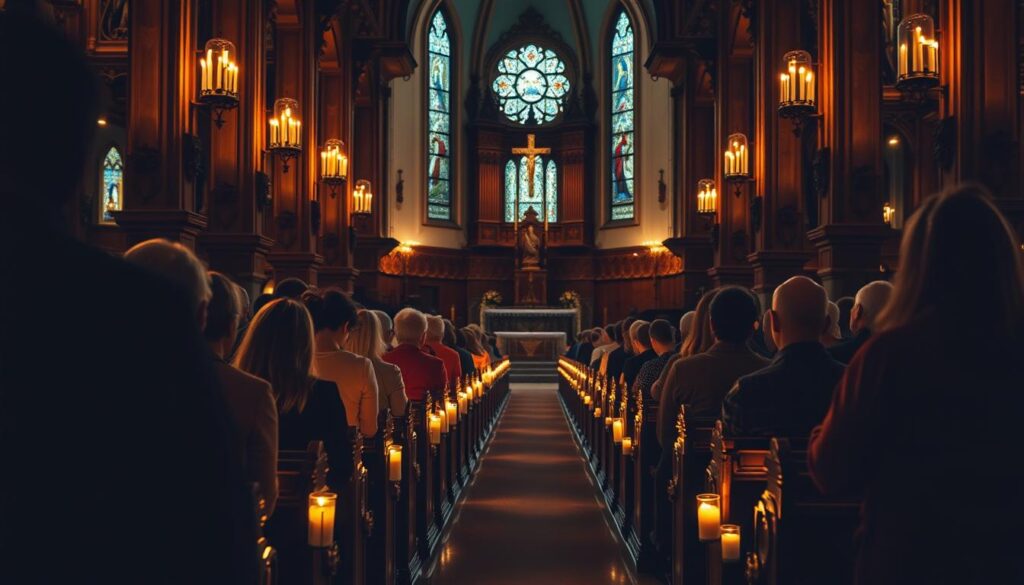
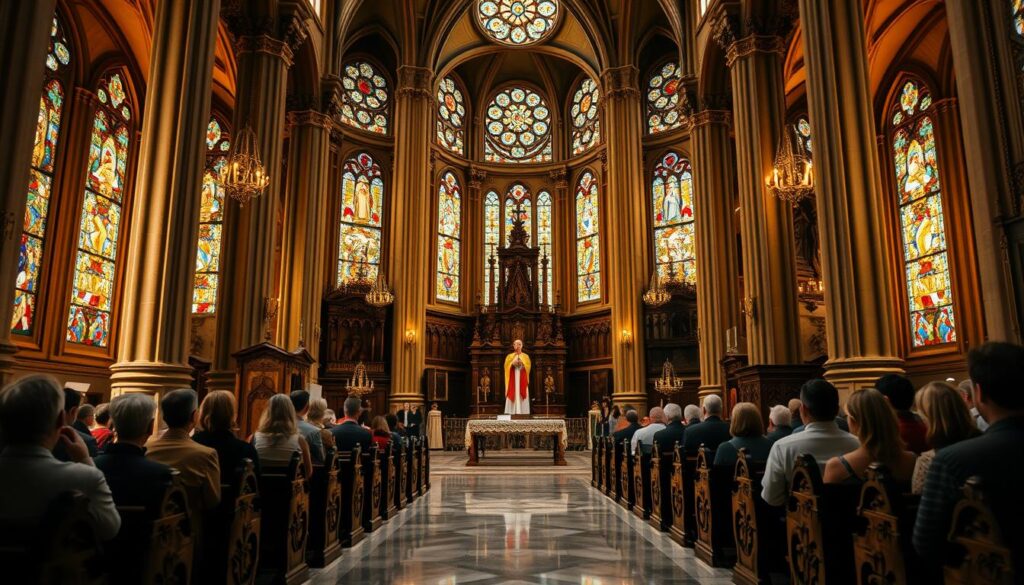
A serene Catholic church interior, warm candlelight flickering over intricate wood carvings and stained glass windows. Kneeling parishioners lost in contemplative prayer, their faces illuminated by the glow of votive candles. Ornate pews and marble floors stretch towards the towering altar, draped in rich fabrics. Soft ambient lighting casts gentle shadows, creating an atmosphere of profound reverence and spiritual tranquility. A reverent visual representation of the daily prayer traditions deeply rooted in Catholic faith and practice.

Consider the Liturgy of the Hours, which sanctifies ordinary days through scripture and psalms recited at specific times. This ancient pattern adapts beautifully to busy schedules – office workers might pause for midday verses, while parents whisper evening gratitude as children sleep.

Foundational declarations like the Apostles Creed anchor personal faith within collective belief. Its opening words –

“I believe in God, the Father Almighty”

– echo through centuries, uniting today’s worshippers with ancestors who first professed these truths.

What makes these traditions endure? They address life’s full spectrum – from joyful weddings to hospital vigils. Seasonal liturgies mark Advent anticipation or Lenten reflection, while spontaneous petitions meet unexpected challenges. This dual approach creates stability without rigidity.

The catholic church encourages believers to weave these threads into unique patterns. A nurse might pair rosary beads with night shift prayers, while students find focus through morning creed recitations. Each personalized practice strengthens both individual faith and communal bonds across the global faith family.

Exploring Key Prayers and Devotions

Certain spiritual expressions have shaped faith journeys for centuries, acting like compasses for believers. These timeless words provide structure while leaving room for personal reflection, creating bridges between individual hearts and shared beliefs.

Foundational Prayers: Structure and Meaning

The Our Father, taught by the Lord Jesus Christ, remains Christianity’s cornerstone prayer. Its seven petitions move from worship to practical needs, modeling how to balance reverence with vulnerability. As one ancient theologian noted:

“No human could compose a prayer so perfect in its priorities”

Mary’s role shines in the Hail Mary, which begins with the angel’s greeting: “Full of grace, the Lord is with thee”. This prayer celebrates divine partnership – honoring her “yes” to God while seeking her guidance today.

Short yet powerful, the Glory Be directs attention to the Trinity’s eternal nature. Its rhythmic cadence makes complex theology accessible, reminding worshippers of God’s unchanging presence across ages.

Creeds: Anchors of Shared Belief

The Apostles and Nicene Creeds serve as faith roadmaps. By declaring belief in one God and Christ’s role as judge of living and dead, they unite personal conviction with global holy catholic tradition. These statements transform abstract ideas into communal affirmations.

Prayer/Creed Focus Key Elements
Our Father Divine relationship Provision, forgiveness, protection
Hail Mary Maternal intercession Grace, blessedness, partnership
Nicene Creed Theological unity Trinity, resurrection, eternal judgment

Whether whispered alone or recited in community, these prayers and creeds offer both stability and flexibility. They become personal while remaining universal – a rare combination that keeps faith vibrant across generations.

The Role of the Holy Spirit and Divine Mercy

Guidance and compassion form twin pillars supporting spiritual journeys. Through ancient practices, believers find strength to navigate modern challenges while embracing sacred truths.

A stunning depiction of the divine essence, showcasing the ethereal presence of the Holy Spirit and the radiant Divine Mercy. In the foreground, a halo of golden light emanates from a serene, angelic figure, their features softly illuminated. The middle ground reveals swirling clouds of celestial energy, infused with shimmering rays of heavenly light. In the background, a vast expanse of azure-hued skies, punctuated by shimmering stars, creates a sense of boundless, sacred wonder. The lighting is warm and reverential, with a soft, diffused glow that imbues the scene with a tranquil, contemplative atmosphere. Captured through a wide-angle lens, the composition invites the viewer to experience the profound spiritual significance of the Holy Spirit and Divine Mercy.

Invitation to Divine Wisdom

The Holy Spirit acts as both teacher and compass. A traditional invocation begins:

“We stand before You, Holy Spirit, as we gather in Your name… Teach us the way we must go”

This prayer highlights human reliance on divine direction. By welcoming spiritual guidance, individuals gain clarity during complex decisions while remaining rooted in timeless values.

Embracing Compassionate Healing

Central to the divine mercy tradition is this powerful appeal:

“Eternal Father, I offer You the Body and Blood of Your Beloved Son… have mercy on us”

These words shift focus from personal perfection to trusting God’s endless compassion. The chaplet’s repeated petitions create rhythmic reminders of grace available to all.

This devotion transforms how we view shortcomings – both ours and others’. It nurtures humility through phrases like “For the sake of His sorrowful Passion”, linking human struggles to sacred redemption. Regular practice builds confidence in spiritual healing while inspiring merciful attitudes toward those around us.

Understanding Creeds and Traditional Liturgies

Ancient statements of faith continue to shape modern spiritual identities. Creeds like the Apostles’ and Nicene declarations serve as shared compass points, uniting believers across eras. Their concise phrases distill complex truths into accessible anchors for reflection.
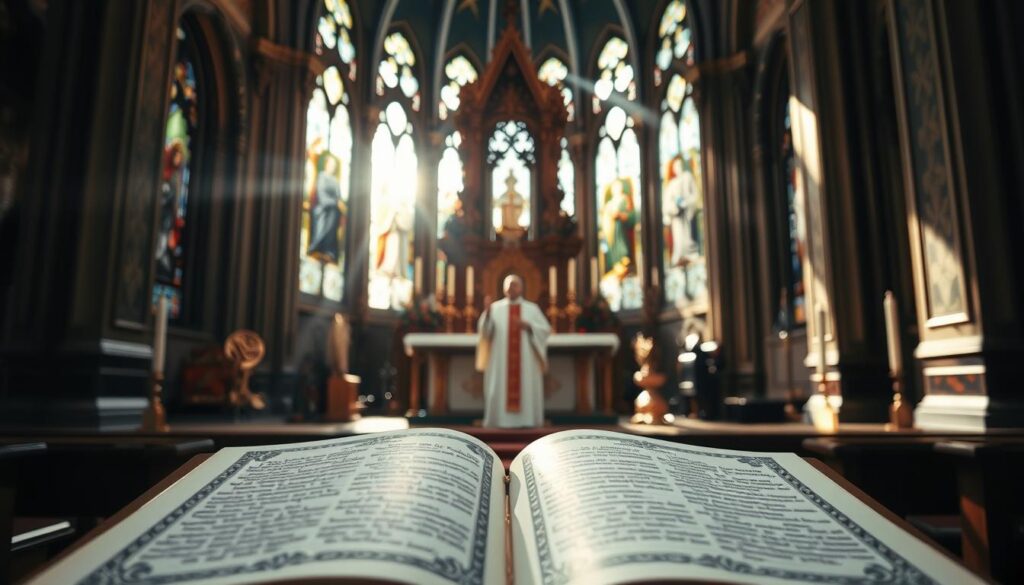
A solemn cathedral interior, sunlight streaming through stained glass windows, illuminating an ornate altar adorned with religious symbols and artifacts. In the foreground, an open book, its pages revealing the intricate calligraphy and illumination of a sacred liturgy. In the middle ground, a priest stands before the altar, his robes flowing as he guides the congregation through the reverent ceremony. The atmosphere is one of reverence and spiritual contemplation, inviting the viewer to immerse themselves in the timeless traditions of the faith.

The Apostles’ Creed boldly affirms belief in “the resurrection of the body and life everlasting”, tying earthly journeys to eternal hope. Similarly, the Nicene Creed’s words –

“I look forward to the resurrection of the dead and the life of the world to come”

– connect personal faith with universal promises. Both center onJesus Christas the bridge between humanity and divine grace.

Liturgical rhythms transform abstract beliefs into lived experiences. The Church’s calendar cycles through:

  • Advent’s hopeful anticipation
  • Lent’s reflective preparation
  • Easter’s joyous celebration

Each season uses specific readings, colors, and rituals to make theology tangible. This pattern helps worshippers see their daily choices as part of a grander story spanning centuries.

Even ordinary days gain depth through brief creed recitations or seasonal observances. These practices remind us that faith isn’t solitary – it’s a chorus of voices across time, declaring shared truths that outlast passing trends.

Integrating Daily Prayer into Your Routine

Finding moments for sacred dialogue can transform ordinary routines into meaningful exchanges. Morning habits often set the tone, like this heartfelt offering:

“Heavenly Father, guide my thoughts and actions this day. May Your wisdom direct my choices.”
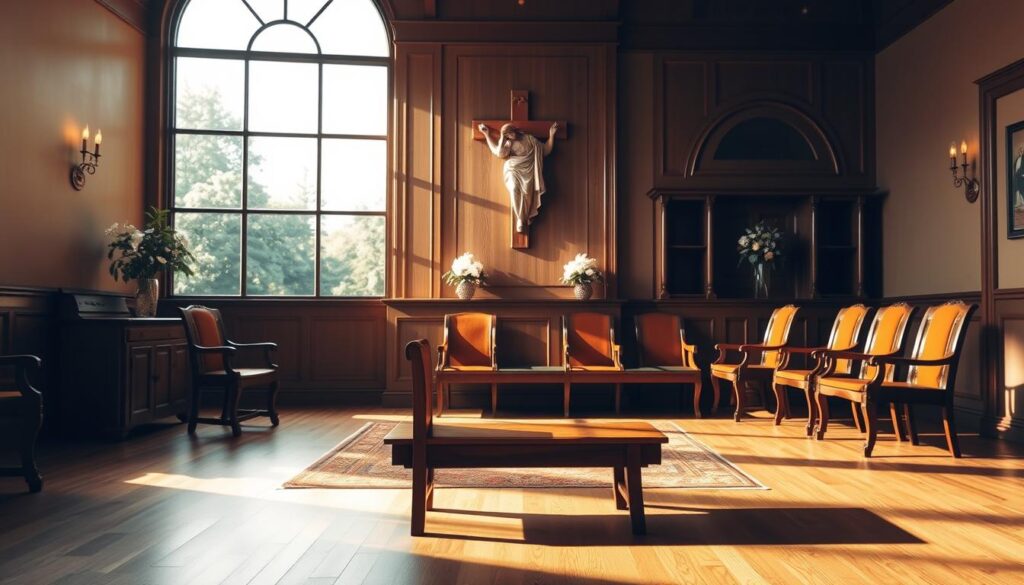
a serene Catholic prayer room with warm natural lighting, classic wood furniture, and a kneeling prayer bench in the foreground. The middle ground features a large religious icon or crucifix on the wall, casting a soft glow. In the background, a large window overlooks a peaceful outdoor garden scene. The room exudes a sense of contemplation and spiritual focus, inviting the viewer to engage in daily prayer and reflection.

Early moments of gratitude create space for divine partnership. Many start by dedicating their work and relationships to the Lord Jesus, aligning their efforts with higher purposes. This practice turns coffee sips and commute time into spiritual touchpoints.

The holy spirit inspires creative adaptations of traditional patterns. A parent might whisper brief invocations during school drop-offs, while a student uses study breaks for silent reflection. These micro-moments build continuity without demanding rigid schedules.

Evening reflections offer closure through simple questions: Where did I sense guidance today? What needs healing? This honest review fosters growth while celebrating small victories. Digital tools like app reminders can support consistency while preserving the personal nature of these exchanges.

Flexibility remains key. Some seasons call for structured routines, while others thrive on spontaneous whispers between tasks. Trusting the holy spirit’s timing helps maintain connection through life’s unpredictable flow.

Scriptural Inspiration and the Beauty of the Rosary

Timeless words from scripture continue to shape spiritual journeys through their enduring beauty. The Rosary’s meditative rhythm invites believers to explore sacred stories while finding personal resonance in ancient truths.

Meditative Mysteries and the Magnificat

Mary’s song of praise, the Magnificat, captures humble devotion:

“My soul proclaims the greatness of the Lord

. These words reveal how ordinary moments become sacred when viewed through faith. The mysteries woven into Rosary beads guide reflection on key events in theLord Jesus Christ’slife, creating pathways for deeper understanding.

The Angelus and Salve Regina Reflections

Morning, noon, and evening moments gain meaning through the Angelus, recalling Mary’s faithful response:

“Behold the handmaid of the Lord”

. TheSalve Reginahymn honors theVirgin Maryas a compassionate guide, addressing her as“our life, our sweetness, and our hope”. These practices transform routinedays into opportunities for connection.

Through scriptural echoes and rhythmic repetition, these traditions nurture hearts while bridging past and present. They remind us that sacred words remain alive when carried into modern life’s ordinary yet extraordinary moments.

FAQ

How does traditional prayer strengthen spiritual growth?

Ancient practices like the Our Father or Hail Mary create a rhythm of reflection, grounding believers in shared faith. They foster humility, gratitude, and connection to divine truths passed through generations.

Why are creeds like the Apostles’ Creed essential?

Creeds summarize core beliefs, uniting believers across time. Reciting them reaffirms trust in teachings about the Trinity, Christ’s resurrection, and the holy catholic church, anchoring faith during challenges.

What role does the Holy Spirit play in daily devotion?

The Spirit guides hearts toward wisdom and peace. Invoking His presence through prayer invites clarity, courage, and grace to live virtuously, aligning actions with God’s will.

How can I incorporate the Rosary into a busy routine?

Start with one mystery daily, reflecting on its lessons during quiet moments. Even brief meditations on Christ’s life or the Magnificat can renew focus on spiritual priorities amid chaos.

What is the purpose of the Chaplet of Divine Mercy?

This devotion emphasizes trust in Christ’s boundless compassion. By praying for mercy and forgiveness, believers acknowledge human frailty while celebrating redemption through His sacrifice.

How do liturgies like the Angelus enrich daily life?

Pausing at dawn, noon, and dusk to honor Mary’s “yes” to God cultivates mindfulness. These moments of praise refocus the soul on eternal truths, weaving faith into ordinary rhythms.
Catholicism and Circumcision: Understanding the Link


Few topics blend ancient traditions with modern faith as uniquely as the relationship between religious practice and physical ritual. Across civilizations, symbols of covenant have shaped spiritual identities. Historical records show this practice dates back millennia—Herodotus noted its use among Egyptians, Ethiopians, and others long before Abrahamic faiths emerged.

The Hebrew term TVLH, like the Greek peritome and Latin circumcisio, refers to removing the foreskin. While often linked to Judaism, its roots stretch further. Today, over 200 million people worldwide follow this custom. But how does it intersect with Catholic teachings?

Early Christian leaders grappled with its role after Christ. The Catholic Church eventually viewed it as a symbolic precursor to baptism—a sign of spiritual commitment rather than physical obligation. This shift reshaped how believers understood covenants, grace, and sacraments.

Modern discussions balance tradition with ethics. In the U.S., where male circumcision remains common, families weigh medical, cultural, and theological factors. Understanding this history helps clarify why such practices endure—and what they mean for faith today.

Key Takeaways

  • Circumcision predates Abrahamic faiths, with ancient roots in Egyptian and African cultures
  • The Catholic Church reinterpreted it as symbolic, linking it to baptism and spiritual covenants
  • Modern debates include medical ethics, cultural norms, and religious identity
  • U.S. Catholics navigate this practice amid high national circumcision rates
  • Historical context reveals why rituals evolve within religious traditions

Introduction: Setting the Stage for the Ultimate Guide

Modern believers often grapple with balancing age-old customs with current medical standards. This guide explores how historical tradition meets modern parental choices, particularly regarding infant male circumcision in the United States.

What You’ll Discover Here

We examine why this topic sparks heated discussions among faith communities. Recent debates question whether routine procedures align with moral teachings. Some view it as unnecessary surgery, while others defend it as cultural practice.

Your Roadmap to Clarity

Through Church documents and medical research, we’ll answer:

  • How theological teachings evolved over centuries
  • Why parental decisions involve both faith and science
  • What current health guidelines suggest

You’ll gain tools to navigate this complex issue thoughtfully. Our approach respects both spiritual heritage and modern realities facing people of faith today.

Historical Perspectives on Circumcision

Long before sacred texts formalized rituals, communities worldwide practiced foreskin removal for reasons ranging from social status to spiritual cleansing. This custom’s global footprint reveals more about human culture than any single origin story.

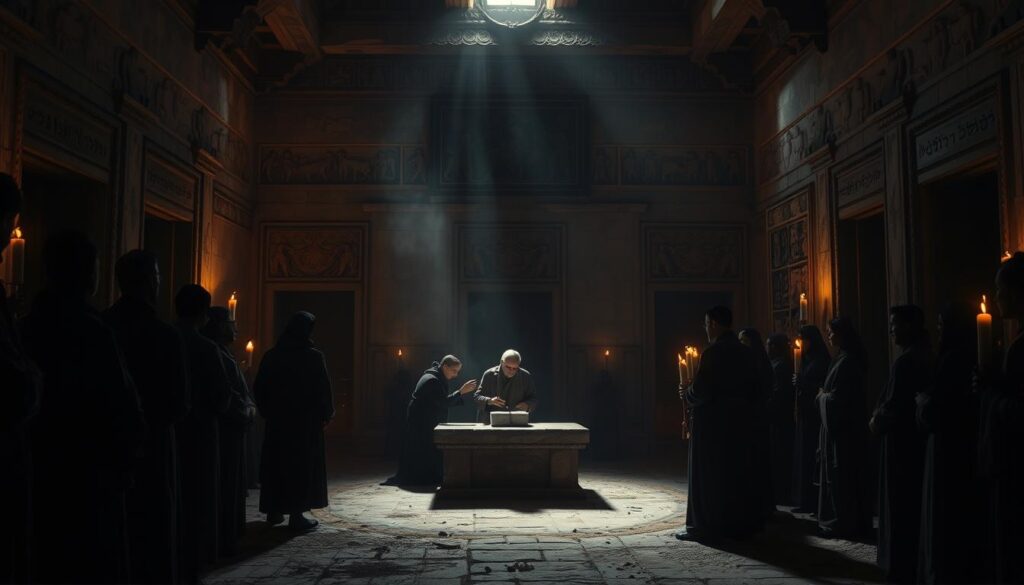
A ceremonial scene of ancient circumcision practices set in a dimly lit, dusty temple interior. In the foreground, a solemn ritual is underway, with a stone altar and a robed figure performing the procedure. Shadowy figures of onlookers line the walls, creating an air of reverence and solemnity. The middle ground is illuminated by flickering torchlight, casting dramatic shadows and highlighting the intricate architectural details of the space. In the background, ornate bas-relief carvings and tapestries adorn the temple walls, suggesting the historical significance and cultural traditions surrounding this ancient rite.

Ancient Civilizations and Early Practices

Herodotus described Egyptian priests performing the ritual as early as 440 BCE. Yet Maya carvings and Aztec codices show similar traditions in the Americas—regions Herodotus never knew. These findings suggest multiple cultural origins rather than a single source.

In Australia and Oceania, initiation rites included removal ceremonies unrelated to religion. Filipino Tagalog communities later adopted it as a cultural coming-of-age practice, blending local customs with imported beliefs.

From Herodotus to Early Jewish Traditions

Ancient texts reveal diverse meanings:

  • Ethiopians linked it to cleanliness
  • Colchians saw it as nobility’s mark
  • Aboriginal Australians tied it to ancestral rites

This mosaic of purposes challenges simplistic narratives. When Jewish leaders later framed it as divine covenant, they built upon a practice already steeped in human history—a testament to ritual’s power to shape identity across millennia.

Biblical Foundations and the Covenant

Ancient texts hold surprising keys to understanding modern faith practices. Genesis 17 marks a pivotal moment where physical ritual became divine promise. Here, God commanded Abraham: “Every male among you shall be circumcised” as an everlasting covenant (Genesis 17:10-11).

Circumcision as a Sign of the Covenant in Genesis

This act transformed a common cultural practice into sacred symbolism. The eighth-day rule created urgency—newborns underwent the procedure before mothers healed fully. This timing emphasized trust in divine protection over human logic.

Aspect Genesis Covenant Mosaic Law
Origin Divine promise to Abraham Codified regulations
Requirement Male infants on 8th day Entire community
Purpose Everlasting covenant Identity marker
Consequence Spiritual bond Exclusion penalty

The Role of the Law in Shaping Rituals

Later scriptures reinforced this practice’s importance. Leviticus 12:3 mandated the eighth-day rule, while Exodus 4:24-26 shows its non-negotiable status. Refusal meant being “cut off”—a severe separation from communal life and worship.

These requirements became central to Jewish identity. The physical mark served as daily reminder of belonging. This framework later influenced how early Christians understood spiritual commitments through baptism rather than bodily signs.

Theological Significance in Catholic Tradition

Early Christian thinkers reshaped ancient practices through spiritual lenses. Their writings reveal how physical rituals gained deeper meaning in light of Christ’s teachings. This evolution transformed cultural customs into theological cornerstones.

Patristic Insights on Sacred Rites

Church fathers like Augustine saw circumcision as more than symbolic. They taught it carried sacramental power under older covenants. “It was a seal of righteousness,” Augustine wrote, linking physical marks to divine promises.

Theologian View Spiritual Impact
St. Augustine Sacramental grace carrier Prefigured baptism
Origen Moral purification sign United body/soul
Justin Martyr Prophetic shadow Announced Christ

These thinkers balanced respect for Jewish tradition with new understandings. They argued God used flesh-based rituals to prepare humanity for spiritual rebirth. Physical alterations became metaphors for inner transformation.

Medieval scholars built on these ideas. Thomas Aquinas later described circumcision as “justice’s instrument” before Christian sacraments. This framework still informs how believers connect physical acts to sacred mysteries today.

Role of St. Paul in Shaping Beliefs

How did a first-century missionary redefine sacred practices for a growing faith community? St. Paul faced a critical challenge—honoring Jewish roots while welcoming Gentile believers. His letters reveal a pastoral strategy that balanced cultural wisdom with theological clarity.

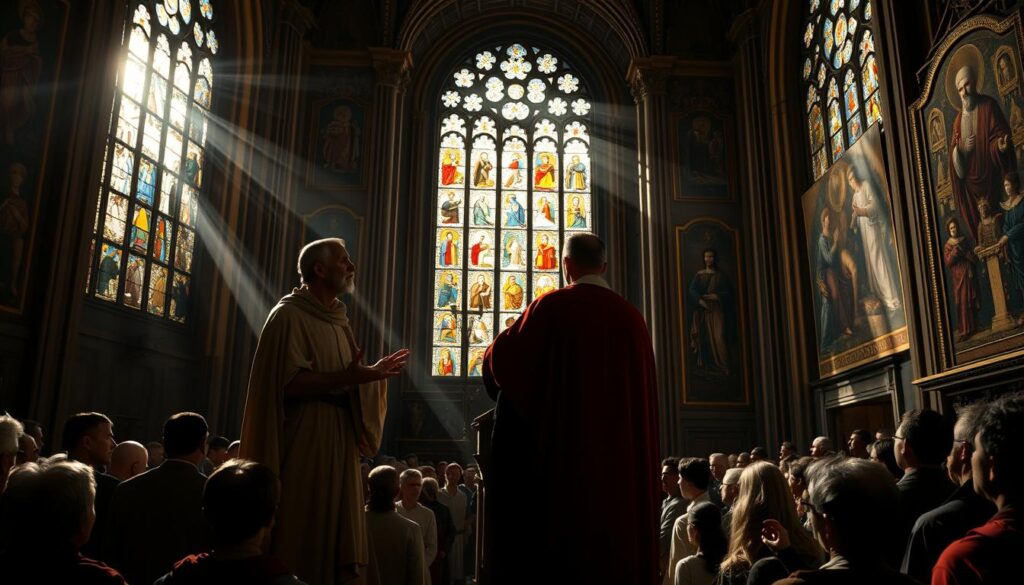
A grand cathedral interior, sunlight streaming through stained glass windows. In the foreground, St. Paul stands at a podium, gesturing emphatically as he addresses a gathered congregation. Intricate religious iconography adorns the walls, casting a somber, reverent atmosphere. The audience, rapt and attentive, leans in to hear Paul's teachings on the rite of circumcision and its role in the new Christian faith. Dramatic chiaroscuro lighting highlights the solemn intensity of the scene, inviting the viewer to ponder the historical significance of this pivotal moment in the shaping of Catholic doctrine.

Paul’s Teachings on Covenant and Community

The apostle made two surprising decisions. He refused to circumcise Titus, a Greek convert, yet arranged the procedure for Timothy, whose mother was Jewish. This wasn’t inconsistency—it was contextual sensitivity. For mixed-heritage families, respecting tradition built bridges. For purely Gentile communities, freedom from the rite prevented division.

Paul’s famous declaration reshaped early Christian identity: “In Christ Jesus neither circumcision nor uncircumcision has any value. The only thing that counts is faith expressing itself through love” (Galatians 5:6). This teaching shifted focus from physical marks to spiritual transformation.

Three key principles emerge from his approach:

  • Sacred rituals find fulfillment in baptism and loving action
  • Cultural traditions deserve respect without becoming requirements
  • Unity in diversity strengthens faith communities

These ideas laid groundwork for the Council of Jerusalem’s decision (Acts 15) and continue guiding interfaith dialogue. By distinguishing covenant symbols from salvation requirements, Paul created space for both Jewish and Gentile believers—a legacy still shaping religious conversations today.

Infant Male Circumcision in Contemporary Practice

Why does America lead developed nations in infant male circumcision rates? The answer lies in a mix of medical history, cultural norms, and parental choice. Over half of newborn boys in the United States undergo the procedure—a rate three times higher than in Australia and ten times greater than in Germany.

A dimly lit hospital room, the soft glow of medical equipment casting a serene atmosphere. In the foreground, a newborn infant boy rests peacefully on a pristine white blanket, his tiny form delicate and vulnerable. A skilled physician, clad in sterile surgical attire, leans in closely, performing the delicate procedure with utmost care and precision. The background is hazy, the focus drawn to the central act, capturing the essence of contemporary infant male circumcision in the United States. The image conveys a sense of both medical necessity and the profound human experience underlying this cultural practice.

The Prevalence and Cultural Context in the United States

Post-World War II medical advice shaped today’s landscape. Doctors once promoted the practice for hygiene and disease prevention. Though recent studies question these benefits, the custom persists through habit rather than mandate.

Three key factors drive U.S. trends:

  • Insurance coverage in 48 states makes it accessible
  • Cultural views linking it to “normal” appearance
  • Hospital routines offering it as standard care

This contrasts sharply with Europe, where only 10% of boys receive the procedure. Legal challenges now question its necessity. A 2021 California bill sought to ban it for minors—sparking debates about parental rights versus bodily autonomy.

For faith communities, the cultural norm creates unique dilemmas. Many families choose the procedure without considering theological implications. As one parent noted: “We did it because everyone does—not due to our beliefs.”

Medical groups walk a fine line. The American Academy of Pediatrics acknowledges potential benefits but stops short of universal recommendations. This ambiguity leaves parents navigating conflicting messages about health, tradition, and ethics.

Medical and Ethical Considerations

Medical professionals navigate a complex landscape when evaluating infant procedures. Balancing clinical evidence with ethical responsibilities requires careful analysis of both risks and potential advantages.

Health Benefits and Risks Explored

Current research highlights several health benefits. Studies show reduced urinary tract infection rates in infants and lower STD risks later in life. The American Academy of Pediatrics notes these advantages must outweigh surgical risks like bleeding or infection.

Potential Benefits Risks Therapeutic Uses
60% lower HIV risk 0.4% complication rate Phimosis treatment
Reduced HPV spread Pain management needs Balanitis prevention
Easier hygiene Rare surgical errors Recurrent infections

Perspectives from the American Academy of Pediatrics

The American Academy states: “Newborn male circumcision has favorable risk-benefit profiles when performed by trained professionals.” Their 2012 policy update acknowledges net health benefits but stops short of universal recommendation.

Ethical debates focus on consent and necessity. Some experts argue preventive measures shouldn’t override bodily autonomy. Others emphasize cultural preferences and long-term protection against specific conditions.

Healthcare providers often distinguish between therapeutic procedures (like treating phimosis) and elective ones. This distinction helps families weigh medical needs against personal values while respecting individual rights.

Catholic Church Teachings and Council Declarations

Religious traditions often spark debates where history and doctrine intersect. The Catholic Church maintains a nuanced position, having never condemned circumcision as harmful ritual. Modern guidance traces back to pivotal moments in ecclesiastical history.

Insights from the Second Vatican Council

The Second Vatican Council reshaped interfaith understanding through its 1965 statement on Judaism. It affirmed God’s covenant with Jewish people remains “irrevocable,” recognizing infant rituals as part of this enduring bond. This theological shift acknowledged shared spiritual roots without requiring adoption of practices.

The Cantate Domino Bull and Historical Edicts

Medieval councils like Florence (1442) addressed ritual through Cantate Domino. This bull warned Christians against Judaizing practices but never condemned circumcision within Jewish communities. Historical records show popes consistently permitted the custom for infants in faithful households.

These declarations reveal a pattern: while clarifying boundaries for believers, the Church respected others’ sacred traditions. This balanced approach continues to guide interreligious dialogue today.

FAQ

What does the Bible say about circumcision as a covenant?

In Genesis 17, God establishes circumcision as a sign of His covenant with Abraham and his descendants. This ritual symbolized devotion and identity for the Jewish people long before its role shifted in early Christian teachings.

How did St. Paul influence Christian views on circumcision?

St. Paul emphasized that faith, not physical rituals like circumcision, defines one’s relationship with God. His letters, such as Galatians 5:6, argue that “neither circumcision nor uncircumcision counts” compared to faith working through love.

Does the Catholic Church support infant male circumcision today?

The Church does not require it as a religious practice. Decisions often depend on cultural, medical, or parental preferences. The Catechism stresses respect for bodily integrity, urging careful consideration of health benefits and ethical concerns.

What medical stance does the American Academy of Pediatrics take?

The AAP acknowledges potential health benefits, like reduced UTI risks, but states these are not significant enough to universally recommend routine infant circumcision. They advise parents to weigh evidence and cultural values.

How did the Second Vatican Council address traditional rituals?

While not specifically mentioning circumcision, Vatican II emphasized grace over legalistic practices. Documents like Lumen Gentium highlight that salvation comes through Christ, not adherence to ancient laws or customs.

Why is circumcision still practiced in some Christian communities?

In places like the U.S., cultural norms often drive the practice more than theology. Families might choose it for perceived hygiene benefits, social conformity, or family tradition rather than religious obligation.

Are there ethical concerns with infant circumcision?

Debates focus on bodily autonomy versus parental rights. Critics argue it’s a non-consensual alteration, while supporters cite cultural or health reasons. The Church encourages discernment aligned with human dignity and medical evidence.

Catholicism and Divorce: What You Need to Know


Navigating marital challenges while staying true to your faith can feel overwhelming. Many wonder how their spiritual community views divorce and what options exist for those facing irreparable relationships. Let’s clarify what’s often misunderstood.

The Catholic Church teaches that marriage is a lifelong covenant. However, it also recognizes that human relationships face real struggles. While civil divorce legally ends a partnership, the Church distinguishes this from sacramental bonds. You’re not excluded from parish life if your marriage ends—compassion remains central to Catholic teachings.

For those considering remarriage, there’s a path forward. The annulment process (called a declaration of nullity) examines whether a sacramental union truly existed. This isn’t about blame—it’s about understanding God’s plan for marriage while addressing modern family realities.

Today’s families face unique pressures, from financial stress to shifting social norms. Church leaders increasingly emphasize pastoral care over judgment, offering resources like counseling and support groups. Whether you’re seeking clarity or healing, your faith community remains a place of belonging.

Key Takeaways

  • The Church distinguishes between legal divorce and sacramental marriage bonds
  • Divorced individuals can fully participate in parish activities
  • Remarriage requires an annulment review by Church authorities
  • Modern pastoral approaches focus on support over condemnation
  • Separation doesn’t equal excommunication in Catholic practice
  • Resources exist for spiritual and emotional healing post-divorce

Introduction to Catholicism and Divorce

Modern relationships test ancient doctrines, creating crossroads between tradition and compassion. While the Church upholds marriage as sacred, nearly 1 in 3 U.S. believers face marital dissolution. Recent data reveals surprising patterns:

Group Divorce Rate Comparison
All U.S. Catholics 34% Lower than national average
Weekly Mass Attendees 28% Below other Christian groups
Interfaith Marriages 41% Higher dissolution likelihood

These numbers show how people navigate faith commitments amid life’s complexities. Civil divorce addresses legal separation but doesn’t erase spiritual bonds in Catholic faith teachings. Many find comfort knowing their parish welcomes them despite marital status changes.

Church leaders emphasize two truths simultaneously. First, the ideal of lifelong union remains unchanged. Second, practical support helps struggling couples through counseling and prayer groups. This dual approach maintains doctrinal integrity while addressing real human needs.

Understanding this balance helps explain why believers can pursue legal separations without abandoning spiritual practices. The distinction between earthly contracts and sacramental vows becomes crucial for those seeking both closure and continued community connection.

Historical Perspectives on Marriage and Divorce within the Church

Christian teachings about lifelong unions trace their foundation to Scripture. Jesus’ words in Mark’s Gospel set the tone:

“Whoever divorces his wife and marries another commits adultery against her”

. Early leaders like Hermas and Justin Martyr echoed this view, urging believers to honor sacred vows even in difficulttimes.

A grand cathedral interior, its ornate architecture bathed in warm, reverent lighting. Stained glass windows cast kaleidoscopic patterns across the polished marble floors. In the foreground, a priest in ceremonial robes stands at an ornate, gilded altar, delivering a sermon on the sanctity of marriage. Carved wooden pews flank the central aisle, occupied by worshippers listening intently, their faces reflecting the solemnity of the occasion. The background depicts towering, vaulted ceilings supported by towering columns, creating an atmosphere of timeless tradition and spiritual grandeur.

Evolution of Church Teachings

By 300 AD, the Synod of Elvira clarified consequences for remarriage. Those who left spouses couldn’t receive communion unless their partner died. This showed the Church’s commitment to preserving marriage bonds while offering a path for spiritual renewal.

Key Historical Milestones

Medieval thinkers formalized marriage as one of seven sacraments. They created processes to review questionable unions—similar to today’s annulment system. Councils later reinforced that valid marriages couldn’t be dissolved, only examined for authenticity.

Through centuries, teachings emphasized both ideals and compassion. While doctrine stayed firm, pastoral methods adapted to help people navigate complex relationships. This balance remains central to the Church’s approach in modern times.

Understanding catholicism and divorce in Today’s Context

Balancing age-old beliefs with modern realities tests many believers’ resolve. While Church teachings uphold marriage as a sacred, unbreakable bond, real-life struggles often lead to difficult choices like divorce. Recent studies show separation rates among practicing members nearly match broader societal trends.

Parishes now face unique pastoral situations. Many people in pews have experienced marital breakdown, yet still value marriage’s role in their faith. Leaders emphasize marriage‘s sanctity while addressing modern family realities through prayer groups and counseling.

Contemporary issues like addiction or abuse challenge marriage stability, requiring wise responses from the community. This balance maintains marriage as the ideal while providing practical care. Safety concerns sometimes necessitate separation—a reality the Church acknowledges with compassion.

Cultural shifts have reshaped perceptions of divorce over time, testing traditional marriage ideals. Over time, parishes have adapted by creating support networks. Through small groups and mentorship programs, the community helps individuals heal without compromising core teachings.

Catholic Church Doctrines on Marriage and Divorce

Understanding sacred unions requires exploring both ancient texts and modern guidance. The Catholic Church maintains that valid marriages form unbreakable spiritual bonds, rooted in divine design rather than human agreements. This principle shapes its approach to marital challenges while addressing real-world crises.

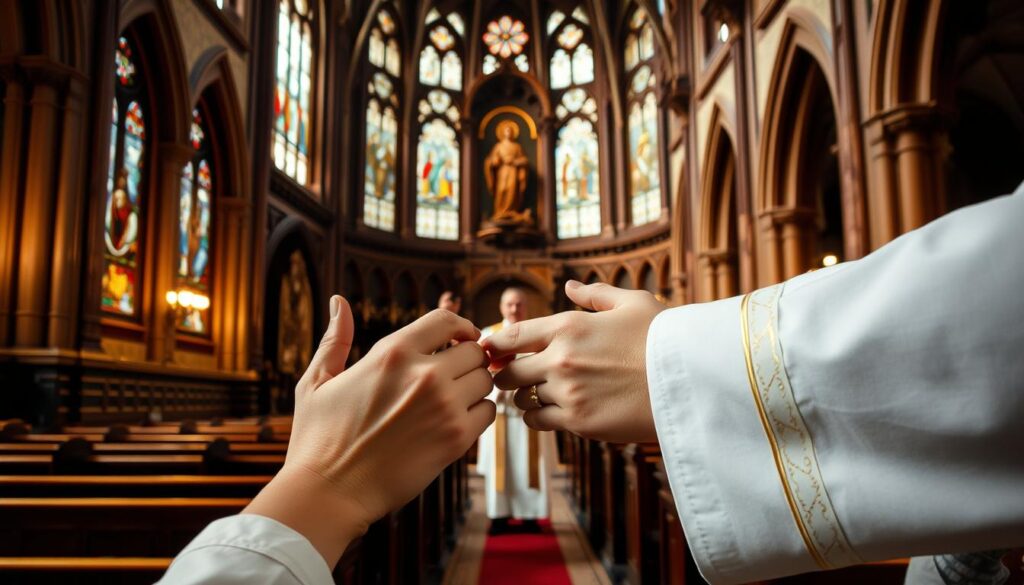
A grand cathedral interior, stained glass windows casting warm light upon ornate wooden pews. In the foreground, a pair of hands clasped in prayer, adorned with a golden wedding band. In the middle ground, a priest stands solemnly, holding a ceremonial tome, speaking the sacred vows of holy matrimony. The background depicts intricate religious iconography, tapestries, and archways, conveying the timeless traditions and doctrines of the Catholic Church. The scene exudes a reverent, contemplative atmosphere, capturing the solemn significance of the sacrament of marriage within the Catholic faith.

Biblical Foundations

Jesus’ words in Matthew 19:6 set the cornerstone:

“What God has joined together, let no one separate.”

This reaffirms creation’s original blueprint—lifelong partnership as a reflection of divine love. Scripture positionsmarriagenot as temporary arrangement but sacred covenant.

New Testament teachings clarify exceptions like adultery but uphold the ideal of permanence. Early Christians faced cultural pressures to abandon spouses, making these teachings radical yet foundational. Today, they remain central to the Church’s stance on marital bonds.

Catechism Insights

The Catechism (1649) acknowledges situations where spouses must live separately for safety or sanity. Abuse, addiction, or neglect may require physical division without dissolving spiritual ties. This distinction preserves doctrinal integrity while protecting vulnerable individuals.

Key principles emerge:

  • Sacramental unions mirror Christ’s relationship with believers
  • Separation addresses immediate dangers, not theological status
  • Annulment processes examine whether valid sacramental bonds existed initially

Through these frameworks, the Church upholds marriage ideals while offering practical support. Resources like counseling help couples navigate difficulties without compromising faith commitments.

Civil Annulment vs. Catholic Annulment

Legal processes and spiritual discernment often intersect when relationships reach breaking points. Understanding how civil and religious systems address marital status helps individuals make informed decisions aligned with their values.

Defining Civil Annulment

A civil annulment erases a marriage’s legal existence. Courts grant this based on technical grounds like fraud or underage unions. Unlike divorce, it treats the relationship as never valid under state law.

Exploring the Tribunal Process

The Church’s annulment process focuses on sacramental validity. Tribunals investigate whether essential elements—like free consent or understanding of marriage vows—were present initially. This isn’t about fault but spiritual truth.

Key differences emerge:

  • Civil rulings affect legal status, not spiritual bonds
  • Church reviews require witness testimony and documentation
  • A declaration of nullity preserves children’s legitimacy

This careful process respects both doctrine and personal circumstances. Many find clarity through the tribunal’s structured yet compassionate approach to complex marriage histories.

The Tribunal Process for Annulments

Seeking clarity about past relationships through faith-based review offers both structure and compassion. This careful examination respects sacred commitments while addressing personal struggles. Let’s explore how the Church evaluates unions through its unique judicial framework.

A formal courtroom interior, dimly lit with warm, soft lighting. In the foreground, a raised platform with a large wooden desk, symbolizing the tribunal's authority. Judges in traditional robes sit solemnly, listening intently to the proceedings. In the middle ground, a witness stand and counsel tables, creating a sense of structure and procedure. The background features ornate, carved wooden walls, conveying a sense of history and gravity. An air of quiet contemplation and reverence permeates the scene, reflecting the solemn nature of the tribunal process.

Steps in the Tribunal Process

The annulment journey begins with a written petition. Individuals outline reasons they believe their marriage lacked essential sacramental elements from the start. Witnesses who knew the couple during their early years often provide crucial insights.

Stage Key Action Participants
1. Submission Formal request with supporting evidence Petitioner, witnesses
2. Investigation Interviews and document review Tribunal members
3. Defense Phase Analysis of marriage validity Defender of the Bond
4. Decision Final ruling by Church authorities Bishop, canon lawyers

Role of the Defender of the Bond

This appointed official ensures the Church’s view of marriage permanence gets fair consideration. They challenge weak arguments and verify evidence quality. Their work guarantees both spouses’ perspectives receive equal weight.

By lawfully questioning claims and advocating for the union’s validity, the defender maintains doctrinal integrity. Their involvement transforms the process from mere paperwork into a spiritual discernment journey.

Remarriage and Sacramental Eligibility for Divorced Catholics

Rebuilding life after marital separation involves both spiritual and practical considerations. The Church provides clear pathways for those seeking new beginnings while honoring sacred commitments. Let’s explore how faith communities support individuals navigating these sensitive decisions.

Guidelines for Remarriage

A Church-recognized union requires reviewing previous relationships through the annulment process. This ensures any new marriage aligns with sacramental standards. Without a declaration of nullity, the Church views subsequent unions as invalid.

Those granted annulments can participate fully in marriage preparation programs. Many parish teams recommend additional counseling to address past challenges. This helps couples build stronger foundations for lifelong partnerships.

Holy Communion Considerations

Father Leo Walsh clarifies a common misunderstanding: “Divorced individuals who haven’t remarried can receive the Eucharist.” Restrictions apply only to those in unsanctioned unions. Your spiritual connection remains intact through prayer and participation.

Parish leaders play vital roles in educating communities about these nuances. Through workshops and one-on-one guidance, they help members distinguish between civil actions and sacramental bonds. This compassionate approach reinforces the Church’s commitment to healing.

Key points to remember:

  • Annulments focus on a union’s sacramental validity at its start
  • Civil ceremonies don’t affect eligibility for most sacraments
  • Ongoing faith practices strengthen personal spiritual journeys

Divorce: Emotional and Spiritual Implications

Walking through marriage dissolution often leaves deep emotional marks and spiritual questions. While grief is natural, faith traditions offer clear paths toward renewal. Communities provide support without judgment, recognizing each journey’s uniqueness.

Overcoming Guilt

Divorce-related guilt often stems from misunderstanding sacramental commitments. The Church teaches that valid unions require free consent and mutual respect—conditions absent in abusive or exploitative relationships. Spiritual advisors help distinguish personal responsibility from circumstances beyond control.

Healing and Forgiveness

Jesus’ call to forgive “seventy-seven times” includes self-compassion. Many find strength in reconciliation sacraments, releasing burdens through grace. Support networks—from prayer groups to therapists—guide individuals toward wholeness while honoring marriage’s sacred purpose.

Rebuilding after loss takes time. Yet countless believers rediscover hope by serving others, transforming pain into purpose. Your story isn’t over—faith communities stand ready to walk this path with you.

FAQ

Can a divorced Catholic remarry in the Church?

A divorced Catholic may remarry in the Church only after obtaining a Declaration of Nullity, which confirms the original union lacked elements required for a sacramental marriage. Without this, remarriage is not recognized under canon law.

How does a Catholic annulment differ from a civil divorce?

A civil divorce legally ends a marriage but doesn’t address its sacramental validity. A Catholic annulment, granted by a tribunal, examines whether the marriage bond was valid from the start based on Church teachings and natural law principles.

Are divorced individuals excluded from receiving Holy Communion?

Divorced Catholics who haven’t remarried or pursued a civil union contrary to Church teachings may receive Communion. Those in irregular situations are encouraged to seek guidance from their parish or diocese for spiritual clarity.

What role does the Defender of the Bond play in annulments?

The Defender of the Bond ensures the tribunal process upholds the Church’s teaching on marriage’s permanence. They challenge evidence that might weaken the case for nullity, ensuring fairness and integrity in the decision.

How long does the annulment process typically take?

The timeline varies by diocese, but most cases take 12–18 months. Complex situations or appeals may extend this. Parishes often provide resources to help applicants navigate delays and paperwork.

Can abuse or infidelity justify separation in Catholic teaching?

The Church permits separation for grave reasons like abuse to protect well-being. However, it emphasizes reconciliation efforts first and views divorce as a civil action, not dissolving the sacramental bond.

How can divorced Catholics find emotional healing?

Many dioceses offer ministries focused on healing, like Catholic Divorce Ministry groups. Spiritual direction, therapy, and sacraments like Reconciliation also support emotional and spiritual renewal.

Does the Church recognize civil annulments?

Civil annulments address legal aspects of a marriage’s validity but don’t impact its sacramental status. Only a Church tribunal can determine whether a marriage was sacramentally valid under canon law.

What if one spouse disagrees with seeking an annulment?

The tribunal process doesn’t require both spouses’ consent. However, the other party is notified and may participate. Their absence doesn’t halt the case, but transparency ensures fairness in the investigation.

Are children considered illegitimate after an annulment?

No. An annulment doesn’t affect the legitimacy of children, who are recognized as lawful under both Church and civil law. The focus is solely on the marriage’s sacramental validity, not its civil effects.

Exploring the Rich Traditions of Latin Catholicism


Welcome to a journey through one of the world’s most influential spiritual traditions. With over 1.3 billion followers, this faith community forms the largest branch of the Catholic Church. Its practices and rituals have shaped Western civilization for centuries, blending ancient customs with modern worship.

This tradition operates as an autonomous body within a global network of 24 churches united under papal leadership. While sharing core beliefs with other Catholic groups, it stands apart through its distinct liturgical heritage and organizational structure. Geographic influences and cultural evolution created unique expressions of faith across different regions.

The community’s historical roots trace back to early Christian practices in Rome. Today, it maintains strong connections to its origins while adapting to contemporary spiritual needs. Leadership comes directly from the Pope, who serves as both spiritual guide and administrative head.

Understanding this tradition helps explain many modern religious practices. From art and music to holidays and family customs, its impact reaches far beyond Sunday services. Let’s explore how centuries-old traditions continue to shape lives in our fast-paced world.

Key Takeaways

  • Represents the largest group within global Catholicism
  • Maintains distinct practices while sharing core beliefs with other Catholic churches
  • Operates under direct papal leadership and guidance
  • Blends historical traditions with modern spiritual needs
  • Influences art, culture, and societal values worldwide
  • Differs from Eastern Catholic churches in liturgical style

Introduction to the Rich Traditions of Latin Catholicism

Step into a living tradition that has shaped cultures for two thousand years. This spiritual community thrives under papal leadership while adapting to modern life. At its heart lies the Archbasilica of Saint John Lateran in Rome – the Pope’s official cathedral since the 4th century.

Known by several names, this branch of the catholic church reveals its multifaceted identity:

Name Significance Common Usage
Roman Church Emphasizes connection to Rome Historical documents
Western Church Highlights cultural influence Academic discussions
Latin Catholic Refers to liturgical language Everyday conversations

Three key elements unite followers worldwide. Shared rituals create familiarity across continents. Papal authority provides consistent guidance. Local customs add regional flavors to universal practices.

This tradition balances ancient roots with modern needs. Historical prayers meet contemporary social outreach. Centuries-old art inspires new generations. Through this blend, it maintains relevance in a changing world while preserving its core sense of sacred continuity.

Historical Foundations of Latin Catholicism

From the ashes of a divided empire rose a religious tradition that would span continents. The roots of Western Christianity intertwine with pivotal moments in ancient history, where political shifts shaped spiritual identity.

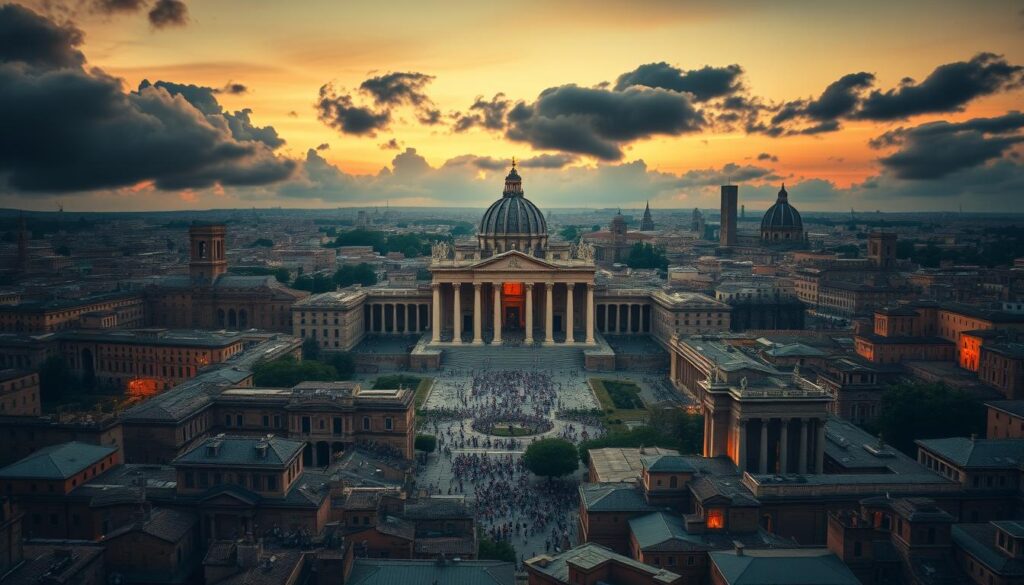
A vast Roman cityscape at dusk, the iconic architecture of the Eternal City cast in a somber, golden glow. In the center, a grand imperial palace crumbles, its majestic columns toppling as if shaken by the weight of a crumbling empire. Amidst the chaos, a swirling vortex of figures in ornate robes and armor, representing the schism that tore the Roman world asunder. Ominous clouds loom overhead, as if the very heavens weep for the fall of this once mighty civilization. A poignant and melancholic scene, capturing the historical foundations of Latin Catholicism in the wake of the Roman Empire's demise.

Early Christian Roots and the Roman Empire

When Emperor Theodosius split the Roman Empire in 395 AD, it sparked lasting changes. Greek initially dominated worship, reflecting the New Testament’s origins. As Latin spread through Western provinces, it became the voice of local believers.

Church leaders like Jerome made scripture accessible by translating texts into everyday Latin. His Vulgate Bible became standard for over a thousand years. This shift helped Western communities develop distinct practices from their Eastern counterparts.

Medieval Developments and Schism

The Great Schism of 1054 created two enduring branches of Christianity. Differences in leadership styles and theological debates finally severed ties between Rome and Constantinople. Western churches solidified their structure around papal authority.

Period Development Impact
4th-5th Century Latin replaces Greek in Western liturgy Created unified worship language
11th Century East-West Schism Separated administrative structures
12th-13th Century Rise of Scholasticism Strengthened theological education

Medieval thinkers like Thomas Aquinas blended faith with reason through Scholastic philosophy. Cathedral schools evolved into Europe’s first universities, preserving knowledge through turbulent times. These innovations helped Western Christianity thrive during the Middle Ages.

The Evolution of the Latin Church within the Catholic Church

A living tradition constantly reshapes itself while holding to ancient roots. The Latin Church demonstrates this balance through centuries of adaptation, maintaining its core identity as the largest branch of the Catholic Church.

From Ancient Rites to Global Reach

For over 1,600 years, the Roman Rite guided worship in Western Christianity. The mid-20th century brought historic changes when the Second Vatican Council approved vernacular languages for Mass. This shift made rituals more accessible while preserving Latin for special occasions.

Missionary efforts transformed the Western Church into a worldwide community. From 16th-century explorers to modern outreach programs, these efforts spread traditions across six continents. Today, over 1 billion members participate in shared rituals adapted to local cultures.

Era Development Impact
4th-15th Century Latin-only liturgy Unified European worship
1960s Vatican II reforms Vernacular translations introduced
21st Century Digital outreach Global community connection

“The liturgy is the summit toward which the activity of the Church is directed,” states Vatican II’s Sacrosanctum Concilium. This principle guides how churches today blend ancient prayers with modern communication methods. Livestreamed Masses and interactive faith apps now complement candlelit processions and Gregorian chants.

The Catholic Church continues finding new ways to honor its heritage. From updated music styles to eco-friendly parish initiatives, these innovations show how timeless traditions meet contemporary needs.

Core Beliefs and Rituals in Latin Catholicism

At the heart of daily spiritual life lie practices that connect millions across continents. The Roman Catholic tradition unites believers through seven sacred ceremonies called sacraments. These rituals mark life’s milestones, from welcoming newborns to comforting the ill.

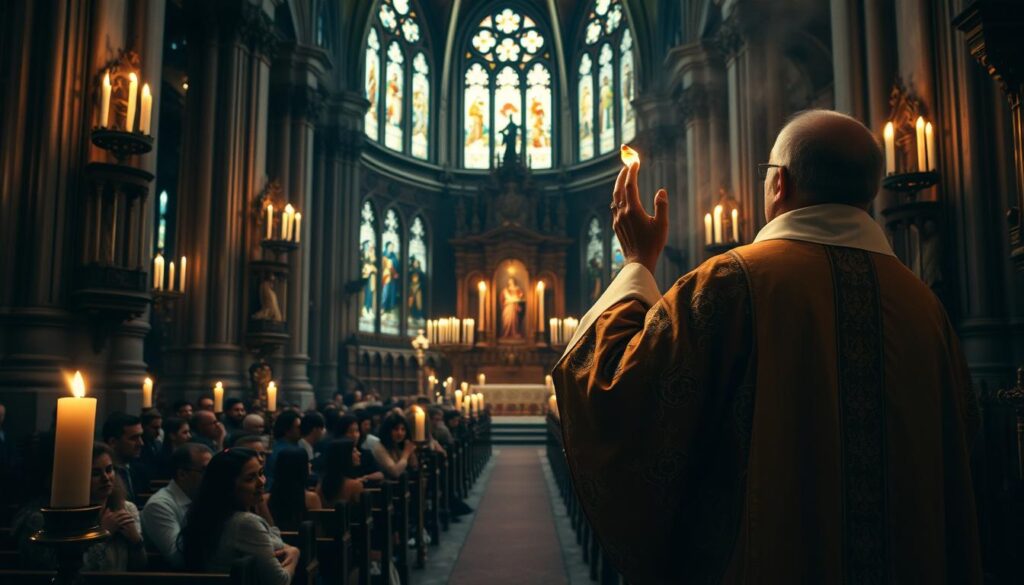
A dimly lit cathedral interior, candles flickering, the air thick with the scent of incense. In the foreground, a priest in ornate vestments performs a solemn ritual, his hands gracefully gesturing as he elevates the host. The congregation kneels in reverence, faces illuminated by the soft glow of stained glass windows. The scene is infused with a sense of timeless tradition, the weight of centuries of faith palpable in every detail. Ornate altars, carved pews, and intricate architectural elements create a sense of awe and reverence. The image conveys the depth and complexity of Latin Catholic rituals, their ability to transport the faithful to a higher plane of spiritual connection.

Central to worship is the Eucharist, celebrated during Mass. This ritual reenacts Jesus’ Last Supper, using bread and wine transformed into sacred elements. Many consider it the “source and summit” of their spiritual journey.

Faith communities organize through dioceses – local churches led by bishops. Each diocese maintains unique customs while following universal teachings. This structure ensures unity with Rome while respecting regional traditions.

Sacrament Purpose Symbol
Baptism Spiritual rebirth Water, white garment
Confirmation Strengthening faith Chrism oil, laying on hands
Eucharist Divine nourishment Bread and wine

Devotional practices like the Rosary and Stations of the Cross help believers reflect on sacred stories. These rites blend ancient liturgical texts with personal meditation. Saints serve as role models, inspiring acts of charity and hope.

Modern challenges find guidance in centuries-old teachings. Issues like environmental care and social justice draw from theological wisdom. This balance keeps traditions alive while addressing today’s needs.

Understanding Canon Law and Church Governance

Every organization needs rules – even one with two millennia of history. The 1983 Code of Canon Law serves as the modern playbook for church operations. This legal framework guides everything from worship practices to financial management.

A grand cathedral interior with intricate Gothic architecture, illuminated by warm candlelight. In the foreground, a lectern displaying an open tome of canon law, its pages ornately illustrated. Behind it, a panel of robed figures engaged in solemn discussion, representing the hierarchy of the Catholic Church. The middle ground reveals ornate wooden pews and stained-glass windows, casting a soft, reverent glow. In the background, a towering altar with detailed carvings and statues, symbolizing the spiritual foundation of canon law. The overall scene conveys a sense of timeless tradition, erudition, and the weight of ecclesiastical authority.

Papal Supremacy and Episcopal Structure

The Pope acts as both spiritual leader and chief administrator. He holds final authority over canon law interpretations while empowering bishops to manage local needs. This balance keeps global communities united yet responsive.

Church leadership flows through clear ranks. Cardinals advise the Pope, archbishops oversee regions, and bishops manage dioceses. Parish priests handle day-to-day spiritual care. This system maintains order across 3,000 ecclesiastical territories worldwide.

The Holy See coordinates activities through specialized departments. Offices like the Congregation for Divine Worship ensure consistent practices. Local churches adapt rules for cultural contexts while preserving core teachings.

Modern updates address contemporary issues. Recent changes clarify marriage protocols and religious education standards. Pope Benedict XVI refined guidelines for handling clergy matters, showing how timeless principles meet new challenges.

This living legal system proves ancient traditions can thrive in modern times. By blending structure with flexibility, it helps communities stay faithful to their roots while growing into the future.

Exploring Key Liturgical Rites and Practices

Sacred ceremonies form the heartbeat of spiritual life across global communities. While sharing core beliefs, worship styles vary through distinct rites developed over centuries. These traditions showcase how unity in faith coexists with diverse expressions of devotion.

The Roman Rite and Tridentine Mass

The Roman Rite dominates Western worship, celebrated in two primary forms. The Ordinary Form follows Vatican II reforms, using local languages for broader understanding. The Extraordinary Form preserves the 1962 Tridentine Mass, cherished for its Latin prayers and traditional gestures.

Form Language Focus
Ordinary Vernacular Community participation
Extraordinary Latin Historical continuity

Both versions share identical theological foundations. The Tridentine Mass features intricate priestly movements, while the modern format encourages congregational responses. This duality lets communities choose worship styles that resonate personally.

Alternative Rites: Mozarabic and Ambrosian Traditions

Beyond the mainstream practice, ancient rituals survive in specific regions. Spain’s Mozarabic Rite dates to the 6th century, blending Visigothic and Roman influences. Its chants and blessings differ markedly from standard ceremonies.

Rite Location Unique Feature
Ambrosian Milan Longer Advent season
Mozarabic Toledo Separate Eucharistic prayers

Milan’s Ambrosian tradition honors Saint Ambrose with distinctive liturgical texts. Its Lenten practices and priestly vestments showcase regional identity. These rites prove ancient customs still thrive within the Latin Church, preserving cultural heritage while maintaining global unity.

The Influence of Ecclesiastical Latin in Worship

Sacred words bridge centuries through carefully preserved sounds and meanings. This specialized form of speech evolved to express spiritual concepts that shaped religious thought across generations. Its structured cadence continues to unite global communities during sacred ceremonies.

Pronunciation and Vocabulary Development

Charlemagne’s 8th-century reforms standardized how we speak sacred words today. Scholars created uniform pronunciation rules during the Carolingian Renaissance, blending regional accents into one cohesive system. This “Italianate” style remains preferred in modern worship.

The language adapted to express new theological ideas. Early writers borrowed Greek terms like “baptisma” (baptism) and reshaped classical terms. Consider these creative adaptations:

Classical Latin Ecclesiastical Meaning
Sacramentum Military oath → Sacred ritual
Caritas High price → Divine love

Living Texts and Modern Practice

Essential liturgical texts maintain Latin as their primary language. The Roman Missal and papal documents first appear in this ancient tongue before translation. This ensures precise meanings across 1,000+ modern languages.

Three key features keep this tradition relevant:

  • Simpler grammar than classical versions
  • Specialized terms for sacraments
  • Consistent pronunciation guides

Today’s choirs and clergy learn these patterns to preserve audible connections to early worshippers. Through careful study, modern voices echo prayers first spoken 1,600 years ago.

Cultural and Artistic Legacy of the Latin Church

The artistic fingerprints of the Latin Church adorn cities worldwide, telling stories in stone and stained glass. From soaring Gothic cathedrals to delicate illuminated manuscripts, its creative legacy shaped the way Western societies express beauty and faith.

During the Age of Discovery, explorers carried these traditions across oceans. Spanish and Portuguese ships brought not just religion but architectural blueprints to the Americas and Philippines. Mission complexes became cultural hubs, blending European styles with local craftsmanship.

Three key contributions define this culture-shaping force:

1. Architectural marvels: Vaulted ceilings and flying buttresses transformed skylines, turning worship spaces into community landmarks.

2. Musical innovation: Gregorian chant evolved into polyphonic masterpieces that still inspire composers today.

3. Literary preservation: Monastic scribes saved classical knowledge while creating new spiritual content.

This creative explosion during the medieval period still impacts modern design. The Western Church‘s patronage system supported artists like Michelangelo while establishing art as a form of sacred communication. Today, restored cathedrals draw millions, proving ancient stones still speak to contemporary hearts.

FAQ

How did the Great Schism impact the Latin Church?

The 1054 split between Eastern Orthodox and Western churches solidified the Latin Church’s identity. It emphasized papal authority and shaped distinct liturgical practices, governance, and theological focus in Western Christianity.

What role does Canon Law play in church governance?

Canon Law provides a legal framework for administration, sacraments, and clergy roles. It upholds unity under the Holy See while addressing modern pastoral needs through updates like Pope Benedict XVI’s 2009 reforms.

Why is the Tridentine Mass significant?

This form of the Roman Rite, standardized after the Council of Trent (1545–1563), preserved traditional liturgy in ecclesiastical Latin. Pope Benedict XVI later expanded its use to honor historical worship practices.

Are non-Roman rites still practiced today?

Yes! The Mozarabic (Spain) and Ambrosian (Milan) rites maintain unique traditions approved by the Holy See. These reflect regional diversity while staying in communion with Rome.

How does ecclesiastical Latin influence modern worship?

Though less common post-Vatican II, Latin remains in official documents, hymns, and papal events. Its precise vocabulary ensures theological clarity and connects worship to ancient roots.

What cultural contributions stem from the Latin Church?

From Gothic cathedrals to Renaissance art, the Church inspired masterpieces by figures like Michelangelo and Thomas Aquinas. Gregorian chant and liturgical music also emerged from its traditions.

Discover the Allure of Gothic Catholicism


What happens when dramatic artistry meets timeless faith? For centuries, striking visual styles and spiritual traditions have merged in unexpected ways. This fusion creates a cultural tapestry that sparks curiosity and wonder across generations.

Many don’t realize how deeply intertwined these two worlds became after Rome’s fall. Early European tribes played a key role in shaping this relationship. Their embrace of new beliefs laid the groundwork for artistic and philosophical traditions that still resonate today.

Modern audiences often see these elements as opposites—one edgy, the other traditional. But look closer, and you’ll find shared themes of mystery, symbolism, and transformation. Cathedrals with soaring arches and stained glass tell stories just as powerfully as contemporary creative expressions do.

This article explores how history, art, and spirituality intersect in surprising ways. We’ll uncover hidden connections in literature, architecture, and even today’s media. Get ready to see familiar ideas through a fresh, thought-provoking lens.

Key Takeaways

  • Centuries-old traditions shaped unique cultural blends still relevant today
  • Early European history holds clues to understanding modern spiritual aesthetics
  • Architecture and art reveal hidden connections between different eras
  • Symbolism bridges seemingly contrasting ideas about life and faith
  • Contemporary culture keeps rediscovering these timeless patterns

The Rich History Behind Gothic Catholicism

How did wandering warriors shape spiritual traditions we recognize today? Long before soaring cathedrals rose, restless tribes carried beliefs across Europe. Their journeys created lasting connections between physical struggles and sacred ideals.

Tracing Ancient Roots and Traditions

Migrating groups faced constant upheaval after Rome’s collapse. Clovis’ 496 AD baptism marked a turning point, blending warrior culture with emerging faith practices. These communities saw their travels as mirroring spiritual journeys described by early theologians.

Key Historical Turning Points

Three major events reshaped religious history:

  • The 589 AD Council of Toledo solidified official conversions
  • Leaders like Sigismund blended battle tactics with prayer rituals
  • Settlements became hubs for preserving sacred texts

War-hardened people found meaning in stories of suffering and divine guidance. Their interpretations helped faith survive turbulent times, proving adaptable across centuries. This fusion later inspired architectural marvels and artistic traditions still celebrated today.

The Conversion of Gothic Tribes and Its Impact on Catholicism

A single decision in 496 AD reshaped Europe’s spiritual map forever. When Frankish king Clovis I embraced Catholic Christianity, he ignited a chain reaction across crumbling Roman territories. This choice didn’t just change one ruler’s faith—it rewrote the religious future of entire nations.

Clovis’ Baptism and the Rise of Catholic Identity

Clovis’ conversion became a blueprint for tribal leaders. His baptism ceremony symbolized more than personal belief—it marked a strategic alliance with surviving Roman institutions. Within decades, Frankish warriors traded Arian teachings for orthodox practices, creating Europe’s first Catholic monarchy.

The Visigoths followed suit 93 years later at the 589 Council of Toledo. King Reccared I’s public renunciation of Arianism showed how tribal conversions became political theater. These dramatic shifts weren’t just about theology. They helped warrior cultures find common ground with Mediterranean religious networks.

Three lasting effects emerged from these conversions:

  • Military protection for vulnerable churches
  • Integration of tribal honor codes into sacramental practices
  • Legal systems blending ancient customs with canon law

Warrior societies unexpectedly became the church’s fiercest defenders. Their battle-ready mentality transformed into safeguarding pilgrimage routes and monastic communities. This partnership laid foundations for medieval Europe’s unique blend of faith and force.

Through these changes, tribal values seeped into religious life. Personal loyalty oaths evolved into saintly devotion rituals. What began as political strategy became the beating heart of Western spiritual identity.

Catholic Guilt and the Dark Psychology of Sin

Why do stories of inner conflict grip us so deeply? At their core lies a universal feeling older than stained glass—the weight of choices echoing through time. This emotional gravity finds roots in ancient teachings about human nature.

A dark, gloomy cathedral interior bathed in dramatic chiaroscuro lighting. In the foreground, an ornate crucifix casts ominous shadows, symbolizing the weight of guilt and sin. Kneeling worshippers cower in the middle ground, their faces wracked with anguish and contrition. In the background, stained glass windows filter in shafts of colored light, evoking the tainted spirituality of Catholic doctrine. The atmosphere is one of oppressive solemnity, reflecting the heavy burden of Catholic guilt and the dark psychology of sin.

The Weight of Original Sin in Gothic Narratives

The concept of inherited guilt shapes how we view moral struggles. Unlike simpler ideas of wrongdoing, it suggests every person carries Adam’s shadow. This “deep anthropology” acknowledges our capacity for both light and darkness from birth.

Aspect Catholic View Protestant View
Human Nature Inherently wounded by Original Sin Fundamentally corrupted
Guilt Resolution Sacraments & penance Faith alone
Redemption Path Lifelong transformation Instant justification

Literary giants like Dostoevsky exposed this torment masterfully. His character Raskolnikov in Crime and Punishment embodies the spiral of self-punishment—a mirror to confessional traditions. The story shows how moral failure haunts the man long after the crime.

Modern stories still use these themes. From conflicted heroes to haunted protagonists, the struggle between flaw and forgiveness remains powerful. It’s not about despair, but the raw honesty of being human—a truth that keeps drawing us back to age-old questions.

Gothic Traditions in Art and Architecture

Critics once mocked them as “stone nightmares,” but these towering marvels now define our idea of sacred beauty. The very features that earned scorn—jagged silhouettes, eerie carvings—became tools for expressing humanity’s highest aspirations.

Drama Carved in Stone

Baroque artists amplified Gothic foundations with theatrical flair. They turned vaulted ceilings into swirling heavens and altars into golden sunbursts. Three elements defined this style:

  • Chiaroscuro contrasts painting saints in pools of celestial light
  • Twisting marble columns mimicking spiritual ascent
  • Frescoes showing biblical moments frozen mid-action

These techniques transformed churches into visceral experiences. Visitors didn’t just see stories—they felt divine judgment or mercy through every sculpted fold and shadow.

Stories in Glass and Grotesques

Cathedrals became illustrated manuscripts in three dimensions. Stained-glass windows glowed like jeweled image boards, teaching scripture through color and light. Gargoyles perched above crowds weren’t mere decorations—they embodied the constant dance between death and deliverance.

“Every grotesque whispers: ‘Evil exists, but this sacred place masters it.'”

— Architectural Historian L. Vaux

Flying buttresses allowed walls to soar while bearing unimaginable weight—a perfect metaphor for faith itself. These spaces didn’t just house rituals; they made theology tangible through stone and leaded glass.

Today, we still seek things that marry raw emotion with transcendent meaning. That’s why these centuries-old designs feel oddly modern—they speak to our timeless hunger for wonder.

Literary Inspirations: Gothic Novels and Catholic Themes

Why do crumbling monasteries and shadowy convents haunt our favorite stories? 18th-century authors discovered these Catholic settings held unmatched potential for exploring humanity’s darkest corners. Their novels blended ancient rituals with psychological tension, creating a blueprint for modern horror.

A gothic cathedral at dusk, bathed in a warm amber glow. Stained glass windows cast an ethereal light, illuminating intricate stone carvings and towering arches. In the foreground, a lone figure kneels in prayer, their silhouette cast against the backdrop of flickering candles. The air is thick with the scent of incense, evoking a sense of mystery and devotion. Shadows creep along the walls, hinting at the supernatural forces that lurk within this sacred space. A dramatic, cinematic composition that captures the alluring fusion of gothic aesthetics and Catholic imagery.

Masters of Atmospheric Dread

Ann Radcliffe perfected the art of suggestive terror in works like The Mysteries of Udolpho. Her heroines navigated labyrinthine convents where barred windows whispered of trapped desires. Radcliffe used candlelit confessionals and echoing cloisters to mirror her characters’ inner turmoil.

Matthew Lewis took a bolder approach. His 1796 shocker The Monk exposed corruption behind abbey walls with scenes of forbidden romance and black magic. Protestant readers devoured these tales, seeing them as warnings against religious excess.

Theme Radcliffe’s Approach Lewis’s Style
Setting Haunted monasteries Decadent convents
Primary Conflict Isolation vs. faith Power vs. morality
Supernatural Suggested ghosts Demonic pacts
Moral Outcome Redemptive suffering Divine punishment

Guilt as Narrative Engine

Both authors used sin as a catalyst for drama. Radcliffe’s protagonists faced external threats that tested their virtue. Lewis flipped this formula—his fallen monk Ambrosio became the threat, embodying fears about unchecked authority.

These stories shaped horror fiction’s DNA. From haunted churches to possessed clergy, modern creators still mine Gothic fiction for its potent mix of sacred imagery and human frailty. The genre proves that the most compelling terrors often wear religious garb.

The Influence of Latin and Ritualistic Beauty

Few sounds carry through centuries like Latin’s rolling cadences. This ancient tongue shapes spiritual experiences, turning ordinary spaces into portals to the past.

A dimly lit Gothic cathedral interior, sunlight streaming through stained glass windows, casting a warm, ethereal glow. In the foreground, a solemn Latin liturgy ritual unfolds, priests in ornate vestments performing a sacred ceremony at an ornate altar adorned with candles and ornate religious artifacts. The middle ground features worshippers in traditional pews, heads bowed in reverence. The background showcases the cathedral's intricate architecture, vaulted ceilings, and imposing columns, evoking a sense of timeless, mystical beauty. Soft, dramatic lighting, a shallow depth of field, and a moody, contemplative atmosphere permeate the scene.

Language as Sacred Gateway

Latin’s rhythmic prayers create a bridge across time. Unchanged for generations, its phrases echo with the weight of countless voices. Modern ears hear both familiarity and mystery in its syllables.

Three elements give Latin its haunting power:

  • Vowel-rich sounds that linger in stone chambers
  • Fixed grammatical structures resisting casual interpretation
  • Phrases polished through centuries of repetition
Latin Phrase Translation Contextual Weight
Agnus Dei Lamb of God Evokes sacrificial imagery
Memento mori Remember death Links mortality to divine purpose
Ecce Homo Behold the man Moment of judgment in sacred history

Recent years saw renewed interest in traditional rituals. Young crowds pack churches offering Latin Mass, drawn by its tactile solemnity. One attendee notes: “It feels like holding history in your hand.”

This revival proves ancient forms still spark wonder. Through layered chants and candlelit rites, participants find connection to something beyond daily life—a sense of walking through living tradition.

The Role of Exorcism and the Phenomenon of Stigmata

What lies beyond our visible world has fascinated believers for centuries. From whispered prayers to miraculous wounds, certain practices reveal how faith confronts the inexplicable. These traditions blend ancient rituals with modern scrutiny, creating stories that captivate believers and skeptics alike.

When Faith Meets the Unseen

Exorcism rituals date back to biblical accounts of Jesus casting out demons. Today, priests undergo rigorous training to handle suspected possessions. The Church uses strict guidelines to separate mental health issues from potential supernatural cases. One famous 1949 exorcism inspired The Exorcist, highlighting the violent physical manifestations often described.

Stigmata presents an equally puzzling mystery. Documented instances show individuals developing wounds mirroring Christ’s crucifixion injuries. These marks often appear suddenly, causing intense pain yet resisting medical explanation. Padre Pio, a 20th-century friar, bore such wounds for 50 years—a life marked by both devotion and controversy.

Aspect Exorcism Stigmata
Recognition Formal church protocol Investigated as potential miracle
Physical Signs Violent reactions, strength surges Bleeding wounds, sudden onset
Church Protocol Psychological evaluation first Medical team consultation
Public Perception Linked to horror tropes Viewed as divine connection

Modern approaches balance science and spirituality. While investigating stigmata, doctors look for natural causes before considering miracles. Similarly, 90% of suspected possessions get reclassified as mental health cases. Yet the Church maintains rituals for remaining uncertainties—preserving awe in an age of skepticism.

These practices underscore a timeless human tension: our fear of unseen forces and longing for transcendent meaning. Whether through dramatic rituals or silent suffering, they remind us that mystery still dwells at faith’s edges.

Understanding Gothic Catholicism in a Modern World

Timeless symbols find fresh voices in every generation. Today’s creators reimagine ancient spiritual motifs through digital media, fashion, and community rituals. This cultural evolution preserves core meanings while speaking to contemporary concerns.

Bridging Eras Through Creative Expression

Virtual reality now lets users explore cathedral architecture from their couches. TikTok creators pair medieval chant remixes with urban exploration videos. These adaptations open new windows into historical practices, making them accessible to smartphone-era audiences.

Modern artists blend sacred imagery with social commentary. Stained glass techniques appear in protest art, while confession booth concepts inspire interactive theater. A 2023 study showed 68% of millennials engage with reinterpreted traditions through pop culture rather than formal institutions.

Scholars note three key shifts in interpretation:

  • Emphasis on personal spiritual journeys over dogma
  • Reuse of ritual elements in mental health practices
  • Digital archiving preserving endangered artifacts

These transformations prove enduring symbols adapt without losing their power. As old stones meet new tools, they continue to shape our search for meaning in unexpected ways.

FAQ

How did ancient traditions shape Gothic Catholicism?

Early practices blended Roman rituals with tribal customs, creating a unique spiritual identity. This fusion laid the groundwork for symbolic art and intense emotional themes seen in later centuries.

Why was Clovis’ baptism significant?

His conversion marked a turning point, uniting Frankish tribes under a shared religious identity. This event strengthened the Church’s political influence and spread its teachings across Europe.

How does guilt appear in Gothic stories?

Tales often explore inner turmoil tied to moral failings. Characters wrestle with shame or hidden desires, reflecting the lasting impact of doctrines like original sin on storytelling.

What role do cathedrals play in this tradition?

Structures like Notre-Dame use towering arches and stained glass to evoke awe and mystery. These designs symbolize humanity’s smallness against divine power, deepening spiritual reflection.

How did authors like Ann Radcliffe influence the genre?

Radcliffe’s suspenseful plots and Lewis’s bold themes highlighted struggles with morality. Their works wove sacred imagery into tales of terror, making faith a central element of horror narratives.

Why is Latin still used in rituals today?

The language’s archaic sound creates a sense of timelessness. Its unfamiliarity adds layers of secrecy, enhancing the mystical atmosphere during ceremonies.

Are exorcisms common in modern practices?

While rare, these rites remain part of Church tradition. They symbolize the battle between good and evil, echoing themes of spiritual warfare found in classic literature.

How is this movement viewed now?

Contemporary artists and writers reinterpret its symbols, blending old motifs with new anxieties. This keeps the dialogue between faith, fear, and art alive in today’s culture.

Exploring the Core Values of the Catholic Faith


Welcome to a journey through the beliefs that guide over 1.3 billion people globally. This exploration isn’t about rules or rituals—it’s about understanding the timeless truths that have shaped Christian communities since the early Church. These ideas aren’t just personal choices; they’re anchors in a rapidly changing world.

At the heart of Catholic social teaching lies a unique framework. Built on Gospel messages and natural law, it offers both stability and adaptability. Four Permanent Principles and Four Fundamental Values work together like a compass, directing how believers engage with society.

Why does this matter today? These teachings help people tackle modern issues—from social justice to family life—without losing their spiritual foundation. They’re not abstract concepts but practical tools for everyday decisions.

This guide will clarify what makes Catholic teachings distinct. You’ll learn how centuries-old wisdom remains relevant in 21st-century debates about morality and community. Each section builds on the last, creating a complete picture of this living tradition.

Key Takeaways

  • Guides over 1.3 billion believers worldwide
  • Rooted in 2,000-year-old spiritual wisdom
  • Combines unchanging truths with modern applications
  • Includes four Permanent Principles and Fundamental Values
  • Helps distinguish authentic teachings from cultural trends

Introduction: A Foundation in the Catholic Faith

Catholic social teaching acts like a pair of glasses – helping believers see everything from friendships to foreign policy through a spiritual lens. This living tradition draws from ancient scriptures and modern thinkers, creating a bridge between biblical wisdom and today’s complex world.

The Compendium of Social Doctrine serves as a roadmap for this journey. Updated through papal letters and council meetings, it tackles real issues like fair wages and climate change. Think of it as a playbook for bringing faith into voting booths, workplaces, and neighborhood meetings.

Here’s what makes this teaching unique: It mixes divine revelation with common-sense logic. The Golden Rule meets human rights. Sacred texts dialogue with scientific discoveries. This blend helps people across cultures find shared ground on tough moral questions.

Formation in these ideas isn’t just for priests – parents, teachers, and nurses need it too. Regular Catholics use these tools to make choices that honor both truth and love. From budgeting household money to advocating for refugees, the principles adapt without compromising core beliefs.

This way of thinking resists quick fixes. It challenges believers to dig deeper, asking not just “Is this legal?” but “Does this help everyone thrive?” The answers often surprise – and transform communities.

Historical Overview of Catholic Social Teaching

The roots of Catholic social teaching stretch deeper than many realize. While formalized in the late 19th century, its principles echo ancient Christian care for the vulnerable. This tradition gained structure during Europe’s Industrial Revolution, when rapid change left workers unprotected.

Detailed oil painting of Catholic social teaching history, set in a grand cathedral interior. Ornate stained glass windows cast warm light upon carved wooden pews. In the foreground, figures representing different eras of Catholic social thought - from medieval almsgiving to modern-day social justice. A central figure, robed and bearded, gestures towards tomes and scrolls illustrating key church teachings. The mid-ground features towering marble columns and intricate architectural flourishes. In the background, a vast altar and pulpit, symbolizing the authority and tradition of the Catholic faith. Muted tones with chiaroscuro lighting to convey a sense of reverence and contemplation.

Origins and Early Encyclicals

Pope Leo XIII’s 1891 encyclical Rerum Novarum sparked a revolution. It declared fair wages and safe workplaces as moral rights—radical ideas when factories exploited laborers. This “workers’ charter” became the blueprint for addressing societal shifts through faith.

Later popes built on this foundation. Pius XI’s 1931 Quadragesimo Anno tackled economic inequality during the Great Depression. These early documents showed how timeless truths could guide people through modern crises.

Evolution through the Centuries

The Second Vatican Council (1962-1965) marked a turning point. Leaders urged Catholics to engage actively with the world rather than withdraw. This shift produced bold stances on nuclear disarmament and global poverty.

Recent decades saw teachings adapt to new challenges. John Paul II addressed technology’s ethical dilemmas, while Francis’ Laudato Si’ framed environmental care as a moral duty. Each era’s struggles refined—but never replaced—core commitments.

Encyclical Pope Focus
Rerum Novarum Leo XIII Worker rights
Mater et Magistra John XXIII Social welfare
Laudato Si’ Francis Ecology

This living history proves a key strength: applying eternal wisdom to society’s changing needs. From assembly lines to AI, the Church’s social vision keeps speaking to real people in real time.

Fundamental Principles in Catholic Social Teaching

Catholic teachings on social matters are anchored by four unchanging principles that navigate modern complexities. These ideas form a moral GPS—guiding believers through ethical dilemmas while protecting the sacredness of every person. Together, they create a blueprint for building communities where everyone thrives.

Human Dignity and the Sanctity of Life

Every policy and personal choice starts here: recognizing each human life carries divine worth. This belief isn’t earned through achievements but granted because we’re made in God’s image. From unborn children to elders, this dignity demands protection at all stages.

This principle shapes concrete actions. It challenges unfair labor practices and rejects discrimination. Hospitals and schools become sacred spaces where human dignity transforms care. Even criminal justice systems must honor this inherent value.

Solidarity and Subsidiarity

Solidarity means seeing strangers as family. It’s why Catholics push for fair trade policies and disaster relief. When floods hit Texas or wars erupt overseas, this principle fuels practical help paired with prayer.

Subsidiarity keeps power where it belongs—closest to those affected. Neighborhood councils decide playground designs. Parents choose schools. Yet larger groups assist when local efforts fall short. It’s teamwork, not top-down control.

These principles work like orchestra instruments. Alone, each has power. Together, they create harmony—balancing individual rights with community needs in our divided world.

Life and Dignity of the Human Person

Human worth isn’t earned or granted—it’s woven into our very existence. This truth forms the bedrock of how believers approach ethical dilemmas and societal challenges. Let’s unpack where this conviction originates and why it matters in today’s debates about medical ethics and social justice.

Majestic cathedral interior, stained glass windows casting warm hues upon ornate wooden pews. A single figure stands in reverence, their face serene and dignified, radiating an aura of divine grace. Intricate architectural details frame the scene, columns and arches evoking a sense of timeless grandeur. Soft, directional lighting illuminates the hushed, contemplative atmosphere, as if imbued with the weight of centuries of devotion. The composition conveys the profound and timeless essence of human dignity, its biblical roots manifested in the sacred setting.

Roots in Sacred Texts

The Genesis creation story holds a revolutionary idea: humans reflect divine nature. “God created mankind in his image” (Genesis 1:27) became history’s first declaration of universal worth. Unlike ancient cultures valuing people for status or strength, this teaching elevated every individual—rich or poor, healthy or ill.

“Christ’s incarnation reveals the infinite value of human life—not because of what we do, but because of who we are.”

Modern science echoes this truth. DNA research shows we share 99.9% genetic similarity—proof of our common human nature. Yet technology raises new questions. How do we protect this dignity when editing genes or deciding end-of-life care?

Issue Principle Application
Abortion Right to life Protect unborn persons
Euthanasia Sanctity of life Support palliative care
Genetic engineering Respect for nature Prevent human commodification

These rights create responsibilities. Feeding the hungry isn’t charity—it’s justice. Housing the homeless becomes a duty, not an option. When we see others as image-bearers, our response to poverty and discrimination changes fundamentally.

True freedom emerges when societies structure laws around this inalienable dignity. Religious liberty and fair wages aren’t political issues—they’re spiritual imperatives. By defending the vulnerable, we honor the divine spark in all people.

The Common Good: Social and Cultural Impact

A serene, sunlit village nestled amidst rolling hills, with people of diverse backgrounds engaging in activities that promote community wellbeing. In the foreground, a group of neighbors tending to a lush community garden, their faces radiating joy and a sense of shared purpose. In the middle ground, a bustling town square where residents of all ages gather, conversing and supporting local businesses. In the background, a striking cathedral spire rises, symbolizing the spiritual foundations that underpin this thriving, inclusive society. Soft, natural lighting casts a warm, inviting glow over the scene, conveying a profound sense of harmony, compassion, and the common good.

Imagine a blueprint for building communities where everyone thrives. The common good isn’t about majority rule or temporary fixes—it’s the social framework that lets individuals and groups reach their full potential. Unlike systems focused solely on profit or power, this vision prioritizes dignity, justice, and long-term well-being.

Three pillars uphold this ideal:

  • Peaceful order: Stable societies where laws protect rights
  • Essential access: Clean water, healthcare, and education for all
  • Shared responsibility: Balancing personal freedom with community needs
Element Cultural Impact Modern Challenge
Environmental care Promotes stewardship over exploitation Climate change denial
Economic justice Encourages fair wages and trade Income inequality
Intergenerational equity Values future generations’ needs Short-term policymaking

Extreme individualism and nationalism strain this balance. When cultures prioritize “me” over “we,” social bonds fray. The common good asks: How do our choices today shape tomorrow’s world? It transforms healthcare debates from “Can I afford treatment?” to “Does everyone have access?”

Schools become launchpads for opportunity, not privilege. Neighborhoods invest in parks and public transit. This approach doesn’t erase differences—it builds bridges through shared goals. By measuring progress through human flourishing rather than GDP, societies create lasting legacies.

Subsidiarity and Local Empowerment

Local communities thrive when they hold the reins of decision-making. Subsidiarity—a guiding principle in social ethics—insists that responsibility should rest at the lowest capable level. This approach strengthens society by letting those closest to a problem craft solutions.

Imagine a neighborhood park renovation. Under subsidiarity, parents and residents—not distant bureaucrats—would plan playground equipment. This freedom to act preserves human dignity, as people shape environments affecting their daily lives.

Decision-Making in Action

Governments applying subsidiarity create layered support systems. Local councils handle zoning laws, while national agencies address interstate infrastructure. The key? Higher levels assist only when communities lack resources.

Decision Level Primary Responsibility Example
Local Education curriculum adjustments School board choices
State Disaster response coordination Flood relief funding
National Border security policies Immigration regulations

Economically, subsidiarity favors family-owned shops over corporate chains. Credit unions thrive, while trade associations help small farms reach markets. This balance maintains local character without rejecting global connections.

A common myth paints subsidiarity as anti-government. Truthfully, it values society working together across levels. When wildfires strike, local crews extinguish flames—but regional aircraft provide crucial air support.

Grassroots groups exemplify this principle. Food banks adapt menus to cultural preferences. Churches sponsor job training tailored to community needs. By trusting people to solve their challenges, subsidiarity builds resilient societies from the ground up.

Solidarity: The Bond Among Peoples

True solidarity demands more than good intentions—it requires dismantling systemic barriers. This virtue goes beyond temporary aid, challenging people to confront the roots of inequality. As Pope John Paul II observed:

“Solidarity is not a feeling of vague compassion… but a firm commitment to the good of all.”

From Emotion to Action

Authentic solidarity means seeing others as partners, not projects. It transforms charity into justice—fighting unfair policies while feeding the hungry. Here’s how it works across levels:

  • Personal: Mentoring youth in underserved neighborhoods
  • National: Advocating for living wage legislation
  • Global: Supporting climate agreements that protect island nations
Challenge Solidarity Response Impact
Refugee crises Sponsorship programs 28% higher integration success
Food deserts Urban farming cooperatives 40% produce cost reduction
Digital divide Community wifi initiatives 91% school completion boost

Modern barriers like nationalism test this principle. When society labels problems as “their issue,” solidarity reminds us we’re responsible for one another. Migrant workers and CEOs alike deserve dignity.

Love becomes practical through policy changes and personal sacrifices. By building relationships across divides, people create networks stronger than prejudice. That’s how neighborhoods—and nations—heal.

Core Virtues: Truth, Freedom, Justice, and Love

Four pillars shape how believers engage with modern challenges. Truth, freedom, justice, and love form an ethical ecosystem where each element strengthens the others. These aren’t abstract ideals—they’re practical tools for building trust in relationships and communities.

Truth as Compass, Freedom as Responsibility

Seeking truth means rejecting “alternative facts.” It requires honest conversations—even when uncomfortable. This virtue anchors social media debates and family discussions alike. Without it, trust crumbles.

Freedom flourishes within boundaries. Like a skilled musician needs sheet music, humans thrive when choosing good over convenience. Authentic liberty protects dignity while fostering creativity.

Virtue Role Modern Challenge
Truth Builds trust in institutions Misinformation spread
Freedom Encourages moral growth Extreme individualism
Justice Ensures fair treatment Systemic inequality
Love Drives selfless action Transactional relationships

When Justice Meets Compassion

Justice takes three forms: fair exchanges between people, equitable resource distribution, and laws protecting rights. But rules alone can’t heal divisions. That’s where charity enters—the engine turning legal obligations into heartfelt service.

Pope Benedict XVI noted:

“Love—caritas—will always prove necessary, even in the most just society.”

Food banks showcase this synergy. Volunteers address immediate hunger (charity) while advocating for living wages (justice). Together, they create lasting change where single efforts fall short.

Practical Applications in Daily Life

Faith becomes tangible through daily choices that shape family life and professional conduct. At work, this might mean:

  • Advocating for fair wages during budget meetings
  • Refusing to exaggerate product claims to clients
  • Mentoring new hires instead of viewing them as competition

One manager shared: “We restructured shifts so parents could attend school events. Productivity rose 18%.”

Home environments thrive when prioritizing shared meals over screens. Simple habits like weekly family game nights or volunteering together teach compassion better than lectures. Caring for aging relatives becomes a sacred work, not a burden.

Consumer Choice Impact
Reusable shopping bags Reduces plastic waste
Ethical banking Supports community loans
Meatless Fridays Lowers carbon footprint

In civic spaces, practical faith means researching ballot measures protecting human lives from conception to natural death. It transforms neighborhood meetings into opportunities to advocate for affordable housing.

When coworkers mock religious practices, respond with quiet consistency. Bring meals to stressed colleagues. Listen more than preach. This way of living makes beliefs visible without words—turning ordinary moments into testimonies.

“Values of Catholicism” in Modern Context

Modern ethics discussions often confuse personal preferences with universal truths. Where earlier generations spoke of virtues—objective standards shaping character—today’s culture prefers “values” language. This shift matters: virtues demand alignment with reality, while values suggest customizable opinions.

Nineteenth-century philosophers first used “values” as moral terms, replacing fixed ideals with subjective priorities. Unlike timeless virtues like courage or justice, values float like menu options. As theologian Joseph Ratzinger observed:

“The crisis of values is a crisis of truth—when purpose fades, morality becomes negotiation.”

This linguistic shift creates challenges. When society frames ethical stances as personal tastes, defending life or marriage appears sectarian rather than rooted in human nature. Moral debates become preference contests instead of truth-seeking dialogues.

Virtues Values
Objective standards Subjective choices
Cultivated through habit Adopted like preferences
Universal application Individualized selection

How can believers communicate effectively? Start by anchoring discussions in shared human experiences rather than doctrinal terms. Frame teachings as invitations to flourish, not arbitrary rules. Show how chastity protects relationships or how charity heals communities.

Rebuilding moral language requires patience. Use stories demonstrating how truths uplift society. When culture asks “What’s your value?” respond with “What helps us all thrive?” This way of speaking honors diversity while affirming timeless principles accessible to reason and faith alike.

Navigating Contemporary Challenges with Catholic Teachings

Today’s complex world demands solutions that bridge ancient wisdom and modern realities. The timeless framework we’ve explored offers concrete ways to tackle pressing issues while maintaining spiritual roots. Let’s see how these ideas meet current needs.

From Theory to Neighborhood Solutions

Urban food deserts become spaces for community gardens. Housing shortages spark interfaith building projects. Each problem gets addressed through both charity and systemic change.

Technology ethics show this balance. While embracing medical advances, teachings remind us to protect human dignity in AI development. Screen time guidelines help families prioritize relationships over devices.

Environmental issues find answers in sustainable practices. Parish solar projects cut energy costs by 40% in some areas. Farmers adopt soil-health methods that honor creation.

These approaches work because they unite people across divides. When society faces polarization, the teachings offer common ground. They turn abstract debates into shared action—one neighborhood, one world at a time.

FAQ

What are the main principles of Catholic social teaching?

The core principles include respect for human dignity, promoting the common good, and upholding solidarity and subsidiarity. These ideas guide how individuals and communities address societal challenges while prioritizing the inherent worth of every person.

How does Catholicism view the dignity of the human person?

The faith teaches that every individual is created in God’s image, granting them inviolable worth. This belief shapes teachings on justice, charity, and protection for vulnerable groups, emphasizing that no one should be marginalized or exploited.

What role does solidarity play in modern Catholic practice?

Solidarity calls believers to recognize their interconnectedness with others, especially those facing poverty or injustice. It encourages active efforts to build fairer systems, advocate for human rights, and address global issues like inequality through collective action.

How can Catholic virtues like truth and justice be applied daily?

Practicing truth involves honesty in relationships and work, while justice requires fair treatment of others. Simple acts—like supporting ethical businesses or volunteering—help integrate these virtues into everyday choices and interactions.

Why is subsidiarity important in decision-making?

Subsidiarity ensures decisions are made at the local level whenever possible, empowering communities rather than centralizing power. This principle fosters responsibility, creativity, and solutions tailored to specific cultural or social needs.

How does the Church address contemporary social issues?

Catholic teachings engage modern challenges—such as environmental crises or migration—by balancing timeless principles with current realities. This includes advocating for policies that protect human life, promote peace, and prioritize the needs of marginalized groups.

What’s the connection between charity and systemic change?

While charity addresses immediate needs—like feeding the hungry—it’s paired with efforts to reform unjust structures. This dual focus aligns with the idea that love and justice must work together to create lasting, equitable solutions.