Recent Posts

Christianity vs Catholicism: Key Differences Explained


Many people explore spiritual paths to deepen their understanding of global belief systems. Among these, one tradition stands out as both widely practiced and frequently misunderstood. With over 2 billion followers globally, it represents diverse interpretations united by shared roots.

This tradition includes several branches, each with unique practices. For example, one prominent group accounts for about 60% of its total followers. Others emerged later through historical events, creating rich variations in worship styles and leadership structures.

Our guide will untangle these relationships clearly. You’ll learn how a major branch maintains distinct rituals while sharing foundational principles with others. We’ll also clarify why terminology matters—like how labels reflect specific traditions within a broader framework.

From ancient origins to modern practices, we’ll highlight what unites and distinguishes these paths. Whether you’re comparing spiritual practices or studying cultural history, this breakdown offers valuable insights into beliefs held by millions.

Key Takeaways

  • One tradition encompasses multiple subgroups, each with unique customs
  • A single branch represents nearly two-thirds of all followers globally
  • Historical events shaped today’s diverse worship styles
  • Terminology reflects specific traditions within a shared framework
  • Core principles connect different interpretations

Overview of Christianity and Catholicism

Exploring spiritual traditions reveals fascinating connections between global belief systems. At their foundation lies a shared commitment to Jesus Christ’s teachings, though interpretations vary across communities.

Essential Teachings That Unite Believers

Central to this tradition is the concept of the Trinity: Father, Son, and Holy Spirit as three aspects of one God. Followers affirm Jesus’ divine nature through ancient statements like the Nicene Creed:

“We believe in one Lord, Jesus Christ, the only Son of God… eternally begotten of the Father.”

These creeds outline key principles including salvation through Christ’s resurrection and humanity’s need for redemption. Over 2 billion people worldwide identify with these teachings, forming diverse groups united by core convictions.

What Makes a Community Unique?

One prominent group maintains distinct practices while sharing foundational beliefs. Their identity centers on:

Aspect Shared Belief Unique Emphasis
Authority Scripture Scripture + Tradition
Leadership Local clergy Apostolic succession
Salvation Grace through faith Sacramental system

This community also believes in ongoing guidance through established leadership structures. While honoring the same creeds as others, they emphasize historical continuity from early believers to modern-day followers.

Recognizing these similarities helps explain why all members of this group consider themselves part of the broader tradition. Yet their specific practices reflect centuries of developing thought about mankind’s relationship with the divine.

Historical Origins and Development

Understanding how major belief systems evolved requires exploring pivotal moments that shaped their identities. From ancient roots to dramatic splits, history reveals why certain practices and structures exist today.
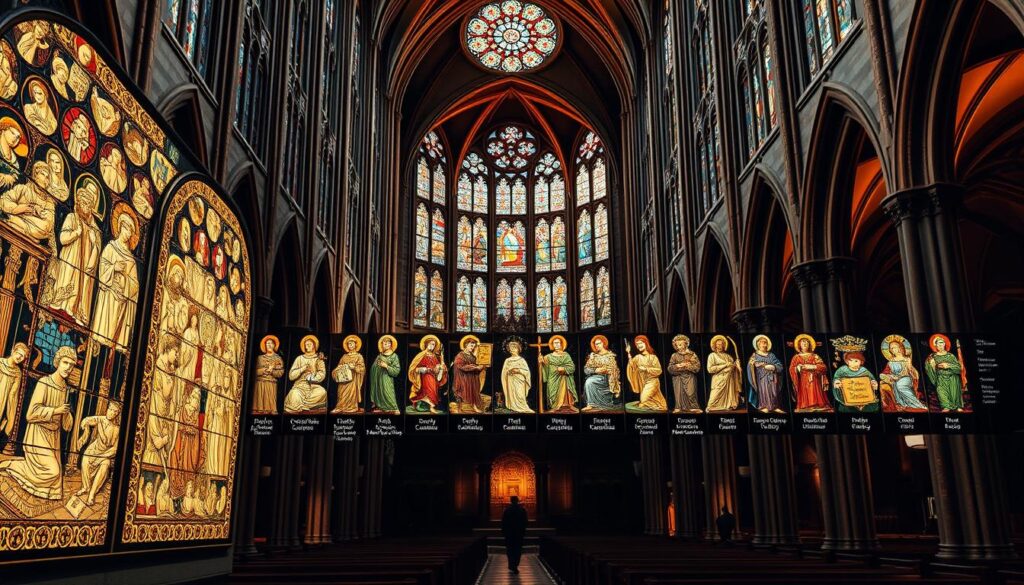
A detailed church history timeline, depicted as a series of intricately crafted stained glass panels. The foreground features a central panel showcasing key events and figures from the early centuries of Christianity, with delicate lines and vibrant colors. The middle ground displays a progression of panels charting the major schisms, councils, and reformations that shaped the development of Catholicism. The background is a vast cathedral interior, bathed in warm, soft lighting, with intricate gothic arches and ornate, shadowy alcoves.

Seeds of the Early Church

The first followers of Jesus were Jewish, debating whether their message should stay within their community. Saint Paul’s outreach to non-Jewish groups helped form a broader movement. For 300 years, believers faced Roman persecution until Emperor Constantine’s 313 AD Edict of Milan brought acceptance.

By 380 AD, Emperor Theodosius declared the church the Roman Empire’s official religion. This decision cemented structures like bishops’ authority and standardized worship. Councils like Nicaea clarified core teachings, blending scripture with tradition—a practice still central to one branch.

Rebellion and Renewal

Centuries later, Martin Luther’s 1517 protests against indulgences sparked upheaval. His critique of leadership practices led to his expulsion, creating a rift between catholics protestants. This Reformation birthed denominations emphasizing personal faith over rituals.

Event Catholic Response Protestant Shift
16th-Century Reforms Counter-Reformation councils Sola Scriptura principle
Leadership Papal authority upheld Local church autonomy
Sacraments Seven rituals maintained Simplified practices

These changes made the church a mosaic of traditions. While christians catholics share core beliefs, their historical paths explain why they remain distinct yet interconnected branches of the same faith family.

Exploring the “christianity vs catholicism difference” in Beliefs and Practices

How communities approach salvation often defines their spiritual identity. While sharing core convictions about Jesus’ divinity, groups within the broader tradition emphasize different paths to divine connection.

Foundations of Spiritual Acceptance

Salvation stands at the heart of theological distinctions. Many Protestant groups teach redemption comes through faith alone, citing verses like Ephesians 2:8: “For it is by grace you have been saved through faith.” Others emphasize actions as proof of genuine belief. As one biblical passage states:

“Faith by itself, if not accompanied by action, is dead.” (James 2:17)

Sources of Divine Guidance

Communities differ in how they discern spiritual truth. Consider these contrasting approaches:

Aspect One Perspective Another View
Authority Scripture + Tradition Scripture Alone
Leadership Teaching councils Individual interpretation
Sacred Rituals Seven sacraments Two ordinances

These differences shape daily practices. Some communities prioritize sacraments like communion as channels of grace. Others view them as symbolic acts celebrating shared beliefs.

Ultimately, both perspectives aim to honor sacred teachings while addressing mankind’s spiritual needs. The Holy Spirit’s role in guiding interpretations remains a unifying thread across these rich traditions.

Authority and Structure in the Church

How communities organize themselves often reflects their deepest values. Let’s explore how leadership models shape spiritual experiences across traditions.
An imposing cathedral with a soaring spire, bathed in warm golden light from stained glass windows. In the foreground, a group of robed figures - priests, bishops, and cardinals - gathered in a semicircle, gesturing and engaged in animated discussion. The middle ground features pews filled with devout worshippers, heads bowed in reverence. In the background, a massive altar dominates the space, flanked by ornate columns and intricate religious iconography. The scene conveys a sense of hierarchical authority, tradition, and the weight of spiritual power within the Catholic church.

From Hierarchy to Shared Responsibility

One major tradition maintains a clearly defined chain of authority. Leaders progress through sacred roles—deacons, priests, bishops—with the pope as the global spiritual guide. This system traces its roots to early followers through apostolic succession.

Clergy in this tradition take lifelong vows and receive authority through ordination rituals. Their roles include administering sacraments and interpreting teachings. As one leader explained:

“Our structure preserves unity while addressing local needs through dioceses and parishes.”

Aspect Traditional Model Alternative Approaches
Governance Centralized hierarchy Regional or congregational
Decision-Making Top-down Elected councils
Leadership Training Seminary programs Varied educational paths

Other groups emphasize community participation. Some have bishops overseeing regions, while others let congregations choose leaders. These models often blend scripture interpretation with practical needs.

Worship spaces also show structural differences. While some use grand buildings governed by strict law, others meet in homes or multipurpose rooms. Both approaches aim to create meaningful connections through shared rituals and teachings.

The Role of the Pope and Church Leadership

Leadership roles often define how communities interpret sacred teachings. While sharing respect for spiritual guidance, groups disagree sharply about where ultimate authority resides.

Understanding Papal Authority and Its Limits

Catholics see the Pope as Saint Peter’s successor, carrying Jesus’ authority through apostolic tradition. They view him as the “Vicar of Christ” with power to clarify doctrines. This contrasts with Protestant interpretations of Mark 7:1-13, where scripture alone holds divine word.

Orthodox Christians take a middle path—honoring the Pope as “first among equals” without accepting infallibility. Protestants reject papal supremacy entirely, seeing pastors as advisors rather than doctrinal authorities. These differences shape each group’s relationship with institutional leadership.

Modern debates often center on balancing tradition with personal faith. While Catholics maintain structured hierarchies, others prioritize individual teaching discernment. These approaches reflect diverse ways of upholding shared spiritual values.

FAQ

How do beliefs about salvation differ between Catholics and other Christians?

Catholics emphasize faith and sacraments like baptism for salvation, while many Protestant groups teach salvation through faith alone. Both agree Jesus’ sacrifice is central, but practices like confession or reliance on good works vary.

Why does the Catholic Church prioritize tradition alongside scripture?

Catholics view church teachings, councils, and papal authority as extensions of biblical truth. Other Christian denominations often focus solely on scripture, rejecting extra-biblical traditions as equal to God’s Word.

What role does the Pope play that other Christian leaders don’t?

Catholics believe the Pope is Christ’s earthly representative with authority to guide doctrine. Most Protestants reject this, seeing leadership as decentralized and rooted in local congregations or pastors.

Are sacraments practiced differently across these faiths?

Yes—Catholics recognize seven sacraments (e.g., Eucharist, confession), while Protestants typically observe two (baptism and communion). The meaning of rituals like communion also differs, with Catholics affirming transubstantiation.

Do Catholics and Protestants interpret Mary’s role the same way?

No. Catholics honor Mary as the sinless “Mother of God” and pray to her, while most Protestants respect her as Jesus’ mother but reject doctrines like her perpetual virginity or assumption into heaven.

How does church structure separate Catholics from other Christians?

The Catholic Church has a strict hierarchy with priests, bishops, and the Pope. Many Protestant groups operate with less formal structures, allowing laypeople or elected leaders to guide congregations.
Catholicism vs [Other Belief]: A Comparative Guide


Christianity is a vibrant faith with many traditions. While all Christians share core beliefs about Jesus Christ, practices and teachings vary widely. This guide explores how distinct interpretations of scripture, history, and worship shape different denominations.

The term “Catholic” comes from the Greek word for “universal,” reflecting its global presence and unified structure. Catholics trace their roots to Jesus appointing Saint Peter as the Church’s foundation. Other Christian groups prioritize local governance or personal interpretation of the Bible.

Over 2,000 years, these traditions developed unique approaches to prayer, sacraments, and leadership. For example, some emphasize symbolic rituals, while others focus on spontaneous worship. Understanding these nuances fosters respect among believers and clarifies common misconceptions.

We’ll also explore how historical events, like the Reformation, influenced modern practices. Today, these differences impact everything from holiday celebrations to views on social issues in the U.S. Whether you’re deepening your faith or learning about others, this comparison offers valuable insights.

Key Takeaways

  • Christian traditions share core beliefs but differ in practices and governance.
  • The Catholic Church emphasizes universal unity and apostolic succession.
  • Other denominations often prioritize personal interpretation of scripture.
  • Historical events shaped modern worship styles and theological priorities.
  • Understanding these differences encourages respectful interfaith dialogue.
  • Cultural context influences how beliefs are expressed in American society.

Historical Roots and Evolution of Catholicism

How did a faith born in ancient Judea become one of the world’s most influential religions? Let’s unpack its journey through time. What began as a small group of followers in the first century CE now spans continents, shaping cultures and spiritual lives for billions.

Origins in the Roman Province of Judea

Jesus Christ’s teachings in Judea—modern-day Israel, Palestine, and Lebanon—laid the groundwork. His disciple Peter became the first Pope, symbolizing leadership continuity. Early believers faced persecution but kept their message alive through secret gatherings and oral traditions.

Development Through Centuries

The church’s growth accelerated under Roman Emperor Constantine in the 4th century. By medieval times, it wielded both spiritual and political power. Today, Vatican City stands as its global hub, guiding over 1.3 billion followers.

Latin America now hosts 69% of Catholics, showing how missionary efforts reshaped demographics. From creating sacraments to adapting local customs, the church balances ancient roots with modern needs. Its ability to evolve while preserving core beliefs explains its enduring relevance.

Foundational Beliefs and Doctrines in Catholicism

At the heart of Catholic practice lies a rich tapestry of spiritual tools and teachings. These elements guide believers through life’s milestones while connecting them to centuries of shared wisdom.

A grand cathedral interior, ornate and majestic, bathed in warm golden light from stained glass windows. In the foreground, a priest in ceremonial robes presides over the Eucharist, the sacramental bread and wine. Behind him, a procession of altar servers carrying candles and crosses leads worshippers towards the altar. Statues of saints, intricate carvings, and tapestries adorn the walls, creating an atmosphere of reverence and tradition. Rays of light stream through the windows, casting a serene and spiritual ambiance over the scene. A sense of timelessness and the enduring legacy of Catholicism permeates the image.

Sacraments, Scripture, and Tradition

Catholics receive divine grace through seven sacraments. These rituals mark key moments from birth (Baptism) to death (Anointing of the Sick). The Eucharist stands central, celebrated as Christ’s literal presence during Mass.

Sacrament Purpose Life Stage
Confirmation Strengthens spiritual maturity Adolescence/Adulthood
Holy Orders Empowers clergy leadership Vocational commitment
Confession Offers reconciliation Ongoing spiritual renewal

Scripture gains meaning when paired with tradition and Church teachings. This three-part approach prevents isolated interpretations. Historical practices like Lenten observances illustrate how customs evolve while maintaining core truths.

The Role of Faith and Good Works

Belief and action intertwine in Catholic doctrine. While faith opens the door to grace, good works demonstrate its transformative power. Feeding the hungry or forgiving enemies becomes both a duty and a blessing.

This balance avoids extremes. It honors God’s gift of salvation while recognizing human cooperation matters. Sunday Mass attendance fuels weekday service – each act reinforcing the other.

Exploring [Other Belief]: Origins and Core Tenets

The Protestant movement reshaped Christianity’s landscape through its bold reimagining of faith practices. Born from 16th-century reformers like Martin Luther, it emphasizes Jesus Christ as the Church’s true founder. Over two billion people globally identify with this tradition, making it the world’s largest Christian group.

Central to Protestant beliefs is the Trinity: one God as Father, Son, and Holy Spirit. Followers celebrate Christ’s resurrection as humanity’s path to salvation. Unlike some traditions, they view Scripture as the ultimate authority – not church leaders.

Denomination Key Belief Worship Style
Lutheran Salvation through faith alone Liturgical
Baptist Believer’s baptism Congregational
Methodist Social holiness Hymn-based
Pentecostal Spiritual gifts Charismatic

These groups share core ideas about Christ’s divinity but differ in leadership structures. Some use bishops, while others let local churches govern themselves. This flexibility allows adaptation to cultural contexts while keeping Scripture central.

Modern Protestant churches focus on personal relationships with God. They often prioritize Bible study over formal rituals. This approach reflects their founding principle: “Faith comes from hearing the message” (Romans 10:17).

Catholicism vs: Theological and Philosophical Perspectives

How do different Christian traditions view ultimate spiritual authority? This question lies at the heart of theological dialogue. Doctrine shapes how communities understand divine purpose and human responsibility.

The Catholic perspective holds that Jesus established one visible church through Peter. This institution safeguards the “fullness of truth” through apostolic succession. While recognizing other faiths may contain elements of truth, it teaches salvation flows primarily through its sacraments and teachings.

Protestant traditions take a different approach. Many emphasize Christ alone as Christianity’s foundation, not church structures. “All believers are priests before God,” wrote Martin Luther, rejecting exclusive institutional authority. Personal faith and Scripture study often replace formal hierarchies.

These views shape philosophical frameworks. Catholic thinkers like Thomas Aquinas blended Greek philosophy with biblical study, creating systematic theology. Protestant reformers prioritized individual conscience and direct grace access. Both systems aim to honor God but through distinct lenses.

Modern believers navigate these differences daily. Some find comfort in ancient rituals, others in spontaneous worship. Recognizing these varied paths fosters mutual respect while clarifying why traditions develop unique practices.

Scripture, Canon, and Interpretative Differences

Why do Christian Bibles sometimes have different book counts? The answer lies in how traditions define their canon – the official list of sacred texts. While all agree on the New Testament’s 27 books, variations in the Old Testament create meaningful distinctions.

A cathedral-like structure, with two diverging paths leading into ornate doorways. The foreground features religious icons, manuscripts, and symbolic objects representing the differences in biblical canon between Christian denominations. The middle ground showcases towering stained-glass windows casting intricate patterns of light and shadow. In the background, a vast, ornate library with rows of ancient tomes, hinting at the scholarly traditions and historical debates surrounding scriptural interpretation. The scene is bathed in a warm, contemplative ambiance, evoking the weight and gravity of the subject matter.

Old Testament, New Testament, and the Apocrypha

Catholic Bibles include 46 Old Testament books, drawing from ancient Greek translations used by early Christians. Seven additional texts – like Wisdom of Solomon and Judith – appear in Catholic Scripture but not in most Protestant editions. These works, called Deuterocanonical books, were part of the Septuagint, a 3rd-century BCE Greek Bible.

Protestant reformers later adopted the Hebrew Old Testament, which excludes these seven texts. This decision stemmed from their focus on original Hebrew manuscripts. Today, these differences affect teachings about prayer for the dead and purgatory, as some doctrines reference Deuterocanonical passages.

The New Testament remains unified across traditions. All 27 books – Gospels, Acts, and epistles – guide Christian beliefs about Jesus’ life and resurrection. This shared core shows how diverse groups still honor common spiritual roots.

Interpretation styles also vary. Catholics consult Church tradition alongside Scripture, while many Protestants prioritize personal Bible study. These approaches shape how believers apply ancient texts to modern life, from social justice issues to family practices.

Authority and Leadership: Papal Influence vs. Other Structures

Christian communities organize themselves in strikingly different ways. These leadership models shape how believers practice faith and resolve theological questions. At the center of this debate stands the role of the Pope – a figure revered by some and rejected by others.

A grand and majestic Catholic church dominates the center of the frame, its towering spires and ornate facades casting long shadows across a sprawling plaza. In the foreground, robed figures move with purpose, representing the various ranks and hierarchies of the papal authority. The background is filled with an array of smaller churches and buildings, each reflecting the influence and reach of the papal system. The lighting is warm and dramatic, casting a reverent glow over the entire scene, conveying the sense of power and authority emanating from the central structure. The composition is balanced and symmetrical, emphasizing the sense of order and organization inherent in the papal authority structures.

Papal Authority and Its Rejection

The Catholic Church teaches that the Pope serves as St. Peter’s successor, inheriting spiritual authority from Jesus’ words: “You are Peter, and on this rock I will build my church” (Matthew 16:18). This belief supports papal supremacy – the idea that the Pope holds final authority over all Christians.

Other traditions strongly disagree. Protestant groups argue Christ alone leads the church, not human figures. Many cite Jesus’ warning: “Do not call anyone on earth your father” (Matthew 23:9). Orthodox Christians respect the Pope as a historic leader but see him as first among equals rather than supreme ruler.

Church Type Leadership Model Authority Source View on Pope
Catholic Papal supremacy Apostolic succession Supreme leader
Orthodox Patriarch council Consensus tradition Honored peer
Protestant Varied systems Scripture alone No authority

These differences affect daily church operations. Catholic doctrine development flows through Vatican councils, while Protestant denominations let local congregations or regional bodies decide teachings. The 1870 declaration of papal infallibility remains particularly controversial outside Catholic circles.

Despite these divisions, all groups share a goal: guiding believers toward spiritual truth. Whether through a pope, pastors, or personal study, leadership structures aim to honor Christ’s teachings in unique ways.

Salvation: Faith, Good Works, and Divine Grace

What determines eternal life in Christian belief? This question reveals one of Christianity’s most profound debates. While all believers agree Christ’s sacrifice offers redemption, how grace works in daily life sparks meaningful discussion.

Grace, Justification, and Spiritual Growth

Many Christians see baptism as the starting point of salvation. But what happens next? Catholic teaching emphasizes ongoing spiritual maintenance. Mortal sins can break this connection, requiring confession and renewed commitment through sacraments like Eucharist.

Protestant traditions take a different view. “Faith alone makes someone holy,” wrote Martin Luther. They teach Christ’s sacrifice fully covers believers’ sins from the moment of acceptance. Good deeds become thank-you notes rather than requirements.

Aspect Catholic Approach Protestant View
Justification Lifelong process Instant declaration
Sacraments 7 channels of grace Symbolic acts
Assurance Through perseverance Through faith

Both groups share core ground. All affirm Jesus as humanity’s only savior. The resurrection remains central. Where they differ is human responsibility. Does spiritual growth require church rituals or personal trust?

These perspectives shape daily living. Catholics might prioritize Mass attendance, while Protestants focus on Bible study. Yet both aim to honor Christ’s command: “Love one another as I have loved you.”

Comparative Sacramental Practices and Worship

Sacred rituals shape spiritual identity across Christian traditions in profound ways. While sacraments serve as channels of divine grace, their expression varies significantly. These differences highlight how communities interpret sacred moments through worship and symbolism.

Eucharist and the Mystery of Transubstantiation

Central to many traditions is the Eucharist, seen as Christ’s enduring gift. Catholics and Orthodox Christians believe the bread and wine become his literal body and blood during Mass. This change, called transubstantiation, maintains their physical appearance while transforming their essence.

Other groups view communion as a memorial rather than a mystical event. They honor Jesus’ sacrifice through symbolic gestures. Despite these contrasts, all agree the ritual connects believers to foundational Christian truths.

Shared reverence for this meal reveals unity amid diversity. Whether seen as mystery or metaphor, it remains a cornerstone of collective worship. These practices remind participants of their spiritual roots while nurturing community bonds.

FAQ

How do Catholic views on salvation differ from Protestant beliefs?

The Catholic Church teaches that salvation comes through faith, good works, and participation in sacraments like Baptism and the Eucharist. Many Protestant traditions emphasize faith alone (sola fide) and God’s grace as the sole means of salvation, rejecting the necessity of sacraments or merit-based works.

Why does the Pope hold unique authority in Catholicism?

Catholics believe the Pope is the successor of St. Peter, whom Jesus called the “rock” of the Church. This role grants him spiritual and doctrinal authority to guide believers. Most Protestant and Orthodox Christian groups reject papal supremacy, favoring decentralized leadership structures.

What’s the difference between the Catholic and Protestant Bibles?

The Catholic Bible includes seven additional books in the Old Testament, called the Deuterocanon or Apocrypha, such as Tobit and Maccabees. Protestant Bibles exclude these texts, following the Jewish Tanakh’s canon established during the Reformation.

Do Catholics prioritize tradition over Scripture?

Catholicism teaches that Scripture and Sacred Tradition hold equal authority, both guided by the Holy Spirit. This differs from sola scriptura (Scripture alone) in many Protestant denominations, which reject tradition as a source of divine revelation.

How do sacraments like the Eucharist shape Catholic worship?

Catholics believe sacraments are visible signs of God’s grace. The Eucharist, for example, involves transubstantiation—the belief that bread and wine become Christ’s body and blood. Most Protestant groups view communion as symbolic or memorial, not a literal sacrifice.

Why do Catholics pray to Mary and saints?

Catholics ask Mary and saints to intercede with God on their behalf, viewing them as spiritual allies. This contrasts with many Protestant beliefs that prayer should be directed solely to God, based on Jesus’ role as the sole mediator.

Catholicism’s Denominations: A Comprehensive Guide


For over 2,000 years, the Roman Catholic Church has shaped cultures, inspired art, and guided billions worldwide. With 1.3 billion members, it remains the largest Christian tradition, blending ancient practices with modern global influence. This guide invites you to explore its many expressions – from grand cathedrals to quiet monasteries – while discovering what unites them.

Rooted in apostolic teachings, the Church evolved through medieval kingdoms, Renaissance revolutions, and today’s multicultural societies. While the pope leads from Rome, vibrant communities thrive everywhere – think Filipino festivals honoring saints or African drumming during Mass. These variations reveal how faith adapts while keeping core beliefs intact.

You’ll learn how Gothic architecture mirrors theological ideas or why thinkers like St. Thomas Aquinas still matter. We’ll also explore lesser-known groups: Eastern Catholics preserving Byzantine traditions and religious orders like Franciscans serving the poor. Understanding these branches isn’t just history – it’s key to grasping Western law, art, and even modern ethics.

Key Takeaways

  • The Roman Catholic Church serves 1.3 billion people globally through diverse cultural practices
  • Historical roots trace back to Jesus’ apostles, with continuous growth over two millennia
  • Eastern Catholic Churches and Latin Rite communities coexist under papal leadership
  • Artistic and intellectual achievements reflect Catholic values across different eras
  • Recognizing variations within Catholicism aids cultural literacy and interfaith dialogue

Introduction to Catholic Denominations

Many envision the Roman Catholic Church as a straightforward pyramid, but reality paints a richer picture. Beneath papal leadership lies a vibrant network of traditions, rituals, and communities spanning six continents. This guide helps you navigate that complexity without getting lost in theological jargon.

Purpose and Scope of the Guide

We’ll explore how 24 distinct churches coexist under Rome’s umbrella, each with unique liturgies yet shared beliefs. From Syrian Catholics chanting Aramaic to Ukrainian Greek-Catholics using Byzantine rites, this variety showcases faith adapting to local cultures. You’ll learn:

  • How religious orders like Jesuits and Benedictines shape global education and social justice
  • Why Egyptian Coptic Catholics preserve ancient desert monastic traditions
  • What makes Latin Rite practices in Mexico different from those in Poland

Why Understanding Diversity Matters

Grasping this variety helps explain why a Filipino fiesta Mass and a German cathedral service both count as Catholic worship. It reveals how the Church maintains unity through:

  • Common sacraments despite regional music or art styles
  • Shared doctrine expressed in 14 different liturgical languages
  • Global networks of parishes, schools, and charities serving local needs

This understanding isn’t just academic – it’s key to appreciating how a 2,000-year-old faith remains relevant from Chicago to Nairobi.

Historical Evolution of the Roman Catholic Church

The story of Christianity’s largest tradition begins with fishermen and tax collectors transformed by a revolutionary message. Within decades of Jesus Christ‘s ministry, communities from Jerusalem to Rome were reshaping Mediterranean spirituality.

A grand cathedral with towering Gothic spires, bathed in the warm glow of natural light streaming through stained-glass windows. In the foreground, a procession of robed clergy processing down the aisle, carrying ornate religious artifacts. The middle ground reveals intricate stone carvings, with images of saints and biblical scenes adorning the walls. In the background, a haze of incense lends an air of reverence and contemplation, as worshipers kneel in the pews, immersed in the rich history and traditions of the Roman Catholic Church.

Apostolic Foundations and Early Growth

St. Paul’s Epistle to the Romans reveals vibrant faith groups in the empire’s capital by AD 57. Early leaders like St. Clement documented how Peter – Christ’s “rock” – became Rome’s first bishop. This apostolic chain formed what St. Irenaeus called “the preeminent foundation” of church leadership.

Three pillars stabilized early Christian identity:

  • Scriptures later compiled as the New Testament
  • Bishops maintaining apostolic teaching
  • Oral traditions preserving unwritten practices

The Role of Tradition in Shaping Authority

When disputes arose over doctrines like Christ’s divinity, leaders turned to tradition as a living memory. St. Irenaeus argued true faith required “what has been believed everywhere, always, by all” – creating checks against radical interpretations.

This approach allowed flexibility within boundaries. Greek philosophical terms entered Latin liturgies. Persian architectural styles influenced Byzantine churches. Yet core sacraments and papal authority remained constant, proving adaptable across centuries.

By AD 200, the framework was set: a global network of bishops upholding unity through shared history and evolving customs. This foundation would later spark both Renaissance masterpieces and modern social justice movements.

Understanding the denomination of catholicism

The word “Catholic” comes from Greek roots meaning “according to the whole” – a clue to its core mission. While often used interchangeably, “Catholic” and “Roman Catholic” carry distinct meanings. The first describes Christianity’s universal nature, while the second specifies traditions tied to Rome’s leadership.

Roman Catholics see their church as both global family and local community. As one theologian noted:

“We’re like a symphony – different instruments playing one score under a conductor.”

This dual identity explains why Mexican processions and Polish pilgrimages share core beliefs despite cultural differences.

Three pillars define Roman Catholic theology:

  • Scripture and ancient oral teachings as equal foundations
  • Unbroken leadership tracing back to Jesus’ apostles
  • Sacraments that make divine grace tangible

Modern challenges test this balance. How does a 2,000-year-old faith stay unified while embracing diverse cultures? The answer lies in what scholars call “unity in essentials, freedom in accidentals.” Core doctrines remain fixed, while music, art, and local customs adapt.

This approach lets Roman Catholics worldwide say the same Creed in 20 languages, kneel before identical sacraments, yet celebrate with unique cultural flavors. It’s why a teenager in Chicago and a grandmother in Manila both call Rome their spiritual home.

The Papacy, Bishops, and Ecclesiastical Authority

Governance in the Roman Catholic Church operates like a spiritual blueprint – precise in doctrine yet adaptable in practice. At its heart lies a 2,000-year-old framework connecting local parishes to global leadership through sacred authority structures.

A grand cathedral interior, its soaring arches and ornate columns bathed in warm, golden light. In the foreground, a procession of clergy in richly embroidered vestments, their faces solemn and reverent. At the center, a Cardinal in a crimson robe, flanked by Bishops in violet, their miters gleaming. Behind them, a massive golden throne, where the Pope, in white and gold, presides over the hierarchy with an air of authority and divine right. The scene exudes a sense of tradition, power, and the unwavering spiritual leadership of the Catholic Church.

Papal Infallibility and Leadership

The pope serves dual roles as Bishop of Rome and spiritual guide for 1.3 billion believers. Since 1870, his ex cathedra pronouncements on faith/morals carry divine protection from error. As Cardinal Newman observed:

“This safeguard prevents doctrinal drift while respecting cultural diversity in worship.”

This rare power – used only twice since its definition – maintains theological consistency across continents. Bishops reinforce this unity through apostolic succession, tracing their ordination lineage back to Christ’s original apostles.

The Structure of the Holy See and Roman Curia

Vatican City’s 121-acre state houses the Church’s central government. The Holy See operates through:

Branch Function Example
Roman Curia Administrative departments Congregation for Divine Worship
Papal Offices Strategic initiatives Pontifical Council for Culture
Diplomatic Corps International relations UN observer status

Three clergy tiers support this system: bishops governing dioceses, priests leading parishes, and deacons assisting communities. This structure enables both centralized doctrine and localized pastoral care – Mexican mariachi Masses and Polish chant traditions coexist under one global family.

The Seven Sacraments and Spiritual Practices

At the heart of Roman Catholic spirituality lies a dynamic system connecting physical rituals with divine grace. These sacred seven sacraments serve as spiritual milestones, guiding believers from birth through life’s challenges to eternal hope.

A dimly lit cathedral interior, ornate stained glass windows casting a warm, reverent glow. In the foreground, an altar adorned with sacred chalices, candles, and holy books. Priests in flowing robes perform the solemn rituals of the seven sacraments - baptism, communion, confession, confirmation, marriage, holy orders, and anointing of the sick. Worshippers kneel in pews, their faces illuminated by the flickering candlelight, lost in contemplation. The atmosphere is one of reverence, tradition, and the mystical connection between the mortal and the divine.

Overview of Catholic Sacraments

Each sacrament uses tangible elements to convey spiritual realities. Baptism welcomes infants into faith through water, while Confirmation empowers teens with the Holy Spirit’s gifts. Adults might experience:

  • Marriage blessings uniting couples
  • Anointing the sick during health crises
  • Holy Orders commissioning clergy

The Eucharist remains central to worship, celebrated daily in global parishes. As one priest explains: “Our rituals aren’t magic – they’re God’s love made touchable.”

Significance of Transubstantiation and Worship

During Mass, Catholics believe ordinary bread and wine transform into Christ’s body and blood through transubstantiation. This 13th-century teaching maintains the substance changes while appearances stay unchanged – a mystery mirroring Jesus’ incarnation.

Weekly confession and annual Easter communion obligations reinforce these practices. Modern churches blend ancient traditions with local flavors – think gospel choirs in Baltimore or incense-filled Mexican processions – proving sacraments adapt while keeping core meanings intact.

The Impact of the Protestant Reformation

The 16th century shook Europe’s spiritual foundations as thinkers like Martin Luther nailed revolutionary ideas to church doors. This movement didn’t just challenge practices – it reshaped how millions understood faith itself. Let’s explore how these changes created lasting divisions while pushing the Roman Catholic Church to clarify its core teachings.

Key Figures and Doctrinal Shifts

Reformers targeted issues like indulgence sales and leadership abuses. Luther’s 95 Theses argued salvation came through grace alone, not payments. John Calvin expanded these ideas, stressing God’s sovereignty. Their Five Solas became battle cries:

  • Scripture Alone over church authority
  • Faith Alone replacing ritual-based salvation

Contrasts Between Belief Systems

The Roman Catholic response reaffirmed tradition’s role alongside scripture. While Protestants saw justification as God’s one-time declaration, Catholics taught it as an ongoing process needing human cooperation. Sacraments remained vital channels of grace, contrasting with Protestant emphasis on personal faith.

These debates birthed new Christian traditions while deepening doctrine discussions. Today, many find common ground, yet 500-year-old questions about authority and salvation still shape religious dialogues.

FAQ

What defines the Roman Catholic Church’s authority?

The Roman Catholic Church teaches that its authority comes from Jesus Christ, passed down through apostolic succession. The Pope, bishops, and sacred tradition work together to uphold teachings and guide spiritual life.

How do the seven sacraments shape Catholic practice?

Sacraments like Baptism, Eucharist, and Confirmation are seen as visible signs of God’s grace. They mark key moments in a believer’s journey, fostering a deeper connection to faith and community.

What caused divisions during the Protestant Reformation?

Figures like Martin Luther challenged doctrines such as papal authority and justification by faith. These debates led to lasting contrasts in worship, scripture interpretation, and church structure between Catholics and Protestants.

Why is the Pope considered infallible in certain teachings?

Papal infallibility applies only when the Pope speaks ex cathedra on matters of faith or morals. This doctrine reinforces unity and ensures clarity in core beliefs, rooted in centuries of tradition.

How does Catholic worship differ from other Christian traditions?

Catholic liturgy emphasizes rituals like the Mass, which includes the Eucharist (believed to involve transubstantiation). Saints, Mary, and sacraments also play a central role, unlike many Protestant services.

What role do bishops play in the Catholic Church?

Bishops oversee dioceses, teach doctrine, and preserve unity with the Pope. They act as successors to the Apostles, ensuring continuity in leadership and spiritual guidance worldwide.

Top Catholicism Questions Answered


Many seek clarity about spiritual traditions that shape lives and communities. This guide addresses common curiosities surrounding one of the world’s oldest belief systems, drawing from centuries of wisdom and modern insights. Like conversations between friends, we’ll explore topics that matter to those nurturing their spiritual journey.

Jesus often used questions to deepen understanding—a method still valuable today. Our approach mirrors this by blending official teachings, scriptural context, and respectful dialogue. Whether you’re new to these discussions or deepening your knowledge, you’ll find balanced perspectives here.

We’ve gathered insights from trusted sources like Catholic Answers, ensuring accuracy while honoring diverse viewpoints. Topics range from everyday practices to profound mysteries of belief. Each response aims to reflect both the richness and nuance of tradition.

You’ll discover answers that respect your curiosity without oversimplifying complex ideas. Our goal? To create space for reflection while addressing misconceptions with care. Let’s begin this exploration together.

Key Takeaways

  • Clear explanations of widely discussed spiritual topics
  • Answers rooted in historical teachings and modern context
  • Respectful tone that welcomes diverse perspectives
  • Insights from trusted theological resources
  • Balanced approach to complex subjects

Exploring Biblical Insights Behind Catholicism Questions

Curiosity opens doors to deeper understanding. Throughout the Gospels, Jesus Christ modeled this by asking thought-provoking questions rather than giving easy answers. His approach invites us to examine our beliefs and traditions with fresh eyes.

Jesus’ Method of Asking Hard Questions

When religious leaders prioritized rules over relationships, Jesus challenged them directly. To Nicodemus, a respected teacher, He asked: “Are you Israel’s teacher and do not understand these things?” (John 3:10). This exposed gaps between knowledge and true wisdom.

Three key questions reveal His strategy:

Question Audience Purpose
“Why do you break God’s command for tradition?” Pharisees Challenge priorities
“Who do you say I am?” Peter Clarify identity
“If I speak truth, why don’t you believe?” Crowds Test sincerity

Scriptural Comparisons of Faith and Tradition

Jesus honored scripture while questioning practices that missed its heart. His dialogue with the Pharisees in Matthew 15 shows how traditions should serve faith, not replace it. The apostles later carried this balance forward, teaching truth while respecting cultural context.

Modern believers face similar challenges. Like first-century followers, we must ask: “Does this practice draw us closer to God’s heart?” Regular scripture study helps answer this, just as Jesus used God’s Word to guide His teachings.

The Role of Sacraments and Church Traditions

Sacred rituals bridge earthly life and divine connection. For many believers, these practices serve as visible encounters with spiritual realities. Bishop Erik Pohlmeier describes sacraments as moments when “God intervenes to dispense the very life of God into the soul.” This understanding shapes how communities approach worship and personal growth.

A serene, ethereal scene depicting the sacred Catholic sacraments of Baptism and Eucharist. In the foreground, a priest gently pours holy water over the bowed head of a kneeling figure, signifying the cleansing and rebirth of Baptism. In the middle ground, a solemn congregation surrounds an ornate altar, where the consecrated bread and wine of the Eucharist are displayed, symbolizing the presence of Christ. The background is bathed in soft, warm lighting, creating an atmosphere of reverence and divine connection. Intricate stained-glass windows and ornate architectural details lend an air of timeless tradition to the sacred space.

Baptism, Eucharist, and Their Theological Implications

Catholic teaching views baptism as more than symbolic. It teaches this sacrament “purifies all sins” and initiates believers into new life through Christ (CCC 1257). Infant baptism reflects this transformative view, contrasting with Protestant emphasis on personal faith declarations.

The Eucharist holds particular significance. Catholics believe in transubstantiation—Christ’s real presence in bread and wine. This mirrors Jesus’ words: “This is my body… my blood (Matthew 26:26-28). Other Christian traditions often see communion as symbolic remembrance.

Comparing Sacramental Practices with Biblical Teachings

Seven sacraments structure Catholic spiritual life, while most Protestants recognize two. This difference stems from varying interpretations of scripture and tradition. The holy spirit‘s role also differs—some see sacraments as channels of grace, others as confirmations of existing faith.

Key contrasts emerge in salvation theology. Ephesians 2:8-9 emphasizes faith over works, yet Catholic practice sees sacraments as means of grace supporting salvation. This balance between divine gift and human response continues to spark thoughtful dialogue among believers.

Questioning Church Authority and Religious Leadership

Understanding leadership structures helps clarify spiritual foundations. Many wonder how religious authority developed over centuries and whether it aligns with early Christian models. Let’s explore two key areas where these discussions often focus.

The Debate on Priests and Apostolic Succession

Catholic teaching states bishops continue the apostles’ mission through sacramental ordination. The Catechism declares:

“Whoever listens to them is listening to Christ” (CCC 862)

However, Acts 1:21-26 sets specific criteria for apostleship:

Biblical Requirement Modern Practice
Witnessed Jesus’ ministry from baptism to ascension Bishops ordained through succession
Chosen directly by Christ or original apostles Appointed through hierarchical processes

This difference fuels ongoing dialogue. While early apostles like Matthias and Paul met these standards, later leaders adopted different selection methods.

Papal Infallibility Versus Scriptural Truth

Catholics believe the pope speaks without error on faith and morals when making official declarations. Bishop Pohlmeier explains this power stems from Jesus’ words to Peter: “I will give you the keys of the kingdom” (Matthew 16:19).

Three key points clarify this concept:

  • Applies only to definitive teachings
  • Requires agreement with scripture
  • Differs from personal opinions

Many Protestant traditions prioritize individual Bible study over church authority. This contrast shows how communities balance tradition with personal truth-seeking in different ways.

Understanding Grace, Faith, and Salvation in Scripture

Spiritual growth often centers on understanding divine gifts. Ephesians 2:8-9 states: “For by grace you have been saved through faith… not from works.” This passage sparks rich discussions about how eternal life is received—through God’s gift alone or with human cooperation.

The Gospel of Grace Through Faith in Jesus Christ

Protestant teachings emphasize salvation as a one-time gift through faith in Jesus Christ. Catholics agree grace initiates redemption but view sacraments like baptism as ongoing channels for sanctifying grace. Bishop Pohlmeier clarifies:

“Salvation restores God’s grace—a gift we can’t earn, but must nurture.”

Key differences emerge in practice:

Belief Salvation Process Key Verse
Protestant Faith alone secures salvation Romans 10:9
Catholic Grace through sacraments + works James 2:24

Infant baptism illustrates this contrast. While Catholics see it cleansing original sin, many Protestants reserve baptism for believers old enough to profess personal faith. Both traditions agree Christ’s sacrifice offers hope—but differ on how that hope becomes certain.

Assurance of salvation remains a tender topic. Some find comfort in God’s promises; others stress the need to persevere. As 1 Corinthians 15:10 reminds us: “His grace toward me was not in vain.”

Diverse Perspectives on Catholic Doctrines and Practices

The word “Catholic” means universal—a truth shaping how this religion engages the world. Bishop Pohlmeier emphasizes:

“Jesus came to save all people, inviting everyone to share divine grace.”

This vision fuels thecatholic church‘s mission to welcome seekers from every background through sacraments and service.

A grand Catholic cathedral, its towering spires reaching towards the heavens, nestled among a diverse congregation of worshippers from all walks of life. Warm, golden light filters through stained glass windows, casting a reverent glow upon the ornate interior. In the foreground, intricate religious iconography and tapestries adorn the walls, while in the middle ground, parishioners of varying ethnicities and ages kneel in quiet contemplation. The background is a blur of activity, with people entering and exiting, reflecting the universal nature of the Church's teachings. The scene conveys a sense of unity, tradition, and the embrace of diverse perspectives within the Catholic faith.

Evaluating Doctrinal Differences and Misconceptions

Many religion scholars note confusion about Mass. Catholics believe each celebration makes Christ’s sacrifice present again—over 200,000 times daily worldwide. Critics cite Hebrews 9:28, arguing Jesus’ offering happened “once for all.” The Catechism clarifies this isn’t a new sacrifice but a participation in His eternal gift (CCC 1371-1374).

Saints’ veneration often gets mislabeled as worship. Catholics ask saints to pray with them, reserving adoration for God alone. Similarly, Mary’s role as intercessor differs from Protestant views. As Bishop Pohlmeier notes, “Honoring Mary magnifies her Son’s work—not replaces it.”

Scripture and Tradition form twin pillars in catholic faith. While Protestants prioritize Sola Scriptura, Catholics view Tradition as God’s ongoing guidance. This balance helps the catholic church address modern people while honoring ancient wisdom.

Addressing Common Misconceptions about catholicism questions

Misunderstandings often arise when ancient traditions meet modern interpretations. Let’s clarify three frequent points of confusion using historical context and scriptural insights.

A majestic cathedral interior, illuminated by the warm glow of stained glass windows. In the center, a grand altar adorned with intricate carvings and a stunning statue of the Virgin Mary, surrounded by a reverent gathering of saints in elaborate robes. Soft, directional lighting casts dramatic shadows, creating a solemn and contemplative atmosphere. The faithful kneel in prayer, their faces uplifted with a sense of devotion and wonder. The scene captures the essence of Catholic veneration, inviting the viewer to experience the profound spirituality and rich traditions of the faith.

Honor Versus Worship: Clearing the Air

Catholics distinguish between latria (worship reserved for God) and dulia (veneration given to saints). This mirrors how we honor exemplary family members while reserving ultimate devotion for the divine. Statues serve as reminders of holy lives, not objects of adoration.

Practice Purpose Biblical Parallel
Praying to saints Requesting heavenly intercession Revelation 5:8 (prayers of saints)
Rosary repetitions Meditative focus tool Psalm 136 (liturgical refrain)

Ancient Roots in Modern Practice

The rosary’s repeated prayers aim to create sacred rhythm, not empty words. As Jesus taught in Matthew 6:7, heartfelt intent matters more than word count. Early Christians used scripture study and patterned prayers to deepen their connection to God’s kingdom.

Purgatory teachings developed from scriptural hints about purification (1 Corinthians 3:15). While not explicitly named in the Bible, this concept reflects the belief that God perfects souls before they enter heaven’s fullness. Such traditions adapt timeless truths to answer every day spiritual needs.

Conclusion

Faith journeys often begin with honest inquiry, leading us toward enduring truths. This exploration of sacred traditions reveals how sacraments like the Eucharist—Christ’s body and blood—connect believers to divine power daily. As Jesus taught, “The word I spoke is what will judge on the last day” (John 12:48), reminding us that scriptural truth anchors spiritual growth.

The Catechism of the Catholic Church serves as a compass, balancing ancient practices with modern life. Through baptism, communion, and other sacraments, communities experience grace that shapes their work and worship. These moments invite reflection: Does our faith deepen relationships with others and the sacred?

Every generation faces new questions about religion’s role in changing times. By returning to scripture while honoring tradition, we find ways to live out convictions with integrity. Whether in prayer or service, each step forward strengthens our shared journey toward understanding.

FAQ

How does the Catholic Church reconcile tradition with biblical teachings?

The Church views Sacred Tradition and Scripture as complementary, both flowing from God’s revelation. Practices like the Eucharist and apostolic succession are rooted in both the Bible (e.g., John 6:53-56) and early Christian traditions passed down through generations.

Why do Catholics emphasize sacraments like Baptism and the Eucharist?

These sacraments are seen as visible signs of God’s grace. Baptism, for instance, reflects Jesus’ command to “make disciples of all nations” (Matthew 28:19), while the Eucharist connects to His words at the Last Supper: “This is my body” (Luke 22:19).

What is the basis for papal authority in Catholicism?

The Church traces this to Jesus naming Peter the “rock” of His Church (Matthew 16:18). Apostolic succession ensures bishops, including the Pope, continue the apostles’ mission. Papal infallibility applies only to formal teachings on faith/morals, not personal opinions.

How does Catholic teaching on salvation differ from sola fide?

While affirming salvation through Christ alone, Catholics believe faith must be “working through love” (Galatians 5:6). Good works flow from grace, not as earning salvation but as cooperating with God’s gift, as James 2:26 states: “Faith without works is dead.”

Are saints and Mary worshipped in Catholic practice?

No—veneration (honor) differs from worship (latria), which is reserved for God. Asking saints for intercession mirrors Paul’s request for prayers (Romans 15:30). Mary’s role as Jesus’ mother is honored, reflecting her “yes” to God’s plan (Luke 1:38).

How does the Church address modern ethical issues not in Scripture?

Teachings evolve through a framework of natural law and consistent moral principles. For example, bioethics are guided by respect for life (Psalm 139:13-14) and dignity, while social doctrines draw from Jesus’ call to serve “the least of these” (Matthew 25:40).

Why confess sins to a priest instead of directly to God?

The sacrament of Reconciliation reflects Jesus granting apostles authority to forgive sins (John 20:23). Confession offers tangible assurance of mercy and aligns with James 5:16: “Confess your sins to one another.” It’s a communal, not private, act of healing.

Orthodox Christian vs Catholic: Key Differences Explained


For over a thousand years, two ancient branches of Christianity have shaped spiritual lives across continents. Though united in their early history, a major split in 1054 created lasting divisions. This separation wasn’t just about politics—it grew from deep disagreements over leadership and beliefs.

The divide centered on questions like: Who leads the global church? How should core doctrines be defined? These debates led to distinct identities. The Western branch developed a centralized structure, while Eastern communities emphasized collective decision-making.

Despite differences, both traditions share foundational practices. Weekly worship, sacraments like baptism, and reverence for saints remain vital. Yet their approaches reflect unique cultural influences. From art to prayer styles, each has preserved ancient customs while adapting to local needs.

Key Takeaways

  • A historic 11th-century split divided Christianity into Eastern and Western branches
  • Leadership models differ significantly between the two traditions
  • Shared rituals coexist with distinct theological viewpoints
  • Cultural influences shaped unique worship styles and traditions
  • Ongoing dialogues seek common ground while honoring differences

Introduction: Understanding Orthodox Christian vs Catholic Traditions

Centuries-old traditions in Eastern and Western churches reveal both unity and division. Both groups trace their roots to early Christianity’s first seven councils, which defined core beliefs like Jesus’ dual nature. They maintain apostolic succession, ensuring clergy authority stretches back to original apostles.

Seven sacraments form spiritual foundations in both traditions. Baptism, communion, and confession hold equal importance. The Eucharist stands central, with each group affirming Christ’s real presence. Mary’s role as God-bearer (Theotokos) receives deep reverence across these faith communities.

Liturgical similarities surprise many. Icons adorn worship spaces, while priests hear confessions in private. Yet differences emerged as history unfolded. Eastern roman catholic practices developed distinct flavors, while Western eastern orthodox approaches refined their structures.

Recognizing shared foundations makes modern contrasts clearer. Though divided by authority questions and theological nuances, both branches grew from the same ancient soil. This understanding helps explain why their split didn’t erase common spiritual DNA.

Historical Roots and Early Developments

The story of Christianity’s early centuries reveals a complex tapestry of unity and divergence. For nearly 1,000 years, believers across Europe and the Mediterranean shared a common spiritual framework. Councils of bishops from East and West worked together to shape core teachings through debate and consensus.

Foundations of the Early Church

Seven major councils between 325-787 CE defined beliefs still held by both traditions. Leaders spoke Greek in Constantinople and Latin in Rome, yet maintained mutual recognition. This shared foundation allowed regional practices to flourish while preserving doctrinal unity.

Initial Schisms and Apostolic Succession

Communication breakdowns began as linguistic differences deepened. The East’s Greek-speaking theologians developed distinct philosophical approaches, while Western Latin thinkers refined legal structures. When Byzantine forces left Rome in 751, it severed political ties that had masked growing theological divides.

Both branches upheld apostolic succession, believing their leaders inherited authority from Christ’s original followers. However, interpretations diverged sharply. Western leaders emphasized centralized papal power, while Eastern communities valued collective decision-making among bishops.

These contrasting views of authority created friction long before the 11th-century split. Cultural misunderstandings grew as scholars stopped translating works between Greek and Latin. What began as regional variations became entrenched positions, setting the stage for lasting division.

The Great Schism and Its Lasting Impact

The year 1054 marked a turning point in religious history, when a single event crystallized centuries of growing tensions. Though often called the “final straw,” the mutual excommunications between Rome and Constantinople reflected deeper fractures. Political shifts and doctrinal disagreements had been simmering long before messengers arrived with sealed letters.

A somber, historical scene depicting the Great Schism of 1054 CE, the momentous split between the Eastern Orthodox and Roman Catholic churches. In the foreground, two prominent bishops, one dressed in Eastern Orthodox vestments and the other in Catholic regalia, stand in tense confrontation, their expressions conveying the gravity of the moment. The middle ground is filled with a crowd of onlookers, their faces etched with concern and uncertainty. In the background, the imposing facades of a Byzantine cathedral and a Roman basilica loom, symbolizing the divide between the two Christian traditions. The scene is bathed in a dim, moody lighting, creating a sense of solemnity and the weight of history.

Key Events Leading to the Divide

Three main issues fueled the rupture. First, Rome’s claim to universal authority clashed with Eastern views of shared leadership. Second, the filioque addition to the Nicene Creed – stating the Holy Spirit proceeds from both Father and Son – became a lightning rod. Eastern theologians saw this as unauthorized doctrinal changes.

Third, practical differences like clerical marriage rules caused friction. While Western priests embraced celibacy, Eastern clergy could marry before ordination. These disagreements weren’t just theological – they symbolized competing visions of spiritual authority.

Cultural and Linguistic Influences

Language barriers deepened misunderstandings. Greek-speaking scholars interpreted Latin terms differently, leading to accidental heresy accusations. As one historian notes: “Words became weapons when mistranslated.”

The Byzantine Empire’s shrinking power also played a role. With Constantinople losing territory, Rome’s papacy filled the vacuum. This shift created rival centers of influence – one fading, one rising – that couldn’t reconcile their visions for global church leadership.

Today, both churches maintain distinct identities shaped by these historical forces. Recent dialogues have healed some wounds, but the great schism remains Christianity’s most enduring divide.

Doctrinal Core Differences

At the heart of ancient faith traditions lie shared truths that both unite and distinguish them. For centuries, leaders from East and West worked side by side to shape doctrine through collaborative councils. This cooperation created lasting foundations still honored today.

Agreements From the Ecumenical Councils

The first seven councils cemented beliefs both groups uphold. From Nicaea’s declaration of Christ’s divinity to Constantinople’s Trinity definitions, these meetings built a shared understanding of sacred truths. Both traditions affirm Jesus’ dual nature as fully human and divine – a cornerstone of early church teaching.

Seven sacraments and apostolic succession remain vital in worship practices. Mary’s title as God-bearer receives equal reverence, showing deep roots in common ground. As one scholar notes: “Their agreements outnumber their disputes when measured against history’s yardstick.”

Divergent Developments in Theology

Over time, philosophical approaches split. Western thinkers adopted structured scholastic methods, while Eastern scholars focused on mystical experiences. The Nicene Creed became a flashpoint when Latin churches added the filioque clause without Eastern consent.

Catholic orthodox traditions developed new teachings under papal authority, like the Immaculate Conception. Meanwhile, eastern orthodox communities preserved ancient formulations unchanged. These paths reflect different visions of how faith evolves while honoring its origins.

Papal Supremacy and Ecclesiastical Authority

Leadership structures reveal core contrasts between ancient faith communities. At the heart lies a centuries-old debate: does ultimate authority rest with one leader or a council of equals? This question shaped how two major traditions govern their followers.

A grand cathedral interior, with ornate golden altars and intricate stained glass windows. In the foreground, two figures stand in contrast - a Pope in elaborate robes, gesturing authoritatively, and an Orthodox bishop in simpler vestments, his hands raised in a more humble stance. Soft, directional lighting illuminates the scene, casting dramatic shadows and highlighting the power dynamics between the two spiritual leaders. The overall atmosphere is one of solemn reverence, underscoring the significance of the ecclesiastical authority represented.

The Role of the Pope Versus Local Bishops

The Catholic Church teaches that Christ gave Peter special leadership, passed down to Rome’s bishops. As one priest explains: “We see the Pope as Christ’s earthly representative – a unifying voice for all believers.” This belief grants the Pope power to make final decisions on doctrine and discipline.

Eastern traditions take a different approach. Orthodox Church leaders emphasize shared responsibility among bishops. While respecting Rome’s historical significance, they view the Pope as primus inter pares – first among equals without unilateral control.

A 2007 ecumenical document highlighted progress: “Both sides now agree the Bishop of Rome held a special role in early Christianity.” Yet differences remain about how much authority that position should carry today. Western churches stress centralized leadership, while Eastern communities prioritize regional decision-making.

These governance models affect daily practices. Catholic bishops answer directly to the Pope, creating a clear chain of command. In contrast, Orthodox bishops work through consensus during synods. Both systems aim to preserve unity but reflect distinct interpretations of early church traditions.

The Filioque Controversy: A Theological Rift

A single Latin word reshaped Christian theology for centuries. The filioque controversy began when Western churches added “and the Son” to their version of the Nicene Creed. This phrase changed how believers described the holy spirit‘s origin, sparking one of history’s longest religious disputes.

A grand cathedral interior, dimly lit by ornate stained glass windows. In the foreground, two theologians in robed garments stand in deep discussion, their faces etched with intensity. Behind them, the vast space is filled with the rich colors of Byzantine iconography and the soaring arches of Eastern Orthodox architecture. Wisps of incense drift through the air, creating an atmosphere of mysticism and reverence. The lighting is dramatic, casting dramatic shadows and highlighting the gravity of the debate unfolding before us - the Filioque Controversy, a theological rift that has divided the Christian world for centuries.

Eastern churches fiercely opposed the addition. They argued the holy spirit proceeds from the Father alone, maintaining the Trinity’s balance. “Changing creeds without consensus broke our shared tradition,” one theologian noted. Western leaders saw it as clarifying Christ’s role in spiritual life.

Modern scholars discovered language played a hidden role. Greek terms for “procession” implied the Father as sole source, while Latin translations suggested shared origins. The 1995 Pontifical Council observed: “Different words framed identical truths.”

Recent dialogues focus on common ground. Both sides agree the father son relationship matters deeply. Yet the debate remains unresolved – a reminder that words can unite or divide, even when intentions align.

Sacramental Practices: Eucharist, Holy Orders, and More

Sacred rituals reveal both unity and diversity in ancient faith traditions. While Eastern and Western churches share core beliefs about sacraments, their practices highlight unique spiritual perspectives. These distinctions appear most vividly in communion rituals and clergy roles.

Communion’s Sacred Elements

Both traditions affirm the body blood of Christ in the Eucharist, but explain it differently. Eastern liturgies emphasize the Holy Spirit’s role during the epiclesis prayer. As one deacon notes: “The Spirit breathes life into the bread wine, making them holy.” Western rites traditionally focus on the priest’s recitation of Jesus’ Last Supper words.

A visible difference lies in the bread used. Eastern churches bake leavened loaves symbolizing resurrection joy. Roman Catholics use unleavened wafers recalling Passover’s haste. This contrast reflects distinct theological emphases – one celebrating victory over death, the other honoring ancient purity laws.

Paths to Priesthood

Marriage policies for clergy show another divergence. Eastern churches permit priests to marry before ordination, though widowers can’t remarry. Bishops always come from monastic ranks, maintaining celibacy traditions. In the catholic church, Latin Rite priests commit to lifelong celibacy, while Eastern Catholic branches allow married clergy.

Practice Eastern Tradition Western Tradition
Marriage Policy Married men can become priests Celibacy required (Latin Rite)
Bread Type Leavened Unleavened
Episcopal Selection From monastic clergy From celibate clergy

These sacramental variations grew from centuries of cultural development. They remind us that shared faith can blossom in diverse forms while keeping essential truths intact. Next, we’ll explore how worship styles further distinguish these traditions.

Liturgical Practices and the Use of Icons

Sacred imagery bridges earthly worship and heavenly realms in both traditions. While religious artwork appears in each, its purpose and application reveal distinct spiritual priorities. These differences show how communities express shared beliefs through visual language.

Iconography and Symbolism in Worship

Eastern traditions treat icons as vital channels for divine connection. Following ancient guidelines, artists create these images as “windows” to sacred realities. Every brushstroke aligns with teachings from the Seventh Ecumenical Council, preserving theological accuracy across generations.

Western practices display more flexibility in religious art. Realistic statues and modern styles coexist with traditional forms. This variety reflects regional customs and historical developments within different rites. Yet all imagery aims to inspire devotion and teach spiritual truths.

The Eastern approach integrates icons into every aspect of life. Worship spaces surround believers with holy figures, creating a sense of heavenly participation. Many describe these images as “made without hands” – sacramental tools rather than mere decorations.

Both groups defend imagery against iconoclastic challenges. They agree material objects can manifest spiritual nature through sacred context. This shared principle unites them, even as their artistic expressions continue evolving along separate paths.

FAQ

What caused the split between the Eastern and Western churches in 1054?

The Great Schism resulted from disputes over papal authority, cultural differences, and theological disagreements like the Filioque clause. Political tensions between Rome and Constantinople also deepened the divide.

How does leadership differ between the two traditions?

The Roman Catholic Church teaches the Pope has universal jurisdiction. In contrast, the Eastern tradition emphasizes collective leadership among bishops, with no single figure holding supreme authority.

Why is the Nicene Creed a point of contention?

The Western Church added the phrase “and the Son” (Filioque) to the Creed, altering the original wording about the Holy Spirit’s origin. This change remains a key theological disagreement.

Are there differences in how sacraments are practiced?

Both share seven sacraments, but practices vary. For example, leavened bread is used in the Eastern Eucharist, while unleavened bread is common in the West. Clergy marriage is permitted for Eastern priests but not Roman Catholic priests.

What role do icons play in worship?

Icons hold central importance in Eastern liturgy as windows to the divine. While Roman Catholicism also uses religious art, it historically emphasized statues and imagery differently, especially before Vatican II.

Do both traditions recognize the same saints?

Many early saints are shared, but some later figures differ. For instance, the Roman Catholic Church teaches the Immaculate Conception of Mary, a doctrine not accepted in the East.

How do views on salvation compare?

The Eastern tradition focuses on theosis (union with God’s energies), while the West emphasizes concepts like original sin and atonement, reflecting distinct theological emphases over centuries.

Uniting Meditation and Catholicism: A Transformative Experience


Many people today feel overwhelmed by life’s chaos. They search for peace through quiet moments or calming routines. But what if true stillness isn’t about emptying your mind—it’s about filling it with something greater?

For Catholics, prayer isn’t just reciting words. It’s a heartfelt conversation with God. This sacred practice shares similarities with meditation but focuses on connection rather than escape. Instead of chasing relaxation, it invites you to embrace challenges as part of your spiritual journey.

Some worry these two paths can’t coexist. Yet the Church has always valued deep reflection. Saints like Teresa of Ávila and Ignatius of Loyola showed how focused prayer strengthens faith. Their methods weren’t about achieving zen—they were about drawing closer to Christ.

This guide will walk you through blending these traditions. You’ll learn practical steps to enrich your prayer life while staying rooted in Catholic teaching. Whether you’re new to faith or seeking fresh ways to grow, this approach offers clarity in a noisy world.

Key Takeaways

  • Catholic meditation focuses on building a relationship with God, not emptying the mind
  • The Church has a long history of meditative prayer practices that align with its teachings
  • This spiritual combination helps transform daily challenges into opportunities for growth
  • Practical methods exist to start this practice while maintaining theological integrity
  • Deepening your prayer life can create lasting peace through intentional connection

Embracing the Path: An Introduction to Catholic Meditation

What if stillness could be a doorway to divine connection? Unlike methods focused solely on stress relief, Catholic practices center on encountering God’s presence. This approach transforms quiet moments into conversations where every heartbeat whispers prayers of love and surrender.

Understanding the Essence of Prayer and Meditation

In this tradition, meditation isn’t about emptying thoughts. It’s about filling your heart with sacred truths. Think of it as mental prayer—a way to focus your mind on Scripture or saints’ teachings while opening your spirit to the Holy Spirit’s guidance.

Saint Teresa of Ávila once described prayer as “nothing else than a close sharing between friends.” Here, meditation becomes the bridge between reading about God’s love and personally experiencing it. You’re not chasing calmness but cultivating a living relationship.

The Journey from Secular to Sacred Practice

Many discover Catholic meditation after trying secular mindfulness. While both value focus, the sacred version offers deeper purpose. Instead of observing breath, you might reflect on Christ’s words or marvel at God’s creation.

This shift changes everything. As one believer shared: “I stopped trying to quiet my mind and started listening for His voice.” By anchoring practice in divine love, ordinary moments become opportunities to grow in virtue and self-awareness—because knowing God reveals who He designed you to be.

Foundations of the Interior Life in Catholicism

The path to deeper faith starts with an inward journey. Father Reginald Garrigou-LaGrange, a renowned theologian, describes this process as a natural progression: when we pause human chatter, our inner dialogue becomes a search for truth that ultimately leads to God.

Defining the Interior Life According to Church Teachings

This sacred shift moves us from self-focus to divine connection. As Garrigou-LaGrange explains: “Instead of seeking himself in everything… man tends to seek God in everything.” It’s not about isolation, but about seeing daily experiences through a spiritual lens.

A serene, dimly lit interior scene of a Catholic church or monastery. The foreground features a figure kneeling in prayer, their face illuminated by the soft glow of candles. The middle ground showcases a simple, yet ornate altar adorned with religious iconography, casting a warm, reverent light. In the background, stained glass windows filter in hues of blues and reds, creating a sense of mysticism and contemplation. The overall atmosphere is one of introspection, devotion, and the cultivation of the interior life through the Catholic faith.

The Role of Spiritual Tools in Deepening Faith

Three practices strengthen this God-centered perspective:

Practice Purpose Outcome
Reflective Prayer Engage with Scripture Clearer understanding of God’s will
Contemplation Rest in divine presence Deeper emotional connection
Examination of Conscience Daily self-reflection Growth in virtue

These methods work together like spiritual muscles. Regular use helps transform ordinary moments—washing dishes or waiting in traffic—into chances for growth. Start small: five minutes of quiet reflection daily can reshape your entire outlook.

Remember, this journey isn’t about perfection. As one parishioner shared: “My progress came through showing up consistently, not through dramatic moments.” With patience, you’ll discover lasting peace that flows from authentic connection.

Exploring Meditation Catholicism for Beginners

Newcomers often wonder where to begin when merging reflection with tradition. Catholic spiritual practices offer structured yet flexible pathways designed for daily life integration. Let’s demystify common terms and methods to help you start confidently.

Essential Concepts Every Beginner Should Know

Three terms form the foundation of sacred reflection:

  • Mental prayer: Conversing with God using your own words
  • Meditation: Focused reflection on Scripture or spiritual truths
  • Contemplation: Receiving God’s presence without active effort

Formal practice builds spiritual muscles. Set aside 10 minutes daily to ponder a Bible verse or saint’s teaching. As Saint Francis de Sales advised: “Begin all your prayers with at least a momentary act of recollection.” This intentional time investment trains your heart to recognize divine whispers.

Informal practice flows naturally from consistency. Soon, you’ll find yourself:

  • Noticing beauty in ordinary tasks
  • Recalling comforting scriptures during stress
  • Feeling connected during routine moments

One parish volunteer shared: “What began as scheduled prayer now colors my entire day.” Whether you’re a busy parent or retiree, these methods adapt to your rhythm. Start small, stay steady, and watch your spiritual awareness deepen.

The Role of the Holy Spirit in Meditation and Prayer

Have you ever wondered who turns ordinary reflection into divine dialogue? Pope Francis reminds us: “Christian meditation isn’t something we achieve—it’s what the Holy Spirit awakens within us.” This divine partnership transforms quiet moments into sacred encounters where heaven touches earth.

How the Holy Spirit Guides Your Meditative Experience

Jesus promised, “I will send the Helper to teach you all things” (John 14:26). During prayer, this Helper becomes your personal guide. Imagine walking through Gospel stories with Someone who witnessed them firsthand. The Spirit doesn’t just explain Scripture—He makes you present at the Jordan River’s banks as Jesus is baptized.

One parish teacher shared: “I used to read about Cana’s wedding feast. Now, through the Spirit’s help, I taste the wine.” This isn’t imagination—it’s spiritual reality. The Third Person of the Trinity bridges time and space, making Christ’s mysteries immediate.

Integrating the Holy Spirit into Daily Prayer

Begin each session with this simple invitation: “Come, Holy Spirit—light my mind, warm my heart.” Keep a small candle nearby as a physical reminder of His presence. When distractions arise, whisper His name like a spiritual anchor.

Try this three-step approach:

  • Read a Bible passage slowly
  • Pause to notice what word or phrase resonates
  • Ask: “Spirit, what are You showing me through this?”

Over time, you’ll recognize His gentle nudges—a sudden sense of peace during anxiety, or fresh understanding of familiar verses. As one retreat leader noted: “The Spirit doesn’t shout—He sparkles in the quiet.” Through consistent practice, your prayer life becomes less about saying words and more about receiving love.

Understanding Contemplation as a Higher Form of Prayer

Imagine standing before a sunset, speechless yet profoundly connected—this is contemplation. Unlike structured reflection, it’s like catching your breath mid-conversation with God. Here, words fade as divine love becomes the primary language.

A serene, dimly lit chapel interior. In the foreground, a lone figure kneels in reverent contemplation, their face obscured by the shadows cast from the flickering candlelight. Warm, soft illumination emanates from the altar in the middle ground, bathing the scene in a contemplative, ethereal glow. The distant stained-glass windows in the background filter in muted, jewel-toned light, creating an atmosphere of sacred tranquility. The camera angle is slightly elevated, encouraging a sense of introspection and the transcendent experience of deep prayer.

Key Differences Between Meditation and Contemplation

Saint Thomas Aquinas described contemplation as “the simple gaze on truth.” While meditation involves active thinking—like studying Scripture—contemplation is about receiving rather than analyzing. It’s the difference between preparing a meal and savoring its flavors.

Aspect Meditation Contemplation
Focus Active reflection Receptive stillness
Activity Level Mental effort Divine gift
Source Human initiative Grace-driven

Saint Teresa of Ávila beautifully captured its essence:

“Contemplative prayer is nothing else than a close sharing between friends—taking time to be alone with Him who loves us.”

This sacred experience can’t be forced. Like sunlight breaking through clouds, it arrives through grace when hearts are ready. Regular prayer creates space for this gift, much like tilling soil before planting seeds.

If you haven’t experienced it yet, don’t worry. As one spiritual director notes: “God speaks uniquely to each soul. Your journey is yours alone.” Trust that every moment spent in prayer deepens your capacity to receive His love.

Incorporating Spiritual Reading into Your Meditation Practice

Have you ever opened a book and felt God whisper through its pages? Saints like Thérèse of Lisieux carried spiritual texts to prayer, while Teresa of Ávila admitted: “I found myself unable to pray without a book for more than fourteen years.” Their experiences reveal how sacred writings can spark divine conversations.

A softly lit study, with a cozy armchair and a stack of leather-bound books on a carved wooden table. Warm ambient lighting casts a peaceful glow, inviting the viewer to settle in for a moment of quiet contemplation. The pages of the topmost book are open, revealing intricate illustrations and ornate calligraphy, hinting at the spiritual wisdom within. The scene evokes a sense of tranquility and introspection, perfect for a meditative practice.

Recommended Books and Sources for Spiritual Growth

Start with these timeless works trusted by holy men and women:

  • The Gospels – Christ’s own words, perfect for daily reflection
  • Divine Intimacy by Fr. Gabriel – practical guidance for developing prayer habits
  • Fr. Jacques Philippe’s writings – clear insights for modern seekers
  • The Imitation of Christ – St. Thérèse’s constant companion

These books act like spiritual mirrors, reflecting truths that deepen self-awareness and divine connection.

Techniques for Slow and Meaningful Reading

Try this four-step approach:

  1. Read short passages aloud slowly
  2. Pause when a phrase resonates
  3. Ask: “What is God saying through these words?”
  4. Rest in silence, letting truths sink deep

One retreat leader shares: “A single sentence can nourish your soul for weeks.” Carry a small notebook to jot down insights. Over time, these collected words become a personalized roadmap for growth.

Choose materials matching your current needs. Beginners might start with Gospel parables, while seasoned practitioners could explore mystical writings. Remember—the goal isn’t to finish chapters, but to let holy words transform your heart.

Steps for Organized Meditation and Silent Prayer

Ever feel like life’s moving too fast to connect with what matters? Saint John of the Cross offers a timeless solution through six intentional steps. This method transforms rushed moments into sacred encounters by combining structure with spiritual depth.

Preparation: Slowing Your Soul’s Rhythm

Fr. Henri Caffarel’s wisdom rings true here: “Calm movements break life’s tense rhythm.” Begin by:

  • Taking three slow breaths before entering your space
  • Walking deliberately, as if approaching holy ground
  • Kneeling with reverence, feeling knees meet floor
  • Making the sign of the cross with full awareness

These actions create a physical prayer before words begin.

The Sacred Sequence

Follow this progression to build meaningful connection:

Step Purpose Tip
Reading Receive spiritual nourishment Choose short Scripture passages
Reflection Engage with divine truths Pause when ideas resonate
Thanksgiving Express gratitude Name specific blessings
Offering Commit to growth Make one practical resolution
Petition Request divine help Include others’ needs

During reflection, imagine discussing the text with God. A catechist shares: “When I stopped rushing, ordinary verses became personal letters.” Conclude by lifting up requests—your own and others’—with childlike trust.

This pattern turns time with God into a flowing conversation rather than a checklist. Start with 10-minute sessions, gradually expanding as your spiritual muscles strengthen. The goal isn’t perfection, but persistent presence.

Building a Daily Routine for Deepened Faith

In the rush of daily tasks, finding moments for spiritual growth can seem impossible. Yet small, consistent efforts create lasting change. Start by treating prayer like a vital appointment—non-negotiable and life-giving.

Scheduling Time for Uninterrupted Prayer

Block a full hour on your calendar even if you plan to pray for 20 minutes. This buffer lets you settle into stillness without rushing. Many find Eucharistic Adoration ideal—being physically near the Blessed Sacrament often deepens focus. As one parishioner shared: “What began as scheduled minutes became holy hours that reshape my entire week.”

Creating a Quiet and Sacred Environment

Designate a prayer corner with items that draw your heart upward—a crucifix, Bible, or soft lighting. Silence phones and minimize distractions. Over time, this space becomes a spiritual anchor in daily life. Even five focused minutes here can reset your perspective.

Consistency matters more than duration. As rhythms form, you’ll notice divine connections spilling into ordinary moments—transforming chores into chances for gratitude and waiting rooms into spaces for reflection. Every day offers new opportunities to strengthen faith through intentional practice.

FAQ

How does Catholic meditation differ from secular practices?

Unlike secular meditation, which often focuses on self-awareness or stress relief, Catholic practices center on deepening your relationship with God. It involves prayer, Scripture, and openness to the Holy Spirit’s guidance, aiming to align your heart with Christ’s teachings.

What role does the Holy Spirit play in prayer?

The Holy Spirit acts as a gentle guide, helping you listen to God’s voice and discern His will. Through grace, He transforms ordinary prayer into a sacred dialogue, fostering trust and intimacy in your spiritual journey.

Can beginners integrate contemplation into their routine?

Absolutely! Start with simple steps like quiet reflection on Scripture or the writings of saints such as St. Teresa of Ávila. Over time, you’ll grow more attuned to God’s presence, allowing contemplation to become a natural part of your prayer life.

What books are recommended for spiritual growth?

Classics like The Interior Castle by St. Teresa of Ávila or Introduction to the Devout Life by St. Francis de Sales offer timeless wisdom. The Catechism of the Catholic Church also provides clarity on integrating faith into daily practices.

How do I create a sacred space for prayer?

Choose a quiet corner free from distractions. Add a crucifix, a Bible, or a candle to focus your mind. Consistency matters—returning to this space daily helps cultivate a habit of focused, heartfelt communication with God.

What’s the difference between meditation and contemplation?

Meditation involves active reflection, like pondering Scripture or a spiritual truth. Contemplation is a receptive form of prayer where you rest in God’s presence, allowing Him to speak to your heart without effort—a gift of divine connection.

How can I stay consistent in daily prayer?

Start small—set aside 10–15 minutes each morning. Use tools like the Liturgy of the Hours or a prayer journal to structure your time. Remember, progress is gradual; even St. Thomas Aquinas emphasized patience in growing closer to God.