Recent Posts

Exploring the Distinctions: Orthodox vs. Catholic Church


Christianity spans the globe with over 2 billion followers, yet its traditions are far from uniform. Among its oldest branches, the Orthodox and Catholic traditions stand out as pillars of faith with deep historical roots. Though they share a common origin, centuries of cultural and theological evolution have shaped their unique identities.

The division between these two branches traces back to the Great Schism of 1054, a turning point that split Christianity into Eastern and Western traditions. Long before this split, early Christian communities already grappled with differences in leadership and practice, as noted in Paul’s letters to the Corinthians.

Today, both churches maintain rich liturgical traditions and spiritual practices. The Catholic tradition emphasizes papal authority, while the Orthodox tradition operates through a collective of patriarchs. These structural contrasts reflect broader theological nuances, such as views on sacraments and doctrine.

This guide will unpack these distinctions with clarity, offering insights into how history, theology, and culture shaped each tradition. Whether you’re curious about worship styles or church governance, you’ll gain a balanced perspective on what unites and separates these ancient faiths.

Key Takeaways

  • The Orthodox and Catholic Churches split in 1054, marking Christianity’s first major division.
  • Both traditions share ancient roots but developed distinct theological views over time.
  • Differences in leadership structure remain a key contrast between the two.
  • Worship practices, like liturgy and sacraments, reflect unique cultural influences.
  • Modern efforts aim to foster dialogue and mutual understanding between the churches.

Historical Foundations and the Great Schism

The roots of the East-West split stretch back to the Roman Empire’s twilight years. While early Christians shared core beliefs, geography and politics slowly pulled communities apart. “One of you says, ‘I follow Paul’; another, ‘I follow Apollos'” – Paul’s first-century words to the Corinthians reveal how factionalism existed even before empires rose and fell.

Origins of the Early Church Divisions

Constantine’s 313 CE Edict of Milan changed everything. By legalizing Christianity, he transformed a persecuted faith into an imperial institution. When Rome split in 395 CE, its eastern and western halves developed unique religious identities. Eastern emperors in Constantinople shaped church leadership directly, while Western bishops in Rome gradually centralized power under the Pope.

The Impact of the Great Schism of 1054

Tensions reached breaking point over leavened bread. The West used unleavened wafers for Communion, while the East insisted on risen loaves. This seemingly small practice symbolized deeper divides about tradition and authority. Though 1054 is the official split date, most believers didn’t notice immediate changes. As one historian notes: “The schism wasn’t an earthquake, but a slow continental drift.”

Aspect Eastern Tradition Western Tradition
Leadership Emperor-appointed patriarchs Papal authority
Liturgical Bread Leavened Unleavened
Political Center Constantinople Rome

Byzantine rulers saw themselves as Rome’s true heirs, creating a “Second Rome” that blended faith with imperial ambition. Meanwhile, Western churches rebuilt Europe’s spiritual landscape after Rome’s 476 CE collapse. These parallel journeys set the stage for Christianity’s enduring divide.

Core Beliefs and Ecumenical Councils

Theological debates in early Christianity led to defining moments through gatherings of bishops. These meetings, called ecumenical councils, shaped doctrines that still unite Orthodox and Catholic communities today. Like architects drafting blueprints, fourth-century leaders established frameworks for understanding divine mysteries.
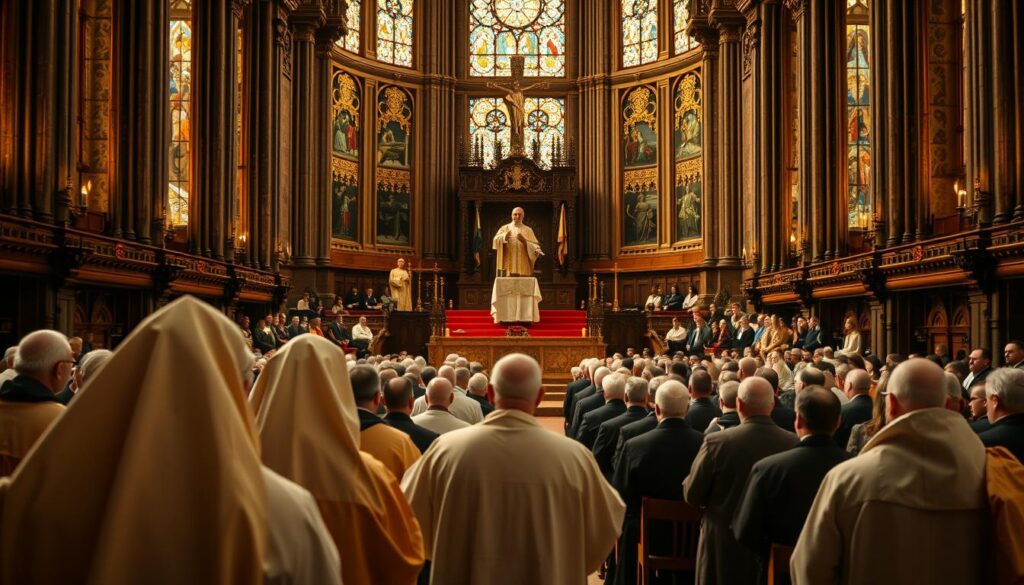
An ecumenical council taking place in a grand cathedral, the ornate architecture and stained glass windows casting a warm, reverent glow. In the foreground, a group of robed figures, their faces obscured, deep in solemn discussion. The middle ground features a raised dais, with a central figure gesturing, engaged in impassioned debate. In the background, rows of pews filled with attendees, their expressions rapt as they listen intently. The scene is infused with a sense of historical significance, the weight of tradition and the pursuit of theological understanding palpable in the air.

Shared Doctrines in Early Christianity

Both traditions anchor their faith in foundational truths affirmed by early believers. The Trinity – one God in three persons – and Christ’s divine nature remain non-negotiable. As one Byzantine hymn proclaims: “Light of Light, true God of true God, begotten not created.”

Four landmark councils settled these beliefs between 325-451 CE. They declared Jesus fully human and divine, confirmed the Holy Spirit’s divinity, and defended Mary’s title as “God-bearer.” Even Mary’s perpetual virginity finds agreement across both traditions.

The Role of Ecumenical Councils

Seven councils form the bedrock of Eastern Orthodox teaching, while Catholic churches recognize twenty-one. This gap reflects contrasting views on authority. “Councils clarify truth,” notes theologian John Anthony McGuckin, “but who calls them matters as much as what they decide.”

Here’s where paths diverge:

Tradition Recognized Councils Final Authority
Eastern Orthodox First 7 (325-787 CE) Consensus of bishops
Catholic 21 (325-1965 CE) Papal approval

Modern councils like Vatican II remain unrecognized by Orthodox leaders. Yet both value these ancient meetings as vital for preserving faith across generations.

Governance and Authority in the Churches

At the heart of many religious divides lies the question: Who holds the keys to authority? This central issue shapes how communities interpret sacred texts, make decisions, and maintain unity across centuries. While both traditions cherish ancient roots, their approaches to leadership reveal contrasting visions of spiritual stewardship.

Papal Supremacy vs. Conciliarity

The Catholic Church views papal authority as foundational. Citing Jesus’ words to Peter—“You are Peter, and on this rock I will build my church”—it teaches that each Pope inherits Peter’s role as chief shepherd. This belief grants the Pope final say in matters of faith and global church governance.

In contrast, the Orthodox Church operates through conciliarity—a shared leadership model. Major decisions require consensus among bishops, reflecting the early Church’s collaborative spirit. As one Orthodox theologian explains: “Truth isn’t owned by one person. It’s discovered together.”

Aspect Catholic Model Orthodox Model
Leadership Papal supremacy Council of bishops
Decision-making Centralized Decentralized
Source of Authority Papal office Collective tradition

The Influence of Church Fathers and Tradition

Both traditions revere early Christian thinkers like Augustine and Chrysostom. However, they diverge in applying their teachings. Catholic doctrine allows for evolving interpretations under papal guidance, while Orthodox communities prioritize preserving ancient practices unchanged.

This distinction echoes in their structures. The Eastern Orthodox Church functions as a family of self-governing bodies, united by liturgy and creed but independent in administration. Meanwhile, the Catholic hierarchy emphasizes unity through the Pope’s role as visible head.

Liturgical Practices and Ritual Distinctions

Worship spaces come alive through rituals that engage all senses. From the aroma of incense to the glow of candlelight, these traditions shape spiritual experiences. While sharing core sacraments like the Eucharist and baptism, Eastern and Western Christian communities developed unique expressions of devotion over centuries.

Eucharistic Celebrations and Baptismal Rites

The sacred meal uniting believers takes distinct forms. Roman Catholic liturgies use unleavened bread, recalling Jesus’ Last Supper during Passover. Priests consecrate the elements through precise prayers, affirming the body and blood of Christ through transubstantiation.

Eastern Orthodox services feature leavened bread, symbolizing the risen Savior. Their theology describes the change as metousiosis – a mysterious transformation beyond human logic. As one worshiper shared: “We don’t explain the miracle; we experience it.”
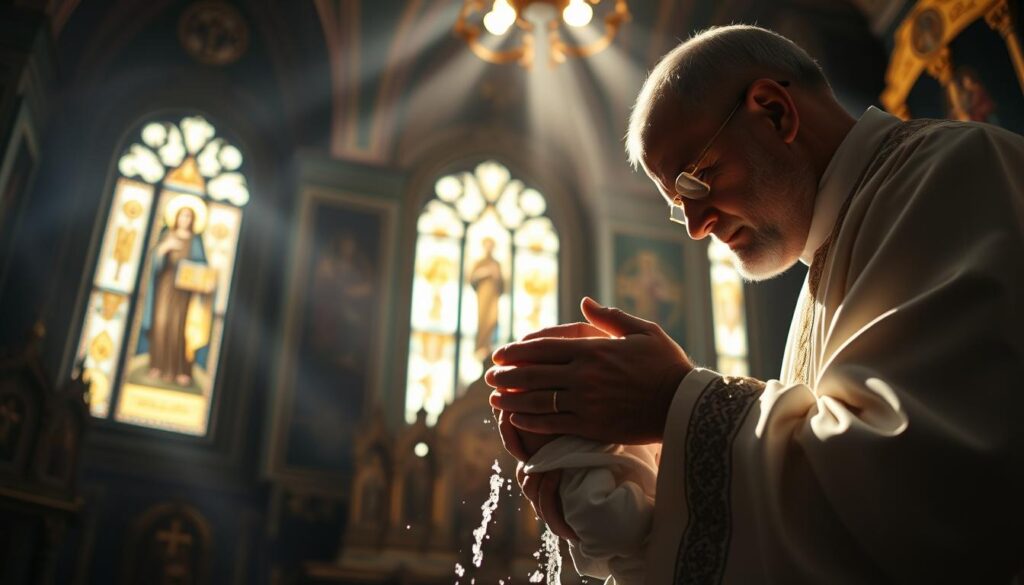
A dimly lit cathedral interior, with ornate Byzantine-style icons adorning the walls. In the foreground, a priest performs a baptismal ceremony, his hands cupping the infant's head as holy water cascades down. Filtered sunlight streams through stained glass windows, casting a reverent glow upon the ritual. The atmosphere is one of solemn reverence, with the iconography and liturgical vestments evoking the rich traditions of the Orthodox Christian faith. The composition emphasizes the centrality of the baptismal practice within the broader context of Orthodox liturgical observances.

Sacrament Western Practice Eastern Practice
Baptism Water poured over head Full immersion
Chrismation Forehead anointing Full-body anointing
Eucharistic Bread Unleavened Leavened

Iconography, Statues, and Aesthetics

Walk into an Orthodox sanctuary, and you’ll face a wall of icons – the iconostasis. These painted images of saints and biblical scenes aren’t mere decorations. They’re considered portals connecting earthly worship to heavenly realities.

Roman Catholic churches often feature statues that depict sacred figures in three dimensions. While respecting religious art, Western tradition historically focused more on sculptural expressions. Both approaches reflect deep reverence, yet their visual languages differ as much as poetry and prose.

These practices, shaped by history and theology, continue to inspire millions. Whether through the splash of baptismal waters or the gaze of a saint’s icon, both traditions invite believers into sacred encounters.

difference between orthodox church and catholic church

Unresolved debates from centuries past continue to shape spiritual identities today. At the core of these discussions lies the Filioque controversy, a disagreement about the nature of divine relationships. This dispute remains a defining feature separating two ancient Christian traditions.

The Filioque Debate’s Lasting Impact

Western churches affirm the Holy Spirit proceeds from both the Father and Son, expressed through the added Latin term Filioque. Eastern theologians argue this alters the original Creed’s balance, claiming the spirit proceeds from the Father alone. They view this addition as overstepping early church consensus.

Everyday Faith Expressions

Practical contrasts extend beyond theology. Married clergy serve in Eastern communities, while Western priests traditionally embrace celibacy. Visual traditions also differ—vibrant icons dominate Orthodox spaces, whereas statues often fill Catholic sanctuaries.

These distinctions reflect deeper convictions about authority and tradition. Yet both traditions share a commitment to preserving ancient wisdom while navigating modern spiritual challenges. Their parallel paths remind us that faith thrives through both unity and diversity.

FAQ

What caused the split between the Orthodox and Catholic Churches?

The Great Schism of 1054 marked the formal division over theological, cultural, and political disputes. Key issues included disagreements about papal authority and the Filioque clause in the Nicene Creed.

How do views on leadership differ between the two traditions?

The Catholic Church teaches papal supremacy, recognizing the Pope as Christ’s representative. Orthodox Christians emphasize shared leadership among bishops, rooted in early church councils.

Are there differences in how sacraments like baptism are practiced?

Both practice infant baptism, but Orthodox churches typically use full immersion three times, while Catholics often pour water. Theologies around original sin also shape these rituals.

Why do Orthodox churches avoid statues in worship spaces?

Orthodox tradition prioritizes icons as windows to the divine, avoiding statues to prevent idolatry. Catholic churches often use statues to depict saints and biblical figures.

What is the Filioque controversy about?

The Catholic Church added the phrase “and the Son” (Filioque) to the Nicene Creed, stating the Holy Spirit proceeds from the Father and Son. Orthodox Christians reject this, citing early creedal texts.

Do both traditions recognize the same saints and councils?

They share many early saints and the first seven ecumenical councils. Later Catholic saints and councils, like Vatican I, aren’t recognized by Orthodox communities.

How does the Eucharist differ in practice?

Orthodox liturgies use leavened bread and mix the Eucharist with warm water. Catholics use unleavened bread, reflecting Jesus’ Last Supper, and reserve consecrated hosts for adoration.

Are there differences in marriage practices?

Catholic priests cannot marry after ordination, while Orthodox priests can marry before becoming clergy. Divorce is also approached differently, with Orthodox churches allowing limited remarriage.
Discover St William Catholic Church: Inspiring Faith, Serving Community


For over six decades, this North Moreland Boulevard parish has served as a cornerstone of spiritual growth and community support. What began as a modest congregation of 552 families now thrives with 1,600+ households, reflecting its commitment to fostering meaningful connections.

Open Monday through Thursday from 8 AM to 4:30 PM, the parish offers convenient access to those seeking guidance or wanting to participate in outreach initiatives. Under Fr. Matthew Widder’s leadership, members find compassionate support through various programs that blend faith development with practical service.

The community’s growth story reveals more than numbers – it showcases a dedication to creating inclusive spaces for worship and fellowship. From Sunday services to educational workshops, there are numerous ways to engage with others who value spiritual nourishment and neighborly care.

Key Takeaways

  • 65+ years serving Waukesha’s spiritual needs
  • Conveniently located near major local routes
  • Expanded from 552 to 1,600+ member families
  • Led by experienced pastoral leadership
  • Offers diverse worship and learning opportunities
  • Prioritizes community outreach initiatives
  • Maintains flexible weekday office hours

Church History and Community Legacy

Rooted in visionary leadership, this spiritual hub began taking shape when Archbishop Meyer secured ten acres in 1955. The land purchase marked the first step toward establishing a new parish to serve Waukesha’s growing faithful.

Foundations of Faith

On June 25, 1957, the community officially became St. William Parish, honoring Msgr. William Miller’s four-decade service at St. Joseph Parish. Early members worshipped downtown at Park Theater until their permanent home opened in 1960. Founding pastor Rev. Sutschek guided 552 families through these formative years.

“Every great work begins with a single act of faith.”

Archbishop Albert G. Meyer, 1955

Building for Tomorrow

The campus evolved through strategic expansions:

Year Milestone Impact
1961 School opens Grades 3-8 education begins
1967 Gymnasium added Enhanced community space
1992 New worship space Easter Mass in updated church
2007 Anniversary canopy 50-year celebration landmark

Educational Excellence

What started as upper-grade instruction grew into full elementary education by 1987. The 1990 merger with St. Joseph and other schools created a unified Catholic education system, preserving academic traditions while embracing innovation.

Through six decades of change, the parish maintained its core mission. From temporary theater pews to modern facilities, each chapter reflects commitment to spiritual growth and community service.

Spiritual Services and Worship Programs

Balancing tradition with innovation, this faith community offers multiple pathways to deepen spiritual practice. Regular gatherings and digital connections ensure everyone can participate, whether attending in person or joining remotely.

A radiant virtual chapel, its digital walls adorned with stained glass windows that cast a warm, ethereal glow. In the foreground, a group of worshippers gathered in solemn prayer, their faces illuminated by the soft light. The middle ground features rows of virtual pews, each one occupied by a person lost in contemplation. In the background, a majestic altar stands tall, its ornate details and flickering candles creating an atmosphere of reverence and devotion. The scene is bathed in a serene, contemplative mood, capturing the essence of a vibrant, connected spiritual community.

Sacraments and Weekly Gatherings

Weekend services include a Saturday Vigil Mass at 4:00 PM and Sunday celebration at 9:00 AM. Midweek opportunities feature Tuesday/Thursday morning Masses at 8:30 AM – perfect for commuters or retirees.

The Sacrament of Reconciliation occurs Saturdays at 3:30 PM, with private appointments available. Special liturgies like the August 15 Assumption Mass at noon honor sacred traditions while accommodating modern schedules.

Online Faith Connections

Monday afternoons bring virtual Rosary prayers via Zoom at 3:00 PM, maintaining Marian devotion across distances. Fridays offer the Divine Mercy Chaplet at the same time, creating bookends of reflection around the workweek.

These digital initiatives demonstrate how spiritual bonds thrive through technology. Members appreciate blending home participation with communal worship, especially during busy seasons.

Service and Community Engagement at st william catholic church

At the heart of Waukesha’s charitable efforts, this faith community transforms compassion into action. Members bridge spiritual values with hands-on support through creative initiatives that uplift neighbors and strengthen bonds.

Outreach Ministries and Donation Events

August brings a back-to-school supply drive supporting local students. Essential items like notebooks, crayons, and backpacks fill the Gathering Space collection crib. Donors appreciate the flexible drop-off options – contributions stay in the neighborhood through partner schools.

The parish office in Vercelli House coordinates these efforts Monday-Thursday. Staff help match donations with classrooms needing scissors, markers, and rulers. “Every pencil donated writes a brighter future,” notes a volunteer coordinator.

Education, Parish Office, and Community Events

Curious about faith exploration? An August 27 meetup at Indeed Brewing offers casual conversations. Newcomers enjoy beer and dialogue in a relaxed setting – no pressure, just genuine connection.

Families can participate in the parish picture directory through August 19-23. Online scheduling with code mn579 simplifies appointment booking. These photos preserve memories while helping members put names to friendly faces.

Through the Waukesha Catholic School System collaboration, the parish continues its educational legacy. Teachers receive donated supplies directly, ensuring resources reach students quickly.

Conclusion

Six decades of faithful service have forged a remarkable legacy in Waukesha. This spiritual home has blossomed from 552 families to over 1,600 households, proving that strong roots nurture lasting growth. Through changing times, the community maintains its welcoming spirit while embracing new ways to connect.

Modern facilities and digital tools now complement cherished traditions. Virtual prayer groups meet alongside time-honored sacraments, creating spaces where all generations feel valued. This balance keeps the parish dynamic and relevant in today’s world.

Every member plays a vital role in shaping what comes next. Whether through Sunday services, school partnerships, or neighborhood projects, there’s always room to contribute. Drop by during office hours or explore upcoming events – your journey starts here.

Together, we continue building a future filled with hope, compassion, and shared purpose. Join hands with neighbors who believe in making faith active through kindness and service.

FAQ

What are the weekend Mass times?

Weekend services include Saturday Vigil at 5:00 PM and Sunday Masses at 8:30 AM and 11:00 AM. Additional celebrations occur during holy days—check the parish calendar for updates.

How can I participate in online prayer services?

Join virtual gatherings like the Rosary and Divine Mercy Chaplet through Zoom. Links are shared weekly via email newsletters and the community bulletin.

Does the parish offer volunteer opportunities?

Yes! From food drives to youth mentorship programs, outreach ministries welcome participation. Visit the parish office or website to explore current initiatives.

Are there programs for children and teens?

Faith formation classes, summer camps, and youth groups are available. The affiliated school also integrates spiritual growth with academic learning for K–8 students.

Can I schedule a sacramental ceremony?

Baptisms, weddings, and reconciliations can be arranged by contacting the parish office. Staff will guide you through preparation requirements and available dates.

How has the building evolved over time?

Originally established in 1953, the sanctuary expanded in 1986 to include a chapel and education wing. Recent renovations improved accessibility while preserving its historic stained-glass artwork.

What resources exist for newcomers?

Welcome packets, newcomer dinners, and small-group ministries help integrate families into the community. Stop by the office for a tour or introduction to pastoral leadership.

Visit the Annunciation Catholic Church: A Spiritual Oasis


In the bustling heart of downtown Houston, a serene sanctuary stands as a testament to timeless faith and community. This historic spiritual landmark offers more than traditional worship—it’s a vibrant gathering place where modern accessibility meets deep-rooted values. Whether seeking quiet reflection or meaningful connection, visitors find solace here amid the city’s fast-paced rhythm.

Designed to serve diverse needs, the space blends sacred tradition with thoughtful updates. Recent infrastructure improvements ensure everyone can participate comfortably, from wheelchair-friendly pathways to multilingual resources. The community’s vision extends beyond today, prioritizing lasting inclusivity for future generations.

Beyond its architectural beauty, the location thrives as a hub for fellowship and growth. Weekly events range from uplifting services to volunteer initiatives that unite neighbors. Visitors often describe feeling an immediate sense of belonging—a rare gift in urban settings.

Key Takeaways

  • A welcoming space for spiritual renewal in downtown Houston
  • Modern accessibility features complement traditional worship
  • Active community programs foster connection and service
  • Ongoing improvements preserve heritage while embracing the future
  • Inclusive environment for people of all backgrounds and abilities

Welcome to Our Spiritual Oasis

A beacon of hope and unity, this parish has served generations with open arms and enduring values. Here, spiritual journeys intertwine with shared purpose, creating a living tapestry of compassion and growth.

Our Mission and Community Values

At our core lies a simple promise: to nurture inclusive spaces where every voice matters. Our foundation rests on three pillars:

  • Creating welcoming environments for family faith development
  • Fostering service opportunities that transform lives
  • Prioritizing compassionate outreach across Greater Houston

A Rich History of Worship and Tradition

For over a century, sacred practices have evolved while maintaining their essence. Weekly rituals now blend ancient prayers with contemporary music, reflecting our community’s dynamic spirit. Members participate in:

  • Interactive scripture studies using digital tools
  • Multilingual prayer circles celebrating cultural diversity
  • Intergenerational mentorship programs

We keep our community connected through Facebook updates, Instagram stories, and instant alerts via Flocknote. These channels help members stay informed about volunteer drives, special services, and educational workshops – proving tradition and technology can walk hand in hand.

Mass Times and Service Information

Finding moments for spiritual reflection shouldn’t require rearranging your entire schedule. Our worship opportunities blend structure with flexibility, designed to meet diverse needs across our community.

A stately church facade, its gothic architecture bathed in warm, golden light. In the foreground, a large sign displays the mass times and service information in elegant calligraphy against a backdrop of intricate carvings and ornate architectural details. The scene conveys a sense of reverence and tradition, inviting visitors to step inside and experience the spiritual oasis within. The image is captured with a wide-angle lens, emphasizing the grandeur and scale of the building, while the soft, diffused lighting creates a serene and welcoming atmosphere.

Weekly Worship Opportunities

Midday services Tuesday through Friday at 12:00 pm offer working professionals sacred pauses during busy weeks. Weekend options begin with Saturday’s 4:00 pm vigil, followed by Sunday gatherings at 8:00 am and 10:00 am.

Extended Community Connections

Wednesday evenings bring a 6:30 pm service at St. John Chrysostom, perfect for night owls and commuters. Our Sunday 12:00 pm Spanish-language celebration ensures cultural inclusivity, while multiple locations reduce travel burdens for families.

Service Day/Time Location Language
Daily Mass Tue-Fri 12:00 pm Main Campus English
Wednesday Evening Wed 6:30 pm St. John Chrysostom English
Sunday Vigil Sat 4:00 pm Main Campus English
Sunday Service Sun 12:00 pm Main Campus Spanish
Office Hours Mon-Fri 9:30am-4:00pm Phone: (502) 633-1547

Experience an Unforgettable annunciation catholic church Journey

Step into a world where faith milestones and community celebrations intertwine. Our parish creates space for both personal transformation and shared joy through sacred traditions and groundbreaking events.

Ceremonies, Sacraments, and Blessings

Life’s most meaningful moments find expression here. Families celebrate:

  • Baptisms welcoming new members into our faith family
  • First Communions filled with youthful wonder
  • Weddings uniting couples in lifelong commitment
  • Confirmations strengthening adult spiritual journeys

Each sacrament becomes a touchstone for growth, connecting individuals to centuries of tradition.

Bishop Italo’s Dedication and Special Events

Join us October 12th as Bishop Italo blesses our new parking facility—a project enhancing accessibility for all. After the ceremony, share coffee and stories at Foley House while enjoying fresh pastries.

Looking ahead, our 2025 Holy Land pilgrimage promises extraordinary connections. From November 3-15, explore:

  • St. Peter’s Basilica in Vatican City
  • Jesus’ Sermon site at Mount Beatitudes
  • Bethlehem’s Church of the Nativity

These experiences forge bonds that outlast any single event, creating lifelong memories within our growing community.

Parking, Accessibility, and Venue Highlights

Navigating downtown Houston just got easier for those seeking spiritual connection. Our recent upgrades prioritize stress-free visits while honoring our commitment to inclusive spaces.

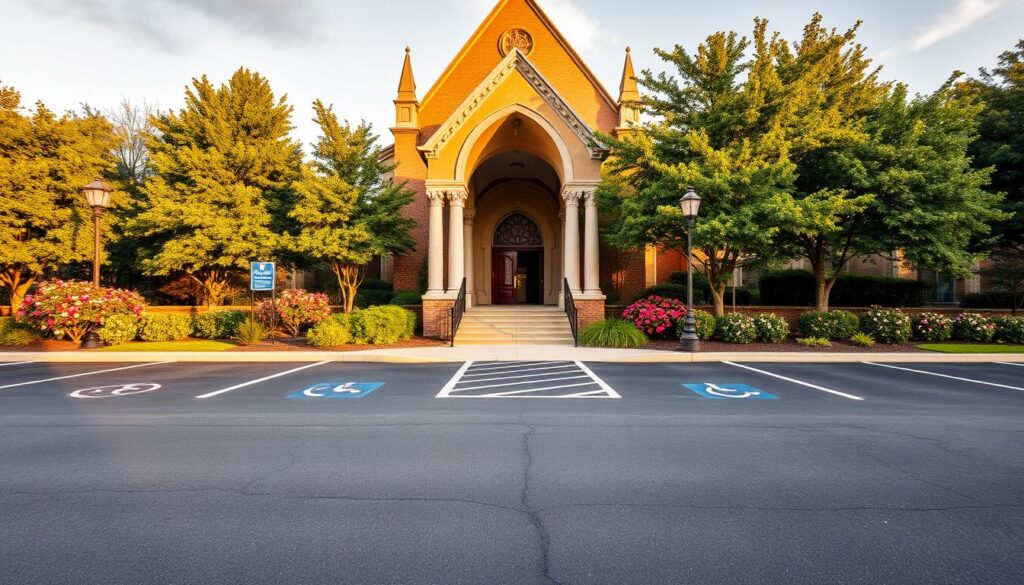
A spacious parking lot with clearly marked accessible spaces near the entrance of a stately Catholic church. The lot is well-lit, with smooth asphalt and neatly painted lines. A gently sloping ramp leads to a covered portico, its ornate columns and arched entryway welcoming visitors. Lush greenery and blooming flowers surround the venue, creating a serene, park-like atmosphere. The church's façade is adorned with intricate architectural details, conveying a sense of timeless beauty and spiritual significance. Warm, golden lighting illuminates the scene, evoking a feeling of tranquility and reverence.

Latest Parking Garage Updates

The newly completed parking structure opens August 25th, featuring six floors with 412 spaces. Elevators connect directly to our main gathering hall, eliminating stairs for wheelchair users and families with strollers.

Early risers appreciate the 6:30 am daily service access, while midday visitors benefit from 12:10 pm mass proximity. Reserved spots near entrances ensure quick access for seniors and expectant mothers.

Complimentary Parking and Venue Accessibility

Guests enjoy free parking at the LAM Lot (1603 Rusk St) during all services and events. Our team validates tickets for:

  • Weekend gatherings
  • Baptism preparations
  • Community meal programs

Recent accessibility upgrades include tactile floor guides for visually impaired visitors and hearing loop systems in gathering spaces. These changes reflect our dedication to serving Houston’s evolving urban population.

Service Time Location Features
Daily Mass 6:30 am / 12:10 pm Main Sanctuary Garage Levels 1-3 Open
Weekend Parking All Services LAM Lot Free Validation
Special Events As Scheduled Both Locations RSVP by 8/20

Planning an event? Remember to RSVP by August 20 for guaranteed parking. These improvements ensure our space remains welcoming as downtown continues growing around us.

Community Outreach and Parish Events

Our neighborhood thrives when people come together through shared purpose. Discover opportunities to connect, learn, and support meaningful causes through these upcoming gatherings and resources.

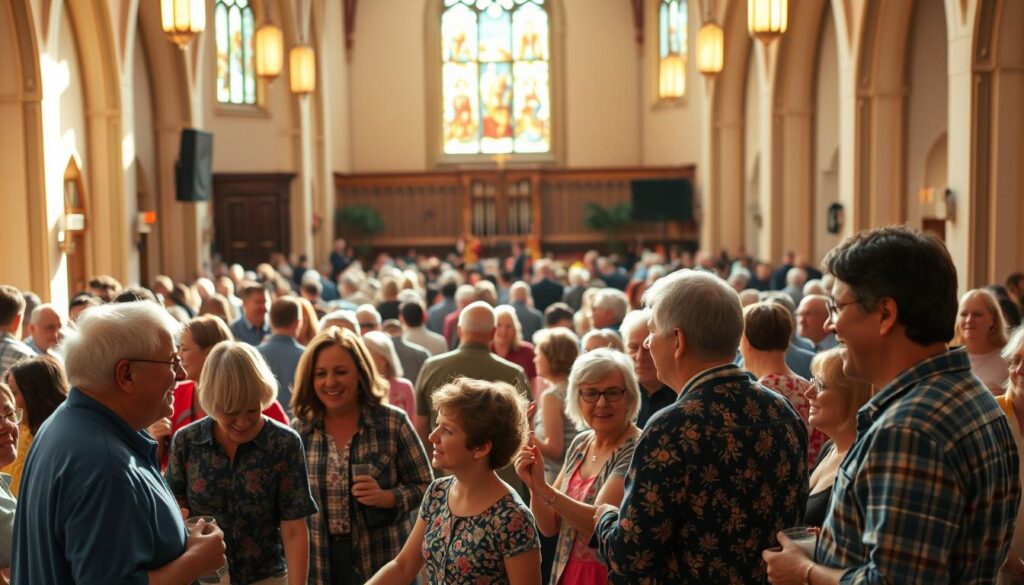
A bustling community event at Annunciation Catholic Church, captured in warm, natural lighting. In the foreground, parishioners engage in lively conversation, their faces alight with joy. The middle ground showcases a variety of activities, from children playing games to adults participating in group discussions. In the background, the church's grand architecture and stained-glass windows create a serene, spiritual atmosphere, inviting all to partake in the vibrant parish community. The scene exudes a sense of togetherness, faith, and a deep connection to the local neighborhood.

Festival Raffle and Special Collections

Mark your calendars for an exciting evening on September 6, 2025! The School Gym at 3536 Lafayette Street will host our annual fundraising raffle at 7:30 p.m. With a $2,000 grand prize and three additional cash awards, this event supports vital programs. Tickets go live July 6 at $20 each – participants can win even if they can’t attend the drawing.

On August 23-24, we’ll hold a special collection benefiting retired clergy members. This initiative honors those who dedicated their lives to guiding spiritual journeys across Denver. Every contribution helps ensure their golden years are filled with dignity and care.

Learning Spaces and Shared Meals

Three versatile rooms await your group’s next gathering:

  • Hope Room: Ideal for Bible studies
  • The Taller: Perfect for workshop sessions
  • Loretto House First Floor: Best for large preparation meetings

Reserve spaces through our office on a first-come basis. After Sunday services, don’t miss Encuentro Matrimonial’s homemade meals. These delicious spreads fuel both bodies and community bonds, with proceeds supporting local outreach efforts.

From fundraising to faith formation, every event strengthens connections while addressing real needs. Join us in building relationships that extend far beyond our walls.

Contributions and Faith-Based Fellowship

Every contribution fuels both our sacred space and the bonds that unite us. We’ve designed giving methods to match modern lifestyles while honoring time-tested traditions of generosity.

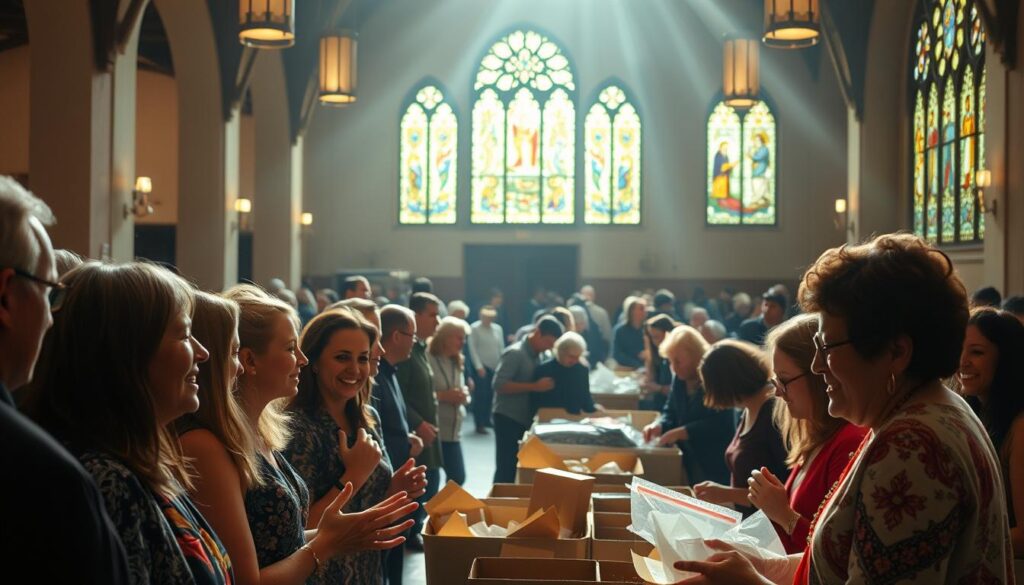
A radiant sanctuary where parishioners gather, their faces aglow with devotion. In the foreground, a group of smiling congregants engaged in lively discussion, hands clasped in fellowship. The middle ground reveals a scene of community service, volunteers sorting donations, preparing meals for the less fortunate. In the background, the stained-glass windows cast a warm, golden light, illuminating the space with a sense of timeless spirituality. The atmosphere is one of unity, compassion, and a shared commitment to making a positive impact on the world.

Flexible Ways to Support Our Mission

Choose the method that fits your rhythm. Traditional offering baskets circulate during services, while mailed donations let you contribute at your convenience. For tech-savvy supporters, Venmo (@Annunciation-Denver) and online portals provide instant options.

These choices reflect our commitment to accessibility. As one member shared, “Being able to give through my phone makes staying involved effortless.”

Growing Together Through Shared Moments

After services, the fellowship hall buzzes with connection. Weekly coffee hours and seasonal potlucks create space for organic conversations. Many friendships begin over shared cookies and meaningful discussions.

Your gifts make these moments possible. Contributions fund:

  • Local food pantry partnerships
  • Youth mentorship programs
  • Free access to FORMED’s faith-building resources

This digital platform offers books, films, and study guides that deepen spiritual understanding. Whether you contribute financially or through volunteer hours, every action strengthens our parish’s collective impact.

Conclusion

Discover where tradition meets modern life in a welcoming space for all. Our parish offers a unique blend of spiritual growth and practical accessibility, designed for today’s diverse urban community.

With multiple mass times throughout the week – including midday services and Spanish-language options – we make worship fit busy schedules. Recent upgrades like free parking and wheelchair-friendly pathways demonstrate our commitment to inclusive participation.

Beyond Sunday mass, engagement opportunities abound. From cultural celebrations to volunteer initiatives, every event strengthens neighborhood bonds. Ongoing investments in facilities and programs ensure this spiritual home grows alongside Houston’s evolving needs.

We invite you to experience this vibrant community firsthand. Connect through weekly services, seasonal gatherings, or digital resources that deepen faith journeys. Visit our website for updated event calendars, or call (502) 633-1547 to explore ways to contribute your talents.

Join neighbors finding meaning in shared values and timeless traditions. Together, we’re building a legacy of compassion that transcends generations.

FAQ

What are the weekend service times?

Weekend schedules include Saturday Vigil Mass at 5:00 PM and Sunday services at 8:00 AM, 10:00 AM, and 12:00 PM. Daily Mass is held Monday–Friday at 12:10 PM.

Is there parking available nearby?

Yes! Complimentary parking is offered in the garage on 3rd Street. Updated signage and overflow options are available during large events.

Are bilingual services offered?

Our 12:00 PM Sunday Mass is celebrated in Spanish. ASL interpretation can also be arranged with advance notice for special ceremonies.

How can I participate in sacraments like baptism?

Contact the parish office to schedule sacramental preparation sessions. Baptisms, weddings, and confirmations are arranged through guided faith formation programs.

What community events are coming up?

Join our annual festival raffle, Advent retreats, or weekly Bible study groups. Check the bulletin for details on seasonal collections and guest speaker series.

How do I contribute financially?

Donations can be made via offering baskets during services, online through our secure portal, or via Venmo @AnnunciationParish. All gifts support outreach programs.

Is the venue wheelchair accessible?

Yes! Elevators, ramps, and reserved seating are available. Assistive listening devices can be requested at the welcome desk before services.

Can I reserve space for a private event?

Our fellowship hall and courtyard are available for gatherings. Submit a reservation form online or inquire at the office for availability and guidelines.

Explore the Secrets of Our Lord in the Attic Museum, a Hidden Church


Tucked within a 17th-century canal house near Central Station lies an architectural marvel few expect to find. This three-story time capsule reveals winding staircases, antique kitchens, and bedrooms frozen in amber – all leading to its crowning secret.

At the top floor, visitors discover a fully preserved worship space that hosted forbidden gatherings for generations. Built during Protestant rule when Catholic services were banned, this ingenious sanctuary blended seamlessly with everyday life. Wealthy merchant Jan Hartman cleverly designed the space in 1663, creating both a home and haven.

The layout tells a story of quiet resilience. Narrow corridors give way to gilded altars and stained glass, while original furnishings showcase how families lived alongside their faith. For over 350 years, these walls protected traditions while Amsterdam evolved around them.

Key Takeaways

  • Uncover a 17th-century canal house with concealed religious spaces
  • Walk through authentic living quarters leading to a secret worship area
  • Discover how Dutch tolerance shaped unique architectural solutions
  • Experience a landmark preserving Catholic heritage during Protestant rule
  • See how residential and sacred spaces coexisted in plain sight

More than just a museum, this landmark celebrates creative coexistence. Every creaking step whispers stories of devotion and determination waiting to be heard.

History and Significance of the Hidden Church

Amsterdam’s 17th-century streets hold secrets of resilience beneath their gabled roofs. During this era, religious freedom existed in whispers rather than declarations. Wealthy trader Jan Hartman crafted a bold solution when public Catholic practices faced bans.

An Overview of the Canal House

Hartman’s home blended seamlessly with neighboring properties along the canal. By acquiring three connected houses, he created space for family life and spiritual gatherings. Original wood beams and narrow staircases still guide visitors through this architectural puzzle.

Clandestine Worship in Protestant Amsterdam

The 1578 Alteration shifted power to Calvinist leaders, transforming the city’s religious landscape. Traditional places of prayer became Protestant spaces, forcing new approaches. House-based sanctuaries emerged as discreet alternatives, tolerated through unspoken agreements.

Period Religious Landscape Key Development
Pre-1578 Public Catholic services Monasteries & grand churches
Post-1578 Underground gatherings Over 30 hidden house churches

Hartman’s creation became Amsterdam’s second major clandestine worship space after Begijnhof. Families maintained public Protestant appearances while nourishing private traditions. This duality shaped Dutch society’s approach to coexistence for generations.

Discovering our lord in the attic museum former hidden catholic church

A stunning canal house museum set in the heart of historic Amsterdam, its elegant facade reflecting in the tranquil waters. Sunlight streams through tall windows, illuminating the meticulously preserved interiors - ornate moldings, antique furnishings, and a sense of timeless grandeur. In the attic, a hidden Catholic church comes alive, its vaulted ceilings and stained glass windows revealing a sacred space once concealed from the world. Capture the essence of this captivating blend of architectural beauty and religious history, a true gem waiting to be discovered.

Visitors to Amsterdam’s historic center often pass by Oudezijds Voorburgwal 38 unaware of its 400-year-old marvel. Behind this classic Dutch facade lies a multi-level adventure waiting to unfold. Guests climb steep staircases past preserved living quarters, each step heightening anticipation for the revelation above.

The journey itself becomes part of the story. Winding through narrow hallways and past antique furnishings, explorers gradually uncover how daily life masked spiritual practices. Only at the highest level does the space transform into a breathtaking worship area, its gilded decor contrasting with the building’s modest exterior.

This architectural puzzle sits surrounded by Amsterdam’s oldest neighborhoods. Centuries of history echo through nearby streets, adding depth to every discovery. Builders cleverly integrated the sacred space into existing structures, proving devotion could thrive alongside practicality.

Central positioning made the location ideal for discreet gatherings. Positioned near major waterways and thoroughfares, it welcomed worshippers from across the city while maintaining secrecy. Today, the preserved canal house stands as both time capsule and testament to creative resilience.

Modern explorers experience more than artifacts here. They walk through layers of lived history, where ordinary walls protected extraordinary traditions. Every creak in the wooden floors whispers tales of communities who found ingenious ways to preserve their heritage.

Architecture and Interior Highlights

This 17th-century treasure reveals how clever design turned everyday spaces into spiritual sanctuaries. Visitors marvel at the balance between practical living areas and sacred elements hidden in plain sight.

Attic Church Design and Layout

Cramped staircases open into a surprisingly spacious worship area. Marble pillars frame the room, drawing eyes upward to suspended galleries that doubled seating capacity. Narrow wooden benches line the floor, preserving the intimate atmosphere of 17th-century gatherings.

Bright pink accents contrast with golden decor, showing Dutch artisans’ flair for dramatic touches. The layout cleverly uses vertical space, with two semi-floors hovering above the main floor. This innovative approach let 150 worshippers share meaningful moments under one roof.

Period Furnishings and Religious Artifacts

Original furnishings tell dual stories of domestic life and secret devotion. A 1660s kitchen displays copper pots beside sacred vessels used during services. Hidden alcoves reveal confessionals barely wider than a doorway.

Design Feature Functional Purpose Artistic Detail
Suspended galleries Maximized seating Carved wooden railings
Narrow benches Space efficiency Hand-tooled leather seats
Marble columns Structural support Veined stone patterns

Every room serves as a time capsule. Delicate rosaries rest near family heirlooms, while painted panels depict scenes cherished by generations. These carefully preserved spaces let visitors touch history through textures and traditions.

Practical Visitor Information

Planning a trip to Amsterdam’s historic center? Here’s how to make the most of your experience at this remarkable site. Smart preparation ensures smooth access to centuries of history waiting behind its unassuming facade.

A contemporary museum interior with a sleek, minimalist design. In the foreground, a large information kiosk with digital displays and touchscreens, staffed by helpful museum guides. The middle ground features signage and wayfinding elements, directing visitors to different exhibitions and facilities. The background showcases large windows overlooking the picturesque canals of Amsterdam, bathed in warm, natural lighting. The overall atmosphere is one of efficiency, convenience, and a sense of cultural exploration, reflecting the practical information needs of museum visitors.

Opening Hours, Tickets, and Prices

Consistent hours from 10 a.m. to 6 p.m. daily make scheduling easy. Last entry occurs 30 minutes before closing. Peak seasons see high demand, so booking online guarantees admission.

Ticket Type Price Discount Option
Adult €11.50 iAmsterdam Card
Youth (13-17) €6.50 Museumkaart
Child (0-12) Free

Save up to 40% with multi-attraction passes. The Dutch Museum Card offers year-round access to 400+ cultural sites for €64.90.

Accessibility, Directions, and Local Tips

Find the entrance at Oudezijds Voorburgwal 38 – look for the discreet plaque near Café de Oude Wester. Central Station sits just 12 minutes away by foot.

Steep staircases limit wheelchair access, but virtual tours offer alternative exploration. Arrive early to avoid crowds and enjoy quieter moments in the attic sanctuary.

Unique Experiences and Attractions

Step beyond ordinary sightseeing and engage with history through innovative technology. Upon arrival, guests receive headsets transforming silent spaces into vivid storytelling arenas. Available in 12 languages, these devices reveal hidden details in carved woodwork and faded paintings.

Bringing History to Life

The complimentary audio tour acts as a personal curator. Voices describe how sunlight once illuminated secret prayer meetings through specific windows. Listeners discover why certain furnishings served dual purposes during restricted times.

Most explorers spend 90 minutes navigating the space, though history enthusiasts often linger longer. Seasonal exhibitions add fresh context—recent displays compared 17th-century worship practices with modern interfaith dialogues.

Special events keep traditions alive. Monthly gatherings in the attic sanctuary maintain continuity with the past. These ceremonies demonstrate how sacred spaces evolve while honoring their origins.

Quieter than larger institutions, the site encourages personal connections. Visitors might pause alone in the choir loft or trace finger grooves worn into wooden pews. Such moments turn historical exploration into intimate discovery.

Exploring the Museum’s Urban and Cultural Context

Amsterdam’s waterways hold more than water—they cradle stories of ingenious urban design. The site sits embedded in the city’s oldest district, where 17th-century merchants shaped both commerce and culture. Its position along a bustling canal route reveals how practicality and secrecy coexisted in plain sight.

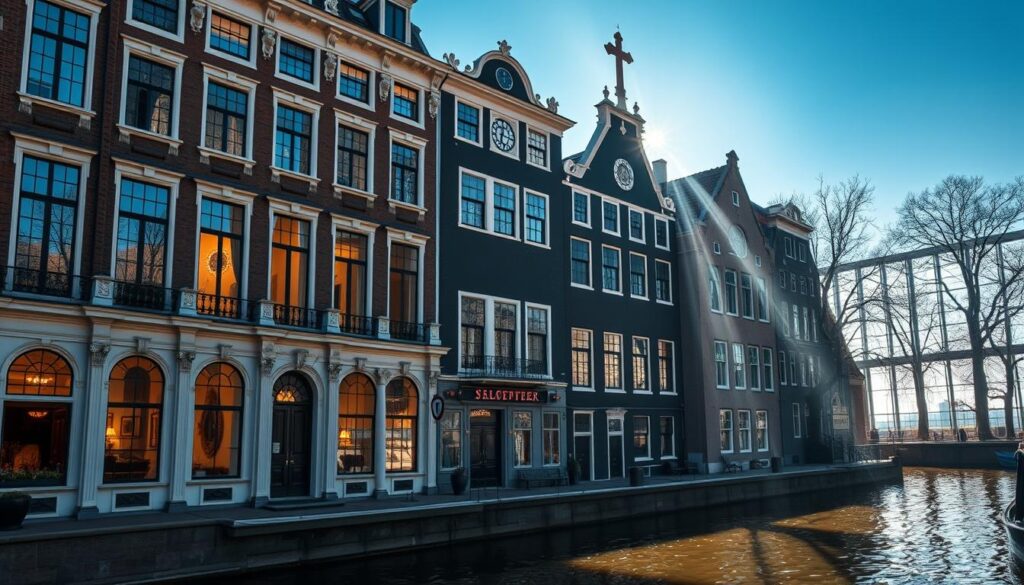
A picturesque canal house nestled in the heart of Amsterdam, its classic Dutch architecture mirrored in the tranquil waters. The foreground features the intricate façade, with ornate gables, arched windows, and a weathered, brick exterior. In the middle ground, the surrounding urban landscape unfolds, showcasing the vibrant mix of historic buildings and modern elements. The background is dominated by a hazy, atmospheric cityscape, with the spires of historic churches and the distant skyline creating a sense of depth and context. Warm, golden sunlight filters through the scene, casting a soft, inviting glow and accentuating the textures and details. The overall mood is one of serene, timeless elegance, capturing the essence of Amsterdam's rich cultural heritage.

Architectural Ingenuity Meets Urban Strategy

Jan Hartman’s vision transformed three narrow homes into a unified complex. Workers cut precise openings between walls, creating hidden passages that connected living spaces to worship areas. Steel braces and wooden beams reinforced the structure without altering its ordinary exterior.

The location offered perfect camouflage. Like neighboring canal houses, it featured stepped gables and tall windows typical of Dutch Golden Age architecture. This clever mimicry let worshippers blend with daily foot traffic while accessing sacred spaces upstairs.

Hartman’s storeroom played a dual role. Goods arrived via the canal, while discreet visitors slipped through adjacent entrances. The setup allowed business operations to mask spiritual gatherings—a masterclass in functional design under restrictive laws.

Today, the complex remains a testament to urban adaptability. Its central position still connects visitors to Amsterdam’s layered history, where every brick whispers tales of innovation and survival.

Tips for a Memorable Visit

A bustling museum entrance, visitors strolling through the grand lobby adorned with ornate architectural details. Sunlight streams in through large windows, casting a warm glow on the marble floors and wooden benches. In the foreground, a group of tourists studying a map, discussing their museum exploration plan. Behind them, a line forms at the ticket counter, brimming with excitement. The scene exudes a sense of cultural exploration and discovery, capturing the essence of an enriching museum visit in Amsterdam.

Exploring historic sites requires both curiosity and practical preparation. Proper planning helps visitors make the most of their time at this remarkable place. Comfort and awareness of the building’s layout ensure a smooth journey through centuries of history.

Footwear and Floor Protection

Sturdy closed-toe shoes prove essential for navigating steep staircases. Original 17th-century steps wind upward at angles modern buildings rarely replicate. Grippy soles prevent slips on polished wood surfaces worn smooth by generations.

Protective shoe covers provided at entry safeguard delicate floors. These thin overshoes work best with snug footwear, keeping historic planks pristine while allowing easy movement. Heels and sandals complicate both climbing and floor preservation efforts.

Group Experiences and Timing

Guided tours unlock deeper insights into the site’s layered past. Knowledgeable staff share stories about architectural tricks and hidden symbols most miss when exploring solo. Groups of 10+ should book ahead for personalized attention.

Weekday mornings offer quieter exploration windows. Local crowds often fill spaces after noon, especially on weekends. Early arrivals enjoy unhurried moments in the attic sanctuary’s golden light.

Tour Type Duration Best For
Self-Guided 60-90 mins Flexible explorers
Expert-Led 120 mins History enthusiasts
Group 75 mins Schools & teams

Note that narrow passages and low ceilings limit accessibility. Those with mobility challenges may prefer virtual tours showcasing upper levels through detailed 360° imagery.

The Legacy and Impact on Modern Worship

Seventeenth-century Amsterdam whispers lessons about coexistence through its architecture. While many nations enforced religious conformity, Dutch merchants crafted a social experiment within their homes. These spaces became laboratories for tolerance, proving diverse beliefs could thrive side by side.

Historical Influence on Religious Freedom

The attic sanctuary exemplifies a radical idea: conscience over coercion. Dutch authorities permitted private worship despite public restrictions, creating breathing room for minority groups. This delicate balance shaped laws protecting personal belief systems across Europe.

Merchants like Hartman demonstrated how practical solutions could bypass dogma. Their homes hosted Jewish prayers, Catholic masses, and Protestant sermons—often within the same city block. This unspoken agreement laid groundwork for modern human rights frameworks.

Contemporary Relevance and Cultural Reflections

Today’s interfaith dialogues echo patterns from Amsterdam’s Golden Age. The preserved worship space challenges visitors to consider: How do societies protect minority traditions while maintaining social cohesion? Its survival reminds us that tolerance requires active preservation.

Modern nations face similar tests with new belief systems and migrant communities. The Dutch model offers insights—showing how shared urban spaces can nurture both unity and diversity. As one historian notes: “True acceptance begins where laws end.”

This landmark’s greatest lesson transcends time. It proves that courage and creativity can turn walls into bridges—a message resonating in today’s global conversations about belonging.

Conclusion

Walking through this 17th-century merchant’s home feels like stepping into a living history book. Each creaking floorboard shares stories of clever design and quiet perseverance. Preserved rooms reveal how families balanced daily life with spiritual practices during restrictive times.

The crowning jewel—a breathtaking worship space—shows how necessity fuels innovation. This canal house sanctuary proves devotion thrives even under constraints. Its survival speaks volumes about Dutch values of practicality and tolerance.

Visitors leave with more than photos. They carry understanding of how communities preserved traditions through architectural wit. The site challenges us to see buildings as living narratives, where walls hold lessons about coexistence.

Let this guide enhance your exploration. From navigating steep stairs to decoding symbolic details, every prepared traveler becomes part of the story. Discover how one merchant’s vision shaped conversations about freedom that still resonate today.

FAQ

Why was the church built inside a 17th-century canal house?

During the Protestant Reformation, public Catholic worship was banned in Amsterdam. Wealthy merchants secretly built this space in their homes to practice their faith. The canal house’s attic provided a discreet location for religious gatherings.

How long does a typical visit to the museum take?

Most visitors spend 60–90 minutes exploring. The experience includes walking through the historic merchant’s home, climbing narrow stairs to the hidden church, and viewing exhibitions about Amsterdam’s religious tolerance.

Are guided tours available at the museum?

Yes! Audio guides in multiple languages are included with admission. For groups of 10 or more, private tours can be booked in advance. Special themed tours on cultural history are also offered seasonally.

Is the museum accessible for visitors with mobility challenges?

Due to the building’s historic structure, the attic requires climbing steep stairs. The lower floors are partially accessible—contact staff ahead of time for assistance. Wheelchairs cannot reach the church itself.

Can I take photos inside the museum?

Non-flash photography is allowed in most areas. Some artifacts and temporary exhibitions may restrict photography to preserve delicate items. Check with guides upon arrival for details.

What makes the attic church’s design unique?

The space cleverly combines a place of worship with a residential setting. Its multi-level layout, hidden galleries, and original 1660s altar showcase how Catholics adapted to worship discreetly. Period furniture and art add to its authenticity.

How does the museum reflect Amsterdam’s history of religious tolerance?

While public Catholic worship was restricted, authorities often turned a blind eye to hidden churches. This canal house symbolizes the city’s unofficial acceptance of diverse beliefs, a legacy that shaped its cultural identity.

Are tickets available for purchase online?

Yes! Online tickets are recommended during peak seasons. Discounts are offered for students, seniors, and children. Combination passes with nearby museums like the Rembrandt House can also save you money.

What nearby attractions pair well with a visit to the museum?

The Red Light District, Anne Frank House, and Oude Kerk are within walking distance. Canal cruises often include the museum in their historic routes, offering a broader view of the city’s Golden Age.

Explore the Holy Apostolic Catholic Church of the East


Step into the world of one of Christianity’s oldest communities, tracing its roots to the earliest days of faith in Mesopotamia. This ancient denomination has preserved traditions linked to apostles like Thomas and Addai, surviving centuries of challenges while maintaining its spiritual identity.

Today, this global community unites over 400,000 members across six continents. Based in Erbil, Iraq, its leadership under Mar Awa III reflects a blend of timeless practices and modern adaptability. Followers celebrate worship in Classical Syriac, using liturgies unchanged for generations.

What makes this group unique? Its story includes resilience through political shifts and migrations, yet its core teachings remain anchored in early Christian theology. From India to Australia, congregations thrive while honoring rituals passed down through 2,000 years of history.

Key Takeaways

  • Originates from apostolic teachings attributed to early disciples like Saint Thomas
  • Maintains ancient worship practices, including Syriac-language liturgies
  • Led by Patriarch Mar Awa III, elected in 2021
  • Global membership spans 20+ countries with significant Iraqi roots
  • Balances historic traditions with contemporary diaspora needs

Introduction to the Holy Apostolic Catholic Church of the East

Among Christianity’s oldest branches stands a community tracing its roots to Mesopotamia’s first believers. Officially called the Holy Apostolic Catholic Assyrian Church of the East, this group follows practices shaped long before Europe’s major denominations emerged. Unlike Roman Catholic or Orthodox traditions, it developed unique customs in ancient Assyria and Persia.

This denomination proudly maintains early Christian rituals unchanged for centuries. Its East Syriac Rite liturgy uses Classical Syriac – a language close to what Jesus spoke. Members view their faith as preserving teachings passed directly from apostles like Thomas and Thaddeus.

Geographic isolation helped shape its distinct identity. While Western churches debated doctrines at councils, this community focused on spreading faith eastward. By 410 AD, it had established bishoprics from Cyprus to China.

Modern followers emphasize two remarkable traits: unbroken leadership since apostolic times and survival through empires’ rises and falls. As one member notes: “Our rituals connect us to believers who walked these lands 1,900 years ago.”

Today’s global diaspora keeps traditions alive while adapting to new cultures. From Chicago to Sydney, families maintain ancient fasts and festivals, proving timeless practices can thrive in contemporary settings.

Historical Origins and Apostolic Foundations

Rooted in the lands where empires rose and fell, a spiritual legacy took shape through daring missionary work. Three disciples of Jesus Christ – Thomas, Thaddeus, and Bartholomew – carried their message beyond Roman territories, planting seeds in Persia and India.

A vast, dimly lit cathedral interior with intricate Byzantine-style architecture, ornate columns, and a soaring central dome. Sunlight filters through stained glass windows, casting warm hues across the space. In the foreground, a group of robed figures, representing the early Christian clergy of the Assyrian Church of the East, gather in reverent prayer, their faces illuminated by the sacred light. In the background, ancient frescoes and mosaics adorn the walls, depicting scenes from the life of Christ and the apostles, connecting this historic place to its apostolic foundations. An atmosphere of timeless devotion and spiritual tradition permeates the scene.

Pioneers of Eastern Christianity

Thomas’s journey to India created lasting ties between Mesopotamian believers and South Asian communities. Meanwhile, Thaddeus established vibrant groups in Upper Mesopotamia, using Edessa as a strategic hub. By the first century, this city became Christianity’s eastern heartbeat.

Networks of Faith Along Trade Routes

Merchants and missionaries traveled Silk Road paths together, spreading teachings from Cyprus to China. Saint Peter’s visit to Babylon – mentioned in his letters – gave official approval to these efforts. A historian notes: “This wasn’t just religion – it was a cultural bridge connecting continents.”

By 300 AD, nineteen bishop seats dotted the map, showing impressive growth. The Assyrian Church East developed unique traditions while maintaining core early church values. Its survival through political changes proves the strength of those first century foundations.

Milestones and Schisms in the Church’s History

Navigating shifting political landscapes and theological debates, this ancient community faced defining moments that reshaped its path. Three critical periods stand out in its journey toward modern identity.

Evolution Through Centuries and Key Councils

In 280 CE, a major organizational shift occurred. Mar Papa bar Gaggai established central leadership at Seleucia-Ctesiphon, Persia’s capital. This move created a stable structure for growth.

By 410 CE, leaders made a bold declaration. They formally broke ties with Antioch’s patriarchate, asserting full independence. One historian describes this as “the birth certificate of Eastern Christianity’s self-governance.”

Impact of the Schism and the Rise of Distinct Lines

The 16th century brought seismic changes. Yohannan Sulaqa’s 1552 decision to seek Roman approval split followers. His group later formed the Chaldean Catholic Church, while traditionalists kept ancient practices alive.

Two leadership lines emerged – the Eliya family in Alqosh and the Shimun branch in Qochanis. Each preserved unique traditions until 1804, when modern structures took shape. Today, the Assyrian Church East and Chaldean Catholic Church maintain separate identities while sharing deep historical roots.

These divisions show how faith adapts to new realities without losing core values. As one scholar notes: “Their story isn’t about division – it’s about survival through flexibility.”

Theology and Liturgical Traditions

At the heart of ancient Christian worship lies a living connection to spiritual practices older than most nations. The community’s rituals blend poetic prayers with gestures unchanged since the early centuries of faith.

A dimly lit sanctuary, the air thick with the scent of incense. In the foreground, a priest in ornate robes stands before a golden altar, leading the East Syriac Rite liturgy. The sanctuary is adorned with intricate icons and tapestries, casting a warm, reverent glow. In the middle ground, congregants kneel in prayer, their faces etched with a sense of profound devotion. The background is filled with the rich, textured walls of the ancient church, suggesting a timeless tradition. The lighting is soft and atmospheric, creating a sense of solemn majesty and spiritual transcendence.

East Syriac Rite and the Divine Liturgy of Saints Addai and Mari

The East Syriac Rite forms the backbone of worship, featuring the revered Divine Liturgy of Saints Addai and Mari. This 3rd-century ritual surprises scholars by omitting Jesus’s Last Supper commands – “Take, eat, this is my body” – yet remains recognized as valid by global Christian leaders.

“This liturgy proves early Christians valued spiritual essence over standardized formulas,” notes a liturgical historian.

Use of Classical Syriac and Aramaic

Worshippers hear prayers in Classical Syriac, an Aramaic dialect preserving sounds from Jesus’s lifetime. Manuscripts use the Nestorian script, a flowing alphabet developed in 5th-century Persia. As one member explains: “When we chant, we’re speaking across 1,600 years of history.”

Feature East Syriac Rite Roman Rite Byzantine Rite
Main Language Classical Syriac Latin Greek
Institution Words Optional Required Required
Christology Focus Two qnome Hypostatic Union Divine-Human Unity

The community teaches that Christ contains two qnome – divine and human aspects united as one. While embracing the Nicene Creed, their interpretation reflects early Mesopotamian theology. Modern members balance these ancient ideas with contemporary interfaith dialogues.

Organizational Structure and Leadership

Strong frameworks keep ancient communities thriving in modern times. The Assyrian Church East combines centuries-old hierarchy with smart adaptations for today’s global members.

A grand cathedral interior in the ancient Assyrian architectural style, illuminated by soft, warm lighting from high stained-glass windows. In the foreground, the Catholicos-Patriarch of the Assyrian Church of the East presides over a solemn council of bishops and clergy, their ornate robes and vestments reflecting the church's rich heritage. The middle ground features a processional of deacons and acolytes, carrying sacred symbols and relics. The background depicts intricate, carved stone columns and arches, conveying the timeless grandeur and tradition of this venerable Eastern Christian institution.

Patriarchal Leadership and Hierarchical Traditions

At the helm stands Mar Awa III, elected in 2021 as the 122nd Catholicos-Patriarch. His role connects modern believers to leaders dating back to apostolic times. The structure flows downward through:

Role Responsibility Regions
Metropolitans Oversee multiple dioceses Continents
Bishops Manage local dioceses Countries
Priests Lead parishes Cities

This system ensures teachings stay consistent from Erbil to Chicago. As one bishop notes: “Our structure isn’t about power – it’s about preserving truth across generations.”

Modern Shifts and Global Administrative Growth

Awa III guides a community spread across 20+ countries. Digital tools now link the patriarchal see in Iraq to Sydney youth groups and Detroit prayer circles. Regional councils help address unique needs:

  • Middle East: Focus on security and preservation
  • North America: Cultural integration programs
  • Australia: Youth engagement initiatives

Despite new challenges, the church east remains rooted in its 2,000-year mission. Through video calls and ancient liturgies, leaders keep the faithful united worldwide.

Holy Apostolic Catholic Church of the East: Identity and Distinctiveness

Standing apart yet deeply connected, this community offers a living bridge between ancient faith and modern practice. Its spiritual DNA combines unbroken traditions with adaptive approaches to contemporary challenges.

Assyrian Church East, a timeless sanctuary amidst the ancient Mesopotamian landscape. Capture the intricate architecture, with its ornate domes and arched windows, bathed in warm, golden light. Showcase the distinctive iconography and religious symbols that adorn the interior, evoking the rich cultural heritage of this Eastern Christian tradition. Depict the serene atmosphere, as worshippers gather in reverence, surrounded by the grand, yet intimate, setting of this sacred space. Convey a sense of timelessness, where the past and present converge, showcasing the enduring spirit and identity of the Holy Apostolic Catholic Church of the East.

Defining Features and Core Beliefs

The community’s holy apostolic catholic identity centers on preserving apostolic teachings without external oversight. Leaders emphasize three pillars:

  • Direct succession from early Mesopotamian disciples
  • Liturgical practices unchanged since 3rd-century Persia
  • Autonomous governance rejecting political influences

Unlike Roman Catholic or Oriental Orthodox groups, it never adopted doctrines like papal infallibility. A theologian explains: “Our theology remains rooted in the East Syriac tradition – a third way beyond Rome and Constantinople.”

Comparison with Other Eastern and Catholic Traditions

While sharing Christian foundations, key differences emerge:

Aspect Assyrian Tradition Chaldean Catholic Oriental Orthodox
Leadership Independent patriarch Under Pope Autocephalous
Eucharist Sharing Limited agreements Full Catholic rites Restricted
Language Classical Syriac Syriac/Arabic Coptic/Armenian

The 1994 agreement with Rome marked progress, allowing shared communion in special cases. Recent dialogues with Orthodox churches explore common ground while respecting differences. As one bishop noted: “We’re rewriting history – not through conquest, but conversation.”

Cultural Impact and Global Diaspora

From bustling American cities to remote Australian towns, vibrant traditions thrive far from their ancestral homeland. The Assyrian Church serves as both spiritual anchor and cultural compass for communities preserving their heritage across continents.

Assyrian Cultural Heritage and Community Traditions

In the Middle East, ancient festivals like Kha b-Nisan mark spring’s arrival with pomegranate displays and folk dances. Families worldwide maintain this 6,700-year-old celebration, adapting recipes while keeping core rituals intact. Youth groups in Chicago and Sydney learn Sureth dialects through smartphone apps and grandmothers’ stories.

The church’s global presence strengthens connections to historical roots. Detroit’s annual Mesopotamian food fair draws 20,000 visitors, showcasing dishes from the region’s fertile crescent. “Our cuisine tells stories older than borders,” explains a third-generation baker.

Digital networks now amplify traditions once confined to the Middle East. Toronto musicians mix ancient church hymns with electronic beats, while Instagram accounts teach cuneiform calligraphy. Through innovation and memory, people sustain a living bridge between past and future.

FAQ

What makes this community unique among Christian traditions?

It preserves ancient rituals like the Divine Liturgy of Addai and Mari, uses Classical Syriac in worship, and maintains a distinct hierarchical structure rooted in early Mesopotamian Christianity.

How did historical events shape its identity?

Conflicts like the Council of Ephesus (431 CE) and later splits with Rome led to theological independence, while persecution and diaspora spread its presence globally, including in the U.S. and Australia.

Who leads the community today?

Mar Awa III serves as the current patriarch, overseeing spiritual and administrative matters from the patriarchal see, with bishops managing dioceses in regions like Iraq and North America.

Why is Aramaic important in its liturgy?

Aramaic, the language spoken by Jesus, connects worshipers to early Christian practices. The East Syriac Rite also incorporates hymns and prayers passed down for centuries.

How does it differ from the Chaldean Catholic Church?

While both share Mesopotamian roots, the Chaldean Catholic Church reunited with Rome in the 16th century. This community remains independent, emphasizing its Assyrian heritage and traditional theology.

What role does cultural heritage play for its members?

Assyrian traditions, language, and festivals like Kha b-Nisan (New Year) are central, fostering unity among global diaspora communities in places like Europe and New Zealand.

Has it engaged in ecumenical dialogue?

Yes! The 1994 Common Christological Declaration with the Catholic Church resolved historical disputes, acknowledging shared beliefs about Christ’s divinity and humanity.

Catholic Church Priests: Dedicated to Their Calling


For centuries, ordained ministers have shaped spiritual lives through unwavering service. These leaders commit to a lifelong journey rooted in faith, guiding communities with compassion and wisdom. Their role blends ancient traditions with modern challenges, creating a bridge between timeless teachings and contemporary needs.

Over 415,000 individuals worldwide have embraced this sacred vocation, according to 2014 records. They serve in diverse ways—leading worship, offering counsel, and strengthening communal bonds. Their work extends beyond rituals, touching education, social justice, and personal spiritual growth.

The path to this calling involves years of study and deep reflection. Aspiring clergy undergo rigorous training in theology, philosophy, and pastoral care. Ordination ceremonies mark their formal entry into this respected role, celebrated through meaningful rituals passed down through generations.

Key Takeaways

  • Global spiritual leaders serve over 415,000 communities worldwide
  • Roles include guiding worship, education, and social outreach
  • Historical roots trace back to early Christian traditions
  • Training combines academic study with hands-on ministry experience
  • Sacred ceremonies formalize commitment to lifelong service
  • Daily responsibilities balance ancient practices with modern needs
  • Theological foundations emphasize compassion and community building

Overview of the Catholic Priesthood

Ordained ministers hold a special position rooted in sacramental commitment. Through holy orders, they dedicate themselves to guiding communities while preserving ancient traditions. This calling differs from the shared spiritual responsibilities of all believers, creating two distinct pathways of faith.

https://www.youtube.com/watch?v=34pSVZxRW8M

Core Concepts Explained

The term ministerial priesthood refers specifically to those who receive sacramental ordination. While bishops oversee regional communities, most ordained leaders work directly in local parishes. These roles trace their authority through an unbroken chain of consecration dating back to early Christian leaders.

Here’s a quick comparison of major traditions:

Tradition Celibacy Rule Ordination Eligibility
Latin Church Required Unmarried men
Eastern Churches Optional Married or celibate men

From Ancient Roots to Modern Practice

Early Christian communities developed structured leadership as they expanded. Bishops began appointing assistants to lead worship in multiple locations, evolving into today’s parish system. This historical continuity ensures each generation of leaders remains connected to foundational teachings.

Understanding these distinctions helps clarify how sacred service adapts across cultures while maintaining core principles. Whether leading rituals or fostering community bonds, ordained ministers balance tradition with contemporary needs.

Role and Responsibilities of a Catholic Church Priest

Guiding souls through life’s milestones forms the core mission of dedicated priests. Their work weaves together sacred traditions with the ever-changing needs of modern believers. From sunrise prayers to late-night emergencies, their vocation demands both spiritual depth and practical flexibility.

A Catholic church priest diligently attending to their pastoral duties, serving the local community. In the foreground, the priest is engaged in various community service activities, such as counseling parishioners, visiting the sick, or leading a prayer group. The middle ground showcases the priest interacting with children, elderly, and diverse members of the congregation, fostering a sense of unity and support. In the background, the grand, ornate church stands as a testament to the priest's dedication, its stained-glass windows and intricate architecture bathed in warm, golden light, creating an atmosphere of reverence and spirituality.

Daily Duties and Sacramental Functions

Priests typically begin their day long before the first worship service. Morning hours often involve prayer and preparing meaningful homilies. The rhythm of sacraments structures their schedule:

Sacrament Frequency Community Impact
Eucharist Daily Nourishes spiritual growth
Reconciliation Weekly Promotes healing
Baptism/Marriage Seasonal Marks life transitions

“A heart rooted in prayer becomes a wellspring of hope for others.”

This philosophy guides their approach to sacred rituals. Evening might find them comforting grieving families or blessing homes. They adapt practices to local customs while maintaining theological consistency.

Pastoral Leadership and Community Engagement

Beyond altars, priests walk alongside their communities. Hospital visits and neighborhood gatherings fill their calendars. They collaborate with youth groups and social initiatives, fostering connections through shared goals.

As spiritual counselors, they help people navigate challenges with compassion. Their open-door policy strengthens trust. Whether advising couples or coordinating food drives, priests meet individuals where they are.

Understanding Priesthood and Ordination

The path to spiritual leadership reaches its pinnacle through sacred ceremonies that bridge human dedication with divine calling. These time-honored practices transform prepared individuals into authorized guides for their communities, carrying forward traditions that shape lives.

The Rite of Ordination Explained

At the heart of this journey lies a powerful moment during Holy Mass. Candidates kneel before their community after years of preparation. A bishop asks solemn questions about their readiness to serve. Each responds with heartfelt promises to uphold sacred duties and follow spiritual guidance.

The ritual’s most moving moment comes when leaders place hands on the candidate’s head. This ancient gesture symbolizes the passing of spiritual authority from one generation to the next. “Through this act,” explains a liturgical scholar, “they become living links in an unbroken chain stretching back centuries.”

The Eucharistic and Liturgical Role

Newly ordained leaders gain the ability to perform central rituals of faith. Celebrating sacred meals stands as their primary responsibility, along with guiding personal milestones through other key ceremonies. Their hands become instruments for healing and blessing.

This transformation isn’t temporary. Once received, the spiritual imprint remains forever. Even those who later step back from active service retain this connection, though their daily roles may change.

“Ordination isn’t about power—it’s about becoming a living bridge between heaven and earth.”

These leaders balance ancient patterns with modern needs. Whether presiding over joyful celebrations or comforting the grieving, they embody timeless values through contemporary service.

Educational Pathways to Priesthood

Aspiring priests begin a transformative journey that shapes both mind and spirit. This path requires years of study, blending academic rigor with personal growth. Programs typically span six to eight years, reflecting the sacred commitment to lifelong service.

A dimly lit seminary classroom, sunlight filtering through tall stained-glass windows. Wooden desks and bookshelves line the walls, creating a contemplative, scholarly atmosphere. In the center, a group of young men in black cassocks and clerical collars, their faces earnest as they engage in lively discussion, poring over ancient tomes and taking notes. The professor, a seasoned priest in a flowing robe, gestures animatedly, guiding them in their spiritual and intellectual formation. The room exudes a sense of reverence and devotion, a testament to the rigorous training required to answer the call to the priesthood.

Seminary Formation and Theological Studies

In the U.S., candidates first complete undergraduate philosophy courses. They then enter graduate-level seminaries for four to five years of theology training. Most earn a Master of Divinity degree, mastering scripture analysis and pastoral leadership.

Many programs now start with a spiritual formation year. This helps men discern their calling before tackling academic demands. As one seminary director notes, “We cultivate hearts before filling heads.”

Region Program Length Key Components Degree
United States 6-8 years Philosophy + Theology Master of Divinity
Germany/Austria 6 years Integrated Theology Magister Theologiae

European systems take a different approach. German and Austrian candidates pursue five-year theology degrees combined with intensive spiritual preparation. Both models emphasize human development and community engagement alongside classroom learning.

The Catholic University of America exemplifies this holistic training. Its programs balance scholarly research with hands-on ministry experience. Graduates leave ready to address modern challenges while honoring timeless traditions.

This extensive preparation ensures priests dedicate their time wisely. Through study and reflection, they gain tools to guide communities with compassion and insight.

Celibacy and Clerical Discipline in the Catholic Church

Many wonder why spiritual leaders in certain traditions remain unmarried. This practice traces back to medieval Europe, where concerns about inheritance and church property shaped lasting policies. “The requirement isn’t dogma but a human-made rule,” notes religious historian Jason Berry, highlighting its adaptable nature.

Prompt A dimly lit interior of a medieval cathedral, the air thick with the scent of incense and the echoes of ancient chants. In the foreground, a group of solemn-faced clerics in flowing robes, their expressions somber and introspective. The middle ground reveals a scene of a young man kneeling before an elderly priest, the ritual of ordination unfolding. In the background, stained glass windows cast a warm, golden glow, evoking a sense of timelessness and spiritual devotion. The overall atmosphere is one of reverence, tradition, and the weight of centuries-old beliefs surrounding the practice of clerical celibacy.

Theological Rationale and Historical Context

Celibacy became standard in the Latin Church through gradual reforms. Leaders sought to prevent clergy dynasties and ensure full devotion to community service. This discipline allows ministers to mirror Jesus’ complete commitment to spiritual work rather than family life.

Modern teachings frame this choice as a sacrifice for higher purpose. As one scholar explains: “Undivided hearts can better serve diverse needs—from comforting mourners to mentoring youth.” The practice fosters unique bonds between leaders and their congregations.

Tradition Celibacy Requirement Theological Emphasis
Latin Church Mandatory Imitation of Christ’s singlehood
Eastern Churches Optional Marriage as sacred covenant

While some debate this rule today, its historical roots remain significant. Medieval documents reveal practical motivations—like keeping land under church control—alongside spiritual ideals. This blend of earthly and divine concerns still shapes discussions about religious leadership.

Understanding these layers helps explain why many communities value celibacy. It represents both ancient wisdom and ongoing dedication to serving others first. As traditions evolve, this discipline continues sparking thoughtful dialogue about faith in action.

Theology Behind the Priesthood

At the heart of spiritual leadership lies a sacred bond between ancient traditions and divine purpose. This connection traces back to biblical roots, where the role of offering sacrifices united communities with God. Modern ministers carry forward this legacy through their unique sacramental mission.

A cathedral's interior bathed in warm, reverent light, the stained glass windows casting a kaleidoscope of colors upon the marble floors. In the foreground, a priest kneels before the altar, his robes flowing gracefully as he raises the chalice, embodying the sacred ritual of the Eucharist. The middle ground features ornate wooden pews, carved with intricate designs, where congregants sit in contemplation. In the background, the vaulted ceilings soar, adorned with intricate religious iconography, evoking the grandeur and solemnity of the theological traditions that guide the priesthood. The overall scene exudes a sense of spiritual devotion and the profound connection between the clergy and their divine calling.

The faith community teaches that ordained leaders act “in persona Christi” during worship services. This Latin phrase means they become living channels of Christ’s eternal priesthood. Their hands bless, anoint, and consecrate—just as holy figures did millennia ago.

Central to this theology is the belief that Jesus fulfilled both priestly and sacrificial roles. As the Lamb of God, his crucifixion became the ultimate offering for the world’s redemption. Today’s ministers re-present this singular event through sacred rituals, not as repetition but as timeless renewal.

“Only Christ is the true priest, the others being only his ministers,”

Saint Thomas Aquinas

Transubstantiation forms the miraculous core of this practice. When ordained leaders speak consecration words, bread and wine transform spiritually while keeping physical appearances. This doctrine underscores their role as bridges between heaven and earth.

Such profound understanding shapes daily ministry. Whether leading prayer or guiding seekers, these servants approach tasks with reverence. Their work continues a story written across centuries—one sacrifice, one blessing, one soul at a time.

Canon Law and Its Impact on Priestly Ministry

Spiritual governance thrives through structured frameworks that guide sacred vocations. Canon law forms the backbone of ministerial life, blending timeless principles with practical adaptations. This legal system ensures consistency across communities while respecting cultural diversity.

Overview of Canonical Regulations

The Code of Canon Law outlines every aspect of clerical service. Specific sections (232-264) detail formation requirements, from academic studies to spiritual growth. These rules emphasize ordination as a permanent calling, not just a career choice.

Modern Legal Reforms and Interpretations

Recent updates address contemporary challenges without compromising core values. Bishops now adapt certain guidelines to local needs, like integrating technology into seminary training. Such changes help clergy connect with digital-native congregations effectively.

By balancing tradition with innovation, canon law remains vital for nurturing devoted leaders. It quietly shapes daily ministry while safeguarding the sacred nature of spiritual service.

FAQ

What is the historical origin of the priesthood in the Catholic tradition?

The role traces back to Jesus’ apostles, who were tasked with spreading His teachings. Over centuries, structured leadership emerged, with formal ordination practices developing by the 2nd century.

What are the primary responsibilities of ordained ministers?

They lead sacraments like Mass and confession, provide pastoral care, and guide communities in faith. Their duties also include teaching, counseling, and addressing spiritual needs.

Why is the rite of ordination significant?

This sacred ceremony involves the laying on of hands and prayer, symbolizing the Holy Spirit’s empowerment. It marks a lifelong commitment to serving the Church and its members.

How does clerical celibacy align with theological principles?

Rooted in apostolic traditions, celibacy emphasizes undivided devotion to spiritual service. Early church leaders like St. Paul highlighted its value for focused ministry.

What role does seminary education play in formation?

Seminaries provide theological training, spiritual development, and pastoral skills. Programs often include philosophy, scripture study, and hands-on ministry experience.

How does Canon Law influence daily ministry?

It outlines guidelines for sacraments, governance, and discipline. Recent reforms, like those in Pope Francis’ Traditionis Custodes, adapt practices to modern needs.

What theological concepts define the priesthood?

The role is seen as acting in persona Christi (in the person of Christ), enabling sacraments. It emphasizes humility, service, and fostering communal spiritual growth.

How do Eastern Catholic Churches differ in practices?

Some allow married men to be ordained, following early Christian traditions. However, bishops must still observe celibacy, maintaining unity with global Church teachings.

What is the Eucharistic role during liturgy?

Ordained ministers consecrate bread and wine, central to Mass. They lead worship, ensuring rituals align with sacred traditions and congregational participation.

How do modern clergy balance diverse duties?

Many prioritize prayer while managing administrative tasks, outreach, and crisis support. Flexibility and collaboration with lay volunteers help address community needs.