Recent Posts

Key Differences Between Catholic and Baptist Faiths


Ready for a clear, friendly roadmap that lays out what unites Christians and where traditions diverge? This piece starts by naming shared anchors: belief in the Trinity, the virgin birth, the sinless life, and the resurrection of Jesus Christ.

Then we preview the main differences so readers can answer the common question of how to choose a spiritual home. Expect plain-language explanations of authority, worship, and weekly life in each community.

We will compare leadership lines and hierarchy, sacraments versus ordinances, prayer practices, and how people understand salvation and assurance. The aim is practical: show what you will encounter each week and why those practices matter in daily faith.

Fair, respectful, and helpful, the article lays out both sides without judging. By the end, you’ll see where traditions share core beliefs and where ritual, structure, and community life shape different paths of devotion.

Key Takeaways

  • Both traditions affirm core Christian beliefs like the Trinity and the gospel.
  • Leadership and authority differ: apostolic succession and hierarchy vs. congregational independence.
  • Sacraments (Eucharist, confession) contrast with ordinances (baptism by immersion, symbolic Lord’s Supper).
  • Prayer and saintly intercession versus direct prayer to God shape daily devotion.
  • Practical focus helps people decide which side fits their beliefs and family needs.

Understanding the Debate: What People Mean by “catholic church vs baptist” Today

When people search the name of each tradition, they usually want practical answers: what happens on Sunday, who leads, and how the Bible shapes teaching. This question often comes from families deciding where to spend their free time and how to raise children in faith.

The debate centers on authority and weekly life. One side entrusts teaching to a formal hierarchy and a set liturgy with seven sacraments. The other emphasizes local leadership, two ordinances, and the Bible as the final rule.

Visitors notice differences in worship right away. One service follows scripted prayers, readings, and a set calendar. The other features expository preaching, congregational singing, and ordinances set by the local congregation.

Why compare now? People move, marry, or seek stronger discipleship. History matters in how each group preserves doctrine, but motivations are often practical and relational: family worship, pastoral care, and guidance during major life events.

  • Teaching: homilies and catechesis tied to ritual vs sermons and local discipleship.
  • Experience: scripted liturgy vs flexible service formats.
  • Shared goal: both aim to help people follow Jesus in daily life.

Origins and Authority: From Apostolic Succession to Congregational Autonomy

How a faith traces its roots affects how people choose and trust their leaders today. Clear lines of authority shape worship, teaching, and how disputes get settled.

Roman leadership, centuries of continuity, and the pope’s role

The catholic church traces a line of leadership back to the apostles. For centuries bishops have carried authority, with the pope serving as a global head.

The hierarchy — pope, cardinals, archbishops, bishops, and parish priest — guides teaching through the Magisterium. This links tradition and the word to keep doctrine consistent across many churches.

17th‑century beginnings, local autonomy, and the priesthood of all believers

Baptist groups began in the 1600s with a focus on local congregational rule. Each congregation calls its leaders and governs its life without an outside hierarchy.

Pastors lead by preaching and pastoral care. The priesthood of all believers means members share spiritual responsibility and practical decision making.

Practical contrasts

  • Authority flow: centralized hierarchy vs local voting and oversight.
  • Leader selection: ordained sacramental orders vs congregational call and affirmation.
  • Decision speed: diocesan guidance offers unity; autonomy allows quick local response.
Feature Central Model Local Model
Historic roots Apostolic succession across centuries 17th‑century emergence and reform
Hierarchy Pope → bishops → priests Congregation → pastors → deacons
Teaching authority Magisterium links tradition and Scripture Local interpretation of the word by leaders and members
Decision making Diocesan guidance shapes parishes Churches vote on budgets and programs

Both models aim to preserve apostolic faith, yet they organize leaders and accountability in different ways. Understanding these differences helps readers see why worship and governance feel distinct from one congregation to another.

How Salvation Is Understood: Faith, Works, Grace, and Assurance

At the center of many searches is a simple question: how does one enter eternal life?

Catholic view: sacraments, cooperation with grace, and purgatory

Salvation is described as a grace-filled journey that begins in baptism and continues through the sacraments. Catholics believe grace invites a person to respond with faith and loving works.

Confession, Eucharist, and anointing are seen as means that forgive sins and strengthen holiness. Purgatory is taught as merciful purification for those not fully ready for heaven at death.

Baptist view: salvation by faith alone and eternal security

Many Baptists teach that salvation arrives the moment a person trusts Christ. Assurance comes from the Spirit’s witness and God’s promise.

Good works follow as evidence, not the cause, of saving faith. Communion symbols like bread and wine are memorials, affirming Christ’s body given once for all.
A serene, luminous scene of salvation unfolds. In the foreground, a figure kneels in reverent supplication, their face uplifted, hands outstretched in humble acceptance of divine grace. Beams of warm, ethereal light emanate from above, bathing the subject in a celestial glow. The middle ground depicts a tranquil landscape, rolling hills and lush greenery, symbolizing the fertile ground of faith. In the distance, a magnificent cathedral stands tall, its spires reaching heavenward, a testament to the architectural embodiment of spiritual devotion. The overall mood is one of profound peace, contemplation, and the transformative power of salvation through faith.

Topic Grace & Means Assurance
Baptism Beginning of life in grace (sacramental) Part of ongoing life in grace
Role of works Cooperation with grace, evidence of holiness Fruit of genuine faith, not a wage
Final state Purgatory as purification; heaven and hell real Immediate entrance to heaven if truly saved; heaven and hell real

Both traditions agree all people are sinners, that Jesus the God‑man saves, and that prayer, repentance, and hope for heaven matter deeply.

Scripture, Tradition, and Teaching Authority

Where people turn for final answers—Bible, tradition, or leaders—matters for faith life.

Bible canon differences

One major historical difference is the canon. Many Catholic editions include seven Deuterocanonical books not found in most Protestant Bibles: 1–2 Maccabees, Tobit, Judith, Sirach, Wisdom, and Baruch.

Why it matters: those books shape devotional reading, liturgy, and some teaching about prayer for the dead and history.

Who interprets the word

Catholics believe doctrine flows from Scripture and Sacred Tradition together. Bishops in union with the pope serve as the Magisterium to interpret the word in line with church history.

In contrast, many Baptist churches hold to sola Scriptura: the Bible is the final rule and pastors equip believers to read and apply it.

Feature Authority Model Practical effect
Canon Includes Deuterocanonical books Broader liturgical readings; influences doctrine
Interpretive body Magisterium (bishops and pope) Unified teaching, lectionary, catechism
Local practice Guided by Tradition and clergy Catechesis and priest-led study
Local governance Sola Scriptura with pastors and elders Expository preaching and congregational study

Saints and early councils have weight within Tradition, while other churches value their insight without granting binding authority.

Bottom line: both models aim to preserve the gospel and shape unity, but they differ on who has the final interpretive responsibility. That choice changes preaching, catechesis, and how people study Scripture in daily life—affecting teaching about salvation and communal form.

Worship and Prayer: Directly to God, Intercession of Saints, and Use of Images

How congregations pray and display symbols reveals deep convictions about mediation and devotion.
A dimly lit Catholic church interior, with soft, warm lighting casting a reverent atmosphere. In the foreground, a devout worshipper kneels before a large, ornate crucifix, hands clasped in fervent prayer. The middle ground features rows of wooden pews, a few other parishioners engaged in personal devotions. In the background, stained glass windows bathe the scene in a kaleidoscope of sacred colors, creating a sense of divine presence. The overall composition conveys a solemn, introspective mood, highlighting the intimate connection between the individual and their faith.

Confession and private prayer

One tradition encourages believers to bring their sins straight to God in personal prayer. Scripture passages like 1 Timothy 2:5 are often cited to support praying directly to God in Jesus’ name.

In contrast, another practice asks a person to confess to a priest who offers absolution and may set penance. Both aim to restore relationship and encourage daily repentance.

Mary, the saints, and intercession

Some members ask the saints to intercede as friends who pray for the living. Proponents say this multiplies prayer and connects believers with the holy.

Others object, stressing one mediator and urging that all prayers go directly to God. That difference shapes private devotions and family instruction.

Crosses, crucifixes, and sacred art

One group uses crucifixes and statues to focus the heart on Christ’s sacrifice; another favors an empty cross or no images to avoid confusion between honor and worship.

Practice Purpose Common form
Confession Restore relationship Private prayer or confession to priest
Intercession of saints Ask for support in prayer Liturgical petitions and devotions or avoided
Images Lift minds to heavenly realities Crucifix/statues or plain symbols

Pastoral note: both traditions guard the power of habit in worship, aiming to direct each person’s heart toward love of God and neighbor.

Rites and Ordinances: Eucharist/Communion, Baptism, and the Role of a Priest

Practices at the altar and at the font show deep theological differences and a shared desire to honor Christ. These rites shape weekly life, spiritual formation, and how communities call people to belong.

Transubstantiation versus symbolic remembrance

What happens at the altar: In one tradition, a priest consecrates bread and wine so that their inner reality becomes the body and blood of Christ while the outward form stays the same. This understanding ties Holy Communion to sanctifying grace and ongoing forgiveness of sins.

By contrast, many congregations treat the Lord’s Supper as a memorial. The bread and cup symbolize Christ’s body and blood and call the community to remember His once-for-all sacrifice. The elements remain unchanged in form.

Baptismal form and timing

Infant baptism typically uses pouring in the name of the Trinity to initiate a child into the church. This marks sacramental belonging and starts catechesis.

Other groups baptize only those who profess faith, by full immersion. This public act testifies to personal repentance and union with Christ.

Rite Practice Spiritual effect
Communion Consecrated by ordained priest; weekly celebration Conveys grace; remembers Christ’s sacrifice
Lord’s Supper Ordained pastor or elders lead; periodic memorial Symbolic remembrance; community proclamation
Baptism Infant pouring in Trinity’s name Initiation into sacramental life
Believer’s Baptism Full immersion after profession of faith Public testimony and covenant membership

Role of ordained men: A priest administers sacraments in one model, while pastors guide ordinances without claiming sacramental change. Pastoral preparation—First Communion catechesis or membership classes—prepares people for full participation.

Both traditions aim to honor Christ’s command to remember His body and His blood, even as they disagree about what the rites accomplish and how they form community over time.

Leadership, Liturgy, and Everyday Life in the Churches

Leadership, service patterns, and weekly routines shape what members expect and how they spend their time.

From structured hierarchy to congregational governance

In one model, parishes are led by a priest who reports to a bishop. That line of authority affects how decisions are made and how ministries are staffed.

In the other model, pastors lead alongside deacons with authority granted by the local congregation. Committees and votes set budgets and direction.
A tranquil church interior bathed in warm, diffused lighting. In the foreground, a priest in ornate vestments leads a solemn ceremony, their hands raised in benediction. Worshippers kneel in reverent rows, their faces reflecting the solemnity of the moment. In the middle ground, intricate stained glass windows cast colorful patterns on the polished wooden pews. The background is filled with the rich, muted tones of ancient stonework, creating a sense of timeless tradition and spiritual contemplation.

Weekly rhythms and member participation

Mass follows a global calendar with set readings, prayers, and sacraments. Music often centers on hymns, psalms, and choral settings.

Services in many congregations are shaped by sermon series, congregational singing, and locally scheduled ordinances. Music ranges from traditional hymns to gospel-influenced praise.

“Leaders shape the season; weekly habits form disciples.”

Discipleship, care, and accountability

Both models invest in formation across every age. Parishes run sacramental prep and catechesis for children and teens.

Local congregations offer children’s, student, and adult classes aimed at Bible study and mission. Pastoral care appears as anointing and visitation in one setting, and counseling and practical support in the other.

Area Structured Model Congregational Model
Leaders Priest under bishop Pastor with deacons
Members Participate in liturgy and sacraments Vote, join Bible studies, serve locally
Weekly life Mass with set prayers and readings Service shaped by sermon and local needs
Prayer Set liturgical prayers and fixed devotions Spontaneous intercession and prayer meetings

Bottom line: different structures change how people practice faith, but both aim to form mature disciples whose daily life reflects love and holiness.

catholic church vs baptist: Side‑by‑Side Differences That Matter Most

This side‑by‑side snapshot highlights the practical choices people face when picking a faith community. The goal is to show clear contrasts so a person can make an informed decision about belonging.

Authority and leaders

Hierarchy model: a pope, bishops, and priests provide unified teaching and oversight across centuries of history.

Local model: pastors, deacons, and voting members govern each congregation with local accountability and faster decisions.

Identity and tradition

One side often speaks of a single visible body claiming unity and continuity. The other sees itself as part of a family of churches that share beliefs but keep autonomy.

Worship forms and seasons

Traditional practice keeps Lent, sacramental confession, weekly Eucharist, the use of crucifixes, and veneration of saints.

Simple forms center on preaching, ordinances, an empty cross, and sermon‑driven services. Views on salvation, purgatory, the body and wine at communion differ accordingly.

Feature Central Model Local Model
Leaders Pope → bishops → priests Pastors → deacons; members vote
Identity One universal body with long history Network of denominations and local churches
Worship Liturgy, sacraments, seasons Sermon, ordinances, flexible form
Scripture & Tradition Includes Deuterocanonical books; Magisterium guides Sola Scriptura; congregational interpretation
Salvation & devotion Process with sacraments; may include purgatory Faith moment with ongoing discipleship

“These differences shape weekly life more than they change shared belief in Christ.”

Conclusion

Choosing where to belong matters. Many people want a place where jesus christ is central, sin is named, and salvation is offered as hope. Both traditions call men and women to repent from sins and trust Jesus for new life.

Think about how your faith grows in practice: through sacramental rhythms in the catholic church or Scripture‑centered preaching in a baptist church. Both teach that heaven and hell are real and urge a present response to the gospel.

Visit services, read the Gospels, study the word, and talk with pastors or priests. Prayer, honest questions, and time will help you find a community that strengthens your trust in jesus christ, shapes daily life, and points you to God’s power for change.

FAQ

What are the main differences between the two traditions in authority and leadership?

One tradition emphasizes a centralized hierarchy with the pope, bishops, and ordained priests who teach and govern. The other stresses local congregation autonomy, with pastors and deacons chosen by members and a stronger emphasis on the priesthood of all believers.

How do their views on salvation and assurance differ?

One body teaches that grace operates through sacraments and good works, with a concept of purification after death in some teachings. The other tradition typically holds that salvation comes by faith alone in Jesus Christ, often with an emphasis on assurance of eternal life for true believers.

Do both recognize the same books of the Bible?

No. One tradition includes additional Deuterocanonical books in its Old Testament canon, while the other follows the Protestant canon without those extra books.

Who interprets Scripture and settles doctrinal disputes?

In one system, a teaching authority grounded in tradition and magisterial interpretation guides belief. The other leans on sola Scriptura—Scripture as the final authority—with interpretation often happening at the congregational or denominational level.

How do prayer and intercession practices compare?

One practice includes confession to ordained ministers and seeking the intercession of saints and Mary, alongside personal prayer to God. The other emphasizes direct prayer to God, discouraging prayer to saints and promoting personal confession and repentance.

What about images, crosses, and religious art in worship spaces?

One tradition commonly uses crucifixes, statues, and icons as aids to devotion and teaching. The other prefers simpler symbols like a plain cross and avoids statuary or images that might distract from direct worship.

How do they differ on the Lord’s Supper and the nature of Communion?

One teaching holds that the elements become the real presence of Christ by sacramental action. The other views the meal primarily as a symbolic remembrance of Christ’s sacrifice, focusing on memorial and proclamation.

What are the contrasting practices for baptism?

One tradition practices infant baptism by pouring or sprinkling and sees it as initiation into the faith community. The other reserves baptism for professing believers, typically by full immersion, as a public testimony of personal faith.

How does daily and seasonal worship life differ?

One pattern includes liturgical seasons—Advent, Lent, and sacraments regularly celebrated within a set liturgy. The other often favors less formal services, with variable worship styles and fewer prescribed seasons.

Are there shared beliefs despite these differences?

Yes. Both affirm belief in Jesus Christ, the need for repentance from sin, the authority of Scripture in core matters, prayer, and the goal of life transformed by faith. Many moral teachings and central doctrines overlap even where practice and emphasis diverge.

How do these groups view saints and historical tradition?

One honors saints, uses their lives as models, and integrates centuries of tradition into teaching. The other respects historical figures but generally rejects praying to saints and prioritizes direct relationship with God and Scripture-centered tradition.

What should someone consider when choosing between them?

Consider how you view authority, sacramental life, liturgy, the role of tradition, and personal assurance in faith. Attend services, speak with leaders, and read both teachings to see which aligns with your convictions and spiritual needs.
Experience the Faith and Community at St. Charles Catholic Church


Welcome to a warm parish in the heart of Arlington. Here you will find meaningful worship, clear formation, and friendly faces ready to walk with you. Our parish serves the Rosslyn-Ballston corridor and the nearby George Mason University Arlington Campus.

Whether you are new, returning, or curious, there are ways to join in person or online. Expect Eucharist-centered worship, chances for reconciliation, and quiet chapel prayer. Ministries support every stage of life with practical programs for adults, families, and youth.

Come for a service, stay for fellowship, and find support for your spiritual journey. Practical details like Mass and confession times, office hours, and program links help you connect quickly. This is a place to encounter faith and discover lasting peace and joy.

Key Takeaways

  • Discover a welcoming parish in Arlington serving neighbors and students.
  • Eucharist-centered worship and regular opportunities for prayer and reconciliation.
  • Programs for all ages, from adult formation to youth discipleship.
  • Easy access to Mass, confession, chapel hours, and livestream options.
  • A friendly community focused on spiritual growth and compassionate fellowship.

Welcome to St. Charles Parish: A Friendly Catholic Community in the Heart of Our City

Our parish welcomes neighbors and students with open doors and a rhythm of prayer that centers on the Eucharist.

Our Mission: United with Christ in the Eucharist, Living as Disciples

We build a community of faith united with Christ in the Eucharist. Worship leads to service. Formation leads to action.

Through sacraments, prayer, and fellowship, people meet Jesus and grow as missionary disciples.

Where We Serve: From neighborhood corridors to nearby campuses

Saint Charles serves the Rosslyn-Ballston corridor, nearby Arlington neighborhoods, and the George Mason University Arlington Campus.

Neighbors, students, and professionals find programs, volunteer roles, and small groups that make a large parish feel personal.

  • Friendly welcome from first visit
  • Practical formation for all ages
  • Opportunities to serve beyond Sunday
Way to Connect What to Expect Best For
Weekend Mass Eucharist-centered worship and fellowship All visitors
Campus Outreach Student-focused groups and events GMU students
Volunteer Ministries Service, formation, small-group connections Adults and families

St charles catholic church: Mass, Confession, and Hours

Find clear daily rhythms of worship, confession, and quiet prayer that fit a busy life.

A serene interior of a traditional Catholic church, sunlight streaming through stained glass windows, illuminating the ornate altar and pews. In the foreground, a carefully curated display of the mass schedule, with handwritten details in elegant calligraphy on a wooden plaque. The middle ground features rows of wooden pews, slightly worn with time, inviting the faithful to come and pray. The background showcases the church's intricate architectural details, from the vaulted ceilings to the ornate columns, creating a sense of reverence and timelessness. The overall mood is one of tranquility and devotion, reflecting the essence of the Catholic faith and the community that gathers within these hallowed walls.

Mass Schedule: Weekdays, Saturday Vigil, and Sunday Services

Weekday liturgies are at 7:00 am and 9:00 am, Monday through Friday. Saturday morning Mass is at 9:00 am, with a 5:00 pm Vigil.

Sunday services are 7:30 am, 9:00 am, 10:30 am, 12:00 pm (Spanish), and 6:00 pm. Check the online schedule for seasonal updates.

Confession Times

Short evening windows are offered Monday and Friday from 6:30–7:00 pm. Wednesdays provide extended reconciliation from 6:30–8:00 pm.

A Saturday confession hour runs 3:30–4:30 pm, conveniently timed before the Vigil service.

Chapel and Parish Office Hours

The chapel is open for prayer Monday–Friday, 6:00 am–9:00 pm, and Saturday–Sunday, 7:00 am–9:00 pm.

The parish office helps visitors Monday–Friday, 9:00 am–5:00 pm (summer: 9:00 am–4:00 pm). Note closures on Federal Holidays.

Holy Days, Collections, and Livestream

Prepare for Holy Days of Obligation like Friday, August 15. Special collections support emergency relief for Christians in Gaza through CNEWA and Catholic Relief Services; gifts are accepted via PushPay.

Join on-site worship or connect via livestream when you cannot attend in person. Arrive a few minutes early for parking and quiet preparation, and watch for temporary schedule notices.

Parish Life, Formation, and Community Events at Saint Charles

From formation classes to festive gatherings, our parish calendar helps people grow in faith and friendship.

OCIA: Your Path to Becoming Catholic

OCIA guides those curious about the faith toward Baptism, Confirmation, and First Communion.

An interest form and a participant study guide are available online.

Attend the informational night on Tuesday, August 26 at 7:30 pm—no RSVP needed.

Religious Education (K-8)

Classes and resources help parents pass faith to their children.

Registration is open now, and catechist volunteers are welcome—complete the interest form to serve.

Way Youth Ministry (Grades 9-12)

Teens find fellowship and discipleship through weekly gatherings and service projects.

Registration is open; leaders focus on habits that form lifelong disciples.

Parish News and Celebrations

“Teresa Reyes received the Benemerenti Medal in recognition of extraordinary service.”

We also join diocesan events like the Called Conference on September 20 at the Hyatt Regency Reston. The day includes Mass with Bishop Burbidge, speakers, dinner, and music. Early bird registration ends August 31.

Get Involved and Give

  • Support ministries through regular and special collections.
  • Special humanitarian relief collections support Christians in Gaza via CNEWA and Catholic Relief Services; gifts accepted through PushPay.
  • Complete interest or registration forms online or contact staff during office hours to take the next step.

Conclusion

, Experience a community where prayer, sacraments, and service welcome people at every stage of life.

Our parish invites you to encounter Christ through worship, formation, and warm fellowship serving the Rosslyn-Ballston corridor, Arlington neighborhoods, and the GMU Arlington Campus.

Join Mass in person or via livestream and use weekly confession times to stay close to the sacraments.

Find quiet in the chapel, register for OCIA, enroll children in Religious Education, or sign up teens for Way Youth Ministry.

Contact the parish office during business hours for help, follow parish news, and give as you are able to support relief and local ministries. We look forward to seeing you soon.

FAQ

What are the regular Mass times for the parish?

Weekday Masses are typically held in the morning, with a Saturday Vigil and multiple Sunday services, including a Spanish-language Mass. Check the parish website or call the office for the current schedule and holiday changes.

When can I go to confession?

Confession is offered several times a week, often before or after certain Masses and during designated reconciliation hours. The parish posts a weekly schedule and seasonal times for Advent and Lent.

How do I join RCIA (Rite of Christian Initiation for Adults)?

RCIA sessions run annually for adults exploring or preparing to enter the Catholic faith. Contact the parish office or the formation director to register or learn about meeting dates and requirements.

What programs are available for children and teens?

The parish offers religious education (K–8) classes, sacramental preparation, and a youth ministry for high school students that focuses on fellowship, service, and faith formation. Volunteer catechists and staff manage enrollment and calendars.

Are there opportunities for adoration and quiet prayer in the chapel?

Yes. The chapel opens for scheduled adoration hours and private prayer. Times vary seasonally, so confirm the posted chapel hours or view the online calendar for current availability.

How can I get involved or support the parish community?

Parishioners join ministries, volunteer teams, and stewardship programs. You can donate online, participate in special appeals, or contact the parish office to learn about sponsorships and service opportunities.

Does the parish livestream services for those who cannot attend in person?

Many weekend Masses and special liturgies are livestreamed on the parish’s official channels. Recordings may remain available for viewing; check the parish website or social media for links and schedules.

What are the parish office hours and how do I reach staff?

The parish office is open on weekdays with limited hours and seasonal adjustments. Staff can be reached by phone or email; the website lists direct contacts for clergy, the business office, and formation staff.

How does the parish handle holy days and special collections?

Holy day Mass times are published ahead of observances and may include additional services. Special second collections support diocesan needs or community outreach; announcements explain each collection’s purpose.

Where does the parish serve in the local area?

The parish serves nearby neighborhoods, campus communities, and local outreach partners through worship, education, and service programs. Outreach efforts include food drives, charity partnerships, and coordinated volunteer work.

How can I arrange a baptism, wedding, or funeral?

Sacramental arrangements begin by contacting the parish office. Staff will explain preparation steps, required paperwork, available dates, and any fees. Early contact helps ensure preferred dates and adequate planning time.

What should I expect when visiting for the first time?

Visitors are welcomed warmly. Ushers and greeters can help you find seating, programs, and childcare options. Bulletins list upcoming events and ways to connect with the parish community.

Resurrection Catholic Church: A Spiritual Haven


Welcome to a warm, active parish where people gather to worship, learn, and serve. Our community offers weekend and weekday liturgies, scheduled Eucharistic Adoration, communal prayer, and many parish ministries. We invite families and individuals at every stage to find support and growth here.

Bilingual opportunities ensure services and communications feel accessible for both English and Spanish speakers. You can join Masses, midweek Communion services, the parish Rosary, and the daily Divine Mercy Chaplet. Practical ministries like Health Ministry and AAPI outreach add care and connection.

Find formation for children, teens, and adults, plus safe-environment training and diocesan guidance. Use parish tools like FORMED from the Augustine Institute and Flocknote to stay informed. Online giving and school partnerships strengthen our shared mission.

Key Takeaways

  • Warm welcome and a clear mission for all ages.
  • Multiple worship options, including weekday and weekend liturgies.
  • Bilingual services and communications to help you belong.
  • Formation, safe-environment training, and ministry opportunities.
  • Digital resources (FORMED, Flocknote) and easy online giving.

Welcome to a Faith-Filled Community

Step into a warm parish where every person is known, welcomed, and invited to belong. Our mission—Loving All God’s People, All the Time—shapes how we greet visitors and care for neighbors.

Our mission guides practical care for migrants, refugees, seniors, families, and those on the margins. Volunteers and staff work together to offer both compassion and tangible help.

Our mission: Loving all God’s people, all the time

We resist exclusion and stand with those who face hardship. Ministries focus on accompaniment, sacramental support, and community outreach.

A welcoming parish home for every background

Clergy and lay leaders prioritize hospitality so newcomers feel at ease from their first visit. Bilingual communications and cultural celebrations reflect the diversity of our parish life.

  • Warm hospitality: Friendly greeters and clear next steps for visitors.
  • Practical support: Programs that assist families, migrants, and those in need.
  • Paths to belong: Sign up for updates, attend events, or speak with our team after Mass.

“Let us welcome and protect migrants and refugees so all may live with dignity.”

Resurrection Catholic Church Mass Times, Sacraments, and Prayer

Our schedule makes it easy to join worship, prayer, and sacraments throughout the week. Clear times help families, commuters, and visitors pick services that fit their routine. Below are the regular Masses, devotions, and ways to receive sacraments.

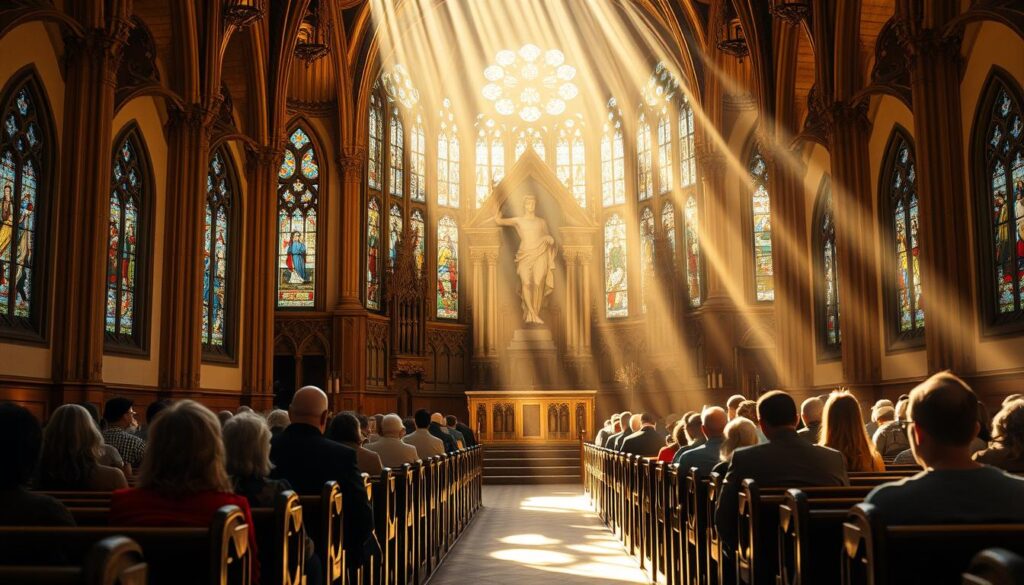
A serene, sun-dappled church interior bathed in warm, golden light. Ornate stained-glass windows cast kaleidoscopic hues across the pews, where parishioners kneel in reverent prayer. Sunbeams filter through the air, illuminating the intricate carvings and gilded accents that adorn the altar, where a statue of the resurrected Christ stands as a symbol of faith and eternal life. The atmosphere is one of tranquility and spiritual contemplation, inviting the viewer to pause and reflect on the sacred rituals and traditions of the Resurrection Catholic Church.

Weekend Mass schedule

Join us for weekend worship: Saturday at 4:00 pm, and Sunday at 8:00 am and 10:30 am. These liturgies offer reverent music and warm hospitality to help you pray together.

Weekday Mass and Communion Service

Weekday Mass is celebrated Monday, Tuesday, Thursday, and Friday at 8:30 am. On Wednesday mornings, a Communion Service is held at 8:30 am when Mass is not celebrated.

Eucharistic Adoration opportunities

Spend quiet time before the Blessed Sacrament on First Friday, 9:00–11:00 am. Evening Adoration takes place Second Wednesday, 6:30–8:00 pm, and Third Friday, 6:30–8:00 pm.

Pray the Rosary with our parish

The Rosary is prayed Mondays at 9:00 am. In summer months an evening Rosary meets on Mondays at 6:15 pm to welcome families after work.

Reconciliation by appointment

Reconciliation is available by appointment. Call the Parish Office to schedule a time for confession and a brief pastoral conversation.

Daily Divine Mercy Chaplet

The Chaplet of Divine Mercy is prayed Monday through Friday at 8:00 am in the church. It’s a short devotion that centers the morning and lifts intentions for our community.

English and Spanish liturgies

Masses and schedule communications are offered in both English and Spanish. All are welcome to attend services in either language and to use bilingual resources for participation.

“Come, let us pray together and build a steady rhythm of worship in our lives.”

Grow in Faith and Get Involved

Discover practical ways to deepen your faith and connect with neighbors across all ages. From seasonal viewing groups to volunteer teams, there are simple steps to join in and serve.

https://www.youtube.com/watch?v=HQ-0WYYmwJc&pp=ygUII2RheTAyOTI%3D

Parish events: fellowship, service, and fun

Mark your calendar for community favorites like The Chosen Season 5 viewing, the Annual Parish Picnic on August 17 (11:30 am–2:30 pm behind Marvin Hall with the Knights of Columbus), and the 11th Annual Tri Wood Open golf fundraiser.

Faith Formation registration and resources

Register now for Faith Formation 2025–2026 for children, teens, and adults. VIRTUS/Protecting God’s Children training and diocesan policies keep programs safe and healthy.

FORMED and Flocknote

Stream trusted Augustine Institute content via FORMED for Bible studies and family series. Sign up for Flocknote to get timely emails and texts about events and volunteer needs.

Community ministries and giving

Health Ministry offers blood pressure checks on the first weekend monthly. The AAPI community, started by Father Ed, hosts cultural gatherings and support. Give online to support worship, formation, outreach, and school partnerships.

Schools and special gatherings

Explore Diocese of Joliet schools such as Marmion Academy, Montini, St. Edward Central Catholic, and St. Francis High School for academic and spiritual options.

Monthly music at Our Lady of Guadalupe Shrine

Join the 12th of each month, 6:00–8:00 pm, for music and prayer with Pablo Flores. These evenings offer calm, song, and community.

“Bring a friend, volunteer, and notice how small acts build lasting community.”

Conclusion

Make a simple step today—attend a Sunday Mass or a weekday liturgy and see how parish life can refresh your faith.

Try a quiet devotion like Adoration, the Rosary, or the Divine Mercy Chaplet to deepen daily prayer. Explore Faith Formation, sign up for Flocknote, or stream faith content on FORMED to support growth at home.

If you need Reconciliation or have questions about sacraments, ministries, or accessibility, call the Parish Office so staff can assist you personally. Consider online giving to sustain worship, formation, and outreach.

Invite a friend to join you. We look forward to meeting you at Resurrection and sharing the joy of belonging in our local church community.

FAQ

What are the weekend Mass times?

Weekend liturgies are scheduled to serve varied needs. Typical Saturday vigil and Sunday morning and evening Mass times are posted on the parish website and bulletin. Check for holiday changes and special feast day schedules to plan your visit.

How can I attend weekday Mass or a communion service?

Weekday liturgies and communion services are offered for those with busy schedules. Times are listed online and in the weekly bulletin. Arrive a few minutes early to find seating and receive any parish notices.

When is Eucharistic adoration available?

The parish offers regular Eucharistic adoration periods to foster quiet prayer and reflection. Adoration hours, sign-up procedures, and any evening devotions are available on the parish calendar and by contacting the parish office.

Can I join a group to pray the rosary?

Yes. The parish hosts public rosary sessions and small prayer groups. Meetings often take place before weekday Mass or in the chapel. Newcomers are welcome; rosary guides are provided for beginners.

How do I schedule reconciliation?

Reconciliation is available by appointment and during regular times posted in the bulletin. Call the parish office or use the online form to request a private time with a priest for confession.

Is the Divine Mercy Chaplet prayed daily?

Many parishioners gather for the Daily Divine Mercy Chaplet as part of morning or afternoon prayer. Check the weekly schedule for exact times and location, and join in person or through the parish livestream when offered.

Are services offered in languages other than English?

The parish provides liturgies in English and Spanish to serve diverse families. Special bilingual celebrations and cultural feasts are announced ahead of time so all may participate fully.

How can I register for faith formation or youth programs?

Registration details for religious education and sacramental preparation are available on the parish website and at the parish office. Deadlines, tuition, and materials are listed each season, and volunteers support classroom programs.

What digital resources does the parish use for formation and communication?

The parish uses FORMED (Augustine Institute) for streaming faith content and Flocknote to send updates via email and text. Sign up links are on the parish site so you can receive formation resources and news directly.

How can I get involved in community ministries?

Opportunities include health ministry outreach, service projects, and cultural ministry support for the AAPI community. Contact the parish volunteer coordinator to learn about roles, meeting times, and training.

What options exist for giving and supporting parish life?

The parish accepts online donations, recurring gifts, and offertory contributions during Mass. Visit the giving page for secure options and information on designated funds for school support and ministry needs.

Does the parish have connections with local Catholic schools?

Yes. The parish partners with Catholic schools in the diocese for sacramental preparation, events, and faith formation. Contact the parish office for school contacts and enrollment information.

Are there special music or cultural gatherings at the Our Lady of Guadalupe Shrine?

The parish sponsors music nights, feast day celebrations, and devotional gatherings at the shrine. These events highlight liturgical music, community prayer, and cultural traditions—check the events calendar for dates.

Who do I contact for general questions or pastoral needs?

For general information, sacramental records, or pastoral care, call the parish office or email the parish staff. Contact details are posted on the website, and staff can direct you to the appropriate ministry or clergy member.

Visit St Jerome Catholic Church: A Spiritual Oasis


Saint Jerome welcomes you to a warm, active parish where faith comes alive through prayer, worship, and service. The mission here is simple: share God’s message, support those in need, and grow together in the sacraments. Families and individuals find a loving, diverse community ready to walk with them.

Plan a smooth first visit with clear Mass options. Los Angeles offers Sunday Masses at 8:00 am, 10:00 am, 12:00 pm, and 5:00 pm, with 8:00 and 10:00 am available via Zoom (Webinar ID: 661442999, Password: 162954). Weekday Mass is Mon–Sat at 8:00 am, and Adoration runs weekdays 9:00 am–3:15 pm. Largo provides weekend and daily liturgies with livestream options for several services.

People coming for the first time will find friendly hospitality and clear help. Father Bill Bolton leads the Los Angeles campus and staff can answer questions at 310-348-8212. For Largo, call 727-595-4610 or email the parish office. We look forward to meeting you and supporting your spiritual journey.

Key Takeaways

  • Warm, diverse community focused on prayer, sacraments, and service.
  • Los Angeles and Largo campuses offer in-person and online worship.
  • Los Angeles Zoom: Webinar ID 661442999, Password 162954 for Sunday Mass.
  • Daily Mass, weekday Adoration, and regular confession times support spiritual growth.
  • Contact numbers: Los Angeles 310-348-8212; Largo 727-595-4610 for planning your visit.

Welcome to a Warm, Faith-Filled Catholic Community

Step into an inviting parish where families find spiritual support and practical care. Our mission is to share God’s message, support those in need, and promote Christian values through prayer, sacraments, and daily discipleship.

Discover our mission and values

Saint Jerome Catholic is built on a clear commitment to family and to a loving, diverse environment. Ministries welcome parents, children, teens, and seniors with programs that teach, comfort, and connect.

How we live our faith

Service is a faithful response to love. Volunteers help locally and beyond through outreach teams, meal programs, and pastoral care.

Newcomers can connect easily: meet-and-greets after Mass, volunteer sign-ups, and small groups make joining simple. Hospitality and prayer ministries guide households as they grow together.

  • Warm welcome for every family.
  • Active ministries for all ages.
  • Practical ways to serve and belong.

Worship With Us at st jerome catholic church

Join our parish community for prayerful worship, whether you come in person or connect from home. We offer clear Mass times, quiet adoration, confession, and meaningful devotions to support your spiritual life.

A grand, stately Catholic church with a towering steeple and ornate facade stands majestically in the foreground, bathed in warm, golden-hour sunlight. The church's intricate architecture, featuring ornate carvings, arched windows, and a prominent cross atop the steeple, commands attention. In the middle ground, lush, verdant trees and a well-manicured lawn surround the church, creating a serene and inviting atmosphere. The background is dotted with other historic buildings, suggesting a picturesque, quaint town setting. The overall scene conveys a sense of timeless spiritual contemplation and reverence, inviting the viewer to worship at this stunning, hallowed place.

Sunday and Daily Mass times

Los Angeles: Sunday Mass indoors at 8:00 am, 10:00 am (both available via Zoom — Webinar ID 661442999, Password 162954), 12:00 pm, and 5:00 pm. Weekday Mass is Mon–Sat at 8:00 am.

Largo: Saturday Vigil 4:00 pm (livestreamed); Sunday 7:30 am, 9:00 am Family Liturgy (livestreamed), 10:45 am, and 5:00 pm Life Teen. Daily Mass: Mon–Fri 7:00 am; Mon–Sat 9:00 am (livestreamed).

Silent Adoration and Exposition

Los Angeles holds Adoration weekdays at the outside Chapel from 9:00 am to 3:15 pm for quiet prayer.

At Largo, Exposition and Benediction follow the Thursday 9:00 am Mass (9:30–10:30 am) and on First Friday/First Saturday after the 9:00 am Mass (9:30–10:30 am).

Confessions and sacramental support

Confessions in Los Angeles: Saturdays 1:30–2:30 pm or by appointment via the Rectory (Phone: 310-348-8212).

Largo confessions: Saturdays 3:00–3:45 pm in the Chapel. Sacramental visits and appointments are available on request.

Special devotions

Find healing and prayer at Largo’s Anointing of the Sick on the second Saturday after the 9:00 am Mass (about 9:30 am) and by request.

Join the Novena to Our Lady of Perpetual Help on Saturdays at 8:45 am in the church and via livestream to deepen your faith.

Faith Formation, Youth Ministry, and School

Children and adults find practical formation that brings faith into family life. Our programs help people grow through prayer, hands-on learning, and shared service. Registration is open for all ages.

Register for Faith Formation and Catechesis of the Good Shepherd

Invite your child to a nurturing formation path. Catechesis of the Good Shepherd offers hands-on lessons and spiritual growth. To check availability or schedule a tour, email the Faith Formation team at [email protected].

Youth Group and Life Teen: community, service, and friendship

Our youth build strong bonds through service projects, retreats, and weekly gatherings. The Youth Group kickoff is Sunday, September 21, 11:30 am–1:30 pm. Families are welcome for food, games, and fellowship. Teens can also join Life Teen liturgies to deepen worship and small-group support.

St. Jerome School admissions: Pre-K through Grade 8

Explore saint jerome catholic school for Pre-K, Transitional K, and Grades K–8. Admissions are open now. For details or applications, call 310-670-1678. Next steps: register online where available, email ministries, and check the parish calendar for schedules.

News, Events, and Parish Life

Find the latest parish news, events, and ways to serve right here. Check announcements each week to stay involved in prayer, formation, and outreach.

A grand Catholic church stands tall, its steeple reaching skyward. The exterior is adorned with intricate stone carvings and stained glass windows that shimmer in the warm, golden light. The main entrance is flanked by towering columns, inviting worshippers and visitors to step inside. The interior is a serene and reverent space, filled with ornate pews, ornate altars, and the soft glow of candles. In the middle of the church, a group of parishioners gather, engaged in lively discussion, their faces aglow with the spirit of community. The scene conveys a sense of timeless tradition and a vibrant, living faith.

Current announcements: prayer gatherings, calendars, and initiatives

Keep up with parish life by checking the parish and Youth Group calendars. These list formation sessions, volunteer drives, and special gatherings.

Silent Adoration and Prayer happens every Sunday evening from 6:30 pm to 9:00 pm at the main campus. All are welcome to join in quiet worship and intercession.

Prayer requests and parish-wide intentions

Share intentions with multiple options in Largo. Email [email protected] or call the Parish office Monday–Thursday, 9:30 am–4:30 pm. The Prayer Ministry also accepts texts at (727) 314-1166 and emails at [email protected].

Watch Daily Mass online via Vimeo or on Facebook when you cannot attend in person.

  • Use online tools to stay connected—view Daily Mass on Vimeo or Facebook and check calendars for Youth Group updates.
  • Explore ways to help through Catholic Relief Services, especially as funding cuts affect food programs.
  • Join drives, prayer initiatives, and outreach that promote service across our catholic community.
Event When How to Join Contact
Silent Adoration & Prayer Sun 6:30–9:00 pm In person Main office
Youth Group & Calendars See parish calendar Check online or at the office Youth ministry email
Daily Mass (recorded) Daily Watch online https://vimeo.com/stjerome

Locations, Office Hours, and Giving

Use these clear contact and office hours to connect quickly with staff or plan a visit.

Los Angeles campus

Address: 5550 Thornburn Street, Los Angeles, CA 90045. Call 310-348-8212 to reach the Rectory or to schedule sacraments with Father Bill Bolton.

Office: Phone hours Mon–Thu 9:00 am–12:00 pm and 1:00–4:00 pm. In-person visits by appointment: Sundays 8:00–11:00 am; Mon–Thu 10:00 am–12:00 pm and 1:00–3:00 pm. Rectory closed Fri–Sat.

Largo campus and contact

Address: 10895 Hamlin Blvd., Largo, FL 33774-5051. Phone: 727-595-4610. Email: [email protected].

Office hours Mon–Thu 9:30 am–4:30 pm. Friday closed. After-hours emergencies are handled by the parish service line.

Support and community resources

Give securely online, drop envelopes at Mass, mail offerings to 10895 Hamlin Blvd., or leave donations at the parish office during business hours.

Find service options like the Lifeline Food Bank, memorial bricks at the Grotto, and E-Giving one-time or recurring plans to sustain ministries.

Location Phone Office Hours Giving Options
5550 Thornburn St., Los Angeles 310-348-8212 Mon–Thu phone 9–12 & 1–4; in-person by appt. E-Giving, envelopes, in-office drop
10895 Hamlin Blvd., Largo 727-595-4610 Mon–Thu 9:30–4:30; Fri closed Mail, Online Giving, collection baskets
Community Resources Lifeline Food Bank Contact office for schedules Volunteer, donations, memorial bricks

Contact the office during published hours for records, appointments, or questions. Your support keeps saint jerome ministries strong and serving the local community.

Conclusion

Whether you’re new or returning, discover friendly hospitality and clear ways to join parish life at saint jerome catholic.

Visit in person or connect online for Mass, Adoration, and formation. Reach the parish office for questions, sacramental support, or next steps and expect warm guidance.

Bring a strong, steady commitment to prayer and outreach. Take part in Adoration, the Novena, and service projects that bless neighbors in need.

Explore ministries for families, teens, and adults in our welcoming environment. Join jerome catholic programs or stop by after worship so saint jerome can welcome you personally.

FAQ

What are the regular Mass times and are services livestreamed?

Sunday Masses are held in the morning and evening, and weekday Masses occur daily. We offer an indoor worship option and livestream sessions via Zoom for those who cannot attend in person. Check the parish calendar for exact times and the livestream link.

How can I arrange confession or other sacraments?

Confessions are available weekly at scheduled times and by appointment for special needs. Sacramental preparation—baptism, first Communion, marriage, and Anointing of the Sick—requires contacting the parish office to set up meetings with clergy and complete required preparation steps.

What opportunities exist for silent adoration and Eucharistic exposition?

Silent Adoration and weekday exposition take place in the chapel during designated hours. The schedule is posted online and at the parish office. Visitors are welcome to sign up for a quiet hour of prayer or drop in when the chapel is open.

How do I register my child for faith formation or school?

Families may register online or at the parish office for faith formation programs, including Catechesis of the Good Shepherd. For Pre-K through Grade 8 admissions, contact the school office for application details, tuition information, and open house dates.

What youth ministry options are available for teens?

Teen ministry includes a Youth Group and Life Teen gatherings that focus on community, service, and faith formation. Meetings blend small-group discussions, service projects, and social events. Parents can sign teens up through the parish youth coordinator.

How can I submit a prayer request or join parish prayer efforts?

Prayer requests are accepted by email, text, and phone. You can also add intentions to parish-wide prayer lists or join scheduled prayer gatherings. Contact the office to submit a name or to learn about intercessory groups.

Where are the parish locations and what are the office hours?

The parish serves multiple locations with separate addresses and phone numbers. Office hours vary by site; the main office posts hours on the website and at each entrance. Call or check online for the most current schedule.

How can I support the parish financially or volunteer for outreach?

Support options include online giving, envelopes, and mail-in donations. Volunteers are needed for food bank distribution, community service projects, and special initiatives. Visit the giving page or contact the stewardship coordinator to learn how to help.

Are there special devotions and sacramental services for the sick?

Yes. Special devotions such as novenas are offered periodically, and clergy provide the Anointing of the Sick for those in need. Call the parish office to request pastoral visits or to schedule the sacrament for someone homebound or hospitalized.

How can new families get connected to parish life and ministries?

New families are encouraged to introduce themselves at the welcome desk, register online, and attend newcomer events. Ministry leaders will connect new members with volunteer opportunities, small groups, and family-focused programs to support spiritual growth and community involvement.

Syro Malabar Catholic Church: A Spiritual Journey


This is a friendly, all-in-one guide to an ancient Indian community with deep roots and a living liturgical tradition. More than five million members worldwide worship, serve, and shape parish life across dioceses in India, North America, Europe, Australia, and the Middle East.

The adjective “Syro” points to a distinct East Syrian rite rather than an ethnic label. That rite informs the liturgy, devotions, and rhythms of daily life, linking believers to a tradition traced to St. Thomas the Apostle.

Members share full communion with the wider catholic church and often receive Communion across rites. Recent news about liturgical posture during the Holy Qurbana has led to synodal action and a papal call for unity, showing how tradition and reform meet in practice.

Key Takeaways

  • One of 23 Eastern Catholic Churches in full communion with Rome.
  • Over 5 million faithful worship across global eparchies and parishes.
  • “Syro” refers to the liturgical rite and its East Syrian heritage.
  • Members share sacraments with other Catholic rites and communities.
  • Ongoing liturgical discussions show a living, adaptable tradition.

Origins, Identity, and Communion: From St. Thomas Apostle to an Eastern Church Today

A first-century mission lies at the heart of this tradition. In 52 AD, the st. thomas apostle is believed to have arrived in India and later met martyrdom near Chennai.

Roots in St. Thomas and the Thomas Christians

Seven ancient churches in Kerala and Tamil Nadu trace their founding to that mission. These communities became known as the thomas christians, and they carried forward a living liturgy and local customs.

What “Syro” Means: Rite, Not Ethnicity

The term points to a specific rite derived from the East Syrian tradition. It describes worship style and liturgical shape, not the people’s ancestry.

Hierarchy, Communion, and Global Footprint

As an eastern church, this community has its own hierarchy while remaining in full communion with the pope. Over five million syro-malabar catholics live across India, the United States, the U.K., Canada, Australia, New Zealand, and the Middle East. Intercommunion is regularly practiced with other rites.

Aspect Founding Rite Governance
Origin st. thomas / thomas apostle, 52 AD East Syrian liturgical tradition Own hierarchy under the pope
Identity Thomas Christians rooted in local culture Rite defines worship, not ethnicity Part of 23 Eastern Churches in communion
Global Presence Seven early churches in Kerala/Tamil Nadu Holy Qurbana and ancient liturgies 5+ million faithful with worldwide eparchies

The syro malabar catholic church Today: News, Communion, and a Liturgical Dispute

Today’s coverage highlights a practical question that touches faith and parish life.

A solemn gathering of robed clergy, illuminated by warm candlelight, engaged in a heated debate on the intricacies of the Holy Qurbana, the Syro-Malabar liturgy. The scene is captured in a dramatic chiaroscuro, with shadows and highlights adding depth and intensity to the moment. The figures are rendered with reverence and attention to their expressions, capturing the gravity and importance of the discussion. The background is softly blurred, allowing the central subject to take center stage and command the viewer's attention. The overall atmosphere is one of reverence, intellectual rigor, and the weight of tradition.

Ad orientem vs. versus populum: Understanding the Holy Qurbana Debate

The core issue is simple: should a priest face the altar (ad orientem) or face the people (versus populum) during the Holy Qurbana?

This matters because posture shapes communal prayer, reverence, and how people experience the liturgy.

In 1999, the synod required a single approach: face the people for the Liturgy of the Word and the altar for the Eucharist. Some dioceses did not follow that rule, which fueled the current dispute and ongoing controversy.

Pope Francis’ Call for Unity and Obedience amid Controversy

The pope set a Christmas Day 2023 deadline to implement the synod’s directive. Most parishes complied, yet protests and disruptions continued in pockets.

“Apart from Peter, apart from the major archbishop, there is no Church.”

The pope warned that division over liturgy can harm communion and even risk schism. He urged prayerful dialogue and asked leaders to avoid unnecessary Latinization of this eastern church.

  • Pastoral steps include listening sessions and local meetings.
  • Leaders aim to preserve the rite’s identity while restoring unity.
  • New jurisdiction for immigrant communities in the Middle East strengthens pastoral care worldwide.

The news and dispute show passion for tradition. The hopeful path is patient conversation, obedience to legitimate authority, and love for the Blessed Sacrament.

Life and Spirituality: How Syro-Malabar Catholics Worship and Build Community

Daily rhythms of prayer and service shape how people live their faith.

The Holy Qurbana and the East Syrian Tradition

The Holy Qurbana stands at the center of worship. This rite brings poetic prayers, gestures, and a strong sense of God’s presence in Word and Eucharist.

Prayer and Devotion

Families pray the Rosary, meditating on the Luminous, Sorrowful, and Glorious Mysteries. These simple devotions help people reflect on baptism, suffering, and the Resurrection.

Ministries in Action

Parishes encourage ministries that translate belief into service. Catechesis, youth programs, outreach, and cultural events build a vibrant community.

Participation Across Rites

In the U.S., many find support through local eparchies and events. Inter-ritual communion is common—members of the Syro-Malabar Catholic tradition and other rites regularly receive the Eucharist together.

  • Life in parish: prayer, service, and formation.
  • Spiritual growth through liturgy and devotion.
  • Community bonds keep families rooted in faith.

Conclusion

From Kerala parishes to U.S. eparchies, the faithful hold fast to a living liturgical heritage. This guide reminds readers that history and practice meet in parish life and prayer.

The syro-malabar church traces its roots to St. Thomas and the Thomas Christians. It stands in full communion with the pope and the wider catholic church, serving more than five million people worldwide.

Keep faith at the center: attend the Holy Qurbana, receive the sacraments, and join local ministries. Let the witness of the st. thomas apostle inspire service, unity, and love for the Eucharist.

Visit a parish, volunteer, and keep praying—these small steps help unity grow and let tradition flourish in daily life.

FAQ

What is the Syro Malabar Catholic Church and where did it begin?

The Syro Malabar Catholic Church traces its origins to St. Thomas the Apostle, who evangelized parts of India in the first century. It belongs to the Eastern tradition and follows the East Syrian rite. Over centuries the Thomas Christians developed a distinct liturgy, spirituality, and community life while remaining in full communion with the Pope.

How does the term “Syro” relate to this community?

“Syro” refers to the Syriac liturgical tradition and language influence, not to an ethnic label. The term highlights the East Syrian rite and the historical use of Syriac in the Holy Qurbana and prayer life.

Is this church fully part of the global Catholic communion?

Yes. The church is an Eastern Catholic Church in full communion with the See of Rome. It retains its own hierarchy, liturgical rites, and canon law while recognizing the Pope’s primacy.

How many faithful belong to this tradition and where are they located?

The community counts several million members, with the largest concentration in India and growing diasporic communities in the United States, Europe, and the Gulf states. Parishes and eparchies serve immigrants and local converts alike.

What is the Holy Qurbana and how does it differ from the Latin Mass?

The Holy Qurbana is the Eucharistic liturgy of the East Syrian tradition. It includes ancient prayers, distinct liturgical language, and ritual actions that differ in form from the Latin rite while affirming the same Eucharistic faith.

What is the controversy over ad orientem versus versus populum worship?

The debate centers on the priest’s orientation during the Eucharistic prayer—facing the same direction as the people (versus populum) or facing east/traditionally away from the congregation (ad orientem). Opinions vary by community, and the discussion touches on liturgical theology, tradition, and pastoral practice.

How has Pope Francis responded to liturgical disputes within Eastern rites?

Pope Francis has urged unity and obedience while encouraging respectful dialogue. He emphasizes pastoral care, adherence to legitimate liturgical norms, and sensitivity to ancient traditions that shape Eastern communities.

How do members practice daily spirituality and prayer?

Spiritual life blends communal worship with personal devotion. Practices include the Holy Qurbana, the Liturgy of the Hours in adapted forms, rosary-like devotions focused on mysteries, and sacramental participation. Parish ministries also support ongoing formation and prayer.

Can members of other Catholic rites receive communion at a Syro Malabar service?

Generally, members of the universal Catholic Church may receive communion according to local norms and mutual recognition of sacraments. Pastoral instructions can vary by eparchy, so visitors should follow guidelines from the celebrating pastor.

What ministries support social service and community life?

Parishes run a range of ministries: education, health care, charity programs, youth formation, and migrant support. These efforts reflect a commitment to service rooted in faith and the pastoral priorities of local leaders.

St Mary Margaret Catholic Church: Faith, Community, and Welcome


Welcome to our parish community, a friendly place on the Fox River where people gather to keep their eyes fixed on Jesus and walk together in faith. We draw strength from Scripture and the living witness of the Church, inspired by Hebrews 12:1-2 to lay aside what hinders us and run the race with joy.

Located in southeastern McHenry County near Chicago, our parish serves about 3,092 registered families. Saint Margaret Mary offers worship, formation, and service for all ages, including a Catholic elementary school from preschool through eighth grade and close ties with Marian Central High School.

Whether new, returning, or visiting, you will find clear schedules for Mass, confession, and devotions, plus chances for prayer, adoration, and community life that nourish the whole family. Come belong to a community with a generous heart that welcomes you into regular rhythms of prayer and charity.

Key Takeaways

  • One welcoming parish on the Fox River serving about 3,092 households.
  • Rooted in Scripture and centered on running the race of faith together.
  • Offers preschool–8th grade education and ties to Marian Central High School.
  • Clear access to Mass times, confession, devotions, and parish events.
  • A warm community life aimed at prayer, service, and belonging.

St Mary Margaret Catholic Church: Mass, Confession, and Devotions

Daily and weekend liturgies at our parish provide steady moments of prayer for busy families and individuals. Use the schedule below to pick a Mass time that fits your day and to join devotions in English or Polish.

Weekday Mass Schedule

Weekday Masses run Monday–Thursday at 6:45 AM and 8:30 AM. Fridays offer 6:45 AM plus seasonal school and summer times (9:15 AM during the school year; 8:30 AM in June–August).

First Friday includes a Polish Mass at 7:30 PM. Saturday morning Mass is at 8:30 AM.

Weekend Masses

Saturday vigil Mass is 4:30 PM with a 6:30 PM Polish liturgy. Sunday services are 7:00 AM, 9:00 AM, and 11:00 AM, plus a 1:00 PM Polish Mass. A 4:30 PM Sunday Mass runs from the second weekend in September through the third weekend in May.

Holy Day of Obligation: Assumption

Vigil: Thursday, August 14 at 6:00 PM. Day options include 6:45 AM, 9:15 AM, 6:00 PM, and a 7:30 PM Polish Mass. (An alternate listing notes 8:45 AM and 12 Noon on August 15.)

Reconciliation and How to Prepare

Confession times: Tuesdays 6:00–7:00 PM; Saturdays 9:00–10:00 AM and 3:00–4:00 PM. Come with a brief examen, contrition, and a resolve to amend your life.

Adoration and Weekly Devotions

Adoration: Monday 8:00–9:00 PM (chapel with Benediction); Wednesday exposition from 9:00 AM until Thursday 7:00 AM; overnight Wednesday 9:00 AM to Thursday 6:30 AM; Fridays 10:00 AM–6:00 PM (chapel with Benediction).

Holy Rosary and Our Lady of Perpetual Help Novena meet Tuesdays at 7:30 PM, with Mass on the first Tuesday.

Accessibility

Low-gluten hosts are available; please receive from the priest in the center aisle to ensure full participation in the Eucharist.

Type Days Typical Times
Weekday Mass Mon–Thu, Fri, Sat 6:45 AM, 8:30 AM; Fri seasonal 8:30/9:15 AM; Sat 8:30 AM
Weekend Mass Sat & Sun Sat 4:30 PM; Sat Polish 6:30 PM; Sun 7:00, 9:00, 11:00, Polish 1:00 PM, Sun 4:30 PM (seasonal)
Reconciliation Tues & Sat Tues 6:00–7:00 PM; Sat 9:00–10:00 AM, 3:00–4:00 PM
Adoration & Devotions Mon, Wed–Thu, Tue, Fri Mon 8:00–9:00 PM; Wed 9:00 AM–Thu 7:00 AM; Tue Rosary/Novena 7:30 PM; Fri 10:00 AM–6:00 PM

Experience st mary margaret catholic church: Faith, Community, and Welcome

Discover ways to grow in faith through community events, formation programs, and prayer initiatives. Our parish calendar highlights gatherings for adults and kids, short formation evenings, and practical service opportunities that welcome every family.

Upcoming events and parish news highlights

Stay current with quick updates: Catholic Singles Mingle, That Man Is You! (TMIY), and the SHE program offer formation and fellowship.

Key community dates include the Knights of Columbus Blood Drive on September 28 (8:00 AM–1:00 PM, McDonnell Hall) and discernment events with the Franciscan Sisters of Christian Charity.

Parish-wide Rosary initiative honoring Our Lady of Fatima

Join our push to pray 2,025 Rosaries at each MSHJ location from May 13–October 13, 2025. Clipboards in the back of the church track prayers. Offer intentions and help our community grow in steady, simple devotion.

“Pray the Rosary frequently, asking Our Lady to bring peace and conversion.”

School and Family Faith Formation: Growing in heart and faith

Saint margaret mary School fosters academics, virtue, and service from preschool through eighth grade. GATHER Family Faith Formation welcomes children not in Catholic school; at least one parent attends with the child.

Stewardship and parish life: Serving together as one family

Our stewardship snapshot shows progress on the school building loan and regular offertory support. Small acts of giving fund ministries like the St. Dymphna Mental Health Ministry and mission appeals.

A serene cathedral interior bathed in warm, golden light streaming through stained glass windows. The focal point is a magnificent altar adorned with intricate carvings and a statue of the Virgin Mary, radiating a sense of reverence and devotion. In the foreground, a few worshippers kneel in prayer, their faces reflecting the peace and tranquility of the sacred space. The middle ground features wooden pews and ornate architectural details, while the background subtly fades into a hazy, atmospheric ambiance, evoking a timeless, spiritual atmosphere. The overall scene conveys a profound sense of faith, community, and the welcoming embrace of the church.

  • Volunteer or join a ministry: Rosary Makers, Prayer Shawl, Polish Choir, or Knights events.
  • Attend adoration, outdoor rosaries, or the Hour of Reparations to deepen prayer life.
  • Look for job openings like Coordinator of Youth Ministry and parish data collection efforts.
Event Date / Time Focus Location
Knights Blood Drive Sep 28, 8:00 AM–1:00 PM Service & Outreach McDonnell Hall
Outdoor Rosary Aug 18, 7:00 PM Community Prayer Church Grounds
Rosary Makers Aug 19, 9:15 AM Ministry Crafting Ministry Center, Room 6
Family Faith Formation (GATHER) Ongoing (Preschool–HS) Parent-Child Formation Ministry Center / School

Visit and Connect with Our Parish Office

Need help with sacraments or schedules? The parish office team is ready to guide you. Stop by or call for quick answers about registration, ministries, and facility use.

Contact details and urgent pastoral assistance

If you have an urgent pastoral need after regular hours, call 224-509-8340 to reach one of our priests. For routine matters, the office handles sacramental records, event requests, and ministry contacts.

Location in McHenry County along the Fox River

Find us along the Fox River in southeastern McHenry County, convenient to nearby collar counties of Chicago. Plan your visit for worship, meetings, or to speak with staff about baptisms, weddings, or funerals.

  • Ask the office about current liturgy and ministry hours, meeting spaces, and ways to serve.
  • Our friendly team helps new families register, set up giving, and connect to formation and service opportunities.

Conclusion

, We invite your family to make this parish a spiritual home where worship, formation, and service meet daily. Come join activities that fit busy schedules and help you grow in prayer and charity.

At margaret mary we place community at the heart of every ministry. Use this page as your go-to guide for schedules, devotions, events, and office contacts so you can engage fully in parish life.

As we walk together, may the Lord draw us closer through the sacraments and simple acts of love. May Our Lady intercede for us as we follow her Son with joy.

FAQ

What are the regular weekday Mass times?

Weekday Masses are offered Monday through Friday with a morning liturgy and an evening option on select days. Check the parish office schedule for exact start times and any holiday adjustments.

When are weekend Masses held, and is there a Polish-language liturgy?

Weekend Masses include Saturday vigil and multiple Sunday celebrations to serve families and visitors. A Polish-language Mass is scheduled periodically—consult the parish bulletin or call the office for the current weekend roster.

How does the parish observe Holy Days like the Assumption of the Blessed Virgin Mary?

Holy Days of obligation are marked with vigil and day Masses to accommodate working schedules. The parish typically offers both evening and morning options so parishioners can fulfill the obligation and participate in communal prayer.

When is Reconciliation available and how should I prepare?

Confession times are posted weekly and include scheduled communal and private opportunities. Prepare by examining your conscience, offering sincere contrition, and planning a brief confession of sins. The priest will guide you through absolution.

Are there times for Adoration, the Rosary, and Novena devotions?

The parish hosts weekly Adoration and group recitations of the Rosary, plus periodic Novena prayers for special intentions. These devotional hours are open to all and are listed in the bulletin and on the parish website.

Is low-gluten Communion available for those with dietary needs?

Low-gluten hosts are provided for parishioners with medical or liturgical requirements. Please speak with the celebrant or notify the sacristan before Mass so accommodations can be made respectfully.

How can I learn about upcoming parish events and news?

The parish bulletin, email newsletter, and parish website post event details and news highlights. You can also follow parish social channels or call the parish office to get on the mailing list.

What is the parish Rosary initiative honoring Our Lady of Fatima?

The initiative invites families and groups to pray the Rosary together on scheduled days in May and October and during special anniversary observances. It aims to deepen devotion and foster community participation.

What family faith formation programs are offered for children and teens?

The parish provides religious education, sacramental preparation, and family faith activities designed to engage children, teens, and parents. Programs balance classroom learning, prayer, and service opportunities.

How can I get involved in stewardship and parish service?

Parishioners are encouraged to serve through liturgical ministries, outreach programs, and volunteer teams. Contact the stewardship coordinator or parish office to discover opportunities that match your gifts and schedule.

How do I reach the parish office for general questions or urgent pastoral assistance?

The parish office lists phone hours and an emergency contact number for urgent pastoral needs. For routine requests, call or email during office hours; for emergencies, follow the emergency contact instructions posted on the parish website.

Where is the parish located in McHenry County along the Fox River?

The parish sits in McHenry County near the Fox River corridor, with detailed driving directions and parking information available on the parish website and in the bulletin. Public transit options and accessibility details are also provided.