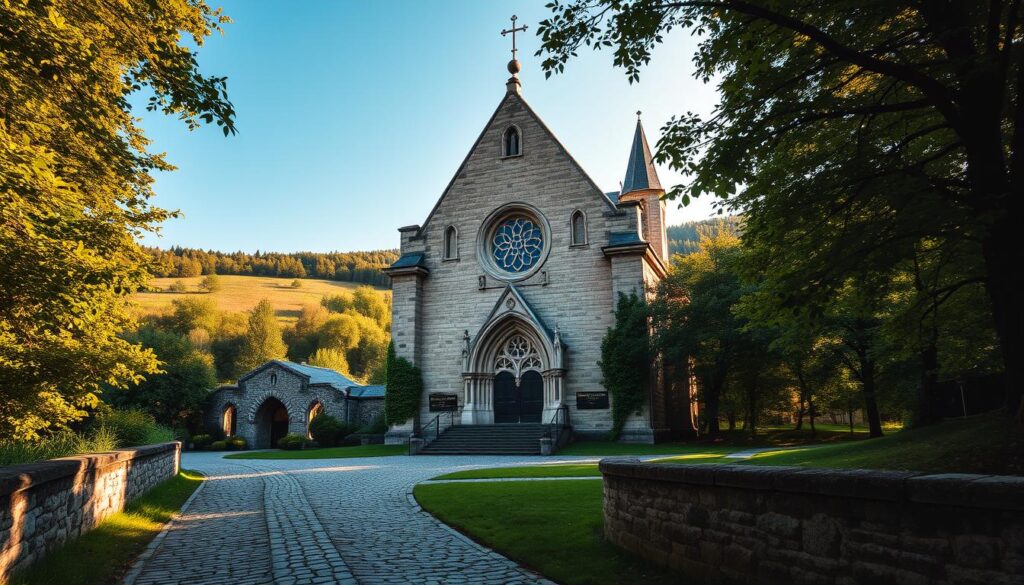
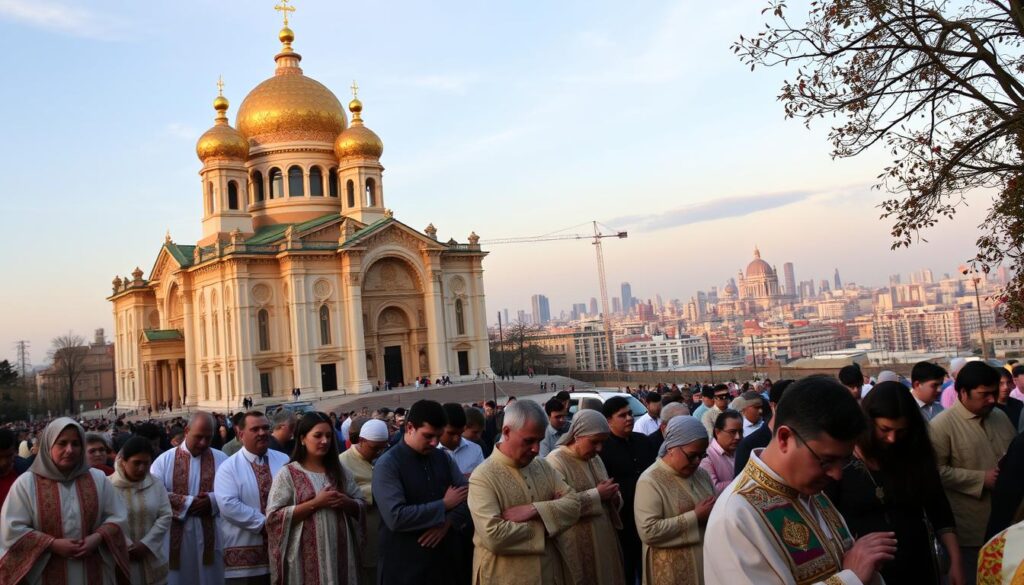
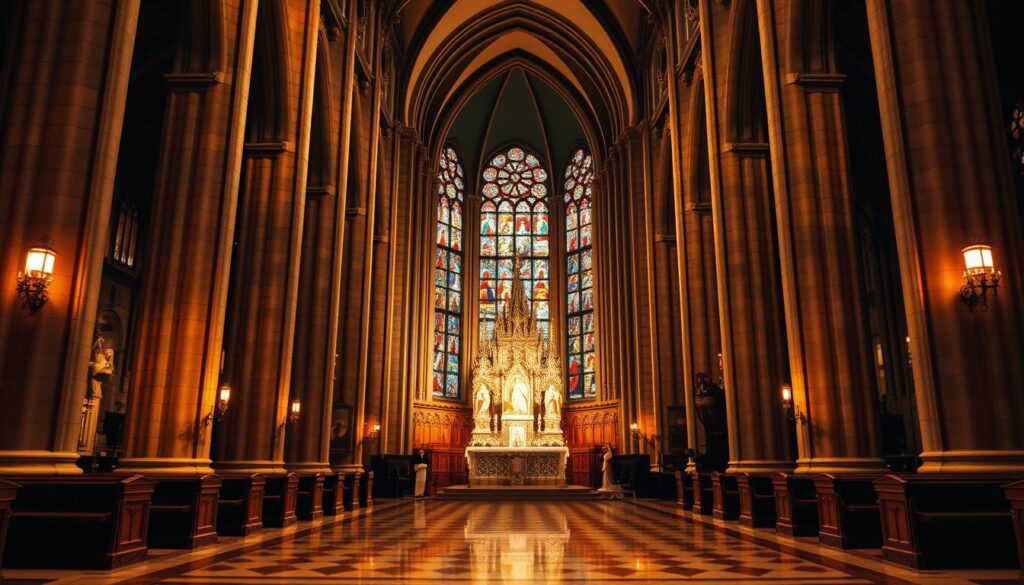
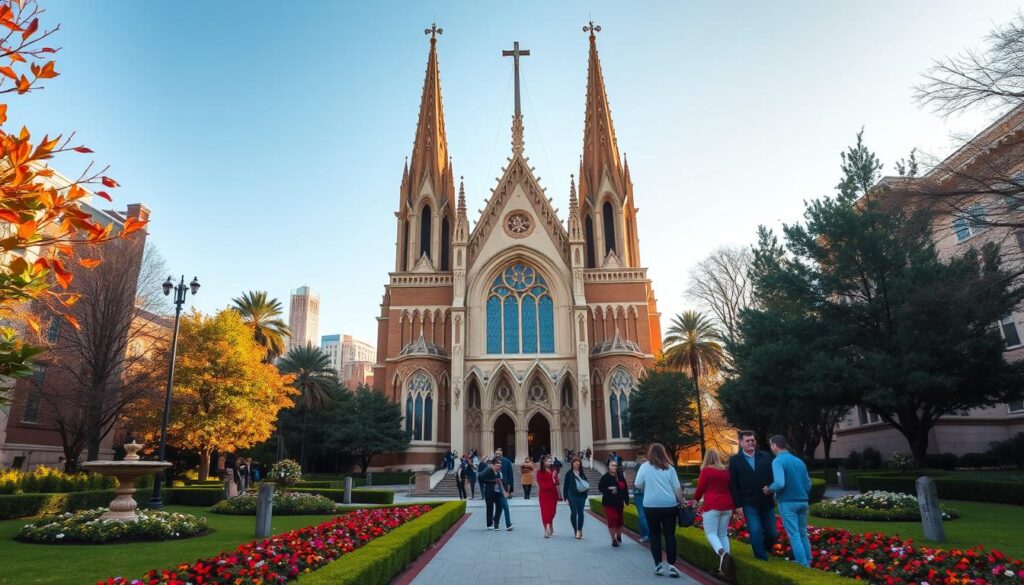
Welcome to a small, inviting holy space on the Marquette University campus. This chapel blends quiet prayer, daily worship, and student life in a warm, open way. Visitors and alumni find it easy to pause and reflect between classes or during a campus visit.
Built in the 15th century and moved to Milwaukee decades later, the chapel carries a living history. Its Gothic stone and wood evoke an older world while ministries today serve students and neighbors. Over the years the journey from France to this American campus has shaped a unique story.
The arc chapel remains active year-round. Expect Mass, study prayer times, student ministries, and a friendly community that welcomes all. The site also offers artifacts, a colder stone near the altar, and quiet corners for reflection.
This short guide previews worship options, history, and visit tips so you can plan a meaningful stop at this spiritual oasis on campus.
Key Takeaways
A welcoming, intimate space for prayer and student life at Marquette University.
Gothic chapel with centuries-old origins and modern stewardship.
Active worship, student ministries, and community outreach year-round.
Unique artifacts and a legendary colder stone near the altar to discover.
Accessible location on campus, open to visitors, alumni, and scholars.
St Joan of Arc Catholic Church: Worship, Community, and Spiritual Growth on Marquette University’s Campus
On any week during the academic year, the chapel offers rhythms of worship that steady campus life.
Ministries that welcome all in our campus community
Ministries meet students, faculty, staff, and neighbors where they are. Groups reflect many backgrounds and invite dialogue in a Jesuit spirit of care. Volunteers, peer ministers, and staff lead formation, service projects, and small-group prayer.
Sacraments and regular liturgies in an intimate chapel setting
Daily and weekly liturgies draw a steady crowd. The st. joan arc worship experience is intimate by design and often fills early. Arrive ahead of time to find seating and settle into focused prayer.
Community activities from candlelit vigils to meaningful gatherings
Candlelit vigils and remembrance services have turned this arc chapel into a beacon during tense or joyful moments. The site also supports academic classes and exhibitions that link faith, history, and the arts.
Check campus postings for seasonal schedules. Newcomers are encouraged to introduce themselves after liturgies and join service opportunities that begin in chapelst. joan and extend into broader community partnerships.
From 15th‑century France to Milwaukee: History, Stone, and Reconstruction of the Joan of Arc Chapel
A medieval chapel’s path from rural France to a Midwestern campus tells a surprising story of rescue and care.
Origins and early journey
The structure began as Chapelle de St. Martin de Seyssuel in Chasse‑sur‑Rhône, built over years in the late medieval period. It fell into ruin after the Revolution and lay forgotten until Jacques Couëlle rediscovered it after World War I.
Moves, reconstructions, and survival
In 1927 the elements crossed to Brookville, New York, where John Russell Pope led a careful reconstruction attached to Gertrude Hill Gavin’s estate. After a 1962 fire damaged the mansion, the sanctuary survived.
Year
Event
Key Figure
15th century
Original build in France
Medieval artisans
1927
Move to Brookville and reconstruction
John Russell Pope
1964–1966
Gift to Marquette University and rededication
Lucien David & Earnest Bonnamy
Art, legend, and stewardship
The Gothic stone-and-wood fabric holds Spanish tapestries, coats of arms, crucifixes, and Charles J. Connick stained glass (1929). A flat stone near the altar is traditionally colder, linked to a prayer on March 9, 1429.
The st. joan arc narrative bridges continents and years. The st. joan arc reconstruction honors authenticity while making the space a lasting site for visitors and study.
Plan Your Visit to the St. Joan of Arc Chapel on Campus
Make your trip smoother by checking coordinates, closing dates, and worship guidance for the campus chapel.
Location and directions
Where to find it: The joan arc chapel sits on the Marquette University campus in Milwaukee, Wisconsin. Use coordinates 43.03763°N, -87.93108°W for precise navigation.
Hours and special notices
Planned closure: Please note the chapel will be closed June 30–July 4, 2025. Check on‑site notices for any other temporary changes during academic breaks.
Mass context and capacity
Services at this intimate arc chapel often reach capacity. Arrive early for seating. If a service is full, nearby parishes in the Archdiocese of Milwaukee offer alternative Mass times.
Visitor tips and stewardship
Be mindful: silence phones and respect the sanctuary. Visitors may handle certain artifacts—ask staff or student ministers which items are permitted. Take a quiet moment by the colder stone beside the altar.
Need
Info
Action
Exact location
Marquette University, Milwaukee, WI
Use GPS coords 43.03763°N, -87.93108°W
Temporary closure
June 30–July 4, 2025
Plan visits outside these dates
Worship seating
Intimate chapel, can fill
Arrive early or use nearby parishes
Support
Restoration and stewardship opportunities
Gift to preserve fabric, artifacts, and mission
Tip: Pair your visit with campus exhibitions or a walk through nearby green spaces to make a fuller day of history and reflection. Accessible drop‑off points and clear walking routes are available on the marquette university campus map.
Conclusion
Step inside to find a living place where prayer, study, and friendship meet each day. This small campus sanctuary blends history with active use, inviting visitors to join worship, a quiet pause, or a guided look at art and artifacts.
Every visit supports a long story of care and community. Whether you attend a liturgy, bring a friend, or help sustain restoration efforts, you add to that living tradition.
Thank you for considering a stop at the st. joan arc chapel. Plan a visit soon, take a quiet moment by the colder stone, and carry the stillness back into your day.
FAQ
Where is the Joan of Arc chapel located on Marquette University’s campus?
The chapel sits near the center of Marquette University’s Milwaukee campus. Look for signs and campus maps that list historic buildings and chapels; the site is within easy walking distance of main academic halls and student services.
What are the chapel’s regular hours and any upcoming closures?
The chapel maintains regular visiting hours most days, with extended access for campus events. Note the special closure from June 30 to July 4, 2025. Always check Marquette University’s events calendar or the campus ministry page before you visit.
Are liturgies and sacraments held in the chapel?
Yes. The chapel hosts intimate liturgies and sacramental celebrations tailored to the campus community. For larger parish Masses, the university coordinates with nearby Archdiocese parishes to provide additional options.
What kinds of ministries and community activities take place at the chapel?
Ministries welcome students, faculty, and visitors with programs like prayer groups, campus outreach, candlelit vigils, and spiritual formation sessions. Events often aim to build fellowship and support student faith development.
What is the history of the chapel’s structure and how did it arrive at Marquette?
The stone chapel was originally built in 15th‑century France and later moved through New York before its reconstruction on Marquette’s campus. The Gothic design and preserved artifacts reflect its long journey and careful restoration.
Why is one area of the chapel noted for colder stone near the altar?
Visitors and historians often remark on a cooler stone area by the altar. That effect comes from the original building materials and the methods used during reconstruction, which preserved the chapel’s historic character.
Can visitors contribute to chapel upkeep or restoration projects?
Yes. Marquette University and affiliated campus ministries provide giving options to support preservation and restoration. Information is available through the university’s development office or the chapel’s support pages.
Is the chapel open to non-students and tourists?
Visitors from the public are welcome during posted hours. Some campus events or liturgies may limit access, so check schedules before arriving. Guided tours may be available through university visitor services.
How can I find nearby parking and accessibility information for a chapel visit?
Marquette University’s campus map lists visitor parking, accessible routes, and entrance points near the chapel. Contact campus services or consult the online map for real-time parking guidance and accessibility details.
Who can I contact for questions about Mass times, campus ministry programs, or special events?
Reach out to Marquette University’s campus ministry office or the university events line. They can provide up-to-date Mass schedules, ministry contacts, and information about special liturgies and community gatherings.
Welcome to a warm, faith-filled parish that blends history, language, and service across three locations. This multi-site parish formed recently to bring Blue Island, Robbins, and Chicago South Side communities together. Worship is offered daily and on weekends in English, Spanish, and Portuguese to meet busy family schedules.
Find easy access to prayer, formation, and outreach. A full Mass and Reconciliation schedule helps you plan sacraments. Join Our Flock for email or text updates and use the Ministry Locator to connect with groups for adults, youth, and children.
The parish invites every neighbor to grow in faith, serve with compassion, and share the Good News. Whether you attend a morning Mass, a Spanish vigil, or Life Teen evening worship, you’ll find a welcoming community ready to support your spiritual journey.
Step into a parish where three historic communities work together to support faith and friendship. We welcome you warmly and invite you to join in prayer, fellowship, and acts of service across Blue Island, Robbins, and Chicago sites.
Expect a heartfelt greeting. Greeters, clergy, and volunteers are ready to help you find your place from the very first visit. Whether you need directions to a service or information about programs, someone will assist you.
Our formation in 2021 brought the former local congregations together under the Archdiocese of Chicago. Using facilities at all three locations makes worship, formation, and outreach easier to access for busy families.
Meet new friends at fellowship events and small groups.
Find age-appropriate programs for children, teens, and young adults.
Receive guidance on sacraments and ministries that match your needs.
Participate in liturgy and ministries in English, Spanish, or Portuguese.
Worship and Prayer at St Mary Magdalene Catholic Church
Find consistent moments of worship throughout the week to center your day. Our schedule balances weekday routine and vibrant weekend liturgies so families and individuals can join in meaningful prayer.
Daily Mass Schedule: Monday through Saturday
Weekday Masses are held Monday–Friday at 8:30 a.m. and noon. A Saturday morning liturgy is offered at 8:30 a.m. These times help you plan a brief, steady spiritual rhythm.
Sunday and Vigil Mass: English, Spanish, and Portuguese
Weekend options meet diverse needs. Saturday Vigil Masses are at 5 p.m. and 7 p.m. (Spanish).
Access the full schedule for confession times and special liturgies to prepare for sacraments with confidence.
Join Our Flock: Email and Text Updates
Subscribe to “Join Our Flock” for email and text alerts about holy days, schedule changes, and parish events so you never miss important notices at st. mary.
Ministries, Formation, and Ways to Get Involved
Discover practical ways to join parish life and use your gifts. Start with a quick tour of options so you can move from interest to action in a few steps.
Ministry Locator: Find the Right Parish Group
Use the Ministry Locator to browse active teams. It lists hospitality, music, catechesis, outreach, and more so you can match skills with real needs.
Adults, Young Adults, and Online Formation
Grow at your pace. Adult Formation and Online Formation offer Scripture studies, sacramental prep, and seasonal courses that fit busy lives.
Young adults can join small groups, service projects, and social events that build friendship and mission-ready habits.
Serve as a lector, usher, server, or choir member. Use online forms and payments to register or donate quickly.
Reaching Out: Community Service and Parish Life
Meet real needs close to home. Volunteer for food drives, visits to the homebound, neighborhood cleanups, and events that unite families and neighbors.
Stay informed by subscribing to email and text updates through “Join Our Flock” for training dates and service opportunities.
Our Parish Story and Spiritual Identity
Rooted in 19th-century faith, our communities now serve today’s families together as a united parish. This identity blends long-standing traditions with a clear mission to form disciples across three sites.
Combined Communities: St. Benedict, St. Peter Claver, and St. Walter
Saint Mary Magdalene Parish was created in 2021 by the Archdiocese of Chicago.
It brings together the former St. Benedict Parish (Blue Island), St. Peter Claver Mission (Robbins), and St. Walter Parish (Chicago). Each location keeps its own sanctuary, halls, and classrooms to broaden worship, formation, and outreach.
Roots trace back to the 1860s in Blue Island, Robbins, and the South Side.
Formation in 2021 preserves heritage while strengthening ministries and stewardship.
Shared facilities expand capacity for liturgy, education, and service.
Honoring Mary Magdalene: Apostle to the Apostles
mary magdalene stands as the first to announce the Resurrection and the first witness at the empty tomb. Her faithful presence at the cross and her bold proclamation model how we follow and share the Good News.
We honor mary magdalene as a guiding example: compassionate, courageous, and mission-minded. At st. mary, her legacy inspires evangelizing work, family formation, and outreach that welcome newcomers and support long-time members alike.
Conclusion
Plan a visit this week to meet volunteers, join worship, and explore programs for all ages.
Browse the Complete Mass & Reconciliation Schedule to pick the best time for your family. Bring a friend who may be seeking a spiritual home.
Sign up for “Join Our Flock” to get timely email or text alerts about holy days, parish missions, and formation programs.
Take the next step by volunteering via the Ministry Locator, enrolling a child in catechesis, or joining a small group to grow in faith and friendship through regular prayer and service.
If you have questions about sacraments, ministries, or locations, our team is ready to help you get connected quickly and confidently.
FAQ
What are the daily Mass times Monday through Saturday?
Daily Mass is offered each weekday morning and Saturday to provide regular opportunities for prayer and reflection. Check the parish bulletin or sign up for email and text updates to confirm exact times and any special schedules for holy days.
When are Sunday and Vigil Masses available in English, Spanish, and Portuguese?
Weekend worship includes a Saturday Vigil and multiple Sunday Masses in English, Spanish, and Portuguese. Service times vary by weekend, so review the schedule posted at the parish entrance or on the website for current Mass times.
How can I find the complete Mass and reconciliation schedule?
The full schedule for Masses and confession times is listed on the parish calendar. You can also call the parish office or subscribe to updates to receive the latest schedule for special celebrations and seasonal changes.
How do I sign up for email and text updates from the parish?
To receive parish news, ministries listing, and emergency notices, join the mailing list through the parish website or contact the parish office to be added to the email and SMS distribution. This keeps you informed about formation classes, events, and schedule changes.
How can I locate a ministry that fits my interests and skills?
Use the ministry locator tool on the parish site or request a printed guide at the welcome desk. Ministries cover liturgy, outreach, youth work, music, and hospitality—staff can recommend groups based on your availability and gifts.
What formation opportunities exist for adults and young adults, including online options?
The parish offers faith formation for adults and young adults through small groups, scripture study, RCIA, and virtual classes. Visit the formation page or contact the formation coordinator for schedules, registration, and online session links.
What programs are available for youth ministry and children’s religious education?
Youth ministry includes weekly gatherings, service projects, and sacramental preparation. Children’s programs focus on catechesis and family faith formation. Enrollment details and age-specific schedules are available at the parish office.
How do I serve in liturgical ministries, and are there forms or fees?
Liturgical roles such as lector, usher, and altar server have brief training sessions. Some programs require simple registration forms; fees are rare and usually cover materials. Contact the liturgy coordinator for signups and training dates.
How does the parish support community service and outreach efforts?
The parish partners with local nonprofits and maintains its own outreach programs for food assistance, housing referrals, and visiting the homebound. Volunteer opportunities are posted regularly—sign up through the outreach office.
What is the history behind the combined communities like St. Benedict, St. Peter Claver, and St. Walter?
The parish is part of a larger pastoral collaboration that brings neighboring communities together to share resources, ministries, and pastoral care. This combined approach strengthens outreach and provides broader spiritual services to parishioners.
How does the parish honor Mary Magdalene and her role as “apostle to the apostles”?
The parish celebrates feast days, special prayers, and homilies that reflect her witness and leadership. Prayer groups and devotional materials highlight her example of faithful discipleship and service.
This short guide easterninvites U.S. readers to a clear, friendly look at one branch of the wider catholic church.
These eastern catholic churches are 23 self-governing communities in full communion with the pope. They keep distinct liturgies, histories, and spiritual rhythms while sharing core faith.
In this guide eastern catholic you will learn what defines the tradition, how it fits inside the wider faith, and why it matters for American Christians today.
Expect plain explanations of worship, sacraments, fasting, law, and governance. The sections move from basics to practical tips on visiting a parish, so you can skim or read in order at any time.
Keep an open mind: unity in faith thrives in diverse rites and cultures. Concrete examples will make the landscape easy to navigate for first-time visitors.
Key Takeaways
One clear overview of the byzantine catholic church and its place in the catholic church.
Practical roadmap from terminology to worship and parish visits.
Focus on accessible language for newcomers and specific structures for deeper readers.
Global presence with living communities in the United States.
Tangible tips to experience prayer and community life respectfully.
What Is the Byzantine Catholic Church? A Friendly Overview for U.S. Readers
Many Americans find that the Byzantine Rite offers a vivid window into the diversity of the catholic church in the United States.
Plain answer: this tradition is part of the family of eastern catholic churches. It practices the Byzantine rite while remaining in full communion with Rome. Visitors from any background are welcome in parishes across the United States.
Full communion means shared sacraments, a common faith, and unity of leadership under the pope. In daily parish life this shows up as mutual hospitality and the ability for Latin and Eastern Catholics to attend each other’s liturgies freely.
Communities in the United States America trace roots to Eastern Europe and the Middle East. You will find lively parishes in cities and suburbs, with their own bishops, programs, and local customs.
What to expect: chant, icons, and a communal flow of worship.
Practical note: a Sunday liturgy here fulfills your Mass obligation.
Tip: introduce yourself—parishioners are friendly and will guide you.
Feature
Byzantine Tradition
How it fits in U.S. Catholic life
Rite
Byzantine liturgy and chant
Offered alongside Latin parish services
Authority
Sui iuris bishops, united with Rome
Shared sacraments and mutual recognition
Community
Ethnic roots; modern American parishes
Open to families and newcomers
This short guide eastern invites you to keep reading for clear terms, history, and practical tips that make a first visit comfortable and memorable.
byzantine catholic church: Definition, Identity, and Full Communion
Think of this tradition as a distinctive branch that shares full communion with Rome while keeping its own life and rite.
The United States hosts one of the eastern catholic churches families, part of 23 sui iuris particular churches that are in communion with the pope.
These communities keep their own liturgy, spirituality, theology, and canon law. That patrimony is not merely style; the 1990 Code of Canons of the Eastern Churches protects it.
Being in communion means shared sacraments, common faith, and linked governance. These are not separate denominations but members of the same catholic church family.
Self-governance (sui iuris) allows each eastern catholic church to shape pastoral life while remaining united under the pope. Historic unions and dialogues restored and deepened this union over centuries.
You may receive the Eucharist and other sacraments in these parishes as part of the wider catholic church.
Their distinct worship and language are signs of richness, not division.
Terminology Matters: “Rite” vs. “Church” and Why Words Count
Clear terms help avoid confusion when reading parish notices or legal texts.
How the codes define autonomy
The Code of Canons of the Eastern Churches (CCEO) says a sui iuris community is a group with its own hierarchy recognized by the supreme authority (canon 27).
Canon 28 defines a rite as a liturgical, theological, spiritual, and disciplinary patrimony. The 1983 CIC also uses phrases like “ritual Church sui iuris” and “subjects of an Eastern rite.”
Why prefer “Eastern Catholic Churches”
Use Eastern Catholic Churches for communities and rite for worship style. U.S. bishops (1999) urged “Churches” rather than “rites” to avoid reducing identity to liturgy alone.
On “Uniate” and respectful language
“Uniate” fell from official use because it carries negative overtones. Choosing accurate language improves ecumenical dialogue and shows respect.
term distinction: a rite = patrimony; a Church = a self-governing body within the catholic church.
code canon law frameworks (CIC 1983 and CCEO 1990) shape how we speak about autonomy and law.
Use precise terms when reading parish pages, diocesan notices, or reference works like the Robert Appleton Company entries.
Word
Meaning
Where you’ll see it
term
Label used for clarity
Parish websites, bulletins
rite
Liturgical and spiritual patrimony
Liturgies, rubrics, historical notes
Church
Self-governing community (sui iuris)
Canon law, governance, directories
Historical Roots: From Early Christianity to the Present
Across time, key councils and tense splits reshaped how different communities related to Rome and to each other.
Ephesus (431) and Chalcedon (451) mark early breaks. Ephesus separated groups later called the Church of the East. Chalcedon led to communities now often described as Oriental Orthodox.
The East–West Schism (1054) was a major rupture between Rome and Constantinople. Language, culture, and disputes over authority split the visible unity of the body of believers.
The Council of Florence (1431–1445) tried to bridge those gaps. It set a model for later agreements and opened pathways for reunion for some communities.
Later unions produced the eastern catholic churches we know today. Each returned to communion while keeping its own rite and heritage.
Trace from apostolic time through councils to modern unions.
Major moments shaped identity, governance, and worship.
The Ukrainian Greek Catholic Church is a notable result of these processes.
History is often painful, yet it also shows persistent dialogue and reconciliation. These events remain living influences on the catholic church and on how communities welcome visitors today.
The Byzantine Rite: Liturgy, Spirituality, and Patrimony
Step inside a Divine Liturgy and you’ll notice an ancient pattern of prayer, chant, and symbol that shapes every moment. The Divine Liturgy of St. John Chrysostom is used most Sundays, while St. Basil’s appears on special days.
Icons, space, and sensory worship
The sanctuary is framed by an iconostasis, an icon screen that teaches the faith visually. Incense, processions, and chant engage sight, smell, and hearing to point worshipers toward the Kingdom breaking into the present.
Bread, spoon, and sacraments
Leavened bread is used, and Communion is given under both kinds from a spoon—an intimate sign of full communion. Chrismation (Confirmation) is normally given with Baptism and Eucharist to infants.
Languages: English is common in U.S. parishes, with occasional Church Slavonic or Greek phrases.
Rhythms: Fast seasons and unique feasts shape the year.
Visitor tips: Follow the service book and ask a neighbor; parishioners gladly help newcomers receive Communion if eligible.
This rich eastern catholic liturgy complements other rites within the catholic church, showing how different traditions deepen shared belief across the various churches.
Sacraments and Christian Initiation in the East
Infant initiation in Eastern practice presents a single, graceful rite that links baptism, confirmation, and first communion.
In many eastern catholic churches infants receive Baptism, Chrismation, and the Eucharist in one liturgy. This ancient pattern highlights the unity of the sacraments and the work of the Holy Spirit from the start.
Baptism, Chrismation, and Eucharist for infants
The priest baptizes the child, anoints with chrism, and offers a small portion of Communion. Families see visible signs: oil, white garment, and a cut of hair (tonsure).
How Eastern practice compares to the Latin Church
Latin practice often spaces these sacraments over years. Both ways are fully valid within the catholic church and point to the same faith.
Early communion is paired with ongoing catechesis as the child grows.
Many Eastern churches ordain married men as priests; bishops are chosen from celibate clergy.
Visitors will notice rich symbols rooted in the early Church and pastoral support for families.
Topic
Eastern Practice
Latin Practice
Initiation timing
All at one liturgy
Separated over years
Who may be priest
Married men often allowed
Mostly celibate parish clergy
Focus
Immediate inclusion in communion
Gradual formation and catechesis
Visit and ask parish clergy for specifics. Learning about different rites deepens unity across the churches and within the wider catholic church.
Fasting, Feasts, and the Liturgical Year
The liturgical year gives sacred time a clear shape, moving communities from preparation to celebration.
Major fasts: the Nativity Fast before Christmas, the Apostles’ Fast leading up to June 29, and the Dormition Fast before August 15. These seasons join Great Lent as important times of discipline.
How fasts prepare the faithful
Fasting combines prayer, abstinence, and almsgiving to ready hearts for feast days. Simple household practices—meatless meals, extra prayers, or acts of mercy—help families live the season without strain.
Joyful breaks in the calendar
Sundays and major feasts punctuate fasting with processions, special hymns, and moments of shared joy. The liturgy uses distinct melodies, propers, and readings that highlight each celebration.
Parish practice can vary by region or eparchy, but the overall rhythm is consistent across these churches within the catholic church.
Fasting norms are relaxed for the elderly, the ill, and young children; clergy provide pastoral guidance.
Newcomers should attend a vigil or feast-day Divine Liturgy to experience the beauty of the rites firsthand.
Fasting seasons are hopeful journeys, not gloomy spells. They deepen longing for Christ’s coming and the glorification celebrated in our communities. Ask your parish for a calendar or bulletin that explains weekly themes and preparations within the catholic church.
Law and Governance: CCEO, Canon Law, and the Dicastery for Eastern Churches
A shared legal framework helps protect each tradition while keeping unity with Rome. The 1990 Code of Canons of the Eastern Churches (CCEO) is the first common code for the eastern catholic churches. It sets core rules while allowing each community to adopt particular law that fits its patrimony.
Code of Canons and particular law
The CCEO gives clear norms on sacraments, governance, and clerical life. Particular law fills in local details—fasting norms, liturgical usage, and parish practice.
Autonomy, hierarchy, and communion
Patriarchal, major-archiepiscopal, metropolitan, and other structures exercise self-rule under the pope. Some jurisdictions are immediately subject holy or subject holy see, so they report directly to Rome rather than a regional synod.
The dicastery eastern churches (formerly the congregation eastern churches) supports pastoral and canonical needs.
The 1983 Latin Code and the CCEO work together to regulate transfers, faculties, and shared ministry.
The second vatican council urged Eastern communities to preserve their traditions, shaping later reforms.
Practical tip: when you move or marry, ask your pastor about canonical enrollment and rights in your Church of ascription. Legal terms can sound technical, but their aim is pastoral: to protect diversity in full unity.
Topic
CCEO
Effect on parishes
Scope
Global code for Eastern communities
Sets minimum norms, allows particular law
Authority
Local hierarchies + pope
Parish practice shaped locally
Oversight
Dicastery for Eastern Churches
Guides eparchies, especially those immediately subject holy
Eastern Catholic Churches at a Glance: Rites and Families
A quick map of liturgical families helps newcomers spot where local parishes belong.
Five living families shape Eastern Catholic liturgy: Alexandrian, Armenian, Byzantine, East Syriac, and West Syriac. Each family contains several distinct churches with shared melodies, calendars, and ritual patterns.
Who belongs where
Alexandrian: Coptic, Ethiopian, Eritrean.
Armenian: the Armenian tradition across global communities.
Term note: a rite groups common liturgical patrimony; a church names the actual community with its own hierarchy. Some jurisdictions are immediately subject holy or directly subject holy see, which shapes their reporting and pastoral support.
Family
Example Churches
Notes
Alexandrian
Coptic, Ethiopian, Eritrean
Distinct languages and chants
East Syriac
Chaldean, Syro-Malabar
Ancient Mesopotamian roots
West Syriac
Maronite, Syriac, Syro-Malankara
Rich hymnody and monasticism
All these eastern catholic churches are in full communion with the pope and the wider catholic church, united under a communion bishop rome. Consult directories or the historical robert appleton company for guides. Visit parishes from different families to sense how ancient diversity enriches modern mission.
The Ruthenian (Byzantine) Catholic Church in the United States
The Ruthenian story in America blends immigrant roots with a steady push toward an English-speaking parish life. It began with the Union of Uzhhorod (1646) and grew into a prominent Greek Catholic Church presence across the United States.
From the Union to Pittsburgh
Early tensions over married clergy prompted some priests and faithful, led by Fr. Alexis Toth, to join the Orthodox Church America. Later, 37 parishes formed the American Carpatho-Russian Orthodox and the Carpatho-Russian Orthodox Diocese (1938).
Growth, English liturgy, and identity
The Byzantine Catholic Metropolitan Church of Pittsburgh was erected in 1969. Its seat is the Cathedral of Saint John Baptist in Munhall, Pennsylvania. Many Ruthenian Catholics embraced English liturgy and a clear American identity in parish life.
Married clergy norms and renewal
Post-Vatican II reforms shaped particular law (1999) and liturgical revisions (2007). These steps, supported by the Congregation for the Eastern Churches and advocates during Pope John Paul’s era, renewed catechesis and participation.
“Visit a Sunday Liturgy at Saint John Baptist to see this living heritage.”
Moment
Significance
Note
Union of Uzhhorod
Origin
Root for many Ruthenian Catholics
1938
Jurisdiction split
American Carpatho-Russian Orthodox
1969
Metropolis formed
Cathedral of Saint John Baptist
For historical detail see entries in the Robert Appleton Company and diocesan guides. Today parishes welcome diverse backgrounds and invite Catholics United States to experience the rite firsthand.
Key Jurisdictions and Structures Today
From Pittsburgh to Mukachevo, current jurisdictions show how pastoral care links local life with global oversight.
Metropolis of Pittsburgh and its eparchies
The Metropolis of Pittsburgh centers on the Archeparchy of Pittsburgh and its suffragans: Passaic, Parma, and Phoenix.
In 2022 the exarchate of Saints Cyril and Methodius of Toronto joined this network, extending pastoral care into Canada and strengthening parish ties.
Mukachevo and the Czech exarchate
The Greek Catholic Eparchy of Mukachevo (Ukraine) and the Apostolic Exarchate in the Czech Republic are immediately subject holy and report directly to Rome.
Both jurisdictions depend on the dicastery eastern churches for coordination. pope john paul II established the Czech exarchate in 1996, a move the congregation eastern churches had previously helped shape. retrieved march 2022.^
These structures guide clergy assignments, including married priest where permitted.
They cooperate on seminaries, liturgical texts, and catechetical resources for the catholic church.
Different canonical statuses—metropolis, eparchy, exarchate—match pastoral needs while keeping unity across the churches.
Type
Example
Role
Metropolis
Pittsburgh
Regional coordination and suffragan eparchies
Eparchy
Passaic / Mukachevo
Local governance and parish care
Exarchate
Czech Republic / Toronto
Pastoral outreach, sometimes directly to Rome
Tip: visit eparchial websites to find parish locators, calendars, and pastoral letters from the ruthenian catholic church and other local bodies.
Second Vatican Council and the Renewal of Eastern Traditions
A major shift at Vatican II invited Eastern communities to reclaim their liturgical voice and heritage.
Orientalium Ecclesiarum: restoring dignity and ending Latinization
Orientalium Ecclesiarum affirmed the equality and dignity of the eastern catholic churches and urged them to keep their ancient rites. The document named past Latinization as a problem and asked for restoration of authentic practices.
Practical outcomes followed quickly. Bishops and theologians worked on new liturgical books, improved translations, and revived chant. Parishes began using vernacular words more wisely while guarding core traditions.
Renewed catechesis: faithful learned why their customs matter, deepening active participation.
Liturgical recovery: attention to original rites, music, and texts increased.
Mutual respect: relations with Latin parishes grew warmer, building communion of hearts.
“The council called Eastern rites treasures of the catholic church, not relics of the past.”
Outcome
What changed
Impact in parishes
Liturgical texts
New translations and editions
Clearer vernacular use and faithful participation
Music & chant
Revival of traditional melodies
Stronger congregational singing and identity
Catechesis
Focused teaching on meanings
Deeper understanding of rites and customs
The renewal remains ongoing. Parishes keep refining translations, musical settings, and catechetical tools so traditions stay living and relevant. Newcomers should expect to find vibrant rites that are practiced with care and explained with hospitality.
Relations with Orthodox Churches: Shared Heritage, Distinct Communion
In many towns the worship, icons, and fasting traditions of Eastern Catholics and Orthodox feel familiar to one another.
Shared heritage: both groups draw from the same liturgical forms, monastic practices, and theological themes. This common past shows in chant, icon veneration, and the year of fasts and feasts.
Distinct communion: Eastern Catholic communities are in full communion with the pope, while Orthodox bodies are not. That difference affects governance and some sacramental recognition, even when worship is similar.
Relations vary locally. Some places see cooperation on social services, cultural events, and joint service projects. Other areas face tension from complex histories of union and separation.
Use careful, respectful term choices when speaking across traditions.
Personal friendships often ease official disagreements and build trust.
Visitors from Orthodox backgrounds usually feel at home in liturgy, yet should note differences in ecclesial communion.
Example: the Ukrainian Greek Catholic community offers a large, living example of how Eastern heritage remains vibrant within full communion with Rome. Nearby parishes associated historically with Orthodox Church America often add to the same civic life.
“Pray for unity in truth and love, trusting that courteous engagement can ease misunderstandings.”
Topic
Eastern Catholic Practice
Orthodox Practice
Worship style
Similar liturgy, icons, chant
Similar liturgy, icons, chant
Ecclesial status
In full communion with Rome
Not in communion with Rome
Local relations
Often cooperation on charity and culture
Cooperation or tension depending on history
Above all, approach neighboring communities with curiosity and respect. Shared prayer and common service can help both sets of churches reflect Christ more fully in the United States.
Byzantine Catholics and the Wider Catholic Church in the United States
Shared worship and common care link Eastern parishes with the broader Catholic family across the United States. Attendance and sacramental sharing are ordinary: Latin and Eastern Catholics may attend Mass and receive sacraments in any parish that admits them. This practice shows real communion in everyday parish life.
Mutual sacramental sharing and attending liturgy across rites
Visitors should not worry: you can usually receive the Eucharist when a parish permits it. Arrive early, follow the service book, and ask a priest or usher if you are unsure about reception rules. Most parishioners will welcome questions and guide you respectfully.
Catholic Near East Welfare Association and support networks
Groups such as the catholic near east agencies, near east welfare initiatives, and the east welfare association sustain Eastern communities worldwide. They fund seminaries, rebuild parishes, and assist refugees from conflict zones.
These networks link U.S. generosity to needs in the Near East and beyond.
Parishes in the catholic church also collaborate across rites on food pantries, youth ministry, and pro-life work.
Subscribe to newsletters from catholic near east agencies to see where gifts and volunteer time make a difference.
Practical tip: attend a choir concert or festival at a nearby Eastern parish. Music, food, and feast days are easy ways for Catholics United States to build friendships and learn shared saints and devotions across the churches.
Notable Eastern Catholic Churches by Size and Presence
Two Eastern communities have especially large diasporas and active parishes worldwide.
Syro‑Malabar and the Ukrainian Greek Catholic today
The Syro‑Malabar Church is the largest of the eastern catholic churches as of 2022, with millions of faithful and parishes across Asia, Europe, North America, and Oceania. Its liturgical life and family ministries thrive in many immigrant communities.
The ukrainian greek catholic community follows closely in size. It maintains a vibrant diaspora with new missions, growing English resources, and expanding greek catholic eparchy structures in places of migration.
Other greek catholic church communities include Romanian, Melkite, Ruthenian, Slovak, and smaller groups.
Belarusian greek catholic communities remain small but important for heritage and pastoral care.
Historical sources like the robert appleton company track the spread and growth; retrieved march 2022.^
Community
Global presence
Strengths
Syro‑Malabar
Large diaspora; many parishes worldwide
Strong catechesis, family ministry, active liturgy
Ukrainian Greek Catholic
Wide diaspora; new missions and English resources
Parish outreach, cultural ties, episcopal visits
Smaller greek catholic church groups
Regional eparchies and missions
Cultural preservation, local service, pastoral care
Support from leaders, including gestures by pope john paul, helped these communities flourish in freedom. Use a local parish finder to see nearby parishes and their languages. Attend a festival or a bishop’s visitation to experience how these churches enrich neighborhoods through outreach and family life.
How to Experience the Byzantine Rite Near You
A first visit to a Divine Liturgy often feels like joining a long conversation that uses chant, icons, and incense.
What to expect: Most parishes celebrate the Divine Liturgy of St. John Chrysostom on Sundays. The assembly sings robust responses, an iconostasis frames the sanctuary, and Communion is offered by spoon under both kinds.
Practical walk‑through: arrive a few minutes early and pick up a service book. Sit mid‑pew to see the icon screen and hear the deacon and choir clearly.
Tips for receiving and participating
Visitors who belong to the catholic church may receive Communion when permitted. Approach reverently, say your baptismal name quietly, and receive from the spoon. If unsure, ask the priest or a neighbor.
Expect more standing, frequent bows, and making the Sign of the Cross right‑to‑left. Families are welcome; children adapt quickly to the lively soundscape and post‑liturgy coffee hour.
Follow the assembly for posture and responses.
Return a second time—the flow becomes clearer with each visit.
Ask for a short tour of icons after Liturgy; parishioners enjoy explaining saints and feasts.
Why go again: this rite complements Latin parish life and enriches your sense of communion across the churches. Give it a little time and you’ll notice new details that deepen appreciation.
Conclusion
As this guide closes, notice how an ancient liturgical life continues to shape vibrant pastoral care and community today.
The byzantine catholic church offers worship, teaching, and service that enrich the wider catholic church. Eastern identity remains distinct while living in church full communion with Rome.
The second vatican council encouraged the eastern catholic churches to preserve their rites. That renewal fuels liturgy, catechesis, and parish outreach across many local communities.
Visit a nearby parish, meet clergy and faithful, and let this tradition deepen the whole body of believers. Thank you for reading—share this guide and take the next step: find a liturgy, listen, and join the hospitality of these churches.
FAQ
What is this Eastern Catholic community and how does it relate to Rome?
This community belongs to the family of Eastern Catholics in full communion with the pope. It preserves its own liturgy, spiritual customs, and governance while recognizing the pope as the universal pastor. The relationship blends autonomy in traditions with unity in faith and sacraments.
What does “rite” mean compared to “church” and why does the distinction matter?
“Rite” refers to liturgical, theological, and spiritual customs. “Church” identifies a self-governing particular church. The Code of Canons of the Eastern Churches uses “sui iuris” to describe such self-governing communities, so using the right term respects identity and legal status.
How did historical councils and schisms shape these Eastern communities?
Key councils and later divisions reshaped doctrinal and jurisdictional lines over centuries. Events like Ephesus, Chalcedon, and the East–West Schism contributed to distinct paths. Some communities later entered union with Rome through agreements such as those reached at Florence and subsequent unions.
What are the main features of the Byzantine liturgical tradition?
The tradition centers on the Divine Liturgy (most commonly of St. John Chrysostom and sometimes St. Basil), rich chant, venerable iconography, the iconostasis screen, use of leavened bread, and communion often distributed with a spoon. Worship engages all senses to express theology and prayer.
How are baptism and initiation celebrated for infants in the East?
Infants normally receive Baptism, Chrismation (anointing with holy oil), and Eucharist together. This practice emphasizes full incorporation into the life of the community from the start, differing in ritual form and timing from typical Latin practice.
What is the typical fasting and feast structure across the liturgical year?
The calendar includes major fasts such as the Nativity Fast, Apostles’ Fast, and Dormition Fast, along with Great Lent before Pascha. Feasts and fasts shape communal prayer, fasting discipline, and preparation for major solemnities.
Which laws and institutions govern these churches today?
The Code of Canons of the Eastern Churches (CCEO) provides universal norms, while particular law and local hierarchies govern day-to-day life. The Dicastery for the Eastern Churches at the Vatican oversees relations and supports the distinctive traditions and autonomy of these churches.
What are the major Eastern Christian families and how do they differ?
Traditions include Alexandrian, Armenian, Byzantine, East Syriac, and West Syriac families. They differ in liturgy, language, chant, and pastoral customs while sharing apostolic roots and many sacramental beliefs.
How did the Ruthenian (Byzantine) community develop in the United States?
The Ruthenian presence in the U.S. grew from immigrants who brought their faith and pastoral customs, leading to organized eparchies and the Metropolis of Pittsburgh. Over time, English liturgy, pastoral adaptations, and clarified norms for married clergy shaped the American expression.
Can members of different rites receive sacraments across communities?
Yes. Catholics of varied rites who are in full communion may normally receive sacraments from one another, and they may attend liturgies across rites. Practical norms and local pastoral guidelines govern particular situations.
How did the Second Vatican Council affect Eastern traditions?
The council’s decree Orientalium Ecclesiarum affirmed the value of Eastern traditions, encouraged renewal, and called an end to Latinizing practices. It supported the preservation and authentic development of their liturgical and spiritual patrimony.
What resources help people find services and support networks in the U.S.?
Diocesan and eparchial websites, national organizations, and groups like the Catholic Near East Welfare Association provide directories, charitable support, and information. Local parish listings often note language, service times, and pastoral contacts.
Which Eastern communities have the largest presence today?
Among the larger communities are those from the East Syriac and Byzantine families, including sizable immigrant and ancestral groups. Presence varies regionally, with notable communities organized into eparchies and exarchates.
What should a visitor expect at a Divine Liturgy in this tradition?
Expect a formal, chant-rich liturgy with icons, processions, and set prayers. Participation may include standing for much of the service, responses, and the reception of Communion. Hospitality varies by parish, but newcomers are usually welcomed warmly.
Welcome to a warm space for prayer, learning, and service. This page helps you plan a visit, find Mass times, and see how to join the parish. You will also find simple guides on sacraments and faith formation.
Quick access to key items makes it easy to take the next step. Look for Mass Times, Liturgy Schedule, Prayer Request, and volunteer sign-ups. Friendly volunteers will point you to seating, restrooms, and children’s areas.
Stay connected with parish news through the “Lately at Our Lady” feed, Facebook posts, and Instagram highlights. Ministries support every age, and the community offers clear ways to serve and grow in faith.
Key Takeaways
Easy navigation: Find Mass times, sacraments, and sign-up links fast.
Welcoming parish: Volunteers guide first-time visitors with care.
Faith formation: Programs for children, teens, adults, and seniors.
Active community: News and events via social feeds keep you informed.
Volunteer opportunities: Live the mission of perpetual help through service.
About Our Lady of Perpetual Help Catholic Church
Rooted in a story that begins in 1890, this parish blends century-old traditions with active programs for today. The mission focuses on sharing the Good News, forming disciples, and serving neighbors in need.
Our mission of faith, unity, and service
Practice and witness: Members live the Gospel through Scripture, sacraments, and daily acts of love that strengthen personal faith and the wider community.
Formation and education: Resources support children, teens, and adults with catechesis and lifelong learning, led by trained catechists.
A legacy of worship and community since the 1890s
Historic stained glass, music, and shared traditions link generations under the title lady perpetual help. The parish values continuity while welcoming new families and cultures.
Unity and peace: Service and reconciliation guide outreach beyond parish doors.
Shared stewardship: Time, talents, and treasures sustain ministries like liturgy, education, and hospitality.
Spirit-led mission: The Holy Spirit empowers members to be joyful witnesses in daily life.
Worship and Sacraments at Our Parish
Each week offers clear chances to worship, pray, and receive the sacraments. Find a time that fits your schedule and join others in regular communal prayer.
Adoration is held on Tuesdays and Fridays in the chapel after the 8:15 am Mass until 8:00 pm.
Come for quiet prayer, reflection, and time with Jesus.
Sacraments and support
We celebrate Baptism, Communion, Confirmation, and Matrimony with clear preparation and pastoral guidance.
Submit a prayer request anytime so staff and volunteers can lift intentions during Mass, Adoration, and holy hours.
Parish holy hours and seasonal liturgies
Join parish holy hours for healing, vocations, and special intentions. Seasonal solemnities bring extra devotions, missions, and novenas.
“O God, we earnestly ask you to bless this diocese with many priests, brothers and sisters… Mary, Queen of the Clergy, pray for us… Obtain for us many more. Amen.”
Grow in Faith and Community
Discover simple ways to connect—through programs for kids, study groups, and hands-on outreach. Families and individuals find practical paths to learn, pray, and serve together.
Children’s Liturgy during weekend Masses
Bring your little ones to Children’s Liturgy, offered year‑round for ages 3 and up. Sessions run Saturdays at 4:30 pm and Sundays at 9:00 am and 10:45 am.
Children are invited forward during Mass to hear the Word in age‑appropriate ways with trained volunteers.
Faith formation for children, youth, and adults
Register for formation pathways tailored to each age. Schedules and resources make it easy to learn at a pace that fits your family.
Service and outreach: Sandwich Ministry
Serve locally: The Sandwich Ministry makes homemade sandwiches for Catholic Charities of West Tennessee. These go to neighbors facing food insecurity across the Memphis area.
Volunteer opportunities and staying connected
Volunteer roles include altar servers, lectors, hospitality, music, and catechesis. Sign up online and choose weekly or monthly commitments.
Follow parish news and real‑time updates on Facebook and Instagram for events, reminders, and fellowship invitations.
Program
Time/Days
How to Join
Children’s Liturgy
Sat 4:30 pm, Sun 9:00 & 10:45 am
Register online or at the welcome desk
Faith Formation
Weekly classes & seasonal sessions
Sign-up form and schedule emailed
Sandwich Ministry
Monthly prep events
Volunteer sign-up or drop off sandwiches
Plan Your Visit to the catholic church our lady of perpetual help
Find simple directions, contact details, and tips to make your first visit smooth and welcoming. Use online tools like “Mass Times,” “Prayer Request,” and “Join Our Parish” to prepare before you arrive.
Getting here and contacting the parish
Check Mass Times online and arrive a few minutes early to find seating and meet our hospitality team.
Use the website to submit a Prayer Request, register for events, or message staff. Responses are friendly and timely so you have the details you need.
Accessibility, families with children, and what to expect
Adoration: Tuesdays and Fridays after the 8:15 am Mass until 8:00 pm for quiet prayer before the Blessed Sacrament.
Children’s Liturgy: Saturdays at 4:30 pm and Sundays at 9:00 am and 10:45 am with trained volunteers to guide little ones.
Expect clear signage, accessible seating, and helpful ushers who can assist with mobility needs or directions to family spaces.
Dress comfortably and modestly; visitors wear a range of attire and should feel welcome from arrival.
Stop by after Mass for fellowship; social feeds list meetups and volunteer sign-ups so you can connect easily.
If you are new, introduce yourself to a greeter to receive a visitor card and quick guidance on ministries. For sacramental steps—Baptism, First Communion, Confirmation, or Matrimony—contact the Sacraments page for clear next steps and timelines.
“Plan ahead, arrive early, and let the hospitality team help you feel at home.”
Join Our Parish and Get Involved
Joining is easy—complete a short form and pick one activity to try this month. Start by using the online Join Our Parish link. You will receive a welcome message with next steps for household registration and ministry interests.
Easy steps to register and participate
Choose one simple way to participate this month. Attend a weekday or Sunday mass, join a holy hour, or sign up for a short volunteer shift. Small actions build lasting habits.
Explore ministry roles like altar servers, lectors, hospitality, and music; training and flexible schedules are provided.
Enroll in formation pathways for children and adults, and support service through the Sandwich Ministry.
Subscribe to parish communications and follow social media for signup links and reminders.
Meet staff and ministry leaders after Mass or at newcomer gatherings to find a good fit. Consider stewardship to sustain worship, formation, and outreach, and invite a friend to join you.
“Take one step today; adjust your commitment as life changes and keep serving with joy.”
Conclusion
Choose a Mass this week and plan to introduce yourself at the welcome desk so volunteers can greet you personally.
Make time for Adoration on Tuesdays or Fridays after the 8:15 am Mass until 8:00 pm. Bring your children to Children’s Liturgy on Saturday at 4:30 pm or Sunday at 9:00 am and 10:45 am.
Explore sacraments, formation, and service options online. Consider a parish holy hour, submit a Prayer Request, or start serving—altar servers, lectors, and the Sandwich Ministry welcome new helpers.
Visit the site to Join or send a prayer intention. May the grace of lady perpetual help draw you closer to Christ. The community at perpetual help awaits you with open arms.
FAQ
What are the Mass times today and tomorrow?
Weekend Mass schedule typically includes a Saturday vigil and multiple Sunday services in the morning and late morning. Daily Mass is offered on weekdays in the morning. Check the parish bulletin or the website for exact times and any seasonal changes.
How can I find the parish and contact staff?
The parish office posts address, phone, and email on the website. You can call during office hours or send an email for specific requests like sacramental preparation, announcements, or to reach the pastor and staff directly.
What sacraments are available and how do I arrange one?
The parish celebrates Baptism, First Communion, Confirmation, Matrimony, Reconciliation, and Anointing of the Sick. Contact the parish office early to begin preparation; marriage and baptism usually require meeting with staff and completing preparation classes.
Is there Eucharistic adoration or special holy hours?
Yes. The parish offers scheduled adoration and periodic holy hours, especially during liturgical seasons like Advent and Lent. Times are listed on the parish calendar and in weekly communications.
How can I submit a prayer request or support vocations?
Prayer requests may be sent through the parish website, by phone, or added to prayer lists after Mass. To support vocations, inquire about prayer groups, special collections, or mentorship programs through the parish office.
Are there programs for children during weekend services?
Children’s Liturgy is available at select weekend Masses, providing age-appropriate scripture and activities. Details on dates and age groups are posted in the bulletin and at the church entrance.
What faith formation options exist for youth and adults?
The parish offers religious education for children, youth ministry for teens, and adult faith formation including Bible studies, RCIA, and small groups. Registration information and schedules appear each semester.
How does the parish serve the wider community?
Outreach includes food drives, a sandwich ministry, shelter partnerships, and seasonal assistance programs. Volunteers help coordinate collections and distribution; anyone can join or donate to support these efforts.
How can I volunteer to serve as an altar server, lector, or in other roles?
Contact the liturgy coordinator or parish office to volunteer. Training sessions are provided for altar servers, lectors, ushers, and Eucharistic ministers. New volunteers are always welcome.
What should families expect when visiting with young children?
Families are welcome. The parish provides family-friendly seating, activity materials for kids, and a quiet space if needed. Volunteers and staff can assist with accommodations for strollers or nursing parents.
Is the building accessible for people with mobility needs?
Yes. The facility includes ramps, accessible entrances, and seating areas for those with mobility needs. Contact the parish in advance if you require additional assistance.
How do I register as a member and stay connected with parish news?
New members complete a registration form available online or at the parish office. Once registered, you’ll receive newsletters, bulletin announcements, and invitations to events and volunteer opportunities.
Are there seasonal liturgies or special events I should know about?
The parish observes major liturgical seasons with special Masses, holy hours, retreats, and community events for Advent, Christmas, Lent, Holy Week, and Easter. Check the calendar for specific dates and times.
This quick guide walks through how the catholic church and the orthodox church align and diverge across history, leadership, doctrine, worship, and daily practice.
Christianity counts over 2.382 billion followers worldwide, and two long-standing traditions trace their roots to the first seven Ecumenical Councils. Both claim apostolic succession, affirm the real presence in the Eucharist, and venerate saints.
This overview highlights major themes readers meet today: the Great Schism of 1054, leadership and authority, the Creed and the Holy Spirit, sacramental life, Mary’s role, and liturgical style.
Goal: offer a clear, balanced list-style map that helps people grasp practical contrasts without losing nuance. We use plain American English and source-based facts like papal primacy and the filioque clause to keep the guide reliable.
Key Takeaways
Both traditions share core faith and the first seven councils, but they followed different paths after 1054.
Leadership models and claims of authority shape many visible distinctions in practice.
Liturgical customs and sacramental emphasis give each group a unique worship feel.
Doctrinal development and terms like the filioque matter for theology and dialogue.
This guide maps high-level differences for study, travel, or respectful conversation today.
Quick overview: what the Orthodox and Catholic Churches share
A shared inheritance of councils, sacraments, and ministry unites these long-standing communions. Both accept the first seven Ecumenical Councils and the Christological definitions those gatherings set.
Common dogmas from the first seven Ecumenical Councils
Core beliefs affirm Christ’s full divinity and full humanity. Apostolic succession and a threefold ministry of bishops, priests, and deacons provide church order and sacramental oversight.
Shared sacramental life: Eucharist, confession, and veneration of saints
Both traditions hold seven sacraments as central to daily life of faith. The Eucharist is a true participation in Christ’s sacrifice, and confession to a priest is a normal practice.
Veneration of Mary as Theotokos and prayers to saints are common. Icons serve as an example of devotion and are used as aids, not objects of worship. The invocation of the holy spirit in liturgy and prayer is fundamental.
Shared Element
What it affirms
Practical expression
First Seven Councils
Christology and creeds
Common liturgical creeds and teachings
Sacraments
Baptism, Eucharist, Confession, etc.
Liturgy, marriage rites, chrismation/confirmation
Apostolic ministry
Bishops, priests, deacons
Ordination and parish structure
Devotion
Theotokos, saints, icons
Feasts, fasting seasons, daily prayer rhythms
Both reject sola fide and sola scriptura, holding Scripture and Tradition together.
Liturgical calendars and fasting shape communal and personal life.
The shared sacramental gaze on the real presence shapes worship across catholic churches and the orthodox church.
From unity to division: the Great Schism and why it still matters today
The split of 1054 arose from layered cultural, political, and theological strains that hardened over many centuries. Local language shifts, rival capitals, and contested claims about authority set a long path toward separation.
Language, culture, and politics behind the split
Greek in the East and Latin in the West created communication gaps. After the end of the Byzantine Papacy in 751, political distance widened. Those strains helped the eastern orthodox and roman catholic worlds read the same traditions differently.
Flashpoints that shaped doctrine and practice
Key disputes included papal claims versus conciliar models of rule and the filioque clause added in the Latin Creed. Debates focused on how the spirit proceeds — whether the phrase should say the Spirit proceeds from the Father alone or also the Son.
Liturgical issues such as leavened versus unleavened bread, differing uses of images, and later Western development of purgatory (seen by many in the East as language of purification, not a fixed place or state) deepened the split.
Legacy across the centuries and why it matters today
Events like the Sack of Constantinople (1204) and failed councils (Lyons, Florence) hardened identities. Over the centuries, ritual and authority patterns cemented, so parish life in each part of the world still reflects those historic paths.
Who leads and how: papal primacy, infallibility, and episcopal authority
Who decides doctrine and discipline shapes how each community governs itself. This section outlines how claims of primacy and conciliar governance play out in practice.
Primus inter pares versus universal jurisdiction
The catholic church teaches that the pope holds full, supreme, and universal power. That position grants a final say on many global matters.
The orthodox church historically sees the Bishop of Rome as primus inter pares—first in honor but not a single ruler with universal jurisdiction.
Vatican I, ex cathedra claims, and conciliarity
Vatican I (1870) defined infallibility when the pope speaks ex cathedra on faith and morals. This doctrine marks a clear line in how final teaching authority is exercised.
Orthodox governance emphasizes councils and synods. Decisions arise from bishops acting together, not from a lone, final declaration.
Practical effects for bishops, synods, and the idea of a head
In the West, appeals and final rulings can reach the pope as the visible head of the global communion.
In the East, autocephalous churches and local synods govern most disciplinary and recognition matters.
The 2007 Ravenna document noted a shared recognition of some Roman primacy, yet it highlighted ongoing disputes over scope and grounding.
“Both sides acknowledge a role for Rome, though they disagree on how that role should be lived out.”
Area
Catholic Model
Orthodox Model
Practical Outcome
Primary authority
Universal papal authority
Collegial episcopal councils
Different appeal and governance routes
Final teaching
Papal ex cathedra possible
Conciliar consensus
Varying weight of single declarations
Local governance
Bishops under papal oversight
Autocephalous bishops’ synods
Different paths for recognition and discipline
Unity language
Visible head under Christ
Christ alone as head; shared responsibility
Distinct pastoral cultures
The Holy Spirit and the Filioque: where the Spirit proceeds from
At the heart of one longstanding theological dispute is how the Spirit is said to proceed in the Creed. The original Greek text confesses the holy spirit “who proceeds from the Father.” Latin usage later added the word filioque — “and the Son.” That small addition carries big implications for doctrine and authority.
Creedal wording and why the change mattered
The East holds to John 15:26 and early councils as grounding for “spirit proceeds father” as the Creed reads in Greek. Western theologians argued the addition clarifies the father son relationship and underlines the Son’s role in the Trinity.
Language, councils, and modern bridges
Part of the dispute is linguistic: Greek ἐκπορεύεσθαι (ekporeusis) marks ultimate origin, while Latin procedere can mean procession in a broader sense. Dialogues like Ravenna and notes from the Pontifical Council for Promoting Christian Unity suggest careful terms (e.g., προϊέναι) can ease tensions.
“Both sides affirm the same Trinitarian faith while parsing precise wording.”
Issue
Eastern Concern
Western Aim
Creed wording
Preserve original phrasing
Clarify internal Trinitarian relations
Authority
Alteration seen as unauthorized
Local doctrinal development
Linguistics
ekporeusis = origin
procedere = procession/process
The difference between orthodox and catholic church in developing doctrine
How each tradition handles doctrinal growth shapes its teaching and life over the centuries.
Development in Roman Catholic teaching
Roman Catholic approach
The roman catholic view, reflected in texts like CCC 94, holds that understanding of the deposit of faith can deepen over time. Councils and the pope serve as key loci of authority for formal definitions.
Orthodox emphasis
Preserving meaning while refining expression
The orthodox church stresses continuity of core content. The hallmark is careful refinement of language rather than new dogmas.
Faith, reason, and mystical theology
Theology: reason, mysticism, and Palamas
Western theology often pairs faith with scholastic reason to clarify matters. Eastern theology highlights theoria and mystical encounter.
Neo-Palamism revived the essence-energies distinction to explain how God’s unknowable essence and knowable energies shape human communion with God.
“Both sides seek fidelity to the apostolic faith, though they differ on method and authority.”
Some Orthodox critics view later Roman definitions (e.g., papal infallibility, Immaculate Conception) as ruptures in continuity.
Catholic responses argue that development clarifies truth for new questions while preserving substance.
Debates over the filioque, Mary, and grace often turn on method as much as content.
Worship and the sacraments: Eucharist, baptism, and liturgical life
Worship practices shape daily parish life and show how doctrine meets ritual. The Eucharist centers the week, and small differences in bread and prayer language carry big meaning.
Leavened vs unleavened bread, epiclesis, and real presence
Eastern communities use leavened bread as a sign of risen life. Western liturgies generally use unleavened bread tied to Passover imagery.
Both families confess a real change of the gifts. Roman catholic teaching names transubstantiation; the East often uses metousiosis or similar terms. The epiclesis—the call on the Holy Spirit—receives special emphasis in the East. Since 1969 the Roman Rite includes a clearer epiclesis, an example of liturgical convergence.
Infant baptism, chrismation/confirmation, and first communion timing
Infants in many Eastern rites are baptized by triple immersion, immediately chrismated, and then receive communion. In most roman catholic churches, infants are baptized by pouring; confirmation and first communion normally follow at the age of reason.
“Priests serve as stewards of sacramental life, shaping parish experience Sunday to Sunday.”
Liturgical reform and continuity
The West saw sizable 20th-century reforms to foster participation. The East favors continuity with ancient forms preserved across centuries.
Pouring common, later confirmation & first communion
Timing of full participation differs
Liturgical change
Slow, continuity-focused
Reforms for pastoral access in 20th century
Varied parish rhythms and music
Mary the Theotokos: Immaculate Conception, Dormition, and Assumption
How each tradition speaks of Mary reveals deeper views on sin, grace, and human nature.
Immaculate Conception: The catholic church defined this dogma in 1854, teaching Mary was conceived without original sin and remained free of personal sin. This teaching highlights her unique role in salvation history.
The orthodox church honors Mary as All‑Holy and Theotokos but generally rejects that specific dogma as formulated in Rome. Eastern theology frames original sin and human nature differently, focusing on healing and participation in divine life.
Dormition and Assumption
Both traditions celebrate Mary’s passage into glory. Roman catholic devotion names the event the Assumption. Eastern liturgy calls it the Dormition—her falling asleep and being taken by her Son.
Approach to doctrine: Orthodox critiques often point to how later dogmatic development happens, not denying Marian honor.
Language about death: Terms and emphasis differ, yet both affirm her exaltation and role as model disciple.
Liturgical life: Roman catholic and orthodox calendars offer rich Marian feasts that shape prayer and hymnography in the churches.
Ongoing orthodox catholic dialogue keeps these topics under careful study, using Scripture, Tradition, and shared worship to seek clearer mutual understanding.
After death: purgatory, purification, and the journey to heaven
How traditions speak of life after death affects prayer, care, and hope for the departed. These views shape rites, Mass intentions, and daily devotion.
Catholic teaching on purgatory and prayers for the dead
Purgatory is taught as a merciful state of purification for those who die in grace but need cleansing before heaven. The living help the dead with Masses, prayers, and almsgiving.
Medieval imagery often used fire and temporal satisfaction. Modern emphasis highlights transformation in love rather than punishment.
Eastern perspectives on purification without a defined place
The orthodox church affirms prayer for the departed and speaks of purification. It resists naming a single place or rigid mechanism, trusting God’s mystery.
Fathers sometimes describe God’s presence as light or fire felt as bliss or testing, depending on the soul’s condition.
“Prayer for the dead expresses hope that God heals and transforms every life.”
Teaching
Focus
Practical care
Purgatory (West)
Post-death purification
Masses, prayers, alms
Purification (East)
Mystery of encounter
Remembrances, liturgies
Shared
Final judgment and hope for heaven
Intercession and pastoral consolation
Clergy, icons, and daily life: how differences show up in practice
Daily parish life often reveals more about practice than formal statements do.
Priestly formation and marriage shape ministry. In many eastern communities, married men may be ordained as priests while bishops come from monastic ranks and remain celibate. In the Roman Catholic Latin rite, priests are normally celibate, though exceptions exist in some eastern catholic churches and rare pastoral cases.
Images and worship matter. Icons serve as theological windows in the orthodox church; catholic churches commonly use icons and statues, with both traditions stressing veneration, not worship.
Parish look and pastoral rhythm
An iconostasis or a nave with statues shapes how people pray. Beards, cassocks, and ornate vestments are common in eastern clergy; western clergy styles vary by region and rite.
“Shared goals—preaching, care for the poor, sacramental life—guide both communities.”
Topic
Typical Eastern
Typical Western
Clergy marriage
Married priests; celibate bishops
Mostly celibate priests; some exceptions
Sacred art
Iconostasis, icons as theology
Icons, statues, stations
Local leadership
Synodal bishops, autocephalous life
Dioceses in communion with the pope
Conclusion
Understanding practice helps clarify history: roman catholic churches and orthodox catholic communities share ancient roots yet express common faith through different governance, worship, and doctrinal emphasis.
Take key items—filioque, the immaculate conception, Eucharistic bread, and claims about the pope, jurisdiction, and authority—as invitations to deeper study rather than simple judgment.
Afterlife language varies too: one side speaks of purgatory, the other of purification without fixing a single place or state; both aim at heaven.
Official dialogues show patient paths forward. Learn with humility, pray together when possible, and engage neighbors with clarity and charity; practical understanding builds respectful relationships across the world.
FAQ
What key beliefs do the Eastern and Roman traditions share?
Both uphold the Nicene faith established by the first seven ecumenical councils, celebrate the Eucharist, practice confession, and venerate saints and holy icons. They accept the seven sacraments in broad terms and keep the apostolic succession of bishops.
What sparked the 1054 split and why does it still matter?
The rupture grew from centuries of cultural, linguistic, and political disagreement. Competing claims about authority, liturgical practices, and wording in the Creed culminated in mutually excommunicating acts. Today the legacy shapes church governance, interchurch dialogue, and how communities interpret doctrine.
How do leadership and authority differ in church governance?
One tradition recognizes the pope as having universal jurisdiction and, in defined cases, infallible teaching. The other emphasizes collegial leadership: bishops meet in councils and the patriarchs act as first among equals, with authority exercised through consensus rather than a single head.
What is the Filioque controversy about the Holy Spirit?
The original Creed states the Spirit proceeds from the Father. A later Latin insertion added “and the Son,” which raised theological and procedural objections. Critics raised concerns about altering the Creed without an ecumenical council and about the theological language used to describe the Spirit’s origin.
How did Roman teaching on doctrinal development evolve compared to Eastern practice?
Western teaching has mechanisms for formal doctrinal development, allowing clarified dogmas over time. The Eastern approach stresses preserving the original meaning while expressing truths through patristic theology and liturgical life, often favoring nuance over new dogmatic formulations.
How do worship and sacramental rites differ, especially the Eucharist?
Liturgical shapes differ: one tradition commonly uses unleavened bread in the West and leavened bread in the East. Practices also vary on the epiclesis (invocation of the Spirit) and theological language for Christ’s presence—terms like transubstantiation and metousiosis reflect distinct emphases.
What about baptism, confirmation, and first communion timing?
Infant baptism is practiced in both, but the sequence varies. In the East, baptism is typically followed immediately by chrismation and first communion. In many Western churches, confirmation and first communion happen later as separate rites tied to catechesis and age.
How do the traditions view Mary: Immaculate Conception versus other teachings?
Both honor Mary as Theotokos (God-bearer) and celebrate her entry into glory. The Western definition of the Immaculate Conception—Mary preserved from original sin from her conception—is a formal dogma in the Roman tradition. The Eastern churches affirm her holiness and unique role but explain original sin and preservation using different theological categories.
What happens after death: purgatory or purification?
Roman teaching includes a defined doctrine of purgatory as a state of purification where prayers and masses help the departed. The Eastern tradition speaks of postmortem purification and prayers for the dead but typically resists a juridical, place-based definition like purgatory.
How do clergy rules and monastic life compare?
Clerical norms differ: in the West, celibacy for parish priests became widespread, while many Eastern churches allow married men to be ordained though bishops are usually chosen from monastics. Monasticism strongly shapes spiritual leadership in both traditions.
Why do worship spaces and images look different?
Aesthetic and theological choices shape church interiors. The East emphasizes icons as windows to the divine, painted in traditional styles. The West often includes statues and varied art forms. Both reject idolatry while encouraging veneration as a route to prayer.
What are the practical signs of clergy identity across communities?
Attire and grooming vary: beards are common among many Eastern priests, and vestment styles differ in cut and ornament. These visible marks reflect theological, cultural, and historical traditions tied to local practice.
Can both traditions receive each other’s sacraments or offer joint worship?
Mixed reception of sacraments depends on local rules and pastoral need. In some cases, clergy may permit shared communion or confession, especially where pastoral care requires it. Official interchurch services occur in dialogue contexts, but full sacramental interchange remains limited.
How has modern dialogue addressed old disputes like the Creed wording?
Theological commissions have worked on linguistic and theological clarifications, exploring Greek terms like ekporeusis and Latin terms like procedere. Progress focuses on mutual understanding of phrasing and intent rather than immediate doctrinal concession.
If someone is curious, where should they learn more locally?
Visit a parish or cathedral, attend a liturgy, and speak with the priest or pastor. Many dioceses and Orthodox jurisdictions offer catechetical resources, tours, and introductory classes for newcomers wanting to learn theology, liturgy, and pastoral practice.
This short guide walks you through the sacrament so you can arrive calm and leave with real peace. Begin with a brief exam of conscience, speak honestly about sins, and trust that Christ offers mercy through the ministry of a priest.
You may choose anonymity or face‑to‑face. Parishes often post weekly times, and cathedrals may keep longer hours to fit busy routines. After you confess, the priest will offer counsel, assign a penance, and you will pray an Act of Contrition before receiving absolution.
This way restores grace and strengthens your life, faith, and love. Whether it’s been weeks or years, people are welcome to begin again. Do your penance promptly and carry the grace into daily acts of kindness.
Key Takeaways
Prepare briefly with a short exam of conscience.
Speak simply and honestly about your sins.
Choose anonymous or face‑to‑face, whichever helps you pray.
The priest gives counsel, penance, and absolution.
Do your penance promptly and accept the gift of mercy.
Why Confession Matters Today: Peace, Mercy, and a Fresh Start
God’s loving initiative reaches us through the sacrament, restoring peace and easing the burdens we carry. When we enter that encounter, mercy meets our weakness and offers real forgiveness that renews relationships with God and others.
Remember: though you speak with a priest, it is Christ who does the healing work. A priest’s style may vary, but the grace does not depend on personality. Honest openness lets God’s mercy do its work.
Who acts: Jesus forgives through the ministerial role of the priest.
What changes: Sins confessed with contrition are absolved; regular visits bring added strength and calm.
How it helps: Monthly practice steadies interior life, anchors faith, and spreads peace into daily choices.
“Give thanks to the Lord, for He is good.” — with the response, “For His mercy endures forever.”
Prepare Your Heart: Examination of Conscience, Sorrow, and Prayer
Begin by quieting your mind and asking the Holy Spirit to shed light on places your heart needs healing.
Helpful opening prayer: “Come, Holy Spirit. Enlighten my mind… grant me the grace to confess them fully, humbly, and with a contrite heart.”
Invite the Holy Spirit
Ask the Holy Spirit for courage to speak plainly and the grace to examine honestly. Keep this prayer short and sincere.
Examination grounded in the Ten Commandments
Use the Ten Commandments as a simple checklist: idolatry, misuse of God’s name, missing Sunday Mass, family duties, violence or hatred, sexual sins, theft, lying, envy. Reflect on concrete examples in daily life.
Mortal vs. venial sins
For mortal sin, name the kind and, if you can, the number. Otherwise note patterns of repeated faults. Avoid scruples and limit your preparation time to about ten minutes.
Sample Act of Contrition
“O my God, because you are so good, I am very sorry… and I promise that with the help of your grace, I will not sin again.”
Practical prep tips
Write brief notes if it helps recall specific sins and examples.
confession for catholic church: A Step‑by‑Step Guide Inside the Confessional
Begin your visit by making the Sign of the Cross and stating your purpose. Say, “Bless me, Father, for I have sinned. It has been [state length of time] since my last confession.” Optionally add your state of life or name to help the priest understand your situation.
Greeting and opening
Speak plainly and briefly. For mortal matters, give the kind and the best estimate of times or number. Avoid long stories; simple facts let the priest give clearer guidance.
Receiving counsel and penance
The priest may ask a few gentle questions to clarify patterns. Listen, accept the penance, and ask for an alternative if you cannot complete it soon.
Act of Contrition, absolution, and dismissal
Pray an Act of Contrition with sincere sorrow and firm purpose of amendment. Hear the absolution and receive those words in faith. When the priest says,
“Give thanks to the Lord, for He is good.”
reply, “For His mercy endures forever.”
Anonymity or face‑to‑face
Choose the setting that helps you confess sins honestly. Behind a screen or face‑to‑face are equally valid—pick what lets you speak simply and leave with clear direction.
After Confession: Penance, Daily Examen, and Growing in Holiness
Leaving the confessional is the start of a daily practice that shapes conscience and character.
Complete your penance promptly and give thanks
Do your penance as soon as you can, ideally before you leave the church. Say the prayers or perform the action assigned and offer a brief prayer of gratitude for forgiveness.
Make a short examination every day
Each night, take two to five minutes to review your day. Thank God for gifts, name one fault, and resolve a small step to improve tomorrow.
Keep a steady rhythm and live the grace
Many people find monthly visits help keep the conscience sharp and habits on track. Add simple devotions and short prayer times to support lasting change.
Use waiting time to pray quietly or prepare notes.
Choose one concrete resolution that helps at work, home, or in relationships.
Trust that forgiven sins shape a renewed life when small, steady practices follow.
Conclusion
Conclude by making concrete choices that turn absolution into steady change. Plan a short prayer time, set a monthly reminder, and go with confidence that Jesus acts through the priest.
When you speak your name and state how long it has been since your last confession, say sins clearly. If a mortal sin applies, give the kind and number so the priest can help before holy communion.
Do your penance, keep a daily examen, and bring difficult things like marriage irregularities or past abortion to the priest’s guidance. Let mercy shape your conscience and daily actions. Return often, live the sacrament, and invite others by example to make good confession.
FAQ
What is the purpose of the sacrament of reconciliation?
The sacrament restores a person’s relationship with God and the faith community by offering mercy and forgiveness. It helps you name wrongs, feel genuine sorrow, receive guidance from the priest, and leave with a concrete penance to repair harm and grow in holiness.
How should I prepare before going to the confessional?
Begin with a short prayer asking the Holy Spirit to guide your conscience. Do a calm examination of conscience using the Ten Commandments and the Beatitudes as a framework. Note the kind of sins and roughly how often they occurred since your last confession so you can speak clearly and honestly.
What is an examination of conscience and how do I do one?
An examination is a brief, reflective review of your thoughts, words, and actions. Ask yourself questions about love of God, care for others, truthfulness, and fidelity in relationships. Keep it simple: focus on patterns rather than obsessing over details, and end with a prayer expressing sorrow and a resolve to change.
How do I distinguish mortal sins from venial sins?
A serious (mortal) sin requires grave matter, full knowledge, and deliberate consent. If all three are present, the sin breaks your relationship with God and should be confessed. Lesser wrongs that wound but do not destroy that relationship are venial and still benefit from confession and penance.
What should I say when I enter the confessional?
The traditional opening is, “Bless me, Father, for I have sinned. It has been [time] since my last confession.” Then state your sins plainly, indicating kind and approximate number when appropriate. The priest may offer brief counsel and assign a penance.
How honest and detailed should I be when confessing sins?
Be honest and straightforward. Give enough detail to make the kind and frequency clear, but avoid unnecessary graphic descriptions. If you’re unsure whether something counts as a mortal sin, explain what happened and ask the priest for clarification.
What is the Act of Contrition and how do I pray it?
The Act of Contrition is a short prayer expressing sorrow and a firm purpose of amendment. You may use a memorized version or speak from the heart, promising to avoid the near occasions of sin and to perform the penance assigned.
What happens at absolution and how long does forgiveness take?
After your confession and penance, the priest prays the words of absolution, through which God’s forgiveness is granted. Forgiveness is immediate in the sacrament; you are reconciled and encouraged to live that grace in your daily life.
Can I confess face‑to‑face or anonymously behind a screen?
Both options are valid. Choose whichever helps you speak more honestly and receive consolation. The essential element is sincere contrition and a desire to amend your life, not the physical arrangement.
What if I’m ashamed or afraid to confess certain sins like abortion or marital failings?
Feelings of shame are common. Remember the sacrament’s purpose is healing, not judgment. Priests are bound by absolute confidentiality. Be honest about the action and any relevant circumstances; the priest can offer spiritual guidance and resources to help you make reparations.
How often should I go to confession?
Regular confession fosters spiritual growth. Many find a monthly rhythm helpful, while others prefer to confess before Holy Communion at important times. Frequent reception encourages deeper contrition and practical progress in virtue.
What is penance and why must I complete it?
Penance is a prayer, work of charity, or act of reparation assigned to help repair the damage caused by sin and strengthen your resolve. Completing it promptly shows gratitude for mercy and helps form habits that keep you on a healthier spiritual path.
Can I receive Communion after confessing mortal sins?
Yes. If you have confessed and received absolution for mortal sins, you may receive Holy Communion. Make sure you have a sincere firm purpose to avoid the sin in the future and follow any guidance given by the priest.
What if I forget to mention a sin during confession?
If you accidentally omit a sin, it remains forgiven if the omission was not deliberate. If you remember a serious sin later and it was intentionally withheld, you should confess it in your next confession to complete the sacramental reconciliation.
How can I grow in holiness after receiving the sacrament?
Follow through on your penance, make a daily examen to track progress, pray regularly, receive the Eucharist, and seek spiritual reading or guidance. Invite supportive friends or a spiritual director to help sustain your growth and accountability.