Recent Posts

What Do Episcopalians Believe About LGBTQ+ People?


The Episcopal Church is known for its inclusive and welcoming stance towards LGBTQ+ individuals. At its core, the church’s beliefs are centered around love, respect, and dignity for all people.

The church’s teachings emphasize that “In Jesus, we find that the nature of God is love, and through baptism, we share in his victory over sin and death.” This foundational belief shapes the church’s approach to LGBTQ+ issues, fostering an environment of acceptance and compassion.

By striving to love their neighbors as themselves and respect the dignity of every person, Episcopalians aim to create a community that is both inclusive and supportive.

Key Takeaways

  • The Episcopal Church emphasizes love, respect, and dignity for all individuals.
  • The church’s beliefs are centered around the nature of God being love.
  • Episcopalians strive to create an inclusive and welcoming community.
  • The church’s teachings promote acceptance and compassion towards LGBTQ+ individuals.
  • Baptism is seen as a shared victory over sin and death.

Understanding the Episcopal Church’s Core Beliefs

At the heart of the Episcopal Church’s approach to LGBTQ+ matters lies a complex interplay of scripture, tradition, and reason. This balance is crucial in understanding the church’s stance on various issues, including its views on LGBTQ+ individuals.

The Episcopal Church is governed by two main legislative bodies: the House of Deputies and the House of Bishops. Together, they form the General Convention, which is the church’s highest legislative body. The church’s Constitution and Canons outline the rules and procedures that guide its congregations and clergy.

The Authority of Scripture

The Episcopal Church places a significant emphasis on scripture, viewing it as a primary source of guidance. However, the church also interprets scripture within the context of tradition and reason.

The role of scripture in shaping the church’s beliefs about LGBTQ+ issues is multifaceted. Some Episcopalians interpret certain biblical passages as condemning homosexual acts, while others see these passages as being subject to interpretation or as not directly addressing modern understandings of sexual orientation and gender identity.

Tradition and Reason in Faith

Alongside scripture, the Episcopal Church values tradition and reason as essential components of its faith. Tradition encompasses the church’s historical practices and teachings, while reason involves the application of critical thinking and personal conscience.

This triad of scripture, tradition, and reason allows for a nuanced approach to complex issues, including those related to LGBTQ+ individuals. It enables Episcopalians to engage in thoughtful dialogue and to consider a wide range of perspectives when addressing contemporary challenges.

Core Element Description Role in LGBTQ+ Issues
Scripture Primary source of guidance, interpreted within context Influences views on LGBTQ+ issues through specific passages
Tradition Historical practices and teachings of the church Provides historical context for understanding LGBTQ+ issues
Reason Application of critical thinking and personal conscience Facilitates nuanced discussion and consideration of diverse perspectives

The balance of scripture, tradition, and reason in the Episcopal Church’s core beliefs fosters an environment where diverse viewpoints can be explored. This approach is particularly relevant when addressing the complex and evolving issues surrounding LGBTQ+ inclusion.

A Historical Overview of LGBT Inclusion

The history of LGBT inclusion within the Episcopal Church is marked by pivotal moments and shifting perspectives. Understanding this journey requires examining the Church’s early attitudes towards homosexuality and how these views have evolved over time.

Early Attitudes Towards Homosexuality

In the past, the Episcopal Church, like many other religious institutions, held varied and sometimes conflicting views on homosexuality. Traditional interpretations of scripture were often cited in discussions about LGBT issues, leading to a complex and sometimes challenging environment for LGBT individuals within the Church.

However, as societal attitudes began to shift, so too did the Church’s perspectives. The process of re-examination and dialogue played a crucial role in evolving the Church’s stance on LGBT inclusion.

Shifts in Perspective Over Decades

The latter half of the 20th century saw significant changes in the Episcopal Church’s approach to LGBT issues. A growing movement towards inclusivity led to important decisions and resolutions that would shape the Church’s future.

In 1976, a landmark decision was made when the Episcopal Church voted to become a fully inclusive church, affirming that “homosexual persons are children of God who have a full and equal claim with all other persons upon the love, acceptance, and pastoral concern and care of the Church.” This resolution marked a pivotal moment in the Church’s history, signaling a commitment to LGBT inclusion that would continue to evolve in the decades to come.

The journey towards full LGBT inclusion has been characterized by ongoing dialogue, theological reflection, and a commitment to social justice. As the Episcopal Church continues to navigate the complexities of LGBT issues, it remains dedicated to its core principles of love, acceptance, and compassion.

The 1976 General Convention

During the 1976 General Convention, the Episcopal Church took a bold step forward in affirming LGBT individuals’ rights. This convention was a significant moment in the church’s history, marking a turning point in its stance on LGBT inclusion.

The convention’s resolutions had a profound impact on the church’s approach to LGBT issues. By affirming the rights of gay and lesbian individuals, the Episcopal Church demonstrated its commitment to social justice and equality.

Affirmation of Gay and Lesbian Rights

The 1976 General Convention’s affirmation of gay and lesbian rights was a groundbreaking move. It acknowledged the inherent dignity and worth of LGBT individuals, aligning with the church’s broader mission to serve and love all people.

“The church’s recognition of LGBT individuals as beloved children of God marked a significant shift in its pastoral approach.”

This shift was not merely symbolic; it had practical implications for how the church engaged with LGBT issues. It paved the way for further discussions and actions within the church regarding LGBT inclusion.

The Role of the Church in Social Issues

The Episcopal Church’s involvement in social issues, including LGBT rights, reflects its understanding of faith as a call to action. By engaging with these issues, the church demonstrates its commitment to creating a more just and compassionate society.

Year Event Significance
1976 General Convention Affirmation of LGBT rights
2003 Consecration of Bishop Gene Robinson First openly gay bishop
2015 Approval of same-sex marriage Full inclusion in church sacraments

The table above highlights key milestones in the Episcopal Church’s journey towards LGBT inclusion. From the 1976 General Convention to the approval of same-sex marriage in 2015, the church has continued to evolve its stance, reflecting a deeper understanding of God’s love for all people.

Current Episcopal Church Policies

The Episcopal Church’s commitment to inclusivity is reflected in its current policies regarding same-sex marriage and the ordination of LGBTQ+ clergy. This commitment is a continuation of the church’s historical stance on supporting marginalized communities.

Affirming Same-Sex Marriage

In 2015, the Episcopal Church made a significant decision by approving resolutions that allowed clergy to officiate same-sex marriages. This move was seen as a major step forward in affirming the rights of LGBTQ+ individuals within the church. The church recognizes the importance of providing equal opportunities for all members to celebrate their unions.

The decision to support same-sex marriage was not taken lightly. It involved extensive debate and consultation among church leaders and members. The outcome was a testament to the church’s ability to evolve while remaining true to its core values.
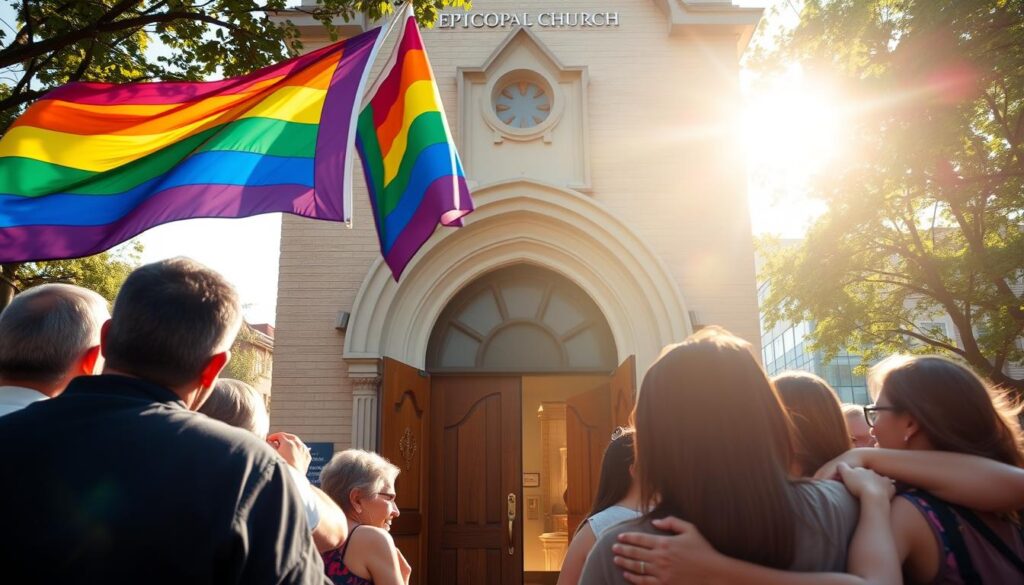
episcopal church support for lgbt

Ordination of LGBTQ+ Clergy

In addition to supporting same-sex marriage, the Episcopal Church has also made significant strides in the ordination of LGBTQ+ clergy. The church has long been a proponent of equality in all aspects of church life, including leadership positions. This inclusive approach has fostered a welcoming environment for LGBTQ+ individuals to serve in various roles.

Year Policy Change Impact
2015 Approval of same-sex marriage resolutions Allowed clergy to officiate same-sex marriages
2018 Further affirmation of LGBTQ+ rights Strengthened support for LGBTQ+ community

The Episcopal Church’s policies on same-sex marriage and the ordination of LGBTQ+ clergy demonstrate its commitment to being an affirming and supportive faith community. By embracing diversity and promoting equality, the church continues to be a beacon of hope for many.

The Role of Scripture in LGBTQ+ Acceptance

Understanding the role of scripture in the Episcopal Church’s acceptance of LGBTQ+ individuals requires a nuanced exploration of biblical interpretations. The Episcopal Church approaches scripture with a complex understanding, recognizing the multifaceted nature of biblical interpretations and their impact on LGBT issues.

Interpreting Biblical Texts

The interpretation of biblical texts is a critical aspect of the Episcopal Church’s stance on LGBTQ+ issues. The Church acknowledges that scripture is open to multiple interpretations, and it considers historical context, cultural influences, and theological perspectives when examining biblical teachings related to sexual orientation and gender identity.

A nuanced understanding allows the Church to affirm LGBTQ+ individuals while respecting the complexity of scripture. This involves recognizing both the historical context in which biblical texts were written and the contemporary understanding of LGBTQ+ issues.

The Impact of Modern Theology

Modern theology plays a significant role in shaping the Episcopal Church’s views on LGBTQ+ acceptance. By engaging with contemporary theological thought, the Church is able to reconcile traditional biblical interpretations with modern understandings of sexual orientation and gender identity.

The Episcopal Church’s affirming stance towards LGBTQ+ individuals is a result of this theological engagement, demonstrating a commitment to inclusivity and compassion. Through this approach, the Church fosters a welcoming environment for all, regardless of sexual orientation or gender identity.

Engaging with LGBTQ+ Issues Today

Engaging with LGBTQ+ issues is a vital part of the Episcopal Church’s mission to promote inclusivity and love. The church recognizes the importance of creating a welcoming environment for all individuals, regardless of their sexual orientation or gender identity.

Community Support and Advocacy

The Episcopal Church is committed to providing community support and advocacy for LGBTQ+ individuals. This involves various initiatives aimed at promoting understanding and acceptance within the church and beyond.

Key Initiatives:

  • Providing safe spaces for LGBTQ+ individuals to share their experiences and find support.
  • Advocating for LGBTQ+ rights within the church and in broader society.
  • Educating clergy and laity about LGBTQ+ issues to promote understanding and empathy.

The Importance of Dialogue

Dialogue allows for the exchange of ideas and experiences, helping to break down barriers and build bridges within the community. The church encourages clergy and laity to engage in thoughtful discussions about LGBTQ+ issues, promoting a culture of empathy and understanding.

Initiative Description Impact
LGBTQ+ Support Groups Regular meetings for LGBTQ+ individuals to share experiences and find support. Increased sense of community and support among LGBTQ+ individuals.
Clergy Training Training programs for clergy to better understand and support LGBTQ+ individuals. More inclusive and supportive clergy.
Advocacy Campaigns Campaigns to promote LGBTQ+ rights and awareness within the church and society. Increased awareness and advocacy for LGBTQ+ rights.

Theological Perspectives on Sexual Orientation

The Episcopal Church encompasses a broad spectrum of theological interpretations regarding sexual orientation, reflecting its commitment to inclusivity.

This diversity is evident in the various viewpoints on the matter, ranging from conservative to progressive interpretations of Christian teachings.

Diverse Interpretations Within the Church

Within the Episcopal Church, there are multiple theological perspectives on sexual orientation. Some view the Bible’s teachings as unchanging and applicable to contemporary understandings of sexuality.

Others interpret biblical texts within their historical and cultural context, arguing for a more nuanced understanding of sexual orientation.

This diversity of thought is reflected in the Church’s ongoing discussions and debates about LGBTQ+ inclusion.

Theological Education on LGBTQ+ Matters

Theological education plays a crucial role in shaping the Church’s stance on LGBTQ+ issues. Seminaries and theological institutions within the Episcopal Church are increasingly incorporating LGBTQ+ issues into their curricula.

This education aims to foster a deeper understanding of the complex interplay between theology, scripture, and contemporary understandings of sexual orientation.

Aspect Traditional View Progressive View
Scriptural Interpretation Literal interpretation of biblical texts regarding sexuality Contextual interpretation considering historical and cultural context
Theological Education Focus on traditional Christian teachings Inclusive of LGBTQ+ perspectives and experiences
Community Engagement Emphasis on traditional family values Support for LGBTQ+ individuals and advocacy for their rights

By engaging with these diverse perspectives and prioritizing theological education, the Episcopal Church continues to evolve its understanding of sexual orientation and its stance on LGBTQ+ inclusion.

Voices from the LGBTQ+ Episcopalian Community

The stories of LGBTQ+ Episcopalians offer a powerful testament to the church’s commitment to diversity and inclusion. These personal narratives not only highlight the journey of individuals within the community but also underscore the church’s role in fostering an environment of acceptance and love.

episcopal church affirming lgbt

Personal Stories and Experiences

LGBTQ+ Episcopalians share a wide range of experiences, from moments of profound joy to times of struggle and perseverance. For instance, “I found my true self within the Episcopal Church, where I was welcomed and affirmed.” Such stories highlight the positive impact of the church’s inclusive policies and practices.

The Episcopal Church’s affirmation of LGBTQ+ individuals is not just a policy but a lived reality for many. As one member noted,

“The church is not just a place of worship; it’s a community that supports me in all aspects of my life.”

This sense of community is crucial for individuals who may have felt marginalized or excluded elsewhere.

Building Supportive Church Communities

Building supportive communities within the church is essential for the well-being of LGBTQ+ members. This involves not just acceptance but active affirmation and support. The Episcopal Church has made significant strides in this area, with many dioceses and parishes actively working to create inclusive environments.

Key initiatives include training for clergy and lay leaders on LGBTQ+ issues, support groups for LGBTQ+ individuals and their families, and advocacy for LGBTQ+ rights within and beyond the church. These efforts demonstrate the church’s commitment to being a sanctuary of love and acceptance for all.

As the Episcopal Church continues on its path of inclusivity, the voices of LGBTQ+ Episcopalians will remain crucial. Their stories and experiences not only enrich the church community but also guide its ongoing journey towards greater understanding and acceptance.

National and Local Responses

The Episcopal Church has seen a broad spectrum of reactions to LGBT issues at both national and local levels. This diversity reflects the complex and multifaceted nature of the Church’s stance on LGBTQ+ rights.

Different dioceses have taken varied approaches, ranging from full inclusion and support of LGBTQ+ individuals to more cautious or conservative stances. This variation is a natural result of the Church’s decentralized structure, allowing for a range of interpretations and responses to LGBT issues.

Diocesan Responses to LGBT Issues

Some dioceses have been at the forefront of advocating for LGBTQ+ rights, implementing policies that support the inclusion of LGBT individuals in all aspects of church life. For example, certain dioceses have performed same-sex marriages and have actively worked to create welcoming environments for LGBTQ+ clergy and laity.

In contrast, other dioceses have taken more conservative positions, sometimes due to local cultural or theological considerations. However, even within these dioceses, there are often ongoing discussions and efforts to better understand and support LGBTQ+ individuals.

Initiatives and Programs Supporting LGBTQ+ Individuals

Across the Episcopal Church, various initiatives and programs have been established to support LGBTQ+ individuals. These include educational programs aimed at promoting understanding and acceptance of LGBT issues, as well as advocacy efforts to advance LGBTQ+ rights within the Church and broader society.

Some dioceses have also established specific committees or task forces focused on LGBT issues, providing a framework for addressing the needs and concerns of LGBTQ+ Episcopalians. These initiatives not only support LGBTQ+ individuals but also foster a more inclusive and compassionate Church community.

By examining the diverse responses across different dioceses and the various initiatives in place, it becomes clear that the Episcopal Church is actively engaged in a process of dialogue and growth regarding LGBT issues. This ongoing work reflects the Church’s commitment to being a welcoming and affirming community for all individuals, regardless of their sexual orientation or gender identity.

Looking Ahead: The Future of LGBTQ+ Inclusion in the Church

The Episcopal Church’s journey towards full LGBTQ+ inclusion continues, with the community facing both challenges and opportunities. As the church navigates these complexities, it remains committed to its core values of love, acceptance, and compassion.

Challenges and Opportunities on the Horizon

The path forward involves addressing ongoing debates and fostering a culture of understanding and respect. The episcopal church lgbt inclusion efforts are expected to evolve, with a focus on creating inclusive environments that welcome individuals from all backgrounds.

Fostering Stronger Relationships

Strengthening relationships within the faith community is crucial. By promoting dialogue and empathy, Episcopalians can work together to build a more inclusive and supportive church. The episcopalians stance on lgbt issues will continue to be shaped by its commitment to social justice and human dignity.

FAQ

What is the Episcopal Church’s stance on LGBTQ+ issues?

The Episcopal Church is affirming and supportive of LGBTQ+ individuals, with a strong commitment to equality, justice, and human dignity for all people, regardless of their sexual orientation or gender identity.

How does the Episcopal Church interpret scripture in relation to LGBTQ+ issues?

The Episcopal Church uses a nuanced approach to interpreting scripture, considering the historical context, cultural background, and the overall message of love and acceptance. The church also draws on modern theology and scholarly insights to inform its understanding of biblical texts.

What is the history of the Episcopal Church’s journey towards LGBT inclusion?

The Episcopal Church has undergone significant shifts in its perspective on LGBTQ+ issues over the decades, from a more conservative stance to a more inclusive and affirming one. Key milestones include the 1976 General Convention, which affirmed gay and lesbian rights, and subsequent decisions to ordain LGBTQ+ clergy and allow same-sex marriage.

Does the Episcopal Church support same-sex marriage?

Yes, the Episcopal Church allows same-sex marriage and has liturgies and rites for same-sex weddings. The church has also ordained LGBTQ+ clergy and bishops, and has taken steps to ensure that all individuals, regardless of their sexual orientation or gender identity, are treated with dignity and respect.

How does the Episcopal Church engage with LGBTQ+ issues today?

The Episcopal Church is actively engaged in supporting and advocating for LGBTQ+ individuals, through community support, dialogue, and advocacy. The church also provides resources and training for clergy and lay leaders to promote understanding and inclusion.

What are some of the theological perspectives on sexual orientation within the Episcopal Church?

The Episcopal Church encompasses a range of theological perspectives on sexual orientation, from more conservative to more liberal views. The church values diversity of interpretation and encourages ongoing dialogue and education on LGBTQ+ matters.

How do Episcopalians view the role of scripture in shaping their acceptance of LGBTQ+ individuals?

Episcopalians believe that scripture is a vital part of their faith, but also recognize that biblical texts must be interpreted in context. The church draws on a range of scholarly insights and theological perspectives to inform its understanding of scripture and its application to LGBTQ+ issues.

What initiatives and programs does the Episcopal Church have to support LGBTQ+ individuals?

The Episcopal Church has a range of initiatives and programs to support LGBTQ+ individuals, including advocacy and support groups, liturgies and rites for same-sex weddings, and training for clergy and lay leaders. Different dioceses also have their own programs and initiatives to promote inclusion and support.

What are some of the challenges and opportunities facing the Episcopal Church in its commitment to LGBTQ+ inclusion?

The Episcopal Church faces ongoing challenges, including building greater understanding and acceptance within the church and in wider society. However, the church also sees opportunities to strengthen relationships within the faith community, promote greater inclusion, and continue to advocate for justice and equality for all people.
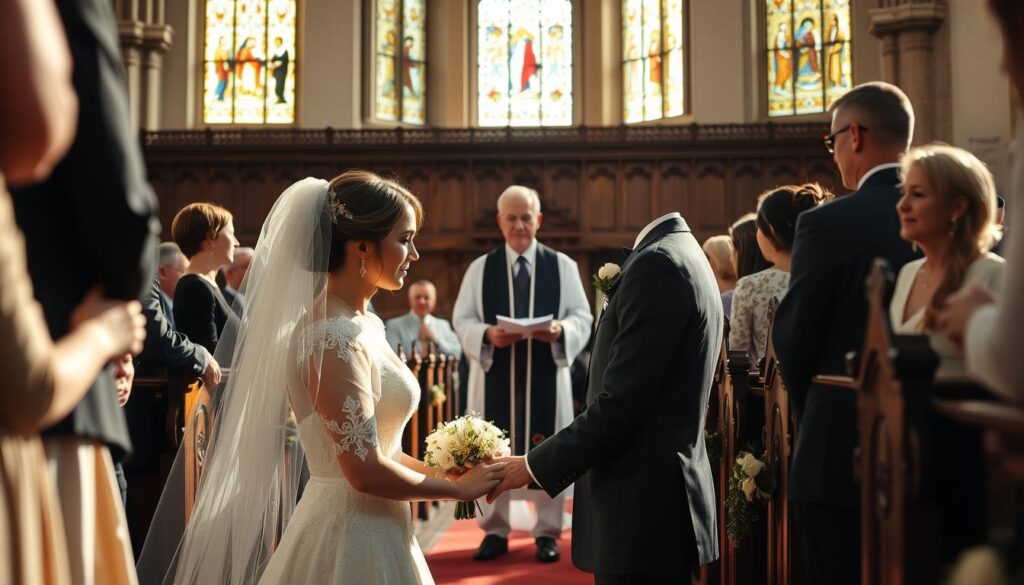

What Do Anglicans Believe About Marriage?


The Anglican Church’s views on marriage are rooted in its understanding of Christian teachings. According to the Anglican Church in North America, marriage is a sacrament and a lifelong union between a man and a woman.

The significance of understanding Anglican marriage beliefs lies in its importance as a cornerstone of Christian life. Exploring these beliefs provides insight into the Church’s values and practices.

By examining these beliefs, we can gain a deeper understanding of the Church’s stance on marriage and its role in Christian life.

Key Takeaways

  • The Anglican Church views marriage as a sacrament.
  • Marriage is considered a lifelong union between a man and a woman.
  • The Church’s teachings on marriage are guided by biblical principles.
  • Understanding Anglican marriage beliefs provides insight into the Church’s values.
  • The Church emphasizes the importance of commitment and faithfulness in marriage.

Overview of Anglican Beliefs on Marriage

Marriage, within the Anglican tradition, is understood through the lens of history, theology, and Scripture. The Anglican Church’s views on marriage have evolved over time, influenced by its rich history, theological principles, and biblical teachings.

Historical Context of Anglican Marriage

The historical context of Anglican marriage is deeply rooted in the Church of England’s history, particularly in the 1662 Book of Common Prayer, which laid out a precise theology of marriage. This foundational document has played a significant role in shaping Anglican beliefs about the sacrament of marriage.

Over the centuries, the Anglican Communion has adapted to changing social and cultural norms while maintaining its core theological beliefs regarding marriage.

Theological Foundations

The theological foundations of Anglican marriage are grounded in the understanding of marriage as a sacrament. Anglicans view marriage as a union between a man and a woman, emphasizing the importance of love, commitment, and mutual support.

The Anglican Communion’s theological stance on marriage is also influenced by its adherence to the principles of the Lambeth Conference, which has addressed issues related to marriage and family.

Influence of Scripture

Scripture plays a pivotal role in shaping Anglican beliefs about marriage. The Bible’s teachings on love, fidelity, and the relationship between spouses are central to the Anglican understanding of marriage.

Anglicans look to biblical examples and teachings, such as those found in the letters of St. Paul, to guide their understanding of the roles and responsibilities within a marriage.

The Sacramental Nature of Marriage

The sacramental nature of marriage is a cornerstone of Anglican beliefs, reflecting Christ’s love for the Church. This understanding is deeply rooted in the theological teachings of the Anglican Communion.

Marriage as a Sacrament

The Anglican Church affirms that “the Sacrament of Holy Matrimony is in its nature a union permanent and lifelong of one man and one woman” (Canon II.7: Of Christian Marriage). This definition underscores the sacramental aspect of marriage, emphasizing its permanence and the union between a man and a woman.

The sacramental view of marriage signifies that the relationship is not just between two individuals but also involves God. It is a means of grace, where the couple experiences God’s love and commitment through their mutual love and vows.

Spiritual Significance

The spiritual significance of marriage in Anglicanism lies in its reflection of Christ’s relationship with the Church. It is seen as a symbol of the love and commitment that Christ shows to his followers. This understanding elevates the marital bond to a spiritual level, where the couple’s love for each other is a manifestation of their faith and devotion to God.

Furthermore, the Anglican Church teaches that marriage is a source of strength and support for the couple, enabling them to live out their faith together. It is within this context that marriage vows are made, promising lifelong love, fidelity, and support.

The Role of Vows in Anglican Weddings

In Anglican weddings, the exchange of vows is a pivotal moment, symbolizing the couple’s lifelong commitment to each other. These vows are not just promises between the couple but are made before God, emphasizing the sacred nature of marriage.

Significance of the Vows

The vows exchanged during an Anglican wedding ceremony are rooted in tradition and scripture, reflecting the Anglican understanding of marriage as a lifelong commitment. The couple promises to “love, comfort, honour, and protect” one another, as stated in The Book of Common Prayer.

Promises Made Before God

The vows made during the ceremony are considered a sacred promise, not just to each other, but also before God. This aspect underscores the religious and spiritual dimensions of Anglican marriage beliefs.

The following table highlights key elements of the vows and their significance:

Vow Element Significance Reflection of Anglican Beliefs
Love Unconditional affection and care Emphasizes the importance of love in marriage
Comfort Providing solace and support Highlights the role of mutual support
Honour Respect and dignity towards each other Reflects the value placed on mutual respect
Protect Guarding and safeguarding each other’s well-being Underscores the commitment to mutual care

The vows in an Anglican wedding are a cornerstone of the marriage, reflecting the beliefs and values of the Anglican community regarding marriage and commitment.

Anglican View on Same-Sex Marriage

As the Anglican Church navigates contemporary debates, its views on same-sex marriage reveal a diverse and nuanced landscape. The global Anglican Communion is grappling with this issue, reflecting a broad spectrum of theological and cultural perspectives.

Historical Context

The historical context of the Anglican Church’s stance on marriage has traditionally been rooted in biblical teachings, emphasizing the union between a man and a woman. However, as societal norms have evolved, so too have the interpretations and discussions within the Anglican Communion regarding same-sex relationships.

The debate over same-sex marriage has led to a divergence in views across different Anglican provinces. For instance, some provinces have embraced the blessing of same-sex unions, while others adhere strictly to traditional definitions of marriage.

Current Practices and Variations

Currently, the Anglican Communion lacks a unified stance on same-sex marriage, with practices varying significantly across different regions. The Anglican Church in North America, for example, has taken a conservative stance, affirming that marriage is between one man and one woman, as outlined in the document “From the Beginning”: God’s Design for Marriage.

In contrast, other provinces like the Episcopal Church in the United States and the Anglican Church in Canada have adopted more inclusive approaches, allowing for the blessing of same-sex unions. This diversity reflects the complex and evolving nature of the debate within the Anglican Communion.

The table below summarizes the varying stances on same-sex marriage across some Anglican provinces:

Anglican Province Stance on Same-Sex Marriage
Anglican Church in North America Opposes same-sex marriage, affirming traditional marriage
Episcopal Church (USA) Permits same-sex marriage and blessings
Anglican Church of Canada Allows blessing of same-sex unions

The ongoing discussion on same-sex marriage within the Anglican Communion highlights the challenges of balancing traditional teachings with contemporary societal changes. As the global Anglican community continues to navigate these issues, the diversity of views and practices is likely to remain a significant aspect of the conversation.

Divorce and Remarriage in Anglicanism

The Anglican Church approaches divorce and remarriage with a nuanced perspective, considering both the theological implications and the pastoral needs of its members. This balanced view is rooted in the Church’s understanding of marriage as a sacramental union, while also acknowledging the complexities and challenges faced by individuals and families.

Understanding Divorce

The Anglican Communion has traditionally viewed marriage as indissoluble, reflecting its commitment to the lifelong nature of marital commitment. However, it also recognizes that divorce can occur, and thus, it provides pastoral guidance to those affected.

“The Church acknowledges that divorce is a reality in contemporary society and seeks to provide support and guidance to those whose marriages have failed.”

Dearly Beloved: An Anglican Theology of Marriage, Part IV

The Church’s teaching on divorce is informed by its theological understanding of marriage, as well as its commitment to providing compassionate pastoral care. This approach is reflected in the varying practices and disciplines within the Anglican Communion regarding divorce and remarriage.

Conditions for Remarriage

Remarriage within the Anglican Church is considered in light of the Church’s teaching on divorce and the individual’s circumstances. The decision to remarry is approached with sensitivity, taking into account the pastoral implications and the individual’s commitment to their faith.

Condition Description
Divorce The Church acknowledges divorce as a reality, providing guidance for those affected.
Remarriage Remarriage is considered on a case-by-case basis, with sensitivity to the individual’s circumstances and commitment to their faith.
Pastoral Care The Church provides pastoral support to individuals and families affected by divorce and remarriage.

In conclusion, the Anglican Church’s approach to divorce and remarriage reflects a balance between upholding the ideal of lifelong marital commitment and providing compassionate pastoral care to those affected by marital breakdown. This nuanced perspective is grounded in the Church’s theological understanding of marriage and its commitment to supporting its members through challenging circumstances.

The Importance of Marriage Preparation

The Anglican Church places a strong emphasis on marriage preparation to ensure a strong foundation for couples. This preparation is not just about the wedding ceremony but about building a lifelong relationship based on mutual respect, trust, and understanding.

Marriage preparation in the Anglican tradition involves several key components, including pre-marital counseling. This counseling is designed to help couples explore their expectations, values, and goals for their marriage. It provides a safe space for them to discuss potential challenges and develop strategies for overcoming them.

Pre-Marital Counseling

Pre-marital counseling is a critical aspect of marriage preparation in the Anglican Church. It is typically conducted by experienced clergy or counselors who have a deep understanding of the Church’s teachings on marriage. The counseling sessions cover a range of topics, including:

  • Communication skills
  • Conflict resolution
  • Financial management
  • Family planning
  • Spiritual growth together

These sessions are not only informative but also provide an opportunity for couples to bond and deepen their understanding of each other. By addressing potential issues early on, couples can better navigate the challenges of married life.

Resources and Programs

The Anglican Church offers various resources and programs to support couples as they prepare for marriage. These may include:

  1. Marriage preparation courses that cover the theological and practical aspects of marriage.
  2. Retreats and workshops that focus on building a strong marital foundation.
  3. Online resources and guides that provide additional support and information.

By utilizing these resources, couples can gain a deeper understanding of the Anglican teachings on marriage and what it means to be married within the Anglican tradition. The Church’s support extends beyond the wedding day, recognizing that marriage is a journey that requires ongoing commitment and nurturing.

Anglican marriage preparation

In conclusion, the Anglican Church’s emphasis on marriage preparation reflects its commitment to supporting couples as they embark on their marital journey. Through pre-marital counseling and various resources, the Church provides a comprehensive support system that helps couples build a strong, resilient marriage.

The Community’s Role in Marriage

The Anglican Church emphasizes the importance of community in nurturing marriages, celebrating milestones, and providing support. This communal approach to marriage is rooted in the understanding that a strong support system is crucial for the well-being of couples.

Support from the Church Family

The Church family plays a significant role in providing emotional and spiritual support to married couples. As stated in The Book of Common Prayer, the community is encouraged to support married couples, celebrating their anniversaries and milestones. This support is not limited to the couple’s immediate family but extends to the broader church community.

“The community’s role in marriage is multifaceted, involving emotional support, spiritual guidance, and celebration of milestones,” reflects the Anglican perspective on marriage. This approach fosters a sense of belonging and connection among couples, helping them navigate the challenges of married life.

Celebrating Anniversaries and Milestones

Celebrating anniversaries and other significant milestones is an integral part of the Anglican community’s support for married couples. These celebrations serve as reminders of the couple’s commitment to one another and their faith. They also provide opportunities for the community to come together and offer support.

By celebrating these milestones, the Anglican community reinforces the importance of marriage and the role that it plays in the lives of couples. As Dr. Rowan Williams, a former Archbishop of Canterbury, once noted, “Marriage is not just a private arrangement; it’s a public commitment that involves the community.”

This communal celebration of anniversaries and milestones strengthens the bonds within the community and provides a sense of continuity and connection among its members.

“Marriage is a sacrament that is not just between two people but involves the whole community,” said

a prominent Anglican theologian

.

Gender Roles in Anglican Marriage

Anglican marriage beliefs regarding gender roles are complex, influenced by historical, theological, and cultural factors. The traditional understanding of marriage within the Anglican Church has often been associated with distinct roles for men and women.

Traditional Roles versus Modern Views

Historically, the Anglican Church has leaned towards a traditional view of gender roles, where men are often seen as the primary providers and women as caregivers. However, this perspective is being challenged by modern views that advocate for equality in partnership.

The shift towards more egalitarian roles in marriage reflects broader societal changes and the evolving understanding of gender within the Church.

Equality in Partnership

The push for equality in Anglican marriages is not just about changing roles but also about embracing a more inclusive understanding of partnership. This includes:

  • Mutual respect and understanding
  • Shared responsibilities
  • Support for one another’s spiritual journeys

The Anglican Church’s approach to gender roles in marriage is evolving, with many congregations embracing a more nuanced understanding that balances tradition with contemporary needs.

Aspect Traditional View Modern View
Roles in Marriage Distinct roles for men and women Equality and shared responsibilities
Decision Making Primarily male-led Mutual decision-making
Spiritual Leadership Often male-dominated Increasingly shared or female-led

The discussion around gender roles in Anglican marriages is ongoing, reflecting the diverse perspectives within the global Anglican Communion. As the Church continues to navigate these issues, the commitment to understanding and serving the needs of all its members remains paramount.

The Impact of Culture on Anglican Marriage

Anglican views on marriage are not uniform, reflecting the diverse cultural landscapes within the Communion. The global nature of the Anglican Communion means that its understanding of marriage is influenced by a wide array of cultural practices and traditions.

Cultural diversity within the Anglican Communion is a significant factor that shapes its teachings on marriage. From the indigenous cultures of Africa and the Pacific to the modern societies of North America and Europe, the Communion encompasses a broad spectrum of cultural contexts.

Cultural Diversity within Anglicanism

The Anglican Communion is a global community with diverse cultural contexts shaping marriage practices. For instance, in some African cultures, marriage is understood within the context of extended family and community ties, whereas in Western societies, the nuclear family is often the primary unit.

  • In many Asian cultures, respect for tradition and elders is a significant aspect of marital relationships.
  • In contrast, some Western cultures emphasize the equality and partnership between spouses.
  • African cultures often integrate marriage into the broader community, with communal celebrations and rituals.

These diverse cultural practices enrich the understanding of marriage within the Anglican Communion, highlighting the complexity and richness of human relationships.

How Culture Shapes Marriage Practices

Culture significantly influences marriage practices within the Anglican Communion. For example, the way weddings are celebrated, the roles of family members, and the expectations from the married couple can vary greatly across different cultures.

The Lambeth Conference, a significant gathering of Anglican bishops worldwide, has acknowledged the importance of cultural contexts in understanding marriage. It emphasizes the need for a balanced approach that respects cultural diversity while maintaining the core teachings of Christianity.

“Marriage is a gift from God, and its celebration is a joyful occasion that brings together family, friends, and community. The way it is celebrated can vary greatly across cultures, but the essence remains the same – a commitment between two people before God.”

The challenge for the Anglican Communion is to navigate these cultural differences while maintaining unity in its teachings on marriage. By embracing cultural diversity and promoting understanding, the Communion can continue to support couples across different cultural contexts.

Marriage in the Context of Family

Marriage, as understood by Anglicans, is not just a union between two individuals but a foundation for family life that is grounded in spiritual values. The Anglican Church emphasizes the importance of family life and parenting, encouraging couples to raise their children in the faith.

Family Life as a Central Theme

Family life is a central theme in Anglican teachings on marriage. The Church views the family as a vital unit where faith is nurtured and passed down through generations. This understanding is rooted in the belief that the love and commitment between spouses is a reflection of God’s love for humanity.

The Book of Common Prayer highlights the significance of family life, providing liturgies and prayers that support family values and spiritual growth. Anglican families are encouraged to practice their faith together, creating a home environment that is welcoming and inclusive.

Parenting Within Anglican Teachings

Parenting is seen as a sacred responsibility within Anglican teachings. Parents are encouraged to teach their children the values of faith, compassion, and service. The Church provides various resources and programs to support parents in their role, including pre-baptismal and post-baptismal classes for families.

Key aspects of parenting within Anglican teachings include:

Aspect Description
Faith Education Teaching children about the Christian faith and its practices.
Values-Based Upbringing Nurturing values such as love, kindness, and forgiveness in children.
Community Involvement Encouraging families to participate in church activities and community service.

Anglican family practices

By focusing on these aspects, Anglican families can create a nurturing environment that supports the spiritual growth of all members. The Church’s support for families is a testament to its commitment to the well-being of its community.

Ethical Considerations in Marriage

In the Anglican tradition, marriage is viewed as a sacred institution that is built on a foundation of ethical principles, including love, fidelity, respect, and compromise. The Anglican Church teaches that these values are essential for a strong and healthy marriage.

The ethical dimensions of marriage are deeply rooted in Anglican teachings. Love and fidelity are considered foundational elements, as they foster a deep and abiding commitment between spouses. According to the Anglican Church, “marriage is built on love, fidelity, respect, and compromise” (Source: Dearly Beloved: An Anglican Theology of Marriage, Part III).

Love and Fidelity

Love and fidelity are intertwined in the Anglican understanding of marriage. Fidelity is seen as a manifestation of love, demonstrating a commitment to one’s spouse through actions and decisions. This commitment is not limited to the individual but is also a communal aspect, as the Church supports couples in their journey together.

Respect and Compromise

Respect and compromise are also crucial ethical considerations in Anglican marriage teachings. Respect involves valuing one’s partner as an individual, while compromise enables couples to navigate life’s challenges together, finding common ground and understanding.

The Anglican Church emphasizes that these ethical principles are not static but dynamic, evolving as the couple grows together. By embracing love, fidelity, respect, and compromise, couples can build a resilient and meaningful marriage that reflects the values of their faith community.

Conclusion: The Future of Marriage in Anglicanism

The Anglican Communion is navigating the complexities of modern marriage while staying true to its foundational principles. As the Church continues to discuss and refine its understanding of marriage, it remains committed to the values of love, respect, and commitment that are central to the Anglican perspective on marriage.

Emerging Trends

The Church is exploring new ways to support couples in their marital journey, drawing on biblical guidance and the experiences of its members. For insights into the biblical foundation of marriage, resources such as Bible verses about marriage offer valuable perspectives.

Tradition and Relevance

By balancing tradition with contemporary needs, the Anglican Communion aims to ensure that its understanding of marriage remains both faithful to its heritage and relevant to the lives of its members. This approach reflects the ongoing commitment to understanding what Anglicans believe about marriage in a changing world.

FAQ

What is the Anglican view on the sacramental nature of marriage?

Anglicans believe that marriage is a sacrament, a means of grace, and a reflection of Christ’s love for the Church. This understanding emphasizes the spiritual significance of marriage and its role in the life of a Christian couple.

What do Anglicans believe about the role of vows in marriage?

In Anglican weddings, vows are considered a crucial element, representing the promises made before God. These vows reflect the Anglican understanding of marriage as a lifelong commitment, emphasizing the importance of love, fidelity, and mutual support.

How do Anglicans view same-sex marriage?

The Anglican Communion has varying views on same-sex marriage across different provinces. While some provinces have chosen to bless same-sex unions, others maintain a traditional stance. The global Anglican community continues to discuss and discern its stance on this issue.

What is the Anglican approach to divorce and remarriage?

The Anglican Church teaches that marriage is indissoluble, but it also acknowledges that divorce can occur. The Church permits remarriage in certain circumstances, emphasizing the need for pastoral care and support for individuals and families affected by divorce.

How does the Anglican Church support couples preparing for marriage?

The Anglican Church places a strong emphasis on pre-marital counseling, providing resources and programs to help couples prepare for marriage. These initiatives aim to equip couples with the skills and understanding necessary for a strong, healthy marriage.

What role does the community play in supporting Anglican marriages?

The Anglican Church fosters a sense of community among married couples, promoting their well-being and commitment to one another. The Church family provides encouragement, celebration, and support, recognizing the importance of marriage in the life of the community.

How do Anglicans understand gender roles in marriage?

The Anglican Church has traditionally understood marriage as involving distinct roles for men and women. However, there is also a recognition of the importance of equality in partnership, with many Anglicans advocating for a more nuanced and context-dependent understanding of gender roles.

How does culture impact Anglican marriage practices?

The Anglican Communion encompasses a diverse range of cultural contexts, each shaping marriage practices in unique ways. The Church acknowledges the challenges and opportunities presented by cultural diversity, seeking to balance its tradition with the needs and expressions of different cultures.

What are the ethical considerations in Anglican marriage?

Anglicans emphasize the importance of love, fidelity, respect, and compromise in marriage. These values are seen as central to a healthy and Christian marriage, guiding the way couples relate to one another and navigate the challenges of married life.

How does the Anglican Church understand marriage within the context of family?

The Anglican Church views family life as a central theme, with marriage being a foundational element. The Church supports families and promotes a Christian approach to parenting, recognizing the significance of marriage in the broader context of family life.

What is the future of marriage in Anglicanism?

The Anglican Communion is engaged in ongoing discussions about the future of marriage, considering emerging trends and challenges. The Church seeks to balance its tradition with contemporary needs, ensuring that its understanding of marriage remains relevant and faithful to its core teachings.

Anglicans and the Bible: Beliefs Explained


The Anglican tradition, stemming from the Church of England, places significant emphasis on the role of the Bible in Christian faith. At its core, Anglican beliefs about the Bible are rooted in the scripture’s authority and its interpretation within the context of tradition and reason.

Anglicans base their Christian faith on the Bible, alongside the traditions of the apostolic church, apostolic succession, and the writings of the Church Fathers. This multifaceted approach allows for a rich and nuanced understanding of scripture, fostering a deep connection between faith and daily life.

The interpretation of the Bible within Anglicanism is guided by a balance between scripture, tradition, and reason, ensuring a comprehensive and thoughtful approach to understanding God’s word.

Key Takeaways

  • Anglicans view the Bible as a foundational element of their Christian faith.
  • The interpretation of scripture is balanced between scripture, tradition, and reason.
  • Anglican beliefs are shaped by the traditions of the apostolic church and the writings of the Church Fathers.
  • The Bible plays a central role in Anglican worship and daily life.
  • Anglicanism fosters a nuanced understanding of scripture through its multifaceted approach.

What is Scripture in Anglicanism?

At the heart of Anglicanism lies a profound respect for Scripture as the Word of God. This reverence is rooted in the understanding that the Bible is not just a historical document, but a living, breathing testament to God’s love and plan for humanity.

Definition of Scripture

In Anglican theology, Scripture is considered the inspired Word of God, authoritative and sufficient for salvation. The Thirty-nine Articles of Religion, a foundational document in Anglicanism, articulates this belief, stating that the Bible contains all things necessary for salvation. This definition underscores the centrality of Scripture in Anglican faith and practice.

As Richard Hooker, a key figure in Anglican theology, noted, “The Bible is the Word of God, and it is the only rule for faith and practice.” This perspective highlights the importance of Scripture in guiding Anglican beliefs and actions.

Historical Background

The Anglican understanding of Scripture has its roots in the English Reformation. Reformers like Thomas Cranmer emphasized the authority of the Bible, making it accessible to the faithful in their vernacular language. This historical context is crucial for understanding the Anglican view of Scripture as both authoritative and accessible.

“The Bible is not just a book, but a library of books, written by different authors, in different styles, and in different historical contexts, yet forming a coherent whole.”

Importance in Worship

Scripture plays a vital role in Anglican worship. The Book of Common Prayer, another cornerstone of Anglicanism, integrates Scripture into the liturgy, with readings and prayers drawn from the Bible. This liturgical use of Scripture underscores its importance in the life of the Anglican community.

The Anglican approach to Scripture is characterized by a balance between reverence for the Bible as the Word of God and a critical, informed understanding of its historical and cultural context. This balance allows Anglicans to engage with Scripture in a way that is both faithful and intellectually honest.

The Bible’s Role in Anglican Faith

At the heart of Anglicanism lies a deep reverence for Scripture. The Bible is considered a foundational element that shapes the faith, practices, and daily lives of Anglicans around the world.

Source of Doctrine

The Anglican Church views the Bible as a primary source of doctrine. It is seen as the inspired word of God, containing all necessary elements for salvation and guiding Christian life. The Scriptures are consulted in forming doctrines that are central to Anglican belief and practice.

Doctrine derived from the Bible influences various aspects of Anglicanism, from sacraments to moral teachings. This reliance on Scripture ensures that Anglican doctrine remains rooted in biblical teachings.

Guiding Principles for Life

Beyond doctrine, the Bible serves as a guide for daily living. Anglicans are encouraged to turn to Scripture for wisdom, comfort, and guidance in their personal and communal lives. The Bible’s teachings are seen as relevant to all aspects of life, offering a moral framework that informs decisions and actions.

The application of biblical principles in daily life is considered essential for living a Christian life. This involves not just personal study but also communal reflection on Scripture within the church community.

Community and Personal Study

The Bible is central to both community and personal study in the Anglican tradition. In worship services, Scripture is read and reflected upon, fostering a communal understanding of God’s word. Personal study is also encouraged, allowing individuals to deepen their faith and understanding of biblical teachings.

Through both communal worship and personal devotion, the Bible remains a living, active part of Anglican life. It is seen as a source of spiritual nourishment and guidance, shaping the faith and practices of Anglicans.

Anglican Approach to Biblical Interpretation

The interpretation of Scripture within Anglicanism is characterized by a blend of historical, theological, and traditional perspectives. This multifaceted approach allows Anglicans to engage with the Bible in a way that is both deeply rooted in tradition and open to contemporary understanding.

Historical-Critical Method

The historical-critical method is one of the key approaches Anglicans use to interpret the Bible. This involves examining the historical context in which the biblical texts were written, as well as the cultural and literary contexts. By doing so, Anglicans seek to understand the original meaning of the texts and how they might be applied today. This method encourages a nuanced understanding of Scripture, recognizing both its historical depth and its ongoing relevance.

Theological Interpretation

In addition to historical-critical analysis, Anglicans also engage in theological interpretation of the Bible. This involves understanding the Bible within the context of Christian doctrine and tradition. Theological interpretation seeks to discern the Bible’s teachings on faith, morality, and the nature of God. It is an approach that is deeply informed by the creeds and confessions of the Christian faith, ensuring that biblical interpretation is aligned with the broader Christian tradition.

The Role of Tradition

Tradition plays a significant role in Anglican biblical interpretation. Anglicans believe that understanding the Bible is not just about individual interpretation but also about being part of a community that has interpreted Scripture over centuries. This communal aspect of interpretation is seen as essential, providing a check against individualistic or idiosyncratic readings of the text. By engaging with the tradition, Anglicans can ensure that their interpretation of Scripture is informed by the insights and understandings of Christians past and present.

In conclusion, the Anglican approach to biblical interpretation is characterized by a rich interplay between historical, theological, and traditional perspectives. This approach allows for a deep and nuanced understanding of Scripture, one that is both faithful to the Christian tradition and responsive to contemporary contexts.

The 39 Articles and Scripture

The Thirty-nine Articles of Religion play a pivotal role in defining Anglican beliefs regarding the authority and interpretation of Scripture. These articles, adopted in the 16th century, remain a foundational document for Anglicanism, affirming the authority and sufficiency of Scripture.

Overview of the Articles

The Thirty-nine Articles were formulated during a time of significant theological debate, aiming to establish a clear and unified doctrine for the Church of England. They address various aspects of Christian faith and practice, with a particular emphasis on the role of Scripture.

Key aspects of the Articles include:

  • The authority of Scripture in matters of faith
  • The relationship between Scripture and tradition
  • The interpretation of biblical teachings in the context of contemporary issues

Authority of Scripture in the Articles

The Articles assert the supremacy of Scripture in matters of faith, emphasizing its authority and sufficiency for salvation. Article VI, for instance, states that “Holy Scripture containeth all things necessary to salvation,” underscoring the Bible’s central role in Anglican doctrine.

The implications of this assertion are profound, influencing both personal faith and communal worship practices within Anglicanism.

Article Statement on Scripture Implication
Article VI Holy Scripture containeth all things necessary to salvation Scripture is sufficient for salvation
Article XX The Church hath power to decree rites or ceremonies Tradition is subordinate to Scripture

Scriptural References in the Articles

The Thirty-nine Articles are replete with references to Scripture, demonstrating the deep interconnection between the Articles and the Bible. These references serve to ground the doctrines and practices outlined in the Articles firmly in biblical teachings.

Anglican beliefs about the Bible

By examining the scriptural references within the Articles, one can gain a deeper understanding of the Anglican approach to biblical interpretation and its application to faith and practice.

The Book of Common Prayer and Scripture

The integration of scripture into Anglican worship is perhaps most evident in the Book of Common Prayer, a cornerstone of Anglican liturgical practice. This foundational text has been a guiding force in shaping Anglican beliefs and worship practices for centuries.

Integration of Scripture

The Book of Common Prayer is replete with references to scripture, incorporating biblical passages into its liturgies and prayers. This integration is not merely superficial; it reflects a deep-seated commitment to grounding worship practices in biblical teachings.

Scripture’s Role in the Book of Common Prayer is multifaceted. It serves as a source of doctrine, guiding principles for life, and a foundation for community and personal study. The prayer book’s liturgies are designed to engage worshippers with scripture, fostering a deeper understanding of biblical teachings.

Liturgical Use of Bible Passages

The Book of Common Prayer’s liturgies are rich in biblical allusions and direct references. From the daily offices to the sacraments, scripture is woven throughout, providing a framework for worship that is both grounded in tradition and open to the guidance of the Holy Spirit.

The use of scripture in the liturgy serves several purposes. It provides a common language for worship, drawing on a shared heritage of biblical understanding. It also offers a structure for exploring the depths of faith, inviting worshippers into a more profound engagement with the divine.

Impact on Worship Practices

The integration of scripture into the Book of Common Prayer has had a profound impact on Anglican worship practices. It has shaped the way Anglicans understand and engage with scripture, fostering a culture of biblical literacy and devotion.

Aspect of Worship Impact of Scripture
Liturgy Scripture provides the framework and content for many liturgies, grounding worship in biblical teachings.
Prayer The use of biblical language and imagery in prayers enriches worship, connecting personal and communal prayer to the broader narrative of scripture.
Community Shared engagement with scripture fosters a sense of community among Anglicans, creating a common heritage and understanding.

In conclusion, the Book of Common Prayer’s integration of scripture has profoundly shaped Anglican worship, fostering a deep and abiding connection to biblical teachings. This connection continues to influence Anglican beliefs and practices, reflecting the enduring importance of scripture in the life of the church.

The Relationship Between Scripture and Tradition

Anglicanism’s theological methodology is rooted in a dynamic interaction between biblical Scripture, historical tradition, and rational inquiry. This complex interplay is fundamental to understanding Anglican beliefs and practices.

Importance of Tradition in Anglicanism

Tradition plays a significant role in Anglicanism, serving as a vital link to the early Christian church and the teachings of the apostles. For more insights on the historical context, you can explore resources like Catholicism and the Bible: A Comprehensive, which provides a broader understanding of the relationship between tradition and Scripture in Christian denominations.

The importance of tradition is evident in several areas:

  • Continuity with the early church
  • Guidance in interpreting Scripture
  • Shaping worship and liturgical practices

Balancing Scripture and Tradition

Anglicans strive to maintain a balance between Scripture and tradition, recognizing that both are essential to a comprehensive understanding of the faith. This balance is achieved through:

  1. Careful biblical exegesis
  2. Consideration of historical and cultural contexts
  3. Dialogue with the broader Christian tradition

By embracing both Scripture and tradition, Anglicans can foster a rich and nuanced faith that is grounded in the Bible while being informed by the insights of the Christian heritage.

The Role of Reason

Reason plays a crucial role in Anglican theology, serving as a means to critically evaluate and understand the faith. The integration of reason allows Anglicans to:

  • Engage with contemporary issues and challenges
  • Interpret Scripture and tradition in light of modern knowledge
  • Foster a thoughtful and informed faith

By combining Scripture, tradition, and reason, Anglicans can cultivate a vibrant and dynamic faith that is both rooted in tradition and responsive to the needs of the contemporary world.

Influence of Scripture on Anglican Ethics

In Anglicanism, the Bible is not just a religious text but a foundational guide for ethical decision-making and moral teachings. Scripture profoundly shapes Anglican ethics, influencing their understanding of morality, social justice, and their responses to contemporary issues.

Teachings on Morality

Anglican moral teachings are rooted in biblical principles. The Ten Commandments and the Beatitudes are foundational to understanding right and wrong. These scriptures guide Anglicans in making ethical decisions in personal and public life.

For instance, the commandment “Love thy neighbor as thyself” (Mark 12:31) is seen as a guiding principle for interpersonal relationships and community service. Anglicans are encouraged to apply this teaching in various contexts, from family life to social justice initiatives.

Social Justice and Scripture

Social justice is a critical aspect of Anglican ethics, driven by scriptural mandates to care for the poor and marginalized. Biblical passages such as the prophetic calls for justice in Isaiah and the teachings of Jesus on caring for the least among us (Matthew 25:31-46) inspire Anglican social justice initiatives.

Scriptural Reference Social Justice Theme Anglican Response
Isaiah 1:17 Call for Justice Advocacy for the marginalized
Matthew 25:31-46 Caring for the Least Among Us Community service and aid programs
Micah 6:8 Acting Justly Promoting fair practices and equality

Contemporary Issues Addressed

Anglicans turn to Scripture for guidance on contemporary ethical issues. The Bible’s teachings on love, compassion, and justice inform their responses to challenges such as climate change, economic inequality, and human rights.

“The earth is the Lord’s, and everything in it, the world and all who live in it;” (Psalm 24:1) is a scripture that inspires environmental stewardship, a pressing contemporary issue.

By engaging with Scripture, Anglicans are equipped to address complex ethical dilemmas, striving to live out their faith in meaningful ways.

The Anglican Communion’s Views on Scripture

With a presence in over 165 countries, the Anglican Communion’s views on scripture are shaped by a diverse array of cultural and theological perspectives.

Anglican views on scripture

Global Perspective

The Anglican Communion is a global fellowship of churches that respects the authority of scripture while interpreting it within the context of tradition and reason. This approach allows for a nuanced understanding of biblical teachings.

Scripture is seen as a source of guidance for faith and practice, with the Bible being central to Anglican worship and doctrine.

Variations Among Provinces

Despite the shared commitment to scripture, there are variations in how different provinces within the Anglican Communion interpret and apply biblical teachings. These variations reflect the cultural and theological diversity across the globe.

  • Some provinces may emphasize certain biblical teachings over others based on local contexts.
  • The role of scripture in worship can also vary, with some provinces incorporating biblical readings more frequently than others.

Unifying Beliefs About the Bible

While there are variations, there are also unifying beliefs about the Bible across the Anglican Communion. The Bible is universally regarded as a source of divine revelation and guidance.

“The Bible is the primary source of our faith and practice, guiding us in our understanding of God’s love and salvation.”

This shared belief underscores the importance of scripture in Anglican identity and practice, fostering a sense of unity and shared purpose across the global communion.

Missions and Scripture

Scripture plays a pivotal role in guiding Anglican missions and evangelism worldwide. The Anglican Communion’s approach to spreading the faith is deeply rooted in its beliefs about the authority and relevance of the Bible.

Scripture in Evangelism

Evangelism within the Anglican Communion is characterized by a strong emphasis on sharing the teachings of Scripture. Anglican evangelists and missionaries rely on biblical narratives and principles to convey the message of Christianity. This approach is based on the belief that Scripture has the power to transform lives and communities.

  • Sharing personal testimonies that reflect biblical values
  • Using Scripture to address social and moral issues
  • Engaging in community service as a manifestation of Christian love

Biblical Foundations for Mission Work

The biblical foundations for Anglican mission work are multifaceted, encompassing various aspects of Christian discipleship and service. Key biblical themes include:

  1. The Great Commission (Matthew 28:18-20)
  2. The command to love one’s neighbor (Mark 12:31)
  3. The call to care for the marginalized and vulnerable (Matthew 25:31-46)

These themes guide Anglican mission initiatives, from local community projects to international development programs.

Training for Lay Leadership

Training for lay leadership is a critical component of Anglican mission work. Programs focus on equipping laypeople with a deep understanding of Scripture and its application in various contexts. This includes:

  • Biblical literacy and interpretation
  • Leadership and community engagement skills
  • Understanding of the Anglican tradition and its mission theology

By empowering lay leaders, the Anglican Communion strengthens its capacity to spread the Gospel and serve communities effectively.

Embracing Scripture in Modern Anglicanism

As Anglicanism navigates the complexities of the digital age, it is essential to reaffirm the significance of Scripture in contemporary society. The Anglican beliefs about the Bible remain a cornerstone of faith, guiding principles for life, and a source of doctrine.

Digital Age and Scripture

The digital landscape offers opportunities for Anglicans to engage with Scripture in innovative ways, such as through online Bible studies and digital devotionals. This shift enables the Church to reach a broader audience and make Scripture more accessible.

Engaging the Younger Generation

To engage younger generations, Anglican communities are incorporating contemporary methods of biblical engagement, such as social media discussions and interactive Bible studies. This approach helps to make the Bible more relatable and relevant to younger audiences.

Promoting Biblical Literacy

Promoting biblical literacy is crucial in modern Anglicanism. By encouraging the study of Scripture and providing resources for understanding its historical and cultural context, Anglicans can deepen their faith and ensure the continued relevance of the Bible in contemporary society.

By embracing these strategies, Anglican views on scripture can remain vibrant and relevant, fostering a deeper connection with the Bible and its teachings.

FAQ

What is the significance of Scripture in Anglicanism?

Scripture is central to Anglican faith and practice, serving as the primary source of doctrine and guiding principles for life.

How do Anglicans interpret the Bible?

Anglicans use a variety of methods to interpret the Bible, including historical-critical analysis, theological interpretation, and consideration of tradition.

What role do the Thirty-nine Articles play in shaping Anglican beliefs about Scripture?

The Thirty-nine Articles affirm the authority of Scripture and provide a framework for understanding its role in Anglican doctrine and practice.

How is Scripture incorporated into Anglican worship?

The Book of Common Prayer integrates Scripture into Anglican worship through liturgical readings, prayers, and other elements, shaping the community’s understanding and application of biblical teachings.

How do Anglicans balance Scripture and tradition?

Anglicans balance Scripture and tradition by recognizing the importance of both in understanding God’s revelation, with reason playing a key role in this balancing act.

How does Scripture influence Anglican ethics?

Scripture shapes Anglican ethics by providing teachings on morality, guiding principles for social justice, and a framework for addressing contemporary issues.

What is the global perspective on Scripture within the Anglican Communion?

The Anglican Communion shares a common commitment to Scripture, with variations among provinces reflecting diverse cultural and theological contexts, yet united in their affirmation of the Bible’s authority.

How is Scripture used in Anglican missions and evangelism?

Scripture is foundational to Anglican missions and evangelism, providing the basis for mission work, training for lay leadership, and the proclamation of the Gospel.

How can Anglicanism remain relevant in the modern era while embracing Scripture?

By engaging with Scripture in the digital age, promoting biblical literacy, and finding ways to connect with younger generations, Anglicanism can remain vibrant and relevant.

What are the challenges of embracing Scripture in contemporary Anglicanism?

Challenges include adapting to the digital age, engaging younger people, and promoting a deeper understanding of Scripture, all while remaining faithful to Anglican traditions and beliefs.

What Do Episcopalians Believe About Marriage?


The Episcopal Church views marriage as a sacred institution, emphasizing lifelong commitment, mutual support, and the nurturing of the relationship between two individuals, as well as their faith community and God.

According to the Book of Common Prayer (BCP), marriage is a sacramental rite where two persons “enter into a life-long union, make their vows before God and the Church, and receive the grace and blessing of God to help them fulfill their vows” (BCP, p.861). This understanding underscores the significance of marriage in the Episcopal faith.

Key Takeaways

  • The Episcopal Church considers marriage a sacramental rite.
  • Marriage involves a lifelong commitment between two individuals.
  • The church emphasizes the importance of vows and mutual support.
  • Marriage is viewed as a union before God and the faith community.
  • The Episcopal Church provides guidance and blessings for married couples.

The Foundation of Episcopal Marriage Beliefs

The foundation of Episcopal marriage beliefs is built upon a rich historical context and a nuanced understanding of scripture. The Episcopal Church’s views on marriage are shaped by its interpretation of Christian teachings, historical traditions, and its understanding of marriage as a sacrament.

Historical Context of Marriage in the Episcopalian Church

The historical context of marriage within the Episcopalian Church is complex and has evolved significantly over time. Initially, marriage was viewed through the lens of Catholic traditions, given the Church’s roots in the Roman Catholic Church. However, the Episcopal Church has adapted and modified its stance on various issues, including marriage, over the centuries.

The Reformation period played a crucial role in shaping the Episcopal Church’s views on marriage. The Church of England, from which the Episcopal Church originates, moved away from some Catholic doctrines, influencing its understanding of sacraments, including marriage. This historical shift laid the groundwork for the Church’s contemporary beliefs about marriage.

The Role of Scripture in Defining Marriage

Scripture plays a pivotal role in defining marriage within the Episcopal Church. The Church interprets biblical teachings on love, commitment, and relationships to inform its stance on marriage. Key scriptures, such as those found in the letters of St. Paul and the Gospels, are examined for their insights into the nature of marital commitment and the roles of spouses.

The Episcopal Church has also acknowledged the importance of adapting its interpretation of scripture to contemporary societal changes, including the recognition of same-sex marriages. This evolution reflects the Church’s commitment to inclusivity and its ongoing dialogue with scripture in the context of modern realities.

Aspect Historical Context Scriptural Influence
Marriage as a Sacrament Rooted in Catholic tradition, adapted during the Reformation Influenced by biblical teachings on love and commitment
Evolution of Marriage Beliefs Changed over centuries, influenced by societal and theological factors Interpretation of scripture adapted to contemporary issues, including same-sex marriages

The Nature of Marriage in Episcopalian Doctrine

Episcopalians consider marriage a public covenant between two individuals in the presence of God. This understanding is rooted in the belief that marriage is not just a civil contract but a sacred institution that involves a deep commitment to one another, characterized by fidelity and mutual support.

Marriage as a Sacred Covenant

In the Episcopalian tradition, marriage is viewed as a sacred covenant that is made in the presence of God. This covenant is not just between the couple but also involves their faith community. The church emphasizes the importance of this commitment, encouraging couples to nurture their relationship through mutual love, respect, and support.

The Episcopal Church defines marriage as a solemn public covenant between two persons, with at least one being a baptized Christian. This definition underscores the significance of faith in the marital bond, highlighting the role of Christianity in guiding the couple’s commitment to each other.

Understanding Commitment and Fidelity

Commitment and fidelity are core elements of marriage in the Episcopalian doctrine. Couples are encouraged to cultivate a deep and abiding commitment to one another, rooted in their faith and nurtured through their relationship. Fidelity, or faithfulness, is seen as a crucial aspect of this commitment, reflecting the couple’s dedication to their vows and to each other.

The importance of commitment and fidelity can be seen in the following aspects:

Aspect Description
Mutual Support Couples are encouraged to support each other emotionally, spiritually, and practically.
Faithfulness Fidelity is considered essential, reflecting the couple’s commitment to their vows.
Community Involvement The faith community plays a significant role in supporting and nurturing the couple’s relationship.

By understanding marriage as a sacred covenant and emphasizing commitment and fidelity, the Episcopalian doctrine provides a rich and meaningful context for couples to build their lives together.

The Importance of Love and Mutual Respect

At the heart of Episcopalian marriage beliefs is the importance of love and mutual respect between partners. This foundation is crucial for building a strong, healthy relationship that can withstand life’s challenges.

The Episcopal Church teaches that marriage is a sacred institution intended by God for the mutual benefit of the couple. As stated in the church’s liturgy, the union is understood to be for “their mutual joy; for the help and comfort given one another in prosperity and adversity; and, when it is God’s will, for the procreation of children and their nurture in the knowledge and love of the Lord.” This understanding underscores the significance of love and respect in marital relationships.

Love as the Basis for Marriage

Love is not just a feeling but a commitment to care for and support one another. In the context of marriage, love involves a deep emotional connection, loyalty, and a willingness to work through challenges together. The Episcopal Church emphasizes that this love is foundational to a successful marriage.

Some key aspects of love in Episcopalian marriage include:

  • Commitment: A pledge to stand by one another through all of life’s circumstances.
  • Support: Providing emotional, spiritual, and practical support to each other.
  • Forgiveness: The ability to forgive and be forgiven, fostering a culture of understanding and grace.

The Role of Respect and Equality in Partnerships

Mutual respect and equality are also vital components of a healthy Episcopalian marriage. The church teaches that both partners should be treated with dignity and respect, recognizing the inherent worth of each individual. This respect is foundational to building a balanced and equitable relationship.

Key elements of respect and equality in Episcopalian marriages include:

  1. Recognizing the autonomy and agency of both partners.
  2. Fostering open and honest communication.
  3. Sharing responsibilities and decision-making.

By emphasizing love, respect, and equality, the Episcopal Church provides a framework for couples to build strong, resilient marriages. These principles guide couples in navigating the complexities of married life, offering a foundation for mutual support and understanding.

The Clergy’s Role in Marriage

Clergy in the Episcopal Church are not just officiants but also spiritual advisors, helping couples understand the depth of their commitment. The clergy’s role is multifaceted, involving guidance, support, and the solemnization of the marriage ceremony.

Responsibilities of Episcopal Priests in Marriages

Episcopal priests are responsible for providing pre-marital counseling, which is a crucial aspect of preparing couples for marriage. This counseling typically involves several meetings with the couple to discuss the meaning of Christian marriage, the importance of commitment, and how to build a strong, healthy relationship.

During these sessions, priests also explore the couple’s understanding of marriage vows, their expectations from the marriage, and how they plan to navigate life’s challenges together. This process not only prepares the couple for the responsibilities of marriage but also deepens their understanding of the sacrament.

Conducting Weddings: A Sacred Service

The act of conducting a wedding is considered a sacred service within the Episcopal Church. Clergy are tasked with creating a meaningful and spiritual experience for the couple and their guests. This involves not only the liturgical aspects of the ceremony but also ensuring that the service is personalized to reflect the couple’s unique journey and commitment to each other.

The clergy’s role in marriage ceremonies is a significant aspect of Episcopal marriage customs, emphasizing the importance of faith and community in the union.

Episcopal marriage customs

Aspect of Clergy’s Role Description Significance
Pre-Marital Counseling Guiding couples through discussions on commitment, Christian marriage, and relationship building. Prepares couples for the responsibilities and challenges of marriage.
Solemnization of Marriage Officiating the wedding ceremony, making the marriage official and recognized by the Church. Confirms the couple’s commitment in the eyes of God and the community.
Spiritual Guidance Providing ongoing support and guidance to couples as they navigate married life. Helps couples maintain a strong spiritual foundation in their relationship.

The clergy’s involvement in marriages within the Episcopal Church underscores the religious and communal aspects of the union, highlighting the importance of faith, love, and mutual respect. By supporting couples through pre-marital counseling and the solemnization of their vows, clergy play a vital role in fostering strong, enduring marriages that reflect the values of the Episcopal tradition.

LGBTQ+ Inclusion in Episcopalian Marriage

The Episcopal Church’s stance on marriage has seen a notable shift with the inclusion of LGBTQ+ couples in its sacrament. This change reflects the church’s commitment to embracing diversity and promoting love and respect for all individuals.

A Historical Perspective on Inclusion

The journey towards LGBTQ+ inclusion in Episcopalian marriage has been gradual. Initially, the church faced challenges in addressing the rights of LGBTQ+ individuals. However, over time, it has moved towards greater acceptance.

In 2012, a significant step was taken when the General Convention approved a resolution allowing bishops to authorize rites for blessing same-sex unions. This was a precursor to the more comprehensive changes that followed.

Recent Changes in Church Doctrine

The 78th meeting of the General Convention of The Episcopal Church marked a pivotal moment in its history by acting to extend the sacrament of marriage to same-sex couples. This decision underscored the church’s commitment to inclusivity and equality.

Key Changes Include:

  • Recognition of same-sex marriages within the church
  • Equal rights for LGBTQ+ couples to receive the sacrament of marriage
  • Updated liturgies to be inclusive of all couples
Year Event Significance
2012 Approval for blessing same-sex unions Initial step towards LGBTQ+ inclusion
2018 General Convention extends sacrament to same-sex couples Full recognition of LGBTQ+ marriages

The Episcopal Church continues to evolve, ensuring that its teachings and practices are welcoming to all. The inclusion of LGBTQ+ couples in the sacrament of marriage is a testament to the church’s dedication to love, respect, and equality.

Preparing for Marriage in the Episcopal Church

In the Episcopal Church, preparing for marriage involves more than just planning the ceremony. It’s a process that includes spiritual growth, understanding the commitments of marriage, and building a strong foundation for a lifelong relationship.

Pre-Marital Counseling: Importance and Purpose

Pre-marital counseling is a crucial aspect of marriage preparation in the Episcopal Church. This process is designed to help couples understand the sacrament of marriage, discuss their expectations, and address any issues that could impact their relationship in the future.

The purpose of pre-marital counseling is not only to prepare couples for the wedding ceremony but also to equip them with the tools and understanding necessary for a strong, healthy marriage. It involves exploring various aspects of their relationship, including communication, financial management, and family planning.

What to Expect During Pre-Marital Sessions

During pre-marital counseling sessions, couples can expect to engage in discussions and exercises designed to strengthen their relationship. These sessions are typically conducted by an Episcopal priest or a trained counselor.

Couples will explore topics such as their understanding of marriage vows, their expectations for their relationship, and how they handle conflicts. The sessions provide a safe and supportive environment for couples to ask questions and seek guidance.

Topic Description Objective
Understanding Marriage Vows Exploring the meaning and commitment involved in marriage vows. To deepen the couple’s understanding of their lifelong commitment.
Communication Skills Developing effective communication skills to strengthen the relationship. To enhance the couple’s ability to communicate effectively.
Conflict Resolution Learning strategies for resolving conflicts in a healthy and constructive manner. To equip the couple with tools for managing disagreements.

By the end of the pre-marital counseling process, couples will have a deeper understanding of each other and of the commitments they are about to undertake. They will be better prepared to face the challenges and joys of married life.

Preparing for marriage in the Episcopal Church is a journey that involves spiritual growth, mutual understanding, and a deepening commitment to one another. Through pre-marital counseling, couples are given the tools and support needed to build a strong foundation for their future together.

The Wedding Ceremony: Key Elements

The wedding ceremony in the Episcopal tradition is a sacred event that combines prayer, scripture, and sacrament, creating a meaningful and spiritual experience for the couple and their guests.

At the heart of the Episcopal wedding ceremony is the liturgical structure, which provides a framework for the celebration of marriage. This structure is rooted in the church’s worship traditions and is designed to emphasize the sacred nature of the commitment being made.

The Liturgical Structure of an Episcopal Wedding

The Episcopal wedding ceremony typically begins with a procession, followed by a greeting and a prayer. The ministry of the word then ensues, which includes readings from scripture, a sermon, and prayers. The marriage service itself replaces the ministry of the word, and the Eucharist begins with the offertory, where the couple may present their gifts, symbolizing their commitment to each other and to God.

The liturgical structure is not just a formal ritual; it is imbued with deep meaning and symbolism. For example, the exchange of vows is a pivotal moment, where the couple publicly declares their commitment to one another. The exchange of rings is another significant ritual, symbolizing the couple’s love and fidelity.

Meaning Behind the Rituals and Symbols

The rituals and symbols in an Episcopal wedding ceremony are rich in meaning and are designed to underscore the seriousness and beauty of the marital commitment. The use of scripture highlights the biblical foundations of marriage, while the prayers and blessings invoke God’s grace and guidance for the couple.

Understanding these elements can deepen one’s appreciation for the ceremony and its significance. The Episcopal wedding ceremony is not just a celebration of love; it is a sacrament that unites the couple in a lifelong commitment, supported by their faith community.

By participating in an Episcopal wedding ceremony, couples are not only marrying each other but are also committing to a life guided by their faith and the principles of their church community.

The Significance of Community Support

Community support is a cornerstone of Episcopalian marriage practices, providing couples with a foundation for lifelong commitment. The Episcopal Church emphasizes the importance of community in nurturing a strong and healthy marriage.

Episcopalian marriage community support

The Role of the Church Community in Marriage

The church community plays a vital role in witnessing and supporting a couple’s marriage vows. During the wedding ceremony, the congregation witnesses the couple’s promises and promises to do all in their power to uphold the couple in their marriage. This communal support is seen as essential for building a strong and resilient marital bond.

The Episcopal Church’s approach to marriage highlights the significance of community involvement in the couple’s life. By involving the community, couples are surrounded by people who have pledged to support them through the joys and challenges of married life.

Building a Strong Support System

A strong support system is crucial for navigating the complexities of marriage. The Episcopalian community provides a network of support through various means, including pre-marital counseling, post-wedding check-ins, and ongoing community activities.

Support Mechanism Description Benefit
Pre-Marital Counseling Counseling sessions before marriage to prepare couples Strengthens understanding and commitment
Post-Wedding Check-ins Regular visits or meetings after the wedding Provides ongoing support and guidance
Community Activities Participation in church events and groups Fosters a sense of belonging and connection

By engaging with the church community, couples can build a robust support system that enhances their marital journey. This communal approach to marriage is a hallmark of Episcopalian marriage customs, emphasizing the value of unity and mutual support.

Divorce and Remarriage in Episcopalian Beliefs

The Episcopal Church’s stance on divorce and remarriage reflects its nuanced understanding of marriage as a lifelong commitment. While the church upholds the ideal of marriage as a permanent bond, it also acknowledges the complexities of human relationships and the reality of divorce.

Understanding Church Teachings on Divorce

The Episcopal Church views marriage as a sacred covenant between two individuals. However, it recognizes that not all marriages succeed. The church’s teachings on divorce are guided by a balance between upholding the sanctity of marriage and showing compassion to those whose marriages have ended.

Key considerations in the church’s teachings on divorce include:

  • The importance of forgiveness and healing
  • The role of pastoral care in supporting individuals through divorce
  • The church’s stance on the grounds for divorce

Guidance for Remarriage within the Church

For Episcopalians considering remarriage after divorce, the church provides guidance. A key requirement is obtaining the consent of the diocesan bishop prior to the solemnization of the marriage, especially when one of the parties has been previously married and divorced.

The process involves:

  1. Seeking pastoral guidance and support
  2. Obtaining the necessary consent from the diocesan bishop
  3. Preparing for the new marriage with pre-marital counseling

This approach ensures that the church’s teachings are followed while supporting the individuals involved.

Continuing the Journey After the Wedding

The Episcopal faith views marriage as a vocation, a calling to a particular vowed manner of life over the course of a lifetime. This understanding underscores the importance of ongoing commitment and growth in marital relationships.

Marriage is not just a legal or social contract; it is a sacred covenant between two individuals. As such, it requires continuous nurturing and dedication. The Episcopal Church recognizes that the journey of marriage is lifelong, filled with challenges and opportunities for growth.

Lifelong Commitment and Growth

A lifelong commitment to one another is at the heart of the Episcopal view on marriage. This commitment is not just about enduring hardships but also about growing together in love, faith, and mutual respect. Couples are encouraged to continually nurture their relationship, fostering an environment of trust, understanding, and open communication.

Growing Together: The Episcopal Church emphasizes the importance of couples growing together in their faith and in their understanding of each other. This growth is facilitated through various means, including prayer, counseling, and community support.

Resources for Strengthening Marital Bonds

The Episcopal Church offers several resources to help couples strengthen their marital bonds. These include pre-marital and post-marital counseling, marriage enrichment programs, and support groups. Such resources provide couples with the tools and guidance needed to navigate the challenges of married life.

Resource Description Benefit
Pre-Marital Counseling Counseling sessions before marriage to discuss expectations, commitments, and challenges. Helps couples understand each other’s needs and expectations.
Marriage Enrichment Programs Programs designed to enhance marital relationships through workshops and retreats. Provides tools and strategies for maintaining a healthy marriage.
Support Groups Groups for couples to share experiences and receive support from others in similar situations. Fosters a sense of community and provides emotional support.

By utilizing these resources and maintaining a commitment to their marital journey, couples in the Episcopal Church can build strong, resilient relationships that honor their vows and reflect the love of Christ.

Conclusion: The Episcopal Vision of Marriage

The Episcopal Church’s understanding of marriage is rooted in its Christian teachings, emphasizing a lifelong commitment between two individuals. According to episcopal teachings on marriage, the union is intended by God for mutual joy, help, and comfort in both prosperity and adversity.

Key Beliefs and Practices

Episcopalians believe that marriage is a sacred covenant, not just a legal or social contract. This belief is reflected in the church’s liturgical structure for weddings, which emphasizes the importance of love, mutual respect, and commitment.

Guidance for Couples

For couples seeking guidance, the Episcopal Church offers pre-marital counseling and support throughout their marital journey. By understanding what Episcopalians believe about marriage, couples can deepen their appreciation for the church’s teachings and practices, fostering a stronger, more meaningful relationship.

FAQ

What do Episcopalians believe about marriage?

Episcopalians view marriage as a sacred institution where two individuals commit to a lifelong union, emphasizing vows, mutual support, and the nurturing of their relationship, not just between the couple but also within their faith community and God.

What is the Episcopal Church’s stance on same-sex marriages?

The Episcopal Church has evolved to include same-sex marriages, extending the sacrament of marriage to LGBTQ+ couples, reflecting its commitment to inclusivity and love.

What is the role of clergy in Episcopal marriages?

Clergy play a significant role in conducting wedding ceremonies, providing pre-marital counseling, and offering guidance and support to couples as they prepare for marriage.

What is the significance of pre-marital counseling in the Episcopal Church?

Pre-marital counseling is essential in preparing couples for the commitments and challenges of married life, helping them understand the sacrament of marriage and their responsibilities to each other.

What are the key elements of an Episcopal wedding ceremony?

An Episcopal wedding ceremony includes various liturgical elements and symbols, such as the exchange of vows and rings, prayers, and the nuptial blessing, which are rich in meaning and significance.

How does the Episcopal Church view divorce and remarriage?

The Episcopal Church acknowledges that not all marriages succeed and provides guidance for those seeking remarriage within the church, while emphasizing the importance of lifelong commitment.

What resources does the Episcopal Church offer to couples to strengthen their marital bonds?

The Episcopal Church provides resources, including counseling and support groups, to help couples navigate the challenges of married life and strengthen their relationship.

How does the Episcopal Church support LGBTQ+ individuals in marriage?

The Episcopal Church has taken significant steps to include LGBTQ+ individuals in its understanding and celebration of marriage, reflecting its commitment to love, acceptance, and equality.

What is the importance of community support in Episcopalian marriage practices?

The church community plays a vital role in witnessing and supporting a couple’s marriage vows, providing a foundation for a strong and healthy marriage.

How does the Episcopal Church understand the concept of love in marriage?

The Episcopal Church teaches that marriage should be based on love, which is not just a feeling but a commitment to care for and support one another, reflecting mutual respect and equality in the partnership.

Anglicans on Baptism and Salvation: What You Need to Know


The Anglican tradition places significant emphasis on the sacrament of baptism, viewing it as a crucial aspect of the salvation process. According to the Anglican Catechism, “God forgives my sins and reconciles me to himself through his Son, Jesus Christ, whom he has given to the world as an undeserved gift of love.”

Understanding Anglican beliefs on baptism is essential to grasping the broader context of salvation within this Christian tradition. The question of whether baptism is necessary for salvation is a complex one, deeply rooted in the sacramental theology of the Anglican Church.

Key Takeaways

  • The Anglican view on baptism is closely tied to its understanding of salvation.
  • The sacrament of baptism is seen as a means of God’s forgiveness and reconciliation.
  • Anglican theology emphasizes the role of Jesus Christ in the salvation process.
  • The significance of baptism is rooted in the Anglican Catechism.
  • Understanding Anglican beliefs on baptism provides insight into the broader Christian tradition.

Understanding the Anglican Perspective on Baptism

To comprehend the Anglican perspective on baptism, one must consider the historical and theological factors that have shaped it. The Anglican Church’s views on baptism are deeply intertwined with its understanding of sacraments and salvation.

Historical Context of Anglican Beliefs

The Anglican Communion’s stance on baptism has its roots in the English Reformation and the subsequent development of Anglican theology. Historically, the Church of England retained many Catholic traditions while incorporating Protestant principles. This blend is reflected in its sacramental theology, including its views on baptism.

As Richard Hooker, a influential Anglican theologian, once noted, “Baptism is a sacrament of initiation into the Christian faith.” This perspective underscores the significance of baptism in the life of a Christian.

Key Theological Positions

Anglicans generally view baptism as a sacrament, a means of grace through which God’s love is made manifest. The sacrament of baptism is seen as essential for salvation, as it is through baptism that one is initiated into the Christian community and receives the gift of the Holy Spirit.

“The faith by which we are justified is not a mere intellectual assent, but a living trust in the promises of God, which includes the sacrament of baptism as a vital component.” –

Anglican Catechism

The importance of baptism in Anglicanism is further highlighted by its inclusion in the Church’s liturgy and catechism, emphasizing the role of baptism in the process of salvation.

The Role of Baptism in the Anglican Tradition

Baptism holds a significant place in Anglicanism, serving as a foundational sacrament that initiates believers into the Christian community. This sacrament is deeply rooted in the Anglican tradition, emphasizing the role of water and the Holy Spirit in the salvation process.

Sacramental View of Baptism

In Anglican theology, baptism is considered a sacrament that conveys God’s grace to the individual being baptized. It is viewed as a means of spiritual regeneration, where the person baptized is united with Christ in his death and resurrection. This sacramental understanding underscores the belief that baptism is not merely a symbolic act but a means of grace that brings about spiritual transformation.

The sacramental view of baptism is supported by various scripture references, including the Gospel of John and the Epistles of Paul, which highlight the significance of water and the Spirit in the process of salvation.

significance of baptism in Anglican faith

Baptism as an Initiation Rite

Baptism serves as an initiation rite into the Christian community, marking the beginning of an individual’s journey as a follower of Christ. In the Anglican tradition, baptism is seen as the first step in a lifelong process of discipleship and spiritual growth.

Aspect Description Significance
Sacramental Significance Baptism is a means of God’s grace Spiritual regeneration and union with Christ
Initiation into Community Marks entry into the Christian community Beginning of discipleship and spiritual growth
Role of Water and Spirit Emphasizes the importance of water and the Holy Spirit Symbolizes cleansing and spiritual rebirth

The table above summarizes the key aspects of baptism in the Anglican tradition, highlighting its sacramental significance, role in initiating individuals into the Christian community, and the symbolic importance of water and the Holy Spirit.

Is Baptism Necessary for Salvation in Anglicanism?

Baptism’s role in salvation is a topic of significant debate among Anglicans. While there is a general consensus that baptism is an essential aspect of the Christian faith, the extent to which it is necessary for salvation varies among different congregations.

General Consensus Among Anglicans

The Anglican Communion generally views baptism as a sacrament that is integral to the process of salvation. This perspective is rooted in the belief that baptism is a means of grace, through which God’s love and forgiveness are conveyed to the individual. The Chicago-Lambeth Quadrilateral, a foundational document for Anglicanism, underscores the importance of baptism as one of the sacraments “ordained by Christ himself.”

Many Anglicans believe that baptism is necessary for salvation because it represents the initiation into the Christian community and is seen as a moment when God’s grace is imparted. This understanding is supported by various scripture references, including Jesus’ command to baptize in the name of the Father, Son, and Holy Spirit (Matthew 28:19).

Aspect Description Relevance to Salvation
Sacrament Baptism is considered a sacrament in Anglicanism. Seen as a means of grace, contributing to salvation.
Initiation Baptism marks the initiation into the Christian community. Represents a crucial step in the Christian journey.
Scriptural Basis Supported by biblical references such as Matthew 28:19. Provides a scriptural foundation for the practice.

Variations in Beliefs Among Congregations

Despite the general consensus, there are variations in beliefs regarding the necessity of baptism for salvation among different Anglican congregations. Some congregations adhere to a more baptismal regeneration view, where baptism is seen as directly linked to the regeneration or salvation of the individual. Others may view baptism more as a symbolic act of faith, where the actual salvation is dependent on personal faith and commitment.

The diversity within the Anglican Communion reflects a range of theological perspectives and cultural influences. Understanding these variations is crucial for appreciating the complex relationship between baptism and salvation in Anglicanism.

Theological Foundations of Baptism in Anglicanism

Baptism in Anglicanism is supported by a rich tapestry of scripture and church teachings. The Anglican Church views baptism as a sacrament, a means of grace instituted by Christ, which is rooted in biblical narratives and reinforced by ecclesiastical traditions.

Scripture References Supporting Baptism

The practice of baptism is deeply rooted in biblical teachings. The New Testament provides several accounts that underscore the significance of baptism. For instance, Matthew 28:19 instructs believers to “go and make disciples of all nations, baptizing them in the name of the Father and of the Son and of the Holy Spirit.”

Additionally, the baptism of Jesus by John the Baptist (Matthew 3:13-17) is seen as a pivotal moment that establishes baptism as an essential aspect of Christian discipleship. The Apostle Paul’s writings further elucidate the role of baptism in Christian life, as seen in Romans 6:3-4, where baptism is associated with the believer’s union with Christ’s death and resurrection.

anglican beliefs on baptism

Church Teachings and Catechism Insights

The Anglican Church’s teachings on baptism are also informed by its catechisms and liturgical practices. The Anglican Catechism provides a detailed explanation of baptism, highlighting its significance as a sacrament of initiation into the Christian faith.

The Catechism outlines the promises made by the baptized (or their sponsors in the case of infant baptism) and the responsibilities that come with being part of the Christian community. It emphasizes the role of baptism in the forgiveness of sins and the believer’s incorporation into the body of Christ.

  • Baptism is recognized as a sacrament instituted by Christ.
  • It signifies the believer’s union with Christ’s death and resurrection.
  • The Catechism underscores the importance of baptismal vows and the lifelong commitment they entail.

The Meaning of Baptism in the Anglican Faith

The Anglican understanding of baptism is deeply rooted in the symbolic significance of water and the concept of spiritual rebirth. This sacrament is not merely a ritual but a profound moment of spiritual transformation.

Symbolism of Water and Rebirth

In the Anglican tradition, water is a powerful symbol of cleansing and renewal. The act of baptism, whether through immersion or sprinkling, signifies the washing away of sins and the rebirth of the individual into a new life in Christ. As the Book of Common Prayer states, “In baptism, we are born again, and the old Adam is drowned in the waters of death and resurrection.”

“For as many of you as have been baptized into Christ have put on Christ. There is neither Jew nor Greek, there is neither slave nor free, there is no male and female, for you are all one in Christ Jesus.” – Galatians 3:27-28

The symbolism of water in baptism is multifaceted. It represents:

  • Cleansing from sin
  • Renewal and rebirth
  • Identification with Christ’s death and resurrection
Symbol Meaning
Water Cleansing, Renewal, Rebirth
Baptismal Act Identification with Christ’s Death and Resurrection

The role of the Holy Spirit in baptism is also crucial, as it is believed to be the agent of spiritual rebirth, empowering the baptized individual for a life of faith and service.

In conclusion, the meaning of baptism in the Anglican faith is rich in symbolism, particularly with the use of water representing spiritual rebirth and renewal. This understanding underscores the significance of baptism as a foundational sacrament in the Anglican tradition.

Infant Baptism: Traditions and Beliefs

The practice of baptizing infants is a significant aspect of Anglican faith, embodying a complex interplay of theology and tradition. Infant baptism, also known as paedobaptism, has been a part of Anglican heritage since its inception.

At the heart of the debate on infant baptism are several key arguments. Proponents argue that baptism is not just a symbol of faith but a means of grace, where God’s grace is conferred upon the individual, regardless of age. This perspective is grounded in the belief that baptism is a sacrament that initiates one into the Christian community.

Arguments in Favor of Infant Baptism

One of the primary arguments in favor of infant baptism is the belief in the original sin and the need for its removal through baptism. Anglicans who support infant baptism often cite scriptural references, such as the baptism of whole households (Acts 16:15, 1 Corinthians 1:16), as indicative of the practice.

Another argument is the covenantal aspect of baptism, where infant baptism is seen as analogous to circumcision in the Old Testament, serving as a sign and seal of God’s covenant with the individual and their family.

Different Practices in Varying Congregations

Despite the theological underpinnings supporting infant baptism, practices vary significantly across different Anglican congregations. Some parishes adhere strictly to traditional practices, while others have adopted more contemporary approaches, including dedication services for infants as an alternative or complement to baptism.

Practice Description Theological Emphasis
Traditional Infant Baptism Baptism performed on infants, often with godparents Sacramental, Original Sin
Believer’s Baptism Baptism performed upon profession of faith, typically on adults or older children Faith Commitment, Personal Decision
Infant Dedication A service where infants are dedicated to God, often followed by baptism at a later age Family Commitment, Future Faith

The diversity in practices reflects the broad spectrum of beliefs within Anglicanism, from sacramental to more evangelical perspectives. This diversity is a testament to the communion’s ability to accommodate different theological emphases while maintaining a shared commitment to the significance of baptism.

Adult Baptism: A Personal Decision

Embracing adult baptism is a meaningful choice for those within the Anglican community, reflecting a commitment to faith. This significant decision is rooted in the individual’s personal journey and understanding of their beliefs.

The Importance of Faith and Intention

In the Anglican tradition, faith and intention are crucial elements for adult baptism. It’s not just a ritual but a conscious decision made by the individual, signifying their commitment to their spiritual path.

The process involves a deep reflection on one’s beliefs and a clear understanding of the sacrament’s significance. This introspection is guided by the teachings of the Anglican Church, which emphasizes the importance of informed faith.

Preparing for Adult Baptism: A Spiritual Journey

Preparing for adult baptism is a spiritual journey that involves several steps, including catechesis, where individuals learn about the faith, the sacraments, and the responsibilities of being a member of the Anglican Church.

This journey is not just about the individual; it often involves the support of the community. The preparation process is designed to strengthen the person’s faith and understanding, ensuring that their decision to be baptized is informed and meaningful.

The Anglican Church supports individuals through this journey, providing guidance and resources to help them understand the significance of baptism and their commitment to their faith.

The Relationship Between Baptism and Faith

In the Anglican tradition, baptism and faith are deeply intertwined concepts that together form the foundation of a believer’s spiritual life. The connection between these two elements is crucial for understanding the Anglican perspective on salvation.

Faith as a Component of Salvation

Faith plays a pivotal role in the Anglican understanding of salvation. It is through faith that believers accept God’s grace and commit to following Jesus Christ. The Anglican view on salvation emphasizes the importance of faith as a personal response to God’s love and mercy.

In Anglican theology, faith is not just an intellectual assent but a deep, heartfelt trust in God’s promises. This understanding is rooted in scripture and is reflected in the church’s teachings and practices.

Baptism and Spiritual Growth

Baptism is seen as a sacrament that initiates a believer into the Christian life, marking the beginning of their spiritual journey. It is through baptism that individuals are incorporated into the body of Christ, the church, and receive the grace necessary for spiritual growth.

The sacrament of baptism is rich in symbolism, with water representing cleansing and rebirth. This symbolic act is believed to have a profound effect on the believer’s spiritual life, initiating a process of growth and transformation.

The relationship between baptism and faith is further illustrated in the following table, which highlights key aspects of their interplay in the Anglican tradition.

Aspect Baptism Faith
Role in Salvation Initiates into Christian life Personal response to God’s grace
Symbolism Water: cleansing and rebirth Trust in God’s promises
Outcome Incorporation into the church Spiritual growth and commitment

Understanding the interplay between baptism and faith provides valuable insights into the Anglican perspective on salvation. By exploring these concepts together, believers can deepen their appreciation for the rich theological heritage of Anglicanism.

Conclusion: Navigating Anglican Views on Baptism and Salvation

The Anglican views on baptism and salvation offer a rich and nuanced understanding of the Christian faith. At its core, the Anglican tradition emphasizes the significance of baptism as a sacrament that initiates believers into the community of faith.

Understanding the Sacramental View

The sacramental view of baptism within the Anglican Church underscores the importance of this rite in the life of a believer. It is seen as a means of grace, where the individual is welcomed into the community and begins their journey of faith.

Exploring the Significance of Baptism

The significance of baptism in the Anglican faith is multifaceted, encompassing both the symbolic and spiritual dimensions. As believers explore the Anglican Church sacraments, they gain a deeper understanding of the role baptism plays in their spiritual growth and development.

For those seeking to deepen their faith, understanding the Anglican perspective on baptism and salvation provides a foundation for further exploration and reflection. It invites believers to consider the ways in which baptism informs their understanding of God’s grace and their place within the community of faith.

FAQ

Do Anglicans believe baptism is necessary for salvation?

Anglicans generally believe that baptism is a crucial step in the salvation journey, but there are variations in beliefs among different congregations regarding its necessity.

What is the sacramental view of baptism in Anglicanism?

In Anglicanism, baptism is considered a sacrament, a means of grace that initiates individuals into the Christian faith, and is seen as a crucial step in the salvation journey.

What is the significance of baptism in the Anglican faith?

Baptism is significant in the Anglican faith as it symbolizes rebirth through water, representing spiritual cleansing and renewal, and is considered essential for spiritual growth.

How do Anglicans view infant baptism?

Anglicans have varying practices regarding infant baptism, with some congregations practicing it as a tradition, while others do not, and the theological debates surrounding it continue.

What is the importance of faith and intention in adult baptism?

In Anglicanism, faith and intention are considered crucial for adult baptism, as they represent a personal commitment to the Christian faith and a willingness to embark on a spiritual journey.

How does baptism relate to faith in Anglicanism?

In Anglicanism, baptism and faith are closely linked, with faith being a component of salvation, and baptism being seen as a means of spiritual growth and development.

What are the theological foundations of baptism in Anglicanism?

The theological foundations of baptism in Anglicanism are rooted in scripture references, church teachings, and catechisms, which provide insights into the practice and significance of baptism.

What is the role of baptism in initiating individuals into the Christian faith?

Baptism is seen as an initiation rite in Anglicanism, marking the beginning of an individual’s journey into the Christian faith, and is considered a crucial step in their spiritual development.

How do Anglicans understand the relationship between baptism and salvation?

Anglicans understand baptism as a means of grace that is closely tied to salvation, but the exact nature of this relationship can vary among different congregations and individuals.

Anglican Beliefs: Do They Believe Baptism Saves?


The Anglican view on baptism is complex and multifaceted. According to the Articles of Religion (XXVII), baptism is not only a sign of profession but also a sign of regeneration or new birth, where individuals are grafted into the Church.

The question of whether baptism saves is a matter of debate within the Anglican tradition. Different perspectives on baptism and salvation exist, and understanding these varying views can provide insight into the richness and diversity of Anglican theology.

Key Takeaways

  • Anglican beliefs on baptism are complex and multifaceted.
  • Baptism is considered a sign of regeneration or new birth.
  • The role of baptism in salvation is debated within the Anglican tradition.
  • Understanding different perspectives on baptism can enrich one’s appreciation of Anglican theology.
  • Anglican beliefs on baptism are rooted in the Articles of Religion.

Understanding Anglicanism

To grasp the nuances of Anglican beliefs on baptism, it’s essential to understand the foundational principles of Anglicanism. Anglicanism is a Christian tradition that originated in the Church of England, and it has evolved into a global communion of churches.

Overview of Anglicanism

Anglicanism is characterized by a commitment to scripture, reason, and tradition. This blend allows for a rich and nuanced understanding of Christian theology and practices. The Anglican Communion is a global fellowship of churches that are in communion with the Archbishop of Canterbury, symbolizing unity and shared beliefs.

  • Scripture plays a central role in Anglican theology, guiding beliefs and practices.
  • Reason is valued as a tool for understanding and interpreting scripture and tradition.
  • Tradition provides a link to the historical and theological heritage of the Christian faith.

Key Doctrines of the Anglican Church

The Anglican Church is founded on several key doctrines that shape its understanding of baptism and salvation. These include:

  1. The importance of sacraments as means of grace.
  2. The authority of scripture in matters of faith and practice.
  3. The role of tradition in interpreting scripture and guiding church practices.

By understanding these foundational elements, we can better appreciate the Anglican perspective on baptism and its significance in the life of the church.

The Significance of Baptism in Anglicanism

Understanding the significance of baptism in Anglicanism requires delving into its historical roots and theological underpinnings. Baptism has been a central sacrament in the Christian tradition, and Anglicanism is no exception. The historical context of baptism in Anglicanism is shaped by the Reformation and the influence of Catholic and Protestant traditions.

Historical Context of Baptism

The historical context of baptism in Anglicanism is complex, reflecting the theological debates and reforms of the 16th century. The Church of England, from which Anglicanism originates, retained many Catholic traditions while incorporating Protestant principles. This blend is evident in the sacrament of baptism.

  • Retention of Catholic Traditions: The ritual and significance of baptism were maintained, emphasizing its role in salvation.
  • Incorporation of Protestant Principles: The understanding of baptism was influenced by Protestant theology, focusing on faith and grace.

The Role of Baptism in Anglican Worship

Baptism plays a vital role in Anglican worship, serving as a means of grace and a sign of regeneration. It is a sacrament that initiates individuals into the Christian community.

  1. Baptism is seen as a means of grace, through which God’s grace is conferred upon the individual.
  2. It is a sign of regeneration, symbolizing the spiritual rebirth of the baptized.
  3. Baptism marks the initiation into the Christian community, welcoming the individual into the Church.

The significance of baptism in Anglicanism is multifaceted, reflecting both historical and theological dimensions. Its role in worship and theology underscores its importance in the life of the Church and its adherents.

Different Views on Baptism and Salvation

Within Anglicanism, the relationship between baptism and salvation is interpreted in various ways. This diversity reflects the complex and multifaceted nature of Anglican theology.

The Sacramental View of Baptism

Some Anglicans adhere to a sacramental view of baptism, believing that it is a means of regeneration. According to this perspective, baptism is not merely a symbolic act but a sacrament through which God’s grace is conferred. This view is rooted in the understanding that sacraments are outward signs of inward grace, and baptism is seen as a crucial moment in the process of salvation.

The sacramental view is supported by references to baptism in the New Testament and the early Christian tradition. Proponents argue that baptism is essential for salvation because it is through this act that one is incorporated into the body of Christ.

The Symbolic View of Baptism

In contrast, other Anglicans view baptism as a symbolic act that represents a believer’s faith and commitment to Christ. According to this perspective, baptism is an important ritual that signifies a person’s decision to follow Jesus, but it is not considered a necessary step for salvation. This view emphasizes the role of personal faith and the decision to follow Christ as the primary elements of salvation.

Those holding the symbolic view often point to the importance of faith and repentance in the process of salvation, suggesting that baptism is a public declaration of these inner commitments rather than a means of achieving salvation itself.

Perspectives from Anglican Leaders

Anglican leaders have contributed significantly to the discussion on baptism and salvation, offering a range of insights that reflect the diversity within Anglican theology. Some leaders emphasize the sacramental nature of baptism, highlighting its role in the initiation into Christian life. Others stress the importance of understanding baptism in the context of the broader Christian journey, which includes faith, repentance, and a commitment to living out one’s beliefs.

The diversity of views within Anglicanism on baptism and salvation underscores the richness and complexity of Anglican theology. By exploring these different perspectives, one can gain a deeper understanding of the nuances and debates within the Anglican tradition.

Theological Foundations of Anglican Baptism

Understanding Anglican baptism requires exploring its theological roots. The Anglican Church’s beliefs about baptism are shaped by a commitment to scripture, tradition, and reason.

anglican beliefs on baptism

Scripture’s Role in Baptism Beliefs

Scripture plays a pivotal role in informing Anglican beliefs about baptism. The Bible provides numerous accounts of baptism, emphasizing its significance as a sacrament. Passages such as Matthew 28:19 and Romans 6:3-4 are particularly influential, highlighting the importance of baptism in the life of a Christian.

The Anglican Church interprets these scriptures within the context of its broader theological framework, recognizing baptism as a means of grace and a sign of regeneration. This understanding is rooted in the belief that baptism is not merely a symbolic act but a sacramental one, through which God’s grace is conferred.

The Book of Common Prayer and Baptism

The Book of Common Prayer is another foundational element in Anglican baptism theology. It provides the liturgical framework for baptism services, outlining the rituals and prayers that accompany the sacrament. The Book of Common Prayer’s baptism liturgy emphasizes the importance of baptism as a rite of initiation into the Christian community.

The prayers and readings included in the baptism service underscore the sacrament’s significance, drawing on scripture to illuminate the meaning and implications of baptism. By using the Book of Common Prayer, Anglicans ensure that their baptism practices are grounded in a rich liturgical tradition that is both historically rooted and theologically informed.

In conclusion, the theological foundations of Anglican baptism are multifaceted, drawing on scripture, the Book of Common Prayer, and the Articles of Religion. This comprehensive approach provides a nuanced understanding of baptism, highlighting its role as a means of grace and a sign of regeneration. As such, Anglicans believe that baptism is a vital aspect of Christian life and discipleship.

Infant Baptism vs. Adult Baptism

The practice of baptism in Anglicanism is marked by a significant debate between proponents of infant baptism and those who advocate for adult baptism. This discussion reflects fundamental differences in understanding the role of faith and the significance of baptism in the life of a believer.

Rationale for Infant Baptism

Proponents of infant baptism argue that it is a biblical practice supported by scriptures that indicate the baptism of entire households, which likely included infants. They see infant baptism as a means of initiating a child into the covenant community, emphasizing the grace of God that is not dependent on the individual’s faith response. This perspective is grounded in the belief that baptism is a sacrament that confers spiritual benefits, including regeneration and incorporation into Christ’s body.

The theological rationale for infant baptism is further supported by the Anglican understanding of baptism as a means of grace. According to this view, baptism is not merely a symbolic act but a channel through which God’s grace is conveyed to the individual. This understanding is rooted in the Book of Common Prayer and other Anglican liturgical resources, which describe baptism as a sacrament that effects what it symbolizes.

Adult Baptism and Personal Faith

On the other hand, advocates for adult baptism stress the importance of personal faith and conscious decision-making in the baptismal process. They argue that baptism should be preceded by a personal conversion experience and a deliberate choice to follow Christ. This perspective emphasizes the role of faith in baptism, suggesting that the sacrament is most meaningful when it is accompanied by a conscious commitment to the Christian life.

The debate between infant and adult baptism in Anglicanism highlights the complexity of understanding baptism and salvation. While both perspectives agree on the significance of baptism, they differ on the issue of when and how it should be administered. This ongoing discussion reflects the diverse and rich theological landscape within Anglicanism, where different views on baptism coexist and contribute to a deeper understanding of the sacrament.

The Process of Baptism in Anglican Tradition

The Anglican tradition approaches baptism with a rich liturgical practice that is deeply rooted in the Book of Common Prayer. This foundational text guides the ritual of baptism, ensuring a consistent and meaningful experience across Anglican communities.

The Ritual of Baptism

The ritual of baptism in Anglican tradition is characterized by its use of sacramental language and symbolic actions. The ceremony typically involves the use of water, either through immersion or affusion, signifying purification and rebirth. The Book of Common Prayer provides the liturgical framework, which includes prayers, readings from Scripture, and the baptismal vows.

During the baptismal service, the community gathers to witness the baptism and to support the individual being baptized. This communal aspect underscores the importance of community in Anglican theology. The ritual is not just a personal moment of faith but a public declaration of commitment to the Christian life.

Church Community’s Role in Baptism

The church community plays a vital role in the baptismal process. In Anglican tradition, baptism is not seen as an isolated event but as part of a lifelong journey of faith supported by the community. The community’s role is multifaceted, involving support, guidance, and prayer for the baptized individual.

For infant baptisms, the community, along with the parents and godparents, makes vows on behalf of the child, committing to raise them in the Christian faith. For adult baptisms, the community welcomes the individual into their fellowship, providing a network of support and encouragement.

In both cases, the community’s involvement emphasizes the communal nature of faith in Anglicanism. Baptism is a starting point for a relationship with God and with the body of Christ, the church.

Baptism as a Means of Grace

The sacrament of baptism is considered a means of grace in Anglican tradition, emphasizing God’s initiative in salvation. This understanding is rooted in the broader context of Anglican theology, where grace is seen as a fundamental aspect of God’s relationship with humanity.

Understanding Grace in Anglican Theology

Grace, in Anglican theology, refers to the unmerited favor of God towards humanity. It is through grace that individuals are saved and brought into a relationship with God. The concept of grace is central to Anglican doctrine, influencing various aspects of church life and practice, including the sacrament of baptism.

The Anglican understanding of grace is shaped by scriptural teachings and the traditions of the early Christian church. It emphasizes the importance of God’s initiative in salvation, highlighting that salvation is a gift from God rather than something earned by human effort.

How Baptism Facilitates Grace

Baptism is seen as a means through which God’s grace is conveyed to the individual. In the sacrament, the person being baptized is united with Christ in his death and resurrection, participating in the benefits of salvation. This understanding is based on New Testament teachings, particularly those found in the writings of St. Paul.

The role of baptism in facilitating grace is closely tied to the concept of sacramental efficacy. In Anglican theology, sacraments are considered effective means of grace, not because of the worthiness of the person administering or receiving the sacrament, but because of the faithfulness of God to his promises.

The Relationship Between Faith and Baptism

Exploring the relationship between faith and baptism reveals the depth and richness of Anglican theological thought. This complex interplay is central to understanding Anglican beliefs about baptism and salvation.

The Importance of Faith in Baptism

Faith plays a crucial role in the sacrament of baptism within Anglicanism. It is seen as a means of grace, where God’s love and forgiveness are conveyed to the individual being baptized. The importance of faith is emphasized in the baptismal liturgy, where the congregation affirms their faith and promises to support the baptized individual in their spiritual journey.

The role of faith in baptism is multifaceted:

  • It is a response to God’s initiative, acknowledging the grace offered in baptism.
  • Faith is nurtured through the sacramental life of the Church, including baptism.
  • The presence of faith in baptism is seen as essential for the effective reception of God’s grace.

Anglican views on baptism's efficacy

Can Baptism Exist Without Faith?

The question of whether baptism can exist without faith is a matter of debate within Anglicanism. Some argue that baptism is effective regardless of the individual’s faith status, citing the practice of infant baptism where the faith of the community and the parents is considered sufficient.

Others contend that personal faith is essential for baptism to be meaningful, pointing to instances of adult baptism where the individual has made a conscious decision to follow Christ. This perspective emphasizes the importance of personal commitment in the baptismal process.

The Anglican Communion’s diverse views on this matter reflect its broad theological spectrum. Key points include:

  1. The sacramental nature of baptism is seen as effective ex opere operato, or by the act itself, regardless of the faith of the individual.
  2. The role of the community’s faith in supporting the baptized, especially in cases of infant baptism.
  3. The necessity of personal faith for a meaningful baptismal experience, particularly in adult baptisms.

In conclusion, the relationship between faith and baptism in Anglicanism is nuanced, reflecting a range of theological perspectives. Understanding this complex interplay is crucial for grasping the broader context of Anglican beliefs about baptism and salvation.

Ecumenical Perspectives on Baptism

Ecumenical conversations surrounding baptism reveal a complex landscape of beliefs and practices among different Christian denominations. This diversity is a natural outcome of the various theological interpretations and historical developments within Christianity.

The Anglican Communion, with its rich tradition and distinctive theology, offers a unique perspective on baptism that is both sacramental and symbolic. Understanding how Anglican views compare to those of other denominations can foster greater ecumenical understanding.

Anglican Views Compared to Other Denominations

The Anglican Church’s stance on baptism is characterized by its adherence to the sacraments as means of grace, a view that is shared by some other liturgical denominations. For instance:

Denomination View on Baptism Sacramental Practice
Anglican Sacramental, regenerative Infant and adult baptism
Roman Catholic Sacramental, regenerative Infant baptism
Baptist Symbolic, believer’s baptism Adult baptism by immersion

This comparison highlights the diversity in baptismal practices and beliefs across Christian denominations.

The Role of Dialogue in Ecumenism

Ecumenical dialogue plays a crucial role in fostering unity among Christian denominations. By engaging in discussions about baptism and other sacraments, churches can work towards a more cohesive understanding of their shared faith.

Dialogue facilitates the exchange of ideas and fosters mutual respect among the participating denominations. It is through this process that the churches can address their differences and work towards greater unity.

The ongoing ecumenical conversations on baptism not only enrich the understanding of this sacrament within the Anglican Communion but also contribute to the broader Christian community’s quest for unity.

Current Debates Within Anglicanism

Within Anglicanism, diverse perspectives on baptism have sparked ongoing discussions and debates. The Anglican community is grappling with various interpretations of baptism’s significance and efficacy, reflecting a range of theological understandings.

The Trend of Flexible Beliefs on Baptism

The Anglican Church is witnessing a trend towards more flexible beliefs regarding baptism, with some members embracing a more sacramental view, while others adopt a more symbolic understanding. This diversity of thought is leading to a richer, albeit more complex, understanding of baptism within the community.

The sacramental view posits that baptism is a means of grace, where the sacrament itself conveys spiritual benefits. On the other hand, the symbolic view sees baptism as an outward sign of an inward commitment, emphasizing the importance of personal faith.

Addressing Controversial Issues in Baptism

Controversial issues surrounding baptism in Anglicanism include debates over infant baptism versus adult baptism, and the role of faith in the baptismal process. Some argue that infant baptism is a valid practice rooted in tradition, while others contend that adult baptism is more biblically grounded, as it involves a personal decision.

  • The debate over whether baptism is essential for salvation continues, with some Anglicans affirming its necessity, while others see it as a symbolic act.
  • The role of the church community in baptism is another area of discussion, with some emphasizing the importance of communal support.

anglican beliefs on baptism

The ongoing debates within Anglicanism reflect a dynamic and evolving understanding of baptism. As the community continues to explore and discuss these issues, a deeper understanding of Anglican beliefs on baptism is likely to emerge.

Conclusion: The Anglican Perspective on Baptism and Salvation

The Anglican tradition presents a nuanced view of baptism and salvation, reflecting a range of theological understandings. This conclusion aims to summarize the key beliefs and explore future directions in Anglican baptism beliefs.

Summary of Key Beliefs

Anglican beliefs on baptism are rooted in a complex interplay of sacramental theology, scriptural interpretation, and ecclesiastical tradition. The sacrament of baptism is seen as a means of grace, where grace is understood as God’s unmerited favor towards humanity.

  • Baptism is considered a vital aspect of Christian initiation.
  • The practice is grounded in scripture and the Book of Common Prayer.
  • There is a diversity of views on whether baptism is essential for salvation.

The Anglican Communion’s stance on baptism and salvation is not monolithic; it encompasses a spectrum of beliefs, from sacramental to symbolic interpretations of baptism. This diversity is a reflection of the tradition’s commitment to inclusivity and theological exploration.

Future Directions in Anglican Baptism Beliefs

As the Anglican Communion continues to evolve, its beliefs on baptism are likely to be shaped by ongoing theological discussions and ecumenical dialogue. Key areas of focus may include:

  1. The role of baptism in contemporary Christian practice.
  2. The relationship between baptism and other sacraments.
  3. The implications of baptismal theology for ecumenical relations.

By engaging with these issues, the Anglican tradition can continue to deepen its understanding of baptism and its significance for Christian life and salvation.

Further Resources for Understanding Anglican Baptism

For readers seeking to deepen their understanding of the Anglican perspective on baptism and salvation, a range of resources is available. Exploring these resources can provide insight into the complexities of Anglican theology of baptism and soteriology.

Recommended Readings on Anglican Baptism

Several texts offer in-depth analysis of Anglican baptism beliefs. These include historical and theological examinations that shed light on the sacrament’s significance within the Anglican tradition.

Online Communities Discussing Anglican Theology

Online forums and communities dedicated to Anglican theology provide a platform for discussion and exploration of baptism and soteriology. Engaging with these communities can enhance one’s understanding of the Anglican perspective on baptism and salvation.

FAQ

Do Anglicans believe baptism saves?

Anglicans have varying views on the relationship between baptism and salvation, with some believing that baptism is a means of receiving God’s grace and others seeing it as a symbolic act.

What is the significance of baptism in Anglicanism?

Baptism is a vital sacrament in Anglicanism, seen as a means of initiation into the Christian community, a sign of regeneration, and a mark of God’s grace.

What are the different views on baptism and salvation within Anglicanism?

Anglicanism encompasses a range of perspectives on baptism and salvation, including sacramental and symbolic views, reflecting the diversity of the tradition.

What is the role of scripture in shaping Anglican baptism beliefs?

Scripture plays a central role in shaping Anglican baptism beliefs, with the Bible providing a rich and nuanced understanding of baptism and its significance.

What is the difference between infant baptism and adult baptism in Anglicanism?

Anglicanism practices both infant and adult baptism, with the former seen as a means of initiating children into the Christian community and the latter emphasizing the importance of personal faith.

How does the Anglican Church view the relationship between faith and baptism?

The Anglican Church sees faith as essential to baptism, but also acknowledges that baptism can be a means of receiving God’s grace, even in the absence of explicit faith.

How does Anglicanism compare to other Christian traditions on baptism?

Anglican views on baptism share similarities with other Christian traditions, but also exhibit distinct differences, reflecting the unique characteristics of the Anglican tradition.

What is the current state of debate within Anglicanism on baptism?

The debate within Anglicanism on baptism continues, with ongoing discussions around the significance of baptism, the role of faith, and the relationship between baptism and salvation.

Where can I find more resources on understanding Anglican baptism?

There are various resources available, including recommended readings and online communities, that can provide a deeper understanding of Anglican baptism and its significance.