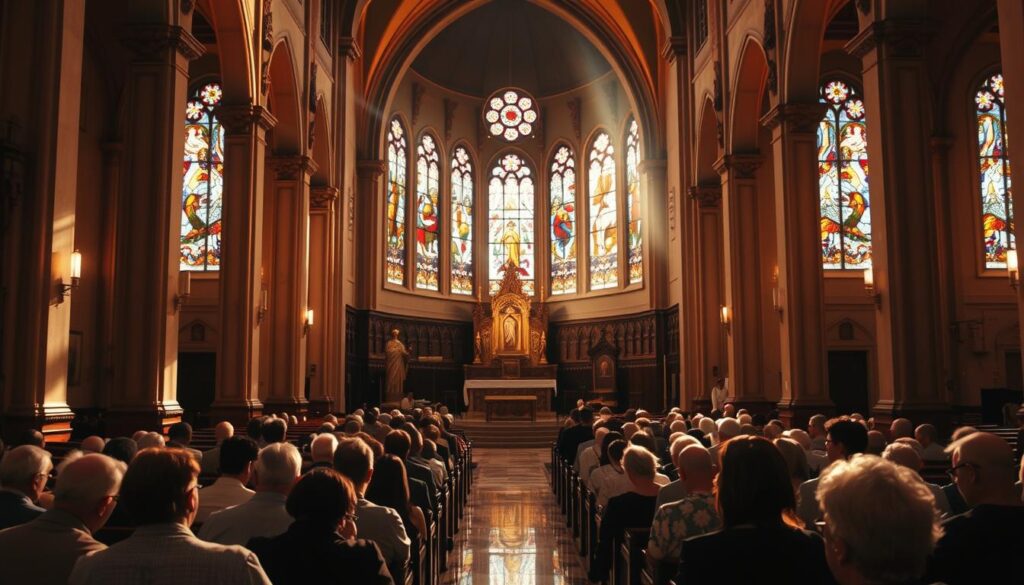
Welcome to a warm parish home where faith, family, and service meet. Start your visit with clear steps to find Mass times, confession slots, livestream options, and ministries that suit your life today.
Join us for prayer, community events, and outreach that support families, singles, and visitors. We blend tradition with modern access through in-person liturgies and online options in English and Spanish.
Explore sacramental preparation for Baptism, First Eucharist, Confirmation, and marriage. See how the OCIA pathway guides those exploring the faith, and how school programs pair strong academics with faith formation.
Plan your first visit confidently with easy access to schedules, confession, and secure online giving to support ministries and outreach. Feel encouraged and welcomed as you take the next step with us.
Key Takeaways
Find Mass, confession, and livestream schedules quickly.
Access sacramental preparation and OCIA support.
School programs combine academics and formation.
Online giving helps fuel parish ministries and outreach.
Welcome to Nativity Catholic Church: Worship, Community, and Service
Visiting for the first time? Expect a friendly greeting and clear directions to the Chapel for weekday Masses or to the Church for weekend liturgies.
What to expect on your first visit
You’ll be welcomed by a hospitality team who can point out restrooms, stroller space, and where children’s programs meet.
Dress is casual to business casual; families are warmly invited to participate at every liturgy.
Services include meaningful liturgy, Scripture-based homilies, and music that encourages full participation.
Our mission and friendly community
Our parish lives out a mission of worship, formation, and service. You can learn about sacramental preparation, OCIA for seekers, and school programs during your visit.
Find practical next steps after Mass: register as a parishioner, ask about sacraments, or learn how secure online giving supports local ministries.
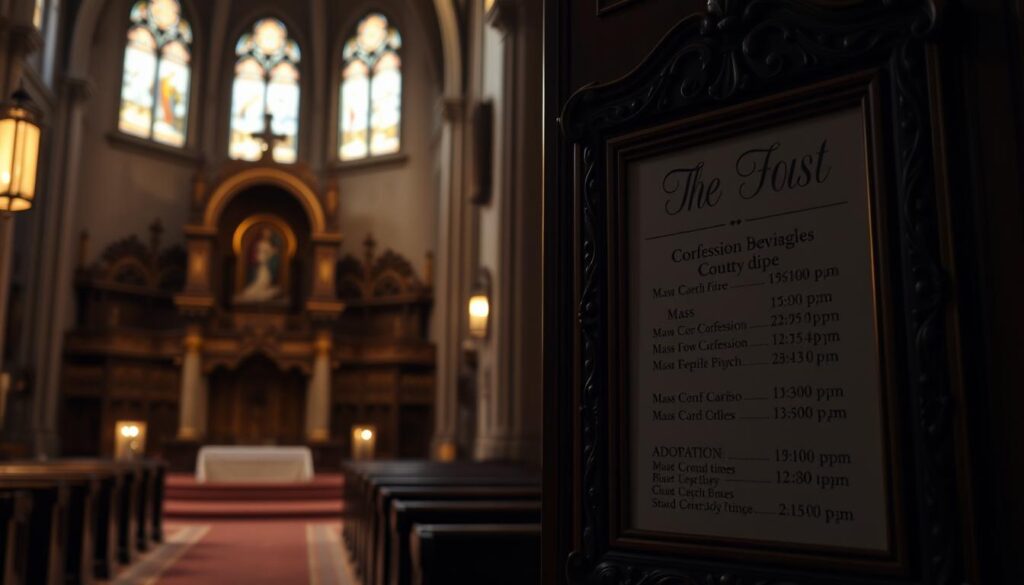
Daily Mass Schedule and Chapel Information
Make daily worship part of your routine with two weekday Mass times in the Chapel. Our weekday schedule offers a calm pause for prayer before or after work. Both times are open to everyone seeking a quiet encounter with the Lord.
Daily Mass in the Chapel: Monday–Friday at 8:15 AM and 6:00 PM
Join us for daily mass in the Chapel Monday through Friday at 8:15 AM and 6:00 PM. These two times give flexible options for busy mornings or an evening pause.
How to Prepare for Daily Mass
Arrive a few minutes early to settle into quiet prayer and read the day’s readings.
Bring weekday intentions—offer needs and thanks at the altar.
Use a missal or parish worship aid to follow responses if you are new to daily mass.
“A brief, regular time of prayer can change the rhythm of your week.”
Day
Morning
Evening
Monday
8:15 AM
6:00 PM
Tuesday
8:15 AM
6:00 PM
Wednesday
8:15 AM
6:00 PM
Thursday
8:15 AM
6:00 PM
Friday
8:15 AM
6:00 PM
Visitors and regulars are welcome. Invite a friend from the nativity community to meet you for one of these weekday services.
Weekend Mass Times at Nativity
Weekend worship offers several options to join the parish community and pause for prayer.
Saturday Vigil in the Church: 5:00 PM
Choose the Saturday Vigil at 5:00 PM for a peaceful start to your Sunday observance. The evening service is ideal if your weekend schedule is busy.
Sunday Masses in the Church
Sunday liturgies are offered at multiple times to fit your plans. Services are held at:
8:00 AM — a calm morning option
9:30 AM — family-friendly with music
11:00 AM — classic Sunday worship
12:30 PM — midday gathering
6:00 PM — evening service for busy households
Livestream Options
If you are traveling or homebound, join the livestream. English is broadcast at 9:30 AM and Spanish at 12:30 PM. Test your connection a few minutes early and create a quiet space to participate fully.
Service
Time
Format
Saturday Vigil
5:00 PM
In-person (Church)
Sunday Early
8:00 AM
In-person (Church)
Sunday Family
9:30 AM
In-person & Livestream (English)
Sunday Midday
12:30 PM
In-person & Livestream (Spanish)
Sunday Evening
6:00 PM
In-person (Church)
Tips: Arrive 10–15 minutes early for parking and seating. Bring the whole family and speak with an usher if you want to get involved after Mass.
Confessions and Reconciliation
Make space for renewal: our priests hear confessions on Saturday mornings and late afternoons. The Sacrament of Reconciliation is a simple, powerful way to experience God’s mercy and return to weekend worship with a lighter heart.
Saturday Confessions: 8:45 AM in the Chapel
Choose the Chapel for a quieter morning setting. Arrive a few minutes early to pick up an examination-of-conscience pamphlet if you would like guidance.
Saturday Confessions: 3:30 PM in the Church
The afternoon slot is ideal before the Saturday Vigil. If it has been a while, priests will gently walk you through the steps and offer a short prayer of reconciliation.
Plan your visit before errands or before the Vigil to prepare your heart for the Eucharist.
Bring older children to show the normalcy and grace of regular confession.
Need another time? Contact the parish office for appointments or seasonal penance services.
“Leave with a sense of peace and purpose, ready to live your faith with renewed freedom and joy.”
Explore the Sacraments
Start or deepen your sacramental journey with clear steps and caring support from our parish team. Sacraments nourish faith, mark milestones, and offer grace in daily life.
Baptism, Eucharist, Confirmation, and More
Begin or continue with Baptism, Eucharist, Confirmation, Reconciliation, Anointing of the Sick, Holy Orders, and Matrimony. Families find age-appropriate formation that partners parents with parish catechists.
Marriage Preparation and Parish Support
Couples receive spiritual and practical preparation. Mentors and staff guide planning, paperwork, and pastoral care.
Contact the parish office for Baptism prep and godparent requirements.
Schedule Anointing of the Sick at home, hospital, or care facility.
Discern vocations with clergy and diocesan resources.
Sacrament
Who to Contact
Typical Prep Time
Baptism
Parish Office
2–6 weeks
First Eucharist / Confirmation
Faith Formation
6–12 months
Matrimony
Marriage Coordinator
6–12 months
“Celebrate milestones with reverence and hospitality.”
Grow in Faith: OCIA and Becoming Catholic
Start a paced exploration of faith that fits your life and answers the questions you bring. OCIA welcomes seekers, the curious, and people returning to parish life.
Your Journey to the Faith
OCIA meets regularly with a small team to cover Scripture, liturgy, sacraments, and daily prayer. Meetings are conversational and life-centered.
Learn at your own pace with prayer, discussion, and community events.
Experience milestone rites that mark progress toward full initiation.
No prior background is required; bring questions and life experience.
Support, Community, and Next Steps
Sponsors and peers walk with you, pray with you, and offer encouragement. You will receive resources and a clear timeline so you can stay organized.
Step
Focus
Typical Time
Inquiry
Ask questions; meet the team
1–2 sessions
Catechesis
Scripture, sacraments, prayer
Several months
Rites & Initiation
Rite of Acceptance to Easter Vigil
Seasonal timing
To begin, contact the parish office to learn start dates, meeting times, and how to register with nativity catholic.
Parish Life: Ministries, School, and Giving
Parish life thrives when people share time, talent, and prayer across ministries, school programs, and steady stewardship.
Ministries that Serve and Inspire
Find a place to belong. Join hospitality, music, outreach, or faith formation teams. Roles fit many ages and schedules.
Volunteering builds connections and gives practical help to families in need. Service days and special collections amplify local impact.
Nativity Catholic School: A Gateway to Greatness
Academic excellence meets faith formation. The school supports students with strong academics and values-based growth.
Families link school life with parish worship and service. Open houses and school events welcome friends and future students.
Online Giving and Stewardship
Simple, secure giving helps sustain ministries, outreach, and school scholarships. Recurring gifts make planning easier for the parish.
Live stewardship as a way of life: prayer, participation, and generosity help the community thrive.
“Prayerful generosity keeps our community strong and ready to serve.”
Focus Area
Who It Serves
How to Join
Hospitality & Greeters
Visitors & Parishioners
Sign-up at weekend Mass or online
Music & Liturgy
All Ages
Attend a rehearsal or contact music director
Outreach & Service
Local Neighbors
Volunteer at service days or donate supplies
Faith Formation
Children, Teens, Adults
Register through faith formation office
School Programs
Families & Students
Visit during open house; contact admissions
Conclusion
Find clear schedules for Daily Mass, weekend liturgies, and confession so you can plan your visit. Weekday Mass meets Monday–Friday at 8:15 AM and 6:00 PM. Weekend options include the Saturday Vigil at 5:00 PM and Sunday services at 8:00 AM, 9:30 AM, 11:00 AM, 12:30 PM, and 6:00 PM.
Join online or in person. Livestream is available Sunday at 9:30 AM (English) and 12:30 PM (Spanish). Confessions are Saturdays at 8:45 AM (Chapel) and 3:30 PM (Church).
Take the next step: attend a liturgy, inquire about sacraments or OCIA, explore school programs, or set up secure online giving. Reach out with questions—we’re ready to help your family feel at home and grow in faith, service, and fellowship.
FAQ
What are the daily Mass times and where are they held?
Daily Mass is offered Monday through Friday at 8:15 AM and 6:00 PM in the chapel. Arrive a few minutes early to find seating and a bulletin. Weekday services are brief, prayerful, and open to all.
When are weekend Masses and which ones are livestreamed?
Saturday Vigil takes place at 5:00 PM in the main worship space. Sunday Masses are at 8:00 AM, 9:30 AM, 11:00 AM, 12:30 PM, and 6:00 PM. The 9:30 AM (English) and 12:30 PM (Spanish) services are available via livestream for those who cannot attend in person.
How do I prepare for daily Mass or a Sunday service?
Dress modestly and arrive early to settle in. Bring a hymnal or download the parish worship aids if available online. Participate respectfully in responses and communion rites; visitors are welcome to come forward for a blessing if not receiving communion.
Where and when can I go to confession?
Confessions are held Saturdays at 8:45 AM in the chapel and again at 3:30 PM in the main worship space. If those times don’t fit your schedule, call the parish office to arrange a private appointment with a priest.
How do I arrange a baptism for my child?
Contact the parish office or baptism coordinator to schedule preparation and the ceremony. Parents typically attend a brief preparation session and provide a copy of the child’s birth certificate. Godparents should meet parish requirements and complete any required paperwork.
What steps are involved in preparing for marriage at the parish?
Couples should meet with a parish priest or deacon at least six months before the intended date. Preparation includes meetings, paperwork, and possibly a retreat or enrichment course. The parish staff will guide you through scheduling the ceremony and any required documentation.
How can I learn about becoming a member through OCIA?
The OCIA program welcomes those curious about the faith and those preparing for sacraments. Sessions cover beliefs, practices, and community life. Reach out to the parish office to sign up or get details about meeting times and formation leaders.
What ministries are available for volunteers and how do I get involved?
The parish offers a range of ministries, including liturgy, youth programs, outreach, music, and hospitality. Visit the parish website or stop by the welcome desk after Mass to find a ministry that matches your gifts and availability.
Tell me about the parish school and enrollment.
The parish school provides academic and spiritual formation for elementary students. Contact the school office for tour dates, curriculum information, and enrollment requirements. Financial aid and scholarship options may be available.
How can I make a donation or set up online giving?
The parish supports stewardship through one-time gifts, recurring donations, and online giving platforms. Visit the parish website or contact the business office for instructions on electronic donations, envelopes, and special collections.
What should I expect on my first visit to the parish?
Expect a warm welcome from greeters and a relaxed atmosphere. Bring any family needs to the attention of ushers. Bulletins and visitor information are typically available at entrances, and staff can answer questions about programs and sacraments.
How does the parish support newcomers and families?
The parish offers newcomer welcome events, family ministries, religious education, and social gatherings. Staff and volunteers help new families find programs for children, teen faith formation, and adult small groups to build community and faith.
This place of encounter is not a courtroom. The confessional offers a chance to meet Christ, find peace, and begin anew. Many people feel nervous, but what matters is taking one step forward.
Parishes list weekly times and cathedrals often add options. You can choose anonymity behind a screen or speak face to face. If your parish lacks a screen, you may go elsewhere to feel at ease.
Prepare simply: a brief examen, a short prayer, and naming your sins with honesty. The rite is quick — reflect, speak, receive counsel and a penance, make an act of contrition, then hear words of absolution.
Do not let embarrassment stop you. The sacrament exists to heal sin and restore life. God forgiveness meets a willing heart long before you have perfect words.
Key Takeaways
See the confessional as an encounter that brings peace and courage.
Look up parish or cathedral times and pick a convenient time this week.
Pray briefly before arriving; simple preparation opens the heart.
You may choose anonymity or face-to-face, whichever helps you speak freely.
Regular examen and confession create a gentle rhythm toward new life.
What Is the Sacrament of Reconciliation and the Catholic Church Confessional?
This sacrament reunites the faithful with God’s mercy and heals relationships broken by sin.
Purpose: The Sacrament of Penance is Christ’s chosen way to apply forgiveness for sins committed after baptism. It restores a person to full communion and heals the bond with God and the community.
The role of the ordained minister
Only an ordained priest may grant absolution because Christ entrusted the power of binding and loosing to the Apostles and, by the Holy Spirit, their successors. Absolution is not self-administered; it comes through this visible minister.
Mortal and venial sins — practical difference
Mortal sins must be confessed; venial sins may be named for healing and growth. The sacrament gives grace to fight sin and to live in renewed faith and life.
Tell the truth simply: name the sins committed without long explanations.
Receive guidance and an act of penance to help ongoing conversion.
Know the goal: restoration, not shame — a joyful return before the Lord God.
Key Terms You’ll Hear: Mortal Sin, Venial Sins, Absolution, and Penance
A little vocabulary goes a long way: understanding core words makes the encounter less strange.
Mortal sin versus venial sins: what must be confessed
Mortal sin is grave matter committed with full knowledge and deliberate consent. Mortal sins must be confessed to be reconciled sacramentally.
Venial sins wound charity but do not break it. They may be confessed to heal habits and to grow in virtue.
Absolution and the role of the Holy Spirit
Absolution is the Church’s authoritative declaration that your sins are forgiven. It comes through a priest by the power of the Holy Spirit.
Forgiveness is a sacramental reality, not only a feeling. Even when you seek rest and do not feel different, grace is truly given and life is restored.
“Confess your sins to one another.”
Term
Meaning
Why it matters
Mortal sins
Grave actions with full consent and knowledge
Require confession for sacramental reconciliation
Venial sins
Smaller faults that wound but do not sever charity
Confession helps heal patterns and strengthen virtue
Absolution
Priest declares forgiveness by Holy Spirit
Restores a person to grace and new life
Preparing Your Heart: How to Examine Your Conscience
Set aside ten minutes to walk through the Ten Commandments and ask the Lord to show you truth. This short examen helps name your faults without fear and prepares you for confession.
Using the Ten Commandments as a guide
Begin with love of God and move toward love of neighbor. Ask simple questions about Mass attendance, reverence for God’s name, and honesty.
Then consider charity to others, respect for parents, stewardship of time and goods, and chastity — including impure thoughts.
Avoiding scruples and remembering mercy
Keep the examen focused: about ten minutes, not an hour. Mercy is God’s first word; do not let worry inflate small faults.
If you feel stuck, ask a priest for calm, practical guidance rather than letting scruples rule your prayer.
Daily examen and the act of contrition
Make a brief check every day and finish with a short act contrition before sleep. This habit tunes your conscience, heals venial sins, and brings greater peace in daily life.
How to Go to Confession Step by Step
Going to confession works best when you know the steps in advance. A short plan calms nerves and keeps the encounter focused.
Before you arrive
Say a brief prayer and review any notes. Ask the Holy Spirit to help you recall sins committed and to speak honestly.
What to say when you begin
Enter, make the Sign of the Cross, and say the familiar words.
“Bless me, Father, for I have sinned. It has been [state the time] since my last confession.”
Then give your state of life or name to help the priest give suitable counsel.
Confess simply and honestly
Confess sins plainly—no long stories or excuses. Name mortal sins first, then other matters.
When you finish, say an expression of sorrow such as, “I am sorry for all these sins.”
Counsel, penance, and the Act of Contrition
The priest will offer counsel and assign a penance that fits your situation. Accept it with openness.
When asked, make act of contrition in your own words or with a short prayer. Sincere sorrow and a firm purpose to avoid sin matter most.
Hearing absolution and giving thanks
Listen for the words of absolution spoken by the priest in the power of the Holy Spirit. Then offer a brief prayer of thanks.
Do your penance as soon as possible, ideally before leaving, so grace can shape your choices right away.
Step
What to say or do
Why it helps
Prepare
Short prayer; review notes
Recalls sins and calms fear
Begin
“Bless me, Father… since my last confession”
Opens the rite and gives context
Confess
Name sins plainly; avoid excuses
Makes the encounter honest and quick
Finish
Accept penance; make Act of Contrition
Receives grace and fosters change
Inside the Confessional: Anonymity, the Seal, and Your Conversation with the Priest
You may prefer the privacy of a screened confession or the personal touch of sitting with a priest.
Your options: behind the screen or face to face
You always have two choices: kneel behind a screen for anonymity or sit face to face. Choose whichever helps you speak freely.
Many people find peace in anonymity, especially after a long absence. Others welcome direct counsel; both are fully valid and pastoral.
The inviolable seal and practical guidance
The seal is absolute: a priest may never reveal what is said. This promise protects your dignity and privacy under canon law and priestly pledge.
Speak in everyday words, keep your voice low, and be concise. If unsure, ask, “Father, can you guide me?” — that request is part of his ministry.
The conversation is pastoral, not prosecutorial; its aim is healing for the person, not humiliation.
If your parish lacks a screened option, it is acceptable to seek another that offers it regularly.
Ask the priest to repeat a penance or brief advice so you can remember it.
Remember: confession is a safe space. As you return to this rhythm, calm and peace tend to grow.
The Act of Contrition and Examples You Can Pray
When asked to make an act of contrition, a few honest words can open your heart to mercy.
Traditional wording to guide you
Traditional: “Oh my God, I am sorry for my sins with all my heart…” This classic prayer names sorrow, shows a firm purpose to do penance, and trusts in God’s mercy.
Short, simple versions for nerves
Brief when nervous: “My Lord and my God, I am truly sorry for my sins; please forgive me and help me to avoid sin.” This short prayer is sincere and complete.
Any honest wording that expresses sorrow and resolve is acceptable when you are invited to pray.
Speak to the Lord God by name so the prayer becomes a real dialogue, not just words.
If you forget a memorized form, repeat short phrases after the priest; he will gladly assist.
Remember: God forgiveness comes by grace, not perfect phrasing, and the act links confession to daily conversion.
Practice one version at home so it comes naturally in the moment. Let this act help you shall desire deeper friendship and live with renewed hope.
After Confession: Doing Your Penance and Living a New Life
After the rite, take a quiet moment to let forgiveness settle into your heart. Offer a short prayer of thanks and sit in a few breaths of rest.
Complete your penance as soon as possible, ideally before you leave the building so grace can shape your choices right away. If that is not possible, do it at the first available time that day.
Peace, joy, or dryness: trust beyond feelings
Feelings vary. Some people feel joy or calm; others feel nothing. What matters is that the sacrament heals your life even when emotions lag.
Treat others with extra patience and kindness as a simple step toward a new life.
If you later recall a minor detail, relax; you are forgiven—mention only serious sins next time.
Keep a brief note of patterns to bring to your next confession and use an every day examen to track progress.
Consider one small, practical step tied to your penance (call someone, set filters, or make amends). Then schedule your next confession to keep momentum and grow new habits of grace.
Making a Good Confession: Practical Tips for Every Day and Every Season
A regular habit of confession steadies the heart and makes honest growth possible. Set a realistic cadence—many people aim monthly—using parish schedules or cathedral options when local time is limited.
Practical routine
Prepare with a short examen the day before and a final review in the pew. Name any mortal sin first and keep your confession clear and simple.
Forgotten sins
If you forget a minor item, rest easy: small things are covered. If you recall a mortal sin later, bring it up at your next confession as an act of honesty.
Perfect contrition and urgency
Perfect contrition—true sorrow from love of God with the intention to confess as soon possible—obtains forgiveness when sacramental confession is not immediately available.
Use calendar reminders and a Ten Commandments checklist as a simple example support.
Guard media and habits that provoke impure thoughts; replace them with healthier routines.
Examine attachment to material goods and seek reconciliation with one another when needed.
Need
Practical step
Why it helps
Regular cadence
Monthly or weekly schedule
Builds steady progress and reduces anxiety
Preparation
Day-before examen + pew review
Keeps confession focused and honest
Emergency forgiveness
Perfect contrition + plan to confess soon possible
Assures god forgiveness when sacrament is delayed
History and Meaning: How Confession Developed in the Catholic Church
The practice of confession evolved over centuries. Early communities addressed serious faults publicly. Bishops guided reconciliations and imposed penance before people returned to full communal life.
From public penance to private practice
By the early medieval period, pastoral needs shifted the pattern. The Celtic penitentials introduced repeatable, private confession with assigned penances recorded in short manuals.
Celtic influence, councils, and renewal
The Fourth Lateran Council (1215) asked for yearly confession, making the rite part of ordinary practice and regular time for spiritual care. The Council of Trent later affirmed private confession, clarified the role of the priest, and corrected abuses around indulgences.
Vatican II renewed the rite so the encounter with Christ in the Holy Spirit and the communal dimension of reconciliation were clearer. Anonymity behind a screen remains an option, and face-to-face confession also serves different people.
Continuity: across eras, priests have absolved sins committed after baptism, keeping apostolic authority.
Balance: the practice seeks justice for harm and mercy that invites real conversion and new life.
Conclusion
In brief: confession offers a direct way to meet mercy and start afresh. This is a simple, grace-filled way to tell the truth with a humble heart and step into renewed life.
Take a concrete next step: find times, plan your visit, and rehearse the opening line—“Bless me, Father; it has been [since last]…” Practice one short version so you can make act contrition from the heart when asked.
Speak plainly and name any mortal sin when needed, accept counsel, and complete your penance. The priest is a minister of mercy; a person who comes in faith and sincere sorrow finds true forgiveness.
Love God in action this week: make amends, serve someone near you, and schedule a return. Let this way of conversion shape your words, your heart, and your life.
FAQ
What is the sacrament of Reconciliation and why does it matter?
The sacrament of Reconciliation restores a person to right relationship with God and the community. It offers forgiveness for serious and lesser offenses, brings spiritual healing, and invites a new start in moral life. People leave with a plan for change and the assurance that God’s mercy is available through the priest’s ministry.
Why must a priest give absolution?
A priest stands in persona Christi and exercises the Church’s ministry of reconciliation. Through ordination, the priest receives the authority to pronounce absolution, guided by the Holy Spirit and the Church’s pastoral practice. This sacramental action reunites the penitent with grace.
What’s the difference between mortal sin and venial sin?
Mortal sin breaks the relationship with God and requires sacramental confession if committed with full knowledge and deliberate consent. Venial sins wound charity but do not sever that bond; they can be forgiven through prayer, acts of contrition, and reception of the Eucharist, though confessing them is encouraged.
How do I examine my conscience before confession?
Use the Ten Commandments, the Beatitudes, or a simple review of your day to recall where you failed in love of God or neighbor. Ask the Holy Spirit for light, remember concrete acts, and note patterns of fault so your confession is honest and specific.
What if I struggle with scruples or exaggerated guilt?
Share your struggle with the priest; he can help distinguish sincere repentance from scrupulosity and offer guidance. Trust God’s mercy, follow regular prayer, and avoid excessive repetition of trivial faults in confession.
How should I begin confession and what do I say?
Start with “Bless me, Father, for I have sinned.” State how long it has been since your last confession, then confess your sins plainly and briefly. The priest may give counsel, assign penance, and ask you to make an Act of Contrition.
How do I confess without making excuses or oversharing?
Focus on the actions, number (when possible), and circumstances of your sins. Avoid unnecessary personal details or blaming others. Say what you did, express sorrow, and indicate your intention to change.
What is the Act of Contrition and can I use a short version?
The Act of Contrition expresses sorrow and the firm purpose to avoid sin. Traditional long forms are fine, but a brief, sincere prayer saying you are sorry, asking God’s help, and intending to do better is acceptable, especially if you feel nervous.
Are confessions anonymous and is the seal really absolute?
You may confess behind a screen or face to face. In all cases the seal of confession is inviolable: a priest may never reveal what he hears. This confidentiality is absolute and protected by Church law and pastoral practice.
What happens after I receive absolution?
The priest gives you a penance to perform as a sign of reparation. Complete it as soon as possible. Many people feel peace, joy, or even dryness; trust the grace received and persevere in prayer and good works.
How often should I go to confession?
Regular confession helps spiritual growth. Many find monthly or seasonal confession helpful; those who have committed serious faults should go sooner. Consult your parish schedule to find convenient times.
What if I forget to mention a sin after confession?
If you genuinely forgot a sin, you are still forgiven. Mention it at your next confession when you remember. If you intentionally withheld a mortal sin, you must confess it to receive valid absolution.
What is perfect contrition and when does it apply?
Perfect contrition is sorrow for sin arising from love of God rather than fear of punishment. It reconciles a person when sacramental confession is unavailable, provided there is the firm resolve to confess as soon as possible.
Can penance include concrete acts like prayer and helping others?
Yes. Penance often includes prayers, Scripture reading, or acts of charity. These practices help repair harm, strengthen virtue, and keep you focused on conversion in daily life.
How did private confession develop historically?
Early practice included public penance for grave offenses. Over centuries, private confession and individual absolution became common, influenced by pastoral needs, Celtic practices, and later reforms that shaped the modern rite used today.
Facing confession can feel tense. This short guide explains what the penitential prayer is today, why it matters, and how to say it with confidence.
In the Rite of Reconciliation, you confess, receive a penance, and then the priest invites you to speak a prayer. Many people learn a modern line that begins, “My God, I am sorry for my sins with all my heart.” The ritual allows several approved versions, including brief options and older traditional wording.
The essentials matter more than exact words: sincere sorrow before God, trust in His mercy, and a firm decision to change. If you forget the words under pressure, short approved versions exist and the priest will help.
This guide moves you from childhood memorization to adult discipleship. It will walk through what to say, how to stay calm, and ways to let the prayer shape daily life.
Key Takeaways
The prayer comes after confession and penance, before absolution.
Several approved versions exist; choose the version that helps your heart.
Sorrow, trust in mercy, and a decision to change make the prayer real.
Short forms and priestly help ease nerves in the confessional.
This guide offers simple steps to pray with calm and focus.
Understanding Contrition and the Sacrament Today
Contrition is the heart’s decision to turn back to God, not just a memorized line. It means heartfelt sorrow for sin and a firm intention to change.
What contrition means and why sorrow matters
Contrition heals relationships broken by sin. It is motivated by love, not only by fear. When we are sorry offended God, we name that reality and open ourselves to mercy.
From childhood prayer to adult discipleship
Many children learn a short prayer. As adults, the same words deepen when we examine conscience and admit choosing to do wrong and failing good.
Ask the Holy Spirit for clarity and courage so your prayer names real choices. Let that inner sorrow shape daily habits and how you love in the world.
Penance, confession, reconciliation and more
The sacrament has many names—sacrament penance, sacrament reconciliation, conversion, and forgiveness—each highlighting telling the truth, receiving mercy, and being restored.
Simple definition: sorrow plus a firm intent to turn back.
Practical step: avoid near occasions and the things that lead you away.
Encouragement: even one sincere prayer can begin real growth—make act contrition when you need to.
How to Make an Act of Contrition in the Confessional
A calm confession starts with a quick review of your day and a short prayer for the Holy Spirit’s guidance.
Before you go
Do a simple examination of conscience and ask the Holy Spirit for light. Write a short list if names or numbers help you remember.
What to say to the priest
Begin: “Bless me, Father, for I have sinned. It has been [time] since my last confession.” Then state your sins by kind and number without long detail.
If you forget something, add, “for these and those I cannot now remember.” Trust God’s mercy; the priest offers help, not judgment.
Receiving counsel and penance
The priest may offer counsel and give penance. This helps you turn choices into small, practical steps that cooperate with grace.
Absolution and next steps
When invited, make act contrition and pray act contrition if that helps. After absolution, do your penance as soon as possible and work to amend your life.
Daily practice at home
Pray the prayer at night and teach children to say a short form. A monthly “confession and cones” routine is a great way to ease anxiety and build habit.
Official Texts, Variations, and Essential Elements in the act of contrition catholic church
Official forms balance honest sorrow with trust in God’s mercy. The traditional wording guides the penitent through motives and resolve.
“O my God, I am heartily sorry for having offended Thee, and I detest all my sins, because I dread the loss of heaven and the pains of hell; but most of all because they offend Thee, my God, Who are all good and deserving of all my love. I firmly resolve, with the help of Thy grace, to sin no more and avoid the near occasions of sin. Amen.”
The traditional wording: what each line means
“I am heartily sorry…detest all my sins” names deep contrition and true regret. It teaches that one must not minimize wrong.
“loss heaven” and “pains hell” admit fear, but the phrase also reminds us of the stakes for the soul.
“deserving love” centers love as the chief motive. The line “I firmly resolve” pairs human choice with dependence on grace.
Approved variations and essentials
The Rite of Reconciliation allows shorter versions and Scripture-like prayers. Examples include brief petitions and simple confessions such as “Lord Jesus, Son of God, have mercy on me, a sinner.”
Form
Key elements
When to use
Traditional version
Sorrow, fear (loss heaven, pains hell), love, resolve
When you want a fuller expression
Short scriptural phrases
Mercy, trust, brief sorrow
In nervous or quick confessions
Personal words
Sorry sins, love God, intent to change
When essentials are clearly expressed
Pray act contrition in the form that helps you mean it. Memorize one long and one short version so you can speak from the heart, not from memory alone.
Conclusion
End with a clear routine: pick a version you can own, schedule regular confession, and pray nightly to keep your heart tender before God. Short daily prayers and a brief examination of conscience help make this a normal part of life.
Expect progress over time. Repetition forms virtue; the more you practice, the easier it is to name sins and receive mercy. When you go to confession, tell the priest if you feel flustered and use a shorter approved prayer.
Lean on the sacrament today: the words of absolution bring healing, and prompt completion of penance keeps growth concrete. Pray with children, replace tempting things with good habits, and let this way of life renew your love for God and neighbor.
FAQ
What is the Act of Contrition and why does sorrow for sin matter?
The Act of Contrition is a short prayer expressing heartfelt sorrow for wrongdoing and a firm resolution to change. Feeling genuine remorse matters because it opens us to God’s mercy, helps restore our relationship with Him, and prepares us to receive grace through the sacrament of reconciliation.
How does contrition differ between a child’s prayer and mature discipleship?
A child’s version often focuses on simple words and emotions, while adult practice adds reflection, responsibility, and a commitment to ongoing conversion. Both are valid; growth moves from memorized lines to an interior change of heart and steady efforts to avoid sin.
Are penance, confession, reconciliation, and absolution the same thing?
These terms describe parts of one sacrament. Confession is naming sins to a priest; penance is the acts assigned to repair harm; reconciliation is restored friendship with God; absolution is the priest’s prayer of forgiveness. Together they lead to conversion and healing.
What should I do before going to confession?
Take time to examine your conscience honestly, ask the Holy Spirit for guidance, and recall serious (mortal) and less serious (venial) faults. Pray briefly for courage and clarity so you can confess sincerely and receive help to change.
How specific should I be when confessing sins to the priest?
Name sins by kind and, when possible, give an honest estimate of frequency. You do not need to relive every detail; focus on truthfully acknowledging what led you away from God so the priest can offer appropriate counsel and make a fitting penance.
What happens after I confess and make the Act of Contrition?
The priest will give counsel and assign penance. After you say the prayer of sorrow, the priest prays the words of absolution, and you are reconciled. Completing the penance helps repair harm and strengthens your resolve to live differently.
Can I pray the Act of Contrition at home, and should I teach it to my children?
Yes. Praying it nightly or with children helps form conscience and a habit of repentance. Use age-appropriate language for kids and explain that the prayer expresses sorrow, trust in God’s mercy, and a promise to try again.
Are there official versions of the prayer, and can I use variations?
The Rite of Reconciliation provides traditional wording, such as “O my God, I am heartily sorry…,” and approved alternatives. The essentials are true sorrow, confession of sin, and firm purpose of amendment. Paraphrases that keep these elements are acceptable.
What if I feel anxious about confession or making mistakes in the confessional?
Many people feel nervous. Simple habits—examining your conscience, practicing a brief prayer beforehand, and remembering the priest’s role as a helper—reduce fear. The sacrament is meant to heal, not judge.
Does sincere sorrow forgive all consequences or just restore grace?
Sincere sorrow and absolution restore your relationship with God and return sanctifying grace. Moral and practical consequences may remain, which is why penance and reparative actions matter for true conversion and healing in life.
Welcome to our parish. We meet for Mass every Sunday at 10:00 am and Noon, and Monday through Friday at Noon. You will find us at 1040 Pearl St., Schenectady, NY, between Crane Street and Chrisler Avenue.
Come as you are. Our pastor, Fr. Jim Konicki, and Parish Chair Mr. Paul Zawistowski lead a warm, prayerful parish. Mrs. Elizabeth Battaglia directs music that lifts our worship.
Office hours are Monday–Friday, 9:00 am to 5:00 pm. Call the parish office at 402.451.6622 for general needs, or 402.451.6622 x801 for Hispanic Ministry. We also serve families through our school, Field House, and St. Vincent de Paul assistance.
Plan your visit with ease. We are accessible via CDTA Route 353 at the Pearl St. stop. For pastoral care during illness or hospital stays, call the rectory. Burial and cemetery records are managed through the parish office to support families in every season of life.
Key Takeaways
Mass times: Sundays at 10am and Noon; weekdays at Noon.
Location: 1040 Pearl St., Schenectady, NY, near CDTA Route 353.
Leadership: Fr. Jim Konicki, Parish Chair Paul Zawistowski, Music Director Elizabeth Battaglia.
Office hours: Mon–Fri, 9am–5pm; main phone 402.451.6622.
Community resources: school, Field House, and St. Vincent de Paul support available.
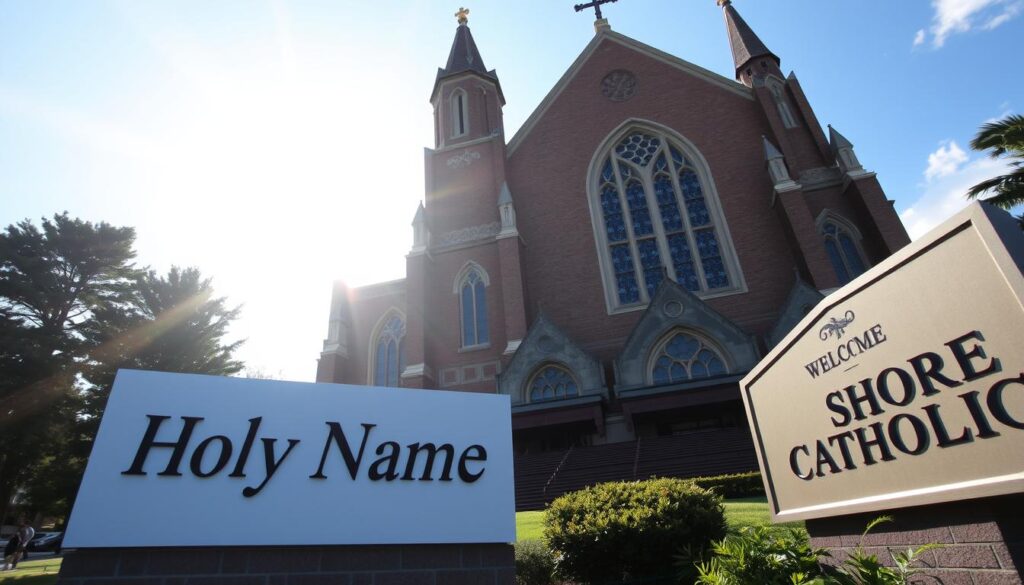
Welcome to Holy Name — a Catholic church with a big, welcoming heart
A modest building on Pearl Street holds a community that reaches far beyond its doors. We invite you to visit, to seek, and to join us in being light to each other, our neighborhood, and our city.
Our mission: worship, witness, and community in Christ
We worship with warmth and honesty, offering prayer and sacrament that nourish daily life. Each week people of all ages gather to pray, learn, and serve.
We witness without walls. Our calling moves into homes, schools, workplaces, streets, courts, and hospitals. No one is excluded from care and hope.
Feel welcomed by a faith family that lives its mission daily.
Find ministries for music, Bible study, outreach, and fellowship.
Share your gifts and help bring light across the city and beyond.
Come this Sunday and stay for conversation. Discover how Holy Name Catholic life can be your spiritual home and support through the week.
When and where we gather for Mass, Confession, and Adoration
Knowing when we gather makes it easier to join worship, receive sacraments, or spend quiet time in prayer.
Weekend Mass schedule
Join us on Sundays: two options—10am or Noon—so families and individuals can pick the best time to worship together.
Daily Mass times
Daily Mass is offered Monday through Friday at Noon. It’s a simple way to center your week with the Eucharist, even during a lunch break.
Confession and pastoral care
To receive the Sacrament of Reconciliation, please call the parish office for current confession times. Our priest is available to help you encounter God’s mercy.
Adoration and devotional services
Spend quiet time in the Blessed Sacrament during scheduled adoration and devotional services. Check with the office for special prayer times or changes for holy days.
Location: 1040 Pearl Street, between Crane Street and Chrisler Avenue, Schenectady, New York.
Transit: CDTA Route 353 stops at Pearl St., steps from the doors.
Parish Office: 402.451.6622 — call for schedule updates, accessibility needs, or pastoral requests.
Experience the sacraments and prayer life at holy name catholic church
Make room in your week for sacraments, praise, and quiet reflection that renew daily life. Our liturgical schedule blends rich music, reverent Mass, and simple devotional times so people can grow in faith and practice.
Experience the Sacraments: Holy Mass and beyond
Grow in grace through Communion, reconciliation, and pastoral care offered with compassion. Members and visitors find careful preparation for baptisms, marriages, and funerals.
Join us for prayer, reflection, and Bible study
Praise & Worship Here. Join communal prayer, Eucharistic devotion, and small groups that study Scripture with practical application.
Deepen discipleship through Eucharistic devotion and community intercession.
Participate in praise that lifts hearts and quiet reflection that restores clarity.
Find guidance, music ministry, and friendly companions as you grow in prayer.
Parish community life: fellowship, events, and ways to serve
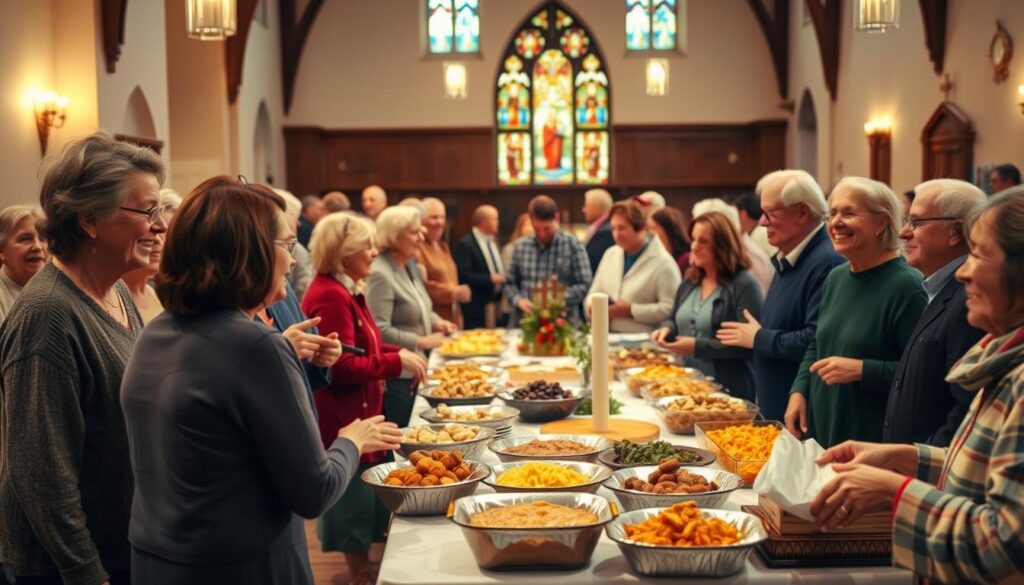
From weekly socials to seasonal drives, our parish offers many ways to belong and serve. Newcomers find a warm welcome and clear steps to join groups, volunteer, or ask for help.
Upcoming events and regular gatherings
Look for after-Mass coffee, study circles, and seasonal events that build friendship. These small gatherings help a big city feel like a close neighborhood.
Fellowship, care, and outreach
Serve families in crisis through our CarePortal partnership. Connect with St. Vincent de Paul at 402.238.4767 for referrals or to volunteer.
Fraternal ties: PNA Council 308 and Spojnia Credit Union offer member benefits.
Seasonal drives invite the whole parish to serve together with joy.
Start by attending one event and introducing yourself; we’ll help you find a role.
Cemeteries and pastoral services in times of need
We maintain two parish cemeteries and keep records at the parish office for funeral planning and burial needs.
Service
Location / Contact
Notes
Holy Name of Jesus Cemetery
185 Donald Ave, Schenectady
Records at parish office; contact for plots and arrangements
Good Shepherd Cemetery
192 Truax Rd, Amsterdam
Burial services coordinated through the parish office
Emergency assistance referral
St. Vincent de Paul: 402.238.4767
Volunteer and referral opportunities available
If you need help with milestones—baptisms, weddings, funerals—call the parish office so we can walk with you through every detail.
Leadership, location, and parish office contacts
Quick access to leadership, location, and office contacts helps when time matters. Use these details to call for sacraments, events, or pastoral care.
Parish leadership and music ministry
Pastor: Fr. Jim Konicki guides pastoral life with steady care.
Parish Chair: Mr. Paul Zawistowski supports governance and planning.
Music Director: Mrs. Elizabeth Battaglia leads liturgical music that lifts worship.
Parish office and hours
The office is at 1040 Pearl Street, between Crane Street and Chrisler Avenue in Schenectady. CDTA Route 353 stops at Pearl St., so arriving by bus is easy.
Hours: Monday–Friday, 9:00 am–5:00 p.m. Call 402.451.6622 for general help.
Key ministries and phone numbers
Hispanic Ministry: 402.451.6622 x801
School: 402.451.5403
Field House: 531.375.5872
St. Vincent de Paul: 402.238.4767
Service
Contact
When to call
Parish Office
402.451.6622
Office hours, registrations, general questions
Hispanic Ministry
402.451.6622 x801
Spanish-language support and referrals
Sick calls / Rectory
Call the rectory via parish office
Serious illness or hospital admission — call at any time, leave voicemail after 5:00 p.m.
Save these contacts so you can reach the right ministry at the right time for baptisms, funerals, or quick questions.
Conclusion
Stop by 1040 Pearl Street to join a warm community that prays, serves, and listens. We offer Mass every Sunday at 10am and Noon, and weekday Masses at Noon.
We warmly invite you to experience the love of Christ at holy name. Bring a friend, introduce yourself to an usher, or speak with our priest after Mass.
Make this parish your spiritual home. Contact the office during weekday hours to ask about confession, Adoration, Bible study, or registering as a member. Explore ways to serve through CarePortal, St. Vincent de Paul, or music ministry.
If you face illness or grief, let us walk with you through pastoral care and funeral support. We are grateful you’re considering this journey—may peace guide your steps into the life of the name catholic community.
FAQ
What are the weekend Mass times and where do they take place?
Weekend Masses are offered on Saturday and Sunday with morning and mid-day options at the parish campus. Check the parish bulletin or website for exact times each week, as special liturgies and holy days can change the schedule.
When is daily Mass during the week?
Daily Mass is celebrated Monday through Friday, typically in the morning and sometimes in the evening. Visit the parish office or call ahead for the current weekday schedule to confirm times.
How can I go to Confession?
Confession times are scheduled weekly and before certain Masses. The parish posts times for the sacrament online and at the church entrance. You can also contact the parish office to arrange a private appointment with a priest.
Is there Eucharistic Adoration or other devotional services?
Yes. The community offers Eucharistic Adoration and devotional services throughout the month, including prayer nights and Benediction. Schedules are available from the parish office and on the parish calendar.
How do I register as a parishioner or update my contact information?
You can register in person at the parish office during office hours or complete an online form on the parish website. For contact updates, call the parish secretary or send an email to the parish office.
What sacraments are available and how do I prepare?
The parish celebrates Baptism, First Communion, Reconciliation, Confirmation, Matrimony, Anointing of the Sick, and Eucharist. Preparation classes and guidelines are offered for families, couples, and candidates; contact the parish office or the sacramental coordinator for details.
Are there adult faith formation and Bible study options?
Yes. The parish hosts adult faith formation classes, Bible studies, and small groups throughout the year. Sessions meet at various times to accommodate busy schedules; see the parish events calendar for current offerings.
What community and outreach programs are available?
The parish runs fellowship gatherings, volunteer outreach, food drives, and service projects. Ministries support seniors, families, and neighbors in need. Volunteers are always welcome—contact the ministry coordinator to get involved.
How do I find information about funerals, cemeteries, and pastoral care?
Funeral planning and pastoral care services are coordinated through the parish office and the pastoral staff. Information about cemetery options and memorial services is available by phone or appointment with the parish funeral coordinator.
Who leads the parish and how can I reach the music or Hispanic ministry?
Parish leadership includes the pastor, pastoral staff, and lay ministry leaders. The music ministry and Hispanic Ministry have dedicated coordinators and phone contacts listed on the parish website and bulletin. Call the parish office for direct numbers and email addresses.
What are the parish office hours and how can I contact them?
The parish office maintains regular weekday hours and may offer limited evening access for special events. Phone numbers, email, and a map to the campus are available on the parish website. Drop by during office hours for in-person assistance.
Are there opportunities for youth and family programs?
The parish offers religious education, youth groups, family events, and seasonal retreats. Programs are designed for school-age children through young adults. Registration information is posted each semester and through the faith formation office.
Discover a welcoming spiritual home where faith, friendship, and service meet. At st gabriel catholic church you will find warm hospitality, clear mission, and many ways to grow in faith.
Our parish offers Sunday worship, weekday prayer, and parish life that extends beyond the sanctuary. Whether you are new or have been here for years, st. gabriel invites you to worship, learn, and serve.
The heart of our work is the people. This place supports every stage of the faith journey through ministries, small groups, and volunteer opportunities. The local community benefits from acts of service that help families and neighbors.
Come to a Mass, ask questions, or join a ministry. You will meet caring people who encourage growth and belonging. Take a practical next step today and experience a friendly, faith-filled home.
Key Takeaways
Warm, welcoming parish life that supports all ages.
Clear mission with worship, prayer, and service opportunities.
Many ways to participate: Mass, sacraments, groups, and volunteering.
Concrete local impact through ministries and outreach.
Friendly people ready to help you take the next step in faith.
Welcome to Our Parish Community in the United States
Step into a welcoming parish that makes it easy to meet people and grow in faith together.
A friendly, faith-filled home for everyone
st. gabriel catholic invites singles, couples, families, young adults, and seniors to journey together as disciples of Jesus.
Our parish centers on hospitality and accompaniment. You will find mentors, prayer partners, and small groups that help you belong.
Worship and fellowship that bring faith and community together
Worship is the heartbeat of parish life. Liturgy, Scripture, and the Eucharist shape how we serve one another.
After liturgies, fellowship times and small gatherings create space for real conversation and lasting connections.
Faith-focused events that welcome newcomers.
Volunteer teams and study groups for every age.
Pastoral care and sacramental support to help families and individuals.
Area
What to Expect
Who It’s For
Worship
Prayerful liturgies and communal song
All ages
Groups
Bible study, youth nights, seniors’ socials
Teens to seniors
Events
Seasonal festivals, service projects, retreats
Families & volunteers
St Gabriel Catholic Church
Engage with meaningful liturgy, sacramental preparation, and quiet prayer designed for busy lives.
Mass, sacraments, and spiritual life today
Learn how to participate in the sacramental life through regular Mass, times for Reconciliation, and faith formation paths. Practical guides help families prepare for Baptism, First Communion, Confirmation, Marriage, and the Anointing of the Sick.
Ministries and parish groups that serve our community
Explore ministries in faith formation, outreach, hospitality, music, and liturgical service. Volunteers find roles that match their gifts and schedules. Support for youth, seniors, and families grows through regular programs and mentoring.
Parish events that foster connection and service
Seasonal events bring people together for worship, learning, and service. These gatherings help newcomers and longtime members build strong ties and serve local needs.
New here? Register in the parish and consider electronic giving
If you are new, CLICK HERE to fill out our newcomer’s registration form so we can welcome you personally. Consider electronic giving — CLICK HERE to learn how regular online support sustains ministries even when travel or schedules change.
Offering
Who It Helps
How to Join
Mass & Reconciliation
All parish members
Check weekly schedule; arrive early
Faith Formation
Children, teens, adults
Register via parish office
Outreach & Service
Local families & neighbors
Sign up for projects or teams
Contact and Locations
Find the right location and reach our staff quickly for Mass times, sacraments, or visits.
Saint Gabriel Parish
8901 Winterpock Road, Chesterfield, VA 23832
Good Samaritan Parish
13441 Patrick Henry Hwy., Amelia, VA 23002
Use the shared mailing address for both sites: 8901 Winterpock Road, Chesterfield, VA 23832 for registrations and mail.
Call our office at 804-639-6712 for quick contact about Mass times, sacraments, or registration.
Call ahead so staff or a volunteer can guide you to the right person and help plan your visit.
Good Samaritan serves Amelia and nearby communities with a warm, small-community parish feel.
Note: Learn parking and accessibility options when you call. Our team is ready to assist with pastoral care, sacramental preparation, and facility questions.
Our Story and Heritage
Across regions and generations, our history blends colonial roots with modern parish life.
A historical note: The 1769 St. Gabriel Catholic church on River Road is believed to be Louisiana’s oldest Catholic structure. It was moved several times and, famously, received a silver-tinted steeple as a gift from the Queen of Spain in 1770. Today the site is a quiet landmark used for photos and picnics, though it is not open to public tours.
Serving communities since 1967
In South Florida, Saint Gabriel was founded in 1967 to serve Pompano Beach and Hillsboro Beach. Parishioners built a rectory and a church with a blue tile roof and handcrafted ceramic doors. They also started a religious education program that became central to community life.
Parish life embodied
Prayer groups, Bible study, and outreach shape daily life. The Women’s Club leads many events and fundraising efforts, supported by the Men’s Club.
“A heritage of prayer and service guides our formation, fellowship, and compassionate outreach.”
Early health outreach: a Parish Nurse program with Holy Cross Hospital.
Seasonal attendance reflects a strong retired community—about 1,000 families.
Active outreach: Saint Vincent de Paul, Respect Life, and elder care.
Conclusion
Make a visit, ask a question, or sign up—small steps lead to belonging.
We invite you to take your next step with us. Come to worship, reach out with questions, and discover how your gifts can bless others in a caring parish family.
Whether you’re new to the area or returning to faith, you will find support and chances to grow through ministries, small groups, and service opportunities that fit your season of life.
Register so we can welcome you personally. Consider electronic giving to sustain ministry year‑round. Use our contact information to plan a visit or get directions.
We look forward to meeting you, worshiping together, and building a hopeful, faith‑filled future grounded in love and service.
FAQ
What services and sacraments are offered at St Gabriel Catholic Church?
Mass, baptisms, weddings, and funerals are available. Daily and weekend liturgies follow the Roman Rite, and sacramental preparation programs help families and individuals prepare for baptism, confirmation, and marriage. Ministries support spiritual growth for all ages.
How can I join the parish and register as a member?
Newcomers can register online or pick up a registration form at the parish office. Staff will guide you through the steps, including options for electronic giving and volunteer opportunities that help you get involved quickly.
When are Mass times and where can I find the schedule?
Mass times vary by location and season. Check the parish website or call the office at 804-639-6712 for the current schedule and any special feast-day or holiday services.
What ministries and parish groups are active here?
The parish hosts youth ministry, adult faith formation, outreach to the homebound, music ministry, and volunteer service teams. Groups meet weekly or monthly to offer fellowship, education, and community service.
How can I donate or set up electronic giving?
Electronic giving is easy to set up through the parish’s secure online portal or by contacting the parish office. One-time gifts and recurring donations support ministries, maintenance, and outreach programs.
Where are the parish locations and how do I find them?
The primary parish address is 8901 Winterpock Road, Chesterfield, VA 23832. Good Samaritan Parish is at 13441 Patrick Henry Hwy., Amelia, VA 23002. For mail and general questions, use the shared mailing address or call 804-639-6712.
Does the parish offer outreach and community events?
Yes. Regular events include seasonal fairs, service projects, food drives, and educational workshops. These gatherings build community and provide ways to serve neighbors in need.
Is there historical information about earlier churches with the same name?
The name has deep roots in American Catholic history, including a 1769 church in Louisiana and a parish established in 1967 in Pompano Beach. The local parish honors that heritage through teaching and commemorative events.
How can I contact the parish office for more information?
Call 804-639-6712 or visit the parish website for staff email addresses, office hours, and directions. Staff can assist with registration, sacramental records, and event details.
Are there programs for families, children, and teens?
Yes. Religious education, sacramental prep, youth groups, and family ministry events provide faith formation and social activities tailored to different ages and stages.
This brief guide aims to set clear expectations for a balanced comparison that matters for faith and practice. It will show how the catholic church has described itself through the Nicene Creed and apostolic succession, while noting how many people in the United States use terms in everyday speech.
The catholic church has a vast global reach, with bishops, a pope, and millions served by thousands of dioceses, schools, and hospitals. We will highlight how Scripture and Sacred Tradition meet in official teaching and how the catechism catholic church serves as a doctrinal compass for catholic theology across cultures.
Readers can expect clear themes: authority and the papacy, sacraments and worship, Mary and the saints, and varied approaches to the Eucharist and daily life. This is an informational, respectful study meant for catholics christians and other curious readers, grounded in early history, conciliar documents, and faithful study.
Key Takeaways
The article offers a balanced, respectful comparison of terms and practices.
It explains how the catholic church defines itself via creed and succession.
Readers get context on scale, structure, and global ministries.
The catechism catholic church is presented as a primary doctrinal guide.
Later sections will pair history with lived faith for clear contrasts.
Defining Terms: “Christian” vs. “Catholic Church” in Everyday Language
Many Americans use “Christian” and “Catholic” as quick shorthand for different groups. That usage is common in daily talk, but it can blur historical meaning and identity. Clear terms help when we discuss belief, worship, and authority.
Words matter. In Acts 11, the disciples were called “Christians” for the first time at Antioch. By about AD 110, Ignatius used the phrase “Catholic Church” to describe the universal assembly; this phrase later became known across early Christian writers.
In U.S. public life, “Christian vs. Catholic” grew into shorthand for Protestant vs. Catholic. That is a historical cultural pattern rather than a full map of global faith families. Orthodox communities and many others also belong to the broader christian church.
Official documents prefer the name catholic church, while “Roman Catholic” often points to the Latin tradition versus Eastern rites. A friendly guideline: use “Christian” as the broader identity and “Catholic Church” when referring to that specific communion. Later sections will compare doctrines, liturgy, and the catechism catholic church to help readers navigate these distinctions.
christian and catholic church: What People Usually Mean
Many U.S. conversations simplify a complex landscape into a Protestant–Catholic contrast. When people ask, “What’s the difference?”, they most often mean how Protestant families compare with the catholic church as an institution.
The 2015 pew research study shows wide denominational diversity in the United States. That diversity shapes the way people talk about faith over time. Habit and culture often decide which labels stick more than careful theology.
Common questions cluster around a few topics: authority and the Bible, salvation and daily life, sacraments versus ordinances, and how worship molds belief. Many catholics believe the church founded by Christ keeps continuity through apostolic leadership. Many Protestants stress Scripture as the primary norm in a different way.
Language here became known through social use. Still, readers should expect similarities—belief in Jesus, the Trinity, and the resurrection—within the broader christian church.
Compare by topic—authority, Tradition, sacraments, community life—for clearer contrast.
Listen carefully and stay respectful in family or public conversations.
We will draw on Scripture, early sources, and the catechism catholic church to keep the review grounded.
Origins in the Early Church: From Antioch to Rome
Antioch emerged as a creative hub where followers were first labeled publicly for the first time. Acts 11:25–26 records that disciples at Antioch were called by this name the first time, a moment that shaped identity in the new testament era.
Antioch and the first use of “Christians” in Acts 11
Antioch linked mission and teaching. From Jerusalem, missionaries carried message and practices into a diverse city. That growth helped the term became known across region and beyond.
Ignatius of Antioch and the earliest use of “Catholic Church”
By about AD 110 Ignatius used the phrase to describe a universal communion of local communities. Tradition traces a line from Peter to Evodius to Ignatius in Antioch, showing early episcopal succession in the roman empire.
Institutions did not appear overnight. Structures matured as communities faced pastoral needs and expansion. A brief study of the fathers and early letters reveals how unity, bishops, and the Eucharist were discussed.
Understanding these origins gives helpful context for later claims about apostolic succession and the role of Rome. The catechism catholic and the catechism catholic church draw on this history when explaining continuity and teaching.
The Catholic Church in History: From Judaea to the Roman Empire
From small Jewish settings, early believers spread along Roman roads, creating networks that aided rapid growth.
Foundations in the first century and growth across the empire
Origins trace to 1st‑century Judaea where apostles taught and local communities formed.
Those groups reached a wider audience through common language, trade routes, and safer travel in the roman empire.
Legalization, councils, and the shaping of doctrine
Legal changes reshaped public life. The Edict of Milan (313) granted toleration, and the Edict of Thessalonica (380) made the faith the state religion.
Across early centuries, seven ecumenical councils clarified the Trinity and Christology, producing creeds used in many communions.
Institutions matured as parishes, dioceses, and monasteries met pastoral needs. These bodies later supported schools, hospitals, and social care through the centuries.
The phrase “Catholic Church” has early and continued use to describe a universal communion.
Doctrine developed by articulation, not replacement, through conciliar decisions.
Shifts in empire and law offered both opportunity and challenge for faith and public witness.
Era
Key Change
Impact
Legacy
1st century
Local communities form
Shared teaching and worship
Foundations for later structure
4th century
Edict of Milan; Edict of Thessalonica
Legal status; public role
Growth of institutions
5th–8th centuries
Ecumenical councils
Doctrinal clarity on Trinity and Christ
Creeds and theological baselines
Medieval centuries
Institutional expansion
Education, health care, social services
Enduring civic influence
Authority and Leadership: Peter, the Papacy, and Apostolic Succession
Understanding leadership in this tradition begins with Matthew 16 and John 21. The catholic church reads those passages as granting a special role to Peter, an office continued in the bishop of Rome as successor Peter.
“You are Peter” and the line of succession
The texts are read as personal commission and pastoral charge. That reading supports the idea of apostolic succession—authority passed from the apostles to bishops over time.
Bishops, the magisterium, and shared governance
The magisterium names the formal teaching office that safeguards revealed truth under the guidance of the holy spirit. Bishops lead local communities in communion with the pope, while councils and synods offer regional coordination.
This succession undergirds unity and doctrinal continuity.
Teaching develops through documents, councils, and consistent witness.
Authority shapes pastoral care, discipline, sacraments, and mission in daily parish life.
Scholars debate early Roman structures, yet official teaching affirms Petrine primacy as service to the christ church. The catechism catholic church and the catechism catholic present this framework for readers exploring how Scripture and Tradition work together.
Scripture and Sacred Tradition in Contrast
Debates about which books belong in the Bible reveal deeper questions about authority. Communities weighed local use, theological concerns, and pastoral need when forming a canon.
Canon differences and the Council of Trent
The catholic church recognizes 73 books, including a deuterocanon in the old testament. Many groups use 66 books, a difference rooted in how regions accepted certain texts.
Sola Scriptura versus Scripture with Tradition
Martin Luther questioned several books and helped popularize sola Scriptura, which places primary authority in the Bible alone. In response, the council trent reaffirmed the 73‑book canon and rejected sola Scriptura, locating authority in sacred scripture and sacred tradition together.
Dei Verbum and how authority works
Dei Verbum taught that Scripture, Tradition, and the magisterium read God’s word as a linked whole. The early church used both written texts and living Tradition to form doctrine, liturgy, and canon.
Topic
Position
Impact
Canon size
73 books (catholic church)
Includes deuterocanonical Old Testament
Sola Scriptura
Protestant emphasis
Scripture as sole norm
Council of Trent & Dei Verbum
Scripture + Tradition
Authority shared with magisterium
Early practice
Local usage matters
Historical cultural factors shaped reception
Core Theology: Trinity, Creeds, and Catechism
Creeds helped early leaders fix key beliefs as debate moved across the roman empire. These concise statements put complex ideas into clear words for public worship and teaching.
Nicene Creed as shared foundation:
Nicene Creed in worship and catechesis
The Nicene Creed unites belief in the Trinity and Christ’s divinity. Reciting it links personal prayer to a long tradition in church history. Its succinct language protects mystery while reducing confusion.
Catechism as a doctrinal compass:
Systematic presentation and ecumenical clarity
The catechism catholic church collects doctrine, worship norms, and moral teaching in one reference. The catechism catholic roots its summaries in Scripture and Tradition to guide catechesis and study.
Councils produced creeds that stabilized core claims.
Creeds shape life, liturgy, and regular renewal of baptismal faith.
The catechism aids dialogue by clarifying agreements and differences.
Element
Function
Impact
Nicene Creed
Public summary of belief
Shared worship language across traditions
Catechism Catholic
Systematic reference for doctrine
Catechesis, pastoral practice, ecumenical clarity
Early Councils
Define core doctrine
Stability during spread in the roman empire
Original Sin, Sin Categories, and Grace
Different communities interpret original sin either as total corruption or as a wounded human nature. Many accept that a broken tendency toward selfishness affects human decision-making from early life.
Original sin: corruption versus wounded nature
The catholic church typically describes original sin as a wounded nature, not total ruin. This view stresses that grace heals and elevates our nature toward virtue.
Mortal and venial sin distinctions
The catechism catholic outlines two personal categories: grave faults that cut off charity and lesser faults that weaken it. For a sin to be mortal, it must involve serious matter, full knowledge, and deliberate consent.
Why this matters: The catechism catholic church ties personal failings to social harms, urging confession, penance, and community repair. Sacraments like Penance and Eucharist are shown as concrete channels of mercy that restore friendship with God.
Biblical texts (e.g., 1 John) support distinguishing serious from lesser sins.
Pastoral steps: honest examination, confession, practical reparation, and regular sacramental life.
Grace empowers steady growth rather than leaving people stuck in shame.
Tip: Consult the catechism catholic for clear guidance on moral questions and conscience formation. Mercy meets weakness, inviting gradual conversion and renewed hope in daily life.
Salvation and Justification: Faith, Works, and the Christian Life
The story of justification mixes Scripture, theology, and lived practice, not just neat slogans.
The common Protestant claim of “faith alone” treats justification as a decisive past event. Many reformers, led by martin luther, stressed trust in Christ as the center of salvation.
The catholic church responds that saving faith is living and fruitful. The catechism catholic church presents justification as initial grace plus ongoing sanctification. Believers cooperate with grace; faith is formed by love and shown in good works.
Faith, works, and lifelong discipleship
Philippians 2:12 urges readers to “work out your salvation” over time. That passage supports the view of moral growth and perseverance.
The Council of Trent clarified merit, grace, and cooperation after Reformers challenged older terms. The pastoral picture stresses prayer, Scripture, service, sacramental life—especially holy communion—as means of daily renewal.
“Faith without works is dead.” — Scripture
Practical questions—assurance, suffering, and perseverance—are seen as a trust formed by grace, not earned by effort alone. Apostolic teaching and apostolic succession aim to keep this balance clear.
Tip: For a full synthesis, consult the catechism catholic to see how justification, original sin, and growth in holiness connect in pastoral life.
The Seven Sacraments and Christian Practice
Visible signs have long anchored spiritual life and communal identity.
The catholic church teaches seven sacraments as Christ’s instruments of grace. These rites—Baptism, Confirmation, Eucharist, Penance, Anointing of the Sick, Matrimony, and Holy Orders—mark initiation, healing, and vocation across a believer’s lifespan.
Why sacraments are central in parish life
Thecatechism catholic church calls the Eucharist “the source and summit of the life.” It anchors worship, personal prayer, and service. Lumen gentium teaches that sacraments build up the faithful and bind people into deeper communion.
Pastoral preparation matters: catechesis, mentorship, and ongoing formation guide reception of rites. Parish rhythms of baptism, penance, and holy communion shape daily witness and outreach, including schools and hospitals that flow from sacramental life.
How many non‑Catholic communities view ordinances
Many Protestant communities prefer two ordinances—Baptism and the Lord’s Supper—with symbolic or commemorative meanings. This historical cultural difference affects how groups receive sacraments, practice ministry, and teach belonging.
“The sacraments are not mere symbols; they are encounters that renew the heart.”
Focus
Catholic teaching
Typical ordinance view
Number
Seven sacraments
Two ordinances
Meaning
Visible signs conveying grace
Memorial or symbol
Central rite
Holy Communion as source & summit
Lord’s Supper as remembrance
Pastoral formation
Ongoing catechesis (catechism catholic)
Instruction varies by tradition
Tip: Read the catechism catholic church for deeper explanation of how rites shape both private devotion and public service.
The Eucharist: Symbol or the Real Presence?
How believers understand holy communion shapes worship, devotion, and daily witness across traditions. This section contrasts the view that the bread wine become the Lord’s body blood with the memorial approach that sees the meal as remembrance.
Body and blood in belief and worship
The catholic church teaches that at Mass, by Christ’s words and the Spirit, consecration makes the bread wine truly the body blood of the Lord. Reception in holy communion is treated with reverence, and the catechism catholic church explains adoration, preparation, and parish integration of the sacrament.
Symbolic memorialism in many Protestant traditions
Many communities emphasize remembrance: the meal recalls Christ’s sacrifice and strengthens unity without claiming a change in substance. Martin Luther held a distinct middle path, affirming Christ’s real presence in some way but differing from later memorialist positions.
New Testament texts (e.g., John 6; 1 Corinthians 11) are central to debates.
Early witnesses like Ignatius of Antioch reflect an early Eucharistic realism in the church christ.
Practices such as confession, fasting, and catechesis shape how the sacrament is received.
“Do this in memory of me.” — Scriptures used in varied theological readings
Tip: Study biblical and patristic sources and the catechism catholic church for a fuller grasp. Respectful dialogue helps communities learn even when interpretations differ.
Priesthood and the People of God
Parish life depends on a twofold vision: all baptized people share a common priesthood while some receive ordination to serve in apostolic roles through Holy Orders.
Lumen gentium frames the faithful as the People of God, gifted by the holy spirit with charisms for mission and service.
Ministerial priesthood and apostolic orders
The ministerial priesthood exists to serve unity, sacraments, and teaching. Bishops, priests, and deacons inherit ministry through apostolic succession, preserving continuity and pastoral care.
The bishop, in communion with the successor peter and fellow bishops, shepherds local life while the minister acts in the person of Christ for certain sacraments.
Common questions touch on celibacy, formation, and everyday duties. Seminaries, prayer, and pastoral training shape healthy ministry for parish renewal.
The catechism catholic church affirms dignity and vocation for every member.
Lay leaders collaborate in evangelization, catechesis, and works of mercy.
Prayerful support for vocations strengthens parish culture and service.
“Ministry flourishes when ordained service and lay gifts work together for the common good.”
Mary and the Saints: Veneration, Doctrine, and Devotion
Mary’s role in doctrine and devotion often sparks careful questions about worship and honor. The catholic church teaches two Marian dogmas: the Immaculate Conception and the Assumption, which recognize her unique role in salvation history and honor her as Queen of Heaven.
These doctrines grew through sacred tradition over many centuries and were clarified by magisterial teaching. The council trent and later documents shaped boundaries that prevent excess while preserving reverence.
Immaculate Conception, Assumption, and Queen of Heaven
The Immaculate Conception holds that Mary was preserved from original stain from her first moment. The Assumption speaks to her being taken into God’s life body and soul. Together they explain why she is called Queen of Heaven.
Intercession of saints and differing views on devotion
Veneration means honor and imitation; worship belongs to God alone. Many catholics believe saints intercede like family members who pray with us, not instead of Christ.
Some Protestant traditions esteem Mary yet question later devotional practices. Thoughtful dialogue points readers to the catechism catholic church for precise formulations that keep devotion Christ‑centered.
“Sound Marian devotion always leads believers to Jesus and deeper love of Scripture.”
Marian feasts, the rosary, and liturgical prayer aim to draw people toward Christ.
Devotion to saints inspires imitation of virtue and service in ordinary life.
Consult the catechism catholic to avoid misunderstandings and to see how sacred tradition shapes belief.
Topic
Purpose
Effect
Immaculate Conception
Affirm Mary’s purity
Highlights God’s preparing work
Assumption
Honor Mary’s destiny
Points to hope in salvation
Intercession of saints
Communal prayer support
Models holy friendship in prayer
Worship and Liturgy: From Mass to Praise Services
Worship styles range from ancient rites to lively praise gatherings, yet both aim to shape belief and mission in daily life.
Rites, the Eucharist, and unity in diversity
The Latin Church and 23 Eastern rites preserve diverse liturgies that express shared faith. The Mass or Divine Liturgy places the Eucharist at the center of public prayer.
At the altar believers receive the body blood under the signs of bread wine in holy communion. Liturgy forms habits that last beyond Sunday.
Preaching, music, and different emphases
Many Protestant services emphasize preaching and congregational song. Communion often appears at set intervals and is understood as remembrance rather than transformation.
Historical forms were shaped by the roman empire and by medieval centuries of art, chant, and architecture.
Documents like Lumen Gentium and the catechism catholic church call the Eucharist the source and summit of life.
The council trent reformed rites to meet pastoral needs and to clarify belief over time.
“Worship forms teach theology by gesture, word, and song.”
Tip: Attend services with curiosity. Mutual learning about reverence, participation, and mission strengthens community witness.
Global Footprint and U.S. Context
Across continents, a single communion operates diverse rites, thousands of dioceses, and vast social ministries.
Size and governance: The global body counts roughly 1.27–1.41 billion members and includes 24 sui iuris churches—one Latin rite and 23 Eastern rites. Nearly 3,500 dioceses and eparchies are led by bishops who coordinate local life and mission.
Ministries at scale: Schools and health care show public impact: about 95,200 primary schools, 43,800 secondary schools, 5,500 hospitals, and 18,000 clinics serve millions of people worldwide.
U.S. religious landscape
Pew Research highlights denominational variety and shifting affiliation in the United States. Parish life here blends universal identity with local needs, shaped by migration, history dating back to the roman empire, and contemporary demographics.
The catechism catholic church frames consistent moral and social teaching that guides ministry across nations. Cooperation with other faith bodies on charity and education advances the common good while presenting ongoing opportunities for evangelization, youth engagement, and renewed catechesis.
“Local parishes show how global unity can meet concrete human needs.”
Bridging Differences: Shared Beliefs and Respectful Dialogue
Shared creeds and common prayers give many believers a firm starting point for honest conversation.
Common ground includes the Trinity, Jesus as Lord, the authority of Scripture, and a call to holiness in daily life. These shared convictions shape worship, service, and moral witness across communities.
Practical ways to converse
Listen first. Ask good questions. Cite sources fairly rather than aiming for quick wins.
Let the Holy Spirit guide patient dialogue that seeks truth in love. Lumen Gentium describes the People of God and calls believers toward unity beyond visible differences.
Use the Nicene Creed as a prayerful baseline for common belief.
Turn to the catechism catholic church for clear summaries of doctrine when explaining Catholic positions.
Work together in Scripture study, service to the poor, and family initiatives to show unity by action.
“Humility opens the way for mutual learning and sustained friendship.”
Respectful exchange honors both the universal reach of the christ church and local communities where people worship. Keep relationships central; that is the best way to bridge differences along the way.
Conclusion
This closing reflection ties together history, doctrine, and everyday practice to help readers weigh similarities and differences.
Definitions, leadership, Scripture with Tradition, and worship help explain what unites while showing distinct paths in belief. Return to the fathers, Scripture, and the catechism catholic as reliable guides for study.
The holy spirit continues to lead believers over time, shaping truth, charity, and parish life. Respectful conversation and shared service remain a practical way to build trust and greater unity.
Note the global reach of the catholic church: education, health care, and mercy work show doctrine lived out. Thank you for reading; keep learning, praying, and serving in the same generous way.
FAQ
What is the basic difference between being a Christian and being Catholic?
Many people use the terms interchangeably, but in common U.S. usage “Christian” refers broadly to anyone who follows Jesus, while “Catholic” identifies those who belong to the Roman tradition with its pope, sacraments, and particular doctrines. The Roman tradition emphasizes apostolic succession, sacred tradition, and the seven sacraments alongside Scripture.
Where did the names "Christian" and "Catholic" first appear?
The label “Christian” first appears in Acts 11 describing followers in Antioch. The term “Catholic,” meaning “universal,” shows up in early writings such as those by Ignatius of Antioch to describe the whole faithful community. Both names reflect early identity and outreach across the Mediterranean world.
How did the early community grow across the Roman Empire?
The movement began in Judaea and spread through missionary work, urban networks, and Jewish diaspora routes. Over centuries it adapted to Roman legal, cultural, and linguistic contexts, especially after legalization and imperial support, which also shaped councils and formal doctrine.
What is apostolic succession and why does it matter?
Apostolic succession is the claim that bishops today receive authority through an unbroken line from the apostles. For the Roman tradition, this line—centered on Peter and his successors—underpins the teaching office, sacramental ministry, and unity of belief.
Did Jesus designate Peter as leader of the whole community?
The phrase “You are Peter” (from the Gospel) forms a key basis for the view that Peter held special pastoral responsibility. The Roman tradition interprets this as a foundation for the papacy and primacy among bishops, while other communities read the passage differently.
How do Scripture and tradition interact in Roman teaching?
Roman teaching holds that both Sacred Scripture and Sacred Tradition form a single deposit of faith. Councils like Trent and documents such as Dei Verbum explain that the magisterium—teaching authority—protects and interprets that deposit for the faithful.
Why is the Catholic canon different from many Protestant canons?
The Roman tradition accepts 73 books in its Old and New Testament canon, a result of historical use and councils that affirmed certain deuterocanonical books. Many Protestant Bibles use a 66-book canon shaped by Reformation-era decisions.
What role does the Nicene Creed play?
The Nicene Creed summarizes central beliefs about the Trinity and Christ and serves as a shared statement of faith across many traditions. It provides a common theological foundation for worship and doctrine.
How does the tradition explain original sin and human nature?
Teaching distinguishes original sin as a wound or disorder affecting human nature inherited from the first humans. This condition explains the need for grace, sacramental life, and moral formation to renew human freedom and relationship with God.
Are good works necessary for salvation?
The Roman tradition emphasizes that faith and works cooperate: justification involves grace received through faith and lived out in works of charity and obedience. This contrasts with “faith alone” formulations in some other bodies.
Why are seven sacraments central to life and worship?
The seven sacraments (Baptism, Confirmation, Eucharist, Penance, Anointing of the Sick, Holy Orders, Matrimony) are seen as visible signs that confer grace. They structure key moments of initiation, healing, service, and community life.
What is the Roman teaching on the Eucharist?
The Eucharist is taught as the real presence of Christ—truly body and blood under the appearances of bread and wine. This sacramental presence is central to worship and distinguishes it from symbolic or memorial understandings found in many other traditions.
How does ministerial priesthood differ from the role of the laity?
Ministerial priests receive ordination in apostolic succession to preside at sacraments, especially the Eucharist. The laity share in the common priesthood by baptism and exercise vocations in family, work, and parish life alongside ordained ministry.
What are key Marian doctrines and why do they matter?
Doctrines like the Immaculate Conception and the Assumption honor Mary’s unique role in salvation history. Titles such as “Queen of Heaven” reflect devotional language and theological claims about her place as mother of Christ and model of discipleship.
How do rites and liturgies vary within the Roman tradition?
The tradition includes the Roman Rite and several Eastern rites, each with distinctive liturgical languages, music, and customs. The Mass remains the Eucharistic center, while preaching and worship styles can vary widely across regions.
How large is this tradition globally and in the United States?
It is one of the largest Christian communions worldwide with diverse national churches, diocesan structures, and ministries. In the U.S., it plays a prominent role in education, healthcare, and charitable work and exists within a plural religious landscape documented by Pew Research and other studies.
Can Catholics and Protestants find common ground?
Yes. Shared beliefs in Scripture, the creeds, baptism, and commitment to service offer strong foundations for respectful dialogue. Ecumenical efforts focus on theological conversation, joint service, and mutual understanding.