Recent Posts

Discover the Reach of Catholicism Worldwide


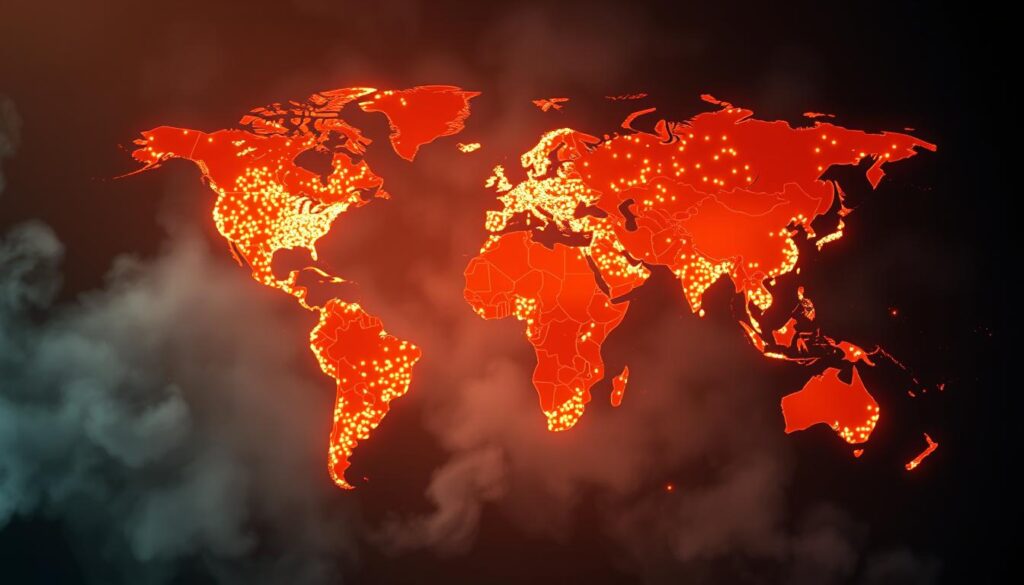
Over the past 100 years, one faith community has shown extraordinary growth while maintaining surprising stability. From 291 million followers in 1910 to over 1.4 billion today, this religious group now represents nearly 16% of humanity. Recent Vatican reports confirm this trend continues, with numbers rising by 16 million between 2022 and 2023 alone.

What makes this growth remarkable isn’t just the raw numbers. Despite global population explosions, the community’s share of humanity has stayed consistent for generations. New data from the 2025 Pontifical Yearbook shows how migration and cultural shifts shape modern membership patterns.

This analysis explores where growth happens fastest and why some regions see declines. We’ll look at how birth rates, conversions, and urban migration create shifting centers of influence. You’ll also discover how modern challenges affect participation rates in different continents.

Key Takeaways

  • Membership tripled since 1910, reaching 1.4 billion in 2023
  • Consistently represents 16% of global population for 100+ years
  • Latest Vatican reports show 1.15% annual growth rate
  • Urbanization and migration reshape regional distributions
  • New growth hotspots emerging in Africa and Asia

Global Demographic Shifts in the Catholic Church

The 20th century saw Catholicism’s center of gravity shift continents. While total membership grew steadily, the geographic distribution of followers transformed even more dramatically. This reshaping of the faith’s global map reveals surprising patterns of growth and cultural adaptation.

Historical Trends and Shifts in Catholic Populations

In 1910, Europe housed 65% of the world’s Catholic population. By 2010, that number plummeted to 24% – a seismic change in religious geography. Latin America emerged as the new heartland, growing from 24% to 39% of global followers during the same period.

These changes mirror broader population trends. Europe’s share of the world population dropped from 24% to 11%, while Latin America nearly doubled its global presence. Even as some regions became less Catholic by percentage, absolute numbers often rose due to overall population growth.

Changing Regional Distributions Over the Century

The most striking development involves Africa and Asia. Though not dominant regions yet, they’ve shown the fastest recent growth rates. Europe’s Catholic percentage fell from 44% to 35%, while Latin America’s dropped from 90% to 72% – yet both areas still account for most followers worldwide.

This redistribution shows how the Church adapts to demographic realities. Urbanization and migration patterns continue shaping membership concentrations, creating new faith hubs while maintaining traditional strongholds. These shifts help predict where future growth might emerge.

Catholicism Worldwide: A Closer Look at Regional Growth

While traditional strongholds remain vital, new spiritual landscapes are emerging. Africa’s Catholic community now rivals Europe’s historic dominance, jumping from 1 million to 281 million followers since 1910. regional catholic growth patterns This shift reveals how demographic changes reshape religious geography across continents.
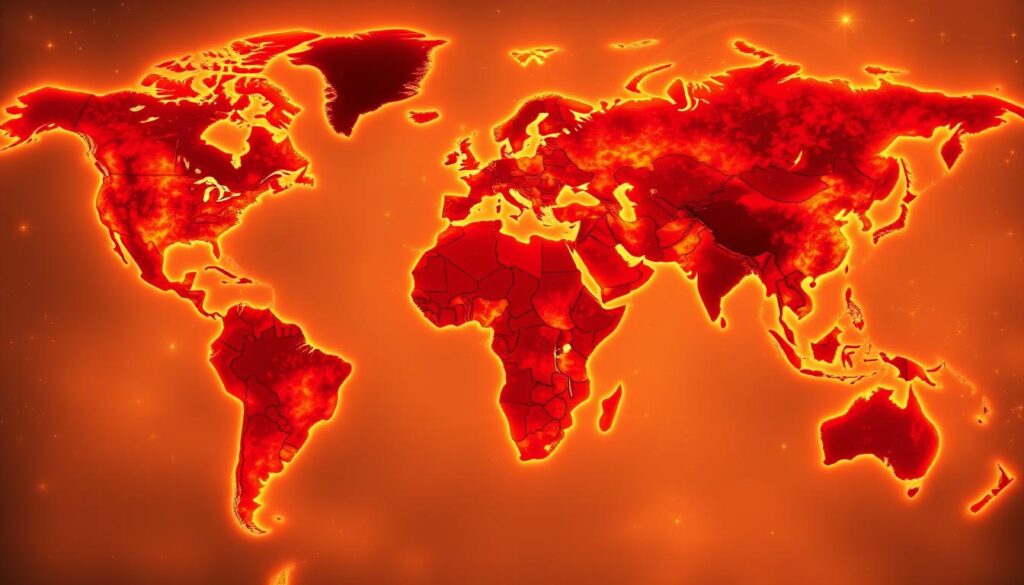
Growth Patterns in Latin America, Africa, and Asia-Pacific

Africa’s faith expansion stands unmatched. The Democratic Republic of Congo now hosts 55 million Catholics – more than Spain and France combined. Nigeria’s 35 million-member community grows by 3% yearly, outpacing European conversion rates.

Latin America maintains its spiritual leadership. Brazil alone accounts for 13% of global followers, while Paraguay and Colombia show 90%+ Catholic populations. “Our strength lies in cultural continuity,” notes a Buenos Aires archdiocese report.

Asia-Pacific growth centers on two giants:

  • The Philippines contributes 93 million believers
  • India’s community doubled since 2000 to 23 million

These nations now anchor 77% of Southeast Asia’s Catholic population.

North America’s story differs. Immigration fuels steady growth, with Central American arrivals boosting U.S. membership. Canada’s Catholic numbers rose 16% since 2000, driven largely by Asian and African newcomers.

South America’s 27% global share remains stable, while Central America’s 13.8% reflects concentrated devotion. These patterns show how birth rates, migration, and cultural ties shape modern religious maps.

Insights from the Latest Church Statistics

Recent reports from the Vatican’s Central Office of Church Statistics show shifting patterns in religious leadership. The Annuarium Statisticum Ecclesiae reveals both promising growth and emerging challenges across global dioceses.

Bishops and Priests: Regional Variations and Trends

Bishop numbers grew 1.4% between 2022 and 2023, reaching 5,430 worldwide. Africa led this expansion while Oceania saw slight declines. This growth helps address leadership needs in fast-growing communities.

Clergy Distribution by Region (2023)
Region Bishops Priests Change Since 2022
Africa +3.1% +2.7% 1,100 new priests
Asia +2.4% +1.6% 800 new priests
Europe +0.3% -1.6% 3,200 fewer priests
Americas +1.1% -0.7% 500 fewer priests

Seminarians and Vocations: A Global Perspective

Global seminarian numbers fell 1.8% in 2023, continuing a decade-long trend. Africa bucked this pattern with 1.1% growth, while Europe’s candidates dropped 4.9%. “Our seminaries reflect shifting spiritual priorities,” notes a recent church statistics analysis.

These changes create new leadership dynamics. Africa now trains 61% of future priests, while traditional regions struggle with decline in numbers. This shift could reshape global religious practices within a generation.

Impact of Migration and Cultural Shifts on U.S. Catholic Demographics

America’s religious landscape tells a story of changing faces and faithful journeys. 30% of U.S. Catholics today were born abroad – more than double the national average for foreign-born residents. This transformation keeps the community vibrant despite native-born membership changes.
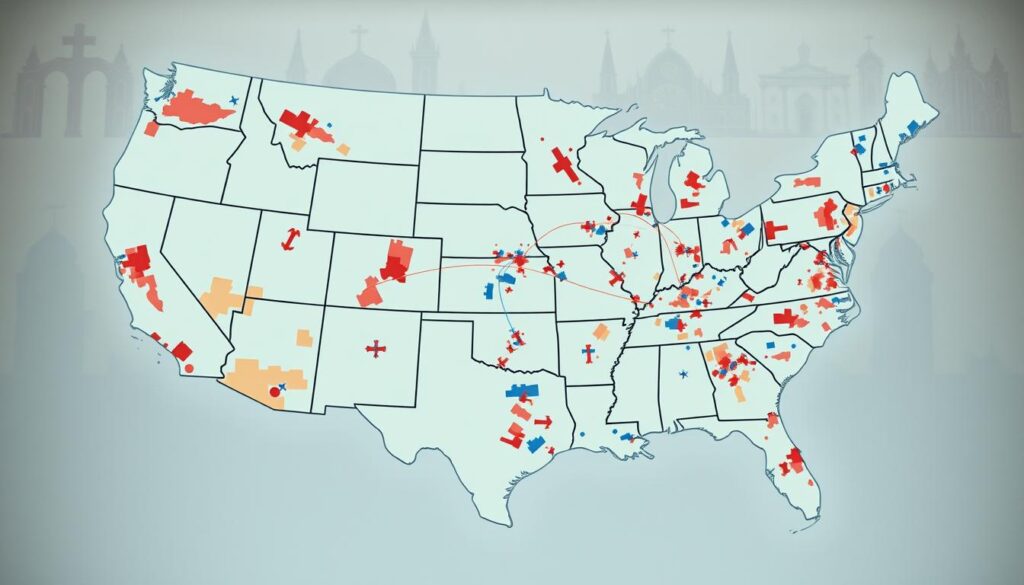
U.S. catholic demographics migration patterns

The Role of Immigration in Transforming Religious Identity

Latin American arrivals dominate this shift. Three-quarters of Catholic immigrants come from Spanish-speaking regions, reshaping parish life with bilingual services and cultural festivals. “Our Sunday masses now feel like a United Nations assembly,” observes a Chicago archdiocese leader.

The total number of U.S. Catholics held steady at 24% of the population since 2010. But beneath this stability lies dramatic change. While 60% identify as non-Hispanic white, Hispanic members now form 33% – a figure projected to grow through 2023 and beyond.

Asian and African immigrants add new dimensions. These groups account for 20% of recent Catholic arrivals, bringing distinct traditions from the Philippines, Vietnam, and Nigeria. Their influence appears in everything from youth programs to holiday celebrations.

This demographic dance mirrors global Catholic trends. As Europe’s native-born participation declines, America’s immigrant-fueled growth offers a blueprint for cultural adaptation. The Church here becomes both microcosm and mirror of worldwide religious shifts.

Conclusion

The latest figures paint a vivid picture of evolving spiritual landscapes. With 1.406 billion followers in 2023, the global Catholic population continues adapting to demographic changes while maintaining its historical footprint. Africa’s 3.31% annual growth outpaces all other regions, signaling a new era of religious vitality.

The Americas remain home to nearly half of all believers, though leadership trends reveal deeper shifts. While bishop numbers grew 1.4% worldwide, priest counts declined except in Africa and Asia. These patterns mirror seminary data showing 61% of future clergy now train outside traditional strongholds.

Immigration continues reshaping communities, particularly in the U.S., where cultural diversity strengthens parish life. As the Annuarium Statisticum confirms, growth hotspots increasingly emerge in developing nations while established regions adapt to aging populations.

This century’s story will likely center on Africa’s expanding influence and Asia’s untapped potential. Through these changes, the faith demonstrates remarkable resilience – maintaining global relevance while navigating complex modern challenges.

FAQ

How has the global Catholic population changed in recent years?

The Catholic Church has seen steady growth, with over 1.3 billion members worldwide as of 2023. While Europe and North America experienced slower growth, regions like Africa and Asia-Pacific saw significant increases, reflecting shifting demographics.

Which regions are driving the growth of the Catholic Church today?

Latin America remains home to the largest Catholic population, but Africa and Southeast Asia are growing fastest. Countries like the Democratic Republic of Congo and the Philippines have contributed heavily to this expansion since 2000.

How does immigration affect Catholic demographics in the U.S.?

Immigration has revitalized many U.S. parishes, with Hispanic Catholics now making up nearly 40% of the American Church. This cultural shift has influenced practices, celebrations, and community outreach efforts nationwide.

Are there enough priests to serve the growing global Catholic population?

While priest numbers grew by 1.1% globally from 2022 to 2023, distribution varies. Africa and Asia saw increases, but Europe and the Americas faced declines, creating challenges in regions with aging clergy and rising congregational needs.

What trends are emerging in seminarians and religious vocations?

Africa and Asia report the highest numbers of seminarians, signaling future growth. However, Europe and North America continue to face declining vocations, highlighting regional disparities in Church workforce development.

How reliable are the Church’s demographic statistics?

The Central Office of Church Statistics publishes annual data through the Annuarium Statisticum Ecclesiae, tracking membership, clergy, and sacraments. These figures are widely used by researchers to analyze trends, though local reporting methods can vary.
Catholic Questions and Answers: Get Informed


Exploring a faith’s teachings can feel overwhelming, especially when seeking clarity on centuries-old traditions. This guide simplifies core principles of a global spiritual community, offering straightforward explanations for those curious about its beliefs. Whether you’re new to these teachings or refreshing your knowledge, you’ll find insights that resonate.

At its heart, this tradition emphasizes a relationship with the divine—a bond disrupted by human imperfection but restored through sacrifice and renewal. Leaders like Bishop Erik Pohlmeier highlight how sacraments and charitable acts strengthen this connection, providing purpose and unity. The term “universal” reflects its inclusive mission: everyone is invited to embrace grace.

You’ll uncover details about rituals, historical foundations, and modern applications of doctrine here. Complex ideas are broken into digestible pieces without losing depth. Every explanation ties back to trusted sources, including the Catechism and guidance from respected clergy.

Key Takeaways

  • Learn the foundational beliefs that shape this global faith community.
  • Discover how sacraments and traditions foster spiritual growth.
  • Understand the universal nature of its teachings and inclusivity.
  • Gain clarity on rituals and practices through simplified explanations.
  • Access insights rooted in official documents and expert guidance.

Exploring the Foundations of the Catholic Faith

Understanding any spiritual path begins with its core principles. This tradition’s framework combines ancient wisdom with practical guidance for daily living. Three pillars uphold its teachings: sacred writings, inherited practices, and divine assistance that transforms hearts.

Basic Beliefs and Core Doctrines

At the center lies a triune God—Father, Son, and Holy Spirit. This belief shapes every aspect of spiritual life. Jesus’ dual nature as divine and human forms the bridge between heaven and earth, while his sacrifice offers redemption to all.

Key teachings emphasize:

  • Eternal life as humanity’s original purpose
  • Sacraments as visible signs of grace
  • The Church’s role in preserving sacred truth

The Role of Scripture, Tradition, and Grace

Sacred texts and lived practices work together like two hands holding a treasure. The Bible reveals God’s voice across generations, while Tradition safeguards teachings passed through centuries of faithful living.

Grace acts as the heartbeat of this system—a divine gift empowering people to grow in holiness. Through prayer and sacraments, believers receive strength to align their lives with spiritual truths. The Holy Spirit continually guides this process, ensuring teachings remain vibrant and relevant.

Catholic Questions and Answers: Delving Into Rituals and Practices

Rituals breathe life into beliefs through physical expressions of devotion. These time-honored practices unite communities while deepening personal connections to divine mysteries.

Understanding Mass, Baptism, and Communion

The Mass forms Christianity’s heartbeat, where believers join Christ’s eternal sacrifice. Standing for Gospel readings honors Jesus’ words, while kneeling during consecration embodies humble adoration. Through Communion, participants receive spiritual nourishment as described at the Last Supper: “This is my Body.”

Baptism marks entry into faith’s family, cleansing original sin through water’s renewing power. This sacrament initiates a lifelong journey of growing in grace and purpose.

holy water practices

Meaning Behind Holy Water, the Sign of the Cross, and Incense

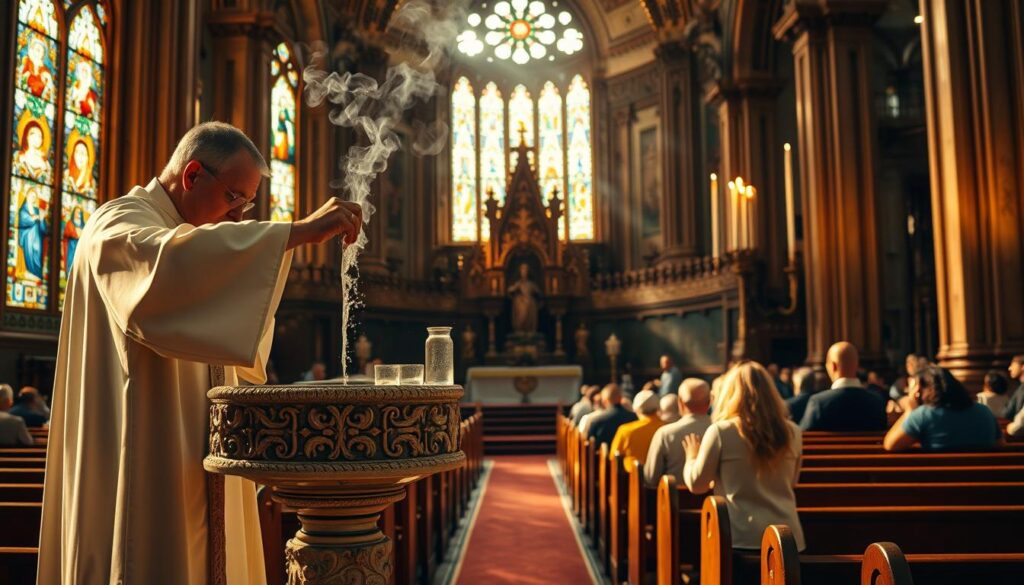
Dipping fingers in holy water upon entering sacred spaces recalls baptismal promises. Making the Sign of the Cross proclaims redemption through Christ’s crucifixion and Trinitarian belief in one motion.

Billowing incense creates multisensory worship, symbolizing prayers ascending like fragrant smoke. These tangible actions transform abstract truths into lived experiences, engaging both body and soul in spiritual life.

Insights on Church Practices and Teachings

Physical actions often bridge spiritual beliefs and daily life. From gestures of reverence to sacred rituals, these practices root abstract truths in tangible experiences that unite communities across generations.

The Significance of Genuflection and Kneeling at Mass

Bending the knee before the tabernacle isn’t just tradition—it’s a bodily declaration of faith. This act acknowledges Christ’s presence in the Eucharist, a cornerstone of worship. Kneeling during consecration deepens this connection, mirroring humility before divine mystery.

Exploring Sacraments, Confession, and Papal Authority

The seven sacraments act like spiritual fuel stations. Baptism ignites faith, Confirmation strengthens it, and Reconciliation restores it through forgiveness. During Confession, priests channel Christ’s own authority to absolve sins, continuing a chain begun with Jesus’ words: “Receive the Holy Spirit. Whose sins you forgive are forgiven.”

Papal leadership traces back to Peter, whom believers see as Christianity’s first steward. This role safeguards unity in teaching while allowing cultural diversity in practice—a balance maintained through centuries.

Veneration of Mary, Saints, and Sacred Images

Honoring Mary reflects her unique role as God’s chosen vessel, not worship. Like asking a friend to pray, believers seek her intercession, recalling how she nudged Jesus at Cana. Saints receive similar respect as heavenly mentors who’ve walked life’s path before us.

Statues and icons serve as visual reminders of these holy figures. The honor shown to images flows to whom they represent, much like treasuring a family photo while loving the person in it.

Modern Inquiries and Common Misconceptions in Catholicism

Navigating spiritual disciplines in contemporary society raises fresh considerations. Many wonder how ancient practices adapt to modern life while maintaining their sacred purpose. Let’s explore some current topics that spark curiosity and occasional confusion.

modern catholic practices

Fasting, Abstinence, and Ash Wednesday Explained

Friday meat abstinence isn’t just about sacrifice—it’s a weekly reminder of mercy. This practice unites believers in remembering Christ’s crucifixion while fostering self-discipline. During Lent, this commitment intensifies, paired with fasting that sharpens spiritual focus.

Ash Wednesday opens this solemn season with ashes marking foreheads. The phrase “Remember you are dust” echoes humanity’s mortality and heaven’s promise. These rituals aren’t empty traditions but living bridges between earthly life and eternal hope.

Yoga, Astrology, and Spiritual Boundaries

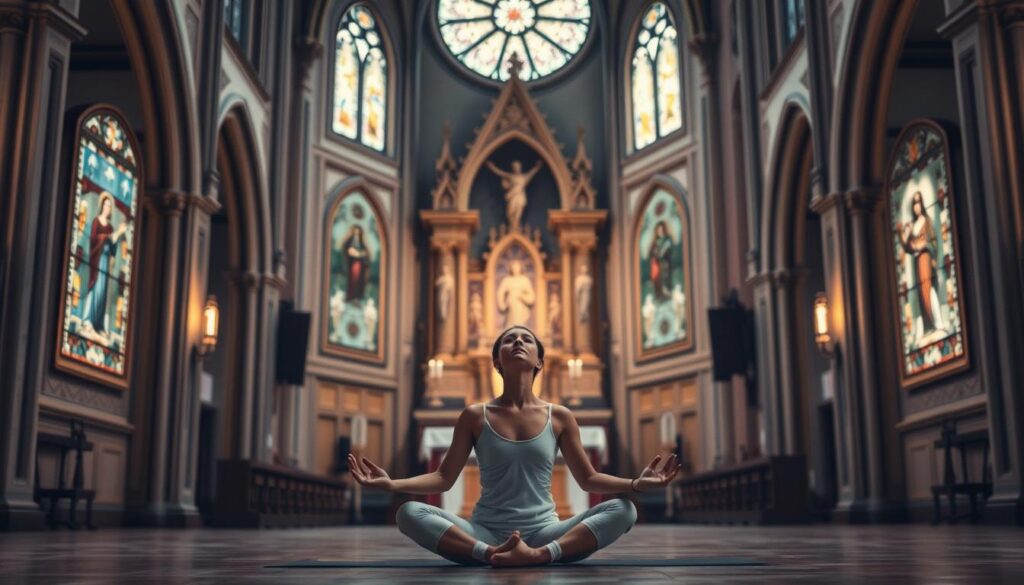
While yoga’s physical poses may seem harmless, the Church cautions against blending non-Christian spirituality into prayer life. Stretching becomes problematic if tied to Eastern religious concepts conflicting with scripture.

The table below clarifies common modern concerns:

Practice Church Stance Reason
Astrology Forbidden Seeks knowledge beyond God’s revelation
Reiki Healing Discouraged Conflicts with Christian understanding of grace
Ouija Boards Prohibited Opens doors to spiritual danger

These guidelines protect believers from practices that might cloud their relationship with divine truth. The Church’s teachings on modern issues ultimately aim to safeguard faith while encouraging thoughtful engagement with contemporary culture.

Conclusion

Seeking spiritual clarity often leads to profound discoveries about divine love and human purpose. At the heart of this journey lies grace—God’s unearned gift that transforms lives through sacraments like baptism and confession. These sacred moments bridge earthly existence with eternal hope.

Believers find strength in practices rooted in truth, from daily prayer to honoring saints. The Holy Spirit continually guides this path, helping navigate modern challenges while preserving timeless wisdom. Through confession, believers experience renewal, guided by priests who extend Christ’s mercy.

Final salvation rests in divine hands, shaped by lives lived in response to grace. As physical existence fades, the promise of heaven remains—a communion with God where justice meets compassion. Every ritual and teaching ultimately points toward this eternal embrace.

The Church’s teachings offer both anchor and compass, blending ancient traditions with relevance for today’s seekers. Whether exploring sacraments or ethical dilemmas, answers emerge through faith nurtured by grace—the heartbeat of spiritual growth.

FAQ

What are the core beliefs of Catholicism?

Central teachings include belief in the Trinity, Jesus’s sacrifice, the sacraments, and eternal communion with God. These truths guide worship and daily life.

How do Scripture and Tradition shape Catholic teachings?

The Bible and sacred Tradition work together, preserving Christ’s message. The Magisterium interprets both, ensuring clarity across generations.

Why is grace important in the faith?

Grace is God’s free gift that heals and strengthens believers. It empowers them to live virtuously and grow closer to Him.

What happens during Mass?

Mass reenacts Christ’s sacrifice at Calvary. It includes prayers, Scripture readings, and the Eucharist, uniting the faithful in worship.

What does Baptism symbolize?

It washes away original sin, initiates one into the Church, and marks a rebirth through water and the Holy Spirit.

Why do Catholics use holy water?

It represents purification and renewal. Blessing oneself with it recalls Baptism and invites spiritual protection.

Why do people kneel during worship?

Kneeling expresses humility and reverence. It acknowledges God’s presence, especially before the Blessed Sacrament.

How does Confession work?

Through this sacrament, believers confess sins to a priest, receive absolution, and restore their relationship with God.

Can Catholics practice yoga?

Physical yoga is acceptable if detached from non-Christian spirituality. Focus should remain on Christ-centered prayer.

Why are saints honored?

Saints are models of holiness who intercede for the faithful. Venerating them celebrates God’s work in their lives.

The Rise of Catholicism Across the African Continent


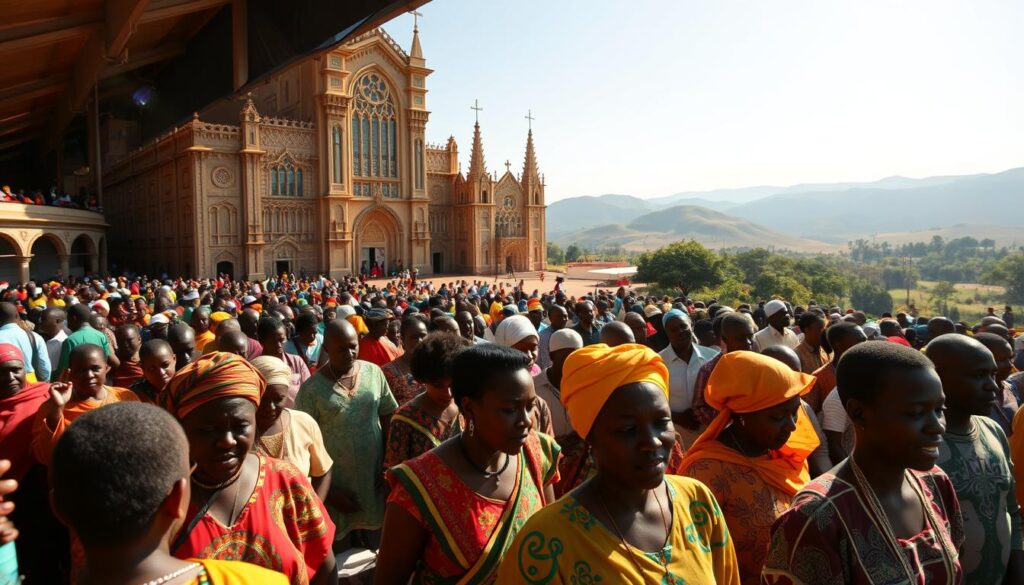
What began as scattered missionary efforts has blossomed into one of the most dynamic spiritual movements of our time. Over the past century, communities across this vast continent have embraced a vibrant faith that’s rewriting global religious demographics. From humble beginnings, the story of growth here is nothing short of extraordinary.

Consider this: In 1910, fewer than a million people identified with this tradition. Today, that number exceeds 265 million. While Europe’s religious landscape shrinks—losing 244,000 followers in a single year—African communities gained over 8 million during the same period. By 2050, nearly one-third of the world’s adherents could call this region home.

This transformation isn’t just about numbers. Local cultures have woven ancient traditions into their practice, creating unique expressions of belief. Young leaders are stepping forward, shaping both their communities and global conversations. What emerges is a living, breathing faith that honors its roots while embracing new possibilities.

Key Takeaways

  • African Catholic communities grew from under 1 million to 265 million in 110 years
  • Projected to represent 32% of global followers by 2050
  • Annual growth outpaces European declines by millions
  • Cultural blending creates distinct local traditions
  • Emerging leadership influences worldwide religious dialogue

Overview of Catholicism’s Growth in Africa

The story of spiritual transformation across the continent reveals unexpected patterns. While European churches empty, vibrant congregations from Lagos to Kinshasa overflow with energy. This shift didn’t happen overnight—it’s rooted in unique historical currents and cultural resilience.

Seeds Planted in Challenging Soil

Early 20th-century missionaries faced complex landscapes. Colonial powers often arrived alongside cross-bearing travelers, creating mixed impressions. Yet local communities gradually shaped foreign traditions into something new. By the 1950s, indigenous leaders began steering the Catholic Church toward self-reliance.

Numbers Tell a Revolutionary Tale

Nigeria’s 30 million faithful set stunning benchmarks—94% attend weekly services compared to Europe’s 5% averages. Five nations here dominate global practice rankings according to World Values Survey data. Consider these contrasts:

  • Democratic Republic of Congo added 28 million believers since 1970
  • Uganda’s Catholic population tripled in 30 years
  • Ghana builds 12 new parishes annually

This explosion reshapes the world’s religious map. Projections suggest African people will constitute one-third of global followers by 2050. The growth isn’t slowing—it’s accelerating as younger generations embrace faith traditions fused with local customs.

Exploring “catholicism in africa”: Demographics & Cultural Impact

Numbers only tell part of the story. Behind every statistic lies a tapestry of lived experiences shaping religious practice. Let’s uncover what makes certain communities thrive while others struggle with participation.

demographics and faith practices

Statistical Trends and Mass Attendance Insights

The Democratic Republic of Congo stands out with 37.5 million active worshippers—more than France and Spain combined. Nigeria follows closely, where 94% of its 30.5 million faithful attend weekly services. Compare this to Brazil, where only 8% of 120 million baptized individuals regularly participate.

Key contrasts emerge:

  • Uganda’s 28.4 million practitioners outnumber Germany’s entire population of churchgoers
  • U.S. Mass attendance (17%) trails far behind most African nations
  • Mexico’s 45 million active members still face growth rates half those seen in Kenya

The Role of Local Traditions and Community Values

Why do these numbers matter? Shared rituals bind people beyond Sunday services. In many villages, ancestral respect blends seamlessly with sacramental life. Elders often lead prayer circles, while youth groups organize charity drives.

This fusion creates resilience. Families prioritize worship as communal identity, not just personal choice. As one Ghanaian priest notes, “Our faith walks with us—from market stalls to harvest festivals.” Today, this approach keeps churches vibrant as social hubs and spiritual anchors.

Global Influence, Leadership, and Church Politics

African church leaders are reshaping global religious conversations through bold actions and unified stances. When the Vatican released its 2023 document on blessings, over 20 regional conferences swiftly voiced concerns—a historic show of collective strength. This marked a turning point in how church decisions are shaped worldwide.

African Bishops and Responses to Global Directives

Cardinal Fridolin Ambongo’s January meeting with Pope Francis highlighted Africa’s growing clout. The Pope reportedly felt “deeply troubled” by widespread pushback against the document’s provisions. Through weeks of dialogue, Ambongo and Vatican officials crafted revised guidelines—a process requiring multiple approvals from the pontiff himself.

Reactions to Fiducia Supplicans and Synod Dynamics

This episode revealed three key shifts:

  • African leaders now actively shape church policies rather than follow directives
  • Cultural values around family unite diverse religious groups across the continent
  • Reforms within SECAM amplify regional perspectives in world forums

As Cardinal Ambongo noted, “Our people’s voice matters in Rome now.” This confidence stems from demographic realities—with Pope Francis himself acknowledging Africa’s central role in the world’s religious future. While Western churches debate theology, African leaders focus on pastoral needs rooted in local traditions.

Future Perspectives and Evolving Church Dynamics

A fresh breeze of change sweeps through global religious circles as African communities reimagine their spiritual futures. Pope Francis calls this region the “continent of hope,” where joyful worship meets social transformation. His reforms spark conversations about balancing tradition with local needs.

global church leadership

The Impact of Pope Francis’ Reforms

The pontiff’s push for decentralization resonates deeply here. African leaders welcome his vision of a church shaped by grassroots experiences rather than top-down directives. “We’re not just receivers of faith—we’re co-creators,” shares a Kenyan bishop.

This shift shows in practical ways. Youth ministries blend drum-led prayers with climate activism. Women’s groups reinterpret sacramental preparation using traditional storytelling methods. Yet financial ties to Western donors complicate true independence.

Pathways to Autonomy and Cultural Empowerment

Local theologians propose bold solutions:

  • Training priests in community development alongside theology
  • Creating micro-donations systems to reduce foreign funding
  • Designing liturgies that honor ancestral wisdom

These steps could help the world see faith through African eyes. As one Ugandan nun observes, “Our challenges birth new ways of serving—both our people and the universal church.” The road ahead holds both struggle and promise, but the continent’s vibrant spirit lights the way.

Conclusion

As global spiritual landscapes shift, African voices emerge as architects of renewal. The continent’s 18 cardinal-electors now hold historic influence, their collective voice shaping decisions from Kinshasa to Rome. This growth carries profound responsibility—to address modern spiritual hunger while preserving cultural roots.

Communities like the Republic Congo model faith anchored in kinship and reconciliation. “Our strength lies in love that serves without conditions,” reflects a Zambian deacon. Such values draw global attention, offering fresh responses to secularization and isolation.

The Catholic Church faces a pivotal moment. Can it embrace diverse traditions while maintaining unity? African leaders suggest solutions through youth-led initiatives and family-centered ministries. Their approach blends ancient wisdom with modern challenges.

For people worldwide seeking authentic connection, this vibrant faith offers hope. As worship spaces overflow from Nairobi to Lagos, they remind us: spiritual vitality thrives where community comes first. The church’s future may depend on listening to those who’ve mastered this balance.

FAQ

When did the Catholic Church begin to grow rapidly in Africa?

The demographic boom started in the early 20th century, with membership rising from under 2 million in 1910 to over 250 million today. Countries like the Democratic Republic of Congo and Nigeria have seen particularly strong growth.

How do local traditions influence African Catholic practices?

Communities blend faith with cultural values, such as communal worship styles and integrating traditional music. This fusion strengthens the Church’s relevance while honoring ancestral heritage.

What role do African bishops play in global Church decisions?

Leaders like Cardinal Fridolin Ambongo advocate for regional needs, often challenging Vatican policies that clash with local contexts. Their voice highlights issues like poverty and social justice.

How has Pope Francis shaped the Church’s future in Africa?

His reforms, such as emphasizing mercy over dogma, resonate with younger generations. However, debates continue over topics like LGBTQ+ blessings, with many African bishops urging caution.

Why is the Democratic Republic of Congo significant to the Church?

It’s home to one of Africa’s largest Catholic populations, with over 40 million members. The Church there addresses hunger, conflict, and education, serving as a pillar of hope amid instability.

What challenges does the Church face in maintaining growth?

Balancing traditional teachings with modern societal shifts, addressing clergy shortages, and navigating political tensions remain key hurdles. Youth engagement is also critical for sustained growth.

How do African Catholics view Vatican documents like Fiducia Supplicans?

Many bishops and congregations reject directives that conflict with local values, emphasizing the need for cultural sensitivity. This reflects a broader push for autonomy in interpreting doctrine.

Catholic Church Statistics: Fascinating Facts and Figures


How has one of humanity’s oldest institutions grown in a rapidly changing world? Over the past 100 years, the global Catholic community has tripled in size, surging from 291 million in 1910 to over 1.4 billion followers today. This growth isn’t just about raw numbers—it’s a story of cultural endurance and geographic transformation.

Recent analysis shows Catholics now make up 16% of Earth’s total population. What’s remarkable? This percentage has stayed steady for generations, even as the world’s population exploded. The faith maintains its position as the largest single Christian group, representing half of all Christians worldwide.

The Vatican’s 2023 report reveals a 1.15% annual growth rate, adding millions of new members yearly. But this expansion isn’t evenly spread. Once concentrated in Europe, the faith now thrives across six continents, with dramatic increases in Africa and Asia reshaping its global footprint.

Understanding these patterns helps us see beyond headlines. From Pew Research’s demographic studies to the Vatican’s meticulous records, reliable data shows how religious institutions adapt to modern challenges. These statistics don’t just reflect belief—they illuminate cultural shifts affecting billions.

Key Takeaways

  • Catholic membership grew 380% since 1910, outpacing global population growth
  • 1 in 6 people worldwide now identify with this faith tradition
  • 2023 saw 16 million new members added through births and conversions
  • Africa and Asia drive modern growth, while Europe’s share declines
  • Demographic methods ensure accurate tracking across generations

Global Overview of catholicism numbers

The world’s religious map has redrawn itself dramatically since 1910. Where once European cities dominated the landscape of belief, vibrant communities now thrive across continents. This transformation reveals surprising patterns in how people practice their faith today.

Historical Growth Trends and Shifts

Europe’s share of the global Catholic population plummeted from 65% to 24% in a century. Meanwhile, Latin America and the Caribbean surged from 24% to 39% of all followers. Sub-Saharan Africa witnessed the most explosive growth – multiplying its community 170 times over since 1910.

North America’s story shows steady expansion. From 15 million adherents in 1910, the region now counts 89 million. While impressive, this growth pales next to Africa’s meteoric rise from 1 million to 171 million believers.

Modern Global Distribution Patterns

Three key regions now shape the faith’s geography:

  • The Americas host 47.8% of all followers
  • Brazil alone accounts for 13% of the world total
  • Africa and Asia combined represent 24%

This redistribution reflects changing birth rates and migration patterns. Urbanization in developing nations and economic opportunities in the Global North continue reshaping where people worship. The Church now faces both challenges and opportunities in serving communities separated by oceans yet connected through technology.

Regional Trends & Demographic Shifts

Global religious landscapes are transforming at unprecedented speeds. While traditional strongholds evolve, new centers of spiritual vitality emerge with surprising momentum.

catholic population growth regions

Latin America and Sub-Saharan Africa: Engines of Change

Africa’s Catholic community grew faster than any other region last year. A 3.31% surge added 9 million believers between 2022-2023. The Democratic Republic of Congo now leads with 55 million followers – more Catholics than Spain and France combined.

Latin America maintains its stronghold with 47.8% of the world total. Brazil alone accounts for 13% of global adherents. “We’re witnessing a southward shift in religious influence,” notes a Vatican demographic analyst. “By 2040, 3 in 4 Catholics may live below the equator.”

Region Catholic Population Annual Growth
Sub-Saharan Africa 281 million +3.31%
Latin America 618 million +0.9%
Asia-Pacific 154 million +0.6%

Asia’s steady growth reveals surprising hotspots. The Philippines hosts 93 million Catholics, while India’s community expanded to 23 million. Urbanization and youth demographics drive these patterns – African Catholics average 19 years old, compared to 40 in Europe.

Local leadership adaptations fuel this expansion. Nigeria now trains more priests annually than Italy. From São Paulo to Kinshasa, grassroots initiatives blend traditional practices with modern outreach strategies.

Catholic Church in the United States: A Closer Look

America’s religious landscape tells a story of constant change and cultural blending. The Catholic Church here mirrors this evolution, balancing historic roots with modern diversity.

https://www.youtube.com/watch?v=HC-ItniAeys

Immigration and Demographic Influences

New arrivals fuel much of America’s religious vitality. Over half of migrants to the U.S. identify as Catholic—a lifeline for parishes facing membership shifts. Nearly 30% of the country’s 75 million Catholics were born elsewhere.

Immigrant Origin Percentage
Latin America & Caribbean 76%
Asia-Pacific 10%
Europe 10%

This influx creates vibrant multicultural communities. Hispanic Catholics now make up 33% of followers, reshaping worship styles and parish programs. Bilingual Masses and cultural festivals have become common in major cities.

Impact of Religious Switching on U.S. Catholicism

While immigration boosts numbers, belief changes create challenges. One in ten American adults grew up Catholic but left the faith. Only 2% of adults convert to Catholicism yearly.

Younger generations show shifting patterns. Many cite disagreements on social issues or seek more flexible spiritual options. Yet the population remains stable due to immigrant families and higher birth rates among Hispanic members.

Urban parishes adapt through community outreach and multilingual services. As one Chicago priest notes: “Our strength lies in embracing difference while maintaining core traditions.” This balancing act defines American Catholicism’s next chapter.

Statistical Insights on Clergy and Vocational Trends

Behind every thriving spiritual community stand dedicated leaders shaping its future. Recent reports reveal fascinating patterns in religious vocations that mirror broader societal changes.

Bishops, Priests, and the Role of Deacons

The total number of bishops grew 1.5% from 2022-2023, reaching 5,410 worldwide. Priest numbers saw modest 0.3% growth, with Africa contributing 28% of new ordinations. Permanent deacons now exceed 49,000 globally – a role gaining importance in parish operations.

Fluctuations in Religious Orders and Sisters

Women’s religious communities tell a different story. The Annuarium Statisticum Ecclesiae shows sisters decreasing by 1.3% last year. However, younger orders in Asia and Africa buck this trend, blending traditional vows with modern social work.

Decline in Seminarian Numbers and Future Leadership

Seminarian enrollment dropped 3.6% globally since 2022. Europe faces the sharpest decline at 14%, while Africa maintains steady vocational interest. “This shift demands creative leadership development,” notes a Vatican official. “We’re training lay ministers to complement clergy roles.”

These trends highlight both challenges and adaptations. As the Catholic population grows, evolving leadership models aim to serve communities effectively. The coming decade will test how tradition and innovation balance in global religious practice.

FAQ

How has the global Catholic population changed recently?

The global Catholic population grew by 1.1% from 2022 to 2023, reaching 1.39 billion. While Africa and Asia saw significant growth, Europe experienced a decline. Latin America remains home to nearly 40% of Catholics worldwide, according to the Vatican’s Central Office of Church Statistics.

Which regions are driving Catholic growth today?

Sub-Saharan Africa and Latin America are key growth engines. Africa’s Catholic population surged by 2.7% in 2023, while Latin America maintains the largest regional share. Southeast Asia also shows steady increases, contrasting with shrinking numbers in Europe and North America.

What factors shape Catholicism in the United States?

Immigration from Latin America and religious switching significantly impact U.S. Catholicism. While Hispanic Catholics boost numbers, nearly 13% of American adults now identify as former Catholics. This dynamic creates both growth opportunities and challenges for dioceses nationwide.

Are there enough priests to serve Catholic communities?

Priest numbers grew globally by 0.3% to 462,388 in 2023, but distribution varies widely. Africa saw a 3.6% increase, while Europe faced shortages. The ratio of priests to Catholics remains uneven, with 1 priest per 1,773 Catholics in Africa versus 1 per 1,746 in the Americas.

Why are seminarian numbers declining?

Global seminarians decreased by 1.7% from 2022 to 2023, with Europe and the Americas seeing the sharpest drops. Cultural shifts, vocational challenges, and changing societal values contribute to this trend, raising questions about future Church leadership pipelines.

How reliable are Catholic Church statistics?

The Vatican’s Central Office of Church Statistics publishes annual data in the Annuarium Statisticum Ecclesiae, considered the most authoritative source. However, regional reporting variations and census methodology differences can affect precision, particularly in areas with limited infrastructure.

Catholicism Practices: A Comprehensive Guide


Welcome to a journey through the vibrant traditions that unite over 1.3 billion people globally. For centuries, these shared rituals and beliefs have created a spiritual framework rooted in teachings passed down from the earliest followers of Christianity. Today, they form the heartbeat of a faith that spans continents and cultures.

At its core, this global community thrives on ancient customs refined over generations. From weekly gatherings to sacred sacraments, every element serves a purpose: strengthening bonds with the divine and one another. These observances aren’t just historical relics—they’re living traditions that shape daily life for millions.

You’ll find that structure and meaning intertwine here. Personal prayer, seasonal celebrations, and acts of service work together to nurture both individual growth and collective identity. This guide explores how these elements create a rhythm of faith, offering clarity and connection in an ever-changing world.

Key Takeaways

  • Over 1.3 billion people participate in these global traditions
  • Rooted in teachings from Christianity’s earliest days
  • Rituals blend personal devotion with community connection
  • Modern observances maintain historical significance
  • Creates a spiritual rhythm for daily life

Foundational Beliefs and Commandments

What defines the moral compass for millions worldwide? At its core, Catholic teaching builds on two revolutionary principles taught by Jesus Christ: total love for God and genuine care for others. These aren’t abstract ideas—they’re actionable guidelines shaping how believers engage with faith and community.

God’s Two Great Commandments

Jesus simplified centuries of religious law into one powerful statement:

“Love the Lord your God with all your heart… and love your neighbor as yourself”

(Matthew 22:37,39). This dual focus creates a balanced spiritual life—honoring the divine while serving those around you. It’s why many describe these teachings as“faith in motion.”

The Ten Commandments Explained

The Ten Commandments put these ideals into practice. The first three show how to love God:

  • Prioritize spiritual connection over material pursuits
  • Respect sacred spaces and moments
  • Set aside time for worship weekly

The remaining seven guide human relationships:

  • Honor family bonds
  • Protect life and dignity
  • Value truth and loyalty

Far from outdated rules, they address modern challenges like digital ethics and social justice. This framework helps people navigate complex situations while maintaining integrity—a timeless way of life that continues to resonate.

The Sacraments: Channels of Grace

How do ancient rituals become modern pathways to spiritual growth? The seven sacraments answer this by creating visible encounters with divine grace, each marking pivotal moments in a believer’s journey. These sacred acts aren’t mere formalities—they’re transformative experiences that shape lives.

sacraments of grace

Doorways to Spiritual Life

Three initiation rites form your foundation. Baptism washes away original sin through holy water, symbolizing rebirth. As one priest explains:

“The old self drowns so Christ’s light can rise within you.”

Confirmation follows, sealing believers with sacred oil and the Holy Spirit’s gifts. This empowers you to live faith boldly. Finally, the Eucharist nourishes through communion—ordinary bread and wine becoming Christ’s body and blood during Mass.

Healing and Life’s Callings

Two sacraments restore wholeness. Reconciliation offers forgiveness through private confession, while anointing of the sick brings comfort during illness. For life paths, holy orders ordain clergy through prayer, and marriage unites couples as living symbols of Christ’s love.

Sacrament Purpose Key Element
Baptism Spiritual rebirth Holy water
Confirmation Strengthening faith Chrism oil
Eucharist Divine nourishment Consecrated bread
Anointing Physical/spiritual healing Prayer & oil
Holy Orders Priestly consecration Laying on of hands

Whether beginning your journey or seeking renewal, these sacraments offer concrete ways to experience grace. They turn abstract beliefs into lived truth, connecting everyday struggles to eternal hope.

Exploring catholicism practices in Worship and Community

How do ancient rhythms shape modern spiritual lives? Weekly gatherings blend centuries-old patterns with fresh meaning, creating spaces where individuals grow together. This balance between personal devotion and shared experience forms the heartbeat of faith communities.

Mass Structure and Spiritual Nourishment

Sunday services follow a timeless pattern. The priest leads the congregation through Scripture readings and homily reflections. One parish leader notes:

“Our liturgy isn’t just routine—it’s how we sync our hearts to heaven’s rhythm.”

The Eucharistic celebration remains central. Believers witness bread and wine transformed, then receive communion as spiritual fuel. Daily Mass options help busy lives stay grounded.

Body Language of Belief

Physical actions deepen spiritual connections. Common gestures include:

Gesture Meaning When Used
Sign of the Cross Affirms Trinity belief Prayer openings/closings
Genuflection Honors Christ’s presence Entering pews
Folded hands Shows humble focus Personal prayer

These movements turn abstract faith into tangible expression. The Holy Spirit’s guidance becomes visible through coordinated actions that unite diverse congregations. From meal blessings to bedtime prayers, these habits form spiritual anchors.

Community bonds strengthen through shared rituals. Whether raising voices in hymn or bowing heads in silence, collective worship transforms individual seekers into a living tradition that spans generations.

Rituals, Traditions, and Penance

Ever wonder how annual rhythms shape spiritual growth? Six special holy days in the U.S. calendar invite deeper reflection beyond Sunday Mass. These include Christmas, Mary’s Assumption, and All Saints’ Day—moments to honor sacred mysteries through communal worship.

Catholic penance and mercy works

Holy Days, Fasting, and Abstinence

Penance takes tangible form through dietary disciplines. Adults under 60 fast on Ash Wednesday and Good Friday—one full meal plus two small snacks. Meat-free Fridays during Lent connect believers to Christ’s sacrifice, a practice echoing through 20 centuries.

Practice Age Group Details
Abstinence 14+ No meat on Lenten Fridays
Fasting 18-59 One meal + two snacks

Corporal and Spiritual Works of Mercy

True charity extends beyond personal sacrifice. The seven corporal works address physical needs—feeding the hungry, visiting prisoners. Spiritual works nurture souls through guidance and forgiveness. As one volunteer shared:

“Handing a sandwich to someone homeless makes faith visible—like love with skin on.”

These works transform penance into active care. Burying the dead or comforting the grieving becomes sacred service. Whether teaching faith basics or bearing insults patiently, mercy bridges belief and action—proving ancient traditions remain vital today.

Historical and Theological Perspectives

What connects medieval kings to modern reformers in shaping spiritual tradition? The Catholic Church’s story unfolds through visionary leaders who balanced divine calling with earthly challenges. Their decisions still echo in today’s parishes and global policies.

Catholic Church historical figures

Architects of Faith Through the Ages

Saint Francis of Assisi redefined service by embracing radical poverty. His “joyful simplicity” inspired new religious orders focused on helping others. Centuries earlier, Saint Irenaeus laid groundwork by declaring Scripture, apostolic succession, and sacred tradition as the church’s triple foundation.

Saint Gregory the Great strengthened papal authority while refining liturgical music. As one historian notes:

“Gregory’s reforms made worship accessible—turning Latin chants into prayers every farmer could feel.”

Doctrine’s Living Legacy

The church’s teachings evolved through councils and crises. Vatican II (1962-1965), led by Saint John XXIII, modernized practices without altering core beliefs. This balance between change and continuity helps the Catholic Church address modern issues like social justice while honoring Jesus Christ’s original message.

From house churches to the Vatican’s diplomatic network, organizational growth reflects practical needs. The Roman Curia’s departments—handling liturgy, education, and reconciliation—show how ancient truths adapt to serve people worldwide. Through it all, the anointing of leaders and sacraments maintains spiritual order across generations.

Conclusion

This exploration reveals a spiritual framework that bridges ancient wisdom with modern life. Forged through centuries, these traditions offer more than rituals—they provide a living roadmap for connecting faith to daily choices. From sacraments to service, each practice reinforces relationships with the divine and community.

The beauty lies in adaptability. While rooted in timeless truths, these customs evolve to address today’s challenges—digital ethics, social justice, and personal purpose. They transform abstract beliefs into tangible actions, turning ordinary moments into sacred opportunities.

Whether through prayer gestures or works of mercy, this way of living fosters both individual growth and collective strength. It invites everyone to participate in a story larger than themselves—one that reshapes hearts while serving the world.

As you reflect on these insights, consider how small acts of love and devotion create ripples through time. What might it look like to weave such purpose into your own life?

FAQ

What are the most important sacraments in the Catholic faith?

The Eucharist, Baptism, and Confirmation form the Sacraments of Christian Initiation. These mark a person’s entry into the Church and deepen their bond with Jesus Christ. The sacraments of healing, like Reconciliation and Anointing of the Sick, also play vital roles in spiritual life.

How do Catholics observe fasting and abstinence?

Fasting (eating one full meal plus two smaller ones) and abstaining from meat are practiced on Ash Wednesday and Good Friday. During Lent, many also give up personal comforts as a form of penance, reflecting on Christ’s sacrifice.

Why is the Mass central to Catholic worship?

The Mass celebrates the Last Supper, where bread and wine become the Body and Blood of Christ (transubstantiation). It unites the community in prayer, scripture, and Communion, reinforcing their connection to God and one another.

What are the Corporal Works of Mercy?

These are acts like feeding the hungry, sheltering the homeless, and visiting the sick. Rooted in Jesus’ teachings, they guide Catholics to serve others as expressions of love and charity, reflecting God’s grace in action.

How does Confirmation strengthen a Catholic’s faith?

Through Confirmation, believers receive the Holy Spirit’s gifts, like wisdom and courage. It deepens their commitment to live as disciples, often involving a personal renewal of baptismal promises and active participation in the Church.

Who are key figures in Catholic history?

Saints like Augustine of Hippo, Thomas Aquinas, and Teresa of Ávila shaped theology and spirituality. Modern figures like Mother Teresa and Pope John Paul II also inspired global devotion through their works and teachings.

What role do holy days like Easter and Christmas play?

These celebrations honor pivotal moments in Jesus’ life—His resurrection and birth. They unite Catholics worldwide in liturgy, prayer, and traditions, fostering joy and reverence for divine mysteries.

Blending Catholicism and Yoga: A Unique Spiritual Journey


Millions of people worldwide are discovering new ways to deepen their faith through mindful movement and prayer. A growing number of believers are exploring how physical practices rooted in ancient traditions can coexist with Western religious teachings. This fusion creates opportunities for spiritual growth while raising important questions about maintaining theological integrity.

The global wellness industry, valued at over $4.5 trillion, reflects our collective search for holistic health. Many faith communities now recognize the value of integrating body-awareness techniques with traditional worship. Recent surveys show 1 in 4 churchgoers engage in some form of meditative exercise, seeking harmony between physical discipline and spiritual devotion.

This exploration isn’t without challenges. Some religious leaders emphasize the need for discernment, while others celebrate the potential for enhanced prayer experiences. We’ll hear from practitioners who’ve found creative solutions, like modified poses paired with Scripture reflection. Their stories reveal how personal faith journeys can evolve without compromising core beliefs.

Key Takeaways

  • Modern believers increasingly combine physical wellness practices with religious traditions
  • Industry growth reflects widespread interest in holistic spiritual approaches
  • Successful integration requires thoughtful adaptation and guidance
  • Modified techniques help align exercises with specific faith values
  • Personal stories demonstrate diverse paths to meaningful practice

Exploring the Origins and Philosophy of Yoga

Long before modern studios offered mats and straps, ancient seekers developed a system unifying body and spirit. Rooted in Sanskrit’s “to yoke,” this practice aimed to bridge human and divine realms. Second-century sage Patanjali crystallized these ideas in his Yoga Sutras, outlining eight pathways for spiritual growth.

Historical Roots in Eastern Traditions

Early forms emerged from India’s Vedic culture, blending Hindu rituals with Buddhist mindfulness. Jain teachings later added ethical layers, creating a rich spiritual tapestry. These foundations emphasized inner transformation over physical feats.

From Asanas to Spiritual Discipline

Patanjali’s framework reveals surprising truths: the postures we know today formed just one step toward enlightenment. His eight limbs prioritized moral living and mental focus before movement.

“Yoga is the stilling of thought-waves to realize the true self,”

he wrote, highlighting meditation’s central role.

Yoga Type Focus Key Practice
Hatha Physical alignment Asanas & breathwork
Raja Mental mastery Meditation techniques
Karma Selfless action Service to others

Cultural Transformations Over the Years

When these teachings reached Western shores, gyms rebranded ancient techniques as fitness routines. While accessibility grew, some core principles faded. Modern hybrids now balance tradition with contemporary needs, proving philosophy adapts without losing its essence.

Understanding Catholic Spirituality in the Context of Yoga

The integration of physical postures and spiritual reflection isn’t new to religious traditions. For centuries, faith communities have explored how bodily awareness enhances divine connection. This exploration reveals fascinating parallels between ancient disciplines and modern spiritual practices.

Catholic spirituality yoga integration

Contemplative Prayer and Embodied Faith

Saint Teresa of Avila described prayer as “an intimate sharing between friends.” Her writings emphasize body awareness during meditation, mirroring yoga’s mind-body focus. Many believers use breath-focused prayers resembling pranayama techniques to calm their thoughts.

Ignatius of Loyola’s Spiritual Exercises guide practitioners to notice divine presence in everyday actions. This approach values physical sensations as pathways to spiritual insight. “God speaks through our bodies,” wrote one modern retreat leader, echoing centuries of mystical tradition.

Reflections on Tradition and Theology

Church teachings about the body as a “temple” create surprising common ground. Some theologians suggest mindful movement can become sacred dialogue when rooted in Christian intent. This perspective aligns with historical practices like walking meditations used by monks.

The concept of spiritual detachment appears in both traditions. Ignatian “indifference” and yoga’s yamas both teach releasing distractions to focus on ultimate truth. As one priest-yoga instructor notes: “Our postures become prayers when we direct them toward communion.”

These connections don’t erase differences but reveal shared human yearning. Through thoughtful adaptation, many find movement practices deepen their understanding of incarnational faith – the belief that spirituality lives through our physical being.

Integrating catholicism yoga: Tradition Meets Modern Spirituality

Modern spiritual explorers are reshaping ancient disciplines into tools for contemporary devotion. One pioneering initiative bridges 16th-century Jesuit principles with mindful movement, creating space for transformative encounters.

Aligning Spiritual Practices with Faith

Bobby and Alan Haras launched Ignatian Spirituality & Yoga in 2016 through Jesuit-supported retreats. Their approach helps participants connect physical awareness with spiritual freedom. “Movement becomes prayer when we direct it toward justice,” they explain.

Many programs now adapt traditional methods to honor Christian values. Breathwork might accompany Psalm recitations, while sun salutations transform into gestures of gratitude. This careful reshaping maintains core theology while embracing holistic wellness.

Traditional Element Adapted Practice Spiritual Goal
Sanskrit chants Scripture meditation Deepen prayer focus
Universal consciousness Divine presence Strengthen faith
Self-realization Communal service Live social justice

Over 40 U.S. retreat centers now incorporate these blended methods. Spiritual directors report increased engagement when combining movement with examen prayer. The key lies in intentional framing – viewing postures as vessels for grace rather than isolated exercises.

This integration requires ongoing discernment. Practitioners learn to separate physical benefits from philosophical concepts that might conflict with their beliefs. The result? A dynamic spiritual practice that honors both body and tradition.

Practical Insights on Embracing Both Traditions

Many seekers find that blending movement with prayer opens new pathways to spiritual depth. By focusing on intentional adaptation, believers can create practices that honor their values while nurturing physical wellness.

Catholic yoga practice adaptations

Mind-Body Connection for Spiritual Growth

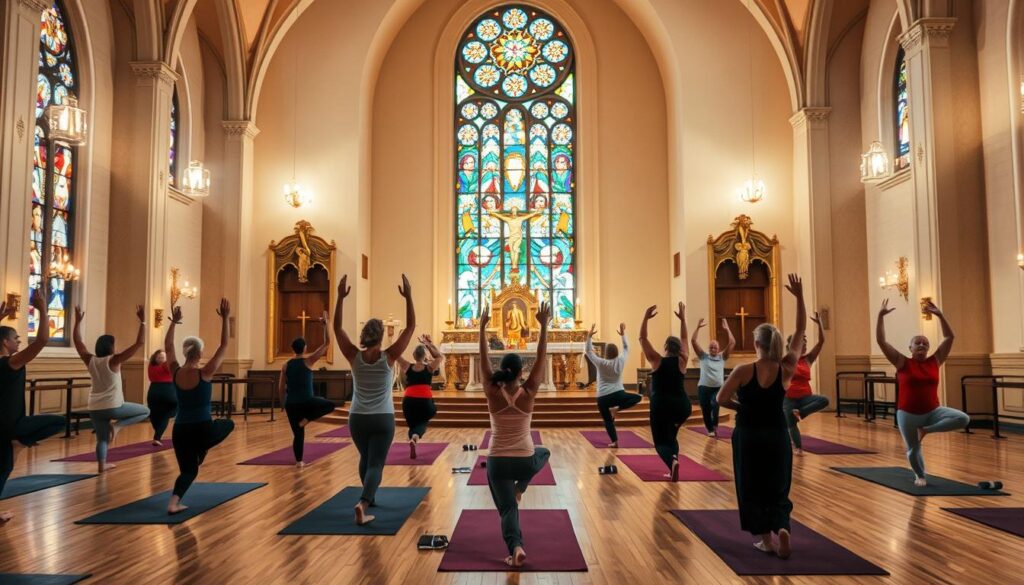
A theology professor at a Jesuit university shares how her chapel-based classes create sacred space. “Stepping onto the mat becomes an act of surrender,” she explains. Her students pair breathwork with psalms, transforming exercise into embodied prayer.

Adapting Postures for a Faithful Practice

Creative modifications help align physical routines with faith principles:

  • Warrior poses reframed as “Courage in Christ” positions
  • Sun salutations reimagined as gestures of gratitude
  • Resting postures paired with examen reflection

Bridging Meditation Techniques and Catholic Prayer

Many replace traditional mantras with scripture phrases. One retreat leader suggests: “Breathe in ‘Be still,’ exhale ‘and know.'” This approach maintains focus while deepening connection to familiar prayers.

Traditional Practice Faith-Aligned Adaptation Benefit
Om chanting Gregorian chant rhythms Enhances meditative focus
Lotus position Kneeling prayer posture Supports sacramental awareness

Real-Life Applications and Personal Stories

Over 60% of practitioners in recent surveys reported increased prayer focus after modifying their routines. Programs like Pietra Fitness offer Christ-centered alternatives, while experienced teachers help navigate cultural concerns. As one participant noted: “My mat has become a meeting place with grace.”

Conclusion

Balancing ancient practices with modern faith requires thoughtful consideration. The debate about movement-based disciplines and Christian teachings continues, with valid concerns on both sides. Some see inherent conflicts, while others find enriched prayer through adapted methods.

Personal discernment remains essential. Seek guidance from spiritual mentors and respect your tradition’s core values. Many discover that modified routines—like pairing breathwork with Scripture—can align physical wellness with spiritual goals.

This conversation reflects larger questions about engaging diverse wisdom traditions. Whether through yoga, walking meditation, or traditional prayer forms, the goal stays consistent: honoring the sacred connection between body and spirit.

Explore practices that resonate with your beliefs. Let curiosity and theological grounding guide you. After all, every stretch toward understanding can become a step closer to divine connection.

FAQ

Can practicing yoga conflict with Catholic teachings?

While some worry about cultural or philosophical differences, many believers find harmony by focusing on intention. Physical postures and breathwork can enhance mindfulness without compromising faith. Always consult clergy if uncertain.

How does meditation in yoga differ from Catholic contemplative prayer?

Both practices seek inner stillness, but their focus varies. Contemplative prayer centers on deepening a relationship with God, while yoga meditation often emphasizes mindfulness. Some blend the two by incorporating Scripture or sacred phrases.

Are there ways to adapt yoga postures for a faith-centered practice?

Absolutely! Many modify poses by integrating prayer intentions or reflecting on themes like gratitude. Viewing movement as a form of worship helps align the body and spirit.

Has the Church officially addressed yoga’s spiritual implications?

No universal statement exists, but leaders like Pope Francis encourage discernment. Prioritize practices that enrich your faith while respecting tradition. Open dialogue with spiritual guides is key.

Can yoga enhance my understanding of Catholic spirituality?

For some, mindful movement fosters a deeper appreciation for embodied faith—like seeing the body as a “temple.” Pairing postures with prayer can create space for reflection and growth.

How do I balance Eastern traditions with my Catholic identity?

Focus on shared values like humility, service, and reverence. Many practitioners separate physical exercise from spiritual rituals, ensuring their core beliefs remain central.