Recent Posts

Catholicism Theology: Dive into the Depths of Faith


For nearly 2,000 years, believers have explored profound questions through a dynamic system of spiritual wisdom. This tradition combines divine revelation with human reasoning, creating a bridge between timeless truths and everyday life. Its teachings continue to shape millions of lives worldwide, offering answers to our deepest existential queries.

At its core, this belief system draws from three pillars: sacred texts, lived traditions, and guided interpretation. These elements work together like a compass, helping communities navigate moral dilemmas and spiritual growth. The result is a living framework that evolves while staying rooted in ancient principles.

What makes this approach unique? It celebrates both mystery and logic. While embracing concepts beyond full human understanding, it also values intellectual exploration. This balance has fueled vibrant discussions about ethics, community, and humanity’s role in creation.

Key Takeaways

  • Discover a 2,000-year-old tradition blending divine wisdom and human insight
  • Explore three foundational sources: sacred texts, traditions, and teaching authority
  • Understand how spiritual principles address modern life challenges
  • Learn why this framework values both mystery and rational inquiry
  • See how global communities apply these teachings in daily practice

Introduction to Catholicism Theology

Exploring divine truth involves two guiding lights: sacred writings and centuries of practice. These twin pillars help believers understand life’s biggest questions while staying connected to ancient wisdom. Together, they form a roadmap for spiritual growth and ethical living.

Faith’s Framework in Action

The Church’s teachings cover both cosmic truths and daily choices. From understanding creation to resolving modern dilemmas, doctrine offers clear direction. It’s not just about beliefs – it shapes how communities eat, work, and care for others.

Source Role Example
Scripture Written revelation Gospel teachings
Tradition Lived wisdom Prayer practices
Teaching Authority Guided interpretation Moral guidelines

Divine Communication Channels

Revelation acts like a spiritual radio signal – God’s message coming through clearly. The Church teaches this guidance flows through Bible stories and lasting customs. “Truth isn’t frozen in time,” one scholar notes. “It grows through faithful understanding.”

This approach values both heart and mind. Mysteries like the Trinity aren’t puzzles to solve but wonders to embrace. Through study and prayer, believers connect dots between ancient texts and today’s challenges.

Foundations of Catholic Doctrine and Dogma

Three interconnected elements form the structural steel of religious teaching. Like a historic cathedral, they support each other to maintain integrity through centuries of cultural shifts.

Scripture and Sacred Tradition

The Bible serves as the cornerstone text, containing stories and teachings preserved across millennia. But written words alone don’t tell the whole story. Tradition acts like a living commentary, passing down practices from early Christian communities through today.

Element Function Modern Impact
Scripture Divine revelation Weekly worship readings
Tradition Cultural transmission Lent observances
Magisterium Guidance system Social justice teachings

The Authority of the Magisterium

Church leaders act as guardians of continuity. Their role? To ensure core teachings remain consistent while addressing new questions.

“We’re not inventing truth,” explains Cardinal Müller, “but keeping its flame alive through careful stewardship.”

This system prevents conflicting interpretations. When medical ethics questions arise about IVF or euthanasia, the Magisterium applies ancient principles to modern dilemmas. Doctrine evolves in application while staying rooted in eternal truths.

Historical Evolution of Catholic Theology

Christian thought has transformed through pivotal moments that reshaped spiritual understanding. These turning points reveal how communities adapted timeless truths to new challenges while preserving core principles.
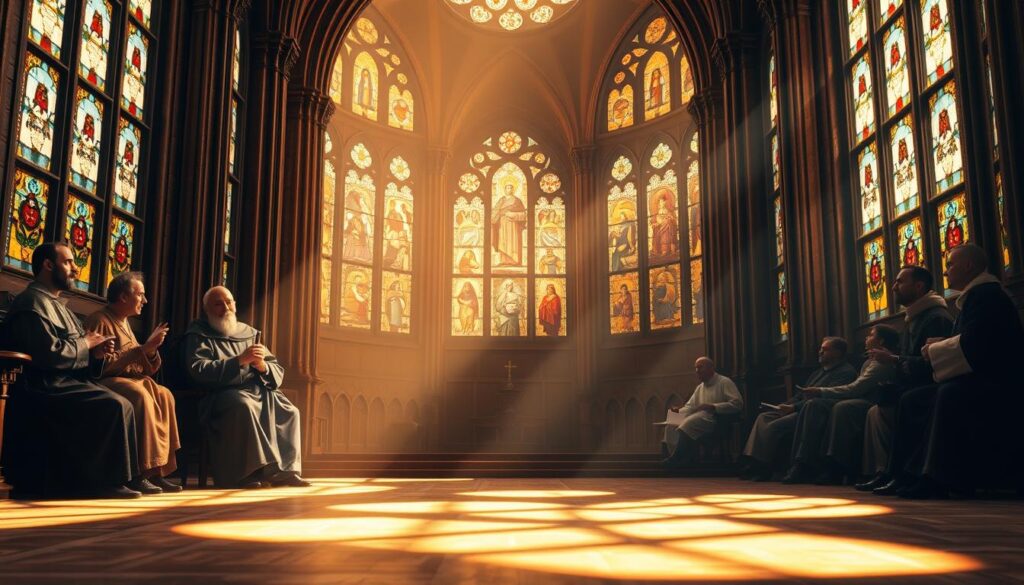
Church history milestones

Milestones in Church History

The first four centuries established cornerstone documents like the Nicene Creed. Early councils tackled questions about Christ’s nature, creating unified beliefs across growing communities. Church Fathers like Augustine blended scriptural wisdom with philosophical insights.

Medieval thinkers revolutionized spiritual thought. Thomas Aquinas showed how faith and reason could coexist, using Aristotle’s ideas to explain divine truths. This period birthed universities where theological debates flourished.

The 16th-century Council of Trent addressed Reformation challenges. It clarified teachings on sacraments and scripture, strengthening the church’s identity. Centuries later, Vatican II (1962-1965) modernized practices while keeping ancient traditions alive.

Twice in history, popes defined dogmas without councils – including the 1854 Immaculate Conception declaration. These rare moments show how leadership guides belief through changing times.

“Great councils don’t invent truth – they illuminate what’s always been there,” notes historian Eamon Duffy.

Today, the Catholic Church balances 2,000-year-old creeds with contemporary issues like bioethics. This living history proves spiritual wisdom grows richer when rooted in enduring foundations.

Key Figures in Catholic Theology

Certain thinkers leave marks that shape centuries of spiritual exploration. Their insights become guideposts for understanding divine mysteries and human purpose. One such figure transformed how communities approach faith through reason.

The Bridge Between Ancient Wisdom and Modern Thought

Thomas Aquinas revolutionized religious scholarship by merging Greek philosophy with spiritual teachings. His writings demonstrate how logical inquiry deepens rather than threatens faith. This approach created a blueprint for addressing complex questions about existence and ethics.

The Summa Theologica, his masterwork, tackles 600+ topics through methodical analysis. Each section considers objections before offering reasoned conclusions. This structure became the gold standard for theological education worldwide.

“Sound pedagogy requires marrying human wisdom with sacred truth,” observed Church leaders endorsing Aquinas’s methods.

Papal encyclicals 1879-1914

Modern theologians still use his framework to examine bioethics and social justice. The table below shows key aspects of his enduring influence:

Element Application Modern Example
Philosophical roots Ethical reasoning End-of-life debates
Systematic approach Doctrine development Climate change teachings
Interfaith dialogue Common ground discovery Abrahamic partnerships

Aquinas proved that asking hard questions strengthens belief. His work remains required reading in seminaries, showing how timeless principles adapt to new challenges.

The Essence of Catholic Faith and Belief

Human hearts carry an invisible compass pointing toward divine connection. This inner pull reflects a core teaching: people are made by God and for God. Like plants turning toward sunlight, souls naturally seek their Creator through both quiet reflection and active service.
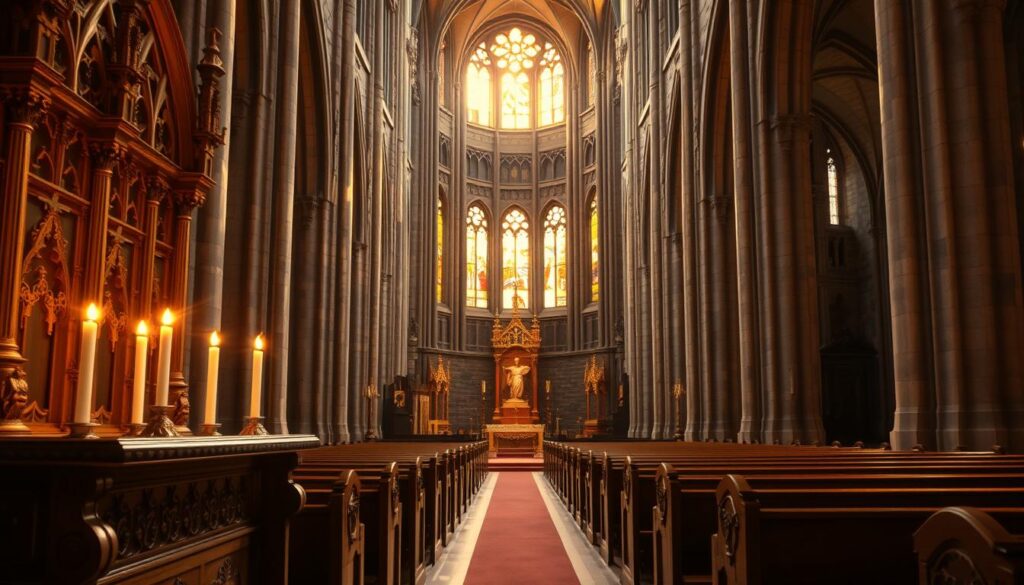
Catholic faith essence

Reason and faith work together like two lenses. Our minds can spot God’s fingerprints in nature’s patterns and life’s mysteries. But full understanding needs divine help – the “lightbulb moment” where truth clicks into place. As the Catechism notes:

“Faith is certain because it rests on God’s word.”

Catechism of the Catholic Church 157

Belief thrives in community. Shared rituals and teachings create a spiritual family tree stretching back centuries. This network helps individuals grow while keeping core truths intact across generations.

Aspect Role Example
Human Reason Discerns basic truths Observing creation’s order
Divine Faith Accepts deeper truths Understanding sacraments
Communal Practice Sustains belief Shared prayer traditions

The Catholic Church teaches that true freedom comes from aligning with this design. When lives mirror divine love, they radiate purpose that outlasts temporary trends. This journey transforms not just individuals, but entire communities.

Exploring Catholic Sacraments and Liturgy

Seven sacred ceremonies mark life’s spiritual milestones, blending physical actions with divine purpose. These rituals form a spiritual roadmap, guiding believers through birth, growth, healing, and commitment. The Catholic Church teaches they’re not symbolic gestures but living encounters with grace that transform hearts.
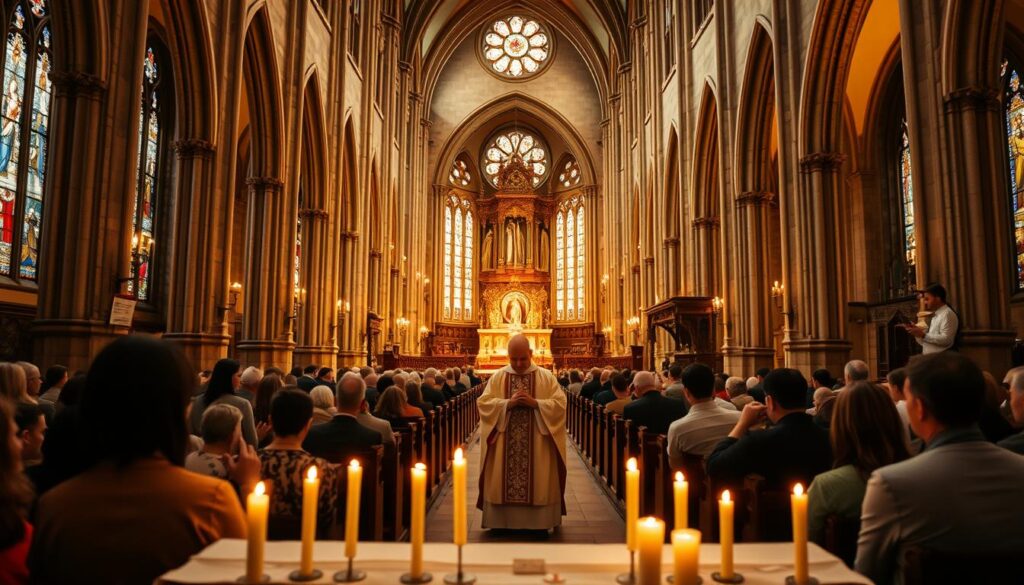
Catholic sacraments liturgy

Baptism opens this journey, washing away original sin and welcoming new members into the faith family. Confirmation deepens this bond through the Holy Spirit’s gifts. At life’s center stands the Eucharist – a sacred meal renewing Christ’s sacrifice while nourishing souls.

Other sacraments address specific needs. Penance offers reconciliation, while Anointing brings comfort during illness. Holy Orders and Matrimony shape vocational paths, showing how grace meets daily realities. “Sacraments make visible what God does silently in hearts,” notes the Catechism.

These practices rely on simple elements – water, oil, bread – to convey profound truths. Like sunlight through stained glass, ordinary materials become channels for extraordinary blessings. This approach reflects a core belief: the divine touches humanity through tangible means.

Regular participation shapes spiritual growth. Weekly Mass, seasonal observances, and sacramental prep work keep communities rooted. Through these shared rhythms, individuals and groups alike experience faith as a lived journey rather than abstract ideas.

The Role of the Holy Spirit in Catholic Worship

In the heart of Catholic worship breathes a divine force that animates every ritual and prayer. The Holy Spirit acts as God’s living breath within the Church, turning ancient practices into fresh encounters with the divine. This presence isn’t symbolic – it’s the spark that ignites sacraments and gives power to communal prayers.

Pentecost celebrations highlight this reality vividly. During Eastertide’s climax, believers recall how the Spirit descended on early followers, empowering them to live their faith courageously. This annual remembrance fuels the Church’s mission today, much like wind filling sails.

Central to worship is the Eucharist’s miraculous change. Through epiclesis – the invocation prayer – the Holy Spirit transforms bread and wine into sacred nourishment that channels God’s grace. This moment reveals heaven’s desire to meet people through tangible means.

Scripture and Tradition remain vibrant because the Spirit’s work continually helps communities apply eternal truths. From personal conversion to social justice efforts, this divine guide bridges heaven and earth in everyday moments, proving faith isn’t static but alive with possibility.

FAQ

What’s the relationship between Scripture and Sacred Tradition?

Scripture (the Bible) and Sacred Tradition work together to pass down teachings revealed by God. The Church views both as essential for understanding divine truth, guided by the Holy Spirit to ensure consistency across generations.

How does the Magisterium influence Catholic beliefs?

The Magisterium, composed of bishops and the Pope, interprets Scripture and Tradition authoritatively. Its role is to preserve teachings from error and clarify doctrines, ensuring unity in faith and practice.

Why is Thomas Aquinas important to Catholic thought?

Aquinas blended philosophy with theology, offering clear explanations of complex ideas like grace and nature. His works, such as Summa Theologica, remain foundational for understanding doctrines like the Eucharist and moral principles.

What role do sacraments play in worship?

Sacraments like Baptism and the Eucharist are visible signs of God’s grace. They strengthen faith, unite believers with Christ, and mark key moments in spiritual life, fostering a deeper connection to the Church.

How has Church history shaped modern practices?

Events like Vatican II reformed liturgy and engagement with the world. Historical councils, such as Nicaea, defined core beliefs (e.g., the Trinity), ensuring teachings adapt while staying rooted in revelation.

Why is the Holy Spirit central to Catholic worship?

The Spirit guides prayer, inspires unity, and empowers sacraments. Believed to dwell within the faithful, it helps individuals live virtuously and discern truth, making worship a dynamic encounter with God.
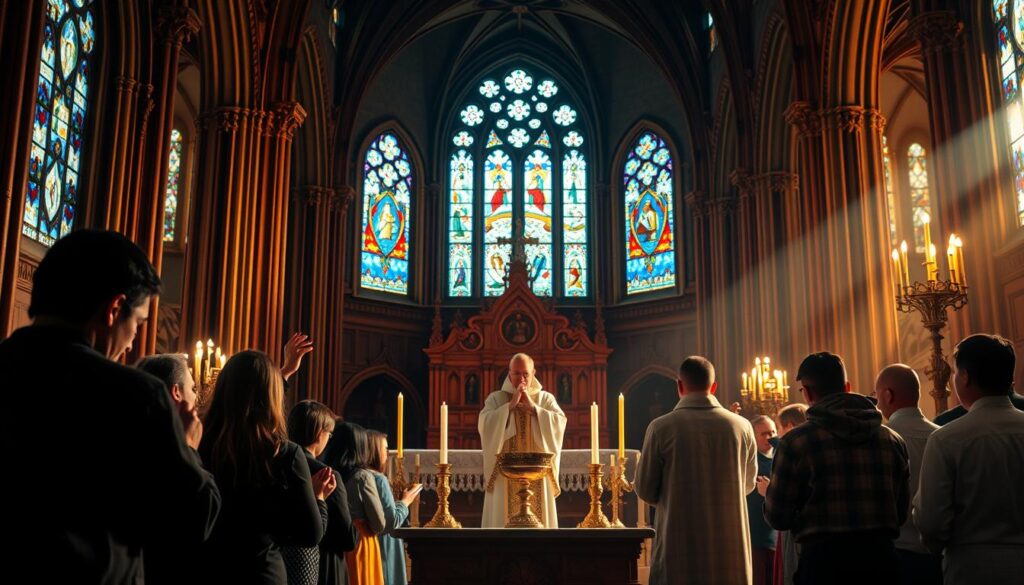
Intriguing Catholic Trivia to Test Your Faith


How well do you know the traditions, teachings, and history of your spiritual journey? This collection of faith-based questions offers a fun yet meaningful way to explore centuries of sacred wisdom. Designed for believers and curious minds alike, these challenges blend education with entertainment while honoring deep-rooted values.

From sacraments to saintly stories, each query sheds light on fascinating details often overlooked. Discover how liturgical practices evolved or uncover surprising facts about pivotal moments in Church history. You might even find answers that reshape your perspective on timeless doctrines.

Perfect for family gatherings or personal reflection, this approach turns complex topics into engaging conversations. Whether you’re mentoring others or nurturing your own growth, every correct answer strengthens your connection to a rich spiritual legacy.

Key Takeaways

  • Faith-based quizzes make learning about sacred traditions enjoyable and accessible
  • Questions cover sacraments, saints, historical events, and core teachings
  • Reveal gaps in understanding while celebrating existing knowledge
  • Simplify complex theological concepts through interactive formats
  • Ideal for group activities or individual spiritual development

Exploring the Historical Foundations of Catholic Traditions

Discover how historical decisions continue to influence modern worship. The Second Vatican Council (1962-1965) revolutionized practices like Mass structure and interfaith dialogue. Its emphasis on Scripture and lay involvement reshaped how communities engage with their faith today.

Key Timelines: From Vatican Councils to Early Church History

Twenty-one ecumenical councils have guided the Church’s direction, but Vatican II stands out. It introduced Mass in local languages rather than Latin, making rituals more accessible. This council also encouraged cooperation with other Christian denominations while maintaining core teachings.

Popes like John Paul II left lasting marks through canonizations and social advocacy. He recognized over 480 saints, including St. John Paul II himself in 2014. The canonization process requires verified miracles, ensuring only exemplary lives receive this honor.

Influential Saints, Popes, and Catholic Figures

Saint John the Apostle remains vital as the patron of theologians. His writings shape understanding of Christ’s divinity. Meanwhile, modern leaders like Pope Francis address climate change and poverty, showing how traditions adapt to current needs.

Did you know cardinals gain their roles through papal appointment? Archbishop promotions often reflect cities’ spiritual significance. From the first pope, St. Peter, to today’s leadership, these connections highlight an unbroken chain of guidance spanning two millennia.

Understanding Sacred Catholic Teachings and Rituals

Sacred rituals form the heartbeat of spiritual practice, weaving ancient wisdom into daily life. The seven sacraments guide believers through key moments – from birth to eternal life. These sacred acts aren’t mere symbols but channels of divine grace rooted in Scripture.

Holy Communion rituals

Sacraments, Holy Communion, and Church Rituals

At Mass, a profound transformation occurs during the Liturgy of the Eucharist. Through transubstantiation, bread and wine become Christ’s body and blood while keeping their physical appearance. This Real Presence forms the core of Holy Communion, described in the New Testament Gospels.

Key aspects of sacramental life include:

  • Valid ordination required for consecrating the Eucharist
  • Eastern Orthodox validity through apostolic succession
  • Deacons assisting priests but lacking absolution power

The Impact of Church Councils on Modern Faith

Vatican II reshaped worship by allowing Mass in local languages. Yet sacraments retain their power regardless of a priest’s personal holiness – grace flows from Christ, not human virtue. This teaching underscores the holy spirit’s enduring role in church rituals.

Papal infallibility ensures clarity on faith matters while allowing practices to evolve. From Confession guidelines to Matrimony requirements, these decisions answer modern challenges while honoring ancient truths. Every teaching aims to strengthen believers’ connection to divine love.

Interactive Catholic Trivia to Test Your Faith and Knowledge

Put your understanding of sacred traditions to the test with thought-provoking questions designed for group activities or personal reflection. These interactive formats turn complex teachings into engaging challenges while reinforcing core beliefs.

Engaging Quiz Questions: Mass, Sacraments, and Doctrine

Can you explain why Eastern Orthodox priests can consecrate the Eucharist? What defines valid ordination? Our quiz clarifies these concepts through practical examples:

Quiz Topic Common Misconception Church Teaching
Transubstantiation “Bread symbolizes Christ” Actual presence through substance change
Annulments “Catholic divorce” Declaration of invalid marriage
Papal Infallibility “Pope never errs” Applies only to faith/moral declarations

Debunking Myths and Clarifying Church Teachings

Many confuse mortal sins with venial ones. Did you know missing Mass intentionally becomes grave matter only if done without serious reason? Our trivia separates fact from fiction:

  • Communion fasting rule: 1 hour before receiving
  • Deacons cannot hear confessions
  • Purgatory isn’t a “second chance”

Real-life Applications: Teaching and Personal Growth

Families across the United States use these quizzes to spark faith discussions. Parish programs incorporate them into youth ministries, helping teens grasp concepts like apostolic succession. Teachers report better student engagement when using saint patronage questions during confirmation prep.

Conclusion

Exploring your spiritual heritage through interactive challenges becomes a pathway for growth. These engaging questions do more than test recall—they invite reflection on centuries of sacred wisdom. By connecting stories of saints and pivotal teachings, you strengthen bonds with a living tradition.

Families and parishes across America use these tools to spark heartfelt discussions. Whether explaining communion practices or tracing papal history, each answer deepens understanding. Shared discovery builds bridges between generations while honoring timeless truths.

Every exploration of doctrine or liturgy reveals new layers of meaning. What begins as curiosity often blossoms into lasting spiritual connection. Through this journey, believers carry forward a legacy of faith that continues to shape lives today.

FAQ

How many sacraments are recognized in the faith?

There are seven sacraments, including Baptism, Eucharist, and Confirmation. These rituals strengthen spiritual growth and connection to divine grace.

What changes did the Second Vatican Council introduce?

The council modernized practices like using local languages during Mass instead of Latin. It also emphasized lay participation and interfaith dialogue.

Who was the first leader of the early Church?

St. Peter, one of Jesus’ apostles, is traditionally regarded as the first pope. His teachings helped shape the foundation of Christian communities.

Are there common myths about Confession?

Yes! Some believe only priests can forgive sins, but the power comes through God. Others think sins must be “serious,” but regular reflection is encouraged.

What tools help teach younger generations about traditions?

Interactive quizzes, saint storybooks, and family rituals like prayer before meals make learning engaging. Many parishes also offer youth-focused programs.

Do saints play a role in daily spiritual life?

Saints serve as role models and intercessors. For example, St. Francis of Assisi inspires environmental care, while St. Therese emphasizes small acts of love.

Catholic 7 Virtues: A Comprehensive Guide


Welcome to a transformative exploration of timeless principles that shape spiritual growth. This framework combines natural wisdom and divine guidance, offering tools to navigate modern challenges. Rooted in ancient tradition, these qualities counterbalance destructive patterns that distance us from fulfillment.

The Church teaches that true character development isn’t about sheer willpower. It’s a partnership between human effort and sacred empowerment. Through intentional practice, we cultivate habits that align our actions with deeper purpose.

You’ll discover how four foundational strengths work alongside three spiritual cornerstones. Together, they create a roadmap for nurturing relationships, making ethical choices, and finding lasting peace. These principles aren’t theoretical—they’re practical strategies tested across centuries.

Many find freedom in understanding how specific qualities directly address common struggles. This approach integrates seamlessly with prayer and service, creating harmony between belief and daily practice. Let’s explore how this wisdom can reshape your journey toward meaning.

Key Takeaways

  • Ancient framework addresses modern spiritual challenges
  • Combines human effort with divine support
  • Directly counters harmful patterns of behavior
  • Practical tools for daily decision-making
  • Strengthens relationships and community bonds
  • Works with traditional spiritual practices

Understanding the Foundations of Virtue and Sin

What makes some choices lead us toward light while others pull us into shadows? This question lies at the heart of moral growth. Ancient thinkers mapped this terrain through two concepts: habits that uplift and patterns that destroy.

More Than Good Intentions

True character building involves stable habits, not random acts of kindness. Think of it like muscle memory—repeated good choices create automatic responses. Early teachers compared virtues to door hinges (cardo in Latin), pivotal points directing life’s movement.

“Virtue formation isn’t about perfection, but consistent turning toward what gives life.”

Roots in Wisdom Traditions

Fourth-century thinkers blended Greek philosophy with biblical truth. They identified four natural virtues recognized across cultures:

Type Source Key Qualities
Cardinal Human wisdom Prudence, justice, temperance, courage
Theological Divine revelation Faith, hope, love

The deadly sins earned their name through generative power—anger breeds resentment, greed fuels exploitation. Yet each temptation becomes a chance to practice counterbalancing strengths. As one desert monk noted, “The fiercer the storm, the deeper the roots grow.”

Scripture reinforces this through practical guidance. Paul’s letters outline ways to replace harmful words with healing ones. The Beatitudes map a course from struggle to blessing. Together, they offer tools for aligning daily choices with eternal purposes.

Exploring the Cardinal and Theological Virtues

Ancient wisdom teaches that ethical living grows from two roots: human wisdom and divine inspiration. These twin sources give rise to seven guiding qualities that shape decisions, relationships, and purpose.

cardinal theological virtues

The Role of Prudence, Temperance, Justice, and Fortitude

Cardinal virtues act as compass points for daily choices. Prudence helps parents pause before reacting to a child’s tantrum. Temperance guides balanced screen time habits. Justice shapes how coworkers divide project tasks fairly.

Virtue Type Source Practical Impact
Cardinal Human experience Guides ethical decisions
Theological Divine gift Strengthens spiritual bonds

Fortitude empowers people to speak truth during family conflicts. As St. Thomas Aquinas noted, “Moral courage transforms personal struggles into communal strength.”

Faith, Hope, and Love in Daily Practice

Theological virtues work like spiritual vitamins. Faith means keeping promises to your spouse after a difficult day. Hope helps parents trust their teenager’s growth process. Love inspires forgiving a friend’s harsh words.

These gifts reshape ordinary moments. Choosing patience during traffic jams becomes an act of temperance. Listening to a grieving neighbor embodies both justice and love. Through small, consistent actions, these principles build unshakable character.

Countering the Seven Deadly Sins with Virtue

Every day, we face choices that test our character—moments where shadows of old patterns threaten to cloud our judgment. The seven deadly sins represent deep-rooted struggles, but they also reveal pathways to growth through their opposing strengths.

How Each Virtue Opposes a Specific Sin

Pride distorts self-perception, but humility grounds us in reality. As C.S. Lewis observed, “True humility isn’t thinking less of yourself—it’s thinking of yourself less.” This shift allows us to celebrate others’ successes without feeling threatened.

Sin Virtue Key Strategy
Anger Meekness Pause before reacting
Envy Gratitude Count daily blessings
Lust Chastity Focus on whole relationships
Sloth Diligence Start small, act consistently

Anger often masks deeper hurts. Meekness helps us address conflicts calmly while seeking fair solutions. A parent might use this strength when resolving sibling arguments without taking sides.

Insights from Church Teachings and Saintly Examples

Mother Teresa modeled generosity by giving “until it hurts,” transforming greed into joyful sharing. Her approach shows how virtues reframe our desires—seeing abundance instead of scarcity.

Envy dissolves when we recognize blessings as gifts rather than competitions. A coworker’s promotion becomes inspiration instead of irritation. This mindset shift aligns with ancient wisdom about finding joy in others’ happiness.

“Temperance teaches us to enjoy life’s pleasures without being ruled by them.”

Sloth loses its grip through small acts of diligence. Making your bed daily or sending an encouraging text builds momentum against spiritual laziness. These practices turn “have to” into “get to” moments.

Incorporating Catholic 7 Virtues into Daily Life

True growth happens when timeless principles meet daily routines. Small, intentional choices build lasting character—like seeds growing silently into mighty oaks. Let’s explore practical ways to nurture these qualities through ordinary moments.

daily spiritual practices

Practical Resolutions for Humility, Chastity, and Generosity

Humility thrives through simple habits. Try these ideas inspired by wise mentors:

  • Share conversations without steering them toward yourself
  • Laugh when plans change unexpectedly
  • Let others win arguments gracefully

For chastity in a hyper-connected world, set phone boundaries. Designate tech-free hours and replace scrolling with creative hobbies. As St. Thomas Aquinas noted, “Ordered desires create space for deeper connections.”

Daily Practices: Prayer, Fasting, and Reflection

Traditional disciplines remain surprisingly relevant. Try fasting from favorite foods twice weekly—not as punishment, but to strengthen self-mastery. Pair this with:

  • Silent reflection before meals
  • Gratitude lists for simple blessings
  • Weekly adoration time to refocus priorities

“Give until it feels uncomfortable—that’s where real generosity begins.”

Moderate food and media consumption by setting clear rules. Eat only at meal times, and limit streaming services to specific hours. These practices help redirect energy toward serving others rather than chasing fleeting desires.

Deep Dive into catholic 7 virtues: Practices and Reflections

Modern challenges demand ancient wisdom applied with fresh creativity. Our daily battles with distraction and impulse reveal opportunities to strengthen character through intentional action. Let’s explore practical methods for aligning desires with purpose in a world full of competing voices.

modern virtue practices

Strategies for Overcoming Disordered Passions

Disordered desires often stem from misdirected energy rather than inherent flaws. St. Thomas Aquinas wisely noted, “The imagination acts as fuel for our choices—direct it toward what builds rather than breaks.” Try these approaches:

  • Replace envy with gratitude journaling during social media use
  • Channel anger into constructive conversations using “I feel” statements
  • Practice digital abstinence one evening weekly to counter lust triggers
Passion Counter-Virtue Action Step
Overeating Temperance Use smaller plates
Procrastination Diligence Set 25-minute work sprints
Road Rage Meekness Practice deep breathing

Integrating Virtue Formation With Modern Lifestyles

Contemporary life requires updated tactics for age-old struggles. Try these practical adjustments:

  • Transform commute time into prayer or inspirational podcast moments
  • Replace impulse purchases with charity donations
  • Use app blockers during family meals to nurture chastity

“True holiness isn’t found in escape from the world, but in engagement with it through ordered love.”

Meekness shines when handling online disagreements—pause before replying to harsh comments. Temperance flourishes through scheduled “no snack” hours. Small, consistent choices create lasting transformation in work, relationships, and self-understanding.

Conclusion

True transformation begins where our daily choices meet timeless wisdom. Each decision to choose generosity over greed or patience over anger plants seeds of lasting change. These habits become gifts that shape not just our lives, but ripple outward to others.

Start small. Share your food with someone hungry. Redirect frustration into kind words when anger flares. Celebrate others’ successes without comparing them to your own path. These actions build spiritual muscles stronger than any temptation.

Love shows up in surprising ways—a listening ear during a friend’s crisis, returning lost goods without hesitation. Holiness grows through ordinary work done with care. Over time, what feels effortful becomes second nature, like breathing clean air after years in smoke.

The journey toward happiness isn’t about perfection. It’s choosing your course again and again, trusting that every act of courage makes the next one easier. Your story becomes proof that ancient truths still light the way home.

FAQ

How do the virtues oppose the seven deadly sins?

Each virtue acts as a remedy to specific sins. For example, humility counters pride by fostering self-awareness, while generosity combats greed by encouraging detachment from material goods. St. Thomas Aquinas’ teachings highlight this balance between moral strength and spiritual growth.

What’s the difference between cardinal and theological virtues?

Cardinal virtues—prudence, temperance, justice, and fortitude—guide ethical behavior through human effort. Theological virtues like faith, hope, and love are gifts from God that deepen our relationship with Him. Both work together to shape a life of holiness.

Can virtues like chastity apply to modern relationships?

Absolutely. Chastity encourages respect for the dignity of others, whether in marriage, friendships, or social interactions. Pope Francis emphasizes that this virtue isn’t about repression but fostering authentic love and commitment in all relationships.

How can I practice temperance with food or social media?

Start with small acts of self-control, like mindful eating or setting screen-time limits. Fasting traditions, such as abstaining from meat on Fridays, remind us to prioritize spiritual nourishment over fleeting desires. Even brief daily reflections help build discipline.

Why is sloth considered a deadly sin?

Sloth isn’t just laziness—it’s a refusal to grow spiritually or care for others. Diligence, its opposing virtue, pushes us to engage fully in work, prayer, and service. St. Teresa of Calcutta’s life exemplifies turning apathy into purposeful action.

What role does anger play in virtue formation?

Righteous anger can inspire justice, but unchecked rage harms relationships. Meekness, as taught in the Beatitudes, channels strong emotions into constructive actions. St. Francis de Sales famously advised, “Nothing is so strong as gentleness.”

How do I cultivate hope during difficult times?

Hope thrives when anchored in faith. Daily prayer, Scripture reading, and acts of service shift focus from despair to trust in God’s plan. The Psalms and writings of St. Thérèse of Lisieux offer timeless reminders of perseverance through trials.

Catholicism Sects: Discover the Diverse Denominations


What does it mean to be part of a universal faith? The term “catholic” comes from ancient Greek roots meaning “whole” or “for all.” This idea shapes how many Christian churches view their mission to share spiritual truth across cultures and generations.

While most people think of the Roman Catholic Church first, the concept of catholicity includes many denominations. Eastern Orthodox, Old Catholic, and other traditions all embrace this universal approach. They maintain shared practices like sacraments and apostolic roots while adapting to local customs.

Centuries ago, church leaders created guidelines to preserve unity. The 5th-century Vincentian Canon stressed teachings accepted “everywhere, always, and by all.” This principle still helps churches balance tradition with new ideas today.

Key Takeaways

  • The word “catholic” originated from Greek terms meaning universal or whole
  • Multiple denominations beyond the Roman Catholic Church embrace catholic principles
  • Lowercase “catholic” refers to universal attributes, while uppercase denotes specific churches
  • Ancient guidelines help maintain core beliefs across different faith communities
  • Shared practices include sacraments, liturgy, and historical connections to early Christianity

From grand cathedrals to humble chapels, these churches show how one faith can take many forms. Let’s discover how they honor shared history while expressing unique perspectives.

Introduction to the World of Catholicism

Across continents and cultures, a shared spiritual heritage unites over 1.3 billion people through sacraments and sacred traditions. This global family traces its roots to the teachings of Jesus Christ and maintains ancient practices while embracing modern expressions of belief.

At its heart, this universal faith connects believers through seven sacraments that mark key moments in spiritual life. From baptism to communion, these rituals create bridges between daily experiences and sacred mysteries. Communities gather in grand cathedrals and village chapels alike, forming the living body of a tradition spanning two millennia.

Three main branches demonstrate unity through diversity:

Tradition Core Belief Global Presence
Roman Catholic Papal authority 1.3 billion members
Eastern Orthodox Conciliar governance 220 million members
Anglican Via media approach 85 million members

These communities share foundational commitments to scripture, sacraments, and service. Food pantries, schools, and hospitals operated by local churches show faith in action. A 2022 study revealed 140,000 educational institutions worldwide linked to these traditions.

Modern challenges meet ancient wisdom in vibrant worship spaces. Young adults rediscover centuries-old prayer methods through apps, while immigrant communities preserve cultural rituals. This dynamic balance keeps the tradition vital across generations.

Understanding catholicism sects

Did you know many Christian groups share core practices while maintaining unique identities? The term “catholicism sects” describes organized expressions of faith rooted in ancient traditions. These communities value sacraments, historical continuity, and structured worship while adapting to local needs.

catholic denominations comparison

Tradition Key Feature Membership Estimate
Eastern Orthodox Shared sacraments 220 million
Oriental Orthodox Ancient liturgies 60 million
Old Catholic Local governance 115,000
Anglican Via media theology 85 million
Lutheran Reformed practices 77 million

These churches all maintain episcopal leadership and sacramental worship. Apostolic succession – the unbroken chain of ordinations – remains vital. A 2023 Pew Research study found 68% of these groups use similar baptismal rites.

Some denominations, like Lutheranism, developed after historical splits. Yet they preserve ancient elements. Anglican services often mirror Catholic Mass structures. Even Independent Catholic movements, though smaller, uphold traditional liturgy.

This diversity shows how universal principles adapt across cultures. From incense-filled Orthodox services to contemporary Anglican gatherings, shared foundations support varied expressions of faith.

Historical Roots and Evolution

The roots of universal Christian practices trace back to humble beginnings. Jesus Christ established a spiritual community through His apostles, creating a blueprint for organized faith. Early believers met in homes, as described in the New Testament, sharing meals and prayers that later evolved into formal rituals.

From House Churches to Patriarchates

By the 3rd century, leadership structures emerged. Bishops claimed authority through apostolic succession, linking their roles directly to Christ’s original followers. This system laid the groundwork for the Pentarchy – five influential centers guiding the early church:

Patriarchate Region Role
Rome West Primacy in leadership
Constantinople East Imperial capital influence
Alexandria Africa Scholarly traditions
Antioch Near East Missionary hub
Jerusalem Holy Land Pilgrimage center

Turning Points That Shaped Faith

Emperor Constantine’s 313 AD Edict of Milan changed everything. Christianity moved from hidden catacombs to public basilicas. The Council of Nicaea (325 AD) unified core beliefs, creating creeds still recited today.

These developments forged a shared history that modern denominations reference. Whether celebrating Mass or Orthodox Divine Liturgy, today’s practices echo decisions made centuries ago. The church continues to honor this legacy while adapting to new contexts.

The Nicene Creed and Foundational Beliefs

In 381 AD, church leaders gathered to define core principles that would shape Christian beliefs for centuries. Their work produced a statement still recited by millions today – a bridge between ancient wisdom and modern faith.

nicene creed four marks

Meaning of “Catholic” in Early Christianity

The creed’s phrase “one holy catholic church” originally described completeness rather than a specific group. This universal vision meant sharing the full message of Jesus Christ with everyone, everywhere. Early Christians saw their faith as whole – like a puzzle where every piece matters.

Four Marks Meaning Modern Impact
One Unity in core teachings Shared sacraments across traditions
Holy Divine origin and purpose Moral guidance in worship
Catholic Worldwide mission Multilingual liturgies
Apostolic Historical continuity Bishop-led congregations

The Role of the Nicene Creed in Shaping Doctrine

This ancient text settled heated debates about Christ’s nature. By declaring Him “true God from true God,” it became the gold standard for Christian doctrine. The creed’s words about the Holy Spirit also clarified the Trinity – three persons in one divine being.

Today, this 4th-century statement still unites churches. Whether spoken in English or Swahili, its words connect modern believers to the New Testament roots of their faith. The creed remains both anchor and compass – keeping traditions steady while guiding new generations.

Sacred Traditions, Liturgy, and Worship Practices

Step into a space where every sense becomes a pathway to the sacred. Vibrant traditions unite communities through rituals that transcend language and time, inviting participants into deeper connection with the Holy Spirit.

Multisensory Paths to Spiritual Connection

Sunlight filters through stained glass as incense swirls upward. The Eucharist remains central to worship, with many believers affirming the bread and wine embody Jesus Christ‘s presence through ancient sacramental practices.

Liturgical colors shift with the seasons – purple for preparation, white for celebration. Each candle, vestment, and gesture carries layered meanings. The Sign of the Cross bridges personal devotion and communal prayer, grounding spiritual life in tangible actions.

Gregorian chants echo alongside modern hymns, proving tradition evolves while honoring roots. These rhythms shape yearly cycles, aligning communities with stories from the Word of God. Through shared rituals, generations find common ground in ever-changing worlds.

FAQ

What is the Nicene Creed, and why is it important?

The Nicene Creed is a statement of core Christian beliefs established in 325 AD. It defines teachings like the divinity of Jesus Christ, the Holy Spirit’s role, and the unity of the Church. This creed remains central to Roman Catholic, Orthodox, and many Protestant denominations’ worship.

How do Roman Catholic practices differ from other Catholic groups?

The Roman Catholic Church emphasizes papal authority and global unity under the Pope as “first among equals.” Other groups, like Eastern Catholic Churches, share most doctrines but preserve distinct liturgies, traditions, and regional leadership while recognizing Rome’s spiritual primacy.

What role do sacraments play in Catholic traditions?

Sacraments like baptism, Eucharist, and anointing of the sick are sacred rituals believed to convey God’s grace. They unite believers with Jesus Christ and affirm communal identity. These practices vary slightly among denominations but remain foundational to worship and spiritual life.

How did early church history shape modern Catholic denominations?

Early debates over doctrine, such as the Council of Nicaea, led to unified creeds but also eventual splits. The Great Schism of 1054 divided Eastern Orthodox and Roman Catholic Churches, while later reforms sparked Protestant movements. Each group retains ties to ancient traditions while adapting over time.

Why is the term "Catholic" used beyond the Roman Catholic Church?

“Catholic” means “universal,” reflecting early Christianity’s goal to unite all believers. Today, Orthodox Churches, Anglican communities, and others also identify as catholic, emphasizing shared apostolic roots, sacraments, and creeds—even if they differ in governance or practices from Rome.

What distinguishes Catholic liturgy from other Christian worship styles?

Catholic liturgies prioritize structured rituals, sacraments, and symbolic elements like incense, icons, or Eucharistic adoration. These practices aim to embody sacred mysteries and connect worshipers with centuries of tradition, contrasting with more spontaneous or sermon-focused Protestant services.

Wikipedia’s Guide to Catholicism: Beliefs, History, and More


For over two thousand years, the Catholic Church has shaped cultures, inspired art, and guided millions in their spiritual journeys. As the largest Christian denomination, it unites 1.4 billion followers across the world, blending ancient traditions with modern practices. This global community spans every continent, from bustling cities to remote villages, united by shared beliefs and rituals.

Rooted in the teachings of Jesus Christ, the Catholic Church maintains a unique structure of 24 self-governing branches. These include the well-known Latin Church and 23 Eastern Catholic traditions, each preserving distinct customs while upholding core doctrines. From sacraments like baptism to weekly Mass, these practices create a vibrant tapestry of faith that adapts to local cultures without losing its essence.

History buffs will appreciate how this religion influenced law, education, and social justice movements. The Church’s growth from a small group of believers to a worldwide institution reveals its enduring relevance. Today, parishes and dioceses work closely with the Vatican, ensuring unity amid diversity.

Key Takeaways

  • The Catholic Church serves 1.4 billion members globally, making it the largest Christian denomination
  • Its history spans two millennia, deeply influencing Western civilization and beyond
  • 24 autonomous branches operate under shared core beliefs and practices
  • Sacraments and traditions remain central to Catholic spiritual life worldwide
  • Local communities adapt teachings to cultural contexts while maintaining unity

Introduction to Catholicism

What makes a faith truly universal? The answer lies in the term “Catholic” itself, born from the Greek word katholikos meaning “whole” or “for all.” This idea of spiritual unity took shape in 110 AD when Bishop Ignatius of Antioch first used the term, declaring:

“Wherever Jesus Christ is, there is the Catholic Church.”

Defining Catholic Identity

Being Catholic means belonging to a 2,000-year-old family spanning continents. Members share seven sacraments, pray the Nicene Creed, and see the Pope as Saint Peter’s successor. Unlike other Christian groups, they blend Bible teachings with Sacred Tradition – wisdom passed down through generations.

Core Identity Markers Unique Features Global Impact
Apostolic leadership 24 distinct traditions 1.4 billion members
Seven sacraments Scripture + Tradition 3,000+ dioceses
Social justice focus Latin & Eastern rites 140+ countries

Today’s Catholic identity mixes ancient rituals with modern life. Parishes host food drives while preserving Mass traditions. Young members learn catechism through apps, proving faith adapts without losing its soul.

Foundations of Faith and Belief

What binds over a billion people across 2,000 years and countless cultures? The answer lies in the Catholic Church‘s core teachings, perfectly captured in the Nicene Creed. This ancient statement of faith declares belief in the Trinity, Jesus’ resurrection, and the Church’s lasting mission.

Catholic faith foundations

At its heart, the Catholic Church teaches that Jesus Christ is fully divine and fully human. This mystery of God becoming man forms the bedrock of worship and ethics. Believers see salvation as a gift received through sacraments like Baptism, which cleanses original sin, and the Eucharist, celebrated at every Mass.

Three pillars uphold these beliefs:

  • Scripture and Tradition: The Bible works alongside sacred practices passed down through generations
  • Magisterium: Bishops and Pope guide interpretation as successors to Christ’s apostles
  • Faith in action: Good works and prayer fuel spiritual growth

The Catholic Church uniquely balances divine grace with human effort. While Protestants emphasize faith alone, Catholics believe grace transforms lives through both belief and service. This shapes everything from charity work to personal prayer habits.

Mary’s role highlights this blend of heaven and earth. Doctrines about her sinless conception and heavenly assumption show how the Catholic Church honors holy examples. These teachings connect modern believers to a living chain of saints across centuries.

Through its clergy and rituals, the Catholic Church makes ancient truths feel fresh daily. Whether lighting candles or serving neighbors, members live out a faith that’s both timeless and urgently present.

Catholicism in Historical Context

How did a small group of believers become a global spiritual force? The Catholic Church‘s story unfolds through pivotal moments that shaped both religion and world history. From underground meetings to grand cathedrals, each era brought new challenges and adaptations.

Key Timeline Events

Early Christians faced Roman persecution until Emperor Constantine changed everything. His 313 Edict of Milan granted religious freedom, and by 380, Christianity became Rome’s official faith. This shift transformed the church from rebel movement to cultural cornerstone.

Event Year Impact
Pentecost 33 AD Birth of Christian ministry
Edict of Milan 313 Legalized Christianity
Great Schism 1054 Split Eastern/Western churches
Protestant Reformation 1517 Sparked Counter-Reformation

The medieval period saw the Catholic Church build Europe’s first universities. Monks preserved ancient texts while artists created stunning religious works. By the 11th century, disagreements over authority caused the East-West split.

When Martin Luther nailed his 95 Theses in 1517, the church faced its biggest crisis. The Council of Trent (1545-1563) answered with reforms, clarifying doctrines and improving clergy education. These changes kept the Catholic Church relevant through turbulent times.

Today’s traditions blend original practices with modern insights. The Second Vatican Council (1962-1965) opened windows to contemporary issues while keeping core beliefs intact. This balance helps the faith thrive across cultures and centuries.

The Roman Catholic Church: Structure and Legacy

Roman Catholic Church structure

With over 3,500 dioceses worldwide, the Catholic Church operates like a well-oiled spiritual machine. Its 24 self-governing branches – one Latin and 23 Eastern – form a unique network balancing unity with cultural diversity. Each diocese, led by bishops as apostolic successors, functions as a local hub for worship and community support.

The Pope sits at the helm of this global organization, guiding 1.4 billion members through shared beliefs while respecting regional traditions. This structure allows Ukrainian Greek Catholics to celebrate divine liturgy in their style, while Nigerian Latin-rite parishes use drums in Mass. The system’s flexibility explains its endurance across two millennia.

Church Type Members Key Features
Latin Church 1.3 billion Western liturgical traditions
Eastern Churches 18 million Byzantine & Oriental rites
Global Dioceses 3,500 units Local leadership by bishops

Over 5,400 bishops and 400,000 priests keep this vast network running. They oversee parishes, schools, and hospitals – the church operates 140,000+ schools globally. This infrastructure makes it the world’s largest non-government provider of education and healthcare.

The Roman Catholic Church’s legacy shines through its lasting cultural impacts. From medieval universities to modern social justice movements, its institutions have shaped societies while maintaining spiritual focus. Today’s deacons and lay ministers continue this mission, proving ancient structures can meet modern needs.

Papacy and Leadership in Catholicism

Who holds the keys to spiritual authority for 1.4 billion believers? The answer lies in the Bishop of Rome, a role tracing back to Jesus’ words in Matthew’s Gospel:

“You are Peter, and on this rock I will build my church.”

The Role of the Bishop of Rome

The Pope serves as both spiritual guide and organizational head of the Roman Catholic Church. Unlike other Christian leaders, he claims direct succession from Saint Peter – the apostle entrusted with shepherding Christ’s followers. This unique position blends ancient tradition with modern global leadership.

Three key powers define the papacy:

  • Appointing bishops worldwide to maintain doctrinal unity
  • Settling disputes about faith through infallible pronouncements
  • Guiding the clergy in addressing contemporary moral questions

The First Vatican Council (1870) cemented papal authority, declaring the Pope’s rulings on faith irreformable. Yet this power isn’t unlimited – it activates only when speaking officially (ex cathedra) on matters of belief.

Beyond spiritual duties, the Pope governs Vatican City and directs the Catholic Church‘s vast network. Cardinals assist him like an ancient senate, preserving continuity through centuries of change. This balance of sacred tradition and practical governance keeps the institution anchored yet adaptable.

Theology and Doctrinal Development

Catholic theology development

How does a global community maintain consistent beliefs across centuries? The Catholic Church answers through dynamic theological growth rooted in ancient truths. Its teachings evolve like a river – flowing forward while staying connected to the source.

At the heart of this system lies the Magisterium, the Church’s teaching authority. This living guide interprets Scripture and tradition to address modern questions. Early councils shaped core ideas like the Trinity, while medieval scholars explored Christ’s divine-human nature.

Theological Concept Development Period Key Impact
Trinitarian Doctrine 4th-5th centuries Defined God’s threefold nature
Sacramental Theology Middle Ages Explained grace through rituals
Social Teachings 19th-21st centuries Addressed labor rights, ecology

The Second Vatican Council (1962-1965) revolutionized Catholic Church approaches. It encouraged dialogue with other groups and updated worship practices. Today’s theologians tackle AI ethics and climate change while staying grounded in 2,000-year-old principles.

Diverse schools of thought enrich this tradition. Franciscans emphasize creation’s beauty, while Thomists use logic to explore faith. The Catechism distills these ideas into clear teaching, helping ordinary believers grasp complex theology.

Liturgy, Sacraments, and Worship Practices

Every Sunday, millions gather for a sacred meal that forms the core of their faith. The Catholic Church structures spiritual life through seven sacraments – visible encounters with divine grace. These rituals mark life’s key moments, from cradle to grave, connecting believers across generations.

The Eucharist and Mass

At Mass, ordinary bread and wine become holy communion through priests‘ consecration. This moment of transubstantiation – when elements transform into Christ’s body and blood – forms Christianity’s most ancient ritual. The service blends Scripture readings with sacramental action, creating a two-part rhythm:

  • Liturgy of the Word: Bible passages and teachings
  • Liturgy of the Eucharist: Offering and sharing communion

Participants leave nourished both spiritually and communally. Over 75% of U.S. Catholics call this practice essential to their faith journey.

Understanding Other Sacraments

Six additional rites complete the Catholic Church‘s sacramental system. Each serves as a doorway to grace at critical life stages:

Sacrament Purpose Minister
Baptism Spiritual rebirth Priest/deacon
Confirmation Strengthening faith Bishop
Matrimony Sacred union Couple

Priests administer most sacraments, though marriage requires couples’ mutual consent. Seasonal observances like Lent and Advent frame the year, while personal devotions like rosary prayers add depth to communal worship.

Tradition, Scripture, and the Role of Sacred Texts

How do ancient writings stay relevant in a modern world? The Catholic Church answers through a dynamic dance between scripture and lived experience. Sacred texts like the Bible work hand-in-hand with oral teachings passed down through generations.

The Church views scripture as “God’s word in human language,” while tradition preserves how believers use these truths daily. This dual approach appears in Vatican II’s Dei Verbum, which states:

“Sacred tradition and scripture form one sacred deposit of the word of God.”

Sacred tradition in the Catholic Church includes practices like the rosary and liturgical rites. These complement biblical teachings, creating a full spiritual toolkit. Early Christian letters of apostles show this blend – written guidance paired with community customs.

This living approach helps the Catholic Church address new questions without losing roots. Modern believers use apps for Bible study while keeping candlelit vigils. The Catechism organizes these elements, making ancient wisdom accessible today.

Through careful use of letters, rituals, and teachings, the faith remains both timeless and timely. It’s how a first-century fisherman’s words still guide skyscraper-dwelling souls in 2024.

FAQ

What defines someone as Catholic?

A Catholic identifies with the teachings, sacraments, and authority of the Roman Catholic Church. Central to this identity are beliefs in the Trinity, the resurrection of Jesus, and the leadership of the Pope as the successor of Saint Peter.

How does the Pope influence Catholic practices?

The Pope, as Bishop of Rome and head of the Church, guides doctrine, appoints bishops, and serves as a spiritual leader. His role includes interpreting sacred tradition and fostering unity among Catholics worldwide.

What are the seven sacraments?

Baptism, Confirmation, Eucharist, Reconciliation, Anointing of the Sick, Holy Orders, and Matrimony. These rituals mark key spiritual moments, emphasizing grace and connection to God’s presence in daily life.

How does Catholicism differ from Protestant Christianity?

Key differences include the authority of the Pope, the veneration of Mary and saints, and the belief in transubstantiation during Mass. Catholics also emphasize tradition alongside scripture in shaping doctrine.

What is the significance of the Mass?

The Mass commemorates Jesus’ Last Supper, where the Eucharist—considered the body and blood of Christ—is central. It unites worshippers in prayer, reflection, and communal celebration of faith.

Why is Vatican City important to Catholics?

Vatican City is the spiritual and administrative center of the Roman Catholic Church. It houses the Pope, major basilicas like St. Peter’s, and serves as a symbol of the Church’s global mission and history.

How does Catholic teaching address social issues?

The Church advocates for human dignity, care for the poor, and peace, guided by documents like papal encyclicals. Its teachings often blend moral theology with calls for justice and compassion in society.

What role do saints play in Catholic tradition?

Saints are seen as holy examples and intercessors. Catholics honor them through feast days, prayers, and devotions, believing they offer guidance and support in spiritual journeys.

Catholicism and Salvation: Understanding the Path to Eternal Life


What does it mean to be saved? For many, this question sparks curiosity—and sometimes confusion—about how faith shapes our ultimate purpose. The Catholic Church offers a rich perspective on eternal life, blending ancient wisdom with timeless hope. Let’s explore what this journey looks like.

While some believe salvation comes through personal achievements, the Church clearly teaches otherwise. Centuries ago, it rejected the idea that humans can earn redemption alone. Instead, it emphasizes God’s grace as the starting point. As Pope Francis reminds us, divine love always makes the first move.

At the heart of this teaching is Jesus Christ. His life, death, and resurrection form the foundation of how believers understand their relationship with God. This isn’t about checking boxes but responding to an invitation with faith and trust.

The path forward involves both mystery and clarity. Traditions like the sacraments and prayer guide Catholics, while theologians continue to explore how divine love interacts with human freedom. It’s a journey of growing closer to God, not a race to perfection.

Key Takeaways

  • The Church views salvation as a mystery rooted in God’s grace, not human effort.
  • Self-reliance in spiritual matters conflicts with core teachings about divine initiative.
  • Jesus’ sacrifice remains central to understanding redemption and eternal life.
  • Sacraments and community help believers grow in their relationship with God.
  • Balancing grace with human response shapes a vibrant, active faith life.

Exploring the Foundations of catholicism salvation

How does ancient wisdom shape modern understanding of divine love? The answer lies in events that changed history forever. At the center stands Jesus—the bridge between heaven and earth.

The Role of Christ’s Life, Death, and Resurrection

Jesus’ dual nature as fully human and divine makes his sacrifice unique. As theologian Peter Bouteneff notes, only someone “both God and man” could restore humanity’s broken relationship with the Creator. His death on the cross seemed like defeat but became victory.

First-century Jews expected a warrior messiah, not a suffering servant. Paul’s words capture this tension:

“We preach Christ crucified—a stumbling block to some, foolishness to others.”

Yet this brutal act became the ultimate expression of grace.

Scriptural Insights and Church Dogmas

The New Testament paints salvation as both present reality and future hope. Romans 8:1 declares “no condemnation for those in Christ Jesus,” while verse 23 admits we still “groan” awaiting full redemption. This tension shapes Catholic teaching.

Event Human Need Addressed Divine Response
Incarnation Separation from God Emmanuel – “God with us”
Crucifixion Sin’s consequences Sacrificial love
Resurrection Fear of death Eternal life promise

Church teachings evolved to protect these truths. The Catechism of the Catholic Church anchors beliefs in scripture while addressing new questions. Through sacraments like baptism, believers experience grace that transforms—not just pardons.

The Journey from Faith to Works in Catholic Teachings

Many wonder how belief translates into action within spiritual life. The Catholic Church views this as a dance—grace sparks faith, which then steps into loving works. This partnership shapes the believer’s path toward holiness.

faith and works journey

Understanding Justification and Sanctification

Justification begins at baptism but continues through life. As James 2:21 explains, Abraham’s willingness to sacrifice Isaac showed how “faith works with deeds”. The Church teaches that initial forgiveness in baptism starts a lifelong process of transformation.

Sanctification grows through daily choices. Confession offers fresh starts, while acts of kindness strengthen spiritual muscles. These moments aren’t about earning favor—they’re responses to divine grace already given.

Faith, Obedience, and Lifelong Growth

True belief naturally overflows into action. Think of a tree: healthy roots (faith) produce fruit (works). The Catechism compares sacraments to rain nourishing that growth over time.

Obedience becomes joyful when rooted in love. As one theologian notes, “We don’t follow rules to reach God—we follow because He’s already reached us.” This journey isn’t solitary; the Church walks alongside believers through every season.

Diving into Church Traditions and Sacraments

How do ancient rituals shape modern spiritual journeys? The answer lies in two pillars of Catholic practice—sacraments that bridge heaven and earth through tangible grace.

The Eucharist: A Living Sacrifice

The Mass isn’t just a symbol. The Catechism of the Catholic Church teaches that Christ’s sacrifice becomes “present again” on every altar. As Vatican II explains, this work of redemption continues through time, connecting believers to the cross.

Imagine a meal where the bread and wine become more than food. The Catechism states:

“The same Christ who died once is offered in an unbloody manner.”

This mystery transforms ordinary moments into holy encounters.

Baptism and Its Connection to Justification

Water holds power here. Baptism washes away original sin and starts our act of faith. The Catechism calls it the “sacrament of justification”—a fresh start gifted by grace, not earned.

While baptism is necessary for salvation where possible, the Church acknowledges God’s mercy extends beyond visible rites. This sacrament plants seeds that grow through lifelong choices. Like roots feeding a tree, it supports our journey toward holiness.

Together, these sacraments form a rhythm—baptism as the one beginning, the Eucharist as ongoing nourishment. They remind us that divine love meets us where we are, inviting response at every step.

Debating Models of Salvation: Grace, Works, and The Mystery of Redemption

Why do some views of redemption feel more like courtroom drama than a father’s embrace? For centuries, believers have wrestled with how divine grace and human response work together. The answer lies not in formulas but in a love story written across time.

divine grace and love

Rejecting Pelagianism and Embracing Divine Grace

Early Christians faced a critical question: Can we save ourselves through perfect behavior? The heresy of Pelagianism claimed human effort alone could earn redemption. The Church firmly rejected this view, teaching that all salvation starts with God’s initiative. As the Catechism states, even our desire to do good flows from divine grace.

Model Focus Portrait of God
Penal Substitution Legal payment for sins Judge demanding punishment
Prodigal Son Relational restoration Father running to forgive

The Central Message of Love in Catholic Doctrine

Jesus’ parables reveal a God who seeks us like a shepherd finding lost sheep. The story of the prodigal son shows mercy triumphing over merit. As 1 John 4:16 declares, “God is love”—not a scorekeeper. John 3:16-17 reinforces this, highlighting God’s gift of His Son to save the world, not condemn it.

While faith alone sparked Reformation debates, Catholic teaching weaves belief and action into one fabric. Love becomes both the way and the destination. As theologian Hans Urs von Balthasar wrote, “What finally remains is love.” This mystery invites wonder, not fear, shaping lives marked by joyful response.

Conclusion

What anchors the believer’s path toward eternal hope? St. Ignatius’s wisdom cuts through complexity: “Love shows itself more in deeds than words.” This truth captures the heart of Catholic teaching—a dance between divine grace and human response, never a transaction.

Salvation unfolds as a lifelong process, not a finish line. Through sacraments and daily choices, believers grow in holiness while resting in God’s initiating love. The cross and resurrection remind us redemption is both already won and not yet complete—a tension that fuels hope.

Every act of kindness, every prayer whispered, becomes part of this sacred exchange. As the New Testament reveals, Christ’s victory frees us to live with radical trust. Our faith isn’t about earning approval but responding to the One who first loved us.

Here lies the beautiful mystery: God’s gift meets our grateful obedience, weaving eternal promise into ordinary moments. In this dance, we find our purpose—and the path home.

FAQ

How does Christ’s resurrection impact the Catholic view of eternal life?

The resurrection of Jesus is central to Catholic teaching. It confirms His victory over sin and death, offering hope for eternal life to all who follow Him. Through His sacrifice, believers are invited into a renewed relationship with God.

Are good works necessary for salvation in Catholic doctrine?

Yes, the Church teaches that faith and works are inseparable. While grace is God’s free gift, our response through acts of love, mercy, and obedience reflects a living faith. This aligns with teachings in James 2:26: “Faith without works is dead.”

What role do sacraments like Baptism play in justification?

Baptism is seen as the first step in the journey of salvation. It cleanses original sin, unites believers with Christ’s death and resurrection, and initiates them into the Church. The Catechism emphasizes it as the “gateway to life in the Spirit” (CCC 1213).

How does the Eucharist connect to Catholic beliefs about redemption?

The Eucharist is considered the “source and summit” of Christian life. Catholics believe it re-presents Christ’s sacrifice on the cross, nourishing the soul and strengthening unity with God and others. It’s a tangible expression of grace at work.

Why does the Church reject Pelagianism?

Pelagianism claimed humans could achieve holiness through their own efforts. The Church rejects this, stressing that salvation begins with God’s grace, not human merit. As St. Paul writes, “By grace you have been saved through faith” (Ephesians 2:8).

How does love fit into the path to eternal life?

Love is the heart of Catholic teaching. Jesus called it the greatest commandment (Matthew 22:37–39). Loving God and neighbor isn’t optional—it’s the fulfillment of the law and a sign of genuine faith, guiding believers toward holiness.