Recent Posts

Catholicism and Homosexuality: A Closer Look


How does the world’s largest Christian denomination address questions of identity and inclusion in modern society? With over 70 million members in the United States alone, the Catholic Church remains a cornerstone of spiritual guidance for many. Its teachings on human dignity and relationships continue to spark conversations worldwide.

Rooted in traditions dating back centuries, the Church’s structure includes 195 dioceses across America, each led by bishops. While its leadership remains exclusively male, everyday believers reflect diverse viewpoints. Many parishioners now seek ways to reconcile faith with contemporary understandings of love and belonging.

Recent years have seen growing dialogue about how religious teachings intersect with lived experiences. Surveys show increasing support among U.S. Catholics for broader inclusion, even as official doctrine remains unchanged. This tension highlights the complexity of balancing ancient traditions with modern values.

This guide explores these dynamics through historical context, current debates, and personal stories. We’ll provide clear information to help you navigate this sensitive topic with nuance. Whether you’re seeking understanding or clarity, our balanced approach respects all perspectives.

Key Takeaways

  • The Catholic Church serves over 70 million members in the U.S. through 33 provinces and 195 dioceses
  • Traditional teachings on relationships coexist with evolving societal views among followers
  • Leadership roles remain restricted to men, influencing decision-making processes
  • Many American Catholics advocate for more inclusive interpretations of doctrine
  • Understanding requires examining both historical roots and modern cultural shifts

Historical Context of Catholic Teachings on Homosexuality

Tracing the roots of religious teachings reveals how ancient texts shaped modern beliefs. Early Christian communities built their views using biblical stories and letters from apostles. These sources became the foundation for moral guidelines still referenced today.

Foundational Biblical Narratives and Early Church Traditions

The story of Sodom in Genesis 19 influenced early views on sin. Leviticus later called same-gender relations an “abomination,” framing them as violations of divine law. Early theologians like Augustine saw these texts as clear moral boundaries.

Paul’s New Testament letters added new layers. He wrote that “unnatural” acts stemmed from rejecting God’s design (Romans 1:26-27). First Corinthians 6:9 listed specific behaviors that conflicted with spiritual inheritance.

Evolution of Doctrine in Response to Societal Changes

Over centuries, leaders adapted teachings while keeping core principles. Medieval scholars connected sexual ethics to natural law – the idea that moral truths exist in creation itself. This philosophy became central to Church arguments.

By the 20th century, official statements balanced condemnation of acts with calls for respect. A 1986 document stressed: “Every human being deserves dignity, regardless of tendencies.” This approach remains part of modern dialogues.

Biblical Reference Historical Interpretation Doctrinal Impact
Genesis 19 Divine punishment for sexual immorality Established framework for sin classification
Leviticus 18:22 Prohibition under Mosaic law Basis for moral absolutes
Romans 1:26-27 Natural order argument Shaped theology of human design
1 Corinthians 6:9 Exclusion from salvation Influenced sacramental requirements

Understanding the Catechism: Views on Homosexual Acts and Inclinations

Central to Catholic doctrine is the distinction between human inclinations and chosen actions. The Catechism Catholic Church teachings outline this difference clearly, shaping how communities address moral questions today.
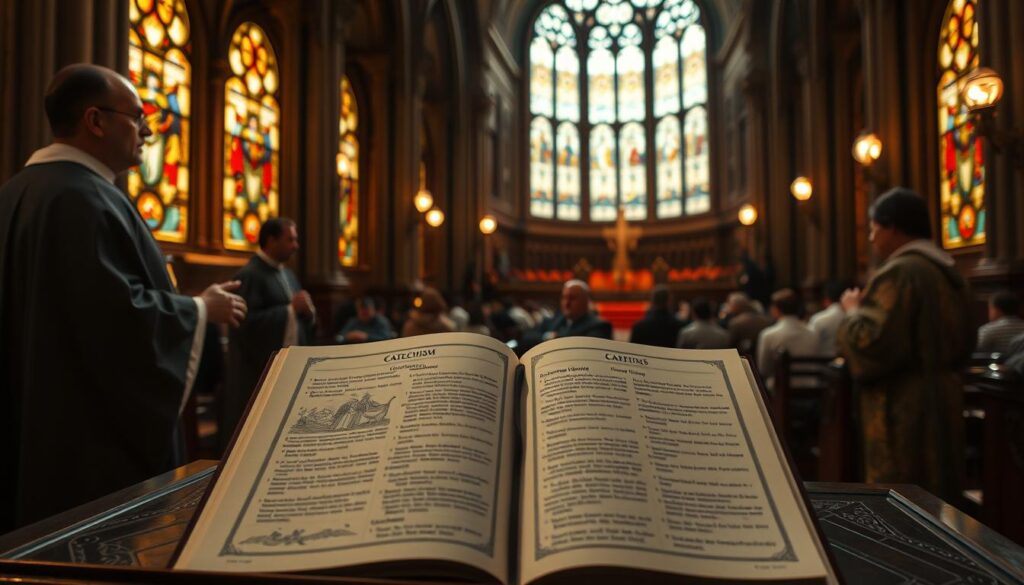
Catechism teachings on moral behavior

Catechism Catholic Church Teachings on Moral Behavior

The official text states:

“Homosexual acts are intrinsically disordered under natural law.”

This classification focuses on behavior rather than identity. While same-gender attraction isn’t considered sinful, acting on it conflicts with Church doctrine.

Three key principles guide this approach:

  • Inclinations differ from intentional actions
  • Chastity remains essential for unmarried members
  • Dignity applies to all people regardless of orientation

Balancing Divine Law with Compassion and Respect

Leaders emphasize avoiding unjust discrimination regard while upholding traditional values. A 1986 letter clarifies:

“The inclination itself isn’t sinful but directs toward moral challenges.”

This creates pastoral complexities. Many parishes now focus on:

Teaching Application Pastoral Guidance
Natural law principles Moral evaluation of acts Support groups for celibacy
Human dignity Anti-bullying initiatives Inclusive worship practices
Chastity calls Universal standard Confidential counseling

Local interpretations vary widely. Some dioceses host LGBTQ+ outreach programs, while others maintain stricter adherence to traditional teachings. This patchwork reflects ongoing efforts to balance compassion with doctrinal consistency.

Modern Perspectives on catholicism homosexuality in the United States

In the past decade, a quiet revolution has unfolded in pews across the United States. Recent surveys show 70% of American Catholics now support marriage equality – a 13% jump since 2015. This shift makes them the largest Christian group backing LGBTQ+ rights, alongside mainline Protestants.

Shifts in Public Attitudes and Debate Among the Laity

Three factors drive this change:

  • Younger generations bringing progressive views into parishes
  • Personal connections with LGBTQ+ family members or friends
  • Lay groups like Catholics for Marriage Equality shaping public discourse

These developments create unique challenges. Many Catholic communities now balance traditional teachings with members’ lived experiences. “Our faith calls us to love first,” explains a Chicago parish council member.

Leadership Statements and the Impact of Pope Francis

The pontiff’s 2013 remark reshaped conversations worldwide:

“If someone is gay and seeks God, who am I to judge?”

Pope Francis

While not altering official position, this pastoral tone influenced local practices. Compare two approaches:

Progressive Parishes Traditional Parishes
LGBTQ+ support groups Strict adherence to doctrinal texts
Blessing ceremonies Employment restrictions

This patchwork reality shows how cultural shifts continue testing institutional boundaries. As more people seek inclusive spaces, American Catholicism faces evolving questions about belonging and authenticity.

The Role of Natural Law in Catholic Moral Teachings

What makes certain actions right or wrong? For centuries, thinkers have turned to natural law theory to answer this question. This philosophy shapes how religious communities evaluate human behavior – especially in matters of relationships.

Philosophical Foundations from Aristotle and Aquinas

The idea that everything has a purpose dates back to Aristotle. He believed acorns grow into oaks because that’s their natural end. St. Thomas Aquinas later adapted this concept for Christian theology, arguing:

“The light of natural reason shows us what we must do and avoid.”

Summa Theologica

Three key principles emerge:

  • Human actions should align with our created purpose
  • Sexual acts aim for unity and procreation
  • Behaviors opposing these goals disrupt natural law

Application to Human Relationships Today

Modern teachings apply these ideas through a specific lens. The Church states sexual acts must remain “open to the gift of life.” This means:

Traditional View Contemporary Challenge
Partners must be male-female Same-sex couples can’t biologically conceive
Acts require complementarity New understandings of gender identity

Critics argue this framework overlooks modern science. Recent studies show same-sex pairings occur naturally in over 1,500 animal species. Still, leaders maintain that contrary natural law arguments protect human dignity by preserving traditional family structures.

As debates continue, many wonder: Can ancient philosophies address 21st-century realities? The answer may shape future religious dialogues about love and morality.

Challenges and Controversies within Church Policies

How do religious institutions navigate modern ethical dilemmas while honoring ancient traditions? Recent debates reveal deep divisions over leadership roles and sacramental participation. These conflicts often center on interpretations of human identity and moral responsibility.
Church policy debates

Debates Over Ordination and Same-Sex Marriage

A 2005 Vatican directive states:

“Those with deep-seated homosexual tendencies cannot be ordained.”

Congregation for Catholic Education

This position creates practical challenges. Some dioceses focus on celibacy commitments rather than orientation, while others strictly enforce the ban. Key differences emerge:

Progressive Approach Traditional Approach
Evaluate individual chastity vows Bar candidates with same-sex attractions
Allow LGBTQ+ parish leadership roles Restrict non-ordained ministry positions

Recent cases highlight these tensions. Spanish authorities denied a transgender man the right to be a godparent, citing “failure to live according to faith.” Such decisions spark heated discussions about inclusion versus doctrine.

Internal Tensions Between Tradition and Modern Ethics

Church leaders face complex questions:

  • How to apply teachings about sexual complementarity to modern relationships
  • Whether gender identity affects sacramental participation
  • How to proceed genuine affective pastoral care for marginalized members

Many parishes now develop local solutions despite unclear guidelines. Some host support groups emphasizing chastity, while others quietly bless same-sex unions. These variations show the struggle to balance ancient teachings with contemporary facts about human diversity.

As debates continue, the Church wrestles with fundamental questions. Can traditions evolve without compromising core beliefs? How does faith community address the woman or man seeking both spiritual belonging and personal authenticity? The answers may shape religious practice for generations.

Interfaith and Intra-faith Perspectives on LGBTQ+ Inclusion

Faith communities worldwide are reexamining their approaches to belonging and identity. Within Christianity, responses range from full affirmation to strict adherence to traditional teachings. This diversity creates both opportunities for dialogue and challenges for unity.
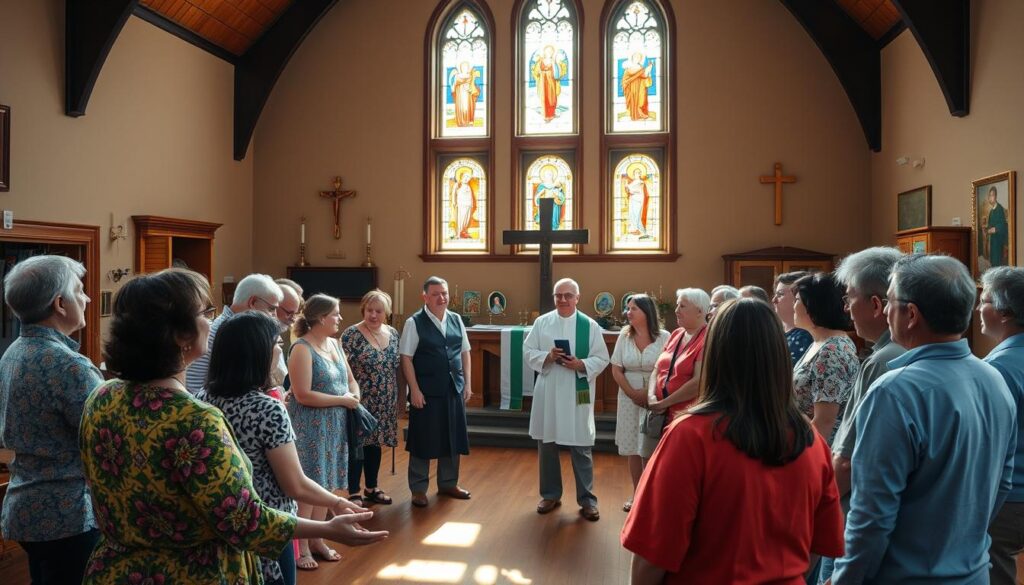
LGBTQ+ Catholic support groups

Comparative Analysis with Other Christian Denominations

Mainline Protestant groups like the Episcopal Church now ordain openly LGBTQ+ clergy and perform same-sex marriages. Evangelical denominations typically maintain stricter views, often citing New Testament passages about sexual acts. Key differences appear in three areas:

  • Leadership roles for LGBTQ+ individuals
  • Recognition of committed relationships
  • Approaches to biblical interpretation
Denomination Ordination Policy Marriage Stance
Episcopal Allowed since 2015 Full sacramental recognition
Southern Baptist Prohibited Traditional marriage only
United Methodist Varies by region Split over same-sex blessings

Real-Life Impact on LGBTQ+ Catholic Communities

Many parishes now host groups like Fortunate Families, helping parents support LGBTQ+ children. Others rely on ministries emphasizing chastity, such as Courage. A mother from Ohio shares:

“Our parish became our lifeline when our son came out – they showed us how to love without conditions.”

Recent studies reveal 1-2% of the U.S. population identifies as homosexual. Despite this small percentage, over 50 Catholic organizations now advocate for inclusion. DignityUSA’s mission statement captures this shift:

“We work for respect and justice through education and advocacy.”

These efforts face challenges when local policies conflict with personal experiences. Some dioceses welcome LGBTQ+ members in ministry roles, while others enforce strict boundaries. This patchwork reality leaves many navigating faith and identity alone.

Conclusion

Navigating faith and identity remains a deeply personal journey for millions within the Catholic Church. The institution’s teachings on human relationships, rooted in natural law, continue to guide members while sparking thoughtful debate. Many believers emphasize that respect for individual dignity forms the heart of these discussions.

Communities nationwide showcase creative approaches to balancing tradition with compassion. Some parishes host open dialogues about modern relationships, while others focus on upholding doctrinal consistency. This diversity reflects the Church’s vast reach across different cultures and generations.

Recent surveys highlight an important truth: most American Catholics value both spiritual heritage and inclusive practices. As leadership and laity collaborate on pastoral care solutions, the focus remains on nurturing unity without compromising core values.

The path forward lies in maintaining open-hearted dialogue – honoring ancient wisdom while recognizing contemporary realities. Through empathy and understanding, faith communities can create spaces where all members feel valued on their spiritual journeys.

FAQ

What does the Catholic Church teach about homosexual acts?

The Catechism of the Catholic Church states that homosexual acts are considered “contrary to natural law” and cannot be approved. However, it emphasizes that individuals with same-sex tendencies deserve respect and compassion, avoiding unjust discrimination.

How has Pope Francis influenced the Church’s approach to LGBTQ+ issues?

Pope Francis has encouraged a tone of mercy, famously saying, “Who am I to judge?” regarding individuals with homosexual tendencies. While upholding traditional teachings, he advocates for pastoral care that prioritizes dignity and inclusion.

Why does the Church reference natural law in discussions about sexuality?

Rooted in thinkers like Aquinas and Aristotle, natural law theory views human purpose as tied to biological and moral design. The Church teaches that sexual acts must align with procreation and the unitive bond between a man and woman.

Are there debates within the Church about same-sex relationships today?

Yes. Many lay Catholics, especially in the United States, advocate for greater acceptance, while leadership often reaffirms traditional doctrines. Topics like same-sex marriage and ordination remain deeply divisive.

How do Catholic teachings on homosexuality compare to other Christian denominations?

Some Protestant groups, like the Episcopal Church, allow same-sex unions and clergy. The Catholic Church maintains stricter adherence to historical teachings, though dialogue continues about balancing doctrine with modern pastoral needs.

Can someone LGBTQ+ participate fully in Catholic life?

The Church teaches that everyone is welcome to worship and participate. However, openly LGBTQ+ individuals may face restrictions in roles like ministry, depending on local practices and interpretations of doctrine.

What’s the difference between “inclination” and “action” in Church teaching?

The Church distinguishes between same-sex attraction (seen as a trial) and engaging in homosexual acts (considered sinful). It urges support for those navigating their inclinations while calling them to chastity.
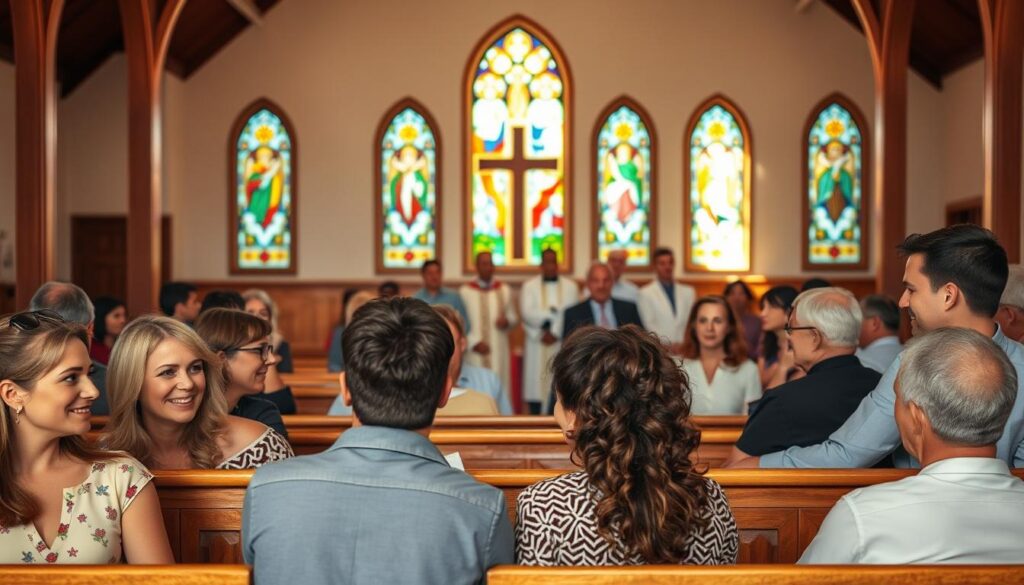
Catholic Church’s Perspective on Homosexuality Explained


The Catholic Church, with 1.2 billion members worldwide, remains the largest Christian denomination. Its teachings on human relationships carry significant weight, shaping conversations across cultures. In the United States, over 70 million members navigate complex questions about faith and identity.

Rooted in traditions tracing back to St. Peter, the Church maintains a hierarchical structure. Archbishops and bishops guide local communities while upholding central doctrines. Recent surveys show 70% of American Catholics support same-sex marriage, creating tension between doctrine and lived experience.

This guide explores how ancient teachings meet modern realities. We’ll examine historical context, theological foundations, and current debates. Understanding these dynamics helps explain why discussions about inclusion remain crucial for people of faith today.

Key Takeaways

  • The Catholic Church maintains global influence through its 1.2 billion members
  • U.S. Catholics increasingly support LGBTQ+ rights despite official teachings
  • Church leadership follows a structure established over centuries
  • Historical context shapes current debates about morality
  • Balancing tradition with modern perspectives remains challenging

Background and Historical Context

Understanding how religious institutions form their stances requires looking at both structure and time. The Catholic Church, as the largest Christian organization globally, built its framework over centuries. This foundation influences how teachings adapt—or don’t—to new ideas.

Origins of Catholic Doctrine and Church Structure

Since ancient times, the Church’s hierarchy has guided decision-making. From the Pope to local priests, this chain ensures unified church teaching. In the United States, 195 dioceses operate under 33 provinces—a system balancing central authority with regional needs.

Evolution of Past Teachings on Homosexuality

Early Christian texts shaped initial views on relationships, but interpretations shifted with cultural changes. Medieval scholars like Thomas Aquinas emphasized natural law, stating:

“Human acts must align with divine purpose.”

Modern challenges emerged as societies grew more accepting. U.S. bishops now meet twice yearly to address gaps between doctrine and members’ lived experiences. Below shows key shifts:

Era Focus Cultural Influence
Early Church Scriptural purity Roman social norms
Middle Ages Natural law Scholastic philosophy
21st Century Pastoral care Civil rights movements

This blend of tradition and adaptation keeps the Church’s position relevant yet debated today.

Core Doctrinal Teachings and Natural Law

What shapes timeless moral guidelines in faith communities? The answer lies in two pillars: ancient texts and philosophical reasoning. These foundations help explain how spiritual leaders approach complex ethical questions.

natural law philosophy

Sacred Scripture Interpretations and Divine Law

Biblical passages like Leviticus 18:22 state clearly:

“You shall not lie with a male as with a woman; it is an abomination.”

Church scholars view such texts as part ofmoral lawsthat remain binding today. They contrast with outdatedceremonial rulesabout food or clothing.

New Testament writings reinforce this stance. Romans 1 describes same-sex attraction as “unnatural relations” stemming from rejecting divine truth. These scriptures form what theologians call divine law—principles believed to reflect God’s eternal design.

The Role of Natural Law in Moral Reasoning

Thinkers like Thomas Aquinas argued that natural law reveals truth through human reason. By observing nature’s patterns, they concluded sexual acts should align with biological complementarity between man and woman.

Key aspects of this philosophy include:

  • Universal principles transcending cultures
  • Intuitive understanding of right and wrong
  • Alignment with physical and spiritual purposes

Critics suggest this view oversimplifies human nature. Yet the Church maintains that contrary natural law behaviors disrupt harmony in creation. This framework remains central to its teachings on relationships today.

Exploring catholicism on homosexuality: Doctrine and Catechism

Religious documents often serve as both compass and controversy in modern faith discussions. The catechism catholic church provides clear guidance through its numbered paragraphs, creating a roadmap for moral decision-making.

Central to this teaching is a distinction between identity and action. The text states:

“Homosexual acts are intrinsically disordered… They do not proceed from a genuine affective and sexual complementarity.”

This declaration rests on three pillars:

Term Theological Basis Pastoral Emphasis
Intrinsically disordered Natural law theory Moral evaluation of acts
Genuine affective complementarity Creation narrative Relationship frameworks
Gift of life Procreative purpose Sacramental marriage

Interpreting the Text Today

Church leaders face unique challenges applying these teachings. While the catechism catholic calls same-sex attraction “objectively disordered,” it simultaneously demands compassion. This dual approach creates practical tensions in parishes.

Enforcement Across Communities

Local bishops determine how strictly to uphold these standards. Some dioceses host support groups for those with homosexual tendencies, while others maintain traditional boundaries. Pope Francis notably shifted focus toward mercy, stating clergy should “accompany rather than condemn.”

This evolving landscape shows how ancient texts meet modern empathy. The Church’s struggle to balance doctrine with dignity continues shaping conversations in pews worldwide.

Pastoral Approaches and LGBTQ+ Inclusion

Walking into a Catholic parish can feel different depending on which doors you enter. Some communities host rainbow-striped banners, while others maintain traditional boundaries. This patchwork reflects the Church’s struggle to balance ancient teachings with modern calls for belonging.

LGBTQ+ inclusion in Catholic communities

Community Outreach and Sensitive Pastoral Care

Many Catholic leaders now prioritize respect through creative outreach. Support groups like “Courage” help individuals navigate faith and identity. Educational workshops address family dynamics, while dialogue sessions foster understanding between generations.

The Vatican’s guidance remains clear:

“Those with homosexual tendencies must be accepted with respect, compassion, and sensitivity.”

Some dioceses put this into practice by training staff to avoiddiscrimination. Yet policies vary—one parish might bless same-sex couples privately, while another denies sacramental access.

Balancing Tradition with Compassionate Response

Recent conflicts reveal ongoing tensions. Catholic schools have dismissed employees who married same-sex partners, citing doctrinal fidelity. Meanwhile, other institutions quietly welcome LGBTQ+ people into ministry roles.

This inconsistency creates challenges for families. Many parents advocate for their children’s inclusion while honoring Church teachings. As one bishop noted: “Our call is to walk with people, not push them away.”

The principle to avoid every sign of unjust discrimination sparks both hope and frustration. While progress remains uneven, these efforts show faith communities wrestling with love and tradition in real time.

Contemporary Debates on Homosexuality and Same-Sex Marriage

American pews hum with quiet revolutions. Over the past decade, Catholic support for same-sex marriage surged from 57% to 70%—a faster climb than most Christian groups. This shift sparks heated conversations about how ancient teachings meet modern family life.

Catholic same-sex marriage debates

Shifts in Public Opinion within the United States

Surveys reveal a striking fact: U.S. Catholics now back marriage equality at rates matching mainline Protestants. Groups like Catholics for Marriage Equality organize prayer vigils and lobby bishops, blending faith with advocacy. Yet Church law still labels same-sex unions “contrary to natural law.”

Demographic data adds nuance. Studies show only 1-2% of the population identifies as homosexual—far below outdated estimates. This small percentage fuels big questions about inclusion in a Church serving 70 million Americans.

Evaluating Doctrinal Stance versus Modern Realities

Parishes nationwide face practical challenges. Some priests quietly bless same-sex couples, while others enforce strict sacramental rules. Pope Francis encourages compassion, urging clergy to “walk with people rather than judge.”

Young Catholics often lead this balancing act. Many attend Mass while supporting LGBTQ+ relatives—a lived response to doctrinal tensions. As one activist noted: “Love isn’t a part of our faith—it’s the whole point.”

Challenges and Controversies in Interpreting Church Teachings

Modern faith communities face crossroads where ancient principles meet evolving values. How institutions address this tension often defines their relevance. The Church navigates these waters carefully, balancing doctrinal roots with contemporary concerns.

Theological Critiques and Calls for Reform

Some scholars argue natural law theories need updating. They suggest modern science reveals diverse expressions of human relationships. Over 300 theologians recently petitioned for re-examining teachings on sexuality.

Critics highlight contradictions between pastoral care practices and official stances. Many parishes now prioritize inclusion while maintaining traditional boundaries. This creative tension sparks debates about faithfulness to tradition versus cultural adaptation.

Debated Issues: Natural Law, Tradition, and Inclusivity

Central disputes focus on interpreting biological complementarity. Progressive voices note many species exhibit same-sex bonding behaviors. Conservatives emphasize preserving marital definitions unchanged for centuries.

Younger members often seek middle ground. They value inclusivity without rejecting core beliefs. As one priest observed: “Our challenge isn’t choosing sides, but building bridges.” These conversations shape how communities live their faith in changing times.

FAQ

What does the Catholic Church teach about homosexual acts?

The Church teaches that homosexual acts are considered “intrinsically disordered” under natural law, as they’re seen to deviate from the purpose of sexual union—unity and procreation. However, individuals with same-sex attraction are called to live chastely and deserve dignity.

How does natural law influence the Church’s stance on sexuality?

Natural law, rooted in divine design, guides moral reasoning by emphasizing that sex must align with biological and spiritual complementarity between man and woman. This framework views any act outside procreative potential as contrary to God’s plan.

Has the Church’s approach to LGBTQ+ individuals evolved over time?

While core doctrines remain unchanged, pastoral practices now stress compassion. Pope Francis encourages respect, stating, “Who am I to judge?” Many dioceses prioritize outreach to ensure LGBTQ+ individuals feel welcomed without endorsing same-sex unions.

Does the Catechism address discrimination against LGBTQ+ people?

Yes. The Catechism explicitly condemns unjust discrimination, urging communities to show sensitivity. However, it maintains that marriage is solely between a man and woman, creating tension between inclusion and traditional teachings.

Why does the Church oppose same-sex marriage?

The Church views marriage as a sacrament reflecting Christ’s union with the Church, tied to procreation and lifelong fidelity. Same-sex unions are seen as incompatible with this sacramental vision, though civil legal debates continue globally.

How do Catholics reconcile tradition with modern views on sexuality?

Debates persist among theologians and laity. Some advocate reinterpreting natural law to reflect contemporary understandings of love, while others uphold tradition. The Vatican emphasizes dialogue but rejects doctrinal changes on marriage or sexual ethics.

Are there Catholic communities that support LGBTQ+ inclusion?

Yes. Groups like New Ways Ministry advocate for LGBTQ+ Catholics, offering resources and safe spaces. Many parishes now focus on pastoral care, though official teachings still prohibit same-sex relationships or gender transitions.

How does Pope Francis’s leadership impact this issue?

Pope Francis has softened the tone, prioritizing mercy over condemnation. He supports civil unions for legal protections but reaffirms marriage as heterosexual. His approach balances doctrinal fidelity with a call for greater empathy.

Catholicism in the 21st Century: Insights and Trends


The Catholic Church stands at a unique crossroads in modern history. Over the past decade, it has balanced ancient traditions with rapid cultural shifts. From social justice debates to digital outreach, religious leaders face both familiar struggles and new opportunities.

Global growth remains a hallmark of the church, with vibrant communities emerging across Africa, Asia, and Latin America. These regions bring fresh energy to theological conversations while honoring centuries-old practices. Meanwhile, younger generations seek spiritual connections that align with their values around inclusion and environmental stewardship.

Technology reshapes how believers engage with their faith. Livestreamed Masses and faith-based apps now complement traditional parish life. This digital evolution helps the Catholic Church reach people across borders—yet raises questions about maintaining sacred rituals in virtual spaces.

Recent leadership has emphasized dialogue on climate change, migration, and economic inequality. Such efforts reflect attempts to stay relevant in a fast-changing world. At the same time, the church continues wrestling with internal reforms and external pressures to adapt.

Key Takeaways

  • The Catholic Church maintains global influence through cultural adaptation and technological innovation
  • Younger generations drive demand for faith communities addressing social justice and environmental issues
  • Digital tools expand religious participation but challenge traditional worship formats
  • Leadership focuses on balancing core teachings with contemporary societal needs
  • Global demographic shifts create new centers of Catholic growth and theological discussion

Emerging Modern Challenges in the Catholic Church

Recent developments highlight ongoing tensions between tradition and transformation. From sudden leadership shifts to evolving roles for women, the institution navigates complex debates about its future direction.

When Leaders Change Course

The abrupt dismissal of theologian Ralph Martin, 82, from seminary duties shocked many. Archbishop Edward Weisenburger’s decision reflects broader patterns of personnel changes under Pope Leo XIV‘s leadership. Such moves often aim to align institutions with modern priorities while preserving doctrinal integrity.

Seminary reforms now emphasize rigorous interview processes for faculty roles. Candidates face deeper vetting on both theological alignment and pastoral sensitivity. These changes help address community calls for transparency in priest appointments and educational standards.

Reforms That Spark Dialogue

Discussions about expanding women‘s roles continue gaining momentum. Many parishes now see female leaders managing administrative tasks previously reserved for clergy. Yet questions remain about participation in sacramental functions.

Bishop reassignments frequently trigger strong reactions, as seen when popular leaders transition to new dioceses. A recent interview with Vatican officials revealed evolving criteria for these decisions: “We balance tradition with each community’s unique needs,” the representative noted.

As Pope Leo XIV encourages gradual reforms, some advocates push for faster change. This tension shapes ongoing debates about how quickly the Catholic Church should adapt to contemporary expectations while honoring its 2,000-year legacy.

Understanding catholicism today

Modern faith communities are reshaping religious practices while honoring centuries-old traditions. This balance creates spaces where ancient rituals meet innovative approaches to spiritual growth. Below, we explore how these dynamics unfold in worship and cultural adaptation.

church community engagement

Trends in Worship and Spiritual Engagement

Worship experiences now range from candlelit Latin Masses to guitar-led youth services. Many parishes blend traditional liturgy with modern music, creating accessible entry points for younger generations. Virtual participation has become permanent for some, with 43% of regular churchgoers occasionally joining services online.

Personal spiritual practices are evolving too. Apps offering daily Lectio Divina reflections coexist with TikTok faith challenges. “Our people want roots and relevance,” notes a Chicago parish leader. “They seek connections that feel both timeless and immediate.”

Adapting to a Changing Cultural Landscape

The concept of holy family now embraces diverse household structures while upholding core values. Single-parent support groups and blended family retreats help communities live Catholic teachings in modern contexts.

Environmental action has become spiritual practice for many. Parishes organize river cleanups alongside traditional prayer chains. Young adults particularly value this integration, with 68% citing climate care as essential to their faith life.

Technology bridges gaps between ancient traditions and digital natives. Interactive confession guides and AI-powered scripture tools help people engage with their beliefs daily. As one millennial Catholic explains: “My faith life isn’t just Sunday mornings—it’s how I move through the world every day.”

Political and Global Perspectives on Faith

Global politics increasingly shape how religious institutions engage with societal challenges. The Catholic Church navigates complex relationships with governments while advocating for ethical policies worldwide. This interplay between faith and governance sparks debates about religious liberty, human rights, and diplomatic engagement.

Impact of Political Administration and Law Enforcement

The Trump administration reshaped church-state dynamics in the United States. Policy changes affected immigration support programs and healthcare access through Catholic charities. Many dioceses strengthened partnerships with law enforcement to protect vulnerable communities while maintaining sanctuary church traditions.

State-level legislation continues testing religious institutions. Recent laws targeting social services funding forced creative adaptations in Catholic outreach programs. As one diocesan director noted: “We follow Christ’s teachings first, but legal frameworks dictate how we serve.”

International News and Its Influence on the Church

Global conflicts like the Israel-Gaza crisis demand urgent responses. The Vatican often deploys mediators and issues calls for ceasefire agreements. Through its global network, the Catholic Church provides humanitarian aid while advocating diplomatic solutions.

Vatican correspondents play crucial roles in interpreting these actions. Their reports help believers understand how papal statements address specific country situations. This coverage bridges local concerns with universal Church teachings, especially during administration changes affecting Catholic institutions abroad.

Innovations and Renewal in Church Leadership

Dynamic shifts in religious leadership are redefining how global communities experience their faith. Under Pope Leo XIV, the Vatican has launched initiatives blending ancient wisdom with modern problem-solving. These changes aim to maintain doctrinal integrity while addressing urgent issues like climate change and social inequality.

Vatican leadership innovations

Insights from Vatican Developments and Pope Influences

Castel Gandolfo now hosts climate summits pairing scientists with theologians. This historic papal retreat illustrates Pope Leo XIV‘s approach: using tradition-rich spaces for contemporary dialogue. Recent seminary reforms require priest candidates to complete cultural competency training alongside scripture studies.

The pontiff’s monthly video messages reach millions through social platforms. “Leadership means showing up where people live,” he remarked in a 2023 interview. This accessibility reshapes how Catholics worldwide perceive church authority.

Modern Approaches to Tradition and Faith

Dioceses now use community feedback in bishop selection processes. Lay members join review panels assessing candidates’ crisis management skills and tech literacy. One Midwest diocese reported 40% faster conflict resolution after adopting these methods.

Leadership programs at Castel Gandolfo teach ancient governance models alongside digital outreach strategies. Participants learn to balance sacramental duties with managing food banks or immigration services. As one graduate noted: “We’re called to be shepherds and social innovators.”

News and Global Events Shaping the Church

The Gaza conflict has thrust religious institutions into urgent humanitarian roles. Catholic communities there balance spiritual support with lifesaving aid. Global networks mobilize resources while facing logistical hurdles.

Gaza Catholic Church aid efforts

Reactions to International Crises and Aid Efforts

Recent deadly strikes near Gaza church properties have drawn global attention. One parish sheltering 300 families became a makeshift hospital after nearby bombings. “Our walls shake, but our resolve doesn’t,” shared a local deacon via news correspondent reports.

Vatican officials coordinate with multiple country leaders to secure ceasefire agreements.

“Attacking places of worship crosses every moral line,”

stated a Vatican spokesperson duringIsrael saysnegotiations. Catholic Relief Services delivers food packages despitestrike Gazadisruptions, often using underground supply routes.

International aid faces hurdles like blocked shipments and damaged infrastructure. Volunteers repurpose church basements as storage hubs, prioritizing children’s nutritional needs. Over 60% of Gaza Catholic families now rely on these distributions for survival.

Faith leaders worldwide amplify calls for conflict resolution. U.S. dioceses host interfaith vigils while pressuring lawmakers to increase support for humanitarian corridors. These efforts showcase how global crises reshape religious communities’ priorities and partnerships.

Controversies and Allegations Impacting the Church

Institutional accountability remains central to maintaining trust in faith communities. Recent years have seen increased demands for ethical governance and protective measures across religious organizations.

Paths Toward Healing and Prevention

Updated protocols now guide how churches address abuse allegations. Immediate reporting to civil authorities has become standard practice, with victim advocates participating in investigations. Many dioceses fund counseling services while streamlining compensation processes for survivors.

New child protection policies require annual training for all staff and volunteers. Background checks now extend to parish event chaperones and youth program leaders. “We’ve redesigned our systems to center survivors’ voices,” explained a Midwest diocese spokesperson.

Some communities face criticism over strike responses during labor disputes. Faith leaders increasingly mediate conflicts between church-affiliated institutions and employee groups. These efforts aim to balance operational needs with fair treatment standards.

While progress continues, many advocate faster reforms. Independent review boards now help assess priest appointments and leadership decisions. As one survivor-led initiative states: “True healing begins when prevention becomes inseparable from our mission.”

FAQ

How is the Catholic Church addressing leadership transitions under Pope Francis?

Pope Francis has focused on decentralizing authority, empowering bishops, and promoting dialogue. His emphasis on synodality encourages collective decision-making while balancing tradition with modern pastoral needs.

What role does the Church play in international crises like the Gaza strike?

The Church often advocates for peace and humanitarian aid. For example, after the deadly strike near Gaza’s Holy Family Church, Vatican officials called for ceasefires and urged protection for civilians in conflict zones.

How is the Church adapting to cultural shifts in worship practices?

Many parishes now blend traditional rituals with contemporary outreach, like digital Masses or youth programs. Figures like Carlo Acutis, a tech-savvy millennial saint, inspire younger generations to engage with faith innovatively.

What reforms are underway to address abuse allegations?

The Vatican has strengthened accountability measures, including mandatory reporting protocols and lay oversight committees. However, survivors and advocates argue faster, more transparent action is still needed globally.

How do political administrations like the Trump era impact Church priorities?

Political shifts often influence issues like immigration, religious freedom, and social justice. The U.S. bishops, for instance, have clashed with administrations over policies affecting marginalized communities or aid distribution.

Why is Pope Francis emphasizing environmental stewardship?

His encyclical *Laudato Si’* links ecological care to moral responsibility. This aligns with broader efforts to address climate change and promote sustainability as part of Catholic social teaching.

How does the Church support communities during global conflicts?

Catholic organizations like Caritas Internationalis provide emergency relief, healthcare, and advocacy. Local dioceses also partner with NGOs to deliver aid in regions like Ukraine or Sudan.

What challenges does the Church face in retaining young members?

Surveys show declining engagement among youth due to cultural disconnect or scandals. Initiatives like World Youth Day and digital evangelization aim to rebuild trust and relevance.

Discover the Fascinating Catholicism of Ireland


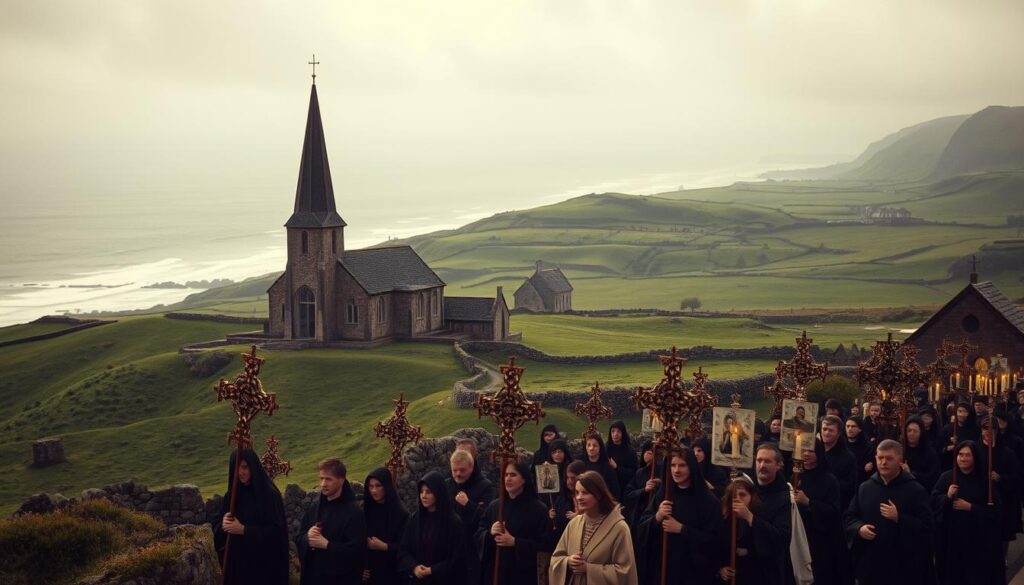
For over 1,500 years, spiritual traditions have shaped Ireland’s culture in remarkable ways. Today, 69% of the Republic’s population identifies with this ancient faith, while Northern Ireland’s 2021 census shows 42.3% maintain these beliefs. These numbers reveal more than statistics—they represent living connections to a heritage that survived Viking raids, political upheavals, and cultural shifts.

The story of this faith community blends Celtic spirituality with organized religious practices in unexpected ways. Early monasteries became centers of learning, preserving knowledge through Europe’s Dark Ages. Later generations transformed persecution into resilience, creating a distinct identity that traveled globally through emigration.

Modern followers balance centuries-old rituals with contemporary values. From vibrant parish festivals to quiet personal devotions, traditions adapt while maintaining core principles. This dynamic relationship between past and present makes Ireland’s spiritual journey uniquely compelling.

Key Takeaways

  • Over two-thirds of Ireland’s population maintains ties to this ancient faith tradition
  • Historical blend of Celtic spirituality and organized religion created unique practices
  • Communities preserved traditions through persecution and political changes
  • Modern believers adapt rituals while honoring core values
  • Global diaspora spreads cultural influences worldwide

Historical Foundations of Irish Catholicism

The 5th century brought transformative changes to the island’s belief systems. Missionaries like Palladius arrived first in 431, sent by Pope Celestine I. But it was Saint Patrick—a former captive turned spiritual leader—who reshaped the landscape through strategic conversions of Gaelic royalty.

From Druids to Divine Worship

Patrick’s approach blended practicality with symbolism. He used three-leaf shamrocks to explain the Trinity and targeted sacred pagan sites for church construction. This clever adaptation helped Gaelic communities embrace the new faith while preserving cultural identity.

Early monasteries became powerhouses of creativity and learning. Monks produced stunning works like the Book of Kells—its intricate designs still dazzle viewers today. These centers also developed unique practices:

Celtic Feature Roman Influence Lasting Impact
Spiral stone crosses Latin liturgy Fusion art styles
Nature-based prayers Diocesan structure Ecological theology
Peripheral tonsure Roman haircut Distinct identity

Scholarship Meets Spirituality

By the 6th century, Irish monasteries attracted students from across Europe. They preserved not only religious texts but also classical Greek philosophy. This dual focus on spiritual and intellectual growth earned the island its “Land of Saints and Scholars” title—a legacy that shaped education systems worldwide.

The early Irish approach created a distinctive version of Christianity. It valued community rituals as much as personal mysticism, leaving patterns in worship that still resonate today.

Evolution through Gregorian Reform and Norman Influence

A seismic shift reshaped religious structures between the 11th and 12th centuries. Three landmark synods brought Rome’s influence directly to local communities, forever altering how spiritual life was organized.

Gregorian Reform changes

Synods, Reforms, and the Diocesan Transition

The Synod of Ráth Breasail (1111) proved revolutionary. It replaced monastery-based leadership with a diocesan system mirroring European models. Cardinal Giovanni Paparoni ensured these changes rejected English control, asserting direct papal authority.

Saint Malachy became the reform movement’s driving force. His partnership with Bernard of Clairvaux introduced Cistercian monasteries like Mellifont Abbey. This 1142 foundation blended European rigor with Gaelic spirituality through its stonework and communal practices.

Gaelic Customs Roman Practices Cultural Outcomes
Monastic leadership Diocesan hierarchy Centralized administration
Nature-based rituals Standardized liturgy Hybrid worship styles
Local saint veneration Papal authority Global church connections

Norman arrivals after 1169 accelerated changes. They built continental-style cathedrals and imported new religious orders. These developments strengthened ties to Rome but sparked tensions with traditional customs.

The reforms created a resilient framework that later helped communities endure hardship. Though challenging at first, this process ultimately preserved spiritual traditions through evolving political landscapes.

Impact of Penal Laws and Catholic Emancipation

When legal barriers arose, Irish believers crafted ingenious solutions to preserve their traditions. Between 1695 and 1829, strict laws denied basic rights like land ownership and public worship. Communities responded with secret gatherings that kept their identity alive.

Underground Education and Hidden Rituals

Hedge schools became vital centers for passing on knowledge. Teachers held classes behind stone walls or in open fields, teaching subjects from math to Gaelic poetry. This defiance protected cultural heritage while British authorities banned formal education.

Legal Restrictions Community Response Lasting Effects
No land ownership Shared tenant farming Strengthened cooperation
Banned public worship Mass rocks in nature Outdoor ritual traditions
Barred from voting O’Connell’s peaceful campaigns Political empowerment

Daniel O’Connell changed history through organized activism. His 1829 victory restored voting rights and inspired future movements. This success linked faith with Irish nationalism, showing how unity could overcome oppression.

Mass rocks still dot the landscape today—quiet reminders of resilience. These sites symbolize how communities turned limitations into lasting symbols of hope.

Cultural Identity and Nationalism in Irish Catholic Tradition

The intertwining of faith and heritage has long defined what it means to be part of this community. By the 1500s, spiritual devotion became inseparable from cultural pride, forging a dual identity that united religious practice with ethnic belonging. This fusion shaped everything from family traditions to political movements.

Irish Catholic identity

The Dual Role of Faith and Ethnic Identity

For generations, followers maintained their way of life through creative resistance. The Church safeguarded Gaelic customs when authorities banned native languages and celebrations. “Our prayers became our protest,” noted one 19th-century diary, capturing how rituals doubled as acts of cultural preservation.

Clergy often led both congregations and independence movements. This unique role created a blueprint where spiritual guidance and national aspirations walked hand in hand. Communities celebrated saints’ days with the same fervor they reserved for political milestones.

The Church’s Influence on Irish National Identity

Persecution transformed religious affiliation into a badge of authentic heritage. The table below shows key elements of this ethnoreligious identity:

Cultural Element Religious Connection National Impact
Gaelic language Latin Mass translations Symbol of resistance
Traditional music Church hymn adaptations Cultural continuity
Local folklore Saintly miracles Shared history

Emigrants carried this blended identity worldwide, establishing parishes that served as hubs for both worship and Irish cultural exchange. Today, debates about social issues still reveal how deeply these roots run in modern consciousness.

Modern Transformation and Shifting Trends in the Church

modern Irish Catholic trends

Ireland’s spiritual landscape has undergone dramatic shifts in recent decades, mirroring broader societal changes across Europe. Fifty years ago, over 14,000 nuns served communities nationwide. Today, fewer than 4,000 remain, with most approaching their 80s. This aging population marks the sunset of an era where religious sisters shaped education and healthcare.

Seminary numbers tell a similar story. Maynooth once trained 500 future priests annually. Now, barely 20 students prepare for ordination. These declines reflect transformed priorities over time, as younger generations blend cultural pride with personal spirituality. “We honor traditions but ask new questions,” explains a Dublin parish volunteer.

Three key changes define this evolution:

  • Sunday attendance remains Europe’s highest, though 15% fewer identify with the faith since 2008
  • Lay leaders now manage sacramental prep and community outreach
  • Parishes share priests across multiple locations

Young adults increasingly embrace cultural connections over strict doctrine. They light candles at holy wells but challenge teachings on social issues. This pattern mirrors trends in Spain and Italy, making Ireland’s journey a case study for global faith communities.

The church adapts by empowering everyday believers. From music ministries to food banks, active participation replaces passive observance. While uncertain, this new chapter reveals resilience through reinvention.

Demographic Shifts and Diaspora Influence

The story of Irish faith extends far beyond the island’s shores, woven into diverse cultures worldwide. Over 30 million individuals globally claim heritage from this tradition, creating a living network that thrives from Boston to Buenos Aires.

Migration Patterns and Global Communities

Historic crises sparked lasting change. The Great Famine (1845–1852) sent 2 million refugees across oceans. These families built new roots while preserving old customs through:

  • Neighborhood parishes serving as cultural hubs
  • Adapted feast day celebrations
  • Intergenerational storytelling traditions

Today, the United States hosts 20 million people with these roots—more than four times Ireland’s current population. Australian communities (7.2 million) reshaped education systems, while Argentina’s half-million maintain unique Gaelic-Spanish fusion traditions.

Statistical Insights from Census Data

Recent numbers reveal surprising trends. Northern Ireland’s Catholic population grew to 42.3% in 2021—a shift with potential political implications. Meanwhile, the Republic’s identification rates dropped from 84% to 69%, though absolute figures remain significant.

Region Population Cultural Impact
United States 20 million Leadership in Catholic institutions
Australia 7.2 million Labor movement foundations
Northern Ireland 820,000 Cross-community dialogue
Argentina 500,000 Gaelic-Spanish festivals

These patterns influence global culture through literature, music, and the world’s favorite March celebration. As one New York historian notes: “Wherever they settled, they brought both their faith and their flair for community.”

Changing Roles within the Clergy and Religious Leadership

Ireland’s religious leadership faces unprecedented challenges as roles transform. A local in Kenmare, County Kerry, recalls: “Three priests once served our parish alone—now one handles six towns.” This shift reflects a nationwide clergy shortage reshaping community structures.

Decline in Clergy and Women Religious

Recent reports reveal stark numbers. Since 1970, priestly vocations dropped 89%, leaving aging clergy managing multiple parishes. Women religious—once education and healthcare pillars—now number under 4,000 nationwide. Their absence forces schools and hospitals to adapt or close.

Rural areas face unique hurdles. One 78-year-old priest travels 90 miles weekly to celebrate Mass in four villages. “We’re not just shepherds anymore—we’re administrators,” he explains, highlighting expanded clerical duties.

Past Model Current Reality Innovation
1 parish per priest 6 parishes per priest Lay ministers lead services
Local seminaries Regional training centers Online theology courses
Irish-born clergy 35% foreign-born priests Cultural exchange programs

Communities respond creatively. Permanent deacons now handle baptisms and weddings, while faith-sharing groups maintain traditions. Though challenging, these changes foster new forms of spiritual connection. As one Dublin lay leader notes: “Our role isn’t replacing priests—it’s reimagining community.”

Community Engagement and Emerging Cultural Catholicism

A fresh wave of energy pulses through parishes as young believers reshape ancient traditions. At St. Francis Xavier Church in Dublin, Sunday evenings buzz with youth-led liturgies featuring modern music and interactive prayers. Jesuit priest Fr. Niall Leahy observes: “Our young members don’t just attend—they create.”

New Voices in Sacred Spaces

This generation blends cultural pride with critical thinking. Many maintain spiritual connections while reimagining traditional structures. Irish Catholic teens now lead scripture discussions and design eco-friendly parish gardens, proving faith remains vibrant through active participation.

Digital tools amplify their impact. Social media groups coordinate food drives while streaming retreats globally. Young adults organize climate marches through church networks, merging Gospel values with modern activism.

Lay ministry expansion marks this shift. Volunteers manage religious education and outreach programs once handled solely by clergy. This partnership model empowers communities to address homelessness and immigration issues directly.

FAQ

How did Saint Patrick shape early Christian traditions in Ireland?

Saint Patrick introduced organized Christianity in the 5th century, blending local Gaelic customs with new teachings. His use of shamrocks to explain the Trinity and efforts to build churches laid the groundwork for Ireland’s spiritual identity.

What role did monasteries play in medieval Irish society?

Monasteries became centers of learning, art, and faith. Monks preserved ancient texts, created illuminated manuscripts like the Book of Kells, and spread Gaelic spirituality across Europe during the “Golden Age” of Irish Christianity.

How did the Gregorian Reform change the church’s structure?

The 12th-century reforms centralized authority under Rome, replacing localized monastic systems with dioceses. This shift aligned Ireland more closely with broader European Catholic practices while clashing with Gaelic traditions.

How did Catholics resist persecution under Penal Laws?

Despite bans on education and worship, communities held secret “hedge school” classes and masses in hidden locations. This defiance kept the faith alive and fueled cultural pride during centuries of British rule.

Why was the church tied to Irish nationalism?

After centuries of colonial rule, Catholicism became a marker of Irish identity. Leaders like Daniel O’Connell linked religious freedom to self-governance, making faith central to the independence movement in the 19th and 20th centuries.

What caused the decline in clergy numbers today?

Scandals, secularization, and changing social values led to fewer vocations. Since the 1990s, the number of priests and nuns has dropped sharply, forcing parishes to adapt with lay leadership and new outreach strategies.

How has migration affected Irish Catholic communities?

Emigrants spread traditions globally, while recent immigration diversified local parishes. Census data shows younger generations increasingly identify as non-religious, though cultural ties to rituals like baptism remain strong.

Are younger people still engaged with the church?

Many participate in milestones like First Communion but prioritize social justice over traditional doctrine. Groups focus on climate action or inclusivity, reflecting a shift toward “cultural Catholicism” rather than strict practice.

How did the church influence Ireland’s education system?

For decades, religious orders ran most schools. Recent reforms aim to reduce their control, but over 90% of primary schools still have Catholic patronage, sparking debates about diversity and secularization.

Catholicism Limbo: The Surprising Truth About This Doctrine


Have you ever wondered what happens to unbaptized children according to Church teaching? For centuries, this sensitive question sparked deep reflection among theologians and families alike. Let’s explore a concept that bridges divine mercy and theological mystery.

While many people assume Limbo was official doctrine, it actually occupied a unique space in theological discussions. The Church never mandated belief in it, yet didn’t forbid the idea either. This balancing act reveals how faith grapples with complex spiritual realities.

In 2007, a significant shift occurred. Theological experts reclassified Limbo from widely accepted theory to “possible hypothesis” with papal approval. This change highlights how the Church carefully distinguishes between core teachings and evolving interpretations.

Key Takeaways

  • Limbo was never officially defined as required belief in Catholic teaching
  • The concept addressed salvation questions for unbaptized infants
  • Church authorities downgraded its status in 2007 through theological review
  • Modern discussions emphasize God’s mercy over strict justice
  • Theology often explores ideas that aren’t formal doctrine

Understanding this topic helps clarify how religious truth develops while maintaining core principles. As we continue, you’ll discover why these historical debates still matter for today’s spiritual conversations.

Historical Roots and Theological Foundations

How did spiritual thinkers address salvation mysteries before modern times? For over seven centuries, scholars wrestled with questions about original sin and divine justice. Their efforts created a framework that balanced scriptural insights with philosophical rigor.

Early Church Perspectives and Scriptural Influences

Ancient Christian writers recognized baptism’s importance but struggled with cases involving unbaptized infants. Pope John XXII’s 1321 statement marked a turning point, declaring souls experience consequences “in different places” based on their spiritual state. This teaching laid groundwork for distinguishing between types of post-death existence.

Scholastic Contributions and Early Theologians

Medieval scholars brought new clarity using precise terminology:

  • Poena damni: The pain of losing divine presence
  • Poena sensus: Physical suffering concepts

St. Thomas Aquinas and others argued that original sin didn’t merit active punishment. Pope Urban IV’s 1439 declaration at Florence reinforced this view, separating mortal sin consequences from birth-related spiritual states. These ideas gained traction because they respected both God’s mercy and truth about sacramental necessities.

Through careful study, theologians built a system that honored tradition while addressing real pastoral concerns. Their work shows how spiritual teaching evolves through respectful dialogue across generations.

Catholicism Limbo: Doctrine, Debate, and Church Teaching

Sacraments form the backbone of spiritual practice, but what happens when circumstances prevent their reception? This question fueled centuries of discussion about divine justice and mercy. Let’s unpack how church teaching addresses these sensitive matters through evolving perspectives.

baptism and original sin

Baptism, Original Sin, and the Role of Sacramental Necessity

The link between baptism and original sin remains central to this debate. Since ancient times, spiritual leaders recognized the sacrament’s power to cleanse inherited spiritual stains. Yet pastoral concerns arose for parents grieving infants who died before receiving the rite.

Pope Pius VI’s 1794 declaration clarified the Church’s stance. He condemned claims labeling the concept as heresy, showing official tolerance for this theological theory. This balanced approach respected both sacramental importance and divine compassion.

Papal Statements and Magisterial Clarifications

Church authorities consistently emphasize baptism’s necessity while leaving room for hope. The Catechism states clearly: “God has bound salvation to the Sacrament of Baptism, but He Himself is not bound by His sacraments.” This wisdom acknowledges God’s freedom to act beyond ordinary channels of grace.

Comparing Historical Catechisms and Modern Interpretations

Textual analysis reveals shifting emphases across generations:

  • The 1566 Roman Catechism omitted any mention of the concept
  • 1949 Baltimore Catechism included specific teachings about it
  • Modern versions focus on hopeful trust in divine mercy

This progression shows how church teaching maintains core truths while adapting pastoral approaches. Parents today find comfort in teachings that balance sacramental urgency with confidence in God’s loving care for unbaptized children.

Contemporary Understandings and Scholarly Opinions

Modern theology continues to reshape how we approach age-old spiritual questions. In 2007, a pivotal document transformed discussions about unbaptized infants, offering fresh perspectives grounded in scripture and tradition. This shift reflects the Church’s commitment to balancing doctrinal clarity with compassionate hope.

The International Theological Commission’s Impact

Approved by Pope Benedict XVI, the Commission’s report redefined centuries of theological dialogue. It presented three pillars supporting hope for salvation: liturgical practices honoring unbaptized martyrs, Jesus’ teachings about children, and Christ’s grace outweighing original sin. The text carefully notes we lack certainty but can trust divine mercy.

Modern Interpretations and the Debate Over Unbaptized Infants

Today’s theologians emphasize God’s desire to welcome all souls. They argue infants, unlike adults, don’t consciously reject grace – a view echoed in Mark 10:14. While baptism remains vital, the Church now acknowledges multiple ways divine love might reach those who die young. This approach comforts families without undermining sacramental importance.

The Commission’s work shows how teaching evolves through prayerful study. By prioritizing Christ’s compassion, it offers a path between rigid theories and unfounded certainty. As Pope Benedict XVI affirmed, some mysteries invite trust rather than definitive answers.

FAQ

What does the Church officially teach about limbo?

While not formal doctrine, limbo was a theological theory suggesting unbaptized infants exist in a state of natural happiness without divine vision. The Church emphasizes trust in God’s mercy and hope for their salvation.

How does original sin relate to baptism in Catholic teaching?

Baptism cleanses original sin, inherited from Adam and Eve, restoring a person’s relationship with God. The sacrament highlights God’s grace, though theologians debate its necessity for salvation in exceptional cases.

Did early theologians like Augustine influence beliefs about limbo?

Yes. Augustine’s teachings on original sin shaped later discussions, but medieval thinkers like Thomas Aquinas refined ideas about a “border” state, balancing divine justice with compassion for unbaptized children.

How did Pope Benedict XVI address this topic?

Pope Benedict approved a 2007 document stressing hope for unbaptized infants’ salvation. He encouraged focusing on Christ’s mercy rather than speculative concepts like limbo, aligning with modern pastoral approaches.

Can unbaptized children be saved according to current Catholic thought?

The Church teaches that God’s love extends to all. While baptism remains vital, theologians suggest God may provide paths to salvation beyond the sacrament, especially for those without choice.

What role did the International Theological Commission play?

In 2007, the Commission concluded that limbo wasn’t definitive doctrine. It emphasized trust in God’s desire to save all people, encouraging a shift toward hope and inclusivity in pastoral care.

Exploring the Rituals and Traditions of Catholicism


Welcome to a journey through the sacred practices that have guided millions in their spiritual lives. For centuries, the Catholic Church has fostered connection through structured traditions, blending ancient wisdom with modern relevance. These customs range from daily gestures like folded hands during prayers to grand celebrations marking life’s milestones.

At their core, these practices aim to deepen faith and unite communities. The seven sacraments, such as baptism and communion, serve as spiritual anchors. Each ritual carries layered symbolism – from the water representing rebirth to shared bread symbolizing unity.

You’ll discover how generations have preserved these traditions while adapting to cultural shifts. Whether you’re part of a local church or exploring from afar, these customs reveal universal truths about hope and belonging. Our guide breaks down complex ceremonies into relatable insights, perfect for both newcomers and lifelong adherents.

Key Takeaways

  • Sacred practices create bridges between personal devotion and community connection
  • The seven sacraments form foundational milestones in Catholic spiritual life
  • Everyday gestures like the sign of the cross carry deep historical meaning
  • Liturgical celebrations follow annual cycles tied to biblical events
  • Symbolic objects like rosaries and holy water reinforce spiritual focus
  • Traditions balance preservation with cultural adaptation over time

Introduction to Catholic Sacred Practices

At the heart of Catholic spiritual life lies a dynamic interplay between faith and action. These sacred practices aren’t just routines – they’re living connections to something greater. “Through visible signs, we touch the invisible God,” as many believers describe their experiences.

Overview of Catholic Beliefs

The Catholic Church teaches that God’s grace flows through seven sacraments. These include baptism (spiritual rebirth), communion (shared sacred meal), and marriage (lifelong covenant). Each combines physical elements like water or oil with spiritual meaning.

A priest typically leads these ceremonies, acting as a spiritual guide. For instance, during confession, believers find renewal through spoken prayers and forgiveness. These moments strengthen both personal devotion and community bonds.

The Historical Context of the Rituals

Many practices trace back to Jesus’ teachings and early Christian communities. The Eucharist, for example, evolved from Jewish Passover meals. Over centuries, traditions adapted to local cultures while keeping core meanings intact.

Today’s church services blend ancient patterns with modern needs. Sunday worship maintains structured liturgy yet feels personal. This balance helps believers across generations feel rooted yet relevant in their spiritual journeys.

The Role of Sacraments in Catholic Life

Catholic practices transform everyday moments into sacred connections. The seven sacraments act like spiritual milestones, marking key phases of life’s journey. Through these ceremonies, believers experience God’s presence in tangible ways.

Catholic sacraments baptism communion

Baptism and Its Spiritual Significance

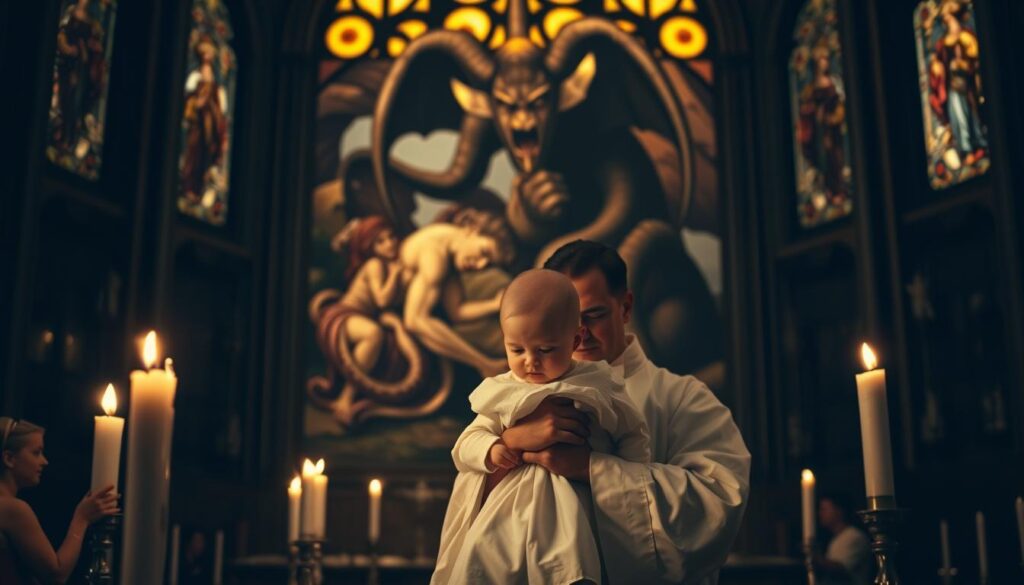
This initiation sacrament welcomes new members into the faith community. Water poured over a person’s head symbolizes cleansing and rebirth. The priest’s words – “In the name of the Father, Son, and Holy Spirit” – create an unbreakable bond.

Parents often choose godparents to guide the child’s spiritual growth. Adults converting to the faith also undergo this rite. It’s considered the first step toward receiving other sacraments.

Eucharist: Celebrating the Holy Communion

Known as the communion, this sacrament forms the centerpiece of Catholic worship. Consecrated bread and wine become spiritual nourishment during Mass. Many believers receive it weekly, sometimes daily.

The ritual echoes Jesus’ Last Supper with his disciples. “This is my body given for you,” priests recite during the ceremony. Regular participation strengthens community ties and personal devotion.

Sacrament Purpose Key Element Frequency
Baptism Spiritual rebirth Holy water Once per lifetime
Eucharist Communal nourishment Consecrated bread/wine Daily/weekly
Confirmation Strengthening faith Holy oil Once after baptism

These sacred practices blend physical actions with deep meaning. Whether through water or shared meals, they make divine grace accessible to all.

Deep Dive into catholicism rituals

Sacred actions bridge daily life and divine connection in Catholic practice. The Mass stands as the central act of communal worship, blending ancient patterns with modern relevance. Led by a priest, this weekly gathering transforms ordinary moments into encounters with the sacred.

Understanding the Significance of Ritual Acts

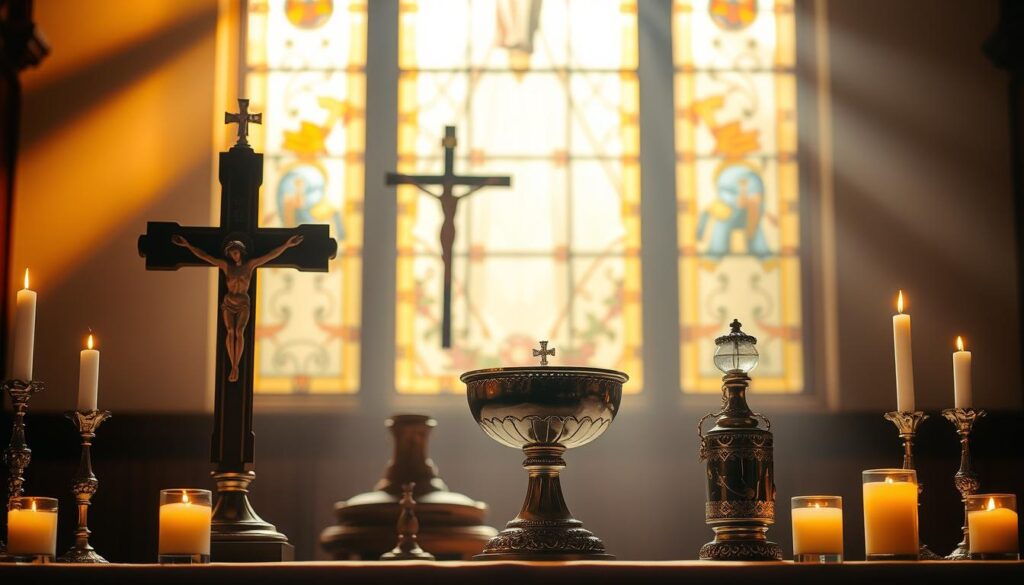
Every gesture in Catholic practice carries layered meaning. Kneeling expresses humility, while raised hands symbolize openness to grace. The priest’s motions during Mass – breaking bread, lifting the chalice – retell sacred stories through movement.

These actions create a spiritual language deeper than words. As one believer notes, “When I bow my head in prayer, my body speaks what my heart feels.” Rituals turn abstract beliefs into tangible experiences shared by the entire congregation.

How Rituals Shape Faith and Community

Weekly gatherings forge unbreakable bonds. Shared responses during worship create unity, while communal singing lifts individual voices into harmony. The table below shows key elements that build this collective identity:

Practice Personal Impact Community Effect
Sunday Mass Renews spiritual focus Strengthens shared purpose
Group Prayer Deepens personal reflection Creates collective energy
Holy Communion Nourishes individual faith Symbolizes universal connection

Through these patterns, believers find stability in life’s chaos. Children learn through observation, while elders pass down wisdom – creating living traditions that span generations.

Holy Water, Holy Oils, and Their Symbolism

Sacred elements transform ordinary moments into spiritual encounters. Two substances stand out for their symbolic power – blessed holy water and consecrated oils. These materials carry centuries of meaning while remaining deeply relevant today.

Holy water and oils symbolism

The Purifying Role of Holy Water

You’ll find holy water fonts at every church entrance. Dipping fingers in this blessed water reminds believers of their baptismal promises. The simple act of making the sign of the cross becomes a mini-renewal of faith.

This sacred liquid plays key roles in major life events:

  • Baptismal ceremonies (poured over heads)
  • Funeral rites (sprinkled on caskets)
  • Home blessings (used to sanctify spaces)

One priest describes its power: “Like morning dew refreshes grass, holy water renews the soul.” Its cleansing symbolism helps people release burdens and refocus on spiritual priorities.

Holy Oils: Anointment and Blessings

Three special oils mark critical moments in believers’ lives. Each blend gets consecrated during Holy Week, creating a tangible link to Easter’s transformative message.

Oil Type Purpose Key Use
Catechumens Spiritual strength Pre-baptism preparation
Anointing Healing comfort Sick/elderly ministry
Chrism Consecration Confirmations/ordinations

The fragrant holy oil used in confirmations leaves a visible cross on foreheads. This anointing becomes a lifelong reminder of divine connection. For the ill, oil brings both physical comfort and hope for spiritual healing.

The Power of Prayers and Devotional Acts

Spiritual connection thrives through diverse expressions of devotion. Catholics use prayers like musical notes – each form creating unique harmony with the divine. From whispered requests to joyful hymns, these practices turn ordinary moments into sacred dialogues.

Catholic prayer gestures folded hands

Different Forms of Catholic Prayers

The Lord’s Prayer serves as the bedrock of daily devotion. Many recite it during church services and personal meditation. As one believer shares: “These words feel like coming home – familiar yet always fresh.”

Communal worship strengthens bonds through shared rhythms. Sunday gatherings feature:

  • Psalms sung in unison
  • Responsive readings
  • Silent reflection periods

Private devotion allows personal expression. Some use rosary beads, counting prayers while meditating on spiritual mysteries. The physical act of moving beads helps focus wandering thoughts.

Prayer Type Form Setting Purpose
Liturgical Structured texts Church services Communal unity
Personal Spontaneous words Home/work Individual connection
Meditative Rosary/beads Quiet spaces Mental focus

Folded hands during prayer form a universal gesture. This posture symbolizes offering one’s whole self – work-worn palms and hopeful heart together. Whether in church pews or hospital rooms, this simple act bridges earthly and divine realms.

Through these varied practices, believers find strength for life’s challenges. As day turns to night, prayers mark sacred times – morning gratitude, midday requests, evening peace. Each whispered word weaves another thread in the tapestry of faith.

Celebrating Mass: The Heart of Worship

Gathering in shared devotion forms the pulse of Catholic spiritual life. The Sunday Mass stands as a weekly anchor, blending ancient patterns with personal meaning. Through carefully designed moments, believers reconnect with their community and renew their commitment to faith.

The Structure and Flow of a Sunday Mass

The service begins with a solemn procession. A priest carries the Gospel book to the altar, signaling sacred time. Participants then move through three key phases:

First comes the Liturgy of the Word. Biblical readings span Old Testament wisdom to Gospel stories. The homily bridges these texts to modern challenges, making ancient lessons feel fresh.

Next unfolds the Liturgy of the Eucharist. Simple bread wine become sacred through consecration prayers. This moment recreates the Last Supper, transforming ordinary elements into spiritual nourishment.

Variations in Daily and Special Masses

Weekday services offer quieter reflection. These shorter gatherings maintain core elements but skip processions. The priest still consecrates the body blood of Christ, preserving the sacrament’s power.

Special occasions bring vibrant adaptations. Easter Vigil features candlelight, while Christmas Mass bursts with song. Yet every service keeps its central purpose – uniting people through shared sacred moments.

FAQ

What are the seven sacraments in the Catholic Church?

The seven sacraments are Baptism, Eucharist, Confirmation, Reconciliation, Anointing of the Sick, Holy Orders, and Matrimony. Each represents a sacred act that strengthens a person’s relationship with God and the Church community.

Why is the Eucharist central to Sunday Mass?

The Eucharist commemorates Jesus’ Last Supper, where bread and wine become His Body and Blood. This act unites worshippers in faith and renews their spiritual connection to Christ’s sacrifice.

How is holy water used in Catholic practices?

Holy water symbolizes purification and renewal. It’s sprinkled during blessings, baptisms, or as worshippers enter church, reminding them of their baptismal vows and God’s grace.

What role do holy oils play in anointment ceremonies?

Holy oils, like chrism oil, are blessed by bishops and used in sacraments such as Baptism, Confirmation, and Anointing of the Sick. They signify strength, healing, and the Holy Spirit’s presence.

How does the structure of Sunday Mass differ from daily Mass?

Sunday Mass includes more prayers, Scripture readings, a homily, and Communion. Daily Mass is shorter, focusing on core elements like the Liturgy of the Word and Eucharist.

What is the purpose of Confirmation in the Catholic faith?

Confirmation deepens baptismal gifts, strengthening a person’s bond with the Church. Through anointment with chrism oil, the Holy Spirit empowers them to live their faith boldly.

Why do Catholics pray to saints or Mary?

These prayers ask saints or Mary to intercede with God on their behalf. It reflects belief in a spiritual community united across heaven and earth, not worship of the saints themselves.