Recent Posts

Discover Catholicism Classes Near You in the USA


Exploring your spiritual journey has never been easier. Across America, faith-based learning opportunities are thriving, offering guidance for every stage of life. Whether you’re new to religious traditions or deepening your connection, modern programs blend timeless wisdom with today’s needs.

Many families and individuals now enjoy flexible online options that fit busy schedules. These resources are crafted by experienced leaders—including clergy and lay experts—who understand the challenges of balancing faith with daily responsibilities. From First Communion prep to adult spiritual growth, there’s something for everyone.

What makes today’s religious education stand out? It’s designed to meet you where you are. No need to rearrange your life or travel long distances. Authentic teachings now come through user-friendly platforms, connecting ancient truths with modern learners.

Key Takeaways

  • Flexible online options accommodate busy schedules and diverse needs
  • Programs created by clergy and experienced Catholic educators ensure authenticity
  • Available for all ages, from sacramental preparation to lifelong learning
  • Geographical barriers no longer limit access to quality instruction
  • Blends traditional teachings with contemporary learning methods

Understanding Catholic Education and Faith

True faith education transforms how we interact with the world around us. It’s not just about learning rituals—it’s about building a compass for life’s toughest choices. This approach helps people see their daily actions as opportunities to reflect spiritual values.

The Role of Faith in Everyday Life

Ever wonder how ancient teachings fit into modern careers or parenting? Catholic faith programs show how gospel values apply to workplace ethics or resolving family conflicts. Educators teach students to spot moments where kindness or integrity can shine.

Service projects become more than volunteer hours—they’re chances to live out beliefs. One teacher shares: “We help teens connect soup kitchen work to Jesus’ call to feed the hungry.” This hands-on learning builds habits that last decades.

Connecting with Parish Communities and Traditions

Your local parish isn’t just a weekend stop. It’s a launchpad for friendships and support networks. Many programs pair newcomers with longtime members, creating bonds through shared meals or prayer groups.

Seasonal traditions like Advent workshops or Lenten soup suppers turn abstract concepts into lived experiences. As one participant notes, “I finally understood the Easter story after helping organize our parish’s Passion play.” These activities make ancient practices feel fresh and personal.

Comprehensive Overview of catholicism classes

Structured learning meets spiritual growth in today’s digital age. Today’s programs blend organized study with personal reflection, creating pathways for meaningful engagement. This approach helps learners build knowledge while nurturing their relationship with sacred traditions.
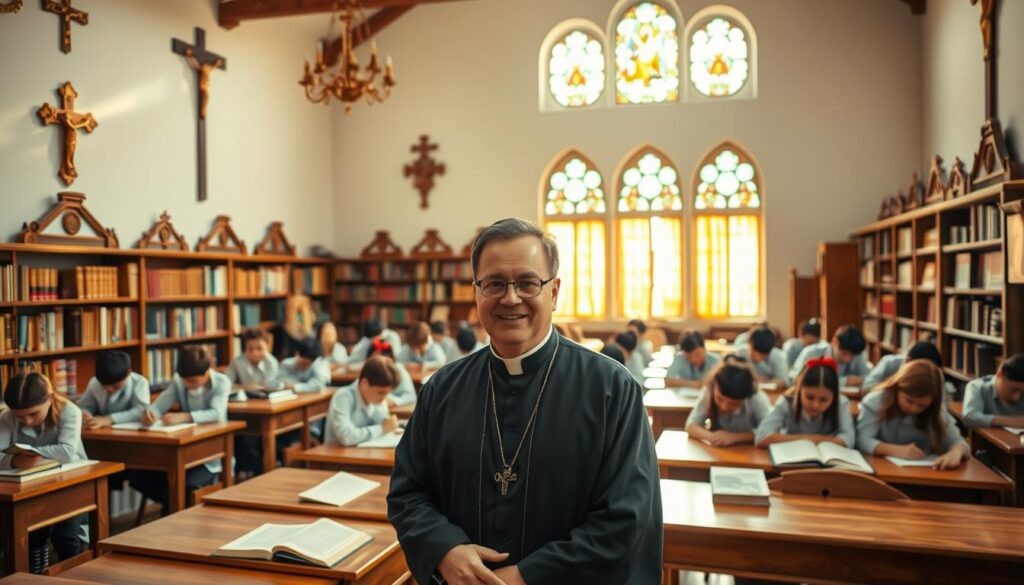
structured Catholic education

Course Structure and Lesson Breakdown

Each course follows a clear roadmap with six to eight focused lessons. Thirty-minute video sessions deliver core content without overwhelming viewers. Bite-sized “office hour” clips let professors address common questions, creating classroom-like support.

Interactive quizzes reinforce key ideas, while curated reading lists dive deeper. One instructor notes: “Our students love comparing Saint Augustine’s writings with modern faith challenges.” Free companion books arrive at your door, requiring only shipping fees.

Flexible Scheduling and Accessible Learning

Life’s busy rhythm won’t disrupt your spiritual development. Watch lessons during lunch breaks or late-night study sessions—your schedule sets the pace. Many learners complete a course in two weeks; others savor it over months.

Leveraging Modern Tools for Traditional Teachings

Cutting-edge platforms bring ancient wisdom to smartphones and tablets. Access the Formed streaming library alongside academic journals and saintly letters. These resources turn coffee shops into sacred learning spaces, proving faith education thrives in contemporary settings.

Flexible Learning Options and Spiritual Preparation

Modern faith education adapts to your life’s rhythm while honoring sacred traditions. Families now choose between digital convenience and community connection, both offering pathways to meaningful spiritual growth.

Online Versus In-Person Instruction

Digital courses let you explore scripture during lunch breaks or after bedtime stories. Live-streamed sessions maintain classroom energy through real-time Q&A features. One parent shares: “We kept our Wednesday night tradition—just moved it to Zoom with cookies!”

Format Benefits Best For
Online 24/7 access
Self-paced
Shift workers
Rural families
In-Person Group activities
Instant feedback
First Communion prep
Teen discussions

Preparation for Sacraments: Baptism, Confirmation, and More

Sacred milestones demand thoughtful preparation. New parents explore baptism’s significance through interactive modules, while teens debate confirmation saints via chat forums. RCIA candidates receive personalized mentoring regardless of location.

Age-specific programs make learning stick. RCIT helps teenagers connect confirmation to real-life choices through service projects. Godparents complete online classes that fit work schedules, ensuring everyone’s ready for baptism day.

“Our family’s confirmation journey became a road trip adventure—streaming lessons between national parks!”

– Maria, Colorado

Embracing Life-Changing Catholic Experiences

Personal journeys often reveal the heart of spiritual growth. Modern faith programs help people discover meaningful connections through real-life stories and adaptable learning.
Catholic confirmation journey

Building a Deeper Relationship with the Catholic Faith

Cindy’s family found their rhythm through online sessions that worked around soccer practices and work deadlines. “We didn’t just learn about sacraments,” she shares. “We experienced how our Catholic faith shapes everyday decisions.”

Bernardita’s story inspires many blended families. After divorce, she enrolled her three sons in confirmation prep using mobile-friendly lessons. Faith became their common ground, with weekly video discussions strengthening family bonds during turbulent times.

“Choosing confirmation saints felt like unlocking our family’s spiritual superpowers.”

– Karl, Online Learner

These programs transform how people approach sacred milestones. Teens explore confirmation through service projects that make abstract concepts tangible. Adults rediscover meaning in daily life through bite-sized reflections on gospel values.

The journey to deepen one’s Catholic faith often starts with small steps. Accessible formats remove barriers, letting spiritual growth happen during commutes or coffee breaks. As one participant notes: “It’s not about perfect attendance—it’s about hearts opening to grace.”

Conclusion

Today’s faith education bridges centuries-old wisdom with 21st-century life. Finding courses that match your schedule and location has never been simpler, whether you’re in bustling cities or quiet towns. Modern platforms deliver trusted content while preserving sacred traditions—proving spiritual growth thrives in any place.

This is the perfect time to begin your journey. Explore baptism preparation or deepen your understanding through self-paced learning. Every course bridges ancient teachings with today’s needs, using videos, quizzes, and live discussions.

Your time investment strengthens family bonds and parish connections. Geographic barriers fade as high-quality instruction reaches kitchens, commutes, and coffee shops. The moments you dedicate create lasting impacts—shaping how you serve neighbors or discuss faith with loved ones.

Take that next step today. With flexible formats and meaningful content, transformative learning fits your life’s rhythm. Wherever you are, the right classes await to guide your spiritual path.

FAQ

How can I find local Catholic education opportunities?

Many parishes offer programs tailored to different age groups and spiritual goals. Check your local church’s website, bulletin, or social media for details on courses like sacramental preparation, Bible studies, or adult faith formation.

What topics are covered in sacramental preparation programs?

These programs focus on deepening understanding of sacraments like baptism, confirmation, and Eucharist. Lessons often explore Scripture, Church teachings, and practical guidance for living out faith daily.

Are online options available for busy schedules?

Yes! Many parishes now provide hybrid or fully virtual courses. These allow you to engage with teachings, connect with instructors, and participate in discussions while balancing work, family, or other commitments.

How do these courses help strengthen parish connections?

Group activities, retreats, and volunteer opportunities are often part of the curriculum. These experiences foster relationships with fellow parishioners and create a supportive environment for spiritual growth.

What tools are used to teach traditional Catholic values today?

Programs blend timeless teachings with modern resources like video lessons, interactive apps, and online forums. This approach makes learning accessible while staying rooted in Church traditions.

Can non-Catholics join these educational programs?

Absolutely! Many courses welcome individuals exploring the faith or supporting loved ones. Reach out to your local parish to learn about open enrollment and introductory sessions.
Discover the 12 Apostles of Catholicism


Step into the world of ordinary men who became extraordinary messengers. Chosen by Jesus Christ, these individuals—fishermen, tax collectors, and even political activists—formed the bedrock of early Christianity. Their stories, rooted in the New Testament, reveal how faith can transform lives and shape history.

Though diverse in backgrounds, each shared a singular purpose: spreading teachings that would birth a global movement. From impulsive personalities like Peter to skeptics like Thomas, their humanity makes their journeys relatable. What united them was a divine mission to heal, forgive, and build communities grounded in love.

Central to this group was Peter, entrusted with symbolic keys representing spiritual authority. His leadership laid the foundation for what would become a 2,000-year tradition of guidance within the Church. This legacy continues today through leaders who trace their spiritual lineage back to these pioneering figures.

Key Takeaways

  • Twelve men from humble professions became foundational leaders of early Christianity
  • Peter’s role as chief disciple established continuity in church leadership
  • Divine authority to heal and forgive shaped their missionary work
  • Personal flaws made their transformations particularly impactful
  • Apostolic traditions remain central to modern religious practices

Historical Foundations of the Apostolic Tradition

The roots of early Christian leadership stretch deep into both sacred texts and lived experiences. Ancient records reveal how spiritual authority intertwined with real-world challenges to shape lasting traditions.

Scriptural Insights into the Apostolic Calling

The New Testament shows Jesus handpicking followers from diverse walks of life. Acts of the Apostles details their post-resurrection work—healing the sick and establishing communities. One striking account describes Peter’s prison escape through divine intervention (Acts 12:6-11).

Pentecost marked a dramatic shift. Once timid disciples began speaking boldly in foreign tongues, their courage fueled by the Holy Spirit. This transformation turned fishermen into global messengers.

Early Church Testimonies and Traditions

Historical records from Eusebius and Josephus confirm key events. James (the Greater) faced martyrdom under Herod Agrippa I, while Peter and Paul met similar fates in Rome years later. Tradition holds that James (the Lesser), relative of Jesus, led Jerusalem’s church before being stoned.

Scholars still debate identities like “James son of Alphaeus” versus “brother of the Lord.” As Benedict XVI noted: “The question…is disputed among experts.” Yet these discussions highlight how carefully communities preserved oral histories.

Three key methods ensured continuity:

  • Written accounts of miracles and teachings
  • Direct succession of leadership roles
  • Shared rituals commemorating pivotal events

Understanding the catholic 12 apostles

These early followers left fingerprints across continents through acts of courage and devotion. Their stories blend human vulnerability with unshakable conviction, creating legacies that still inspire millions today.

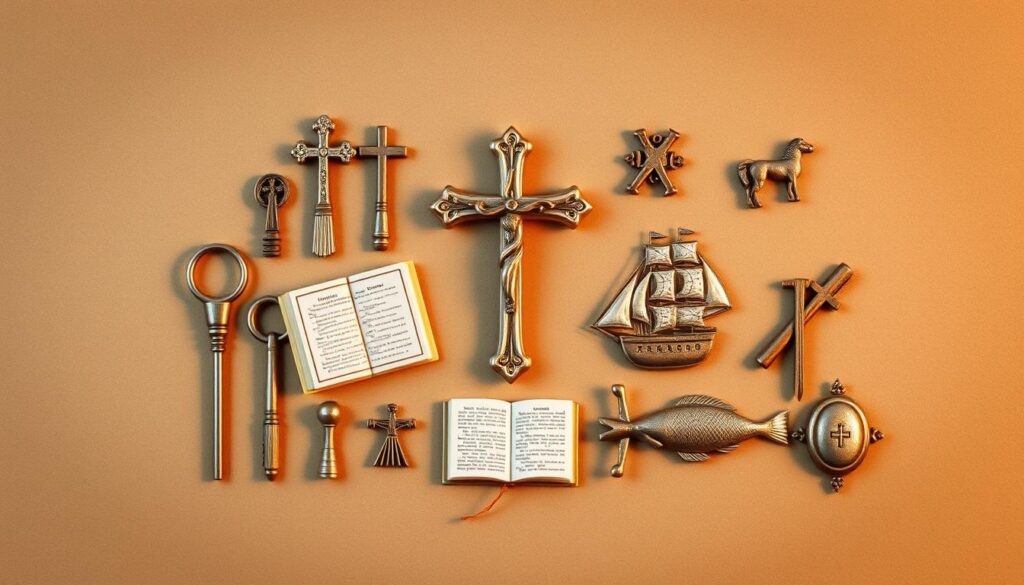
apostolic symbols

Apostolic Profiles: Lives, Martyrdoms, and Miracles

Simon Peter, a fisherman turned leader, faced death in Rome through upside-down crucifixion. His brother Andrew brought Christianity to Greece, dying on an X-shaped cross now called St. Andrew’s Cross. Meanwhile, Thomas traveled farthest—establishing churches in India before his martyrdom near Madras. As Pope John Paul II noted during his 1986 visit:

“St. Thomas’s witness in India remains a bridge between ancient faith and modern devotion.”

Philip preached in Asia Minor, possibly martyred in Hierapolis. Matthew, once a tax collector, transformed into a Gospel writer before meeting a disputed violent end. Even lesser-known figures like Simon the Zealot spread teachings across Persia, documented in the Roman Martyrology.

Symbols and Cultural Significance

Visual markers keep their memories alive. Here’s how traditions honor them:

Apostle Symbol Meaning
Peter Crossed Keys Spiritual authority
Andrew X-shaped cross Sacrificial courage
James the Greater Three shells Pilgrimage legacy
John Chalice with snake Divine protection
Bartholomew Knives Martyrdom by flaying

These icons appear in art, jewelry, and architecture worldwide. From Spain’s Santiago de Compostela (linked to James the Greater) to India’s St. Thomas Cross, they turn history into tangible reminders of faith’s enduring power.

The Apostolic Impact on Church History and Modern Tradition

Foundations laid centuries ago still shape how communities gather and grow today. From leadership models to everyday names, these pioneers left patterns that endure across generations and borders.

Influence on Early Church Leadership and Structure

St. Peter’s three-step journey—establishing the church in Jerusalem, moving his seat to Antioch, then Rome—created a blueprint for spiritual authority. This unbroken chain, called apostolic succession, ensures every modern bishop traces their role to original messengers. As one historian notes:

“Rome became the heart of Christianity because Peter made it his final home.”

St. Paul, though not among the original group, reshaped the faith’s reach. His fourteen letters and missions to Asia Minor turned Christianity into a global movement. Together, these leaders set practices still used today, from Eucharist rituals to regional dioceses.

Namesakes, Global Traditions, and Lasting Legacy

Walk through any city and you’ll hear echoes of their names. Giovanni, Sean, and Ivan all stem from John. Diego and Jaime honor James—a testament to how deeply their stories resonate.

Pilgrims still flock to tomb sites like St. Peter’s beneath Vatican City. In Spain, the Camino de Santiago leads millions to St. James’s shrine. Even skeptics like St. Thomas left marks—ancient Indian churches still bear his name.

Their courage in facing martyrdom set a standard for faithfulness. Yet their greatest gift might be showing how ordinary people can build something eternal.

Conclusion

Ordinary lives, extraordinary impact—these men’s journeys show how divine purpose transforms human frailty. Before receiving the Holy Spirit, they stumbled through doubt and fear. Yet after Pentecost, fishermen became foundation stones of a movement that changed the world.

Scripture paints their legacy in eternal terms: “The wall of the New Jerusalem had twelve foundation stones, bearing the names of Christ’s messengers” (Revelation 21:14). Their spiritual growth—from abandoning Jesus to facing martyrdom—proves that courage blooms where faith takes root.

Today, their stories still spark hope. Just as they came from tax booths and fishing boats, modern believers carry forward their mission. The keys Peter held and the roads Paul traveled remind us: greatness begins when ordinary people answer an extraordinary call.

Let their transformation inspire yours. Whether through small acts of kindness or bold stands for truth, everyone can help build something lasting.

FAQ

Why isn’t St. Paul listed among the original Twelve Apostles?

Though St. Paul played a pivotal role in spreading Christianity, he wasn’t part of the original group chosen by Jesus. He became known as the “Apostle to the Gentiles” after his conversion, dedicating his life to missionary work and authoring several New Testament epistles.

How did St. James the Greater and St. James the Less differ?

St. James the Greater, brother of St. John, was martyred under Herod Agrippa. St. James the Less, often identified as the son of Alphaeus, led the early Church in Jerusalem and authored the Epistle of James. Their titles reflect their distinct roles and historical contexts.

What symbols are linked to St. Peter and St. Thomas?

St. Peter is often symbolized by keys, representing Christ’s promise to grant him authority. St. Thomas, known for his initial doubt about the Resurrection, is associated with a builder’s square, reflecting traditions of his missionary work in India.

Which Apostles are connected to martyrdom traditions?

St. Peter was crucified upside down in Rome, while St. Andrew faced an X-shaped cross. St. Bartholomew was flayed alive, and St. James the Greater was beheaded. These accounts are rooted in early Church writings like the Roman Martyrology.

How did the Apostles shape early Church leadership?

Figures like St. Peter and St. James the Less established foundational structures, such as the Council of Jerusalem. Their teachings and governance models influenced roles like bishops and deacons, ensuring doctrinal unity across growing Christian communities.

Why is St. Jude often invoked in desperate situations?

St. Jude, also called Thaddeus, is celebrated as the patron of lost causes. This stems from his New Testament letter urging perseverance in faith during trials. Devotion to him grew globally through relics and intercessory traditions.

What regions did St. Philip and St. Simon evangelize?

Early traditions suggest St. Philip preached in Greece and Asia Minor, while St. Simon (the Zealot) journeyed to Persia. Both are believed to have faced martyrdom, reinforcing their dedication to spreading the Gospel beyond Judea.

How do modern traditions honor the Apostles?

Cities like Rome and Santiago de Compostela house major shrines, such as St. Peter’s Basilica and the tomb of St. James. Feast days, like St. John’s on December 27th, celebrate their spiritual legacies through liturgy, art, and pilgrimage.

Catholicism Conversion: A Transformative Spiritual Experience


More people than ever are discovering a faith that reshapes their lives. Recent reports show parishes across America welcoming waves of new members, with some dioceses seeing over 70% growth in just one year. Young adults, in particular, are finding meaning in ancient traditions that offer both intellectual depth and spiritual nourishment.

Take Sydney Johnston, who explored countless denominations before embracing this path. Or Adrian Lawson, whose late-night YouTube deep dives led to a life-changing decision. Their stories reflect a broader trend: a hunger for authentic connection in our fast-paced world.

What draws so many? For starters, the gift of community that’s stood strong for two millennia. There’s also the structured approach to faith that helps people make sense of modern challenges. Unlike fleeting trends, this journey requires real preparation—a commitment that transforms how individuals love, serve, and engage with the world around them.

Key Takeaways

  • Parishes report up to 72% growth in new members year-over-year
  • Three-quarters of recent converts are under age 35
  • Ancient rituals provide stability in uncertain times
  • Conversion often starts with intellectual exploration
  • Preparation process ensures informed commitment
  • Changes extend beyond personal faith to community impact

Understanding the Journey to Becoming Catholic

Exploring spiritual paths often leads to questions about belonging and belief. For many adults, this search becomes a journey of deep discovery. The process starts with curiosity but grows into something richer—a chance to build relationships with both faith and community.

Where Questions Meet Answers

Inquiry sessions act as open doors for those exploring religious life. These gatherings let people discuss teachings, ask tough questions, and observe traditions without pressure. “It’s like dating before marriage,” one recent participant shared. Over 80% of parishes now offer weekly inquiry meetings, creating spaces where doubt and hope coexist.

Two Roads, One Destination

Your background shapes how you join the Church. Unbaptized adults follow the RCIA process—learning core beliefs through months of study. Those baptized elsewhere focus on bridging differences in doctrine. The Church honors their existing sacramental bond while guiding them toward full communion.

Time spent in preparation varies, but the goal remains constant: ensuring each person’s choice stems from love and understanding. Many find this period transforms not just their faith, but how they connect with others in daily life.

Catholicism Conversion: A Practical How-To Guide

Choosing to join a faith community requires both heart and preparation. The journey follows a time-tested framework that blends learning, reflection, and sacred rituals. Let’s explore how this structured approach helps adults build lasting spiritual foundations.

christian initiation adults process

Steps from Inquiry to Sacred Rites

Everything begins with curiosity. Many start by attending open sessions at their local parish, where questions about teachings and traditions get answered. “Our group became like family,” shares recent convert Maria Torres. Over 60% of participants decide to continue after these initial discussions.

The Role of RCIA in Adult Initiation

The Rite of Christian Initiation acts as your roadmap. This year-long process includes four phases:

  • Learning core beliefs through weekly classes
  • Participating in community worship
  • Preparing for sacraments during Lent
  • Celebrating initiation at Easter

Sponsors guide candidates through each step, offering personal support and wisdom.

Navigating Catechumenate, Election, and Scrutinies

The catechumenate phase forms the heart of formation. Here, adults study scripture and Church teachings while practicing prayer habits. Come Lent, the rite of election marks their official commitment. Three scrutinies follow—special services focusing on spiritual growth and renewal.

This gradual approach ensures people fully understand their decision. As one priest notes: “We’re not just welcoming members—we’re nurturing disciples.”

Embracing Faith, Sacraments, and Community

The final steps in this spiritual journey blend personal transformation with shared celebration. Adults preparing to join often describe sacraments as living milestones that anchor their faith in tangible experiences. These sacred moments connect individual stories to a 2,000-year-old tradition of worship.

Three Pillars of Spiritual Renewal

Baptism marks the starting point, washing away old patterns and welcoming new life. Many find this ritual especially powerful when received as adults—a conscious choice rather than childhood tradition. The water symbolizes both cleansing and rebirth.

Confirmation invites the Holy Spirit to strengthen one’s commitment. Through anointing with oil, participants feel empowered to live their faith actively. This sacrament often surprises people with its emotional depth and sense of purpose.

The Eucharist then becomes a weekly homecoming. Sharing this meal creates bonds within the community while nourishing personal spirituality. Recent members frequently mention how this practice reshapes their understanding of belonging.

These sacraments typically culminate at the Easter Vigil, where candlelight illuminates new beginnings. The ancient rhythms of Christian initiation remind everyone that faith grows best when rooted in both heart and history.

FAQ

What’s the first step to joining the Catholic Church?

Start by connecting with a local parish. Many begin with the Rite of Christian Initiation for Adults (RCIA), a program guiding adults through learning, prayer, and sacraments. It’s a space to ask questions and explore the faith lived by Catholics worldwide.

How does prior baptism affect the process?

If you’re already baptized in another Christian tradition, your journey may differ. The Catholic Church recognizes valid baptisms, so you’ll focus on confirmation and Eucharist instead. Unbaptized individuals prepare for all three sacraments of initiation.

What role does RCIA play in becoming Catholic?

RCIA is the Church’s pathway for adults seeking membership. It includes faith formation, community support, and rituals like the Rite of Election. This process helps deepen your relationship with God and the Church before receiving sacraments at Easter.

What are scrutinies, and why are they important?

Scrutinies are special prayers during Lent for those preparing for baptism. They focus on spiritual healing and strength, inviting the Holy Spirit to renew hearts. This step emphasizes turning toward Christ and embracing a life rooted in service and love.

Which sacraments do adults receive at the Easter Vigil?

Unbaptized adults typically receive baptism, confirmation, and First Eucharist together during the Easter Vigil. Baptized Christians from other traditions often complete their initiation with confirmation and Eucharist, depending on their background.

How long does the conversion process take?

Timing varies based on personal readiness and parish practices. RCIA often spans months, aligning with the liturgical calendar. Some need extra time for discernment, while others move faster. The focus is on meaningful preparation, not rushing the journey.

Can I participate in Mass before becoming Catholic?

Yes! Attending Mass helps you experience the community and liturgy. While only baptized Catholics may receive Communion, everyone is welcome to pray, sing, and observe. Many find this involvement strengthens their connection during the process.

The Changing Landscape of Catholicism in the US


America’s religious identity is shifting. Over the past 50 years, fewer people across the country identify with organized faith traditions. The Catholic Church, once a cornerstone of spiritual life for millions, now faces new challenges in connecting with modern communities.

Recent surveys reveal surprising trends. In 2007, nearly a quarter of Americans identified as Catholic. Today, that number has dropped to about 1 in 5. This change reflects broader patterns affecting many religions nationwide, from changing family structures to evolving views on spirituality.

What does this mean for the future of faith in America? We’ll explore how cultural shifts, regional differences, and generational attitudes shape religious participation. Through trusted sources like Pew Research and the General Social Survey, we’ll uncover the real stories behind the numbers.

Key Takeaways

  • Catholic identification in the U.S. has fallen from 24% to 19% since 2007
  • Cultural and demographic changes impact all major faith traditions
  • Regional differences play a key role in religious participation rates
  • Multiple national studies confirm long-term membership trends
  • Understanding these shifts helps explain broader social changes

Historical Foundations and Shifting Attitudes

A unique chapter in American religious history unfolded during the Cold War era. The 1950s-60s saw Catholic communities thrive, with over 60,000 priests serving 45 million members. This growth came as anti-Catholic sentiment faded and new converts joined parishes nationwide.

Post-Vatican II Transformations and Early Growth

Vatican II reforms in the 1960s modernized worship practices but changed daily faith expressions. Traditional markers like year-round Friday meat abstinence and strict fasting rules were relaxed. One priest recalled, “We went from fish Fridays to burger Fridays overnight.”

Surveys show these changes affected membership. When unique practices diminished, some adherents felt less connected. A 1975 study found 42% of Catholics still followed Lenten fasts, down from 75% in 1960.

Insights from Pew Research and Past Surveys

Pew Research data reveals gradual shifts over decades. In 1958, 74% attended weekly Mass. By 2005, this fell to 45%. Cultural changes like easier divorce rules and birth control access reshaped attitudes.

Sociologists note an interesting pattern: Groups requiring personal sacrifice often retain members better. When the “cost” of religious practice decreases, commitment might weaken. This principle helps explain changing participation numbers through the late 20th century.

Understanding the “catholicism decline”: Current Data and Trends

New studies show striking changes in how people engage with faith communities. Surveys from 2022 reveal a clergy shortage affecting many congregations. With 35,000 priests serving 72 million members, leaders now manage larger groups than ever before.

religious participation survey data

What the Numbers Tell Us

Weekly Mass attendance tells a clear story. In the 1970s, over half of members showed up regularly. Today, only 1 in 4 does. This shift impacts community activities and shared traditions.

Many still identify with their faith but don’t participate actively. While 44% say religion matters, fewer follow weekly practices. This gap between belief and action grows wider each year.

Changing Views and Vocations

Recent polls highlight evolving attitudes. Nearly 70% support same-sex marriage, and 59% back legal abortion in most cases. These views often differ from official teachings, creating tension for some members.

The clergy shortage adds another layer. Fewer young people choose religious careers, leaving existing leaders stretched thin. This staffing problem affects how communities operate and connect.

As one researcher noted, “Shared practices bind groups together. When those fade, so does cohesion.” These trends suggest challenges ahead for maintaining vibrant faith networks.

Regional and Demographic Perspectives

America’s faith communities paint different pictures depending on where you look. While some areas see empty pews, others welcome new faces. Let’s explore how location shapes religious experiences across the nation.

State-by-State Analysis and Geographic Variations

Traditional Catholic strongholds face surprising changes. Massachusetts lost 11% of its church population since 2008, while Connecticut dropped 16%. Even the Midwest shows shifts – Wisconsin and Minnesota counties report shrinking numbers.

Not all regions follow this pattern. Florida’s Catholic population grew 7% thanks to immigration. As one Miami priest noted, “Our Sunday Mass now needs English, Spanish, and Creole bulletins.” This growth brings challenges – many newcomers struggle to connect with established parish activities.

County-Level Insights and the Role of Immigration

Zooming in reveals hidden stories. Southern Louisiana counties maintain strong ties, while urban Texas areas see young families leaving. Rural Kansas communities lost over 6% of members, mirroring national trends.

Three key factors shape these patterns:

  • Immigration sustains numbers but requires cultural adaptation
  • Urban areas attract diverse faith options
  • Education levels influence participation rates

Despite these challenges, many churches find creative solutions. Bilingual services and community outreach help bridge gaps between long-time members and new arrivals. The future of faith communities may depend on understanding these local differences.

Conclusion

Religious communities across America are navigating uncharted waters. The church faces modern challenges while holding centuries-old traditions. Some see this moment as a crossroads between fading customs and spiritual renewal.

History shows faith groups thrive when they combine clear values with compassionate outreach. Strong communities often emerge from periods of change, as seen in earlier religious movements. As one scholar notes, “Growth sometimes requires pruning before new branches form.”

Current trends reveal both losses and opportunities. While membership numbers dip in many areas, engaged followers often deepen their commitments. Regional successes prove adaptation works when honoring core beliefs.

Pope Benedict XVI’s vision of a smaller but more devoted church sparks meaningful conversations. Could current shifts lead to revitalized practices? The answer might lie in balancing timeless truths with fresh ways to serve modern needs.

What remains clear is that American spirituality keeps evolving. The coming decades will test how faith institutions address complex questions while staying relevant to new generations seeking purpose.

FAQ

How has the Catholic population in the U.S. shifted in recent decades?

Surveys from Pew Research show a gradual decline in affiliation. While the Church remains the largest Christian group in the country, fewer Americans identify with the faith today compared to the 1970s. Immigration has helped offset some losses, but retention rates among younger generations remain a challenge.

What role did Vatican II play in shaping modern Catholic practices?

The Second Vatican Council (1962–1965) modernized traditions, like allowing Mass in local languages. While it initially boosted engagement, some argue the changes led to debates over identity and authority, contributing to long-term uncertainty about the Church’s direction.

What does recent data say about Mass attendance and vocations?

Pew Research reports fewer regular Massgoers, with only about 20% of Catholics attending weekly. Priest shortages also persist—the number of active clergy has dropped by 60% since the 1970s, impacting parishes nationwide.

Are there geographic differences in Catholic engagement?

Yes. States like California and Texas have larger Catholic populations due to immigration, while historically Catholic regions like the Northeast see sharper declines. Rural areas often face more severe clergy shortages compared to urban centers.

How does immigration influence the Church’s demographics?

Immigrants, particularly from Latin America, have helped stabilize numbers. However, their children and grandchildren often assimilate into secular culture or join other faiths, mirroring broader national trends.

What issues are driving younger generations away?

Scandals, strict teachings on social issues, and a perceived lack of inclusivity are key factors. Many young adults also prioritize spirituality over institutional religion, aligning with wider shifts in American culture.

Thoughtful Catholic 1st Communion Gifts to Cherish


Few moments shine brighter in a young person’s spiritual journey than their first reception of the Eucharist. This sacred milestone represents more than a religious rite—it’s a joyful celebration of faith, family, and belonging. As communities gather to witness children approach the altar, the air fills with hope and the melodies of cherished hymns.

The ceremony blends solemnity with pure delight. Young participants often remember the weight of their white garments, the warmth of candlelight, and the shared smiles of loved ones. These experiences create memories that shape their connection to spiritual traditions for years to come.

Choosing presents for this sacrament carries special meaning. Meaningful tokens become touchstones—a rosary used during nightly prayers, or a Bible displayed on a bedside table. These items do more than mark the day; they support ongoing spiritual growth and remind children of their valued place within their faith community.

Key Takeaways

  • The first Eucharist celebration strengthens family bonds and community connections
  • Ceremonial elements like music and rituals create lasting emotional impressions
  • Well-chosen keepsakes often become daily reminders of faith and belonging
  • Gifts should balance spiritual significance with age-appropriate practicality
  • Personalized items help children feel recognized in their spiritual journey

Inspiration and Significance Behind First Communion Gifts

This sacred event centers on a child’s first participation in the Eucharistic celebration, a pivotal step in their spiritual growth. Families and congregations unite to honor this milestone, where young members fully join in the central act of their faith tradition.

The Heart of the Celebration

The sacrament represents more than a ritual—it’s a child’s initial encounter with receiving the Eucharist during mass. Through months of preparation, children learn foundational prayers and the meaning behind this act of devotion. Many recall the warmth of candlelight and the rustle of special attire as they approached the altar for the first time.

Family Connections Through Faith

Parents often describe this day as bittersweet—watching their child take this step toward spiritual maturity while cherishing their innocence. Shared moments of practicing prayers together create bonds that outlast the event itself. One grandmother tearfully shared, “Seeing my granddaughter receive the host reminded me how traditions weave generations together.”

Communities reinforce these family experiences through collective celebration. Parish gatherings after mass often feature shared meals, symbolizing the unity this sacrament fosters. These traditions help children understand their role within a wider circle of belief and support.

Choosing the Perfect catholic 1st communion gifts

Selecting presents for this spiritual milestone requires balancing tradition with thoughtfulness. The ideal tokens should honor the sacred occasion while resonating with young recipients. Faith-centered items that grow with children often hold the deepest meaning.

first communion gift ideas

Key Considerations When Buying Gifts

Start by focusing on items that support ongoing spiritual practices. A grandmother recently shared, “The prayer journal I gave my grandson became his favorite bedtime ritual.” For younger recipients, consider durability—choose materials that withstand daily use while maintaining symbolic value.

Budget-friendly options abound if you know where to look. Many retailers offer quality crosses and devotional books under $20, especially during seasonal sales. Planning ahead allows time for custom engravings without rushing orders.

Understanding the Buyer’s Guide Essentials

Personalization transforms simple objects into cherished heirlooms. Adding a name or date to a rosary or picture frame helps children feel recognized in their faith journey. Consider the recipient’s personality—active kids might appreciate wearable symbols like medals, while quiet thinkers may prefer illustrated prayer books.

Timing matters when shopping. Early purchases let you compare prices across sellers and snag limited-edition items. One parent advised, “Bookmark your favorite sites—alert systems notify you when wishlist pieces go on sale.” Remember, the most memorable presents often combine spiritual significance with personal relevance.

Curated Gift Ideas to Celebrate the First Communion

Finding meaningful tokens for this sacred occasion brings joy to both givers and receivers. Thoughtful selections become cherished companions in a child’s spiritual walk, blending beauty with purpose. Let’s explore options that honor tradition while celebrating individuality.

Classic Options: Jewelry, Rosaries, and Crucifixes

Timeless jewelry pieces let young believers wear their faith proudly. Miraculous Medal bracelets sparkle with symbolism, while cross necklaces serve as daily reminders of devotion. One parent shared, “My daughter never takes off her Lady Lourdes earrings—they’re her sacred secret.”

The Little French Rosary wins hearts with its child-friendly size and durability. Paired with velvet pouches, these prayer tools become treasured ritual objects. Wall crosses like the San Damiano design transform bedrooms into sacred spaces, blending art with inspiration.

Unique Home Decor and Personalized Items

Custom engraved frames capture milestone moments perfectly. Imagine a plaque reading “Blessed on [Date]” displayed beside confirmation photos. Keepsake boxes with hidden compartments add mystery to memory-keeping, while Divine Mercy statues invite quiet reflection.

  • Saint Pope John Paul II figurines spark conversations about faith heroes
  • Personalized Bibles with gilded names become lifetime companions
  • Wall crosses that double as candle holders create multifunctional sacred spaces

Affordable Sets and Gift Packages

Complete gift bundles remove guesswork while maximizing value. Look for sets containing:

  1. Illustrated prayer books
  2. Child-sized rosaries with teaching guides
  3. Scapulars in protective cases

Budget-friendly options under $20 shine too. Mini altar kits with votive candles or scripture card sets make faith accessible. As one grandmother noted, “It’s not the price tag—it’s the love woven into each item.”

Conclusion

A well-chosen token becomes a bridge between celebration and daily spiritual life. The sacrament marks not just a day of joy, but the start of deeper connections to faith practices. While the Eucharist remains the heart of this milestone, thoughtful presents help cement its memory.

Opt for items that evolve with growing understanding—a sturdy cross necklace worn through teenage years, or a journal documenting prayer journeys. These become silent companions, whispering encouragement during life’s challenges.

Remember, generosity thrives in simplicity. A hand-painted picture frame displayed after mass holds equal warmth to elaborate sets. What matters most is the love woven into each choice, reinforcing a child’s place within their spiritual family.

This occasion ripples beyond the individual, knitting communities closer. As candles flicker and hymns rise, shared joy reminds us all—the truest gifts are those that keep giving, season after sacred season.

FAQ

What are traditional gift ideas for this special occasion?

Classic choices include engraved jewelry like crosses or medals, a personalized Bible, or a decorative rosary. Many families also appreciate keepsakes such as wall art, holy water fonts, or prayer books that reflect their faith journey.

Can I personalize items for the celebrant?

Absolutely! Customization adds heartfelt meaning. Consider adding a name, date, or meaningful verse to items like missals, scapulars, or photo frames. Many shops offer affordable engraving or embroidery services for a unique touch.

How do I choose age-appropriate presents?

Focus on items that grow with the child, such as a durable cross necklace, interactive faith-based games, or illustrated prayer journals. Avoid fragile decor—opt instead for sturdy statues, kid-friendly devotionals, or colorful apparel featuring symbolic designs.

Are there budget-friendly options available?

Yes! Gift sets with a matching bracelet and prayer card, small altar kits, or themed bundles often provide great value. Look for seasonal sales on items like illustrated children’s Bibles, inspirational wall plaques, or handmade wooden crosses.

What’s the difference between baptism and confirmation gifts?

While both celebrate milestones, sacramental presents for this event often emphasize spiritual readiness. Think rosaries with larger beads for daily use, framed sacrament certificates, or books about Eucharist teachings—items that support ongoing faith development.

Should I include a card or handwritten note?

A heartfelt message is always appreciated. Pair your gift with a meaningful prayer card, a handwritten blessing, or a framed scripture verse. This personal gesture deepens the emotional connection to the item.

Where can I find high-quality religious items?

Many trusted retailers like EWTN Religious Catalogue, Autom, or local parish shops offer durable, faith-centered products. Look for materials like sterling silver, olive wood, or linen-bound books for lasting keepsakes.

Catholicism Defined: A Quick, Friendly Overview


What does the word “Catholicism” truly mean? For many, it’s more than just a label—it’s a vibrant faith followed by over 1.3 billion people worldwide. Let’s explore this rich tradition in simple terms, perfect for anyone curious about its role in history and modern life.

At its core, this word describes the largest Christian denomination, shaped by shared rituals and teachings spanning 2,000 years. Led by the Pope in Rome, it emphasizes community, sacraments, and service. Its influence stretches far beyond churches, touching art, education, and social justice movements across continents.

You’ll notice how its meaning balances ancient traditions with modern relevance. From Gothic cathedrals to humanitarian efforts, Catholicism remains a living force. Whether you’re learning for personal growth or cultural awareness, this guide clarifies its essentials without overwhelming details.

Key Takeaways

  • Represents the world’s largest Christian group, uniting 1.3 billion followers
  • Centered around the Pope’s leadership and Rome’s historical significance
  • Blends ancient rituals with modern global outreach
  • Shaped Western art, philosophy, and social systems for centuries
  • Focuses on sacraments, community service, and universal teachings

Overview of Catholicism – Basic Meaning and Usage

Let’s unpack the term that connects ancient roots with modern relevance. The word itself acts as a bridge between language and belief, appearing in diverse contexts from news headlines to personal faith journeys.

From Greek to Global

Originating from “katholikos” (Greek for “universal”), this meaning reflects a mission to reach all people. Across languages, the term adapts while keeping its core identity:

Language Translation Cultural Context
Spanish Catolicismo Latin American traditions
German Der Katholizismus European history
Chinese 天主教 Growing Asian communities

Modern Applications

Today’s usage goes beyond religious practice. You might hear it in debates about healthcare policies or museum tours discussing Renaissance art. Recent examples include:

  • Scholars analyzing voting patterns
  • Documentaries exploring cathedral architecture
  • Neighborhood festivals celebrating shared heritage

This flexibility shows how one word can shape conversations across time zones and disciplines. Whether discussing moral philosophy or community food drives, its influence remains unmistakable.

Historical Evolution of Roman Catholicism

How did a movement from ancient Judea become a global faith shaping two millennia of history? The story begins with twelve followers and grows through pivotal moments that defined roman catholicism as we know it today.

Foundations in Early Christianity

The roots of the catholic church stretch back to Jesus’ teachings and his apostles’ missionary work. Early believers formed tight-knit communities, sharing rituals like baptism and communion. By the 4th century, these groups evolved into an organized institution with clear leadership roles.

Roman Catholicism historical timeline

Key Figures and Milestones

Visionary leaders propelled the church forward through critical eras. Consider these game-changers:

Figure Contribution Era
St. Gregory I Strengthened papal authority 6th century
Charlemagne United church and empire 800 CE
St. John XXIII Launched modern reforms 1960s

Development from Apostolic Tradition

St. Irenaeus laid groundwork still used today. His three-pillar system combined:

  • New Testament teachings
  • Bishops’ leadership chain
  • Passed-down practices

This framework helped roman catholicism maintain unity while adapting to new cultures. From medieval monasteries to urban parishes, the catholic church keeps rewriting its history through service and renewal.

Deep Dive into “catholicism def”

Let’s explore how language shapes our understanding of major belief systems. The search for clear definitions often reveals fascinating connections between ancient traditions and modern expressions.

Usage in Contemporary and Historical Context

Today’s usage of these words spans personal journeys and global politics. A 2025 Harper’s interview asks:

“How did converting affect your relationship with evil?”

This shows faith transitions shaping philosophical perspectives.

Historical meanings remain surprisingly stable. Time Magazine notes:

“Portuguese colonizers used it as spiritual framework and political tool.”

Here, thewordbridges cultural influence across centuries.

Example Sentences and Practical Illustrations

Real-world examples help decode complex concepts. Consider these 2025 references:

  • Literary Hub debates repentance frameworks
  • The Enquirer tracks local conversion stories

These words appear everywhere – from voting analysis to neighborhood festivals. They help us discuss identity, power, and community without specialized jargon. Next time you encounter the term, notice how it connects personal choices with wider cultural patterns.

Cultural and Social Impact of Catholic Traditions

Imagine walking through a European city where every corner whispers stories of faith and creativity. The Catholic Church didn’t just build churches—it shaped how we see beauty, justice, and community across continents.

Catholic traditions global impact

Masterpieces That Speak Across Centuries

From Michelangelo’s brushstrokes in the Sistine Chapel to Dante’s journey through heaven and hell, Roman Catholicism fueled humanity’s greatest creations. Gothic cathedrals like Notre-Dame became stone textbooks teaching biblical stories through stained glass and spires.

Composers like Mozart wrote masses that still give chills today. As one art historian notes:

“You can’t separate Western art history from the Catholic Church—it was the original patron of genius.”

A Faith That Travels Well

This tradition crossed oceans and adapted without losing its core. Today, Filipino processions blend local dances with ancient prayers. Mexican altars burst with marigolds during Day of the Dead—a mix of indigenous and Catholic practices.

The world sees this blend in action:

  • Brazil’s Christ the Redeemer overlooking Rio
  • Vietnamese martyrs celebrated with lotus flowers
  • Chicago food pantries run by parish volunteers

Through art, service, and shared rituals, these traditions keep shaping how people connect across cultures. They prove that religion isn’t just about beliefs—it’s about the beauty we create together.

Catholicism in Daily Practice and Faith Communities

Morning light filters through stained glass as millions begin their day with familiar rhythms. These routines form the heartbeat of a living tradition, connecting kitchen tables to cathedral altars worldwide.

Everyday Practices and Community Life

Faith communities thrive through shared actions – from blessing meals to volunteering at shelters. Many start with morning prayers or meditative walks, weaving spiritual awareness into ordinary moments. Weekly Mass often serves as both worship and neighborhood reunion.

Parish life pulses with seasonal traditions. Summer festivals feature ethnic foods and heritage dances, while Advent wreath workshops prepare hearts for Christmas. Local food pantries and tutoring programs demonstrate beliefs in action, creating tangible support networks.

Modern adaptations keep traditions vibrant. Apps deliver daily reflections to smartphones, while young adults organize eco-friendly service projects. This blend of ancient and new shows how daily practices remain relevant across generations.

Through these patterns, personal faith grows alongside community bonds. Whether lighting candles or packing school supplies, believers find meaning in both quiet devotion and collective action.

FAQ

What does "catholicism" mean?

The term refers to the beliefs, practices, and traditions of the Roman Catholic Church, rooted in Jesus Christ’s teachings. It emphasizes unity, sacraments like the Eucharist, and loyalty to the Pope as spiritual leader.

How did Roman Catholicism develop historically?

It grew from early Christian communities, shaped by apostles like Peter and Paul. Key moments include the Council of Nicaea (325 CE) and the Vatican II reforms. The Church’s structure, like dioceses and papal authority, evolved over centuries.

How is the word "catholicism" used today?

It describes both the faith’s global presence and its doctrinal identity. For example, phrases like “catholicism def” often seek quick explanations of its core tenets, such as grace or communion.

What role does tradition play in Catholic life?

Rituals like Mass, sacraments, and liturgical seasons (e.g., Lent) anchor daily practice. Communities gather for worship, service, and events like parish festivals, reflecting shared values.

How has Catholicism influenced culture?

It inspired Renaissance art (Michelangelo’s Sistine Chapel), Western ethics, and education systems. Missionaries spread its teachings worldwide, blending with local customs in places like Latin America or the Philippines.

What distinguishes Roman Catholicism from other Christian groups?

Unique features include devotion to Mary, papal infallibility, and seven sacraments. The Church also maintains ancient traditions, like Latin Mass, alongside modern adaptations under leaders like Pope Francis.