Recent Posts

Catholicism in the UK: A Comprehensive Guide


For the first time in centuries, active church attendance tells a surprising story. The Roman Catholic Church now draws more weekly worshippers in England than the Church of England. Among young people, this shift is even more striking—41% of Gen Z churchgoers identify as Catholic, compared to just 20% who align with Anglicanism.

What’s driving this quiet transformation? Many point to changing ideas about faith and community. Younger generations seem drawn to traditions that offer a clear sense of identity in today’s fast-paced world. Historic Catholic landmarks, from medieval cathedrals to modern parish centers, are becoming hubs for this renewed interest.

This guide explores how a once-minority religion is reshaping spiritual life across the country. We’ll look at demographic trends, cultural influences, and the unique ways Catholicism connects with modern values. You’ll discover how centuries of hidden history now meet 21st-century needs.

Key Takeaways

  • Catholic congregations now outnumber Anglican ones in weekly attendance across England
  • Young adults are embracing Catholic traditions at twice the rate of Anglican practices
  • Urban centers like London show the strongest growth in Catholic participation
  • Historical roots and modern community-building both play key roles in this shift
  • The trend reflects broader changes in how people approach organized religion today

Historical Roots and Evolution of Catholicism in the UK

England’s landscape tells a hidden story of faith carved into stone. The Catholic Church’s history here stretches back over 1,000 years, long before modern borders took shape. From the ruins of Bath Abbey to Westminster’s soaring arches, these spaces whisper tales of devotion that shaped the nation.

Catholic Heritage and Early Influences

Medieval churches weren’t just buildings—they were community engines. St. Edward the Confessor, a sainted king, left marks still visible in London’s skyline. His Westminster Abbey became a blueprint for sacred architecture. “These stones hold more than prayers,” notes one historian. “They’re diaries of a people’s relationship with the divine.”

Creative survival defined turbulent times. When Henry VIII split from Rome in the 1530s, families like the Shakespeares became accidental rebels. John Shakespeare’s choice to hide Catholic art under whitewash—rather than destroy it—shows how faith endured. Secret priest holes and midnight masses kept traditions alive through persecution.

Impact of the Reformation on Catholic Identity

The Reformation didn’t erase Catholicism—it reshaped it. Martyrs like St. Thomas More became symbols of resistance, their stories passed down like heirlooms. Underground networks preserved rituals that later fueled revivals. By the 1800s, emancipation let Catholics rebuild openly, blending ancient practices with new British realities.

Today, this complex story lives in guidebooks and tourist trails. A visit to the Tower of London isn’t complete without honoring Reformation-era figures. As one writer observed, “England’s past isn’t just history—it’s layers of faith fighting to be remembered.”

catholicism uk: Current Trends and Changing Demographics

Demographic shifts are rewriting the story of faith in modern Britain. For the first time since the Reformation, weekly attendance figures show catholics outnumber anglicans in active worship. This reversal appears most sharply among 18-24 year-olds, where 21% of young men now attend monthly services.
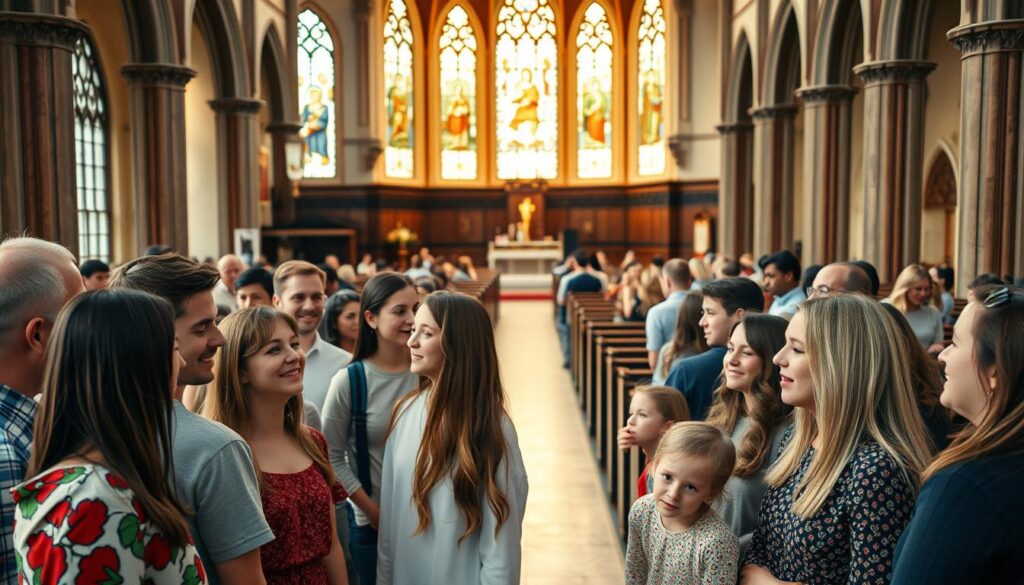
young catholic community growth

Shifts in Church Attendance and Leadership

Recent reports reveal unexpected patterns:

Age Group Monthly Attendance Gender Gap
18-24 16% +9% men
25-34 14% +5% men
35-44 11% +2% women

Stephen Bullivant of St. Mary’s University notes: “Mass attendance hasn’t fully rebounded from pandemic lows, but the upward trend among young people defies expectations.” Church leaders now prioritize multilingual services and digital outreach to engage diverse urban congregations.

Youth Engagement and Emerging Faith Communities

University chaplaincies report record participation, with 33% of Gen Z identifying as believers. Daily prayer practices increased 40% among students since 2020.

“We’re seeing a hunger for tradition that provides roots in rootless times,”

shares a London campus minister.

This generation’s search for meaning blends ancient rituals with modern social activism. Nearly 1 in 4 young adults now volunteer through church programs, creating vibrant hubs where faith meets community service.

Cultural Impact and Community Life Within British Catholicism

Neighborhoods across the country are discovering how church communities shape more than Sunday mornings. Recent studies show 72% of regular Mass attendees volunteer locally, compared to 34% of non-churchgoers. This isn’t just about religion—it’s about creating webs of support that catch people before they fall.

Social Involvement and Community Well-Being

Shared rituals like weekly Mass build invisible bridges between generations. At St. Catherine’s in Manchester, teens teach elderly members to use food bank apps while seniors share cooking skills. “Our faith gives us common ground,” explains a parish leader. “But it’s the daily acts that transform strangers into family.”

Catholic social teaching fuels practical action. Over 60% of urban parishes now host job training programs alongside traditional prayer groups. This blend of spiritual and social care creates unique safe spaces—especially for immigrants navigating new life challenges.

Yet shadows linger. The abuse crisis led 29% of surveyed members to reduce attendance. As one London mother confides, “We still believe—but trust needs rebuilding.” Despite this, 83% report their local church remains central to their sense of belonging.

From food pantries to refugee support networks, these communities prove ancient traditions can meet modern needs. They’re not just preserving religion—they’re redefining what it means to belong in today’s world.

Comparative Analysis: Catholicism Versus Other Christian Denominations

In a world craving certainty, religious choices reveal unexpected patterns. While many churches adapt to cultural shifts, others draw strength from unwavering traditions. This tension shapes why some communities grow as others shrink.
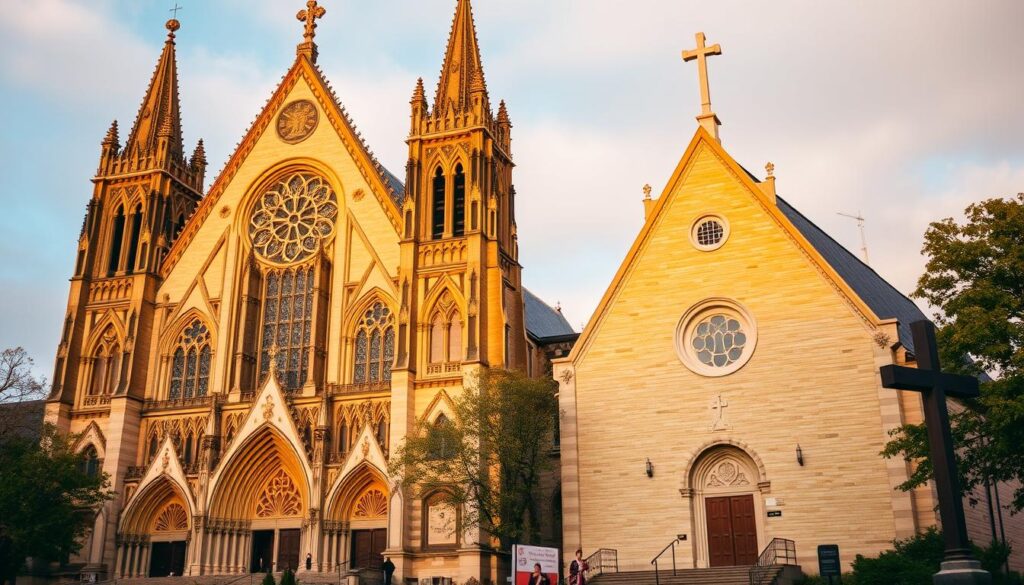
Catholic vs Anglican comparison

Anglican Decline and the Rise of Catholicism

Recent figures show Catholics outnumber Anglicans in weekly worship across England—a first since the Reformation. Similar trends appear in the United States, where Episcopal churches face parallel challenges. “People want anchors, not weathervanes,” observes a theologian, noting how changing doctrines confuse some believers.

The Anglican Church’s democratic approach allows evolving stances on social issues. In contrast, Catholic teachings remain fixed. This stability attracts converts like writer Paul Kingsnorth, who calls it “truth that doesn’t bend with the wind.”

Differences in Worship Styles and Institutional Structure

Walk into any Catholic Mass worldwide, and you’ll find the same rituals. Anglican services vary more by region—a flexibility some find refreshing, others unsettling. The church structure differs too: Catholic leaders answer to Rome, while Anglican bishops govern locally.

High-profile conversions highlight this divide. Historian Tom Holland recently joined Catholicism, praising its “coherent way of seeing life’s purpose.” Meanwhile, former Anglicans often cite their old church’s “endless debates” as draining.

These contrasts matter today. As society questions old norms, many seek faiths offering clear answers—not more questions. Time will tell if this preference reshapes religious landscapes beyond Britain.

Exploring Historic Sites and Catholic Heritage in England

Walking through England feels like turning pages in a living history book. Ancient stones whisper tales of faith that shaped communities for centuries. From hidden artworks to soaring cathedrals, these spaces bridge past and present.
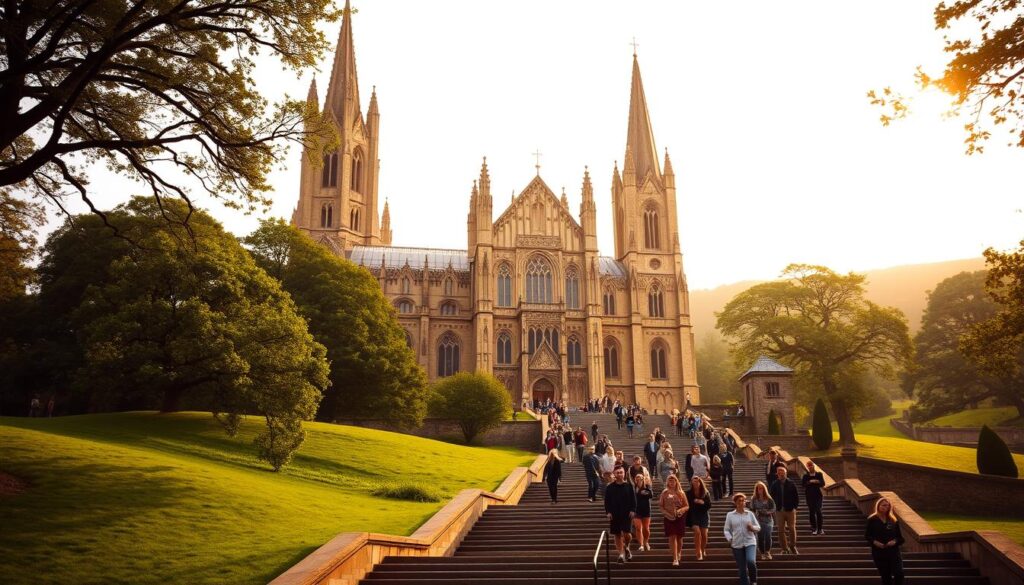
Catholic heritage England

Monuments, Cathedrals, and Sacred Relics

Bath Abbey’s 1,400-year story shows how sacred places adapt through time. Its famous “lantern of the West” design still guides visitors today. Just 90 minutes away, St. Edward’s Church hides a curious feature—a Tolkien-esque door that sparks imaginations.

Westminster Abbey holds quiet surprises. Beneath its Anglican surface lie Catholic treasures like St. Edward’s shrine and medieval artworks. “These stones remember when all England prayed as one,” notes a recent heritage report.

Cultural Narratives: Literature, Art, and Tourism

Shakespeare’s schoolroom reveals Reformation-era secrets. Preserved Catholic paintings, once whitewashed, now draw curious travelers. Nearby, the Cotswolds’ country churches inspire modern writers much like they moved poets centuries ago.

Over 3 million visitors explore these sites yearly. They’re not just tourists—many seek connections to spiritual ancestors. As one guidebook writer observed, “History here isn’t dead. It’s part of how we understand faith’s place in modern life.”

From quiet village chapels to grand cathedrals, England’s landscape keeps Catholic truth alive through beauty. Each stone tells a story that still shapes hearts today.

Conclusion

A quiet revolution is reshaping spiritual landscapes across the country. Young adults are driving this change, finding purpose in structured traditions that bridge ancient rituals and modern life. As Stephen Bullivant observes, rumors of the church‘s decline prove exaggerated—weekly attendance continues its slow climb post-pandemic.

This renewal thrives where history meets innovation. Millennials pack cathedrals redesigned with podcast studios, while Gen Z volunteers blend social justice work with contemplative faith practices. The catholic church‘s global network offers both roots and relevance in our mobile world.

Challenges persist, from rebuilding trust to adapting physical spaces. Yet the trajectory hints at something lasting. As one London student puts it, “We’re not looking for the easy way—we want a path that’s walked together.”

What emerges isn’t just survival, but a blueprint for meaningful community in fractured times. The story unfolding today suggests traditions can evolve without losing their soul—if they remember why people still seek sacred places.

FAQ

How did the Reformation reshape Catholic identity in Britain?

The Reformation led to centuries of persecution, forcing Catholics to practice discreetly. The Catholic Emancipation Act of 1829 restored rights, but tensions lingered. Today, traditions like pilgrimages to Walsingham reflect resilience and a reclaimed spiritual legacy.

Why are young people drawn to Catholic communities today?

Many find meaning in the Church’s emphasis on social justice, communal rituals like Mass, and inclusive spaces for dialogue. Initiatives like Youth 2000 or student ministries foster connection in an increasingly secular culture.

How does Catholic worship differ from Anglican practices?

Catholic services often prioritize structured liturgy, sacraments like the Eucharist, and devotion to saints. Anglican worship varies widely but tends to blend traditional and modern elements, with less centralized authority.

What historic sites highlight Britain’s Catholic heritage?

Westminster Cathedral, St. Paul’s Cathedral (originally Catholic), and medieval ruins like Fountains Abbey reveal this layered history. Relics such as the Chalice of St. Winefride also attract pilgrims and historians alike.

Has church attendance shifted between Catholics and Anglicans?

Recent figures suggest Catholics now outnumber Anglicans in weekly attendance. While both face declining numbers, Catholic communities benefit from immigrant populations and vibrant parish programs.

How do Catholic organizations contribute to community well-being?

Groups like Caritas focus on homelessness, food banks, and refugee support. Parishes often serve as hubs for interfaith collaboration, emphasizing dignity and service as core values.

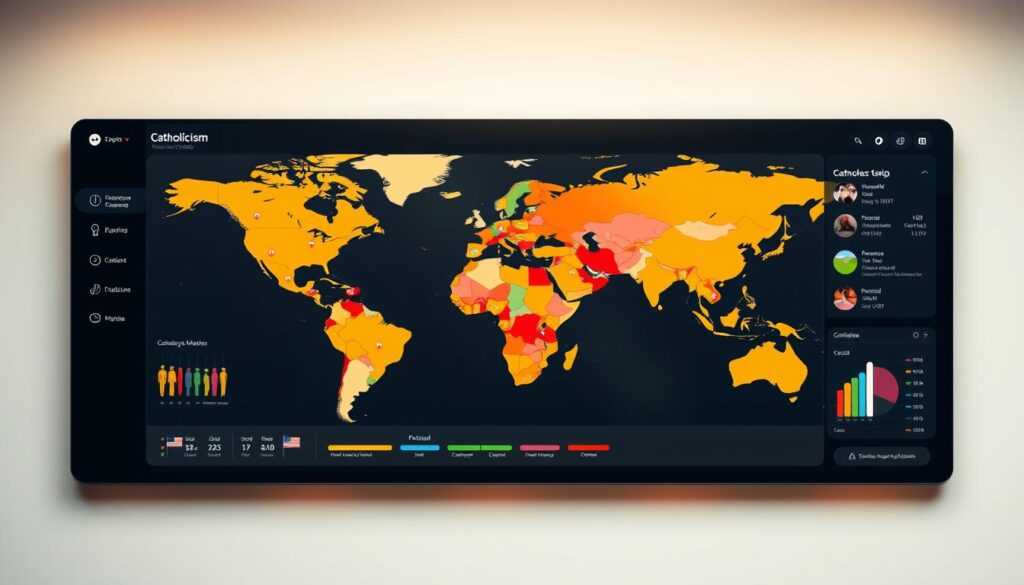
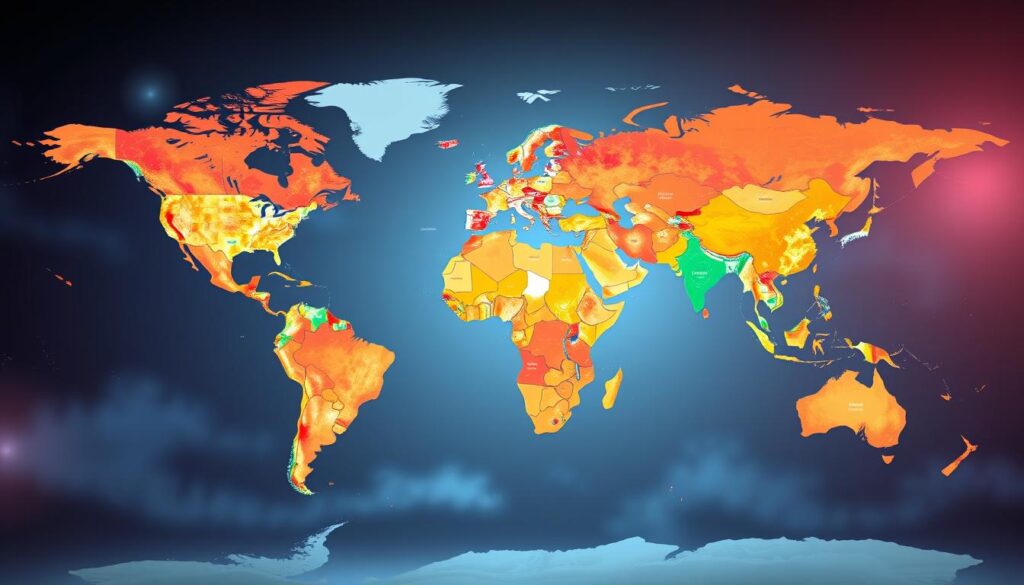
Discover the Worldwide Presence of Catholicism: Interactive Map


Explore the global footprint of one of history’s most influential faith traditions through a dynamic, user-friendly tool. This interactive resource transforms complex religious data into vivid visual stories, revealing how spiritual communities thrive across continents. Whether you’re a student, researcher, or simply curious, it offers an engaging way to understand cultural and demographic shifts.

Modern technology makes it easier than ever to analyze patterns in belief systems. With real-time insights, you can zoom into regions or compare countries side by side. Discover surprising growth in areas like sub-Saharan Africa while examining historical roots in Europe and Latin America.

The interface prioritizes simplicity without sacrificing depth. Filter by population density, historical milestones, or regional challenges to see how faith adapts to changing societies. Did you know? Over 1.3 billion people identify with this tradition worldwide—a number that continues to evolve.

Educators will appreciate how this tool bridges geography and theology. Travel virtually from ancient cathedrals to bustling urban parishes, all while uncovering stories of resilience and adaptation. It’s more than numbers—it’s about understanding human connections across borders.

Key Takeaways

  • Visualize religious demographics with an intuitive, clickable interface
  • Compare regional growth trends from Europe to Africa and Asia
  • Access real-time data on population shifts and cultural influences
  • Use filters to study historical events impacting modern communities
  • Gain insights for academic projects or personal exploration

Introduction to the Catholicism Map Trend Analysis

Modern religious analysis meets innovation through interactive tools that decode global spiritual movements. This report combines real-world data with visual storytelling to reveal how the Roman Catholic Church adapts across cultures. Let’s explore how numbers transform into narratives.

Purpose and Scope of the Report

Our goal? To show how the church thrives in diverse settings. We studied over 150 countries using trusted sources like Pew Research and government records. From Brazil’s vibrant parishes to Germany’s tax-based membership lists, we track patterns.

“The Roman Catholic Church isn’t a monolith—it’s 24 distinct churches united under papal leadership.”

Overview of Data Sources and Methodology

We blended surveys, tax records, and regional studies for accuracy. Latin America’s data comes from Latinobarometro, while European stats rely on official church tax reports. Here’s how it works:

Data Source Regions Covered Collection Method
CIA Factbook Global Government reports
Pew Research 50+ countries Surveys
Latinobarometro Latin America Annual polls
German Church Tax German-speaking Europe Membership lists

This mix ensures we capture both formal membership and cultural identity. You’ll see how Roman Catholic communities grow differently in Nigeria versus France—and why it matters.

Historical Overview of Catholicism Globally

Understanding the Catholic Church’s global journey requires looking beyond numbers to pivotal historical forces. Over the past 100 years, its membership exploded from 291 million to 1.1 billion. Remarkably, its share of the world population stayed steady at 16-17%—a testament to both growth and shifting demographics.

catholic church historical growth

Colonial Influences and Early Growth

European colonial expansion supercharged the Catholic Church’s reach. From the 15th to 19th centuries, Spanish, Portuguese, and French powers planted missions alongside trade routes. These became hubs for education and healthcare, creating lasting ties in:

  • Latin America: 90% Catholic by independence eras
  • The Philippines: Asia’s largest Catholic population
  • Central Africa: 55% Catholic today in former French colonies

“Colonial missions weren’t just about conversion—they shaped legal systems and cultural identities that endure.”

Colonial Power Key Regions Lasting Impact
Spain Mexico, Philippines 90%+ Catholic populations
Portugal Brazil, Angola Lingua franca in rituals
France Quebec, Vietnam Diocesan structures

Key Moments in Church History

Three turning points defined modern Catholicism:

  1. The Counter-Reformation (1545-1648): Revamped education and clergy training
  2. Vatican I (1869-70): Solidified papal authority
  3. Vatican II (1962-65): Embraced local languages and ecumenism

These changes helped the Catholic Church maintain relevance across centuries. Today, 63% of members live in the Global South—a dramatic shift from 1910’s European dominance. History explains why Brazil has more Catholics than Italy, and why Africa’s faithful could triple by 2050.

The Evolution of the Catholic Church in the United States

Catholicism’s journey in America reflects a remarkable transformation – from colonial-era suspicion to becoming 23% of the nation’s religious identity. This growth story intertwines with key moments in U.S. history, revealing how faith adapts to new social landscapes.

Early Colonial Impact and Religious Tolerance

Maryland’s founding as a Catholic haven in 1634 planted early roots. By 1785, over 60% of America’s 25,000 Catholics lived there. Pennsylvania and New York hosted smaller communities, laying groundwork for future expansion.

Revolutionary War service helped Catholics gain acceptance. “Their sacrifices challenged Protestant biases,” notes historian Emily Markham. This shift paved the way for constitutional religious freedoms still cherished today.

Immigration and Demographic Shifts

The 19th century brought waves of German and Irish Catholics, followed by Italian and Polish arrivals. These groups built churches, schools, and hospitals – creating the backbone of modern American religion.

Territorial growth added French Louisiana and Mexican Southwest communities to the mix. Today, Latino immigrants revitalize parishes, ensuring Catholicism remains dynamic. From 1.6% in 1776 to 23% today, this faith continues shaping America’s spiritual fabric.

Interactive Features of the catholicism map

Modern visualization tools turn complex religious statistics into clear, engaging insights. Our platform combines intuitive design with powerful analytics, letting users explore spiritual communities like never before. Whether you’re studying urban migration patterns or teaching cultural geography, these features simplify discovery.

interactive faith demographics tool

User Navigation and Real-Time Data

Zoom from continent-level views to neighborhood clusters in three clicks. The interface automatically adjusts detail levels, showing:

  • Population percentages by age group
  • Decade-by-decade growth comparisons
  • Urban vs rural community distributions

Data refreshes daily using feeds from 40+ national census bureaus and religious organizations. “This isn’t a static snapshot—it’s a living portrait of belief systems,” explains lead developer Mara Lin.

Three standout tools enhance research capabilities:

  1. Dynamic filters: Isolate specific metrics like sacramental participation rates
  2. Overlay mode: Compare historical trends against economic indicators
  3. Export profiles: Save customized datasets for academic projects

The mobile-responsive design works seamlessly on tablets and smartphones. Educators praise how it engages students during field studies or virtual lessons. By making demographic shifts tangible, this platform bridges data analysis and human stories.

Regional Distribution of Catholicism Worldwide

The spiritual geography of faith communities has transformed dramatically since 1910. Where once two-thirds of adherents lived in Europe, today’s population distribution tells a different story. Let’s explore how migration, birth rates, and cultural shifts reshaped religious demographics across continents.

global faith distribution patterns

Latin America’s Evolving Landscape

Latin America remains home to 39% of the world’s adherents—more than any other region. But there’s a twist: while 90% identified with this tradition in 1910, only 72% did by 2010. Rapid population growth outpaced religious expansion, creating new opportunities for diverse belief systems.

Countries like Brazil and Mexico still anchor the faith, but urbanization and social changes drive evolving practices. Younger generations increasingly blend traditional rituals with modern values, creating unique hybrid expressions.

Africa and Asia-Pacific’s Rising Influence

Sub-Saharan Africa’s story stuns observers. From under 1 million followers in 1910 to 171 million today, this growth surge reflects both missionary work and organic community building. “African congregations often triple European ones in weekly attendance,” notes religious scholar Kwame Asante.

The Asia-Pacific region jumped from 14 million to 131 million adherents over the same period. Nations like the Philippines and South Korea show how ancient spiritual roots coexist with contemporary practices. Meanwhile, North America’s 89 million followers—up from 15 million—owe much to immigrant communities enriching local parishes.

These shifts reveal more than numbers. They show how faith adapts to new cultural contexts while maintaining core traditions. From Lagos to Manila, people are rewriting what global spirituality looks like.

Statistical Trends and Growth Patterns

Numbers tell a compelling story about the evolution of spiritual communities across generations. By examining decades of demographic records, we uncover patterns that shape modern religious landscapes.

What the Numbers Reveal

Recent reports show remarkable consistency in global affiliation rates. The World Christian Database estimates 1.272 billion adherents by 2025, while the 2023 Annuario Pontificio counts 1.376 billion baptized members. This represents nearly half of all Christians worldwide.

Three key patterns emerge from the data:

  • Sustained growth in developing nations, fueled by younger populations and active outreach
  • Stable institutional presence despite regional membership fluctuations
  • Varying measurement methods causing number differences between official counts and surveys

Africa and Asia now drive expansion, with birth rates and cultural factors playing crucial roles. As the church adapts to these shifts, its global influence continues evolving in unexpected ways.

FAQ

How does the interactive map show the global Catholic population?

The tool uses real-time data to visualize regional demographics, historical growth, and current trends. It highlights countries with significant Catholic communities, including areas influenced by eastern Catholic churches.

What sources are used to track historical Catholic growth?

Data from institutions like the Pew Research Center, diocesan records, and academic studies are combined. This includes insights on colonial impacts, immigration patterns, and religious shifts over centuries.

Why has Latin America remained a stronghold for Catholicism?

Spanish and Portuguese colonization introduced the Roman Catholic Church early on. Today, despite competition from other religious groups, it remains dominant due to cultural integration and ongoing community ties.

How have immigration trends shaped U.S. Catholicism?

Waves of Irish, Italian, and Hispanic immigrants expanded the church’s presence. Demographic shifts continue today, with growing diversity in parishes and leadership roles.

What features help users navigate the interactive map?

Filters allow exploration by region, population density, and historical timelines. Real-time updates include current statistics from sources like the Vatican and the United States Conference of Catholic Bishops.

Are African and Asian Catholic communities growing?

Yes. Countries like Nigeria and the Philippines report rapid growth due to missionary work, high birth rates, and local adaptations of Catholic practices. The Pew Research Center notes these regions as future hubs.

How does the church address declining numbers in some areas?

Initiatives focus on youth engagement, social outreach, and collaboration with eastern Catholic churches. In Europe and North America, revitalization efforts aim to counter secularization trends.

What role do bishops play in regional church dynamics?

Bishops oversee dioceses, manage resources, and address local challenges. Their influence varies by region—from advocating for social justice in Latin America to navigating government relations in Asia.

Catholicism and Predestination: Exploring the Debate


What if your life’s path was written before you took your first breath? This ancient spiritual question about destiny versus free choice has shaped faith traditions for millennia. While the Bible clearly references divine election – like St. Paul’s words about being “predestined to be conformed” to Christ’s image – its practical meaning remains passionately discussed.

First-century Jewish groups disagreed fiercely about fate’s role. Some saw every event as divinely orchestrated, while others emphasized personal responsibility. These historical debates reveal how the concept touches our deepest hopes: Does my choices matter? How does God’s wisdom interact with my daily decisions?

Modern believers still wrestle with these ideas. Through Scripture and tradition, we’ll explore how different approaches developed while maintaining core truths about God’s love. You’ll discover why this discussion matters for prayer life, moral choices, and understanding salvation’s nature.

Key Takeaways

  • Ancient scriptural references continue shaping modern spiritual discussions
  • Historical religious groups held contrasting views about destiny and free will
  • The debate impacts practical faith matters like prayer and moral decisions
  • Core truths about divine love remain central despite theological differences
  • Personal spiritual growth benefits from engaging with complex questions

Theological Foundations of Predestination

How do ancient scriptures frame humanity’s role in a universe guided by divine wisdom? This question sits at the heart of understanding spiritual destiny. The New Testament offers clear yet nuanced teachings, particularly through Paul’s letters that shaped early Christian thought.

Biblical Context and Scriptural Evidence

Paul’s letter to the Romans reveals a profound truth: “Those God foreknew, he also predestined to be conformed to the image of his Son” (8:29). The original Greek uses eklektos – meaning “chosen” – to describe believers. This term appears throughout Scripture, showing God’s intentional selection process.

Ephesians 1:5 reinforces this idea, stating believers were “predestined for adoption to sonship.” These passages don’t portray rigid fate but rather a loving Father shaping His children through grace. The process involves calling, justifying, and ultimately glorifying those who respond.

Historical Perspectives from Early Judaism to Christianity

First-century Jewish groups debated divine influence intensely. The Essenes saw every event as God’s direct action, while Sadducees rejected spiritual forces altogether. Pharisees took a middle path, believing both heavenly guidance and human effort mattered.

Early Christians inherited these discussions. Paul’s teachings clearly opposed Sadducean thinking but left room for understanding how God’s sovereignty works through human choices. This tension shaped theological development for centuries, showing why these ancient debates still matter today.

catholicism predestination: Doctrinal Insights and Debate

Can divine wisdom and human freedom coexist in our understanding of salvation? The Church teaches that God’s plan leaves room for our authentic decisions. As the Catechism states:

“God predestines no one to go to hell

(CCC 1037). Eternal separation results only from deliberate, unrepented rejection of love.

divine grace and human freedom

The Dance of Grace and Human Response

Divine election isn’t a cosmic lottery. Catholic teaching describes a partnership where God’s grace empowers rather than overrides. “His eternal plan includes each person’s free response,” notes CCC 600. This means every “yes” to kindness or forgiveness aligns us more deeply with the way of holiness.

Mortal sin—the choice to sever relationship—remains our responsibility. The Church rejects fatalism, insisting damnation requires persistent rejection. This safeguards both God’s mercy and human dignity.

When Theological Paths Diverge

Calvin’s “double predestination” suggests fixed assignments to heaven or hell before birth. But Scripture reveals a God who “wants all people to be saved” (1 Timothy 2:4). The Church argues this contradicts Ezekiel 18:32, where God declares no pleasure in anyone’s death.

Arminian theology offers middle ground, suggesting God foresees our choices. Yet Catholic truth goes further—eternal plans unfold through time-bound freedom. Like a parent guiding a child’s steps without controlling them, divine wisdom works within our story.

This perspective fuels hope. Salvation becomes a collaborative journey where every loving choice matters—a dance between heaven’s call and earth’s answer.

The Interplay Between Divine Sovereignty and Human Freedom

How can ultimate power coexist with genuine freedom? The answer lies in understanding love as God’s core identity. As philosopher Peter Kreeft observes:

“Real love makes space for the beloved – it can’t force dance steps but invites partnership”

Understanding Divine Love, Omnipotence, and Destiny

God exists beyond time’s river, seeing all moments at once. This means divine plans aren’t about controlling choices but shaping destiny through invitation. Kreeft suggests replacing “predestination” with “destination” – a journey guided by eternal love.

Human Perspective Divine Reality
Sequential time All moments present
Either/or decisions Both/and guidance
Limited power Complete sovereignty

Navigating the Tension Between Predestination and Moral Responsibility

Thomas Aquinas showed how God’s sovereignty works through our freedom. Rain falls by nature’s laws, but beings with wills choose love freely. This means:

  • Our daily choices shape eternal outcomes
  • Prayer becomes collaboration, not manipulation
  • Mistakes invite mercy, not fatalism

When we grasp this unity of love and power, life becomes an adventure with divine purpose. Every kind act aligns us more deeply with our true destiny.

Conclusion

How does eternity’s plan intersect with today’s decisions? The answer lies in love that transcends time. God sees our story as a completed tapestry while respecting every thread we weave. As Romans 8:38-39 reminds us, nothing separates us from this divine affection—not hardship, choices, or even death.

This understanding transforms anxiety into trust. Divine grace works through our actions like sunlight through stained glass—coloring life’s moments without forcing their shape. We become partners in holiness, not pawns in a cosmic game.

Practical faith blooms when we embrace this mystery. Prayers gain power as collaborations. Relationships deepen through shared love. Evangelization becomes joyful witness rather than pressured persuasion—we trust God’s work in others while valuing our role.

Ultimately, the dance between heaven’s plan and earth’s journey reveals a stunning truth: The Creator of quarks and quasars cherishes each being uniquely. Our destiny isn’t prewritten in stone but lovingly crafted through daily grace and our free “yes” to mercy’s call.

Rest in this assurance: Every step toward love aligns you with your eternal purpose. The future shines brighter when walked hand-in-hand with timeless love.

FAQ

How do free will and destiny coexist in Christian belief?

Christian teachings emphasize that human freedom and divine sovereignty aren’t opposites. The Catholic Church teaches that God’s grace empowers people to choose goodness, while respecting their autonomy. Destiny isn’t forced—it’s a loving invitation to collaborate with God’s plan.

What separates Calvinist views from Catholic teachings on destiny?

Calvinism highlights God’s absolute sovereignty, suggesting some are predestined for heaven or hell. Catholicism rejects this, stressing that grace is offered to all. Humans, through their choices, accept or reject this gift, aligning with God’s desire for everyone’s salvation.

Can our actions influence our eternal destiny?

Yes. While God’s love and mercy are limitless, the Church teaches that moral responsibility matters. Choices shape our hearts, either drawing us closer to God or distancing us. This interplay reflects both divine guidance and human agency.

How does divine love relate to concepts like heaven or hell?

Heaven is seen as union with God’s love, while hell represents a self-chosen separation from it. The Church teaches that God doesn’t “send” people to hell—it’s the result of persistently rejecting grace and truth through one’s free will.

Does believing in destiny mean life is “scripted” in advance?

Not in Catholicism. The Church clarifies that God’s omnipotence doesn’t override human freedom. Instead, He foresees how individuals respond to grace while weaving their decisions into His ultimate plan—a harmony of providence and liberty.

How do different traditions view grace and human effort?

Calvinists see grace as irresistible, while Arminians stress human cooperation. Catholics balance both: grace is essential for salvation, but people must actively participate through faith, works, and sacraments—a synergy rooted in love and trust.

Catholicism Growing: Understanding the Expanding Faith


New data reveals a significant shift in global religious landscapes. The Vatican’s 2025 Pontifical Yearbook shows over 16 million people joined the Catholic Church last year, pushing worldwide membership to 1.406 billion. This 1.15% growth continues a decades-long pattern of steady expansion across six continents.

Behind these numbers lies a vibrant story of community and tradition. While some regions face declining religious participation, the Church maintains strong connections through cultural adaptations and digital outreach. Young adults in particular show renewed interest in ancient rituals and moral frameworks.

The report highlights surprising growth areas like sub-Saharan Africa and Southeast Asia. Meanwhile, established strongholds in Europe navigate modern challenges through social programs and interfaith dialogue. This complex picture defies simple explanations about faith in the 21st century.

Key Takeaways

  • Global membership grew by 1.15% from 2022-2023
  • Growth rates vary significantly by region
  • Younger generations drive new engagement strategies
  • Technology helps maintain connections worldwide
  • Annual reports track both numbers and community impacts

Global Growth Trends and Demographic Shifts

Recent Vatican statistics paint a vivid picture of changing religious demographics worldwide. The numbers reveal striking contrasts between continents, showing where faith communities thrive and where they face challenges.

Overview of Vatican Yearbook Insights

Africa leads global expansion with a 3.31% population increase – the highest growth rate worldwide. This surge adds 9 million believers in one year, reshaping the Church’s geographic focus. Countries like the Democratic Republic of Congo now boast 55 million Catholics, while Nigeria follows with 35 million.

Statistical Breakdown by Continent

  • Americas: Home to 47.8% of Catholics, with Brazil alone accounting for 182 million
  • Asia: 11% global share, driven by the Philippines (93M) and India (23M)
  • Europe: Minimal 0.2% growth despite housing 20.4% of believers
  • Oceania: Small but active community showing 1.9% expansion

These shifts influence how the Church allocates resources and plans future initiatives. While traditional strongholds stabilize, emerging regions demand new approaches to community building and spiritual support.

Regional Analysis: Dynamics in Africa, Americas, Asia, Europe & Oceania

The world’s Catholic community displays remarkable diversity across regions. Unique cultural landscapes and historical contexts shape how faith takes root – from bustling African cities to remote Pacific islands.

African Catholic population increase

Africa’s Spiritual Renaissance

Sub-Saharan nations drive unprecedented expansion. The Democratic Republic of Congo now hosts 55 million believers – more than Spain and Poland combined. Nigeria’s Catholic population surged to 35 million through local leadership programs and healthcare initiatives.

This 3.31% annual increase reflects strategic adaptations. Dioceses train native clergy while preserving tribal traditions. Urban churches blend vibrant worship styles with social justice outreach, attracting young families.

Established Strongholds and New Frontiers

The Americas maintain their global influence through concentrated faith communities. South America’s 27.4% Catholic distribution includes Paraguay where 96% identify with the Church. North America sees steady growth through immigrant communities reshaping urban parishes.

Asia presents fascinating contrasts. While 76.7% of Asian Catholics live in the Philippines and India, Vietnam shows promising growth through underground house churches. Europe’s established churches focus on cultural preservation, balancing historic cathedrals with modern outreach in secular societies.

  • Central America’s 13.8% Catholic share remains stable
  • Oceania adds 1.9% annual growth through island missions
  • Italy maintains 90% affiliation despite low birth rates

Structural Shifts in the Catholic Church

Leadership roles within the Church are undergoing dramatic changes. New patterns emerge as clergy numbers shift across continents, revealing both promising developments and pressing challenges.

Changes in Bishops, Priests, and Permanent Deacons

The global bishop count rose by 1.4% to 5,430 – growth seen everywhere except Oceania. Africa and Asia account for 62% of new appointments, matching their expanding congregations.

Priest numbers tell a split story. While worldwide figures dipped 0.2%, Africa gained 2.7% more priests and Asia 1.6%. Europe’s 1.6% decline highlights aging clergy in traditional strongholds.

Permanent deacons shine as the fastest-growing group. Their ranks jumped 2.6%, with Oceania’s 10.8% surge leading the way. Over 51,000 now serve communities worldwide, handling sacraments and outreach.

Vocation Trends and Seminarian Declines

Seminarian numbers keep falling, down 1.8% since 2012. Only Africa bucks the trend with a 1.1% increase. Europe’s 4.9% drop raises concerns about future clergy pipelines.

Religious sisters decreased 1.6% globally, but African communities grew 2.2%. This contrast shows how cultural contexts shape vocational choices. Young women in Nairobi join orders while their Paris counterparts pursue other paths.

These shifts push the Church to rethink ministry models. Lay leadership programs expand as clergy numbers fluctuate. The rise of deacons and African vocations offers hope amid changing realities.

Insights on catholicism growing in a Changing Cultural Landscape

An unexpected trend emerges as parishes report surging interest from twenty-somethings. The Diocese of Fort Worth saw 72% more converts last year, with most under 35. “Our community feels alive again,” says Rev. Raymond La Grange, noting post-pandemic growth spikes.

young adult catholic community

Youth Conversion Stories and Digital Evangelism

Software developer Adrian Lawson found peace through daily rosary prayers. “My anxiety vanished when I embraced structured spiritual life,” he shares. YouTube creator Cameron Bertuzzi’s public conversion video went viral, inspiring others to explore church history.

Columbia graduate Marin Minamiya crossed continents and faiths. Raised Shinto in Japan, she now finds meaning in Catholic rituals. “The beauty of Mass anchored me during lonely times,” she explains.

The Role of Tradition and Modern Appeal

Young people crave authenticity in our swipe-right culture. Sydney Johnston traded nondenominational services for ancient traditions. “I needed deeper roots than feel-good sermons,” she says. Online resources help seekers like Taylor New overcome doubts through historical research.

Parishes blending timeless practices with tech-savvy outreach thrive. Livestreamed Masses and TikTok faith discussions meet youth where they live. As one convert notes: “Truth doesn’t change – but how we share it must.”

Conclusion

The Catholic Church’s global story combines ancient traditions with modern realities. Over 1.4 billion members now participate in faith communities spanning six continents, with Africa’s 3.31% annual growth outpacing all other regions. This expansion contrasts sharply with Europe’s aging clergy and shrinking seminaries.

Structural challenges persist where priest numbers dwindle, yet new energy emerges elsewhere. North America sees young adults embracing sacramental life, drawn to historic rituals and parish networks. Digital tools help bridge generational gaps while maintaining core teachings.

Religious leaders face dual priorities: supporting booming dioceses abroad while revitalizing established communities. The Church’s ability to adapt – through localized ministries and tech-savvy outreach – suggests enduring relevance in changing times.

FAQ

What regions are driving the increase in Catholic followers?

Africa leads global growth, with a 64% rise in baptized members since 2010. Asia and parts of Latin America also show steady increases, while Europe faces declines due to cultural shifts and aging populations.

How does the Vatican track changes in the Church’s structure?

The Vatican Yearbook provides annual data on clergy, dioceses, and lay communities. Recent reports highlight a 10% rise in permanent deacons worldwide, offsetting slower priestly ordinations in North America and Europe.

Why are seminarian numbers declining in some areas?

Cultural secularization and shifting priorities among young people have reduced vocations in regions like Europe. However, countries like Nigeria and the Philippines see growing seminary enrollment tied to strong community ties.

How is digital evangelism influencing younger generations?

Social media campaigns, podcasts, and online ministries resonate with youth seeking authenticity. Platforms like Hallow and Ascension Presents bridge tradition with modern storytelling, fostering conversions and renewed engagement.

What role do women play in the Church’s expansion?

Women lead 70% of parish ministries and educational programs globally. Their work in catechism, healthcare, and grassroots organizing strengthens community bonds, particularly in fast-growing regions like sub-Saharan Africa.

How does tradition attract new members today?

Many young adults find stability in ancient rituals like Latin Mass and Eucharistic adoration. This “countercultural” appeal merges with social justice outreach, creating a holistic faith experience for modern seekers.

Exploring the Catholic Tradition of Speaking in Tongues


For many believers, prayer is a quiet conversation with God. But some experience a form of worship that defies ordinary language. This spiritual expression, often called glossolalia, allows individuals to connect with the divine through sounds and syllables that transcend human understanding.

Though this practice may seem unusual to some, it has roots in centuries of faith traditions. Stories from scripture and modern testimonies reveal how people describe it as a gift that deepens their relationship with God. When words fail, these heartfelt utterances become a bridge between the soul and the sacred.

Misconceptions about this prayer style often arise from its association with other Christian groups. However, it’s quietly embraced by a growing number of Catholics who view it as a personal, Spirit-led practice. They emphasize its role in fostering humility and trust, aligning with the Church’s teachings on openness to grace.

Key Takeaways

  • Rooted in scripture, this prayer form has historical ties to Catholic spirituality
  • Personal accounts highlight its role in deepening faith beyond traditional methods
  • Practitioners stress its alignment with reverence and Church-approved worship
  • Common concerns often stem from misunderstandings about its purpose
  • Church leadership recognizes its validity when practiced with proper discernment

Historical Roots and Theological Perspectives

Acts of the Apostles reveals a transformative event that birthed a unique mode of prayer. When flames resembling “tongues of fire” rested on Christ’s followers, they began communicating in unlearned languages. This Pentecost moment, described in Acts 2:4, marked the first biblical account of divine speech transcending human barriers.

Early Church Practices and Pentecost Accounts

The Holy Spirit empowered believers to share the gospel across cultural divides. While some spoke recognizable languages, others used mysterious utterances for personal worship. Early Christians viewed this gift as a sign of God’s presence, though debates about its purpose arose quickly.

Type of Tongues Purpose Biblical Reference
Private Prayer Deepening personal connection with God 1 Corinthians 14:2
Prophetic Utterance Delivering messages needing interpretation 1 Corinthians 14:5
Missionary Proclamation Sharing faith across language barriers Acts 2:6-11

St. Paul’s Teachings on Tongues

In his letters to Corinth, St. Paul acknowledged tongues’ value but prioritized clarity. “I would rather speak five intelligible words… than ten thousand in a tongue” (1 Corinthians 14:19). He taught that love must guide all spiritual practices, urging believers to seek gifts that build community understanding.

Despite personal use of this prayer form, Paul established guidelines. Public worship required interpretation to prevent confusion. His teachings remind modern practitioners that spiritual gifts serve others—not personal prestige.

The Role of catholicism speaking in tongues in Modern Worship

In 1967, a spiritual revival sparked fresh interest in ancient worship practices. The Catholic Charismatic Renewal emerged, blending traditional faith with vibrant expressions of devotion. This movement emphasized personal encounters with the Holy Spirit through prayer forms like glossolalia.

Catholic Charismatic Renewal

Catholic Charismatic Renewal Movement

Popes have consistently supported this renewal movement since its start. Pope Francis called it “a current of grace”, highlighting its role in modern spirituality. A landmark 1975 Mass in St. Peter’s Basilica featured cardinals and laypeople praying in unison—a powerful display of unity.

Brazil saw particular growth, where the Catholic charismatic approach helped retain members facing Pentecostal outreach. Communities reported renewed passion for sacraments and service, proving its lasting impact.

Contemporary Experiences and Spiritual Significance

Neuroscience offers intriguing insights into these prayer experiences. University of Pennsylvania researchers observed reduced frontal lobe activity during glossolalia, suggesting focused spiritual engagement rather than random vocalizations.

Aspect Finding Implication
Mental Health Higher emotional stability in practitioners Supports holistic well-being
Community Impact Strengthened Catholic identity in Brazil Counteracts denominational shifts
Scientific Validation Distinct brain activity patterns Confirms unique spiritual state

Studies of 1,000 believers revealed those embracing this gift showed greater resilience. While mysterious, these experiences continue shaping worship today—bridging personal faith and communal tradition.

Practical Approaches and Liturgy Considerations

Balancing spiritual freedom with liturgical reverence requires thoughtful guidance. The Brazilian bishops’ 1994 document offers a helpful framework, distinguishing between private devotion and communal worship. Their wisdom helps believers embrace this gift while honoring the Church’s sacred rhythms.

Guidelines from Church Authorities

The bishops clarified two forms of this charism: personal praying tongues for divine connection and speaking tongues meant for community edification. Public Mass settings follow strict rules—utterances need interpretation to avoid confusion. As one guideline states: “Love for others shapes how we use spiritual gifts.”

Integrating Tongues into Personal and Community Prayer

For private prayer, the Church suggests quiet spaces where believers can surrender to the Spirit’s flow. Start by asking for grace to communicate authentically, even through wordless sounds. Many find this practice deepens their sense of God’s presence beyond structured language.

Practice Type Purpose Key Consideration
Personal Devotion Intimate connection with God Focus on heartfelt sincerity
Group Worship Building up others Requires interpretation if public
Mass Participation Unity through liturgy Follow approved rubrics strictly

The Catechism reminds us that all charisms serve the Church’s healing and growth. Whether in solitude or together, this gift becomes most powerful when guided by love and discernment.

Conclusion

Spiritual growth thrives when love guides every practice. As St. Paul taught, even the most extraordinary gifts become hollow without compassion (1 Corinthians 13:1-2). This truth anchors the Church’s balanced view of divine prayer forms—valuing their role while keeping salvation rooted in grace, not specific expressions.

The Catholic Charismatic movement shows how these experiences can enrich faith when aligned with tradition. Church guidelines protect both personal devotion and communal harmony, ensuring spiritual gifts build unity rather than division. As Pope Francis notes, diversity in worship reflects the Spirit’s creativity.

Whether one embraces this practice or prefers silent meditation, what matters is seeking God authentically. The church reminds us that true spirituality always bears fruit in service to others—quietly drawing hearts closer to divine love.

FAQ

How does the practice of glossolalia connect to early Christian traditions?

The roots trace back to Pentecost, where the Holy Spirit enabled apostles to speak diverse languages. This event, celebrated as the Church’s birth, highlights unity through the Spirit. Early communities, as noted in Acts and Paul’s letters, viewed it as a spiritual gift for edification.

What did St. Paul emphasize about the use of tongues in worship?

Paul stressed order and clarity in worship. In 1 Corinthians, he advised that glossolalia should build up the community, preferably with interpretation. He prioritized prophecy for communal understanding but acknowledged the value of tongues when aligned with love and discernment.

How has the Charismatic Renewal influenced modern Catholic worship?

Since the 1960s, this movement revitalized emphasis on the Holy Spirit’s gifts, including glossolalia. It encourages personal and communal renewal through prayer groups, fostering deeper faith experiences while staying within Church teachings.

Does the Catholic Church officially endorse speaking in tongues today?

The Church recognizes it as a valid charism when used orderly and in line with doctrine. Documents like Iuvenescit Ecclesia affirm its role in personal and communal growth, provided it complements sacraments and liturgy.

Can individuals incorporate glossolalia into private prayer practices?

Yes, many use it privately as a form of contemplative prayer. It’s seen as a way to deepen one’s relationship with God, though discernment and alignment with broader spiritual practices are encouraged.

How does Catholic teaching distinguish glossolalia from other traditions?

The focus is on harmony with liturgy and community edification. Unlike some traditions, Catholicism emphasizes that such gifts should enhance, not disrupt, sacramental life and require pastoral guidance to avoid division.

The Catholic View of Heaven: Understanding the Afterlife


What happens after we die? For centuries, this question has shaped spiritual journeys across cultures. The Catholic Church offers a vision of eternity that transcends popular ideas of fluffy clouds or endless picnics. Instead, it invites believers into a transformative relationship—one rooted in divine love and purpose.

Cardinal Joseph Ratzinger (later Pope Benedict XVI) cautioned against reducing the afterlife to earthly metaphors. In his book Eschatology: Death and Eternal Life, he argued that simplistic imagery fails to capture the profound reality of being united with God. The Catechism echoes this, describing heaven as seeing Christ “face to face” through the beatific vision—a state of perfect joy and communion.

This perspective isn’t about escaping life but fulfilling it. Unlike cultural depictions of passive bliss, Catholic teaching emphasizes active participation in God’s love. It’s a way of existence where every soul finds its true home, free from earthly limitations.

Why does this matter today? In a world searching for meaning, the Church’s ancient wisdom bridges timeless truth and modern longing. Let’s explore how this vision answers our deepest questions about existence beyond the grave.

Key Takeaways

  • The Catholic perspective moves beyond literal imagery to focus on a transformative relationship with God.
  • Heaven involves the “beatific vision”—direct communion with Christ, not physical landscapes.
  • Cardinal Ratzinger warned against oversimplified portrayals that misrepresent eternal joy.
  • Eternal life fulfills our earthly journey rather than negating it.
  • This teaching addresses modern searches for purpose with theological depth.

Introduction to the Catholic Understanding of Heaven

The Church’s vision of eternal life reflects a tapestry woven from scripture, tradition, and centuries of faithful inquiry. Early thinkers like Augustine of Hippo laid foundations by exploring divine communion, while medieval scholars such as St. Thomas Aquinas deepened these ideas through philosophical rigor. Over time, councils like Trent and Vatican II clarified teachings, ensuring clarity without losing mystery.

Time Period Key Contributors Core Insights
Early Church (1st–5th c.) Church Fathers Emphasized unity with Christ through baptism and martyrdom
Medieval Era St. Thomas Aquinas Described heaven as the soul’s ultimate fulfillment in God
Modern Times Pope John Paul II Reinforced heaven as relational, not spatial

Historical Context and Traditional Teachings

Ancient writings reveal a focus on life transformed rather than relocated. The Didache, a first-century text, urged believers to “gather often” to seek eternal truths. By the Middle Ages, Aquinas framed heaven as the mind’s joyful grasp of divine essence—a concept still shaping Catholic thought today.

Modern Reflections on Eternal Life

Recent teachings emphasize accessibility. Pope John Paul II noted, “Heaven is neither an abstraction nor a physical place… but a living relationship.” This shift helps people connect timeless truths to daily experiences. The Church teaches that divine love, not geography, defines our final home—a view resonating in today’s search for meaning.

Exploring the Concept: catholicism heaven as a State and a Place

Many imagine the afterlife as a distant realm with golden streets or celestial gardens. But Catholic teaching invites us to think deeper. It presents heaven not just as a place but as a transformed state of existence—a reality where love transcends physical boundaries.

Defining Heaven in Traditional and Contemporary Terms

Pope John Paul II reshaped modern understanding by calling heaven “the fullness of communion with God.” This shifts focus from geography to relationship. While older artworks showed clouds and angels, theologians stress that eternal joy flows from divine connection, not scenery.

https://www.youtube.com/watch?v=O0mrlrA9Iks

The Church acknowledges a qualified sense of location. After the final resurrection, glorified bodies will exist in a renewed creation. But this doesn’t reduce heaven to coordinates on a map. As one priest explains, “We’re made for God, not zip codes.”

State of Beatific Vision versus Physical Location

The beatific vision—seeing God face-to-face—defines heaven’s essence. It’s an unending moment of clarity where every soul finds purpose fulfilled. Unlike earthly sights, this vision satisfies completely, removing all longing.

Think of it like sunlight versus a lamp. Earthly metaphors (the lamp) help us grasp heavenly realities (the sun), but they’re incomplete. The Catechism clarifies that resurrected bodies will share Christ’s glory, blending spiritual and physical existence harmoniously.

“Heaven is neither an abstraction nor a physical place… but a living relationship.”

Pope John Paul II

This dual perspective enriches prayer life. Believers seek both union with God now and hopeful anticipation of bodily resurrection later. It turns heaven from a far-off destination into a present-moment journey.

Biblical Foundations for the Afterlife

The foundation of eternal hope is deeply rooted in sacred writings across both Testaments. These texts don’t just describe a destination—they reveal a transformational encounter with divine light that reshapes human understanding of existence beyond death.

Scriptural Passages Illuminating Eternal Joy

Four key verses anchor Catholic teaching about final communion with God:

  • Revelation 22:4: “They will see His face”
  • 1 Corinthians 13:12: “Now we see dimly, then face to face”
  • Matthew 5:8: “Pure in heart… shall see God”
  • 1 John 3:2: “We shall see Him as He is”

biblical foundations for afterlife

These passages use the words “see” and “face” metaphorically. Matthew 18:10 clarifies this isn’t physical sight—angels behold God’s presence without eyes. The truth here is about spiritual perception, not retinal images.

Resolving Apparent Contradictions

Some verses seem conflicting. Exodus 33:20 states, “No one may see Me and live,” while Matthew 5:8 promises vision of God. How does this align?

Scripture Passage Apparent Contradiction Theological Resolution
Exodus 33:20 Human limitation before divine holiness Purified souls receive capacity for divine communion
John 1:18 “No one has seen God” Christ makes the invisible Father known
1 Timothy 6:16 God “dwells in unapproachable light” Beatific vision granted through grace, not human effort

Jesus Christ bridges these ideas. As Lord Jesus taught, eternal life means knowing God (John 17:3). The end of earthly struggle opens into endless clarity—not by human merit, but through perfected love.

The Beatific Vision: Experiencing God Face to Face

Imagine standing before an endless ocean of light, where every question finds its answer. This captures the essence of the beatific vision—the Church’s most profound teaching about eternal fulfillment. Unlike earthly sight, this experience engages the soul’s deepest capacities for truth and connection.

Intellectual and Spiritual Comprehension of Divine Glory

Pope Benedict XII described this vision as seeing God’s essence directly—no metaphors or middlemen. St. Thomas Aquinas compared it to suddenly understanding a complex symphony: “The blessed grasp creation’s entire order through divine light.” This isn’t about memorizing facts but experiencing reality as God knows it.

Think of a puzzle finally completed. Every life event, from joy to suffering, clicks into place. The glory here isn’t flashy brightness but radiant meaning. As one theologian notes, “It’s like waking from a dream to true awareness.”

Union with Christ and the Saints

This vision creates perfect union. Picture a choir where every voice harmonizes effortlessly. The saints aren’t distant figures but close companions sharing divine love. Mary’s experience shines brightest, her soul reflecting God’s light like polished glass.

“The blessed see more in one moment than scholars learn in lifetimes.”

St. Thomas Aquinas

Your capacity for this joy grows through daily choices. Like building muscles for a marathon, each act of kindness or prayer expands your soul’s “container” for eternal glory. Those mourning losses find comfort here—every tear will make sense when bathed in this light.

Bodily Gifts and the Transformed Existence in Heaven

What if your body could move through walls or shine like sunlight? Catholic teaching reveals four extraordinary qualities awaiting resurrected bodies. Drawing from St. Thomas Aquinas and the Council of Trent, these gifts perfect our human nature rather than erase it.

resurrected body characteristics

Subtility, Agility, and Impassibility Explained

Subtility lets bodies move freely like Jesus did post-resurrection. Walls become as passable as air. Agility enables instant travel—think Paris to Tokyo in a blink. No traffic jams, just pure freedom.

Impassibility means no more pain or sickness. Imagine skin that never burns and joints that never ache. As Revelation 21:4 promises, “Death and mourning will be no more.” Your body becomes its healthiest self forever.

The Glory of the Resurrected Body

Picture glowing like the sun without blinding others. This brightness reflects divine glory, as seen in Jesus’ Transfiguration. St. Thomas called it “a share in God’s radiance”—not flashy, but deeply meaningful.

“The blessed will shine like stars, perfected through grace.”

St. Thomas Aquinas

These gifts aren’t sci-fi fantasies. They show how eternal life enhances our humanity. Your body becomes a perfect instrument for loving God and others—the ultimate upgrade.

Philosophical and Theological Perspectives on Heaven

Great minds have shaped how we understand eternity through rigorous thought and spiritual insight. From medieval scholars to modern theologians, these perspectives reveal how divine love and human purpose intertwine in eternal union with God.

philosophical theological perspectives heaven

Insights from St. Thomas Aquinas and the Council of Trent

St. Thomas Aquinas described our deepest longing as a “natural appetite to know creation’s full order.” His Summa Contra Gentiles teaches this hunger finds fulfillment in the beatific vision—a complete grasp of divine truth. Like solving a lifelong puzzle, every mystery clicks into place through God’s light.

Thinker/Event Key Contribution Impact
St. Thomas Aquinas Linked human curiosity to eternal fulfillment Groundwork for understanding heavenly joy
Council of Trent Clarified purification before divine communion Strengthened doctrinal clarity

The Council of Trent built on these ideas, emphasizing purification as preparation for perfect union. It taught that grace refines souls, much like fire purifies gold, making them ready for endless life with God.

Contemporary Views and Theologians on Union with God

Modern thinkers like Karl Rahner reimagined traditional concepts. He proposed Jesus didn’t ascend to a preexisting place but created “heaven’s possibility” through resurrection. This shifts focus from location to relationship—a view resonating in today’s search for meaning.

“Eternal joy isn’t about where we go, but who we become through Christ.”

Karl Rahner

Current theologians stress daily choices shape our capacity for divine love. Acts of kindness and prayer stretch the soul’s “container,” preparing it for ultimate fulfillment. These insights bridge ancient wisdom with modern questions about purpose and connection.

The Afterlife Continuum: Heaven, Hell, and Purgatory

Eternity isn’t about zip codes but relationships. Pope John Paul II reshaped modern understanding by teaching that afterlife realities are states of being—conditions shaped by our response to divine love. This perspective moves beyond maps to focus on the quality of our eternal communion with God.

Understanding Distinct States of Communion with God

Three possibilities emerge after death, each reflecting our earthly choices:

  • Heaven: Fullness of joy through perfect union with God
  • Hell: Self-imposed isolation from divine love
  • Purgatory: Purification preparing souls for eternal communion

Hell isn’t a divine punishment but the tragic result of persistently rejecting grace. As the Catechism notes, it’s “the ultimate consequence of sin itself.” Imagine refusing sunlight until your eyes forget how to see.

State Cause Outcome
Heaven Accepting God’s grace Beatific vision
Hell Final rejection of love Existential emptiness
Purgatory Unresolved attachments Purification process

Purgatory acts like spiritual detox—removing every trace of selfishness. As Pope Benedict XVI wrote, “Nothing unclean can enter God’s presence.” This cleansing isn’t punishment but mercy, ensuring we’re ready for perfect communion.

“Hell is the state of those who freely and definitively separate themselves from God.”

Pope John Paul II

These states highlight our freedom. Every prayer, act of kindness, or moment of forgiveness shapes our capacity for eternal communion. The afterlife isn’t a lottery—it’s love’s logical conclusion.

Living the Faith: Sacramental Life as a Foretaste of Heaven

Daily rituals and sacred moments offer glimpses of eternal joy here and now. The Church’s sacraments aren’t just ceremonies—they’re invitations to taste divine communion before entering its fullness. Like sunlight breaking through clouds, these practices shape our capacity for everlasting love.

The Role of the Eucharist

At Mass, believers encounter Christ’s real presence—a mystery echoing the beatific vision. Vatican II called the Eucharist “the source and summit” of Christian life, bridging earthly worship with heavenly unity. Each reception deepens our spiritual “appetite” for eternal truth, much like training muscles for a marathon.

St. Augustine famously wrote, “We become what we receive.” This transformation isn’t symbolic. Just as bread nourishes the body, the Eucharist strengthens souls for their ultimate purpose: union with God. It’s practice for perfection—a weekly reminder that faith isn’t abstract but embodied.

Sacramental living turns ordinary moments into portals of grace. Forgiveness in Confession mirrors divine mercy. Marriage reflects Christ’s covenant with the Church. Every sacrament whispers, “This is just the beginning.” Through them, eternity becomes tangible—one holy encounter at a time.

FAQ

Is heaven a physical place or a spiritual state?

Catholic teaching describes it as both. While it’s not a geographical location, it’s a state of perfect union with God—the Beatific Vision. The Catechism emphasizes this as the ultimate fulfillment of human longing, where souls experience divine love beyond earthly limits.

What does the “Beatific Vision” mean?

It refers to seeing God “face to face” in eternity. St. Thomas Aquinas taught that this vision fulfills the soul’s deepest desire, granting direct knowledge of God’s essence. It’s not just intellectual but a transformative communion with divine truth and love.

How does the resurrected body differ from our earthly one?

The Church teaches that glorified bodies will possess qualities like subtility (freedom from material limits), agility (perfect responsiveness), and impassibility (freedom from suffering). These gifts reflect St. Paul’s words about a body “raised in glory” (1 Corinthians 15:43).

What distinguishes heaven, hell, and purgatory?

Heaven is eternal communion with God. Hell is separation from Him due to unrepented sin. Purgatory, as the Council of Trent clarified, is a purification process for souls destined for heaven but needing cleansing. Each state reflects God’s justice and mercy.

How do sacraments connect to eternal life?

The Eucharist, called the “pledge of future glory,” offers a foretaste of heaven’s joy. Through sacraments, believers receive grace to grow in holiness, preparing them for the fullness of divine life promised by Jesus Christ.

Do saints in heaven pray for us?

Yes! The Church teaches that saints, united fully with Christ, intercede for the faithful. This reflects the communion of saints—a spiritual solidarity between those in heaven, purgatory, and on earth, bound by God’s love.