Recent Posts

Catholicism’s Transubstantiation: What It Means and Why It Matters


Imagine walking into a centuries-old ritual where simple bread and wine become something far greater. This lies at the core of Catholic worship—a moment that connects believers to something ancient yet alive. While the specifics might seem mysterious, the essence is deeply personal for millions.

At every Mass, these elements transform into what followers believe are the true presence of Christ. This isn’t symbolic. It’s a spiritual reality central to their faith. The practice traces back to Jesus’ Last Supper, where he shared bread as his “body” and wine as his “blood.”

Why does this matter today? For Catholics, it’s more than tradition. It’s a way to experience closeness with the divine. The ritual isn’t just about remembering—it’s about participating in a living connection that shapes daily spiritual journeys.

We’ll break down this profound belief without heavy jargon. Whether you’re curious or seeking deeper understanding, this guide offers clarity. You’ll learn how this practice unites communities, strengthens personal devotion, and remains relevant in modern life.

Key Takeaways

  • The Eucharist centers on bread and wine becoming Christ’s body and blood during Mass.
  • This belief stems directly from Jesus’ words at the Last Supper.
  • It’s viewed as a spiritual reality, not just symbolic.
  • The ritual fosters unity among Catholic communities worldwide.
  • Understanding this practice deepens appreciation for Catholic traditions.

Introduction to Catholicism’s Transubstantiation

What if ordinary elements could hold extraordinary meaning? This question lies at the center of a sacred change occurring in churches worldwide. Through ancient words and simple offerings, believers witness what they consider the ultimate spiritual connection.

Defining the Core Concept

The real presence refers to the belief that bread and wine become Christ’s body and blood during Mass. As the Catechism explains:

“It is by the conversion of the bread and wine into Christ’s body and blood that Christ becomes present in this sacrament.”

This substance transformation defies physical laws. While appearances remain unchanged, the core reality shifts completely. St. John Chrysostom emphasized divine action: “The priest… pronounces these words, but their power and grace are God’s.”

The Significance in Catholic Worship

Every Mass becomes a bridge between heaven and earth. Receiving the Eucharist isn’t symbolic—it’s participating in a mystery that unites communities across time. This teaching shapes how believers approach communion, often with bowed heads and folded hands.

The ritual’s power comes from its simplicity. Basic bread and wine become channels for grace, reminding worshippers that sacred moments often hide in plain sight. For many, this practice isn’t just tradition—it’s the heartbeat of their spiritual lives.

Catholicism Transubstantiation: The Core Concept

At the heart of sacred rituals lies a transformation that defies the senses. While bread and wine retain their familiar appearance, their deepest reality shifts entirely during Mass. This change isn’t visible but forms the foundation of a centuries-old belief.
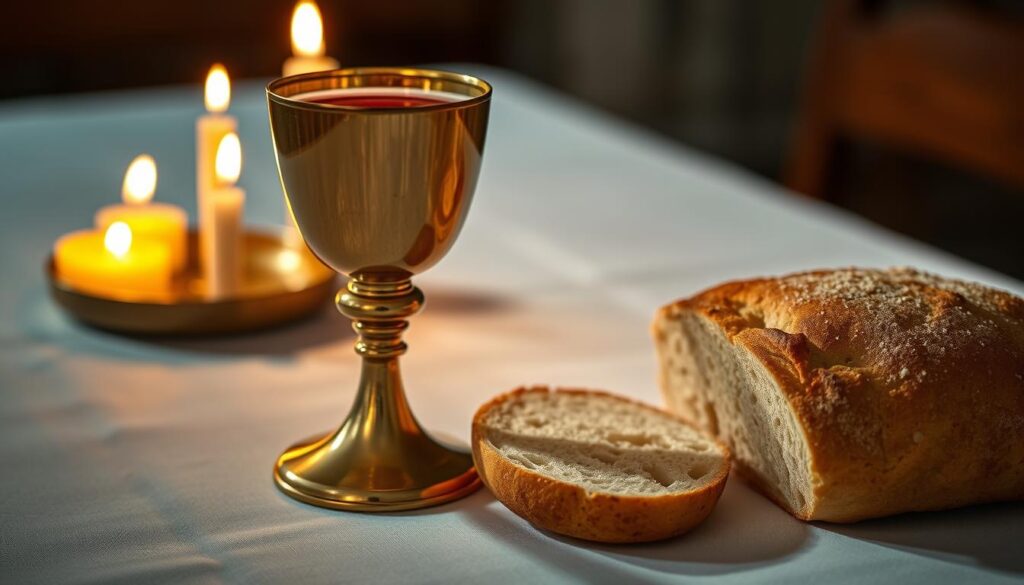
substance change bread wine

“By the consecration of the bread and wine there takes place a change of the whole substance of the bread into the substance of the body of Christ our Lord and of the whole substance of the wine into the substance of his blood.”

– Council of Trent

The term comes from Latin roots: trans (across) and substantia (essence). It describes how the core identity of elements transforms while their physical traits stay. What looks like bread becomes Christ’s body; what seems like wine becomes his blood.

This isn’t a blend or metaphor. The elements cease being ordinary and become wholly divine. Followers approach this mystery with awe, knowing their senses can’t grasp the full reality. The change creates an intimate connection, making communion more than remembrance—it’s active participation.

Historical Overview of the Eucharistic Tradition

How did ancient followers preserve a sacred meal that still resonates today? Long before grand cathedrals or formal creeds, early believers guarded a practice rooted in Jesus’ final instructions. This wasn’t about rituals—it was about carrying forward a life-changing truth.

Seeds of Sacred Practice

The apostles didn’t invent this mystery—they received it firsthand. Paul emphasizes this in his letters:

“For I received from the Lord what I also delivered to you.”

– 1 Corinthians 11:23

Jewish disciples trained rigorously to memorize their teachers’ words. This cultural backdrop ensured Jesus’ teaching about bread and wine survived intact. The Didache, a manual from Christianity’s earliest days, calls the Eucharist a “sacrifice” four times—proof that first-century believers saw it as more than a memorial.

Clarifying Through Challenges

As the faith spread, misunderstandings arose. Church leaders refined their language to protect the core tradition. The Fourth Lateran Council (1215) first used the term describing the change, while Trent (1545-63) solidified its definition. These councils didn’t create new beliefs—they gave precise words to what disciples had cherished for generations.

Through wars, schisms, and cultural shifts, the word of God about this sacred meal remained unbroken. What began in upper rooms and catacombs now unites billions—a testament to careful stewardship across two millennia.

Biblical Foundations for the Eucharist

What did Jesus actually say about bread and wine? The answer lies in scripture, where his direct words leave little room for metaphor. From crowded hillsides to intimate meals, these teachings shaped a practice that continues today.
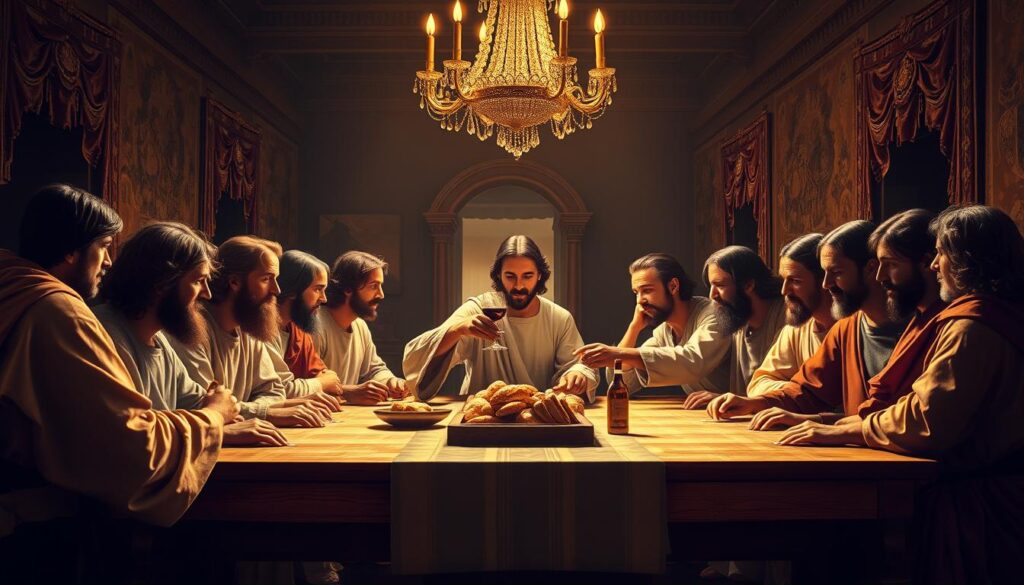
last supper biblical accounts

Insights from the Last Supper Accounts

During his final meal, Jesus Christ held up bread and declared: “This is my body.” No qualifiers. No symbols. The same simplicity applied to the cup: “This is my blood.” Gospel writers Matthew, Mark, and Luke all record these exact phrases—a deliberate choice emphasizing reality over representation.

“Let me solemnly assure you, unless you eat the flesh of the Son of Man and drink his blood, you have no life in you.”

– John 6:53

When followers struggled with this teaching, Jesus didn’t soften it. Instead, he doubled down. His words weren’t negotiable—they were essential for spiritual survival.

Scriptural Emphasis on Real Presence

Paul’s letters reinforce this clarity. Writing to Corinthian believers, he stresses: “The Lord Jesus… took bread and said, ‘This is my body.’” The apostle treats this as non-debatable tradition passed straight from Christ himself.

John’s Gospel adds depth. Jesus calls himself “living bread” and links consuming his flesh blood to eternal life. These passages form an unbroken chain—from ancient upper rooms to modern altars—where simple elements carry divine truth.

Theological and Philosophical Perspectives on Change

How do we know something has changed when it looks the same? This puzzle lies at the heart of understanding sacred rituals. Ancient thinkers developed clear frameworks to explain transformations that bypass our senses.

Everyday Clues to Profound Truths

Pope Paul VI once noted that philosophical terms about substance aren’t just for scholars. They’re tools borrowed from daily life to describe universal truths. Think of a family photo album: your younger self looks different, but you haven’t been replaced. The accidents—height, hairstyle, clothing—changed, but your core identity remained.

Aspect Substance Accidents
Definition Essential identity Observable traits
Example Oak tree (despite losing leaves) Color, shape, size
In Ritual Christ’s body and blood Taste, appearance of bread/wine

This distinction clarifies how bread and wine maintain their physical properties while becoming something entirely new. The change isn’t magical—it’s a shift in reality deeper than science measures. As one medieval scholar put it: “What looks unchanged to the eye holds heaven’s signature.”

Why does this matter? It preserves both mystery and logic. Believers approach communion knowing their senses show one way, while faith reveals another. This framework bridges ancient wisdom with modern questions—proof that some truths transcend time.

Impact of Church Councils on the Doctrine

When debates threatened to fracture Christian unity, one council stood firm. Its decisions shaped how millions understand sacred rituals today. Let’s explore how clarity emerged during a turbulent era.
Council of Trent decrees

The Council of Trent and Its Decrees

In 1551, leaders gathered to address growing questions about the bread and wine’s transformation. The Council declared:

“By the consecration… the whole substance of the bread becomes Christ’s body, and the whole substance of the wine becomes his blood.”

– Council of Trent

This wasn’t new teaching—it reaffirmed beliefs held since ancient times. Reformers like Luther and Calvin had proposed different views, but Trent emphasized a complete change. The elements’ appearance stayed the same, yet their core reality shifted entirely.

Why did this matter? The Council drew clear lines to prevent confusion. Those denying this substance shift faced exclusion, ensuring unity across congregations. For over 450 years, these decrees have guided worship practices worldwide.

Imagine holding a family heirloom that never fades. That’s how Catholics view Trent’s role—preserving truth while honoring tradition. The consecration remains central, linking modern believers to a timeless mystery.

Teachings from Church Fathers and Saints

How do ancient teachings clarify modern faith practices? Early Christian leaders left behind wisdom that still guides believers today. Their words reveal a shared conviction: the Eucharist isn’t symbolic but a living mystery.

Contributions of Thomas Aquinas and Others

St. Thomas Aquinas reshaped how we understand sacred rituals. He taught that Christ’s body blood presence transcends physical senses. As he wrote:

“What God’s power achieves isn’t limited by human perception—faith alone grasps this truth.”

– Aquinas

His poetic verse captures this idea: “Sight, touch, and taste in thee are each deceived; the ear alone most safely is believed.” St. Ambrose echoed this, stressing that Christ’s blessing holds greater power than natural laws.

Evolving Explanations from Early Patristic Writings

Second-century teacher Justin Martyr clarified the Eucharist’s uniqueness. He wrote:

“This food becomes the flesh blood of Jesus through His own words.”

St. Cyril of Jerusalem used the term metaballo (to transform) to describe the change. These leaders didn’t invent beliefs—they gave language to what communities already practiced.

Together, these voices show a timeless truth: sacred meals connect believers to divine presence. Their insights bridge ancient rituals and modern devotion, proving that some mysteries only deepen with time.

Contemporary Understandings and Catechesis

How do modern believers bridge ancient rituals with today’s questions? Current teaching emphasizes both continuity and fresh approaches. Digital resources now complement traditional catechism classes, making core concepts about the sacred meal more accessible than ever.

Parishes use interactive videos and apps to explain the Eucharist’s significance. Yet the message remains unchanged: this practice anchors faith in tangible experience. As one educator notes: “We’re not rewriting the story—we’re finding better ways to tell it.”

Young people especially engage through small group discussions linking the ritual to daily life. A 2023 study showed 68% of U.S. Catholics under 35 value understanding the spiritual journey behind traditions. Workshops often pair Scripture with personal reflection, showing how ancient words shape modern hearts.

The Catechism’s clarity—“The Eucharist is the source and summit of Christian life”—guides all methods. Whether through TikTok summaries or parish retreats, the goal stays constant: helping believers see ordinary moments as gateways to extraordinary grace.

This balance of old and new strengthens community bonds while honoring timeless truths. In our digital age, the quiet power of bread and wine still speaks volumes.

FAQ

What does the term "transubstantiation" mean in Catholic teaching?

It refers to the belief that during Mass, the bread and wine become the Body and Blood of Jesus Christ while retaining their physical appearance. This change is rooted in Christ’s words at the Last Supper: “This is my body… this is my blood.”

Why is the Eucharist considered the heart of Catholic worship?

Catholics view the Eucharist as the “source and summit” of their faith because it unites them intimately with Christ. Receiving Communion is seen as participating in His sacrifice and receiving grace for daily life.

How does the Church explain the change during consecration?

Using philosophical terms like substance and accidents, theologians like St. Thomas Aquinas taught that the essence of the bread and wine transforms, even though their taste, texture, and appearance remain unchanged.

Did early Christians believe in the Real Presence of Christ in the Eucharist?

Yes. Writings from figures like St. Ignatius of Antioch (1st century) and St. Justin Martyr (2nd century) describe the Eucharist as Christ’s true Flesh and Blood, not merely symbolic elements.

What Bible passages support the doctrine of the Real Presence?

Key texts include John 6:53–56, where Jesus says, “Unless you eat my flesh… you have no life in you,” and the Last Supper accounts in Matthew 26:26–28, Mark 14:22–24, and Luke 22:19–20.

How did the Council of Trent shape Eucharistic teaching?

In response to the Protestant Reformation, Trent (1545–1563) formally defined transubstantiation as dogma. It emphasized Christ’s literal presence and the priest’s role in consecrating the elements through Christ’s authority.

How is the Eucharist taught to modern Catholics?

The Catechism of the Catholic Church and parish catechesis stress its centrality. Many dioceses also run programs like Eucharistic Revival to deepen understanding and reverence for the sacrament.

Can non-Catholics receive Communion during Mass?

Out of respect for the Church’s teachings, only baptized Catholics in a state of grace are invited to receive. This practice reflects unity in belief about the sacrament’s sacred nature.
The Catholic Church’s Stance on the Theory of Evolution


How does religious belief coexist with scientific discovery? This question lies at the heart of understanding the Catholic Church’s approach to evolutionary theory. While some assume faith and science must clash, centuries of dialogue reveal a more harmonious relationship.

Many wonder if accepting scientific ideas about life’s origins challenges spiritual teachings. The Church addresses this through careful distinction between cosmological, biological, and human evolution. Official statements emphasize that biological processes don’t negate divine purpose.

Three main viewpoints exist about creation: instant divine action, God-guided development over time, and purely material explanations. Catholic teaching aligns most closely with the second perspective, recognizing science as a tool to explore the “how” of existence while reserving theology for the “why.”

This balanced stance developed through decades of engagement with scientific breakthroughs. Church leaders consistently affirm that truth cannot contradict truth – authentic discoveries about nature ultimately align with spiritual reality.

Key Takeaways

  • The Catholic Church views science and faith as complementary paths to truth
  • Biological evolution is considered compatible with Christian teachings about creation
  • Three primary origin theories exist: instant creation, guided development, and atheistic evolution
  • Church teachings distinguish between physical processes and spiritual dimensions of human existence
  • Papal statements emphasize God’s role as creator of natural laws governing evolution

Understanding Catholicism on Evolution

Historical records reveal surprising alignment between religious teachings and scientific exploration. The Catholic Church has maintained an open dialogue with researchers for over a century, viewing discovery as a path to deeper understanding.

Historical Background and Doctrinal Insights

Official documents show consistent support for scientific inquiry. A 1929 Vatican statement clarified: “Catholics are perfectly free to accept evolution as a scientific hypothesis.” This built on earlier views – the 1909 Catholic Encyclopedia called evolutionary theory “in perfect agreement with Christian conceptions.”

Faith, Reason, and Scientific Inquiry

St. John Henry Newman captured the Church’s approach in 1874: “I see nothing in scientific theories inconsistent with an Almighty Creator.” This perspective stems from belief that faith and reason share divine origins – one reveals nature’s workings, the other its ultimate purpose.

Year Document Key Insight
1874 Newman’s Writings Compatibility of evolution with divine creation
1909 Catholic Encyclopedia Evolution aligns with Christian worldview
1929 Vatican Statement Freedom to accept evolutionary theories

These positions demonstrate how doctrine accommodates new evidence. While science explains physical processes, spiritual truths remain rooted in revelation – two sides of the same truth-seeking coin.

The Church and the Science of Biological Evolution

A papal encyclical in 1950 opened new doors for scientific exploration within the Church. This pivotal text addressed growing questions about life’s origins while maintaining core spiritual truths.

Pope Pius XII encyclical

Pope Pius XII’s Teachings and Humani Generis

Pope Pius XII transformed theological debates with his encyclical Humani Generis. Released in 1950, it became the Church’s first universal statement on biological evolution. The document clarified:

“The teaching authority does not forbid research… regarding the origin of the human body from pre-existing matter.”

— Pius XII, Humani Generis 36

This groundbreaking approach allowed Catholic scholars to study evolutionary science freely. However, it stressed one non-negotiable principle: every human soul is directly created by God.

Evolution Under Divine Guidance

The Church views natural processes as part of a divine plan. Pius XII emphasized that God established the “laws of development” guiding biological evolution. This perspective avoids conflict between faith and science by distinguishing:

Aspect Scientific Domain Theological Domain
Human Body Biological processes Material creation
Human Soul Beyond physical study Direct divine action

Modern Catholic teachings still follow this framework from Humani Generis. They affirm that evolutionary theories explain how life developed, while faith reveals why it exists. This balance helps believers embrace scientific discoveries without abandoning spiritual truths.

Interpretations of Genesis and Creation Narratives

Understanding Genesis involves more than just a literal timeline of events. The Church encourages believers to explore its symbolic richness while respecting scientific discoveries about our world’s development.

Chronological vs. Topical Readings

Two main approaches shape how readers engage with Genesis. The chronological view sees six 24-hour days forming the universe. This perspective sometimes clashes with evidence about Earth’s age.

The topical interpretation offers fresh insights. It presents creation as solving two issues: formlessness (days 1-3) and emptiness (days 4-6). Light separates from darkness first. Then land emerges from waters. Finally, living beings fill each realm.

The Significance of the Six-Day Creation

Why six days matter if not literal? The structure reveals God’s orderly nature. Each “day” represents a phase in establishing cosmic order. As Pius XII noted: “Ancient texts demand sensitivity to their original purpose.”

Reading Method Focus Compatibility
Chronological Time sequence Challenges scientific timelines
Topical Thematic groups Aligns with evolutionary processes

Both approaches help Catholics appreciate Genesis’ spiritual content. They show how divine action works through natural laws – the basis for life’s gradual unfolding. This balance lets faith and science coexist peacefully.

Exploring Human Origins: Adam and Eve in Context

The story of Adam and Eve sparks curiosity about humanity’s beginnings. How do ancient narratives align with modern discoveries? Let’s explore how faith and science address this timeless question.

Adam and Eve theological debate

The Spiritual Soul and Special Creation

Human beings hold a unique status in Catholic teaching. While science traces physical development through human evolution, theology emphasizes a divine spark. The Church teaches that God infused spiritual souls into advanced hominins, marking the birth of truly human beings.

This transformation wasn’t biological but spiritual. As the Vatican’s International Theological Commission noted:

“Modern humans emerged in Africa 150,000 years ago within an interbreeding population… yet their spiritual nature required direct divine action.”

— International Theological Commission

Monogenism, Polygenism, and Modern Theological Debates

Two theories dominate discussions about humanity’s first persons created image of God:

Theory Definition Church Stance
Monogenism Descent from one couple Aligns with traditional teachings
Polygenism Multiple ancestral pairs Requires doctrinal reconciliation

Pope Pius XII cautioned against polygenism, questioning how it fit evolution science with original sin. Yet genetic evidence showing diverse ancestral populations keeps the debate alive. The Church maintains that regardless of biological origins, every soul remains a direct creation from God.

This approach lets believers embrace scientific findings while upholding the dignity of human persons created for eternal purpose. Whether Adam and Eve were historical figures or symbolic representations, their story conveys essential truths about human nature and divine love.

Science, Faith, and Evidence in the Modern World

In today’s world of rapid scientific advancement, the Catholic Church champions dialogue between researchers and theologians. This partnership thrives through institutions like the Pontifical Academy of Sciences, where Nobel laureates and faith leaders collaborate on pressing questions about life’s origins.

The Role of the Pontifical Academy of Sciences

Established in 1936, this Vatican-based academy bridges cutting-edge research and spiritual wisdom. Pope John Paul II made history in 1996 by telling its members:

“New knowledge has led to the recognition of evolution as more than a hypothesis.”

— Address to the Pontifical Academy of Sciences

This endorsement reshaped how Catholics engage with scientific theories. The academy’s work demonstrates that exploring natural laws deepens appreciation for creation’s complexity.

Integrating Scientific Discoveries with Catholic Belief

Modern Church teachings emphasize harmony between discovery and doctrine. Pope Benedict XVI clarified in 2007:

“Presenting evolution and belief in a Creator as alternatives is absurd… Scientific proof enriches our understanding.”

Three key principles guide this integration:

  • Science explains how the universe functions
  • Faith reveals why existence matters
  • Both paths lead to truth when pursued earnestly

The International Theological Commission continues examining how new evidence about human origins aligns with spiritual truths. Catholic researchers worldwide contribute to evolutionary studies, proving rigorous science and sincere faith coexist beautifully.

Conclusion

The interplay between divine creation and natural processes continues to inspire meaningful dialogue. For over a century, the Catholic Church has championed a balanced approach – celebrating scientific discoveries while maintaining core spiritual truths about humanity’s purpose.

Key documents like Humani Generis demonstrate this harmony. They affirm biological development through evolution as part of God’s creative design, while reserving special reverence for the human soul’s divine origin. This framework allows believers to explore life’s physical origins without compromising faith.

Modern Catholics find reassurance in this dual perspective. Science answers questions about material processes, while faith addresses ultimate meaning. Together, they paint a fuller picture of existence – one where telescopes and scripture both reveal glimpses of truth.

As research advances, the Church’s message remains clear: exploring nature’s wonders deepens our awe for the Creator. This enduring stance bridges laboratories and chapels, proving that curiosity and conviction can walk hand in hand.

FAQ

Did the Catholic Church ever condemn the theory of evolution?

No official doctrine outright rejects biological evolution. In his 1950 encyclical Humani Generis, Pope Pius XII allowed Catholics to explore evolution as a hypothesis for the human body’s development, provided they uphold the direct creation of the soul by God. Later popes, including John Paul II and Francis, affirmed science’s role in understanding life’s origins while emphasizing divine purpose.

How do Catholics reconcile Genesis with modern science?

The Church interprets Genesis symbolically rather than as a literal scientific account. Early theologians like Augustine cautioned against rigid readings, and today, the text is seen as revealing spiritual truths—like humanity’s relationship with God—while science explains the physical processes of creation.

What is the Church’s view on Adam and Eve in light of evolution?

The Church teaches that Adam and Eve represent the first human persons, endowed with rational souls created directly by God. While biological ancestry might link humans to earlier life forms, the spiritual soul reflects a unique divine act, ensuring humanity’s special role in creation.

Does the Church support the idea of polygenism?

Traditional teaching emphasizes monogenism—the belief that all humans descend from a single pair. However, the International Theological Commission has noted that polygenism (multiple ancestral pairs) isn’t definitively ruled out if it aligns with doctrines on original sin and humanity’s shared nature.

How does the Pontifical Academy of Sciences influence the Church’s stance?

The Academy advises the Vatican on scientific advancements, fostering dialogue between researchers and theologians. Its work helps the Church integrate discoveries, like cosmic evolution or genetics, while upholding core beliefs about God as the ultimate source of life’s order and meaning.

Can someone believe in both God and evolution?

Absolutely. The Church sees no conflict between faith and evolutionary science when understood as part of God’s creative plan. As Pope Benedict XVI stated, the universe operates through natural laws, but these laws themselves reflect divine wisdom and intentionality.

Catholic Questions Answered Clearly


Welcome to a trusted space where curiosity meets clarity. Many people today seek reliable explanations about spiritual traditions and their place in our modern world. This resource bridges that gap with carefully crafted answers rooted in centuries of wisdom and current scholarship.

Our content draws from leading organizations like Catholic Answers and the Society of Catholic Scientists. These groups combine theological expertise with real-world relevance, ensuring explanations respect both faith and reason. Whether you’re exploring core beliefs or contemporary issues, you’ll find straightforward insights here.

The material addresses common spiritual journeys without technical jargon. Topics range from foundational teachings to current debates within religious communities. Each response provides enough depth for meaningful understanding while pointing to additional resources.

Key Takeaways

  • Access reliable explanations from vetted theological and scientific experts
  • Explore topics balancing traditional teachings with modern perspectives
  • Find answers suitable for both newcomers and long-time believers
  • Discover connections between spiritual practices and daily life
  • Navigate complex ideas through clear, conversational language

This approach makes profound concepts accessible without oversimplification. You’ll leave with practical knowledge that informs personal reflection and meaningful conversations.

Understanding Catholic Teachings and Faith

Many find clarity in understanding how ancient beliefs intersect with modern life. At its core, these teachings form a coherent system addressing life’s biggest mysteries—from humanity’s purpose to our relationship with the divine. Three pillars uphold this worldview: Scripture, Tradition, and the Magisterium. Together, they preserve timeless truths while adapting to new discoveries.

Foundations of Catholic Beliefs

The Church’s teachings rest on sacred texts, historical practices, and guided interpretation. This three-part foundation ensures consistency across generations without rejecting progress. For example, many wonder how biblical stories align with scientific findings. Leaders emphasize that faith and reason work hand-in-hand, like two wings lifting the human spirit.

Common Questions That Arise in Daily Life

Everyday inquiries often focus on science-religion harmony. Can evolution coexist with creation accounts? Do miracles break natural laws? The Church addresses these through accessible resources, showing how spiritual truths complement factual knowledge. Over 16 major topics get clear explanations, helping believers navigate modern challenges.

Source of Wisdom Role Modern Example
Scripture Reveals divine truths Genesis and evolution studies
Tradition Preserves practices Sacraments in contemporary life
Magisterium Guides interpretation Climate change statements

This balanced way of thinking helps people reconcile faith with today’s world. Scholars provide thoughtful answers without dismissing genuine doubts, creating space for growth and deeper understanding.

Deep Dive into catholic questions: Balancing Faith and Reason

Exploring complex spiritual topics requires both curiosity and critical thinking. This section examines how timeless beliefs interact with modern discoveries through three key lenses.

Faith and Reason: Navigating the Intersection

Many wonder if faith conflicts with logical inquiry. The truth? They’re like two sides of the same coin. Religious teachings emphasize that divine truths deepen our understanding of reality rather than contradicting evidence.

Scholars often compare this relationship to using different maps for the same territory. Spiritual insights reveal “why” we exist, while science explains “how” things work. This approach prevents superstition while honoring life’s mysteries.

Exploring the Debate: Evolution, Creation, and Science

One common question asks how humans could evolve from animals yet hold unique spiritual value. The answer lies in distinguishing biological processes from soul-bearing purpose. Here’s a breakdown:

Perspective Focus Key Insight
Scientific Physical origins Evolution explains species development
Theological Spiritual identity Humans reflect divine image beyond biology

This framework shows how Big Bang theory and Genesis both address creation—just through different ways of seeking truth.

The Role of Miracles and Spiritual Narratives

faith and reason intersection

Miracles challenge our understanding of natural laws. Rather than breaking rules, they suggest higher principles at work. As one scholar notes: “What seems impossible today might become explainable tomorrow—with time and deeper knowledge.”

This view encourages humility. It reminds us that some mysteries transcend current scientific methods while still valuing rational exploration.

Exploring Catholic Practices and Community Life

At the core of every parish lies a blend of ancient traditions and modern engagement. Weekly gatherings unite members through shared practices that have shaped communities for generations. These moments of connection create spaces where personal faith meets collective purpose.

Life in the Parish: Shared Rituals and Personal Growth

The Mass serves as the spiritual anchor for believers. Through communion, participants experience what many describe as “soul food” – nourishment that strengthens both individual and communal bonds. This sacred meal follows a rhythm that marks time through seasons of reflection and celebration.

Practice Purpose Frequency
Sunday Mass Communal worship Weekly
Rosary prayer Personal devotion Daily
Eucharistic adoration Silent reflection Monthly

Beyond formal services, many find meaning in lighting candles or walking meditation paths. These actions bridge historical customs with modern spiritual needs.

The Path of Service: Roles Within the Community

Vocations take shape through various callings. While priests lead sacramental life, laypeople contribute through:

  • Teaching faith formation classes
  • Organizing food drives
  • Visiting homebound members

One parish leader notes: “Our doors stay open because countless hands keep them that way.” This teamwork transforms buildings into living communities where every member matters.

Resources and Trusted Answers for Your Catholic Journey

Growing in spiritual understanding requires both quality tools and supportive communities. Organizations like Catholic Answers and the Society of Catholic Scientists offer resources that bridge ancient wisdom with modern insights. These platforms deliver trusted content through books, events, and digital media—all designed to strengthen your relationship with spiritual truth.

Catholic resources and community

Curated Media, Conferences, and Book Recommendations

The annual Catholic Answers Conference (September 25-28) gathers top speakers to address current challenges. Attendees gain fresh perspectives through workshops and Q&A sessions. Educational media adapts to different learning styles:

Level Focus Format
Child Simple teachings Interactive videos
Adult Thoughtful discussions Podcasts & articles
Scholar Detailed analysis Academic journals

Book lists feature titles vetted by theologians and scientists. These selections help people build personal libraries that support lifelong growth.

Connecting with Catholic Scientists and Thought Leaders

The Society of Catholic Scientists fosters global connections among professionals who value faith-informed inquiry. Members collaborate on projects showing how spiritual and scientific truths coexist. Local parishes often host these experts for talks that inspire communities.

Whether through conferences or online media, these resources create meaningful ways to explore beliefs. They turn abstract ideas into practical guidance for daily living—proving ancient wisdom remains vital today.

Conclusion

Your spiritual journey thrives when curiosity meets timeless wisdom. The Church’s teachings offer a framework that bridges divine truths with today’s world, showing how faith and reason strengthen each other. This harmony creates space for growth, whether you’re exploring age-old practices or modern ethical dilemmas.

Communities and resources exist to nurture your unique relationship with spiritual truth. From parish gatherings to expert-led discussions, support systems help you navigate life’s big questions without losing sight of personal convictions. Remember—seeking understanding demonstrates mature faith, not doubt.

The interplay between belief and inquiry opens new pathways for discovery. Ancient traditions and contemporary insights work together, providing reliable guidance for daily challenges. This balanced way of thinking respects both intellectual honesty and spiritual depth.

Wherever your path leads, trust that exploring life’s mysteries deepens your connection to something greater. Every step forward enriches your journey—and the answers you find today become stepping stones for tomorrow’s growth.

FAQ

How does the Church balance faith with scientific discoveries?

The Church teaches that faith and reason work together to explore truth. Scientific advancements, like evolution, are seen as insights into God’s creation, while spiritual teachings address life’s deeper purpose.

Why is attending Mass weekly considered essential?

Gathering for Mass strengthens communal bonds and renews commitment to living out teachings. Receiving Communion is a central act of worship, reflecting unity with the global community.

What resources help deepen understanding of spiritual life?

Trusted books, conferences, and media from recognized leaders offer guidance. Engaging with parish groups or online forums also fosters growth through shared experiences.

Are miracles still relevant in modern belief systems?

Miracles are viewed as signs of divine presence, inviting reflection rather than replacing reason. They highlight hope and mystery within a worldview grounded in both prayer and critical thought.

How can someone explore a calling to priesthood or ministry?

Discernment often starts through prayer, mentorship, and parish involvement. Many dioceses offer retreats or vocational programs to help individuals reflect on their path.

Do animals have a place in spiritual teachings?

While not central to doctrine, caring for creation—including animals—is seen as part of stewardship. Many find joy in seeing God’s love reflected in all living beings.

Catholicism and Divorce: What You Need to Know


Navigating marital challenges within religious frameworks can feel overwhelming. For those in the Catholic faith, marriage is viewed as a sacred, lifelong commitment that reflects a spiritual covenant. The Church teaches that this bond cannot be broken by human authority, even if civil law permits it.

Recent studies show about 34% of married U.S. Catholics have experienced separation. However, regular churchgoers report significantly lower rates. This highlights how faith practices often influence personal decisions, even in difficult circumstances.

While the Church doesn’t recognize legal divorce as dissolving a valid union, it allows separation for safety or well-being. Many misunderstand this distinction – civil processes address practical matters, but the spiritual connection remains intact. Pastoral leaders emphasize compassion, offering guidance to those facing marital struggles.

Key Takeaways

  • The Catholic Church sees marriage as an unbreakable spiritual bond
  • Separation may be permitted in cases of harm or irreconcilable differences
  • Active church members show lower separation rates than less-practicing peers
  • Civil divorce handles legal matters without affecting sacramental status
  • Clergy provide support while upholding traditional teachings

Introduction to Catholicism and Divorce

When marriages face challenges, Catholic teachings offer guidance while raising complex questions. The Church’s approach blends timeless spiritual principles with compassionate support, creating a framework for those balancing faith with life’s modern realities.

Overview of Catholic Marriage Doctrine

The Catholic Church views marriage as a sacred bond mirroring Christ’s connection to His followers. This doctrine became official in 1208 when Pope Innocent III declared it a sacrament. The Council of Florence later reinforced its permanent nature, calling it “insoluble” like Christ’s union with the Church.

Scripture describes spouses as becoming “one flesh” (Genesis 2:24) – a spiritual link no human can undo. These teachings shape why the Church sees valid unions as lifelong commitments, even when couples face hardships.

Key Considerations for Divorce Today

Modern Catholics often struggle to apply ancient teachings to issues like abuse or addiction. While the Church doesn’t recognize divorce as ending valid marriages, it allows separation for safety or well-being. Pastoral leaders focus on both spiritual truths and practical needs, helping members navigate legal processes without compromising beliefs.

Understanding these principles helps explain why Church views differ from civil approaches. Today’s believers benefit from knowing theological roots and real-world applications when facing relationship crises.

Understanding Catholic Teaching on Marriage and Divorce

Marital bonds hold special significance in Catholic doctrine. The Church teaches that marriage forms an unbreakable spiritual union, rooted in God’s design for human relationships. As Jesus taught, “What God has joined together, no one must separate” (Matthew 19:6). This principle shapes how believers approach lifelong commitments.

The “one flesh” concept from Genesis describes more than physical unity. It signifies a sacred covenant mirroring Christ’s relationship with humanity. Unlike legal contracts, this bond creates new spiritual realities that human decisions can’t dissolve. The Church recognizes exceptions only if essential marriage requirements were missing from the start.

Modern culture often views relationships as temporary arrangements. Yet Catholic teaching presents marriage as a reflection of divine faithfulness. Just as God’s love remains constant, spouses commit to enduring partnership despite challenges. This perspective helps explain why the Church focuses on healing rather than permitting splits.

“The two shall become one flesh. So they are no longer two, but one flesh.”

Mark 10:8

While civil processes address legal separations, they don’t erase the sacramental bond. Church leaders emphasize compassion for struggling couples while upholding these timeless truths. Understanding this balance helps believers navigate marital difficulties within their faith framework.

Catholicism Divorce: Rules and Biblical Foundations

Jesus’ teachings form the bedrock of marital permanence in Church tradition. His words in Mark 10:9 state plainly: “What God has joined together, let no one separate.” This principle shapes how believers understand lifelong commitments through both ancient and modern lenses.

biblical marriage foundations

Biblical Perspectives on Marriage Permanence

New Testament accounts leave little room for interpretation. Jesus clarifies in Luke 16:18 that “everyone who divorces and remarries commits adultery.” The exception mentioned in Matthew 19:9 – often translated as “sexual immorality” – refers to invalid unions rather than dissolving valid sacramental bonds.

Paul reinforces this in 1 Corinthians 6:9-10, listing adulterers among those excluded from God’s kingdom. These passages create a consistent message: marriage reflects divine faithfulness, meant to endure despite human struggles.

Scripture Reference Key Teaching
“One flesh” union Genesis 2:24 Divine design for marriage
Remarriage prohibition Mark 10:11-12 Adultery consequence
Exception clause Matthew 19:9 Invalid unions, not dissolution
Pauline warning 1 Corinthians 6:9 Spiritual consequences

Early Church Fathers’ Views on Divorce

Church leaders like Augustine and John Chrysostom unanimously upheld Jesus’ teachings. They viewed marital bonds as mirrors of Christ’s relationship with believers – permanent and sacrificial. Jerome famously wrote: “Where there is mutual consent, there can be no separation.”

These thinkers shaped Church doctrine for centuries. Their interpretations allowed only for separation in extreme cases, never remarriage while both spouses lived. This tradition continues today, guided by scriptural foundations rather than cultural shifts.

Historical Perspectives on Marriage, Annulment, and Divorce

Understanding the Church’s position on marital bonds requires looking back through centuries of legal and theological refinement. Early Christian leaders faced Roman customs where ending unions was common. Emperors like Constantine took first steps to limit splits, allowing separation only for serious reasons like abuse or abandonment.

By medieval times, the Church developed clearer frameworks. Canon lawyers created divortium a mensa et thoro – physical separation without ending the spiritual bond. This “bed-and-board” division let couples live apart while keeping their sacramental union intact. As one 12th-century scholar noted: “The body may part, but the soul’s covenant remains.”

Evolution of Church Stance Over Centuries

Three key shifts shaped today’s practices:

  • Roman emperors tightened rules but later leaders softened them
  • Church courts replaced civil authority in family matters after Rome’s fall
  • Annulment processes emerged to address invalid unions

The concept of annulment grew from recognizing some marriages lacked essential elements from the start. Unlike modern divorce, this didn’t break bonds but acknowledged they never truly existed. Medieval thinkers like Gratian spent years distinguishing between flawed unions and valid ones.

Over time, these developments show the Church balancing spiritual ideals with real human struggles. While core teachings stayed firm, pastoral approaches adapted to new circumstances. This historical journey helps explain why current practices feel both ancient and responsive to modern needs.

The Role of Canon Law in the Catholic Church’s Divorce Stance

Church law provides a structured approach to union challenges while upholding core beliefs. The Code of Canon Law serves as the Church’s internal legal framework, guiding how relationships are evaluated under spiritual principles. Canon 1060 establishes a key rule: every union is presumed valid unless proven otherwise through rigorous investigation.

canon law marriage principles

Annulment processes examine whether essential requirements were missing when couples married. Valid grounds include lack of consent, psychological barriers, or misunderstanding lifelong commitment. Unlike civil processes, these procedures don’t dissolve bonds but determine if a valid sacrament existed.

Canon Focus Key Principle
1060 Validity Presumption Unions binding until proven invalid
1153 Separation Reconciliation required when safe
1095 Mental Capacity Incapacity voids marital consent

Local bishops oversee tribunals to ensure consistent application of these rules. Their work balances doctrinal integrity with compassionate support for struggling partners. This system maintains hope for healing while honoring spiritual commitments.

Civil Divorce vs. Catholic Annulment

Understanding legal and spiritual approaches to ending marriages requires clarity on their distinct purposes. While both processes address relationship breakdowns, they operate in separate realms with different goals.

Differences in Legal Processes

A civil divorce dissolves a legal contract. Courts divide assets and set custody arrangements. In contrast, a Church annulment examines whether essential sacramental elements existed at the wedding. This process – called a declaration of nullity – determines if the union met spiritual requirements from day one.

Aspect Civil Divorce Catholic Annulment
Purpose End legal marriage Assess validity
Focus Financial/child matters Sacramental elements
Duration 3-12 months 6-24 months
Outcome Legal separation Validity ruling

Impact on Remarriage Eligibility

Civil proceedings don’t affect sacramental status. As the Catechism notes: “Civil divorce… remains the only way to ensure legal rights” without moral failure. However, remarriage in the Church requires an annulment first.

Church tribunals review wedding circumstances through witness testimonies and documents. If granted, a declaration of nullity allows new sacramental unions. This careful process maintains spiritual integrity while addressing modern realities.

“The Church upholds both truth and mercy – protecting marriage’s sanctity while offering paths forward.”

Navigating the Catholic Tribunal Process

Seeking clarity on marital status within the Church involves a structured spiritual review process. This system balances compassion with careful investigation, ensuring decisions align with sacred teachings while respecting personal circumstances.

Catholic annulment process

Steps in the Tribunal Process

  1. Initial petition: Submit a written statement explaining why the union lacked essential sacramental elements from its start
  2. Defender appointment: A Church-appointed advocate examines evidence supporting the marriage’s validity
  3. Case review: Tribunal members assess testimonies from witnesses and experts
  4. Final decision: A bishop or delegate issues rulings based on canon law requirements

Preparing Your Petition and Evidence

Your written account should focus on specific conditions during your wedding, not later conflicts. For example: “I didn’t understand marriage’s permanent nature due to…” rather than “We grew apart over time.”

Gather documents like counseling records or emails showing early relationship struggles. Identify witnesses who observed key moments – a cousin who saw pre-wedding doubts or a friend who noticed communication breakdowns.

“Tribunals seek truth, not blame. Honest reflection helps us understand what truly happened.”

Diocesan Canon Lawyer

Working with a canon lawyer streamlines the process. Most cases take 12-18 months, though complex situations may require longer. Patience becomes crucial as the Church prioritizes thoroughness over speed.

Remarriage: Requirements and Restrictions in the Church

For Catholics considering a new union after separation, the Church offers clear guidelines rooted in spiritual care. While civil processes address legal status, sacramental remarriage requires addressing the spiritual bond from previous commitments. Church teachings maintain that a valid marriage creates an unbreakable covenant, even if a civil divorce occurs.

Implications for Sacramental Remarriage

Without an annulment declaration, Catholics cannot enter a new sacramental union. This process confirms whether essential elements were missing in the original marriage – like free consent or understanding of lifelong commitment. American Catholics work with local diocesan tribunals, which follow universal Church law while considering regional pastoral needs.

The Church encourages those seeking remarriage to pursue healing and reflection. Clergy often recommend counseling to help individuals understand past struggles and prepare for future vows. As one parish priest notes: “Our goal isn’t to restrict love, but to honor God’s design for lasting unions.”

While the path requires patience, it upholds the Catholic Church’s vision of marriage as a sacred journey. Those navigating this process find support through parish communities and specialized ministries focused on renewal and hope.

FAQ

How does the Catholic Church view civil divorce?

While civil divorce is recognized as a legal process, the Church teaches that it does not dissolve a valid sacramental marriage. Catholics may pursue civil divorce for serious reasons like abuse or abandonment but are encouraged to seek guidance from their parish or a spiritual advisor to ensure alignment with their faith.

What is the difference between an annulment and a divorce?

An annulment (declaration of nullity) examines whether a marriage was valid from the start under Church law. Unlike divorce, which ends a legal union, an annulment determines if essential elements like consent, commitment, or understanding were missing, rendering the marriage invalid in the eyes of the Church.

Can a divorced Catholic remarry in the Church?

Remarriage is permitted only after obtaining an annulment. Without it, entering a new union while a prior spouse is alive is considered adultery under canon law. Those who remarry civilly without an annulment cannot receive Communion unless they live as “brother and sister” and seek reconciliation through confession.

How does the tribunal process work for annulments?

The process involves submitting a formal petition to a diocesan tribunal, providing testimonies, and gathering evidence (e.g., witness accounts, documents). A panel reviews whether the marriage lacked validity due to factors like coercion, incapacity, or refusal to honor lifelong commitment. The process prioritizes pastoral care and confidentiality.

What role does the Bible play in the Church’s stance on divorce?

Scripture emphasizes marriage as an unbreakable covenant (Matthew 19:6, Luke 16:18). Jesus’ teachings on the permanence of marriage shape Church doctrine, though pastoral exceptions exist for cases involving abuse or neglect. The Church also considers the context of biblical teachings when addressing modern challenges.

How has the Church’s approach to annulments evolved?

Historically, annulments were rare and focused on strict legal criteria. Over time, tribunals began considering psychological factors, such as emotional maturity or understanding of marriage vows. Reforms under Pope Francis simplified procedures to make the process more accessible while upholding theological principles.

Are children affected by an annulment considered illegitimate?

No. An annulment does not impact the legitimacy of children, who remain recognized by both civil and Church law. The focus is solely on the validity of the marital bond, not the moral or legal status of offspring from the union.

Can a divorced person still participate in the sacraments?

Divorced Catholics who have not remarried, or whose prior marriage received an annulment, may fully participate. Those in civil remarriages without an annulment cannot receive Communion but are encouraged to attend Mass, pray, and engage in parish life while exploring paths to regularize their situation.

Catholics and the Meatless Friday Tradition


For nearly 2,000 years, followers of the Catholic faith have maintained a unique weekly practice rooted in spiritual reflection. This custom connects believers to foundational moments in Christian history while shaping modern devotional life. Its origins trace back to first-century observances honoring Jesus’ crucifixion, creating a living link between ancient rituals and contemporary worship.

The practice involves abstaining from certain foods as an act of penance and remembrance. Early Christians adopted this symbolic gesture to mirror Christ’s ultimate sacrifice, particularly on the weekday of His death. Over centuries, this devotional exercise became formalized within Church teachings, evolving into the recognizable pattern observed today.

While often associated with Lent, these dietary guidelines historically applied year-round. They serve multiple purposes: fostering personal discipline, creating weekly spiritual rhythms, and making theological concepts physically tangible. The Church continues to adapt this tradition, balancing its historical significance with modern pastoral considerations.

Key Takeaways

  • Origins date to early Christian communities in the first century
  • Symbolic connection to Jesus’ crucifixion narrative
  • Weekly practice maintains spiritual awareness
  • Evolved from year-round observance to Lenten focus
  • Combines physical discipline with theological meaning

Historical Origins and Doctrinal Foundations

Early believers established weekly rituals mirroring Christ’s sacrifice through simple yet profound acts. These practices grew from first-century memorials of Jesus’ crucifixion, blending spiritual remembrance with physical discipline. Over time, these voluntary gestures became formalized through structured guidelines.

Early Christian Practices and the First Century Tradition

First-century communities created weekly markers to honor pivotal spiritual events. Fridays gained special significance as days for abstinence from flesh meat, directly linking meals to theological reflection. This practice served dual purposes: maintaining collective memory and fostering personal humility.

The Evolution Through Canon Law and Paenitemini

The 1917 Code of Canon Law codified these traditions, specifying prohibited foods while allowing dairy and eggs. Its Article 1252 declared:

“The law of abstinence only must be observed every Friday.”

This framework remained central for nearly five decades.

Pope Paul VI’s 1966 Paenitemini document revolutionized church law by expanding penance beyond dietary rules. It empowered local bishops to approve alternative practices like charitable works, recognizing cultural diversity while preserving the essence of Friday observance. This shift showed how ancient traditions could adapt without losing their spiritual core.

The Practice of Abstinence: Significance on Specific Days

Understanding what constitutes forbidden foods reveals deeper spiritual intentions behind dietary restrictions. These guidelines create tangible connections between physical choices and sacred remembrance.

Defining Flesh Meat and Permissible Alternatives

The Church specifies flesh meat as coming from warm-blooded land animals. This includes common proteins like beef, pork, and poultry. Fish and seafood receive special status due to ancient linguistic distinctions – the Latin caro never applied to aquatic creatures.

abstinence guidelines

Dairy products, eggs, and animal-fat sauces remain acceptable during periods of abstinence. Shellfish like shrimp or crab also stay permissible. Historically, avoiding pricier meats made the practice more meaningful than skipping everyday fish meals.

Liturgy, Ash Wednesday, and Good Friday Observances

Ash Wednesday and Good Friday stand as the most solemn days for eating meat restrictions. These dates anchor Lent’s penitential season, inviting reflection on sacrifice through simple meals.

Many American dioceses extend the practice to all Lenten Fridays. This creates continuity while honoring Christ’s Passion narrative. The discipline isn’t about hardship but fostering awareness through intentional choice.

Modern observers balance tradition with practicality. Swapping steak for lobster might follow the letter of guidelines but misses the spirit of humble abstinence. Simple plant-based or seafood meals better align with the practice’s origins.

The “catholics no meat on friday” Tradition: Modern Interpretations

Contemporary approaches to spiritual discipline reveal fascinating cultural adaptations within global faith communities. Episcopal conferences worldwide have reinterpreted traditional practices while preserving their core purpose of weekly reflection.

USCCB Guidelines and Local Adaptations

In 1966, the United States Conference of Catholic Bishops reshaped devotional life through a groundbreaking statement:

“We urge all to prepare for that weekly Easter that comes with each Sunday by freely making of every Friday a day of self-denial.

This shifted Friday observance from obligation to voluntary commitment. While removing canonical penalties, American bishops emphasized personal responsibility in maintaining spiritual rhythms throughout the fridays year.

International Perspectives on Devotional Practices

Canada’s approach blends tradition with flexibility. Their guidelines state: “Special acts of charity or piety may substitute for abstinence.” This maintains Friday’s significance while accommodating modern lifestyles.

Australian leaders outline multiple options – prayer, charitable works, or modest meals. These diverse methods demonstrate how universal law adapts to regional needs without losing its spiritual foundation.

These variations show how bishops worldwide balance ancient traditions with contemporary realities. From the United States to Oceania, the essence remains: weekly moments of intentional spiritual focus.

Canonical Law, Substitution, and Contemporary Observance

Church law continues shaping spiritual practices through evolving guidelines. The 1983 Code establishes clear frameworks while allowing cultural adaptations. This balance maintains universal principles while respecting regional needs.

canon law analysis

Analysis of Canon 1251-1253 and Complementary Norms

Canon 1251 creates a global baseline: “Abstinence from meat… observed on all Fridays unless a solemnity falls.” This universal obligation permits alternative foods if bishops approve them. The table below clarifies key differences:

Canon Scope Authority
1251 Universal Friday requirements Applies to all Catholics
1252 Age requirements Binds those 14+
1253 Substitution rules Episcopal conferences

Canon 1253 lets bishops replace traditional abstinence with other forms penance. However, experts note this power allows swapping one obligation for another – not removing requirements entirely.

Balancing Penitence, Self-Denial, and Substituted Acts

The USCCB maintains its 1966 statement as valid law, encouraging voluntary Friday devotion. Some canonists question if this approach meets the obligation to perform penitential acts. Effective substitutes should involve intentional sacrifice, whether through charity work or prayer.

Current debates focus on whether regional guidelines fulfill Canon 1251’s intent. As one scholar observes: “True form penance maintains spiritual discipline while adapting to modern contexts.” This tension shows how ancient practices remain relevant through thoughtful interpretation.

Conclusion

This centuries-old spiritual exercise continues to shape modern faith journeys while honoring ancient roots. The practice of abstaining from meat every Friday serves as a living bridge between past and present, inviting believers to reflect through intentional action.

Global faith communities maintain the tradition’s core purpose through diverse methods. Episcopal conferences balance historical continuity with pastoral flexibility, allowing personal choices that align with local cultures. Whether through dietary adjustments or charitable acts, the spiritual rhythm remains unchanged.

Regular observance offers more than rule-following – it creates weekly moments for growth. Choosing to abstain from meat becomes a tangible reminder of shared values across generations. Many find this discipline strengthens their connection to a worldwide community united in sacred remembrance.

The beauty of this practice lies in its adaptability. From simple meals to acts of service, it encourages believers to personalize their spiritual path. This enduring tradition proves meaningful rituals can thrive in modern life when rooted in timeless principles.

FAQ

Why do some believers avoid meat on Fridays?

This practice stems from ancient traditions of penance and self-denial. Early Christians observed fasting or abstaining from animal products as a way to honor Christ’s sacrifice, particularly on the day of His death.

What counts as “flesh meat” under abstinence rules?

The term generally refers to warm-blooded animals like beef, pork, or poultry. Fish, shellfish, and plant-based proteins are typically permitted. Local bishops’ conferences may provide specific guidance based on cultural norms.

Are there exceptions to the Friday abstinence rule?

Yes! If a solemnity (like Christmas) falls on a Friday, the obligation is lifted. The U.S. Conference of Catholic Bishops also allows alternative acts of penance outside Lent, provided the faithful consciously choose another form of sacrifice.

How do global practices differ for this tradition?

In England and Wales, year-round Friday abstinence was reinstated in 2011. Canadian guidelines emphasize personal discernment, while Australian bishops stress communal solidarity through shared practices like meatless meals during Lent.

Can someone substitute another penance instead?

According to Canon Law (1253), local authorities can adjust practices. For example, the USCCB permits alternatives like prayer or charity work, but Lenten Fridays still require abstaining from animal flesh unless exempted.

Why is fish allowed on days of abstinence?

Historically, fish symbolized humility and simplicity. It was viewed as a “poor man’s food” distinct from luxury meats. This distinction became codified in medieval church law and persists in modern guidelines.

Is breaking the Friday rule considered a sin?

Deliberately skipping abstinence without a valid reason could be venially sinful, as it disregards church discipline. However, the focus remains on the penitential spirit rather than legalistic compliance.

Catholicism’s Branches: A Comprehensive Guide


Welcome to a journey through one of history’s most enduring spiritual families. With roots stretching back 2,000 years, this global faith community unites over 1.3 billion people through shared beliefs and diverse practices. You’re about to discover how unity and variety coexist within this ancient tradition.

At its core, the organization maintains a remarkable balance between centralized leadership and cultural adaptation. While many recognize the Roman Catholic Church as its most visible expression, fewer know about the equally vital Eastern Catholic Churches. Both groups share the same essential teachings but celebrate them through different liturgical styles.

This guide will help you understand how these traditions developed distinct identities while remaining united. You’ll learn why their rituals vary across regions, yet their sacraments and doctrines align perfectly. From Rome to Beirut, Manila to Nairobi, each community adds unique flavors to their shared spiritual heritage.

Key Takeaways

  • The faith community comprises two main groups united under papal leadership
  • Shared doctrines bind different traditions across 23 distinct churches
  • Cultural diversity enriches worship practices while maintaining core beliefs
  • Roman Catholicism represents the largest single Christian denomination worldwide
  • Eastern traditions preserve ancient liturgical customs dating to early Christianity

By exploring these living traditions, you’ll gain new appreciation for how spiritual unity thrives through cultural diversity. Let’s begin unraveling this tapestry of faith that continues shaping civilizations.

Historical Evolution and Foundations of Catholicism

How did scattered followers of a crucified teacher become architects of a global faith? The answer lies in three revolutionary anchors: scripture, leadership, and living tradition. These elements transformed first-century believers into a movement that reshaped empires.

From Fishermen to Foundations

The New Testament reveals Christianity’s DNA. Acts 2 shows terrified disciples becoming bold proclaimers. By Acts 15, they’re making binding decisions for Mediterranean communities. Early believers didn’t just share stories—they built systems to preserve truth across generations.

St. Irenaeus solved critical challenges in the second century. His three-legged stool of authority became Christianity’s backbone:

  • Scriptures approved by apostolic churches
  • Bishops leading key cities like Rome and Antioch
  • Unbroken teaching passed through generations

Councils That Shaped Belief

When disputes arose, the early church didn’t tweet—they convened. The Council of Nicaea (325 CE) united leaders from Egypt to Spain. These gatherings:

  • Defined core doctrines like Christ’s divinity
  • Finalized the New Testament canon
  • Created creeds still recited today

Through eight ecumenical councils over five centuries, leaders balanced flexibility with fidelity. They proved unity wasn’t about sameness, but shared truth across diverse cultures. This foundation let the faith survive empires’ rise and fall while keeping its revolutionary heart.

Exploring catholicism branches: Roman Catholic and Eastern Catholic Perspectives

Imagine walking into two sacred spaces on the same Sunday morning. In Rome, you hear Gregorian chant echoing through a cathedral. In Damascus, incense swirls around ancient Aramaic prayers. Both communities share identical beliefs but express them through strikingly different lenses.

roman catholic and eastern catholic rituals

Rituals, Doctrines, and Distinctive Practices

The Roman Catholic Church, also known as the Latin Church, uses bread without yeast for communion. Eastern traditions bake leavened loaves with intricate patterns. These variations showcase how shared sacraments adapt to cultural contexts:

  • Western services typically use local languages like English or Spanish
  • Eastern liturgies preserve ancient tongues like Syriac and Church Slavonic
  • Both use identical baptism formulas despite different ceremonial styles

Unity Amid Diverse Traditions

Twenty-three distinct churches form this global family. From Ukrainian Greek Catholics to Maronite Christians in Lebanon, each maintains unique customs while sharing:

  • Recognition of papal authority
  • Seven sacraments with identical spiritual effects
  • Common doctrinal foundations established through councils

This structure allows Ethiopian Catholics to drum during worship while Polish nuns sing hymns – all within one united faith. The denominations differ in expression but never in essential truths.

Organizational Structures and Social Hierarchies

Behind every thriving community lies a well-organized framework. The faith’s structure operates through three interconnected groups: clergy guiding worship, monastics modeling devotion, and laity living faith daily. Each part strengthens the whole while serving distinct purposes.

Clergy Roles: Bishops, Priests, and Deacons

Bishops stand as spiritual CEOs, governing dioceses with sacramental authority passed from early apostles. They confirm members, ordain clergy, and ensure doctrinal unity. One bishop remarked:

“Our power isn’t control – it’s responsibility to serve truth.”

Priests act as neighborhood ambassadors, celebrating Mass and offering guidance. Appointed by their bishop, they become trusted counselors in schools, hospitals, and parishes. Deacons bridge clergy and people, often working secular jobs while assisting in:

  • Baptism ceremonies
  • Marriage preparations
  • Community outreach programs

Monastics and the Role of Godparents

Behind monastery walls, nuns and monks live radical simplicity. Their vows of poverty, chastity, and obedience inspire lay followers through prayer-centered lives. These communities preserve ancient practices while addressing modern needs like environmental care.

Godparents form spiritual extended families. Selected during baptism, they promise to support children’s faith journey. This part of Catholic life creates lifelong bonds, with many people maintaining close ties to their sponsors into adulthood.

Authority and the Role of the Pope

What does it mean to lead a global faith community spanning two millennia? The bishop of Rome, recognized worldwide as the Pope, carries this unique responsibility. His role blends spiritual guidance with administrative oversight, connecting 1.3 billion followers across 200+ countries.

papal authority structure

Papal Leadership and the Significance of the Holy See

The Pope traces his office to St. Peter, Jesus’ first disciple. This unbroken chain of leadership gives him special authority to interpret doctrine and guide worship practices. Cardinals gather in Vatican City’s Sistine Chapel when electing new popes, using smoke signals to announce their choice.

Role Responsibility Unique Fact
Pope Global spiritual leadership Only elected monarch worldwide
Cardinals Elect new popes Wear distinctive red robes
Holy See Church governance Operates from 110-acre city-state

Since 2013, Pope Francis has brought fresh perspectives from Argentina. Born Jorge Mario Bergoglio, he emphasizes helping refugees and protecting the environment. His Jesuit background shapes his hands-on leadership style.

The bishop of Rome works with the Roman Curia – think of it as the Vatican’s executive team. They manage everything from clergy appointments to interfaith dialogue. Despite the bureaucracy, the Pope remains the visible face of unity for diverse Catholic traditions.

“True power lies in washing feet, not wearing crowns.”

Pope Francis, 2015

Vatican City’s 44-hectare territory hosts the Holy See’s operations. This sovereign nation issues passports, mints coins, and maintains diplomatic relations with 183 countries – all while preserving sacred art and ancient manuscripts.

Sacraments and Worship Practices

Have you ever wondered how faith becomes tangible? Catholic traditions answer through physical expressions that engage every human sense. Sacraments transform ordinary moments into divine encounters, using elements like water, oil, and bread to connect believers with sacred truths.

These rituals bridge heaven and earth through multisensory experiences. From the splash of baptismal water to the aroma of incense, each practice carries layers of meaning rooted in ancient traditions.

The Symbolism of Baptism, Communion, and Other Sacraments

In baptism, water washes away sin while fragrant chrism oil marks spiritual rebirth. This dual symbolism reflects both cleansing and new identity within the faith community. “You become a new creation,” explains Father Mark, a parish priest from Chicago.

Communion’s unleavened bread and wine undergo what believers call transubstantiation. This practice turns simple meals into sacred nourishment. Churches worldwide maintain this ritual despite cultural differences in music or language.

The seven sacraments guide life’s journey from cradle to grave. Confirmation strengthens faith, marriage unites couples, and anointing offers comfort during illness. Bishops oversee these rites, while priests and deacons assist in local settings.

Through these timeless worship practices, ordinary objects become channels of grace. They link modern believers to generations past while addressing today’s spiritual hunger.

Impact on Faith, Life, and Community

Faith isn’t just Sunday mornings – it’s Monday’s choices and Friday’s acts of kindness. At its heart, this tradition transforms beliefs into action through Catholic Social Teaching. Seven principles rooted in scripture guide how believers honor dignity, pursue peace, and care for creation in daily life.

Spiritual Gifts, Social Justice, and Daily Practice

These teachings shape everything from family meals to global policies. Early Christians fed the hungry; modern followers continue this legacy through food banks and fair-trade advocacy. The Just War Theory, developed centuries ago, still informs ethical debates about conflict resolution today.

Ordinary believers fuel this mission. Parents teach kindness through bedtime stories. Nurses offer comfort beyond medical charts. Teachers create classrooms where every child feels valued. This way of living turns neighborhoods into community hubs where faith meets practical care.

Silent prayer and ancient rituals ground this active life. Many find strength in lighting candles or walking labyrinths – simple acts that connect personal faith with generations of spiritual wisdom. Through both action and contemplation, this path weaves sacred purpose into everyday moments.

FAQ

How did the Roman Catholic Church develop from the early Christian community?

The Roman Catholic Church traces its roots to the teachings of Jesus Christ and the apostles in the New Testament. Over time, the bishop of Rome gained prominence, evolving into the papacy. Key doctrines and practices were solidified through councils like Nicaea and traditions passed down by clergy.

What distinguishes Eastern Catholic Churches from the Roman Catholic Church?

Eastern Catholic Churches share core beliefs like sacraments and papal authority but preserve unique rituals, such as Byzantine-style liturgies. They often use leavened bread for Communion and allow married priests, reflecting cultural traditions from regions like the Middle East or Eastern Europe.

Why is the pope considered central to Catholic leadership?

Catholics believe the pope, as the bishop of Rome, inherits spiritual authority from Saint Peter through apostolic succession. The Holy See guides global matters of faith and morals, though local bishops manage day-to-day church operations in their dioceses.

How do sacraments like baptism shape Catholic spiritual life?

Sacraments like baptism, Eucharist, and confession are seen as channels of God’s grace. Baptism marks entry into the faith community, while Communion symbolizes unity with Christ’s sacrifice. These rituals reinforce beliefs and connect individuals to centuries-old traditions.

What role do laypeople play in Catholic communities?

Lay Catholics participate through ministries, teaching, or social justice initiatives. Godparents support spiritual growth during baptism, while monastic orders like Benedictines focus on prayer and service. Everyone contributes to the church’s mission, guided by clergy leadership.

How does Catholicism address modern social issues?

The church emphasizes teachings on human dignity, often advocating for poverty relief or immigration reform. Pope Francis has highlighted environmental care and inclusivity, though debates persist on topics like gender roles. Local parishes may adapt outreach based on cultural contexts.