Recent Posts

Discover the 7 Gifts of the Holy Spirit as a Catholic


What if you had access to divine wisdom designed to help you thrive in today’s complex world? For centuries, believers have relied on sacred endowments received through baptism and confirmation. These timeless tools shape character, deepen prayer lives, and offer clarity amid life’s storms.

The Church teaches that these spiritual treasures aren’t reserved for saints or scholars. They’re freely given to every follower seeking alignment with God’s will. Through sacraments like confirmation, these graces become active forces—helping ordinary people make extraordinary choices rooted in love and truth.

Imagine facing difficult decisions with unshakable confidence or finding peace when life feels chaotic. That’s the practical power these gifts unlock. They’re not theoretical ideas but living guides woven into daily experiences—from parenting challenges to workplace ethics.

Jesus modeled their perfect use, showing how they transform hearts and communities. Today, this same power fuels ministries, strengthens marriages, and inspires service. By understanding their purpose, you’ll recognize how the divine actively partners with your journey.

Key Takeaways

  • Seven spiritual endowments are received through baptism and strengthened in confirmation
  • These tools help believers navigate modern challenges with wisdom and courage
  • Every Christian can access these gifts regardless of background or education
  • Practical applications range from personal growth to community leadership
  • Understanding their function reveals God’s active presence in daily life

Historical and Biblical Foundations

Long before these spiritual tools shaped modern faith, their roots grew deep in ancient scripture. The blueprint appears in Isaiah’s vision of a future leader who would embody divine qualities perfectly.

The Prophecy of Isaiah and Its Significance

Centuries before Christ, Isaiah described a leader from Jesse’s family tree bearing unique traits. His words outlined seven divine attributes resting on this promised figure—including wisdom, understanding, and reverence. This passage remains the only biblical source listing all these qualities together.

Isaiah’s message wasn’t just poetic. It revealed how God’s chosen would navigate human challenges. These traits became reality in Jesus, who demonstrated their power through compassionate leadership and unshakable integrity.

Traditional Interpretations from Early Church Teachings

Early Christians saw Isaiah’s words as both prophecy and promise. St. Ambrose taught that believers receive similar endowments through sacraments. He emphasized they’re not reserved for biblical heroes but meant to shape ordinary lives.

Scholars note these gifts connect to Israel’s Wisdom tradition—practical tools for ethical living. They grow gradually through daily choices, not sudden revelations. As Ambrose noted, “Recall that you’ve received the spiritual seal” empowering purposeful action.

The Theological Context of the Gifts

How do ancient spiritual truths shape modern faith journeys? Medieval thinkers like St. Thomas Aquinas bridged scriptural wisdom with practical theology. His work reveals how divine endowments transform ordinary lives through sacramental grace.
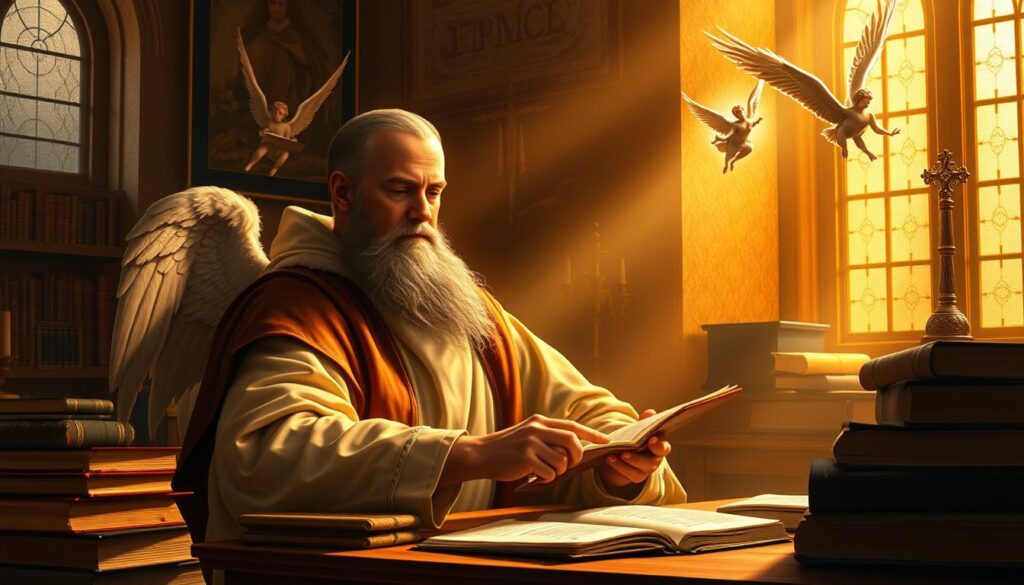
st thomas aquinas theological gifts

St. Thomas Aquinas’ Insights in Summa Theologiae

St. Thomas Aquinas redefined spiritual growth in his Summa Theologiae. He described the seven gifts as supernatural habits that elevate human nature. These dispositions allow believers to surpass natural reasoning and align with divine wisdom.

Aquinas showed how these habits perfect virtues like prudence and charity. As he wrote, “Grace doesn’t destroy nature but perfects it.” This synergy helps individuals respond to life’s challenges with God-inspired clarity.

The Role of the Sacrament of Confirmation

Confirmation activates what baptism begins. During this sacrament, bishops pray for the Holy Spirit to strengthen these gifts within each person. The ancient prayer lists specific endowments—wisdom, courage, and reverence among them.

Aquinas’ Teaching Confirmation’s Impact
Gifts as divine habits Strengthens existing graces
Perfects virtues Enables virtuous living
Lifelong supernatural aid Seals spiritual maturity

This sacrament equips believers to serve as active witnesses. It’s not about gaining new powers but awakening what’s already present. Through confirmation, ordinary people become channels of extraordinary grace.

Understanding the catholic 7 gifts of the holy spirit in Daily Life

Imagine your daily choices becoming divine collaborations. The sacred endowments received through sacraments aren’t museum pieces—they’re active tools shaping how we work, love, and confront challenges. Like a compass guiding sailors through rough seas, these graces help navigate modern complexities with supernatural clarity.

When Virtues Meet Divine Assistance

Moral growth isn’t a solo project. These heavenly aids work best when paired with intentional virtue-building. Think of them as power-ups for your character—each act of patience or kindness strengthens your capacity to receive divine strength. A parent showing mercy during teenage rebellion or a nurse advocating for ethical care both demonstrate this synergy.

Ancient wisdom reminds us: “Grace builds on nature.” Daily efforts to choose honesty over convenience create fertile ground for spiritual gifts to flourish. They don’t replace human effort but amplify it—like sunlight helping seeds become mighty oaks.

Everyday Battles, Extraordinary Weapons

Spiritual warfare isn’t about exorcisms but resisting gossip during coffee breaks or choosing forgiveness after betrayal. Here’s where these endowments shine. They provide courage to speak truth when silence feels safer and wisdom to discern right from trendy.

Consider how they transform ordinary moments:

  • A teacher using discernment to address classroom conflicts
  • Teens resisting peer pressure through holy reverence
  • Executives making ethical decisions guided by divine counsel

These aren’t theoretical ideals but lived experiences. When activated, they turn routine tasks into kingdom-building opportunities—proof that heaven partners with earth in the most practical ways.

In-Depth Look at Each of the Seven Gifts

What if everyday choices became moments of divine partnership? These sacred endowments transform ordinary decisions into opportunities for spiritual growth. Let’s explore how they operate in practical terms.
divine gifts wisdom understanding

Wisdom and Understanding: Seeing Through God’s Eyes

Wisdom acts like heavenly night vision—revealing paths hidden to human logic. It helps parents discipline with compassion and professionals make ethical calls. As St. Augustine noted, “Our hearts find no rest until they rest in divine truth.”

Understanding uncovers hidden layers in life’s challenges. It turns setbacks into spiritual lessons and joys into gratitude moments. Together, they reshape how we interpret relationships and global events through eternal lenses.

Counsel and Fortitude: Guidance and Strength in Action

When facing tough choices, counsel whispers clarity through prayer or trusted mentors. It’s why many describe it as a “gut feeling” aligned with higher truths. Paired with fortitude, it empowers standing firm against peer pressure or injustice.

Gift Function Impact
Counsel Moral navigation Confident decision-making
Fortitude Perseverance booster Resilience in trials

Knowledge, Piety, and Fear of the Lord: Foundations for a Holy Life

Knowledge separates timeless truths from cultural trends. It helps teens spot toxic influences and retirees find purpose. Piety nurtures childlike trust—transforming rituals into heartfelt conversations with God.

Fear of the Lord isn’t about terror but awe-inspired love. Like gravity keeping planets in orbit, it maintains spiritual balance—preventing pride while fueling humble service.

Modern Perspectives and Testimonies

How do ancient spiritual endowments remain relevant in our fast-paced digital age? Today’s faith leaders bridge timeless truths with contemporary challenges, showing how these divine tools empower modern believers.

Fresh Voices in Spiritual Formation

Recent theological works highlight practical applications for daily living. Many emphasize how reverence anchors us in chaotic times, while respect for human dignity shapes ethical choices. A New York teacher shared how seeking divine goodness transformed her approach to student conflicts.

A Pope’s Practical Wisdom

Pope Francis reimagines these sacred endowments as “spiritual survival kits” for modern struggles. He describes wisdom as seeing workplace tensions through heaven’s lens—recognizing each person’s inherent worth. His take on understanding? It’s about uncovering hidden truths in social media debates or family disagreements.

For Francis, reverence isn’t formal worship but finding God in subway commutes and grocery lines. This approach makes ancient gifts feel immediate—tools for building hope where cynicism thrives.

FAQ

What’s the origin of the seven gifts mentioned in Isaiah?

The seven gifts are rooted in Isaiah 11:2–3, where the prophet describes qualities bestowed by God upon the Messiah. Early Christian teachings linked these to the Holy Spirit’s work in believers, emphasizing their role in spiritual growth and discernment.

How does Confirmation connect to receiving these gifts?

During Confirmation, Catholics believe the Holy Spirit strengthens individuals to live their faith boldly. This sacrament deepens the gifts first received at Baptism, empowering believers to embody virtues like courage and wisdom in daily challenges.

Why did St. Thomas Aquinas highlight these gifts?

In Summa Theologiae, Aquinas explained how the gifts perfect the soul, guiding actions beyond human effort. He saw them as divine tools that align our will with God’s purpose, fostering holiness through grace rather than mere willpower.

Can these gifts help with modern struggles?

Absolutely! For example, fortitude offers strength during adversity, while counsel aids in making ethical choices. Many find that leaning on these gifts fosters resilience, clarity, and peace amid life’s complexities.

How does “fear of the Lord” differ from ordinary fear?

This gift isn’t about anxiety but awe and reverence for God’s majesty. It inspires humility, gratitude, and a desire to live in harmony with divine love, steering hearts away from selfishness.

What has Pope Francis said about these spiritual tools?

Pope Francis often emphasizes their role in building joy and compassion. He encourages believers to actively seek the Spirit’s guidance, letting these gifts shape actions that serve others and heal divisions.

Do the gifts replace personal effort in spiritual growth?

No—they work alongside human effort. Think of them as divine empowerment. For instance, wisdom deepens prayer, while piety nurtures a heartfelt connection to worship and community.


Explore the Fascinating Catholicism Population


Let’s explore one of history’s most remarkable stories of spiritual expansion. Over the past 113 years, faith communities tied to a major world religion grew from 291 million members to 1.4 billion followers – nearly five times larger. This growth outpaced general population increases while maintaining a steady 17% global representation.

Recent reports from Vatican researchers reveal fresh insights. Their 2023 analysis shows membership grew by 1.15% last year alone. Modern tracking methods now map belief patterns across six continents, showing surprising shifts in regional engagement.

What makes this expansion unique? Unlike many groups that rise and fall, these communities achieved both massive growth and demographic stability. From European roots to thriving African congregations, the geographical spread tells a compelling story of adaptation.

Key Takeaways

  • Faith communities grew 383% since 1910, reaching 1.4 billion members
  • Maintained consistent 16-17% global representation for over a century
  • 2023 reports show 1.15% annual growth through advanced tracking
  • Vatican yearbooks provide detailed regional engagement maps
  • African membership surges contrast with European declines
  • Digital tools revolutionize how researchers study belief trends

Ready to see how technology reveals hidden patterns in spiritual migration? We’ll break down the numbers reshaping our understanding of global belief systems.

Global Overview of Catholic Church Demographics

Faith communities worldwide show fascinating patterns when viewed through a century-long lens. The global Catholic population has grown from 291 million to 1.4 billion since 1910, maintaining remarkable stability as a share of humanity.

Century of Consistent Growth

Three generations of records reveal an unexpected story. While absolute numbers tripled, the percentage of global adherents stayed between 16-17%. This balance shows growth keeping pace with worldwide population increases.

Researchers highlight two key factors. Advanced tracking by groups like Pew Research Center provides precise data. Also, the church’s structure – 23 distinct rites united under Rome – helps maintain cohesive records across cultures.

Modern Patterns Emerge

Recent Vatican reports show 1.15% annual growth through 2023. This steady pace masks dramatic regional shifts. African communities expand rapidly while European numbers decline, creating new demographic realities.

What makes these trends significant? They demonstrate how ancient institutions adapt to modern changes. The numbers reveal both resilience and evolution, with digital tools now mapping spiritual migrations once hidden from view.

Regional Trends and Growth Patterns

Global spiritual landscapes have shifted like tectonic plates in the last century. Where communities gather now looks radically different from 1910, when Europe held most followers. Today, vibrant hubs stretch from bustling African cities to tropical Asian islands.

regional catholic distribution map

Dynamic Growth in Africa and Asia

Africa’s faith communities grew faster than any region – up 3.31% last year. The Democratic Republic of Congo now counts 55 million members, while Nigeria added 35 million since 2010. Over 20% of global followers now call Africa home.

Asia shows similar energy. The Philippines leads with 93 million members, and India’s 23 million mark surprising growth. Together, these nations anchor 76.7% of Southeast Asia’s religious landscape.

Steady Trends in Europe and Oceania

Europe maintains strong roots despite slower 0.2% growth. Italy, Poland, and Spain still see over 90% participation rates. Meanwhile, Oceania’s 11 million members grew 1.9% last year – proof that smaller regions still matter.

Region Global Share Growth Rate (2023)
Africa 20% 3.31%
Latin America 47.8% 1.4%
Asia-Pacific 11% 2.1%
Europe 24% 0.2%
Oceania 0.8% 1.9%

Latin America remains the largest hub worldwide, with Brazil alone housing 182 million members. This distribution shows how ancient traditions adapt to new cultural contexts while keeping core values intact.

Insights into Church Statistics: Bishops, Priests, and Deacons

Church leadership roles paint a vivid picture of global spiritual needs and responses. Recent Annuarium Statisticum Ecclesiae reports reveal surprising shifts in clergy numbers. The Central Office of Church Statistics tracked changes from 2022 to 2023 that impact pastoral care worldwide.

Leadership Numbers and Their Global Impact

The number of bishops grew by 1.4% last year, reaching 5,430 worldwide. Africa shows the highest demand – each bishop serves 365,000 followers compared to Europe’s 87,000 ratio. This imbalance highlights regional challenges in spiritual guidance.

Priests tell a different story. Their total number dipped 0.2% globally, but Africa and Asia bucked the trend with 2.7% and 1.6% growth. Europe’s 1.6% decline underscores shifting vocational trends across continents.

Region Bishops Priests Deacons Growth (2023)
Africa +3.1% +2.7% +2.1% Strongest
Americas +1.8% -0.7% +3.8% Mixed
Asia +2.0% +1.6% +1.9% Steady
Europe +0.5% -1.6% +0.4% Declining
Oceania -0.3% -1.0% +10.8% Volatile

Implications for Pastoral and Community Services

Permanent deacons emerge as problem-solvers in this shifting landscape. Their ranks swelled 2.6% globally, with Oceania’s 10.8% surge leading the way. North America now hosts 39% of all deacons – a strategic response to priest shortages.

These numbers matter beyond spreadsheets. Each statistic represents real people needing spiritual support. As one Vatican analyst notes: “Our data helps direct resources where hearts are most open.”

Examining catholicism population in North America

North America’s spiritual landscape tells a story of cultural fusion. Since 1910, the region’s share of global followers grew from 5% to 6.6%, fueled by both birth rates and border crossings. This transformation makes the continent a living laboratory for studying how traditions adapt in new settings.

north america catholic demographics

Immigration’s Transformative Power

Over half of U.S. newcomers identify with this faith tradition – double the general migration rate. Three-quarters arrive from Latin America, creating vibrant communities where Spanish hymns blend with English prayers. Today, 33% of American adherents trace their roots south of the Rio Grande.

The numbers reveal surprising patterns:

  • 30% of U.S. followers were born abroad vs. 13% nationwide
  • 76% of faith-based immigrants come from Central/South America
  • 60% non-Hispanic white members contrast with growing diversity

Despite steady growth, challenges persist. Nearly 10% of American adults left the tradition, creating a revolving door effect. Leaders now focus on bilingual services and cultural programs to bridge generational gaps.

These shifts position North America as a crucial connector between established hubs and emerging regions. As one community organizer notes: “Our churches have become global villages where continents meet in the pews.”

Conclusion

The story of global faith communities reveals a century of transformation. Today’s catholic population spans 1.406 billion people, growing steadily at 1.15% annually. This growth isn’t just about numbers – it’s reshaping how spiritual traditions connect across continents.

Africa’s remarkable 3.31% annual expansion contrasts with Europe’s slower pace, showing how ancient institutions adapt to new cultural landscapes. The Americas now host nearly half the world’s followers, while Asia’s rising communities add fresh energy to this evolving story.

Recent Annuarium Statisticum reports highlight surprising clergy trends. More bishops serve growing regions, while permanent deacons fill crucial roles in areas with priest shortages. These shifts prove spiritual leadership keeps pace with changing needs.

What does this mean for the future? The distribution of followers – 47.8% in the Americas, 20% in Africa – shows no single region dominates anymore. As digital tools track these changes, one truth emerges: faith communities thrive when they grow roots in local soil while keeping global connections strong.

FAQ

How has the global Catholic Church grown in recent years?

According to the Annuarium Statisticum Ecclesiae, the worldwide Catholic community increased by over 16 million between 2022 and 2023, reaching 1.4 billion. Growth was strongest in Africa and Asia, while Europe saw slower trends.

Which regions are driving the rise in Catholic followers?

Africa and Asia lead with dynamic growth. For example, sub-Saharan Africa saw a 27.6% increase in believers from 2010 to 2023. Southeast Asia also contributed significantly, reflecting vibrant missionary activity.

What challenges does the Church face in North America?

While immigration has bolstered numbers in the U.S. and Canada, engagement among younger generations has declined. Demographic shifts, like aging congregations, require adaptive pastoral strategies to maintain influence.

How many priests and bishops serve the Church globally?

The Central Office of Church Statistics reported over 5,300 bishops and 407,000 priests worldwide in 2023. However, priest numbers dipped slightly in Europe and the Americas, while Africa and Asia saw increases.

Why does the Church emphasize data like the Annuarium Statisticum?

Tracking metrics like sacramental participation and clergy distribution helps the Vatican allocate resources effectively. It also identifies trends, such as rising vocations in Africa, shaping global evangelization priorities.

How does Latin America’s Catholic population compare to other regions?

Latin America remains home to the largest share of Catholics (27% of the global total). However, growth rates there have slowed compared to Africa, where the faithful now represent nearly 20% of the Church.

Exploring the Role of the Holy Spirit in Catholicism


Many believers find the third person of the Blessed Trinity both fascinating and puzzling. A 2008 statement by Pope Benedict XVI captures this tension perfectly: “The Holy Spirit has been in some ways the neglected person of the Blessed Trinity.” This observation invites us to look beyond common symbols and explore the Spirit’s profound role in faith.

At its core, this divine presence represents pure relationship—the eternal bond of love between God the Father and Son. Unlike abstract ideas, it’s a living force that connects believers to this sacred unity. Think of it as the breath that animates spiritual life, weaving through prayer, sacraments, and daily acts of compassion.

While the Trinity’s mystery defies full human grasp, the Catholic Church teaches that we can still grow in understanding. The Spirit isn’t a distant figure but an active guide. From creation to modern worship, this person of the Trinity shapes how communities experience grace and transformation.

Key Takeaways

  • The Holy Spirit completes the Trinity as the bond of love between Father and Son
  • Pope Benedict XVI highlighted the need to deepen our connection with this divine person
  • Mystery and clarity coexist in Catholic teachings about the Spirit’s role
  • This presence actively shapes worship and personal spiritual growth
  • Understanding the Spirit helps believers engage more fully with their faith

Unveiling the Mystery of the Holy Spirit

Ancient texts paint a vivid picture of a powerful yet mysterious influence active since the world’s dawn. This divine presence appears in Genesis 1:2 as a life-giving force hovering over creation’s waters—a preview of its role in shaping history.

Origins and Biblical Foundations

The Spirit’s work begins in Genesis and echoes through key figures. Joseph’s wisdom stunned Pharaoh because “the Spirit of God was in him” (Genesis 41:38). Prophets like Isaiah described it as resting on the Messiah, while Joel foresaw a time when this power would touch all people.

Biblical Moment Symbol Used Significance
Creation (Genesis 1:2) Hovering breath Life-giving force
Joseph’s wisdom Divine insight Guidance in crisis
Isaiah’s prophecy Resting presence Messianic preparation
Joel’s vision Poured-out gift Universal access

Theological Perspectives and the Element of Mystery

Early believers sensed this force but didn’t fully grasp its personhood until Jesus Christ’s teachings. Church Fathers described the Trinity as an eternal dance—with the Spirit as the rhythm connecting God the Father and Son. This framework helps us approach divine mystery without reducing it to simple formulas.

While symbols like fire or clouds hint at its nature, finite minds can’t fully contain infinite truth. Yet through Scripture and tradition, we gain meaningful understanding—like recognizing wind by its effects on the world.

The Significance of the Holy Spirit in Catholic Beliefs

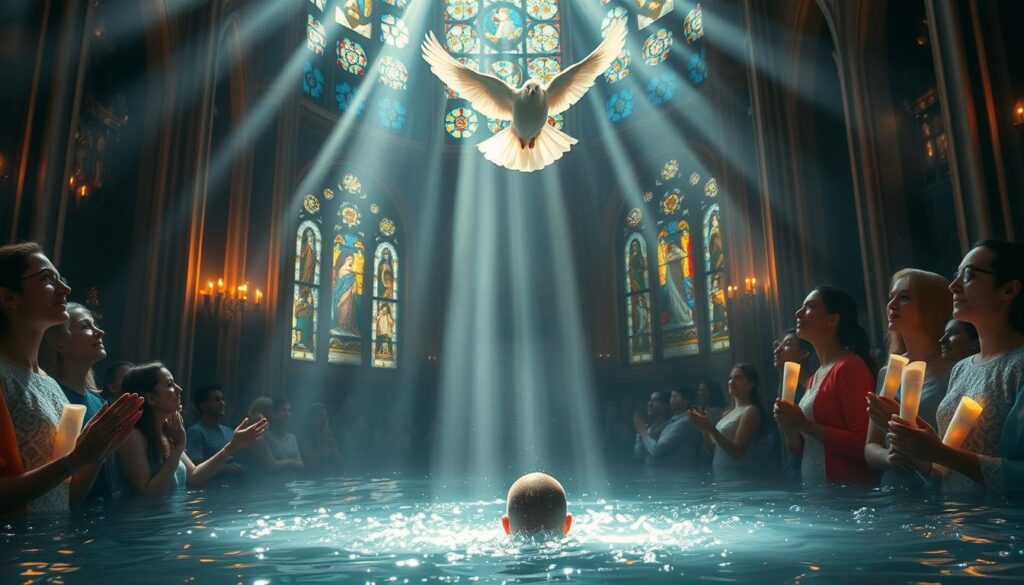
Sacraments act as spiritual doorways where believers experience divine connection. At baptism, the journey begins—water and sacred words awaken a relationship that shapes lifetimes. “Born of water and Spirit,” as Jesus taught, believers receive more than ritual—they gain an inner companion.

baptism and holy spirit

Role in Baptism, Confirmation, and Daily Devotion

Jesus’ own immersion in the Jordan River set the pattern. When the dove descended, it revealed a truth: sacraments make God’s power tangible. Today, baptism marks entry into the Church family. Confirmation deepens this bond, like adding fuel to a flame.

This divine presence isn’t temporary. It dwells within, guiding choices and comforting hearts. Daily prayer becomes a conversation—a chance to lean into wisdom greater than our own. Even simple acts of kindness flow from this inner wellspring.

Historical Insights and Papal Reflections

Early Christians saw baptism as rebirth. They echoed Jesus’ words: “Unless born anew, you cannot see God’s kingdom.” Over centuries, leaders emphasized nurturing this gift. Pope Benedict XVI once noted how easily we forget this divine partner in our faith journey.

His solution? Rediscover quiet moments of listening. Like Peter finding courage after Pentecost, modern believers thrive when embracing this unseen helper. Regular confession and worship keep the connection alive—transforming ordinary lives into extraordinary witnesses.

Deep Dive into catholicism holy spirit: Impact on Daily Faith and Practice

The dance of divine relationships offers a blueprint for spiritual connection. Early theologians like Saint Maximus envisioned the Trinity as an endless movement of love, where the Father and Son move in perfect sync. The third person becomes the dance floor itself—the space where their bond flourishes and invites others to join.

The Spirit as the Facilitator of the Blessed Trinity’s Relationship

This divine presence isn’t just a spectator. The Nicene Creed’s phrase “proceeds from the Father and Son” reveals its active role. Like breath shared between two people, it carries the essence of their relationship into the world. Ancient thinkers saw this as God’s way of including humanity in sacred unity.

How do we join this dance? Through simple, consistent prayer. Every whispered plea or moment of gratitude becomes a step toward harmony with divine love. Sacraments like Eucharist renew this connection, reminding us we’re part of something eternal.

The Spirit’s work isn’t abstract—it reshapes how we live. It nudges us toward patience during conflicts and sparks creativity in serving others. Recognizing this inner guide transforms routine actions into reflections of the blessed Trinity’s perfect unity.

The Holy Spirit in Scripture and Tradition

Sacred writings and Church practices weave together like threads in a tapestry, revealing patterns of divine guidance across ages. This connection shows how ancient promises still shape modern faith experiences. From creation’s first breath to fiery Pentecost tongues, the story unfolds through inspired words and lived traditions.

scriptural journey of the holy spirit

From Genesis 1:2 to Pentecost: A Scriptural Journey

The Bible’s opening lines introduce a life-giving force hovering over chaos. This presence later empowered Joseph to save nations from famine and stirred prophets to speak truth. Joel’s vision—“I will pour out my spirit upon all flesh”—found explosive fulfillment when flames descended on Jesus’ followers. Ordinary men and women suddenly spoke with divine boldness, as Acts 5:31 vividly describes.

Pentecost wasn’t a one-time event. The Book of Acts shows this power continually transforming believers into courageous witnesses. Sons and daughters across generations now share inspired insights, proving Joel’s words remain alive today.

Ancient Traditions and Doctrinal Developments

Early Christians faced heated debates about the Spirit’s nature. Fourth-century councils settled these questions with clear declarations: “The Lord, the giver of life… who proceeds from the Father.” Giants like Athanasius and Basil defended these truths, ensuring teachings matched biblical revelations.

Their work established pneumatology—the study of spiritual realities—as central to faith. Centuries of prayer and reflection deepened understanding, showing how ancient practices and modern worship both flow from the same source. This living tradition helps believers worldwide stay anchored in timeless truth while embracing fresh expressions of hope.

Embracing the Gifts and Charismatic Elements of the Holy Spirit

Every generation discovers fresh ways to engage with sacred empowerment. The seven gifts described in Isaiah 11:2-3—like wisdom and courage—equip believers to face modern challenges. These timeless tools foster spiritual growth and service, shaping how communities live out their faith.

Spiritual Gifts, Fruits, and the Transformative Power

Paul’s letters reveal a vibrant mix of supernatural abilities for building up the Church. From healing to prophecy, these manifestations remind us divine power remains active today. The fruits listed in Galatians 5:22-23 show inner transformation—love and patience blooming in surrendered hearts.

Type Gifts/Fruits Purpose
Traditional Gifts Wisdom, Fortitude, Piety Guidance for righteous living
Charismatic Gifts Healing, Prophecy, Tongues Strengthen community faith
Spiritual Fruits Joy, Peace, Self-Control Reflect divine character

Invoking the Divine Presence in Personal and Community Prayer

Jesus promised, “Your Father will give the Spirit to those who ask” (Luke 11:13). Simple prayers like “Come, Holy Spirit” open doors to deeper connection. Group worship amplifies this experience—especially in Catholic renewal movements where hands-on prayer mirrors apostolic traditions.

Life in the Spirit Seminars teach practical ways to welcome sacred power. Through scripture study and communal support, participants learn to recognize subtle promptings. This balanced approach keeps extraordinary gifts grounded in Church teaching while igniting fresh passion for sharing faith.

Conclusion

Personal transformation stories highlight the active role of a divine guide in everyday faith. When believers open their hearts to this power, ordinary lives become extraordinary testimonies. Think of Peter—once hiding in fear, later preaching boldly to thousands. His change began when he embraced the person blessed trinity’s presence fully.

This same relationship between father son and believers continues today. Through prayer and sacraments, people discover strength beyond their own. The catholic church teaches that being filled holy spirit isn’t reserved for saints—it’s available to all who seek truth.

Daily life becomes richer when we recognize these gifts. Simple acts of kindness, moments of courage, and quiet prayers all carry divine fingerprints. Like wind shaping landscapes over time, this sacred partnership reshapes hearts and communities—one faithful step at a time.

FAQ

How does the Bible describe the Holy Spirit’s role in creation?

In Genesis 1:2, the divine presence is depicted as moving over the waters, symbolizing His active role in shaping the world. This foundational text highlights His ongoing work in sustaining life and guiding creation.

What is the connection between the Holy Spirit and sacraments like Baptism?

During Baptism and Confirmation, believers receive grace through the third person of the Trinity. These sacraments mark a spiritual rebirth, empowering individuals to live out their faith with courage and wisdom.

Why is Pentecost significant in understanding the Holy Spirit?

Pentecost, described in Acts 2, marks the moment when early followers were filled with divine power. This event enabled them to spread teachings boldly, fulfilling prophecies like Joel 2:28 about sons and daughters prophesying.

How do the “gifts” mentioned in Isaiah 11:2 apply to daily life?

The seven gifts—wisdom, understanding, counsel, fortitude, knowledge, piety, and fear of the Lord—help believers navigate challenges. They foster virtues like patience and kindness, shaping actions rooted in love and truth.

Can someone experience the Holy Spirit outside formal prayer?

Absolutely! The Catechism teaches that the divine presence works through ordinary moments, relationships, and acts of service. Many feel inspired during quiet reflection, community gatherings, or even acts of compassion.

How does the Holy Spirit relate to the Trinity?

As the third person of the Trinity, He proceeds from the Father and Son, uniting them in love. This bond reflects how God’s grace flows into the world, inviting people into deeper communion with the divine.

Catholicism Around the World: A Country-by-Country Guide


Let’s explore one of humanity’s oldest and most widespread spiritual traditions. With over 1.39 billion followers, this faith unites people across continents through shared rituals and beliefs. Its influence stretches from ancient European cathedrals to bustling cities in Latin America and quiet villages in Africa.

Vatican City, the world’s smallest independent state, serves as the faith’s spiritual headquarters. Here, traditions dating back centuries blend with modern governance. But the story doesn’t end there—this belief system thrives in unexpected places, adapting to local customs while maintaining core teachings.

You’ll find fascinating contrasts in how communities practice their beliefs. Some nations show near-universal adherence, while others host vibrant minority groups. Colonial history, migration patterns, and social movements all play roles in shaping these unique expressions of faith.

This guide highlights how geography and culture create distinct traditions within a unified framework. We’ll examine surprising statistics, like regions where followers outnumber other groups despite being a minority nationally. You’ll also see how politics and education impact religious participation.

Ready to discover how one ancient institution continues to shape lives worldwide? Let’s begin our journey through the rich mosaic of global spiritual practices.

Key Takeaways

  • The faith’s global headquarters in Vatican City influences practices across 153 nations
  • Historical events and migration patterns explain current population distributions
  • Local traditions blend with universal rituals in unique regional expressions
  • Social movements and education impact participation rates in modern communities
  • Surprising pockets of devotion exist in predominantly non-Christian regions
  • Core beliefs remain consistent despite cultural adaptations worldwide

Introduction to Global Catholicism

Two thousand years ago, a spiritual movement began that would span the globe. Built on teachings about Jesus’ life and resurrection, this faith developed a unique structure under papal leadership. Its ability to blend universal principles with local customs created a religious network unlike any other.

The Foundation of the Catholic Church

The catholic church traces its roots to early followers who spread Christianity across the Roman Empire. Three key elements defined its growth:

  • A central authority system led by the Pope
  • Shared sacraments and rituals across regions
  • Adaptation to local languages and traditions

This framework allowed communities from Ireland to Ethiopia to maintain core beliefs while developing distinct practices. The Holy Roman Empire’s rise cemented its role in shaping laws, education, and art.

Historical Spread Across Continents

Missionaries carried the faith through three major waves:

  1. Ancient outreach along Mediterranean trade routes
  2. Medieval monastic expansions into Northern Europe
  3. Colonial-era missions to the Americas and Asia

Persecution tested communities through the centuries, from Roman coliseums to modern conflicts. Yet survival strategies like underground worship and cultural integration kept traditions alive. Today, 17% of Middle Eastern Christians still identify with this ancient tradition despite ongoing challenges.

Exploring catholicism by country: Trends and Cultural Insights

Numbers tell powerful stories about spiritual traditions. While Vatican City’s 100% adherence stands unique, other nations reveal how historical forces shape modern beliefs. Let’s unpack what statistics reveal about worldwide devotion.

A highly detailed, photorealistic map depicting the global distribution of Catholic populations. The foreground showcases various countries with their borders clearly defined, each shaded to represent the percentage of Catholic adherents within their populations. The middle ground features major cities and population centers, with their relative Catholic influences visualized through subtle variations in color and texture. The background encompasses a vast, sweeping vista of the Earth's landmasses, oceans, and continents, bathed in a warm, golden light that evokes a sense of reverence and spirituality. The overall composition conveys a comprehensive, data-driven perspective on the worldwide reach and cultural impact of the Catholic faith.

Where Faith Thrives Today

Southern Europe dominates the top ranks, with Italy (96.55%) and Malta (95.34%) showing near-universal participation. Poland’s 94.34% rate proves how faith becomes cultural bedrock. But surprises emerge:

  • Equatorial Guinea (93.52%) leads African nations
  • East Timor (93.2%) maintains strong adherence post-independence
  • Paraguay (91.56%) tops South American charts

Forces Behind the Numbers

Colonial footprints explain many patterns. Former Spanish and Portuguese territories like Ecuador (89.6%) retain high percentages centuries later. Yet geography isn’t destiny—Monaco’s 90.63% rate thrives without colonial ties.

Modern factors now reshape demographics. Urbanization in Portugal (90.41%) contrasts with rural devotion in Poland. Government policies in China limit growth, while Filipino communities blend indigenous practices with traditional rituals.

These statistics aren’t just percentages—they’re living records of resilience. From African villages to Asian cities, ancient traditions adapt while maintaining core teachings. Next, we’ll explore how colonial history cemented these global patterns.

The Impact of Colonial History on Catholic Adoption

The sails of Spanish and Portuguese ships carried more than explorers – they transported entire belief systems. Colonial powers reshaped spiritual landscapes through conquest and cultural exchange, leaving legacies that endure centuries later.

Spain & Portugal: Catalysts of Change

Military campaigns often paved the way for religious transformation. When Cortés conquered the Aztec Empire in 1521, Spanish friars quickly established missions alongside forts. Mexico’s modern identity still reflects this fusion of indigenous and European traditions.

Portugal’s 16th-century colonization of Brazil produced equally lasting results. The Church of Saints Cosme and Damião, built in 1535, became a blueprint for thousands of worship sites. These early institutions served dual purposes – spreading faith while reinforcing colonial authority.

From Missionary Roots to Modern Traditions

Spanish arrival in the Philippines through Magellan’s 1521 expedition created Asia’s largest Catholic nation. Missionaries cleverly blended local rituals with sacraments, making the faith feel familiar to island communities.

Today’s churches navigate complex histories. Many celebrate cultural hybrids – like New Mexico’s 1610 San Miguel Chapel, where Native American motifs adorn traditional altars. Others actively address colonial-era injustices while preserving community-building aspects like schools and hospitals.

Country Spotlights: From Brazil to the United States

From tropical megacities to suburban neighborhoods, Catholic communities shape societies in unexpected ways. Three nations stand out for their unique religious landscapes – each telling a different story about faith’s role in modern life.

A grand cathedral occupies the foreground, its towering spires and ornate facade casting long shadows across a sprawling landscape. In the middle ground, the silhouettes of diverse cityscapes emerge, each representing a country with a significant Catholic population. The background is a panoramic vista, with rolling hills and a vibrant sky that changes from dawn to dusk, symbolizing the global reach and enduring legacy of Catholicism. The scene is illuminated by a warm, diffuse light, creating a sense of reverence and timelessness. The composition emphasizes the scale, grandeur, and multinational character of the Catholic faith, inviting the viewer to explore the rich tapestry of its global influence.

Brazil and Mexico: Latin American Pillars

Brazil’s 123 million Catholics form the world’s largest national community. Portuguese colonists built over 5,000 churches by 1800, blending European rituals with African spiritual traditions. Today, June festivals honor saints with fireworks and feasts that last weeks.

Mexico’s 100 million believers showcase faith’s cultural depth. Indigenous influences appear in Day of the Dead altars adorned with crucifixes and marigolds. Nearly 90% attend monthly services – a rate triple Brazil’s.

Nation Catholic Population % of Country Key Feature
Brazil 123 million 60% Largest global community
Mexico 100 million 78% Indigenous fusion traditions
United States 69.3 million 20% Multi-faith coexistence

Unpacking the United States’ Catholic Mosaic

The United States hosts 69.3 million believers across diverse communities. Spanish missionaries established Santa Fe’s San Miguel Chapel in 1610 – 166 years before independence. Today, urban parishes serve immigrants while rural churches preserve European traditions.

American Catholics balance secular laws with active faith practices. Over 6,000 schools and 600 hospitals demonstrate community impact. Yet weekly attendance sits at 24%, reflecting modern challenges Latin American nations face less sharply.

Regional Demographic Trends Across the Continents

Continental trends highlight where ancient traditions meet modern realities. Today’s global faith map shows aging European communities alongside booming Asian and African congregations. These shifts reshape how spiritual practices influence societies worldwide.

Faith in Europe and Latin America

Europe’s religious landscape reveals striking contrasts. Italy leads with 50.5 million believers, while France’s 39 million face secularization pressures. Poland maintains robust participation (33 million), contrasting with Spain’s 30.7 million amid declining attendance.

Latin America remains a stronghold, with over 70% adherence in most nations. Brazil and Mexico anchor this trend, blending indigenous customs with centuries-old rituals. Urbanization challenges traditional practices, yet festivals and family traditions keep faith central to daily life.

New Frontiers in Asia and Africa

Asia’s growth centers on the Philippines’ 85.5 million-strong community. China and India host surprising minorities – 12 million and 15.5 million respectively – often thriving despite political constraints. These groups frequently blend local spiritual elements with traditional practices.

Africa’s Democratic Republic of the Congo showcases explosive growth. Portuguese missionaries laid foundations here in 1491, leading to today’s 37 million believers. Younger populations drive expansion, with African communities projected to represent 25% of global followers by 2050.

Diverse Cultural Practices and Traditions in Catholicism

Vibrant colors splash through Catholic traditions worldwide, painting unique expressions of faith shaped by local histories. From candlelit village shrines to city-wide parades, communities blend universal teachings with regional flavors. This cultural dance keeps ancient rituals alive while embracing modern identities.

A grand cathedral in the foreground, its ornate spires reaching towards the heavens, surrounded by a diverse array of cultural traditions and practices from around the world. In the middle ground, people of various ethnicities engaged in rituals and celebrations - vibrant costumes, intricate iconography, and reverent gestures. In the background, a tapestry of landscapes - bustling city streets, remote villages, lush rainforests - each region contributing its unique flavor to the tapestry of global Catholicism. Warm, golden lighting bathes the scene, evoking a sense of timelessness and the enduring, unifying spirit of the faith. Captured through a wide-angle lens to convey the scale and breadth of this cultural mosaic.

Where Belief Meets Daily Life

In the Democratic Republic of the Congo, priests navigate a complex spiritual landscape. Traditional healers still command respect, creating fascinating dialogues between ancestral customs and church teachings. Yet Sunday Masses overflow with energy, proving religion adapts without losing its core.

Colombia’s colonial-era hospitals and schools evolved into community anchors. What began as Spanish missionary projects now educate millions through 2,300+ Catholic schools nationwide. These institutions showcase how historical efforts still shape societies.

France’s spiritual legacy shines through its 400+ saints. Figures like Thérèse of Lisieux reflect local values of simplicity and service. Across oceans, Filipino devotees march barefoot during Holy Week processions – a tradition merging Spanish fervor with tropical resilience.

Latin America offers striking fusions. Mexican families craft Day of the Dead altars with crucifixes and marigolds, while Brazilian June festivals explode with saint-themed fireworks. Each country reimagines shared beliefs through its cultural lens.

These living traditions face modern tests. Urbanization reshapes community bonds, and younger generations seek fresh ways to connect. Yet from Polish grandmothers whispering rosaries to Congolese drummers at Mass, the Catholic Church remains a global mosaic of local hearts.

Conclusion

Our global exploration reveals a religion thriving through remarkable adaptability. With 1.39 billion followers worldwide, this faith maintains core teachings while embracing local customs. From Vatican City’s spiritual leadership to grassroots communities in the Democratic Republic of Congo, its influence spans every inhabited continent.

Historical forces shaped today’s map of belief. Former colonial territories still show strong majorities, while newer communities in Asia grow rapidly. The United States demonstrates how ancient traditions flourish in modern, pluralistic societies through education and cultural integration.

Regional shifts now redefine global participation. Europe’s aging populations contrast with Africa’s youthful energy, where over 37 million Catholics gather in vibrant congregations. Meanwhile, unique blends of ritual and culture keep practices fresh – whether in Filipino processions or Brazilian festivals.

This worldwide network proves unity needs no uniformity. Each nation adds distinct flavors to shared spiritual foundations, creating a living tapestry that evolves while honoring its roots. As boundaries blur and communities connect, this ancient institution continues writing new chapters in humanity’s story.

FAQ

Which country has the largest Catholic population?

Brazil leads globally with over 120 million Catholics. Mexico and the Philippines follow closely, reflecting centuries of missionary work and cultural integration.

How did colonial history shape Catholic demographics?

Spain and Portugal spread the faith through conquest and missions in Latin America, Africa, and Asia. This legacy still influences religious practices in former colonies today.

Why does the United States have a diverse Catholic community?

Immigration from Ireland, Italy, Latin America, and the Philippines created a mosaic of traditions. Regional differences in worship styles and celebrations highlight this diversity.

Where is Catholicism growing fastest today?

Africa and Asia see rapid growth due to high birth rates and active evangelization. Countries like the Democratic Republic of the Congo and India have expanding Catholic populations.

How do local cultures influence Catholic traditions?

Communities blend faith with indigenous customs. Examples include Mexico’s Day of the Dead processions and Filipino Simbang Gabi dawn masses during Christmas.

Catholicism Rules: Understanding the Core Beliefs


The Catholic Church stands as one of the most influential religious institutions globally, guiding over a billion followers. Rooted in sacred traditions, its practices blend ancient wisdom with modern spiritual needs. This faith community spans continents, cultures, and generations, offering a shared framework for worship and moral living.

At its core, Catholic guidelines aren’t merely restrictions but pathways to deepen one’s relationship with God and others. These principles emerge from Scripture, centuries of reflection, and the Church’s role as a guardian of truth. They shape how believers pray, serve their communities, and engage with today’s complex world.

For many, these teachings act as a compass—offering clarity in ethical decisions and fostering unity among diverse cultures. The Church’s structure, led by the pope and bishops, ensures consistency while adapting to contemporary challenges. This balance between tradition and relevance defines its enduring impact.

Key Takeaways

  • The Catholic Church unites over 1.3 billion people worldwide through shared beliefs.
  • Its teachings combine divine inspiration with historical reflection.
  • Guidelines prioritize spiritual growth and community connection.
  • Leadership structures maintain unity across global congregations.
  • Rules adapt to modern contexts without losing core values.

Foundations of Catholic Life and Canon Law

At the heart of Catholic practice lies a unique blend of spiritual guidance and structured governance. Unlike typical religious customs, these principles form an organized system called Canon Law. This framework ensures unity across global communities while respecting cultural diversity.

Overview of Catholic Precepts and Traditions

The Church’s legal structure traces its roots to ancient texts like the Didache, written in the first century. These early guidelines shaped sacraments, marriage practices, and leadership roles. Today, the 1983 Code of Canon Law serves as the primary rulebook, reflecting centuries of refinement.

The Role of Canon Law in Shaping Faith

Canon Law isn’t about control—it’s a roadmap for spiritual growth. It clarifies responsibilities for clergy and laypeople alike, from baptism protocols to resolving disputes. While civil laws govern nations, this system focuses on sacred obligations and moral accountability.

Key aspects include:

  • Balancing ancient tradition with modern needs
  • Maintaining the Church’s authority through consistent practices
  • Protecting core doctrine while allowing pastoral flexibility

Through this legal lens, believers find clarity in their spiritual journey without losing connection to shared heritage. The system evolves, but its purpose remains: nurturing faith through orderly, compassionate guidance.

Catholicism Rules in Practice: Key Guidelines and Their Origins

Living out one’s faith involves concrete actions that shape daily practice. The Church outlines five essential commitments that guide believers in balancing worship, reflection, and service. These guidelines evolved over centuries but remain deeply relevant today.

Modern Precepts from the Catechism

The Sunday Mass obligation anchors community life. Gathering weekly strengthens bonds between members and renews spiritual focus. Resting from unnecessary work on these days creates space for reflection and family connection.

Annual confession offers a reset button for the soul. This sacrament helps believers address mistakes and grow in self-awareness. Receiving the Eucharist during Easter celebrates renewal—a cornerstone of the liturgical year.

Fasting rules, especially during Lent, teach discipline and empathy. Abstaining from meat on Fridays or limiting meals fosters solidarity with those in need. These practices aren’t about deprivation but shared humanity.

Finally, supporting the Church financially ensures its mission continues. Whether through tithing or special donations, this practice maintains sacred spaces and community programs. Together, these guidelines form a rhythm of life that nurtures both personal faith and collective responsibility.

Historical Evolution of Catholic Church Regulations

From ancient scrolls to digital age councils, Church guidelines reveal a story of adaptation. Early believers navigated cultural shifts while preserving sacred traditions. This journey spans Roman governance, medieval manuscripts, and 20th-century reforms—each era leaving its mark.

Ancient Traditions and Early Church Orders

Fourth-century leaders like Constantine I prioritized Sunday worship to unify communities. Documents like the Didache (1st century) and Apostolic Constitutions laid groundwork for sacraments and fasting. By the 7th century, Theodore of Canterbury’s Penitentiary enforced Sunday observance with clear penalties.

Antique parchment pages, meticulously crafted in sepia tones, reveal the historical evolution of Catholic Church regulations. Dim candlelight casts a warm glow, illuminating the intricate calligraphy and ornate ecclesiastical imagery. Aged leather bindings hint at the weight of tradition, while delicate quill strokes capture the reverence of the scribes. Subtle shadows elongate across the time-worn documents, conveying a sense of solemnity and the passage of eras. The arrangement suggests a scholarly study, where these artifacts of faith and governance are carefully preserved, guiding the faithful through the centuries.

Medieval thinkers organized these practices into structured codes. Pope Celestine V’s 13th-century work categorized fasting, confession, and marriage rules. Later, Ernest von Parduvitz urged priests to teach these principles in plain language—making faith accessible across generations.

Influence of the Second Vatican Council

The 1960s brought transformative updates through the Second Vatican Council. While keeping core beliefs, it embraced modern needs—like celebrating Mass in local languages. This balance honored New Testament roots while addressing contemporary questions.

Key changes included:

  • Greater emphasis on lay participation
  • Renewed focus on Scripture’s role in daily life
  • Dialogue with other faith traditions

Through centuries of refinement, the Church maintains its mission—guiding believers with timeless wisdom shaped by history’s lessons.

Essential Sacraments and Ceremonial Practices

Sacred rituals shape the rhythm of spiritual life for millions worldwide. The Church recognizes seven sacraments that mark key moments in a believer’s journey—from birth to eternal rest. Each one carries divine grace through visible signs, creating bridges between heaven and earth.

Power Through Proper Form

The principle of ex opere operato ensures sacraments work when performed correctly. As the Catechism states:

“Sacraments act through the power of Christ, not personal holiness.”

This means even imperfect ministers can administer valid rites if they follow theformestablished by tradition.

Let’s explore key practices:

Sacrament Purpose Key Aspect
Baptism Spiritual rebirth Water + Trinitarian formula
Eucharist Divine nourishment Transubstantiation
Confession Soul cleansing Seal of secrecy
Matrimony Sacred union Canonical form

Confession’s content remains strictly confidential—priests face excommunication for breaking the seal. Marriage requires specific vows before clergy to ensure validity. These structures protect sacraments’ integrity while allowing cultural adaptations.

Understanding these practices helps believers engage more deeply. Whether receiving communion or preparing for marriage, sacraments offer tangible connections to divine love through time-tested church traditions.

Navigating Family Dynamics and Religious Conflict

Family bonds often face their toughest tests when faith becomes a dividing line. Differences in belief can strain relationships, creating tension during holidays or major life events. Yet these moments also offer opportunities to model compassion while staying true to personal convictions.

A tense family gathering, as members of a devout Catholic household struggle to reconcile their differing beliefs. In the foreground, a middle-aged woman kneels in prayer, her face etched with concern. To her side, a young man gestures emphatically, his expression one of frustration. In the background, other relatives sit silently, their body language reflecting the unease that permeates the room. Soft, muted lighting casts dramatic shadows, adding to the sense of emotional intensity. The scene is captured through a wide-angle lens, emphasizing the distance and disconnect between the figures, mirroring the religious divide that threatens to tear this family apart.

Managing Division Within Families

When loved ones disagree on spiritual matters, heated debates rarely help. As Jesus warned:

“I have not come to bring peace, but a sword” (Matt. 10:34-36).

This reality calls for wisdom. Six practical approaches can ease friction:

  • Replace arguments with active listening
  • Express care through actions, not just words
  • Prayerfully entrust difficult questions to God

Strategies for Reconciliation and Peace

Parents grieving a child’s departure from the family faith often find hope in quiet persistence. Sharing joyful moments—like volunteering together—speaks louder than sermons. Many discover that others respond better to third-party mentors than parental pressure.

Key steps include:

  • Studying shared values instead of focusing on differences
  • Creating new traditions that honor both sides
  • Trusting time and grace to soften hearts

True reconciliation grows when we release control and let love guide every interaction.

Practical Steps for Embracing Catholic Teachings

Integrating faith into daily routines transforms beliefs into lived experiences. Start by carving out moments for reflection—even five minutes of morning prayer sets a purposeful tone. St. Peter’s advice rings true today:

“Always be ready to explain your hope with gentleness”

This balance of knowledge and kindness anchors authentic spiritual growth.

The Role of Prayer, Study, and Sacrifice

Daily prayer builds resilience, much like the persistent widow in Jesus’ parable. Try simple methods: gratitude lists, rosary apps, or silent meditation. Pair this with weekly Scripture study—the Bible remains central to understanding teachings and connecting with other Christians.

Sacrifice strengthens spiritual muscles. Skip dessert on Fridays, donate unused clothes, or volunteer monthly. These acts mirror Christ’s compassion while teaching self-discipline. As St. Peter modeled, readiness to serve others starts with personal commitment.

Implementing Acts of Love in Daily Life

Kindness becomes revolutionary when practiced consistently. Hold doors open, compliment coworkers, or cook meals for sick neighbors. Join parish food drives or mentor youth—these actions make faith visible.

Family interactions offer prime opportunities. Listen without interrupting during disagreements. Forgive minor annoyances quickly. Small choices, repeated daily, create lasting bonds and reflect divine love in tangible ways.

Contemporary Challenges and Adaptations in Church Practice

Navigating modern complexities requires faith communities to harmonize timeless wisdom with evolving realities. The Church faces unique pressures as it bridges ancient traditions with digital-age expectations. Vatican City, though small in size, plays an outsized role in guiding this global balancing act.

A modern Catholic church, its facade a striking blend of traditional and contemporary elements. The interior is bathed in warm, natural light filtering through large, minimalist windows. Congregants, dressed in a diverse array of attire, engage in quiet contemplation and discussion, grappling with the challenges of adapting age-old traditions to the demands of the modern world. The altar, a sleek, understated design, stands as a symbol of the church's efforts to modernize without losing its core essence. The atmosphere is one of thoughtful introspection, as the community navigates the delicate balance between preserving the past and embracing the future.

Balancing Tradition with Modern Needs

Local churches creatively adapt while preserving core teachings. Many now livestream Masses or use apps for prayer reminders—tools unimagined a generation ago. These innovations help connect with younger generations raised in a screen-dominated world.

Social justice initiatives show how ancient principles address new problems. Parishes increasingly focus on environmental stewardship, echoing Pope Francis’ call in Laudato Si’:

“We need a conversation that includes everyone, since the environmental challenge affects us all.”

Consider these adaptations across three key areas:

Aspect Traditional Approach Modern Adaptation
Liturgy Latin Mass Multilingual services
Outreach Door-to-door visits Social media campaigns
Education Catechism classes Interactive online courses

Cultural diversity adds another layer. In the United States, parishes blend ethnic traditions—like mariachi Masses or Vietnamese lunar New Year celebrations—with universal Church teachings. This flexibility strengthens community bonds without compromising doctrine.

Young people often drive change through faith-based podcasts and volunteer networks. Their fresh perspectives help the world see ancient truths through modern eyes. As technology reshapes communication, the Church continues writing its next chapter—one that honors the book of tradition while speaking today’s language.

Conclusion

Guiding principles shape lives across generations, offering timeless wisdom for modern challenges. The Church provides a moral compass through sacred traditions while adapting to cultural shifts. Its teachings unite diverse communities under shared values of compassion, service, and spiritual growth.

From weekly worship to annual sacraments, these guidelines foster personal commitment and collective responsibility. Leadership structures—led by the pope and bishops—maintain unity without stifling local expressions of faith. This balance ensures relevance in changing times.

Individuals find strength in rituals like prayer and confession, while families build bonds through shared practices. The global community thrives when members blend ancient wisdom with contemporary acts of love. Whether volunteering or embracing new technologies, believers carry forward a living tradition.

As challenges evolve, the Church’s mission remains constant: nurturing hope through grace-filled guidance. By honoring heritage while engaging today’s world, this faith family continues writing its story—one marked by resilience, unity, and enduring purpose.

FAQ

What role does the Second Vatican Council play in modern Church practices?

The Second Vatican Council (1962–1965) reshaped how the Church engages with the modern world. It emphasized liturgy in local languages, interfaith dialogue, and lay participation while preserving core teachings like the Eucharist’s centrality. Documents like Lumen Gentium reaffirmed the authority of bishops and the Pope.

How does Confession align with Catholic teachings on reconciliation?

The Sacrament of Reconciliation reflects Jesus’ call to forgive others (Matthew 18:22). Through Confession, believers seek God’s mercy, repair relationships, and commit to change. This practice mirrors St. Paul’s teachings on becoming “a new creation” (2 Corinthians 5:17).

Why does the Church prioritize family unity in religious conflicts?

Families are called “domestic churches” in the Catechism (CCC 1656). Teachings like Ephesians 4:3 urge preserving “the bond of peace.” Open dialogue, prayer, and acts of service help bridge divides while respecting individual consciences.

How does Canon Law address contemporary issues like marriage annulments?

Canon Law (Codex Iuris Canonici) outlines conditions for valid sacraments, including marriage. Annulments require proving a defect in consent or understanding at the time of vows. Local tribunals apply these rules with pastoral care.

What’s the significance of sacramental practices like the Eucharist?

The Eucharist, called the “source and summit” of faith (CCC 1324), embodies Christ’s sacrifice. Early Christians, like those in 1 Corinthians 11:23–26, upheld this tradition. Today, it unites believers across cultures through shared ritual.

How do Catholic social teachings address modern challenges?

Principles like solidarity and subsidiarity guide responses to issues like poverty or climate change. Pope Francis’ Laudato Si’ merges environmental care with human dignity, showing how timeless doctrines adapt to new contexts.

Why is St. Peter considered foundational to Church authority?

Jesus named Peter the “rock” of the Church (Matthew 16:18), establishing apostolic succession. The Pope, as Peter’s successor, ensures unity in teaching. This structure dates to early Christian communities in Rome.

How do fasting rules during Lent reflect broader spiritual goals?

Fasting mirrors Jesus’ 40-day desert journey, prioritizing prayer over worldly comforts. It cultivates self-discipline, echoing St. Augustine’s call to “fast from strife” and serve others—a balance of sacrifice and charity.

The Relationship Between Catholicism and Jesus


At the heart of Christian faith lies a profound connection between divine purpose and human experience. For believers, this bond is embodied in a central figure who bridges heaven and earth—a teacher, a savior, and a living expression of sacred love. The Catholic Church teaches that this figure reveals God’s nature while fully embracing what it means to be human.

Through sacred texts and tradition, followers encounter someone described as both fully divine and completely human. This dual nature forms the foundation of spiritual practice, shaping how communities worship and understand their place in the world. As one biblical passage states: “I am the light of the world”—words that continue to guide millions today.

This relationship isn’t just about historical events. It’s an ongoing invitation to explore how divine grace intersects with everyday life. By walking as a person among people, this figure modeled compassion while offering eternal truths that remain relevant across generations.

Key Takeaways

  • The central figure of faith serves as both divine revelation and human example
  • Sacred teachings emphasize a dual nature—fully God and fully human
  • Spiritual practices stem from this unique connection between heaven and earth
  • Historical events carry ongoing significance for modern believers
  • Personal transformation is linked to understanding this relationship

Historical Foundations of Catholicism and Jesus

The story of how early followers grappled with divine mysteries begins in ancient communities. Writings from the first believers show a growing awareness of a unique figure—a man who walked among people yet carried eternal significance. His Hebrew name, meaning “God saves,” became the cornerstone of their hope.

Jesus in Biblical and Early Church Narratives

Early believers wrestled with understanding how one person could embody both human and divine nature. Letters and gospels painted him as a teacher who healed the sick yet claimed authority over creation. As Saint Irenaeus wrote:

“In the name of Christ is understood he who anoints… the Son has been anointed in the Spirit.”

This threefold view shaped how communities saw his role—as priest, prophet, and king fulfilling ancient promises.

Evolution of Catholic Teachings Through the Ages

Over time, councils refined ideas about the Son of God’s dual nature. The table below highlights key moments:

Time Period Key Contributors Doctrinal Development
1st-3rd Century Apostolic Fathers Affirmed Messiah’s humanity & divinity
4th Century Council of Nicaea Defined shared divine essence
5th Century Council of Chalcedon Clarified two natures in one person

These steps built a framework still guiding millions today. Resources like sacred texts and creeds keep this legacy alive across generations.

The Dual Nature of Jesus: Divine and Human

At the intersection of timeless truth and earthly existence lies a teaching that challenges logic yet defines Christian belief. How can someone be both limitless creator and vulnerable creature? This question sparked centuries of reflection, resulting in a doctrine as profound as it is practical.

A serene visual representation of the Hypostatic Union, the profound doctrine that Jesus Christ is both fully divine and fully human. In the foreground, a glowing, ethereal figure of Christ, radiating a soft, heavenly light. The figure is surrounded by a halo, symbolizing his divine nature. In the middle ground, a human form, representing Christ's human nature, seamlessly integrated with the divine. The background depicts a tranquil, contemplative landscape, with muted colors and subtle shadows, creating a contemplative, meditative atmosphere. Warm, diffused lighting illuminates the scene, lending a sense of reverence and mystery. The composition conveys the harmony and unity of Christ's dual nature, a visual manifestation of the Hypostatic Union.

Two Complete Natures in One Eternal Person

The Church teaches Christ is one divine person with two distinct natures—fully God and fully human. Imagine sunlight passing through stained glass: the light remains pure while taking on the glass’s colors. Similarly, his divine nature never diluted his human experience. He felt hunger yet calmed storms, wept at gravesides yet promised eternal life.

“He is perfect God; and He is perfect man, with a rational soul and human flesh.”

Athanasian Creed

When Mystery Meets Meaning

The Hypostatic Union—this blending of natures—wasn’t just philosophy. It meant God truly understood human struggles. As the Council of Constantinople clarified: “Each nature remains what it is.” This allows Christ to bridge heaven and earth, offering hope that transcends suffering.

Century Council Key Insight
4th Nicaea Affirmed shared divine substance
5th Chalcedon Defined two united natures
6th Constantinople II Formalized Hypostatic Union

This truth reshapes how believers view their own lives. If God embraced human limits, then daily struggles gain sacred significance. The creeds aren’t dry statements—they’re invitations to encounter love that spans eternity.

Exploring “catholicism jesus” in Theological Discourse

How did a single letter in an ancient Greek word shape centuries of belief? This question lies at the center of a fiery debate that once threatened to fracture early Christian communities. In 325 AD, over 200 bishops gathered to confront a radical idea—that the Son of God was merely a created being rather than eternal divinity.

Understanding the Nicene Creed and Its Impact

The Council of Nicaea faced a critical choice between two Greek terms: homoousios (same substance) and homoiousios (similar substance). That tiny “i” made all the difference. As one bishop argued, “If Christ isn’t fully divine, how can he save humanity?”

By affirming Jesus Christ as “true God from true God,” the Creed settled urgent questions about his nature. This wasn’t just wordplay—it established that the Son shares the Father’s divine substance while remaining a distinct person. The table below shows key contrasts:

Term Meaning Theological Impact
Homoousios Same substance Affirms full divinity
Homoiousios Similar substance Reduces to created being

Today, this creed still answers modern doubts. When believers recite “Light from Light,” they echo Nicaea’s bold stand. The Son’s dual identity—divine person and son of man—remains central to sacraments and prayers. As resources like catechisms show, these ancient words still help people know God more deeply.

Far from dusty history, the Nicene Creed shapes how millions experience faith. It reminds us that truth often hangs on details—and that some letters carry the weight of eternity.

Jesus’ Life, Teachings, and Sacramental Presence

In the quiet moments of sacred ritual, ordinary elements become portals to the eternal. Through simple bread and wine, believers encounter a mystery that transcends time—a living connection to divine love made tangible.

A solemn, reverent depiction of the Eucharist as the Body and Blood of Christ. In the foreground, a priest's hands hold up the consecrated Host, glowing with a soft, divine light. The middle ground shows a congregation of devout worshippers, their faces transfixed with a sense of awe and devotion. In the background, an ornate Catholic church interior, with stained glass windows casting a warm, ethereal glow. The scene conveys the profound mystery and sacramental presence of Christ in the Eucharist, central to Catholic faith and worship.

The Role of Jesus in the Eucharist

At every Mass, the words “This is my body… my blood” transform basic nourishment into sacred sustenance. This practice roots itself in ancient meals where shared bread symbolized unity. Today, it represents something far greater—complete self-giving that nourishes both body and soul.

Teachings on Forgiveness and the Lamb of God

Long ago, lambs symbolized purity and sacrifice. Their blood marked doorposts during Passover, protecting families from harm. As the ultimate Lamb of God, this figure’s sacrifice reaches across centuries.

“Behold, the Lamb of God who takes away the sin of the world!”

John 1:29

This title isn’t poetic metaphor. It declares a cosmic exchange—one man’s perfect offering healing all brokenness.

Fourfold Presence in Worship Gatherings

During Mass, divine encounter happens in layered ways:

Presence Form Impact
Communal Gathered people Unity in diversity
Scriptural Proclaimed Word Guidance for life
Ministerial Priest’s role Sacramental bridge
Eucharistic Consecrated elements Fullest encounter

These resources make ancient truths fresh for modern seekers. Through them, timeless grace meets human need—today, tomorrow, and until the world’s renewal.

Common Questions and Interpretations of Jesus’ Identity

How can someone be both a humble teacher and divine authority? This question sparks lively discussions among seekers exploring sacred texts. Let’s unpack some frequently asked questions about this figure’s self-understanding and mission.

Interpreting Self-Declaration as Divine

When asked directly about his identity, the response was clear. In John’s Gospel, he states: “I and the Father are one”—a claim his audience understood as declaring equality with God. Religious leaders reacted strongly, accusing him of blasphemy for “making himself God” while living as a man.

Key moments reveal his divine self-awareness:

  • Accepting Peter’s declaration: “You are the Son of the living God”
  • Affirming his authority to forgive sins and judge humanity
  • Using intimate terms like “My Father” in prayer

Son of God vs. Son of Man: Why Both Titles Matter

These dual names aren’t contradictory—they’re complementary. Son of God highlights his unique relationship with the Father, while Son of Man connects to his human experience and messianic role.

Title Meaning Purpose
Son of God Divine nature Reveals eternal unity with the Father
Son of Man Human identity Fulfills prophecy as suffering servant

This balanced vision helps believers grasp how one person could heal the sick yet command storms. As ancient creeds affirm, both titles remain essential for knowing God’s character through his ultimate revelation.

Modern Reflections on Catholicism, Jesus, and Faith

In an age of rapid change, timeless truths find new expressions. Ancient teachings about the divine person who walked among us remain vital for modern seekers. Communities today grapple with how to honor sacred traditions while addressing contemporary questions.

Bridging Eternal Truths and Everyday Life

Pope Pius XII’s 1943 encyclical Mystici Corporis offers fresh insight. It teaches that the central figure of faith possessed the Beatific Vision—experiencing heaven’s fullness while living as a son of man. This means he fully understood human struggles, yet always saw creation through divine eyes.

This two natures reality isn’t just theology. It shapes how believers approach prayer and service. If God embraced human limits, then daily challenges become moments of connection. Modern worship reflects this through sacraments like the Eucharist, where body and blood symbolize ongoing unity.

Today’s resources—from apps to small groups—help people explore these truths. By blending ancient wisdom with new methods, faith stays alive across generations. As we navigate a complex world, this vision reminds us that grace meets us exactly where we are.

FAQ

How can Jesus be both fully divine and fully human?

Catholic teaching describes this as the Hypostatic Union—a divine person with two natures (divine and human) united without confusion. This means Christ’s humanity and divinity coexist perfectly, allowing Him to redeem humanity through His sacrifice.

What does the Nicene Creed clarify about Jesus’ identity?

The Nicene Creed affirms Jesus as “true God from true God,” emphasizing His eternal divinity and equality with the Father. It also confirms His incarnation, crucifixion, and resurrection, forming a cornerstone of Christian belief.

Why is the Eucharist central to Catholic worship?

Catholics believe the Eucharist transforms bread and wine into Christ’s body and blood, making His sacrifice spiritually present. This sacrament unites believers with His redemptive act and strengthens their connection to the Church.

How do titles like “Son of God” and “Son of Man” coexist?

“Son of God” highlights His divine nature, while “Son of Man” reflects His humanity. Together, they reveal His role as both Savior and relatable mediator, bridging the gap between humanity and God.

Can ancient teachings about Jesus remain relevant today?

Yes. Core truths about love, mercy, and redemption transcend time. The Church recontextualizes teachings—like social justice or environmental stewardship—to address modern challenges while preserving their sacred essence.

What role does forgiveness play in Christ’s message?

Forgiveness is central. Through parables and His crucifixion, Jesus models unconditional mercy, inviting believers to heal relationships and seek reconciliation—a practice embodied in the Sacrament of Penance.