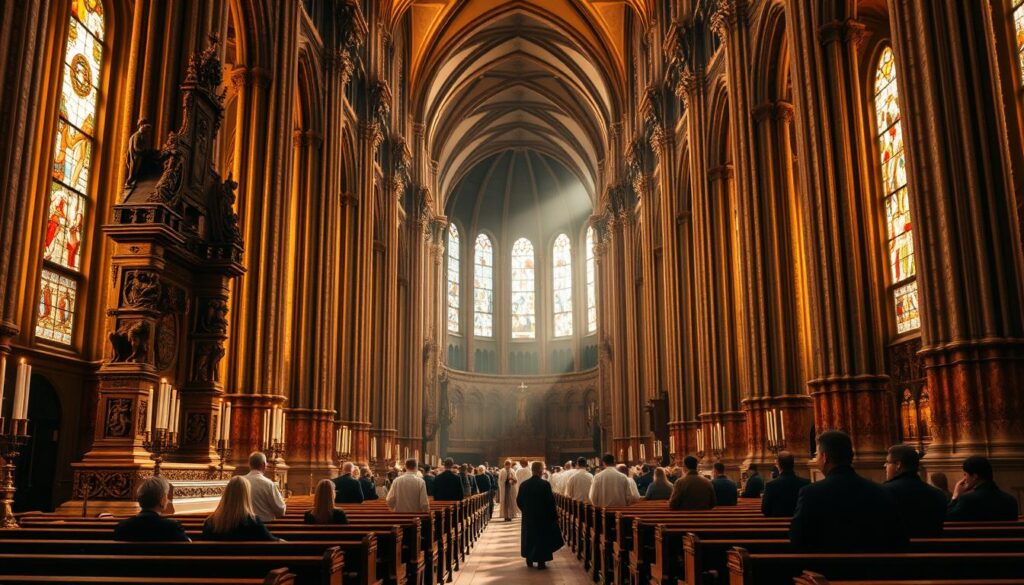
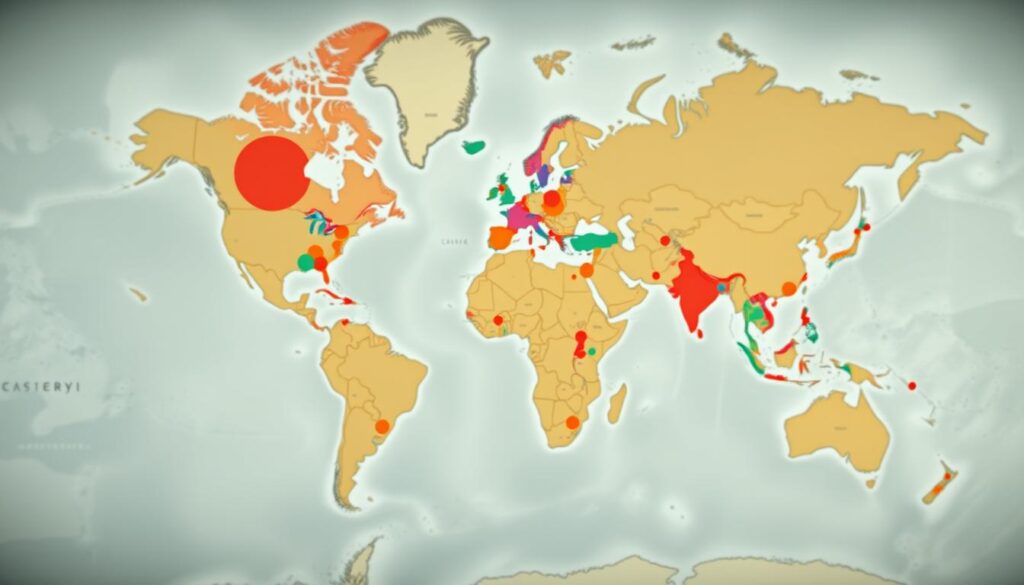
Some of history’s most pivotal moments begin with bold ideas. In 16th-century Europe, a single act of defiance reshaped religious life forever. A German monk’s quest for truth sparked a spiritual awakening that challenged centuries of tradition and birthed new ways of connecting with faith.
On October 31, 1517, this reformer nailed his 95 Theses to a church door in Wittenberg. This event marked the start of a sweeping movement that questioned established religious authority. It emphasized personal faith and direct engagement with scripture, ideas that still resonate deeply in modern Christianity.
The ripple effects went far beyond theology. Entire nations reimagined their relationship with religion, education, and governance. New branches of Christianity emerged, each rooted in principles like salvation through belief and the importance of individual interpretation.
Beyond doctrine, this shift influenced art, music, and language. Translating sacred texts into everyday speech empowered ordinary people to explore spirituality on their terms. Centuries later, these changes continue to shape how millions practice their beliefs worldwide.
Key Takeaways
A 16th-century religious movement reshaped Europe’s spiritual and cultural landscape
Critical theological ideas challenged traditional church practices and authority
New Christian denominations emerged, prioritizing personal faith and scripture
Lasting impacts include changes in education, politics, and artistic expression
Principles like individual interpretation remain central to many modern churches
Historical Background: Early Life and Education
Every transformative journey begins with foundational experiences. Born in 1483 in rural Saxony, the future reformer grew up in a world where ambition and faith collided. His family relocated to Mansfeld shortly after his birth, trading farming for copper mining—a decision that would shape their economic trajectory.
Childhood and Formative Years
Young Martin Luther’s early life revolved around discipline and opportunity. His father Hans rose from peasant roots to become a town councilman, proving social mobility wasn’t just a dream. At seven, the boy entered Mansfeld’s Latin school—a rigorous program drilling grammar and scripture memorization.
By fourteen, he studied under the Brethren of the Common Life in Magdeburg. This lay group prioritized personal prayer over ritual, planting seeds for later theological ideas. “Education molds both mind and spirit,” one teacher reportedly told students.
Influence of Early Religious Experiences
Erfurt University became Luther’s next stop in 1501. As a self-funded student labeled in habendo, he enjoyed privileges rare for miners’ children. He earned degrees rapidly, mastering philosophy and law while wrestling with spiritual questions.
These years forged a unique perspective—part scholar, part seeker. The blend of strict upbringing, hands-on faith practices, and elite university training created a thinker prepared to question norms. Little did Europe know how these lessons would soon shake its foundations.
The Spark of Reformation: Calling and Monastic Life
Life-changing moments often arrive unexpectedly. For one young law student in 1505, a violent storm near Stotternheim became the turning point that redirected history. Trapped in pounding rain and lightning, he vowed to join a monastery if spared—a promise that reshaped his path completely.
Conversion and Entry into Monastic Life
True to his word, Martin Luther entered Erfurt’s Augustinian monastery weeks later. The strict observant faction demanded total commitment. His cell—bare except for a table and chair—reflected their ascetic way of life. Days began at 2:00 AM with prayers, blending physical hardship with spiritual discipline.
Ordained as a priest by 1507, Luther stood out for his intensity. Colleagues noted how he “prayed as if salvation depended on it”. This dedication earned him leadership roles, though inner peace remained elusive.
Role Within the Augustinian Order
The order soon recognized Luther’s sharp mind. After theology studies at Erfurt and Wittenberg universities, he became their representative in Rome during 1510-1511. There, he witnessed church practices that troubled him deeply.
This time abroad planted critical questions. While negotiating monastery mergers, he saw contradictions between scripture and institutional actions. These experiences quietly fueled reforms that would later erupt across Europe.
Martin Luther’s Theological Breakthroughs
History pivots on moments of courageous dissent. In 1517, a monk’s bold critique of church fundraising practices became the document that changed Christianity forever. His 95 Theses questioned whether spiritual favors should carry price tags.
When Questions Shook the Church
That famous church door posting targeted indulgence sales—certificates claiming to reduce punishment for sins. Preachers like Tetzel promised quick forgiveness for cash, angering many. “Why pay when faith alone saves?” argued the reformer, sparking debates across Germany.
New Beliefs Take Root
The teachings went viral thanks to new printing technology. Key ideas like “salvation through faith, not deeds” challenged the pope’s authority. Rulers like Frederick of Saxony protected these radical views, creating safe spaces for reform.
By 1520, the conflict reached Rome. Critics attacked the theses, but the genie was out of the bottle. What began as an academic debate became a revolution in religious doctrine—one where personal conviction outweighed institutional power.
FAQ
How did Martin Luther’s early life influence his later work?
Growing up in a strict household, his parents emphasized discipline and faith. These values, combined with his education in law and theology, shaped his critical thinking and desire to challenge corrupt practices in the Church.
What led him to join the Augustinian Order?
A near-death experience during a thunderstorm prompted him to vow to become a monk. He sought spiritual clarity through monastic life but grew disillusioned with rituals that prioritized works over genuine faith.
Why were the Ninety-Five Theses so controversial?
They openly criticized the sale of indulgences, which the Church claimed could reduce punishment for sins. By challenging this practice, he questioned the authority of the Pope and sparked debates about corruption and true repentance.
How did his teachings differ from Catholic doctrine?
He emphasized salvation through faith alone, not deeds or payments. This contrasted with the Catholic belief in combining faith with sacraments and good works, reshaping how believers understood their relationship with God.
What role did the printing press play in spreading his ideas?
It allowed his writings, like the Ninety-Five Theses and German Bible translations, to reach masses quickly. This democratized access to scripture and fueled grassroots support for reforms across Europe.
Did he intend to create a new branch of Christianity?
Initially, he aimed to reform the Catholic Church, not split it. However, his refusal to recant at the Diet of Worms led to excommunication, paving the way for independent Lutheran congregations and broader Protestant movements.
What if everything you assumed about modern Christianity only told half the story? Let’s explore a faith community that quietly shapes spiritual lives across 100+ countries. With roots stretching back five centuries, this group’s influence might surprise even seasoned history buffs.
Recent estimates show over 833 million individuals align with Protestant traditions worldwide. That’s enough to fill every U.S. state nearly six times over. These believers form part of a larger Christian community totaling 2.5 billion, representing one-third of humanity’s spiritual landscape.
Why does this matter? Protestant traditions account for nearly 40% of global Christianity. From bustling cities to remote villages, this movement’s reach spans cultures and generations. Its growth patterns reveal unexpected hotspots, while some established regions see gradual shifts.
Our journey will unpack how historical events and modern trends shape these communities. You’ll discover why certain nations became strongholds and how migration patterns redistribute faith practices. Ready to see Christianity’s second-largest branch through fresh eyes?
Key Takeaways
Over 833 million individuals globally identify with Protestant traditions
Represents nearly 40% of the worldwide Christian community
Accounts for more than 10% of Earth’s total inhabitants
Growth patterns vary dramatically by region and culture
Historical events continue shaping modern demographic trends
Urbanization and migration drive unexpected distribution shifts
Historical Roots and the Reformation
A single church door in Germany became history’s most famous bulletin board in 1517. When Martin Luther challenged religious authorities with his 95 Theses, he unknowingly launched a spiritual earthquake. This act of defiance exposed deep frustrations with practices like paid forgiveness and rigid hierarchies.
Key Figures and Early Movements
Luther’s ideas spread faster than medieval gossip. By 1525, reformers like John Calvin transformed Geneva into a “Protestant Rome”, while fiery Scotsman John Knox reshaped his nation’s faith. These leaders shared common goals: accessible scripture and simplified worship.
But the movement wasn’t just about theology. Urban centers embraced reforms as tools for education and self-governance. Printers became unsung heroes, mass-producing Bibles in local languages.
Proto-Protestantism and Pre-Reformation Dissent
Long before Luther, groups like the Waldensians questioned church authority. Czech reformer Jan Hus faced execution in 1415 for ideas that eerily predicted Luther’s arguments a century later.
These early dissenters planted seeds in fertile soil. When the 16th century brought political tensions and new technology, Europe finally had the perfect storm for lasting change. The term “Protestant” itself emerged from princes protesting imperial decrees – proof that faith and power always danced closely.
Global Evolution and Demographic Shifts
The map of faith communities underwent dramatic redrawing during the 20th century. While European nations once dominated religious statistics, new spiritual epicenters emerged across three continents.
Statistical Insights from Europe, Africa, and Beyond
Africa’s faith landscape transformed most strikingly. From 1900 to 2000, Protestant communities grew 13-fold – jumping from 2% to over 27% of the continent’s population. South America saw similar momentum, with Protestant numbers swelling from 2.5% to 17% in the same timeframe.
Asia’s growth appears modest at first glance. But 5.5% of its massive population means 300 million+ Protestants today. Even traditional strongholds evolved – by 2010, 59% of global Anglicans lived in Africa, flipping the script on this British-born tradition.
Secularization and Cultural Change Over Time
Northern Europe tells a different story. While Reformation countries still show majority Protestant affiliation, church attendance has dwindled. Denmark reports only 3% regular worshipers despite 75% official membership.
This contrast highlights faith’s evolving role. Urbanization and education drive changes in some countries, while grassroots movements fuel growth elsewhere. The result? A faith family where Nairobi church services now outnumber those in Nottingham.
The 21st century has rewritten the atlas of spiritual practice in unexpected ways. Spiritual communities now cluster in patterns that would astonish early reformers, with surprising strongholds emerging across developing nations.
Growth Trends Over the Century
Africa’s faith landscape tells the most dramatic story. From 1900 to 2010, Protestant communities grew from 2% to over 27% of the continent’s inhabitants. This surge equals adding Germany’s entire population every five years for a century.
Latin America shows similar momentum. Brazil alone now has more Protestants than Germany’s total population. Meanwhile, China quietly hosts the world’s largest Protestant minority – estimates suggest over 60 million believers.
Regional Variations and Emerging Markets
The numbers reveal a seismic shift:
Region
2010 Followers
2050 Projection
Sub-Saharan Africa
300 million
49% of global total
Americas
260 million
Stable growth
Asia-Pacific
140 million
Rapid expansion
Europe
100 million
Oceania’s Protestant groups grow steadily while European churches face empty pews. By 2040, half of all Protestants will likely live in Africa – a complete reversal from 1900’s demographics. This transformation reshapes everything from worship styles to global religious leadership.
Urbanization and grassroots movements fuel these changes. As traditional strongholds adapt, new spiritual capitals emerge from Nairobi to São Paulo. The numbers don’t just count believers – they map a living, breathing reformation.
Diversity Within Protestant Denominations
Imagine a spiritual mosaic where every piece tells a different story. The world of Protestant faith displays stunning variety, with over 300 distinct denominational families shaping modern religious practice. This vibrant landscape defies simple categorization.
Major Branches: Lutheran, Anglican, Baptist, and More
Pentecostal groups lead global numbers at 10.8%, followed closely by Anglicans (10.6%) and Lutherans (9.7%). Baptists claim 9% of adherents, their energetic worship style becoming synonymous with Protestant churches worldwide.
Smaller branches reveal surprising depth:
United churches: 7.2%
Presbyterian/Reformed: 7%
Methodist: 3.4%
The Salvation Army and Moravians represent niche traditions, while 38.2% belong to unclassified denominations. This fragmentation reflects constant spiritual innovation.
The Rise of Evangelical and Mainline Movements
Recent decades saw evangelical groups surge as mainline churches stabilize. Grassroots movements emphasize personal conversion and scriptural authority, resonating in Africa and Latin America.
America’s religious map illustrates this shift. While hosting 20% of global Protestants, U.S. churches now balance traditional Methodists with growing nondenominational communities. This evolution proves Protestantism’s enduring adaptability across cultures and generations.
Cultural and Societal Impacts of Protestantism
Picture a world where reading was reserved for clergy and art served only religious elites. Protestant communities shattered these barriers, creating ripples that still shape modern life. Their emphasis on personal scripture study sparked literacy movements, while theological debates inspired scientific curiosity.
Influence on Art, Education, and Social Reform
Early reformers didn’t just change churches – they transformed classrooms. By 1972, 72% of American Nobel laureates came from Protestant backgrounds. These pioneers dominated scientific fields:
Field
Protestant Laureates
Chemistry
84.2%
Medicine
60%
Physics
58.6%
This intellectual legacy stems from valuing education as spiritual duty. Sunday schools taught factory workers to read. Missionaries built universities across Africa and Asia.
The same drive fueled social change. Abolitionists quoted scripture to condemn slavery. Suffragettes found theological arguments for equality. Today, environmental groups draw from Protestant ideas about caring for creation.
From lab coats to protest signs, this faith tradition proves religion can spark progress. Its focus on individual responsibility reshaped everything from business ethics to community service – proving ideas born in 16th-century Europe still inspire global change.
Protestant Churches and Membership Trends in the United States
Once dominant, Protestant churches now navigate shifting loyalties. Recent surveys reveal surprising changes in America’s spiritual identity. The land that birthed megachurches and revival meetings faces new realities in faith participation.
Shifts Between Traditions
Three distinct streams flow through American Protestantism today. Evangelical churches claim 55% of adherents, with Southern Baptists leading at 13.2 million members. Mainline groups like Methodists hold 32%, while Black churches maintain 14% despite demographic pressures.
Membership tells contrasting stories. Mainline denominations shrink as younger generations drift away. Evangelical and Black congregations adapt through contemporary worship and community outreach. “Our message hasn’t changed, but our methods must,” notes a Nashville pastor.
By the Numbers: America’s Protestant Profile
2019 marked a historic tipping point. Protestants dipped to 43% of Americans – losing majority status for the first time. Yet 20% of global Protestants still call the U.S. home, creating complex dynamics.
Urbanization reshapes spiritual maps. Immigrant churches flourish in cities, while rural congregations age. Generational turnover accelerates changes – 35% of young adults now claim no religious affiliation. Through these shifts, Protestant churches remain cultural anchors in many communities.
Key Factors Behind Shifts in Protestant Adherence Over Time
The mid-20th century ignited a spiritual revolution that reshaped continents. Post-war changes created perfect conditions for faith communities to expand beyond traditional strongholds. Three key forces drove this transformation: political shifts, social needs, and adaptable theology.
Regional Growth Engines
New nations emerging from colonial rule became fertile ground for spiritual movements. Africa’s independence era (1950s-1970s) saw Protestant groups grow 600% faster than population increases. Local leaders blended biblical teachings with cultural traditions, creating vibrant hybrid practices.
Region
Growth Driver
Key Example
Africa
Indigenous leadership
Zimbabwe’s Apostolic Faith surge
Latin America
Legal reforms
Brazil’s 1980 evangelical boom
Asia
Urban migration
South Korean megachurches
Latin America’s landscape shifted dramatically after governments lifted century-old restrictions. By 2000, 1 in 5 Guatemalans identified with Protestant groups. “This isn’t just conversion – it’s cultural reinvention,” observes scholar Mark Juergensmeyer.
“Popular Protestantism represents one of history’s most rapid religious transformations, matching global Islam’s expansion pace.”
Grassroots networks thrived by addressing practical needs. Literacy programs and healthcare initiatives built trust in communities seeking both spiritual hope and social progress. This dual focus continues driving growth in developing nations today.
Protestantism’s Role in Shaping Global Religious Landscapes
The spiritual map of our world is being redrawn in real time. Faith communities once concentrated in Europe now thrive across Africa, Asia, and Latin America. This shift creates new dialogues between traditions while reshaping centuries-old religious dynamics.
Comparisons with Catholicism and Other Faith Groups
While Catholicism remains Christianity’s largest Protestant counterpart, growth rates tell contrasting stories. Experts project Protestant groups could match Catholic numbers by 2050 – a first since the Reformation. This trend stems from differing approaches to cultural adaptation and grassroots expansion.
Mainline denominations like Anglicans coexist with evangelical movements in this global mosaic. Unlike centralized Catholic structures, Protestant groups often empower local leaders. This flexibility helps them resonate in diverse settings – from Brazilian favelas to Korean megacities.
Future Projections and the Evolving Religious Scene
By mid-century, over half of Christians may identify with Protestant denominations. Historian Hans J. Hillerbrand notes their growth rate triples Catholicism’s pace. Africa will likely host 49% of adherents, while Europe’s share shrinks to 14%.
This transformation impacts global religion beyond Christianity. As Protestant groups expand, they interact more with Islam, Hinduism, and others. These exchanges could redefine interfaith relations in our interconnected age.
The future promises both challenges and opportunities. Rising Pentecostal movements and historic denominations must address climate concerns and social justice. Their responses will shape not just churches, but entire societies.
FAQ
Which countries have the largest Protestant communities today?
The United States, Nigeria, Brazil, and China are among the nations with significant followings. In Africa, countries like Kenya and South Africa also have rapidly growing churches, driven by evangelical outreach and cultural adaptability.
How did the Reformation shape modern denominations?
The 16th-century Reformation, led by figures like Martin Luther and John Calvin, broke from Catholic traditions, emphasizing scripture and individual faith. This movement birthed groups like Lutherans, Anglicans, and later Baptists, shaping today’s diverse branches.
Why are regions like Africa seeing growth in churches?
High birth rates, missionary activity, and localized worship styles have fueled expansion. Evangelical and Pentecostal groups, in particular, resonate with cultural values, fostering vibrant communities across sub-Saharan Africa and Latin America.
What distinguishes Evangelical from Mainline churches?
Evangelicals prioritize scripture, personal conversion, and active evangelism, while Mainline groups (e.g., Methodists, Presbyterians) often focus on social justice and interfaith dialogue. Membership trends show Evangelicals growing faster in many regions.
How has secularization impacted Europe’s religious landscape?
Declining attendance and identification with traditional institutions reflect broader cultural shifts. However, immigrant communities and charismatic movements are revitalizing some areas, creating a complex mix of growth and decline.
What role do Black churches play in American religious life?
Historically centers of empowerment and civil rights advocacy, groups like the National Baptist Convention remain influential. They blend spiritual practices with community activism, maintaining strong membership despite broader denominational declines.
How does Protestantism compare globally to Catholicism?
While Catholicism remains centralized under the Vatican, Protestantism’s decentralized structure allows for doctrinal diversity. Growth in Africa and Asia contrasts with Catholicism’s stronghold in Latin America, though both face challenges from secularism.
Are newer movements replacing traditional denominations?
Non-denominational congregations and Pentecostal networks are rising, especially among younger generations. Their flexible structures and contemporary worship styles appeal to those seeking less formal, more experiential faith practices.
From colonial meeting houses to modern megachurches, religious traditions have left an indelible mark on America’s identity. Protestant beliefs helped forge foundational values like personal responsibility and civic engagement, principles that still guide national conversations today.
Nearly half of Americans identify with Protestant denominations, making this faith tradition the country’s largest religious grouping. Baptists form the biggest branch, with the Southern Baptist Convention alone serving millions nationwide. These communities extend beyond Sunday services – many churches operate food banks, schools, and disaster relief programs.
The emphasis on accessible scripture and individual interpretation created a unique spiritual landscape. This approach influenced early education systems and inspired social reforms from abolition to civil rights. Even non-religious Americans encounter Protestant-inspired values in literature, holidays, and legal traditions.
Key Takeaways
Protestantism remains the largest religious grouping in the United States
Core values shaped America’s approach to education and civic life
Churches historically served as community hubs beyond worship spaces
Diverse denominations share common emphasis on personal faith
Cultural influence appears in literature, laws, and social movements
Introduction to Protestantism in the United States
The story of American Protestantism is a tapestry woven with threads of tradition, reform, and cultural adaptation. Churches here range from centuries-old congregations to modern worship spaces, each contributing to the nation’s spiritual mosaic. This faith tradition thrives through its ability to evolve while maintaining core principles.
Category
Focus
Community Role
Mainline Churches
Historical traditions & social outreach
Operate food banks, interfaith programs
Evangelical Groups
Personal conversion & biblical teaching
Youth ministries, mission trips
Black Churches
Social justice & cultural preservation
Civil rights advocacy, music programs
These denominations share a common foundation but address modern challenges differently. Many members find their churches serve as neighborhood hubs – hosting everything from job fairs to summer camps. You’ll often see parking lots doubling as farmers’ markets on weekends.
The emphasis on accessible scripture sparked early literacy movements. Today, this legacy appears in Bible study groups and faith-based book clubs. Nearly 60% of Protestant adults report reading religious texts weekly, according to Pew Research.
From urban storefront chapels to rural megachurches, these communities keep adapting. They balance ancient rituals with contemporary issues like digital worship and environmental stewardship. Yet all maintain focus on personal faith journeys and service to others.
Historical Roots of American Protestantism
In the chilly autumn of 1620, a ship called the Mayflower anchored near Cape Cod, carrying radical believers who would shape a nation’s spiritual DNA. These early settlers established patterns of faith that still influence community life and personal values centuries later.
Puritan Influence and Early Settlements
The Pilgrims who founded Plymouth Colony weren’t just religious refugees – they were Brownist Separatists breaking completely from England’s state church. Within a decade, Puritans established the Massachusetts Bay Colony, bringing Calvinist beliefs about predestination and moral discipline.
During the Great Migration period (1630-1640), over 20,000 Puritans crossed the Atlantic. They built societies where church membership determined voting rights and social standing. Their “city upon a hill” vision demanded literacy for Bible reading, leading to America’s first public schools.
Colonial Religious Practices
Sunday services lasted four hours, blending psalm singing with fiery sermons. Communities enforced strict Sabbath rules – no work or games from sunset Saturday to Sunday evening. This created a culture valuing self-examination and communal responsibility.
Local churches operated independently through congregational governance, a tradition that later influenced political structures. Deacons handled poor relief while ministers educated youth – blending spiritual and social roles.
These 17th-century practices left lasting marks. Modern town meetings and public education systems trace their roots to Puritan innovations. As one historian noted: “They came seeking purity, but built institutions that embraced diversity.”
Influence on American Colonial History
Colonial meetinghouses doubled as civic centers where faith and governance intertwined. Protestant groups shaped early debates about authority, planting seeds for democratic ideals that still grow today. Their values influenced everything from voting rights to public education systems.
Establishment of Church-State Relations
Twelve original colonies had Protestant majorities, creating a unique religious landscape. Maryland stood apart with Catholic roots, though even there, freedom debates reflected broader tensions. Local church leaders often held political power, blurring lines between spiritual and civic roles.
The Revolution tested loyalties when Anglican ministers faced impossible choices. Sworn to support the British crown, many fled as patriots gained ground. This crisis birthed new approaches – churches redefined their missions to align with American independence.
Early leaders drew from Protestant ideas like covenant theology. The “city upon a hill” concept became shorthand for national purpose. These principles helped justify breaking from foreign rule while preserving religious identity.
By 1789, these experiments in balancing freedom and order found expression in the First Amendment. The United States emerged with a novel approach – protecting individual conscience while preventing state-sponsored faith.
Evolution of Protestant Denominations in the USA
Diverse Protestant roots took hold early, with settlers bringing varied beliefs that evolved into distinct American denominations. Colonial ports welcomed Anglican planters, German Lutherans, and Dutch Reformed groups, each planting seeds for future spiritual movements. These communities didn’t just transplant European traditions – they adapted scriptures to frontier realities.
Early Diversity and Immigration Impact
Imagine 18th-century docks where Swedish Lutherans unloaded hymnals while Scottish Presbyterians debated theology. This mix created a spiritual laboratory. Churches reshaped worship styles to match America’s vast landscapes, birthing innovations like outdoor revivals and traveling preachers.
Nineteenth-century immigration waves added fresh layers. Norwegian Lutherans established midwestern colleges, while Methodist circuit riders galloped between frontier towns. One historian notes: “The prairie became a pulpit, and camp meetings turned strangers into neighbors.”
Revival movements sparked further changes. The Second Great Awakening (1790–1840) birthed new denominations like the Disciples of Christ. These groups emphasized personal conversion over rigid doctrines, appealing to pioneers seeking flexible faith.
Today’s landscape reflects this adaptive legacy. Some churches preserve centuries-old liturgies, while others use rock bands and podcasts. Yet all share a common thread – empowering members to shape their spiritual journeys within ever-changing communities.
Statistical Trends and Demographic Shifts
Numbers tell a story of adaptation and resilience within America’s religious landscape. The Pew Research Center’s comprehensive studies show dynamic membership trends reshaping how communities practice faith today. These patterns reveal both continuity with historical roots and responses to modern social changes.
Key Data from Pew Research Center
Recent surveys highlight fascinating details about religious affiliations. Evangelical groups make up 55% of Protestant traditions, while mainline denominations account for 32%. Black churches represent 14% – a testament to their enduring cultural impact.
Baptist congregations remain the largest branch at 33%, but newer movements gain ground. Nondenominational churches now claim 13% of members, appealing to those seeking flexible worship styles. “People increasingly value personalized spiritual experiences,” notes one Pew Research analyst.
Changing Memberships Over Centuries
Membership rolls have shifted dramatically since colonial times. Traditional denominations like Methodists and Lutherans now share space with growing Pentecostal and Restorationist groups. Urbanization and digital culture play key roles in these changes.
While some groups see declining numbers, their cultural influence persists. Mainline churches still operate 40% of religious-affiliated schools nationwide. The data suggests members balance heritage with modern needs – 63% attend churches offering both traditional services and community programs.
These trends provide crucial information for understanding faith in contemporary life. As the Pew Research Center shows, adaptability remains central to maintaining relevance across generations.
Protestantism USA – Key Figures and Movements
Bold ideas need brave champions. America’s religious landscape transformed through visionary leaders who turned radical concepts into enduring freedoms. Their legacies shaped how communities worship and govern themselves today.
Pioneers of Religious Liberty
Roger Williams stood like a lightning rod in colonial debates. Banished from Massachusetts for demanding church-state separation, he founded Rhode Island as a haven for dissenters. “Soul liberty isn’t a privilege – it’s every person’s right,” he declared, planting seeds for First Amendment protections.
Williams and ally John Clarke sparked the Baptist movement through daring actions. In 1639, they established America’s first Baptist churches – radical spaces welcoming diverse beliefs. These congregations became blueprints for self-governance and scriptural study.
Early evangelicals understood the term “Protestant” meant action. They created networks supporting education and civic participation. Literacy programs ensured people could read scripture – and eventually, voting ballots.
Three lasting impacts emerged from these leaders:
Congregational decision-making models
Interfaith dialogue practices
Public service as spiritual duty
Their courage still inspires movements addressing modern challenges. From civil rights to climate action, the pattern remains: faith-driven people creating change through conviction and community.
Mainline, Evangelical, and Black Churches
America’s spiritual landscape thrives through three distinct church traditions, each weaving unique threads into the nation’s cultural fabric. These communities balance historical roots with modern service, creating spaces where faith meets action.
Distinct Characteristics and Contributions
Mainline churches often lead social justice efforts, operating food pantries and immigrant support programs. Their stained-glass windows frame both ancient hymns and contemporary debates about climate change.
Evangelicals prioritize personal spiritual journeys, with 72% of members attending weekly services. Their megachurches host job training centers alongside vibrant youth ministries, blending Bible study with community building.
Black churches like the African Methodist Episcopal (AME) Church fuel cultural resilience. Founded in 1815 after Richard Allen’s historic split from segregated congregations, these groups became hubs for civil rights organizing and gospel music innovation.
Each tradition shapes neighborhoods differently. You might find mainline churches hosting interfaith dialogues, evangelical campuses running addiction recovery programs, or AME members organizing voter registration drives. Together, they prove faith communities remain vital threads in America’s ever-evolving story.
FAQ
How did early Protestant groups shape American culture?
Groups like the Puritans emphasized education, hard work, and moral discipline. Their values influenced laws, schools, and social norms, creating foundations for community life still visible today.
What role did religion play in colonial church-state relations?
Many colonies had official churches funded by taxes. However, dissenters like Baptists pushed for separation, paving the way for the First Amendment’s religious freedom protections.
Why are there so many Protestant denominations in the U.S.?
Immigration brought diverse traditions from Europe, while theological debates and revival movements—like the Great Awakenings—sparked new groups. This blend created a dynamic religious landscape.
What do recent surveys say about membership trends?
Pew Research Center data shows a decline in mainline groups since the 2000s, while evangelicals remain stable. Over 40% of adults still identify with Protestant traditions, reflecting its enduring presence.
How have Black churches contributed to society?
The African Methodist Episcopal Church and others led civil rights efforts, blending faith with justice. They provided community support and became hubs for education and cultural preservation.
What distinguishes evangelicals from mainline Protestants?
Evangelicals focus on personal conversion and biblical authority. Mainline groups often prioritize social justice and adapt teachings to modern contexts, leading to differing cultural influences.
Let’s dive into a vibrant journey tracing one of Christianity’s most influential branches. With over 833 million followers globally, this faith has shaped cultures and nations. From its roots in 16th-century Europe, it now spans continents, creating unique communities everywhere.
North America plays a key role in this story. Recent data from Pew Research shows the United States alone hosts 20% of global followers. That’s 141 million people—nearly half the country’s population as of 2019. How did this movement become so widespread?
Our exploration uses trusted sources to reveal patterns you might not expect. You’ll see how local traditions blended with new beliefs, creating lasting impacts. Whether in bustling cities or quiet towns, these communities tell a story of adaptation and growth.
Key Takeaways
Protestantism represents 40% of Christians worldwide
The United States has the largest concentration globally
Modern demographics show surprising regional hubs
Cultural integration shaped its global spread
Data from 2019 highlights current trends
Overview of Protestantism Around the Globe
Protestant Christianity’s global footprint tells a story of faith and transformation. What began as a religious revolution now thrives in diverse cultures, creating communities that blend tradition with innovation.
Historical Background
In the 16th century, reformers like Martin Luther reshaped Christianity by challenging established churches. Their ideas spread like wildfire across Europe, reaching Switzerland, England, and Scandinavia within decades. By the 1700s, missionaries and colonists carried these beliefs to new continents.
This movement wasn’t just about theology—it sparked social change. Local groups adapted Protestant teachings to their cultures, creating unique practices still seen today.
Global Statistics and Early Trends
Modern demographics reveal surprising shifts. While Europe birthed Protestantism, Sub-Saharan Africa now leads with 300 million followers. The Americas follow closely at 260 million, according to 2010 data. Even the Asia-Pacific region shows rapid growth, hosting 140 million believers.
Europe: 100 million
Middle East-North Africa: 2 million
Pew Research notes these changes accelerated in the 20th century. Traditional strongholds now share influence with vibrant new communities. As one scholar observed: No other Christian branch has diversified so quickly across so many regions.
Mapping the Spread of Protestantism Over Centuries
Waves of religious change reshaped continents as new beliefs traveled farther than their founders imagined. This movement’s growth wasn’t just about ideas—it rewrote cultural landscapes through trade, migration, and grassroots efforts.
Reformation and Post-Reformation Movements
The 16th-century Reformation sparked a chain reaction. By the 17th century, Dutch merchants carried these beliefs to Indonesia. Swedish settlers planted them along Delaware Bay. Each country added its own flavor to the faith.
Missionaries became key players in the 1800s. British groups like the London Missionary Society reached Pacific islands. American preachers sailed to Liberia. Their work laid foundations for today’s global network of churches.
Region
1900 Protestant %
2000 Protestant %
Africa
2%
27%
South America
2.5%
17%
Asia
0.5%
5.5%
Numbers tell a stunning story. Africa’s Protestant population grew 13-fold in 100 years. Brazil now has more believers than Germany. As Pew Research notes: No movement has diversified so fast across so many cultures.
These shifts created lasting change. Schools in Ghana. Radio ministries in Guatemala. From small German towns to North America’s megachurches, the faith keeps adapting while staying rooted in its revolutionary past.
Exploring the protestantism map: Global Insights
Modern faith movements reveal unexpected patterns when we examine where believers gather today. One standout story comes from China, where an estimated 58 million Protestants form the world’s largest minority group in this category. This growth happened despite decades of restricted religious activity.
Key Regions and Shifting Populations
Anglican demographics showcase dramatic changes. In 1910, 79% of this group lived in the United Kingdom. By 2010, Africa claimed 59% of global Anglicans. Historian Mark A. Noll notes: The faith’s center of gravity moved south faster than anyone predicted.
Region
1910 Anglican %
2010 Anglican %
United Kingdom
79%
13%
Africa
3%
59%
United States
12%
9%
These shifts reshape worship practices. African churches now blend traditional hymns with local instruments. Pew Research shows 7 in 10 Kenyan Protestants attend services weekly, compared to 1 in 3 Americans.
New majority regions bring fresh perspectives. Nigerian congregations emphasize community development. Brazilian groups integrate indigenous spiritual elements. This diversity strengthens global connections while honoring local roots.
Historical Context and Key Events in Protestantism
History books come alive when we trace how faith movements reshape nations. The Protestant story blends daring ideas with royal decrees, creating ripples that still touch our lives today. Let’s explore two forces that changed the world: theological breakthroughs and their real-world consequences.
Major Reformation Milestones
Three pivotal moments defined early Protestant growth. Martin Luther’s 1517 challenge to Catholic tradition sparked global change. The 1555 Peace of Augsburg let German princes choose their realm’s faith—a radical idea for its time.
Event
Year
Impact
Ninety-five Theses
1517
Began Reformation
Peace of Augsburg
1555
Established state religious choice
Westminster Confession
1646
Shaped Presbyterian churches
Political and Social Impacts Over Time
France’s 17th-century crackdown shows how politics shaped faith communities. Huguenots once formed 10% of the population, but persecution slashed their numbers to 4.5% by 1685. Historian Philip Benedict notes: Louis XIV’s revocations scattered French Protestants across North America and beyond.
These exiles enriched host nations with skills and ideas. Many settled in the United States, fueling its pluralistic identity. Meanwhile, Alsace kept religious diversity—proof that local conditions often trumped royal decrees.
Influential Figures and Religious Movements
Visionary thinkers reshaped spiritual landscapes through bold ideas and grassroots action. Their work sparked movements that now span continents, blending ancient wisdom with modern practices.
Leaders and Theologians
Martin Luther’s 1517 protests ignited a chain reaction. John Calvin systematized Reformed theology in Geneva, while John Wesley’s Methodist revivals reached coal miners and factory workers. “These weren’t just scholars,” notes historian Diana Butler Bass. “They built communities that transformed everyday lives.”
Emergence of New Denominational Trends
Modern faith groups reflect centuries of adaptation. Pentecostal churches now lead global growth, emphasizing spiritual experiences over rigid structures. Check how major families compared in 2010:
Denomination
Global Share
Key Feature
Pentecostal
10.8%
Spiritual gifts focus
Anglican
10.6%
Liturgical tradition
Lutheran
9.7%
Scripture-centered
Baptist
9%
Adult baptism
The United States became a melting pot for these traditions. African American churches blended Baptist teachings with civil rights activism. Korean congregations in North America mix Presbyterian roots with vibrant praise music.
This diversity proves Protestantism’s core strength: adapting timeless truths to new contexts while keeping faith personal and accessible to all.
Demographic Trends and Population Shifts
Global faith communities are undergoing a seismic shift unseen in modern history. While Europe once led Protestant growth, recent data shows a dramatic southward tilt. Vibrant new centers now drive expansion across three continents.
New Frontiers of Faith
Africa’s Protestant community grew from 2% to 27% of its total population in just 100 years. Nigeria alone hosts 60 million believers—more than all Scandinavian churches combined. This growth shows no signs of slowing:
Region
2000 Followers
2040 Projection
Africa
300 million
550 million
Latin America
90 million
140 million
Asia
140 million
220 million
South Korea sends more missionaries than Britain. China’s underground churches reportedly outnumber official congregations 3-to-1. As one Nairobi pastor observed: We’re not just receiving faith—we’re reshaping it.
Changing Tides in Traditional Strongholds
Europe tells a different story. Once dominant, its share of global Protestant numbers will drop below 9% by 2050. Even historic hubs show declines:
Country
1900 % Protestant
2020 % Protestant
Germany
63%
25%
Sweden
99%
58%
France
2%
3%
France’s slight rebound comes from immigrant communities and new evangelical movements. Meanwhile, North America remains stable—the United States still claims 20% of global Protestants despite slower growth rates.
Regional Focus: Protestantism in the United States
The story of faith in America finds one of its most dynamic chapters in Protestant communities. These churches and movements evolved from colonial settlements to modern megachurches, reflecting the nation’s changing values.
Historical Roots and Calvinist Heritage
Early settlers brought Reformed theology across the Atlantic. Puritan groups shaped New England’s identity, while Quakers influenced Pennsylvania’s tolerance policies. By the Revolutionary War, 75% of colonists identified with Protestant families.
Contemporary Statistics and Denominational Diversity
Today, the U.S. hosts over 140 million Protestants—20% of the global protestant population. Baptists lead with 33%, followed by Pentecostals at 12%. Pew Research notes 43% of Americans still affiliate with these traditions.
Urban centers showcase this diversity best. Korean Presbyterian congregations thrive in Los Angeles. Latino evangelical churches grow in Miami. Each adds fresh energy to a faith that’s reshaped itself across time.
FAQ
Which regions have the highest Protestant populations today?
Sub-Saharan Africa, North America, and parts of Latin America currently have significant communities. Countries like Nigeria, Brazil, and the United States report large numbers of adherents, with over 160 million in the U.S. alone, according to Pew Research Center.
How did the Reformation shape Protestantism’s global spread?
The 16th-century Reformation, led by figures like Martin Luther and John Calvin, broke from Catholic traditions. This movement sparked new churches across Europe, later spreading through colonization, missions, and immigration to the Americas, Africa, and Asia.
Why is Protestantism declining in Europe while growing elsewhere?
Secularization and changing cultural values have reduced church participation in Europe. Meanwhile, evangelical movements and Pentecostalism thrive in Africa and Latin America due to community-focused outreach and adaptability to local cultures.
What role does the United States play in Protestant history?
The U.S. became a hub for denominational diversity, from early Puritan settlers to modern megachurches. Over 40% of American Nobel laureates identify with Protestant traditions, reflecting its cultural and intellectual influence, per Oxford University Press.
How do modern denominational trends differ from earlier centuries?
While Lutheranism and Anglicanism dominated post-Reformation Europe, newer groups like Baptists, Methodists, and Pentecostals now drive growth. Non-denominational churches are also rising, emphasizing flexible worship styles over traditional structures.
What political changes were tied to Protestantism’s rise?
The Edict of Fontainebleau (1685) and the Thirty Years’ War reshaped Europe’s religious landscape. Protestant ideals also influenced democratic movements, such as the push for religious freedom in colonial America.
Welcome to your guide to one of Christianity’s most influential movements. With over 833 million followers globally, this branch of the Christian church has shaped spiritual, cultural, and social landscapes for centuries. From its Reformation-era beginnings to its modern-day diversity, we’ll unpack what makes this tradition unique.
This exploration starts with foundational ideas that sparked dramatic changes in the 16th century. You’ll discover how concepts like sola scriptura (Scripture alone) and salvation through faith redefined worship. We’ll also look at how these principles evolved into thousands of denominations, each adapting to local cultures while keeping core teachings intact.
Why does this matter today? Beyond its historical roots, this movement continues to influence art, education, and social justice efforts worldwide. Whether you’re curious about Sunday services or global missionary work, understanding these patterns helps explain modern Christianity’s dynamic nature.
Our journey will stay grounded and conversational. Complex terms get simple explanations, and dry facts transform into relatable stories. You’ll walk away knowing how a 500-year-old revolution still impacts Sunday mornings—and global communities.
Key Takeaways
Represents 30% of global Christians with 833+ million members
Originated from 16th-century Reformation principles
Emphasizes direct engagement with Scripture
Features diverse worship styles across denominations
Continues to shape modern culture and ethics
Introduction to This Ultimate Guide
This guide offers a clear path to understanding Christianity’s diverse expressions. Whether you’re exploring your spiritual roots or studying religious movements, we’ll walk through 500 years of transformation. Our approach blends historical context with modern relevance, showing how ancient ideas shape today’s churches.
Purpose and Scope
Designed for both curious newcomers and lifelong members, this resource unpacks complex teachings in simple terms. You’ll see how 16th-century reforms sparked new ways of practicing the Christian faith. We’ve organized the content to answer three key questions:
Section Focus
Key Themes
Practical Insights
Historical Foundations
Reformation origins
Impact on modern worship
Theological Principles
Core doctrines
Denominational comparisons
Modern Applications
Ecumenical dialogue
Global influence
What Readers Will Learn
By the final chapter, you’ll recognize patterns connecting Protestant Christians across continents. The guide highlights:
How Martin Luther’s protests reshaped European society
Why baptism practices vary between denominations
Ways modern churches collaborate across traditions
You’ll also discover surprising connections. For example, early reformers’ emphasis on scripture literacy paved the way for public education systems. This blend of history and current events makes the material vital for understanding Western culture.
Historical Origins of Protestantism
The roots of Protestant thought stretch deeper than many realize. Long before the 16th century, critics within Roman Catholicism laid groundwork for change. Their ideas simmered for 200 years, waiting for the right moment to boil over.
Seeds of Change: Pre-Reformation Voices
John Wycliffe’s Bible translations challenged church authority in the 1300s. Jan Hus burned at the stake in 1415 for questioning indulgences. William of Ockham argued scripture outweighed papal decrees. These reformers stayed within medieval traditions but planted revolutionary ideas.
The Protest That Named a Movement
Everything changed at the 1529 Diet of Speyer. German princes refused to revoke Luther’s reforms, declaring: “In matters of conscience, majority rule has no power.” Their formal protest birthed the term Protestant, marking a decisive break from Rome.
Three factors fueled this movement:
National pride resisting foreign papal control
Scholars like Erasmus exposing church corruption
Printing presses spreading reform ideas rapidly
By the mid-16th century, what began as scattered criticism became a continent-wide Protestant Reformation. The Diet of Speyer proved ideas could become actions—and actions could reshape Christianity forever.
Understanding protestantism beliefs and practices
At the heart of Christian renewal movements lie revolutionary ideas about divine connection. Unlike systems requiring human intermediaries, these teachings prioritize direct spiritual access. This shift transformed how millions approach sacred texts and personal devotion.
Key Doctrines and Practices Explained
Central to protestant theology is the concept of salvation by grace through faith alone. Martin Luther famously compared this to a “beggar receiving a crown” – unearned yet transformative. This contrasts with merit-based systems where rituals dictate spiritual standing.
The principle of sola scriptura (Scripture as ultimate authority) reshaped religious life. As one reformer declared:
“God’s Word stands above popes, councils, and traditions.”
This belief birthed vernacular Bibles and congregational singing – tools for personal engagement with divine truth.
Principle
Protestant Approach
Catholic Approach
Religious Authority
Bible as sole source
Scripture + tradition
Salvation
Faith alone
Faith + works
Interpretation
Individual discernment
Church guidance
These beliefs empower laypeople as spiritual equals. Sunday schools and home Bible studies became common, reflecting the “priesthood of all believers” ideal. Even church governance models – from Episcopal structures to congregational voting – mirror this democratic impulse.
Modern applications show lasting impact. Over 67% of US Protestants report daily prayer, while 41% engage in personal scripture reading weekly. This hands-on faith continues shaping communities through volunteerism and ethical business practices rooted in protestant theology.
Influential Reformation Figures and Their Impact
Two revolutionary thinkers reshaped Christianity forever. Their ideas sparked movements that still influence Sunday services and theological debates today.
Martin Luther and the Ninety-Five Theses
In 1517, a German theology professor nailed 95 arguments to a church door. Martin Luther‘s protest against indulgence sales became Christianity’s most famous memo. His writings emphasized:
Salvation through faith rather than purchased forgiveness
Scripture’s authority over church traditions
The “priesthood” of every believer
Luther hated the term “Lutheran,” preferring “evangelical” – from the Greek euangelion meaning “good news.” His Bible translation let ordinary people engage directly with God’s Word, a radical shift in religious freedom.
John Calvin and Reformed Theology
While Luther sparked change, John Calvin built systems. His 1536 Institutes outlined Reformed Theology’s core ideas:
“True wisdom consists in knowing God and knowing ourselves.”
Thinker
Focus
Lasting Influence
Luther
Individual faith
Modern evangelical movements
Calvin
Divine sovereignty
Presbyterian governance
Calvin’s concept of an “invisible church” – believers united beyond physical buildings – reshaped how Protestant reformers understood community. His Geneva became a laboratory for church-state relations.
Though differing in approach, both men’s writings created lasting branches of Christian thought. Luther’s passionate protests and Calvin’s logical frameworks continue shaping how millions worship worldwide.
Denominational Diversity Within Protestantism
From grand cathedrals to storefront chapels, Protestant communities showcase remarkable variety while sharing foundational ideas. Over 200 denominations exist today, each adapting Reformation principles to local cultures and new generations.
Roots of Historic Traditions
The Church of England began as a political move. When Henry VIII broke from Rome in 1534, he unknowingly created Anglicanism – a tradition blending Catholic rituals with Reformed theology. Meanwhile, Lutheran denominations flourished across Scandinavia, emphasizing congregational singing and baptismal grace.
Tradition
Governance
Worship Style
Lutheran
Synod-based
Liturgical
Anglican
Episcopal
Sacramental
Assemblies of God
Congregational
Charismatic
New Shapes of Faith
Modern movements prioritize flexibility. Non-denominational churches – now 13% of US congregations – avoid formal labels while using contemporary music and casual dress. The Assemblies of God, founded in 1914, grew into the world’s largest Pentecostal group through spirited worship and global missions.
This diversity reflects different readings of scripture. Some groups value structured liturgy; others embrace spontaneous prayer. Yet all maintain core commitments to scripture’s authority and salvation through faith – proving unity thrives alongside variety.
Sacraments and Worship Practices
Sunday mornings in Protestant churches blend ancient rituals with modern expressions of faith. At the heart of these gatherings lie two sacred acts: baptism and communion. These church traditions connect believers to Jesus Christ’s teachings while reflecting theological priorities from the Reformation.
The Eucharist and Baptism as Central Sacraments
Protestants recognize baptism and communion as the only sacraments directly commanded by Jesus Christ. Unlike medieval traditions, these acts aren’t seen as magical rituals but as visible expressions of God’s good news. As one reformer noted:
“Sacraments are seals of God’s promises, not containers of divine power.”
Communion interpretations vary widely. Lutherans teach Christ’s presence exists alongside bread and wine (consubstantiation). Reformed churches emphasize spiritual nourishment through the Holy Spirit. Baptists view it as a symbolic memorial.
Baptism Practice
Denominations
Theological Basis
Infant baptism
Lutheran, Anglican
Covenant with church family
Believer’s baptism
Baptist, Pentecostal
Personal faith commitment
Worship services prioritize active participation. Congregational singing replaced Latin chants during the Reformation. Today, 78% of Protestant churches feature contemporary music alongside sermons explaining scripture’s relevance to daily life.
The Holy Spirit’s role remains central. From spontaneous prayers in charismatic churches to quiet reflection in liturgical settings, believers seek divine connection without human mediators. This approach reflects the Reformation ideal: every person’s direct access to God through Christ.
Core Doctrinal Principles: The Five Solas
Imagine holding a theological compass from the 1500s. The Five Solas serve this purpose, guiding Christian thought through Reformation storms. These Latin phrases crystallized reformers’ arguments against medieval church practices, offering fresh directions for spiritual navigation.
Scripture and Faith: Twin Pillars
Sola Scriptura (Scripture alone) made the Bible Christianity’s GPS. Reformers argued divine truth lived in pages, not papal decrees. As Luther declared:
“A simple layman armed with Scripture is greater than the mightiest pope without it.”
Sola Fide (faith alone) shifted salvation’s source. Good deeds became thank-you notes for God’s gift, not admission tickets to heaven. This doctrine untangled grace from human performance metrics.
Grace’s Triple Crown
Three remaining principles complete the set:
Principle
Meaning
Solus Christus
Jesus as sole bridge to God
Sola Gratia
Salvation as divine gift
Soli Deo Gloria
Life’s purpose: God’s honor
Together, they form an unbroken chain. God’s grace flows through Christ to believers who access it by faith, guided by Scripture – all reflecting divine glory. This framework rejects human mediators like saints, emphasizing direct spiritual relationships.
Modern churches still lean on these five solae. Over 80% of Protestant denominations reference them in founding documents. They remain guardrails against legalism, reminding believers that salvation starts and ends with divine initiative.
Protestantism and Its Relationship with the Roman Catholic Church
Six German nobles changed Christian history forever at the 1529 Diet of Speyer. Their protest against religious restrictions birthed a new identity – and a 500-year conversation between traditions. What began as opposition evolved into complex relationships shaping global Christianity.
Historical Conflicts and Key Differentiators
The Roman Catholic Church first used “Protestant” as a label for reformers rejecting papal authority. Early disputes centered on three core issues:
Area
Roman Catholic View
Protestant View
Authority
Pope + Tradition
Scripture alone
Salvation
Faith + Works
Grace through faith
Leadership
Hierarchical clergy
Priesthood of believers
These differences sparked Europe’s Thirty Years’ War (1618-1648), where princes used religious loyalty to gain political power. As one historian notes:
“The Reformation reshaped maps more than prayer books.”
Ecumenical Dialogue in the Modern Era
Since 1965’s Vatican II reforms, Roman Catholic and Protestant leaders have built bridges. Joint Bible translations and shared social justice projects show growing unity. Over 75% of US churches now participate in interdenominational initiatives.
Key areas of cooperation include:
Human rights advocacy
Disaster relief efforts
Climate change responses
While sacraments and church governance still differ, both traditions increasingly focus on common ground. This shift proves ancient divisions can transform into partnerships for the common good.
Cultural and Global Impact of Protestantism
Protestant ideas didn’t just reshape churches—they transformed societies. The movement’s emphasis on personal responsibility and scripture engagement sparked changes in education, governance, and daily life. These shifts created patterns still visible in modern culture.
Shaping Modern Systems
Early reformers prioritized literacy to help people read scripture. This led to public education systems across Europe. By 1600, Lutheran areas had twice the literacy rates of Catholic regions. Today, many Ivy League schools trace their roots to Protestant founders.
Political structures also felt the impact. The concept of individual conscience over institutional authority influenced democratic ideals. American colonists used these principles to argue for religious freedom and representative government.
Economically, the Protestant work ethic shaped capitalism’s growth. Max Weber famously linked Reformed teachings to disciplined entrepreneurship. Modern social programs and nonprofits like the Red Cross reflect this blend of faith and practical service.
From school boards to stock markets, Reformation values continue shaping how communities organize. Their global spread through missions and trade created shared cultural frameworks that still drive progress.
FAQ
How did the term “Protestant” originate?
The name comes from the 1529 Diet of Speyer, where German princes protested restrictions on reforming church practices. This event marked a turning point in the Reformation, solidifying resistance against Roman Catholic authority.
What distinguishes Protestant theology from Catholic teachings?
Key differences include sola scriptura (Scripture alone as authority) and sola fide (faith alone for salvation). Protestants reject papal supremacy and emphasize direct access to God through Christ, unlike Catholic sacramental traditions.
Why are Martin Luther and John Calvin central to Protestant history?
A: Martin Luther sparked the Reformation by challenging indulgences in his Ninety-Five Theses. John Calvin shaped Reformed theology, stressing God’s sovereignty and predestination. Both reshaped Christian thought and church structures.
Do all Protestant denominations share the same practices?
No—groups like Lutherans, Baptists, and Assemblies of God vary in worship styles and doctrines. For example, Anglicans retain liturgical elements, while non-denominational churches often prioritize informal, contemporary services.
How do Protestants view sacraments like baptism?
Most recognize only baptism and communion as sacraments, seen as symbolic acts of faith rather than channels of grace. Views differ—Lutherans affirm Christ’s presence in the Eucharist, while others see it as purely memorial.
What role do the “Five Solas” play in Protestant belief?
These principles—Scripture, faith, grace, Christ, and God’s glory—form the foundation of Reformed theology. They reject human merit in salvation, emphasizing divine action and biblical authority.
Has Protestantism influenced culture beyond religion?
Yes! The Reformation shaped education, democracy, and capitalism. Luther’s writings promoted literacy, while Calvinist ideas on work ethic influenced economic systems. Modern human rights concepts also trace roots to Protestant thought.
Are there efforts to bridge gaps between Protestants and Catholics today?
Absolutely. While historical conflicts persist, ecumenical dialogues since the 20th century focus on shared beliefs like the Trinity. Joint initiatives address social justice, though doctrinal differences on authority and salvation remain.
In 1517, a single act of defiance reshaped Europe’s spiritual landscape. A German monk and scholar, Martin Luther, penned a list of arguments criticizing the church’s sale of indulgences—certificates claimed to reduce punishment for sins. Though intended as an academic debate, his words spread like wildfire, challenging centuries of religious authority.
Luther’s bold stance wasn’t just about theology. It exposed growing frustrations with practices many saw as exploitative. His ideas reached far beyond the University of Wittenberg, where he taught, thanks to the newly invented printing press. Within weeks, copies of his arguments circulated across Germany, sparking conversations in town squares and royal courts alike.
October 31, 1517, marks the symbolic start of this upheaval. While historians debate whether Luther actually nailed his document to a church door, the date remains etched in history. The theses questioned not just indulgences but the very structure of spiritual power, urging believers to rethink their relationship with faith.
Key Takeaways
A monk’s critique of church practices ignited a continent-wide religious transformation
Printing technology accelerated the spread of revolutionary ideas
Debates over spiritual authority reshaped Christian traditions permanently
October 31 became a landmark date in Western religious history
Luther’s arguments emphasized personal faith over institutional rituals
Introduction to the 95 Theses and Its Historical Significance
When Martin Luther questioned the sale of indulgences, he sparked a theological earthquake. As a professor of moral theology, his academic rigor gave weight to arguments against church practices. The Roman Catholic Church had turned these forgiveness certificates into a financial tool, claiming they reduced punishment for sins in purgatory.
Luther’s critique went deeper than economics. He emphasized that true repentance required heartfelt change, not just payments or rituals. This idea struck at the core of spiritual authority, suggesting faith should be personal rather than transactional.
The early 16th century was primed for such challenges. Growing literacy and social unrest made people eager for reform. Luther’s theses, originally meant for scholarly debate, spread rapidly thanks to newly available printing technology. Within months, his words reached farmers, merchants, and nobles alike.
What began as an academic document became a cultural phenomenon. It raised urgent questions: Who controls salvation? Can institutions mediate divine grace? These debates reshaped Christian thought, setting the stage for lasting changes in how people practiced their faith.
Historical Background: Church Practices and the Abuses of Indulgences
Long before Luther’s critique, medieval spiritual life blended faith with financial transactions. The church developed a unique system where believers could reduce punishment for sins through charitable acts. Over time, this evolved into a structured approach using indulgences—certificates granting spiritual benefits.
The Role of Indulgences in Medieval Church Economics
Originally meant to inspire good deeds, indulgences became vital income sources. When Pope Leo X approved a special indulgence in 1515, funds flowed toward rebuilding St. Peter Basilica. Preachers marketed these pardons aggressively, claiming they could free souls from purgatory.
This practice created a spiritual marketplace. Wealthy families bought multiple indulgences, while poorer believers struggled. Church leaders argued these payments demonstrated devotion, but critics saw empty rituals replacing genuine faith.
Theological Intent
Actual Practice
Social Impact
Encourage repentance
Sold as salvation tickets
Class-based access
Fund community projects
Financed Roman monuments
Local resentment
Strengthen faith
Commercialized grace
Eroded trust
Controversies Surrounding Church Corruption
The famous rhyme “When coins clink in the chest, souls fly from purgatory” captured public frustration. Many felt the church prioritized money over spiritual guidance. Local rulers grew angry as silver left their regions for Rome.
This system created glaring inequalities. A farmer’s widow couldn’t afford indulgences, while nobles bought them in bulk. Such disparities made reformers question whether divine mercy should have price tags.
Martin Luther’s Motivations and Personal Journey
Luther’s transformation from dutiful priest to bold reformer began in confession booths and village churches. As he listened to people describe their spiritual struggles, he noticed a troubling pattern. Many believed buying forgiveness papers erased their sins without changing their hearts.
In 1517, alarmed parishioners returned from indulgence preacher Johann Tetzel’s rallies boasting they’d “paid their way to heaven.” One man reportedly waved his certificate, declaring repentance unnecessary. This shocked Luther into action—how could financial transactions replace moral transformation?
His academic studies deepened these concerns. While teaching scripture, Luther realized true repentance meant inner renewal, not coin-filled collection boxes. He wrote, “Genuine sorrow changes us, while purchased pardons leave souls unchanged.”
The monk faced an agonizing choice: stay silent about abuses or challenge powerful institutions. His pastoral duty ultimately outweighed loyalty to flawed practices. This decision reshaped spiritual life for millions, prioritizing personal faith over empty rituals.
The Creation and Publication Process of the Theses
A quiet academic tradition set the stage for Europe’s biggest religious debate. At Wittenberg University, scholars often posted arguments on church doors to invite discussion—a practice Luther followed when sharing his theses. This wasn’t rebellion but standard procedure for scholarly exchange.
Academic Disputation and the Wittenberg Tradition
Luther first sent his letter to Albert of Brandenburg, Archbishop of Mainz, on October 31. He respectfully requested feedback, framing his points as topics for debate. The document’s Latin text targeted educated clergy, not ordinary believers.
Historians still question whether he actually nailed the paper to the church door. What’s clear? The ideas spread faster than anyone expected. Printers saw its potential, translating it into German within weeks.
Early Distribution and Public Reaction
The printing press turned academic musings into viral content. Local printers made cheap copies, while street preachers read them aloud in markets. Farmers and merchants debated theology like never before.
Original Intent
Unexpected Outcome
Scholarly discussion
Public manifesto
Church reforms
Social revolution
Latin text
German translations
Luther’s careful letter to the Archbishop shows he hoped for internal changes. Instead, his words became a rallying cry for those tired of empty rituals. By year’s end, Europe buzzed with talk of spiritual freedom.
Understanding the protestant reformation 95 theses
At the heart of Luther’s spiritual revolution lay a radical idea: true repentance isn’t a transaction but a lifelong journey. His opening argument declared, “When Christ said ‘Repent,’ he meant believers should constantly wrestle with sin through inward renewal.” This shifted focus from church rituals to personal spiritual growth.
Luther contrasted two approaches to forgiveness. The first involved indulgences and formal confession – actions he saw as empty without sincere heart change. The second demanded daily self-examination, where believers actively confront their flaws rather than pay for quick fixes.
The scholar carefully acknowledged the pope’s role while limiting its scope. He argued church leaders could declare God’s mercy but couldn’t control salvation itself. Divine forgiveness flowed from faith, not institutional permissions.
This reasoning struck at medieval power structures. By emphasizing individual conscience over purchased penance, Luther empowered ordinary people to own their spiritual lives. His theses became building blocks for new Christian traditions prioritizing direct relationships with divinity.
Three key ideas reshaped religious thought:
Inner transformation outweighs ritual compliance
No earthly authority holds monopoly on grace
Believers carry personal responsibility for faith
These principles didn’t just critique indulgences – they redefined how millions understood their connection to the sacred. Luther’s careful arguments gave theological weight to what many felt instinctively: authentic faith can’t be bought or bureaucratized.
Core Theological Arguments Presented in the Theses
Luther’s theological challenge reshaped centuries-old doctrines by questioning what truly connects believers to divine grace. His writings dissected church practices with surgical precision, revealing contradictions between tradition and scripture.
Repentance, Penance, and True Forgiveness
The scholar argued that repentance meant ongoing spiritual growth, not one-time payments. “Daily self-examination matters more than purchased pardons,” he wrote, rejecting the idea that indulgences could erase guilt. True forgiveness required confronting personal flaws rather than relying on institutional rituals.
Critiquing the Treasury of Merit and Church Authority
Luther dismantled the concept of a celestial “bank account” of saints’ good deeds. He declared: “The church’s real treasure isn’t stored gold but the life-changing message of Christ.” This directly challenged leaders who claimed authority to distribute spiritual benefits through indulgences.
Three radical ideas emerged:
Uncertainty about punishment in the afterlife makes paid pardons deceptive
No earthly power controls salvation’s mechanics
Scripture—not tradition—guides authentic faith
By reframing treasures as spiritual rather than material, Luther gave believers tools to reclaim their religious journey. His arguments exposed how financial systems had overshadowed core teachings about mercy and transformation.
The Reformation Movement: From Theses to Transformation
Luther’s religious critique soon collided with political realities. In 1521, Martin Luther faced his most defining moment at the Diet of Worms. Summoned by Holy Roman Emperor Charles V, he refused to abandon his writings with the legendary words: “Here I stand; I can do no other.” This bold stance turned a theological debate into open rebellion against established powers.
The emperor’s Edict of Worms declared Luther a criminal, but local rulers like Prince Frederick the Wise shielded him. This protection allowed the reformer to translate scripture into German while developing new church practices. By 1529, tensions peaked when German princes protested imperial attempts to suppress reformed teachings—giving birth to the term “Protestant.”
Three factors fueled the movement’s growth:
Printing presses spread ideas faster than ever before
Peasants and nobles alike saw opportunities for social change
Ruling classes used religious reforms to weaken papal influence
Within ten years, over half of Germany embraced reformed churches. The movement reshaped education, family life, and even economics. As one contemporary noted: “The world has opened its eyes—no power can close them again.”
This spiritual revolution didn’t stay within borders. By the 1530s, Scandinavia and parts of Switzerland adopted similar reforms. What began as objections to church fundraising became a complete reimagining of Christian society—proving ideas could outlast empires.
Immediate Reactions and Ongoing Controversies
Church leaders scrambled to contain what they saw as dangerous ideas. When Archbishop Albert received Luther’s letter in late November 1517, he urgently consulted theologians at Mainz University. Their recommendation was clear: silence the bold monk before his arguments gained momentum.
Responses from Church Leaders and Theologians
Rome moved quickly to label Luther a threat. The Catholic Church demanded he stop criticizing indulgences, but the scholar refused. This defiance sparked heated debates among clergy—some secretly agreed with his views, while others called for harsh punishment.
Johann Tetzel, the indulgence preacher targeted in Luther’s theses, fired back with pamphlets defending church practices. Their printed battle turned theological arguments into public entertainment. Street vendors sold both men’s writings side by side, fueling curiosity.
The Spread of Luther’s Ideas Across Europe
Regional differences shaped how people received these debates. Northern German towns embraced Luther’s message, while southern regions largely supported Rome. Local preachers adapted the arguments to address community concerns about fairness and corruption.
Church Strategy
Public Response
Outcome
Censorship attempts
Increased pamphlet sales
Wider awareness
Threats of excommunication
Growing sympathy for Luther
Stronger reform movement
Doctrinal defenses
Demand for German Bibles
Literacy improvements
Within months, what began as an academic dispute became a cultural phenomenon. Farmers discussed salvation at market stalls, while nobles debated church authority in royal courts. This wildfire spread showed institutions couldn’t control ideas in the age of print.
The Key Figures and Allies in the Protestant Reformation
The spread of new religious ideas relied on both passionate advocates and determined opponents. While Luther became the movement’s face, countless individuals shaped its direction—from protective princes to fiery critics.
Luther’s Supporters and Early Adopters
Philip Melanchthon, a brilliant scholar, transformed Luther’s ideas into organized teachings. His clear explanations helped universities adopt reformed principles. Local rulers like Frederick the Wise played crucial roles by protecting reformers from persecution.
Ordinary people also fueled change. Printers distributed pamphlets, while artists created woodcuts mocking church corruption. Even some priests joined, rewriting services to focus on scripture rather than rituals.
Opposition
Johann Eck emerged as Luther’s fiercest intellectual rival. The theologian’s debates forced reformers to sharpen their arguments. Meanwhile, Pope Leo X issued threats of excommunication, trying to halt the growing dissent.
Critics weren’t just external. Some reformers argued Luther didn’t go far enough, sparking internal debates. These tensions showed the movement’s complexity—it wasn’t a single voice but a chorus of conflicting ideals.
FAQ
Why did Martin Luther challenge the church with his writings?
Luther saw practices like selling pardons for sins as harmful to faith. He believed forgiveness came through genuine remorse, not payments, and wanted to spark honest debate about church teachings.
What were indulgences, and why were they controversial?
Indulgences were certificates sold by the church claiming to reduce punishment for sins. Critics argued they exploited people’s fears and prioritized money over spiritual growth.
How did Luther share his ideas with others?
He first sent his arguments to local leaders and later posted them publicly, following academic customs. Copies spread quickly through printing presses, reaching far beyond Wittenberg.
How did the Roman Catholic Church respond initially?
Leaders like Pope Leo X dismissed Luther’s concerns. However, his critiques resonated widely, leading to debates and eventual confrontations over church authority.
What key beliefs did Luther emphasize in his arguments?
He stressed that inner repentance mattered more than rituals. He also rejected the idea that the church could control salvation through a “treasury” of good deeds.
Why did Luther’s ideas spread so rapidly?
Growing frustration with corruption, combined with new printing technology, let his message reach ordinary people. Preachers and scholars further amplified his calls for change.
Who supported Luther during this period?
Allies like Philip Melanchthon and Frederick the Wise protected him. Ordinary believers, tired of abuses, also rallied behind his push for a faith centered on grace.
How did these events reshape Christianity?
They led to new denominations and shifted power dynamics. The focus on personal faith and scripture accessibility became central to many communities.
Was St. Peter’s Basilica connected to the indulgence sales?
Yes. Funds from pardons sold by preachers like Johann Tetzel helped finance its construction. This link deepened public anger over financial exploitation.
Did Luther intend to split the church?
No. He hoped to reform practices from within. However, tensions over authority and doctrine eventually made reconciliation impossible.
How did the concept of repentance change after this?
Luther taught that true forgiveness required heartfelt change, not just rituals or payments. This contrasted with the church’s emphasis on outward acts like buying pardons.