Recent Posts

Protestantism’s Impact on Europe: An Overview


Imagine a single document sparking changes that would ripple through nations for 500 years. When Martin Luther nailed his 95 Theses to a church door in 1517, he ignited a revolution that would redefine religion, politics, and daily life across the continent.

Today, nearly one-fifth of Europe’s Christian population identifies with this movement. From Scandinavia’s snowy landscapes to Britain’s bustling cities, its enduring legacy appears in education systems, democratic values, and even work ethics. The Nordic countries still report over 60% affiliation with these beliefs, according to recent surveys.

This transformation wasn’t just about Sunday services. It reshaped how governments operated and how people viewed personal responsibility. The movement’s emphasis on literacy led to Europe’s first mass-education efforts, creating foundations for modern schooling.

Key Takeaways

  • Over 833 million people worldwide follow this branch of Christianity
  • 9% of EU residents identified with these beliefs in 2019
  • Shaped modern concepts like individual rights and accessible education
  • Remains dominant in historical strongholds like Sweden and the UK
  • Inspired political systems valuing citizen participation

Historical Context and the Emergence of the Reformation

Long before Luther’s hammer struck wood, whispers of change echoed through medieval towns. The 16th-century religious revolution didn’t erupt overnight—it grew from centuries of simmering debates about faith and power.

Proto-Protestantism and Early Reform Movements

Groups like the Waldensians and Hussites lit the fuse of reform 200 years before Luther. These communities rejected lavish church rituals, demanding simpler worship rooted in scripture. By the 15th century, their ideas about personal faith began seeping into mainstream thought.

Political chaos helped alternative beliefs spread. With no central authority controlling all territories, reformers found safe havens in fragmented regions. The printing press then turbocharged this movement, making translated Bibles accessible to shopkeepers and farmers alike.

The Role of Pre-Reformation Ideas

Renaissance scholars’ obsession with ancient texts created unexpected consequences. When researchers studied original Christian writings, they noticed gaps between early practices and 16th-century traditions. This “back to sources” approach made people question centuries of established doctrine.

Economic shifts also mattered. Rising merchant classes wanted faith that matched their practical worldview. As cities grew, so did demands for religious practices fitting urban life rather than rural monasteries.

Key Figures and Landmark Events

October 31, 1517, wasn’t just about Halloween—it marked the start of a religious upheaval. When Martin Luther nailed his critiques to Wittenberg’s church door, he challenged a centuries-old power structure. His 95 Theses questioned whether institutions should mediate between believers and divine grace.

Martin Luther’s 95 Theses and Beyond

Luther’s bold move targeted indulgences—payments claimed to reduce punishment for sins. “Why does the pope’s wealth grow while faithful people starve?” he wrote. This wasn’t just about money. It reshaped how ordinary Christians understood salvation as a gift, not a transaction.

The printing press turned Luther into Europe’s first viral writer. His German Bible translation empowered common people to interpret scripture themselves. By 1525, over 400,000 copies of his works circulated—a medieval bestseller series.

Influential Reformers Like John Calvin and Zwingli

Geneva’s John Calvin took reform further with his predestination teachings. He envisioned cities where church and government collaborated to create moral societies. Meanwhile, Huldrych Zwingli in Zurich argued communion represented Christ’s sacrifice symbolically—not physically.

Theologian Core Belief Lasting Impact
Martin Luther Salvation through faith alone Lutheran churches worldwide
John Calvin Predestination Presbyterian/Reformed traditions
Huldrych Zwingli Symbolic communion Anabaptist movements

These leaders agreed on three radical ideas: scripture over tradition, every believer’s spiritual authority, and faith as the soul’s true currency. Their debates created diverse Christian traditions still shaping worship today.

The Evolution of Protestant Denominations

What began as a single reform movement soon blossomed into countless branches. By 2010, over 38% of Protestant groups fell outside major categories—proof that diversity became its defining feature. This growth wasn’t random. Each new church reflected local needs, political realities, and fresh interpretations of scripture.
protestant denominations diversity

From Lutheran and Calvinist Traditions

The Lutheran tradition took root fastest. Born from Martin Luther’s sermons, it became the official faith across Scandinavia. “Scripture alone guides us,” declared German pastors, shaping worship styles still heard in Baltic hymns today.

Calvinists added their own twist. John Calvin’s focus on God’s absolute authority birthed Reformed churches in Geneva. Dutch merchants carried these ideas to global ports, while Scottish Presbyterians turned them into national identity markers. Their influence appears in everything from strict work ethics to democratic governance models.

Other forms emerged through cultural blending. Anglican churches mixed Catholic rituals with royal oversight—a compromise solution for England’s turbulent Reformation. Baptists championed adult baptism, appealing to those craving personal spiritual journeys. Methodists later prioritized social reform, proving faith could drive societal change.

Fast-forward to modern times: Pentecostal groups now lead global growth. Their emphasis on spiritual experiences attracts over 10% of Protestant followers worldwide. From storefront chapels to megachurches, this ever-changing landscape shows no signs of slowing down.

Cultural and Socio-Political Transformations

How did a spiritual awakening reshape entire governments? By 1539, rulers from Berlin to Copenhagen wielded religious authority once held by distant popes. Kings now dictated faith practices, merging spiritual leadership with political rule. This shift birthed national churches—like Sweden’s evangelical state declared in 1527—that mirrored each region’s unique identity.

Impact on Governance and Secularization

The “cuius regio, eius religio” principle let monarchs choose their realm’s faith. Citizens either followed their ruler’s beliefs or moved elsewhere. This new system weakened Rome’s grip while strengthening local governments’ role in daily life.

Calvinist teachings sparked unexpected economic changes. Merchants saw hard work as divine approval, fueling early capitalist ideas. “Success isn’t greed—it’s grace made visible,” argued reformers. This mindset transformed markets from Amsterdam to Edinburgh.

Literacy rates soared as Bible translations reached commoners. German farmers read scripture aloud, while Swedish parents taught children using vernacular texts. Public schools emerged, mixing reading skills with moral instruction.

Ironically, pushing for religious unity bred tolerance. When governments stopped enforcing single doctrines, diverse Christian groups flourished. Over time, this practice of coexistence laid groundwork for modern secular states valuing both faith and freedom.

Regional Variations and Demographic Trends

Modern maps of belief reveal surprising patterns rooted in centuries of history. Northern Europe’s Lutheran strongholds contrast sharply with Central Europe’s patchwork of faith communities. These differences show how politics, persecution, and cultural identity shaped religious landscapes.
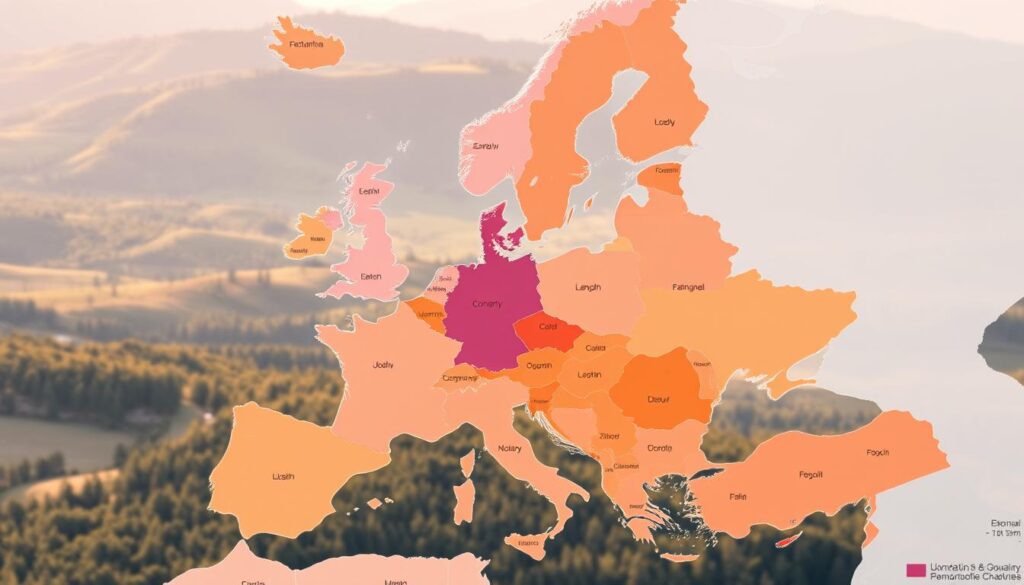
protestant demographics europe regions

Northern and Central European Perspectives

Scandinavia remains a bastion of traditional practice. Over 72% of Norway’s population identifies with its state church—a system blending ancient rituals with contemporary social services. Denmark and Iceland show similar patterns, where national identity intertwines with centuries-old Lutheran heritage.

Germany’s religious divide tells another story. The north hosts 18.6 million Protestants (22.6% of the country), while Catholic Bavaria dominates the south. “These borders mirror 16th-century political splits,” notes historian Anna Müller, highlighting how old divisions still influence regional voting trends.

The Netherlands presents a paradox. Though only 11% of the population identifies as Protestant today, Calvinist values fueled its 17th-century trading empire. Amsterdam’s stock exchange and work ethic owe much to this legacy.

Central Europe’s hidden stories emerge in places like Hungary. Despite Catholic majorities, vibrant Protestant minorities thrived here since the Reformation. Meanwhile, the Czech Republic’s low numbers—under 1%—reflect 400 years of Habsburg repression and communist-era restrictions.

Baltic nations add a postwar chapter. Estonia and Latvia preserved Lutheran traditions through Soviet occupation. Today, these practices help define their post-communist identities, proving faith’s resilience against political tides.

protestantism in europe: A Closer Look at Shifting Dynamics

Once dominant groups now navigate unprecedented demographic transformations. From 2009 to 2010 alone, Protestant affiliation dropped from 15% to 12% across the continent. This decline mirrors broader secularization trends, yet unexpected growth pockets challenge assumptions.
protestant population shifts europe

Historical Shifts in Adherent Populations

Traditional strongholds like Sweden and Germany saw steady membership losses since the 1970s. “We’re not losing beliefs—we’re losing institutional ties,” observes sociologist Clara Dupont. Younger generations often maintain cultural connections while rejecting formal religious labels.

Immigration reversed declines in surprising ways. African Pentecostal churches thrive in London, while Korean Presbyterians revitalize empty chapels in Berlin. These communities account for 40% of recent growth in some urban areas.

Modern Trends and Future Projections

France and Russia defy continental patterns. Reformed churches gained 18,000 followers in France since 2015, despite strict secular laws. Post-Soviet Russia’s evangelical boom continues, with over 4,000 Protestant congregations active today.

Three key factors shape projections:

  • Aging congregants in traditional denominations
  • Rising multicultural congregations
  • Hybrid online/in-person worship models

By 2050, experts predict Europe will house under 9% of global Protestant followers. This shift hands spiritual leadership to Africa and Asia, reshaping five centuries of religious history.

Interfaith Relations and the Response of the Catholic Church

When theological debates turned into battles, Europe faced its most violent century. The Roman Catholic Church initially met reform movements with force. Inquisitions hunted dissenters, while armies marched to reclaim spiritual control.

From Conflict to Coexistence

Spain’s religious courts targeted reformers as early as 1482. Italy’s 1542 Roman Inquisition jailed thousands. Yet repression bred resistance—Protestant ideas spread faster than authorities could contain them.

The Counter-Reformation changed tactics. New orders like the Jesuits combined education with missionary work. Their schools became tools for rebuilding church influence across divided regions.

Decades of war reshaped boundaries. The Thirty Years’ War alone killed millions before the 1648 Peace of Westphalia. This treaty let rulers choose their realm’s religion, easing tensions through compromise.

Today, former enemies share interfaith dialogues. What began with fear and fire ended with a fragile balance—proof that even bitter divides can yield to understanding.

FAQ

What sparked the Reformation in Europe?

Growing frustration with practices like indulgences and corruption within the Roman Catholic Church fueled reform efforts. Martin Luther’s 95 Theses in 1517 became a catalyst, challenging doctrines and inspiring movements across the continent.

How did early reformers like Jan Hus influence Protestant ideas?

Figures like Jan Hus in Bohemia criticized church authority and promoted vernacular scripture a century before Luther. Their teachings laid groundwork for later movements, emphasizing faith over hierarchy.

What role did John Calvin play in shaping Protestant theology?

Calvin’s teachings on predestination and church governance influenced Reformed traditions. Cities like Geneva became hubs for his ideas, impacting denominations such as Presbyterians and Puritans.

Why did Northern Europe adopt Reformed faiths more widely?

Political alliances, like German princes supporting Lutheranism, and cultural shifts made regions like Scandinavia and England receptive. The Church of England’s break from Rome under Henry VIII also accelerated change.

How did Protestantism affect European governance?

It challenged papal authority, empowering monarchs and local rulers. Concepts like individual interpretation of scripture contributed to secularization, reshaping laws and education systems over time.

What are major denominations stemming from the Reformation?

Lutheran, Anglican, and Reformed branches emerged initially. Over centuries, groups like Methodists, Baptists, and Pentecostals developed, each adapting core ideas to cultural contexts.

How has the Catholic Church responded to Protestant growth?

The Counter-Reformation addressed criticisms through councils like Trent, while missionary work aimed to reclaim followers. Modern ecumenical dialogues now focus on shared values over past conflicts.

Are Protestant populations declining in Europe today?

While historically dominant in regions like Germany, secularism and immigration have shifted demographics. However, evangelical movements and non-traditional churches continue to adapt to contemporary needs.
What is a Synonym for Protestantism? Find Alternatives


Ever struggled to find the right words when discussing Christian traditions? You’re not alone. Language shapes how we understand faith, and having a rich vocabulary helps bridge gaps in conversations, research, or writing. This guide unlocks creative ways to describe branches of Christianity that emerged after the Reformation—without repeating the same terms.

Why does this matter? Whether you’re drafting an essay, engaging in interfaith dialogue, or simply curious, knowing diverse alternatives adds clarity and depth. Think of it like expanding your personal dictionary for faith-based discussions. You’ll discover not just direct replacements but also related categories and denominational names that fit specific contexts.

We’ll walk through historical roots, modern usage, and practical examples. By the end, you’ll confidently navigate terms like “Reformed traditions” or “non-Catholic Christian groups” while appreciating the diversity within these communities. Let’s dive into the linguistic richness behind these faith expressions!

Key Takeaways

  • Expand your vocabulary for clearer communication about Christian traditions.
  • Discover terms suited for academic writing, interfaith discussions, or everyday use.
  • Learn how historical context shapes modern religious language.
  • Identify specific denominational names and broader categorical alternatives.
  • Enhance cultural awareness through precise terminology.

Introduction to Protestantism and Its Context

Navigating the landscape of Christian denominations starts with grasping foundational terms and their origins. Let’s explore how one word reshaped religious history and why its context still matters today.

Overview of the Term

The term “Protestant” first appeared in 1529 when German leaders challenged the Diet of Speyer’s restrictions on religious freedom. These reformers weren’t just creating new churches—they were sparking a theological revolution. Their protests centered on ideas like salvation through faith rather than rituals and the Bible as the ultimate authority.

Importance in Religious Discourse

Why does this 500-year-old term still matter? Precise word choice becomes essential when discussing:

  • Interfaith dialogues
  • Academic comparisons between Christian traditions
  • Cultural heritage studies

A church built on scripture needs no earthly mediator.

– 16th-century reformer

This table shows how major Protestant branches differ:

Denomination Founded Key Belief
Lutheran 1517 Justification by faith
Baptist 1609 Believer’s baptism
Methodist 1739 Social holiness

Understanding these distinctions helps avoid generalizations in discussions about religion. Whether you’re reading historical texts or engaging with modern faith communities, context shapes meaning.

Defining Protestantism: Origins and Evolution

Language holds power—especially when tracing faith movements through history. To grasp what makes this branch of Christianity unique, we start at its linguistic DNA.

Protestant etymology

Etymology and Historical Background

The term “Protestant” springs from Latin protestari, meaning “to declare publicly.” Early reformers used this word not as rebellion, but as a bold affirmation of faith. By 1539, it became shorthand for groups rejecting Catholic doctrines.

Pronounced ˈprä-tə-stənt or prə-ˈte-, its evolution mirrors cultural shifts. What began as a political label for German dissenters grew into a global religious identity. Like a family name, it now covers Lutherans, Baptists, and countless others.

Key Moments in the Reformation

Martin Luther’s 1517 95 Theses ignited change, but the fire spread through smaller sparks:

  • Printing presses sharing vernacular Bibles
  • Local leaders reimagining church practices
  • Communities prioritizing personal faith over rituals

“Here I stand; I can do no other.”

– Martin Luther, 1521

Understanding this meaning behind the movement helps us appreciate modern terms like “Reformed” or “Evangelical.” It’s not about opposition—it’s about declaration. Every time we use these words, we echo five centuries of spiritual courage.

Exploring the “protestantism synonym”

Why do writers and scholars hunt for different ways to describe Reformation-era faiths? Language flexibility helps avoid repetition while respecting diverse beliefs. Let’s unpack this linguistic puzzle.

Understanding the Main Keyword

Direct replacements for “Protestantism” are rare. The term refers to specific historical movements, not just abstract ideas. Instead of one perfect match, we use:

  • Broad categories: Reformation traditions
  • Denominational names: Presbyterian or Anabaptist
  • Descriptive phrases: post-Reformation Christian groups

Religious terms carry centuries of meaning. Calling Baptists “non-Catholic Christians” works in some contexts but erases their unique identity. A thesaurus might suggest “dissenting faiths,” but that implies conflict rather than theological diversity.

“Words are windows to worldview—choose them like you’re building bridges.”

– Modern interfaith educator

Need an alternative? Ask:

  • Am I emphasizing history or modern practice?
  • Does my audience know denominational differences?
  • Should I use formal or conversational language?

For academic papers, Reformed traditions often fits best. In casual talks, post-Reformation churches keeps things clear. Every choice shapes understanding—like selecting the right lens for a camera.

Alternative Terms, Denominations, and Synonyms

Choosing accurate terms for religious movements enhances clarity in interfaith conversations. Whether writing about history or discussing modern faith practices, your word choice can illuminate—or obscure—key distinctions. Let’s explore options ranging from umbrella phrases to precise labels.

denominational diversity synonyms

More Generic Terms: Christianity and Christian Religion

Broad terms like Christianity or Christian religion work when discussing shared beliefs across churches. Use these when:

  • Addressing general audiences
  • Highlighting common ground between traditions
  • Avoiding denominational specifics

Example: “The Christian religion encompasses diverse worship styles.”

Specific Denominations: Lutheranism, Anglicanism, and Others

For precision, name the tradition. Lutherans emphasize scripture, Anglicans value liturgical heritage, and Methodists focus on social justice. Theological movements like Calvinism or Pentecostalism describe doctrinal approaches rather than organizational structures.

“Denominational names are compasses—they point to specific theological landscapes.”

– Religious studies scholar

Historical groups like Anabaptists or Puritans shaped modern religion, while unique denominations like Mormonism reflect later developments. Match your terms to context: use evangelicalism for belief-focused discussions, Congregationalism for church governance topics.

Usage, Examples, and Dictionary Insights

Mastering religious terminology requires seeing words in action. Let’s examine how modern writers use these terms and where to find reliable references.

religious terminology usage examples

Sentence Examples and Word Usage

Recent news shows varied applications of these terms:

Example Context Function
“White evangelical Protestants split on climate policies” Political analysis Adjective + Noun
“She identifies as evangelical Protestant” Personal identity Descriptive phrase

Notice capitalization rules:

  • Capitalize specific groups: Lutheran Church
  • Lowercase general terms: evangelical movement

Additional Resources and Translator Tools

Top dictionary entries clarify meanings:

Resource Definition Style
Merriam-Webster Historical origins
Oxford English Dictionary Evolving usage

“Translating faith terms requires understanding cultural nuance, not just vocabulary.”

– Translation studies professor

For academic writing, try: “Post-Reformation Christian traditions (e.g., Methodist) emphasize…”. Casual conversations might use: “Some non-Catholic churches focus on…”. Always match your words to the audience’s knowledge level.

Conclusion

Finding the perfect term for Reformation-era Christianity feels like unlocking a linguistic toolbox. You’ve discovered alternatives ranging from broad labels like post-Reformation traditions to specific groups such as Lutheranism or Anglicanism. Each option serves different needs—academic precision, casual conversation, or cultural exploration.

Context decides everything. Need simplicity? Use non-Catholic Christian groups. Discussing theology? Try Reformed movements. This flexibility helps avoid generalizations while respecting diverse communities.

Your word choice now carries deeper awareness of history and belief systems. Whether writing about Methodist social justice or Baptist baptism practices, precise terms build bridges in interfaith dialogues. Always match your language to your audience’s knowledge and your communication goals.

Remember: religious terminology reflects living traditions. Approach it with curiosity and care. You’re now equipped to discuss these faith expressions with clarity and confidence—ready to explore richer conversations about spiritual heritage.

FAQ

What terms can replace "Protestantism" in discussions?

Words like Reformed Christianity, Evangelical faith, or non-Catholic Christian traditions are often used. Specific groups, such as Lutherans or Baptists, also represent branches within this broader movement.

How did the Reformation shape modern Christianity?

The Reformation, led by figures like Martin Luther, challenged Catholic doctrines and sparked new religious practices. It led to diverse denominations, emphasizing personal faith and scripture over traditional hierarchy.

Why use synonyms when discussing religious topics?

Alternate terms help clarify context or avoid repetition. For example, saying Anglican traditions instead of a general term can highlight specific beliefs or cultural practices within a community.

Are there tools to explore related religious vocabulary?

Yes! Dictionaries like Merriam-Webster or Oxford offer detailed definitions. Online platforms like Google Translate or specialized theology sites also provide context for terms across languages.

What’s the difference between Lutheranism and Anglicanism?

Lutheranism focuses on teachings by Martin Luther, stressing salvation through faith. Anglicanism, rooted in England’s Church, blends Catholic rituals with Reformed theology, led by bishops and the Archbishop of Canterbury.

How do denominations impact global Christianity today?

Denominations like Methodists or Presbyterians shape worship styles, social policies, and community roles. These differences reflect historical splits but also adapt to modern cultural and ethical debates.

Protestant Jesus: Who He Was and What He Taught


What does it mean to follow Jesus through a Protestant lens? For millions, this faith tradition offers a distinct way to understand his life and teachings. Let’s explore how this perspective developed and why it continues to shape beliefs today.

Christianity has many voices, each interpreting spiritual truths through unique cultural and historical contexts. The Protestant view emphasizes direct engagement with scripture and personal faith. This approach began during the Reformation but remains vibrant in modern worship and daily life.

We’ll look at core ideas like salvation through grace and the role of scripture in shaping beliefs. You’ll see how these teachings influence everything from church practices to personal relationships. Our goal isn’t to debate differences but to appreciate how communities connect with divine truth in meaningful ways.

Key Takeaways

  • Protestant views of Jesus grew from Reformation-era challenges to church authority
  • Scripture plays a central role in understanding Christ’s nature and mission
  • Salvation through faith alone remains a cornerstone belief
  • Cultural shifts continue to shape modern interpretations
  • This tradition values personal spiritual experiences alongside community practices

Historical Context and Theological Origins

Sixteenth-century Europe saw religious ideas clash like never before. Reformers demanded changes to church practices, sparking debates that still shape worship today. Their arguments about scripture and salvation created lasting divisions – and unexpected connections.

The Reformation and Its 500-Year Legacy

Martin Luther’s 95 Theses didn’t just challenge indulgences – they reshaped how people related to faith. By translating the Bible into common languages, reformers put sacred texts directly into believers’ hands. This shift made personal scripture study central to spiritual life.

Three key changes emerged from this period:

  • Salvation through faith rather than deeds
  • Scripture as ultimate authority over church tradition
  • Simplified worship practices focused on preaching

Ecumenical Dialogue and Shifting Perspectives

Modern churches still grapple with Reformation-era questions. The 1952 Lund Principle captures this tension perfectly:

“Act together in all matters except those where deep differences compel separation”

Recent efforts show progress. Pope Francis’ joint service with Lutherans marked the Reformation’s 500th anniversary. Yet core differences remain, particularly around:

Issue Historic View Modern Dialogue
Scripture vs Tradition Contradictory Complementary aspects
Salvation Faith vs Works Shared emphasis on grace
Church Authority Centralized vs Local Collaborative models

These conversations continue evolving as new generations reinterpret ancient truths. While some differences persist, the shared focus on Christ’s teachings offers common ground for future dialogue.

Understanding the Protestant Jesus: Faith, Salvation, and Worship

Central to this spiritual framework is the conviction that Christ embodies both divine authority and human experience. This dual nature shapes every aspect of belief, from individual redemption to collective practices.

Scriptural Foundations and the Nature of Jesus

The Word of God serves as the ultimate guide for understanding Christ’s role. Hebrews 8 clarifies his position: seated at the Father’s right hand, fully divine yet fully human. This God-man concept forms the bedrock of spiritual identity.

scripture and worship

Believers emphasize spiritual connection over physical presence. As 2 Corinthians 5:7 states,

“We live by faith, not by what we see”

. This principle fuels worship through prayer and scriptural engagement rather than material symbols.

Salvation, Ministry, and a Living Faith

Salvation emerges as a gift received through trust, not earned by deeds. Churches focus ministry efforts on sharing this message, urging people to embrace Christ’s sacrifice as their sole path to redemption.

Three markers define this approach:

  • Direct access to God through the Son
  • Communal worship centered on biblical teaching
  • Personal responsibility in spiritual growth

This framework creates dynamic faith practices. Followers view daily obedience as worship, transforming routine actions into expressions of devotion. The truth of scripture becomes both compass and catalyst for meaningful living.

Comparing Protestant and Catholic Views on Jesus

Two ancient branches of Christianity share core beliefs yet express them through distinct practices. These differences stem from how each tradition interprets scripture and applies it to modern worship.

Eucharist: Symbolism vs. Spiritual Presence

Catholic teachings state the Eucharist becomes Christ’s actual body and blood during Mass. Their doctrine declares:

“The whole Christ is truly contained in the Eucharist”

This belief leads to practices like Eucharistic adoration, where believers pray before consecrated bread. Many churches display it in ornate vessels called monstrances.

Protestant communities view communion differently. They see bread and wine as symbols recalling Christ’s sacrifice. This way of remembrance focuses on spiritual connection rather than physical transformation.

Different Paths to Salvation and Ministry

Catholic theology ties salvation to sacraments like baptism and Eucharist. John 6:53’s command to “eat his flesh” shapes this approach. Ministry aims to bring people into sacramental life.

Protestant traditions emphasize faith as the sole requirement for redemption. Their churches prioritize preaching the Word and personal relationships with Christ. Ministry success measures often focus on individual spiritual growth.

Area Catholic Practice Protestant Practice
Communion Real presence Symbolic remembrance
Scripture Church + Bible Bible alone
Leadership Priestly mediation Direct access

Both traditions honor Christ through their distinct approaches. While practices differ, shared devotion to the man from Nazareth continues to shape billions of lives worldwide.

Evangelical vs Mainline: Divergent Perspectives on Christ

Modern Christianity reveals a tapestry of beliefs within its Protestant branches. Two distinct threads – evangelical and mainline traditions – weave contrasting patterns in how they understand spiritual truth. These differences shape worship styles, outreach efforts, and interpretations of sacred texts.

evangelical mainline differences

Core Beliefs and the Role of Personal Conversion

Evangelical communities hold four foundational principles. They view scripture as free from error, teach salvation through Christ alone, require personal conversion experiences, and prioritize evangelism. Many describe faith as a transformative experience, often marked by specific “born-again” moments.

This approach creates vibrant outreach programs. Churches focus on sharing the word through mission trips and youth ministries. As one pastor explains:

“Our calling is to make disciples, not just attendees”

Modernist Interpretations and Traditional Conservatism

Mainline Protestants often approach theology differently. They see the Bible as God’s word expressed through human authors. This view allows for reinterpretation across generations while maintaining core teachings.

Aspect Evangelical Mainline
Scripture Literal truth Contextual message
Salvation Exclusive path Multiple possibilities
Outreach Conversion focus Social justice emphasis

Both traditions value serving communities, but through different lenses. While evangelicals might build churches in new areas, mainline groups often establish food banks or literacy programs. These traditions demonstrate how shared devotion can express itself in varied, meaningful ways.

Cultural Influences on the Perception of Jesus

Modern faith communities navigate a unique challenge: making ancient truths resonate in a TikTok world. This tension between timeless teachings and contemporary expression shapes how believers envision sacred figures.

cultural influences on faith

The Impact of American Pop Culture on Faith

Evangelical groups often blend spirituality with mainstream trends. At Holy Land USA, visitors snack on Goliath Burgers while kids wear “The Rock” t-shirts referencing biblical stories. As journalist Peter Feuerherd notes:

“They’re pioneers in baptizing pop culture into the Christian realm”

This approach aims to make spiritual concepts relatable. Three key strategies emerge:

  • Using familiar music styles in worship
  • Designing casual church environments
  • Creating faith-based entertainment venues

Tradition Versus Contemporary Context in Worship

Other communities prioritize solemnity over relevance. G.K. Chesterton captured this perspective, suggesting divine joy exceeds human comprehension:

“His mirth was too great for God to show us when He walked upon our earth”

These contrasting views spark debates about appropriate reverence. Consider how different groups approach key aspects:

Aspect Modern Approach Traditional View
Worship Style Casual, interactive Formal, liturgical
Jesus’ Humanity Emphasized through relatability Balanced with divine mystery
Engagement Methods Pop culture integration Historical continuity

Both perspectives seek to honor sacred truths while connecting with people today. The challenge lies in maintaining depth while making faith feel alive in our time.

Conclusion

The journey through Protestant beliefs reveals how spiritual truth thrives in diverse forms. For five centuries, scripture-centered faith has shaped communities while adapting to cultural shifts. From Reformation roots to modern churches, this tradition maintains its core: salvation through grace, not deeds.

Distinct approaches emerge even within Protestantism. Evangelical enthusiasm for personal conversion contrasts with mainline focus on social justice. Yet both honor Christ as source of redemption. Differences from Catholic views – like symbolic communion versus sacramental presence – highlight unique paths to sacred connection.

Modern believers balance ancient teachings with contemporary life. Some blend worship with pop culture; others preserve liturgical depth. What unites them? Shared conviction that divine authority meets human experience in transformative ways.

Understanding these variations fosters richer dialogue across traditions. Whether through vibrant ministries or quiet devotion, Protestant communities continue reimagining faith’s role in our world – always anchored in the living Word.

FAQ

How do Reformation teachings about Christ differ from older traditions?

The Reformation emphasized Scripture alone as the ultimate authority, shifting focus from church tradition to a direct relationship with God. Leaders like Martin Luther stressed faith over rituals, reshaping how communities viewed Christ’s role in salvation.

Why do some faith groups see communion as symbolic rather than literal?

Many Protestant traditions view the Eucharist as a memorial of Christ’s sacrifice, highlighting spiritual connection over physical presence. This contrasts with beliefs in transubstantiation, reflecting differing interpretations of biblical accounts.

What role does personal conversion play in Evangelical beliefs?

Evangelicals often prioritize individual repentance and a transformative encounter with Christ. This contrasts with Mainline groups, which may emphasize communal faith journeys or social justice as expressions of living faith.

How has American culture influenced modern views of Christ?

Pop culture, media, and shifting social values have led some communities to reinterpret Christ’s teachings in contemporary contexts. This includes blending traditional worship with modern music or addressing current issues through a faith-based lens.

Are Protestant and Catholic teachings on salvation fundamentally different?

While both affirm Christ’s central role, Protestants often teach salvation through faith alone, whereas Catholic theology integrates faith with sacraments and works. These differences stem from interpretations of Paul’s letters and the Gospels.

Why do debates about biblical authority persist in churches today?

Tensions arise between literalist readings and scholarly, context-driven approaches. Issues like gender roles or science-vs-scripture dialogues often reflect deeper questions about how to apply ancient texts to modern life.

How do traditions balance historical practices with new worship styles?

Many congregations blend hymns with contemporary music or use multimedia in services. This mix aims to honor heritage while making spiritual experiences accessible to younger generations, fostering unity across diverse age groups.

Uncover the Dramatic Story of the Protestant Wars


Imagine a time when Europe stood at a crossroads. A single monk’s bold act in 1517 sparked over a century of upheaval, reshaping nations and beliefs. What began as theological debates grew into clashes that mixed faith, power, and identity in ways no one could predict.

These struggles weren’t just about religion. Rulers used spiritual divisions to gain political control, while communities fought for cultural survival. The term “Wars of Religion” emerged much later, showing how future generations saw these events as warnings about mixing belief systems with governance.

You’ll see how ideas from this period still shape modern life. Concepts like religious freedom and national sovereignty took root amid the chaos. Even military tactics and art evolved as societies adapted to endless conflict.

Key Takeaways

  • Lasted over 100 years, starting with Martin Luther’s Ninety-five Theses in 1517
  • Blended religious disputes with political power struggles across Europe
  • Introduced early ideas about state authority and personal belief systems
  • Term “Wars of Religion” coined decades after the conflicts ended
  • Helped transition Europe from medieval traditions to modern governance

Introduction to the Era of Religious Conflict

A wave of reform swept through Europe, challenging centuries-old traditions. By 1517, simmering frustrations about church corruption collided with fresh ideas about personal spirituality. This mix created explosive conditions that reshaped societies from Paris to Prague.

Historical Context and Background

Europe’s clergy faced growing criticism for selling forgiveness and living lavishly. Peasants and nobles alike resented Rome’s influence over local affairs. Meanwhile, Ottoman forces advanced into Christian territories, making unity seem urgent yet impossible.

The printing press changed everything. For the first time, religious debates reached ordinary people through pamphlets written in German and French. This technology turned theological arguments into public conversations that rulers couldn’t control.

The Rise of the Reformation

Martin Luther’s realization about “faith alone” sparked a revolution. His 1517 protest against indulgences gave voice to widespread anger. As he later wrote: “When the coin clinks in the chest, greed increases—but salvation comes through divine mercy.”

Other reformers soon added their voices. Ulrich Zwingli in Zurich and John Calvin in Geneva developed competing visions for churches free from papal authority. Local leaders saw chances to seize land and power once held by Rome, blending spiritual goals with political ambition.

Early Conflicts and the Spark of the First War

Tensions reached a breaking point in 1562. What began as theological disagreements exploded into full-scale military action. This shift changed how communities viewed faith, loyalty, and survival.

The Massacre at Wassy and the Outbreak of Violence

March 1, 1562, marked a turning point. Duke François de Guise discovered Protestants worshipping in a Wassy barn. His forces killed over 60 unarmed civilians, igniting nationwide fury. “The blood spilled here will drown us all,” wrote one witness.

Louis de Bourbon, Prince of Condé, seized Orléans weeks later. His call to arms transformed scattered believers into organized troops. Cities became battlegrounds as both sides mobilized forces.

Key Figures and Regional Turmoil

Extremists fueled the flames. Protestant Baron des Adrets destroyed Catholic towns in Provence. Catholic Blaise de Montluc retaliated with equal brutality. Civilians faced impossible choices—convert, flee, or die.

The Battle of Dreux in December 1562 showed war’s new face. Royal troops clashed with Condé’s army in freezing conditions. Though inconclusive, it proved conflicts now involved professional soldiers, not just angry mobs.

The Second and Third Wars: Escalation and International Intrigue

Europe’s religious tensions exploded into global power struggles after 1567. Local disputes now drew foreign kings and mercenaries into French territory. This shift turned neighborhood quarrels into battles shaping continental politics.

international religious conflict

Events of 1567-1570 and Shifting Alliances

Protestant leaders staged a daring move in 1567—the Meaux surprise. They tried capturing young King Charles IX to free him from Catholic advisors. Though unsuccessful, this plot hardened divisions across France.

Violence peaked in Nîmes during the Michelade massacre. Dozens died when tensions between neighbors turned deadly overnight. Such sudden outbreaks showed how fragile peace had become.

Influence of Foreign Aid and Tactical Innovations

Spain’s Philip II bankrolled Catholic forces, while England’s Elizabeth backed Protestant rebels. The Dutch revolt against Spanish rule further complicated these alliance networks. Soldiers from Germany and Switzerland joined both sides.

Catholic troops scored major wins at Jarnac and Moncontour using new battlefield strategies. Cavalry charges and coordinated pike formations changed how army units fought. These clashes proved foreign support could swing outcomes dramatically.

As money and weapons flowed across borders, what began as civil wars became international showdowns. Rulers learned religious conflicts could advance their political aims far beyond home territories.

Understanding the “protestant wars”: An Ultimate Guide

Labels shape how we remember history. What we now call the Protestant Wars began as chaotic struggles without a unified name. Contemporaries described them as “public troubles” or “civil rebellions,” reflecting their local and political nature.

Defining the Term and Its Historical Impact

The phrase “Wars of Religion” first appeared in 1580s documents. Enlightenment thinkers later popularized it as a cautionary tale. Voltaire famously argued these clashes proved “faith makes poor governance” – a view influencing historians for centuries.

Early 20th-century scholars downplayed spiritual motives. Marxist analysts framed the conflict as economic class warfare. This interpretation dominated until recent decades.

Modern researchers like Natalie Zemon Davis changed the conversation. Through letters and diaries, they revealed how ordinary people saw their actions as holy missions. One farmer’s journal states: “We fight not for land, but for God’s true church.”

Today’s historians balance political, economic, and religious factors. The movement wasn’t just about theology – it reshaped ideas about power, community, and personal belief. Understanding these layered motives helps explain why the name still sparks debate 400 years later.

Key Battles and Turning Points in the Conflict

Frozen fields became killing grounds as Europe’s religious divisions reached their violent peak. Three decisive clashes and one horrific massacre would forever change how nations handled faith-based disputes.

religious conflict battles

The Battle of Dreux, Jarnac, and Moncontour

December 1562’s Battle of Dreux marked a new era of warfare. Royal forces used disciplined cavalry charges to overpower Protestant rebels. “We fought not as rabble, but as soldiers of Christ,” wrote one participant. The victory proved organized armies could crush spontaneous uprisings.

Seven years later, the Battle of Jarnac turned tragic when Protestant leader Condé fell in combat. His death left allies reeling. At Moncontour, Catholic troops nearly destroyed Protestant forces through superior tactics. Admiral Coligny’s narrow escape kept resistance alive.

Massacres, Sieges, and the Saint Bartholomew’s Day Crisis

The 1563 siege of Orléans showed how quickly fortunes could shift. Catholic commander Duke de Guise seemed poised to crush rebels—until an assassin’s blade ended his campaign. City defenders gained temporary relief through this shocking turn.

But August 1572 brought unparalleled horror. Four days after the king‘s sister married Protestant Henri de Navarre, Paris erupted. What began as targeted arms confiscations became six days of slaughter. “The gutters ran red with neighbor killing neighbor,” recorded a survivor. Nearly 10,000 inhabitants perished nationwide.

These events proved religious hatred could override royal authority. Each clash deepened divisions, making peace seem increasingly impossible.

Influence of Edicts, Treaties, and Political Maneuvering

French monarchs wielded royal decrees like surgical tools to mend their fractured kingdom. These documents tried to stitch together religious peace while keeping the crown’s authority intact. Each edict revealed the delicate balance between compromise and control.

religious edicts treaty

The Edicts of Amboise, Longjumeau, and Boulogne

The 1563 Edict of Amboise marked France’s first major attempt at religious order. It allowed limited Protestant worship in noble homes—a temporary fix that satisfied neither side. “We grant this not from love, but necessity,” wrote Charles IX’s advisors.

Subsequent agreements grew weaker. The 1568 Edict of Longjumeau revived Amboise’s terms but collapsed within months. By 1573, the Edict of Boulogne confined Reformed worship to three towns. Catholic hardliners cheered these restrictions, while Protestants saw their rights shrinking.

Edict Year Key Terms Impact
Amboise 1563 Noble home worship Temporary calm
Longjumeau 1568 Renewed Amboise terms 5-month peace
Boulogne 1573 3 approved towns Protestant anger
Nantes 1598 Coexistence policy Lasting solution

Political Reforms and the Role of Royal Authority

Henry IV’s 1598 Edict of Nantes broke the cycle. It granted Huguenots 200 safe towns and political rights—but required Catholic practice in Paris. This shrewd move preserved the king’s image as protector of the kingdom’s traditional faith.

Earlier failures taught rulers that lasting peace required both carrots and sticks. The crown began appointing neutral judges to resolve disputes. Royal proclamations emphasized national unity over religious purity, planting early seeds of secular governance.

Military Innovations and the Gunpowder Revolution

Battlefields became laboratories for deadly new technologies during Europe’s spiritual crisis. The gunpowder revolution changed combat forever, making armored knights obsolete. Cannons could now smash castle walls in hours instead of weeks, forcing engineers to design star-shaped fortifications with angled bastions.

Infantry tactics evolved rapidly. Musketeers formed rotating lines to maintain constant fire, while pike squares protected reloading shooters. “A single volley now decides battles,” wrote a Spanish commander in 1572. These military innovations required professional armies, shifting power from nobles to centralized governments.

Artillery became lighter and more mobile. French forces dragged cannons through muddy fields using horse teams—a logistical nightmare that demanded new supply systems. The gunpowder revolution also spread destruction farther than ever before. Villages miles from front lines faced bombardment, blurring the line between soldier and civilian.

These military innovations reshaped societies as much as battlefields. Tax systems expanded to fund larger armies, while gunpowder factories became vital national assets. What began as tools for religious conflict ultimately built the foundations of modern warfare.

FAQ

What sparked the 16th-century religious struggles in Europe?

Rising tensions between Catholics and reformers over doctrine, political power, and social influence ignited the conflicts. Events like the Reformation’s spread and the Massacre at Wassy in 1562 acted as catalysts, deepening divisions across regions like France and the Holy Roman Empire.

How did foreign nations influence these conflicts?

Countries like Spain under Philip II and England backed opposing sides, providing troops, funds, and strategic alliances. This international involvement turned regional disputes into broader power struggles, shaping outcomes like the Saint Bartholomew’s Day crisis and sieges of key cities.

What role did edicts play in easing tensions?

Decrees like the Edict of Amboise (1563) and Edict of Nantes (1598) granted limited freedoms to Huguenots, aiming to balance Catholic authority with minority rights. These agreements temporarily reduced violence but often failed to address deeper political rivalries.

Which battles marked major turning points?

Clashes at Dreux (1562), Jarnac (1569), and Moncontour (1569) shifted momentum between factions. Sieges of La Rochelle and Paris also demonstrated how control of strategic locations could sway royal authority or rebel morale.

How did military tactics evolve during this period?

The use of gunpowder weapons, fortified cities, and mercenary armies transformed warfare. Leaders like Admiral Coligny adopted new strategies, blending traditional cavalry charges with artillery-focused sieges to outmaneuver opponents.

Why did the Saint Bartholomew’s Day massacre occur?

A failed assassination attempt on Gaspard de Coligny, a Huguenot leader, led to panic among Catholic elites. This triggered coordinated attacks in Paris, fueled by rumors of rebellion and Catherine de’ Medici’s political maneuvering to protect royal influence.

What long-term impacts did these conflicts have?

The struggles weakened centralized monarchies, empowered regional nobles, and set precedents for religious tolerance. They also paved the way for future reforms, reshaping Europe’s political and cultural landscape into the Thirty Years’ War era.

Discover the Best Protestant Hymns


Many congregations are rediscovering the power of traditional sacred music. A recent conversation between a pastor and seminary professor highlights this shift—church leaders increasingly seek ways to blend classic songs with modern worship styles. These melodies, rooted in rich theological truths, connect believers across generations.

Why do certain pieces remain beloved for centuries? Their lyrics often express core Christian doctrines with poetic clarity, while their memorable tunes invite collective participation. Research shows most churchgoers recognize between 50-200 spiritual songs, making careful selection vital for meaningful worship experiences.

This guide explores sacred music that resonates with Presbyterian, Baptist, Anglican, and Congregational traditions. You’ll learn how these works strengthen faith through lyrical depth and cultural endurance. Whether you’re planning services or deepening personal devotion, these time-tested compositions offer fresh relevance.

Key Takeaways

  • Churches are blending traditional and contemporary worship music
  • Lyrical theology remains central to song selection
  • Melodic accessibility increases congregational engagement
  • Most believers know fewer than 200 spiritual songs
  • Historic works bridge generational gaps in faith communities
  • Practical guidance helps leaders implement classic pieces

Understanding the History and Significance

Sacred songs have shaped spiritual practices longer than most realize. Ancient Greek philosophers wrote about religious chants, but it wasn’t until the 16th-century Reformation that congregational singing took its modern form. Leaders like Martin Luther championed music as a tool for teaching Scripture to everyday believers.

Origins and Evolution in Worship

Early reformers transformed worship by replacing Latin chants with lyrics people understood. This shift let entire congregations participate—not just trained choirs. The Trinity Hymnal, first published in 1961, became a landmark collection. Its revised “Red” edition reflects collaboration between Presbyterian groups, ensuring lyrics align with historic confessions like the Westminster Standards.

Hymnody in the American Protestant Tradition

When European settlers arrived in the New World, they brought psalters filled with metrical psalms. Over time, these evolved into distinctively American songs. Revival meetings and frontier churches favored simple melodies that taught core doctrines. By the 19th century, classics like “Amazing Grace” crossed denominational lines, uniting believers through shared musical language.

These timeless works didn’t just survive—they thrived. Their ability to adapt while maintaining theological depth explains why churches still treasure them today. From small country chapels to urban megachurches, these songs continue shaping worship worldwide.

Top Selections for Every Worship Occasion

Certain melodies have become the heartbeat of worship services across America. These timeless works fit seamlessly into baptisms, holidays, or ordinary Sundays, offering spiritual anchors for diverse moments. Their enduring popularity stems from universal themes that speak to both joy and struggle.

Hymns of Praise, Salvation, and Thanksgiving

“Great is Thy Faithfulness” (#32) comforts worshippers with its reminder of God’s unchanging nature. Many find strength in lines like “Morning by morning, new mercies I see” during life’s storms. worship hymns

“How Great Thou Art” (#44) turns ordinary sanctuaries into spaces of awe. Its Swedish roots blend with English lyrics to create moments of wonder. One music director notes: “This song makes congregations feel small yet deeply loved.”

Iconic Tunes That Shaped Congregational Singing

Martin Luther’s “A Mighty Fortress” (#92) remains a Reformation battle cry. Its bold melody mirrors the lyrics’ confidence in divine protection. Churches often use it during Reformation Sunday or times of uncertainty.

“Amazing Grace” (#460) continues to redefine redemption’s power. Written by a former slave trader, its message crosses cultural divides. Recent surveys show 89% of churchgoers recognize its opening notes within three seconds.

Triumphant pieces like “Crown Him with Many Crowns” (#295) close services with resounding hope. Their ascending melodies visually lift hands and hearts upward, embodying the joy of eternal promise.

Modern Adaptations and New Hymn Tunes

A fresh wave of creativity is reshaping how congregations engage with timeless truths through song. Artists blend ancient lyrics with modern instrumentation, proving theological depth and musical innovation aren’t mutually exclusive.

Contemporary Arrangements and Digital Resources

Keith Getty and Stuart Townend’s “In Christ Alone” shows how new compositions can achieve classic status quickly. Its soaring melody carries weighty doctrines about redemption, making it a popular Christian favorite since 2001. Similarly, Matt Merker’s “He Will Hold Me Fast” refreshes biblical assurance with a warm, folk-inspired hymn tune.

Digital platforms like Hymnary.org and Indelible Grace Music offer instant access to sheet music and recordings. Sovereign Grace Music updates older texts—Vikki Cook’s “Before the Throne” pairs Charles Wesley’s words with a haunting new melody. One worship leader notes: “These tools help us honor the past while speaking to today’s listeners.”

Kevin Twit’s work with Reformed University Fellowship demonstrates creative flexibility. His reimagined “Arise, My Soul, Arise” keeps the 18th-century text but adds a driving rhythm section. This approach bridges generational gaps without diluting content.

As churches embrace both old and new, these resources ensure time-tested truths remain central. From streaming services to chord charts, technology amplifies congregational singing rather than replacing it—a harmony of heritage and innovation.

Theological Themes and Inspirational Lyrics

Sacred songs become timeless when their words touch both mind and heart. The best works weave doctrine into poetry, creating lyrics that guide believers through life’s complexities while pointing to eternal truths.

Exploring Worship and Deep Beliefs

Classic compositions like “When I Survey the Wondrous Cross” turn theology into visceral worship. Its lyrics ask singers to ponder Christ’s sacrifice: “See from His head, His hands, His feet, sorrow and love flow mingled down.” This reflective approach helps worshippers connect doctrine with personal gratitude.

Hymn Core Theme Biblical Anchor Modern Relevance
Be Thou My Vision Divine guidance Psalm 119:105 Clarity in uncertainty
Come, Thou Fount God’s provision 1 Samuel 7:12 Gratitude practices
Great Is Thy Faithfulness God’s constancy Lamentations 3:22-23 Anxiety reduction

Reflecting on Life, Faith, and Grace

“Come, Thou Fount of Every Blessing” acknowledges our human struggle to stay faithful. The line “Prone to wander, Lord, I feel it” resonates deeply in a culture valuing authenticity over perfection. These songs don’t shy away from life’s messiness—they frame it within God’s unshakable peace.

Many find the phrase “Thou my best thought by day or night” from “Be Thou My Vision” becomes a daily mantra. Its ancient Irish roots remind us that seeking divine perspective transcends eras and cultures. Through such lyrics, ordinary moments become opportunities for spiritual growth.

Practical Tips for Integrating Hymns into Worship

Blending timeless songs with modern worship styles requires intentional strategies. Start with melodies that feel familiar yet fresh—tracks like “The Lord’s My Shepherd” work well because their flowing rhythms adapt easily to guitars or pianos. These musical anchors help congregations transition smoothly between old and new expressions of faith.

church music integration

Guidance for Pastors and Worship Leaders

Build your setlist around sturdy classics before introducing lesser-known pieces. Research shows most church members connect best with 15-20 core songs. Pastor Mike Campbell notes: “We mix shared favorites from different hymnals to honor our diverse community.” This approach helps multiethnic congregations find common ground through art that spans cultures.

Consider these practical things when planning services:

  • Project lyrics clearly—60% of worshippers rely on screens over printed books
  • Use keys that allow strong congregational singing (D to F major often work best)
  • Pair one historic hymn with a psalm setting to maintain biblical balance
Hymnal Shared Songs Cultural Roots
Trinity Hymnal 32 Presbyterian/Reformed
African American Heritage 28 Black Church Tradition
Baptist Hymnal 24 Evangelical

Songs like “How Firm a Foundation” thrive in modern arrangements because their messages remain urgent. By honoring tradition while embracing innovation, churches create worship experiences that resonate across generations.

protestant hymns: Their Enduring Impact on Faith

Melodies that once echoed in 19th-century chapels now fill modern stadiums and concert halls. These sacred songs carry timeless messages of hope that transcend cultural shifts, creating shared moments where grandparents and children sing the same truths.

enduring hymns impact

Hymns as a Bridge Across Generations

“Abide with Me” has united crowds at British soccer finals since 1927. Its plea for divine presence resonates as strongly at sports events as in church services. Similarly, “I Vow to Thee My Country” marked both Princess Diana’s wedding and funeral, showing how hymns frame life’s pivotal chapters.

Three factors explain their lasting power:

Context Hymn Example Cultural Role
National Events O God Our Help Fosters unity
Personal Milestones Great Is Thy Faithfulness Provides comfort
Modern Worship Be Thou My Vision Blends traditions

Even churches favoring contemporary music report stronger participation when introducing classic pieces. Their poetic simplicity cuts through noise, offering peace in anxious times. As one music director observed: “These songs turn strangers into a community singing with one voice.”

Conclusion

These cherished songs remain vital across generations, bridging past and present through shared worship. Classics like “Amazing Grace” and “Be Thou My Vision” continue to shape spiritual journeys, their words offering comfort in life’s challenges. Their ability to unite voices in praise proves music’s unique power to strengthen faith communities.

Time-tested lyrics carry profound messages of hope and divine blessing. Whether sung in small chapels or modern churches, they anchor believers to core truths while adapting to new musical styles. This balance ensures their relevance for personal devotion and collective worship alike.

As you explore these works, let their depth enrich your spiritual walk. Their legacy thrives not just in books, but in every heart that finds joy, peace, and connection through song. Great melodies truly stand the test of time—echoing eternal truths for all who listen.

FAQ

What makes hymns like “Amazing Grace” timeless in worship?

Their universal themes of grace, redemption, and divine love resonate across cultures and eras. Lyrics rooted in Scripture and memorable melodies create emotional connections, fostering unity in congregations.

How can I choose hymns that align with modern worship styles?

Blend classic tunes with contemporary arrangements. Many artists reimagine traditional songs using instruments like guitars or synths while preserving lyrical depth. Digital platforms like Spotify offer curated playlists for inspiration.

Why are hymns like “Great Is Thy Faithfulness” central to American church traditions?

These songs reflect historical struggles, triumphs, and theological truths that shaped communities. Their messages of hope and God’s unchanging nature provide comfort and continuity in changing times.

Can hymns still engage younger generations?

Absolutely! Updated versions with fresh instrumentation or multimedia elements appeal to youth. Lyrics addressing doubt, purpose, and grace also meet modern spiritual questions, bridging generational gaps.

What role do hymns play in teaching theology?

They simplify complex doctrines through storytelling and metaphor. Songs like “A Mighty Fortress” convey themes of God’s sovereignty, while “How Great Thou Art” inspires awe through creation-based praise.

How do I introduce lesser-known hymns to a congregation?

Start by pairing them with familiar tunes or explaining their historical context. Worship leaders can share brief stories about the hymn’s origin or tie its message to sermons for deeper relevance.

Are there resources for finding hymns suited to specific themes?

Yes! Hymnals like Lift Every Voice or online databases categorize songs by topic, season, or Scripture. Apps like Hymnary.org allow searches by meter, key, or lyrical content.

Uncover the Protestant Origin: A Comprehensive Guide


Imagine a single act that changed the course of religious history. In 1517, a monk named Martin Luther nailed his Ninety-five Theses to a church door in Wittenberg, Germany. This bold move questioned long-standing practices and sparked a movement that reshaped Christianity.

What began as a call for reform grew into a global force. The ideas behind this movement emphasized faith alone as the path to salvation and the Bible as the ultimate authority. These principles challenged traditions and created new ways of practicing faith.

This guide explores how these events unfolded and why they matter today. You’ll learn about the social and theological shifts that defined this era. Discover how a small German town became the birthplace of a major branch of Christianity.

Key Takeaways

  • Martin Luther’s Ninety-five Theses ignited religious reforms in 1517
  • Core beliefs include salvation through faith and scripture as the highest authority
  • The movement spread rapidly across Europe, challenging existing structures
  • Wittenberg remains a symbolic location for this historical shift
  • Protestant ideas continue to influence modern Christian practices worldwide

Historical Roots of the Protestant Origin

The seeds of religious reform were sown long before the 16th century. Across Europe, bold thinkers questioned church practices for hundreds of years. Their ideas laid the groundwork for sweeping changes in Christian thought and practice.

Early Voices for Change

As early as the 9th century, theologians challenged traditional views. Claudius of Turin rejected papal authority and destroyed religious images. He taught that faith alone brought salvation, not good deeds. Another thinker, Gottschalk of Orbais, argued God chose who would be saved through grace.

By the 14th century, Oxford scholar John Wycliffe demanded church reform. He called scripture the true authority and translated the Bible into English. His ideas spread to Bohemia, where Jan Hus condemned corrupt clergy. “The pope has no right to earthly power,” Hus declared before being burned for heresy in 1415.

Building Blocks of Reform

These early reformers shared key beliefs that would later define Protestant theology:

  • Scripture over church tradition
  • Faith as the path to salvation
  • Questioning clerical authority
Thinker Century Key Contribution Impact
Claudius of Turin 9th Denied papal authority Early challenge to church structure
John Wycliffe 14th Bible translation Made scripture accessible
Jan Hus 15th Condemned clergy corruption Inspired mass movements

Their courage during dangerous times kept reform ideas alive. Though silenced in their day, these pioneers shaped religious debates for generations. The church would face growing calls for change as these concepts spread across Europe.

Key Figures of the Reformation

Three visionaries reshaped Christianity’s landscape through bold ideas and actions. While earlier thinkers planted seeds of change, Martin Luther, John Calvin, and Huldrych Zwingli became the movement’s driving forces. Their courage to challenge established norms created lasting theological shifts.

Martin Luther and the Ninety-Five Theses

In 1517, Luther famously nailed his objections to church practices on a Wittenberg door. His Ninety-Five Theses attacked the sale of indulgences – payments claiming to reduce punishment for sins. “Why does the pope not empty purgatory for love’s sake?” he asked, sparking debates across Europe.

Luther’s teachings emphasized direct connection with God through faith. He translated the Bible into German, making scripture accessible to ordinary people. This act undermined the church’s role as sole interpreter of divine truth.

“The Bible is the cradle wherein Christ is laid.”

Martin Luther

John Calvin and Huldrych Zwingli

Calvin’s systematic approach gave structure to Reformation ideas. His Institutes of the Christian Religion outlined concepts like predestination – the belief God chooses who receives salvation. These ideas spread from Geneva to Scotland and beyond.

Zwingli took a different path in Switzerland. He removed religious images from churches, arguing worship should focus on scripture. His debates with Luther about communion showed how reformers could disagree while sharing core beliefs.

Reformer Key Teachings Geographic Influence Lasting Impact
Martin Luther Salvation through faith alone Germany, Scandinavia Lutheran Church foundation
John Calvin Predestination Switzerland, France, USA Reformed theology
Huldrych Zwingli Scripture as ultimate authority Switzerland Simplified worship practices

Together, these leaders created a ripple effect that transformed Christian practice. Their willingness to question authority continues to inspire religious thought centuries later.

The Role of the Church and State

Political leaders and religious reformers formed unexpected alliances that changed Europe’s spiritual landscape. Rulers saw opportunities to strengthen their authority while advancing new beliefs. This partnership between earthly power and divine mission fueled dramatic shifts in 16th-century society.

church and state power

Political Influences on Religious Change

Six German princes and fourteen city leaders made history in 1529. At the Diet of Speyer, they protested restrictions on Lutheran teachings, earning the name “Protestants.” Their defiance showed how local rulers could challenge the Holy Roman Empire’s authority.

Henry VIII’s break with Rome created another political milestone. By establishing the Church of England, he merged religious reform with royal power. This move gave monarchs control over church matters while distancing England from papal influence.

“We protest before God and all men that we will not consent to anything contrary to His Word.”

Protesting Princes at Speyer

The 1555 Peace of Augsburg brought temporary stability. It let each prince choose between Catholicism or Lutheranism for their territory. This “whose realm, his religion” principle reshaped how power and faith interacted across Europe.

Event Year Political Impact
Edict of Worms 1521 Banned Lutheran teachings
Diet of Speyer 1529 Created Protestant identity
Peace of Augsburg 1555 Legalized Lutheran states

These developments show how church reforms relied on political support. Rulers gained autonomy while reformers found protectors – a partnership that still influences modern governance.

Defining Protestant Theologies

New ideas about faith and scripture rewired Christianity’s DNA during the Reformation. At its core lay three groundbreaking doctrines that reshaped religious life. These teachings gave believers fresh ways to understand salvation and connect with divine truth.

Sola Scriptura and Justification by Faith Alone

Sola Scriptura became Christianity’s new compass. This principle declared the Bible as God’s ultimate authority – not church leaders or traditions. For the first time, farmers and merchants could read scripture in their own languages.

Luther captured this shift perfectly: “Scripture is its own interpreter.” His translation work turned ancient texts into living guides for ordinary people. Churches began replacing Latin services with local dialects.

The doctrine of justification offered radical hope. It taught that salvation came through faith in Christ alone – not rituals or good deeds. This assurance freed believers from anxiety about earning God’s favor.

  • Bible study replaced priestly instruction
  • Faith became personal rather than transactional
  • Five key phrases (Solas) defined Reformation beliefs

The Priesthood of All Believers

This concept blew open church doors. Every Christian gained equal access to God without needing clergy as middlemen. Congregations started making decisions together instead of waiting for bishops.

Three changes transformed worship:

  • Laypeople leading prayers and readings
  • Communion served directly to worshippers
  • Local groups interpreting scripture

These teachings didn’t just change doctrines – they reshaped daily spiritual life. Families discussed Bible stories at dinner tables. Communities sang hymns in their native tongues. The Reformation became something people lived, not just believed.

Movements and Branches Within Protestantism

Diverse expressions of faith emerged as reform ideas took root across Europe. By the mid-1500s, three primary streams shaped Christian practice in bold new ways. These branches shared core beliefs but developed unique approaches to worship and community life.

protestant movements and branches

Lutherans, Reformed, and Radical Groups

Lutheran churches became the first organized expression of reform. They kept traditional elements like altars and liturgy while rejecting papal authority. Congregations sang hymns in local languages and focused on scripture-centered sermons.

The Reformed tradition took shape through John Calvin’s systematic theology. These groups emphasized God’s sovereignty and simple worship spaces. Presbyterian governance structures gave lay members decision-making power alongside clergy.

Radical reformers pushed boundaries further. Anabaptists insisted on adult baptism and refused to bear arms. Their commitment to separate from state-controlled churches led to severe persecution. These groups often met secretly in homes rather than formal buildings.

Movement Key Beliefs Governance Modern Presence
Lutheran Justification by faith Bishop-led structure 76 million members worldwide
Reformed Predestination Elder councils Presbyterian & Congregational churches
Radical Adult baptism Congregational autonomy Mennonites & Amish communities

Today’s landscape includes vibrant new expressions. Nondenominational churches combine contemporary worship with conservative theology. Charismatic movements emphasize spiritual gifts and personal revelation. This ongoing evolution shows how communities adapt ancient truths to modern contexts while keeping biblical principles central.

Influence of the Roman Catholic Church

The Roman Catholic Church struck back with sweeping reforms that changed religious dynamics across Europe. When Pope Leo X excommunicated Luther in 1521, it marked the start of a fierce rivalry. Church leaders and the Holy Roman Empire joined forces, banning Lutheran teachings through the Edict of Worms.

counter reformation council trent

Strategic Reforms and Global Reach

From 1545 to 1563, Catholic officials held the Council of Trent to address Protestant criticisms. They reaffirmed traditional doctrines while improving clergy education. The council’s decisions shaped Catholic practices for centuries:

  • Standardized Latin Mass requirements
  • Enhanced training for priests
  • Strict rules against selling church positions

The Jesuit order became Catholicism’s sharpest tool. Founded in 1540, these missionaries established schools worldwide and debated Protestant thinkers. Their work expanded the church’s influence from Asia to the Americas.

Event Year Key Action Impact
Edict of Worms 1521 Banned Lutheran teachings Strengthened Catholic authority
Council of Trent 1545-1563 Standardized doctrines Unified Catholic response
Jesuit Founding 1540 Launched global missions Spread Catholic education
Peace of Augsburg 1555 Allowed state religions Reduced direct conflicts

Political alliances boosted these efforts. The Habsburg dynasty backed Catholic causes, using military force to reclaim territories. This mix of theology and power sparked wars but also pushed both sides to refine their beliefs.

Despite clashes, the rivalry produced lasting changes. Catholic art flourished, missionaries reached new continents, and scripture study expanded. Both traditions grew stronger through competition – a messy but transformative chapter in Christian history.

Societal Impact of the Protestant Reformation

The ripples of reform reached far beyond Sunday sermons, reshaping how people lived, worked, and governed. Where new teachings took root, entire communities transformed their way of life. Literacy rates soared as believers embraced personal Bible study, sparking school-building campaigns across Europe.

This movement rewired economic systems too. The emphasis on thrift and hard work created what we now call the “work ethic.” These values helped fuel capitalism’s growth, changing how people approached trade and innovation for centuries.

Political landscapes shifted as local leaders gained power over religious matters. National identities grew stronger, weakening the papacy’s influence in daily life. Even art and music evolved, with hymns sung in common languages instead of Latin.

Today’s world still feels these changes. Modern education systems, democratic principles, and workplace values all carry echoes of Reformation ideas. What began as spiritual renewal became a blueprint for how societies organize themselves – proof that faith movements can reshape human life in unexpected ways.

FAQ

What sparked the religious changes in the 16th century?

Growing criticism of Roman Catholic practices, like the sale of indulgences, fueled demands for reform. Figures such as Martin Luther and John Calvin challenged doctrines they saw as conflicting with Scripture, leading to a break from traditional authority.

Who were the main leaders challenging the Catholic Church?

A: Martin Luther’s Ninety-Five Theses criticized church corruption, while John Calvin and Huldrych Zwingli shaped Reformed theology. Their writings emphasized personal faith and Scripture over clerical hierarchy.

How did political powers influence these religious shifts?

Rulers in the Holy Roman Empire often supported reformers to weaken papal authority. This alliance between princes and reformers allowed new churches to grow, reshaping Europe’s religious and political landscape.

What are the core beliefs that define these movements?

Central ideas include sola scriptura (Scripture alone) and justification by faith. The priesthood of all believers also rejected the need for intermediaries between individuals and God.

How did the Catholic Church respond to the rise of new groups?

The Counter-Reformation sought to address criticisms through internal reforms while reaffirming traditional doctrines. Councils like Trent clarified teachings and countered Protestant claims, deepening divisions.

What long-term effects did these reforms have on society?

They encouraged literacy through vernacular Bibles, reshaped education, and influenced concepts of individual freedom. The reforms also fueled wars but eventually led to greater religious diversity in Europe.