Recent Posts

Protestant Logo Design: Symbolism & Meaning


Visual identity for faith communities carries deep historical roots. The movement that began in 1517 with Martin Luther’s bold stance reshaped Christian theology, emphasizing faith, grace, and scripture as core principles. These ideas didn’t just stay in churches—they inspired art, culture, and even modern design practices.

Designers today face a unique challenge: translating centuries-old beliefs into clean, meaningful visuals. Think of Wittenberg’s All Saints’ Church, where Luther’s actions sparked change. Modern emblems often nod to this heritage through subtle shapes or colors while avoiding Catholic symbolism like saints or elaborate icons.

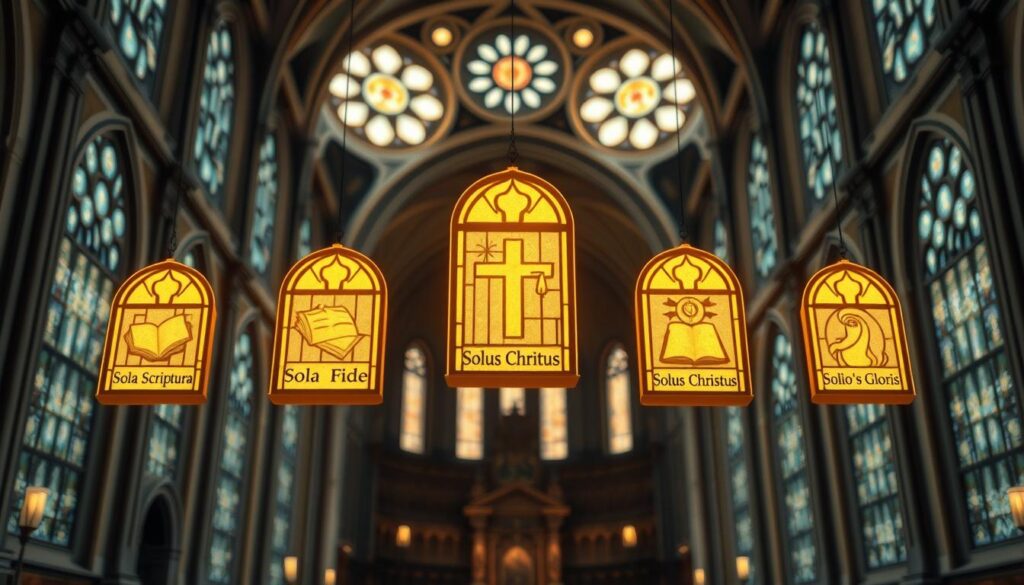
The Five Solas—central to Protestant theology—serve as a blueprint. Concepts like “grace alone” or “Christ-centered faith” become abstract patterns or minimalist symbols. This balance ensures logos feel timeless yet relevant to diverse congregations.

Key Takeaways

  • Historical events from 1517 continue to shape modern religious symbolism
  • The Five Solas provide a framework for meaningful design choices
  • Effective logos honor tradition while appealing to contemporary audiences
  • Designers must navigate distinct visual boundaries between Christian denominations
  • Every color, shape, and line carries theological significance

Introduction to Protestant Logo Design and Its Significance

Creating symbols for religious communities bridges ancient teachings with modern aesthetics. Every curve and hue in these designs carries weight, reflecting scripture as ultimate authority and the belief that grace comes through faith. Unlike other Christian traditions, this design philosophy avoids ornate imagery, focusing instead on simplicity that honors reformation ideals.

Why does this matter? Visual identity acts as a silent teacher for faith communities. A well-crafted emblem can convey “Christ-centered truth” faster than words. It becomes a shared language for believers across cultures, transcending barriers through universal shapes and meaningful colors.

Designers face a sacred task. They must distill complex doctrines into clean marks that resonate today. Think open Bibles symbolized by abstract lines or crosses stripped of decoration. These choices support the core message without distraction.

The best creations balance heritage with freshness. They nod to 16th-century roots while feeling at home on websites and signage. This dual purpose makes them powerful tools for outreach—visual invitations to explore deeper truths behind the design.

Historical Context of Protestantism

A single document reshaped Christianity’s visual language five centuries ago. In 1517, Martin Luther’s Ninety-five Theses challenged church authority and sparked a movement that still influences symbols of faith today. This bold critique of indulgences—payments for forgiveness—shifted focus to grace as a divine gift rather than a transaction.

Martin Luther and the Ninety-five Theses

Luther’s writings at Wittenberg’s All Saints’ Church rejected the idea that salvation could be bought. His emphasis on “faith alone” became a cornerstone for reformers. This theological pivot inspired visual simplicity in religious art, contrasting with ornate Catholic imagery of the time.

Wittenberg church door symbolism

Wittenberg: The Cradle of Protestantism

The church door where Luther shared his ideas remains a powerful symbol. Modern designers often reference its arched shape or ironwork patterns to honor this heritage. Wittenberg’s architecture—like its castle church spire—appears abstracted in emblems as a nod to Reformation roots.

Color palettes also reflect this history. Earthy tones evoke parchment and quills, while stark contrasts mirror Luther’s clear stance on scripture. These choices create timeless visuals that bridge past teachings with present-day communities.

The Role of Religion in Logo Symbolism

Sacred texts shape visual identity in unexpected ways. When crafting emblems for faith groups, designers mine biblical stories and teachings to create symbols that whisper ancient truths through modern lines. This approach roots designs in theological foundations while speaking to today’s seekers.

Biblical Inspirations Behind Design Elements

The open Bible remains the ultimate visual shorthand for Sola Scriptura. Designers simplify its form into horizontal lines suggesting pages, or use radiating light to symbolize divine revelation. Scroll motifs nod to ancient manuscripts while avoiding ornate decoration.

Common scriptural symbols carry layered meanings:

Symbol Biblical Reference Modern Interpretation
Dove Matthew 3:16 (Holy Spirit) Minimalist outline with upward motion
Wheat Sheaf John 12:24 (Sacrifice) Abstract geometric patterns
Flame Acts 2:3 (Pentecost) Gradient colors suggesting movement

Color choices whisper scriptural truths. Deep purple recalls Christ’s royalty, while crimson echoes sacrifice. Designers pair these hues with clean typography to emphasize textual focus over imagery.

The challenge lies in honoring scripture without creating visual idols. Many emblems use negative space to suggest open books or crosses, inviting viewers to “fill in” meaning through personal reflection. This mirrors the Reformation’s push for individual engagement with sacred texts.

Light metaphors from Psalms and Gospels often appear as radiating lines or glowing accents. These elements visually affirm that “Your word is a lamp for my feet” while maintaining modern simplicity.

Visual Elements in Protestant Logos

Designs for faith communities speak through shapes and shades. After 16th-century reforms removed statues and paintings, creative solutions emerged. Words became art, and simple objects turned into powerful messengers of belief.

simplified religious symbols

Common Symbols and Iconography

Modern emblems use everyday items with spiritual meanings. Open books symbolize scripture’s central role, often shown through stacked lines suggesting pages. Lamps appear as minimalist outlines, nodding to “Your word is a light” from Psalms.

Three frequent motifs carry layered significance:

  • Paths or arrows: Represent spiritual journeys
  • Bread and cup outlines: Suggest communion without detailed imagery
  • Abstract trees: Connect to growth described in Galatians

Color, Typography, and Imagery

Deep blues and crimsons dominate modern designs. Azure conveys trust in divine promises, while scarlet recalls sacrifice. Gold accents highlight eternal truths without appearing lavish.

Font choices matter as much as symbols. Clean sans-serif styles reflect clarity of message, while subtle serifs hint at historical roots. Designers often enlarge initial letters to draw attention to key scriptural concepts.

Negative space plays a clever role. Blank areas might form cross shapes or open books, inviting viewers to complete the picture mentally. This technique honors Reformation ideals about personal engagement with truth.

Key Features of the Protestant Logo

Distinctive markers unite diverse faith groups through shared visual language. From Lutheran to Baptist traditions, emblems balance theological diversity with core principles. These designs act as silent ambassadors, conveying beliefs through shapes and words rather than elaborate decoration.

Clean layouts dominate, reflecting Reformation-era rejection of excess. Text takes center stage—scripture snippets or denominational names appear in bold fonts. This approach mirrors the emphasis on accessible teachings over ritualistic symbols.

Design Element Denominational Use Symbolic Meaning
Open Bible Baptists, Presbyterians Scripture as ultimate authority
Flame Methodists, Charismatics Holy Spirit’s presence
Empty Cross Lutherans, Non-denominational Resurrection hope

Light motifs shine through many emblems. Flames or sunbursts represent spiritual awakening, while simplified crosses focus on resurrection. Unlike ornate Catholic crucifixes, these empty crosses emphasize victory over death.

These visual markers help identify community values at a glance. A Methodist church’s emblem might feature a flame and cross, signaling both tradition and renewal. Such designs create instant recognition while inviting deeper exploration of beliefs.

Symbolism Behind the Design Elements

Every mark tells a story when rooted in theological conviction. The Five Solas—cornerstones of Reformation thought—shape visual language through deliberate design choices. These principles transform abstract beliefs into tangible symbols that communicate across generations.
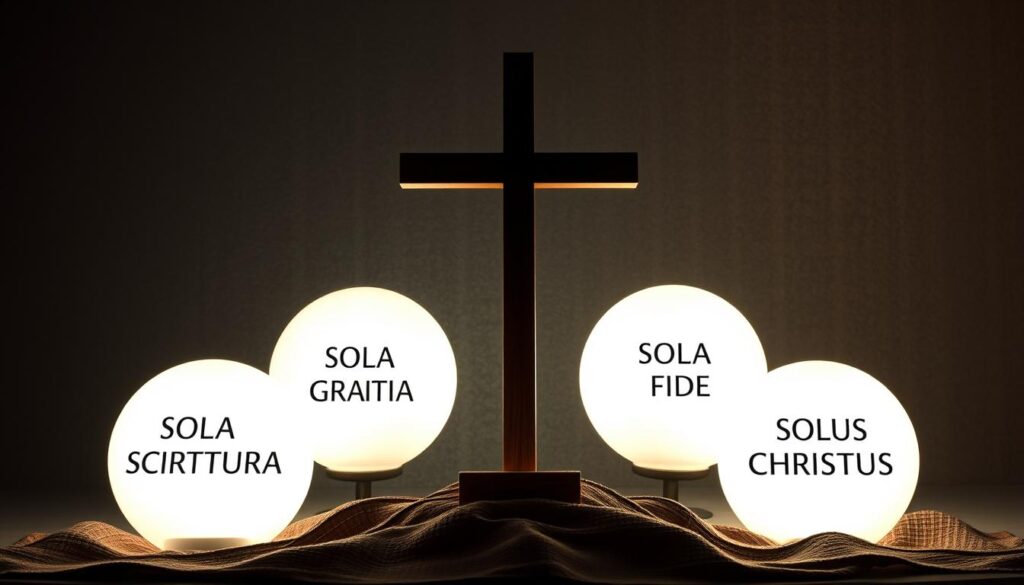
Five Solas symbolism

Sola Scriptura appears as open books or stacked parchment shapes. Clean lines suggest pages ready for study, while light rays above symbolize divine revelation. As Luther noted: “Scripture is its own interpreter”—a truth mirrored in text-centric layouts.

Trust symbols like upward palms or anchors embody Sola Fide. These elements avoid literal representations, using negative space to imply spiritual reliance. Circular motifs often surround them, suggesting wholeness through faith alone.

Sola Principle Visual Element Symbolic Meaning
Solus Christus Empty throne Christ’s unique mediation
Sola Gratia Flowing water lines Unearned divine favor
Soli Deo Gloria Sunburst patterns God-centered purpose

Grace-focused designs use soft curves and gradient purples. These elements mirror the unexpected nature of spiritual gifts. Upward arrows or mountain peaks in compositions direct attention heavenward, embodying Soli Deo Gloria.

Understanding these layers reveals how simple shapes carry profound meaning. A single emblem can encapsulate centuries of belief while inviting modern engagement—proof that great design speaks louder than ornate decoration.

Religious Art and Protestant Iconography

Artistic expression underwent radical transformation during the 16th-century reforms. When John Calvin arrived in Geneva in 1536, he encountered a medieval world saturated with religious statues and pilgrimage sites. His theological vision sparked iconoclastic movements that replaced physical representations with bold textual displays.

Impact of the Reformation on Visual Arts

The 1566 iconoclastic wave reshaped European sacred spaces. Stained glass saints made way for engraved psalms, and altar paintings surrendered to carved Bible verses. This shift birthed “text images”—creative arrangements of scripture that served as both decoration and doctrine.

Three key changes emerged:

  • Churches became galleries of words, with walls featuring oversized Ten Commandments
  • Printing presses produced elaborate biblical typography for home devotion
  • Geometric patterns replaced figurative art in communal spaces
Medieval Art Reformation-Era Art Modern Influence
Saints in stained glass Engraved scripture panels Minimalist text-based designs
Carved crucifixion scenes Abstract communion symbols Negative space techniques
Gilded reliquaries Ornate Bible covers Metallic typography accents

This visual revolution prioritized accessible truth over mysterious symbolism. Calligraphers became theological artists, transforming Psalms into circular patterns and Proverbs into architectural borders. Their work laid foundations for today’s emphasis on clean, meaningful design in faith communities.

Modern creators echo these principles through:

  • Bold sans-serif fonts quoting scripture
  • Interlocking shapes suggesting unity
  • Monochromatic schemes focusing attention

Influence of the Five Solas in Design Concepts

Design principles rooted in 16th-century theology continue shaping modern visual identities. The Five Solas—those revolutionary Reformation ideas—act as silent guides for creators. They transform complex beliefs into clear visuals that speak across generations.

Sola Scriptura and Visual Messaging

Scripture-first designs shout without words. Open book symbols dominate, using stacked lines instead of detailed illustrations. Light rays above abstract pages support the idea of divine revelation through text alone.

Modern emblems often pair these elements with crisp typography. Bible verses appear in bold fonts, mirroring reformers’ focus on accessible truth. This approach turns ancient words into visual anchors for communities.

Sola Fide and the Use of Emblematic Elements

Faith-centered symbols lean on simplicity. Empty crosses and upward arrows replace ornate decorations. These clean marks invite personal reflection—a nod to individual spiritual journeys.

Color choices deepen the message. Warm golds suggest enduring trust, while deep blues echo heavenly promises. Together, they create emblems that feel both ancient and fresh, much like the beliefs they represent.

FAQ

How do historical events shape modern religious logo designs?

Historical moments like the Reformation and figures such as Martin Luther influenced visual storytelling in designs. Modern logos often reflect themes of faith, scripture, and community rooted in these events.

What symbols are commonly used in Reformation-inspired designs?

Crosses, open Bibles, doves, and flames symbolize faith, truth, the Holy Spirit, and spiritual renewal. Colors like deep blues, golds, and reds convey reverence, divinity, and sacrifice.

Why is typography important in faith-based branding?

Fonts like serif or classical styles evoke tradition and authority, aligning with doctrinal values. Clean, bold lettering ensures clarity while reflecting strength and timelessness.

How do the Five Solas impact design concepts?

Principles like Sola Scriptura (Scripture alone) emphasize simplicity and focus on biblical imagery. Designs might feature open books or scrolls to highlight scriptural centrality.

What role does Wittenberg play in religious iconography?

As the birthplace of the Reformation, Wittenberg inspires imagery like castle churches or Luther’s rose. These elements connect designs to historical roots and theological breakthroughs.

Are there guidelines for using sacred symbols in branding?

Respectful representation is key. Designers often consult faith leaders or historical sources to ensure symbols align with doctrinal meanings and avoid misinterpretation.

How did the Reformation change religious art styles?

The shift toward simplicity and accessibility reduced ornate decorations. Art focused on teaching core beliefs, which still influences minimalist, message-driven designs today.
Protestant Theology 101: A Beginner’s Guide


Welcome to a journey through centuries of spiritual wisdom that shaped how millions connect with their beliefs. This exploration begins with the 16th-century Reformation, a movement that redefined Christianity by emphasizing faith, Scripture, and God’s grace. At its heart lies a simple yet profound idea: true connection with the divine comes through trust, not rituals.

You’ll find that churches across traditions share core principles while celebrating unique perspectives. Whether through Luther’s bold reforms or Wesley’s focus on personal holiness, these teachings all center on the transformative power of the Gospel. They answer timeless questions about human purpose, forgiveness, and living with meaning.

This guide unpacks how these ideas influence daily life—from understanding salvation to practicing compassion. You’ll see how doctrines about grace and community shape modern believers, bridging historical roots with today’s challenges. Let’s discover together how these enduring truths continue to inspire hope and action worldwide.

Key Takeaways

  • Rooted in the 16th-century Reformation, these teachings prioritize faith and Scripture over tradition
  • Core beliefs include salvation through grace and the authority of the Bible
  • Denominations vary in practices but share foundational Christian principles
  • Addresses practical questions about purpose, morality, and community
  • Historical figures like Luther and Wesley shaped distinct theological paths
  • Remains relevant through its focus on personal spiritual growth and service

Understanding Protestant Theology

At the heart of Christianity’s rich traditions lies a movement that reshaped spiritual life through radical simplicity. This approach centers on direct relationships with God, guided by Scripture rather than human authority. It offers a path where grace outweighs rituals, and personal conviction fuels daily practice.

What Defines This Faith Tradition?

Central to this belief system is the idea that salvation comes through trust in Christ’s sacrifice, not earthly achievements. The Holy Spirit empowers believers to understand biblical truths and live with purpose. Churches across denominations agree on essentials like the Trinity and Jesus’ resurrection while differing on practices like baptism styles.

Essential Teachings at a Glance

Four key principles form the foundation:

Doctrine Description Key Verse
Justification by Faith God declares believers righteous through Christ’s merit Romans 3:28
Scripture Authority Bible as ultimate truth source 2 Timothy 3:16
Priesthood of Believers Direct access to God without mediators 1 Peter 2:9

This framework encourages personal Bible study and prayer. It removes barriers between people and divine grace, fostering communities where compassionate service naturally follows genuine faith. Modern expressions continue adapting these timeless truths to new cultural contexts.

Historical Roots and Proto-Protestant Movements

Centuries before the Reformation, courageous voices challenged religious norms. These reformers laid foundations for changes that would reshape Christianity. Their stories reveal how faith often thrives where authority is questioned.

medieval christian reformers

Origins and Early Movements

In 15th-century Bohemia, Jan Hus led the Hussites toward radical ideas. They demanded communion for all believers and sermons in local languages. Church leaders saw this as rebellion, but Hus insisted: “Seek truth, hear truth, learn truth!

The Waldensians faced similar struggles. For 300 years before Luther, they lived by the New Testament, rejecting wealth and hierarchy. Their portable Bibles became symbols of spiritual independence.

Movement Time Period Key Beliefs Legacy
Hussites 1400s Communion equality, vernacular worship Inspired Lutheran reforms
Waldensians 1100s-1500s Scripture over tradition, poverty vows Model for Bible-centered churches
Lollards 1300s Critiqued indulgences, promoted lay preaching Precursor to English Reformation

These groups shared a focus on Christ’s grace rather than rituals. The Augsburg Confession later stated:

“Our churches teach nothing contrary to Scripture or the universal Christian church.”

Though they broke away from Roman Catholic practices, their goal was renewal—not rebellion. Today, their courage reminds us that spiritual growth often begins with asking hard questions.

The Protestant Reformation and Its Lasting Impact

The 16th century ignited a spiritual revolution that still shapes how millions experience their beliefs today. At its core stood two visionaries who redefined Christianity’s relationship with divine grace and human responsibility.

Martin Luther’s Transformative Influence

When Martin Luther nailed his Ninety-Five Theses to a church door, he unleashed ideas that shattered medieval religious norms. His discovery—that salvation comes through faith alone—freed believers from anxiety about earning God’s favor. “When God declares forgiveness,” Luther taught, “He doesn’t suggest it—He makes it real.”

This sacramental view of Scripture gave ordinary people confidence in their spiritual standing. No longer dependent on rituals or institutions, they embraced a direct path to peace with God through Christ’s sacrifice.

John Calvin and The Reformation

Building on Luther’s foundation, John Calvin crafted a detailed framework for Christian living. His teachings on predestination emphasized God’s sovereign power while offering assurance through the Holy Spirit’s inner witness. Calvin argued:

“True faith perseveres because it rests not in human effort, but in divine promise.”

This perspective shaped churches worldwide, blending intellectual rigor with heartfelt devotion. Together, these reformers established principles that continue guiding believers:

  • Scripture as ultimate authority over tradition
  • Salvation received through trust, not earned by works
  • Every believer’s right to approach God directly

Their legacy lives in modern communities where personal conviction fuels compassionate action. From Sunday sermons to social justice initiatives, the Reformation’s sparks still light the way for spiritual seekers.

Denominational Perspectives and Diversity in Faith

Imagine walking into ten different churches on Sunday morning—you’d hear varied prayers, see unique rituals, yet find common hope. This vibrant diversity shows how communities interpret sacred texts while sharing core truths about grace and purpose.

diverse christian denominations

Diverse Denominational Approaches

From energetic Baptist revivals to quiet Quaker meetings, each tradition brings fresh insights to living out faith. These differences often stem from how groups balance divine action with human response in daily experience.

Tradition Focus Worship Style
Wesleyan-Arminian Human cooperation with grace Expressive, music-driven
Reformed God’s sovereignty Scripture-centered preaching
Baptist Believer’s baptism Congregational participation
Lutheran Sacramental faith Liturgical with hymns

Wesleyan churches teach that faith requires ongoing commitment. They emphasize personal holiness through acts of service. This contrasts with Reformed views where divine choice anchors spiritual security.

Baptist congregations prioritize local church autonomy. Members vote on decisions, reflecting their belief in the Holy Spirit’s guidance through every believer. Their baptism practices symbolize conscious faith choices.

Lutherans blend ancient rituals with Reformation ideas. Communion becomes a tangible encounter with the good news, not just a symbol. This bridges historical continuity with fresh understandings of mercy.

Despite differences, all share a mission to spread hope found in the New Testament. Whether through lively camp meetings or structured liturgies, each path invites people into deeper connection with sacred truths.

Lutheran Theology: Foundations and Practice

At the core of Lutheran belief lies a radical reimagining of divine mercy. This tradition reshapes how people experience grace, blending ancient rituals with revolutionary ideas about God’s love. Through sacraments and Scripture, it offers concrete ways to grasp spiritual truths that once seemed distant.

lutheran sacraments and worship

Justification by Faith Alone

Martin Luther’s breakthrough changed everything: “When God declares you forgiven, it’s done.” This doctrine teaches that salvation comes entirely through Christ’s sacrifice, not human effort. Believers find peace knowing their standing with God rests on divine promise, not personal perfection.

The good news becomes personal through baptism. Lutherans view this sacrament as God’s initiative—a powerful act where faith is born and sins washed away. It’s not just symbolism but spiritual rebirth rooted in the New Testament.

Sacramental Practices in Lutheran Worship

Sunday services pulse with ancient rhythms made fresh. Communion tables become places of mystery, where bread and wine carry Christ’s real presence. As one pastor explains:

“We don’t explain the miracle—we receive it.”

Three key practices shape Lutheran spirituality:

  • Baptism: Initiates believers into God’s family
  • Eucharist: Nourishes through Christ’s body and blood
  • Confession: Offers audible assurance of pardon

These sacred acts anchor faith in tangible experiences. Worship blends hymns older than America with sermons making ancient texts speak to modern hearts. Through it all, the church celebrates how God comes near in ordinary things—water, words, wheat.

Reformed Theology: Predestination and Gospel

In the tapestry of Christian thought, Reformed teachings weave a narrative of divine sovereignty and human response. This tradition emphasizes God’s purposeful design in salvation, where grace transforms lives rather than merely influencing them.

Living the Gospel’s Radical Promise

Central to this perspective is the good news that Christ’s sacrifice fully addresses humanity’s brokenness. The Heidelberg Catechism—a cornerstone text—guides believers to see moral law not as burdensome rules, but as joyful response to divine grace.

Reformed churches teach that communion brings spiritual nourishment through Christ’s real presence. Unlike symbolic interpretations, this view sees sacraments as power-filled encounters with the living God. As one pastor notes:

“We taste mercy at the table, not just remember it.”

Three key ideas shape this approach:

  • God initiates faith through the Holy Spirit’s work
  • Good works flow from gratitude, not obligation
  • Scripture remains the final authority for doctrine and life

This framework creates churches where awe fuels action. Members serve neighbors not to earn favor, but because they’ve already received unshakable love. Through sermons and soup kitchens alike, Reformed communities embody the New Testament vision of hope made tangible.

FAQ

How does Protestant theology differ from Roman Catholic teachings on salvation?

Protestant theology emphasizes justification by faith alone, meaning salvation comes through trust in Christ rather than human effort. This contrasts with Catholic teachings that blend faith with sacraments and good works as part of salvation.

Why is the Bible central to Protestant beliefs?

The Bible is viewed as the ultimate authority (sola Scriptura), guiding beliefs and practices. This focus began during the Reformation, rejecting extra-biblical traditions in favor of Scripture’s direct teachings.

What role did Martin Luther play in shaping Protestant thought?

Luther’s 95 Theses challenged corrupt practices like indulgences, sparking the Reformation. He stressed grace, faith, and Scripture, laying groundwork for doctrines like priesthood of all believers.

How does Reformed Theology approach predestination?

Reformed teachings, influenced by John Calvin, highlight God’s sovereignty in salvation. Predestination reflects His choice to save some, emphasizing divine grace over human merit.

Do all Protestant denominations agree on sacraments like baptism?

Views vary. Lutherans see baptism as a means of grace, while some Reformed groups view it as a symbolic covenant. Baptists often emphasize believer’s baptism by immersion.

What’s the Lutheran view of "faith and works"?

Lutherans teach that good works flow naturally from genuine faith but don’t earn salvation. Faith in Christ’s sacrifice is the sole basis for forgiveness and righteousness.

How did John Calvin influence modern Protestant churches?

Calvin’s teachings on God’s sovereignty, predestination, and structured worship shaped Reformed, Presbyterian, and other traditions. His Institutes of the Christian Religion remains a key theological work.

Protestantes: Faith, Tradition, and Modern Perspectives


Welcome to an exploration of one of Christianity’s most influential branches. Born from the Protestant Reformation in 16th-century Europe, this religious movement reshaped the Christian church by prioritizing personal faith and scriptural authority. What began as a call for reform grew into a global community of over 833 million believers, each united by core principles that continue to inspire.

At its heart, protestantes emphasize salvation through grace alone, accessible to all without intermediaries. This belief fueled innovations in education, governance, and art, shaping modern democracies and literacy movements. From Lutheranism to Pentecostalism, denominational diversity reflects adaptability while maintaining foundational truths.

Today, these traditions address contemporary issues like social justice and ethical dilemmas. Whether through vibrant worship or community outreach, Protestantism remains a living faith—rooted in history yet engaged with today’s challenges.

Key Takeaways

  • Originated during the 16th-century Protestant Reformation
  • Core beliefs include salvation by faith and biblical authority
  • Global community spans 833 million adherents
  • Shaped Western education, politics, and culture
  • Includes diverse denominations like Lutheran and Pentecostal
  • Relevant to modern ethical and spiritual questions

Introduction to Protestantes

What does it mean to protest with your faith? The answer began in 1529 when German princes stood against empire-wide religious rules. At the Diet of Speyer, leaders rejected demands from the Roman Catholic emperor, declaring: “We must obey God rather than men.” This act birthed the term “Protestant”—literally meaning “to declare publicly.”

Unlike other Christian traditions, protestantes focus on direct access to God through scripture. They reject church hierarchy in favor of personal Bible study. This idea sparked a spiritual revolution—one where farmers and kings alike could interpret faith.

Three pillars define Protestant identity:

Denomination Founded Key Belief Global Reach
Lutheran 1517 Salvation by faith alone 70 million
Baptist 1609 Adult baptism 47 million
Pentecostal 1906 Holy Spirit gifts 280 million

From six German states in 1529, the movement now spans 200+ denominations. The 20th century saw explosive growth in Africa and Asia. Yet all share core ideas: Bible authority, grace-based salvation, and every believer’s right to worship freely.

Today’s protestantes honor their rebellious roots while adapting to modern life. Whether through gospel music or social justice work, they prove faith can both challenge power and build communities.

Historical Foundations and Proto-Protestantism

Long before Luther’s hammer struck the church door, brave voices challenged religious power. The middle ages simmered with reformers like Jan Hus, a fiery Czech preacher. As rector of Prague University, he demanded clergy accountability and full communion rights for all believers. His ideas sparked outrage—and a death sentence at the 1415 Council of Constance.

Jan Hus reformation

Hus’s burning didn’t silence his message. Followers across Europe sang hymns as they fought for his vision. Meanwhile, Italian scholar Lorenzo Valla exposed church forgeries using ancient texts. His proof that the “Donation of Constantine” was fake shook papal authority to its core.

Florence’s Girolamo Savonarola took reform further. He rallied citizens against corruption through bonfires of vanity items. Though executed in 1498, his mix of moral zeal and political action inspired future rebels.

Reformer Contribution Impact
Jan Hus Laicized communion Inspired Hussite Wars
Lorenzo Valla Exposed forged documents Undermined papal claims
Girolamo Savonarola Moral-political reforms Prefigured Calvinism

These trailblazers proved truth could outlive fire. Their courage laid tracks for the Reformation train—a movement that would forever change how people worshiped and governed.

The Protestant Reformation: A Turning Point

October 31, 1517, changed religious history forever. A German monk named Martin Luther nailed ninety-five arguments to a church door in Wittenberg, sparking the 16th-century movement we now call the Protestant Reformation. His bold act challenged the Catholic Church’s sale of indulgences—payments claimed to reduce punishment for sins. “Why does the pope not empty purgatory for love rather than money?” Luther famously asked.

Wittenberg quickly became the Reformation’s heartbeat. Luther’s ideas spread like wildfire thanks to Gutenberg’s printing press. Within months, his critiques reached commoners and scholars across Europe. People began questioning not just indulgences but the entire church hierarchy.

The conflict turned political at the 1529 Diet of Speyer. German princes defended their right to follow reformed teachings, shouting “We protest!” against imperial orders. This defiance gave the movement its name—Protestantism—and marked a permanent split in Western Christianity.

Three lasting impacts emerged from this era:

  • Bible translations into everyday languages
  • Emphasis on personal faith over rituals
  • Questioning of political and religious authority

More than a theological debate, the Protestant Reformation reshaped education, art, and governance. Its focus on individual conscience still influences modern discussions about faith and freedom.

Key Figures in Protestant History

History remembers those who dare to rewrite it. The Protestant movement flourished through bold thinkers who transformed personal convictions into global change. Let’s meet the architects who built new spiritual frameworks brick by brick.

Martin Luther and the Ninety-Five Theses

A thunderstorm changed everything. In 1505, young Martin Luther vowed to become a monk after surviving lightning strikes. His spiritual journey led to a greater shock in 1517 when he challenged church practices with ninety-five arguments. “The true treasure of the church is the gospel of the glory of God,” he declared, sparking debates across Europe.

Luther’s translation of the Bible into German let ordinary people read scripture. His marriage to Katharina von Bora showed clergy could have families. These actions made faith personal and practical.

John Calvin and Reformed Theology

While Luther sparked the fire, John Calvin built the furnace. His 1536 Institutes of the Christian Religion became Protestantism’s textbook. Calvin taught that God’s plan predestines souls—a idea that shaped Puritan colonies in America.

Geneva became his laboratory for reform. The city banned dancing but promoted education. By 1555, Calvin’s followers spread his ideas to Scotland and the Netherlands.

Other reformers added unique threads:

  • Huldrych Zwingli – Saw communion as symbolic, not magical
  • Thomas Cranmer – Crafted England’s Book of Common Prayer
  • John Knox – Turned Scotland Presbyterian with fiery sermons

Together, these leaders proved that one person’s courage could inspire millions. Their legacy lives in churches, schools, and governments worldwide.

The Five Solas: Core Doctrines of Protestantes

What unites Baptists, Lutherans, and Methodists worldwide? Five Latin phrases forged during the Reformation still define Protestant identity. These Five Solas—meaning “alone” or “only”—reject medieval church practices while affirming biblical truths.

Five Solas protestant doctrines

Sola Scriptura and Sola Fide

Sola Scriptura declares the Bible as Christianity’s supreme authority. “Scripture interprets itself,” Luther argued, challenging apostolic succession claims. This principle let farmers read God’s Word without priestly mediation.

Sola Fide reshaped salvation itself. Protestant reformers taught that faith—not good deeds—connects believers to divine grace. As Paul wrote: “A person is justified by faith apart from works of the law.”

Sola Gratia and Solus Christus

Sola Gratia insists grace flows from God’s kindness, not human effort. Imagine a gift you can’t earn—that’s salvation through grace alone.

Solus Christus makes Jesus the sole bridge to God. No saints, popes, or rituals needed. This doctrine simplified worship while empowering ordinary believers.

Together with Soli Deo Gloria (glory to God alone), these principles form a theological compass. They remind protestantes that faith begins and ends with divine love—accessible to all.

Doctrinal Developments and Theological Debates

Protestant theology thrives on lively debates that shape beliefs across generations. From 16th-century reformers to modern scholars, these discussions keep traditions vibrant while addressing new questions.

Protestant theological debates

Universal Priesthood and the Trinity

The revolutionary concept of universal priesthood turned church power structures upside down. Martin Luther declared, “All Christians are priests, and all priests are Christians.” This idea gave ordinary believers authority to interpret scripture and lead worship—no special ordination required.

This doctrine sparked tension with traditional hierarchies. Laypeople began preaching, translating Bibles, and making decisions once reserved for clergy. By the 1540s, congregational governance models emerged in Lutheran reformed communities.

Regarding the Trinity, most Protestants affirm the Nicene Creed’s three-in-one God. Yet interpretations vary. Some groups emphasize Christ’s divinity, while others focus on the Holy Spirit’s role. These differences highlight Protestantism’s balance between core beliefs and schools of thought.

Key theological divides include:

  • Predestination vs. free will debates between Calvinists and Arminians
  • Sacrament meanings in Anglican vs. Baptist traditions
  • Modern ecumenical movement efforts to find common ground

Today’s believers continue these conversations through interdenominational partnerships. As one pastor notes: “Our unity lies in Christ, not in perfect agreement.” This approach keeps the Protestant Reformation spirit alive—always reforming, always seeking deeper truth.

Liturgy and Worship in Protestantism

From whispered prayers to jubilant hymns, Protestant worship practices mirror the movement’s core conviction—faith expressed through both structure and spirit. Unlike uniform Catholic rituals, these traditions range from the Church of England’s formal liturgies to Pentecostal services bursting with spontaneous praise. This diversity stems from reformers’ 16th-century rejection of rigid hierarchies, prioritizing personal connection over prescribed ceremonies.

Sacramental Practices and the Eucharist

Communion became a battleground of meaning during the Reformation. Lutherans broke from Catholic transubstantiation, teaching Christ’s presence exists “in, with, and under” bread and wine. Reformed churches took a symbolic approach, viewing the meal as a spiritual reminder rather than physical transformation.

The 17th century saw Reformed thinkers expand this concept. They emphasized faith as the key to receiving Christ’s benefits during communion. This shift made sacraments less about mystery and more about personal reflection.

Contemporary Service Trends

Modern Protestant worship balances tradition with innovation. The Great Awakening of the 18th century, spearheaded by figures like John Wesley, injected new energy through emotive hymns and open-air sermons. Today’s services might blend ancient creeds with electric guitars.

Many Church of England congregations now offer both traditional prayer books and casual café-style gatherings. Later Great Awakening revivals inspired megachurches to use lights and screens, proving Protestant liturgy remains as dynamic as its people.

FAQ

What sparked the Protestant Reformation in the 16th century?

The Protestant Reformation began with Martin Luther’s Ninety-Five Theses in 1517, challenging Roman Catholic practices like indulgences. His ideas spread rapidly due to the printing press and growing discontent with church corruption.

How did proto-Protestants like Jan Hus influence later reformers?

Figures like Jan Hus (1369–1415) critiqued church authority and emphasized Scripture over tradition, foreshadowing Reformation themes. Hus’s execution inspired later reformers, including Luther, who referenced his writings.

What distinguishes Reformed Theology under John Calvin?

Calvin’s theology emphasized God’s sovereignty, predestination, and a structured church model. His work Institutes of the Christian Religion became foundational for Presbyterian and Reformed traditions.

Why are the Five Solas central to Protestant belief?

The Solas—Sola Scriptura (Scripture alone), Sola Fide (faith alone), Sola Gratia (grace alone), Solus Christus (Christ alone), and Soli Deo Gloria (glory to God alone)—define core doctrines that reject Catholic traditions not rooted in the Bible.

How do Protestant views on sacraments differ from Catholicism?

Most Protestants recognize only baptism and communion as sacraments, viewing them as symbolic acts of faith rather than channels of grace. This contrasts with Catholicism’s seven sacraments tied to apostolic succession.

What role does “universal priesthood” play in Protestantism?

Luther’s concept of universal priesthood asserts all believers can approach God directly without needing clergy as mediators. This democratized faith and influenced congregational worship styles.

How has Protestant liturgy evolved in modern times?

Many churches blend traditional hymns with contemporary music, multimedia, and informal services. Movements like the 20th-century Ecumenical Movement also fostered interdenominational collaboration in worship practices.

Did the Protestant Reformation impact politics in Europe?

Yes! The Reformation fractured the Holy Roman Empire’s religious unity, leading to wars like the Thirty Years’ War. It also spurred the rise of nation-states and influenced legal systems, as seen in England’s break with Rome.

Protestantism: Exploring the Heresy Debate


The word heresy traces back to ancient Greek, where it simply meant “choice” or “school of thought.” Over time, its meaning shifted to describe divisions within religious groups. By the first century, it became linked to disagreements over core teachings—a label often used to define boundaries of belief.

For centuries, the Catholic Church viewed movements like the Reformation as challenges to its authority. Leaders argued these groups strayed from traditions passed down through apostolic succession. This tension sparked debates about what defines true Christian practice.

At the heart of the discussion lies a critical question: Are reform efforts a return to original teachings or a break from them? Some see these movements as renewing faith, while others claim they disrupt unity. These differing views still shape how churches interact today.

Understanding this history helps explain modern theological divides. We’ll explore early church writings and historical records to shed light on why this debate matters. Let’s uncover how past conflicts influence current conversations about truth and tradition.

Key Takeaways

  • The term “heresy” evolved from meaning “choice” to describing religious disagreements.
  • The Catholic Church historically saw Reformation ideas as conflicting with its teachings.
  • Debates focus on whether reforms align with early Christian practices.
  • Historical documents and church leaders shaped views on theological differences.
  • Modern interfaith relations still reflect these centuries-old discussions.

Introduction to the Heresy Debate in Christianity

The journey to unify core beliefs in Christianity wasn’t smooth. Early followers often clashed over interpretations of sacred texts. This tension birthed a dynamic process where correct doctrine took shape through disagreement as much as agreement.

Understanding the roots of doctrinal disputes

Orthodox teachings didn’t emerge overnight. They grew from centuries of councils, creeds, and heated debates. Leaders used tools like the Nicene Creed to draw lines between accepted truth and rejected ideas. As one bishop noted, “Unity requires knowing what we stand against as much as what we stand for.”

Three factors shaped these boundaries:

  • Community needs for clear guidelines
  • Political pressures from ruling powers
  • Efforts to preserve Jesus’ original message

Groups questioning mainstream views often faced pushback. Yet their challenges forced clearer definitions of the christian faith. This back-and-forth shows how doctrine evolves through dialogue—and sometimes conflict.

Today, these historical struggles remind us why people value both tradition and thoughtful questioning. The past teaches that even sharp divisions can lead to deeper understanding.

Historical Roots of Heresy in Early Christianity

The first three centuries after Christ’s death witnessed explosive growth—and division—within Christian communities. Diverse groups emerged, each claiming to hold the “true” interpretation of Scripture. This era became a forge where core doctrine was hammered out through fiery debates.

Insights from the Ante-Nicene period

Between the 2nd and 3rd century, movements like Gnosticism and Marcionism reshaped religious landscapes. Gnostics taught salvation through secret knowledge, while Marcionists rejected the Old Testament entirely. These beliefs clashed with mainstream views, sparking intense confrontations.

Three key groups challenged orthodoxy:

  • Montanists: Emphasized prophetic revelations over church authority
  • Adoptionists: Viewed Jesus as human “adopted” by God
  • Docetists: Denied Christ’s physical suffering

The shifting definition of orthodoxy

Early church leaders faced a dilemma: How to unify communities without stifling spiritual exploration? Irenaeus, a 2nd-century bishop, argued: “Truth remains identical, though languages and cultures differ.” His writings helped crystallize concepts like apostolic succession.

By labeling rival groups as heretics, the church sharpened its theological boundaries. Councils began formalizing creeds, transforming fluid ideas into fixed doctrines. What started as grassroots movements became structured systems of belief—a pattern still visible in modern faith traditions.

Formation of Christian Doctrine and Ecclesiastical Authority

As early Christian communities grew, leaders needed a reliable way to preserve core beliefs. This led to developing structured systems for passing down authentic teachings across generations. The solution emerged through a concept still central to many churches today.

apostolic succession

The role of apostolic succession

Irenaeus, a 2nd-century bishop, championed the idea that true teaching flowed through an unbroken chain. He argued: “What the apostles preached, their successors preserved.” This authority supposedly linked modern leaders directly to Jesus’ original followers.

Three key elements defined this system:

  • Public records tracing bishop appointments
  • Standardized interpretations of Scripture
  • Shared rituals across communities

The Catholic Church used this framework to counter unorthodox ideas. Bishops became living bridges between past and present—their role wasn’t just administrative but spiritual. They guarded traditions while addressing new challenges.

This approach contrasted sharply with movements valuing personal Bible interpretation. By rooting apostolic succession in historical continuity, leaders claimed unique legitimacy. It became their answer to preserving unity in a faith spanning continents and cultures.

protestantism heresy: A Closer Look at the Debate

Modern debates about Christian identity often revisit arguments first heard in ancient church councils. The Catholic Church maintains that certain theological patterns—like rejecting apostolic succession or redefining sacraments—align with behaviors early leaders labeled divisive. Converts like Joshua Charles highlight this tension, noting: “Reading the Church Fathers felt like looking into a mirror. Their critiques of ancient groups matched my former Protestant views perfectly.”

Charles identified six methods used by historical dissenters that he recognized in his prior faith community. These include prioritizing personal interpretation over tradition and reshaping core beliefs to fit modern contexts. Such approaches, critics argue, mirror tactics used by groups the early church excluded as threats to unity.

Central to this debate is how people understand authority. Early Christians relied on bishops to preserve truth, while many Protestant traditions emphasize individual conscience. This clash echoes ancient disputes where communities split over who could define doctrine.

Those who join the Catholic Church often describe a startling realization: their former practices align with what past leaders called dangerous innovations. As one convert noted, “We claimed to restore original Christianity but repeated errors the church already addressed centuries ago.” This perspective challenges assumptions about reform movements’ role in Christian history—and what truly unites believers across time.

Iconic Heretical Movements and Their Legacy

Ancient debates over spiritual truth left deep marks on Christian thought. Groups questioning mainstream views often sparked creative tension—and sharp pushback. Their ideas still help us understand how beliefs take shape through disagreement.

early church heretical movements

Secret Knowledge and Divided Revelations

Second-century heretics like the Gnostics built complex systems around hidden truths. Valentinus, a key teacher, claimed salvation came through mystical insights into an unknowable God. This clashed with leaders who stressed open teachings for all believers.

Marcion took a different path. He split the Old and New Testament Gods, calling them opposites. His followers created their own scriptures—a radical move that reshaped how early church leaders defended biblical unity.

Human or Divine? The Christ Question

Other groups challenged Jesus’ nature. Docetists saw his physical form as an illusion, saying: “True divinity cannot suffer.” Adoptionists argued he became God’s son later in life. Both views forced clearer definitions of Christ’s identity.

Montanists added another layer. They claimed new prophecies surpassed apostolic teachings, unsettling established authority. These heresies weren’t just ancient errors—they set patterns still debated centuries later.

The Role of Ecclesiastical Hierarchy and Church Fathers

Leadership structures in early Christianity weren’t just about organization—they shaped what believers considered essential truth. Figures like Ignatius of Antioch left blueprints showing how authority and unity became cornerstones of the Catholic Church.

early church hierarchy

Building Blocks of Belief

Ignatius, writing around 110 AD, described a three-tier system: “Be subject to the bishop as to Christ, and the presbytery as to the apostles.” His letters reveal three key priorities:

  • Clear leadership through bishops as successors to apostles
  • Shared Eucharistic practices as identity markers
  • Recognition of Rome’s unique role among churches

He famously told the Roman church: “I don’t issue orders to you because I’m not Peter and Paul.” This humble stance highlighted Rome’s growing authority while showcasing early respect for apostolic foundations.

Denial of Christ’s physical presence in communion became a red flag for Ignatius. He saw this rejection as proof groups had strayed from the church fathers’ teachings. His writings became measuring sticks later leaders used to evaluate doctrinal claims.

These patterns—visible in Clement of Rome’s appeals for order—show how early church fathers linked structure to spiritual authenticity. Their work created templates still shaping debates about Christian identity today.

Impact of Heresy on the Catholic and Christian Faith

Controversies over core beliefs became catalysts for clarity in the Catholic tradition. Early debates about Jesus’ divinity and humanity pushed leaders to refine their teachings. This process turned theological conflicts into tools for strengthening doctrinal foundations.

How challenges forged clarity

The Catholic Church often responded to disputes by organizing councils. Emperor Constantine’s legalization of Christianity in 313 AD allowed bishops to address divisions systematically. The Council of Nicaea (325 AD), for example, produced the Nicene Creed to counter claims denying Christ’s eternal divinity.

Three patterns emerged from these conflicts:

  • Detailed definitions of the Trinity
  • Standardized sacramental practices
  • Centralized decision-making through councils
Controversy Catholic Response Lasting Impact
Arianism (denied Christ’s divinity) Nicene Creed formulation Clear Trinitarian doctrine
Nestorianism (separated Christ’s natures) Council of Ephesus (431 AD) Affirmed Mary as “God-bearer”
Monophysitism (one divine nature) Council of Chalcedon (451 AD) Defined dual nature of Christ

This way of resolving disputes shaped the Catholic faith’s identity. Each council didn’t just reject opposing views—it deepened understanding of shared beliefs. As one bishop noted, “Iron sharpens iron; so conflict hones truth.”

Today, these historical patterns influence how the Church addresses modern theological questions. The process shows how defending doctrine can unify communities while preserving essential teachings.

Debating Sacramental Practices: Baptism and the Eucharist

Few topics reveal deeper divides in Christian faith than disagreements about sacred rituals. The sacraments of baptism and communion serve as spiritual anchors for believers—but interpretations vary dramatically across traditions.

The significance of the real presence in the Eucharist

Early Christians like Ignatius of Antioch left no doubt about their worship practices. He wrote: “They abstain from the Eucharist because they do not confess it to be the flesh of our Savior.” This conviction shaped how the Catholic Church developed its Eucharistic theology.

Modern Catholic teaching holds that Christ’s real presence transforms bread and wine into his body and blood. This belief fuels practices like Eucharistic adoration—actions some Christian groups view as excessive. The stakes couldn’t be higher: if the doctrine is wrong, critics argue, Catholics risk idolizing mere symbols.

Practice Catholic View Common Protestant View
Eucharist Literal transformation Symbolic remembrance
Baptism Sacramental grace Public declaration
Adoration Divine worship Unnecessary ritual

These differences aren’t just technical—they shape how communities experience God. While Catholics see sacraments as channels of grace, others prioritize personal faith over ritual. This divide echoes ancient debates about where truth resides: in tradition or individual conscience.

As one modern scholar notes: “How we break bread reveals what we believe about brokenness—and redemption.” These enduring questions remind us that shared rituals can both connect and separate believers across centuries.

A Timeline of Controversial Doctrines in Christianity

Christian history unfolds through pivotal moments where beliefs were tested and defined. Seven major councils between 325 and 787 AD shaped core teachings still upheld today. The church fathers used these gatherings to address rising questions about God’s nature and human salvation.

The First Council of Nicaea (325 AD) rejected Arian claims denying Christ’s divinity. Later meetings tackled new challenges—like Constantinople’s defense of the Holy Spirit’s role (381 AD) and Ephesus declaring Mary as Theotokos (431 AD). Each decision aimed to preserve unity while clarifying doctrine.

By the 5th century, Chalcedon’s dual-nature declaration settled debates about Jesus’ humanity and divinity. Later councils confronted fresh heresies, from monothelitism’s single-will theory to disputes over religious icons. These decisions show how the early church balanced ancient traditions with evolving spiritual needs.

Though centuries passed, these councils remind us that faith grows through dialogue—and sometimes disagreement. Their legacy lives on wherever communities seek truth while honoring shared roots.

FAQ

Why do some label Protestantism as heresy?

Certain groups view disagreements over doctrines like apostolic succession or the real presence in the Eucharist as breaks from historical Christian teachings. The Catholic Church emphasizes unity under ecclesiastical authority, while other traditions prioritize scriptural interpretation.

How did early doctrinal disputes shape Christianity?

Early debates, such as those over Christ’s divinity or the Trinity, forced leaders like Ignatius of Antioch to clarify beliefs. Councils like Nicaea formalized doctrines to preserve unity and counter movements like Arianism.

What role did apostolic succession play in doctrine formation?

Leaders such as Clement of Rome argued that authority passed from apostles to bishops ensured doctrinal purity. This became a cornerstone for establishing orthodox teachings and rejecting rival claims.

How did sacramental practices become a point of conflict?

Differences in interpreting rituals like baptism or the Eucharist split communities. For example, Catholics affirm Christ’s physical presence in communion, while others see it as symbolic.

What defined movements like Gnosticism or Montanism?

A: Gnosticism emphasized secret knowledge, while Montanism advocated strict spiritual renewal. Both challenged mainstream views on salvation and church structure, leading to their rejection as heterodox.

How did heresies strengthen the Catholic Church’s response?

Controversies spurred clearer definitions of faith, such as the Nicene Creed. The Church refined teachings, excommunicated dissenters, and reinforced hierarchical authority to maintain cohesion.

Why is the real presence in the Eucharist significant?

Catholics believe communion embodies Christ’s sacrifice, a doctrine rooted in early writings like those of Justin Martyr. Disputes over this symbolize deeper divides about tradition versus scripture.

What recurring themes emerge in Christian doctrinal controversies?

Debates often center on Christ’s nature, grace versus works, and institutional authority. These tensions reflect ongoing efforts to balance unity with diverse interpretations of the faith.

Discover the Fascinating History of Protestantism in Germany


Imagine a single act that changed the course of religion forever. In 1517, a monk named Martin Luther sparked a revolution by challenging powerful institutions. His bold ideas spread like wildfire, reshaping how millions viewed spirituality and authority.

This movement didn’t just alter religious practices—it transformed politics, education, and daily life. Over centuries, regional leaders and everyday citizens shaped its path. From royal courts to grassroots movements, the story reveals how faith became intertwined with cultural identity.

Today, this legacy remains visible in modern society. Nearly half the population identifies with Protestant traditions, particularly in eastern regions. The church’s structure—uniting diverse denominations under one umbrella—reflects centuries of adaptation and resilience.

You’ll see how conflicts, wars, and social changes tested these beliefs. Yet, the enduring influence of this spiritual awakening still guides communities. Its impact reaches beyond Sunday services, shaping art, ethics, and even political movements worldwide.

Key Takeaways

  • A 16th-century religious movement began with one man’s critique of church practices
  • Regional leaders and social shifts helped spread new ideas across Europe
  • Modern traditions blend multiple denominations into a unified structure
  • Cultural identity remains deeply connected to historical religious changes
  • Current demographics show a strong presence in eastern regions
  • Historical conflicts shaped today’s church organization and values

Historical Roots and the Early Reformation Movements

October 31, 1517, marked a turning point in Christian history. A bold critique of religious practices would soon ripple across Europe, challenging centuries-old traditions.

The Spark That Lit the Fire

Martin Luther’s famous 95 Theses questioned the church’s sale of indulgences. These payments promised forgiveness but clashed with his belief that salvation comes through faith alone. “Why does the pope not empty purgatory for love’s sake?” Luther wrote, challenging the system’s logic.

When Leaders Tried to Bridge the Divide

Thirteen years later, Emperor Charles V called the Diet of Augsburg. Philip Melanchthon took center stage, presenting arguments that emphasized divine grace over human effort. His approach differed from Luther’s fiery style but proved equally impactful.

Event Year Key Figure
95 Theses Posted 1517 Martin Luther
Augsburg Confession 1530 Philip Melanchthon
Spread to Cities 1520s Local Leaders

The movement gained momentum as towns adopted new teachings. Printers spread pamphlets containing revolutionary ideas, while rulers debated which doctrine to follow. This period reshaped not just churches but entire communities.

“Faith is a living, daring confidence in God’s grace.”

Martin Luther

Within fifteen years, what began as theological debate became a cultural earthquake. The stage was set for lasting changes in how people practiced their beliefs and organized society.

The Development of Lutheranism and Doctrinal Shifts

Seven princes and two free towns made history in 1530 by signing a document that unified fractured religious groups. Their bold act created a roadmap for organizing local congregations into structured churches.

Augsburg Confession document

The Augsburg Confession and the Formation of Lutheran Churches

The Augsburg Confession became Lutheranism’s defining text. It outlined core beliefs like salvation through faith alone and scripture’s authority. Rulers used it to legally protect their denominations from opposition.

By 1555, this confession gained official recognition. Over 50% of northern territories adopted its teachings. Local churches began training clergy using standardized theology manuals.

Confessional Debates and the Concord Formula

Not everyone agreed on details. Heated debates erupted about Christ’s presence during communion. Some leaders favored symbolic interpretations closer to Calvinist views.

The 1557 Concord Formula settled these disputes. It declared:

“True body and blood of Christ are present in the sacrament.”

This agreement unified two-thirds of Lutheran members under one doctrine. It preserved cultural tradition while allowing regional flexibility. These foundations still shape worship practices today.

Influence on Culture, Politics, and Society

A ruler’s decree could decide your spiritual path—and your home address. The 1555 Treaty of Augsburg introduced a radical idea: “cujus regio, ejus religio” (“whose realm, his religion”). This principle let local leaders pick their territory’s faith, forcing residents to either conform or leave.

Religion and State: The “Cujus Regio, Ejus Religio” Principle

Princes became spiritual CEOs overnight. They appointed pastors, approved hymns, and even set church budgets. Whole regions transformed into religious monocultures—some Lutheran, others Catholic. Neighbors suddenly found themselves divided by invisible faith borders.

This system created unexpected unity within territories. Shared worship styles and holiday traditions strengthened community bonds. But it also planted seeds for future conflicts when rulers changed faiths.

The Impact of the Thirty Years War and Social Change

Religious tensions exploded in 1618. The Thirty Years War turned villages into battlegrounds, killing nearly 20% of Central Europe’s population. Soldiers burned crops, spreading famine and disease. One witness wrote:

“We ate tree bark to survive—even the rats had fled.”

After the war, princes kept their dual role as political and religious leaders. This fusion shaped education systems, welfare programs, and art for centuries. The war’s scars also taught communities to value stability over strict doctrinal purity.

Key Figures in protestantism germany: Influential Reformers and Theologians

Behind every great movement stand visionaries who shape its path—and ordinary people who defend its soul. Three brilliant minds redefined spiritual practices, while later generations faced unimaginable tests of conviction.

Protestant reformers and resistance

Bridge-Builders of Belief

Philip Melanchthon became Luther’s secret weapon for unity. While his mentor sparked debates, this scholar crafted compromises. His 1530 Augsburg Confession declared: “We cannot obtain grace by our own merits.” This balanced approach kept diverse groups within the same movement.

Swiss thinkers added fresh perspectives. Huldrych Zwingli saw communion as symbolic—a radical shift from traditional views. John Calvin later refined these ideas, influencing churches worldwide. Their debates enriched Protestant beliefs without fracturing the growing community.

When Faith Faced Fire

The 1930s brought terrifying choices. Some church members swapped the cross for swastikas, even placing Hitler’s book on altars. But others risked their life to protect sacred truths.

Dietrich Bonhoeffer’s words still inspire:

“Silence in the face of evil is itself evil.”

He and Martin Niemöller organized the Confessing Church, rejecting Nazi-aligned theology. Their 1934 Barmen Declaration became a spiritual shield, affirming Christ—not political leaders—as the church’s true foundation.

These stories show how reformers across centuries balanced bold ideas with unshakable principles. Their legacy proves that true faith can outlast any war—whether fought with words or weapons.

Modern Transformations: 20th Century to Present Changes

Post-war Europe witnessed faith communities becoming bridges across iron curtains. The Evangelical Church in Germany (EKD) emerged in 1948, uniting three major traditions under one roof. This creative solution helped congregations navigate the continent’s sharpest political divide.

Rebuilding Through Division

When Germany split into East and West, churches faced impossible choices. The EKD’s communication networks collapsed in 1969 as the Iron Curtain hardened. Eight eastern congregations formed their own alliance, preserving spiritual ties despite border walls.

Catalysts for Change

Leipzig’s St. Nicholas Church became freedom’s unlikely headquarters. Weekly peace prayers in the 1980s drew thousands, culminating in the 1989 protests that toppled the Berlin Wall. Today’s EKD spans 23 regional churches, blending diverse denominations while supporting 3 million free-church members.

Modern movements extend beyond Sunday services. The Diakonische Werk agency feeds the hungry, while emergency teams deploy during disasters. These efforts show how historical religion adapts to serve changing societies—proving ancient ideals still shape tomorrow’s solutions.

FAQ

What event is considered the starting point of the Reformation?

A: Martin Luther’s 95 Theses, nailed to the Wittenberg Castle Church door in 1517, challenged Catholic practices like indulgences. This act ignited debates that reshaped religious life across Europe.

How did the Diet of Augsburg influence early church debates?

The 1530 Diet of Augsburg allowed reformers to present their beliefs, like the Augsburg Confession. It became a turning point, formalizing divisions between Catholic and emerging Lutheran traditions.

What was the “Cujus Regio, Ejus Religio” principle?

Established by the 1555 Peace of Augsburg, it let regional rulers choose their territory’s faith—Catholic or Lutheran. This reduced conflict but deepened political-religious ties, shaping Central Europe’s map for centuries.

How did the Thirty Years’ War impact society?

The war (1618–1648) devastated populations and economies. Post-war treaties, like the Peace of Westphalia, expanded religious tolerance but reinforced state control over churches, altering social dynamics.

Who were key reformers besides Martin Luther?

A: Philip Melanchthon systematized Lutheran theology, while Huldrych Zwingli and John Calvin influenced Reformed traditions. Their ideas diversified doctrines and practices across regions.

What role does the EKD play today?

The Evangelical Church in Germany, formed in 1948, unites Lutheran, Reformed, and United churches. It promotes ecumenical dialogue, social justice, and adapts teachings to modern ethical challenges.

How have modern churches addressed social issues?

Many congregations focus on refugee support, climate action, and interfaith cooperation. Groups like the Bread for the World campaign reflect their commitment to global justice and community service.

The Protestant Pope: Exploring the Controversy


What happens when two opposing ideas collide? The phrase “Protestant Pope” sparks lively debates across modern Christian communities. At first glance, it seems like a paradox—a title rooted in Catholic tradition applied to a faith movement that historically rejected centralized religious authority.

This contradiction goes back to the 16th-century Reformation. Early reformers challenged rigid hierarchies, emphasizing personal faith over institutional control. Yet today, some Christian leaders gain influence that mirrors papal stature—minus the official title. How did we get here?

Cultural shifts play a key role. In our connected world, ideas spread faster than ever. Certain voices rise to prominence through media, books, or social platforms. While many believers still cherish denominational independence, they also seek unifying figures during turbulent times.

Understanding this tension matters for anyone exploring faith in the 21st century. It reveals how historical divides adapt to modern realities. This article will unpack biblical roots, evolving leadership models, and what it means for everyday believers navigating spiritual questions.

Key Takeaways

  • The term highlights a modern clash between traditional Protestant values and evolving leadership trends
  • Historical rejection of papal authority remains central to Protestant identity
  • Cultural connectivity enables new forms of religious influence
  • Interfaith understanding requires grappling with these complex dynamics
  • The debate reflects broader questions about unity in diverse belief systems

Overview of the Papal Authority Debate in Christianity

How do sacred texts shape leadership structures in Christian communities? This question fuels ongoing discussions about spiritual governance. Central to the debate is Matthew 16:18, where Jesus tells Peter: “On this rock I will build my church.” While some see this as establishing hierarchical leadership, others argue it emphasizes collective faith.

Biblical Foundations and Rejection of Hierarchical Clergy

Reformed theologian Herman Bavinck outlined six reasons many believers oppose centralized religious authority:

  • No New Testament distinction between clergy and everyday followers
  • Scripture doesn’t separate bishops from local church leaders
  • Apostles served temporary roles in early Christianity

“Office in the church of Christ is not a magisterium but a ministerium.”

Herman Bavinck, Reformed Dogmatics

This view sees church roles as service opportunities rather than positions of power. Leaders guide through teaching, not top-down control.

Shared and Divergent Beliefs Among Christians

Both traditions agree on core teachings about Jesus Christ and salvation through faith. Differences emerge in how they apply biblical principles to church structure:

Area Common Ground Key Differences
Scripture Bible as divine revelation Interpretation methods
Leadership Service-oriented ministry Centralized vs local authority
Truth Claims Gospel essentials Sources of religious authority

These distinctions show why debates about spiritual governance remain lively. While practices vary, the shared focus on Christ’s message creates space for dialogue.

The Role of the protestant pope in Shaping Christian Thought

Modern Christian leaders increasingly navigate a tightrope between doctrinal integrity and cultural relevance. As society grows more secular, their words carry weight beyond denominational lines—a phenomenon amplified by digital connectivity and shifting social values.

Christian leadership in modern culture

Cultural Significance in a Secular World

The Catholic Church’s global platform gives its leader unmatched visibility. When Pope Francis addresses climate change or economic inequality, his statements ripple through interfaith discussions. Many believers appreciate this moral witness, yet some worry about doctrinal dilution in pursuit of broader appeal.

Influence on Moral and Ethical Debates

Recent discussions about marriage and family values highlight this tension. While Protestant communities maintain diverse stances, papal pronouncements often set the tone for public perception of Christian ethics. One pastor noted: “When major religious figures speak, even those outside their tradition listen—for better or worse.”

Contrasts with Traditional Leadership Models

Three key differences emerge between modern influencers and historical structures:

  • Decentralized authority vs. institutional hierarchy
  • Grassroots movements vs. established protocols
  • Cultural adaptation vs. doctrinal preservation

These dynamics create both opportunities and challenges. As Christian voices engage pressing social issues, the balance between unity and distinctiveness remains crucial for maintaining authentic witness.

Historical Perspectives on Papacy and the Reformation

How did a respectful monk become the architect of religious revolution? The story begins with Martin Luther’s evolving views on church leadership. Initially supportive of the Roman Catholic Church, Luther directed his early critiques at corrupt practices rather than the Bishop of Rome himself.

From Respect to Reformation: Luther’s Turning Point

Luther’s 95 Theses (1517) targeted indulgences, not papal authority. For three years, he debated church officials while maintaining hope for reform. Everything changed after his 1521 excommunication. The reformer then declared:

“The papacy is founded on lies. Christ alone holds power over His church.”

Martin Luther, On the Papacy in Rome

Three factors shaped Protestantism’s rejection of papal claims:

  • Scriptural arguments against hierarchical control
  • Political tensions with Rome
  • Personal conflicts between Luther and church leaders

Shifting Views Across Centuries

Early Protestants saw the papacy as a corrupt institution. Philip Melanchthon’s 1537 treatise argued the Bishop of Rome held no special biblical status. By the 17th century, this hardened into widespread anti-papal sentiment.

Modern perspectives show surprising flexibility. While maintaining doctrinal differences, many denominations now recognize shared spiritual goals with the Roman Catholic Church. This evolution reveals how history reshapes religious relationships over years.

Understanding these roots helps explain why blending Protestant ideals with papal-style leadership still sparks debate today. The Reformation’s legacy continues shaping how communities balance tradition with changing times.

Contemporary Impact of Papal Decisions on Interdenominational Relations

Bridges between Christian traditions grow stronger when cultural storms rage. Recent decades show how papal statements shape conversations far beyond Roman Catholic circles. Moral clarity from church leaders often creates ripple effects across denominations.

interdenominational collaboration

Modern Debates on Authority and Accountability

Many non-Catholic Christians applaud firm stances on life and marriage issues. A Baptist pastor remarked: “When church leaders defend timeless truths, it strengthens all believers’ witness.” Shared concerns about religious freedom and ethics often override theological differences.

Recent surveys show 68% of U.S. evangelical leaders value Catholic contributions to moral debates. This partnership faces challenges when churches disagree on authority structures. Yet common goals frequently unite action:

  • Joint advocacy for persecuted believers worldwide
  • Coalitions protecting traditional marriage models
  • Collaborative disaster relief efforts

Influence on U.S. Religious and Cultural Landscapes

Papal visits to America consistently draw interfaith crowds. John Paul II’s 1987 tour sparked unprecedented Protestant-Catholic dialogues. His emphasis on human dignity resonated across denominational lines, shaping public discussions about bioethics.

Current cultural battles reveal surprising alliances. Over 200 non-Catholic congregations joined recent Catholic-led religious liberty campaigns. As one Methodist minister noted: “We’re different branches nourished by the same spiritual roots.”

This cooperation thrives when focused on practical issues rather than doctrinal disputes. While churches maintain distinct beliefs, shared moral priorities create working partnerships that impact legislation and community life.

Conclusion

The “Protestant Pope” debate reveals how centuries-old faith traditions adapt to modern challenges. While theological differences about church authority persist, shared cultural concerns create unexpected bridges. Many believers now prioritize moral witness over institutional labels, finding common ground on issues like social justice and community support.

This tension between doctrine and cooperation shapes today’s religious landscape. Leaders across traditions navigate complex questions: How does one maintain distinctive beliefs while addressing universal human needs? The answer often lies in focusing on service rather than power structures.

Looking ahead, digital communication and global challenges will likely reshape this dynamic. As faith communities engage pressing cultural issues, mutual understanding becomes vital. The concept reminds us that spiritual influence ultimately flows from lived truth, not titles or offices.

For ordinary believers, this debate invites reflection on what unites rather than divides. Whether in local churches or global dialogues, the call remains clear: lead with humility, anchor in shared values, and build bridges where walls once stood.

FAQ

What does the term "Protestant Pope" refer to?

The phrase is often used symbolically to describe influential leaders who shape global Christian thought without holding formal hierarchical authority. It contrasts with the traditional role of the Roman Catholic pontiff.

How do views on clergy authority differ between denominations?

Many Protestant traditions reject centralized leadership models, emphasizing congregational governance or biblical interpretation over hierarchical structures. This contrasts with Catholic teachings on apostolic succession.

Why did Martin Luther challenge papal authority?

Luther’s 16th-century critiques focused on perceived overreach in doctrine and practice, sparking the Reformation. His emphasis on scripture over institutional power reshaped Christian theology and governance.

How do modern religious leaders influence cultural debates?

Figures like Pope Francis address issues like climate change and social justice, bridging spiritual teachings with contemporary ethics. Their statements often spark cross-denominational discussions on moral responsibility.

Has the perception of papal leadership changed over time?

Yes. While historical figures like John Paul II emphasized doctrinal tradition, recent decades show increased focus on global crises and interfaith dialogue, reflecting shifting societal priorities.

What role does accountability play in church leadership today?

Transparency demands have grown amid cultural shifts. Many congregations now expect leaders to address internal governance issues while maintaining theological integrity.

How do papal decisions affect U.S. religious communities?

Statements on topics like immigration or climate action often influence public discourse, creating both alignment and tension with American evangelical and mainline Protestant groups.