Recent Posts

Who Founded Protestantism? Learn the History


In the 16th century, a spiritual revolution shook Europe and changed Christianity forever. A German monk named Martin Luther sparked this transformation by challenging long-held religious practices. His ideas spread like wildfire, thanks to a new invention: the printing press.

Luther wasn’t alone in his mission. Across Europe, thinkers like Huldrych Zwingli in Switzerland and John Calvin in France added their voices to the call for reform. Together, they created a new vision of faith that prioritized personal connection with scripture over strict church traditions.

The term “Protestant” first gained traction in 1529. At the Diet of Speyer, German leaders protested against Catholic authorities, demanding freedom to practice their beliefs. This bold stand marked the birth of a global religious movement that now spans continents.

What made these ideas so powerful? For the first time, ordinary people could read the Bible in their own languages. This shift weakened the Catholic Church’s control and sparked debates about salvation, rituals, and spiritual authority that still resonate today.

Key Takeaways

  • Three influential reformers shaped early Protestant ideas across different European regions
  • The term “Protestant” originated from a 1529 political protest in Germany
  • Printing technology accelerated the spread of Reformation teachings
  • Core disagreements with Catholicism focused on scripture interpretation and church practices
  • This religious shift created lasting changes in global Christian traditions

The Roots of the Protestant Reformation

Long before Luther’s stand, cracks in the medieval church’s foundation were widening. By the 15th century, many Europeans questioned why clergy lived like kings while preaching humility. Pope Alexander VI famously used church funds to host lavish parties – and even acknowledged his eight children publicly.

Broken Trust in Sacred Institutions

People grew tired of funding the Vatican’s wars and golden palaces through mandatory payments. A German farmer might pay three months’ wages for a single religious ceremony. As one critic noted:

“When the coin in the coffer rings, the soul from purgatory springs – but whose soul really benefits?”

Rebels With a Cause

Visionaries across Europe laid groundwork for change decades before Luther. John Wycliffe’s English Bible translations challenged Latin-only scripture access. Jan Hus burned at the stake for arguing church leaders shouldn’t own land. Their ideas spread through new universities and merchant routes.

Reformer Region Key Contribution
William of Ockham England Questioned papal authority
Lorenzo Valla Italy Exposed forged church documents
Desiderius Erasmus Netherlands Promoted Greek Bible studies

This ferment created perfect conditions for reform. National rulers saw opportunities to break Rome’s political grip. Ordinary believers craved authentic faith – not transactions disguised as religion.

Life and Legacy of Martin Luther

A sudden storm in 1505 rerouted history, transforming a law student into a monk. Young Luther grew up watching his father Hans rise from miner to town leader through copper refining. Though destined for legal greatness, Martin’s path shifted during a terrifying thunderstorm near Stotternheim.

martin luther early life

From Courtroom to Cloister

At Erfurt University, Luther mastered Latin and legal concepts. But his law studies ended abruptly when lightning nearly struck him. “Save me, Saint Anna!” he cried, vowing to become monk if spared. Within weeks, he entered the Augustinian monastery, shocking his ambitious father.

Life under monastic order proved grueling. Luther confessed sins for hours and fasted rigorously. “If anyone could have earned heaven through hard work,” he later wrote, “it would have been me.” Yet this dedication only deepened his spiritual doubts.

Ideas That Shook the World

As a theology professor at Wittenberg University, Luther made a groundbreaking discovery. Studying Paul’s letters, he realized salvation came through faith alone – not rituals. This insight fueled his famous protest against indulgences in 1517.

Year Event Impact
1505 Enters monastery Begins spiritual journey
1512 Earns theology doctorate Gains teaching authority
1517 Posts 95 Theses Triggers Reformation

The Ninety-Five Theses spread faster than plague thanks to printing presses. What began as academic debate became a revolution. Luther’s ideas gave common people direct access to God’s word – no priestly middleman required.

Exploring the “protestantism founder”: Martin Luther and His Contemporaries

A groundbreaking interpretation of scripture ignited one of Christianity’s most significant transformations. While studying Romans 1:17, Martin Luther made a radical discovery: “The righteous shall live by faith” could mean God’s gift of righteousness through belief, not earned through deeds. This revelation became the spark for redefining salvation across Europe.

Crucial Doctrinal Shifts in the Reformation Era

Luther’s teachings flipped traditional beliefs upside down. Where the church taught that good works earned divine favor, reformers argued faith alone connected people to God’s grace. Three revolutionary principles united early Protestant thinkers:

Doctrine Luther’s View Catholic View Impact
Justification God’s gift through faith Earned through sacraments Simplified path to salvation
Religious Authority Bible alone Church + Scripture Empowered individual study
Spiritual Access Direct to God Through priests Democratized worship

The priesthood of all believers concept let ordinary people approach God without mediators. Luther’s German Bible translation put divine word directly into farmers’ hands and shopkeepers’ homes. Suddenly, scripture wasn’t just Latin text chanted by clergy – it became living teachings anyone could discuss.

Opposition only fueled the movement’s growth. After the 1521 Edict of Worms banned Luther’s writings, smuggled pamphlets spread his ideas faster. As one woodcutter joked: “For every book they burn, ten new readers sprout like wheat in spring.”

These changes created lasting ripples. Personal Bible study became central to worship. Congregations sang hymns in their native languages. Most importantly, people began seeing faith as an intimate relationship rather than a list of rules. The Protestant Reformation wasn’t just about theology – it reshaped how millions experienced spirituality daily.

Comparing Reformers: Zwingli, Calvin, and Their Contributions

While Luther’s ideas spread across Germany, two other visionaries shaped Reformation currents in neighboring regions. Huldrych Zwingli and John Calvin brought unique perspectives that would define Protestant thought for centuries.

Zwingli’s Emphasis on Sola Scriptura in Switzerland

A former Roman Catholic priest, Zwingli approached scripture like a detective. After buying Erasmus’s Greek New Testament, he taught himself Greek to study original texts. His bold move to preach Matthew’s Gospel “from A to Z” at Zurich’s Grossmünster showed his commitment to God’s word over church traditions.

reformation leaders comparison

John Calvin’s Theological Innovations and Lasting Influence

Calvin’s legal training became his secret weapon for organizing Reformation teachings. Though initially reluctant to lead, he transformed Geneva into a laboratory for reform through his landmark work “Institutes of the Christian Religion”. This systematic approach helped spread Reformed beliefs worldwide.

Reformer Key Contribution Lasting Impact
Zwingli Scripture-centered worship Simplified church practices
Calvin Theological frameworks Shaped modern Protestant thought

Their 1529 debate with Luther at Marburg revealed deep divisions. While all three shared core beliefs about faith and salvation, their different interpretations created distinct branches of Protestantism. Zwingli’s symbolic view of communion contrasted sharply with Luther’s literal understanding.

Calvin’s focus on God’s sovereignty and predestination introduced new theological concepts. Yet both reformers agreed on one truth: personal engagement with scripture mattered more than ritual. Their combined efforts created a rich tapestry of ideas that still guides Christian communities today.

Conclusion

The Reformation’s ripples reshaped societies far beyond church walls. By the 17th century, this spiritual movement stood alongside Roman Catholicism and Eastern Orthodoxy as one of Christianity’s three pillars. Its ideas traveled oceans during the 19th century, planting new traditions from Boston to Bombay.

Wherever these beliefs took root, they transformed daily life. Faith communities influenced laws, education systems, and even work ethics. America became a mosaic of denominations – no single church ruled, letting diverse expressions flourish.

Today’s global map shows Protestantism’s lasting imprint. Over 900 million people now identify with its teachings, from Korean megachurches to African revival tents. Yet its strength lies in constant renewal – adapting while keeping core truths alive.

The Protestant Reformation didn’t just change religious study. It sparked revolutions in thought that still shape our modern world. Like Luther’s storm-tossed vow centuries ago, its legacy reminds us how bold ideas can rewrite history.

FAQ

How did Martin Luther’s teachings challenge the Catholic Church?

Luther questioned practices like indulgences and emphasized salvation through faith alone, not works. His focus on Scripture over clergy authority directly opposed Rome’s teachings, sparking debates that reshaped Christianity.

What role did John Calvin play in the Reformation?

Calvin expanded Reformation ideas by systematizing doctrines like predestination and church governance. His work in Geneva influenced laws, education, and global Protestant movements, shaping denominations like Presbyterians and Reformed churches.

Why was the Ninety-Five Theses significant?

Posted in 1517, Luther’s theses criticized church corruption and called for debate. Their rapid spread via the printing press ignited public criticism of Rome, accelerating calls for reform across Europe.

How did Huldrych Zwingli differ from Luther?

While both prioritized Scripture, Zwingli rejected rituals like communion’s literal interpretation. His reforms in Zurich focused on simplicity and civic alignment, creating a distinct Swiss Reformed tradition.

What key belief united Protestant reformers?

Reformers agreed on sola scriptura (Scripture alone) as the ultimate authority. This contrasted with Catholic reliance on papal decrees and tradition, redefining how faith was practiced and taught.

How did the Edict of Worms affect Luther’s movement?

Declaring Luther a heretic in 1521 forced him into hiding, but his ideas thrived. Protected by German princes, his translation of the Bible into German spread literacy and solidified his influence.
Exploring the Origins and Beliefs of Protestantism


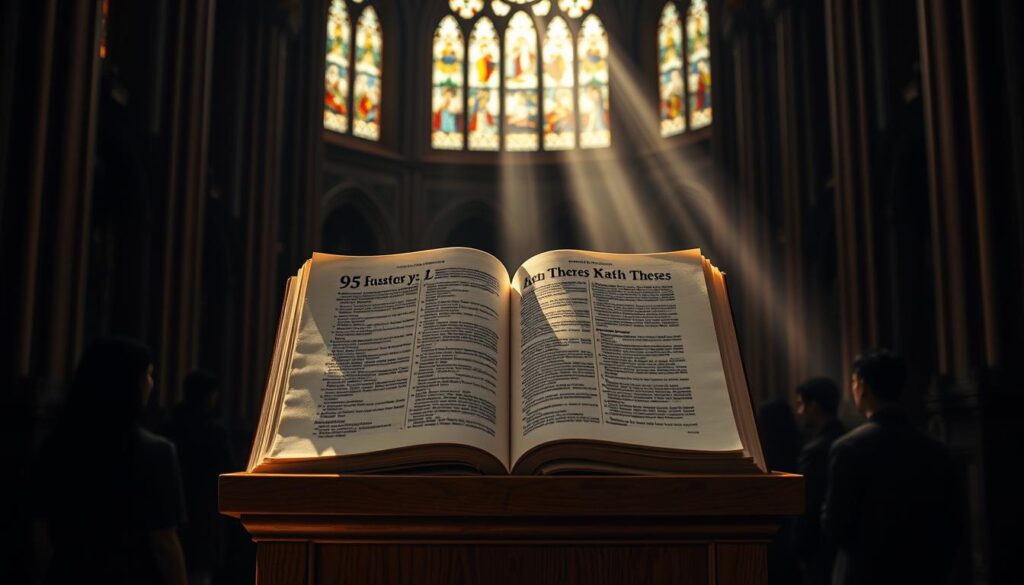
Welcome to your friendly guide to one of Christianity’s most transformative movements. On November 10, 1517, a German monk named Martin Luther sparked a religious revolution that reshaped Europe. This event marked the birth of protestantismo, now practiced by 32% of Christians worldwide.

Why does this 16th-century movement matter today? Its ideas about faith, authority, and personal connection to God influenced modern democracy, education, and culture. We’ll explore how reformers challenged traditions while building new ways to practice religión.

This guide walks through key moments – from Luther’s 95 Theses to today’s diverse denominations. You’ll discover why some groups reject papal authority while others emphasize scripture alone. We’ll simplify complex terms like “sola fide” and show how these beliefs differ from Catholic or Orthodox traditions.

Key Takeaways

  • Protestantism began in 1517 as a reform movement within Christianity
  • Accounts for nearly 800 million believers across 300+ denominations
  • Central ideas include scripture-based faith and rejection of papal authority
  • Shaped modern concepts of individual liberty and religious diversity
  • Continues evolving with new practices in the 21st century

By understanding this siglo-old tradition, you’ll better grasp its role in shaping Western thought. Let’s begin our journey through the heart of protestantismo – where history meets faith in surprising ways.

An Overview of Protestantism

Imagine a faith movement spanning continents yet united by shared ideals. With 680-800 million fieles worldwide, protestantismo forms Christianity’s second-largest branch. Unlike centralized Catholic structures, its iglesias operate independently – a hallmark since the Reformation.

Three features define this tradition:

  • No single leader like the Pope
  • Local control over worship styles
  • Bible as ultimate authority

This decentralized approach birthed 300+ denominaciones. Lutherans, Baptists, and Methodists all share core beliefs but interpret scripture differently. The World Council of Churches and World Evangelical Alliance help coordinate efforts across borders without imposing rules.

From German chapels to Nigerian megachurches, protestantismo adapts to local cultures. Over 40% of adherents now live in Africa and Latin America. Yet all maintain key principles: salvation through faith alone and direct access to God.

Modern iglesias blend ancient traditions with contemporary practices. Some use electric guitars during worship; others stick to pipe organs. This flexibility explains its growth across the mundo – proving unity doesn’t require uniformity.

Historical Context and Origins of the Reformation

The 16th siglo transformed Europa like never before. Kings sought stronger rule, merchants grew wealthy, and thinkers rediscovered ancient wisdom. This perfect storm set the stage for the reforma protestante – a religious earthquake shaking foundations of power.

reforma protestante

At the center stood the Iglesia Católica, controlling both souls and crowns. Its vast lands and taxes funded lavish projects while local parishes struggled. Critics whispered: “Should faith cost so much?”

Three forces collided to spark change:

Political Shifts Economic Pressures Intellectual Revolutions
Nation-states resisting papal authority Church selling forgiveness (indulgences) Humanists studying original Bible texts
Kings wanting church lands Wealthy merchants disliking tithes Printing presses spreading new ideas
Local leaders seeking independence Peasants burdened by fees Universities training critical thinkers

By the early 1500s, half of Germany could read. Bible translations fueled debates in taverns and town squares. As one scholar noted: “The siglo XVI wasn’t about losing faith – but finding it anew.”

These tensions made religious reform inevitable. When Martin Luther nailed his protests in 1517, he gave voice to centuries of quiet discontent. The reforma protestante didn’t start a fire – it lit the match where kindling already waited.

The Catalyst: Corruption in the Medieval Church

Picture a religious system where forgiveness became a commodity – this was the reality many Europeans faced in the early 1500s. The iglesia católica faced growing criticism as spiritual practices mixed with financial interests, creating a powder keg of discontent.

The Sale of Indulgences and Church Practices

Church leaders began treating salvation like a transaction. The venta de indulgencias – documents claiming to reduce punishment for sins – became a booming business. For a fee, believers could buy forgiveness for themselves or deceased relatives, a practice Martin Luther called “spiritual shopkeeping.”

Pope Leo X accelerated this trend to fund St. Peter’s Basilica. Peasants paid silver coins while nobles purchased entire forgiveness packages. Critics argued this system ignored core Christian values like repentance and grace. As one reformer wrote: “God’s mercy isn’t for sale – it’s given freely to those who believe.”

The Impact of the Printing Press on Dissemination

Johannes Gutenberg’s 1440 invention changed everything. Before presses, ideas moved at horse speed. Afterward, Luther’s critiques of the autoridad papa spread across Germany in weeks. Over 300,000 Reformation pamphlets circulated by 1520 – Europe’s first viral movement.

Three ways printing reshaped religion:

  • Bible translations reached ordinary people
  • Debates about indulgencias entered public squares
  • Local languages weakened Latin’s control

Embargo attempts failed as printed texts crossed borders secretly. What began as church accounting disputes became a continent-wide conversation about faith’s true price.

The Role of Martín Lutero and the 95 Theses

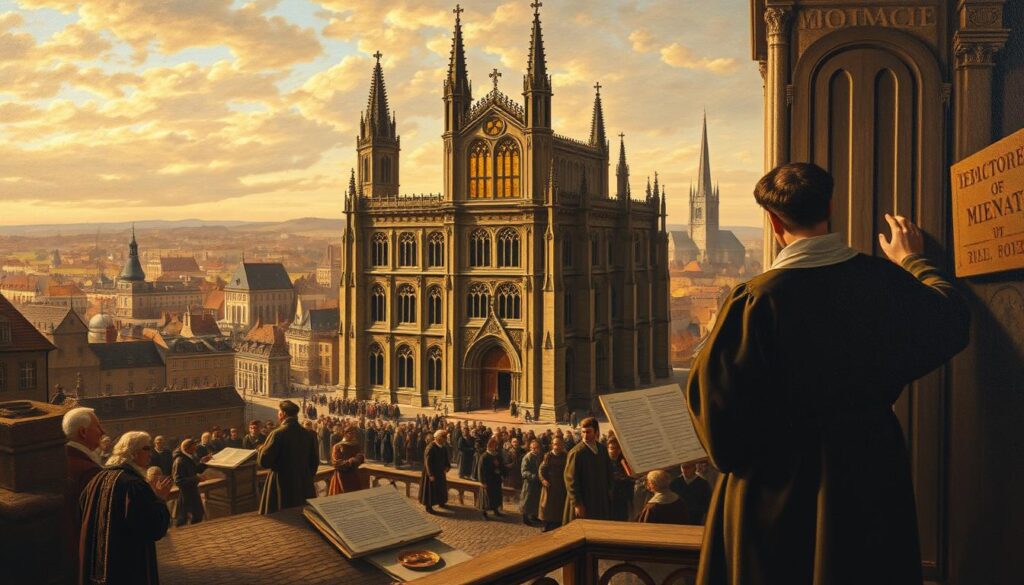
A single hammer strike echoed through history on October 31, 1517. Martín Lutero, an anxious German monk, nailed 95 debate points to Wittenberg’s puerta iglesia. This act – normal for academic discussions – became the spark that lit the reforma protestante wildfire.

martín lutero 95 tesis

Key Themes Behind the 95 Theses

Luther’s tesis attacked two core issues:

  • Church fundraising through forgiveness sales
  • Questions about autoridad papal over souls

His 41st argument cut deep: “Popes have no power over purgatory – Christ alone holds those keys.” This challenged both church finances and leadership claims.

Luther’s Argument Church Teaching Impact
Faith alone saves Works + sacraments needed Redefined Christianity
Bible over popes Pope as final authority Undermined hierarchy
All believers equal Priests as mediators Empowered laypeople

The Catholic Church’s Reaction

Rome initially dismissed Luther as “a drunken German who’ll change his mind when sober.” But as his tesis spread via printing presses, containment failed. By 1521, Pope Leo X issued a final decree:

  • Excommunicated Luther
  • Banned his writings
  • Ordered book burnings

This backfired spectacularly. Luther’s stand inspired thousands tired of corruption. His translation of scripture into German let ordinary people engage with faith directly – a radical idea that reshaped protestantismo forever.

Rise of protestantismo: Key Doctrines and Beliefs

At the heart of Protestant belief lies a revolutionary framework that redefined Christianity. This system rests on five Latin phrases called the Five Solas – principles that became the movement’s theological backbone. These doctrinas answer life’s biggest questions: How do we connect with God? What gives our faith meaning?

Five Solas Protestant theology

The Five Solas in Protestant Theology

Imagine building a house on five unshakable pillars. That’s how reformers viewed these core doctrina principles:

Sola Principle Core Belief Catholic Contrast
Scriptura Bible as sole authority Church tradition equally valid
Fide Salvación through faith alone Works required for salvation
Gratia Gracia Dios freely given Grace earned through sacraments
Christus Jesus as only mediator Saints/Mary as intercessors
Deo Gloria God deserves all praise Veneration of religious figures

These ideas flipped medieval spirituality upside down. A farmer could now read scripture without priestly help. Salvación became a gift, not a transaction. As one hymn proclaimed: “Nothing in my hand I bring – simply to Thy cross I cling.”

Emphasis on Scripture and Personal Faith

Protestant doctrinas put the Bible in everyone’s hands. Churches began printing native-language Bibles, trusting believers to interpret texts personally. This gracia Dios-centered approach created intimate faith experiences.

Modern followers still echo these values. Many memorize verses instead of praying to saints. Worship focuses on preaching rather than rituals. This direct connection remains Protestantism’s lasting legacy – proof that ancient doctrina can shape modern spirituality.

Notable Reformers: Juan Calvino, Thomas Cranmer and More

While Martin Luther ignited the reforma protestante, other thinkers shaped its global spread. Juan Calvino became Protestantism’s architect, crafting detailed doctrines still followed by millions. His 1536 book Institutes of the Christian Religion argued God predestines souls – a belief forming Calvinism’s core.

Across the Channel, Enrique VIII took a different path. Though driven by political needs, his 1534 split from Rome birthed the Church of England. Thomas Cranmer later refined this movimiento, creating the poetic Book of Common Prayer still used in Anglican services.

Reformer Contribution Legacy
Ulrich Zwingli Simplified worship in Zurich Reformed Church tradition
John Knox Scottish Reformation leader Presbyterian Church founder
William Tyndale English Bible translator Martyred for scripture access

Calvin’s Geneva experiment proved revolutionary. This 16th-siglo city became a Protestant blueprint, mixing strict morality with communal care. Visitors carried these ideas globally, planting seeds for future denominations.

Earlier voices like Jan Hus (burned in 1415) and John Wycliffe (called “Morning Star of Reformation”) paved the way. Their calls for change – silenced in their time – became rallying cries for later movimiento leaders. As one historian notes: “Reformers didn’t invent new ideas – they amplified whispers from centuries past.”

The Diversity of Protestant Denominations

From grand cathedrals to living room gatherings, Protestant communities wear many faces. This movimiento split into three main streams over five centuries, each adapting to local cultures while keeping core beliefs. Today’s 300+ denominaciones show how one faith can thrive in countless forms.

National Churches and Historical Movements

Some iglesias grew hand-in-hand with nations. England’s Anglican Church blended Catholic rituals with reformed theology. Scandinavian Lutherans kept ornate altars but rejected papal authority. The calvinismo anglicanismo traditions shaped governments too – Swiss Reformed churches helped create early democratic models.

Congregational, Evangelical and Pentecostal Branches

Other groups prioritized local control. Baptist iglesias let congregations choose leaders and interpret scripture. The 20th-century movimiento Pentecostal added lively worship styles, now followed by 25% of protestantes worldwide. These branches prove innovation thrives where communities guide their faith.

Whether through ancient liturgies or modern praise bands, protestantes continue redefining what denominaciones can be. This flexibility keeps the 500-year-old tradition vibrant in our changing world.

FAQ

What sparked the beginning of the Protestant Reformation?

The Reformation began in 1517 when Martin Luther challenged church practices like the sale of indulgences. His 95 Theses questioned the authority of the pope and emphasized faith over rituals.

How did the printing press influence the spread of Reformation ideas?

The printing press allowed reformers to share writings quickly. Luther’s works, like the 95 Theses, spread across Europe, fueling debates and inspiring others to join the movement.

What are the core beliefs of Protestant theology?

Central ideas include the “Five Solas”: faith alone (sola fide), grace alone (sola gratia), Christ alone (solus Christus), Scripture alone (sola scriptura), and glory to God alone (soli Deo gloria).

How did John Calvin shape Protestant thought?

Calvin’s teachings on predestination and church governance influenced denominations like Presbyterians. His book Institutes of the Christian Religion became a key theological text.

Why did Henry VIII create the Church of England?

Henry VIII broke from Rome in 1534 to annul his marriage. This led to the Anglican Church, blending Catholic traditions with reformed ideas under leaders like Thomas Cranmer.

What caused the split between Lutherans and Catholics?

Disagreements over authority, salvation, and practices like indulgences led to the divide. The Council of Trent later reaffirmed Catholic doctrines, deepening the separation.

How diverse are Protestant denominations today?

Denominations range from Lutherans and Baptists to Pentecostals. Differences in worship, governance, and beliefs reflect the movement’s emphasis on individual interpretation of Scripture.

Did the Reformation lead to political conflicts?

Yes! Wars like the Thirty Years’ War (1618–1648) erupted over religion and power. Rulers often backed reformers or Catholics to strengthen their own influence.

The Main Types of Protestant Christianity


Protestant Christianity forms one of the largest branches of the Christian faith, uniting over 833 million believers worldwide. At its core, this tradition emphasizes personal faith, direct access to Scripture, and salvation through grace alone. These principles create a vibrant spiritual landscape where diverse worship styles and theological perspectives thrive.

From historic groups like Lutherans and Baptists to modern evangelical movements, Protestant churches share foundational beliefs while expressing them uniquely. Many congregations prioritize community engagement and approachable worship services, making them welcoming spaces for spiritual exploration. The focus on individual Bible study encourages believers to develop personal relationships with their faith.

Understanding different Protestant denominations helps appreciate how Christian theology adapts across cultures and generations. Groups like Methodists and Presbyterians maintain distinct traditions while upholding shared values like Christ-centered teaching and social outreach. This diversity reflects Protestant Christianity’s ability to grow while honoring its 500-year heritage.

Key Takeaways

  • Protestant Christianity serves over 833 million believers through various denominational traditions
  • Core principles include salvation through faith and Scripture as ultimate spiritual authority
  • Major denominational families range from Baptists to Pentecostals, each with unique practices
  • Modern churches balance historical roots with contemporary cultural engagement
  • Accessible worship styles make Protestant congregations inviting to diverse communities
  • Theological differences often stem from interpretations of baptism and church leadership

Historical Roots and the Reformation

In 1517, a single act of defiance ignited a movement that divided the Christian church. A German monk named Martin Luther nailed his Ninety-Five Theses to All Saints’ Church door in Wittenberg, challenging the sale of indulgences. This bold action questioned whether forgiveness could be bought rather than received through genuine faith.

Martin Luther and the Ninety-Five Theses

Luther’s critique targeted a widespread practice: paying money to reduce punishment for sins. He declared, “When our Lord and Master Jesus Christ said ‘Repent,’ he willed the entire life of believers to be one of repentance.” This stance rejected the church’s role as a spiritual middleman, arguing salvation comes solely through God’s grace.

Early Challenges to Catholic Authority

The Reformation sparked debates reaching far beyond indulgences. Three key disagreements reshaped Christianity:

Issue Catholic Position Reformers’ View
Scripture Access Latin-only Bible Translations for all
Religious Authority Pope and clergy Priesthood of believers
Salvation Faith + good works Faith alone

These ideas spread rapidly thanks to the printing press. By 1520, Luther’s writings reached every major European city. The movement empowered ordinary people to engage directly with Scripture, creating lasting changes in how communities practiced their faith.

Proto-Protestant Origins and Early Movements

Long before Luther’s protest shook Europe, courageous groups laid spiritual foundations for religious reform. These early believers questioned church authority and practiced faith in ways that foreshadowed later Protestant values. Their stories reveal how Christian renewal movements existed centuries before the Reformation.

Pioneers of Faithful Resistance

In 12th-century France, the Waldensians chose poverty over privilege. Led by merchant Peter Waldo, they distributed translated Bible portions and preached in local languages. Personal Scripture study became their compass, challenging the Latin-only traditions of medieval churches.

Hussite movement

Bohemia’s Hussites sparked change 100 years later. Jan Hus demanded communion for all believers and called corrupt leaders to account. His fiery sermons declared: “Sanctify Christ as Lord in your hearts, always prepared to make a defense to anyone who asks you for a reason for the hope in you.”

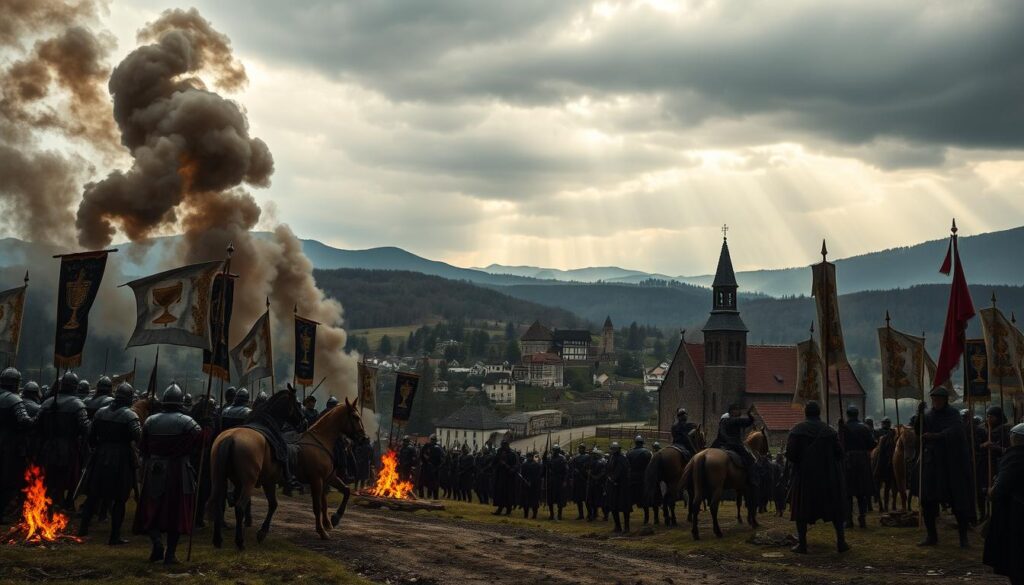
Both movements faced harsh opposition. Waldensians retreated to Alpine valleys while Hussite warriors defended their beliefs. Their survival proved alternative Christian communities could thrive outside official church structures.

These groups planted seeds for future reforms through Bible accessibility and lay leadership. Their legacy echoes in Protestant churches today, from Baptist congregational governance to Methodist emphasis on personal holiness.

The Emergence of Lutheran Churches

When Martin Luther sparked the Reformation, he unknowingly planted seeds for one of Christianity’s most enduring traditions. These communities became the first organized Protestant denomination, blending bold theology with practical worship. Their identity crystallized through a landmark document that still guides millions today.

Foundations in the Augsburg Confession

In 1530, Lutheran leaders presented Emperor Charles V with a revolutionary statement: “Our churches teach that people cannot be justified before God by their own strength.” This Augsburg Confession became Lutheranism’s doctrinal backbone. It defined churches as communities where Scripture shapes worship and sacraments reflect Christ’s promises.

The confession helped Lutheranism sweep through Northern Europe. By 1600, it became the official faith in Sweden, Denmark, and Finland. Nordic countries still show strong Lutheran roots – nearly 70% of Norwegians identify with their national church.

Lutheran Distinctives Key Teachings Global Impact
Worship Style Liturgical with hymns 7,500+ U.S. congregations
Sacraments Baptism & Communion 80 million members worldwide
Leadership Pastors & bishops 23 member churches in Lutheran World Federation

North America’s Lutheran landscape reveals fascinating diversity. The Evangelical Lutheran Church in America (ELCA) leads with 2.9 million members, supporting LGBTQ+ inclusion. Meanwhile, the Lutheran Church-Missouri Synod maintains traditional stances, attracting 1.7 million adherents.

Modern Lutheran churches balance ancient confessions with contemporary needs. From food pantries in Minnesota to climate initiatives in Sweden, they prove historical faith can address modern challenges. Their emphasis on grace continues to draw seekers and lifelong believers alike.

Reformed Churches and Calvinist Traditions

From the cobblestone streets of Geneva to the rolling hills of Scotland, a new theological vision reshaped Christian communities across continents. Reformed churches grew from bold thinkers who reimagined church life through rigorous Bible study and structured governance. Their teachings continue to influence millions through well-organized denominations and timeless confessions.

Reformed churches theology

Foundations of Faithful Governance

John Calvin’s Geneva became a laboratory for church reform. His Institutes of the Christian Religion laid out a system emphasizing God’s complete authority. “True wisdom consists in knowing God and knowing ourselves,” Calvin wrote, capturing his focus on divine sovereignty and human humility.

Swiss reformer Huldrych Zwingli took a different approach in Zurich. He saw communion as symbolic and championed local language worship. These ideas spread through Europe like wildfire:

Reformer Key Contribution Modern Impact
John Calvin Systematic theology Presbyterian governance
Huldrych Zwingli Symbolic sacraments Congregational autonomy
John Knox Scottish Reformation Church of Scotland

Today’s Presbyterian Church (U.S.A.) carries this legacy with 1.1 million members. They follow the Westminster Confession, a 1646 document still guiding worship and doctrine. Local churches elect elders who collaborate regionally – a system balancing community needs with shared standards.

Reformed theology’s emphasis on God’s grace remains central. From Dutch Reformed hymn-singing to Korean Presbyterian missions, these churches prove 500-year-old ideas still inspire fresh faith expressions. Their structured yet adaptable approach helps communities thrive in changing times.

Anglican Heritage and the Book of Common Prayer

The story of Anglican Christianity begins with a royal dispute that reshaped England’s spiritual landscape. When King Henry VIII broke from Rome in 1534, he created a unique church blending Catholic traditions with Reformed theology. This new religious body became a via media – a middle way between old and new expressions of Christian faith.

Thomas Cranmer and the 39 Articles

Archbishop Thomas Cranmer gave the Anglican church its distinctive voice. His 1549 Book of Common Prayer transformed worship by using English instead of Latin. The text became so popular that 80% of Shakespeare’s biblical references come from Cranmer’s translations.

Cranmer’s 39 Articles (1571) clarified Anglican doctrine, affirming Scripture as ultimate spiritual authority. These principles allowed local churches to adapt while maintaining unity. Today, the global Anglican Communion includes 70 million members across 165 countries.

Modern Anglican churches balance ancient rituals with contemporary concerns. From African congregations to American Episcopal churches, communities honor their 16th-century roots while addressing modern issues. This flexibility makes Anglican tradition a living part of global Christian practice.

FAQ

How did Martin Luther spark the Protestant Reformation?

Martin Luther’s Ninety-Five Theses, posted in 1517, criticized Catholic practices like indulgences. This act ignited debates about church authority and scripture, laying the groundwork for new Christian movements.

Who were the Hussites and Waldensians?

The Hussites (inspired by Jan Hus) and Waldensians were pre-Reformation groups that challenged Catholic teachings. They emphasized scripture over tradition, influencing later reformers like Luther and Calvin.

What defines Lutheran churches today?

Lutheran churches follow the Augsburg Confession (1530), which stresses salvation by faith alone and scripture as the ultimate authority. Major bodies include the Lutheran World Federation and the Evangelical Lutheran Church in America.

How did John Calvin shape Reformed Christianity?

Calvin’s teachings on predestination and church governance, along with Huldrych Zwingli’s reforms in Zurich, shaped Reformed traditions. These ideas influenced Presbyterians, Congregationalists, and the Dutch Reformed Church.

What makes Anglican worship unique?

The Book of Common Prayer, crafted by Thomas Cranmer, standardized Anglican liturgy. The Thirty-Nine Articles later outlined doctrines, blending Protestant theology with Catholic traditions like episcopal governance.

How did early reformers challenge the Catholic Church?

Early reformers rejected papal authority, questioned sacraments like confession, and translated the Bible into local languages. These actions shifted focus to personal faith and accessible scripture.

Why is the Augsburg Confession important?

Presented in 1530, it became the core Lutheran doctrinal statement. It defended reforms like justification by faith and clarified differences with Catholicism, uniting Lutheran territories politically and theologically.

Protestantism in Ireland: A Fascinating History


Ireland’s story weaves together faith, power, and identity in ways few nations have experienced. For over 500 years, religious movements reshaped the island’s culture and politics. Settlers arriving during the 16th and 17th centuries brought new traditions that would redefine communities and governance.

These changes created a lasting divide between groups with different beliefs. Political power often aligned with religious identity, sparking conflicts that echoed through generations. Towns like Derry and Belfast became symbols of this cultural clash, their streets bearing witness to centuries of tension.

Northern regions, especially Ulster, saw significant shifts as newcomers established farms, churches, and trade networks. Their influence extended beyond faith—economic systems, land ownership patterns, and legal frameworks all bore their mark. Over time, these developments laid the groundwork for modern divisions still felt today.

Understanding this history helps explain Northern Ireland’s unique role within the UK. From medieval roots to contemporary debates, religion remains a powerful force shaping identities and alliances.

Key Takeaways

  • Religious movements transformed Ireland’s cultural landscape over five centuries
  • Political loyalty became deeply tied to faith, fueling long-standing divisions
  • Ulster’s development was heavily influenced by new settlers and their traditions
  • Economic systems and land ownership patterns reflected religious affiliations
  • Modern Northern Ireland’s identity stems from these historical foundations

Historical Origins and Colonial Influences

Centuries of foreign intervention shaped the island’s destiny long before modern borders existed. British involvement began with armored knights and stone castles, not religious reformers or politicians. This early chapter laid the groundwork for cultural divides still visible today.

Early Incursions and the Anglo-Norman Legacy

Anglo-Norman warriors arrived in 1169, bringing feudal systems and fortified towns. Their descendants—later called the “Old English”—controlled key regions for 400 years. Though they adopted some local customs, their loyalty to England’s crown never wavered.

These settlers formed the first permanent bridge between Britain and the island. Their stone towers dotted the landscape, symbols of power that outlasted generations. By the 1500s, their influence stretched from Dublin’s streets to remote farmlands.

The Plantations in Ulster and Their Lasting Impact

Everything changed when King James I launched the Ulster Plantations in 1609. Thousands of Scottish and English families replaced displaced Irish landowners. This wasn’t random migration—it was organized colonization.

The new arrivals built towns modeled on British designs. They farmed flax, raised cattle, and traded wool. Unlike earlier settlers, they kept their traditions intact, creating a cultural barrier that hardened over time.

Period Settlers Key Impact
12th-16th C. Anglo-Normans Established feudal governance
17th C. Onward Scottish/English Created Protestant majority regions
Post-1609 Plantation colonists Redefined land ownership patterns

These changes made the north distinct. When Ireland gained independence in 1922, six Ulster counties chose to remain part of the United Kingdom. Their decision traced back to those 17th-century fields and fortifications.

Evolution and Trends of Protestantism in Irish Society

The 1920s brought a seismic shift to the island’s political landscape as new borders reshaped lives and loyalties. Northern Ireland emerged as a self-governing region in 1922, with a two-thirds Protestant majority wielding outsized influence. This demographic reality shaped everything from government policies to access to jobs and education.

northern ireland social structures

Industries like linen production and shipbuilding became economic powerhouses, but opportunities weren’t equal. “The best jobs went to our community—that’s just how things worked,” recalled a Belfast dockworker’s memoir from the 1950s. While Catholics found work in these sectors, leadership roles and skilled positions largely remained with Protestants.

The Ulster Unionist Party dominated politics for decades, using their numbers to control local councils. Gerrymandering tactics concentrated Catholic voters into fewer districts, weakening their representation. This system created a self-reinforcing cycle of political and economic power.

Distinct social structures emerged over the years. Separate schools, churches, and cultural groups deepened divisions. A thriving Protestant middle class developed strong ties to British identity, viewing the UK as both a protector and a source of prosperity. These patterns would define Northern Irish society long after partition.

The Troubles and Their Impact on Protestant Communities

Northern Ireland’s streets became battlegrounds in the late 1960s as decades of tension exploded into violence. What began as civil rights marches quickly turned into a 30-year conflict that reshaped communities and institutions.

Breaking Points: Violence Escalates

October 1968 changed everything. When police clubbed marchers in Derry demanding equal voting rights, cameras captured the brutality for the world to see. “They swung batons like we were enemies, not citizens,” one survivor later recounted.

The New Year’s Day attack at Burntollet Bridge proved more shocking. Loyalist mobs ambushed activists while officers watched passively. This pattern repeated in 1972 during Bloody Sunday, when British soldiers shot 26 unarmed protesters.

Security Forces Under Scrutiny

Royal Ulster Constabulary officers faced growing criticism for perceived bias. Many Protestant communities saw them as protectors, while nationalists viewed them as occupiers. This divide deepened when paramilitary groups formed.

Group Type Main Actions Community Impact
Loyalist Paramilitaries Retaliatory bombings Increased fear cycles
Security Forces House raids Eroded trust
Civil Rights Activists Peaceful protests International attention

By the 1990s, over 3,600 lives had been lost. Protestant neighborhoods faced bomb threats and economic decline, while many young men joined defense groups. The violence left scars that still affect community relations today.

Analyzing protestantism in ireland: Politics, Peace, and the Good Friday Agreement

The 1990s brought unexpected opportunities for reconciliation after decades of conflict. Ceasefires from opposing paramilitary groups created space for dialogue, with international mediators stepping in to bridge divides. This fragile momentum led to one of modern Europe’s most significant peace efforts.

good friday agreement northern ireland

Political Shifts and Peace Talks

Major changes began when armed groups halted hostilities in 1994. Protestant leaders faced a new challenge: negotiating with former rivals. U.S. Senator George Mitchell’s involvement proved crucial, helping parties find common ground through months of tense discussions.

Talks involved complex compromises on governance and security. British and Irish officials worked behind the scenes to address constitutional concerns. For many communities, trust-building became as vital as policy changes.

Influence of the Good Friday Agreement

April 1998’s landmark deal reshaped Northern Ireland’s future. The Good Friday Agreement established shared leadership between unionist and nationalist parties. Key sectors like healthcare and education shifted to local control while maintaining UK ties.

Weapons decommissioning requirements eased fears of renewed violence. Power-sharing forced cooperation that seemed impossible years earlier. As one negotiator noted: “We didn’t erase history—we built over it.”

The accord’s effects continue shaping governance today. While challenges remain, its framework provides tools for resolving disputes peacefully. This historic pivot shows how entrenched conflicts can yield to persistent diplomacy.

Social and Cultural Ramifications in Northern Ireland

Daily life in the north still bears the marks of generations-old divisions. Even after peace agreements, invisible lines shape where people live, learn, and work. These patterns influence how communities interact—or avoid interaction—across cultural lines.

northern ireland social divisions

Segregation, Education, and Cultural Identity

Schools remain one of the clearest dividers. Over 90% of children attend religiously segregated classrooms. Separate textbooks, sports teams, and holidays reinforce distinct identities from childhood. A Belfast teacher noted: “Kids grow up knowing ‘us’ and ‘them’ before they understand why.”

Housing, Employment, and Community Dynamics

Neighborhoods often cluster by background. Nearly 100 physical barriers still slice through Belfast streets. Housing allocation once favored certain groups—a legacy that lingers. Catholic nationalists faced exclusion from public homes in Protestant-dominated areas during the 20th century.

Issue Impact Current Status
Education Limited cross-community contact 90% segregated schools
Housing Divided neighborhoods 100+ peace walls
Employment Economic disparities Improved but uneven
Voting Rights Political imbalance Universal suffrage since 1969

The civil rights movement fought property-based voting systems that disadvantaged larger Catholic families. Though reforms came, community trust remains fragile. Jobs and investments still spark debates about fairness decades after reforms.

Contemporary Reflections and Post-Conflict Challenges

Modern Northern Ireland grapples with visible and invisible divides that outlasted official peace agreements. While violence has largely ended, communities still navigate complex social legacies shaped by decades of tension.

Peace Walls and Ongoing Social Divides

Belfast now has more physical barriers between neighborhoods than during the Troubles, with nearly 100 walls separating Catholics and Protestants. These structures symbolize lingering distrust—46% of adults know someone harmed in past conflicts, per 2011 studies. Mental health challenges persist, with the region showing the world’s highest PTSD rates.

Modern Political Realignments and Brexit Implications

The 2016 Brexit vote tested Northern Ireland’s stability as 56% of voters opposed leaving the EU. Fears of renewed border checks with the Republic of Ireland prompted creative solutions. A special trade arrangement now keeps the region aligned with EU customs while remaining part of the United Kingdom.

Progress remains fragile. New generations seek reconciliation through shared schools and cultural projects, yet old divisions still influence housing and politics. The path forward requires balancing historical wounds with hopeful innovations.

FAQ

How did colonization shape Protestant communities in Ireland?

Colonial efforts like the 16th- and 17th-century Plantations of Ulster brought English and Scottish settlers, creating a Protestant majority in the north. This reshaped land ownership, culture, and political power, leading to centuries of tension with the Catholic majority.

What role did the Good Friday Agreement play in Northern Ireland?

Signed in 1998, the Good Friday Agreement ended most violence by establishing power-sharing between unionists and nationalists. It allowed Northern Ireland to remain part of the United Kingdom unless a majority votes otherwise, while fostering cross-border cooperation with the Republic of Ireland.

How did The Troubles affect daily life in Northern Ireland?

From the late 1960s to 1998, bombings, discrimination, and clashes over civil rights divided communities. Security forces like the Royal Ulster Constabulary and paramilitary groups deepened distrust. Segregation in housing, schools, and jobs still impacts social dynamics today.

Why do peace walls still exist in Belfast?

Built during The Troubles to separate Catholic and Protestant neighborhoods, over 100 barriers remain. Many residents feel safer with them due to lingering tensions, though efforts to remove these physical divides continue as part of post-conflict reconciliation.

How did Brexit impact Northern Ireland’s political stability?

Brexit reignited debates over borders and identity. The Northern Ireland Protocol, designed to avoid a hard border with the Republic, strained unionist ties to the UK. This has fueled recent political gridlock and calls for renewed dialogue to protect the peace process.

What were the Burntollet Bridge and Bogside incidents?

In 1969, a civil rights march at Burntollet Bridge was attacked by loyalists, escalating sectarian violence. Weeks later, the Battle of the Bogside in Derry led to British troops deploying in Catholic areas, marking a turning point in the conflict.

Pronouncing Protestantism: A Quick Guide


Welcome to your go-to resource for mastering a word that trips up many language learners. Whether you’re discussing history, religion, or culture, saying “Protestantism” correctly ensures your message lands clearly. Let’s break down this five-syllable term into bite-sized pieces.

Why does this word matter? Mispronouncing terms tied to faith or history can lead to confusion in classrooms, workplaces, or casual talks. We’ll compare American and British accents so you can adapt to any English-speaking setting. Start with “PROT” and build from there!

This guide uses simple steps to help you practice confidently. You’ll learn how stress patterns differ between regions and why syllables like “stuhn” and “zuhm” matter. No jargon—just clear examples and tips you can use today.

Key Takeaways

  • Master both U.S. and U.K. accents for versatile communication.
  • Break the word into 5 syllables: PROT-uh-stuhn-ti-zuhm.
  • Avoid misunderstandings in academic or professional settings.
  • Learn stress patterns to sound natural in conversations.
  • Practice with audio-friendly methods for quick improvement.

Exploring the Basics of Protestantism

Let’s start with the roots of this term before tackling its sounds. The movement began as a religious shift in Europe centuries ago, challenging established practices while emphasizing personal faith. This historical backdrop helps explain why the word carries such weight today.

Understanding the Definition and Historical Context

Originating in the 1500s, this branch of Christianity reshaped spiritual traditions across continents. Its name comes from the Latin protestari, meaning “to declare publicly.” That origin story influences how we stress syllables: the first part (PROT) gets emphasis, mirroring its bold beginnings.

Decoding the Phonetic Symbols and Transcriptions

Phonetic symbols might look intimidating, but they’re just sound maps. For example:

  • /p/ = “pen”
  • /r/ = “run”
  • /ɑː/ (US) or /ɒ/ (UK) = “father” or “sock”

American English often softens the middle “t” sound, making it closer to a quick “d.” Notice how criticism ends similarly to the last syllable. Breaking it this way helps your mouth find the right rhythm naturally.

Step-by-Step Guide to protestantism pronounce

Ready to tackle this multisyllabic challenge? These proven methods turn complex sounds into manageable steps. We’ll focus on practical strategies anyone can use anywhere—no fancy equipment required.

Sound It Out: Breaking Down the Syllables

Split the term into five parts: PROT-uh-stuhn-ti-zuhm. Say each segment slowly, like stepping stones across a stream. Focus on the stressed first syllable (PROT) and the softer middle sounds. Many learners find this breakdown helpful:

  • PROT (like “pot” with an R)
  • uh (short schwa sound)
  • stuhn (rhymes with “sun”)
  • ti (as in “tea”)
  • zuhm (ends like “ism”)

pronunciation practice techniques

Effective Techniques for Accurate Practice

Start by exaggerating each sound—think of it as vocal stretching. Record yourself using your phone’s voice memo app. Compare your recording to native speakers from resources like Merriam-Webster. Notice where you rush or mumble? Those spots need extra attention.

Utilizing Audio Resources and Dictionary Tools

Top-rated apps like ELSA Speak offer instant feedback on your attempts. Set daily reminders to practice during routine activities—say the word aloud while making coffee or commuting. Consistent practice creates lasting muscle memory, turning effort into effortless speech.

Advanced Techniques for Mastering English Pronunciation

Perfecting your English speech requires more than memorization—it demands smart strategies. Whether you’re chatting with coworkers or presenting at school, clear communication starts with understanding accents and sound patterns. Let’s explore tools that help you speak with confidence.

Accent Focus: US vs. UK Pronunciation Differences

American and British English sound distinct. The vowel in “father” (/ɑː/) shows up in U.S. speech, while Brits use the shorter /ɒ/ heard in “sock.” Consonants matter too:

Feature American English British English
Middle “t” sound Flap /t̬/ (like “cutting”) Crisp /t/ (like “tea”)
Vowel in “Protestantism” PROT-uh-stuhn-ti-zuhm PROT-uh-stən-ti-zəm

Choose one accent and stick with it. Mixing styles confuses listeners and slows progress.

Training with Minimal Pairs and Self-Recording Methods

Try minimal pairs—words that differ by one sound. Practice these to sharpen your ears:

  • Cot (U.S.) vs. Caught (U.K.)
  • Writer vs. Rider

Record yourself weekly using phone apps. Compare your speech to native speakers. Notice where vowels drag or consonants blur? Adjust and try again. This practice builds muscle memory for tricky words.

Conclusion

You’ve now got the tools to tackle complex terms like Protestantism with precision. Breaking words into syllables—as we did with PROT-uh-stuhn-ti-zuhm—builds skills for handling other challenging vocabulary. This method works whether you’re learning American or English English patterns.

Keep growing your skills with free resources. YouTube channels like Rachel’s English offer video guides for tricky sounds. Apps with audio samples and IPA transcriptions help reinforce what you’ve learned. Try listening to podcasts or movies to hear these terms in context.

Consistency is key. Spend 5 minutes daily practicing with a dictionary app or recording yourself. Over time, you’ll notice smoother speech in class discussions, work meetings, or chats about history. Every tough word you master boosts your confidence.

Remember—language learning isn’t a race. Celebrate small wins, like nailing that middle “stuhn” sound. Soon, you’ll handle terms like “ship” versus “sheep” effortlessly. Keep experimenting, stay curious, and let your progress inspire your next challenge!

FAQ

How do I break down "Protestantism" into syllables?

Split it as Pruh-tuh-stuhn-tiz-uhm. Emphasize the second syllable (“tuh”) and soften the others. Practice slowly, then speed up while keeping clarity.

What tools can help me practice saying this word correctly?

Use online dictionaries like Cambridge Dictionary or Merriam-Webster for audio clips. Apps like Forvo or YouTube tutorials also offer native speaker examples for imitation.

Are there differences between US and UK pronunciations?

Yes! In American English, the “a” sounds flatter (like “uh”), while British speakers might stress the first syllable more. Listen to regional accents to spot variations.

Why is understanding Protestantism’s history useful for pronunciation?

Knowing its roots (like the Reformation era) helps contextualize the term. This makes it easier to remember and articulate during conversations about religion or culture.

How can minimal pairs improve my pronunciation skills?

Practicing similar-sounding words (e.g., “protest” vs. “Protestant”) sharpens your ear. Record yourself to compare with native speakers and adjust your accent over time.

Discover the Protestant Reformation Date


Imagine a single day that shook the foundations of spiritual life across continents. On October 31, 1517, a bold act by a German monk ignited a religious movement still felt worldwide. This moment didn’t just challenge church practices—it rewrote the rules of faith and power for generations.

Martin Luther’s famous document, now known as the 95 Theses, questioned long-held traditions. His ideas spread like wildfire, thanks to the newly invented printing press. What began as theological debate soon became a cultural earthquake, reshaping Europe’s history and birthing new forms of worship.

The ripple effects reached far beyond church walls. This movement gave ordinary people tools to interpret scripture themselves. It sparked revolutions in education, politics, and personal belief systems—changes that echo in modern ideas about freedom and self-expression.

Key Takeaways

  • A monk’s bold challenge on October 31, 1517, launched a spiritual revolution
  • Printed ideas traveled faster than ever, changing how people accessed religious teachings
  • New branches of the Christian religion emerged, emphasizing personal faith over tradition
  • Power shifted from institutions to individuals in matters of belief
  • Modern concepts of religious liberty trace roots to this historical turning point

Overview of the Protestant Reformation

The 16th century witnessed a seismic shift in spiritual thought that reshaped entire nations. As the Roman Catholic Church faced criticism over its practices, thinkers began questioning centuries-old traditions. This wasn’t just about religion—it sparked debates about power, truth, and who gets to interpret sacred texts.

Historical Context and Key Concepts

Europe’s Renaissance era set the stage for change. A growing emphasis on humanism made people rethink their relationship with authority. Scholars argued that salvation came through faith alone (sola fide), challenging the doctrine requiring both belief and church-led rituals.

The printing press became the movement’s engine. For the first time, pamphlets and translated Bibles reached farmers and merchants—not just clergy. This technological leap turned theological debates into public conversations.

Major Milestones at a Glance

Key events unfolded like dominoes across decades:

  • A monk’s public critique of indulgences (1517)
  • Peasant revolts demanding social justice (1524-25)
  • Peace agreements allowing regions to choose their faith (1555)

These moments didn’t just alter church structures—they redefined how societies governed morality. The effects linger in modern debates about personal freedom and institutional power.

Understanding the Protestant Reformation Date

A single act of defiance on an autumn day changed how millions relate to spirituality. While many moments shape history, October 31, 1517, stands out as a turning point that redirected the flow of religious thought.

church history timeline

Why This Day Matters in Church History

That crisp fall morning in Wittenberg wasn’t just about posting ideas—it lit a fuse. Luther’s document questioned payments for forgiveness, a practice that troubled ordinary worshippers. His dual role as scholar and monk gave his words unusual authority.

The church door functioned like a public forum. Nailing the theses there invited open discussion, not rebellion. This act sparked debates reaching far beyond academic circles, reshaping how people viewed spiritual leadership.

Building Tensions Before the Breakthrough

Several factors created pressure before 1517:

Years Before Key Issue Impact
1490s-1510s Indulgence sales Eroded trust in church practices
Early 1500s Scripture accessibility Increased public theological awareness
1516-1517 Luther’s research Exposed contradictions in doctrine

These developments made the reformation began inevitable. Political leaders saw opportunities to challenge Rome’s power. Everyday believers craved more personal connections with faith.

Modern readers might wonder why this time period matters. The answers lie in how it transformed relationships between individuals, communities, and divine authority—a shift still felt in today’s religious articles and practices.

Key Figures and Events That Shaped the Reformation

Courageous voices emerged across Europe, challenging centuries-old traditions and sparking lasting spiritual change. Three distinct leaders—each with unique motivations—fueled transformations that reshaped religious practice for millions.

Martin Luther and the 95 Theses

A humble monk’s pen sparked an international firestorm. Martin Luther, an Augustinian scholar, distilled his concerns about church practices into 95 arguments. His theses weren’t just academic musings—they gave voice to widespread frustrations about unfair systems.

Luther’s writings spread faster than anyone imagined. Printed translations reached shopkeepers and nobles alike, proving ordinary people craved direct access to spiritual teachings. His translation of scripture into German became a bestseller, empowering believers to interpret faith personally.

Contributions of John Calvin, Henry VIII, and Others

While Luther lit the fuse, other reformers expanded the movement’s reach:

  • John Calvin built theological systems emphasizing divine sovereignty
  • Henry VIII’s political clash with Rome birthed England’s independent church
  • Radical groups like Anabaptists prioritized community over hierarchy

Calvin’s Institutes of the Christian Religion became Protestantism’s textbook. Meanwhile, Henry’s break with papal authority showed how personal and national interests could drive religious change. Together, these ideas created diverse worship traditions still thriving today.

The Impact on the Catholic Church and European Politics

A storm of change swept through Europe’s religious and political institutions. The Roman Catholic Church faced unprecedented scrutiny as reformers exposed flaws in its practices. This pressure sparked both internal renewal and external conflicts that reshaped the continent.

Rebuilding From Within

Church leaders initially struggled to address criticisms effectively. After decades of debate, the Council of Trent (1545-1563) became the turning point. This gathering:

  • Clarified official doctrine on salvation and sacraments
  • Banned corrupt practices like selling spiritual favors
  • Established seminaries for better priest education

“If any one saith that the sacraments are not necessary unto salvation… let him be anathema.”

Council of Trent Decree

Power Shifts and Bloody Consequences

New religious divisions created complex alliances. Rulers now chose faiths for their regions, often clashing with neighbors. The resulting conflicts devastated populations:

Conflict Duration Estimated Deaths
Thirty Years’ War 1618-1648 4.5-8 million
French Wars of Religion 1562-1598 2-4 million

Amid the chaos, positive changes emerged. The Jesuits became education pioneers, founding schools across three continents. Their work helped the Roman Catholic Church regain spiritual influence through learning rather than force.

These turbulent times planted early seeds of religious tolerance. By challenging absolute authority, they paved the way for modern ideas about separating church governance from state power.

Artistic, Cultural, and Social Transformations During the Reformation

A creative explosion reshaped Europe’s spiritual landscape as new beliefs demanded fresh forms of expression. This era birthed masterpieces that still define our understanding of sacred culture, while rewriting rules about who could access divine truth.

reformation cultural impact

Influence on Art, Music, and Literature

Artists found bold ways to visualize faith. Pieter Paul Rubens painted dramatic biblical scenes that made scripture feel alive. Johann Sebastian Bach later transformed Lutheran hymns into complex harmonies, proving music could be both devotional and revolutionary.

The printing press became truth’s great equalizer. Martin Luther alone produced over 20% of all German-language articles in his peak years. His Bible translation sold 200,000 copies by 1534—a staggering number for the time.

Social Changes and Religious Practices

Sunday services turned participatory. Congregations sang together in common languages rather than watching silent rituals. “Why should the devil have all the good tunes?” Luther quipped while writing hymns everyone could learn.

Literacy rates climbed as people studied translated scriptures. Parents taught children to read using religious texts. This shift created new social expectations—suddenly, farmers could debate theology with nobles.

Artistic styles reflected theological differences. Calvinist communities favored simple whitewashed churches, while Lutherans embraced ornate altars. These choices still shape how different groups experience faith today.

Regional Perspectives: England, Germany, Switzerland, and Beyond

Europe’s spiritual landscape fractured into distinct regional identities as local leaders shaped religious change. While shared ideals of reform united these movements, each region developed unique solutions to age-old questions of faith and governance.

church england reforms

England’s Spiritual Rollercoaster

What began as a royal marriage dispute became a national transformation. When Henry VIII established the Church of England in 1534, he unwittingly launched a century of spiritual whiplash. His daughter Mary’s brutal five-year reign saw Catholic restoration through persecution—earning her the nickname “Bloody Mary.”

Elizabeth I’s 45-year rule brought stability through compromise. Her Book of Common Prayer blended traditional rituals with reformed theology. This liturgical masterpiece gave parishes unified worship texts in English, creating the Anglican tradition’s distinctive voice.

Continental Innovations in Faith

Swiss cities embraced radical changes under Huldrych Zwingli’s leadership. Zurich became a laboratory for reform, removing church art and simplifying services. Meanwhile, German princes secured legal recognition for Lutheranism through the 1555 Peace of Augsburg.

Region Key Figure Lasting Contribution
England Elizabeth I Anglican via Book of Common Prayer
Switzerland Huldrych Zwingli Radical liturgical simplification
Germany Local Princes State-controlled Lutheran churches

“There is one Jesus Christ. The rest are disputes over trifles.”

Attributed to Elizabeth I

These regional experiments proved faith could adapt to local cultures. From England’s liturgical balance to Switzerland’s stripped-down services, communities redefined spirituality on their own terms.

Reformation’s Legacy in Modern Christianity

Centuries-old ideas still shape how billions experience spirituality today. The 16th-century movement empowered ordinary people to own their faith, creating ripples that transformed global religious landscapes.

Continuing Influence on Religious Thought and Practice

Modern worship services reflect revolutionary ideas about spiritual access. The concept of “priesthood believers“—that all worshippers can connect directly with divine truth—fuels today’s emphasis on personal Bible study. This shift reshaped both Roman Catholic and Protestant traditions, inspiring reforms like Vatican II’s liturgical updates.

The Evolution of Religious Freedom and Educational Impacts

Colonial America’s experiments in tolerance grew from these roots. Public schools initially formed to teach scripture reading, while universities expanded to explore diverse faith perspectives. Legal protections for conscience rights trace back to early arguments against enforced uniformity.

From megachurch services to interfaith dialogues, the priesthood believers ideal lives on. Even the Roman Catholic Church now encourages lay participation—proof that ancient debates still mold modern spiritual journeys.

FAQ

When did the Protestant Reformation officially begin?

The movement is widely linked to October 31, 1517, when Martin Luther published his 95 Theses, challenging practices like indulgences in the Roman Catholic Church.

How did Henry VIII’s role differ from reformers like Luther or Calvin?

While Luther and Calvin focused on doctrine, Henry VIII’s break with Rome centered on authority—rejecting papal control to form the Church of England and secure his marriage rights.

What role did the printing press play in spreading Reformation ideas?

It allowed texts like Luther’s writings and Calvin’s Institutes of the Christian Religion to circulate widely, fueling debates and uniting supporters across Europe.

Why did the Peace of Augsburg matter for religious freedom?

This 1555 agreement let German rulers choose between Catholicism or Lutheranism, marking a step toward state-sanctioned religious choice—though limited to those two options.

How did the Catholic Church respond to the Reformation?

Through the Council of Trent (1545–1563), it reaffirmed doctrines like papal authority and addressed corruption while launching the Counter-Reformation to reclaim influence.

What social changes emerged from the Reformation?

Emphasis on literacy (to read scripture), shifts in marriage views, and the priesthood of all believers challenged traditional hierarchies, reshaping daily life and worship.

How did England’s Reformation differ from Switzerland’s?

Under Henry VIII and Elizabeth I, England’s split was politically driven, while Swiss reformers like Zwingli and Calvin focused on doctrinal purity and communal governance.

What lasting impacts did the Reformation have on education?

It spurred schools for lay education and Bible study, with figures like Calvin advocating universal literacy to deepen personal faith and understanding.

Did the Reformation influence art and culture?

Yes! It shifted art from lavish religious imagery to simpler themes, while hymns in local languages—like Luther’s—made worship more accessible to ordinary people.

How does the Reformation affect modern Christianity?

It laid groundwork for denominations like Lutheranism and Presbyterianism, emphasized individual faith, and inspired later movements for religious freedom and human rights.