Recent Posts

Understanding the Protestant Flag: Its Significance


What began as an unplanned Sunday school lesson in 1897 Brooklyn became the spark for one of Christianity’s most enduring symbols. A local pastor, Charles C. Overton, found himself without a speaker that day—so he improvised a speech about a vision for a unifying emblem representing Christian values. This idea later blossomed into the iconic design we recognize today.

The banner’s simple yet striking design carries layers of meaning. A bold red cross rests on a white background, framed by a blue square in the upper corner. These colors echo themes of sacrifice, purity, and heavenly truth—cornerstones of the faith it represents.

Overton’s concept gained momentum through collaboration with hymn writer Fanny Crosby, who helped popularize its message. By 1942, major church organizations adopted it as an ecumenical standard. Its appeal crosses denominational lines, appearing in Baptist, Lutheran, Methodist, and other congregations nationwide.

More than fabric and dye, this symbol serves as a visual reminder of shared beliefs. It bridges theological differences while honoring the core principles that unite Christian communities. From Sunday schools to global missions, its presence continues to inspire collective purpose.

Key Takeaways

  • Originated from a spontaneous 1897 Sunday school address in New York
  • Design elements reflect core Christian values through color symbolism
  • Gained official recognition from U.S. church councils in the 1940s
  • Used widely across Protestant denominations as a unifying emblem
  • Collaboration between pastor Charles Overton and hymnist Fanny Crosby shaped its legacy

Introduction to the Protestant Flag

A Sunday school teacher’s creative moment in 1897 Brooklyn gave birth to a lasting emblem of spiritual connection. At Brighton Chapel on Coney Island, Charles Overton sketched ideas for a shared Christian symbol during an unplanned lecture. This brainstorming session launched a movement that would span generations.

The design combines simplicity with deep meaning. A white background represents spiritual purity, while a crimson cross recalls Jesus’ ultimate sacrifice. The blue square echoes baptismal waters and divine loyalty. These elements form what many now recognize as a universal church emblem.

Color Meaning Biblical Connection
White Purity Revelation 7:14
Red Sacrifice John 19:34
Blue Faithfulness Numbers 15:38-39

Over 120 years later, this banner still unites believers. You’ll spot it in church sanctuaries, Sunday school rooms, and global mission fields. Its presence reminds communities of their shared faith foundations despite denominational differences.

What began as local inspiration became an international movement. The design’s intentional colors and shapes help Christians today visually express their spiritual commitments. From rural chapels to urban cathedrals, this symbol bridges traditions through its timeless message.

Historical Origins of the Christian Flag

A routine Sunday gathering in New York took an unexpected turn, sparking a symbol that would endure for over a century. On September 26, 1897, Brighton Chapel’s Sunday school superintendent faced an empty podium when the guest speaker missed Rally Day. Charles C. Overton transformed this challenge into a defining moment for Christian communities nationwide.

Christian flag origins

The Impact of Early Sunday School Lessons

Overton’s improvised lesson asked students to reimagine the American flag draped before them. “What would a banner representing our faith look like?” he posed. This interactive approach let young minds explore symbols reflecting their spiritual values – a teaching method still used in church education today.

The Role of Impromptu Speeches in Flag Creation

The Brooklyn educator’s spontaneous talk planted seeds for a unifying emblem. Overton spent years refining his vision from that initial brainstorm session. His ability to pivot during unplanned moments shows how authentic leadership often creates lasting change.

This New York chapel incident proves great ideas can emerge when we embrace unexpected opportunities. The Christian emblem’s journey from classroom concept to global symbol took decades, demonstrating how meaningful innovations require time to mature.

Charles C. Overton’s Vision and the Birth of the Flag

By 1907, a visionary educator and a Methodist leader joined forces to turn Sunday school inspiration into tangible reality. Charles Overton’s decade-long process reached its climax when he partnered with Ralph Diffendorfer in New York. As secretary of the Methodist Young People’s Missionary Movement, Diffendorfer brought organizational muscle to Overton’s symbolic blueprint.

Inspiration Drawn from the American Flag

The collaborators intentionally mirrored the U.S. banner’s layout to create instant recognition. “We needed something familiar yet transformative,” Overton reportedly explained. They kept the red, white, and blue palette but infused each shade with spiritual meaning:

  • White fields symbolized spiritual purity and peace
  • Blue squares reflected baptismal waters and heavenly truth
  • Red crosses honored Christ’s sacrifice through vivid color

This strategic design resonated during a surge of ecumenical cooperation. Overton’s Sunday school background helped shape a symbol that crossed denominational lines. The emblem became a visual handshake between traditions, its colors bridging differences while celebrating shared beliefs.

New York’s church networks became early adopters, spreading the design through missionary channels. By rooting their creation in familiar patriotic imagery, the duo made it easier for diverse congregations to embrace this new unifying standard.

Design and Symbolism: Colors and Cross

Three colors and a simple shape convey profound truths through intentional design. This visual language connects believers across generations while honoring spiritual foundations. Every element works together to create what many churches consider a sacred emblem.
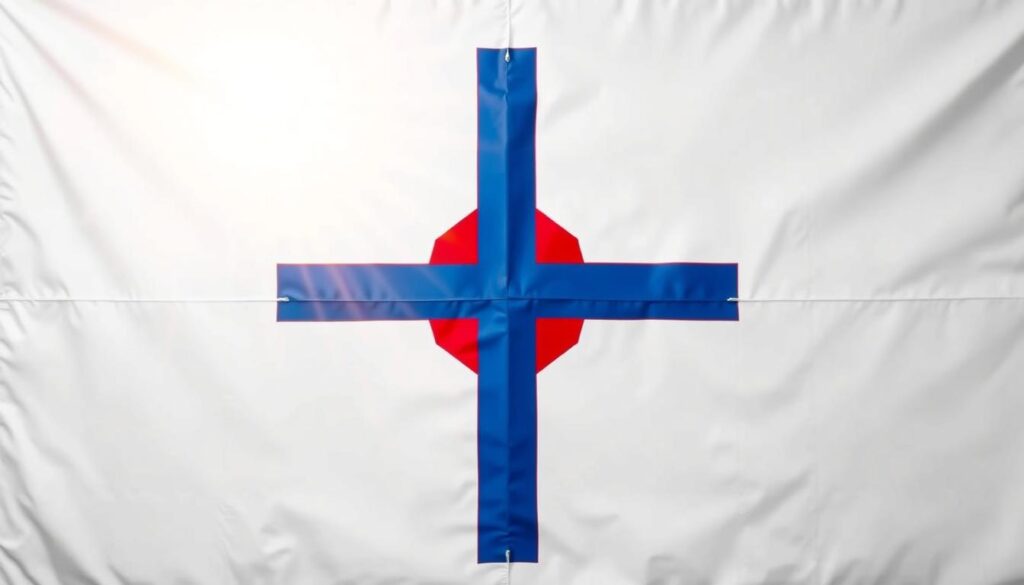
Christian flag colors symbolism

Interpreting the Red, White, and Blue

The white background forms more than just empty space. It represents spiritual purity and divine peace – qualities central to Christian teachings. This clean canvas lets other symbols shine while reminding viewers of faith’s transformative power.

Blue carries double meaning in the upper corner. Its waters reflect baptism rituals practiced in churches worldwide. The hue also symbolizes unwavering loyalty, mirroring the steadfast love described in scripture.

Crimson takes center stage with bold clarity. This specific red shade recalls the blood spilled at Calvary, making salvation tangible through color. Designers chose this vivid tone to spark immediate recognition of Christianity’s core message.

The Significance of the Latin Cross

Positioned prominently in the blue square, this cross style dominates without overwhelming. Its vertical beam points toward heaven while the horizontal arm embraces earthly concerns. This balance reflects Christ’s dual nature as both divine and human.

The cross’s color choice proves intentional. By using the same red as the sacrifice theme, designers created visual continuity. Churches appreciate how this symbol unites complex theology into one glance-worthy image.

Unlike national banners requiring precise measurements, this emblem adapts to any space. Whether displayed on small chapel walls or massive cathedral banners, its proportions remain flexible. This versatility helps diverse congregations feel ownership over their shared symbol.

The Symbolic Meanings of the Flag’s Colors

Colors speak a visual language in this sacred emblem, each hue telling part of Christianity’s foundational story. The design transforms ordinary shades into profound declarations of belief, creating what one theologian called “a stained-glass window in fabric form.”

White for Purity and Peace

The dominant white field represents spiritual cleanliness and divine harmony. It mirrors Christ’s sinless nature while symbolizing the peace believers experience through their faith journey. Many churches use this color during baptism and communion ceremonies to reinforce its sacred meaning.

This blank canvas invites personal reflection. As one pastor noted: “The white space isn’t empty—it’s room for growth in holiness.” Congregations see it as both a challenge to pursue purity and a reminder of God’s promise in Philippians 4:7.

Blue and Red as Emblems of Faith and Sacrifice

Navy blue anchors the design’s upper corner, echoing baptismal waters and eternal hope. This shade connects earthly rituals with heavenly promises, making faith tangible through color. Members often touch this section during prayers as a physical expression of trust.

The crimson cross delivers the emblem’s central message. Its bold red hue viscerally recalls Christ’s blood, transforming abstract theology into something viewers can feel. Positioned at the heart of the design, it ensures sacrifice remains the focal point of Christian teaching.

Together, these colors form a complete spiritual narrative. From cleansing white to faithful blue and sacrificial red, they guide believers through core doctrines. Churches display this chromatic story to make complex truths accessible to all ages.

Legacy and Impact of the protestantism flag

From Brooklyn classrooms to global sanctuaries, this emblem traveled with missionaries who carried their movement across oceans. By the 1930s, congregations from Nairobi to Seoul began displaying it outside their churches, creating visible connections between believers worldwide.
global Christian movement

Latin American and African communities embraced the symbol especially fast. Mission workers reported its colors helped explain complex teachings through visual storytelling. “It became a silent teacher,” noted one Brazilian pastor in 1948. The design bridged language gaps while honoring local traditions.

Region Early Adoption Cultural Adaptation
Africa 1920s-1930s Used in tribal reconciliation ceremonies
Asia 1930s-1940s Integrated with indigenous art styles
Europe 1930s Displayed during ecumenical gatherings

Today, this movement thrives in unexpected places. Contemporary worship spaces from Lagos to Los Angeles blend the emblem with modern designs. Its presence reminds diverse churches they share foundational truths despite different practices.

The symbol’s global journey proves simple ideas can change the world. What started as a teaching tool now unites millions through color and shape. As one young believer in Kenya put it: “When I see those colors, I know I’m home.”

Display Guidelines and Flag Code

Church leaders needed clear standards to honor their sacred emblem properly. In 1938, pastor James Russell Pollock answered this need by drafting the first official display rules. His guidelines balanced respect for tradition with practical solutions for diverse worship spaces.

Protocol for Placement in Worship Spaces

The code specifies two primary locations in the sanctuary. Most churches position it at floor level outside the communion rail, to the right of the congregation. This placement ensures visibility while maintaining architectural harmony.

Alternative setups allow flexibility. Some congregations prefer mounting it on the right side of the altar or pulpit. This variation works well in sanctuaries with limited floor space or multiple focal points.

Location Purpose Considerations
Floor level Full visibility Avoids blocking sightlines
Altar right Symbolic prominence Matches liturgical flow
Choir area Community focus Supports musical worship

When displayed with the American flag, churches follow specific protocols. Both banners fly at equal heights, with the Christian emblem to the right of its national counterpart. This arrangement respects civic and spiritual commitments within the congregation.

The code’s most distinctive rule involves movement. Unlike other flags, it only dips to the cross during altar ceremonies. This practice reinforces its spiritual significance above earthly authorities.

Hymns and Pledges: Celebrating the Flag

Music became the heartbeat of this sacred emblem’s message when Fanny Crosby lent her lyrical genius to its story. Her 1903 collaboration with composer R. Huntington Woodman gave believers a powerful way to voice their allegiance through song.

The Hymn That United Voices

Crosby’s “The Christian Flag” hymn transformed fabric into poetry. Its verses invite millions to celebrate spiritual unity, with lines like “Over all the world its colors wave” painting sonic imagery of global faith. Churches still use this free-to-share composition to stir hearts during worship services.

Words That Bind Communities

Three pledge versions help congregations affirm shared values. The most popular begins: “I pledge allegiance to the Christian flag…” emphasizing service and love. Another variation focuses on Christ’s teachings, while a third highlights worldwide fellowship.

These spoken promises create moments of collective purpose. From Sunday schools to national conventions, the pledges remind millions that their hearts beat as one. Through hymns and words of allegiance, this symbol continues inspiring unity across generations.

FAQ

What does the Christian Flag symbolize?

The Christian Flag represents unity among believers, with its colors and cross symbolizing purity, peace, faith, and the sacrifice of Jesus. It’s widely used in churches and ecumenical gatherings to express shared spiritual values.

How did Sunday school lessons influence the flag’s creation?

Early Sunday school programs emphasized visual teaching tools. This inspired Charles C. Overton to propose a banner that could simplify biblical truths and foster connection among diverse congregations.

Why are red, white, and blue chosen for the flag?

White stands for purity and peace, blue represents faithfulness and truth, and red symbolizes Christ’s sacrifice. These colors echo timeless spiritual themes while aligning with familiar patriotic imagery.

What guidelines exist for displaying the flag in churches?

The flag is often placed near the pulpit or altar, respecting its sacred purpose. It should never overshadow national banners but serve as a visual reminder of devotion and shared mission.

How did Fanny Crosby contribute to the flag’s legacy?

Fanny Crosby, a renowned hymn writer, penned lyrics celebrating the flag’s message. Her work, like “The Christian Flag! Behold It,” deepened emotional ties to its symbolism in worship settings.

Are there different versions of the pledge to the Christian Flag?

Yes! While most pledges emphasize loyalty to Christ and His teachings, some congregations adapt wording to reflect their specific traditions or community values, keeping the core message intact.

What role did Charles C. Overton play in the flag’s history?

Overton’s 1897 speech sparked the idea for a unifying emblem. His vision blended faith with practical design, leading to the flag’s adoption by millions as a global symbol of spiritual unity.

How is the Latin Cross significant to the flag’s design?

The Latin Cross, positioned on a blue square, directly references Jesus’ crucifixion. It serves as a universal reminder of redemption and the foundational beliefs of the Christian faith.
Protestant Nations: A Closer Look


Faith-based communities have shaped societies for centuries, leaving lasting marks on education, culture, and governance. Today, over 833 million people globally identify with traditions rooted in individual spiritual connection and scriptural authority. These values emerged during the 16th-century Reformation, sparking changes that still ripple through modern life.

From Scandinavia to North America, regions influenced by these beliefs often prioritize accessible education and civic participation. Historical movements championed literacy, empowering individuals to interpret religious texts independently. This focus on personal agency later intertwined with democratic ideals, shaping political systems worldwide.

Modern communities built on these principles continue to innovate in technology, social reform, and ethical leadership. Their cultural footprints appear in everything from work ethics to philanthropic efforts. Understanding this legacy helps explain how certain nations developed distinct approaches to progress and community-building.

Key Takeaways

  • Over 833 million people follow faith traditions emphasizing personal belief and biblical authority
  • Reformation-era values continue influencing education and governance systems today
  • Literacy initiatives historically empowered individual scriptural interpretation
  • Democratic principles often align with these spiritual traditions
  • Cultural impacts range from work ethics to social responsibility practices

Introduction to Protestant Nations

The term “Protestant nations” often masks a complex tapestry of beliefs originating from 16th-century religious upheavals. Unlike unified religious systems, these communities share a historical foundation: breaking from centralized authority to prioritize personal faith and scriptural access. Protestantism serves as an umbrella term for diverse denominations like Lutherans, Baptists, and Anglicans—each interpreting Christian doctrine through distinct lenses.

Defining the Term and Scope

At its core, Protestantism represents a religious group born from dissent. Early reformers rejected hierarchical structures, arguing that individuals could connect with divine teachings without intermediaries. This principle sparked innovations in governance and education—many regions influenced by these ideas later championed democratic values and universal literacy.

Overview of Cultural and Societal Traits

Societies shaped by these traditions often share recognizable features. Emphasis on personal responsibility fuels entrepreneurial spirits, while work ethic ties back to theological views on stewardship. Schools and libraries flourished historically, as reading scripture required widespread literacy—a legacy visible in modern education systems.

These cultural fingerprints extend to social norms too. Communities tend to value transparency in leadership and merit-based advancement, reflecting the movement’s early challenges to inherited privilege. From healthcare initiatives to environmental policies, the scope of influence remains surprisingly broad five centuries later.

Historical Roots of the Protestant Movement

Religious revolutions in 16th-century Europe reshaped spiritual landscapes forever. While Martin Luther’s 1517 protest against indulgences marked a turning point, dissatisfaction with the Catholic Church had simmered for generations. Reformers questioned practices like paid forgiveness of sins and mandatory priest celibacy—issues that struck at the heart of medieval religious power structures.

16th century religious reforms

Breaking From Traditional Authority

Early critics targeted three main areas: financial abuses, clerical privileges, and the Roman Catholic Church’s political influence. Luther’s Ninety-Five Theses argued salvation came through faith alone, not church payments. This idea spread rapidly thanks to new printing technology, undermining centuries of centralized control.

“Why should the pope, whose wealth exceeds all others’, build St. Peter’s with poor believers’ money rather than his own?”

—Excerpt from Luther’s 95 Theses

Precursors to Full-Scale Reformation

Long before Luther, figures like Jan Hus challenged church authority. The Bohemian Reformation (1415-1436) introduced:

  • Communion for all members, not just clergy
  • Scripture translations into local languages
  • Resistance to papal decrees

Though suppressed violently, these movements proved reform ideas could survive persecution. Their legacy created fertile ground for 16th-century changes.

Reform Effort Time Period Key Innovation
Bohemian Reformation Early 1400s Layperson access to communion
Lutheran Reformation 1517 onward Salvation through faith alone
Calvinist Movement 1530s-1560s Predestination theology

This gradual evolution shows how religious history often moves through waves of challenge and adaptation. The 16th-century changes didn’t emerge from vacuum—they built on centuries of quiet questioning.

Key Figures in the Protestant Reformation

Two visionary leaders ignited changes that reshaped Christianity’s trajectory across Europe. Their ideas challenged long-standing traditions and created new frameworks for spiritual practice. This section explores how their bold actions during the 16th century continue to influence modern religious thought.

Martin Luther and the Ninety-Five Theses

In 1517, a German monk named Martin Luther nailed his revolutionary document to a church door. His Ninety-Five Theses directly criticized the Catholic Church’s sale of indulgences—payments claimed to reduce punishment for sins. “Why does not the pope empty purgatory for the sake of holy love?” Luther famously questioned in Thesis 82.

This act of defiance sparked widespread debate. Luther argued salvation came through faith alone, not financial transactions. His translation of scripture into German made religious texts accessible to ordinary people, fueling literacy rates across the continent.

John Calvin’s Role in Shaping the Movement

While Luther focused on individual faith, John Calvin developed a structured theological system. His concept of predestination—the idea God chooses who receives salvation—became central to Reformed churches. Calvin transformed Geneva into a model community blending religious discipline with civic responsibility.

His Institutes of the Christian Religion (1536) provided clear guidelines for worship and governance. This work influenced later democratic systems by emphasizing shared leadership over single-authority rule.

Reformer Key Contribution Theological Focus Lasting Impact
Martin Luther 95 Theses (1517) Salvation through faith Scripture accessibility
John Calvin Geneva reforms (1541) Predestination Church-state models

Both leaders demonstrated how theological ideas could reshape societies. Their 16th-century innovations still guide communities valuing personal interpretation and ethical governance today.

Cultural Influences in Protestant Nations

Education became a revolutionary force in communities shaped by Reformation-era ideals. When church authorities couldn’t meet growing social needs, reformers pushed governments to build schools accessible to all. This shift created ripple effects still felt in classrooms worldwide today.

Protestant education impact

Impact on Education and Social Values

Early doctrinal emphasis on personal Bible study demanded universal literacy. Public schools emerged as tools for empowerment, teaching both reading and critical analysis. By 1600, regions embracing these ideas saw literacy rates double compared to areas clinging to clergy-controlled education.

Three key social values took root:

  • Merit over privilege: Success reflected dedication, not birth status
  • Civic duty: Citizens engaged in community decision-making
  • Ethical work: Labor became a form of spiritual service

These practices transformed economic landscapes. Banking systems in 18th-century London and Amsterdam flourished as people linked financial responsibility with moral living. Even today, regions influenced by these beliefs often prioritize innovation funding and skills training.

Educational Focus Pre-Reformation Post-Reformation
Access Clergy & elites All citizens
Content Latin liturgy Practical skills + scripture
Outcome Religious obedience Civic participation

“A schoolmaster deserves honor above all others, for what are bishops compared to those who teach Christ properly?”

—Martin Luther, 1524 sermon

Modern democracies owe much to these cultural shifts. Voting systems and public forums mirror Reformation-era beliefs that ordinary people should shape society’s direction through informed choices.

Demographic Trends and Global Distribution

Global belief systems show fascinating patterns when mapped across continents. Over 833 million people worldwide align with traditions emphasizing personal faith—a number reflecting centuries of cultural exchange and migration. This distribution reveals how historical events and modern movements shape religious geography.

Population Statistics and Country Comparisons

The United States accounts for nearly 20% of this global community, with 160 million adherents. This concentration stems from early commitments to religious diversity and ongoing cultural integration. Other regions tell equally compelling stories:

  • Nigeria: 60 million followers, driven by 20th-century missionary efforts
  • China: 58 million and growing rapidly—projections suggest it could lead by 2030
  • Brazil: 42 million blending local traditions with imported practices
Country Population (millions) Growth Trend
United States 160 Stable
Nigeria 60 Rapid
China 58 Accelerating

These numbers highlight unexpected contrasts. Wealthy European countries like Sweden maintain steady participation rates, while African nations see annual growth exceeding 3%. Asia’s surge—particularly in South Korea and Indonesia—adds new chapters to this evolving story.

Demographic shifts mirror broader social changes. Urbanization and digital connectivity allow ideas to spread faster than ever, creating hybrid practices that blend tradition with innovation. As populations redistribute, these communities continue reshaping their cultural landscapes.

Understanding Protestant Nations Today

Global spiritual landscapes are shifting at unprecedented speeds, reshaping how communities practice faith. Traditional structures now share space with dynamic new approaches that prioritize personal connection over rigid doctrines. This evolution reflects our interconnected world’s demands for adaptable belief systems.

Protestantism today trends

Analysis of Current Trends and Future Projections

Three key developments define this era:

  • Borderless worship: Nondenominational groups now account for 25% of global adherents
  • Cultural hybridization: African and Asian churches blend local traditions with Reformation principles
  • Digital engagement: Virtual congregations attract millions seeking flexible participation

China’s faith communities exemplify these changes. With 10% annual growth, experts predict it could surpass U.S. membership by 2030. House churches and underground networks thrive despite restrictions, demonstrating resilience through decentralized organization.

Younger generations worldwide drive demand for experiential practices. Charismatic movements emphasizing healing services and contemporary music now outpace traditional denominations in 38 countries. This shift mirrors broader cultural preferences for authenticity over institutional loyalty.

Looking ahead, three projections stand out:

  1. Core values like scriptural focus will persist despite evolving formats
  2. Urban centers will birth innovative worship models combining tech and tradition
  3. South-South partnerships will replace older missionary patterns

These transformations reveal how timeless ideals adapt to new realities. As boundaries blur, the emphasis on personal spiritual journeys remains central to this global movement.

The United States: A Leading Protestant Nation

America’s spiritual landscape reflects a unique blend of historical roots and modern innovation. With 160 million adherents, the country hosts the largest Protestant population globally—a legacy stretching back to its colonial beginnings. Early settlers along the Eastern seaboard planted seeds of faith that grew into defining cultural forces.

Foundations Along the Atlantic Coast

Puritan communities in Massachusetts and Anglican settlements in Virginia shaped America’s religious DNA. These groups prioritized scripture literacy, leading to landmark educational investments. Institutions like Harvard (1636) and Yale (1701) began as training grounds for clergy before evolving into global academic leaders.

Three key factors fueled this growth:

  • Diverse European traditions merging into new denominations
  • Revival movements emphasizing personal spiritual experiences
  • Church-led social reforms addressing industrialization challenges

“We must delight in each other, make others’ conditions our own—rejoice together, mourn together.”

—John Winthrop, 1630 sermon

Today, this heritage influences debates from healthcare to foreign policy. Megachurches innovate with digital outreach while maintaining core values like community service. The United States remains a hub for theological scholarship and cross-cultural missionary work, proving ancient ideals can thrive in modern contexts.

Nigeria’s Vibrant Protestant Community

Africa’s most populous country hosts one of the world’s fastest-growing faith communities. With 60 million adherents, Nigeria claims the continent’s largest concentration of believers emphasizing personal scripture study and direct divine connection. This spiritual landscape blends colonial-era foundations with modern African innovations.

Growth Dynamics Influenced by Colonial History

British missionaries in the 19th century planted seeds that took unexpected root. Today’s Christian population of 85 million reflects both imported traditions and local reinterpretations. Churches now operate 40% of Nigeria’s primary schools and 25% of healthcare facilities.

Three factors drive this movement:

  • Urbanization creating hubs for mega-churches
  • Youth-focused ministries using Afrobeats and social media
  • Practical theology addressing poverty and corruption
Church Type Membership Growth Key Features
Anglican 2% annually Historic schools, interfaith dialogue
Pentecostal 8% annually Healing services, business training
Independent 12% annually Local language worship, community farms

“Our churches don’t just save souls—they teach coding and farming techniques.”

—Rev. Ngozi Okeke, Lagos

While Muslim-Christian tensions persist in northern regions, collaborative projects in education and disaster relief showcase the movement’s evolving role. As African-led denominations reshape global religious trends, Nigeria’s experience offers lessons for other countries seeking faith-based solutions to modern challenges.

China’s Emerging Protestant Presence

Asia’s most populous country is rewriting global religious maps through quiet yet explosive growth. With 58 million adherents, China now hosts the world’s third-largest community emphasizing personal scripture study—a trend reshaping spiritual demographics.

Rapid Growth and Future Demographic Impact

Christianity’s 10% annual expansion here outpaces all other major belief systems. Urban professionals and rural villagers alike embrace these traditions for different reasons:

  • City dwellers seek meaning beyond material success
  • Farm communities value educational support and healthcare initiatives
Growth Factor Urban Areas Rural Regions
Primary Appeal Spiritual fulfillment Community development
Meeting Style Apartment gatherings Village house churches
Government Status Registered congregations Unofficial networks

Experts predict China could surpass America’s protestant population by 2030. This shift would mark the first time in 400 years that a non-Western country leads this demographic category.

“What we’re seeing isn’t just conversion—it’s cultural adaptation meeting spiritual hunger.”

Despite regulatory challenges, creative solutions keep communities thriving. Digital platforms help spread teachings while avoiding physical restrictions. As this movement grows, its global influence on worship practices and social outreach continues to expand.

Brazil’s Religious Landscape and Protestant Influence

Brazil’s spiritual tapestry weaves ancient traditions with modern movements. With 185 million Christians—nearly 90% of its people—the country hosts South America’s largest Christian population. While Roman Catholic roots run deep, approximately 41 million now follow diverse Protestant paths.

Protestant communities here split into two main streams. Traditional churches brought by European immigrants blend with energetic Pentecostal groups. The latter emphasize healing services and lively worship, attracting urban youth and rural families alike.

These churches reshape society through education programs and disaster relief. One Rio de Janeiro pastor notes: “We feed hungry families before sharing scripture—that’s how trust grows.”

Church Type Membership Cultural Impact
Lutheran 1.2 million German heritage schools
Pentecostal 25 million Music festivals, job training

From Amazon river villages to São Paulo skyscrapers, Brazilian Protestantism adapts to local needs. This flexibility makes it a global model for faith communities navigating rapid cultural change.

South Africa: A Mosaic of Christian Traditions

South Africa’s spiritual landscape reflects its complex history—a vibrant blend of European influences and indigenous practices. Over 85% of its 60 million people identify with Christian traditions, creating a unique cultural fusion. Communities here reinterpret global faith through local lenses, merging ancestral customs with modern worship styles.

Interplay Between Beliefs and Cultural Identity

Zulu hymns now accompany traditional drumming in Durban churches, while Cape Town congregations mix Afrikaans prayers with Xhosa blessings. This blending extends beyond rituals. Many faith groups address apartheid’s legacy through education programs and housing projects.

Historical Dutch Reformed teachings once justified racial segregation. Today, reformed churches lead reconciliation efforts. “Our faith compels us to heal divisions,” explains Johannesburg pastor Thandi Nkosi. Her congregation runs job-training centers in townships, embodying this shift.

Youth-driven movements add fresh energy. Digital ministries reach remote villages, while urban artists create faith-inspired music merging gospel with amapiano beats. These innovations show how spiritual traditions evolve while retaining core values of community and justice.

FAQ

What defines a "Protestant nation"?

A “Protestant nation” typically refers to countries where Christian groups rejecting papal authority became dominant. These regions often share cultural traits like emphasis on literacy, individualism, and decentralized religious practices.

How did Martin Luther influence modern Christianity?

Martin Luther’s Ninety-Five Theses in 1517 challenged Catholic doctrines, sparking reforms. His translation of the Bible into vernacular languages made scripture accessible, reshaping worship and education across Europe.

Why did education thrive in historically Protestant areas?

Reformers like John Calvin promoted literacy to enable personal Bible study. This led to widespread school systems, particularly in regions like Scandinavia and parts of Germany, fostering high literacy rates.

Which country has the largest Protestant population today?

The United States remains a leader, with over 160 million adherents. Nigeria follows closely, experiencing rapid growth through evangelical movements since the 20th century.

How is China’s Christian community changing?

Unofficial estimates suggest China could have 100 million believers by 2030. Underground churches and state-approved congregations contribute to this growth, despite government restrictions.

What role did colonialism play in Nigeria’s religious landscape?

British missionaries introduced Anglican traditions in the 19th century. Post-independence, local leaders adapted these teachings, creating vibrant independent churches that blend African cultural practices.

Are Protestant beliefs declining globally?

While secularism rises in Europe, regions like Sub-Saharan Africa and Latin America see growth. Pentecostal and charismatic movements drive this expansion, emphasizing personal spiritual experiences.

How does Brazil’s religious diversity include Protestantism?

Once predominantly Catholic, Brazil now has 30% evangelical Protestants. Megachurches and media ministries attract followers seeking community-focused worship and social services.

What makes South Africa’s Christian identity unique?

Dutch Reformed traditions merged with indigenous beliefs during apartheid. Today, churches address social justice issues, reflecting the nation’s complex history and multicultural identity.

The Proper Way to Say “Protestant” in American English


Clear communication starts with mastering word sounds. This guide focuses on a term often used in cultural and religious discussions across the U.S. You’ll learn to pronounce it with the authentic American accent you want, whether chatting with colleagues or presenting in class.

Why does this matter? Using precise speech builds trust and avoids confusion. The American version of this word has distinct syllables compared to British English. We’ll simplify the subtle differences so you can speak naturally in any setting.

Our approach goes beyond basic repetition. You’ll get actionable tips for breaking down tricky sounds and tools to refine your skills. Think of it as your personal roadmap to sounding confident and polished.

Key Takeaways

  • Break the term into three clear parts for accurate articulation
  • Understand key differences between U.S. and U.K. speech patterns
  • Learn practical methods to improve your accent
  • Gain confidence for professional and social conversations
  • Access free resources for ongoing practice

Exploring the Origins and Meaning of Protestant

To grasp this term fully, we must travel back to 16th-century Europe. What began as a religious movement shaped language itself, creating a word now used worldwide. Let’s uncover how history forged its meaning and why it remains vital in American discourse today.

Etymology and Historical Context

The story starts with Latin roots. Protestari – meaning “to declare publicly” – gave birth to the term during the Reformation. In 1529, German leaders challenged religious laws at the Diet of Speyer. Their bold stand coined a phrase that would echo through centuries.

By 1539, the word entered English through French influences. It originally described those protesting Catholic Church practices. This linguistic shift mirrored growing religious diversity across Europe.

Definition and Usage in English

Today, the term refers to Christian groups emphasizing faith over tradition. These denominations share core beliefs:

Denomination Key Principle Founded
Lutheran Salvation through faith alone 1517
Baptist Adult baptism by immersion 1609
Methodist Social justice focus 1739

From church services to history classes, the word connects discussions about belief systems. Knowing its background helps avoid mix-ups with similar-sounding terms. You’ll spot it in books, news articles, and cultural debates – a testament to its lasting impact.

Mastering “protestant pronunciation”: American vs. British Accents

Accent differences shape how we hear and say words. Let’s explore what makes American speech patterns unique. This comparison focuses on specific sound variations that change a word’s character.

Phonetic comparison chart

Detailed Phonetic Comparison

The first vowel tells the story. Americans stretch the “a” like in “calm”, while Brits use a clipped “o” like in “hot”. This distinction creates immediate recognition between accents.

Listen for the middle consonant. The American flapped T turns “t” into a soft tap, similar to the “dd” in “ladder”. British speakers maintain a crisp “t” like in “tea”.

Sound Feature American Example British Example
First Vowel start (stärt) stop (stɒp)
Middle Consonant water (wɔːdər) water (wɔːtə)
Ending mountain (maʊnʔn) mountain (maʊntɪn)

Understanding IPA and Sound Markers

IPA symbols act like a global sound dictionary. The notation /ˈprɑː.t̬ɪ.stənt/ reveals three key American features:

1. Long /ɑː/ vowel
2. Flapped /t̬/ consonant
3. Reduced /ə/ ending

These markers help learners visualize mouth movements. Practice matching symbols to audio examples for faster improvement. Soon, you’ll spot patterns in other words too.

A Step-by-Step Guide to Perfecting the Pronunciation

Perfecting speech sounds requires smart strategies. Let’s transform this multi-syllable term into manageable pieces using proven techniques that build muscle memory and clarity.

Sound It Out: Breaking Down the Word

Split the term into three distinct parts: PROT-uh-stuhnt. Begin with the opening syllable, stretching the “ah” sound like you’re yawning. This strong start anchors the entire word.

Move to the middle section quickly – think of it as a quick breath between bookends. End with the final cluster, softening the “t” into a gentle tap against your teeth. This creates the smooth finish Americans use daily.

Self-Recording and Practice Techniques

Grab your phone and create instant feedback loops. Try phrases like: “Many historical documents reference Protestant traditions”. Listen critically – does your version match native speakers’ flow?

Start slow, then speed up like a metronome. Apps like Voice Recorder let you compare waveforms with expert examples. Notice how your mouth shapes change during tricky sounds.

Weekly check-ins work wonders. Track progress by saving recordings with dates. You’ll hear improvements in stress patterns and vowel clarity within 14 days of consistent practice.

Common Pitfalls and Helpful Pronunciation Tips

Sharpening your speech skills means spotting sneaky sound traps. Many learners trip over subtle differences between look-alike terms. Let’s explore practical fixes for these common hiccups.

Minimal pairs practice

Recognizing Minimal Pairs and Similar Sounds

That flapped T trips up even advanced speakers. Imagine saying “ladder” instead of “latter” – that’s the soft tap your tongue needs. Compare “protested” and “protesting” to hear how the sound shifts.

Watch the middle syllable’s weak vowel. Say “ship” three times, then try “sheep.” Notice how your jaw moves? That same mouth shape creates the quick “uh” in our target word.

Group practice works wonders. Try these nearby words:

  • Persistent (per-sis-tent)
  • Protestantism (prot-uh-stuhn-tiz-um)
  • Predestine (pree-des-tin)

Stress the first syllable like you’re starting a drumbeat: PROT-uh-stuhnt. Record yourself saying “promised land” and “protestations” back-to-back. You’ll spot rhythm patterns that boost clarity.

Slow down tricky clusters. The ending “-stant” needs crisp articulation without rushing. Think of it as two separate sounds: “st” + “ant.” Pair this with ship/sheep exercises to sharpen your ear for details.

Applying Grammar, Usage, and Context in Daily Speech

Using words effectively requires more than correct sounds—it demands context awareness. Let’s explore how to weave this term naturally into conversations while respecting its cultural weight.

Mastering Sentence Integration

Start with basic structures. Try switching between noun and adjective forms:

  • “The Protestant Reformation shaped modern Europe” (adjective)
  • “Many Protestants attend nondenominational churches” (noun)

Notice capitalization rules through real-world examples. A recent news snippet shows proper usage:

“Ukrainian Protestant pastors have volunteered widely as military chaplains during the war.”

Build complexity with these common pairings:

  • Protestant denominations
  • Protestant work ethic
  • Protestant traditions

Create personal connections. Discuss topics you care about: “My neighbor’s Protestant heritage influences their holiday traditions.” This makes practice engaging while reinforcing grammar rules.

Watch for lowercase exceptions. When describing activists, “protestant groups organized rallies” uses the same spelling with different meaning. Context determines capitalization every time.

Tools and Online Resources for Better Pronunciation

Digital tools make mastering tricky terms easier than ever. Whether you’re chatting with coworkers or studying history, these resources help you speak clearly and confidently. Let’s explore the best options available today.

Pronunciation tools comparison

YouTube Guides and Pronunciation Apps

Top channels like Rachel’s English break down sounds using video close-ups. Watch how lips form specific vowels in slow motion. English with James offers fun drills that turn practice into games.

Platform Key Feature Best For
YouGlish Real-life video examples Hearing words in context
Elsa Speak AI feedback system Correcting specific errors
Forvo Native speaker recordings Learning regional variations

Using Dictionaries and Audio Examples

Merriam-Webster’s website lets you toggle between British and American sounds. Tap the speaker icon repeatedly to internalize rhythm patterns. Many entries include example sentences showing practical usage.

Try these features from popular resources:

Tool Special Function Practice Tip
Cambridge Dictionary Phonetic translator Compare IPA symbols
Google Translate Slow playback speed Mimic pacing
WordReference Forum discussions Ask about tricky sounds

Bookmark a word-of-the-day feature to build vocabulary while reinforcing sounds. Share recordings with language partners through apps like HelloTalk. Their feedback helps spot hidden improvement areas.

Conclusion

You’ve gained tools to speak American English with precision and confidence. Breaking down PROT-uh-stuhnt into its core sounds helps tackle similar multi-syllable words. Remember the stretched “ah” vowel and soft middle consonant – these distinct features set U.S. speech patterns apart.

Apply these techniques daily. Try word-of-the-day apps to expand your vocabulary while reinforcing sounds. Explore related terms like “Protestant work ethic” to deepen cultural understanding alongside language skills.

Progress comes through consistent practice. Record yourself weekly using free tools mentioned earlier. Celebrate small wins – clearer stress patterns or smoother transitions between syllables. Language mastery isn’t a race, but a journey of steady growth.

Keep conversations flowing by revisiting historical definitions and modern usage examples. With each English discussion, you’ll communicate ideas more effectively – whether chatting with neighbors or analyzing texts. Your voice matters – make it heard clearly.

FAQ

Where does the term "Protestant" come from?

The word traces back to 16th-century Europe, when reformers “protested” certain Catholic doctrines. It became linked to Christian groups emphasizing faith over tradition.

How do American and British accents differ in saying this word?

Americans stress the first syllable (PRAH-tuh-stent), while Britons often emphasize the second (pruh-TEST-uhnt). Vowel sounds also vary slightly between accents.

What’s the best way to practice saying it correctly?

Break it into syllables: Prah-tuh-stent. Record yourself, compare with native speakers, and use apps like Forvo or ELSA Speak for feedback.

What mistakes do learners commonly make?

Mixing up similar sounds like “pro-test-ant” instead of “Prah-tuh-stent.” Others misplace stress, altering the word’s rhythm and clarity.

How can I use this term naturally in sentences?

Pair it with context clues: “Martin Luther’s teachings shaped Protestant beliefs” or “The Protestant Reformation changed European history.”

Which tools help improve accent accuracy?

YouTube channels like Rachel’s English, Merriam-Webster’s audio dictionary, and apps such as Speechling offer targeted practice for American English sounds.

Protestantism: Tracing Its Captivating Historical Journey


What happens when everyday believers challenge centuries of religious tradition? In 16th-century Europe, a spiritual revolution began that would reshape Christianity forever. This bold shift started as a call for renewal within the church, driven by thinkers who sought to return faith to its foundational roots.

The movement spread like wildfire across nations, fueled by groundbreaking ideas about personal faith and direct connection to scripture. From humble beginnings in small towns, it grew into a global phenomenon that altered political systems, inspired new art forms, and transformed education. Leaders emerged who dared to question established norms, creating space for diverse interpretations of sacred texts.

This wasn’t just about theology—it changed how people lived. The ripple effects reached every corner of society, from royal courts to village markets. As these ideas crossed oceans, they laid the groundwork for modern concepts of individual liberty and community values that still shape our world today.

Key Takeaways

  • Began as a 16th-century renewal effort within European Christianity
  • Impacted politics, education, and culture beyond religious practice
  • Empowered individuals through accessible scripture and personal faith
  • Spread globally through migration and missionary work
  • Shaped modern values of religious freedom and social responsibility

Origins and Early Reform Movements

Centuries before Luther’s stand, bold thinkers began questioning sacred institutions. Across Europe, sparks of change flickered as scholars challenged church authority and exposed questionable practices. These early reformers risked everything to align religious teachings with scriptural truths.

Medieval Precursors to Reform

William of Ockham shook foundations in the 1300s by accusing Pope John XXII of heresy. His radical claim? Church leaders should live simply like Jesus. John Wycliffe went further, translating the Bible into English and arguing kings held spiritual power equal to clergy.

Jan Hus paid the ultimate price in 1415. His fiery sermons against corrupt priests led to execution. “Truth conquers all,” he declared before burning. These martyrs proved reform wasn’t new – just suppressed.

Intellectual Awakening in the Late Middle Ages

Scholars like Lorenzo Valla used new tools to expose fakes. His work proved the “Donation of Constantine” – used to justify papal rule – was forged. Erasmus mocked church excesses through satire, writing “In Praise of Folly” to highlight hypocrisy.

Reformer Contribution Impact Legacy
William of Ockham Challenged papal authority Inspired later reformers Established limits on church power
John Wycliffe Bible translation Empowered lay believers Called “Morning Star of Reformation”
Jan Hus Moral reforms National identity boost Czech national hero
Erasmus Humanist scholarship Exposed church abuses Paved way for Luther

These pioneers created a blueprint for change. Their courage showed that questioning tradition could reshape faith – and society itself.

Martin Luther and the 95 Theses

On a crisp autumn day in 1517, a humble monk‘s hammer strikes echoed through history. Martin Luther, an Augustinian scholar in Wittenberg, nailed ninety-five debate questions to a church door. This act—meant to spark academic discussion—ignited the Protestant Reformation instead.

martin luther 95 theses

Luther’s theses targeted a specific abuse: the Catholic Church‘s sale of forgiveness certificates. “When coins clink in the chest,” he wrote, “greed and avarice increase.” His radical claim? Salvation comes through faith alone—not payments or rituals.

The printing press transformed Luther’s ideas into wildfire. Within months, translated copies raced across Europe. Common people devoured his writings, realizing they could connect directly with scripture without intermediaries.

Luther’s Challenge Church Practice Impact
Faith-based salvation Indulgence sales Undermined church revenue
Scripture accessibility Latin-only services Empowered lay believers
Priesthood of all believers Clergy hierarchy Democratized faith

At 1521’s Diet of Worms, Luther stood firm before emperors and cardinals. “Here I stand,” he declared, refusing to recant. His courage inspired millions—and reshaped Christianity’s landscape forever.

Between 1518-1525, Luther wrote more works than his 17 closest rivals combined. From Bible translations to hymn lyrics, his words gave common people tools to own their spiritual journey.

Understanding Protestantism History

A dramatic showdown in 1529 gave this movement its name. At the Diet of Speyer, German princes made history by declaring: “In matters concerning God’s honor we must obey God rather than men.” Their protest against imperial religious restrictions birthed the term Protestant – a badge of courage worn by millions.

Defining Moments in the Movement

Three earth-shaking events shaped early Protestant growth:

  • 1517: Luther’s radical challenge to church authority
  • 1521: The defiant “Here I stand” speech at Worms
  • 1555: Peace of Augsburg allowing state-chosen faiths

These turning points transformed theological debates into lasting social change. The movement’s spread relied on bold ideas traveling faster than ever through printed pamphlets and translated Bibles.

Key Figures and Doctrines

While Luther sparked the Reformation, other thinkers added crucial teachings:

Reformer Core Belief Legacy
John Calvin Divine sovereignty Inspired Puritan movements
Huldrych Zwingli Symbolic communion Shaped Swiss Reformation
Philip Melanchthon Educational reform Built Lutheran schools

Central doctrines like sola fide (faith alone) and sola scriptura (scripture alone) became spiritual anchors. These beliefs empowered ordinary people to interpret sacred texts personally – a revolutionary idea that still influences religious practice today.

European Transformation: Lutheran, Reformed, and Beyond

How did revolutionary ideas reshape Europe’s spiritual landscape? From Alpine valleys to English cathedrals, new faith expressions emerged with distinct flavors. Each region blended core principles with local needs, creating a mosaic of belief systems that still influence modern Christianity.

John Calvin Geneva Reformation

Switzerland’s Radical Reinvention

John Calvin transformed Geneva into a theological powerhouse after 1541. His Reformed doctrine taught that God’s absolute power determined human destiny. “Man’s chief end is to glorify God,” Calvin wrote, creating strict moral codes enforced by church-led government.

Exiled believers flocked to Geneva, turning it into a training ground for reformers. Calvin’s ideas raced to Scotland through John Knox and inspired French Huguenots. This theological export shaped Presbyterian and Reformed churches worldwide.

England’s Compromise Solution

Henry VIII’s marital drama sparked England’s break from Rome. By 1534, the Church of England crowned kings as spiritual leaders. Elizabeth I later crafted a unique blend – keeping bishops and stained glass while embracing Protestant theology.

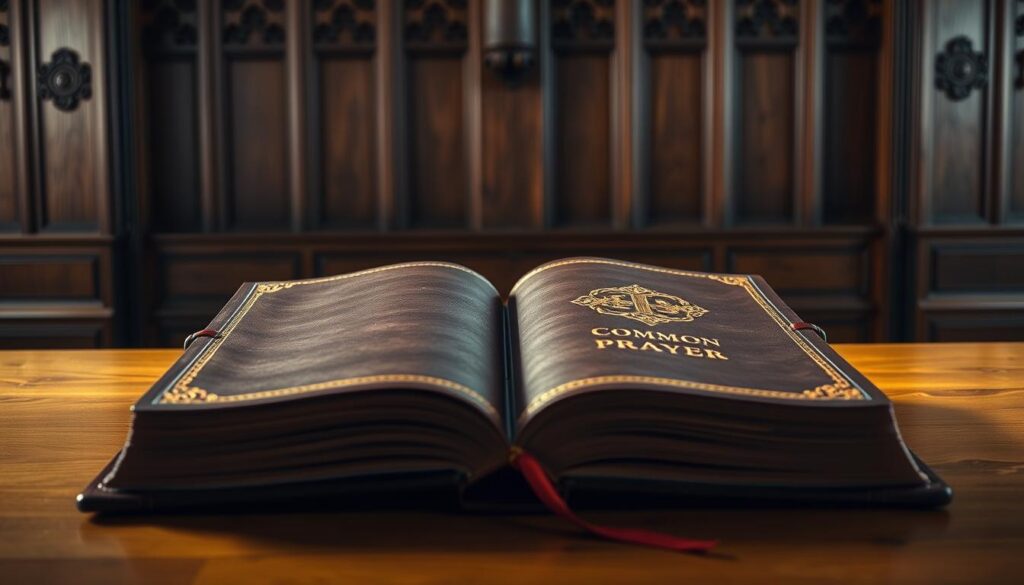
This middle way satisfied neither hardline Catholics nor Puritans. But it created a national church that valued tradition and scripture equally. The Book of Common Prayer became its heartbeat, merging old rituals with new beliefs.

Printing: The Reformation’s Megaphone

Gutenberg’s invention supercharged religious change. Pamphlets explaining Reformation ideas outsold Latin Bibles 10-to-1. For the first time, farmers could read scripture in German or English while debating Luther’s latest tract.

Print shops became idea factories, spreading Calvin’s works to Transylvania and Lutheran hymns to Sweden. This communication revolution let reformers bypass traditional authorities, planting seeds for diverse denominations we recognize today.

Politics, Power, and Social Change in the Reformation

Faith and politics collided dramatically as spiritual debates became battles for control. Rulers saw an opportunity to strengthen their authority while challenging Rome’s dominance. This explosive mix reshaped nations and ignited conflicts lasting generations.

political power reformation

Rising Nationalism and Secular Authority

Monarchs cleverly used religious reforms to boost their power. At the 1521 Diet of Worms, Luther’s famous stand became a showdown between emperors and emerging national identities. “Why should foreign bishops rule our lands?” German princes whispered.

The Peace of Augsburg (1555) made it official: rulers could choose their territory’s faith. This landmark agreement shifted spiritual decisions from popes to palace halls. Local leaders gained unprecedented control over both church and state affairs.

Religious Conflicts and Wars

Not all reforms brought peace. When peasants rebelled in 1524, demanding equality from nobles, Luther shocked supporters by backing the princes. His choice showed how religious ideals often bowed to political realities.

The Thirty Years‘ War (1618-1648) became Europe’s bloodiest religious conflict. Entire regions vanished – some German areas lost 40% of their people. This devastation proved that mixing faith with authority could have catastrophic consequences.

  • National identities grew as countries rejected papal influence
  • Rulers used the Reformation began to centralize control
  • Warfare reshaped borders and political alliances for centuries

These changes laid groundwork for modern concepts of state sovereignty. What started as theological debates became permanent shifts in how societies govern themselves – impacts we still navigate today.

Protestantism in the New World: Pilgrims, Puritans, and American Roots

When religious dissenters crossed stormy seas seeking purity, they planted seeds for a nation’s soul. Two groups emerged from England’s spiritual turmoil: Separatists who abandoned the Church of England, and Puritans determined to reform it from within.

From England to New England

Separatists first fled to Holland in 1607, seeking freedom to worship differently. But foreign life proved harsh. They faced poverty and worried their children were losing English traditions. “We were weary travelers,” one wrote, “longing for a promised land.”

In 1620, 102 pioneers boarded the Mayflower. These Pilgrims founded Plymouth Colony, creating America’s first permanent churches free from the Church of England. Their compact established self-governance – a radical idea that shaped future colonies.

Puritans followed a decade later, settling Massachusetts Bay. Unlike Separatists, they hoped to purify English practices, not reject them. Governor John Winthrop declared their colony “a city upon a hill,” setting high standards for moral living.

This freedom to interpret scripture sparked explosive growth in denominations. By 1700, the United States hosted Quakers, Baptists, and Congregationalists – each forming distinct churches. Religious diversity became America’s unexpected hallmark.

The Pilgrims’ journey shows how determined people can reshape nations. Their search for spiritual authenticity laid foundations for the United States‘ core values – proving sometimes, the boldest reforms happen oceans away from old power centers.

Lasting Legacy: Cultural, Intellectual, and Religious Impact

Imagine a world where music, art, and daily life carry echoes of a 500-year-old spiritual revolution. The movement’s influence stretches far beyond Sunday services, weaving through traditions that shape how we learn, create, and connect. This enduring impact shows how ideas about faith can transform entire societies.

Harmonies and Humanities

Reformers made music a practice for everyone, not just choirs. Luther’s hymns turned congregations into participants, while Calvinists used psalms to teach scripture. These musical traditions still resonate in modern worship songs.

Education became a cornerstone of reform. Schools teaching literacy spread rapidly, letting ordinary people engage with teachings directly. This focus on learning laid groundwork for public education systems we value today.

Faith in Modern Times

Today’s churches showcase stunning diversity. From energetic Pentecostal services to contemplative Lutheran liturgies, denominations adapt ancient beliefs to contemporary life. Many blend traditional rituals with fresh approaches – a Baptist food pantry or Methodist climate initiative, for example.

This flexibility keeps denominations relevant while honoring core principles. Whether through social justice work or digital worship, modern practice proves revolutionary ideas can thrive in new contexts – just as reformers envisioned centuries ago.

FAQ

What sparked Martin Luther’s decision to challenge the Catholic Church?

Martin Luther, a German monk, opposed practices like selling indulgences. His 95 Theses in 1517 criticized corruption and emphasized faith over rituals, igniting debates that reshaped religious authority.

How did John Calvin influence Protestant beliefs beyond Luther’s ideas?

Calvin’s teachings in Switzerland stressed predestination and strict moral living. His work Institutes of the Christian Religion shaped Reformed theology, impacting groups like Puritans and Huguenots.

Why did England create its own church during the Reformation?

King Henry VIII broke from Rome in the 1530s to annul his marriage, forming the Church of England. This “Middle Way” blended Catholic traditions with Reformed doctrines, later refined under Elizabeth I.

What role did the printing press play in spreading Reformation ideas?

The printing press let reformers share writings quickly. Luther’s pamphlets and vernacular Bibles reached masses, weakening the Catholic Church’s control over information.

How did the Reformation affect education and culture in Europe?

Reformers promoted literacy to read Scripture, leading to public schools. Art and music shifted focus to congregational singing and biblical themes, influencing Western cultural development.

Why did some Protestant groups migrate to the American colonies?

Pilgrims and Puritans sought freedom from England’s religious policies. Settling in New England, they established communities based on their beliefs, shaping early American values.

What caused conflicts like the Thirty Years’ War during the Reformation?

Tensions between Catholic rulers and Protestant princes, mixed with political rivalries, led to wars. The 1648 Peace of Westphalia let rulers choose their realm’s religion, reducing papal influence.

How do modern Protestant denominations differ from early Reformed churches?

While core ideas like sola fide (faith alone) remain, modern groups vary in practices. Baptists emphasize believer’s baptism, Methodists focus on social justice, and Lutherans retain liturgical traditions.

Discover the History of Protestantism in England


Long before the 16th-century religious upheaval, tensions between the English crown and Rome simmered. Disputes over church funds and authority created fertile ground for change. By the 1300s, thinkers like John Wycliffe openly criticized church practices, arguing Scripture—not clergy—should guide faith. His English Bible translation planted early seeds of reform.

Centuries later, Christian humanism reshaped intellectual circles. Scholars like Erasmus taught at Cambridge, emphasizing original biblical texts over tradition. This movement prepared minds for new ideas. When Lutheran writings reached England in the 1520s, they found eager listeners among Cambridge academics.

A group nicknamed “little Germany” became key players. Future leaders like Thomas Cranmer studied these radical concepts secretly. Their work laid foundations for what would become a national transformation, proving religious change wasn’t sudden—but the result of growing influence from thinkers across Europe.

Key Takeaways

  • England’s religious shift began centuries before Henry VIII’s break with Rome
  • John Wycliffe’s Bible translation challenged church authority in the 1300s
  • Christian humanism created intellectual readiness for reform ideas
  • Cambridge University served as a hub for early Protestant thought
  • Lutheran concepts spread through secret academic networks in the 1520s

Early Foundations: The Prelude to Reformation

Centuries before royal decrees reshaped religious life, bold voices began questioning tradition. These pioneers laid mental groundwork for change through education and accessible texts.

Rebels With Ideas

John Wycliffe sparked controversy in the 1300s by calling out church corruption. His English Bible translation became a dangerous idea—suddenly, ordinary people could read Scripture themselves. This challenged the clergy’s exclusive role as spiritual guides.

Dutch scholar Erasmus took the baton in 1511. During his two years at Cambridge, he taught future leaders to study original Greek texts. “The sun itself isn’t as clear as Christ’s teachings,” he wrote, pushing scholars to rethink old interpretations.

By 1520, Cambridge buzzed with radical ideas. A secret group nicknamed “little Germany” studied Luther’s writings. Members like Thomas Cranmer hid revolutionary plans—they’d later reshape national worship practices while leading the church.

These early reformers proved ideas could be mightier than armies. Through books and classrooms, they built bridges between academic circles and public consciousness. Their quiet work made England’s later religious shifts possible.

Henry VIII’s Divorce and the Schism from Rome

A royal love story turned political earthquake reshaped national identity. What began as personal turmoil between a king and his wife became England’s declaration of independence from foreign religious authority.

Henry VIII divorce proceedings

Political and Personal Motivations Behind the Divorce

Henry VIII’s obsession with securing a male heir drove his actions. His 24-year marriage to Catherine Aragon produced just one surviving daughter. “The kingdom needs a son to prevent civil war,” the king argued, haunted by memories of the Wars of the Roses.

When Henry sought to annul his marriage in 1527, he claimed biblical backing. Leviticus 20:21 states: “If a man marries his brother‘s wife, they will die childless.” This interpretation became his legal weapon against papal authority.

Excommunication and its Lasting Consequences

Pope Clement VII faced impossible choices. Approving the divorce risked angering Holy Roman Emperor Charles V – Catherine’s nephew. Delaying tactics lasted seven years until Henry took matters into his own hands.

In 1533, Archbishop Thomas Cranmer declared the marriage invalid. The pope responded by excommunicating Henry, formalizing the separation Rome. This bold move created England’s first national church structure free from Vatican control.

Event Date Impact
Henry-Catherine wedding 1509 Papal-approved union
Annulment request 1527 Begin 7-year standoff
English court divorce 1533 National sovereignty claim
Excommunication 1534 Complete separation Rome

The king’s remarriage to Anne Boleyn changed more than the royal bedchamber. It sparked constitutional reforms that would define England’s religious path for centuries. By breaking with Rome, Henry created a template for national self-determination that outlasted his six marriages.

Establishing a National Church: The Birth of the Church of England

In 1534, a single law reshaped England’s spiritual landscape forever. Parliament’s Act of Supremacy didn’t just change leadership—it rewrote the rules of faith and power. For the first time, a monarch held divine authority over both state and soul.

The Act of Supremacy and Royal Authority

Henry VIII became the Supreme Head of the Church of England, a title that turned kings into spiritual CEOs. The law stripped the pope of legal status, reducing him to “Bishop of Rome” with no more sway than the Archbishop of Canterbury. Royal appointees now filled church roles, from village priests to cathedral leaders.

Monastic lands became the crown’s piggy bank. Between 1536-1540, over 800 monasteries closed. Gold chalices melted into coins, while farmlands enriched the king’s allies. “Every abbey’s downfall built a nobleman’s fortune,” one observer noted, as centuries of accumulated wealth changed hands.

Resistance carried deadly risks. Former Chancellor Thomas More refused to endorse Henry’s new title, declaring: “No temporal prince may presume to take spiritual jurisdiction.” His 1535 execution shocked Europe but silenced most critics. By 1540, 95% of clergy had sworn loyalty to the crown.

This revolution blended old and new. Sunday services kept familiar rituals, but prayer books now praised the king instead of the pope. The Church of England became a hybrid—Catholic in appearance, royalist at heart—setting the stage for future reforms under Henry’s heirs.

Protestant Reformation Under Edward VI

At just nine years old, Edward Tudor inherited a kingdom divided by faith. The boy king‘s advisors seized this chance to reshape national worship. Archbishop Thomas Cranmer led the charge, crafting tools to unify religious practice across every parish.

Book of Common Prayer

Revolution in the Pew

Cranmer’s 1549 Book of Common Prayer changed Sunday mornings forever. For the first time, services flowed in English instead of Latin. “It’s like sunlight breaking through stained glass,” one Londoner wrote, describing how ordinary people finally understood the prayers.

The new prayer book kept familiar rituals but stripped away complex ceremonies. Clergy traded golden robes for simple vestments, though many kept their traditional outfits to comfort older worshippers. Parishioners now received both bread and wine during communion—a radical shift from past practices.

Feature 1549 Prayer Book 1552 Revision
Language Poetic English Simpler phrases
Communion Optional kneeling Mandatory standing
Ceremonies Partial retention Full removal
Doctrinal Influence Moderate Reform Calvinist ideas

Cranmer didn’t stop there. His 1552 update incorporated suggestions from European reformers like Martin Bucer. The revised text clarified doctrine, removing any hint of Catholic symbolism. These changes laid groundwork for the Forty-Two Articles—a blueprint that later shaped Anglican beliefs.

Edward’s short reign proved pivotal. Though the young son of Henry VIII died at 15, his team’s liturgical reforms created lasting patterns. The Book of Common Prayer‘s elegant phrases still echo in churches worldwide, showing how words can outlive kingdoms.

Mary Tudor’s Catholic Revival and Its Repercussions

In 1553, a monarch’s fervent faith ignited a national crisis of conscience. When Mary Tudor became queen, she vowed to undo decades of religious changes. Her five-year reign became a turning point where personal conviction clashed with public sentiment.

Mary Tudor Catholic restoration

Restoration of Catholic Practices and Impact on Clergy

Mary partnered with Cardinal Reginald Pole to rebuild ties with Rome. Together, they reversed Protestant reforms made during her half-brother’s rule. Over 2,000 clergy members lost their positions for refusing to abandon new practices.

The church courts sentenced nearly 300 reformers to burn at the stake. Among them was Thomas Cranmer, architect of the English prayer book. Witnesses reported his final words: “I have written many things untrue, but now I see the truth.”

These executions shocked communities. Crowds watched reformers die singing hymns, their courage sparking sympathy. What began as intimidation became a rallying cry for Protestant ideals.

Mary’s death in 1558 ended her vision. Without an heir, her Catholic revival lasted only five years. The throne passed to Elizabeth I, setting the stage for lasting religious transformation.

Elizabeth I’s Religious Settlement: The Middle Way

When Elizabeth I took the throne in 1558, she inherited a nation fractured by religious conflict. The 25-year-old queen crafted a brilliant compromise—a via media blending Catholic traditions with reformed theology. Her 1559 Religious Settlement became the cornerstone of the Church of England, ending decades of violent swings between faiths.

The Acts of Supremacy and Uniformity

Parliament’s narrow vote made Elizabeth the Church of England‘s “Supreme Governor,” a title avoiding her father’s confrontational “Head” label. The Archbishop of Canterbury enforced new worship rules through a revised Book of Common Prayer. Churches kept stained glass and robes, but sermons now emphasized Scripture over ceremony.

The Formation of the Thirty-Nine Articles

By 1563, bishops finalized the defining doctrine. These statements rejected papal authority while keeping bishops—a middle ground between Geneva and Rome. The Articles quietly honored Henry VIII’s legacy, stating monarchs hold “chief power” over religious matters.

Elizabeth’s settlement proved durable. Unlike her siblings’ short-lived reforms, this flexible framework guided the church into the next century. Her genius lay in letting people practice faith differently while demanding outward unity—a recipe that stabilized a fractured realm.

FAQ

How did Henry VIII’s divorce lead to England’s split from the Catholic Church?

Henry VIII sought to annul his marriage to Catherine of Aragon to marry Anne Boleyn, but the Pope refused. This led Henry to break ties with Rome, declare himself head of the Church of England through the 1534 Act of Supremacy, and dissolve papal authority in the country.

What role did the Book of Common Prayer play in the Reformation?

Introduced under Edward VI, the Book of Common Prayer standardized worship in English instead of Latin. It simplified rituals and reflected Protestant theology, making religious practices more accessible to ordinary people and distancing the church from Catholic traditions.

Why was Mary Tudor’s reign significant for religion in England?

Mary Tudor reversed Protestant reforms, restored Catholic practices, and persecuted those who opposed her policies. Her harsh tactics earned her the nickname “Bloody Mary” and deepened public resentment toward Catholicism, paving the way for Elizabeth I’s later compromises.

How did Elizabeth I balance Catholic and Protestant beliefs?

Elizabeth’s Religious Settlement blended elements of both faiths to avoid extremism. The Acts of Supremacy and Uniformity reaffirmed the monarch’s leadership over the church while allowing some traditional practices, creating a “Middle Way” that stabilized the nation after decades of turmoil.

What were the long-term effects of the Act of Supremacy?

The 1534 Act established the monarch as the supreme head of the Church of England, shifting power from the Pope to the crown. This centralized authority influenced politics, law, and culture for centuries and laid the foundation for a distinct national religious identity.

How did early reformers like John Wycliffe influence the English Reformation?

Wycliffe’s 14th-century critiques of church corruption and his Bible translation into English inspired later reformers. His ideas challenged papal authority and emphasized personal faith, planting seeds for the Protestant movement that gained momentum under Henry VIII and his successors.

Inside the Lives of Protestant Nuns


What does it mean to dedicate your life to faith in a modern world? For women in Protestant religious communities, this commitment blends ancient spiritual practices with fresh perspectives. Unlike their Catholic counterparts, these groups often operate without strict cloisters, focusing instead on serving others while nurturing personal relationships with God.

These remarkable women create tight-knit communities rooted in prayer, simplicity, and shared purpose. Their days follow rhythms of worship, work, and study—a balance designed to deepen spiritual growth. Many adopt plain clothing or symbols of devotion, though practices vary across denominations.

The origins of Protestant monasticism trace back to reformers who sought to reclaim early Christian values. Today’s communities attract diverse seekers—from recent college graduates to retired professionals—all drawn to intentional living. They maintain gardens, host retreats, and support local charities, proving faith in action remains central to their calling.

Key Takeaways

  • Protestant religious communities blend ancient traditions with modern service
  • Daily routines balance prayer, work, and study for spiritual growth
  • Historical roots connect to early Christian practices and Reformation ideals
  • Members face unique challenges balancing faith with contemporary life
  • Communities often focus on outreach through charity and education

Introduction to the Ultimate Guide on Protestant Nuns

How do spiritual seekers blend ancient practices with modern service? Across America, women in faith-based communities live out answers to this question daily. Their rhythm of prayer and purpose offers a fresh take on sacred commitments, merging timeless values with today’s needs.

These groups maintain core elements of monastic life while adapting to Protestant beliefs. Shared worship anchors their days, but you’ll also find them running food banks or teaching in urban centers. Unlike cloistered Catholic sisters, many live in neighborhoods where they can directly support local families.

Research highlights their impact: over 60% of such communities operate outreach programs. From tutoring kids to providing elder care, their work bridges spiritual and practical care. “We’re called to be hands of hope,” explains one member from a Methodist sisterhood.

This guide explores how different denominations shape their traditions. Anglican groups might follow structured prayer hours, while Lutheran sisters focus on environmental stewardship. What unites them? A shared desire to deepen faith through action and fellowship.

Young professionals and retirees alike are drawn to this path. They find meaning in simple living and collective service—proof that ancient models still resonate. Their lives challenge assumptions about religious commitment in our fast-paced world.

Historical Roots and Evolution of Protestant Nuns

Where did the seeds of spiritual community first take root? Ancient desert dwellers shaped monasticism centuries before modern religious orders existed. Their radical commitment to prayer and simplicity still inspires faith communities today.

historical monastic roots

Early Monastic Inspirations

Third-century seekers like Saint Anthony pioneered solitary devotion in Egypt’s wilderness. By the 4th century, Saint Pachomius organized the first communal monasteries—blueprints for future monks and spiritual communities. These early believers traded worldly comforts for prayer and manual labor.

Their example spread across Europe, evolving into diverse traditions within the Catholic Church. Medieval monasteries became centers of learning and charity. Yet some reformers later questioned if these institutions truly reflected Christ’s teachings.

Reformation and Change

Martin Luther’s 16th-century critiques reshaped religious life. He argued vows of poverty and celibacy weren’t required for holiness. This sparked debates about the role of monasticism in Protestant faith.

Over time, new communities emerged blending reformed theology with communal living. They kept prayer rhythms and service focus but rejected strict separation from society. Today’s groups honor this legacy while addressing modern needs—proof that ancient practices can adapt across centuries.

The Emergence of Protestant Nuns in the United States

America’s melting pot of ideas birthed fresh approaches to spiritual commitment. Religious freedom and cultural diversity allowed faith groups to reimagine communal living. Women became architects of this movement, blending European traditions with New World values.

Cultural Influences

The Second Great Awakening (1790-1840) sparked a wildfire of spiritual passion. Revival meetings inspired many to form communities focused on prayer and social reform. These groups often ran schools and hospitals while maintaining daily worship rhythms.

Movement Focus Impact
Second Great Awakening Personal conversion New religious orders
Social Gospel Poverty relief Urban outreach programs
Women’s Rights Leadership roles Female-led communities

Pioneers like Antoinette Brown Blackwell broke barriers as the first ordained female minister in 1853. Her work inspired others to create sisterhoods across the United States. “We build altars not just in churches, but in hearts,” she famously declared.

New York became a hub for early experiments. The Deaconess Movement started in Brooklyn in 1884, training women for medical missions. These communities adapted European monastic rules to American needs—using streetcars instead of cloisters to reach the working class.

Today, their legacy lives in modern retreat centers and neighborhood ministries. From the Hudson Valley to California, these groups prove ancient practices can thrive in contemporary United States culture.

Daily Life: Spiritual Practices and Routines

How do sacred rhythms shape modern devotion? Members of faith communities follow structured schedules that weave prayer, work, and fellowship into a seamless tapestry. These patterns create stability in uncertain times while nurturing personal and collective growth.

daily spiritual routines

Contemplative Prayer Practices

Morning light often finds women in quiet reflection. Lectio divina—slow scripture reading—anchors many days. Silent meditation and intercessory petitions follow, creating space for divine connection. “Prayer isn’t just words,” shares a community member. “It’s breathing with intention.”

These practices vary by tradition. Some groups chant psalms, while others journal reflections. All prioritize moments of stillness, proving ancient wisdom fits modern daily life.

Structured Daily Rhythms

Bells or chimes mark transitions through the day. Mornings focus on worship, afternoons on service projects. Evenings bring shared meals and study. This balance prevents burnout while sustaining spiritual momentum.

Work becomes sacred through intention. Gardening or baking transforms into acts of devotion. Communities adapt monastic hours to fit local needs—urban groups might shorten prayer times to serve food banks.

Such rhythms foster resilience. Regular prayer routines build trust in divine timing. Shared labor strengthens bonds between members. Together, they craft a contemplative life that feels both timeless and urgently relevant.

Living in Community: Structure and Fellowship

How does shared living shape spiritual bonds? Women in faith-based groups create vibrant community life through intentional design. Their homes become laboratories for practicing love, patience, and mutual support—ancient ideals made fresh through daily choices.

faith community structure

Monastic Living Arrangements

Shared spaces follow patterns established centuries ago. Members rotate cooking duties and maintain common areas together. Weekly meetings help distribute tasks fairly—gardening, administration, or hosting guests. “We’re not just roommates,” explains one sister. “We’re stewards of sacred space.”

Community Role Responsibilities Spiritual Impact
Work Coordinator Assigns daily tasks Teaches humility
Prayer Leader Guides worship times Deepens unity
Hospitality Manager Welcomes visitors Models generosity

Fostering Sisterhood

Morning coffee chats and evening walks nurture deep connections. Older members mentor newcomers through life’s challenges. Conflict resolution practices turn disagreements into growth opportunities. These living communities prove that diversity strengthens when anchored in shared purpose.

Decision-making often uses consensus models. Everyone’s voice matters, but final choices serve the group’s mission. This balance between individuality and collective good keeps the community thriving through seasons of change.

The Role of the Holy Spirit in Their Spiritual Journey

Divine whispers shape every step for women in spiritual communities. The Holy Spirit acts as both compass and companion, guiding decisions from daily tasks to lifelong commitments. This unseen force fuels their work in neighborhoods and prayer rooms alike.

Communities discern together through shared practices. Morning prayer circles often begin with silence, creating space for spiritual nudges. “We listen first, then act,” explains a leader from an ecumenical sisterhood. This approach blends individual reflection with group consensus.

Tradition Spirit Focus Common Practices
Liturgical Sacramental guidance Structured intercessions
Charismatic Spiritual gifts Spontaneous worship
Contemplative Inner stillness Silent meditation

Some members report vivid spiritual encounters—dreams or sudden clarity during service projects. Others find guidance through gradual faith development, like understanding scripture in new ways during group study. All emphasize cultivating sensitivity through regular disciplines.

Key practices include:

  • Journaling spiritual impressions after prayer
  • Testing insights against community wisdom
  • Balancing action with receptive listening

These rhythms help sustain their life of service while remaining anchored in divine connection. As seasons change, the Spirit’s role adapts—comforting in loss, energizing new missions, and deepening bonds within their faith family.

Contemplative Traditions and Mystical Practices

What hidden rhythms nourish spiritual depth in modern communities? Members of faith-based groups inherit centuries-old practices while shaping new paths to divine connection. Their contemplative life blends silent reflection with active service—a dance between ancient wisdom and present-day needs.

Meditative Techniques

Morning light often reveals women practicing lectio divina—slowly absorbing scripture like water soaking into soil. Others use breath prayers or walking meditation in garden paths. These methods anchor busy minds, creating space for sacred whispers.

Centering prayer remains popular across traditions. A Lutheran community leader shares: “We repeat a sacred word to quiet internal noise.” Such techniques adapt medieval practices for contemporary seekers, proving monasticism evolves while keeping its core.

Influences of Mystical Theology

Writings from Meister Eckhart and Teresa of Ávila fill library shelves, their words filtered through reformed theology. Communities discuss how God’s presence permeates daily tasks—not just mystical visions. This balance honors historical roots while affirming ordinary holiness.

Silence plays a crucial role in their prayer life. Many set aside “desert hours” weekly—solitary time for spiritual renewal. These pauses fuel their service, reminding members that divine love flows inward before spilling outward.

Unique Challenges Faced by Protestant Nuns

Balancing ancient vows with modern realities presents unique tests for spiritual communities. Women committed to sacred living navigate a world that often questions their choices while striving to maintain their mission. Their journey requires constant adaptation without losing core values.

Navigating Secular Expectations

Financial pressures top the list of hurdles. Without large denominational backing, many groups fund ministries through handmade crafts, retreat hosting, and online donations. A 2022 study found 78% of these communities rely on at least three income streams.

Challenge Protestant Approach Catholic Counterpart
Funding Sources Crowdfunding & small businesses Diocesan support systems
Vocations Educational workshops Established seminary pipelines
Public Perception Social media outreach Familiar cultural recognition

Explaining monastic callings in Protestant circles requires constant education. Leaders host “vocational weekends” to demystify their lifestyle. Potential members often struggle to reconcile traditional family expectations with community commitments.

Digital distractions test contemplative practices. Some sisters limit screen time using shared device policies. Others repurpose technology—streaming prayer sessions to connect with isolated members.

Media portrayals frequently confuse their practices with Catholic traditions. Sisters counter this by offering public workshops on Protestant monastic history. “We’re not hiding from the world,” notes a community elder. “We’re engaging it through service and dialogue.”

Vocation and Life Commitment in Protestant Tradition

What sparks a lifelong spiritual commitment? For many women, the journey begins as a quiet whisper—a persistent sense of purpose that grows through prayer and self-reflection. This calling often unfolds over years, with seekers testing their resolve through service and study before making formal vows.

Personal Calling and Vows

Discernment processes vary, but most involve three phases: exploration, candidacy, and novitiate training. During this time, aspirants live alongside community members while maintaining secular jobs. “It’s like dating before marriage,” shares a sister from an ecumenical order. “You learn if this life truly fits your soul.”

Traditional vows of poverty, chastity, and obedience take new forms here. Many communities frame them as covenants rather than contracts—promises made to God through community relationships. Some groups replace “obedience” with “listening,” emphasizing collaborative decision-making.

Spiritual Growth Journeys

Formation never truly ends in consecrated life. After initial vows, members pursue ongoing education through:

  • Theological seminars
  • Mentorship programs
  • Cross-cultural service projects

Commitment levels differ across traditions. Lutheran communities might renew promises annually, while Anglican orders often practice lifelong profession. Yet all share a common thread—women continually rediscovering their purpose through prayer and action.

One leader summarizes this path: “Our life isn’t about escaping the world, but loving it more deeply through sacred focus.” Through evolving practices, these communities prove ancient vocations remain vibrant in modern times.

Integrating Modern Community Service with Ancient Traditions

Bridging centuries-old wisdom with today’s urgent needs requires creative vision. Faith-based communities now craft service models that honor sacred roots while addressing modern challenges. Their approach reshapes what spiritual commitment looks like in action.

Community Outreach Programs

Urban gardens bloom beside prayer chapels, symbolizing this dual focus. Members run after-school tutoring programs and mobile food pantries—practical work grounded in contemplative rhythms. Partnerships with local schools and hospitals extend their impact beyond traditional roles.

Studies show 82% of these groups blend meditation practices with hands-on service. A Lutheran community in Chicago trains volunteers in conflict resolution while maintaining daily prayer hours. This fusion creates sustainable models for social change.

Balancing Tradition and Innovation

Ancient prayer beads meet smartphone apps in surprising ways. Some groups stream evening vespers for homebound participants while preserving silent retreats. Others use solar panels to power their monastic community centers, merging environmental stewardship with spiritual values.

Adaptation keeps tradition alive. “We’re not museum keepers,” explains a community leader. “We’re gardeners tending living traditions.” Their work proves timeless practices can thrive when watered with fresh perspectives—and rooted in love for neighbors.

FAQ

How did monastic traditions influence Protestant spiritual communities?

Early monastic practices, like those from St. Benedict’s Rule, inspired rhythms of prayer, work, and community living. After the Reformation, groups adapted these ideas without strict hierarchies, focusing on shared faith and service.

What cultural factors shaped these communities in the U.S.?

Immigration, religious revival movements, and a desire for intentional fellowship fueled growth. Many groups blended European traditions with American ideals of simplicity and grassroots ministry.

How do structured routines support spiritual growth?

Daily rhythms—like fixed prayer times, communal meals, and silent reflection—create space for mindfulness. This balance of activity and stillness helps members deepen their connection to faith.

What role does sisterhood play in communal living?

Shared responsibilities, mutual support, and collective worship build trust and accountability. Living closely fosters relationships rooted in shared values, creating a family-like bond.

How does the Holy Spirit guide their practices?

Many emphasize listening through prayer and Scripture. They seek the Spirit’s direction in decisions, service, and personal transformation, blending spontaneity with tradition.

Are mystical practices part of their spirituality?

Yes! Some incorporate meditation, lectio divina, or contemplative silence—drawing from mystics like Teresa of Ávila. These practices nurture inner awareness and divine connection.

What challenges do they face in modern society?

Balancing ancient vows with contemporary life—like technology use or fundraising—can be tricky. Others navigate misunderstandings about their purpose outside traditional monastic frameworks.

How do vows shape lifelong commitments?

Vows of simplicity, service, and celibacy reflect a dedication to spiritual priorities. They’re seen as dynamic promises, evolving through seasons of personal and communal growth.

Do these groups engage in community outreach?

Absolutely! Many run food banks, shelters, or educational programs. Their service blends timeless values—like hospitality—with modern needs, proving tradition can meet innovation.