Recent Posts

Understanding the Protestant Version of the Lord’s Prayer


Christians worldwide recite the Lord’s Prayer, a sacred text taught by Jesus in the Gospels. While its core message unites believers, subtle differences exist between traditions. The Protestant rendition includes a unique closing phrase: “For thine is the kingdom, and the power, and the glory, forever.” This addition, rooted in early Christian writings, highlights how faith communities adapt sacred texts over time.

This prayer’s journey spans centuries and continents. English reformers like Thomas Cranmer shaped its modern wording during the 16th century. Their work created the familiar version found in Protestant hymnals today. You’ll notice variations even now—some congregations say “trespasses,” others “debts.” These choices reflect deeper theological perspectives about human imperfection.

Our exploration reveals how a simple prayer connects believers across history. We’ll examine manuscript origins, translation challenges, and why certain phrases became standard. You’ll gain insight into how worship practices evolve while maintaining spiritual continuity.

Key Takeaways

  • The Protestant tradition uses a distinct closing doxology not found in Catholic versions
  • Modern English translations trace back to 16th-century religious reforms
  • Word choices like “trespasses” versus “debts” carry specific theological meanings
  • Early Christian texts like the Didache influenced later prayer formats
  • Historical figures shaped the prayer’s standardization across denominations

Introduction to the Lord’s Prayer and Its Origins

The Gospels preserve a timeless model of prayer taught by Jesus to his followers. Found in both Matthew 6:9-13 and Luke 11:2-4, this sacred text appears in two distinct forms within the New Testament. Matthew’s version forms part of the Sermon on the Mount, while Luke presents it as a direct response to disciples seeking guidance.

Scholars recognize seven key petitions in the Lord’s Prayer, framed by an opening address to God. Its structure mirrors ancient Jewish worship patterns, blending reverence with practical needs. As one early Christian text notes: “Pray like this, not with vain repetition, but with purposeful simplicity.”

Three core elements define this prayer’s architecture:

  • Affirmation of divine holiness
  • Requests for daily sustenance
  • Yearning for God’s kingdom to prevail

These components reflect its roots in Jewish liturgy while establishing a new Christian identity. Modern congregations still debate specific phrases, but the prayer’s essence remains unchanged. Whether recited in churches or whispered privately, it continues to unite believers through shared spiritual language shaped by two millennia of tradition.

Historical Context: Protestant and Catholic Traditions

Religious practices often mirror deeper historical currents, and the Lord’s Prayer is no exception. While Catholics traditionally recited it during the Rosary and Anglican daily offices, Protestant communities integrated it into simpler worship formats. These differences became pronounced after the 16th-century Reformation, when translation priorities split along theological lines.

Catholic liturgy maintained strong ties to the Latin Vulgate for centuries. Protestant groups prioritized vernacular translations, aiming to make scripture accessible to all. One scholar noted: “Language became a battlefield for spiritual understanding.” This divergence shaped how each tradition recited the sacred text.

The 20th century saw unexpected unity. After Vatican II, Catholic Mass incorporated the Protestant doxology—“For thine is the kingdom…”—as an ecumenical gesture. This addition bridged a 500-year gap, showing how traditions adapt while honoring shared roots.

Recent updates prove this evolution continues. In 2019, Pope Francis approved altering the sixth petition in Italian Mass from “lead us not into temptation” to “do not abandon us.” This shift reflects modern theological concerns about God’s role in human struggles.

Understanding these changes helps explain why the prayer’s version might differ between churches. What seems like minor wording tweaks actually represent centuries of faith in motion.

Biblical Foundations and Scriptural Interpretations

Two Gospel accounts preserve Jesus’ foundational prayer with distinct flavors. Matthew’s version anchors the Sermon on the Mount, framing it as part of ethical teachings. Luke presents a streamlined form when disciples ask: “Teach us to pray.” These contexts shape how believers approach sacred words today.
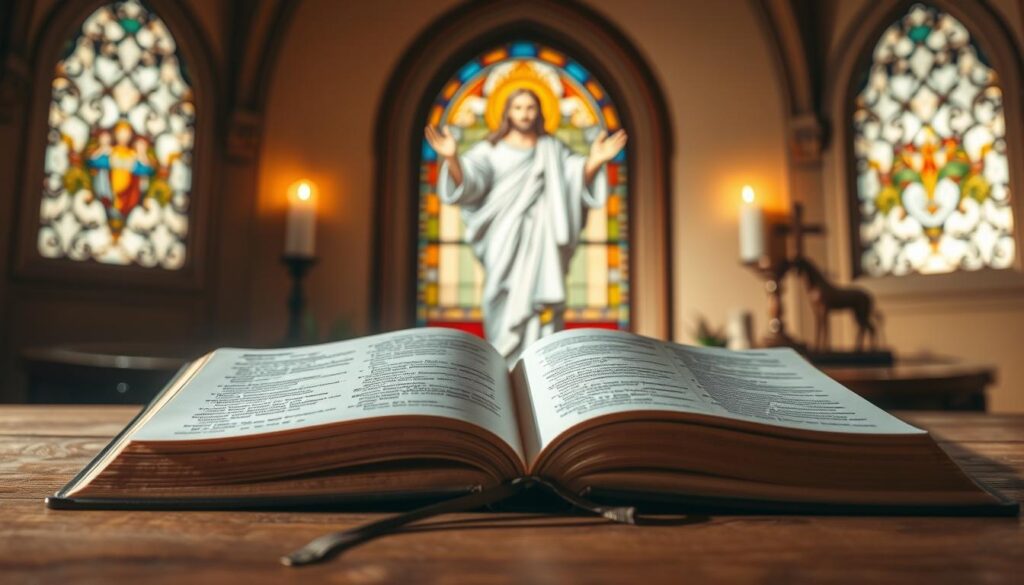
Biblical foundations of the Lord's Prayer

Insights from Matthew’s and Luke’s Texts

Scholars spot key differences through New Testament analysis. Matthew includes seven petitions, while Luke lists five. The extra phrases like “Your will be done” highlight divine authority. One theologian notes: “Matthew’s structure mirrors synagogue prayers, while Luke prioritizes immediate needs.”

Feature Matthew 6:9-13 Luke 11:2-4
Setting Sermon on the Mount Private teaching moment
Petitions 7 5
Key Phrases “Your will be done”, “Deliver us” Simplified requests

Commentaries from Early Church and Modern Scholars

The Greek word epiousion (“daily bread”) puzzles experts. Augustine called it “bread for existence,” while modern translation debates suggest “future nourishment.” This mystery shows why the Lord’s Prayer remains a living text—its layers unfold across centuries.

Recent studies explore cultural roots. Some scholars argue Luke’s version reflects early Christian communal meals. Others see Matthew’s structure as training for spiritual warfare. As one professor observes: “Every generation finds new bread in this ancient recipe.”

Textual Variants in the Lord’s Prayer

Exploring textual variations reveals how early Christians shaped their worship. The Lord’s Prayer appears in two distinct forms in the New Testament—Matthew’s detailed account and Luke’s concise version. These differences aren’t translation errors but intentional adaptations.

Community-Driven Adaptations

Scholars propose both Gospel writers drew from a shared source called “Q.” Marianus Pale Hera argues: “Each version served specific communities—Matthew’s Jewish converts needed rich theology, while Luke’s Gentile readers prioritized practicality.”

Feature Matthew 6:9-13 Luke 11:2-4
Petitions 7 5
Focus God’s kingdom & spiritual warfare Daily needs & forgiveness
Unique Phrase “Deliver us from evil” “Protect us from testing”

Matthew’s extra lines about God’s will likely comforted persecuted groups. Luke’s streamlined word choices reflect everyday struggles. This flexibility shows early believers tailored the prayer without losing its core message.

Modern readers might wonder why Mark’s Gospel omits the Lord’s Prayer. This gap supports the Q theory—Matthew and Luke used shared material Mark didn’t access. Such discoveries remind us that sacred texts grow through real people’s needs and choices.

Translation Evolution: From Latin to Modern English

The journey of sacred texts across languages shaped spiritual practices globally. For the Lord’s Prayer, this meant transforming from scholarly Latin to living vernacular speech. Let’s explore how translation unlocked its power for everyday worshippers.

translation evolution

The Role of the Vulgate and Early Translations

Jerome’s 4th-century Latin Vulgate became Christianity’s official text. Its version omitted the closing doxology found in later English renditions. This choice aligned with early Greek manuscripts but left room for future adaptations.

English translation efforts began around 650 AD with the Northumbrian dialect. By the 16th century, William Tyndale revolutionized accessibility. His 1526 text read: “O oure father which arte in heve…” Though spelling seems odd today, phrases like “trespasses” entered common worship.

The King James Bible (1611) cemented key word choices. Translators adopted the doxology from Edward VI’s 1549 prayer book. This blend of old and new created the familiar Lord’s Prayer millions recite today.

Modern versions still balance accuracy with relatability. As one linguist notes: “Each generation translates not just words, but hearts.” From medieval manuscripts to digital apps, the prayer’s essence endures through thoughtful translation.

Reformation Impact on Worship Practices
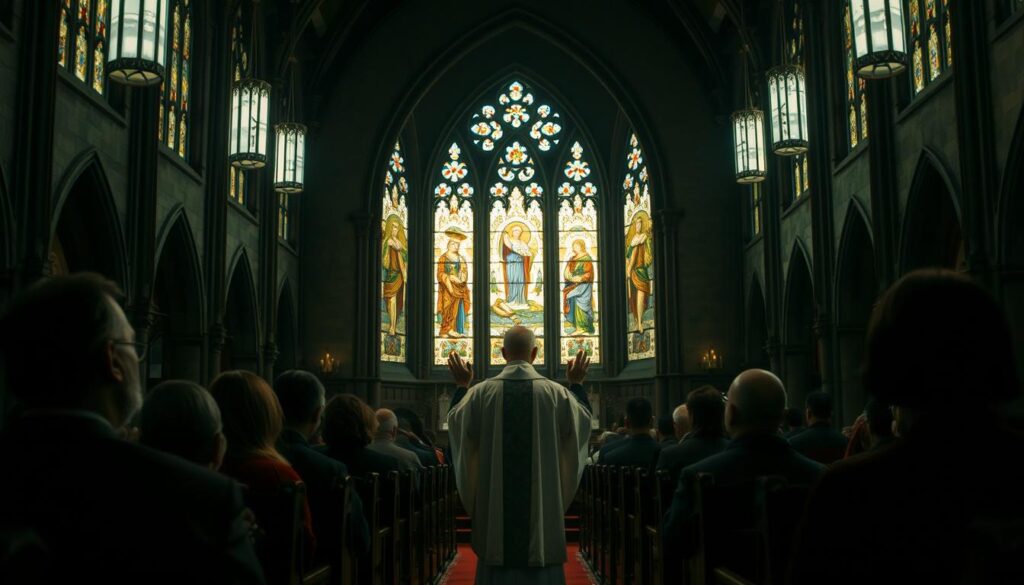
Reformation impact on Lord's Prayer

Queen Elizabeth’s 17th-century decree transformed Christian worship forever. Her mandate permanently added the triumphant doxology to the Lord’s Prayer in Anglican services. This closing phrase—“For thine is the kingdom, and the power, and the glory, forever”—became a hallmark of reformed traditions.

Reformers borrowed this ending from Eastern churches, where it had enriched liturgies for 1,500 years. The doxology first appeared in the Didache, an ancient Syrian teaching manual. One historian notes: “This addition gave congregations a powerful way to affirm God’s sovereignty together.”

Vernacular recitations replaced Latin chants during this period. Worship leaders began repeating the prayer multiple times per service, unlike structured Catholic practices. This shift reflected reformers’ belief that sacred words should be understood, not just recited.

The new format served three purposes:

  • Created clear endings for group participation
  • Emphasized divine authority in turbulent times
  • Connected personal devotion to communal worship

Anglican reforms spread globally through the Book of Common Prayer. Today, over 80 million believers worldwide use this Lord’s Prayer version—proof that 16th-century changes still shape 21st-century faith.

The Influence of Linguistic Choices in Worship

Every syllable in sacred texts carries weight, shaping how believers connect with the divine. The Lord’s Prayer reveals this power through its translation challenges. Take the mysterious Greek epiousion—a word found nowhere else in ancient writings. Was it “daily bread” or “future nourishment”? This debate spans centuries, with St. Jerome favoring “bread of tomorrow” in lost Hebrew texts.

Modern worshippers feel these choices deeply. Saying “trespasses” versus “debts” isn’t just semantics—it frames how we view mistakes. One term suggests boundary-crossing, the other financial obligation. Both images teach distinct lessons about forgiveness.

Translators walk a tightrope between accuracy and relatability. The prayer’s Ethiopic versions hint at heavenly banquets, while others focus on earthly needs. These translation decisions don’t just explain faith—they shape how it’s lived.

Yet diversity strengthens the Lord’s Prayer. Different phrasings become windows into God’s nature. Whether whispered in crisis or sung in unity, its adaptable language proves ancient words still feed modern souls.

FAQ

How does the Protestant version of the Lord’s Prayer differ from other traditions?

Key differences include phrases like “debts” instead of “trespasses” and the absence of the doxology (“For thine is the kingdom…”). These variations reflect theological emphases and translation choices rooted in the Reformation’s focus on scripture alone.

Why do Matthew’s and Luke’s Gospel accounts of the prayer vary?

Matthew’s version includes “Thy will be done on earth,” while Luke’s is shorter. Scholars suggest these differences highlight distinct themes—Matthew emphasizing God’s kingdom and Luke focusing on daily reliance. Both texts inspire unique interpretations across traditions.

How did early English translations shape the Lord’s Prayer we know today?

The Latin Vulgate influenced early translations like the Book of Common Prayer. Later, modern English versions simplified language (e.g., “daily bread” instead of “supersubstantial bread”) to improve accessibility while preserving core themes like forgiveness and deliverance from evil.

What impact did the Reformation have on worship practices related to the prayer?

Reformers prioritized congregational participation, leading to vernacular translations instead of Latin. This shift reinforced the prayer’s role in personal devotion and communal worship, aligning with Protestant values of direct engagement with scripture.

Why do some versions include “lead us not into temptation” while others avoid it?

Recent debates, including input from Pope Francis, argue that “temptation” might misrepresent God’s role. Some modern translations use phrases like “do not let us fall into temptation,” balancing fidelity to ancient texts with clearer theological messaging.

How do linguistic choices in the prayer affect its meaning in worship?

Words like “hallowed” or “kingdom come” evoke reverence and hope, while terms like “daily bread” emphasize trust in provision. These choices shape how communities connect with themes of dependence on divine care and ethical living.

The Path to Becoming a Protestant Priest


Embarking on a life of spiritual leadership requires both passion and preparation. Unlike other Christian traditions, this journey blends theological study with personal discernment, shaped by centuries of reformed practice. Those called to serve often find their path rooted in a deep connection to their faith community and a desire to guide others.

Central to this calling is understanding how different denominations approach ministry. While some emphasize formal education, others prioritize hands-on service. What unites them is the belief that spiritual leaders must balance academic rigor with compassionate outreach. Many traditions also involve mentorship programs to help believers confirm their vocational direction.

The process typically includes seminary training, practical internships, and ordination exams. However, it’s not just about checking boxes—congregations look for leaders who demonstrate humility, wisdom, and emotional intelligence. Cultural awareness plays a growing role too, as modern ministry addresses diverse community needs.

Key Takeaways

  • Vocational paths vary across Protestant denominations but share core spiritual requirements
  • Formal education and hands-on training often work together in preparation
  • Community discernment helps validate an individual’s calling to leadership
  • Modern clergy roles demand adaptability to societal and cultural shifts
  • Ordination processes balance theological knowledge with practical ministry skills

Understanding the Protestant Priesthood

The journey to spiritual authority within Christian communities blends ancient practices with Reformation ideals. While most denominations use titles like pastor or minister, Anglicans uniquely preserve the term priest. This reflects their balance between traditional sacramental roles and Reformed theology, particularly in communion practices that reject transubstantiation.

Defining the Role and Calling

Spiritual leaders in these traditions serve as guides rather than exclusive mediators. Their authority stems from divine calling and communal affirmation. As one Anglican bishop notes:

“Our priests are shepherds who equip believers to live out their own sacred responsibilities.

This dual emphasis shapes their work:

  • Teaching Scripture and leading worship services
  • Providing pastoral care during life transitions
  • Administering sacraments like baptism

Distinctions Between Ministry and Clerical Ordination

While all Christians participate in ministry, ordained clergy receive specific responsibilities through formal recognition. This includes presiding over sacraments and offering spiritual oversight. Unlike other traditions, their authority flows from congregational endorsement rather than apostolic succession.

Key differences emerge in:

  • Training requirements (seminary vs apprenticeship models)
  • Sacramental duties (varies by denomination)
  • Leadership scope (single congregation vs regional oversight)

Historical Context and the Reformation Impact

Religious leadership transformed dramatically during the 16th century. This shift reshaped how communities viewed spiritual authority and sacramental practices. At the heart of this change stood Martin Luther’s revolutionary ideas about direct connection with God.

priesthood evolution

Medieval Challenges and Reform Responses

The Roman Catholic system positioned clergy as gatekeepers of salvation. Ordinary believers relied on them for sacraments like confession and communion. Over time, this created a spiritual hierarchy that many Reformers saw as conflicting with New Testament teachings.

Luther’s emphasis on Christ as the sole mediator changed everything. He argued that Scripture, not church tradition, should guide Christian practice. This theological shift made priestly mediation unnecessary for salvation. As one reformer declared:

“Every baptized believer carries Christ’s priesthood within them.”

Evolution of the Priesthood Concept

Post-Reformation churches reimagined spiritual leadership while keeping some familiar structures. Anglican communities retained traditional titles but embraced reformed doctrine. Three key changes emerged:

  • Sacraments became community celebrations rather than clerical transactions
  • Preaching replaced ritual sacrifice as central to worship
  • Local congregations gained authority in selecting leaders

This evolution created a new model—spiritual guides who teach and serve rather than control access to God. Modern clergy roles still reflect this balance between ancient theology and Reformation principles.

Theological Foundation and Biblical Basis

Understanding spiritual leadership begins with two transformative biblical truths. These ideas shape how modern churches view authority and community roles. They also explain why certain traditions emphasize shared responsibility in worship.

Scriptural Insights on the Priesthood of All Believers

The New Testament redefines spiritual access through powerful imagery. 1 Peter 2:5-9 describes believers as “living stones” forming a holy priesthood. This means every baptized Christian shares in Christ’s mission through prayer and service.

Revelation 1:6 reinforces this idea, stating Jesus made his followers “a kingdom of priests.” Unlike older systems, this shared calling empowers ordinary people to minister through daily actions. As one theologian notes:

“The church thrives when all members actively live out their priestly identity.”

Christ as the Ultimate High Priest

Hebrews 4:14-16 presents Jesus as humanity’s perfect mediator. His sacrifice on the cross replaced temporary rituals with eternal redemption. This doctrine means believers approach God directly, while still valuing pastoral guidance.

Aspect Old Testament Model New Testament Teaching
Mediation Specialized priests All believers through Christ
Sacrifice Animal offerings Christ’s once-for-all sacrifice
Access to God Through temple rituals Direct through prayer

This framework clarifies why spiritual leaders today focus on teaching rather than controlling access to God. Their role supports the community’s collective priesthood without replacing Christ’s unique position.

Pathway Through Theological Education and Training

Shaping effective spiritual leaders begins with intentional learning. Most future ministry professionals start with a bachelor’s degree before pursuing advanced studies. A Master of Divinity program typically follows, blending academic rigor with practical skill-building.

theological education pathway

Seminary courses dive deep into biblical languages, church history, and systematic theology. Students master preaching techniques and pastoral care strategies. Denominational differences mean some programs include specific classes on church governance or doctrinal traditions.

Hands-on training bridges classroom knowledge with real-world application. Internships let students lead worship services or counsel community members. Many seminaries require Greek and Hebrew studies to unlock richer scriptural understanding.

Ongoing learning keeps protestant ministers prepared for evolving challenges. Workshops on modern social issues or digital teaching methods help maintain relevance. Some schools offer specialized tracks in youth ministry or global missions to match individual gifts.

This educational journey balances intellectual growth with compassionate service. Through mentorship and practice, students transform knowledge into tools for guiding congregations.

Spiritual Formation and Community Engagement

Developing spiritual leaders goes beyond textbooks and sermons. It requires cultivating inner strength while serving others. This dual focus shapes individuals who guide with both wisdom and compassion.

Nurturing Personal Faith and Discipline

Daily prayer and scripture study form the backbone of a minister’s faith. Many candidates journal their spiritual insights, creating a living record of growth. As one mentor advises:

“Your relationship with Christ must deepen faster than your responsibilities expand.”

Regular retreats help maintain spiritual health. These practices build resilience for managing conflicts or supporting grieving people. Balance becomes crucial—leaders model self-care while prioritizing care for others.

Building Community and Fellowship

Effective clergy create spaces where all believers feel valued. This might involve hosting neighborhood meals or organizing intergenerational projects. Skills like active listening prove vital when addressing diverse life experiences.

Training often includes role-playing tough conversations. Ministers learn to navigate cultural differences while upholding core values. Small group leadership workshops teach how to foster trust within congregations.

Accountability partners help candidates stay grounded. Peer feedback sessions refine approaches to pastoral counseling. These relationships ensure future leaders remain connected to their communities’ heartbeat.

Steps in the Ordination Process

Stepping into ordained ministry involves a structured journey shaped by tradition and community discernment. Every candidate’s path reflects their denomination’s unique values while maintaining core principles of spiritual accountability. Let’s explore how churches assess readiness for this sacred role.

ordination process steps

Local Church Requirements and Evaluations

The journey starts where faith takes root—the local church. Most traditions require written endorsements from congregational leaders and peers. As the Augsburg Confession states:

“No one should publicly teach, preach, or administer the sacraments without a proper call.”

Evaluation committees often review:

  • Personal character through background checks
  • Public speaking and counseling abilities
  • Understanding of denominational doctrines
Requirement Lutheran/Reformed Anglican
Initial Recognition Congregational endorsement Bishop’s approval
Training Path Seminary + exams Deacon first, then priest
Sacramental Authority Post-ordination Partial during diaconate
Final Approval Regional synod Diocesan council

Many candidates face rigorous exams testing biblical knowledge and crisis management skills. After approval, ordination ceremonies feature the laying on of hands—a tactile symbol of spiritual authority transfer. New clergy often enter mentorship programs to refine their pastoral approach.

Roles and Responsibilities of a Protestant Priest

Spiritual leaders wear many hats, each woven with compassion and duty. Their work bridges ancient traditions with modern community needs, requiring both servant leadership and practical problem-solving. At its core, this calling centers on empowering others through sacred practices and everyday connections.

Pastoral Duties and Spiritual Leadership

Weekly rhythms involve crafting meaningful sermons that make ancient texts relevant today. Teaching the Word extends beyond Sunday mornings—many lead study groups or mentor individuals exploring faith. Sacramental moments like baptisms and communion become shared celebrations of hope.

Counseling forms another vital layer of care. Leaders walk with people through life’s highs and lows, from hospital visits to premarital guidance. One pastor describes it as “holding space for holy conversations that heal hearts.”

Mediating Between the Church and the Community

Effective ministry requires understanding neighborhood struggles and advocating for solutions. Many organize food drives or partner with local schools. This bridge-building role turns churches into hubs of practical support.

Public ceremonies like weddings and funerals allow leaders to mark sacred transitions. Through these acts, they help communities process joy and grief while sharing timeless truths. Their work ultimately reflects a commitment to serving both spiritual and earthly needs.

FAQ

What’s the difference between a Protestant minister and a Catholic priest?

Unlike the Catholic Church’s view of sacramental ordination, Protestant ministers focus on preaching and pastoral care. They don’t require apostolic succession, emphasizing instead the “priesthood of all believers” rooted in biblical teaching.

How does the priesthood of all believers shape Protestant ministry?

This Reformation-era doctrine, championed by Martin Luther, teaches that all followers of Christ have direct access to God. It shifts focus from clerical hierarchy to communal spiritual responsibility, empowering laypeople in worship and service.

What training is required to become a Protestant minister?

Most denominations require a seminary degree (like an M.Div.) and hands-on training. Programs blend theology, pastoral counseling, and leadership skills, preparing candidates for roles like preaching, teaching, and community outreach.

Why don’t Protestant churches emphasize clerical celibacy?

Many Reformers rejected mandatory celibacy, viewing marriage as a biblical norm. Today, most Protestant traditions allow clergy to marry, aligning with New Testament examples like Peter, who had a family.

How does ordination work in Protestant denominations?

Ordination processes vary but typically involve theological exams, interviews, and approval by regional church bodies. Some groups, like Baptists, prioritize local congregation affirmation over formal hierarchies.

Do Protestant ministers perform sacraments like Communion?

Yes, but interpretations differ. Lutherans and Anglicans see Communion as sacramental, while others view it as symbolic. Authority to administer rites often comes from the congregation, not apostolic lineage.

What role do women play in Protestant ministry?

Many denominations, including Methodists and Presbyterians, ordain women. This contrasts with Catholic doctrine, reflecting diverse interpretations of biblical texts about leadership and spiritual gifts.

How do Protestant ministers engage with modern communities?

Beyond Sunday services, many lead outreach programs, interfaith dialogues, and social justice initiatives. Their work often bridges spiritual guidance with practical support for local needs.

Explore the Protestant Reformation Timeline: Key Milestones


In 1517, a single act of defiance changed religious history forever. A German monk named Martin Luther nailed his 95 Theses to a church door in Wittenberg. This bold move questioned long-standing practices of the Catholic Church and ignited a spiritual revolution across Europe.

What began as a critique of indulgences grew into a continent-wide movement. Reformers challenged traditional authority, sparking debates about faith, power, and individual conscience. New religious ideas spread rapidly thanks to the printing press, reaching people from commoners to kings.

The ripple effects transformed politics, culture, and society. Rulers used these reforms to assert independence from Rome, while everyday believers gained access to scriptures in their own languages. This shift created lasting divisions within Christianity and shaped modern concepts of religious freedom.

Key Takeaways

  • The movement began with Martin Luther’s public challenge to church practices in 1517
  • Printing technology helped revolutionary ideas spread faster than ever before
  • Religious changes became entangled with political power struggles
  • New Christian denominations emerged across Europe and later in America
  • The reforms permanently altered relationships between governments and religious institutions

Introduction to the Protestant Reformation Timeline

Long before Luther’s bold move, seeds of change were already planted in Christian Europe. While 1517 marks the official start with the Ninety-five Theses, earlier voices like John Wycliffe had questioned church authority centuries prior. This wasn’t a sudden explosion but a simmering revolution finally reaching its boiling point.

  • Growing calls for spiritual renewal among everyday believers
  • Political leaders seeking independence from Rome’s influence
  • New technologies spreading ideas faster than ever before

What makes this period unique is how local grievances became a continental movement. A German monk’s protest against indulgences resonated with Swiss farmers and English nobles alike. As one reformer noted: “Truth travels best when carried by many hands”.

The church’s response shaped modern Christianity more than any single reformer. Bans on vernacular Bibles backfired, creating demand for personal scripture access. Failed compromises led to permanent divisions, proving institutional power couldn’t contain grassroots spiritual hunger.

This chronological journey reveals patterns still relevant today – how ideas spread, institutions adapt, and individuals reshape societies. By tracing these connections, we understand why 16th-century debates about faith still influence global culture.

The Early Foundations of the Reformation

Centuries before religious upheaval reshaped Europe, visionaries dared to challenge established norms. These early voices laid critical groundwork for sweeping changes in spiritual practice and authority.

early reformation thinkers

Roots of Religious Resistance

John Wycliffe sparked quiet revolutions in 14th-century England. His radical De civili dominio condemned church wealth, arguing: “No man can serve two masters – God and gold.” Followers called Lollards risked their lives sharing handwritten Bible passages in English taverns and markets.

Wycliffe’s translation work made Scripture accessible to ordinary folks. This broke the clergy’s monopoly on biblical interpretation. Authorities responded harshly – burning books and executing dissenters under new heresy laws.

Blueprint for Change

Three key principles defined these early movements:

  • Scripture as ultimate religious authority
  • Rejection of church materialism
  • Empowerment of lay believers
Aspect Traditional View Wycliffe’s Challenge
Scripture Access Latin-only for clergy Vernacular translations
Church Wealth Sacred property Moral corruption
Religious Authority Pope-centered Bible-centered

These ideas survived underground for generations. When printing presses emerged, they found fertile ground. The hunger for personal faith experiences shown by early reformers never truly faded – it simply awaited its moment.

Political and Social Catalysts Leading to Reform

Fourteenth-century Europe faced storms of chaos that reshaped society’s fabric. A series of disasters cracked old power structures, creating space for new ideas to take root.

When Death Reshaped Society

The Black Death (1348-1350) wiped out 33% of Europe’s population. Whole villages vanished, leaving survivors questioning why church leaders couldn’t stop the suffering. As one chronicler wrote: “Graveyards filled faster than priests could pray.”

Three key changes emerged:

  • Labor shortages broke feudal systems
  • Common people gained bargaining power
  • Traditional explanations of divine punishment rang hollow

Rebellion and Religious Doubt

Decades later, the Peasants’ Revolt (1381) fused economic anger with spiritual demands. Protesters quoted radical thinkers like John Wycliffe while attacking tax collectors. Their banners declared: “When Adam delved and Eve span, who was then the gentleman?”

Aspect Pre-Plague Post-Plague
Social Structure Fixed hierarchies Fluid class lines
Religious Trust Unquestioned Eroded
Economic Systems Feudal obligations Wage negotiations

These years of crisis made Europeans rethink every authority. When institutions failed during dark times, alternative voices found eager listeners. The stage was set for deeper challenges to spiritual and worldly power.

Martin Luther and the Catalyst of the 95 Theses

A university professor’s classroom debate questions unexpectedly reshaped Christianity. On October 31, 1517, Martin Luther nailed ninety-five arguments to Wittenberg’s Castle Church door. Though common for academic discussions, this act became history’s most famous memo board post.

martin luther 95 theses

The Significance of Wittenberg and the Ninety-Five Theses

Luther’s Disputation on the Power of Indulgences targeted a specific Catholic Church practice. He argued against selling forgiveness certificates, stating: “As soon as the coin in the coffer rings, the soul from purgatory springs.” This critique questioned both financial policies and spiritual authority.

Three revolutionary ideas stood out:

  • Salvation through faith rather than payments
  • Scripture’s supremacy over church traditions
  • Every believer’s right to interpret religious texts

The theses spread like wildfire through Gutenberg’s printing presses. Within weeks, German translations reached farmers and princes alike. What began as theological debate became a cultural earthquake.

Church leaders initially dismissed Luther as “a drunken German.” But his refusal to recant in 1521 cemented the split. The doctrine of justification by faith alone redefined Christianity’s core message, proving ideas could outpower institutions.

The Rise of Church England and Religious Change

England’s religious landscape shifted dramatically when royal needs collided with papal authority. In 1534, Henry VIII broke from Rome after the Pope refused his marriage annulment. This personal crisis birthed the Church of England, blending old rituals with new ideas.

church england establishment

Unlike continental movements driven by theology, England’s reform sprang from political chess. The king declared himself Supreme Head through the Act of Supremacy, quipping: “No foreign power shall command English souls.” Bishops kept their robes, but Rome lost its grip.

This hybrid church walked a careful line:

  • Kept stained glass and priestly vestments
  • Rejected papal authority but kept hierarchy
  • Translated liturgy into English while preserving ceremony
Practice Catholic Tradition Anglican Adaptation
Leadership Pope in Rome English monarch
Scripture Latin Vulgate Vernacular translations
Sacraments Seven rituals Redefined importance

The establishment showed how rulers could reshape faith for state goals. By keeping familiar rituals, the Church of England eased transitions for common worshippers. This middle path became its lasting trademark – neither fully Roman nor radically Reformed.

Understanding the protestant reformation timeline in England

What happens when a king’s personal life reshapes a nation’s faith? Between 1527 and 1603, England’s spiritual identity transformed through royal decisions that blended politics with divine authority. This history shows how marriage disputes and power struggles became catalysts for lasting religious change.

Henry VIII’s quest to annul his marriage sparked constitutional changes that echoed across Wales and England. The Church of England emerged not from theological debates, but through parliamentary acts like the 1534 Supremacy Law. As one advisor noted: “The crown now wears two hats – one earthly, one heavenly.”

Four monarchs left distinct marks on this journey:

  • Henry VIII severed Rome’s authority while keeping Catholic rituals
  • Edward VI introduced Protestant worship practices
  • Mary I temporarily restored Catholic traditions
  • Elizabeth I crafted a middle path blending old and new

Monasteries dissolved, English Bibles appeared in churches, and ordinary people faced shifting rules about worship. The Church of England‘s evolution created a unique identity – ornate ceremonies met Reformed theology, satisfying neither Rome nor Geneva completely.

This 76-year timeline reveals how faith became a tool of statecraft. Each ruler’s death brought policy reversals, leaving citizens scrambling to adapt. By Elizabeth’s reign, the Church of England had become a national institution that still shapes religious life today.

Henry VIII’s Role in the English Reformation

Personal royal drama reshaped national faith when Henry VIII turned marital troubles into constitutional revolution. The king’s obsession with securing a male heir created England’s unique path toward religious independence.

Annulment Controversies and Royal Supremacy

King Henry married Catherine of Aragon in 1509, but their surviving child Mary threatened Tudor stability. By 1527, the monarch sought an annulment through church courts. When Pope Clement VII refused, Henry took matters into his own hands.

Three parliamentary acts changed everything:

  • 1533 Statute in Restraint of Appeals blocked foreign judgments
  • 1534 Act of Succession invalidated Henry’s first marriage
  • First Act of Supremacy (1534) made the king “Supreme Head”

Break with the Catholic Church

Henry’s 1535 title addition – “of the Church of England” – marked complete separation from Rome. While keeping Catholic rituals, the monarch now controlled religious authority.

Aspect Before 1534 After 1534
Religious Leader Pope English Monarch
Marriage Laws Church-controlled State-controlled
Church Wealth Rome-directed Crown-confiscated

This power grab had lasting effects. Monasteries closed, English Bibles appeared, and commoners faced new loyalties. Henry proved personal motives could rewrite national spiritual identity overnight.

The Continental Influence: Calvin, Zwingli, and Reformed Theology

Across the English Channel, revolutionary ideas reshaped religious thought in unexpected ways. While England’s break from Rome began as political theater, continental thinkers gave it deeper spiritual meaning. Their works became guidebooks for believers seeking alternatives to Roman Catholic traditions.

Key Theological Shifts with John Calvin

John Calvin redefined Christian theology with his 1536 masterwork, Institutes of the Christian Religion. This systematic approach explained complex doctrines in clear terms. His emphasis on God’s sovereignty and predestination appealed to English reformers tired of ritual-heavy worship.

Ulrich Zwingli and the Swiss Model

In Zurich, Ulrich Zwingli took reform further than Luther. He stripped churches of statues and organs, arguing: “What the eye doesn’t see, the heart doesn’t crave.” His focus on scripture over symbols influenced English Puritans who wanted simpler services.

These continental ideas transformed England’s religious landscape. Calvin’s theology dominated during Edward VI’s reign, while Zwingli’s practices shaped underground movements. Together, they proved spiritual renewal could cross borders and outlast kings.

FAQ

How did Henry VIII’s actions shape the Church of England?

Henry VIII’s break with the Roman Catholic Church over his desire to annul his marriage led to the Act of Supremacy in 1534. This established the monarch as head of the Church of England, shifting religious authority away from the Pope and laying the groundwork for doctrinal reforms.

What role did Wittenberg play in the Reformation?

Wittenberg became a focal point when Martin Luther, a theology professor there, publicly challenged Catholic practices by posting his Ninety-Five Theses in 1517. This act sparked debates across Europe and accelerated calls for institutional change.

How did John Calvin’s ideas differ from earlier reformers?

Calvin emphasized predestination and a structured approach to church governance. His teachings in Geneva influenced Reformed churches, focusing on strict moral discipline and a community-led model distinct from Luther’s emphasis on individual faith.

Why did the Black Death influence religious reforms?

The plague’s devastation in the 14th century eroded trust in traditional institutions, including the Catholic Church. Survivors questioned existing power structures, creating fertile ground for critiques of corruption and demands for spiritual renewal.

What were the Lollards’ contributions to early reform efforts?

Followers of John Wycliffe, known as Lollards, criticized church wealth and promoted vernacular Bible access. Their ideas laid early groundwork for challenging clerical authority, though they faced suppression until later movements revived similar themes.

How did Ulrich Zwingli impact Swiss religious practices?

Zwingli rejected rituals like fasting and elaborate sacraments, advocating for simpler worship rooted in Scripture. His reforms in Zurich emphasized communal interpretation of the Bible, influencing later Anabaptist and Reformed traditions.

The Protestant Rosary: A Powerful Prayer for Protestants


Many believers crave a deeper connection with God but struggle to find prayer methods that align with their faith. Imagine a devotional tool that blends structure with flexibility, rooted in Scripture yet adaptable to your spiritual journey. This is the heart of the Anglican prayer beads tradition—a practice revitalized for modern Christians seeking meaningful contemplation.

Developed in the 1980s by an Episcopalian priest, this approach reimagines ancient rhythms of prayer for Protestant theology. Unlike other traditions, it removes saint-focused petitions and invites personal expression. Every bead becomes a conversation starter with God, whether you’re reciting Psalms or praying silently.

What makes this practice unique? First, it’s shorter than traditional formats—perfect for busy lives. Second, it encourages customization: write your own prayers or use Bible verses. Most importantly, it centers entirely on biblical truths and direct communication with the Divine. Churches across high-church Protestant communities have embraced it as both grounding and liberating.

Key Takeaways

  • Originated in 1980s Anglican/Episcopalian circles as a Scripture-focused alternative
  • Simpler structure than traditional rosaries with no saint-related prayers
  • Encourages personal customization and spontaneous worship
  • Strengthens biblical literacy through meditative repetition
  • Fits seamlessly into modern devotional routines

You’ll discover practical ways to incorporate these prayer beads into your spiritual life—whether during morning coffee breaks or evening reflection. This isn’t about ritual; it’s about creating sacred space wherever you are.

Introduction: Rediscovering a Powerful Prayer Tradition

Structured prayer tools often spark debate in Christian circles. Many people associate beads with traditions that feel disconnected from their faith. Yet a growing number of believers are finding freedom in redesigned devotional practices that honor Scripture while fostering deeper connection.

A New Perspective on Devotion

Historical tensions around repetitive prayers stem from Jesus’ warning against “vain repetition” in Matthew 6:7. Early reformers emphasized direct communication with God, moving away from practices they saw as overly ritualistic. But this doesn’t mean all structure lacks value.

Consider how the Psalms model meaningful repetition—the same verses take on new depth when revisited. Modern prayer beads create a similar rhythm of grace, guiding users through themes like gratitude or forgiveness. Each bead becomes a prompt rather than a requirement.

Martin Luther himself valued meditative prayer, writing: “The fewer the words, the better the prayer.” Today’s adaptations build on this idea, using physical beads to anchor wandering thoughts. They help maintain intentional focus during personal worship without prescribed wording.

Churches now teach these tools as bridges between spontaneity and discipline. One pastor notes: “It’s like having conversation starters with God.” Whether reciting Bible passages or silent reflection, the beads serve as tangible reminders of God’s nearness in daily time.

Understanding the Protestant Rosary

Some Christians hesitate to use devotional tools that feel tied to other traditions. But redesigned prayer beads offer fresh ways to engage with Scripture while honoring core beliefs. Let’s explore how this practice evolved and what makes it distinct.

prayer beads comparison

Historical Context and Development

In the 1980s, Rev. Lynn Charles Bauman sought to create a prayer method addressing Protestant concerns. His design kept meditation benefits while removing elements conflicting with sola scriptura principles. The result? A 33-bead structure mirroring Jesus’ earthly years.

Episcopalians and Anglicans first embraced this approach. It spread quickly as churches recognized its potential for personal worship. Unlike older traditions, it required no memorized prayers—just a heart open to God’s Word.

Key Differences from Other Traditions

This adaptation focuses entirely on direct communication with God. Where some practices include saintly intercessions, here every bead points to Christ. Users choose their own Bible verses or spontaneous prayers.

Aspect Traditional Version Modern Adaptation
Total Prayers 81 (Including Hail Mary) Variable (Scripture-based)
Focus Marian Devotions Direct God Connection
Flexibility Fixed Formulas Personal Customization
Theological Basis Saint Intercession Sola Scriptura

The table shows why many find this approach freeing. It avoids vain repetition through meaningful engagement. As one user shared: “The beads guide me deeper into God’s presence without rigid rules.”

How to Pray the Protestant Rosary

Finding focus in prayer can feel challenging in our busy world. This method creates rhythm through intentional pauses and biblical meditation. You’ll need a quiet space and your chosen Scriptures—let’s begin.

Setting Your Space and Mind

Choose a distraction-free area—a kitchen table or porch swing works perfectly. Keep your Bible nearby. Take three deep breaths to center your thoughts on God’s presence. This isn’t about perfection, but connection.

Step-by-Step Prayer Guide

Start with the Cross bead. Whisper John 3:16 or declare: “I take up my cross daily.” Move to the Invitation bead using Psalm 51: “Create in me a clean heart.”

Prayer Phase Traditional Approach Modern Adaptation
Opening Standard prayers Personal Scripture choice
Mercy Focus Fixed phrases Jesus Prayer variations
Meditation Predetermined verses Psalms or Lord’s Prayer
Conclusion Formal closing Silent reflection

The four cruciform beads invite mercy requests. Try Mark 10:47—“Son of David, have mercy!” For the 28 weekly beads, rotate between favorite passages. Many find Psalm 23’s “green pastures” imagery calming.

Personal Reflection and Adaptation

Adjust rhythms to your daily life. Use Lenten verses during Easter or healing Scriptures when struggling. One parent shares: “I pray kingdom-focused words while rocking my baby—each bead marks God’s faithfulness.”

End by resting in silence. Let the Holy Spirit highlight specific words from your prayer time. This practice grows deeper with repetition—like muscle memory for the soul.

Exploring the Beads, Prayers, and Scriptures

Prayer practices often evolve to meet the spiritual needs of believers while staying rooted in Scripture. Let’s unpack how traditional phrases and modern adaptations work together to create meaningful worship moments.

scripture meditation beads

Significance of the Prayer Beads and Hail Mary

The Hail Mary prayer contains direct quotes from Luke 1:28 and 42. Phrases like “full of grace” and “blessed art thou among women” celebrate Mary’s role in God’s plan. While some traditions use these words to request her intercession, modern adaptations focus on honoring her as a biblical example of obedience.

Jesus warned against vain repetition in Matthew 6:7—not all repetition, but prayers that lack heart. He modeled meaningful repetition Himself, praying the same words three times in Gethsemane (Matthew 26:44). The Lord’s Prayer, given as a template, shows repetition can deepen understanding when done intentionally.

Scriptural Meditations and Vain Repetition

Beads become powerful tools when paired with Scripture. Try this approach:

  • Choose short verses like “The Lord is my shepherd” (Psalm 23:1)
  • Repeat phrases that resonate with your current season
  • Pause on cruciform beads to reflect on Christ’s sacrifice

One church leader shares: “The beads keep my hands busy so my heart can engage.” This practice helps avoid empty words by anchoring each prayer in biblical truth. Rotate passages monthly to keep your devotions fresh—try Philippians 4:6 for anxiety or Galatians 5:22 for fruit of the Spirit reflections.

Remember: Meaningful repetition isn’t about perfect words. It’s about creating space for God to speak through His Word, one bead at a time.

Overcoming Challenges & Embracing Tradition

Spiritual practices sometimes face pushback due to historical misunderstandings. Let’s clear the air about common concerns while celebrating time-tested devotion.

addressing prayer misconceptions

Honoring Without Worshiping

Early Christians used the term “Mother of God” at Ephesus (AD 431) to confirm Jesus’ divine nature—not to elevate Mary. Reformers like Luther still recognized her biblical role, writing in 1522: “We ought to honor her… but not pray to her.”

Modern adaptations focus on Mary’s obedience rather than intercession. For example, reflecting on her “yes” at the Annunciation (Luke 1:38) inspires surrender to God’s will. This avoids worship while appreciating her faith journey.

Repetition With Purpose

Jesus repeated prayers in Gethsemane, showing heartfelt repetition differs from empty ritual. Compare two approaches:

Empty Repetition Meaningful Rhythm
Reciting without focus Meditating on Scripture
Seeking ritual comfort Inviting Holy Spirit guidance
Using preset phrases only Mixing Bible verses with personal words

One pastor shares: “My beads remind me to breathe between prayers—like musical rests in a hymn.” This method keeps worship centered on Christ while using physical tools to deepen focus.

When facing criticism, gently explain your practice’s biblical roots. Share how it produces fruit in your life—patience during trials or mercy toward others. True devotion always points people back to God’s grace.

Conclusion

In a world full of distractions, finding meaningful ways to connect with God remains a vital pursuit. This prayer method offers scripture-centered rhythms that anchor your thoughts while leaving room for spontaneous worship. Like learning a new language, it might feel awkward at first—but persistence brings rich rewards.

The beads serve as gentle guides, not rigid rules. They help quiet life’s noise so you can hear God’s voice more clearly. Whether reciting Psalms or whispering personal requests, each moment becomes an invitation to experience divine mercy and love.

Some worry about losing theological focus. Rest assured: every element points directly to Christ’s redeeming work. This practice builds biblical literacy through repetition that transforms rather than numbs—the same verse reveals new depths each time you pray.

If others question this approach, share how it deepens your communion with God. Remember, early Christians used physical reminders in prayer. What matters isn’t the tool, but the heart seeking His kingdom.

Why not try it this week? Start with one bead and a favorite verse. Let each touch become a step closer to the One who calls you by name. His presence awaits—simple, patient, and life-changing.

FAQ

What’s the purpose of using prayer beads in this tradition?

Prayer beads serve as a tactile guide to focus the mind and heart during meditation. They help structure prayers while keeping the emphasis on connecting with God’s Word, not ritualistic repetition.

How does this practice address concerns about repetitive prayers?

The focus is on intentional reflection, not empty repetition. Each bead encourages deeper engagement with Scripture, allowing the Holy Spirit to renew your mind through Christ-centered truths.

Are there specific Bible verses linked to this prayer method?

Yes! Many meditations center on passages like the Lord’s Prayer (Matthew 6:9–13) or the Fruit of the Spirit (Galatians 5:22–23). The goal is to let Scripture shape your prayers organically.

How is Mary viewed in this devotional practice?

While honoring her role as Jesus’ mother, the emphasis remains on Christ alone. Prayers highlight God’s grace and salvation, avoiding any veneration that might distract from biblical teachings.

Can I adapt the prayers to fit my personal faith journey?

Absolutely. This tradition invites flexibility—swap written prayers for spontaneous ones, or pause on a bead to journal. The beads are tools, not rules, designed to deepen your walk with God.

Does using beads conflict with Protestant beliefs about idolatry?

Not when used as a practical aid, like highlighting a Bible verse. The beads themselves hold no power; they simply help direct attention to God’s promises and character.

How often should I engage in this type of prayer?

There’s no strict rule—consistency matters more than frequency. Many find daily use creates rhythm, while others pray weekly. Let the Spirit guide your pace.

The Protestant Family: Understanding Traditions and Practices


For millions worldwide, daily life revolves around deeply held beliefs that shape relationships and routines. With over 833 million adherents globally, Protestant Christianity emphasizes personal faith, biblical teachings, and shared spiritual growth. This article explores how these principles translate into meaningful traditions within households.

At the heart of this lifestyle lies a commitment to integrating spiritual values into everyday moments. Many begin mornings with prayer or scripture reading, creating rhythms that reinforce their worldview. These practices often extend beyond personal devotion to community involvement through local churches and service projects.

The roots of these customs trace back to the Reformation era, when emphasis shifted to individual connection with faith. Today’s households adapt historical teachings to modern contexts while preserving core ideals like grace and moral guidance. Stories from diverse communities reveal creative approaches to maintaining spiritual bonds across generations.

Key Takeaways

  • Protestant traditions emphasize personal faith and direct engagement with scripture
  • Daily spiritual practices often include prayer, worship, and community service
  • Modern customs evolved from 16th-century Reformation principles
  • Local churches frequently serve as hubs for family-oriented activities
  • Generational faith transmission remains a central focus
  • Values like grace and moral responsibility guide household decisions

Overview of Protestant Beliefs and History

Understanding a faith’s core tenets offers insight into its historical evolution and modern-day expressions. Central to this tradition are principles that reshaped religious thought centuries ago and continue guiding communities today.

Defining Core Beliefs

Five foundational ideas, known as the Five Solas, shape this belief system. Scripture alone places the Bible above other authorities, encouraging personal study. Faith alone teaches that spiritual connection comes through trust rather than rituals. These ideas foster self-guided worship and ethical decision-making.

Core Principle Meaning Daily Impact
Sola Scriptura Bible as ultimate guide Home Bible studies
Sola Fide Salvation through faith Personal prayer habits
Sola Gratia Grace as divine gift Emphasis on forgiveness

Historical Milestones

In the 16th century, reformers sought to simplify worship and empower ordinary people. This movement spread rapidly across Europe, creating new church models. Over time, diverse denominations emerged, each adapting these beliefs to local cultures while keeping core ideals intact.

Origins of the Protestant Movement and Reformation

Long before the 16th century, seeds of change were already taking root in European religious life. Early reformers like the Waldensians quietly challenged church authority as early as the 12th century. These groups emphasized personal Bible study over institutional rituals—a radical idea that would later blossom into full-scale reformation.

protestant reformation origins

Proto-Protestant Influences

Movements such as the Lollards and Hussites kept the flame of reform alive for hundreds of years before Luther. They translated scripture into common languages and questioned the power structures controlling faith practices. Their underground networks proved ordinary people could shape spiritual life without formal hierarchies.

Reformation Catalysts

By 1517, three main issues pushed religious tension to breaking point. Church leaders sold forgiveness through indulgences, scripture remained locked in Latin, and corruption ran rampant. These problems created fertile ground for Martin Luther’s famous protest—a moment that changed the religious world forever.

Role of Martin Luther

Luther’s Ninety-five Theses didn’t just criticize indulgences—they reshaped how people viewed salvation. His teaching that “faith alone makes one righteous” (sola fide) empowered families to take spiritual leadership. This idea made homes centers of worship rather than just church buildings, a legacy still visible today.

The Role of the Protestant Church

Gathering spaces shape more than Sunday routines—they build connections that last lifetimes. Unlike traditions with centralized authority, these congregations thrive on shared participation and mutual care.

Community and Worship

Weekly services blend music, prayer, and practical teachings. Everyone contributes, from teens leading songs to parents organizing meals. This inclusive approach stems from the belief that all members have equal spiritual value.

Local congregations often feel like extended households. They host game nights, mentorship programs, and neighborhood cleanups. When challenges arise, the community responds with meals, childcare, or financial aid—living out their faith through action.

The idea of an “invisible church” unites believers beyond physical buildings. Many congregations partner with global ministries, reminding people they’re part of something bigger. This perspective encourages generosity and cultural awareness.

Modern worship styles appeal to diverse age groups. Interactive sermons and upbeat music create welcoming environments. These adaptations help traditions stay relevant while maintaining core values like grace and service.

Martin Luther and the Shock of the Ninety-Five Theses

A single act of defiance in 1517 cracked centuries of religious tradition wide open. When Martin Luther nailed his arguments to Wittenberg’s church door, he ignited changes still felt in spiritual practices today.

Martin Luther Ninety-Five Theses church authority

Impact on Church Authority

Luther’s bold move directly challenged the idea that religious authority belonged solely to clergy. His 95 arguments declared:

“The true treasure of the church is the gospel of the glory and grace of God.”

This shifted power from institutions to individuals. Suddenly, ordinary people could access scripture without intermediaries—a radical concept at the time.

The practice of selling forgiveness through indulgences became Luther’s main target. By arguing salvation came through faith alone, he dismantled systems controlling spiritual access. Wittenberg’s church door became symbolic of this new openness.

Three key changes emerged:

  • Households began leading prayers instead of waiting for priests
  • Scripture study became daily practice rather than special occasions
  • Spiritual guidance moved from church buildings to kitchen tables

Over years, these ideas transformed how communities worshipped. The church became less about hierarchy and more about personal connection—a legacy shaping modern faith experiences.

Key Figures in Protestant History

Visionary leaders shaped religious thought across continents, leaving legacies that still guide communities today. Their ideas transformed how people practiced faith and structured daily life.

protestant reformers leadership

John Calvin and Huldrych Zwingli

John Calvin’s leadership in Geneva became a blueprint for integrating faith into society. He taught that every aspect of life—from parenting to business—should reflect divine principles. His emphasis on God’s sovereignty encouraged households to view challenges as part of a larger plan.

Huldrych Zwingli revolutionized worship in Zurich by putting scripture at the center. He urged parents to teach Bible stories during meals and chores. This hands-on approach made spiritual growth a natural part of family routines rather than just church activities.

Other Reformers

John Knox brought these ideas to Scotland, creating traditions like daily Bible reading. His work helped establish schools where children learned to read scripture—a radical shift in an era when few had access to education.

William Farel and Theodore Beza expanded Protestant teachings through written guides. Their materials helped families discuss faith during evening devotions. Over years, these practices became cornerstones of household spirituality across Europe.

Development of Protestant Denominations

Diverse interpretations of scripture gave birth to varied worship traditions over centuries. Today’s faith communities reflect this rich heritage through distinct expressions of shared beliefs. Over 40% of Christians globally identify with these groups, each offering unique ways to experience spiritual life.

Roots in Shared Values

Lutheran churches build households around grace-centered teachings. Weekly gatherings often feature hymns celebrating unconditional love, fostering environments where forgiveness thrives. Many members describe these spaces as safe havens for spiritual growth.

Reformed congregations prioritize thoughtful Bible study. Families might discuss scripture during meals, applying ancient wisdom to modern dilemmas. This approach encourages critical thinking while maintaining reverence for divine guidance.

New Expressions Emerge

Modern movements like Pentecostalism energize worship with lively music and spontaneous prayer. These churches attract younger generations seeking vibrant community connections. Their emphasis on personal spiritual experiences reshapes traditional practices.

Baptist denominations champion local leadership and adult baptism. This model teaches that faith choices shape daily living, inspiring active participation in community projects. Such principles help tradition stay relevant across changing cultures.

From formal liturgies to casual services, these varied paths let believers find communities matching their spiritual needs. This flexibility explains why Protestant denominations continue growing worldwide.

FAQ

What distinguishes core beliefs among Christian denominations?

Central teachings focus on Scripture as the ultimate authority, salvation through faith, and a personal relationship with Christ. Unlike some traditions, leadership often emphasizes shared interpretation rather than hierarchical structures.

How did the Reformation reshape religious practices?

The movement challenged traditional authority by promoting vernacular worship, congregational participation, and simplified rituals. Figures like Luther and Calvin emphasized direct engagement with biblical texts, shifting power dynamics within communities.

Why was Martin Luther’s work so influential?

Luther’s Ninety-Five Theses sparked debates about indulgences and corruption, accelerating demands for reform. His translation of the Bible into German made Scripture accessible, empowering individuals to interpret teachings independently.

How do worship styles vary across different groups?

Services range from liturgical Anglican ceremonies to contemporary non-denominational gatherings. Many prioritize sermons and congregational singing, reflecting a focus on teaching and communal participation over ritual.

What role do modern movements play today?

Current trends emphasize social justice, inclusivity, and adapting traditions to cultural shifts. Groups like Evangelicals or Pentecostals blend historic teachings with dynamic worship styles to engage younger generations.

Are marriage customs unique within these communities?

While ceremonies often reflect local culture, many emphasize covenantal commitment and spiritual partnership. Some traditions encourage pre-marital counseling or prioritize congregational support for couples.

How did early reformers like Calvin shape theology?

Calvin’s teachings on predestination and church governance influenced Reformed traditions. His systematic approach to doctrine provided frameworks for ethical living and community organization still referenced today.

Exploring the Protestant Reformed Faith


What does it mean to build a spiritual foundation rooted in unwavering conviction? For over 8,000 individuals across 33 congregations, this question finds its answer in a tradition that prioritizes scriptural authority and divine sovereignty. This community traces its theological heritage to the 16th-century Reformation, drawing inspiration from leaders who reshaped Christianity through bold adherence to biblical truth.

Central to this belief system are the Three Forms of Unity—documents that distill core teachings about grace, salvation, and God’s eternal plan. These principles aren’t just historical artifacts but living guides shaping worship, doctrine, and daily life. Members find comfort in the assurance that their relationship with God rests on His promises rather than human effort.

Today, this denomination maintains a close-knit identity while engaging modern challenges. Weekly gatherings focus on deep scriptural study, heartfelt prayer, and mutual support. The emphasis on God’s complete control over salvation creates a unique perspective on Christian living—one that balances reverence with joyful confidence.

Key Takeaways

  • A tradition grounded in Reformation-era principles of biblical authority and divine sovereignty
  • 33 congregations united through shared confessions and worship practices
  • Core teachings summarized in historic documents called the Three Forms of Unity
  • Focus on God’s grace as the sole basis for salvation and spiritual security
  • Active community life built around scriptural study and mutual encouragement

Historical Roots and Formation

Every religious movement carries a story shaped by pivotal moments. For this community, its journey began with passionate debates about divine grace—a discussion that would redefine its path for generations.

Beginning and Formation of the Movement

In 1924, three ministers made waves within their denomination by challenging popular teachings. Herman Hoeksema, George Ophoff, and Henry Danhof stood firm against ideas they believed diluted scriptural truths about God’s grace. Their bold stance led to expulsion but sparked a new beginning.

The First Protestant Reformed Church in Grand Rapids became their spiritual homebase. Originally called “Protesting Christian Reformed Churches,” the group adopted its current name while expanding across Michigan. Early growth showed how conviction could fuel community building.

Schisms and Denominational Divergences

By the 1950s, fresh debates emerged about God’s promises. Hubert DeWolf’s teachings caused a major split, with 60% of members forming a new group. This “DeWolf controversy” proved even close-knit communities face growing pains.

Recent years saw another division. Between 2021-2022, several congregations left over doctrinal interpretations, affecting multiple states and Canada. Yet through each challenge, the core group maintained its focus on biblical fidelity—a testament to resilient faith.

Distinctive Doctrine and Beliefs

Foundational beliefs act as anchors, guiding communities through theological and cultural shifts. At the core of this tradition stand two pillars: ancient confessional documents and a distinctive view of divine relationships.

Embracing the Three Forms of Unity

The Three Forms of Unity serve as a theological compass, blending doctrinal precision with heartfelt devotion. These historic texts—the Heidelberg Catechism, Belgic Confession, and Canons of Dordt—translate biblical teachings into practical guidance for daily living.

three forms unity

One catechism question famously asks: “What is your only comfort in life and death?” Its answer reassures believers of God’s complete care through Christ. The confession systematically explains creation, salvation, and church practice, while the canons emphasize grace as God’s gift rather than human achievement.

Understanding the Covenant and Creation

This framework views God’s promises as unbreakable bonds with chosen people. The covenant remains secure because God initiates and sustains it—though members actively respond through worship and repentance.

Genesis 1 shapes their creation perspective. They affirm a literal six-day formation of a mature universe, seeing evolutionary theories as conflicting with scriptural accounts. Micro-level adaptations are acknowledged, but major biological transitions are attributed solely to divine design.

Through these teachings, adherents find stability in shifting times. The Word of God remains supreme, with confessional documents serving as trusted maps rather than replacement roadways. This balance between ancient truth and modern application continues defining their spiritual journey.

Worship Practices and Community Life

Sunday mornings hum with organ melodies as voices unite in ancient lyrics. Across these congregations, worship follows a deliberate rhythm—scripture-shaped singing meets expository teaching. This pattern creates spaces where reverence meets relational warmth.

Psalmody, Hymns, and Preaching Emphasis

The Psalms form the backbone of musical worship. Accompanied by organ music, these scriptural songs carry prayers and praises preserved for millennia. While hymns find their place in study groups or home settings, formal services reserve song selections for texts directly inspired by scripture.

Preaching occupies center stage during gatherings. “Through the sermon, God addresses us personally,” explains a Pittsburgh congregation member. Services typically open with the “Praise God” doxology—a tradition linking modern worshippers to Reformation-era practices. Evening services repeat this pattern, offering dual opportunities for spiritual nourishment.

Fostering Fellowship and Community Outreach

Beyond Sunday services, communities thrive through shared meals and volunteer initiatives. Youth groups organize service projects while adult study circles explore doctrinal topics. Annual conferences bring members from multiple states together for deeper connection.

Outreach efforts focus on practical support and theological education. Food drives partner with neighborhood centers, while lecture series invite curious visitors. Two weekly services (9:30 AM and 5:00 PM) allow flexible participation, accommodating varied schedules without compromising commitment to collective worship.

Understanding the Protestant Reformed Church Structure

How do communities maintain unity while preserving local identity? This balance defines the structural approach of congregations rooted in Reformation principles. Their system blends regional cooperation with grassroots decision-making.

church governance structure

Local Leadership and Regional Cooperation

Each congregation operates independently under elected elders. Self-governance allows communities to address specific needs while upholding shared doctrines. Leaders emerge from within membership through voting processes limited to qualified male participants.

The regional structure divides congregations into two administrative zones. Classis East and Classis West meet multiple times yearly, with Illinois marking their boundary. These gatherings foster collaboration on ministerial training and doctrinal matters without overriding local authority.

Governance Level Frequency Primary Role
Local Session Weekly Daily operations & spiritual care
Classis Meetings 2-3 times/year Regional coordination
Annual Synod Once/year Denominational unity

Accountability and Spiritual Oversight

Disciplinary matters remain local responsibilities. “The keys of the kingdom belong to each congregation,” notes a leader from Grand Rapids. This principle ensures communities address membership issues through elder-led processes rather than top-down directives.

Annual synods bring delegates together to strengthen connections across the federation. These meetings confirm shared commitments while respecting each group’s autonomy. Through this layered structure, participants balance collective identity with localized practice.

Missions, Education, and Publishing Initiatives

Communities thrive when they invest in future generations and global connections. This tradition demonstrates its vitality through educational institutions, international partnerships, and thoughtful theological discourse.

Global Missions and Sister Church Relationships

Over thirty congregations across the United States and Canada collaborate with like-minded groups worldwide. Partnerships in Singapore, Australia, and the Philippines foster shared learning and mutual support. Regular radio broadcasts extend these connections, offering biblical teachings to broader audiences.

Christian Education and Theological Publishing

Twelve elementary schools and three high schools serve 1,500 students, blending academic rigor with spiritual formation. A seminary in Michigan trains leaders through in-depth study of historic confessions and practical ministry skills.

The Reformed Free Publishing Association fuels theological engagement, producing books and a bimonthly magazine. Their flagship publication, The Standard Bearer, has sparked conversations for nearly a century. Through these efforts, members equip themselves and others to navigate faith in a changing world.

FAQ

What led to the formation of the Protestant Reformed Churches?

The group emerged in the 1920s after theological disagreements over God’s grace and election within the Christian Reformed Church. This split emphasized a strict adherence to specific Calvinist doctrines.

How do the Three Forms of Unity shape their beliefs?

The Heidelberg Catechism, Belgic Confession, and Canons of Dort serve as foundational texts. These documents guide teachings on salvation, Scripture’s authority, and humanity’s relationship with God.

Do they use instruments in worship services?

Traditional a cappella psalm singing is common, reflecting a focus on biblical simplicity. Some congregations may incorporate hymns or limited instrumentation, depending on local practices.

What makes their approach to church governance unique?

Each congregation operates independently but collaborates through synods. Decisions on doctrine, discipline, and missions are made collectively while maintaining local autonomy.

Are there educational resources available for members?

Yes! They operate schools for youth and publish materials through organizations like the Reformed Free Publishing Association. The Standard Bearer magazine also offers theological insights.

How do they engage with communities beyond their denomination?

Missions focus on planting congregations globally and nurturing relationships with like-minded groups. Local outreach often includes Bible studies, charity work, and evangelism efforts.

What role does creationism play in their teachings?

A literal six-day creation is upheld as central to understanding God’s covenant. This belief influences views on science, education, and humanity’s purpose within their theological framework.