Recent Posts

Catholicism Meets the Met Gala: Exploring the Fashion-Faith Fusion


In 2018, New York’s Metropolitan Museum of Art hosted a historic event that blurred lines between spiritual tradition and high-fashion spectacle. The “Heavenly Bodies” exhibition showcased over 40 Vatican artifacts alongside daring creations from luxury houses like Versace and Dolce & Gabbana. This unprecedented partnership revealed how religious symbolism continues to shape creative visions worldwide.

The accompanying star-studded gala became a runway for bold interpretations. Celebrities embodied everything from papal regalia to modernized saints, sparking debates about artistic expression versus cultural sensitivity. While some praised the inventive tributes, others questioned where inspiration crossed into appropriation.

This fusion of devotional imagery and couture craftsmanship attracted record-breaking crowds. Visitors explored jeweled vestments displayed beside metallic gowns, creating conversations about shared aesthetics across centuries. The event proved that ancient traditions could feel freshly relevant through innovative presentation.

Key Takeaways

  • Major museum event merged centuries-old religious artifacts with modern designer fashion
  • Vatican collaboration marked first-time loan of sacred items to a costume institute
  • Celebrity fashion statements sparked global discussions about art and reverence
  • Exhibition attracted diverse audiences, bridging gaps between belief systems
  • Demonstrated religion’s lasting impact on visual culture and creative industries

Setting the Stage: Historical and Cultural Context

The interplay between church traditions and creative design began centuries before luxury brands walked fashion runways. Sacred garments initially served practical religious purposes, but their intricate details planted seeds for today’s high-fashion statements.

The Evolution of Catholic Influence in Art and Fashion

Medieval artisans wove spiritual meaning into every thread of liturgical vestments. These ceremonial pieces blended Roman embroidery techniques with Frankish metalwork, creating visual narratives about faith. By the Renaissance, these designs became blueprints for royal attire – proving sacred aesthetics could shape secular power.

From Medieval Vestments to Modern Couture

Designers like Dolce & Gabbana transformed ecclesiastical motifs into 21st-century showstoppers. Their 2013 Byzantine-inspired gown used gold leaf patterns reminiscent of ancient church objects, while John Galliano reimagined papal silhouettes as avant-garde evening wear. This creative translation shows how historical elements gain new life through contemporary vision.

The Catholic Church’s artistic presence persists because its symbols speak a universal visual language. Stained glass colors become silk gradients. Reliquary shapes inspire necklines. What began as sacred craft now walks red carpets – proving spiritual imagery never truly leaves the cultural spotlight.

Decoding the Catholic Aesthetic in Contemporary Design

Fashion becomes a language of paradox when infused with sacred symbols. Designers channel the catholic imagination – a worldview where ordinary materials shimmer with divine meaning. This creative approach turns fabric into storytelling mediums, blending reverence with runway-ready drama.
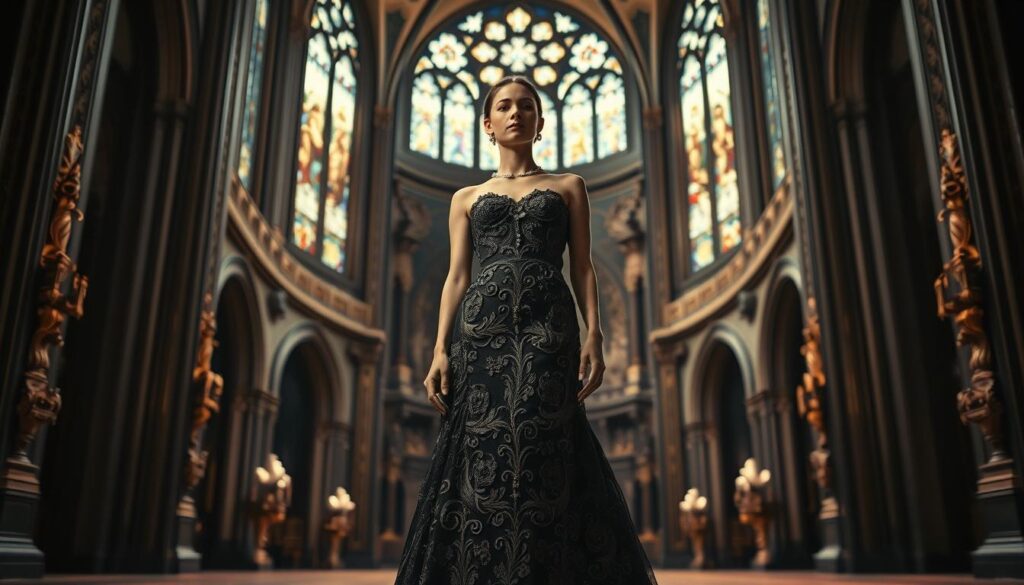
A grand cathedral's ornate interior, dimly lit by stained glass windows. In the foreground, a model stands in a striking couture gown, its intricate embroidery and structured silhouette evoking the rich tapestry of Catholic iconography. Dramatic chiaroscuro lighting casts deep shadows, adding an air of mystery and reverence. The gown's design seamlessly blends sacred motifs with contemporary high fashion, a testament to the enduring influence of the Catholic aesthetic on modern design. The model's pose is one of poise and contemplation, reflecting the fusion of spiritual transcendence and earthly elegance. Against the backdrop of the cathedral's soaring arches and gilded accents, this image captures the essence of "Catholic imagination fashion."

Symbolism, Sacrament, and Sensuality

A 2007 Versace gown demonstrates this duality. Cross-striped patterns transform the body into a living icon, while strategic cutouts celebrate human form. Similarly, Viktor & Rolf’s Shroud-inspired cape whispers about death and resurrection through draped linen textures.

The sacramental lens reshapes how we view clothing. Designers embed hidden meanings: beadwork mimicking water droplets references baptism. Silhouettes framing the body like stained glass windows play with light and shadow. These elements create wearable mysteries that spark curiosity.

Traditional Symbol Modern Translation Designer Example
Rosary beads Metallic chain detailing Dolce & Gabbana 2016
Monstrance shapes Circular necklines Valentino 2019
Liturgical colors Ombré silk gradients Gucci 2021

This aesthetic thrives on contrasts. A gown might pair modest high collars with daring thigh slits – mirroring the tension between sacred vows and earthly desires. After sunset, sequins catch light like votive candles, turning night events into moving altarpieces.

Through this fashion catholic imagination, designers prove spiritual symbols still pulse with life. They reinvent ancient motifs for audiences who may never enter a chapel, yet feel stirred by visual echoes of transcendence.

Catholicism Met Gala: The Fusion of Faith and Fashion

The 2018 cultural phenomenon at New York’s Metropolitan Museum redefined how spiritual heritage interacts with modern style. Visitors witnessed medieval reliquaries displayed beside chrome-plated corsets, creating visual conversations across eight centuries of craftsmanship.

Exhibition Layout and Design Dialogues

Curators carefully separated Vatican-loaned artifacts from contemporary pieces in the Anna Wintour Costume Center. This spatial division honored the sacred nature of historical items while allowing bold comparisons. A suspended Mugler gown mimicking Renaissance Madonnas floated near 17th-century papal tiaras, demonstrating continuity in symbolic storytelling.

Vatican Artifact Modern Counterpart Designer
Gold embroidered cope Beaded silk cape Dior
Silver reliquary cross Chrome necklace ensemble Chanel
Illuminated manuscript Laser-cut leather dress Versace

Star-Studded Sacred Style

Celebrities transformed the red carpet into a living gallery of faith-inspired fashion. Zendaya’s armor-like dress blended medieval warrior aesthetics with delicate metallic draping, capturing Joan of Arc’s legendary resolve. Meanwhile, a bejeweled attendee reinterpreted cardinal robes through crimson sequins and exaggerated shoulders.

The event’s true surprise came through unexpected collaborations. Clergy members discussed textile symbolism with designers, while A-listers asked thoughtful questions about sacred garment preservation. These interactions proved fashion could become common ground for people from vastly different worlds.

The Dynamic Dialogue Between Sacred and Secular

When sacred objects meet celebrity red carpets, unexpected conversations begin. The exhibition’s strict division between church artifacts and fashion pieces sparked debate. Organizers followed religious guidelines for handling consecrated items, but critics argued this separation missed the point. “Religion breathes through culture like air through lungs,” noted one curator.
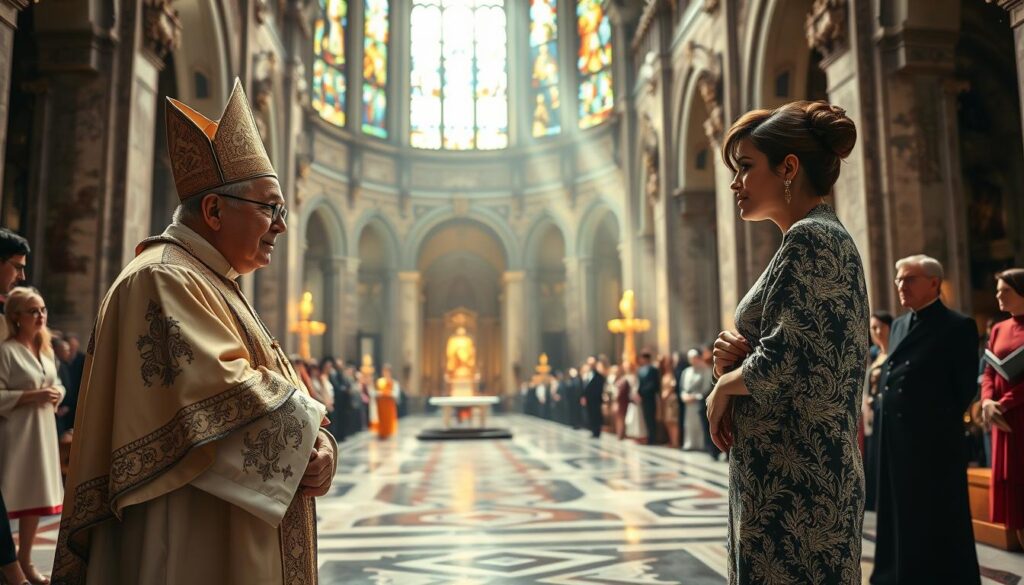
A grand cathedral interior, the light streaming through stained glass windows, casting a kaleidoscope of colors upon the ornate marble floors. In the foreground, an ornately-robed cardinal stands in conversation with a fashionably-dressed socialite, their gestures animated as they engage in a dynamic dialogue, bridging the sacred and the secular. The background is filled with the hushed reverence of worshippers, their gaze transfixed by the grandeur of the space. Soft chiaroscuro lighting adds a sense of reverence and contemplation, while the juxtaposition of the opulent attire and sacred setting creates a striking visual tension, reflecting the fusion of faith and fashion.

Bridging Divine Inspiration and Popular Culture

The gala flipped the script entirely. Clergy members discussed embroidery techniques with designers while comedians shared childhood memories of altar service. This lively exchange revealed how faith traditions could engage modern audiences without losing their essence.

Exhibition Approach Gala Experience Key Difference
Separated sacred/secular Blended spiritual/style Physical vs social spaces
Silent observation Active dialogue Passive vs engaged learning
Historical context only Personal storytelling Academic vs emotional connections

Celebrities became living examples of this bridge-building. A talk show host joked about his old cassock fitting better than his tuxedo. A pop star asked a bishop how her crystal-encrusted gown compared to liturgical vestments. These moments showed people from different worlds finding common ground through shared appreciation for beauty.

The event proved religion doesn’t need special treatment to stay relevant. When sacred symbols mingle freely in cultural spaces, they spark fresh perspectives. This approach could chart a new course for how communities share their deepest values through universal languages like art and design.

Fashion as a Reflection of the Catholic Imagination

Clothing becomes sacred ground where human bodies meet divine ideas. Designers channel the catholic imagination through fabric – transforming saints’ stories into sequined narratives and sacramental rituals into silhouette statements. This creative alchemy turns runways into modern chapels.

Iconography in Designer Collections

Sacred symbols find fresh life when stitched into contemporary designs. A 2023 collection featured hands embroidered with gold thread, echoing Renaissance paintings of saints. Another designer reinterpreted halos as circular headpieces that catch light like stained glass.
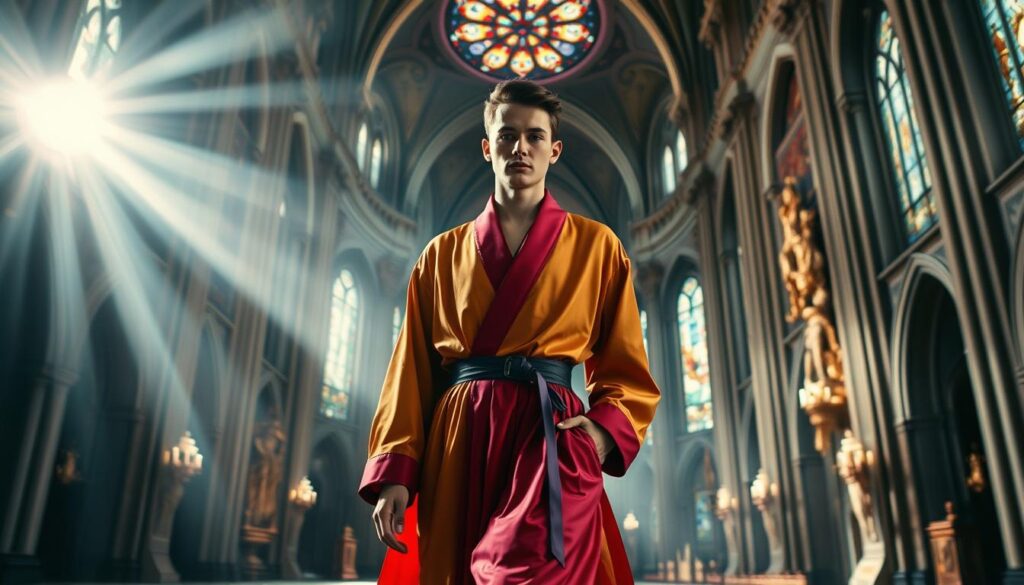
A grand cathedral's interior, bathed in ethereal light, serves as the backdrop for a striking display of Catholic-inspired queer fashion. In the foreground, a model confidently struts, donning a robe-like garment that blends ecclesiastical elements with bold, vibrant hues and intricate, androgynous silhouettes. Their gaze is piercing, challenging traditional norms. The middle ground showcases ornate, gilded altars and stained-glass windows, creating a sense of reverence and transcendence. Shadows and highlights sculpt the model's form, highlighting the fusion of sacred and subversive. The atmosphere is one of reverence, defiance, and a celebration of the intersection between faith, identity, and sartorial expression.

These pieces honor tradition while speaking to modern eyes. “Fashion lets us wear our imagination,” explains curator Lila Marcos. “A beaded gown becomes a walking reliquary – holding stories instead of bones.”

The Role of Cultural and Queer Narratives

LGBTQ artists have long found kinship in religious pageantry. Hanson Ellis notes: “The Church’s dance between sin and forgiveness creates space for radical self-expression.” Designers channel this tension through garments that mix sacred motifs with queer joy.

Robert Mapplethorpe’s leather bodies meet Oscar Wilde’s velvet wit in modern collections. A recent show paired cardinal-red robes with gender-fluid tailoring – proving fashion catholic imagination thrives where rules bend.

Conclusion

Beauty and belief intertwined spectacularly in a museum showcase that redefined sacred aesthetics. The Heavenly Bodies exhibition proved religious symbols carry timeless power, even when reinterpreted through sequins and silk. By blending Vatican artifacts with bold couture, it created a living dialogue between prayer books and runway looks.

This collaboration showed how sacred objects maintain their essence across contexts. Like Origen’s vision of the Church holding both sinners and saints, the event mixed reverence with rebellion. Designers transformed vestments into wearable poetry while keeping their spiritual heartbeat.

The project revealed our shared hunger for meaning. Visitors didn’t just see dresses – they witnessed faith breathing through fabric. As the Metropolitan Museum of Art demonstrated, ancient traditions can spark fresh creativity when we approach them with open hands and curious minds.

Fashion becomes a mirror for our deepest longings. When culture embraces sacred imagination, it crafts bridges where art meets soul – proving beauty remains faith’s universal language.

FAQ

How did the Catholic Church influence historical fashion trends?

For centuries, the Church shaped aesthetics through liturgical vestments, stained glass art, and symbolic motifs like crosses. Designers later drew from these elements, transforming sacred embroidery and regalia into modern couture seen in collections by houses like Versace and Valentino.

What was the "Heavenly Bodies" exhibition about?

The 2018 Metropolitan Museum of Art showcase explored how Catholic iconography—like saints’ halos or sacramental objects—inspired fashion. It featured over 150 pieces, including papal robes loaned by the Vatican and avant-garde designs by Alexander McQueen and Balenciaga.

Why do designers blend religious themes with contemporary style?

Symbols like rosaries or stained glass patterns evoke storytelling, mystery, and tradition. Brands like Dolce & Gabbana use these to merge cultural narratives with modern sensibilities, creating pieces that challenge norms while honoring heritage.

How did celebrities interpret Catholic themes at the Met Gala?

Attendees like Rihanna and Blake Lively wore designs referencing angelic imagery, clerical collars, or jeweled crowns resembling halos. These looks sparked conversations about faith’s role in art and identity, balancing reverence with bold creativity.

Can fashion redefine sacred traditions without disrespect?

While some critics argue it trivializes belief, many designers view it as celebrating cultural legacy. For example, Iris van Herpen’s holographic “nun” ensembles or Jean Paul Gaultier’s corset gowns with cross motifs aim to reinterpret, not mock, spiritual symbolism.

How does queer culture intersect with Catholic-inspired fashion?

Artists like Leigh Bowery or drag performers use liturgical drag to reclaim religious imagery, blending camp and devotion. Designers like Rick Owens explore this tension, using ecclesiastical silhouettes to challenge traditional views on gender and spirituality.
Discover the 7 Powerful Catholic Archangels


Throughout history, spiritual traditions have honored heavenly beings who serve as divine messengers and protectors. Among these, three revered figures stand out in sacred texts: Michael, Gabriel, and Raphael. Their roles as warriors, healers, and guides have shaped religious practices for centuries.

The Church formally recognized these three names during the Council of Rome in 745 AD. Biblical accounts in Tobit and Revelation reference their celestial duties, while Isaiah highlights their connection to divine intervention. Though Scripture confirms there are seven such beings, only Michael, Gabriel, and Raphael appear by name in approved texts.

Four additional figures—Uriel, Raguel, Zerachiel, and Remiel—appear in ancient writings outside canonical Scripture. These powerful entities complete the group often called the Seven Spirits before God’s throne. Their influence extends beyond theology into art, literature, and personal devotion.

This guide explores their unique responsibilities and lasting impact. You’ll learn how Michael defends against evil, Gabriel delivers pivotal messages, and Raphael brings healing. We’ll also examine how these celestial guardians continue inspiring faith communities today.

Key Takeaways

  • Three archangels are officially recognized in Church tradition: Michael, Gabriel, and Raphael
  • The Council of Rome (745 AD) established their formal veneration
  • Biblical books like Tobit and Revelation reference their divine roles
  • Four additional names appear in non-canonical ancient texts
  • These beings influence worship practices and spiritual symbolism
  • Their stories remain relevant in modern religious life

Introduction to the Heavenly Hierarchy

Angelic hierarchies reveal a meticulously structured universe governed by spiritual beings. These pure spirits, as described by St. Thomas Aquinas, exist without physical form yet profoundly influence earthly affairs. Their organization into nine distinct groups—called choirs—reflects their unique roles in divine plans.

Overview of Angelic Beings in Tradition

The highest choir, Seraphim, burns with love for God. Lower ranks like Angels deliver messages to men on earth. This structure bridges celestial realms and human experiences.

Each spirit’s nature differs based on likeness to the Holy Spirit. Dominions oversee divine laws, while Virtues manifest miracles. Archangels stand among the lower choirs, directly interacting with creation.

Purpose of This Ultimate Guide

Our focus illuminates how specific seven archangels operate within this framework. You’ll discover their missions across time—from guiding nations to healing individuals.

Why does this matter today? Understanding these beings clarifies their ongoing role in spiritual journeys. We’ll explore connections between ancient wisdom and modern faith practices.

Historical Roots and Biblical Foundations

Sacred texts and ancient traditions offer fascinating glimpses into celestial guardians. Early believers carefully documented encounters with these divine messengers, creating a bridge between heavenly realms and human experience.

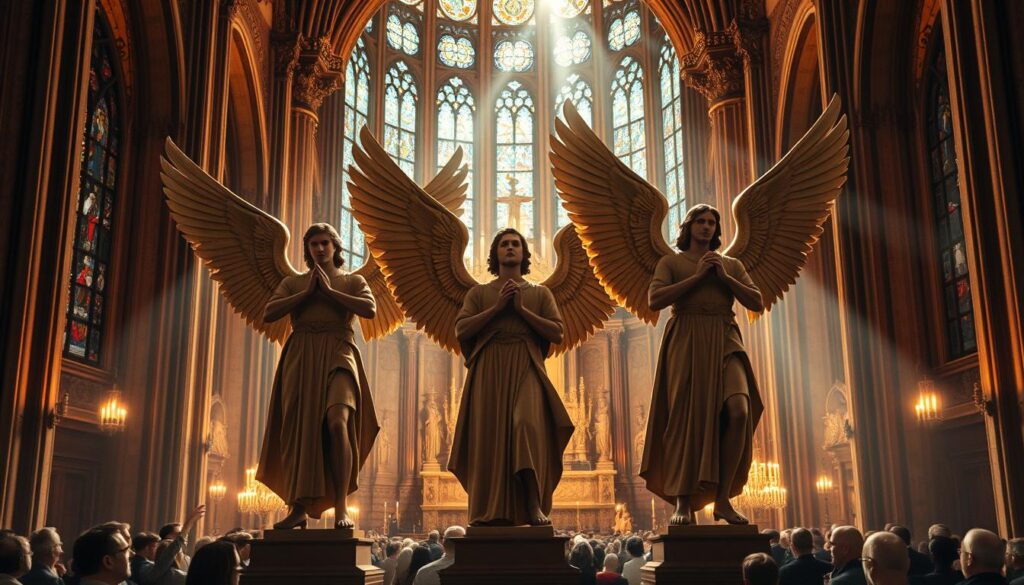
A grand cathedral's stained glass windows cast a warm glow upon a majestic scene. In the foreground, three towering archangels - Michael, Gabriel, and Raphael - stand in reverent poses, their wings unfurled and celestial auras shimmering. Behind them, a magnificent altar adorned with intricate carvings and glowing candles. In the background, a vast and ornate sanctuary filled with the faithful, their upturned faces bathed in the ethereal light. The composition evokes a sense of timeless reverence and the profound weight of biblical tradition. Crisp, realistic details and a harmonious color palette create an awe-inspiring vision of the historical and spiritual foundations of the Catholic archangels.

Scriptural References and Ancient Texts

The Book of Tobit gives Raphael’s famous declaration: “I am one of seven who stand before the Lord.” This passage became foundational for understanding their sacred number. St. John’s visions in Revelation mention seven spirits and trumpet-bearing messengers, reinforcing their role in divine plans.

Isaiah’s writings describe a protector who delivers God’s people, later linked to these celestial beings. While Scripture names only three, extra-biblical texts like the Book of Enoch reveal four additional figures. These writings shaped early Christian thought despite not being officially recognized.

The Council of Rome and Early Church Teachings

In 745 AD, Church leaders gathered under Pope Saint Zachary to address growing superstitions. They affirmed only Michael, Gabriel, and Raphael—names directly tied to sacred texts. This decision protected believers from misguided practices while honoring biblical authority.

Centuries later, Pope Leo XIII’s dramatic vision inspired new prayers for spiritual protection. St. Thomas Aquinas wisely noted that angelic knowledge remains incomplete, reminding us mysteries still surround these heavenly servants. Through Scripture and tradition, their legacy continues guiding faith communities today.

Exploring the Roles and Significance of the catholic 7 archangels

Celestial guardians bridge the gap between divine realms and human existence. Though rooted in sacred scripture, their stories extend beyond written texts into lived spiritual experiences. This duality shapes how believers understand their protective and guiding roles.

Canonical and Non-Canonical Insights

Three messengers stand confirmed in official teachings: Michael as defender, Gabriel as truth-bearer, and Raphael as healer. Their missions reflect direct involvement in human struggles. As one ancient text states: “Flames of devotion become tools of transformation when heaven touches earth.”

Four additional spirits appear in historical writings outside approved texts. These beings complete the sacred group often depicted in art and prayer. Their roles vary from guiding souls to overseeing cosmic balance, though not formally recognized by all traditions.

Aspect Canonical Sources Non-Canonical Texts
Primary Focus Salvation history events Spiritual warfare details
Divine Missions Annunciation, healing Soul guidance, justice
Recognition Church-approved Traditional devotion
Representation Scriptural narratives Artistic symbolism

These powerful spirits operate through two key ways: contemplative worship and active intervention. Their burning love fuels both eternal praise and practical help for men facing earthly challenges. This balance makes them unique among heavenly beings.

Sacred scripture reveals their connection to pivotal moments, while other texts explore daily spiritual support. Together, these sources paint a complete picture of divine care through celestial messengers.

In-Depth Profile: Saint Michael

Warriors of light need champions, and few figures embody divine protection like Saint Michael. His name meaning “Who is like God?” reflects unwavering loyalty to divine authority. Revered as patron of first responders and spiritual warriors, his legacy spans millennia.

Sacred Scripture and Traditional Narratives

Sacred scripture depicts Michael leading celestial armies against rebellious forces. As prince heavenly hosts, he shields communities from harm. Early traditions honored him as Israel’s protector, later becoming the Church’s guardian.

Defender Against Evil and Patronage

Pope Leo XIII’s 1884 vision inspired the famous prayer seeking Michael’s protection against evil. For decades, congregations recited it after Mass. Though less common today, it remains vital in traditional latin mass services.

From medieval art to modern badges, Michael’s sword symbolizes truth triumphing over darkness. His enduring appeal shows how ancient symbols still defend people seeking spiritual strength.

FAQ

How many archangels are officially recognized in Church teachings?

While tradition references several celestial beings, only three—Michael, Gabriel, and Raphael—are named in Scripture and affirmed by doctrines like the Council of Rome (745 AD). Other figures, such as Uriel, appear in non-canonical texts.

What role does St. Michael play in spiritual warfare?

Known as the “Prince of Heavenly Hosts,” St. Michael is invoked for protection against evil. His battles against dark forces, described in Revelation 12:7–12 and the Prayer to St. Michael by Pope Leo XIII, highlight his role as a defender of faith.

Why is St. Gabriel associated with divine communication?

St. Gabriel delivered pivotal messages, like the Annunciation to Mary (Luke 1:26–38). This connection to revelation and prophecy makes him a symbol of God’s guidance during uncertain times.

How does St. Raphael’s ministry differ from other archangels?

Described in the Book of Tobit, Raphael serves as a healer and companion. He’s often linked to physical and emotional restoration, making him a patron for travelers, medical workers, and those seeking reconciliation.

Are there approved devotions to archangels outside the Bible?

Writings like St. Gregory the Great’s homilies and St. Thomas Aquinas’ theological works explore angelic roles. However, practices should align with Church-approved prayers, such as the Litany of the Saints or the Traditional Latin Mass invocations.

What did St. Thomas Aquinas say about angelic hierarchies?

In Summa Theologica, Aquinas describes nine choirs of angels, with archangels serving as messengers. He emphasizes their role in executing divine will while respecting human free will.

How does Pope Leo XIII tie into modern veneration of St. Michael?

After a prophetic vision of evil’s rise, Pope Leo XIII composed the Prayer to St. Michael in 1884. This prayer remains a cornerstone of spiritual defense, especially promoted during the papacy of St. John Paul II.

Zen Catholicism: Finding Harmony in Contemplation


Ruben Habito’s childhood in the Philippines centered on family rosary prayers and Catholic traditions. But as a teenager, he wrestled with a tough question: How could a loving God allow suffering? This doubt deepened when he saw children sleeping on Manila’s streets. His search for answers led him to physics, where he discovered the universe’s hidden connections—like light eventually returning to its source after billions of years.

This revelation shifted his understanding of divinity. Instead of envisioning a distant figure, he saw a boundless force linking all life. This insight guided him to Jesuit training and, later, to Japan. There, he encountered Zen Buddhism through Father Thomas Hand—a meeting that bridged two spiritual worlds.

Stories like Habito’s show how personal struggles often spark profound journeys. After Vatican II in 1965, the Catholic Church encouraged dialogue with other faiths. This openness allowed seekers to blend traditions without abandoning their roots. Military veterans, priests, and everyday people now find stillness through practices like meditation and prayer.

At its core, this path isn’t about choosing one belief over another. It’s about discovering shared truths: the value of silence, the beauty of mystery, and the timeless connection between all beings.

Key Takeaways

  • Blending contemplative practices from different faiths can deepen spiritual understanding
  • Personal challenges often lead to meaningful interfaith exploration
  • The Catholic Church’s post-1965 reforms encouraged cross-religious dialogue
  • Practitioners maintain their core beliefs while embracing complementary wisdom
  • Stillness and meditation serve as bridges between Eastern and Western traditions
  • Shared values across religions highlight universal truths about connection

Exploring Spiritual Heritage and Transformation

For centuries, spiritual seekers have discovered surprising connections between seemingly different traditions. Take Thomas Merton—a Trappist monk who spent years studying Zen meditation. His journey shows how ancient practices can breathe new life into familiar rituals.

When Silence Speaks Louder

Many find that combining prayer with meditation creates deeper awareness. A Jesuit priest once shared: “My morning rosary flows naturally into seated breathing—both become one conversation.” This blend mirrors Ruben Habito’s experience, where Ignatian exercises and Zen postures revealed identical stillness.

Tools for Modern Seekers

Practical integration often starts small:

  • Pairing lectio divina with mindful breathing
  • Using prayer beads as meditation anchors
  • Alternating chant and silence during reflection

Thomas Moore captures this approach perfectly:

“My family roots ground me, but other religions show fresh ways to water those roots.”

Through such blending, many discover their original traditiondeepenedrather than diluted.

This way of spiritual growth isn’t about mixing ingredients—it’s realizing different paths lead to the same table. As one practitioner notes: “After twenty years, I finally see how these things complete each other.”

Embracing “zen catholicism” as a Path to Inner Harmony

Thomas Moore offers a refreshing perspective: “Zen sweeps away assumptions so I can rediscover my faith’s essence.” This approach transforms spiritual practice into a living dialogue rather than a rigid set of rules.

The Role of Meditation, Prayer, and Contemplation

Morning routines often reveal the synergy between traditions. One practitioner describes: “Breathing exercises quiet my mind before reading Psalms—both become doorways to presence.” Such integration mirrors Moore’s view of Zen as a way to revitalize ancient rituals through mindful attention.

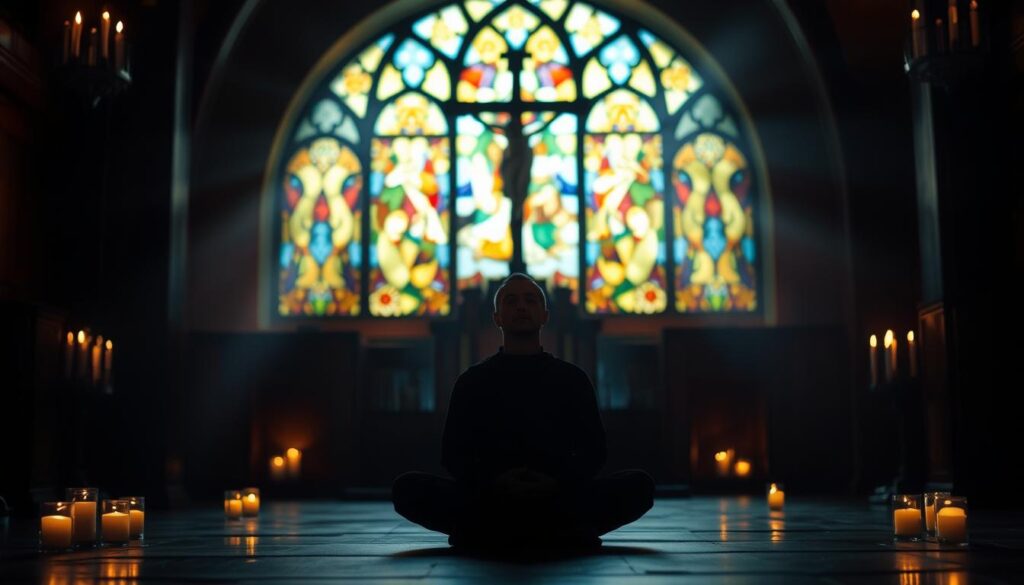
A dimly lit chapel, bathed in the warm glow of candlelight. In the foreground, a figure seated in a lotus position, hands resting gently on their lap, eyes closed in deep contemplation. The middle ground reveals a stained glass window, filtering soft, multicolored light, creating a serene, almost ethereal atmosphere. In the background, a crucifix stands tall, a symbol of the harmony between Eastern and Western spiritual traditions. The scene exudes a sense of tranquility and inner peace, inviting the viewer to join in the meditative, prayerful experience.

  • Start sessions with centering breaths to calm mental chatter
  • Use sacred texts as meditation anchors rather than analytical puzzles
  • End contemplative periods with gratitude-focused prayer

Navigating Doctrinal Differences with Openness

A Benedictine nun shares her experience: “Studying Buddhist teachings didn’t weaken my vows—it made me appreciate the Eucharist’s mystery more deeply.” This echoes Moore’s advice to treat beliefs like clay rather than concrete—malleable yet substantial.

“The Miracle of Mindfulness shows how washing dishes can become holy work,” notes a theology professor. “That’s the thing—these books help us see ordinary moments as sacred ground.”

By focusing on shared goals—compassion, awareness, service—many find their original faith enriched rather than threatened. As one teacher observes: “This path isn’t about changing what you believe, but how you believe it.”

Real-Life Success Stories and Interfaith Testimonies

Stephen Williams spent 22 years maintaining order as a British soldier. Returning to civilian life at 42 left him adrift—until meditation books sparked a unexpected journey. His discovery of Buddhist practices led to three-month retreats at a French monastery, yet an old stained-glass cross there reignited childhood prayers.

From Military Discipline to Spiritual Awakening

“That cross made me whisper the Our Father like I was eight again,” Williams recalls. His Zen training became preparation for deeper Christian exploration. In Rome, 4th-century chapel frescoes and Caravaggio’s dramatic lighting stirred emotions he’d never felt during meditation sessions.

Personal Journeys: Overcoming Life’s Challenges

Thomas Moore found spiritual depth through unexpected interruptions. At Dublin Mass with his family, an elderly man’s clattering suitcase became part of the sacred experience. “The noise didn’t ruin worship—it made it real,” he explains. Both stories show how embracing life’s rough edges can deepen faith.

Experiences in Diverse Religious Settings

Williams’ eventual connection with Opus Dei surprised many. Years of silent Zen practice had honed his focus for Catholic devotion. As he notes: “Different traditions are like musical instruments—each reveals unique aspects of the same symphony.”

These testimonies remind us that spiritual growth often comes through unexpected doors. Whether through sacred art, disrupted rituals, or borrowed practices, seekers find their way home by wandering.

Conclusion

Modern seekers are discovering that ancient wisdom often speaks through unexpected voices. The stories shared here reveal a path where stillness becomes common ground—a space where breathing exercises deepen prayer, and sacred texts gain new resonance through meditation.

This approach thrives through patient practice rather than rigid formulas. As practitioners show, blending methods doesn’t dilute faith but polishes its essence. Shared tools—like mindful service or silent reflection—help bridge divides while honoring each tradition’s uniqueness.

The real magic happens when we stop comparing beliefs and start experiencing connections. A former soldier finds peace in monastery retreats. A theologian discovers holiness in daily chores. These moments remind us that spiritual growth often blooms where we least expect it.

For those called to this way, the journey offers fresh eyes to see their roots. It’s not about replacing rituals but rediscovering their heartbeat—the universal longing for meaning that unites all seekers.

FAQ

How can two distinct traditions coexist in one spiritual practice?

Many find harmony by focusing on shared values like humility, compassion, and seeking truth. Blending contemplative practices from both paths helps deepen self-awareness while honoring core beliefs.

What daily habits support this blended approach?

Simple rituals—like morning meditation paired with evening prayer—create balance. Silent reflection, mindful breathing, and gratitude journaling are practical tools that bridge inner stillness with active faith.

Are there conflicts between doctrines or teachings?

Differences exist, but openness and discernment help navigate them. Emphasizing universal principles—love, service, and connection—over rigid labels fosters unity without dismissing tradition.

Can this path benefit those in fast-paced modern lifestyles?

Absolutely. Techniques like centering prayer or zazen (Zen meditation) offer grounding amid chaos. Stories from veterans, parents, and professionals show how these practices build resilience and clarity.

How do families engage with this approach?

Shared moments of silence, nature walks, or reading spiritual texts together nurture connection. Adapting rituals to fit individual needs ensures inclusivity without pressure.

Where can I learn from others’ experiences?

Books by Thomas Merton or Shunryu Suzuki explore cross-traditional wisdom. Online communities and interfaith workshops also provide relatable stories of growth through challenge and discovery.

The Role of Free Will in Catholicism Explained


What makes us truly human? For centuries, this question has shaped discussions about ethics, spirituality, and our place in the world. At the heart of these conversations lies a powerful idea: the ability to choose our path.

Religious traditions have long emphasized human agency. The Catholic perspective teaches that every person holds the capacity to shape their spiritual journey through decisions. This belief directly impacts how individuals approach concepts like fairness, accountability, and personal growth.

Unlike philosophies that see actions as predetermined, Catholic doctrine highlights genuine choice. Our decisions matter—not just for earthly consequences but for our ultimate relationship with the divine. This understanding creates a framework for concepts like mercy, forgiveness, and spiritual development.

Key Takeaways

  • Human choice plays a central role in Catholic spiritual teachings
  • Moral decisions impact concepts of justice and personal responsibility
  • Catholic teaching rejects strict determinism in human behavior
  • Choice interacts with divine grace in spiritual growth
  • This doctrine supports teachings about salvation and redemption

Introduction to Free Will in Catholic Thought

From coffee preferences to career paths, our daily decisions quietly shape who we become. Catholic teachings emphasize that this power to choose isn’t random—it’s woven into human nature. “Every person carries a spiritual soul with intellect and decision-making capacity,” notes the Catechism, framing choice as fundamental to our design.

Understanding Choice in Daily Living

Consider how morning routines reveal our priorities. Selecting oatmeal over donuts reflects self-care values. Choosing honesty during tough conversations builds trust. These ordinary moments form the bedrock of spiritual growth.

Daily Decision Moral Consideration Long-Term Impact
Work ethic Fairness to colleagues Professional integrity
Family time Relationship nurturing Generational legacy
Charitable acts Compassion practice Community bonds

Modern Challenges to Personal Agency

Today’s culture often blames circumstances for poor choices. Yet Catholic thought maintains that true freedom requires owning our decisions. As Augustine observed, a “good will” seeks upright living—not perfection, but consistent effort toward wisdom.

This perspective answers modern questions about purpose. When we view choices as gifts rather than burdens, responsibility becomes a path to meaning rather than a weight to carry.

Historical Perspectives on Free Will

Philosophers of old laid the groundwork for understanding moral responsibility. Their ideas shaped how later thinkers viewed human agency. Early debates centered on whether our actions stem from necessity or genuine choice.

Ancient Philosophical Roots

Greek thinkers offered contrasting views about decision-making. The Pythagoreans believed souls carried moral debts across lifetimes. This idea hinted at personal accountability long before modern concepts emerged.

Democritus argued every event followed strict physical laws. “Atoms move by necessity,” he claimed, leaving no space for independent choice. Meanwhile, Socrates linked virtue to knowledge—he thought people naturally choose good when they recognize it.

Philosopher Core Belief View on Choice Impact
Pythagoreans Moral accountability through reincarnation Limited self-direction Early responsibility model
Eleatics Universal unity No individual freedom Deterministic framework
Aristotle Experience over theory Humans can reject known good Foundation for voluntary action

Medieval and Early Christian Contributions

Later scholars built on these foundations. Augustine and others blended Greek ideas with spiritual concepts. They explored how divine plans coexist with human decisions.

This fusion created new ways to view moral growth. It acknowledged both external influences and personal responsibility. These discussions remain vital in ethical debates today.

Free Will in Early Christian Teaching

When spiritual leaders began sharing Jesus’ message, they faced unexpected questions about human agency. How could a loving God judge people’s acts if they lacked true choice? This dilemma reshaped ancient ideas about morality.

A dimly lit interior of an early Christian church, sunlight filtering through stained glass windows casting a warm, reverent glow. In the foreground, a group of scholars and disciples gathered around a wise, elderly teacher, engaged in a lively discussion. Their faces express a mixture of contemplation and curiosity as they explore the concepts of free will and divine providence. The middle ground features ornate, carved wooden pews and a simple altar, symbolizing the reverence and devotion of the early Christian community. The background showcases intricate stone arches and columns, hinting at the architectural grandeur of these places of worship. The overall atmosphere conveys a sense of intellectual discourse and spiritual enlightenment within the early Christian tradition.

The creation story gave clarity: if man wasn’t designed to choose good, divine commands would be meaningless. As one early bishop noted, “A puppet can’t love—it only mimics motion.” Moral laws required genuine decision-making capacity in the soul.

Original sin complicated matters. The Fall suggested human nature leaned toward evil, yet redemption through grace offered correction. St. Paul’s letters resolved this tension: “Where sin increased, grace abounded all more” (Romans 5:20).

Early communities tested these ideas daily. Could thieves reform? Should repeat offenders face harsher penalties? These cases proved spiritual growth required both personal action and divine help.

This framework became Christianity’s backbone. It honored human dignity while acknowledging our need for guidance—a balance later thinkers would refine for centuries.

St. Augustine and His Vision of Free Will

Imagine a man who once stole pears for fun becoming history’s most influential thinker on moral choice. This was Augustine’s journey—a transformation from reckless living to profound spiritual insight. His experiences shaped groundbreaking ideas about human agency that still guide religious thought today.

https://www.youtube.com/watch?v=ENDOLGqmO5g

The Dance Between Desire and Divine Guidance

Augustine saw true freedom as alignment with higher truths, not unlimited options. He famously described good will as “the earnest effort to live rightly and reach perfect wisdom.” This wasn’t about flawless behavior, but consistently choosing eternal values over fleeting pleasures.

He argued that every choice reflects what we value most. When passions rule, people chase temporary things like fame or wealth. But when guided by grace, the soul seeks lasting goods—love, justice, and connection with the divine.

Shaping Centuries of Spiritual Understanding

Augustine’s debates with rival groups refined core teachings. To Manichaeans denying responsibility, he insisted: “You can choose better.” To Semi-Pelagians overestimating human effort, he countered: “Divine help makes goodness possible.”

His balance of human agency and heavenly assistance became doctrinal bedrock. Later thinkers built on his view that grace empowers rather than overrides our choices—like wind filling a ship’s sails while the captain still steers.

The Scholastic Synthesis: Thomas Aquinas and Beyond

Medieval thinkers faced a puzzle: How does divine guidance work alongside human decision-making? St. Thomas Aquinas answered by blending philosophy with spiritual insight. His concept of rational appetite reshaped understandings of moral agency—the idea that our choices flow from both desire and reason.

A dimly lit medieval study, illuminated by flickering candlelight. In the foreground, two scholars in hooded robes engage in intense debate, gesturing animatedly as they delve into the intricacies of free will. Behind them, shelves of ancient tomes line the walls, casting long shadows. In the background, a grand, ornate window offers a glimpse of a starry night sky, hinting at the cosmic scale of their philosophical discourse. The scene exudes an atmosphere of intellectual rigor, spiritual contemplation, and the weight of centuries-old tradition.

Thomist Contributions on Will and Grace

Aquinas saw the will as our “hunger for goodness,” always seeking fulfillment but never fully satisfied. While man naturally desires happiness, we freely pick between limited options. As he wrote: “The intellect proposes, but the will disposes.”

Concept Key Idea Role of Grace View of Freedom
Thomism Divine guidance moves us toward good Prepares the soul Cooperates with grace
Molinism God knows all possible choices Works alongside decisions Preserves self-direction

Molinist Perspectives on Conditional Future Events

Luis de Molina later proposed scientia media—God’s knowledge of what we’d choose in any situation. This “middle knowledge” respects human freedom while affirming divine oversight. Imagine a chef who knows exactly how guests will season their soup without controlling their hands.

Both schools agree: Our power to act matters. Whether through Thomist “premotion” or Molinist collaboration, they show how grace elevates rather than erases human agency. As Aquinas taught, “The end of every man lies in his own hands—and God’s.”

catholicism free will in Modern and Contemporary Thought

In today’s world of curated feeds and AI recommendations, maintaining authentic agency feels increasingly complex. Catholic thought offers a compass for modern individuals seeking purpose amid competing influences. This ancient wisdom meets cutting-edge questions about what it means to choose well.

A grand cathedral's interior, bathed in warm, reverent light. At the center, a heated debate unfolds between two Catholic scholars, their gestures animated as they argue the complexities of free will. Stained glass windows cast kaleidoscopic hues, lending an air of contemplation. Ornate pews and ornaments hint at the rich history and tradition of the faith. In the background, congregation members observe the discussion, their expressions ranging from pensive to passionate. The scene conveys the intellectual rigor and spiritual gravity of the modern Catholic free will debate.

Personal Responsibility in a Post-Modern World

Many now view freedom as unlimited personal expression. Yet Catholic teaching frames true liberty as choosing goods that uplift both self and community. A young professional might ask: Does my career path serve only me, or contribute to society’s flourishing?

Cultural View Catholic Perspective Practical Outcome
Autonomy as ultimate goal Freedom ordered toward truth Balanced decision-making
Relativism in ethics Moral absolutes guide choices Clearer life direction
Isolation in decisions Community shapes responsibility Stronger social bonds

The Ongoing Theological Debate

Recent neuroscience discoveries have sparked fresh discussions. Can brain chemistry explain all choices? Catholic thinkers respond: Science reveals how we decide, but not why we value certain outcomes over others.

The interplay between predestination and human agency remains vital. As one theologian notes: “God writes our story with us, not for us.” This partnership model preserves both divine sovereignty and human dignity.

Modern applications abound. From environmental policies to end-of-life care, Catholic principles help people navigate ethical gray areas. The Church’s teachings continue evolving while maintaining core truths about man‘s role in shaping his life journey.

Protestant Reformers and the Challenge to Free Will

The 16th century shook religious foundations with bold new ideas about human agency. Leaders like Martin Luther and John Calvin argued divine control leaves no room for self-directed choices. Their teachings sparked debates that still shape Christian thought today.

Luther’s Determinism versus Free Will

Luther’s writings dismissed autonomous decision-making. In “De Servo Arbitrio,” he claimed man lacks power to choose good or evil, comparing humans to horses ridden by God or Satan. Every action, he insisted, flows from divine necessity.

Calvin expanded this view, teaching righteous acts only occur when grace compels them. He believed God wills all outcomes, making human effort irrelevant. This strict predestination framework erased moral cooperation.

The Council of Trent countered by affirming human capacity to accept divine help. While grace starts spiritual growth, they declared people retain freedom to partner in salvation throughout time. This balanced divine sovereignty with personal responsibility.

FAQ

How does Catholic teaching define human freedom?

Human freedom is seen as the power to act deliberately, guided by reason and moral responsibility. It allows individuals to choose good or evil, shaping their relationship with God and others through conscious decisions.

How do grace and human choice coexist in Catholic theology?

Divine grace empowers people to pursue holiness, but it doesn’t override personal agency. The Church teaches that God’s help and human effort work together, avoiding both rigid determinism and the idea that salvation is earned through works alone.

What role did St. Augustine play in shaping views on moral responsibility?

Augustine emphasized that sin weakens humanity’s ability to choose good without divine aid. His writings clarified how human weakness and God’s mercy interact, influencing doctrines on original sin and redemption.

How did Thomas Aquinas integrate philosophy with theology on this topic?

Aquinas blended Aristotle’s ideas with Christian thought, framing freedom as the intellect guiding the will toward truth. He stressed that virtue and grace refine choices, helping align desires with eternal happiness.

What is Molinism, and how does it address divine knowledge?

Proposed by Luis de Molina, this theory suggests God knows how individuals would freely act in any circumstance. It balances divine sovereignty with human liberty, showing how God’s plan incorporates our decisions without forcing them.

How do modern Catholics apply free will to ethical challenges?

Issues like social justice, bioethics, and environmental stewardship require using freedom to honor human dignity. The Church encourages discernment, prayer, and community support to navigate complex moral landscapes.

How does Catholic teaching differ from Protestant views on human agency?

While reformers like Martin Luther emphasized predestination, Catholicism rejects fatalism. The Council of Trent affirmed that cooperation with grace is possible, preserving accountability for one’s actions.

Why is free will essential for understanding love and justice?

Authentic love requires voluntary self-giving, not coercion. Similarly, justice assumes people can be held responsible for their actions, making freedom foundational to moral order and personal growth.

Can human desires ever fully align with divine purpose?

Through spiritual growth and sacraments like confession and communion, Catholics believe desires can be purified. This process, while gradual, helps individuals embrace goodness more freely and wholeheartedly.

Catholicism’s Perspective on the Relationship Between Faith and Works


Exploring how belief and action intertwine offers a window into one of Christianity’s most profound teachings. For centuries, the Catholic Church has emphasized that spiritual growth isn’t just about what we think—it’s also about what we do. This balance shapes how millions live their lives, blending prayer with service and reflection with action.

Many wonder why this topic sparks such deep discussion. While some traditions prioritize belief alone, Catholic doctrine teaches that genuine spirituality requires both interior conviction and outward expression. Historical debates, like those during the Council of Trent, refined this understanding to address misunderstandings still prevalent today.

This isn’t merely theoretical. The integration of belief and practice influences daily choices—from volunteering to acts of kindness. By examining Scripture and tradition, we’ll uncover how these elements coexist harmoniously, offering guidance for modern spiritual journeys.

Key Takeaways

  • The Catholic Church views belief and action as inseparable parts of spiritual life.
  • Historical councils helped clarify misunderstandings about salvation and human effort.
  • Daily practices reflect the connection between personal conviction and community service.
  • This teaching addresses common questions raised in interdenominational dialogues.
  • Understanding this balance provides practical guidance for living out spiritual values.

Understanding Justification in Catholic Theology

At the heart of spiritual renewal lies a concept often misunderstood: justification. Unlike common assumptions, it’s not just about being declared righteous—it’s about becoming righteous through divine partnership. This transformative process reshapes hearts and actions simultaneously.

The Interplay of Grace and Good Works

Grace acts like sunlight for a plant—it’s freely given yet essential for growth. The Council of Trent clarified that “none of those things that precede justification… merit grace.” This means human effort doesn’t earn God’s favor. Instead, grace sparks our capacity to live virtuously.

Good works naturally follow, like fruit growing from healthy roots. Serving others or practicing patience becomes a response to grace, not a bargaining chip. As the Catechism notes, holiness isn’t self-made—it’s cooperation with God’s gifts.

Insights from the Catechism and Council of Trent

The Catechism Catholic Church avoids reducing salvation to formulas. Sections 1987-1995 describe justification as both forgiveness and inner renewal. Trent’s teachings echo this, calling it “sanctification of the inner man.”

These sources emphasize God’s initiative. Even our desire to do good flows from grace. This counters the idea that rituals or deeds alone secure salvation. Instead, transformed lives become living proof of divine love at work.

Historical Context and the Council of Trent

When theological disputes divided Christians, Trent emerged as a defining moment for doctrine. The 16th century saw Europe gripped by questions about grace, human effort, and divine partnership. In response to reformers like Martin Luther, who critiqued certain practices, the Catholic Church convened the Council of Trent to clarify its teachings.

Debating Justification After the Reformation

The Council’s Decree on Justification aimed to balance divine grace with human cooperation. Canon 9 famously states:

“If anyone says that the sinner is justified by faith alone… let him be anathema.”

Though “anathema” sounds harsh today, it simply meant a formal disagreement at the time. Trent emphasized that salvation requires both God’s gift and our willingness to live by it.

Political tensions influenced the Council’s tone, but its core message focused on unity. Leaders examined Scripture to show how inner renewal leads to outward action. This wasn’t about earning favor—it was about responding to grace.

Aspect Protestant View Trent’s Response
Role of Faith Primary for salvation Necessary but incomplete alone
Human Effort No merit Cooperates with grace
Good Works Result of faith Essential expression of faith

Modern dialogues now highlight shared values. Understanding this history helps bridge divides, showing how both traditions value divine love and human response.

Defining “Faith Alone” in Catholic Teaching

Words often carry hidden layers of meaning, especially in religious dialogue. While many assume the Catholic Church rejects “faith alone,” history reveals a more nuanced stance. Pope Benedict XVI once surprised audiences by stating:

“Luther’s phrase ‘faith alone’ is true, if it is not opposed to faith in charity, in love.”

A grand cathedral's interior, dimly lit by stained glass windows, casts a warm, reverent glow. In the foreground, a solitary figure kneels in prayer, their face serene and contemplative, conveying the essence of "faith alone." The middle ground features ornate wooden pews and intricate architectural details, hinting at the rich tradition and history of Catholic teachings. The background recedes into a sense of mystery and transcendence, as if the divine presence permeates the space. The scene is captured with a cinematic, wide-angle lens, creating a sense of scale and grandeur, inviting the viewer to engage with the profound nature of this Catholic tenet.

This perspective hinges on living faith—belief that transforms through love. Think of it like a tree: roots (faith) must produce fruit (actions) to show life. Intellectual agreement alone resembles a plastic plant—present but lifeless.

Clarifying Misinterpretations of ‘Faith Alone’

Centuries before Reformation debates, figures like Thomas Aquinas used “faith alone” language. Their focus? How belief operates, not whether deeds matter. The Church distinguishes between:

  • Faith as mere mental agreement
  • Faith alive through love and service

For example, volunteering at a shelter isn’t earning points—it’s love in motion. This aligns with Benedict’s view: true belief unites us to Christ’s loving life.

Miscommunication often flares when Catholic-Protestant discussions use identical terms differently. Imagine two friends saying “rock” but meaning boulder vs. gemstone. Clarifying definitions builds bridges instead of walls.

Practical tip? When talking with Protestant friends, emphasize shared values like Christ-centered living. Differences often shrink when we ask, “What do you mean by that phrase?”

Exploring catholicism faith and works in Daily Life

How does an ancient theological debate shape modern decisions? The answer lies in quiet moments—helping a neighbor carry groceries, choosing honesty during tax season, or listening patiently to a struggling friend. These ordinary acts become extraordinary when rooted in spiritual conviction.

The Nature of Justification as a Gift

Imagine receiving a birthday present wrapped in gold foil. You didn’t earn it—it’s freely given. Catholic teaching describes justification similarly: a divine gift, not a paycheck for perfect behavior. As the Catechism states, grace arrives first, like morning light breaking through shutters.

This changes everything. A parent caring for a sick child isn’t “scoring points”—they’re responding to love already received. Even small choices, like resisting gossip, flow from gratitude rather than obligation.

Good Works as an Expression of Faith

Consider community gardens. Seeds grow into tomatoes and zucchinis because soil, sun, and water work together. In the same way, good works blossom when spiritual roots run deep. Volunteering at food banks or mentoring coworkers aren’t checklists—they’re love made visible.

Why do actions matter if grace comes first? Think of friendship. You don’t earn a friend’s care, but shared experiences strengthen bonds. Serving others deepens our connection to divine love while helping those around us.

Practical tips for balancing confidence and growth:

  • Start small: Hold doors open or donate unused clothes
  • Reflect daily: How did today’s choices reflect spiritual values?
  • Avoid extremes: Neither complacency nor perfectionism

Biblical Foundations: Scriptural Interpretations

Why does a New Testament letter spark centuries of discussion? St. James cuts to the core with bold statements like, “Faith without works is dead.” His words challenge believers to examine how belief translates into tangible care for others.

A dimly lit study with heavy oak furniture, a large leather-bound Bible open on an ornate wooden desk. Beams of warm, golden light filter through stained glass windows, casting a reverent atmosphere. In the foreground, a quill and parchment sit ready, as if to capture the scholarly exegesis of the biblical passage "James 2:24" - a central tenet of the relationship between faith and works. The scene evokes a sense of contemplation and the careful, thoughtful unpacking of scripture to uncover its theological implications.

Analysis of James 2:24 and Its Context

When James declares people are “justified by works and not by faith alone,” he addresses a specific issue. Early Christians claimed deep belief while ignoring neighbors in need. His famous example? Refusing to feed the hungry while offering empty blessings.

The Council of Trent later clarified this verse doesn’t contradict Paul’s teachings. Instead, it highlights how living faith matures through action. Like a sapling needing water, spiritual growth depends on both divine grace and human response.

Scriptural Basis for Faith and Works

Jesus’ parables reinforce this balance. The Sheep and Goats story ties eternal destiny to practical acts: feeding strangers or visiting prisoners. Paul echoes this in Galatians 5:6, calling believers to “faith working through love.”

Biblical Text Focus Role of Action
James 2:14-26 Community responsibility Proof of genuine belief
Matthew 25:31-46 Final judgment Service as worship
Galatians 5:6 Relational faith Love in motion

Modern readers often miss these connections. Understanding context—like James correcting hypocrisy versus Paul combating legalism—helps resolve surface contradictions. Both authors agree: authentic spirituality transforms hearts and hands.

The Role of Baptism in Justification

Water shapes landscapes silently yet powerfully—much like baptism molds spiritual life. This sacrament isn’t just a ritual. It’s the doorway where divine grace meets human existence, initiating a lifelong journey of transformation.

A serene, dimly lit cathedral interior, the stained glass windows casting a warm, ethereal glow. In the foreground, a priest stands before a baptismal font, his robes flowing gracefully as he pours holy water over the head of a kneeling congregant, their face radiating a sense of spiritual renewal and divine grace. The background is blurred, drawing the viewer's focus to the central sacramental act, conveying the sacred and transformative nature of baptism. Soft, diffused lighting illuminates the scene, creating a contemplative and reverent atmosphere.

Baptism as the Source of Faith and Grace

The Catholic Church teaches that baptism works ex opere operato—”by the work performed.” Unlike Martin Luther’s view that “the power depends… on the faith of the one who receives it,” Catholic doctrine emphasizes God’s action. As the Catechism states, this gift operates “by Christ’s power,” independent of human merit.

Infant baptism illustrates this beautifully. A baby can’t profess faith or perform works. Yet the Church sees this act as God’s grace initiating salvation before conscious response. Prevenient grace—love that precedes human effort—prepares the soul for lifelong growth.

Aspect Catholic View Protestant Emphasis
Sacramental Power Comes from Christ Depends on recipient’s faith
Infant Baptism Valid through God’s promise Often delayed until belief
Assurance Rooted in divine action Tied to personal conviction

This understanding shapes everyday spirituality. Parents bringing infants for baptism aren’t checking boxes—they’re trusting divine initiative. Over time, this gift of God fuels acts of love, proving that grace precedes and enables human response.

Practical implications ripple outward. If salvation starts with God’s promise, believers live from gratitude rather than anxiety. Every charitable deed becomes a “thank you” to the One who loved us first.

Progressive Growth in Righteousness

Spiritual growth resembles tending a garden—it thrives through daily care and seasons of renewal. Catholic teaching sees justification not as a finish line but a lifelong journey. Like a sapling becoming an oak, believers grow stronger through repeated choices that align with divine grace.

Justification as an Ongoing Process

The Council of Trent described this growth as “increasing in justice” through Christ’s gifts. Imagine learning piano: early efforts feel clumsy, but practice brings fluency. Similarly, good works—like volunteering or forgiving others—deepen our capacity to reflect divine love over time.

The Transformation of the Inner Person

This process reshapes hearts before altering habits. A grumpy neighbor might slowly become patient through prayer. A selfish impulse might yield to generosity after receiving communion. Setbacks occur, but sacraments like reconciliation offer fresh starts.

Three keys nurture this growth:

  • Consistency: Small daily choices matter more than grand gestures
  • Community: Shared worship strengthens personal resolve
  • Compassion: Serving others mirrors God’s ongoing work within us

This vision transforms Christian life from a checklist to a dynamic relationship—where every act of love reveals grace’s quiet power.

FAQ

How does the Catholic Church view the connection between belief and actions?

The Church teaches that genuine belief and loving actions are inseparable. Grace empowers believers to live out their trust in God through service, prayer, and charity, reflecting St. James’ teaching that “faith without works is dead.”

What role does grace play in becoming righteous according to Catholic doctrine?

Grace is God’s free gift that cleanses sin and transforms hearts. While humans cooperate through obedience and service, salvation originates from divine mercy—not human effort—as affirmed by the Council of Trent.

Why did the Council of Trent reject “faith alone”?

Trent clarified that trust in Christ cannot exist without a life changed by love. This responded to Reformation-era claims that minimized the necessity of holy living, stressing that deeds flow naturally from authentic belief.

Does baptism impact how someone is made right with God?

Yes. Baptism washes away original sin, infuses grace, and initiates a lifelong journey of discipleship. It’s the sacrament where believers first receive justification and the strength to pursue holiness.

How does daily Christian living reflect the balance of belief and deeds?

Acts of mercy, honesty, and worship aren’t earned rewards but responses to God’s love. Like St. Paul, Catholics see such works as fruits of the Spirit—evidence of an inward renewal.

What does James 2:24 mean when it says we’re “justified by works”?

This verse emphasizes that true trust in Christ reshapes behavior. James isn’t contradicting Paul but showing that living faith naturally produces obedience, proving its authenticity.

Is being made righteous a one-time event or ongoing process?

It’s both. Initial justification occurs at baptism, but believers continually grow in holiness. Through sacraments and repentance, God’s grace deepens their capacity to reflect His love.

How do Martin Luther’s views differ from Catholic teaching on this topic?

Luther emphasized “faith alone” for salvation, while the Church teaches that grace-inspired deeds are essential. Catholicism sees works not as earning salvation but as cooperating with God’s transformative gift.