Recent Posts

Exploring the Diverse Catholic Denominations


What does it mean to be part of a universal faith community? The concept traces back to the Ancient Greek word katholikós, meaning “universal.” This idea of shared beliefs across cultures and generations remains central to Christian identity today.

For centuries, followers have interpreted this universality through different lenses. The 5th-century Vincentian Canon defined it as “what has been believed everywhere, always, and by all.” Yet across continents, local customs and historical developments created distinct expressions of worship.

From Eastern liturgical practices to modern independent movements, these groups share core elements like apostolic succession. They also maintain unique traditions that reflect their cultural contexts. This blend of unity and diversity forms the heartbeat of the global faith community.

Key Takeaways

  • The term “catholic” originates from Greek, emphasizing universal beliefs embraced by diverse groups
  • Over 20 distinct churches maintain communion with Rome while preserving unique traditions
  • Apostolic succession remains a unifying thread across most denominations
  • Cultural heritage shapes liturgical practices in different regions worldwide
  • Independent movements demonstrate ongoing evolution within the faith

Introduction to the Diverse Catholic Denominations

How do global believers express shared spiritual roots through distinct practices? The answer lies in the rich variety of churches united by core Christian faith principles. From ancient Eastern rites to modern reform movements, these groups maintain sacraments and apostolic succession while celebrating unique cultural identities.

Three major branches form the foundation of this spiritual mosaic. The Eastern Orthodox churches preserve early Christian rituals with Byzantine influences. Anglican communities blend traditional liturgy with localized governance structures. Independent movements often reinterpret ancient practices for contemporary contexts.

What unites these diverse expressions? Four key elements stand out:

  • Sacramental worship rooted in early church traditions
  • Connection to historical apostolic leadership
  • Structured liturgical frameworks
  • Commitment to serving local communities
Denomination Liturgical Style Cultural Influence
Eastern Orthodox Byzantine chant Greek/Slavic traditions
Anglican Communion Book of Common Prayer English heritage
Independent Catholic Modern adaptations Local community needs

These faith communities demonstrate how universal teachings adapt to regional histories. A Coptic Orthodox service in Egypt feels distinct from a Lutheran Mass in Minnesota, yet both honor the same essential creed. This balance between unity and diversity continues to shape Christian faith experiences worldwide.

History and Evolution of Catholic Traditions

How did ancient rituals evolve into the diverse practices we see today? The answer lies in two millennia of spiritual development shaped by cultural shifts and theological debates. Early believers laid foundations that still influence modern worship patterns.

Foundations in Early Christianity

The New Testament communities established core traditions through shared meals and baptismal rites. By the 4th century, five patriarchates guided the growing church under the Pentarchy system. “The church fathers built upon apostolic teachings like layers of sacred architecture,” notes historian Robert Louis Wilken.
history of Christian traditions

  • Episcopal leadership structures
  • Standardized liturgical formulas
  • Doctrinal statements about Jesus Christ’s nature

Major Schisms and Reformation Impact

The 11th-century East-West split created distinct approaches to sacraments and authority. Centuries later, the Protestant Reformation challenged medieval practices, leading to new churches being founded across Europe. Each division forced communities to clarify their core beliefs.

Landmark councils like Ephesus (431 CE) settled crucial debates about Mary’s title as “God-bearer.” These decisions preserved unity while allowing regional variations. Today’s global faith landscape reflects centuries of such adaptations – proof that tradition grows through both preservation and change.

Key Doctrines and Beliefs in Catholicism

What unites millions of believers across different cultures and continents? Shared spiritual principles form the bedrock of their faith journey. These teachings create a common language for communities separated by geography but connected through ancient traditions.

The Nicene Creed and Apostolic Succession

The 4th-century Nicene Creed remains Christianity’s most universal statement of belief. It clarifies core ideas about the Trinity and Jesus Christ’s divine-human nature. Nearly all major churches recite this creed during worship, preserving doctrinal unity.

Apostolic succession acts as a living bridge to early Christian leaders. Bishops trace their authority through an unbroken line of ordination stretching back to Christ’s original followers. This system maintains continuity while allowing cultural adaptations in practice.

  • Seven sacraments mark life’s milestones with sacred rituals
  • Eucharistic worship affirms Christ’s real presence in communion
  • Mary’s role as God-bearer inspires special devotion
Core Doctrine Significance Key Elements
Nicene Creed Defines essential beliefs Trinity, Incarnation, Church unity
Apostolic Succession Ensures historical continuity Bishop ordination lineage
Real Presence Central to Eucharistic worship Transformed bread and wine

These teachings shape how communities understand their relationship with the divine. The Holy Spirit’s work through sacraments creates what many describe as “heaven touching earth” during worship. Such shared experiences reinforce the global Christian faith while honoring local expressions.

Sacraments and Ritual Practices in the Catholic Church

Sacred rituals shape spiritual journeys in profound ways. Through symbolic actions and shared traditions, believers connect with divine mysteries that transcend time. These practices form a living bridge between ancient roots and modern faith experiences.

Pathways to Spiritual Growth

Seven sacred rites mark key moments in a believer’s life. Baptism opens this journey, cleansing the soul and welcoming new members into the faith community. “Through water and spirit, we become children of God,” explains theologian Scott Hahn.
Catholic liturgy rituals

The Eucharist stands as the heart of worship. Participants receive what they believe to be Christ’s body blood through consecrated bread and wine. This meal strengthens communal bonds while offering personal nourishment.

Sacrament Purpose Key Elements
Baptism Spiritual rebirth Water, oil, white garment
Confirmation Strengthening faith Chrism oil, laying on hands
Eucharist Divine nourishment Bread, wine, altar
Penance Reconciliation Confession, absolution

Language of Symbols

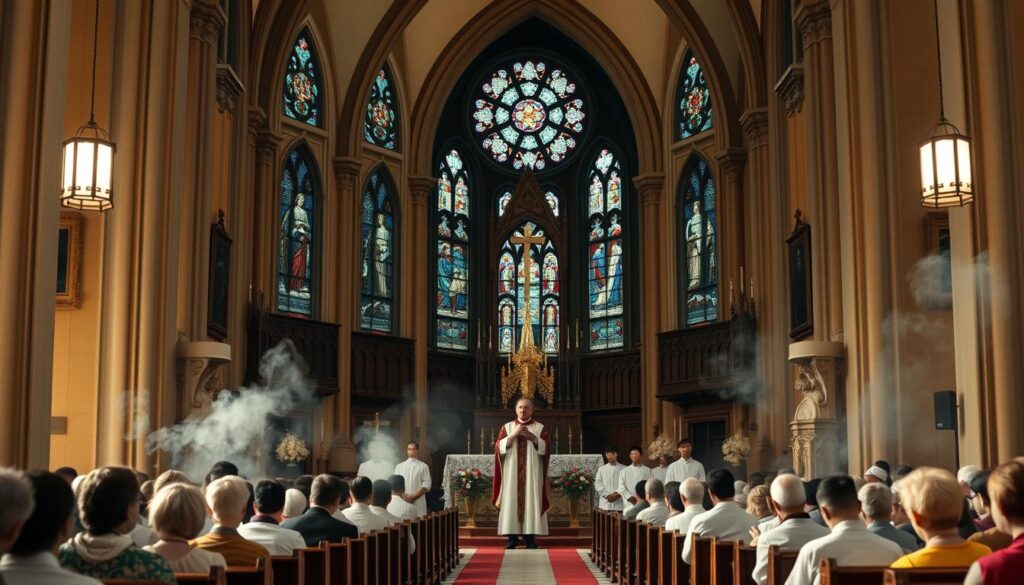
Ritual actions speak louder than words in many services. The Sign of the Cross begins prayers, tracing Christ’s sacrifice from brow to heart. Incense rising like prayers creates multisensory worship experiences.

Vestments and sacred art tell stories through color and texture. Gold represents divine glory, while purple signals penitence. These visual cues help worshippers engage with timeless truths in fresh ways.

Through these means of grace, ordinary objects become channels for extraordinary encounters. Water cleanses, oil heals, and flame illuminates – transforming daily life into sacred space.

Influences of the Second Vatican Council on Catholic Life

The Second Vatican Council reshaped modern faith communities in ways still felt today. From 1962 to 1965, leaders reimagined how ancient beliefs could thrive in a changing world. This historic gathering sparked reforms that touched everything from Sunday services to global relationships.
Second Vatican Council changes

Worship transformed as altars turned toward congregations and local languages replaced Latin. Laypeople gained new roles – reading scriptures or distributing communion. “The liturgy became a conversation rather than a performance,” observed one parish volunteer.

Modern Interpretations and Traditional Responses

Not everyone welcomed these changes. Some communities embraced fresh approaches to social justice and interfaith dialogue. Others clung to familiar rituals, fearing loss of sacred identity. This tension birthed two main perspectives:

  • Progressives pushing for gender equality in leadership
  • Traditionalists preserving Latin Mass and strict doctrines

The Council’s vision of a church engaged with contemporary issues continues to evolve. Recent popes have balanced innovation with ancient practices, like Francis encouraging environmental care while upholding core teachings. This dance between old and new keeps the global community both rooted and responsive.

As time passes, believers face the same challenge: honoring shared heritage while addressing modern life’s complexities. The Council’s legacy reminds us that growth often springs from respectful dialogue between different viewpoints.

Overview of Liturgical Practices Across Denominations

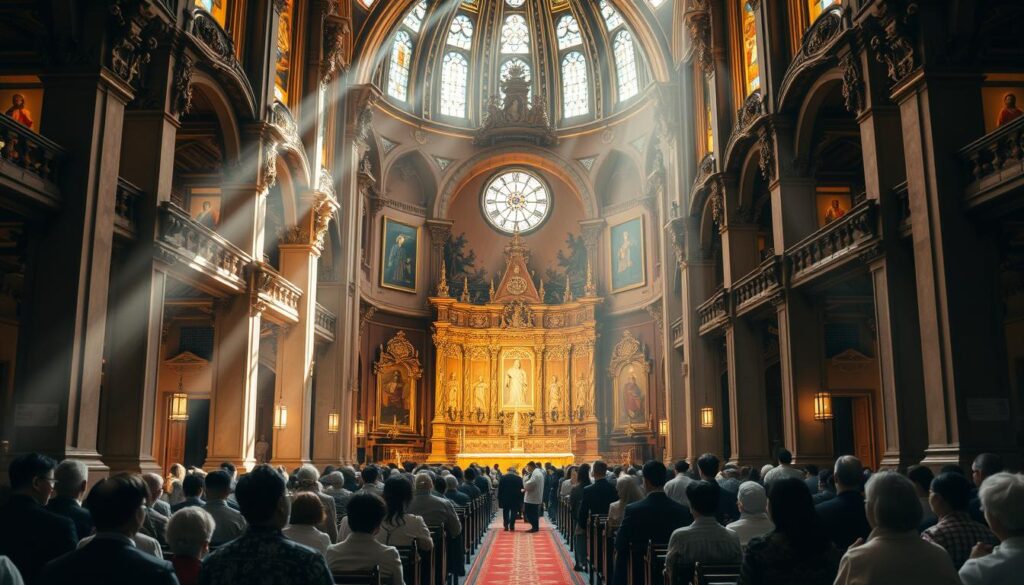
Worship styles across Christian communities reveal a beautiful paradox – shared faith expressed through distinct cultural lenses. From incense-filled Byzantine chapels to guitar-accompanied modern services, believers celebrate the same core truths in strikingly different ways.

The Roman Rite dominates Western churches with its Latin-rooted structure. Think solemn processions, Gregorian chants, and priests facing altars. Yet even here, variations emerge. “Our Spanish parish uses castanets during feast days,” shares Maria Gonzalez from New Mexico. Local flavors blend seamlessly with ancient patterns.

Eastern traditions offer sensory-rich experiences. Coptic services feature hand-held cymbals, while Syrian churches use curtained sanctuaries. These practices aren’t just aesthetic – they’re theological statements about God’s mystery. As Father Markos explains: “Our liturgy isn’t performed, it’s lived.”

Three key elements unite these diverse expressions:

  • Scripture-centered worship rhythms
  • Sacramental focus on Christ’s presence
  • Communal participation in sacred rituals

Modern communities creatively adapt these foundations. Some blend ancient hymns with projection screens, others host outdoor Eucharistic picnics. This flexibility keeps traditions alive while speaking to new generations. Whether through whispered Latin or upbeat gospel choirs, the heart of worship remains unchanged – a people united across time and culture.

Cultural Impacts on Catholic Faith and Community

Cultural diversity breathes life into shared spiritual practices across the globe. From vibrant processions in Latin America to contemplative chants in Asia, local churches weave their heritage into worship while honoring universal truths. This dynamic interplay keeps ancient teachings relevant in modern contexts.

Local Expressions, Universal Heart

Faith communities worldwide demonstrate how sacred traditions adapt without losing their essence. In Kenya, some parishes blend traditional dance into Sunday services. Filipino devotees drape statues in indigenous fabrics during feast days. These practices show how ecclesial traditions grow through cultural dialogue.

Balancing unity with diversity requires creativity. Many churches now use native instruments during Mass or incorporate local art into sacred spaces. Such adaptations help faith resonate deeply while maintaining core doctrines. A priest in New Mexico notes: “Our Navajo members feel Christ’s presence more fully when rituals reflect their worldview.”

This approach strengthens community bonds and nurtures spiritual growth. By honoring both global connections and regional identities, believers create a living tapestry of worship. The result? A richer, more inclusive expression of shared truths that spans the world.

FAQ

What defines a denomination within the Church founded by Jesus Christ?

Denominations often emerge from differences in interpreting scripture, traditions, or governance. Groups like the Eastern Orthodox or Anglican Communion split historically over authority disputes, yet many share core beliefs like the Nicene Creed and sacraments.

How did the Second Vatican Council change worship practices?

The Council (1962–1965) encouraged using local languages in liturgy instead of Latin, promoted lay participation, and fostered dialogue with other faiths. While some embraced these reforms, others preserved pre-Vatican II traditions, like the Tridentine Mass.

Why do rituals like the Eucharist vary between communities?

Cultural contexts and historical developments shape practices. For example, Byzantine rites use leavened bread, while Roman rites use unleavened hosts—both affirming the Real Presence of Christ but reflecting distinct ecclesial traditions.

Are teachings like apostolic succession accepted by all believers?

Apostolic succession—the unbroken lineage of bishops from the original apostles—is central to Roman Catholicism and Orthodoxy. However, Protestant groups, born from the 16th-century Reformation, often reject it, prioritizing scripture alone (*sola scriptura*).

How do local customs influence universal doctrines?

Core doctrines remain consistent, but expressions adapt. For instance, Marian devotions in Mexico (Our Lady of Guadalupe) or Poland (Black Madonna) blend theology with cultural identity, showing how faith interacts with regional heritage.

What role do the Seven Sacraments play across different rites?

Sacraments like Baptism and Eucharist are universal, but their celebration differs. Eastern Churches emphasize mysticism (e.g., Chrismation post-baptism), while Western rites focus on catechetical preparation, reflecting diverse theological emphases.

Did the Protestant Reformation impact Catholic traditions?

Yes. The Council of Trent (1545–1563) reaffirmed doctrines like transubstantiation and clerical celibacy in response to Reformation critiques. This solidified distinct identities between Protestant churches and those maintaining communion with Rome.
Catholic Last Rites: A Comforting Tradition


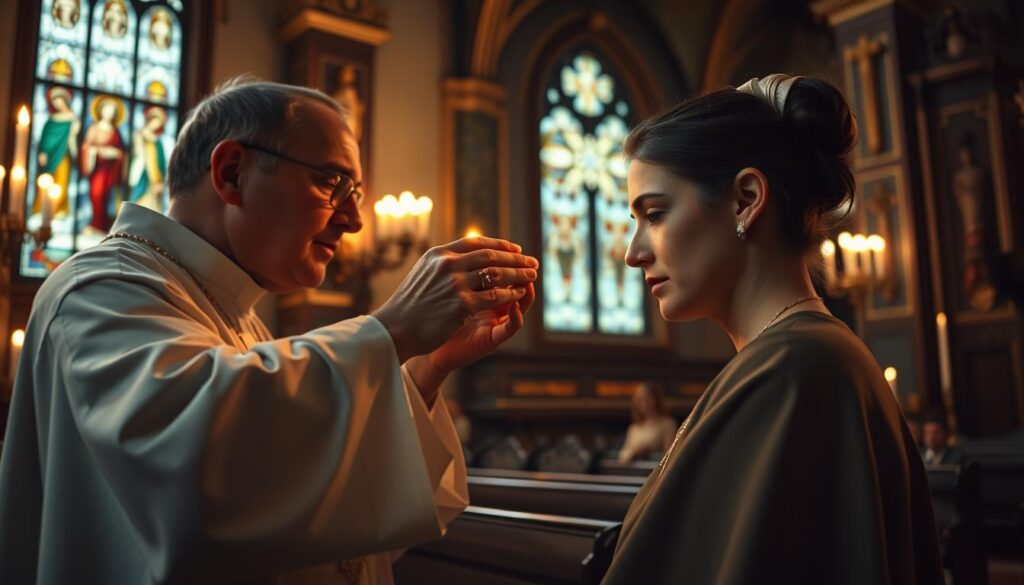
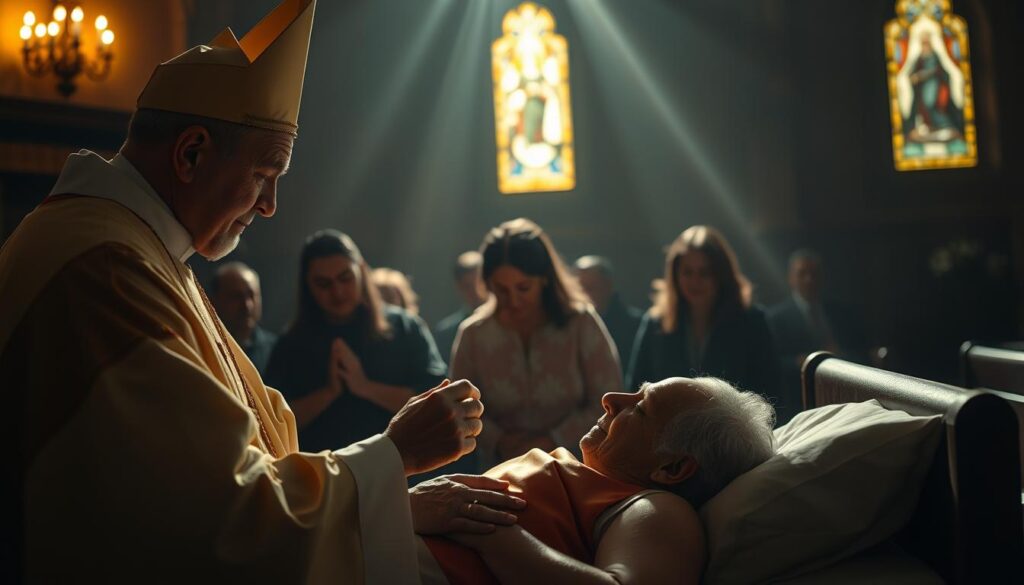
When facing life’s final moments, many find solace in time-honored spiritual practices. Among these, the sacred rituals administered to individuals nearing death hold special significance. Rooted in compassion, these traditions aim to provide peace and divine connection during profound transitions.

Often called the Commendation of the Dying, this practice combines prayer and sacramental care. It’s designed for those confronting terminal illness, severe injury, or imminent mortality. Through specific ministrations, participants receive spiritual preparation for their journey beyond earthly life.

The Church’s approach integrates multiple elements of faith. These include reconciliation, anointing, and final communion—each offering unique grace. Together, they create a holistic pathway for both the individual and their loved ones.

Misunderstandings about timing and eligibility persist, despite clear guidelines. Proper administration requires careful coordination with clergy, emphasizing the importance of advance planning. This ensures the faithful can fully embrace the tradition’s comforting power when it matters most.

Key Takeaways

  • Combines prayer and sacraments to support individuals nearing death
  • Includes reconciliation, anointing, and final communion as core elements
  • Must be administered before death occurs
  • Addresses both spiritual and emotional needs of participants
  • Requires coordination with trained clergy for proper execution
  • Reflects centuries of theological refinement and pastoral care

Introduction to Catholic Last Rites

In moments of profound transition, faith traditions offer structured comfort through sacred practices. The Church’s final pastoral care combines sacraments and prayers to strengthen both the dying person and their loved ones. This spiritual lifeline addresses fear, uncertainty, and the need for reconciliation through time-tested rituals.

Overview and Purpose

Central to these practices is the sacrament anointing of the sick, historically called extreme unction. Unlike common assumptions, this rite isn’t limited to final moments—the Catechism Catholic clarifies it can renew hope during serious illness. When administered near death, it becomes part of a triad:

  • Confession to mend spiritual wounds
  • Anointing for physical and emotional healing
  • Viaticum as nourishment for the soul’s journey

Understanding the Ritual’s Intention

These prayers and sacraments create a sacred space where mortality meets divine promise. Families often find unexpected peace watching their loved one receive the anointing sick ritual. As one priest notes: “It’s not about endings—it’s the Church’s way of walking someone home.”

The ritual’s power lies in its dual focus: preparing the individual while comforting those left behind. Through oil, words, and communal support, it transforms fear into hope-filled surrender.

History and Cultural Evolution

The practice of spiritual care for the dying has shaped communities for centuries. Early Christians drew guidance from the Letter of James, where elders anointed the sick with oil while praying for healing. This simple act of faith laid the foundation for rituals that would evolve across generations.

anointing sick oil

Historical Context and Origins

Medieval theologian Peter Lombard coined “Extreme Unction” in 1160, emphasizing final spiritual preparation. The term reflected its position as the last sacramental anointing—after Baptism and Confirmation. For centuries, priests administered it primarily to those in extremis, linking the sacrament to life’s closing moments.

Major change came during Vatican II (1962–1965). Church leaders renamed the rite “Anointing of the Sick” to highlight its broader purpose. As one bishop noted: “Healing isn’t just physical—it’s about restoring hope.” This shift expanded access beyond imminent death cases.

Development Across Different Christian Traditions

Eastern Orthodox churches maintained unique practices while sharing core beliefs. Their rituals often involve multiple anointings with blessed oil during prolonged illnesses. Western traditions streamlined the process, focusing on three key elements: confession, anointing, and final communion.

Cultural adaptations emerged globally. Some regions incorporated local prayers, while others developed special oils using native plants. Despite these variations, the sacrament’s heart remained unchanged—a tangible expression of divine compassion through human hands.

The Significance of “catholic last rites”

Divine compassion meets human vulnerability in moments of profound physical and spiritual need. The Church’s sacramental approach to end-of-life care reflects centuries of theological wisdom, offering more than ritual—it bridges earthly struggles with eternal hope.

Theological Foundations and Spiritual Impact

Rooted in the Catechism of the Catholic Church, these practices view illness as a sacred passage rather than a defeat. The sacrament anointing sick channels divine grace specifically tailored to the challenges of mortality. As one teaching states: “Through holy oil and prayer, the body becomes a vessel for spiritual renewal.”

This sacrament does more than comfort—it redefines suffering as participation in Christ’s sacrifice. Believers gain strength to face final trials, transforming fear into purposeful surrender. The ritual’s power lies in its dual action: cleansing the soul while affirming the enduring value of every human life.

Key spiritual benefits include:

  • Reconciliation that mends relationships with God and others
  • Fortification against despair through renewed faith
  • Physical and emotional peace, regardless of medical outcomes

By uniting the dying with Christ’s passion, the Church proclaims death as the soul’s homecoming. These sacred acts remind us that grace transcends our earthly body, preparing hearts for eternal communion.

Rituals, Sacraments, and Liturgical Practices

Sacred traditions guide individuals through life’s most challenging transitions with structured spiritual support. These practices blend ancient wisdom with compassionate care, creating a roadmap for both the dying and their communities.

sacraments anointing sick

The Order of Sacraments: Confession, Anointing, and Viaticum

The sequence of end-of-life sacraments follows a purposeful design. First comes confession, clearing spiritual obstacles through forgiveness. Next, the anointing sick ritual uses blessed oil to strengthen body and soul. Finally, viaticum—meaning “travel provisions”—offers holy communion as nourishment for eternity.

This order matters deeply. As one chaplain explains: “We address the soul’s needs first, then fortify the person for their journey.” The process mirrors life’s spiritual progression—cleansing, healing, and ultimate union with the divine.

Variations in Eastern and Western Traditions

While Western churches typically administer sacraments individually, Eastern traditions weave them into communal ceremonies. Byzantine rites might include multiple anointings during prolonged illnesses, accompanied by chanted prayers.

Tradition Focus Ritual Elements Setting
Western Individual preparation Sequential sacraments Any location
Eastern Communal support Extended ceremonies Often churches

Both approaches share core elements—confession, sacrament anointing, and final communion. Modern adaptations allow priests to bring these holy communion practices to hospitals or homes, ensuring accessibility during critical moments.

Providing Comfort, Hope, and Healing

Sacred traditions transform life’s hardest moments into opportunities for connection. Through tactile symbols and heartfelt words, these practices bridge earthly struggles with eternal promises.

The Role of Anointing with Oil in Enhancing Faith

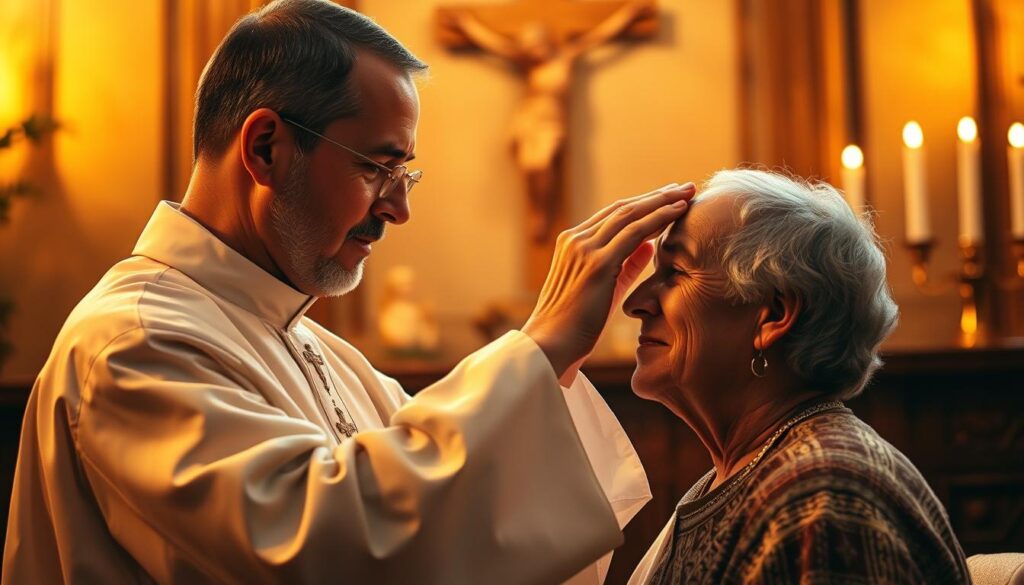
Blessed oil—often olive-based—becomes a conduit for divine grace during the anointing sick ritual. Diocesan bishops consecrate this oil annually, typically during Holy Week ceremonies. When applied to forehead and hands, it carries Christ’s healing promise through physical touch.

The accompanying prayer—“May the Lord… strengthen you with the Holy Spirit”—anchors hope against despair. This tangible act links participants to James’ biblical instruction while renewing spiritual strength for life’s final journey.

Prayers, Forgiveness, and the Spiritual Impact on the Dying

Words matter profoundly in end-of-life care. Structured prayers invite peace, while sacramental forgiveness lifts emotional burdens. As the Catechism Catholic Church teaches, these acts prepare souls rather than prolong bodily life.

Families often describe witnessing renewed calm in loved ones after they receive sacrament. The rituals don’t erase pain but reframe mortality as a sacred threshold. Through oil and invocation, fear yields to quiet confidence in divine embrace.

FAQ

What is the purpose of the final sacraments in the Catholic tradition?

These sacred acts offer spiritual strength, forgiveness of sins, and peace to those nearing death. They unite the person with Christ’s mercy, preparing their soul for eternal life.

How does the anointing with oil strengthen faith during illness?

The blessed oil symbolizes healing grace, reminding the sick of God’s presence. It fosters hope, relieves spiritual burdens, and renews trust in divine love amid suffering.

Are these rituals only for those at immediate risk of death?

No. The sacrament is available to anyone facing serious illness or decline due to age. It’s encouraged long before the final moments to deepen spiritual readiness.

What role does Holy Communion play in the final rites?

Received as Viaticum, or “food for the journey,” it nourishes the soul for passage into eternal life. This act reflects Christ’s promise to accompany believers beyond death.

How do Eastern and Western traditions differ in administering these sacraments?

Eastern rites often include more elaborate prayers and communal anointing. Western practices focus on individual confession, anointing, and Viaticum, emphasizing personal reconciliation.

Can family members participate in the ceremony?

Yes. Loved ones are encouraged to join prayers, affirm forgiveness, and offer support. Their presence reinforces communal faith and comfort during the sacred transition.

Exploring the Symbolism of the Catholicism Flag


Welcome to your guide to understanding one of the most recognizable religious symbols globally. This sacred banner carries centuries of spiritual heritage, serving as a bridge between ancient traditions and modern faith practices. Its design tells a story of unity, authority, and devotion that resonates with millions.

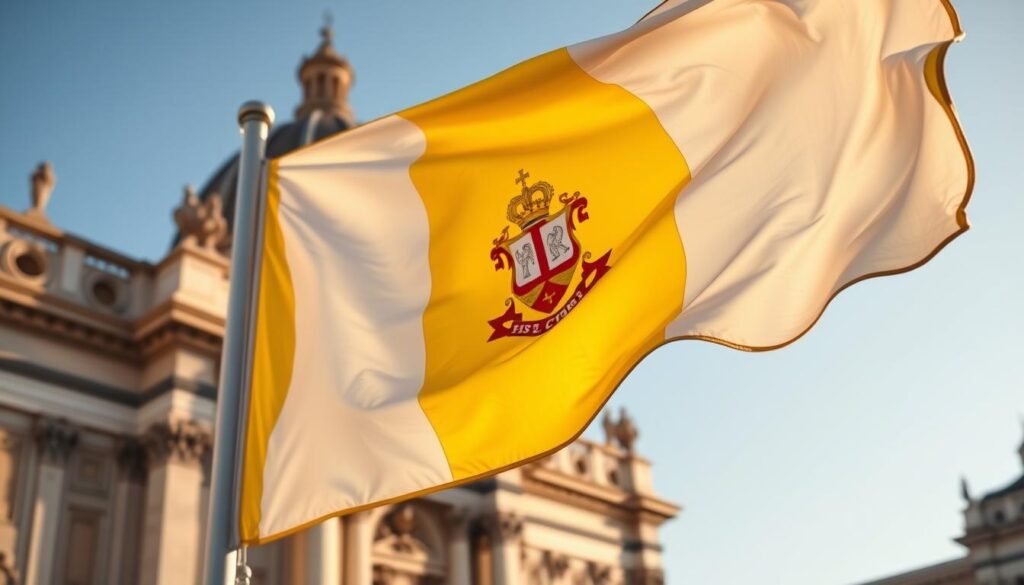
Dive deeper into the visual language of this emblem. You’ll find two vertical bands of gold and white, colors chosen for their spiritual significance. The crossed keys of Saint Peter and papal tiara at its center symbolize connections to divine authority and ecclesiastical governance.

Beyond its visual elements, this symbol holds practical importance for believers. Its square shape distinguishes it from national banners, reflecting its unique role in representing spiritual leadership rather than territorial claims. Many display it during religious ceremonies or as personal expressions of faith.

This exploration will help you appreciate how tradition meets modern symbolism. We’ll examine its ties to Vatican City governance and why authentic reproductions matter to collectors and worshippers alike. Whether you’re curious about history or considering acquiring one, you’ll gain valuable insights here.

Key Takeaways

  • Represents papal authority through distinctive symbols like crossed keys
  • Features unique color combinations with deep spiritual meanings
  • Square format distinguishes it from standard national banners
  • Direct connection to Vatican City’s governance structure
  • Quality materials ensure accurate representation for display

Introduction to the Catholicism Flag

Discover the emblem that bridges ancient tradition with modern faith practices. Often referred to as the Papal Flag or Holy See banner, this symbol carries weight far beyond its visual design. Its square format and sacred imagery make it instantly recognizable to millions worldwide.

Your Guide to Sacred Symbolism

This resource offers essential information for collectors, worshippers, and history lovers alike. Whether you’re seeking to display it respectfully or understand its spiritual roots, you’ll find practical insights here. The banner’s role extends beyond decoration—it’s a tangible connection to centuries of religious heritage.

Standout Features Explained

What sets this emblem apart? Three key traits define it:

  • Unique proportions: One of only two square national banners globally
  • Sacred geometry: The vertical gold-white division reflects spiritual balance
  • Dual representation: Symbolizes both Vatican City’s governance and the Holy See‘s global influence

Unlike rectangular national flags, this square design emphasizes its non-territorial purpose. The crossed keys motif directly ties to Saint Peter’s biblical legacy, reinforcing the Catholic Church‘s foundational stories. When displayed, it serves as more than decor—it’s a statement of shared identity for 1.3 billion adherents worldwide.

Catholicism Flag: History and Symbolism

A pivotal moment in religious history unfolded on June 7, 1929. That’s when Pope Pius XI signed the Lateran Treaty, establishing Vatican City as the world’s smallest sovereign state. This agreement ended 59 years of tension between the Holy See and Italy.

Vatican City flag historical origins

Historical Origins and the Papal Legacy

The banner’s design honors its roots in the Papal States, which ruled central Italy for over 1,100 years. From 756 to 1870, these territories showcased the Catholic Church‘s dual role as spiritual guide and political power. The keys of Saint Peter first appeared on banners during this era.

Influence of the Lateran Treaty and Papal States

Three key impacts shaped modern symbolism:

  • The Lateran Treaty restored territorial sovereignty lost in 1870
  • Design elements directly reference the Papal States‘ heraldry
  • Gold and white colors maintain continuity across centuries

Before 1929, popes lived as “prisoners” within Vatican walls. The Holy See regained independence through diplomatic mastery, creating a visible symbol of faith’s enduring influence. Today, the banner bridges ancient traditions with modern governance.

Design Elements and Symbolic Details

Every element of this sacred banner tells a story through shape, shade, and sacred geometry. Let’s decode its visual language piece by piece.

Significance of the Gold and White Colors

The vertical bands aren’t just pretty stripes. On the left side, gold shines as the color of spiritual authority. The white side carries silver’s earthly meaning in heraldic tradition. Together, they mirror the dual roles of the holy see – guiding souls and engaging with worldly matters.

The Crossed Keys, Papal Tiara, and Red Cord

At the heart of the coat arms, two keys cross like ancient gatekeepers. The golden key points upward for divine power, while the silver key tilts downward for temporal rule. This arrangement follows centuries-old holy see heraldry rules.

Three striking features complete the design:

  • The papal tiara crowns the composition, symbolizing leadership continuity
  • A red cord binds the keys, representing unity between heaven and earth
  • Matthew 16:19’s promise to saint peter comes alive in the crossed keys

Did you know? The silver key always sits on the right side when facing the coat arms. This placement follows strict heraldic protocols established when many European nations adopted similar symbolic systems.

Modern reproductions maintain these details with precision. From the color shades to the keys‘ angles, each choice preserves eight centuries of holy see tradition. As one Vatican historian noted: “These symbols don’t just represent power – they visually connect believers to Saint Peter’s legacy.”

Materials, Construction, and Quality

Durability meets sacred symbolism in the creation of these banners. Crafters combine modern engineering with respect for tradition to produce emblems that withstand both time and elements.

holy see flag materials

200-Denier Nylon and Weather Resistance

Premium banners use 200-denier nylon – a fabric chosen for its strength. This material resists sun damage better than polyester or cotton. Colors stay vibrant through seasons of outdoor display.

SolarMax™ technology takes protection further. It blocks harmful UV rays while letting gold and white hues shine. Your emblem won’t fade quickly like cheaper alternatives.

Canvas Heading and Reinforced Details

The canvas heading along the hoist side adds crucial support. This thick strip handles stress from wind gusts. Four rows of stitching lock edges in place securely.

Brass grommets anchor the banner without rusting. These corrosion-resistant rings work in coastal areas and rainy climates. They fit standard poles while maintaining a clean look.

Feature Benefit Comparison
200D Nylon 5+ year color retention Lasts 3x longer than polyester
Canvas Heading Prevents tearing 50% stronger than hemmed edges
Brass Grommets Zero rust Outlasts aluminum by 8 years
Quad Stitching Wind resistance Withstands 55mph gusts

Manufacturers in the United States follow strict quality guidelines. Their expertise ensures proper proportions and symbol placement. When you choose domestic production, you support skilled craftsmanship tied to the holy see‘s values.

These construction choices matter beyond practicality. They honor the sacred purpose of the emblem while meeting real-world needs. As one artisan noted: “We build durability into every stitch because these aren’t just flags – they’re declarations of faith.”

Cultural and Religious Significance

More than fabric and colors, this emblem weaves together earthly governance and heavenly purpose. Its presence in ceremonies and diplomatic settings reveals layers of meaning that transcend borders.

Connection to Vatican City and the Holy See

The Holy See operates as both spiritual guide and sovereign state. While Vatican City covers just 110 acres, its banner represents authority recognized by 180 nations. This unique arrangement lets the Roman Catholic Church engage globally while maintaining independence.

Three key facts define this relationship:

  • The popes serve dual roles as religious leaders and Vatican City‘s heads of state
  • Diplomatic agreements flow through the Holy See, not the physical territory
  • Arms holy see symbols appear on official documents worldwide

Spiritual Meaning Behind Symbolic Elements

Every detail carries divine weight. The crossed keys mirror Jesus’ promise to Saint Peter in Matthew 16:19 – heavenly power binding earthly matters. Gold threads in the tiara symbolize the Roman Catholic commitment to spiritual wealth over material gain.

When displayed, the emblem does more than identify. It silently proclaims unity across 1.3 billion believers. For many Catholic Church members, seeing its white-and-gold pattern sparks reminders of shared heritage and hope.

FAQ

What do the colors on the Vatican City flag represent?

The gold and white stripes symbolize spiritual and earthly power. Gold reflects divine light, while white represents purity and peace. These colors have been linked to the Papacy since the early 19th century.

How did the Lateran Treaty influence the flag’s design?

Signed in 1929, the Lateran Treaty established Vatican City as a sovereign state. This agreement solidified the flag’s status as an official national emblem, blending historical Papal States imagery with modern statehood.

Why are crossed keys and a papal tiara featured on the coat of arms?

The keys, one gold and one silver, symbolize Saint Peter’s authority to bind and loose in heaven and earth. The tiara represents the Pope’s spiritual leadership. A red cord unites them, signifying the Church’s global mission.

Is the flag suitable for outdoor use?

Yes! Made from 200-denier nylon, it resists fading and tearing. Reinforced stitching, brass grommets, and a canvas heading ensure durability in wind, rain, or sun, making it ideal for long-term display.

What’s the difference between the Holy See and Vatican City?

Vatican City is the sovereign state, while the Holy See is the spiritual and governing entity of the Roman Catholic Church. The flag represents both, highlighting their intertwined roles in global religious and diplomatic affairs.

Can I purchase an official version of this flag?

Authentic flags are sold through authorized religious goods retailers or specialty vendors. Look for precise design details, like the correct shade of gold and accurate key placement, to ensure authenticity.

Catholic Last Rites: A Compassionate Farewell


When a loved one faces life’s final moments, many find solace in sacred traditions that honor both faith and humanity. Among these, the practice of final spiritual care stands as a pillar of comfort. Rooted in centuries of tradition, these sacred acts blend prayer, forgiveness, and hope to guide the soul peacefully.

This guide explores the rituals often called the “last prayers” of the Church. Far from being a single act, they include Viaticum—the final Communion—and heartfelt blessings. These rites aren’t about endings but transitions, offering strength to those nearing eternal life and their families.

Misunderstandings about timing or accessibility often cause unnecessary stress. Whether at home or in hospitals, these practices adapt to modern needs while preserving their sacred purpose. They remind us that dignity and spiritual peace remain central, even in healthcare settings.

Key Takeaways

  • Final spiritual care combines Viaticum, prayers, and blessings to comfort those nearing death
  • These traditions focus on forgiveness, hope, and preparing the soul for eternal peace
  • Rites can be administered in various settings, including hospitals and homes
  • Families often find emotional closure through these sacred practices
  • Modern healthcare environments increasingly accommodate these timeless rituals

Understanding Catholic Last Rights

In moments of health struggles, spiritual practices offer strength and connection. The sacrament of Anointing of the Sick stands at the heart of these traditions, evolving to meet modern needs while maintaining its sacred purpose.

Defining the Sacrament

Formerly called “Extreme Unction,” this ritual was renamed after Vatican II to emphasize its broader role. It’s designed for anyone facing serious illness, not just those near death. As one Church document states:

“Through this holy anointing, may the Lord in his love and mercy help you with the grace of the Holy Spirit.”

A simple comparison shows how perspectives have shifted:

Aspect Extreme Unction Anointing of the Sick
Purpose Final preparation Healing & strength
Timing Deathbed only Any serious illness
Frequency Once Multiple times

Modern Relevance in Faith and End-of-Life Care

Today’s healthcare teams often work with priests to administer this sacrament in hospitals or homes. It brings three key benefits:

  • Comfort during prolonged treatments
  • Emotional peace for families
  • Spiritual preparation for medical challenges

Over 75% of U.S. hospitals now have protocols for spiritual care requests. This ensures the sacraments remain accessible, blending ancient wisdom with contemporary compassion.

Sacramental Foundations and Biblical References

scripture anointing of the sick

Sacred traditions draw their strength from ancient wisdom and divine promises. The sacrament of anointing finds its roots in Scripture, offering both physical and spiritual renewal. As James 5:14-15 instructs:

“Is any man sick among you? Let him bring in the priests… the prayer of faith shall save the sick man, and the Lord shall raise him up: and if he be in sins, they shall be forgiven him.”

This passage shows how prayer, oil, and priestly ministry work together. Early Christians saw this ritual as Christ’s hands reaching through time.

Biblical Passages and Scriptural Guidance

Mark 6:13 and Luke 10:8-9 reinforce this practice. Jesus’ followers anointed the ill with oil long before formal rites existed. The “anointing oil name” used today—typically olive oil blessed by a bishop—symbolizes grace flowing through creation.

Three key themes emerge from Scripture:

  • Healing isn’t limited to bodies—souls need care too
  • Forgiveness and hope are inseparable from physical aid
  • Communal support strengthens the vulnerable

Catechism and Doctrinal Insights

The Catechism of the Catholic Church (sections 1499-1532) calls this sacrament “a gift for the journey.” It connects suffering to Christ’s Passion, transforming pain into purpose. St. John Chrysostom taught that priests wield divine authority to cleanse sins, not just bless.

Consider how perspectives shifted:

Old Testament New Testament
Priests offered animal sacrifices Priests bring Christ’s healing
Ritual purity laws Sacramental forgiveness

This sacrament remains a lifeline—not just for the dying, but anyone battered by life’s storms.

Anointing the Sick: Grace, Healing, and Spiritual Comfort

In times of physical struggle, ancient rituals offer more than comfort—they bridge the human and divine. The sacrament anointing uses blessed oleum infirmorum, typically olive oil consecrated during Holy Thursday ceremonies. This sacred oil becomes a conduit for spiritual strength, applied to forehead and hands with tender care.

Spiritual Benefits and the Gift of Hope

This ritual creates three profound connections:

  • Bonds the body’s suffering to Christ’s redemptive passion
  • Offers supernatural courage through grace-filled prayers
  • Provides forgiveness when confession proves impossible

The official prayer captures this essence perfectly:

“Through this holy anointing… may the Lord free you from sin and raise you up.”

Spiritual Impact Physical Consideration
Renewed hope Possible healing if aligned with God’s plan
Soul purification Comfort during medical treatments
Community support Adaptable to hospital settings

Administration and Ritual Practices

Priests bring remarkable flexibility to this sacrament anointing. Whether in ICU units or living rooms, the rite adapts while maintaining sacred integrity. Group ceremonies in nursing homes create powerful moments of shared faith.

Key administration details:

Traditional Practice Modern Adaptation
Oil blessed by bishop Emergency priest blessings allowed
Individual ceremonies Mass anointings in care facilities
Forehead/hands anointing Gloved applications when needed

This timeless practice meets contemporary needs, offering holy communion of spirit when persons need it most.

Diverse Christian Traditions in Last Rites

Eastern Christian communities approach life’s final journey with rituals steeped in mystical beauty. Their practices emphasize collective support and the enduring hope of resurrection, creating a spiritual tapestry that envelops both the dying person and their loved ones.

Eastern Orthodox and Eastern Catholic Practices

In Eastern Catholic Churches following the Byzantine rite, three sacred acts form the core of final spiritual care:

  • Confession to cleanse the soul
  • Holy Communion as viaticum for the journey
  • The profound “Office at the Parting of the Soul From the Body”

This moving celebration weaves together ancient elements:

“Have mercy on me, O God, according to Thy great mercy”

Psalm 50

Alongside the Lord’s Prayer and appeals to Mary (Theotokos), theseprayersseek divine mercy through communal intercession.

Western Practice Eastern Tradition
Anointing primarily near death Holy Unction for any illness
Focus on final preparation Emphasis on ongoing healing
Individual administration Group ceremonies common

For those facing prolonged suffering, alternative rites using Psalms 70 and 143 offer tailored comfort. A priest might perform an abbreviated version during urgent situations, proving the rite’s adaptability without losing its sacred essence.

These traditions remind us that spiritual care transcends cultural boundaries. Through shared sacraments and timeless rituals, Eastern Catholic churches maintain a living connection to early Christian roots while addressing modern needs.

Practical Guidance for Receiving and Administering Last Rites

Preparing spiritually requires both knowledge and timely action. Families often wonder when and how to request these sacred practices. Clear understanding helps ensure loved ones receive comfort when it matters most.

receive sacrament near death

When to Call a Priest

Contact spiritual care providers when someone:

  • Faces major surgery
  • Experiences sudden health decline
  • Enters hospice care

Don’t wait until breathing becomes labored. Many hospitals now have chaplains available 24/7. Early requests allow fuller participation in the rites.

Situation Recommended Action
Chronic illness Schedule Anointing
Emergency surgery Request Continuous Rite
Unconscious patient Conditional absolution

Step-by-Step Process and Expected Rituals

A typical administration flows through three stages:

  1. Confession or conditional forgiveness
  2. Anointing with blessed oil
  3. Receiving Viaticum

In urgent cases, priests combine these into one ceremony. Lay ministers can sometimes bring Communion if clergy aren’t available. As one hospital chaplain notes:

“We adapt the space – ICU rooms become chapels when needed.”

Standard Practice Emergency Variation
Separate sacraments Combined Continuous Rite
Full Scripture readings Abbreviated prayers
Family participation Rapid administration

Papal blessings with plenary indulgences may accompany the rites. These practices remind us that spiritual care adapts to life’s urgent moments while maintaining sacred depth.

Conclusion

sacrament of healing comfort

Sacred traditions surrounding life’s final journey remain vital in modern faith communities. These rituals honor the whole person—body, mind, and spirit—through symbols like blessed oil and shared prayers. They transform medical spaces into places of sacred celebration.

The sacrament offers more than comfort. It weaves together healing, forgiveness, and hope into a spiritual safety net. Families often find unexpected strength through these ancient yet adaptable practices.

Modern healthcare settings now recognize this need. Over 80% of U.S. hospice programs report incorporating spiritual care into treatment plans. Whether through quiet anointings or shared Communion, these rites affirm dignity during life’s most vulnerable time.

Ultimately, these traditions remind us that every body carries sacred worth. Through oil, prayer, and community support, they help souls transition with grace—a final celebration of a life’s journey completed in love.

FAQ

What exactly are Last Rites?

They’re a set of sacraments offered to those nearing death, including confession, anointing, and final Communion. These rituals aim to provide spiritual healing, peace, and preparation for eternal life.

Can family members request Last Rites if someone is unconscious?

Yes! A priest can administer the sacraments even if the person is unable to respond, as long as they’re in danger of death. The Church emphasizes God’s mercy in these moments.

How does anointing with oil play a role?

Blessed oil symbolizes strength and healing. The priest anoints the forehead and hands while praying for forgiveness, grace, and comfort during the person’s final journey.

Are Last Rites only for the elderly?

No. Anyone facing grave illness, surgery, or mortal danger can receive them. It’s about spiritual readiness, not just age.

What’s the difference between Eastern and Latin Church practices?

Eastern traditions often include longer prayers and additional rituals, like anointing more parts of the body. Both share the core goal of uniting the soul with Christ’s mercy.

Do Last Rites forgive mortal sins?

If the person can’t confess, the anointing itself can absolve sins. This reflects the Church’s belief in God’s boundless compassion during life’s most vulnerable moments.

How should families prepare for the priest’s arrival?

Keep a crucifix, candles, and holy water nearby. Create a calm space for prayer, and share any urgent spiritual concerns with the priest beforehand.

Is Viaticum the same as regular Communion?

Viaticum means “food for the journey.” It’s the final Eucharist, emphasizing Christ’s presence as the person transitions from earthly life to eternal union with God.

The Influence of Catholicism in France: Past and Present


For centuries, religious traditions shaped the identity of this European nation. Known historically as “the eldest daughter of the Church,” its spiritual roots date back to the 2nd century. By 1789, nearly all 28 million residents belonged to the same faith, though minority groups faced exclusion from full societal participation.

Modern statistics reveal a striking shift. While cultural connections remain strong, only 15% actively practice today. Weekly services attract just 4.5% of citizens, with daily observance dropping below 2%. These numbers highlight a society balancing secular values with inherited traditions.

The emotional response to events like the Notre-Dame fire shows how deeply symbolic ties endure. Many who no longer attend services still feel connected through art, holidays, and shared history. This cultural membership creates a unique bridge between past and present.

Our exploration will uncover how historical events reshaped public attitudes. From royal alliances to revolutionary reforms, each era left marks on national identity. We’ll also examine why certain traditions persist despite declining participation rates.

Key Takeaways

  • Spiritual heritage shaped national identity for over 1,800 years
  • 98% affiliation rate in 1789 contrasts sharply with modern statistics
  • Cultural connections outlast regular religious practice
  • Secular values coexist with historical symbolism
  • Recent events reveal enduring emotional ties to tradition
  • Membership definitions evolved from mandatory to cultural

Historical Foundations of Catholicism in France

Long before becoming a spiritual stronghold, early believers faced persecution in Gaul’s urban centers. The first documented Christian community emerged in Lyon, where Bishop Pothinus and 47 followers were martyred in 177 AD. Their sacrifice, recorded by Irenaeus, planted seeds for a faith that would later unite kingdoms.

The Gallican Tradition and Early Christian Roots

A pivotal shift occurred in 496 AD when King Clovis I embraced baptism. This conversion from pagan traditions created Europe’s first “Christian kingdom”, blending royal power with religious authority. The Gallican Church developed unique customs allowing local bishops to govern parishes while maintaining loose ties to Rome.

This arrangement gave French monarchs unusual control over church affairs. By the 15th century, the Pragmatic Sanction of Bourges formalized these liberties. Clergy managed local worship practices, yet avoided complete separation from the Roman Catholic Church.

Impact of the French Revolution on the Church

1789 brought seismic changes as revolutionaries targeted religious institutions. “The Church must belong to the nation, not Rome!” became a rallying cry. By 1790, the state had:

  • Confiscated 10% of national land from churches
  • Forced 34,000 clergy to swear loyalty oaths
  • Replaced dioceses with elected parish councils

These reforms divided communities. Many members resisted, viewing the Civil Constitution of the Clergy as heresy. The revolution’s anti-church policies severed centuries-old bonds, yet unintentionally preserved cultural ties through shared history.

The Evolution and Decline of the Church’s Role

The 18th century sparked a firestorm of ideas that would forever change spiritual institutions. Thinkers began questioning why ancient traditions should govern modern life. This shift laid the groundwork for dramatic reforms during the french revolution.

enlightenment church criticism

Enlightenment Critiques and Growing Anticlericalism

Voltaire famously mocked monastic life, asking: “Does praying feed the hungry or plow fields?” His words echoed through salons where intellectuals debated the roman catholic Church’s role. By 1789, religious orders controlled 150 million livres annually while owning 6% of farmland.

Church Holdings (1789) Value Public Reaction
Land Ownership 6% of France Widespread resentment
Annual Revenue 150M livres Calls for redistribution
Tax Exemptions Full immunity Growing anger

Many saw monasteries as wasteful. Critics argued monks contributed nothing to society while collecting tithes from struggling farmers. This tension fueled demands for change.

The Nationalization of Church Property and Revolutionary Reforms

On November 2, 1789, lawmakers made a bold move. They declared all catholic church lands state property. Over 34,000 clergy faced an impossible choice: swear loyalty to the new constitution or lose their positions.

The oath divided communities. Membership in religious orders plummeted as many refused to comply. This schism turned spiritual leaders into political targets, reshaping worship practices nationwide.

These reforms didn’t just redistribute wealth. They redefined how citizens viewed authority – a legacy that still influences debates about faith and governance today.

Contemporary Trends in catholicism france

Modern spiritual identity in this European nation reveals a striking paradox. While 60% of adults still claim “cultural membership” in surveys, only 15% actively participate in weekly rituals. A priest from Normandy recently observed: “Our churches hold more memories than worshippers these days.”

Modern Revival and Demographic Shifts

The roman catholic church faces a critical challenge: fewer than 90 new priests are ordained yearly to replace 700 retiring clergy. This shortage forces creative solutions:

Year Priests Ordained Retirements
2022 87 721
2023 83 698

Despite these hurdles, some communities thrive. Traditionalist groups report increased mass attendance among young people, particularly in urban areas. Lay volunteers now lead 40% of services in rural parishes.

Adaptation to Secular Policies and Cultural Identity

Over 45,000 church buildings stand as silent witnesses to changing times. Only 5% host regular practice, yet 78% of citizens oppose converting them into secular spaces. “These structures are our collective memory,” argues a Parisian historian.

The catholic church maintains influence through 8,500 schools educating 2 million students annually. This quiet presence allows french catholic traditions to endure as cultural touchstones rather than mandatory beliefs.

The Intersection of Catholicism and French Society

Walk through any French village, and you’ll hear church bells echo across town squares. These sounds aren’t just religious calls – they’re threads in the nation’s cultural fabric. A recent survey found 68% of adults view historic churches as “shared heritage spaces” rather than strictly places of worship.

cultural catholicism and secular values

Cultural Catholicism and Secular Republican Values

Three out of four citizens attend religious ceremonies for life milestones, though only 12% practice weekly. “We’re baptized atheists,” jokes a Parisian architect. This cultural connection explains why 45,000 church buildings remain standing despite declining congregations.

The nation navigates a unique balance: 63% support keeping crosses in public spaces while 58% oppose hijabs in schools. Catholic processions receive municipal funding, yet new mosques face strict zoning laws. These double standards reveal how religion blends with national identity.

Heritage Sites and National Symbolism

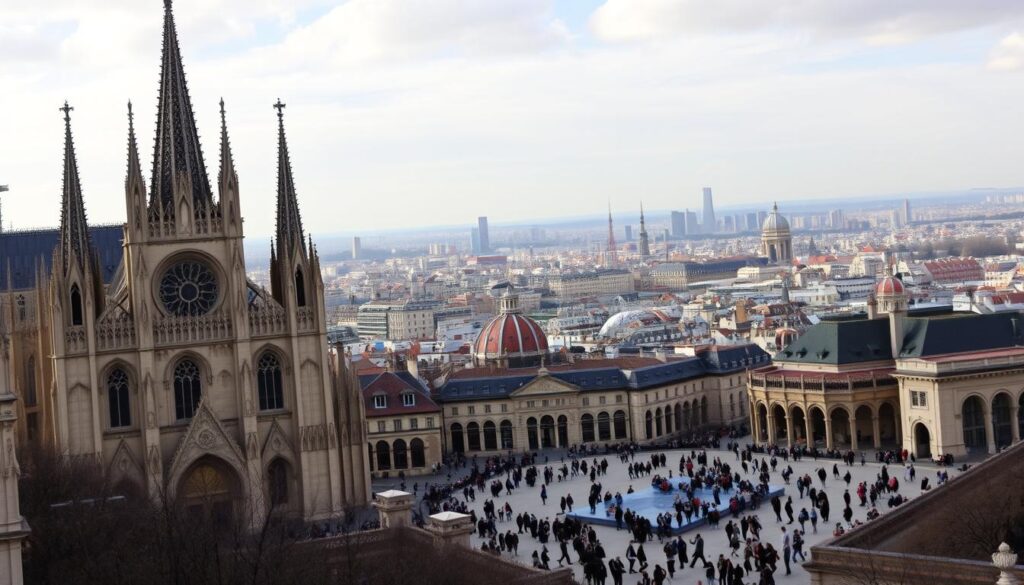
Notre-Dame’s 12 million annual visitors outnumber Louvre attendees threefold. After its 2019 fire, donations poured in from atheists and Muslims alike. “It’s our collective memory vault,” remarked a historian during restoration efforts.

This symbolic power extends beyond architecture. Catholic schools educate 20% of students nationwide, including many Muslim families seeking academic rigor. Meanwhile, 78% consider church bells essential to village character – proof that cultural Catholicism thrives where religious practice fades.

Catholicism and Modern French Politics

Political landscapes often reveal unexpected alliances. In 2017, a striking pattern emerged when Marine Le Pen’s far-right party secured 38% of votes from self-identified Catholic voters. This marked a historic shift for a political movement that previously struggled to gain religious approval.

catholic voting patterns modern politics

The Role of Church Influence in Political Narratives

Surveys show a clear divide: regular worshippers tend toward moderate positions, while “cultural Catholics” lean nationalist. Only 14% of weekly mass attendees supported far-right candidates in recent elections, compared to 30% of non-practicing members. “Faithful practice acts as a social anchor,” notes a Parisian sociologist.

Three key factors shape this dynamic:

  • Cultural identity often outweighs religious doctrine in voting booths
  • Political campaigns frame church heritage as national identity markers
  • Bishops’ official stances frequently clash with parishioners’ political choices

The table below illustrates recent voting patterns:

Voter Category Far-Right Support Centrist Support
Weekly Worshipers 14% 41%
Cultural Catholics 30% 28%

This divide reflects broader societal tensions. While some politicians invoke “Christian roots” to oppose immigration reforms, church leaders emphasize social justice programs. The result? A faith community navigating its place in an increasingly secular nation.

Conclusion

Time reveals shifting tides in how communities engage with spiritual legacies. While religious practice declines yearly, cultural connections endure through shared spaces and traditions. Over 60% of adults still mark life milestones in local churches, blending heritage with modern values.

The story of faith here mirrors broader societal changes. A century ago, most people attended weekly mass – today, it’s under 5%. Yet ancient cathedrals draw millions as living museums of art and history. This paradox shows how society redefines spiritual membership across generations.

Recent surveys highlight an unexpected trend: 22% of young adults now view church architecture as vital to national identity. Though atheism grows, 78% oppose repurposing sacred spaces. Like weathered stones in a village church, these traditions remain foundational – even when their original purpose evolves.

As the years pass, the balance between memory and modernity continues shaping this nation‘s unique character. What endures isn’t dogma, but the human need for shared stories etched in time.

FAQ

How did Roman Catholicism become rooted in French society?

The faith’s early roots trace back to the Gallican tradition, blending Roman practices with local customs. Over centuries, it became central to cultural identity, education, and governance, even amid conflicts like the Wars of Religion.

What major event weakened the Church’s power in the late 18th century?

The French Revolution drastically reduced its influence. Revolutionary reforms nationalized property, abolished monastic orders, and promoted secular governance, leading to decades of tension between church and state.

Why do some young adults return to Catholic traditions today?

A minority seek spiritual meaning or cultural connection amid modern secularism. Parishes also adapt through contemporary worship styles and social outreach, attracting new members despite broader societal decline.

How does secularism affect religious practice in the country?

Strict secular policies limit public displays of faith, but many still identify as “cultural Catholics.” Heritage sites like Notre-Dame remain symbols of national pride, blending history with non-religious appreciation.

Are converts changing the demographics of parishes?

While converts (catechumens) are growing slowly, they represent a small fraction. Most members are older, though urban areas report slight increases among younger adults drawn to community-focused ministries.

Does the Church still influence political debates?

Direct influence has waned, but bishops occasionally comment on ethics or social justice. Political figures sometimes reference Catholic values rhetorically, though policies remain largely secular.

Catholicism in Japan: Uncovering a Fascinating History


Few stories blend cultural endurance and spiritual devotion like the journey of this faith tradition across the island nation. With just 0.34% of the population identifying as adherents, its impact far outweighs its numbers. Over 1,400 institutions – from schools to hospitals – serve communities nationwide, creating bridges between belief systems.

Foreign workers now form a vibrant part of this spiritual tapestry. Nearly half a million immigrants from places like the Philippines and Vietnam bring new traditions to local parishes. This fusion creates living connections between ancient rituals and modern global movements.

Historical challenges shaped today’s unique landscape. Early missionaries faced fierce resistance, leading to centuries of secret worship practices. Today, their legacy thrives through respected educational centers that rank among the nation’s most prestigious learning environments.

Key Takeaways

  • Less than 0.5% of Japanese citizens practice this faith, yet its social influence remains significant
  • Educational and charitable organizations serve as primary community touchpoints
  • Underground worship traditions evolved into publicly recognized institutions
  • Immigrant populations now drive demographic shifts within the religious community
  • Church-run schools enjoy exceptional reputation despite small membership numbers

Exploring the Landscape of Catholicism in Japan

Modern Japan offers a fascinating environment for religious communities. While Shinto shrines and Buddhist temples dominate the spiritual scene, the Catholic Church maintains a respected presence through its social contributions. Less than 1% of the population identifies as Christian, yet this minority faith continues shaping Japanese society in meaningful ways.

Context and Contemporary Interest

Public expressions of faith face minimal resistance here compared to many Western nations. Christmas markets glow brightly in December, while Catholic schools attract families seeking strong moral education. Over 60% of students in these institutions come from non-religious households.

Immigration brings fresh energy to parishes. Vietnamese and Filipino communities now account for 40% of Sunday worshippers in urban areas. This blend creates vibrant spaces where traditional rituals meet global traditions.

Key Challenges and Opportunities

Aging congregations and Japan’s shrinking population test every religious group. However, the Church’s legacy in healthcare and elder care positions it as a trusted partner. Many see potential in bridging Japan’s labor shortages with immigrant support programs.

Challenge Opportunity Current Impact
Declining membership Immigrant integration Multilingual Masses offered
Aging facilities Historic reputation Schools maintain waitlists
Limited resources Social welfare expertise 15% of daycare centers Church-affiliated

Cultural openness allows unique dialogues about spirituality. University religion courses frequently feature Catholic speakers, while interfaith projects address modern social issues. This tolerance enables quiet but meaningful growth.

Historical Roots and Milestones

Japan’s spiritual landscape holds stories of remarkable resilience that shaped its religious identity. A pivotal chapter began when St. Francis Xavier stepped onto Kyushu’s shores in 1549. His approach blended respect for local customs with spiritual teachings, sparking rapid growth across social classes.

Missionary Beginnings with St. Francis Xavier

The Jesuit pioneer’s evangelization methods proved revolutionary. Within 40 years, communities flourished to over 300,000 members. This success led to Japan’s first diocese in 1588 – a milestone marking organized missionary efforts.

Local leaders initially welcomed foreign ideas. But shifting political winds soon brought turmoil. By 1587, authorities ordered missionaries to leave, setting the stage for conflict.

The Era of Hidden Christians and Persecution

Brutal crackdowns began in 1597 with 26 martyrs crucified near Nagasaki. Their canonization centuries later honored their sacrifice. Bans intensified until 1614, forcing believers underground for 250 years.

Hidden Christians developed secret practices to survive. They disguised prayers as folk songs and carved symbols into everyday objects. The Shimabara uprising’s violent end in 1638 claimed 40,000 lives but couldn’t erase their faith.

This underground network preserved traditions through oral histories and adapted rituals. Their legacy lives in modern worship styles that blend ancient Catholic teachings with Japanese cultural expressions.

Modern Trends: catholicism in japan in a Changing Society

Japan’s religious landscape is undergoing quiet transformation as global migration patterns reshape local communities. While membership numbers show modest decline, fresh energy flows through parishes adapting to new cultural realities.

multicultural catholic church japan

Current Statistics and Demographic Shifts

The Catholic Church reports 419,414 members today – 20,000 fewer than a decade ago. Yet three dioceses buck this trend with 3-5% growth. Saitama’s community thrives near Tokyo, while Naha and Nagoya attract young families through innovative outreach.

Foreign believers now form 54% of Sunday worshippers nationwide. Over 520,000 Vietnamese residents – the largest immigrant group – bring vibrant traditions to urban centers. “Our parish gained new life when Vietnamese families joined,” shares a Nagasaki priest. “Their enthusiasm reminds us faith transcends borders.”

Impact of Immigration and Multiculturalism

Rural areas see unexpected growth through international marriages. Filipino women married to local farmers lead prayer circles where churches don’t exist. Their grassroots efforts create spiritual hubs in regions untouched for years.

Demographic Trend Opportunity Created Example
Vietnamese immigration surge Youthful parish revitalization Osaka’s Vietnamese-language catechism classes
Filipino-Japanese families Rural faith networks Kyushu farm village prayer groups
Multilingual worship needs Global Catholic unity St. Anselm’s 4-language Mass schedule

This cultural blending presents both promise and complexity. While multilingual services foster inclusion, they challenge communities to preserve Japanese Catholic identity. The country’s churches now serve as laboratories for intercultural dialogue, testing models that could inspire the global Church in Japan and beyond.

Influence Through Education and the Jesuit Legacy

Education shapes minds and communities in ways few institutions can match. The Catholic Church operates 828 schools nationwide, blending academic rigor with moral development. These centers of learning have become trusted pillars of Japanese society, often serving as first contact points between families and Catholic values.

Catholic Schools and Their Social Contributions

Prestigious institutions like Sophia University attract global talent while nurturing local leaders. Founded in 1913 by German Jesuits, this Tokyo-based university educates 14,000 students from 80+ countries. Its alumni network includes government officials and corporate executives who shape national policies.

Even imperial families recognize their value. Empress Michiko, mother of the current emperor, graduated from Sacred Heart schools. “Our kindergartens often outshine churches in public recognition,” notes Archbishop Kikuchi. This educational focus creates unique opportunities to share faith through excellence.

The Continuing Role of Jesuit Missions

Jesuit priests maintain their 470-year mission with cultural sensitivity. The Society of Jesus runs four elite high schools, a Hiroshima music college, and Sophia University. Though 150 active Jesuits serve nationwide, over half face retirement age – a challenge requiring innovative solutions.

Their approach mirrors St. Francis Xavier’s methods: dialogue over dogma. Through schools blending Catholic traditions with Japanese values, they create spaces where different worldviews enrich each other. This strategy ensures their legacy endures beyond demographic shifts.

Institution Impact Enrollment
Sophia University Global leadership training 14,000+ students
Hiroshima Music College Cultural preservation 300 musicians trained yearly
Jesuit Secondary Schools Moral education 4 campuses nationwide

Cultural Integration and Community Adaptation

Harmony between tradition and innovation defines Japan’s spiritual communities. Local customs reshape global religious practices here, creating worship experiences that honor both cultural identity and sacred rituals. This delicate balance reveals how communities evolve while preserving core values.

Japanese Catholic liturgy

Unique Liturgical Practices in Japanese Context

Worship services reflect cultural preferences for restraint and order. Unlike Western congregations, Japanese Catholic communities avoid physical contact during prayers. The Orans posture – raised hands during the Our Father – remains exclusive to priests, maintaining clear roles in sacred spaces.

Silent reverence replaces hand-holding traditions. This approach aligns with local norms about public behavior while deepening spiritual focus. “Our stillness speaks volumes,” shares a Tokyo parishioner. “It helps us connect without distractions.”

Innovative Approaches to Faith Expression

Leadership gaps due to frequent priest transfers empower laypeople. Volunteers manage parish operations, blending administrative skills with faith commitment. Some churches introduce visitors during Mass – a practice sparking debate about worship priorities.

Multilingual services address diverse congregations. Priests often use visual aids and simple language to bridge cultural divides. Rural areas see creative solutions like smartphone prayer groups, keeping scattered communities connected.

Reflections on Liturgical Practices and Community Challenges

Communities across the nation face delicate balancing acts in worship traditions. While global religious trends influence local practices, cultural expectations shape how faith appears in daily life. This creates unique tensions between preserving sacred rituals and adapting to modern realities.

Catholic liturgical challenges Japan

Traditional Roots Meet Modern Pressures

Weekly Mass attendance hovers near 40% in many parishes, reflecting broader societal shifts. Some priests adopt theatrical styles to engage crowds, sparking debates about reverence versus relevance. “We want people to feel welcomed, not entertained,” shares a Kyoto parish leader.

Homilies frequently address social issues like climate change. While these topics matter, some members crave deeper teachings on salvation. This mirrors global trends where religion intersects with contemporary concerns.

Liturgical Challenge Cultural Factor Community Response
Low Mass participation Less social expectation for weekly worship Flexible volunteer-led prayer groups
Access to Latin Mass Urban-rural resource divide Tokyo-only traditional services
Doctrinal teaching gaps Focus on harmony over confrontation Small group catechism sessions

Unique local factors shape these dynamics. Unlike other countries, bishops rarely discuss abortion policies publicly. This quiet approach respects cultural norms but limits moral guidance opportunities.

Visiting missionaries often note the careful balance communities strike. As one Brazilian priest observed during his three-year assignment: “The challenge lies in honoring ancient traditions while speaking to today’s needs.” These ongoing conversations will shape how worship evolves in coming years.

Conclusion

Centuries after secret worship practices sustained their faith, Japan’s Catholic Church now champions unity in diversity. Pope John Paul II set this tone in 1981, calling for peace in Hiroshima. Nearly four decades later, Pope Francis echoed this message, urging the country to “protect all life” during his historic 2019 visit.

These papal journeys reinforced the Church’s mission as outlined by Japanese bishops: building bridges between cultures. “Our strength lies in welcoming others,” emphasizes Archbishop Kikuchi. Today, parishes thrive as spaces where Vietnamese families pray beside descendants of martyrs – a living testament to resilience.

Challenges persist, from aging populations to shifting social values. Yet the global world watches as this community models coexistence. Through schools nurturing tomorrow’s leaders and multilingual Masses uniting diverse cities, Japan’s spiritual tapestry grows richer – stitch by stitch, century by century.

FAQ

How did the Catholic faith first arrive in Japan?

Missionaries like St. Francis Xavier brought Christianity to Japan in 1549. His work with the Jesuit order laid the foundation for early communities, though later persecution forced many to practice secretly as “Hidden Christians.”

What challenges do believers face in Japanese society today?

Catholics make up less than 1% of the population, so evangelization remains difficult. Archbishop Kikuchi has emphasized adapting traditions to resonate with local culture while addressing aging congregations and priest shortages.

How have Catholic schools influenced Japan?

Institutions like Sophia University, founded by Jesuits, blend academic excellence with ethical values. These schools are respected for fostering social responsibility and intercultural dialogue, even among non-Christian students.

Are there unique worship practices in Japanese parishes?

Yes! Some communities incorporate traditional music or meditative silence into Mass. Others host tea ceremonies or seasonal festivals to connect faith with Japan’s cultural identity.

How has immigration affected the Church?

Filipino and Latin American immigrants revitalize parishes, adding multilingual services and vibrant celebrations. This diversity helps counter declining membership and strengthens global connections.

Why did Pope Francis’s 2019 visit matter?

His trip honored martyrs like St. Paul Miki and encouraged dialogue on peace and environmental justice. It also spotlighted Japan’s small but resilient Catholic community on the world stage.

What legacy did the “Hidden Christians” leave behind?

For over 200 years, these groups preserved prayers and rituals without priests. Their endurance, recognized as a UNESCO World Heritage, inspires modern efforts to keep faith alive amid secular pressures.