Recent Posts

Discover the Fascinating Story of Catholicism in Korea


Imagine a religious community that grew from 7.9% to 11.3% of a nation’s population in just 24 years. This isn’t a hypothetical scenario—it’s the remarkable reality of faith in South Korea. With nearly 6 million followers today, the Catholic Church here stands as one of Asia’s most vibrant spiritual movements.

The story begins with 17th-century scholars studying Christian texts smuggled from China. By the 1800s, believers faced intense persecution, yet their numbers kept growing. Fast forward to 2023: over 1,800 parishes thrive nationwide, supported by 5,000 priests and 9,000 nuns shaping education, healthcare, and social justice initiatives.

What makes this community unique? Unlike many regions where religion declines, South Korea’s Catholic population expands while maintaining deep cultural roots. The Church harmonizes ancient Confucian traditions with modern worship practices—a blend that resonates in today’s tech-savvy society.

Key Takeaways

  • South Korea’s Catholic community has grown to 11.3% of the population, with nearly 6 million active members
  • The faith survived centuries of persecution to become a major social force in modern times
  • Over 1,800 parishes operate nationwide, supported by thousands of clergy and religious workers
  • Catholic institutions play key roles in education, healthcare, and democratic reforms
  • Unique cultural adaptations help the Church thrive in a rapidly modernizing society

Historical Beginnings and Martyrdom

In the shadows of persecution, a spiritual revolution quietly took root. What began with Spanish Jesuit Gregorio Céspedes’ 1593 arrival in Busan blossomed two centuries later through self-taught believers. Korean diplomat Yi Seung-hun ignited the movement in 1784, returning from China baptized as Peter with forbidden texts that circulated secretly among scholars.

Origins and Early Missionaries

The first Catholic missionaries faced unimaginable challenges. Without formal clergy until 1845, early converts studied smuggled books by candlelight. Yi’s group built hidden prayer communities that grew faster than authorities could suppress them.

The Rise of Korean Martyrs and Persecution

Joseon Dynasty officials saw Catholic teachings as dangerous foreign ideas. When believers refused to perform ancestral rites, the government launched brutal crackdowns. Over 10,000 faithful died between 1791-1876, including St. Andrew Taegon Kim – ordained as the country’s first native priest months before his execution.

Year Event Impact
1593 Céspedes arrives First recorded missionary contact
1784 Yi Seung-hun’s baptism Local church foundation
1846 St. Andrew Kim’s martyrdom Symbol of indigenous leadership
1866 Byeongin Persecution 9,000+ believers executed

Influence of the Joseon Dynasty on the Church

Ironically, the state’s repression shaped a uniquely resilient faith. Banned rituals forced believers to develop new traditions blending Confucian respect for ancestors with Christian theology. This cultural adaptation helped the Korean Catholic community survive its darkest hour and emerge stronger.

Development and Growth of Catholicism in Korea

18th century Korean books

Picture this: curious scholars huddled over forbidden texts by candlelight. This was the late 18th century reality for Korea’s progressive thinkers. Tired of rigid Confucian debates, they devoured smuggled Western books filled with star charts, engineering diagrams – and unexpected religious ideas.

The Silhak Movement’s Secret Library

Young intellectuals called silhak (“practical learning”) reformers led this quiet revolution. Their search for modern solutions uncovered Christian teachings hidden in technical manuals from China. One scholar noted: “These texts taught us to measure the heavens and understand the soul.”

The numbers tell an amazing story. By 1795, over 4,000 believers formed tight-knit study groups – all without meeting a single priest. Their “church” existed in handwritten copies of Matteo Ricci’s True Meaning of the Lord of Heaven and other translated works.

Paper Missionaries and Self-Taught Faith

This unique development reshaped religious history. Unlike other regions where missionaries led conversions, Korean spiritual growth came through:

  • Astronomy texts explaining heliocentrism
  • Geometry books referencing divine order
  • Ethical writings blending Christian and Confucian values

The result? A grassroots movement where farmers and nobles alike debated theology through annotated book margins. When authorities banned these works in 1801, the community simply created smaller, easier-to-hide editions – proving ideas spread faster than persecution.

Cultural Impact, Inculturation, and Social Change

Where ancient traditions meet modern faith, the Catholic Church Korea crafted a cultural bridge few religious communities achieve. This fusion reshaped both spiritual practices and national identity.

Integration of Confucian Customs and Catholic Traditions

Early conflicts over ancestral rites transformed into creative solutions. The Korean Catholic Church reinterpreted Confucian memorial ceremonies as expressions of filial piety aligned with Christian values. Today, many families honor ancestors through modified rituals blessed by priests.

This cultural adaptation created a faith uniquely rooted in local soil. As one scholar observed: “Our church wears hanbok (traditional clothing) while reciting Latin prayers.” Nearly 78% of parishes now incorporate traditional music and art into worship services.

The Church’s Role in Democratization and Modern Leadership

When military dictators ruled South Korea, cathedrals became revolutionary hubs. Cardinal Stephen Kim Sou-hwan’s Seoul archdiocese sheltered protesters during the 1980 Gwangju Uprising. His bold declaration – “These walls protect human dignity” – became a national rallying cry.

The Catholic Bishops Conference mobilized international support for democratic reforms through:

  • Underground press networks
  • Labor rights education programs
  • Diplomatic channels to global allies

Today, South Korean Catholic leaders hold 23% of senior government positions despite comprising 11% of the population. From corporate boardrooms to university presidencies, church members continue shaping the country’s future while maintaining their spiritual roots.

Conclusion

From clandestine study groups to global stages, the Catholic Church in this East Asian nation redefines religious resilience. When Pope Francis beatified 124 martyrs in 2014, he honored a legacy that transformed smuggled books into a thriving community of nearly 6 million believers.

Seoul’s upcoming 2027 World Youth Day – the first Asian host city outside the Philippines – showcases this faith community’s global influence. Yet challenges persist: North Korea’s 5,000 hidden Catholics contrast sharply with southern religious freedom, though the bishops conference maintains ecclesiastical unity across divided borders.

This story teaches vital lessons about cultural adaptation. The Korean Catholic experience proves how religion can shape nations through education, democracy advocacy, and social justice – even for 11% of the population. As young pilgrims prepare to flood Seoul’s streets, they’ll walk paths once trodden by scholars risking death to preserve their faith.

Through persecution and progress, this spiritual journey continues rewriting what’s possible when ancient traditions meet modern conviction.

FAQ

How did the Korean Catholic Church begin without foreign missionaries?

In the late 18th century, Korean scholars encountered Catholic texts from China. They self-studied the faith, forming early communities. Leaders like Yi Seung-hun later sought baptism in Beijing, sparking grassroots growth before priests arrived in 1836.

Why were early believers persecuted under the Joseon Dynasty?

The Confucian-based government saw the faith as a threat to social order. Refusing ancestral rites led to accusations of disloyalty. Over 10,000 martyrs, including St. Andrew Kim Taegon, died during waves of violence between 1791 and 1866.

What role did books play in spreading modern ideas?

Translated texts introduced Western science, ethics, and theology. This sparked an intellectual shift, blending Catholic teachings with reformist thought. By 1900, over 40 churches existed, supported by the Paris Foreign Missions Society.

How did the faith adapt to Korean traditions?

Communities integrated Confucian respect for elders into parish life. Rituals like jesa (ancestral rites) were reinterpreted without conflicting with doctrine. This inculturation helped the church grow to 5.8 million members today.

What’s the church’s role in South Korea’s democratization?

During the 1970-80s dictatorship, leaders like Cardinal Stephen Kim advocated for human rights. The Catholic Priests’ Association for Justice organized protests, shaping the nation’s path to free elections by 1987.

Is there a Catholic presence in North Korea?

Pyongyang had a vibrant community pre-1945, but persecution under Kim Il Sung nearly erased it. Today, state-controlled churches exist for show, with no confirmed active parishes. South Korean dioceses symbolically serve northern regions.

How does the church address modern social issues?

The Catholic Bishops’ Conference of Korea actively addresses low birthrates, migrant rights, and reunification. Over 30% of Seoul’s parishes now run outreach programs, reflecting Pope Francis’ call for a “poor church for the poor.”
Catholic 7 Deadly Sins: Understanding the Vices


For centuries, spiritual traditions have guided people toward moral growth. One framework that shaped Western thought comes from early Christian teachings. Ancient monks identified patterns of harmful behavior blocking personal and spiritual progress. Their insights evolved into a system now known as the seven deadly sins.

Theologians like Tertullian of Carthage first organized these concepts in the 3rd century. Later, Pope Gregory I refined the list to its current form. These vices—pride, envy, wrath, sloth, avarice, gluttony, and lust—form the acronym PEWSAGL. Unlike smaller mistakes, they’re seen as roots of deeper moral struggles.

Why do these ideas still matter today? They help us recognize habits that damage relationships and self-awareness. The framework isn’t about shame—it’s a tool for reflection. By understanding their history, we see how timeless these challenges are across cultures and eras.

Key Takeaways

  • Originated from 3rd-century Christian monastic teachings
  • Refined by Pope Gregory I to seven core vices
  • Acronym PEWSAGL helps remember the list
  • Considered “deadly” due to their ripple effects
  • Focus on root causes rather than isolated actions
  • Remain relevant for modern self-reflection
  • Emphasize growth over condemnation

Introduction to the catholic 7 deadly sins

Ancient thinkers saw patterns in human struggles that still resonate today. Their teachings reveal how certain behaviors create barriers to inner peace. This wisdom helps us understand why some choices feel spiritually draining.

Defining the Concept and Historical Roots

The Latin term mortalis—meaning “deadly”—shapes this framework. Unlike minor mistakes, these actions sever our connection to divine love. Early believers noticed how pride or envy could poison relationships over time.

Scriptural roots go back to John’s letters, distinguishing soul-killing actions from forgivable errors. Church leaders organized these observations into a guide for spiritual health. Their work shows how timeless struggles with greed or anger truly are.

Purpose and Overview of the Ultimate Guide

This system isn’t about guilt—it’s a mirror for self-awareness. By spotting harmful patterns early, we can choose healthier paths. Each vice acts like tangled weeds choking personal growth.

You’ll discover how ancient insights apply to modern life. From workplace envy to digital-age greed, these principles help navigate today’s challenges. Think of them as warning signs pointing toward freedom, not shackles of shame.

Historical Evolution of the Deadly Sins in Catholic Tradition

Shaping moral guidance took centuries of refinement by brilliant thinkers. Their collaborative efforts transformed scattered ideas into a cohesive spiritual roadmap. This journey reveals how wisdom builds across generations.

Early Church Influences and Tertullian’s Role

Tertullian of Carthage sparked the conversation in the 3rd century. As the first Latin Christian writer, he identified seven core struggles blocking divine connection. His work became a cornerstone for later theologians.

Fourth-century monk Evagrius Ponticus expanded this framework. His Praktikos outlined eight destructive thoughts—from greed to vanity. These “logismoi” described mental patterns needing purification through prayer and discipline.

St. Thomas Aquinas and Pope Gregory the Great’s Contributions

Pope Gregory I streamlined Evagrius’ list in 590 CE. He merged pride with vanity, paired sorrow with laziness, and added envy. This created the seven-vice system still recognized today.

Centuries later, St. Thomas Aquinas deepened the analysis. His Summa Theologica ranked sins by severity and explored pride’s four expressions. This work bridged ancient wisdom with medieval philosophy.

Thinker Contribution Time Period
Tertullian Established seven as symbolic number 3rd century
Evagrius Identified eight wicked thoughts 4th century
Gregory I Finalized seven-vice structure 6th century
Thomas Aquinas Analyzed sin hierarchies 13th century

Three spiritual stages guided this evolution: purging harmful habits, embracing divine light, and achieving unity with God. Each thinker added layers to this transformative process.

Exploring Each Sin: A Closer Look at the Vices

Human struggles with moral failings reveal surprising patterns across time. Let’s examine how these timeless challenges manifest in daily life and why they demand thoughtful attention.

seven deadly sins analysis

An In-Depth Look at Pride and Its Forms

Pride, called the “queen of vices,” twists healthy self-respect into superiority. St. Thomas Aquinas outlined four dangerous expressions:

Form of Pride Description
False Perfection Claiming unearned virtues
Self-Made Success Ignoring divine help in achievements
Entitlement Demanding special treatment
Hoarding Gifts Refusing to share talents

“Pride leads to every other vice – it’s the fuel for envy and the shield against growth.”

Understanding Six Core Challenges

Envy makes others’ joy feel like personal failure. It whispers: “Their success diminishes yours.” Wrath often masks deep hurt – as one thinker noted, “Anger shows we still care enough to feel wounded.”

Sloth isn’t laziness but spiritual neglect. Imagine scrolling endlessly while ignoring loved ones. Avarice traps people in endless wanting – always chasing newer phones or bigger houses.

Gluttony distorts nourishment into obsession. It includes eating when bored or refusing shared meals. Lust reduces sacred connection to mere appetite, like preferring fantasy over real relationships.

Each vice starts as natural desire before spiraling out of balance. Recognizing these patterns helps redirect energy toward healthier choices.

The Theological Significance of Sin

Moral choices shape more than our actions—they mold our spiritual DNA. This framework helps us grasp why some behaviors carry heavier consequences than others. Let’s explore how ancient wisdom distinguishes between temporary stumbles and soul-deep patterns.

Mortal vs. Venial Sins in Doctrine

Early texts like 1 John 5:16-17 reveal two types of missteps. Mortal sins rupture our bond with divine love, like cutting a lifeline. They demand sacramental healing through confession. Venial sins, though harmful, resemble scratches rather than fractures—they weaken but don’t destroy grace’s flow.

Sin Type Consequence Resolution Key Verse
Mortal Severs divine connection Sacramental confession 1 John 5:16
Venial Weakens spiritual vitality Personal repentance 1 John 5:17

Spiritual Growth and Divine Union

The journey unfolds in three phases:

  • Purgation: Removing clutter from the soul’s doorstep
  • Illumination: Embracing divine light in daily choices
  • Union: Dancing in rhythm with sacred purpose

“God became human so humans could become godlike.” — Athanasius

This path transforms rule-following into sacred partnership. When our will aligns with divine love, even ordinary lives radiate extraordinary purpose. The goal isn’t perfection—it’s harmony that heals both hearts and communities.

Comparing Catholic and Protestant Perspectives on Sin

How communities address human imperfection reveals core beliefs about divine relationships. While sharing common roots, different branches of Christianity developed distinct approaches to understanding wrongdoing. These differences shape everything from daily practices to eternal hopes.

protestant catholic sin differences

Scripture Versus Sacred Tradition

Many reformers questioned the list of seven vices, noting Proverbs 6:16-19 highlights different concerns. This biblical passage names six things God hates—like “hands shedding innocent blood”—plus a seventh He detests. Critics argue church teachings sometimes prioritize human systems over direct scriptural guidance.

Key contrasts emerge in these areas:

Focus Catholic View Protestant Emphasis
Sin Hierarchy Mortal vs venial All sins equally separate from God
Salvation Path Sacraments + faith Faith alone
Human Condition Wounded but redeemable Totally depraved

One Lutheran pastor explained: “We don’t avoid certain sins to earn heaven—we follow Christ because He already earned it for us.” This captures the Protestant focus on grace over human effort.

Debates about hell and forgiveness reveal deeper questions. Can anyone truly “balance the scales” through good deeds? Or does divine mercy rewrite the equation entirely? These perspectives continue shaping worship styles, counseling methods, and community priorities today.

Modern Relevance of the catholic 7 deadly sins

Ancient wisdom meets digital age struggles in surprising ways. Our fast-paced world amplifies age-old temptations through new channels, creating fresh obstacles for personal growth. Let’s explore how timeless principles help navigate modern complexities.

modern spiritual practices

Transforming Everyday Choices

Social platforms often turn self-expression into vanity competitions. Likes become currency, while curated feeds feed comparison. This environment breeds dissatisfaction, making authentic connections harder to cultivate.

Endless shopping apps and targeted ads fuel constant wanting. Many chase temporary highs through purchases, mistaking accumulation for fulfillment. The solution lies in practicing gratitude for what we already possess.

Modern Challenge Healthy Alternative
Obsessive scrolling Mindful presence
Online arguments Compassionate dialogue
Binge-watching Creative rest

“The devices meant to connect us often become walls between souls.”

True nourishment extends beyond the body. Overloading on news or entertainment can starve the spirit. Setting boundaries with technology creates space for reflection and meaningful conversations.

By recognizing these patterns, we reclaim power over our attention. Small daily choices—like pausing before reacting online—build resilience against cultural currents. The path forward combines ancient wisdom with modern self-awareness.

Guidance on Sin, Grace, and Confession in Catholic Teaching

True healing begins when we stop hiding our wounds. The sacrament of confession offers a structured path to address harmful patterns, blending accountability with compassion. Unlike modern self-help trends, this practice emphasizes both personal responsibility and divine mercy working together.

Central to this process is examination of conscience—a reflective pause to spot recurring struggles. Individuals then bring these insights to confession, where grace transforms shame into empowerment. The steps are simple but profound: contrition, vocal acknowledgment, penance, and absolution.

Grace operates like spiritual oxygen, reviving withered virtues. As Augustine noted, “Our hearts remain restless until they rest in divine love.” This unearned gift helps redirect energy from destructive habits to life-giving choices.

Confession isn’t about humiliation—it’s a courageous act of hope. By naming our shadows aloud, we reclaim power over them. Regular practice builds resilience against old patterns, creating space for joy and connection to flourish.

The journey from vice to virtue hinges on one truth: growth happens through honest reflection, not perfection. Each confession becomes a stepping stone toward deeper self-awareness and lasting freedom.

FAQ

How did the list of seven vices originate in Church teachings?

Early theologians like Tertullian and Pope Gregory I shaped the framework of these moral struggles. St. Thomas Aquinas later refined their ideas, linking them to virtues like humility and charity. This helped believers identify behaviors that disrupt spiritual harmony.

Why is pride often called the "root" of other vices?

Pride distorts self-awareness by placing personal desires above divine guidance. It fuels actions that alienate individuals from grace, making it harder to embrace humility—a cornerstone of spiritual growth in many traditions.

Are sins like gluttony only about food?

No. While overeating is one form, gluttony broadly refers to excessive consumption—whether material goods, entertainment, or even attention. It reflects a lack of moderation, which can hinder one’s ability to focus on deeper purpose.

How do modern believers address struggles with envy or wrath?

Many turn to prayer, reflection, and acts of service to redirect negative emotions. Recognizing envy as discontent or wrath as unchecked anger allows individuals to replace harmful patterns with compassion and patience.

What’s the difference between mortal and venial sins?

Mortal sins sever one’s relationship with divine grace through deliberate, grave actions. Venial sins weaken spiritual bonds but don’t fully break them. Both require introspection, though mortal sins typically demand sacramental reconciliation.

Can practicing virtues counteract these vices?

Absolutely. Cultivating virtues like generosity (against greed) or kindness (against wrath) creates habits that align with spiritual ideals. This proactive approach helps individuals move closer to inner peace and communal harmony.

How do Protestant views on sin differ from traditional teachings?

Protestant traditions often emphasize biblical teachings over structured lists, focusing on faith and grace rather than specific categorizations. However, both perspectives share a goal: guiding followers toward ethical living and redemption.

Catholicism and Christianity: A Comprehensive Guide


Understanding faith traditions that shaped global history opens doors to appreciating art, culture, and modern society. For nearly 2,000 years, one spiritual force has influenced laws, inspired masterpieces, and united over a billion people across continents. Let’s explore how this tradition became a cornerstone of Western civilization.

Emerging from ancient roots, this branch of faith developed distinct practices and governance. Its central leadership—guided by a single spiritual figure—created a unified structure unmatched in scale. Today, it remains the largest religious group worldwide, surpassing other major belief systems in followers.

Why does this matter? From medieval cathedrals to symphonies echoing sacred themes, its imprint on world culture is undeniable. Recognizing its role helps decode historical conflicts, literary symbolism, and even modern social movements. Whether you’re studying philosophy or traveling through Europe, these insights enrich your perspective.

Key Takeaways

  • One of three primary branches within its broader faith family
  • Boasts over 1.3 billion followers globally
  • Centralized leadership under a single spiritual authority
  • Shaped Western art, music, and architecture for centuries
  • Provides framework for understanding historical events
  • Differences from other groups go beyond surface practices

Historical Foundations and Early Developments

What transformed a small group of followers into a global spiritual force? The answer lies in foundational moments that shaped religious history across continents. Let’s unpack how ancient decisions still influence millions today.

Origins in the New Testament and Apostolic Era

The New Testament reveals how early believers built communities after Jesus Christ‘s teachings. Acts of the Apostles shows leaders like Peter creating standards for authentic faith practices. By 200 AD, St. Irenaeus codified three pillars:

  • Scriptures as divine guidance
  • Bishops maintaining apostolic ties
  • Sacred tradition preserving core beliefs

This framework helped the church expand beyond Jerusalem. Missionaries carried teachings to Rome, blending Jewish roots with Gentile cultures. Key figures like Charlemagne later unified spiritual and political authority across Europe.

Key Schisms and the Evolution of the Church

Major splits reshaped the religious landscape. The 1054 East-West Schism divided Roman Catholicism from Orthodox groups over leadership disputes. Centuries later, Martin Luther’s protests sparked the Protestant Reformation.

These divisions created distinct branches:

  1. Papal-centered Catholic Church
  2. Orthodox traditions
  3. Reformation-born denominations

Modern reforms under figures like St. John XXIII show how the church adapts while honoring its history. Understanding these shifts helps explain today’s diverse spiritual practices.

Core Beliefs and Doctrinal Differences

How do foundational teachings shape spiritual identity? This question sits at the heart of understanding key distinctions between major faith groups. Let’s unpack two pillars that define these differences.

scripture and tradition doctrine

Scripture Versus Tradition

Catholic teaching uniquely values both written texts and oral traditions. While Protestant Bibles contain 66 books, Catholic versions include 73—a difference tracing back to Martin Luther’s 16th-century reforms. Protestants follow Sola Scriptura, viewing the Bible as God’s complete revelation.

Catholics believe divine truth flows through Scripture and Sacred Tradition. They maintain that Jesus empowered the Church to interpret both sources authoritatively. This dual approach creates distinct frameworks for understanding spiritual matters.

Doctrine of Sin, Salvation, and Justification

Views on human nature differ sharply. Some Protestant traditions see original sin as total corruption, while Catholics view it as weakened human capacity. This shapes their concepts of redemption.

Salvation presents another contrast. Many Protestants see it as a one-time event through faith alone. Catholics perceive it as an ongoing journey requiring active participation in sacraments and moral choices. They also categorize sins as mortal (grave offenses) or venial (lesser missteps)—a distinction most Protestant groups reject.

These doctrinal differences influence everything from worship practices to life philosophies. Understanding them reveals why communities sharing core beliefs develop unique spiritual paths.

Organizational Structures and Leadership Dynamics

How does a 2,000-year-old institution maintain global unity? The answer lies in a carefully designed system of leadership that blends spiritual authority with administrative precision. This structure ensures consistent practices across 1.3 billion followers while adapting to modern challenges.

The Role of the Pope and Apostolic Succession

At the head stands the Pope, considered Peter’s direct successor through apostolic succession. Catholics trace this concept to Jesus’ declaration: “You are Peter, and on this rock I will build my church” (Matthew 16:18). Each new pontiff inherits what believers see as an unbroken chain of spiritual authority dating to the first century.

The Roman Curia acts as the Pope’s operational team. This administrative network handles everything from doctrinal clarifications to global charity work. Cardinals—appointed directly by the Pope—serve as his closest advisors and elect new leaders when needed.

Hierarchical Comparisons: Clergy, Cardinals, and Laity

Below the Pope, a clear order governs roles:

Role Catholic Practice Protestant Practice
Leadership Selection Papal appointment Congregational vote
Clergy Requirements Celibate males only Married/women allowed
Governance Model Centralized hierarchy Local autonomy
Apostolic Succession Required for validity Generally rejected

This structure creates stark contrasts with Protestant denominations. While Catholic priesthood requires lifelong celibacy, many Protestant groups ordain married clergy and women. These differences stem from conflicting views about historical authority and scriptural interpretation.

The Second Vatican Council (1962-1965) reaffirmed the importance of lay participation while maintaining the essential hierarchy. This balance helps the Catholic Church preserve traditions while addressing contemporary needs.

Sacraments, Worship, and Ritual Practices

What unites a global community across time and space? For many believers, sacred rituals form invisible threads connecting personal faith with ancient traditions. These practices aren’t mere formalities—they’re seen as channels of divine grace shaping spiritual life from birth to death.

seven sacraments

The Eucharist: Symbolic Versus Substantial Presence

At the heart of Catholic worship lies a profound mystery. During Mass, believers affirm that ordinary bread and wine become Christ’s body and blood through transubstantiation. “This is my body given for you,” Jesus declared—words Catholics take literally during communion.

Most Protestant groups view these elements differently. They see communion as symbolic remembrance rather than physical transformation. This distinction shapes worship styles: while some prioritize sermons and music, Catholics center practice around sacramental rituals.

The Seven Sacraments and Their Significance

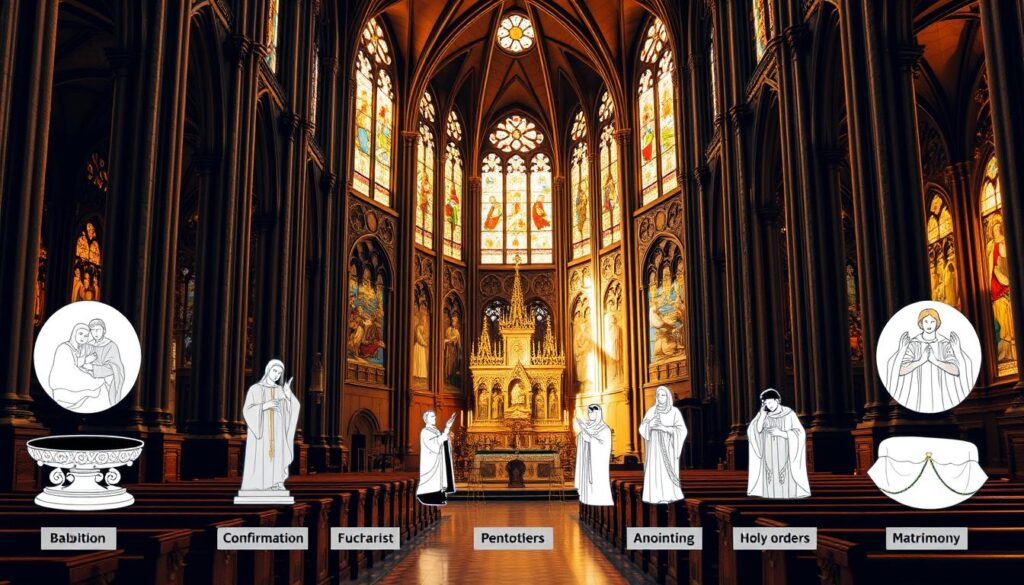
From cradle to grave, seven sacred rites mark key moments:

  • Baptism (spiritual rebirth)
  • Confirmation (adult commitment)
  • Eucharist (ongoing nourishment)
  • Reconciliation (forgiveness)
  • Marriage (lifelong union)
  • Holy Orders (ministry calling)
  • Anointing the Sick (healing)

Each sacrament serves as a divine encounter. Unlike Protestant emphasis on personal Bible study, the Catholic Church teaches that grace flows through these tangible acts. This system creates rhythm and structure for spiritual growth—a lifelong journey supported by communal worship.

Exploring “catholicism christianity”: Doctrinal and Cultural Nuances

Where do shared beliefs diverge into distinct spiritual paths? Roman Catholics and Protestant groups agree on core teachings like Christ’s divinity and resurrection. Yet their practices reveal fascinating contrasts in approaching sacred mysteries.

roman catholic sacraments

Comparative Perspectives on Sacramental Life

Roman Catholic teachings elevate Mary’s role beyond typical maternal reverence. They honor her as sinless from conception—a view most Protestants see as unsupported by Scripture. This difference shapes devotional practices, from rosary prayers to artwork in sacred spaces.

Another distinction lies in spiritual mediation. Many Roman Catholics ask saints to intercede, viewing heaven and earth as connected through prayer. Most Protestant traditions avoid this, focusing solely on direct appeals to God.

The concept of afterlife purification creates further contrast. Catholics believe in Purgatory’s cleansing process before entering paradise—a “middle way” rejected by reformers who emphasized salvation through faith alone.

These differences extend to daily spiritual life:

  • Sacraments vs personal Bible study
  • Liturgical rituals vs contemporary worship
  • Church-guided faith vs individual interpretation

Despite variations, both traditions share a deep sense of connection to divine truth. Whether through structured sacraments or heartfelt prayer, they seek the same ultimate goal—a transformative relationship with the sacred.

Social Impact and Contemporary Issues

From soaring cathedrals to chart-topping hymns, this faith tradition shapes how millions experience beauty and meaning. Its fingerprints appear in unexpected places—from courtroom ethics to climate change debates. Let’s explore how ancient wisdom meets modern world challenges.

Influence on Art, Music, and Western Culture

Gothic arches and Renaissance frescoes tell stories without words. Composers like Mozart and Bach drew inspiration from sacred texts, blending music with spiritual themes. Even today, holiday carols and wedding marches carry echoes of these traditions.

Literature thrives on its symbols too. Dante’s Divine Comedy mapped the afterlife using medieval theology. Modern films like The Lord of the Rings borrow imagery from its rich symbolic language. These creations remind us how faith fuels imagination across generations.

Modern Social Teachings and Global Challenges

Leaders today tackle issues from inequality to artificial intelligence. Recent councils emphasize human dignity, urging action on poverty and environmental care. Their teachings shape policies on immigration and healthcare worldwide.

Younger generations ask tough questions about gender roles and scientific ethics. How does a 2,000-year-old institution stay relevant? Through dialogue—mixing timeless principles with fresh perspectives. This balancing act defines its role in our rapidly changing world.

FAQ

What caused the split between Roman Catholicism and other Christian denominations?

Major divisions, like the Great Schism of 1054 and the Protestant Reformation, arose from disagreements over papal authority, theological interpretations, and practices like indulgences. Martin Luther’s critiques in 1517 notably reshaped Western Christianity.

Why does the Catholic Church emphasize tradition alongside the Bible?

Roman Catholics believe sacred tradition and Scripture form a single deposit of faith. Teachings passed down from the apostles, like the sacraments, complement biblical truths to guide belief and practice.

How does the Pope’s role differ from other Christian leaders?

The Pope is considered the successor of St. Peter and the visible head of the Church. Unlike Protestant pastors, he holds teaching authority (Magisterium) to define doctrine, as seen in documents like Dei Verbum from Vatican II.

Do Catholics believe the Eucharist is literally Jesus’ body?

Yes. Through transubstantiation, the bread and wine become Christ’s real presence. This differs from Protestant views, which often see Communion as symbolic or memorial.

What’s the purpose of the seven sacraments?

Sacraments like Baptism and Confession mark spiritual milestones and impart grace. They’re seen as essential for salvation, reflecting Jesus’ ministry and fostering unity within the Church.

How does apostolic succession shape Catholic identity?

Bishops trace their authority back to the apostles, ensuring doctrinal continuity. This unbroken lineage validates teachings and rituals, distinguishing Catholicism from denominations without historical ties to early Christianity.

Why do Catholics venerate saints and Mary?

Saints are seen as intercessors who model holiness. Mary, as the Mother of God, holds a unique role in salvation history. This practice differs from some Protestant groups that prioritize direct prayer to God.

How does Catholic social teaching address modern issues?

Documents like Laudato Si’ address climate change, poverty, and human dignity. The Church advocates for justice through principles like solidarity, reflecting Christ’s call to serve marginalized communities.

Are works necessary for salvation in Catholic theology?

Catholics hold that faith and works together express God’s grace. James 2:24 emphasizes action, contrasting with some Protestant views on faith alone (sola fide), though both affirm grace as foundational.

How has Catholic art influenced global culture?

From Michelangelo’s Sistine Chapel to Gregorian chant, the Church shaped Western art and music. These works aimed to glorify God, teach biblical narratives, and inspire worship through beauty.

Catholicism in Vietnam: Exploring the Faith’s History and Influence


With over 7 million followers, Vietnam’s Catholic community ranks among Asia’s largest. This vibrant faith community blends centuries-old traditions with modern practices, creating a unique spiritual identity. Its roots stretch back to 16th-century Portuguese missionaries, whose work began a story of resilience and growth.

Today, the Church here thrives through 27 dioceses and more than 2,200 parishes. These numbers reflect not just size but also deep cultural integration. From grand cathedrals in Hanoi to rural chapels in the Mekong Delta, religious spaces serve as hubs for worship and community life.

The faith’s journey mirrors Vietnam’s own history—marked by colonial influences, wartime struggles, and social change. Key figures like the Martyrs of Vietnam highlight its enduring legacy, while contemporary believers continue shaping local customs and values.

Understanding this heritage offers insights into how spirituality intersects with daily life. Festivals, education, and charitable work reveal the Church’s ongoing role in society. What makes this community stand out? Its ability to adapt while preserving core traditions.

Key Takeaways

  • Vietnam hosts Asia’s fifth-largest Catholic population, with 7 million adherents
  • Historical roots trace back to 16th-century European missionaries
  • 27 dioceses and 2,200+ parishes showcase modern organizational strength
  • Cultural integration shapes unique worship practices and community bonds
  • Faith-based initiatives continue influencing social development nationwide

Introduction to Catholicism in Vietnam

The story of Vietnam’s Catholic community is one of resilience and cultural fusion. With 7 million adherents, this group forms nearly 7.4% of the nation’s total population—a testament to its enduring influence across generations.

Faith Through Centuries of Change

European missionaries first brought their teachings to coastal villages in the 1500s. These early efforts laid foundations for a spiritual network that now spans 27 dioceses. Despite periods of tension, the catholic church maintained its presence through wars and political shifts.

Modern Social Contributions

Today, Vietnamese Catholics actively shape their society. Over 2,200 parishes support education programs and medical clinics nationwide. One Hanoi-based charity provides meals for 15,000 students annually, blending faith with practical aid.

Country Catholic Population % of National Total
Philippines 86 million 80%
India 20 million 1.5%
Vietnam 7 million 7.4%

Relations with the government have improved significantly since 2007. Joint initiatives address social issues while respecting cultural traditions. “Our faith strengthens our commitment to Vietnam’s future,” notes a parish leader in Ho Chi Minh City.

Historical Beginnings and Early Missions

Foreign ships carried more than spices when they reached Southeast Asian shores. European explorers brought spiritual pioneers who planted seeds of faith that would grow for generations. These early efforts transformed local beliefs while adapting to regional customs.

early catholic missionaries vietnam

Merchant Ships and Spiritual Pioneers

Portuguese trader Duarte Coelho’s 1524 voyage to Hội An did more than establish trade routes. His crew included missionaries who introduced new teachings to coastal communities. Nine years later, I-nê-khu became the first documented priest to preach in northern regions.

By 1615, two determined priests built Vietnam’s inaugural catholic church community in Hội An. Francesco Buzomi and Diogo Carvalho navigated language barriers and cultural differences to create lasting spiritual connections.

Jesuit Breakthroughs in Tonkin

The 1620s saw remarkable growth through innovative approaches. Alexandre de Rhodes and Pero Marques mastered local dialects, creating teaching materials that resonated with villagers. Their teamwork converted over 6,000 people in three years—a staggering achievement for the era.

These pioneers faced royal opposition and competing belief systems. Yet their legacy became an essential part of Vietnam’s cultural fabric. “We sowed seeds in rocky soil,” de Rhodes later wrote, “but with patience, they took root.”

Evolution of the Vietnamese Catholic Script

Language became an unexpected bridge between cultures when 17th-century missionaries crafted Vietnam’s modern writing system. Their work transformed how communities shared knowledge and preserved spiritual traditions.

Development of Chữ Quốc Ngữ

Four Jesuit scholars—Francisco de Pina, Gaspar do Amaral, Antonio Barbosa, and Alexandre de Rhodes—designed a revolutionary alphabet. By adding diacritical marks to Latin letters, they captured Vietnam’s six distinct tones. This system replaced complex characters with symbols ordinary people could learn in weeks.

Early missionaries like Girolamo Maiorica had used traditional chữ Nôm script for religious texts. But the new approach created order amid linguistic chaos. “We needed a key to unlock hearts through shared understanding,” de Rhodes later explained about their phonetic innovation.

Impact on Literacy and Religious Education

The simplified script let villagers read prayer books and hymns independently. For the first time, farming families could study faith materials without scholar intermediaries. Church leaders quickly adopted chữ Quốc ngữ for training programs and worship guides.

By 1900, over 70% of Catholic communities used this writing practice daily. It became a cornerstone for schools and newspapers, spreading far beyond religious circles. Today, grocery lists and government documents alike bear witness to this enduring cultural gift.

Catholic Missionaries and the Nguyễn Dynasty

The late 18th century witnessed an extraordinary partnership between European clergy and Vietnamese nobility. French Bishop Pigneau de Behaine’s alliance with Nguyễn Ánh—future Emperor Gia Long—reshaped both political power structures and spiritual networks across the region.

catholic missionaries nguyen dynasty

Pigneau de Behaine’s Influence

This French missionary became Nguyễn Ánh’s trusted advisor during his fight to unify Vietnam. Pigneau negotiated international support while secretly advancing church interests. His death in 1799 marked a turning point, though his legacy lived through Gia Long’s victorious reign.

The emperor’s funeral tribute called Pigneau “the most illustrious foreigner ever to appear at the court of Cochinchina”. This recognition opened doors for religious growth despite earlier tensions with local rulers.

Interactions with Vietnamese Royalty

By 1802, three thriving dioceses served 320,000 faithful through coordinated efforts. The structure blended local leadership with foreign expertise:

Diocese Members Vietnamese Priests Missionary Priests Catholic Bishops
Eastern Tonkin 140,000 41 4 1
Western Tonkin 120,000 65 46 1
Central/Southern 60,000 15 5 1

Local clergy outnumbered foreign missionaries in two regions, showing successful training programs. Royal tolerance allowed communities to flourish, creating foundations for future expansion during challenging eras.

Church Expansion During the French Colonial Era

Strategic support from foreign rulers propelled church expansion across Vietnam’s territories during the 19th century. When French forces began their campaign in 1858, many local believers saw collaboration as a path to religious security. This alliance helped colonial troops secure key regions while boosting the catholic church’s influence.

Victory brought tangible rewards. Colonial authorities granted Vietnamese Catholics prime government roles and educational access. Over 120,000 acres of confiscated royal land shifted to church control, creating economic powerhouses that funded new parishes.

The population of faithful grew rapidly under this system. By 1886, South Vietnam alone housed 20 new seminaries and 300 primary schools. “We built not just chapels, but centers of community life,” wrote a missionary in letters home. These institutions became pillars of social development for decades.

This partnership carried lasting consequences. Some citizens viewed the church as an extension of foreign rule rather than spiritual leadership. Though the country gained infrastructure, tensions simmered beneath the surface—setting the stage for future challenges to religious authority.

Struggles and Repression Under Traditional Regimes

Emperor Minh Mạng’s 1833 declaration set a chilling tone: “This foreign creed corrupts our ancestral customs.” His edicts banned religious gatherings and labeled Christian teachings as threats to social order. Followers faced property seizures, forced renunciations, and even execution for practicing their beliefs.

vietnamese martyrs persecution

Imperial Edicts and Anti-Catholic Measures

The 1836-37 crisis saw six missionaries executed, including Bishop Pierre Borie. Authorities targeted both foreign clergy and local believers. Jean-Charles Cornay faced dismemberment, while Ignacio Delgado died chained in a cage—harsh punishments meant to terrify the community.

Resistance and Martyrdom

Despite risks, underground networks kept the faith alive. Families hid priests in attics and farmhouses. Oral traditions preserved prayers when written materials were destroyed. One survivor’s diary reveals: “We whispered hymns while guards patrolled outside.”

Pope John Paul II honored this legacy in 1988 by canonizing 117 Vietnamese Martyrs. Their recognition strengthened global ties while validating local devotion. Today, pilgrimages to martyr sites draw thousands annually—proof that courage outlives oppression.

Impact of the Vietnam War on Catholic Communities

The mid-20th century brought seismic shifts for religious groups caught in Vietnam’s division. Families faced agonizing choices as political borders hardened, reshaping spiritual networks across the nation.

Faith on the Move

Operation Passage to Freedom (1954-55) saw 650,000 believers flee North Vietnam for the south—equivalent to emptying a major city. Many traveled with only prayer books and family heirlooms. “We carried our church in our hearts,” recalled one refugee decades later.

This mass exodus left just 600,000 followers in northern regions. Coastal towns lost entire congregations overnight, while South Vietnam gained new cultural hubs. The migration created concentrated Catholic districts around Saigon and Da Nang.

Lasting Divides

The southern government under Ngô Đình Diệm prioritized these displaced communities, allocating land and resources. By 1955, 60% of Vietnamese Catholics lived below the 17th parallel—a dramatic reversal from pre-war distributions.

This demographic shift fueled tensions during subsequent conflicts. Former northern refugees often became staunch anti-communists, while their relatives up north faced suspicion. The war’s end in 1975 sparked new waves of global diaspora, carrying these complex legacies worldwide.

FAQ

How did missionaries first introduce the Catholic faith to Vietnam?

Portuguese and Spanish missionaries arrived in the 16th century, followed by Jesuits like Alexandre de Rhodes. They blended local customs with religious teachings, creating early communities in regions like Đàng Trong and Đàng Ngoài.

What role did Chữ Quốc ngữ play in spreading the faith?

Jesuit missionaries developed Chữ Quốc ngữ, a Romanized Vietnamese script. This made religious texts accessible, boosted literacy, and helped unify communities across dialects, shaping both faith and culture.

How did Pigneau de Behaine influence Vietnam’s history?

As a French bishop, Pigneau supported Nguyễn Ánh (later Emperor Gia Long) during the Tây Sơn uprising. His political and military aid strengthened French-Vietnamese ties, paving the way for colonial involvement.

Why did the French colonial era impact church growth?

Colonial authorities promoted Catholic institutions, building cathedrals like Saigon’s Notre-Dame Basilica. This era saw expanded influence, though it also linked the church to foreign rule in public perception.

Were Vietnamese Catholics persecuted under traditional rulers?

Yes. Emperors like Minh Mạng viewed the faith as a threat, issuing anti-Catholic edicts. Thousands faced martyrdom, yet underground communities thrived, later honored by the Vatican as saints.

How did the Vietnam War affect Catholic communities?

Many fled north-south divisions, becoming refugees. Post-1975, some faced restrictions, but groups like the Bishops’ Conference now advocate for religious freedom while navigating state relations.

What is the status of the Catholic Church in Vietnam today?

With 7 million followers, it’s a vibrant minority. The government recognizes its social role, though tensions over land and oversight persist. Pope Francis’s 2023 meeting with leaders signaled warmer Vatican relations.

Discover the Meaning of Lent in Catholicism


Every spring, millions of believers worldwide enter a sacred season marked by reflection and growth. This 40-day period, beginning on Ash Wednesday and concluding before Easter, invites participants to focus on prayer, generosity, and self-examination. It’s more than a tradition—it’s a journey designed to deepen one’s connection to faith.

Rooted in ancient practices, this time of spiritual renewal helps bridge everyday life with the joy of Easter. Through intentional acts like fasting or helping others, individuals create space for personal transformation. The rhythm of these weeks mirrors the natural world’s shift from winter stillness to spring’s vibrant celebration.

What makes this practice stand out in the Catholic Church? It balances personal devotion with shared rituals. From receiving ashes on foreheads to gathering for special services, every step builds toward a collective experience. Even in modern life, its timeless structure offers clarity for those seeking purpose.

Key Takeaways

  • 40-day period focused on prayer, fasting, and charitable acts
  • Aligns with spring’s themes of renewal and growth
  • Combines personal reflection with community traditions
  • Prepares hearts for Easter through intentional practices
  • Accessible to believers at all stages of their faith journey

An Introduction to Lent

In the rhythm of the liturgical year, this observance stands out as a season of transformation. Spanning 40 days, it bridges ordinary routines with Easter’s promise through intentional reflection. While often linked to specific traditions, its core themes resonate across Christian communities.

What Is Lent and Why It Matters

This sacred period centers on three pillars: prayer, fasting, and generosity. Unlike celebratory seasons, its tone leans toward quiet introspection. As one priest notes, “It’s not about deprivation, but making room for what truly nourishes us.”

Believers embrace practices like abstaining from comforts or volunteering more often. These acts aren’t obligations—they’re tools for recentering priorities. Over six weeks, small sacrifices create space for gratitude and clarity.

Spiritual Significance and Seasonal Reflections

Why dedicate weeks to simplicity? The lenten season mirrors nature’s spring renewal, inviting personal growth. By stepping back from distractions, individuals confront their limitations and rediscover hope.

This time also fosters community bonds. Shared rituals—like Friday fish fries or prayer groups—turn individual journeys into collective experiences. Together, participants prepare hearts for Easter’s joy through mutual support.

Whether giving up social media or adding daily meditation, the way one observes this period matters less than the intent behind it. As daylight lengthens, so does the opportunity to cultivate compassion and purpose.

The History and Origins of Lent

Tracing its lineage to biblical narratives, this observance has transformed across eras. What began as simple fasting rituals blossomed into structured spiritual exercises embraced worldwide.

Biblical Foundations and Early Practices

The desert journey of Jesus forms the bedrock of this tradition. After his baptism, he spent 40 days fasting and praying, resisting temptation while preparing for ministry. Early Christians mirrored this devotion through brief pre-Easter fasts lasting three days.

Lent historical origins

By the 4th century, these practices expanded. New converts underwent intensive preparation through prayer and instruction before Easter baptisms. Entire communities joined them, creating shared rhythms of reflection.

Evolution Through Centuries of Christian Tradition

The Council of Nicaea in 325 A.D. standardized the 40-day period, aligning it with Jesus’ wilderness experience. Over time, traditions adapted to local cultures while preserving core principles. Fish Fridays and ash rituals emerged as lasting symbols.

Time Period Practice Significance
1st-3rd Century 3-day fast Easter preparation
4th Century 40-day structure Council of Nicaea
Middle Ages Fish Fridays Community unity
Modern Era Digital fasts Cultural adaptation

Today, the Catholic Church maintains this ancient framework while encouraging personal interpretation. Whether giving up coffee or volunteering extra hours, the heart of the practice remains unchanged: creating space for growth.

Observing catholicism lent: A Guide to Spiritual Preparation

Three timeless practices shape this sacred season: prayer, fasting, and generosity. Together, they form a rhythm that transforms routines into moments of connection. Whether you’re new to these traditions or deepening your practice, each pillar offers fresh ways to grow.

Incorporating Prayer and Scripture

Start small. Five morning minutes with the Lord’s Prayer or a Psalm can anchor your day. Many find journaling reflections on passages like Matthew 6:1-18 helpful. “Scripture isn’t just read—it’s a conversation starter,” shares a ministry leader.

Try pairing prayer reading with daily tasks. Recite verses while preparing meals or commuting. Apps with daily devotionals keep guidance at your fingertips. Over time, these moments build spiritual muscle memory.

Methods of Fasting and Abstinence

Self-control fasting isn’t limited to food. Consider screen time limits or pausing online shopping. The goal? Creating space to notice what truly matters. As the USCCB reminds us:

“We fast not to suffer, but to awaken our hunger for God’s grace.”

Abstinence practices—like meat-free Fridays—teach gratitude through simplicity. They also quietly connect us to those facing food insecurity. Pair these acts with donating meals or volunteering to multiply their impact.

Remember: consistency beats perfection. Missed a day? Start fresh. The 40-day journey reshapes hearts through steady effort, not flawless performance.

Ash Wednesday and the Start of Lent

Millions gather each year on a day marked by smudged foreheads and quiet reflection. Ash Wednesday, falling on March 5, 2025, opens the door to spiritual renewal through ancient symbols. This powerful tradition invites participants to confront life’s fragility while embracing hope.

The Role of Ashes in Repentance and Renewal

Receiving ashes shaped like a cross isn’t just ritual—it’s rebellion against superficial living. Early Christians in the fourth century wore sackcloth and dust to show remorse. By 1091, this practice expanded to all believers, creating unity through shared humility.

The ashes themselves carry hidden meaning. Many churches burn palm branches from last year’s Palm Sunday celebrations. This connects Jesus’ joyful entry into Jerusalem with our modern journey toward Easter’s light.

“We’re dust, yes—but dust that matters,” a priest recently observed during an Ash Wednesday homily. The smudged cross serves two purposes: reminding us of mortality and declaring our worth in God’s eyes. It’s both personal accountability and collective grace.

Today, the day bridges centuries of faith. From medieval fish fries to digital fasts, methods change—but the call to penance remains. As foreheads bear those ashy marks worldwide, hearts align in seeking transformation.

Fasting, Prayer, and Almsgiving Essentials

Navigating spiritual practices requires understanding both rules and purpose. These three pillars work together to create rhythms that reshape daily life while nurturing faith. Let’s explore practical ways to engage with these traditions meaningfully.

Lenten fasting guidelines

Understanding Fasting and Meat Abstinence

Fasting guidelines focus on simplicity. Those aged 18-59 limit themselves to one full meal plus two smaller ones on Ash Wednesday and Good Friday. The Church reminds us: “This isn’t about hunger pains—it’s about making room for grace.”

Meat abstinence applies differently. Members 14+ skip beef, pork, and poultry on Fridays during this season. Fish remains popular, but the real goal? Cultivating gratitude through conscious choices.

Age Group Practice Days Required
14+ No meat Fridays + Ash Wednesday
18-59 Reduced meals Ash Wednesday & Good Friday

Nurturing Prayer and Devotional Practices

Pair prayer with fasting for deeper impact. Try morning gratitude lists or evening reflection walks. Many find mealtimes ideal for brief prayers—blessing that simple meal becomes a moment of connection.

Consider these ideas to enhance devotion:

  • Set phone reminders for 2-minute prayer breaks
  • Read one Psalm during breakfast
  • Donate saved snack money to food banks

Remember, these practices aren’t checklists. As one member shares: “When my stomach growls, I pray for those whose hunger isn’t optional.” Through balanced effort, we grow in compassion while honoring ancient wisdom.

Special Lenten Traditions and Observances

As days lengthen in spring, believers enter the week that forms Lent’s emotional climax. This final stretch combines ancient rituals with personal reflection, guiding participants through Christ’s final earthly journey. The air hums with anticipation, blending sorrow and hope into transformative experiences.

holy week traditions

Walking Through Sacred Days

Palm Sunday kicks off this pivotal week with rustling palm branches and processions. Congregants reenact Jesus’ Jerusalem entry, holding fronds blessed during Mass. Many weave these palms into crosses, keeping them as reminders of faith’s triumphs and trials.

The liturgy takes a dramatic turn as readers voice every character in the Passion narrative. “Hearing the crowd shout ‘Crucify him!’ chills me every time,” shares a lifelong churchgoer. This communal storytelling makes ancient events feel urgently present.

Day Date 2025 Key Tradition
Holy Thursday April 17 Foot-washing ceremony
Good Friday April 18 Veneration of the Cross
Holy Saturday April 19 Blessing of Easter fire

Holy Saturday wraps the Triduum in quiet expectation. Churches sit dark until nightfall, when candlelight spreads through pews during Easter Vigil. This celebration of light overcoming darkness prepares hearts for resurrection joy.

These holy week observances create a powerful rhythm. From waving palms to sharing flame, each act connects believers across generations. As one pastor notes: “We don’t just remember history—we step into its living stream.”

Practical Steps for a Meaningful Lenten Journey

Creating meaningful change starts with small, intentional choices. This season offers a chance to align daily habits with deeper values, blending personal commitment with shared purpose. Whether you’re new to spiritual disciplines or refining existing practices, focus on progress over perfection.

Choosing Intentions That Resonate

Personal sacrifices work best when tied to growth goals. Swap late-night scrolling for reflective journaling, or replace coffee runs with donations to local shelters. A parish volunteer suggests: “Ask yourself: What distracts me from living generously? Start there.”

Consider pairing physical fasts with heart-centered actions. Skip dessert, then write encouraging notes to isolated neighbors. Replace streaming hours with family walks, using nature’s renewal as inspiration. These practices gain power when linked to community impact.

Track progress through simple tools—a jar for saved snack money or a prayer app streak counter. Remember, the goal isn’t rigid rules but creating space for grace. As Easter approaches, these steps prepare hearts to embrace hope’s full bloom.

FAQ

Why do Catholics avoid meat on Fridays during Lent?

Abstaining from meat symbolizes sacrifice and self-discipline, honoring Jesus’ sacrifice on Good Friday. Fish is allowed as it was historically seen as a simpler meal, aligning with the spirit of penance.

What’s the significance of ashes on Ash Wednesday?

Ashes represent repentance and mortality, reminding believers to reflect on their spiritual journey. The phrase “Remember you are dust, and to dust you shall return” ties to humility and renewal.

How long does the Lenten season last?

It spans 40 days, starting on Ash Wednesday and ending before Holy Thursday evening. This mirrors Jesus’ 40 days in the wilderness and emphasizes preparation for Easter through prayer and fasting.

Are there exceptions to fasting rules?

Yes! Children, elderly individuals, and those with health needs are exempt. The focus is on meaningful sacrifice, not rigid rules—choose practices that deepen your faith without harming well-being.

What’s the difference between fasting and abstinence?

Fasting limits food intake (e.g., one full meal plus two small meals), while abstinence avoids specific items like meat. Both encourage mindfulness and solidarity with those in need.

Why is Holy Week central to Lent?

It commemorates Jesus’ final days, including Palm Sunday, the Last Supper, and Good Friday. These events lead to Easter, making it a time for deep reflection and communal worship.

Can I personalize my Lenten sacrifices?

Absolutely! While traditions like fasting are encouraged, adding personal goals—like volunteering or reducing screen time—helps tailor the journey to your spiritual growth.

How does almsgiving fit into Lent?

Giving to others reflects Christ’s love and combats selfishness. It’s not just about money—donating time or resources strengthens community ties and embodies faith in action.

Understanding the Catholic Communion Ritual


Let’s explore one of Christianity’s most cherished traditions—the sacred meal where bread and wine become central to worship. For millions, this practice isn’t just symbolic but a direct encounter with divine grace. Rooted in ancient teachings, it bridges believers across generations through shared faith.

The ritual traces its origins to Jesus’ final meal with his disciples, where he identified bread as his body and wine as his blood. This moment established a lasting connection between spiritual nourishment and communal worship. Today, participants describe it as a way to experience Christ’s living presence in their daily lives.

Why does this matter now? Beyond its historical roots, the practice offers modern believers a tangible link to their faith. It’s not merely about consuming elements but embracing a transformative relationship. Many find renewed purpose and unity through this centuries-old tradition.

Key Takeaways

  • Originates from Jesus’ teachings during the Last Supper
  • Bread and wine symbolize spiritual nourishment
  • Viewed as an active connection to divine grace
  • Strengthens community bonds among participants
  • Combines ancient tradition with modern faith practices

Introduction to the Catholic Communion Ritual

At the heart of Catholic worship lies a sacred act that bridges heaven and earth—the holy Eucharist. This practice isn’t just about remembering events from the past. It’s a vibrant encounter where believers receive spiritual nourishment through tangible elements.

The Significance of the Eucharist in Catholic Faith

Central to this ritual is the belief that Jesus Christ makes himself truly present. Through consecrated bread and wine, participants connect with his body and blood. This moment fulfills Christ’s promise: “Whoever eats my flesh and drinks my blood remains in me, and I in them” (John 6:56).

The celebration strengthens believers’ faith by uniting them with divine life. As one early Christian text states: “We call this food Eucharist, and no one else is permitted to partake of it except one who believes.”

Overview of the Ritual’s Role in Worship

During Mass, the holy Eucharist becomes the focal point of spiritual growth. Here’s how it shapes Catholic practice:

Element Symbolism Spiritual Impact
Bread Christ’s body Unity with Jesus
Wine Christ’s blood Renewed covenant
Communion procession Shared journey Strengthened community

This sacrament deepens the celebration of God’s love while shaping how believers live their daily life. Through regular participation, Catholics maintain an active connection to their spiritual roots.

Historical and Theological Origins

The roots of this sacred practice stretch back to the earliest days of Christian gatherings. Believers saw themselves continuing what Jesus Christ began during his final meal with followers. Their shared meals weren’t just symbolic—they became bridges connecting heaven and earth.

Early Church Practices and Traditions

First-century documents like the Didache reveal strict guidelines for participation. “Let holy ones approach,” it instructs, “others must first repent.” This emphasis on spiritual readiness shows how seriously early Christians took the ritual’s transformative power.

early Christian worship

At its core lay the bread and wine from the Last Supper. When Jesus called these elements his “body” and “blood,” he created a lasting pattern. Disciples obeyed his command to “do this in remembrance,” turning simple meals into profound encounters with divine presence.

Development Through the Centuries

As faith communities spread, worship styles adapted while keeping essential elements intact. House churches evolved into grand cathedrals, but the shared celebration remained central. Church leaders refined explanations about how ordinary food could carry extraordinary meaning.

By medieval times, theologians emphasized Christ’s real presence in the Eucharist. Yet through all changes, three constants endured: sacred nourishment through bread and wine, remembrance of sacrifice, and unity among believers. This balance between tradition and adaptation continues shaping spiritual life today.

Biblical Foundations of the Holy Communion

The foundation of this sacred practice lies in Jesus’ direct teachings. Scripture provides clear instructions about its purpose, with language that challenges metaphorical interpretations.

Scriptural Passages and Interpretations

John 6 contains one of the most striking declarations. Jesus states:

“Unless you eat the flesh of the Son of Man and drink his blood, you have no life in you”

(John 6:53). His listeners understood this literally—many left, finding the teaching too demanding.

Cultural context clarifies why symbolic readings fall short. In Aramaic speech, “eating flesh” meant hostility unless stated otherwise. Yet Jesus offered eternal life through this act, doubling down when questioned: “My flesh is real food; my blood is real drink.”

Jesus’ Teaching in John 6 and the Last Supper

The Synoptic Gospels record Jesus’ actions at the Last Supper. Holding bread, he declared: “This is my body”—not “represents” or “symbolizes.” The same pattern followed with wine: “This is my blood of the covenant.”

Gospel Account Key Phrase Spiritual Promise
John 6 “Eat flesh, drink blood” Eternal life
Matthew 26 “This is my body” New covenant
Mark 14 “Poured out for many” Forgiveness

These accounts form a cohesive message. Through tangible elements, believers receive divine sustenance—a truth preserved through centuries of practice.

The Doctrine of the Real Presence

Central to Catholic worship is a mystery that transcends symbols—the belief that Jesus Christ remains fully present in the Eucharist. This teaching, called the Real Presence, asserts that consecrated bread and wine become his actual body, blood, soul, and divinity. Unlike ordinary meals, this sacred act offers direct contact with divine life.

real presence eucharist

Understanding Transubstantiation

The term transubstantiation describes how this transformation occurs. While the bread and wine keep their taste and appearance, their spiritual substance changes completely. Think of it like sunlight passing through glass—visible yet transformed by what it carries.

Three key ideas define this concept:

  • Full conversion: No trace of bread/wine remains spiritually
  • Sustained connection: Christ’s presence lasts beyond Mass
  • Sacramental unity: Participants join Jesus’ eternal sacrifice

Church Fathers and Patristic Insights

Early Christian leaders left no doubt about their beliefs. Saint Ignatius of Antioch (AD 110) called the Eucharist “the medicine of immortality.” Justin Martyr (AD 150) wrote that the food becomes “the flesh and blood of that incarnated Jesus.”

Their writings reveal four consistent themes:

  • Literal interpretation of Jesus’ words at the Last Supper
  • Emphasis on spiritual preparation before receiving
  • Connection between Eucharist and eternal life
  • Rejection of symbolic-only interpretations

This ancient understanding still shapes Catholic practice today. Through the Real Presence, believers experience what early Christians called “the pledge of future glory.”

Exploring catholicism communion in Modern Practice

From bustling cities to remote villages, believers share a common rhythm in their spiritual lives. The celebration of Mass creates a universal heartbeat, connecting diverse cultures through identical prayers and rituals. This consistency lets travelers instantly recognize the sacred pattern, whether they’re in Chicago or Kinshasa.

modern eucharistic practice

Daily Devotion and Global Unity

Many Catholics start their mornings at Mass, seeking strength through the holy communion. Church law requires receiving the Eucharist yearly, but most do so weekly or daily. “The Mass isn’t just obligation,” says Maria, a nurse from Miami. “It’s how I plug into something bigger than myself.”

Preparation often includes fasting and reflection. Before approaching the altar, believers examine their hearts through prayer. This practice maintains reverence while making the presence of Christ accessible in modern routines.

Location Liturgical Element Shared Practice
New York Consecration prayers Identical wording worldwide
Rome Scripture readings Same texts each day
Rural Africa Communion procession Universal reverence shown

Educational programs help believers deepen their understanding. Parishes offer classes explaining how the Christ Eucharist bridges ancient tradition with contemporary life. Teens learn to see beyond the ritual’s surface to its transformative core.

Outside Mass, many engage in Eucharistic adoration. They sit quietly before the consecrated host, finding peace in what they call a “spiritual recharge.” This modern devotion complements the central celebration, extending its impact into daily living.

The Role of Sacraments in Catholic Life

Sacraments shape the spiritual journey of believers through visible signs of divine grace. These sacred acts mark key moments in a life of faith, creating stepping stones toward deeper connection with God. Three rites stand as milestones: initiation through Baptism, commitment in Confirmation, and ongoing nourishment in the Eucharist.

Baptism, Confirmation, and the Eucharist Connection

The journey begins at Baptism. Here, water and the Holy Spirit cleanse the soul, welcoming individuals into God’s family. Confirmation later strengthens this bond through anointing—a personal “yes” to living out one’s faith.

These sacraments find their fullest expression in the Eucharist. Through consecrated body and blood, believers receive strength for daily challenges. This sacred meal isn’t just a ritual—it’s a living encounter with Christ’s presence.

Together, these practices form a spiritual ecosystem. They transform ordinary moments into celebrations of divine love. Whether at a baptismal font or altar rail, Catholics discover unity through shared sacraments that transcend time and culture.

FAQ

What does the Eucharist represent in Catholic belief?

The Eucharist is seen as the “source and summit” of Catholic worship. It symbolizes Jesus’ sacrifice and his ongoing presence among believers. Through consecrated bread and wine, Catholics believe they receive Christ’s body and blood spiritually and sacramentally.

How is the Last Supper connected to modern practices?

The Last Supper, described in the Gospels, is the foundation of the Eucharistic celebration. Jesus’ words, “This is my body… this is my blood,” are repeated during Mass. This act links worship today to the events of Holy Thursday, emphasizing unity with Christ and the Church.

What does “transubstantiation” mean?

Transubstantiation refers to the belief that during Mass, the bread and wine become Christ’s body and blood while retaining their physical appearance. This doctrine, rooted in medieval theology, underscores the mystery of faith in the Real Presence.

Why is John 6 important for understanding the Eucharist?

In John 6, Jesus states, “Whoever eats my flesh and drinks my blood has eternal life.” This passage is central to Catholic teaching on the necessity of the Eucharist for spiritual nourishment and union with Christ. Early Church Fathers also cited it to defend the Real Presence.

How do sacraments like Baptism relate to the Eucharist?

Baptism initiates individuals into the Church, making them eligible to receive the Eucharist. Confirmation strengthens their faith, preparing them to fully participate in Eucharistic celebrations. Together, these sacraments form a spiritual journey toward deeper communion with God.

How do modern Catholics approach the Eucharist?

Many Catholics today emphasize personal reflection and community connection during Mass. Practices like Eucharistic adoration or retreats help deepen devotion. Pope John Paul II’s encyclical Ecclesia de Eucharistia also encouraged renewed reverence for this sacrament in daily life.