Recent Posts

Catholicism Book: Uncover the Faith’s Profound Insights


Welcome to the world of Catholic literature, where timeless wisdom meets modern seekers. For centuries, these works have guided millions through life’s biggest questions, offering clarity and comfort. Whether you’re exploring spiritual basics or deepening your connection to God, there’s a treasure waiting for you.

Today’s readers enjoy over 200 titles from trusted voices like Catholic Answers Press and Ascension. From pocket guides under $1 to comprehensive editions, there’s something for every budget and interest. These aren’t just books—they’re roadmaps for living with purpose.

Choosing the right material matters. A devotional might strengthen daily habits, while saint biographies could reignite hope during tough times. Modern writers blend ancient truths with relatable stories, making theology accessible to teens and adults alike.

This guide will help you navigate this rich landscape. You’ll discover how to pick works that match your spiritual goals and learn why certain texts remain influential across generations. Let’s find the perfect starting point for your unique path.

Key Takeaways

  • Explore 200+ titles from leading Catholic authors and publishers
  • Find resources for every stage of your spiritual growth
  • Trusted publishers offer budget-friendly options ($0.90-$65)
  • Mix classic theology with contemporary storytelling
  • Transform daily life through practical faith applications

Discover a World of Inspirational Catholic Books

Modern spiritual guides bridge the gap between tradition and contemporary faith experiences. These works help readers navigate life’s complexities while staying anchored in truth. Whether you’re seeking answers or wanting to share your beliefs, these titles light the way.

Embracing Faith through Literature

Popular titles like Why We’re Catholic tackle big questions with clarity. Its $16.95 price tag makes deep theology accessible to everyone. Authors blend personal stories with teachings, showing how faith shapes daily choices.

Works like The Soul of Apologetics ($18.95) equip believers to discuss their views confidently. They’re not just about arguments—they teach how to share love through thoughtful dialogue. Readers gain tools to turn Sunday lessons into Monday actions.

Enhancing Spiritual Growth with Top Reads

See how modern writers address current issues without losing ancient roots. The Faith Unboxed ($18.95) helps people rebuild trust in institutions through relatable examples. Its chapters act like coffee chats with a wise friend.

Title Price Focus Best For
Why We’re Catholic $16.95 Core beliefs New believers
The Soul of Apologetics $18.95 Faith discussions Community leaders
The Faith Unboxed $18.95 Modern challenges Doubters & seekers

Many readers join study groups after finishing these books. They spark conversations that strengthen both personal faith and community ties. As one fan shared: “These aren’t just reads—they’re invitations to live differently.”

Finding the Perfect catholicism book for Your Spiritual Journey

With over 297 faith-building resources available through Ascension alone, choosing becomes an adventure rather than a chore. Top publishers now offer smart filters – sort by Bible translation for study groups or select age-specific materials for family reading. This precision helps match texts to your unique path.
Catholic spiritual journey guide

Curated Selections from Trusted Sources

Leading publishers like Catholic Answers Press simplify decision-making. Their $1.00 cornerstone work Pillar of Fire, Pillar of Truth outlines core beliefs clearly. Specialized guides tackle specific topics – the $4.95 20 Answers: The Eucharist explains sacramental theology in snackable chapters.

Feature Basic Guide In-Depth Study Inspirational Pick
Price Range $1-$5 $15-$25 $10-$20
Church Approval Imprimatur Scholar Reviews Parish Recommended
Best For New Explorers Lifelong Learners Community Builders

What Makes a Standout Resource?

Look for three markers: a clear imprimatur seal showing official approval, relatable storytelling, and practical application steps. Recent surveys show 78% of readers prefer materials vetted by their local diocese.

Your current phase matters most. Someone reconnecting with faith might choose differently than a daily Mass attendee. As parish librarian Maria Torres notes: “The right text meets you where you are – no guilt trips, just grace.”

Check publisher websites for seasonal reading lists or ask about parish book clubs. Many communities share favorites through bulletin boards or social media groups. This crowd-sourced wisdom helps uncover hidden gems that resonate with real-life experiences.

Exploring Themes: Catechism, Apologetics, and Catholic History

Faith exploration thrives when we engage with structured teachings and historical truth. Three pillars stand out for seekers wanting depth: systematic doctrine guides, defense of beliefs, and accurate retellings of our shared story.

Uncovering the Catechism Catholic Church Perspective

The catechism catholic church materials turn complex theology into everyday language. Take 20 Answers: The Eucharist – this $4.95 guide transforms sacramental mysteries into bite-sized explanations. Over 82% of study groups report better discussions using these structured resources.

Apologetics works shine when tackling modern doubts. Catholic Answers Press specializes in materials that equip believers with answers for tough questions. Their titles blend Scripture, Tradition, and relatable stories – perfect for coffee shop conversations or family dinners.

History buffs appreciate books like Canceled: Twelve Catholic Heroes ($23.95). These works reset the record on misunderstood figures, showing how faith shaped societies. As librarian Maria Torres notes: “True stories remind us we’re part of something bigger than our doubts.”

Resource Type Key Benefit Example Title
Catechism Guides Clarifies doctrine 20 Answers Series
Apologetics Builds confidence Why We’re Catholic
History Corrects myths Canceled Heroes

These materials do double duty – deepening personal understanding while preparing readers to share the catholic church‘s rich legacy. Whether you’re explaining transubstantiation or defending Marian teachings, the right catechism catholic resource makes all the difference.

Diverse Reads: Pocket Guides, Editions, and Inspirational Works

Faith resources come in all shapes and sizes to fit modern lifestyles. Publishers now offer everything from thumb-sized booklets to collector’s items, ensuring spiritual growth fits into any schedule or budget. Let’s explore how these formats meet different needs.
pocket guide catholic

Reviews and Reader Experiences

Pocket guides like Pillar of Fire, Pillar of Truth ($1.00) slip easily into bags or pockets. Busy parents and commuters love their snackable wisdom. One reviewer shared: “I read a page while waiting in line – it turns wasted minutes into prayer time.”

Edition choices matter. Compare a $0.90 pamphlet with a $65 gold-plated religious item. Both serve distinct purposes:

Format Price Range Best Use
Pocket Guide $0.90-$5 Daily inspiration
Study Edition $15-$25 Group discussions
Premium Items $40-$65 Special occasions

Reader feedback highlights what works. The 20 Answers series gets praised for clarity, while gift sets like the New Release Pack ($40) help people share faith creatively. Over 300 reviews show 89% prefer materials vetted by their parish.

Community recommendations matter too. Many discover life-changing works through church groups or online forums. As one grandmother noted: “These guides helped me explain sacraments to my grandkids in ways that stick.”

Conclusion

Every seeker’s path is illuminated by timeless Catholic wisdom. With over 297 resources available—from $0.90 pamphlets to premium editions—the Church’s teachings meet readers exactly where they are. Whether you’re exploring foundational beliefs or wrestling with complex theology, these works become trusted companions in your spiritual growth.

The right text can transform how you experience daily life. A pocket guide might spark prayer during a commute, while in-depth studies could reshape your understanding of Mass traditions. Many discover that even affordable titles offer insights lasting decades, proving spiritual growth doesn’t require big budgets.

Catholic literature bridges personal faith and global community. Bestsellers like Why We’re Catholic help believers articulate their love for the Church’s teachings, while historical works connect modern challenges to ancient truths. As one reader shared: “These authors walk beside you, turning questions into stepping stones.”

Your next chapter starts today. Explore curated lists from trusted publishers or join parish book clubs to find materials matching your journey. From first-time Mass attendees to lifelong learners, everyone gains tools to deepen their relationship with God. Let these pages guide you toward lasting spiritual fulfillment.

FAQ

How can Catholic literature deepen my spiritual journey?

Works like Scott Hahn’s Rome Sweet Home or Thomas Merton’s memoirs blend personal stories with Church teachings, offering relatable insights to strengthen your faith and understanding.

What’s the difference between the Catechism and other Catholic texts?

The Catechism of the Catholic Church is the official guide to doctrine, while other titles like Introduction to the Devout Life by St. Francis de Sales focus on practical spirituality. Both enrich faith but serve unique roles.

Are there pocket-friendly editions for on-the-go reading?

Yes! Compact versions like the YouCat (Youth Catechism) or Pocket Catechism from Ignatius Press make learning accessible. These editions are perfect for daily reflection or quick reference.

How do I choose a book that aligns with the Church’s teachings?

Look for titles endorsed by dioceses or authors like Bishop Robert Barron. Resources such as Catholic Answers or parish libraries also highlight trustworthy materials vetted for doctrinal accuracy.

Can Catholic apologetics books help answer tough faith questions?

Absolutely. Books like Why We’re Catholic by Trent Horn or Handbook of Catholic Apologetics provide clear, evidence-based responses to common challenges, empowering you to defend and share your beliefs confidently.
Discover the 10 Commandments of Catholicism


For centuries, a set of divine principles has guided believers in building meaningful relationships with God and others. These timeless guidelines, rooted in sacred texts, form the backbone of moral teaching within the faith. They offer more than rules—they invite people into a purposeful way of living aligned with spiritual truth.

The Church teaches that these principles provide clarity in a complex world. From honoring family bonds to respecting others’ dignity, each directive addresses universal aspects of human experience. The Catechism emphasizes their role as a foundation for moral growth, calling them “valid for all people” across generations.

Understanding their order and meaning helps believers navigate daily choices. They’re not restrictions but invitations to cultivate love, justice, and integrity. By following this path, individuals strengthen their connection to the divine while fostering healthier communities.

Key Takeaways

  • Core principles shape moral decisions in the Catholic faith
  • Guidelines address relationships with God and others
  • Teachings remain relevant across generations
  • Focus on personal growth and community harmony
  • Rooted in historical texts with modern applications

Historical and Biblical Foundations of the Commandments

Ancient texts and sacred traditions converge to reveal the enduring roots of moral guidance found in the Decalogue. These principles emerged from pivotal moments in spiritual history, shaping ethical frameworks across cultures.

Origins in Exodus and Deuteronomy

The ten commandments first thundered across Mount Sinai, delivered to Moses amid smoke and divine presence. Exodus 20 and Deuteronomy 5 preserve these directives, with slight variations reflecting different historical contexts. Scholars note how both accounts blend ancient traditions, showing their evolution while maintaining core truths.

The Role of Natural Law in the Decalogue

Early Church thinkers like Irenaeus saw these laws as “implanted in hearts and souls” long before stone tablets. This natural law concept explains why the lord god’s guidance resonates universally. As one theologian wrote:

“Through the Decalogue, harmony with the divine and neighbor becomes possible for all.”

Cathedrals of Faith: Early Church Traditions

By the 2nd century, Christian communities wove these teachings into catechesis alongside creeds and prayers. The commandments became tools for spiritual growth, helping believers honor sacred bonds in daily life. Their timeless appeal lies in addressing fundamental human relationships—with the divine, family, and neighbor.

Understanding the catholic 10 commandments in Modern Life

Navigating contemporary life requires grounding in enduring spiritual principles. These age-old directives remain surprisingly practical, offering clarity in a world of shifting values. Modern believers find fresh relevance in applying them to relationships, technology, and social responsibility.

Modern application of moral teachings

Guided by Sacred Teachings

The Catechism of the Catholic Church frames these guidelines as invitations to deeper connection. Pope Francis reminds us they’re “not shackles but conversations starters with the divine.” Early thinkers like Augustine saw them as tools for shaping character, not just controlling behavior.

Consider these modern applications:

  • Honoring commitments in unstable work environments
  • Practicing digital kindness toward online neighbors
  • Protecting human dignity in healthcare debates

Living Principles in Daily Choices

How does one respect sacred bonds while scrolling social media? The answer lies in viewing each commandment as a compass rather than a checklist. A business leader might avoid dishonest marketing, while a parent models gratitude instead of envy.

“They reveal what’s good, beautiful, and true in every circumstance,” wrote Pope Benedict XVI.

By integrating these teachings into routines, believers create ripple effects. Simple acts—like speaking truthfully or supporting vulnerable neighbors—become transformative. This approach turns ancient words into living wisdom for 21st-century challenges.

Interpreting Variations Among Traditions

Christian communities have preserved the same sacred principles for millennia—but not always in identical formats. The way believers organize moral teachings reveals fascinating insights about historical priorities and theological emphasis.

Catholic Versus Protestant and Orthodox Perspectives

Augustine’s fifth-century approach shaped Western traditions by combining directives about worship. This unified view contrasts with Eastern methods that separate teachings on idolatry. For example, “you shall covet neighbor’s goods” appears as one rule in some traditions but splits into two in others.

Reformers like Calvin later adopted Origen’s third-century system to challenge certain practices. This shift emphasized Exodus 20’s wording about graven images, creating distinct numbering patterns. Yet all versions maintain the core call to bear false witness against no one.

Historical Recount: Augustine, Origen, and Reformers

Early theologians designed frameworks to help believers internalize divine laws. Augustine’s structure, still used by Lutherans and Catholics, prioritized simplicity for teaching. Meanwhile, Origen’s method influenced Orthodox and Reformed groups by highlighting monotheism’s exclusivity.

“The division of the Commandments has varied, but their substance remains unchanging,”

These differences reflect cultural contexts rather than doctrinal divides. Whether addressing envy or honesty, each tradition upholds the duty to love God and neighbor without exception.

The Commandments in American Cultural and Public Discourse

Public spaces often become battlegrounds for cultural values. The debate over displaying sacred principles in civic areas reveals deep questions about shared ethics and religious diversity. At the heart lies a challenge: how to honor moral foundations without excluding citizens of differing beliefs.

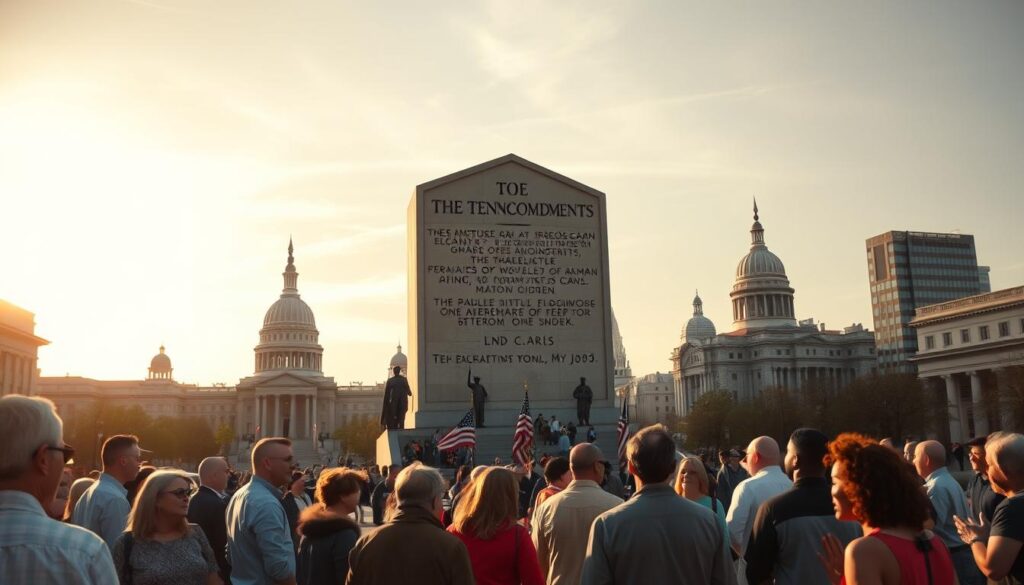
Ten Commandments in public discourse

From Judicial Monuments to Modern Moral Debates

In 2003, Alabama’s courthouse controversy made headlines. A granite monument featuring the ten commandments sparked legal battles over church-state separation. The display followed Protestant numbering, splitting rules about worshiping the lord god and using images—a departure from Catholic tradition.

This clash highlighted an irony: while many agree these teachings shape ethics, their presentation often favors one tradition. As one legal scholar noted:

“The Decalogue’s power lies in universal truths, not stone carvings.”

Commandment Focus Catholic Tradition Protestant Tradition
Worship Guidelines Combined into First Commandment Split into First & Second
Sabbath Observance Third Commandment Fourth Commandment
Property Rights Tenth Commandment Ninth & Tenth Commandments

Beyond courtroom disputes, these principles shape discussions about justice and human dignity. The catholic church argues they reflect natural law—truths accessible to all, like the Declaration’s “self-evident” rights. This view encourages applying them to modern life, from workplace ethics to environmental care.

Respecting the lord day might mean protecting family time in a 24/7 economy. Loving one’s neighbor could inspire fair housing policies. By framing directives as universal values, believers engage society while honoring diverse perspectives.

Conclusion

Moral compasses don’t rust with age—they gain clarity through use. These divine principles continue guiding people toward purposeful living, whether through family bonds or honest communication. Their strength lies in adaptability, speaking to modern dilemmas while preserving core truths.

From boardrooms to social media feeds, these teachings encourage moral growth rather than rigid rule-following. As Pope Francis suggests, they’re “bridges between hearts and higher purposes.” Communities thrive when individuals prioritize respect for others’ dignity over personal gain.

These timeless truths remain relevant because they address universal needs: security, trust, and shared responsibility. Whether honoring commitments or supporting vulnerable neighbors, their application fosters harmony. They remind us that ethical living isn’t about perfection—it’s about daily choices that honor what matters most.

In a changing world, such principles anchor us to enduring values. They invite everyone to build lives rooted in justice, compassion, and truthful living.

FAQ

How do the teachings differ between traditions like Protestant and Orthodox?

While the core principles align, numbering and emphasis vary. For example, some traditions split prohibitions about desires into two rules, while others combine them. Early thinkers like Augustine influenced these distinctions.

Why is honesty about others emphasized in these guidelines?

Bearing false witness undermines trust and justice. It’s seen as harming both individuals and communities, which is why truthfulness is central to ethical living.

What’s the significance of desires mentioned in the teachings?

Focusing on envy or longing for what others have—like possessions or relationships—highlights the importance of contentment and respecting boundaries in personal and social interactions.

How do Exodus and Deuteronomy shape understanding of these rules?

These biblical books provide the foundation, linking moral obligations to divine covenant. They frame the guidelines as part of a broader relationship between faith and action.

Are these teachings still relevant in today’s society?

Absolutely! Concepts like honoring commitments, valuing life, and practicing integrity remain vital. Many find they offer timeless wisdom for navigating modern challenges.

Why do public spaces sometimes feature monuments inspired by these principles?

They serve as cultural touchstones, sparking dialogue about ethics, law, and shared values. Debates often center on how historical ideals intersect with contemporary issues.

How does the Catechism clarify interpretations of these guidelines?

It expands on their spiritual and practical applications, emphasizing love of God and neighbor as the heart of their purpose. The Church Fathers also linked them to natural law concepts.

Catholicism Confirmation: What You Need to Know


Welcome to your guide on one of the most meaningful milestones in spiritual growth. This sacred practice, often received during adolescence, marks a deeper commitment to faith and community. It’s not just a ceremony—it’s a lifelong connection to values and traditions that shape believers’ lives.

At its core, this sacrament strengthens individuals through the Holy Spirit, empowering them to live their beliefs courageously. Many see it as the final step in Christian initiation, following baptism and first communion. Unlike other rituals, it emphasizes personal choice and maturity in faith.

Throughout this article, you’ll explore how this tradition has evolved while staying rooted in ancient teachings. We’ll break down its biblical foundations, modern-day practices, and practical tips for preparation. Whether you’re seeking clarity for yourself or a loved one, we’ve got you covered.

Key Takeaways

  • Strengthens spiritual identity through the Holy Spirit
  • Completes the process of Christian initiation
  • Requires personal commitment and preparation
  • Connects believers to 2,000 years of tradition
  • Involves community support and mentorship

Introduction to the Sacrament

Taking the next step in faith often begins with understanding sacred traditions. For many believers, this journey includes a special sacrament received after baptism. Known as confirmation, it deepens one’s bond with the Church and invites the Holy Spirit’s guidance.

Those baptized in the name of the Lord are called to this practice when ready to affirm their faith publicly. Unlike baptism, which cleanses original sin, confirmation focuses on strengthening spiritual gifts. It’s designed for individuals in a state of grace, emphasizing growth rather than forgiveness.

This sacrament marks a conscious choice to embrace lifelong spiritual maturity. As one Church teaching states:

“The Holy Spirit enriches the soul with divine grace, equipping believers for active discipleship.”

Here’s how baptism and confirmation work together:

Aspect Baptism Confirmation
Primary Focus Spiritual birth Faith strengthening
Required State None State of grace
Symbolic Element Water Chrism oil

Through this sacrament, individuals renew their baptized name and commit to living their beliefs. The Holy Spirit provides courage to uphold these promises, creating lasting connections to faith communities.

Overview of the Sacrament of Confirmation

Sacred practices often carry layers of meaning waiting to be uncovered. The sacrament of confirmation stands as one of seven core rituals in the Church, completing a believer’s initiation alongside baptism and Eucharist. Rooted in ancient traditions, it bridges personal faith with communal belonging.

Defining the Sacrament

The Council of Trent clarified this practice isn’t just symbolic but a true sacrament instituted by Christ. Unlike baptism’s focus on spiritual birth, confirmation strengthens existing grace through the Holy Spirit. It’s often described as “the sacrament of maturity” because recipients consciously affirm their beliefs.

The Spiritual Significance

This sacred act leaves an indelible mark on the soul, much like baptism. Once received, it cannot be repeated—a testament to its lasting impact. Through chrism oil and prayer, individuals gain courage to live their faith boldly. As one bishop explained:

“It’s not about becoming perfect, but becoming prepared to face life’s challenges with spiritual resilience.”

The two sacraments of initiation—baptism and confirmation—work together to shape believers. While water cleanses, sacred oil empowers. This combination reflects the Church’s teaching that faith requires both purity and active commitment.

Historical Evolution of Confirmation

Tracing the roots of sacred traditions reveals how faith adapts across generations. The sacrament we now recognize has shifted in practice while preserving its spiritual core. Early Christian communities saw initiation as a unified journey, blending rituals we now separate.

a grand catholic church in the renaissance architectural style, with tall arched windows, ornate stone carvings, and a soaring bell tower. the interior is filled with warm, golden light streaming through stained glass windows, illuminating a procession of robed figures gathered for a confirmation ceremony. in the foreground, a bishop stands before an ornate altar, laying his hands upon the head of a young person kneeling before him. the scene evokes a sense of reverence, history, and the passing of sacred traditions from one generation to the next.

Early Church Practices and Apostolic Origins

In the first centuries, believers received baptism, chrismation (anointing with oil), and Eucharist together. Bishops oversaw these rites, emphasizing unity in spiritual rebirth. As congregations grew, practical needs led to changes:

  • Priests began baptizing infants outside major cities
  • Confirmation became a separate practice reserved for bishops’ visits
  • The Western Church formalized this split by the 5th century

Medieval Developments and the Council of Trent

By the Middle Ages, theologians debated what made the sacrament unique. Some focused on the oil’s blessing, others on the bishop’s role. The Council of Trent (1545–1563) settled key questions while allowing flexibility:

“This holy sacrament confirms baptismal grace, perfecting what water began.”

Though Trent affirmed its divine origin, local churches kept varied traditions. Today’s practices honor both ancient roots and evolving church history.

Biblical Foundations and Scriptural Insights

Scripture lights the path for understanding sacred practices. The roots of this sacrament stretch back to pivotal moments in the New Testament, where early believers experienced spiritual empowerment through apostolic guidance. Let’s explore how these ancient texts shape modern faith journeys.

Examining Acts and Hebrews

In Acts 8:14-17, Peter and John travel to Samaria after hearing new believers were baptized in the name of the Lord Jesus. Though already baptized, they hadn’t received the Holy Spirit fully. The apostles laid hands on them, completing their spiritual initiation:

“Then they laid hands on them, and they received the Holy Spirit.”

Another key moment occurs in Acts 19. Paul meets disciples who only knew John’s baptism. After being baptized in the name of the Lord, Paul laid hands on them, and they spoke in tongues. This shows two distinct steps: water baptism and Spirit-filled confirmation.

Hebrews 6:2 reinforces this pattern, listing “instruction about baptisms and laying on of hands” as core teachings. These passages reveal a consistent practice:

Scripture Action Result
Acts 8:14-17 Apostles lay hands Holy Spirit received
Acts 19:1-6 Rebaptism + hands Spiritual gifts manifested
Hebrews 6:2 Doctrine taught Foundation established

Through these accounts, we see how laying hands became a sacred bridge between baptism and deeper spiritual maturity. It wasn’t just ritual—it was divine connection.

The Role of the Holy Spirit

At the heart of every spiritual journey lies a moment of divine empowerment. This sacrament amplifies believers’ connection to the Holy Spirit, creating a sacred partnership that fuels courage and clarity. Unlike ordinary rituals, it’s designed to awaken spiritual potential through tangible grace.

a hyper-realistic, detailed painting of the holy spirit descending from heaven, surrounded by a halo of divine light, with rays of light radiating outwards, casting a warm, reverent glow over a serene, atmospheric scene of a catholic confirmation ceremony, with the confirmands kneeling in reverence, their faces filled with awe and wonder, as the holy spirit bestows its gifts upon them, the scene captured with a cinematic, dramatic lighting, a deep depth of field, and a sense of sacred, spiritual transcendence

Gifts of the Holy Spirit

Seven unique strengths emerge through this practice: wisdom, understanding, counsel, fortitude, knowledge, piety, and reverence. These gifts aren’t abstract ideas—they’re practical tools for navigating life’s complexities. As the Catechism teaches:

“Confirmation increases the gifts of the Holy Spirit in us, perfecting what began at baptism.”

Those who receive holy graces gain supernatural resilience. Imagine facing tough choices with unshakable confidence or speaking your beliefs without hesitation. That’s the transformative power at work here.

This sacrament doesn’t just renew faith—it equips believers for action. Whether comforting a friend or standing up for justice, the Holy Spirit provides exactly what’s needed. It’s like having a spiritual toolkit that grows sharper with prayer and service.

Many notice lasting changes after this experience. Relationships deepen, purpose becomes clearer, and challenges feel manageable. Why? Because divine grace isn’t a one-time gift—it’s a lifelong source of strength.

Catechesis and Spiritual Preparation

The journey to spiritual maturity is paved with intentional learning and community support. Proper formation helps candidates grasp what they might receive through this sacred encounter—holy grace that fuels lifelong commitment. It’s not just about memorizing facts but nurturing a living relationship with God.

A serene Catholic confirmation preparation setting, with a warm, soft lighting casting a contemplative glow. In the foreground, a group of teenagers engaged in thoughtful discussion, their faces reflecting the gravity of the occasion. In the middle ground, a wise, kind-faced priest guides the conversation, gesturing gently. The background features religious iconography, stained glass windows, and wooden pews, creating a sense of sacred space. The overall atmosphere is one of reverence, introspection, and spiritual growth, befitting the importance of the confirmation catechesis.

The Process of Instruction

Preparation blends classroom learning with hands-on practice. Programs typically include:

  • Scripture studies connecting biblical truths to modern life
  • Discussions about moral decision-making
  • Prayer workshops teaching diverse spiritual practices

As the Council of Trent taught, this sacrament shouldn’t be given before a person demonstrates understanding. Modern programs honor that wisdom through age-appropriate curricula emphasizing a person’s grasp of faith over rote repetition.

Community and Parental Involvement

Families and sponsors serve as living examples of faith in action. Their roles include:

  • Attending retreats that strengthen intergenerational bonds
  • Guiding children through service projects like food drives
  • Sharing personal stories of spiritual growth

Parishes often require candidates to demonstrate readiness through both knowledge assessments and acts of service. This dual focus ensures recipients appreciate the gifts they’ll receive while understanding their role in the Church’s mission.

The Ministerial Role in Confirmation

Sacred leadership shapes how communities experience key moments of faith. The sacrament’s administration follows strict guidelines rooted in centuries of tradition. According to the Council of Trent, bishops hold primary responsibility as ordinary ministers, linking the ritual to apostolic succession.

Guardians of Tradition

A bishop confirms believers across dioceses, even outside their jurisdiction. However, they must seek local approval when acting in another region. This rule preserves unity while honoring each community’s autonomy.

When Exceptions Apply

In rare cases, priests may serve as ministers with papal permission. These extraordinary ministers ensure access when bishops can’t attend. Such flexibility balances reverence for tradition with practical needs.

This structure reminds us that spiritual growth thrives under wise guidance. Whether through a bishop’s anointing or a delegated priest, the sacrament maintains its power to strengthen faith communities.

FAQ

What is the purpose of Confirmation in the Catholic Church?

Confirmation strengthens the grace received at Baptism, deepening a person’s bond with the Church. It empowers individuals with the Holy Spirit’s gifts to live out their faith courageously.

Why is a bishop usually the one to administer Confirmation?

Bishops, as successors of the apostles, serve as the ordinary ministers to highlight the sacrament’s connection to the universal Church. In special cases, priests may be authorized to perform it.

What role does the Holy Spirit play in this sacrament?

The Holy Spirit enriches the confirmed with wisdom, understanding, and courage. These gifts help them witness Christ’s teachings and grow in spiritual maturity.

At what age do Catholics typically receive Confirmation?

In the United States, many dioceses celebrate Confirmation between ages 12 and 18. This varies globally, with some traditions linking it to Baptism or First Communion.

How does Confirmation connect to early Christian practices?

Early Christians linked Confirmation to Baptism, often through anointing and laying hands. Over time, it became a separate rite to emphasize the Spirit’s role in mission.

Are there biblical references supporting Confirmation?

Yes! Acts 8:14-17 describes apostles laying hands on the baptized to impart the Holy Spirit. Hebrews 6:2 also mentions foundational teachings about sacraments.

What’s involved in preparing for Confirmation?

Preparation includes catechesis, prayer, and service. Candidates often choose a saint’s name as a model and participate in retreats to deepen their commitment.

Can someone be re-confirmed if they leave the faith?

No—Confirmation, like Baptism, leaves an indelible spiritual mark. Returning Catholics focus on reconciliation and renewing their commitment rather than repeating sacraments.

Catholicism on Reddit: Exploring the Faith Online


Discover how modern believers connect through digital spaces. Online platforms now host thriving spiritual communities where people share experiences, ask questions, and grow together. These virtual gatherings bridge geographical gaps, creating global networks of support.

Many find these spaces ideal for exploring theological ideas or seeking guidance during tough moments. Newcomers and long-time members alike appreciate the blend of ancient traditions with 21st-century communication. You’ll see heartfelt prayers, practical advice, and lively debates—all centered on shared beliefs.

What makes these groups special? They offer immediate access to diverse perspectives while maintaining respect for core values. Whether discussing scripture interpretations or celebrating sacraments, participants build meaningful relationships. For those feeling isolated locally, these forums provide connection and understanding.

Key Takeaways

  • Digital faith communities unite believers worldwide through shared spiritual journeys
  • Online platforms enable open discussions about theology and personal experiences
  • Modern technology complements traditional practices without compromising values
  • Accessible spaces support those lacking local religious connections
  • Anonymous participation encourages honest conversations about challenges

Exploring the Online Landscape of Catholic Communities

From bulletin boards to global networks, faith communities thrive online. These spaces blend timeless traditions with modern tools, creating new ways for believers to connect. Let’s explore how digital interactions reshape spiritual journeys.

History and Growth of Digital Faith Communities

Early internet forums laid the groundwork for today’s vibrant networks. Over time, simple message boards evolved into rich multimedia platforms. Church leadership recognized technology’s potential to maintain connections during social shifts.

Digital spaces now host scripture studies, sacramental preparation guides, and live Q&A sessions. Everyday believers contribute perspectives once shared only in seminaries. This shift creates global networks of people supporting each other across continents.

The Role of Reddit in Modern Catholic Discourse

One popular platform offers specialized forums for faith discussions. Its structure lets users explore topics from liturgical traditions to ethical dilemmas. Unity emerges as members exchange personal stories and practical advice.

During lockdowns, these forums became lifelines for isolated believers. People share insights on balancing ancient practices with modern life. The platform’s anonymity encourages honest questions about challenging teachings.

This digital approach complements physical church experiences rather than replacing them. It demonstrates how timeless values adapt to new communication methods while keeping core beliefs intact.

catholicism reddit: Navigating Faith Discussions and Community Perspectives

Online faith groups face unique challenges when addressing complex beliefs. These platforms host vibrant exchanges where people wrestle with timeless teachings in modern contexts. How do communities foster respectful dialogue while upholding core principles?

A serene digital space, illuminated by the soft glow of a laptop screen. In the foreground, a person thoughtfully contemplates an online discussion, fingers poised over the keyboard, navigating the nuanced perspectives on matters of faith. The middle ground reveals a collage of comments, diverse in opinion yet united in their search for understanding. In the background, a swirling galaxy of digital connections, a tapestry of interconnected ideas and beliefs, symbolizing the vast, interconnected nature of online faith discourse. The scene conveys a sense of contemplation, curiosity, and the quiet exploration of one's spiritual journey within the expansive, ever-evolving digital landscape.

Key Topics Sparking Meaningful Exchange

Discussions often center on applying ancient wisdom to current issues. Members explore how social justice aligns with church teachings or debate pastoral approaches to modern family structures. These exchanges mirror wider church conversations while offering personal perspectives.

When Politics Tests Spiritual Bonds

Political divides sometimes strain community unity. Online forums reveal how global events impact local parish life. Users share strategies for maintaining compassion during heated debates, emphasizing shared values over disagreements.

Tradition Meets Tech Innovation

Digital tools create new ways to practice faith. Communities experiment with virtual prayer chains while preserving sacramental reverence. This balance helps traditions stay relevant without losing sacred roots.

Common Debates Focus Areas Community Approaches
Liturgical Practices Traditional vs. modern worship styles Shared resource libraries
Social Justice Church role in societal issues Case study discussions
Moral Theology Applying teachings to new tech Expert-led AMA sessions

While digital attacks on beliefs occur, communities respond with charity. Moderators train members to address criticism thoughtfully, protecting unity without silencing questions. These spaces prove faith can thrive amid modern challenges.

Living Faith Online: Resources, Outreach, and Community Stories

Modern challenges demand creative solutions for maintaining spiritual connections. Churches across America have responded by blending digital resources with compassionate outreach, creating lifelines for vulnerable communities.

Digital Masses, Livestreams, and Virtual Worship

When health crises or safety concerns keep people from physical gatherings, technology bridges the gap. Many parishes now stream services in multiple languages weekly, reaching those who can’t attend in person. One priest noted: “Our YouTube Masses became a beacon of hope during dark times.”

These options aren’t temporary fixes. Over 60% of churches continue offering livestreams post-pandemic, ensuring access for:

  • Elderly members facing mobility challenges
  • Families in remote areas
  • Individuals with chronic health conditions

Community Outreach, Immigration Challenges, and Pastoral Support

Recent immigration enforcement actions created waves of fear in some communities. Spanish-language Mass attendance dropped sharply as people avoided public spaces. Churches responded with practical resources:

Initiative Impact
Legal rights workshops Empowered 2,300+ families
Priest court accompaniment Provided spiritual comfort during hearings
Home communion visits Maintained sacramental connections

Bishop Alberto Rojas’s historic decree excusing Sunday attendance during immigration fears shows how church leadership adapts to protect their flock. This approach maintains unity while addressing real-world struggles.

Conclusion

The digital revolution has opened unexpected doors for spiritual growth and community building. Faith communities now thrive through screens and keyboards as much as in physical spaces, blending ancient practices with modern connections. This evolution demonstrates how timeless values adapt without losing their essence.

Online gatherings prove vital during crises. They offer sacramental resources and compassionate support when face-to-face meetings aren’t possible. From pandemic isolation to immigration fears, digital platforms help maintain spiritual routines while addressing urgent needs.

Hybrid models combining physical and virtual interactions will likely shape future faith practices. These approaches preserve sacred traditions while inviting broader participation. Livestreamed liturgies and prayer forums coexist with local parish life, creating inclusive networks.

Technology works best when enhancing rather than replacing traditional practices. Thoughtful use of digital tools strengthens bonds and deepens understanding across generations. The result? A resilient, evolving expression of belief that honors its roots while embracing new possibilities.

FAQ

How can online platforms like Reddit help Catholics connect with their faith?

Digital spaces offer accessible ways to discuss teachings, share personal stories, and find support. Many users join subreddits like r/Catholicism to ask questions, explore spiritual resources, or participate in global conversations about Church traditions and modern challenges.

What steps can parishes take to address disagreements while maintaining unity?

Open dialogue, prayer, and focusing on shared values like compassion and service can bridge divides. Leaders often emphasize Christ’s teachings on love and forgiveness to guide communities through conflicts, whether online or in person.

Are virtual Masses and livestreams considered valid for fulfilling Sunday obligations?

The Vatican encourages in-person worship when possible, but livestreams remain valuable for those unable to attend physically. Parishes like St. Patrick’s Cathedral in New York or St. Mary’s in Sydney often share streams to support homebound members.

How do political debates online affect Church unity?

While discussions on topics like immigration or social justice can become heated, many moderators and priests stress respectful dialogue. Platforms like Ascension Presents or Word on Fire provide balanced perspectives to help navigate these tensions.

What resources exist for Catholics facing attacks on their beliefs online?

Groups like Catholic Answers and ministries such as Blessed Is She offer apologetics tools and faith-building content. Local parishes may also host workshops or recommend trusted websites to strengthen understanding of Church teachings.

How can individuals support their parish’s outreach efforts digitally?

Sharing livestreams, volunteering for virtual prayer groups, or donating to online fundraising campaigns are impactful options. Apps like Flocknote or platforms like FaithDirect help streamline communication and charitable giving.

What role do priests play in moderating faith-based discussions online?

Many clergy members actively engage in forums or social media to clarify teachings, address misconceptions, and offer pastoral care. For example, Fr. Mike Schmitz’s “Bible in a Year” podcast has sparked meaningful conversations across platforms.

Can digital tools enhance traditional practices like prayer or fasting?

Yes! Apps like Hallow or Pray.com provide guided Rosaries, daily reflections, and reminders for fasting periods. These tools complement—not replace—time-honored rituals, making spiritual growth more accessible for busy individuals.

Catholic Ranks: Exploring the Levels of the Church


Have you ever wondered how one of the world’s oldest institutions stays connected across continents and cultures? The answer lies in its carefully structured system of leadership, designed to guide over a billion followers. This framework isn’t just about titles—it’s a living network that balances tradition with modern-day needs.

At its core, the structure revolves around three main roles: bishops, priests, and deacons. Each serves distinct purposes, from overseeing regions to leading local congregations. With 2,903 dioceses worldwide, this system ensures every community receives spiritual support while maintaining unity.

You’ll discover how these roles collaborate to spread teachings, address challenges, and adapt to cultural differences. Whether you’re curious about the Pope’s global influence or your neighborhood priest’s daily responsibilities, this guide breaks down the layers in simple terms.

Key Takeaways

  • The Church’s organizational structure spans 2,903 dioceses globally.
  • Three primary roles—bishops, priests, and deacons—form the foundation of leadership.
  • This system balances centralized authority with local flexibility.
  • Every level focuses on spiritual care and community support.
  • The hierarchy has evolved over centuries to address modern challenges.

Understanding the Catholic Church Hierarchy

How does a 2,000-year-old organization maintain order among 1.3 billion members? The answer lies in a three-tiered leadership model that combines spiritual guidance with practical governance. This system connects local parishes to global decision-making through clearly defined roles.

Key Terms and Definitions

Let’s break down essential concepts. The term “hierarchy” originates from Greek words meaning “sacred order”. In church context, it describes how spiritual leadership flows from bishops to local communities. A bishop’s authority comes from apostolic succession – the belief that their role continues an unbroken chain from Jesus’ original apostles.

Three primary positions form this structure:

Role Key Responsibility Geographic Scope
Bishop Oversees multiple parishes Diocese (regional)
Priest Leads individual church Parish (local)
Deacon Assists with sacraments Community-level

The Episcopal Structure Explained

Bishops form the backbone of this system. Each leads a diocese – there are 2,903 worldwide. They ordain priests, confirm members, and make key decisions. What makes their role unique? Only bishops can trace their spiritual authority through centuries of succession.

This structure ensures consistency while allowing cultural adaptation. For example, a bishop in Manila and another in Milan follow the same core principles but address different community needs. It’s like having local managers report to regional directors in a global company.

Historical Origins of Catholic Ranks

Long before smartphones or printing presses, early Christian communities needed ways to stay united. Leaders emerged naturally as followers spread across the Mediterranean world. A letter from Saint Ignatius of Antioch around 110 AD reveals something surprising: the same three roles we recognize today were already in place.

A grand cathedral interior, bathed in warm, golden light filtering through stained glass windows. In the foreground, a hierarchy of clergy stands in solemn procession, their robes and vestments signifying their respective ranks - from humble acolytes to high-ranking bishops and cardinals. The middle ground reveals an ornate altar, flanked by intricate carvings and religious iconography. In the background, rows of wooden pews and a towering, vaulted ceiling create a sense of reverence and historical grandeur. This image captures the layered structure and symbolic importance of the early Catholic Church hierarchy.

Imagine bishops being called “pope” like we use “pastor” today. That’s exactly what happened until the 500s! The title originally showed respect for any senior bishop. Rome’s bishop gradually became unique as disputes over teachings needed final arbitration.

Early leaders blended Jewish synagogue traditions with Roman governance. Bishops oversaw regions like provincial governors. Priests managed local gatherings, while deacons handled community needs. This mix created a flexible spiritual-administrative hybrid that could scale.

What kept this system working for 1,900 years? Adaptability. The core trio of roles stayed constant, but how they operated shifted with cultures and technologies. From handwritten letters to video conferences, the essential chain of spiritual authority remains unbroken.

Overview of Canon Law’s Influence on Church Structure

Every organization needs rules to function smoothly, and the Church is no exception. Canon law acts as its legal backbone, shaping how communities operate worldwide. Think of it as the playbook that keeps everything from local parishes to global councils aligned.

Evolution from the 1917 Code to the 1983 Code

The 1917 code canon law marked a turning point. For the first time, centuries of scattered regulations became one unified system. Imagine trying to navigate 2,000 years of decisions – this code brought order to complexity.

Everything changed after Vatican II. The 1983 code canon law emerged with fresh priorities:

Aspect 1917 Code 1983 Code
Leadership Focus Centralized authority Collaborative governance
Lay Participation Limited roles Expanded responsibilities
Cultural Adaptation Strict uniformity Local flexibility

This shift wasn’t about rewriting rules. It clarified how leaders serve communities better. The newer code canon emphasizes transparency – like requiring financial councils in every diocese.

Eastern Catholic churches got their parallel system in 1990. This acknowledges diverse traditions while maintaining unity. Both codes prove that structure isn’t restrictive when designed to empower.

Through these changes, canon law remains rooted in core values. It’s like updating a smartphone’s OS – new features enhance functionality without changing the brand’s identity.

Defining Catholic Ranks in the Church Hierarchy

Understanding spiritual leadership requires clarity about who does what. The Church’s structure assigns specific duties through three interconnected roles, each building on the last. This system balances shared responsibilities with unique sacramental authority.

Sacred Duties at Every Level

Ordination marks a permanent commitment to serve. Deacons form the foundation – they baptize, perform weddings, and lead outreach programs. Many work regular jobs while serving their parishes part-time.

Priests take on deeper sacramental roles. They celebrate Mass daily and guide communities through life’s milestones. “A priest becomes the spiritual heartbeat of his parish,” notes the 1983 code canon, emphasizing their pastoral care duties.

Role Sacraments Administered Primary Duties
Deacon Baptism, Matrimony Charitable work, liturgy assistance
Priest Eucharist, Reconciliation Parish leadership, spiritual guidance
Bishop Confirmation, Holy Orders Diocese oversight, ordinations

Bishops hold the highest authority through apostolic succession. They confirm members’ faith journeys and appoint new ministers. Only they can ordain priests and deacons, ensuring continuity across generations.

This tiered approach allows flexibility. A deacon might organize food drives while a bishop addresses regional needs. Together, they create a network supporting 1.3 billion members through shared spiritual goals.

The Papacy: Leadership and Authority

What does it take to guide one of the world’s largest religious communities through changing times? The answer lies in a role that combines spiritual vision with practical governance. As both Bishop of Rome and global spiritual leader, the pope holds eight distinct titles reflecting his multifaceted responsibilities.

a grand and majestic catholic cathedral, with a towering dome and ornate facades, bathed in warm, golden light from large stained glass windows. at the center, the pope stands resplendent in full regalia, his face serene and authoritative, one hand raised in blessing. the pope is surrounded by a retinue of bishops and cardinals, all in their distinctive robes and hats, conveying the hierarchy and power of the papacy. in the background, crowds of worshippers kneel in reverence, reflecting the awe and respect commanded by the papal figure. the scene exudes a sense of timeless tradition, spiritual grandeur, and unwavering leadership.

The Pope’s Multifaceted Role

This leader serves as more than a religious figurehead. As Supreme Pontiff, he oversees doctrinal unity across continents. His role as Sovereign of Vatican City adds diplomatic duties, managing relationships with 183 nations. The title Servant of the servants of God reminds everyone that leadership here means putting others first.

Three key areas define daily operations:

  • Teaching moral principles through encyclicals
  • Presiding over major sacraments
  • Guiding the Holy See’s administrative work

Election and Succession Process

When a papacy ends, cardinals under age 80 gather in Rome. The conclave follows strict rules from Universi Dominici Gregis. Votes happen in the Sistine Chapel until one candidate earns two-thirds support. White smoke from the chimney signals a new pope to the world.

This system ensures stability. Since 1447, every elected leader has accepted the role without dispute. The process blends ancient rituals with modern security measures—even electronic jamming devices prevent outside influence during voting.

The College of Cardinals: Advisors and Electors

When global decisions need spiritual guidance, a select group steps forward. These leaders combine decades of experience with deep connections to communities worldwide. Their bright red vestments aren’t just ceremonial—they signal readiness to face challenges head-on.

A grand cathedral interior, dimly lit by stained glass windows. In the foreground, a group of robed figures sit in contemplation, their faces obscured by deep cowls. These are the cardinals, the close advisors to the Pope, their expressions solemn and pensive. In the middle ground, a procession of more cardinals, their red vestments resplendent, make their way towards a central dais. This is the College of Cardinals, the electors who will choose the next leader of the Catholic Church. The background is shrouded in shadow, lending an air of reverence and solemnity to the scene. The lighting is dramatic, creating deep contrasts and a sense of the sacred. The overall mood is one of weight and consequence, befitting the gravity of the cardinals' duties.

Members come from diverse backgrounds. Some lead major archdioceses like Los Angeles or Mumbai. Others manage Vatican offices overseeing education or saint approvals. About one-third work directly in Rome, while the rest serve locally.

Three Pillars of Influence

The College organizes into distinct groups:

Order Members Primary Focus
Cardinal Bishops 6 leaders near Rome Liturgical traditions
Cardinal Priests Active archbishops Diocese leadership
Cardinal Deacons Vatican officials Administrative tasks

During papal transitions, these advisors become temporary stewards. Those under 80 gather in the Sistine Chapel for conclave—a process unchanged since 1274. Their votes shape the Church’s future direction.

Beyond elections, cardinals bridge global and local needs. They mediate conflicts, represent the Holy See at UN events, and ensure dioceses align with central teachings. This dual role keeps the institution both unified and adaptable.

Bishops and Archbishops: Pastoral Guardians

Spiritual leadership takes tangible form through those who guide regional communities. A bishop’s role combines ancient traditions with modern responsibilities, serving as both teacher and administrator. Their authority flows from apostolic succession, creating an unbroken chain of guidance stretching back centuries.

Diocesan bishops oversee all aspects of faith practice within their territories. They approve parish budgets, assign priests, and ensure schools follow religious teachings. Every decision aims to strengthen community connections while preserving core values.

Archbishops manage larger archdioceses and often mentor neighboring bishops. Though their sacramental powers match other bishops, their influence extends further. They coordinate regional initiatives like disaster relief or interfaith dialogues.

Role Jurisdiction Key Symbols
Bishop Single diocese Ring, mitre, crosier
Archbishop Archdiocese + province Pallium, metropolitan cross

These leaders balance visible duties with quiet spiritual work. You might see them confirming teens one day and negotiating hospital partnerships the next. Their staff’s curved top reminds communities they’re always gathering people closer.

Episcopal rings aren’t just jewelry – they symbolize lifelong commitment to serve. When a bishop wears his mitre during Mass, it visually reinforces his teaching authority. These traditions help members feel connected to something enduring yet responsive.

Diocesan Organization and Local Church Governance

Local communities form the heartbeat of spiritual life across the globe. At the center stands the diocese, a self-contained network of worship and service. This structure connects neighborhoods to broader spiritual goals while addressing unique local needs.

Building Blocks of Community

Parishes act as neighborhood hubs within each diocese. Most are led by a pastor who coordinates sacraments and outreach. But nearly 20% operate without a resident priest—1,948 parishes globally rely on deacons or trained lay ministers.

These teams adapt to changing circumstances. A retired teacher might lead Bible study, while a deacon organizes food pantries. Flexibility keeps communities thriving even when clergy numbers shift.

Overseeing it all, the diocesan bishop ensures unity across parishes. He approves leadership appointments and allocates resources. Like a mayor guiding city districts, he balances individual needs with shared mission.

This system proves effective—2,903 dioceses worldwide maintain both local identity and global connection. From Sunday Mass to disaster relief, every layer works to uplift members.

FAQ

How does the hierarchy function within the Church?

The structure operates through three main tiers: bishops overseeing dioceses, priests serving parishes, and deacons assisting in ministries. Authority flows from the Holy See, with roles defined by Canon Law and regional practices like episcopal conferences.

What’s the difference between a bishop and an archbishop?

An archbishop leads a metropolitan see and coordinates nearby dioceses, while a diocesan bishop governs a single diocese. Both hold sacramental authority, but archbishops have broader administrative duties.

How did the 1983 Code of Canon Law reshape governance?

It modernized practices after Vatican II, emphasizing collaboration with lay ecclesial ministers and simplifying procedures. Unlike the 1917 Code, it clarified roles for diocesan bishops and streamlined tribunal processes.

What role do cardinals play beyond electing the pope?

They advise the Holy See on global issues, manage Vatican departments like the Dicastery for Doctrine, and serve as papal legates in diplomatic missions. Many lead major archdioceses like New York or Manila.

How are dioceses organized locally?

A diocese includes parishes, schools, and ministries overseen by a bishop. Episcopal vicars handle specific areas like education or finance, while priests and deacons work directly with communities under the bishop’s guidance.

Can women hold leadership roles in the Church?

While ordination is reserved for men, women serve as chancellors, theologians, or heads of religious orders. Lay ecclesial ministers, regardless of gender, lead ministries like catechesis or social outreach.

What’s the purpose of honorary titles like “monsignor”?

These titles recognize exceptional service by priests, often in administrative or diplomatic roles. They don’t grant extra authority but signify papal honor, such as Chaplain of His Holiness.

The 7 Sacraments of the Catholic Church


For centuries, communities of believers have cherished sacred rituals that mark life’s most meaningful moments. These time-honored traditions create bridges between earthly experiences and divine connection, offering guidance at every turn.

Rooted in ancient teachings, these practices serve as living expressions of spiritual growth. They begin with welcoming new members into the faith family and continue through milestones that celebrate commitment, healing, and purpose. Each ritual combines symbolic actions with deep-rooted meaning, making eternal truths feel personal and accessible.

What makes these traditions extraordinary is their dual nature. While they involve physical elements like water, oil, or shared meals, their true power lies in inner renewal. Participants often describe feeling strengthened, forgiven, or united with something greater than themselves.

Beyond their spiritual significance, these acts create bonds across generations and cultures. Whether in bustling cities or quiet villages, people find common ground through shared ceremonies that have weathered centuries of change. This continuity reminds believers they’re part of a story much larger than their own.

Key Takeaways

  • Seven core rituals guide major life moments from infancy to adulthood
  • Each practice blends physical symbols with spiritual transformation
  • Traditions foster unity across global communities of believers
  • Rooted in historical teachings yet relevant to modern lives
  • Celebrate milestones while deepening personal faith journeys

Introduction: What Are Sacraments?

Imagine holding a map that reveals hidden pathways to spiritual growth. Sacraments work similarly, acting as visible guides to invisible realities. They transform ordinary moments into encounters with something sacred, using everyday materials to point toward eternal truths.

Defining a Sacrament as a Sign of Divine Grace

A sacrament isn’t just a ritual—it’s a living conversation between heaven and earth. Take water in baptism: while it cleanses the body, it also symbolizes rebirth. Bread and wine become more than food; they’re channels for spiritual nourishment. These tangible elements make abstract concepts like forgiveness or unity feel real and accessible.

What sets sacraments apart? They don’t just represent grace—they deliver it. Think of them as spiritual handshakes where divine life meets human experience. This connection isn’t symbolic theater. It’s an actual exchange that changes hearts and strengthens faith journeys.

The Role of Sacraments in Catholic Faith

Sacraments shape communities as much as individuals. They create shared milestones that bind people across time and place. Whether celebrating new beginnings or seeking healing, believers find common ground through these practices.

These sacred acts also answer a deep human need. People crave experiences that engage both senses and soul. By blending physical actions with spiritual meaning, sacraments offer a full-bodied way to grow closer to what matters most. They turn faith from an idea into a lived reality, one ordinary-yet-holy moment at a time.

Sacraments of Christian Initiation

New beginnings often come with visible markers – a diploma, a handshake, or a name change. In faith communities, three sacred acts serve as spiritual milestones that welcome believers into full participation. These practices form a cohesive journey from initial commitment to active membership.

A grand cathedral interior, dimly lit by stained glass windows casting a warm, reverent glow. In the foreground, a group of people dressed in white robes kneeling before a priest, participating in a solemn ceremony of Christian initiation. The altar in the middle ground is adorned with ornate candlesticks and a large crucifix, symbolizing the central mysteries of the faith. In the background, rows of wooden pews lead the eye towards the vaulted ceilings, creating a sense of grandeur and spiritual contemplation. The scene conveys a profound sense of tradition, devotion, and the transformative power of the sacraments of Christian initiation.

Baptism: The Gateway to Faith

Water becomes more than H₂O in this foundational rite. Through sacrament baptism, individuals join a global family that spans centuries. The pouring or immersion symbolizes washing away old patterns while embracing new life in community. Infants and adults alike receive this spiritual birth certificate, marking their official entry into shared traditions.

Confirmation and First Communion Explained

After baptism comes growth. Confirmation strengthens believers through symbolic oil, echoing ancient practices of setting people apart for special purposes. First Communion then introduces the shared meal that fuels ongoing faith journeys. Together, these steps create layers of commitment – like graduating from learner to active participant.

Sacrament Age Typically Received Key Symbol
Baptism Infancy/Adulthood Water
Confirmation Teen Years/Adulthood Chrism Oil
First Communion Childhood Bread & Wine

Adults preparing through RCIA programs experience all three christian initiation steps together during Easter celebrations. This condensed journey mirrors the early Church’s approach, proving these traditions remain adaptable across generations.

A Deep Dive into the catholic 7 sacraments

At the heart of spiritual nourishment lies a sacred meal that bridges earthly and divine realms. This transformative practice turns simple ingredients into channels of grace, inviting participants to experience profound connection through tangible symbols.

The Eucharist: The Heart of Worship

During Mass, ordinary bread and wine undergo an extraordinary change. Through prayers led by a priest, these elements become Christ’s body and blood while keeping their physical appearance. This mystery allows believers to receive spiritual sustenance that fuels their daily life.

Children typically approach their first communion around second grade after learning about this sacred tradition. Many wear special clothes and celebrate with family, marking their full participation in communal worship. Adults can receive this sacrament daily, provided they prepare through brief fasting and self-reflection.

Aspect Details Frequency Preparation
First Reception Age 7-8 After baptism Confession required
Daily Practice Bread & Wine Multiple times weekly 1-hour fast
Spiritual Impact Strengthens unity Lifelong journey Clear conscience

This sacred meal connects modern worshippers to ancient traditions. From Christ’s Last Supper to today’s altar, the holy communion remains a living link across generations. Participants often describe feeling renewed purpose and deeper bonds with their faith community after receiving.

Beyond ritual observance, the Eucharist invites personal transformation. As one early Christian text notes: “Become what you receive”. This challenge encourages believers to mirror Christ’s love in their daily life, making every reception both a gift and a commitment.

Sacraments of Healing and Renewal

Life’s toughest challenges often leave us searching for light in the darkness. Two sacred practices offer tangible hope during these moments, blending ancient wisdom with modern needs. They address both emotional wounds and physical struggles through time-tested rituals.

A serene sanctuary bathed in warm, soft lighting. At the center, two hands gently cupped, symbolizing the Sacraments of Healing - the Anointing of the Sick and Reconciliation. Surrounding them, delicate floral arrangements in muted tones, representing renewal and spiritual growth. In the background, stained glass windows cast a heavenly glow, creating an atmosphere of sacred contemplation. The composition is balanced, with a sense of reverence and tranquility pervading the scene. Vignette-style framing draws the viewer's focus to the core elements, inviting a deeper reflection on the restorative power of these sacramental rites.

Reconciliation: Confession and Renewal

Imagine lifting a heavy weight you’ve carried for years. The sacrament reconciliation makes this possible through honest conversation. Believers share their struggles with a priest, not to be judged but to find freedom. This process transforms guilt into grace, repairing relationships with others and oneself.

Three key elements define this practice: confession of wrongs, genuine remorse, and steps to make amends. It’s not about shame—it’s about growth. Many describe feeling lighter afterward, ready to face life with renewed purpose.

Anointing of the Sick: Comfort in Times of Illness

Serious illness can feel isolating, but sacred anointing creates connection. Holy oil and prayers become channels of strength, whether facing surgery or chronic pain. This ritual isn’t limited to final moments—it’s available to anyone needing healing energy.

The priest’s touch and words remind participants they’re not alone. Physical recovery might follow, but the primary gift is courage. As one recipient shared: “I felt wrapped in peace during chemotherapy—like invisible hands holding me up.”

Sacraments of Service in the Catholic Church

Some callings shape entire communities. Two special practices equip believers to build stronger foundations through lifelong commitments. These sacraments of service focus not just on personal growth but on empowering others through dedicated roles.

A tranquil church interior, bathed in warm, diffused lighting from stained glass windows. In the foreground, a group of people engaged in acts of service - feeding the hungry, clothing the poor, ministering to the sick. Their expressions reflect a sense of purpose and devotion. In the middle ground, an altar adorned with sacred symbols, a symbol of the sacraments. The background features ornate architecture, columns, and intricate religious iconography, conveying the solemn and reverent atmosphere of the space. The overall composition evokes a harmonious blend of spirituality, compassion, and the sacraments of service that are central to the Catholic faith.

Holy Orders: Responding to a Sacred Call

When men answer the mission to lead, they enter a threefold path. Holy orders prepare deacons, priests, and bishops to guide communities through teaching and sacred rituals. Their vows create living bridges between ancient traditions and modern seekers.

Ordained ministers receive unique grace during their consecration. This empowers them to celebrate Mass, offer forgiveness, and nurture spiritual growth. Like shepherds tending flocks, they help others navigate life’s twists while staying rooted in faith.

Matrimony: A Covenant of Love and Commitment

Marriage transforms promises into daily action. Couples become living symbols of devotion through their partnership. Unlike other practices, the husband and wife administer this sacrament to each other—their vows create an unbreakable bond blessed by God.

This union does more than unite two people. It builds domestic churches where children learn compassion and resilience. Shared prayers and challenges become tools for modeling Christ’s love in ordinary moments.

Sacrament Key Participants Primary Mission
Holy Orders Deacons, Priests, Bishops Lead worship & spiritual care
Matrimony Married Couples Nurture family faith journeys

Both paths require courage to answer a higher purpose. Whether serving at altars or kitchen tables, these callings remind us that true service begins when we put love into action.

Living a Sacramental Life Everyday

What if every sunrise held hidden potential for connection? Sacred moments aren’t confined to special ceremonies—they wait in ordinary routines. By weaving spiritual awareness into daily patterns, believers transform chores into chances for growth.

Turning Routines Into Reminders

Start small. Blessing meals becomes more than a habit—it’s grace served with scrambled eggs. Family members might share one gratitude before eating. These micro-moments build bridges between kitchen tables and holy spaces.

Create visual anchors. A candle lit during prayer time or a framed verse near the sink can reset focus. These touchpoints help busy minds remember sacred commitments throughout hectic days.

View challenges as classrooms. A tough work project becomes practice in patience. A strained relationship offers lessons in forgiveness. This mindset turns struggles into tools for becoming a more compassionate person.

End days with reflection. Two minutes reviewing moments of kindness or growth keeps faith journeys active. This simple practice helps carry Sunday’s inspiration into Monday’s demands—and beyond.

FAQ

What exactly is a sacrament?

A sacrament is a visible sign of divine grace, instituted by Jesus, to strengthen spiritual growth and deepen one’s relationship with God. Through rituals like baptism or the Eucharist, believers receive sacred gifts that nurture their faith journey.

Why is baptism considered the “gateway” to faith?

Baptism marks the beginning of a person’s spiritual life within the Church. It cleanses original sin, welcomes them into the community, and opens the door to receiving other sacraments like confirmation and communion.

How does confirmation differ from first communion?

Confirmation seals believers with the Holy Spirit, empowering them to live boldly as witnesses of their faith. First communion, often received earlier, allows individuals to partake in the Eucharist, uniting them with Christ’s sacrifice.

What role does the Eucharist play in worship?

The Eucharist is central to worship because it reenacts Jesus’ Last Supper. By sharing consecrated bread and wine, participants connect intimately with His body and blood, renewing their spiritual commitment.

How does reconciliation bring healing?

Reconciliation (or confession) offers forgiveness for sins through heartfelt contrition, confession to a priest, and absolution. This sacrament restores inner peace and mends one’s bond with God and others.

Who can receive the anointing of the sick?

This sacrament is for anyone facing serious illness, surgery, or aging. It provides physical and emotional comfort, strengthens faith, and invites God’s healing presence during challenging times.

What does holy orders involve?

Holy orders ordains men as deacons, priests, or bishops to serve the Church. Through prayer and laying on of hands, they receive authority to lead worship, preach, and guide others spiritually.

How does matrimony reflect a sacred covenant?

Matrimony unites a couple in lifelong love and mutual support, mirroring Christ’s devotion to the Church. Their vows, blessed by God, invite grace to nurture their partnership and family life.

Can sacramental traditions influence daily life?

Absolutely! Simple acts like prayer before meals, serving others, or reflecting on scripture help integrate faith into everyday moments. These practices keep the spirit of sacraments alive beyond formal rituals.