Recent Posts

Catholic Easter: Traditions, Customs, and Celebrations


Welcome to a journey through one of Christianity’s most cherished observances. This springtime celebration marks the central mystery of Christian belief – the resurrection story that has shaped spiritual practices for millennia. Across continents, believers unite through rituals that blend ancient roots with modern expressions of devotion.

The season begins with Lent, a 40-day period of reflection leading to Holy Week. These sacred days culminate in vibrant services where candles pierce darkness and choirs proclaim victory over despair. For many, this spiritual cycle offers renewed purpose and connection to timeless truths.

From sunrise vigils to family meals, customs vary yet share common threads. Some communities create intricate flower carpets while others exchange blessed foods. These traditions all point to a shared hope – the triumph of life that echoes through generations.

Key Takeaways

  • 50-day observance period from Resurrection Sunday to Pentecost
  • Global practices rooted in Scripture and early Church history
  • Lenten preparation enhances Easter’s joyful significance
  • Cultural adaptations enrich universal core traditions
  • Resurrection symbolism appears in art, music, and rituals

Whether you’re deepening your faith or exploring spiritual heritage, these enduring practices invite personal reflection. The following sections will illuminate how centuries-old customs continue to inspire modern believers.

Introduction to Catholic Easter

Spring blossoms with more than flowers—it heralds a sacred season of renewal. For millions, this period marks a spiritual journey filled with ancient symbols and modern meaning. The Church celebrates these 50 days as a unified experience, blending reflection with radiant hope.

Overview of the Easter Season

This extended celebration stretches from Resurrection Sunday to Pentecost. Unlike ordinary times on the calendar, these weeks overflow with symbolic rituals. Communities worldwide share special meals, light candles, and sing hymns passed down through centuries.

Period Duration Key Focus
Lenten Preparation 40 days Reflection & sacrifice
Easter Season 50 days Resurrection joy
Pentecost 1 day Holy Spirit’s arrival

Significance in the Catholic Faith

At its core, this season reaffirms central beliefs about life’s ultimate triumph. The resurrection story forms the bedrock of Christian faith, offering hope that transcends earthly struggles. Many find renewed purpose through rituals connecting past promises to present realities.

Families often create memory-rich traditions during these weeks. From blessing baskets of food to attending sunrise services, each custom strengthens community bonds. These practices remind participants that light always follows darkness—both in spring’s arrival and life’s challenges.

The History and Spiritual Significance of the Resurrection

Ancient texts reveal a transformative event that continues to inspire believers across generations. At the core of this mystery lies a promise that death isn’t the final chapter but a gateway to renewed existence. This truth echoes through sacred writings, shaping how communities understand hope and purpose.

The Resurrection in Scripture

Paul’s letter to the Corinthians paints a vivid picture using nature’s wisdom:

“What you sow does not come to life unless it dies… It is raised in glory and power”

(1 Cor 15:36-37, 42-49). This seed metaphor reveals a profound pattern—transformation through surrender. Just as buried grains sprout anew, the resurrection story shows how loss leads to greater fulfillment.

Early followers experienced radical change after encountering the risen Christ. Fearful fishermen became bold preachers, willing to face persecution. Their courage suggests they witnessed something undeniable—a life-altering truth that reshaped history.

Three key impacts emerge from resurrection accounts:

  • Faith foundation: Without this event, Christian teachings lose meaning (1 Cor 15:14)
  • Personal hope: Believers find assurance in their own spiritual renewal
  • Cultural influence: Art, music, and literature reflect resurrection themes worldwide

These narratives don’t just describe past miracles. They invite modern readers to see their struggles through a lens of potential growth. Whether facing personal challenges or global crises, the resurrection message offers light that outshines darkness.

Understanding Holy Week Observances

Time slows down during this sacred period as communities walk through ancient stories. The seven-day journey blends scripture readings with symbolic actions that engage all senses. From waving palm branches to sharing foot-washing rituals, each practice invites personal reflection.
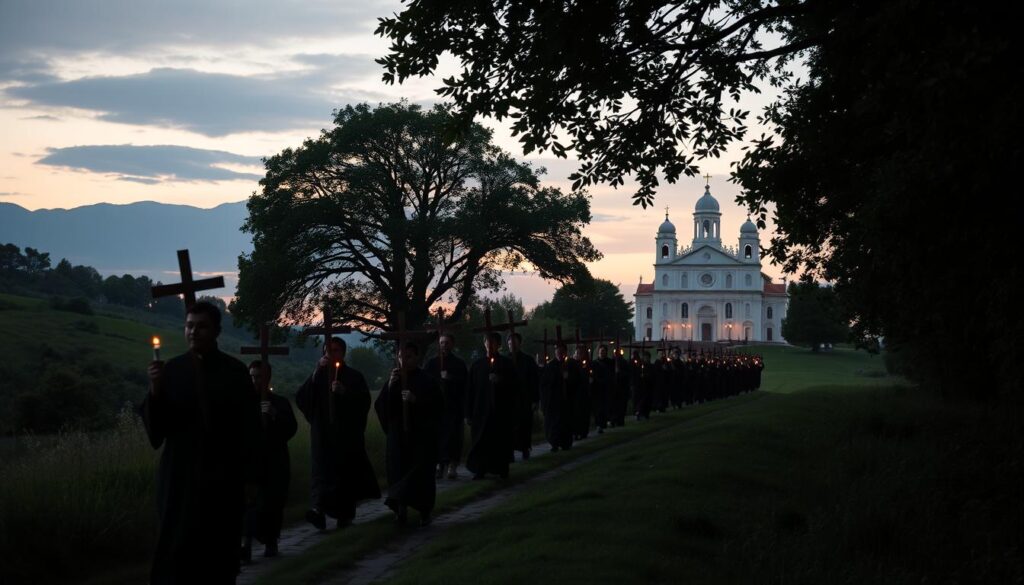
holy week journey

The Journey From Preparation to Celebration

This spiritual marathon begins with Ash Wednesday, where foreheads receive smudged reminders of life’s brevity. Over six weeks, many reduce comforts to sharpen their focus. When Holy Week arrives, believers enter its intensity through three pivotal days:

Day Focus Key Practice
Palm Sunday Triumphant entry Processions with palms
Holy Thursday Last Supper Foot washing ceremony
Good Friday Sacrifice Veneration of the cross

Cultural flavors enrich these traditions. Filipino devotees stage street plays while Polish families craft elaborate tomb displays. Yet all share a common way of retracing foundational events through physical symbols.

The Easter Vigil serves as the week’s climax. Fire illuminates darkened churches as choirs sing ancient hymns. This multi-sensory experience mirrors the transition from sorrow to joy that defines the holy week journey.

Participating in these rituals offers more than historical recall. It creates space to process personal struggles through a lens of hope. Many find their understanding of faith deepens when lived through this annual rhythm.

Ash Wednesday and the Lenten Preparation

Smudged foreheads signal a fresh start as communities embark on a transformative spiritual adventure. This sacred season begins with ash-marked skin and ends with hearts ready to embrace renewal. The journey bridges human frailty and divine promise through intentional reflection.

Meaning of Repentance and Renewal

Ash Wednesday serves as a gentle wake-up call. The cross-shaped mark, made from burned palm leaves, whispers two truths: “Remember you are dust” and “Turn toward grace.” This ritual starts a 40-day trek mirroring Christ’s desert experience—a time to simplify, reflect, and grow.

Three core practices shape this period:

Practice Purpose Impact
Prayer Deepen connection Inner clarity
Fasting Reset priorities Spiritual focus
Almsgiving Share blessings Community bonds

Families might replace screen time with shared devotions. Others volunteer at food banks or create prayer corners. These actions create space to notice what truly matters—like spring cleaning for the soul.

The desert journey isn’t about misery but making room for growth. By temporarily setting aside comforts, believers rediscover lasting joy. As one pastor observes: “We fast from noise to feast on stillness.”

This intentional preparation makes the new life celebrated later feel earned rather than given. The hope kindled during these weeks burns brighter through conscious effort, transforming ritual into lived truth.

Palm Sunday: Symbolism and Celebration

Crowds erupted in cheers as a humble figure approached the city gates, fulfilling ancient promises in unexpected ways. This palm sunday tradition marks a pivotal moment where celebration meets prophecy, blending royal symbolism with grassroots devotion.
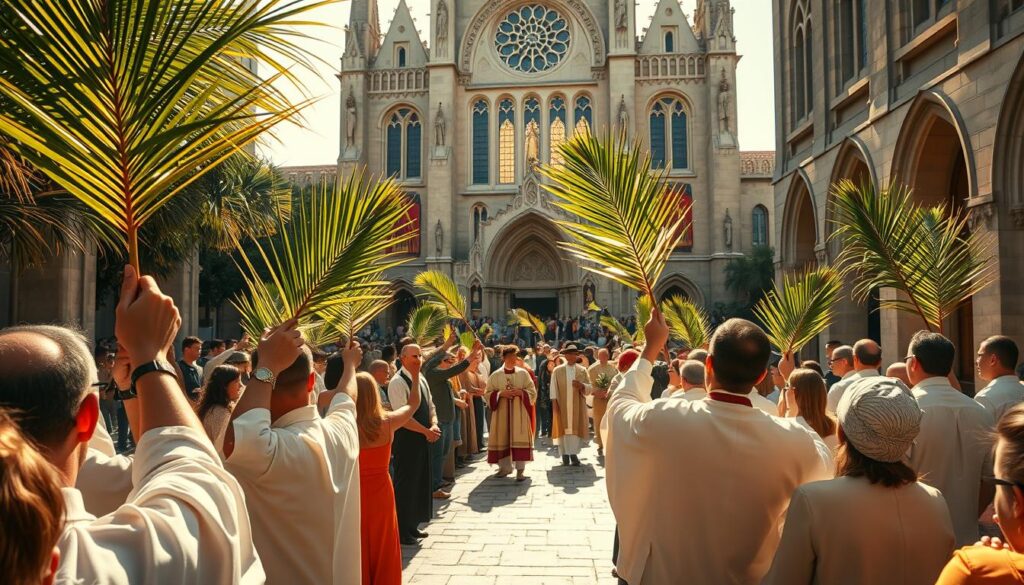
palm sunday celebration

Jesus’ Triumphant Entrance into Jerusalem

Waves of excitement swept through Jerusalem when Jesus arrived on a donkey’s colt. The prophet Zechariah had foretold this entering jerusalem moment centuries earlier:

“Rejoice greatly, Daughter Zion! Your king comes, righteous and victorious, lowly and riding on a donkey”

This choice of transport revealed Christ’s peaceful mission. Unlike warhorses favored by conquerors, the donkey symbolized humility – a king serving rather than dominating his people.

The Significance of Palm Branches

Shouts of “Hosanna!” rang out as people laid palm branches at Jesus’ feet. These fronds carried layered meanings:

Symbol Meaning Biblical Connection
Palm Branches Victory Feast of Tabernacles
Donkey Peace Zechariah 9:9
Crowd’s Cloaks Royal Honor 2 Kings 9:13

Modern celebrations preserve these symbols through blessed palms and processions. Many churches weave fronds into crosses, turning day-old greenery into lasting reminders of faith.

The palm sunday story still challenges expectations. True leadership, it suggests, grows from service rather than force – a message echoing through Holy Week’s unfolding drama.

Easter Vigil: The Mother of All Vigils

Shadows lengthen as night falls, but within the church, a single flame pierces the darkness. This easter vigil marks Christianity’s most dramatic celebration, blending ancient rituals with life-changing moments. Believers gather to relive salvation history through fire, water, and sacred storytelling.
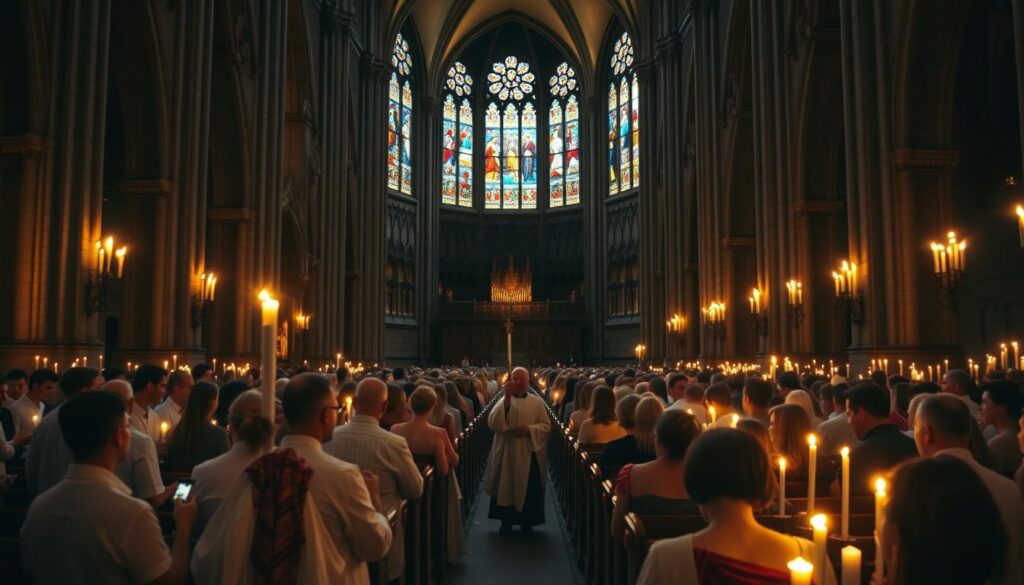
easter vigil mass

The Paschal Candle and Its Symbolism

A towering beeswax candle becomes the night’s focal point. Artisans carve five grains of incense into its surface, representing Christ’s wounds. The words “Alpha and Omega” frame the current year, declaring divine presence across time.

Light spreads through the crowd as worshippers share flames from this central source. The candle remains lit throughout the season, its glow reminding communities of hope that outlasts hardship.

The Role of the Vigil Mass

This four-part journey transforms participants through symbolic actions:

Part Symbolism Action
Service of Light Victory over darkness Blessing new fire
Liturgy of the Word Salvation history Seven scripture readings
Baptism Rites New life Blessing water, vows
Eucharist Communal joy First resurrection meal

Adults often join the faith community here through baptism and confirmation. The vigil mass creates a bridge between grief and celebration, its songs echoing through the night until dawn’s first light.

Good Friday: The Sacrifice of Christ

A hush falls over congregations worldwide as believers confront faith’s central paradox. This solemn day commemorates ultimate love expressed through unimaginable suffering. The death of Jesus becomes a mirror reflecting humanity’s capacity for both cruelty and redemption.

John’s Gospel captures this mystery:

“God loved the world so much that he gave his only Son… not to condemn, but to save”

(John 3:16-17). These words echo through services where altars stand bare and bells remain silent.

Reflecting on the Crucifixion

Three unique elements shape Good Friday observances:

Element Symbolism Participant Role
Passion Reading Narrative immersion Listen & reflect
Cross Veneration Honoring sacrifice Physical reverence
Stations Walk Journey reenactment Emotional engagement

Many find the Stations of the Cross particularly moving. This 14-step meditation allows participants to walk alongside Jesus during his final hours. Each station becomes a window into universal struggles – betrayal, pain, and ultimate surrender.

The day’s sacrifice theme challenges modern comfort. As candles flicker during Tenebrae services, worshippers consider what they might lay down for others. This life-affirming ritual transforms grief into hope, proving darkness never gets the final word.

Easter Sunday: Celebrating New Life

Dawn breaks with triumphant bells ringing across neighborhoods, signaling a day unlike any other. This sacred Sunday marks Christianity’s brightest moment—a victory celebration where despair shatters and hope takes flight. Churches overflow with lilies and candlelight as voices unite in a powerful declaration: “He is risen!”

The choice of Sunday holds deep meaning. It honors the historical resurrection morning while connecting to ancient Passover traditions. Many services begin at sunrise, mirroring the discovery of an empty tomb at first light.

The Joy of the Resurrection

Worship reaches its peak during the Easter Sunday Mass. Forgotten alleluias burst forth in hymns, accompanied by brass choirs and floral displays. Special readings recount Mary Magdalene’s dawn encounter and Peter’s sprint to the burial site.

This day transforms grief into wonder. Where Friday’s cross stood barren, Sunday’s altar overflows with white linens and golden vessels. The contrast reminds believers that darkness always yields to light.

Families extend the celebration through shared meals and egg hunts. These customs blend spiritual meaning with playful joy, creating memories that reinforce faith’s core message. For many, this Sunday becomes a personal invitation to embrace new life through renewed purpose and community bonds.

Pentecost: The Outpouring of the Holy Spirit

Fifty days after resurrection celebrations, a rushing wind sweeps through worship spaces worldwide. This day marks the dramatic fulfillment of Christ’s promise – divine power igniting ordinary people to transform the world. Churches glow with red vestments symbolizing spiritual fire, while congregations rediscover their shared mission.

Liturgical Celebrations and Their Impact

Vibrant services feature readings from Acts 2, recounting flames resting on disciples’ heads. Many communities incorporate multiple languages during scripture readings, echoing the first Pentecost’s miraculous communication. These practices remind believers that faith transcends cultural barriers.

Three elements shape modern observances:

  • Renewal of baptismal vows
  • Special prayers for unity
  • Commissioning rituals for service projects

The church‘s birthday celebration sparks fresh energy for daily life. Food drives often follow services, turning spiritual fervor into practical care. As sunlight lingers on this longest day of Eastertide, worshippers carry forward a timeless message – hope burns brightest when shared.

FAQ

What is the purpose of Lent leading up to Easter?

Lent is a 40-day period of prayer, fasting, and almsgiving that prepares hearts for the joy of Christ’s resurrection. It mirrors His time in the wilderness and emphasizes repentance and spiritual renewal.

Why do people receive ashes on Ash Wednesday?

Ashes symbolize mortality and penance. Receiving them marks the start of Lent, reminding believers to turn away from sin and embrace God’s mercy.

What do palm branches represent on Palm Sunday?

They commemorate Jesus’ triumphant entry into Jerusalem, where crowds laid palms at His feet. The branches signify victory, peace, and the recognition of Christ as King.

How is the Easter Vigil different from other Masses?

The Vigil Mass begins after sundown on Holy Saturday, featuring the lighting of the Paschal candle, extended Scripture readings, and baptisms. It celebrates Christ’s triumph over darkness and death.

Why is Good Friday called “good”?

Despite commemorating Jesus’ crucifixion, the day is called “good” because His sacrifice opened the path to salvation. It reflects God’s boundless love for humanity.

What role does the Paschal candle play?

Lit during the Vigil, this candle symbolizes the risen Christ as the Light of the World. Its flame is shared with congregants, representing the spread of faith and hope.

How does Pentecost connect to Easter?

Celebrated 50 days after Easter, Pentecost marks the Holy Spirit’s descent upon the apostles. It completes the Easter season by highlighting the Church’s mission to share Christ’s message.

Why do dates for Easter change each year?

Dates follow the lunar calendar, aligning with the first Sunday after the Paschal Full Moon. This tradition ties to the timing of Passover in the Scriptures.

What is the significance of baptism during the Vigil?

Baptism represents dying to sin and rising to new life in Christ. The Vigil’s sacraments emphasize rebirth and unity with the Church’s foundational teachings.

How do families celebrate Easter Sunday?

Many attend Mass, share festive meals, and exchange symbols like eggs, which represent new life. Joyful traditions reflect the resurrection’s promise of hope and renewal.

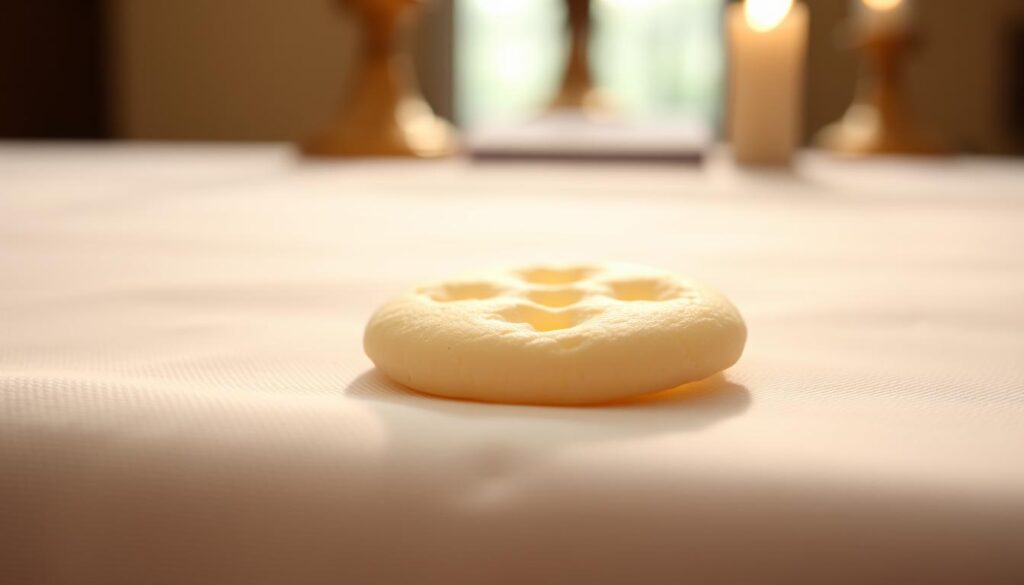
Exploring the Significance of the Catholic Eucharist


At the heart of Christian worship lies a sacred practice that unites believers across generations. Considered the “source and summit” of spiritual life, this sacrament offers a profound connection to faith traditions and divine grace. Through it, followers experience a living bond with the foundational events of their beliefs.

Central to this practice is the belief in transubstantiation—the transformation of bread and wine into the essence of Christ during worship services. This concept isn’t merely symbolic but represents a tangible expression of divine presence. It serves as both nourishment for daily spiritual journeys and the ultimate expression of communal devotion.

Many find in this ritual a renewal of purpose and a reminder of shared values. It bridges individual reflection with collective celebration, anchoring worship in timeless truths while inviting personal growth. Understanding its role helps deepen appreciation for its enduring relevance in modern faith communities.

Key Takeaways

  • Regarded as the spiritual foundation and highest expression of faith
  • Involves a sacred transformation during worship services
  • Creates direct ties to foundational religious events
  • Balances personal spirituality with community connection
  • Maintains vital importance in contemporary practice

The Historical Roots of the Catholic Eucharist

Centuries of faith traditions trace their origins to a simple meal shared in an upper room. This moment marked the beginning of a practice that would shape spiritual life through time. Let’s explore how this sacred meal became Christianity’s cornerstone ritual.

Biblical Foundations and Early Traditions

The story begins with Jesus Christ’s final meal with his disciples. During this gathering, he took bread wine, blessed them, and declared: “This is my body… do this in remembrance of me” (Luke 22:19-20). These words became the blueprint for holy communion.

Early followers took this instruction seriously. The Acts of Apostles shows believers breaking bread daily. These meals weren’t casual snacks—they served as spiritual nourishment and community bonding moments.

Development in the Early Church

By the second century, written accounts like the Didache reveal structured prayers during bread wine rituals. Leaders emphasized maintaining Jesus Christ’s original words while adapting to local cultures.

Aspect Early Church Practices Later Developments
Elements Used Bread and wine Refined liturgical elements
Frequency Daily gatherings Weekly celebration
Ritual Focus Communal meals Structured liturgy

Through time, these holy communion gatherings became more formal. Yet they kept their core purpose—connecting believers to that transformative night in Jerusalem.

Understanding the Catholic Eucharist

What’s in a name? For this sacred practice, everything. The term holy eucharist springs from the Greek word eucharistia, meaning “thanksgiving.” This linguistic root reveals its core purpose—a ritual of gratitude connecting participants to a 2,000-year-old spiritual legacy.

More than symbolic, it’s considered both sacrament and sacrifice. As a sacrament, it offers divine grace through tangible elements. As a sacrifice, it re-presents Christ’s offering at Calvary. This dual nature makes it unique among religious rites, blending remembrance with active participation.

Central to the practice are bread wine, elements transformed during worship. Followers believe these simple items become vessels of sacred presence while keeping their physical traits. This paradox—visible simplicity hiding profound mystery—fuels deep reverence during gatherings.

Every celebration ties modern worshippers to that ancient upper room. Through shared bread wine and prayers of thanksgiving, communities bridge time and space. As one early text states: “We give you thanks for this spiritual drink and heavenly bread.”

This ritual remains Christianity’s heartbeat—a living link to foundational events. Its enduring power lies in balancing theological depth with accessible practice, inviting all to taste unity beyond words.

The Real Presence: Body, Blood, and Divinity

A foundational teaching distinguishes this sacred practice from other rituals. At its core lies the belief that divine essence permeates ordinary elements through divine action. This understanding shapes worship patterns and personal devotion across generations.

Scriptural Evidence and Biblical Insights

Jesus’ words in John’s Gospel leave little room for symbolic interpretation: “Whoever eats my flesh and drinks my blood remains in me, and I in them” (John 6:56). Early followers took these statements literally, as shown in ancient texts describing meal rituals as “medicine of immortality”.

real presence

Challenging Common Misconceptions

Some assume the ritual involves mere memorial symbols. However, the real presence teaching affirms that Christ’s body blood becomes truly present through consecration. This explains why believers kneel before reserved elements and handle them with special care.

Common Misconception Actual Teaching
Symbolic representation Substantial transformation
Spiritual metaphor Physical and spiritual reality
Memorial meal Living encounter

As one medieval theologian noted: “What you see is the appearance of bread, but what it contains is divine reality.” This perspective maintains both mystery and tangible connection to sacred events.

The Mystery of Transubstantiation

Behind every profound spiritual practice lies a concept that challenges and inspires. Transubstantiation describes how ordinary elements carry extraordinary meaning during worship. This teaching shows how physical objects become vessels of sacred connection through divine action.

Substance Versus Accidents

Imagine holding a piece of bread that becomes body blood in essence while keeping its familiar traits. That’s transubstantiation—where the substance (core reality) changes completely, while accidents (physical qualities) stay the same. The substance of bread wine transforms into Christ’s presence through consecration prayers.

Here’s why this matters: even though the elements look unchanged, believers affirm they’ve received spiritual nourishment. As Thomas Aquinas wrote: “What appears to the senses endures, while what faith perceives transcends.”

Aspect Substance Accidents
Definition Core identity Physical traits
Bread Example Christ’s body Texture, taste
Wine Example Christ’s blood Color, aroma

This process differs from ordinary changes like baking or fermenting. When wine become body, it’s not chemical alteration but divine intervention. The elements retain their familiar forms to make sacred truths accessible.

Why maintain physical appearances? It allows people to encounter mystery without confusion. The substance bread wine transformation invites trust beyond human senses—a cornerstone of faith communities for centuries.

Exploring the Sacramental Nature of the Eucharist

What transforms ordinary bread into a bridge between heaven and earth? This sacrament operates on two powerful levels—as a gift of life and a living memorial. Through it, participants encounter divine love in its most tangible form while strengthening bonds with fellow believers.

sacramental nourishment

Sacrificial Elements and Thanksgiving

At every gathering, the sacrifice of Calvary becomes present anew. As one early Christian text notes: “We proclaim your death until you come again.” This isn’t about repeating history but reconnecting with its life-changing power. The body blood offered once now nourishes souls across generations.

True to its name—meaning “thanksgiving”—this ritual overflows with gratitude. Worshipers don’t just remember Christ’s love; they taste it. Communion becomes a shared “thank you” whispered through broken bread and shared cups.

Communal and Spiritual Nourishment

This sacrament feeds both individuals and communities. Receiving the body blood works like spiritual glue—binding hearts to Christ and to each other. As one modern believer shared: “It’s not just my meal—it’s ours.”

The table becomes a place of mutual strengthening. Through this life-giving practice, personal faith grows while community ties deepen. What begins as personal nourishment blossoms into collective vitality—the true mark of living communion.

The Role of the Priest and Liturgical Vestments

When the community gathers for worship, one figure stands at the intersection of heaven and earth. The priest serves as both guide and conduit during holy communion, wearing garments that tell a story older than words. These visual elements work together to reveal deeper truths about sacred roles.

liturgical vestments

Acting in Persona Christi

During consecration prayers, the priest becomes more than himself. As the Catechism states: “He acts in the person of Christ… making present the sacrifice of the cross.” This sacred responsibility explains why only ordained ministers can perform this act—they continue a chain of authority stretching back to the original apostles.

Symbolism in Clerical Attire

Every vestment carries meaning. The alb represents purity, while the chasuble symbolizes charity. Through these garments, the priest visually steps into his role as an icon of Christ’s service.

Vestment Symbolic Meaning
Stole Authority to administer sacraments
Cincture Commitment to chastity
Chasuble Yoke of Christ’s love

As one theologian observed: “The vestments remind us that Christ gives Himself through human hands.” This blend of earthly materials and divine purpose makes every Mass both humble and cosmic—a moment where body blood Christ becomes present through visible signs.

Celebrating Holy Mass: The Sacred Sacrifice

Every ritual in the Mass weaves together ancient traditions and living faith. At its core lies a sacred exchange—ordinary gifts transformed into divine nourishment through precise words and actions. This celebration follows patterns established over centuries, connecting modern worshippers to biblical roots.

Rituals and Liturgical Practices

The bread wine used must meet strict standards: unleavened wheat bread and pure grape wine mixed with water. These rules honor Christ’s Last Supper while ensuring continuity across generations. As Canon Law states, the elements remain simple—“recently made” and free from spoilage.

Key moments shape the sacrifice. During consecration, the priest speaks Jesus’ own words: “This is my body… my blood.” The congregation responds with ancient acclamations, joining their voices to heaven’s chorus. Elevated hosts and chalices become visual anchors for awe.

Mixing water with wine carries deep meaning—symbolizing humanity’s union with the divine. This small gesture reminds believers they’re part of something greater. Through holy communion, shared participation turns individual hearts into a unified body.

From gift preparation to final blessing, every action feeds both soul and community. The celebration isn’t just observed—it’s lived, tasted, and carried into the world.

FAQ

Why is the Eucharist considered the source of Christian life?

It’s viewed as the spiritual “summit” because believers encounter Christ’s real presence. Through bread and wine, the faithful receive grace, unity with God, and strength to live their faith daily.

How does the Blessed Sacrament connect to ancient traditions?

Early Christians gathered for communal meals, echoing Jesus’ Last Supper. Writings from figures like St. Justin Martyr show how rituals evolved, emphasizing thanksgiving and Christ’s sacrifice on the cross.

What’s the difference between substance and accidents in transubstantiation?

The physical properties of bread and wine (accidents) remain, but their essence (substance) transforms into Christ’s body and blood. This change reflects divine action, not scientific alteration.

Is Holy Communion just a symbolic act?

No—it’s more than symbolism. The Real Presence means Christ is truly there, offering spiritual nourishment. This belief stems from Scripture, like John 6:53, where Jesus emphasizes eating His flesh for eternal life.

Why do priests wear special vestments during Mass?

Liturgical garments symbolize their role as acting “in persona Christi” (in the person of Christ). Each piece, like the chasuble or stole, represents humility, service, and connection to sacred traditions.

How does the Mass reflect sacrifice?

The liturgy re-presents Christ’s sacrifice on Calvary in an unbloodied way. Offerings of bread and wine become His body and blood, uniting the congregation with His redeeming act.

Can non-Catholics receive the Blessed Sacrament?

Typically, it’s reserved for those in full communion with the Church. This practice honors the sacrament’s sacredness and ensures unity in belief about its significance.

What role does the Holy Spirit play in the liturgy?

The Spirit transforms the gifts on the altar and unites the community. This “epiclesis” prayer invites divine power to make the bread and wine Christ’s body and blood.

The 10 Catholic Commandments in Order


For thousands of years, communities have turned to timeless truths to shape their values. Among these enduring guides, few hold as much significance as the moral framework revealed through sacred texts. Rooted in ancient wisdom, these principles continue to offer clarity in our fast-paced world.

Tradition teaches that these divine laws were shared with humanity to create a foundation for justice and compassion. They form part of a broader spiritual heritage alongside prayer practices and sacraments. As the Catechism emphasizes, this structure helps believers navigate life’s complexities with purpose.

Today, these teachings remain vital for those seeking direction. They address universal themes like honesty, respect, and love – values that transcend time and culture. Whether facing ethical dilemmas or personal growth, this framework provides tools to build meaningful lives anchored in faith.

Key Takeaways

  • Ancient teachings offer modern solutions for ethical challenges
  • Spiritual guidelines connect to everyday decision-making
  • Moral principles promote harmony in communities
  • Sacred texts provide clarity on human dignity
  • Faith traditions adapt to contemporary needs

Introduction to the Ten Catholic Commandments

Guiding principles shape lives across generations, offering wisdom in every age. These ancient directives form a moral compass recognized far beyond religious circles. Pope Francis reminds us they’re “loving words” meant to uplift rather than control.

Foundations for Meaningful Living

Families across America cherish these teachings as practical tools for modern challenges. The Catechism explains they provide “principles of moral life valid for all people.” This universal appeal stems from their basis in natural law – truths understood through reason rather than doctrine alone.

Daily Applications of Eternal Truths

Consider how these principles transform ordinary moments:

  • Respecting others’ property when borrowing tools
  • Speaking truthfully during tough conversations
  • Prioritizing family time over endless work hours
Commandment Focus Daily Application Modern Relevance
Sacred Relationships Digital communication boundaries Prevents online harassment
Truthfulness Social media authenticity Combats misinformation
Contentment Mindful consumption Reduces financial stress

Through such applications, these time-tested values help create communities where dignity and respect flourish. They remain vital because they address fundamental human needs that never change.

Historical Context and Biblical Origins

Ancient texts often hold keys to understanding cultural foundations. The moral code etched into stone tablets emerged during a pivotal moment of divine interaction. Picture a desert mountain shrouded in smoke, where heaven and earth seemed to collide.

biblical law origins

Insights from the Old and New Testaments

Scriptures describe thunderous events at Sinai where divine will became tangible. Exodus recalls,

“The mountain trembled violently as fire engulfed its peak”

. This dramatic setting underscores the weight of the instructions given.

Scholars note fascinating details across biblical books. The directives appear in Exodus 20 and Deuteronomy 5 with slight variations. These differences reveal how communities preserved core truths while adapting to new challenges.

The Role of Moses and the Revelation at Mt. Sinai

As mediator between divine and human realms, Moses carried sacred responsibilities. His ascent up the quaking mountain marked a turning point for spiritual governance. The tablets symbolized more than rules – they represented a covenant relationship.

The Ark of the Covenant later housed these stones, becoming a mobile reminder of shared values. Revelation 11:19 reaffirms their lasting significance, showing the Ark’s presence in heavenly visions. This continuity bridges ancient practices with eternal truths.

Through these accounts, we see how foundational principles shaped identity and community. They weren’t just rules, but invitations to build societies rooted in reverence and mutual respect.

Exploring the catholic 10 commandments in order

Organizing principles often reveal deeper priorities. The arrangement of sacred guidelines shows what communities value most. For centuries, believers have relied on structured teachings to navigate moral landscapes with confidence.

Understanding the Traditional Catechetical Presentation

Early Christian leaders shaped how we learn these truths today. Saint Augustine’s approach from Deuteronomy 5 made memorization practical. He grouped teachings about gods and sacred images together, emphasizing spiritual focus over material distractions.

This method helped believers internalize core values. As Augustine noted,

“Order feeds understanding, and understanding breeds devotion.”

TheCatholic Churchpreserved this system to strengthen faith through clarity.

Differences Between Biblical and Monumental Versions

Not all lists match what’s carved in stone. Reformers like John Calvin used Exodus 20’s version, creating alternate numbering. Their goal? To challenge religious art by separating image prohibitions into their own commandment.

Here’s how the versions compare:

Commandment Focus Source Text Key Emphasis
One God, No Images Deuteronomy 5 Unity of worship
Desiring Others’ Spouses Catholic Tradition Marriage sanctity
Craving Possessions Protestant Lists Material contentment

By distinguishing between coveting relationships and objects, the ten commandments in Catholic teaching elevate human dignity. This approach honors women as persons rather than property—a revolutionary view in ancient times.

The Role of the Commandments in the Catholic Faith

Guiding lights shape more than Sunday mornings—they influence daily choices and community bonds. The ten commandments form part of a living tradition that breathes through prayer, service, and learning. As the Catechism Catholic Church teaches, these principles aren’t museum pieces but “living water” for spiritual growth.

https://www.youtube.com/watch?v=Ne2DREYOnYg&pp=0gcJCfwAo7VqN5tD

Integration with the Catechism and Church Teachings

Four pillars uphold the faith: the Creed’s beliefs, sacraments’ grace, the Lord’s Prayer’s intimacy, and the commandments’ guidance. Together, they create a roadmap for holistic living. One complements the others like seasons in a year—each necessary, each distinct.

The Catechism clarifies this connection:

“In Jesus, the law finds its fullness without losing its eternal purpose.”

Teachers often pair lessons about honesty with stories of saints who embodied these values. Parents discuss respect while modeling forgiveness at home.

These teachings also fuel social initiatives. Food drives reflect “do not steal” by addressing systemic lack. Marriage workshops honor lifelong commitments through practical support. Every application shows how ancient wisdom meets modern needs.

By weaving through all aspects of belief, the ten commandments remain essential threads in the fabric of faith. They help believers craft lives that mirror divine love in action.

Understanding Each Commandment: From God to Neighbor

Building strong relationships forms the heart of spiritual growth. Jesus revealed this truth when asked about life’s greatest priorities. His response in Matthew 22 still guides millions today:

“Love the Lord your God completely, and love others as yourself.”

divine and human relationships

The First Three: Relationship with God

The initial guidelines focus on sacred connections. Honoring the divine name and reserving a weekly day for reflection create space for spiritual renewal. These practices help believers avoid replacing eternal truths with temporary gods like wealth or status.

The Final Seven: Living in Community

The remaining principles shape how we treat people. Protecting life, respecting commitments, and speaking truthfully build trust. When applied, they transform neighborhoods into places where every neighbor feels valued.

Focus Key Practice Community Impact
Sacred Bonds Weekly reflection time Reduces burnout
Truth in Speech Honest conversations Strengthens partnerships
Respect for Others Mindful social media use Prevents cyberbullying

These commandments work together like puzzle pieces. When followed, they create complete pictures of lives rooted in love – for the divine and for the neighbor next door.

The Commandments and Natural Law in American Public Life

Foundational principles shape societies like roots nourish trees. Across the United States, timeless truths about human dignity influence laws and civic values. The ten commandments serve as moral anchors here, not just religious rules.

natural law principles

Early American leaders recognized universal truths accessible through reason. The Declaration of Independence’s famous words echo this understanding:

“We hold these truths to be self-evident.”

Like the commandments, these ideas rely on natural law—principles inherent to human flourishing.

Linking the Decalogue to Civic and Moral Responsibility

Shared values create strong communities. Consider how these principles guide daily life:

  • Courts uphold honesty through perjury laws
  • Neighborhoods thrive when respecting others’ rights
  • Schools teach fairness as essential for teamwork
Natural Law Principle Civic Application Social Benefit
Protecting life Healthcare policies Reduces preventable deaths
Honoring commitments Contract enforcement Builds economic trust
Seeking truth Media ethics codes Combats misinformation

Church Father Irenaeus noted these guidelines prepare people for “harmony with neighbors.” This vision aligns with America’s pluralistic society, where diverse beliefs coexist through shared ethics.

Understanding natural law helps citizens address modern challenges. From environmental policies to digital privacy debates, these universal principles remain vital tools for building a just world.

Interpreting the Commandments Through Church History

Spiritual guidance evolves through thoughtful reflection across generations. Leaders from different eras have shaped how communities understand sacred teachings. Their insights help believers apply ancient wisdom to changing realities.

The Influence of Church Fathers and Reformers

Augustine’s work in the 5th century set lasting patterns for teaching moral laws. By organizing the commandments from Deuteronomy, he created a framework still used today. This system helped ordinary people remember complex principles through logical grouping.

Centuries later, reformers proposed new perspectives. While Lutherans kept Augustine’s structure, Calvin’s Exodus-based list sparked fresh discussions. These differences show how context shapes interpretation without altering core truths.

Historical Figure Scriptural Source Key Contribution
Saint Augustine Deuteronomy 5 Grouped divine worship commands
John Calvin Exodus 20 Separated image prohibition
Pope John Paul II Universal Law Emphasized heart-centered ethics

Modern leaders continue this tradition. Pope Pius XII called the commandments “steps toward Christ,” while John Paul II saw them as “etched in human hearts.” Their words remind us these principles protect both individuals and others in society.

Through ongoing dialogue, the Church keeps these teachings alive. Each generation finds new ways to honor timeless truths while addressing current needs. This living tradition helps people navigate modern challenges with ancient wisdom.

Modern Perspectives on Ancient Commandments

Timeless truths find fresh voices in every generation. Across bustling cities and quiet suburbs, age-old principles guide modern lives through creative adaptation. Pope Francis captures this beautifully:

“These are loving words, not oppressive commands—invitations to grow closer through dialogue.”

Contemporary Relevance and Application

Families blend ancient wisdom with digital life. Parents discuss online kindness using “love your neighbor” as their compass. Professionals apply honesty rules during virtual meetings, building trust in remote teams.

Popular programs like Bible in a Year help believers explore sacred texts during commutes. Others practice prayer-based reflection through apps, transforming screen time into spiritual nourishment.

Modern Challenge Guiding Principle Practical Solution
Social media conflicts Speak truthfully Fact-check before sharing
Workplace stress Keep sacred rest Digital detox weekends
Environmental concerns Care for creation Community clean-up days

How Catholics Practice Today

Daily choices become acts of faith. Students volunteer at food banks, honoring human dignity. Retirees mentor youth, sharing wisdom gained through decades of applying these teachings.

  • Family dinners include discussions about fairness
  • Teens create art celebrating moral courage
  • Parish groups address housing needs locally

Through such living examples, the ten commandments continue shaping a better world. They remain not relics, but roadmaps for building hope-filled communities.

Conclusion

Living with purpose requires foundations that withstand changing times. These timeless principles teach us to honor what matters most—sacred relationships, truthful speech, and respect for others. By keeping the Lord’s day holy, we create space for reflection amid life’s chaos.

Simple choices shape stronger communities. Speaking honestly prevents false witness, while respecting neighbors builds trust across fences and screens. When we guard against craving others’ goods or relationships, we nurture contentment.

These teachings remind us that every name carries dignity and every life holds value. They guide families through tough conversations about loyalty and integrity. Whether honoring parents or protecting commitments, these truths help build societies where compassion thrives.

In a world of shifting values, such wisdom remains our compass. It calls us to live authentically—not just avoiding harm, but actively creating good for all.

FAQ

Why are the commandments divided into two groups?

The first three focus on loving God, emphasizing worship, reverence, and sacred time. The remaining seven address loving others, covering honesty, respect for life, family bonds, and personal integrity.

How do the commandments connect to modern civic life?

They reflect universal principles like justice and honesty, which align with many legal systems. These values encourage moral responsibility in communities, workplaces, and public decisions.

What’s the difference between biblical and catechism versions?

Exodus and Deuteronomy list the commandments slightly differently, while the Catechism of the Catholic Church organizes them for teaching. For example, combining coveting rules into one simplifies instruction.

Why is honoring parents included in moral law?

Respecting parents strengthens family unity and societal stability. It recognizes their role in nurturing faith and values, creating a foundation for trust across generations.

How do the commandments address envy or greed?

The final rule—against coveting—targets harmful desires that damage relationships. It encourages gratitude and contentment rather than comparison or exploitation.

Are these rules still relevant today?

Absolutely! They address timeless issues like truthfulness, loyalty, and dignity. Many find them helpful for navigating ethical dilemmas in work, tech, and personal growth.

Did Jesus change how the commandments are understood?

He deepened their meaning, emphasizing love as the core. For example, anger as akin to murder or lust as adultery of the heart. This inward focus guides intentions, not just actions.

How does the Church teach these principles to children?

A> Through age-appropriate lessons, sacraments like Confession, and family practices like prayer. Stories from Scripture and saints’ lives make abstract ideas relatable.

Discover the Rich History of Catholic Religious Orders


For over 1,500 years, faith-driven communities have shaped global spirituality through prayer, service, and education. These groups, bound by sacred vows, range from quiet monastic traditions to bold missionary efforts. Their stories reveal how spiritual dedication can transform societies.

From medieval Europe to modern cities, these communities built schools, hospitals, and social programs. The Jesuits pioneered universities, while Franciscans championed poverty relief. Even today, their legacies touch millions worldwide.

Membership has shifted dramatically since 1970, dropping from 1.2 million to roughly 800,000 globally. Aging populations and cultural changes challenge these groups to adapt while preserving their core missions. Yet their work in disaster zones and underserved areas remains vital.

Key Takeaways

  • Spiritual communities have influenced education and healthcare for centuries
  • Distinct traditions range from silent prayer to global activism
  • Founders’ visions still guide modern practices and outreach
  • Membership declined by 33% since the 1970s
  • Modernization efforts balance tradition with contemporary needs

Introduction to Catholic Religious Orders

Imagine communities where people choose radical lifestyles – some in bustling cities, others in mountain monasteries. These groups form the heartbeat of spiritual service, united by sacred promises that guide their daily religious life.

Overview of Religious Life in the Roman Catholic Church

Members commit through solemn vows, creating structured rhythms of prayer and action. While some embrace solitude as hermits, others teach in universities or run food banks. Their paths differ, but their purpose aligns: living out faith through tangible service.

The Significance of Orders and Their Roles

These communities built civilization’s foundations – medieval hospitals, Renaissance schools, modern refugee aid. Beyond brick-and-mortar projects, they safeguard spiritual practices like contemplative prayer and ethical living. A 15th-century Franciscan text notes:

“True wealth lies in serving, not possessing.”

Distinct traditions thrive under one umbrella. Dominicans champion intellectual dialogue, while others focus on eco-justice or global missions. This diversity allows individuals to match their calling with communal goals, creating lasting impacts from classrooms to disaster zones.

Historical Background and Evolution

The roots of structured spiritual life trace back to ancient hermits seeking divine connection in isolation. Over centuries, these solitary practices grew into organized systems that shaped societies. Roman Catholic traditions particularly flourished through creative adaptations to cultural shifts.

religious orders historical timeline

From Early Beginnings to the Middle Ages

Third-century desert dwellers like Saint Anthony pioneered ascetic life, fasting and praying in remote caves. Their radical devotion inspired groups to form communal settlements. By 529 AD, Saint Benedict transformed these practices with his balanced Rule – a blueprint merging prayer, labor, and learning.

Medieval Europe saw explosive growth in spiritual communities. The Cistercians refined monastic simplicity in 1098, while Premonstratensians blended cloistered routines with public ministry. These groups became anchors of stability during turbulent times, preserving knowledge and aiding local populations.

Key Milestones in the Development of Orders

The 13th century introduced revolutionary changes. Mendicant members like Franciscans traded monastery walls for city streets, serving the poor and preaching in vernacular languages. St. Augustine’s followers later formalized urban missions, proving spiritual work could thrive beyond rural abbeys.

Group Founded Innovation
Benedictines 529 AD Structured daily rhythms
Franciscans 1209 Mobile poverty-centered service
Jesuits 1540 Global education networks

Each era sparked fresh approaches. Renaissance orders focused on scholarship, while 19th-century communities addressed industrialization’s challenges. This adaptability ensured their relevance across shifting historical landscapes.

Key Characteristics and Structures of Religious Orders

At the heart of spiritual communities lie foundational commitments that shape daily religious life. These frameworks determine how members live, serve, and grow together while staying true to their shared mission.

Solemn Vows Versus Simple Vows

Commitments differ significantly between groups. Solemn vows bind individuals for life, affecting legal status regarding property and marriage. In contrast, simple vows allow temporary commitments, offering flexibility for those exploring their vocation.

Type Duration Legal Impact
Solemn Lifetime Restricts ownership
Simple Temporary/Permanent Limited restrictions

These distinctions influence how religious communities manage resources and relationships. A 19th-century canon law scholar noted:

“Vows form both spiritual anchors and social contracts.”

Authority Structures and Governance

Leadership models vary as much as the members religious orders themselves. Most groups operate under a Superior General overseeing global operations, while local leaders handle day-to-day activities.

Benedictine houses vote on decisions through community chapters. Missionary groups use centralized systems for faster responses to crises. All follow approved constitutions detailing prayer routines, service priorities, and conflict resolution methods.

This balance between structure and adaptability helps communities thrive across generations. Whether through democratic processes or top-down guidance, governance systems aim to preserve core values while meeting modern needs.

Diverse Types of Catholic Orders

Spiritual communities come in many forms, each designed for specific missions and lifestyles. These groups balance ancient traditions with modern needs, offering structured paths for service and devotion.

diverse religious communities types

Ancient Foundations Meet Modern Service

Monastic groups like the Benedictines set the blueprint for communal living. Their days blend prayer, manual labor, and study within monastery walls. This 1,500-year-old model prioritizes stability and shared rituals.

Mendicant communities broke tradition by embracing mobility. Franciscans and Dominicans live simply, relying on donations while serving urban populations. A 13th-century chronicle notes:

“They walked where need called, carrying hope in empty pockets.”

Action-Oriented Groups Making Impact Today

Active communities tackle pressing social issues through education and healthcare. Jesuits, also called clerics regular, run schools in 112 countries. Their members take vows but work outside convent walls, addressing contemporary challenges.

Type Focus Example
Contemplative Prayer & solitude Carmelites
Canons Regular Parish ministry Norbertines
Apostolic Social services Salesians

Whether through quiet reflection or public action, these communities continue shaping spiritual landscapes. Their varied approaches allow individuals to find meaningful connections while serving others.

Major and Well-Known Catholic Religious Orders

From ancient monasteries to bustling city missions, certain spiritual communities have left indelible marks on global culture. These groups combine timeless values with practical action, creating blueprints for service that endure across centuries.

well-known religious orders

Exploring the Dominicans, Franciscans, and Benedictines

St. Dominic launched the Order of Preachers in 1215, turning theology into a tool for social change. Their motto “Veritas” (Truth) fueled scholars like Thomas Aquinas, who reshaped medieval thought through works like the Summa Theologica.

St. Francis of Assisi took a different path. His Order of Friars Minor (1209) embraced radical poverty, singing to birds while feeding the hungry. A follower once wrote:

“He walked barefoot through winter snows, calling even wolves ‘brother’.”

The Benedictines laid Europe’s cultural foundation. Since 529 AD, their balanced prayer-work-study rhythm preserved knowledge through dark ages. Today, their 6,667 members still run schools and breweries worldwide.

Other Influential Orders Throughout History

Beyond these giants, other groups shaped spiritual landscapes. The Jesuits became education pioneers, while the Carmelites nurtured mystical traditions through figures like Teresa of Avila.

Order Founder Key Contribution
Vincentians St. Vincent de Paul Organized poverty relief systems
Salesians St. John Bosco Youth education & trade skills
Missionaries of Charity Mother Teresa Modern urban outreach

These communities prove spiritual dedication adapts to every era. Whether teaching street children or comforting the dying, their work continues changing lives today.

Life Inside Catholic Religious Orders

Behind monastery walls and city missions, structured rhythms shape lives of devotion. Men and women in these communities balance ancient traditions with modern service, united by shared purpose. Their days blend sacred rituals with practical action, creating spaces where spiritual growth meets real-world impact.

Daily Rhythms That Sustain Purpose

Sunrise often marks the first prayer session, followed by work assignments ranging from teaching to farming. The Liturgy of the Hours structures each day, with psalms recited communally at set intervals. Shared meals and quiet reflection periods foster bonds between members.

Personal sacrifices emerge through collective living. Choices about resources or activities require group consensus. Yet this interdependence strengthens commitment, as one sister notes: “We carry each other’s hopes like daily bread.”

Learning While Serving

Formation never truly ends. Newcomers study theology and community history, while veterans attend workshops on social justice issues. Hands-on training prepares members for roles in schools, clinics, or outreach programs.

These groups adapt timeless values to current needs. A friar might teach coding skills by day and host neighborhood meals at night. Through education and action, they keep their religious life relevant across generations.

FAQ

What distinguishes monastic orders from mendicant traditions?

Monastic groups, like the Benedictines, focus on communal prayer and stability in one location. Mendicant communities, such as the Franciscans, emphasize poverty, preaching, and mobility to serve broader communities.

How do solemn vows differ from simple vows?

Solemn vows are permanent commitments to poverty, chastity, and obedience, often binding under church law. Simple vows, while serious, may be temporary or renewed periodically, common in newer or active communities.

What roles do apostolic communities play today?

Groups like the Sisters of Charity or Salesians prioritize education, healthcare, and social justice. They blend prayer with hands-on service, running schools, hospitals, and outreach programs globally.

Why are figures like St. Francis or St. Dominic still influential?

Their teachings on humility, simplicity, and service shaped spiritual practices for centuries. Orders they founded, such as the Dominicans, continue leading in education, theology, and pastoral care.

What does daily life look like in contemplative communities?

Members follow strict schedules of prayer, meditation, and manual labor. Monasteries like the Carmelites prioritize silence and solitude to deepen their connection with the divine.

How do religious orders adapt to modern challenges?

Many now focus on digital outreach, environmental advocacy, or interfaith dialogue. Institutions like the Jesuits emphasize education and intellectual engagement to address contemporary issues.

Are there orders dedicated to specific causes or patron saints?

Yes! The Sisters of St. Joseph focus on unity and reconciliation, while the Vincentians serve marginalized populations. Each group draws inspiration from its patron’s legacy and charism.

The Intersection of Catholicism and Freemasonry


For nearly 300 years, a unique tension has shaped conversations about spiritual identity. The Catholic Church maintains clear boundaries regarding organizations it views as conflicting with its core beliefs. One such group continues to spark debate even in modern times.

Many people wonder why a fraternal organization focused on charity and moral growth would create controversy. The answer lies in differing views about truth and spiritual authority. Church leaders emphasize that certain philosophical foundations challenge essential teachings about divine revelation and humanity’s relationship with God.

Recent statements from Vatican officials (November 2023) confirm this stance remains unchanged. This ongoing position affects millions of believers worldwide, particularly in regions where cultural traditions blend with religious practice. Families sometimes face difficult choices when social connections intersect with matters of faith.

Our exploration will unpack three key issues driving this complex relationship. We’ll examine how different approaches to spirituality, community-building, and ritual practices create fundamental disagreements. You’ll also discover why this historical debate remains relevant for modern seekers of truth.

Key Takeaways

  • Church teachings maintain specific boundaries regarding organizations with conflicting spiritual views
  • Philosophical differences center on concepts of divine truth and religious authority
  • Recent Vatican statements reaffirm long-standing positions on this matter
  • Social perceptions often differ from official doctrinal perspectives
  • Historical context helps explain modern-day tensions and misunderstandings

Exploring catholicism freemasonry: A Historical Perspective

The roots of modern religious boundaries stretch back to 18th-century Europe. As new social organizations emerged, Church leaders grew concerned about their spiritual influence. One group’s secretive nature particularly alarmed authorities.

Foundations of Conflict

In 1738, Pope Clement XII made history with his document In Eminenti. This official prohibition targeted oath-bound groups operating in shadowy lodges. Church teachings argued such secrecy undermined both faith and civil order.

Over 150 years, multiple popes reinforced this position. Leo XIII’s 1884 encyclical called certain philosophies “a war against divine revelation.” His words highlighted core disagreements about humanity’s relationship with higher powers.

Shifting Battlegrounds

Political tensions flared as some governments adopted anti-clerical policies. In 1873, Pius IX described coordinated efforts to limit the Catholic Church‘s role in society. Countries like Mexico saw violent clashes over education and land rights.

These historical examples show why Church leaders maintained strict rules about members joining conflicting organizations. While cultural contexts evolved, the central concern remained: preserving spiritual unity against competing worldviews.

Philosophical and Theological Conflicts

At the heart of modern spiritual debates lies a clash of worldviews. Two distinct approaches to understanding humanity’s purpose and divine connection create friction between longstanding religious teachings and fraternal traditions.

Masonic rituals and Catholic symbols

The Role of Naturalism and Indifferentism

Church teaching emphasizes divine revelation as the ultimate source of truth. This directly opposes philosophies elevating human reason as the highest authority. As one pope noted, such views leave “no room for truths beyond human understanding.”

This naturalist approach leads to indifferentism – the idea that all religions hold equal value. For believers, this clashes with the conviction that Jesus Christ offers the only path to salvation. “We don’t correct anyone’s beliefs,” wrote a 19th-century lodge leader, highlighting this inclusive yet conflicting stance.

Secret Rituals and the Concept of the Great Architect

Rituals in private lodges often involve symbolic gestures and prayers to a vague “Great Architect.” While members claim this isn’t a religion, the ceremonies borrow heavily from sacred traditions. Altars and moral lessons create spiritual experiences without specific doctrinal commitments.

This contrasts sharply with structured sacraments and Trinitarian worship. The difference reveals deeper divides about how faith interacts with daily life – whether through personal interpretation or guided principles.

Canon Law, Church Teaching, and Membership Implications

Church rules about organizational ties carry real consequences for believers. Legal codes developed over centuries outline clear boundaries, blending spiritual guidance with practical discipline. Let’s unpack how these guidelines shape decisions about group affiliations.

Automatic Excommunication and Penalties in Canon Law

The 1917 Code of Canon Law left no room for doubt. Canon 2335 declared joining Masonic groups triggered automatic excommunication. This penalty meant immediate separation from sacraments until reconciliation through Vatican channels.

Revised rules in 1983 took a broader approach. Canon 1374 now applies to any association opposing the Church, stating members face “a just penalty.” While not naming specific groups, the Congregation for the Doctrine of the Faith clarified in 1983 that bans on lodge membership remain active. This keeps the door open for addressing new organizations while maintaining core principles.

Modern Interpretations and the Call for Dialogue

Recent updates confirm traditional stances still apply. In 2023, the Dicastery for the Doctrine of the Faith told Filipino bishops: “Active membership constitutes grave sin.” This closed debates about whether modern lodges differ from historical ones.

Some leaders suggest exploring common ground through talks. However, Vatican documents stress doctrinal differences outweigh social benefits. Catholics in lodges must resign and seek confession to restore full communion. As one priest notes: “Charitable works elsewhere don’t require compromising beliefs.”

“The Church’s negative judgment remains unchanged.”

Congregation for the Doctrine of the Faith (1983)

Conclusion

Understanding spiritual boundaries helps clarify why certain affiliations raise concerns. The Catholic Church maintains its stance not from outdated tradition, but to protect foundational truths about divine revelation. Recent guidance confirms membership in conflicting groups still risks sacramental access through excommunication.

For those involved, reconciliation begins with leaving lodges and seeking confession. Organizations like the Knights of Columbus provide community without compromising faith. As one leader notes: “True fellowship thrives when shared principles align with Christ’s teachings.”

While social ties might complicate decisions, the Church emphasizes this position stems from love – guiding members toward deeper unity with Jesus Christ. Pastoral support helps navigate these challenges, honoring both personal connections and spiritual commitments.

Ultimately, these boundaries reflect a timeless mission: preserving the integrity of sacred teachings while inviting all to encounter divine truth. Through prayer and discernment, believers find paths that strengthen both community bonds and religious identity.

FAQ

Why does the Church oppose membership in groups like Freemasonry?

The Church teaches that such groups promote principles conflicting with Catholic doctrine, like naturalism and religious indifferentism. These ideas undermine the necessity of grace and revelation through Jesus Christ.

What penalties did older canon laws impose on Catholics who joined?

The 1917 Code of Canon Law stated automatic excommunication for joining. While the 1983 Code softened the language, the prohibition remains due to incompatible beliefs.

Is the “Great Architect” concept in Freemasonry compatible with Christianity?

The vague, non-denominational view of a “Great Architect” contrasts with the Christian understanding of God as a Trinity. This ambiguity risks reducing faith to a generic spiritual idea.

Can a Catholic attend Masonic events if they don’t participate in rituals?

The Dicastery for the Doctrine of the Faith clarifies that formal involvement, even without rituals, contradicts Church teaching. Social engagement may still create confusion about one’s faith alignment.

Are organizations like the Knights of Columbus considered Masonic?

No. Groups like the Knights of Columbus are fully Catholic, promoting charity and unity under Church guidance. They differ from secretive societies that operate outside ecclesiastical authority.

Does the Church still enforce excommunication for Masonic membership today?

While automatic excommunication was removed in 1983, joining remains forbidden. Local bishops may impose penalties if membership risks undermining faith or Church unity.

How does Freemasonry’s secrecy conflict with Catholic values?

Secret oaths and rituals can create divided loyalties, conflicting with the transparency and communal witness central to Catholic life. It also raises concerns about hidden agendas.

Catholicism Fasting: A Spiritual Practice Explained


What if a simple act of skipping meals could unlock deeper spiritual connections? Many faith traditions emphasize physical disciplines, but few integrate body and spirit as intentionally as this ancient tradition. At its core, this practice isn’t about deprivation—it’s about awakening our full humanity.

The rhythm of spiritual growth often involves three pillars: prayer, generosity, and mindful restraint. These work together like a symphony, harmonizing our physical and inner lives. When we temporarily set aside earthly comforts, we create space to reconnect with what truly matters.

This approach mirrors how spiritual leaders throughout history prepared for transformative moments. By embracing temporary limitations, practitioners report gaining clarity about their priorities and values. It’s not just about saying “no”—it’s about making room for a more meaningful “yes.”

In today’s fast-paced world, intentional pauses help us rediscover balance. The physical sensations of hunger become gentle reminders of our shared human experience. Through this practice, many find they’re better equipped to navigate life’s challenges with grace and purpose.

Key Takeaways

  • Combines prayer, generosity, and self-discipline for holistic spiritual growth
  • Creates space for self-reflection and connection to deeper values
  • Rooted in historical traditions of spiritual preparation and clarity
  • Helps balance physical needs with higher aspirations
  • Offers practical tools for modern life challenges
  • Celebrates the sacredness of human embodiment

Understanding the Spiritual Foundations of Catholicism Fasting

Our bodies aren’t obstacles to spiritual growth—they’re bridges. This practice reveals how physical hunger can sharpen spiritual awareness, creating harmony between our earthly and divine natures. When we intentionally step back from life’s comforts, we gain fresh perspective on what truly sustains us.

Body and Spirit in Conversation

Every meal blessing reminds us that food is sacred. Yet choosing to pause eating isn’t rejection—it’s reverence. By temporarily setting aside these gifts, we train our hearts to hunger for more than physical satisfaction. As St. Paul noted, “I discipline my body and keep it under control” (1 Corinthians 9:27).

Three key benefits emerge from this integration:

  • Sharpened focus on prayer and self-reflection
  • Renewed appreciation for life’s simple blessings
  • Strengthened willpower against harmful excess

Roots in Sacred History

Biblical figures show how fasting prepares hearts for transformation. Moses received divine wisdom after 40 days without food. Elijah found God’s voice not in wind or fire, but in stillness cultivated through abstinence. Early believers adopted this practice, seeing it as training for both body and soul.

Modern practitioners continue this legacy. One parishioner shares: “Skipping lunch reminds me my deepest needs aren’t solved by snacks.” Through such small acts, people rediscover their capacity for joyful self-mastery—proving ancient wisdom still nourishes today.

Embracing the Penance and Tradition of Ash Wednesday and Good Friday

Two days each year unite millions in shared spiritual discipline. Ash Wednesday marks Lent’s solemn beginning, while Good Friday commemorates Christ’s ultimate sacrifice. These observances form a sacred bridge between personal reflection and communal faith.

Ash Wednesday Good Friday fasting

Insights from Canon Law and Apostolic Traditions

The Church’s guidelines create clear paths for meaningful participation. Canon Law 1251 establishes:

“Abstinence from meat… observed on all Fridays. Abstinence and fasting are to be observed on Ash Wednesday and Good Friday.”

Code of Canon Law

Three key distinctions help practitioners:

  • Fasting means one full meal plus two smaller snacks
  • Abstinence specifically avoids meat products
  • Local bishops can adjust rules for health needs

The Symbolism of Meat Abstinence and a Single Full Meal

Choosing simpler meals does more than empty stomachs. It fills hearts with intentionality. The apostolic constitution Paenitemini explains dairy and eggs remain permitted, keeping focus on spiritual nourishment over strict deprivation.

Practice Ash Wednesday Good Friday
Fasting Required Yes Yes
Meat Avoidance Yes Yes
Full Meal Limit One One
Age Requirements 18-59 18-59

This shared rhythm turns individual acts into collective worship. As forks rest and plates simplify, minds clear space for gratitude. The growling stomach becomes a prayer bell, reminding us what truly sustains life.

How to Practice Fasting and Abstinence in Your Daily Life

What transforms a simple meal schedule into a path of spiritual discovery? The answer lies in thoughtful preparation and age-aware guidelines that honor both body and spirit.

Practical Steps to Begin Your Fasting Journey

Start by reviewing the Church’s age-specific requirements. Those aged 14+ avoid meat on designated days, while 18-59 year-olds follow stricter meal limits. Canon 1252 clarifies: “The law of abstinence binds those who have completed their fourteenth year… fasting begins at eighteen.”

Age Group Abstinence Fasting Exemptions
Under 14 Optional Not required Full participation encouraged
14-17 Required Optional Parental guidance suggested
18-59 Required Required Health exceptions apply
60+ Encouraged Optional Medical conditions honored

Tips for Balancing Nutrition and Spirituality

Plan your one main meal with protein-rich foods like legumes or fish. Two smaller snacks could include nuts and whole grains. Remember Canon 919’s Eucharistic fast: “No food or drink except water for one hour before Communion.”

Manual laborers and nursing mothers have special considerations. A construction worker shares: “I eat hearty breakfasts on fast days – it keeps me energized while honoring the tradition.” Stay hydrated and view hunger pangs as prompts for brief prayers.

“The purpose isn’t starvation, but awakening,” notes a parish nutritionist. “Pair spiritual focus with smart food choices.”

By aligning meal plans with life circumstances, you create sustainable rhythms. Share meatless recipes with friends, turning sacrifice into joyful community practice.

Exploring Theological and Historical Perspectives on Fasting

How do ancient spiritual exercises remain relevant in modern life? Sacred traditions offer timeless wisdom for balancing physical needs with higher callings. Three biblical figures and papal teachings reveal surprising connections between self-discipline and spiritual freedom.

theological fasting perspectives

Sacred Blueprints From Scripture

St. Paul compared spiritual training to athletes preparing for competition. His words ring true today: “I discipline my body and keep it under control” (1 Corinthians 9:27). This mindset shaped key moments in salvation history:

Figure Duration Purpose Key Lesson
Moses 40 days Receiving divine law Silence prepares hearts for revelation
Elijah 40 days Seeking God’s direction Abstinence fuels spiritual endurance
Jesus 40 days Resisting temptation Self-mastery strengthens mission focus

Pope Paul VI later described these practices as “medicine for the human condition”, healing our tendency to overindulge. His 1966 document Paenitemini emphasizes balance:

“Through corporal fasting man regains strength… healed by salutary abstinence.”

Contemporary Applications

Modern parishes creatively adapt these principles. Many host meatless potlucks during Lent or organize prayer chains alongside meal planning. A Chicago church member shares: “Our Friday fish fries became community-building events that support local charities.

Three ways people apply ancient wisdom today:

  • Using hunger pangs as prayer reminders
  • Donating meal savings to food banks
  • Joining virtual fasting support groups

These approaches keep the heart of the practice intact while addressing 21st-century needs. As St. Paul observed, temporary sacrifices help reveal eternal truths in our daily lives.

Conclusion

How might temporary hunger reshape our spiritual awareness? This ancient tradition reveals that simple acts of self-restraint can become doorways to deeper connection. By embracing intentional limits, we join generations who found strength through disciplined practice.

Penance becomes a shared language across communities. Through modest meals and mindful choices, ordinary moments transform into sacred rituals. These practices remind us that spiritual renewal often begins with small, consistent steps.

Avoiding meat on specific days isn’t about restriction—it’s about remembrance. This tangible act links modern believers to centuries of faith journeys. The growl of an empty stomach whispers: “What truly feeds your soul?”

Three gifts emerge from this path: clearer priorities, stronger communities, and rediscovered joy in life’s essentials. Whether through Friday penance or Lenten sacrifices, these rhythms help balance our physical and spiritual hungers. Even skipping one burger becomes a quiet rebellion against mindless consumption.

As we honor traditions like penance and meat-free meals, we write new chapters in an enduring story. Every mindful “no” to temporary cravings plants seeds for lasting “yeses”—to purpose, connection, and the sacredness of daily life.

FAQ

What are the rules for fasting on Ash Wednesday and Good Friday?

On these days, Catholics aged 18–59 eat one full meal and two smaller meals that don’t equal the main one. Those 14+ also abstain from meat. Exceptions exist for health reasons.

Why do Catholics avoid meat during Lent?

Meat abstinence symbolizes sacrifice and connects to Jesus’ ultimate offering. Fish is allowed, reflecting simpler meals tied to humility and penance.

How does fasting connect to spiritual growth?

Limiting food helps focus on prayer, self-discipline, and solidarity with those in need. It’s a physical reminder to turn hearts toward God and others.

Can I adjust fasting practices for health reasons?

Yes! The Church encourages alternatives like giving up non-food comforts or volunteering. Always prioritize well-being while honoring the spirit of sacrifice.

What biblical figures inspire fasting traditions?

Moses, Elijah, and Jesus fasted for 40 days. St. Paul also emphasized self-control. Their journeys highlight trust in God over physical needs.

How do I start a fasting routine without feeling overwhelmed?

Begin with small steps, like skipping snacks or reducing screen time. Pair it with prayer or reflection to build mindfulness and resilience gradually.